
forms of energy Crossword Puzzles
6.1 Forms of Energy Quiz 2023-09-17

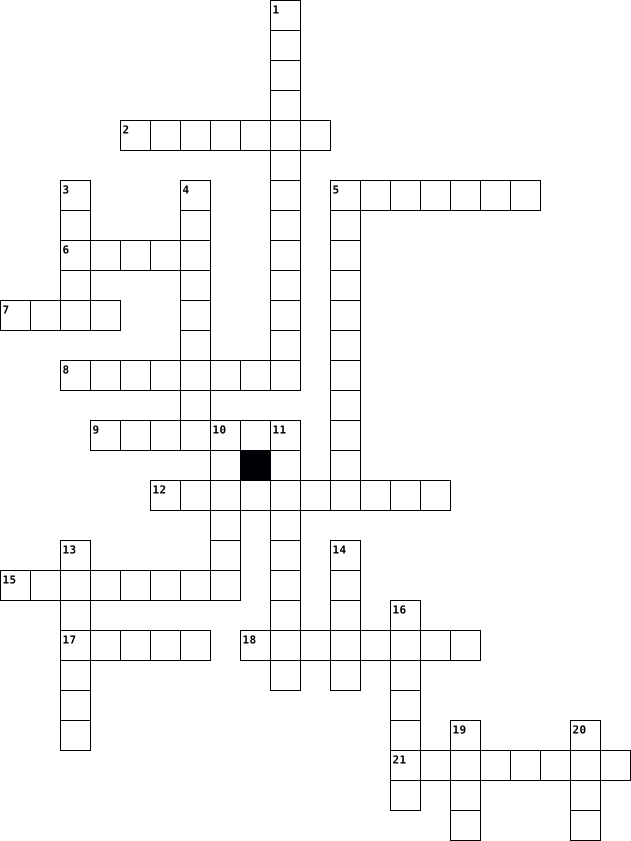
Across
- The energy of a moving object
- A disturbance that transfers energy from one place to another without transferring matter
- The energy of a current
- The energy of a stored object
- The sum of the energies within a system
- The energy contained within bonds and transformed during a reaction
Down
- The energy that is transferred through matter and observed by us when the waves reach tiny hairs inside our ears
- The energy that includes Gamma rays, x-rays, ultraviolet rays, infrared rays, radio wave, microwaves, and the visible colors we can see
- The energy of an object that is elevated and has mass
- The sum of the energies of the particles that make up an object
- The ability to cause change, never created or destroyed
- The energy stored and released from the nucleus of an atom
12 Clues: The energy of a current • The energy of a moving object • The energy of a stored object • The sum of the energies within a system • The energy of an object that is elevated and has mass • The ability to cause change, never created or destroyed • The energy stored and released from the nucleus of an atom • The sum of the energies of the particles that make up an object • ...
Forms of money 2023-11-16

Across
- Take something that is not yours without the owners approval
- Money saved or made available for a particular purpose
- Money given every week for manual work
- Money paid regularly at a particular rate for the use of money lent
- Borrowed money that needs to paid back
- A persons money in a business
- Money you get every month for working
- A thing in a person’s possession
- A person, country, or organization that owes money
- Money borrowed from a bank
- Euro,dollar,yen
Down
- Payment made to a professional in exchange for advice or services
- Partial refund to someone who has paid too much for tax, rent, or a utility
- Money placed in banks and other savings institutions
- A sum of money granted by the state or a public body to help an industry or business keep the price of a commodity or service low
- Money to start a company
- A regular payment made by the state to people of or above the official retirement age and to some widows and disabled people
- A person or company to whom money is owing
- Money in different words
- an estimate of income and expenditure for a set period of time
20 Clues: Euro,dollar,yen • Money to start a company • Money in different words • Money borrowed from a bank • A persons money in a business • A thing in a person’s possession • Money you get every month for working • Money given every week for manual work • Borrowed money that needs to paid back • A person or company to whom money is owing • ...
forms of media 2016-09-01

Across
- a written or printed work consisting of pages
- a digital audio file made available on the Internet for downloading to a computer
- a large outdoor board for displaying advertisements.
- record on videotape
- text a news and information service in the form of text and graphics
- a device that receives television signals and reproduces them on a screen
- motion pictures generally or the motion-picture industry.
- the transmission and reception of electromagnetic waves
- a small handbill advertising an event or product
Down
- a motion picture; a movie.
- a large printed picture used for decoration.
- upload a video of (someone or something) to the video-sharing website
- phone another term for cellular phone
- a regularly updated website or web page
- a periodical publication containing articles
- the written or printed signs representing vocal or instrumental sound
- a television or radio advertisement
- another term for newsprint.
- is the global system of interconnected computer networks
- a type of compact disc able to store large amounts of data
20 Clues: record on videotape • a motion picture; a movie. • another term for newsprint. • a television or radio advertisement • phone another term for cellular phone • a regularly updated website or web page • a large printed picture used for decoration. • a periodical publication containing articles • a written or printed work consisting of pages • ...
Forms of Poetry 2024-04-30

Across
- This poem uses couplets to reveal itself
- Like a simile but not using like or as
- Poetry uses these instead of paragraphs
- Beep! Ping! Bam! Pop! (poetic device)
- 3 line Japanese form poem 5-7-5 syllables
- 14 line poem (Shakespeare wrote 150 of these)
- Not a light but a five line poem with increasing numbers of syllables and the first line repeated at the end
- a five line poem that asks you to see emotions as colors
- 2 lines of poetry (Rhyme is an option)
- 4 line poem with 2 adjectives in the second line
- Poetry uses these instead of prose sentences
- A type of poem that doesn't rhyme
Down
- 5 line poem 5-7-5-7-5 syllables
- A poetic device using the repetition of consonant sounds i.e., March Madness
- This poem uses words to create the effect of a diamond shape
- An author who writes poetry
- one of three requirements in poetry lines, stanzas and __________
- 5 line poem with 2 adjectives in the second line
- Figurative language using like or as in its comparison
- The effect of repeating and or similar sounds of words I.e., the cat fell flat on its unravelling hat
- When two very different things are face to face like a mirror you get this kind of poem
- The literary genre which describes experiences using emotions and images
22 Clues: An author who writes poetry • 5 line poem 5-7-5-7-5 syllables • A type of poem that doesn't rhyme • Beep! Ping! Bam! Pop! (poetic device) • Like a simile but not using like or as • 2 lines of poetry (Rhyme is an option) • Poetry uses these instead of paragraphs • This poem uses couplets to reveal itself • 3 line Japanese form poem 5-7-5 syllables • ...
Forms of Government 2025-08-25

Across
- A system of government in which a unity of states that have agreed to join together voluntarily for a common purpose.
- A system of government in which power is shared between the national government and state governments.
- An economic system with a mix of private citizens and government ownership
- The system of authority over a nation, country, or state.
- A form of government in which a spiritual leader holds unlimited power or creates laws based on a religious belief system
- A monarchy with unlimited power and hereditary rule.
- A form of government in which a single ruling party owns and controls all production and distribution of goods, and in which no private ownership is allowed.
- A form of government where one person has unlimited power.
- A form of democratic government in which the power to govern lies directly in the hands of the people.
- A form of government in which political power resides with the people
- The absence of government.
- A form of government in which one leader or group of people holds absolute power.
Down
- A system of government in which the central/national government holds all power.
- A form of government in which citizens elect a smaller group to govern on their behalf.
- An economic system where private citizens own & decide how to use materials, money, businesses, resources, etc.
- A body of ideas about life and society that is adopted by an organization or government.
- A representative democracy with a presidential system
- A form of government in which a small group of people hold power
- A monarchy which is limited by a country's constitution or laws.
- A form of authoritarian government in which government control reaches all aspects of citizens’ lives.
20 Clues: The absence of government. • A monarchy with unlimited power and hereditary rule. • A representative democracy with a presidential system • The system of authority over a nation, country, or state. • A form of government where one person has unlimited power. • A form of government in which a small group of people hold power • ...
Energy 2024-06-13

Across
- Name one of the fossil fuels that we us
- Reusing also helps minimizes the amount that gets ____ away.
- Sort bottles, cans, paper and _____appropriately and recycle them.
- Even the energy that we use on a daily basis comes from the ______
- stuff,Name something energy can do
- There is enormous energy in the bonds that hold ____ together
- Energy that comes from electromagnetic waves which is called ____
- Name one renewable energy source
- For this reason it is important to ____
- Electromagnetic waves take many forms from microwaves to x-rays to visible ____
Down
- Energy of motion and movement is ____
- Over the years, we have come to depend on energy for our ____
- Thermal energy is made and measured by ____ of any kind.
- A form of potential energy and it is possessed by things such as batteries,fuels and ___
- To reuse means to find new uses for items that no longer fit our ____
- What is an energy that is stored ____
- Sound energy is the energy produced by sound __
- Mechanical energy is kinetic energy and ___
- Nuclear energy is energy in the middle of ____
19 Clues: Name one renewable energy source • stuff,Name something energy can do • Energy of motion and movement is ____ • What is an energy that is stored ____ • Name one of the fossil fuels that we us • For this reason it is important to ____ • Mechanical energy is kinetic energy and ___ • Nuclear energy is energy in the middle of ____ • ...
Energy resources and Climate Change 2025-03-13

Across
- energy type that will never run out
- a mechanical device that rotates to generate electricity
- energy type that will eventually run out
- refers to the gradual increase of the average temperature on Earth
- energy resource that forms over millions of years from the remains of organisms
- energy created by flowing water
- the primary radioactive material used in nuclear power plants
- energy type that comes from radioactive materials
- the most abundant greenhouse gas in the atmoshpere
Down
- a substance that traps heat on the planet
- liquid fossil fuel
- energy harnessed by growing organisms
- refers to the gradual change in long term weather patterns on the planet
- energy harnessed from Earth's interior heat
- energy type that comes from the sun
- solid fossil fuel
- type of energy created from moving air
- material that humans need such as land, air, and water
- gaseous fossil fuel
19 Clues: solid fossil fuel • liquid fossil fuel • gaseous fossil fuel • energy created by flowing water • energy type that will never run out • energy type that comes from the sun • energy harnessed by growing organisms • type of energy created from moving air • energy type that will eventually run out • a substance that traps heat on the planet • ...
Chemistry Review 2023-12-06

Across
- Stored energy
- Can not tell the differences in the mixture
- A substance that helps start/speed up a reaction
- Indication of energy in a system
- Small particles that can't be seen mixed
- Can be observed with the senses
- Mr. Seager's favorite color
- Large particles can be seen throughout
- A mixture of two substances that don't normally mix.
- Positively charge particle within the atom.
Down
- Energy absorbed into the system
- Energy in motion
- Fourth state of matter. Super-heated gas.
- Is everything
- Everything else
- Energy released from the system
- Simplest forms of matter
- The substance or space being experimented with
- The power of Hydrogen
- Occurs when there is a reaction
- Two or more elements chemically bonded together
- Can tell the differences in the mixture
22 Clues: Is everything • Stored energy • Everything else • Energy in motion • The power of Hydrogen • Simplest forms of matter • Mr. Seager's favorite color • Energy absorbed into the system • Energy released from the system • Occurs when there is a reaction • Can be observed with the senses • Indication of energy in a system • Large particles can be seen throughout • ...
Lesson 8: Work in the World 2023-01-25

Across
- splitting of atoms is called nuclear __________
- type of energy that is stored in food
- energy types that come from living things
- type of energy that is in motion
- type of potential energy that is dependent on gravity
- electricity generated from falling water
- the power of water
Down
- type of energy that is contained inside the nucleus of an atom
- type of fuel found in fossilized forms
- energy made from sources that don't run out
- made up of dead plants that turned into carbon
- type of energy that comes from the sun
- movement of molecules
- type of energy that is stored up
- ability of someone or something to do work
15 Clues: the power of water • movement of molecules • type of energy that is in motion • type of energy that is stored up • type of energy that is stored in food • type of fuel found in fossilized forms • type of energy that comes from the sun • electricity generated from falling water • energy types that come from living things • ability of someone or something to do work • ...
Heat Crossword Puzzle 2014-04-14

Across
- SI unit of heat energy
- Type of motion similar to straight line motion.
- The average kinetic energy of particles in a substance.
- Heat transferred when objects are in physical contact.
- SI unit of temperature
- Phase change that is a cooling process.
- The amount of energy needed to raise 1 kg of a substance 1 Celsius degree.
- Energy transferred during a liquid-gas phase change.
- Type of motion similar to a spinning top.
- Type of motion similar to the bending and stretching of bonds between atoms.
- Energy transferred during a solid-liquid phase change.
- Usually when objects lose heat energy they _____.
Down
- Usually when objects gain heat energy they _____.
- The total energy of all particles in a substance.
- A state in which two objects in contact have the same temperature.
- Phase change that is a warming process.
- An energy transfer between objects of different temperatures.
- Heat transferred due to the movement of a fluid.
- Heat transferred when forms of light are absorbed or emitted.
19 Clues: SI unit of heat energy • SI unit of temperature • Phase change that is a warming process. • Phase change that is a cooling process. • Type of motion similar to a spinning top. • Type of motion similar to straight line motion. • Heat transferred due to the movement of a fluid. • Usually when objects gain heat energy they _____. • ...
Energy 2023-12-18

Across
- energy: energy stored within the bonds between atoms of matter. It is used to keep atoms bonded together.
- Ratio of output work to input work
- Energy (PEg): energy stored in an object as a result of its height.
- energy that an object has due to its motion or position.
- (KE): energy of motion.
- equal to 1 Joule per second.
- equals the energy consumed by a 1,000 watt device that is operating for 1 hour. LOOK ON THE NEXT PAGE!!!!!!
- defined as the amount of energy exerted when a force of one newton is applied over a displacement of one meter.
- The movement of energy
Down
- A machine that does work with only one movement of the machine
- loss of energy
- Combination of two or more simple machines
- energy: energy stored within the nucleus of an atom. It is energy that keeps the subatomic particles of the atomic nucleus together.
- (PE): stored energy of position
- the conversion of energy from one form to another.
- energy cannot be created or destroyed but it can change to different forms
- is the ability to do work.
- applying a force to move or change something.
- the rate at which energy is used (the amount of energy consumed per unit time).
19 Clues: loss of energy • The movement of energy • (KE): energy of motion. • is the ability to do work. • equal to 1 Joule per second. • (PE): stored energy of position • Ratio of output work to input work • Combination of two or more simple machines • applying a force to move or change something. • the conversion of energy from one form to another. • ...
energy 2015-02-24

Across
- 2 step in coal
- incomplete decompositon of a living thing
- two usable forms of energy
- nucleus divides
- free falling water to energy
- molecules with hydrogen and carbon bonds only
- fuel from died things
- light, spongy material
Down
- nucleus combines
- magagement of resorces
- 4 step in coal
- 3 step in coal
- energy from steam or heat
- amount of work to the amount of energy used
- solar panels to get solar engery
15 Clues: 2 step in coal • 4 step in coal • 3 step in coal • nucleus divides • nucleus combines • fuel from died things • magagement of resorces • light, spongy material • energy from steam or heat • two usable forms of energy • free falling water to energy • solar panels to get solar engery • incomplete decompositon of a living thing • amount of work to the amount of energy used • ...
Apologia Chemistry and Physics Lesson 8 2017-11-02

Across
- Gas that's maded naturally, under the earth
- A source of energy made from falling water
- Energy found inside the nucleus of an atom
- The ability of someone or something to do work
- Lakes of oil deep in the earth produced by fossils
- Fossilized forms of energy
- Energy made from sources that don't run out
- Energy in motion
Down
- A source of electricity made from moving air
- Potential energy that is dependent on gravity
- Stored energy waiting to be used
- Thin plates that turn solar energy directly into electricity
- Energy that doesn't produce chemicals and waste
- A source of energy from the sun
- An energy source made up of dead plants that turned into carbon
15 Clues: Energy in motion • Fossilized forms of energy • A source of energy from the sun • Stored energy waiting to be used • A source of energy made from falling water • Energy found inside the nucleus of an atom • Gas that's maded naturally, under the earth • Energy made from sources that don't run out • A source of electricity made from moving air • ...
Physics impulse 2026-04-27

Across
- The collection of objects being studied
- The product of mass and velocity
- Type of collision where energy is conserved
- An exchange of momentum
- Quantity with a direction and magnitude
- Type of collision where energy is converted into other forms
Down
- An interaction where a single object breaks apart into two or more pieces
- Another word for change in momentum
- The rate of change of momentum of an object with respect to time
- Change in Position/Time
- Capacity to do work, exists in multiple forms
- A body's resistance to change in motion
12 Clues: Change in Position/Time • An exchange of momentum • The product of mass and velocity • Another word for change in momentum • The collection of objects being studied • A body's resistance to change in motion • Quantity with a direction and magnitude • Type of collision where energy is conserved • Capacity to do work, exists in multiple forms • ...
Unit 6 Weather 2016-01-28

Across
- What weather fronts are made of
- Destructive. rotating, funnel-shaped column of air
- The expansion of air as it rises and cools
- Nimbo or Nimbus means
- A severe storm that forms over tropical oceans
- A cold air mass
- A violent air mass
- What heats the Earth's atmosphere
Down
- How the Sun's energy travels
- Sever weather that creates a large amount of water over land fast
- A not moving air mass
- A flood that forms fast
- A warm air mass
- Highest level clouds
- A bolt of energy that hits the Earth
15 Clues: A warm air mass • A cold air mass • A violent air mass • Highest level clouds • A not moving air mass • Nimbo or Nimbus means • A flood that forms fast • How the Sun's energy travels • What weather fronts are made of • What heats the Earth's atmosphere • A bolt of energy that hits the Earth • The expansion of air as it rises and cools • A severe storm that forms over tropical oceans • ...
FORMS OF TRANSPORT 2021-02-14

Across
- Lastkraftwagen
- Wohnmobil
- Reisebus
- Auto (BrE)
- Seilbahn
- Segelflugzeug
- Auto (AmE)
- Transporter
- Wohnwagen
- U-Bahn(BrE)
- Motorrad
- Taxi(BrE)
- Segelboot
Down
- Motorroller
- Straßenbahn(AmE)
- Fahrrad
- Straßenbahn(BrE)
- Fähre
- Tretboot
- Frachtschiff
- Flugzeug
- Rettungsboat
- U-Bahn(AmE)
- Kreuzfahrtschiff
- Schnellboot
- Kanu
- Bus
- Zug
- Schiff
- Taxi(AmE)
30 Clues: Bus • Zug • Kanu • Fähre • Schiff • Fahrrad • Tretboot • Reisebus • Flugzeug • Seilbahn • Motorrad • Wohnmobil • Wohnwagen • Taxi(AmE) • Taxi(BrE) • Segelboot • Auto (BrE) • Auto (AmE) • Motorroller • U-Bahn(AmE) • Schnellboot • Transporter • U-Bahn(BrE) • Frachtschiff • Rettungsboat • Segelflugzeug • Lastkraftwagen • Straßenbahn(AmE) • Straßenbahn(BrE) • Kreuzfahrtschiff
Forms of Sum 2021-04-05

Across
- I have been
- they were
- I am
- we have been
- you are
- to be
- yall have been
- yall will be
- they will be
- he is
Down
- you have been
- we will be
- we are
- they have been
- yall are
- you will be
- it has been
- they are
- I will be
- he was
- she will be
21 Clues: I am • to be • he is • we are • he was • you are • yall are • they are • they were • I will be • we will be • I have been • you will be • it has been • she will be • we have been • yall will be • they will be • you have been • they have been • yall have been
Forms of Transportation 2023-03-28

Across
- used to move dirt and rocks
- stays on track
- remote controlled flying device
- red,yellow and green
- uses a chain and sprocket
- puts out problems
- the cost of using roads
- can be bought new or used
- big rig
- flies with rotors
- I-95 or Route 40
- used to travel the sea
- carries stretchers
- used to move good over water
- uber/lyft
Down
- takes your car across water
- popular fast food & transportation
- farmers best friend
- popular offroad race vehicle
- underwater vessel
- Tesla, Rivian
- often accompanied by a helmet
- razor or electric
- a form of travel that utilizes turbine engines
- off-road recreation vehicle
- incline plane used by vehicles
- house on wheels
- popular at school
- old fashioned uber/lyft
- popular for their 4 wheel drive and space
30 Clues: big rig • uber/lyft • Tesla, Rivian • stays on track • house on wheels • I-95 or Route 40 • underwater vessel • puts out problems • razor or electric • flies with rotors • popular at school • carries stretchers • farmers best friend • red,yellow and green • used to travel the sea • the cost of using roads • old fashioned uber/lyft • uses a chain and sprocket • can be bought new or used • ...
Forms of languages 2024-10-18

Across
- a unique representation to identify a person or entity
- shifting from one dialect to another throughout a single conversation
- insertion of one or more sounds in a word
- a range of languages
- is the switching of sounds or letters in a word- aminal for animal
- a word the comes before a verb
- the language variety of a country
- a language developed from groups of persons who did not share a common dialect and were forced to communicate among one another
- any non-verbal action which conveys a message to another through emotions, expressions and beliefs
- a language that services as a communication for person with native languages
- english language which is spoken in the caribbean
Down
- english based language
- a language used in formal settings
- a language used for education or formal purposes
- the language a person grew up around
- a phrase which carries a non-literal meaning for example it's a piece of cake
- creole based from the caribbean
- social communication influenced by creole
- a persons way of writing , speaking and pronouncing words
- the moderate loss of an unstressed vowel at the start of a word , for example, specially from 'especially'
- form of language which is spoken by a specific region
- the communication of feelings or ideas into words and signs used by a particular region or country
22 Clues: a range of languages • english based language • a word the comes before a verb • creole based from the caribbean • the language variety of a country • a language used in formal settings • the language a person grew up around • insertion of one or more sounds in a word • social communication influenced by creole • a language used for education or formal purposes • ...
Forms of Government 2022-10-13

Across
- A group of people who have the power to make laws
- Form of government in which citizens vote for representatives who then make decisions based on the citizens' wishes.
- Type of representative democracy where the head of government is a member of the legislature (Prime Minister)
- "Rule by a few" form of government
- Type of government run/controlled by a single person. Examples: monarchy, dictatorship
- The branch of government that carries out/enforces laws.
- A military or political group that rules a country after taking power by force.
- A written plan/rules of government
- The person who heads the executive branch in a Parliamentary democracy.
- A government ruled by a king or queen, with a succession of rulers kept within the family. Power is
- Government where citizens hold political power either DIRECTLY or through ELECTED representatives.
- A form of social organization in which males dominate females
- "Rule by theft," where those in power seek only to drain the state of assets and resources
Down
- Power of the monarch is limited by a constitution.
- Branch of government that decides if laws are carried out fairly. They interpret the laws.
- System of government run by religious leaders, religious rules are the laws of the country.
- My favorite color (rhymes with mellow)
- A written plan of government
- The group of people who control and make decisions for a country, state, etc.
- A form of government in which citizens rule directly and not through representatives.
- A political system in which voters chose a president to lead the government as head of the executive branch.
- A government in which power is in the hands of a few, ruling class or nobility
- Total government control - the leader has complete control and harsh punishments can be issued; has total control over the media (no free speech) Ex. DPRK- North Korea
- The state of having no government. Condition of a society, entity, group of people, or a single person that rejects traditional forms of government. It's chaos!
24 Clues: A written plan of government • "Rule by a few" form of government • A written plan/rules of government • My favorite color (rhymes with mellow) • A group of people who have the power to make laws • Power of the monarch is limited by a constitution. • The branch of government that carries out/enforces laws. • A form of social organization in which males dominate females • ...
forms of government 2025-06-28

Across
- / Rule based on religious law or by religious leaders.
- / Government that controls all aspects of public and private life.
- / Control and exploitation of one nation by another.
- / Power shared between central and regional governments.
- / Absence of any formal government or authority.
- / Government ruled by the people, usually through voting.
- / Government where leaders are elected to represent citizens.
- / Economic system based on private ownership and profit.
- / Medieval system based on land ownership and loyalty.
- / Rule by a privileged noble class.
- / Rule by the wealthy or those with great riches.
- / Government where leaders use power to steal wealth.
Down
- / Government run by experts in science and technology.
- / One leader holds absolute power, often by force.
- / Rule by a king, queen, or royal family.
- / System of government managed by departments and officials.
- / Rule by tribes or traditional community leaders.
- / System where property and resources are owned collectively.
- / Rule by those selected for talent and ability.
- / Rule by a small group of powerful individuals.
- / One individual holds unlimited political power.
- / System where the government controls key industries and services.
22 Clues: / Rule by a privileged noble class. • / Rule by a king, queen, or royal family. • / Rule by those selected for talent and ability. • / Absence of any formal government or authority. • / Rule by a small group of powerful individuals. • / One individual holds unlimited political power. • / Rule by the wealthy or those with great riches. • ...
Chapter 6 Puzzle 2012-01-30

Across
- How many directions is force measured in?
- Energy measurement per second is measured in _______.
- Force X Distance.
- Energy forms combined.
- 1/2 Mass X Speed^2.
- Energy is measured in _________.
Down
- Work done / Energy used.
- Energy waiting to go into motion.
- The law of ____________ of Energy says it cannot be created or destroyed.
- Weight X Height.
- Device that multiplies forces or manipulates them in some way.
- Energy in motion.
- Cannot be created or destroyed.
- Work done / Time interval.
14 Clues: Weight X Height. • Force X Distance. • Energy in motion. • 1/2 Mass X Speed^2. • Energy forms combined. • Work done / Energy used. • Work done / Time interval. • Cannot be created or destroyed. • Energy is measured in _________. • Energy waiting to go into motion. • How many directions is force measured in? • Energy measurement per second is measured in _______. • ...
Energy and Motion 2023-05-19

Across
- energy that is moving
- the final transfer of energy to the surface is by convection
- something that happened that changes its thing like making bubbles
- food energy
- the order that Adams is made
- mph
- saving something
- stretchy bends curves
- releasing heat
- it's a way to say how many feet you are tall
- when water disappears into the clouds
- what everything is made of
Down
- smallest compound on earth
- it will have energy
- energy moving
- what builds up in clouds
- different forms
- efficiency
- how much of something is in a space
- when electricity hits a lightning rod
- a rely small object
- energy that makes heat
- it keeps us on the ground
- chemical reaction that absorbs heat
24 Clues: mph • efficiency • food energy • energy moving • releasing heat • different forms • saving something • it will have energy • a rely small object • energy that is moving • stretchy bends curves • energy that makes heat • what builds up in clouds • it keeps us on the ground • smallest compound on earth • what everything is made of • the order that Adams is made • how much of something is in a space • ...
energy :3 2024-10-24

Across
- a form of energy released from the nucleus of an atom
- energy that involves movement
- electromagnetic energy
- energy that causes heat
- the movement of transporting heat energy from hotter areas to cooler areas.
Down
- mechanical energy propagated through air water or solids
- the movement of charged particles that forms energy
- the stored energy in an object
- the energy an object has during motion
- the energy of chemical substances
- energy transferred through waves
- the ability to cause change or make movement
- heat or electricity is directly transmitted through a substance
- the movement of atoms, molecules or ions in solids, liquids or gases.
14 Clues: electromagnetic energy • energy that causes heat • energy that involves movement • the stored energy in an object • energy transferred through waves • the energy of chemical substances • the energy an object has during motion • the ability to cause change or make movement • the movement of charged particles that forms energy • ...
Unit 2 Vocab 2022-09-13

Across
- Storage of carbon
- Atoms of the same element that have different numbers of neutrons
- Feedback that increases the original change
- Movement of matter caused by differences in density
- Solid whose atoms or other components appear in a regular, repeating pattern
- Forms when rock is subjected to extreme heat
- Forms when particles of previous rocks are transported by water, wind, or gravity to form layers of minerals
- Feedback that decreases the change
- Solid particles that settle out of a solution that are transported or deposited near Earth's surface
- Measure of the percentage of light that a particular surface will reflect
Down
- Movement of a chemical through the biosphere and geosphere
- Substance that cannot be broken into simpler substances
- Ratio of the mass to volume of a substance
- Forms when other rock partially melts underground
- Movement of carbon through the spheres
- Substance composed of atoms of two or more different types of elements
- Movement of energy as visible light
- Transfer of heat energy through collisions
- Hot fluid mixture
- Processes that form rock and transform it from one type into another
- Gradual build up
- Substance that has specific characteristics
22 Clues: Gradual build up • Storage of carbon • Hot fluid mixture • Feedback that decreases the change • Movement of energy as visible light • Movement of carbon through the spheres • Ratio of the mass to volume of a substance • Transfer of heat energy through collisions • Feedback that increases the original change • Substance that has specific characteristics • ...
Reactions & Proteins 2024-06-26

Across
- Enzyme that moves around groups containing C, N, or P
- R-NH2
- Enzyme that uses water to break bonds
- Protein monomer
- Anything that lowers the activation energy of a reaction
- Bond formed between 2 amino acids
- Enzyme that forms isomers
- spherical masses of polypeptides with quaternary structure
- A polypeptide shape seen in secondary structure
- Protein structure level consisting of disulfide bridges
- A protein catalyst
- Protein structure level consisting of α-helices & β-pleated sheets
- long strands of polypeptides with quaternary structure
- Macromolecule made from amino acids
- The reactants that bind into an enzyme's active site
- A strong chemical bond that involves the sharing of electron
- Protein dimer
Down
- Enzyme that forms bonds
- Bond between 2 S in the hydrophobic region of a polypeptide with tertiary structure
- A polypeptide shape seen in secondary structure
- The required amount of energy necessary for a reaction to occur
- Substance that is produced by a chemical reaction
- Protein structure level consisting of 2 or more polypeptides
- Protein structure level consisting of a string of amino acids
- A basic subunit of a macromolecule
- Enzyme that performs redox reactions
- Substance that is put into a chemical reaction
- Molecules with the same molecular formula but different structural formulas
- R-COOH
- Type of reaction that releases energy
- A complex unit of a macromolecule comprised of 2 or more subunits
- Protein polymer
- A compound of C and H
- A weal chemical bond formed between a H and an electronegative atom
- The region of an enzyme that a substrate binds to
- Type of reaction that absorbs energy
- Enzyme that forms double bonds
- Non-specific side-chain
38 Clues: R-NH2 • R-COOH • Protein dimer • Protein monomer • Protein polymer • A protein catalyst • A compound of C and H • Enzyme that forms bonds • Non-specific side-chain • Enzyme that forms isomers • Enzyme that forms double bonds • Bond formed between 2 amino acids • A basic subunit of a macromolecule • Macromolecule made from amino acids • Enzyme that performs redox reactions • ...
Energy Transfer & Conservation 2022-11-17

Across
- Used by green plants during photosynthesis.
- Energy due to the motion and position of an object.
- Most of the energy we use originally came from the _.
- The ability to do work.
- The Law of _ states that energy cannot be created nor destroyed.
- Heat energy.
- Stored energy related to the position of an object.
Down
- Type of energy stored within chemical bonds.
- Energy flowing through a circuit.
- Potential energy affected by height and mass
- Energy in motion.
- Energy is never lost, only _.
- Energy transferred through electromagnetic waves such as visible light.
- Demonstrates how energy is conserved as it changes forms.
14 Clues: Heat energy. • Energy in motion. • The ability to do work. • Energy is never lost, only _. • Energy flowing through a circuit. • Used by green plants during photosynthesis. • Type of energy stored within chemical bonds. • Potential energy affected by height and mass • Energy due to the motion and position of an object. • Stored energy related to the position of an object. • ...
Chapter 6 Puzzle 2012-01-30

Across
- How many directions is force measured in?
- Energy forms combined.
- Cannot be created or destroyed.
- Energy measurement per second is measured in _______.
- Device that multiplies forces or manipulates them in some way.
- 1/2 Mass X Speed^2.
- Energy is measured in _________.
- Energy waiting to go into motion.
Down
- Work done / Energy used.
- Weight X Height.
- Energy in motion.
- The law of ____________ of Energy says it cannot be created or destroyed.
- Force X Distance.
- Work done / Time interval.
14 Clues: Weight X Height. • Energy in motion. • Force X Distance. • 1/2 Mass X Speed^2. • Energy forms combined. • Work done / Energy used. • Work done / Time interval. • Cannot be created or destroyed. • Energy is measured in _________. • Energy waiting to go into motion. • How many directions is force measured in? • Energy measurement per second is measured in _______. • ...
Energy Vocabulary 2024-12-10

Across
- Where something comes from
- Spinning blades to produce electricity
- Energy that can only be used until it is gone-can never be replaced
- The most common type of energy-is created from other forms of energy
- moving air
Down
- The energy from movement
- Stored energy-that has not been used yet
- Heat energy from the earth
- Making movement
- Energy that can be used more than once, without changing it
- Sun
- Life
- ability to do work
- Water
14 Clues: Sun • Life • Water • moving air • Making movement • ability to do work • The energy from movement • Heat energy from the earth • Where something comes from • Spinning blades to produce electricity • Stored energy-that has not been used yet • Energy that can be used more than once, without changing it • Energy that can only be used until it is gone-can never be replaced • ...
energy vocabulary 2024-12-10

Across
- Water
- Life
- The energy of movement.
- Energy that can be used more than once,without changing it
- Stored energy that has not been used yet.
- Energy that can only be used until it is gone - can never be replaced.
Down
- The most common energy - is created from other forms of energy.
- Heat energy from the Earth.
- Spinning blades to produce electricity.
- Moving air.
- Where something comes from.
- Making movement.
- sun
- The ability to do work.
14 Clues: sun • Life • Water • Moving air. • Making movement. • The energy of movement. • The ability to do work. • Heat energy from the Earth. • Where something comes from. • Spinning blades to produce electricity. • Stored energy that has not been used yet. • Energy that can be used more than once,without changing it • The most common energy - is created from other forms of energy. • ...
Physics 2023-08-10
Across
- __________ energy is the energy of movement
- the type of science we have been studying this term
- the sun transforms nuclear energy into __________ and heat energy
- the ability to apply a force to something
- when we eat something it is a form of __________ energy
- a nuclear power plant uses __________ energy to create power
- burning coal produces a harmful product known as __________ gases
- the speed at which something moves
- __________ energy is cause by vibrations
- a lightbulb transforms __________ energy into light energy
- when one energy changes to a different type of energy we consider it a __________ of energies
Down
- __________ potential energy is the energy an object has due to its position above ground level
- a form of renewable power that transforms light from the sun into electrical energy
- gravitational and elastic are both forms of __________ energy
- a form of renewable power that transforms the gravitational potential energy of water into electrical energy
- something that cannot be created nor destroyed
- when a resource used to produce power will not run out it is called a __________ energy source
- a compressed spring has __________ energy
- the push or pull on an object to make it move
- the speed of this is 9.8m/s squared
- the quantity of matter in a body
- __________ energy can be seen from a change in temperature
22 Clues: the quantity of matter in a body • the speed at which something moves • the speed of this is 9.8m/s squared • __________ energy is cause by vibrations • the ability to apply a force to something • a compressed spring has __________ energy • __________ energy is the energy of movement • the push or pull on an object to make it move • ...
Giles' Crossword 2016-12-06

Across
- pigment involved with photosynthesis
- organisms that depend on autotrophs for food and energy
- cycle that associates with photosynthesis
- sac-like membrane
- compound produced when glucose is broken down and oxidized
- type of autotroph that uses inorganic energy sources
- process of breaking down glucose and forms pyruvate
- Adenosine Triphosphate
Down
- cycle that associates with cellular respiration
- organisms that make its own food and energy
- doesn't require oxygen
- light energy converts to chemical energy by plants
- organelle where processes of energy production occur
- an organelle that contains chlorophyll
- requires oxygen
- Adenosine Diphosphate
16 Clues: requires oxygen • sac-like membrane • Adenosine Diphosphate • doesn't require oxygen • Adenosine Triphosphate • pigment involved with photosynthesis • an organelle that contains chlorophyll • cycle that associates with photosynthesis • organisms that make its own food and energy • cycle that associates with cellular respiration • ...
Work,Power & Energy 2015-05-07

Across
- of energy/the rule that energy cannot be created or destroyed
- energy/the total potential energy and kinetic energy of the particles in an object
- energy/stored energy that results from the position or shape of an object
- energy/the energy of light and other forms of radiatian
- the unit for work
- energy/ a type of potential energy stored in the nucleus of atoms
- potential energy/the potential energy associated with objects that can be stretched or compressed
Down
- potential energy/potential energy that depends on the height of an object
- energy/potential energy stored in the chemical bonds that hold chemical compounds together
- the unit for power
- ability to do work or cause change
- rate at which work done
- energy/ the energy an object has due to its motion
- energy/potentian and kinetic energy combined
- energy the energy of electrical particles
- when you excert a force on an object that causes it to move a distance
16 Clues: the unit for work • the unit for power • rate at which work done • ability to do work or cause change • energy the energy of electrical particles • energy/potentian and kinetic energy combined • energy/ the energy an object has due to its motion • energy/the energy of light and other forms of radiatian • of energy/the rule that energy cannot be created or destroyed • ...
Energy Transfer & Conservation 2022-11-17

Across
- Used by green plants during photosynthesis.
- Most of the energy we use originally came from the _.
- Energy is never lost, only _.
- Type of energy stored within chemical bonds.
- Energy transferred through electromagnetic waves such as visible light.
- Demonstrates how energy is conserved as it changes forms.
- Heat energy.
Down
- Stored energy related to the position of an object.
- Potential energy affected by height and mass
- The Law of _ states that energy cannot be created nor destroyed.
- Energy in motion.
- Energy due to the motion and position of an object.
- The ability to do work.
- Energy flowing through a circuit.
14 Clues: Heat energy. • Energy in motion. • The ability to do work. • Energy is never lost, only _. • Energy flowing through a circuit. • Used by green plants during photosynthesis. • Potential energy affected by height and mass • Type of energy stored within chemical bonds. • Stored energy related to the position of an object. • Energy due to the motion and position of an object. • ...
Thermodynamics 2023-10-19

Across
- no exchange of energy or matter
- exchange of energy which is a result of temperature difference
- wall that separates system from the surroundings
- deals with energy changes
- system where there is energy exchange but no mass exchange
- part of universe in which observations are made
- when work is done on the system and when heat is transferred to system
- _____ is described by state functions
Down
- pressure and temperature dont change with time
- state functions don't depend on the _____ taken by the system
- system in which there is no exchange of heat through its boundary
- deals with rate of reactions
- system where there is exchange of energy and matter
- when work is done by the system and when heat is transferred to surroundings
- value of cyclic integration of a state function
- A cell that converts chemical to electrical energy
- Substances that have energy stored in them
- _____ energy is the total sum of all forms of energy
- system + _____ = universe
19 Clues: deals with energy changes • system + _____ = universe • deals with rate of reactions • no exchange of energy or matter • _____ is described by state functions • Substances that have energy stored in them • pressure and temperature dont change with time • value of cyclic integration of a state function • part of universe in which observations are made • ...
Topic 3 test-Alexis Garrett 2024-04-23

Across
- is the rate at which work is done and it equals the amount of work
- most
- ________,________,__________are all forms of energy
- potential energy that depends on the height of an object
- the state in which one objects distance from another is changing
- middle
- during _ _ the elastic potential energy
- is the ability to do work or cause change
- the energy of electric charges
- the potential energy stored in the nucleus of an atom
- the energy of stretched or compressed objects
- force exerted on an object that causes it to move
- the process or result of joining two or more things together to form a single entity
Down
- A form of potential energy that is stored in chemical bonds between atoms
- the energy an object has because of its position
- because of
- the rule that energy cannot be created or destroyed
- like a pivot in corn field
- the energy transferred though space by electromagnetic waves
- a pull or a push
- is the energy that an object possesses by virtue
- kinetic or potential energy associated with the motion or position of an object
- the total kinetic and potential energy of all the particles of an object
- occurs when one form of energy changes into another
- takes place when energy moves from one object to another
25 Clues: most • middle • because of • a pull or a push • like a pivot in corn field • the energy of electric charges • during _ _ the elastic potential energy • is the ability to do work or cause change • the energy of stretched or compressed objects • the energy an object has because of its position • is the energy that an object possesses by virtue • ...
Energy 2022-03-04

Across
- Energy not in motion
- Heat Energy that comes from the fire or sun
- energy stored in chemical bonds of compounds
- is an example of Elastic potential energy.
- Light Energy that comes from the sun
- energy can never be created or destroyed it can only be transferred forms.
- Energy in motion
Down
- stored energy n objects being compressed or stretched.
- Energy that comes from outlets and power plants.
- Form of energy that is reflected or emitted in the form of electrical and magnetic waves.
- energy that is the total amount of kinetic and potential energy in a system.
- energy that comes from releasing energy from the nucleus
- is the ability to cause change
- is and example of chemical potential energy
- Energy that is used most often in communication
15 Clues: Energy in motion • Energy not in motion • is the ability to cause change • Light Energy that comes from the sun • is an example of Elastic potential energy. • Heat Energy that comes from the fire or sun • is and example of chemical potential energy • energy stored in chemical bonds of compounds • Energy that is used most often in communication • ...
Physical Science 4.1-4.2 Review 2014-11-11

Across
- SI unit for energy
- for the properties of matter to change, energy must be either____________from one object to another or changed from one form to another
- branch of physics that studies motion and forces
- this energy includes radiant energy and forms of kinetic and potential energy caused by motion
- energy from motion or forces that affect a whole object
- energy that is stored
- energy of motion
- energy of electromagnetic radiation
Down
- kinetic energy is affected much more strongly by a change in _______than by a change in mass
- simplest form of motion
- motion that spins or rolls around an internal axis
- this affects rotational kinetic energy
- distance divided by time
- energy of an entire object moving
- discovered that matter can be converted into energy and energy can be converted into matter
- motion in a circle centered on a point outside the object
- this energy is caused by a disturbance moving through a substance
- the energy that an object possesses due to the random motion of its molecules
18 Clues: energy of motion • SI unit for energy • energy that is stored • simplest form of motion • distance divided by time • energy of an entire object moving • energy of electromagnetic radiation • this affects rotational kinetic energy • branch of physics that studies motion and forces • motion that spins or rolls around an internal axis • ...
Thermal Energy Crossword 2024-11-25

Across
- the average kinetic energy of the particles of a substance
- energy of motion
- the exact amount of energy required to raise the temperature of 1 kg of a material 1 Kelvin
- the transfer of energy by electromagnetic waves
- an example of a good insulator
- Water freezes at zero degrees ________
- type of heat transfer that occurs through the movement of fluid
- the energy that is transferred from a warmer to a cooler object
- materials that do not transfer heat well
- as thermal energy of a substance increases its particles expand
- an example of a good conductor
Down
- materials that transfer heat well
- the circular motion that forms when air/fluid is heated
- the official unit of measure of temperature in the context of science
- can change kinetic to thermal energy
- the transfer of energy from one particle of matter to another through direct contact
- the total kinetic and potential energy in an object
- the unit with which energy is measured
18 Clues: energy of motion • an example of a good insulator • an example of a good conductor • materials that transfer heat well • can change kinetic to thermal energy • Water freezes at zero degrees ________ • the unit with which energy is measured • materials that do not transfer heat well • the transfer of energy by electromagnetic waves • ...
Iceland & the power of Earth's natural resources! 2023-01-27

Across
- erupts lava, hot vapor, gas, & rock
- heat energy from Earth's interior
- direction plates in Iceland moving
- rigid chunks of rocky crust that move
- country nicknamed “land of fire & ice”
- energy created by steam powered turbine
Down
- energy sources like coal & petroleum
- break in rock where earthquakes likely
- a type of gas waste given off from magma
- waves of energy after vibrations of Earth
- magma when it erupts out of Earth
- layer drilled into for geothermal energy
- produced by escaping magma heat
- # of tectonic plates that divide Iceland
- method for getting geothermal energy
- heated material that forms igneous rocks
16 Clues: produced by escaping magma heat • magma when it erupts out of Earth • heat energy from Earth's interior • direction plates in Iceland moving • erupts lava, hot vapor, gas, & rock • energy sources like coal & petroleum • method for getting geothermal energy • rigid chunks of rocky crust that move • break in rock where earthquakes likely • ...
NZ Bread and cereals group 2021-10-18
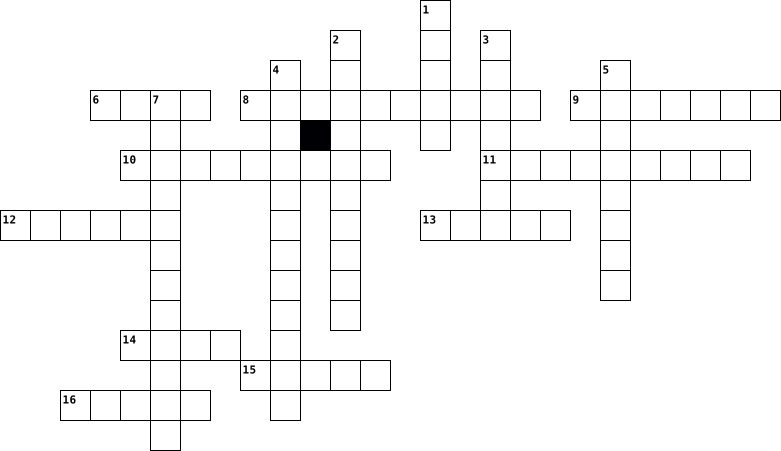
Across
- Raihi grown mainly in Asian countries
- From the vitamin B group
- From the grains of grasses
- The colour of oxygenated blood
- For building bones and releasing energy
- A starch energy giving vegetable
- Forms the skeletal system
- Carries oxygen in the blood
- parāoa
- A carbohydrate food originally from Italy
Down
- Witi
- A more nutrient dense cereal
- Helps release energy from nutrients in cells
- Maintains good bowel functions
- Prevents oxidation in cells
- Provides energy
16 Clues: Witi • parāoa • Provides energy • From the vitamin B group • Forms the skeletal system • From the grains of grasses • Prevents oxidation in cells • Carries oxygen in the blood • A more nutrient dense cereal • Maintains good bowel functions • The colour of oxygenated blood • A starch energy giving vegetable • Raihi grown mainly in Asian countries • For building bones and releasing energy • ...
Energy 2024-05-13

Across
- type of energy obtained from a turbine
- contaminants in the environment that are dangerous
- energy of objects in motion
- examples of this include mechanical, chemical, and gravitational
- energy source that is not replenished
- type of energy that can be used to make electricity
Down
- type of energy made from water
- example of nonrenewable energy
- example of renewable energy from the earth
- a form of transportation that is very bad for environment
- energy source that is replenished
- example of renewable energy from organic materials
- a popular form of transportation that is bad for the environment
- one of the best forms of transportation for the environment
14 Clues: energy of objects in motion • type of energy made from water • example of nonrenewable energy • energy source that is replenished • energy source that is not replenished • type of energy obtained from a turbine • example of renewable energy from the earth • contaminants in the environment that are dangerous • example of renewable energy from organic materials • ...
physics chapter 5 2023-12-15

Across
- The SI unit of power is the watt
- the conservation of mechanical energy occurs in the absence of friction, the total mechanical energy remains the same
- the sum of kinetic energy and all forms of potential energy
- the energy associated with an object because of the position, shape, or condition of the object
- For a flexible spring, the spring constant is small, whereas for a stiff spring, the spring constant is large
- the sign of the net work on the object tells you whether the object's speed is increasing or decreasing
- the product of the component of a force along the direction of displacement and the magnitude of the displacement
- gravitational potential energy = mass × free-fall acceleration × height
- initial mechanical energy = final mechanical energy (in the absence of friction)
- the potential energy stored in the gravitational fields of interacting bodies
- SI unit for kinetic energy (and all other forms of energy) is the joule
- a conserved quantity that you are already familiar with is mass
- there are 2 types of potential energy
- the energy available for use when a deformed elastic object returns to its original configuration
- The object’s speed decreases if the net work is negative.
Down
- the net work done by all the forces acting on an object is equal to the change in the object’s kinetic energy
- Work is a _______ quantity and can be positive or negative
- The joule is named for the_____ physicist James Prescott Joule (1818–1889).
- kinetic energy = 1× mass × (speed)2
- the energy of an object that is due to the object’s motion
- Components of the force perpendicular to a displacement do not do work.
- Machines with different power ratings do the same amount of work in different time intervals
- All energy, such as nuclear, chemical, internal, and electrical, that is not mechanical energy is classified as nonmechanical energy.
- The net work done on or by an object is equal to the change in the kinetic energy of the object.
- The energy that each ball has varies in a way that keeps the total energy of the system constant.
- a parameter that is a measure of a spring’s resistance to being compressed or stretched
- gravitational potential energy in this chapter is valid only when the free-fall acceleration is constant over the entire height, such as at any point near the Earth’s surface.
- Work, energy, and power are related to one another
- a quantity that measures the rate at which work is done or energy is transformed
- power = force x speed
30 Clues: power = force x speed • The SI unit of power is the watt • kinetic energy = 1× mass × (speed)2 • there are 2 types of potential energy • Work, energy, and power are related to one another • The object’s speed decreases if the net work is negative. • Work is a _______ quantity and can be positive or negative • the energy of an object that is due to the object’s motion • ...
Energy Crossword Puzzle 2020-12-10

Across
- energy generatedor produced by living or once living organisms
- energy that is created from the sun to create other energy
- heat energy
- in physics it is the capacity of doing work and it can be found in kinetic, potential,electrical, thermal, and other various forms
- the movment of electrons in a current
- an object helping another object to share or produce more energy, electricity, heat, etc
- heat energy within the earth
Down
- an object slow down the flow of another objects energy electricity, heat, etc
- energy from moving water to create electricity
- energy that has a fluent, non stop motion
- the moment before an object is in motion
- the energy of a moving object
- energy due to motion
- light energy
- stored energy waiting to be used
- energy in the core of an atom
16 Clues: heat energy • light energy • energy due to motion • heat energy within the earth • the energy of a moving object • energy in the core of an atom • stored energy waiting to be used • the movment of electrons in a current • the moment before an object is in motion • energy that has a fluent, non stop motion • energy from moving water to create electricity • ...
Chemistry Crossword Puzzle 2024-05-07

Across
- measures reactant and product masses before and after chemical reactions.
- the temperature and pressure at which the solid, liquid, and gas forms of a substance coexist.
- ions are formed by gain or loss of an electron formation.
- the quality, condition, or fact of being exact and accurate.
- donates one proton per molecule, such as HCL and HCLO4.
- a substance that increases concentration of OH- ions in solution.
- has the highest ionization energy.
- a substance that increases the concentration of hydrogen ions in an aqueous solution.
Down
- donates more than one proton per molecule, such as H3PO4.
- created the plum pudding model.
- forces that hold molecules of a covalent compound.
- the measure of the average kinetic energy of the particles in a sample of matter.
- the study of how heat is converted to and from other forms of energy and how it affects matter.
- the total amount of energy; movement.
- the change in heat of the products from the reactants.
- the quality or state of being correct or precise.
- positively changed nucleus with electrons orbiting the nucleus.
- how strongly an atom attracts electrons .
- electrons orbit the nucleus in specific orbitals or shells of specific size and location.
- a substance that speeds up a chemical reaction without itself undergoing any chemical change.
20 Clues: created the plum pudding model. • has the highest ionization energy. • the total amount of energy; movement. • how strongly an atom attracts electrons . • the quality or state of being correct or precise. • forces that hold molecules of a covalent compound. • the change in heat of the products from the reactants. • ...
Energy 2022-03-25
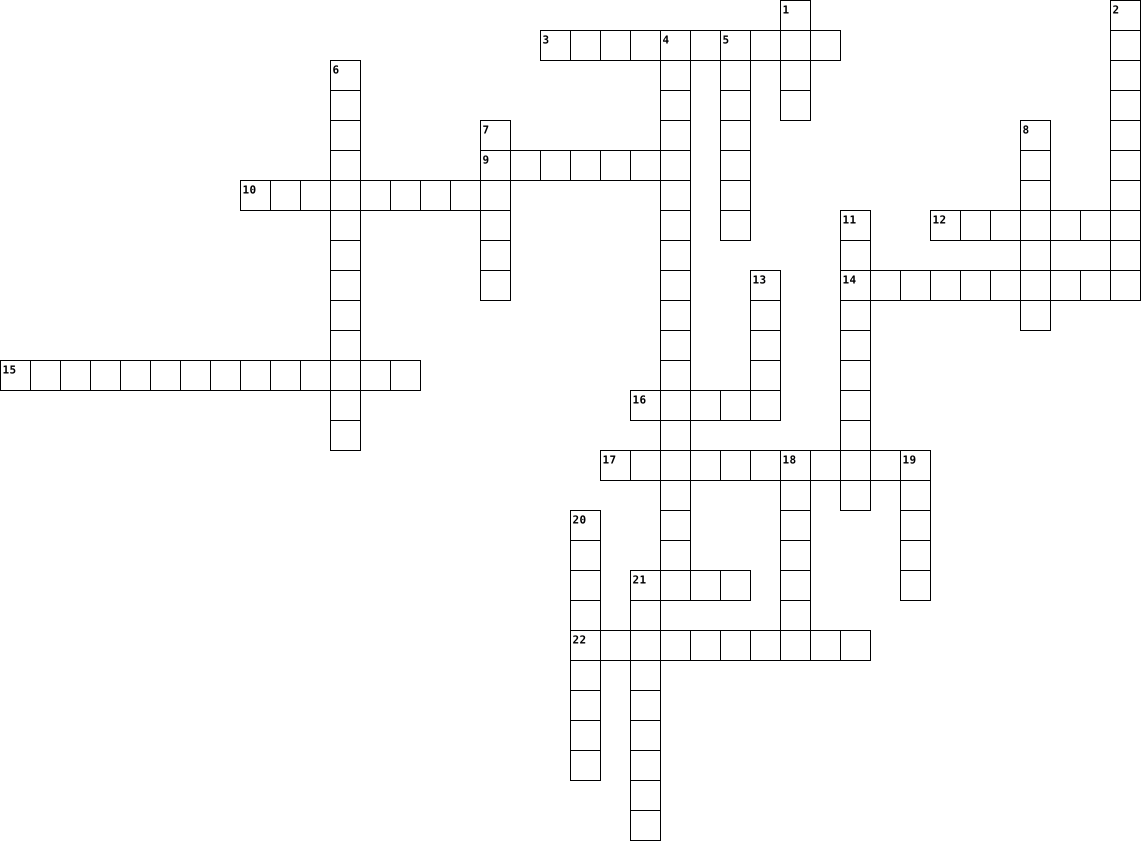
Across
- process used to convert stored chemical energy into forms for other functions
- the type of energy stored in forces holding nuclei together
- type of source replaced quickly and continually
- the type of energy of a bowling ball
- energy needed to move an objects position
- breaking up of a nucleus
- mixture of hydrocarbons
- the remains of organisms from millions of years ago
- what is the compression of dead plants
- what is the cleanest fossil fuel
Down
- most commonly used fossil fuel
- type of energy associated with the flow of electrons
- what pushes the oil to the surface
- where are shafts dug deep into ground to access coal deposits
- joining of 2 nuclei
- the ability to do work
- the energy of motion
- what happens to the initial pressure in secondary extraction
- number of types of fossil fuels
- similar term of extraction known as hydraulic fracturing
- type of mining used when coal deposits are near the surface
- energy based on the position of the object itself
- what is also known as oil
23 Clues: joining of 2 nuclei • the energy of motion • the ability to do work • mixture of hydrocarbons • breaking up of a nucleus • what is also known as oil • most commonly used fossil fuel • number of types of fossil fuels • what is the cleanest fossil fuel • what pushes the oil to the surface • the type of energy of a bowling ball • what is the compression of dead plants • ...
Env Sci Ch 2 Vocabulary Review 2016-09-08

Across
- Anything going into a system
- The form of energy that is in motion
- The output of energy
- A macromolecule comprised of C-H-O in a 1-2-1 ratio
- Anything that occupies space and has mass
- A compound lacking carbon or carbon-hydrogen bonds
- This type of feedback loop reinforces the change occurring in the system
- A solution found between 8-14 on the pH scale
- This type of bond forms when electrons are shared between atoms
- A macromolecule formed by C-H-O in no set ratio and often found in the cell membrane
- A measure of the amount of energy as heat given off by an item
- Randomness of the universe in the form of Heat
- This Law of Thermodynamics states that energy cannot be created or destroyed
- A compound that has carbon or carbon-hydrogen bonds
- This bond forms when electrons are transferred between atoms
- The smallest living unit
Down
- A massless particle containing pure electromagnetic radiation
- This form of energy is found in bonds of compounds
- The amount of energy needed to power a 1-watt bulb for 1 second
- An example of a nucleic acid and the primary source of our genetic information
- Anything leaving a system
- This form of energy has the possibility to do work
- The number of protons found in an element
- Comprised of at least 2 atoms bonded together
- An atom of an element that has the same number of protons but varying neutrons
- The amount of matter in an object
- A solution found between 0-6 on the pH scale
- Comprised of at least 2 elements bonded together
- This type of feedback loop counters or stops the change in a system
- This Law of Thermodynamics states that whenever energy changes form, the amount remains constant but the ability to do work diminishes
- The ability to do work
31 Clues: The output of energy • The ability to do work • The smallest living unit • Anything leaving a system • Anything going into a system • The amount of matter in an object • The form of energy that is in motion • The number of protons found in an element • Anything that occupies space and has mass • A solution found between 0-6 on the pH scale • ...
Charged by Light: How Plants Power Up 2026-04-27

Across
- – First photosystem involved in light reactions
- – Barriers that separate different areas in cells
- – Structures that control movement of substances
- – Negatively charged particles energized by light
- – Groups of pigments and proteins that absorb light
- – Molecules that absorb light energy
- – Energy source that powers photosynthesis
- – Charged particles involved in energy storage
- – Membrane stacks where light-dependent reactions occur
Down
- – Molecule that carries high-energy electrons
- – Element that forms H⁺ ions inside thylakoids
- – Gas released as a by-product of splitting water
- – Molecule split to provide electrons and hydrogen ions
- – Positive and negative particles kept separate
- – Main green pigment that captures light energy
- – State in which oxygen is released into the air
- – Organelles where photosynthesis takes place
- – Build-up of charge across a membrane
- – Energy-carrying molecule produced in light reactions
- – What is transferred through excited electrons
20 Clues: – Molecules that absorb light energy • – Build-up of charge across a membrane • – Energy source that powers photosynthesis • – Molecule that carries high-energy electrons • – Organelles where photosynthesis takes place • – Element that forms H⁺ ions inside thylakoids • – Charged particles involved in energy storage • – First photosystem involved in light reactions • ...
Nature of Energy 2026-01-05

Across
- energy that is due to the gravitational forces between objects
- unit of energy for mass
- form of energy that is reflected or emitted in the form of electrical and magnetic waves that can travel through space.
- on earth this equals 9.8 m/s²
- unit of energy for height
- energy that is stored due to the interactions between objects
- heat that comes from fire, sun, etc.; used to heat objects
- energy can never be created or destroyed, it can only change forms
- unit of measure for energy
Down
- the ability to cause change
- energy that is stored by compressing or stretching an object
- energy is energy due to motion
- light that comes from the sun and lightbulbs; used to see and as a power source
- the total amount of kinetic and potential energy in a system.
- energy that is due to chemical bonds
- unit of energy for force and weight
- unit of energy for velocity
17 Clues: unit of energy for mass • unit of energy for height • unit of measure for energy • the ability to cause change • unit of energy for velocity • on earth this equals 9.8 m/s² • energy is energy due to motion • unit of energy for force and weight • energy that is due to chemical bonds • heat that comes from fire, sun, etc.; used to heat objects • ...
Energy & Its Forms 2023-04-10

Across
- the potential and kinetic energy of all microscopic objects
- energy stored in an atomic nucleus
- energy associated with motion and position
- the energy of motion
- energy travels through space in the form of waves
- the potential energy that depends on height
- the potential energy of an object that is stretched
Down
- energy stored in chemical bonds
- energy associated with electric charges
- the energy that is stored as a result of position
- the ability to do work
11 Clues: the energy of motion • the ability to do work • energy stored in chemical bonds • energy stored in an atomic nucleus • energy associated with electric charges • energy associated with motion and position • the potential energy that depends on height • the energy that is stored as a result of position • energy travels through space in the form of waves • ...
Chemical reactions - F2 Sci 2026-05-06

Across
- reaction that absorbs energy
- reaction that occurs when things burn in oxygen
- cannot dissolve to form solutions
- able to be dissolved in liquid to form solutions
- substance that speed reactions without being used up
- possessed by moving things; a form of energy
- how fast a reaction goes
- how much of a substance there is
- substance that are found in cells and living things. they speed up biochemical reactions
Down
- reaction that results when a substance breaks down to form two or more new substances
- no new substance formed even though an apparent change occurs
- a solution that forms when a solid dissolves in water
- how hot or cold something is
- reaction that occurs between acids and bases
- type of reaction that occurs when a metal deposits or forms
- when two or more substances react to form new things
- forms when iron reacts with oxygen in water
- things that react to form new substances usually written on the left hand side of the equation
- reaction that produces heat
- usually given off or absorbed during reactions
20 Clues: how fast a reaction goes • reaction that produces heat • how hot or cold something is • reaction that absorbs energy • how much of a substance there is • cannot dissolve to form solutions • forms when iron reacts with oxygen in water • reaction that occurs between acids and bases • possessed by moving things; a form of energy • usually given off or absorbed during reactions • ...
Energy Crossword Puzzle 2020-12-10

Across
- energy in the core of an atom
- energy that has a fluent, non stop motion
- energy from moving water to create electricity
- the moment before an object is in motion
- energy that is created from the sun to create other energy
- the movement of electrons in a current
- light energy
Down
- an object slowing down another object's energy, heat, electricity, etc
- an object helping another object to share or produce more energy, heat, electricity, etc
- heat energy within the earth
- stored energy waiting to be used
- energy due to motion
- the energy of a moving object
- heat energy
- in pysics it is the capacity of doing work and it can be found in kinetic, potential, thermal, electrical, and other various forms
15 Clues: heat energy • light energy • energy due to motion • heat energy within the earth • energy in the core of an atom • the energy of a moving object • stored energy waiting to be used • the movement of electrons in a current • the moment before an object is in motion • energy that has a fluent, non stop motion • energy from moving water to create electricity • ...
~Energy Forms & Heat Transfer~ 2022-09-15

Across
- as an object's temperature _________, it's kinetic energy increases
- stored energy
- heat transferred through the circular motion of fluids
- the type of energy in food
- mass & ________ affect gravitational potential energy
- energy in motion
- the amount of thermal energy an object contains
Down
- the amount of matter in an object
- heat transferred through electromagnetic waves; no contact is required
- the units of measurement for energy
- energy stored in the nucleus of an atom- can be released when nuclei are combined or split apart
- the ability to do work
- a change from one energy form to another
- are heat and temperature the same?
- the distance traveled per unit of time (d/t)
- heat transferred through direct contact
16 Clues: stored energy • energy in motion • the ability to do work • the type of energy in food • the amount of matter in an object • are heat and temperature the same? • the units of measurement for energy • heat transferred through direct contact • a change from one energy form to another • the distance traveled per unit of time (d/t) • the amount of thermal energy an object contains • ...
Simply Science Physics 2024-11-19

Across
- every action has an equal and opposite reaction
- energy force formed in earth's crust
- energy relating to temperature
- the study of energy
- who wrote the laws of motion
- energy in motion
- stored energy
- energy used to kick a ball
- heavier objects require more energy to move/stop than lighter objectsdiffraction lightwaves travelling at different speeds causing an object to appear differently
- the ability to make something work
- energy used to convert food to fuel
- the temp at which atoms stop moving
Down
- an object in motion stays in motion unless acted upon by another force
- force that slows things down; makes things harder to move
- energy used with a slingshot
- what all things are made of
- energy that can be replenished
- the study of matter
- energy that can NOT be replenished
- force that happens when 2 objects are rubbed together
- the bending of lightwaves, causing a rainbow
- when light bounces off an object evenly
- the amount of space something takes up
- this is created when energy converts forms
- the amount of matter something has
25 Clues: stored energy • energy in motion • the study of energy • the study of matter • energy used to kick a ball • what all things are made of • energy used with a slingshot • who wrote the laws of motion • energy relating to temperature • energy that can be replenished • energy that can NOT be replenished • the ability to make something work • the amount of matter something has • ...
Unit 4 - Energy 2020-12-02

Across
- Thermal energy
- Move from place to place
- Energy of motion
- The amount of kinetic energy in something
- Thermal energy transfers through light waves
Down
- Thermal energy transfers through a liquid or a gas
- Change types or forms
- Stored energy
- The same
- Thermal energy transfers through a solid by direct contact
- When balanced is achieved
- The ability to do work
12 Clues: The same • Stored energy • Thermal energy • Energy of motion • Change types or forms • The ability to do work • Move from place to place • When balanced is achieved • The amount of kinetic energy in something • Thermal energy transfers through light waves • Thermal energy transfers through a liquid or a gas • Thermal energy transfers through a solid by direct contact
Unit 5 Lesson 1-3 2018-02-07

Across
- any natural material that is used by humans, such as water, petroleum, minerals, forest and animals
- a natural resource that can be replaced at the same rate at which it is consumed
- a nonrenewable energy resource that forms from the remains of organisms that lived long ago
- the energy produced by the heat within the Earth
Down
- the use of the force of moving air to drive an electric generator
- electrical energy produced by the flow of water
- natural resources used to generate energy
- a natural resource that are used to make objects, food, or drink
- the energy released by fisson (splitting) or fusion (combining) reaction, the binding energy of atomic nucleus
- resource a resource that forms at a rate that is much slower than it is consumed
- the energy received by Earth from the sun in the form of radiation
- plant material, manure or any other organic matter that is used as an energy source
- the nuclei of radioactive atoms are split into two or more fragments.
13 Clues: natural resources used to generate energy • electrical energy produced by the flow of water • the energy produced by the heat within the Earth • a natural resource that are used to make objects, food, or drink • the use of the force of moving air to drive an electric generator • the energy received by Earth from the sun in the form of radiation • ...
chemistry 2026-04-28

Across
- has a pH higher than 7
- the amount of space the gas takes up
- A neutralization reaction occurs when an acid and a base react to form a _____ and water
- donates more than one proton per molecule
- a substance the increases the concentration of hydroxide ions in an aqueous solution
- the point at which the indicator used in a titration changes color
- transition of a substance directly from gas to solid
- a substance that increases the concentration of hydrogen ions in an aqueous solution
- the study of how heat is converted to and from other forms of energy and how it affects matter
Down
- when two elements trade places
- a device used to measure the energy absorbed or released as heat in a chemical reaction
- transition of a substance directly from solid to gas
- The stronger the acid, the ______ the conjugate base
- the measure of the average kinetic energy of the particles in a sample of matter
- one reactant forms several products
- has a pH lower than 7
- donates one proton per molecule
- the total amount of energy; movement
- several reactants form one product
- the volume of a gas at constant pressure is directly proportional to the temperature
20 Clues: has a pH lower than 7 • has a pH higher than 7 • when two elements trade places • donates one proton per molecule • several reactants form one product • one reactant forms several products • the amount of space the gas takes up • the total amount of energy; movement • donates more than one proton per molecule • transition of a substance directly from solid to gas • ...
Force, Motion & Energy crossword 2020-03-22

Across
- the distance an object travels per unit of time (D/T)
- the frictional force air exerts against a moving object
- a force that resists motion when two surfaces are touching each other
- a force that pulls all objects that have mass towards each other
- an object's tendency to resist a change in motion
- the law that states that energy cannot be created or destroyed but can be transformed into other forms of energy
- ____ energy is energy generated due to a magnetic field
- a point used to determine the position of an object
- ____ energy is potential energy associated with a gravitational field (associated with an object's position)
- speed with a given direction
Down
- ____ energy is stored energy or energy of position
- ____ energy is stored energy due to the bending, stretching or twisting of an object (like a stretched rubber band)
- the rate of change of velocity - including speeding up, slowing down or changing direction
- ____ energy is produced by vibrations in matter
- ____ energy is energy of motion
- a change in location of an object (relative to a reference point)
- energy changing from one form to another
- ____ energy is heat energy
- a push or a pull on an object that may change the motion of the object
- how far an object has traveled
- ____ energy is potential energy stored in the bonds of molecules
21 Clues: ____ energy is heat energy • speed with a given direction • how far an object has traveled • ____ energy is energy of motion • energy changing from one form to another • ____ energy is produced by vibrations in matter • an object's tendency to resist a change in motion • ____ energy is stored energy or energy of position • ...
ENERGY 2022-09-25

Across
- Musical instruments emit this energy
- It is a renewable source.
- It´s the ability to do work or cause
- Converting forms of energy.
- They are unlimited sources.
- It is mined from the ground
- It is a non-renewable source.
- It is the energy of movement.
Down
- They are limited sources
- It´s the energy that use my laptop.
- Candles emit this energy.
- It contains lots of thermal energy.
- The foods contain this energy.
13 Clues: They are limited sources • It is a renewable source. • Candles emit this energy. • Converting forms of energy. • They are unlimited sources. • It is mined from the ground • It is a non-renewable source. • It is the energy of movement. • The foods contain this energy. • It´s the energy that use my laptop. • It contains lots of thermal energy. • Musical instruments emit this energy • ...
The Essentials of Life: Topic Four - Energy 2023-05-10

Across
- Wind mills don't produce energy without __________
- Heat energy is called ________ energy
- There are over 6000 products made from ________
- Benjamin Franklin discovered this form of energy
- Fossil fuels include Coal, Oil and Natural ________
- Solar panels can't produce energy without the ________
- Electrical energy can be stored in a ___________
- Energy from the Sun is called ________ energy
Down
- Without Energy _____________ happens
- Hydro-electric energy is made from flowing _________
- Liquid fuel made from corn is called ____________
- The "Ability to do Work" is called ___________
- There are _________ forms of energy
13 Clues: There are _________ forms of energy • Without Energy _____________ happens • Heat energy is called ________ energy • Energy from the Sun is called ________ energy • The "Ability to do Work" is called ___________ • There are over 6000 products made from ________ • Benjamin Franklin discovered this form of energy • Electrical energy can be stored in a ___________ • ...
Science VOCAB WORDS TO REMEMBER 2022-05-13

Across
- indicates the number of energy levels
- dense part of the atom
- birthplace of stars
- variety of organisms
- ability to resist change in motion
- map that shows areas of the same elevation
- outermost electrons
- nonliving part of an ecosystem
- slows down motion
- boundary that forms a trench
- 75% of the moon is visible
- forms over warm ocean water
Down
- no nucleus
- can make their own food
- speed and direction
- front that brings thunderstorms
- spinning of the earth
- tells the temperature of a star
- highest high tide and lowest low tide
- plates moving away
20 Clues: no nucleus • slows down motion • plates moving away • birthplace of stars • speed and direction • outermost electrons • variety of organisms • spinning of the earth • dense part of the atom • can make their own food • 75% of the moon is visible • forms over warm ocean water • boundary that forms a trench • nonliving part of an ecosystem • front that brings thunderstorms • ...
Vocabulary lessons 1 and 2 2023-01-09

Across
- work or cause change
- of conservation of energy- energy cannot be created
- kinetic and potential energy
- potential energy stored in chemical bond
- motion
- transformation also called energy conversion
Down
- light and other forms of radiation
- stored energy
- the total kinetic and potential energy
- electric charges
- stored in the nucleus
- when you rub against each other
12 Clues: motion • stored energy • electric charges • work or cause change • stored in the nucleus • kinetic and potential energy • when you rub against each other • light and other forms of radiation • the total kinetic and potential energy • potential energy stored in chemical bond • transformation also called energy conversion • of conservation of energy- energy cannot be created
science 2022-06-01

Across
- the type of rock that forms from an existing rock that is changed by heat, pressure, or chemical reactions
- sediments that are pressed together under their own weight
- the ability to do work or cause change
- sedimentary rocks formed from sand
- a series of processes on the surface and inside earth that slowly changes rocks from one kind to another
- metamorphic rock formed from heat and pressure
- the preserved remains or traces of an organism that lived in the past
- the type of rock that forms from the cooling of molten rock at or below the surface
- The process by which water, ice, wind, or gravity moves weathered particles of rock and soil
- a usually light-colored igneous rock that is found in continental crusts
Down
- a layer of molten iron and nickel that surrounds the inner core of earth
- the primary source of energy for the rock cycle
- the ratio of the mass of a substance to its volume
- liquid magma that reaches the surface
- the force pushing on a surface divided by the area of that surface
- igneous rock that looks like cheese
- the layer of rock that forms the earth's outer surface
- the look and feel of a rock
- a naturally occuring, inorganic solid that has a crystal structure and definite chemical composition
- the Molton mixture of rock
- the transfer of energy bu electromagnetic waves
21 Clues: the Molton mixture of rock • the look and feel of a rock • sedimentary rocks formed from sand • igneous rock that looks like cheese • liquid magma that reaches the surface • the ability to do work or cause change • metamorphic rock formed from heat and pressure • the primary source of energy for the rock cycle • the transfer of energy bu electromagnetic waves • ...
Biogeochemical Cycles 2025-02-07

Across
- The fourth most abundant element in the universe and essential to life on Earth
- Process by which water changes from a liquid into a gas
- Process by which droplets of water fall to Earth as rain, snow, sleet, or hail
- The breaking down of materials by rotting, decay, or microorganisms
- The most abundant element in the atmosphere, it is essential for life
- Cycle Process in which water circulates between Earth’s oceans, atmosphere, and land
- Carbon molecules bonded to hydrogen molecules
- Precipitation not absorbed into soil that moved to water collection points
- A system that changes atmospheric nitrogen into usable forms
- Carbohydrates(glucose) are used to make ATP energy for metabolic reactions
- Carbon dioxide, water, and sunlight yields glucose and oxygen
- Nitrifying bacteria convert unusable forms of soil nitrogen into useable forms
Down
- Microscopic marine plants that use carbon to make shells of calcium carbonate
- Matter originating from a living organism; contains hydrocarbons
- Process by which water vapor in the air is changed into liquid water
- Cycle A system that transfers carbon from one part of the environment to another
- The process of burning something
- Turning atmospheric nitrogen into useable forms
- Glucose and oxygen yield carbon dioxide, water, and ATP energy
- A process by which green plants turn carbon dioxide into carbohydrates
- The downward movement of water from land surfaces into soil or porous rock
21 Clues: The process of burning something • Carbon molecules bonded to hydrogen molecules • Turning atmospheric nitrogen into useable forms • Process by which water changes from a liquid into a gas • A system that changes atmospheric nitrogen into usable forms • Carbon dioxide, water, and sunlight yields glucose and oxygen • ...
Unit 8 Energy Crossword 2023-04-03

Across
- contains all of the objects, forces, work, and energy relevant to a particular situation
- type of energy stored within the bonds between atoms
- The amount of energy it takes to move 1 kg a distance of 1 m with an acceleration of 1 m/s2
- type of energy stored in the nucleus of an atom
- Applying a force across a certain distance
- The ability to do work
- energy type of light
- The energy of a moving object
- type of energy from the motion of particles
Down
- energy type of the flow of electrons
- energy type of sound waves moving through objects
- Energy cannot be created or destroyed, it can only change forms
- During an energy transfer, some of the energy is lost as heat. What is this called?
- type of energy that is potential energy from stretched or compressed matter
- Type of energy that is determined by the object’s height above the object’s lowest possible point
- type of energy associated with motion and position
16 Clues: energy type of light • The ability to do work • The energy of a moving object • energy type of the flow of electrons • Applying a force across a certain distance • type of energy from the motion of particles • type of energy stored in the nucleus of an atom • energy type of sound waves moving through objects • type of energy associated with motion and position • ...
Environmental science 2021-09-06

Across
- needed by all known forms of life.
- type of biochemical reactions that breakdowns molecules into smaller units and release energy.
- is a pure substance.
- A widely accepted hypothesis that stands the test of time. Theories are oftentested and usually not rejected.
- ability to do work.
- a compound found mainly in living things.
- are tiny units that make up all matter in the universe and energy what holds the nucleus together.
- these reactions build up bigger molecules from smaller ones.
- the sum of all the biochemical reactions in an organism.
- comprises all types of water resources oceans, lakes, seas, rivers, streams, reservoirs,icecaps, glaciers, and groundwaters.
- organized body of knowledge that is obtained by study and experimentation.
- developing knew knowledge based upon old knowledge.
- a test that is used to rule out a hypothesis or validate something already known.
- unit work of energy in the International System of Units.
Down
- a force that holds molecules together.
- the concentration of hydronium ions in a solution.
- where life operates.
- is the main element in organic compound.
- the unit of power.
- is the study of energy.
- The study of the interactions between life and its physical environment.
- Is a a substance that consist of two or more element
- a substance that starts a chemical reaction.
- the energy needed to start a chemical reaction.
- anything that takes up space and has mass.
- the outer mantle of the solid earth.
- the protective blanket of gases surrounding the earth.
- the rate at which energy is used.
- a substance that forms as a result of a chemical reaction.
- it is a latin word that means knowledge.
30 Clues: the unit of power. • ability to do work. • where life operates. • is a pure substance. • is the study of energy. • the rate at which energy is used. • needed by all known forms of life. • the outer mantle of the solid earth. • a force that holds molecules together. • is the main element in organic compound. • it is a latin word that means knowledge. • ...
Environmental science 2021-09-06

Across
- needed by all known forms of life.
- type of biochemical reactions that breakdowns molecules into smaller units and release energy.
- is a pure substance.
- A widely accepted hypothesis that stands the test of time. Theories are oftentested and usually not rejected.
- ability to do work.
- a compound found mainly in living things.
- are tiny units that make up all matter in the universe and energy what holds the nucleus together.
- these reactions build up bigger molecules from smaller ones.
- the sum of all the biochemical reactions in an organism.
- comprises all types of water resources oceans, lakes, seas, rivers, streams, reservoirs,icecaps, glaciers, and groundwaters.
- organized body of knowledge that is obtained by study and experimentation.
- developing knew knowledge based upon old knowledge.
- a test that is used to rule out a hypothesis or validate something already known.
- unit work of energy in the International System of Units.
Down
- a force that holds molecules together.
- the concentration of hydronium ions in a solution.
- where life operates.
- is the main element in organic compound.
- the unit of power.
- is the study of energy.
- The study of the interactions between life and its physical environment.
- Is a a substance that consist of two or more element
- a substance that starts a chemical reaction.
- the energy needed to start a chemical reaction.
- anything that takes up space and has mass.
- the outer mantle of the solid earth.
- the protective blanket of gases surrounding the earth.
- the rate at which energy is used.
- a substance that forms as a result of a chemical reaction.
- it is a latin word that means knowledge.
30 Clues: the unit of power. • ability to do work. • where life operates. • is a pure substance. • is the study of energy. • the rate at which energy is used. • needed by all known forms of life. • the outer mantle of the solid earth. • a force that holds molecules together. • is the main element in organic compound. • it is a latin word that means knowledge. • ...
thermal energy 2019-01-15

Across
- the ability to cause change or do work
- the transfer of energy from a light source (e.g. solar, light bulb)
- process of energy changing from one form to another
- transfer of energy from one object or substance to another
- transfer of heat through direct contact from a warmer substance to a cooler substance
- energy energy stored in the bonds of atoms and molecules of substances (e.g., food, biomass, petroleum, natural gas, and propane contain stored chemical energy)
Down
- measure of the average kinetic energy of the particles in a substance
- states that energy is neither created or destroyed; it only changes forms
- The kinetic energy resulting from the motion of particles that is transferred by heat:associated with the temperature of substances.
- transfer of thermal energy between substances that are at different temperatures
- transfer of thermal energy, in a liquid or gas, in which the warmer substance rises and the cooler substance sinks; forms a current
11 Clues: the ability to cause change or do work • process of energy changing from one form to another • transfer of energy from one object or substance to another • the transfer of energy from a light source (e.g. solar, light bulb) • measure of the average kinetic energy of the particles in a substance • ...
Force, Motion & Energy crossword 2020-03-22

Across
- energy changing from one form to another
- the distance an object travels per unit of time (D/T)
- a force that pulls all objects that have mass towards each other
- a force that resists motion when two surfaces are touching each other
- ____ energy is energy generated due to a magnetic field
- the rate of change of velocity - including speeding up, slowing down or changing direction
- ____ energy is potential energy associated with a gravitational field (associated with an object's position)
- ____ energy is heat energy
Down
- the law that states that energy cannot be created or destroyed but can be transformed into other forms of energy
- a push or a pull on an object that may change the motion of the object
- the frictional force air exerts against a moving object
- ____ energy is energy of motion
- a point used to determine the position of an object
- ____ energy is stored energy due to the bending, stretching or twisting of an object (like a stretched rubber band)
- ____ energy is stored energy or energy of position
- how far an object has traveled
- an object's tendency to resist a change in motion
- speed with a given direction
- a change in location of an object (relative to a reference point)
- ____ energy is potential energy stored in the bonds of molecules
- ____ energy is produced by vibrations in matter
21 Clues: ____ energy is heat energy • speed with a given direction • how far an object has traveled • ____ energy is energy of motion • energy changing from one form to another • ____ energy is produced by vibrations in matter • an object's tendency to resist a change in motion • ____ energy is stored energy or energy of position • ...
energy crossword 2019-03-12

Across
- change a change from one state
- heat from an object
- energy virtue of being in motion.
- of energy a principle stating that energy cannot be created or destroyed
- energy is the sum of potential energy and kinetic energy
- system system primarily designed to supply energy-services to end-users
- a substance which does not readily allow the passage of heat or sound.
- fever
- the process by which heat or electricity is directly transmitted
Down
- energy the build up of energy
- heat transfer in gas or liquid
- the branch of physical science that deals with the relations between heat and other forms of energy
- heat heat required to raise the temperature of the unit
- a person who directs an orchestra
- energy internal energy of a system
15 Clues: fever • heat from an object • energy the build up of energy • change a change from one state • heat transfer in gas or liquid • a person who directs an orchestra • energy virtue of being in motion. • energy internal energy of a system • energy is the sum of potential energy and kinetic energy • heat heat required to raise the temperature of the unit • ...
Environmental science 2021-09-06

Across
- a compound found mainly in living things.
- the energy needed to start a chemical reaction.
- it is a latin word that means knowledge.
- is the main element in organic compound.
- ability to do work.
- organized body of knowledge that is obtained by study and experimentation.
- a substance that forms as a result of a chemical reaction.
- the protective blanket of gases surrounding the earth.
- unit work of energy in the International System of Units.
- the sum of all the biochemical reactions in an organism.
- Is a a substance that consist of two or more element
- the concentration of hydronium ions in a solution.
- comprises all types of water resources oceans, lakes, seas, rivers, streams, reservoirs,icecaps, glaciers, and groundwaters.
- a substance that starts a chemical reaction.
- the rate at which energy is used.
Down
- developing knew knowledge based upon old knowledge.
- a force that holds molecules together.
- the outer mantle of the solid earth.
- anything that takes up space and has mass.
- type of biochemical reactions that breakdowns molecules into smaller units and release energy.
- these reactions build up bigger molecules from smaller ones.
- The study of the interactions between life and its physical environment.
- a test that is used to rule out a hypothesis or validate something already known.
- A widely accepted hypothesis that stands the test of time. Theories are oftentested and usually not rejected.
- is the study of energy.
- is a pure substance.
- needed by all known forms of life.
- where life operates.
- the unit of power.
- are tiny units that make up all matter in the universe and energy what holds the nucleus together.
30 Clues: the unit of power. • ability to do work. • is a pure substance. • where life operates. • is the study of energy. • the rate at which energy is used. • needed by all known forms of life. • the outer mantle of the solid earth. • a force that holds molecules together. • it is a latin word that means knowledge. • is the main element in organic compound. • ...
Energy Unit 2025-12-16

Across
- something that can change
- a limitation
- the data that supports a claim
- to move from one place or object to another
- a material that allows energy to flow through it easily
- to change forms
- a statement that answers a question
- the variable that you measure
- the variable that you change on purpose
- thermal energy transfer that moves in waves
- data that you cannot use numbers to explain
- a material that does not allow much energy to flow through it
- _________ energy is heat
Down
- something that is not the same
- data that uses numbers
- explanation of how the evidence supports the claim
- thermal energy transfer created y warm air or liquid rising and cool air or liquid sinking
- thermal energy transfer that moves between sold objects
- ____________ potential energy is created by something being above the ground
- Law of _____________ of energy states that energy cannot be made or destroyed
- the goal of an activity
- something that is nearly the same
- the type of energy that has motion
- the ability to do work
24 Clues: a limitation • to change forms • data that uses numbers • the ability to do work • the goal of an activity • _________ energy is heat • something that can change • the variable that you measure • something that is not the same • the data that supports a claim • something that is nearly the same • the type of energy that has motion • a statement that answers a question • ...
Physics Crossword- Emmie Witmer 2014-02-25

Across
- uses exothermic nuclear process to generate useful heat and electricity
- unit used for mass
- a light bulb displays this form of energy
- form of energy that uses the equation 1/2(m)v^2
- form of energy that uses the equation m(g)h
- can be manipulated among many different forms
- total energy of an isolated system cannot change, it is __________ over time
- form of energy associated with the vibration of disturbance of matter
- form of energy defined as the work of magnetic force on re-alignment of the vector of the magnetic dipole moment
- work/time
Down
- unit used to classify work
- a chemical reaction is an example of this form of energy
- energy of electromagnetic waves
- used to remove an electron from the atom or molecule in the gaseous state
- the tendency of solid materials to return to their original shape after being deformed
- form of energy also known as stored energy
- energy that can be seen by the change in direction or speed of an object
- any influence that causes an object to undergo a certain change
- a meteor falling from the sky is an example of this form of energy
- force x distance
20 Clues: work/time • force x distance • unit used for mass • unit used to classify work • energy of electromagnetic waves • a light bulb displays this form of energy • form of energy also known as stored energy • form of energy that uses the equation m(g)h • can be manipulated among many different forms • form of energy that uses the equation 1/2(m)v^2 • ...
Thermal energy 2019-01-22

Across
- transfer of thermal energy, in a liquid or gas, in which the warmer substance rises and the cooler substance sinks; forms a current
- energy stored in the bonds of atoms and molecules of substances (e.g., food, biomass, petroleum, natural gas, and propane contain stored chemical energy)
- the transfer of energy from a light source (e.g. solar, light bulb)
- states that energy is neither created or destroyed; it only changes forms
- measure of the average kinetic energy of the particles in a substance
Down
- The kinetic energy resulting from the motion of particles that is transferred by heat:associated with the temperature of substances.
- process of energy changing from one form to another
- transfer of heat through direct contact from a warmer substance to a cooler substance
- transfer of thermal energy between substances that are at different temperatures
- transfer of energy from one object or substance to another
- the ability to cause change or do work
11 Clues: the ability to cause change or do work • process of energy changing from one form to another • transfer of energy from one object or substance to another • the transfer of energy from a light source (e.g. solar, light bulb) • measure of the average kinetic energy of the particles in a substance • ...
APES Crossword 2022-05-06

Across
- the sequence of consumption from producers through tertiary consumers
- the process by which cells convert glucose and oxygen into energy, carbon dioxide, and
- an organism that is incapable of photosynthesis and must obtain its energy by consuming other organisms; also known as an heterotroph
- the diversity of life forms in an environment
- in a scientific investigation, a group that experiences exactly the same conditions as the
- an organism that uses the energy of the Sun to produce usable forms of energy; also known as a
- derived from human activities
- bodies and waste products and convert it into inorganic ammonium (NH4+)
- or biochemical properties
- crops are produced
- a group of organisms that is distinct from other groups in its morphology (body form and structure),
- the movement of nitrogen around the biosphere
- the process by which fungal and bacterial decomposers break down the organic nitrogen found
- the process by which cells convert glucose into energy in the absence of oxygen
Down
- the processes by which life-supporting resources such as clean water, timber, fisheries, and
- living
- a consumer that eats other consumers
- a measure of how much an individual consumes, expressed in area of land
- the region of our planet where life resides, the combination of all ecosystems on Earth
- a complex model of how energy and matter move between trophic levels
- the process by which producers incorporate elements into their tissues
- except for the single variable under study
- the process by which cells unlock the energy of chemical compounds
- the movement of carbon around the biosphere
- all land in a given landscape that drains into a particular stream, river, lake, or wetland
- nonliving
26 Clues: living • nonliving • crops are produced • or biochemical properties • derived from human activities • a consumer that eats other consumers • except for the single variable under study • the movement of carbon around the biosphere • the diversity of life forms in an environment • the movement of nitrogen around the biosphere • ...
Energy Word Puzzle 2021-03-19

Across
- Country with the most energy consumption
- Harmful for the environment and is main provider of energy in the world.
- energy sources that we can't run out of.
- energy forms that can be used directly they appear in nature
- Unstable atoms bombarded with neutrons
- Can be used many times and is better for the environment
- Potential energy within the nucleus of the atom.
- An example of a fossil fuel that needs to be burned and mined.
Down
- The small nuclei of two elements collide and fuse
- Caused by fossil fuels and nonrenewable energy
- Energy in a transformed state
- than other fossil fuels.
- example of renewable energy powered by the sun
- The ability to do work
- Burns cleaner than coal or oil and is
- Not normal rain
- Reserves Potential oil that could be extracted
17 Clues: Not normal rain • The ability to do work • than other fossil fuels. • Energy in a transformed state • Burns cleaner than coal or oil and is • Unstable atoms bombarded with neutrons • Country with the most energy consumption • energy sources that we can't run out of. • Caused by fossil fuels and nonrenewable energy • example of renewable energy powered by the sun • ...
08CW-Reaction Vocabulary 2024-01-22

Across
- Solid that forms from a solution Ex. Milk & vinegar = cottage cheese
- Left of arrow; substance that participates in a reaction
- Group of symbols that show the number and kinds of atoms in a compound Ex. CO2
- yields (-->) in chemical reaction; means “reacts to produce”
- Energy(usually heat) is ABSORBED and required for a chemical reaction
Down
- Chemical bonds between atoms are broken or formed creating new substances with different properties
- Represents a chemical reaction using symbols to show a relationship between reactants and products
- Energy(usually heat) is RELEASED to the surroundings in a chemical reaction
- Law Conservation of ___(Law COE)states Energy is not created or destroyed…it only changes forms
- Law Conservation of ___(Law COM)states Mass is not created or destroyed…it only changes forms
- Changes in temperature, sound, or light
- Right of arrow; substance that is formed
12 Clues: Changes in temperature, sound, or light • Right of arrow; substance that is formed • Left of arrow; substance that participates in a reaction • yields (-->) in chemical reaction; means “reacts to produce” • Solid that forms from a solution Ex. Milk & vinegar = cottage cheese • Energy(usually heat) is ABSORBED and required for a chemical reaction • ...
Chapter 12 and 13 2023-05-18

Across
- Hydrogen is no longer used in airships because of its ______
- this state of matter has no definite shape or volume
- Energy due to motion
- A fossil fuel
- Stored energy due to interactions between objects or particles
- the particles in this state of matter vibrate in place
- The flow of this type of energy is known as heat
- Your _______ on the moon would be 16% of your _______ on Earth
- Mass per unit volume
- This type of energy is also known as light energy
Down
- the ability of one material to dissolve in another
- Ability to be hammered or rolled into thin sheets
- this state of matter has a definite volume, but no definite shape
- The amount of matter in an object
- A solid that forms when two liquids combine
- The energy an electric current carries
- you can use this method to find the volume of an irregularly shaped object
- The ability to cause change
- Type of energy stored and released in the nucleus of an atom
19 Clues: A fossil fuel • Energy due to motion • Mass per unit volume • The ability to cause change • The amount of matter in an object • The energy an electric current carries • A solid that forms when two liquids combine • The flow of this type of energy is known as heat • Ability to be hammered or rolled into thin sheets • This type of energy is also known as light energy • ...
Energy : Forms of Energy 2025-09-22

Across
- the energy that is heard due to vibrations through an object.
- the energy of chemical substances released through chemical reactions.
- created by the movement of molecules which relates to the temperature of objects.
- the energy that is generated from the sun.
Down
- a type of kinetic energy visible to the human eye.
- the energy resulting from an electric charge that causes movement or action in an object.
6 Clues: the energy that is generated from the sun. • a type of kinetic energy visible to the human eye. • the energy that is heard due to vibrations through an object. • the energy of chemical substances released through chemical reactions. • created by the movement of molecules which relates to the temperature of objects. • ...
Thermal Energy Vocabulary 2023-11-02

Across
- the energy of moving electrons which carry a charge.
- potential energy related to the gravitational field
- energy of motion
- heat energy, related to motion of atoms or molecules in a substance
- the energy of moving molecules
- the ability to do work
- energy stored in chemicals, fossil fuels and substances which can burn or be part of a chemical change.
Down
- the only form of energy that we can actually see directly. It is formed through chemical, radiation, and mechanicals means.
- the movement of energy through substance in waves
- energy that comes from resources which are not naturally replenished in a human's lifetime
- stored energy and the energy of positional gravitational energy, takes many forms
- energy the energy of moving objects
- the movement of energy from one form to another
- the act or process of being moved
- the energy released during nuclear fission or fusion, especially when used to generate electricity.
- energy that comes from resources which are naturally replenished in a humans lifetime
16 Clues: energy of motion • the ability to do work • the energy of moving molecules • the act or process of being moved • energy the energy of moving objects • the movement of energy from one form to another • the movement of energy through substance in waves • potential energy related to the gravitational field • the energy of moving electrons which carry a charge. • ...
forms of government 2019-02-21

Across
- In a dictatorship citizens have no __________.
- government where one person has all the power.
- Citizens ______ a leader into power by doing this.
- from of totalitarian. This kind of government is in China.
- government with no representatives. Citizens are directly involved in the day to day lawmaking.
- form of government where one leader has absolute control over the citizen's lives.
- government where the king or queen rules the country.
- citizens elect leaders to represent their rights and interests in government.
- In a modern constitutional monarchy, the monarchy ____ powers with other parts of the government.
- small group of people that rule the country by taking it over using force.
Down
- type of monarchy where the king or queen has complete control over the country.
- form of government where a small group of people hold all the power.
- form of government that puts emphasis on religion.
- form of government where the government controls all aspects of life. Citizens have no say.
- monarchy where the king or queen's power is shared with the people or limited.
- Theocracy can _______ with other forms of government such as a democracy or monarchy.
- form of government in the United States
- this person is known as the leader in a direct democracy
- form of government where no one is in control. Complete chaos.
19 Clues: form of government in the United States • In a dictatorship citizens have no __________. • government where one person has all the power. • form of government that puts emphasis on religion. • Citizens ______ a leader into power by doing this. • government where the king or queen rules the country. • this person is known as the leader in a direct democracy • ...
thermal energy 2019-01-15

Across
- energy energy stored in the bonds of atoms and molecules of substances (e.g., food, biomass, petroleum, natural gas, and propane contain stored chemical energy)
- transfer of heat through direct contact from a warmer substance to a cooler substance
- states that energy is neither created or destroyed; it only changes forms
- transfer of thermal energy, in a liquid or gas, in which the warmer substance rises and the cooler substance sinks; forms a current
- measure of the average kinetic energy of the particles in a substance
Down
- the transfer of energy from a light source (e.g. solar, light bulb)
- process of energy changing from one form to another
- transfer of thermal energy between substances that are at different temperatures
- the ability to cause change or do work
- transfer of energy from one object or substance to another
- The kinetic energy resulting from the motion of particles that is transferred by heat:associated with the temperature of substances.
11 Clues: the ability to cause change or do work • process of energy changing from one form to another • transfer of energy from one object or substance to another • the transfer of energy from a light source (e.g. solar, light bulb) • measure of the average kinetic energy of the particles in a substance • ...
8th Grade Final Vocabulary 2025-05-05

Across
- the rocky outer part of the Earth and is made up of the brittle crust and the top part of the upper mantle
- anything that has mass and takes up space
- the study of heredity, which is a biological process where a parent passes certain genes onto their offspring
- cellular transport that requires energy
- the longest phase of the cell cycle, where the cell grows and prepares for division (G1, S Phase, G2)
- single celled organisms
- layers that form in rocks
- located below the lithosphere where molten rock flows slowly
- clearing of forest land
- multi cellular, plant and animal cells
Down
- when things are brought in and out of the cell without the use of energy
- forms at the mouth of a river
- after a reaction takes place and the energy is released into the surroundings
- starts out as a natural resource and will then undergo several chemical reactions
- differences in inherited traits among individuals of the same species
- energy, such as heat, is absorbed
- a process by which hot material rises and cooler material sinks creating circular movement
- favorable variations that help organisms survive in their environment over time
- a storm that forms over warm, tropical waters
- when rock pieces are transported to another location by wind or water
20 Clues: single celled organisms • clearing of forest land • layers that form in rocks • forms at the mouth of a river • energy, such as heat, is absorbed • multi cellular, plant and animal cells • cellular transport that requires energy • anything that has mass and takes up space • a storm that forms over warm, tropical waters • ...
Changes in Energy 2024-04-03

Across
- Sound waves can travel through all kinds of what?
- What is the measure of the energy transferred from one object to another to move the object?
- Energy can ______ from one form to another.
- As a wave moves away from its source, it gets ______ and carries less energy.
- What is the energy of motion?
- What is another word for substance?
- The _______ of a wave determines how much energy it is carrying.
- What is energy that we can see?
- Sound waves carry energy from one ______ to another.
Down
- How does sound energy travel?
- When you cook, ______ energy transfers from the pan to the food.
- What is stored energy?
- The flow of thermal energy between substances that are touching is what?
- The _______ that food gains causes it to change from raw to cooked.
- What is energy that we can hear?
- Your body changes energy stored in ______ into forms of energy your body can use.
16 Clues: What is stored energy? • How does sound energy travel? • What is the energy of motion? • What is energy that we can see? • What is energy that we can hear? • What is another word for substance? • Energy can ______ from one form to another. • Sound waves can travel through all kinds of what? • Sound waves carry energy from one ______ to another. • ...
Energy 2022-03-07

Across
- A good ______ resists the flow of energy.
- Coal, Natural Gas, Petroleum, Propane, and Uranium are all examples of what kind of energy?
- What type of energy is stored in the bonds between atoms?
- What type of energy is from electromagnetic rays?
- Which type of energy transformation would be from water boiling in a pan?
- What type of energy comes out of every energy transformation?
- What type of energy is the movement of electrons?
- What type of energy is in motion?
- What type of energy is stored?
- What is the unit of power?
Down
- Wind, Geothermal, Hydropower, Solar, and Biomass are all examples of what kind of energy?
- Energy ____________ is how much energy that comes through that is used and not wasted on thermal.
- Which type of energy transformation would from a microwave?
- Energy cannot be created or destroyed, it can just changed forms is the definition of the law of ___________ of energy.
- Which type of energy transformation would be from a spoon sitting in a hot cup of soup?
- Energy _______ appliances use advanced technologies that use less energy and water than standard models.
- What type of light bulb is the least efficient?
- A good ______ easily allows energy to flow through.
18 Clues: What is the unit of power? • What type of energy is stored? • What type of energy is in motion? • A good ______ resists the flow of energy. • What type of light bulb is the least efficient? • What type of energy is from electromagnetic rays? • What type of energy is the movement of electrons? • A good ______ easily allows energy to flow through. • ...
08CW-Reaction Vocab 2024-01-22

Across
- Solid that forms from a solution Ex. Milk & vinegar = cottage cheese
- Left of arrow; substance that participates in a reaction
- Group of symbols that show the number and kinds of atoms in a compound Ex. CO2
- yields (-->) in chemical reaction; means “reacts to produce”
- Energy(usually heat) is ABSORBED and required for a chemical reaction
Down
- Chemical bonds between atoms are broken or formed creating new substances with different properties
- Represents a chemical reaction using symbols to show a relationship between reactants and products
- Energy(usually heat) is RELEASED to the surroundings in a chemical reaction
- Law Conservation of ___(Law COE)states Energy is not created or destroyed…it only changes forms
- Law Conservation of ___(Law COM)states Mass is not created or destroyed…it only changes forms
- Changes in temperature, sound, or light
- Right of arrow; substance that is formed
12 Clues: Changes in temperature, sound, or light • Right of arrow; substance that is formed • Left of arrow; substance that participates in a reaction • yields (-->) in chemical reaction; means “reacts to produce” • Solid that forms from a solution Ex. Milk & vinegar = cottage cheese • Energy(usually heat) is ABSORBED and required for a chemical reaction • ...
6 Weeks test 2022-05-02

Across
- The "\t" is the equivalent of pressing the _____ key on the keyboard
- The amount of electrical charge flowing past a specific point in the circuit
- A component that generates a current proportional to quantity of light absorbed
- Components that change other types of energy into electrical energy and vice versa
- A state in code that means "there is voltage on this pin"
Down
- Components that change other forms of energy into electrical energy
- A ____________ sensor is a component that outputs a changing voltage depending on what degree it senses
- How much a component resists the flow of electrical energy
- Components that convert electrical energy into other forms of energy
- The difference in energy between one point in a circuit and another
- A component that interrupts the flow of electricity
- A state in code that means "there is no voltage on this pin"
12 Clues: A component that interrupts the flow of electricity • A state in code that means "there is voltage on this pin" • How much a component resists the flow of electrical energy • A state in code that means "there is no voltage on this pin" • Components that change other forms of energy into electrical energy • ...
Topic 3 Test- Allie 2024-04-23

Across
- Force exerted on an object that causes it to move
- The energy of electrical charges
- A form of potential energy that is stored in chemical bonds between atoms.
- The most of something
- The rate at which one form of energy is transformed into another
- To turn on one point
- The energy an object has because of its position; also the internal stored energy of an object, such as energy stored in chemical bonds
- The total kinetic and potential energy of all the particles of an object
- The energy of stretched or compressed objects
- In between
- The rule that energy cannot be created or destroyed
Down
- _____,_______,and_________ are all forms of energy.p.g 91
- Energy that an object has due to its motion
- Potential energy that depends on the height of an object
- A push or a pull
- The energy transferred through space by electromagnetic waves
- Kinetic or potential energy associated with the motion or position of an object
- The transfer of energy into the thermal energy of an object is called _____. p.g 111
- Because of
- The potential energy stored in the nucleus of an atom
- The ability to do work or cause change
- The kinetic energy of an object depends on both its _____ and its _____. p.g 101
- Energy is measured in ______-the same units as work.p.g 96
- Kinetic energy is easy to observe because there is _______ involved. p.g 103
- The state in which one object’s distance from another is changing
25 Clues: Because of • In between • A push or a pull • To turn on one point • The most of something • The energy of electrical charges • The ability to do work or cause change • Energy that an object has due to its motion • The energy of stretched or compressed objects • Force exerted on an object that causes it to move • The rule that energy cannot be created or destroyed • ...
General Science 2022-08-18

Across
- the planets located farther from the Sun and do NOT have a solid surface
- when two or more populations use the same resource; such as food or space
- the type of rock that forms when heat and pressure deep underground changes existing rock
- the planets located close to the Sun and have a hard/solid surface
- the process of rock breaking down into smaller pieces due to wind or moving water
- the part of a plant cell where photosynthesis occurs
- the sudden shaking of Earth's surface
- a scientific tool used to measure temperature
- a cylindrical glass container for use in a science room or laboratory
- all of the living and nonliving things that interact in an area
- the motion of two tectonic plates as they move toward one another
- an organism that is able to use the Sun's energy to create its own food
- an organism that must eat another living thing in order to get energy
- the temperature at which a liquid becomes a gas
- an instrument used for weighing objects
- the type of rock that forms when sediment is pressed together
Down
- hot liquid rock found below the Earth's surface
- the temperature at which a solid becomes a liquid
- the motion of two tectonic plates as they move away from one another
- the 4th planet from the Sun
- the type of energy an object has when it is in motion
- a group of atoms joined together in a particular way
- an organism that uses dead matter in order to get energy
- the ability to make things move or change
- evidence of life from the past, such as bones or footprints left behind
- the substance that is created through a chemical reaction
- the substances needed to create a chemical reaction
- the type of rock that forms when magma cools and hardens
- living things such as plants, animals and bacteria
29 Clues: the 4th planet from the Sun • the sudden shaking of Earth's surface • an instrument used for weighing objects • the ability to make things move or change • a scientific tool used to measure temperature • hot liquid rock found below the Earth's surface • the temperature at which a liquid becomes a gas • the temperature at which a solid becomes a liquid • ...
Midterm Review 2025-03-24

Across
- type of rock that forms near and on volcanoes
- first type of waves that an earthquake releases
- where the San Andreas Fault takes place
- type of radiation that is blocked by the ozone layer
- what happens to greenhouse gases when heat gets into the atmosphere
- gas released from volcanoes
- what happens to the pH of water after a volcanic eruptions
- what the Jovian planets are mostly made of
- what volcanic ash provides to soil
- what happens to temperatures after a volcanic eruption
- where rift valleys and ridges happen
Down
- lowest energy radiation
- wedging that creates potholes
- nuclear process that produces energy in the sun
- what brought the planets and sun together
- best example of a continental continental convergent boundary
- type of tide that happens during full and new moon
- what happens at all plate boundaries
- action that draws water into plants and absorbing materials
- what forms at convergent boundaries
- where you find terrestrial planets compared to the sun
- type of conditions that favors weathering
- the value of an eccentric ellipse
- what forms at an oceanic oceanic convergent boundaries
24 Clues: lowest energy radiation • gas released from volcanoes • wedging that creates potholes • the value of an eccentric ellipse • what volcanic ash provides to soil • what forms at convergent boundaries • what happens at all plate boundaries • where rift valleys and ridges happen • where the San Andreas Fault takes place • what brought the planets and sun together • ...
Year 8 Science Revision 2022-11-22

Across
- the energy released during nuclear fission or fusion
- rock that forms when exposed to weathering and erosion
Down
- energy stored in an object due to its height above earth
- Kinetic energy formula
- a kind of kinetic energy that makes light visible
- the energy an object has because of its motion
- when plants absorb sunlight and turn it into food
- Vibrations moving through something eg Sound
- rock that forms when exposed to heat and pressure
- Mass x gravity x height
- rock that form from lava cooling
11 Clues: Kinetic energy formula • Mass x gravity x height • rock that form from lava cooling • Vibrations moving through something eg Sound • the energy an object has because of its motion • a kind of kinetic energy that makes light visible • when plants absorb sunlight and turn it into food • rock that forms when exposed to heat and pressure • ...
science 2016-06-10

Across
- sampling small bugs living in bushes
- kinetic, heat, light these are all forms of energy
- an energy name starting with k
- eats both plants and animals
- mixing acids and alkalis together
- 7 on a ph scale
- can catch fire
- theres no more left
Down
- alkalis are ____on the ph scale
- your heart pumps this around your body
- the colour of strong acid is
- over 7 on a ph scale
- energy name starts with g
- eats only plants
- when a toxic hazard is on a substance it is..
- an environment were organisms are safe
- for sampling the percentage cover of plants on the ground
- units of energy
- above 7 on a ph scale
- how many chambers are there in a heart
20 Clues: can catch fire • units of energy • 7 on a ph scale • eats only plants • theres no more left • over 7 on a ph scale • above 7 on a ph scale • energy name starts with g • the colour of strong acid is • eats both plants and animals • an energy name starting with k • alkalis are ____on the ph scale • mixing acids and alkalis together • sampling small bugs living in bushes • ...
kinetic theory 2025-05-15

Across
- the name of particles in gas.
- the kinetic energy of a substance is directly proportional to it.
- shows a coil of wire that produces radiant energy when it is heated.
- the state of matter where particles are most free to move.
- molecular theory ,the idea that matter is made of tiny particles in motion.
- that increases as its temperature increases.
- which contains a set of narrowly spaced fan blades.
- the force of a gas against a surface.
- is the energy that is carried by an electric current.
Down
- that can be transformed into other forms of energy.
- is energy stored in chemical bonds.
- is the energy an object has due to its motiois the ability to cause change.
- what happens to gas when volume as temperature increases.
- potential energy is the energy stored in an object because of its position.
- is a device that transforms kinetic energy into electrical energy.
- law, a gas law relating volume and pressure .
- of conservation of energy energy is never created or destroyed.
- the states of matter where particles are arranged in a fixed pattern.
- Lussacacs law a gas law relating pressure and temperature.
19 Clues: the name of particles in gas. • is energy stored in chemical bonds. • the force of a gas against a surface. • that increases as its temperature increases. • law, a gas law relating volume and pressure . • that can be transformed into other forms of energy. • which contains a set of narrowly spaced fan blades. • is the energy that is carried by an electric current. • ...
Biology crossword 2019-11-25

Across
- The chemical breakdown of substances
- respiration use oxygen to produce food
- does not require oxygen
- uses light energy to make molecules needed for photosynthesis
- respiration and energy production occur here
- carries energy within the cell
- the breakdown of glucose, releases energy
- glucose and carbon are converted into cellular energy
Down
- Where light-dependent reaction takes place
- chain Transports electrons from NADH to oxygen
- produces oxygen and glucose
- The sequence of reactions which most cells get energy from
- a pathway with linked chemical reactions occuring in a cell
- odorless gas produced by repiration
- converts glucose, fructose, and sucrose into cellular energy
- vital for all known forms of life
- where photosynthesis takes place
- requires oxygen
- life-supporting component in the air
- a simple sugar which is an important energy source
- the supportive tissue of an organ
- Cycle refers to the light-independent reactions in photosynthesis
22 Clues: requires oxygen • does not require oxygen • produces oxygen and glucose • carries energy within the cell • where photosynthesis takes place • vital for all known forms of life • the supportive tissue of an organ • odorless gas produced by repiration • The chemical breakdown of substances • life-supporting component in the air • respiration use oxygen to produce food • ...
Energy crossword puzzle 2020-03-10

Across
- energy stored in an object under stress
- energy from vibrations
- energy an object with mass has in relation to another object due to gravity
- stored energy
- electromagnetic waves
- the ability to do work
- heat energy
Down
- electricity
- states energy cannot be created or destroyed, it just changes forms
- energy a substance or system has because of it's motion
- energy in motion
- energy stored in the bonds of chemicals
- energy produced by the sun or light bulbs
13 Clues: electricity • heat energy • stored energy • energy in motion • electromagnetic waves • energy from vibrations • the ability to do work • energy stored in an object under stress • energy stored in the bonds of chemicals • energy produced by the sun or light bulbs • energy a substance or system has because of it's motion • ...
Chemistry of Life 2013-09-20

Across
- a substance that participates in a chemical reaction
- biomolecule made of sugars
- a mixture in which molecules of one or more substances are evenly distributed
- a fat molecule made of carbon and hydrogen
- a molecule made up of sugar, base and phosphate group
- chains of amino acids that twist and fold into certain shapes that determine what proteins do
- single sugar
- a molecule that acts as a catalyst in biochemical reactions
- water can not dissolve substances
- smallest unit of matter
- material that contains information that determines inherited characteristics
- a compound that forms extra OH- ions
- a substance that forms in a chemical reaction
- an organic molecule that acts as the main energy source for cell processes
Down
- the site that attaches to a substrate
- compound that forms extra H+ ions
- the minimum amount of energy required to start a chemical reaction
- acid a long chain of nucleotide units
- the reactant in reactions catalyzed by enzymes
- building blocks that link to form proteins
- a value that is used to express the acidity or basicity of a system
- water is a substance
22 Clues: single sugar • smallest unit of matter • biomolecule made of sugars • water is a substance • compound that forms extra H+ ions • a compound that forms extra OH- ions • the site that attaches to a substrate • acid a long chain of nucleotide units • water can not dissolve substances • a fat molecule made of carbon and hydrogen • ...
Energy Crossword Puzzle 2023-11-13

Across
- 5 Forms of energy. Mechanical, Electrical, Light, Thermal, Sound
- energy Energy we can feel, heat energy
- circuit an electrical circuit that is not complete.
- energy Energy caused by the movement of electrons.
- A material that does not allow heat or electrons to move through it easily.
- source The item in a circuit that causes the electrons to flow. (ex. Battery)
- Allowing SOME light to pass through
- energy energy of motion or position
- allowing all light to pass through
Down
- A material that allows heat and electricity to pass through it.
- energy Energy we can see, in the form of moving waves of light
- No light able to pass through
- light bounces off an object.
- circuit An electric circuit with a single path
- a path for an electrical current to flow around
- circuit A circuit that contains more than one path for current flow.
- circuit a complete circuit through which electricity flows
- to bend light so that it looks like it is broken
- energy energy we can hear, caused by vibrations in the air.
19 Clues: light bounces off an object. • No light able to pass through • allowing all light to pass through • Allowing SOME light to pass through • energy energy of motion or position • energy Energy we can feel, heat energy • circuit An electric circuit with a single path • a path for an electrical current to flow around • to bend light so that it looks like it is broken • ...
Energy 2020-11-14

Across
- theory of heat
- stored atoms and molecules
- potential, kinetic, thermal, electric, chemical, nuclear, other various forms
- the flow of tiny particles called electrons and protons
- potential energy held by an object because of its high position compared to a lower position
- space mission
- requires oxygen, heat and potential energy
- resistance of motion when one object rubs against another
- energy made from vibrations
- stored in something that has elasticity
- keeps our planet warm, and burns us
Down
- something that is moving
- visible to the human eye
- energy stored inside an atom by the forces that hold the two nucleus of the atom
- below red light, shorter than microwaves
- produced by the movement of molecules in an object
- x-rays, beyond violet light
- energy that moves from one place to another
- electromagnetic radiation
19 Clues: space mission • theory of heat • something that is moving • visible to the human eye • electromagnetic radiation • stored atoms and molecules • x-rays, beyond violet light • energy made from vibrations • keeps our planet warm, and burns us • stored in something that has elasticity • below red light, shorter than microwaves • requires oxygen, heat and potential energy • ...
Energy Vocab 2025-01-08

Across
- defined as the amount of energy exerted when a force of one newton is applied over a displacement of one meter.
- energy: energy that an object has due to its motion or position.
- applying a force to move or change something.
- the rate at which energy is used (the amount of energy consumed per unit time).
- equal to 1 Joule per second.
- Machine: A machine that does work with only one movement of the machine
- Potential energy: energy stored within the bonds between atoms of matter. It is used to keep atoms bonded together.
- Ratio of output work to input work
- Potential energy: energy stored within the nucleus of an atom. It is energy that keeps the subatomic particles of the atomic nucleus together.
- Energy (KE): energy of motion.
- transfer: The movement of energy
- of Conservation of Energy: energy cannot be created or destroyed but it can change forms
Down
- Energy (PE): stored energy of position
- is the ability to do work.
- hour: equals the energy consumed by a 1,000 watt device that is operating for 1 hour.
- Machine: Combination of two or more simple machines
- Potential Energy (PEg): energy stored in an object as a result of its height.
- Dissipation: loss of energy
- transformation: the conversion of energy from one form to another.
19 Clues: is the ability to do work. • Dissipation: loss of energy • equal to 1 Joule per second. • Energy (KE): energy of motion. • transfer: The movement of energy • Ratio of output work to input work • Energy (PE): stored energy of position • applying a force to move or change something. • Machine: Combination of two or more simple machines • ...
Energy Vocabulary 2025-01-08

Across
- defined as the amount of energy exerted when a force of one newton is applied over a displacement of one meter.
- energy: energy that an object has due to its motion or position.
- applying a force to move or change something.
- the rate at which energy is used (the amount of energy consumed per unit time).
- equal to 1 Joule per second.
- Machine: A machine that does work with only one movement of the machine
- Potential energy: energy stored within the bonds between atoms of matter. It is used to keep atoms bonded together.
- Ratio of output work to input work
- Potential energy: energy stored within the nucleus of an atom. It is energy that keeps the subatomic particles of the atomic nucleus together.
- Energy (KE): energy of motion.
- transfer: The movement of energy
- of Conservation of Energy: energy cannot be created or destroyed but it can change forms
Down
- Energy (PE): stored energy of position
- is the ability to do work.
- hour: equals the energy consumed by a 1,000 watt device that is operating for 1 hour.
- Machine: Combination of two or more simple machines
- Potential Energy (PEg): energy stored in an object as a result of its height.
- Dissipation: loss of energy
- transformation: the conversion of energy from one form to another.
19 Clues: is the ability to do work. • Dissipation: loss of energy • equal to 1 Joule per second. • Energy (KE): energy of motion. • transfer: The movement of energy • Ratio of output work to input work • Energy (PE): stored energy of position • applying a force to move or change something. • Machine: Combination of two or more simple machines • ...