
insurance Crossword Puzzles
definitions 2026-03-10

Across
- — Risk increase due to dishonesty or reckless behavior.
- — Process of evaluating risk and deciding coverage and price.
- — Principle of restoring the insured to the financial position before loss.
- — Damage, injury, or financial harm that may be covered by insurance.
- — The written insurance contract.
- — Legal responsibility for injury or damage to others.
- — Specific loss or condition that a policy does not cover.
- — Person who investigates claims and determines payment amounts.
- — Insurer’s right to recover from a third party after paying a claim.
- — Another term for an insurance company that underwrites coverage.
- — Person or entity designated to receive policy proceeds.
- — Legally binding agreement; an insurance policy is one.
- — Optional add-on that modifies or adds coverage to a policy.
- — An unexpected event that results in injury or damage.
- — Temporary proof of coverage before the policy is issued.
- — Amount paid to keep insurance coverage in force.
- — Eligible for coverage because the risk can be accepted and priced.
- — Protection provided by the policy for specified losses.
- — Extra time after the due date to pay without losing coverage.
- — Failure to use reasonable care, leading to harm.
- — Condition that increases the chance or severity of a loss.
- — Company that provides coverage and pays covered losses.
- — Policy provisions that describe duties and rules for coverage.
- — Maximum amount an insurer will pay for a covered loss.
- — Person or entity covered by the policy.
- — Fixed amount paid for a covered health service.
Down
- — Auto coverage that pays for damage from hitting another object/vehicle.
- — Professional who uses statistics to price risk and set premiums.
- — Request for payment under the terms of an insurance policy.
- — Insurance purchased by an insurer to spread risk.
- — Submission of required information or documents (e.g., premium reports).
- — Auto coverage for non-collision losses like theft or hail.
- — Cost-sharing percentage the insured pays after the deductible.
- — Premium method based on an insured’s prior loss history.
- — Coverage for movable items, often scheduled (e.g., jewelry).
- — Agent who represents only one insurance company.
- — Costs the insured pays that are not reimbursed by insurance.
- — An event that triggers coverage under an occurrence-based policy.
- — Amendment that changes a policy’s terms or coverage.
- — Termination of coverage due to nonpayment of premium.
- — Decrease in value over time; affects actual cash value claims.
- — Cause of loss insured against (e.g., fire, wind).
- — Party to whom a policy owner transfers certain policy rights.
- — Licensed representative who sells insurance for a company.
- — Amount the insured pays before the insurer begins to pay.
- — Form used to request insurance and provide underwriting information.
- — Contract that provides a stream of payments, often for retirement.
- — Compensation paid to an agent or broker for selling a policy.
- — Intermediary who shops coverage from multiple insurers for a client.
- — Intentional deception to obtain insurance benefits unlawfully.
50 Clues: — The written insurance contract. • — Person or entity covered by the policy. • — Fixed amount paid for a covered health service. • — Agent who represents only one insurance company. • — Amount paid to keep insurance coverage in force. • — Failure to use reasonable care, leading to harm. • — Insurance purchased by an insurer to spread risk. • ...
OMG 2020-04-27

Across
- Endemic flower to Bermuda
- Not the parent company
- Insurance for insurers
- An owner of shares
- Used for transport of liquids and gasses
- Type of liability insurance
- Relevant time zone
- Where you would go to submit a vacation request
- Not offshore
- The maximum amount
- Formed in 1972 by 16 energy companies
- It can not be created or destroyed
Down
- Latest energy sector
- An incident or event that triggers an insurance policy
- A person who evaluates the risk of potential clients
- Where our CEO attended university
- A form of alternative dispute resolution
- Department responsible for managing assets, liabilities, revenues and debts.
- OFAC administers and enforces them
- Amount paid for a contract of insurance
- Rated A- “Excellent” by A.M. Best
21 Clues: Not offshore • An owner of shares • Relevant time zone • The maximum amount • Latest energy sector • Not the parent company • Insurance for insurers • Endemic flower to Bermuda • Type of liability insurance • Where our CEO attended university • Rated A- “Excellent” by A.M. Best • OFAC administers and enforces them • It can not be created or destroyed • ...
Medicare Basics 2024-10-07

Across
- Part C
- Annual
- Homebound
- Emergencyroom
- Join
- Part D
- Protection
- Punishment
- Doctor
- Insurance
- Premium Cost
- Emergency
Down
- Part B
- Work
- Terminal
- Entitled
- Outpatient
- Essential
- Valuable
- Safe
- Savings
- Part A
22 Clues: Work • Join • Safe • Part C • Part B • Annual • Part D • Doctor • Part A • Savings • Terminal • Entitled • Valuable • Homebound • Essential • Insurance • Emergency • Outpatient • Protection • Punishment • Premium Cost • Emergencyroom
Economics Crossword 2024-04-22

Across
- contribution
- Deductible
- flexiblespendingaccount
- coverage
- coinsurance
- enrollment
- telehealth
- policy
- prescription
- policyholder
- uninsured
- premium
- claim
Down
- negligence
- liabilityrisk
- Insurance
- benefits
- inpatient
- personalrisk
- outofpocketmaximum
- compensation
- deduction
- perdiem
- beneficiary
- cobra
25 Clues: claim • cobra • policy • perdiem • premium • benefits • coverage • Insurance • inpatient • deduction • uninsured • negligence • Deductible • enrollment • telehealth • coinsurance • beneficiary • contribution • personalrisk • compensation • prescription • policyholder • liabilityrisk • outofpocketmaximum • flexiblespendingaccount
8.4-8.7 Vocab Crossword 2021-04-14

Across
- ________ __________ like automobile insurance, registration fees, and depreciation remain about the same regardless of how many miles you drive.
- You can obtain complete insurance coverage with a ______ _________ by paying an additional charge per day.
- Depends on the size and value of your car.
- on your automobile protects you from losses due to fire, vandalism, theft, and so on.
- at the end of a ________-_______ ________, you can buy the automobile for its residual value
- is the amount you pay each year for insurance coverage.
- you make a specified number of payments, return the car, and owe nothing unless you damaged the car or exceeded the mileage limit.
Down
- will pay to repair the damage to your automobile if it is involved in an accident.
- Includes bodily injury insurance and property damage insurance. Protects you against financial losses if your car is involved in an accident
- = liability premium + comprehensive premium + collision premium
- depends on your age, marital status, the amount you drive each week, and so on.
- The annual ________ ___________ is determined by the amount of insurance you want, the age group of your car, and the insurance-rating group.
- = annual base premium x driver-rating factor
- A $50 __________ ___________ means that you pay the first $50 of the repair bill
- ___________ __________limits of 25/100 mean that the insurance company will pay up to $25,000 to any one person injured and up to $100,000 if more than one person is injured.
- protects you against financial loss if your automobile damages the property of others.
- decrease in the value of your car because of its age and condition
- the expected value of the car at the end of the lease period.
- ________ ___________,like gasoline and tires, increase as the number of miles you drive increases.
- = total cost / number of miles driven
20 Clues: = total cost / number of miles driven • Depends on the size and value of your car. • = annual base premium x driver-rating factor • is the amount you pay each year for insurance coverage. • the expected value of the car at the end of the lease period. • = liability premium + comprehensive premium + collision premium • ...
Chapter 19 Crossword Puzzle 2025-05-07

Across
- insurance that covers for losses due to accident, chance, or negligence
- a scenario analysis of any events with significant impact that could go wrong, from legal liability to natural disasters.
- consideration for insurance contract
- friend
- A contractual arrangement that protects against loss
- Party who will indemnify if loss occurs
- Has a trunk
Down
- hazard occurs when prospective insureds and/or beneficiaries behave in a harmful or reckless manner
- Flying mammal
- Large marsupial
- To make whole a loss to the suffering party
- insurance that covers for losses resulting from perils such as fire, theft, or windstorm
- Party protected or covered if the loss occurred
- potential loss that is insured against
- Likes to chase mice
- party who benefits from the acts of others
- written contract of insurance
17 Clues: friend • Has a trunk • Flying mammal • Large marsupial • Likes to chase mice • written contract of insurance • consideration for insurance contract • potential loss that is insured against • Party who will indemnify if loss occurs • party who benefits from the acts of others • To make whole a loss to the suffering party • Party protected or covered if the loss occurred • ...
Healthcare Systems 2025-09-03

Across
- Insurance plan with network providers, no referral required.
- U.S. agency for disease prevention and outbreaks.
- Regulates food, drugs, and safety labels.
- Amount you pay before insurance covers costs.
- Prepaid healthcare plan requiring referrals.
- State-run aid for low-income individuals, funded by state and federal taxes.
- Insurance providing benefits for job-related injuries.
- Federal research agency on public health, Regulates workplace safety.
Down
- Care for patients with terminal illness to ease pain.
- agency for international public health.
- 2010 law reforming U.S. healthcare.
- Regular payment to keep health insurance.
- Healthcare plans focusing on wellness and provider networks.
- Federal insurance for people 65+ or with disabilities.
- Fixed amount paid for a healthcare service.
- Ability to express and defend one’s needs and right
- Federal agency promoting public health.
17 Clues: 2010 law reforming U.S. healthcare. • agency for international public health. • Federal agency promoting public health. • Regular payment to keep health insurance. • Regulates food, drugs, and safety labels. • Fixed amount paid for a healthcare service. • Prepaid healthcare plan requiring referrals. • Amount you pay before insurance covers costs. • ...
Insurance Terms | 3 November 2017 | RM 2017-11-03

Across
- A request for payment of a loss which may come under the terms of an insurance contract
- Someone who regularly travels between work and home
- _____ insurance is a type of insurance which lasts for a limited time period
- A business activity in which banks sell services and products usually sold by insurance firms
- An amount that a policyholder agrees to pay, per claim or per accident, toward the total amount of an insured loss
- The state of being legally obliged and responsible
- ______ means making compensation payments to one party by the other for the loss incurred
- The _____ date is the date on which the insurance under a policy begins
- A person who calculates risks for insurance companies
- Breaking into another person's property with felonious intent
- The person during whose life an annuity is payable
- An advantage or benefit, such as money or goods, given because of your job
Down
- A person who investigates and settles losses for an insurance carrier
- The right to transfer pension rights and credits when a worker changes jobs
- _____ is an amount paid periodically to the insurer by the insured for coverage
- legally obliged to pay for damage, injury etc; responsible
- A physical or a mental impairment that substantially limits one or more major life activities of an individual
- Having insufficient financial resources (assets) to meet financial obligations (liabilities)
- Condition that creates or increases the chance of loss
19 Clues: The state of being legally obliged and responsible • The person during whose life an annuity is payable • Someone who regularly travels between work and home • A person who calculates risks for insurance companies • Condition that creates or increases the chance of loss • legally obliged to pay for damage, injury etc; responsible • ...
WC 2019-08-30

Across
- the term _________ is used to describe surveillance or the secret act of watching a person or group
- Unlike a calendar year, which is January 1 to December 31, a ___________ depends on its effective start date
- ______ is a statistic used to compare an employer's loss history to the average for their industry
- ________________ is when an injury occurs away from an employee’s usual workplace, yet while the employee is working
- _____________ is a Workers' Compensation insurance company's right to legally pursue a third party that caused an insurance loss to the employer.
- ______________ is an employer that elects, by filing appropriate notices required by state insurance authorities, to pay work-related injury loss through some method other than statutory workers compensation
- A competitive ____________ is a state-owned and operated fund that provides workers compensation insurance to employers who operate within that state
- _________ is a form of insurance purchased by insurance companies in order to mitigate risk.
- _________ rating is an insurance pricing method in which similar risks are charged the same rate rather than rated individually
Down
- payment: An injured employeemust miss a certain amount of days before receiving __________________ for the 7-day waiting period, known as the retroactive period
- ______ consist of a 3-to-4 digit system assigned by either a state rating bureau or the NCC
- Workers' compensation has been dealing with the prescription opioid ______ since over-prescribing started in the mid 1990s
- ___________________ is a nonimpact injury caused by too strenuously lifting, pulling, pushing, turning, wielding, holding, carrying, or throwing
- _______ evaluate risk.
- An __________ plan is the market of last resort for employers that are unable to obtain workers compensation insurance from a standard insurer.
- ___________ describes payments made to an injured or sick employee whose injury or illness occurred as a result of employment
- : _______was founded in 1990 as an independent, third party healthcare validator
- ________ is the premium rate before the application of an exmod or other credits
- ____________ is the injured employee, or the surviving dependents of a deceased employee
- _______ is a type of policy issued by an insurance company designed to accept and grow funds, and upon annuitization, create a stream of income or payments
20 Clues: _______ evaluate risk. • : _______was founded in 1990 as an independent, third party healthcare validator • ________ is the premium rate before the application of an exmod or other credits • ____________ is the injured employee, or the surviving dependents of a deceased employee • ...
Life Insurance Terminology 2021-06-22

Across
- This type of rating is due to complicated health history or if there have been recent health issues
- Allows a term life insurance policy to be converted to a whole life policy of equal or lesser value
- A person who is listed on a life insurance policy who will become the policy owner if the current owner passes away
- Writing business through another insurance company when Country declines coverage
- The status if the underwriting for the case is not complete within the 90 day time frame that is set
- A requirement that the UW Support team processes that is gathering information to send to another insurer to see if they would be willing to share the risk of a client
- The best class of life insurance that gives the client the lowest rate
- The insured is covered by the life insurance policy if anything were to happen to them during the underwriting process
- The amount of premium that a life insurance policy is applied for is broken up into different ranges of premium
Down
- Provides the client with a visual prediction of how the policy is going to preform over time
- The beneficiary named on the policy must be someone who is affected financially from the death of the insured
- Allows for the purchase of additional coverage for the insured periodically during the life of the policy
- A requirement that is ordered on all nonSUW cases completed by Examone
- The person or entity that controls all of the rights and benefits on a policy
- Occurs when a new policy is purchased and is replacing a policy the insured currently has
- The person or entity the owner of the policy names to receive the monetary amount of the policy upon the death of the insured
- A request for medical records, sent to a medical facility by PDC on behalf of Country
- The third best rate for life insurance
- The person who pays the premium on the policy
- The person who is applying for the life insurance
- The second best rate for life insurance
21 Clues: The third best rate for life insurance • The second best rate for life insurance • The person who pays the premium on the policy • The person who is applying for the life insurance • A requirement that is ordered on all nonSUW cases completed by Examone • The best class of life insurance that gives the client the lowest rate • ...
Insurance Vocabulary 2024-04-22

Across
- the party in an insurance contract that promises to pay compensation
- the amount of money that the insured person must pay before their insurance policy starts paying for covered expenses.
- life insurance that is a type of permanent life insurance. With a universal life policy, the insured person is covered for the duration of their life as long as they pay premiums and fulfill any other requirements of their policy to maintain coverage.
- In simple terms, a copayment, or copay, is a fixed amount that you pay out of pocket for covered healthcare services.
- transfer (all or part of a risk) to another insurer to provide protection against the risk of the first insurance
- An insurance claim is a request for your insurance company to pay for something your insurance covers, such as a car accident, or a house fire
Down
- The spreading of financial risk evenly among many contributors to the program
- An agreement where you make regular payments to a company and the company promises to pay you money if you suffer a specified injury, illness, loss, etc.
- insurance that provides a death benefit that pays the beneficiaries of the policyholder throughout a specified period.
- life insurance that is permanent life insurance that pays a benefit upon the death of the insured and is characterized by level premiums and a savings.
- an insured individual's share of the costs of a covered expense
- a person or organization covered by insurance
- An insurance premium is the price you pay for a policy.
13 Clues: a person or organization covered by insurance • An insurance premium is the price you pay for a policy. • an insured individual's share of the costs of a covered expense • the party in an insurance contract that promises to pay compensation • The spreading of financial risk evenly among many contributors to the program • ...
Risk Management & Strategies 2021-02-25

Across
- value Pays the stated sum
- Amount you must pay to see the doctor
- Setting money aside in case of injury
- Chance of injury
- Risk resulting in loss
- Person who receives money benefits in death
- life insurance Policy that provides a death benefit
- Type of physical injury, damage to property
Down
- Money you pay before insurance
- policy Provides addition coverage
- insurance Income protection for job loss
- policy Protects home from loss
- Price for insurance
- insurance Protects renters from loss
14 Clues: Chance of injury • Price for insurance • Risk resulting in loss • value Pays the stated sum • Money you pay before insurance • policy Protects home from loss • policy Provides addition coverage • insurance Protects renters from loss • Amount you must pay to see the doctor • Setting money aside in case of injury • insurance Income protection for job loss • ...
Cancellation & RNB Code Match 2016-07-13

Across
- did not have insurance on the DOS.
- services where the coded global code splits into technical & professional codes for billing.
- LCD edit occurred & no other reasons can be assigned from the documentation.
- has no insurance that covers OPT services.
- services not billed.
- has no insurance that covers MH services.
- defined timeframe for filing the claim after the date of service has already passed.
- patient has exhausted all of his benefits for year or lifetime under this policy at the time assigned.
- plan of care is not certified as required.
- received TX for a condition related to AO.
- CBOC/Service provided by RN, PT, OT or other ancillary provider at a non-provider based CBOC cannot be billed due to the facility charge requirement.
- when 2 encounters for the same service appears on the same DOS, to remove bill for 1 encounter, not both.
- health insurance coverage is a Health Maintenance Organization policy that will not reimburse.
- health insurance coverage is no longer active. Used when a claim was authorized and a denial was received. No other insurance to bill.
Down
- statutorily excluded service.
- received TX for a condition related to SC.
- was presumed related to service in combat. SC disability has not been determined.
- services within the global period & therefore not billable.
- has no insurance that covers vision coverage.
- received TX for a condition related to MST.
- least one CPT is not billed as it is a workload code only & no other more specific reason can be used.
- services not billed.
- assigned in encounter has no charge but will be updated during the next reasonable charge update. Temporary RNB & must be changed once update is complete.
- has no insurance that covers dental TX.
- assigned by coding will not meet the MED. NEC. REQ. of the payer & no other DX can be assigned. A 2nd review may be appropriate.
- covered 100% by Medicare. No MRA or bill submitted. No secondary responsibility
- assigned by coding will not meet the MED. NEC. REQ. of the payer & no other DX can be assigned. A 2nd review may be appropriate.
- or TAX. ID is not available or completely inactive.
- cannot submit claims to these types of policies.
- provided by provider that is not covered by the insurance company.
- has been contacted for a release of 7332 protected health information. Patient refused to consent.
- policy will not reimburse for VHA services because we do not participate in their network.
- 7332 PHI AUTH. is on file at the time of assignment.
33 Clues: services not billed. • services not billed. • statutorily excluded service. • did not have insurance on the DOS. • has no insurance that covers dental TX. • has no insurance that covers MH services. • received TX for a condition related to SC. • has no insurance that covers OPT services. • plan of care is not certified as required. • ...
The Affordable Care Act 2026-05-08

Across
- The major goal the ACA, and the Great Society plan was aiming to make healthcare and insurance.
- The program made by president Johnson aiming to provide affordable healthcare to American individuals and families with low incomes, and was later expanded into the ACA.
- The concept of government support systems, including health coverage, that the ACA strengthened by the expanding access to health care.
- The issue the ACA and other programs were aiming to fix by making healthcare more affordable and accessible.
- Known as the Elastic Clause, was used to argue Congress could make laws relating to healthcare and insurance.
- Medical services and treatments the ACA, and the Great Society aimed to make affordable and more accessible to Americans throughout the United States.
- Coverage that helps Americans pay for medical costs, medicine and other medical costs while the ACA helped more individuals get more of this and stopped any company from denying coverage.
- The program made by president Johnson aiming to provide affordable healthcare to Americans 65 and older, and was later expanded into the ACA.
- The plan signed by Lyndon B Johnson that included the programs medicare and medicaid in the 1960s because he was aiming to stop poverty, and expand welfare in the United States.
- Created and passed the ACA to expand health insurance coverage to improve healthcare.
Down
- Signed the ACA in 2010 aiming to make insurance for healthcare accessible and affordable for Americans.
- The clause that states that Congress has authority to create rules about the healthcare markets and insurance coverage.
- The protection provided by health insurance that helped pay for medical services and costs, and increased by helping more Americans qualify for medicaid and insurance.
- The act made in 2010, developed from Obamacare aiming to expand affordable health coverage, lower costs, and regulate insurance in the United States.
- Set up by the ACA for people to shop to find lower costing options for plans, and insurance.
- The monthly cost of health care and insurance the ACA, medicare, and medicaid fought to lower through regulations to keep healthcare affordable.
- The creator of the programs medicare and medicaid in the Great Society plan in the 1960s, to help Americans get better healthcare coverage.
- Government assistance provided through the ACA programs to help Americans afford things like insurance and medical care.
- The increase in programs under or a part of the ACA and the Great Society plan so more Americans could afford healthcare and coverage.
- The amendment that states that the people and state keep the powers not given to the federal government because the federal government had too much control over healthcare.
20 Clues: Created and passed the ACA to expand health insurance coverage to improve healthcare. • Set up by the ACA for people to shop to find lower costing options for plans, and insurance. • The major goal the ACA, and the Great Society plan was aiming to make healthcare and insurance. • ...
Insurance Puzzle 2026-02-26

Across
- Risk increase due to dishonesty or reckless behavior.
- Process of evaluating risk and deciding coverage and price.
- Principle of restoring the insured to the financial position before loss.
- Damage, injury, or financial harm that may be covered by insurance.
- The written insurance contract.
- Legal responsibility for injury or damage to others.
- Specific loss or condition that a policy does not cover.
- Person who investigates claims and determines payment amounts.
- Insurer’s right to recover from a third party after paying a claim.
- Another term for an insurance company that underwrites coverage.
- Person or entity designated to receive policy proceeds.
- Legally binding agreement; an insurance policy is one.
- Optional add-on that modifies or adds coverage to a policy.
- An unexpected event that results in injury or damage.
- Temporary proof of coverage before the policy is issued.
- Amount paid to keep insurance coverage in force.
- Eligible for coverage because the risk can be accepted and priced.
- Protection provided by the policy for specified losses.
- Extra time after the due date to pay without losing coverage.
- Failure to use reasonable care, leading to harm.
- Condition that increases the chance or severity of a loss.
- Company that provides coverage and pays covered losses.
- Policy provisions that describe duties and rules for coverage.
- Maximum amount an insurer will pay for a covered loss.
- Person or entity covered by the policy.
- Fixed amount paid for a covered health service.
Down
- Auto coverage that pays for damage from hitting another object/vehicle.
- Professional who uses statistics to price risk and set premiums.
- Request for payment under the terms of an insurance policy.
- Insurance purchased by an insurer to spread risk.
- Submission of required information or documents (e.g., premium reports).
- Auto coverage for non-collision losses like theft or hail.
- Cost-sharing percentage the insured pays after the deductible.
- Premium method based on an insured’s prior loss history.
- Coverage for movable items, often scheduled (e.g., jewelry).
- Agent who represents only one insurance company.
- Costs the insured pays that are not reimbursed by insurance.
- An event that triggers coverage under an occurrence-based policy.
- Amendment that changes a policy’s terms or coverage.
- Termination of coverage due to nonpayment of premium.
- Decrease in value over time; affects actual cash value claims.
- Cause of loss insured against (e.g., fire, wind).
- Party to whom a policy owner transfers certain policy rights.
- Licensed representative who sells insurance for a company.
- Amount the insured pays before the insurer begins to pay.
- Form used to request insurance and provide underwriting information.
- Contract that provides a stream of payments, often for retirement.
- Compensation paid to an agent or broker for selling a policy.
- Intermediary who shops coverage from multiple insurers for a client.
- Intentional deception to obtain insurance benefits unlawfully.
50 Clues: The written insurance contract. • Person or entity covered by the policy. • Fixed amount paid for a covered health service. • Agent who represents only one insurance company. • Amount paid to keep insurance coverage in force. • Failure to use reasonable care, leading to harm. • Insurance purchased by an insurer to spread risk. • ...
Banking 2026-02-26

Across
- — Risk increase due to dishonesty or reckless behavior.
- — Process of evaluating risk and deciding coverage and price.
- — Principle of restoring the insured to the financial position before loss.
- — Damage, injury, or financial harm that may be covered by insurance.
- — The written insurance contract.
- — Legal responsibility for injury or damage to others.
- — Specific loss or condition that a policy does not cover.
- — Person who investigates claims and determines payment amounts.
- — Insurer’s right to recover from a third party after paying a claim.
- — Another term for an insurance company that underwrites coverage.
- — Person or entity designated to receive policy proceeds.
- — Legally binding agreement; an insurance policy is one.
- — Optional add-on that modifies or adds coverage to a policy.
- — An unexpected event that results in injury or damage.
- — Temporary proof of coverage before the policy is issued.
- — Amount paid to keep insurance coverage in force.
- — Eligible for coverage because the risk can be accepted and priced.
- — Protection provided by the policy for specified losses.
- — Extra time after the due date to pay without losing coverage.
- — Failure to use reasonable care, leading to harm.
- — Condition that increases the chance or severity of a loss.
- — Company that provides coverage and pays covered losses.
- — Policy provisions that describe duties and rules for coverage.
- — Maximum amount an insurer will pay for a covered loss.
- — Person or entity covered by the policy.
- — Fixed amount paid for a covered health service.
Down
- — Auto coverage that pays for damage from hitting another object/vehicle.
- — Professional who uses statistics to price risk and set premiums.
- — Request for payment under the terms of an insurance policy.
- — Insurance purchased by an insurer to spread risk.
- — Submission of required information or documents (e.g., premium reports).
- — Auto coverage for non-collision losses like theft or hail.
- — Cost-sharing percentage the insured pays after the deductible.
- — Premium method based on an insured’s prior loss history.
- — Coverage for movable items, often scheduled (e.g., jewelry).
- — Agent who represents only one insurance company.
- — Costs the insured pays that are not reimbursed by insurance.
- — An event that triggers coverage under an occurrence-based policy.
- — Amendment that changes a policy’s terms or coverage.
- — Termination of coverage due to nonpayment of premium.
- — Decrease in value over time; affects actual cash value claims.
- — Cause of loss insured against (e.g., fire, wind).
- — Party to whom a policy owner transfers certain policy rights.
- — Licensed representative who sells insurance for a company.
- — Amount the insured pays before the insurer begins to pay.
- — Form used to request insurance and provide underwriting information.
- — Contract that provides a stream of payments, often for retirement.
- — Compensation paid to an agent or broker for selling a policy.
- — Intermediary who shops coverage from multiple insurers for a client.
- — Intentional deception to obtain insurance benefits unlawfully.
50 Clues: — The written insurance contract. • — Person or entity covered by the policy. • — Fixed amount paid for a covered health service. • — Agent who represents only one insurance company. • — Amount paid to keep insurance coverage in force. • — Failure to use reasonable care, leading to harm. • — Insurance purchased by an insurer to spread risk. • ...
Banking 2026-02-26

Across
- — Risk increase due to dishonesty or reckless behavior.
- — Process of evaluating risk and deciding coverage and price.
- — Principle of restoring the insured to the financial position before loss.
- — Damage, injury, or financial harm that may be covered by insurance.
- — The written insurance contract.
- — Legal responsibility for injury or damage to others.
- — Specific loss or condition that a policy does not cover.
- — Person who investigates claims and determines payment amounts.
- — Insurer’s right to recover from a third party after paying a claim.
- — Another term for an insurance company that underwrites coverage.
- — Person or entity designated to receive policy proceeds.
- — Legally binding agreement; an insurance policy is one.
- — Optional add-on that modifies or adds coverage to a policy.
- — An unexpected event that results in injury or damage.
- — Temporary proof of coverage before the policy is issued.
- — Amount paid to keep insurance coverage in force.
- — Eligible for coverage because the risk can be accepted and priced.
- — Protection provided by the policy for specified losses.
- — Extra time after the due date to pay without losing coverage.
- — Failure to use reasonable care, leading to harm.
- — Condition that increases the chance or severity of a loss.
- — Company that provides coverage and pays covered losses.
- — Policy provisions that describe duties and rules for coverage.
- — Maximum amount an insurer will pay for a covered loss.
- — Person or entity covered by the policy.
- — Fixed amount paid for a covered health service.
Down
- — Auto coverage that pays for damage from hitting another object/vehicle.
- — Professional who uses statistics to price risk and set premiums.
- — Request for payment under the terms of an insurance policy.
- — Insurance purchased by an insurer to spread risk.
- — Submission of required information or documents (e.g., premium reports).
- — Auto coverage for non-collision losses like theft or hail.
- — Cost-sharing percentage the insured pays after the deductible.
- — Premium method based on an insured’s prior loss history.
- — Coverage for movable items, often scheduled (e.g., jewelry).
- — Agent who represents only one insurance company.
- — Costs the insured pays that are not reimbursed by insurance.
- — An event that triggers coverage under an occurrence-based policy.
- — Amendment that changes a policy’s terms or coverage.
- — Termination of coverage due to nonpayment of premium.
- — Decrease in value over time; affects actual cash value claims.
- — Cause of loss insured against (e.g., fire, wind).
- — Party to whom a policy owner transfers certain policy rights.
- — Licensed representative who sells insurance for a company.
- — Amount the insured pays before the insurer begins to pay.
- — Form used to request insurance and provide underwriting information.
- — Contract that provides a stream of payments, often for retirement.
- — Compensation paid to an agent or broker for selling a policy.
- — Intermediary who shops coverage from multiple insurers for a client.
- — Intentional deception to obtain insurance benefits unlawfully.
50 Clues: — The written insurance contract. • — Person or entity covered by the policy. • — Fixed amount paid for a covered health service. • — Agent who represents only one insurance company. • — Amount paid to keep insurance coverage in force. • — Failure to use reasonable care, leading to harm. • — Insurance purchased by an insurer to spread risk. • ...
EPF5 2026-02-26

Across
- — Risk increase due to dishonesty or reckless behavior.
- — Process of evaluating risk and deciding coverage and price.
- — Principle of restoring the insured to the financial position before loss.
- — Damage, injury, or financial harm that may be covered by insurance.
- — The written insurance contract.
- — Legal responsibility for injury or damage to others.
- — Specific loss or condition that a policy does not cover.
- — Person who investigates claims and determines payment amounts.
- — Insurer’s right to recover from a third party after paying a claim.
- — Another term for an insurance company that underwrites coverage.
- — Person or entity designated to receive policy proceeds.
- — Legally binding agreement; an insurance policy is one.
- — Optional add-on that modifies or adds coverage to a policy.
- — An unexpected event that results in injury or damage.
- — Temporary proof of coverage before the policy is issued.
- — Amount paid to keep insurance coverage in force.
- — Eligible for coverage because the risk can be accepted and priced.
- — Protection provided by the policy for specified losses.
- — Extra time after the due date to pay without losing coverage.
- — Failure to use reasonable care, leading to harm.
- — Condition that increases the chance or severity of a loss.
- — Company that provides coverage and pays covered losses.
- — Policy provisions that describe duties and rules for coverage.
- — Maximum amount an insurer will pay for a covered loss.
- — Person or entity covered by the policy.
- — Fixed amount paid for a covered health service.
Down
- — Auto coverage that pays for damage from hitting another object/vehicle.
- — Professional who uses statistics to price risk and set premiums.
- — Request for payment under the terms of an insurance policy.
- — Insurance purchased by an insurer to spread risk.
- — Submission of required information or documents (e.g., premium reports).
- — Auto coverage for non-collision losses like theft or hail.
- — Cost-sharing percentage the insured pays after the deductible.
- — Premium method based on an insured’s prior loss history.
- — Coverage for movable items, often scheduled (e.g., jewelry).
- — Agent who represents only one insurance company.
- — Costs the insured pays that are not reimbursed by insurance.
- — An event that triggers coverage under an occurrence-based policy.
- — Amendment that changes a policy’s terms or coverage.
- — Termination of coverage due to nonpayment of premium.
- — Decrease in value over time; affects actual cash value claims.
- — Cause of loss insured against (e.g., fire, wind).
- — Party to whom a policy owner transfers certain policy rights.
- — Licensed representative who sells insurance for a company.
- — Amount the insured pays before the insurer begins to pay.
- — Form used to request insurance and provide underwriting information.
- — Contract that provides a stream of payments, often for retirement.
- — Compensation paid to an agent or broker for selling a policy.
- — Intermediary who shops coverage from multiple insurers for a client.
- — Intentional deception to obtain insurance benefits unlawfully.
50 Clues: — The written insurance contract. • — Person or entity covered by the policy. • — Fixed amount paid for a covered health service. • — Agent who represents only one insurance company. • — Amount paid to keep insurance coverage in force. • — Failure to use reasonable care, leading to harm. • — Insurance purchased by an insurer to spread risk. • ...
eco 2026-02-26

Across
- — Risk increase due to dishonesty or reckless behavior.
- — Process of evaluating risk and deciding coverage and price.
- — Principle of restoring the insured to the financial position before loss.
- — Damage, injury, or financial harm that may be covered by insurance.
- — The written insurance contract.
- — Legal responsibility for injury or damage to others.
- — Specific loss or condition that a policy does not cover.
- — Person who investigates claims and determines payment amounts.
- — Insurer’s right to recover from a third party after paying a claim.
- — Another term for an insurance company that underwrites coverage.
- — Person or entity designated to receive policy proceeds.
- — Legally binding agreement; an insurance policy is one.
- — Optional add-on that modifies or adds coverage to a policy.
- — An unexpected event that results in injury or damage.
- — Temporary proof of coverage before the policy is issued.
- — Amount paid to keep insurance coverage in force.
- — Eligible for coverage because the risk can be accepted and priced.
- — Protection provided by the policy for specified losses.
- — Extra time after the due date to pay without losing coverage.
- — Failure to use reasonable care, leading to harm.
- — Condition that increases the chance or severity of a loss.
- — Company that provides coverage and pays covered losses.
- — Policy provisions that describe duties and rules for coverage.
- — Maximum amount an insurer will pay for a covered loss.
- — Person or entity covered by the policy.
- — Fixed amount paid for a covered health service.
Down
- — Auto coverage that pays for damage from hitting another object/vehicle.
- — Professional who uses statistics to price risk and set premiums.
- — Request for payment under the terms of an insurance policy.
- — Insurance purchased by an insurer to spread risk.
- — Submission of required information or documents (e.g., premium reports).
- — Auto coverage for non-collision losses like theft or hail.
- — Cost-sharing percentage the insured pays after the deductible.
- — Premium method based on an insured’s prior loss history.
- — Coverage for movable items, often scheduled (e.g., jewelry).
- — Agent who represents only one insurance company.
- — Costs the insured pays that are not reimbursed by insurance.
- — An event that triggers coverage under an occurrence-based policy.
- — Amendment that changes a policy’s terms or coverage.
- — Termination of coverage due to nonpayment of premium.
- — Decrease in value over time; affects actual cash value claims.
- — Cause of loss insured against (e.g., fire, wind).
- — Party to whom a policy owner transfers certain policy rights.
- — Licensed representative who sells insurance for a company.
- — Amount the insured pays before the insurer begins to pay.
- — Form used to request insurance and provide underwriting information.
- — Contract that provides a stream of payments, often for retirement.
- — Compensation paid to an agent or broker for selling a policy.
- — Intermediary who shops coverage from multiple insurers for a client.
- — Intentional deception to obtain insurance benefits unlawfully.
50 Clues: — The written insurance contract. • — Person or entity covered by the policy. • — Fixed amount paid for a covered health service. • — Agent who represents only one insurance company. • — Amount paid to keep insurance coverage in force. • — Failure to use reasonable care, leading to harm. • — Insurance purchased by an insurer to spread risk. • ...
Banking 2026-03-04

Across
- Agent who represents only one insurance company.
- Licensed representative who sells insurance for a company.
- Maximum amount an insurer will pay for a covered loss.
- Person or entity designated to receive policy proceeds.
- Another term for an insurance company that underwrites coverage.
- Cause of loss insured against (e.g., fire, wind).
- Person who investigates claims and determines payment amounts.
- The written insurance contract.
- Cost-sharing percentage the insured pays after the deductible.
- Costs the insured pays that are not reimbursed by insurance.
- Premium method based on an insured’s prior loss history.
- Intentional deception to obtain insurance benefits unlawfully.
- Risk increase due to dishonesty or reckless behavior.
- Legally binding agreement; an insurance policy is one.
- Eligible for coverage because the risk can be accepted and priced.
- Request for payment under the terms of an insurance policy.
- Optional add-on that modifies or adds coverage to a policy.
- Coverage for movable items, often scheduled (e.g., jewelry).
- Damage, injury, or financial harm that may be covered by insurance.
- Condition that increases the chance or severity of a loss.
- Amount paid to keep insurance coverage in force.
- Form used to request insurance and provide underwriting information.
- Person or entity covered by the policy.
Down
- Failure to use reasonable care, leading to harm.
- An unexpected event that results in injury or damage.
- Company that provides coverage and pays covered losses.
- Temporary proof of coverage before the policy is issued.
- Intermediary who shops coverage from multiple insurers for a client.
- Auto coverage for non-collision losses like theft or hail.
- Termination of coverage due to nonpayment of premium.
- Legal responsibility for injury or damage to others.
- Party to whom a policy owner transfers certain policy rights.
- An event that triggers coverage under an occurrence-based policy.
- Amendment that changes a policy’s terms or coverage.
- Compensation paid to an agent or broker for selling a policy.
- Submission of required information or documents (e.g., premium reports).
- Process of evaluating risk and deciding coverage and price.
- Insurance purchased by an insurer to spread risk.
- Specific loss or condition that a policy does not cover.
- Extra time after the due date to pay without losing coverage.
- Protection provided by the policy for specified losses.
- Amount the insured pays before the insurer begins to pay.
- Insurer’s right to recover from a third party after paying a claim.
- Professional who uses statistics to price risk and set premiums.
- Fixed amount paid for a covered health service.
- Policy provisions that describe duties and rules for coverage.
- Decrease in value over time; affects actual cash value claims.
- Auto coverage that pays for damage from hitting another object/vehicle.
- Contract that provides a stream of payments, often for retirement.
- Principle of restoring the insured to the financial position before loss.
50 Clues: The written insurance contract. • Person or entity covered by the policy. • Fixed amount paid for a covered health service. • Failure to use reasonable care, leading to harm. • Agent who represents only one insurance company. • Amount paid to keep insurance coverage in force. • Cause of loss insured against (e.g., fire, wind). • ...
banking 2026-03-19

Across
- Risk increase due to dishonesty or reckless behavior.
- Process of evaluating risk and deciding coverage and price.
- Principle of restoring the insured to the financial position before loss.
- Damage, injury, or financial harm that may be covered by insurance.
- The written insurance contract.
- Legal responsibility for injury or damage to others.
- Specific loss or condition that a policy does not cover.
- Person who investigates claims and determines payment amounts.
- Insurer’s right to recover from a third party after paying a claim.
- Another term for an insurance company that underwrites coverage.
- Person or entity designated to receive policy proceeds.
- Legally binding agreement; an insurance policy is one.
- Optional add-on that modifies or adds coverage to a policy.
- An unexpected event that results in injury or damage.
- Temporary proof of coverage before the policy is issued.
- Amount paid to keep insurance coverage in force.
- Eligible for coverage because the risk can be accepted and priced.
- Protection provided by the policy for specified losses.
- Extra time after the due date to pay without losing coverage.
- Failure to use reasonable care, leading to harm.
- Condition that increases the chance or severity of a loss.
- Company that provides coverage and pays covered losses.
- Policy provisions that describe duties and rules for coverage.
- Maximum amount an insurer will pay for a covered loss.
- Person or entity covered by the policy.
- Fixed amount paid for a covered health service.
Down
- Auto coverage that pays for damage from hitting another object/vehicle.
- Professional who uses statistics to price risk and set premiums.
- Request for payment under the terms of an insurance policy.
- Insurance purchased by an insurer to spread risk.
- Submission of required information or documents (e.g., premium reports).
- Auto coverage for non-collision losses like theft or hail.
- Cost-sharing percentage the insured pays after the deductible.
- Premium method based on an insured’s prior loss history.
- Coverage for movable items, often scheduled (e.g., jewelry).
- Agent who represents only one insurance company.
- Costs the insured pays that are not reimbursed by insurance.
- An event that triggers coverage under an occurrence-based policy.
- Amendment that changes a policy’s terms or coverage.
- Termination of coverage due to nonpayment of premium.
- Decrease in value over time; affects actual cash value claims.
- Cause of loss insured against (e.g., fire, wind).
- Party to whom a policy owner transfers certain policy rights.
- Licensed representative who sells insurance for a company.
- Amount the insured pays before the insurer begins to pay.
- Form used to request insurance and provide underwriting information.
- Contract that provides a stream of payments, often for retirement.
- Compensation paid to an agent or broker for selling a policy.
- Intermediary who shops coverage from multiple insurers for a client.
- Intentional deception to obtain insurance benefits unlawfully.
50 Clues: The written insurance contract. • Person or entity covered by the policy. • Fixed amount paid for a covered health service. • Agent who represents only one insurance company. • Amount paid to keep insurance coverage in force. • Failure to use reasonable care, leading to harm. • Insurance purchased by an insurer to spread risk. • ...
Banking Crossword Puzzle. 2026-03-05

Across
- Risk increase due to dishonesty or reckless behavior.
- Process of evaluating risk and deciding coverage and price.
- Principle of restoring the insured to the financial position before loss.
- Damage, injury, or financial harm that may be covered by insurance.
- The written insurance contract.
- Legal responsibility for injury or damage to others.
- Specific loss or condition that a policy does not cover.
- Person who investigates claims and determines payment amounts.
- Insurer’s right to recover from a third party after paying a claim.
- Another term for an insurance company that underwrites coverage.
- Person or entity designated to receive policy proceeds.
- Legally binding agreement; an insurance policy is one.
- Optional add-on that modifies or adds coverage to a policy.
- An unexpected event that results in injury or damage.
- Temporary proof of coverage before the policy is issued.
- Amount paid to keep insurance coverage in force.
- Eligible for coverage because the risk can be accepted and priced.
- Protection provided by the policy for specified losses.
- Extra time after the due date to pay without losing coverage.
- Failure to use reasonable care, leading to harm.
- Condition that increases the chance or severity of a loss.
- Company that provides coverage and pays covered losses.
- Policy provisions that describe duties and rules for coverage.
- Maximum amount an insurer will pay for a covered loss.
- Person or entity covered by the policy.
- Fixed amount paid for a covered health service.
Down
- Auto coverage that pays for damage from hitting another object/vehicle.
- Professional who uses statistics to price risk and set premiums.
- Request for payment under the terms of an insurance policy.
- Insurance purchased by an insurer to spread risk.
- Submission of required information or documents (e.g., premium reports).
- Auto coverage for non-collision losses like theft or hail.
- Cost-sharing percentage the insured pays after the deductible.
- Premium method based on an insured’s prior loss history.
- Coverage for movable items, often scheduled (e.g., jewelry).
- Agent who represents only one insurance company.
- Costs the insured pays that are not reimbursed by insurance.
- An event that triggers coverage under an occurrence-based policy.
- Amendment that changes a policy’s terms or coverage.
- Termination of coverage due to nonpayment of premium.
- Decrease in value over time; affects actual cash value claims.
- Cause of loss insured against (e.g., fire, wind).
- Party to whom a policy owner transfers certain policy rights.
- Licensed representative who sells insurance for a company.
- Amount the insured pays before the insurer begins to pay.
- Form used to request insurance and provide underwriting information.
- Contract that provides a stream of payments, often for retirement.
- Compensation paid to an agent or broker for selling a policy.
- Intermediary who shops coverage from multiple insurers for a client.
- Intentional deception to obtain insurance benefits unlawfully.
50 Clues: The written insurance contract. • Person or entity covered by the policy. • Fixed amount paid for a covered health service. • Agent who represents only one insurance company. • Amount paid to keep insurance coverage in force. • Failure to use reasonable care, leading to harm. • Insurance purchased by an insurer to spread risk. • ...
Banking Crossword 2026-03-05

Across
- — Fixed amount paid for a covered health service.
- — An unexpected event that results in injury or damage.
- — Intentional deception to obtain insurance benefits unlawfully.
- — Legally binding agreement; an insurance policy is one.
- — Party to whom a policy owner transfers certain policy rights.
- — Agent who represents only one insurance company.
- — Extra time after the due date to pay without losing coverage.
- — Cause of loss insured against (e.g., fire, wind).
- — Eligible for coverage because the risk can be accepted and priced.
- — Protection provided by the policy for specified losses.
- — Risk increase due to dishonesty or reckless behavior.
- — Licensed representative who sells insurance for a company.
- — Temporary proof of coverage before the policy is issued.
- — An event that triggers coverage under an occurrence-based policy.
- — Person or entity covered by the policy.
- — Intermediary who shops coverage from multiple insurers for a client.
- — Coverage for movable items, often scheduled (e.g., jewelry).
- — Optional add-on that modifies or adds coverage to a policy.
- — Specific loss or condition that a policy does not cover.
- — Auto coverage that pays for damage from hitting another object/vehicle.
- — Professional who uses statistics to price risk and set premiums.
- — Amount the insured pays before the insurer begins to pay.
- — Person or entity designated to receive policy proceeds.
- — Condition that increases the chance or severity of a loss.
- — Maximum amount an insurer will pay for a covered loss.
- — Compensation paid to an agent or broker for selling a policy.
- — Amendment that changes a policy’s terms or coverage.
Down
- — Cost-sharing percentage the insured pays after the deductible.
- — Costs the insured pays that are not reimbursed by insurance.
- — Contract that provides a stream of payments, often for retirement.
- — Insurance purchased by an insurer to spread risk.
- — Another term for an insurance company that underwrites coverage.
- — Process of evaluating risk and deciding coverage and price.
- — Decrease in value over time; affects actual cash value claims.
- — Form used to request insurance and provide underwriting information.
- — Company that provides coverage and pays covered losses.
- — The written insurance contract.
- — Request for payment under the terms of an insurance policy.
- — Insurer’s right to recover from a third party after paying a claim.
- — Premium method based on an insured’s prior loss history.
- — Termination of coverage due to nonpayment of premium.
- — Auto coverage for non-collision losses like theft or hail.
- — Legal responsibility for injury or damage to others.
- — Failure to use reasonable care, leading to harm.
- — Amount paid to keep insurance coverage in force.
- — Person who investigates claims and determines payment amounts.
- — Principle of restoring the insured to the financial position before loss.
- — Policy provisions that describe duties and rules for coverage.
- — Damage, injury, or financial harm that may be covered by insurance.
- — Submission of required information or documents (e.g., premium reports).
50 Clues: — The written insurance contract. • — Person or entity covered by the policy. • — Fixed amount paid for a covered health service. • — Agent who represents only one insurance company. • — Failure to use reasonable care, leading to harm. • — Amount paid to keep insurance coverage in force. • — Insurance purchased by an insurer to spread risk. • ...
Unit 7: Insurance 2025-11-09

Across
- A federal and state assistance program that pays for health care services for people who cannot afford them
- A person who compiles and analyzes statistics to calculate risk and determine insurance rates and premiums
- A formal request from the customer to an insurance company asking for a payment based on the terms of the insurance policy
- An agreement where you make regular payments to a company and the company promises to pay you money if you suffer a specified injury, illness, loss, etc.
- An employee of an insurance company who evaluates an individual's risk factors and assigns premium amounts
- A situation involving exposure to danger, harm, or loss
- An estimate of what premium you would pay for a certain insurance coverage plan
Down
- The amount of money you agree to pay towards your losses before your insurance coverage will begin paying
- A fixed dollar amount that you agree to pay each time you receive medical treatment, such as a doctor's visit or prescription
- A percentage you pay each time you receive medical treatment, after you’ve paid your deductible
- The specified amount of payment required periodically by an insurer to provide coverage under a plan for a defined period of time
- Insurance paid to named beneficiaries when the insured person dies
- Auto insurance that protects you against another driver not having enough coverage to pay the entirety of your losses
- The chance of something happening or not happening within a certain number of occurrences
- When someone with insurance endures a negative outcome, such as injury or theft, and expects payment from the insurance company to compensate them
15 Clues: A situation involving exposure to danger, harm, or loss • Insurance paid to named beneficiaries when the insured person dies • An estimate of what premium you would pay for a certain insurance coverage plan • The chance of something happening or not happening within a certain number of occurrences • ...
UCHealth Interview Terms 2025-08-05

Across
- – A provider’s order for the patient to see a specialist or receive specific services.
- – Scheduling follow-ups, printing summaries, and giving instructions after the visit.
- – Prioritizing patients based on how urgent their medical needs are.
- – A record of the patient’s medical history and information.
- – The percentage of costs the patient pays after meeting their deductible (example: 20%).
- Authorization – Insurance approval required before certain services (e.g., surgeries or tests).
- – Basic patient info: name, date of birth, address, phone number, emergency contact
- of Benefits (EOB) – Document from insurance explaining what was paid, denied, or still owed.
Down
- – Person responsible for the patient’s bill (can be the patient or a parent/guardian).
- – Law that protects patient privacy and health information.
- Maximum – The most a patient will pay in a year; after that, insurance covers 100%.
- – Process of confirming a patient’s arrival, updating info, and collecting payment or forms.
- Number – Approval code given by insurance for a specific service.
- – Fixed amount the patient pays at the time of service (example: $20 for a visit).
- / EHR (Epic) – Electronic Medical/Health Record system used to track patient history and appointments.
- / Alert – Notes or warnings in a patient’s file (e.g., allergies, payment issues, special needs).
- – Amount the patient pays out-of-pocket before insurance coverage begins.
- – A patient who misses their appointment without canceling.
- of Benefits (VOB) – Confirming that insurance is active and what services are covered.
- – Patient pays fully out-of-pocket (typically without insurance).
20 Clues: – Law that protects patient privacy and health information. • – A patient who misses their appointment without canceling. • – A record of the patient’s medical history and information. • Number – Approval code given by insurance for a specific service. • – Patient pays fully out-of-pocket (typically without insurance). • ...
Insurance - Jenna Gaither 2026-03-04

Across
- Individual that relies on someone else for financial support
- The higher the deductible, the lower the premium
- Money paid on a regular basis to purchase the insurance policy
- The more coverage, the higher the premium
- Classification Driver record and habits are considered
- Taking steps to eliminate risk
- Process of managing loss
- Covers loss or damage to personal property
- For 65 or older. Covers persons under 65 for certain diseases or disabilities
- Law that allows people to have healthcare plans provided by the company they work for to keep their coverage if they lose their job
- A bill submitted to the insurance company for payment
- Result of either financial loss or gain
Down
- Pays for the assistance needed by a person that cannot safely live on their own
- Help pay for medical expenses no covered by Medicare
- Upgrade to the coverage of a primary policy
- The number and amount of claims in your area will influence your premium rates
- Life Provides protection for a specific time period
- Likelihood that something will be lost
- Insurance needs increase as your family grows and the value of your property increases
- Cars that are easy to repair
- A large number of people pool their money together when they pay premiums to the insurance company
- Possible risk, no chance of gain
- Amount of money that you have to pay before the insurance begins to pay
- Tax-advantaged savings account for people with high deductible health care plans
- Purchaser of the insurance policy
25 Clues: Process of managing loss • Cars that are easy to repair • Taking steps to eliminate risk • Possible risk, no chance of gain • Purchaser of the insurance policy • Likelihood that something will be lost • Result of either financial loss or gain • The more coverage, the higher the premium • Covers loss or damage to personal property • Upgrade to the coverage of a primary policy • ...
Ch 20 Intro to Business 2025-09-15

Across
- Individual or business covered in an insurance policy
- A request for payment for a loss based on the terms of the policy
- A contract that details the terms and conditions of insurance coverage
- A category of business insurance in which a company provides its employees insurance coverage as part of a benefits package
- A type of insurance that protects a business or individual from the risk of being held legally liable for the injuries of others
- Provides funds to pay for health care in the event of illness and may also pay for the cost of preventive care
- A policy that covers at‐home, assisted living, and nursing home care
Down
- Income insurance that provides funds to replace income lost while an individual is ill or injured and unable to work
- Insurance company issuing a policy
- Covers losses due to an accident involving vehicles
- Protects against the loss of income that would result if the insured person dies
- Protects commercial assets, such as property and vehicles, from any number of risks including natural disasters and fire damage
- With regard to insurance, means to return you to the condition you were before the loss
- Pays for damage or loss to the insured’s property and often includes liability coverage for actions of the insured that cause harm to other people or their property
- An amount paid each year for insurance coverage
- A comprehensive evaluation of business processes to identify anything that could potentially cause damage to assets
16 Clues: Insurance company issuing a policy • An amount paid each year for insurance coverage • Covers losses due to an accident involving vehicles • Individual or business covered in an insurance policy • A request for payment for a loss based on the terms of the policy • A policy that covers at‐home, assisted living, and nursing home care • ...
Insurance & PrePro Basics 2025-05-16

Across
- A cheaper PPO with higher deductibles and OOP maximums
- Insurance plan where employer assumes the risk
- A response from the clearinghouse/payer on why claim was not accepted.
- Aims to maintain high-quality standards while conserving healthcare expenses
Down
- Insurance for those 65+
- A rejection that requires sending the claim to a new payer
- Insurance plan where employees pay a monthly premium to an insurance company for coverage
- Clearinghouse for Med D doses
- Processes claims at the local level
- The CMS 1500 goes through here. They review and reformat the claim before sending to the payer
- Insurance plan that has an assigned PCP and requires a referral to see any specialist
- Medical claim form that we send out to payers for services rendered
- Insurance plan that has flexible coverage for in and out of network providers
- A type of plan that aids in transitioning from one healthcare plan to another
- Another word for insurance company
- Plans that are provided to those who are categorized at, or below the poverty level
16 Clues: Insurance for those 65+ • Clearinghouse for Med D doses • Another word for insurance company • Processes claims at the local level • Insurance plan where employer assumes the risk • A cheaper PPO with higher deductibles and OOP maximums • A rejection that requires sending the claim to a new payer • Medical claim form that we send out to payers for services rendered • ...
Life Skills 2024-01-30

Across
- Insurance that helps pay for doctor and hospital bills for illnesses and medical emergencies
- This class
- This insurance protects your personal property in a rented apartment, condo or home from unexpected circumstances such as theft, a fire or sewer backup damage
- Type of coverage that protects against damage to your vehicle caused by non-collision events that are outside of your control.
- The chance of suffering a loss.
- A special insurance policy that provides protection against damage caused by floods
- Government health insurance for people over 65 years old
- Fund the retirement and help people with disabilities
- The portion of a claim you pay out of pocket.
- When you get a job you'll fill out this tax form so that your employer withholds the correct amount from your pay.
- Insurance that pays cash when your spouse or a loved one dies
- Payment before taxes
- The company or agency that writes a insurance policy
- Payment after taxes
Down
- A type of scam when you get a call from someone who sounds like a grandchild or relative asking you to wire or transfer money or send gift cards to help them out of trouble
- A person who owns the insurance policy
- A type of online scam that targets consumers by sending them an e-mail that appears to be from a well-known source
- The price of an insurance policy
- A tool that provides information about you to a potential employer.
- Numbers of week in a year
- Hours worked in excess of 40 hours in a given work week
- Type of coverage that pays for damage to an insured vehicle when it hits or is hit by another car or object.
- Goals that are Specific, Measurable, Attainable, Relevant, and Time bound.
- Spending plan based on income and expenses
- A formal meeting between an employer and a job applicant
25 Clues: This class • Payment after taxes • Payment before taxes • Numbers of week in a year • The chance of suffering a loss. • The price of an insurance policy • A person who owns the insurance policy • Spending plan based on income and expenses • The portion of a claim you pay out of pocket. • The company or agency that writes a insurance policy • ...
Ethics & Liability in the Healthcare Industry Part 1 2021-02-04

Across
- medical and medicine
- _____rule for the Insurance Accountability & Portability Act
- hospital is _______ to the Federal government
- what does the I stand for in HIPAA
- government keeps their records on
- besides local and federal government
- ______, state, and federal regulate to promote healthcare
- _______ commission is accrediting body of Medicare
- enacts _____ dictating how healthcare industry conducts business
- provides health insurance to employees and to ________
- _________ document used in Medicare Conditions of Participation
Down
- hospital can __________ more than 500 patients
- office ________ general
- another regulation in the Conditions & Participation in the __________ Program
- informatics what pathway has been discussed in this section
- abbreviation for Child Protective Services
- law provide patients free of charge
- is another insurance besides medicare
- government regulation/________
- need to have a pretty good working _________
20 Clues: medical and medicine • office ________ general • government regulation/________ • government keeps their records on • what does the I stand for in HIPAA • law provide patients free of charge • besides local and federal government • is another insurance besides medicare • abbreviation for Child Protective Services • need to have a pretty good working _________ • ...
PAS Week 2024 2024-03-26

Across
- Coordination of Benefits
- A patient could authorize specific individuals to receive medical information on their behalf on this registration document
- Director's name
- The amount you pay for covered health services before your insurance plan starts to pay
- Federal health insurance plan that patients 65 or older will typically have
- ABN (Advance __ Notice)
- HIM (__ Information Management)
- Face covering
- Patient Access Services
- Power of Attorney
Down
- LVN (Licensed __ Nurse)
- Manager's name (not supervisor lol)
- Explanation of Benefits
- Medical Doctor
- When a child is covered by two parents' health insurance policies, this rule decides which insurance will pay first
- EHR system used
- Provider who helps manage all aspects of your health
- A portal that gives patients easy access to their medical records
- Health Maintenance Organization
- Nurse Practitioner
20 Clues: Face covering • Medical Doctor • Director's name • EHR system used • Power of Attorney • Nurse Practitioner • LVN (Licensed __ Nurse) • Explanation of Benefits • ABN (Advance __ Notice) • Patient Access Services • Coordination of Benefits • HIM (__ Information Management) • Health Maintenance Organization • Manager's name (not supervisor lol) • ...
9.1 Foundations 2026-03-17

Across
- Amount of protection provided by insurance
- Budgeting, saving, and investing are considered this
- Contract between you and the insurance company
- Potential loss of assets or earning ability
- Defensive part of a financial plan
- What happens to premium when deductible increases
Down
- What insurance provides financially
- Payment made each time medical services are received
- Amount paid before insurance covers costs
- Another word for a policy agreement
- Request for payment from insurance company
- Money paid regularly for insurance
12 Clues: Money paid regularly for insurance • Defensive part of a financial plan • What insurance provides financially • Another word for a policy agreement • Amount paid before insurance covers costs • Amount of protection provided by insurance • Request for payment from insurance company • Potential loss of assets or earning ability • ...
Business Revision 2022-03-29

Across
- The insurance company takes possession of your item once compensation has been paid
- You can only insure something from which you will gain by its existence and suffer by its loss
- ensures that the business will always have enough workers to carry out all the jobs
- You cannot make a profit from insurance
- This protects the business against claims made by members of the public
- Completed by the insured person when looking for compensation
- If you insure with more than one company, each will only pay a percentage of the compensation due
- placing real power and responsibility in the hands of the workers who work close to the customer
- Protection against something that will definitely happen
- This is the minimum type of insurance policy required by law for drivers
- used to determine whether the candidate and the job complement each other
- This is the initial training of new employees
Down
- The application form that is completed when seeking insurance
- This describes the duties and responsibilities of the job.
- Protection against something which might or might not happen
- The process of attracting suitable candidates
- short term source of finance
- a process of continuous improvement which aims to prevent defects rather than detect them
- Most expensive motor insurance policy
- When completing the Proposal form/Claim form, you must tell the truth
- medium term source of finance
- Money received by the insured person as a result of suffering loss/damage
- long term source of finance
- The annual fee paid for insurance
24 Clues: long term source of finance • short term source of finance • medium term source of finance • The annual fee paid for insurance • Most expensive motor insurance policy • You cannot make a profit from insurance • The process of attracting suitable candidates • This is the initial training of new employees • Protection against something that will definitely happen • ...
Economics Crossword 2024-04-22

Across
- contribution
- Deductible
- flexiblespendingaccount
- coverage
- coinsurance
- enrollment
- telehealth
- policy
- prescription
- policyholder
- uninsured
- premium
- claim
Down
- negligence
- liabilityrisk
- Insurance
- benefits
- inpatient
- personalrisk
- outofpocketmaximum
- compensation
- deduction
- perdiem
- beneficiary
- cobra
25 Clues: claim • cobra • policy • perdiem • premium • benefits • coverage • Insurance • inpatient • deduction • uninsured • negligence • Deductible • enrollment • telehealth • coinsurance • beneficiary • contribution • personalrisk • compensation • prescription • policyholder • liabilityrisk • outofpocketmaximum • flexiblespendingaccount
CIP,C11-2,2018 2019-10-09

Across
- the C in P&C insurance
- places business with multiple insurers
- a type of floater a farmer might have
- _________ premium for the period of time already elapsed
- _______ premium represents the unexpired portion of a policy
- places insurance with one insurer
- a type of adjuster hired by an insured
- peace of mind from paying a premium
- the P in P&C insurance
Down
- one major category of insurance
- investigates insurance claims
- an agreement enforceable at law
- a way to spread risk
- compensation for losses
- property examples are as piplines and bridges
15 Clues: a way to spread risk • the C in P&C insurance • the P in P&C insurance • compensation for losses • investigates insurance claims • one major category of insurance • an agreement enforceable at law • places insurance with one insurer • peace of mind from paying a premium • a type of floater a farmer might have • places business with multiple insurers • ...
Health Insurance Terms 2024-10-17

Across
- Government health insurance for people 65 and older.
- An amount you pay for certain services before your insurance starts to pay.
- The people who receive benefits under a health insurance policy.
- A fixed amount of money you pay at the time you receive certain medical services.
- A place to buy health insurance for people who do not get it through work, Medicare, or Medicaid. Also known as Obama Care.
- Free or low close health insurance for people with low income.
Down
- A list of prescription medicines covered by a health insurance plan.
- A group of doctors or medical providers covered by your health plan.
- Explanation Of Benefits shows the total charges after you see a provider or get a service
- policy.
- A person who sells you a health insurance plan.
- Your share of the costs of a covered service.
- Refers to routine health care services that help people prevent or detect health problems before they become serious.
- Preferred Provider Organization is a type of plan.
14 Clues: policy. • Your share of the costs of a covered service. • A person who sells you a health insurance plan. • Preferred Provider Organization is a type of plan. • Government health insurance for people 65 and older. • Free or low close health insurance for people with low income. • The people who receive benefits under a health insurance policy. • ...
Benefits Crossword! 2025-07-08

Across
- ___ nationwide network of attorneys for legal counsel via ___ services plan
- ___ reimbursement program for personal development
- ___ Health is Aon's healthcare navigation vendor
- Group Personal Umbrella liability insurance acronym
- ___ Illness insurance covers cancer, heart attack, major organ transplant, etc
- Free 2nd opinions
- Subsidized back-up care is through ___.com
- Auto & ____ insurance group rates and discounts are available
- __ insurance covers OOP medical expenses following an accident
- benefits parking/vanpool/mass transit reimbursement account
Down
- Travel ___ Program covers eligible colleagues 100+ miles from home
- __Insurance offsets unexpected veterinary bills
- ____ and surrogacy assistance
- Total Reward Statement
- Family building support
- 24/7/365 EAP support
- Variety of discounts for Aon Colleagues
- Aon offers 2 Global ____ days annually
- __ protection offered via NortonLifeLock
19 Clues: Free 2nd opinions • 24/7/365 EAP support • Total Reward Statement • Family building support • ____ and surrogacy assistance • Aon offers 2 Global ____ days annually • Variety of discounts for Aon Colleagues • __ protection offered via NortonLifeLock • Subsidized back-up care is through ___.com • __Insurance offsets unexpected veterinary bills • ...
Types of Insurance 2024-01-08

Across
- A contract between the insurance company and the insured that states the exact terms of the policy including what risks are covered and how much will be paid for any losses
- Provides payment to the insured person if his or her property is damaged or destroyed by an accident covered by the insurance policy.
- Provides payment to others if a member of the insured household accidently causes harm to other people or property
- Employers may offer employee benefits in the form of products or services that add extra value for employees beyond earned wages
- The donation of a product or service in place of cash
- Provides payments for both liability and property insurance on a vehicle
- The risks covered and amount of money paid for losses under an insurance policy
- Provides payment to beneficiaries who were named by the insured person
- Requires the insured individual to pay a fixed percentage of the loss after the deductible has been paid
- Provides payment to renters to cover the damage and loss of property in a rental unit in addition to liability losses
Down
- Provides payment for extended nursing care due to accidents, illness, or old age
- Cash set aside that can be used to cover the costs of unexpected expenses
- Provides payment to cover liability losses as well as damage and loss of the home structure and its contents
- insurance Provides payment to replace earnings during times when workers cannot work due to illness or injury
- Someone who receives money if an insured person dies
- Doing something in the home without pay that takes raw materials along with a family member’s skill, experience, knowledge, and household equipment, to produce a useful product or service
- The money paid to an insurance company to purchase a policy
- Provides money to pay for health care for illness, injury, or, in some cases, preventive care
- A financial product (called an insurance contract or policy) purchased by many people facing a similar risk to protect against the risk of larger losses.
- A formal request to an insurance company asking for a payment when the policyholder has an accident, illness or injury
- When the act of insuring an event increases the likelihood that the event will happen
- A person who owns the insurance policy
- The chance of loss from an event that cannot be entirely controlled
- Someone who relies on someone else for income and care
- The out‐of‐pocket money paid by the policyholder before an insurance company will cover the remaining costs attributed to the loss
25 Clues: A person who owns the insurance policy • Someone who receives money if an insured person dies • The donation of a product or service in place of cash • Someone who relies on someone else for income and care • The money paid to an insurance company to purchase a policy • The chance of loss from an event that cannot be entirely controlled • ...
Insurance Terminology 2023-08-07

Across
- A temporary agreement to provide insurance coverage until a formal written policy is issued
- the chance of loss from an event that cannot be entirely controlled
- A request made by the insured for insurer remittance of payment due to loss incurred and covered on the policy
- An individual who is licensed to sell, negotiate, or effect inssurance contracts on behalf of an insurer
- Protection against Possible financial loss
- Portion of the insured loss (in dollars) paid by the policy holder
- A change, amendment, or rider to a policy adjusting the coverages and taking precedence over the original agreement
- Termination of a policy because the premium has not been paid by the end of the grace period resulitng in a lapse of coverage
- Homeowners insurance sold to condominium owners occupying the described property known as HO6
- Period for which policy is in effect
- An individual who receives commissions from the sales and services of insurance policies
- Policy statement identifying critical policy information
Down
- Money charged for the insurance coverage reflecting expectation of loss
- Requirements needed to bind, issue, or endorse a policy
- A lender who receives a pledge of property to secure a hole
- A person whose interestes are protected by an insurance policy
- Risk of possible loss
- A written contract ratifying the legality of an insurance agreement
18 Clues: Risk of possible loss • Period for which policy is in effect • Protection against Possible financial loss • Requirements needed to bind, issue, or endorse a policy • Policy statement identifying critical policy information • A lender who receives a pledge of property to secure a hole • A person whose interestes are protected by an insurance policy • ...
Spanish 4 4B vocab 2023-02-24

Across
- to retire
- life insurance
- cleaning staff
- folder
- applicant
- experience
- benefit
- to fall behind schedule
- print, handwriting
- resume
Down
- form
- to apply
- stapler
- boss
- intern
- reference
- health insurance
- drawer
- diploma
- job, post
20 Clues: form • boss • intern • folder • drawer • resume • stapler • diploma • benefit • to apply • to retire • reference • applicant • job, post • experience • life insurance • cleaning staff • health insurance • print, handwriting • to fall behind schedule
Insurance 101 2016-01-29

Across
- The health professional who provides basic healthcare services and issues referrals. (Abbr)
- A specified period of time during which people are allowed to change health plans. (2 words)
- Fixed fee that a patient pays for each doctor visit, prescription, or certain services.
- A type of insurance in which the managed care company pays a higher percentage of the costs when a preferred in-network provider is used. (Abbr)
- The US healthcare reform law that expands and improves access to care. (Abbr)
- When a primary care provider authorizes a patient to see a specialist to receive additional care.
- The amount of money you'll have to pay for covered services, up until a maximum is reached in a policy year, before your health insurance starts to pay 100%. (3 words)
Down
- A cost-sharing requirement under some health insurance plans in which the patient pays some of the costs of covered services, usually a percentage.
- A type of insurance that typically requires you to select a PCP and you may need a referral to be covered when you see a specialist. (Abbr)
- Financial protection against the healthcare costs caused by treating disease or accidental injury. (2 words)
- A set amount of money a patient must pay for medical costs before their health insurance company begins to pay, usually per policy year.
- Doctors and health care facilities who are not contracted with your insurance plan, and who your insurance costs would be higher if seen at. (3 words)
- Types of health plans, such as HMOs and PPOs, where the patient must receive care from a defined group of network providers to control use, contain costs, and improve care. (2 words)
- The name of the person at the UML Wellness Center who can assist you with your insurance questions.
- A group of affiliated contracted healthcare providers for an insurance plan.
- A statement sent by a health insurance company to patients explaining what medical treatments and services were paid for on their behalf. (Abbr)
- Amount to be paid for an insurance policy.
17 Clues: Amount to be paid for an insurance policy. • A group of affiliated contracted healthcare providers for an insurance plan. • The US healthcare reform law that expands and improves access to care. (Abbr) • Fixed fee that a patient pays for each doctor visit, prescription, or certain services. • ...
Risk Management & Strategies 2021-02-25

Across
- Amount you must pay to see the doctor
- Setting money aside in case of injury
- Person who receives money benefits in death
- Type of physical injury, damage to property
- Money you pay before insurance
- insurance Protects renters from loss
Down
- policy Protects home from loss
- insurance Income protection for job loss
- Price for insurance
- policy Provides addition coverage
- Risk resulting in loss
- value Pays the stated sum
- life insurance Policy that provides a death benefit
- Chance of injury
14 Clues: Chance of injury • Price for insurance • Risk resulting in loss • value Pays the stated sum • policy Protects home from loss • Money you pay before insurance • policy Provides addition coverage • insurance Protects renters from loss • Amount you must pay to see the doctor • Setting money aside in case of injury • insurance Income protection for job loss • ...
EPF Crossword: Week 12 2023-12-18

Across
- covers the healthcare costs related to injuries sustained in an automobile accident; PIP or No-Fault Insurance
- the amount of money you must pay out of pocket each year before your insurance plan benefits kick in
- an insurance product that provides protection against claims resulting from injuries and damage to other people or property
- the maximum amount of your own money you will have to pay for all of your insured healthcare during the year
- a form of property insurance that covers losses and damages to an individual's house and assets in the home
- auto insurance protects you financially from theft, natural accidents, and weather-related damage
- auto coverage that reimburses the insured for damage sustained to their personal automobile, due to the fault of the insured driver
- covers medical expenses for you and your passengers and damage to your car after an accident with a driver who doesn't have insurance; UM
- the amount of money an individual or business pays for an insurance policy
Down
- an arrangement with an insurance company in which a network of medical professionals and facilities provide services at reduced rates; PPO
- a type of auto insurance. It protects you if you're in an accident caused by someone who doesn't have sufficient insurance of their own; UIM
- helps you pay bills and cover your expenses when you can no longer work due to injury
- guarantees the insurer pays a sum of money to one or more named beneficiaries when the insured person dies in exchange for premiums paid by the policyholder during their lifetime
- a set rate you pay for prescriptions, doctor visits, and other types of care
- a formal request by a policyholder to an insurance company for coverage or compensation for a covered loss or policy event
15 Clues: the amount of money an individual or business pays for an insurance policy • a set rate you pay for prescriptions, doctor visits, and other types of care • helps you pay bills and cover your expenses when you can no longer work due to injury • auto insurance protects you financially from theft, natural accidents, and weather-related damage • ...
Insurance Terminology 2024-03-06

Across
- written contract of insurance
- the restoring of a lapsed policy to full force and effect
- maximum amount a policy will pay either overall or under a particular coverage
- amendment to the policy used to add or delete coverage
- A policy that will pay a specified sum to beneficiaries upon the death of the insured
- this type of insurance protects for the risks of owning a home
Down
- policyholder/person(s) protected in case of a loss or claim
- to terminate/cancel a life insurance policy before the maturity date
- time outlined in a policy that must pass before some or all coverages begin
- amount of money insurance company charges for coverage
- the insurance company
- coverage on the risks associated with driving or owning an automobile
- incorrect estimate of the insurance premium
- estimate of the cost of insurance
14 Clues: the insurance company • written contract of insurance • estimate of the cost of insurance • incorrect estimate of the insurance premium • amount of money insurance company charges for coverage • amendment to the policy used to add or delete coverage • the restoring of a lapsed policy to full force and effect • policyholder/person(s) protected in case of a loss or claim • ...
LIC ACT CROSSWORD 2026-01-07

Across
- Market condition where only one insurer dominated the life insurance sector till 1999
- A professional who assesses insurance risk using statistics
- Habit encouraged by LIC through life insurance plans
- Transfer of risk from insurer to another insurer
- The person whose life is covered under the policy
- A child-focused LIC plan designed to fund education and future needs
- Periodic payments made for life or a fixed period
- A person who buys insurance from LIC
- Appointment of a person to receive policy benefits
Down
- The process through which 245 private insurers were merged into one entity
- Reform in 1999 that allowed private insurance companies to enter the market
- A financial relationship required for a valid policy
- Insurance regulator formed after liberalisation of the insurance sector
- First word of LICs famous slogan meaning welfare
14 Clues: A person who buys insurance from LIC • Transfer of risk from insurer to another insurer • First word of LICs famous slogan meaning welfare • The person whose life is covered under the policy • Periodic payments made for life or a fixed period • Appointment of a person to receive policy benefits • Habit encouraged by LIC through life insurance plans • ...
Chapter 9 Vocabulary 2022-03-21

Across
- caused by insured's car due to accident
- Pays for medical for driver and passenger
- Money available when life insurance ends
- Guaranteed cash value at end of term
- Pays injuries to others and Property
- Pays for damage to others property
Down
- Physical injury to a person
- Pays for others injuries only
- Life insurance that has cash value
- Change to original policy
- Financial responsibility
- Damage to insured's car not by accident
- Period of time insurance is in effect
13 Clues: Financial responsibility • Change to original policy • Physical injury to a person • Pays for others injuries only • Life insurance that has cash value • Pays for damage to others property • Guaranteed cash value at end of term • Pays injuries to others and Property • Period of time insurance is in effect • caused by insured's car due to accident • ...
CIP,C11-5,2018 2020-10-28

Across
- responsible for overseeing privacy legislation in a province or territory
- oversees provincial licensing
- The Insurance ____________ Act gives power to OSFI
- measure of financial stability for an insurance company
- a type of data breach where personal information is hacked
Down
- a condition formed from legislation
- supervisor of insurance companies
- an insurance company makes money this way
- a federal privacy act
- foreign insurance companies are regulated at this level of government
- files a report with the federal regulator
- the regulator in Quebec
- a type of computer liability insurance
13 Clues: a federal privacy act • the regulator in Quebec • oversees provincial licensing • supervisor of insurance companies • a condition formed from legislation • a type of computer liability insurance • an insurance company makes money this way • files a report with the federal regulator • The Insurance ____________ Act gives power to OSFI • ...
Flood Insurance 2025-11-13

Across
- — U.S. government flood insurance program
- — What you file after flood damage
- — The act of reducing flood damage before it happens
- — Area of land likely to flood
- — The amount you pay before insurance kicks in
- — The financial protection provided by insurance
Down
- — Payment made regularly for insurance
- — When people leave an area before a flood
- — Government agency that manages disaster response
- — Official plan describing what the insurance covers
- — An earthen wall built to prevent flooding
- — Person who inspects damage for insurance
- — The probability that a flood will occur
13 Clues: — Area of land likely to flood • — What you file after flood damage • — Payment made regularly for insurance • — U.S. government flood insurance program • — The probability that a flood will occur • — When people leave an area before a flood • — Person who inspects damage for insurance • — An earthen wall built to prevent flooding • ...
Protect Yourself! The Insurance Crossword 2013-06-10

Across
- When you ask your insurer to pay for something that is covered in your insurance policy i.e. to repair your car after an accident, or replace a stolen camera.
- The highest level of car insurance, covering damage to your car and damage to other people’s property.
- The type of insurance that covers you for losses associated with travel, such as medical attention, lost or stolen luggage
- The type of insurance that covers you against damage to, or loss of, personal possessions such as clothes, furniture, whitegoods, electrical appliances and computer equipment.
- The chance of an event happening that will cause financial loss for a person.
- The second lowest level of car insurance, covering damage caused by your car to other people’s property, but not damage to your own car(2 words with spaces in-between).
- The amount of money you pay the insurer to receive insurance cover.
Down
- The type of insurance that covers income protection, or total and permanent disability.
- Helps you pay your expenses, or cover your loss when things go wrong.
- Compulsory car insurance, covering injury and death to people in car accidents (3 words with a space in-between).
- Events or items that your insurance policy does not cover.
- The extra amount you have to contribute if you make a claim.
- The type of insurance that protects you against medical costs due to illness, injury or disability.
- It sets out what is being insured (covered), and what it is insured against.
14 Clues: Events or items that your insurance policy does not cover. • The extra amount you have to contribute if you make a claim. • The amount of money you pay the insurer to receive insurance cover. • Helps you pay your expenses, or cover your loss when things go wrong. • It sets out what is being insured (covered), and what it is insured against. • ...
Protect Yourself! The Insurance Crossword 2013-06-10

Across
- The amount of money you pay the insurer to receive insurance cover.
- The chance of an event happening that will cause financial loss for a person.
- Compulsory car insurance, covering injury and death to people in car accidents (3 words with a space in-between).
- The extra amount you have to contribute if you make a claim.
- The type of insurance that covers income protection, or total and permanent disability.
- Events or items that your insurance policy does not cover.
- When you ask your insurer to pay for something that is covered in your insurance policy i.e. to repair your car after an accident, or replace a stolen camera.
Down
- The second lowest level of car insurance, covering damage caused by your car to other people’s property, but not damage to your own car (2 words with spaces in-between).
- The highest level of car insurance, covering damage to your car and damage to other people’s property.
- The type of insurance that covers you against damage to, or loss of, personal possessions such as clothes, furniture, whitegoods, electrical appliances and computer equipment.
- The type of insurance that covers you for losses associated with travel, such as medical attention, lost or stolen luggage
- It sets out what is being insured (covered), and what it is insured against.
- The type of insurance that protects you against medical costs due to illness, injury or disability.
- Helps you pay your expenses, or cover your loss when things go wrong.
14 Clues: Events or items that your insurance policy does not cover. • The extra amount you have to contribute if you make a claim. • The amount of money you pay the insurer to receive insurance cover. • Helps you pay your expenses, or cover your loss when things go wrong. • It sets out what is being insured (covered), and what it is insured against. • ...
KEY TERMS GERNERAL INS BY LATASHA JACKSON 2021-07-07

Across
- type of hazard involved in risky behavior
- statement not guaranteed to be true but believed to be true to best knowledge
- restore to status quo before incident occured (reimbursement for loss)
- intentional info given for purpose of insurance scam
- insurance producer representing applicant
- gives rise to peril( certain chance of loss) 3 types
- contract between insured and insurer
- legal representative of ins company
- person applying for insurance
- type of hazard involved with knowing insurance will cover you
Down
- money insured pays to ins company
- intentional withholding of info by applicant may void policy
- type of risk based on gain and not insurable
- absolutely true statement made by applicant
- company issues insurance policy
- person the policy is for
- applicant says something that is not true that can void contract
- person with right to exercise policy powers
- type of hazard that is caused by environment example tornadoes
- uncertainty regarding financial loss
- type of loss based on chance is insurable
- mutual exchange of rights and privileges
22 Clues: person the policy is for • person applying for insurance • company issues insurance policy • money insured pays to ins company • legal representative of ins company • uncertainty regarding financial loss • contract between insured and insurer • mutual exchange of rights and privileges • type of hazard involved in risky behavior • insurance producer representing applicant • ...
Healthcare Chp. 2 2025-03-07

Across
- people who pay for their health care with their own money
- insurance for low income and disabled people
- a flat fee each time they receive service
- care for older patients 65 or older
- primary care provider
- money a person pays before insurance c=policy provides benefits
- process where an insurer reviews decisions by physicians and other providers about how much care to provide
- providers in the plan
- system that provides medical coverage for active and retired service personell
- monthly amount paid to an insurance company
- for profit health care facility
Down
- community facility that receives tax exemptions
- obtain health insurance through their place of employment
- physician coordinated plan that combines characteristics of both HMO and PPO plans
- response to the rapid escalation in care costs
- how can people best use health care resources
- public health care facility that receives most of its funding from local, state, or federal sources
- providers not in the plan
- commonly paired with high deductible health insurance plan
- care funded by government agency
20 Clues: primary care provider • providers in the plan • providers not in the plan • for profit health care facility • care funded by government agency • care for older patients 65 or older • a flat fee each time they receive service • monthly amount paid to an insurance company • insurance for low income and disabled people • how can people best use health care resources • ...
Medical 2024-04-24
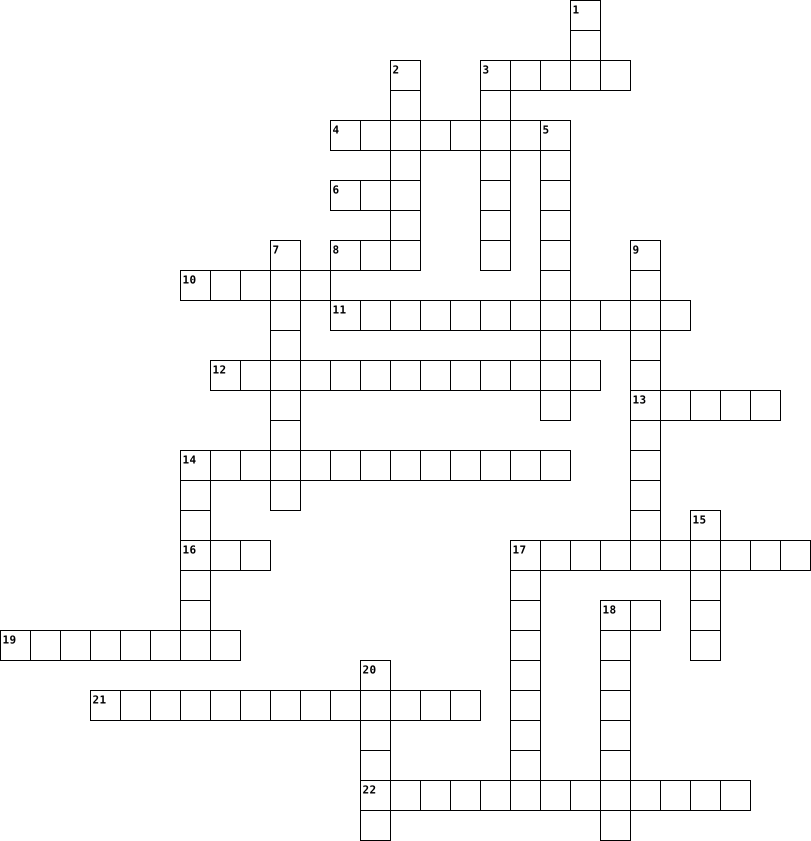
Across
- Prescription is covered under Medicare
- Whaling is a type of ________ attack that targets high-value targets?
- cpt codes are maintained and copyrighted by (Acronym)
- Equipment and supplies ordered by a health care provider for everyday or extended use (Acronym)
- All information produced by the NPI Registry is provided in accordance with (Acronym)
- A movie by John Grisham, starring Matt Damon, an underdog lawyer who takes on fraudulent insurance company. Movie name?
- Application process for a provider to participate with an insurance carrier
- codes are used to report hospital outpatient procedures and physician services (Acronym)
- Service that transmits a batch of claims to individual carriers after checking for errors
- Medicare claims are processed by contractors called (Acronym)
- Type of insurance payers (Aetna, Cigna, United healthcare, etc)
- Athena parking block-B & block-C
- Directing a patient to a specialist for diagnostics or advanced treatment
- Newly joined VP of Shared Services
- Approval from a health plan that may be required before you get a service or fill a prescription in order for the service or prescription to be covered by your plan.
Down
- Team trained in basic life support, basic fire safety and emergency evacuation. (Acronym)
- Federal health insurance for active duty military and their families
- Type of insurance payers (Blue Cross Blue Shield)
- Type of insurance payers (Medicare, Medicaid, TRICARE)
- Healthy snack
- Cost associated with each treatment CPT medical billing codes.
- Civilian Health and Medical Program of the Department of Veterans Affairs (Acronym)
- CMS required all claim submission after October 15 2015 to use _______ diagnosis code
- When claim information is automatically sent from primary to secondary insurance
- Gang responsible for the cyberattack on healthcare giant 'Change Healthcare' in February'24
- Process of objecting to insurance payer decision to deny payment
26 Clues: Healthy snack • Athena parking block-B & block-C • Newly joined VP of Shared Services • Prescription is covered under Medicare • Type of insurance payers (Blue Cross Blue Shield) • cpt codes are maintained and copyrighted by (Acronym) • Type of insurance payers (Medicare, Medicaid, TRICARE) • Medicare claims are processed by contractors called (Acronym) • ...
CH 7 Review - Consumer Math 2026-01-04

Across
- Money paid upfront when buying
- Loss in value over time
- The amount you pay for insurance
- Extra cost added to insurance
- Money you pay before insurance helps
- Coverage for damage to your own car in a crash
- To pay over time using a loan
- A plan for how to spend money
Down
- Amount borrowed before interest
- Money borrowed to buy a car
- Try to lower a price through discussion
- Coverage for theft, weather, vandalism, etc.
- Miles per gallon (fuel efficiency)
- Coverage for damage you cause
- Money taken off the original price
- What a car sells for later
- Title given after major damage
- Request you file with insurance after an accident
- Extra money paid to borrow
- Website used to estimate car value
20 Clues: Loss in value over time • What a car sells for later • Extra money paid to borrow • Money borrowed to buy a car • Coverage for damage you cause • Extra cost added to insurance • To pay over time using a loan • A plan for how to spend money • Money paid upfront when buying • Title given after major damage • Amount borrowed before interest • The amount you pay for insurance • ...
Car Insurance 2020-04-17

Across
- the total amount you pay for insurance policy
- Amount of money you will have to pay back in addition to the money you borrowed.
- The score that evaluates your credit-worthiness and determines the rate of interest you are eligible to receive. It is also called a FICO or Beacon score, and less frequently an Empirica score.
- The true cost of the vehicle to the dealer after subtracting holdbacks and rebates from the invoice price.
- insurance that covers if someone is injured you or damages your car and they do not have insurance
- insurance that covers the cost to repair YOUR car if YOU are at fault in an accident or if damage occurs to your car as a result of a natural disaster,
- The steady decline in the resale value of any vehicle that you buy.
- Amount of your own money paid upfront for a vehicle.
- when you owe more than your car is worth
- or fire
- The price posted on the "window sticker." This is set by the factory and is, in most cases, the high end of negotiations.
Down
- A set amount of money that you, the insured, must pay before an insurance company will pay for a loss.
- a car that has to be returned four times to dealer for the same problem
- The cost of the car without options, but includes standard equipment and factory warranty.
- A car that has passed through the dealer's mechanical and physical inspection.
- A plan for spending and saving money during a particular period.
- vehicle Identification number
- type of warranty that covers bumper-to-bumper damages after the original factory warranty expires.
- insurance that covers if your car is stolen, the insurance covers the loan value instead of the loan value
- The practice of advertising a car at an unrealistically low price, then switching a customer to a different vehicle at a higher price.
20 Clues: or fire • vehicle Identification number • when you owe more than your car is worth • the total amount you pay for insurance policy • Amount of your own money paid upfront for a vehicle. • A plan for spending and saving money during a particular period. • The steady decline in the resale value of any vehicle that you buy. • ...
COMMERCIAL INSURANCE 2018-02-05

Across
- - A property insurance provision granting special protection for the interest of a mortgagee (e.g., financial institution that has an interest in the property)
- - Covers increased costs incurred due to enforcement of laws regulating construction, use or repair of property.
- - An insurance policy issued to replace an expiring policy
- - filing of values by the insured with the company. The values must be the full actual cash values (or replacement cost values if the Replacement Cost Optional Coverage applies) and must be filed annually by the insured.
- - Rates based on loss costs provided by ISO for particular risks. They are based on a property survey and on the application of rating schedules.
- - Provides case management service and expense reimbursement if there has been an identity theft of a named insured
- - The most paid for loss or damage in any one occurrence is the applicable Limit Of Insurance shown in the Declarations.
- - A property insurance term that refers to one of the two primary valuation methods for establishing the value of insured property for purposes of determining the amount the insurer will pay in the event of loss. It is usually defined in the policy as the cost to replace the damaged property with materials of like kind and quality, without any deduction for depreciation
- - A risk management technique that seeks to reduce the possibility that a loss will occur and/or reduce the severity of those that do occur. Also known as risk control or safety.
- - An amount the insurer will deduct from the loss before paying up to its policy limits
- - specifies that the rates used in the development of the commercial property premium are tentative and the premium will be adjusted once the applicable rates are available
- - Provides coverage to perishable stock with the option to have it covered at “selling price”
- - We will not pay the full amount of any loss if the value of Covered Property at the time of loss times the percentage shown for it in the Declarations is greater than the Limit of Insurance for the property.
- - Cause of loss—for example, fire, windstorm, collision.
Down
- - A commercial property insurance provision that suspends the coinsurance clause until a specified expiration date. Insurers usually require a statement of property values signed by the insured as a condition of activating or including an agreed value provision in a commercial property policy. Previously referred to as an agreed amount clause.
- - typically calculated one of three ways: (1) the cost to repair or replace the damaged property, minus depreciation; (2) the damaged property's "fair market value"; or (3) using the "broad evidence rule," which calls for considering all relevant evidence of the value of the damaged property
- - Rates which apply to risks that: are eligible for class rating; and share the same classification description.
- - As a condition of this insurance, you are required to maintain the protective devices or services listed in the schedule.
- - Under general liability coverage, a category of insurable offenses that produce harm other than bodily injury (BI).
- - Commercial property insurance covering loss of income suffered by a business when damage to its premises by a covered cause of loss causes a slowdown or suspension of its operations.
- - are improvements to real property. They are of a permanent nature, such as a new store front, decorations, partitions or elevators. The improvements and betterments are either installed or acquired by the tenant but are not legally removable by the tenant.
- - A policy designed to provide protection against catastrophic losses. Provides excess limits when the limits of underlying liability policies are exhausted by the payment of claims; it drops down and picks up where the underlying policy leaves off when the aggregate limit of the underlying policy in question is exhausted by the payment of claims; and it provides protection against some claims not covered by the underlying policies, subject to the assumption by the named insured of a self-insured retention (SIR).
- - Insurance paying or rendering service on behalf of an insured for loss arising out of legal liability to others
- - Property insurance for property in transit over land, certain types of moveable property
- - Coverage for loss due to mechanical or electrical breakdown of nearly any type of equipment.
- - The “Terrorism Risk Insurance Act" ("TRIA") establishes a program within the Department of the Treasury in which the Federal Government will share the risk of loss from terrorist attacks with the insurance industry.
- - changes by modifying the existing insuring agreement, policy definitions, exclusions, or conditions in the coverage form or adding additional information, such as insured locations
- - Any person, firm, or organization, or any of its members specifically designated by name as an insured(s) in an insurance policy, as distinguished from others that, although unnamed, fall within the policy definition of an "insured."
28 Clues: - An insurance policy issued to replace an expiring policy • - Cause of loss—for example, fire, windstorm, collision. • - Property insurance for property in transit over land, certain types of moveable property • - Coverage for loss due to mechanical or electrical breakdown of nearly any type of equipment. • ...
Liability Insurance 2019-02-10

Across
- The act of holding possession of a property or premises.
- Liability Insurance is purchased by the insured from an insurer to compensate or indemnify another for damage or loss for which the insured is lawfully liable
- This policy is primarily intended to protect the insured from legal liability for unintentionally caused bodily injury or property damage to the other people
- A person who enters onto premises under a contract with the occupier.
- It's subject of liability insurance
- Responsible for Police, fire, water.
- Responsible for Property rights, education, health care and the regulation of the insurance industry
- Failure to use the degree of care expected from a reasonable or prudent person
- Responsible for Military affairs, foreign relations, the national currency, the postal service, financial relations of banks and insurance companies.
- A law set down in a government act and passed by legislation
- In law, a class of wrong that arises out of persons own improper or unlawful personal conduct and producing an annoyance or inconvenience to others or to their property that the law would presume consequential damage.
Down
- an agreement that allows one party to protect another party against any future losses or claims that may result from a particular activity.
- The obligation that a person has to exercise reasonable care with respect to the interest of others including protecting them from harm.
- Insurance that agrees to indemnify the insured from sums she may be required by law to pay the third parties as damages for bodily injury or damage to property
- nuisance, An action or a thing that interferes with the general public as a class, not merely with one person or a group of citizens.
- A legal wrong arising from a duty fixed by law.
- A person who wrongfully enters onto someone else's land with neither the right nor permission to be there.
- A special form of liability policy designed to protect the insured for certain unknown contingencies over and above coverage and to provide excess insurance.
- A person who has permission to enter premises for his or her own purposes.
- Quebec system of civil law.
- A person who is expressly or impliedly invited onto the premises for some purpose involving economic of potential economic benefit to the occupier of the premises.
- Nuisance, An unlawful interference of a person's enjoyment and use of his or her land
22 Clues: Quebec system of civil law. • It's subject of liability insurance • Responsible for Police, fire, water. • A legal wrong arising from a duty fixed by law. • The act of holding possession of a property or premises. • A law set down in a government act and passed by legislation • A person who enters onto premises under a contract with the occupier. • ...
Insurance 101 2019-10-22

Across
- Medicare fee schedule used to price physician services
- Monetary amount that the member must pay before the insurance company will begin paying for their claims
- Paid claim that was reversed for various reasons
- Services performed by a MD/DO that are paid at a 16% reduction
- Individual that provides medical care to a patient
- Modifier 26
- Contracted amount that a provider agrees to when signing a contract with the insurance company
- Claim rejected for payment but has not yet gone through Check Run
Down
- Series of numbers unique to each member
- Billing Provider ID begins with a "G"
- Website used to view DLP
- 2 digit code used to determine facility or non-facility pricing in MPFS
- Name of the process that happens weekly where payment is sent out to the provider
- Percentage that the member is responsible for each of their claims
- Modifier TC
- 5 Digit code that describes a service performed
- CPT Code Range 700010-79999
- Set dollar amount that a member pays alongside the insurance company
- First action that needs to be done prior to processing a claim
- Meaning of the first digit in the TOB 131
- Billing Provider ID begins with an "F"
- Claim held by the system for manual review
- 99213 belongs to this category
23 Clues: Modifier TC • Modifier 26 • Website used to view DLP • CPT Code Range 700010-79999 • 99213 belongs to this category • Billing Provider ID begins with a "G" • Billing Provider ID begins with an "F" • Series of numbers unique to each member • Meaning of the first digit in the TOB 131 • Claim held by the system for manual review • 5 Digit code that describes a service performed • ...
Home Insurance 2013-05-20

Across
- CBA has one of the largest _____ network in Australia
- This is now covered under Portable contents
- CBA's insurance brand name
- Hail storm damage could be covered under this?
- All structures to your home is covered under?
- You lodge this when you sustain damage to your Home.
- Your dog bites a guests leg, this could be covered under?
- Customers who combine their building & contents receive this
- You can pay your premium this way
Down
- You commit an unlawful act
- A customer would cover their rental property under this policy
- A customer's home is broken into it would be claimable under?
- policy holder
- Is payable when you lodge a claim
- Customer receives extra 25% on both contents and building
- Customer pays this to cover them each year?
- If no one is residing in your home the home is this
- Does a customers premium increase next year with CBA if they lodge a claim?
- Have a monitored ______ will decrease your premium
- If a customer's home is destroyed by a tsuinami this is covered under?
- Tree falls on a customers home could be covered under this?
21 Clues: policy holder • You commit an unlawful act • CBA's insurance brand name • Is payable when you lodge a claim • You can pay your premium this way • Customer pays this to cover them each year? • This is now covered under Portable contents • All structures to your home is covered under? • Hail storm damage could be covered under this? • ...
Flood Insurance 2015-05-28

Across
- For a home beginning with an A or V zone, they are required to have a certificate for this.
- Of the two programs, our communities are part of this one
- This policy is the more affordable, ala carte option for coverage.
- The Homeowners Flood Insurance Affordability Act of 2014 did this to rates.
- This can't be waived or removed.
- The Reserve Fund Assessment is placed on this policy only.
- The goal of this policy is to relieve your burden, not do this(4 words)
- Start with this for everyone, and only move to the other if they don't qualify (acronym).
- The flood policy is a _____ policy (2 words).
- Coverage B covers this.
- You do not have this!
- The Agent Responsibility ____ Form is not a required form but rather a tool for pushing the sale.
- The duration of the flood policy (2 words).
Down
- The parent organization for NFS
- Most forms of distaster assistance need this (2 words)
- The insurance company for which the policies go through
- This applies separately to a building loss and a contents loss.
- If the building was built prior to 12-31-1974, it is this.
- A flood policy can be cancelled ____ (2 words).
- The Biggert-Waters Flood Insurance Reform Act did this to rates.
- An exception to the waiting period is this (2 words).
- The number of days in the waiting period for new business.
- We can't write home insurance for this, but it is acceptable for a flood policy (2 words).
- The Elevation Certificate packet required this many photos.
24 Clues: You do not have this! • Coverage B covers this. • The parent organization for NFS • This can't be waived or removed. • The duration of the flood policy (2 words). • The flood policy is a _____ policy (2 words). • A flood policy can be cancelled ____ (2 words). • An exception to the waiting period is this (2 words). • Most forms of distaster assistance need this (2 words) • ...
Insurance 101 2015-07-21

Across
- The patients share of the costs of a covered health care service, calculated as a percentage
- The amount the patient has to pay out-of-pocket for expenses before the insurance company will cover the remaining costs Deductible obligations exclude copayments
- Advantage, Replacement Policy or Medicare Part C: A type of Medicare health plan offered by a private company that contracts with Medicare to provide you with all your Part A and Part B benefits, in addition to RX and dental benefits
- Accounts Receivable
- Third Party Liability (ex: workers compensation)
- Remittance Advice Remark Code; Supplemental to a CARC
- Software as a Service (QSI Dental Web/ QDW)
- State administered health insurance program for low income or disabled patients
- A child or other individual for whom a parent, relative, or other person may claim a personal exemption tax deduction and is eligible for health benefits under the subscribers health insurance policy
- Explanation of Benefits
Down
- Marian Smith is the
- A type of health insurance arrangement that allows plan participants relative freedom to choose the doctors and hospitals they want to visit
- : Park Dental's Clearinghouse
- The process of paying claims submitted or denying them after comparing claims to the benefit or coverage requirements
- Electronic Funds Transfer
- Federally administered health insurance program for adults over 65, patients with disabilities and / or End Stage Renal Disease
- Electronic Remittance Advice
- Coordination of Benefits
- Claim: Formerly called Claim Reversal; A provider initiated electronic void is the cancelation of an entire claim
- The policy owner The person who pays health insurance premiums and / or is eligible for group health insurance benefits
- A request for your health insurer or plan to review a decision or a grievance again
- A request for payment that you or your health care provider submits to your health insurer after services are rendered
- Prepaid Medical Assistance Programs
- Electronic Claim Submission
- : Electronic Data Interchange
25 Clues: Marian Smith is the • Accounts Receivable • Explanation of Benefits • Coordination of Benefits • Electronic Funds Transfer • Electronic Claim Submission • Electronic Remittance Advice • : Park Dental's Clearinghouse • : Electronic Data Interchange • Prepaid Medical Assistance Programs • Software as a Service (QSI Dental Web/ QDW) • Third Party Liability (ex: workers compensation) • ...
INSURANCE 101 2016-02-16

Across
- FINANCIAL INSTITUTION
- IMPACT
- EVERYONE
- PAYMENTS TO OTHERS
- LOSS OF USE
- HO4
- THEFT
- SHAKE
- DP3
- HO6
Down
- DATES START AND END OF COVERAGE
- VEHICLE
- COMPREHENSIVE
- CONDO
- CONTACT
- HEADLIGHTS WHILE DRIVING
- NOT ALLOWED WHILE DRIVING
- DEVICE TO DETECT
- NEED TO BE ON
- personal injury
- PERIL COVERAGE
- ACTUAL CASH VALUE
- HO3
- PERSONAL LIABILITY
24 Clues: HO4 • DP3 • HO3 • HO6 • CONDO • THEFT • SHAKE • IMPACT • VEHICLE • CONTACT • EVERYONE • LOSS OF USE • COMPREHENSIVE • NEED TO BE ON • PERIL COVERAGE • personal injury • DEVICE TO DETECT • ACTUAL CASH VALUE • PAYMENTS TO OTHERS • PERSONAL LIABILITY • FINANCIAL INSTITUTION • HEADLIGHTS WHILE DRIVING • NOT ALLOWED WHILE DRIVING • DATES START AND END OF COVERAGE
Insurance Terms 2023-02-24

Across
- A statistical mechanism that quantifies the variability of a distribution from a mean
- A non-premium bearing coverage that is included within the broader construct of a purchased coverage
- A method of calculating fractional amounts of something equally among all parts of a whole
- The fee paid to an agent or insurance salesperson as a percentage of the policy premium
- Net amount the insured is required to pay for a given transaction. It is the difference between onset and offset premium
- A transaction that will establish the policy term: New Business, Renewal, Rewrite Same or Rewrite New
- The amount needed for a policy or coverage necessary to recover the cost of writing it
- Application that allows the the input of risk characteristics, underwriting answers, product rules and coverages that a premium can be calculated and allows the agent/customer to accept the terms in the form of a policy contract
- The date in which the rates are loaded and available within the rate tables
- Coverage used to protect businesses from internet-based risks
- The date when the policy becomes in force
- A required coverage for a segment/classification of business
- Cancellation of an insurance policy as of its effective date before the insurer has assumed liability. Return of paid premium in full
- Items used by a business for the production of income
- Cancellation of an insurance policy during the term of the policy and prior to the expiration date
- The unity of measure used as the rating bases for determination of premium
- Amount insured is returned for a coverage based on the transaction effective date. It is the prorated amount of the previous transaction's annual premium *-1
Down
- Business Insurance Rating Team
- Amount insured could be charged for a coverage based on the transaction effective date. It is the prorated amount of annual premium
- Liability insurance covering wrongful acts arising from the employment process
- Running total of term premium over the life of the policy term
- A selected coverage commensurate with the insured's particular risk
- Cancellation of an insurance policy during the term of the policy and prior to the expiration date
- Amount insured could be charged for coverage if that coverage were on a policy for a full year
- Defined limits of liability insurance that are in addition to specified other policies and also potentially primary insurance for loss not covered by other policies
- A quantifiable item that contains a threat of damage, injury, liability, loss or any other negative occurrence that may be avoided through preemptive action
- A required coverage for a segment/classification of business
- The date the policy is first rated within the policy writing application for a given policy
- Numeric variable that further classify a particular risk beyond the base rate
- A general classification of insurance industry business
- A premium bearing coverage that has a dollar cost directly associated with a given coverage
- The amount necessary to add to a transaction to bring it up to the policy or coverage minimum
- The price per exposure unity for insurance coverage
33 Clues: Business Insurance Rating Team • The date when the policy becomes in force • The price per exposure unity for insurance coverage • Items used by a business for the production of income • A general classification of insurance industry business • A required coverage for a segment/classification of business • A required coverage for a segment/classification of business • ...
CAR INSURANCE 2023-04-05

Across
- unpredictable event
- In winter my car...
- The heart of the car
- Traffic is blocked, I’m in a...
- He teaches me how to drive
- They lend me à car
- If my windshield is wet I put the..
- When I turn I put the...
- "Ice break" guarantee, for the?
- The car has 4?
- When I make a mistake i have a?
Down
- My car won’t start, it’s in...
- It allows to steer the car
- I have to get it to drive
- I put it on my head in winter
- The car before me and slow, I...
- The car’s hungry, we put it in?
- He has the rules of conduct
- It can have 3 different colors
- When I ride I have to respect the...
- audible noise
21 Clues: audible noise • The car has 4? • They lend me à car • unpredictable event • In winter my car... • The heart of the car • When I turn I put the... • I have to get it to drive • It allows to steer the car • He teaches me how to drive • He has the rules of conduct • I put it on my head in winter • My car won’t start, it’s in... • It can have 3 different colors • ...
Insurance Terms 2023-04-26

Across
- specific set of benefits from that payor
- the insuring entity
- more than one insurance plan
- percentage of the charge or allowed charge
- Gatekeeper
- annual cycle when the insurance is effective
- termination of insurance coverage
- the policy holder
- date when coverage begins
- financially responsible for patient
- often referred to as insured person
Down
- EOB
- "copay"
- PCP not required for care
- must be met before services are covered at 100%
- cannot go outside of network for care
- can be a spouse or child
- refer to services covered by plan
- public or private
- Authorization to see a specialist
20 Clues: EOB • "copay" • Gatekeeper • public or private • the policy holder • the insuring entity • can be a spouse or child • PCP not required for care • date when coverage begins • more than one insurance plan • refer to services covered by plan • termination of insurance coverage • Authorization to see a specialist • financially responsible for patient • often referred to as insured person • ...
Insurance operations 2024-09-26

Across
- to grow or accumulate over time, especially as something of benefit
- serving as a preventative
- Making people whole again with compensation for damaged caused
- indirect legal responsibility for the acts of another
- the individual who manages a trust
- the amount of risk or liability that is covered by insurance
- A form added to an existing insurance contract that changes the terms coverage, or scope of policy
- a legal claim on a piece of property when the current owner is in default on a debt or obligation.
- a person or group in whose name an insurance policy is held
- To put up with; stand
Down
- the right or authority to interpret and administer the law
- touchable property
- an act or instance of breaking or violating, usually a rule or law; violation or breach
- the individual who establishes a trust
- to become liable for or bring upon oneself (usually some unwanted or harmful consequence)
- A loan lender that has a legal claim to your finance car
- any belief, opinion, doctrine, or the like, that a person or especially an organization holds as being true
- First page of a policy that specifies information from insured to insure
- to pay back for (expenses or losses incurred)
- one who alleges something to be true or demands something as one's right against another person or company
20 Clues: touchable property • To put up with; stand • serving as a preventative • the individual who manages a trust • the individual who establishes a trust • to pay back for (expenses or losses incurred) • indirect legal responsibility for the acts of another • A loan lender that has a legal claim to your finance car • the right or authority to interpret and administer the law • ...
COMMERCIAL INSURANCE 2025-02-27

Across
- - A property insurance provision granting special protection for the interest of a mortgagee (e.g., financial institution that has an interest in the property)
- - Covers increased costs incurred due to enforcement of laws regulating construction, use or repair of property.
- - An insurance policy issued to replace an expiring policy
- - filing of values by the insured with the company. The values must be the full actual cash values (or replacement cost values if the Replacement Cost Optional Coverage applies) and must be filed annually by the insured.
- - Rates based on loss costs provided by ISO for particular risks. They are based on a property survey and on the application of rating schedules.
- - Provides case management service and expense reimbursement if there has been an identity theft of a named insured
- - The most paid for loss or damage in any one occurrence is the applicable Limit Of Insurance shown in the Declarations.
- - A property insurance term that refers to one of the two primary valuation methods for establishing the value of insured property for purposes of determining the amount the insurer will pay in the event of loss. It is usually defined in the policy as the cost to replace the damaged property with materials of like kind and quality, without any deduction for depreciation
- - A risk management technique that seeks to reduce the possibility that a loss will occur and/or reduce the severity of those that do occur. Also known as risk control or safety.
- - An amount the insurer will deduct from the loss before paying up to its policy limits
- - specifies that the rates used in the development of the commercial property premium are tentative and the premium will be adjusted once the applicable rates are available
- - Provides coverage to perishable stock with the option to have it covered at “selling price”
- - We will not pay the full amount of any loss if the value of Covered Property at the time of loss times the percentage shown for it in the Declarations is greater than the Limit of Insurance for the property.
- - Cause of loss—for example, fire, windstorm, collision.
Down
- - A commercial property insurance provision that suspends the coinsurance clause until a specified expiration date. Insurers usually require a statement of property values signed by the insured as a condition of activating or including an agreed value provision in a commercial property policy. Previously referred to as an agreed amount clause.
- - typically calculated one of three ways: (1) the cost to repair or replace the damaged property, minus depreciation; (2) the damaged property's "fair market value"; or (3) using the "broad evidence rule," which calls for considering all relevant evidence of the value of the damaged property
- - Rates which apply to risks that: are eligible for class rating; and share the same classification description.
- - As a condition of this insurance, you are required to maintain the protective devices or services listed in the schedule.
- - Under general liability coverage, a category of insurable offenses that produce harm other than bodily injury (BI).
- - Commercial property insurance covering loss of income suffered by a business when damage to its premises by a covered cause of loss causes a slowdown or suspension of its operations.
- - are improvements to real property. They are of a permanent nature, such as a new store front, decorations, partitions or elevators. The improvements and betterments are either installed or acquired by the tenant but are not legally removable by the tenant.
- - A policy designed to provide protection against catastrophic losses. Provides excess limits when the limits of underlying liability policies are exhausted by the payment of claims; it drops down and picks up where the underlying policy leaves off when the aggregate limit of the underlying policy in question is exhausted by the payment of claims; and it provides protection against some claims not covered by the underlying policies, subject to the assumption by the named insured of a self-insured retention (SIR).
- - Insurance paying or rendering service on behalf of an insured for loss arising out of legal liability to others
- - Property insurance for property in transit over land, certain types of moveable property
- - Coverage for loss due to mechanical or electrical breakdown of nearly any type of equipment.
- - The “Terrorism Risk Insurance Act" ("TRIA") establishes a program within the Department of the Treasury in which the Federal Government will share the risk of loss from terrorist attacks with the insurance industry.
- - changes by modifying the existing insuring agreement, policy definitions, exclusions, or conditions in the coverage form or adding additional information, such as insured locations
- - Any person, firm, or organization, or any of its members specifically designated by name as an insured(s) in an insurance policy, as distinguished from others that, although unnamed, fall within the policy definition of an "insured."
28 Clues: - An insurance policy issued to replace an expiring policy • - Cause of loss—for example, fire, windstorm, collision. • - Property insurance for property in transit over land, certain types of moveable property • - Coverage for loss due to mechanical or electrical breakdown of nearly any type of equipment. • ...
Insurance Vocabulary 2025-05-27

Across
- A provider that specializes in treating illnesses that disrupt the body's normal hormone absorption and balance, such as Diabetes.
- A process including verification of education, experience, competence, and licensure of healthcare providers.
- The process of a health plan and provider/facility negotiating a contract for reimbursement.
- A facility where skilled nursing care and rehabilitation services are provided on a continuous or daily basis for those recovering from trauma, surgery or disability.
- This word describes a medical service that is non-invasive and that the patient is able to leave from following its completion.
- Used to describe a provider that has agreed to accept our payment in full and to coordinate and provide covered services.
- A provider that specializes in treating illnesses that effect the skin.
- Codes that describe medical, surgical and diagnostic services. Also called CPT codes and HCPCS. Includes J-Codes for drugs.
Down
- A facility where exclusively outpatient surgeries are performed.
- A medical provider who has special training for a certain part of the body or type of illness.
- The name of Samaritan Health Plan's Medicaid Coordinated Care Organization.
- An individual or facility that provides healthcare services.
- A medical professional who manages your health. The first person you call.
- A member/patient's socioeconomic information expressed statistically - including address, phone number, name and Date of Birth for example.
- The percentage of the cost of a covered health care service an induvial pay after paying their deductible, billed after the service.
- Used to describe a provider that does not have a contract with our plan to coordinator or provide covered services.
- An organization that enables the exchange of healthcare data between a provider and health insurance companies.
- A fixed amount an individual will pay for a covered healthcare service after their deductible, but before the service.
- Codes that describe diseases, illnesses and injuries.
- This word describes a medical service that is invasive and that requires the patient stay and be monitored at a medical facility for a period of time following its completion.
20 Clues: Codes that describe diseases, illnesses and injuries. • An individual or facility that provides healthcare services. • A facility where exclusively outpatient surgeries are performed. • A provider that specializes in treating illnesses that effect the skin. • A medical professional who manages your health. The first person you call. • ...
Insurance 101 at PHLY 2025-04-23

Across
- A notice to your insurance company stating that you have experienced a loss.
- The department that receives notices of loss from PHLY's customers.
- A type of insurance that covers vehicles like cars and trucks.
- This states what is protected under your insurance policy.
- The department that sells PHLY's insurance products.
Down
- Something that has the potential to result in a loss.
- Something that has been lost, damaged, stolen, or destroyed.
- The department that writes insurance policies.
- This is who bought the insurance policy (a person or a company/business).
- A type of insurance that covers a building.
- The amount of money that you pay to the insurance company.
- This document states coverages, premium, and other details about your insurance.
12 Clues: A type of insurance that covers a building. • The department that writes insurance policies. • The department that sells PHLY's insurance products. • Something that has the potential to result in a loss. • The amount of money that you pay to the insurance company. • This states what is protected under your insurance policy. • ...
Insurance Terms | 3 November 2017 | RM 2017-11-03

Across
- A request for payment of a loss which may come under the terms of an insurance contract
- Someone who regularly travels between work and home
- legally obliged to pay for damage, injury etc; responsible
- A business activity in which banks sell services and products usually sold by insurance firms
- An amount that a policyholder agrees to pay, per claim or per accident, toward the total amount of an insured loss
- ______ means making compensation payments to one party by the other for the loss incurred
- An advantage or benefit, such as money or goods, given because of your job
- _____ insurance is a type of insurance which lasts for a limited time period
Down
- _____ is an amount paid periodically to the insurer by the insured for coverage
- Condition that creates or increases the chance of loss
- Breaking into another person's property with felonious intent
- The right to transfer pension rights and credits when a worker changes jobs
- Having insufficient financial resources (assets) to meet financial obligations (liabilities)
- A physical or a mental impairment that substantially limits one or more major life activities of an individual
- The person during whose life an annuity is payable
- The _____ date is the date on which the insurance under a policy begins
- A person who calculates risks for insurance companies
- The state of being legally obliged and responsible
- A person who investigates and settles losses for an insurance carrier
19 Clues: The person during whose life an annuity is payable • The state of being legally obliged and responsible • Someone who regularly travels between work and home • A person who calculates risks for insurance companies • Condition that creates or increases the chance of loss • legally obliged to pay for damage, injury etc; responsible • ...
Unit 5 Vocab Terms 2024-03-25

Across
- An Act that was a response to the financial crisis in to increase accountability and transparency in the financial system (two words with a - )
- (3 words, no space) This scam inflates the price of stock with false or misleading information then quickly sells their own stock at the inflated price
- A consumer protection law that eliminates abusive practices in the collection of consumer debts and gives guidelines to debt collectors (acronym)
- This scam sends emails or other messages that appear to be legit in order to steal personal information
- The acronym for the government agency that protects investors and maintains fair markets
- This is the portion of money that you are responsible for, usually based on a percentage (two words, no space)
- A consumer protection law that is designed to promote accuracy, fairness, and privacy information in credit reports (acronym)
- The acronym for the government agency that ensures consumer financial markets are not predatory and do not violate the law
- This is the amount of money that you have to pay off before the insurance company starts paying for the bill
- This insurance is a separate property insurance that protects from flooding
- This insurance is required by law and protects drivers
- This insurance guarantees a sum of money is paid to the beneficiaries (usually family) when the insured person dies
- The characteristic of being acceptable for insurance, each company has their own policies
Down
- A consumer protection law that aims to prevent discrimination in the sale, rental and financing of housing
- This scam scans the data off your credit or debit card usually at a gas pump or ATM
- This insurance pays a percentage of your salary in the case of injury or illness
- (two words, no space) This scam promises to send you money first in exchange for a deal, item, or object.
- People by insurance to ______________ something they purchased/or their assets
- This is them amount that you pay monthly in exchange for your insurance plan
- The acronym for the government agency that will pay up to $250,000 (not a credit union)
- This insurance protects from high and unexpected medical costs
- The acronym for the government agency that protects the people from deceptive and unfair business practices
- This is a fraudulent scheme where money taken from later investors is paid to early investors to create an illusion of big profits (investment scam)
- This insurance protects a person's house or rental property from thefts, accidents, fires
- A consumer protection law that was created to promote the informed use of consumer credit by disclosure of the terms and costs associated with borrowing money(acronym)
25 Clues: This insurance is required by law and protects drivers • This insurance protects from high and unexpected medical costs • This insurance is a separate property insurance that protects from flooding • This is them amount that you pay monthly in exchange for your insurance plan • People by insurance to ______________ something they purchased/or their assets • ...
Life Insurance 2013-07-28

Across
- life policy those limiting the scope of the contract
- age in the proposal more than actual age
- period allowed for the payment of premium normally is 30 days or a calendar month
- Contains the name of the insurance company, its Head Office address, logo
- clause where the insured has the option of paying a higher premium instead of the exclusion
- Automatic ________ advance where first overdue premium is advanced for one year
- policy owner never pays another premium
- age in the proposal less than actual age
- life policy those enlarging the scope of the contract
- transferring ownership of your life insurance policy to another individual, corporation or trustee
- a settlement of a difference by a person or persons agreed
- by the end of the grace period, the policy will ________ as of the premium due date
- Important to determine the rate of premium to be charged
- value express the death benefit amount
Down
- clause prevents an insurer from denying benefits on the ground of misrepresentation after 2 years
- within thirteen months from the due date of the first unpaid premium
- this value also known as "cash value" or "policyholder's equity
- also known as rider, addendum, attachment
- Automatic ________ premium advanced as a loan against the surrender value until it is exhausted
- period help to reduce the possibility of committing suicide
- Recites the parties to the contract and that the proposal and declaration from the grantee shall be the basis of the contract
- person receiving ownership
22 Clues: person receiving ownership • value express the death benefit amount • policy owner never pays another premium • age in the proposal more than actual age • age in the proposal less than actual age • also known as rider, addendum, attachment • life policy those limiting the scope of the contract • life policy those enlarging the scope of the contract • ...
Insurance CrossWord 2016-07-01

Across
- Coverage span
- wide scale natural perils
- Shared by two or more policies
- Who may receives the benefit of policy
- Demand made by Insured for payment of benefits
- That which is not covered
- Breach of warranty may nullify the contract
- Liability or Loss resulting from an accident
- Applicable in under insurance
- Basic fire perils Fire Lightning Explosion Aircraft
Down
- Cause of loss
- Something ought to be done or complied with
- Part of claim borne by claimant
- In case of a dispute in quantum, parties go for
- Insurance contract document
- What one gets in a property claim
- Consideration
- Details of subject matter, location, period etc
- Measure of vulnerability to Loss
- A circumstance that increases likelyhood of severity
- Specific policy wording
21 Clues: Cause of loss • Coverage span • Consideration • Specific policy wording • wide scale natural perils • That which is not covered • Insurance contract document • Applicable in under insurance • Shared by two or more policies • Part of claim borne by claimant • Measure of vulnerability to Loss • What one gets in a property claim • Who may receives the benefit of policy • ...
Watercraft Insurance 2017-02-03

Across
- These types of limits are not offered on the WC policy; BI and PD are included in one limit.
- Deck chairs, coolers, and cell phones are referred to as these.
- If you only have 1 WC, then there needs to be less than this many losses in the last 3 years.
- For this inspection, we can accept photos from the insured.
- When a WC is laid up, this coverage does not extend to the WC.
- Rule 2 states this is not applicable to rating a WC policy.
- A boat older than this many years old is unacceptable.
- Appendix A outlines these kinds of boat manufacturers.
- For the waters sports endorsement, at least two riders are needed because this is needed when towing a person off the back of a WC.
- We will not write pleasure boats with more than this horsepower.
- PW exceeding this many feet in length are unacceptable.
- This requires UW approval because we could be insuring the boat for more than its value.
- This many hundred is offered automatically with the policy for electronic equipment.
- An applicant cannot have more than this any WC losses within the last 3 years.
Down
- This describes the right side of the boat.
- This is covered in the policy in NH and VT, but should be added as additional coverage for WC in Maine.
- This is the most number of days we could future date a WC policy.
- This many signatures is required of a married couple at new business.
- The left side of the boat is known as this side.
- This is required when the boat is moored.
- Boats exceeding this many feet in length are unacceptable.
- Inspection types are based on the type of WC, the value, the age, and this.
- The six-month lay-up begins on the first of this month.
- This is the front of the boat.
- PC valued at over this many thousand are unacceptable.
- Emergency services coverage offers this much per occurrence.
- This is the body of the watercraft.
- To meet the operational knowledge standard, the applicant could have owned a boat for at least 1 year over the course of this many years.
- This many hours is required in the last year as acceptable "prior boating experience."
29 Clues: This is the front of the boat. • This is the body of the watercraft. • This is required when the boat is moored. • This describes the right side of the boat. • The left side of the boat is known as this side. • PC valued at over this many thousand are unacceptable. • A boat older than this many years old is unacceptable. • ...
Travel insurance 2017-06-24

Across
- medical practitioner who is registered licensed
- general exclusion 3 A
- Is pre existing condition coverage needed for travel within Canada?
- acute illness requiring immediate medical treatment
- amount of pre existing condition coverage
- eligibility requirement number one
- dog cat bird small reptile small mammal.
- owner of the policy
- condition that does not require more then 30 days treatment or more then one follow up visit or hospitalization or surgical intervention
- the date you leave your departure point and start your trip
- exclusion for childbirth within....
- means estate unless otherwise requested in writing
Down
- individuals under 59 and consisting of you , all dependent children,and spouse
- emotional upset or state of anxiety, panic attack
- applicable to insured over the age of 60
- stability period for under 60
- general exclusion 11
- name of a company you can be certified by, general exclusion 12
- stability period over 60
- automatic extension to coverage if there are reasons beyond your control why you cannot return home prior to the policy expiry date
- the initial or emergency short course treatment phase of a sudden and unexpected sickness/ injury
- exclusion number one
- dollar amount of coverage
- a legally constituted medical facility under the medical supervision of a physician
- portion of eligible expenses the insured must pay
- does a visitor to canada under 60 get automatic pre existing condition coverage?
- an unforeseen sickness or injury which requires immediate medical treatment
- any dollar amount expressed in this policy is deemed to be in Canadian
- general exclusion 4
29 Clues: owner of the policy • general exclusion 4 • general exclusion 11 • exclusion number one • general exclusion 3 A • stability period over 60 • dollar amount of coverage • stability period for under 60 • eligibility requirement number one • exclusion for childbirth within.... • applicable to insured over the age of 60 • dog cat bird small reptile small mammal. • ...
Liability Insurance 2019-02-10

Across
- Responsible for Police, fire, water.
- This policy is primarily intended to protect the insured from legal liability for unintentionally caused bodily injury or property damage to the other people
- Quebec system of civil law.
- A person who is expressly or impliedly invited onto the premises for some purpose involving economic of potential economic benefit to the occupier of the premises.
- Insurance that agrees to indemnify the insured from sums she may be required by law to pay the third parties as damages for bodily injury or damage to property
- The act of holding possession of a property or premises.
- The obligation that a person has to exercise reasonable care with respect to the interest of others including protecting them from harm.
- A person who wrongfully enters onto someone else's land with neither the right nor permission to be there.
- an agreement that allows one party to protect another party against any future losses or claims that may result from a particular activity.
- Responsible for Military affairs, foreign relations, the national currency, the postal service, financial relations of banks and insurance companies.
- Failure to use the degree of care expected from a reasonable or prudent person
Down
- nuisance, An action or a thing that interferes with the general public as a class, not merely with one person or a group of citizens.
- It's subject of liability insurance
- Responsible for Property rights, education, health care and the regulation of the insurance industry
- A person who enters onto premises under a contract with the occupier.
- Liability Insurance is purchased by the insured from an insurer to compensate or indemnify another for damage or loss for which the insured is lawfully liable
- In law, a class of wrong that arises out of persons own improper or unlawful personal conduct and producing an annoyance or inconvenience to others or to their property that the law would presume consequential damage.
- A legal wrong arising from a duty fixed by law.
- A special form of liability policy designed to protect the insured for certain unknown contingencies over and above coverage and to provide excess insurance.
- Nuisance, An unlawful interference of a person's enjoyment and use of his or her land
- A law set down in a government act and passed by legislation
- A person who has permission to enter premises for his or her own purposes.
22 Clues: Quebec system of civil law. • It's subject of liability insurance • Responsible for Police, fire, water. • A legal wrong arising from a duty fixed by law. • The act of holding possession of a property or premises. • A law set down in a government act and passed by legislation • A person who enters onto premises under a contract with the occupier. • ...
Liability Insurance 2019-02-10

Across
- The obligation that a person has to exercise reasonable care with respect to the interest of others including protecting them from harm.
- a class of wrong that arises out of persons own improper or unlawful personal conduct and producing an annoyance or inconvenience to others or to their property that the law would presume consequential damage.
- Responsible for Military affairs, foreign relations, the national currency, the postal service, financial relations of banks and insurance companies.
- Liability Insurance is purchased by the insured from an insurer to compensate or indemnify another for damage or loss for which the insured is lawfully liable
- Failure to use the degree of care expected from a reasonable or prudent person
- The act of holding possession of a property or premises.
- A law set down in a government act and passed by legislation
- An action or a thing that interferes with the general public as a class, not merely with one person or a group of citizens.
- Insurance that agrees to indemnify the insured from sums she may be required by law to pay the third parties as damages for bodily injury or damage to property
- It's subject of liability insurance
- Nuisance, An unlawful interference of a person's enjoyment and use of his or her land
Down
- Responsible for Property rights, education, health care and the regulation of the insurance industry
- This policy is primarily intended to protect the insured from legal liability for unintentionally caused bodily injury or property damage to the other people
- A special form of liability policy designed to protect the insured for certain unknown contingencies over and above coverage and to provide excess insurance.
- A person who enters onto premises under a contract with the occupier.
- Responsible for Police, fire, water.
- an agreement that allows one party to protect another party against any future losses or claims that may result from a particular activity.
- A person who has permission to enter premises for his or her own purposes.
- A person who is expressly or impliedly invited onto the premises for some purpose involving economic of potential economic benefit to the occupier of the premises.
- A person who wrongfully enters onto someone else's land with neither the right nor permission to be there.
- Quebec system of civil law.
- A legal wrong arising from a duty fixed by law.
22 Clues: Quebec system of civil law. • It's subject of liability insurance • Responsible for Police, fire, water. • A legal wrong arising from a duty fixed by law. • The act of holding possession of a property or premises. • A law set down in a government act and passed by legislation • A person who enters onto premises under a contract with the occupier. • ...
Liability Insurance 2019-02-10

Across
- Liability Insurance is purchased by the insured from an insurer to compensate or indemnify another for damage or loss for which the insured is lawfully liable
- Nuisance, An unlawful interference of a person's enjoyment and use of his or her land
- A person who has permission to enter premises for his or her own purposes.
- Failure to use the degree of care expected from a reasonable or prudent person
- The obligation that a person has to exercise reasonable care with respect to the interest of others including protecting them from harm.
- Quebec system of civil law.
- a class of wrong that arises out of persons own improper or unlawful personal conduct and producing an annoyance or inconvenience to others or to their property that the law would presume consequential damage.
- A person who enters onto premises under a contract with the occupier.
- An action or a thing that interferes with the general public as a class, not merely with one person or a group of citizens.
- A law set down in a government act and passed by legislation
Down
- Insurance that agrees to indemnify the insured from sums she may be required by law to pay the third parties as damages for bodily injury or damage to property
- A person who wrongfully enters onto someone else's land with neither the right nor permission to be there.
- Responsible for Property rights, education, health care and the regulation of the insurance industry
- The act of holding possession of a property or premises.
- This policy is primarily intended to protect the insured from legal liability for unintentionally caused bodily injury or property damage to the other people
- an agreement that allows one party to protect another party against any future losses or claims that may result from a particular activity.
- Responsible for Police, fire, water.
- It's subject of liability insurance
- A legal wrong arising from a duty fixed by law.
- A person who is expressly or impliedly invited onto the premises for some purpose involving economic of potential economic benefit to the occupier of the premises.
- Responsible for Military affairs, foreign relations, the national currency, the postal service, financial relations of banks and insurance companies.
- A special form of liability policy designed to protect the insured for certain unknown contingencies over and above coverage and to provide excess insurance.
22 Clues: Quebec system of civil law. • It's subject of liability insurance • Responsible for Police, fire, water. • A legal wrong arising from a duty fixed by law. • The act of holding possession of a property or premises. • A law set down in a government act and passed by legislation • A person who enters onto premises under a contract with the occupier. • ...
CA Insurance 2022-05-18

Across
- This form is needed if an accident on CLUE shows blank, AF, or UN.
- This calculates a home's replacement cost.
- If the homeowner has a prior water loss in the last five years, this is their required deductible.
- This is the insured's out of pocket expense with a claim.
- This system is used for Auto/Home new business.
- This system is used to view policies.
- This many thousand is the minimum required on underlying policies to qualify for a PUP.
- CAC and PUP are these; we do not bind coverage.
- Homes need to clear 350 ft of this to qualify.
- Category 6 is only for these citations that occurred out of state.
- Driving record, years of driving experience, and this are the 3 primary auto rating factors.
- This discount is a good alternative to parents excluding kids that at college without a car.
- This is only offered with the Your Home Advantage; our competitors don't offer it (use the acronym).
Down
- The HO-35 offers coverage for this; it should be added to each HO-6 policy and HO-3s when applicable.
- To qualify a pre-1950 home, it must be rewired, replumbed, reroofed, and this.
- These coverages protect your assets.
- We chare for tickets based on this date from the MVR.
- This system is used for Home amendment orders.
- For a CNP (cancel for non-pay), we give this many days mailing notice.
- This coverage may be considered for a car that isn't worth much; it will offer some coverage for your car when you're hit by an uninsured motorist.
- This percent is required for the HO-31 on a condo.
- There are this many excluded dog breeds.
- In order to qualify, an applicant must have this many months of driving experience.
- UM/UIM covers only this for the insured.
- This must be offered on every home policy.
- This system can be used to verify household residents for any address in our database.
- Without a VIN report, this is the first route we'd try to calculate annual mileage.
- This is the system used for Auto amendment orders.
28 Clues: These coverages protect your assets. • This system is used to view policies. • There are this many excluded dog breeds. • UM/UIM covers only this for the insured. • This calculates a home's replacement cost. • This must be offered on every home policy. • This system is used for Home amendment orders. • Homes need to clear 350 ft of this to qualify. • ...
Health Insurance 2023-11-08

Across
- Cough, Fever, Pain
- Hypertension and Congestive Heart Failure Support
- Acoustic Check
- Quartz program for healthy choices
- Penicillin
- Prescription
- Technology for 24/7 on-demand care
- Video chat with usual PCP
Down
- Blood Work
- Annual Physical
- $1,000 or $1,500 for Single
- 10%
- Oz
- $20 care visit
- Covers Cuts
- $40 care visit
- Everything medical organized online
- 95% or 91.5%
- Set dollar amount you pay at the time of service
- Mental wellbeing on your time
- $150 copay
- $10 Prescription
22 Clues: Oz • 10% • Blood Work • $150 copay • Penicillin • Covers Cuts • 95% or 91.5% • Prescription • $20 care visit • $40 care visit • Acoustic Check • Annual Physical • $10 Prescription • Cough, Fever, Pain • Video chat with usual PCP • $1,000 or $1,500 for Single • Mental wellbeing on your time • Quartz program for healthy choices • Technology for 24/7 on-demand care • Everything medical organized online • ...
Auto Insurance 2025-11-17

Across
- pays part of cost of a rented car
- coverage that pays for damage to another's property
- responsible for damages
- same as personal injury protection
- the amount paid for an insurance policy
- possibility an event will occur
- a request for payment by a policy holder
- at fault for damages caused
- a type of insurance covers a person from damages
- pictorial display of circles and a rectangle
Down
- part driver must pay before company pays
- extra fee for dividing annual premium
- covers repair or replacement of parts of car
- the outcome of an experiment
- a contract between a driver and a company
- coverage pays for uninsured and underinsured
- covers car damaged in a collision
- added type of insurance pays for any physical injury
- statistician who assists in setting rates
- covers a personal injury if driver is at fault
20 Clues: responsible for damages • at fault for damages caused • the outcome of an experiment • possibility an event will occur • pays part of cost of a rented car • covers car damaged in a collision • same as personal injury protection • extra fee for dividing annual premium • the amount paid for an insurance policy • part driver must pay before company pays • ...
BLaw Insurance 2026-02-11

Across
- after a certain time, insurer cannot contest a false statement from insured to avoid paying out
- house, garage, other buildings on holder's lot + personal possessions
- personal liability is someone is injured on property from unsafe conditions
- has a specified value
- insured has a grace period to pay an overdue premium
- increases the amount of liability the insurance company will cover
- fixed premium for definite term then paid out to beneficiary
- term and whole; every contribution becomes 2 deductions
- amount paid by insured to secure policy
- covers as many risks as the insured is willing to pay for
- usually means court is against insurance company
- one item only
- provides an owner who insures property up to a percent will recover loss up to the face amount of policy; if less, owner is responsible for proportionate loss
- premiums for a certain amount of years
- covers the insured's care damage in any collision
- no agreed upon value
- a memo indicating the policy is pending and states the terms; provides temporary coverage
- for attorneys, physicians, architects, engineers, etc
- = Loss x (amount of coverage/coinsurance % x Property value)
Down
- governed by contract law and individual state regulations
- covers a class of property
- supplements specific
- for bodily injury and property damage
- the primary concern when determining liability
- the insurance contract
- when parties don't agree on amount of loss covered/value of property lost, they demand an estimate from party without interest
- policy with several companies coving the same interest; coverage>loss = proportionate collection
- individual transferring certain risks to insurance company through a contract
- consideration paid to insurer
- can be written to match the specific risks
- the premises MUST be occupied at the time of the loss
- premiums paid for specific term and pay out only if death INSIDE that term
- omnibus clause aka. a catch-all
- accumulated cash surrender to be used as loan collateral; pay through life and fixed payment after death
- provides compensation for 1. Injury/death 2. damage to property 3. other losses
- covers injuries on the job and state statute governs
- natural disasters/weather, loss, damage
- what the insurance company is sometimes called
- act in good faith
39 Clues: one item only • act in good faith • supplements specific • no agreed upon value • has a specified value • the insurance contract • covers a class of property • consideration paid to insurer • omnibus clause aka. a catch-all • for bodily injury and property damage • premiums for a certain amount of years • natural disasters/weather, loss, damage • ...
insurance 11 2025-12-29

Across
- are provisions in the policy that qualify or place limitations on the insurer’s promise to perform.
- Insurer agreeing to pay no more than the actual amount of the loss is related to principle of
- Principle of ?? States that the insured must be in a position to lose financially if a covered loss occurs.
- Contract means that only one party makes a legally enforceable promise.
- _ _ _ _ _ _ policy laws A law that exists in some states that requires payment of the face amount of insurance to the insured if a total loss to real property occurs from a peril specified in the law
- Subrogation prevents the insured from collecting _ _ _ _ _ for the same loss
- Answers to the insurer questions are the _ _ _ _ _ _ _ _ _ _ _ _ _ _ _.
- In life insurance, the insurable interest requirement must be met only at the _ _ _ _ _ _ _ _ _ of the policy.
- Contract of _ _ _ _ _ _ _ _ means the insured must accept the entire contract, with all of its terms and conditions.
- In property insurance, the insurable interest must exist at the time of the _ _ _ _.
- Somone has the authority to solicit, create, or terminate an insurance contract on behalf of Insurance Company.
- contract is a contract where the values exchanged may not be equal but depend on an uncertain event.
- is the loss of a legal defense because of previous actions that are now inconsistent with that defense.
- Fundamental truth or proposition that serves as the foundation for a system of belief
- Contract the insurer’s obligation to pay a claim depends on whether the insured or the beneficiary has complied with all policy conditions.
- are Key words or phrases have quotation marks (“ . . . ”) around them.
- Insurable Interest prevents g _ _ _ _ _ _ _.
- Insurable Interest prevents m _ _ _ _ _ _ _ _ _ _.
- deductible insured must pay a certain number of dollars of loss before the insurer is required to make a payment
- _ _ _ _ _ _ cash value is the Basic method for indemnifying the insured is based on the actual cash value of the damaged property.
Down
- is representation that is false .
- is intentional failure of the applicant for insurance to reveal a material fact to the insurer.
- a common policy provision that requires the insured to pay part of the loss.
- Policy that pays the face amount of insurance if a total loss occurs.
- are statements that provide information about the particular property or activity to be insured.
- contract is one in which the values exchanged by both parties are theoretically equal
- The insurer cannot subrogate against its own _ _ _ _ _ _ _ _.
- _ _ _ _ insurance contract is not a contract of indemnity
- Subrogation does not apply to _ _ _ _ insurance contracts.
- Subrogation helps to hold down insurance _ _ _ _ _.
- In _ _ _ _ _ _ _ _ _ _ _ cost insurance there is no deduction for physical depreciation in determining the amount paid for a loss.
- means substitution of the insurer in place of the insured for the purpose of claiming indemnity from a third party for a loss covered by insurance is related to the principle of
- A higher degree of honesty is imposed on both parties to an insurance contract than is imposed on parties to other contracts is related to the principle of
- Insurable Interest prevents g _ _ _ _ _ _ _.
- Contract means contract is between the insured and the insurer
- voluntary relinquishment of a known legal right.
- is a statement that becomes part of the insurance contract and is guaranteed by the maker to be true in all respects.
- deductible means that all losses that occur during a specified time period, usually a policy year, are accumulated to satisfy the deductible amount
38 Clues: is representation that is false . • Insurable Interest prevents g _ _ _ _ _ _ _. • Insurable Interest prevents g _ _ _ _ _ _ _. • voluntary relinquishment of a known legal right. • Insurable Interest prevents m _ _ _ _ _ _ _ _ _ _. • Subrogation helps to hold down insurance _ _ _ _ _. • _ _ _ _ insurance contract is not a contract of indemnity • ...
Insurance-EbonyG 2026-03-04

Across
- individual that relies on someone else for financial support
- bill submitted to the insurance company
- people pool $ together to pay premium for the company
- purchaser of the insurance policy
- supports 65 or older
- covers loss of property/possessions
- illness or injury the person has prior to purchase of coverage
- designated by policy holder to receive funds
- likelihood of loss
- flat fee paid for services
- upgrade the coverage of a primary policy
- adjustable life but with investment feature
Down
- managing loss of risk
- ability to raise or lower premiums, face value and payment period
- medical service that is not covered
- amount of claims that will influence premium rates
- protects for a specific time period
- amount of $ to pay before insurance
- pays for those who can't live on their own
- risk w/ no gain
- insurance pays for loss and financial support for family in case of death
- protection if injuries caused by you
- covers loss or damage to personal property
- either financial loss or gain
- monthly amount of $ to pay for a coverage
25 Clues: risk w/ no gain • likelihood of loss • supports 65 or older • managing loss of risk • flat fee paid for services • either financial loss or gain • purchaser of the insurance policy • medical service that is not covered • protects for a specific time period • amount of $ to pay before insurance • covers loss of property/possessions • protection if injuries caused by you • ...
Registration/insurance 2026-04-07

Across
- taking ownership of your actions and decistions
- 100% out of pocket
- x-rays in main campus
- working scheduled hours, not calling in sick
- person that gathers information
- federal law designed to protect PHI
- empathy for another's suffering
- freedom from mistake or error, attention to detail
- 400 S Santa Fe
- check in a patient
- Calls insurance for benefits
Down
- at the medical arts building
- a severe, life-threatening heart attack
- DOB, name, address, etc
- x-ray of the breast to detect cancer early
- the act of gathering information when a patient comes in to the hospital
- outward aspect, characteristic
- terrible event, like an accident
- amount left after deductible is met
- way of thinking or feeling, typically reflected in a person's behavior
20 Clues: 400 S Santa Fe • 100% out of pocket • check in a patient • x-rays in main campus • DOB, name, address, etc • at the medical arts building • Calls insurance for benefits • outward aspect, characteristic • person that gathers information • empathy for another's suffering • terrible event, like an accident • amount left after deductible is met • federal law designed to protect PHI • ...
Insurance and Tax 2023-04-28

Across
- When insuring a house, what is one of the insurances you must have.
- What's the word used to state that you can only insure something that you own.
- The application form for insurance.
- What does insurance offer from risks?
- This is an extra amount added onto the basic premium to cover increased risks.
Down
- The calculation used to find the fraction of it's compensation.
- The person who inspects the damage and calculates the compensation to be paid.
- What insurance is required by law.
- What's the term used when the insurance company gives you full compensation for an item.
- The fee paid for insurance.
- Name one of the benefits of insurance within a business.
- The person who calculates the insurance premium.
- One of the 5 principles of insurance.
13 Clues: The fee paid for insurance. • What insurance is required by law. • The application form for insurance. • What does insurance offer from risks? • One of the 5 principles of insurance. • The person who calculates the insurance premium. • Name one of the benefits of insurance within a business. • The calculation used to find the fraction of it's compensation. • ...
personal finace 2021-10-26

Across
- addition of coverage to a standard insurance policy
- Failure to take ordinary or reasonable care in a situation
- Legal responsibility for the financial cost of another person's losses or injuries
- low-income familes can be provided even more care than medicare
- protection against possible financial loss
- the insurance company's right to recover the amount it pays for the loss from the person responsible for the loss
- The cause of a possible loss
- A factor that increases the likelihood of loss thru some peril
Down
- A document attached to a policy to modify its coverage
- a type of cost-sharing where the insured pays a flat dollar amount each time a covered medical service is received after the deductible has been met
- A written contract for insurance
- people who are designated to receive something from the insured
- An insurance company
- a contract that provides a regular income for as long as the person lives
- HIPAA legislates new federal standards for health insurance portability, nondiscrimination in health insurance, and guaranteed renewability.
15 Clues: An insurance company • The cause of a possible loss • A written contract for insurance • protection against possible financial loss • addition of coverage to a standard insurance policy • A document attached to a policy to modify its coverage • Failure to take ordinary or reasonable care in a situation • A factor that increases the likelihood of loss thru some peril • ...
Apartments 2024-10-14

Across
- securitydeposit
- gas
- electricity
- landlord
- internet
- water
- insurance
- sewage
Down
- furnished
- utilities
- maintenance
- parking
- tenant
- cable
- rent
- pests
- trash
17 Clues: gas • rent • cable • pests • water • trash • tenant • sewage • parking • landlord • internet • furnished • utilities • insurance • maintenance • electricity • securitydeposit
Healthcare Financing 2021-11-08

Across
- policy-determined set amount paid to the provider for each visit
- services the insurance company covers
- predetermined payment (by the insurance company) for care provided by healthcare organizations based on diagnosis at time of admission
- payment the insurance company gives the healthcare provider for services they have determined are necessary & have billed for
- a list of medications the insurance company will cover
- policy-determined amount you need to pay first before the insurance company starts paying
- when people are insured, they tend to use the healthcare system more frequently; it is SUGGESTED they may engage in high-risk behavior more frequently due to better access to healthcare
- the limit on the amount that the healthcare provider and insurance company have negotiated and agreed to charge for services that are provided, regardless of number of office visits
- what you pay the insurance company to have a policy
- a comparison-shopping area for health insurance; private companies list health plans and people comparison shop from available listings
Down
- predetermined/agreed upon amount the insurance company will reimburse to the healthcare provider for specific types of provided services
- payment determined following provision of services
- a provider contracted by an insurance company who provides care to those enrolled in that company's plan(s)
- implementing policy changes slowly/incrementally so people can get used to it
- the percentage of costs of a covered health care service you pay (20%, for example) after you've paid your deductible; the insurance company, however, often has an allowable amount for certain services it is willing to pay, and you are required to pay whatever is leftover
15 Clues: services the insurance company covers • payment determined following provision of services • what you pay the insurance company to have a policy • a list of medications the insurance company will cover • policy-determined set amount paid to the provider for each visit • implementing policy changes slowly/incrementally so people can get used to it • ...
Fin Lit Ch 9 - Vehicle Transportation - VOCAB - Mr Nawn 2020-03-18

Across
- A lease in which you can buy the car at the end of the lease. (2 words)
- Insurance coverage for damage caused from ANYTHING other than a collision.
- The buyers guide on a new vehicle. (2 words)
- The cost of shipping the vehicle from the factory to the dealer, (2 words)
- A way to use a vehicle for a short period of time for a set fee. (Not a lease)
- Insurance coverage for bodily injury and property damage.
- The Manufacturer's Suggested Retail Price. (2 words)
Down
- Costs that could include: Insurance, Registration fees and Loan interest.
- An insurance requirement that makes the insured to pay a small amount before the insurance company covers the rest of the cost.
- The extra equipment for convenience, safety or appearance
- This gives the average prices for used vehicles (3 words)
- The decrease in the value of your vehicle from one year to another.
- Insurance coverage for damage from a crash or collision.
- A lease on a vehicle for a set period of time. (2 words)
- The amount you pay each year for insurance coverage (2 words)
- The invoice price of a vehicle. (2 words)
- Costs that could include: Gas, Oil, Tires and repairs.
- When you make payments on a car you do not own. You are essentially renting it.
18 Clues: The invoice price of a vehicle. (2 words) • The buyers guide on a new vehicle. (2 words) • The Manufacturer's Suggested Retail Price. (2 words) • Costs that could include: Gas, Oil, Tires and repairs. • Insurance coverage for damage from a crash or collision. • A lease on a vehicle for a set period of time. (2 words) • ...
How the Insurance market operates 2013-08-06

Across
- Varun wishes to pursue a career in insurance and wishes to be in a department which calculates the level of premium. In which department should he join?
- Which is the best option to manage risk?
- Selling insurance policies through Banks.
- The client of reinsurer are
- Vinay doesn’t want to take insurance on himself. He feels that his family will survive with the funds available in the bank and monthly rentals received from village. This comes under Risk ______
- E-sales refers to sales of insurance products through
- The business of Insurance is connected with................values of assets
Down
- What is the main objective of taking the life insurance policy?
- If a client wants to compare between all financial products then the best person he can approach is
- Insurance company transfers the insurance which cannot bear by them to
- For How many companies an insurance agent can work for at a time
- What are the ways in which IRDA can be contacted . One is thru toll free number and other is
- Which regulatory body has created a call center for logging a complaints of insurance Customers
13 Clues: The client of reinsurer are • Which is the best option to manage risk? • Selling insurance policies through Banks. • E-sales refers to sales of insurance products through • What is the main objective of taking the life insurance policy? • For How many companies an insurance agent can work for at a time • ...
insurance vocab 2021-02-17

Across
- No PCP required, you may choose any preferred provider, and usually the most expensive plan.
- decision made by your health insurer determining what services may be covered.
- Provides low-cost health insurance to children in families that earn too much money to qualify for medicaid, but not enough for private insurance.
- A health benefits program to help share the cost for health care services with eligible beneficiaries (veterans)
- A specified amount of money that the insured must be paid before receiving covered care.
- rule, The earliest birthday determines which spouse´s plan is primary and who´s is secondary.
- compensation, If an employee is injured without breaking any work guidelines, the company´s insurance will cover the medical bills
- a type of insurance in which the insured pays a share of the payment made against a claim
- of benefits, Transfers the insurance claims rights/benefits to a third-party, who then has the authority to file a claim, make repair decisions, and collect insurance payments without the involvement of the homeowner.
Down
- and state health insurance for low-income families and individuals
- Requires a PCP, you are required to stay within a specific network, and usually the cheapest plan.
- of benefits, statement sent from your insurance company providing details concerning payment for services rendered.
- The fee paid for providing services for a certain number of people.
- the amount of money you pay a company to cover your medical bills
- a fixed amount you pay for a covered health care service after you have paid your deductible
- designed specifically for Americans 65 years old or older and for the disabled
- condition, Health companies cannot refuse or cover, or charge you more because of this.
17 Clues: the amount of money you pay a company to cover your medical bills • and state health insurance for low-income families and individuals • The fee paid for providing services for a certain number of people. • decision made by your health insurer determining what services may be covered. • ...
Independent Living Skills: Insurance Terms and Definitions 2022-04-11

Across
- An individual who may become eligible to receive payment due to will, life insurance policy, retirement plan, annuity, trust, or other contract
- A request made by the insured for insurer remittance of payment due to loss incurred and covered under the policy agreement
- The amount of money an individual pays to the insurance company each month to purchase the insurance coverage
- Services which the insurance doesn't pay for
- A party/parties covered by an insurance policy
- The maximum amount the insurance company will pay out during the insured's lifetime
- The amount of money the insured must pay at each appointment before the health plan will pay out anything for that particular visit or service
- The percentage of the total medical bill the individual must pay; usually figured based on the balance remaining after they have already paid for any required co-pays
- A written contract ratifying the legality of an insurance agreement
Down
- The maximum amount the insured will be required to pay per year; the insurance will pay any remaining costs up to the coverage limit
- A health care provider on a list of providers that is preselected by the insurer; using this provider usually results in lower costs
- Anything related to money
- A written or spoken agreement that is intended to be enforced by law
- A contract, represented by a policy, in which an individual or entity receives financial protection or reimbursement against losses from an insurance company
14 Clues: Anything related to money • Services which the insurance doesn't pay for • A party/parties covered by an insurance policy • A written contract ratifying the legality of an insurance agreement • A written or spoken agreement that is intended to be enforced by law • The maximum amount the insurance company will pay out during the insured's lifetime • ...
Protect Yourself! The Insurance Crossword 2013-06-10

Across
- The highest level of car insurance, covering damage to your car and damage to other people’s property.
- The extra amount you have to contribute if you make a claim.
- The second lowest level of car insurance, covering damage caused by your car to other people’s property, but not damage to your own car (2 words with spaces in-between).
- The amount of money you pay the insurer to receive insurance cover.
- The type of insurance that covers income protection, or total and permanent disability.
- The chance of an event happening that will cause financial loss for a person.
Down
- Helps you pay your expenses, or cover your loss when things go wrong.
- Compulsory car insurance, covering injury and death to people in car accidents (3 words with a space in-between).
- It sets out what is being insured (covered), and what it is insured against.
- The type of insurance that protects you against medical costs due to illness, injury or disability.
- The type of insurance that covers you against damage to, or loss of, personal possessions such as clothes, furniture, whitegoods, electrical appliances and computer equipment.
- Events or items that your insurance policy does not cover.
- When you ask your insurer to pay for something that is covered in your insurance policy i.e. to repair your car after an accident, or replace a stolen camera.
- The type of insurance that covers you for losses associated with travel, such as medical attention, lost or stolen luggage
14 Clues: Events or items that your insurance policy does not cover. • The extra amount you have to contribute if you make a claim. • The amount of money you pay the insurer to receive insurance cover. • Helps you pay your expenses, or cover your loss when things go wrong. • It sets out what is being insured (covered), and what it is insured against. • ...
Protect Yourself! The Insurance Crossword 2013-06-10

Across
- Compulsory car insurance, covering injury and death to people in car accidents.
- The chance of an event happening that will cause financial loss for a person.
- When you ask your insurer to pay for something that is covered in your insurance policy i.e. to repair your car after an accident, or replace a stolen camera.
- The highest level of car insurance, covering damage to your car and damage to other people’s property.
- The type of insurance that covers income protection, or total and permanent disability.
- The type of insurance that protects you against medical costs due to illness, injury or disability.
- It sets out what is being insured (covered), and what it is insured against.
- The extra amount you have to contribute if you make a claim.
Down
- The second lowest level of car insurance, covering damage caused by your car to other people’s property, but not damage to your own car (2 words with spaces in-between).
- The type of insurance that covers you for losses associated with travel, such as medical attention, lost or stolen luggage
- The amount of money you pay the insurer to receive insurance cover.
- The type of insurance that covers you against damage to, or loss of, personal possessions such as clothes, furniture, whitegoods, electrical appliances and computer equipment.
- Events or items that your insurance policy does not cover.
- Helps you pay your expenses, or cover your loss when things go wrong.
14 Clues: Events or items that your insurance policy does not cover. • The extra amount you have to contribute if you make a claim. • The amount of money you pay the insurer to receive insurance cover. • Helps you pay your expenses, or cover your loss when things go wrong. • It sets out what is being insured (covered), and what it is insured against. • ...
crossword puzzle 2024-04-22

Across
- the action of deducting or subtracting something.
- a gift or payment to a common fund or collection.
- a contract of insurance.
- failure to take proper care in doing something.
- the use of communications technologies to provide health care at a distance.
- an amount to be paid for an insurance policy.
- property damaged due to uncontrollable forces
- the extent to which something deals with or applies to something else.
- the action of enrolling or being enrolled.
- lacking insurance
- providers or health care facilities that are part of a health plan's network of providers with which it has negotiated a discount.
Down
- risks that directly affect an individual or family
- The amount of money that a patient with health insurance pays for each health care service
- when a contract has not been established with a health plan.
- The amount of money that a patient with health insurance pays for each health care service
- insured pays a share of the payment made against a claim.
- the person who owns the insurance policy
- the amount of money that the insured person must pay before their insurance policy starts paying for covered expenses.
- an advantage or profit gained from something.
- having or showing a tendency to be quickly irritated or provoked.
- held liable or responsible for an action or inaction
- A patient who visits a health care facility for diagnosis or treatment without spending the night.
- state or assert that something is the case, typically without providing evidence or proof.
- a contract between an individual or business with an insurance company to help provide financial protection and mitigate the risks associated with certain situations or events.
- gives workers and their families who lose their health benefits the right to choose to continue group health benefits provided by their group health plan for limited periods of time
- a daily allowance paid to an employee to cover costs incurred while on a business trip.
26 Clues: lacking insurance • a contract of insurance. • the person who owns the insurance policy • the action of enrolling or being enrolled. • an advantage or profit gained from something. • an amount to be paid for an insurance policy. • property damaged due to uncontrollable forces • failure to take proper care in doing something. • ...
Reimbursement Fundamentals 2022-10-19

Across
- the amount paid to the providers office for medical services
- managed care organizations
- Medicare that covers at 100%
- an insurance example of private commercial
- the fixed amount that an insured must pay before their insurance will pay
- a fixed dollar amount that an insured must pay for medical services
- Alternate site of Care
- Medicare plan that replaces traditional Medicare
- federally or state funded type of insurance
- federally and state funded insurance for low income families
- also known as MD Purchase
- preferred provider organization
- Assignment of Benefits
- also known as Medicare Replacement Plans
- insurance plan for military personal and their families
- track payer's reimbursement structure trends and requirements
- self administered syringe
- Administered, patient administered injections performed at home such as AI and PFS
- self administered injection
- the amount of money that is paid to healthcare provider from the payer
- Injection administered by the healthcare provider such as vial
- communicating with payer to determine benefits and coverage
- services covered under the plan
Down
- site of care were physician can administer the injection
- insurance plan for retired veterans
- federally funded insurance for disabled or 65 and over or ESRD
- out patient facility were physician can administer the injection
- when a patient is covered under more than one plan
- plan that has open network of providers
- the max amount an insured will pay for medical services for the year
- a percentage of medical expenses that an insured must pay
- B, Medicare that requires yearly deductible and 20% coinsurance
- point of service
- commercial type of insurance
- Pharmacy Benefit Manager
- specific codes that are needed to be billed
- process of researching and identifying coverage for medication
- identifying patient's benefits to ensure eligibility and access options
- exclusive provider organization
- health maintenance organization
40 Clues: point of service • Alternate site of Care • Assignment of Benefits • Pharmacy Benefit Manager • also known as MD Purchase • self administered syringe • managed care organizations • self administered injection • Medicare that covers at 100% • commercial type of insurance • preferred provider organization • exclusive provider organization • health maintenance organization • ...
Insurance - Yeshua Garcia 2026-03-05

Across
- other financial support for your family
- Individual that relies on someone else for financial support.
- feature.
- Life - is similar to Adjustable Life with the addition of an
- purchaser of the insurance policy.
- Arranges specific doctors and hospitals to provide services at reduced costs for participating caregivers.
- Life - is fixed
- Risk Result of either financial loss or gain.
- Omnibus Budget Reconciliation ACT (COBRA) - this a law that allows people that have health care plans provided by the company they work for, to keep their coverage if they lose their job.
- Risk Process of managing loss.
- Savings Account (HSA) - is a tax-advantaged savings account for people with high deductible health care plans.
- Life - provides protection for a specific time period (1, 5. 10 or 20 years).
Down
- Health Insurance - is protection covering medical expenses (injury, illness and disability).
- Is the amount of money that you have to pay before the insurance begins to pay.
- Life - the policy holder has the ability to or lower premiums, face value or premium payment period.
- Plans - People that do not have a group plan through their employer may purchase health care insurance to cover their family.
- $$ paid on a regular basis to purchase the insurance policy.
- the case of your death.
- A Bill submitted to the insurance company for payment.
- for Young People - The Affordable Care Act allows young adults to remain on their parent’s policy until age 26.
- an investment feature.
- Provide customers with a list of physicians you choose from to be your primary health care provider
- Risk Personal, property, liability.
- Care Plans - a health care plan where insurance companies contract with providers that deliver services at reduced rates.
- Likelihood that something will be lost.
- and offers protection
- Insurance - pays for loss of income
27 Clues: feature. • Life - is fixed • and offers protection • an investment feature. • the case of your death. • Risk Process of managing loss. • purchaser of the insurance policy. • Insurance - pays for loss of income • Risk Personal, property, liability. • other financial support for your family • Likelihood that something will be lost. • ...
Front Desk Redesign 2021-12-27

Across
- This is the insurance company's approved group of providers
- A public health insurance program that provides health care coverage to low income families and individuals
- There are no contracted rates between insurance and providers, so it will cost the patient more to see them
- The phone queue system utilized for calls coming into the clinic for rescheduling appointments and/or reaching a member of clinical team
- Typically includes yearly check-ups, wellness visits, screenings, and immunizations.
- A small fee the patient pays each time they use a specific service.
- Federal health insurance plan that mostly covers people 65 or older
Down
- The percentage of cost paid by the patient after the deductible has been met
- A pre-established, fixed amount the patient is responsible for paying before the insurance company will pay anything
- A receipt from insurance company which outlines services and fees for each claim. It shows what the insurance pays for and what the patient is responsible for
- The amount the patient pays each month for their health insurance plan
- Covers all original medicare services and some offer drug, vision, hearing, dental and other benefits
- The most a patient will be required to pay toward their healthcare each year
- A contract represented by a policy in which an individual or entity receives financial protection or reimbursement against losses
- A patient experience company know for developing and distributing patient satisfaction surveys
15 Clues: This is the insurance company's approved group of providers • A small fee the patient pays each time they use a specific service. • Federal health insurance plan that mostly covers people 65 or older • The amount the patient pays each month for their health insurance plan • The percentage of cost paid by the patient after the deductible has been met • ...
9 Business Mega Challenge 2020-06-25

Across
- another name for a company
- this type of business operates in different countries
- a cost of running a business
- another name for trade creditors
- a share of the profits distributed to investors who own shares in a business
- a planning tool for managing finances
- the investment in a business by an owner
- large Australian business with a museum in Longreach
- another name for trade debtors
- a financial institution
Down
- an account used to plan for long term goals
- the difference between the revenues and expenses of a business
- a type of motor vehicle insurance that covers your vehicle and damage to another vehicle
- a loan to purchase land or buildings
- a type of motor vehicle insurance that covers injury to others
- the professional who manages the finances of businesses and individuals
- these are earned by a business
- an item of worth owned by a business
- a product that can be purchased to manage financial risks
- insurance to protect businesses if injury occurs to someone on their property
- an item owed by a business
- insurance for homeowners
22 Clues: a financial institution • insurance for homeowners • another name for a company • an item owed by a business • a cost of running a business • these are earned by a business • another name for trade debtors • another name for trade creditors • a loan to purchase land or buildings • an item of worth owned by a business • a planning tool for managing finances • ...