
nutrition in plants Crossword Puzzles
Ecology 2023-05-24

Across
- limit of food, water, and amount of space
- nonliving things
- When an animal forms a social attachment to another animal at an early, critical time for their life
- built up in the atmosphere, and warm the earth
- the specific role a species performs in its ecosystem
- Large-scale movement of members of the same species
- How organisms get rid of waste
- a measure of the number of different types of organisms in an ecosystem
- Movement toward light
- trying various responses until one is rewarded
- When an animal associates one type of behavior with a reward
Down
- eat other animals
- How organisms take in and release gases
- How organisms get their food
- consists of evaporation, transpiration, precipitation, sublimation, condensation
- living things
- consume their food
- Animals/Plants spending winter in a dormant state
- make their own food
- Movement toward chemicals
- How organisms get what they need to their cells
21 Clues: living things • nonliving things • eat other animals • consume their food • make their own food • Movement toward light • Movement toward chemicals • How organisms get their food • How organisms get rid of waste • How organisms take in and release gases • limit of food, water, and amount of space • built up in the atmosphere, and warm the earth • ...
Crossword puzzle 2024-12-18

Across
- heterotrophs that obtain nutrients by consuming detritus
- an organism that produces organic compounds from simple substances such as water and carbon dioxide
- the total quantity or weight of organisms in a given area or volume
- rain, snow, sleet, or hail that falls to the ground
- relating to or resulting from living things
- power derived from the utilization of physical or chemical resources, especially to provide light and heat or to work machines
- the conversion of a vapor or gas to a liquid
- a biological community of interacting organisms and their physical environment
- an animal or person that eats food of both plant and animal origin
- an animal that feeds on plants
- plankton consisting of microscopic plants
Down
- an organism, especially a soil bacterium, fungus, or invertebrate, that decomposes organic material
- is an organism that feeds on primary producers
- animal that obtains its nutrition by eating primary consumers and secondary consumers
- organisms that eat primary consumers for energy
- an animal that feeds on flesh
- the process of turning from liquid into vapor
- not derived from living organisms
- the evaporation of water from plants
- an organism that derives the organic compounds and energy it needs from the consumption of other organisms
20 Clues: an animal that feeds on flesh • an animal that feeds on plants • not derived from living organisms • the evaporation of water from plants • plankton consisting of microscopic plants • relating to or resulting from living things • the conversion of a vapor or gas to a liquid • the process of turning from liquid into vapor • is an organism that feeds on primary producers • ...
Nitrition in plants 2016-04-27

Across
- it takes water and minerals from the host plant.
- energy for photosynthesis is obtained from sunlight trapped by.
- what are green plants called?
- the mode of nutrition where two different organisms work together for their mutual benefit.
Down
- organisms that directly or indirectly dependent on green plants for nutrition.
- it takes water and minerals from the air through tiny pores.
6 Clues: what are green plants called? • it takes water and minerals from the host plant. • it takes water and minerals from the air through tiny pores. • energy for photosynthesis is obtained from sunlight trapped by. • organisms that directly or indirectly dependent on green plants for nutrition. • ...
ruminant 2025-10-23

Across
- the organ in the digestive system that receives the feed and adds chemicals that help in the digestive process
- a nutrients that provides energy
- a product that is intened to add or to enhance a diet
- organic compound containing carbon,hydrogenm and oxygen
- a animal that feeds on flesh
- the type and amount of food and drink habitually ingested by a person or animal
- the first and largest compartment of the ruminant stomach
- feed allowance for an animal during a 24-hour period
Down
- good tasting
- inorganic substances needed in small amounts for proper nutrition
- feed containing less than 18 percent crude fiber when dry
- the third compartment of ruminant stomach
- a animal or person that eats food of plants and animal origans
- essential organic nutrients
- the practice of eating plants as the main part of the diet
- the second compartment of the ruminant stomch
- an organic compound made up of amino acids and containing carbon, hydrogen, oxygen, and nitrgen
- complex carbohydrates such as cellulose and lignin
- the fourth compartment of the ruminant animal
- a feed containing more than 18 percent crude fiber when dry
20 Clues: good tasting • essential organic nutrients • a animal that feeds on flesh • a nutrients that provides energy • the third compartment of ruminant stomach • the second compartment of the ruminant stomch • the fourth compartment of the ruminant animal • complex carbohydrates such as cellulose and lignin • feed allowance for an animal during a 24-hour period • ...
Puzzle 2025-05-31

Across
- A plant that lives on another plant (8 letters)
- The last part of the digestive system (8 letters)
- The tube that connects the mouth to the stomach (13 letters)
- The process of taking food into the body (8 letters)
- The enzyme in saliva that breaks down starch (11 letters) -
- The process by which plants convert light energy into chemical energy (7 letters)
- The process of absorbing nutrients into the bloodstream (9 letters)
Down
- The part of the animal digestive system where most digestion occurs (13 letters)
- A plant that eats insects (11 letters)
- The breakdown of food in the stomach (8 letters)
- The green pigment in plants that absorbs sunlight (10 letters)
- Organisms that cannot make their own food and depend on others for nutrition (11 letters)
- Organisms that make their own food (9 letters) -
13 Clues: A plant that eats insects (11 letters) • A plant that lives on another plant (8 letters) • The breakdown of food in the stomach (8 letters) • Organisms that make their own food (9 letters) - • The last part of the digestive system (8 letters) • The process of taking food into the body (8 letters) • The enzyme in saliva that breaks down starch (11 letters) - • ...
Living organisms Crossword - 5th grade 2020-11-30

Across
- The male reproductive cells
- When a seed starts to grow
- In the photosynthesis, the plant needs carbon dioxide, water and ?
- The kingdom of the bacteria
- A cell that has a nucleus
- Animals are multicellular. Bacteria are...
- Organisms that have to eat other living organisms
- Insects that help pollinating plants
- The plant's male reproductive organ that produces pollen
- The part of the plant that produces the ovules
Down
- The plant's female reproductive cells
- Roots growing towards water is a type of...
- The gas absorbed by plants in respiration
- The kingdom of the protozoa
- The three vital functions are nutrition, interaction and...
- When pollen is transported from one plant to another
- Mosses and ferns reproduce by...
- The roots absorb water and ...
- Reproduction by one individual
- The part of the plant that absorbs the nutrients from the soil
- The substance in the chloroplast that gives the plant its green colour
- Organisms that make their own food
- When the ovule is fertilised, it turns into a...
- The type of fungi we use for making bread
- The colourful part of the plant
- A honey-making pollinator
26 Clues: A cell that has a nucleus • A honey-making pollinator • When a seed starts to grow • The kingdom of the protozoa • The male reproductive cells • The kingdom of the bacteria • The roots absorb water and ... • Reproduction by one individual • The colourful part of the plant • Mosses and ferns reproduce by... • Organisms that make their own food • Insects that help pollinating plants • ...
Land and its Uses 2025-11-11

Across
- a chemical used to kill bugs, often used on crops
- the amount of nutrition in a soil, which allows plants to grow
- the weather patterns and general temperature of a region
- the landscape or land formations in a land area
Down
- the process in which once-productive land becomes less productive
- a basic human need to stay safe from the weather and danger, like a house
- take care of someone or something
- the process of growing plants
8 Clues: the process of growing plants • take care of someone or something • the landscape or land formations in a land area • a chemical used to kill bugs, often used on crops • the weather patterns and general temperature of a region • the amount of nutrition in a soil, which allows plants to grow • the process in which once-productive land becomes less productive • ...
Unit 1 2021-10-14

Across
- Animals that only eat meat are ......
- Plants use ............. to produce nutrients
- An example of part of the Fungi Kingdom
- Covers the cell and allows substances to enter and leave
- The reaction to changes in the environment
- The liquid in which the organelles float
- Living things are classified into how many kingdoms?
Down
- Nutrition, Interaction and Reproduction are the three ..............
- Can be sexual or asexual
- In charge of producing storing nutrients
- What do vertebrates have that invertebrates do not have?
- Bacteria is part of the ...... kingdom
- Living things which produce their own nutrients
- The smallest part of a living thing that can perform vital functions
14 Clues: Can be sexual or asexual • Animals that only eat meat are ...... • Bacteria is part of the ...... kingdom • An example of part of the Fungi Kingdom • In charge of producing storing nutrients • The liquid in which the organelles float • The reaction to changes in the environment • Plants use ............. to produce nutrients • ...
gardening 2025-01-20

Across
- this is food for herbivore animal.
- a small vehicle with one wheel and two handles that is used for carrying things.
- a garden tool with a long handle and a thin metal blade, used for breaking up soil.
- a small, round or oval object produced by a plant and from which, when it is planted, a new plant can grow.
- a tool to cut the tree
- Used to move loose materials like dirt, gravel, sand, grain, or snow.
- a machine used for preparing plantation
- something has nutrition for plants.
- small machine used for cutting grass.
- a tool for giving water to the plant
- a tool to collect dead leaves or grass
- a young plant that grows from a seed.
Down
- a small tool consisting of a flat metal blade joined to a handle, used for spreading building materials such as cement.
- the material on the surface of the ground in which plants grow.
- a building with a transparent roof and walls that is used to grow plants in a controlled environment.
- large rubber boots that you wear outside when the ground is wet and dirty.
- Used to dig straight-edged holes or trenches, cut sod, reshape beds, and create deeper planting holes.
- it has long stick and used for preparing soil
- a place to plant flower.
- a big scissors to cut branch of tree.
20 Clues: a tool to cut the tree • a place to plant flower. • this is food for herbivore animal. • something has nutrition for plants. • a tool for giving water to the plant • a big scissors to cut branch of tree. • small machine used for cutting grass. • a young plant that grows from a seed. • a tool to collect dead leaves or grass • a machine used for preparing plantation • ...
characteristics of life 2021-09-14

Across
- bacteria cell walls mainly consists of_
- known as the 'Dustbin Kingdom"
- the kingdom called Animalia store carbs as_
- micro organisms that cause disease
- name of group that do have nucleuses, organelles and are multicellular
- all viruses cause _
- fungi cell walls are made of _
- some bacteria have tails called a _
Down
- made of genetic material surrounded by protein coat
- name of group that has no nucleus, no organelles and are unicellular
- fungi feed by _ nutrition
- name of bacteria used in the production of yogurt from milk
- all parasites need a _
- small loops of DNA in bacteria are called_
- plant cell walls are made of _
- plants store carbs as _
16 Clues: all viruses cause _ • all parasites need a _ • plants store carbs as _ • fungi feed by _ nutrition • known as the 'Dustbin Kingdom" • plant cell walls are made of _ • fungi cell walls are made of _ • micro organisms that cause disease • some bacteria have tails called a _ • bacteria cell walls mainly consists of_ • small loops of DNA in bacteria are called_ • ...
Maya's Crossword Ultravaganza (MCU) 2021-09-14

Across
- Some bacteria have a tail-like structure known as ________ for movement.
- This word describes an organism that eats other plants or animals for energy and nutrients.
- Cell walls of bacteria are made of _____________.
- In a fungi, thin fibres that have many nuclei are also known as ______.
- Which mode of nutrition defines feeding on dead and decaying matter?
- The animal kingdom is special because only they are capable of ____________________.
- Plants, bacteria, and protoctists are __________ because they can produce their own food using light, water, carbon dioxide, or other chemicals.
- As we speak, the world is in lockdown due to a swift-spreading virus known as ________.
Down
- What do animals and fungi store carbohydrates as?
- Viruses are only able to _________ once they have infected a suitable host cell or cells.
- All viruses are __________ organisms.
- Protoctists are usually found in _______ habitats.
- There are _____ characteristics that need to be fulfilled in order to be considered a living thing.
- ___________ is the maintenance of a constant internal environment.
- Protoctists are known as the _______ kingdom.
15 Clues: All viruses are __________ organisms. • Protoctists are known as the _______ kingdom. • What do animals and fungi store carbohydrates as? • Cell walls of bacteria are made of _____________. • Protoctists are usually found in _______ habitats. • ___________ is the maintenance of a constant internal environment. • ...
Chapter 8 - Following a Healthy Diet 2025-03-24

Across
- conditions in which a person’s body cannot properly digest particular types of food; can develop gradually as a person eats large quantities of a certain food frequently
- nutrients that are the major source of energy for the body; can be found in fruits, vegetables, grains, and dairy products
- simple carbohydrate and the preferred source of energy for the brain and central nervous system
- foods that provide vitamins, minerals, and other substances that either contribute to adequate nutrition intake or have positive health effects; contain little or no saturated fats, added sugars, and sodium
- type of fat historically found in many processed foods; can also occur naturally in animal-based foods
- units of energy in food
- food guidance system created by the USDA; reminds people about the proportions of the five different food groups they should eat at a meal
- chemical substances that provide the nutrition essential for growth, energy, and function
- fats type of fat found in plant-based foods; are liquid at room temperature
- form of malnutrition caused by the body not receiving or absorbing needed nutrients
- organic nutrients that promote growth and development, help regulate body processes, maintain healthy skin, and help the body release energy
Down
- form of malnutrition caused by consuming too many of some nutrients
- nutrients, largely made up of fatty acids, that provide a valuable source of energy for muscles and help in the absorption and transport of vitamins and nutrients
- guidelines published by the USDA and HHS that provide recommendations for establishing eating patterns to promote health
- units of energy that supply few or no nutrients to the body
- sugars that do not occur naturally in foods
- process of choosing and consuming food necessary for health and growth
- inorganic nutrients absorbed from plants, water, and animal food sources
- condition in which the body’s immune system reacts to a food as if the food is harmful; sudden symptoms can be caused by tiny amounts of the food
- vitamins type of vitamin that dissolves in the body’s fats and can be stored for later use
- vitamins type of vitamin that dissolves in water; are used immediately by the body or removed during urination
- fiber complex carbohydrate found only in plant-based foods; cannot be completely digested, but has many health benefits
- fats type of fat found primarily in animal-based foods; are typically solid at room temperature
- nutrient the body uses to build and maintain cells and tissues and provide energy; may also act as hormones or enzymes
- form of poor nutrition in which a person does not get or properly absorb the recommended amounts of essential nutrients
25 Clues: units of energy in food • sugars that do not occur naturally in foods • units of energy that supply few or no nutrients to the body • form of malnutrition caused by consuming too many of some nutrients • process of choosing and consuming food necessary for health and growth • inorganic nutrients absorbed from plants, water, and animal food sources • ...
Topic 1: Classification of Organisms 2026-06-01

Across
- Two body parts (cephalothorax and abdomen), four pairs of legs, no antennae (e.g., spiders, scorpions)
- All chemical processes inside an organism that maintain life
- Hard exoskeleton, two pairs of antennae, mostly live in water (e.g., crabs, lobsters)
- Action by an organism or part of an organism that causes a change in position or place
- Warm-blooded, have hair or fur, give birth to live young, feed young with milk
- Permanent increase in size and dry mass
- Organisms with scales, fins, gills for breathing
- Many body segments, each with one or two pairs of legs (e.g., centipedes, millipedes)
- Plants with leaves called fronds, reproduce by spores (not seeds), no flowers
- The biological process that produces new individuals of the same kind
- Three body parts (head, thorax, abdomen), three pairs of legs, usually wings (e.g., ants, butterflies)
- Cold-blooded, dry scaly skin, most lay leathery eggs on land
Down
- Ability to detect and respond to changes in the environment (internal or external)
- Removal of waste products of metabolism (e.g., carbon dioxide, urea) and substances in excess
- Animals with a backbone
- A group of organisms that can reproduce to produce fertile offspring
- Organisms with moist skin, live on land and in water, lay eggs in water
- Warm-blooded organisms with hair, give birth to live young, feed milk
- A change in the environment that causes a response
- Organisms with jointed legs and exoskeleton
- plants Plants that reproduce by seeds inside flowers
- Organisms with dry scaly skin, lay eggs with soft shells on land
- Chemical reactions in cells that break down nutrient molecules and release energy
- Intake of food and other nutrients for energy, growth, and development
- Warm-blooded, have feathers, beaks, lay eggs with hard shells
- Organisms with feathers, beaks, lay eggs with hard shells
26 Clues: Animals with a backbone • Permanent increase in size and dry mass • Organisms with jointed legs and exoskeleton • Organisms with scales, fins, gills for breathing • A change in the environment that causes a response • plants Plants that reproduce by seeds inside flowers • Organisms with feathers, beaks, lay eggs with hard shells • ...
nutrition crossword 2021-10-18

Across
- can be found in fruits and vegetables
- The body uses this as fuel
- needed for enzyme activity
- used to measure energy your body uses
- this substance can be good and bad for you
- a persons habit of eating
- maintain body cell and tissue
- if you eat to much of this your blood pressure may be high
Down
- concentrated source of energy
- sometimes known as blood sugar
- breaks down food into nutrition
- a guide to good health
- your body can't digest this
- helps build strong teeth and bone
- the forgotten nutrition
- Bananas contain a lot of this
- storage form of energy
- if this is to low you can have low oxygen
18 Clues: a guide to good health • storage form of energy • the forgotten nutrition • a persons habit of eating • The body uses this as fuel • needed for enzyme activity • your body can't digest this • concentrated source of energy • Bananas contain a lot of this • maintain body cell and tissue • sometimes known as blood sugar • breaks down food into nutrition • ...
Crossword Puzzle 2020-09-09

Across
- Something unusual and showy
- The responses or reactions made by an organism in any situation.
- Study of living organisms
- The science that deals with the properties, composition, and structure of substances
- Study of plants or Science of plant life
- The scientific study of heredity
- The way in which one acts or conducts oneself, especially towards others
- The scientific study of the behavior, structure, physiology, classification, and distribution of animals.
- The rays or particles that are given off when atoms break apart
- The process of providing or obtaining the food necessary for health and growth.
Down
- The passing on of physical or mental characteristics genetically from one generation to another
- relating to zoology
- of or relating to the science of genetics
- Science of the nerves
- Relating to plants or botany.
- The process of providing or obtaining the food necessary for health and growth
- The expert in or student of the branch of science concerning living organisms.
- Scientist who specializes in the field of physics
- Something tangible or concrete that can be perceived by the senses.
- The study in charge of the search and application of knowledge, as well as the understanding of the natural and social world.
20 Clues: relating to zoology • Science of the nerves • Study of living organisms • Something unusual and showy • Relating to plants or botany. • The scientific study of heredity • Study of plants or Science of plant life • of or relating to the science of genetics • Scientist who specializes in the field of physics • The rays or particles that are given off when atoms break apart • ...
vocab 2024-10-31

Across
- an organism that gets energy by consuming other organisms for its energy and nutrition
- process where cells break down food to make energy or ATP
- organelle in plant cells and some algae where photosynthesis takes place
- part of photosynthesis where CO2 is turned into glucose using ATP energy
- a stack of thylakoid membranes in a chloroplast
- type of fermentation that makes lactic acid common in muscles
- tiny openings on leaves that let CO2 in and O2 out
- process where carbon is taken from the air by green plants, algae, and some bacteria
- group of pigments and proteins in chloroplasts that capture light energy
- process of converting CO2 into organic compounds, like in photosynthesis
- an adaption some plants use to store CO2 at night for daytime photosynthesis
- respiration that uses oxygen to produce energy
- type of fermentation that makes alcohol and CO2
Down
- series of reactions in mitochondria that produce energy and CO2 during aerobic preparation
- fluid in chloroplasts around the grana, where the calvin cycle happens
- a molecule that absorbs light giving color to plants
- An organism that makes its food, like plants, through photosynthesis or chemosynthesis
- molecule in chloroplast that accepts high energy electrons
- glycolysis is that first stage of cellular preparation in which glucose is broken down into pyruvic
- green pigment found in chloroplasts
- processes that happen without oxygen
- red, orange, or yellow pigment that help in photosynthesis
- series of molecules found in the mitochondria and chloroplasts that move electrons to make energy
- a sac inside chloroplasts where light reactions occur
- reactions first part of photosynthesis where light energy becomes chemical energy
- A 3 carbon molecule formed during glycolysis, important in the cellular respiration
- an anaerobic process that followed glycolysis, making lactic acid or alcohol
27 Clues: green pigment found in chloroplasts • processes that happen without oxygen • respiration that uses oxygen to produce energy • a stack of thylakoid membranes in a chloroplast • type of fermentation that makes alcohol and CO2 • tiny openings on leaves that let CO2 in and O2 out • a molecule that absorbs light giving color to plants • ...
Short quiz in Animals and Plants 2022-01-14

Across
- Woodpecker uses its ______ to dig out the worms from the tree trunk.
- The type of plant can have stem, root and leaves.
- Animals that have dry scales.
- The process of needing food is _______________.
- We can group things up by making a _______.
- The only type of animals that can live in both water and on lands
- Urine and sweating are the example of ___________.
- Plant bent to a the direction of light is a response to ___________.
- Trees uptake nutrients, _______ and water through their root.
- Every living things have 7 _________ functions.
- Finger nails getting longer and longer is an example of _________.
- Both animals and plants can have ____________ while plants' are usually slower than animals
Down
- The process we put things into groups is called _________________________.
- ________ glands are one of the key features of Mammals.
- Shark can smell a small drop of blood over a long distance. It refers to the function _________________.
- ________ plants can always produce flowers and fruit.
- Living things also called _____________.
- The key feature of fish that help them to swim.
- The formal name of poo poo.
- Another key feature of fish can help them to breathe underwater.
- Plant grow fruit with seed. It is the way of __________________.
- A type of plant that lives in damp places. They absorb water from the surrounding through their body surface.
- By _____________, we in take oxygen and breath out carbon dioxide.
- Animals eat fruit and usually discard the _______, it helps the plant to reproduce in different places.
24 Clues: The formal name of poo poo. • Animals that have dry scales. • Living things also called _____________. • We can group things up by making a _______. • The process of needing food is _______________. • The key feature of fish that help them to swim. • Every living things have 7 _________ functions. • The type of plant can have stem, root and leaves. • ...
CHO 2022-11-28

Across
- starch and fiber
- the bodies stored form of glucose
- carbohydrates composed of single sugar units
- a measure of the speed at which various carbs are digested into glucose absorbed and enter the blood stream
- of the six essential nutrients and are a major source of energy for your body
- isolated non digestable carbs
- sometimes called blood sugar because it circulates in the blood stream
- include the naturally occurring sugars in fruits vegetables and milk
Down
- when food ingredients such as fiber are added to foods such as fiber to provide health benefits beyond basic nutrition
- is the sum of dietary and functional fibers in a food
- are chemicals in the body that are released into the blood stream to regulate specific body procceces
- a concentrated source of nutrients usually in pills or liquids
- carbohydrates and lingins found in plants which cant be digested by human enzymes are referred to as
- A characterized by a lack of
- a polysaccharide that is the stored form of energy in plants
- decay
- carbohydrates that are made up of many sugar units
- all of the mono- and dissacharides are collectively reffered to as
18 Clues: decay • starch and fiber • A characterized by a lack of • isolated non digestable carbs • the bodies stored form of glucose • carbohydrates composed of single sugar units • carbohydrates that are made up of many sugar units • is the sum of dietary and functional fibers in a food • a polysaccharide that is the stored form of energy in plants • ...
Ecosystems Review 2024-10-31

Across
- organism on the food chain that depends on producers or other consumers for food, nutrition, and energy
- organism that eats mainly plants and other producers
- organism that eats a variety of organisms, including plants and animals
- This shows how Carbon is recycled in an ecosystem.
- organism that eats meat
Down
- all related food chains in an ecosystem
- organism on the food chain that can produce its own energy and nutrients
- organism that breaks down dead organic material
- group of organisms linked in order of the food they eat, from producers to consumers
- Only 10% of the __________ is transferred from one trophic level to the next.
10 Clues: organism that eats meat • all related food chains in an ecosystem • organism that breaks down dead organic material • This shows how Carbon is recycled in an ecosystem. • organism that eats mainly plants and other producers • organism that eats a variety of organisms, including plants and animals • ...
Biology Crossword 2012-09-30

Across
- shell-less sea slugs
- carbohydrates, proteins, nucleic acids
- position of an organism on the food chain
- organisms that eat decomposing materials
- earliest known plant to evolve
- study of bacteria
- animals coloration and markings used to repel predators
- scientific name of large kelp
- scientific name for live oak
- process of photosynthesis and the absorption of raw materials from where plants get nutrition
- negatively charged polyatomic ion with molecular formula NO3 that is usable for plant tissues cells
- feeds on fish
- a climbing bean or pea plant with nitrogen producing bacteria
- original, organic material made in an ecosystem, matter used as fuel
Down
- plant with purple flowers and stomata on leaves that open and close for sunlight
- organisms role in an ecosystem
- highly nitrogenous feces of seabirds and bats because of foods they consume that are high in protein
- proposition that states that two species competing for the same resources cannot coexist if other ecological factors coexist
- host/carrier that harbors pathogenic organisms without injury to itself
- study of classification
- species with a broad niche
- stage in the nitrogen cycle caused by organic matter breaking down
- water that is evaporated from leaves of plants
- house where nitrogen fixing molecules live
- being a predator
- porc openings underneath plant leaves that open and close according to the metabolic needs of the plant
- human effects on environment
- flowering plants
- close, long term relationships between two organisms
- self feeding, producer
30 Clues: feeds on fish • being a predator • flowering plants • study of bacteria • shell-less sea slugs • self feeding, producer • study of classification • species with a broad niche • scientific name for live oak • human effects on environment • scientific name of large kelp • organisms role in an ecosystem • earliest known plant to evolve • carbohydrates, proteins, nucleic acids • ...
National Nutrition Month 2025 2025-01-17

Across
- Minerals in your blood and other body fluids that carry an electric charge, important for hydration and muscle function.
- Vitamins and minerals required by the body in small amounts.
- Lack of proper nutrition caused by not having enough to eat or not eating enough healthy foods.
- Substances that protect cells from damage caused by free radicals.
- Inorganic substances needed by the body for good health.
- Live bacteria and yeasts that are good for your digestive system.
- Non-digestible food ingredients that promote the growth of beneficial bacteria in the gut.
- A professional who specializes in diet and nutrition.
Down
- Nutrients required in large amounts for energy and growth, including proteins, fats, and carbohydrates
- The process of providing adequate fluids to the body.
- The process of providing or obtaining the food necessary for health and growth.
- Nutrient-rich foods considered to be especially beneficial for health and well-being.
- Nutrients that provide energy and support cell growth.
- Units of energy provided by food
- A type of carbohydrate that the body cannot digest.
- A diet that excludes all animal products
- Organic compounds essential for normal growth and nutrition.
- The process by which your body converts what you eat and drink into energy.
- The body's main source of energy.
- A macronutrient essential for building muscle mass.
20 Clues: Units of energy provided by food • The body's main source of energy. • A diet that excludes all animal products • A type of carbohydrate that the body cannot digest. • A macronutrient essential for building muscle mass. • The process of providing adequate fluids to the body. • A professional who specializes in diet and nutrition. • ...
Following a Healthy Diet Pt. 1 2023-06-07

Across
- type of vitamin that dissolves in water; are used immediately by the body or removed during urination.
- condition in which the body’s immune system reacts to a food as if the food is harmful; sudden symptoms can be caused by tiny amounts of the food.
- type of vitamin that dissolves in the body’s fats and can be stored for later use.
- simple carbohydrate and the preferred source of energy for the brain and central nervous system.
- form of poor nutrition in which a person does not get or properly absorb the recommended amounts of essential nutrients.
- sugars that do not occur naturally in foods.
- type of fat found primarily in animal-based foods; are typically solid at room temperature.
- inorganic nutrients absorbed from plants, water, and animal food sources.
- conditions in which a person’s body cannot properly digest particular types of food; can develop gradually as a person eats large quantities of a certain food frequently.
- form of malnutrition caused by the body not receiving or absorbing needed nutrients.
- nutrients that are the major source of energy for the body; can be found in fruits, vegetables, grains, and dairy products.
- process of choosing and consuming food necessary for health and growth.
- units of energy in food.
- foods that provide vitamins, minerals, and other substances that either contribute to adequate nutrition intake or have positive health effects; contain little or no saturated fats, added sugars, and sodium.
- type of fat found in plant-based foods; are liquid at room temperature.
Down
- nutrient the body uses to build and maintain cells and tissues and provide energy; may also act as hormones or enzymes.
- nutrients, largely made up of fatty acids, that provide a valuable source of energy for muscles and help in the absorption and transport of vitamins and nutrients.
- guidelines published by the USDA and HHS that provide recommendations for establishing eating patterns to promote health.
- units of energy that supply few or no nutrients to the body.
- complex carbohydrate found only in plant-based foods; cannot be completely digested, but has many health benefits.
- food guidance system created by the USDA; reminds people about the proportions of the five different food groups they should eat at a meal.
- organic nutrients that promote growth and development, help regulate body processes, maintain healthy skin, and help the body release energy.
- chemical substances that provide the nutrition essential for growth, energy, and function.
- form of malnutrition caused by consuming too many of some nutrients.
- type of fat historically found in many processed foods; can also occur naturally in animal-based foods.
25 Clues: units of energy in food. • sugars that do not occur naturally in foods. • units of energy that supply few or no nutrients to the body. • form of malnutrition caused by consuming too many of some nutrients. • process of choosing and consuming food necessary for health and growth. • type of fat found in plant-based foods; are liquid at room temperature. • ...
year 7 Biology 2016-06-01

Across
- The fourth of the hierachical groups for taxomony
- Numbers of one species living in a given area at a particular time.
- The jelly-like substance that fills a cell.
- One of the five kingdoms of living things
- The process whereby new organisms are produced from pre-existing ones.
- One of the five kingdoms of living things
- Process of sorting into groups using feature the organisms have in common.
- Organisms which have been brought into an environment where they did not naturally occur. (two words)
- The process where the whole organism or part of it changes position or orientation.
- A community of living organisms (plants, animals and microbes) in conjunction with the nonliving components of their environment (things like air, water and mineral soil), interacting as a system.
- All the factors that affect an organism in its habitat.
- The process that results in an organism increasing in size (often due to cell division).
- One of the five kingdoms of living things
- The flow of energy from organism to organism in a series of feeding relationships. (two words)
- The process whereby chemicals required by an organism to maintain life are obtained.
- The fifth of the hierachical groups for taxomony
Down
- An organism whose cell has no proper nucleus and no membrane-bound organelles e.g. a bacterium.
- Organism which consumes detritus (dead particulate matter)
- A non-living layer that surrounds the cell membrane. In plants, this is made of cellulose. (two words)
- The living place of an organism.
- An organelle in plant cells which contains chlorophyll and is the site of photosynthesis.
- The second of the hierachical groups for taxomony
- Process of controlling of pest populations by introducing their natural enemies (two words).
- Process of getting nutrition by organisms taking in ready-made food
- The process of the removal of metabolic wastes from the body of an organism.
- The process whereby natural forests are cleared through logging and/or burning, either to use the timber or to replace the area for alternative uses such as farming.
- Organism which consumes plants or algae. Also known as a first order consumer.
- Movement
- The thin layer surrounding the cell. It controls what enters and leaves the cell. (two words)
- Organism which consumes food killed by other organisms.
- The third of the hierachical groups for taxomony
- The second last of the hierachical groups for taxomony
- All the organism living in a given area at a particular time.
- A living thing.
34 Clues: Movement • A living thing. • The living place of an organism. • One of the five kingdoms of living things • One of the five kingdoms of living things • One of the five kingdoms of living things • The jelly-like substance that fills a cell. • The third of the hierachical groups for taxomony • The fifth of the hierachical groups for taxomony • ...
ECOSYSTEM 2014-03-12

Across
- web/a system of interlocking and interdependent food chains.
- set of connected things or parts forming a complex whole, in particular.
- pursuit of a lifestyle of the specified type.
- in such a way as to have an effect on another; act reciprocally.
- inorganic.
- the inhabitants of a particular town, area, or country.
- suitable for pasturage.
- action or fact of moving along in a steady, continuous stream.
- action of breathing.
- series of events that are regularly repeated in the same order.
Down
- much population
- process by which green plants and some other organisms use sunlight to synthesize foods from carbon dioxide and water.
- animals, plants, or single-celled life forms.
- from one place to another.
- process of providing or obtaining the food necessary for health and growth.
- person who purchases goods and services for personal use
- that creates complex molecules such as carbohydrates, protein, and lipids using the process of phototsynthesis.
- organism, esp. a soil bacterium, fungus, or invertebrate, that decomposes organic material.
- system formed by the interaction of a community of organisms with their enviroment.
19 Clues: inorganic. • much population • action of breathing. • suitable for pasturage. • from one place to another. • pursuit of a lifestyle of the specified type. • animals, plants, or single-celled life forms. • the inhabitants of a particular town, area, or country. • person who purchases goods and services for personal use • ...
science project 2025-05-22

Across
- providing support and shape to the body
- process of creating new individuals
- organ that controls the body
- where the food is initially processed
Down
- Filter for the body and producing urine
- organ in your our digestive system, responsible for absorbing nutrition and water
- the place where plants and animals live
- organ that filters blood and synthesizes bile
- organ of respiration
- Organ responsible for pumping blood
10 Clues: organ of respiration • organ that controls the body • process of creating new individuals • Organ responsible for pumping blood • where the food is initially processed • Filter for the body and producing urine • the place where plants and animals live • providing support and shape to the body • organ that filters blood and synthesizes bile • ...
Plant and Animal Cell Differences 2021-11-29

Across
- plant cells store food in the form of _______
- mode of nurtion for plant cells is _______
- Both types of cells have a ______-defined nucleus
- _______ cells have a cell membrane or plasma membrane
- plant cells have ____ large vacuole
- __________ is surrounded by a nuclear membrane
- In animal cells centrosomes and centrioles
- animal cells have _______ small vacuoles
- a plastid that contains chlorophyll and in which photosynthesis takes place
- mode of nutrition for animal cells is _______
Down
- the powerhouse of the cell
- layer lying outside the plasma membrane of the cells of plants, fungi, and bacteria
- In plant cells centrosomes and centrioles are
- the cell wall is made of _______
- the nucleus of an animal cells lies in the _____ of the cell
- Plant and Animal cells both have an _________ reticulum
- animal cells store food in the form of ______
- cilia is not found in ______ cells
- irreglar or round shape is a ________ cell
- square or rectangular in shape is a ______ cell
20 Clues: the powerhouse of the cell • the cell wall is made of _______ • cilia is not found in ______ cells • plant cells have ____ large vacuole • animal cells have _______ small vacuoles • mode of nurtion for plant cells is _______ • irreglar or round shape is a ________ cell • In animal cells centrosomes and centrioles • plant cells store food in the form of _______ • ...
Chapter 1 – Nutrition in Plants 2021-11-26

Across
- slimy, green patches in ponds or stagnant water bodies
- Organisms who take their food from plant
- Required during photosynthesis
Down
- Green pigment which help plants to make food
- Plants which eat insects are known as ____ plants
- Organisms who prepare their own food
- Example of a parasitic plant
- produced during photosynthesis
8 Clues: Example of a parasitic plant • produced during photosynthesis • Required during photosynthesis • Organisms who prepare their own food • Organisms who take their food from plant • Green pigment which help plants to make food • Plants which eat insects are known as ____ plants • slimy, green patches in ponds or stagnant water bodies
Nutrition in plants and animals 2025-09-01

Across
- Finger-like projections in small intestine for absorption
- Unicellular organism showing holozoic nutrition
- Process by which plants make food using sunlight
Down
- Animals like cow and buffalo that chew cud
- Canal through which food passes in humans
- Green pigment required for photosynthesis
- Tiny pores on leaf surface for gas exchange
- Biological catalyst that helps in digestion
8 Clues: Canal through which food passes in humans • Green pigment required for photosynthesis • Animals like cow and buffalo that chew cud • Tiny pores on leaf surface for gas exchange • Biological catalyst that helps in digestion • Unicellular organism showing holozoic nutrition • Process by which plants make food using sunlight • ...
CROSSWORD PUZZLE NUTRITION IN PLANTS 2017-05-11

Across
- Granum are connected to each other by ____________
- Bacteria that can take atmospheric nitrogen and convert it into a soluble form that plant can absorb
- A disc shaped structure found in chloroplast
- A partial parasitic plant
Down
- The mode of nutrition where two different organisms work together for mutual benefits
- An insectivorous plant
- Organisms that can make their food from simple non-living substances
- A symbiotic plant
8 Clues: A symbiotic plant • An insectivorous plant • A partial parasitic plant • A disc shaped structure found in chloroplast • Granum are connected to each other by ____________ • Organisms that can make their food from simple non-living substances • The mode of nutrition where two different organisms work together for mutual benefits • ...
FOOD (UNIT 2) 2014-09-20

Across
- the beans tell sb a secret
- delicious
- first part of a meal
- suggest
- somebodymportant
- about
- money given to waiter after you pay in a restaurant
- cooked too much
- somebody who grows plants for a living
- not sweet
- food cooked at a restaurant and taken at home
- the table put plates and cutlery on table
- course the middle part of a meal, the largest part
Down
- come from
- something sweet after a meal
- the things in the food that make you healthy
- salty (like a cheese pie)
- somebody who attacks, enemy
- piece of cake very easy
- information, proof
- with no taste
- able to cut easily
- uncooked
- awful, very bad
- very hungry
- somebodyvery lazy
- chalk and cheese very different
- bigger
- somebody who works in a farm
- cooked in an oven
- without taste
31 Clues: about • bigger • suggest • uncooked • come from • delicious • not sweet • very hungry • with no taste • without taste • awful, very bad • cooked too much • somebodymportant • somebodyvery lazy • cooked in an oven • information, proof • able to cut easily • first part of a meal • piece of cake very easy • salty (like a cheese pie) • the beans tell sb a secret • somebody who attacks, enemy • ...
Biology Crossword Puzzle 1 2024-08-09

Across
- - What plants need magnesium for.
- - Process used by protists to engulf food.
- - Organisms like mosquitoes that feed on liquids.
- - These are used by grasshoppers to chew grass.
- - A small parasite.
- - Evolutionary trend in nutrition methods over time.
- - A saprophyte that decomposes organic matter.
- - Makes plant material difficult to digest.
- - These help herbivorous mammals digest plant material.
- - This animal lacks teeth but has a gizzard.
Down
- - Absorbs nutrients directly from the host, lacking its own digestive system.
- - Gut adaptation for continuous digestion and waste removal.
- - A large gulper of food.
- - A fierce predator.
- - Organism with a gastrovascular cavity.
- - These in the gut allow different digestive processes to occur simultaneously.
- - A common grazer.
- - Fungi structures that aid in external digestion.
- - Birds use this to grind food since they lack teeth.
- - Tiny openings in leaves for CO2 intake.
20 Clues: - A common grazer. • - A small parasite. • - A fierce predator. • - A large gulper of food. • - What plants need magnesium for. • - Organism with a gastrovascular cavity. • - Tiny openings in leaves for CO2 intake. • - Process used by protists to engulf food. • - Makes plant material difficult to digest. • - This animal lacks teeth but has a gizzard. • ...
Crossword Puzzle 2020-09-09

Across
- The way in which one acts or conducts oneself, especially towards others.
- Relating to the process of providing or obtaining the food necessary for health and growth.
- Scientist who specializes in the field of physics.
- Science of the nerves.
- The science that deals with the properties, composition, and structure of substances.
- Study of living organisms.
- Relating to zoology.
- The scientific study of heredity.
- The responses or reactions made by an organism in any situation.
Down
- The process of providing or obtaining the food necessary for health and growth.
- The expert in or student of the branch of science concerning living organisms.
- Something unusual and showy.
- Something tangible or concrete that can be perceived by the senses.
- The scientific study of the behavior, structure, physiology, classification, and distribution of animals.
- The passing on of physical or mental characteristics genetically from one generation to another.
- The rays or particles that are given off when atoms break apart.
- Study of plants or Science of plant life.
- The study in charge of the search and application of knowledge, as well as the understanding of the natural and social world.
- Relating to plants or botany.
- Of or relating to the science of genetics.
20 Clues: Relating to zoology. • Science of the nerves. • Study of living organisms. • Something unusual and showy. • Relating to plants or botany. • The scientific study of heredity. • Study of plants or Science of plant life. • Of or relating to the science of genetics. • Scientist who specializes in the field of physics. • ...
ECOSYSTEM 2014-03-12

Across
- organism that creates complex molecules such as carbohydrates, protein, and lipids using the process of phototsynthesis.
- the action of breathing.
- a series of events that are regularly repeated in the same order.
- the process of providing or obtaining the food necessary for health and growth.
- act in such a way as to have an effect on another; act reciprocally.
- moved from one place to another.
- the process by which green plants and some other organisms use sunlight to synthesize foods from carbon dioxide and water.
- the action or fact of moving along in a steady, continuous stream.
- grassland suitable for pasturage.
- a person who purchases goods and services for personal use
Down
- an organism, esp. a soil bacterium, fungus, or invertebrate, that decomposes organic material.
- all the inhabitants of a particular town, area, or country.
- a system formed by the interaction of a community of organisms with their enviroment.
- too much population
- a set of connected things or parts forming a complex whole, in particular.
- the pursuit of a lifestyle of the specified type.
- individual animals, plants, or single-celled life forms.
- inanimate;inorganic.
- a system of interlocking and interdependent food chains.
19 Clues: too much population • inanimate;inorganic. • the action of breathing. • moved from one place to another. • grassland suitable for pasturage. • the pursuit of a lifestyle of the specified type. • individual animals, plants, or single-celled life forms. • a system of interlocking and interdependent food chains. • a person who purchases goods and services for personal use • ...
Chap 1: Nutrition in Plants 2021-11-26

Across
- Example of saprotrophs
- Mode of taking food by an organism
- Organisms which take food from dead and decaying organisms
- relationship where organisms live together and share both shelter and nutrients
- Small pores present in leaves surrounded by guard cells
Down
- Organisms where algae and fungi live together
- They take nitrogen and convert into usable form
- Organisms which takes nutrients from host
8 Clues: Example of saprotrophs • Mode of taking food by an organism • Organisms which takes nutrients from host • Organisms where algae and fungi live together • They take nitrogen and convert into usable form • Small pores present in leaves surrounded by guard cells • Organisms which take food from dead and decaying organisms • ...
Biotechnology Michal Miczek 2014-03-03

Across
- Able to multiply within the living cells of the host
- The ability not be affected by something
- Negative reaction towards something
- Seriously at risk
- The state of being infected
- Not guilty of a crime
Down
- A substance that helps cure a disease
- A biological community of interacting organisms
- Area that creates customized drugs
- The state of not being healthy
- Variety
- Able to eat
- Growth Hormone
- Helps normal growth and nutrition
- A powdery substance that comes from plants and is yellow
15 Clues: Variety • Able to eat • Growth Hormone • Seriously at risk • Not guilty of a crime • The state of being infected • The state of not being healthy • Helps normal growth and nutrition • Area that creates customized drugs • Negative reaction towards something • A substance that helps cure a disease • The ability not be affected by something • ...
Test Grade 8 2025-10-08

Across
- animal possessing a backbone
- most specific classification level
- maintaining stable internal environment
- warm-blooded vertebrate with hair
- The study of birds
- process of eliminating waste
- process of obtaining food
Down
- The part of the microscope you look through.
- common protidt along with amoeba and euglena
- basic unit of all living things
- Study about birds
- study of very small organisms
- organism with cells containing nucleus
- kingdom containing mushrooms and yeast
- branch of biology studying plants
15 Clues: Study about birds • The study of birds • process of obtaining food • animal possessing a backbone • process of eliminating waste • study of very small organisms • basic unit of all living things • warm-blooded vertebrate with hair • branch of biology studying plants • most specific classification level • organism with cells containing nucleus • ...
elephants 2023-05-09

Across
- A characteristic of an elephant(cell)
- another name for an elephant nose
- How many legs do elephants have?
- elephants are very___(another word for large)
- the amount of years elephants live
Down
- characteristic of an elephant(nutrition)
- elephants elephant nucleus has this in it.
- Baby elephants can stand within___minuits after birth
- the pointy things near elephant's mouths
- Elephants only eat plants, fruits, and vegetables. This makes them ___
- The color of elephants
11 Clues: The color of elephants • How many legs do elephants have? • another name for an elephant nose • the amount of years elephants live • A characteristic of an elephant(cell) • characteristic of an elephant(nutrition) • the pointy things near elephant's mouths • elephants elephant nucleus has this in it. • elephants are very___(another word for large) • ...
Nutrition In Plants -Diya 2016-05-22

Across
- green pigment
- organisms that make their own food
- organisms that live on other living organisms and derive food from them
Down
- organisms that directly or indirectly depend on other organisms for food
- Organisms that live on dead and decaying and derive food from them
- the opening through which exchange of gas takes place
6 Clues: green pigment • organisms that make their own food • the opening through which exchange of gas takes place • Organisms that live on dead and decaying and derive food from them • organisms that live on other living organisms and derive food from them • organisms that directly or indirectly depend on other organisms for food
Nutrition in plants 1 2024-04-17

Across
- The food synthesise by plant is store as.
- dioxide During photosynthesis plant take this gas in
- Plants make their food by this process
Down
- In photosynthesis solar energy is absorbed by this pigment
- The pores through which leaves exchange gases
- during photosynthesis plants release this gas
6 Clues: Plants make their food by this process • The food synthesise by plant is store as. • The pores through which leaves exchange gases • during photosynthesis plants release this gas • dioxide During photosynthesis plant take this gas in • In photosynthesis solar energy is absorbed by this pigment
Prepare Food to meet Special Dietary Requirements 2 2017-05-18

Across
- What type of diet cant use any animal or insect products
- Fat, Carbohydrates, Salt & Portion size are some examples of what facts that should be listed on a food label
- Eggs, Shellfish & Legumes are good alternative sources of this Nutrient
- These fats are mainly from plants and are considered the healthy fats
- A Food Intollerance involves the ...... system whereby the person is unable to digest the food item
- Vitamins & Minerals help the human body to ...... Nutrients
- Milk, cheese, yoghurt, sardines with bones, soy & almonds are all good sources of this mineral
- ......-Vegetarian diet can use dairy products and eggs
- A Food ...... involves the immune system and provokes an immediate reaction
- Vitamins & Minerals help do this to human body cells & tissues
Down
- The abbreviated name for a soy bean product that can be used as a meat replacement
- Carbohydrates, Proteins, Fats, Vitamins, Minerals & Water are the 6 Essential ...... we require to maintain health
- All processed food products require a label showing nutrition ......
- This is manufactured in the human body when we expose our skin to sunlight
- In a Halal diet this meat is forbidden
- ......-Vegetarian diet can use dairy products
- A Halal diet prohibits use of this liquid in food & beverages
- This element is Essential for eliminating waste, aiding digestion & regulating body temperature
- This food group assists in lowering blood cholesterol. Especially the wholegrains
- These beans are used to make a dark sauce, TVP, milk & other products
20 Clues: In a Halal diet this meat is forbidden • ......-Vegetarian diet can use dairy products • ......-Vegetarian diet can use dairy products and eggs • What type of diet cant use any animal or insect products • Vitamins & Minerals help the human body to ...... Nutrients • A Halal diet prohibits use of this liquid in food & beverages • ...
Nutrition 2024-04-23

Across
- Muscular organ that carries food from mouth to stomach
- Hard structures in mouth cavity that chew and grind food
- By-product of photosynthesis
- Mode of nutrition in amoeba
- Green pigment that absorbs energy from sunlight
Down
- Process by which green plants make their own food
- Organisms who cannot prepare their own food
- Organisms who manufacture their own food
- Acid present in the stomach
- Digestive Juice secreted by liver which emulsifies fats
10 Clues: Acid present in the stomach • Mode of nutrition in amoeba • By-product of photosynthesis • Organisms who manufacture their own food • Organisms who cannot prepare their own food • Green pigment that absorbs energy from sunlight • Process by which green plants make their own food • Muscular organ that carries food from mouth to stomach • ...
Nutrition 2024-04-23

Across
- Muscular organ that carries food from mouth to stomach
- Hard structures in mouth cavity that chew and grind food
- By-product of photosynthesis
- Mode of nutrition in amoeba
- Green pigment that absorbs energy from sunlight
Down
- Process by which green plants make their own food
- Organisms who cannot prepare their own food
- Organisms who manufacture their own food
- Acid present in the stomach
- Digestive Juice secreted by liver which emulsifies fats
10 Clues: Acid present in the stomach • Mode of nutrition in amoeba • By-product of photosynthesis • Organisms who manufacture their own food • Organisms who cannot prepare their own food • Green pigment that absorbs energy from sunlight • Process by which green plants make their own food • Muscular organ that carries food from mouth to stomach • ...
Chapter 1 - Nutrition in Plants 2021-12-20

Across
- Components of Food are called
- Mode of self nutrition
- the green pigment of leaves is known as
- cuscata is also known as
Down
- Most of pulses are obtained from
- organisms who take nutrition from dead & decaying matter
- The jelly like substance around the nucleus is called
- open tiny pores on surface of leaves are called
8 Clues: Mode of self nutrition • cuscata is also known as • Components of Food are called • Most of pulses are obtained from • the green pigment of leaves is known as • open tiny pores on surface of leaves are called • The jelly like substance around the nucleus is called • organisms who take nutrition from dead & decaying matter
Nutrition In Plants Biology Crossword 2017-05-08

Across
- the leaves are green due to the presence of this substance
- organisms that live in or on the surface of other organisms
- process by which a living organism takes in food and its utilization by the body
- organisms that can make their own food using raw materials
- organisms that can make their own food and depend on other organisms for food
- animals that live on dead and decaying organic matter and derive food from them
Down
- process by which green plants make their own food using raw materials like air,water,sunlight,and chlorophyll
- bacteria present in the roots of leguminous plants
8 Clues: bacteria present in the roots of leguminous plants • the leaves are green due to the presence of this substance • organisms that can make their own food using raw materials • organisms that live in or on the surface of other organisms • organisms that can make their own food and depend on other organisms for food • ...
24HRFS3 2024-03-29

Across
- Process in green plants where sunlight converts carbon dioxide and water into oxygen and carbohydrates.
- Hiding place for wildlife observation.
- Group of cells with similar functions.
- Layers of gases surrounding Earth, comprising the troposphere and the stratosphere.
- Upper layer of a forest formed by trees' leaves and branches.
- Living components of an ecosystem, including fauna and flora.
- Terrestrial ecosystem characterized by its flora and fauna.
- Solid matter that settles at the bottom of a liquid, often a major pollutant.
- Process of liquid turning into vapor or gas.
- Temporary covering of soil by flowing water from streams or runoff.
- Small openings in plant leaves for gas exchange.
- Relating to or living in water.
- Compounds containing carbon, essential to plant and animal life processes.
- Species at risk of extinction across its range.
Down
- State of matter with no fixed shape or volume.
- Accumulation of sediment.
- Organization of resources like food, water, and shelter in wildlife habitats.
- Low-growing herbaceous plants.
- Long-term weather patterns in an area, including temperature, precipitation, wind, and humidity.
- Origin of a stream system with no tributaries, often small, fast-moving, and clear.
- Microorganisms that break down organic matter or cause diseases.
- Long-term changes in temperature, moisture, and air movements worldwide.
- Partially decayed organic matter on the forest floor.
- Energy sources formed from ancient plants and animals, like coal and oil.
- Small liquid or solid particles in matter.
- Water stored in underground reservoirs called aquifers.
- Simple organisms obtaining nutrition by parasitism, symbiosis, or saprophytism.
27 Clues: Accumulation of sediment. • Low-growing herbaceous plants. • Relating to or living in water. • Hiding place for wildlife observation. • Group of cells with similar functions. • Small liquid or solid particles in matter. • Process of liquid turning into vapor or gas. • State of matter with no fixed shape or volume. • Species at risk of extinction across its range. • ...
elephants 2023-05-09

Across
- A characteristic of an elephant(cell)
- another name for an elephant nose
- How many legs do elephants have?
- elephants are very___(another word for large)
- the amount of years elephants live
Down
- characteristic of an elephant(nutrition)
- elephants elephant nucleus has this in it.
- Baby elephants can stand within___minuits after birth
- the pointy things near elephant's mouths
- Elephants only eat plants, fruits, and vegetables. This makes them ___
- The color of elephants
11 Clues: The color of elephants • How many legs do elephants have? • another name for an elephant nose • the amount of years elephants live • A characteristic of an elephant(cell) • characteristic of an elephant(nutrition) • the pointy things near elephant's mouths • elephants elephant nucleus has this in it. • elephants are very___(another word for large) • ...
nutrition crossword 2021-10-18

Across
- concentrated source of energy
- if you eat to much of this your blood pressure may be high
- breaks down food into nutrition
- The body uses this as fuel
- Bananas contain a lot of this
- storage form of energy
- your body can't digest this
- a guide to good health
- used to measure energy your body uses
Down
- can be found in fruits and vegetables
- maintain body cell and tissue
- this substance can be good and bad for you
- sometimes known as blood sugar
- needed for enzyme activity
- if this is to low you can have low oxygen
- helps build strong teeth and bone
- a persons habit of eating
- the forgotten nutrition
18 Clues: storage form of energy • a guide to good health • the forgotten nutrition • a persons habit of eating • needed for enzyme activity • The body uses this as fuel • your body can't digest this • concentrated source of energy • maintain body cell and tissue • Bananas contain a lot of this • sometimes known as blood sugar • breaks down food into nutrition • ...
Unit 4 Vocab 2024-11-08

Across
- process of converting CO2 into organic compounds
- Man's best friend
- process where cells break down food to make energy
- part of photosynthesis where CO2 is turned into glucose using ATP energy
- fluid in chloroplasts around the grana, where the Calvin Cycle happens
- and anaerobic process that follows glycolysis, making lactic acid or alcohol
- a stack of thylakoid where light reaction occurs
- the first stage of cellular respiration in which glucose is is broken down into pyruvic acid and ATP
- Flying mammal
- Likes to chase mice
- green pigment found in chloroplasts
- tiny openings on leaves that let CO2 out and O2 in
- an organism that gets energy by consuming other organisms for its energy and nutrition
- type of fermentation that makes alcohol and CO2 as seen in years and some bacteria
- series of molecules found in the mitochondria and chloroplast that move electron to make energy
- red, orange, and yellow pigments that help in photosynthesis
Down
- type of fermentation that makes lactic acid
- molecule in chloroplasts that accepts high-energy electrons
- a 3-carbon molecule formed during glycolysis, important in cellular respiration
- organism that makes its own food through photosynthesis Autotroph
- where carbon is taken from the air by green plants. Makes glucose from sunlight, water, and carbon dioxide Photosynthesis
- series of reactions in the mitochondria that produce energy and CO2 during cellular respiration
- Has a trunk
- group of pigmet=nts and proteins in chloroplast that capture light energy
- first part of photosynthesis where light energy become chemical energy. Occurs in the thylakoid membranes
- Large marsupial
- a molecule that absorbs light, giving color the plants
- process that uses energy
- organelle in plants and some algae where photosynthesis takes place
- and adaptation some plants use to store CO2 at night for daytime photosynthesis
- process that happens without oxygen
31 Clues: Has a trunk • Flying mammal • Large marsupial • Man's best friend • Likes to chase mice • process that uses energy • green pigment found in chloroplasts • process that happens without oxygen • type of fermentation that makes lactic acid • process of converting CO2 into organic compounds • a stack of thylakoid where light reaction occurs • ...
Nutrition 2024-03-07

Across
- A condition in which the muscles around the stomach don't work properly.
- The strength and vitality required for sustained physical or mental activity.
- These are elements on the earth and in foods that our bodies need to develop and function normally.
- This is a mineral your body needs to build and maintain strong bones & to carry out important functions.
- A chemical element, also know as quicksilver.
- Known as the chemical compounds that are found in food.
- An essential mineral that is needed by all tissues in the body, sometimes referred to as an electrolyte.
- Fruits, Vegetables, Grains, Protein Foods, and Dairy are included in the five ____ groups.
- Substances in food that provide nourishment essential for the maintenance of life and for growth
Down
- This is a mineral that is essential for healthy muscles, nerves, bones and blood sugar levels.
- A diet consisting of a variety of different types of food and providing adequate amounts of the nutrients necessary for good health.
- This is a sugar found in milk and milk products.
- Nutrition is a significant part of ____.
- A fat-soluble vitamin that comes in two forms - phylloquinone, menaquinones
- These are made up of chemical 'building blocks' called amino acids.
- Having a lack of ____ leads to muscle contractions.
- This is a mineral naturally found in various foods.
- This is a mineral found in plants and animals and all living things - mainly meat, poultry, pork and other protein products.
- This is how much of a food you are served or how much you eat.
- A chemical element of the alkali metal group
- A recommended single portion of food.
21 Clues: A recommended single portion of food. • Nutrition is a significant part of ____. • A chemical element of the alkali metal group • A chemical element, also know as quicksilver. • This is a sugar found in milk and milk products. • This is a mineral naturally found in various foods. • Having a lack of ____ leads to muscle contractions. • ...
Biologia 5.01. mock 2022-01-05

Across
- metabolic reaction, in which molecules break down
- process of liquid converting into a gas due to the breakage of bonds
- a cell with many nuclei, formed by fusion of many unicellular cellsCarbohydrate they may be divided into monosaccharides, polysaccharides and disaccharides
- self-regulation of biological systems
- organic molecule, waxy lipid, component of all animal cell membranes
- made by animals and some fungi, stores Energy in the form of glucose where large amounts of dissolved glucose would cause osmotic problems. Polymer of L-glucose 1,4 and L-1,6 glycosidic links.
- the process of eliminating waste matter in living organisms or cells
- component of solution
Down
- na @Ola Medyńska
- AHL plants adopted to high concentrations of salt in ground water
- process in which an organism uses food to support its life
- type of fatty acids that have no double bonds and straight chains
- polysaccharide that forms starch. Made of linking together L-glucose molecules into branched chains, globular shape.
- small openings in plant tissues that allow gas exchange
- polysaccharide made of multiple glucose molecules, is used as an energy storage, and gets mobilized when blood glucose level drops.
- thanks to its water can form hydrogen bonds
- the smallest unit that can live on its own or makes up all living organisms
- AHL plants adopted to growing in deserts
- all proteins produced by a cell, tissue or an organism. Always bigger than genome
19 Clues: na @Ola Medyńska • component of solution • self-regulation of biological systems • AHL plants adopted to growing in deserts • thanks to its water can form hydrogen bonds • metabolic reaction, in which molecules break down • small openings in plant tissues that allow gas exchange • process in which an organism uses food to support its life • ...
FOOD (UNIT 2) 2014-09-20

Across
- food cooked at a restaurant and taken at home
- first part of a meal
- uncooked
- suggest
- somebody who grows plants for a living
- somebodyvery lazy
- not sweet
- somebody who attacks, enemy
- tell somebody a secret
- bigger
- cooked in an oven
- very hungry
Down
- the table put plates and cutlery on table
- salty (like a cheese pie)
- information, proof
- delicious
- come from
- something sweet after a meal
- about
- very different
- awful, very bad
- able to cut easily
- cooked too much
- without taste
- the things in the food that make you healthy
- very easy
- with no taste
- somebodymportant
- money given to waiter after you pay in a restaurant
- course the middle part of a meal, the largest part
- somebody who works in a farm
31 Clues: about • bigger • suggest • uncooked • delicious • come from • not sweet • very easy • very hungry • without taste • with no taste • very different • awful, very bad • cooked too much • somebodymportant • somebodyvery lazy • cooked in an oven • information, proof • able to cut easily • first part of a meal • tell somebody a secret • salty (like a cheese pie) • somebody who attacks, enemy • ...
Nutrition 2025-04-01

Across
- Can be fat or water soluble, includes A, B, C, D, K
- We want to eat a _________ of foods from each food group
- Limiting junk food in your diet to every once in a while is a good way to practice ____________ in your diet
- You absorb these by eating plants or animals that ate plants, includes calcium, iron and zinc
- Helps to build and maintain the cells and tissue to build muscles and strong bones
- carbohydrates, proteins, fat, vitamins & minerals and water are the six essential ______
- This helps keep you hydrated and makes up over half your body weight
Down
- Your body's stored energy, Provides a layer of insulation to help maintain body temperature
- Foods high in calories but low in nutrients are _________ calories
- major source of energy for the body
- The measure of heat energy in food
- Helps you to digest food properly. Common in fruits and vegetables.
- Where you will find the nutrition information for food
- There are 3500 calories in a _______ of fat.
14 Clues: The measure of heat energy in food • major source of energy for the body • There are 3500 calories in a _______ of fat. • Can be fat or water soluble, includes A, B, C, D, K • Where you will find the nutrition information for food • We want to eat a _________ of foods from each food group • Foods high in calories but low in nutrients are _________ calories • ...
puzzle thingy 2022-11-04

Across
- The powerhouse of the cell
- Cellular respiration is a series of chemical reactions that break down glucose to produce ATP
- a plastid that contains chlorophyll and in which photosynthesis takes place
- A heterotroph is an organism that cannot produce its own food, instead taking nutrition from other sources
- a process that involves rearrangement of the molecular or ionic structure of a substance, as opposed to a change in physical form or a nuclear reaction
- Stomata are tiny, microscopic and critical for photosynthesis. Thousands of them dot on the surface of the plants
- Radiant energy is the physical energy resulting from electromagnetic radiation, usually observed as it radiates from a source into the surrounding environment
- Photosynthesis is a process used by plants and other organisms to convert light energy into chemical energy
Down
- Chlorophyll is the name of the green pigment that plants use to make food during a process called photosynthesis
- a substance that takes part in and undergoes change during a reaction.
- Oxygen is a chemical element – a substance that contains only one type of atom
- an organism that is able to form nutritional organic substances from simple inorganic substances such as carbon dioxide
- Carbon dioxide is a chemical compound made up of molecules that each have one carbon atom covalently double bonded to two oxygen atoms
- In plants, ATP is synthesized in the thylakoid membrane of the chloroplast
- The outcome of the input
- Glucose is a simple sugar with the molecular formula C₆H₁₂O₆
16 Clues: The outcome of the input • The powerhouse of the cell • Glucose is a simple sugar with the molecular formula C₆H₁₂O₆ • a substance that takes part in and undergoes change during a reaction. • In plants, ATP is synthesized in the thylakoid membrane of the chloroplast • a plastid that contains chlorophyll and in which photosynthesis takes place • ...
puzzle thingy 2022-11-04

Across
- Stomata are tiny, microscopic and critical for photosynthesis. Thousands of them dot on the surface of the plants
- The powerhouse of the cell
- Radiant energy is the physical energy resulting from electromagnetic radiation, usually observed as it radiates from a source into the surrounding environment
- The outcome of the input
- Cellular respiration is a series of chemical reactions that break down glucose to produce ATP
- Photosynthesis is a process used by plants and other organisms to convert light energy into chemical energy
- Chlorophyll is the name of the green pigment that plants use to make food during a process called photosynthesis
- Carbon dioxide is a chemical compound made up of molecules that each have one carbon atom covalently double bonded to two oxygen atoms
Down
- Glucose is a simple sugar with the molecular formula C₆H₁₂O₆
- a plastid that contains chlorophyll and in which photosynthesis takes place
- a process that involves rearrangement of the molecular or ionic structure of a substance, as opposed to a change in physical form or a nuclear reaction
- a substance that takes part in and undergoes change during a reaction.
- A heterotroph is an organism that cannot produce its own food, instead taking nutrition from other sources
- Oxygen is a chemical element – a substance that contains only one type of atom
- In plants, ATP is synthesized in the thylakoid membrane of the chloroplast
- an organism that is able to form nutritional organic substances from simple inorganic substances such as carbon dioxide
16 Clues: The outcome of the input • The powerhouse of the cell • Glucose is a simple sugar with the molecular formula C₆H₁₂O₆ • a substance that takes part in and undergoes change during a reaction. • In plants, ATP is synthesized in the thylakoid membrane of the chloroplast • a plastid that contains chlorophyll and in which photosynthesis takes place • ...
Water 101 2015-04-15

Across
- longest U.S. river
- water test that indicates erosion levels
- water test that helps with irrigation
- water test that tests the element for aquatic life
- source for evaporation
- evaporation via plants
- unit of measurement for water quality
- water test that prevents corrosion
- type of precipitation
- Phosphate tests need a .03 to____ppm to pass.
Down
- Turbidity needs 20-40____to pass.
- Total alkalinity does not have a_____to pass.
- another name for the water cycle
- water test needed for protein
- A pH of six to____is needed for water to pass.
- Nitrate nitrogen needs____ppm or below to pass.
- Dissolved oxygen shouls be_____5 ppm to pass.
- second longest U.S. river
- formation of clouds
- There are five of these in the U.S.
- process of creating groundwater
- water test that aids in algae nutrition
22 Clues: longest U.S. river • formation of clouds • type of precipitation • source for evaporation • evaporation via plants • second longest U.S. river • water test needed for protein • process of creating groundwater • another name for the water cycle • Turbidity needs 20-40____to pass. • water test that prevents corrosion • There are five of these in the U.S. • ...
Grade 5 Review 2021-12-14

Across
- can pumps the blood
- being hunted
- a gas, can cause acid rain
- is used to absobrs the nutrition from food particle
- use sunlight to make food
- protect the lungs
- the process that we need to do to get a salt back from a salt solution
- the mixture between soluble solute and solvent
- caused by greenhouse gases
- thing that we use in filtration
- a process when solute disappear in the solvent
Down
- make something new out of waste
- the first consumer
- clear the forest for farming, building, road
- hunts other animal for its food
- dioxide gas, used by plants to make food
- a method to separate soluble and insoluble materials
- a cloudy mixture
- it can make dissolving process faster
- part of brain, controls speak
- feeding relationship
- a treatment for kidney failure
22 Clues: being hunted • a cloudy mixture • protect the lungs • the first consumer • can pumps the blood • feeding relationship • use sunlight to make food • a gas, can cause acid rain • caused by greenhouse gases • part of brain, controls speak • a treatment for kidney failure • make something new out of waste • hunts other animal for its food • thing that we use in filtration • ...
Animal-focused Biology Crossword (2) 2021-06-16

Across
- Physiological adjustment to a change in an environmental factor.
- An animal that mainly eats plants or algae.
- In nutrition, a simple nutrient that is inorganic and therefore cannot be synthesized in the body.
- A long-term physiological state in which metabolism decreases, the heart and respiratory system slow down, and body temperature is maintained at a lower level than normal.
- The exchange of a substance or heat between two fluids flowing in opposite directions. For example, blood in a fish gill flows in the opposite direction of water passing over the gill, maximizing diffusion of oxygen into and carbon dioxide out of the blood.
- An organic molecule required in the diet in very small amounts. Many vitamins serve as coenzymes or parts of coenzymes.
- (1) The overall flow and transformation of energy in an organism. (2) The study of how energy flows through organisms.
- Referring to organisms that are warmed by heat generated by their own metabolism. This heat usually maintains a relatively stable body temperature higher than that of the external environment.
- The maintenance of internal body temperature within a tolerable range.
- An amino acid that an animal cannot synthesize itself and must be obtained from food in prefabricated form.
- An unsaturated fatty acid that an animal needs but cannot make.
- A substance that an organism cannot synthesize from any other material and therefore must absorb in preassembled form.
Down
- Metabolic rate of a resting, fasting, and nonstressed ectotherm at a particular temperature.
- In a specified group of organisms, a taxon whose evolutionary lineage diverged early in the history of the group.
- An organism that consumes animals for nutrition.
- An animal that lives by sucking nutrient-rich fluids from another living organism.
- A physiological cycle of about 24 hours that persists even in the absence of external cues.
- The total amount of energy an animal uses in a unit of time.
- The first stage of food processing in animals: the act of eating.
- An animal that eats relatively large pieces of food.
- The outer covering of a mammal’s body, including skin, hair, and nails, claws, or hooves.
- A physiological state in which activity is low and metabolism decreases.
- The process by which an organism takes in and makes use of food substances.
- An animal that feeds by using a filtration mechanism to strain small organisms or food particles from its surroundings.
- An animal that regularly eats animals as well as plants or algae.
- The ventral part of the vertebrate forebrain; functions in maintaining homeostasis, especially in coordinating the endocrine and nervous systems; secretes hormones of the posterior pituitary and releasing factors that regulate the anterior pituitary.
- The outermost of the three primary germ layers in animal embryos; gives rise to the outer covering and, in some phyla, the nervous system, inner ear, and lens of the eye.
27 Clues: An animal that mainly eats plants or algae. • An organism that consumes animals for nutrition. • An animal that eats relatively large pieces of food. • The total amount of energy an animal uses in a unit of time. • An unsaturated fatty acid that an animal needs but cannot make. • Physiological adjustment to a change in an environmental factor. • ...
Farming 2021-01-18

Across
- Give nutrition to the crop
- helps in beating grains
Down
- Cultivation of ornamental plants
- Increase food production
- Give water to the dry land
- Helps in cutting crops
6 Clues: Helps in cutting crops • helps in beating grains • Increase food production • Give water to the dry land • Give nutrition to the crop • Cultivation of ornamental plants
1a + 1b Characteristics and Variety (Hisham) 2025-01-08

Across
- Type of animal
- Type of protoctists
- Virus
- Type of plant
- M_S H GREN
- MRS H G_EN
- MRS H _REN
- 1 of the 5 kingdoms beginning with B
- MRS _ GREN
Down
- _RS H GREN
- Disease caused by influenza
- An organism that causes disease to another
- MR_ H GREN
- 1 of the 5 kingdoms beginning with A
- 1 of the 5 kingdoms beginning with F
- MRS H GRE_
- 1 of the 5 kingdoms beginning with PR
- MRS H GR_N
- Type of fungi
- 1 of the 5 kingdoms beginning with P
- Disease caused by coronavirus
21 Clues: Virus • _RS H GREN • MR_ H GREN • MRS H GRE_ • M_S H GREN • MRS H GR_N • MRS H G_EN • MRS H _REN • MRS _ GREN • Type of plant • Type of fungi • Type of animal • Type of protoctists • Disease caused by influenza • Disease caused by coronavirus • 1 of the 5 kingdoms beginning with A • 1 of the 5 kingdoms beginning with F • 1 of the 5 kingdoms beginning with P • 1 of the 5 kingdoms beginning with B • ...
Biotechnology Michal Miczek 2014-03-03

Across
- Able to multiply within the living cells of the host
- The ability not be affected by something
- Negative reaction towards something
- Seriously at risk
- The state of being infected
- Not guilty of a crime
Down
- A substance that helps cure a disease
- A biological community of interacting organisms
- Area that creates customized drugs
- The state of not being healthy
- Variety
- Able to eat
- Growth Hormone
- Helps normal growth and nutrition
- A powdery substance that comes from plants and is yellow
15 Clues: Variety • Able to eat • Growth Hormone • Seriously at risk • Not guilty of a crime • The state of being infected • The state of not being healthy • Helps normal growth and nutrition • Area that creates customized drugs • Negative reaction towards something • A substance that helps cure a disease • The ability not be affected by something • ...
Biotechnology Michal Miczek 2014-03-03

Across
- Able to multiply within the living cells of the host
- The ability not be affected by something
- Negative reaction towards something
- Seriously at risk
- The state of being infected
- Not guilty of a crime
Down
- A substance that helps cure a disease
- A biological community of interacting organisms
- Area that creates customized drugs
- The state of not being healthy
- Variety
- Able to eat
- Growth Hormone
- Helps normal growth and nutrition
- A powdery substance that comes from plants and is yellow
15 Clues: Variety • Able to eat • Growth Hormone • Seriously at risk • Not guilty of a crime • The state of being infected • The state of not being healthy • Helps normal growth and nutrition • Area that creates customized drugs • Negative reaction towards something • A substance that helps cure a disease • The ability not be affected by something • ...
Plants. Structure, reproduction, nutrition 2021-03-17

Across
- The process by which green plants transform light energy into chemical energy
- It is captured by chloroplasts and used for photosynthesis
- An organelle within the cells of plants and certain algae that is the site of photosynthesis
- A male reproductive organ of a flower
Down
- Are plants that do not have flowers. Similar to flowering plants, they have roots, stems and leaves.
- The female reproductive part of a flower
- Small plant growing on different surfaces and absorbing water. It doesn't have real roots or leaves.
- Part of a flower that is often brightly colored or unusually shaped to attract pollinators.
- Main root of a carrot
- The sticky knob at the top of the pistil
- Roots absorb it from the soil
- The smallest, basic unit of life that is responsible for all of life's processes.
12 Clues: Main root of a carrot • Roots absorb it from the soil • A male reproductive organ of a flower • The female reproductive part of a flower • The sticky knob at the top of the pistil • It is captured by chloroplasts and used for photosynthesis • The process by which green plants transform light energy into chemical energy • ...
puzzle thingy 2022-11-04

Across
- a process that involves rearrangement of the molecular or ionic structure of a substance, as opposed to a change in physical form or a nuclear reaction
- a plastid that contains chlorophyll and in which photosynthesis takes place
- The outcome of the input
- Oxygen is a chemical element – a substance that contains only one type of atom
- Radiant energy is the physical energy resulting from electromagnetic radiation, usually observed as it radiates from a source into the surrounding environment
- an organism that is able to form nutritional organic substances from simple inorganic substances such as carbon dioxide
- Stomata are tiny, microscopic and critical for photosynthesis. Thousands of them dot on the surface of the plants
- Carbon dioxide is a chemical compound made up of molecules that each have one carbon atom covalently double bonded to two oxygen atoms
Down
- The powerhouse of the cell
- Chlorophyll is the name of the green pigment that plants use to make food during a process called photosynthesis
- Cellular respiration is a series of chemical reactions that break down glucose to produce ATP
- Glucose is a simple sugar with the molecular formula C₆H₁₂O₆
- Photosynthesis is a process used by plants and other organisms to convert light energy into chemical energy
- A heterotroph is an organism that cannot produce its own food, instead taking nutrition from other sources
- a substance that takes part in and undergoes change during a reaction.
- In plants, ATP is synthesized in the thylakoid membrane of the chloroplast
16 Clues: The outcome of the input • The powerhouse of the cell • Glucose is a simple sugar with the molecular formula C₆H₁₂O₆ • a substance that takes part in and undergoes change during a reaction. • In plants, ATP is synthesized in the thylakoid membrane of the chloroplast • a plastid that contains chlorophyll and in which photosynthesis takes place • ...
Animal Nutrition Crossword Puzzle 2022-10-28

Across
- The body needs both macro and micro of these
- Dry animal food
- The need for water
- food from trees and bushes
- Poisonous, not healthy
- Wet animal food
- The need for food
- Measured energy from food
- No more than 10% of total calories a day of these
Down
- Dry animal food
- Adding to, to make it better
- Not cooked animal food
- Saturated is one kind of these
- Contains amino acids
- More than one of a kind
- All living things need this
- Nutritious substance
- The right foods for health and growth
- food from plants
19 Clues: Dry animal food • Dry animal food • Wet animal food • food from plants • The need for food • The need for water • Contains amino acids • Nutritious substance • Not cooked animal food • Poisonous, not healthy • More than one of a kind • Measured energy from food • food from trees and bushes • All living things need this • Adding to, to make it better • Saturated is one kind of these • ...
Kingdoms 2026-07-23

Across
- person who proposed 5 kingdom classification
- organisms that live inside the body of host organisms and derive their nutrition
- organisms that ingest their food and digest them inside their bodies
- process of sending out waste from the body
- photosynthetic kingdom
- system of naming organisms
- organisms like bacteria and fungi that help in decomposing dead plants and animals
Down
- saprotrophs
- organisms that are prokaryotic
- systematic arrangement and classification of living organisms
- organisms in this taxon are most similar to each other
- belonging to Kingdom Monera
- only eukaryotic unicellular kingdom
- process by which organisms prepare their food using chemicals from environment
- taxon that forms the first name of organisms
- has pseudopodia
- basic structural and functional unit of life
17 Clues: saprotrophs • has pseudopodia • photosynthetic kingdom • system of naming organisms • belonging to Kingdom Monera • organisms that are prokaryotic • only eukaryotic unicellular kingdom • process of sending out waste from the body • person who proposed 5 kingdom classification • taxon that forms the first name of organisms • basic structural and functional unit of life • ...
Food web 2022-10-11

Across
- "simple sugar" chemical produced by many plants during photosynthesis.
- organism that produces its own food through photosynthesis and whose cells have walls.
- organism that consumes dead plant material.
- process by which plants turn water, sunlight, and carbon dioxide into water, oxygen, and simple sugars.
- organism on the food chain that can produce its own energy and nutrients. Also called an autotroph.
- animal that is hunted and eaten by other animals.
Down
- organism that eats a variety of organisms, including plants, animals, and fungi.
- to rot or decompose.
- all related food chains in an ecosystem. Also called a food cycle.
- organism on the food chain that depends on autotrophs (producers) or other consumers for food, nutrition, and energy
- composed of material that is not living, and never was, such as rock.
11 Clues: to rot or decompose. • organism that consumes dead plant material. • animal that is hunted and eaten by other animals. • all related food chains in an ecosystem. Also called a food cycle. • composed of material that is not living, and never was, such as rock. • "simple sugar" chemical produced by many plants during photosynthesis. • ...
Honors Bio Vocab 2024-11-08

Across
- Type of fermentation that makes lactic acid
- Green pigment found in chloroplasts
- An adaptation some plants use to store carbon dioxide at night for daytime photosynthesis
- Series of reactions in mitochondria that produce energy and carbon dioxide during aerobic resperation
- A 3 carbon molecule formed during glycolysis, important in cellular respiration
- Group of pigments and proteins and proteins in chloroplasts that capture the light energy
- Molecule in chloroplasts that accepts high energy electrons
- Process where carbon is taken from the air by green plants algae, and some bacteria, makes glucose
- First stage of cellular respiration in which glucose is broken down into pyruvic acid and ATP
- Makes alcohol and carbon dioxide
- Fluid in chloroplasts around the grana where the calvin cycle happens
- Process of converting carbon dioxide into organic compounds, like photosynthesis
- An organism that gets energy by consuming other organisms for its energy and nutrition
- of molecules found in mitochondria and chloroplasts that move electrons to make energy
Down
- Respiration that uses oxygen to produce energy
- A process where cells break down food to make ATP
- Anaerobic process that follows glycolysis making lactic acid and alcohol
- An organism that makes its own food, like plants, through photosynthesis or chemosynthesis
- Organelle in plant cells, and some algae,where photosynthesis occurs
- Tiny openings on leaves that let carbon dioxide in and oxygen out.
- First part of photosynthesis where light energy becomes chemical energy, this occurs in the thylakoid membranes of chloroplasts
- A sac inside chloroplasts where light reactions occur
- Process that happens without oxygen
- Molecule that absorbs light, giving color to plants
- Red, orange, or yellow pigments that help with photosynthesis
- Part of photosynthesis where carbon dioxide is turned into glucose using ATP
- A stack of thylakoid membranes in a chloroplast
27 Clues: Makes alcohol and carbon dioxide • Green pigment found in chloroplasts • Process that happens without oxygen • Type of fermentation that makes lactic acid • Respiration that uses oxygen to produce energy • A stack of thylakoid membranes in a chloroplast • A process where cells break down food to make ATP • Molecule that absorbs light, giving color to plants • ...
Life processes 2021-06-26

Across
- the mechanism by which organism of tenth oxygen from the air and release carbon
- home, tube
- green pigment present in plants
- the process of releasing energy from food
Down
- respiration take place in the presence of oxygen
- to carry things from one place to another
- Food nourishment
- red coloured liquid which circulates in our body
8 Clues: home, tube • Food nourishment • green pigment present in plants • to carry things from one place to another • the process of releasing energy from food • red coloured liquid which circulates in our body • respiration take place in the presence of oxygen • the mechanism by which organism of tenth oxygen from the air and release carbon
Animal Nutrition Crossword # 4 2023-05-18

Across
- The need for food
- All living things need this
- More than one of a kind
- Adding to, to make it better
- food from trees and bushes
- Measured energy from food
- The right foods for health and growth
- Saturated is one kind of these
- Dry animal food
Down
- food from plants
- No more than 10% of total calories a day of these
- The body needs both macro and micro of these
- Wet animal food
- Contains amino acids
- The need for water
- Dry animal food
- Not cooked animal food
- Poisonous, not healthy
- Nutritious substance
19 Clues: Wet animal food • Dry animal food • Dry animal food • food from plants • The need for food • The need for water • Contains amino acids • Nutritious substance • Not cooked animal food • Poisonous, not healthy • More than one of a kind • Measured energy from food • food from trees and bushes • All living things need this • Adding to, to make it better • Saturated is one kind of these • ...
puzzle thingy 2022-11-04

Across
- a process that involves rearrangement of the molecular or ionic structure of a substance, as opposed to a change in physical form or a nuclear reaction
- Cellular respiration is a series of chemical reactions that break down glucose to produce ATP
- The outcome of the input
- a plastid that contains chlorophyll and in which photosynthesis takes place
- Oxygen is a chemical element – a substance that contains only one type of atom
- Radiant energy is the physical energy resulting from electromagnetic radiation, usually observed as it radiates from a source into the surrounding environment
- an organism that is able to form nutritional organic substances from simple inorganic substances such as carbon dioxide
- Photosynthesis is a process used by plants and other organisms to convert light energy into chemical energy
Down
- Carbon dioxide is a chemical compound made up of molecules that each have one carbon atom covalently double bonded to two oxygen atoms
- Glucose is a simple sugar with the molecular formula C₆H₁₂O₆
- The powerhouse of the cell
- In plants, ATP is synthesized in the thylakoid membrane of the chloroplast
- Stomata are tiny, microscopic and critical for photosynthesis. Thousands of them dot on the surface of the plants
- A heterotroph is an organism that cannot produce its own food, instead taking nutrition from other sources
- Chlorophyll is the name of the green pigment that plants use to make food during a process called photosynthesis
- a substance that takes part in and undergoes change during a reaction.
16 Clues: The outcome of the input • The powerhouse of the cell • Glucose is a simple sugar with the molecular formula C₆H₁₂O₆ • a substance that takes part in and undergoes change during a reaction. • In plants, ATP is synthesized in the thylakoid membrane of the chloroplast • a plastid that contains chlorophyll and in which photosynthesis takes place • ...
CHARACTERISTICS OF ORGANISM 2023-08-12

Across
- process of breaking down of nutrient molecules for energy
- mammals giving birth to young
- plants growing towards light
Down
- removal of faeces
- photosynthesis
- an action by an organism or part of an organism
- permanent increase in size
7 Clues: photosynthesis • removal of faeces • permanent increase in size • plants growing towards light • mammals giving birth to young • an action by an organism or part of an organism • process of breaking down of nutrient molecules for energy
UNDERSTANDING FORAGE QUALITY 2017-09-21

Across
- a proportion between two parameters
- a legume plant
- related to the nutrients that a plant provides
- feed for animals.
- related to advances in plant and animal genetics
- an unit of surface measurement
- an increase in body weight
- a complement of nutrients given to an animal
- related to a pregnant cow
- the act of consuming forages
Down
- any kind of animal that produces milk, wool or meat
- a grass plant
- evaluation of forage quality
- what is expected from an animal to produce
- what is needed from a food to obtain the best animal performance
- a provision of nutrients.
- steps required to develop any commercial activity properly
- animal requirements
- plants that are grown for grains or forage
- money that is earned from a commercial activity
- dehidrated forage
21 Clues: a grass plant • a legume plant • feed for animals. • dehidrated forage • animal requirements • a provision of nutrients. • related to a pregnant cow • an increase in body weight • evaluation of forage quality • the act of consuming forages • an unit of surface measurement • a proportion between two parameters • what is expected from an animal to produce • ...
metalanguage 2022-10-11

Across
- something that eats another thing
- a large naturally occurring community of flora and fauna
- something that puts something in danger
- a living thing
Down
- relating to feeding and nutrition.
- something that creates something
- an animal that feeds on plants.
- he variety of plant and animal life in the world or in a particular habitat
8 Clues: a living thing • an animal that feeds on plants. • something that creates something • something that eats another thing • relating to feeding and nutrition. • something that puts something in danger • a large naturally occurring community of flora and fauna • he variety of plant and animal life in the world or in a particular habitat
Ecosystems 2023-10-10

Across
- an animal that is hunted by and eaten by other animals
- a plant that is eaten by a primary consumer
- a living thing that makes its own food
- a consumer that eats the primary producer
- anything that takes up space
- how living things are connected through what they eat and what they are eaten by
- an animal that eats both plants and animals
- a living thing that eats only living things
- the movement of material through an ecosystem
Down
- an animal that hunts and eats other animals
- a consumer that eats the primary consumer which is usually meat eaters
- an animal that eats only plants
- a consumer that eats other animals to get nutrition and is at the top of the food chain
- many different food chains found in one place
- an animal that eats only animals
- a pretend version of something that scientists use when the real thing is too big or small or complicated to work
- the living and nonliving things in an area
17 Clues: anything that takes up space • an animal that eats only plants • an animal that eats only animals • a living thing that makes its own food • a consumer that eats the primary producer • the living and nonliving things in an area • an animal that hunts and eats other animals • a plant that is eaten by a primary consumer • an animal that eats both plants and animals • ...
Nutrition 2021-10-19

Across
- a polypeptide hormone produced by the betacell
- food and drinks considered terms of its quality
- the quality or state of being physical strong
- any class of organic compounds
- plate: does not define a certain number of calorie
- flow that helps make you move with your heart
- simple sugars also called monosaccharides
- skeletal muscles are organs of the vertebrate
- something that nourishes your body
- a sugar having different forms
- in the diet
Down
- parts of plants that are consumed by humans
- providing nourishment or nutriment
- the act of pressure of nourishing
- the pressure of the pressure of blood
- is a complex disesa involving excessive fat
- a sterol that occurs in animal tissue
- is a important part of a diet
- a sliver white divalent metal
- a fine threadlike piece of cotton juice
20 Clues: in the diet • is a important part of a diet • a sliver white divalent metal • any class of organic compounds • a sugar having different forms • the act of pressure of nourishing • providing nourishment or nutriment • something that nourishes your body • the pressure of the pressure of blood • a sterol that occurs in animal tissue • a fine threadlike piece of cotton juice • ...
NUTRITION CROSSWORD PUZZLE 2022-03-15

Across
- Something eaten to maintain life nutrition
- Plant roots, leaves, stems, and flowers eaten as food
- Healthy ingredients in foods
- Ripened part of a flowering plant that contains seeds
- Taking food into the body
Down
- A white metallic element found in milk and bone
- A person’s habit of eating
- Compounds necessary to good health, found in plants and animal
- About 1/1000th of a kg
9 Clues: About 1/1000th of a kg • Taking food into the body • A person’s habit of eating • Healthy ingredients in foods • Something eaten to maintain life nutrition • A white metallic element found in milk and bone • Plant roots, leaves, stems, and flowers eaten as food • Ripened part of a flowering plant that contains seeds • ...
Food And Nutrition: Module TWO 2017-03-24

Across
- severe protein malnutrition especially in children after weaning marked by lethargy,growth retardation,anaemia,edema,potbelly,skin depigmentation etc.
- the pulpy acidic fluid which passes from the stomach to the small intestine,consisting of gastric juices and partly digested food
- any substance containing nutrients such as carbohydrates, proteins and fats that can be ingested by a living organism and metabolized into energy and body tissue
- a progressive wasting of the body occurring chiefly in young children and associated with insufficient intake or malabsorption of food
- the quantity range and quality energy(calories), vitamins,minerals and phytochemicals that are found in food
- a swelling of the neck resulting from enlargement of the thyroid gland
- a compound of the sterol type found in most tissues.
- the involuntary constriction and relaxation of the muscles of the intestine or another canal,creating wave like movements which push the contents of the canal forward
- if all the essential amino acids are present in the correct proportions, the proteins has a high biological value.
- the condition of health as it relates to the intake and use of food by the body.
- a disease of children caused by vitamin D deficiency,characterized by imperfect calcification,softening and distortion of the bones typically resulting in bow legs.
- normal assimilation by the tissues of the product of digestion
- lack of proper nutrition, caused by not having enough food or not eating enough food containing substances necessary for growth and health.
- a medical condition in which the bones become brittle and fragile from loss of tissue , typically as a result of hormonal changes,or deficiency of calcium or vitamin D
Down
- when the artery supplying blood to a part of the brain is blocked
- a disease caused by deficiency of vitamin C,characterized by spongy and bleeding gums,bleeding under the skin and extreme weakness
- proteins are found in plants,legumes,grains,seeds and vegetables
- the physical process of breaking down food into smaller pieces that can easily be assessed by digestive enzymes
- by the action of enzymes food is converted into a substance suitable for absorption
- the process by which food is broken down into simple chemical compounds that can be absorbed and used as nutrients or eliminated by the body
- the process by which the body derives energy from sources other than protein.
- nutrients required in the greatest amount for example:carbohydrates,protein,fats.
- the study of nutrients and their effect on the body
- components in food which an organism uses to survive and grow
- poor nutrition because of an insufficient or poorly balanced diet or faulty digestion or utilization of foods
- the process by which plants and other things make food. It is a chemical process that uses sunlight to turn carbon dioxide into sugars the cell can use as energy.
- a disease causing inflammation of the nerves and heart failure,ascribed to a deficiency of vitamin B
- essential food factors required in only small quantities by the body: eg. vitamins,trace,minerals
- the excessive supply of nutrients so as to hinder growth and metabolism.
- a condition in which there is difficulty in emptying the bowels usually associated with hardened faeces
- the portion of food from plants that cannot be digested
- the grinding or chewing of food by the teeth
32 Clues: the grinding or chewing of food by the teeth • the study of nutrients and their effect on the body • a compound of the sterol type found in most tissues. • the portion of food from plants that cannot be digested • components in food which an organism uses to survive and grow • normal assimilation by the tissues of the product of digestion • ...
Food And Nutrition: Module TWO 2017-03-24

Across
- severe protein malnutrition especially in children after weaning marked by lethargy,growth retardation,anaemia,edema,potbelly,skin depigmentation etc.
- the pulpy acidic fluid which passes from the stomach to the small intestine,consisting of gastric juices and partly digested food
- any substance containing nutrients such as carbohydrates, proteins and fats that can be ingested by a living organism and metabolized into energy and body tissue
- a progressive wasting of the body occurring chiefly in young children and associated with insufficient intake or malabsorption of food
- the quantity range and quality energy(calories), vitamins,minerals and phytochemicals that are found in food
- a swelling of the neck resulting from enlargement of the thyroid gland
- a compound of the sterol type found in most tissues.
- the involuntary constriction and relaxation of the muscles of the intestine or another canal,creating wave like movements which push the contents of the canal forward
- if all the essential amino acids are present in the correct proportions, the proteins has a high biological value.
- the condition of health as it relates to the intake and use of food by the body.
- a disease of children caused by vitamin D deficiency,characterized by imperfect calcification,softening and distortion of the bones typically resulting in bow legs.
- normal assimilation by the tissues of the product of digestion
- lack of proper nutrition, caused by not having enough food or not eating enough food containing substances necessary for growth and health.
- a medical condition in which the bones become brittle and fragile from loss of tissue , typically as a result of hormonal changes,or deficiency of calcium or vitamin D
Down
- when the artery supplying blood to a part of the brain is blocked
- a disease caused by deficiency of vitamin C,characterized by spongy and bleeding gums,bleeding under the skin and extreme weakness
- proteins are found in plants,legumes,grains,seeds and vegetables
- the physical process of breaking down food into smaller pieces that can easily be assessed by digestive enzymes
- by the action of enzymes food is converted into a substance suitable for absorption
- the process by which food is broken down into simple chemical compounds that can be absorbed and used as nutrients or eliminated by the body
- the process by which the body derives energy from sources other than protein.
- nutrients required in the greatest amount for example:carbohydrates,protein,fats.
- the study of nutrients and their effect on the body
- components in food which an organism uses to survive and grow
- poor nutrition because of an insufficient or poorly balanced diet or faulty digestion or utilization of foods
- the process by which plants and other things make food. It is a chemical process that uses sunlight to turn carbon dioxide into sugars the cell can use as energy.
- a disease causing inflammation of the nerves and heart failure,ascribed to a deficiency of vitamin B
- essential food factors required in only small quantities by the body: eg. vitamins,trace,minerals
- the excessive supply of nutrients so as to hinder growth and metabolism.
- a condition in which there is difficulty in emptying the bowels usually associated with hardened faeces
- the portion of food from plants that cannot be digested
- the grinding or chewing of food by the teeth
32 Clues: the grinding or chewing of food by the teeth • the study of nutrients and their effect on the body • a compound of the sterol type found in most tissues. • the portion of food from plants that cannot be digested • components in food which an organism uses to survive and grow • normal assimilation by the tissues of the product of digestion • ...
Biodiversity and Ecology 2nd year 2022-10-23

Across
- Members of different populations that interact with each other in a given ecosystem
- Organisms that feed on and break down dead and decaying matter
- Organisms (usually green plants) that can make their own food by photosynthesis
- The apparatus used in a habitat study to examine very small organisms. It consists of a jar that has two tubes coming out of it
- Non-living organisms in an ecosystem
- A flow of energy through an ecosystem can be represented by this linear chart
- All energy needed by an ecosystem originates here
- The way that organisms in an ecosystem depend on each other
- The natural environment in which an organism lives
- Members of the same species in a habitat
- Living organisms in an ecosystem
Down
- The complex variety of plant and animal life in an ecosystem.
- Organisms that cannot make their own food and must rely on eating other organisms to get their nutrition
- The branch of science that studies the relationships of organisms to each other and to their physical surroundings
- All the plants and animals that live in a given habitat
- The community of organisms that interact with each other and with the abiotic factors in their environment
- The complex flow of energy through an ecosystem consisting of many food chains interwoven together
- The way that organisms have evolved to suit their environment
- The process by which green plants make their own food using energy from the sun
- The interaction between organisms in an ecosystem for resources that may be in short supply
20 Clues: Living organisms in an ecosystem • Non-living organisms in an ecosystem • Members of the same species in a habitat • All energy needed by an ecosystem originates here • The natural environment in which an organism lives • All the plants and animals that live in a given habitat • The way that organisms in an ecosystem depend on each other • ...
ENVIRONMENT 2016-04-21
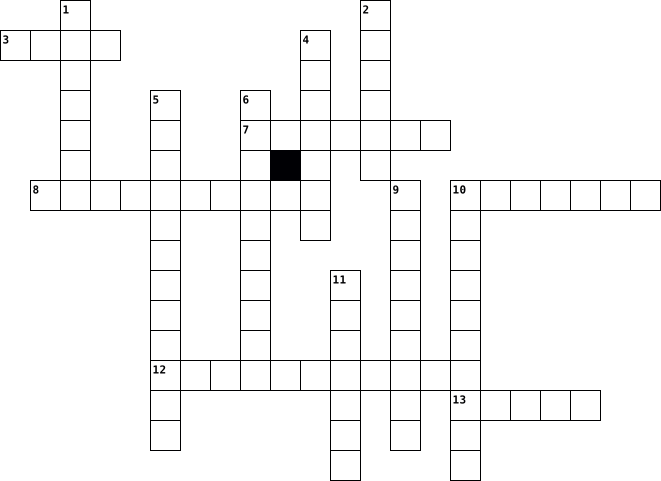
Across
- -The combination of smoke and fog in the air
- -To use trash to make something new
- -The specific gas that surrounds the Earth
- -When something is completely gone from the planet
- -Something that kills insects
- -To use something again instead of throwing it out
Down
- -A mixture of rotted leaves or plants that can be mixed into garden soil to give nutrition to growing plants
- -To use less of something
- -A person who goes on land that does not belong to him usually to hunt or fish illegally
- -The act of preserving
- effect -The retention of radiation of the Sun into the Earths atmosphere that creates a rise in temperature
- -The process of making the environment dirty through things like garbage, chemicals or gases
- species -A specific species that is at risk for extinction due to natural and human forces
- -A specific place where an animal lives
14 Clues: -The act of preserving • -To use less of something • -Something that kills insects • -To use trash to make something new • -A specific place where an animal lives • -The specific gas that surrounds the Earth • -The combination of smoke and fog in the air • -When something is completely gone from the planet • -To use something again instead of throwing it out • ...
Food And Nutrition: Module TWO 2017-03-24

Across
- the process by which plants and other things make food. It is a chemical process that uses sunlight to turn carbon dioxide into sugars the cell can use as energy.
- a disease of children caused by vitamin D deficiency,characterized by imperfect calcification,softening and distortion of the bones typically resulting in bow legs.
- by the action of enzymes food is converted into a substance suitable for absorption
- a swelling of the neck resulting from enlargement of the thyroid gland
- the involuntary constriction and relaxation of the muscles of the intestine or another canal,creating wave like movements which push the contents of the canal forward
- the physical process of breaking down food into smaller pieces that can easily be assessed by digestive enzymes
- severe protein malnutrition especially in children after weaning marked by lethargy,growth retardation,anaemia,edema,potbelly,skin depigmentation etc.
- normal assimilation by the tissues of the product of digestion
- if all the essential amino acids are present in the correct proportions, the proteins has a high biological value.
- a progressive wasting of the body occurring chiefly in young children and associated with insufficient intake or malabsorption of food
- the excessive supply of nutrients so as to hinder growth and metabolism.
- the portion of food from plants that cannot be digested
- the process by which food is broken down into simple chemical compounds that can be absorbed and used as nutrients or eliminated by the body
- the quantity range and quality energy(calories), vitamins,minerals and phytochemicals that are found in food
- nutrients required in the greatest amount for example:carbohydrates,protein,fats.
- poor nutrition because of an insufficient or poorly balanced diet or faulty digestion or utilization of foods
- a compound of the sterol type found in most tissues.
Down
- the condition of health as it relates to the intake and use of food by the body.
- the process by which the body derives energy from sources other than protein.
- proteins are found in plants,legumes,grains,seeds and vegetables
- the pulpy acidic fluid which passes from the stomach to the small intestine,consisting of gastric juices and partly digested food
- a disease causing inflammation of the nerves and heart failure,ascribed to a deficiency of vitamin B
- a condition in which there is difficulty in emptying the bowels usually associated with hardened faeces
- a disease caused by deficiency of vitamin C,characterized by spongy and bleeding gums,bleeding under the skin and extreme weakness
- lack of proper nutrition, caused by not having enough food or not eating enough food containing substances necessary for growth and health.
- any substance containing nutrients such as carbohydrates, proteins and fats that can be ingested by a living organism and metabolized into energy and body tissue
- essential food factors required in only small quantities by the body: eg. vitamins,trace,minerals
- the grinding or chewing of food by the teeth
- a medical condition in which the bones become brittle and fragile from loss of tissue , typically as a result of hormonal changes,or deficiency of calcium or vitamin D
- components in food which an organism uses to survive and grow
- when the artery supplying blood to a part of the brain is blocked
- the study of nutrients and their effect on the body
32 Clues: the grinding or chewing of food by the teeth • the study of nutrients and their effect on the body • a compound of the sterol type found in most tissues. • the portion of food from plants that cannot be digested • components in food which an organism uses to survive and grow • normal assimilation by the tissues of the product of digestion • ...
MAPEH 2022-10-24

Across
- credibility
- quackery
- PASSIVEACTIVITY
- rhythm
- neo-classicism
- nutrition
- GLOBALTREND
- TEXTURE
Down
- abstract-art
- setting
- EMPHASIS
- audience
- COLOR
- body-weight
- health-care-plan
- ACTIVEACTIVITY
- smoking
- acupuncture
- modern-art
- REFLEXOLOGY
20 Clues: COLOR • rhythm • setting • smoking • TEXTURE • EMPHASIS • audience • quackery • nutrition • modern-art • credibility • body-weight • acupuncture • REFLEXOLOGY • GLOBALTREND • abstract-art • ACTIVEACTIVITY • neo-classicism • PASSIVEACTIVITY • health-care-plan
Crossword puzzle no.10 on science by Harikesh 2021-07-27

Across
- is a deliquescent solid
- farmers neutralize the effect of acidity of soil by
- gastric acid present in the stomach composed of
- light travels fastest in. Chloroplast site of photosynthesis in cells of a leaf is
- Woody plants carry gaseous exchange through
Down
- a substance that changes red litmus to blue
- major driving force for water in xylem during day time
- simplest form of food
- nutrition performed by amoeba
- the mirror having reflection surface curved outward
10 Clues: simplest form of food • is a deliquescent solid • nutrition performed by amoeba • a substance that changes red litmus to blue • Woody plants carry gaseous exchange through • gastric acid present in the stomach composed of • farmers neutralize the effect of acidity of soil by • the mirror having reflection surface curved outward • ...
Nutrition in plant 2020-05-08

Across
- plants take in carbon dioxide through
- this process, plants convert solar energy to chemical energy
- eating plant
Down
- leaves to capture sunlight
- in which organisms make food by themselves
5 Clues: eating plant • leaves to capture sunlight • plants take in carbon dioxide through • in which organisms make food by themselves • this process, plants convert solar energy to chemical energy
Nutrition 2022-10-27

Across
- What is used to regulate body temperature and protects body organs and tissues?
- How many food groups are in My Plate?
- nutrients made by plants or animals, can help with functions like eyesight and bone health
- main energy source
- what are found in food and are used by the body to function properly and maintain health?
- come from soil and water, and are absorbed by plants or eaten by animals.
- has calcium and vitamin D which helps to keep your bones strong.
Down
- What mineral found in dairy helps build bones?
- 2.5 cups a day, need more than fruits
- found in whole grains, yogurt, green leafy vegetables, and low levels are connected to lack of motivation.
- bread, pasta, and potatoes; provide carbs
- meat, beans, and fish can help keep the muscles and bones healthy
- only found naturally from the fat of animal related foods such as butter, egg yolks, and fatty fish.
- What is the study of food and their nutrients called?
- contain fiber; juices have lots of sugar
- fattyacids found in fish, nuts, and plant oils, helps regulate mood
16 Clues: main energy source • 2.5 cups a day, need more than fruits • How many food groups are in My Plate? • contain fiber; juices have lots of sugar • bread, pasta, and potatoes; provide carbs • What mineral found in dairy helps build bones? • What is the study of food and their nutrients called? • has calcium and vitamin D which helps to keep your bones strong. • ...
DEFINITIONS 2025-04-10

Across
- an animal that is adapted to eat other animals
- plants compete for this resource from the ground to get all the nutrition they need to thrive
- when animals move to other places in big groups to access the resources they need for survival e.g. food, warmth etc.
- an animal that is adapted to avoid becoming a meal
- when the resources that plants and animals need must be shared or fought over.
- organisms sleep during the coldest part of the year to conserve energy to survive
- competition between different species of organisms
- the place that an organism lives
- animals compete for this resource so that they have adequate space to live
Down
- the habitat where organisms need thick fur, small ears, large paws, antifreeze in their blood
- when members of the same species compete for resources
- helps an organism survive in it’s specific habitat.
- is always at the first trophic level of every food web
- an adaptation that helps organisms to blend into their habitat
- a feature or characteristic
15 Clues: a feature or characteristic • the place that an organism lives • an animal that is adapted to eat other animals • an animal that is adapted to avoid becoming a meal • competition between different species of organisms • helps an organism survive in it’s specific habitat. • when members of the same species compete for resources • ...
Nutrition and Exercise 2026-03-26

Across
- Deficiency or excess in nutrition. Affects weight and the body's ability to function.
- The organ system where the heart is benefitted from proper nutrition.
- Taking (food, drink, or another substance) into the body by swallowing it.
- The body's ability to handle physical work.
- Nutrition benefit that enhances ___________
- Proper nutrition and exercise contributes to your overall __________
- Essential vitamins and minerals needed in small amounts in order to remain healthy.
Down
- When nutrients from digested foods pass into the bloodstream.
- A career that involves giving guidance on food, nutrition, and lifestyle choices to improve overall health.
- Utilized for growth, energy, and maintenance
- Breaking down food into smaller pieces, to be used by the body.
11 Clues: The body's ability to handle physical work. • Nutrition benefit that enhances ___________ • Utilized for growth, energy, and maintenance • When nutrients from digested foods pass into the bloodstream. • Breaking down food into smaller pieces, to be used by the body. • Proper nutrition and exercise contributes to your overall __________ • ...
Chapter 1 2024-01-31

Across
- an important element in organic nutrients
- person’s way of living
- substances that are made by plants that are not nutrients but may be healthful
- carbohydrates, lipids, minerals, water
- nutrients needed in gram amounts every day that provide energy
- most essential nutrient
- contains 7 kcal per gram
- study of nutrients and how the body uses them
- chemically unstable factors that can damage or destroy cells
Down
- unit of measuring food energy
- personal characteristics that increases a person's chances of developing a disease
- life-sustaining chemicals in food that are necessary for proper body function
- total of all chemical processes that take place in living cells
- nutrients needed in milligrams or microgram amounts
- phytochemical that provides stimulating effects to the body
- calories from unhealthy fats, added sugars, and/or alcohol
- usual pattern of food choices
- smallest living functional unit
- state of health that occurs when the body is not properly nourished
19 Clues: person’s way of living • most essential nutrient • contains 7 kcal per gram • unit of measuring food energy • usual pattern of food choices • smallest living functional unit • carbohydrates, lipids, minerals, water • an important element in organic nutrients • study of nutrients and how the body uses them • nutrients needed in milligrams or microgram amounts • ...
nutrition in humans 2023-04-27

Across
- nutrient digested in the stomach
- Organ where carbohydrate digestion first occurs
- process where nutrients are absorbed into the body
- Organ where protein digestion first occurs
- digestion with the use of enzymes
- enzyme present in the stomach
Down
- pooping, removal of undigested food
- digestion without the use of enzymes
- enzyme which digests maltose
- nutrient digested in the mouth
- nutrient that is only digested in the small intestine
- enzyme that is present in the small intestine
- process where nutrients are broken down into smaller, soluble substances
- enzyme which digests starch
14 Clues: enzyme which digests starch • enzyme which digests maltose • enzyme present in the stomach • nutrient digested in the mouth • nutrient digested in the stomach • digestion with the use of enzymes • pooping, removal of undigested food • digestion without the use of enzymes • Organ where protein digestion first occurs • enzyme that is present in the small intestine • ...
Nutrition in Humans 2025-04-16

Across
- A group of proteins that speed up chemical reactions in the body.
- A rounded mass of chewed food.
- A greenish fluid that helps emulsify fats.
- A watery fluid in the mouth that starts digestion.
- A condition caused by excessive body fat.
- A wave-like muscle movement that pushes food through the digestive tract.
- The process of breaking food into smaller molecules.
Down
- The removal of undigested waste as faeces.
- A long muscular tube that connects the mouth to the stomach.
- An enzyme that breaks down starch into sugars.
- A condition caused by lack of essential nutrients.
- A substance that helps food move through the digestive tract.
- An enzyme that breaks down fats.
- Nutrient-rich finger-like projections in the small intestine.
14 Clues: A rounded mass of chewed food. • An enzyme that breaks down fats. • A condition caused by excessive body fat. • The removal of undigested waste as faeces. • A greenish fluid that helps emulsify fats. • An enzyme that breaks down starch into sugars. • A condition caused by lack of essential nutrients. • A watery fluid in the mouth that starts digestion. • ...
G 8- TERM 3- WEEK 3 2021-05-03

Across
- a sweet or pleasant smell
- to trap
- prepared food bought for convenience
- agrees to provide services for a price
- a person who studies nutrition.
- The sides of a river
Down
- Family members from past generations
- legacy or tradition
- smoke, gas, or something similar
- something without difficulty
- plants grown for food
- structure that sends water up into the air
- pan cooking at temp above boiling water
- pieces of baked clay used for building
14 Clues: to trap • The sides of a river • plants grown for food • legacy or tradition • a sweet or pleasant smell • something without difficulty • a person who studies nutrition. • smoke, gas, or something similar • Family members from past generations • prepared food bought for convenience • agrees to provide services for a price • pieces of baked clay used for building • ...
Transport in Plants 2021-04-22

Across
- What the impermeable barrier in the endodermis is made of
- Tissue that transports water and dissolved ions
- Allow continuous stream of cytoplasm between cells
- Increasing this environmental factor decreases the rate of evaporation
- Deposited in xylem walls for strength
- (9,5) Impermeable barrier in root endodermis
- Used to measure rates of transpiration
- The pathway water takes through cytoplasm
Down
- The pathway water takes through cell walls
- (6,9) How mineral ions are absorbed in root hairs
- The main sugar that is transported in plants
- The evaporation of water through the stomata
- Snazzy name for sugars and amino acids made in photosynthesis
- Tissue that transports sugars, water and ions
14 Clues: Deposited in xylem walls for strength • Used to measure rates of transpiration • The pathway water takes through cytoplasm • The pathway water takes through cell walls • The main sugar that is transported in plants • The evaporation of water through the stomata • (9,5) Impermeable barrier in root endodermis • Tissue that transports sugars, water and ions • ...
Transport in Plants 2020-06-30

Across
- needed for plant growth
- one of factor needed for photosynthesis
- mineral salts that make green color on leaves
- vessels that transport food in leaves to other parts of plants
- loss of water through the stomata of leaves
- it consists of roots and vascular bundles
- direction of movement of substance in phloem
Down
- movements of only water molecules across a partially permeable membrane
- mineral salts needed for growth of plant
- xylem and phloem work together to transport substance in plant
- vessels that transport water and mineral salts
- movements of molecules from a region of higher concentration to a region of lower concentration
- to absorb water and mineral salt from soil to plant
- direction of movement of substance in xylem
14 Clues: needed for plant growth • one of factor needed for photosynthesis • mineral salts needed for growth of plant • it consists of roots and vascular bundles • loss of water through the stomata of leaves • direction of movement of substance in xylem • direction of movement of substance in phloem • mineral salts that make green color on leaves • ...
Transport in plants 2019-04-23

Across
- dead tissue that transport water and mineral ions
- movement of sucrose and amino acids in the phloem
- interaction between water molecule and cellulose wall of xylem
- part of plant where sugar is used or stored
- interaction between water molecules
- causes the stomata to open
- process that plant absorbs mineral ions
- part of plant where sugar is made
Down
- the loss of water vapour from plant leaves by evaporation of water at the surface of mesophyll cells followed by the diffusion of water vapour through the stomata
- draws water in the xylem up against gravity
- pathway of water uptake by root is root hair, root hair cell, _____, xylem
- contains both xylem and phloem
- the apparatus for investigating the transpiration rate in plant
- occurs when the volume of water vapour lost by leaves is greater than that absorbed by root
14 Clues: causes the stomata to open • contains both xylem and phloem • part of plant where sugar is made • interaction between water molecules • process that plant absorbs mineral ions • draws water in the xylem up against gravity • part of plant where sugar is used or stored • dead tissue that transport water and mineral ions • movement of sucrose and amino acids in the phloem • ...
Life Processes 2023-07-06

Across
- One of a pair of organs in the chest that supplies the body with oxygen, and removes carbon dioxide from the body.
- It pumps blood all through the body in a process called circulation
- the process of taking in food and converting it into energy and other vital nutrients required for life
- A large organ located in the upper abdomen.
Down
- the fluid that circulates throughout the lymphatic system
- the mode of nutrition where the organism is unable to prepare its food and hence, depends upon plants or other organisms for nutrition
6 Clues: A large organ located in the upper abdomen. • the fluid that circulates throughout the lymphatic system • It pumps blood all through the body in a process called circulation • the process of taking in food and converting it into energy and other vital nutrients required for life • ...
Nutrition 2022-10-27

Across
- found in fish, nuts, and plant oils, helps regulate mood
- found in whole grains, yogurt, green leafy vegetables, and low levels are connected to lack of motivation.
- What is used to regulate body temperature and protects body organs and tissues?
- has calcium and vitamin D which helps to keep your bones strong.
- meat, beans, and fish can help keep the muscles and bones healthy
- nutrients made by plants or animals, can help with functions like eyesight and bone health
Down
- 2.5 cups a day, need more than fruits
- only found naturally from the fat of animal related foods such as butter, egg yolks, and fatty fish.
- come from soil and water, and are absorbed by plants or eaten by animals.
- What mineral found in dairy helps build bones?
- What is the study of food and their nutrients called?
- main energy source
- what are found in food and are used by the body to function properly and maintain health?
- contain fiber; juices have lots of sugar
- bread, pasta, and potatoes; grains provide carbohydrates
- How many food groups are in My Plate?
16 Clues: main energy source • 2.5 cups a day, need more than fruits • How many food groups are in My Plate? • contain fiber; juices have lots of sugar • What mineral found in dairy helps build bones? • What is the study of food and their nutrients called? • found in fish, nuts, and plant oils, helps regulate mood • bread, pasta, and potatoes; grains provide carbohydrates • ...
Modified Ecosystem Vocabulary 2023-05-10

Across
- A group of individuals that belong to the same species and live in the same area
- All the different populations that live together in an area
- An organism that feeds on fruits and seeds for nutrition and, when the animal defecates, it deposits the seeds in a new location where they can germinate and grow
- Place where an organism lives
- A single organism
- A carnivore that feeds on the bodies of dead organisms
- A group of similar organisms that can breed and produce fertile offspring.
- A biological community of interacting organisms and their physical environment.
- An animal that eats both plants and animals
- An organism that obtains energy by feeding on other organisms
- A consumer that eats only plants.
Down
- An organism that is killed and eaten by another organism
- A common demand by two or more organisms upon a limited supply of a resource.
- An organism that can make its own food.
- A consumer that eats only animals.
- The variety of life in the world or in a particular habitat or ecosystem.
- An insect that carries pollen from one flower to another
- An organism that breaks down wastes and dead organisms
- An animal that hunts other animals for food
- A community of organisms where there are several interrelated food chains
20 Clues: A single organism • Place where an organism lives • A consumer that eats only plants. • A consumer that eats only animals. • An organism that can make its own food. • An animal that hunts other animals for food • An animal that eats both plants and animals • A carnivore that feeds on the bodies of dead organisms • An organism that breaks down wastes and dead organisms • ...
Malnutrition 2024-11-06

Across
- Fuel for body is known as
- Imbalance of nutrition
- High sugar in blood due to over nutrition
Down
- Due to under nutrition, lack of proper food
- Protein deficiency due to under nutrition
- Essential substances for body to function properly
- Iron deficiency due to under nutrition
- It is vitamin D deficiency due to under nutrition
- We gain weight and is caused by overnutrition
9 Clues: Imbalance of nutrition • Fuel for body is known as • Iron deficiency due to under nutrition • Protein deficiency due to under nutrition • High sugar in blood due to over nutrition • Due to under nutrition, lack of proper food • We gain weight and is caused by overnutrition • It is vitamin D deficiency due to under nutrition • ...
CFU/Day 2: Vocabulary Crossword Puzzle 2023-02-15

Across
- a system of interlocking and interdependent food chains.
- an animal or person that eats food of both plant and animal origin.
- an animal that feeds on plants.
- organism that mostly consumes decaying biomass, such as meat or rotting plant material.
- organism that can produce its own food using light, water, carbon dioxide, or other chemicals
- an animal that feeds on flesh.
- the natural home or environment of an animal, plant, or other organism.
- any kind of green plant
- living organism that shapes its environment.
Down
- organisms each dependent on the next as a source of food.
- autotrophs (producers) or other consumers for food, nutrition, and energy.
- soil bacterium, fungus, or invertebrate, that decomposes organic material.
- organism that eats other plants or animals for energy and nutrients.
- the role an organism plays in a community
- non-living part of an ecosystem that shapes its environment
15 Clues: any kind of green plant • an animal that feeds on flesh. • an animal that feeds on plants. • the role an organism plays in a community • living organism that shapes its environment. • a system of interlocking and interdependent food chains. • organisms each dependent on the next as a source of food. • non-living part of an ecosystem that shapes its environment • ...
nutrition in animals 2016-05-10

Across
- a ruminant
- it has tentacles
- a finger-type projection
- amoeba
- a unicellular organism
- butterfly uses it
Down
- food is broken down
- a digestive juice
- a process by which food is taken in
- paramecium
- it weaves a web
- it has a long sticky tongue
- the hard covering of the teeth
- grinding teeth
14 Clues: amoeba • a ruminant • paramecium • grinding teeth • it weaves a web • it has tentacles • a digestive juice • butterfly uses it • food is broken down • a unicellular organism • a finger-type projection • it has a long sticky tongue • the hard covering of the teeth • a process by which food is taken in