
nutrition in plants Crossword Puzzles
Plants 2022-12-16

Across
- support for advance plant
- make you cry
- makes you itchy
- doesn't belong on pizza
- pandas eat it
- part that gets water
- spike flower
- eats bug
- makes bread
- long and tasty vegetables
- yummy to eat and is red
- tree with sample
Down
- flowers that faces the sun
- how plants make food
- edible and purple
- big lump of nobs
- purple fruit
- pretty part of a plant
- under water plant
- has vanilla
20 Clues: eats bug • has vanilla • makes bread • make you cry • purple fruit • spike flower • pandas eat it • makes you itchy • big lump of nobs • tree with sample • edible and purple • under water plant • how plants make food • part that gets water • pretty part of a plant • doesn't belong on pizza • yummy to eat and is red • support for advance plant • long and tasty vegetables • flowers that faces the sun
Plants 2022-08-31

Across
- the outer skin layer of the root
- an example of a spore producing plant
- absorbs water like a sponge
- helps hold the plant up
- a type of root that doesn't touch the ground
- a seed plant that doesn't produce a flower
- covers the end of the root
- a single cell that is a copy of the plant
- an example of a nonvascular plant
- a series of hollow tubes that transports water up the plant
Down
- the stored energy layer of the root
- an undeveloped plant
- an example of a gymnosperm plant
- the part of the plant that anchors it to the ground/surface
- a seed plant that does produce a flower
- these plants have no vascular system
- thin roots that branch out and are shallow
- these plants can grow as tall as they want
- an example of a angiosperm plant
- 1 stalk that goes deep into the ground
20 Clues: an undeveloped plant • helps hold the plant up • covers the end of the root • absorbs water like a sponge • the outer skin layer of the root • an example of a gymnosperm plant • an example of a angiosperm plant • an example of a nonvascular plant • the stored energy layer of the root • these plants have no vascular system • an example of a spore producing plant • ...
Plants 2026-01-09

Across
- – The process by which plants break down glucose using oxygen to release energy for growth and maintenance.
- – The part of the flower that contains ovules (eggs) and develops into a fruit after fertilization.
- – The fluid-filled space inside the chloroplast surrounding the grana.
- – Stacks of thylakoids that increase surface area for photosynthesis.
- – A green pigment in chloroplasts that absorbs light energy for photosynthesis.
- – The tube that connects the stigma to the ovary and allows pollen to travel downward.
- - An example of a bryophyte
- – A non-flowering plant
- – The sticky top that receives pollen.
- – The stalk that holds up the anther.
- – The plant organ that anchors the plant and absorbs water and minerals from the soil.
Down
- – A fertilized ovule containing an embryo and a food supply for a new plant. Often found in the middle of fruits.
- – A flowering plant that produces seeds enclosed within a fruit.
- – The process by which plants use light energy to make glucose from carbon dioxide and water, releasing oxygen.
- – The part of the stamen that produces pollen.
- – An example of a pteridophyte
- – A plant cell organelle where photosynthesis happens.
- – The plant organ that supports the plant, leaves and flowers and transports water, minerals, and sugars.
- – The transfer of pollen from the anther to the stigma of a flower.
- – The main photosynthetic organ of a plant, adapted to capture light and exchange gases.
20 Clues: – A non-flowering plant • - An example of a bryophyte • – An example of a pteridophyte • – The stalk that holds up the anther. • – The sticky top that receives pollen. • – The part of the stamen that produces pollen. • – A plant cell organelle where photosynthesis happens. • – A flowering plant that produces seeds enclosed within a fruit. • ...
Plants 2026-03-19

Across
- money from your job
- what something costs to buy
- a person who writes music
- dirt
- the underground part
- to give money for something
- to not sink in water
- a group of flowers
- a ceremony to marry two people
- the long part that leaves grow on
- Something made to sell
Down
- a woman getting married
- a colorful part of a plant
- the main part in music
- to do with Gods
- Meet for the first time
- to feel good about yourself
- Taiwan is this
- something you plant
- a green part from the stem
- valuable
- people from the Netherlands
- coveted with mud
- a piece of writing
24 Clues: dirt • valuable • Taiwan is this • to do with Gods • coveted with mud • a group of flowers • a piece of writing • money from your job • something you plant • the underground part • to not sink in water • the main part in music • Something made to sell • a woman getting married • Meet for the first time • a person who writes music • a colorful part of a plant • a green part from the stem • ...
Plants 2026-03-03

Across
- – scientific study of plants.
- – Root ___ are tiny extensions of root cells that increase surface area for water absorption.
- The ___ Fly trap is a famously semi-carnivorous plant
- – a plant that completes its life cycle in two growing seasons.
- – vascular tissue that transports sugars and other organic compounds throughout the plant.
- – part of the stamen that produces pollen.
- – the stalk that attaches a leaf blade to the plant stem.
- – plant hormone that regulates growth, especially root and bud development.
- – the union of male and female reproductive cells in plants to form a seed.
- – growth response of a plant toward or away from an environmental stimulus.
- – structure in seed plants that contains the female reproductive cells.
- – green pigment in plant cells that captures light energy for photosynthesis.
- – slender stalk that supports the anther in a flower’s stamen.
- – the process where a seed begins to grow and sprout.
Down
- – small pores on leaves and stems that allow gases to enter and leave the plant.
- – a flowering plant that produces seeds enclosed within a fruit.
- – a plant that completes its life cycle in one growing season.
- – process of water evaporating from plant leaves through stomata.
- – leaflike structure that protects a flower bud before it opens.
- the broad, flat part of a plant that captures sunlight.
- – the reproductive structure of a plant where seeds are produced.
- – one of the often colorful parts of a flower that attract pollinators.
- – protective outer covering of a woody stem or trunk.
- – female reproductive part of a flower, including stigma, style, and ovary.
- – vascular tissue that transports water and dissolved nutrients from roots upward.
- – a seed plant that produces “naked” seeds not enclosed in a fruit.
- – waxy outer layer on leaves that helps reduce water loss.
- – male reproductive organ of a flower, typically consisting of anther and filament.
- – transfer of pollen from male to female flower parts so fertilization can occur.
- – structure containing a plant embryo and stored food that can grow into a new plant.
- fine dust‑like grains produced by the male parts of seed plants that contain the male reproductive material
- – process by which plants use sunlight to convert carbon dioxide and water into glucose and oxygen.
- – the mature ovary of a flowering plant that contains seeds.
33 Clues: – scientific study of plants. • – part of the stamen that produces pollen. • The ___ Fly trap is a famously semi-carnivorous plant • – protective outer covering of a woody stem or trunk. • – the process where a seed begins to grow and sprout. • the broad, flat part of a plant that captures sunlight. • – the stalk that attaches a leaf blade to the plant stem. • ...
Plants 2022-10-04

Across
- A way for water to get to a plant
- its parent organism is generative anatomical point
- engineering giving different/new characteristics
- it grows from the stem and is the main way for photosynthesis to take place
- growing for a long time
- Culture a group of plant cells
- needs two years to finish its life cycle
- it grows from the root and it also grows and sprouts out leaves
- takes several years to grow
- study of chemical elements
- the removal of particular parts of the plant
- working in between plants and fish
- adds nutrients to plants growing in sand, gravel, and liquid
- a plant broken into two or more parts
Down
- media other words for materials that the plant grows in
- to control aquatic plants
- a specialized part of the plant
- a plant you can eat its seeds, leaves, stems, and flowers
- where the plant grows from/where its seed is planted at
- where plant tissues are joined together to grow together
- partially attached to its mother plant while it forms its own roots
- a creature that injurious a plant
- a plant part used for horticulture for vegetative
- a mineral that is used to help enhance a boost in the plant’s growth
- Moss dead fibrous
- a method used on young plants to encourage branching
- the process of a plant using sunlight, water, and carbon dioxide to make oxygen and sugar
- a mineral that naturally occurred when it is added to the soil
- a flowering plant with fleshy/dry ripened ovary, enclosing their seeds in side
29 Clues: Moss dead fibrous • growing for a long time • to control aquatic plants • study of chemical elements • takes several years to grow • Culture a group of plant cells • a specialized part of the plant • A way for water to get to a plant • a creature that injurious a plant • working in between plants and fish • a plant broken into two or more parts • ...
Plants 2019-01-12

Across
- A thin protective layer attached to the epidermis (7)
- The outermost layer in plants (9)
- The movement of sugar around plants using phloem (13)
- A gas absorbed by plants (13)
- A chemical needed to make proteins (7)
- Movement of substances from high to low concentration (9)
- A chemical needed to make chlorophyll (9)
- Where proteins are made in cells (9)
- The movement of water through a plant (13)
- The green pigment in plants (11)
- A gas released by plants (6)
- Allows enzymes to work (6)
- Where respiration takes place in cells (12)
- Holes in the bottom of leaves (5)
- Supports the cell (8)
- A type of transport process that doesn't require energy. Substances are moved from high to low concentration. (7)
- Transpiration is fastest if it is... (hint: humidity) (3)
- Where cell sap is stored (7)
Down
- The type of energy that plants need (5)
- Where genetic material is stored in the cell (7)
- A type of transport process that requires energy. Substances are moved from low to high concentration. (6)
- A liquid absorbed by plants (5)
- The process plants use to make food (14)
- A nutrient for plants with symbol K (9)
- Humans and cats are examples of this (6)
- Equipment used to measure transpiration (9)
- Controls what enters and leaves the cell (12)
- A process that releases energy from glucose (11)
- Where photosynthesis occurs in cells (12)
- Transpiration is fastest if it is ... (hint: air flow) (5)
- The tissue in plants that carries the xylem and phloem tubes (8)
- Where chemical reactions occur in cells (9)
- An organism that does photosynthesis (5)
- Tubes in plants that move glucose around the plant (6)
- Transpiration is fastest if it is... (hint: light intensity) (6)
- Tubes in plants that move water and dissolved ions around the plant (5)
- A sugar made by plants (7)
- A nutrient for plants with symbol PO4 (9)
- Any chemical that plants need to grow (8)
- The organ where photosynthesis occurs (4)
- Transpiration is fastest if it is... (hint: temperature) (3)
- The cell where photosynthesis occurs (8)
- The plant organ used for reproduction (6)
43 Clues: Supports the cell (8) • A sugar made by plants (7) • Allows enzymes to work (6) • A gas released by plants (6) • Where cell sap is stored (7) • A gas absorbed by plants (13) • A liquid absorbed by plants (5) • The green pigment in plants (11) • The outermost layer in plants (9) • Holes in the bottom of leaves (5) • Where proteins are made in cells (9) • ...
Plants 2020-09-18

Across
- the exception for monocot
- one that can grow in places that are too barren for a lot of other species
- the true stems of ferns are underground, and the leaves, called ___ come up from the ground
- responsible for carrying nutrients like sugars around the plant
- angiosperms are categorized according to the number of their seed leaves
- female parts of the flower
- develops into fruit that surrounds, helps fertilize, and helps disperse the seeds
- when the water goes up the xylem, it is defying what?
- the major component of sand and is used to make glass
- the seed has two embryonic leaves
- male parts of the flower
- provides structural support for the plant
Down
- the critical structure in the stem
- stored inside pollen grains
- water evaporating from the leaf
- a floating organism that does photosynthesis
- non-vascular, do not have xylem or phloem
- the xylem and phloem are organized in many
- responsible for transporting water up the roots
- organisms whose cells each have a nucleus
- a plant embryo that has been encased in its own food supply
21 Clues: male parts of the flower • the exception for monocot • female parts of the flower • stored inside pollen grains • water evaporating from the leaf • the seed has two embryonic leaves • the critical structure in the stem • non-vascular, do not have xylem or phloem • organisms whose cells each have a nucleus • provides structural support for the plant • ...
Plants 2020-03-09

Across
- Taken by roots of plant and used in photosynthesis
- Fourth step in plant life cycle
- Opening where gas enters and leaves the plant
- Organelle where photosynthesis takes place
- All plants start as _____
- Pollen being taken from one plant to another
- Why do bees pollinate flowers?
- Female organs of a plant
- Process a plant uses to turn sugar into ATP or energy
- Gas that plant need to create sugar
- Needed for cellular respiration
Down
- Flowers with both male and female organs
- Stalk of a flowers female organs
- Pollination by insects
- Three elements that are important for a plant
- Process a plant uses to create sugar
- Second stage in plant life cycle
- Organ that holds pollen in flower
- Captured by the top of the leaf
- Male organs of plants
- Sugar created by plant
21 Clues: Male organs of plants • Pollination by insects • Sugar created by plant • Female organs of a plant • All plants start as _____ • Why do bees pollinate flowers? • Fourth step in plant life cycle • Captured by the top of the leaf • Needed for cellular respiration • Stalk of a flowers female organs • Second stage in plant life cycle • Organ that holds pollen in flower • ...
Plants 2020-10-20

Across
- It is a pore, found in the epidermis of leaves, stems, and other organs, that controls the rate of gas exchange.
- This substance provide mineral salts, which help the plant grow larger and healthier.
- A substance needed so that the plant can make proteins.
- These are substances plants get from the soil.
- It is the gaseous phase of water.
- It means lack, or shortage.
- Is the membrane found in all cells that separates the interior of the cell from the outside environment.
- The way plants make food.
- The enlarged basal portion of the pistil where ovules are produced.
- They are storage bubbles found in cells. They are found in both animal and plant cells but are much larger in plant cells.
- Contains the male gametes and are made in anthers of flowers.
- A substance needed to make chlorophyll.
Down
- Transports water from the roots up to the leaves.
- It is a polymer made by plants to store energy.
- The part of the pistil where pollen germinates.
- Occurs when one of the sperm cells fuses with the egg inside of an ovule.
- Plants use this energy of the sun to change water and carbon dioxide into a sugar.
- Plants need this to stand upright.
- The parts of a flower that are often conspicuously coloured.
- It is a green photosynthetic pigment found in plants, algae, and cyanobacteria.
- It is the process by which water changes from a liquid to a gas or vapour.
- Is a thick solution that fills each cell and is enclosed by the cell membrane.
- It is the transfer of pollen from a male part of a plant to a female part of a plant.
- It is a structural layer surrounding some types of cells, just outside the cell membrane.
- Is a highly specialised organelle that serves as the information and administrative centre of the cell.
- The pollen producing part of a flower, usually with a slender filament supporting the anther.
- The part of the stamen where pollen is produced.
27 Clues: The way plants make food. • It means lack, or shortage. • It is the gaseous phase of water. • Plants need this to stand upright. • A substance needed to make chlorophyll. • These are substances plants get from the soil. • It is a polymer made by plants to store energy. • The part of the pistil where pollen germinates. • The part of the stamen where pollen is produced. • ...
Plants 2020-10-20

Across
- It means lack, or shortage.
- It is a structural layer surrounding some types of cells, just outside the cell membrane.
- It is the gaseous phase of water.
- Is the membrane found in all cells that separates the interior of the cell from the outside environment.
- Is a thick solution that fills each cell and is enclosed by the cell membrane.
- They are storage bubbles found in cells. They are found in both animal and plant cells but are much larger in plant cells.
- It is a green photosynthetic pigment found in plants, algae, and cyanobacteria.
- Occurs when one of the sperm cells fuses with the egg inside of an ovule.
- This substance provide mineral salts, which help the plant grow larger and healthier.
- The pollen producing part of a flower, usually with a slender filament supporting the anther.
- The parts of a flower that are often conspicuously coloured.
- The part of the stamen where pollen is produced.
- Plants use this energy of the sun to change water and carbon dioxide into a sugar.
- A substance needed to make chlorophyll.
Down
- It is the transfer of pollen from a male part of a plant to a female part of a plant.
- Transports water from the roots up to the leaves.
- These are substances plants get from the soil.
- Is a highly specialised organelle that serves as the information and administrative centre of the cell.
- It is a pore, found in the epidermis of leaves, stems, and other organs, that controls the rate of gas exchange.
- It is the process by which water changes from a liquid to a gas or vapour.
- A substance needed so that the plant can make proteins.
- Contains the male gametes and are made in anthers of flowers.
- The way plants make food.
- It is a polymer made by plants to store energy.
- The enlarged basal portion of the pistil where ovules are produced.
25 Clues: The way plants make food. • It means lack, or shortage. • It is the gaseous phase of water. • A substance needed to make chlorophyll. • These are substances plants get from the soil. • It is a polymer made by plants to store energy. • The part of the stamen where pollen is produced. • Transports water from the roots up to the leaves. • ...
Plants 2020-10-20

Across
- It is a polymer made by plants to store energy.
- It is the gaseous phase of water.
- It is a green photosynthetic pigment found in plants, algae, and cyanobacteria.
- The parts of a flower that are often conspicuously coloured.
- It is the process by which water changes from a liquid to a gas or vapour.
- The enlarged basal portion of the pistil where ovules are produced.
- Transports water from the roots up to the leaves.
- It means lack, or shortage.
- Contains the male gametes and are made in anthers of flowers.
- Is a thick solution that fills each cell and is enclosed by the cell membrane.
- The pollen producing part of a flower, usually with a slender filament supporting the anther.
- This substance provide mineral salts, which help the plant grow larger and healthier.
- A substance needed to make chlorophyll.
Down
- It is a structural layer surrounding some types of cells, just outside the cell membrane.
- Occurs when one of the sperm cells fuses with the egg inside of an ovule.
- These are substances plants get from the soil.
- The way plants make food.
- Plants use this energy of the sun to change water and carbon dioxide into a sugar.
- A substance needed so that the plant can make proteins.
- It is the transfer of pollen from a male part of a plant to a female part of a plant.
- They are storage bubbles found in cells. They are found in both animal and plant cells but are much larger in plant cells.
- Is the membrane found in all cells that separates the interior of the cell from the outside environment.
- It is a pore, found in the epidermis of leaves, stems, and other organs, that controls the rate of gas exchange.
- The part of the stamen where pollen is produced.
- Is a highly specialised organelle that serves as the information and administrative centre of the cell.
25 Clues: The way plants make food. • It means lack, or shortage. • It is the gaseous phase of water. • A substance needed to make chlorophyll. • These are substances plants get from the soil. • It is a polymer made by plants to store energy. • The part of the stamen where pollen is produced. • Transports water from the roots up to the leaves. • ...
Plants 2020-10-20

Across
- is also needed for making chlorophyll, a shortage of this makes plant leaves grow yellow
- produced by anthers, contains the male gametes of the flower
- contain mineral salts
- substances plants normally get from soil
- a tiny hole where the pollen tube grows into the ovule
- a different kind of carbohydrate, is made of thousands of glucose molecules linked together
- the way that plants make food
- the movement of energy from one place to another
- while the ovule changes into a seed, the ovary is also changing into a........
- are brightly colored to attract insects and birds, they are the reproductive organs of plants
- needed by plants for support, cooling, transport, and photosynthesis
- a new cell formed after fertilisation
Down
- helps to avoid competitions with the parent plant
- contains female gametes and are inside the ovaries
- produce pollens
- most colorful part of the flower
- a group of chemicals which sugar belong to
- transfer of pollen from another to a stigma
- the nucleus of a male gamete and the nucleus of a female gamete join together
- also known as sugar
- a sweet and sugary thing that insects/birds feed on
- the tough outer coat of the seed
- when the ovule begins to change it gradually grows into a........
- needed so the plants can make proteins, also needed to make Chlorophyll
- produced when the zygote starts to divide
- the receptive tip of a carpel, the part of the pistil where the pollen germinates
26 Clues: produce pollens • also known as sugar • contain mineral salts • the way that plants make food • most colorful part of the flower • the tough outer coat of the seed • a new cell formed after fertilisation • substances plants normally get from soil • produced when the zygote starts to divide • a group of chemicals which sugar belong to • ...
plants 2020-10-20

Across
- substance that is vital for the plants to stand upright
- contain male gametes of the flower
- group of cells that is formed from dividing the zygote
- sugar that plants make
- the new cell that forms after the 2 gametes joined together
- the way plants make food
- it produces pollen
- it contains a lot of water in their vacuoles
- something plants need to grow strong and large
- seeds getting separated from the parent plant
- usually the most beautiful parts of the flower
- it contain seeds
- substance needed for the plant to make proteins
Down
- substance that provides mineral salts for the plant
- sugars in plants belong to a group of chemical called ......
- transfer of pollen from the anther to the stigma
- a young new plant
- contain female gametes of the flower
- sweet and sugary substance produced at the base of the petals
- when the male and female gamete nucleus join together
- the type of carbohydrate plants store
- substance needed for the plant to make chlorophyll
- part ta=hat gets the gametes of a flower
23 Clues: it contain seeds • a young new plant • it produces pollen • sugar that plants make • the way plants make food • contain male gametes of the flower • contain female gametes of the flower • the type of carbohydrate plants store • part ta=hat gets the gametes of a flower • it contains a lot of water in their vacuoles • seeds getting separated from the parent plant • ...
plants 2020-04-01

Across
- the reproductive part of the plant
- very dry and hot area with very little rainfall
- what plants need to continue to grow
- scattering or distribution of something
- this provides a covering for the seeds
- substances that living things need to grow
- other plant parts that don’t include seeds
- to start to grow
- plants with stems such as tree trunks, that are hard
- support the plant and act as the plumbing system
Down
- process by which plants produce its food using sun carbon dioxide & water & nutrients
- the green pigment found in plants that helps the plant make food
- contain new plants
- special features that allow a plant or animal to live in a certain place or habitat
- plants with stems that are usually soft and bendable
- what seeds need to start to grow
- the movement of pollen from one plant to another
- a place characterized by its climate & the plants & animals that live there
- where the food is made in a plant
- absorb water and minerals from the soil
20 Clues: to start to grow • contain new plants • what seeds need to start to grow • where the food is made in a plant • the reproductive part of the plant • what plants need to continue to grow • this provides a covering for the seeds • scattering or distribution of something • absorb water and minerals from the soil • substances that living things need to grow • ...
Plants 2021-09-16
Across
- it is a woody plant
- prevents plantsfrom cating diseases
- has a really strong fragrance
- you can eat this
- attracts butterfly
- can improve memory
- 4th most popular
- protests tree
- has leaves that grow equally
- grows 9 feet per year
- used as medicine
- native to China
- bees love this
- grows 2 feet per year
- has evergreen leaves
- attracts insects
Down
- greek word for rainbow messenger
- grows into another branch
- take more than 40% of the forest
- lucky to find 4 leaves
- belongs in the mint family
- can reach up from 39 to 59 feet
- a developing plant
- grew in battle feild
- has a sweet taste
- produces food
- not a flower and doesn't have seeds
- grows 18 inches per day
- found in freshwater
- expensive
30 Clues: expensive • produces food • protests tree • bees love this • native to China • you can eat this • 4th most popular • used as medicine • attracts insects • has a sweet taste • attracts butterfly • can improve memory • a developing plant • it is a woody plant • found in freshwater • grew in battle feild • has evergreen leaves • grows 9 feet per year • grows 2 feet per year • lucky to find 4 leaves • ...
Plants 2021-02-22

Across
- What are the plants that produce cones
- What produces the female egg cells?
- What is the most common pollinator?
- What is the Male reproductive structure of flower in plants?
- What does the ovary change into after fertilization?
- What is another term for flowering plants?
- What is the part of flower that has varied colour.
- What is a long-stalk like part of a plant that supports the stigma.
- What is an animal that helps bring fertilization?
- What contains the female egg cells?
- How many parents are needed for asexual reproduction in plants?
- What is the male part of the plant that is located on top of the filament?
Down
- What is the reproductive part of a plant?
- How many parents are needed for sexual reproduction in plants?
- What is the sprouting of a plant from a seed?
- What is the part in flower that catches pollen?
- How does flowering plants reproduce?
- What is the process of joining an egg cell and sperm cell in plant?
- What is the part of plants that is located under the petal?
- What does Anther contain?
20 Clues: What does Anther contain? • What produces the female egg cells? • What is the most common pollinator? • What contains the female egg cells? • How does flowering plants reproduce? • What are the plants that produce cones • What is the reproductive part of a plant? • What is another term for flowering plants? • What is the sprouting of a plant from a seed? • ...
Plants 2023-03-02
Across
- pollination that transfers from the male part to the female part of the same plant
- cone bearing plants, have needle like leaves
- control the opening and closing of stomata
- the emergence of a plant from a seed
- flowering bearing plants, produces sees
- male part of the flower where the pollen is
- carries water in the stem/root
- the release of the seeds from a parent plant
- carries food in the stem/root
- angiosperms that lose their leaves in winter
- type a root system where there is one main root into the ground
- the transfer of pollen from the male part of the plant to the female part of the plant
- where the seeds develop in a flower
- type of root system where there is group of roots
Down
- female part of the flower
- type of plants with xylem and phloem
- makes the leaf green
- openings in a leaf that let co2 and oxygen in and out of leaf and water vapor
- gymnosperms that never lost their leaves
- pollination between two different plants
- attracts pollinators
- the fusion of pollen and ovules(eggs) which makes seeds
- the male part of the flower
- type of plants that have no roots, leaves or stems and reproduce with spores
24 Clues: makes the leaf green • attracts pollinators • female part of the flower • the male part of the flower • carries food in the stem/root • carries water in the stem/root • where the seeds develop in a flower • type of plants with xylem and phloem • the emergence of a plant from a seed • flowering bearing plants, produces sees • gymnosperms that never lost their leaves • ...
Plants 2023-04-02

Across
- What is the process when a seed begins to grow/sprout
- Usually have bright colors and attract pollinators
- What helps transport water and minerals
- _______is the process for plants that uses water,carbon dioxide and sunlight to make energy
- Where is the ovule located in a plant
- What organ forms seeds
- A group of flowering plants that only have one seed leaf is called what
- A group of flowering plants that have two seed leaves is what
- What supports the plant and holds the leaves
- There are two parts of the stamen,the Anther and _____
Down
- What is a yellow,powdery substance that is moved from one plant to another
- What supports the petals when in bloom
- The male fertilizing organ of a plant
- What connects the stigma to the ovary
- What is the seed leaf within the seed called
- What part of the pistil germinates pollen
- Helps transport organic compounds throughout the plant
- This has three organs-leaves,stems,and roots
- What part of the Stamen makes pollen
- This helps anchor the plant
- What is the study of plants?
21 Clues: What organ forms seeds • This helps anchor the plant • What is the study of plants? • What part of the Stamen makes pollen • The male fertilizing organ of a plant • What connects the stigma to the ovary • Where is the ovule located in a plant • What supports the petals when in bloom • What helps transport water and minerals • What part of the pistil germinates pollen • ...
plants 2023-04-26
Across
- 꽃 피다
- 가시
- 나무껍질
- 꽃잎
- 관목
- 새싹 싹이나다
- 야자수 손바닥
- 침엽수 잎 바늘
- 비료
- 큰 가지
- 봉오리
- 선인장
Down
- 대나무
- 뿌리
- 잔디 풀
- 전구 알뿌리 구근
- 독이있는
- 나무 몸통부분 코끼리코
- 단풍나무
- 허브 약초
- 씨앗
- 잡초
- 나뭇가지 분점
23 Clues: 가시 • 뿌리 • 꽃잎 • 관목 • 씨앗 • 잡초 • 비료 • 대나무 • 봉오리 • 선인장 • 꽃 피다 • 잔디 풀 • 나무껍질 • 독이있는 • 단풍나무 • 큰 가지 • 허브 약초 • 새싹 싹이나다 • 야자수 손바닥 • 나뭇가지 분점 • 침엽수 잎 바늘 • 전구 알뿌리 구근 • 나무 몸통부분 코끼리코
Plants 2023-05-04

Across
- cone bearing plants
- plants make their own food
- no vascular tissue
- tissue for transporting water and minerals throughout the plant
- root system made of many small thin roots
- protects the ovary
- tissue where plant growth occurs
- protects tip of root
- growth area in the root
- attract pollinators
- supports the anther
- flowering plants
- one seed leaf in the embryo
- contains ovules with egg inside
- two seed leaves in the embryo
- male reproductive system of a plant
- transports sperm to egg
- female reproductive system of a plant
- nonvascular plants
Down
- outermost layer of tissue
- tissue used for storage and photosynthesis
- transports water throughout the plant
- stigma receives pollen from the same plant
- produces pollen containing sperm
- pollen from one plant is carried to the stigma of another
- vascular seedless plants
- opens during the day and closes a night to save water
- long thick root that points straight downward
- sticks to pollen grains as they land
- development of the seed
- transports food(glucose) throughout the plant
- hairs increases root surface area for absorption
- used for photosynthesis
33 Clues: flowering plants • no vascular tissue • protects the ovary • nonvascular plants • cone bearing plants • attract pollinators • supports the anther • protects tip of root • growth area in the root • development of the seed • transports sperm to egg • used for photosynthesis • vascular seedless plants • outermost layer of tissue • plants make their own food • one seed leaf in the embryo • ...
Plants 2023-05-26

Across
- Plants breathe this in for use in photosynthesis
- A cross between two species or varieties
- One of the 3 main nutrients plants need to grow, chemical symbol P
- Anchors plant to the ground, absorbs water and nutrients from the soil
- Develops into a seed once fertilized
- The lines running through a leaf, vascular tissue
- One of the 3 main nutrients plants need to grow, chemical symbol K
- Outer part of plant cell, animal cells do not have these
- An unwanted plant
- Development of a plant from a seed; sprouting
- The seed from an oak tree
- The main stem of a tree
- Produced by a plant to attract animals to spread seeds
- A word for a baby plant, sprouted recently
- Base of the pistil, contains the ovules (eggs)
- The part of a plant cell where photosynthesis occurs
- Male part of the flower, produces and holds the pollen
Down
- A tree that sheds its leaves in the fall
- Chemical symbol for carbon dioxide
- One of the 3 main nutrients plants need to grow, chemical symbol N
- A tree that does not shed its leaves in the fall
- The small openings on the bottom of leaves, plants breathe through these
- Top of the pistil, sticky so pollen can adhere
- How plants make energy from the sun
- Where photosynthesis occurs
- tube-like structure connecting the stigma and ovary
- A flower before it blooms
- Provides support for the plant, transports water and nutrients
- What a flowering plant produces to make a new plant
- The sweet, sugary fluid made by plants to attract pollinators
- The male parts of a flower
- Colorful modified leaf, attracts pollinators
- Thin stalk, supports the anther
- The green outer part of a flower, encloses the developing bud
- The female parts of a flower
- Grows in the desert, protects itself with thorns
36 Clues: An unwanted plant • The main stem of a tree • A flower before it blooms • The seed from an oak tree • The male parts of a flower • Where photosynthesis occurs • The female parts of a flower • Thin stalk, supports the anther • Chemical symbol for carbon dioxide • How plants make energy from the sun • Develops into a seed once fertilized • A tree that sheds its leaves in the fall • ...
PLANTS 2023-05-31

Across
- - A desert plant with thick, fleshy stems and spines.
- - A fragrant herb with purple flowers.
- - A delicate flower known for its intricate beauty.
- - A tall plant with a large yellow flower that follows the sun.
- - A tropical plant with spiky leaves and a sweet fruit.
- - A tree with a long, slender trunk and large fan-shaped leaves.
- - A large, colorful flower with many petals.
- - A simple and cheerful flower with white petals and a yellow center.
- - A fleshy plant adapted to store water in arid environments.
- - A climbing vine with glossy leaves.
- - A large tree with sturdy branches and lobed leaves.
Down
- - A common weed with yellow flowers that turn into white fluffy seed heads.
- - A bulbous plant with vibrant, cup-shaped flowers.
- - A tree with distinctive lobed leaves that turn vibrant colors in the fall.
- - A leafy plant that reproduces through spores.
- - A flowering plant known for its fragrant and colorful blooms.
- - A flower often associated with love and admiration.
- - A tall, fast-growing plant with hollow stems.
- - A graceful flower with showy petals and a pleasant fragrance.
- - A carnivorous plant that traps and consumes insects.
20 Clues: - A climbing vine with glossy leaves. • - A fragrant herb with purple flowers. • - A large, colorful flower with many petals. • - A leafy plant that reproduces through spores. • - A tall, fast-growing plant with hollow stems. • - A bulbous plant with vibrant, cup-shaped flowers. • - A delicate flower known for its intricate beauty. • ...
Plants 2023-06-13

Across
- A fast-growing plant with tall, hollow stems. Bamboo is used for various purposes, including construction, furniture, and as a food source for certain animals.
- Tree A type of evergreen tree with needle-like leaves and woody cones. Pine trees are known for their fresh scent and are often used during the holiday season as Christmas trees.
- A beautiful flowering plant with thorns and fragrant petals. Roses come in different colors and are often used to symbolize love and beauty.
- Flytrap A carnivorous plant that catches and consumes insects. The Venus Flytrap has hinged leaves with trigger-sensitive hairs that snap shut when triggered by prey.
- Plant A low-growing plant that produces small, juicy, red fruits. Strawberry plants have white flowers and are often grown in home gardens and used in desserts.
- A desert plant that is adapted to survive in dry environments. Cacti have thick stems and spines to store water and protect themselves from animals. They can have vibrant flowers.
- A fragrant herb with small purple flowers and narrow leaves. Lavender is often used in aromatherapy, beauty products, and cooking for its soothing and calming properties.
- Tree A tree with a tall, slender trunk and large, fan-shaped leaves. Palm trees are associated with tropical climates and are often seen in beach landscapes.
- A spring-flowering bulbous plant with yellow or white flowers. Daffodils are a sign of the arrival of spring and are often seen in gardens and parks.
- A leafy plant that thrives in shaded and moist environments. Ferns have feathery or lacy leaves and reproduce through spores instead of seeds. They add a lush green look to gardens.
Down
- Tree A large and sturdy tree with broad leaves and acorns. Oak trees provide shade and serve as homes for many animals. They can live for hundreds of years.
- A festive plant with bright red, pink, or white leaves that are often mistaken as flowers. Poinsettias are commonly seen during the Christmas season.
- Tree A tree with distinctive lobed leaves that change color in the fall. Maple trees are known for their sap, which is used to make maple syrup. They are also a symbol of Canada.
- A delicate and exotic flower known for its intricate blooms and variety of colors. Orchids require special care and are often grown indoors or in greenhouses.
- A climbing plant with long, trailing stems and glossy leaves. Ivy can be found growing on walls, fences, and trees. It adds a decorative touch to gardens and landscapes.
- A tall plant with a large, round flower head that follows the movement of the sun. Sunflowers are known for their bright yellow petals and edible seeds.
- A popular flower with fringed petals and a spicy fragrance. Carnations come in various colors and are often used in bouquets and as decorative flowers.
- A spring-blooming flower with cup-shaped petals. Tulips come in various colors and are associated with elegance and grace. They are often seen in gardens and flower bouquets.
- A common weed with bright yellow flowers and fluffy seed heads. Dandelions disperse their seeds through the wind, and children often blow on them to make a wish.
- A flowering plant with large, showy blooms and long, slender stems. Lilies are associated with purity and are often used in bouquets and floral arrangements.
20 Clues: A beautiful flowering plant with thorns and fragrant petals. Roses come in different colors and are often used to symbolize love and beauty. • A festive plant with bright red, pink, or white leaves that are often mistaken as flowers. Poinsettias are commonly seen during the Christmas season. • ...
Plants 2023-06-22

Across
- Flytrap Carnivorous plant that catches and consumes insects
- Elegant flower with showy petals and a pleasant fragrance
- Tall, tropical tree with large fan-shaped leaves
- Fast-growing plant with hollow, jointed stems
- Fragrant flowering plant often used in perfumes and aromatherapy
- Fragrant flower often given as a symbol of love
- Spring-flowering bulb with yellow or white flowers
- Colorful flower with cup-shaped petals
- Simple, white flower with a yellow center
- Large tree known for its strength and longevity
- Leafy plant that reproduces via spores
Down
- Evergreen tree with needle-like leaves and cones
- Climbing or trailing plant often seen on walls and fences
- Large, yellow flower that follows the sun's movement
- Deciduous tree with distinctive lobed leaves and colorful autumn foliage
- Common weed with yellow flowers and fluffy seed heads
- Group of simple flowers with colorful petals
- Exotic flower known for its beauty and variety
- Desert plant known for its ability to store water
- Tall, woody perennial plant with a trunk and branches
20 Clues: Colorful flower with cup-shaped petals • Leafy plant that reproduces via spores • Simple, white flower with a yellow center • Group of simple flowers with colorful petals • Fast-growing plant with hollow, jointed stems • Exotic flower known for its beauty and variety • Fragrant flower often given as a symbol of love • Large tree known for its strength and longevity • ...
Plants 2023-06-17
Across
- Tall plant with large yellow flowers
- Evergreen tree with needle-like leaves and cones
- Common flower with white petals and a yellow center
- Tall and majestic tree native to California
- Fragrant flower with thorns
- Desert plant with spines and water-storing abilities
- Elegant flower often associated with purity
- Weed with yellow flowers and fluffy seed heads
Down
- Colorful flower with cup-shaped petals
- Exotic flower known for its beauty and variety
- Fragrant herb with purple flowers
- Brightly colored flower used in gardens and festivals
- Climbing plant with clinging tendrils
- Tree with distinctive leaf shape and syrup-producing sap
- Fleshy plant adapted to arid conditions, like aloe vera
- Leafy green plant that reproduces via spores
- flytrap Carnivorous plant that traps insects for food
- Tall and sturdy tree with acorns
- Fast-growing plant with hollow stems
- Tree with a long, slender trunk and fan-shaped leaves
20 Clues: Fragrant flower with thorns • Tall and sturdy tree with acorns • Fragrant herb with purple flowers • Tall plant with large yellow flowers • Fast-growing plant with hollow stems • Climbing plant with clinging tendrils • Colorful flower with cup-shaped petals • Tall and majestic tree native to California • Elegant flower often associated with purity • ...
Plants 2012-11-27

Across
- simple carbohydrates which make plants sweet
- colorful part of a plant that produces seeds
- when pollen reaches the female part of a flower
- carbohydrate stored by plants in their roots for energy
- when a seed begins to grow into a plant
- dioxide gas needed to make sugars and other carbohydrates
- very complex carbohydrate that is difficult for animals to digest
- succulent that contains a healing gel
- a fruit which we often call a vegetable
- flower known for its thorns and beauty
- produced in flowers. contain embryos and food to help them grow
- part of a flower that is very colorful
Down
- the sugar produced in plants during photosynthesis
- used by plants to get water
- tree that makes sweet syrup
- the smallest and simplest of plants
- sugar made by plants especially in their fruits
- enter the roots with the water
- tree that makes cones
- obtained by roots
- energy source used by a plant to make sugar
- tree that makes acorns
- green pigment used by plants capture energy of the sun
- gas produced by plants and released into the air
- very short plants that lack vascular tissue
25 Clues: obtained by roots • tree that makes cones • tree that makes acorns • used by plants to get water • tree that makes sweet syrup • enter the roots with the water • the smallest and simplest of plants • succulent that contains a healing gel • flower known for its thorns and beauty • part of a flower that is very colorful • when a seed begins to grow into a plant • ...
Plants 2013-04-22

Across
- The body of the plant
- How flowers reproduce
- The female reproductive part of the plant
- The outer leaf like parts of the flower
- Male plant reproductive cells
- The transfer of pollen
- When a male plant cell and a female one get fertilized
- Something that becomes a seed
- Only fruit with seeds on the outside
- Brightly colored stucture inside the sepal
- What trees make
- The female part of the plant
Down
- These are used to suck in water
- A process that evaporates water from plants
- What ferns have instead of seeds
- The stalk inside the flower
- A green structure grown on a plant
- How green plants make food
- Were plants make food
- Were pollen is held
20 Clues: What trees make • Were pollen is held • The body of the plant • How flowers reproduce • Were plants make food • The transfer of pollen • How green plants make food • The stalk inside the flower • The female part of the plant • Male plant reproductive cells • Something that becomes a seed • These are used to suck in water • What ferns have instead of seeds • ...
Plants 2013-04-04

Across
- growth response to a stimulus
- plants that live for more than two years
- plant roots grow down, so they exhibit positive ___
- response of a plant to grow towards light
- openings on the underside of a plant's leaves
- vascular tissue that carries sugars
- structure produce by angiosperms that increases pollination
- chemical messengers
- what the ovary of an angiosperm becomes after fertilization
- sticky tip on the pistil for collecting pollen
- mosses and liverworts
- structure made by angiosperms and gymnosperms
- food source for a plant embryo
- colorful structures that attract pollinators
- structures that absorb water, anchor plant, and store food
Down
- hormone that stimulates root growth
- life cycle of a plant where plant goes back and forth between two stages
- the dominant stage in a bryophyte life cycle
- stage in life cycle where plant produces diploid spores
- waxy covering that prevents water loss
- inactive xylem at the center of a tree stem
- small leaves that protect flower bud
- name given to the male parts of a flower
- two types in a gymnosperm: pollen and seed
- structure that will become the seeds in an angiosperm
- angiosperms with parallel leaf venation
- where photosynthesis occurs in a plant
27 Clues: chemical messengers • mosses and liverworts • growth response to a stimulus • food source for a plant embryo • hormone that stimulates root growth • vascular tissue that carries sugars • small leaves that protect flower bud • waxy covering that prevents water loss • where photosynthesis occurs in a plant • angiosperms with parallel leaf venation • ...
Plants 2016-03-07

Across
- Given out during respiration
- 1.a part of an organism which is typically self-contained and has a specific vital function
- Where photosynthesis takes place
- O2
- Colour of leaf with iodine which received light
- A green pigment
- Carries Sugar
- to be converted into a fossil
- Carbon dioxide is an example of this
- Sun produces this, a type of energy
- C02
- Has a large surface area to gather sun light
- Long vertical cell
- Allows the movement of gases
- Used to test for starch
- The process of rotting
- An insoluble substance which is the main constituent of plant cell walls
- Provides plant with stability, nutrients and water
- Needed for photosynthesis
- Layer below palisade layer
Down
- Burning
- Removes green chlorophyll
- occurs when part of a plant is deprived of starch
- Colour of leaf with iodine which did not have chlorophyll
- Plural of stoma
- Large group of organic compounds occurring in foods and living tissues and including sugars, starch, and cellulose
- wall Contains cellulose
- Process that creates food for plants
- Stored glucose
- Opposite of photosynthesis
- the top protective layer of a leaf
- The gap in leaf which controls the entry and exit of gases
- Guards the stoma
- The outer layer of cells
- Provides support and food transportation for the plant
- Created during photosynthesis
- Carries water
37 Clues: O2 • C02 • Burning • Carries Sugar • Carries water • Stored glucose • Plural of stoma • A green pigment • Guards the stoma • Long vertical cell • The process of rotting • wall Contains cellulose • Used to test for starch • The outer layer of cells • Removes green chlorophyll • Needed for photosynthesis • Opposite of photosynthesis • Layer below palisade layer • Given out during respiration • ...
Plants 2017-05-15

Across
- what trees were used to make galleons
- flower of Lancashire
- which nut gives us mace.
- Scented winter shrub
- Shrub with bright red stems
- which tree produces red cedar wood
- old mans beard
- which deciduous conifers leaves turn yellow in autumn
- which is the thorn less blackberry
- what kind of plant is canary creeper
- what is an eggroment russet
Down
- Shrub with catkins in spring
- ...... bread men
- pomme de Terre
- flower includes mythical beast
- weeping tree
- which is the Irish ivy
- served with lamb
- one of the colours of loostrife
- used by monk to show hereditary in plants
20 Clues: weeping tree • pomme de Terre • old mans beard • ...... bread men • served with lamb • flower of Lancashire • Scented winter shrub • which is the Irish ivy • which nut gives us mace. • Shrub with bright red stems • what is an eggroment russet • Shrub with catkins in spring • flower includes mythical beast • one of the colours of loostrife • which tree produces red cedar wood • ...
Plants 2018-04-07

Across
- Consists of living cells arranged into tubes
- Two or more organisms in a relationship
- Plant derived medication from the poppy
- Site of spore production in sporophytes
- facilitate fertilization when male and female gametophytes are separated
- Consists of an embryo and nutrients surrounded by a protective coat
- Nourishes the growing seedling
- A polymer that prevents exposed zygote from drying out
- Developed from microspores and contain the male gametophyte
- Seed plants with reproductive structures called flowers and fruit
- One cotyledon
- Spores of two different sizes and sexes
- Closets relatives of land plants
- Produces microspores that give rise to male gametophytes
- Where plants sustain continual growth
- Produce ovules in the ovary of flowers
- Process by which plants use light energy to produce food
- Angiosperm megaspores usually have two
- Brightly coloured and attracts pollinators
- Conducts most of the water and minerals and includes tracheids
- Consists of a megasporangium, megaspore, and one or more integuments
Down
- Only one type and size of spores
- Organs that anchor vascular plants
- Most gymnosperms are cone bearing plants called
- Produces megaspores that give rise to female gametophytes
- Female gametangia that produce eggs and are the site of fertilization
- Produces spores by meiosis
- Have flagellated sperm unlike most seed plants
- Plants with embryos
- Occurs when pollen tube discharges two sperm into the female gametophyte within an ovule
- Dominant stage of Bryophytes
- Formed when ovary wall thickens and matures
- Male gametangia that produces and releases sperm
- Triploid, and nourishes the developing embryo
- 80% of flowering plants are pollinated by
- Organs that increase surface area of vascular plants
- Floral organs, usually in multiples of four or five
- The transfer of pollen to the part of the plant containing ovules
- Leaves with a single vein
- The most seedless, vascular plant
- Plants evolved from
41 Clues: One cotyledon • Plants with embryos • Plants evolved from • Leaves with a single vein • Produces spores by meiosis • Dominant stage of Bryophytes • Nourishes the growing seedling • Only one type and size of spores • Closets relatives of land plants • The most seedless, vascular plant • Organs that anchor vascular plants • Where plants sustain continual growth • ...
Plants 2022-03-22

Across
- A(n) _____ is a plant that completes its life cycle in one year.
- The type of vascular tissue that moves sugar/food
- _____ plants have structures that move water and other substances.
- The waxy, protective layer on stems and leaves of plants is the _____.
- A non-flowering seed plant
- The green pigment found in the chloroplasts of plants
- An apple tree is an example of this type of seed plant
- Cell walls are made of ______ to give the plant more support and strength.
- Small openings in the leaf surface that allow for gases to be exchanged
- Seedless plants can be used in the formation of _____, one of the three fossil fuels.
- Seedless nonvascular plants have _____ instead of stems.
Down
- The first plants to grow in new or disturbed areas are _____ species.
- The process plants do to make sugar
- The _____ layer is where photosynthesis happens in the leaf.
- The type of vascular tissue that produces new xylem and phloem cells
- The type of vascular tissue that moves water
- Moss plants are held in place by root-like structures called _____.
- Scientists hypothesize plants evolved directly from green _____.
- A ______ is the part of the seed used for food storage.
- _____ cells open and close stomata.
- Veins/vascular bundles are located in the ______ layer of leaves in a plant.
21 Clues: A non-flowering seed plant • The process plants do to make sugar • _____ cells open and close stomata. • The type of vascular tissue that moves water • The type of vascular tissue that moves sugar/food • The green pigment found in the chloroplasts of plants • An apple tree is an example of this type of seed plant • ...
Plants 2022-04-05

Across
- opening in leaf
- used to absorb water
- tubes that move water
- tubes that move food
- main function of root
- generation that makes spores
- protects seed
- main function of stem
- contains sperm
- flowering plant group
- attracts insects
- where plant food is made
Down
- how vasucular tissue arranged in monocot
- how vascular tissue are arranged in dicot
- cone bearing plant group
- green flexible stem
- The ancestor to plants
- monocot root
- reason why insects go to flowers
- dicot root
- male reproductive organ
- found in cell walls
- protects flower before blooms
- generation that makes gametes
- female reproductive organ
25 Clues: dicot root • monocot root • protects seed • contains sperm • opening in leaf • attracts insects • green flexible stem • found in cell walls • used to absorb water • tubes that move food • tubes that move water • main function of root • main function of stem • flowering plant group • The ancestor to plants • male reproductive organ • cone bearing plant group • where plant food is made • ...
Plants 2023-12-19

Across
- job of determining which trees to cut
- pores on the bottom of leaves
- complex sugar
- the final step where cells physically split
- how to tell the conditions a tree was growing in
- education required to apply at the paper mill
- the advantage of growing pine
- slow growing trees like oak
- mineral helps plant with photosynthesis, helps blood in humans
- slow growing rot resistant tree
- an organism from a different ecosystem
- mineral found in pumpkins, good for immune system
- instructions in the cell, chromosomes are made of this
- mineral needed to build proteins
- unit of energy from food
- type of insect destroying forests
- mineral to help muscle function, in banana
- step of cell division where DNA lines up in the middle
Down
- veins to transport water
- why some trees loose leaves in winter
- the process of plants making food
- turning forest into city space and homes
- type of board made from pulp wood
- part of plant making food
- the gas trees need to take in
- part of plant that absorbs minerals
- veins to transport food
- the type of food being made
- the most common tree grown for forestry
- fats and oils
- the number one cause of deforestation
- type of plant disease
32 Clues: complex sugar • fats and oils • type of plant disease • veins to transport food • veins to transport water • unit of energy from food • part of plant making food • the type of food being made • slow growing trees like oak • pores on the bottom of leaves • the gas trees need to take in • the advantage of growing pine • slow growing rot resistant tree • mineral needed to build proteins • ...
plants 2024-03-24

Across
- the male fertilizing organ of a flower
- the receptive tip of a carpel
- the stalk that supports the pollen bearing anther in the male reproductive organ (stamen) of a flower
- the part of a stamen that contains the pollen.
- when the leaves come out of the seed of the plant first
- each of the segments of the corolla of a flower
- each of the parts of the calyx of a flower
- when a plant has 2 leaves
- the vascular tissue in plants that conduct water
- the part of the plant that sticks out of the stem
- part of the plant that connects it to the ground
Down
- the female reproductive organ of a flower
- organisms whose cells contain a nucleus
- a process that happens in plants when exposed to sunlight
- the part of the pistil which holds the ovule(s)
- when a plant only has one leaf
- taking place every other year.
- a long, slender stalk that connects the stigma and the ovary
- the vascular tissue in plants that conduct sugars
- body of the plant
- an insect or other agent that conveys pollen to a plant and so allows fertilization.
21 Clues: body of the plant • when a plant has 2 leaves • the receptive tip of a carpel • when a plant only has one leaf • taking place every other year. • the male fertilizing organ of a flower • organisms whose cells contain a nucleus • the female reproductive organ of a flower • each of the parts of the calyx of a flower • the part of a stamen that contains the pollen. • ...
plants 2024-02-09

Across
- Animals that help spread plant sperm
- tree sweat
- This wire like part holds up the part where pollen is created
- the first stage of plant growth after it was a seed or spore
- A plant embryo packed in a hard protective coating with a supply of nutrients
- The reproductive organ of conifers
- my type of gymnosperm
- Vascular tissue that transport food/sugars from the leaves to the rest of the plant
- Naked seeds
- The female flower reproductive organ
- a waste product of photosynthesis, but an ingredient of cellular respiration
- I root for this pollinator, provided that it is not going up against the Tacoma Rainers or the Sacramento Rivercats
- This proves that plants are well grounded
- The flower’s egg chamber
- Latin for egg
- Moss spores are created here
- The process of creating 1n cells for sexual reproduction
- A sticky part that helps grab pollen from pollinators.
- Used by flowers to attract pollinators
- Gymnosperms often rely on this to spread their pollen
- The process by which plants turn sunlight into sugar
- (two words) You only have one parent because of this, not because of death or divorce
Down
- These help vascular plants to obtain water
- (two words) a waste product of cellular respiration, but an ingredient of photosynthesis
- The part of the flower where meiosis creates pollen
- The male flower’s reproductive organ
- ripened plant ovary
- The male 1n cell
- Seeds clothed in fruits and flowers
- The female 1n cell
- Plant sperm
- the earliest stage of development for multicellular organisms
- Come towards the light
- It looks like a leaf, but exists to help support the petals
- Plant solar panels
- A tube that pollen travels down to reach the ovum
- A non-vascular plant that goes through two different reproductive cycles
- Combining the female 1n cell with the male 1n cell to make a 2n cell
- Little openings on leave that allow gases and water to come into and leave the plant
- This part starts growing when moss sperm and egg meet
- The process of a species changing over time
- Like a seed, but single celled and without nutrients or a hard protective coating
- Vascular tissue that transports water and nutrients from the roots to the leaves
- Excess energy from photosynthesis gets stored as this
- This is a longer term storage for sugars
- A perfect pre-plant protist
- tube A passageway created by pine pollen after it lands on a female pinecone
- A vascular plant that goes through two different reproductive cycles
48 Clues: tree sweat • Plant sperm • Naked seeds • Latin for egg • The male 1n cell • The female 1n cell • Plant solar panels • ripened plant ovary • my type of gymnosperm • Come towards the light • The flower’s egg chamber • A perfect pre-plant protist • Moss spores are created here • The reproductive organ of conifers • Seeds clothed in fruits and flowers • Animals that help spread plant sperm • ...
Plants 2025-02-17

Across
- How water enters the roots
- Water left a leaf as water...
- Green pigment in leaves
- Male parts of a flower
- Coconut seed is dispersed by...
- Grow of a seed into a young plant
- Process by which seed is spread away from the parent plant
- Plants transport nutrients through
- Transport of nutrients
- Female part of a flower--where pollen stick
- Colourful part of a flower to attract bees/birds
- Process how plants make food
Down
- Transfer of pollen
- Water left a leaf through...
- Bee is an example of...
- A process of the male gamete and female gamete combines and develop into a seed
- Prevents too much water loss
- Contains eggs cell in a flower
- Loss of water from plant's leaves
- Dandelion seed is dispersed by...
- What plants make during photosynthesis
- Flower's male gametes
- Plants transport water through
23 Clues: Transfer of pollen • Flower's male gametes • Male parts of a flower • Transport of nutrients • Bee is an example of... • Green pigment in leaves • How water enters the roots • Water left a leaf through... • Prevents too much water loss • Process how plants make food • Water left a leaf as water... • Contains eggs cell in a flower • Plants transport water through • ...
Plants 2025-03-10

Across
- outermost layer of a plant
- female part of a flower
- one leaf per node
- opening at the bottom of a leaf
- two leaves per node
- non-flexible stem
- the flat part of a leaf
- flexible stem
- the part of a plant below ground
- the skinny part of a leaf
- reproductive organ of a plant
- the movement of water through a plant
- means "covered seed"
- part of a plant that gets organism off the ground
- means "naked seed"
- carries water
- male and female gamete coming together
- water pressure which causes plant movement
Down
- tropism to gravity
- where a leaf meets the stem
- photosynthetic organelles
- a plant response to something in the environment
- one main vein
- a plant hormone which causes growth
- one main root
- a plant's response to the time of year
- has xylem and phloem
- carries sugar
- tropism to light
- plant tissue which gives strength
- pollen moving from anther to stigma
- more than two leaves per node
- the leaf of a fern
- a waxy layer at the top of a leaf
- upper photosynthetic tissue of a leaf
- male part of a flower
- all veins originate from the same point
- cell walls are made of this sugar
- all roots the same size
39 Clues: one main vein • one main root • carries sugar • flexible stem • carries water • tropism to light • one leaf per node • non-flexible stem • tropism to gravity • the leaf of a fern • means "naked seed" • two leaves per node • has xylem and phloem • means "covered seed" • male part of a flower • female part of a flower • the flat part of a leaf • all roots the same size • photosynthetic organelles • ...
Plants 2024-04-15

Across
- contains chloroplasts for photosynthesis
- helps prevent water loss
- female reproductive system
- produces ovules/seeds
- produces pollen
- carries sugar throughout parts of the plant from the leaves
- male reproductive structure
- plants response to touch
- attracts things to the flower
- carries water up from the roots to the leaves
Down
- uses Carbon dioxide, sunlight, and water
- glucose is the main energy source
- supports the anther
- plants response to the light
- sticky and catches pollen
- plants response to water
- plants response to gravity
- open and close the stomata
- tube that connects the stigma to ovary
- let carbon dioxide in and oxygen out
20 Clues: produces pollen • supports the anther • produces ovules/seeds • helps prevent water loss • plants response to water • plants response to touch • sticky and catches pollen • female reproductive system • plants response to gravity • open and close the stomata • male reproductive structure • plants response to the light • attracts things to the flower • glucose is the main energy source • ...
Plants 2025-07-29

Across
- erdő
- levegő
- ág
- tree fenyő
- gyökér
- talaj
- fű
- levél/levelek
- növény
- bokor
- /bud/ rügy
- virág
Down
- beporzás
- napfény
- mag
- víz, öntöz
- fotoszintézis
- virágpor
- tüske
- szár
- ásványi anyagok
- fa
22 Clues: ág • fű • fa • mag • erdő • szár • tüske • talaj • bokor • virág • levegő • gyökér • növény • napfény • beporzás • virágpor • víz, öntöz • tree fenyő • /bud/ rügy • fotoszintézis • levél/levelek • ásványi anyagok
plants 2025-05-06

Across
- – Powdery substance used for plant reproduction
- – Flower part that contains the ovules
- – Part of the pistil that receives pollen
- – First leaf or first pair of leaves in a seedling
- – Part of a stamen that contains pollen
- – Tissue that transports water in plants
- – Plant species with male and female flowers on separate individuals
- – A plant with one seed leaf
- – Male reproductive part of a flower
- – Connects the stigma to the ovary
- – Colorful part of a flower used to attract pollinators
Down
- – To begin to grow from a seed
- – Process plants use to convert sunlight into energy
- – Supports the anther in a flower
- – A plant with two seed leaves
- – Plant embryo with a food supply and protective coat
- – Supports plant and transports nutrients
- – Structure that develops into a seed after fertilization
- – Anchors the plant and absorbs water and nutrients
- – Study of plants
- – Tissue that transports food in plants
- – Protects a flower bud before it opens
22 Clues: – Study of plants • – A plant with one seed leaf • – To begin to grow from a seed • – A plant with two seed leaves • – Supports the anther in a flower • – Connects the stigma to the ovary • – Male reproductive part of a flower • – Flower part that contains the ovules • – Part of a stamen that contains pollen • – Tissue that transports food in plants • ...
plants 2025-05-06

Across
- – Part of a stamen that contains pollen
- – To begin to grow from a seed
- – Supports the anther in a flower
- – Plant species with male and female flowers on separate individuals
- – Protects a flower bud before it opens
- – Flower part that contains the ovules
- – First leaf or first pair of leaves in a seedling
- – Structure that develops into a seed after fertilization
- – Connects the stigma to the ovary
- – Anchors the plant and absorbs water and nutrients
- – Male reproductive part of a flower
Down
- – Part of the pistil that receives pollen
- – Process plants use to convert sunlight into energy
- – Plant embryo with a food supply and protective coat
- – Colorful part of a flower used to attract pollinators
- – Study of plants
- – Powdery substance used for plant reproduction
- – Tissue that transports food in plants
- – A plant with two seed leaves
- – A plant with one seed leaf
- – Tissue that transports water in plants
- – Supports plant and transports nutrients
22 Clues: – Study of plants • – A plant with one seed leaf • – To begin to grow from a seed • – A plant with two seed leaves • – Supports the anther in a flower • – Connects the stigma to the ovary • – Male reproductive part of a flower • – Flower part that contains the ovules • – Part of a stamen that contains pollen • – Protects a flower bud before it opens • ...
plants 2024-09-29

Across
- tree – A large, strong tree with thick branches and acorns.
- – The part of a plant that grows underground and helps it get water and stay in place.
- – A living thing that grows in the ground with roots, stems, and leaves.
- – A large, trumpet-shaped flower with a sweet smell.
- – A small part of a plant that will grow into a flower or a leaf.
- – A small flower that is usually purple.
- – Short, green plants that cover the ground in fields, gardens, and lawns.
- tree – A tall tree that stays green all year and has pinecones.
- – The soft, colorful parts of a flower.
- – A small part of a plant that can grow into a new plant.
- tree – A tree with heart-shaped leaves and sweet-smelling flowers.
- – The parts of a tree that grow out from the trunk and hold leaves or flowers.
- – A flower with many petals that smells nice and has thorns.
Down
- – A flower with yellow or white petals, also called a daffodil.
- – A flower with bright red petals and a dark center.
- – The leaves of a plant or tree.
- – A bright, cup-shaped flower that grows in the spring.
- – A flower with white petals and a yellow center.
- – The colorful part of a plant that makes seeds.
- – Plants that grow in water, like in the sea or a lake.
- – The big, thick part of a tree that holds up the branches.
21 Clues: – The leaves of a plant or tree. • – The soft, colorful parts of a flower. • – A small flower that is usually purple. • – The colorful part of a plant that makes seeds. • – A flower with white petals and a yellow center. • – A flower with bright red petals and a dark center. • – A large, trumpet-shaped flower with a sweet smell. • ...
plants 2026-07-16

Across
- 벌
- 지렁이
- 키위
- 고추
- 나비
- 수박
- 씨앗
- 거미
- 잎
- 당근
- 양파
- 딱정벌레
Down
- 호박
- 브로콜리
- 무당벌레
- 옥수수
- 딸기
- 귤
- 꽃
- 개미
- 메뚜기
- 과일
22 Clues: 벌 • 귤 • 꽃 • 잎 • 호박 • 키위 • 고추 • 딸기 • 나비 • 개미 • 과일 • 수박 • 씨앗 • 거미 • 당근 • 양파 • 지렁이 • 옥수수 • 메뚜기 • 브로콜리 • 무당벌레 • 딱정벌레
Reproduction In Flowering Plants 2021-02-25

Across
- the way strawberry reproduced
- part that form the embryo plan
- part that turn into food cover
- Contains ovules
- The ovule producing part of a flower
- base of plumule
- What connects stigma to the ovary
- part that contains food by an embryo plant
Down
- main need in the germination process
- base of radicle
- Where fertilisation occurs
- ovary develops into
- Pollen grains contains
- ovule develops into
- where pollen grains lands
- The female part of the flower is
- transfer of pollen grains
- The male part of the flower is
- movement of water through the partially permeable membrane
19 Clues: base of radicle • Contains ovules • base of plumule • ovary develops into • ovule develops into • Pollen grains contains • where pollen grains lands • transfer of pollen grains • Where fertilisation occurs • the way strawberry reproduced • part that form the embryo plan • part that turn into food cover • The male part of the flower is • The female part of the flower is • ...
tools puzzle 2021-01-18

Across
- it is used in organic farming
- they give nutrition to the plants
- they are used for decorations
- hook it is used to cut off the branches and small trees
Down
- it combines several operations
- they increase food production
- how many types of farming are there?
7 Clues: they increase food production • it is used in organic farming • they are used for decorations • it combines several operations • they give nutrition to the plants • how many types of farming are there? • hook it is used to cut off the branches and small trees
characteristics of living organisms 2021-10-18

Across
- Food is broken down in cells to provide energy
- Living organisms are sensitive to changes around them
- Living organisms can produce young.
- Plants feed by photosynthesis. Bears eat meat.
Down
- Living organisms get rid of waste products.
- All living organisms grow.
- Living organisms can move.
7 Clues: All living organisms grow. • Living organisms can move. • Living organisms can produce young. • Living organisms get rid of waste products. • Food is broken down in cells to provide energy • Plants feed by photosynthesis. Bears eat meat. • Living organisms are sensitive to changes around them
Health 2019-12-13

Across
- Carbon monoxide in cigarette smoke interferes with the ability of blood cell to carry
- is finely cut or powdered tobacco that is inhaled or placed between the cheek and gum
- a state in which increasingly larger amounts of a drug are requierd to achieve the same good feelings
- They supply a lot of calories and very few nutrients
- is any use of medication that does not follow the medications instructions
- Helps the body release the energy from other nutrients
- Occurs when people dont recieve the nutrients that they need from food
- a substance that slows the central neverous system and causes chemical change in the brain
- Inorganic elements that come from the earth and are absorbed by plants
Down
- Nutrient used by the body to build and maintain cells and tissuses
- Type of nutrient that is a major source of energy
- states that you must put a greater demand on your body to improve it
- regulates hormone levels in the body
- involes the intentional use of medications for purpose other than those intended by the prescribing doctor
- Causd by people eating too many food that are high in calories
- is a hormone regulates by the pineal gland that increases feelings of relaxation
- unpleasant side effects that people may experience when they try to stop taking a drug
- the ingeston of more of a drug then the body can successfully process, or break down
- One of the first steps in recovery for all alcoholics is a drying out process known as
- Nutrient largely made up of fatty acids
20 Clues: regulates hormone levels in the body • Nutrient largely made up of fatty acids • Type of nutrient that is a major source of energy • They supply a lot of calories and very few nutrients • Helps the body release the energy from other nutrients • Causd by people eating too many food that are high in calories • ...
Classification 2023-03-15

Across
- Consists of breathing and cellular respiration, which is a complex chemical process which releases energy from food
- An increase in cell size or cell numbers. This orderly growth in the number of cells results in the growth of the body.
- The absorption of materials by living things, including the movement and distribution of materials throughout the organism’s body
- The process by which new individuals are produced by parent organisms. There are two types: asexual (clones) and sexual (different offspring)
- The science of naming and classifying organisms
- The processes that control and coordinate the many activities of a living thing. Allows it to adjust to changes inside its body
- taxonomic group containing one or more kingdoms
Down
- taxonomic group containing one or more species
- The sum total of all activities a living thing does to obtain food. Included in nutrition are ingestion, digestion, and assimilation.
- The removal of waste products created by regular life processes. This includes carbon dioxide, water, urea
- taxonomic group containing one or more phyla
- taxonomic group containing one or more families
- taxonomic group containing one or more genera
- The process by which small molecules are built into larger molecules. As a result, building blocks are changed into more complex substances
- the major taxonomic group of animals and plants; contains classes
- taxonomic group containing one or more orders
16 Clues: taxonomic group containing one or more phyla • taxonomic group containing one or more genera • taxonomic group containing one or more orders • taxonomic group containing one or more species • taxonomic group containing one or more families • The science of naming and classifying organisms • taxonomic group containing one or more kingdoms • ...
Staying alive 2021-02-23

Across
- any living organism
- it’s in a plant or human keeping them alive
- a layer surrounding the cell
- each cell has a different job
- running/walking
- to see micro organisms
- a membrane
- breathing
- a liquid
Down
- a wall surrounding the cell
- the process of eliminating waste matter
- eating food
- bound organelle
- producing more of 1 creature
- it activates photosynthesis
- feeling liable to be offended or hurt
- it kills micro organisms
- a human or creature getting bigger
- Movement,respiration,sensitivity,growth,reproduction,excretion,Nutrition
19 Clues: a liquid • breathing • a membrane • eating food • bound organelle • running/walking • any living organism • to see micro organisms • it kills micro organisms • a wall surrounding the cell • it activates photosynthesis • a layer surrounding the cell • producing more of 1 creature • each cell has a different job • a human or creature getting bigger • feeling liable to be offended or hurt • ...
PNUR 101B: Chapter 28 - Nutritional Therapy and Assisted Feeding 2026-07-19

Across
- small-intestine feeding tubes
- complete nutrition through IV (abbreviation)
- IV nutrition through peripheral vein (abbreviation)
- endoscopically placed stomach tubes
- nose-to-stomach tubes
- eating excessive food rapidly
- excessive blood concentration
- stable internal body balance
- heart attack (abbreviation)
- material left behind
- weight-to-height measurement
Down
- fatty buildup in arteries
- before surgery
- tubes placed into the stomach
- difficulty swallowing
- through the digestive tract
- binging followed by purging
- outside the digestive tract
- high blood sugar disorder
- nothing by mouth
- severe food restriction disorder
- glucose in the urine
- feeding device delivering tube feeding
- after surgery
- high blood pressure
25 Clues: after surgery • before surgery • nothing by mouth • high blood pressure • glucose in the urine • material left behind • difficulty swallowing • nose-to-stomach tubes • fatty buildup in arteries • high blood sugar disorder • through the digestive tract • binging followed by purging • outside the digestive tract • heart attack (abbreviation) • stable internal body balance • ...
Plants 2021-03-04

Across
- Plant that absorbs hydrocarbons from petrochemical pollution.
- Plant that absorbs copper and mercury from the soil.
- Air filtering plant that filters CO2 and every organic pollutant.
- Type of plant that absorbs heavy metals on its roots.
- Plant that can pull fecal matter and mold spores from the air.
- Plants that absorb CO2 and release 02.
- Plant that releases moisture into the air.
- An institution that made research of air filtering plants.
- Plants that absorb nutrients from soil.
- Plants used in playgrounds to keep kids safe.
- Plant that helps cleaning up lead.
- Type of plant used in Chernobyl to absorb radiation.
- Include water ferns and water hyacinth.
Down
- Air filtering plant that is non toxic for animals.
- Process in which plants absorb nutrients from soil.
- Include benzene, formaldehyde, trichloroethylene, ammonia, xylene and toluene.
- Plant that has a nighttime oxygen production.
- Air filtering plants filter air through...
- Slow growing air filtering plant that needs good sunlight.
- Plant that helps with heavy metals and pretoleoum contaminants.
20 Clues: Plant that helps cleaning up lead. • Plants that absorb CO2 and release 02. • Plants that absorb nutrients from soil. • Include water ferns and water hyacinth. • Air filtering plants filter air through... • Plant that releases moisture into the air. • Plant that has a nighttime oxygen production. • Plants used in playgrounds to keep kids safe. • ...
Plants 2020-10-20

Across
- a hierarchical series of organisms each dependent on the next as a source of food.
- take in or soak up (energy or a liquid or other substance) by chemical or physical action.
- any of a class of nitrogenous organic compounds that consist of large molecules composed of one or more long chains of amino acids and are an essential part of all living organisms, especially as structural components of body tissues
- the vascular tissue in plants that conducts water and dissolved nutrients upward from the root and also helps to form the woody element in the stem.
- a slender rib running through a leaf or bract, typically dividing or branching, and containing a vascular bundle.
- refers to a single layer of cells on the upper surface of the leaf, which aids the. water conservation.
- the total mass of organisms in a given area or volume.
- the part of a plant which attaches it to the ground or to a support, typically underground, conveying water and nourishment to the rest of the plant via numerous branches and fibers.
- a flattened structure of a higher plant, typically green and blade-like, that is attached to a stem directly or via a stalk.
- power derived from the utilization of physical or chemical resources
- the process by which green plants and some other organisms use sunlight to synthesize foods from carbon dioxide and water.
- a natural oily or greasy substance occurring in animal bodies, especially when deposited as a layer under the skin or around certain organs.
- a cultivated plant of the parsley family, with closely packed succulent leafstalks that are eaten raw or cooked.
- each of a large number of elongated microscopic outgrowths from the outer layer of cells in a root, absorbing moisture and nutrients from the soil.
- known as the cuticle covers the leaves of all plant species.
- a minute portion of matter.
Down
- any of the minute pores in the epidermis of the leaf or stem of a plant, forming a slit of variable width which allows movement of gases in and out of the intercellular spaces.
- a green pigment, present in all green plants and in cyanobacteria, responsible for the absorption of light to provide energy for photosynthesis.
- refers to a single layer of cells on the lower surface of the leaf that contains stomata and guard cells.
- a substance that provides nourishment essential for growth and the maintenance of life.
- the natural coloring matter of animal or plant tissue.
- a mutual relationship or connection between two or more things.
- a layer of loosely packed and irregularly shaped chlorophyll-bearing cells that fills the part of a leaf between the palisade layer and the lower epidermis
- any of a large group of organic compounds occurring in foods and living tissues and including sugars, starch, and cellulose.
- a layer of columnar cells rich in chloroplasts found beneath the upper epidermis of foliage leaves.
- a solid inorganic substance of natural occurrence.
26 Clues: a minute portion of matter. • a solid inorganic substance of natural occurrence. • the natural coloring matter of animal or plant tissue. • the total mass of organisms in a given area or volume. • known as the cuticle covers the leaves of all plant species. • a mutual relationship or connection between two or more things. • ...
Plants 2020-10-20

Across
- fertilizers contain _______ salts
- Water is one of the ________ in photosynthesis
- The zygote stars to divide. it produces a little group of cells called an Embryo
- Water combines with Carbon dioxide, inside _____ , to make glucose and oxygen
- The ovule gradually grows into a seed
- In sexual reproduction, the nucleus of a male gamete and the nucleus of a female gamete join together. This is called fertilisation.
- plants contain long tubes called?
- is photosynthesis a physical or chemical reaction?
- _________ is needed for making chlorophyll
- what is needed so plants can make proteins
- when all the cells in a plant becomes soft and floppy we say it has _______
- when the nuclei of the two gametes have joined together, they form a new cell, the cell is called _____
- plants change some of the glucose into a different kind of carbohydrate called?
Down
- farmers and gardeners often add_______ to the soil when their crops are growing
- The _______ are usually the most colorful part of the flower
- They may also eat some of the pollen, produced in the ________
- The water evaporating inside a leaf helps to keep the plant cool. This is very important for a plant that live in a _____ environment.
- The pollen contains the male _______ of the flower
- sugar belong to a group of chemicals called?
- The transfer of pollen from an anther to a stigma is called?
- _______ grains are made in the anthers of flowers
- Flowers come in all sorts off different_____ and sizes
- The_______ is a store of chemical potential energy
- Many flowers are pollinated by insects or _______
- The insects or birds feed on sweet, sugary______ produced at the base of the petals
- To help the male gametes get close to the female gametes, pollen grains must be carried from the anthers to the _______ of a flower
26 Clues: fertilizers contain _______ salts • plants contain long tubes called? • The ovule gradually grows into a seed • _________ is needed for making chlorophyll • what is needed so plants can make proteins • sugar belong to a group of chemicals called? • Water is one of the ________ in photosynthesis • _______ grains are made in the anthers of flowers • ...
Plants 2020-04-08

Across
- spice
- bright and necessary
- green and common
- plants need it to grow in
- the big middle
- falls in fall
- the big toothpicks
- the protection
- the green hat
- a plant is thirsty
Down
- leafy short
- lucky 4
- makes oxygen
- where colorful things hatch
- colorful and smells good
- the green carpet
- deep and strong
- sturdy 24 7
- an old common plant
- a prickly situation
20 Clues: spice • lucky 4 • leafy short • sturdy 24 7 • makes oxygen • falls in fall • the green hat • the big middle • the protection • deep and strong • green and common • the green carpet • the big toothpicks • a plant is thirsty • an old common plant • a prickly situation • bright and necessary • colorful and smells good • plants need it to grow in • where colorful things hatch
Plants 2020-05-11

Across
- seeds consists of this which is developed from the fertilized eggs
- It can develop at 12-14 °C
- plants which only grow vegetative parts for 8-10 years
- It can provides information on the type of the organic
- biological oxidation/ chemical breakdown process in cells
- other name for plant hormones
- diploid, asexual phase of the plant
- It’s one of the external factor of vegetative stages
- this means that the plant reproduces both sexually, and asexually
Down
- It has an optimal temperature.This plant depends on the climate
- This thing can be used for different energy
- referred as breathing, necessary for energy production
- the response of an organism to seasonal changes in day length
- the development of a plant from a seed or spore after a period of dormancy.
- It stimulates cell division. It can be found in actively a kind of dividing cell which is important in healing.
- haploid, asexual phase of the plant
- When plants need cold before flowering/germinating
- This is a special cell organelle which helps in the oxidation
- Plants can measure darkness. Plant can bloom if keeps illuminated for 8 hours only, but 16 hours of darkness is irrepted.
- when there is no photosynthesis, CO2 is not used, O2 is not produced
- It’s a directional growth. When the plan grows this movement is positive
21 Clues: It can develop at 12-14 °C • other name for plant hormones • haploid, asexual phase of the plant • diploid, asexual phase of the plant • This thing can be used for different energy • When plants need cold before flowering/germinating • It’s one of the external factor of vegetative stages • referred as breathing, necessary for energy production • ...
plants 2021-04-30

Across
- palm is a plant with stringy root
- is plant that grow in desert
- plant serve to increase appetite
- is plant that attain to other plant
- plant have medical properties for hair and skin.
- is a thorny plant
- plant is captured plant
- is one type of plant that lives on water float
- is a plant that has parallel leave
- plant has a pleasant aroma
Down
- whisker is ailment that heal
- have main function is to ward off cockroaches and other insects
- has squirrel’s tail blooming on its foliage
- is plant with a taproot
- leaf is a plan with curved leaves
- princess is a plant whose leaves are squashed to the touch
- is a quantic plant
- is a leafy plant
- is a plant that can be extracted from the tree for tapped
- is a seed-bearing plant with a runoff point
20 Clues: is a leafy plant • is a thorny plant • is a quantic plant • is plant with a taproot • plant is captured plant • plant has a pleasant aroma • is plant that grow in desert • whisker is ailment that heal • plant serve to increase appetite • palm is a plant with stringy root • leaf is a plan with curved leaves • is a plant that has parallel leave • is plant that attain to other plant • ...
Plants 2020-09-18

Across
- the exception for monocot
- one that can grow in places that are too barren for a lot of other species
- the true stems of ferns are underground, and the leaves, called ___ come up from the ground
- responsible for carrying nutrients like sugars around the plant
- angiosperms are categorized according to the number of their seed leaves
- female parts of the flower
- develops into fruit that surrounds, helps fertilize, and helps disperse the seeds
- when the water goes up the xylem, it is defying what?
- the major component of sand and is used to make glass
- the seed has two embryonic leaves
- male parts of the flower
- provides structural support for the plant
Down
- the critical structure in the stem
- stored inside pollen grains
- water evaporating from the leaf
- a floating organism that does photosynthesis
- non-vascular, do not have xylem or phloem
- the xylem and phloem are organized in many
- responsible for transporting water up the roots
- organisms whose cells each have a nucleus
- a plant embryo that has been encased in its own food supply
21 Clues: male parts of the flower • the exception for monocot • female parts of the flower • stored inside pollen grains • water evaporating from the leaf • the seed has two embryonic leaves • the critical structure in the stem • non-vascular, do not have xylem or phloem • organisms whose cells each have a nucleus • provides structural support for the plant • ...
Plants 2021-03-31
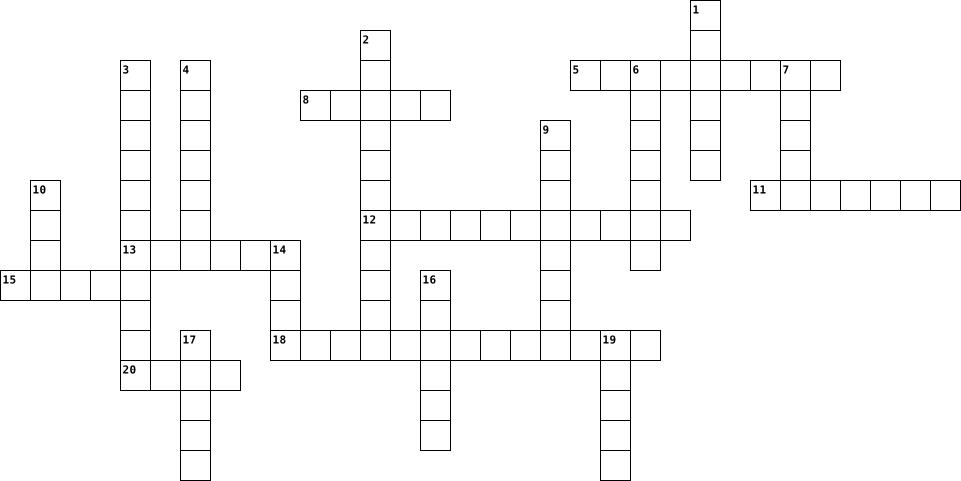
Across
- an organism that can create it's own food
- Brings water upwards
- sugar or food for plants
- transfer of pollen
- the female part of the flower
- hollow tube that pollen travels down
- pollen goes down the style
- Sends food and water to other parts of the plants
Down
- produces pollen
- contains chlorophyll
- A plant that produces seeds on scale of cones
- reproductive system of angiosperms
- a large root that grows downward
- they protects flower
- supports anther
- Absorbs water and anchors the plant to the ground
- absorbs sunlight
- Brings sugar downwards
- the leafy part of the flower
- where seeds are created
20 Clues: produces pollen • supports anther • absorbs sunlight • transfer of pollen • contains chlorophyll • they protects flower • Brings water upwards • Brings sugar downwards • where seeds are created • sugar or food for plants • pollen goes down the style • the leafy part of the flower • the female part of the flower • a large root that grows downward • reproductive system of angiosperms • ...
Plants! 2022-02-01

Across
- elongated cells of ground tissue with thicker cell walls, make up celery strings
- vascular tissue that moves sugars around
- open and close the stomata
- planned cell death
- what produces the egg in a flower
- plants that live for many years and are constantly growing and reproducing
- contain the majority of vascular tissues
- means "middle leaf"
- waxy waterproof layer of a leaf
- pollen and egg coming together to for a diploid cell
- reproduction that creates genetic copies
- plants that live for 1 year and focus on reproduction
- the sugar that plant cell walls are made of
- plants that move everything via osmosis and diffusion
- the process of converting sunlight, water, and carbon dioxide into sugars
- the goal product of photosynthesis
- "dead" phloem leaves these visible marks behind
- ground tissue with the thickest cell wall
- vascular tissue that moves water up
- all the male reproductive parts of a flower
Down
- plants that live for 2 years
- main pigment used by plants for photosynthesis
- organisms that convert sunlight into usable energy
- can only occur if an outside "force" moves pollen from one plant to another
- process used for plants to grow taller
- structure that produces the pollen
- organelle used for water storage
- all the female reproductive parts of a flower
- colorful attractants for pollinators
- an asexual form of reproduction used by ferns
- reproduction that allows for genetic variation
- control gas and water exchange into the plant
- regulate gas exchange with stomata in most plants
- added chemical to sclerenchyma cell walls
- main place for a plant to store carbohydrates
- the mesophyll more spread out to allow gas exchange
- the most abundant ground tissue of plants
- area where most photosynthesis happens in the leaf
- color reflected back by main pigment of plants
- the sticky receptacle that takes pollen
40 Clues: planned cell death • means "middle leaf" • open and close the stomata • plants that live for 2 years • waxy waterproof layer of a leaf • organelle used for water storage • what produces the egg in a flower • structure that produces the pollen • the goal product of photosynthesis • vascular tissue that moves water up • colorful attractants for pollinators • ...
plants 2022-03-04

Across
- start of a new plant is creating
- the perimeter of the leaf between the apex and base.
- pollen producing part of a flower, usually with a slender filament supporting the anther.
- a stalk that connects the blade with the leaf base.
- The root cap is a type of tissue at the tip of a plant root.
- a compact growth on a plant that develops into a leaf, flower, or shoot.
- root thickest part and grows down
- for growth and the maintenance of life.
- absorbs water and nutrients
- a part or space between two nodes, knots, or joints, as the portion of a plant stem between two nodes.
- from root epidermal cells.
- the endpoint of an embryonic shoot that is not fully developed, allowing for plants to grow taller.
Down
- where photosynthesis takes place
- helps seed spread
- grow out to the side and isn't as thick
- where reproduction takes place
- The outer parts of the flower
- The expanded part of a leaf or petal. Especially a leaf of grass or the broad portion of a leaf as distinct from the petiole.
- Nodes are the points on a stem where the buds, leaves, and branching twigs originate.
- Root hairs are long tubular-shaped
- moves water and nutrients
- The ovule producing part of a flower.
- a substance that provides nourishment
- central, thick, linear structure that runs along the length of a plant thallus or lamina.
- The parts of a flower that are often conspicuously colored.
25 Clues: helps seed spread • moves water and nutrients • from root epidermal cells. • absorbs water and nutrients • The outer parts of the flower • where reproduction takes place • where photosynthesis takes place • start of a new plant is creating • Root hairs are long tubular-shaped • root thickest part and grows down • The ovule producing part of a flower. • ...
Plants 2022-01-07

Across
- Cells that move water up a plant
- Most common type of plant cell
- These open and close the stomata
- waxy covering on a leaf
- Cells that are found at the root, tip, and stem regions where leaves attach. These cells are undifferentiated and produce new cells.
- Tiny pores in the underside of leaves
- Tendency of water molecules to bond with each other
- Layer of epidermis that contains more stomata Tiny pores in the underside of leaves
- The function of a flower
- Sticky part where pollen sticks to fertilize the flower
- Houses most of the vascular system
- Contain female reproductive cells
Down
- Type of mesophyll cell where photosynthesis occurs
- Contains male reproductive cells
- Plant organ responsible for photosynthesis
- Cells which carry food to all parts of the plant
- Tendency of water molecules to bond with other substances
- Female part of the flower
- Loss of water vapor through leaves
- Male part of the flower
- Anchors the plant to the ground
- Type of mesophyll cell that allows for gas exchange
22 Clues: waxy covering on a leaf • Male part of the flower • The function of a flower • Female part of the flower • Most common type of plant cell • Anchors the plant to the ground • Contains male reproductive cells • Cells that move water up a plant • These open and close the stomata • Contain female reproductive cells • Loss of water vapor through leaves • ...
PLANTS 2022-04-07

Across
- colorful & scent attracts pollenators
- type of stem that runs along the ground
- making food for plants
- roots grow down and stems and leaves grow up
- transports food DOWN from the leaves
- produces pollen
- sticky top where pollen lands
- all male parts of a flower
- stem green and not sturdy
- plants have true roots, stems, and leaves
- plants responding to stimuli
- underground stems
- anchor plant to ground
- tiny holes in leaves used in transpiration
- stem strong & sturdy made of wood
- capture sunlight and does photosynthesis
- one main large root
- several main roots branch off
- transports water up from the roots
Down
- seed with 2 food storage areas
- baby plant
- protects the seed
- when activity of a seed or plants stops
- stalk that holds the anther
- release of water through plant leaves
- all female parts of a flower
- plants no true roots, stems, and leaves
- release of energy from food
- seed with 1 food storage area
- seeds leaves that store food
- stalk down which pollen tube grows
- Contains the ovule
32 Clues: baby plant • produces pollen • protects the seed • underground stems • Contains the ovule • one main large root • making food for plants • anchor plant to ground • stem green and not sturdy • all male parts of a flower • stalk that holds the anther • release of energy from food • all female parts of a flower • seeds leaves that store food • plants responding to stimuli • ...
Plants 2022-04-12

Across
- contains the male gamete
- Vascular tissue that transports glucose from the leaves to the rest of the plant
- Chemical messengers that travel throughout the plant to stimulate responses
- Slender tube that transports pollen to the ovary
- Plant growth in response to gravity
- Support for the body of the plants
- The fleshy or dry ripened ovary of a flowering plant, enclosing the seed or seeds
- Hormone that is responsible for plant growth towards sunlight
- Opening in leaf where water leaves through transpiration
- Function to absorb water and minerals from the soil
- Open and close the stomata
- The male reproductive structures of the plants
Down
- The fertilized ripened ovule of a flowering plant containing an embryo
- Occurs in the mesophyll layer of the leaf
- Plant growth in response to light
- Knob like structure of the stamen that produces pollen
- Vascular tissue that transports water and minerals from the roots to the rest of the plant
- Contains the ovules and develops into the fruit
- The female reproductive structures of the plants
- Plant growth in response to touch
- A plant's loss of water, mainly through the stomates of leaves
- Part of the flower that attacks pollinators
- waxy layer of the leaf that helps to retain moisture
- Sticky tip of the pistil that traps pollen grains
24 Clues: contains the male gamete • Open and close the stomata • Plant growth in response to light • Plant growth in response to touch • Support for the body of the plants • Plant growth in response to gravity • Occurs in the mesophyll layer of the leaf • Part of the flower that attacks pollinators • The male reproductive structures of the plants • ...
PLANTS 2012-10-17

Across
- Breathing spores in the stem
- The tissue produced inside the seeds of most flowering plants around the time of fertilization
- Diffusion of hydrogen ions out of the thyllakoid and production of ATP
- Male part of the flower
- A fleshy fruit, such as a peach, plum, or cherry, usually having a single hard stone that encloses a seed. Also called stone fruit.
- Main floral function of a flower
- Splitting of water molecules
- A root system usually formed by thin, moderately branching roots growing from the stem
- Collective term for sepals
Down
- Saw like
- Leaves are arranged at a node around the stem flower clusters
- Transfer of pollen from one anther to the stigma by the carriers
- Tooth like
- Proportion of the day to the length of the night in a 24 hr.period
- Last electron acceptor
- Also called as polydrupes
- Compound fruit formed from several flowers in a cluster
- A root system where it has a big large root at the underground that can absorb salt mineral and water
- A collective term for all the petals and sepals.
- Composed of a hort stem sorrounded by numerou fleshy leaves
20 Clues: Saw like • Tooth like • Last electron acceptor • Male part of the flower • Also called as polydrupes • Collective term for sepals • Breathing spores in the stem • Splitting of water molecules • Main floral function of a flower • A collective term for all the petals and sepals. • Compound fruit formed from several flowers in a cluster • ...
PLANTS 2012-10-17

Across
- Splitting of water molecules
- A collective term for all the petals and sepals.
- Last electron acceptor
- Tooth like
- Breathing spores in the stem
- Main floral function of a flower
- A root system where it has a big large root at the underground that can absorb salt mineral and water
- Saw like
- A root system usually formed by thin, moderately branching roots growing from the stem
- Leaves are arranged at a node around the stem flower clusters
- Compound fruit formed from several flowers in a cluster
Down
- Transfer of pollen from one anther to the stigma by the carriers
- Proportion of the day to the length of the night in a 24 hr.period
- Male part of the flower
- Diffusion of hydrogen ions out of the thyllakoid and production of ATP
- A fleshy fruit, such as a peach, plum, or cherry, usually having a single hard stone that encloses a seed. Also called stone fruit.
- Also called as polydrupes
- Collective term for sepals
- The tissue produced inside the seeds of most flowering plants around the time of fertilization
- Composed of a hort stem sorrounded by numerou fleshy leaves
20 Clues: Saw like • Tooth like • Last electron acceptor • Male part of the flower • Also called as polydrupes • Collective term for sepals • Splitting of water molecules • Breathing spores in the stem • Main floral function of a flower • A collective term for all the petals and sepals. • Compound fruit formed from several flowers in a cluster • ...
plants 2012-04-02

Across
- vascular tissue that carries nutrients and carbohydrates to all parts of the flower
- 2 seed leaves
- type of plant that bears seeds directly on scales of cones
- surround, protect help disperse the seed
- a hollow tube that develops from a pollen grain when deposited on the stigma of a flower
- tubes called xylem and phloem (like humans)
- surrounds+protects embryo
- loosely pached tissue cells bellow the palisade layer
- sticky part of style that captures pollin
- the protective outer coat of a seed.
- seeds leaves in embryo
- the orientation of a plant or other organism in response to light, either toward the source of light
- a plant hormone that causes the elongation of cells in shoots and is involved in regulating plant growth.
- any of the minute pores in the epidermis of the leaf or stem of a plant, forming a slit of variable width that allows movement of gases in and out of the intercellular spaces.
- any of a group of plant hormones that stimulate stem elongation, germination, and flowering.
- single carpel or fused carpel
- male reproductive parts consist of filament
- female gametophyte develops found in ovary
- main photosynthetic organs increases amount of sunlight plant gets
Down
- is a turning or growth movement by a plant or fungus in response to gravity.
- epidermis layer highly specialized that surround the stomata
- one seed leaf
- femail reproductive part
- the turning of all or part of an organism in a particular direction in response to an external stimulus.
- anchors plant sucks in water and nutrients from the ground
- closely packed tissue absorbs light that enters the leaves
- supporter/transporter of nutrients to the rest of the flower
- loos of h20 through the leaves
- male gametophyte, sperm
- a regulatory substance produced in an organism and transported in tissue fluids such as blood or sap to stimulate specific cells or tissues into action.
- flowering plant that bears seeds in floers protected by tissue
- plant growth substances (phytohormones) that promote cell division, or cytokinesis, in plant roots and shoots.
- vascular tissue that carries water upward from the roots
- the inner tissue (parenchyma) of a leaf, containing many chloroplasts
- produces pollin grain
- plant embryo food supply
36 Clues: one seed leaf • 2 seed leaves • produces pollin grain • seeds leaves in embryo • male gametophyte, sperm • femail reproductive part • plant embryo food supply • surrounds+protects embryo • single carpel or fused carpel • loos of h20 through the leaves • the protective outer coat of a seed. • surround, protect help disperse the seed • sticky part of style that captures pollin • ...
Plants 2013-11-04

Across
- Primary site of photosynthesis
- Area between two nodes
- Secondary growth for width
- Irregular shaped Cell
- Used to transport water and nutrients
- Loosely packed cells
- Found at the tip of roots for protection
- Bud at the end of the stem
Down
- Primary growth for height
- A covering to protect new growth
- Extremely rigid dead cells
- attaches leaf to branch
- Waxy layer that provides protection
- of dividing cells
- Used for storage, metabolism, and support
- Outside tissue
- Secondary root
- Found underneath the leaf
- Where branch connects to main stem
- Used to anchor plant
20 Clues: Outside tissue • Secondary root • of dividing cells • Loosely packed cells • Used to anchor plant • Irregular shaped Cell • Area between two nodes • attaches leaf to branch • Primary growth for height • Found underneath the leaf • Secondary growth for width • Extremely rigid dead cells • Bud at the end of the stem • Primary site of photosynthesis • A covering to protect new growth • ...
Plants 2013-11-22

Across
- The name of a young root that is still in the seed
- Plants which do not loose their leaves in winter
- Tiny substances found in the soil and water that plants need to grow
- The green colouring in plants which is needed to make food
- The seed of a fern
- The casing which surrounds the seed until they are ready to start growing
- I am the part of the plant that holds the seeds at the very beginning
- What most plants grow from
- This holds up the plant
- Trees grow these instead of flowers
- The stem of a tree which has thickened over the years and developed hard wood
- A stalk that holds up the anthers
- A young plant
- I am on the anther
- The first two leaves, that come from the seed of a plant, that provide food for a plant
- Plants that live only one year
- Plants that live for two years
- A swollen underground stem and food store from which a new plant grows
Down
- The most beautiful part of a plant
- Helps the plant make food and it also gives minerals
- A plant which looses it's leaves in winter
- The part that protects a flower when it is in bud
- Holds the pollen in a flower
- Has heat and helps the plant make food
- The process in which a plant makes food
- The process of making new plants
- The name of the process of a young plant growing
- The skin of a tree
- Something to do with pollen that the bees help with
- An underground food store that some plants grow from
- These anchor the plant into the ground
- I am the part of the plant that needs water to turn into food
- A bunch of picked flowers
- A dried seed which squirrels like
34 Clues: A young plant • The seed of a fern • The skin of a tree • I am on the anther • This holds up the plant • A bunch of picked flowers • What most plants grow from • Holds the pollen in a flower • Plants that live only one year • Plants that live for two years • The process of making new plants • A stalk that holds up the anthers • A dried seed which squirrels like • ...
Plants 2013-11-15

Across
- Another name for leaf
- Covers the roots
- Loosely packed cells
- Regrowth
- Area of dividing cells
- Two seed leaves
- Small openings under the leaf
- Dead cells used for support
- Offshoot of root
- Male reproductive system
- Growth for diameter
- Supports Anther
Down
- One leaf per petiole
- Protection of bud
- One seed leaves
- Primary growth for height
- Used for metabolism, support, and storage
- Female reproductive system
- Waxy layer over leaf
- Many leaf per petiole
20 Clues: Regrowth • One seed leaves • Two seed leaves • Supports Anther • Covers the roots • Offshoot of root • Protection of bud • Growth for diameter • One leaf per petiole • Loosely packed cells • Waxy layer over leaf • Another name for leaf • Many leaf per petiole • Area of dividing cells • Male reproductive system • Primary growth for height • Female reproductive system • Dead cells used for support • ...
PLANTS 2015-03-06

Across
- A plant that smells especially good.
- Plant that lasts for more than two growing seasons.
- Plant that produces a lot of natural oil.
- The process by which plants turn water and carbon dioxid into oxygen and nutrients.
- White flower that only lasts one day.
- Growing or living in or near water.
- Put a young plant that has been grown in a pot.
- Aladin's girlfriend.
- To start existing or being seen.
- Reproductive part of a flower.
- Japanese tree whith fan-shaped leaves.
Down
- Become extinct or disappear.
- (Another Love - Tom Odell) "I brought you ......... in a pretty string
- When a plant starts to die.
- The female reproductive part of a flower
- When the flower open her petals.
- To develop from a seed and begin to grow into a plant.
- To grow plants or trees on an area of ground so that it is covered with them.
- Flower that loves the sun.
- they won't flower like they did last spring."
- The main trunk of a plant.
- Trees or plants that have a lot of leaves and branches growing close together.
- The fertilizing element of flowering plants.
- The tree's part that grown underneath the earth.
24 Clues: Aladin's girlfriend. • Flower that loves the sun. • The main trunk of a plant. • When a plant starts to die. • Become extinct or disappear. • Reproductive part of a flower. • When the flower open her petals. • To start existing or being seen. • Growing or living in or near water. • A plant that smells especially good. • White flower that only lasts one day. • ...
plants 2016-03-07

Across
- palisade
- cuticle
- roots
- respiration
- chlorophyll
- chloroplasts
- glucose
- energy
- stomata
- epidermis
- xylem
Down
- oxygen
- sunlight
- dioxide carbon dioxide
- starch
- carbohydrate
- stoma
- spongy
- cellulose
- phloem
- iodine
21 Clues: roots • stoma • xylem • oxygen • starch • spongy • energy • phloem • iodine • cuticle • glucose • stomata • palisade • sunlight • cellulose • epidermis • respiration • chlorophyll • carbohydrate • chloroplasts • dioxide carbon dioxide
PLANTS 2024-01-19

Across
- i
- d
- s
- t
- h
- a
- v
- x
- p
- r
- o
- u
Down
- l
- m
- b
- c
- e
- w
- f
- a
- k
- j
- q
- n
- g
25 Clues: l • m • i • b • d • c • e • s • w • t • f • h • a • k • j • a • v • q • x • n • p • r • g • o • u
Plants! 2024-02-26

Across
- The main input of photosynthesis
- Stores water for the plant
- Water evaporating off a leaf
- Female plant part
- Where photosynthesis takes place
- When a plant starts to grow
- Male plant part
- An input for photosynthesis
- Provides structure to the plant
Down
- The process of fertilizing a plant
- The process of a plant making its own food
- Helps attract pollinators
- Fertilize plants
- Transports food
- The unit of reproduction of a plant
- An input of photosynthesis
- Where gases are exchanged
- Output of photosynthesis
- Transports water
- The green pigment in plants
20 Clues: Transports food • Male plant part • Fertilize plants • Transports water • Female plant part • Output of photosynthesis • Helps attract pollinators • Where gases are exchanged • Stores water for the plant • An input of photosynthesis • When a plant starts to grow • An input for photosynthesis • The green pigment in plants • Water evaporating off a leaf • Provides structure to the plant • ...
Plants! 2024-02-26

Across
- The main input of photosynthesis
- Stores water for the plant
- Water evaporating off a leaf
- Female plant part
- Where photosynthesis takes place
- When a plant starts to grow
- Male plant part
- An input for photosynthesis
- Provides structure to the plant
Down
- The process of fertilizing a plant
- The process of a plant making its own food
- Helps attract pollinators
- Fertilize plants
- Transports food
- The unit of reproduction of a plant
- An input of photosynthesis
- Where gases are exchanged
- Output of photosynthesis
- Transports water
- The green pigment in plants
20 Clues: Transports food • Male plant part • Fertilize plants • Transports water • Female plant part • Output of photosynthesis • Helps attract pollinators • Where gases are exchanged • Stores water for the plant • An input of photosynthesis • When a plant starts to grow • An input for photosynthesis • The green pigment in plants • Water evaporating off a leaf • Provides structure to the plant • ...
Plants 2024-03-18

Across
- Cambium he main growth tissue in the stems and roots of many plants
- plant vascular tissue that conducts foods made in the leaves during photosynthesis to all other parts of the plant.
- plants that produce flowers and bear their seeds in fruits.
- the part of a plant which attaches it to the ground or to a support, typically underground.
- plant tissue made up of cells that are not specialized for a particular purpose.
- the first leaf of the plant embryo and will be the first part of a plant to emerge from the seed.
- an angiospermous plant (such as a deciduous tree or broad-leaved herb)
- the main body or stalk of a plant or shrub
- each of the segments of the corolla of a flower, which are modified leaves and are typically colored.
- a flattened structure of a higher plant, typically green and blade-like
- cone-bearing plants that bear naked seeds.
Down
- a vascular tissue that transports water throughout a plant's body.
- cone produces pollen, is usually herbaceous and much less conspicuous even at full maturity
- the fleshy or dry ripened ovary of a flowering plant, enclosing the seed or seeds
- Meristem region of cells capable of division and growth in the root and shoot tips in plants
- any cell or organism that possesses a clearly defined nucleus.
- cone contains ovules which, when fertilized by pollen, become seeds
- a chiefly herbaceous angiospermous plant (such as a grass, lily, or palm)
- the process by which green plants and some other organisms use sunlight to synthesize foods from carbon dioxide and water.
- Action when liquid flows through narrow spaces without external forces, such as gravity.
20 Clues: the main body or stalk of a plant or shrub • cone-bearing plants that bear naked seeds. • plants that produce flowers and bear their seeds in fruits. • any cell or organism that possesses a clearly defined nucleus. • a vascular tissue that transports water throughout a plant's body. • Cambium he main growth tissue in the stems and roots of many plants • ...
Plants 2023-01-10

Across
- when pollen from one plant reaches the pistil of another plant
- stamen, pistil, petal, ovary, ovule
- to put objects into groups based on their properties
- a gas that is absorbed by plants
- embryo, seed coat, seed leaves, stored food
- to keep something for future use
- to pass down a characteristic from parents to offspring
- to become fully developed and able to produce offspring
- the smallest unit of a living thing
- to begin to grow and develop
- a living thing
- to bring things together from different places
- a seed plant that reproduces with cones
- a young plant
Down
- to put things in many different places
- a green substance in a plant's leaves
- the process in which plants use sunlight to make food
- when an egg and sperm cell join together
- to explain how two or more things are different
- when the seeds of a plant are carried to a new place
- a sweet liquid produced by plants that some insects collect
- the male and female parts of a coniferous tree
- a new organism produced by plants, animals, or humans
- produces sperm cells
- the process that creates offspring
- the flower part of a plant
- one part of a process
- produces egg cells
- to explain how two or more things are the same
29 Clues: a young plant • a living thing • produces egg cells • produces sperm cells • one part of a process • the flower part of a plant • to begin to grow and develop • a gas that is absorbed by plants • to keep something for future use • the process that creates offspring • stamen, pistil, petal, ovary, ovule • the smallest unit of a living thing • a green substance in a plant's leaves • ...
Plants 2023-01-25

Across
- A plant tropism where a plant grows toward light
- An example of a plant that does not have seeds
- A plant tropism where a plant grows against the force of gravity
- Contains a young plant inside a protective coating
- A type of plant that does not reproduce with seeds
- An example of a dicot
- A plants growth response toward or away from a stimulus
- A seed with one area of stored food
- Vascular tissue that carries water
Down
- A seed with two areas of stored food
- A type of tissue that makes up tubes and pipes
- An example of a monocot
- Plant structures that eventually turn into sperm cells
- A plant tropism where a plant grows towards and around objects
- Female reproductive part of a flower. Contains eggs.
- A type of plant that reproduces using seeds
- Tiny cells that grow into new organisms
- Male reproductive part of a flower. Contains pollen.
- The tool used for cutting in dissections
- Vascular tissue that carries food/sugar
20 Clues: An example of a dicot • An example of a monocot • Vascular tissue that carries water • A seed with one area of stored food • A seed with two areas of stored food • Tiny cells that grow into new organisms • Vascular tissue that carries food/sugar • The tool used for cutting in dissections • A type of plant that reproduces using seeds • ...
Plants 2023-09-24

Across
- Globally loved orange item
- Do avoid the stinging variety
- National fruit of Japan
- Good wood for smoking meats
- Subtle soup leaf
- Perennial nightshade, bears green fruit
- Easy to grow squash
- Malay tree in the breadfruit family
- Symbol of Dia de los Muertos
- Purple soap fragrance
- Girasol
- Sunburn remedy
- Sushi side dish
- Third generation thief with his own manga
- It has its own shade of purple
- A. Tequilana
- PH affected flowers
- Spring mix
- May be pickled, or ornamental
- May accompany beans, in a meal
- Keep me in mind
- Fancy houseplant
- Spicy garden blossoms
- Famously itchy vine
- Excellent source of cones
- Fragrant front yard vine
- Round cactus, yellow thorns
- Favorite of Japanese idol Hatsune Miku
- Considered the tree of Zeus
- High sugar content
- Popeye's favorite
- Pre-wine
- Front yard friend
- Lawn stuff
- May cover a boulder, perhaps
- Cilantro
- Bee melon
- Leafy greens with yellow, white, or red stalks
- Ancient tooth pain remedy
- Pre processed tapioca
- Indicator of festivity
- Floats about the tropical ocean
- Spooky round lad
- Fruit of the desert
- Good for wreathes
- Sakura
- Climbing houseplant
- The smelly fruit
- Milk substitute
Down
- Subject of an early internet challenge
- Clothing ingredient
- Yellow face puckerer
- Guayava
- Little green cabbages
- "rice substitute"
- Tropical evergreen, purple peel
- Vampire repellant
- Pond floater
- Fowl of the heavens
- Cyanococcus
- Invasive pond carpet
- A symbol of love
- Divisive pizza topping
- Mediterranean oil source
- A color-changing tea
- A hobbit favorite
- "cottagecore" staple
- Carnivorous, prefers full sun
- Another common California tree
- HP whomper tree
- Upright pond companion
- Hardy fruit vine
- 91% water
- "cooking banana"
- Traditional bread base
- Excellent bow material
- Tortilla base
- Fuchsia tea ingredient
- Natural pink food dye
- Curly leaves found in forests
- Smaller relative of the orange
- Common Christmas tree
- 17th century American colonist ship
- Mild pepper from Puebla
- Newton fruit
- Sweet nightshade
- Different from a sweet potato
- Found on evaporated milk labels
- Flower of Virginia
- A giant tree found in California
- Found on the head of Mayzie
- Citrusy herb
- A is for _
- Has its own national park
- May cost extra
- Iconic Brassicaceae
- The sweet tree
- Delicate, does not require soil
- Sunny spring flower
- Usually has 3 leaves
- Mountain tree, source of rowan berries
- Common allergy trigger
- Persephone's mistake
103 Clues: Sakura • Guayava • Girasol • Pre-wine • Cilantro • 91% water • Bee melon • Spring mix • A is for _ • Lawn stuff • Cyanococcus • Pond floater • A. Tequilana • Newton fruit • Citrusy herb • Tortilla base • Sunburn remedy • May cost extra • The sweet tree • HP whomper tree • Sushi side dish • Keep me in mind • Milk substitute • Subtle soup leaf • A symbol of love • Hardy fruit vine • "cooking banana" • Fancy houseplant • ...
Plants 2022-11-30

Across
- disorder of structure or function
- plant that is grown on a large scale
- where plants grow
- business of growing crops and raising livestock farm animals
- living organism
- small arthropod animal with six legs
- ; mud or dust
- giving something for money
- light from the sun
- made by humans not naturally
- substance that provides nourishment
- top layer of soil
- relating to agriculture
- used to increase its fertility
Down
- tending a garden
- colourless, transparent, odourless liquid
- not related to living matter
- scattering seeds to plant them
- planting crops in succession on a piece of land
- destructive insect or other animals
- purchase and sale of provisions
- for the reproduction of plants
- water or other liquid diffused
- related to living matter
- clay, sand and humus
- animal poo
- organic material used as a fertilizer
- derived from nature
- main body or stalk of a plant
- the planet on which we live
30 Clues: animal poo • ; mud or dust • living organism • tending a garden • where plants grow • top layer of soil • light from the sun • derived from nature • clay, sand and humus • relating to agriculture • related to living matter • giving something for money • the planet on which we live • not related to living matter • made by humans not naturally • main body or stalk of a plant • ...
Plants 2022-11-30

Across
- business of growing crops and raising livestock farm animals
- used to increase its fertility
- destructive insect or other animals
- giving something for money
- living organism
- relating to agriculture
- the planet on which we live
- not related to living matter
- for the reproduction of plants
- substance that provides nourishment
- disorder of structure or function
- ; mud or dust
- light from the sun
- scattering seeds to plant them
- animal poo
Down
- top layer of soil
- related to living matter
- plant that is grown on a large scale
- small arthropod animal with six legs
- planting crops in succession on a piece of land
- colourless, transparent, odourless liquid
- main body or stalk of a plant
- clay, sand and humus
- purchase and sale of provisions
- made by humans not naturally
- organic material used as a fertilizer
- tending a garden
- water or other liquid diffused
- derived from nature
- where plants grow
30 Clues: animal poo • ; mud or dust • living organism • tending a garden • top layer of soil • where plants grow • light from the sun • derived from nature • clay, sand and humus • relating to agriculture • related to living matter • giving something for money • the planet on which we live • made by humans not naturally • not related to living matter • main body or stalk of a plant • ...
Plants 2022-05-09

Across
- outermost layer covering the entire plant
- outter most part of the flower; typically green
- contains chlorophyll, preforms photosynthesis
- tiny openings; allow for gas exchange
- provide anchorage;take in water and nutrients
- location of photosynthesis
- where all organelles are located
- transports water; one way flow
- small protuberance that may develope into a flower
- supports leaves; transports water and nutrients
- recieves the pollen
Down
- cell control center
- synthesizes protein
- membrane sac that holds water
- seed bearing part of the plant
- powerhouse
- transports nutrients; two way flow
- slender stalk that holds the anther
- where pollin is produced
- supports the stigms;connects to the ovary
- stores starch and pigment
- male fertilizing organ of the flower
- attracts pollinators
23 Clues: powerhouse • cell control center • synthesizes protein • recieves the pollen • attracts pollinators • where pollin is produced • stores starch and pigment • location of photosynthesis • membrane sac that holds water • seed bearing part of the plant • transports water; one way flow • where all organelles are located • transports nutrients; two way flow • ...
Plants 2022-05-07

Across
- these flowers are used to make perfume
- I am long and green used in salads
- we need this to stick pictures
- this plant gives us flour to make chapatti
- e green tree like vegetable
- green leafy vegetable
- I am a fruit of a tall tree that has no branches
- a big green fruit with many seeds
- king of the fruits
- we make eraser from this plant
- we make door mats, rope from this
- trees give out this to purify the air
Down
- this grain is used to make idli and dosa
- orange colour root we eat
- we get sugar from this stem
- tables, chairs and pencils are made from this
- a flower that faces the sun always
- I am round and red fruit used in cooking!
- a fruit having seeds on the outside
- very small plants with green stems
20 Clues: king of the fruits • green leafy vegetable • orange colour root we eat • we get sugar from this stem • e green tree like vegetable • we need this to stick pictures • we make eraser from this plant • a big green fruit with many seeds • we make door mats, rope from this • I am long and green used in salads • a flower that faces the sun always • very small plants with green stems • ...
PLANTS 2022-05-10

Across
- graine
- abeille
- feuillage
- arbre
- pousse
- aménagement paysager
- arbuste
- baies
- région boisée
Down
- doux
- saveur
- légume
- sécheresse
- grimpant
- plante
- feuilles
- des haies
- chair
- arome
- fleurir
20 Clues: doux • arbre • chair • arome • baies • graine • saveur • légume • plante • pousse • abeille • arbuste • fleurir • grimpant • feuilles • des haies • feuillage • sécheresse • région boisée • aménagement paysager
Plants 2023-05-17

Across
- The middle part of the pistil that the pollen travels down
- The layer below the epidermal layer
- Male reproductive part
- the reproductive part of a vascular plant
- Plant structure that contains the embryo
- The outer casing of some parts of the plant. It is the protective impermeable repellant to water, preventing valuable water from being lost
- the bottom part of the pistil that contains the ovules
- The bottom part of the stamen which holds up the anther
- Cap, consists of cells that help protect root tissue as the root grows
- Tubelike cells stacked together to form vessels that distribute water from the roots to various parts of the plant
- The center of a root
Down
- Top part of the pistil which collects pollen
- A pore found in the epidermis of the leaves that contains the rate of gas exchange
- The site of photosynthesis in a plant
- The top part of thee stamen which consist of the pollen
- Tubelike cells stacked to form tubes that distribute food
- the female reproductive part
- cells, Specialized plant cells in the leaves' epidermis are used to control gas exchange. They control the stomata's entry
- hairs, The extension of the roots epidermal. Their structure allows the plant to absorb more water. They also allow a plant to take in the minerals it needs to survive
- the Outermost layer of the leaf, under the cuticle
- tissue, Consist of Parenchyma, Collenchyma, and Sclerenchylma cells and have diverse functions. Includes photosynthesis, storage, and support
21 Clues: The center of a root • Male reproductive part • the female reproductive part • The layer below the epidermal layer • The site of photosynthesis in a plant • Plant structure that contains the embryo • the reproductive part of a vascular plant • Top part of the pistil which collects pollen • the Outermost layer of the leaf, under the cuticle • ...
plants 2025-05-06

Across
- – Part of a stamen that contains pollen
- – To begin to grow from a seed
- – Supports the anther in a flower
- – Plant species with male and female flowers on separate individuals
- – Protects a flower bud before it opens
- – Flower part that contains the ovules
- – First leaf or first pair of leaves in a seedling
- – Structure that develops into a seed after fertilization
- – Connects the stigma to the ovary
- – Anchors the plant and absorbs water and nutrients
- – Male reproductive part of a flower
Down
- – Part of the pistil that receives pollen
- – Process plants use to convert sunlight into energy
- – Plant embryo with a food supply and protective coat
- – Colorful part of a flower used to attract pollinators
- – Study of plants
- – Powdery substance used for plant reproduction
- – Tissue that transports food in plants
- – A plant with two seed leaves
- – A plant with one seed leaf
- – Tissue that transports water in plants
- – Supports plant and transports nutrients
22 Clues: – Study of plants • – A plant with one seed leaf • – To begin to grow from a seed • – A plant with two seed leaves • – Supports the anther in a flower • – Connects the stigma to the ovary • – Male reproductive part of a flower • – Flower part that contains the ovules • – Part of a stamen that contains pollen • – Protects a flower bud before it opens • ...
Plants 2026-03-20

Across
- The pigment that makes plants green.
- Anchor plant to ground and absorb nutrients
- A root system made of many thin roots that spread out.
- makes food for the plant through photosynthesis
- The process when a seed begins to sprout and grow.
- The beginning stage of a new plant.
- The ground material where many plants grow.
- A young plant just starting to grow from a seed.
- Helpful materials in the soil that plants absorb to grow.
Down
- The parts inside plant cells where photosynthesis happens.
- The energy from the sun that plants use to make food.
- material added to a plant to give it extra nutrients
- converts water and carbon dioxide into food for plants
- The colorful part of a flower.
- Tiny parts of roots that help absorb water and nutrients.
- reproductive part of the plant
- The part of a plant that protects the seeds.
- A root system with one large main root and smaller side roots.
- Something plants need to survive and grow (H2O).
- supports leaves, flowers, and fruit
- Plants release this to help us breathe.
21 Clues: The colorful part of a flower. • reproductive part of the plant • The beginning stage of a new plant. • supports leaves, flowers, and fruit • The pigment that makes plants green. • Plants release this to help us breathe. • Anchor plant to ground and absorb nutrients • The ground material where many plants grow. • The part of a plant that protects the seeds. • ...
Plants 2025-12-11

Across
- In Norse mythology, this tree is known as the World Tree, connecting all nine realms in the cosmos
- A purple flower known for its calming properties
- Used in spiritual rituals to dispense negative energy
- Often given to partners on Valentine's Day
- Features small white blooms and is usually put into bouquets
- A common household plant that entraps flies
- This tree is meant to bring you wealth
- Its petals are in a cup shape
- Spiky and almost impossible to kill
Down
- It was once believed to protect people from demons and curses
- A song from the musical The Sound of Music was named after this plant
- These flowers come from Japanese cherry trees
- Pandas eat this
- It has the same name as a famous character from the Scooby-Doo movies
- A tall grass, commonly used to make sugar
- Faces the sun
- It has stripes similar to a zebra and is difficult to grow
- A white flower used to make tea
- You can't seem to remember the name of this flower
- Grinded into a green paste and served with sushi
20 Clues: Faces the sun • Pandas eat this • Its petals are in a cup shape • A white flower used to make tea • Spiky and almost impossible to kill • This tree is meant to bring you wealth • A tall grass, commonly used to make sugar • Often given to partners on Valentine's Day • A common household plant that entraps flies • These flowers come from Japanese cherry trees • ...
Plants 2026-04-08

Across
- Process where plants lose water vapor
- Green substance in leaves that traps sunlight
- Movement of pollen from one part of a flower to another
- Structures that absorb water and anchor the plant
- Part that supports the plant and carries water and food
- Gas released by plants that humans breathe
- Plant structure that helps with reproduction
- Substances in soil that help plants grow
- Material that provides support and nutrients for plants
- Plant parts where food is made
- Gas plants take in from the air
- Natural place where a plant lives
Down
- Increase in size and development of a plant
- Liquid absorbed by roots for plant processes
- Process plants use to make food from sunlight, water, and air
- Structures that can grow into a new plant
- Process of making new plants
- Tiny openings in leaves that allow gas exchange
- Structure that protects and spreads seeds
- Energy source needed for photosynthesis
20 Clues: Process of making new plants • Plant parts where food is made • Gas plants take in from the air • Natural place where a plant lives • Process where plants lose water vapor • Energy source needed for photosynthesis • Substances in soil that help plants grow • Structures that can grow into a new plant • Structure that protects and spreads seeds • ...
Plants 2026-04-13

Across
- protective barrier on the outside of leaves that prevents water loss
- structure in chloroplast that directly undergoes photosynthesis and cause leaves to appear green
- a plant's growth response to touch
- supports plants and can bend in response to external stimuli
- the female reproductive organs of a flower
- a plant's growth response to gravity
- the male reproductive organs of a flower
- organelle in plant leaf-cells that allows for photosynthesis
- the portion of leaves where CO2 is taken in and O2 is expelled
- part of a flower that draws pollinators
- a plant's growth response to light
Down
- the portion of leaves that contain chloroplasts
- connects the head of a flower to the stem
- transports sugar down the stem
- a plant's growth response to water
- part of a flower where pollinators land and spread pollen
- process producing glucose with sunlight
- part of a flower that protects the buds
- unrefined sugar that is important in photosynthesis and cellular respiration
- process that produces energy with glucose
- supports the anther
- the part of a flower where pollen travels through a pollen tube
- the part of the flower that contains ovules and produces seeds
- transports water up the stem
- the part of a flower that produces pollen
25 Clues: supports the anther • transports water up the stem • transports sugar down the stem • a plant's growth response to water • a plant's growth response to touch • a plant's growth response to light • a plant's growth response to gravity • process producing glucose with sunlight • part of a flower that protects the buds • part of a flower that draws pollinators • ...
plants 2026-05-04

Across
- French Marigold
- Catmint
- Honeysuckle
- Sword Lilly
- African Daisy
- Tobacco Plant
- Forget Me Not
- Smoke Bush
- Californian Lilac
- Poppy
- Yew
- Bellflower
- Pinks
- Love in a Mist
- Japanese laurel
Down
- Angels Fishing Rods
- Red Hot Poker
- Speedwell
- Mexican orange blossom
- Snap Dragon
- African Violet
- Granny’s Bonnet
- Montbretia
- Foxglove
- Rock Rose
- Dogwood
- Baby's Breath
- Winter Heather
- Lilac
- Cranesbill
30 Clues: Yew • Lilac • Poppy • Pinks • Catmint • Dogwood • Foxglove • Speedwell • Rock Rose • Smoke Bush • Montbretia • Cranesbill • Bellflower • Honeysuckle • Sword Lilly • Snap Dragon • Red Hot Poker • African Daisy • Tobacco Plant • Forget Me Not • Baby's Breath • African Violet • Winter Heather • Love in a Mist • French Marigold • Granny’s Bonnet • Japanese laurel • Californian Lilac • Angels Fishing Rods • Mexican orange blossom
plants 2026-05-11

Across
- A force that uses water pressure to push outward on plant
- Allows plants to “breathe”
- food transportation
- light
- touch
- no energy to function
- The conversion of radiant energy to chemical energy.
- Provides support, reproduction and is where photosynthesis occurs.
- fearing/dislike
- directions.
- When gravity stimulates plant growth in specific
- directions.
- water transportation
- Transports water, minerals, and nutrients throughout the plant.
Down
- Growth of all or part of a plant in response to an
- male parts of a plant
- A class of hormones that regulate cell growth in plants.
- When light stimulates plant growth/movement in
- an event that causes a reaction
- plant sperm
- Absorbs water and minerals,
- keeping the plant upright.
- to make
- earth
- hydro
- When touch stimulates plant growth/movement in
- stimulus.
- female parts of a plant
- biomolecule, fat/oils/wax
- Allows for the gas exchange needed for transpiration and photosynthesis.
30 Clues: light • touch • earth • hydro • to make • stimulus. • plant sperm • directions. • directions. • fearing/dislike • food transportation • water transportation • no energy to function • male parts of a plant • female parts of a plant • biomolecule, fat/oils/wax • Allows plants to “breathe” • keeping the plant upright. • Absorbs water and minerals, • an event that causes a reaction • ...
Plants 2026-05-14

Across
- Flower structure that produces pollen
- Region of active cell division in plants
- Leaf tissue where most photosynthesis occurs
- Loss of water vapor from plant leaves
- Protective structure covering the tip of a growing root
- Female reproductive structure of a flower
- Organelle where photosynthesis occurs
- Vascular tissue that carries sugars throughout the plant
- Transfer of pollen from anther to stigma
Down
- Root system made of many thin branching roots
- Process that converts sunlight into chemical energy
- Process that releases energy from glucose
- Male reproductive part of a flower
- Waxy leaf covering that prevents water loss
- Molecule that stores and transfers energy in cells
- Structure that develops into a seed after fertilization
- Fusion of sperm and egg in plants
- Vascular tissue that transports water upward
- Leaf openings that regulate gas exchange
- Single large primary root found in some plants
20 Clues: Fusion of sperm and egg in plants • Male reproductive part of a flower • Flower structure that produces pollen • Loss of water vapor from plant leaves • Organelle where photosynthesis occurs • Region of active cell division in plants • Leaf openings that regulate gas exchange • Transfer of pollen from anther to stigma • Process that releases energy from glucose • ...
In Defense Of Food 2018-11-28

Across
- Dentist, known for his theories on the relationship between nutrition and dental health
- English Doctor and Chemist who identified 3 principle constituents known as macronutrients
- Lots of processed foods, Not a lot of veggies
- Considered the founder of "Organic Chemistry"
- Surprising
- American Medical doctor and health activist, promoted both musturbation and proliferation of toxic bacteria in the colon
- A disease in which the body's ability to produce or respond to the hormone insulin is impaired
- Well grown in relatively healthy soils that have been nourished by organic matter rather than synthetic fertilizers
- an ideology that assumes that consuming foods is for its nutritional value
- The Cultivation of land and breeding of animals and plants to provide food, fiber, medicinal plants and other products to sustain and enhance life.
Down
- An obvious problem people tend to avoid
- Ran for president against Donald Trump
- Author of "In Defense of Food"
- Physchologist at the university of Pennsylvania
- Agricultural practice of producing or growing a single crop, plant or livestock species, variety, or breed in a field or farming system at a time
- The 45th President of the United States of America
16 Clues: Surprising • Author of "In Defense of Food" • Ran for president against Donald Trump • An obvious problem people tend to avoid • Lots of processed foods, Not a lot of veggies • Considered the founder of "Organic Chemistry" • Physchologist at the university of Pennsylvania • The 45th President of the United States of America • ...
MRS GREN 2024-09-08

Across
- can plants move
- Chemical reaction in cells and energy is released for metabolism
- If something does not perform all of the seven life processes then it is
- An increase in size and body's dry mass
Down
- Removing metabolic waste
- what is the process that makes more of the same kind of organism.
- A change in position or place
- Taking in things for growth and development
- what is it called when you can detect movements in your environment
9 Clues: can plants move • Removing metabolic waste • A change in position or place • An increase in size and body's dry mass • Taking in things for growth and development • Chemical reaction in cells and energy is released for metabolism • what is the process that makes more of the same kind of organism. • what is it called when you can detect movements in your environment • ...
MRS GREN 2024-09-08

Across
- can plants move
- Chemical reaction in cells and energy is released for metabolism
- If something does not perform all of the seven life processes then it is
- An increase in size and body's dry mass
Down
- Removing metabolic waste
- what is the process that makes more of the same kind of organism.
- A change in position or place
- Taking in things for growth and development
- what is it called when you can detect movements in your environment
9 Clues: can plants move • Removing metabolic waste • A change in position or place • An increase in size and body's dry mass • Taking in things for growth and development • Chemical reaction in cells and energy is released for metabolism • what is the process that makes more of the same kind of organism. • what is it called when you can detect movements in your environment • ...
Biology 2024-06-20

Across
- Diaphragm
- Trachea
- Alveoli
- Nutrition
- Stomach
- Glucose
Down
- ATP
- Absorption
- smallintestine
- Pharynx
- digestion
- lung
- Respiration
- Liver
14 Clues: ATP • lung • Liver • Pharynx • Trachea • Alveoli • Stomach • Glucose • Diaphragm • digestion • Nutrition • Absorption • Respiration • smallintestine
NUTRITION 2022-08-19

Across
- ACIDS, Intestinal Juice helps in the breakdown of Fats into ___ & Glycerol.
- The unabsorbed food is sent into the large intestine where its wall absorbs more _____ from the material.
- _________________ is an essential element used in the synthesis of proteins and other compounds.
- Energy derived from the food is stored in the form of ________________ in the Human Body.
- Nitrogen is taken up from the atmosphere in the form of inorganic ______________ & Nitrates
- Complex Substance have to be broken down into Simpler ones before they can be used for the upkeep and growth of the Body. For this organisms use various _________________.
- ______________________ which are not used immediately are stored in the form of Starch, which serve as internal energy reserve to be used as when required by the plant.
- The exit of food from the Stomach is regulated by a ________________ muscle, which releases it in small amounts into the small intestine
- After we swallow the food, _____________________ is the process which helps to push down the food from Oesophagus to Stomach.
- Amar-Bel is an example of _______________________ type of nutition.
Down
- __________________ is the process of conversion of light energy into chemical energy and this energy is then used in the splitting of water molecules into Hydrogen & Oxygen.
- In Paramoecium which is a unicellular organism, Food is taken in through the movement of _____________ which cover the entire surface of the cell.
- AMYLASE, Saliva contains _______________________ that breaks down complex substance - Starch to Simple Sugar called Maltose.
- Peristaltic Movements occurs all along the ____.
- Desert Plants take up carbon dioxide at night and prepare an ____________________ which is acted upon by the energy absorbed by the Chlorophyll during the day.
- INTESTINE, ________________________________ is the site of complete digestion of carbohydrates, proteins and fats.
- __________________ is the main site of photosynthesis in plants.
- JUICE, _________________________ helps to make the medium alkaline for the pancreatic juice to act and helps in Emulsification process.
- Hydrochloric Acid helps to make the medium acidic in Stomach to facilitate action of the Enzyme _____________.
- _______________ is the largest gland in the Human Body
- Herbivores need a ___________________ small intestine to allow the digestion of cellulose.
21 Clues: Peristaltic Movements occurs all along the ____. • _______________ is the largest gland in the Human Body • __________________ is the main site of photosynthesis in plants. • Amar-Bel is an example of _______________________ type of nutition. • ACIDS, Intestinal Juice helps in the breakdown of Fats into ___ & Glycerol. • ...
Nutrition 2022-10-27

Across
- nutrients that supply energy to the body
- does not dissolve in water
- energy needed to heat 1 kilogram of water by 39F
- components of food needed for body to function
- chemical compounds found in foods
- hormone produced in pancreas
- taking a liquid fat and making it solid
- chemical, just as nutrients are chemicals
- assigned when not enough information for an RDA
- required for good nutrition
- long chains that include many glucose molecules
- recomended dietary allowances are daily nutrient standards established by the government
- another word for fat
Down
- alters physical properties and makes them stay fresh longer
- substance present in food because of processing, production, or packaging
- dissolves in water
- C and B found in oranges and grapefruits
- dietary reference intakes recommended daily nutrient and energy intake amounts
- very important simple sugar
- chemicals that aid the body in fighting/preventing disease
- contain one or two sugars
- major or trace depending on how much is needed in a diet
- study of nutrients /how they nourish the body
- special chemical messengers made by bodies that regulate body functions
- chemical compounds that have special functions in the body
- unit of measurement for energy commonly know as
- must be obtained from food each day
- chemical process that causes unsaturated fats to spoil
- two or more incomplete proteins sources that together provide adequate amounts of all the essential amino acids
- contain all the essential amino acids in the right amount
- A D E and K found in foods containing fat
- refers to fats and oils, solid at room temperature
- white waxy substance that helps the body carry out its many processes
- lack one or more essential amino acid
34 Clues: dissolves in water • another word for fat • contain one or two sugars • does not dissolve in water • very important simple sugar • required for good nutrition • hormone produced in pancreas • chemical compounds found in foods • must be obtained from food each day • lack one or more essential amino acid • taking a liquid fat and making it solid • ...