
states Crossword Puzzles
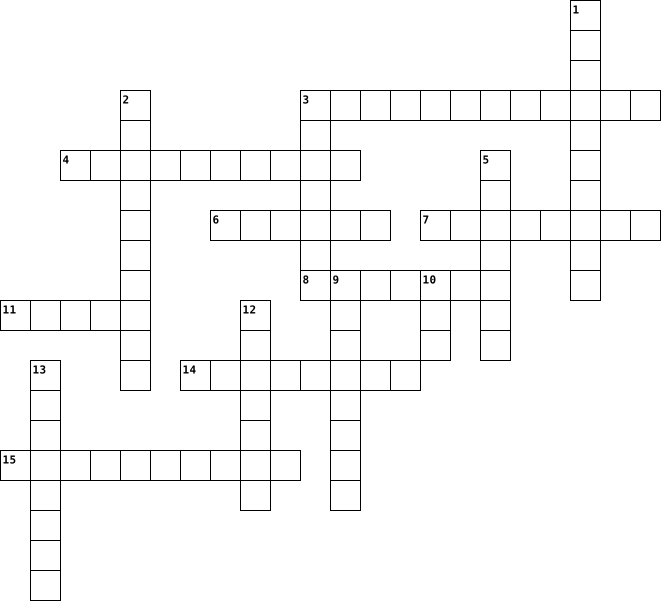
Chapter 2 Cross Word 2022-09-29

Across
- to withdraw from
- To rebell.
- document which stated that the united states will no longer tolerate foreign affiliations
- preference for native-born people
- a system which would give people jobs based on loyalty and support.
- of Tears- trails which natives that were forced to leave homes were forced to walk
- the largest land acquisition worth $11.25 million consisted of all land west of Mississippi to pay war debts
- 1st president of the united states
- A most famous escaped slave who wrote
- closed meeting in congress.
- the political party made by John Adams and Henry Clay.
Down
- freeing of enslaved peoples
- a compromise which took place when both Missouri and Maine wanted to become states Missouri would be a slave state Maine would not
- Unions- group of workers who press for better working conditions and wages
- powers specifically mentioned in the constitution
- moderation of consumption of alcohol
- powers not specifically mentioned in the constitution
- Sovereignty- Idea that states should chose if they want to be a slave state
- to end immediately
- the power to decide if laws are constitutional or not
- Railroad- Well organized group of abolishest who would help free slaves
- a group who advise
- Flag Republic- California territory name
- Revolution- a revolution which occurred in business and industry
- Destiny- The idea that the United States should spread to pacific
25 Clues: To rebell. • to withdraw from • to end immediately • a group who advise • freeing of enslaved peoples • closed meeting in congress. • preference for native-born people • 1st president of the united states • moderation of consumption of alcohol • A most famous escaped slave who wrote • Flag Republic- California territory name • powers specifically mentioned in the constitution • ...
Constitutional Convention Crossword 2025-01-16

Across
- The first form of government in the United States (first constitution)
- the meetings of the delegates from the thirteen colonies that united in support of the american revolution
- an article signed on September 17, 1787
- the first 10 Amendments to the Constitution
- the state where the constitutional convention was held
- the "father of the constitution"
- the method used to elect a president in the United States
- people get most of the power
- opposed the ratification of the 1787 U.S. Constitution because they feared that the new national government would be too powerful
- the most important anti federalist, inspiring many to also believe in it
- made slaves equalto 3/5 of one person
Down
- a plan that called for the creation of a supreme national government with three branches and a bicameral legislature.
- the place where the constitution was made
- a plan designed to protect the security and power of the small states by limiting each state to one vote in Congress, as under the Articles of Confederation
- the person who was chosen as president of the constitutional convention
- central government gets most of the power
- the first political party in the United States
- the state that did not attend the constitutionalconvention
- a type of legislature that is divided into two separate assemblies, chambers, or houses
- these states would dominate both houses of congress under the Virginia plan
20 Clues: people get most of the power • the "father of the constitution" • made slaves equalto 3/5 of one person • an article signed on September 17, 1787 • the place where the constitution was made • central government gets most of the power • the first 10 Amendments to the Constitution • the first political party in the United States • ...
USA 2024-06-04

Across
- Country
- A state and city on the East Coast.
- Referring to George Washington, the first President of the United States.
- A prominent signer of the Declaration of Independence.
- A state on the East Coast of the United States.
- The national bird and symbol of the United States.
- Referring to the original thirteen colonies that formed the United States.
Down
- An iconic symbol of American independence located in Philadelphia.
- A state in the Midwest.
- The official residence and workplace of the U.S. President.
- The 30th President of the United States.
- A U.S. Army post in Kentucky known for storing gold reserves.
- A major city in Pennsylvania.
13 Clues: Country • A state in the Midwest. • A major city in Pennsylvania. • A state and city on the East Coast. • The 30th President of the United States. • A state on the East Coast of the United States. • The national bird and symbol of the United States. • A prominent signer of the Declaration of Independence. • The official residence and workplace of the U.S. President. • ...
Road to the Civil War Part 2 2021-04-15

Across
- An American statesman and lawyer who served as the 16th president of the United States from 1861 until his assassination in 1865. Lincoln led the nation through the American Civil War, the country's greatest moral, cultural, constitutional, and political crisis.
- Published in 1852, the novel had a profound effect on attitudes toward African Americans and slavery in the U.S. and is said to have "helped lay the groundwork for the Civil War".
- The Bureau of Refugees, Freedmen, and Abandoned Lands was an important agency of early Reconstruction, assisting freedmen in the South.
- Either of two distinct U.S. hate organizations that employed terror in pursuit of their white supremacist agenda.
- A raid on Harpers Ferry was an effort by abolitionist John Brown, from October 16 to 18, 1859, to initiate a slave revolt in Southern states by taking over the United States arsenal at Harpers Ferry, Virginia. It has been called the dress rehearsal for, or Tragic Prelude to, the Civil War.
- Commonly referred to as the Confederate States or the Confederacy, was an unrecognized breakaway state in existence from February 8, 1861, to May 9, 1865, that fought against the United States of America during the American Civil War.
- Military conflict in which the contenders are willing to make any sacrifice in lives and other resources to obtain a complete victory, as distinguished from limited war. Throughout history, limitations on the scope of warfare have been more economic and social than political.
- In U.S. history, the period (1865–77) that followed the American Civil War and during which attempts were made to redress the inequities of slavery and its political, social, and economic legacy and to solve the problems arising from the readmission to the Union of the 11 states that had seceded at or before the outbreak of war.
- Occurred from May 23 and continued until May 26, 1856, with the killings occurring on the night of May 24 and the morning of May.
- An American Confederate general best known as a commander of the Confederate States Army during the American Civil War. He led the Army of Northern Virginia from 1862 until its surrender in 1865 and earned a reputation as a skilled tactician.
- In the American Civil War, site in Virginia of the surrender of the Confederate forces to those of the North on April 9, 1865. ... Robert E. Lee surrendered to Gen. Ulysses S. Grant, thus effectively ending the Civil War.
- Also known as the Battle of Sharpsburg, particularly in the Southern United States, was a battle of the American Civil War, fought on September 17, 1862.
- A presidential proclamation and executive order issued by United States President Abraham Lincoln on September 22, 1862, during the Civil War.
Down
- Was an American politician who served as the president of the Confederate States from 1861 to 1865. As a member of the Democratic Party, he represented Mississippi in the United States Senate and the House of Representatives before the American Civil War.
- An unsuccessful 1846 proposal in the United States Congress to ban slavery in territory acquired from Mexico in the Mexican–American War. The conflict over the Wilmot Proviso was one of the major events leading to the American Civil War.
- Referred to as the GOP ("Grand Old Party"), is one of the two major political parties in the United States. ... The party opposed the expansion of slavery before 1861 and led the fight to destroy the Confederate States of America (1861–1865).
- Was part of the Compromise of 1850. The act required that slaves be returned to their owners, even if they were in a free state. The act also made the federal government responsible for finding, returning and trying escaped slaves.
- An enslaved African-American man in the United States who unsuccessfully sued for his freedom and that of his wife, Harriet Robinson Scott, and their two daughters in the Dred Scott v. Sandford case of 1857, popularly known as the "Dred Scott decision"
- An American military leader who served as the 18th president of the United States from 1869 to 1877. As president, Grant was an effective civil rights executive who created the Justice Department and worked with the Radical Republicans during Reconstruction to protect African Americans.
- An American social reformer and women's rights activist who played a pivotal role in the women's suffrage movement. Born into a Quaker family committed to social equality, she collected anti-slavery petitions at the age of 17.
- Was a package of five separate bills passed by the United States Congress in September 1850 that defused a political confrontation between slave and free states on the status of territories acquired in the Mexican–American War.
- Withdraw formally from membership of a federal union, an alliance, or a political or religious organization.
- A speech that U.S. President Abraham Lincoln delivered during the American Civil War at the dedication of the Soldiers' National Cemetery in Gettysburg, Pennsylvania, on the afternoon of November 19, 1863.
- Was fought July 1–3, 1863, in and around the town of Gettysburg, Pennsylvania, by Union and Confederate forces during the American Civil War.
- Were state and local laws that enforced racial segregation in the Southern United States.
- Repealed the Missouri Compromise, created two new territories and allowed for popular sovereignty. It also produced a violent uprising known as “Bleeding Kansas,” as proslavery and antislavery activists flooded into the territories to sway the vote.
- Also known as the Declaration of Rights and Sentiments, is a document signed in 1848 by 68 women and 32 men—100 out of some 300 attendees at the first women's rights convention to be organized by women.
- An island fortification located in Charleston Harbor, South Carolina most famous for being the site of the first shots of the Civil War (1861-65). ... Beauregard bombarded Fort Sumter on April 12, 1861, kicking off the battle.
- Refers to the diplomatic methods employed by the Confederacy during the American Civil War to coerce the United Kingdom and France to support the Confederate war effort by implementing a cotton trade embargo against the United Kingdom and the rest of Europe.
29 Clues: Were state and local laws that enforced racial segregation in the Southern United States. • Withdraw formally from membership of a federal union, an alliance, or a political or religious organization. • Either of two distinct U.S. hate organizations that employed terror in pursuit of their white supremacist agenda. • ...
States in Malaysia 2021-02-06

Across
- Negeri yang popular dengan tarian Makyong
- Ibu Negara Melaysia
- Bersempadan dengan Singapura
- Gunung Kinabalu terletak di negeri ini
- Terdapat jambatan terpanjang di Malaysia
- Antara negeri yang mempunyai banyak pulau di Malaysia
- Terletaknya banyak pejabat kementerian dan rumah PM
Down
- Negeri yang dibuka oleh Parameswara
- terdapat banyak tempat pelancongan yang terletak di tanah tinggi
- Negeri Jelapang Padi
- Negeri paling kecil
- Mempunyai sungai terpanjang iaitu Sungai Rajang
- Rumah Minangkabau terletak di negeri ini
- Ibu negeri Ipoh
14 Clues: Ibu negeri Ipoh • Ibu Negara Melaysia • Negeri paling kecil • Negeri Jelapang Padi • Bersempadan dengan Singapura • Negeri yang dibuka oleh Parameswara • Gunung Kinabalu terletak di negeri ini • Rumah Minangkabau terletak di negeri ini • Terdapat jambatan terpanjang di Malaysia • Negeri yang popular dengan tarian Makyong • Mempunyai sungai terpanjang iaitu Sungai Rajang • ...
States (38-50) 2020-10-19

Across
- RhodeIsland
- SouthCarolina
- Wisconsin
- Tennessee
- Virginia
- Washington
- SouthDakota
Down
- Utah
- Oregon
- Pennsylvania
- Wyoming
- WestVirginia
- Vermont
- Texas
14 Clues: Utah • Texas • Oregon • Wyoming • Vermont • Virginia • Wisconsin • Tennessee • Washington • RhodeIsland • SouthDakota • Pennsylvania • WestVirginia • SouthCarolina
Mexican States Puzzle 2021-11-04

Across
- Baja California Sur is the Mexican state with the second smallest ________
- This lagoon in Quintana Roo has nature reserves and coral reefs
- This state is known for salt mining and gets its name from a Spanish novel
- This state's name means "humid land"
- Located in Chihuahua this canyon is deeper than the Grand Canyon
- This state is the richest in Mexico
Down
- This park in Baja California Norte has a zoo and walking trails
- Besides Tabasco sauce this food is one of the most famous foods of the state of Tabasco
- The Mayan people had their ancient home here and these ruins are one of the best known.
- The capital of this state is Chetumal
- This state's name in Nahuatl means place of richness
- This state is known for its colorful and colonial style buildings and is near Quintana Roo
- This geographic element separates the Sea of Cortez from the Pacific Ocean
- These natural underground pools are common throughout Campeche
14 Clues: This state is the richest in Mexico • This state's name means "humid land" • The capital of this state is Chetumal • This state's name in Nahuatl means place of richness • These natural underground pools are common throughout Campeche • This park in Baja California Norte has a zoo and walking trails • This lagoon in Quintana Roo has nature reserves and coral reefs • ...
CRM: Multiple States 2017-03-12

Across
- A massacre that occurred on February 8, 1968, killing 3 people on the campus of a South Carolina State University
- Bridges The first black student to desegregate a school in New Orleans
- City where Oliver Brown tried to enroll his child, but was denied access
- This president sent Army troops to gain control of the situation at Little Rock Central High School
- This president signed the Civil Rights Act of 1964
- Supreme Court ruling that stated separating schools due to skin color was unconstitutional
- "Separate but equal" became _____________ law
- This sit-in on February 1, 1960 was the beginning of many sit-ins through the south, starting in North Carolina
Down
- Plessy vs. _____________ is the case that legalized segregation in Louisiana
- The first black students who attempted to attend Little Rock Central High School
- Thurgood _____________ was appointed the first black justice of the Supreme Court in 1967
- The largest human rights political rally in U.S. history
- This tactic was to refuse bail and cause jails to be overcrowded
- In the summer of 1960, a strict segregation policy at this amusement part was challenged by the Non-Violent Action group (NAG) with march protests
14 Clues: "Separate but equal" became _____________ law • This president signed the Civil Rights Act of 1964 • The largest human rights political rally in U.S. history • This tactic was to refuse bail and cause jails to be overcrowded • Bridges The first black student to desegregate a school in New Orleans • ...
States of Matter 2017-05-30

Across
- When vaporization occurs at the surface of a liquid
- A state of matter in which the substance keeps its size and shape
- A change in the state of matter by adding thermal energy to change a solid to a gas
- In a gas, the atoms or molecules have ______ kinetic energy
- A change in the state of matter by adding thermal energy to change a solid to a liquid
- A change in the state of matter by adding thermal energy to change a liquid to a gas
- A change in the state of matter by decreasing thermal energy to change a liquid to a solid
Down
- A change in the state of matter by decreasing thermal energy to change a gas to a liquid
- A change in the state of matter by decreasing thermal energy to change a gas to a solid
- When vaporization occurs throughout a liquid
- A state of matter in which the substance has no fixed shape but a fixed volume
- In a liquid, the atoms or molecules have ______ kinetic energy
- A state of matter in which the substance has no fixed shape or volume
- In a solid, the atoms or molecules have ______ kinetic energy
14 Clues: When vaporization occurs throughout a liquid • When vaporization occurs at the surface of a liquid • In a gas, the atoms or molecules have ______ kinetic energy • In a solid, the atoms or molecules have ______ kinetic energy • In a liquid, the atoms or molecules have ______ kinetic energy • A state of matter in which the substance keeps its size and shape • ...
States of Matter 2019-01-06

Across
- / The amount of space an object takes up.
- / The smallest component of an element.
- / The substance in which the solute is being dissolved.
- / The change of state from a gas to a liquid.
- change / A change that forms new substances.
- / Matter that has fixed volume but not a fixed shape.
Down
- / The substance that is dissolved.
- / The change of state from a liquid to a gas.
- / Matter with no fixed volume and no fixed shape.
- / Matter that has fixed volume and fixed shape.
- / A mixture in which substances are spread out evenly and will not settle.
- / The change of state from a solid to a liquid.
- change / Size or state of matter changes but not its composition.
- / A combination of substances not chemically combined.
14 Clues: / The substance that is dissolved. • / The smallest component of an element. • / The amount of space an object takes up. • / The change of state from a liquid to a gas. • / The change of state from a gas to a liquid. • change / A change that forms new substances. • / Matter that has fixed volume and fixed shape. • ...
States of Matter 2014-04-15

Across
- the amount of space a substance takes up
- take the shape of the container
- water at 100 degrees Celsius
- these take up a fixed amount of space
- the temperature a substance changes from a liquid to a gas
- changing from a solid to a liquid
- changing a liquid to a solid
Down
- when a gas touches a cold surface
- this is measured in kilograms
- move around to take up all the available space
- changing from a liquid to a gas
- the temperature a substance changes from a solid to a liquid
- when bubbles begin to form within a liquid causing it to change state
- has mass and volume
14 Clues: has mass and volume • water at 100 degrees Celsius • changing a liquid to a solid • this is measured in kilograms • take the shape of the container • changing from a liquid to a gas • when a gas touches a cold surface • changing from a solid to a liquid • these take up a fixed amount of space • the amount of space a substance takes up • ...
States of Consciousness 2023-11-15

Across
- Biological rhythm that occurs over approximately 24 hours
- Result of insufficient sleep on a chronic basis
- Brain’s control of switching between sleep and wakefulness as well as coordinating this cycle with the outside world
- Hidden meaning of a dream, per Sigmund Freud’s view of the function of dreams
- People become aware that they are dreaming and can control the dream’s content
- Clearing the mind in order to achieve a state of relaxed awareness and focus
- Sleep-deprived individuals will experience longer sleep latencies during subsequent opportunities for sleep
Down
- State of extreme self-focus and attention in which minimal attention is given to external stimuli
- Storyline of events that occur during a dream, per Sigmund Freud’s view of the function of dreams
- The tendency to maintain a balance, or optimal level, within a biological system
- A theoretical repository of information shared by all people across cultures, as described by Carl Jung
- A consistent difficulty in falling or staying asleep for at least three nights a week over a month’s time
- Endocrine structure located inside the brain that releases melatonin
- A hormone secreted by the endocrine gland that serves as an important regulator of the sleep-wake cycle
14 Clues: Result of insufficient sleep on a chronic basis • Biological rhythm that occurs over approximately 24 hours • Endocrine structure located inside the brain that releases melatonin • Clearing the mind in order to achieve a state of relaxed awareness and focus • Hidden meaning of a dream, per Sigmund Freud’s view of the function of dreams • ...
United States Capitals 2024-05-13

Across
- Capital of Texas
- Capital of Ohio; "discovered" the New World
- Capital of South Carolina; NYC college with protests
- Capital of Wisconsin; famous street with shopping in NYC
- Capital of Minnesota
- Capital of Massachusetts
- Capital of Arizona; magical type of bird with flames
Down
- Capital of Washington; also associated with witch trials
- Capital of California
- Capital of Mississippi; president on the $20
- Capital of Georgia
- Capital of New York
- Capital of New Hampshire; famous type of grape for juice
- Capital of Michigan
14 Clues: Capital of Texas • Capital of Georgia • Capital of New York • Capital of Michigan • Capital of Minnesota • Capital of California • Capital of Massachusetts • Capital of Ohio; "discovered" the New World • Capital of Mississippi; president on the $20 • Capital of South Carolina; NYC college with protests • Capital of Arizona; magical type of bird with flames • ...
States of Matter 2024-07-02

Across
- If you add heat to matter, the atoms in the matter will begin to move _______.
- We can change between states of matter when we add or take this away.
- Particles in __________ vibrate more than liquids.
- If you take away heat from matter, the atoms in the matter will begin to move ______.
- This state cannot hold a definite shape, has mass and takes on the shape of its container.
- All matter comes in ________ states.
- The temperature at which a solid changes to a liquid is its __________ point.
Down
- Liquids can turn into gas when h_____________.
- Liquid has mass and takes the shape of the _______________ its in.
- This state has a definite shape, has mass and doesn't change shape when you move it.
- Liquids can turn into solids when c__________.
- The temperature at which a liquid changes to a solid is its __________ point.
- A process when water is changed into a gas.
- When we take away energy, particles v__________ less and less.
14 Clues: All matter comes in ________ states. • A process when water is changed into a gas. • Liquids can turn into gas when h_____________. • Liquids can turn into solids when c__________. • Particles in __________ vibrate more than liquids. • When we take away energy, particles v__________ less and less. • Liquid has mass and takes the shape of the _______________ its in. • ...
States of matter 2023-05-12

Across
- PARTICLES MOVE FREELY AROUND EACH OTHER
- THIS IS A GAS IN THE AIR
- THE NUMBER OF STATES OF MATTER
- WHEN LIQUID TURNS INTO GAS, IT...
- PARTICLES OF SOLIDS DO THIS
- REMOVE HEAT
- THE PARTICLES HAVE LOTS OF ENERGY
Down
- THE PROCESS OF GAS TURNING INTO A LIQUID
- SMALL UNITS OF A SUBSTANCE
- THE PROCESS OF MAKING A SOLID FROM A LIQUID
- THIS SUBSTANCE CAN BE FOUND IN LIQUID, SOLID OR GAS PHASE IN YOUR HOME
- WHAT A SOLID DOES WHEN IT BECOMES A LIQUID
- PARTICLES ARE TIGHTLY PACKED IN A......
- TO CHANGE THE STATE OF MATTER WE ADD OR REMOVE .....
14 Clues: REMOVE HEAT • THIS IS A GAS IN THE AIR • SMALL UNITS OF A SUBSTANCE • PARTICLES OF SOLIDS DO THIS • THE NUMBER OF STATES OF MATTER • WHEN LIQUID TURNS INTO GAS, IT... • THE PARTICLES HAVE LOTS OF ENERGY • PARTICLES MOVE FREELY AROUND EACH OTHER • PARTICLES ARE TIGHTLY PACKED IN A...... • THE PROCESS OF GAS TURNING INTO A LIQUID • WHAT A SOLID DOES WHEN IT BECOMES A LIQUID • ...
States of Matter 2023-01-31
Across
- First number in a multiplication equation
- Second number in a multiplication equation
- Each of the number that we add
- numbers Includes the decimals and fractions
- Second numnber in a multiplication equation
- number Natural numbers plus 0
- Answer to a division question
- Answer to a subrtration equation
Down
- numbers non-terminating and non-repeating
- Second number in a subtraction equation
- First number in a subtraction equation
- numbers Counting number system
- postive and negative whole numbers
- Answer to an addition equation
- Answer to a multiplication equation
- First number in a multiplication equation
16 Clues: number Natural numbers plus 0 • Answer to a division question • numbers Counting number system • Each of the number that we add • Answer to an addition equation • Answer to a subrtration equation • postive and negative whole numbers • Answer to a multiplication equation • First number in a subtraction equation • Second number in a subtraction equation • ...
States of Matter 2022-08-30

Across
- Oil will ______ on water because it is less dense than water.
- At the ______ point, solid turns to liquid.
- A liquid can become gas through a process call ______.
- Water vapour in the air can ______ into liquid when it is cold.
- To change from liquid to gas, the substance will ______ heat.
Down
- There are ______ states of matter - solid, liquid and gas.
- At the ______ point, liquid turns to gas.
- To change from solid to liquid, the substance must ______ heat.
- The process where liquids turn to solids is called ______.
- A piece of plasticine will sink in water because it has a ______ than water.
- Evaporation only occurs at the ______ of a liquid.
- A piece of cork will float in water because it has a ______ density than water.
- To change from liquid to solid, the substance will heat.
- ______ is the mass of matter in a unit volume of substance.
- To change from gas to liquid, the substance will ______ heat.
- Mercury is denser than water, so it will ______ in water.
16 Clues: At the ______ point, liquid turns to gas. • At the ______ point, solid turns to liquid. • Evaporation only occurs at the ______ of a liquid. • A liquid can become gas through a process call ______. • To change from liquid to solid, the substance will heat. • Mercury is denser than water, so it will ______ in water. • ...
States of Matter 2022-10-12

Across
- / If the _____ between the particles are very weak then the distance between particles is increased.
- / 99% of matter in the universe away from earth exists of-
- / This state of matter always has a definite shape and volume.
- / All three classical states of matter have these.
- / The gas state of a substance that is usually a solid or liquid.
- volume / Only liquids and solids have this property.
- / The shape of an object will not change at-
- shape / Only solids have this property.
- / A main factor that determines the state of matter.
Down
- order / particles are not in any _________ _____ and are floating around randomly.
- / This state of matter does not have a definite shape or definite volume.
- force / If the particles move quickly and have more distance between them then they have a weaker __________ _____. If the particles move slowly and only vibrate in place then they have a strong __________ _____.
- / This state of matter has particles that move more freely apart but still stay somewhat close.
- / These will cause the speed and direction of the particles to change.
- properties / Different arrangements give-
15 Clues: shape / Only solids have this property. • properties / Different arrangements give- • / The shape of an object will not change at- • / All three classical states of matter have these. • / A main factor that determines the state of matter. • volume / Only liquids and solids have this property. • / 99% of matter in the universe away from earth exists of- • ...
STATES OF MATTER 2024-09-20

Across
- matter that has a definite shape and a definite volume
- vaporization that occurs only at the surface of a liquid
- the uneven forces acting on the particles on the surface of a liquid
- the gas state of a substance that is normally a solid or a liquid at room temperature
- matter with a definite volume but no definite shape
- the total potential and kinetic energies of an object
- the change of state of a gas to a solid without going through the liquid state
Down
- the energy an object has due to its motion
- the change in state of a liquid into a gas
- a measurement of a liquid's resistance to flow
- the change of state from a gas to a liquid
- a measure of the average kinetic energy of all the particles in an object
- matter that has no definite volume and no definite shape
- the change of state from a solid to a gas without going through the liquid state
14 Clues: the energy an object has due to its motion • the change in state of a liquid into a gas • the change of state from a gas to a liquid • a measurement of a liquid's resistance to flow • matter with a definite volume but no definite shape • the total potential and kinetic energies of an object • matter that has a definite shape and a definite volume • ...
United States Trivia 2024-10-04

Across
- Biggest State By Landmass
- 2nd Biggest State By Landmass
- Oregon State Animal
- Most Recently Made State
- First successful English colony in America
- Smallest State By Landmass
- Lowest Population
Down
- National Animal of U.S.
- First U.S. President
- First British Colony to officially become a state
- Name of the ship that transported the pilgrims
- Closest US State to Africa
- Most Populated U.S. City
- Highest Population
14 Clues: Lowest Population • Highest Population • Oregon State Animal • First U.S. President • National Animal of U.S. • Most Recently Made State • Most Populated U.S. City • Biggest State By Landmass • Closest US State to Africa • Smallest State By Landmass • 2nd Biggest State By Landmass • First successful English colony in America • Name of the ship that transported the pilgrims • ...
States of Matter 2025-02-25

Across
- Solids have a -------- shape
- Liquid water turns into water ----- at 212 degrees Fahrenheit
- An example of a liquid
- Anything that has mass and takes up space
- The type of gas we breathe that is good for our bodies
- Atoms in this state of matter are packed tightly together
- Atoms in this state of matter are packed close together but can still move around
- Liquids have a definite ------ this means that if you pour one cup of water into a new container you still only have one cup
- This object can be found in solids liquids and gases
Down
- The temperature at which a given solid will melt (the word melt is a clue)
- Atoms in this state of matter are spaced apart and move freely
- Liquids take the shape of their ---------
- The most common state of matter found in the known universe
- An example of a solid
14 Clues: An example of a solid • An example of a liquid • Solids have a -------- shape • Liquids take the shape of their --------- • Anything that has mass and takes up space • This object can be found in solids liquids and gases • The type of gas we breathe that is good for our bodies • Atoms in this state of matter are packed tightly together • ...
States of matter 2024-12-10

Across
- Hard, but may break easily
- No definite shape
- Easily crushed or squeezed
- A device used to measure temperature
- Light can pass through an object
- cannot be seen through
- Anything that takes up space
Down
- Something that can pour
- Something with definite shape
- Lacking shine or brightness
- An even and regular surface
- Able to soak up liquid
- Not easily broken
- Uneven, raised patches
14 Clues: No definite shape • Not easily broken • Able to soak up liquid • Uneven, raised patches • cannot be seen through • Something that can pour • Hard, but may break easily • Easily crushed or squeezed • Lacking shine or brightness • An even and regular surface • Anything that takes up space • Something with definite shape • Light can pass through an object • ...
The 50 States 2025-08-19

Across
- people went there on a trial in covered wagons.
- has a lot of lakes.
- cold and its a large state.
- has a lot of cheese.
- very cold long winters.
- very hot and has cacti.
Down
- has really good pineapples.
- has Mt Rushmore.
- is known for all the potatoes.
- doesn't have a lot of rain.
- pretty windy and has lots of snow.
- has really good peaches.
- has a great salt city.
- York has the statue of liberty.
14 Clues: has Mt Rushmore. • has a lot of lakes. • has a lot of cheese. • has a great salt city. • very cold long winters. • very hot and has cacti. • has really good peaches. • has really good pineapples. • cold and its a large state. • doesn't have a lot of rain. • is known for all the potatoes. • York has the statue of liberty. • pretty windy and has lots of snow. • ...
Capitals and States 2025-11-19

Across
- Maryland
- Ohio
- Harrisburg
- Montpelier
- Maine
- New Jersey
Down
- Dover
- Indiana
- Rhode Island
- New York
- Lansing
- Connecticut
- New Hampshire
- Boston
14 Clues: Ohio • Dover • Maine • Boston • Indiana • Lansing • Maryland • New York • Harrisburg • Montpelier • New Jersey • Connecticut • Rhode Island • New Hampshire
States and Capitals 2026-02-17

Across
- Capital of Andhra Pradesh
- Capital of Rajasthan
- Capital of Jharkhand
- Capital of Uttar Pradesh
- Capital of Kerala
- Capital of Assam
Down
- Capital of Odisha
- Capital of Karnataka
- Capital of Bihar
- Capital of Tamil Nadu
- Capital of Gujarat
- Capital of West Bengal
- Capital of Madhya Pradhesh
- Capital of Maharashtra
14 Clues: Capital of Bihar • Capital of Assam • Capital of Odisha • Capital of Kerala • Capital of Gujarat • Capital of Karnataka • Capital of Rajasthan • Capital of Jharkhand • Capital of Tamil Nadu • Capital of West Bengal • Capital of Maharashtra • Capital of Uttar Pradesh • Capital of Andhra Pradesh • Capital of Madhya Pradhesh
United States Cities 2026-06-18

Across
- Florida city famous for beaches and nightlife.
- Nevada city known for casinos and bright lights.
- Famous red suspension bridge in San Francisco.
- Arizona natural wonder carved by the Colorado River.
- New York City intersection famous for bright billboards.
- Gateway landmark located in St. Louis, Missouri.
- Los Angeles district known for movies and celebrities.
Down
- Massive Florida theme park known as the "Most Magical Place on Earth."
- Mountain monument featuring four U.S. presidents.
- Nickname for Chicago's famous reflective sculpture.
- U.S. state famous for volcanoes, beaches, and islands.
- Former island prison in San Francisco Bay.
- America's first national park, known for geysers.
- Massive waterfalls on the U.S.-Canada border.
14 Clues: Former island prison in San Francisco Bay. • Massive waterfalls on the U.S.-Canada border. • Florida city famous for beaches and nightlife. • Famous red suspension bridge in San Francisco. • Nevada city known for casinos and bright lights. • Gateway landmark located in St. Louis, Missouri. • Mountain monument featuring four U.S. presidents. • ...
States and nations 2026-08-05

Across
- blank state, all humans are born like this.
- all humans are born evil and need to be controlled.
- the "big boss"
- political community that has a population, territory, sovereignty, and a government.
- every human is a tabula rasa and the experiences of their life shapes them.
- the influence and control one individual has over someone or a group.
- independent state or country that is composed of a group united by language, custom, tradition and sometimes religion.
- power that is there because of the persons specific title or position
Down
- group with no independent, sovereign country.
- land that is clearly defined by borders.
- when did humans decide to form a society?
- study of government operations and procedures.
- amount of people
- balance and transfer of power.
14 Clues: the "big boss" • amount of people • balance and transfer of power. • land that is clearly defined by borders. • when did humans decide to form a society? • blank state, all humans are born like this. • group with no independent, sovereign country. • study of government operations and procedures. • all humans are born evil and need to be controlled. • ...
States Of Matter 2026-09-14

Across
- When a liquid changes into a solid.
- When a solid changes directly into a gas.
- When a gas changes directly into a solid.
- When a solid changes into a liquid.
- Anything that has mass and takes up space.
- An atom or molecule with an electric charge.
Down
- When a gas changes into a liquid.
- Tiny pieces that make up matter.
- A state of matter that has a definite volume but takes the shape of its container. GAS A state of matter with no definite shape or volume.
- A state of matter that has a definite shape and volume.
- A very hot, charged state of matter found in stars.
- A group of atoms bonded together.
- Something that can cause particles to move faster.
- When a liquid changes into a gas at the surface.
14 Clues: Tiny pieces that make up matter. • When a gas changes into a liquid. • A group of atoms bonded together. • When a liquid changes into a solid. • When a solid changes into a liquid. • When a solid changes directly into a gas. • When a gas changes directly into a solid. • Anything that has mass and takes up space. • An atom or molecule with an electric charge. • ...
war of 1812 2023-02-03

Across
- Hull / an American politician and military commander who is best remembered for the surrender of Detroit during the War of 1812
- / that closed U.S. ports to all exports and restricted imports from Britain.
- / a 38-gun wooden-hulled, three-masted heavy frigate of the United States Navy.
- lane / Also known as the battle of Niagra Falls
- / is known throughout Canada as a heroine of the War of 1812 for her 20-mile journey to warn the British.
- / Shawnee chief and warrior who promoted resistance to the expansion of the United States onto Native American lands
- / was fought between American soldiers and Native American warriors
- / the oldest person to assume the American presidency, the ninth president
Down
- destiny / a phrase coined in 1845, is the idea that the United States is destined—by God
- / defeat Americans under General Stephen Van Rensselaer at the Battle of Queenstown Heights
- / seventh President of the United States
- / President of the United States during the
- perry / helped the US end the War of 1812 by beating the Royal Navy in the Battle of Lake Erie.
- Key / , American lawyer, best known as the author of the U.S. national anthem, “The Star-Spangled Banner.
- / ended the War of 1812 between the United States and Great Britain
- Heights / extensive hillside area on the Niagara escarpment
- / A university in Toronto
17 Clues: / A university in Toronto • / seventh President of the United States • / President of the United States during the • lane / Also known as the battle of Niagra Falls • Heights / extensive hillside area on the Niagara escarpment • / was fought between American soldiers and Native American warriors • ...
Great Depression Crossword 2021-01-26

Across
- This american photographer helped show the world what the depression looked like in the United States
- Forming of a theory without strong evidence
- The amendment that put a ban on alcohol in the United States
- Borrowing some money to buy things, like stocks
- A large group of WWI veterans that demanded some money after they served
- She was the wife of FDR
- He was an americna physican
- A type of auction where people bid money for a chance to win something
- A time period of severe storms
Down
- A poor run down man made town within the city during the Great Depression
- He was the 32nd president of the United States
- An idea that is inspired from dictatorship and far-right ideals
- A corporation that tried to aid the united states during the Great Depression
- A law that helped farmers by raising prices of high crops by 20%
- He wrote 'Of Mice and Men'
- To "agree" to a possible financial risk
- Pact An agreement where signatory states agreed to not use aggression in disputes
17 Clues: She was the wife of FDR • He wrote 'Of Mice and Men' • He was an americna physican • A time period of severe storms • To "agree" to a possible financial risk • Forming of a theory without strong evidence • He was the 32nd president of the United States • Borrowing some money to buy things, like stocks • The amendment that put a ban on alcohol in the United States • ...
Great Depression Crossword 2021-01-26

Across
- He was the 32nd president of the United States
- Borrowing some money to buy things, like stocks
- This american photographer helped show the world what the depression looked like in the United States
- An idea that is inspired from dictatorship and far-right ideals
- A poor run down man made town within the city during the Great Depression
- To "agree" to a possible financial risk
- He wrote 'Of Mice and Men'
- She was the wife of FDR
Down
- He was an americna physican
- The amendment that put a ban on alcohol in the United States
- A law that helped farmers by raising prices of high crops by 20%
- A time period of severe storms
- A corporation that tried to aid the united states during the Great Depression
- A type of auction where people bid money for a chance to win something
- A large group of WWI veterans that demanded some money after they served
- Pact An agreement where signatory states agreed to not use aggression in disputes
- Forming of a theory without strong evidence
17 Clues: She was the wife of FDR • He wrote 'Of Mice and Men' • He was an americna physican • A time period of severe storms • To "agree" to a possible financial risk • Forming of a theory without strong evidence • He was the 32nd president of the United States • Borrowing some money to buy things, like stocks • The amendment that put a ban on alcohol in the United States • ...
CIVIL WAR PROJECT - ENTREE PART 2022-01-06

Across
- Color of Confederates uniform
- ankle-high shoe worn by soldiers in the war
- when a person gets murdered for political reasons
- An army of citizens to be put in the war at any moment
- someone that can talk to someone with got communication skills
- When the southern states chose to leave the United States and to no longer be a part of the country.
- where the president was shot
Down
- to get ride of something
- A term that is used to describe the people that support the union
- The nickname that is given the people fighting the war for the northern states
- An attempt to stop people and supplies from going in or out of a port.
- A warship that was fully covered in iron
- Color of the union uniforms
- when someone of white-colored skin takes in an African American to make them be in labor with very little money
- The northern states
- A Nickname given to people that support the southern countries during the war
- The southern states
17 Clues: The northern states • The southern states • to get ride of something • Color of the union uniforms • where the president was shot • Color of Confederates uniform • A warship that was fully covered in iron • ankle-high shoe worn by soldiers in the war • when a person gets murdered for political reasons • An army of citizens to be put in the war at any moment • ...
The Bill of Rights 2024-10-24

Across
- the amendment the states if something was determined by a jury it won't be re examined
- the amendment the states The enumeration in the Constitution of certain rights shall not be construed to deny or disparage others retained by the people
- the amendment the states no soldier will be quartered with out the consent of the home owner unless in a time of war
- the amendment the states freedom of speech, religion, and assembly
- the amendment the states no cruel or unusual punishment
- the amendment the states speedy and public trial from an impartial jury
Down
- the amendment the states no unreasonable searches no entering you home without consent or a warrant
- the amendment the states right to bear arms
- the first ten amendments
- the amendment the states any power not righten to the government are given to the people
- if you get arrested plead the _____ and shut up
11 Clues: the first ten amendments • the amendment the states right to bear arms • if you get arrested plead the _____ and shut up • the amendment the states no cruel or unusual punishment • the amendment the states freedom of speech, religion, and assembly • the amendment the states speedy and public trial from an impartial jury • ...
Unit 3 Vocabulary 2017-09-27

Across
- at the request of President Thomas Jefferson, led an expedition to survey the land West of the Mississippi, known as Louisiana Territory, that had been purchased from France in 1803.
- A series of agreements passed by congress in 1820-1821 to maintain the balance of power between slave states and free states.
- A 1797 incident in which French officials demanded a bribe from U.S. diplomats.
- A 1903 case in which the Supreme Court ruled that it had the power to abolish legislative acts by declaring them unconstitutional; this power came to be known as Judicial review.
- is a party system where two major political parties dominate the government.
- was a tax protest in the United States beginning in 1791 during the presidency of George Washington.
- was an American politician and soldier who served as the first President of the United States from 1789 to 1797 and was one of the Founding Fathers of the United States.
- was an American statesman and one of the Founding Fathers of the United States. He was an influential interpreter and promoter of the U.S. Constitution.
- Was a Native American Shawnee warrior and chief, who became the primary leader of a large, multi-tribal confederacy in the early years of the nineteenth century.
- was a Lemhi Shoshone woman who is known for her help to the Lewis and Clark Expedition.
- The 1814 treaty that ended the War of 1812.
- The American System was an economic plan that played a prominent role in American policy during the first half of the 19th century.
- Great Britain was locked in a long and bitter conflict with Napoleon Bonaparte's France. In an attempt to cut off supplies from reaching the enemy, both sides attempted to block the United States from trading with the other.
Down
- These laws included new powers to deport foreigners as well as making it harder for new immigrants to vote.
- The 1803 purchase by the United States of France’s Louisiana territory-extending from the Mississippi river to the rocky mountains-- for 15 Million.
- A policy of U.S. opposition to any European interference in the affairs of the Western Hemisphere, announced by President Monroe in 1823.
- is a legal theory that a state has the right to nullify, or invalidate, any federal law which that state has deemed unconstitutional.
- One of the members of Congress who favored war with Britain in the early 19th century.
- One of the judges appointed by John Adams in the last hours of his administration.
- the right to vote in political elections.
- An American Founding Father who was the principal author of the Declaration of Independence and later served as the third President of the United States.
21 Clues: the right to vote in political elections. • The 1814 treaty that ended the War of 1812. • is a party system where two major political parties dominate the government. • A 1797 incident in which French officials demanded a bribe from U.S. diplomats. • One of the judges appointed by John Adams in the last hours of his administration. • ...
Top 25 Gov Vocab 2024-05-10

Across
- When the Supreme Court applies rights and freedoms to states as outlined in the Bill of Rights
- A governing document that created a union of 13 sovereign states in which the states, not the union, were supreme
- A theory that widespread participation is essential for Democratic government
- Authority specifically granted to a branch of the government in the Constitution
- Supreme Court case that made the national government stronger by supporting the Supremacy Clause and the Necessary and Proper Clause
- Federalist paper that advocated for a strong executive with its own branch of government
- The departments and agencies within the executive branch that carry out the laws of the nation
- Supreme Court case that ruled that Congress may not use the Commerce Clause to make posession of a gun in a school zone a federal crime
- The sharing of powers between the national government and the states
- Amendment that states that powers that are not specifically given to the federal government, nor withheld from the states, are reserved to those respective states
Down
- A popular uprising against the government of Massachusetts
- Clause of the Constitution that states that no state shall deny to any person within its jurisdiction the equal protection of the laws
- The experiences and factors that shape an individual's political values, attitudes, and behaviors
- A powerful committee that determines when a bill will be subject to debate and vote on the House floor, how long the debate will last, and whether amendments will be allowed on the floor
- A theory of governance in which the government only has those powers delegated to it by law, often through a written constitution
- The executive branch office that assists the president in setting national spending priorities
- The essential function through which legislators determine whether current laws and appropriations are achieving intended results
- Clause of the Constitution granting Congress the powers necessary to carry out its enumerated powers
- A constitutionally required process for selecting the president through states of electors chosen in each state, who are pledged to vote for a nominee in the presidential election
- The authority of the Supreme Court to strike down a law or executive action if it conflicts with the Constitution
- Federalist paper that advocated for separation of powers and checks and balances
- The intentional use of redistricting to benefit a specific interest or group of voters
- Clause of the Constitution that establishes the Constitution and the laws of the federal government passed under its authority as the highest laws of the land
- Supreme Court case that set the precedent that students still have constitutional rights while they're at school
- Comprises the 1st ten amendments to the U.S. Constitution
25 Clues: Comprises the 1st ten amendments to the U.S. Constitution • A popular uprising against the government of Massachusetts • The sharing of powers between the national government and the states • A theory that widespread participation is essential for Democratic government • Authority specifically granted to a branch of the government in the Constitution • ...
states of matter 2014-04-16

Across
- diagram/ A diagram representing the limits of stability of the various phases in the chemical system at equilibrium
- point/ Temperature at which the vapor pressure of the liquid equals the pressure surrounding the liquid and the liquid changes into vapor
- point/ The temperature at which a liquid turns into a solid when cooled
- forces/ Are forces of attraction which act between neighboring particles.
- the rapid change of water into steam
- Pressure/ Pressure exerted by a gas
- point/ The temperature at which a given solid will melt
- Boiling point/ Temperature at which a liquids vapor pressure equals one atom
Down
- Theory/ The body of theory that explains the physical properties of matter
- Any instrument that measures atmospheric pressure
- point/ The temperature and pressure at which the three phases of the substance co-exist in thermodynamic equilibrium
- force/ Is any force that hold together the atoms making up a molecule or compound
- Is the process by which water changes from a liquid to a gas or vapor.
- pressure/ The pressure of vapor in contact with its liquid or solid form
14 Clues: Pressure/ Pressure exerted by a gas • the rapid change of water into steam • Any instrument that measures atmospheric pressure • point/ The temperature at which a given solid will melt • Is the process by which water changes from a liquid to a gas or vapor. • point/ The temperature at which a liquid turns into a solid when cooled • ...
States of Matter 2020-09-13

Across
- Most matter is space is the fourth state of matter that is a high energy electrically charged gas.
- The particle motion in a liquid is ____ than a solid.
- Anything with mass and volume.
- These have both and indefinite shape and indefinite volume.
- The particle motion in a liquid is ____ than a gas.
- A measure of a substances resistance to flow is
- All particles have random ____.
Down
- The gas state of a substance that is usually a solid or liquid at room temperature.
- The attraction of the molecules in a solid are _____ than in liquids or gases.
- Particle motion and particle forces determine the substances ______.
- Molecules at the surface of a liquid have surface ____ which holds them together.
- The attraction of the molecules in a gas are ____ than in liquids or solids.
- These have a definite shape and a definite volume.
- These have an indefinite shape but a definite volume.
14 Clues: Anything with mass and volume. • All particles have random ____. • A measure of a substances resistance to flow is • These have a definite shape and a definite volume. • The particle motion in a liquid is ____ than a gas. • The particle motion in a liquid is ____ than a solid. • These have an indefinite shape but a definite volume. • ...
States of Matter 2023-09-10

Across
- The amount of matter something contains is its
- A gas turning into a liquid is
- At 0 degrees celcius, water
- On a warm day, liquid water will
- liquid matter takes the shape of its
- The tiny particles that matter is made of are
Down
- The state of matter of raindrops
- This is liquid rock that pours out of a volcano
- atoms that float around freely
- Solid matter does not change
- The amount of space that matter takes up is its
- Water in solid form
- Water in the form of a gas is called
- Solid white flakes of water that fall from the sky
14 Clues: Water in solid form • At 0 degrees celcius, water • Solid matter does not change • atoms that float around freely • A gas turning into a liquid is • The state of matter of raindrops • On a warm day, liquid water will • Water in the form of a gas is called • liquid matter takes the shape of its • The tiny particles that matter is made of are • ...
STATES OF MATER 2024-07-19

Across
- AIR
- CANGE SHAPES
- COLD OR HOT
- DIFFERENT FORMS
- GETTING COLD
- WARMING UP
- THE STAGE BETWEEN WATER AND ICE
Down
- HARD
- A GAS
- LIQUID TO SOLID
- HOT WATER
- DISOLVING
- OVER HEATING
- LIQUID
14 Clues: AIR • HARD • A GAS • LIQUID • HOT WATER • DISOLVING • WARMING UP • COLD OR HOT • CANGE SHAPES • OVER HEATING • GETTING COLD • LIQUID TO SOLID • DIFFERENT FORMS • THE STAGE BETWEEN WATER AND ICE
States of USA 2021-11-17

Across
- Yale University, and being the home of ESPN
- is the second smallest state
- and steel natural resources and civil war
- Golden Gate Bridge, Disneyland, and Hollywood
- Chicago and the Willis tower!
- Potatoes! and the capital is boise
- like a movie called something Jones! and basketballs
- more volcanoes than any other state
Down
- colorado springs and denver as it big cities
- its not a country! its a state hint: atlanta
- grand Canyon and Phoenix as it capital
- southern most state and the alligators
- Known for corns and corns and sliced breads
- beautiful lakes, and no.1 rice production
14 Clues: is the second smallest state • Chicago and the Willis tower! • Potatoes! and the capital is boise • more volcanoes than any other state • grand Canyon and Phoenix as it capital • southern most state and the alligators • and steel natural resources and civil war • beautiful lakes, and no.1 rice production • Yale University, and being the home of ESPN • ...
States of Matter 2021-12-15

Across
- solid to gas
- individual molecules moving off the surface of a liquid into the air above
- the smallest unit of matter which retains all the properties of that element
- solid to liquid
- a state of matter where the atoms slide over and around each other
- anything that has mass and takes up space
- how particles change position or arrangement
Down
- liquid to gas
- gas to liquid
- a state of matter where the atoms or molecules are held very closely together
- a state of matter where the molecules are high energy and move freely
- the everyday term for thermal energy
- collections of atoms forming a new, stable substance
- liquid to solid
14 Clues: solid to gas • liquid to gas • gas to liquid • solid to liquid • liquid to solid • the everyday term for thermal energy • anything that has mass and takes up space • how particles change position or arrangement • collections of atoms forming a new, stable substance • a state of matter where the atoms slide over and around each other • ...
The 13 states 2025-02-21

Across
- Above Iowa
- Above Louisiana
- Above South Dakota
- Next to Texas and Mississippi
- Under Montana
Down
- Above Kansas
- Above Oklahoma
- Above Arkansas
- Above Wyoming
- Under Wyoming
- Below Kansas
- Below North Dakota
- Under Colorado
- Above Missouri
14 Clues: Above Iowa • Above Kansas • Below Kansas • Above Wyoming • Under Wyoming • Under Montana • Above Oklahoma • Above Arkansas • Under Colorado • Above Missouri • Above Louisiana • Below North Dakota • Above South Dakota • Next to Texas and Mississippi
States of Matter 2024-12-03

Across
- To make or become solid, firm, hard or compact.
- The process of turning from a solid to a liquid.
- The outline or the boundary of an object.
- An extremely small piece or tiny fragment.
- The fluid form of a substance in which it can expand indefinitely and completely fill its container or scatter; form that is neither liquid nor solid.
- The process by which water vapour in the air is changed into liquid water.
- To pass from the liquid to the solid state by loss. of heat.
Down
- A state that keep its form rather than to flow or spread out and is usually firm or compact.
- Describes an object that can bend without breaking or is easily adjusting to change.
- The process of turning from a liquid into gas.
- the state of matter in which a substance exhibits a characteristic readiness to flow and little or no tendency to scatter.
- The smallest building blocks of matter that make up everything.
- Anything that has weight and takes up space.
- To move as a liquid does.
14 Clues: To move as a liquid does. • The outline or the boundary of an object. • An extremely small piece or tiny fragment. • Anything that has weight and takes up space. • The process of turning from a liquid into gas. • To make or become solid, firm, hard or compact. • The process of turning from a solid to a liquid. • ...
States of Matter 2025-04-29

Across
- A fluid that doesn't follow the usual rules of viscosity
- When a solid changes directly into a gas
- The smallest unit of matter
- Anything that has mass and takes up space
- A process where a solid turns into a liquid
- The process where a liquid becomes a solid
- A state of matter with a definite shape and volume
Down
- The process when a gas turns directly into a solid
- A liquid turning into a gas
- Describes the energy of moving particles
- The amount of matter in an object
- The change of gas to liquid
- A state of matter that flows but has a fixed volume
- A state of matter with no fixed shape or volume
14 Clues: A liquid turning into a gas • The smallest unit of matter • The change of gas to liquid • The amount of matter in an object • Describes the energy of moving particles • When a solid changes directly into a gas • Anything that has mass and takes up space • The process where a liquid becomes a solid • A process where a solid turns into a liquid • ...
States of Matter 2022-11-09

Across
- the energy an object has while in motion
- orderly repeating pattern portrayed by crystalline solids
- as energy is added to a substance, what happens to the distance between the particles?
- an example of an amorphous solid that is a fusion of inorganic molecules all with different melting points
- space occupied by an object, solids and liquids are unchanging
Down
- same substance that exists as multiple forms
- state of matter where particles have a definite shape but not a definite volume
- state of matter in which particles are the most disorderly
- diamond and graphite are both forms of ___
- the temperature at which a solid changes to a liquid
- what must be added to a liquid to turn it into a gas?
- most solid substances are classified as ___
- solids that lack an orderly internal structure
- state of matter where particles are tightly packed
14 Clues: the energy an object has while in motion • diamond and graphite are both forms of ___ • most solid substances are classified as ___ • same substance that exists as multiple forms • solids that lack an orderly internal structure • state of matter where particles are tightly packed • the temperature at which a solid changes to a liquid • ...
United States Constitution 2025-09-05

Across
- hundred The number of US Senators
- The Constitution has how many Articles?
- hundred thirty-five The number of members in the House of Representatives?
- Which word means to charge with a crime?
- What is the collective name for the House of Representatives and Senate?
- How many amendments are there to the Constitution?
- The only amendment to be repealed?
Down
- What are the first ten amendments called?
- 171787 When was the Constitution signed?
- Which amendment allows women to vote?
- Which amendment lowers the voting age from 21 to 18?
- Where is the original Constitution today?
- How many people signed the Constitution?
- Which amendment ended slavery in 1865?
14 Clues: hundred The number of US Senators • The only amendment to be repealed? • Which amendment allows women to vote? • Which amendment ended slavery in 1865? • The Constitution has how many Articles? • 171787 When was the Constitution signed? • How many people signed the Constitution? • Which word means to charge with a crime? • What are the first ten amendments called? • ...
The 50 States 2025-08-19

Across
- people went there on a trial in covered wagons.
- has a lot of lakes.
- cold and its a large state.
- has a lot of cheese.
- very cold long winters.
- very hot and has cacti.
Down
- has really good pineapples.
- has Mt Rushmore.
- is known for all the potatoes.
- doesn't have a lot of rain.
- pretty windy and has lots of snow.
- has really good peaches.
- has a great salt city.
- York has the statue of liberty.
14 Clues: has Mt Rushmore. • has a lot of lakes. • has a lot of cheese. • has a great salt city. • very cold long winters. • very hot and has cacti. • has really good peaches. • has really good pineapples. • cold and its a large state. • doesn't have a lot of rain. • is known for all the potatoes. • York has the statue of liberty. • pretty windy and has lots of snow. • ...
States of Matter 2025-10-15

Across
- during freezing energy is ____
- this means the same as thermic
- particles of solid ____ in place
- when the particles change from liquid to gas
- particles of liquid ____ past each other
- this state changes shape to match its container
Down
- when the particles change from gas to liquid
- when the particles change from liquid to solid
- when the particles change from solid to liquid
- this type of energy causes phase changes
- this state changes shape to fill up the whole container
- this state has a definite shape that doesn't change
- during melting energy is ____
- particles of gas move ____ in all directions
14 Clues: during melting energy is ____ • during freezing energy is ____ • this means the same as thermic • particles of solid ____ in place • this type of energy causes phase changes • particles of liquid ____ past each other • when the particles change from gas to liquid • when the particles change from liquid to gas • particles of gas move ____ in all directions • ...
South eastern states 2026-08-26

Across
- Delaware
- Tennessee
- Mississippi
- South Carolina
- Florida
- Georgia
- Louisiana
- Arkansas
Down
- West Virginia
- Kentucky
- Virginia
- North Carolina
- Maryland
- Alabama
14 Clues: Alabama • Florida • Georgia • Kentucky • Virginia • Delaware • Maryland • Arkansas • Tennessee • Louisiana • Mississippi • West Virginia • North Carolina • South Carolina
States and bations 2026-08-05

Across
- amount of people
- Rasa: blank state, all humans are born like this.
- land that is clearly defined by borders.
- of Nature: when did humans decide to form a society?
- the "big boss"
- the influence and control one individual has over someone or a group.
Down
- Hobbes: all humans are born evil and need to be controlled.
- balance and transfer of power.
- Power: power that is there because of the persons specific title or position
- nation: group with no independent, sovereign country.
- political community that has a population, territory, sovereignty, and a government.
- study of government operations and procedures.
- independent state or country that is composed of a group united by language, custom, tradition and sometimes religion.
- Locke: every human is a tabula rasa and the experiences of their life shapes them.
14 Clues: the "big boss" • amount of people • balance and transfer of power. • land that is clearly defined by borders. • study of government operations and procedures. • Rasa: blank state, all humans are born like this. • of Nature: when did humans decide to form a society? • nation: group with no independent, sovereign country. • ...
United States 2017-08-16

Across
- what animals are very common in Florida
- how many seasons does the state Illinois have
- the summers in Illinois are often hot and
- Jordan is from
Down
- wettest month of the year in Arizona
- what kind of animals live in Anchorage
- Capital of Arizona
- Kimi lives in
- the summer in Florida is hot and
9 Clues: Kimi lives in • Jordan is from • Capital of Arizona • the summer in Florida is hot and • wettest month of the year in Arizona • what kind of animals live in Anchorage • what animals are very common in Florida • the summers in Illinois are often hot and • how many seasons does the state Illinois have
u.s. states 2022-05-24

Across
- the biggest state
- "toto, i dont think were in ______ anymore."
- home to a famous casino
- the japanese bombed this place during WWII
- home of famous ben & jerrys ice cream
Down
- where the movie forest gump was based on
- where we live
- the last name of a president
- where abe lincoln grew up
9 Clues: where we live • the biggest state • home to a famous casino • where abe lincoln grew up • the last name of a president • home of famous ben & jerrys ice cream • where the movie forest gump was based on • the japanese bombed this place during WWII • "toto, i dont think were in ______ anymore."
Confederate States 2023-10-27

Across
- A major waterway that the Confederacy tried to control.
- The act of Southern states leaving the Union.
- The term for the period before the Civil War in the South.
- A turning point in the Civil War with a Union victory.
Down
- DAVIS The President of the Confederate States.
- The capital city of the Confederacy during the Civil War.
- JACKSON A Confederate general known for his brilliant tactics.
- The major cash crop of the Confederacy.
- A contentious issue that played a significant role in the Confederacy's foundation.
9 Clues: The major cash crop of the Confederacy. • The act of Southern states leaving the Union. • DAVIS The President of the Confederate States. • A turning point in the Civil War with a Union victory. • A major waterway that the Confederacy tried to control. • The capital city of the Confederacy during the Civil War. • ...
UNITED STATES 2025-11-16

Across
- Largest state of the US
- Capital of the US
- Country that borders the US
- American currency
- American islands
Down
- Set of laws of the US
- Largest river in North America
- Most populated state of the US
- Power that makes the laws
- Country that borders the US
10 Clues: American islands • Capital of the US • American currency • Set of laws of the US • Largest state of the US • Power that makes the laws • Country that borders the US • Country that borders the US • Largest river in North America • Most populated state of the US
elongated states 2025-11-12

Across
- located by the English channel
- elongated state in Africa that runs north to south
- a Nordic country is the Scandinavian peninsula
Down
- located in central america, and forms a isthmus
- located in southwestern south america
- outermost country located in the Scandinavian peninsula
- located in southeast asia
- located in the Italian peninsula known for its boot shape
- located in the Indochinese peninsula
9 Clues: located in southeast asia • located by the English channel • located in the Indochinese peninsula • located in southwestern south america • a Nordic country is the Scandinavian peninsula • located in central america, and forms a isthmus • elongated state in Africa that runs north to south • outermost country located in the Scandinavian peninsula • ...
Civil War Crossword 2021-10-03

Across
- Name given to the loyal states in the United States. This group was also called the North.
- the Northerns used this term to describe their rivals (the South).
- The southern states that no longer wanted to be part of the United States chose to do this.
- A soldier that gets wounded, is missing, or has been killed.
- This Slave Act let slave owners bring back their slaves that tried to escape to their freedom.
- Name for the South or Confederate States of America.
- A war that occurs between citizens of the same country.
- Name of the most popular rifle during the Civil War.
- Being owned by another person and doing labor and chores for them.
- Worn by Civil War soldiers, a cap.
Down
- The Southerns used this term to describe their rivals (the North).
- To bring together for a purpose or action in a situation
- A collection of guns and weapons.
- Places where battles are being fought.
- A small infused explosive that can be released and exploded on enemy troops.
- An area controlled by a state.
- A person that tries to eliminate slavery.
- To move something from one place to another.
- An artillery gun that is large and is usually on wheels.
- Trying to stop supplies or people from going out or into port.
- A safe place that protects you from the enemy.
21 Clues: An area controlled by a state. • A collection of guns and weapons. • Worn by Civil War soldiers, a cap. • Places where battles are being fought. • A person that tries to eliminate slavery. • To move something from one place to another. • A safe place that protects you from the enemy. • Name for the South or Confederate States of America. • ...
Between Wars 2021-10-31

Across
- An American composer referred to as the "Dean of American Composers"
- An American author of realistic and imaginative writing
- An American composer, pianist, and orchestra leader
- A series of federal programs, public work projects, financial reforms and regulations enacted in the United States in response to the Great Depression
- An American artist of flowers, skyscrapers, and Mexican landscapes
- An American writer of the Jazz age
- was the 32nd president of the United States and led the U.S. out of the Great Depression
- A tax on imports or exports between sovereign states
- A severe worldwide economic depression took place during the 1930's in the United States
- An American composer and pianist
- An African American blues singer
- The state of being unemployed
- The capital raised by a business or corporation through the issue and subscription of shares
Down
- An African American painter of African American life
- An equity market of buyers and sellers of stocks which represent ownerships claims on businesses
- An African American trumpet player considered the greatest ever
- The movement of 6 million African-Americans from the South to the North
- An intellectual, social and artistic explosion that took place in Harlem, New York
- An African American poet of jazz
- The central banking system of the United States
- Engagement in business transactions involving considerable risk but offering the chance of huge gains
21 Clues: The state of being unemployed • An African American poet of jazz • An American composer and pianist • An African American blues singer • An American writer of the Jazz age • The central banking system of the United States • An American composer, pianist, and orchestra leader • An African American painter of African American life • ...
President Richard Nixon 2023-01-23

Across
- A list of prominent people seen as unsympathetic towards the administration.
- Fellow crew member to Neil Armstrong.
- States were asked to assume greater responsibility for the well-being of their citizens.
- Former United States Secretary of State.
- Nixon's belligerent Vice-President who took on opponents much like he did.
- Nixon turned to this to combat stagflation.
- A period of high inflation combined with economic stagnation.
- Froze the number of strategic ballistic missile launchers at existing levels.
- United States attacked this country to eliminate North Vietnamese strongholds.
- Major poltiical scandal in the U.S. that involved Richard Nixon.
- The first man to walk on the moon.
- In what year did Nixon visit become the first president to visit China?
Down
- Replaces Nixon's previous Vice-President.
- Relaxation of tensions between the U.S. and the Communist nations.
- After its Communist takeover China's government was called this.
- Imposed an embargo on shipping oil to the United States.
- Nixon talked with this country to limit nuclear arms.
- A strategy that aimed to reduce American involvement in the Vietnam conflict.
- United States viewed this country as China's true rulers.
- Secret government information was leaked to this media source.
- Leaked by Daniel Ellsburg to the NY Times.
- Listening devices that were installed to stop information leaks.
- Name of the spaceship Neil Armstrong operated.
23 Clues: The first man to walk on the moon. • Fellow crew member to Neil Armstrong. • Former United States Secretary of State. • Replaces Nixon's previous Vice-President. • Leaked by Daniel Ellsburg to the NY Times. • Nixon turned to this to combat stagflation. • Name of the spaceship Neil Armstrong operated. • Nixon talked with this country to limit nuclear arms. • ...
Bellwork puzzle 2020-09-30

Across
- an are that only grows one type of crop
- a country gains welt through trade with other countries
- was the first president of the united states
- a proposal to establish a bicameral legislature in the newly formed United States
- a form of democracy in which people decide on policy initiatives directly
- the surrender at Yorktown
- a proposal for the structure of the U.S. government
- was a founding father who served as the third president of the United States
- made sure the colonist get their sugar from Britain
- didn't allow colonists to settle west of the Appalachians
- war between countries of British american and new France
- was a military commander, statesman, and founding father
Down
- a document written by the 13 colonies declaring freedom from Great Britain
- peaceful protest held by the sons of liberty in December 16,1776
- the first ten amendments to the United States Constitution
- presidential proclamation issued by the United States
- was king of Britain during the American Revolution
- a form of government operating on principles adopted from a republic and democracy
- was a small but private battle that took place December 26, 1776
- required printed material in the colonies to be produced by stamped paper in London
- Parliament restricted colonial trade
- an american social reformer, abolitionist, writer, and statesman
22 Clues: the surrender at Yorktown • Parliament restricted colonial trade • an are that only grows one type of crop • was the first president of the united states • was king of Britain during the American Revolution • a proposal for the structure of the U.S. government • made sure the colonist get their sugar from Britain • presidential proclamation issued by the United States • ...
Unit 4 Quiz Study Guide 2021-03-04

Across
- A(n) ______________________ is a tax on goods leaving to entering some place. Down
- ____________________ means occurring between states, such as trade.
- The President was part of the __________________.
- The New Jersey Plan much like the Articles of Confederation called for a _________ central government.
- A group of farmers rebelled in Massachusetts against taxes. This was known as __________________.
- A(n) _____________________ is a good brought in from another country.
- The ________________ includes the Supreme Court and other lower courts.
- The Articles of confederation did not give ______________ the power to collect taxes.
Down
- What are the first 10 amendments to the constitution called?
- ______________________ was the first state to ratify the Constitution.
- __________________________ such as Thomas Jefferson wanted states to have more power.
- ___________________ supported the constitution.
- In the _____________ plan, every state had the same number of representatives.
- The states had to ___________________the constitution to make it the law of the land.
- Three out of five slaves would be included in population and taxation counts for the southern states. This was know as the __________ compromise.
- The _____________________was a plan that called for two different houses in congress; one based on population and one equal.
- The Northwest Territory could be divided into states when _______ was large enough.
- Today the Legislative Branch is made up of the _______ and the House of Representatives.
- Many ________________________ settled in the Northwest Territory.
- The ___________________ was also known as the large state plan.
20 Clues: ___________________ supported the constitution. • The President was part of the __________________. • What are the first 10 amendments to the constitution called? • The ___________________ was also known as the large state plan. • Many ________________________ settled in the Northwest Territory. • ...
The Civil War Kaitlin Tenorio 2017-02-13

Across
- to care for those who were wounded, sick, or homeless in wartime
- the final major military action in the Vicksburg Campaign of the American Civil War
- an unrecognized country of 11 slave states from 1861 to 1865
- Enlistment for state service
- American politician and lawyer who served as the 16th President of the United States
- The 18th president of the United states
- A presidential proclamation by Abraham Lincoln
- The action of leading a group
- A battle during July 1–3, 1863 around the town of Gettysburg,by Union and Confederate forces
- A writ requiring a person under arrest
- battle in the south
- withdraw from membership
Down
- a group of buildings where goods are manufactured or assembled by machine
- General of the confederate army of Northern Virginia
- A state in the south of the United states
- a strategy to supress the Confederacy at the beginning of the American Civil War
- an American stage actor who assassinated President Abraham Lincoln
- President of the Confederate States
- Neither slavery nor involuntary servitude, except as a punishment for crime
- a military campaign of the American Civil War conducted through Georgia from November 15 to December 21, 1864 by Maj
- one of the last battles of the American Civil War
- seafort in Carolina notable for two battles in the American Civil war
22 Clues: battle in the south • withdraw from membership • Enlistment for state service • The action of leading a group • President of the Confederate States • A writ requiring a person under arrest • The 18th president of the United states • A state in the south of the United states • A presidential proclamation by Abraham Lincoln • one of the last battles of the American Civil War • ...
Between Wars 2018-02-11

Across
- An American composer referred to as the "Dean of American Composers"
- An American author of realistic and imaginative writing
- An American composer, pianist, and orchestra leader
- A series of federal programs, public work projects, financial reforms and regulations enacted in the United States in response to the Great Depression
- An American artist of flowers, skyscrapers, and Mexican landscapes
- An American writer of the Jazz age
- was the 32nd president of the United States and led the U.S. out of the Great Depression
- A tax on imports or exports between sovereign states
- A severe worldwide economic depression took place during the 1930's in the United States
- An American composer and pianist
- An African American blues singer
- The state of being unemployed
- The capital raised by a business or corporation through the issue and subscription of shares
Down
- An African American painter of African American life
- An equity market of buyers and sellers of stocks which represent ownerships claims on businesses
- An African American trumpet player considered the greatest ever
- The movement of 6 million African-Americans from the South to the North
- An intellectual, social and artistic explosion that took place in Harlem, New York
- An African American poet of jazz
- The central banking system of the United States
- Engagement in business transactions involving considerable risk but offering the chance of huge gains
21 Clues: The state of being unemployed • An African American poet of jazz • An American composer and pianist • An African American blues singer • An American writer of the Jazz age • The central banking system of the United States • An American composer, pianist, and orchestra leader • An African American painter of African American life • ...
Civil War and Reconstruction 2024-05-22

Across
- System where freedmen worked land owned by others for a share of the crops
- Agency assisting freed slaves during Reconstruction
- Acts Laws dividing the South into military districts
- President after Lincoln, faced impeachment
- President during the Civil War
- Northern Democrats who opposed the Civil War
- Lincoln's declaration freeing slaves in Confederate states
- Key issue leading to the Civil War
- Act of Southern states leaving the Union
- Amendments (13th, 14th, 15th) ensuring rights for African Americans
- Laws restricting the rights of freedmen after the Civil War
- General of the Union Army
- Conductor of the Underground Railroad
- Courthouse where Lee surrendered to Grant
- Southern whites who supported Reconstruction
Down
- General of the Confederate Army
- Congress members who supported harsh Reconstruction policies
- First battle of the Civil War
- Group using violence to oppose Reconstruction
- Bloodiest single-day battle in American history
- Assassin of Abraham Lincoln
- Agreement ending Reconstruction by withdrawing federal troops from the South
- State laws enforcing racial segregation in the South
- Principle used by Southern states to justify secession
- Abolished slavery in the United States
- Major turning point battle of the Civil War
- Union campaign through the South causing widespread destruction
- Northerners who moved to the South during Reconstruction
- Nurse who founded the American Red Cross
- President of the Confederate States of America
30 Clues: General of the Union Army • Assassin of Abraham Lincoln • First battle of the Civil War • President during the Civil War • General of the Confederate Army • Key issue leading to the Civil War • Conductor of the Underground Railroad • Abolished slavery in the United States • Nurse who founded the American Red Cross • Act of Southern states leaving the Union • ...
TTS 2026-08-05

Across
- The only U.S. state made up entirely of islands.
- YORK The largest U.S. city by population.
- DAY The holiday celebrated on July 4.
- The U.S. space agency.
- MOUNTAINS The mountain range in the western U.S.
- The U.S. currency.
- BANNER The U.S. national anthem.
- GATE BRIDGE The famous bridge in San Francisco.
- The longest river system in the United States.
- The largest state by area.
- OF INDEPENDENCE The document signed in 1776 declaring independence.
- The tallest mountain in North America.
- The famous entertainment district in California.
- YORK The skyscraper city known as the "Big Apple".
Down
- The holiday famous for pumpkins and costumes.
- The building where Congress meets.
- OF LIBERTY The famous statue given by France.
- The world's first national park.
- The state known as the "Golden State".
- WASHINGTON The first President of the United States.
- ARMSTRONG The astronaut who first walked on the Moon.
- COURT The highest court in the United States.
- One of the two major political parties beginning with "R".
- The holiday celebrated with turkey.
- The capital city of the United States.
- One of the two major political parties beginning with "D".
- EAGLE The national bird of the United States.
- Clue
- 11 The first Moon landing mission.
- CANYON The famous canyon in Arizona.
- HOUSE The official residence of the U.S. President.
31 Clues: Clue • The U.S. currency. • The U.S. space agency. • The largest state by area. • The world's first national park. • BANNER The U.S. national anthem. • The building where Congress meets. • 11 The first Moon landing mission. • The holiday celebrated with turkey. • CANYON The famous canyon in Arizona. • DAY The holiday celebrated on July 4. • The state known as the "Golden State". • ...
Unit 2: Federalism and the Arizona Government 2025-08-18

Across
- State-level constitution that guarantees rights and allows direct democracy
- Government that manages currency, war, treaties, and border security
- Constitutional clause giving Congress power to regulate trade between states
- States that powers not given to the federal government are reserved to the states
- Government of Native nations recognized as separate political entities
- System dividing power between national and state governments
- Government with authority over schools, elections, and state laws
- Process where citizens can propose new laws through petitions and voting
- Official count of the population used to determine representation and funding
Down
- Part of the Constitution that makes federal law the “supreme law of the land”
- National government must protect states from invasion and guarantee republican government
- Powers set aside for the states, such as education and elections
- City and county governments that provide services like policing and zoning
- Supreme Court case that expanded federal power to regulate interstate commerce
- Duties such as voting, serving on juries, and paying taxes
- Right of Native American tribes to govern themselves within U.S. borders
- Process where citizens vote directly to approve or reject laws passed by the legislature
- Process allowing citizens to remove elected officials before their term ends
18 Clues: Duties such as voting, serving on juries, and paying taxes • System dividing power between national and state governments • Powers set aside for the states, such as education and elections • Government with authority over schools, elections, and state laws • Government that manages currency, war, treaties, and border security • ...
Road to the Civil War Part 2 2021-04-20

Across
- Was part of the Compromise of 1850. The act required that slaves be returned to their owners, even if they were in a free state. The act also made the federal government responsible for finding, returning and trying escaped slaves.
- An American military leader who served as the 18th president of the United States from 1869 to 1877. As president, Grant was an effective civil rights executive who created the Justice Department and worked with the Radical Republicans during Reconstruction to protect African Americans.
- Commonly referred to as the Confederate States or the Confederacy, was an unrecognized breakaway state in existence from February 8, 1861, to May 9, 1865, that fought against the United States of America during the American Civil War.
- An island fortification located in Charleston Harbor, South Carolina most famous for being the site of the first shots of the Civil War (1861-65). ... Beauregard bombarded Fort Sumter on April 12, 1861, kicking off the battle.
- A presidential proclamation and executive order issued by United States President Abraham Lincoln on September 22, 1862, during the Civil War.
- Were state and local laws that enforced racial segregation in the Southern United States.
- Was a package of five separate bills passed by the United States Congress in September 1850 that defused a political confrontation between slave and free states on the status of territories acquired in the Mexican–American War.
- An unsuccessful 1846 proposal in the United States Congress to ban slavery in territory acquired from Mexico in the Mexican–American War. The conflict over the Wilmot Proviso was one of the major events leading to the American Civil War.
- The Bureau of Refugees, Freedmen, and Abandoned Lands was an important agency of early Reconstruction, assisting freedmen in the South.
- Refers to the diplomatic methods employed by the Confederacy during the American Civil War to coerce the United Kingdom and France to support the Confederate war effort by implementing a cotton trade embargo against the United Kingdom and the rest of Europe.
- Was an American politician who served as the president of the Confederate States from 1861 to 1865. As a member of the Democratic Party, he represented Mississippi in the United States Senate and the House of Representatives before the American Civil War.
- An American Confederate general best known as a commander of the Confederate States Army during the American Civil War. He led the Army of Northern Virginia from 1862 until its surrender in 1865 and earned a reputation as a skilled tactician.
- A raid on Harpers Ferry was an effort by abolitionist John Brown, from October 16 to 18, 1859, to initiate a slave revolt in Southern states by taking over the United States arsenal at Harpers Ferry, Virginia. It has been called the dress rehearsal for, or Tragic Prelude to, the Civil War.
- Withdraw formally from membership of a federal union, an alliance, or a political or religious organization.
- Also known as the Declaration of Rights and Sentiments is a document signed in 1848 by 68 women and 32 men—100 out of some 300 attendees at the first women's rights convention to be organized by women.
- Was fought July 1–3, 1863, in and around the town of Gettysburg, Pennsylvania, by Union and Confederate forces during the American Civil War.
- In the American Civil War, site in Virginia of the surrender of the Confederate forces to those of the North on April 9, 1865. ... Robert E. Lee surrendered to Gen. Ulysses S. Grant, thus effectively ending the Civil War.
Down
- Repealed the Missouri Compromise, created two new territories and allowed for popular sovereignty. It also produced a violent uprising known as “Bleeding Kansas,” as proslavery and antislavery activists flooded into the territories to sway the vote.
- Published in 1852, the novel had a profound effect on attitudes toward African Americans and slavery in the U.S. and is said to have "helped lay the groundwork for the Civil War".
- A speech that U.S. President Abraham Lincoln delivered during the American Civil War at the dedication of the Soldiers' National Cemetery in Gettysburg, Pennsylvania, on the afternoon of November 19, 1863.
- Military conflict in which the contenders are willing to make any sacrifice in lives and other resources to obtain a complete victory, as distinguished from limited war. Throughout history, limitations on the scope of warfare have been more economic and social than political.
- An American social reformer and women's rights activist who played a pivotal role in the women's suffrage movement. Born into a Quaker family committed to social equality, she collected anti-slavery petitions at the age of 17.
- Occurred from May 23 and continued until May 26, 1856, with the killings occurring on the night of May 24 and the morning of May.
- Either of two distinct U.S. hate organizations that employed terror in pursuit of their white supremacist agenda.
- Also known as the Battle of Sharpsburg, particularly in the Southern United States, was a battle of the American Civil War, fought on September 17, 1862.
- In U.S. history, the period (1865–77) that followed the American Civil War and during which attempts were made to redress the inequities of slavery and its political, social, and economic legacy and to solve the problems arising from the readmission to the Union of the 11 states that had seceded at or before the outbreak of war.
- An American statesman and lawyer who served as the 16th president of the United States from 1861 until his assassination in 1865. Lincoln led the nation through the American Civil War, the country's greatest moral, cultural, constitutional, and political crisis.
- Referred to as the GOP ("Grand Old Party"), is one of the two major political parties in the United States. ... The party opposed the expansion of slavery before 1861 and led the fight to destroy the Confederate States of America (1861–1865).
- An enslaved African-American man in the United States who unsuccessfully sued for his freedom and that of his wife, Harriet Robinson Scott, and their two daughters in the Dred Scott v. Sandford case of 1857, popularly known as the "Dred Scott decision"
29 Clues: Were state and local laws that enforced racial segregation in the Southern United States. • Withdraw formally from membership of a federal union, an alliance, or a political or religious organization. • Either of two distinct U.S. hate organizations that employed terror in pursuit of their white supremacist agenda. • ...
Early US Crossword 2017-12-18

Across
- Who the national government had to ask for money from under the AoC
- Shot(s) hear round the world
- Number of states necessary to alter the AoC
- Breakup letter the Patriots sent KGIII
- Turning point in the war
- Forced Great Britain to accept American independence in 1783
- Source of propaganda for the Patriots
- Every conflict in North America results in this group somehow losing
Down
- Commander of the Continental Army
- Author of the DoI
- Number of states necessary to pass a law under the Aoc
- Power the national government lacked under the AoC
- America's first form of government
- Enlightenment thinker who advocated for Natural Rights and the Social Contract
- Final major battle of the war
- American battle tactic
- What Great Britain was left with after winning the French and Indian War
- One of the states that came out of the Northwest Ordinance
- European country that provided the most aid to the Americans during the war
19 Clues: Author of the DoI • American battle tactic • Turning point in the war • Shot(s) hear round the world • Final major battle of the war • Commander of the Continental Army • America's first form of government • Source of propaganda for the Patriots • Breakup letter the Patriots sent KGIII • Number of states necessary to alter the AoC • ...
Early US Crossword 2017-12-18
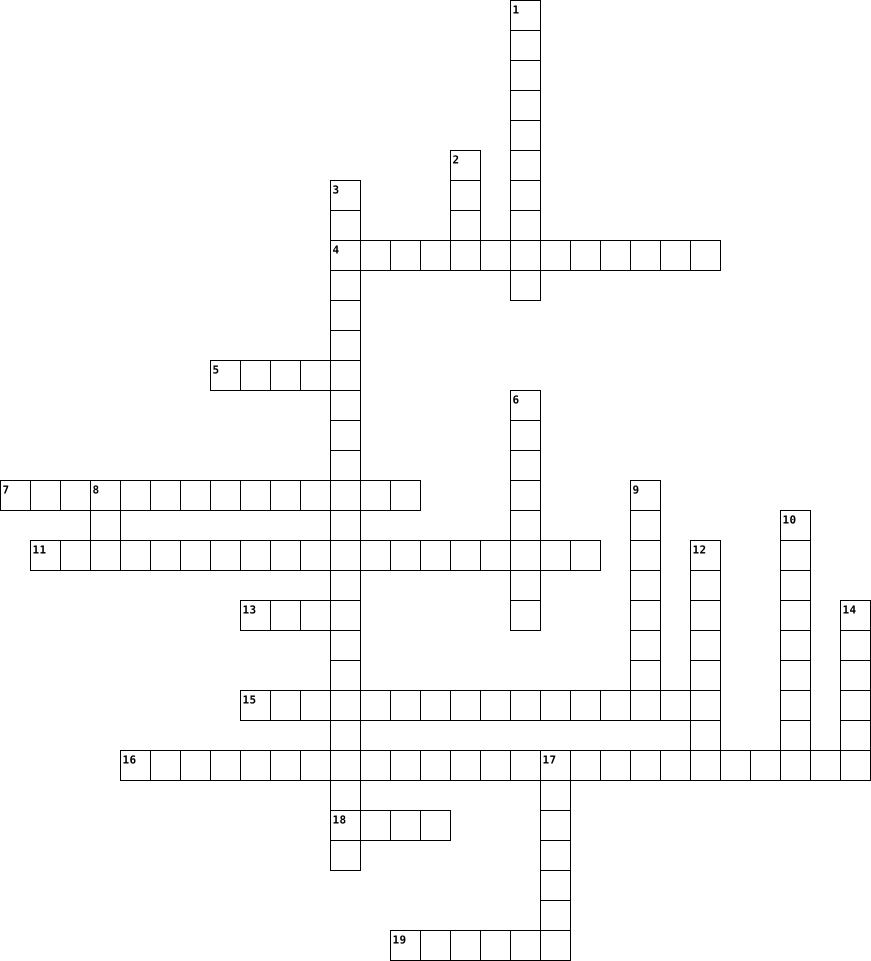
Across
- Forced Great Britain to accept American independence in 1783
- Enlightenment thinker who advocated for Natural Rights and the Social Contract
- Source of propaganda for the Patriots
- Shot(s) hear round the world
- Number of states necessary to pass a law under the Aoc
- American battle tactic
- Breakup letter the Patriots sent KGIII
- One of the states that came out of the Northwest Ordinance
- Who the national government had to ask for money from under the AoC
Down
- Commander of the Continental Army
- What Great Britain was left with after winning the French and Indian War
- America's first form of government
- Final major battle of the war
- Power the national government lacked under the AoC
- Turning point in the war
- Author of the DoI
- Number of states necessary to alter the AoC
- European country that provided the most aid to the Americans during the war
- Every conflict in North America results in this group somehow losing
19 Clues: Author of the DoI • American battle tactic • Turning point in the war • Shot(s) hear round the world • Final major battle of the war • Commander of the Continental Army • America's first form of government • Source of propaganda for the Patriots • Breakup letter the Patriots sent KGIII • Number of states necessary to alter the AoC • ...
Tucker and Stefan 2023-01-11

Across
- - Another name for the Confederate States of America or the South. The Confederacy was a group of states that left the United States to form their own country.
- - A term meaning "before war". It was often used to describe the United States before the Civil War.
- was a essential water highway for trading goods
- - A large farm in the southern United States. Before the Civil War many of the workers on plantations were enslaved.
Down
- - A person who wanted to eliminate or "abolish" slavery.
- - An army of citizens used during emergencies.
- - Northern states o f the United States also called the Union
- - someone that owns slaves
- - nickname for the Confederate States of America or also known as the confederacy
- gin - separates cotton fibers from their seeds
- - someone that owned by someone
11 Clues: - someone that owns slaves • - someone that owned by someone • - An army of citizens used during emergencies. • was a essential water highway for trading goods • gin - separates cotton fibers from their seeds • - A person who wanted to eliminate or "abolish" slavery. • - Northern states o f the United States also called the Union • ...
Vocab #4 2020-02-04

Across
- all the shares into which ownership of the corporation is divided
- Famous for his innovative methods of playing the trumpet and cornet
- Programs that helped improve the lives of people suffering from the events of depresion
- An American fiction writer, whose works helped illustrate the flamboyance and excess of the jazz age
- An American poet, social activist, novelist, playwright, and columnist
- The 32nd president of the United States
- A stock change
- African American painter known for his portrayal of African American life
Down
- A culture movement in the United States
- A tax on imports and exports between sovereign states
- When people above a specific age are not in paid employment or self-employment
- The movement of 6 million African Americans out of the southern United States
- To assume an excessive amount of buisness risk in speculating on something
- A severe worldwide economic depression
- Known for his broadway musicals as well as his world famous orchestral compositions
- The central banking system of the United States of America
- American composer in the 1920s
- An American writer best known for his novel about social consequences of the great depression in America
- A famous American artist in the 1920s
- One of the most popular and successful blues singers of the 1920s
- Played a large part in the evolution of jazz
21 Clues: A stock change • American composer in the 1920s • A famous American artist in the 1920s • A severe worldwide economic depression • A culture movement in the United States • The 32nd president of the United States • Played a large part in the evolution of jazz • A tax on imports and exports between sovereign states • ...
SpencerCochranMyGoat 2026-02-19

Across
- Attorney General of the United States. page 16-17
- Laws made to legalize race segregation. page 16-17
- Former President of Venezuela. page 7-10
- Female Black Rapper. page 7-10
- Who is the director of ICE? page 4-6
- President of Israel
- The amount of immigrants arrested by ICE.
- Prime Minister of Ireland. page 7-10
- The current age of the United States. page 16-17
- Retired Mechanic from Toledo, Spain. page 20-21
- Vice President of the United States. page 7-10
- Minneapolis protestor who was shot. page 4-6
- President of the United States. page 16-17
- 'Today Show' anchor. page 7-10
Down
- Sheikh of the Arabs. page 16-17
- First President of the United States. page 16-17
- An international bridge located in Ontario, Canada. page 7-10
- An HR executive who went viral for kissing her boss at a Coldplay concert during a kiss cam. page 4-6
- Lieutenant General in Moscow, Russia. page 7-10
- 48% to 28% oppose the US of taking action against this country. page 16-17
- Owner of the most notorious files out there. page 4-6
- 18-month-old child who was detained by ICE in Texas. page 7-10
- Sultan of the United Arab Emirates. page 4-6
- Current First Lady. page 16-17
- Founder of Amazon. page 4-6
25 Clues: President of Israel • Founder of Amazon. page 4-6 • Female Black Rapper. page 7-10 • Current First Lady. page 16-17 • 'Today Show' anchor. page 7-10 • Sheikh of the Arabs. page 16-17 • Who is the director of ICE? page 4-6 • Prime Minister of Ireland. page 7-10 • Former President of Venezuela. page 7-10 • The amount of immigrants arrested by ICE. • ...
ACT 35 Review 2024-05-07

Across
- A US Senator is elected for how many years?
- The term of office for the President of the United States is how many years?
- The current Vice President of the United States is (First & Last name)?
- Who is in charge of the Executive Branch?
- How many amendments does the US Constitution have?
- Who was President during the Civil War (last name?
- Colonists fought the ____ to gain their independence.
- Who is the Commander in Chief of the military?
- How many US Senators are there?
- In what month is the President elected?
- There are how many stars on the US flag, each representing a state?
Down
- The Declaration of Independence announced our separation from whom?
- What do we call the first ten amendments to the US Constitution?
- The President is inaugurated (takes office) during which month?
- The current President of the United States is (Last name)?
- The idea of self-government is established in the first three words of the US Constitution. What are these three words?
- Individuals from ____ were taken to America and sold as slaves.
- In what month does the United States celebrate Independence Day?
- There were how many original colonies?
- What is the supreme law of the United States?
- Making laws is the main responsibility of which branch of government?
- The number of Senators each state receives in the US Senate is...
22 Clues: How many US Senators are there? • There were how many original colonies? • In what month is the President elected? • Who is in charge of the Executive Branch? • A US Senator is elected for how many years? • What is the supreme law of the United States? • Who is the Commander in Chief of the military? • How many amendments does the US Constitution have? • ...
End of the Civil War 1863-1865 2025-01-14

Across
- Battle known as the turning point for the Union in 1863
- Term for states that seceded from the Union
- Lincoln's plan for reunifying the nation was called the _______ Plan
- Proclamation that freed enslaved people in Confederate states.
- Union victory that secured control of the Mississippi River
- River where the last major Confederate army surrendered
- Union strategy to blockade Southern ports
- Site of General Lee’s surrender to General Grant
- - President of the United States during the Civil War
- The 13th Amendment abolished this
- President of the Confederate States of America
- Location of Lincoln's assassination
- 1864 battle that ended in a draw but demonstrated the war's brutality
- Law that drafted men into military service
Down
- Organization that helped former slaves after the war
- Bloodiest single-day battle leading to the Emancipation Proclamation.
- man who ran against Lincoln in the 1864 election
- Lincoln's famous proclamation that freed slaves in Confederate states
- Famous speech by Lincoln in 1863 emphasizing unity
- Union general who accepted the Confederate surrender
- Confederate capital that fell in April 1865
- Amendment granting citizenship and equal protection
- Assassin of President Lincoln
- The location of the famous 1864 battle in Georgia that helped Lincoln get reelected
- Union general who led the March to the Sea
- Confederate general who surrendered at Appomattox Court House
- This term describes the Southern states after the war
27 Clues: Assassin of President Lincoln • The 13th Amendment abolished this • Location of Lincoln's assassination • Union strategy to blockade Southern ports • Union general who led the March to the Sea • Law that drafted men into military service • Term for states that seceded from the Union • Confederate capital that fell in April 1865 • ...
Constitution & The Bill of Rights (pp.53-54) 2024-08-12

Across
- At the Constitutional Convention, the ___ ___ Plan would give states equal representation
- Guarantees trial by jury
- At the Constitutional Convention the Virginia Plan made representation proportional to this state attribute
- Congress was ___ under the Articles of Confederation
- Elected president at the Constitutional Convention
- This man led a mob of Massachusetts war veterans and farmers in “Rebellion” against local government
- The New Jersey Plan excluded this branch of government
- This Amendment keeps troops out of private homes in peacetime
Down
- In a Federal government the states retain certain ___ rights
- This Amendment states that rights not given to the federal government are reserved to the states or the people
- This solution made state representation in the Senate equal and state representation in the House proportional to population
- This Amendment protects speech, religion, press, assembly and petition
- This Amendment prohibits excessive fines and punishments
- This Amendment requires due process and protects against double jeopardy and self-incrimination
- This Amendment states that listing rights here does not deny or weaken rights given elsewhere
- In a Federal government the nation is unified by fundamental ___
- The Bill of Rights limits the power of ___
- This Amendment guarantees a speedy and public trial with representation
- This Amendment prohibits unreasonable searches and seizures
- This Amendment protects the right of the people to keep and bear arms
20 Clues: Guarantees trial by jury • The Bill of Rights limits the power of ___ • Elected president at the Constitutional Convention • Congress was ___ under the Articles of Confederation • The New Jersey Plan excluded this branch of government • This Amendment prohibits excessive fines and punishments • This Amendment prohibits unreasonable searches and seizures • ...
Unit 8: Civil War 2024-05-15

Across
- Barriers which were about breast-high and protected soldiers from enemy fire
- a group of states that left the United States
- workers
- Division of the army that handled cannon and other large weapons
- A series of military operations that form a distinct phase of the War
- fights happening
Down
- The name given for the states that remained loyal to the United States during the Civil War
- The murder of a prominent person such as Abraham Lincoln
- withdraw formally from membership in an organization
- An attempt to stop people and supplies from going in or out of a port.
- The back end of a weapon's barrel.
- A person who wanted to eliminate or "abolish" slavery
- Soldiers trained to fight on horseback
- Proclamation. Document freeing slaves in Union-controlled Confederate states
14 Clues: workers • fights happening • The back end of a weapon's barrel. • Soldiers trained to fight on horseback • a group of states that left the United States • withdraw formally from membership in an organization • A person who wanted to eliminate or "abolish" slavery • The murder of a prominent person such as Abraham Lincoln • ...
Chapter 3: The Nation Divides 2023-10-16

Across
- set of laws
- land that belongs to a nation but is not a state and is not represented in the national government.
- a system of secret routes leading to free lands.
- war between people in the same country.
- states located between the North and the South.
- rights idea that the states should have the final say in their own affairs.
- and agreement in which each side gives up something that it wants.
Down
- national government that was made up of six states.
- people that worked to end slavery
- regional loyalty
- practice of holding people against their will and making them work without pay.
- state does not allow slavery
- leave
- state allows slavery
- ended
- tax
16 Clues: tax • leave • ended • set of laws • regional loyalty • state allows slavery • state does not allow slavery • people that worked to end slavery • war between people in the same country. • states located between the North and the South. • a system of secret routes leading to free lands. • national government that was made up of six states. • ...
History Chapter 8 test 5 2023-12-14

Across
- – person who farmed for a landowner to receive part of the crop profit
- southerners who supported the Union and joined with dishonest carpetbaggers to make a profit
- of 1866 – law declaring that all people born in the United States except for Native Americans still living as tribes were citizens of the United States with full and equal benefits of all laws
- – U.S. Army General who died at the Battle of Little Bighorn
- – former slaves who were freed by the Emancipation Proclamation and the 13th Amendment
- a railroad that crosses the United States from Coast to Coast
- – law that broke up tribal lands into separates plots and offered them to any U.S. citizen or Native American family that would take up farming or ranching
- – men hired by a rancher to care for cattle
- – 17th president of the United States became president after Abraham Lincoln’s death
- – first former enslaved Black American to serve in Congress
- 19th president of the United States appointed because of the Compromise of 1877
- institute founded in Tuskegee Alabama to educate Black men and women
- – agreement in Congress that brought an end to the Reconstruction
- government department created to ensure fair treatment to newly freed slaves
- – rebuilding of Southern states after the Civil War
- – trail for cattle drives from Texas to Abilene, Kansas
- – the practice of separating people by skin color
- – mail delivery using a relay system of horses and riders that delivered mail between Missouri and California in only 10 days
- – first black American to serve in Congress
- – 1890 incident in which over 200 Native American men, women and children from the Lakota tribe led nu Chief Big Foot were killed by the Us Army
- Bill allowing a settler to claim up to 160 acres of land for a low price if they would improve the land and live on it for at least 5 years
- – place where a Union Pacific train traveling west and a Central Pacific train traveling east met; marking the completion of the Transcontinental Railroad
- – areas of Oklahoma Territory that were not assigned to Native American Tribes
- – central prairie area of the United States called the “Breadbasket of America” because of all the grain produced there
- – organization formed by Congress after the end of the Civil War designed to help provide freed slaves and any poor southern family for one year
- – laws in the Southern States that only Blacks had to obey
- Act – law that made large areas of land available to Native Americans
- – declared that freedman were citizens of the United States
Down
- – town with a railroad to transport cattle
- group within the Republican Party that wanted the government to control the recovery of the Southern states from the Civil War
- – unjust treatment of another person because of a category such as race or skin color
- – inventor of the Telegraph
- – western territory that was ready to be settled but had not yet become a state
- group within the Republican Party that wanted the southern states to make decisions on their own about recovery
- Northern businessmen named for the suitcases they carried who traveled to the South to help rebuild the Southern economy
- large sections of land set aside by the U.S. government for Native American tribes
- – fights between western farmers and ranchers over grazing and water rights
- – battle led by Chief Crazy Horse in which an entire unit of U.S. Soldiers died also called Custer’s Last Stand
- 18th president of the United States
- – rush to claim pieces of the Unassigned lands in the Oklahoma Territory
- America’s first National Park
- – to bring criminal charges against a public official
- – congressional bill that divided the Southern states into 5 military districts to aid in recovery
- – declared that no man could be kept from voting because of race, color, or previous servitude
- – leader of Sioux nation during the Battle of Little Bighorn
- – company that operated banks carried mail and offered travel in the west by stagecoach
- – process of herding cattle to the nearest Cowtown
- – educator and founder of Tuskegee Institute
48 Clues: – inventor of the Telegraph • America’s first National Park • 18th president of the United States • – town with a railroad to transport cattle • – men hired by a rancher to care for cattle • – first black American to serve in Congress • – educator and founder of Tuskegee Institute • – the practice of separating people by skin color • ...
government terms 2021-01-14

Across
- Believed in natural rights- life, liberty, and property; the strongest influence on Thomas Jefferson, who wrote natural rights into the Declaration of Independence
- Fupporters of the new Constitution who believed in a strong central government with limited
- Chose to preside at the Constitutional Convention; he later became the first president of the United States; he set precedent by stepping down after two terms and initiating a peaceful transition of power
- Government is defined by law and serves the people; the law is above everyone and it applies to everyone, whether ruler or the ruled
- Explains the purposes of the Constitution and defines the powers of the new government as
- The distribution of power between the national government and the states within a union
- Government attempts to control all facets of the lives of its citizens
- Compromise reached in writing the Constitution to satisfy both small and large states by having one house of Congress with an equal number of representatives for each state and the other house’s membership determined by a state’s population
- and checks and balances
- rights and liberties of the people
- First ten amendments to the Constitution, added by the first Congress in 1791; protects the
- King/queen controls all aspect of life: social, economic, and political – oftentimes tied to the divine right of kings (authority from God)
- Group of people who feared the new government created by the Constitution; gave too much power to the national government at the expense of individual rights
- Considered intelligent and decisive, he was a leading supporter of the Constitution and helped write the Federalist Papers
Down
- 3rd president of the United States and author of the Declaration of Independence; did not take part in writing the Constitution because he was in France at the time. He was a strong advocate for the addition of a Bill of Rights
- Type of democracy based on the protection of individual rights from the tyranny of the majority and on the consent of the governed to establish political authority
- Powers saved for the states in our system of federalism, guaranteed in the 9th Amendment to the Constitution
- from the people of the United States
- First plan of government adopted in the United States after the revolution; it was a loose association of states with no authority to tax, no national army, and no chief executive
- “Father of the Constitution” and fourth president of the United States; essential to the writing and ratification of the Constitution; he also wrote the first 10 amendments to the Constitution that were ratified as the Bill of Rights
- Power is held at the national level, with very little power being held in political subdivisions, such as provinces, states, counties, parishes, or tow
- The government is not all-powerful; its powers are limited, and the acts of the government are those willed by the people Constitution were written
- The citizens have political authority and are bound by social contract to obey laws with their rights guaranteed by a constitution; citizens willingly subordinate their private, selfish interests to the common good
23 Clues: and checks and balances • rights and liberties of the people • from the people of the United States • Government attempts to control all facets of the lives of its citizens • The distribution of power between the national government and the states within a union • Explains the purposes of the Constitution and defines the powers of the new government as • ...
Unit 3: The New Nation 8.21-8.28 2024-12-05

Across
- interpretation of the Constitution that seeks to adapt its meaning to the needs of the country at that moment
- a form of government in which the people rule, either directly or through elected representatives
- unsettled territory bordered by the Ohio River, the Appalachian Mountains, and the Mississippi River
- to give official approval
- Second president of the US, first vice president of the US
- deported anyone from a country with which the United States was at war
- opposed the constitution
- people chosen to speak or make decisions for another person or group of people
- representatives
- Trail carved out by Daniel Boone through the Cumberland Gap
- Washington offered advise on how the nation should move forward
- a group of advisors to the president who each head a department of the executive branch
- allowed three-fifths of a states slave population to count toward a state's total population
- freedoms that are protected by law
- allowed congress to divide the Northwest Territory into three to five separate territories
- Hamilton wanted to create it to stabilize the economy
- a person who buys and sells land for a profit
- 16th state of the union
- delegates meeting in Philadelphia to revise the Articles of Confederation
- led a rebellion in Massachusetts following the Revolution over monetary debt crisis at the end of the American Revolutionary War.
Down
- interpretation of the Constitution that maintains the federal government has authority to do ONLY what the Constitution specifically states it can do
- approval
- limits any one branch from gaining too much power
- violent protest against a tax on whiskey that took place in the United States from 1791 to 1794
- the idea that government authority comes from people who have agreed to be governed
- said the Alien and Sedition Acts were unconstitutional and that the states had the right to nullify them
- secretary of the treasury in Washington's Cabinet
- loosely unified the states by giving basic powers to a weaker central government and more power to the states; government established after the American Revolution in the Colonies
- banned any writings thought to be false, harmful, or directed against the government
- allows the three branches to keep the other two branches in check
- earlier events or actions used as examples for decisions or actions
- groups of men who traveled together looking for game; first European people to come to Tennessee
- grants Congress the power to pass all laws necessary and proper for carrying out the powers grated in the Constitution
- the first ten amendments; protects the people's basic rights and freedoms
- solved the representation issue in the Constitutional Convention
- 1st president; general of the Continental Army
- a diplomatic incident between the United States and France that occurred in 1797 and 1798
- supported the Constitution
- a fleet of small ships
- change to the Constitution
- division of power between the states and federal government
- import tax
- 1784 divided the Northwest Territory into states
43 Clues: approval • import tax • representatives • a fleet of small ships • 16th state of the union • opposed the constitution • to give official approval • supported the Constitution • change to the Constitution • freedoms that are protected by law • a person who buys and sells land for a profit • 1st president; general of the Continental Army • ...
Unit 1 Power, Sovereignty, Legitimacy & Interdependence 2025-09-11

Across
- This NGO investigates human rights abuse cases in more than 90 countries around the world. (3wds)
- A person or person who have been forced to flee their country due to persecution, war or violence.
- Latent power is based on a state’s wealth and size of this.
- The process of several countries working together on a given issue.
- This late professor used the term which offers a more persuasive approach to influencing other states. (2wds)
- Term applied to a state which has seen its laws, services and governance rendered ineffective and unstable due to conflict, corruption and poverty. (2wds)
- Any group or organisation which acts to influence decision makers at any level and is not a state. (2wds)
- Associated with the far right, this term suggests violent change and a return to the old ways.
- Realism states that this is the primary goal of all states.
- This state is a member of the 'nuclear weapons club' and has worked to make sure adversaries like Iran never possess such technology.
- Within the theory of realism, this particular group seeks total hegemony for states and believes states should maximise power.
- Established in 1945, this IGO's mission is the collective peace and security of its member nations. (2wds)
- This theory suggests that states can and should cooperate with one another.
- This state actor is a member of the UN Security Council.
Down
- This NGO operates in 55 countries globally and seeks to defend the natural world.
- The type of power whereby a state uses military and economic means to influence the behaviour or interests of other states.Can be seen as aggressive.
- The type of power which co-opts instead of coercing. Examples include cultural programs, sports, movies and music.
- One of Eric Liu's 6 sources of power.
- Univ of Chicago professor who believes nations strive to dominate each other and seek regional hegemony in an anarchic international system. (2wds)
- The process whereby a single state works alone on a given issue.
- The International Criminal Court is based out of this Dutch city. (2wds)
- Penalties imposed by one state or institution on another state, institution or individual to coerce a change in behaviour.
- This level of analysis would expand to involve issues like COVID and terrorism.
- Realists define this system as when there is no higher defined central authority above states.
- The notion that states and their fortunes are connected to each other.
- The type of power which suggests a strong military, but also the implementation of alliances, diplomacy and capacity building.
- Associated with the far left, this term suggests violent change to overthrow the status quo.
- Applies to the notion of maintaining an existing state of affairs in politics. (2wds)
- Power which utilises diplomatic and political manipulation by one country to undermine the political systems of its intended target.
- This theory suggests that power is the currency of states and these states must compete with each other to survive.
30 Clues: One of Eric Liu's 6 sources of power. • This state actor is a member of the UN Security Council. • Latent power is based on a state’s wealth and size of this. • Realism states that this is the primary goal of all states. • The process whereby a single state works alone on a given issue. • The process of several countries working together on a given issue. • ...
Early US Crossword 2017-12-18

Across
- One of the states that came out of the Northwest Ordinance
- Source of propaganda for the Patriots
- Breakup letter the Patriots sent KGIII
- Number of states necessary to pass a law under the Aoc
- Shot(s) hear round the world
- Who the national government had to ask for money from under the AoC
- What Great Britain was left with after winning the French and Indian War
- Number of states necessary to alter the AoC
- American battle tactic
Down
- Final major battle of the war
- Turning point in the war
- America's first form of government
- European country that provided the most aid to the Americans during the war
- Author of the DoI
- Enlightenment thinker who advocated for Natural Rights and the Social Contract
- Commander of the Continental Army
- Power the national government lacked under the AoC
- Every conflict in North America results in this group somehow losing
- Forced Great Britain to accept American independence in 1783
19 Clues: Author of the DoI • American battle tactic • Turning point in the war • Shot(s) hear round the world • Final major battle of the war • Commander of the Continental Army • America's first form of government • Source of propaganda for the Patriots • Breakup letter the Patriots sent KGIII • Number of states necessary to alter the AoC • ...
Early US Crossword 2017-12-18

Across
- Who the national government had to ask for money from under the AoC
- America's first form of government
- Final major battle of the war
- Power the national government lacked under the AoC
- Every conflict in North America results in this group somehow losing
- American battle tactic
- Author of the DoI
- European country that provided the most aid to the Americans during the war
- Breakup letter the Patriots sent KGIII
Down
- What Great Britain was left with after winning the French and Indian War
- Forced Great Britain to accept American independence in 1783
- Shot(s) hear round the world
- Source of propaganda for the Patriots
- One of the states that came out of the Northwest Ordinance
- Commander of the Continental Army
- Enlightenment thinker who advocated for Natural Rights and the Social Contract
- Number of states necessary to pass a law under the Aoc
- Number of states necessary to alter the AoC
- Turning point in the war
19 Clues: Author of the DoI • American battle tactic • Turning point in the war • Shot(s) hear round the world • Final major battle of the war • Commander of the Continental Army • America's first form of government • Source of propaganda for the Patriots • Breakup letter the Patriots sent KGIII • Number of states necessary to alter the AoC • ...
Early US Crossword 2017-12-18

Across
- What Great Britain was left with after winning the French and Indian War
- Power the national government lacked under the AoC
- Shot(s) hear round the world
- Every conflict in North America results in this group somehow losing
- America's first form of government
- Source of propaganda for the Patriots
- Who the national government had to ask for money from under the AoC
- European country that provided the most aid to the Americans during the war
- Final major battle of the war
Down
- One of the states that came out of the Northwest Ordinance
- American battle tactic
- Forced Great Britain to accept American independence in 1783
- Number of states necessary to alter the AoC
- Breakup letter the Patriots sent KGIII
- Number of states necessary to pass a law under the AoC
- Turning point in the war
- Commander of the Continental Army
- Author of the DoI
- Enlightenment thinker who advocated for Natural Rights and the Social Contract
19 Clues: Author of the DoI • American battle tactic • Turning point in the war • Shot(s) hear round the world • Final major battle of the war • Commander of the Continental Army • America's first form of government • Source of propaganda for the Patriots • Breakup letter the Patriots sent KGIII • Number of states necessary to alter the AoC • ...
American Civil War 2026-04-10

Across
- Rebuilding the South after the war
- Confederate general who led agreed to surrender their forces in the Appotamox Court House
- Amendment that gave citizenship to all people born in the U.S.
- When states leave a country
- Declated that enslaved people in Confederate states
- First battle of the Civil War (1861)
- Strategy that destroys enemy resources and land
Down
- Lincoln’s speech about equality and unity
- Loyalty to one region (North or South)
- Union general who helped win the war
- Allowed Missouri to enter as a slave state and Maine as a free state.
- President of the Union during the Civil War
- The Southern states that left the Union
- Farming system where workers paid with crops
- Amendment that gave African American men the right to vote
- A change or addition to the Constitution
- The Northern states that wanted to keep the country together
- Amendment that ended slavery in the U.S.
- A war between people in the same country (U.S. vs. itself)
19 Clues: When states leave a country • Rebuilding the South after the war • Union general who helped win the war • First battle of the Civil War (1861) • Loyalty to one region (North or South) • The Southern states that left the Union • A change or addition to the Constitution • Amendment that ended slavery in the U.S. • Lincoln’s speech about equality and unity • ...
Early US Crossword 2017-12-18

Across
- Number of states necessary to alter the AoC
- Turning point in the war
- Who the national government had to ask for money from under the AoC
- Shot(s) hear round the world
- Breakup letter the Patriots sent KGIII
- Author of the DoI
- Source of propaganda for the Patriots
- Every conflict in North America results in this group somehow losing
Down
- American battle tactic
- Number of states necessary to pass a law under the Aoc
- Enlightenment thinker who advocated for Natural Rights and the Social Contract
- Forced Great Britain to accept American independence in 1783
- America's first form of government
- Commander of the Continental Army
- Power the national government lacked under the AoC
- One of the states that came out of the Northwest Ordinance
- European country that provided the most aid to the Americans during the war
- Final major battle of the war
- What Great Britain was left with after winning the French and Indian War
19 Clues: Author of the DoI • American battle tactic • Turning point in the war • Shot(s) hear round the world • Final major battle of the war • Commander of the Continental Army • America's first form of government • Source of propaganda for the Patriots • Breakup letter the Patriots sent KGIII • Number of states necessary to alter the AoC • ...
Civil War 2023-05-15

Across
- Location of the first shots of the Civil War
- The Confederate states were states in the ___________
- The first part of the North's war plan was to _______ the Southern ports
- ____________ plan made by the North
- The deadliest battle of the war
- Capitol city of the Confederacy
- The first shots were fired in April of 186___
- Number of promises Lincoln made to the South when running for president
- Number of states in the confederacy
- Last name of the Confederate President
Down
- First state to secede from the Union
- Both sides wanted to control this river for trade
- The main way people in the south earned money
- The five _______________ states agreed with slavery, but not with seceding from the Union
- The line that separated the North from the South
- Last name of the President of the Union
- The interests of a particular region
- The south __________ from the Union after Lincoln's election
- The side fighting against the Confederacy
19 Clues: The deadliest battle of the war • Capitol city of the Confederacy • ____________ plan made by the North • Number of states in the confederacy • First state to secede from the Union • The interests of a particular region • Last name of the Confederate President • Last name of the President of the Union • The side fighting against the Confederacy • ...
Human Geography of the United States: Shaping an Abundant Land 2023-09-18

Across
- A region that covers about one-fourth of the land area of the United States and contains more than one-third of its population.
- The movement of peoples within a country or region.
- A functional area including a city and its surrounding suburbs and exurbs, linked economically.
- A corporation that engages in business worldwide.
- A political unit or community touching the borders of the central city or touching other suburbs that touch the city.
- North American region, consisting of 13 states, that stretches from the Great Plains to the Pacific Ocean and includes Alaska to the north and Hawaii in the Pacific.
- An economic system in which private individuals own most of the resources, technology, and businesses, and can operate them for profit with little control from the government.
- An economic phase in which manufacturing no longer plays a dominant role.
- The six northern states in the Northeast United States - Maine, Vermont, New Hampshire, Massachusetts, Rhode Island, and Connecticut.
Down
- The movement of plants, animals, and diseases between the Eastern and Western hemispheres during the age of exploration.
- The region that contains the 12 states of the north-central United States.
- The free, open land in the American West that was available for settlement.
- Any kind of economic activity that produces a service rather than a product.
- A government in which the people rule through elected representatives.
- The territory, including the region between the Mississippi River and the Rocky Mountains, that the United States purchased from France in 1803.
- A region in which several large cities and surrounding areas grow together.
- A product or good that is sold from one economy to another.
17 Clues: A corporation that engages in business worldwide. • The movement of peoples within a country or region. • A product or good that is sold from one economy to another. • A government in which the people rule through elected representatives. • An economic phase in which manufacturing no longer plays a dominant role. • ...
Constitution Crossword 2021-09-13

Across
- When power is shared between the central government and the states
- Article II lays out the _____ branch
- A person in favor of a strong central government
- Article I lays out the ______ branch
- The structure of Congress. It means “Two House”
- A person suspicious of a strong central government and wants a list of guaranteed freedoms
- Congress is made up of the House of Representatives and the ______
- The plan that created our current system of government. It was designed to please large and small states
Down
- The plan at the Constitutional Convention that favored large states is named for this state
- The first government of the United States
- Article III lays out the ______ branch
- A change to the Constitution
- The head of the executive branch
- The first 10 amendments to the Constitution
- The plan at the Constitutional Convention that favored small states is named for this state
15 Clues: A change to the Constitution • The head of the executive branch • Article II lays out the _____ branch • Article I lays out the ______ branch • Article III lays out the ______ branch • The first government of the United States • The first 10 amendments to the Constitution • The structure of Congress. It means “Two House” • A person in favor of a strong central government • ...
Crossword Crisps 2025-11-18

Across
- An agreement between two sides where both sides give a little to gain a little.
- A meeting to discuss government changes.
- Plan that says that 60% of the slave population would count towards population and taxes.
- Creator of the New Jersey Plan.
- Creator of the Great Compromise.
- Plan that created 3 branches of government with a bicameral legislature.
- The people for the constitution.
Down
- The process and pattern to add states to the US.
- States that wanted slaves to count towards representation but not taxation.
- The only state that did not show up to the convention.
- Plan that was favored by the small states. Representation based on equality.
- States that wanted slaves to count towards taxation but not representation.
- Leader of the Constitutional Convention.
- The people against the Constitution.
- Plan favored by the large states. Population-based representation
15 Clues: Creator of the New Jersey Plan. • Creator of the Great Compromise. • The people for the constitution. • The people against the Constitution. • A meeting to discuss government changes. • Leader of the Constitutional Convention. • The process and pattern to add states to the US. • The only state that did not show up to the convention. • ...
4th of July 2024-06-20

Across
- the color of the stars on the USA flag
- the national animal of the USA
- the first president of the United States of America
- the symbol on the flag that represents the 13 original colonies
- The Declaration of ___________
- the building where the USA congress meets
- the color of the sky
- the official leader of the USA
- the capital of the United States of America
Down
- people use these at night on the 4th of July to celebrate America's independence
- the first color of the rainbow
- the day in July when the USA celebrates independence
- the symbol that represents the USA and was made by Betsy Ross
- where the president lives
- the symbol on the flag that represents the 50 states
- the month in which we celebrate the independence of the USA
- The United States of ___________
17 Clues: the color of the sky • where the president lives • the first color of the rainbow • the national animal of the USA • The Declaration of ___________ • the official leader of the USA • The United States of ___________ • the color of the stars on the USA flag • the building where the USA congress meets • the capital of the United States of America • ...
US Geography 2026-03-11

Across
- Distance north or south of the equator, measured in degrees.
- An arm of a sea or ocean partly enclosed by land.
- A hill that rises abruptly from the surrounding region.
- The midwestern states where corn is grown.
- Region in the far Northwestern United States that has low
- A large part of the ocean—much bigger than a bay—reaching into the land.
- Flat tableland with steep edges.
- A vast prairie region extending from Alberta and Saskatchewan and Manitoba in Canada south through the west central United States into Texas; formerly inhabited by Native Americans.
- A part of the sea that curves into the coastline.
- A spring that discharges hot water and steam.
- Western states with a large Mormon population
- Line The boundary between Maryland and Pennsylvania.
Down
- Urban areas in New England and Midwest characterized by concentrations of declining industries (steel or textiles).
- attendance
- The geographical area drained by a river and its tributaries.
- Distance measured in degrees east and west of an imaginary line running from the North Pole to the South Pole.
- A large subtropical swamp in southern Florida that is noted for its wildlife.
- States in the south and southwest that have a warm climate and tend to be politically conservative.
- A slowly moving mass of ice.
- Deeply eroded barren land.
20 Clues: attendance • Deeply eroded barren land. • A slowly moving mass of ice. • Flat tableland with steep edges. • The midwestern states where corn is grown. • A spring that discharges hot water and steam. • Western states with a large Mormon population • An arm of a sea or ocean partly enclosed by land. • A part of the sea that curves into the coastline. • ...
antoinettes history crossword 2024-04-17

Across
- A white southerner who supported the reconstruction
- When a land owner lets a tenant plant on said land for a share of the crops
- an act that provided clothes, food, shelter, medical services and land to southerners including freed slaves
- He was the senator of Mississippi
- the process of charging a government official for wrongdoing
- Republicans that wanted immediate and permanent eradication
- took place after the civil war
- states all persons born or naturalized in the United States is a legal US citizen
Down
- laws passed by the southern states to enforce racial segregation
- a disruptive northerner who comes to the southern states
- this gave African Americans who resided in the United States the right to vote
- it created a framework for reconstruction and the re-admittance of the southern states
- the 17th president of the US
13 Clues: the 17th president of the US • took place after the civil war • He was the senator of Mississippi • A white southerner who supported the reconstruction • a disruptive northerner who comes to the southern states • Republicans that wanted immediate and permanent eradication • the process of charging a government official for wrongdoing • ...
History of the Civil Right Movement 2021-02-26

Across
- vs reed A landmark decision of the US Supreme Court ruling that the administrators of estates cannot be named in a way that discriminates between sexes
- vs virginia The Court ruled that laws banning interracial marriage violate the Equal Protection and Due Process Clauses of the Fourteenth Amendment to the U.S. Constitution
- amendment Granted citizenship to all persons born or naturalized In the United States
- An African American Baptist minister and activist who became the most visible spokesperson and leader in the Civil Rights Movement
- vs boe A landmark 1954 Supreme Court case in which the justices ruled unanimously that racial segregation of children in public schools was unconstitutional
- vs browder A case heard before a three-judge panel of the United States District Court for the Middle District of Alabama on Montgomery and Alabama state bus segregation laws
- vs charlotte The Supreme Court of the United States unanimously upheld busing programs that aimed to speed up the racial integration of public schools in the United States
- amendment Abolished slavery
- vs sidoti A mother challenging a state court order divesting her of custody of her child contended that, contrary to the trial court's findings, it was not in her pre-school child's best interests to be removed from her custody, while the father alleged that the child would be damaged by being raised in a racially mixed household
- vs bakke The Court's decision to upheld affirmative action, allowing race to be one of several factors in college admission policy
- integration The practice of making only a perfunctory or symbolic effort to be inclusive to members of minority groups
- disobedience The refusal to comply with certain laws or to pay taxes and fines, as a peaceful form of political protest
- marshall An African American lawyer and civil rights activist who served as Associate Justice of the Supreme Court
- Protection Clause Requires states to practice equal protection
- robinson The first African American to play in Major League Baseball in the modern era
- parks An American activist in the civil rights movement best known for her pivotal role in the Montgomery bus boycott
- vs ferguson Legal case in which the U.S. Supreme Court, on May 18, 1896, by a seven-to-one majority (one justice did not participate), advanced the controversial “separate but equal” doctrine for assessing the constitutionality of racial segregation laws
Down
- vs baltimore A per curiam order by the Supreme Court of the United States affirming an order by the United States Court of Appeals for the Fourth Circuit that enjoined racial segregation in public beaches and bathhouses
- clause Gives Congress the power “to regulate commerce with foreign nations, and among the several states, and with the Indian
- ins A form of protest in which demonstrators occupy a place, refusing to leave until their demands are met
- vs orr United States Supreme Court case that held that a statutory scheme in Alabama that imposed alimony obligations on husbands but not on wives was an unconstitutional equal protection violation
- vs holmes A United States Supreme Court case in which the Court ordered immediate desegregation of public schools in the American South
- A civil rights organization in the United States, formed in 1909 as an interracial endeavor to advance justice for African Americans
- from birmingham jail A letter that Martin Luther King, Jr., addressed to his fellow clergymen while he was in jail in Birmingham, Alabama, in 1963, after a nonviolent protest against racial segregation
- amendment Everyone including African Americans can vote
- The principal channel of student commitment in the United States to the civil rights movement during the 1960s
- crow laws State and local laws that enforced racial segregation in the Southern United States
- bus boycott A political and a social protest campaign against the policy of racial segregation on the public transit system of Montgomery, Alabama
- x An African American Muslim minister and human rights activist who was a popular figure during the civil rights movement
- An African American civil rights organization that is closely associated with its first president, Martin Luther King Jr.
30 Clues: amendment Abolished slavery • amendment Everyone including African Americans can vote • Protection Clause Requires states to practice equal protection • amendment Granted citizenship to all persons born or naturalized In the United States • robinson The first African American to play in Major League Baseball in the modern era • ...
American Civil War 2026-04-10

Across
- Rebuilding the South after the war
- Confederate general who led agreed to surrender their forces in the Appotamox Court House
- Amendment that gave citizenship to all people born in the U.S.
- When states leave a country
- Declated that enslaved people in Confederate states
- First battle of the Civil War (1861)
- Strategy that destroys enemy resources and land
Down
- Lincoln’s speech about equality and unity
- Loyalty to one region (North or South)
- Union general who helped win the war
- Allowed Missouri to enter as a slave state and Maine as a free state.
- President of the Union during the Civil War
- The Southern states that left the Union
- Farming system where workers paid with crops
- Amendment that gave African American men the right to vote
- A change or addition to the Constitution
- The Northern states that wanted to keep the country together
- Amendment that ended slavery in the U.S.
- A war between people in the same country (U.S. vs. itself)
19 Clues: When states leave a country • Rebuilding the South after the war • Union general who helped win the war • First battle of the Civil War (1861) • Loyalty to one region (North or South) • The Southern states that left the Union • A change or addition to the Constitution • Amendment that ended slavery in the U.S. • Lincoln’s speech about equality and unity • ...
Unit 10 2024-05-03

Across
- declares that all persons born in the U.S are citizens
- to leave or withdraw
- a northern who went to the south immediately after the civil war
- laws denying most legal rights to newly freed slaves
- the period after the civil war in the United States when the southern states were reorganized and reintegrated into the union
- abolished slavery
- a system used on southern farms after the civil war
Down
- after the civil war a group the believed the south should be harshly punished
- the southern states that seceded from the United States in 1861
- organization run by the army to care for and protect southern blacks after the civil war
- U.S Connor prevent a person from voting because of race, color, or creed
- the surrounding of a place in order to force it to surrender
- another word for the northern states that stayed in the United States
- southern whites who supported republican policy through reconstruction
14 Clues: abolished slavery • to leave or withdraw • a system used on southern farms after the civil war • laws denying most legal rights to newly freed slaves • declares that all persons born in the U.S are citizens • the surrounding of a place in order to force it to surrender • the southern states that seceded from the United States in 1861 • ...
New Republic 2023-12-20

Across
- Was responsible for the Monroe Doctrine
- Was President during the War of 1812
- A rebellion led by farmers upset about the whiskey tax
- The best NFL football team to exists
- Green monster that takes away Christmas presents
- Second President of the United States
- Doubled the size of the United States
Down
- First President of the United States
- Latitude line that divides the free states and slave states
- A failed law that made it illegal to trade with European nations
- Made a purchase known as the "Louisiana Purchase"
- Not picking sides
12 Clues: Not picking sides • First President of the United States • Was President during the War of 1812 • The best NFL football team to exists • Second President of the United States • Doubled the size of the United States • Was responsible for the Monroe Doctrine • Green monster that takes away Christmas presents • Made a purchase known as the "Louisiana Purchase" • ...
Eli's Am. Gov. Crossword Puzzle 2k19 2019-08-30

Across
- A law that ordered people to return slaves that ran away to their owners and sparked debate in free states
- The Executive Branch (the President) has the power to _____ laws passed by Congress
- When a state decides to leave the union that is the United States, it participates in _____
- A political group that believed states should have more power than the national government
- An addition to the US Constitution to explicitly state rights not included in the Constitution
- The US's system of government is not a democracy; it's a _____
- The document that was sent to King George III on the 4th of July, 1776
- The written statement that states how Congress's rulings on Concurrent Powers are higher than any rulings decided by the states (i.e. minimum wage)
- Enumerated powers in the constitution that give each branch of government the right to correct others and protect the constituents from unfair rule
- A conflict between the national and southern entities, in which the south tried to succeed from the US
- A two party system
- Abilities of Congress that are not explicitly stated in a document, but can still be enacted without overreaching in power
- A national system of government
- A method for the selection of judges in this state and other states that adopted this method
Down
- Different groups of people with similar beliefs that agree to vote a certain way in most elections and affairs
- A political group that believed states should have less power than the national government
- A conclusion by the government that slaves would be counted as 3/5 of a person to determine population
- Government run by the people as a whole (i.e. voting on all issues and decisions)
- Different branches of government are used to achieve this and, as an intended result, have a more fair and separated system with checks and balances
- The decision agreed to by large and small states that set up the US Congress and the numbers of representatives for both the Senate and the House of Representatives
- A document written to outline a government's system and people's rights
- Abilities of Congress explicitly stated in the Constitution
- Unstated abilities that overlap when it comes to whether the states or Congress has the right to decide
- The first trial of a national document to outline the US's government; written before the constitution
- Our indirect system of voting uses people in the _____ to officially vote
- A national government that is not divided into a federal system and a state system
- The document that contains the first ten amendments added to the Constitution
- The Supreme Court's power to decide whether a law passed by congress is constitutional or not
- A totalitarian form of government in which one person is the sole decision maker of the country
- Abilities saved for the states to decide for themselves; sometimes overlapping with national implied powers
30 Clues: A two party system • A national system of government • Abilities of Congress explicitly stated in the Constitution • The US's system of government is not a democracy; it's a _____ • The document that was sent to King George III on the 4th of July, 1776 • A document written to outline a government's system and people's rights • ...
Matter: Properties and States 2014-02-26

Across
- _______ states of matter have their own shape (ie. madera, el hiero y la arena).
- dureza
- is the force which pulls objects down towards the Earth.
- Forma
- _____ states of matter have no specific shape, the just expand (no tienen forma especifica y se expanden)oxygen(oxigeno),carbon dioxide(dioxido de carbono).
- Fuerzas por contacto.
- color
Down
- is the amount of matter that an object contains.
- _______ states of matter have the shape of the container that holds it (tienen la forma del recipiente que los contiene).
- ______ of matter include solid, liquid and gas.
- imanes
- elasticidad
- Everything we can see, smell or touch.
- transparencia
- can be made of different types of matter for example wood, metal or glass.
- is an action which can make an object change its movement or shape
- is the space that an object occupies.
17 Clues: Forma • color • imanes • dureza • elasticidad • transparencia • Fuerzas por contacto. • is the space that an object occupies. • Everything we can see, smell or touch. • ______ of matter include solid, liquid and gas. • is the amount of matter that an object contains. • is the force which pulls objects down towards the Earth. • ...
states of matter vocab 2024-08-30

Across
- Change When energy is released, and loses heat.
- Change When energy is taken in, and gains heat
- When matter changes states from a liquid to gas form
- The ability of a fluid, liquid, or gas to exact an upward force on an object immersed in it
- of State The change of a substance from one physical state to another
- Point The exact temperature that liquid matter changes states into a solid matter
- When matter changes states from a liquid to gas form.
- Matter that has enough energy to overcome not just the attractive forces between its particles, but also the attractive forces within its atoms
- When matter changes states from a liquid to solid form
Down
- When matter changes states from a solid to gas form
- The force exerted per unit area
- Change Object still has the same composition, and is just represented in a different form
- The resistance of a fluid to flowing
- When matter changes states from a gas to liquid form
- Expansion: An increase or decrease in the size of a substance when the temperature is changed.
- Change A change in chemical properties or composition of a substance, resulting in the formation of at least one new substance.
- Point The exact temperature that liquid matter changes states to a gas form
- When matter changes states from a solid to liquid form
18 Clues: The force exerted per unit area • The resistance of a fluid to flowing • Change When energy is taken in, and gains heat • Change When energy is released, and loses heat. • When matter changes states from a solid to gas form • When matter changes states from a gas to liquid form • When matter changes states from a liquid to gas form • ...
The States 2022-10-30

Across
- It is a state in the USA and also a coutry which is our neghbour
- a place from the Middle Atlantic States
- The largest city in Pennsylvania
- a place from the American South -West states
- an important econmic centre
- the capital of Massachusettes
Down
- Pennsylvania produces it
- a country from New England States
- a place from the South Atlantic States
9 Clues: Pennsylvania produces it • an important econmic centre • the capital of Massachusettes • The largest city in Pennsylvania • a country from New England States • a place from the South Atlantic States • a place from the Middle Atlantic States • a place from the American South -West states • It is a state in the USA and also a coutry which is our neghbour