
criminal minds Crossword Puzzles
Medically Induced 2022-06-20

Across
- examines children
- of utmost importance
- poc test kit style
- patient transportation
- healthcare worker
- scheduler
- cardiac instrument
- scheduled visit
Down
- type of center
- supposedly always has something wrong
- incident reporting method
- offsite visit option
- medical customer
- see through technology
- pandemic causing
- "of the minds"
- gown, goggles, gloves, mask
- coveted medication
18 Clues: scheduler • type of center • "of the minds" • scheduled visit • medical customer • pandemic causing • examines children • healthcare worker • poc test kit style • cardiac instrument • coveted medication • of utmost importance • offsite visit option • patient transportation • see through technology • incident reporting method • gown, goggles, gloves, mask • supposedly always has something wrong
Law and 2024-10-23

Across
- scene rikospaikka
- punishment kuolemanrangaistus
- battery pahoinpitely
- bail takuu
- perpetrator rikoksentekijä, rikollinen
- service yhdyskuntapalvelu
- attorney puolustuksen asianajaja
- offence rikos
- record rikosrekisteri
Down
- haastehakemus, kanne
- rikostoveri
- of law tuomioistuin
- syytetty, vastaaja
- terrorist kyberterroristi
- syyllinen
15 Clues: syyllinen • bail takuu • rikostoveri • offence rikos • scene rikospaikka • syytetty, vastaaja • of law tuomioistuin • haastehakemus, kanne • battery pahoinpitely • record rikosrekisteri • service yhdyskuntapalvelu • terrorist kyberterroristi • punishment kuolemanrangaistus • attorney puolustuksen asianajaja • perpetrator rikoksentekijä, rikollinen
The Inspiration of the Bible 2023-02-12
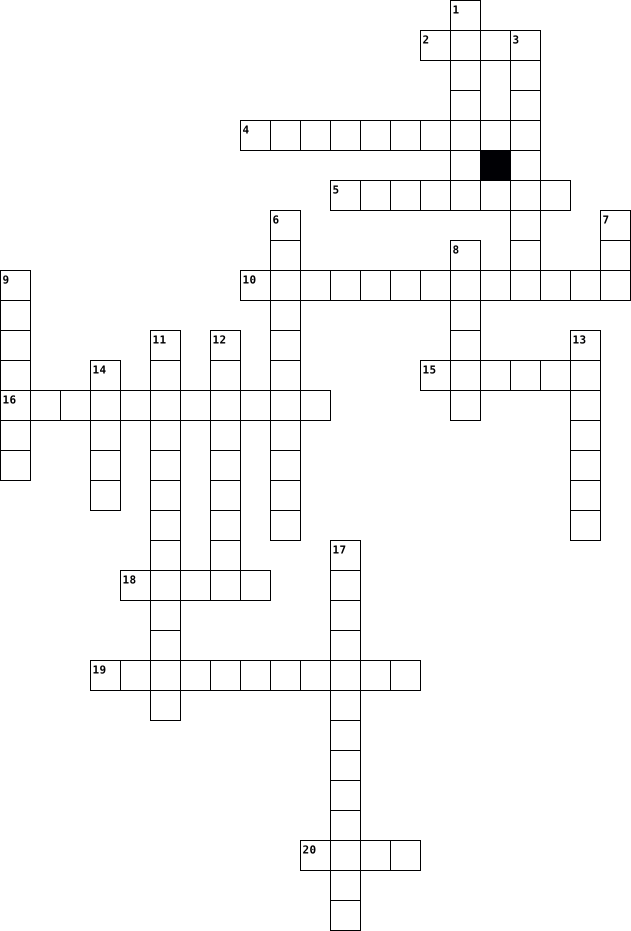
Across
- Every ______ in the Bible carries God's authority.
- Men spoke from God as they were carried along by ______.
- Plenary.
- The work of the Holy Spirit.
- The inspiration of scripture extends to the specific words.
- What does the King James Bible translate the word "breathed out" in 2 Timothy 3:16 as?
- God did not take control of the writers' _______.
- What does the English Standard Bible translate the word "inspiration" in 2 Timothy 3:16 as?
- The wrong source of the prophecy is the _____ of man.
Down
- God did not take _______ of the writers' minds.
- What does the inspiration of scripture not imply about the writers of the Bible?
- What can we be sure of when we read the Bible?
- Whose word is the Bible?
- The writers' writing _______ can still be seen in the Bible.
- Not the inspiration of the Bible.
- What can still be seen in the Bible about the writers?
- The feeling of an ordinary inspiration (not the inspiration of the Bible).
- All Scripture.
- Men _____ from God (2 Peter 1:21).
- The Bible as God's Word.
20 Clues: Plenary. • All Scripture. • Whose word is the Bible? • The Bible as God's Word. • The work of the Holy Spirit. • Not the inspiration of the Bible. • Men _____ from God (2 Peter 1:21). • What can we be sure of when we read the Bible? • God did not take _______ of the writers' minds. • God did not take control of the writers' _______. • ...
VOCABULARY CRIME 2024-04-17

Across
- - something that you have in your foot
- - the detective have to look for ...
- - the unlawful killing of a person, esp. when done deliberately:
- - to inspect or look at carefully, closely, or officially so as to judge or discover something:
- - when a police catch and hold a person
- - when the detective know what happened the robbery is
- - the police can hold the person he ... them
- - the action of robbery
- - something that you have in your finger and detectives use to get evidences
Down
- - is something that is very dangerous and you hear a very hard sound
- - a person employed to protect buildings, people, etc, and to collect and deliver large sums of money
- - when a criminal enter to a house and get something that is not of his is call
- - the person who be arrest
- - the person who have to arrest the criminal
- - a police officer or a private investigator whose job is to get information and evidence about crime:
- - the criminal run so the police have to .... he
- - o look into or examine the particulars of (something) carefully so as to discover something hidden, unique, or complex:
- - the place where the police catch the criminal and he come here
18 Clues: - the action of robbery • - the person who be arrest • - the detective have to look for ... • - something that you have in your foot • - when a police catch and hold a person • - the person who have to arrest the criminal • - the police can hold the person he ... them • - the criminal run so the police have to .... he • ...
Fun with PLW 2012-04-20

Across
- Case law is also known as ____ law.
- Party commencing civil proceeding.
- Magistrate and District court belong to this court category.
- Prosecutor must prove his case beyond reasonable doubt to win his case.
- Possible sanctions for criminal proceedings.
- To claim $190,000 from a friend, you will apply to the ___ court.
- One of the benefits of doctrine of judicial precedent.
- High Court and Court of Appeal belong to this court category.
- Judge's will ___ someone who is found to be not guilty.
- A mandatory stage before a law can be enforced.
- Singapore's final court is the Court of ___.
- One of judge's decision in civil proceedings.
- ____ court has unlimited jurisdiction.
Down
- Supreme law of the land.
- In this proceeding, only need to produce evidence to prove defendant is liable on a balance of probablity.
- Another benefit of doctrine of judicial precedent.
- To charge someone for theft punishable with jail term not more than 10 weeks, you go to ___ court.
- Party being charged in a criminal proceeding.
- Possible sanctions for civil proceedings.
- A draft legislation.
- Another possible sanctions for criminal proceedings.
21 Clues: A draft legislation. • Supreme law of the land. • Party commencing civil proceeding. • Case law is also known as ____ law. • ____ court has unlimited jurisdiction. • Possible sanctions for civil proceedings. • Possible sanctions for criminal proceedings. • Singapore's final court is the Court of ___. • Party being charged in a criminal proceeding. • ...
THE LIGHT OF THE GOSPEL 2023-06-14

Across
- compassion; forgiveness
- good news of Jesus
- brightness
- covered face
- God's magnificence
- tricky
- pumps blood
Down
- helpful service
- dying
- those who serve
- brains
- made to not see
12 Clues: dying • brains • tricky • brightness • pumps blood • covered face • helpful service • those who serve • made to not see • good news of Jesus • God's magnificence • compassion; forgiveness
Criminal 2023-03-29

Across
- Persuasion
- illegally entering a building
- Crimes
- Punishable offense against society.
Down
- Stealing illegally
- Stolen Property
- pretenses
- of a Crime A duty to do or not to do a certain
- Crimes
9 Clues: Crimes • Crimes • pretenses • Persuasion • Stolen Property • Stealing illegally • illegally entering a building • Punishable offense against society. • of a Crime A duty to do or not to do a certain
Unit 2 Legal Studies Exam Revision 2021-10-26

Across
- the number of jurors in a civil trial
- a penalty imposed by a court on a person guilty of a criminal offence
- a minor criminal offence
- an amount of money that the curt orders one party to pay in a civil claim
- serious criminal offence
- a sanction that requires the offender to pay an amount of money
- one purpose of a sanction,designed to safeguard the community from an offender by preventing them from committing a further offence.
Down
- a sanction that involves removing the offender from society for a period of time
- a person charged with a criminal offence
- law made by judges through decisions made in cases
- a party that initiates a legal claim in a civil dispute
- the number of jurors in a criminal trial
- an order made by a court that is designed to address a civil wrong or a breach
- the power a court has to decide legal cases
14 Clues: a minor criminal offence • serious criminal offence • the number of jurors in a civil trial • a person charged with a criminal offence • the number of jurors in a criminal trial • the power a court has to decide legal cases • law made by judges through decisions made in cases • a party that initiates a legal claim in a civil dispute • ...
criminal 2013-12-16

Across
- a shaped covering for the hand
- the act or process of investigating
- a person awaiting trial
Down
- a reddish fluid in vertebrates
- intended as representative of the whole
- the permanent end of all functions of life in an organism or some of its cellular components
- a person whose primary occupation is civil or nonmilitary
- a dead body, esp of a human being; cadaver
8 Clues: a person awaiting trial • a reddish fluid in vertebrates • a shaped covering for the hand • the act or process of investigating • intended as representative of the whole • a dead body, esp of a human being; cadaver • a person whose primary occupation is civil or nonmilitary • the permanent end of all functions of life in an organism or some of its cellular components
Year 5 Week 4 'ship' 2025-10-28

Across
- When two minds pull the same cart in the same direction.
- What gives you entry through a door others can’t open.
- When life feels like climbing a mountain barefoot.
- Belonging not just to a place, but to its people and rules.
- The invisible thread that ties relatives together.
- The act of helping another to rise while you stay behind the curtain.
- The warmth shared by those walking the same road.
- When words are locked away before they can be heard.
Down
- The light that walks beside you when you’re not alone.
- When hands and patience turn skill into art.
- The bridge built between hearts and minds.
- A title worn by one who commands respect—or expects it.
- The crown earned by skill, sweat, and spirit.
- The quiet comfort of knowing someone truly gets you.
- The moment something says, “I belong to you.”
- The training ground where learning replaces knowing.
- Guiding others forward without pushing them.
- A deep bow of the heart, not just the body.
18 Clues: The bridge built between hearts and minds. • A deep bow of the heart, not just the body. • When hands and patience turn skill into art. • Guiding others forward without pushing them. • The crown earned by skill, sweat, and spirit. • The moment something says, “I belong to you.” • The warmth shared by those walking the same road. • ...
Judicial term 2022-04-20

Across
- you go there if you get a criminal offense
- person named as the wrong-doer in a civil or criminal case
- a person who brings a case against another person
- how many years does the supreme court get to stay in office after getting elected
- you have to do this even for breaking a civil law and even a criminal law too.
- another name for this is status offense
- what age does georgia law defines a juvenile person under
- Has the final say about Georgia laws
Down
- criminal case like a traffic violation and like fighting in the streets
- you have to get _______ to become a part of the judicial branch
- when a person is under 17 you have to go here when you don't obey like missing school
- paying a judge to release an accused person
- you do this when you don't show up to court when you're called
- This has the power of ruling unconstitutional laws
- what step one of the adult criminal justice process
15 Clues: Has the final say about Georgia laws • another name for this is status offense • you go there if you get a criminal offense • paying a judge to release an accused person • a person who brings a case against another person • This has the power of ruling unconstitutional laws • what step one of the adult criminal justice process • ...
Final Exam Deviant Behavior 2023-12-03

Across
- functional disorder
- Crime is an act against the state
- States criminal behavior is learned in interactions between individuals and society
- has been linked to Agression
- Out of touch with reality
- Degree Murder Homicide that is planned or involves premeditation.
- Violation of the criminal law by young people
- deviant Underage possession of alcohol, intent to sale
- Justice Crime is an act afainst another person
- A term that explains what happens to offenders following arrest, conviction and sentencing
- Theories Refers to the scientific approach to the study of crime and its causation
- States criminal behavior follows life cycle
- Activity that violates social norms
- is the next holiday Christmas
Down
- Offers a blend of writings which state a critical perspctive with regard to the justice system
- will be the new year 2024
- Explains crime by reference to the economic and social arrangments of society
- Theories States personality is the major motivational elemnt and crimes result from abnormal
- Sufferer is out of touch with reality and suffers from disjointed thinking
- Personaliy disorder which result more rom the envirnoment
- Theory that is a perspective that merges concepts drawn from different sources
- Willful killing of one human being by another
- result from what Abnormal and dysfunctional
- Study of crime and criminal behavior
- deviant High school parties, Medical marijuana
- Theory that attempts to explain most forms of crimal conduct through a single approach
- An individual who has antisocial behaviors
27 Clues: functional disorder • will be the new year 2024 • Out of touch with reality • has been linked to Agression • is the next holiday Christmas • Crime is an act against the state • Activity that violates social norms • Study of crime and criminal behavior • An individual who has antisocial behaviors • States criminal behavior follows life cycle • ...
Criminal Justice Unit 1 Review 2024-05-17

Across
- Due process is best defined as __________ fairness.
- A criminal offense punishable by death or by incarceration in a prison facility for at least one year.
- Step which follows immediately after a trial when someone is found guilty of a crime.
- __________ Justice includes the aspects of social justice that concern violations of the criminal law.
- ____________ advocates Seek to protect personal freedoms within the process of criminal justice.
- An offense punishable by incarceration, typically one year or less.
Down
- ____________ advocates believe that under certain circumstances involving a criminal threat to public safety, the interests of society should take precedence over individual rights.
- A legal principle that ensures that previous judicial decisions are authoritatively considered and incorporated into future cases.
- Justice is best defined as the principle of _________.
- Conduct in violation of the criminal laws of a state, the federal government, or a local jurisdiction, for which there is no legally acceptable justification or excuse.
- A minor violation of state statute or local ordinance punishable by a fine or other penalty.
- A rule of conduct, generally found enacted in the form of a statute, that proscribes or mandates certain forms of behavior.
- First step in the American criminal justice process.
13 Clues: Due process is best defined as __________ fairness. • First step in the American criminal justice process. • Justice is best defined as the principle of _________. • An offense punishable by incarceration, typically one year or less. • Step which follows immediately after a trial when someone is found guilty of a crime. • ...
Las Noticias 2017-11-30

Across
- To see if you're guilty you go on ______.
- The decision of how long the criminal will go to jail.
- The people the criminal will face in court.
- The people who did not commit the crime are _______.
- The first responder's vehicle.
- The people who steal are called _____.
- Where the guilty criminal will go.
- What is an explosion device?
- When a robber robs he commits a ______.
Down
- What happens when someone uses a bomb.
- What do you do with a gun?
- When mass amounts of water enter a city.
- What the verdict is for a criminal who did it.
- The firefighter got the child out of the fire, he _____ him.
- What happens when two cars collide.
15 Clues: What do you do with a gun? • What is an explosion device? • The first responder's vehicle. • Where the guilty criminal will go. • What happens when two cars collide. • What happens when someone uses a bomb. • The people who steal are called _____. • When a robber robs he commits a ______. • When mass amounts of water enter a city. • To see if you're guilty you go on ______. • ...
Courtroom Crossword Puzzle 2020-11-28

Across
- The offense of willfully telling an untruth in a court after having taken an oath or affirmation.
- The reason a person may have committed a crime
- In a criminal case, the person accused of the crime.
- The deliberate and unlawful killing of one person by another; murder.
- A jury verdict that a criminal defendant is not guilty, or the finding of a judge that the evidence is insufficient to support a conviction.
- A standard of proof that must be surpassed to convict an accused in a criminal proceeding.
- Formally accuse of or charge with a serious crime.
- A lawyer who conducts the case against a defendant in a criminal court.
- Consideration and discussion of facts, laws, and other matters, particularly by members of a jury, a panel of judges, or by any group including a legislature.
Down
- Question (a witness called by the other party) in a court of law to discredit or undercut testimony already given.
- Thought out or planned beforehand.
- A jury member who acts as the chairman and spokesperson for the jury.
- A decision on a disputed issue in a civil or criminal case.
- A jury that cannot agree upon a verdict after extended deliberation and is unable to reach the required unanimity or supermajority.
- Having the agreement and consent of all.
- Declare someone to be guilty of a criminal offense by the verdict of a jury or the decision of a judge in a court of law.
- Asserted to be true or to exist, yet not proven.
- Evidence presented orally by witnesses during trials or before grand juries.
- A claim or piece of evidence that one was elsewhere when an act is alleged to have taken place.
19 Clues: Thought out or planned beforehand. • Having the agreement and consent of all. • The reason a person may have committed a crime • Asserted to be true or to exist, yet not proven. • Formally accuse of or charge with a serious crime. • In a criminal case, the person accused of the crime. • A decision on a disputed issue in a civil or criminal case. • ...
The Inspiration of the Bible 2023-02-12
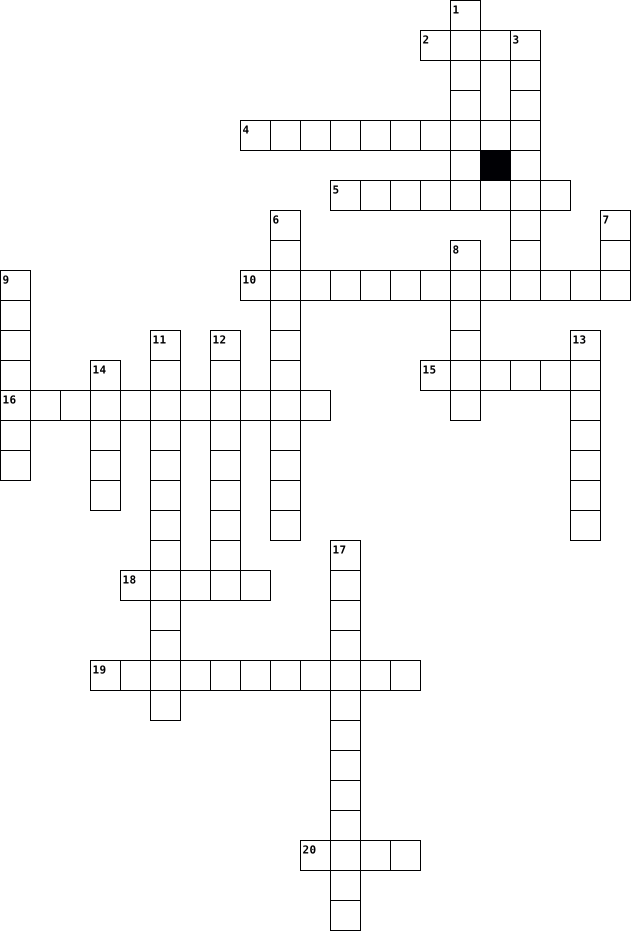
Across
- Every ______ in the Bible carries God's authority.
- Men spoke from God as they were carried along by ______.
- Plenary.
- The work of the Holy Spirit.
- The inspiration of scripture extends to the specific words.
- What does the King James Bible translate the word "breathed out" in 2 Timothy 3:16 as?
- God did not take control of the writers' _______.
- What does the English Standard Bible translate the word "inspiration" in 2 Timothy 3:16 as?
- The wrong source of the prophecy is the _____ of man.
Down
- God did not take _______ of the writers' minds.
- What does the inspiration of scripture not imply about the writers of the Bible?
- What can we be sure of when we read the Bible?
- Whose word is the Bible?
- The writers' writing _______ can still be seen in the Bible.
- Not the inspiration of the Bible.
- What can still be seen in the Bible about the writers?
- The feeling of an ordinary inspiration (not the inspiration of the Bible).
- All Scripture.
- Men _____ from God (2 Peter 1:21).
- The Bible as God's Word.
20 Clues: Plenary. • All Scripture. • Whose word is the Bible? • The Bible as God's Word. • The work of the Holy Spirit. • Not the inspiration of the Bible. • Men _____ from God (2 Peter 1:21). • What can we be sure of when we read the Bible? • God did not take _______ of the writers' minds. • God did not take control of the writers' _______. • ...
Olson Family Reunion Crossword 2024-08-01

Across
- To purposely drive over boulders and such
- The MN city where grandma was born
- You can ride them
- Spending time on the water
- This group empowers young female minds
- Win or lose by this casino member
- Our areas most popular vehicle
- Riding this two wheeler is fun
- The act of permanently living in this country
- One of us danced with this famous person
- One of Donald Duck's nephews
- No hotel for me
- A small dog breed
- Country where we mostly originated
- Fans enjoy this local sports team
- A tall, colorful bird
Down
- You carve them, then light them up
- A person who puts out fires
- A nutty forest creature
- Walking trails and paths
- An educator of young minds
- A large dog breed
- Our original US State
- One who plays instruments
- A person who plans something before building
- They can take you to faraway places
- Our grandmothers middle name
- An essential railroad job
- These siblings look alike
- A former service member
30 Clues: No hotel for me • A large dog breed • You can ride them • A small dog breed • Our original US State • A tall, colorful bird • A nutty forest creature • A former service member • Walking trails and paths • One who plays instruments • An essential railroad job • These siblings look alike • An educator of young minds • Spending time on the water • A person who puts out fires • ...
PASS 1010CCJ - Juries and Decision Making 2021-10-03

Across
- it is an ... to publish information about jury deliberations
- How many jurors for civil trials?
- more likely to result in guilty verdict when the defendant is ...
- Less likely to result in guilty verdict when the defendant is ...
- Juries are available in ... courts criminal trials
- Potential jurors can be ...
- Prediction of verdict based on stereotypes of gender, race, class or personality is ...
- Juries should be ... of one’s peers from the community
- younger people, older people, and unemployed tend to be on ... juries
- Most deliberations are ... lengthy
- experts are ... at picking biased potential juror
- We know more about psychological processes of ... juries than real juries
Down
- Which gender is more likely to convict in relation to rape and child abuse?
- How many jurors for criminal trials?
- the foreperson announces the ...
- Only a ... number of criminal cases involve a jury
- How many peremptory challenges are the prosecution and defence entitled to in a criminal trial
- The first stage of the trial is where eligible jurors are ...
- Queensland requires what type of decision
- Younger jurors more likely to ...
- panel of prospective jurors from which jury is selected
- jurors seem to render verdicts based on the ... presented in the case
- majority of people who appear in Court plead ..., so a jury is not required
- more likely to result in guilty verdict when the defendant has ...
- jury .... is usually male, middle-aged, professional
25 Clues: Potential jurors can be ... • the foreperson announces the ... • How many jurors for civil trials? • Younger jurors more likely to ... • Most deliberations are ... lengthy • How many jurors for criminal trials? • Queensland requires what type of decision • experts are ... at picking biased potential juror • Only a ... number of criminal cases involve a jury • ...
Too Dear 2024-04-23

Across
- name the machine used to execute people.
- The criminal agreed to go away from the prison after he was offered a _____.
- What was the execution converted into?
- Which government is Republican and has no proper respect for the king in ‘Too Dear!’?
- which game do people play in the gaming house?
- Who according to the Council was a brother monarch in ‘Too Dear!’?
- What is the currency of Monaco?
- The people of Monaco mentioned in ‘Too Dear!’ were ______.
- Which kingdom in ‘Too Dear’ monopolized in the gaming business?
- What did the criminal do to earn his living after his release in ‘Too Dear!’?
- How much pension did the criminal receive as an advance before leaving Monaco ?
Down
- What was the main source of king’s revenue?
- Where did the criminal settle after emigrating?
- How much did the king spend annually to take care of the criminal?
- Where was the criminal’s food fetched from?
- Who gains more from the gaming house?
- What was the total population of Monaco?
- How many francs would it cost for the executioner and the guillotine machine according to France?
- What work was the guard given?
- How many francs would it cost for the executioner and the guillotine machine according to Italy?
- Name the commodities taxed in Monaco.
- What was the first punishment decided for the murderer?
- How many soldiers were in the army?
23 Clues: What work was the guard given? • What is the currency of Monaco? • How many soldiers were in the army? • Who gains more from the gaming house? • Name the commodities taxed in Monaco. • What was the execution converted into? • name the machine used to execute people. • What was the total population of Monaco? • What was the main source of king’s revenue? • ...
3rd Hour Review (2's) 2022-08-22

Across
- A jury that will consider a case fairly, without favoring or discriminating anyone
- A trial rendered invalid through an error in the proceedings
- Unlawful killing of a human being without malice because of a quarrel or in the heat of the moment
- Territory where a court or government agency may exercise its power; power to make legal decisions
- The legal standard for an officer to have a reasonable basis for suspecting criminal activity before detaining them
- Challenge a previous legal determination
- Imprison or confine
- Prohibits use of illegally obtained evidence in a criminal trial
- Formal reading of criminal charging with the defendant present
- A legal requirement that states legal matters must be resolved according to established rules
- Any reason to doubt anything that the prosecution is trying to prove its case
Down
- Another word for the death penalty; legally authorized killing of someone as punishment for a crime
- Lying under oath
- Formal reading when the court orders the guilty defendant jail time or a monetary fine
- Lawyer's final opportunity to address the jury in a criminal trial; usually summarizes the evidence
- Lawyer's first opportunity to address the jury in a criminal trial
- Unintentional killing that results from recklessness or from commission of a misdemeanor
- The right to an attorney as stated in the 6th Amendment
- When a person is held by the State for an offense committed
- Murder with malicious intent but not premeditated
20 Clues: Lying under oath • Imprison or confine • Challenge a previous legal determination • Murder with malicious intent but not premeditated • The right to an attorney as stated in the 6th Amendment • When a person is held by the State for an offense committed • A trial rendered invalid through an error in the proceedings • ...
The Criminal Code 2018-01-19

Across
- degree / The deliberate murder of another individual
- / Age of Tracy Latimer when she was killed by her father using Carbon monoxide
- / Communicating for the purpose of prostitution
- / The cause of death is known as this
- / The Killing of a newborn by their mother shortly after childbirth
- / 75 percent of victims to these crimes are Women. Added to the criminal code in 1993. (2 words)
- / Euthanized by her father because she suffered from cerebral palsy
- / Considered a criminal offence until 1972
- / One person acts to end another person's life. Otherwise known as a mercy killing
- / Hitting someone with intent to cause bodily harm
- / Theft involving the threat of violence, assault, or the use of offensive Weapon.
Down
- / Having sexual intercourse with a blood relative
- / Type of homicide where death is caused by accident or in self defense
- / Removed from the criminal code by Pierre Trudeau in 1989
- / Directly or indirectly killing another human being
- / The forcible removal of an unmarried person under the age of 16 from the care of someone who has lawful care of the child
- / Directly or indirectly causing the death of a person by means of an unlawful act
- / The intentional or reckless causing of damage to a property by fire or explosion, mostly committed by 12-17 year olds
- negligence / Found under section 219 of the criminal code. (2 words)
- / The third level of assault where a person wounds, maims, disfigures, or endangers the victim's life
20 Clues: / The cause of death is known as this • / Considered a criminal offence until 1972 • / Communicating for the purpose of prostitution • / Having sexual intercourse with a blood relative • / Hitting someone with intent to cause bodily harm • / Directly or indirectly killing another human being • degree / The deliberate murder of another individual • ...
Chapter 6: Criminal Law Terms *= 2 Words No Space 2025-04-02

Across
- *The mental intent or knowledge of wrongdoing behind a criminal act.
- *Intentionally choosing to ignore the facts or avoid confirming something illegal.
- *Reckless disregard for the lives or safety of others that causes harm.
- Trying to commit a crime but failing to complete it.
- *The physical act or omission that makes up the criminal offence.
- Awareness of certain facts or circumstances that make an action criminal.
- The reason why a person commits a crime, though it is not required to prove guilt.
- An act or omission that is prohibited and punishable by law.
- An offence where only actus reus must be proven; due diligence can be a defence.
- An agreement between two or more people to commit a crime.
- Encouraging or urging someone to commit a crime.
Down
- *A federal statute that outlines criminal offences and their punishments in Canada.
- *A deliberate decision to commit a wrongful act, knowing the consequences.
- The person who actually commits the criminal offence.
- An offence where intent does not matter, and no defence is accepted once the act is proven.
- *The intention to commit the act and achieve a particular result or consequence.
- *The intention to perform the act itself, without a specific goal or result in mind.
- *Deliberately taking an unjustified risk that could cause harm.
- Assisting or helping someone commit a crime.
- *The body of law that deals with actions considered harmful to society and sets out penalties.
20 Clues: Assisting or helping someone commit a crime. • Encouraging or urging someone to commit a crime. • Trying to commit a crime but failing to complete it. • The person who actually commits the criminal offence. • An agreement between two or more people to commit a crime. • An act or omission that is prohibited and punishable by law. • ...
Vocabulary 6B 2025-04-09

Across
- El incendio en la película fueron _ _, fue falso.
- Fue _ del incendio
- El prisionero _ una tienda
- Mi amiga es una _ y tomó maquillaje
- la persona que ayuda a crear la película
- Da dirección a los actores
- "Soy un _, saqué un 20% en mi examen"
- La _ tenía mucho que decir sobre la película.
- cuando las personas tienen novios o novias ellos _ los
Down
- _este apartamento
- persona popular de películas
- La película _ _en una historia real.
- El _ de Spiderman es Spiderman.
- El detective _ _ en encontrar al criminal.
- El perro fue _ después de huir
- una persona que investiga un crimen
- La criminal _ a su amiga
- La policía _ al criminal
- Los Vengadores es una película de _
- Le _ mi película favorita a mi amigo.
20 Clues: _este apartamento • Fue _ del incendio • La criminal _ a su amiga • La policía _ al criminal • El prisionero _ una tienda • Da dirección a los actores • persona popular de películas • El perro fue _ después de huir • El _ de Spiderman es Spiderman. • una persona que investiga un crimen • Mi amiga es una _ y tomó maquillaje • Los Vengadores es una película de _ • ...
Deviant Behavior Final Exam 2023-12-04

Across
- theory of response to known or suspected offenders determines the individual futures
- taking of or attempt to take anything of value under confrontational
- eating habits, vitamin deficiencies, environmental contaminants, genetic inheritance
- criminal homicide that is planned or involves premeditation
- result of nurture, able to form attachments, have no regard for society
- crime is a result of forces beyond the individual's control
- out of touch with reality, disjointed thinking
- theory that merges concepts drawn from different sources
Down
- entering of a building or residence with the intention to commit a crime
- theory that explains criminal conduct through a single approach
- study of crime
- guilty act
- explains crime is about personal choice
- criminal act
- usually kills spouses and generally for profit
- theory states delinquency is committed in response to undesirable social environments
- a type of process theory stating that criminal behavior is learned in interaction between individuals and society
- personality disorder, aggressive antisocial behavior
18 Clues: guilty act • criminal act • study of crime • explains crime is about personal choice • usually kills spouses and generally for profit • out of touch with reality, disjointed thinking • personality disorder, aggressive antisocial behavior • theory that merges concepts drawn from different sources • criminal homicide that is planned or involves premeditation • ...
CSI 2022-11-08

Across
- the science of detecting poisons
- things or objects used to determine the criminal
- object used to commit a crime
- where the crime to place
- people who saw what happened
- deoxyribonucleic acid
- a suspects reason and place at the time of the crime
Down
- everyone has their own
- person who investigates a crime
- perosn who commited the crime
- person that is identified as the possible criminal
- someone who assisted the criminal
12 Clues: deoxyribonucleic acid • everyone has their own • where the crime to place • people who saw what happened • perosn who commited the crime • object used to commit a crime • person who investigates a crime • the science of detecting poisons • someone who assisted the criminal • things or objects used to determine the criminal • person that is identified as the possible criminal • ...
Law and order 2024-10-23

Across
- scene rikospaikka
- punishment kuolemanrangaistus
- battery pahoinpitely
- bail takuu
- perpetrator rikoksentekijä, rikollinen
- service yhdyskuntapalvelu
- attorney puolustuksen asianajaja
- offence rikos
- record rikosrekisteri
Down
- haastehakemus, kanne
- rikostoveri
- of law tuomioistuin
- syytetty, vastaaja
- terrorist kyberterroristi
- syyllinen
15 Clues: syyllinen • bail takuu • rikostoveri • offence rikos • scene rikospaikka • syytetty, vastaaja • of law tuomioistuin • haastehakemus, kanne • battery pahoinpitely • record rikosrekisteri • service yhdyskuntapalvelu • terrorist kyberterroristi • punishment kuolemanrangaistus • attorney puolustuksen asianajaja • perpetrator rikoksentekijä, rikollinen
Section 3 Review Crossword Puzzle 2013-07-27

Across
- The right to challenge a potential juror without disclosing the reason for the challenge.
- A written order issued by a judicial officer or grand jury requiring an individual to appear in court and to give testimony or to bring material to be used as evidence.
- Any information having a tendency to clear a person of guilt or blame.
- The power of a court to review actions and decisions made by other agencies of government.
- A formal written accusation submitted to the courts by a grand jury, alleging that a specified person has committed a specified offense, usually a felony.
- A sentencing model of criminal punishment that includes determinate and commission created presumptive sentencing schemes, as well as voluntary/advisory sentencing guidelines.
- The two-sided structure under which American criminal trial courts operate that pits the prosecution against the defense.
- Evidence that, if believed, directly proves a fact.
- A plea of “no contest.”
- A low-level court that focuses on quality-of-life crimes that erode a neighborhood’s morale, that emphasizes problem solving rather than punishment, and that builds upon restorative principles like community service and restitution
- Something that is not based upon the personal knowledge of a witness.
- The court authorized by law to hear the final appeal on a matter.
- The examination of a convicted offender’s background before sentencing.
- A model of criminal sentencing that holds that criminal offenders deserve the punishment they receive at the hands of the law and that punishments should be appropriate to the type and severity of the crime committed
- A sentencing principle that holds that an offender’s criminal history should objectively be taken into account in sentencing decisions
- The act of taking revenge upon a criminal perpetrator.
- The money or property pledges to the court or actually deposited with the court to effect the release of a person from legal custody
- The setting of bail in the form of land, houses, stocks, or other tangible property
- The movement of a trial or lawsuit from one jurisdiction to another or from one location to another within the same jurisdiction.
- In criminal proceedings, the examination in court of the issues of fact and relevant law in a case for the purpose of convicting or acquitting the defendant.
- The circumstances relating to the commission of a crime that may be considered to reduce the blameworthiness of the offender.
- A sentencing principle, based upon concerns with social equality, that holds that similar crimes should be punished with the same degree of severity, regardless of the social or personal characteristics of the offenders
- A goal of criminal sentencing that attempts to make the victim “whole again.”
- A sentencing principle that holds that the severity of sanctions should bear a direct relationship to the seriousness of the crime committed.
- The circumstances relating to the commission of a crime that make it more grave than the average instance of that crime.
Down
- An elected or appointed public official who presides over a court of law and who is authorized to hear and sometimes to decide cases and to conduct trials
- In criminal proceedings, a defendant’s formal answer in court to the charge contained in a complaint, information, or indictment that he or she is guilty of the offense charged, is not guilty of the offense charged, or does not contest the charge
- An attorney whose official duty is to conduct criminal proceedings on behalf of the state or the people against those accused of having committed criminal offenses.
- A sentencing model of criminal punishment in which an offender is given a fixed term that may be reduced by good time or gain time.
- A sentencing model of criminal punishment that encourages rehabilitation through the use of general and relatively unspecific sentences
- An organized program that offers services to victims of crime in the areas of crisis intervention and follow-up counseling and that helps victims secure their rights under the law.
- A proceeding before a judicial officer in which three matters must be decided: (1) whether a crime was committed, (2) whether the crime occurred within the territorial jurisdiction of the court, and (3) whether there are reasonable grounds to believe that the defendant committed the crime
- The territory, subject matter, or people over which a court or other justice agency may exercise lawful authority, as determined by statute or constitution.
- A formal, written accusation submitted to a court by a prosecutor, alleging that a specified person has committed a specified offense
- The oral evidence offered by a sworn witness on the witness stand during a criminal trial.
- The imposition of a criminal sanction by a judicial authority.
- One of two or more sentences imposed at the same time, after conviction for more than one offense, and served in sequence with the other sentence.
- A structured sentencing scheme that allows no leeway in the nature of the sentence imposed.
- The attempt to reform a criminal offender. Also, the state in which a reformed offender is said to be.
- A goal of criminal sentencing that seeks to prevent others from committing crimes similar to the one for which a particular offender is being sentenced by making an example of the person sentenced
- Strictly, the hearing before a court having jurisdiction in a criminal case in which the identity of the defendant is established, the defendant is informed of the charge and of his or her rights, and the defendant is required to enter a plea
- The degree to which a particular item of evidence is useful in, and relevant to, proving something important in a trial.
- A person who has special knowledge and skills recognized by the court as relevant to the determination of guilt or innocence
- Evidence that requires interpretation or that requires a judge or jury to reach a conclusion based upon what the evidence indicates.
- The use of imprisonment or other means to reduce the likelihood that an offender will commit future offenses.
- The lawful authority of a court to review a decision made by a lower court
- A member of a trial or grand jury, selected for jury duty and required to serve as an arbiter of the facts in a court of law.
- The type of deterrence that has a goal of criminal sentencing to prevent a particular offender from engaging in repeat criminality
- The type of jurisdiction that gives the court the lawful authority to hear or act upon a case from its beginning and to pass judgment on the law and the facts.
- A goal of criminal sentencing that seeks to inhibit criminal behavior through the fear of punishment.
- One of two or more sentences imposed at the same time, after conviction for more than one offense, and served at the same time.
- The process of negotiating an agreement among the defendant, the prosecutor, and the court as to an appropriate plea and associated sentence in a given case.
- The court officer whose duties are to keep order in the courtroom, to secure witnesses, and to maintain physical custody of the jury.
- An eyewitness, character witness, or any other person called upon to testify who is not considered an expert.
- Evidence consisting of physical material or traces of physical activity.
55 Clues: A plea of “no contest.” • Evidence that, if believed, directly proves a fact. • The act of taking revenge upon a criminal perpetrator. • The imposition of a criminal sanction by a judicial authority. • The court authorized by law to hear the final appeal on a matter. • Something that is not based upon the personal knowledge of a witness. • ...
criminal 2013-09-21

Across
- sets fire to buildings/forests/etc on purpose
- takes someone by force and doesn't release them until a ransom is paid
- takes things into or out of a country illegaly
Down
- illegally takes control of a plane or other vehicle using force
- copies works of art/documents/signatures/etc to deceive people
- steals things from a shop while pretending to be a customer
- steals another person's property
- breaks into a building in order to steal things
8 Clues: steals another person's property • sets fire to buildings/forests/etc on purpose • takes things into or out of a country illegaly • breaks into a building in order to steal things • steals things from a shop while pretending to be a customer • copies works of art/documents/signatures/etc to deceive people • ...
Criminal 2020-02-27

Across
- an act of attacking and robbing someone in a public place.
- the unlawful premeditated killing of one human being by another.
- the action, treated as a criminal offense, of demanding payment or another benefit from someone in return for not revealing compromising or damaging information about them.
- dishonest or fraudulent conduct by those in power, typically involving bribery.
Down
- the action of assassinating someone.
- an action or omission that constitutes an offense that may be prosecuted by the state and is punishable by law.
- entry into a building illegally with intent to commit a crime, especially theft.
- the action or crime of stealing.
8 Clues: the action or crime of stealing. • the action of assassinating someone. • an act of attacking and robbing someone in a public place. • the unlawful premeditated killing of one human being by another. • dishonest or fraudulent conduct by those in power, typically involving bribery. • entry into a building illegally with intent to commit a crime, especially theft. • ...
Chapter 1: What is Criminal Justice: 2024-08-26

Across
- is the money or property pledged to the court to effect the release of a person from legal custody.
- Social _____. refers to the use of sanctions and rewards within a group to influence and shape the behavior of individual members.
- _____Justice. refers to the criminal (penal) law, the law of criminal procedure, and the array of procedures and activities related to the enforcement of this body of law.
- _____Model. a criminal justice perspective that assumes the system’s subcomponents work together harmoniously to achieve justice.
- ______ Sentence. is one of two or more sentences imposed and served in sequence with other sentences after conviction for more than one offense.
- a writ issued by a judicial officer directing a law enforcement officer to perform a specified act and protecting the officer from damages if performed.
- ______ Advocate. is one who seeks to protect personal freedoms within the process of criminal justice.
- is the scientific study of the causes and prevention of crime, as well as the rehabilitation and punishment of offenders.
- _____Cause. refers to a set of facts and circumstances that induce a reasonable person to believe a crime has been committed, allowing police seizures and searches.
- _____Advocate. one who believes that under certain circumstances involving a criminal threat to public safety, the interests of society should take precedence over individual rights.
Down
- ______ Sentence. is one of two or more sentences imposed and served at the same time, even if they are for more than one offense.
- is the examination in court of the issues of fact and relevant law for the purpose of convicting or acquitting the defendant.
- ______Hearing. is a proceeding before a judicial officer to determine if a crime was committed, if it occurred within the court’s jurisdiction, and if there are reasonable grounds to believe the defendant committed the crime.
- is a formal, written accusation submitted to a court by a prosecutor, alleging that a specified person has committed a specified offense.
- is the existence within one society of diverse groups that maintain unique cultural identities while participating in the larger society’s legal and political system.
- ____of Justice. involves the performance of activities such as detection, apprehension, detention, prosecution, adjudication, and correctional supervision of accused persons or other criminal offenders
- A __________ is the conduct in violation of the criminal laws of a state, the federal government, or a local jurisdiction, for which there is no legally acceptable justification or excuse.
- is a formal, written accusation submitted by a grand jury, alleging that a specified person has committed a felony.
- is the process officially recording an entry into detention after arrest, identifying the person, place, time, reason for the arrest, and the arresting authority.
- _____Model. a criminal justice perspective that assumes the system’s components function primarily to serve their own interests, with justice being a product of conflicts among agencies.
- ______Jury. is a group of jurors who hear evidence to determine if there is sufficient evidence to bring an accused person to trial or investigate criminal activity.
- _______Justice. refers to the civil law, the law of civil procedure, and activities related to private rights and remedies sought by civil action.
- due__________ is a right guaranteed by the U.S. Constitution that ensures the due course of legal proceedings according to established rules and forms for protecting individual rights.
- ________Justice. is an ideal linked to fundamental notions of fairness and cultural beliefs about right and wrong, embracing all aspects of civilized life.
24 Clues: is the money or property pledged to the court to effect the release of a person from legal custody. • ______ Advocate. is one who seeks to protect personal freedoms within the process of criminal justice. • is a formal, written accusation submitted by a grand jury, alleging that a specified person has committed a felony. • ...
balearic beats 2021-03-01

Across
- raise
- beloved
- blow monkeys
- rey de copas
Down
- stories
- simple minds
- roots
- primavera
- gottsching
- tellier
10 Clues: raise • roots • stories • beloved • tellier • primavera • gottsching • simple minds • blow monkeys • rey de copas
Criminal Law 2023-03-29

Across
- the practice of obtaining something, especially money.
- People who lie under oath
- A crime punishable by confinement for more than a year
- Punishable offense against society
- State statutes prohibiting certain conduct
- A less serious crime. Punishable by confinement for less than a year
- State statutes prohibiting certain conduct.
Down
- theft of personal property.
- the criminal act of deliberately setting fire
- a secret plan by a group to do something unlawful
- the giving or offering of a bribe.
- the criminal conduct of taking another's prop victima person harmed, injured, or killed as a result of a crime
- the action of taking property unlawfully from a person or place by force
- the action of forging or producing a copy of a document
14 Clues: People who lie under oath • theft of personal property. • the giving or offering of a bribe. • Punishable offense against society • State statutes prohibiting certain conduct • State statutes prohibiting certain conduct. • the criminal act of deliberately setting fire • a secret plan by a group to do something unlawful • ...
Criminal law 2024-03-27

Across
- the mental element
- helps after the crime
- damage to property in the means of fire
- factors reducing the culpability of a sentence
- intent to prevent crimes from reoccurring
- the physical element
- failing to do something
- a penalty imposed
Down
- killing without intention
- burden of proof
- having an impartial and open judge
- the casual connection
- committing a crime due to coercion
13 Clues: burden of proof • a penalty imposed • the mental element • the physical element • helps after the crime • the casual connection • failing to do something • killing without intention • having an impartial and open judge • committing a crime due to coercion • damage to property in the means of fire • intent to prevent crimes from reoccurring • ...
Criminal Judgements 2023-10-31

Across
- victims of over 500 killings in Britain from unknown killers- symbol of femininity
- alias of the serial bomber George Metesky, who wreaked havoc in NYC
- fingerprints, hair, and blood all contain this clue to a criminal's identity
- alias of the French killer/police officer who took his confessed his crimes in a note
- cryptic clue left behind by Israel Keyes before he hung himself in police custody
- thinking pattern that explains why career criminals get caught for minor crimes
- the technique used to connect criminals to a crime
- pieces of clothing left at the crime scene
Down
- the kind of game that criminals might play with police
- crime involving intentionally setting fire to a property
- someone who has murdered more than two people in a similar manner
- the town where the Woodchipper killer commit his crimes
- the reason behind a murder
13 Clues: the reason behind a murder • pieces of clothing left at the crime scene • the technique used to connect criminals to a crime • the kind of game that criminals might play with police • the town where the Woodchipper killer commit his crimes • crime involving intentionally setting fire to a property • someone who has murdered more than two people in a similar manner • ...
criminal justice 2025-06-06

Across
- all police departments work the same way (t/f)
- a person who brings a legal action.
- policing law enforcement strategy aimed at p reventing crime before it occurs
- the legal authority of a court or government agency to hear and decide a case
- the examination of the facts of the case.
- moral equity, fairness
- process fundemental principal ensuring fairness and protecting individuals from arbitrary government actions.
- "protect and serve" is the _____ for all police officers
Down
- policing the stratagy that law enforment uses to prevent crimes before they occur
- if an ______ is made, the police will take the suspect into physical custody
- The process takes place after a suspect has been arrested
- an individual, company, or institution sued or accused in a court of law.
- a group of citizens who decide the facts of a case and render a verdict in a trial
13 Clues: moral equity, fairness • a person who brings a legal action. • the examination of the facts of the case. • all police departments work the same way (t/f) • "protect and serve" is the _____ for all police officers • The process takes place after a suspect has been arrested • an individual, company, or institution sued or accused in a court of law. • ...
Criminal Law 2024-11-17

Across
- A Federal crime defined by the U.S. Constitution
- A major crime punishable by imprisonment or death
- The illegal act of making or selling a copy of a valuable item without the owner's permission
- The party sued in a civil lawsuit or the party charged with a crime in a criminal prosecution.
- A less serious crime with a less severe penalty
- A person is not considered responsible if “as a result of mental disease or defect he or she lacks substantial capacity either to appreciate the criminality of his conduct or to conform his conduct to the requirements of law.”
- Act A conduct that is forbidden; conduct that is voluntary
Down
- An act against the public good.
- When people have good reason to believe they are in danger of serious injury or death, they can use force to protect themselves.
- Jeopardy. The Fifth Amendment of the Constitution guarantees that no person can be tried twice for the same crime.
- Government's attorney in a criminal case.
- A law enforcement officer induces a law-abiding citizen to commit a crime
- The party that accuses a person of a crime.
13 Clues: An act against the public good. • Government's attorney in a criminal case. • The party that accuses a person of a crime. • A less serious crime with a less severe penalty • A Federal crime defined by the U.S. Constitution • A major crime punishable by imprisonment or death • Act A conduct that is forbidden; conduct that is voluntary • ...
Criminal Justice 2025-04-23

Across
- Warrant, requires probable cause
- Right, given to the individual after being arrested
- Ethan Couch (spoiled)
- defense attorney
- constitution
- proven by a judge that the defendant is guilty of a crime
Down
- blue collard
- plea or hearing
- physical attack
- 4th amendment
- accused of a crime,
- punishment can be 1 year in jail
- get out of jail “card”
13 Clues: blue collard • constitution • 4th amendment • plea or hearing • physical attack • defense attorney • accused of a crime, • Ethan Couch (spoiled) • get out of jail “card” • Warrant, requires probable cause • punishment can be 1 year in jail • Right, given to the individual after being arrested • proven by a judge that the defendant is guilty of a crime
Criminal Justice 2025-12-10

Across
- Two Stripes.
- Deputy, Gold/Silver Eagle.
- Gold/Silver Bar.
- Appointed.
- Patrols the County.
- Appoints a Chief.
Down
- Elected.
- Elects a Sheriff.
- Four Gold/Silver Stars.
- Three Stripes.
- Patrols the City.
- One Stripe.
- Gold/Silver Joint Bar.
13 Clues: Elected. • Appointed. • One Stripe. • Two Stripes. • Three Stripes. • Gold/Silver Bar. • Elects a Sheriff. • Patrols the City. • Appoints a Chief. • Patrols the County. • Gold/Silver Joint Bar. • Four Gold/Silver Stars. • Deputy, Gold/Silver Eagle.
criminal justice 2022-11-29

Across
- a french phrase that means to speak the truth
- peer pressure to do a crime
- the process through which a convicted person is changed or reformed
- getting caught doing a crime and going to jail
- an excuse that someone has,that they were somewhere else during the crime
- an act that violates a law, government sets a penalty
Down
- people who decide whether or not a person gets charged
- guilty state of mind
- somebody that helps somebody commit a crime
- the person who is injured when another person commits a crime
- imprisoned by the government
- is a punishment given as a kind of revenge for wrong doing
- a grand jury formal charge
13 Clues: guilty state of mind • a grand jury formal charge • peer pressure to do a crime • imprisoned by the government • somebody that helps somebody commit a crime • a french phrase that means to speak the truth • getting caught doing a crime and going to jail • an act that violates a law, government sets a penalty • people who decide whether or not a person gets charged • ...
criminal liability 2024-03-22

Across
- pittwood owed what kind of duty
- the chain of causation can be Broken by this act
- direct intent
- Williams actions were...
- church was convicted of ...
Down
- cunningham was...
- victim helped open own wound
- cowboy transfer mallice
- poisoning his mother
- thin skull rule
- second type of causation
- continuing act principle
- ..... the soldier
13 Clues: direct intent • thin skull rule • cunningham was... • ..... the soldier • poisoning his mother • cowboy transfer mallice • Williams actions were... • second type of causation • continuing act principle • church was convicted of ... • victim helped open own wound • pittwood owed what kind of duty • the chain of causation can be Broken by this act
CRIMINAL LAW 2023-03-25

Across
- It is a visible representation of any organ of the body to create an apprehension in the mind of other that criminal force is about to inflict on him.
- An intention that is shared by all who are involved in a particular act.
- It means to enter into someone’s property or right to use of enjoyment without prior consent.
- Murder Except in the cases hereinafter excepted, culpable homicide is murder, if the act by which the death is caused is done with the intention of causing death,
- An act to deceive someone with the intent to defraud.
- To capture the image of a woman when she is engaged in some private act. Where she has a reason to believe that no one can see her.
- Attempts to commit offences.
Down
- Criminal intimidation
- A person who is incapable of committing a crime due to reason of age. It is for the age group 0-7 years old.
- offence It is an offence in which a police officer can arrest a person without warrant.
- A person who is discharged from all his charges or liabilities in a case.
- Cohabitation caused by a man deceitfully inducing a belief of lawful marriage
- To impute someone by words or signs or any other form of representation that can harm or damage a person’s reputation among respectful people.
13 Clues: Criminal intimidation • Attempts to commit offences. • An act to deceive someone with the intent to defraud. • An intention that is shared by all who are involved in a particular act. • A person who is discharged from all his charges or liabilities in a case. • Cohabitation caused by a man deceitfully inducing a belief of lawful marriage • ...
Criminal Law 2025-04-17

Across
- Fraudulent conversion of another's personal property by a person in lawful possession of that property.
- A less serious crime, often punishable by a year or less in a county jail.
- In case of this situation, the suspect may be searched.
- Deception for the purpose of taking money or property from someone.
- id lawfully stopped for other reasons, and evidence is visible, police may search entire car. (_________ stop)
- Reason not to need a warrant when the evidence is not concealed.
- police must obtain this before conducting a search.
Down
- If this is given by the lawful occupant of the home, police may search it.
- a serious crime, for which a defendant can be sentenced to one year or more in prison.
- Under this rule, evidence obtained illegally may not be used in trial.
- The trespassory taking of personal property of another with the intent to steal it.
- Amendment that give people the right to a lawyer.
- These rights are informed to suspect when arrested.
13 Clues: Amendment that give people the right to a lawyer. • These rights are informed to suspect when arrested. • police must obtain this before conducting a search. • In case of this situation, the suspect may be searched. • Reason not to need a warrant when the evidence is not concealed. • Deception for the purpose of taking money or property from someone. • ...
Puzzle 14 2024-02-13

Across
- Racing rivalry
- Obsessive investigation
- Millionaire quiz
- Outlaw's last stand
- Cartel warfare
- War's morality
- Hollywood mystery
Down
- Criminal mastermind
- Mob life
- Criminal empire
- Quirky island escape
- Agent's loyalty
- Teenage choices
- Orbital peril
- boy Revenge spiral
15 Clues: Mob life • Orbital peril • Racing rivalry • Cartel warfare • War's morality • Criminal empire • Agent's loyalty • Teenage choices • Millionaire quiz • Hollywood mystery • boy Revenge spiral • Criminal mastermind • Outlaw's last stand • Quirky island escape • Obsessive investigation
Criminal Words Of Canada 2012-01-22

Across
- After The Fact
- Effort To Commit
- The Reason
- Offences
- Further Criminal Purpose
- Minor Offences
- Severe Offences
- Understanding Of Certain Facts
- & Enter
- Degree Planned Killing
- Helping Commit A Crime
- Degree Intended Killing
Down
- Limited Intent
- A Arrangment To Commit
- Offences
- Reus
- Unlawful Killing
- Rea
- Acting Carelessly
- Law
- Urging Another Person To Commit
- Minor Or Severe
- Act Of Killing
- Diligence
24 Clues: Rea • Law • Reus • & Enter • Offences • Offences • Diligence • The Reason • Limited Intent • After The Fact • Minor Offences • Act Of Killing • Minor Or Severe • Severe Offences • Effort To Commit • Unlawful Killing • Acting Carelessly • A Arrangment To Commit • Helping Commit A Crime • Further Criminal Purpose • Degree Planned Killing • Degree Intended Killing • Understanding Of Certain Facts • ...
Criminal Words Of Canada 2012-01-22

Across
- Unlawful Killing
- Degree Planned Killing
- Understanding Of Certain Facts
- Acting Carelessly
- After The Fact
- Minor Or Severe
- Further Criminal Purpose
- Minor Offences
- Severe Offences
- Offences
- Effort To Commit
- Law
Down
- The Reason
- Limited Intent
- Act Of Killing
- Offences
- Helping Commit A Crime
- Rea
- Diligence
- A Arrangment To Commit
- & Enter
- Reus
- Urging Another Person To Commit
- Degree Intended Killing
24 Clues: Rea • Law • Reus • & Enter • Offences • Offences • Diligence • The Reason • Limited Intent • Act Of Killing • After The Fact • Minor Offences • Minor Or Severe • Severe Offences • Unlawful Killing • Effort To Commit • Acting Carelessly • Helping Commit A Crime • A Arrangment To Commit • Further Criminal Purpose • Degree Planned Killing • Degree Intended Killing • Understanding Of Certain Facts • ...
6B vocab :D 2024-04-05

Across
- gustar mucho
- arrestar
- caer y gustar
- que hace un criminal
- ganar
- cosa brillante en el cielo
- después de ver algo
- estarbasado
- sugerir
- clip de película
- pedir prestado
Down
- actividad favorito asesino
- la parte importante
- el actor de el personaje
- chico malo
- chico raro en el cielo
- capturar
- tratarse
- cuando personas pelea, hay ___
- como me llama mi mama
- pedir prestado permanentemente
21 Clues: ganar • sugerir • arrestar • capturar • tratarse • chico malo • estarbasado • gustar mucho • caer y gustar • pedir prestado • clip de película • la parte importante • después de ver algo • que hace un criminal • como me llama mi mama • chico raro en el cielo • el actor de el personaje • actividad favorito asesino • cosa brillante en el cielo • cuando personas pelea, hay ___ • pedir prestado permanentemente
1972 Hummer 2025-08-15

Across
- Inquiring Minds
- Wine and dine
- Wiggle Wiggle
- Do not disturb
- Sour Grapes
Down
- Postage Due
- DUDE
- Alarming PO
- Arizona wants me
- Wicked Curve
- Who’s the Shrub
- Amen brother
12 Clues: DUDE • Postage Due • Alarming PO • Sour Grapes • Wicked Curve • Amen brother • Wine and dine • Wiggle Wiggle • Do not disturb • Inquiring Minds • Who’s the Shrub • Arizona wants me
Criminal Justice Process 2021-03-04

Across
- getting out early on good behavior.
- says no warrant no search
- must read these when you arrest!
- the identity of a suspect is document now.
- the D.A. makes the final decision to do this.
- an alternative to a trial and jail time
- Another name for a District Attorney
- the slammer! Jail! Prison!
- you are charged and asked to enter a plea.
- police taking a person into custody
- the judge decides on this when guilty verdict.
- 12/12 of these people are needed to convict!
- admission of guilt may get you less time.
- can't hold suspect longer than this!
- when the judge determines innocent or guilty
Down
- 1st time before a judge. Need Lawyer?
- is there enough evidence to have a trial?
- If the juror cannot be unanimous
- a policeman cannot arrest someone without..
- asking a higher court to review your case
- Don't forget to collect this at the scene...
- thanks to him we are guaranteed a lawyer
- must be followed by the police or no case.
- the court authorizes an arrest warrant!
- hope you can post this or you stay in jail.
25 Clues: says no warrant no search • the slammer! Jail! Prison! • If the juror cannot be unanimous • must read these when you arrest! • getting out early on good behavior. • police taking a person into custody • Another name for a District Attorney • can't hold suspect longer than this! • 1st time before a judge. Need Lawyer? • an alternative to a trial and jail time • ...
criminal justice system 2020-03-29

Across
- Drop cases, reduce charges, file charges.
- After information in misdemeanors.
- After being sentenced to one or more years where are you sent?
- Enforce specific laws, search people, arrest and detain people.
- In juvenile cases arresting officers can choose to _____ the case.
- Sentence that results in prison time.
- Who decides the sentence in capital offenses sometimes?
- Revoke parole, establish date and conditions for parole.
- What classification do minors fall under?
- Juvenile parole from an institution.
- Local rules and regulations are often called _____.
Down
- Pleading not guilty but accepting punishment.
- offenses Examples include running away or truancy.
- Age of juvenile court jurisdiction stops at ___.
- After a conviction the appropriate _____ is given.
- When the judge first informed accused of charges.
- _____ hears evidence against defendant and has to determine guilt.
- _____ is the conditional release of a prisoner prior to the prisoners full sentence.
- Pre-trial decisions are often made on history with ____.
- Set bail, accept pleas, impose sentence.
- About ____ of prisoners released from state prisons will return.
- Award privileges, punish inmates, assign type of correctional facility.
- Alternative to incarceration.
- ______ to the charges admitting innocence or guilt.
24 Clues: Alternative to incarceration. • After information in misdemeanors. • Juvenile parole from an institution. • Sentence that results in prison time. • Set bail, accept pleas, impose sentence. • Drop cases, reduce charges, file charges. • What classification do minors fall under? • Pleading not guilty but accepting punishment. • ...
Criminal Justice System 2020-03-29

Across
- the court may retain jurisdiction until the juvenile legally becomes an adult (at age 21in most States). In some jurisdictions, juvenile offenders may be classified as youthful offenders which can lead to extended sentences.
- has also established a criminal justice system at the Federal level to respond to Federal crimes such a bank robbery, kidnaping, and transporting stolen goods across State lines.
- Arrest or detain people
- requiring the offender to pay compensation to the victim.
- a decision is made either to send the matter further into the justice system or to divert the case out of the system, often to alternative programs. Examples of alternative programs include drug treatment, individual or group counseling, or referral to educational and recreational programs.
- permit the judge to set the sentence length within certain limits, but some have determinate sentencing laws that stipulate a specific sentence length that must be served and cannot be altered by a parole board.
- Once an indictment or information has been filed with the trial court, the accused is scheduled for arraignment. At the arraignment, the accused is informed of the charges, advised of the rights of criminal defendants, and asked to enter a plea to the charges.
- Determine date and conditions of parole
- they must decide whether to take action
- allowing the convicted person to remain at liberty but subject to certain conditions and restrictions such as drug testing or drug treatment
- Under our form of government, each State and the Federal Government has its own criminal justice system. All systems must respect the rights of individuals set forth in court interpretation of the U.S. Constitution and defined in case law.
- usually have jurisdiction over matters concerning children, including delinquency, neglect, and adoption.
- accepts penalty without admitting guilt
- primarily applied as penalties in minor offenses
- Impose sentence
- examines criminal and civil cases processed through the judicial system, as well as the organizations and the professionals that play key roles in the adjudication process.
- Once the suspects, defendants, or offenders are released from the jurisdiction of a criminal justice agency, they may be processed through the criminal justice system again for a new crime.
- a formal declaration that someone is guilty of a criminal offense, made by the verdict of a jury or the decision of a judge in a court of law.
Down
- the judge decides
- they take part directly in the criminal justice process by reporting crime to the police
- Assign to type of correctional facility
- exercised throughout the criminal justice system
- File charges or petitions for adjudication
- Once a law enforcement agency has established that a crime has been committed, a suspect must be identified and apprehended for the case to proceed through the system
- may come from individuals, families, neighborhood associations, business, industry, agriculture, educational institutions, the news media, or any other private service to the public.
- Offenders sentenced to incarceration usually serve time in a local jail or a State prison. Offenders sentenced to less than 1 year generally go to jail; those sentenced to more than 1 year go to prison. Persons admitted to the Federal system or a State prison system may be held in prisons with varying levels of custody or in a community correctional facility.
26 Clues: Impose sentence • the judge decides • Arrest or detain people • Assign to type of correctional facility • Determine date and conditions of parole • they must decide whether to take action • accepts penalty without admitting guilt • File charges or petitions for adjudication • exercised throughout the criminal justice system • primarily applied as penalties in minor offenses • ...
Criminal Justice System 2020-03-28

Across
- Enforce specific laws, and arrest or detain people
- penalties for minor offenses
- courts that have jurisdiction over matters concerning children, including neglect, adoption, and delinquency
- assign to certain facilities, award privileges, and punish for bad behavior
- a select 2-3 people who examine the validity of a case before trial
- accepts penalty but does not admit guilty
- parole for juveniles (like probation for kids)
- convicted person still had liberty but to certain conditions and restrictions
- death penalty, prison,jail,probation, and fines
- the person who is being fought against and proving innocence
- review of sentence and trying to change it as matter of right
- protection of cities and towns
- lawyer who starts a case against a defendant in court
- release of prisoner before full sentence is served
- determine criminal justice system in each state
- a lesser crime which can be charged with a fine or county jail
Down
- determine date and conditions of parole, and revoke parole
- initial decision at first appearance that can change at other hearings or through the process
- offender has to pay compensation to the victim
- serving a full sentence
- accept pleas, dismiss charges,and impose sentences,
- laws specific to certain city or country
- process of the criminal law
- government agencies involved in stopping crime
- when people who are in jail often get released and they are brought back in for a new crime.
25 Clues: serving a full sentence • process of the criminal law • penalties for minor offenses • protection of cities and towns • laws specific to certain city or country • accepts penalty but does not admit guilty • offender has to pay compensation to the victim • parole for juveniles (like probation for kids) • government agencies involved in stopping crime • ...
Criminal Justice Crossword 2020-10-01

Across
- a building in which people are legally held as a punishment for a crime they have committed or while awaiting trial
- a person who acts on behalf of another person or group.
- Federal Bureau of Investigation
- Cause probable cause is the standard by which police authorities have reason to obtain a warrant for the arrest of a suspected criminal
- the release of a prisoner temporarily (for a special purpose) or permanently before the completion of a sentence, on the promise of good behavior
- the civil force of a national or local government, responsible for the prevention and detection of crime and the maintenance of public order.
- law the law as established by the outcome of former cases.
- a public official appointed to decide cases in a court of law
- a person who has committed a crime.
- theft of personal property
- Law the system of law concerned with private relations between members of a community rather than criminal, military, or religious affairs.
- a formal charge or accusation of a serious crime.
- an opportunity to state one's case
- declare the punishment decided for (an offender)
- an accusation, typically one formally made against a prisoner brought to trial.
- entry into a building illegally with intent to commit a crime, especially theft.
Down
- a body of people (typically twelve in number) sworn to give a verdict in a legal case on the basis of evidence submitted to them in court
- the release of an offender from detention, subject to a period of good behavior under supervision
- a feeling or thought that something is possible likely, or true
- a nonindictable offense, regarded in the US (and formerly in the UK) as less serious than a felony
- a crime, typically one involving violence, regarded as more serious than a misdemeanor, and usually punishable by imprisonment for more than one year or by death.
- seize (someone) by legal authority and take into custody
- Reus action or conduct which is a constituent element of a crime, as opposed to the mental state of the accused.
- having or relating to a system of government in which several states form a unity but remain independent in internal affairs.
- an action or omission that constitutes an offense that may be prosecuted by the state and is punishable by law.
- the action or process of correcting something.
- appearance When a defendant appears before a judge within a certain number of hours of an arrest in order for the the judge to determine if there is probable cause for the arrest
- the temporary release of an accused person awaiting trial, sometimes on condition that a sum of money be lodged to guarantee their appearance in court.
- the available body of facts or information indicating whether a belief or proposition is true or valid
- law a system of law concerned with the punishment of those who commit crimes.
30 Clues: theft of personal property • Federal Bureau of Investigation • an opportunity to state one's case • a person who has committed a crime. • the action or process of correcting something. • declare the punishment decided for (an offender) • a formal charge or accusation of a serious crime. • a person who acts on behalf of another person or group. • ...
Criminal Destiny Crossword 2022-01-14

Across
- WHat Eli thinks the clones are since they have criminal DNA
- Eli's surrogate father and the man who started the Osiris project along with Tamara Dunleavy
- The police and guard of Serenity helped Felix Hammerstrom protect the city.
- The private boarding school Randy goes to and where Eli, Tori, Amber, and Malik hid after they escaped Serenity
- The headquarters of Project Osiris where the clones went back to as they needed proof of Project Osiris existing. They found the names of the donors except for Eli who they thought the donor was the crossword killer
- What Amber realized what the bump in their necks was
- What Rickoff hid in when they were trying to bust him out
- What Eli knocked out Hammerstrom with
- What Tamara feigned when the clones asked her about project osiris
- Hector Amani's donor who they went to bust out but was actually working against them with Hector.
- What they used to escape from Hammerstrom
- While at the gas station on the way to Rackoff's prison they met him after they thought he was dead.
Down
- The word used to describe the looks the other students are giving the clones as they don't recognize them
- Where the clones went to go meet Tamara Dunleavy after they learned she lived there and that the surety had come after them in McNallyAcademy
- The term they give to the surety as they wear purple clothes
- What they were playing while Kevin got food for the clones
- The word used to describe the 11 children who had been genetically made from some of the worlds top criminals
- The term they used to describe Malik's awkwardness as he is so big
- an experiment created by social scientist Dr. Felix Hammerstrom and internet billionaire Tamara Dunleavy to determine if a person is born evil or becomes evil through a course of events.
- One of Eli's friends who he escapes from Hammerstrom in the helicopter with
- One of the clones which they used Tamara Dunleavy as the DNA donor. He is Dr. Felix Hammerstrom. He is a tech wiz and best friends with Randy Hardaway
21 Clues: What Eli knocked out Hammerstrom with • What they used to escape from Hammerstrom • What Amber realized what the bump in their necks was • What Rickoff hid in when they were trying to bust him out • What they were playing while Kevin got food for the clones • WHat Eli thinks the clones are since they have criminal DNA • ...
Criminal Investigation Department 2013-09-21

Across
- Dr friend and assistant to Holmes
- someone charged with an offence
- place of incident
- to tkae liberty away
- possessions or goods
- seizure of items for evidence
- unique dabs
- the location of an offence
- shackles
- caught on camera
- physical attack
Down
- to sratch dent or break something
- oxfordshire based detective
- person of interest
- Conan Doyle detective
- taken without permission
- stealing from a store
- bystander who sees the crime take place
- Deoxyribonucleic acid
- uses force or fear to steal
- sharp bladed instrument
- entered as a tresspasser
- where trials take place
- uses a scam to deceive
24 Clues: shackles • unique dabs • physical attack • caught on camera • place of incident • person of interest • to tkae liberty away • possessions or goods • Conan Doyle detective • stealing from a store • Deoxyribonucleic acid • uses a scam to deceive • sharp bladed instrument • where trials take place • taken without permission • entered as a tresspasser • the location of an offence • ...
Criminal Code Offences 2013-11-25

Across
- causing bodily harm/ The second of three levels of assault in criminal law
- of Right/ The legal right to a property
- Theft/ Using someone’s personal information without his or her consent to commit a crime
- Homicide/ Blamable or criminal homicide
- Degree Murder/ Murder that does not meet the conditions of first degree murder
- The illegal, forced removal of a child from the custodial parents
- Homicide/ Homicide for which a person will not be held criminally responsible
- The application of threat or force without the other persons consent
- assault/ The broad term for three levels of sexual assault
- Theft involving violence or threats of violence
- Intentional deceit in order to cause loss of property
- Taking someone’s property without her or his consent
- Pretense/ Presenting untruths or false information to induce the victim to act upon it
Down
- and Enter/ Entering someone’s premises without permission with intent to commit an indictable offence
- assault/ The most serious of the three levels of assault in Canadian law
- Intentional homicide
- The killing of another person, directly or indirectly
- Mercy killing, usually to relive suffering
- Intentionally causing damage to property by fire
- of consent/ The age at which a young person can legally consent sexual activity
- Capable homicide that is not murder or infanticide
- Agreement given freely and voluntarily
- Restricted Firearm/ Any rifle or shotgun that is neither restricted nor prohibited
- Suicide/ The act of counselling, aiding, or abetting someone to committing suicide
- Degree Murder/ The most serious form of homicide, as defined in the Criminal Code
25 Clues: Intentional homicide • Agreement given freely and voluntarily • of Right/ The legal right to a property • Homicide/ Blamable or criminal homicide • Mercy killing, usually to relive suffering • Theft involving violence or threats of violence • Intentionally causing damage to property by fire • Capable homicide that is not murder or infanticide • ...
Criminal Court Procedure 2023-10-13

Across
- Examination Questioning designed to break down the story or to discredit the witness
- Review of the lower court decision by a higher court; argument made by the prosecutor for the case to remain or by the defense attorney for the case to be overturned
- An attorney in a civil case
- Punishment imposed on a defendant found guilty of violating the criminal law
- Hearing Pretrial hearing to determine if probable cause exists to hold the accused
- A fact-finding process using the adversarial (argumentative) method before a judge or a jury; determines innocence or guilt
- Instructions The judge instructs the jury as to the law that applies to the case
- The defendant is informed of the pending charges in court and is required to enter a plea
- The individual bringing charges against the person accused of violating a criminal law
- Examination Witnesses questioned by the prosecutor or defense attorneys regarding evidence in favor of the prosecution or defense
- The person accused of violating a criminal law
- Decision Formal criminal charges decided by the prosecutor/solicitor against the defendant stating what criminal law was violated
Down
- Formal and informal exchange of information before trial (Tangible or non-tangible items used during a trial to aid in the conviction of the accused)
- Negotiations The defendant pleads guilty with the expectation of receiving some benefit (hopes or receiving a reduced sentence)
- Request for the judge to end a case if the basic case has not been established from the evidence produced
- The jury must reach a unanimous decision. If the jury cannot reach a unanimous, the case may be tried again
- Statements The prosecutor and Defense review all evidence presented and asks for a finding of guilty or not guilty
- Guarantee that a released defendant will appear at trial; monetary/property
- An attorney in a criminal case
- Any violation of the criminal law found in the SC Code of laws
- Statements Attorneys explain the evidence to be presented to prove or disapprove the allegations made against the accused
- Argument The prosecutor makes additional closing arguments
- The physical taking into custody of a suspected law violator;Apprehension
- Jury A group of citizens who decide if persons accused of crimes should be charged (indicted) Issues True Bill or No Bill
- Appearance The accused is told of the charges, bail is set, and a date for the preliminary hearing is set;bond hearing
25 Clues: An attorney in a civil case • An attorney in a criminal case • The person accused of violating a criminal law • Any violation of the criminal law found in the SC Code of laws • Argument The prosecutor makes additional closing arguments • The physical taking into custody of a suspected law violator;Apprehension • ...
Criminal Procedure 2 2023-12-11

Across
- Legal challenge by the opposing party in an appeal. (2 words)
- Defendant’s formal response to criminal charges. (2 words)
- Jury’s decision on guilt or innocence. (1 word)
- Formal request or proposal made by attorneys during legal proceedings. (2 words)
- Authority of a court to hear a case. (2 words)
- Legal principles regarding law enforcement actions. (3 words)
- Imprisonment as a penalty for criminal conviction. (2 words)
- Legal order requiring a person’s release from unlawful detention. (2 words)
- Court-ordered compensation to victims by the convicted. (2 words)
- Protection against being tried twice for the same offense. (2 words)
- Guidelines given by the judge to the jury before deliberation. (2 words)
- Formal demand for evidence from the opposing party. (2 words)
Down
- Legal procedure to challenge a court decision. (2 words)
- Review of a prisoner’s eligibility for early release. (2 words)
- Court session to determine the punishment for the convicted. (2 words)
- Legal process for handling cases involving minors. (2 words)
- Individual transcribing court proceedings. (2 words)
- Government-provided legal assistance for those unable to afford it. (2 words)
- Alternative to imprisonment, with specified conditions. (1 word)
- Surrendering an accused individual to another jurisdiction. (1 word)
20 Clues: Authority of a court to hear a case. (2 words) • Jury’s decision on guilt or innocence. (1 word) • Individual transcribing court proceedings. (2 words) • Legal procedure to challenge a court decision. (2 words) • Defendant’s formal response to criminal charges. (2 words) • Legal process for handling cases involving minors. (2 words) • ...
Criminal Justice quiz 2024-02-12

Across
- the court case that decided monitoring and recording without consent violates privacy
- can search place or people with probable cause
- suspicion that is supported by facts
- tried more than once for same crime
- legal rights are respected while in the process of trial
- testifying against self ion trial
- money paid for temporary release of accused
- amendment that states no cruel nor unusual punishment shall be inflicted
- the court case where the police searched the accused trash without a warrant
- Rule evidence cannot be used in court because it was obtained illegally
Down
- reasonable belief where people think they have certain privacy
- people who decide if person should be accused or not
- the court case that founded the exclusionary rule
- permits edivence illegally obtained if it would have be obtained eventually
- the amendment where a warrant must specifically state the items searched and have probable cause
- athletes may be forced to take random drug tests
- amendment that involves bail and your right to a speedy trial
- excessive number of laws that harm society
- when police investigate a crime the people must state their names
- overcriminaization affects the people living in this the most
- rules that all extracurriculars were required to drug testing
- amendment that protects self-incrimination and double jeopardy
22 Clues: testifying against self ion trial • tried more than once for same crime • suspicion that is supported by facts • excessive number of laws that harm society • money paid for temporary release of accused • can search place or people with probable cause • athletes may be forced to take random drug tests • the court case that founded the exclusionary rule • ...
Criminal Investigations Terms 2024-08-09

Across
- The person on the team of three in crime scene investigation who takes charge and talks to the judge about details on the case
- The internal examination of a body after death; performed to confirm or determine the cause of death
- Which sheet is used to keep track of who enters/exits the crime scene during an investigation
- This person's exchange principal says that every touch leaves a trace
- The crime of intentionally setting fire to buildings and other property
- What CSI stands for
- Blood that travels from a source due to the movement of that source. A bleeding person will cast-off blood, as will a weapon or other item that is in movement
- The name of the eagle who taught us "Stop, don't touch! Leave the area, tell an adult"
- Type of fingerprint that is impressions left on soft, malleable surfaces
- This type of evidence is physical evidence that results from the transfer of small quantities of materials
- The degree of pre-meditated murder with the intent to kill
- An action that was not intended, or otherwise a mistake
Down
- What FBI stands for
- The person on the team of three in crime scene investigation who takes photos of the crime scene
- The degree of NOT pre-meditated murder, but still intended to kill
- Type of fingerprint that is visible to the human eye
- Type of fingerprint that is not readably visible to the human eye
- The person on the team of three in crime scene investigation that illustrates the crime scene
- The process used to maintain and document the chronological history of the evidence; Chain of ______
- Deoxyribonucleic Acid
20 Clues: What FBI stands for • What CSI stands for • Deoxyribonucleic Acid • Type of fingerprint that is visible to the human eye • An action that was not intended, or otherwise a mistake • The degree of pre-meditated murder with the intent to kill • Type of fingerprint that is not readably visible to the human eye • ...
Criminal Justice Vocab 2024-08-23

Across
- how many years a person will spend in jail
- able to express clearly
- an order of separation
- a way of informing citizens of danger
- police record of an arrest
- seeking a new trial
- physical or mental charge from drugs
- a murder
- a crime that carries more than one year in jail
Down
- someone that may have committed the crime
- a way of seeking information
- a final court decision
- proven innocent or guilty
- disobetiant behavior that doesn't break any laws
- paying money to get out of jail
- quick pat down
- a civial wrongdoing against another person
- a way of communication
- a way for unauthorized people to get around security
- a search
20 Clues: a search • a murder • quick pat down • seeking a new trial • a final court decision • a way of communication • an order of separation • able to express clearly • proven innocent or guilty • police record of an arrest • a way of seeking information • paying money to get out of jail • physical or mental charge from drugs • a way of informing citizens of danger • ...
Criminal Justice Terms 2022-08-23

Across
- to lie under oath
- a hearing where a person is formally hear their charges and get their plea
- a lawyers final opportunity in trial to explain to the judge and jury why they should win the case
- unintentionally causing the death of another person
- fairness in all legal matters, both civil and criminal
- when someone who loses in court asks for a higher court
- an uncompleted trial
- the power or the right of the court to interpret or apply a law
- when a person is held in a state for a crime that happened in the state
Down
- a lawyers first opportunity to address the jury in a trial
- another way to explain an attorney
- intentional killing with no prior intent to kill
- the judge listens and hears arguments from both prosecution and defendant
- officers must have a reason before detaining someone
- malicious intent to kill but not premeditated
- no other reasonable evidence to prove someone is guilty
- unlawfully seized evidence cannot be used in the court
- considering a fair case without choosing a side
- sentencing someone to death for a more serious crime and carrying out with that sentence
- another word for someone who is in jail
20 Clues: to lie under oath • an uncompleted trial • another way to explain an attorney • another word for someone who is in jail • malicious intent to kill but not premeditated • considering a fair case without choosing a side • intentional killing with no prior intent to kill • unintentionally causing the death of another person • ...
Criminal Justice Terms 2022-08-23

Across
- to lie under oath
- a hearing where a person is formally hear their charges and get their plea
- a lawyers final opportunity in trial to explain to the judge and jury why they should win the case
- unintentionally causing the death of another person
- fairness in all legal matters, both civil and criminal
- when someone who loses in court asks for a higher court
- an uncompleted trial
- the power or the right of the court to interpret or apply a law
- when a person is held in a state for a crime that happened in the state
Down
- a lawyers first opportunity to address the jury in a trial
- another way to explain an attorney
- intentional killing with no prior intent to kill
- the judge listens and hears arguments from both prosecution and defendant
- officers must have a reason before detaining someone
- malicious intent to kill but not premeditated
- no other reasonable evidence to prove someone is guilty
- unlawfully seized evidence cannot be used in the court
- considering a fair case without choosing a side
- sentencing someone to death for a more serious crime and carrying out with that sentence
- another word for someone who is in jail
20 Clues: to lie under oath • an uncompleted trial • another way to explain an attorney • another word for someone who is in jail • malicious intent to kill but not premeditated • considering a fair case without choosing a side • intentional killing with no prior intent to kill • unintentionally causing the death of another person • ...
Criminal Court Procedure 2023-10-11

Across
- Instructions The judge instructs the jury as to the law that applies to the case
- The physical taking into custody of a suspected law violator;Apprehension
- Punishment imposed on a defendant found guilty of violating the criminal law
- Guarantee that a released defendant will appear at trial; monetary/property
- The defendant is informed of the pending charges in court and is required to enter a plea
- Request for the judge to end a case if the basic case has not been established from the evidence produced
- Negotiations The defendant pleads guilty with the expectation of receiving some benefit (hopes or receiving a reduced sentence)
- The individual bringing charges against the person accused of violating a criminal law
- Any violation of the criminal law found in the SC Code of laws
- Decision Formal criminal charges decided by the prosecutor/solicitor against the defendant stating what criminal law was violated
- Statements The prosecutor and Defense review all evidence presented and asks for a finding of guilty or not guilty
- Appearance The accused is told of the charges, bail is set, and a date for the preliminary hearing is set;bond hearing
Down
- An attorney in a criminal case
- Formal and informal exchange of information before trial (Tangible or non-tangible items used during a trial to aid in the conviction of the accused)
- Hearing Pretrial hearing to determine if probable cause exists to hold the accused
- Argument The prosecutor makes additional closing arguments
- The jury must reach a unanimous decision. If the jury cannot reach a unanimous, the case may be tried again
- Examination Witnesses questioned by the prosecutor or defense attorneys regarding evidence in favor of the prosecution or defense
- Statements Attorneys explain the evidence to be presented to prove or disapprove the allegations made against the accused
- The person accused of violating a criminal law
- An attorney in a civil case
- Review of the lower court decision by a higher court; argument made by the prosecutor for the case to remain or by the defense attorney for the case to be overturned
- A fact-finding process using the adversarial (argumentative) method before a judge or a jury; determines innocence or guilt
- Examination Questioning designed to break down the story or to discredit the witness
- Jury A group of citizens who decide if persons accused of crimes should be charged (indicted) Issues True Bill or No Bill
25 Clues: An attorney in a civil case • An attorney in a criminal case • The person accused of violating a criminal law • Any violation of the criminal law found in the SC Code of laws • Argument The prosecutor makes additional closing arguments • The physical taking into custody of a suspected law violator;Apprehension • ...
Criminal Justice Terminology 2025-08-07

Across
- a person who is not the chief offender but is involved in some way; accomplice or abettor
- blood alcohol concentration (abbreviation)
- lawsuit brought to redress a private issue (as opposed to a crime)
- confidential informant (abbreviation)
- facts and circumstances providing reasonable justification for an seizure, search or warrant
- behavior accompanying a crime which increases its intensity or adds to its consequences beyond what is necessary for the commission of the crime itself
- causing bodily harm or offensive physical contact
- private investigator (abbreviation)
- officer of the law responsible for investigating crimes (rather than patrolling or responding)
- International Criminal Police Organization (abbreviation)
- temporary detention facility
- dead on arrival (abbreviation)
- unlawful killing of a person with malice
- date of birth (abbreviation)
- process by which a state or nation transfers custody of an individual for prosecution or punishment
- overdose (abbreviation)
- attempting or threating to inflict bodily injury
- written order issued by a judge directing an officer to perform an arrest, search or seizure
- facts and circumstances providing justification for a brief stop or detention; less than probable cause, but more than a hunch or mere speculation
- voluntary acknowledgement of certain facts
- theft of property from a person using force or the threat of force
- legally defined area over which an agency has control
Down
- restriction setting the period of time allowed to elapse between the occurrence of an incident and the filing of a lawsuit or criminal prosecution
- unlawful killing of a person without malice
- be on the lookout; similar to APB (abbreviation)
- entering a property or room with the intent to steal items from the premises
- Admission of enough facts to establish guilt of a particular crime
- person less than 18 years old; also known as a minor
- also known as (abbreviation)
- drug or substance regulated by federal or state law
- Child Protective Services (abbreviation)
- area an officer is assigned to patrol
- breaking and entering (abbreviation)
- unlawful killing of a person by another person; includes murder and manslaughter
- agreement between two or more people to commit a crime
- canine (dog) (abbreviation)
- juvenile who habitually violates the law
- Special Weapons and Tactics (abbreviation)
- driving while intoxicated/impaired (abbreviation)
- deliberately and illegally setting fire to a property
- officers who assist first responders
- Social Security number (abbreviation)
- Combined DNA Index System (abbreviation)
- Assistant Attorney General (abbreviation)
- elected chief officer of a county law enforcement agency
- all-points bulletin; similar to BOLO (abbreviation)
- modus operandi (Latin for method of operation); pattern of behavior typical for a particular offender committing a specific crime (abbreviation)
- limited protective search of a person consisting of a pat down of outer clothing
48 Clues: overdose (abbreviation) • canine (dog) (abbreviation) • also known as (abbreviation) • temporary detention facility • date of birth (abbreviation) • dead on arrival (abbreviation) • private investigator (abbreviation) • breaking and entering (abbreviation) • officers who assist first responders • confidential informant (abbreviation) • area an officer is assigned to patrol • ...
Criminal Justice Crossword 2024-12-03

Across
- Information that can be inferred from other facts
- A challenge that is given without a reason but is usually based on a perceived bias in the jury candidate
- Procedures that officers must follow when making an arrest
- The stage in the criminal process when a person accused of a crime is informed of the charges and is allowed to enter a plea of guilty or not guilty
- An agreement in which a defendant pleads guilty in return for a lesser charge
- The amendment that gives a suspect the right to a fair and speedy trial
- A group of citizens who examine the evidence in a serious criminal case
- The civil force of a national or local government, responsible for the prevention and detection of crime and the maintenance of public order.
- The lawyers and judge in a case question potential jurors to determine whether there is any reason to disqualify them
- must be issued by a judge in order to take action on a crime
- “Not guilty” verdict
- Testimony in court that refers to a statement made outside of court.
- A jury that fails to reach a unanimous verdict
- A period of time during which a person who has committed a crime has to obey the law and be supervised by a probation officer, rather than being sent to prison
- Moment when the judge announces the punishment for a crime
Down
- A trial where a judge, not a jury, weighs the facts of a case and makes a ruling.
- A penalty that requires the convicted person to pay to the public treasure a sum of money fixed by law after an offense has been committed
- The most extreme form of punishment that has long been controversial
- Imprisonment in a jail, prison, or other correctional facility as punishment for a crime
- Portion of the Fourth Amendment that sets out certain conditions under which warrants can be issued
- Early release from prison
- A formal accusation of criminal behavior handed down by a grand jury
- Amendment that protects you against self-incrimination
- A minor crime that typically is punished by fine or no more than 1 year is prison
- A repayment by an offender to a victim for losses, damages, or injuries resulting from a crime
- Evidence such as fingerprints, handwriting, and DNA
- A legal document authorizing officers or other officials to enter and search premises
- A serious crime that is usually punishable by more than one year in prison
- A violent crime that comes in multiple degrees and has many different charges
- A written statement given to a judge arguing for a particular verdict or decision.
30 Clues: “Not guilty” verdict • Early release from prison • A jury that fails to reach a unanimous verdict • Information that can be inferred from other facts • Evidence such as fingerprints, handwriting, and DNA • Amendment that protects you against self-incrimination • Procedures that officers must follow when making an arrest • ...
Criminal Courts Vocab 2026-02-26

Across
- Request for a higher court to review a decision
- Finding that accused is not guilty
- Less serious criminal offence
- Person who gives evidence in court
- Person who creates official transcript of proceedings (two words)
- Admission of committing offence (two words)
- Lawyer who represents the accused (two words)
- Lawyer’s protest about improper evidence or procedure
- Lawyer who represents the government in criminal cases (two words)
- Denial of committing offence (three words)
- Decision of guilty or not guilty
- Formal hearing where evidence is presented
- Punishment imposed after conviction
- Written promise to appear in court and follow conditions
- Keeping the accused in custody before trial
- Court order requiring someone to attend court
- Process where Crown shares evidence with defence
- Written document that officially lays a charge
- Serious criminal offence with higher penalties
- Monetary penalty ordered by court
- Court official who presides over hearings and trials
- Another term for accused person
- Finding that accused is guilty
- Judge’s decision about punishment
- Duty to prove guilt beyond reasonable doubt (three words)
- Jail sentence served in community under strict rules (two words)
Down
- Member of a jury
- Accused’s formal response to charge
- Postponement of a court proceeding
- Information used to prove facts in court
- Court official who handles early procedural matters (four words)
- Document requiring accused to attend court later (two words)
- Statements given under oath
- Group of citizens who decide guilt in some trials
- Court order requiring supervision in community
- Questioning of witness by opposing lawyer (two words)
- Person charged with a crime
- Crime that can be treated as summary or indictable (two words)
- Hearing to determine if enough evidence exists for trial (two words)
- Formal accusation that a person committed a criminal offence
- Court official who manages documents and records (two words)
- Standard of proof required for conviction (two words)
- Jail or prison sentence
- Court officer responsible for security and prisoner transport
- Accused’s choice of trial type in indictable cases
- Legal request asking a judge to make a ruling
- Release of an accused before trial with conditions
- Police taking a suspect into custody based on reasonable grounds
48 Clues: Member of a jury • Jail or prison sentence • Statements given under oath • Person charged with a crime • Less serious criminal offence • Finding that accused is guilty • Another term for accused person • Decision of guilty or not guilty • Monetary penalty ordered by court • Judge’s decision about punishment • Postponement of a court proceeding • Finding that accused is not guilty • ...
Magget's Puzzle 2022-04-20

Across
- Judges to the Supreme Court are elected to _____ year terms.
- In order for Georgia law to define a person they must be under the age of ____?
- What person is named as the wrong-doer in a civil or criminal case?
- What branch of government interprets laws?
- What law deals with actions the harm people and society?
- What act is a violation of law that only pertains to children?
- What jurisdiction is the ability given to higher courts to review lower court rulings and decisions on appeal?
- What law deals with private disputes?
- What is the second step in the Adult Criminal Justice Process?
Down
- What is the first step in the Adult Criminal Justice Process?
- What court is the general jurisdiction trial court?
- What tril cases exercise limited jurisdiction over misdemeanor criminal cases?
- What act is considered a crime if it is committed b an adult?
- What courts exercise limited jurisdiction over wills, estates, guardianship, and marriage licenses?
- Judges to Superior Court are _____ to four year terms.
- What person brings a lawsuit against another person?
16 Clues: What law deals with private disputes? • What branch of government interprets laws? • What court is the general jurisdiction trial court? • What person brings a lawsuit against another person? • Judges to Superior Court are _____ to four year terms. • What law deals with actions the harm people and society? • ...
Elvis's Pelvis 2024-03-08

Across
- Blue _____ Shoes
- _______ Melody
- Are you _______ Tonight
- Can't help _____ in Love
- ____ Me Quick
- A little ____ Conversation, a little ____ more action please
- Polk ______ Annie
- In the ______
- I did it my _____
Down
- _____ Love
- You ain't nothing but a _____ Dog
- _______ Rock
- You're the _____ in Disguise
- Where no one _______ Alone
- That's _____ Right
- An American ______
- Suspicious ____
- ________ Hotel
- Viva ____ Vegas
19 Clues: _____ Love • _______ Rock • ____ Me Quick • In the ______ • _______ Melody • ________ Hotel • Suspicious ____ • Viva ____ Vegas • Blue _____ Shoes • Polk ______ Annie • I did it my _____ • That's _____ Right • An American ______ • Are you _______ Tonight • Can't help _____ in Love • Where no one _______ Alone • You're the _____ in Disguise • You ain't nothing but a _____ Dog • ...
DIRTY MINDS 2024-08-20

Across
- Smooth touch
- Wild excitement
- Complete cover
- Appealing to the senses
- Shine of attraction
Down
- Quick movement
- Passionate kiss
- Out of clothes
- Longing deeply
9 Clues: Smooth touch • Quick movement • Out of clothes • Complete cover • Longing deeply • Passionate kiss • Wild excitement • Shine of attraction • Appealing to the senses
Curious Minds 2023-04-05

Across
- Capital of the country over which the Taliban is ruling
- The most visited country in the world
- This continent has the highest number of countries
- The parliament of the largest country in the world
Down
- Ingvar Kamprad founded this
- Not sufficiently strict, severe, or careful.
- The capital of Turkey
- One of the characters in Frozen
- A city in France
9 Clues: A city in France • The capital of Turkey • Ingvar Kamprad founded this • One of the characters in Frozen • The most visited country in the world • Not sufficiently strict, severe, or careful. • This continent has the highest number of countries • The parliament of the largest country in the world • Capital of the country over which the Taliban is ruling
CRIMINAL JUSTICE 2025-01-29

Across
- most common fingerprint classification
- least common fingerprint classification
- ______ v. arizona
- collected to ensure the accused comes to court
- symbolizes courage to carry out justice
- group of citizens selected to hear evidence in a trial
- process of gathering facts and evidence to identify a suspect
Down
- represents justice is blind
- greek goddess of law and order
- law enforcement known as
- taking someone into custody
- the "referee" of a criminal trial
- the processing of a person after an arrest
13 Clues: ______ v. arizona • law enforcement known as • represents justice is blind • taking someone into custody • greek goddess of law and order • the "referee" of a criminal trial • most common fingerprint classification • least common fingerprint classification • symbolizes courage to carry out justice • the processing of a person after an arrest • ...
Criminal Justice 2025-04-23

Across
- Warrant, requires probable cause
- Right, given to the individual after being arrested
- Ethan Couch (spoiled)
- defense attorney
- constitution
- proven by a judge that the defendant is guilty of a crime
Down
- blue collard
- plea or hearing
- physical attack
- 4th amendment
- accused of a crime,
- punishment can be 1 year in jail
- get out of jail “card”
13 Clues: blue collard • constitution • 4th amendment • plea or hearing • physical attack • defense attorney • accused of a crime, • Ethan Couch (spoiled) • get out of jail “card” • Warrant, requires probable cause • punishment can be 1 year in jail • Right, given to the individual after being arrested • proven by a judge that the defendant is guilty of a crime
criminal justice 2022-11-29

Across
- a french phrase that means to speak the truth
- peer pressure to do a crime
- the process through which a convicted person is changed or reformed
- getting caught doing a crime and going to jail
- an excuse that someone has,that they were somewhere else during the crime
- an act that violates a law, government sets a penalty
Down
- people who decide whether or not a person gets charged
- guilty state of mind
- somebody that helps somebody commit a crime
- the person who is injured when another person commits a crime
- imprisoned by the government
- is a punishment given as a kind of revenge for wrong doing
- a grand jury formal charge
13 Clues: guilty state of mind • a grand jury formal charge • peer pressure to do a crime • imprisoned by the government • somebody that helps somebody commit a crime • a french phrase that means to speak the truth • getting caught doing a crime and going to jail • an act that violates a law, government sets a penalty • people who decide whether or not a person gets charged • ...
criminal justice 2022-11-29

Across
- a french phrase that means to speak the truth
- peer pressure to do a crime
- the process through which a convicted person is changed or reformed
- getting caught doing a crime and going to jail
- an excuse that someone has,that they were somewhere else during the crime
- an act that violates a law, government sets a penalty
Down
- people who decide whether or not a person gets charged
- guilty state of mind
- somebody that helps somebody commit a crime
- the person who is injured when another person commits a crime
- imprisoned by the government
- is a punishment given as a kind of revenge for wrong doing
- a grand jury formal charge
13 Clues: guilty state of mind • a grand jury formal charge • peer pressure to do a crime • imprisoned by the government • somebody that helps somebody commit a crime • a french phrase that means to speak the truth • getting caught doing a crime and going to jail • an act that violates a law, government sets a penalty • people who decide whether or not a person gets charged • ...
CRIMINAL JUSTICE 2025-09-19

Across
- A process in which criminal conduct investigated arrests made charges brought
- Law codes written for the Athens and Greece
- Document describing the powers of being the federal government
- Chinese the first to use
- they changed then way they view high profile cases
- New York City inspector Thomas Byrnes
Down
- John larson invents this tool for investigators
- First time in history cimes against umamity
- first uniformed professional police force
- Conan doyle publishes a novel about science to solve crimes
- First person convicted of rape from DNA
- Any act to legal code or laws
- Rule made from the Roman Empire
13 Clues: Chinese the first to use • Any act to legal code or laws • Rule made from the Roman Empire • New York City inspector Thomas Byrnes • First person convicted of rape from DNA • first uniformed professional police force • First time in history cimes against umamity • Law codes written for the Athens and Greece • John larson invents this tool for investigators • ...
CRIMINAL JUSTICE 2026-05-16

Across
- To apply to a higher court for a reversal of the decision of a lower court
- The state of having committed an offense or crime. – guilt (wina) A document issued by a judge giving police permission to make an arrest or search premises.
- A qualified professional appointed to act for another in legal matters; a lawyer.
- The side of a legal case which brings charges against a person accused of a crime.
- Facts, information, or objects presented in court to prove or disprove something.
- A person thought to be guilty of a crime, but not yet formally charged.
Down
- A formal spoken statement given under oath in a court of law.
- A person who is responsible for a crime or misdeed.
- A person officially charged with a crime.
- A public official appointed to decide cases in a court of law
- A written legal document outlining a party's case or arguments.
- A final decision of a court regarding the rights and liabilities of parties in a legal action.
- The punishment assigned to a defendant found guilty by a court.
- Not guilty of a crime or offense.
14 Clues: Not guilty of a crime or offense. • A person officially charged with a crime. • A person who is responsible for a crime or misdeed. • A formal spoken statement given under oath in a court of law. • A public official appointed to decide cases in a court of law • A written legal document outlining a party's case or arguments. • ...
Erin & Matthew 2025-01-16

Across
- Grooms middle name
- Nickname of camper
- Street they live on
- When they read each other's minds
- Brides profession
- Who is left handed?
- The "comfort > everything"
- Brides middle Name
- Where we got engaged
- Grooms profession
Down
- Honeymoon location
- First trip together
- Ceremony location
- Dora's nickname
- Grooms employer
- The "little fox"
- Brides birth month
- First date location
- Salt
- The "nervous nelly"
20 Clues: Salt • Dora's nickname • Grooms employer • The "little fox" • Ceremony location • Brides profession • Grooms profession • Honeymoon location • Grooms middle name • Nickname of camper • Brides birth month • Brides middle Name • First trip together • Street they live on • First date location • Who is left handed? • The "nervous nelly" • Where we got engaged • The "comfort > everything" • ...
Reading Comprehension 2022-01-21

Across
- A theory
- To take care of
- Cold glass-like starers
- Violent and uncontrolled
- A person who differs markedly
- identical twins
- reprove
Down
- something that a judge gives to a criminal
- A system of classification
- Children
- Someone that commits crimes
- Criminal
12 Clues: reprove • A theory • Children • Criminal • To take care of • identical twins • Cold glass-like starers • Violent and uncontrolled • A system of classification • Someone that commits crimes • A person who differs markedly • something that a judge gives to a criminal
PDPuzzler 2023-07-13

Across
- Assistance that bridges the geographic divide for learners
- Guiding the scribblers of the digital realm
- Tools of instruction that unlock the secret melodies of speech
- Delving into the footsteps of students' scholarly chronicles
- Skillful orchestration of the educational symphony
Down
- Meeting the needs of learners with extra care and tending
- Roadmap for intellectual growth and academic journey
- Nurturing young minds with the language of algorithms and logical wizardry
- Dance of comprehension, where minds embrace the written tale
- Ears tuned to the harmonies of language
10 Clues: Ears tuned to the harmonies of language • Guiding the scribblers of the digital realm • Skillful orchestration of the educational symphony • Roadmap for intellectual growth and academic journey • Meeting the needs of learners with extra care and tending • Assistance that bridges the geographic divide for learners • ...
Mock Trial Assignment 2024-10-23

Across
- A criminal offense, less than felony punishment
- bench Where the judge sits during trial
- Reasonable belief a person committed a crime
- Rights a person must be told when arrested
- Written laws enacted by legislature
- Decides verdict
- Bases on custom, usage, opinions, and decisions
- Killing with malice
Down
- Serious criminal offense
- Prosecuting individuals accused of the crime
- Hired to represent clients
- A law that does not involve criminal matters
- Jury When a jury cannot make a decision
- Willful and malicious burning of property
- Decides sentence
- A system which court decisions establish legal principles
- To take a person suspected of crime into custody
- Unlawful taking of property
18 Clues: Decides verdict • Decides sentence • Killing with malice • Serious criminal offense • Hired to represent clients • Unlawful taking of property • Written laws enacted by legislature • Willful and malicious burning of property • Rights a person must be told when arrested • Prosecuting individuals accused of the crime • Reasonable belief a person committed a crime • ...
Crime Unit Vocab-Bella 2026-05-06

Across
- A term borrowed from Italy and widely used in Russia to describe networks of organized criminal activity that pervade both economic and governmental securities in that country as well as activities. such as the demanding of protection money, bribe taking by government officials, contract killing, and extortion.
- A serious crime, such as murder.
- A situation when the norms of society are unclear or no longer available.
- to reestablish a good reputation; often used to correct a problem
- (criminal law) a negotiation in which the defendant agrees to enter a plea of guilty to a lesser charge and the prosecutor agrees to drop a more serious charge
- The death penalty.
- (n.) a crime or offense that is less serious than a felony; any minor misbehavior or misconduct
- the belief that an event occurs as a result of several factors working in combination
- a violation of the law committed by a child or adolescent
- Federal Bureau of Investigation
- An act that violates criminal law
Down
- a mark of shame or discredit
- An interpretation of the development of criminal behavior proposed by Edwin H. Sutherland, according to whom criminal behavior is learned through association with others who regularly engage in crime
- Crime committed by people of high social position in the course of their occupations
- Behavior that violates the standards of conduct or expectations of a group or society
- tendency to repeat previous behavior
- Acceptable standards of behavior within a group that are shared by the group's members.
- An individuals conduct that violates government laws developed to protect the public
- An approach to the study of deviance that suggests that people become "deviant" because certain labels are attached to their behavior by political authorities and others.
- A condition of estrangement or dissociation from the surrounding society, community or world.
20 Clues: The death penalty. • a mark of shame or discredit • Federal Bureau of Investigation • A serious crime, such as murder. • An act that violates criminal law • tendency to repeat previous behavior • a violation of the law committed by a child or adolescent • to reestablish a good reputation; often used to correct a problem • ...
Spanish Chapter 6 Part B 2024-04-07

Across
- Morir a
- Ser visto
- Se llevarse bien con criminals
- Un criminal hace
- La criticar
- La persona llevarse bien con ladrón
- La persona no nacer en la mundo
- Lugares de la pelicula
- el papel en la película
Down
- Gustar Mucho
- Presentar la pelicula
- comprar por UN tiempo
- ladrón robar la persona
- El criticar
- ladrón coleccionar
- Ser interesada
- Perder
- La persona investigar Criminals
- amor
- prisionero
20 Clues: amor • Perder • Morir a • Ser visto • prisionero • El criticar • La criticar • Gustar Mucho • Ser interesada • Un criminal hace • ladrón coleccionar • Presentar la pelicula • comprar por UN tiempo • Lugares de la pelicula • ladrón robar la persona • el papel en la película • Se llevarse bien con criminals • La persona investigar Criminals • La persona no nacer en la mundo • ...
Socials 10 Law 2022-06-06

Across
- criminal justice act, act for younger people
- electorl officer, important for elections
- offences, breach of a law when you break a rule or a law
- era, accused intend
- law, murder
- court of BC,
- law, tresspassing
- of law well established rules that you must follow
- offences, violation of something
Down
- law, law created by judges and personal opinions
- criminal act, consideration of crime in Canada
- of innocence, innocent until proven guilty
- disobedience, to pay taxes and to follow laws
- on the rights of the child, send out cultural rights of a child
- laws, rule made by a company or a society
- court of Canada, biggest court when it comes to criminal crimes
- code system, legal system all of the world
- law, is set out of the acts of the parliament
18 Clues: law, murder • court of BC, • law, tresspassing • era, accused intend • offences, violation of something • electorl officer, important for elections • laws, rule made by a company or a society • of innocence, innocent until proven guilty • code system, legal system all of the world • criminal justice act, act for younger people • disobedience, to pay taxes and to follow laws • ...
Criminal law cross word 2023-01-26

Across
- A model that reaches agreement among multiple parties (12 letters)
- Dominant groups in society codify their values into law (12 letter)
- Law dealing with non-criminal disputes (8 letters)
- Agencies responsible for maintaining law and order (13 letters)
- Concept of fairness and righteousness" (7 letters)
- Law developed through court decisions (9 letters)
- Act against the law (5 letters)
- Law made by government (12 letters)
- Someone who has committed a crime (8letter)
- Criminal act or guilty act (8 letters)
Down
- Court that reviews decisions of lower courts(12 letters)
- Trial without a jury (10 letters)
- System for dealing with crime and criminals" (20 letters)
- Criminal intent or guilty mind (7 letters)
- Court that hears and decides on cases (10 letter)
15 Clues: Act against the law (5 letters) • Trial without a jury (10 letters) • Law made by government (12 letters) • Criminal act or guilty act (8 letters) • Criminal intent or guilty mind (7 letters) • Someone who has committed a crime (8letter) • Law developed through court decisions (9 letters) • Court that hears and decides on cases (10 letter) • ...
Cognados 2021-03-25

Across
- normal
- actor
- correcto
- familia
- animal
- criminal
Down
- favor
- metal
- doctor
- adorar
- natural
- color
12 Clues: favor • metal • actor • color • doctor • normal • adorar • animal • natural • familia • correcto • criminal
Inspired minds 2020-05-23

Across
- a part of an activity or a period of development
- a clear, deep, understanding of a complicated problem
- point in a process at which further progress is blocked
- feeling annoyed or less confident
- quickly or suddenly
Down
- an important discovery or event that helps to improve a situation
- to walk around without any clear purpose or direction
- unable to stop thinking about something
- it is not perfectly made or does not work correctly
9 Clues: quickly or suddenly • feeling annoyed or less confident • unable to stop thinking about something • a part of an activity or a period of development • it is not perfectly made or does not work correctly • to walk around without any clear purpose or direction • a clear, deep, understanding of a complicated problem • ...
Lesson 4 2021-11-26

Across
- Law which defines rights and liabilities are known as ............ law
- Criminal law is a form of ........ law
- Relationship between ......... are governed by Private Law
- Main purpose of ....... law is to settle disputes between individuals
- Law that governs laws between different countries
- Law which set out the rules that govern the proceedings of the court in criminal lawsuits as well as civil and administrative proceedings
Down
- Public Law applied to the relationship between an individual and the ..............
- Laws applicable within a city or other local government entity
- Fundamental difference between criminal and civil law
- ................ law applies to relationships between individuals in a legal system.
- In criminal law the case is brought by the .......... in the name of the Crown
- ............ law is an example for public law.
- Example for Private Law
13 Clues: Example for Private Law • Criminal law is a form of ........ law • ............ law is an example for public law. • Law that governs laws between different countries • Fundamental difference between criminal and civil law • Relationship between ......... are governed by Private Law • Laws applicable within a city or other local government entity • ...
Criminal Justice Crossword 2022-03-23

Across
- Multiple prison sentences, added together and served as one long sentence
- Discouraging offenders from reoffending
- These kinds of witnesses can give evidence with special arrangements
- This person decides the sanction
- Safeguarding the community from criminals
- Overcoming the issues that cause criminals to commit crimes
- Negative consequences that provide community retribution
- The rate of reoffending
- Legal Practitioners who work closely with clients
Down
- The removal of an offender's liberty
- This group decide the verdict in indictable cases
- The process of deciding what sanction should be applied
- Flexible conditions of a CCO, tailored to suit an offender
- Multiple prison sentences served at the same time
- An accused has a right to a trial without this kind of delay
- Offenders can complete this activity in prison
- Condemning the behaviour of the accused
- This can be accessed in prison to help rehabilitation
- Conditions of a CCO for all offenders
- A monetary penalty
- A reason for a court hierarchy
21 Clues: A monetary penalty • The rate of reoffending • A reason for a court hierarchy • This person decides the sanction • The removal of an offender's liberty • Conditions of a CCO for all offenders • Condemning the behaviour of the accused • Discouraging offenders from reoffending • Safeguarding the community from criminals • Offenders can complete this activity in prison • ...
CRIMINAL LAW DEFINITIONS 2014-04-23

Across
- guilty act
- exchange of innocent assumption for promise by prosecution
- the process of reentering society following criminal activity
- pre-trial court appearance where accused must enter a plea
- first filed court document outlining crown's case
- less serious crime
- municipal statutes governing less serious offences
- request by defence to have crown show why an accused is being held in custody
- initial assumption of accused under law
- type of sentencing factor in favour of defendant
- reason to commit a crime
- justice system targeting goups by race
- means measures outside of court/jail
- necessity to prove accused is guilty of criminal offence
- acting to protect oneself from harm
- crown questions its own witness for a second time
- first line of witness questioning
- forced unwillingly to commit a crime
- mistakenly found guilty
- issued by judge after arrest to ensure court appearance
Down
- tries all indictable offences
- volunteer work to repay society for crime committed
- committin a crime while under uncontrollable physical conditions
- absolution of crime with no record or conditions
- occurs when jury unable to reach unanimous decision
- encouraging perpetrator without actual physical assistance
- defence lawyer questions crown's witnesses
- found to be not guilty due to extenuating circumstances such as mental illness
- retribution
- may be prosecuted as indictable or summary on crown's discretion
- crime of a more serious nature
- compensation for the victim
- laws and procedures related to crimes by those 12-17 years old
- taking every reasonable precaution to avoid committing an offence
- guilty mind
- matching science and crime scene investigation
- grant of judicial authority to arrest or search
- final decision in criminal cases
38 Clues: guilty act • retribution • guilty mind • less serious crime • mistakenly found guilty • reason to commit a crime • compensation for the victim • tries all indictable offences • crime of a more serious nature • final decision in criminal cases • first line of witness questioning • acting to protect oneself from harm • means measures outside of court/jail • ...
Criminal Crossword Collective 2023-03-20

Across
- The Fire Belly
- The party possesses too many of these pointed things
- A defence against the horror
- Human-centric nation with deep seated prejudice
- The smell in the air when someone has died
- Eyes for the blind
- An expedition and exploration team who investigate unexplored areas
- The Son in the Sky
- The Flying Snake
- Shark of the Shadow Reef
Down
- The greatest threat to this world
- Warriors who battle the Horrors
- Coutal who abandoned their kin
- A curse of hunger
- Mode of transportation
- Residents of the Sekainohate
- Grants the right to rule
- Prolific capitalist business empire with multiple chains worldwide
- Snakes are made up of a head and a...
- One of Helga's Children
- Individuals who have the ability to tap into memories, they are referred to as 'REM ______'
21 Clues: The Fire Belly • The Flying Snake • A curse of hunger • Eyes for the blind • The Son in the Sky • Mode of transportation • One of Helga's Children • Grants the right to rule • Shark of the Shadow Reef • A defence against the horror • Residents of the Sekainohate • Coutal who abandoned their kin • Warriors who battle the Horrors • The greatest threat to this world • ...
Criminal Justice Essentials 2022-12-02

Across
- penal method of the 19th century in which persons worked during the day and were kept in solitary confinement at night
- a document issued by a judge or magistrate that authorizes the police to take someone accused of a crime into custody
- the temporary holding of individuals accused of federal crimes or those awaiting sentence or deportation
- a document that authorizes the surveillance of a particular activity, including a specific time period and any other requirements necessary
- a technique to gather the unique pattern on the tip of peoples fingertips in order to connect them to a crime or book them
- the action of causing something.
- infromation that is remote in time, or simply old
- action or conduct which is a constituent element of a crime, as opposed to the mental state of the accused
- a written statement confirmed by oath or affirmation for use as evidence in court
- to require by authority to leave a country
Down
- the process of asking a person(s) repetitive questions in order to get information
- the state of being responsible for something, especially by law.
- the intention or knowledge of wrongdoing that constitutes part of a crime, as opposed to the action or conduct of the accused.
- used in determining the legality of a police officers decision to perform a search
- the act of delivering back to the court a writ, notice, or other paper which a sheriff, constable, or other paper ministerial officer was required to serve a party to the lawsuit
- where decisions are based on all available information rather than bright line rules
- a house of correction for persons guilty of minor law violations
- the relocation of convicted criminals, or other persons regarded as undesirable, to a distant place, often a colony, for a specified term
- when the police take a person into custody, on suspicion they have committed a felony crime
- a search conducted by law enforcement personnel when they lawfully arrest a suspected criminal
20 Clues: the action of causing something. • to require by authority to leave a country • infromation that is remote in time, or simply old • the state of being responsible for something, especially by law. • a house of correction for persons guilty of minor law violations • a written statement confirmed by oath or affirmation for use as evidence in court • ...
Criminal Law Review 2020-03-30

Across
- A VIOLATION OF A LAW THAT IS NOT PUNISHED BY IMPRISONMENT BUT INSTEAD IS SANCTIONED BY A FINE WITH A MAXIMUM OF $250
- ALLOWS FOR CHECKS ON ARBITRARY IMPRISONMENT AND RELEASE FOR UNJUSTIFIED/ILLEGAL DETENTION
- WHEN EVIDENCE IS VALID ON ITS FACE OR BASED ON THE EVIDENCE AND THE ELEMENTS ARE ALL THERE FOR A CONVICTION
- ORIGINALLY REFERRING TO AN OATH TO TELL THE TRUTH BY JURORS BUT NOW IS REFERRED TO JURY SELECTION
- THE ACT OF ASKING A PERSON TO COMMIT OR JOIN IN A CRIME
- STATE LAW IS CONSIDERED SUPERIOR TO LOCAL LAW ON THE SAME SUBJECT MATTER
- GOVERNMENTAL CONDUCT THAT INFRINGES A PERSON'S LEGITIMATE EXPECTATION OF PRIVACY
- TWO OR MORE PEOPLE AGREE TO COMMIT ANY CRIME AND AT LEAST ONE COMMITS AN OVERT ACT
- CRIMINAL ACTS WHICH ARE CONSIDERED TO BE WRONG OR EVIL IN THEMSELVES
- A TEST APPLIED TO DETERMINE WHETHER A PERSON ACCUSED OF A CRIME WAS SANE AT THE TIME OF ITS COMMISSION
Down
- THE COURT'S LEGAL AUTHORITY TO HEAR THE CASE
- APPLIES TO THE ABILITY TO FORM INTENT TO COMMIT A CRIME AND MAY BE CONSIDERED ONLY FOR SENTENCING PURPOSES
- IF A PEACE OFFICER IN CA USES INDUCEMENTS THAT WOULD CAUSE A NORMALLY-LAW-ABIDING PERSON TO COMMIT A CRIME
- THE PRINCIPAL THAT BINDS COURTS TO STAN BY PRIOR DECISIONS AND TO NOT DISTURB SETTLED POINTS OF LAW
- RECEIVING/GIVING ANYTHING OF VALUE TO A CERTAIN CLASS OF PERSONS WITH SPECIFIC INTENT FOR CORRUPT INFLUENCE
- REFERRING TO A COURT'S GEOGRAPHICAL LOCATION
- TESTIMONY AT A TRIAL AGAINST A CO-PRINCIPAL MUST BE CORROBORATED BY THIS KIND OF PERSON
- ONE WHO AIDS, ABETS, ADVISES AND/OR ENCOURAGES THE ACTUAL PERPETRATOR IN A CRIME
- KNOWINGLY MAKING FALSE ORAL/WRITTEN STATEMENTS UNDER OATH
- WHEN AN ACT OR OMISSION IS DECLARED BY STATUTE TO BE A PUBLIC OFFENSE AND NO PENALTY IS PRESCRIBED IN ANY STATUTE
- A PERSON WHO BRINGS A CASE AGAINST ANOTHER IN A COURT OF LAW
- A PERSON WHO KNOWINGLY HARBORS AND CONCEALS A FELON
22 Clues: THE COURT'S LEGAL AUTHORITY TO HEAR THE CASE • REFERRING TO A COURT'S GEOGRAPHICAL LOCATION • A PERSON WHO KNOWINGLY HARBORS AND CONCEALS A FELON • THE ACT OF ASKING A PERSON TO COMMIT OR JOIN IN A CRIME • KNOWINGLY MAKING FALSE ORAL/WRITTEN STATEMENTS UNDER OATH • A PERSON WHO BRINGS A CASE AGAINST ANOTHER IN A COURT OF LAW • ...
criminal justice process 2020-04-10

Across
- refers to factors that increases the severity of a criminal act, leads to harsher penalty
- an arrangement between a prosecutor and a defendant whereby the defendant pleads guilty to a lesser charge in the expectation of leniency
- a judge's order to law enforcement officers to arrest and bring to jail a person charged with a crime
- the legally authorized killing of someone as punishment for a crime
- written statement confirmed for use as evidence in court
- an exception from the 4th amendment's warrant requirement that allows an officer to seize evidence and contraband that are found in plain view during a lawful observation
- security given to a court by/ on behalf of one accused of committing a crime
- pretrial release of a defendant from jail or arrest by a judicial officer without bail
- the use of race or ethnicity as grounds for suspecting someone of having committed an offense
- a criminal defendant is formally advised of the charges against them
- a legal document authorizing a police officer or other official to enter and search premises
- the police department registers/ enters charges against a person believed to have violated the law
- after a criminal complaint has been filed by the prosecutor to determine whether there is enough evidence to require a trial
- a formal charge or accusation of a serious crime
- release of a prisoner temporarily or permanently before the completion of a sentence, on the promise of good behavior
- act of setting a punishment for someone that "fits the crime"
- is the offense of being disobedient/ disrespectful toward a court of law and its officers in the form of behavior that defies the authority, justice, and dignity of the court
- to support/ strengthen with other evidence to make more certain
- a large group of citizens empowered by the law to examine the validity of an accusation before trial
- the restoration of former rights, authority, or abilities
Down
- is a writ issued by a government agency, usually a court, to compel testimony by a witness or production of evidence under a penalty for failure
- created to help prevent corruption in the justice sector
- a police officer has the right to briefly detain a suspect for investigatory purposes and frisk the outside of their clothing for weapons but not drugs
- happens after the preliminary hearing, arguments made by both teams that certain evidence should be kept out of trial and certain people can not testify
- outlaws discrimination based on race, color, religion, or gender
- being forced or coerced to testify against oneself, prohibited by the 5th amendment
- officially granted exemption from legal proceedings
- a principle of sentencing a person guilty of a crime which ensures the punishment is sufficient to deter the guilty person
- given by police to criminal suspects to remind them of their right to remain silent and consult an attorney
- questioning of a detained person by the police in connection with a criminal investigation
- reasonable grounds for making a search or pressing charges
- ask questions of someone closely, aggressively, or formally
- one of the functions of punishment, involves capital punishment sending an offender to prison or restricting their freedom in the community, to protect society, and prevent them committing more crimes
- the policing practice of stopping a person briefly in order to search them for weapons or prohibited items
- property that is illegal to to process or transport
35 Clues: a formal charge or accusation of a serious crime • officially granted exemption from legal proceedings • property that is illegal to to process or transport • created to help prevent corruption in the justice sector • written statement confirmed for use as evidence in court • the restoration of former rights, authority, or abilities • ...
Criminal Justice Crossword 2020-10-01

Across
- the release of an offender from detention, subject to a period of good behavior under supervision
- Law, the system of law concerned with private relations between members of a community rather than criminal, military, or religious affairs.
- , Federal Bureau of Investigation
- an action or omission that constitutes an offense that may be prosecuted by the state and is punishable by law.
- Cause, probable cause is the standard by which police authorities have reason to obtain a warrant for the arrest of a suspected criminal
- law, the law as established by the outcome of former cases.
- seize (someone) by legal authority and take into custody
- a person who has committed a crime.
- , a building in which people are legally held as a punishment for a crime they have committed or while awaiting trial
- the release of a prisoner temporarily (for a special purpose) or permanently before the completion of a sentence, on the promise of good behavior
- , a public official appointed to decide cases in a court of law
- entry into a building illegally with intent to commit a crime, especially theft.
- an opportunity to state one's case
- a crime, typically one involving violence, regarded as more serious than a misdemeanor, and usually punishable by imprisonment for more than one year or by death.
- , a person who acts on behalf of another person or group.
- a feeling or thought that something is possible, likely, or true
- theft of personal property
Down
- , the temporary release of an accused person awaiting trial, sometimes on condition that a sum of money be lodged to guarantee their appearance in court.
- a formal charge or accusation of a serious crime.
- a nonindictable offense, regarded in the US (and formerly in the UK) as less serious than a felony
- the action or process of correcting something.
- , the civil force of a national or local government, responsible for the prevention and detection of crime and the maintenance of public order.
- having or relating to a system of government in which several states form a unity but remain independent in internal affairs.
- law, a system of law concerned with the punishment of those who commit crimes.
- the available body of facts or information indicating whether a belief or proposition is true or valid
- a body of people (typically twelve in number) sworn to give a verdict in a legal case on the basis of evidence submitted to them in court
- Reus, action or conduct which is a constituent element of a crime, as opposed to the mental state of the accused.
- an accusation, typically one formally made against a prisoner brought to trial.
- declare the punishment decided for (an offender)
- appearance, When a defendant appears before a judge within a certain number of hours of an arrest in order for the the judge to determine if there is probable cause for the arrest
30 Clues: theft of personal property • , Federal Bureau of Investigation • an opportunity to state one's case • a person who has committed a crime. • the action or process of correcting something. • declare the punishment decided for (an offender) • a formal charge or accusation of a serious crime. • seize (someone) by legal authority and take into custody • ...
Criminal Justice Terms 2022-08-23

Across
- to lie under oath
- a hearing where a person is formally hear their charges and get their plea
- a lawyers final opportunity in trial to explain to the judge and jury why they should win the case
- unintentionally causing the death of another person
- fairness in all legal matters, both civil and criminal
- when someone who loses in court asks for a higher court
- an uncompleted trial
- the power or the right of the court to interpret or apply a law
- when a person is held in a state for a crime that happened in the state
Down
- a lawyers first opportunity to address the jury in a trial
- another way to explain an attorney
- intentional killing with no prior intent to kill
- the judge listens and hears arguments from both prosecution and defendant
- officers must have a reason before detaining someone
- malicious intent to kill but not premeditated
- no other reasonable evidence to prove someone is guilty
- unlawfully seized evidence cannot be used in the court
- considering a fair case without choosing a side
- sentencing someone to death for a more serious crime and carrying out with that sentence
- another word for someone who is in jail
20 Clues: to lie under oath • an uncompleted trial • another way to explain an attorney • another word for someone who is in jail • malicious intent to kill but not premeditated • considering a fair case without choosing a side • intentional killing with no prior intent to kill • unintentionally causing the death of another person • ...
Criminal Appeals Process 2023-12-09

Across
- Examination of lower court decisions by a higher court. (2 words)
- Order for a lower court to send records for review. (3 words)
- Time limit for filing an appeal after conviction. (3 words)
- Formal document initiating the appeal process. (3 words)
- Authority of a higher court to hear an appeal. (2 words)
- Party initiating the appeal, usually the convicted defendant. (2 words)
- Formal request or proposal made by attorneys during the appeal. (1 word)
- Anonymous and unanimous appellate court decision. (3 words)
- Protection against being tried twice for the same offense. (2 words)
- Establishing a new legal principle through an appellate decision. (2 words)
- Basis or reasons for initiating the appeal. (1 word)
- Written document presenting legal arguments in the appeal. (2 words)
- Sending a case back to the lower court for further proceedings. (1 word)
- Formal objection or opposition raised during the appeal process. (1 word)
- Established criteria or measure used in assessing lower court decisions. (2 words)
- Legal remedy sought after a conviction. (3 words)
- Mistake in the legal process leading to an unfair trial. (2 words)
- Outcome and decision by the appellate court. (1 word)
- Mistake in law or procedure during the lower court trial. (2 words)
- Evaluation of lower court decisions for errors or legal issues. (2 words)
- Legal action challenging the lawfulness of imprisonment. (2 words)
- Spoken presentation of legal arguments during the appeal. (2 words)
Down
- Systematic steps followed during the criminal appeals process. (2 words)
- Prohibition of unlawfully obtained evidence in the trial. (2 words)
- Criteria used by the appellate court to assess lower court decisions. (3 words)
- Release of the defendant during the appeal process. (3 words)
- Breach of constitutional rights during the lower court trial. (2 words)
- Claim of inadequate legal representation during the trial. (2 words)
- Systematic steps for reviewing and challenging a criminal conviction. (3 words)
- Higher court's agreement with the lower court decision. (2 words)
- Written explanation of the higher court's decision. (2 words)
- Attorneys providing advocacy and defense during the appeal. (2 words)
- Security required for the defendant's release pending appeal. (2 words)
- Higher court responsible for reviewing lower court decisions. (2 words)
- Intentional relinquishment of the right to raise an issue on appeal. (1 word)
35 Clues: Legal remedy sought after a conviction. (3 words) • Basis or reasons for initiating the appeal. (1 word) • Outcome and decision by the appellate court. (1 word) • Formal document initiating the appeal process. (3 words) • Authority of a higher court to hear an appeal. (2 words) • Time limit for filing an appeal after conviction. (3 words) • ...
Criminal Justice Terminology 2023-09-26

Across
- Systems focused on the protection of private property and people from assault, theft, vandalism, fire, etc
- Legal judgment statin person accused of a crime has been found guilty
- Canine (dog)
- Process in which someone’s probation or parole is recalled because they failed to comply with the terms of release
- Formal statement made by defendant stating guilt or innocence in response to a charge
- Release of a prisoner from imprisonment, but not from legal custody and supervision
- Trial deemed invalid because of a fundamental error in procedure
- Request by defense or prosecution to have a higher court resolve a dispute with a decision
- Prohibited item or substance which is smuggled into a correctional facility
- Facts and circumstances providing reasonable justification for a seizure, search or warrant
- Protest or argument made by the opposing party
- person less than 18yrs old
- staff Uniformed staff in a correctional facility who have law enforcement powers
- When a defendant represents themselves rather than a defense attorney
- Process of determining type of housing and programing access for an inmate by assessing risks
- Person on parole who fails to report to their parole officer
- Dead On Arrival
- A person who is incarcerated while awaiting trial for an alleged crime
- Individual convicted of a crime and in custody of a jail or prison
- Reduction of the sentence of a convicted criminal
- service Performance of labor or services in the public’s interest without pay as required by a sentence
- Elected chief officer of a county law enforcement agency
- Money provided as a condition of release
- Agreement between two ir more people to commit a crime
Down
- System of agencies and practices established by government to uphold social order, deter, and mitigate crime and impose penalties on those who violate laws
- Systems which interpret and apply law
- Program in which inmates are permitted to be employed or participate in educational programs, but must return to the facility at the end of each workday
- Method of Operation or signature
- Entering a property or room with the intent to steal items from the premises
- systems which interpret and apply laws by Verifying evidence and facts of cases Making decisions regarding fault and punishment
- Sentencing option which the convicted offender is required to fulfill conditions
- Theft of property from a person using force or the threat of force
- Formal accusation filed by prosecution
- Gunshot Residue
- Behavior accompanying a crime which increases its intensity or adds to its consequences beyond what is necessary for the commission of the crime itself
- deducted from an inmate’s incarceration sentence for good behavior
- Officer of the law responsible for investigating crimes
- Written order issued by a judge directing an officer to perform an arrest, search or seizure
- Court order requiring a person to appear in court to give testimony or provide evidence
- Staff within a correctional facility who have no law enforcement authority
- A person who is not the chief offender but is involved in some way (accomplice)
- Systems which enforce the law
- Procedure in which the prosecutor and defense attorney picks a jury
- sentence Prison terms for two or more convictions
- Sworn testimony of a witness taken out
- Admission of enough facts to establish guilt of a particular crime
- Systems responsible for the punishment and supervision of convicted criminals
- Legal judgment stating a person accused of a crime cannot be found guilty beyond a reasonable doubt
- Unlawful killing of a person by another; includes murder and manslaughter
- When a court official disqualifies or withdraws themselves from a case due to questions regarding bias
50 Clues: Canine (dog) • Gunshot Residue • Dead On Arrival • person less than 18yrs old • Systems which enforce the law • Method of Operation or signature • Systems which interpret and apply law • Formal accusation filed by prosecution • Sworn testimony of a witness taken out • Money provided as a condition of release • Protest or argument made by the opposing party • ...
Criminal Justice Terms 2024-08-08

Across
- those who enforce the laws
- term for “not allowed”
- highly addictive pain killer
- Special Weapons and Tactics
- those in charge of protecting the president
- the branch who enforces laws
- Ate and raped his victims
- The clown killer
- First Ten Amendments
- Petty offense
- the branch who is in charge of the courts
Down
- what comes out of a gun at high velocity
- what carries the bullet
- term for killing someone
- the branch that drafts laws
- Blood Alcohol Content
- what ignites the bullet
- popular illegal stimulant drug
- The worst classification of a crime
- Driving Under the Influence
- popular illegal drug
21 Clues: Petty offense • The clown killer • popular illegal drug • First Ten Amendments • Blood Alcohol Content • term for “not allowed” • what carries the bullet • what ignites the bullet • term for killing someone • Ate and raped his victims • those who enforce the laws • the branch that drafts laws • Special Weapons and Tactics • Driving Under the Influence • highly addictive pain killer • ...
Criminal Justice Terms 2024-08-09

Across
- Collection of information that is organized
- Process of questioning a witness in a trial to show the witness shouldn't be valued as a witness
- Relating to biology or living organisms
- A sworn body of people gathered to decide an impartial verdict of guilt or innocence
- Documented list of every person handling evidence after it was obtained from a crime scene
- Every type of proof legally presented in trial
- To make worse or more severe, to intensify
- The diameter dimension of a bullet or the barrel of a firearm
- Items that are illegal or prohibited
- Flammable chemical compound contained within a hollow tube that when ignited, gives off light
Down
- Deoxyribosenucleic acid, blueprint of all living things
- In Arizona, 3 classes of crimes that could result in jail time and/or fines
- information that is a secret or is intended to remain secret
- A database containing digital information on fingerprint data
- Personnel Responsible for two-way communication between field units
- London Police Officers
- Violent meeting of two objects where one is a vehicle
- Enforce federal laws on drug manufacture, sale, transfer, and use
- An event that causes unintentional injury
- In Arizona, 6 classes of crimes that require imprisonment
20 Clues: London Police Officers • Items that are illegal or prohibited • Relating to biology or living organisms • An event that causes unintentional injury • To make worse or more severe, to intensify • Collection of information that is organized • Every type of proof legally presented in trial • Violent meeting of two objects where one is a vehicle • ...
Revision: Criminal Law 2023-10-25

Across
- The conditio sine qua non test determines what type of causation?
- This person allegedly committed a crime.
- Children over 10, but less than 14 years are ____ presumed to lack criminal capacity.
- This case changed the common law definition of rape.
- This person presides over a trial.
- This type of ground of justification is when a person subjectively believes that they are acting lawfully, but the are not.
- This theory of punishment focuses on the crime, harm caused and the person.
- The test for private defence is ______.
- After determining that particular act complies with the definitional requirements, this has to be established.
- The will to commit the act or cause the result set out in the definitional elements of the crime, in the knowledge of the circumstances rendering such act or result unlawful.
- This determine whether the conduct of the accused complies with the elements of the crime or whether the accused had a defence/ground of justification for their conduct
- Criminal law forms part of _____ law.
- An example of an absolute theory of punishment.
Down
- A person is convicted of this charge if they, without intention, killed a person.
- What kind of power does the State possess?
- The degree of force used in the grounds of justification used as a defence must be ____.
- This is usually immaterial where crimes committed are concerned.
- All rights are not _____.
- This person reports a crime to the police.
- This determines the blameworthiness of a person's conduct.
- An example of a specific crime in common law.
- This type of relative compulsion may bring about what defence?
- The _____ investigate the crime in terms of our criminal law, criminal procedure and law of evidence
- These are not punishable.
- This determines if conduct is punishable by law.
- In South Africa, everyone is entitled to be presumed ____.
- This principle directs courts to interpret definition of crimes narrowly.
27 Clues: All rights are not _____. • These are not punishable. • This person presides over a trial. • Criminal law forms part of _____ law. • The test for private defence is ______. • This person allegedly committed a crime. • What kind of power does the State possess? • This person reports a crime to the police. • An example of a specific crime in common law. • ...