
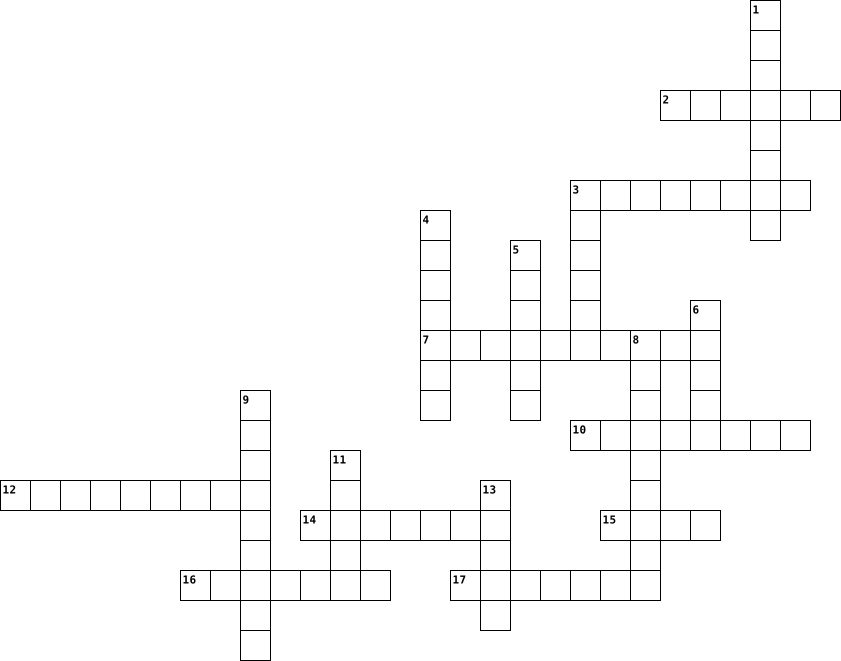
forms of energy Crossword Puzzles
Unit 4 Vocabulary 2023-02-14

Across
- Transfer of electrons to form a bond
- periods are _____ in the periodic table
- the outer most energy level
- outermost electrons
- Attraction between atoms
Down
- what bond forms a crystal lattice
- electrons surrounding an atom
- Sharing of electrons to become a bond
- groups/families are _____ in the periodic table
- the first energy level is ____ from the nucleus
10 Clues: outermost electrons • Attraction between atoms • the outer most energy level • electrons surrounding an atom • what bond forms a crystal lattice • Transfer of electrons to form a bond • Sharing of electrons to become a bond • periods are _____ in the periodic table • groups/families are _____ in the periodic table • the first energy level is ____ from the nucleus
The Chemistry of Food 2017-12-21

Across
- the process that forms large organic molecules
- a polymer chain of amino acids
- model for an enzyme and substrate that fit together perfectly
- the specific molecule that binds to an enzyme
- unit of energy that gets counted on a diet
Down
- oils and fats
- the main source of energy for humans
- catalyst for a reaction
- complex carbohydrates
9 Clues: oils and fats • complex carbohydrates • catalyst for a reaction • a polymer chain of amino acids • the main source of energy for humans • unit of energy that gets counted on a diet • the specific molecule that binds to an enzyme • the process that forms large organic molecules • model for an enzyme and substrate that fit together perfectly
Unit 3 Review Crossword 2024-12-04

Across
- What was the name of the supercontinent proposed by Wegener?
- What is a break in the Earth's crust called?
- What type of plates cause earthquakes and volcanic eruptions?
- What is the rigid layer made of the upper mantle and crust?
- What is the primary composition of oceanic crust?
- What type of resource can be replaced naturally?
- What term describes the color of a mineral when powdered?
- What process caused heavier elements to sink to the center of the Earth?
- What type of rock changes form due to heat and pressure?
- Who proposed the theory of Continental Drift?
- What is a liquid fossil fuel derived from ancient organisms?
- What term describes how a mineral reflects light?
- What type of rock forms from cooled magma?
- What process turns sediments into solid rock?
- What type of resource cannot be replaced easily?
- What type of waves help us study Earth's layers?
- What is the slushy mix of molten rock called?
- What do we call magma that flows onto the Earth's surface?
- What is the largest layer of the Earth?
- What scale is used to measure the hardness of minerals?
- What is the innermost layer of the Earth?
- What process breaks rocks into smaller pieces?
Down
- What type of gas is used for heating and cooking?
- What type of energy comes from the heat within the Earth?
- What type of fuel is formed from the remains of living organisms?
- What is the primary composition of continental crust?
- What is the semi-rigid part of the middle mantle?
- What term describes how a mineral feels to the touch?
- What are the large sections of Earth's crust called?
- What term describes how a mineral breaks along its planes of weakness?
- What type of currents cause the movement of the mantle?
- What term describes when a mineral breaks with rough edges?
- What type of rock forms from sediments?
- What is the outermost layer of the Earth?
- What type of energy is generated from flowing water?
- What is a solid fossil fuel formed from ancient plants?
- What is the name of the area known for frequent earthquakes and volcanoes?
- What term describes how tightly packed atoms are in a substance?
- What type of valley can form at divergent boundaries?
- What type of energy is generated by moving air?
- What can be formed by subduction of oceanic plates?
- What type of energy source comes from living or recently living organisms?
- What type of energy comes from the sun?
- What geological feature can occur at convergent boundaries?
- What process involves the removal and transport of sediment?
- What type of energy is released from the nucleus of atoms?
46 Clues: What type of rock forms from sediments? • What type of energy comes from the sun? • What is the largest layer of the Earth? • What is the outermost layer of the Earth? • What is the innermost layer of the Earth? • What type of rock forms from cooled magma? • What is a break in the Earth's crust called? • Who proposed the theory of Continental Drift? • ...
Biology cross word 2019-11-25

Across
- doesn't require oxygen
- a method to make ATP used by only some forms of cells
- Result of lactic acid fermentation
- The powerhouse of the cell
- Energy
- Method used by plants and is done in the Chloroplast
- Splits into Oxygen and Hydrogen
- Result of alcoholic fermentation
- Needed for Glycolysis
- Product of the Krebs-cycle
Down
- the main method to make ATP and the most productive
- Process involving electrons getting excited
- Membrane-bound compartment
- results in Photosynthesis
- requires oxygen
- Inside the thylakoid
- produces glucose
- convert CO2 into glucose
18 Clues: Energy • requires oxygen • produces glucose • Inside the thylakoid • Needed for Glycolysis • doesn't require oxygen • convert CO2 into glucose • results in Photosynthesis • Membrane-bound compartment • The powerhouse of the cell • Product of the Krebs-cycle • Splits into Oxygen and Hydrogen • Result of alcoholic fermentation • Result of lactic acid fermentation • ...
Jocelyn Flores 5th period Photosynthesis and cellular respiration 2023-05-25

Across
- compound that occurs at room temperature as a clear liquid
- a process in which substances are changed into others
- the energy which is stored in the bonds of chemical compounds
- an organism capable of synthesizing its own food
- an artifact that has been created by someone or some process
- a nucleotide derived from adenosine that occurs in muscle tissue the major source of energy for cellular reactions
- organelle in which photosynthesis takes place
- the simplest structural unit of an element or compound
- a sheet of tissue that lines or connects organs or cells
- a polysaccharide that is the chief constituent of all plant tissues and fibers
- any source of usable power
- a monosaccharide sugar that has several forms
- a mathematical statement that two expressions are the same
Down
- a specialized part of a cell; analogous to an organ
- having cells that lack membrane-bound nuclei
- the first stage of photosynthesis during which energy from light is used for the production of ATP
- a whole formed by a union of two or more elements or parts
- the organic processes that are necessary for life
- a heavy odorless colorless gas formed during respiration and by the decomposition of organic substances
- an idea evoked by some experience
- the basic structural and functional unit of all organisms
- plant tissue that conducts synthesized food substances
- formation of compounds in plants aided by radiant energy
- diffusion of molecules through a semipermeable membrane
- a complex protein produced by cells that acts as a catalyst
- a colorless, odorless gas that is essential for respiration
- an oxide containing two atoms of oxygen in the molecule
27 Clues: any source of usable power • an idea evoked by some experience • having cells that lack membrane-bound nuclei • organelle in which photosynthesis takes place • a monosaccharide sugar that has several forms • an organism capable of synthesizing its own food • the organic processes that are necessary for life • a specialized part of a cell; analogous to an organ • ...
Science 2025-01-17

Across
- A type of organism that no longer exists
- the magma cools and hardens into a mass of igneous rock
- a gap in the geologic record
- a fixed point in time from which a series of years is reckoned
- scientists who study fossils
- the change in living things over time
- age The relative age of rock is its age compared to the ages of the other rocks
Down
- lava hardens on the surface and forms igneous rock
- eras are subdivided into units of geologic time
- age The absolute age of a rock is the number of years that have passed since the rock formed
- decay the process of elements release particles and energy
- life
- a ball of dust, gas, and ice orbits the sun
- preserved remains or traces of living things
- time scale A record of the geologic events and the evolution of life forms as shown in the fossils record
15 Clues: life • a gap in the geologic record • scientists who study fossils • the change in living things over time • A type of organism that no longer exists • a ball of dust, gas, and ice orbits the sun • preserved remains or traces of living things • eras are subdivided into units of geologic time • lava hardens on the surface and forms igneous rock • ...
Functions of Nutrients 2023-10-19

Across
- mineral required for growth, metabolism and brain development
- a healthy fat with one double bond
- the main source of energy
- produces red blood cells that carry oxygen throughout the body
- an unhealthy fat that provides energy and increases LDL
- ads calcium absorption and required for bone growth and hardening
Down
- vitamin that helps cells grow and function, forming red blood cells
- forms and maintains healthy teeth, skeletal and soft tissue, mucus me brains and skin
- regulates body temperature and carries nutrients and oxygen to cells
- a healthy fat with two or more double bonds
- regulates digestive system and helps to feel full
- builds hard tissues such as bones, teeth and cartilage
- The unhealthiest fat
- helps growth, maintenance and repair of body cells
- improves immune system and absorbs iron
- vitamin that gives helps energy levels, brain function and metabolism
16 Clues: The unhealthiest fat • the main source of energy • a healthy fat with one double bond • improves immune system and absorbs iron • a healthy fat with two or more double bonds • regulates digestive system and helps to feel full • helps growth, maintenance and repair of body cells • builds hard tissues such as bones, teeth and cartilage • ...
8th grade unit 1 vocab 2024-11-22

Across
- Energy cannot be created out of nothing, nor can it be completely destroyed. Energy can only change its form.
- a large circular mass that revolves around a star
- a force that exists between any two objects that have mass
- an object's mass divided by its volume; a measure of how many particles are packed together into a certain amount of space
- to use a tool to learn more about the volume, length or weight of an object
- a small object made of rock or metal that orbits the sun
- the circular path of an object as it revolves around another object
- an element that makes up about 21% of Earth's atmosphere
- distance traveled per unit of time
- the energy an object has due to its motion
- a streak of light in the sky that forms when a piece of rock from space burns up in Earth's atmosphere.
- a pull or push that is applied to an object
Down
- an item against which the motion of an object can be measured
- a change in the velocity (speed, direction, or both) of a body
- the force of gravity on an object
- the amount of energy that is stored in an object; energy that an object has because of its position relative to other objects
- a large, circular pit in the surface of a planet or other body in space usually formed when two bodies in space collide
- a change in the position of an object compared to another object
- a reaction force that pushes an object forward
- the chemical element consisting of one proton and one electron
- the layers of gasses that surround a planet
- size of ground movement caused by seismic waves due to energy released
- the amount of matter in an object
- the speed and direction of moving objects
- a body of ice and dust that travels in a long narrow orbit around the sun
25 Clues: the force of gravity on an object • the amount of matter in an object • distance traveled per unit of time • the speed and direction of moving objects • the energy an object has due to its motion • the layers of gasses that surround a planet • a pull or push that is applied to an object • a reaction force that pushes an object forward • ...
Food Webs 2022-04-25

Across
- Organisms that depend on nature for its survival
- flow of energy as they move through the ecosystem
- the power that organisms need and are obtained through different ways
- an animal being hunted by another animal
Down
- study of the relations between different forms of animals and their natural surroundings
- relationship where both species experience good things from their interactions
- any living thing
- how different organisms obtain their energy from more than one source
- a community of organisms that interact with each other
- An animal hunting another animal
10 Clues: any living thing • An animal hunting another animal • an animal being hunted by another animal • Organisms that depend on nature for its survival • flow of energy as they move through the ecosystem • a community of organisms that interact with each other • how different organisms obtain their energy from more than one source • ...
Physical Science 1 2025-02-18

Across
- mass time velocity
- study of energy in all its forms
- change in velocity over time
- study of matter and how it changes
Down
- chart showing all known elements
- unit of temperature
- unit of length
- distance over time
- unit of mass
- unit of volume
10 Clues: unit of mass • unit of length • unit of volume • mass time velocity • distance over time • unit of temperature • change in velocity over time • chart showing all known elements • study of energy in all its forms • study of matter and how it changes
Thermal and Kinetic Energy Transfer Within Systems 2023-11-19

Across
- a form of energy in motion
- transfer of heat through direct contact from a warmer substance to a cooler substance
- the ability to cause change or do work.
- transfer of energy from one object or substance to another
- achieved when reactions that exchange energy between particles (particles may randomly collide and transfer kinetic energy) under a given time-scale both objects within the system reach a temperature that is equal and constant achieving thermal equilibrium within the system
- states that energy is neither created or destroyed
Down
- transfer of thermal energy, in a liquid or gas, in which the warmer substance rises and the cooler substance sinks; forms a current
- measure of the average kinetic energy of the particles in a substance
- the transfer of energy from a light source (e.g., Sun, fire, light bulb, burner) to an object or substance through empty space
- a form of kinetic energy resulting from the motion of particles that is transferred as heat; associated with the temperature of substances
10 Clues: a form of energy in motion • the ability to cause change or do work. • states that energy is neither created or destroyed • transfer of energy from one object or substance to another • measure of the average kinetic energy of the particles in a substance • transfer of heat through direct contact from a warmer substance to a cooler substance • ...
Ecosystems 2014-04-29

Across
- Average weather of an area over a long period of time
- Consumers that don’t usually kill for their food, but feed off the remains of living things killed by other consumers
- The magnification or build-up of toxins in a food chain as you get higher in the food chain.
- Consumers that break down animal waste and dead plants and animals
- When a species no longer lives anywhere on Earth.
- A large area that is home to many ecosystems
- A large area of the earth with similar climate, vegetations, soils and life forms
- Eat both plants and animals
- Are often second or third level consumers and obtain energy by eating other organisms.
- Are animals and get their energy from producers or other animals that eat producers.
- The role of an organism in a food chain
Down
- Species that do not normally live in a certain area.
- A single living thing
- Consumers that get their energy from plants
- Build-up of toxins in an organism over time
- A group of the same species
- Animals that eat other animals
- The variety of organisms in an ecosystem
- The movement of energy, starting from the Sum, and passing from one organism to the next.
- When groups of populations live together in the same ecosystem
- The living components of an ecosystem
- Conditions the atmosphere of an area over a short period of time
- Green plants that make their own food using energy from the sun
- The non-living components of an ecosystem
- Refers to an organism that is eaten by another organism.
25 Clues: A single living thing • A group of the same species • Eat both plants and animals • Animals that eat other animals • The living components of an ecosystem • The role of an organism in a food chain • The variety of organisms in an ecosystem • The non-living components of an ecosystem • Consumers that get their energy from plants • Build-up of toxins in an organism over time • ...
Chemistry Chapter 4 2021-11-12

Across
- A form of energy that exhibits wavelike behavior as it travels through space
- All the forms of electromagnetic radiation for the
- The lowest energy state of an atom
- The emission of electrons from a metal when light shines on the metal
- that it is impossible to Heisenberguncertainty determine simultaneously both the position and the velocity of an electron or any other particle
- The arrangement of electrons in an atom is called the ...
- The minimum quantity of energy that can be lost or gained by an atom
- The number of waves that pass a given point in a specific time
Down
- The distance between corresponding points on adjacent waves
- When a narrow beam of the emitted light is shined through a prism it is separated into four specific colors of the visible spectrum
- Specify the properties of atomic orbitals and the properties of the electrons in the orbitals
- Describes mathematically the wave properties of electrons and other very small particles
- A three dimensional region around the nucleus that indicates the probable location of an electron
- The state in which an atom has a higher potential energy than it has in it's ground state
- A particle of electromagnetic radiation having zero mass and carrying a quantum of energy
15 Clues: The lowest energy state of an atom • All the forms of electromagnetic radiation for the • The arrangement of electrons in an atom is called the ... • The distance between corresponding points on adjacent waves • The number of waves that pass a given point in a specific time • The minimum quantity of energy that can be lost or gained by an atom • ...
3rd hour science crossword by max warren. 2015-03-09

Across
- A pattern of overlapping line connecting prey to predictor.
- An organism that breaks down another dead organism.
- Is the first in the food web.
- The weather in a certain area.
- The cycle the different forms of water fallows.
- A consumer that eats plants and meat.
- The posses that changes free nitrogen gases into and unusable form.
- Water forming on a cool surface.
- The first species to populate an area.
- Is the climate that defines the area.
- The study of living things.
- A carnivore that fests on dead bodies.
- A consumer that eats only meat.
- A series of events that will lead to the last carnivore.
Down
- A chart that shows the movement of energy from species to species.
- Liquids to a gas.
- Any form of condensation.
- The moment of water around the world.
- An organism that obtains energy by eating another organism.
- A species that is only in that location.
- A consumer that only eats plants.
21 Clues: Liquids to a gas. • Any form of condensation. • The study of living things. • Is the first in the food web. • The weather in a certain area. • A consumer that eats only meat. • Water forming on a cool surface. • A consumer that only eats plants. • The moment of water around the world. • A consumer that eats plants and meat. • Is the climate that defines the area. • ...
Matter 2021-05-27

Across
- includes many elements
- not matter
- they make up everything
- combination
- compounds are like
- homogeneous and heterogeneous
Down
- substance
- periodic table
- element that's in water
- mixture
- water
- multiple forms
12 Clues: water • mixture • substance • not matter • combination • periodic table • multiple forms • compounds are like • includes many elements • element that's in water • they make up everything • homogeneous and heterogeneous
States of Matter Unit Study Guide 2020-10-18

Across
- molecules can slip and slide
- when solid becomes liquid
- when liquid becomes solid
- changes that CAN be undone
- molecules tightly packed together
- changes that CANNOT be undone
- when solid becomes gas
- when gas becomes liquid
Down
- motion energy
- when liquid becomes gas
- solid that forms in a solution
- molecules are high energy and fly around
12 Clues: motion energy • when solid becomes gas • when liquid becomes gas • when gas becomes liquid • when solid becomes liquid • when liquid becomes solid • changes that CAN be undone • molecules can slip and slide • changes that CANNOT be undone • solid that forms in a solution • molecules tightly packed together • molecules are high energy and fly around
physics energy vocab 2019-02-20

Across
- a simple machine that is used for cutting things
- a bar that is free to move around a point if you pull it
- Energy- stored energy
- Circuit- a circuit with only one pathway
- Energy-energy with motion and position of everyday objects
- Circuit- a circuit that has more than pathway for electrons to flow
Down
- a simple machine that is shaped like a inclined plane wrapped around a cylinder
- Force- the force exerted on a machine
- plane- a simple machine that has a sloped surface and it's flat
- machines- one of the basic types of machines which are the basis for all other forms of machines
- a simple machine that has a rope and a wheel and makes things easier to carry
- Circuit-is a path in which electrons from a voltage or current source flow.
- and axle- a simple machine that has two wheels and a bar and it makes things move
13 Clues: Energy- stored energy • Force- the force exerted on a machine • Circuit- a circuit with only one pathway • a simple machine that is used for cutting things • a bar that is free to move around a point if you pull it • Energy-energy with motion and position of everyday objects • plane- a simple machine that has a sloped surface and it's flat • ...
Ecological Pyramids Review 2022-11-16

Across
- word to describe levels in a food chain or food web
- this type of pyramid shows individual organisms
- ecological pyramids model energy and matter flow from what
- you divide by this number for each level on an energy pyramid
- make up the first trophic level
Down
- in architecture, this piece forms the middle of the arch so if it falls the whole arch falls
- the total amount of living tissue within a trophic level
- this type of pyramid shows the weight of living things
- make up the rest of the trophic levels
- this type of pyramid shows the energy at each level
10 Clues: make up the first trophic level • make up the rest of the trophic levels • this type of pyramid shows individual organisms • word to describe levels in a food chain or food web • this type of pyramid shows the energy at each level • this type of pyramid shows the weight of living things • the total amount of living tissue within a trophic level • ...
Chemical Reactions 2015-11-28

Across
- When magnesium is burnt is air it emits energy as a bright ........
- When electricity is passed through water the gases released are hydrogen and .........
- The chemicals required for the reaction
- The name of the gas released when metals react with acid
- When electricity is passed through water, the reaction is known as .............
- A very reactive metal that explodes when placed in water
- The number of atoms in water
- These reactions do not form new substances
- The name of the process converting vapour into liquid form
- Reactions that burn fuels and oxygen to generate heat
- These reactions make new substances
- These reactions take in heat
- The opposite to an acid
- A reaction forming a sludge from two soluble solutions
- The name of the process converting water into gas
- The name of the main gas used to fuel bunsen burners
Down
- The chemicals formed after the reaction
- When magnesium is burnt in air, it forms magnesium .......
- These reactions generate heat
- dioxide The name of the gas formed when an acid reacts with a carbonate is known as …………. dioxide
- The name of a reaction that forms a gas
- The name of a chemical that contains much energy
- This type of reaction breaks down big molecules into smaller ones
- When small molecules or atoms are combined to make bigger molecules
- A blue soluble salt known as copper ...........
- Shells and marble are made of ......... carbonate
- The chemist's heat source
- My official name is dihydrogen oxide
- This is often released in exothermic reactions
29 Clues: The opposite to an acid • The chemist's heat source • The number of atoms in water • These reactions take in heat • These reactions generate heat • These reactions make new substances • My official name is dihydrogen oxide • The chemicals formed after the reaction • The chemicals required for the reaction • The name of a reaction that forms a gas • ...
Human Body Food we eat class 4 2026-04-05

Across
- Fibre present in your food
- The kind of food we eat forms our....
- Growing children need more of this.
- Nutrient that fulfils our energy requirements.
- Fish and prawns are often preserved by this method
Down
- Cooked food we eat forms our....
- Minerals required for formation of bones.
- Vitamin Sis good for eyes and our....
8 Clues: Fibre present in your food • Cooked food we eat forms our.... • Growing children need more of this. • The kind of food we eat forms our.... • Vitamin Sis good for eyes and our.... • Minerals required for formation of bones. • Nutrient that fulfils our energy requirements. • Fish and prawns are often preserved by this method
Do You Know Your Wave Facts? 2024-12-16

Across
- the distance of a wave from its crests
- waves that are shaped like a slinky are...
- something that transfers through a medium from one place to another
- the height of a wave measured between the crest and the midpoint
Down
- forms moving energy made by tiny microscopic particles called photons
- a disturbance that transfers energy through matter
- the number of waves/wavelengths is called...
- wave of compression and rarefaction
- waves that are shaped like a snake are...
- substance that carries energy or light from one place to another
10 Clues: wave of compression and rarefaction • the distance of a wave from its crests • waves that are shaped like a snake are... • waves that are shaped like a slinky are... • the number of waves/wavelengths is called... • a disturbance that transfers energy through matter • substance that carries energy or light from one place to another • ...
animal cells 2023-10-26

Across
- a system membrane that is found in cells cytoplasm
- a substance that can not be created .
- complex a cell organelle that helps make and package
- a collection of tissue that carry out a special function
- transport of the movement substance across a cell membrane with use of energy cell
- a group of similar function
- the arrangement of parts in a organism
- the movement of substance across a cell membrane without use energy by cell.
- the cytoplasmic network or protein parliament
- the eukaryotic cells,a process oof cell division that forms two new nucule
Down
- a living thing or anything that can curry out life process independently
- the movement of particle from region of lower density.
- the process by witch cell use oxygen to produce energy from food.
- a fluid-filled vesicle found in the cytoplasm of plant cell or protozoans
- the smallest unit of an element
- the maintenance of a constant internal state in a changing environment
- the special normal or proper activity of an organ or part
- a group of organs that work together to preform body function
- the diffusion of water through a semi membrane
- the process to witch the cell membrane surrounds a particle
20 Clues: a group of similar function • the smallest unit of an element • a substance that can not be created . • the arrangement of parts in a organism • the cytoplasmic network or protein parliament • the diffusion of water through a semi membrane • a system membrane that is found in cells cytoplasm • complex a cell organelle that helps make and package • ...
Parts of the Universe 2014-12-09

Across
- stellar nursery
- supposed formation of universe
- medium sized yellow star in the center of our solar system
- way- large, spiral galaxy which we live in
- this type of wave is found in: ovens and police radar
- ball of gas made of hydrogen and helium
Down
- this type of wave is found in: radiation / cancer therapy
- created by nuclear fusion
- this type of wave is found in: ROYGBIV/rainbow light
- this type of wave is found in: IV's
- this type of wave is found in: sensors in satellites/planes
- this type of wave is found in: sunlight
- this type of wave is found in: images of your bones
- all forms of energy that stars give off
- sun's remaining time (in billions of years)
15 Clues: stellar nursery • created by nuclear fusion • supposed formation of universe • this type of wave is found in: IV's • this type of wave is found in: sunlight • all forms of energy that stars give off • ball of gas made of hydrogen and helium • way- large, spiral galaxy which we live in • sun's remaining time (in billions of years) • ...
Chemistry of Life 2017-09-19

Across
- Examples include monosaccharides, amino acids, and nucleotides.
- Acid Macromolecule used to store information.
- A reaction that would feel cold to the touch.
- What an enzyme converts into products.
- When water hydrogen bonds to a surface.
- Measure of acidity; can affect enzyme activity.
- A macromolecule with a the generic formula CH20.
- What reactants are rearranged into during a chemical reaction.
- A long chain of repeating subunits.
- The amount of energy needed to start a reaction.
- The most diverse macromolecule; includes enzymes.
Down
- Water sticking to other water.
- Protein catalysts that speed up reactions.
- If this gets too high enzymes can be be denatured.
- The process of linking monomers into polymers.
- The special ability of water to absorb thermal energy and resist temperature changes.
- Fats, oils, and waxes.
- The spot on an enzyme where a substrate binds.
- Unequal sharing of electrons.
- Weak bond that forms as the result of a +/- attraction.
20 Clues: Fats, oils, and waxes. • Unequal sharing of electrons. • Water sticking to other water. • A long chain of repeating subunits. • What an enzyme converts into products. • When water hydrogen bonds to a surface. • Protein catalysts that speed up reactions. • Acid Macromolecule used to store information. • A reaction that would feel cold to the touch. • ...
Science Crossword 2025-06-19

Across
- The state of matter where the particles have the most energy.
- An organelle which is the site of respiration.
- The number of waves passing a given point in a second.
- That force that pulls things to the centre of Earth (and other planets).
- The process of introducing small quantities of dead or inactive forms of a pathogen into the body to stimulate the white blood cells to produce antibodies.
- The rate at which energy is transferred, or at which work is done
- The process used by plants and other organisms to convert light energy into chemical energy, which is stored in glucose.
- A substance that releases heat energy when combusted with oxygen.
- The force acting perpendicular to a surface, per unit area
Down
- The rate of change of velocity. It can be calculated from the gradient of a velocity-time graph.
- An atom or molecule with an electric charge due to the loss or gain of electrons.
- The organ responsible for cognitive functions.
- The community of organisms (biotic) and non-living (abiotic) components of an area and their interactions.
- The elements in Group 7 of the periodic table.
- Atoms of the same element, with the same number of protons but different number of neutrons.
15 Clues: An organelle which is the site of respiration. • The organ responsible for cognitive functions. • The elements in Group 7 of the periodic table. • The number of waves passing a given point in a second. • The force acting perpendicular to a surface, per unit area • The state of matter where the particles have the most energy. • ...
Chapter 14 Vocab 2025-04-12

Across
- respiration- A series of chemical reactions that convert the energy in food molecules into a usable form of energy called ATP.
- Part of a eukaryotic cell that directs cell activity and contains genetic information stored in DNA.
- Substance in cells that forms when many small molecules join together.
- The movement of substances from an area of higher concentration to an area of lower concentration.
- The process during which a cell’s vesicles release their contents outside the cell.
- Membrane-surrounded component of a eukaryotic cell with a specialized function.
- The process during which a cell takes in a substance by surrounding it with the cell membrane.
- diffusion- The process by which molecules pass through a cell membrane using special proteins called transport proteins.
Down
- wall- A stiff structure outside the cell membrane that protects a cell from attack by viruses and other harmful organisms.
- The diffusion of water molecules only through a membrane.
- theory- The theory that states that all living things are made up of one or more cells, the cell is the smallest unit of life, and all new cells come from preexisting cells.
- transport- The movement of substances through a cell membrane using the cells energy.
- transport- The movement of substances through a cell membrane without using the cell’s energy.
- membrane- A flexible covering that protects the inside of the cell from the environment outside the cell.
- The liquid part of a cell inside the cell membrane; contains salts and other molecules.
- A membrane-bound organelle that uses light energy and makes food-a sugar called glucose-from water and carbon dioxide in a process known as photosynthesis.
- A series of chemical reactions that convert light energy, water, and carbon dioxide into the food-energy molecule glucose and give off oxygen.
17 Clues: The diffusion of water molecules only through a membrane. • Substance in cells that forms when many small molecules join together. • Membrane-surrounded component of a eukaryotic cell with a specialized function. • The process during which a cell’s vesicles release their contents outside the cell. • ...
Branches of science 2021-09-07

Across
- A science dealing with the logic of quantity and shape and arrangement
- The study of the mechanical, physical, and biochemical functions of living organisms Genetics The science of genes, heredity, and the variation of organisms
- The study of life-forms existing in former geological time periods
- The study of animals Paleontology The study of life-forms existing in former geological time periods
- The Study of science of the earth, its structure, and history Myology Study of muscles.
- Microbiology The study of microorganisms, including viruses, prokaryotes and simple eukaryotes Mineralogy The study of the chemistry, crystal structure, and physical (including optical) properties of minerals Mycology Study of fungi.
- The study of human cultures both past and present.
- The science of genes, heredity, and the variation of organisms
- The science of matter and its interactions with energy and itself
- The study of the behavior and properties of matter
- The branch of medicine dealing with the nervous system and its disorders
- The Study of science of the earth, its structure, and history
- Study of kidneys.
Down
- Study of disease causing organisms. Psychology Study of the mind and behaviour
- Study of virus.
- The study of the structure and organization of living things
- Natural phenomenon.
- The study of how organisms interact with each other and their environment
- Deals with the study of blood vascular system.
- The branch of medicine dealing with the applications of radiant energy, including x-rays and radioisotopes Toxicology The study of poisons and the effects of posisoning
- Study of flower.
- Study of languages.
- Concerning the sounds of a language.
- The study of celestial objects in the universe. Study of heavenly bodies. Biology The science that studies living organisms
- Study of disease causing organisms. Genetics The science of genes, heredity, and the variation of organisms
- Study of algae.
- The scientific study of plant life
- Study of the atmosphere that focuses on weather processes and forecasting
28 Clues: Study of virus. • Study of algae. • Study of flower. • Study of kidneys. • Natural phenomenon. • Study of languages. • The scientific study of plant life • Concerning the sounds of a language. • Deals with the study of blood vascular system. • The study of human cultures both past and present. • The study of the behavior and properties of matter • ...
Biology Chapter 2 Extra Credit 2022-03-23

Across
- a compound that can bind to an H+ ion when the H+ concentration increases and can release H+ ion when the H+ concentration decreases.
- the substances changed during a chemical reaction.
- two or more atoms held together by covalent bonds.
- measurement of acidity; related to free hydrogen ion concentration in solution.
- a large molecule or macromolecule made of many monomers bonded together.
- amino acids form covalent bonds.
- the substances made during a chemical reaction.
- forms when atoms share a pair of electrons.
- The attraction among the molecules of a substance.
- The attraction among molecules of different substances.
- reached when both the reactants and products are made at the same rate.
- forms through the electrical force between oppositely charged ions.
- the smallest basic unit of matter.
- an atom that has gained or lost one or more electrons.
- catalysts for chemical reactions in living things.
- molecules composed of carbon, hydrogen, oxygen, and they include sugars and starches.
- a compound that releases a proton – hydrogen ion (H+) – when it dissolves in water. An acid increases the concentration of H+ ions in a solution.
Down
- chemical reaction absorbs more energy than it releases.
- chains of carbon atoms bonded to hydrogen atoms.
- substance made of one type of atom that cannot be broken down by chemical means.
- a substance made of atoms of different elements bonded together in certain ratio.
- is an attraction between a slightly positive hydrogen and a slightly negative atom, often oxygen or nitrogen.
- chemical reaction releases more energy than it absorbs.
- nonpolar molecules that include fats, oils, and cholesterol.
- subunit in a molecule.
- a mixture of substances that is the same throughout. It is a homogeneous mixture.
- a polymer made of monomers called amino acids.
- composed of a sugar, a phosphate group, and a nitrogen containing molecule called a base.
- the amount of energy that will break a bond between two atoms.
- a substance that decreases the activation energy needed to start a chemical reaction.
- molecules that contain carbon, hydrogen, oxygen, nitrogen and sometimes sulfur.
- compounds that remove H+ ions from a solution. When a base dissolves in water, the solution has a low H+ concentration.
32 Clues: subunit in a molecule. • amino acids form covalent bonds. • the smallest basic unit of matter. • forms when atoms share a pair of electrons. • a polymer made of monomers called amino acids. • the substances made during a chemical reaction. • chains of carbon atoms bonded to hydrogen atoms. • the substances changed during a chemical reaction. • ...
Chapter 6 Crossword Puzzle 2023-03-21

Across
- The number of years that has passed since the rock has formed
- A record of the geologic events and the evolution of life forms
- A hollow area in sediment in the shape of an organism
- The division of the time between Precambrian time and the Present into 3 long units of time
- Magma that hardens beneath the earths crust forming igneous rock
- A solid copy of the shape of an organism
- A crack in the earths crust
- The change of living things over time
Down
- The time it takes for half of the radioactive atoms to decay in a radioactive element
- When elements break down and release particles and energy
- Eras that are subdivided into units of geologic time
- Preserved remains of living things
- The age of a rock compared to the ages of other rocks
- Lava that hardens on the surface and forms igneous rock
- No longer existing
15 Clues: No longer existing • A crack in the earths crust • Preserved remains of living things • The change of living things over time • A solid copy of the shape of an organism • Eras that are subdivided into units of geologic time • A hollow area in sediment in the shape of an organism • The age of a rock compared to the ages of other rocks • ...
Science 8 Topics 4.1-4.3 Crossword 2024-02-13

Across
- A series of pulleys attached together
- Syndrome causing the sensation of pain in your thumbs and fingers, caused by repetitive movement of the joints
- It allows you to change the intensity of a force that you have to exert to displace an object
- A dented wheel
- Changing the type of energy
- A gear on a chain
- A simple machine made of a rolling object with a central, rigid object it rolls around.
- The gear that is moved by the first gear
- Moving energy without changing its type
- This is made up of a small cylinder and a crank handle.
- A pulley attached to an object that can move
- Relationship between the force that is produced by the machine and the force that is applied to the machine.
- Lever with load, then effort/force, then fulcrum
Down
- Lever with load, then fulcrum, then effort/force
- A groove wheel with a chain/rope
- How much energy is used as useful energy versus lost to other forms of energy
- Distance from the middle of a circle to the outside edge
- The result of a force exerted on an object. There needs to be movement of this object in the direction of the force.
- The units of work
- A pulley that is attached to an object and doesn’t move
- A series of dented wheels connected together
- Lever with fulcrum, then load, the effort/force
- The gear that moves the other gear
- Creation of objects that are safe and secure
- Ramp or slope that reduces the necessary force to lift an object.
- The pivot of a lever. Rotation around a fixed point.
26 Clues: A dented wheel • The units of work • A gear on a chain • Changing the type of energy • A groove wheel with a chain/rope • The gear that moves the other gear • A series of pulleys attached together • Moving energy without changing its type • The gear that is moved by the first gear • A series of dented wheels connected together • Creation of objects that are safe and secure • ...
Binding Energy 2014-09-22

Across
- A process in which the nucleus of a heavy atom is split apart.
- Usable power that comes from heat,electricity,etc.
- A very small particle of matter that has a positive charge.
- An instrument used to measuring wavelengths of light.
- A material or object that allows electricity or heat to move through it.
- Is a substance that helps optimize the nuclear reactor.
- A very small particle of matter that has no electrical charge.
- Type of dangerous and powerful energy that is produced by radioactive substances and nuclear reactions.
- A very small particles of matter that has negative charge of electricity and that travels around the nucleus of an atom.
- Producing a powerful and dangerous form of energy.
- A substance that is similar to a gas but can carry electricity.
- Contains genetic material.
Down
- To tie or wrap
- Any one of various forms in which the atoms of chemical element can occur.
- The response to something that happens.
- It is the act of measuring something.
- Relating to the changes in the nucleus of atoms that happen or extremely high temperature.
- Smallest particle.
- A liquid that is used to cool an engine or machine.
- A quality or aggregate of matter usually of size.
20 Clues: To tie or wrap • Smallest particle. • Contains genetic material. • It is the act of measuring something. • The response to something that happens. • A quality or aggregate of matter usually of size. • Usable power that comes from heat,electricity,etc. • Producing a powerful and dangerous form of energy. • A liquid that is used to cool an engine or machine. • ...
Glossary activity 2013-05-30

Across
- lens that curves inwards
- a measure of how easily light passes through a material is called it's ........ Index
- Bending of light
- I strument used to measure temperature
- substance that allows heat to flow
- energy that enables us to see
- Heat can occur through a vaccuum
- The part of the eye on which an image forms
Down
- a transparent piece of plastic or glass that is shaped to curve outwards or inwards
- Heat transfer through a liquid or a gas
- what does when it hits a mirror
- an object that releases or emits light is
- at greater angles of incidence than this, light is totally internally reflected
- magnet lights form a energy called ........... Radiation
- lens that bulges outwards
15 Clues: Bending of light • lens that curves inwards • lens that bulges outwards • energy that enables us to see • what does when it hits a mirror • Heat can occur through a vaccuum • substance that allows heat to flow • I strument used to measure temperature • Heat transfer through a liquid or a gas • an object that releases or emits light is • ...
EVS crossword 2025-04-19

Across
- – Worldview that places nature at the center of importance.
- – Energy derived from the heat of the Earth’s interior.
- – Site for waste disposal by burial.
- – Large-scale removal of forests for human activity.
- – Breaks down naturally without harming the environment.
- – Process by which plants make food using sunlight.
- – Meeting present needs without harming future generations.
- – Variety of life forms within an ecosystem.
Down
- – Community of living organisms interacting with their environment.
- – Energy sources that are naturally replenished, like solar or wind.
- – Breaking down organic waste into nutrient-rich soil.
- – Planting trees in areas that were not previously forested.
- – Gas that traps heat in the Earth’s atmosphere.
- – Total greenhouse gases emitted by an individual or activity.
- – Turning waste into reusable material.
15 Clues: – Site for waste disposal by burial. • – Turning waste into reusable material. • – Variety of life forms within an ecosystem. • – Gas that traps heat in the Earth’s atmosphere. • – Process by which plants make food using sunlight. • – Large-scale removal of forests for human activity. • – Breaking down organic waste into nutrient-rich soil. • ...
2.5 crossword 1 2024-04-01

Across
- Formed at the end if a chemical reaction
- When Hydrochloric acid and Sodium ________ react a precipitate forms
- A solid formed when two solutions react
- For a reaction to occur two particles must _________
- This increases the kinetic energy of particles
- In this type of reaction the temperature increases
- Seen when gas is produced in a reaction
Down
- The minimum energy for a reaction to occur
- Used to measure the change of colour or light intensity
- Used to measure the production of gas
- When solids are turned into a ________ they react more quickly
- This speeds up reactions without being used up
- Prevents gas escaping
- A measure of how many particles are present in a volume
14 Clues: Prevents gas escaping • Used to measure the production of gas • A solid formed when two solutions react • Seen when gas is produced in a reaction • Formed at the end if a chemical reaction • The minimum energy for a reaction to occur • This speeds up reactions without being used up • This increases the kinetic energy of particles • ...
Earth's Systems 2026-01-28

Across
- EFFECT THE ABSORBTION AND RETENTION OF EARTH'S ENERGY THAT ESSENTIALLY INSULATES THE PLANET
- WEATHERING AND THIS BREAK DOWN STRUCTURES AND TRANSPORT THEIR PRODUCTS
- THE _____ CYCLE IS A CONTINUOUS PROCESS THAT EXPLAINS HOW ROCKS ARE FORMED, BROKEN DOWN, AND TRANSFORMED OVER TIME
- T OR F: ACTIVITES OF HUMANS IMPACT EARTH'S PROCESSES, SYSTEMS, AND RESOURCES
- AND SPATIAL EARTH'S SYSTEMS INTERACT OVER THESE TWO TYPES OF SCALES ('AND' IS PART OF THE ANSWER)
- THE EARTH HAS THIS MANY SPHERES THAT MAKE UP ITS INTERCONNECTED SYSTEMS
- THE WEIGHT OF SEDIMENT LAYERS COMPRESSES LOWER LAYERS IN THIS PROCESS
- EARTH'S ENERGY COMES FROM STAR, AS WELL AS FROM EARTH'S HOT INTERIOR
- LIVING ORGANISMS DEFINES THIS SPHERE
- RANGE OF A REGION'S WEATHER OVER 1 OR MORE YEARS
- ALL OF EARTH'S PROCESSES ARE THE RESULT OF MATTER CYCLING AND ENERGY DOING THIS
- THE SUN'S ENERGY AND THIS DRIVE THE CONTINUAL CYCLING OF WATER
- THE CONDITION OF THE ATMOSPHERE
- EARTH'S LANDSCAPE'S ARE SHAPED BY EROSION, TRANSPORT, AND THIS OF SEDIMENT
- WHEN WATER ACTS LIKE GLUE TO BIND SEDEMINTS TOGETHER
- GREENHOUSE THESE KEEP OUR PLANET HABITABLE BY MAINTAINING CONDITIONS CONDUSIVE TO HUMANS
- THESE ROCKS ARE CREATED FROM LAYERS OF SEDIMENT
- PROCESS THAT BREAKS DOWN ROCKS INTO SMALL PIECES
Down
- ACCUMULATION OF ROCK SEDIMENTS
- MOVEMENT OF ROCK SEDIMENTS FROM ONE PLACE TO ANOTHER
- ALL OF EARTH'S ROCK, SOIL, AND SEDIMENTS, INCLUDING THOSE BENEATH THE EARTH'S SURFACE
- TRANSFERS OF ENERGY AND MOVEMENTS OF MATTER CAN CAUSE PHYSICAL AND THESE CHANGES ON EARTH
- ABOUT 97% OF THE EARTH'S WATER IS FOUND HERE
- THESE ROCKS ARE THE PRODUCT OF HEAT AND PRESSURE
- LAYERS OF GASSES SURROUNDING OUR PLANET PROTECTING US FROM RADIATION
- THE ABSORBTION OF WATER THROUGH PLANT ROOTS AND RELEASE OF WATER THROUGH PLANT LEAVES
- RESOURCES THAT CAN BE REPLACED OVER SMALLER TIMESCALES
- ALL WATER IN ALL FORMS MAKE UP THE EARTH'S THIS
- THESE ROCKS FROM WHEN MAGMA COOLS AND SOLIDIFIES
- THE OCEANS HAVE A MAJOR THIS ON WEATHER AND CLIMATE
- THIS ELEMENT CAN ABSORB, STORE, AND RELEASE LARGE AMOUNTS OF ENERGY AS IT CHANGES STATE
31 Clues: ACCUMULATION OF ROCK SEDIMENTS • THE CONDITION OF THE ATMOSPHERE • LIVING ORGANISMS DEFINES THIS SPHERE • ABOUT 97% OF THE EARTH'S WATER IS FOUND HERE • ALL WATER IN ALL FORMS MAKE UP THE EARTH'S THIS • THESE ROCKS ARE CREATED FROM LAYERS OF SEDIMENT • THESE ROCKS ARE THE PRODUCT OF HEAT AND PRESSURE • RANGE OF A REGION'S WEATHER OVER 1 OR MORE YEARS • ...
Bio Assignment 2 2023-06-01

Across
- It has a biconcave shape
- Where gas exchange takes place
- Using oxygen
- Protect the body against pathogens
- __ is a simple sugar
- A complex carbohydrate
- Forms clots to stop bleeding
- Important muscle for respiration
- A short term carbohydrate
Down
- Also known as the windpipe
- Inhale and exhale of air into lungs
- The nutrient that contains the most energy
- Discovered by conducting birunet test
- Makes up 55% of blood
- Waste product of anaerobic respiration
15 Clues: Using oxygen • __ is a simple sugar • Makes up 55% of blood • A complex carbohydrate • It has a biconcave shape • A short term carbohydrate • Also known as the windpipe • Forms clots to stop bleeding • Where gas exchange takes place • Important muscle for respiration • Protect the body against pathogens • Inhale and exhale of air into lungs • Discovered by conducting birunet test • ...
Chapter 7 Cross word Vocab 2013-02-14

Across
- Equal on both sides.
- Helps particles move.
- Solar plants that take energy and store it.
- Stock of flat membrane.
- Low concentration on inside cell.
- structures in plants.
- When particles move from high concentration to low.
- A membrane system where lipids are put together.
- Vesicle that caries particles.
- movement across a selectively permeable platform.
Down
- Keeps track of movement.
- Equal concentration on both sides.
- Central of plant cells.
- Transportation.
- High concentration on outside of cell.
- Strong double layered sheet.
- Cell organelle that converts chemicals.
- Strong structured, holds everything together.
- Cell membrane forms a pocket.
- Makes protein.
20 Clues: Makes protein. • Transportation. • Equal on both sides. • Helps particles move. • structures in plants. • Central of plant cells. • Stock of flat membrane. • Keeps track of movement. • Strong double layered sheet. • Cell membrane forms a pocket. • Vesicle that caries particles. • Low concentration on inside cell. • Equal concentration on both sides. • ...
The Art and Culture of Salsa in Columbia 2025-03-03

Across
- Legacy passed down through generations.
- The dynamic force behind movement.
- City renowned for its vibrant dance scene.
- Physical expression of ideas.
- Spontaneous creation in performance.
- Unity that holds a group together.
- Keenness in artistic insight.
- Blend of diverse cultural elements.
- Bringing people together through shared experience.
- Fundamental beat that drives movement.
Down
- Time-honored practices and customs.
- Story conveyed through art.
- Exceptional skill in performance.
- The art of conveying emotion.
- Unexpected rhythmic variation.
- The lasting emotional impact.
- Continuous energetic change.
- Flow or rhythm of a sequence.
- New ideas enhancing traditional forms.
- Dance tradition from Colombia.
20 Clues: Story conveyed through art. • Continuous energetic change. • The art of conveying emotion. • The lasting emotional impact. • Flow or rhythm of a sequence. • Physical expression of ideas. • Keenness in artistic insight. • Unexpected rhythmic variation. • Dance tradition from Colombia. • Exceptional skill in performance. • The dynamic force behind movement. • ...
Magnetic, Electrical and Gravitational Forces Terminology 2025-03-06

Across
- South-seeking Pole of a magnet.
- A device that does not readily conduct energy.
- Electron pairs repel each other.
- An atom or molecule with a net electric charge due to the loss or gain of one or more electrons.
- Emits energy in forms of rays or waves.
- A physical phenomenon produced by the motion of electric charge, resulting in attractive and repulsive forces.
- The invisible magnetic field that surrounds the earth generated by the movement of molten in the planet's core.
- North-seeking Pole of a magnet.
- A form of radiation that travels through the universe.
- A machine for converting mechanical energy into electricity.
- A force under the influence of which objects tend to move towards each other.
- The region around a magnetic material or a moving electric charge within the force of magnetism acts.
Down
- A flow of charged particles moving through an electrical conductor or space.
- An instrument for measuring electrical current par excellence.
- Object has more protons than electrons.
- Object has more electrons than protons.
- A combination of invisible electric and magnetic fields of force.
- Region at each end of a magnet where the external magnetic field I'd The strongest.
- Drive or force away.
- A material of device that conducts or transmits heat, electricity and sound.
20 Clues: Drive or force away. • South-seeking Pole of a magnet. • North-seeking Pole of a magnet. • Electron pairs repel each other. • Object has more protons than electrons. • Object has more electrons than protons. • Emits energy in forms of rays or waves. • A device that does not readily conduct energy. • A form of radiation that travels through the universe. • ...
unit 2 vocab 2025-10-01

Across
- Nutrient, used in phosphates of nucleic acids and phospholipids of membranes, is often limited
- Organell, site of steps 2 and 3 of aerobic cellular respiration
- Describes a situation in which oxygen is not present
- Type of organism that breaks down biotic compounds into compounmds into compounds, recyclers
- The First step of photosynthesis uses sunlight to split H2O and ATP and NADPH; O2 is released
- Organelle site of photosynthesis
- Substance at the beginning of a chemical reaction is changed into products
- Second step of anaerobic respiration. 2 types include alcoholic and lactic acid
- Describes a situation in which oxygen is present
Down
- The sphere of Earth, all the water on Earth
- Pigment of chloroplasts, used to trap light energy during photosynthesis
- The sphere of Earth, all the gases surrounding Earth
- The sphere of Earth, all the solid and rocks on Earth
- Substances created during a chemical reaction, from reactants
- The sphere of Earth, all living things
- Nutrient, used in proteMitochondrions, must be "fixed" for living things to use.
- Adenosine triphosphate, a charged energy storage molecule with 3 phosphorus groups
- Anything that has mass and takes up space makes up everything
- Nutrient forms the backbone for all macromolecules in living things
- Adenosine diphosphate, an uncharged energy storage molecule with 2 phosphate groups
20 Clues: Organelle site of photosynthesis • The sphere of Earth, all living things • The sphere of Earth, all the water on Earth • Describes a situation in which oxygen is present • The sphere of Earth, all the gases surrounding Earth • Describes a situation in which oxygen is not present • The sphere of Earth, all the solid and rocks on Earth • ...
Human Body Food we eat class 4 2026-04-05

Across
- Fibre present in your food
- The kind of food we eat forms our....
- Growing children need more of this.
- Nutrient that fulfils our energy requirements.
- Fish and prawns are often preserved by this method
Down
- Cooked food we eat forms our....
- Minerals required for formation of bones.
- Vitamin Sis good for eyes and our....
8 Clues: Fibre present in your food • Cooked food we eat forms our.... • Growing children need more of this. • The kind of food we eat forms our.... • Vitamin Sis good for eyes and our.... • Minerals required for formation of bones. • Nutrient that fulfils our energy requirements. • Fish and prawns are often preserved by this method
Energy & Types of Energy 2025-01-30

Across
- The ability to do work or cause change
- the energy of movement
- the energy in an object that's caused by the movement of its molecules. It's also known as heat energy
- the energy an object has because it is moving or has the potential to move, and is made up of both kinetic energy and potential energy
- the energy created by the movement of charged particles, like electrons, through a conductor, essentially the power derived from the flow of electricity
- the energy created by vibrations that move through a medium like air or water
Down
- stored energy
- energy that comes from natural sources like sunlight and wind, which are constantly replenished and therefore won't run out
- the potential energy help within chemicals
- Anything that takes up space and has mass
- a form of energy that travels through space as electromagnetic waves, like light, heat waves, or radio waves
- The building blocks of matter
12 Clues: stored energy • the energy of movement • The building blocks of matter • The ability to do work or cause change • Anything that takes up space and has mass • the potential energy help within chemicals • the energy created by vibrations that move through a medium like air or water • ...
Chemical Reactions Vocab Review #1 2023-12-05

Across
- Made in chemical reactions
- Indicates how many atoms
- Shorthand way of writing a chemical reaction
- Used in chemical reactions like ingredients
- Mixture description where water is the solvent
- Energy released in reaction during this process
- Indicates how many molecules
- Needed to start reactions
Down
- Process that causes chemical change
- Matter is neither created or destroyed but is transformed.
- Change type example melting ice
- When 2 liquids are mixed and a solid forms
- Energy taken in to do this in the reaction
- Change type example rotting fruit
- Fancy word for gas production or bubbling
- Statement or mathematical equation that describes or predicts a natural phenomenon
- What we can see observe or measure
- You tell the doctor how you feel
18 Clues: Indicates how many atoms • Needed to start reactions • Made in chemical reactions • Indicates how many molecules • Change type example melting ice • You tell the doctor how you feel • Change type example rotting fruit • What we can see observe or measure • Process that causes chemical change • Fancy word for gas production or bubbling • ...
CROSS WORD PUZZLE??? 2023-03-05

Across
- the rate which electrical energy is converted into other forms of energy
- the law that states that like charges repel and opposites attract
- the potential difference between two points, measured in volts
- an electric charge at rest, generally produced by friction and induction
- a circuit in which the parts are joined in branches such that the potential difference across that each part is the same
Down
- the release of electricity stored in a source
- the space around a charged object which in another charged object experience an electric force
- a material in which charges can move freely
- a device that converts thermal energy into electrical energy
- a device that converts light energy into electrical energy
10 Clues: a material in which charges can move freely • the release of electricity stored in a source • a device that converts light energy into electrical energy • a device that converts thermal energy into electrical energy • the potential difference between two points, measured in volts • the law that states that like charges repel and opposites attract • ...
Ecology Part 2 2024-03-06

Across
- The protein-rich semiliquid material in the interior of a chloroplast.
- The light-absorbing green-coloured pigment that begins the process of photosynthesis.
- Requiring the presence of air or free oxygen for life
- A nonmetallic element that exists in its free form as a colorless, odorless gas and makes up about 21 percent of the Earth's atmosphere.
- Pores on the leaf where O2 exits and CO2 enters
- The biogeochemical cycle that describes the transformation and translocation of phosphorus in soil, water, and living and dead organic material.
- Long-term shifts in temperatures and weather patterns
- The state when two solutions have equal concentration of solutes across a semipermeable membrane
- The long-term warming of the planet's overall temperature
- The process in which carbon atoms continually travel from the atmosphere to the Earth and then back into the atmosphere
Down
- A process by which the molecules of a solvent pass from a solution of low concentration to a solution of high concentration through a semi-permeable membrane.
- Gases in the earth's atmosphere that trap heat.
- Converts light energy to the chemical energy of food
- A membrane-bound organelle in green plant and algal cells that carries out photosynthesis.
- A packet of light.
- A biogeochemical process through which nitrogen is converted into many forms, consecutively passing from the atmosphere to the soil to organism and back into the atmosphere
- The chief source of energy for living organisms.
- A colorless, odorless gas
- A molecule containing three high energy phosphate bonds that acts as the primary energy-transferring molecule in a living organism.
- The continuous movement of water within the Earth and atmosphere
- Living in the absence of air or free oxygen
21 Clues: A packet of light. • A colorless, odorless gas • Living in the absence of air or free oxygen • Gases in the earth's atmosphere that trap heat. • Pores on the leaf where O2 exits and CO2 enters • The chief source of energy for living organisms. • Converts light energy to the chemical energy of food • Requiring the presence of air or free oxygen for life • ...
Chemistry 2024-05-20

Across
- A particle with a negative charge
- Mass/Volume
- The elements/compounds that have been formed
- The technique used to separate components of a mixture
- An element/compound changing from a liquid to a gas
- The element/compound being used in a equation
- Has an H+ ion
- A reaction where two elements gain and lose electrons
- A process of purifying a liquid by heating/cooling it
- Energy is leaving the system
- Energy is entering the system
- 2 electron groups, 2 bonding groups, 0 lone pairs
Down
- 118 of them
- 6.02 x 10^23 particles
- When water vapor becomes ice (a solid)
- A reaction that forms a solid from two aqueous solutions
- The reactant that is used up completely
- A process in which molecules separate
- Has an OH- ion
- Used to determine the proportions of of how elements react with each other
- Able to be dissolved
- A way of measuring heat
- A range of numbers from 1 to 14
23 Clues: 118 of them • Mass/Volume • Has an H+ ion • Has an OH- ion • Able to be dissolved • 6.02 x 10^23 particles • A way of measuring heat • Energy is leaving the system • Energy is entering the system • A range of numbers from 1 to 14 • A particle with a negative charge • A process in which molecules separate • When water vapor becomes ice (a solid) • The reactant that is used up completely • ...
triglycerides 2025-12-13

Across
- Fatty acid with one carbon-carbon double bond
- bond High-energy bond common in triglycerides
- Fatty acids containing at least one C=C bond
- Property that makes triglycerides insoluble in water
- Fatty acid with more than one C=C bond
- Function of triglycerides in reducing heat loss
- Lipid made of glycerol and three fatty acids
- Type of molecule that cannot hydrogen bond with water
Down
- Function of fat surrounding vital organs
- storage Main function of triglycerides in organisms
- Reaction that forms triglycerides and releases water
- Fatty acids with no carbon-carbon double bonds
- Reaction that breaks ester bonds using water
- acid Long hydrocarbon chain with a carboxyl group
- bond Bond formed between glycerol and fatty acids
- Three-carbon alcohol in triglycerides
16 Clues: Three-carbon alcohol in triglycerides • Fatty acid with more than one C=C bond • Function of fat surrounding vital organs • Fatty acids containing at least one C=C bond • Reaction that breaks ester bonds using water • Lipid made of glycerol and three fatty acids • Fatty acid with one carbon-carbon double bond • Fatty acids with no carbon-carbon double bonds • ...
Modalities 2023-04-26

Across
- blocks pain sensation
- heat transfer by direct contact
- pulling of a body part
- heat transfer indirectly through air or water
- heat transfer when liquid turns to gas
- "dry" warmer whirlpool
- high frequency sound wave
Down
- heat transfer through other forms of energy
- heat transfer when liquid turns to gas
- manipulation, friction & kneading of soft tissue
- use of heat
- use of cold
- drives medicine into tissue
13 Clues: use of heat • use of cold • blocks pain sensation • pulling of a body part • "dry" warmer whirlpool • high frequency sound wave • drives medicine into tissue • heat transfer by direct contact • heat transfer when liquid turns to gas • heat transfer when liquid turns to gas • heat transfer through other forms of energy • heat transfer indirectly through air or water • ...
Chapter 1 - thermodynamics 2026-01-08

Across
- / Complete the conversion factor: 32.2 ___ ft / (lbf s2)
- / _________ properties depend on the size or mass of the system.
- / The _______ prefix is often used to designate a process where a particular property remains constant.
- / _________ Law of Thermodynamics expresses the conservation of energy principle.
- / An object has a mass of twenty pounds. How much does it weigh on earth?
- / __________ properties are independent of the size and mass of the system.
- / A control _________ is an arbitrary region in space (chosen by the engineer) where mass (with its energy) and other forms of energy transfer (heat and work) can cross the boundary.
- / specific _______ is a property that describes the amount of volume per unit mass of a material.
- / ________ transfer is energy transfer (a type of arrow) that is driven by a temperature difference.
Down
- / A ________ system is one in which no mass crosses the boundary.
- / A property that describes the amount of mass per unit of volume of a material.
- / A ________ system does not change as a function of time.
- / The _______ law of thermodynamics says that energy is conserved.
- / One thing we think about energy is that it cannot be created or destroyed. It is ____________.
- / A common name for SI (System Internationale). Units include kg, m, sec, K.
- / The ________ law of thermodynamics is that energy tends to disperse. We write equations involving entropy (s) to model this law in a quantitative way.
- / A common name for the USCS (United States Customary System). Units include lbm, ft, sec, and lbf. Converting from force to mass times acceleration can be a pain to new learners, but DWI.
- / An _______ system is one in which mass and energy can cross the boundary.
18 Clues: / Complete the conversion factor: 32.2 ___ ft / (lbf s2) • / A ________ system does not change as a function of time. • / _________ properties depend on the size or mass of the system. • / A ________ system is one in which no mass crosses the boundary. • / The _______ law of thermodynamics says that energy is conserved. • ...
Energy Alternatives Crossword Puzzle 2025-08-30

Across
- The process of redesigning systems or processes to improve efficiency, effectiveness, and sustainability.
- Energy produced by burning organic materials, such as plant and animal waste, to generate heat or electricity.
- Heat Heat derived from the Earth's internal heat sources, often used for heating and electricity generation.
- Fuels Natural substances such as coal, oil, and natural gas that are used for energy but contribute to greenhouse gas emissions.
- Technology Innovations and methods that aim to reduce environmental impact and promote sustainability in energy production and usage.
- Access Ensuring that all individuals and communities have fair and just access to energy resources and infrastructure.
Down
- Renewable Electricity Electricity generated from renewable sources that can fluctuate based on environmental conditions, such as solar and wind energy.
- Energy Systems Integrated energy systems that utilize digital technology to optimize energy production, distribution, and consumption.
- Heat Excess thermal energy produced during industrial processes or energy generation that is not utilized and can be repurposed.
- A technology that converts electricity into other forms of energy, such as hydrogen or synthetic fuels, to facilitate energy storage and use.
- The process of reducing carbon dioxide emissions associated with energy production and consumption.
- Heating (DH) A system that provides heating to multiple buildings or areas from a centralized source, often using excess heat.
- Pumps Devices that transfer heat from one place to another, often used for heating or cooling buildings efficiently.
13 Clues: The process of reducing carbon dioxide emissions associated with energy production and consumption. • The process of redesigning systems or processes to improve efficiency, effectiveness, and sustainability. • Heat Heat derived from the Earth's internal heat sources, often used for heating and electricity generation. • ...
ELECTRONIC STRUCTURE AF ATOMS 2023-08-07

Across
- ELECTROMAGNETIC WAVE
- BUNDLE OF ENERGY
- GROUND STATE ELECTRONS
- TRANSITION FROM n=4 TO n=1
Down
- MOVEMENT OF ELECTRONS
- HOME OF ELECTRONS
- FORMS COLOURED LINES
- NUMBER OF LINES OF LYMAN SERIES FROM n=1 TO n=6
- SURROUNDED BY SHELLS
- EXCITED STATE ELECTRONS
10 Clues: ELECTROMAGNETIC WAVE • BUNDLE OF ENERGY • SURROUNDED BY SHELLS • MOVEMENT OF ELECTRONS • HOME OF ELECTRONS • FORMS COLOURED LINES • EXCITED STATE ELECTRONS • GROUND STATE ELECTRONS • TRANSITION FROM n=4 TO n=1 • NUMBER OF LINES OF LYMAN SERIES FROM n=1 TO n=6
Pokemon Puzzle Number One 2023-10-15
Across
- Used to Wake up Knocked Out Pokémon
- What Pokemon are Caught with
- Pokémon with "Char Char" Cry
- Fish Type Pokémon
- Grass type original starter Pokémon
- Item used to Lure Pokémon to Trainers
- Number of Pokémon TCG Energy Types
- Eevee Evolution - Fire Type
- Brock's Main Pokémon
Down
- This Pokemon has a Squad
- Pokémon's Newest Region
- Ash's First Pokemon
- Misty's Main Pokémon
- First Gym Leader Ash Battled
- Stage 2 Dragon Type Pokémon
- Gym Leader Leon's Main Pokemon
- First region of Pokemon
- Pokémon who has many different evolution forms
18 Clues: Fish Type Pokémon • Ash's First Pokemon • Misty's Main Pokémon • Brock's Main Pokémon • Pokémon's Newest Region • First region of Pokemon • This Pokemon has a Squad • Stage 2 Dragon Type Pokémon • Eevee Evolution - Fire Type • What Pokemon are Caught with • First Gym Leader Ash Battled • Pokémon with "Char Char" Cry • Gym Leader Leon's Main Pokemon • Number of Pokémon TCG Energy Types • ...
heat exchange between the Ocean and atmosphere 2026-06-03

Across
- a large body of saltwater that stores and transfers heat
- the movement of energy from one place to another
- layer of gases surrounding earth where weather happens
- water falling from clouds as rain, snow or sleet
- measure of how hot or cold something is
- energy that moves between the ocean and atmosphere
Down
- movement of ocean water that helps distribute heat
- moving air caused by differences in air and temperature
- process where water vapor cools and forms clouds
- short term atmospheric conditions
- amount of water vapor in the air
- process where water vapor cools and forms clouds
- long-term patterns of weather in a region
13 Clues: amount of water vapor in the air • short term atmospheric conditions • measure of how hot or cold something is • long-term patterns of weather in a region • process where water vapor cools and forms clouds • the movement of energy from one place to another • process where water vapor cools and forms clouds • water falling from clouds as rain, snow or sleet • ...
Chapter 6-Heat-Madalynn Peluso 2017-11-19

Across
- The transfer of thermal energy in a gas or liquid by means of currents in the heated fluid.
- The study of heat and its transformation into different forms of energy.
- The thermal energy that flows from a substance of higher temperature to a substance of lower temperature, commonly measured in calories or joules.
- No system can reach absolute zero.
- The transfer of thermal energy by molecular and electronic collisions within a substance.
- The amount of heat needed to change the temperature of 1 gram of water by 1 celsius degree.
Down
- The quantity of heat required to raise the temperature of a unit mass of a substance by 1 degree celsius.
- The total energy of the submicroscopic particles that make up a substance.
- The transfer of energy by means of electromagnetic waves.
- The lowest possible temperature that a substance may have.
10 Clues: No system can reach absolute zero. • The transfer of energy by means of electromagnetic waves. • The lowest possible temperature that a substance may have. • The study of heat and its transformation into different forms of energy. • The total energy of the submicroscopic particles that make up a substance. • ...
Muscular System 2025-01-30

Across
- Upper arm muscle responsible for Extension of the elbow.
- Protein that helps regulate muscle contraction by binding calcium.
- Actin and myosin are ____?
- The cell membrane surrounding a muscle fiber.
- The basic unit of muscle contraction.
- Protein that blocks actin binding sites during relaxation.
- Lifting the foot.
- Thin filament in muscular contraction.
- Upper arm muscle responsible for Flexion of the elbow.
- Exercise or activity requiring oxygen
- Thick filament in muscular contraction.
- Decreasing angle of a limb such as the elbow.
- Connective tissue surrounding an entire muscle.
- Released to trigger muscle contraction by binding to troponin.
- Muscle that forms a diamond shape on the back.
- Neurotransmitter released at the neuromuscular junction.
- Forms a junction with the sarcolemma of a muscle cell.
Down
- Organelle that stores calcium ions in muscle cells.
- The connection formed between actin and myosin during contraction.
- Increasing the angle of a limb such as the elbow.
- Connection where nerve and muscle fibers communicate.
- First source of energy to be depleted.
- The gap between a neuron and a muscle cell where neurotransmitters are released.
- Movement of a limb away from the midline.
- Filled with a chemical messenger known as a neurotransmitter.
- Exercise or activity that doesn’t require oxygen, used for quick, intense effort.
- Electrical signal that travels along nerves to trigger muscle contraction.
- Energy molecule required for muscle contraction and relaxation.
- Connective tissue surrounding bundles of muscle fibers (fascicles).
- Movement of a limb towards the midline.
30 Clues: Lifting the foot. • Actin and myosin are ____? • The basic unit of muscle contraction. • Exercise or activity requiring oxygen • First source of energy to be depleted. • Thin filament in muscular contraction. • Thick filament in muscular contraction. • Movement of a limb towards the midline. • Movement of a limb away from the midline. • ...
Photosynthesis & Cellular Respiration 2014-11-24

Across
- the first stage of photosynthesis that requires light to happen
- when pyruvic acid reacts with coenzyme A it forms acetyl CoA
- when there is oxygen in the cells environment, pyruvic acid is broken down and NAPH is used to make a large amount of ATP
- an enzyme converts pyruvic acid made during glycolysis into lactic acid
- a process that converts light energy from the sun into chemical energy
- animals and other organisms that get energy from food instead of directly from sunlight or inorganic substances
- needed for both the aerobic and anaerobic pathways of cellular respiration that follow glycolysis
- a system of flattened, membranous sacs found in the chloroplast
Down
- the space inside the inner membrane of a mitochondrion
- the anaerobic breakdown of glucose to pyruvic acid
- organic compounds formed using CO2 and the chemical energy stored in ATP and NADPH
- a process that does not require the presence of oxygen
- the breakdown of carbohydrates by enzymes, bacteria, yeasts, or mold in the absence of oxygen
- a green pigment that reacts with sunlight to form carbohydrates
- molecules that transfer electrons from one molecule to the next
- a process that converts pyruvic acid into ethyl alcohol
- the complex process where cells make ATP by breaking down organic compounds
- one of the many openings in a leaf or a stem of a plant that enable gas exchange
- a biochemical pathway that breaks down acetyl CoA
- a stack of thylakoids
20 Clues: a stack of thylakoids • a biochemical pathway that breaks down acetyl CoA • the anaerobic breakdown of glucose to pyruvic acid • the space inside the inner membrane of a mitochondrion • a process that does not require the presence of oxygen • a process that converts pyruvic acid into ethyl alcohol • when pyruvic acid reacts with coenzyme A it forms acetyl CoA • ...
Cycles and Cell Transport 2025-10-03

Across
- water fearing
- maintaining a constant internal environment within a living organism
- molecule with a phosphate-containing hydrophillic head and two hydrophobic fatty acid tails
- Process of capturing and moving a substance into the cell
- process of using energy to move molecules across a cell membrane from low to high
- process by which nitrogen is converted into different chemical forms as it circulates through Earth
- type of membrane transport that does not require energy simplediffusion
- the movement of water from a high concentration to a low concentration across the membranefacilitateddiffusion
- processes by which water circulates between the earth's oceans, atmosphere, and landnitrogencycle
Down
- process of vesicles fusing with the membrane to move a substance out of the cell
- process where decomposers break down dead organisms into inorganic ammonia or ammonium
- water loving
- process where sunlight is used to make glucose
- process of converting glucose into ATP (energy)
- the continuous movement of carbon atoms among the Earth's atmosphere, oceans, land, and living organisms
- a specialized protein embedded in the cell membrane that acts as a pore or tunnelendocytosis
- the continuous movement of essential nutrients
17 Clues: water loving • water fearing • process where sunlight is used to make glucose • the continuous movement of essential nutrients • process of converting glucose into ATP (energy) • Process of capturing and moving a substance into the cell • maintaining a constant internal environment within a living organism • ...
energy project level 2 2023-12-12

Across
- energy of motion
- One form of energy becoming another
- stored energy due to the position of an object
- there are many different ____ that energy can become
Down
- Energy that could be released suddenly.
- Energy releasing to its surroundings
6 Clues: energy of motion • One form of energy becoming another • Energy releasing to its surroundings • Energy that could be released suddenly. • stored energy due to the position of an object • there are many different ____ that energy can become
Ecology Part 2 2024-03-06

Across
- A membrane-bound organelle in green plant and algal cells that carries out photosynthesis.
- The protein-rich semiliquid material in the interior of a chloroplast.
- Pores on the leaf where O2 exits and CO2 enters
- Converts light energy to the chemical energy of food
- The biogeochemical cycle that describes the transformation and translocation of phosphorus in soil, water, and living and dead organic material.
- The continuous movement of water within the Earth and atmosphere
- The long-term warming of the planet's overall temperature
- The light-absorbing green-coloured pigment that begins the process of photosynthesis.
- The process in which carbon atoms continually travel from the atmosphere to the Earth and then back into the atmosphere
Down
- Long-term shifts in temperatures and weather patterns
- Gases in the earth's atmosphere that trap heat.
- A process by which the molecules of a solvent pass from a solution of low concentration to a solution of high concentration through a semi-permeable membrane.
- A biogeochemical process through which nitrogen is converted into many forms, consecutively passing from the atmosphere to the soil to organism and back into the atmosphere
- Living in the absence of air or free oxygen
- A molecule containing three high energy phosphate bonds that acts as the primary energy-transferring molecule in a living organism.
- The state when two solutions have equal concentration of solutes across a semipermeable membrane
- A nonmetallic element that exists in its free form as a colorless, odorless gas and makes up about 21 percent of the Earth's atmosphere.
- A colorless, odorless gas
- Requiring the presence of air or free oxygen for life
- The chief source of energy for living organisms.
20 Clues: A colorless, odorless gas • Living in the absence of air or free oxygen • Gases in the earth's atmosphere that trap heat. • Pores on the leaf where O2 exits and CO2 enters • The chief source of energy for living organisms. • Converts light energy to the chemical energy of food • Long-term shifts in temperatures and weather patterns • ...
Biology I Final Exam Vocab Review 2025-12-12

Across
- Organisms that must eat another organism to gain their own food/energyDetritivore- an organism that feeds on detritus
- organisms that make their own food/energy via Photosynthesis
- the role of a particular species within its ecosystem; based on its eating characteristics
- an organism that breaks down what is left of any left-over detritus or carrion
- an organism that feeds on detritus
- a process in which producers are able to use Sunlight to create energy in the form of glucose
- experiencing something with one of your 5 senses (taste, touch, smell, hear, sight) and putting it into words
- a process in which consumers are able to obtain energy
- a substance found in living organisms which acts as a catalyst; make it easier for chemical reactions to occur
- a relationship between 2 organisms
- a structure that contains genetic information
Down
- a factor of interest within an experiment
- a unit of heredity transferred from parent to offspring
- an organelle where the process of Photosynthesis takes place
- an animal that preys on other animals
- Fast, easy to access energy; typically found as sugars
- a symbiotic relationship; both species benefit from the relationship
- made up of amino acids; responsible for growth and repair and makes up parts of the body; typically found in foods such as steak
- increases the rate of a reaction without permanently changing itself
- an organelle where the process of Cellular Respiration takes place
- the building blocks of proteins; multiple amino acids make up a protein
- alternate forms of a gene (A or a)
- an animal that is hunted and killed by another for food
- a type of long-term energy storage; typically stored as fat in the body
- another word for sugars
25 Clues: another word for sugars • an organism that feeds on detritus • alternate forms of a gene (A or a) • a relationship between 2 organisms • an animal that preys on other animals • a factor of interest within an experiment • a structure that contains genetic information • Fast, easy to access energy; typically found as sugars • ...
15 vocab terms 2026-01-13

Across
- the liquid magma that reaches the surface
- facts figures and other evidence
- how close measurement is to true value
- transfer of thermal energy by fluid
- the amount of space that matter occupies
- a break in earths crust along which rocks move
Down
- the sediments deposited directly by a glacier
- observations and conclusions that have been repeated
- the ability to work or cause change
- dark dense igneous rock with a fine texture
- a layer of rock that forms earths outer layer
- a force that acts on a rock to change its shape
- the parts of earth that contain living things
- a meander cut off from a river
- a measure of how much matter is an object
15 Clues: a meander cut off from a river • facts figures and other evidence • the ability to work or cause change • transfer of thermal energy by fluid • how close measurement is to true value • the amount of space that matter occupies • the liquid magma that reaches the surface • a measure of how much matter is an object • dark dense igneous rock with a fine texture • ...
Chemistry Chapter 4 2021-12-10

Across
- the minimum quantity of energy that can be lost or gained by an atom
- a three-dimensional region around the nucleus that indicates the probable location of an electron
- the lowest energy state of an atom
- a particle of electromagnetic radiation having zero mass and carrying a quantum of energy
- all the forms of electromagnetic radiation for the
- a form of energy that exhibits wavelike behavior as it travels through space
- specify the properties of atomic orbitals and the properties of the electrons in the orbitals
- the number of waves that pass a given point in a specific time
Down
- the arrangement of electrons in an atom is called the...
- The distance between corresponding points on adjacent waves
- the state in which an atom has a higher potential energy than it has in it's ground state
- states that it is impossible to determine simultaneously both the position and the velocity of an electron or any other particle
- when a narrow beam of the emitted light is shined through a prism it is separated into four specific colors of the visible spectrum
- the emission of electrons from a metal when light shines on the metal
- describes mathematically the wave properties of electrons and other very small particles
15 Clues: the lowest energy state of an atom • all the forms of electromagnetic radiation for the • the arrangement of electrons in an atom is called the... • The distance between corresponding points on adjacent waves • the number of waves that pass a given point in a specific time • the minimum quantity of energy that can be lost or gained by an atom • ...
Electricity Review 2025-04-14

Across
- Signals that consist of rapid pulses of voltage that repeatedly switch the current off and on.
- Signals that consist of continuously changing voltage in an electric circuit.
- Electric current that flows in just one direction.
- Energy derived as a result of movement of electrically charged particles.
- A circuit that has two loops.
- A device that measures the flow of current through the circuit.
- A continuous flow of electric charges.
- A circuit that consists of one loop.
- The SI Unit for resistance.
- Cells that have two electrodes, which are strips of different materials, such as zinc and carbon.
- The SI Unit for power.
- Electric current that keeps reversing direction.
- The purpose of the round prong on a three-prong plug.
- Any device that converts some of the electricity to other forms of energy.
Down
- A switch that automatically interrupts a circuit if too much current flows through it.
- A solid crystal, consisting mainly of silicon.
- Often the voltage sources of a simple circuit.
- A difference in electric potential energy.
- Materials that have high resistance to electric current.
- Materials that have virtually no resistance when they are cooled to extremely low temperatures.
- The rate at which a device changes electric current to another form of energy.
- Cells that convert the energy in sunlight to electrical energy.
- An electronic component that consists of a p-type and an n-type semiconductor placed side by side.
- The SI Unit for voltage.
- A tiny, flat piece of silicon used in virtually all modern electronic devices to carry out specific tasks.
- An opposition to the flow of electric charges in an electric current as it travels through matter.
- A closed loop through which current can flow.
- Occurs when electric current follows a shorter path than the intended loop of the circuit.
- Materials that have low resistance to electric current.
- The SI Unit for current.
30 Clues: The SI Unit for power. • The SI Unit for voltage. • The SI Unit for current. • The SI Unit for resistance. • A circuit that has two loops. • A circuit that consists of one loop. • A continuous flow of electric charges. • A difference in electric potential energy. • A closed loop through which current can flow. • A solid crystal, consisting mainly of silicon. • ...
3rd hour science crossword by max warren. 2015-03-09

Across
- An organism that breaks down another dead organism.
- Water forming on a cool surface.
- A consumer that eats plants and meat.
- The posses that changes free nitrogen gases into and unusable form.
- A species that is only in that location.
- An organism that obtains energy by eating another organism.
- The cycle the different forms of water fallows.
- A chart that shows the movement of energy from species to species.
- Is the climate that defines the area.
- The study of living things.
- A pattern of overlapping line connecting prey to predictor.
Down
- Liquids to a gas.
- Is the first in the food web.
- The moment of water around the world.
- A carnivore that fests on dead bodies.
- The first species to populate an area.
- The weather in a certain area.
- A consumer that eats only meat.
- Any form of condensation.
- A series of events that will lead to the last carnivore.
- A consumer that only eats plants.
21 Clues: Liquids to a gas. • Any form of condensation. • The study of living things. • Is the first in the food web. • The weather in a certain area. • A consumer that eats only meat. • Water forming on a cool surface. • A consumer that only eats plants. • The moment of water around the world. • A consumer that eats plants and meat. • Is the climate that defines the area. • ...
Water Cycle 2026-02-18

Across
- The layer of gases surrounding Earth
- Water flowing over land into streams
- The energy from the Sun that powers evaporation
- Plants that slow runoff and increase infiltration
- The release of water vapor from plants
- The steepness of land that affects runoff
- When the ground cannot hold any more water
- The process where liquid water changes into water vapor
- Rain, snow, sleet, or hail that falls from clouds
- Large masses of ice that store freshwater
- What is required to change water from liquid to gas
Down
- The largest reservoir of Earth’s water
- The top layer of land where runoff occurs
- Long-term weather patterns that influence the water cycle
- The process where water vapor cools and forms liquid droplets
- The process by which water soaks into the ground
- A repeating process
- A resource that is naturally replaced over time
- The force that pulls water downward
- Water that does not contain large amounts of salt
20 Clues: A repeating process • The force that pulls water downward • The layer of gases surrounding Earth • Water flowing over land into streams • The largest reservoir of Earth’s water • The release of water vapor from plants • The top layer of land where runoff occurs • The steepness of land that affects runoff • Large masses of ice that store freshwater • ...
Ecology 2018-03-23

Across
- the role a population plays in an ecosystem
- anything that has mass and takes up space
- living part of an environment
- nonliving part of an environment
- the process in which organic matter and nutrients slowly build up in a body of water
- the type of succession that occurs in areas that still have soil
- also called an autotroph
- the burning of materials, including wood and fossil fuels
- occurs when individuals join a population
- the animal being eaten by a predator
- a close long-term relationship between different species in a community
- a large region characterized by climate and communities of species
Down
- an energy ______________ is a tool that can be used to trace the flow of energy through an ecosystem
- a food _________ is the path of energy transfer from producer to consumer
- a group of individuals of the same species that live in the same place at the same time
- carrying ___________ is the maximum number of individuals of one species that the environment can support
- the ability to do work
- nitrogen fixation is when ___________ in the soil are able to convert nitrogen gas into forms that plants can use
- the number and variety of species that are present in an area
- the process that occurs in producers
- relationship in which one species benefits and the other is unaffected
- an organism that gets energy and nutrients by breaking down the remains of other organisms
- the place where an organism lives
- relationship in which both organisms benefit
- also called a heterotroph
- the type of succession that starts in an area that has no soil
- eats both plants and animals
- a food ________ is the feeding relationships among organisms in an ecosystem
28 Clues: the ability to do work • also called an autotroph • also called a heterotroph • eats both plants and animals • living part of an environment • nonliving part of an environment • the place where an organism lives • the process that occurs in producers • the animal being eaten by a predator • anything that has mass and takes up space • occurs when individuals join a population • ...
Heat & Renewables 2018-06-12

Across
- Fancy name for heat radiation: "... radiation".
- Special type of window that helps keeping heat in: "double-... window".
- Name for the amount of carbon dioxide that you help release into the air: "carbon ...".
- Fancy name for the type of energy that we will run out of someday: "non-...".
- Name for passing on heat by moving a hot stream of particles around.
- Name for the state in which particles can only vibrate but not move.
- Name for the state in which particles can flow around but not leave the ground.
- Average energy of a particle inside an object.
- Material that easily allows heat energy to travel through it.
- Fancy name for planet Earth getting hotter: "... warming".
Down
- Special type of foam that can be put under the roof to keep the heat inside a house: "... insulation".
- Name for passing on heat over a distance, even in a vacuum without particles.
- Total amount of energy of all particles inside an object.
- Fancy name for a change in global or regional weather patterns: "... change".
- Type of fuel that forms over millions of years from dead plants and animals: "... fuel".
- Effect that makes both plants grow faster and planet Earth hotter: "... effect".
- Name for passing on heat from particle to particle.
- Material that does not let heat flow through it easily.
- Type of camera that allows us to see how hot something is: "... imaging camera."
- Name for the state in which particles are free to escape into the air.
20 Clues: Average energy of a particle inside an object. • Fancy name for heat radiation: "... radiation". • Name for passing on heat from particle to particle. • Material that does not let heat flow through it easily. • Total amount of energy of all particles inside an object. • Fancy name for planet Earth getting hotter: "... warming". • ...
Respiratory System 2023-08-10

Across
- A thin band of muscle between two ribs that helps with breathing
- “______ system” A group of organs that work together to perform a function
- “______ exchange”: The movement of oxygen into the blood and carbon dioxide out of it
- A tube that carries air through a lung
- The movement of substances through tiny holes into the bloodstream
- The common pathway for air and food
- An organ where gas exchange occurs between air and blood
- An opening in the nose where incoming air is warmed and filtered
Down
- A body part that performs a specific function
- “__________ respiration”: The process used by all living cells to release energy
- A thin layer that forms a barrier
- “_______ dioxide”: A gas produced as waste when cells release energy
- The main airway between the throat and the lungs
- A large sheet of muscle that contracts to draw gas into the lungs
- The process used by animals to exchange gases with the atmosphere
- A flap of cartilage that stops food entering the trachea
- A gas needed by cells to release energy
- The upper part of the trachea, containing the vocal cords
- A tiny air sac in a lung where gas exchange occurs
19 Clues: A thin layer that forms a barrier • The common pathway for air and food • A tube that carries air through a lung • A gas needed by cells to release energy • A body part that performs a specific function • The main airway between the throat and the lungs • A tiny air sac in a lung where gas exchange occurs • A flap of cartilage that stops food entering the trachea • ...
Past forms 2019-12-16

Across
- swim
- say
- sleep
- speak
- become
- bring
- think
- steal
- dream
- teach
- find
- drive
Down
- blow
- make
- spell
- ride
- spend
- put
- know
- sit
- leave
- bring
- get
- can
- grow
- sing
- learn
- ring
- hear
- feed
30 Clues: say • put • sit • get • can • blow • swim • make • ride • know • grow • sing • ring • hear • find • feed • spell • sleep • spend • speak • leave • bring • bring • think • steal • learn • dream • teach • drive • become
past forms 2019-12-04

Across
- blow
- give
- steal
- ride
- speak
- read
- become
- go
- drive
- begin
- hear
- do
- grow
Down
- leave
- marry
- open
- dream
- fly
- swim
- drink
- spend
- can
- sing
- have
24 Clues: go • do • fly • can • blow • open • give • swim • ride • read • sing • hear • have • grow • leave • marry • dream • steal • drink • speak • spend • drive • begin • become
plural forms 2021-01-07

Across
- Schachteln
- Häuser
- Bücher
- Tage
- Zähne
- Messer
- Knaben
- Ehefrauen
- Spielsachen
- Männer
- Schals
- Uhren
- Sekretärinnen
- Mäuse
- Gläser, Brille
- Träume
Down
- kartoffeln
- Schlüssel
- Schulen
- Gabeln
- Frauen
- Busse
- Bilder
- Mädchen
- Füsse
- Schafe
- Kinder
- Säuglinge
28 Clues: Tage • Busse • Zähne • Füsse • Uhren • Mäuse • Häuser • Gabeln • Frauen • Bücher • Bilder • Messer • Knaben • Männer • Schafe • Schals • Kinder • Träume • Schulen • Mädchen • Schlüssel • Ehefrauen • Säuglinge • kartoffeln • Schachteln • Spielsachen • Sekretärinnen • Gläser, Brille
Leading forms 2021-04-15

Across
- ring simple past
- swim past participle
- feel past participle
- lose simple past
- fly simple past
- shake past participle
- give past participle
- take simple past
- come simple past
- say simple past
- drive simple past
- have simple past
- do simple past
- go simple past
- read past participle
- write past participle
- keep simple past
- be past participle
- break simple past
- lend simple past
Down
- catch past participle
- make simple past
- get simple past
- fall past participle
- sing past participle
- sink simple past
- win simple past
- steal simple past
- teach simple past
- speed past participle
- sell past participle
- sleep simple past
- ride simple past
- drink simple past
- see simple past
- run simple past eaten eat past participle
- speak simple past
- buy simple past
38 Clues: do simple past • go simple past • get simple past • fly simple past • win simple past • say simple past • see simple past • buy simple past • make simple past • ring simple past • lose simple past • sink simple past • take simple past • come simple past • ride simple past • have simple past • keep simple past • lend simple past • steal simple past • teach simple past • sleep simple past • drive simple past • ...
Subjunctive Forms 2014-02-01

Across
- ver - ella
- oír - vosotros
- poner - usted
- jugar - nosotros
- destruir - yo
- cruzar - ustedes
- salir - él
- escribir - nosotros
- dormir - nosotros
- pedir - nosotros
- traer - vosotros
- vestir - nosotros
- comer - yo
- dirigir - tú
- dar - ellos
- venir - vosotros
- poder - yo
- ser - ustedes
Down
- tener - ella
- llegar - yo
- entender - nosotros
- conocer - tú
- pensar - yo
- preferir - ella
- dormir - yo
- pensar - nosotros
- preferir - vosotros
- hacer - nosotros
- utilizar - tú
- tocar - ellas
- haber - él
- saber - tú
32 Clues: ver - ella • salir - él • comer - yo • haber - él • saber - tú • poder - yo • llegar - yo • pensar - yo • dormir - yo • dar - ellos • tener - ella • conocer - tú • dirigir - tú • poner - usted • destruir - yo • utilizar - tú • tocar - ellas • ser - ustedes • oír - vosotros • preferir - ella • jugar - nosotros • cruzar - ustedes • pedir - nosotros • hacer - nosotros • traer - vosotros • venir - vosotros • pensar - nosotros • ...
Past forms 2016-09-24

Across
- run
- go
- throw
- is
- fall
- find
- tell
- steal
- drink
- write
- say
Down
- catch
- are
- eat
- hear
- wake
- look
- break
- take
- do
- stand
- come
- see
23 Clues: go • is • do • run • are • eat • say • see • hear • wake • look • fall • find • tell • take • come • catch • throw • break • steal • stand • drink • write
DD Forms 2017-02-15
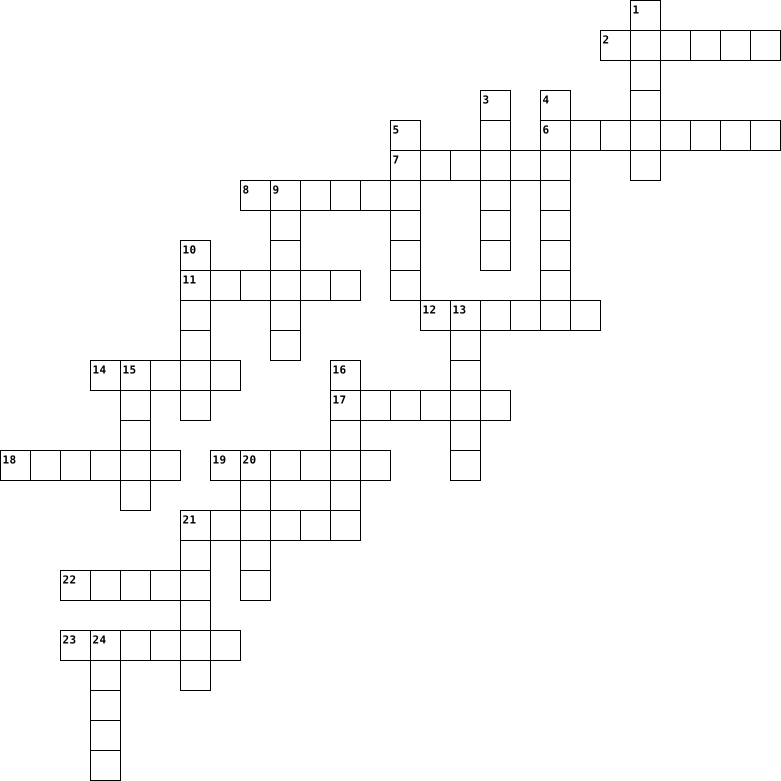
Across
- DoD Prescription
- Asbestos Exposure - Part 2 Periodic Medical Questionnaire
- Record of Occupational Exposure to Ionizing Radiation
- Referral for Civilian Medical Care
- Hearing Conservation Data
- Record of Preparation and Disposition of Remains (outside CONUS)
- Statement of Recognition
- Certificate of Death
- Request for Payment of Funeral and/or Interment Expenses
- Adult Preventive and Chronic Care Flow Sheet
- Report of Medical History
- Patient Evaluation Tag
- Privacy Act Statement
Down
- Requisition and Invoice Shipping Document
- Identification Card
- DOD Single Line Item Requisition System Document (Long Form)
- DOD Single Line Item Release/Receipt Document
- Reference Audiogram
- Third Party Collection Program
- Record of Preparation and Disposition of Remains (within CONUS)
- Eyewear Prescription
- Report of Medical Assessment
- Material Inspection and Receiving Report
- Report of Medical Examination
- Request for Medical/Dental Records
25 Clues: DoD Prescription • Identification Card • Reference Audiogram • Eyewear Prescription • Certificate of Death • Privacy Act Statement • Patient Evaluation Tag • Statement of Recognition • Hearing Conservation Data • Report of Medical History • Report of Medical Assessment • Report of Medical Examination • Third Party Collection Program • Referral for Civilian Medical Care • ...
NAVMED Forms 2017-02-15

Across
- Chronological Record of HIV Testing
- Inpatient Admission Disposition Record
- Record of Exposure to Ionizing Radiation for Internally Deposited Radionuclide
- Reserve Dental Assessment and Certification Form
- Medical/Dental Maintenance Work Order
- Visual Record
- U.S. Navy Medical Outpatient and Dental Treatment Record; Pink
- Medical Board Certificate
- U.S. Navy Medical Outpatient and Dental Treatment Record; Grey
- Health Record Receipt
- Summary of Care Form
- Food Service Sanitation Inspection
- U.S. Navy Medical Outpatient and Dental Treatment Record; White
- U.S. Navy Medical Outpatient and Dental Treatment Record; Blue
- Medical Board Statement of Patient
- Abbreviated Limited Duty Medical Board Report
- Abstract of Service and Medical History
Down
- Medical and Dental Overseas Screening Review for Active Duty and Dependents
- Dental Health Questionnaire
- Record of Occupational Exposure to Ionizing Radiation
- U.S. Navy Medical Outpatient and Dental Treatment Record; Orange
- U.S. Navy Medical Outpatient and Dental Treatment Record; Red
- Polyprescription
- U.S. Navy Medical Outpatient and Dental Treatment Record; Green
- Equipment Request Economic Analysis Supplement
- Medical Board Report Cover Sheet
- U.S. Navy Medical Outpatient and Dental Treatment Record; Tan
- U.S. Navy Medical Outpatient and Dental Treatment Record; Yellow
- TB Contact Converter Followup
- Asbestos Medical Surveillance Program
- U.S. Navy Medical Outpatient and Dental Treatment Record; Almond
- Equipment Request
- Officer Physical Examination Special Questionnaire
- Annual Certificate Physical Condition
34 Clues: Visual Record • Polyprescription • Equipment Request • Summary of Care Form • Health Record Receipt • Medical Board Certificate • Dental Health Questionnaire • TB Contact Converter Followup • Medical Board Report Cover Sheet • Food Service Sanitation Inspection • Medical Board Statement of Patient • Chronological Record of HIV Testing • Medical/Dental Maintenance Work Order • ...
Literary Forms 2024-03-04

Across
- brief fictional narrative in prose
- educates the audience on a certain topic
- exaggerated comedy
- anonymous story that presents supernatural episodes
- represents one thing in the guise of another
- a reasoned response to a question
- mainly magic, mystery, and chivalry in novel
- imaginative adventure concerned with gallant love
- fiction with setting in a previous time
- performed by actors before an audience
- a story told in action by actors who impersonate
- a narrative handed down from the past
Down
- a short essay describing a person
- dramatized moral conflicts through allegory
- presents the downfall of a dignified character
- novels in the form of comic strips
- short essay to express opinion of editor
- brief tale told to point to a moral; animals used
- a brief work of nonfiction that offers an opinion
- fictional narrative with plot/theme present
- marked by happy endings
- an account of events/story
22 Clues: exaggerated comedy • marked by happy endings • an account of events/story • a short essay describing a person • a reasoned response to a question • brief fictional narrative in prose • novels in the form of comic strips • a narrative handed down from the past • performed by actors before an audience • fiction with setting in a previous time • ...
verb forms 2024-03-05

Across
- bite
- eat
- burn
- forgive
- find
- break
- deal
- fight
- blow
- can
- feed
- choose
- dream
Down
- begin
- dig
- catch
- became
- fall
- drink
- buy
- freeze
- build
- drive
- forget
- fly
- do
- draw
- come
28 Clues: do • eat • dig • buy • can • fly • bite • burn • find • fall • deal • blow • feed • draw • come • begin • catch • drink • break • fight • build • drive • dream • became • freeze • forget • choose • forgive
Irregular forms 2024-12-16

Across
- begin
- have
- forget
- make
- fall
- break
- think
- find
- build
- write
- give
- run
- speak
- say
Down
- do
- come
- eat
- feel
- tell
- meet
- leave
- buy
- understand
- drink
- win
- go
- see
27 Clues: do • go • eat • buy • win • run • say • see • come • have • feel • tell • make • meet • fall • find • give • begin • leave • break • think • build • drink • write • speak • forget • understand
Perfective forms 2025-01-15

Across
- SAY
- LEAVE
- BEGIN
- DRINK
- HAVE
- SEND
- DRIVE
- FLY
- TAKE
- SEE
- PUT
- WRITE
- TELL
- MEET
- LOSE
- BREAK
- MAKE
- WIN
Down
- SLEEP
- FIND
- BUY
- DO
- KNOW
- HEAR
- SPEND
- GIVE
- FORGET
- FEEL
- KEEP
- READ
- RUN
- TEACH
- EAT
- GO
- BE
35 Clues: DO • GO • BE • SAY • BUY • FLY • SEE • PUT • RUN • EAT • WIN • FIND • KNOW • HAVE • HEAR • SEND • GIVE • FEEL • KEEP • READ • TAKE • TELL • MEET • LOSE • MAKE • SLEEP • LEAVE • BEGIN • DRINK • SPEND • DRIVE • WRITE • TEACH • BREAK • FORGET
PAST FORMS 2025-04-27

Across
- TRAVEL
- TAKE
- MAKE
- IS
- PLAY
- WANT
- LIKE
- ARE
- VISIT
Down
- GO
- SLEEP
- HAVE
- CLIMB
- EAT
- BUY
- TALK
- SWIM
- LOVE
- EXPLORE
- WATCH
20 Clues: GO • IS • EAT • BUY • ARE • HAVE • TALK • TAKE • MAKE • SWIM • PLAY • LOVE • WANT • LIKE • SLEEP • CLIMB • WATCH • VISIT • TRAVEL • EXPLORE
Word Forms 2024-10-11

Across
- noun form of bore
- noun form of excel
- noun form of hate (hard one)
- adverb form of craze
- noun form of mad
- adverb from of speed
- adjective form of justify
- verb form of strong (hard one)
- noun form of bury
- adjective form of indicate
- one noun form of produce
- adjective form of care
- adjective form of differ
Down
- adjective form of emphasize (very hard)
- adjective from of decide
- adverb form of delight
- adverb form of collect
- adjective form of benefit
- noun form of rely
- noun form of explode
- adjective form of interest
- adjective form of impress
- noun form of avoid
- adverb form of act
- noun form of secure
25 Clues: noun form of mad • noun form of bore • noun form of rely • noun form of bury • noun form of excel • noun form of avoid • adverb form of act • noun form of secure • noun form of explode • adverb form of craze • adverb from of speed • adverb form of delight • adverb form of collect • adjective form of care • adjective from of decide • one noun form of produce • adjective form of differ • ...
Verb forms 2024-09-20

Across
- we loved
- to capture
- I have captured
- you (s) listened
- I had captured
- to have
- you (s) will listen
- they had run
- we will love
Down
- he will have had
- listen! (pl)
- he had
- to love
- he has
- they run
- they ran
- you (s) were listening
- run! (s)
- I am capturing
- we love
20 Clues: he had • he has • to love • to have • we love • we loved • they run • they ran • run! (s) • to capture • listen! (pl) • they had run • we will love • I had captured • I am capturing • I have captured • he will have had • you (s) listened • you (s) will listen • you (s) were listening
3 forms 2025-12-10

Across
- растить
- строить
- ловить
- драться
- приносить
- делать
- становиться
- чувствовать себя
- сказать
- встречать
- означать
- рисовать
- учить
- пить
Down
- знать
- летать
- получать
- начинать
- иметь
- забывать
- выбирать
- быть
- идти
- давать
- покупать
- делать
- класть
- находить
- бегать
- хранить
- читать
31 Clues: быть • идти • пить • знать • иметь • учить • летать • ловить • давать • делать • делать • класть • бегать • читать • растить • строить • драться • сказать • хранить • получать • начинать • забывать • выбирать • покупать • находить • означать • рисовать • приносить • встречать • становиться • чувствовать себя
Honors Biology Unit 2 Vocabulary 2023-10-04

Across
- Describes a situation in which oxygen is present
- Substances at the beginning of a chemical reaction, changed into products
- Sphere of earth, all the gases surrounding earth
- Organelle, site of steps 2 and 3 of aerobic cellular respiration
- First step of aerobic respiration, breaks down glucose into pyruvate, makes NADH
- Pigment in chloroplasts, used to trap light energy during photosynthesis
- Nutrient used in proteins and nucleic acids, limited
- Substances created during a chemical reaction, made from reactants
- Adenosine Diphosphate, uncharged energy storage molecule with 2 phosphates
- Type of organism that breaks down biotic into abiotic
- Second step of Anaerobic respiration, 2 types: alcoholic and lactic acid
- Third step of aerobic respiration, NADH and FADH are used to make 32 ATP
- Describes a situation in which oxygen is not present
- Nutrient, used in phosphates of nucleic acids and phospholipids of membranes, often limited
- Process of using light energy to make glucose, starts with CO2 and H2O, and with C6H12O6 and O2
- Sphere of earth, all the water on earth
Down
- Process of breaking down glucose to make ATP, starts with glucose, ends with carbon dioxide and water.
- Second step of photosynthesis, uses energy in ATP and NADH to make glucose from Carbon Dioxide
- Organelle, site of photosynthesis
- Nutrient, forms the backbone of all macromolecules
- Sphere of earth, all the soil and rocks on earth
- First step of photosynthesis, uses sunlight to split H2O and ATP and NADH, O2 is released
- Adenosine Triphosphate, charged energy storage molecule
- Type of organism that is able to make it's own food
- Sphere of earth, all the soil and rocks on earth
- An organism that eats other organisms for energy
- Anything that has mass and takes up space
- Second step of aerobic respiration, pyruvate is broken down while NADH and FADH are made, release carbon dioxide
28 Clues: Organelle, site of photosynthesis • Sphere of earth, all the water on earth • Anything that has mass and takes up space • Describes a situation in which oxygen is present • Sphere of earth, all the gases surrounding earth • Sphere of earth, all the soil and rocks on earth • Sphere of earth, all the soil and rocks on earth • ...
Nutrition Basics Crossword Puzzle 2025-02-12

Across
- a specific, actionable plan aimed at improving your health
- A measurement of the energy content of food
- Zone After a period of time spent in the learning zone, a new, larger comfort zone is formed
- forms the basis of blood, digestive juices, urine and perspiration
- Balance the state at which the number of calories eaten equals the number of calories used
- the amount of energy your body needs to maintain homeostasis
- a nutrient that is needed in small amounts to keep the body healthy
- a source of essential which the body cannot make itself
- A nutrient that the body needs in small amounts to function and stay healthy
Down
- food consisting of or containing a lot of sugars, starch, cellulose, or similar substances that can be broken down to release energy in the human body
- a repeated action that becomes an automatic behavior, with little to no thought
- a substance that provides nourishment essential for growth and maintenance of life
- Zone a psychological state in which things from the environment are close and familiar to a person and under their control
- the science that studies how food affects the body and our food choices
- achieving a small goal
- the response to a perceived threat
- A molecule made up of amino acids
17 Clues: achieving a small goal • A molecule made up of amino acids • the response to a perceived threat • A measurement of the energy content of food • a source of essential which the body cannot make itself • a specific, actionable plan aimed at improving your health • the amount of energy your body needs to maintain homeostasis • ...
Waves crossword by Hazel 2025-11-17

Across
- Back of the eye
- Top of the wave
- Waves bounce off an object
- Waves pass through an object
- Reflection of a sound wave
Down
- Focuses light, Forms images
- height of the wave
- Eye color
- Bottom of the wave
- Object soaks up wave energy
10 Clues: Eye color • Back of the eye • Top of the wave • height of the wave • Bottom of the wave • Waves bounce off an object • Focuses light, Forms images • Object soaks up wave energy • Reflection of a sound wave • Waves pass through an object
Chapter 3: Forces and Energy 2025-11-13

Across
- The quantity of matter in an object
- The rise and fall of sea levels caused by gravitational forces.
- The highest level reached by the sea.
- The force that pulls objects toward the centre of a mass, like Earth
- A push or pull on an object
Down
- Energy that is transformed into less useful forms, like heat or sound.
- A space without air where there is no air resistance.
- Energy an object stored due to its motion.
- The curved path of an object around another object in space.
- The force of gravity acting on an object
- Energy stored when things are stretched or squeezed to change their shape
11 Clues: A push or pull on an object • The quantity of matter in an object • The highest level reached by the sea. • The force of gravity acting on an object • Energy an object stored due to its motion. • A space without air where there is no air resistance. • The curved path of an object around another object in space. • ...
Collision Engineering Vocabulary 2023-01-27

Across
- energy stored in the position or condition of an object
- a force acting between surfaces in contact that resist motion
- usable power that can be transferred or convert to other forms
Down
- when an object hits another
- energy of motion
- any factor that can be changed
- a unit of kinetic energy
7 Clues: energy of motion • a unit of kinetic energy • when an object hits another • any factor that can be changed • energy stored in the position or condition of an object • a force acting between surfaces in contact that resist motion • usable power that can be transferred or convert to other forms
Reaction Rates-- Chapter 4 2023-01-16

Across
- a(an) __ system is one where to matter is allowed to leave or enter.
- the number in front of a chemical formula in an equation that indicates how many molecules or atoms of each reactant & product are involved in a reaction
- ____ energy is the minimum about of energy needed to start a chemical reaction
- a chemical _____ is a short easy way to show a chemical reaction using symbols
- a solid that forms from a solution during a chemical reaction
- a chemical reaction that breaks down compounds into simpler products
- an ______ reaction is a reaction that absorbs energy
- any change in matter that produces a new substance
- a chemical reaction in which two or more simple substances combine to form a new more complex substance
- a reaction in which one element replaces another in a compound or when two elements in different compounds trade places
Down
- a material that increases the rate of a reaction by lowering the activation energy
- a material that decreases the rate of reaction
- a substance formed as a result of a chemical reaction
- a substance that enters into a chemical reaction
- a(an)___ system is one where matter can enter from or escape to the surroundings
- an ____ reaction is a reaction that releases energy (usually in the form of heat)
- any change that alters form or appearance of a substance
- the amount of one material in a certain volume of another material
- a type of protein that speeds up a chemical reaction in a living thing
19 Clues: a material that decreases the rate of reaction • a substance that enters into a chemical reaction • any change in matter that produces a new substance • an ______ reaction is a reaction that absorbs energy • a substance formed as a result of a chemical reaction • any change that alters form or appearance of a substance • ...
Chapter 4 Rocks 2024-10-16

Across
- a rock that is made up of broken pieces of minerals and rock fragments
- a rock that contains parallel layers of flat and elongated minerals
- rock material that forms where rocks are broken down into smaller pieces or dissolved in water as rocks erode
- the process in which the weight from layers of sediment forces out fluids and decreases the space between sediment grains
- molten rock that erupts on Earth’s surface
- the formation of metamorphic rock bodies that are hundreds of square kilometers in size
- a process in which magma comes in contact with existing rock, and its thermal energy and gases interact with the surrounding rock to make new metamorphic rock
- a sedimentary rock that was formed by organisms or contains the remains of organisms
- a type of igneous rock that forms when material that erupts from a volcano cools and crystallizes on Earth’s surface
Down
- a permanent change in shape by bending and folding
- an igneous rock that forms when lava cools too quickly to form crystals
- the series of processes that change one type of rock into another type of rock
- a rock formed when minerals crystallize directly from water
- a broken piece of a mineral or a rock fragment
- a fragment that makes up a rock
- molten or liquid rock underground
- a metamorphic rock that has mineral grains with a random, interlocking texture
- the process in which minerals dissolved in water crystallize between sediment grains
- the grain size and the way grains fit together in a rock
- a natural, solid mixture of minerals or grains
- an igneous rock that forms as magma cools underground
- any process that affects the structure or composition of a rock in a solid state as a result of changes in temperature, pressure, or the addition of chemical fluids
22 Clues: a fragment that makes up a rock • molten or liquid rock underground • molten rock that erupts on Earth’s surface • a broken piece of a mineral or a rock fragment • a natural, solid mixture of minerals or grains • a permanent change in shape by bending and folding • an igneous rock that forms as magma cools underground • ...
ECOLOGY VOCABULARY REVIEW 2024-04-21

Across
- Organisms that feed on other organisms.
- A group of ecosystems that share similar climates and typical organisms.
- The parts of Earth on which life exists.
- A layer of permanently frozen soil.
- Cycles in which elements, chemical compounds, and other forms of matter are recycled from one organism to another and from one part of the biosphere to another.
- Wetland where the river meets the ocean.
- Zone in the water where sunlight can reach.
- The scientific study of interactions among organisms and between organisms and their environment.
- Process of converting nitrogen gas into nitrogen compounds.
- Process where chemical energy is used to produce food like carbohydrates.
- A group of individuals in the same species that live in the same area.
- The total mass of living tissue within a trophic level.
- Living things within the environment that interact with other organisms.
Down
- Process by which nitrates are converted back to nitrogen gas by bacteria.
- Also called heterotrophs, they get energy by feeding on other organisms.
- The physical or nonliving part of the environment like sunlight.
- Different populations that live together in a defined area.
- Organisms that use chemicals or sunlight to make their own food.
- Pyramid showing the relative amount of energy or matter contained within each trophic level in a food chain or food web.
- A group of similar organisms that can interbreed and produce fertile offspring.
- Series of steps in which organisms transfer energy by eating and being eaten.
- Type of first producer of energy-rich compounds.
- Zone in the ocean where sunlight does not get to.
- _______ levels, which are steps in a food chain or food web.
24 Clues: A layer of permanently frozen soil. • Organisms that feed on other organisms. • The parts of Earth on which life exists. • Wetland where the river meets the ocean. • Zone in the water where sunlight can reach. • Type of first producer of energy-rich compounds. • Zone in the ocean where sunlight does not get to. • The total mass of living tissue within a trophic level. • ...
Nutrition 2022-03-30
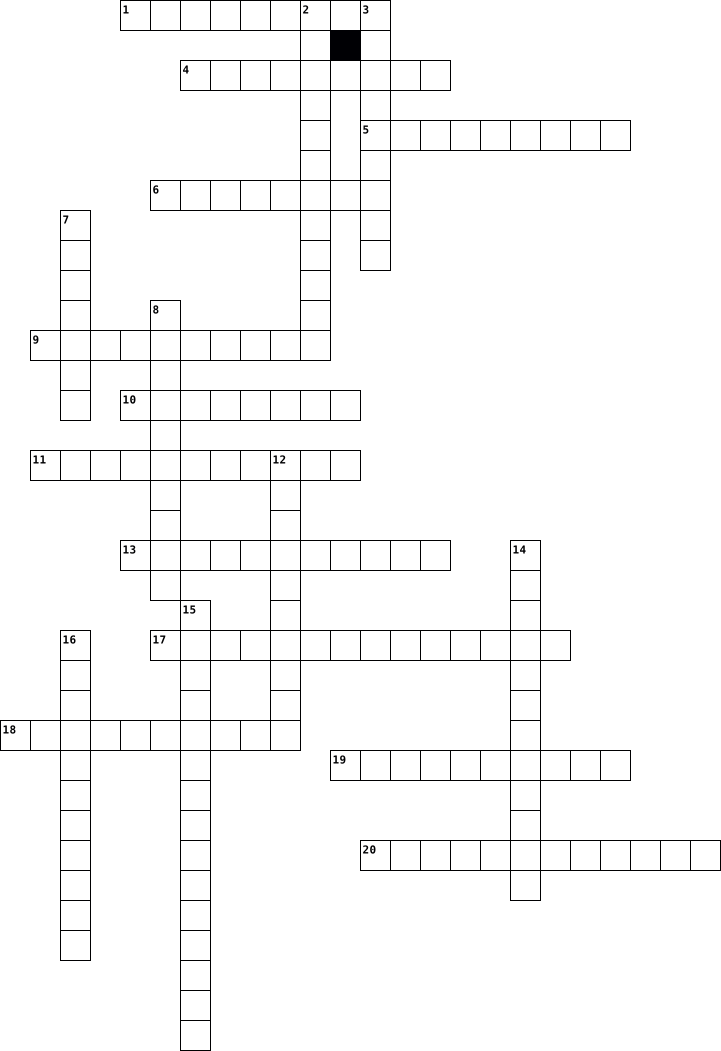
Across
- the process by which an organism takes food and utilizes it to get energy, for growth, repair, maintenance is called ________
- The type of nutrition in which the organisms live on or inside the body of their host and derive their food from them
- Poor health may be due to an _______ of nutrients, either a deficiency or excess, which in turn, affects bodily functions cumulatively.
- the act or process of discharging undigested or waste material from a cell or organism specifically.
- ________ rely on other animals for their food
- The type of nutrition in which an organism takes the complex organic food materials into its body by the process of ingestion
- a plastid in green plant cells
- The _______ pigment is responsible for the green colouration in plants
- The process by which phototrophs convert light energy into chemical energy is
- Koala is the example of ___________
- The ______ is a long, hollow tube that forms part of the alimentary canal organs of the digestive system.
- Heterotrophs are organisms that ingest organic carbon from other sources to produce energy and maintain their own life.
Down
- an animal that feeds on insects, worms, and other invertebrates
- The materials which provide nutrition to living organisms are called ______
- Exchange of gases in the leaves take place with the help of ________
- It is estimated that ________ comprise more than half of all microscopic plankton.
- The simple inorganic substances from which an organism is able to form nutritional organic substances is called
- the absorption and digestion of food or nutrients by the body or any biological system.
- _________ are cells that create their own energy and biological materials from inorganic chemicals.
- The mode of nutrition in which an organism obtains nutrients from dead and decaying organic matter is called ________ nutrition.
20 Clues: a plastid in green plant cells • Koala is the example of ___________ • ________ rely on other animals for their food • an animal that feeds on insects, worms, and other invertebrates • Exchange of gases in the leaves take place with the help of ________ • The _______ pigment is responsible for the green colouration in plants • ...
Unit 2 Crossword 2024-09-30

Across
- nutrient, used inn phosphates or nucleic acids, often limited supply
- type of organism that eats other organisms to obtain energy
- second step of photosynthesis, uses energy in ATP and NADH to make glucose from CO2
- Adenosine disphosphate
- Second step of anaerobic respiration, 2 types
- First step in photosynthesis
- process of breaking down glucose to make ATP, starts with C6H12O6
- all the gases surrounding the Earth
- all soil and rock on Earth
- first step in aerobic respiration, breaks down glucose
- nutrient, used in proteins and nucleic acids, must be fixed for living things to use
- organism that breaks down biotic compounds, recycler
- organelle, site of photosynthesis
Down
- organelle, site of steps 2 and 3 in aerobic respiration
- type of organism that is able to make its own food
- process of using light energy to make glucose starts with CO2 + H2O
- nutrient, forms the backbone for all macromolecules
- third step of aerobic respiration, nadh and fadh2 from previous reactions are used to make 32 units of ATP
- substances created during a chemical reaction, made from reactants
- Adenosine Triphosphate
- substances at the beginning of a chemical reaction, changed into products
- all water on Earth
- situation in which oxygen isn't present
- second step of aerobic respiration, pyruvate is broken down
- anything that takes up space and has mass
- all life on Earth.
- situation in which oxygen is present
- pigment in chloroplast used to trap light energy during photosynthesis
28 Clues: all water on Earth • all life on Earth. • Adenosine Triphosphate • Adenosine disphosphate • all soil and rock on Earth • First step in photosynthesis • organelle, site of photosynthesis • all the gases surrounding the Earth • situation in which oxygen is present • situation in which oxygen isn't present • anything that takes up space and has mass • ...
energy project level 2 2023-12-12

Across
- energy of motion
- One form of energy becoming another
- stored energy due to the position of an object
- there are many different ____ that energy can become
Down
- Energy that could be released suddenly.
- Energy releasing to its surroundings
6 Clues: energy of motion • One form of energy becoming another • Energy releasing to its surroundings • Energy that could be released suddenly. • stored energy due to the position of an object • there are many different ____ that energy can become
Ecosystems and biogeochemical cycles 2024-10-16

Across
- Comes from the sun, which is the main source of it
- Another word for producers
- A non-living part of an ecosystem that shapes its environment
- Occurs on a surface NO ecosystem has existed before
- Provide a structure for understanding food chains and how energy flows through an ecosystem.
- Convert water, carbon dioxide, minerals, and sunlight into the organic molecules
- Any liquid or frozen water that forms in the atmosphere and falls to Earth
- The process by which a liquid turns into a gas
- Animals that ONLY eat meats
- An organism that decomposes organic material
- Occurs where PREVIOUS ecosystem has existed before
- The first to colonize newly created environments
Down
- Transform water, sunlight, and carbon dioxide into oxygen, and simple sugars
- A living organism that shapes its environment
- Animals that eat primary consumers
- Animals that get their energy by eating plants or other animals
- Animals the eat BOTH plants and meats
- The process where water vapor becomes liquid
- Animals that eat plants
- ONLY eats plants
20 Clues: ONLY eats plants • Animals that eat plants • Another word for producers • Animals that ONLY eat meats • Animals that eat primary consumers • Animals the eat BOTH plants and meats • The process where water vapor becomes liquid • An organism that decomposes organic material • A living organism that shapes its environment • The process by which a liquid turns into a gas • ...
Energy Part 1 - Vocabulary Review 2023-02-03

Across
- The energy of motion.(The total of an object’s potential energy and kinetic energy.)
- The bouncing of light off an object.
- Electricity that moves through a wire.
Down
- Taken in. When light strikes and object some of it is absorbed.
- The movement of heat between objects with different temperatures.
- A dark area that forms when an object blocks the path of light.
- A path that electricity follows.
- The ability to make something move or change.
8 Clues: A path that electricity follows. • The bouncing of light off an object. • Electricity that moves through a wire. • The ability to make something move or change. • A dark area that forms when an object blocks the path of light. • Taken in. When light strikes and object some of it is absorbed. • The movement of heat between objects with different temperatures. • ...
Digestion-Gavin Nix 2025-10-27

Across
- energy you need to maintain automatic process.
- billions of tiny, finger-like projections all over the inner wall of the small intestine.
- muscular pouch just below rib cage that produces gastric juices, acids, and enzymes in order to break food down.
- help body digest and absorb fats. Produced in the liver and stored in gall bladder until needed.
- storage form of glucose.
- gland connected to the small intestine.
- Special protein that helps a chemical reaction take place.
- mixture of enzymes made by the pancreas.
- mechanically breaks down food while in mouth
- use of nutrients to provide energy
Down
- rhythmic movements of muscles.
- connects the stomach to the large intestine and is responsible for absorbing most of the nutrients from food.
- amount of energy needed to raise the temperature of 1 kilogram of water by 1 degree Celsius.
- way nutrients move through bloodstream.
- works with other juices to break down food. Produced in small intestine.
- body's basic fuel.
- Mechanical and chemical process of breaking down food and changing nutrients into forms your body can use.
- the part of the digestive tract that connects the mouth and the stomach.
- first step of the digestion.
- when molecules combine with oxygen.
20 Clues: body's basic fuel. • storage form of glucose. • first step of the digestion. • rhythmic movements of muscles. • use of nutrients to provide energy • when molecules combine with oxygen. • way nutrients move through bloodstream. • gland connected to the small intestine. • mixture of enzymes made by the pancreas. • mechanically breaks down food while in mouth • ...
Energy and Collisions Puzzle 2022-02-15

Across
- energy stored in the position of an object
- a force acting between two surfaces in contact.
- Usable power that can be transferred or converted to different forms, but cannot be create or destroyed
Down
- when one object hits another
- energy of motion
- any factor that can be changed
- a unit of kinetic energy
7 Clues: energy of motion • a unit of kinetic energy • when one object hits another • any factor that can be changed • energy stored in the position of an object • a force acting between two surfaces in contact. • Usable power that can be transferred or converted to different forms, but cannot be create or destroyed
Sci 512 2024-11-15

Across
- refers to the solid rocky part of the earth
- The level at which something is examined or measured
- The number of organisms living within a particular geographic region
- flows through an ecosystem in only one direction.
- a greenhouse gas, so it absorbs infrared energy, the longer wavelengths of the Sun’s reflected rays.
- Features of the environment/habitat that are capable of interacting, that limit population growth, or in some way have an effect on the lifeforms that would or could live there.
- occurs in many forms on Earth and is found throughout the environment. The element moves through organisms and then returns to the environment. When all this happens in balance the ecosystem remains in balance, too.
- The number of things in some area at some scale
Down
- the total amount of water on Earth,including water in all its forms,
- The amount of different species that live in a particular area or habitat
- Mixture of gasses that surround the earth
- The effects organisms have on each other when living together in the same community or habitat.
- The relative quantities of things
- cycles freely between trophic levels and between the ecosystem and the physical environment.
14 Clues: The relative quantities of things • Mixture of gasses that surround the earth • refers to the solid rocky part of the earth • The number of things in some area at some scale • flows through an ecosystem in only one direction. • The level at which something is examined or measured • the total amount of water on Earth,including water in all its forms, • ...