
history Crossword Puzzles
History 2014-12-08

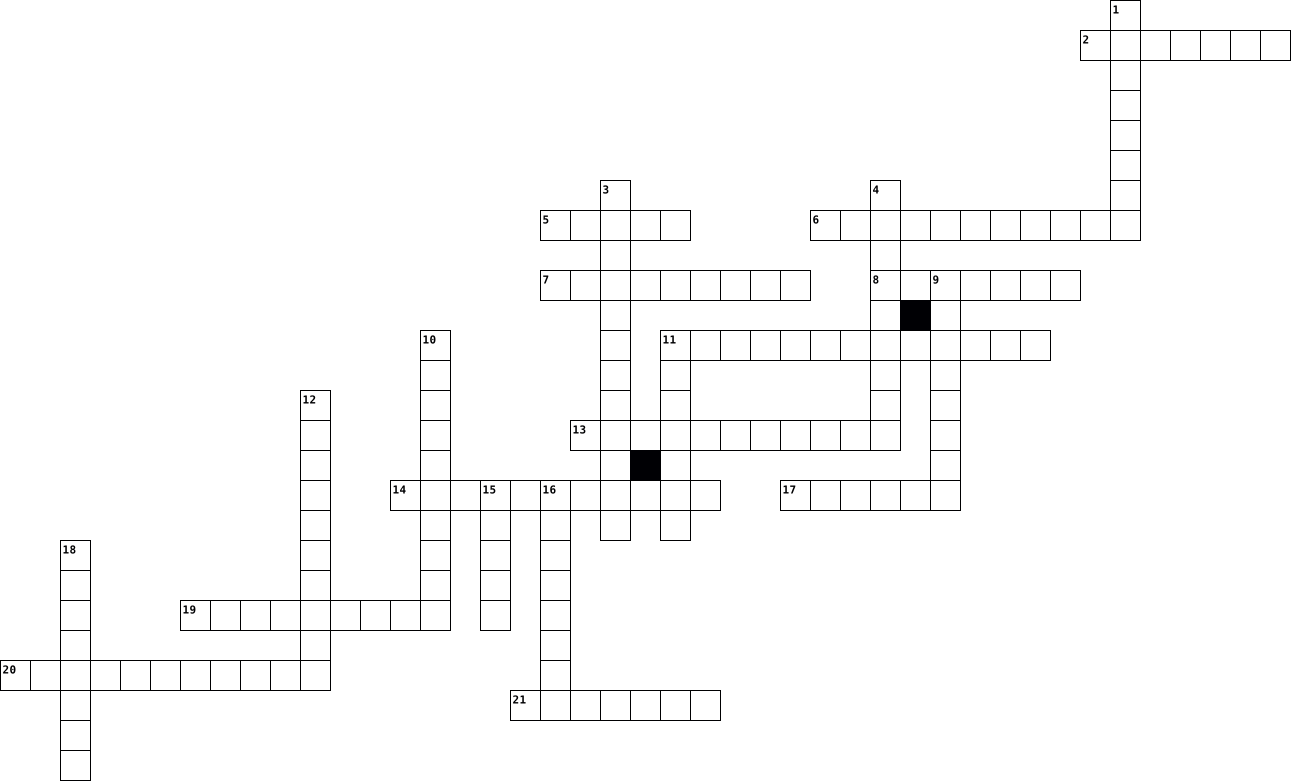
Across
- videjas akmens.
- Vēstures palīgnozare kas pēta uzrakstus uz plāksnēm, klintīm, celtnēm un koka izstrādājumiem.
- izmiruši cilvēkpērtiķi, kuriem bija gan cilvēku, gan pērtiķu pazīmes.
- zinātne par cilvēces pagātni, par to, kā cilvēki dzīvoja senatnē, ar ko nodarbojās un par ko domāja.
- cilvēces vēstures periods, par kuru nav saglabājušās rakstiskas liecības. Tas ir vēstures senākais posms no cilvēka rašanās brīža līdz pirmās civilizācijas izveidošanās laikmetam.
- Vēstures palīgnozare kas pēta, pēc kādām sistēmām dažādas tautas skaitījušas gadus un kādi tām bijuši kalendāri, kā arī palīdz noteikt vēsturisko avotu (dokumentu) rašanās laiku;
- Ģīmenē māte ir svariga.
- sis impērija radīja pamatu Eiropas viduslaiku sabiedrībai un Eiropas kultūrai.
- saja valsta kultūra izplatījās visā Tuvo Austrumu reģionā.
- valsts izveidosana
- cilveka speja ietekmet uz dabu un uz citiem cilvekiem.
- Ģīmenē tēvs ir galvēnais.
- Teorija par cilvēka izcelšanos no kura viedokla cilveks radijas no citplanetiešiem vai citam planētam.
- Vēstures palīgnozare kas pēta radurakstus, dzimtu, atsevišķu ģimeņu un personu izcelšanos;
- viena ceturta daļa atēniešu 5. gs. p.m.ē. bija nepilsoņi jeb ...
- sens akmens.
Down
- Ticība, ka cilvēks radusies no kāda dzīvnieka, jeb auga.
- teorija par cilvēka izcelšanos no kura viedokla viss rada dievs.
- Teorija par cilvēka izcelšanos no kura viedokla cilveks izcelas no sunas.
- Sapratīgais cilvēks.
- Vēstures palīgnozare kas peta tautu, etnisko grupu izcelšanos, izvietojumu, kultūru un kultūrvēsturiskās saites starp tautām;
- ... laiki ir laika posms cilvēces vēsturē, kas ir starp aizvēsturi un viduslaiku sākumu Eiropā.
- uzvarda cilveka kas pirmajam dalit aizvesture uz trim laikmetam.
- jauns akmens.
- Vēstures palīgnozare kas pēta papīra naudaszīmju, monētu, dažādu žetonu, nozīmju un ordeņu vēsturi;
- vina reforma iedalija pilsonus 4 grupas.
- Vēstures palīgnozare kas pēta cilvēka izcelšanos, kā arī cilvēka kultūras, saimnieciskās un sabiedriskās izpausmes.
- "Vestures tevs".
- Cilveki kuriem nav brivibai jeb nebrivie cilvekie.
- avoti kas izmantoti foto, zīmejumi, glēznas, kino.
- idealas sabiedrības atelojums(vieta kurai nav)
- Prasmīgais cilvēks.
- griekijas parvaldnes forma
- cilvēks kurš izdomaja evoluvijas teoriju.
- Vēstures palīgnozare kas pēta ģerboņu izcelsmi, attīstību, tajos esošos simbolus;
- Ticība, ka nemateraliem litam ir dvēsele.
- avoti kuri ir trauki, monētas, ieroči.
- Vēstures palīgnozare kas pēta vēsturi, izmantojot lietiskos vēstures avotus - arheoloģijas pieminekļus (senlietas, būves, apbedījumus u.c.);
- Kāds avots dod informāciju par citam tautam.
- Ticība, ka mīrušie piedalas mūsū dzīvē(... kults).
40 Clues: sens akmens. • jauns akmens. • videjas akmens. • "Vestures tevs". • valsts izveidosana • Prasmīgais cilvēks. • Sapratīgais cilvēks. • Ģīmenē māte ir svariga. • Ģīmenē tēvs ir galvēnais. • griekijas parvaldnes forma • avoti kuri ir trauki, monētas, ieroči. • vina reforma iedalija pilsonus 4 grupas. • cilvēks kurš izdomaja evoluvijas teoriju. • Ticība, ka nemateraliem litam ir dvēsele. • ...
History 2014-12-08

Across
- griekijas parvaldnes forma
- cilveka speja ietekmet uz dabu un uz citiem cilvekiem.
- jauns akmens.
- Vēstures palīgnozare kas pēta ģerboņu izcelsmi, attīstību, tajos esošos simbolus;
- Ģīmenē tēvs ir galvēnais.
- Vēstures palīgnozare kas pēta, pēc kādām sistēmām dažādas tautas skaitījušas gadus un kādi tām bijuši kalendāri, kā arī palīdz noteikt vēsturisko avotu (dokumentu) rašanās laiku;
- uzvarda cilveka kas pirmajam dalit aizvesture uz trim laikmetam.
- zinātne par cilvēces pagātni, par to, kā cilvēki dzīvoja senatnē, ar ko nodarbojās un par ko domāja.
- izmiruši cilvēkpērtiķi, kuriem bija gan cilvēku, gan pērtiķu pazīmes.
- Vēstures palīgnozare kas pēta radurakstus, dzimtu, atsevišķu ģimeņu un personu izcelšanos;
- avoti kas izmantoti foto, zīmejumi, glēznas, kino.
- saja valsta kultūra izplatījās visā Tuvo Austrumu reģionā.
- Ģīmenē māte ir svariga.
- Teorija par cilvēka izcelšanos no kura viedokla cilveks radijas no citplanetiešiem vai citam planētam.
- videjas akmens.
- sens akmens.
- vina reforma iedalija pilsonus 4 grupas.
- Cilveki kuriem nav brivibai jeb nebrivie cilvekie.
Down
- Ticība, ka cilvēks radusies no kāda dzīvnieka, jeb auga.
- sis impērija radīja pamatu Eiropas viduslaiku sabiedrībai un Eiropas kultūrai.
- Ticība, ka nemateraliem litam ir dvēsele.
- Vēstures palīgnozare kas pēta vēsturi, izmantojot lietiskos vēstures avotus - arheoloģijas pieminekļus (senlietas, būves, apbedījumus u.c.);
- Vēstures palīgnozare kas pēta cilvēka izcelšanos, kā arī cilvēka kultūras, saimnieciskās un sabiedriskās izpausmes.
- Prasmīgais cilvēks.
- cilvēks kurš izdomaja evoluvijas teoriju.
- Vēstures palīgnozare kas peta tautu, etnisko grupu izcelšanos, izvietojumu, kultūru un kultūrvēsturiskās saites starp tautām;
- Sapratīgais cilvēks.
- Vēstures palīgnozare kas pēta papīra naudaszīmju, monētu, dažādu žetonu, nozīmju un ordeņu vēsturi;
- avoti kuri ir trauki, monētas, ieroči.
- idealas sabiedrības atelojums(vieta kurai nav)
- valsts izveidosana
- "Vestures tevs".
- cilvēces vēstures periods, par kuru nav saglabājušās rakstiskas liecības. Tas ir vēstures senākais posms no cilvēka rašanās brīža līdz pirmās civilizācijas izveidošanās laikmetam.
- Teorija par cilvēka izcelšanos no kura viedokla cilveks izcelas no sunas.
- Vēstures palīgnozare kas pēta uzrakstus uz plāksnēm, klintīm, celtnēm un koka izstrādājumiem.
- Ticība, ka mīrušie piedalas mūsū dzīvē(... kults).
- teorija par cilvēka izcelšanos no kura viedokla viss rada dievs.
- Kāds avots dod informāciju par citam tautam.
- viena ceturta daļa atēniešu 5. gs. p.m.ē. bija nepilsoņi jeb ...
- ... laiki ir laika posms cilvēces vēsturē, kas ir starp aizvēsturi un viduslaiku sākumu Eiropā.
40 Clues: sens akmens. • jauns akmens. • videjas akmens. • "Vestures tevs". • valsts izveidosana • Prasmīgais cilvēks. • Sapratīgais cilvēks. • Ģīmenē māte ir svariga. • Ģīmenē tēvs ir galvēnais. • griekijas parvaldnes forma • avoti kuri ir trauki, monētas, ieroči. • vina reforma iedalija pilsonus 4 grupas. • Ticība, ka nemateraliem litam ir dvēsele. • cilvēks kurš izdomaja evoluvijas teoriju. • ...
History 2014-12-08

Across
- jauns akmens.
- Vēstures palīgnozare kas peta tautu, etnisko grupu izcelšanos, izvietojumu, kultūru un kultūrvēsturiskās saites starp tautām;
- cilvēces vēstures periods, par kuru nav saglabājušās rakstiskas liecības. Tas ir vēstures senākais posms no cilvēka rašanās brīža līdz pirmās civilizācijas izveidošanās laikmetam.
- Prasmīgais cilvēks.
- sis impērija radīja pamatu Eiropas viduslaiku sabiedrībai un Eiropas kultūrai.
- sens akmens.
- uzvarda cilveka kas pirmajam dalit aizvesture uz trim laikmetam.
- Vēstures palīgnozare kas pēta uzrakstus uz plāksnēm, klintīm, celtnēm un koka izstrādājumiem.
- izmiruši cilvēkpērtiķi, kuriem bija gan cilvēku, gan pērtiķu pazīmes.
- griekijas parvaldnes forma
- zinātne par cilvēces pagātni, par to, kā cilvēki dzīvoja senatnē, ar ko nodarbojās un par ko domāja.
- Cilveki kuriem nav brivibai jeb nebrivie cilvekie.
- Ģīmenē māte ir svariga.
- Vēstures palīgnozare kas pēta vēsturi, izmantojot lietiskos vēstures avotus - arheoloģijas pieminekļus (senlietas, būves, apbedījumus u.c.);
- ... laiki ir laika posms cilvēces vēsturē, kas ir starp aizvēsturi un viduslaiku sākumu Eiropā.
- Teorija par cilvēka izcelšanos no kura viedokla cilveks izcelas no sunas.
- Ticība, ka nemateraliem litam ir dvēsele.
- videjas akmens.
Down
- Vēstures palīgnozare kas pēta ģerboņu izcelsmi, attīstību, tajos esošos simbolus;
- teorija par cilvēka izcelšanos no kura viedokla viss rada dievs.
- saja valsta kultūra izplatījās visā Tuvo Austrumu reģionā.
- Vēstures palīgnozare kas pēta cilvēka izcelšanos, kā arī cilvēka kultūras, saimnieciskās un sabiedriskās izpausmes.
- cilvēks kurš izdomaja evoluvijas teoriju.
- Vēstures palīgnozare kas pēta papīra naudaszīmju, monētu, dažādu žetonu, nozīmju un ordeņu vēsturi;
- Ticība, ka cilvēks radusies no kāda dzīvnieka, jeb auga.
- avoti kas izmantoti foto, zīmejumi, glēznas, kino.
- cilveka speja ietekmet uz dabu un uz citiem cilvekiem.
- Ģīmenē tēvs ir galvēnais.
- avoti kuri ir trauki, monētas, ieroči.
- idealas sabiedrības atelojums(vieta kurai nav)
- Vēstures palīgnozare kas pēta, pēc kādām sistēmām dažādas tautas skaitījušas gadus un kādi tām bijuši kalendāri, kā arī palīdz noteikt vēsturisko avotu (dokumentu) rašanās laiku;
- Vēstures palīgnozare kas pēta radurakstus, dzimtu, atsevišķu ģimeņu un personu izcelšanos;
- valsts izveidosana
- Teorija par cilvēka izcelšanos no kura viedokla cilveks radijas no citplanetiešiem vai citam planētam.
- Ticība, ka mīrušie piedalas mūsū dzīvē(... kults).
- vina reforma iedalija pilsonus 4 grupas.
- Sapratīgais cilvēks.
- "Vestures tevs".
- viena ceturta daļa atēniešu 5. gs. p.m.ē. bija nepilsoņi jeb ...
- Kāds avots dod informāciju par citam tautam.
40 Clues: sens akmens. • jauns akmens. • videjas akmens. • "Vestures tevs". • valsts izveidosana • Prasmīgais cilvēks. • Sapratīgais cilvēks. • Ģīmenē māte ir svariga. • Ģīmenē tēvs ir galvēnais. • griekijas parvaldnes forma • avoti kuri ir trauki, monētas, ieroči. • vina reforma iedalija pilsonus 4 grupas. • cilvēks kurš izdomaja evoluvijas teoriju. • Ticība, ka nemateraliem litam ir dvēsele. • ...
History 2014-12-08

Across
- cilvēks kurš izdomaja evoluvijas teoriju.
- sis impērija radīja pamatu Eiropas viduslaiku sabiedrībai un Eiropas kultūrai.
- viena ceturta daļa atēniešu 5. gs. p.m.ē. bija nepilsoņi jeb ...
- ... laiki ir laika posms cilvēces vēsturē, kas ir starp aizvēsturi un viduslaiku sākumu Eiropā.
- avoti kas izmantoti foto, zīmejumi, glēznas, kino.
- Vēstures palīgnozare kas pēta radurakstus, dzimtu, atsevišķu ģimeņu un personu izcelšanos;
- jauns akmens.
- Ticība, ka nemateraliem litam ir dvēsele.
- Prasmīgais cilvēks.
- Vēstures palīgnozare kas pēta cilvēka izcelšanos, kā arī cilvēka kultūras, saimnieciskās un sabiedriskās izpausmes.
- Ticība, ka cilvēks radusies no kāda dzīvnieka, jeb auga.
- idealas sabiedrības atelojums(vieta kurai nav)
- Vēstures palīgnozare kas pēta ģerboņu izcelsmi, attīstību, tajos esošos simbolus;
- Vēstures palīgnozare kas pēta uzrakstus uz plāksnēm, klintīm, celtnēm un koka izstrādājumiem.
- Vēstures palīgnozare kas peta tautu, etnisko grupu izcelšanos, izvietojumu, kultūru un kultūrvēsturiskās saites starp tautām;
- Vēstures palīgnozare kas pēta papīra naudaszīmju, monētu, dažādu žetonu, nozīmju un ordeņu vēsturi;
- Ticība, ka mīrušie piedalas mūsū dzīvē(... kults).
- sens akmens.
- Cilveki kuriem nav brivibai jeb nebrivie cilvekie.
- valsts izveidosana
- Sapratīgais cilvēks.
- griekijas parvaldnes forma
- avoti kuri ir trauki, monētas, ieroči.
Down
- Teorija par cilvēka izcelšanos no kura viedokla cilveks radijas no citplanetiešiem vai citam planētam.
- Kāds avots dod informāciju par citam tautam.
- cilveka speja ietekmet uz dabu un uz citiem cilvekiem.
- uzvarda cilveka kas pirmajam dalit aizvesture uz trim laikmetam.
- saja valsta kultūra izplatījās visā Tuvo Austrumu reģionā.
- Teorija par cilvēka izcelšanos no kura viedokla cilveks izcelas no sunas.
- Ģīmenē tēvs ir galvēnais.
- zinātne par cilvēces pagātni, par to, kā cilvēki dzīvoja senatnē, ar ko nodarbojās un par ko domāja.
- Ģīmenē māte ir svariga.
- teorija par cilvēka izcelšanos no kura viedokla viss rada dievs.
- Vēstures palīgnozare kas pēta, pēc kādām sistēmām dažādas tautas skaitījušas gadus un kādi tām bijuši kalendāri, kā arī palīdz noteikt vēsturisko avotu (dokumentu) rašanās laiku;
- Vēstures palīgnozare kas pēta vēsturi, izmantojot lietiskos vēstures avotus - arheoloģijas pieminekļus (senlietas, būves, apbedījumus u.c.);
- izmiruši cilvēkpērtiķi, kuriem bija gan cilvēku, gan pērtiķu pazīmes.
- "Vestures tevs".
- videjas akmens.
- cilvēces vēstures periods, par kuru nav saglabājušās rakstiskas liecības. Tas ir vēstures senākais posms no cilvēka rašanās brīža līdz pirmās civilizācijas izveidošanās laikmetam.
- vina reforma iedalija pilsonus 4 grupas.
40 Clues: sens akmens. • jauns akmens. • videjas akmens. • "Vestures tevs". • valsts izveidosana • Prasmīgais cilvēks. • Sapratīgais cilvēks. • Ģīmenē māte ir svariga. • Ģīmenē tēvs ir galvēnais. • griekijas parvaldnes forma • avoti kuri ir trauki, monētas, ieroči. • vina reforma iedalija pilsonus 4 grupas. • cilvēks kurš izdomaja evoluvijas teoriju. • Ticība, ka nemateraliem litam ir dvēsele. • ...
history 2014-12-09

Across
- Lacedaemonian karalis, vīrs Helen
- Profesionālā maksā skolotājs filozofijas un retorikas politikā Grieķijas, par kuru nebija nekādas morālās vai reliģiskajām vērtībām
- Ieeja Acropolis
- Pussala, uz kuras bija Sparta
- Valsts uz ziemeļiem no Grieķijas
- Skulptūras, kas radījušas šo statuju dieviete Afrodītes, kas izskatījās pēc dzīves
- Fortress Atēnās
- Slavenais dzejnieks, autors traģēdijām
- Ļauni burve uzbruka kuģiem
- Auglis olīvkoka
- Atēnas apkārtne, kurā viņi dzīvoja podnieki
- Seno filozofs, students Sokrāta, kurš nodibināja akadēmiju
- Galvenais templis Akropoles
- Loceklis Atēnu Areopagus, sākotnēji iecelti uz mūžu, tiem izvēlas no visvairāk ievēro pilsoņu polisas
Down
- Mātes politika izvadi kolonija
- slavenākajiem komēdijas Aristofana
- Vienīgā noteikuma politikas forma, parasti uzstāda ar spēku
- Komandieris, sasmalcināts persiešus cīņā salami
- Galvenā nodarbošanās senie grieķi
- Pussala apdzīvo grieķu ciltis
- Grieķijas eposa varonis, valdnieks salas Ithaca
- Organizācijas polisas pārvaldes sistēma, kurā reālas pilnvaras rīcībā Nacionālo asambleju un tautas tiesas. Visi pilsoņi ir tiesības tikt ievēlētiem amatiem kāds polis miertiesneši
- Grieķu kājnieki apkarotu veidošanās
- Viens no seno filozofu, kurš uzskatīja, ka pamats cilvēka eksistences prāta
- Kā grieķi sauc viņu dzimtene
25 Clues: Ieeja Acropolis • Fortress Atēnās • Auglis olīvkoka • Ļauni burve uzbruka kuģiem • Galvenais templis Akropoles • Kā grieķi sauc viņu dzimtene • Pussala, uz kuras bija Sparta • Pussala apdzīvo grieķu ciltis • Mātes politika izvadi kolonija • Valsts uz ziemeļiem no Grieķijas • Lacedaemonian karalis, vīrs Helen • Galvenā nodarbošanās senie grieķi • slavenākajiem komēdijas Aristofana • ...
History 2014-12-04

Across
- Mezolīta laikā paradās loks ar ... .
- ... Hurēra(11 ha).
- Pīrmie cilvēki Latvijā 9.gt.p.m.ē.(... mēdnieki)
- Sapratīgais cilvēks, jeb ... .
- Čarlz ... - cilvēks kurš izdomaja evoluvijas teoriju.
- Vēstures zinātnes nozare, kurā pētagarīgo kulturu.
- Ģīmenē māte ir galvēna.
- Pīrmā vietsedība - ir "Auglīgais ..."
- Ģīmenē tēvs ir galvēnais.
- Prasmīgais cilvēks, jeb ... .
- Vēstures zinātnes nozare, kurā pēta cilvēka fizisko uzbūvi.
- Teorija par cilvēka izcelšanos, kura ir saistīta ar citplanetiešiem vai citam planētam.
- Kādi avoti ir izmantoti foto, zīmejumi, glēznas, kino?
- Ticība, ka mīrušie akivi piedalas mūsū dzīvē(... kults).
- Sabiedrības lenis kurai ir noteikta vieta varas sistēmā, kas atšķiras savas ekonomiskiem un tiesiskai dzivei.
- Kāds avots dod informāciju par citam tautam?
- Vēstures zinātnes nozare, kurā pēta vēsturi, izmantojot lietiskos vēstures avotus — arheoloģiskos pieminekļus.
- Laikaposms, kad tika atklāts uguns, mītne un saka attistīties tādas reliģijas, kā Māģija.
- Tie, kuri dzīvo lidzas vai blakus.
- Periods, jad cilvēks no klejotaja kļusts pae vietsēdi.
- ... - ir zinatniski nepamatots idealas sabiedrības atelojums.
- Kopienas apvienojums - kopēja teretorija, tradīcijas, valoda.
- Kādu strukturu pēta vēsture?
- Kristīga, jeb ... teorija par cilvēka izcelšanos.
Down
- Zinātne, kas pēta cilvēku sabiedrības attīstību un šīs attīstības posmus no tālas pagātnes līdz mūsdienām.
- Vārš + alva = ... .
- Vēstures zinātnes nozare, kurā veidojas līdz ar valsts, kad veidojas civilizacija.
- Visus cilt locekļus apvieno ... radniecība.
- Vēstures zinātnes nozare, kurā pēta vēsturiskus dokumentus.
- Neolīta galvēna pazīme ir ... .
- Laiks kad beidzas leduslaikmets.
- Turcijā, dienvidos, vietsēdība(13 ha).
- Ticība, ka cilvēks radusies no kāda dzīvnieka, jeb auga.
- Vēstures zinātnes nozare, kurā pēta uzrakstus no senakajiem laikiem līdz mūsdienam.
- Galvēnais laukums.
- Kādi avoti - ir trauki, monētas, ieroči?
- Vēstures zinātnes nozare, kurā pēta ģerboņus un ģerbuņu simbolus.
- Vēstures senākais posms no cilvēka rašanās brīža līdz pirmās civilizācijas izveidošanās laikmetam.
- Ticība, ka nemateraliem litam ir dvēsele.
- Brīvie kopienes locekļi dalās uz pilsoņiem un ... .
- Periods, kad rādas uzplauka un sāk eksistēt civilizācijas.
- Viņiem ir ļoti lielie zemes īpašumi(Romā)
42 Clues: ... Hurēra(11 ha). • Galvēnais laukums. • Vārš + alva = ... . • Ģīmenē māte ir galvēna. • Ģīmenē tēvs ir galvēnais. • Kādu strukturu pēta vēsture? • Prasmīgais cilvēks, jeb ... . • Sapratīgais cilvēks, jeb ... . • Neolīta galvēna pazīme ir ... . • Laiks kad beidzas leduslaikmets. • Tie, kuri dzīvo lidzas vai blakus. • Mezolīta laikā paradās loks ar ... . • ...
History 2016-01-12

Across
- join or attach
- letting the people decide
- ended slavery
- speech given on November 19, 1863 by Abraham Lincoln
- obvious or undeniable fate
- dives that exploded in the air or when they hit something
- radicals that oppose all government
- production in great amounts
- no citizen may be denied the right to vote.
- soldiers who surprised their enemies
- the president of wrongdoings in office
Down
- protects the inventor’s inventions
- promoted equal right for all “persons born or naturalized in the United States”
- special type of shell filled with bullets
- used to replace striking laborers
- enemies are surrounded and starved in order to make them surrender
- outdated
- citizen’s personal rights guaranteed by law
- Scottish word meaning “scrawny cattle”
- laws that restricted freedmen’s rights
20 Clues: outdated • ended slavery • join or attach • letting the people decide • obvious or undeniable fate • production in great amounts • used to replace striking laborers • protects the inventor’s inventions • radicals that oppose all government • soldiers who surprised their enemies • Scottish word meaning “scrawny cattle” • laws that restricted freedmen’s rights • ...
History 2016-01-12

Across
- citizen’s personal rights guaranteed by law
- used to replace striking laborers
- outdated
- join or attach
- ended slavery
- radicals that oppose all government
- the president of wrongdoings in office
- letting the people decide
Down
- no citizen may be denied the right to vote.
- enemies are surrounded and starved in order to make them surrender
- obvious or undeniable fate
- speech given on November 19, 1863 by Abraham Lincoln
- production in great amounts
- laws that restricted freedmen’s rights
- promoted equal right for all “persons born or naturalized in the United States”
- soldiers who surprised their enemies
- Scottish word meaning “scrawny cattle”
- special type of shell filled with bullets
- protects the inventor’s inventions
- dives that exploded in the air or when they hit something
20 Clues: outdated • ended slavery • join or attach • letting the people decide • obvious or undeniable fate • production in great amounts • used to replace striking laborers • protects the inventor’s inventions • radicals that oppose all government • soldiers who surprised their enemies • laws that restricted freedmen’s rights • Scottish word meaning “scrawny cattle” • ...
History 2018-05-19

Across
- Fear of spread of Communist
- An Area outside the city where families were moving because they now had a car to commute to work
- Name referring to the 1920a
- Inventor of the cotton gin
- A famous baseball player named after a candy bar
- Led a slave rebellion in the 1830s
- items made for personal use
- Statistics that describes a population
- A portion of company sold to investors that gave capital it need to grow
- Allowed women to vote
- Women wore short dresses, put on more makeup
- the drive from one's home to place of employment
- Anything associated with airplanes or flights
Down
- Time of economic despair
- Production method that breaks down a complex job into a series
- Policy of supporting neither side of the war
- Inventor of the telegraph
- A secret club where you can get alcohol
- Taxes on foreign goods
- Regulated how many immigrants could come into the U.S.
- The first English settlement in Virginia that prospered
- A flowering of African American culture in the 1920s
- An organization of white supremacists
- Movement of Africans Americans from the South to the North
- Man-made waterway
25 Clues: Man-made waterway • Allowed women to vote • Taxes on foreign goods • Time of economic despair • Inventor of the telegraph • Inventor of the cotton gin • Fear of spread of Communist • Name referring to the 1920a • items made for personal use • Led a slave rebellion in the 1830s • An organization of white supremacists • Statistics that describes a population • ...
History 2019-11-15

Across
- The most famous Mali king. (two words)
- An infection carried by fleas that live on rats. (Two words)
- Called the land of Gold.
- Made by Johannes Gutenberg. (two words)
- Means “rebirth.”
- First scientist who realized the sun was the center of the universe.(2 words)
- Made by the Aztecs. Still eaten today.
- A war between England and France. Lasted over a hundred years.(3 words)
- The title Charles V wanted.(3 words)
- The route where slaves were traded. (two words)
- Modern day Iran.
Down
- Wanted to purify the Anglican Church.
- Maker of the printing press. (2 words)
- Queen of Scotts. Killed by Elisabeth I.
- Another meaning of becoming citified.
- England's most famous playwright. (2 words)
- Named after King James.
- The people who separated from Puritans.
- First brought to North American in 1619.
- The Spanish adventures.
- Made 95 Theses.(2 words)
- Famous tribe on the Yucatan Peninsula.
- Another word for student.
- The place Christopher Columbus looked for.
24 Clues: Means “rebirth.” • Modern day Iran. • Named after King James. • The Spanish adventures. • Called the land of Gold. • Made 95 Theses.(2 words) • Another word for student. • The title Charles V wanted.(3 words) • Wanted to purify the Anglican Church. • Another meaning of becoming citified. • Maker of the printing press. (2 words) • The most famous Mali king. (two words) • ...
History 2020-02-14

Across
- our cumulative level has been high recently
- movie for our date tomorrow
- wednesday
- mondays
- our first broadway debut
- our POSITION/friday
- BBE in your sport
- we thought we were bitches in these fits
- i am the queen of
Down
- city of our honeymoon
- our home for one week
- thursday
- my favorite/signature dance move
- tuesday
- name of the hairstyle you give me roughly annually
- your secret talent/favorite hobby that makes me giggle
- our spirit animal
- number of fights we have had ever
- name of the man that clapped really slow and then i started laughing but played it off as a sneeze
- animal/cartoon we compare chadwick to
20 Clues: tuesday • mondays • thursday • wednesday • our spirit animal • BBE in your sport • i am the queen of • our POSITION/friday • city of our honeymoon • our home for one week • our first broadway debut • movie for our date tomorrow • my favorite/signature dance move • number of fights we have had ever • animal/cartoon we compare chadwick to • we thought we were bitches in these fits • ...
History 2021-02-17

Across
- Paints the “Last Supper”(full name)
- Known for movement in paintings
- French for “rebirth”
- Michelangelo was a painter and a ________
- “Father of Renaissance paintings”
- Raphael painted a lot of ________
- An over emphasis on human worth and ability, leading man to glorify himself instead of God
- Satire on chivalry
- Where the Renaissance path began
- Considered the greatest playwrite of all time
Down
- Was a remedy for sin
- Leonardo da Vinci was a sculptor, inventor, painter,_______
- wrote important work on government
- Someone who would paid an artist to work for them
- Cervantes occupation
- Pointed out the evils of Renaissance society
- “Father of Humanism”
- Painted by Leonardo da Vinci
- The country where Cervantes is from
- Invented the movable type(last name)
20 Clues: Satire on chivalry • Was a remedy for sin • French for “rebirth” • Cervantes occupation • “Father of Humanism” • Painted by Leonardo da Vinci • Known for movement in paintings • Where the Renaissance path began • “Father of Renaissance paintings” • Raphael painted a lot of ________ • wrote important work on government • Paints the “Last Supper”(full name) • ...
History 2021-02-18

Across
- the forging of ___ (Metal) weapons
- long lasting thriving civilization
- sea between greece & turkey
- greatest greek historian
- one ruler one person
- lowest if not the lowest people on the social class
- greek from the 5th century (somewhat famous)
- when one seperates from their other
- king of persia
- west and southern europe's sea
- war that used a horse to invade a city
- bridges that were used for water carry
- thriving civilization until rome defeated
- lots of significant islands (lots) (100x10)
- (3) war series massive wars
Down
- another king of persia
- important river that had a significance for seasons
- first invasion of greece
- allies
- city of greece
- 15-13 century BCE civilization
- ultimate beings (one or sometimes lots) made everything
- mountain range
- high class ruling families
- fictional person used 24/7
- sea between greece & italy
- land surrounded by water
- largest greek islands
- commonly referred to as Iran
- river "closest" to rome
30 Clues: allies • city of greece • mountain range • king of persia • one ruler one person • largest greek islands • another king of persia • river "closest" to rome • first invasion of greece • greatest greek historian • land surrounded by water • high class ruling families • fictional person used 24/7 • sea between greece & italy • sea between greece & turkey • (3) war series massive wars • ...
history 2020-05-19

Across
- what glasnost means in english
- this government that was originated in russia finally collapsed
- nickname given to young ambitious hardworking moneymakers
- the nickname given to the northeast when industry declined
- when expenditures exceed income
- winner of the 1980 election
- the name given to the south and west when large numbers of people moved there for work
- what perestroika means in english
- the 80's were known as the decade of_______
Down
- Iraqs leader in 1990
- what MADD stands for
- what sdi stands for
- gave benefit concerts to help places like food banks and homeless people
- has strong distrust of strong government
- reagan_______ aid to afghan rebels
- acronym for acquired immune deficiency syndrome
- thinks government should protect individual from large cooperation
- the new reusable plane-resembling rocket
- “i don’t do it for the money. I’ve got enough, much more than I’ll ever need. I do it to do it. Deals are my art form. Other people paint beautifully on canvas or write wonderful poetry. I like making deals, preferably big deals.” person who said this quote
- william F Bucley's new magazine
20 Clues: what sdi stands for • Iraqs leader in 1990 • what MADD stands for • winner of the 1980 election • what glasnost means in english • when expenditures exceed income • william F Bucley's new magazine • what perestroika means in english • reagan_______ aid to afghan rebels • has strong distrust of strong government • the new reusable plane-resembling rocket • ...
History 2020-06-07

Across
- the first non-Native American woman to climb Mt. Rainier in 1890
- An entrepreneur and a politician, regarded as a founder of the city of Seattle
- An American explorer, soldier, Native American agent, and territorial governor
- A British officer known for his 1791–95 expedition, which explored North America's northwestern Pacific Coast regions
- A Greek maritime pilot in the service of the King of Spain, Philip II
- The 19th-century belief that the expansion of the U.S. throughout the Americas was both justified and inevitable
- A U.S. policy that opposed European colonialism in the Americas
- An original white settlement in what was to become the city of Seattle
- A meeting in the Pacific Northwest between the United States and sovereign tribal nations of the Cayuse, Nez Perce, Umatilla, Walla Walla, and Yakama
- Polk called for expansion that included Texas, California, and the entire Oregon territory
- A confrontation between the U.S. and the U.K. in 1859
- Estimated 700 to 1,000 emigrants left for Oregon. They were led initially by John Gantt
- An American businessman, real estate developer, investor, inventor, writer and lieutenant colonel in the Spanish–American War
- A U. S. Army post in the Washington Territory
Down
- The first governor of Washington State
- A mountain pass in Washington State
- A Lemhi Shoshone woman who helped the Lewis and Clark Expedition at 16 years old
- A Spanish Basque explorer of the Pacific Northwest
- A Suquamish and Duwamish chief
- An indigenous group whose homeland is in Canada and parts of the U.S.
- The encampment of the Lewis and Clark Expedition
- The Convention respecting boundaries of slaves between the U.S. and the U.K.
- an American career Army officer and politician, who served as governor of the Territory of Washington from 1853-1857
- A political dispute between the Spanish Empire, the Kingdom of Great Britain, and the fledgling U.S. that took place during the summer of 1789
- A U.S. statute that permitted the entrance of Montana and Washington into the United States of America
25 Clues: A Suquamish and Duwamish chief • A mountain pass in Washington State • The first governor of Washington State • A U. S. Army post in the Washington Territory • The encampment of the Lewis and Clark Expedition • A Spanish Basque explorer of the Pacific Northwest • A confrontation between the U.S. and the U.K. in 1859 • ...
History 2020-05-10
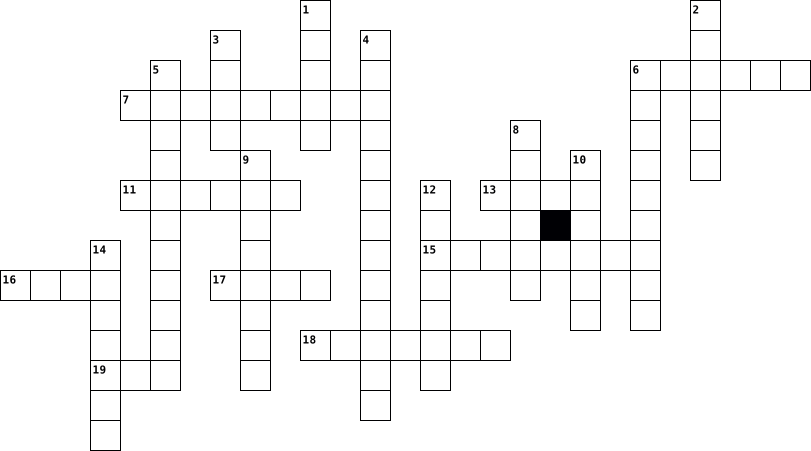
Across
- A meeting at which local members of a political party register their preference among candidates running for office or select delegates to attend a convention.
- Card- A card perforated according to a code, for controlling the operation of a machine, used in voting machines and formerly in programming and entering data into computers.
- A person who is professionally involved in politics, especially as a holder of or a candidate for an elected office.
- college- A body of people representing the states of the US, who formally cast votes for the election of the president and vice president.
- vote- An act of voting by the electorate of a country or area.
- The beginning or introduction of a system, policy, or period.
- A person advocating or supporting republican government.
- A person who applies for a job or is nominated for election.
- A formal indication of a choice between two or more candidates or courses of action, expressed typically through a ballot or a show of hands or by voice.
- Taking account of when reaching a total; including.
- A way in which something is usually done, especially within a particular area or activity.
- A payment
Down
- A process of voting, in writing and typically in secret.
- Free from outside control; not depending on another's authority.
- a size of paper, now standardized at 28 × 23 inches (approximately 711 × 584 mm).
- Chief importance; principal
- A person sent or authorized to represent others, in particular an elected representative sent to a conference.
- An important topic or problem for debate or discussion.
- An advocate or supporter of democracy.
- Responsibility.
- stupid or foolish person.
- A person who is proposed or formally entered as a candidate for an office or as the recipient of a grant or award.
22 Clues: A payment • Responsibility. • stupid or foolish person. • Chief importance; principal • An advocate or supporter of democracy. • Taking account of when reaching a total; including. • An important topic or problem for debate or discussion. • A process of voting, in writing and typically in secret. • A person advocating or supporting republican government. • ...
History 2020-06-17

Across
- country that gained independency from the UK
- places where people worked during the industrial revolution
- prison in france that was raided ny the citizens
- place where Louis lived in
- weapon that louis XVI was executed with
- thing that was thrown into the sea in the american revolution.
- new source of transportation during the industrial revolution
- the system where the people vote for their leader
- A movement in France
Down
- what you need to fire a weapon
- country where Marie Antoinette comes from
- spouse of Louis XVI
- the main fuel that was used to make steam
- /10 of what the farmers farmed that had to be given to the priest
- capital of France
- moevement that inspired people during 1715 – 1789
- people you're fighting against in war
- a movement in the nowadays USA
- labour the exploiting of childs to work
- the well being of the workers at factories
- primary source of food
21 Clues: capital of France • spouse of Louis XVI • A movement in France • primary source of food • place where Louis lived in • what you need to fire a weapon • a movement in the nowadays USA • people you're fighting against in war • labour the exploiting of childs to work • weapon that louis XVI was executed with • country where Marie Antoinette comes from • ...
HISTORY 2020-06-12

Across
- name of the Sun King
- relating to or characterised by industry.
- the state of being equal
- a machine with a heavy blade sliding vertically
- a solemn promise
- a forcible overthrow of a government
- remove forcibly from power
- social class below royalty
- one tenth of annual produce or earnings
- the highest legislature
- meeting where people come together to discuss issues
Down
- machines collectively
- a body of fundamental principles
- moral/legal entitlement to have or do something
- name of the military guard
- people ordained for Cristian duties
- famous fortress in Paris
- the dominant social system in medieval Europe
- French military leader and emperor
- a sovereign head of state
- group of buildings where goods are manufactured
21 Clues: a solemn promise • name of the Sun King • machines collectively • the highest legislature • the state of being equal • famous fortress in Paris • a sovereign head of state • name of the military guard • remove forcibly from power • social class below royalty • a body of fundamental principles • French military leader and emperor • people ordained for Cristian duties • ...
History 2020-08-19

Across
- Borders Egypt, Chad, and Ethiopia. Northern Africa
- The action of clearing a large area of trees.
- This country touches the Indian Ocean and borders Tanzania and Somalia.
- What is the cause of desertification
- What are the effects of water pollution/contamination.
- Home to the Nile, borders Libya and Sudan, Northern Africa
- what is sudan's govt type?
- Pollution The contamination of water bodies.
- What is the cause of deforestation
- In South Africa, the President is elected by members of the National Assembly who are elected by the citizens. This means that South Africa has WHICH type of government?
- This is a person who takes the risk of a new business enterprise.
- This is the longest river in Africa and was the cradle of the ancient Egyptian kingdoms.
- This river, also known as the Zaire River, is nearly 3,000 miles long, making it the second longest in Africa.
- where do the bantu live?
- This lake, in Africa, is named after a queen.
- Through late-2011, Libya's government was often called a "state of the masses," but in reality it was led by Colonel Muammar Abu Minyar al-Qadhafi. This means that the government was mostly based on____?
- This is equipment and factories used in the production of goods and services.
- This is a type of protectionist trade restriction that sets a physical limit on the quantity of a good that can be imported into a country in a given period of time.
- This is a tax on imported goods and is usually designed to protect domestic production of similar goods.
- A particular are which someone consecrates on or is an expert in
- This is a volcanic mountain in N Tanzania and is the highest peak in Africa.
- The total value of all the goods and services produced within a country in a given year
- This west African country has the greatest population on the entire continent and is also a member of OPEC.
- This is the name for an ecosystem that is characterized by wide, expansive grasslands and sparse amount of trees.
- This semi-arid tropical region runs from the Atlantic Ocean to the Red Sea and is the southern border of the Sahara Desert.
- A market where buyers and sellers have the right to sell and buy by their own preference or refuse to if they so choose
- Certificate of ownership in a company which entitles the shareholder to vote for the board of directors of the corporation.
Down
- This is the term that is used to describe the percentage of people in a country who have the ability to read and write.
- who was elected for president after being in jail for 27 years
- What are some solutions for water pollution
- of living This is the term used to describe the general way in which people live, focusing primarily on things like average income, health care availability, life expectancy, educational attainment, etc.
- share many common characteristics, such as language, physical features, customs and traditions
- Although this nation has made great progress in protecting the personal freedoms of its citizens since apartheid ended here in 1994, many people still live in poverty and the nation is faced with crime, corruption, and an HIV/AIDS epidemic.Which country is being described?
- This desert is found in the northern part of Africa and covers 3.5 million square miles.
- live in North Africa along the Mediterranean coast, most of this ethnic group practices Islam
- nat gj
- live on the east-African coast and practice Islam and traditional beliefs
- what is south africa's govt type?
- This desert is found in southwestern Africa and extends approximately 360,000 square miles in to Botswana, Namibia, and South Africa.
- This continent is the second-largest. It is widely regarded as the birthplace of man because the oldest human bones on record have been found there.
- This is the name given to the geological formation that stretches from east Africa to the Red Sea and beyond into Southwest Asia.
- In the center of Africa, home to Congo River, landlocked
- This is the process of prohibiting commerce and trade with another country. This is often done to affect the country to change an internal policy.
- to strengthen bonds of solidarity between all people of African descent
- they practice a Muslim culture and are linked to the Middle East
- the process by which land becomes desert.
- president of south Africa brought the apartheid system of racial segregation to an end
- the ability to read and write
- leaders realized the policy was hurting the country's economy
- after four years of negotiation, an act of the British Parliament (South Africa Act 1909) granted nominal independence, while creating the Union of South Africa on 31 May 1910.
- is a political movement for the unification of Africa and for national self-determination
- most live in Ghana, have a mainly traditional, spiritual, supernatural religion and are linked to ancestors, some are Christian
- This is the way in which a society deals with the production, distribution, and consumption of goods and services.
- This mountain range runs from Morocco to Tunisia in Northern Africa, running approximately 1,500 miles.
- share a common belief system
- The government of Kenya and South Africa could BOTH be described as
- This river is found in western Africa and runs from Guinea to Nigeria.
- Something that stops or slows down trade
- which gender has a higher literacy rate than the other
- This is a process, invention or method to interact with society, the environment or material objects.
- Kenyan citizens elect members of the national legislature to make the laws of the country, which means the country has what type of government?
61 Clues: nat gj • where do the bantu live? • what is sudan's govt type? • share a common belief system • the ability to read and write • what is south africa's govt type? • What is the cause of deforestation • What is the cause of desertification • Something that stops or slows down trade • the process by which land becomes desert. • What are some solutions for water pollution • ...
history 2020-12-02

Across
- ability of the media to draw public attention to certain issues and to ignore other issues
- The enumeration in the Constitution of certain rights shall not be construed to deny or disparage others retained by the people.
- Congress shall make no law respecting an establishment of religion, or prohibiting the free exercise thereof; or abridging the freedom of speech, or of the press, or the right of the people peaceably to assemble, and to petition the Government for a redress of grievances.
- second long segments
- a system of government in which a written constitution divides the powers of government between the national government and states government
- The right of the people to be secure in their persons, houses, papers, and effects, against unreasonable searches and seizures, shall not be violated, and no Warrants shall issue, but upon probable cause, supported by Oath or affirmation, and particularly describing the place to be searched, and the persons or things to be seized.
- No Soldier shall, in time of peace be quartered in any house, without the consent of the Owner; nor in time of war, but in a manner to be prescribed by law.
- the pronouncement adopted by the Second Continental Congress meeting in Philadelphia, Pennsylvania, on July 4, 1776
- newspaper, magazine
- The powers not delegated to the United States by the Constitution, nor prohibited by it to the States, are reserved to the States respectively, or to the people.
Down
- In Suits at common law, where the value in controversy shall exceed twenty dollars, the right of trial by jury shall be preserved, and no fact tried by a jury shall be otherwise reexamined in any Court of the United States, than according to the rules of common law.
- place to make announcements or advertise government
- a process by which voters can indicate their preference for their party's candidate, or a candidate in general, in an upcoming general election, local election, or by-election.
- a body of people representing the states of the US, who formally cast votes for the election of the president and vice president.
- a convention of a major political party, especially one that nominates a candidate for the presidency.
- keep people in office who are sympathetic to group wants and needs
- a regular election of candidates for office, as opposed to a primary election.
- Excessive bail shall not be required, nor excessive fines imposed, nor cruel and unusual punishments inflicted.
- influence government policy
- A well regulated Militia, being necessary to the security of a free State, the right of the people to keep and bear Arms, shall not be infringed.
- radio,tv
- In all criminal prosecutions, the accused shall enjoy the right to a speedy and public trial, by an impartial jury of the State and district wherein the crime shall have been committed; which district shall have been previously ascertained by law, and to be informed of the nature and cause of the accusation; to be confronted with the witnesses against him; to have compulsory process for obtaining witnesses in his favor; and to have the assistance of counsel for his defence.
- No person shall be held to answer for a capital, or otherwise infamous crime, unless on a presentment or indictment of a Grand Jury, except in cases arising in the land or naval forces, or in the Militia, when in actual service in time of War or public danger; nor shall any person be subject for the same offence to be twice put in jeopardy of life or limb; nor shall be compelled in any criminal case to be a witness against himself; nor be deprived of life, liberty, or property, without due process of law; nor shall private property be taken for public use without just compensation.
- factions are bad, but a necessary evil
- the main means of mass communication
25 Clues: radio,tv • newspaper, magazine • second long segments • influence government policy • the main means of mass communication • factions are bad, but a necessary evil • place to make announcements or advertise government • keep people in office who are sympathetic to group wants and needs • a regular election of candidates for office, as opposed to a primary election. • ...
history 2021-02-27
Across
- Obama, an American politician and attorney who served as the 44th president of the United States from 2009 to 2017.
- Baker, an American-born French entertainer, French Resistance agent, and civil rights activist. Her career was centered primarily in Europe, mostly in her adopted France.
- T. Washington, an American educator, author, orator, and adviser to multiple presidents of the United States.
- Parks, an American activist in the civil rights movement best known for her pivotal role in the Montgomery bus boycott.
- Hughes, an American poet, social activist, novelist, playwright, and columnist from Joplin, Missouri.
- Neale Hurston, an American author, anthropologist, and filmmaker.
- Angelou, an American poet, memoirist, and civil rights activist.
- Wheatley, the first African-American author of a published book of poetry. Born in West Africa, she was sold into slavery at the age of seven or eight.
- B. Wells, an American investigative journalist, educator, and early leader in the civil rights movement.
Down
- Powell, an American politician, diplomat and retired four-star general who served as the 65th United States Secretary of State from 2001 to 2005.
- Garvey, a Jamaican political activist, publisher, journalist, entrepreneur, and orator.
- Scott, an enslaved African-American man in the United States who unsuccessfully sued for his freedom and that of his wife, Harriet Robinson Scott, and their two daughters
- an American sociologist, socialist, historian, civil rights activist, Pan-Africanist, author, writer and editor.
- Rice, an American diplomat, political scientist, civil servant, and professor who is the current director of the Hoover Institution at Stanford University.
- an American singer-songwriter, guitarist, and record producer.
- Washington Carver, an American agricultural scientist and inventor who promoted alternative crops to cotton and methods to prevent soil depletion.
- O. Davis, a United States Air Force general and commander of the World War II Tuskegee Airmen. He was the first black Brigadier general in the United States Air Force.
- Luther King Jr., an African American Baptist minister and activist who became the most visible spokesperson and leader in the Civil Rights Movement from 1955 until his assassination in 1968.
- X, an African American Muslim minister and human rights activist who was a popular figure during the civil rights movement.
- Tubman, an American abolitionist and political activist. Born into slavery, Tubman escaped and subsequently made some 13 missions.
20 Clues: an American singer-songwriter, guitarist, and record producer. • Angelou, an American poet, memoirist, and civil rights activist. • Neale Hurston, an American author, anthropologist, and filmmaker. • Garvey, a Jamaican political activist, publisher, journalist, entrepreneur, and orator. • ...
HISTORY 2016-12-07

Across
- A military victory
- When people leave their country to go live in another country
- A condition when people are owned by other people and get no money
- A piece of writing that gives information about the past
- A list or description of events in the order in which they happen
- A highly developed society with central organization
- The arrival of people from another country who plan to settle permanently in the new country
- A desire by people who have a common background to have their own independent country
- A government run by a king
- A disease that spreads quickly among many people
- A series of people from one family who rule a country
- A place where something is, was, or happened
- To fight against the government or other power
- The time period when a king or queen rules a country
Down
- The careful technique that archaeologists use to dig a site
- When countries that have been apart come together again
- A fear or dislike of foreigners
- Many-sided or involving many countries
- A time period with certain characteristics
- Ancient history, especially referring to Greek and Roman times
- The outer edge of land exploration
- Refers to the previous 100 years
- Ten years
- The study of past events
- An agreement or accord between nations
25 Clues: Ten years • A military victory • The study of past events • A government run by a king • A fear or dislike of foreigners • Refers to the previous 100 years • The outer edge of land exploration • Many-sided or involving many countries • An agreement or accord between nations • A time period with certain characteristics • A place where something is, was, or happened • ...
History 2017-05-19

Across
- 1st hispanic American to receive the Congressional Medal of Honor
- started raid at Harpers Ferry
- series of 85 essays written to support the ratification of the Constitution
- against the ratification of the constitution
- plains largest physical land region
- Ended french and Indian War
- wrote “Common Sense”
- The first permanent english settlement in US
- “The shot heard round the world”
- our 1st president
- wrote the mayflower compact
- influenced 2nd amendment
- Founder of rhode island
Down
- leader of the 1st great awakening
- France joined colonists war efforts against Britain (include ‘Battle’)
- 1st battle of the Civil War (include ‘Battle’)
- leading general for the union
- Document written by the puritans
- wanted a strict interpretation of the constitution
- known for saying “and as for me...give me liberty or give me death!”
- to vote to bring charges against
- changes, corrections or additions to a law or the constitution
- invented the bifocals
- he was feathered and tarred by Boston population
- African american spy/slave
25 Clues: our 1st president • wrote “Common Sense” • invented the bifocals • Founder of rhode island • influenced 2nd amendment • African american spy/slave • Ended french and Indian War • wrote the mayflower compact • started raid at Harpers Ferry • leading general for the union • Document written by the puritans • to vote to bring charges against • “The shot heard round the world” • ...
History 2017-05-20

Across
- things made or used by people in the past such as ornaments
- the act of buying and selling goods or services
- the sea people who lived in boats along the river
- human beings
- the act of conveying intended meanings from one entity or group to another through the use of mutually understood signs and semiotic rules
- a family of rulers who rule over a country for a long period of time
- unearthing or digging up, especially for archaeological purposes
- the arrangement of events or dates in the order of their occurrence
- a social science that deals with the production, distribution, and consumption of goods and services)
- a type of tradition which is used to pass down legends, myths, tales and stories
Down
- the environmental history of an individual
- the narrative and analysis of ___________ events, ideas, movements, organs of government, voters, parties and leaders
- an inherited, established, or customary pattern of thought, action, or behavior (such as a religious practice or a social custom)
- written by a court official about the rulers of the Melaka Sultanate and their descendants
- the old name of Singapore
- organized system of beliefs and practices revolving around, or leading to, a transcendent spiritual experience
- a society in an advanced state of social development (e.g., with complex legal and political and religious organizations)
- refers to the period of time before mankind learnt to read and write; it is also the earliest period in the past
- in latin it refers to the year Jesus Christ was born
- a chronicle of events
20 Clues: human beings • a chronicle of events • the old name of Singapore • the environmental history of an individual • the act of buying and selling goods or services • the sea people who lived in boats along the river • in latin it refers to the year Jesus Christ was born • things made or used by people in the past such as ornaments • ...
history 2017-05-19

Across
- the belief that race determines traits and capabilities
- incorporated a country within a state
- explored the Congo River in Central America in the 1870s
- the leader of a movement for independence in the Philippines
- opened in 1914 and was one of the world's greatest engineering feats of its time
- a governor who ruled as a representative of a monarch
- extension of a nation's power over other lands
- Spanish and Portuguese who resided temporarily in Latin America for political or economic gain and then returned to their homeland
- defeated the Spanish fleet in Manila Bay
- He declared that the Americans were off limits for any European colonization efforts(2 words)
- after the French conquest of Indochina, it was the only remaining free state in southeast asia
- people who are native to a region
- took the title Empress of India
- a political unit that depends on another gov. for its protection
- Rivalries between _____ and Muslims kept the Indians from working together
Down
- Seized power and established a separate Egyptian state
- many Indian nationalist were from urban areas such as _____, Madras, and Calcutta
- descendants of Europeans who had permanently settled in Latin America
- held the office of president 11 different times between 1833 and 1855(2 words)
- Called for a share in the governing process (3 words)
- Indian soldier
- local rulers were allowed to keep their authority and status in a new colonial setting (2 words)
- Winner of the Nobel Prize in Literature in 1913
- Italy tried to take over ______ in 1896
- people of mixed European and Native American descent
- Born in 1869 in Gujarat and later studied in London and became a lawyer
26 Clues: Indian soldier • took the title Empress of India • people who are native to a region • incorporated a country within a state • Italy tried to take over ______ in 1896 • defeated the Spanish fleet in Manila Bay • extension of a nation's power over other lands • Winner of the Nobel Prize in Literature in 1913 • people of mixed European and Native American descent • ...
History 2016-12-18

Across
- Cousin's ship
- Fr Kennedy serviced in this
- ........... College, Galong
- Ned's county
- Number of Ned's children
- Ned's cousin
- ........ convicts were transported from Ballagh with Ned?
- Ryan's Galong church
- Artist who came to dinner
- St Patrick's Rock
- Founding place of the Redemptorists
- He was hanged
- Irish library classification
- Ned's daughter
- Museum's original use
- Ryan Boorowa property
- Ecclesiastical visitor
- Appointed a magistrate
- Family of benefactors
- Galong's founder
- Cemetery wall has ......coping
- Deputy Surveyor General
Down
- ...... water filter
- Ned's crime
- Constructed elaborate Ryan tombstones
- First mass celebrant in new chapel
- Congregation of the Most Holy Redeemer
- Ned's transport to NSW
- Accepted offer of NSW troops for the Sudan War
- Scale makers
- Galong's owners
- Shakespearian(?) separator
- Years in Ned's sentence
- The losing order
- Innovative science projects
- Ned Ryan's wife
- Ned's homestead
- 'Our .... of Fatima'
- Hill Formerly Bushranger's Hill
- '........of the Lachlan'
- Ned's supposed first squattage
- Metal artisan
42 Clues: Ned's crime • Ned's county • Scale makers • Ned's cousin • Cousin's ship • He was hanged • Metal artisan • Ned's daughter • Galong's owners • Ned Ryan's wife • Ned's homestead • The losing order • Galong's founder • St Patrick's Rock • ...... water filter • Ryan's Galong church • 'Our .... of Fatima' • Museum's original use • Ryan Boorowa property • Family of benefactors • Ned's transport to NSW • ...
History 2016-05-09

Across
- II Hybrid varieties adapted Chemical fertilization become the norm Herbicides and Insecticides become norm
- genetic structur
- Introduction of fertilizers and Animal manures and Crop rotations
- Larger farms Advanced plant breeding
- Scientific revolution
- 23ad-79ad wrote encyclopedia
- wrote origins of plants
- founder of the binomial system
- Land-Grant Colleges 1890 Colleges
- Experiment Stations
- 40ad-90ad greek physician
Down
- father of genetics
- Period Beginning of monoculture and Irrigation
- Monastic gardens 80-90 percent people farmed
- 371bc-297bc worked with aristotle
- died in augusta ga owned fruit island nurseries
- created ammonia to create fertilizer
- marine biologist
- born in moscow studied genetics and horticultural
- published treasure on the vine
- known for classifying plants
21 Clues: genetic structur • marine biologist • father of genetics • Experiment Stations • Scientific revolution • wrote origins of plants • 40ad-90ad greek physician • 23ad-79ad wrote encyclopedia • known for classifying plants • founder of the binomial system • published treasure on the vine • 371bc-297bc worked with aristotle • Land-Grant Colleges 1890 Colleges • ...
History 2020-10-27

Across
- to control or be majority of
- a very large body of salt water an example is the Atlantic Ocean
- a large body of water that flows
- a tableland that is fairly flat
- the low area between mountains like the Rio Grande Valley
- flat areas of land
- a large mass land an example Africa
- an area that is unified by one or more characteristics
- a large mass of ice that moves slowly
- a small body of water surrounded by land
- a sunken area in plateau found between mountain ranges
- plains, it is the largest region in Texas and it extends from Eastern and southern parts of the United States into Texas and South into Mexico
- a large body of water surrounded by land
- plains, they are a vast high plateau of semiarid grasslands and their altitude is between 5,000 and 6,000
- a series of mountains
- a very tall landform for example the Mt. Everest in the Himalayas
- a freshwater wetland with muddy land
- an area at the mouth of the river formed and sparse vegetation
Down
- a river that flows into a larger river
- an area of land surrounded on three sides of water like Italy
- a mountain with a vent where lava, steam and ash come out sometimes violently
- existing in a high degree like strong or extreme
- a mix of sun-dried earth and straw used to build houses
- water falling from a height, usually from a cliff or the side of a mountain
- and basin, a very dry place and has the River Grande close by
- a growth of coral under the sea and near the surface
- a large flat area with grasses and a few trees
- a valley that is deep and has steep sides
- a steep rock face often found by the ocean
- a platform of ice floating near the coast
- a ring of coral that makes an island
- a hill of sand
- a person who moves place to place
- a raised mound of land
- a person believed to have the power to summon spirits and heal the sick
- a flat treeless area, where the soil is frozen
- a waterway made by man for irrigation and easier transportation like the Suez Canal
- an area of ocean partially surrounded by land
- a wetland near lakes and streams
- a narrow body of water that connects two large bodies of water
40 Clues: a hill of sand • flat areas of land • a series of mountains • a raised mound of land • to control or be majority of • a tableland that is fairly flat • a large body of water that flows • a wetland near lakes and streams • a person who moves place to place • a large mass land an example Africa • a ring of coral that makes an island • a freshwater wetland with muddy land • ...
History 2020-10-27

Across
- the low area between mountains like the Rio Grande Valley
- a large mass land an example Africa
- a growth of coral under the sea and near the surface
- a series of mountains
- an area that is unified by one or more characteristics
- an area at the mouth of the river formed and sparse vegetation
- a large body of water surrounded by land
- a ring of coral that makes an island
- a narrow body of water that connects two large bodies of water
- a person believed to have the power to summon spirits and heal the sick
- plains, they are a vast high plateau of semiarid grasslands and their altitude is between 5,000 and 6,000
- a large mass of ice that moves slowly
- a steep rock face often found by the ocean
- a small body of water surrounded by land
- a person who moves place to place
- a hill of sand
- plains, it is the largest region in Texas and it extends from Eastern and southern parts of the United States into Texas and South into Mexico
- and basin, a very dry place and has the River Grande close by
- existing in a high degree like strong or extreme
- a raised mound of land
Down
- a mountain with a vent where lava, steam and ash come out sometimes violently
- a freshwater wetland with muddy land
- a mix of sun-dried earth and straw used to build houses
- a large flat area with grasses and a few trees
- a flat treeless area, where the soil is frozen
- a river that flows into a larger river
- a large body of water that flows
- a very large body of salt water an example is the Atlantic Ocean
- to control or be majority of
- a wetland near lakes and streams
- an area of ocean partially surrounded by land
- water falling from a height, usually from a cliff or the side of a mountain
- a valley that is deep and has steep sides
- an area of land surrounded on three sides of water like Italy
- a sunken area in plateau found between mountain ranges
- a very tall landform for example the Mt. Everest in the Himalayas
- flat areas of land
- a tableland that is fairly flat
- a waterway made by man for irrigation and easier transportation like the Suez Canal
- shelf, a platform of ice floating near the coast
40 Clues: a hill of sand • flat areas of land • a series of mountains • a raised mound of land • to control or be majority of • a tableland that is fairly flat • a large body of water that flows • a wetland near lakes and streams • a person who moves place to place • a large mass land an example Africa • a freshwater wetland with muddy land • a ring of coral that makes an island • ...
History 2020-10-27

Across
- plains they are a vast high plateau of semiarid grasslands and their altitude is between 5,000 and 6,000
- a series of mountains
- the low area between mountains like the Rio Grande Valley
- a waterway made by man for irrigation and easier transportation like the Suez Canal
- a raised mound of land
- a hill of sand
- a ring of coral that makes an island
- a person who moves place to place
- a valley that is deep and has steep sides
- a small body of water surrounded by land
- to control or be majority of
- an area that is unified by one or more characteristics
- a tableland that is fairly flat
- a large mass land an example Africa
- plains it is the largest region in Texas and it extends from Eastern and southern parts of the United States into Texas and South into Mexico
- a narrow body of water that connects two large bodies of water
- a large flat area with grasses and a few trees
- a large body of water that flows
- a sunken area in plateau found between mountain ranges
- an area of ocean partially surrounded by land
Down
- water falling from a height, usually from a cliff or the side of a mountain
- a large mass of ice that moves slowly
- a large body of water surrounded by land
- a flat treeless area, where the soil is frozen
- flat areas of land
- a mountain with a vent where lava, steam and ash come out sometimes violently
- a steep rock face often found by the ocean
- existing in a high degree like strong or extreme
- a very tall landform for example the Mt. Everest in the Himalayas
- and basin, a very dry place and has the River Grande close by
- a very large body of salt water an example is the Atlantic Ocean
- an area at the mouth of the river formed and sparse vegetation
- a growth of coral under the sea and near the surface
- a river that flows into a larger river
- a wetland near lakes and streams
- a mix of sun-dried earth and straw used to build houses
- a person believed to have the power to summon spirits and heal the sick
- an area of land surrounded on three sides of water like Italy
- shelf, a platform of ice floating near the coast
- a freshwater wetland with muddy land
40 Clues: a hill of sand • flat areas of land • a series of mountains • a raised mound of land • to control or be majority of • a tableland that is fairly flat • a wetland near lakes and streams • a large body of water that flows • a person who moves place to place • a large mass land an example Africa • a ring of coral that makes an island • a freshwater wetland with muddy land • ...
History 2020-10-22

Across
- person who operates a business
- change something radically
- old beliefs that people used to have
- picture
- total amount of money
- started in 1861
- a use of tracks to get to one place or another
- car
- something made to maintain control
- something to clean dishes (besides women)
- the number of people who live in one area
- fuel used for lanterns
- testing something
Down
- the best country in the world
- a phone
- person from a foreign country
- automatic sewing machine
- a stock of something
- support or to give hope in something
- to make
- total value of goods
- to tax
- new things made
- advancements to make life easier
- water power
- a cable to travel information
- refined into fuels
- move something one place to another
- political authority over actions
- unjustly infliction hardship on a type of people
- a lot of something
31 Clues: car • to tax • a phone • to make • picture • water power • new things made • started in 1861 • testing something • refined into fuels • a lot of something • a stock of something • total value of goods • total amount of money • fuel used for lanterns • automatic sewing machine • change something radically • the best country in the world • person from a foreign country • a cable to travel information • ...
History 2021-05-20

Across
- shift national economy to produce things needed for war
- identification with one's own nation and support for its interests, especially to the exclusion or detriment of the interests of other nations.
- a communist ideology and the main communist movement throughout the 20th century
- a type of combat in which opposing troops fight from trenches facing each other.
- By the end of the war, Great Britain had formed the world's first air force to be independent of either army or naval control, the Royal Air Force.
- abbreviation of Unterseeboot, (“undersea boat”), a German submarine. ... The destruction of enemy shipping by German U-boats was a spectacular feature of both World Wars I and II.
- the first worldwide intergovernmental organisation whose principal mission was to maintain world peace.
- an agreement made by opposing sides in a war to stop fighting for a certain time; a truce
- Neutral country in WWI; Beligum
- involved the governments, economies and populations of participating nations to an extent never seen before in history.
- Bosnian Serb member of Young Bosnia who sought an end to Austro-Hungarian rule in Bosnia and Herzegovina
- Treaty of Brest-Litovsk was a peace treaty signed on March 3, 1918, between the new Bolshevik government of Soviet Russia and the Central Powers (Germany, Austria-Hungary, Bulgaria, and the Ottoman Empire), that ended Russia's participation in World War I.
- a statement of principles for peace that was to be used for peace negotiations in order to end World War I.
- an agreement between Germany, Austria-Hungary, and Italy
Down
- were levied on the Central Powers after World War I to compensate the Allies for some of their war costs.
- a 400-plus mile stretch of land weaving through France and Belgium from the Swiss border to the North Sea, was the decisive front during the First World War.
- informal understanding between the Russian Empire, the French Third Republic and Great Britain.
- were a radical, far-left, and revolutionary Marxist faction founded by Vladimir Lenin and Alexander Bogdanov
- was a secret diplomatic communication issued from the German Foreign Office in January 1917 that proposed a military alliance between Germany and Mexico if the United States entered World War I against Germany.
- were a group of nations fighting against the Allied Powers during World War I. The members included Germany, Austria-Hungary, the Ottoman Empire, Bulgaria and their territories.
- was a Russian Marxist revolutionary, political theorist and politician.
- was the heir presumptive to the throne of Austria-Hungary referred to as the Austro-Hungarian Empire or the Dual Monarchy, was a constitutional monarchy and great power in Central Europe between 1867 and 1918.
- a theater of operations that encompassed at its greatest extent the entire frontier between the Russian Empire and Romania on one side and the Austro-Hungarian Empire, Bulgaria, the Ottoman Empire and the German Empire on the other.
- The Allies of World War I or Entente Powers were a coalition of countries led by France, Britain, Russia, Italy, Japan and the United States against the Central Powers
- public statement issued by the British government in 1917 during the First World War announcing support for the establishment of a "national home for the Jewish people" in Palestine, then an Ottoman region with a small minority Jewish population.
- was a Russian mystic and self-proclaimed holy man who befriended the family of Nicholas II, the last emperor of Russia, and gained considerable influence in late Imperial Russia.
- most important of the peace treaties that brought World War I to an end.
- served as the 28th president of the United States from 1913 to 1921
28 Clues: Neutral country in WWI; Beligum • shift national economy to produce things needed for war • an agreement between Germany, Austria-Hungary, and Italy • served as the 28th president of the United States from 1913 to 1921 • was a Russian Marxist revolutionary, political theorist and politician. • ...
History 2021-06-12

Across
- support kings
- go to the holy spot
- only 1 god
- believe in many different gods
- the world in history
- an empire
- dominated over china
- a bad virus
- sculpture
- birthplace of muhammad
- cotton fields
Down
- a printing machine
- writer
- religious wars
- everything is perfect
- one of the biggest battles
- poly math
- mosque
- giving to others
- to help you feel better
- fancy writting
- rome city
- important man
- one of the 2 main religions of islam
- born in cathlic church
- its a long river
- holy book
- pillars of faith
- religious leader
- type of math with letters
30 Clues: writer • mosque • poly math • rome city • an empire • holy book • sculpture • only 1 god • a bad virus • support kings • important man • cotton fields • religious wars • fancy writting • giving to others • its a long river • pillars of faith • religious leader • a printing machine • go to the holy spot • the world in history • dominated over china • everything is perfect • born in cathlic church • ...
History 2021-06-23
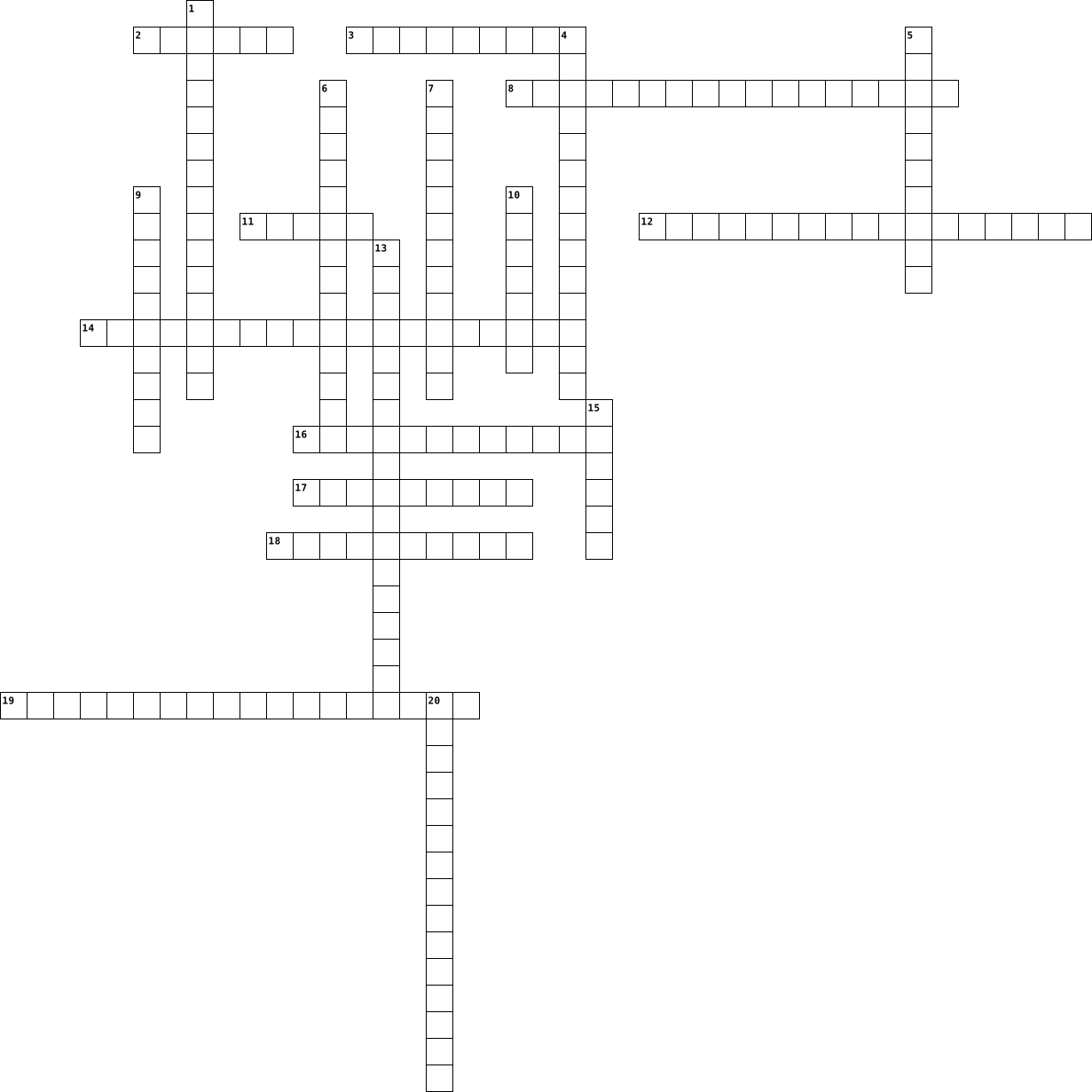
Across
- suffered high death rates
- dominated Atlantic commerce
- pounds of Tobacco exported
- crop that transformed Barbados
- English corruption of Deutsch
- subdivided land among sons
- first permeant English settlement
- 50 acres of free land
- developed sugar plantations with
- # of colonists in Chesapeake
Down
- dispute over Virginia’s Indian policy
- common name for Tobacco
- outnumbered German immigrants
- Algonquian chief
- not indentured servants or slaves
- made the middle colonies diverse
- outnumbered Spaniards ten to one
- 80% of immigrants
- free farmer
- growth through reproduction
20 Clues: free farmer • Algonquian chief • 80% of immigrants • 50 acres of free land • common name for Tobacco • suffered high death rates • pounds of Tobacco exported • subdivided land among sons • dominated Atlantic commerce • growth through reproduction • # of colonists in Chesapeake • outnumbered German immigrants • English corruption of Deutsch • crop that transformed Barbados • ...
History 2021-04-06
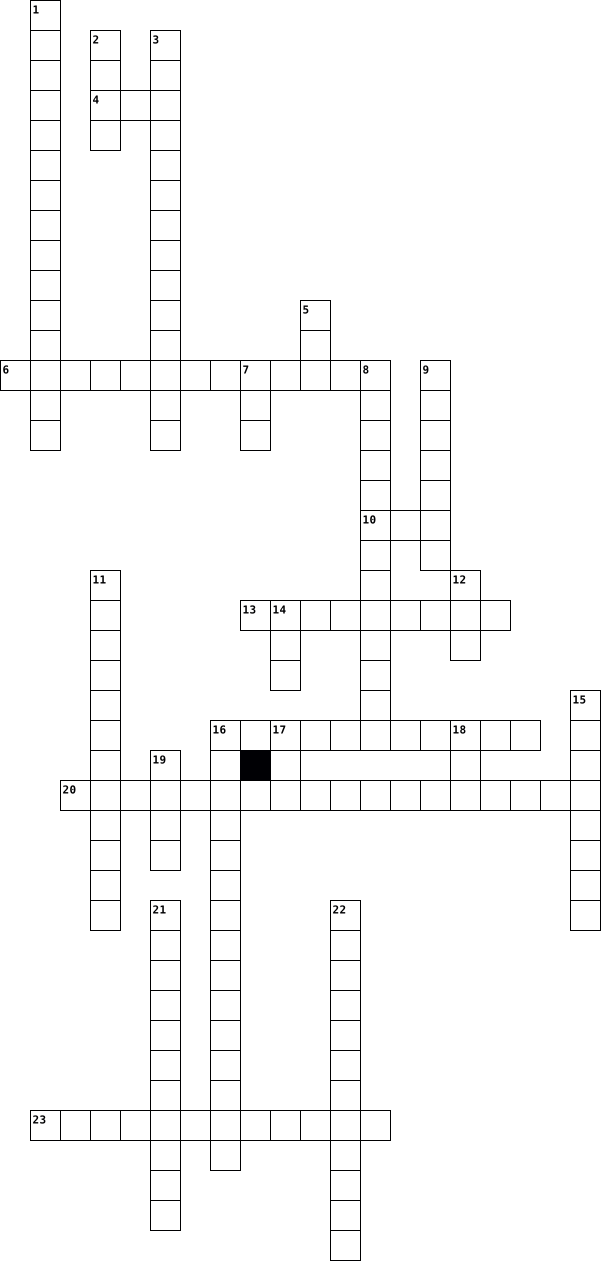
Across
- anagram for Soc security act
- chats with FDR
- anagram for wrks prgs admin
- relief for poor
- 15 major laws passed
- neutral party
- 1st mistake of FDR
Down
- Rooseveltleft budget
- fair labor standards act
- sec of labor
- public works admin
- Civilian conservation corps
- strike in flint MI
- policy to end the depression
- closed banks
- securitiesandexchangecommission
- anagram for Amer lib league
- Keynesianism named after
- treasury secretary
- national housing act
- anagram for agriculture program
- federal deposit insurance
- workout conflicts
- reduce $ value
24 Clues: sec of labor • closed banks • neutral party • chats with FDR • reduce $ value • relief for poor • workout conflicts • public works admin • strike in flint MI • treasury secretary • 1st mistake of FDR • Rooseveltleft budget • 15 major laws passed • national housing act • fair labor standards act • Keynesianism named after • federal deposit insurance • Civilian conservation corps • ...
History 2021-04-06
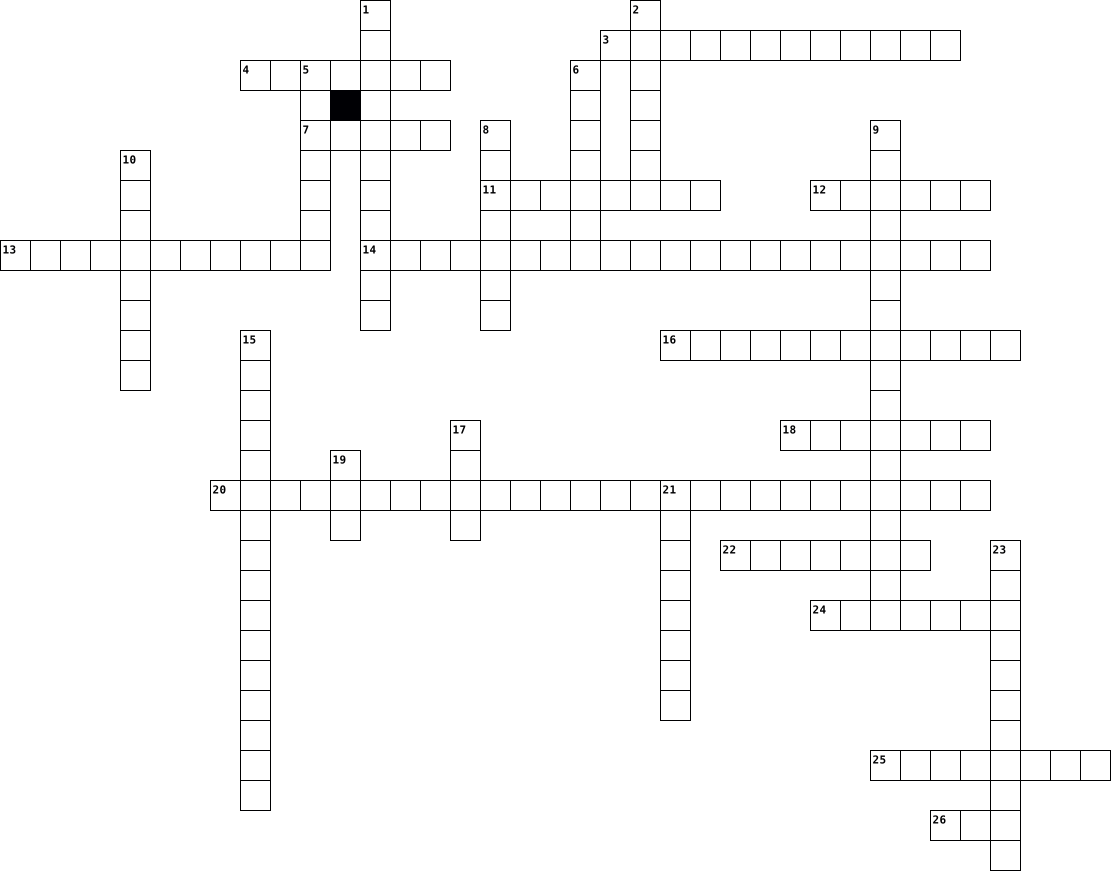
Across
- reduce value of dollar
- money
- progress administration- headed by harry hopkins a new federal agency
- labor relations board- 5 members appointed by us president
- security act- provide security for elerds and unemployed
- basic
- business leade
- direct talks for held
- as a result of
- party
- important
- strike- workers did not work
- liberty league- business leaders and anit new deal politicians get together
- headed by harry hopkins a new
Down
- bills sent to congress
- policy-----made panama canal,expanded the navy,great white fleet tp naval power, Emergency banking act--- helped hundreds worldwide panama canal,expanded the navy,great white fleet tp naval power, Emergency banking act--- helped hundreds
- Roosevelt’s policies
- policy-----made Deficit spending- borrowed money to pay for programs
- arbitration-neutral party listen to both sides and decide
- provide security for elerds and unemployed
- clear
- borrowed money
- 5 members appointed by us
- down strike- workers did not work and protested
- collection of ideas
- closed banks
26 Clues: money • clear • basic • party • important • closed banks • business leade • borrowed money • as a result of • collection of ideas • Roosevelt’s policies • direct talks for held • bills sent to congress • reduce value of dollar • 5 members appointed by us • strike- workers did not work • headed by harry hopkins a new • provide security for elerds and unemployed • ...
History 2024-04-23

Across
- of arc ¨could hear the Lord¨
- Dutch Renaissance humanist, social critic, and priest
- Europe
- Muhammad
- art First form of art
- Document that limited power of king
- the past Printing press
- praise of the folly Catholic church
- pillars religion
- writing
- Thomas More Henry VIII
- City-state
- Taxes
- the beginning of the new
- Powerful family in Florence
- Italy city-state
- era New
- Islam
- Jesus
Down
- Catholic church
- romeo and Juliet
- How to be a leader
- printing press
- Sistine chapel
- Wealthy individuals who supported the arts
- Perfect society
- era Old
- painter of the Mona Lisa
- Emphasized humans rather than religious ideas
- the terrible Man who caused havoc among innocent people
30 Clues: Taxes • Islam • Jesus • Europe • writing • Muhammad • City-state • era Old • era New • printing press • Sistine chapel • Catholic church • Perfect society • romeo and Juliet • Italy city-state • How to be a leader • pillars religion • painter of the Mona Lisa • the beginning of the new • Thomas More Henry VIII • Powerful family in Florence • art First form of art • ...
history 2024-05-25

Across
- Part of legal process to become a citizen
- a political party's mission statement
- using your clout to get others nominated
- people vote for elective office fill
- making someones words seem worse than is
- This is when groups come together between government and individual matters
- prejudice through the internet
- people vote for their nominee
- A illegal person within the U.S
- The opposite of conservatism
- This title gives you certain access and rights
- a meeting of party members to choose who runs for office
- a candidates slogan sentence or statement
- a plan by the government to reach a answer
Down
- authorization to live and work in the U.S
- Fundraisers for candidates
- Practicing holding Traditional Values
- the sum of peoples opinion
- not wining most of the votes but won more than others
- shaming on a party's bad side
- two parties taking over politics(think of USA)
- Power in politics should be separated
- people who are more political are more likely to vote for party
- Political belief
- The percentage you are likely to correspond in a poll
- gathering publics preference
- A group of people with the same set of ideas
- Main goal is to get it's candidate into office
- a big part of the internet to reach a audience
- Influencing a politician on a certain matter
30 Clues: Political belief • Fundraisers for candidates • the sum of peoples opinion • gathering publics preference • The opposite of conservatism • shaming on a party's bad side • people vote for their nominee • prejudice through the internet • A illegal person within the U.S • people vote for elective office fill • Practicing holding Traditional Values • ...
history 2023-10-02

Across
- a place for immigrants to go to eat and stay
- largest immigration station
- very tall building with many floors
- invented to light up a room
- production with machinery
- buisness leader with positive impact on society
- set of rooms/houses
- crop and livestock production
- created to mass produce steel
- people who come from a different country
Down
- main immigration facility
- keeping things clean
- buisness person who becomes rich from unethical ways
- developments of industries
- land transportation to transport things and people
- factor that attracts people somewhere
- imports people or things up and down floors so you don't have to walk
- factors that make people leave somewhere
- restricted immigration in the US
- favoring native born people over immigrants
20 Clues: set of rooms/houses • keeping things clean • main immigration facility • production with machinery • developments of industries • largest immigration station • invented to light up a room • crop and livestock production • created to mass produce steel • restricted immigration in the US • very tall building with many floors • factor that attracts people somewhere • ...
History 2023-09-25

Across
- a person living in a territory
- to outlaw or forbid
- the movement to end slavery
- to make room for
- cut off from others
- an effect that produces change
- passed on through family
- a car that uses gas or electricity
- a long period of food shortage
Down
- to get rid of
- to be useful to
- to improve the quality of something
- a 3D model of Earth
- capital of Israel
- inner island in Southeast Asia
- an alliance
- a barrier that controls the flow of water
- to strengthen
- a god or goddess
- a cowboy of South America
20 Clues: an alliance • to get rid of • to strengthen • to be useful to • a god or goddess • to make room for • capital of Israel • a 3D model of Earth • to outlaw or forbid • cut off from others • passed on through family • a cowboy of South America • the movement to end slavery • a person living in a territory • inner island in Southeast Asia • an effect that produces change • ...
history 2023-11-18

Across
- alberta women focused on women's rights
- right to vote
- first province to allow women to vote
- hockey night in _____
- connecting the east to west since 1885
- party led by thomas crerar
- precursor to the RCMP
- music popularized by oscar peterson
- fundamental principles
- classmate of king at university of toronto
Down
- statute of ____ 1931
- in effect for 11 years in ontario
- edwards vs canada, canadian constitutional case
- known for their energetic freedom
- first woman elected to canadian parliament
- affair between major political figures in 1926
- major explosion in 1917
- meredith, angus
- first woman police magistrate
- longest serving prime minister
20 Clues: right to vote • meredith, angus • statute of ____ 1931 • hockey night in _____ • precursor to the RCMP • fundamental principles • major explosion in 1917 • party led by thomas crerar • first woman police magistrate • longest serving prime minister • in effect for 11 years in ontario • known for their energetic freedom • music popularized by oscar peterson • ...
History 2023-08-08

Across
- A group of individuals connected by blood or strong relationships.
- A vast body of saltwater covering most of the planet's surface.
- A tall natural elevation on the Earth's surface.
- A series of thoughts, images, and feelings that occur during sleep.
- The early part of the day, from sunrise to noon.
- The power or right to act, speak, or think without restraint.
- An insect that emits light, especially in the evening.
- The time of day when the sun appears above the horizon.
- Water droplets falling from the sky due to atmospheric conditions.
- The place where one lives and feels comfortable.
- The light and heat from the sun.
- The sound produced when people find something amusing.
- Organized sound patterns created using instruments or voices.
- An exciting or unusual experience or journey.
- Absence of noise or disturbance; peacefulness.
- A tall plant with a trunk and branches, often bearing leaves or fruits.
Down
- A field of grass or wildflowers.
- An intense feeling of deep affection and care.
- A luminous celestial object visible in the night sky.
- A natural flowing watercourse, often leading to a larger body of water.
- A colorful arc in the sky caused by sunlight and water droplets.
- A state of well-being and contentment.
- An area where plants, flowers, and sometimes vegetables are grown.
- The time of day when the sun goes below the horizon.
- An insect with colorful wings that undergo metamorphosis.
- The light reflected from the moon's surface.
- A close and mutual relationship between people.
- A written or printed work that contains information or stories.
- The natural world and its phenomena.
- A natural flowing watercourse, often leading to a larger body of water.
30 Clues: A field of grass or wildflowers. • The light and heat from the sun. • The natural world and its phenomena. • A state of well-being and contentment. • The light reflected from the moon's surface. • An exciting or unusual experience or journey. • An intense feeling of deep affection and care. • Absence of noise or disturbance; peacefulness. • ...
History 2023-08-08

Across
- okkjf
- jilop
- golongan menepati lapisan terbawah masyarakat Indonesia pada masa kolonial
- jokop
- sapop
- pkuk
- bangsa barat yang pertama kali datang ke Indonesia dan kemudian memonopoli perdagangan
- etis korek
- kokekw
Down
- jiolp
- bakok
- kapitan sula
- qwerty
- kota yang pertamakali didatangi oleh Belanda
- aku kan
- kiki
- gorel
- kokok
- belah lokok
- daerah Indonesia yang paling menderita akibat tanam paksa
20 Clues: pkuk • kiki • okkjf • jiolp • jilop • bakok • jokop • sapop • gorel • kokok • qwerty • kokekw • aku kan • etis korek • belah lokok • kapitan sula • kota yang pertamakali didatangi oleh Belanda • daerah Indonesia yang paling menderita akibat tanam paksa • golongan menepati lapisan terbawah masyarakat Indonesia pada masa kolonial • ...
History 2024-05-10

Across
- Where is the Great Wall of China?
- largest island in the Caribbean
- Jose Where is Petra located?
- What country has the longest coastline?
- capital city of Italy
- What is the most dangerous country?
- River Which rivers nickname is “the big muddy?’’
- largest lake in the US
- continent in all four hemispheres
- all the plants and animals in an area
- least populated state in the US
- capital city of Greece
Down
- map that shows a particular theme or topic
- capital city of Senegal
- Which river runs through the Grand Canyon?
- smallest country in the world
- location the precise point where a place is located on Earth
- capital city of France
- the layer of air that surrounds Earth
- river's nickname is "father of African rivers"
- creation and movement of glaciers
- Where is Machu Picchu located?
- molten, or liquid, rock that lies beneath Earth’s crust
- Where is Petra located?
- How many U.S. state capitals lie west of Los Angeles?
25 Clues: capital city of Italy • capital city of France • largest lake in the US • capital city of Greece • capital city of Senegal • Where is Petra located? • Jose Where is Petra located? • smallest country in the world • Where is Machu Picchu located? • largest island in the Caribbean • least populated state in the US • Where is the Great Wall of China? • creation and movement of glaciers • ...
History 2024-05-16

Across
- Main City in Georgia where a significant battle was fought.
- The Primary goal of the Confederate Army at ____ was to secure a victory on Northern soil and potentially influence European powers to recognize the Confederacy diplomatically.
- were a group of anti-slavery activists and guerrilla fighters primarily based in Kansas during the Bleeding Kansas period of the mid-1850s.
- The primary objective of the battle of_____ was to capture the Confederate stronghold of Vicksburg, Mississippi.
- Battle fought near Sharps burg Maryland.
- A proclamation to finally abolish slavery thru all states.
- The backbone of English Economy and military.
- The primary point of the Battle of _____ was to determine control over key transportation routes and strategic locations in northern Virginia.
- In Sherman's _____ to the sea, The purpose of the campaign was to destroy Confederate infrastructure, resources, and morale, thus weakening the South's ability to continue the war.
- A period following the civil war.
- What the railroads where called to help make slave a safe journey.
Down
- Courthouse in Virginia, where one of the most significant events in American history took place.
- The name of the codes that helped slaves make journey to freedom.
- Refers to the legal concept applied during the American Civil War regarding the status of escaped slaves who fled to Union lines seeking refuge.
- A favoritism to the original inhabitants of one area.
- this battle took place near Marietta, Georgia, around the strategic Kennesaw Mountain.
- The primary goal of the battle for both the Union and Confederate forces was control over strategic territory in western Tennessee.
- This city in south east Ga held a battle.
- This auction in Savannah Georgia was the largest slave auction of the time called ___ time.
- a military strategy devised by Union General Winfield Scott at the beginning of the American Civil War in 1861.
- This fort is located in Charleston Harbor SC.
- A city that held a battle for its capture.
22 Clues: A period following the civil war. • Battle fought near Sharps burg Maryland. • This city in south east Ga held a battle. • A city that held a battle for its capture. • The backbone of English Economy and military. • This fort is located in Charleston Harbor SC. • A favoritism to the original inhabitants of one area. • ...
History 2024-02-14

Across
- First few days of FDR in office.
- This act helped Native Americans receive more rights within the U.S).
- This administration creates jobs on large scale government projects (pwa)
- This person lost to FDR in 1932.
- This was a German zeppelin.
- FDR’s carefully picked advisors to give him advice on the economy.
- This was a price intended to keep farmers’ incomes steady.
- Famous photographer of the Great Depression.
- They called this the lame duck amendment.
Down
- Was Republican candidate in the presidential election of 1936
- A loan for the farmers made by the Commodity Credit Corporation.
- This act Prohibited unfair business practices like threatening employees, firing labor union members, or interfering with labor union organizations
- Famous author of the 1930’s.
- This caused the $260million debt after FDR left.
- FDR’s talks on the radio that would usually give people news and calm them down.
- FDR’s plan to fix society.
- This act made sure that the corporation gave complete info on stock
- Famous painter of the 1930’s.
- This administration built Built 40,000 schools and paid the salaries of teachers.
- This person was a supporter then turned completely against Roosevelt & the New Deal.
- this woman became the first woman to be appointed as the first cabinet member (Secretary of Labor).
- She was the first modern day “First Lady” also FDR’s wife.
- This guy wrote The Road Less Traveled.
23 Clues: FDR’s plan to fix society. • Famous author of the 1930’s. • This was a German zeppelin. • Famous painter of the 1930’s. • First few days of FDR in office. • This person lost to FDR in 1932. • This guy wrote The Road Less Traveled. • They called this the lame duck amendment. • Famous photographer of the Great Depression. • This caused the $260million debt after FDR left. • ...
History 2024-02-14

Across
- They called this the lame duck amendment.
- This was a price intended to keep farmers’ incomes steady.
- Commission, Commission that regulates the stock market (sec).
- This administration built Built 40,000 schools and paid the salaries of teachers.
- This guy wrote The Road Less Traveled.
- This act Prohibited unfair business practices like threatening employees, firing labor union members, or interfering with labor union organizations
- A loan for the farmers made by the Commodity Credit Corporation.
- Act, This act made sure that the corporation gave complete info on stock
- This act helped Native Americans receive more rights within the U.S).
- First few days of FDR in office.
Down
- Famous photographer of the Great Depression.
- This person lost to FDR in 1932.
- Republican candidate in the presidential election of 1936
- FDR’s carefully picked advisors to give him advice on the economy.
- Famous painter of the 1930’s.
- This caused the $260million debt after FDR left.
- She was the first modern day “First Lady” also FDR’s wife.
- This person was a supporter then turned completely against Roosevelt & the New Deal.
- this woman became the first woman to be appointed as the first cabinet member (Secretary of Labor).
- Famous author of the 1930’s.
- This was a German zeppelin.
- FDR’s talks on the radio that would usually give people news and calm them down.
- FDR’s plan to fix society.
23 Clues: FDR’s plan to fix society. • Famous author of the 1930’s. • This was a German zeppelin. • Famous painter of the 1930’s. • This person lost to FDR in 1932. • First few days of FDR in office. • This guy wrote The Road Less Traveled. • They called this the lame duck amendment. • Famous photographer of the Great Depression. • This caused the $260million debt after FDR left. • ...
history 2024-08-21

Across
- Negara yang dikenal sebagai pelopor sistem merkantilisme
- Negara Eropa yang menjadi pusat Revolusi Industri
- salah satu komponen vital dalam revolusi industri dan transportasi modern adalah
- Pengusaha Inggris yang mendirikan pabrik pertama selama Revolusi Industri.
- = Nama lain dari Pencerahan dalam bahasa Jerman
- = Teori ekonomi yang fokus pada kekayaan negara melalui ekspor.
- Sistem ekonomi yang mengandalkan penguasaan koloni untuk keuntungan ekonomi
- Mesin yang ditemukan oleh James Watt yang mendorong Revolusi Industri
- Penyair Inggris terkenal dari zaman Renaissance, penulis "Romeo and Juliet"
- Penulis "Divine Comedy", karya sastra besar dari era Renaissance
- raja inggris yang memulai reformasi gereja karena ingin cerai adalah
- Penemu mesin uap modern yang digunakan dalam Revolusi Industri
- pelopor pada saat reformasi gereja adalah
- Periode sejarah yang menghubungkan abad pertengahan dengan zaman modern
Down
- = Gerakan pembaruan gereja oleh Martin Luther
- Gaya arsitektur yang berkembang selama Renaissance di Eropa
- tokoh penemu cap silinder adalah
- Gerakan intelektual di Eropa pada abad ke- 18, sinonim dari Aufklärung
- Sistem ekonomi yang mendorong akumulasi emas dan perak
- gaya seni yang berkembang pesat selama renaissance
- Pelukis terkenal dari era Renaissance, pencipta "Mona Lisa" adalah
- salah satu tokoh inggris yang terkenal pada masa aufklarung
- Salah satu negara yang menerapkan merkantilisme secara ketat di Eropa
- Filsuf Prancis yang terkenal dengan ide-ide pencerahan
- Penemuan ini mempercepat produksi tekstil selama Revolusi Industri
- apa arti aufklarung dalam bahasa inggris
- Penulis "The Prince" yang menjadi tokoh penting dalam Renaissance indulgensi = praktek jual beli surat pengampunan dosa di gereja disebut
- Buku yang berisi 95 dalil kritik terhadap Gereja Katolik
- = Kota di Italia, pusat awal dari Renaissance
29 Clues: tokoh penemu cap silinder adalah • apa arti aufklarung dalam bahasa inggris • pelopor pada saat reformasi gereja adalah • = Gerakan pembaruan gereja oleh Martin Luther • = Kota di Italia, pusat awal dari Renaissance • = Nama lain dari Pencerahan dalam bahasa Jerman • Negara Eropa yang menjadi pusat Revolusi Industri • gaya seni yang berkembang pesat selama renaissance • ...
History 2024-09-03

Across
- a time when agriculture was born
- the early Stone Age
- a crescent-shaped area in Western Asia that was formed by two rivers
- to tame an animal
- objects made by a person
- a stone circle made in the Stone Age
- a time before written records
- a person who moves from place to place
- the arrangement of law into a code
- a picture or symbol that represents a word or phrase
- a human society
Down
- a person who finds or gathers food for people
- the study of the past
- the characters used in ancient writing
- a learned behavior passed down from one generation to the next
- Scientific word for humans
- a record-keeper
- a person in skilled trade
- the later Stone Age
- a rectangular-shaped structure built to worship god
20 Clues: a record-keeper • a human society • to tame an animal • the early Stone Age • the later Stone Age • the study of the past • objects made by a person • a person in skilled trade • Scientific word for humans • a time before written records • a time when agriculture was born • the arrangement of law into a code • a stone circle made in the Stone Age • the characters used in ancient writing • ...
HISTORY 2023-07-11

Across
- tun
- cucerire
- infrangere
- biserica
- dezbatere
- izbucnire
- batalie
- imparat
- episcop
- cetateni
- intelegere
Down
- bogatie
- calatorie
- secol
- dezvoltare
- adapost
- drepturi
- asediu
- revolte
- manuscris
- invataturi
- aparare
- antic
- granite
- primar
25 Clues: tun • secol • antic • asediu • primar • bogatie • adapost • revolte • aparare • batalie • granite • imparat • episcop • cucerire • drepturi • biserica • cetateni • calatorie • manuscris • dezbatere • izbucnire • infrangere • dezvoltare • invataturi • intelegere
history 2023-02-07

Across
- underlying basis or principle.
- power or opportunity to act or take charge before others do.
- cause to happen or exist.
- a permanent basis.
- general vote by the electorate on a single political question that has been referred to them for a direct decision.
- a plan of action or policy designed to achieve a major or overall aim.
- election where by voters decide their party's candidates
- a person who publicly supports or recommends a particular cause or policy.
- plan particular ideas into effect.
- characterized by constant change activity
- the maximum amount that something can contain.
- banned the manufacture, transportation, and sale of intoxicating liquors,
Down
- trade practices- monitor american business.
- a monetary incentive for motivating salespeople to meet their sales quota
- work tough physical work.
- important topic or problem for debate or discussion.
- -the right to vote in public, political elections, and referendums
- - relating to the natural world and the impact of human activity on its condition.
- group of individuals or organizations combined to promote some common interest.
- abstinence from alcoholic drinks.
- seeks to advance the human condition through social reform
- out-of-court method for resolving a dispute between a worker and an employer.
- a sum of money interest is set apart for a specific objective
- -laws, considered collectively.
- workers or the government own the buildings and tools that make goods and services like farms and factories.
- demand an amount of money
26 Clues: a permanent basis. • work tough physical work. • cause to happen or exist. • demand an amount of money • underlying basis or principle. • -laws, considered collectively. • abstinence from alcoholic drinks. • plan particular ideas into effect. • characterized by constant change activity • trade practices- monitor american business. • ...
history 2023-02-07
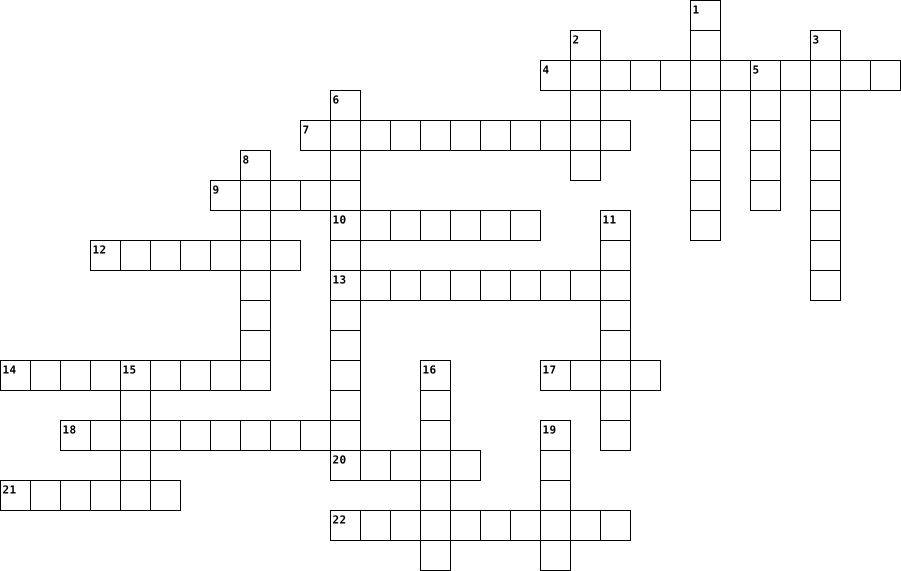
Across
- The French national anthem
- French revolutionary leader who was executed on July 28, 1794
- Location of the execution of Louis XVI and Marie Antoinette
- French nobles who fled the country , living abroad and plotting against the Revolution
- A member of the french political society that inaugurated the Reign of Terror during the French Revolution
- Site of the king's palace in France
- French legislators who sat in the center of the meeting hall, those who wanted some reforms but not extreme or excessive
- Month in which the French Revolution began
- The French instrument for execution
- River in northeastern France, flowing 480 miles to the English Channel
- Antoinette French queen who was executed during the Revolution
- The French middle class of society
Down
- The red, white, and blue ribbon that the French revolutionaries adopted as their symbol
- The capital of France
- The five executives of the French government form October, 1795, to November,1799
- French king who was executed during the Revolution
- French legislators who sat on the right side of the meeting hall, those who opposed changes in government
- French legislators who sat on the left side of the meeting hall, those who favored widespread changes in government
- French fortress that served as a jail for political prisoners, destroyed in 1789 to mark the beginning of the French Revolution
- of Terror The period of the French Revolution from May, 1793, to August, 1794, during which thousands were executed
- Aristocratic commander who was killed during the storming of the Bastille to begin the French Revolution
- Location of the French prison where the Revolution began in 1789
22 Clues: The capital of France • The French national anthem • The French middle class of society • Site of the king's palace in France • The French instrument for execution • Month in which the French Revolution began • French king who was executed during the Revolution • Location of the execution of Louis XVI and Marie Antoinette • ...
history 2023-06-26

Across
- People who possess noble titles, either from birth, royal grant or venality
- The institution of hereditary royalty, led by a king, queen or emperor
- People who work for wages in a society, particularly in the industrial sector
- The mass production of wants and needs, particularly on a large scale
- class The lower levels of society, whose members must work to survive
- People who develop ideas, theories and policies in a society
- class The social classes who own some property and enjoy safe and stable standards of living
- Intellectuals and writers who engage in critical study of society, beliefs and ideas
- People who possess noble titles and privileges, often with wealth and power
- The people, actions and conditions in large cities
- class The upper levels of a society, such as royalty, aristocracy and the very wealthy
- A state’s defence forces, such as the army, navy and air force
- People who work in schools and universities, teaching or undertaking research
- The areas of a nation outside major cities, such as lesser towns, rural areas or colonies
Down
- The people, bodies and processes that govern and make decisions in a society
- People involved in trade, such as importing and exporting, buying and selling
- As for bourgeoisie (above), people who own capital and the means of production
- The political, social and economic elites who wield power in a society
- People who own capital, such as land, factories and raw materials
- People, institutions and activities that produce society’s wants and needs
- People involved in the manufacture or repair of items, such as mechanics
- Refers to the rights, roles and conditions of men and women in a society
- People involved in producing crops and livestock through farming
- People who work the land, usually as tenant farmers and often in impoverished conditions
- A small agricultural community, usually in a rural area
- People ordained by the church to carry out its functions, such as priests, monks and nuns
26 Clues: The people, actions and conditions in large cities • A small agricultural community, usually in a rural area • People who develop ideas, theories and policies in a society • A state’s defence forces, such as the army, navy and air force • People involved in producing crops and livestock through farming • ...
history 2023-03-09

Across
- - Union Jack (5,4)
- - Black, Yellow, and Red (7,6,3)
- - Red and Yellow Star (7)
- - Angkor Wat (8)
- - Blue, Red, and Yellow (10)
- - Soyombo (8)
- - White, Blue, and Red (6,4,3)
- - Red, White, and Blue (10)
- - Tricolor (5,7)
- - Yellow, Green, and Red (6,5,3)
- - Blue and White (7,5)
- - Southern Cross (9)
- - Blue and White (6,5)
- - Two Triangles (5)
- Korea - Taeguk (5,4)
- - Red, White, and Blue (6,5,3)
- - Red, White, and Blue (8,4,4)
- - Stars and Stripes (3,5)
- - Green, White, and Orange (7,5,6)
- - Red and Yellow (5,6)
- Zealand - Southern Cross and Union Jack (4,7)
- - Green and Yellow (6,5)
- - Tricolor (5,7)
Down
- - Green, White, Red, and Black (6,5,3,5)
- - Two Equal Horizontal Bands of Red and White (9)
- - Maple Leaf (6,4)
- - Red and White Cross (11)
- - Red and Yellow (5,6)
- - Tricolor (6,7)
- - Tricolor (4,5)
- - Green and Red (8,3)
- Africa - Rainbow (5,7)
- - Crescent and Star (8)
- Arabia - Green (5,7)
- - Star of David (6,5)
- - Tricolor (6,5)
- - Rising Sun (5,3)
- Arab Emirates - Red, Green, White, and Black (6,4,7,5)
- - Stripes of Red, White, Blue, and Yellow (8)
- - Sun of May (9)
- - Black, Red, and Green (11)
- - Black, Red, and Gold (7,3,4)
- - Tricolor (5,6)
- - Red and White (6,5)
- - Dragon (6)
- - Blue and Yellow (6,6)
- - Red, White, and Black (5,5,4)
- - Red and White (7,5)
- - Three Stars (4,4)
- Lanka - Lion and Sword (3,5)
50 Clues: - Dragon (6) • - Soyombo (8) • - Tricolor (6,7) • - Angkor Wat (8) • - Tricolor (4,5) • - Tricolor (6,5) • - Tricolor (5,7) • - Sun of May (9) • - Tricolor (5,6) • - Tricolor (5,7) • - Union Jack (5,4) • - Maple Leaf (6,4) • - Rising Sun (5,3) • - Two Triangles (5) • - Three Stars (4,4) • Arabia - Green (5,7) • - Southern Cross (9) • Korea - Taeguk (5,4) • - Green and Red (8,3) • - Star of David (6,5) • ...
history 2023-04-21

Across
- were state and local laws introduced in the Southern United States in the late 19th and early 20th centuries that enforced racial segregation,
- introduced as An Act to Promote the Defense of the United States, was a policy under which the United States supplied the United Kingdom, the Soviet Union, France, China, and other Allied nations with food, oil, and materiel between 1941 and 1945.
- He also initiated the development of the world's first atomic bomb and worked with the other Allied leaders to lay the groundwork for the United Nations and other post-war institutions.
- He is credited with leading the city through an era of significant physical and economic growth and with maintaining calm during the civil rights movement. In 1965 he persuaded the Braves to move to Atlanta from Milwaukee, Wisconsin.
- economic development in the midst of the Great Depression, and balanced the state budget.
- The first Black American to earn a PhD from Harvard University
- He was the only Democrat appointed to the Morrow Board, which reviewed the status of aviation in America in the mid-1920s. In 1931, Vinson became chairman of the House Naval Affairs Committee.
- served as mayor of Atlanta for six terms (1937-41, 1942-61), longer than any other person in the city's history.
- German-speaking Protestant refugees from the Catholic Archbishopric
Down
- a person who is dissatisfied and rebellious.
- He was elected as state agriculture commissioner in 1926.
- a member of the Republican Party committed to emancipation of the slaves and later to the equal
- one of the most successful Black-owned insurance businesses in the nation.
- the action or state of setting someone or something apart from others
- related left-wing movements of the late 19th century that wanted to curtail the power of the corporate and financial establishment
- Commonly known as the Sibley Commission, the committee was charged with gathering state residents' sentiments regarding desegregation and reporting back to the governor.
- Governor of Georgia, 1931–1933
- someone who works land that's rented from its owner.
- convicted murderer
- He became a noted writer and perhaps the most prominent African American leader of his time.
20 Clues: convicted murderer • Governor of Georgia, 1931–1933 • a person who is dissatisfied and rebellious. • someone who works land that's rented from its owner. • He was elected as state agriculture commissioner in 1926. • The first Black American to earn a PhD from Harvard University • German-speaking Protestant refugees from the Catholic Archbishopric • ...
History 2023-04-19

Across
- agreement between the pope and the ruler of a country
- is A way of thinking that combined faith and reason
- A system of principles or rules
- A low ranking noble under the protection of a feudal lord
- A feudal estate belonging to a vassal
- A group of citizens that meet to decide whether people should be accused of a crime
- Religious worship service for Catholic Christians
- Ideas that go against the church's teachings
- People who are sent by a religious organization to spread the faith
Down
- The everyday spoken language of a region
- A mounted man-at-arms serving a lord
- Hostility toward or discrimination against Jews
- A narrow inlet of the sea between cliffs or steep slopes
- The system, spirit, or customs of medieval knighthood
- The study of religious faith, practice, and experience
- A group of citizens that decides whether an accused person is innocent or guilty
- A member of the peasant class tied to the land and subject to the will of the landowner
- A disease that spreads quickly and kills many people
- Nobles governed and protected people in return for services
- A group of merchants or craftspeople
20 Clues: A system of principles or rules • A mounted man-at-arms serving a lord • A group of merchants or craftspeople • A feudal estate belonging to a vassal • The everyday spoken language of a region • Ideas that go against the church's teachings • Hostility toward or discrimination against Jews • Religious worship service for Catholic Christians • ...
history 2023-05-03

Across
- A political club in France which consisted of Revolutionaries from the 3rd estate.
- justified French expansionism
- Danton A famous leader of the sans-culottes and Paris Commune who sought revenge on those who aided the king and resisted popular will
- a citizen had to be over 21, resident one year in his department and not a domestic servant
- the name the Montagnards gave to their relatively more moderate opponents
- Marat The leader of the Committee of Public Safety and a revolutionary
- Court Oath A meeting of the National Assembly on June 20, 1789 to draft a constitution for France
- of Public Safety A group of 12 men appointed by the National Convention in 1793 to rid France of both foreign and domestic threats
- were the common people of the lower classes in late 18th-century France
- de Gouges a French playwright and political activist
- Code A law code developed by Napoleon that preserved the gains of the French Revolution by recognizing the equality of all citizens before the law
- of Wellington Commander of the English and Prussian armies who defeated Napoleon at the Battle of Waterloo in 1815
Down
- denoted an inhabitant of a walled town
- d’etat an overthrow
- Estate the clergy
- of Terror a period of remorseless repression or bloodshed, in particular the period of the Terror during the French Revolution.
- Bonaparte A French army general who succeeded in taking over France through a coup d’état during the later years of the French Revolution
- had the power to decide on the levying of new taxes and to undertake reforms in the country
- of feudalism obligations that survived from an earlier age and included the payment of fees for the use of village facilities, such as the flour mill, community oven, and winepress.
- the top-level Government of France from the fall of the Directory
- Estate the nobility
- XVI King of France from 1774-1793
- of the Rights of Man and Citizen A charter of basic liberties that was adopted by the National Assembly on August 26, 1789
- Estate the townspeople
- Robespierre He was a leader of the sans-culottes and Paris Commune during the French Revolution
25 Clues: Estate the clergy • d’etat an overthrow • Estate the nobility • Estate the townspeople • justified French expansionism • XVI King of France from 1774-1793 • denoted an inhabitant of a walled town • de Gouges a French playwright and political activist • the top-level Government of France from the fall of the Directory • ...
History 2023-05-17

Across
- A war for containment and arms race
- Promoted gender equality
- Alliance between U.S., Canada, and Europe
- A form of protest which doesn’t involve violence
- Famous for refusing to give up her seat
- Civil Rights group led by Malcom X
- Negotiated peace between Egypt and Isreal
- President during september terrorist attacks
- Militant civil rights leader
- changed legal voting age to 18
- Fought for civil rights for mexican-americans
- The famous march after MLK’s famous speech
- Seperate but equal
- U.S. invasion of cuba which failed
- Created to help the economy during cold war
- long period of peace during the 70’s
- Famous African American baseball player
- A scandal involving a United States president
- A race to get to the moon
- Ronald Reagan’s plan to get out of stagflation
- Social Security was expanded to provide medical care
- Confirmed existence of spies
- Opened a famous canal for trade
- acts as a reason not to attack
- This is caused by inflation
Down
- Advancement for Mexican-Americans
- Terrorist attack that took place during Bush’s presidency
- War fought back and forth on the 38th Parallel
- This was created due to distrust in the government
- Volunteers went to developing countries
- Peaceful civil rights leader
- helped hispanic children and women
- Building up stockpiles of weapons
- This war is one of the first times containment failed
- Equal rights for everyone regardless of race
- Founder of Microsoft
- Vietnam war is known as the first ____ war
- Reagonomics aimed to reduce this
- leader of Al Quida
- caused the watergate scandal
40 Clues: Seperate but equal • leader of Al Quida • Founder of Microsoft • Promoted gender equality • A race to get to the moon • This is caused by inflation • Militant civil rights leader • Peaceful civil rights leader • Confirmed existence of spies • caused the watergate scandal • changed legal voting age to 18 • acts as a reason not to attack • Opened a famous canal for trade • ...
History 2023-07-30

Across
- Seven Year War leader of Prussia
- Teddy Roosevelt's regimenting the Cuban War
- Greek Philosopher who developed the first notion of atomic theory
- Created Communism
- King of the Franks and Holy Roman Empire
- Genre of math invented by Newton
- Oldest Hindu scriptures
- "War" against large Australian birds that were eating crops in 1932
- Animals used by Hannibal in the Second Punic War
- Where Alexander the Great was buried
- Spartan training regimen
- Celtic healer
- Settlement of an upper part of a Greek city, especially a citadel
Down
- First book of the Bible
- Inventor of mass production
- Author of the Aeneid
- Cut off French rulers' heads until his head was cut off
- "Father of modern Taxonomy"
- An old norse poet
- A name for an old Japanese ritualistic suicide that stemmed from dishonor
- Famous bearded pirate
- Where Jesus was crucified
- To quote Camus, "One must imagine ___ happy."
- Deities, divinities, and spirits in Shinto religion
- War in Asia from 1950-1953
- first ruler of the Akkadian empire
- Samurai without lords or masters
- Leading figure of pop art
28 Clues: Celtic healer • An old norse poet • Created Communism • Author of the Aeneid • Famous bearded pirate • First book of the Bible • Oldest Hindu scriptures • Spartan training regimen • Where Jesus was crucified • Leading figure of pop art • War in Asia from 1950-1953 • Inventor of mass production • "Father of modern Taxonomy" • Seven Year War leader of Prussia • ...
HIstory 2023-08-11

Across
- products and resources that satisfy people's needs and wants.
- a regular gathering of people for the purchase and sale of provisions, livestock, and other commodities.
- Analysis one economic evaluation tool to compare the costs and effects of alternative interventions.
- the state of being scarce or in short supply; shortage.
- an article or substance that is manufactured or refined for sale.
- the regard that something is held to deserve; the importance, worth, or usefulness of something
- a measure of economic performance that compares the amount of goods and services produced (output) with the amount of inputs used to produce those goods and services.
- the process of concentrating on and becoming expert in a particular subject or skill.
- physical assets a company uses to produce goods and services for consumers.
- Cost he loss of potential gain from other alternatives when one alternative is chosen.
Down
- is a curve on a graph that illustrates the possible quantities that can be produced of two products
- is the end product a business produces that is purchased by a consumer.
- describes the vast difference seen in the prices of certain essential goods and non-essential goods
- the action of helping or doing work for someone.
- the action or process of allocating or distributing something.
- the loss of potential gain from other alternatives when one alternative is chosen.
- exchange something of value, especially as part of a compromise.
- A need is something that is needed to survive. A want is something that an individual desires, but would be able to live without
- of Labor the separation of a work process into a number of tasks, with each task performed by a separate person or group of persons.
- Exchange a type of transaction where two parties freely trade goods or services.
20 Clues: the action of helping or doing work for someone. • the state of being scarce or in short supply; shortage. • products and resources that satisfy people's needs and wants. • the action or process of allocating or distributing something. • exchange something of value, especially as part of a compromise. • ...
History 2021-09-20

Across
- sistine madonna painting by .
- Invention of steam engine
- One country's rule of Political,economic and social spheres of another country.
- Cultural movement began in florence.
- Invention of printing press.
- Ranks of french society.
- Capital of city of Aztec empire.
- Capital of Aztec empire.
- Sri lanka.
- Leader of reformation.
- when scientific discoveries had
- 16 Dec 1773.
- battle in june 1775.
- Commander in chief of american. revolution
Down
- 5 mar 1770.
- Queen of france.
- took part in coupd'etat.
- King of france.
- 13 were made in Atlantic coast of North. America
- nepolian was deported to _______(at the end).
- firstly popularised Industrial
- 1783.
22 Clues: 1783. • Sri lanka. • 5 mar 1770. • 16 Dec 1773. • King of france. • Queen of france. • battle in june 1775. • Leader of reformation. • took part in coupd'etat. • Ranks of french society. • Capital of Aztec empire. • Invention of steam engine • Invention of printing press. • sistine madonna painting by . • firstly popularised Industrial • when scientific discoveries had • ...
history 2021-09-20

Across
- young women known for their social freedom that were first seen I 1920s America
- giving money to help with debt
- a member of a gang
- production on a large scale typically on a production line
- the prime this is what hoover was said to be doing when he was giving money to private investors and businesses
- depression- the economic depression of the 1920s
- street crash- the stocks at the wall street stock market plummeted down
- underground bars selling illegal alcohol during prohibition in 1920s America
- purchase- a purchase made with the intent of paying it back over time
- kkk- the kkk or ku klux klan are a racisit group that try to promote white supremacy
- deal- the deal that Roosevelt brought to American to help with the great depression
- a system of social organization where all property is owned by the state
- getting involved in foreign affairs used by America in 1910s-20s
- a style of music that originally comes from African Americans and was popularised in 1920s America
Down
- the belief and practice that everyone should be separated based on the colour of there skin
- people moving from one country to another
- Faire- The belief in giving economic freedom to businesses
- illegal creation or transportation of alcohol
- massive growth in a certain places’ economy
- bowl- the name for the severe dust storm on the southern plains
- The banning of alcohol sales creation or transportation
- agencies – the name givin to Roosevelts agencies to help stop the great depression
- illegal homemade alcohol
- -taxes that are placed on foreign exports
- change to stop something repeating
25 Clues: a member of a gang • illegal homemade alcohol • giving money to help with debt • change to stop something repeating • people moving from one country to another • -taxes that are placed on foreign exports • massive growth in a certain places’ economy • illegal creation or transportation of alcohol • depression- the economic depression of the 1920s • ...
history 2021-10-22
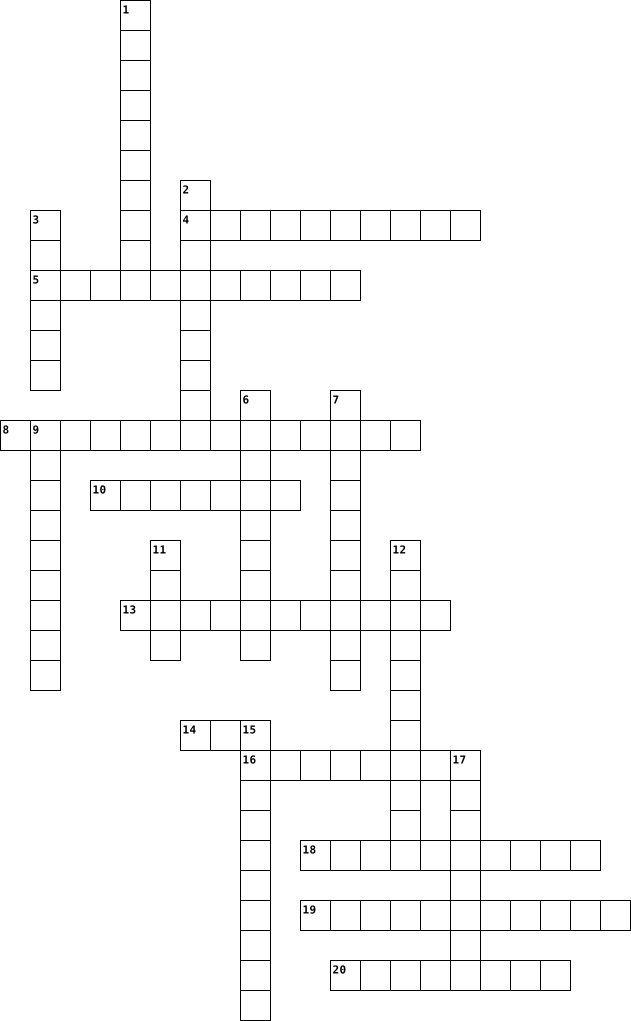
Across
- the __________ were people who exposed the problems going on during this time.
- what is an action that involves a country extending its power?
- what was an era of business expansion?
- what is the complete control over an industry's production, wages, and prices.
- who were the pinkerton detectives?
- the objective of the super rich is often not to make money, it is to ___.
- who was a teacher and journalist who helped found the National Association of Colored Women.
- ___________ partnered up with carnegie in the steel business.
- who raised tariffs after taking office?
- Scottish immigrant who made his riches in the steel industry.
Down
- __________ commerce act was passed to allow government to regulate the railroads and break up any railroad monopolies.
- rockefeller chose the name standard oil because it was an _______ name.
- what did workers start to join after the turning point in 1911.
- dollar ________ furthers its aim in Latin America and East Asia through use of its economic power.
- who discovered ford car company?
- which president was known as a Trust buster?
- the drug and ____ act was created so the government agency can regulate the food and drugs being produced.
- who did carnegie blame for driving tom scott to his grave?
- what amendment gave the women the right to vote?
- women went through ________ to gain the right to vote.
20 Clues: who discovered ford car company? • who were the pinkerton detectives? • what was an era of business expansion? • who raised tariffs after taking office? • which president was known as a Trust buster? • what amendment gave the women the right to vote? • women went through ________ to gain the right to vote. • who did carnegie blame for driving tom scott to his grave? • ...
History 2021-12-01
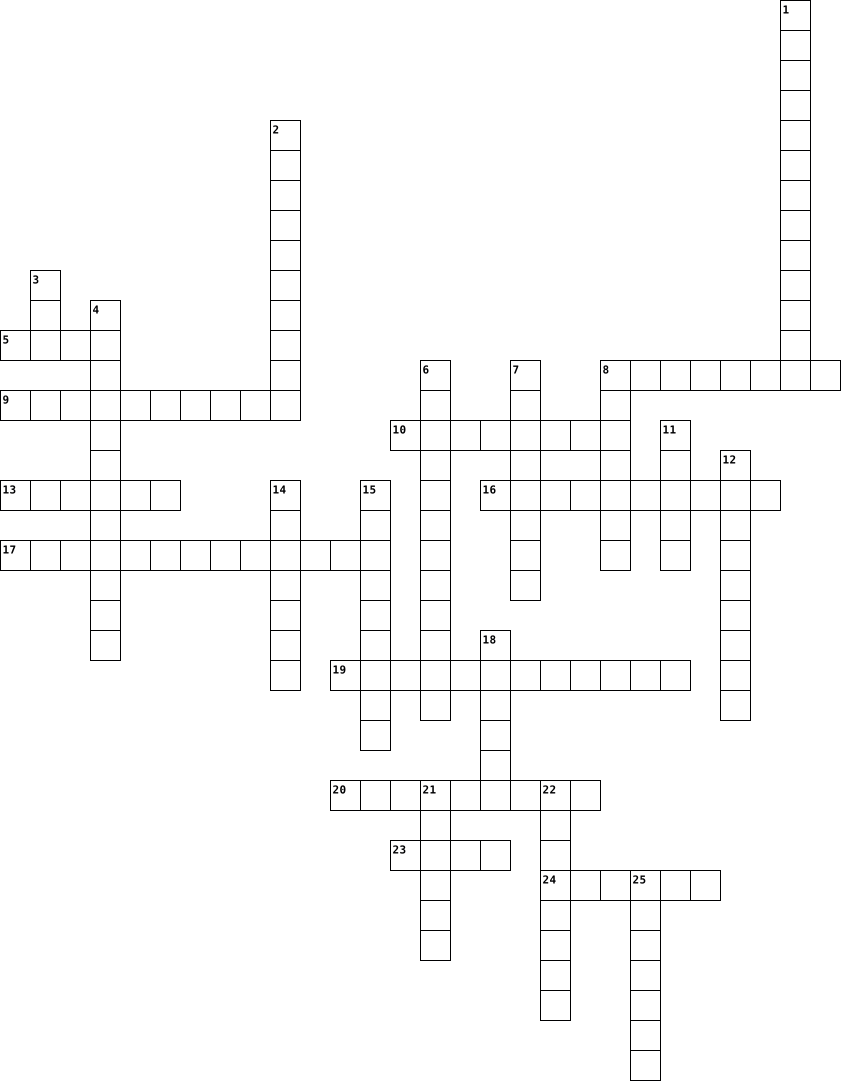
Across
- The leader of the Catholic Church
- A religion which teaches that elimination of the self and earthly desires is the highest goal
- The belief of only one god
- A series of religious wars
- The conquerer of the Aztec empire
- A system of society or government where men hold the power and women are exclude from it
- A process where society adopts aspects of Western culture
- The god that the Aztecs mistook Cortez for
- The dominant social system in Medieval Europe
- Land given to vassal's under the condition of fuedal service
- A story from the past that has not been proven
Down
- Conquerors, particularly Spanish conquerors
- The belief in or worship of more than one god
- The former name for Tokyo
- The Aztecs capital city
- The main religion at the time of Medieval Europe
- Farmers who produced crops
- The way of the warrior (Fuedal Japan)
- The lowest class in Medieval Europe society
- A technique used by the Aztecs which relied on small, rectangular areas of land to grow crops on the shallow lake beds
- A worker skilled in making things by hand at the time of Medieval Japan
- The emperor of the Aztecs at the time of the Spanish conquest
- A holder of land under conditions of allegience
- Fuedal lords the controlled major domains
- The main disease that the Spaniards brought with them to the Aztecs
- The title of who ruled Medieval Japan
26 Clues: The Aztecs capital city • The former name for Tokyo • Farmers who produced crops • The belief of only one god • A series of religious wars • The leader of the Catholic Church • The conquerer of the Aztec empire • The way of the warrior (Fuedal Japan) • The title of who ruled Medieval Japan • Fuedal lords the controlled major domains • The god that the Aztecs mistook Cortez for • ...
History 2021-12-08

Across
- Spanish controlled
- The influence of sea power
- our country based Anglo saxon dominance
- Monroe Doctrine issued
- poet exiled leader in revolution
- introduces motion pictures
- United States foreign policy
- senator and strong supporter of navy construction
- led naval expedition to japan
- aggressive nationalism
- exaggerated stories biased and sensational
Down
- tafts policy
- Hawaiian monarch... disliked US policy
- passed as part of the 1901 Army Appropriations Bill
- gave the United States the exclusive right to build
- first female candidate for U.S. president
- first practical gasoline engine
- developed the seismograph
- was popular in Britain and the United States
- uprising against foreigners that occurred in China
- overthrow Queen Liliuokalani of Hawaii
- all countries should be allowed to trade with China
- a force of sixteen battleships
- assassinated by Charles Guiteau
24 Clues: tafts policy • Spanish controlled • Monroe Doctrine issued • aggressive nationalism • developed the seismograph • The influence of sea power • introduces motion pictures • United States foreign policy • led naval expedition to japan • a force of sixteen battleships • first practical gasoline engine • assassinated by Charles Guiteau • poet exiled leader in revolution • ...
HISTORY 2022-05-12

Across
- MLK's civil rights group
- brought professional sports to Atlanta
- name of the newly industrialized southern states
- wine, rice, indigo, silk, and tobacco
- Lewis student leader during the civil rights act
- established that segregation in schools is unconstitutional
- native american tribe the used burial mounds and chiefdom
- olympic mayor
- John Lewis leads this group which is know for diner sit-ins
- one of the diseases that were spread during the spanish missions
- case in which antisemitism was in question after the lynching of a jewish man
- could be nicknamed the greatest entrepreneur
- process to reinstate the economy after the civil war
- translator and peacekeeper between the natives and the colonists
- started after bank failures and stocks crashing
- creator of the new deal plan that helped the economy at the expense of the government's finances
- established in 1732 to aid those who were imprisoned and stuck in debt
Down
- DeSoto's plan to convert native americans to christianity
- president during WW1
- mr new south
- Tom Watson was the leader of this group
- native american tribe that cultivated the bow and arrow
- colonists that had issues with the rules of the trustee period
- group that was determined to stop african americans from voting
- those who were loyal to the British rule during the american revolution
- oldest native american tribe
- established Hartsfield internation airport which was later expanded by Maynard Jackson
- first african american mayor
- leader of the civil rights act
- longest serving GA governor who strongly disliked the new deal program
- mastered pottery
- first european explorer to step foot in america
- leader of the trustee colony
- those who wanted revolution and independence from great britain
- yamacraw leader who allowed oglethorpe to settle on their land
- legal document that establishes a city/town
36 Clues: mr new south • olympic mayor • mastered pottery • president during WW1 • MLK's civil rights group • oldest native american tribe • first african american mayor • leader of the trustee colony • leader of the civil rights act • wine, rice, indigo, silk, and tobacco • brought professional sports to Atlanta • Tom Watson was the leader of this group • ...
history 2022-05-19

Across
- plains, the grassland extending through the west central portion of the US
- plan under which Native Americans would give up their beliefs and way of life and become part of the white culture.
- sturdy, short tempered breeds accustomed to the dry grasslands of southern Spain
- Jennings Bryan, editor of the Omaha World Herald
- standard backing dollars solely with gold
- a monetary system in which the government would give citizens either gold or silver in exchange for paper currency or checks
- Act, offering 160 acres of land free to any citizen or intended citizen who was head of the household
Down
- African Americans who moved from the post-Reconstruction South to Kansas
- organization for farmers that became popularly
- Act, aiming to “Americanize” the Native Americans
- Alliances, improve economic improvement for farmers
- of Wounded Knee, brought the Indian wars, and an entire era, to a bitter end
- the movement of the people
- Trail, the major cat- tle route from San Antonio, Texas, through Oklahoma to Kansas
- Bull, leader of the Hunkpapa Sioux
- Act, gave federal land to the states to help finance agricultural colleges
- drive, over land transport of the animals often lasted about three months
- McKinley, the Republican Party stated its firm commitment to the gold standard
- farms, enormous single crop spreads of 15,000–50,000 acres
- Hudson Kelley, started the Patrons of Husbandry
- sod home that was warm in winter and cool in summer
- A. Custer, a colonel
- of Fort Laramie, in which the Sioux agreed to live on a reservation along the Missouri River
23 Clues: A. Custer, a colonel • the movement of the people • Bull, leader of the Hunkpapa Sioux • standard backing dollars solely with gold • organization for farmers that became popularly • Hudson Kelley, started the Patrons of Husbandry • Jennings Bryan, editor of the Omaha World Herald • Act, aiming to “Americanize” the Native Americans • ...
HISTORY 2022-05-23

Across
- Tokoh yang mengalahkan Kertajaya
- Sungai pusat kerajaan Kediri
- Letak kerajaan Kediri
- Kerajaan Medang Pamulang di dirikan oleh
- Perang yang menyebabkan Kerajaan Buleleng runtuh adalah perang
- Kertanegara memiliki cita-cita menyatukan nusantara yang dikenal sebagai wawasan nusantara
- Salah satu hasil budaya kerajaan majapahit adalah kitab negarakertagama yang ditulis oleh
- Raja Kertanegara, yang merupakan penguasa terakhir Kerajaan Singasari, dibunuh saat pemberontakan oleh
- Raja terakhir kerajaan Medang Kamulan
- Candi Penataran merupakan peninggalan kerajaan
- Kerajaan Buleleng terletak di
Down
- I Gusti Alungrah Panji Sakti adalah pendiri kerajaan
- Berakhirnya dinasti Isyana disebabkan dibaginya kerajaan Medang Kamulan menjadi dua, yakni Jenggala dan
- Raja pertama kerajaan Majapahit
- Raden Husain alias Kin San adalah panglima perang Kerajaan Majapahit yang lebih dikenal sebagai Adipati
- Dinasti Isana menganut agama hindu aliran
- Tumapel merupakan nama resmi Kerajaan Singasari, yang tercantum pada prasasti
- Masjid peninggalan kerajaan Buleleng
- Kerajaan hindu terbesar di Indonesia
- Sumpah Gajah Mada menyatukan Nusantara disebut
20 Clues: Letak kerajaan Kediri • Sungai pusat kerajaan Kediri • Kerajaan Buleleng terletak di • Raja pertama kerajaan Majapahit • Tokoh yang mengalahkan Kertajaya • Masjid peninggalan kerajaan Buleleng • Kerajaan hindu terbesar di Indonesia • Raja terakhir kerajaan Medang Kamulan • Kerajaan Medang Pamulang di dirikan oleh • Dinasti Isana menganut agama hindu aliran • ...
HISTORY 2022-05-23

Across
- Candi Penataran merupakan peninggalan kerajaan
- Sungai pusat kerajaan Kediri
- Berakhirnya dinasti Isyana disebabkan dibaginya kerajaan Medang Kamulan menjadi dua, yakni Jenggala dan
- Perang yang menyebabkan Kerajaan Buleleng runtuh adalah perang
- Kerajaan hindu terbesar di Indonesia
- Kertanegara memiliki cita-cita menyatukan nusantara yang dikenal sebagai wawasan nusantara
- Tokoh yang mengalahkan Kertajaya
- Raja Kertanegara, yang merupakan penguasa terakhir Kerajaan Singasari, dibunuh saat pemberontakan olehmpusinduk Kerajaan Medang Pamulang di dirikan oleh
- Kerajaan Buleleng terletak di
- Sumpah Gajah Mada menyatukan Nusantara disebut
Down
- Raja pertama kerajaan Majapahit
- Dinasti Isana menganut agama hindu aliran
- Raden Husain alias Kin San adalah panglima perang Kerajaan Majapahit yang lebih dikenal sebagai Adipati
- Salah satu hasil budaya kerajaan majapahit adalah kitab negarakertagama yang ditulis oleh
- Letak kerajaan Kediri
- Masjid peninggalan kerajaan Buleleng
- Kerajaan Medang Pamulang di dirikan oleh
- Raja terakhir kerajaan Medang Kamulan
- Tumapel merupakan nama resmi Kerajaan Singasari, yang tercantum pada prasasti
- I Gusti Alungrah Panji Sakti adalah pendiri kerajaan
20 Clues: Letak kerajaan Kediri • Sungai pusat kerajaan Kediri • Kerajaan Buleleng terletak di • Raja pertama kerajaan Majapahit • Tokoh yang mengalahkan Kertajaya • Masjid peninggalan kerajaan Buleleng • Kerajaan hindu terbesar di Indonesia • Raja terakhir kerajaan Medang Kamulan • Kerajaan Medang Pamulang di dirikan oleh • Dinasti Isana menganut agama hindu aliran • ...
History 2022-05-20

Across
- God of the dead and the underworld
- God of writing and knowledge
- godess of protecting the needy
- God/Goddess of Nut is the sky geb is the earth
- he painted the 16 chapel
- he comes out of a lamp to give three wishes
- he is a god of the destruction
- they are sold and work for people
- god of sun
Down
- Learning about the old time and people
- people that eat other people
- God of sky
- They made paper,gun powder,and a compass
- he found a lamp and rubs it to get wishes
- its an elephant with four arms
- god of the dead and the process of embalming
- is a cleaver slave girl
- they are quite and they can disappear
- Goddess Of war
- baba his brother died because of the forty thieves
20 Clues: God of sky • god of sun • Goddess Of war • is a cleaver slave girl • he painted the 16 chapel • people that eat other people • God of writing and knowledge • its an elephant with four arms • godess of protecting the needy • he is a god of the destruction • they are sold and work for people • God of the dead and the underworld • they are quite and they can disappear • ...
History 2022-05-20

Across
- he painted the 16 chapel
- God/Goddess of Nut is the sky geb is the earth
- they are quite and they can disappear
- they are sold and work for people
- people that eat other people
- God of writing and knowledge
- is a cleaver slave girl
- he comes out of a lamp to give three wishes
- godess of protecting the needy
- god of sun
- baba his brother died because of the forty thieves
Down
- Learning about the old time and people
- is a god of protecting the universe
- its an elephant with four arms
- god of the dead and the process of embalming
- God of the dead and the underworld
- Goddess Of war
- They made paper,gun powder,and a compass
- he found a lamp and rubs it to get wishes
- God of sky
- he is a god of the destruction
21 Clues: God of sky • god of sun • Goddess Of war • is a cleaver slave girl • he painted the 16 chapel • people that eat other people • God of writing and knowledge • its an elephant with four arms • he is a god of the destruction • godess of protecting the needy • they are sold and work for people • God of the dead and the underworld • is a god of protecting the universe • ...
History 2025-01-06

Across
- A war between citizens of the same country
- A person engaged or learned in philosophy, especially as an academic discipline
- A system in which money replaces the barter system in the exchange of goods
- A group of troops or police officers standing or moving in a close formation
- A part of time dominated by a fusion of Greece language and costumes of the Near East
- An exchange of goods and services without the use of money
- A small kingdom centered along the Aegean Sea on the northeastern part of the Greece peninsula
- A system of government ruled by the whole population
- A piece of land that is surrounded by water on three sides
Down
- A city in the capital of Greece
- A small group of people having control over a country, organization, or institution
- An alliance of ancient Greek city-state, dominated by Sparta and centered on the Peloponnese
- A temple to Athen in Athenian Acropolis, Greece
- An Idyllic, often imaginary past time of peace, prosperity, and happiness
- The eastmost of Europe's three great southern peninsulas
- An alliance led by Athens that brought together several Greek city-states to challenge the Persian rule
- The highest class in certain societies
- A form of government with one person controlling it, like a king or queen
- A city in ancient Greece that means city
- A cruel and oppressive ruler
20 Clues: A cruel and oppressive ruler • A city in the capital of Greece • The highest class in certain societies • A city in ancient Greece that means city • A war between citizens of the same country • A temple to Athen in Athenian Acropolis, Greece • A system of government ruled by the whole population • The eastmost of Europe's three great southern peninsulas • ...
history 2025-01-15

Across
- - An individual living thing, composed of one or many cells
- - A functional unit in an organism that carries out a particular role, made of cells that coordinate their function
- -The way things really are; the whole of reality
- - a small part of the cell that carries out a specific function
- - The fundamental unit of matter, composed of protons, neutrons and electrons.
- - All living things on earth
- of scientific enterprise - the process of forming a theory to account for a body of facts, formulating testable hypotheses from that theory, testing the hypothesis experimentally and then analyzing the results. If the hypothesis is supported by the experimental result, the theory is strengthened, otherwise the theory is weakened.
- - A testable, informed prediction, based on a theory, of what will happen under certain circumstances
- - A quasi-fluid substance that surrounds cells or organelles, allowing the passage of some molecules but not others
- - The central organelle of the cell, bound by a perforated double membrane, and containing DNA, the nucleolus, and ribosomes
- - A statement, backed up by evidence, that is correct from what we know
- - Too small to be seen without the aid of a microscope
Down
- - A single species living in a particular geographical region at the same time
- - The organelle where ATP synthesis occurs
- number - The number found on the periodic table for each element, indicating the number of protons the element has.
- - A scientific test of a hypothesis
- - The best model or explanation we have at a present for a body of facts, providing the means for producing new hypotheses
- - A microscopic, membrane-bound entity that possesses genetic material, cycles matter and flows energy, is composed of biomolecules, and contains cytoplasm.
- - A group of cells of the same type that work together to perform a specific function
- - An instrument used to visualize entities that are too small to be seem
20 Clues: - All living things on earth • - A scientific test of a hypothesis • - The organelle where ATP synthesis occurs • -The way things really are; the whole of reality • - Too small to be seen without the aid of a microscope • - An individual living thing, composed of one or many cells • - a small part of the cell that carries out a specific function • ...
History 2025-01-30

Across
- Proceso de aprobación de la Constitución por los estados.
- Grupo que apoyaba la ratificación de la Constitución.
- Ciudad donde se llevó a cabo la Convención Constitucional.
- Presentó el Plan de Virginia en la Convención Constitucional.
- Propuesta que favorecía la igualdad de representación para todos los estados.
- Grupo que se oponía a la Constitución sin una Carta de Derechos.
- Se negó a firmar la Constitución sin una Carta de Derechos.
- Acuerdo sobre cómo contar a los esclavos en la población de un estado.
- Coautor de "El Federalista" y primer presidente de la Corte Suprema de EE.UU.
- Diplomático, científico y firmante de la Constitución.
- Reunión de delegados en 1787 para redactar la Constitución de EE.UU.
- Presidente de la Convención Constitucional y primer presidente de EE.UU.
- Primeras 10 enmiendas a la Constitución, que garantizan derechos individuales.
- Propuesta que favorecía la representación basada en la población.
Down
- Famoso antifederalista que se opuso a la Constitución.
- "Padre de la Constitución" y cuarto presidente de EE.UU.
- Grupo de líderes que establecieron la independencia y la Constitución de EE.UU.
- Cuerpo legislativo de EE.UU., creado por la Constitución.
- Representantes de los estados en la Convención Constitucional.
- Sistema de gobierno que divide el poder entre el gobierno nacional y los estados.
- Propuso el Plan de Nueva Jersey, que favorecía a los estados pequeños.
- Tema debatido en la Convención; se acordó su prohibición en 1808.
- Primer gobierno de EE.UU., reemplazado por la Constitución.
- Acuerdo que creó una legislatura bicameral con el Senado y la Cámara de Representantes.
- Uno de los autores de "El Federalista".
- Político que ayudó a redactar los Artículos de la Confederación.
26 Clues: Uno de los autores de "El Federalista". • Grupo que apoyaba la ratificación de la Constitución. • Famoso antifederalista que se opuso a la Constitución. • Diplomático, científico y firmante de la Constitución. • "Padre de la Constitución" y cuarto presidente de EE.UU. • Proceso de aprobación de la Constitución por los estados. • ...
History 2025-01-24

Across
- 1773 protest against British taxation (abbr.) (3 wds.)
- Allied invasion of Normandy in 1944 (hyph.) (2 wds.)
- Religious wars to reclaim the Holy Land
- Roman city buried by Mount Vesuvius in 79 CE
- King crowned Holy Roman Emperor in 800 CE
- This Abolition Act Ended this in the British Empire in 1833
- French leader exiled to Elba and Saint Helen known for being short
- What country declared independence from Britain in 1776
- UK vote to leave the European Union
- Massive Chinese structure built to keep out invaders (2 wrds.)
- Last name Mongol leader who created a vast empire
- Mysterious prehistoric monument in England
- Da Vinci painting with a famous smile (2 wds.)
- French heroine burned at the stake in 1431 (abbr.) (3 wds.)
- Macedonian conqueror who never lost a battle (abbr.) (3 wds.)
- Divided Germany’s capital until 1989 (2 wds.)
- Last active ruler of Egypt’s Ptolemaic dynasty
- First African-American U.S. president
- Fight for racial equality in the U.S. (abbr.) (3 wds.)
- Norse explorers and raiders of the Middle Ages
Down
- Japanese attack that brought the U.S. into WWII (2 wds.)
- English playwright of the Elizabethan era
- Scientist who theorized a sun-centered universe
- Artist behind the Sistine Chapel ceiling
- Site of the first atomic bomb drop
- Pandemic that swept Europe in the 14th century (2 wds.)
- Scandal that led to Nixon’s resignation
- Movement against sexual harassment and assault
- Astronomer tried for supporting heliocentrism
- Name of Mythical war involving a wooden horse
- 476 CE event marking the end of an empire (abbr.) (3 wds.)
- 1215 document limiting English royal power (2 wds.)
- Renaissance artist and inventor (abbr.) (3 wds.)
- Luxury liner that sank in 1912
- Explorer who sailed to the Americas in 1492
- Document drafted by Thomas Jefferson (abbr.) (3 wds.)
- Conflict involving Axis and Allies with Roman Numerals (1939–1945).(abbr.) (2 wds.)
37 Clues: Luxury liner that sank in 1912 • Site of the first atomic bomb drop • UK vote to leave the European Union • First African-American U.S. president • Religious wars to reclaim the Holy Land • Scandal that led to Nixon’s resignation • Artist behind the Sistine Chapel ceiling • English playwright of the Elizabethan era • King crowned Holy Roman Emperor in 800 CE • ...
history 2025-02-08

Across
- Sistem kerja bakti yang diwajibkan Jepang, kini diadopsi dalam kegiatan sosial masyarakat
- Upacara pengibaran bendera Hinomaru yang diwajibkan. (Jawaban
- Pasukan sukarelawan bentukan Jepang yang menjadi basis militer
- Lembaga bentukan Jepang yang mempersiapkan kemerdekaan, menjadi model partisipasi publik dalam kebijakan
- Fenomena migrasi lansia Jepang ke Indonesia
- Kebijakan Jepang yang memaksa rakyat bekerja tanpa upah, kini menjadi simbol perlawanan terhadap eksploitasi tenaga kerja
- Kebijakan penyitaan hasil pertanian oleh Jepang
- Koran propaganda Jepang yang digunakan untuk mengontrol informasi
- Bahasa resmi yang dipromosikan Jepang menggantikan Belanda, kini menjadi bahasa pemersatu nasional.
- Model bisnis kelompok perusahaan Jepang yang memengaruhi ekonomi Indonesia
- organisasi islam yang diizinkan jepang, kini menjadi inspirasi gerakan sosial keagamaan
- Polisi militer Jepang (Kempetai) yang kejam, menjadi simbol penegakan hukum tanpa hak asasi
- Koperasi industri bentukan Jepang untuk mengontrol produksi.
- Kelompok kerja masyarakat untuk proyek-proyek lokal bentukan Jepang
- Bahasa Jepang yang dipaksakan dalam pendidikan selama pendudukan
- Lembaga propaganda Jepang yang menyebarkan ideologi Pan-Asia
- Organisasi massa bentukan Jepang yang menggabungkan berbagai kelompok masyarakat, kini dikaji sebagai alat mobilisasi masa
Down
- Teknologi kereta cepat Jepang yang diadopsi di Indonesia.
- Slogan propaganda Jepang tentang persatuan Asia di bawah kepemimpinan mereka
- Kebijakan pertanian Jepang yang memicu kelaparan, menginspirasi program ketahanan pangan saat ini.
- Penghormatan kepada kaisar Jepang (Seikerei) yang ditolak masyarakat, menjadi simbol penolakan budaya asing
- Pasukan pembantu militer Jepang yang menjadi cikal bakal kesadaran kemiliteran Indonesia
- Kebijakan penanaman paksa padi oleh Jepang yang memicu kelaparan
- Propaganda Jepang yang menyebut diri "saudara tua", kini dikritik sebagai bentuk manipulasi politik.
- Pemerintahan militer Jepang di Indonesia
- Sistem irigasi modern yang diperkenalkan Jepang untuk pertanian
- Sistem kerja paksa yang meninggalkan trauma kolektif, kini diingat melalui monumen dan edukasi sejarah
- Kalender Jepang yang pernah digunakan, kini hanya menjadi bagian sejarah
- Kebijakan transmigrasi Jepang yang memicu konflik, kini dikaji ulang dalam program pemerataan penduduk.
- Program pertukaran pemuda Indonesia-Jepang
- bentukan Jepang yang memengaruhi struktur pemerintahan modern Indonesia
- Sistem pendidikan militer Jepang yang melatih pemuda, menjadi dasar pelatihan dasar kemiliteran modern
- Organisasi keamanan masyarakat bentukan Jepang yang menjadi cikal bakal sistem ronda
- Bantuan pembangunan resmi Jepang kepada Indonesia pasca perang
- Sekolah dasar yang diperkenalkan Jepang untuk menyebarkan bahasa dan budaya
- Konglomerat industri Jepang yang memonopoli ekonomi
- jepang mendirikan keimin bunka shidosho pada 1 apri 1943 di
- Organisasi militer bentukan Jepang yang menjadi cikal bakal TNI
- Etika samurai yang dipromosikan Jepang selama pendudukan
39 Clues: Pemerintahan militer Jepang di Indonesia • Program pertukaran pemuda Indonesia-Jepang • Fenomena migrasi lansia Jepang ke Indonesia • Kebijakan penyitaan hasil pertanian oleh Jepang • Konglomerat industri Jepang yang memonopoli ekonomi • Etika samurai yang dipromosikan Jepang selama pendudukan • Teknologi kereta cepat Jepang yang diadopsi di Indonesia. • ...
history 2025-02-08

Across
- Sistem kerja bakti yang diwajibkan Jepang, kini diadopsi dalam kegiatan sosial masyarakat
- Upacara pengibaran bendera Hinomaru yang diwajibkan. (Jawaban
- Pasukan sukarelawan bentukan Jepang yang menjadi basis militer
- Lembaga bentukan Jepang yang mempersiapkan kemerdekaan, menjadi model partisipasi publik dalam kebijakan
- Fenomena migrasi lansia Jepang ke Indonesia
- Kebijakan Jepang yang memaksa rakyat bekerja tanpa upah, kini menjadi simbol perlawanan terhadap eksploitasi tenaga kerja
- Kebijakan penyitaan hasil pertanian oleh Jepang
- Koran propaganda Jepang yang digunakan untuk mengontrol informasi
- Bahasa resmi yang dipromosikan Jepang menggantikan Belanda, kini menjadi bahasa pemersatu nasional.
- Model bisnis kelompok perusahaan Jepang yang memengaruhi ekonomi Indonesia
- organisasi islam yang diizinkan jepang, kini menjadi inspirasi gerakan sosial keagamaan
- Polisi militer Jepang (Kempetai) yang kejam, menjadi simbol penegakan hukum tanpa hak asasi
- Koperasi industri bentukan Jepang untuk mengontrol produksi.
- Kelompok kerja masyarakat untuk proyek-proyek lokal bentukan Jepang
- Bahasa Jepang yang dipaksakan dalam pendidikan selama pendudukan
- Lembaga propaganda Jepang yang menyebarkan ideologi Pan-Asia
- Organisasi massa bentukan Jepang yang menggabungkan berbagai kelompok masyarakat, kini dikaji sebagai alat mobilisasi masa
Down
- Teknologi kereta cepat Jepang yang diadopsi di Indonesia.
- Slogan propaganda Jepang tentang persatuan Asia di bawah kepemimpinan mereka
- Kebijakan pertanian Jepang yang memicu kelaparan, menginspirasi program ketahanan pangan saat ini.
- Penghormatan kepada kaisar Jepang (Seikerei) yang ditolak masyarakat, menjadi simbol penolakan budaya asing
- Pasukan pembantu militer Jepang yang menjadi cikal bakal kesadaran kemiliteran Indonesia
- Kebijakan penanaman paksa padi oleh Jepang yang memicu kelaparan
- Propaganda Jepang yang menyebut diri "saudara tua", kini dikritik sebagai bentuk manipulasi politik.
- Pemerintahan militer Jepang di Indonesia
- Sistem irigasi modern yang diperkenalkan Jepang untuk pertanian
- Sistem kerja paksa yang meninggalkan trauma kolektif, kini diingat melalui monumen dan edukasi sejarah
- Kalender Jepang yang pernah digunakan, kini hanya menjadi bagian sejarah
- Kebijakan transmigrasi Jepang yang memicu konflik, kini dikaji ulang dalam program pemerataan penduduk.
- Program pertukaran pemuda Indonesia-Jepang
- bentukan Jepang yang memengaruhi struktur pemerintahan modern Indonesia
- Sistem pendidikan militer Jepang yang melatih pemuda, menjadi dasar pelatihan dasar kemiliteran modern
- Organisasi keamanan masyarakat bentukan Jepang yang menjadi cikal bakal sistem ronda
- Bantuan pembangunan resmi Jepang kepada Indonesia pasca perang
- Sekolah dasar yang diperkenalkan Jepang untuk menyebarkan bahasa dan budaya
- Konglomerat industri Jepang yang memonopoli ekonomi
- jepang mendirikan keimin bunka shidosho pada 1 apri 1943 di
- Organisasi militer bentukan Jepang yang menjadi cikal bakal TNI
- Etika samurai yang dipromosikan Jepang selama pendudukan
39 Clues: Pemerintahan militer Jepang di Indonesia • Program pertukaran pemuda Indonesia-Jepang • Fenomena migrasi lansia Jepang ke Indonesia • Kebijakan penyitaan hasil pertanian oleh Jepang • Konglomerat industri Jepang yang memonopoli ekonomi • Etika samurai yang dipromosikan Jepang selama pendudukan • Teknologi kereta cepat Jepang yang diadopsi di Indonesia. • ...
History 2025-02-11

Across
- Most honored & influential scholar of the Renaissance
- Wrote about government
- Remedy for sin
- Vinci painted the Mona Lisa
- Created Movement in paintings
- City famous for its art, buildings, and canals
- Wrote “Don Quixote”
- music was more ……
- Music was plainsong or…
Down
- Considered greatest playwright
- Focus on man’s abilities and capacities
- created 3D effect in paintings
- What country did the Renaissance start
- what country was Shakespeare from
- painted Madonna’s
- painted ceiling of the Sistine Chapel
- What were sponsors of artists called
- Consequences of the Renaissance provoked a spirit of…
- Family most famous for sponsoring Renaissance art
- Renewed interest in art in what world
20 Clues: Remedy for sin • painted Madonna’s • music was more …… • Wrote “Don Quixote” • Wrote about government • Music was plainsong or… • Vinci painted the Mona Lisa • Created Movement in paintings • Considered greatest playwright • created 3D effect in paintings • what country was Shakespeare from • What were sponsors of artists called • painted ceiling of the Sistine Chapel • ...
History 2024-10-01

Across
- It oversees transportation infrastructure.
- Also called Ginnie Mae.
- It enforces provisions of the law.
- It's headquarters is the Pentagon.
- It leads the federal government's response to natural disasters.
- It is under congressional oversight.
- A major part of it's mission is to encourage homeownership.
- It provides assistance for small businesses.
- The highest ranking members of the U.S. military.
- It regulates communications by radio, TV, wire, satellite, and cable.
- They were organised by the DOD.
- It had the job of overseeing the practices of railroads.
- Wildlife range with oil reserves under it.
- It ensures that securities are honest about their profits and losses.
- It oversees about 300 programs.
- It coordinates and regulates the network of Farm Credit Associations.
- Cooperates with the U.S. National Central Bureau.
- It develops the resources in and around the Tennessee River.
- Established 40 years after the Department of Labor.
- It establishes rules for traffic.
- It awards almost 50,000 competitive grants to universities, med schools, and other research orgs.
- Inspects and grades foods that U.S. farmers produce.
Down
- Issues weather forecasts.
- It is a watchdog agency created in 1921.
- Rockets yo.
- The attorney general is its head.
- It was established as a result of 9/11.
- It insures the deposits that people have in banks.
- They deal with diseases.
- It certifies the quality of foods and cosmetics.
- United Parcel Service.
- They collect taxes.
- It provides grants for artistic endeavors.
- It delivers mail.
- Also called Freddie Mac.
- They find out information for the government.
- The Federal Express.
- Nicknamed Fannie Mae.
- It handled programs for veterans until 1989.
- Insures some mortgages that private banks make.
- It preserves important documents and records made by the federal government.
41 Clues: Rockets yo. • It delivers mail. • They collect taxes. • The Federal Express. • Nicknamed Fannie Mae. • United Parcel Service. • Also called Ginnie Mae. • They deal with diseases. • Also called Freddie Mac. • Issues weather forecasts. • They were organised by the DOD. • It oversees about 300 programs. • The attorney general is its head. • It establishes rules for traffic. • ...
History 2025-02-18

Across
- mention erwähnen
- herzog
- aktzeptieren
- belgien
- quelle
- fähigkeit
- griechisch
- maschine
- wissenschaft
- himmel
Down
- entdecken
- holländisch
- etwas-wagen
- segeln
- waffe
- latein
- römisch
- sich-ausbreiten
- grenzenlos
- könig
- mönch
21 Clues: waffe • könig • mönch • herzog • segeln • latein • quelle • himmel • belgien • römisch • maschine • entdecken • fähigkeit • grenzenlos • griechisch • holländisch • etwas-wagen • aktzeptieren • wissenschaft • sich-ausbreiten • mention erwähnen
History 2024-12-16

Across
- All people are bad by nature and need harsh punishment
- The _______ cycle started with the mandate of heaven
- An economic system of obilations between the town
- Fileial Piety that is repects for ones
- Divine winds
- Khan 1st leader of the Mongols that that united much of Asia
- Powerful Military leader that made the Emperor a figurehead
- Mongols allowed civilizations to keep their religion
- servant-trained warriors
- Increases a nations Economy
- Kush The mountains and plains of Pakistan
- Moved up on the social triangle because of food
- Shi Huangdi unified China and created ....
- India was separated from the rest of asia
- the warring period was a time of .....
- Most important language in ancient India
Down
- Mulans Father prayed to his ________
- Arabic we base our number system
- Yu the greats legendary dynisty
- The most important character trait of the samurai
- Japan is an
- Japan only has 20% farmable or _______ land
- service Copied US as the Pony express
- Goddess The first emperor was believed to descend from...
- This system dived you birth wealth or job
- river Mohenjo Daro and Harapa were successful City-States in _______ Valley
- Clan that emerged as the first emperor of Japan
- believes in many gods
- Road Mongols policed the ____ to allow safe travel and trade and it was a trade route from pacific ocean to mediteranian sea
- The great wall of China was linked together to keep out invadors
- winds create wet and dry seasons
- Founded my Siddhartha Gautama
- Larges Island in Japan
- Tried to end warring period by establishing the father as the head of the house hold
- The end of suffering for a Buddhist
- First Indigenous religion of Japan
- Court A group of nobles that moved closer to nobles to advise the emperor
- Kublia Khan established this dynistys
- River This river was named after the color silt left on its banks and it had devastating floods
- A type of Buddhism that focused on self disiplen
- Largest religion in India
41 Clues: Japan is an • Divine winds • believes in many gods • Larges Island in Japan • servant-trained warriors • Largest religion in India • Increases a nations Economy • Founded my Siddhartha Gautama • Yu the greats legendary dynisty • winds create wet and dry seasons • First Indigenous religion of Japan • The end of suffering for a Buddhist • Mulans Father prayed to his ________ • ...
history 2025-03-06

Across
- it makes the king the head of the church
- the german prince could choose if territory is Luther or roman
- they believed that you had to be an adult to be babtized and they were non violence
- holy Romen emperor
- luethers trials before Charles V
- scriptural bible alone
- second wife of Henry vill
- he was the king of England during the prodestant refermation
- made the 95 thesis
- a church in england
- the place go before heaven
Down
- divorced Henry vill
- he died and then the drug his bones up and burned them
- Luther debating about doctrines
- Henry vill first wife
- theologian of the reformation
- Queen of England,duoghter of Anne boleyn
- doughter of Catherine and killed prodestnts
- you could buy your way out of purgatory
- german empire
- a argument against corruption in the Catholic church
- Zwingli he fought against catholic
- fide fiath alone
- prodestans
- he was promised protection then was burned alive
- protected Luther after he was placed imperal ban
26 Clues: prodestans • german empire • holy Romen emperor • made the 95 thesis • divorced Henry vill • a church in england • Henry vill first wife • scriptural bible alone • fide fiath alone • second wife of Henry vill • the place go before heaven • theologian of the reformation • Luther debating about doctrines • luethers trials before Charles V • you could buy your way out of purgatory • ...
history 2023-12-19

Across
- Post-war rebuilding period.
- Sites of major conflicts.
- Bloodiest single-day battle.
- Notable Confederate general
- Union general and later President.
- Escape route for slaves.
- Pivotal battle in Pennsylvania.
- Compulsory military service.
- Abolitionist and Underground Railroad conductor.
- 16th President during the war.
- Fought to preserve the United States.
Down
- Freed enslaved individuals.
- Surrender site for Lee.
- Root cause of the conflict.
- First shots fired location.
- Warships with iron plates.
- Notable Civil War nurse.
- Southern states' withdrawal.
- Southern states that seceded.
- Skilled Confederate general.
20 Clues: Surrender site for Lee. • Notable Civil War nurse. • Escape route for slaves. • Sites of major conflicts. • Warships with iron plates. • Freed enslaved individuals. • Post-war rebuilding period. • Root cause of the conflict. • First shots fired location. • Notable Confederate general • Bloodiest single-day battle. • Southern states' withdrawal. • Compulsory military service. • ...
history 2023-10-31

Across
- Milline suhtumine jagas kuni 20. sajandini maailma tsiviliseeritud Lääneks ja ülejäänud maailmaks?
- Kus tapeti John Kennedy?
- Mis oli 1945. aastal USA presidendiks saanud mehe perekonnanimi?
- Millisel võistlusel oli NSV Liit pikalt liider?
- Millega olid Berliini müüri vahitornides olevad valvurid varustatud?
- Mis usk ühendab Araabia maid?
- Millise programmi käivitas USA Ladina-Ameerikas?
- Mis organisatsiooni asutasid 1964. aastal palestiinlased?
Down
- Kui 1979. aastal naasis Homeini kodumaale siis kuulutati Iraan milleks?
- Millise riideesemega algas 1947. aastal Christian Diori tähelend?
- Seoses millise riigi sünniga tekkis Lähis-Idas täiesti uus olukord?
- Kes tahtsid, et liitvabariik oleks neutraalne?
- Teadus arenes ja tuumafüüsikas valmistati tuumapommist veel võimsam … ?
- Millised riigid peale lääneriikide kuulutati veel Islami fundamentalismi vaenlasteks?
- Kes oli kristlike demokraatide majandusekspertide eesotsas?
- Kes oli sõjajärgsete aastakümnete kõige mõjukam filosoof?
- mis kuus lõpetati 6. oktoobril 1973 alanud Jom kippuri sõda
- Kes oli USA teine tuntum mustanahaliste õiguste eest võitleja?
- Mis asi kinnistus enamikes riikides demokraatia asemel?
- Kes jõudsid esimesena kuule?
- Millise riigi parlament valis presidendiks Salvador Allende?
21 Clues: Kus tapeti John Kennedy? • Kes jõudsid esimesena kuule? • Mis usk ühendab Araabia maid? • Kes tahtsid, et liitvabariik oleks neutraalne? • Millisel võistlusel oli NSV Liit pikalt liider? • Millise programmi käivitas USA Ladina-Ameerikas? • Mis asi kinnistus enamikes riikides demokraatia asemel? • Kes oli sõjajärgsete aastakümnete kõige mõjukam filosoof? • ...
History 2024-01-31

Across
- Social Contract
- writer
- natural philosopher
- Conference trade in Africa
- bring people in
- studied gravity
- how to observe
- advocated reform of slavery
- -age of enlightenment
- below the high class
- of Influence
Down
- political and religious
- approved the steam engine
- country can affect
- revolves around the sun
- an agreement among members.
- English philosopher
- parts are added on
- where goods are made
- person who operates a business
- extending power
21 Clues: writer • of Influence • how to observe • Social Contract • bring people in • studied gravity • extending power • country can affect • parts are added on • natural philosopher • English philosopher • where goods are made • below the high class • -age of enlightenment • political and religious • revolves around the sun • approved the steam engine • Conference trade in Africa • ...
History 2024-01-11

Across
- lakota war leader
- agreement between tribes of purest sound and the us
- structure that connected the east to the west
- laws where an applicant could acquire government land
- after gold was found here, the US confiscated the land
- massacre where many Lakota where shot
- land where a battle occurred and the Lakota and Cheyenne won
- leader of Apaches
- commander in wars against natives
- political and spiritual leader of the Sioux
- people who who dance at a special ceremony
- animal that almost went extinct due to the railroad
Down
- path used post civil war to transport cattle
- boarding school for natives
- leader of Nez Perce tribe
- law regulating land rights of tribes territory
- military officer who founded Carlisle industrial school
- Native American tribe that had territory in the great planes
- agreement to bring peace between whites and the Sioux
- US commander responsible for keeping peace with natives in Great Plains
20 Clues: lakota war leader • leader of Apaches • leader of Nez Perce tribe • boarding school for natives • commander in wars against natives • massacre where many Lakota where shot • people who who dance at a special ceremony • political and spiritual leader of the Sioux • path used post civil war to transport cattle • structure that connected the east to the west • ...
History 2024-10-04

Across
- Located in central Africa with overflowing wildlife
- Made the hajj during africa golden age
- permanent groups that were known for their cattle
- the Bantu language spoken by the costal city staetes
- The worlds second largest desert
- The language created in Ethiopia
- an Ethiopian king who built the churches in northern Ethiopia
- Kingdom that traded art
- The line of Ethiopian Christian monarchs that ruled Ethiopia from 1270-1636
- Founder of the Mali empire
- empire in west Africa with lots of trade
- built trade networks and traded with Europeans
- The empire in east africa which took over the western Sahel
Down
- the winds that help the people in city-states travel
- Dry land with shrubs and few animals
- Located in Southern Africa and great for farming
- Grasslands where most animals and people live
- The ruler of the kingdom of Aksum
- The powerful kingdom in Northern Ethiopia
- The stone ruins
- The kingdom lasting from 700's to now in western Africa
- Musa Richest man in the world
- The area of land in east africa that was known for their agriculture
- The founder of Songhai
- The walled circular area in zimbababwe
25 Clues: The stone ruins • The founder of Songhai • Kingdom that traded art • Founder of the Mali empire • Musa Richest man in the world • The worlds second largest desert • The language created in Ethiopia • The ruler of the kingdom of Aksum • Dry land with shrubs and few animals • Made the hajj during africa golden age • The walled circular area in zimbababwe • ...
History 2024-11-13

Across
- first usable highway
- money or other items where land merchants used to create wealth
- the expression of loyalty or support for a particular region of ones country
- Canals worked as a series of locks that acted like
- System where people and companies own the means
- economic system in which businesses operate in competition
- created the cotton gin
- the major weakness of the land caster turnpike was that it never crossed the
- National road encouraged
- Conestoga Wagons had to be built high enough off the ground to clear rocks and
- easily removed seeds from picked cotton
Down
- chips and steel over stone, used in making the national road
- the 6 states the national road traveled through the states, Maryland, Pa, Illonis, Virginal, indiana
- man made waterway
- two important businesses on the National Roard were Ins and
- most important invention of the 19 century
- Industrial revolution began in New England because fast moving
- Canal that connected the Hudson River to the Great Lakes
- built the first successful steamboat
- Road you have to pay to drive on
- Sale legal rights to an invention and profit
- the national road traveled
22 Clues: man made waterway • first usable highway • created the cotton gin • National road encouraged • the national road traveled • Road you have to pay to drive on • built the first successful steamboat • easily removed seeds from picked cotton • most important invention of the 19 century • Sale legal rights to an invention and profit • System where people and companies own the means • ...
History 2024-11-14

Across
- He wrote the declaration of independence
- legal or ethical principles
- Point of veiw
- To say something
- He was the one who was doing all of the speeches for Jefferson
- Someone who hasn't chosen between loyalist and patriot
- A euopean movement in the 17th and 18th centuries
- People in contrie that were not in the wars between contries
- a country with political control
- He argued about natural rights and liberty
- successful attempt made by a large group to change political systems
Down
- Manipulation of information
- religious revivals in American history
- Being Free
- On your own
- Ancient passed/old
- Led the British in the revolution
- A person who wants to be a group
- A who wants to be independent
- A violent uprising against ones government
20 Clues: Being Free • On your own • Point of veiw • To say something • Ancient passed/old • Manipulation of information • legal or ethical principles • A who wants to be independent • A person who wants to be a group • a country with political control • Led the British in the revolution • religious revivals in American history • He wrote the declaration of independence • ...
history 2024-11-21

Across
- The Bukeev Khanate’s leadership was known for aligning with Russian _______.
- What stopped the campaign of Kenesary who headed for Tashkent in August 1841
- A traditional Kazakh council of elders involved in governance
- The name of newspaper, in which the leaders of the liberal democratic intelligentsia, Alikhan Bukeikhanov, Akhmet Baitursynov, and Myrzhakyp Dulatov, wrote about the injustice and senselessness of the First World War
- The situation worsened in 1834 as a result of the ____.
- After the suppression of the Peasant Revolt led by E.I. Pugachev, the Yaik River was renamed to the _______.
- Syrym Datov’s leadership made him a symbol of Kazakh ________.
- National peasantry which was the main driving force of the 1916 uprising
- Amangeldy Imanov's advisor during rebellion in Turgay
- A key ally of Koktemir’s forces: rebellious ________.
- The institution which was restored during the rebellion in 1916
- The Orenburg Governor-General who initiated reforms in the Younger Zhuz
- The Bukeev Khanate was also known as the _______ Horde
- The Bukeev Khanate was named after its first ruler, Khan _______.
- Person who was elected as a khan in Turgai during rebellion in 1916
- This Central Asian ethnic group joined Kenesary’s movement temporarily
- Pugachev’s revolt took place during the reign of this Russian empress
- Igelstrom’s reform attempted to reduce the power of the traditional Kazakh________
- Makhambet Utemisov was also known as a _______ in addition to being a revolutionary leader
- Special type of tax introduced in 1916 during war
- The type of traditional governance Kenesary sought to restore
- What was exported in huge quantities from the Steppe during the war in 1916?
- The system of governance Syrym Datov sought to protect
- The Kazakh tribe to which Zholaman Tilenshi belonged
- Isatai and Makhambet led their followers against corrupt Kazakh _______.
- The century during which Zholaman Tilenshi's protest took place
- Town the last battle of Kenesary took place
- The Kazakhs have taken over the construction of the technology in the lands
Down
- The reform introduced by Igelstrom replaced khans with councils of ________
- A major driving force of Koktemir’s rebellion was the restriction of access to ________
- Makhambet Utemisov’s poems celebrated the Kazakh spirit of _______.
- The military force of the Russian Empire that suppressed these revolts
- The fortress of which was suddenly attacked and burned by Kenesary's troops on May 26, 1838
- Kenesary Kasymuly's movement was an example of this type of struggle
- Military council in which issues of military training were the focus of attention, during rebellion in Turgay in 1916
- Kenesary Kasymuly was a descendant of this famous Kazakh khan
- Primary grievance of Zholaman Tilenshi against Russian colonial policies
- Kazakh participation in Pugachev’s revolt was most prominent in the _______ Horde
- Syrym Datov was a respected Kazakh ________.
- The river in which the military line was created, which served as the cause of the uprising of the Kazakh sharua under the leadership of the famous biy Zholaman Tilenshiuly
- The leaders of which clans leaned towards Russia
- The revolt in the Bukeev Khanate was led by Isatai Taimanov and _______ Utemisov
- One of the causes of the movement’s failure: internal _______ among Kazakh tribes
- This term refers to the traditional Kazakh leader or nobleman like Zholaman Tilenshi
- Pugachev’s uprising spread through this large river basin, near Kazakh lands
- Lieutenant appointed by the Orenburg Governor V.A. Perovsky to coordinate the actions to suppress the uprising in the Inner (Bukeyev) Horde 1836–1838
- The Kazakh society was divided into three ________.
- In October 1846, Makhambet was treacherously killed by supporters of Sultan_______.
- The revolt targeted this khan of the Bukeev Khanate
- Koktemir’s rebellion was fueled by this oppressive economic policy
- In which region in 1916 did Amangeldy Imanov start the rebellion?
51 Clues: Town the last battle of Kenesary took place • Syrym Datov was a respected Kazakh ________. • The leaders of which clans leaned towards Russia • Special type of tax introduced in 1916 during war • The Kazakh society was divided into three ________. • The revolt targeted this khan of the Bukeev Khanate • The Kazakh tribe to which Zholaman Tilenshi belonged • ...
history 2024-11-21

Across
- the Continental Army during the American Revolution
- Madison made a major contribution to the ratification of the Constitution by writing The Federalist Papers,
- Revolution transformed economies that had been based on agriculture
- Purchasethe United States purchased 828,000 square miles of land west of the Mississippi River for $15 million
- Marshall emerged as the Federalist Party leader in Virginia and gained election as a U.S. Representative in 1798
- Hawks initiated legislation designed to steer the United States towards war
- Clay leader of an anti-British group of Congressmen known as the War Hawks while a U.S. Representative and Speaker of the House from 1811 to 1814
- Financial Plan the federal assumption of state debts
- protection or revenue purposes
- Rebellion enforced the idea that the new government had the right to levy a particular tax that would impact citizens in all states
Down
- Virtue helps people understand their ties to the community and their responsibilities within it
- Monroe served as a member of the Congress of the Confederation from 1783 until 1786, a U.S. Senator from 1790 until 1794, Governor of Virginia from 1799 until 1802
- Hamilton organized the National Bank, the first U. S. monetary system, the tax system, the Customs Service, and established the national debt.
- Act closed U.S. ports to all exports and restricted imports from Britain
- Review ability of the Court to declare a Legislative or Executive act in violation of the Constitution
- the expression of loyalty or support for a particular region of one's country, rather than to the country as a whole
- Washington
- Canal transformed New York City into the nation's principal seaport and opened the interior of North America to settlement.
- Jefferson an American Founding Father, the principal author of the Declaration of Independence (1776), and the third President of the United States
- and Clark xploring land that the United States had recently acquire
- it presupposes the existence and tends to promote the interests of a particular nation, especially with the aim of gaining and maintaining its sovereignty (self-governance) over its perceived homeland to create a nation-state
- Jay one of the framers of the Constitution, author of five of The Federalist Papers, and the first Chief Justice of the United States
- Whitney famous invention was the cotton gin, which enabled the rapid separation of seeds from cotton fibres
- of New Orleans hwarted a British effort to gain control of a critical American port and elevated Maj. Gen. Andrew Jackson to national fame.
24 Clues: Washington • protection or revenue purposes • the Continental Army during the American Revolution • Financial Plan the federal assumption of state debts • Revolution transformed economies that had been based on agriculture • and Clark xploring land that the United States had recently acquire • Act closed U.S. ports to all exports and restricted imports from Britain • ...
history 2025-03-26

Across
- What place did many French people attack?
- Who believed in freedom of speech and religion?
- What did Enlightenment ideas help start/inspire?
- What document made the USA a country?
- Whos said people are naturally selfish?
- What king was executed during the revolution?
- Who said people should pick their own government?
- What book did Hobbes write?
- Who became the ruler of France after the revolution?
- What estate payed the most taxes?
Down
- What was the first battle of the revolution?
- What was it called when the colonist threw tea into to harbor?
- What did John Locke say all people should have?
- Who said government should have three parts?
- What was the name of the queen who was executed?
- What king of government did the Enlightenment thinkers not like?
- Where did the industrial revolution start?
- What battle ended the war?
- Voltaire got in trouble with what?
- What estate was made up of mostly nobles?
- What device was used to execute people?
- What was the French king's palace called?
- Where did many people move for factory jobs?
23 Clues: What battle ended the war? • What book did Hobbes write? • What estate payed the most taxes? • Voltaire got in trouble with what? • What document made the USA a country? • Whos said people are naturally selfish? • What device was used to execute people? • What place did many French people attack? • What estate was made up of mostly nobles? • ...
history 2025-03-17

Across
- special goal or task
- distance north or south of the equator
- path taken to go somewhere
- man-made waterway for boats
- layout of the places in earth
- exciting or daring journey
- where ships load or unload goods
- something that shows directions
- safe place where ships dock
- finding the way of somewhere
- finding something
Down
- a long sea journey
- land surrounded by water
- traveling from one place to another
- land next to the sea
- someone who travels to discover new places
- who plans and directs a journey
- buying, selling, or exchanging goods.
- large area of water
- water trasport
20 Clues: water trasport • finding something • a long sea journey • large area of water • special goal or task • land next to the sea • land surrounded by water • path taken to go somewhere • exciting or daring journey • man-made waterway for boats • safe place where ships dock • finding the way of somewhere • layout of the places in earth • who plans and directs a journey • ...
History 2025-03-26

Across
- a city-state of ancient Greece that was first to have a democracy; also known as the birthplace of Western civilization; the capital of present-day Greece
- having the ability or skill necessary to do something well
- to get something, usually by making an effort or working for it
- a peninsula forming the southern part of the mainland of Greece
- to leave someone or something without intending to return
- to get an opinion and information from someone
- a person who has certain rights and duties in a city-state or nation
- a city-state of ancient Greece, known for its military oligarchy
- to depend on something or someone
- a member of the most powerful class in ancient Greek society
- firmly and repeatedly stating a point of view
- sea an arm of the Mediterranean Sea, east of Greece
- to act or decide in a way that is the opposite of what has been established
Down
- to have to do something based on a rule or command
- to take part in something, such as a game or activity
- a government in which power is held by the people, who exercise power directly or through elected representatives
- a settlement under the control of a usually distant country
- of Elders a small group of Spartans who made all the important governing decisions
- a body of land that is surrounded on three sides by water
- to completely remove or put an end to something
- a government in which the ruling power is in the hands of one person
- a group of citizens, in an ancient Greek democracy, with the power to pass laws
- to put a decision or plan into effect
- to act in a way that is unfriendly and angry toward a particular person or object
- of 500 in Athens, a group of 500 citizens chosen to form a council responsible for running the day-to-day business of government
- a government in which the ruling power is in the hands of a few people
- a marketplace in ancient Greece
- to knowingly not pay attention to something or someone
- government in which absolute ruling power is held by a person who is not a lawful king
29 Clues: a marketplace in ancient Greece • to depend on something or someone • to put a decision or plan into effect • firmly and repeatedly stating a point of view • to get an opinion and information from someone • to completely remove or put an end to something • to have to do something based on a rule or command • to take part in something, such as a game or activity • ...
History 2024-03-07

Across
- an often-fatal disease carried by mosquitoes in tropical climates
- the act of forcing men into military or naval service
- a law that restricts commerce with one or more nations
- an idea or law that goes against the principles of the U.S. Constitution
- Aramaic, Hebrew, Arabic Meaning twin, alike-looking man
- a treaty between France and the United States in which a large area of land between the Mississippi River and the Rocky Mountains was purchased
- someone who is believed to deliver messages from God or some other divine source
- the federal legislation that reduced the number of justices on the Supreme Court from 6 to 5
- a federal legislation that stopped all foreign imports from entering American harbors
Down
- the power to invalidate any law the Supreme Court deems unconstitutional, even if it has been passed by Congress and signed into law by the president
- a person who approved of and encouraged war; an American who favored war with Great Britain in 1812
- the person currently in office; the incumbent president is the current president
- means son of Matthew or Matthew's son
- the taxes placed on imported and exported goods
- the war against Great Britain that James Madison declared
- Supplanter/Assailant, May God protect
- a legal document
- Meaning: Man's defender, warrior
- Hamilton is a masculine name of British origin meaning flat-topped hill
- is a masculine name of Old English origin, meaning son of Jeffrey
20 Clues: a legal document • Meaning: Man's defender, warrior • means son of Matthew or Matthew's son • Supplanter/Assailant, May God protect • the taxes placed on imported and exported goods • the act of forcing men into military or naval service • a law that restricts commerce with one or more nations • Aramaic, Hebrew, Arabic Meaning twin, alike-looking man • ...
History 2024-04-18

Across
- To cancel.
- He explored the Louisiana Purchase with Lewis.
- To remove.
- This refers to an economic crisis.
- President that wanted to buy New Orleans.
- He was president of the national bank.
- Signed the Treaty of Dancing Rabbit Creek.
- Tried to become "white."
- He lost the election of 1824.
- The most famous turnpike.
- Both Fitch and Fulton created one.
- He benefitted from the Corrupt Bargain.
- To campaign with half-truths.
Down
- He negotiated the treaty to keep access to New Orleans ports.
- Also known as a toll road.
- He was Jackson's Vice President.
- He explored the southwest.
- A road using logs.
- Political party that believed in high tariffs.
- Used to move west on the rivers.
- The most famous canal.
- The political party that opposed the National Bank.
- Chief of the Seminole
- He created the Cherokee alphabet.
- He was the leader of the northern states.
- He was the Chief Justice in Marbury v. Madison.
- Never signed a peace treaty with the US.
- The right to vote.
- He developed the canal system in New York.
29 Clues: To cancel. • To remove. • A road using logs. • The right to vote. • Chief of the Seminole • The most famous canal. • Tried to become "white." • The most famous turnpike. • Also known as a toll road. • He explored the southwest. • He lost the election of 1824. • To campaign with half-truths. • He was Jackson's Vice President. • Used to move west on the rivers. • ...
HISTORY 2021-09-05

Across
- Vasco Da gama landed at
- the french governor of Pondicherry
- title given to Chin Qilich Khan
- which king granted permission to the British to set up a factory in Surat?
- Khan was appointed as the governor
- first european explorer to reach India
- a king proclaimed the nawab of Bengal by the British
- When Vasco Da Gama landed in Calicut, north India was ruled by?
- last ruler of mughal empire
- oder
Down
- Sutanati, Kalikata and Gobindapur grew into a city came to be known as?
- the tenth guru
- Sir Thomas Roe attempted to capture ____
- a place accquired by Albuquerque
- War a significant war fought in the year 1763
- son-in-law of Mir Jafar
- were the first to set up a trading company in India
- a disciple of guru gobind singh
- trade permit
- Son of Saadat Khan
- Shah ruler of Persia
- Chin Qilich Khan and his successors were known as the
- successor of Nadir Shah
23 Clues: oder • trade permit • the tenth guru • Son of Saadat Khan • Shah ruler of Persia • Vasco Da gama landed at • son-in-law of Mir Jafar • successor of Nadir Shah • last ruler of mughal empire • title given to Chin Qilich Khan • a disciple of guru gobind singh • a place accquired by Albuquerque • the french governor of Pondicherry • Khan was appointed as the governor • ...
History 2022-02-25

Across
- What were states in the south called?
- The power or right to act
- A lot of people faced this during this time period
- Johnson was very similar to this President
- What conflict came to an end?
- This is a kind of election?
- of the U.S. What happened after the Civil War?
- The right to reject a decision
- A choice between two or more Candidates
- Who was the worst president?
Down
- What kind of battle was about to out break?
- Which Amendment was abolished slavery to all states
- Which Amendment made African American males were able to vote
- Which Amendment made Male citizens receive equal protection
- Which Republicans though blacks were able to have the same political power as whites
- The charge of a public office with misconduct
- There were laws to protect these people?
- These leaders should be punished for what happened in the Civil war
- The state of being a slave
- A member of a senate
20 Clues: A member of a senate • The power or right to act • The state of being a slave • This is a kind of election? • Who was the worst president? • What conflict came to an end? • The right to reject a decision • What were states in the south called? • A choice between two or more Candidates • There were laws to protect these people? • Johnson was very similar to this President • ...
History 2025-06-04

Across
- - Perjanjian setelah Agresi Militer I
- - Badan yang dibentuk setelah BPUPKI
- - Organisasi Islam yang berdiri tahun 1912
- - Tokoh pembaca proklamasi
- - Tempat sidang PPKI pertama
- - Organisasi semi-militer buatan Jepang
- - Penjelajah dari Venesia yang mengunjungi Asia
- - Kongsi dagang milik Belanda
- - Sebutan wilayah kepulauan Indonesia zaman dulu
- - Tokoh proklamator selain Soekarno
Down
- - Sistem tanam paksa oleh Belanda
- - Dokumen penting yang dibacakan Soekarno dan Hatta pada 17 Agustus 1945.
- - Badan perumus dasar negara RI
- - Organisasi modern pertama Indonesia
- - Kelompok nasionalis radikal masa pergerakan
- - Nama dasar negara Indonesia
- - Bulan kemerdekaan Indonesia
- - Pemimpin Jepang di Perang Dunia II
- - Negara penjajah sebelum Belanda
- - Wilayah tempat Boedi Oetomo berdiri
20 Clues: - Tokoh pembaca proklamasi • - Tempat sidang PPKI pertama • - Nama dasar negara Indonesia • - Bulan kemerdekaan Indonesia • - Kongsi dagang milik Belanda • - Badan perumus dasar negara RI • - Sistem tanam paksa oleh Belanda • - Negara penjajah sebelum Belanda • - Tokoh proklamator selain Soekarno • - Badan yang dibentuk setelah BPUPKI • - Pemimpin Jepang di Perang Dunia II • ...
History 2022-10-18

Across
- Known for being the driller of the first productive oil well in the United States.
- Granted congress the power to regulate commerce with foreign Nations, and among the several states.
- Known for inventing the light bulb.
- Invented the telephone
- A labor organization that sought to organize workers along the line of industrial unions rather than the specialized trade, or craft, unions of the AFL.
- Manufactured the Pullman sleeping car.
- First inexpensive industrial process for the mass production of the steel from modern pig iron before the development of the open hearth furnace.
- When a business grows by acquiring a similar company in their industry at the same point of the supply chains.
- Known for the U. S. Supreme Court upheld the power of government to regulate private industries.
- Known for being the founder of the Standard Oil Company.
- Authorized the federal government to institute proceedings against trusts in order to dissolve them.
Down
- Known for leading the expansion of the American steel industry in the late 19th century.
- The idea that certain people become powerful in society because they are innately better.
- Two part fraud conducted from 1864-1867.
- One of the founding members of the industrial workers of the World (IWW)
- Originally known as the "Pacific Railroad".
- The first and longest-serving president of the American Federation of Labor.
- American inventor who developed the typewriter.
- Focused on winning economic benefits for its members through collective bargaining.
- Organizer for the mine workers during the first two decades of the 20th century.
20 Clues: Invented the telephone • Known for inventing the light bulb. • Manufactured the Pullman sleeping car. • Two part fraud conducted from 1864-1867. • Originally known as the "Pacific Railroad". • American inventor who developed the typewriter. • Known for being the founder of the Standard Oil Company. • ...