
history Crossword Puzzles
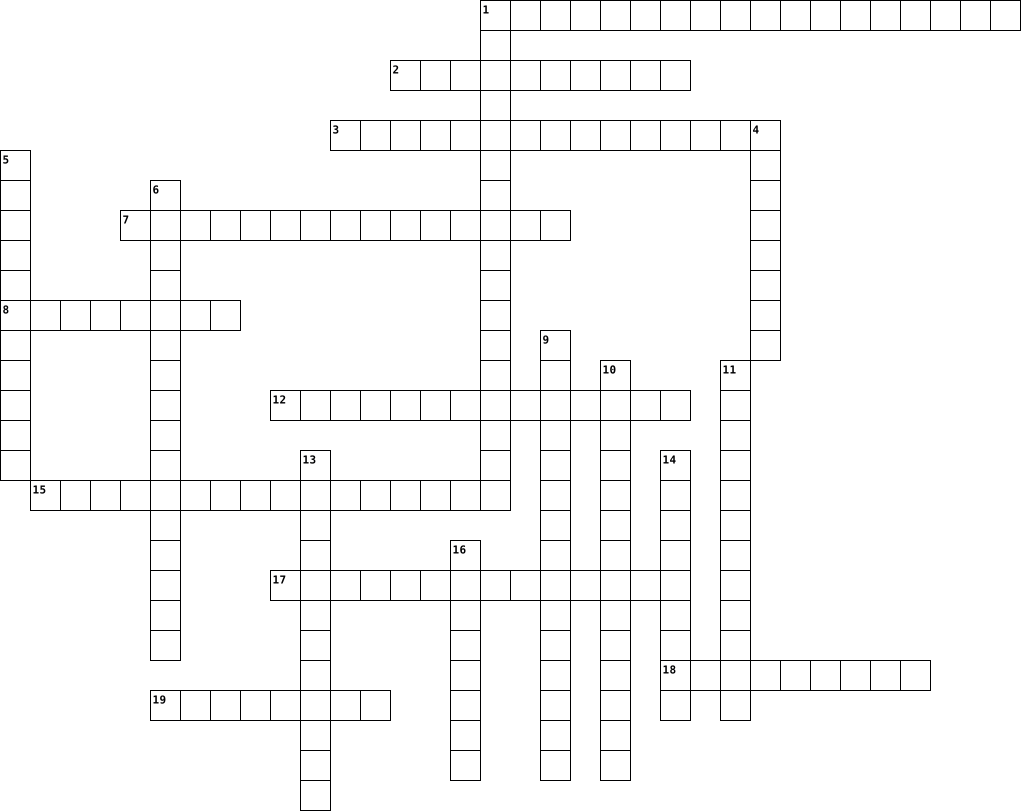
History Crossword 2023-11-13

Across
- is a wrong or hardship suffered
- Industry, cloth was very expensive both due to the costs of the raw materials and the production process
- a hard, fine-grained sedimentary rock
- and Indian war, pitted the North American colonies of the British Empire against those of the French each side being supported by various Native American, a group of German-speaking Protestant colonists founded the town of Ebenezer
- De Soto, a Spanish explorer and conquistador
- of 1763, Its
- Person with no social status
- Boys, loosely organized, clandestine, sometimes violent, political organization active in the Thirteen American Colonies
- a group of German-speaking Protestant colonists
- is a payment or reward of money to locate capture or kill an outlaw or a wanted person.
- Swamp, peat-filled wetland straddling the Georgia–Florida line in the United States
- Scots, migrated to North Carolina during the colonial period
Down
- and daub, a woven lattice of wooden strips called wattle is daubed with a sticky material usually made of some combination of wet soil clay sand animal dung and straw
- Beginning with we the people
- are influential people who have more power, wealth or status than others in a society.
- belief in the benefits of profitable trading
- acts, a series of harsh laws passed by Britain in 1774
- the cultivation of plants in gardens or greenhouses, as opposed to the field-scale production of crops characteristic of agriculture
- the period of human history between the first known use of stone tools by hominins c. 3.3 million years ago
- also known as corn
- Rivers, A connection of water that maintains a essential crop
- Indians, a Native American civilization that flourished in what is now the Midwestern Eastern and Southeastern United State
- Colonist that stayed loyal to the British
- years war, A war that lasted from 1756-1763
24 Clues: of 1763, Its • also known as corn • Beginning with we the people • Person with no social status • is a wrong or hardship suffered • a hard, fine-grained sedimentary rock • Colonist that stayed loyal to the British • years war, A war that lasted from 1756-1763 • belief in the benefits of profitable trading • De Soto, a Spanish explorer and conquistador • ...
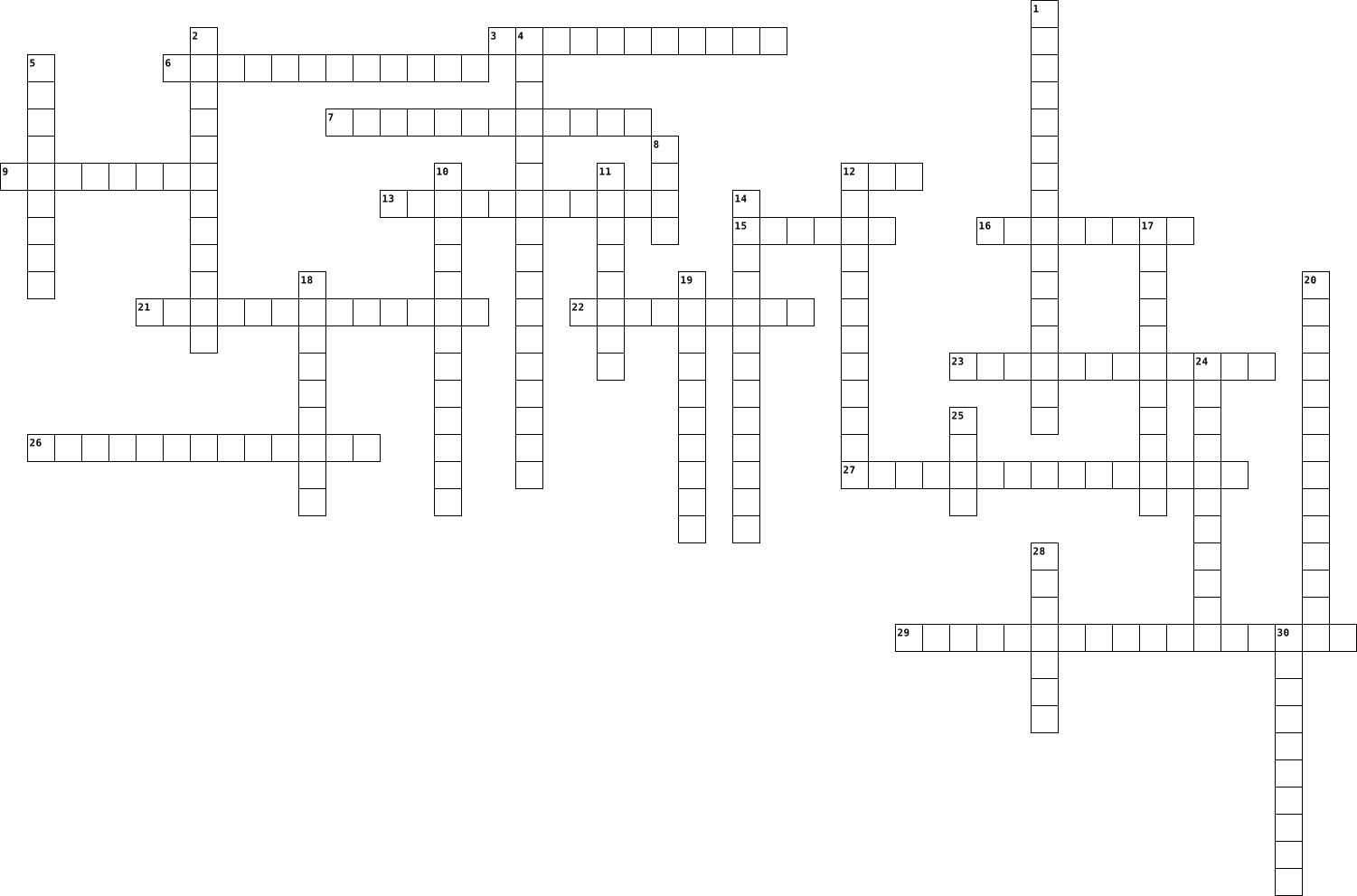
Loveland History 2024-01-10

Across
- First Fathers Day Gift You Received
- Type of Cookie Made in Tigard
- Subject of powerpoint I almost had to give in class that you created and helped me with.
- You Used to Bite me When You
- Disease during engagement
- First Meeting Spot
- First purchase together
- First Favorite TV Show
- Ring Size I told you
- First Wisconsin Address
- Almost Texas
- Days Engaged
- 2009 death
- Original Fight Starter
- First Trip Together
Down
- Our Second Child Isn't Named
- Where We Spent 10 Year Anniversary
- First Dinner we Cooked Together
- First V-Day Gift You Gave Me
- First Date
- Pet Names That Didn't Stick
- The Only Team we Both Were on
- First Birthday Gift You gave me
- Popular Conversation Topic in Early 2009
- What the Powerpoint was Supposed to be About
- What we Did When I Met Your Family That You Made Fun of me For.
- My Gangster Name
- Where I Learned Your First Name Isn't Ross.
- Our Forgotten Song
- Actual Ring Size
- Stickers in Idaho
- Proposal Site
- Your Gangster Name
33 Clues: First Date • 2009 death • Almost Texas • Days Engaged • Proposal Site • My Gangster Name • Actual Ring Size • Stickers in Idaho • First Meeting Spot • Our Forgotten Song • Your Gangster Name • First Trip Together • Ring Size I told you • First Favorite TV Show • Original Fight Starter • First purchase together • First Wisconsin Address • Disease during engagement • Pet Names That Didn't Stick • ...
FES History 2023-12-13

Across
- In 2021 FES was the _ Space Center Small Business Subcontractor of the year
- The current facility was purchased in nineteen _
- FES is woman owned and _ _ owned
- FES is headquartered in _, OK
- FES facility is eighty six _ square feet
- FEs has supplied hardware for the _ _ _ (abbr.)
- FES has been the Boeing Supplier of the Year _ times
- FES focus is on _ and defense industries
- By 1990 Frontier had _ locations
- Pegge Shreve worked in _ at OSU
- Dr.Ed Shreve was a professor of _ engineering
Down
- Frontier was founded in the _ of Peggy and Ed Shreve
- FES has approximately 140 _
- Becky _ is our HR manager
- FES mission is to be a _ _ _ (3 words)
- Dr. _ Rolls took helm as president and ceo in 2008
- Frontier begas full time operations in nineteen _ _
- Frontier was founded by Peggy and Ed _
- Frontier was founded in nineteen _
- In 1997 Frontier was restructured and is now known as ___ (abbr.)
20 Clues: Becky _ is our HR manager • FES has approximately 140 _ • FES is headquartered in _, OK • Pegge Shreve worked in _ at OSU • FES is woman owned and _ _ owned • By 1990 Frontier had _ locations • Frontier was founded in nineteen _ • FES mission is to be a _ _ _ (3 words) • Frontier was founded by Peggy and Ed _ • FES facility is eighty six _ square feet • ...
History Vocab 2024-01-31

Across
- a force that slows or stops motion
- a person who does for their beliefs
- an order by Lincoln that freed the slaves in the confederate states
- a small river that flows into a larger river
- a place where weapons are stored
- the act of formally leaving a group or organization
- a plan to solve a problem or achieve a goal
- war strategy of destroying the enemy’s means of survival
- to formally leave a group or organization
- a person injured, killed, or missing after a war, disaster, etc.
Down
- a person running from something like authorities
- when two parts of a country fight each other
- to firmly fix or establish
- to enroll in a group like the military
- the currency during the Civil War that used green ink
- a payment usually made by authorities as a reward
- to strengthen or support
- slave states that did not secede
- Rights the thought that laws should be made by the states, not the federal government
- to show proof, to have good reason
20 Clues: to strengthen or support • to firmly fix or establish • slave states that did not secede • a place where weapons are stored • a force that slows or stops motion • to show proof, to have good reason • a person who does for their beliefs • to enroll in a group like the military • to formally leave a group or organization • a plan to solve a problem or achieve a goal • ...
Euro History 2023-12-08

Across
- - Father of modern chemistry
- - French naturalist
- - French philosopher
- - Truth is relative belief
- - Enlightenment thinkers
- -Emphasizes reason
- - Discovered oxygen
- - Voltaires call
- - Enlightened Austrian ruler
- - Decline and Fall historian
- - Belief inadistant deity
- -Devised by
- - Religious diversity acceptance
- - Government power prevention
Down
- - Scottish empiricist
- - 18th-century intellectual movement
- - German philosopher
- - French naturalist
- - Wrote "Candide"
- - Influential political theory work
- - Hypnotic influence
- - Novella satire
22 Clues: -Devised by • - Voltaires call • - Novella satire • - Wrote "Candide" • -Emphasizes reason • - French naturalist • - French naturalist • - Discovered oxygen • - French philosopher • - German philosopher • - Hypnotic influence • - Scottish empiricist • - Enlightenment thinkers • - Belief inadistant deity • - Truth is relative belief • - Father of modern chemistry • - Enlightened Austrian ruler • ...
art history 2023-12-09

Across
- материал из которого создавались первые книги
- углубление квадратной, прямоугольной или иной формы на поверхности свода, купола, плафона или на внутренней поверхности арки
- ряд одинаковых по форме и размеру арок
- дочь Деметры в древнегреческой мифологии
- прямоугольное вытянутое здание с входом в одном торце и закруглением в противоположном.
- римский эквивалент Зевса
- это одна центральных площадей в Древнем Риме
- венчающая часть колонны или пилястры
- первый исторический период каменного века
- античные бани в классической Греции
- ракурс, символизирующий духоное совершенство
Down
- первый помпейский стиль
- техника стенных росписей
- стиль пришедший на смену романскому
- самый ранний из трех древнегреческих ордеров
- картина из стекла
- тип древнегреческой скульптуры девушки архаического периода
- *** портреты — созданные в технике энкаустики погребальные портреты в Римском Египте I—III веков
- автор десяти книг об архетиктуре
- «Храм всех богов»
- один из иносказательных образов Иисуса
21 Clues: картина из стекла • «Храм всех богов» • первый помпейский стиль • техника стенных росписей • римский эквивалент Зевса • автор десяти книг об архетиктуре • стиль пришедший на смену романскому • античные бани в классической Греции • венчающая часть колонны или пилястры • ряд одинаковых по форме и размеру арок • один из иносказательных образов Иисуса • ...
World History 2023-12-21

Across
- This government was founded in Ancient Greece
- The Egyptians made these with their dead
- The father of history
- Founder of Christianity
- Becoming an expert in your field
- First emperor of the Qin Dynasty
- Civilization between the Tigris & Euphrates
- Civilization found in modern-day India
- The SECOND major monotheistic religion
- Empire founded in modern-day India
- Spread of ideas, customs, and technologies
- Helped spread Buddhism throughout India
- The FIRST major monotheistic religion
- Rome built these for transport and trade
- This is how Jesus Christ was killed
- City destroyed by a volcano
- Greek city-states fought together against this empire
- Wars fought between Rome and Carthage
Down
- Created a very important law code
- Gladiators fought in this
- Controlled use of water
- Built the Great Pyramids
- Ancient Greek city-state; Emphasized Warfare
- Moved from place to place
- Important river to the Egyptians
- Belief in many gods
- Built in China for protection
- The FIRST major polytheistic religion
- Writing style of the Egyptians
- Used to bring water to Rome
- The SECOND major polytheistic religion
- Ancient Greek city-state; Emphasized Government
- Pillars, columns, arches
- The first emperor of Rome
34 Clues: Belief in many gods • The father of history • Controlled use of water • Founder of Christianity • Built the Great Pyramids • Pillars, columns, arches • Gladiators fought in this • Moved from place to place • The first emperor of Rome • Used to bring water to Rome • City destroyed by a volcano • Built in China for protection • Writing style of the Egyptians • ...
U.S History 2023-12-11

Across
- A system, originally determined by legislation in 1921
- The social impact of the ___ allowed people to face Prohibition's ban on alcohol.
- he was the first nonstop solo flight across the Atlantic Ocean
- The practice of ____ forever changed the consumption of alcohol.
- embody the youth and rebellion commonly associated with the prohibition era.
- helped improve the lives of people suffering from the events of the depression.
- set of beliefs favoring the interests of established inhabitants against those of immigrants emerged in the 1830s but grew to a fever pitch by the late 1840s
- 29th president of the United States, serving from 1921 until his death in 1923.
- ruled an empire of crime in the Windy City: gambling, prostitution, bootlegging, bribery, narcotics trafficking, robbery, , and murder.
- convicted and fined $100 for teaching evolution in his Dayton classroom.
- handled the aftermath of several Harding administration scandals
- common term for shacktowns and homeless encampments during the Great Depression.
Down
- defining figure of the 1920s as an influential poet, playwright, novelist, short story writer, essayist, political commentator and social activist.
- awarded the Nobel Prize for Literature in 1954
- instilled in African Americans across the country a new spirit of self-determination and pride
- expanded tax cuts among all income classes
- greatest man-made ecological disaster in American history
- This began a chain of events that led to the Great Depression, a 10-year economic slump that affected all industrialized countries in the world.
- supervised the mobilization of the American economy to support the war effort and implemented a Europe first strategy.
- bribery scandal involving the administration of United States President Warren G. Harding
20 Clues: expanded tax cuts among all income classes • awarded the Nobel Prize for Literature in 1954 • A system, originally determined by legislation in 1921 • greatest man-made ecological disaster in American history • he was the first nonstop solo flight across the Atlantic Ocean • The practice of ____ forever changed the consumption of alcohol. • ...
Sports History 2023-12-11

Across
- What does MLB play with
- Was Brady's Righthand man
- what do you do on a bike
- What do you win in the Olympics
- What you yell when you shoot up a shot shot.
- A game where you throw a ball trying to hit another person
- What does the NFL Play with
- Coordinator of the team
- who was drafted to the cavs in 2011
- what brand did Jordan sign with
- What keeps your shoes tight
- Best Quarterback
Down
- what you play basketball or Volleyball in
- What is it called when you stop the defense
- the last time the panthers went to the superbowl
- Another word for fighting
- what does the NBA play with
- What old retired sports players do for fun
- what you play soccer with
- Who won the NBA Finals last year
- who stops scores on a soccer team
- who is Lebron
- What you wear in a game
23 Clues: who is Lebron • Best Quarterback • What does MLB play with • What you wear in a game • Coordinator of the team • what do you do on a bike • Another word for fighting • Was Brady's Righthand man • what you play soccer with • what does the NBA play with • What does the NFL Play with • What keeps your shoes tight • What do you win in the Olympics • what brand did Jordan sign with • ...
US History 2023-12-18
Across
- Colonists defeated the British
- Region had rocky soil & Harsh Winters
- Life Liberty & Pursuit of Happiness
- Unreasonable Search & Seizures
- Region with Long summers and rich soil
- Supreme court case Marbury VS Madison
- Leader of the first Continental Army
- Washington's last speech to remain neutral
- This victory made the US economically independent
- Last Battle of American Revolution
Down
- Created the first National Bank
- Turning Point of the American Revolution
- Writer of Common Sense
- First Legislature
- War that caused debt leading to taxes from parliament
- Protection from Cruel & Unusual Punishment
- The three Gs
- Founded Connecticut
- Founded in 1607 for growing Tabaco
- Religious Settlement founded by the Pilgrims
20 Clues: The three Gs • First Legislature • Founded Connecticut • Writer of Common Sense • Colonists defeated the British • Unreasonable Search & Seizures • Created the first National Bank • Founded in 1607 for growing Tabaco • Last Battle of American Revolution • Life Liberty & Pursuit of Happiness • Leader of the first Continental Army • Region had rocky soil & Harsh Winters • ...
U.S History 2023-11-28

Across
- A deal that made all states equal in congress.
- Process that makes something officially valid by confirmation.
- 1st court case that declared something unconstitutional.
- A collection of 85 articles.
- A girl who helped in the Lewis and Clark expedition.
- An agreement to add states to the union.
- A rebellion in Western Massachusetts.
- Where the Battle of Baltimore took place.
- Bunch of land the U.S bought from France.
Down
- Papers that established the governments functions.
- A meeting to address the problems of the government.
- People who did not agree with changing the US Constitution.
- Determines if something is constitutional.
- The national anthem of the United States.
- Convincing people with words to rebel against authority.
- Big fight that took place on January 8,1815.
- War that lasted 3 years between the U.S and Great Britain.
- Forcing someone to serve in the military.
- The ten amendments of the U.S.
- Wars fought between the French and other nations.
20 Clues: A collection of 85 articles. • The ten amendments of the U.S. • A rebellion in Western Massachusetts. • An agreement to add states to the union. • The national anthem of the United States. • Forcing someone to serve in the military. • Where the Battle of Baltimore took place. • Bunch of land the U.S bought from France. • Determines if something is constitutional. • ...
History Wizz 2024-01-25

Across
- impartiality, open-mindedness, and search for the truth.
- consider something without procedure
- individual freedoms include freedom of speech
- the product of a disposition to forge a holistic identity
- courage, justice, moderation
- are drawn from the NCSS’s
- a philosophical term for “qualities of the soul”
- the ability of individuals to reflect critically on their principles
- makes it possible to choose goals autonomously and achieve them as authentic human beings
- the capacity to make deliberate choices and take actions
- comes from the right combination of knowledge and reason
- is derived from a set of conceptions
- travesties recorded through the centuries
- a humankind’s way of knowing, being
- intrinsic in an object.
- observation of the good life
- to be treated impartially, fairly, properly
- about things that matter requires critical thinking and moral reasoning
- a choice ranging from being rash
- the decisions are grounded in concepts of right and wrong
Down
- a set of beliefs and emotions about oneself as a participant in the civic life of a community
- individuals envision and interpret the world
- the rights of individuals, freedoms of individuals,
- democracy a nation state that has free, multi-candidate
- aims at defining and realizing one’s own identity as a person
- flourishing
- knowledge required of a student
- what is actually meant is that a person is virtuous.
- capacities an individual’s civic identity by individuals becoming aware of and choosing to awaken within themselves the intuitive and intrinsic,
- equal treatment of all rivals
- act well toward others and fulfill their duties to society deserve to be treated well.
- students could develop a quality of mind at once flexible and concentrated in dealing with new material
- English word for eudaemonia
- unique to each individual comprising ideas,
- one of the political party's
- characterized by Dewey as “intellectual integrity, observation, and interest in testing their opinions and beliefs
- is also referred to as temperance.
- academic interest
- of the mean virtues fall in the “mean” of the extremes of excess and deficiency of any virtue
39 Clues: flourishing • academic interest • intrinsic in an object. • are drawn from the NCSS’s • English word for eudaemonia • courage, justice, moderation • one of the political party's • observation of the good life • equal treatment of all rivals • knowledge required of a student • a choice ranging from being rash • is also referred to as temperance. • a humankind’s way of knowing, being • ...
Chinese History 2024-02-12

Across
- Who did the Red Guards persecute during the Cultural Revolution
- What the Red Guards did publicly to dissenters
- Type of behavior employed by the Red Guards
- Chairman of the Chinese Communist Party
- Areas/Villages that people were conformed to during the GLF
- The GLF was a collosal -------
- Amount of millions who died in the GLF
- Another name for the Great Leap Forward
- One of the main products China was trying to produce during the GLF
Down
- What happened to a lot of the steel produced by China during the GLF
- Groups of young people with special powers during the cultural revolution
- Chinese actor who had absolutely nothing to do with these events
- What did every Red Guard need to have?
- How most people died during the Great Leap Forward
- Type of goverment in China
- What the young people did to Cultural Artifacts during the Cultural Revolution
- What was the name of the revolution Mao Zedong led in 1966?
- US President that was alive during those times but had nothing to do with all this
- What happened to Mao that ended the revolution
- The animal the Chinese killed millions of during the GLF
- China's Plan to Industrialize from 1958-1952 was called the Great ???? Forward
- Despite Mao Zedong's terrible actions, he is still remembered in China as a ----
22 Clues: Type of goverment in China • The GLF was a collosal ------- • What did every Red Guard need to have? • Amount of millions who died in the GLF • Chairman of the Chinese Communist Party • Another name for the Great Leap Forward • Type of behavior employed by the Red Guards • What the Red Guards did publicly to dissenters • What happened to Mao that ended the revolution • ...
American History 2022-06-12

Across
- weapon used to fight
- first amendment
- people who remain royal
- videos we watched daily
- not ground forces
- Course we learnt this semester
- texts we spent time reading regularly.
- first leader
- a ally who supported American forces
- tea related
Down
- a battle that happened on June 17, 1775
- month of independence
- start of hope of a new country
- transportation method
- treaty determined to be end of the war
- battle that happened on January 17, 1781
- main material of ships
- ally who went almost bankrupt funding Americans
- thing Americans hated paying
- month of war
20 Clues: tea related • first leader • month of war • first amendment • not ground forces • weapon used to fight • month of independence • transportation method • main material of ships • people who remain royal • videos we watched daily • thing Americans hated paying • start of hope of a new country • Course we learnt this semester • a ally who supported American forces • ...
Canadian History 2022-06-27

Across
- genocide of jews in europe
- allies invasion of Normandy
- president during missile crisis
- german sub
- Terrorist mastermind of 9/11
- occupied france
- the infamous wall the fell in 1989
- the best-known Canadian terrorist group
- USSR's 1948 Berlin travel restrictions
- June 1919 strike that ended with 2 killed
- 1956 canal crisis
- Canada's greatest military victory of WW1
- british priminister during world war two
- deadly Vietnam war chemical
- deadly disease of 1918
Down
- cold war hot war in asia
- famous 1929 stock market crash
- a nuclear bomb
- leader of nazis
- japanese sneak attack on america
- soviet leader during ww2
- failed cuban invasion
- German word for lighting war
- bloody canadian battle in ww2 italy
- posion gas used in world war one
- hitler's political party
- period of no alcohol
- world leader that sounds like poutine
- country of genocide in the 1990s
- world war treaty
- a atomic bomb fell here
31 Clues: german sub • a nuclear bomb • leader of nazis • occupied france • world war treaty • 1956 canal crisis • period of no alcohol • failed cuban invasion • deadly disease of 1918 • a atomic bomb fell here • cold war hot war in asia • soviet leader during ww2 • hitler's political party • genocide of jews in europe • allies invasion of Normandy • deadly Vietnam war chemical • ...
American history 2022-06-10

Across
- weapon used to fight
- first amendment
- people who remain royal
- videos we watched daily
- not ground forces
- Course we learnt this semester
- texts we spent time reading regularly.
- first leader
- a ally who supported American forces
- tea related
Down
- a battle that happened on June 17, 1775
- month of indepdence
- start of hope of a new country
- transportation method
- treaty determined to be end of the war
- battle that happened on January 17, 1781
- main material of ships
- ally who went almost bankrupt funding Americans
- thing Americans hated paying
- month of war
20 Clues: tea related • first leader • month of war • first amendment • not ground forces • month of indepdence • weapon used to fight • transportation method • main material of ships • people who remain royal • videos we watched daily • thing Americans hated paying • start of hope of a new country • Course we learnt this semester • a ally who supported American forces • ...
History Crossword 2022-06-09

Across
- Founded in 1885, it was the first modern nationalist movement to emerge in the British empire in Asia and Africa.
- Military conflict in which the contenders are willing to make any sacrifice in lives and other resources to obtain a complete victory.
- Was a war that happened between North and South Korea from 1950 to 1953.
- Was an American politician and academic who served as the 28th president of the United States from 1913 to 1921.
- Was a Chinese communist revolutionary who was the founder of the People's Republic of China (PRC), which he ruled as the chairman of the Chinese Communist Party from the establishment of the PRC in 1949 until his death in 1976.
- operation.
- Was an inspirational statesman, writer, orator and leader who led Britain to victory in the Second World War. He served as Conservative Prime Minister twice.
- A political leader whose communist Khmer Rouge government led Cambodia from 1975 to 1979.
- Political group that led the movement calling for a separate Muslim nation to be created at the time.
- The economic crisis and period of low business activity in the U.S. and other countries, roughly beginning with the stock-market crash in October, 1929, and continuing through most of the 1930s.
- A warship that serves as a seagoing airbase, equipped with a full-length flight deck and facilities for carrying, arming, deploying, and recovering aircraft.
- The first day of any large
- an organization of countries that have agreed to provide military support to each other.
- A terrorist group formed in Peru in the late 1960s as a splinter group from the communist party of Peru.
- An international movement originally for the establishment of a Jewish national or religious community in Palestine and later for the support of modern Israel.
- Was an international diplomatic group developed after World War I as a way to solve disputes between countries before they erupted into open warfare.
- Was a period of geopolitical tension between the United States and the Soviet Union and their respective allies, the Western Bloc and the Eastern Bloc, which began following World War II.
- The systematic killing of Jews by Nazis.
- A system in which goods are owned in common and are available to all as needed.
- The prolonged bombing of S England by the German Luftwaffe and the successful resistance by the RAF Fighter Command, which put an end to the German plan of invading Britain.
- Was one of the largest dairy development efforts in India in 1970, led by the Indian government.
- an economic system characterized by private ownership or corporate ownership of capital goods.
- He campaigned ceaselessly for African solidarity and for the liberation of southern Africa from white settler rule.
- The Movement for the Actualization of the Sovereign State of Biafra (MASSOB) is a secessionist movement in Nigeria, associated with Igbo nationalism.
- the great increase in production of food grains due to the introduction of high-yielding varieties.
- Was a Spanish general who led the Nationalist forces in overthrowing the Second Spanish Republic during the Spanish Civil War and thereafter ruled over Spain from 1939 to 1975 as a dictator, assuming the title Caudillo.
Down
- a radical Sunni Muslim organization dedicated to teh elimination of a Western presence in Arab countries and military opposed to Western foregin policy.
- Chilean general who ruled Chile from 1973 to 1990.
- The legislative and administrative program of President F. D. Roosevelt designed to promote economic recovery and social reform during the 1930s.
- Was a secret diplomatic communication issued from the German Foreign Office in January 1917 that proposed a military alliance between Germany and Mexico if the United States entered World War I against Germany.
- A Soviet policy permitting open discussion of political and social issues and freer dissemination of news and information.
- The secret alliance between Germany, Austria-Hungary, and Italy.
- Was one of the mightiest and longest-lasting dynasties in world history.
- A state that possesses military or economic might, or both, and general influence vastly superior to that of other states.
- The campaign undertaken by the Chinese communists between 1958 and early 1960 to organize its vast population, especially in large-scale rural communes, to meet China's industrial and agricultural problems.
- He served as Prime Minister of North Vietnam from 1945 to 1955 and President from 1945 until his death in 1969.
- Any plan for national economic or industrial development specifying goals to be reached within a period of five years, esp. those undertaken by China and formerly by the Soviet Union.
- An international governing body was formed in 1945 to increase political and economic cooperation among its member countries.
- The fascist alliance between mainly Germany, Italy, Japan, and a few other countries, during World War II, against the Allies.
- Was an Indian politician and a central figure of the Indian National Congress. She was the 3rd prime minister of India and was also the first and, to date, only female prime minister of India.
- an international organization
- Was an Italian political leader who became the fascist dictator of Italy from 1925 to 1945.
- The modern-day nation of Sudan.
- Was signed by Germany and the Allied Nations on June 28, 1919, formally ending World War One.
- Was a Cold War policy that suggested a communist government in one nation would quickly lead to communist takeovers in neighboring states.
- Was an Austrian-born German politician who was the dictator of Germany from 1933 until his death in 1945.
- A belief that military power is essential for national strength.
- Was an American Baptist minister and activist who became the most visible spokesman and leader in the civil rights movement from 1955 until his assassination in 1968.
- Was a South Afriacan anti-apartheid revolutinary and political leader who served as the first president of South Africa from 1994 to 1999.
- established that the UNited States would provide political, military and economic assistance to all democratic nations under threat from external or internal authoritarian forces.
- A surprise attack often with devastating effect.
51 Clues: operation. • The first day of any large • an international organization • The modern-day nation of Sudan. • The systematic killing of Jews by Nazis. • A surprise attack often with devastating effect. • Chilean general who ruled Chile from 1973 to 1990. • The secret alliance between Germany, Austria-Hungary, and Italy. • ...
History Stuff 2022-08-10

Across
- disaster of January 28, 1986
- "The Great Elector"
- A witness to the battle of Fort McHenry
- Operation Desert Storm
- Dubliners
- Norse explorer
- Black Rattlers of WW1
- Tiera del Fuego Archipelago
- god of war
- Where two mighty rivers meet
- "Hero of the Two Worlds"
- Only senator to be elected posthumously
- Home of the Danes
- Counter to Platonism and Stoicism
- Lavender Blue
- Fort between two waters
- The first of its can used in war
- Dutch holiday celebrated with orange
Down
- "Deserts Fox"
- Former running mate making a comeback
- Lee's horse
- operation for capturing three bridges
- A 18th century visitor of America
- Created the modern nation state
- Queen of the Adriatic
- USSR October 30 1961
- The eternal cities old eastern boarder
- Created national park service
- Show me state flower
- God of fire
- A free city at the beginning of WW2
- brownish crimson color
- blue and red
- Raider of the southwest territories
- Pearl by the sea
- Lee's last battle
36 Clues: Dubliners • god of war • Lee's horse • God of fire • blue and red • "Deserts Fox" • Lavender Blue • Norse explorer • Pearl by the sea • Home of the Danes • Lee's last battle • "The Great Elector" • USSR October 30 1961 • Show me state flower • Queen of the Adriatic • Black Rattlers of WW1 • Operation Desert Storm • brownish crimson color • Fort between two waters • "Hero of the Two Worlds" • ...
Tennessee History 2022-08-13

Across
- River that divides West from Middle Tennessee
- River alongside Memphis
- Site of a Cherokee massacre of British Regulars during French and Indian War
- "Father of Nashville" named James...
- Plateau that divides East from Middle Tennessee
- Fort constructed at French Lick along the Cumberland River
- Beloved woman of Cherokee Tribe; Peacemaker between Indians and settlers
- City named for Revolutionary War hero Francis Nash
- First governor of Tennessee
- Governor of the Southwest Territory
- Physician and explorer who discovered the Cumberland Gap
- First explorers from over the Appalachian Mountains
Down
- Territorial capital of Tennessee
- First capital of the State of Tennessee
- Daniel Boone blazed the _______ Road
- Richard _______ negotiated the Transylvania Purchase
- The ______ Treaty gave Tennessee the land that would become Knoxville
- Andrew Jackson, John Overton, and James Winchester founded the city of...
- The ________ Association was the first major settlement in Tennessee
- First permanent white settler in Tennessee
- Memphis became the "_____ Capital of the South"
21 Clues: River alongside Memphis • First governor of Tennessee • Territorial capital of Tennessee • Governor of the Southwest Territory • Daniel Boone blazed the _______ Road • "Father of Nashville" named James... • First capital of the State of Tennessee • First permanent white settler in Tennessee • River that divides West from Middle Tennessee • ...
us history 2022-10-06

Across
- Which ship did Columbus sail on?
- Who won Marbury v Madison?
- Where is the Erie Canal?
- Who drafted the bill of rights?
- who won king Phillips war?
- who surrendered at the battle of yorktown?
- Where was the first women's rights convention?
- What month did the Boston Massacre happen in?
- who set off the French-Indian war?
- John C. Calhoun begins what crisis?
- when did the Continental Congress adopt the Declaration of Independence?
- The "Shot Heard 'Round the World" started what war?
- who won Dredd Scott vs. Sandford?
Down
- Where did the Constitutional Convention happen?
- who goes to battle over the Second Bank of the US?
- where did the mayflower depart from?
- where did the Salem witch trials happen?
- Who burned the capitol of the United States?
- Who did President Jefferson buy the Louisiana Purchase from?
- the first permanent colony?
- who introduced the telegraph?
- who kidnapped the first slaves?
- Whats the trail called that was from the Indian removal act?
- who taught native Americans to plant corn?
- Where was the first discovery of gold in California?
25 Clues: Where is the Erie Canal? • Who won Marbury v Madison? • who won king Phillips war? • the first permanent colony? • who introduced the telegraph? • Who drafted the bill of rights? • who kidnapped the first slaves? • Which ship did Columbus sail on? • who won Dredd Scott vs. Sandford? • who set off the French-Indian war? • John C. Calhoun begins what crisis? • ...
us history 2022-10-06

Across
- Which ship did Columbus sail on?
- Who won Marbury v Madison?
- Where is the Erie Canal?
- Who drafted the bill of rights?
- who won king Phillips war?
- who surrendered at the battle of yorktown?
- Where was the first women's rights convention?
- What month did the Boston Massacre happen in?
- who set off the French-Indian war?
- John C. Calhoun begins what crisis?
- when did the Continental Congress adopt the Declaration of Independence?
- The "Shot Heard 'Round the World" started what war?
- who won Dredd Scott vs. Sandford?
Down
- Where did the Constitutional Convention happen?
- who goes to battle over the Second Bank of the US?
- where did the mayflower depart from?
- where did the Salem witch trials happen?
- Who burned the capitol of the United States?
- Who did President Jefferson buy the Louisiana Purchase from?
- the first permanent colony?
- who introduced the telegraph?
- who kidnapped the first slaves?
- Whats the trail called that was from the Indian removal act?
- who taught native Americans to plant corn?
- Where was the first discovery of gold in California?
25 Clues: Where is the Erie Canal? • Who won Marbury v Madison? • who won king Phillips war? • the first permanent colony? • who introduced the telegraph? • Who drafted the bill of rights? • who kidnapped the first slaves? • Which ship did Columbus sail on? • who won Dredd Scott vs. Sandford? • who set off the French-Indian war? • John C. Calhoun begins what crisis? • ...
History crossword 2022-10-18

Across
- a tribe that lived in south america
- started the catholic reformation
- had allowed the colonies a large amount of autonomy
- became the new king of bohemia
- first president of the US
- believed that people were naturally good but were corrupted by society
- preached the doctrine of predistination
- handed down the edict of worms
- believes in natural rights for men
- burned books and imprisoned enlightened thinkers
- believed in 3 branches of goverment
- a protest in the boston harbor boycotting tax
- grew out of scientific revolution
Down
- ends with treaty of paris
- the tide of the war turned clearly towards france
- assumed resopnsibility for the war and formed the continental army
- dominated english policy in the colonies
- a trading company made by the dutch
- argued that people are cruel and goverment protects people from each other
- the emperor issued the edict of restituton
- believed in the right to freedom of press
- led scientists to study natural world more closely
- the dynasty in china that lasted from 1638-1644
- the empire in south america that is another tribe but is not as brutal
- conquered the aztecs in 1521
25 Clues: ends with treaty of paris • first president of the US • conquered the aztecs in 1521 • became the new king of bohemia • handed down the edict of worms • started the catholic reformation • grew out of scientific revolution • believes in natural rights for men • a tribe that lived in south america • a trading company made by the dutch • believed in 3 branches of goverment • ...
Shakespeare's History 2022-10-24

Across
- The name for the plays written & performed for James I.
- paid one cent to see a play and sat in the Pit.
- Color coded ____________ were
- This was shot about 30 minutes before the play to announce the start
- Where was Shakespeare born?
- The reason theaters across England were closed on at least 3 instances.
- In 1623 his friends compiled his plays and published them in this book.
- The name of the Queen who reigned during most of Shakespeare's time.
- Richard ____________ was the joint owner of The Globe with Shakespeare.
- This guy became a comic character which led to the banishment of plays from churches.
- Romeo & Juliet is an example of this kind of play.
- These plays were only performed in churches on Holy Days and Saint's Days.
- HenryV is an example of this kind of play.
- The type of poem Shakespeare is most known for.
Down
- Number of words Shakespeare is credited with creating.
- Two of Shakespeare's plays are written in this fake language.
- Shakespeare's religion
- These plays were first performed in churches about Bible stories and the life of Christ.
- Shakespeare's son who died young.
- Shakespeare was a regular writer for Lord ____________ Men.
- What was the name of the main theater Shakespeare's plays were performed in?
- All of Shakespeare's plays have ________ acts.
- These plays were performed to bring moral lessons because the people had strayed from religion.
- What was Shakespeare's first name?
- Much Ado About Nothing is an example of this kind of play.
- Most of Shakespeare's education was in this language.
- outside the theater to announce what type of play was being performed.
- they played the part of women and children.
28 Clues: Shakespeare's religion • Where was Shakespeare born? • Color coded ____________ were • Shakespeare's son who died young. • What was Shakespeare's first name? • HenryV is an example of this kind of play. • they played the part of women and children. • All of Shakespeare's plays have ________ acts. • paid one cent to see a play and sat in the Pit. • ...
History vocabulary 2022-10-24

Across
- highly developed societies
- a society ruled by religious leaders
- villages
- used to record information about resources such as grain supplies
- groups related to families
- study of ancient peoples
- approximate number
- a movement of a large number of people into a new homeland
- building
- a trench or groove to allow the passange of water
Down
- symbols or pictures to represent things, ideas, and sounds
- connecting
- early form of corn
- tools,weapons, baskets,and carvings of early peoples
- highly detailed
- science method used to determine the age of an artifact
- supplies of food
- government that linked different groups
- person who moved from place to place
- ways of life
- a raised piece of land with the top leveled off to promoted forming
- Inca language
22 Clues: villages • building • connecting • ways of life • Inca language • highly detailed • supplies of food • early form of corn • approximate number • study of ancient peoples • highly developed societies • groups related to families • a society ruled by religious leaders • person who moved from place to place • government that linked different groups • ...
History :D 2022-10-24

Across
- forced native americans to work under the Encomienda System
- raised catholic re-established the Catholic Church in England
- they defeated a muslim fleet
- took control most of the Eastern Seaboard of North America
- also created a empire in mexico
- argued that people are cruel and selfish
- revoked every religious freedom
- it led scientist to study natural world more closely
- 1475-1521
- grew out the scientific revolution of the 1500s and 1600s
- founded the Inca empire
- 122-1535
- 1500 BC- 1546 AD
- preached doctrine of predestination took his ideas to Switzerland
Down
- one of the first 10 amendments to the constitution
- a very weak and the first constitution of the U.S
- England's first established colony
- created the Incan Empire
- ends the House of Tudor
- a german monk translated the Bible to German Criticized
- 1200-1521
- handed down the Edict of Worms and declared Luther and his writings to be outlawed
- believed having 3 branches in the government would prevent tyranny
- believed in the freedom of press and used it to expose the abuses to corrupt political and church leaders
- discovered the Aztec Empire
- they began to explore Canada in 1600s
26 Clues: 122-1535 • 1200-1521 • 1475-1521 • 1500 BC- 1546 AD • ends the House of Tudor • founded the Inca empire • created the Incan Empire • discovered the Aztec Empire • they defeated a muslim fleet • also created a empire in mexico • revoked every religious freedom • England's first established colony • they began to explore Canada in 1600s • argued that people are cruel and selfish • ...
US History 2023-03-26

Across
- 1st European to see Pacific Ocean
- A policy to separate Europe from the Western Hemisphere
- Who claimed Brazil for Portugal
- The action of coming to live permanently in a foreign country
- A movement in the 19th century that focused on the abolishment of slavery
- Who conquered Inca; killed Atahualpa whose ransom was gold and silver
- The countries power depended on its wealth
- The process of making an area more urban
- Who's expedition landed in Mexico; Montezuma (Aztec) thought he was a god
- Treaty that ended World War 1
- A war between citizens of the North and South
Down
- the war for American independence from Britain
- Who showed that ships could reach Asia by way of Pacific Ocean
- Who claimed Florida for Spain
- The global transfer of foods, plants and animals during the colonization of America
- Economic system based on private ownership
- What did Columbus call Native Americans
- Who claimed land for Spain called San Salvador
- The development of industries in a country or region on a wide scale
- Movement of people to a new area or country in order to find work or better living conditions.
20 Clues: Who claimed Florida for Spain • Treaty that ended World War 1 • Who claimed Brazil for Portugal • 1st European to see Pacific Ocean • What did Columbus call Native Americans • The process of making an area more urban • Economic system based on private ownership • The countries power depended on its wealth • A war between citizens of the North and South • ...
Canadian History 2023-03-26

Across
- The province of British Columbia was formerly called this
- The acronym for the company that controlled the fur trade in BNA
- In order for Canada West to expand they needed this
- This treaty was canceled by the Americans after the British sold goods to the South during the civil war
- The settlers in BNA wanted to assimilate the First Nations children by placing them in these
- European settlers and First Nations people in British Columbia clashed over rights on this island
- The idea that Americans should triumph because it is God’s will and they deserve everything they want is called ____________ destiny.
- A large increase in British Columbia’s population was due to
- This Irish Nationalist group was formed and threatened to kill and kidnap colonists in order to get what they wanted from the British Government
- To end the Seven Years War, the French gave up most of their land in this agreement
- The group created from an influx of Irish Protestants in Canada West were called this
- People in BNA got nervous when the US bought this land from Russia for seven million
- This Act in 1774 was a deal to treat the French fairly
- Harriet Tubman was a famous one
Down
- Brown, Cartier and MacDonald worked together to form this group
- After the American Revolution, those “Americans” that were still loyal to Britain moved into BNA
- Mary Shadd and others like her wanted to inform and educate people of the evils of slavery
- Samuel de Champlain founded this port in Acadia
- A group of french fur traders that married First Nations people and started families
- This leader of Canada West was a hardliner who wanted to assimilate Canada East
- In New France, the settlers brought this disease that killed large numbers of First Nations
- French missionaries attempted to convert the First Nations to Christianity
- British Columbia wanted to join Confederation as they were in financial trouble and nearly this
- Irish immigrants came by the thousands because of this disaster in Ireland
- The Hudson Bay Company ran this lucrative market.
- Slaves were helped to escape the US through a series of checkpoints and sympathetic people called the underground
- The two main countries in North America at the beginning of the 1700’s were England and
- In Canada East, the majority of the settlers spoke this language
28 Clues: Harriet Tubman was a famous one • Samuel de Champlain founded this port in Acadia • The Hudson Bay Company ran this lucrative market. • In order for Canada West to expand they needed this • This Act in 1774 was a deal to treat the French fairly • The province of British Columbia was formerly called this • A large increase in British Columbia’s population was due to • ...
History Vocab 2023-03-28

Across
- The currency change(devalued) in what year? This also lead to a labour riot?
- What year saw a more prominent influence of the United States of America in British Honduras?
- What year did the British created the British Honduran Dollar and set its value on parity with the American dollar
- BEC later also started to sell what?
- a person who reigns over a kingdom or empire.
- economic activity concerned with the processing of raw materials and manufacture of goods in factories.
- Industries in agriculture also began to show signs of being viable. These included what?
- Events that happen before British Honduras became a colony was what?
- The Chinese and East Indians worked in the sugar industry mainly in which part of British Honduras?
- Which Company became the largest company to extracted mahogany from British Honduras(Gallon Jug area). They also extracted cedar, chicle and pine from the area of he south of the Sibun River.
- a country or area under the full or partial political control of another country, typically a distant one, and occupied by settlers from that country.
- The Maya demanded rent from the British and leaders such as:
- money received, especially on a regular basis, for work or through investments.
Down
- Legislative Council was instituted and was not replaced until 1954.
- During what time period there was continues immigration of persons from the West Indies, Indian, China and the middle East (Lebanon, Palestine)?
- British Honduras remained an independent settlement from when?
- Investment was also made in cohune oil processing in the Toledo District by which company?
- the action of coming to live permanently in a foreign country.
- What kinds of police were brought in to address the lawlessness in the north (the Mayas)?
- a community formed by people and exercising permanent power within a specified territory.
- What was occurring around the world during the early 1900’s.
- the head of a public institution.
- In 1862 British Honduras officially became a British colony which was governed from where?
- Colony A British colony in which the crown has the entire control of legislation and administration.
- Who was the seat of power in the colony and he had an appointed Legislative Council.
25 Clues: the head of a public institution. • BEC later also started to sell what? • a person who reigns over a kingdom or empire. • What was occurring around the world during the early 1900’s. • The Maya demanded rent from the British and leaders such as: • British Honduras remained an independent settlement from when? • ...
U11 HISTORY 2023-02-26

Across
- tell someone what you think should be done
- give an opinion
- a feeling of surprise caused by something expected, unfamiliar
- something for a hand to grip on
- decrease or reduce in intensity
- route or direction followed
- a journey taken by a group of people
- a place where someone or something rests
- small in width, thin
- the feeling of pleasure after an achievement
- rude or crude, rough
- a thing shaped like a rounded form
Down
- walk or move casually with no reason
- the highest point of a hill/mountain
- large in size, amount or extent
- an accident or natural catastrophe
- in a way that takes a lot of effort
- a narrow space between two surfaces
- make visible, uncover
- a narrow piece of rock/wood projecting from a wall/ mountain
- a large area of high flat land
- extremely impressive, inspiring
- breathing with short breaths
- hold on tightly to someone/something
- a shadowy form, unclear appearance
25 Clues: give an opinion • small in width, thin • rude or crude, rough • make visible, uncover • route or direction followed • breathing with short breaths • a large area of high flat land • large in size, amount or extent • something for a hand to grip on • decrease or reduce in intensity • extremely impressive, inspiring • an accident or natural catastrophe • ...
Texas History 2023-02-10

Across
- Lamar threw his support behind this candidate in the last election of the Republic
- The first mission founded in Texas
- A rebellion that the colonists won
- Large farms that usually specialized in growing one kind of crop
- The father of Texas
- The expedition where Mexican soldiers chose who would live and die based off of beans.
- One of the only survivors of the Alamo.
- A plains Native American group
Down
- The second president of the Republic of Texas.
- A businessperson who promoted settlement in Texas
- Wild offspring of the horses brought by the Spanish
- A cold war between the Spanish and French over East Texas. Caused the Spanish to abandon missions in East Texas
- Most Texans supported this
- The Mexican president and general of the army.
- The first president of the Republic of Texas
- The father of the father of Texas
- The combined state of Cohuila and Texas
- Said to be a city of Gold in the Americas.
- The last president of the Republic of Texas.
- Stephen F. Austin was arrested because of a...
20 Clues: The father of Texas • Most Texans supported this • A plains Native American group • The father of the father of Texas • The first mission founded in Texas • A rebellion that the colonists won • The combined state of Cohuila and Texas • One of the only survivors of the Alamo. • Said to be a city of Gold in the Americas. • The first president of the Republic of Texas • ...
History crossword 2023-02-23

Across
- Time period following the Edo period
- A payment to a group of people
- education requirment by government for going to school
- rebelion peasants that want to overthrow the government in Korea
- Foreigners that if committed a crime would be trialed by there court in there country
- Something that defines your country, stereotypes
- Arthur deep water port was taken by japan in sino japanese war
- a type of warrior in Japan
- Country ocer witch Japan and China fought over of
- A country gaining more power by taking over power of other countried
- intervention intervention between Russian, Germany, and france that played Japan to give back Port Arthur
- poor and lowclassed farmer
- war War that happened in 1904-1905 against Russia and Japan, they got quagmire after awhile and stoped the war
- of talent ___ __ ______ were put in a higher position
Down
- last samurai
- Island given to Japan following sino-Japanese war
- A part of the government in the meiji constitution that gave people a word
- Returning/making something back to the old version
- Tent government
- Capital of Korea
- money given if you lose a war/battle for the damage that was done
- a person who does trade with other people willing to buy, they would sell crops and other goods.
- of Shimonoseki The treaty that ended Sino-Japanese war
- the _____ system was abolished by the meiji government
- war War between China and Japan because they wanted influence of Korea south of eastern China
- army Government making you perform minitary service
- a ruler of an empire
- Military leader who was a ruler of japan
- to take control of
29 Clues: last samurai • Tent government • Capital of Korea • to take control of • a ruler of an empire • a type of warrior in Japan • poor and lowclassed farmer • A payment to a group of people • Time period following the Edo period • Military leader who was a ruler of japan • Something that defines your country, stereotypes • Island given to Japan following sino-Japanese war • ...
black history 2023-02-14

Across
- greatest boxer of all time (2wrds)
- best allt time basketball player
- Mr Olympia winner for 8 years(2wrds)
- mcdonalds meal (2wrds)
- Comedian/actor-Jumanji
- Black mamba-basketball (2wrds)
- played the role of madea (2wrds)
- gangsta rap dog (2wrds)
Down
- Adonis creed ( 2wrds)
- rapper whos name is half a dollar
- westside ice (2wrds)
- chef curry (2wrds)
- Avengers-nick furry (2wrds)
- wing stop (2WRDS)
- apollo creed-rocky (2wrds)
- gods plane
- slapped chris rock (2wrds)
- youngest heavy weight champion in boxing history (2wrds)
- french futbol winner
- James the goat!
20 Clues: gods plane • James the goat! • wing stop (2WRDS) • chef curry (2wrds) • westside ice (2wrds) • french futbol winner • Adonis creed ( 2wrds) • mcdonalds meal (2wrds) • Comedian/actor-Jumanji • gangsta rap dog (2wrds) • apollo creed-rocky (2wrds) • slapped chris rock (2wrds) • Avengers-nick furry (2wrds) • Black mamba-basketball (2wrds) • best allt time basketball player • ...
History crossword 2024-02-29

Across
- the government or controlling power
- breaking an established rule or law
- to put in place by authority, such a law, tax, or punishment
- to place limits or controls on something
- to take back, or to cancel, a law
- the unjust use of government power. A ruler who uses power in this way is called a tyrant.
- basic
- a formal, written request made to an official person or organization
- a nation that joins another nation in some common effort, such as fighting a war
- to formally discuss an issue
- very important or necessary
- rights common to everyone, as opposed to those given by law
- a pamphlet published in 1776 by Thomas Paine that persuaded many American colonists to support independence
Down
- a small army made up of ordinary citizens who are trained to fight in an emergency
- to express ideas or feelings in a way that is moving and well-spoken
- the struggle of the colonies in North America to gain their independence from Great Britain
- freedom from control by another government or country
- a course of action taken by a government
- to continue to keep
- to refuse to buy one or more goods from a certain source. An organized refusal by many people is also called a boycott.
20 Clues: basic • to continue to keep • very important or necessary • to formally discuss an issue • to take back, or to cancel, a law • the government or controlling power • breaking an established rule or law • a course of action taken by a government • to place limits or controls on something • freedom from control by another government or country • ...
History crossword 2024-03-03

Across
- first of the stone age
- paintings cover inside walls and top of the cave
- hunted,gathered,fished foods
- selectively growing plants or breeding animals so they were more useful to us
- study of human societies and culture
- study of past human history
- body was discovered in the Alps, ice preserved his tissue
- the new/more advanced stone age
- stone monuments built for worshiping
- society that all are considered equal
- 7,000BCE,largest neolithic,turkey
- name means "handy man"
- skull fragments found in 1959,skull was from 1.75 million years ago
Down
- division of a society based on social and economic status
- strait between Pacific and Arctic oceans
- movement of people from one place to another
- history before written records
- crafts people that would trade with other cultures/groups
- describes how cultures spread and merge around the world
- name means "wise man"
- had about 1/3 of a modern humans brain
- name means "upright man"
- task to different people in order to improve efficiency
- something that was used or made from the past
- change from gathering and hunting to farming
- australopithecine, walked up right, found in 1974
- human like being that walked up-right
- life of a nomad
28 Clues: life of a nomad • name means "wise man" • first of the stone age • name means "handy man" • name means "upright man" • study of past human history • hunted,gathered,fished foods • history before written records • the new/more advanced stone age • 7,000BCE,largest neolithic,turkey • study of human societies and culture • stone monuments built for worshiping • ...
History Puzzle 2024-02-20

Across
- Advisor to Henry VIII and Edward VI
- Had 6 wives
- “Morning Star of the Reformation”
- Someone who sponsors artists
- First English Bible to use numbered verses
- Most famous patron family
- Belief in the sovereignty of God
- One of the greatest English rulers
- Music in the Renaissance
- Where the Renaissance started
- Excommunicated, imprisoned, and burned
Down
- First English translation
- Was called “Bloody Mary”
- 95 Theses
- Era of Rebirth
- First English translation from Greek
- Protestant leader who was a priest
- Church established by Elizabeth I
- Followers of John Wycliffe
- An emphasis on human ability
20 Clues: 95 Theses • Had 6 wives • Era of Rebirth • Was called “Bloody Mary” • Music in the Renaissance • First English translation • Most famous patron family • Followers of John Wycliffe • Someone who sponsors artists • An emphasis on human ability • Where the Renaissance started • Belief in the sovereignty of God • “Morning Star of the Reformation” • Church established by Elizabeth I • ...
HISTORY PUZZLE 2024-03-07

Across
- MOVED FROM PLACE TO PLACE BY FOLLOWING AN ANIMAL
- THE STUDY OD THE ORIGIN AND DEVELOPMENT OF HUMAN SOCIETIS AND CULTER
- BEING S THAT WALK UPRIGHT
- THE PERIOD OF TIME BEFORE WRITEN RECORDES
- JUST LIKE MODERN DAY HUMANS
- THE STUDY OF PREHISTORY THROUGH ARTIFACTS
- THEY HAD ALL 3 OF THE MONDERN HUMAN BRAINS
- 10,000 BCE - 5,000 BCE AND TOOLS GOT BETTER
- A LARGE STONE THAY HAS BEEN USED TO CONSTRUCT A MANUMENT
- WEMON WERE FARMERS AND THE MEN WERE HUNTERS IN 7000 BCE
- RAMAINS FOUND IN 1991 BY A HIKER IN ITALY
- BETWEEN THE PACIFIC AND ARTIC OCEANS
Down
- A DIVISON OF SOCIETY BASED ON SOCAIL ECONOMIC STATUS
- 2.5 MIL YEARS AGO TO 10,000 YEARS AGO ALSO KNOW AS THE OLD STONE AGE
- THE ASSIGNMENT OF DIFFERENT PARTS OFA PROCESSES OR TASK IN ORDER
- KNOWN AS THE HANDY MAN
- CHAGED FROM HUNTER/GATHERS TO FARMERS
- THEY CONTROLLED FIVE AND MIGRATED OUT OF AFRICA
- SELECTIVLY GROWING PLANTS AND BREEDING ANIMALS FOR THEM TO BE USEFUL FOR US
- A WORKER THAT MAKES THINGS BY HAND
- THE SPREADING OUT OF CULTER,CULTER TRAITS,AND CULTRUAL PATTERAN
- HUNTING,FISHING,AND GATHERING, WILDPLANTS,BARRIES, AND NUTS
22 Clues: KNOWN AS THE HANDY MAN • BEING S THAT WALK UPRIGHT • JUST LIKE MODERN DAY HUMANS • A WORKER THAT MAKES THINGS BY HAND • BETWEEN THE PACIFIC AND ARTIC OCEANS • CHAGED FROM HUNTER/GATHERS TO FARMERS • THE PERIOD OF TIME BEFORE WRITEN RECORDES • THE STUDY OF PREHISTORY THROUGH ARTIFACTS • RAMAINS FOUND IN 1991 BY A HIKER IN ITALY • THEY HAD ALL 3 OF THE MONDERN HUMAN BRAINS • ...
Chinese History 2024-03-14

Across
- What was the final Chinese dynasty (that we learnt about)?
- What is the name of the only female emperor?
- What is the capital of China (modern day)?
- What dynasty lasted the longest?
- What well known Chinese food was made in 200 BC/BCE
- Which one of Chinas inventions explodes?
- What thin, white object was made in 105 AD/CE?
- What ranged weapon did China invent?
- What language do the Chinese speak?
Down
- What is the name of the black and white halves of a circle used for cultural practices?
- What flammable, close-range weapon did China invent?
- What year was the silk road made?
- when was China called China (use numbers for century date)?
- What was Chinas first weapon?
- What was the most sought-after thing from China?
- What dynasty built the great wall?
- What is buried in the wall of China?
- What is a long stone wall built in China to keep out invaders?
- What is the first Chinese dynasty?
- What emperor was buried with thousands of clay soldiers?
20 Clues: What was Chinas first weapon? • What dynasty lasted the longest? • What year was the silk road made? • What dynasty built the great wall? • What is the first Chinese dynasty? • What language do the Chinese speak? • What is buried in the wall of China? • What ranged weapon did China invent? • Which one of Chinas inventions explodes? • ...
history crossword 2024-05-01

Across
- members of the church of Jesus Christ of Latter-Day Saints, founded by Joseph Smith in 1830
- an overland route that stretched about 2,000 miles from Independence, Missouri, to the Columbia River in Oregon
- the position of a person, either socially or professionally
- a land grant made by the Mexican government, used mostly for raising cattle and crops
- a musical or vocal background that supports a piece of music
- done for a good reason
- the art of conducting negotiations with other countries
- Spanish-speaking people who, in the 1800s, lived in parts of the United States that previously belonged to Mexico
- a system for bringing water to farmland by artificial means, such as using a dam to trap water and ditches to channel it to fields
- to cause a person or group to suffer
Down
- heavenly or godlike
- to encourage activity or growth
- the people who joined the rush for gold in California in 1849
- the belief that it was the United States' right and duty to spread across the North American continent
- someone who rules with absolute power, often harshly
- a reason for doing something
- a person’s or a group’s impact on future generations
- a person who moves from one country to another. Such a movement is called immigration.
- a region of land; also, a region designated by Congress and organized under a governor
- to add a territory to a country. Such an addition is called an annexation.
20 Clues: heavenly or godlike • done for a good reason • a reason for doing something • to encourage activity or growth • to cause a person or group to suffer • someone who rules with absolute power, often harshly • a person’s or a group’s impact on future generations • the art of conducting negotiations with other countries • ...
History Crossword 2024-05-01

Across
- a reason for doing something
- the people who joined the rush for gold in California in 1849
- a person who moves from one country to another. Such a movement is called immigration.
- an inherited or customary pattern of thought, action, or behavior
- done for a good reason
- a land grant made by the Mexican government, used mostly for raising cattle and crops
- a person’s or a group’s impact on future generations
- someone who rules with absolute power, often harshly
- the position of a person, either socially or professionally
Down
- members of the church of Jesus Christ of Latter-Day Saints, founded by Joseph Smith in 1830
- to add a territory to a country. Such an addition is called an annexation.
- a region of land; also, a region designated by Congress and organized under a governor
- a musical or vocal background that supports a piece of music
- heavenly or godlike
- a system for bringing water to farmland by artificial means, such as using a dam to trap water and ditches to channel it to fields
- Spanish-speaking people who, in the 1800s, lived in parts of the United States that previously belonged to Mexico
- to encourage activity or growth
- the art of conducting negotiations with other countries
- to cause a person or group to suffer
- a group of people moving in an slow, orderly way
20 Clues: heavenly or godlike • done for a good reason • a reason for doing something • to encourage activity or growth • to cause a person or group to suffer • a group of people moving in an slow, orderly way • a person’s or a group’s impact on future generations • someone who rules with absolute power, often harshly • the art of conducting negotiations with other countries • ...
NCUA History 2024-03-19

Across
- What agency was established under the 1934 Act? (acronym)
- The first deposit in the first North American credit union was how much? (two words)
- Which President signed the Federal Credit Union Act?
- In 1978 a board of how many was created to govern NCUA?
- Today, US credit unions have more than 142 ___ members
- Where can you see a scanned copy of the Federal Credit Union Act (2 words)
- As of 2023, there are over 400 _____ members globally.
- What year did the NCUA become an independent agency?
- Name of the first US credit union: "____Cooperative Credit Association".
- Today, credit union's have more than one ____ dollars in assets?
- Edward _____ created the Credit Union National Extension Bureau.
- One of Cory's favorite dishes is?
- In 1934, what city was the first federally chartered credit union?
Down
- What act was passed in 1934? __ __ __ Act
- Who earned the title "mother of Credit Unions" in the US? Louise _____
- Worlds largest credit union (2 words) __ __ CU
- The first credit union in North America was founded by Alphonse _____
- Members of a credit union share a common bond called a "Field of ____".
- This woman helped establish hundreds of credit unions and programs for the poor. Dora _____
- In which state was the first US credit union opened?
- The Credit Union National Extension Bureau later became known as ____? (acronym)
- The first successful credit unions were started by Friedrich Wilhelm Raiffeisen and Hermann Schulze-Delitzsch as cooperatives in what country in the mid-1800s?
- What state has the most credit unions?
- What percentage of Americans have a credit union membership?
- The first credit union in Northern America was where?
25 Clues: One of Cory's favorite dishes is? • What state has the most credit unions? • What act was passed in 1934? __ __ __ Act • Worlds largest credit union (2 words) __ __ CU • In which state was the first US credit union opened? • Which President signed the Federal Credit Union Act? • What year did the NCUA become an independent agency? • ...
US history 2024-03-19
Across
- a dude who would blame people for something they didn’t do and everyone would turn against them.
- US gave aid to European countries that were not Communist.
- a line of latitude.
- too many people were born after WW2
- a whole line two miles wide that was heavily armed between north and south korea.
- stop the spread of communism.
- a nuke that was 67x more powerful than fat man.
- the southern vietnamese who wanted communism.
- No more war crimes.
- Ruler of China and made them Communist.
- a loss and victory for America.
- people in west Germany flew supplies over to west Germany because they didn’t get anything from Russia.
- Germany was split into four occupational zones.
- Promoted almost going to war with USSR
Down
- countries geologically separated from USSR but were communists.
- Orange chemical we used to ruin the lives of many.
- Russia was putting nukes on cuba and we didn’t like it.
- we were in Korea, and basically no one had made advances.
- A thing to protect allied countries from communism.
- A way for countries to talk about their problems
- America was scared of communism invading.
- if one country becomes communist nearby countries will too.
- a man and his wife who were falesly accused of murder and were killed for it.
- the leader of south korea during korean war.
- we wanted Fidel dead, so we trained a bunch of people and they failed miserably.
- Russia put up a wall in the middle of Berlin.
- Helped any free people resisting communism.
- an imaginary wall that split east and west Germany.
- House un american activities commity
- the first thing in space
- was an alliance between the soviet union and Europe.
31 Clues: a line of latitude. • No more war crimes. • the first thing in space • stop the spread of communism. • a loss and victory for America. • too many people were born after WW2 • House un american activities commity • Promoted almost going to war with USSR • Ruler of China and made them Communist. • America was scared of communism invading. • ...
Mechanicsville History 2024-03-17

Across
- Hardware
- Trucking
- General Merchandise
- Funeral Home
- Lawyer
- Electrician
- Grocery Store
- Hardware
- Fire Company
- Sale Barn
- Gulf station
- Service Garage
- Implement
Down
- Hatchery
- Dry Goods
- Grocery Store
- Hotel
- Cafe
- Feed Company
- Insurance
- Memorial Building
- Insurance
- Feed Store
- Sunderies
- DX station
- Car Dealership
26 Clues: Cafe • Hotel • Lawyer • Hatchery • Hardware • Trucking • Hardware • Dry Goods • Insurance • Insurance • Sunderies • Sale Barn • Implement • Feed Store • DX station • Electrician • Funeral Home • Feed Company • Fire Company • Gulf station • Grocery Store • Grocery Store • Service Garage • Car Dealership • Memorial Building • General Merchandise
Evolutionary History 2024-04-15

Across
- evidence of life from the past, such as fossilized bones, footprints, or leaf prints
- a trait that makes it more likely that an individual will survive in a specific environment
- s group of organisms of the same kind (in one or more poulations) that do not reproduce with organisms from any other group
- a group of individuals born and living at about the same time
- the process by which the distribution of traits in a population changes over many generations
- to classify based on scientific examination
- when something stays mostly the same over time
- living things, such as plants, animals, and bacteria
- the process by which species adapt to environmental changes over a very long time
- a graph that uses bars to show how characteristics or values are distributed within a group
- to receive genes from a parent
- the process by which one population evolves into two or more different species
Down
- an older population from which two or more newer species descended
- a body structure in two or more species that features the same parts (for example, the same bones)
- a group of the same type of organism living in the same area
- a more recent species that evolved from an ancestor population
- a specific characteristic of an individual organism
- an organism's arm, leg, or wing
- a scientist who studies fossils in order to understand the ancient history of life on Earth
- a part of an organism (for example, one or more bones)
- having died out completely and no longer alive anywhere on Earth
- sharing a common ancestor population
- a random change to a gene that sometimes results in a new trait
- everything (living and nonliving) that surrounds an organism
- the very long time that spans the history of Earth, from the very first cellular life to the present
- a related organism from a previous generation
26 Clues: to receive genes from a parent • an organism's arm, leg, or wing • sharing a common ancestor population • to classify based on scientific examination • a related organism from a previous generation • when something stays mostly the same over time • a specific characteristic of an individual organism • living things, such as plants, animals, and bacteria • ...
Bible History 2024-03-27

Across
- 50 days
- Rash vow
- Horeb
- Life and death
- Body
- Influence on Jeroboam
- Language of Old Testament
- Hairy
- Desert food
- Fire in the mouth
- Yireh-________, became Jerusalem
- Connects Galilee and Dead Sea
- God saves
- Abandoned son
- Stole Gold
- Not preferred to Rachel
- Friend of David
- Had a stutter
- Go-between guy
- Holy tribe
- Female judge
- Rule over creation
- First High Priest
- Had a tunnel
- Mountain to go
- Talking donkey
- Had a hairy son
- Tribe almost destroyed
- Big little finger
- Face value of words
- God's presence in the desert
- Tower to the heavens
- Heard quiet voice
- Language of New Testament
- Exchange of goods
- Captured Samson
- Queen of
- No pain
- False Piety
- Jericho woman
Down
- Prophet from his youth
- Bread without yeast
- Abraham, Isaac, Jacob
- Wrestles
- Gift of Holy Spirit and Pret. gift
- Deceiver
- Lamb in Egypt
- Mythological Poetry
- Owned the dreamer
- Daughter married Solomon
- Desert meat
- Requires oil
- Name before "Promised Land"
- Preternatural gift
- Bad water
- Sisera's bane
- Prime minister
- Delilah's dude
- Master dreamer
- Power
- Exiled Israel
- the Hittite
- "Draw out of water" wife
- 2 golden calves
- Wise guy
- King's tribe
- Along with worship
- 300 soldiers
- Wicked woman
- Against Moses' authority
- Absolom's dad
- City of David's family
- Symbol of Spirit
- One of two golden calves
- King of Salem
- Opposite of dominion
- Harmony of thoughts and actions
- Moses sin place
- Married to Jezebel
- Solomon's mom
- Joshua's job
- Preferred to Leah
- Eldest of the 12
- Double portion
- David's prophet
- Good spy
- Tall and insecure
87 Clues: Body • Horeb • Hairy • Power • 50 days • No pain • Rash vow • Wrestles • Deceiver • Wise guy • Queen of • Good spy • Bad water • God saves • Stole Gold • Holy tribe • Desert meat • Desert food • the Hittite • False Piety • Requires oil • King's tribe • Female judge • 300 soldiers • Wicked woman • Had a tunnel • Joshua's job • Lamb in Egypt • Sisera's bane • Abandoned son • Exiled Israel • Had a stutter • Absolom's dad • King of Salem • ...
U.S. History 2024-05-07

Across
- Civil War start
- American colonies
- massacre and tea party
- you died of dysentery
- gold seekers
- civil war president
- direction of expansion
- Underground Railroad conductor
- amendment right to remain silent
- alaska-siberia
- father of the constitution
- God-given right to expand
- revolution's end
Down
- the president's branch
- Shoshone woman
- we hold these
- constitution's intro
- the lost colony
- NW Explorers
- witch trials
- increased slavery
- freedom of speech
- all men are created
- first 10 amendments
- sad journey
- branch making laws
- American revolution's goal
- first president
- pilgrims place
- to end
30 Clues: to end • sad journey • NW Explorers • gold seekers • witch trials • we hold these • Shoshone woman • alaska-siberia • pilgrims place • Civil War start • the lost colony • first president • revolution's end • American colonies • increased slavery • freedom of speech • branch making laws • civil war president • all men are created • first 10 amendments • constitution's intro • you died of dysentery • ...
Politics & History 2024-05-09

Across
- A super wealthy individual who buys politicians and in effect governs from the shadows.
- Immigration and inflation brought down what ancient empire?
- In his farewell address, president Eisenhower gave us a warning about the power of the '________ __________ _______'.
- This ship was sank to bring us into WW1. This US passenger ship was carrying ammunitions and sent into waters where German U-Boats (submarines) were patrolling. Washington wanted to sink this ship to create popular support for our entry into WW1.
- VP to George Bush. Hint - his daughter Liz was involved with demonizing the Jan Sixers.
- An Israeli nationalist or anyone who believes in an Israel First agenda is called what?
- _____ Gate was coup to get rid of President Richard Nixon.
- Jesus chased the _____ changers out of the temple.
- Islamic law is also called S____ law. We see Muslims enforce this Islamic code of conduct in some European cities.
- Ran for President on an America First message against Bob Dole.
- Liberty Israel tried to sink this US ship and blame it on Egypt to pull America into the 6 days wars. All the surviving sailors were ordered to never speak a word about the Israeli attack.
- Washington used ISIS and Al-Qaeda as proxy warriors to foment civil war and destroy what country. Hint - Bashar Al-Assad is President of this country and Israel wants it's lands.
- When Tucker and MacGregor are afraid to say Jew, they say ___-___. This phrase is also used to describe people who push for Jewish wars for Israel and wars with anyone who challenges US world domination.
- Barack _______ Obama.
- When you say something the Jews don't like, they call it ____________.
Down
- Israel's plan to expand their territory into neighboring is called countries G______ I_____.
- The Gulf of ______ was a lie to get us into Vietnam. An attack that never happened.
- After WW1 Germany got screwed in the Treaty of __________.
- After Kennedy was assassinated, who became president?
- Blessed by the Pope, the ________ were defensive wars to take back Christian lands from Islamic conquers.
- A _____ ____ is an attack that is committed with the intent of disguising the actual source of responsibility and pinning blame on another party. This kind of attack is designed to look like it was perpetrated by someone other than the person or group responsible for it.
- Ran as a third party candidate, in a debate about NAFTA and jobs, he said "you will hear a giant sucking sound going south".
- They changed the name of Global Warming to _______ ______.
- The Persians live what country?
- This guy makes money off global warming propaganda and was Bill Clinton's Vice President.
- White farmers are targeted for violence in what country?
- The US dollar or Petro dollar is the world reserve currency because of US control over this 4 letter organization. Hint, the largest member in this four letter organization is Saudi Arabia.
- Joseph ______ ruled the USSR with an iron fist during WW2.
- So called, Cancel Culture and Wokeism is actually Cultural _______.
- The ____ war was thought to be for oil by many people. But, in fact it was a war for Israel.
30 Clues: Barack _______ Obama. • The Persians live what country? • Jesus chased the _____ changers out of the temple. • After Kennedy was assassinated, who became president? • White farmers are targeted for violence in what country? • After WW1 Germany got screwed in the Treaty of __________. • They changed the name of Global Warming to _______ ______. • ...
US History 2023-05-19

Across
- President when the Great Depression hit, had homeless towns named after him
- Withdrawal from commercial relations with a person or organization as a punishment or protest
- A fashionable young women intent on enjoying herself and acting wild
- Widespread of Fear of a potential rise of communism
- Failed attack launched by the CIA during the Kennedy Administration
- Truman’s foreign policy that the U.s. would provide aid to countries under the influence of communism
- The first satellite sent into space by the soviets
- Notional barrier separating East and West Europe
- Provided American citizens an opportunity to assist with the war effort
- Fought Between North and South Korea
- Act of voluntary giving by individuals or groups to promote the common good
- Illegal Distribution of alcohol
- The act of coming to live permanently in a foreign country
- Refused to give her seat to a white man
- Belief of a government that a country should maintain a strong military capability and be prepared to use it aggressively
- Rail line connecting The East and West coasts of the United States
- A diverse array of media that reach a large audience via mass communication
- Theory that a political event in one country will cause similar events in neighboring countries
- Journalists during the Progressive Era who exposed corrupt businesses
Down
- Had an “I had A Dream” Speeth
- Art and Science of maintaining peaceful relationships between nations
- The state of of not supporting or helping either side in a conflict
- The act of separating people, historically on the basis of race and gender
- The process of making an area more urban
- Declared the separate but equal doctrine unconstitutional
- Leader of the Progressive movement
- Largest and Most widespread civil rights and empowerment movement by Mexican descent people in the United States
- President responsible for the Watergate Scandal
- First American Volunteer Group of China Air Force formed to help oppose the Japanese invasion
- Persistent high inflation combined with high unemployment and stagnant demand in a countries economy
- Philanthropist and industrialists, helped build the American Steel Industry
- Leader during the civil rights movement in America
- Youngest President
- Large companies that controlled an industry or a sector
- Surprise military strike by the Imperial Japanese Navy Air Service upon a U.s. Military base
- Era of intense Social and political reform aimed at making progress toward a better society
- Leading a society in which all properties and publicly owned by the government
- Assassinated In Dallas
- Nixons attempt to cover up its involvement in the 1972 break
- The largest seaborne invasion in history
40 Clues: Youngest President • Assassinated In Dallas • Had an “I had A Dream” Speeth • Illegal Distribution of alcohol • Leader of the Progressive movement • Fought Between North and South Korea • Refused to give her seat to a white man • The process of making an area more urban • The largest seaborne invasion in history • President responsible for the Watergate Scandal • ...
history class 2024-05-13

Across
- an area of land that has common features (can be natural or artificial)
- A system of government in which state power is controlled directly or indirectly by the people
- War captives, accused criminals, and debtors
- arranging the past into distinct named periods of time
- a state that exercises power and its aggression
- a common person in rome// a poorer person in modern days
- a system of government led by a king or queen
- and ethical framework that prioritizes the greatest good for the greatest number of people
- an ethical framework that used rules to distinguish right from wrong
- geography the study of how activity affects or is affected by the surface of the earth
Down
- A person under the control and protection of a autocratic ruler
- a system of government in which the public and their representatives hold political power
- refers to a personal standard of good behavior
- geography the study of the natural features on the surface of the earth, for example mountains and rivers
- a symbol that represents a vocal sound
- a charter the represents a compleat word or phrase like chinese characters
- built around cities and large settlements
- a member of the wealthy ruling class in rome// used to talk about a rich person in modern days
- refers to societal or communal standards of good behavior
- A full member of a democratic society who shares the power of the state equally with other citizens
- directions North, East, South, West
- A system of government in which the state power is controlled by almost one person
- Life built around naturally growing things
23 Clues: directions North, East, South, West • a symbol that represents a vocal sound • built around cities and large settlements • Life built around naturally growing things • War captives, accused criminals, and debtors • a system of government led by a king or queen • refers to a personal standard of good behavior • a state that exercises power and its aggression • ...
American History 2024-05-13

Across
- Who invented the assembly line?
- What did the 13th amendment abolish?
- What ship brought the Pilgrims to America in 1620?
- Which state was the site of the Gold Rush in the 19th century?
- What President was responsible for the "Bay of Pigs" invasion?
- What was the first successful english colony in America?
- What war did America fight in from 1861-1865?
- Which city was the first capital of the US?
- Who passed the New Deal?
- Which Document is the foundation of America, written in 1787?
- Who was credited with inventing the lightbulb?
- Who gave the "I Have A Dream Speech?"
Down
- 1st President of the United States?
- What President abolished slavery?
- Who was president when the US entered the Vietnam War?
- Which amendment gave women the right to vote?
- Who was the first women to fly across the Atlantic Ocean?
- Who did the US declare independence from?
- Who assassinated Abraham Lincoln?
- Biggest Signature on the Declaration of Independence?
20 Clues: Who passed the New Deal? • Who invented the assembly line? • What President abolished slavery? • Who assassinated Abraham Lincoln? • 1st President of the United States? • What did the 13th amendment abolish? • Who gave the "I Have A Dream Speech?" • Who did the US declare independence from? • Which city was the first capital of the US? • ...
American History 2024-05-13

Across
- Who invented the assembly line?
- What President abolished slavery?
- Who did the US declare independence from?
- Which state was the site of the Gold Rush in the 19th century?
- Who was the first women to fly across the Atlantic Ocean?
- Who was president when the US entered the Vietnam War?
- Which Document is the foundation of America, written in 1787?
- What President was responsible for the "Bay of Pigs" invasion?
Down
- Who assassinated Abraham Lincoln?
- Who passed the New Deal?
- Which amendment gave women the right to vote?
- Who was credited with inventing the lightbulb?
- What war did America fight in from 1861-1865?
- 1st President of the United States?
- Which city was the first capital of the US?
- Who gave the "I Have A Dream Speech?"
- Biggest Signature on the Declaration of Independence?
- What ship brought the Pilgrims to America in 1620?
- What did the 13th amendment abolish?
- What was the first successful english colony in America?
20 Clues: Who passed the New Deal? • Who invented the assembly line? • Who assassinated Abraham Lincoln? • What President abolished slavery? • 1st President of the United States? • What did the 13th amendment abolish? • Who gave the "I Have A Dream Speech?" • Who did the US declare independence from? • Which city was the first capital of the US? • ...
US History 2024-05-13

Across
- Luciano, Famous for turning the mob into a national scale crime syndicate
- Steinbeck, The Grapes of Wrath
- Huxley, Brave New World
- Scott Fitzgerald, The Great Gatsby
- Ilyich Lenin, founder of the Soviet Union
- Marquez, One Hundred Years of Solitude
- Camus, The Stranger
- Flair, Voted by 300,000 for Man of the Century and a Wrestler
- Luther King Jr., civil rights leader
- Chaplin, comic genius
Down
- Ford, founder of Ford Motor Co.
- Salinger, The Catcher in the Rye
- Orwell, 1984
- Ali, heavyweight boxing champion
- Disney, creator of animation and multimedia empire
- Heller, Catch-22
- D. Roosevelt, Famous for being a president and a popular man
- Lee, To Kill a Mockingbird
- Nabokov, Lolita
- Gates, co-founder of Microsoft
- Chanel, designer
- Bradbury, Fahrenheit 451
22 Clues: Orwell, 1984 • Nabokov, Lolita • Heller, Catch-22 • Chanel, designer • Camus, The Stranger • Chaplin, comic genius • Huxley, Brave New World • Bradbury, Fahrenheit 451 • Lee, To Kill a Mockingbird • Steinbeck, The Grapes of Wrath • Gates, co-founder of Microsoft • Ford, founder of Ford Motor Co. • Salinger, The Catcher in the Rye • Ali, heavyweight boxing champion • ...
US History 2024-05-13

Across
- theory if one nation falls to communism all will
- presidential policy to cut deficit spending and taxes to fix the economy
- the US gave its WW2 allies materials and supplies
- Awakening religious revival in the 1730s which united the colonists
- English philosopher who coined idea of a social contract
- Amendment gave women the right to vote
- Doctrine warned European powers not to interfere in US business
- allegations against alleged communists in the government and other institutions
- Falls gathering of women to gain womens' rights
Down
- Proclamation freed all slaves in states that had seceded
- the government's hands-off policy towards businesses and the economy
- journalists who wrote to exposure corruption in established institutions
- Panthers African American revolutionary group inspired by Malcolm X
- first successful settlement in colonial America
- Destiny divine right to settle the land from coast to coast
- Sense a pamphlet by Thomas Paine that criticized monarchies
- the Nixon scandal in which a break-in was covered up by Nixon administration
- describes the powers of the government and the rights of the people
- security is a government program that provides aid in the form of money to elderly people
- Missile Crisis Soviet Union placing their weapons in Cuba to threaten the US
20 Clues: Amendment gave women the right to vote • first successful settlement in colonial America • Falls gathering of women to gain womens' rights • theory if one nation falls to communism all will • the US gave its WW2 allies materials and supplies • Proclamation freed all slaves in states that had seceded • English philosopher who coined idea of a social contract • ...
History Revision 2024-05-17

Across
- Leader of the 1916 Easter Rising in Ireland.
- Narrow openings in castle walls for shooting arrows.
- False information used to promote a political cause or point of view.
- Someone who supports staying united with another country.
- Water-filled ditch surrounding a castle.
- Defensive walls at the top of a castle.
- When Ireland would have some independence but still be part of the United Kingdom.
- A person who makes leather from animal hides.
- One group of countries that fought together in World War II, including Great Britain.
- A worker who has completed an apprenticeship and works for a master.
Down
- The group of countries, including Germany, Italy, and Japan, that fought against the Allies in World War II.
- A bridge that can be raised to protect a castle.
- Someone who wants their country to be independent
- A person who makes or sells hats.
- A beginner learning a trade from a master.
- A person who makes and repairs things from iron.
- An expert in a craft who has completed a masterpiece.
- A person who repairs shoes.
- A person who makes barrels and casks.
- Name of the ship used by British forces in the 1916 Irish rebellion.
- The main strong tower of a castle.
21 Clues: A person who repairs shoes. • A person who makes or sells hats. • The main strong tower of a castle. • A person who makes barrels and casks. • Defensive walls at the top of a castle. • Water-filled ditch surrounding a castle. • A beginner learning a trade from a master. • Leader of the 1916 Easter Rising in Ireland. • A person who makes leather from animal hides. • ...
History Vocab 2024-05-24

Across
- of or constituting a form of government in which power is distributed between a central authority and a number of constituent territorial units
- a community of people composed of one or more nationalities and possessing a more or less defined territory and government
- the constitutional allocation of the legislative, executive, and judicial powers among the three branches of government
- of or relating to the internal affairs of a major political unit (such as a nation)
- belonging to the branch of government that is charged with such powers as diplomatic representation, superintendence of the execution of the laws, and appointment of officials and that usually has some power over legislation (as through veto)
- controlling or directing local or branch activities
- highest in rank or authority
- the process of altering or amending a law or document (such as a constitution) by parliamentary or constitutional procedure
- a summary of fundamental rights and privileges guaranteed to a people against violation by the state —used especially of the first 10 amendments to the U.S. Constitution
- to explain or tell the meaning of : present in understandable terms
- to neutralize the action of (something, such as an automatic control)
Down
- belonging to the branch of government that is charged with trying all cases that involve the government and with the administration of justice within its jurisdiction
- a power of one department or branch of a government to forbid or prohibit finally or provisionally the carrying out of projects attempted by another department
- to fix or set officially
- the quality or state of being equal
- of or relating to a nation
- something to which one has a just claim
- an earlier occurrence of something similar
- to select by vote for an office, position, or membership
- an inhabited place of greater size, population, or importance than a town or village
- one that elects the president and vice president of the U.S.
- the members or representatives of the governing classes assembled in a legislative body
- to charge (a public official) before a competent tribunal with misconduct in office
23 Clues: to fix or set officially • of or relating to a nation • highest in rank or authority • the quality or state of being equal • something to which one has a just claim • an earlier occurrence of something similar • controlling or directing local or branch activities • to select by vote for an office, position, or membership • ...
NC History 2024-06-03

Across
- Ridge Mountain range in western NC (10)
- Largest privately-owned house, near Asheville (8)
- Mountain range stretching through the state (11)
- Where the Wright brothers tested their plane (9)
- NC World War II memorial in Wilmington (13)
- Chapel Hill Oldest public university in the US (14)
- Brothers who flew first in Kitty Hawk (6)
- First English colony in NC (8)
- Largest city and financial hub (9)
- Palace Former state capitol in New Bern (12)
Down
- Indigenous people of the region (8)
- Port city and film production hub (10)
- Famous for its tobacco industry (6)
- State capital named after Sir Walter (7)
- Fear River and coastal region (8)
- Cash crop that fueled early economy (7)
- Nickname for a North Carolinian (8)
- German settlers in Wachovia (9)
- Hawk Site of the Wright brothers' first flight (10)
- War Conflict between North and South (10)
20 Clues: First English colony in NC (8) • German settlers in Wachovia (9) • Fear River and coastal region (8) • Largest city and financial hub (9) • Indigenous people of the region (8) • Famous for its tobacco industry (6) • Nickname for a North Carolinian (8) • Port city and film production hub (10) • Ridge Mountain range in western NC (10) • Cash crop that fueled early economy (7) • ...
US History 2024-05-15

Across
- who would reach the moon first competition
- cause of Japan's surrender during WWII
- most important historical document stating seperation from britain
- president assassinated in a car
- president killed in a theater
- group of people residing in the US before any colonization
- war fought over the issue of slavery
- major genocide during WWII was called the ___
- Civil Rights Act ended ___
- event that pushed the us to enter world war two
- collapse of the stock market caused ___
- 911 was a major ____
Down
- country the colonists separated from in the 1700s
- Japanese Americans were placed into ___ camps
- famous women's convention
- last name of the first president
- program created by FDR
- issue abolished by the 13th amendment
- policy that taxed stamps
- Rosa Parks began a ____
20 Clues: 911 was a major ____ • program created by FDR • Rosa Parks began a ____ • policy that taxed stamps • famous women's convention • Civil Rights Act ended ___ • president killed in a theater • president assassinated in a car • last name of the first president • war fought over the issue of slavery • issue abolished by the 13th amendment • cause of Japan's surrender during WWII • ...
History Crossword 2023-04-25

Across
- Something that helped any country which was threatened by communist take-over
- Letting a country do what they want
- USA sending over 300,000 flights in 11 months
- A government where there is one person that rules the country un-opposed
- A political boundary dividing Europe into two separate areas
- The idea of being politically separate from the rest of the world
- A part of the world that was heavily influenced by communism
- Countries being friends
- The allies
- An alliance between the northern west powers
- Sending
- USSR's response to the Marshall Plan
Down
- A government where all property is owned by the community and each person contributes and receives according to their ability and needs
- Economic and political government where a country's trade and industry are controlled by private owners for profit
- A meeting to decide what to do with Germany and Eastern Europe
- A meeting between the USSR, USA and UK to plan the postwar peace
- USA successfully tested it in 1945
- A communist superpower
- A government where the people vote for everything
- USSR stopped USA from sending supplies on ground to Berlin
- Russia's old name
- Someone of something that is very powerful
22 Clues: Sending • The allies • Russia's old name • A communist superpower • Countries being friends • USA successfully tested it in 1945 • Letting a country do what they want • USSR's response to the Marshall Plan • Someone of something that is very powerful • An alliance between the northern west powers • USA sending over 300,000 flights in 11 months • ...
Evolutionary History 2023-04-12

Across
- to classify based on scientific examination
- the process by which one population evolves into two or more different species
- a related organism from a previous generation
- an organism's arm, leg, or wing
- a body structure in two or more species that features the same parts
- a trait that makes it more likely that an individual will survive in a specific
- a group of the same type of organism living in the same area
- a part of an organism (for example, one or more bones)
- the process by which the distribution of traits in a population changes over many generations
- evidence of life from the past, such as fossilized bones, footprints, or leaf prints
- a graph that uses bars to show how characteristics or values are distributed
- the very long time that spans the history of Earth, from the very first cellular life to the present
- to receive genes from a parent
Down
- a group of individuals born and living at about the same time
- a more recent species that evolved from an ancestor population
- a random change to a gene that sometimes results in a new trait
- sharing a common ancestor population
- having died out completely and no longer alive anywhere on Earth
- everything (living and nonliving) that surrounds an organism
- a group of organisms of the same kind (in one or more populations) that do not reproduce with organisms from any other group
- an older population from which two or more newer species
- the process by which species adapt to environmental changes over a very long time
- living things, such as plants, animals, and bacteria
- a scientist who studies fossils in order to understand the ancient history of life on Earth
- a specific characteristic of an individual organism
- when something stays mostly the same over time
- example, the same bones)
- a group
28 Clues: a group • example, the same bones) • to receive genes from a parent • an organism's arm, leg, or wing • sharing a common ancestor population • to classify based on scientific examination • a related organism from a previous generation • when something stays mostly the same over time • a specific characteristic of an individual organism • ...
US History 2023-05-08

Across
- Sioux religious awakening movement that they believed would drive white people away
- belief that women should have more rights and education so that they can teach their sons and aide their husbands
- Act that gives elderly people a pension
- a state has the legal right to declare a law null and void within its borders
- Form of transportation that connected the east and west coast
- A law in the Compromise of 1850 that required authorities to returned escaped and runaway slaves in the north to the south
- Anti-immigrant party formed from some former Whigs and unhappy northern democrats
- agreement for bicameral legislature where the house is proportional and the senate is per state
- Idea that white Americans were called by God to expand westward
Down
- Supreme court case that said that slaves had no rights and called the Missouri Compromise unconstitutional, meaning he wasn't actually free
- Included the Civil Rights Act of 1866 and the expansion of the Freedman's Bureau. Time after the civil war when a group of officeholders led racial changes
- Type of journalism where journalists would expose corrupt business practices and poor working conditions
- Name for program where supplies were delivered to Berlin while the Soviet Union blocked all other western contact
- US wouldn't allow further European colonization of the western hemisphere
- General term for racially discriminatory laws passed after the civil war
- Questionable Act where speech against the country was prohibited to help the war effort during WWI
- Shantytowns that were named after a president
- US pacific war strategy in WWII that skipped some islands and focused on others
- Mass movement of African Americans from the south to the North
- Convention in New York where women demanded legal rights and equality
20 Clues: Act that gives elderly people a pension • Shantytowns that were named after a president • Form of transportation that connected the east and west coast • Mass movement of African Americans from the south to the North • Idea that white Americans were called by God to expand westward • Convention in New York where women demanded legal rights and equality • ...
US HISTORY 2023-05-12

Across
- conflict that opposed northern and southern states
- in D.C., C stands for…
- US capital city
- symbol of freedom
- first name of the first American president
- state where blues and jazz were born
- boat on which the first English settlers travelled
- where the English settlers first landed
- what was abolished in 1865
- president killed in 1865
Down
- where the president lives
- current American president
- president killed in 1963
- immigration station next to New York City
- nickname of the space program
- the US is composed of 13…
- first English settlers
- number of states
- state that is not on the mainland
- state that is not on the mainland
- celebration that gathered white settlers and Native Americans
- current vice president
22 Clues: US capital city • number of states • symbol of freedom • in D.C., C stands for… • first English settlers • current vice president • president killed in 1963 • president killed in 1865 • where the president lives • the US is composed of 13… • current American president • what was abolished in 1865 • nickname of the space program • state that is not on the mainland • ...
Marshfield History 2023-05-03

Across
- Type of factory in Nasonville
- Marhsfield's nickname
- Marhsfield's first teacher
- How many people died in the fire
- Marshfield's first name
- Built first house in Marshfield
- Marshfield's first mayor
- Main Native American tribe in this area
- Very important in Marshfield
- The U.S. was afraid of invasion from
- 2 started the first hospital
Down
- What the railroad brought
- Marshfield's nickname
- Teachers were very
- Brought settlers to Marshfield
- Civil War veteran
- Famous water cure
- Famous wrestler
- How many doctors started the first clinic
- What the bedrock was made out of
- What E.C. Derby sold
- June 27, 1887
22 Clues: June 27, 1887 • Famous wrestler • Civil War veteran • Famous water cure • Teachers were very • What E.C. Derby sold • Marhsfield's nickname • Marshfield's nickname • Marshfield's first name • Marshfield's first mayor • What the railroad brought • Marhsfield's first teacher • Very important in Marshfield • 2 started the first hospital • Type of factory in Nasonville • ...
World History 2022-12-12

Across
- name of God
- knocked off his donkey
- "our sea"
- egyptian writing
- greek city
- "i forbid"
- "veni, vidi, vici"
- roman "earp brother"
- on the acropolis
- cruel and unusual
- orator of the day
- military state
- has a theorem
- he was great
- time of peace
- record of the past
- perspective
- first civilization
- where gladiators go to die
- "like the greek"
- stoned in the worst way
- false god
Down
- stoic
- king of "gods"
- roman brother
- turned to blood
- five thousand soldiers
- deceptive gift
- latin, Godlike
- privileged class
- pilate "i wash my hands of this"
- Noah's son
- wars early roman conflicts
- ideal for farming, dinner roll
- many gods
- octavian
- poet and didn't know it
- first man
- father of many nations
- destiny in the stars
- persian king
- mankind's reason for being
- ancient code
- egyptian king
- but not lecter
- greek statesman
46 Clues: stoic • octavian • "our sea" • many gods • first man • false god • greek city • "i forbid" • Noah's son • name of God • perspective • persian king • ancient code • he was great • roman brother • has a theorem • egyptian king • time of peace • king of "gods" • deceptive gift • latin, Godlike • military state • but not lecter • turned to blood • greek statesman • egyptian writing • privileged class • on the acropolis • ...
History Puzzle 2022-12-08

Across
- the bottom of the feudal system
- __ Ferrante, author of the Neapolitan novels
- gave the kings all the information
- Empowered by the Shogun to enforce the laws and collect the taxes.
- History, with 'the'
- Fearsome warrior; defender of the Daimyo and Shogun
- Lady of Spain
- Traders, shop-keepers, set up businesses.
- fought for everyone
- The author of several of the books of the New Testament?
- Made clothes, cooking utensils, boats and weapons.
- Author of The Picture of Dorian G
- Bit of history
- was a thing in ancient rome
Down
- “The Audacity of Hope” author
- the person who controlled medieval europe
- Producers of food for feudal society.
- "The True History of the Conquest of New Spain" author
- The discovering of new lands
- the way medieval was ranked
- a building constructed in medieval europe to protect the people and resource inside
- Norman __, author of The Pursuit of the Millennium (1957)
- Head of State.
- Head of the military, financial and political decisions in feudal Japan.
24 Clues: Lady of Spain • Head of State. • Bit of history • History, with 'the' • fought for everyone • the way medieval was ranked • was a thing in ancient rome • The discovering of new lands • “The Audacity of Hope” author • the bottom of the feudal system • Author of The Picture of Dorian G • gave the kings all the information • Producers of food for feudal society. • ...
family history 2023-01-02

Across
- Essential viewing for finding the Irish farm.
- Provide this, and you could get a surprise.
- Only this man could start the process of quenching a fire.
- It’s a glowing tribute which you will never read.
- Your convict ancestors could be followed by this (three words)
- You are lucky if your ancestor lived in Yorkshire after 1777 because these records are comprehensive.
- A process for estimating the value of a variable quantity by using a previous value and adding any changes. Also a website of value for West Australians.
- My grandfather wore a dress, but did eventually graduate to more conventional attire.
- Travel this way and you were likely to be crowded, wet, and only allowed on the main deck; you had to cook your own food too!
- The Australian state that allowed women to vote who were ratepayers – but quickly repealed the Act a year later.
- A worker who has learned a trade and works for another person usually by the day.
- Without it, family historians are vulnerable.
- First country in the world to give women the vote.
- Did they find democracy under five stars?
- The first publicly announced and commercially viable photographic process.
- First census in Australia 1828 – what state?
- Don’t sit around staring at it; find a way round! (two words)
- A marriage that had an element of secrecy to it; maybe away from a home parish, or without either banns or marriage licence.
Down
- One-tenth part of something, paid as a contribution to a religious organization or compulsory tax to government.
- If you want to be free in the Colony, always keep this on you, stay put and worship on Sunday (three words).
- Here is a test involving both parents
- Another name for the Swan River Settlement
- To decipher this old Will, I need a …
- She is not a spider, but she does have a web.
- Cheaper than alcohol; soothing for children and gives rest to the busy housewife.
- There’s treasure here if you can find it
- Data is of no use at all, if you don’t do it.
- You could hire this from the Kirk sessions for a sad occasion.
- A lady who can write a list.
- Who do second cousins have in common (two words)?
- My work is charity to the aged, infirm, and those in need.
- The child of my mother’s sister.
- Free index to death notices appearing in Australian newspapers.
- In Scotland, when a man and a woman made a declaration in front of two witnesses and banns were not called, this was decidedly…
- A recording of the recording for the voyage (three words)
- Genealogical numbering system for listing a person's direct ancestors in a fixed sequence of ascent.
- Two dolphins, a lion, and a robed lady conquer an eagle. Worth little, but worth everything.
37 Clues: A lady who can write a list. • The child of my mother’s sister. • Here is a test involving both parents • To decipher this old Will, I need a … • There’s treasure here if you can find it • Did they find democracy under five stars? • Another name for the Swan River Settlement • Provide this, and you could get a surprise. • First census in Australia 1828 – what state? • ...
US History 2022-11-10

Across
- was the only queen regnant and the last sovereign monarch of the Hawaiian Kingdom.
- established a civilian government in Puerto Rico
- was a major battle of the Spanish–American War
- are American terms for journalism and associated newspapers
- American statesman and official whose career in government stretched over almost half a century
- United States naval officer and historian
- Admiral of the Navy
- extending a country’s power.
- was an uprising against foreigners that occurred in China about 1900, begun by peasants but eventually supported by the government
- is a state that is under protection by another state for defence against aggression and other violations of law
- treaty between the U.S. and Cuba that attempted to protect Cuba's independence from foreign intervention
- He was a key figure in the revolutionary movement that forced out President Porfirio Díaz and brought Francisco I
- American politician who served as United States Secretary of State from 1861 to 1869
Down
- was an addition to the Monroe Doctrine articulated by President Theodore Roosevelt
- nickname given to the 1st United States Volunteer Cavalry
- aimed to secure international agreement to the U.S. policy of promoting equal opportunity for international trade and commerce in China
- ended the American Revolution and formally recognized the United States as an independent nation
- nicknamed "Black Jack", was a senior United States Army officer
- considered a Cuban national hero because of his role in the liberation of his country from Spain
- was a United States Navy ship that sank in Havana Harbor on February 15, 1898
- he was given the Grand Cross of Maria Cristina for his command of troops in the Philippines
- the use of a country's financial power to extend its international influence.
- a U.S. naval base near Honolulu, Hawaii
- a massive engineering marvel that connects the Pacific Ocean with the Atlantic Ocean through a 50-mile
- lawyer and jurist from the Hawaiian Islands
- He was a leading figure in the Mexican Revolution of 1910–1920, the main leader of the people's revolution in the Mexican state of Morelos
- Filipino revolutionary, statesman, and military leader
27 Clues: Admiral of the Navy • extending a country’s power. • a U.S. naval base near Honolulu, Hawaii • United States naval officer and historian • lawyer and jurist from the Hawaiian Islands • was a major battle of the Spanish–American War • established a civilian government in Puerto Rico • Filipino revolutionary, statesman, and military leader • ...
World History 2022-11-08

Across
- a policy meant to guarantee loans made to foreign countries
- strategically important
- a country that is mostly controlled by another power
- believed the U.S had promised independence
- Urged government officials to build up American naval power to compete with other nations
- Best port in the U.S
- Secretary of State under Abe L and Andrew J
- brigadier general
- a ship that brought U.S citizens home from Cuba
- U.S secret of state that issued a series of statements
- added to the Monroe doctrine
- When a stronger territory extends its power by taking over a weaker territory
- secret societies in China
- overthrew a queen and helped set up a government
- a treaty that stopped a debate in the U.S
Down
- led rebels
- ended military rule and set up a civil government
- an amendment that had to do with Cuba
- notes addressed to leaders of imperial nations
- commanded to open fire on the Spanish fleet in Manila
- well known canal
- A group of cavalry ran by Leo W and Theo R
- writing to lure and engage
- was sent to Cuba to restore order
- a Cuban poet and journalist
- This persons reign in Hawaii came to an end in 1893
- also led rebels
27 Clues: led rebels • also led rebels • well known canal • brigadier general • Best port in the U.S • strategically important • secret societies in China • writing to lure and engage • a Cuban poet and journalist • added to the Monroe doctrine • was sent to Cuba to restore order • an amendment that had to do with Cuba • a treaty that stopped a debate in the U.S • ...
US History 2022-11-04
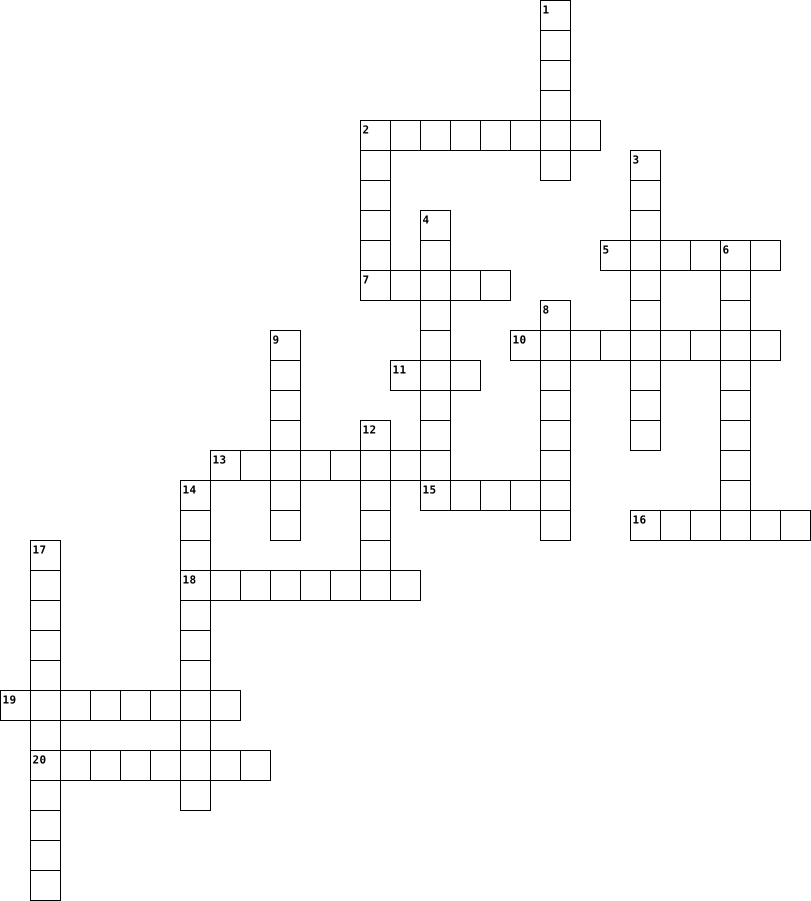
Across
- No _______ without representation
- This man made an engraving depicting an important moment in history
- The act that taxed people on all paper goods
- The battle of _______ was a very controversial battle in American history
- The act that taxed on all imported ______
- The battle that ended the war
- awakening Spiritual change, people spoke out against their leaders
- This country became allies with the US & helped fight for America's independence
- The act that raised money to bribe magistrates to remain loyal to Britain
- Men that were not from Britain who were employed to help fight with the British
- The ______ river was crossed by George Washington and his soldiers on Christmas Eve as a part of their "sneak attack"
Down
- A pamphlet that supported leaving the rule of Britain
- The author of the Declaration was ______
- The list of _______ were the offenses that signers of the Declaration declared against King George
- The act that forced colonists to allow soldiers to stay in their houses; colonists had to feed the soldiers
- The ______ was a war that lasted 8 years; it was a battle for independence from Great Britain
- A name for British soldiers
- The sons of ______ were patriot men that believed in independence
- A bloody massacre that questioned whether British soldiers firing into a crowd was justified
- The _______ congress consisted of representatives who met & made important decisions; these people met twice
- The declaration of ________ was one of the most critical documents in American history; it was drafted twice
21 Clues: A name for British soldiers • The battle that ended the war • No _______ without representation • The author of the Declaration was ______ • The act that taxed on all imported ______ • The act that taxed people on all paper goods • A pamphlet that supported leaving the rule of Britain • The sons of ______ were patriot men that believed in independence • ...
Texas History 2022-11-09

Across
- Former American army personnel and a Texan who worked with Gutierrez
- Native peoples living in the Great Plains of Texas
- American who invaded texas with Gutierrez
- A revolution that led to independence from Spain
- Native American group that lived along the Gulf Coast of Texas
- The combined states of Coahuila and Texas
- French territory given to Spain and back to France and then sold to the US in 1803
- The 300 families moving from the Southern US to Mexican Texas
- Mexican leader of the monarchists that helped declare Mexico independent from Spain
Down
- the colony of Spain in Mexico
- A foreigner who starts an unofficial war with another country
- An abandoned French settlement settled in Texas
- A building designed to convert Native Americans to Christianity
- French explorer who was killed by his own men
- The most successful empresario in Texas with the migration of the Old 300 to Texas
- Dutch businessman who helped Austin get his colony permission from Spain
- Mexican president and later dictator who ruled Mexico during the Texas Revolution
- A Mexican priest who started revolting in New Spain for reforms
- A military building that protects the missions from hostile Natives
- A fort in San Antonio that was popular for a siege battle
- The first Anglo to receive permission from Spain to colonize Texas.
21 Clues: the colony of Spain in Mexico • American who invaded texas with Gutierrez • The combined states of Coahuila and Texas • French explorer who was killed by his own men • An abandoned French settlement settled in Texas • A revolution that led to independence from Spain • Native peoples living in the Great Plains of Texas • ...
History Terms 2022-12-24

Across
- communication
- export/sale
- FDR
- journalist
- city
- provincialism
- Xenophobia
- competition
- 1872
- alcohol
- general
- 160
Down
- corruption
- belief
- light
- culture
- Cuba
- Riis
- Deal
- oil
20 Clues: FDR • oil • 160 • city • Cuba • 1872 • Riis • Deal • light • belief • culture • alcohol • general • corruption • journalist • Xenophobia • export/sale • competition • communication • provincialism
U.S History 2023-01-20

Across
- Leader of soviets.
- Was introduced in Vietnam, could fly wounded out of battle.
- This happened because of Rosa Parks.
- The u.s way of controlling communism.
- The U.S tactic for getting pacific back.
- South Vietnam president, was hated by many.
- The race for the best and most nuclear bombs.
- Name of the program that put the first humans of the moon.
- Radical group that targeted and killed minorties.
- Was assanated in Texas, thought to be by CIA.
- U.S air dropped materials to starving citizens.
Down
- The guerilla fighters that fought against south Vietnam and the U.S.
- President that withdrawaled from Vietnam
- The race to the moon, between U.S and Soviets.
- First satalite sent into orbit.
- First Japan city to get nuked, first real use of nuclear bomb.
- The bomb created that was stronger that the first nuke.
- The 9 teens that made desegregated schools.
- Protesters that sat in a bar until served.
- North Atlantic Treaty Organiztion.
- Who made the I have a dream speech?
- Marked by the government in a negative way, wouldn't allow you to get hired.
- Practice of spying.
- Military leader that fought in Korean war, was retired because of stupid actions
- U.S president who served 4 terms
25 Clues: Leader of soviets. • Practice of spying. • First satalite sent into orbit. • U.S president who served 4 terms • North Atlantic Treaty Organiztion. • Who made the I have a dream speech? • This happened because of Rosa Parks. • The u.s way of controlling communism. • President that withdrawaled from Vietnam • The U.S tactic for getting pacific back. • ...
History Crossword 2023-01-20

Across
- The enlightenment ones sought to transform the absolutist regime which they considered unfair, into a more __________ political system.
- This group resulted from interbreeding.
- What had a strong development in the colonial era, with representatives like Sor Juana Ines de la Cruz known worldwide for her poems and sonnets.
- After the _____, the temples, pyramids and everything related to Hispanic culture began to be destroyed.
- The enlightened strongly criticized the class system that forced the poor to pay for the debt and costs of the…
- To resign to a charge, usually due to reasons beyond control.
- Was a social, ideological and political movement which came from France, and strongly influenced the development and independence in New Spain.
- Were a repressive system, fixing the Spanish conquistador's entitlement to labour and tribute from indigenous communities.
- Period of New Spain that lasted from 1535 to 1821.
- Was the group who was engaged in agricultural work, suffering exploitation.
Down
- A century after the conquest, this style arrived in New Spain.
- What was another art form that was used in the evangelization and in popular religious festivals throughtout the colonial period.
- During the eighteenth century, the _________ territory suffered a series of physical, political and social transformations that gave rise to the process of independence.
- What was the mixture of races called?
- People that were engaged in priesthood, military,commerce and mining.
- At the beggining of the colony, ______ were converted into indigenous towns.
- Living conditions in New Spain were not fair and the privileged classes began to enlarge their…
- What was contributing large quantities of gold, silver and copper?
- Were a series of reforms with the porpuse of recovering the power of the Spanish Empire.
- Political and economic doctrine that defends freedom, equality and individualism.
20 Clues: What was the mixture of races called? • This group resulted from interbreeding. • Period of New Spain that lasted from 1535 to 1821. • To resign to a charge, usually due to reasons beyond control. • A century after the conquest, this style arrived in New Spain. • What was contributing large quantities of gold, silver and copper? • ...
History Crossword 2023-01-24

Across
- the conquest, the temples, pyramides and everything related to__________culture began to be destroyed.
- and Taxco, which owed their peek to mining other cities, such as_______, Guadalajara and especially Mexico city, developed around business activities.
- century after the conquest, the_________style arrived in New Spain.
- time, the natives of ancient Mexico accumulated knowledge about________plants.
- another art from that was used in the evangelization and in popular religious festivals through out the colonial period.
- a social ideological and political movement which came from france, strongly influenced the development and independence of new spain.
- the eighteenth century, the New Spain territory suffered a series of phisical, Political and social_________that goverise to the process of independence.
- the conquest of the__________cultures and during the colonization process, a variety of ethnicities arrived, and made great cultural contributions.
- september 27th, the_________, army entered Mexico City with Hurbide at the front, the act of independence of the Mexican empire was signed the following day.
- intervention of Napoleon Bonaparte in Spain was decisive for new spain to begin discussing the advantages of their________.
Down
- was involved in many of the decisions affecting society during the Inquisition?
- that was characterized as a corporate one.
- supported the privateers, pirates who were garanted with a permit and protection called carte blanche.
- cadiz was developed in 1872, in which benefits for the privileged clases were diminished.
- central region and the bajio were definitely the most...
- the crown established political institutions, the________become governed by the ingineous council.
- the beginning of the colony and the following century, the native_________decreased alormingly due to wars and epidemics.
- the__________and seventheenth, century, Spain was the most powerfull nation in the western world.
- is the most important form of property in the last centuries of the colony?
- enlightened strongly critized the class system that force the poor to pay for the debt and costs of the________.
20 Clues: that was characterized as a corporate one. • central region and the bajio were definitely the most... • century after the conquest, the_________style arrived in New Spain. • is the most important form of property in the last centuries of the colony? • time, the natives of ancient Mexico accumulated knowledge about________plants. • ...
History Words 2023-02-03

Across
- a town about 20 miles northwest of Boston.
- very harsh laws intended to punish the people of Massachusetts for their resistance.
- Branch Petition assured the king of the colonists’ desire for peace.
- or incoming money.
- this act lowered the tax on molasses imported by the colonists.
- They did not consider unfair taxes and regulations good reasons for rebellion.
- refuse to buy.
- boasted they would be ready to fight on a minute’s notice.
- In these acts the British leaders tried to avoid some of the problems the Stamp Act caused.
- March 5, 1770
- were determined to fight the British to the end.
- women who organized groups to
- information designed to influence
- published a pamphlet called Common Sense.
Down
- an organization used in earlier protests.
- was Thomas Jefferson's running mate.
- This act set up a permanent government for Quebec and granted religious freedom to French Catholics.
- This measure gave the company the right to ship tea to the colonies without paying most of the taxes usually placed on tea.
- In these agreements they pledged not to buy or use goods imported from Great Britain.
- are rag figures.
- a formal expression of opinion.
- of 1766 stated that Parliament had the right to tax and make decisions for the British colonies “in all cases.”
- groups of citizen soldiers.
- was a British king.
- or cancel.
- the boycott of British goods.
26 Clues: or cancel. • March 5, 1770 • refuse to buy. • are rag figures. • or incoming money. • was a British king. • groups of citizen soldiers. • women who organized groups to • the boycott of British goods. • a formal expression of opinion. • information designed to influence • was Thomas Jefferson's running mate. • an organization used in earlier protests. • ...
American History 2023-02-06

Across
- n
- m
- l
- c
- a
- i
- s
- t
- g
Down
- p
- d
- k
- q
- h
- o
- r
- j
- b
- f
- e
20 Clues: p • d • k • q • n • m • h • l • o • r • j • c • a • b • i • f • e • s • t • g
Tabaco History 2023-01-31

Across
- The first national settlement between tobacco companies and states is reached, with the companies agreeing to pay billions of dollars to fund anti-smoking campaigns.
- The Public Health Cigarette Smoking Act is passed, banning cigarette advertising on television and radio in the United States.
- The American Tobacco Company is formed, becoming one of the largest tobacco companies in the world.
- The first anti-tobacco society is formed in New York City.
- The British government imposes heavy taxes on tobacco to fund the Seven Years' War.
- The first "Smoking Prohibited" signs appear in offices and other public places.
- The first link between smoking and lung cancer is published in the British Medical Journal.
- Christopher Columbus and his crew members observe Native Americans smoking tobacco during their voyage to the Americas.
- Sir Walter Raleigh brings tobacco to England and begins to cultivate it.
- King James I publishes "A Counterblaste to Tobacco," criticizing the use of the substance.
Down
- The first lawsuits against tobacco companies are filed, claiming that the companies knew about the health risks of smoking but failed to warn consumers.
- The first cigarette-rolling machine is invented, allowing for mass production of cigarettes.
- The first tobacco plant is successfully grown in England.
- The tobacco industry agrees to a national settlement of $206 billion to be paid to the states over 25 years.
- The first anti-smoking laws are passed in San Francisco, prohibiting smoking in certain public places.
- The first FDA regulation on tobacco products is implemented, giving the agency authority over tobacco advertising and sales to minors.
- The U.S. Surgeon General releases a report linking smoking to lung cancer and other health problems.
- The first cigarette factory is established in Seville, Spain.
- The World Health Organization's Framework Convention on Tobacco Control is adopted, becoming the world's first public health treaty.
- Jean Nicot, the French ambassador to Portugal, sends tobacco seeds to France.
20 Clues: The first tobacco plant is successfully grown in England. • The first anti-tobacco society is formed in New York City. • The first cigarette factory is established in Seville, Spain. • Sir Walter Raleigh brings tobacco to England and begins to cultivate it. • Jean Nicot, the French ambassador to Portugal, sends tobacco seeds to France. • ...
History Crossword 2022-06-08

Across
- proposed a military alliance between Germany and Mexico if the United States entered World War I against Germany.
- a security alliance of 30 countries from North America and Europe
- a biological preparation that provides active acquired immunity to a particular infectious disease
- company that facilitates the exchange of goods between people, by acting as an online marketplace
- ship canal in northeastern Egypt
- President of North Vietnam
- an intergovernmental organization whose purpose is to maintain international peace and security
- cash crop traded in Western Africa
- a war instigated by a major power which does not itself become involved.
- the idea that a country should maintain a strong military capability and be prepared to use them aggresively
- period of geopolitical tension between the United States and the Soviet Union and their respective allies
- anti-foreign, anti-colonial, and anti-Christian uprising in China
- bat droppings used as fertilizer
- Most severe pandemic of the 20th century.
- a political theory advocating class war and leading to a society in which all property is publicly owned and each person works and is paid according to their abilities and needs.
- location where the United States dropped one of their atomic bombs
- Brazilian leader
- failed to industrialize and militarize as quickly as its european rivals, ending in its demise
- a spiritual movement that arose among Western American Indians
- a United States foreign policy position that opposed European colonialism in the Western Hemisphere
- Group formed by Hindu nationalist leaders of India in the late 1800s to gain greater democracy and eventual self-rule.
- North American Indian community settled in Oklahoma
- policy aimed to forbid people of non-European ethnic origin to enter Australia
- agreement signed by Canada, Mexico, and the United States that created a trilateral trade bloc in North America.
Down
- War between the northern and southern states of this Asian peninsula
- long-term shifts in temperatures and weather patterns
- political party with strong advocacy for the establishment of a separate Muslim-majority nation-state
- anti-colonial nationalist and political ethicist who employed nonviolent resistance to lead the successful campaign for India's independence
- deals with the global rules of trade between nations.
- survival of the fittest, used as justification for imperialism
- Hindi cinema
- a Chilean general who ruled Chile from 1973 to 1990
- served as the second president of Egypt and helped overthrow the monarchy in 1952.
- dictator of Germany during WWII
- musical style originating in Jamaica, but has spread globally.
- Method to prevent pregancies
- secret agreement between Germany, Austria-Hungary, and Italy during WWI
- a proxy war that pitted communist Northern part of the indochina peninsula against the Southern part
- Kingdom situated in the South African Coast.
- colonies in which immigrants from the colonizing country would come and live.
- an organization formed for international cooperation after WWI
- an international soccer tournament contested by senior men's national teams from various countries
- leader of the Indonesian struggle for independence from the Dutch colonialists
- the great increase in production of food grains due to the introduction of high-yielding varieties, to the use of pesticides, and to better management techniques.
- new method of energy production.
- Drug sold by the british to the chinese
- Chinese communist revolutionary who was the founder of the People's Republic of China
- an economic and political system in which a country's trade and industry are controlled by private owners for profit, rather than by the state
- prime minister of England
- first and founding head of government of Soviet Russia
50 Clues: Hindi cinema • Brazilian leader • prime minister of England • President of North Vietnam • Method to prevent pregancies • dictator of Germany during WWII • ship canal in northeastern Egypt • bat droppings used as fertilizer • new method of energy production. • cash crop traded in Western Africa • Drug sold by the british to the chinese • Most severe pandemic of the 20th century. • ...
US History 2022-04-27

Across
- “Black americans will never be treated fairly in a mostly White country”.
- A labor union wanted to destroy America’s capitalist economy.
- A program that paid farmers to produce less food.
- “lightning war”.
- He became the dictator of Germany in 1934.
- A film that portrayed African Americans as violent and dangerous.
- The Birth of a Nation made them popular again.
- FDR addressed Americans through the radio.
- These were African American pilots who protected bombers during the war.
Down
- Another name for the D-Day invasion.
- The 18th Amendment is usually referred to as.
- The Red Scare was the fear of spreading throughout the country.
- A two night terror killing all of Hitlers political rivals.
- Sacco & Vanzetti were immigrants from this country.
- Americans 65 and older would receive monthly income provided by the federal government.
- The first to invent the atomic bomb in the world.
- These were women who pushed the boundaries of style and behavior.
- Investors used to buy bank money and buy stocks with their money.
- The Depression started during his presidency.
- A place in Oświęcim, Poland.
20 Clues: “lightning war”. • A place in Oświęcim, Poland. • Another name for the D-Day invasion. • He became the dictator of Germany in 1934. • FDR addressed Americans through the radio. • The 18th Amendment is usually referred to as. • The Depression started during his presidency. • The Birth of a Nation made them popular again. • The first to invent the atomic bomb in the world. • ...
history project 2022-04-26

Across
- relating to government, politics,or public affiars of a country.
- time when unemployment and economic activity were decreasing.
- states comming together for a common purpose.
- inspecting of something to determain condition or value.
- rights given to a person to pursue there goals with out interferance.
- state where the constitutional convention was held.
- lossing value.
Down
- First 10 amendments.
- americas national currency at the time.
- highest body is supreme court.
- agreement settled between two diffrent agreements.
- a word that relates and means power
- government ran by elective representatives
- to adjust or change.
- equal sharing power between the two governments.
- producting and distriputing of goods
- law, rule
- term that is added to documents.
- a couple of diffrent law making houses.
- person sent to represent others.
20 Clues: law, rule • lossing value. • First 10 amendments. • to adjust or change. • highest body is supreme court. • term that is added to documents. • person sent to represent others. • a word that relates and means power • producting and distriputing of goods • americas national currency at the time. • a couple of diffrent law making houses. • government ran by elective representatives • ...
History crossword 2022-04-27

Across
- Pro-slavery and anti-slavery had fights thus the name _____ came along.
- allowed voters to have or prohibit slavery
- went against the democrats
- an abolitionist
- Mexican war hero
- turned to Pierce when they were losing
- a legislature deemed to be unfair, the federal disagreed
- spoke strongly against slavery in kansas
- the death of 5 pro-slavery people
Down
- against slavery
- arrived in Kansas in April 1856
- current president at the time
- another former general
- someone who supported the idea of building a rail road to the Pacific ocean
- a former general
- A politician who the southerners trusted because of the things he honored.
- The debate on slavery heavily influenced this
- this person knocked out SUMNER with a cane
- a pro slavery grand jury charged leaders of anti-slavery with treason
- senator of Massachusetts
20 Clues: against slavery • an abolitionist • a former general • Mexican war hero • another former general • senator of Massachusetts • went against the democrats • current president at the time • arrived in Kansas in April 1856 • the death of 5 pro-slavery people • turned to Pierce when they were losing • spoke strongly against slavery in kansas • allowed voters to have or prohibit slavery • ...
History Stuff.... 2022-04-27

Across
- Associated with communism and socialism
- Notable movie in the 1930s
- Labour union that wanted to spread socialism
- Beach in Normandy France
- opposed Americas involvement in war
- Warned FDR the Germans were learning how to harness atomic energy
- Crop used to replenish soil during the great depression
- Name of an atomic bomb
- Shipping company created by Garvey
- Japanese prime minister
- Given to disabled citizens
Down
- A building used to house soldiers
- Measure of all goods and services produced by a country in a year
- The final solution
- Burned by the nazis in gathering
- One of the greatest African American poets in the 1920s
- Time period African Americans moved to harlem
- One of the countries taken over by Hitler
- Nickname for campfires in Shantytowns
- paralyzed roosevelt
20 Clues: The final solution • paralyzed roosevelt • Name of an atomic bomb • Japanese prime minister • Beach in Normandy France • Notable movie in the 1930s • Given to disabled citizens • Burned by the nazis in gathering • A building used to house soldiers • Shipping company created by Garvey • opposed Americas involvement in war • Nickname for campfires in Shantytowns • ...
History Terms 2022-08-23

Across
- The people, bodies and processes that govern and make decisions in a society
- elected legislature from which an executive government is also formed
- An economic system where most companies, land and other resources are privately owned
- A political system where the government or parts of it are selected by the people
- The institution of hereditary royalty, led by a king, queen or emperor
- The buying or selling of goods, usually in exchange for money
- An increase in prices for goods and services, reducing the purchasing power of money
- A political concept where some individuals act, speak or make decisions on behalf of others
- The production of raw materials and manufactured goods within an economy
- An ideology urging loyalty to one’s own country; to put your country first
Down
- A system where political power is concentrated in the hands of a single person
- Money collected from individuals and groups by the government to fund the state
- A state’s defence forces, such as the army, navy and air force
- A system of claiming, settling, ruling and maintaining one or more colonies (see imperialism)
- A system where military needs are prioritised and the military exerts political influence
- Money owed to another party, usually because it has been previously borrowed
- The idea that governments derive their power and authority from the consent of the people
- A form of political authority where power is said to be ordained by God
- The supreme authority of a government, the basis for its power and autonomy
- A political-economic system with no state, minimal class differences and economic equality
- The branch of government responsible for leadership and day to day decision making
21 Clues: The buying or selling of goods, usually in exchange for money • A state’s defence forces, such as the army, navy and air force • elected legislature from which an executive government is also formed • The institution of hereditary royalty, led by a king, queen or emperor • A form of political authority where power is said to be ordained by God • ...
World History 2022-08-26

Across
- a school of hellenistic philosophy
- form of government by the rule of a few
- Founded the academy in ancient greece
- watch this for amusment and laughter
- excellence
- the study of basic knowledge
- an open space that served as a meeting ground
- a person who god speaks through
- A public speaker in ancient Greece
- a member of a class of serfs in ancient sparta
Down
- a legacy of family
- area that is now modern iran
- a body of heavily armed infantry
- an island in the bronze age with distinctive Art
- Upper part of ancient Greek city.
- something that comes from someone in the past
- Majority rules
- The capital of Greece
- having power over a king
- Community structure of anciet Greece
- greek philospher taught by pluto
21 Clues: excellence • Majority rules • a legacy of family • The capital of Greece • having power over a king • area that is now modern iran • the study of basic knowledge • a person who god speaks through • a body of heavily armed infantry • greek philospher taught by pluto • Upper part of ancient Greek city. • a school of hellenistic philosophy • A public speaker in ancient Greece • ...
American history 2022-06-06

Across
- the largest division of the United Kingdom, constituting, with Scotland and Wales, the island of Great Britain.
- a statement or action expressing disapproval of or objection to something.
- the action or fact of joining or being joined, especially in a political context.
- a person who owns or manages a farm.
- a strain or heavy demand.
- an act of violent or open resistance to an established government or ruler.
- a system of government by the whole population or all the eligible members of a state
- an inhabitant of a particular town or city.
- freedom from disturbance
- soldiers or armed forces.
Down
- a large body of people united by common intrest
- the activities of governments concerning the political relations between countries.
- is a symbolic expression of the fact that two quantities are equal
- a continent in the W part of the landmass lying between the Atlantic and Pacific oceans, separated from Asia
- a state of armed conflict between different nations or states or different groups within a nation or state.
- a nation or territory considered as an organized political community under one government.
- makes up less than 6% of the workforce. Boston named after a town in England
- a group with a certain equality between its members.
- a state formally cooperating with another for a military or other purpose.
- France, in Western Europe, encompasses medieval cities, alpine villages and Mediterranean beaches.
- a place on the coast where someone may find shelter,especially one protected from rough water
21 Clues: freedom from disturbance • a strain or heavy demand. • soldiers or armed forces. • a person who owns or manages a farm. • an inhabitant of a particular town or city. • a large body of people united by common intrest • a group with a certain equality between its members. • is a symbolic expression of the fact that two quantities are equal • ...
Malaysia History 2022-10-03

Across
- This sultanate controlled the maritime trade passing along the southern edge of the Malay Peninsular in the 15th century before being captured by the Western colonizers. It slowly declined after that.
- Westerners arrived in Malaya early in the 16th century. Malacca, a trading port then, was captured and colonized in 1511. Of what nationality were the first European colonists?
- Tun Dr ___________ was the fourth prime minister of Malaysia
- Malaysia Day is held every 16 _____________ every year to mark the joining together of Malaya, North Borneo, Sarawak, and Singapore to form Malaysia
- _____________ is the national anthem of Malaysia
- Our first prime minister, Tunku Abdul Rahman was named as Father of ____________
- Our third Prime Minister, Tun Hussein Ong, was appointed at what month of 1976?
- This island was founded by Captain Francis Light of the British East India Company in 1786. It was named Prince of Wales Island. It is now a state within Malaysia. What is its modern name?
- What sea separates Peninsular Malaysia (West Malaysia) from Sabah and Sarawak (East Malaysia)?
- Malaysia shares borders with three other countries, namely Brunei Darussalam, Indonesia and ?
Down
- Is known as Independence Month of Malaysia
- The official proclamation of Independence was made on August 31, 1957, at Stadium Merdeka, in ?
- The Anglo-______ Treaty in 1824 divided the Malay Archipelago into two spheres of influence, which in turn gave rise to separate nations of Indonesia and Malaysia
- Our fourth Prime Minister founded the national car project which is?
- The Japanese began their invasion of Malaya from this state's capital on 6th December 1941
- This tree was introduced as commercial agriculture by the British during their colonization in Malaya
- The four colours that appear on a Malaysia's flag are red, white, yellow and ?
- The two states of Malaysia that are located on Borneo Island (East Malaysia) are Sabah and _________.
- The flag of Malaysia also known as Jalur ____________
- This is the southernmost state in Malaysia. During World War II, the Japanese launched their invasion of Singapore across the straits which also carries the state's name
20 Clues: Is known as Independence Month of Malaysia • _____________ is the national anthem of Malaysia • The flag of Malaysia also known as Jalur ____________ • Tun Dr ___________ was the fourth prime minister of Malaysia • Our fourth Prime Minister founded the national car project which is? • The four colours that appear on a Malaysia's flag are red, white, yellow and ? • ...
History Auto 2023-09-18

Across
- bring to a more advanced or effective state
- the act or process of burning
- an early automobile having an open body, a single seat for two or three persons, and a large trunk or a rumble seat
- to work, perform, or function, as a machine does
- to supply with a quantity of electrical energy
- far apart; far distant in space; situated at some distance away
- laid open to view; unconcealed
- a person who devises some new process, appliance, machine, or article; one who makes inventions.
- rich; affluent
- to supply with electricity or other means of power
- remaining in place or at rest; motionless; stationary
Down
- to supply or equip
- a person or organization that uses a commodity or service
- to repair; mend
- a car or other vehicle that combines an internal-combustion engine with one or more electric motors powered by a battery
- a combination of two or more cells electrically connected to work together to produce electric energy
- combustible matter used to maintain fire, as coal, wood, oil, or gas, in order to create heat or power
- an automobile or a boat with a folding top
- a volatile, flammable liquid mixture of hydrocarbons, obtained from petroleum, and used as fuel for internal-combustion engines, as a solvent, etc.
- to bring into existence; give rise to; cause
- a colorless, odorless, flammable gas that combines chemically with oxygen to form water
- to plan and fashion artistically or skillfully
- the introduction of harmful substances or products into the environment
- any means in or by which someone travels or something is carried or conveyed; a means of conveyance or transport
- water in the form of an invisible gas or vapor
25 Clues: rich; affluent • to repair; mend • to supply or equip • the act or process of burning • laid open to view; unconcealed • an automobile or a boat with a folding top • bring to a more advanced or effective state • to bring into existence; give rise to; cause • to supply with a quantity of electrical energy • to plan and fashion artistically or skillfully • ...
Language History 2023-09-07

Across
- - Beautiful or artistic handwriting.
- - To figure out the meaning of something that is difficult to understand, like an ancient script.
- - Writing carved or engraved on a surface.
- - A mark or character that represents an idea or object.
- - The language of ancient Rome.
- - Relating to the sounds of spoken language.
- - A room in a monastery for copying and preserving manuscripts.
- - A person who writes or records information in ancient times.
- - Very old, from a long time ago.
- - A simple picture or symbol that represents an object or concept.
Down
- - A symbolic figure or character.
- - A system of writing using pictures and symbols, often associated with ancient Egypt.
- - An ancient system of writing that used wedge-shaped marks on clay tablets, used in Mesopotamia.
- - A system of writing used for a specific language.
- - An ancient language of India.
- - A handwritten document or book.
- Stone - An ancient artifact with inscriptions in three scripts that helped decode Egyptian hieroglyphics.
- - Changing text from one language to another.
- - A set of letters used to write a language.
- - A material made from reeds used for writing in ancient Egypt.
20 Clues: - An ancient language of India. • - The language of ancient Rome. • - A symbolic figure or character. • - A handwritten document or book. • - Very old, from a long time ago. • - Beautiful or artistic handwriting. • - Writing carved or engraved on a surface. • - Relating to the sounds of spoken language. • - A set of letters used to write a language. • ...
Texas History 2023-08-15

Across
- traveling to new territories for the purpose of discovery
- to make changed to the current condition
- an obstacle, difficulty, or block
- movement from one part to another
- Caddo work for Texas which means friend
- wood used for construction
- bordering, beside, next to
- government sponsored settlement of people to new territories
- wet area of land with different grass types
- to make a change in beliefs
- thin, small in numbers
- the state of owing money
- a line separating two places
- to tack control of
Down
- an undertaking, an attempt
- expense comforts, extravagant
- lush, rich, productive
- contains a lot of water
- an agreement involving give and take
- trouble, unrest, stress
- the long, silky hair of a goat
- more than one cactus
- well known land features
- the law making branch of the government
- Native American tent-like shelter made with log poles and buffalo hides
- excellent, fantastic
- rare pink granite only found in the Llano Basin
- cereal grain used to make syrup and feed livestock
- exchange goods for other goods or services without using money
29 Clues: to tack control of • more than one cactus • excellent, fantastic • lush, rich, productive • thin, small in numbers • contains a lot of water • trouble, unrest, stress • well known land features • the state of owing money • an undertaking, an attempt • wood used for construction • bordering, beside, next to • to make a change in beliefs • a line separating two places • ...
car history 2023-08-29

Across
- (Chevrolet's pony car)
- (Stainless steel sports car)
- (Iconic British compact car)
- (Ford's short-lived brand)
- (Iconic American muscle car)
- (Luxury convertible)
- (First gasoline-powered car)
- (Pontiac muscle car)
- (Ford's successor to the Model T)
- (Chevrolet's classic model)
Down
- (High-performance variant)
- (Mercedes-Benz post-war design)
- (Chevrolet's full-size car)
- (Prominent American luxury car brand)
- (Chevrolet's sports car)
- (Historic American luxury car marque)
- (Ford's revolutionary automobile)
- (Innovative post-WWII car)
- (Volkswagen's compact car)
- (Ford's personal luxury car)
20 Clues: (Luxury convertible) • (Pontiac muscle car) • (Chevrolet's pony car) • (Chevrolet's sports car) • (High-performance variant) • (Ford's short-lived brand) • (Innovative post-WWII car) • (Volkswagen's compact car) • (Chevrolet's full-size car) • (Chevrolet's classic model) • (Stainless steel sports car) • (Iconic British compact car) • (Iconic American muscle car) • ...
NMI History 2023-08-21

Across
- liquefied by heat
- a submarine mountain
- a micro tectonic plate located west of the Mariana Trench
- the physical elements of landforms such as ice-capped mountains, hills, water bodies such as rivers, lakes, ponds, and the seas
- the resistance that one surface or object encounters when moving over another
- the sideways and downward movement of the edge of a plate of the earth's crust into the mantle beneath another plate
- hot fluid or semifluid material below or within the earth's crust from which lava and other igneous rock is formed on cooling
- a geographinc area, including both cultural and natural resources and the wildlife or domestic animals they are in, associated with historic event, activity, or person, or exhibiting other cultural values
- a long, narrow open container for animals to eat or drink out of
- gigantic pieces of the Earth's crust and uppermost mantle
- the deepest known point of the seabed of Earth.
- an opening in or near a volcano, through which hot sulfurous gases emerge
- having no living members; no longer in existence.
Down
- the formation of new areas of oceanic crust, which occurs through the upwelling of magma at midocean ridges and its subsequent outward movement on either side.
- more general and can be used relative to the surroundings of the object
- areas of weakness in the volcano which form early in its lifetime, likely due to spreading of the volcano as it settles
- a mixture of gases that surrounds the Earth
- a small rocky body orbiting the sun
- an oceanic tectonic plate that lies beneath the Pacific Ocean
- the mostly solid bulk of Earth's interior
- the outermost part of the Earth
- denial, in military affairs, a defensive strategy used to make it prohibitively difficult for an opponent to achieve a military objective
- describes the location of a place based on a fixed point on Earth
- a mountain or hill, typically conical, having a crater or vent through which lava, rock fragments, hot vapor, and gas are being or have been erupted from the earth's crust.
- an oceanic trench located in the western Pacific Ocean, about 200 kilometres (124 mi) east of the Mariana Islands; it is the deepest trench
- an expert in or student of geology
- a celestial object consisting of a nucleus of ice and dust
27 Clues: liquefied by heat • a submarine mountain • the outermost part of the Earth • an expert in or student of geology • a small rocky body orbiting the sun • the mostly solid bulk of Earth's interior • a mixture of gases that surrounds the Earth • the deepest known point of the seabed of Earth. • having no living members; no longer in existence. • ...
Australian History 2022-11-27

Across
- First Englishman to explore Aus. coastline. (2 words)
- Sheep introduced to Australia 1797.
- 1841, this colony separates from NSW. (2 words)
- 1792 - Aboriginal warrior leads rebellion in Sydney.
- First industry in Australia.
- 20 000ya earliest known indigenous weapon made.
- Australian PM vanishes 1967. (2 words)
- 1932 famous bridge completed. (2 words)
- Airline founded in 1920.
- Discovered in 1851 in Ballarat Victoria.
Down
- City founded in 1911.
- Popular spread invented 1923.
- Capital city founded in 1829.
- 5000ya arrival of native dog species.
- These people rebel in the Eureka Rebellion.
- Lands at Botany Bay claims Australia for England. (3 words)
- Australia's first coin (2 words).
- Brother of Ned. (2 words)
- Australia previously known as? (2 words)
- March 1942 WA town bombed by Japanese.
20 Clues: City founded in 1911. • Airline founded in 1920. • Brother of Ned. (2 words) • First industry in Australia. • Popular spread invented 1923. • Capital city founded in 1829. • Australia's first coin (2 words). • Sheep introduced to Australia 1797. • 5000ya arrival of native dog species. • March 1942 WA town bombed by Japanese. • Australian PM vanishes 1967. (2 words) • ...
Art History 2022-05-20

Across
- Packaged landscape or architecture, often over years of work
- known for a bronze statue of David
- (1389?-1466), the well-recognized founder of modern sculpture, is
- Similar in style to Baroque art, old and pastel colors emphasized light-heartedness
- When protestants broke away from the Catholic Church in the
- (1377-1446) completed the dome of the Florence cathedral
- Religious stepped pyramids that stood in the center of Mesopotamian cities
- Analyzed the development of art over time in Natural History
- The _______ Period lasted from 660-475 BCE
- (c. 1488-1576) became the Renaissance’s greatest colorist
- Conquered Ancient Egypt in 332 BCE
- China’s Golden Age
- Figure stands 4 1/8 inches tall, acted as a fertility figure
Down
- created metalwork such as small jewelry and other decorative
- (1401-28) employed linear and aerial perspective in his frescoes
- Drew from mass culture, challenging traditional ideals of art
- scale Technique that determines the size of figures based on their status
- Combined theater and art, often allowing audience participation
- Art that emphasizes emotion, and exotic and melodramatic elements
- Is located on the Salisbury Plain in Wiltshire, England
- (1444?-1510) created The Birth of Venus
- Refers to art using monochromatic palettes and simple forms
- First arose as a discipline in the mid-eighteenth century
- Emphasized connection between changes in style and historical events
- Art developed in Paris around 1908, pioneered by Picasso and Braque
- Consist of a thin ribbed framework under vaulted areas of
- France’s ________ _____ contains ancient cave paintings dating from c. 30,000 BCE
- The ______ style remained popular from the 12th century until the 16th century
- Compiled biographies of Italian artists in The Lives of Artists
29 Clues: China’s Golden Age • known for a bronze statue of David • Conquered Ancient Egypt in 332 BCE • (1444?-1510) created The Birth of Venus • The _______ Period lasted from 660-475 BCE • Is located on the Salisbury Plain in Wiltshire, England • (1377-1446) completed the dome of the Florence cathedral • First arose as a discipline in the mid-eighteenth century • ...
World History 2022-05-19

Across
- United England
- painted God creating Adam
- Started to Invade Europe
- Ruler of the mongols
- Leaded the French in Orleans
- Moves Capital to Paris
- Writes the Praise of Folly
- God of the sea
- Ruler of Mali
- Lived in the Andes Mountain Range
- Becomes the leader of Spain
- Empire in Central Mexico
Down
- Disease that spread through Europe
- invented the printing press
- father of all gods
- Christians defeated the Muslims
- Wrote the prince
- Becomes czar in Russia
- wrote Romeo and Juliet
- Converted to Christianity
- God of the sun
- Painted Mona Lisa
- Known for horses and archery
23 Clues: Ruler of Mali • United England • God of the sun • God of the sea • Wrote the prince • Painted Mona Lisa • father of all gods • Ruler of the mongols • Becomes czar in Russia • wrote Romeo and Juliet • Moves Capital to Paris • Started to Invade Europe • Empire in Central Mexico • painted God creating Adam • Converted to Christianity • Writes the Praise of Folly • invented the printing press • ...
Ag history 2022-05-12

Across
- these large farms played a major role in the South's history
- provided a way for cattle farmers in the 1800's to get their cattle to market faster
- farmers settled here during westward expansion
- affected agriculture greatly and happened during the 1860's
- sales, marketing, trades, finances
- farm animals
- production of plant life for crops
- milk,cheese,butter,wool
- this plant was a large cash crop in the south and during the 1600's
- welding,construction,plumbing, etc.
- westward expansion depended heavily on this
- care and management of the environment
- African american people played a major role in this
Down
- operation of ag equipment, construction,structures, and facilities
- these people are the reason that Ag is popular
- kept animals safe from predators and kept them in their corrals
- the science and practice of farming
- farming,business,food
- machine made to process cotton faster
- care, production, and processing of animals
- this crops played a major role in the southerns states'history
21 Clues: farm animals • farming,business,food • milk,cheese,butter,wool • sales, marketing, trades, finances • production of plant life for crops • the science and practice of farming • welding,construction,plumbing, etc. • machine made to process cotton faster • care and management of the environment • care, production, and processing of animals • ...
Ag history 2022-05-12

Across
- farmers settled here during westward expansion
- kept animals safe from predators and kept them in their corrals
- the science and practice of farming
- farming,business,food
- machine made to process cotton faster
- care, production, and processing of animals
- westward expansion depended heavily on this
- this plant was a large cash crop in the south and during the 1600's
- production of plant life for crops
- welding,construction,plumbing, etc.
- operation of ag equipment, construction,structures, and facilities
Down
- farm animals
- these people are the reason that Ag is popular
- these large farms played a major role in the South's history
- milk,cheese,butter,wool
- sales, marketing, trades, finances
- this crops played a major role in the southerns states'history
- African american people played a major role in this and were forced to work with no pay
- provided a way for cattle farmers in the 1800's to get their cattle to market faster
- affected agriculture greatly and happened during the 1860's
- care and management of the environment
21 Clues: farm animals • farming,business,food • milk,cheese,butter,wool • sales, marketing, trades, finances • production of plant life for crops • the science and practice of farming • welding,construction,plumbing, etc. • machine made to process cotton faster • care and management of the environment • care, production, and processing of animals • ...
U.S. History 2022-05-30

Across
- assassinated the Archduke of Austria-Hungary
- September 1, 1939 invasion
- amendment that protects against searches and seizures
- longest Presidential term
- Makes the laws
- bombing of this fort in Charlestown led to the start of the Civil War
- ran against Lincoln in the 1860 presidential election
- formal complaint
- Prohibition amendment
- New Deal agency still in existence
- "all men are created equal"
- a company that controls all businesses in a particular industry
- Pacific battle in which the Japanese were able to imprison nearly 70,000 American soldiers
- this treaty ended the American Revolution against Great Britain
- has the power to veto laws
- book written to expose the meat packing industries
Down
- president of the Spanish-American War
- first ten amendments
- a halt in fighting that allows peace talks to begin
- division of power between the federal and state governments
- plan of the Constitutional Convention that was supported by smaller states
- amendment that abolished slavery
- December 7, 1941
- Provide for the common
- _____ Tom's Cabin by Harriet Beecher Stowe
- planned to lead a slave revolt at Harper's Ferry
- famous Rough Rider
27 Clues: Makes the laws • December 7, 1941 • formal complaint • famous Rough Rider • first ten amendments • Prohibition amendment • Provide for the common • longest Presidential term • September 1, 1939 invasion • has the power to veto laws • "all men are created equal" • amendment that abolished slavery • New Deal agency still in existence • president of the Spanish-American War • ...
World History 2022-05-16

Across
- belief of more than one god
- provided ancient Egypt with fertile soil and water for irrigation
- empiricist philosopher who believed that all knowledge is derived from sensory experience
- the transition from creating goods by hand to using machines
- small,fast Spanish ship
- weapon with great explosive power that results from the sudden release of energy upon the splitting, or fission, of the nuclei of a heavy element such as plutonium or uranium
- a distant territory belonging to or under the control of a nation
- the open yet restricted rivalry that developed after World War II between the United States and the Soviet Union and their respective allies
- the opinions or actions of people who believe that a country should use military methods to gain power
Down
- the various revolutions that took place during the late 18th and early 19th centuries and resulted in the creation of a number of independent countries in Latin America
- the political doctrine and practice of unlimited centralized authority and absolute sovereignty, as vested especially in a monarch or dictator.
- an inquiry into the nature and causes of the wealth of nations
- the state policy, practice, or advocacy of extending power and dominion, especially by direct territorial acquisition or by gaining political and economic control of other territories and peoples.
- began in 1787 and ended in 1799
- belief in one god
- an ancient trade route that linked the Western world with the Middle East and Asia
- a long,narrow ditch
- devotion and loyalty's to one's own country
- focuses on the struggle between capitalists and the working class
- considered one of the greatest military generals in history
20 Clues: belief in one god • a long,narrow ditch • small,fast Spanish ship • belief of more than one god • began in 1787 and ended in 1799 • devotion and loyalty's to one's own country • considered one of the greatest military generals in history • the transition from creating goods by hand to using machines • an inquiry into the nature and causes of the wealth of nations • ...
History Project 2022-05-24

Across
- term for a nation physically separated by land
- the leader of the Ancient Indian Mauryans
- religion that utilized the Middle Way
- french revolution and reign of terror leader
- rebellion led by Hong Xiuquan
- Soviet Union leader during the detente period
- gunpowder empire that used religious tolerance
- type of government before Meiji Japan
- first artificial Earth satellite
- gunpowder empire that used Sunni Islam
Down
- gunpowder empire that used Shi'a Islam
- the hindu book of worship written in Sanskrit
- led a revolt against the Apartheid system in SA
- substance traded from spheres of influence to china
- economic ideology in the communist manifesto
- economic theory that trade generates wealth
- type of warfare utilized in world war 1
- russian communist group led by Vladimir Lenin
- religion created by martin luther
- philosopher who believed in the right to revolt
20 Clues: rebellion led by Hong Xiuquan • first artificial Earth satellite • religion created by martin luther • religion that utilized the Middle Way • type of government before Meiji Japan • gunpowder empire that used Shi'a Islam • gunpowder empire that used Sunni Islam • type of warfare utilized in world war 1 • the leader of the Ancient Indian Mauryans • ...
History Crossword 2022-05-06

Across
- Great grandsons, took over Dehli Sultanate
- self-rule or independence
- native or inhabitant of Mongolia
- the foudner of ottomans
- is a local Islamic ruler
- a less strict Islamic group
- An major Islamic empire that was Shi'a Islam
- OG who was Islamic and spread to many areas with a never ending family tree
- non-Islamic people in an Islamic area
- a mix or a blend of many different cultures as one
- invaded china; close to the Mongols
- group in China before the Qing
- a Islamic empire that was Sunni Islam and conquered north of Asia
Down
- is a form of Islam with an "ism" which is a celestial form
- three main empires Mughal, Safavid, and Ottoman referred commonly to as this word
- is the Muslim religion
- a Islamic empire that also followed Sunni islam and had the devshirme system
- is a more conservative Islamic group
- Kong Fu Zi
- a warrior group in Russia who was later employed with brilliant dancing skills
- another term for slaves that were trained and given authority
- the boys taken from the devshirme system after being trained
- system were young boys(8-14) were taken and trained to fight
- tax you have to pay if you are not Muslim
24 Clues: Kong Fu Zi • is the Muslim religion • the foudner of ottomans • is a local Islamic ruler • self-rule or independence • a less strict Islamic group • group in China before the Qing • native or inhabitant of Mongolia • invaded china; close to the Mongols • is a more conservative Islamic group • non-Islamic people in an Islamic area • tax you have to pay if you are not Muslim • ...
Music History 2022-05-26

Across
- a composer known for impressionism and treating harmony as color
- a modernist composer who juxtaposed serious and ironic themes
- the concept of music growing on itself
- a German composer known for his nationalistic pieces
- German poetry set to music
- history building towards an ideal
- a method of systematically removing tonality
- a study of music outside of classic Western tradition
- connected to feelings of yearning or longing
- a stance in art that took a commitment to the superiority of the present
- a composer known for his eccentric instrumentation
- small nugget of a theme
Down
- a composer notable for creating fictional versions of himself while critiquing
- a concept born out of the idea that anything had the potential to be music
- a Czech composer brought to the US in hopes of making an American sound
- the fixation or obsession on one idea
- a movement that emulated folk musics while emphasizing naivity and violence
- a reaction against the Enlightenment movement
- a poem originally written by Goethe
- a Hungarian composer, one of the first ethnomusicologists
20 Clues: small nugget of a theme • German poetry set to music • history building towards an ideal • a poem originally written by Goethe • the fixation or obsession on one idea • the concept of music growing on itself • a method of systematically removing tonality • connected to feelings of yearning or longing • a reaction against the Enlightenment movement • ...
U.S. History 2023-05-24

Across
- The isolating, closing off, or surrounding of a place, as a port, harbor, or city, by hostile ships or troops to prevent entrance or exit.
- Pride or devotion to ones country.
- The easing of hostility or strained relations, especially between countries.
- North Atlantic Treaty Organization.
- The National Association for the Advancement of Colored People.
- Process of becoming part of another culture.
- To withdraw from membership in a group.
- During the late nineteenth and early twentieth centuries, the United States pursued an aggressive policy of expansionism, extending its political and economic influence around the globe.
- Was used in the Progressive Era to characterize reform-minded American journalists who wrote largely for all popular magazines.
- A number of persons, states, etc., joined or associated together for some common purpose.
- To bring in from a foreign country.
- The buying and selling of goods, especially on a large scale.
- To reject
- A formal agreement between two or more states in reference to peace, alliance, commerce, or other international relations.
Down
- An agreement or a settlement of a dispute that is reached by each side making concessions.
- A popular term used to refer to the economic policies of Ronald Reagan.
- A major political scandal that occurred in the United States in the 1970's, following a break-in at the Democratic National Committee headquarters, involving Richard Nixon trying to cover-up.
- Is a relationship of parity between the two levels of government established.
- To do away with or put an end to.
- An alliance between persons, parties, states, etc., for some purpose.
- A minor change or addition designed to improve a text, piece of legislation, etc.
- Person who wanted to preserve the United States for white, American-born Protestants and who was opposed to immigration.
- To come to live in a new country.
- The right to vote.
24 Clues: To reject • The right to vote. • To do away with or put an end to. • To come to live in a new country. • Pride or devotion to ones country. • North Atlantic Treaty Organization. • To bring in from a foreign country. • To withdraw from membership in a group. • Process of becoming part of another culture. • The buying and selling of goods, especially on a large scale. • ...