
mental health Crossword Puzzles
Mental Health 2024-11-12

Across
- A professional who helps people deal with personal issues and mental health concerns.
- A wide range of mental health conditions that affect mood, thinking, and behavior.
- The state of being in good health, especially as an actively pursued goal.
- Feelings of worry, nervousness, or unease about something with an uncertain outcome.
Down
- A temporary state of mind or feeling.
- A person’s emotional, psychological, and social well-being.
- A mental health disorder characterized by persistently low mood and loss of interest in activities.
- The body’s response to any demand or challenge.
- Strategies people use to manage stress or difficult emotions.
- Treatment intended to relieve or heal a mental health issue.
- The practice of taking action to preserve or improve one’s health and well-being.
11 Clues: A temporary state of mind or feeling. • The body’s response to any demand or challenge. • A person’s emotional, psychological, and social well-being. • Treatment intended to relieve or heal a mental health issue. • Strategies people use to manage stress or difficult emotions. • The state of being in good health, especially as an actively pursued goal. • ...
Health 2024-07-22

Across
- (6) Supporting group of relations
- (5) 5 glasses a day...
- (7) A measure of your sporting level
- (9) Health of feelings
- (9) Negative effect of poor mental health
- (5) Competitve activity
Down
- (4) A relaxing stress reducing exercise
- (4) This should be balanced...
- (7) People you get to know well
- (6) The opposite of lazy
- (7) Things you do with your free time
- (6) Redue this as much as possible
- (6) Health of the mind
- (8) Health of the body
- (6) Health of friendships
15 Clues: (5) 5 glasses a day... • (9) Health of feelings • (6) Health of the mind • (8) Health of the body • (5) Competitve activity • (6) The opposite of lazy • (6) Health of friendships • (4) This should be balanced... • (7) People you get to know well • (6) Supporting group of relations • (6) Redue this as much as possible • (7) A measure of your sporting level • ...
Chapter one 2013-11-21
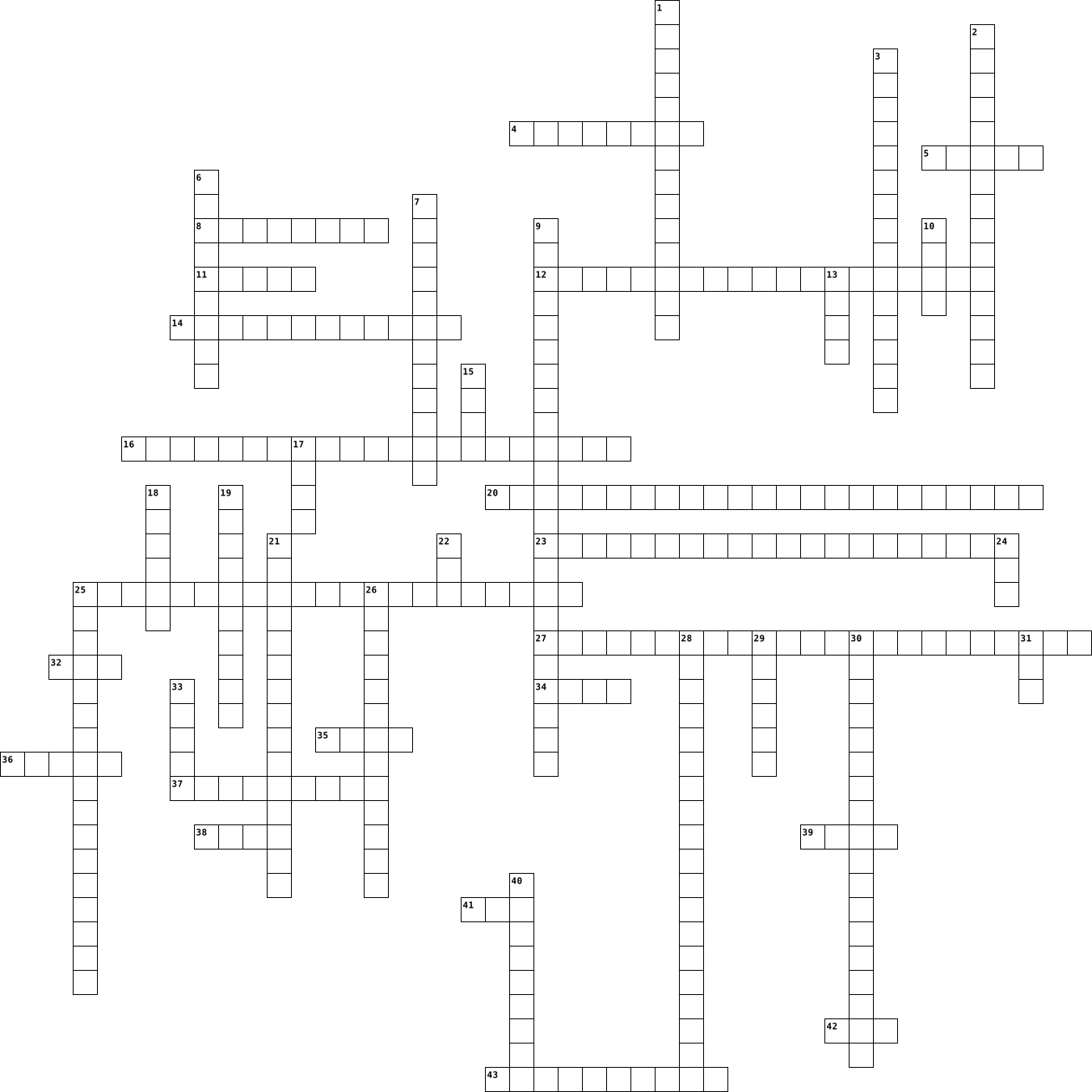
Across
- insurance by gov. for poor
- Women’s Health and Cancer Rights Act
- insurance by gov. for elderly
- Health Insurance Portability and Accountability Act
- 1974 to protect the rights of patients
- focus of preventing disease prolonging life and promoting physical health
- payments covered by patient
- paid by employer
- national prevention strategy 3 goals increase life expectancy, reduce health disparities and increase access
- actual activities to help with public education
- coverage for eveyone
- Centers for Medicare and Medicaid
- American Recovery and Reinvestment
- Agency for Healthcare Research and Quality
- Newborn and Mothers’ Health Protection Act
- evaluating the process of to facilitate programs
- Triangle focuses on the balance of three factors, quality, cost, and accessibility
- Mental Health Parity Act
- Gross Domestic Product
- Certificate of Need
- continuous collection of data
Down
- groups share risk and costs of covered losses
- standards to increase patient awareness by education
- Public Health Security and Bioterrorism Preparedness and Response Act
- facilities set up to serve the poor
- providers that focuses specifically on the care when hospitalized
- Voluntary insurance from employer
- Center for Mental Health Services
- Family Medical Leave Act
- National Mental Health Act
- Poison Prevention Packaging Act
- Emergency Medical Treatment and Active Labor Act
- poorhouses
- developed to provide protection in the event of health problems
- Centers for Disease Control and Prevention
- Social Security Act considered old age insurance
- avoids development of disease
- evaluation that forced medical schools to have standardization
- activities for early detection, prevents progression of disease
- state of well being
- reduces impact of existing disease by reducing disease related complictions
- American Medical Association
- Consolidated Omnibus Budget Reconciliation Act
- large patterns of disease
44 Clues: poorhouses • paid by employer • state of well being • Certificate of Need • coverage for eveyone • Gross Domestic Product • Family Medical Leave Act • Mental Health Parity Act • large patterns of disease • insurance by gov. for poor • National Mental Health Act • payments covered by patient • American Medical Association • insurance by gov. for elderly • avoids development of disease • ...
Med Professions Semester 2022-12-07

Across
- provides care in home
- Verbal Communication is
- Nightingale Founder of Nursing
- injured worker
- invented small pox vaccine
- medicare insurance is for
- Health deals with mental disorders and diseases
- performs diagnostic test
Down
- bad practice
- state of being in good health
- non profit agency
- physical disability preventing communication
- wrongful act with no contract
- language non verbal behavior
- created first health record
- a rule that must be followed
16 Clues: bad practice • injured worker • non profit agency • provides care in home • Verbal Communication is • performs diagnostic test • medicare insurance is for • invented small pox vaccine • created first health record • language non verbal behavior • a rule that must be followed • state of being in good health • wrongful act with no contract • Nightingale Founder of Nursing • ...
Unit B - Starter 2025-02-06

Across
- Outdoor activity
- Factor affecting mental health
- The amount of energy an organism uses. Metabolic ........
- Reasons for providing physical activity
- Health-monitoring test
Down
- Factor affecting physical health
- Communicating effectively with a client you must build .......
- Type of physical fitness
- Strategies to improve health status
- Health screening questionnaire
- Indicator of good physical health. Moving ......
- Signs of poor mental health
12 Clues: Outdoor activity • Health-monitoring test • Type of physical fitness • Signs of poor mental health • Health screening questionnaire • Factor affecting mental health • Factor affecting physical health • Strategies to improve health status • Reasons for providing physical activity • Indicator of good physical health. Moving ...... • ...
Health and Lifestyle 2025-01-09

Across
- The measurement of a person’s body fat and health
- The quality of living a healthy lifestyle
- A routine exercise to keep fit
- A form of mental stress or strain
- A harmful habit that affects health, like smoking
- A medical emergency requiring immediate attention
- A type of food that is healthy and low in fat
- The process of maintaining good health through exercise and diet
Down
- A condition that affects one's mental or physical well-being
- The amount of food and drink a person consumes daily
- The regular activity that improves physical health
- The mental and physical rest period needed for health
- A medical practitioner who specializes in the care of patients
- The state of being free from illness or injury
14 Clues: A routine exercise to keep fit • A form of mental stress or strain • The quality of living a healthy lifestyle • A type of food that is healthy and low in fat • The state of being free from illness or injury • The measurement of a person’s body fat and health • A harmful habit that affects health, like smoking • A medical emergency requiring immediate attention • ...
Mental Health - Key Warning Signs 2023-05-24

Across
- This factor to consider includes family structure, poverty, etc.
- This is the "healthiest" attachment type
- Who is a key factor in early identification and intervention of children's mental health?
- Approx one in ___ children have a diagnosable mental health disorder
- Common eating disorder
- Obsessions are the ______ in OCD
- Bipolar includes episodes of depression and ______
Down
- Compulsions are the _____ in OCD
- We need to consider the frequency, duration, intensity, and ____?
- Major Depressive Disorder is ______
- disorder Mental health is more than just the absence of a ____ ____
- Intense, excessive, and persistent fear and worry
- Major obstacle in proper mental illness identification and treatment
13 Clues: Common eating disorder • Compulsions are the _____ in OCD • Obsessions are the ______ in OCD • Major Depressive Disorder is ______ • This is the "healthiest" attachment type • Intense, excessive, and persistent fear and worry • Bipolar includes episodes of depression and ______ • This factor to consider includes family structure, poverty, etc. • ...
Unit 1- Intro to Health 2024-03-14

Across
- Shows how a person’s life may be in wellness or illness
- The way you get along with others
- All parts and systems of body work together- can withstand stress having strength to pursue physical, mental, environmental, and social changes
- Overall state of well-being or total health
- Confidence and worth that you feel about yourself
- Repeated behaviors related to the way a person lives which helps their health
Down
- Planned preventive action take before an event to increase chances of a safe outcome
- Something you aim for that takes planning and work
- Behavior with an element of danger that may cause injury or harm
- Providing health information in such a way that it influences people to change attitudes so that they take positive actions about their health
- When you lack confidence about who you are and what you can do
- A state of total physical, mental, and social well-being
- Describes the method one will use to make decisions
- Average number of years a group of people is expected to live
- How you like, accept, and feel about yourself; how you relate to others; how you meet the demands of life
- The level of health and satisfaction that a person has
- The act of making a choice or coming to a solution
17 Clues: The way you get along with others • Overall state of well-being or total health • Confidence and worth that you feel about yourself • Something you aim for that takes planning and work • The act of making a choice or coming to a solution • Describes the method one will use to make decisions • The level of health and satisfaction that a person has • ...
Mental Health Crossword Puzzle 2025-07-15

Across
- A feeling of expectation and desire for something better
- Focusing one's awareness on the present moment
- Related to actions and conduct
- A disorder marked by obsessions and compulsions
- Practice of calming the mind through focus
- A condition of being dependent on a substance or behavior
- Understanding and sharing another's feelings
- Extreme fatigue and reduced performance from stress
- Help or encouragement during tough times
- Identification of a disorder or illness
- A disorder causing extreme mood swings
- The state of being free from tension or anxiety
- Deep understanding of a person or situation
- Related to thinking, understanding, or memory
- Knowledge or perception of a situation
- The ability to recover from difficulties
- The state of being in good health
- Talk therapy for mental health treatment
- A mood disorder causing persistent sadness
- A mental disorder affecting thinking and perception
- Emotional response to a deeply distressing event
- The practice of being optimistic or hopeful
Down
- The process of returning to a normal state
- A person's way of thinking or attitude
- A condition in which different elements are equal
- Feelings like joy, anger, fear, or sadness
- Chemical messenger in the brain
- The quality of being open to emotional harm
- A doctor specializing in mental health
- A feeling of worry or unease, often about the future
- Alternating emotional highs and lows
- Activities done to maintain personal well-being
- Professional guidance to resolve personal issues
- Mental or emotional strain or tension
- The capacity to endure or overcome challenges
- Managing stress or difficult emotions
- Treatment to relieve or heal mental distress
- Drugs used to treat mental illness
- Negative beliefs about mental health conditions
- A condition triggered by traumatic events
40 Clues: Related to actions and conduct • Chemical messenger in the brain • The state of being in good health • Drugs used to treat mental illness • Alternating emotional highs and lows • Mental or emotional strain or tension • Managing stress or difficult emotions • A person's way of thinking or attitude • A doctor specializing in mental health • ...
Mental Health 2018-07-22

Across
- mental illnesses are part of a _____ mental health.
- where thinking takes place.
- the emotion you feel when in a positive state of mind.
- happiness is part of a _____ mental health.
- things that must be overcome during life
- relating to the mind.
Down
- the state of mental strain caused from demanding situations.
- the ability to see the light in a negative situation.
- an emotion that is part of a negative state of mind.
- a mental illness that affects both mental and physical health.
- an action that helps one through a challenge.
- feeling unease in a situation.
12 Clues: relating to the mind. • where thinking takes place. • feeling unease in a situation. • things that must be overcome during life • happiness is part of a _____ mental health. • an action that helps one through a challenge. • mental illnesses are part of a _____ mental health. • an emotion that is part of a negative state of mind. • ...
Mental Health Matters! 2023-04-12

Across
- negative, judgmental, and/or discriminatory attitudes toward mental health challenges and those who live with them
- something that increases the chances of developing a condition
- an unhealthy pattern of drug, alcohol or other chemical use that may lead to relationship,education, work, mental and/or physical problems
- a strategy to help you deal with difficult situations and lessen unpleasant emotions, thoughts, or behaviors
- something that decreases the chances of developing a condition and/or balances out an existing risk factor
- a mood disorder characterized by intense feelings of sadness, often associated with physical symptoms such as disturbance of sleep, appetite, and concentration
- a licensed medical doctor who has completed additional psychiatric training; can diagnose mental health conditions, prescribe and manage medication, and provide therapy
- a mental health professional trained to help individuals understand and cope with their thoughts, feelings, and behaviors; may assess and/or diagnose mental health conditions
Down
- a description that identifies a medical or mental disorder or illness
- a normal emotional suffering experienced by a person from a loss of a loved one
- an emotional response to a disturbing, scary, or shocking experience that overwhelms an individual’s ability to cope
- the capacity to withstand or to recover quickly from difficulties; toughness
- the ongoing inner emotional feeling experienced by a person
- treatment that takes place in an office, hospital, or other clinical setting but does not involve overnight stays
- death that occurs as a result of an action designed to end one’s life
- a feeling of emotional or physical tension in response to being overwhelmed or unable to cope with mental/emotional pressure
- a process of change through which individuals improve their health and wellness, live self-directed lives, and strive to reach their full potential
- irrational fear that leads people to altogether avoid specific things or situations that trigger intense anxiety
- the ability to understand and share the feelings of another
- a physical or mental feature that indicates the potential existence of a concern, condition, or diagnosis
20 Clues: the ongoing inner emotional feeling experienced by a person • the ability to understand and share the feelings of another • something that increases the chances of developing a condition • a description that identifies a medical or mental disorder or illness • death that occurs as a result of an action designed to end one’s life • ...
TOPIC 1 (Unit 3) 2025-09-17

Across
- The efficiency of the production of goods and services.
- ___________ AND WELLBEING: The state of a person’s physical, social, emotional, mental and spiritual existence, characterized by a state of balance.
- A physical or mental disturbance involving symptoms, dysfunction or tissue damage.
- _____________ DISEASES: Infectious diseases transmitted from the environment or other organisms.
- A human need, feeling like a member or part of society.
- How a person feels about themselves and their life.
- The quality or state of being weak or ill, often associated with old age.
- SELF _________: How people feel about themselves.
- A subjective concept related to personal experience of a disease or injury.
- Mental tension experienced when resources are perceived as insufficient.
- What an individual feels is important in life, guiding behaviors.
- CONDITION A disease or condition that lasts a long time, usually over six months.
- The highest level of health and wellbeing an individual can realistically attain.
- The spread of infectious disease through human populations across a large region or worldwide.
Down
- ___________ HEALTH AND WELLBEING: Relates to the state and quality of interactions and relationships with others.
- Continually changing, a characteristic of health and wellbeing.
- ___________ HEALTH AND WELLBEING: The current state of wellbeing related to the mind or brain, including thought patterns and self-esteem.
- Believing in one’s own worth and ability to succeed.
- Influenced by or based on personal beliefs, feelings or opinions.
- ___________ HEALTH AND WELLBEING: The ability to express feelings in an appropriate way, including resilience.
- The ability to effectively deal with adverse or negative events.
- Intense worry or fear about future events.
- A state of balance, key to health and wellbeing.
- Global health body established in 1948, promoting health and wellbeing.
- ___________ HEALTH AND WELLBEING: Relates to the state and functioning of the body and its systems.
- ___________ HEALTH AND WELLBEING: Relates to ideas, beliefs, values, ethics, and a sense of meaning or purpose in life.
- What an individual feels to be true or right, even if unproven.
27 Clues: Intense worry or fear about future events. • A state of balance, key to health and wellbeing. • SELF _________: How people feel about themselves. • How a person feels about themselves and their life. • Believing in one’s own worth and ability to succeed. • The efficiency of the production of goods and services. • ...
Mental Health 2021-10-18

Across
- a severe disease in which a person may suffer from delusions, hallucinations, and a false sense of reality.
- a reaction to stress that occurs after the event is over
- a condition characterized by inattention, hyperactivity, and impulsivity
- stress that provides a welcome challenge
- the type of stress that is persistent and unrelenting
Down
- a mark of disgrace or negative label
- of extreme sadness, apathy, and hopelessness
- a disorder in which the individual is trapped in a pattern of repeated thoughts and behaviors
- a disorder characterized by extreme mood swings ranging from depression to mania
- stress that is perceived as negative or overwhelming
- characterized by excessive, exaggerated anxiety about everyday life events with no obvious reasons for worry
- an overwhelming and unreasonable fear of an object or situation that poses little real danger but causes anxiety
- the type of stress that is temporary
13 Clues: a mark of disgrace or negative label • the type of stress that is temporary • stress that provides a welcome challenge • of extreme sadness, apathy, and hopelessness • stress that is perceived as negative or overwhelming • the type of stress that is persistent and unrelenting • a reaction to stress that occurs after the event is over • ...
Mental Health 2021-09-15

Across
- medications that treat depression
- act of taking one's life
- condition identified by unstable identity and interpersonal relationships
- people who lose a loved one to suicide
- condition identified by periods of intense depression that alternate with periods of manic moods
- condition in which a person has difficulty paying attention and controlling behavior
- type of therapy in which all family members meet together with a therapist to build positive healthy relationships
Down
- shame or embarrassment that is usually unfair
- condition in which someone responds with extreme or unrealistic fear and dread
- condition identified by intense negative feelings that do not go away
- professional who diagnosis and treats people with mental health condiditons
- gatherings in which a therapist meets with a group of people who share a common problem
- condition identified by irregular thoughts and delusions hearing voices and seeing things that are not there
13 Clues: act of taking one's life • medications that treat depression • people who lose a loved one to suicide • shame or embarrassment that is usually unfair • condition identified by intense negative feelings that do not go away • condition identified by unstable identity and interpersonal relationships • ...
mental health 2022-03-16

Across
- relating to disorders of the mind
- the state of being in good health
- an emotion and the name of a dwarf in Snow White
- the quality of being thankful
- a mental state achieved by focusing one's awareness on the present moment
Down
- a person with whom one has a bond of mutual affection
- the treatment of mental or psychological disorders by psychological means.
- an idea or opinion produced by thinking, or occurring suddenly in the mind
- a person's mental or physical condition
- eeling, expressing, or causing great pleasure and happiness
- a group of people related by blood or marriage
- a reason or reasons for acting or behaving in a particular way.
- an illness or condition that disrupts normal physical or mental functions
13 Clues: the quality of being thankful • relating to disorders of the mind • the state of being in good health • a person's mental or physical condition • a group of people related by blood or marriage • an emotion and the name of a dwarf in Snow White • a person with whom one has a bond of mutual affection • eeling, expressing, or causing great pleasure and happiness • ...
Mental Health 2021-12-01

Across
- Eating large amounts in one sitting, then feeling guilty.
- Refusal to eat due to
- The part of the brain that controls emotions.
- Feeling overwhelmed and unable to cope.
- Excessive attention to detail.
- Obsessive desire to set fire to things.
- An urge to steal, regardless of need.
- Cause of an attack.
Down
- Negatively effects how you feel; loss of interest in things.
- Brain part that triggers anxiety
- Eating and then forcing yourself to throw up to get rid of the calories.
- Worry, nervousness, unease
- Intense fear.
13 Clues: Intense fear. • Cause of an attack. • Refusal to eat due to • Worry, nervousness, unease • Excessive attention to detail. • Brain part that triggers anxiety • An urge to steal, regardless of need. • Feeling overwhelmed and unable to cope. • Obsessive desire to set fire to things. • The part of the brain that controls emotions. • ...
Mental Health 2018-07-22

Across
- constant changes in positive to negative thought patterns which can be described as a disorder
- the ability to recover from difficulties
- confidence in ones own abilities and strengths
- the disorder of obsessions and compulsions
- hopefulness and confidence for a specific task or situation
- the feeling of worry or nervousness about something with an uncertain outcome
Down
- the opinions or ideas that form in the mind
- an emotional state or reaction
- changes of characteristics throughout life
- the feeling or belief of faith and self assurance of ones abilities
- opposite of negative
- thoughts which arise or affect the mind in relation to the mind and brain
- the combination of characteristics and qualities which form an individuals distinctive character
13 Clues: opposite of negative • an emotional state or reaction • the ability to recover from difficulties • changes of characteristics throughout life • the disorder of obsessions and compulsions • the opinions or ideas that form in the mind • confidence in ones own abilities and strengths • hopefulness and confidence for a specific task or situation • ...
Mental Health 2014-12-01

Across
- an important part of the clinical assessment process in psychiatric practice
- an abnormal condition of the mind, and is a generic psychiatric term for a mental state often described as involving a "loss of contact with reality"
- "split mind" meaning a split from reality
- judging and discriminating against mental illnesses
- drug induced movement disorders that include dystonia, akathisia, parkinsonism, and tardive dyskinesia
- used to treat symptoms of extrapyramidal symptoms
- Health our favourite clinical rotation
Down
- an abnormally elevated mood state
- a state of low mood and aversion to activity that can affect a person's thoughts, behavior, feelings and sense of well-being
- chemical treatment of mental illnesses
- an affective disorder characterized by periods of mania alternating with periods of depression
- Disorder patterns of behaviour, mood, social interaction, and impulsiveness that cause distress to themselves and others
- a standard psychiatric treatment in which seizures are electrically induced in patients to provide relief from psychiatric illnesses
13 Clues: an abnormally elevated mood state • chemical treatment of mental illnesses • Health our favourite clinical rotation • "split mind" meaning a split from reality • used to treat symptoms of extrapyramidal symptoms • judging and discriminating against mental illnesses • an important part of the clinical assessment process in psychiatric practice • ...
Mental Health 2023-03-11

Across
- A neurotransmitter associated with mood and well-being
- Actions taken to improve one's own physical and mental health
- A physiological and psychological response to a perceived threat
- The ability to understand and share the feelings of others
- Strategies used to deal with stress and difficult situations
- A state of being free from tension and anxiety
- A feeling of worry or unease
Down
- A mood disorder characterized by sadness and loss of interest
- dog A trained dog that provides emotional support to individuals
- A technique for focusing on the present moment and reducing stress
- The ability to adapt and recover from stress or adversity
- A practice that involves quieting the mind and focusing on the breath
- A feeling of appreciation or thankfulness
- Treatment aimed at improving mental health and well-being
14 Clues: A feeling of worry or unease • A feeling of appreciation or thankfulness • A state of being free from tension and anxiety • A neurotransmitter associated with mood and well-being • The ability to adapt and recover from stress or adversity • Treatment aimed at improving mental health and well-being • The ability to understand and share the feelings of others • ...
Mental health 2025-09-20

Across
- Nutrient in eggs critical for fetal brain development
- Herbal supplement studied for anxiety relief
- Sugar that may impair mood when consumed in excess
- Practice of being present to reduce stress
- Nutrient essential for brain development
- Spice known for its potential antidepressant effect
Down
- Natural sleep aid from tart cherries
- Brain-fueling macronutrient often restricted in keto diets
- Grain linked to stable energy and mood regulation
- Hydration status can influence this mental state
- Mineral that helps regulate mood
- Diet linked to reduced risk of Alzheimer’s
- Hormone that regulates the sleep-wake cycle
- Fatty acid that supports cognitive function
14 Clues: Mineral that helps regulate mood • Natural sleep aid from tart cherries • Nutrient essential for brain development • Diet linked to reduced risk of Alzheimer’s • Practice of being present to reduce stress • Hormone that regulates the sleep-wake cycle • Fatty acid that supports cognitive function • Herbal supplement studied for anxiety relief • ...
Mental Health 2025-10-20

Across
- Rasa takut atau gelisah tanpa alasan yang jelas.
- Orang yang membantu menangani masalah mental.
- Orang yang bisa diajak bicara saat sedang tertekan.
- Buruk Hal yang sering dialami penderita PTSD saat tidur.
- Perasaan yang ingin dicapai lewat meditasi atau terapi.
- Bantuan emosional dari orang lain saat sedang kesulitan.
- Pengalaman menyakitkan yang sulit dilupakan.
Down
- Hal penting yang membantu seseorang bertahan dan sembuh.
- Perasaan utama saat seseorang mengalami depresi.
- Salah satu cara tubuh meluapkan emosi sedih.
- Hal yang sering terganggu saat seseorang depresi.
- Kenangan masa lalu yang bisa memicu gejala PTSD.
- Salah satu cara untuk membantu mengatasi depresi berat.
13 Clues: Salah satu cara tubuh meluapkan emosi sedih. • Pengalaman menyakitkan yang sulit dilupakan. • Orang yang membantu menangani masalah mental. • Rasa takut atau gelisah tanpa alasan yang jelas. • Perasaan utama saat seseorang mengalami depresi. • Kenangan masa lalu yang bisa memicu gejala PTSD. • Hal yang sering terganggu saat seseorang depresi. • ...
Mental Health 2026-02-18

Across
- A disturbance in the normal function of a part of body
- an anxiety disorder in which people have unwanted and repeated thoughts, feelings and ideas that make them feel driven to do something
- A set of negative and often unfair beliefs that a society or a group of people have about something
- A hormone that is released during the "Fight or Flight" response
- A mental disorder that develops from traumatic or stressful life experiences
- The ability to understand and show concern for another persons feelings
- Eating disorder characterized by frequent episodes of binge eating followed by purging
Down
- A severe mental disorder in which people lose interest in life
- A very serious mood disorder in which people lose interest in life and can no longer find enjoyment in anything
- a person undergoes changes in mood that seem inappropriate or extreme
- Fear that keeps a person from functioning normally
- An exaggerated fear of a specific situation or object
- The intentional taking of ones own life
13 Clues: The intentional taking of ones own life • Fear that keeps a person from functioning normally • An exaggerated fear of a specific situation or object • A disturbance in the normal function of a part of body • A severe mental disorder in which people lose interest in life • A hormone that is released during the "Fight or Flight" response • ...
crossword gym 2020-08-31

Across
- ; something done successfully
- ; materials
- ; committing to something
- ; related to the mind
- ; state being in good health
- ; relating to emotions
- ; needing companionship
- ; action of giving someone support
Down
- ; mental state of achievement
- ; willing to do commit or do something
- ; being physically fit
- ; relating to the body as opposed to the mind
- ; mental and physical condition
- ; bein responsible
- ; the action of engaging
15 Clues: ; materials • ; bein responsible • ; related to the mind • ; being physically fit • ; relating to emotions • ; needing companionship • ; the action of engaging • ; committing to something • ; state being in good health • ; mental state of achievement • ; something done successfully • ; mental and physical condition • ; action of giving someone support • ...
Actions for Wellbeing- 2024 Mental Health Awareness Week 2024-07-10

Across
- Engaging in activities for pleasure and relaxation.
- Spending time outdoors to reduce stress and improve mood.
- Setting limits to protect personal well-being.
- The practice of being thankful and showing appreciation.
- Physical activity that improves mental health by releasing endorphins.
- A gathering of people with similar issues to share experiences and advice.
- Deep, controlled inhalations and exhalations to reduce anxiety.
- A practice of focused concentration that helps calm the mind.
- A physical and mental practice that includes breath control and meditation.
Down
- Activities and practices that promote physical and emotional health.
- Writing down thoughts and feelings to process emotions.
- Professional guidance to help address mental health issues.
- Being present and fully engaged in the current moment.
- Restorative rest essential for mental health.
- Eating a balanced diet to support overall well-being.
15 Clues: Restorative rest essential for mental health. • Setting limits to protect personal well-being. • Engaging in activities for pleasure and relaxation. • Eating a balanced diet to support overall well-being. • Being present and fully engaged in the current moment. • Writing down thoughts and feelings to process emotions. • ...
Chapter 13 Assignment 2025-05-14

Across
- is positively linked to good health and longevity. Social isolation has been shown to predict a shortened life span.
- High levels of __ can impact all aspects of your health.
- Maintaining healthy __ with others can help improve your physical health, which is closely tied to your social health.
- an individual’s ability to obtain, communicate, and understand basic health information and services, allowing him or her to make appropriate health decisions
- exercise that requires the heart to deliver oxygenated blood to working muscles
- healthcare including screenings, checkups, and patient counseling to prevent illnesses, disease, and other health issues
- health resources address a wide variety of health promotion and disease prevention issues with the goal of promoting health and wellness within the community.
- can also help members meet mental and emotional needs, such as love, self-esteem, and emotional support.
- Lack of sleep can result in __-like symptoms in children and teenagers.
- anorexia nervosa and bulimia nervosa
Down
- a physical or psychological need for a habit-forming substance—such as drugs or alcohol—or an activity—such as shopping.
- involves forming healthy personal relationships with others
- Lack of sleep can cause or increase __ as well.
- Eating __ foods gives you body the energy it needs.
- is one of the leading causes of death in adolescents and college-age youth.
- diseases can be transmitted, or spread, through a variety of methods, including through contact with objects or people who are infected, the air, animals, and improper food sanitation.
- Strong mental and emotional health can be described as a state of __ in which the person is realistic about their own abilities, has strategies for managing the normal stresses and challenges in life
- The most common healthcare therapies in the United States are part of __ medicine.
- a wellness approach that advocates for treating the patient as a whole, rather than just the symptoms of disease, because the body works as a combination of physical, emotional, mental, and spiritual health
- a person’s thoughts and feelings about how they look
- and mental condition in which a person experiences intense feelings of well-being, happiness, and excitement
- health encompasses many aspects of life, all of which are important.
- can help improve memory, which can be beneficial to your studies.
23 Clues: anorexia nervosa and bulimia nervosa • Lack of sleep can cause or increase __ as well. • Eating __ foods gives you body the energy it needs. • a person’s thoughts and feelings about how they look • High levels of __ can impact all aspects of your health. • involves forming healthy personal relationships with others • ...
Mind Matters: A Mental Health Crossword 2024-12-06

Across
- The practice of focusing on the present moment to improve mental health
- A chemical substance in the brain that affects mood and behavior
- A common disorder characterized by hyperactivity and impulsiveness
- The state of being mentally sound or healthy
- A feeling of worry or fear often associated with stress
- A psychological condition characterized by persistent sadness
Down
- The process of becoming aware of and addressing mental health concerns
- An extreme fear or aversion to something
- A professional who provides therapy to address mental health issues
- A strategy used to address and manage mental or emotional challenges
- A treatment approach involving talking with a mental health professional
- The ability to recover quickly from difficulties
- A disorder involving repetitive behaviors or thoughts
13 Clues: An extreme fear or aversion to something • The state of being mentally sound or healthy • The ability to recover quickly from difficulties • A disorder involving repetitive behaviors or thoughts • A feeling of worry or fear often associated with stress • A psychological condition characterized by persistent sadness • ...
PDSC - Mental Health & Water Safety Month 2025-05-01

Across
- Close watching of children near water
- Major mental illness affecting 8.8% of U.S. adults
- 10.8% of adults with mental illness lack this coverage
- Fences or other structures to prevent pool access
- Dangerous breathing pattern that can lead to blackout in water
- Mental health professionals in short supply, with a 350:1 ratio
- Ability to safely navigate water environments
- Over 28 million adults with mental illness didn't receive this
- Mood disorder affecting 2.5% of U.S. adults in their lifetime
Down
- Most common mental illness in America
- Dangerous ocean water flow
- Swimming partner for safety
- Life-saving technique for water emergencies
- Designated person to monitor swimmers
- Frequency of a condition in a population
- Describes thoughts experienced by 5.2% of U.S. adults
- Substance use disorder affecting 18.1% of U.S. adults
- Essential flotation device for boating
- 59.8% with depression didn't receive mental health care in this age group
- Staying afloat in one place
20 Clues: Dangerous ocean water flow • Swimming partner for safety • Staying afloat in one place • Most common mental illness in America • Close watching of children near water • Designated person to monitor swimmers • Essential flotation device for boating • Frequency of a condition in a population • Life-saving technique for water emergencies • ...
CROSSWORD TWO - 2024 Mental Health Awareness Week 2024-07-10

Across
- Restorative rest essential for mental health.
- Eating a balanced diet to support overall well-being.
- Being present and fully engaged in the current moment.
- Writing down thoughts and feelings to process emotions.
- Physical activity that improves mental health by releasing endorphins.
- Spending time outdoors to reduce stress and improve mood.
- A gathering of people with similar issues to share experiences and advice.
- Deep, controlled inhalations and exhalations to reduce anxiety.
- A physical and mental practice that includes breath control and meditation.
Down
- A practice of focused concentration that helps calm the mind.
- Setting limits to protect personal well-being.
- Activities and practices that promote physical and emotional health.
- The practice of being thankful and showing appreciation.
- Engaging in activities for pleasure and relaxation.
- Professional guidance to help address mental health issues.
15 Clues: Restorative rest essential for mental health. • Setting limits to protect personal well-being. • Engaging in activities for pleasure and relaxation. • Eating a balanced diet to support overall well-being. • Being present and fully engaged in the current moment. • Writing down thoughts and feelings to process emotions. • ...
Physical Education Crossword 2021-09-16
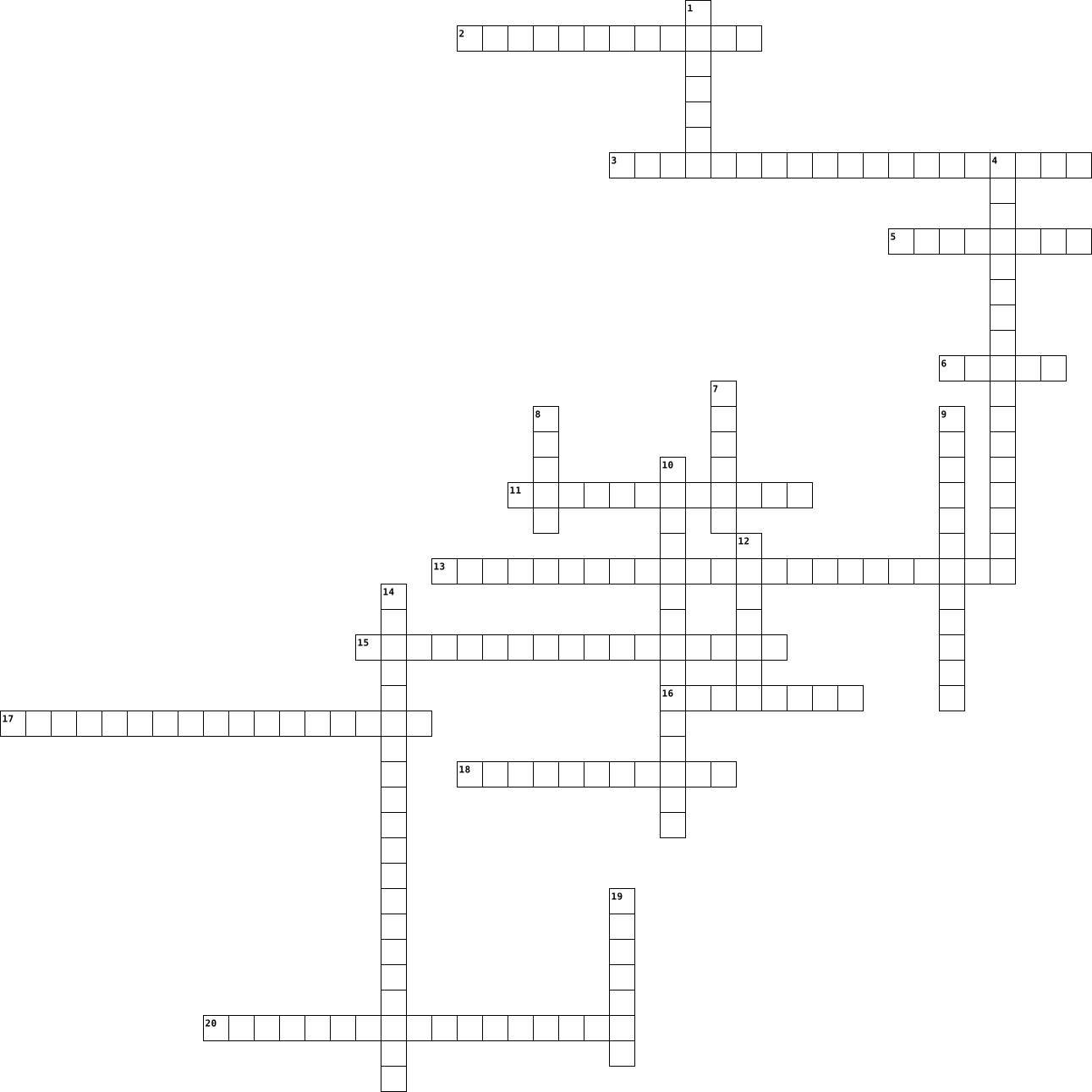
Across
- Overexertion
- Physical Development
- Exercise
- Speed
- Reaction Time
- Cardiovascular Endurance
- Social Development
- Strength
- Physical Education
- Flexibility
- Mental Development
Down
- Fitness
- Muscular Endurance
- Health
- Power
- Coordination
- Body Composition
- Balance
- Emotional Development
- Agility
20 Clues: Speed • Power • Health • Fitness • Balance • Agility • Exercise • Strength • Flexibility • Overexertion • Coordination • Reaction Time • Body Composition • Muscular Endurance • Social Development • Physical Education • Mental Development • Physical Development • Emotional Development • Cardiovascular Endurance
Mental Health Awareness 2014-05-11

Across
- Taking care of your mental _____ helps you make better choices and decisions.
- Eating the _____ means to eat different colors of fruits and vegetables.
- When people do not get enough _____ they may feel moody and short-tempered.
- _____ is how you manage yourself when faced with a difficult situation.
- Getting good sleep is important for your growth and _____.
- What you _____ has a lot to do with how you feel.
- Too much _____ is bad for your health. Hint: Your body releases adrenaline in response to this.
- One great way to increase your self-esteem and feel good is by _____ others.
- It is good to have a _____ to talk to.
- One way to think more positive is to be _____.
Down
- May is _____ Health Awareness Month.
- It is better for your health to _____ outside than it is to watch T.V.
- When you _____, your brain releases endorphins that make you feel better.
- Sunlight can increase feelings of _____.
- Staying _____ to others and the community makes people feel good.
- There are different vitamins and _____ in the different colors of fruits and vegetables.
- _____ are great companions and are good for your health.
- When you think _____ you feel happier.
- Laughing and having _____ is good for your mind, body, and spirit.
- Eating a healthy _____ can make you feel full of energy and more alert.
20 Clues: May is _____ Health Awareness Month. • When you think _____ you feel happier. • It is good to have a _____ to talk to. • Sunlight can increase feelings of _____. • One way to think more positive is to be _____. • What you _____ has a lot to do with how you feel. • _____ are great companions and are good for your health. • ...
HS2 Mental Health 2021-02-08

Across
- severe mental disorder with delusions & hallucinations
- type of restraint using medication to calm patients
- therapy used with children using toys & games
- involving distress but no delusions or hallucinations
- recognize neg patterns of thinking & replace with healthier thoughts
- false beliefs that are against their culture & seem irrational
- create plan for goals & work with drug, alcohol, anger mgmt, suicide prevention
- false perceptions with hearing, seeing, or feeling
- therapy using motivational techniques such as consequences & rewards
- type of therapy with controlled electrical currents passed thru brain
- therapy for mental disorders; treats symptoms but not cure
- dramatic shift in person's mood & energy
- communication technique of turning focus back to pt to gain more info
- type of restraint to protect pt or others from harm
Down
- reach out, check their safety, ask for a promise and get help
- communication technique allowing pt to select the topic
- talk with therapist to restructure thinking & respond to stress
- communication with specific strategies for pt to express themselves
- MD/DO specializing in mental health
- helping pts become aware of their surroundings & present situation
- study human behavior & the mind
- disorder with involuntary escape from reality
- commonly co-occur with mental health conditions
- specialize in comm resources for abuse, no job skills, adoption & foster homes
- anything that impedes a pt's movement
- communication technique making oneself available
26 Clues: study human behavior & the mind • MD/DO specializing in mental health • anything that impedes a pt's movement • dramatic shift in person's mood & energy • therapy used with children using toys & games • disorder with involuntary escape from reality • commonly co-occur with mental health conditions • communication technique making oneself available • ...
Mental/Emotional Health 2017-03-28

Across
- the act of preventing or hindering
- the ability to accept yourself and others and adapt to challenges.
- a set of characteristics that make you unique
- non-hostile comments that point out problems and encourage development
- secreted chemicals that regulate activities of different body cells
- the building blocks of development that help young people grow up as healthy caring and responsible individuals
- the ability to imagine and understand how someone else feels
- a feeling of severe dejection
- the gender with the highest suicide rate
Down
- a person who gives adviser or counseling
- a ranked list of the needs essential to human growth and development.
- striving to be the best you can be
- a federal agency that conducts and supports health promotion; prevention; and preparedness
- a situation involving exposure to danger
- killing oneself both unintentionally and intentionally
- your sense of yourself as a unique individual
- observing and learning from the behaviors of those around me
- the feeling of being upset or annoyed especially because of an inability to achieve something
- the intentional use of unfriendly or offensive behaviors
- signals that tell your mind and body how to react
20 Clues: a feeling of severe dejection • the act of preventing or hindering • striving to be the best you can be • a person who gives adviser or counseling • a situation involving exposure to danger • the gender with the highest suicide rate • a set of characteristics that make you unique • your sense of yourself as a unique individual • ...
Mental Health Vocabulary 2020-11-04

Across
- causing damage
- the general condition of body and mind
- impairment of health
- A type of mood disorder with marked changes in mood between extreme elation or happiness and severe depression during adolescence
- Teenage sexual abuse occurs when an adolescent is used for gratification of an adult’s sexual needs or desires. Severity of sexual abuse can range from fondling to forcible rape
- mental or emotional as opposed to physical in nature
- continue in a place, position, or situation
- body and mind in great condition
- feeling of anticipation of further damage
- shield from danger, injury, destruction, or damage
- in your mind
- not the same one or ones already mentioned or implied
Down
- Physical abuse occurs when a person responsible for a child or adolescent’s welfare causes physical injury or harm to the child
- related to or caused by poison
- Use and abuse of drugs and alcohol
- type of mood disorder including sadness
- A neuro-developmental condition which is usually diagnosed in the first 3 years of life. Generally parents become concerned when their child has delays in speech development, limited social relatedness, and restricted interests and activities
- the psychological state of someone who is functioning at a satisfactory level of emotional and behavioral adjustment
- an often persistent bodily disorder or disease
- feelings making a person sensitive
20 Clues: in your mind • causing damage • impairment of health • related to or caused by poison • body and mind in great condition • Use and abuse of drugs and alcohol • feelings making a person sensitive • the general condition of body and mind • type of mood disorder including sadness • feeling of anticipation of further damage • continue in a place, position, or situation • ...
Mental & Emotional Health 2023-09-19

Across
- Characteristics that are an innate part of who we are that can affect our behaviors, such as values, beliefs, motivation, attitudes and needs.
- Negative attitudes, beliefs, and stereotypes that society holds about individuals who experience mental health conditions.
- Your ability to adapt or recover from a crisis, disappointment, or difficulty.
- This leads to addiction when regarding social media.
- Your ability to revise ideas, plans, or actions when faced with obstacles, challenges, or setbacks.
- The ability to understand and share the feelings of another.
- A hormone secreted by the adrenal glands, especially in conditions of stress, increasing rates of blood circulation, breathing, and carbohydrate
- A chemical produced by the brain when we feel pleasure or happiness.
- Positive stress
- Refers to a state of severe anxiety or strain; to cause all that pain, suffering and anxiety.
Down
- Stress _______________ are tools, strategies, or techniques that reduce stress and reduce the negative impacts stress has on your mental or physical well-being. A variety of techniques can be used to manage stress. These include mental, emotional, and behavioral strategies.
- Bullying that takes place over digital devices
- Anything that impacts an outcome
- A healthy behavior that has neg consequences
- A psychological stimulus that can incite feelings of anxiety, panic, sadness, trauma, or stress.
- Known as the stress hormone because of its role in the body's stress response.
- Anything that affects our feelings, actions and behaviors, or beliefs and is introduced from an outside source.
- Defined rules or limits that someone establishes to protect their security and wellbeing around others.
- A group of physical, mental, and spiritual practices or disciplines which originated in ancient India and aim to control and still the mind
- The stage in the flight or fight response when the body and mind go on high alert. The fight or flight response occurs here
- The reaction of the body and mind to everyday challenges and demands.
21 Clues: Positive stress • Anything that impacts an outcome • A healthy behavior that has neg consequences • Bullying that takes place over digital devices • This leads to addiction when regarding social media. • The ability to understand and share the feelings of another. • A chemical produced by the brain when we feel pleasure or happiness. • ...
mental health 1 2023-11-15

Across
- pengalaman di masa lalu yang menakutkan atau menimbulkan gangguan di masa kini
- sejumlah orang yang memiliki tujuan atau mengalami hal yang sam
- perubahan yang terjadi terus-menerus di dalam tubuh sebagia hasil aktifitas jaringan tubuh
- zat kimiawi yang digunakan untuk memberikan khasiat kesembuhan
- gejala yang lama dialami kembali
- (tentang tindakan) dilakukan secara tiba-tiba tanpa pertimbangan yang matang
- status ... adalah status kesehatan yang dihasilkan oleh keseimbangan antara kebutuhan dan masukan nutrien
- pilihan makanan yang lazim dimakan seseorang atau suatu populasi penduduk
- keadaan dimana kelebihan/kebanyakan tidur
Down
- kondisi medis yang berlangsung dalam kurun waktu lama atau terjadi secara perlahan-lahan
- sesuatu hal yang berlandaskan pada sesuatu yang sebenarnya
- penyesuaian diri terhadap lingkungan
- segala bentuk penindasan atau kekerasan yang dilakukan secara sengaja oleh satu orang atau kelompok yang lebih kuat
- bentuk bimbingan untuk membantu pasien memahami dirinya
- memiliki suasana perasaan yang cenderung berubah-ubah
- kemampuan berpikir; daya pikir
- lawan kata dari normal
- ketergantungan obat atau zat lainnya, yang terdiri atas ketergantungan secara badaniah dan kejiwaan
- aspek pada diri manusia yang mencakup pikiran, perasaan, dan perilaku
- pemikiran/ gagasan
20 Clues: pemikiran/ gagasan • lawan kata dari normal • kemampuan berpikir; daya pikir • gejala yang lama dialami kembali • penyesuaian diri terhadap lingkungan • keadaan dimana kelebihan/kebanyakan tidur • memiliki suasana perasaan yang cenderung berubah-ubah • bentuk bimbingan untuk membantu pasien memahami dirinya • sesuatu hal yang berlandaskan pada sesuatu yang sebenarnya • ...
Mental Health Awareness 2024-04-25

Across
- The ability to do something that is frightening
- the ability to understand and share the feelings of another
- Firmness of purpose; resoluteness
- Public support for or recommendation of a particular cause or policy
- The accomplishment of an aim or purpose
- Gaining new knowledge
- The practice of being or tendency to be positive or optimistic in attitude
- Freedom from disturbance; tranquility
- Give assistance to
- Fill someone with the urge or ability to do or feel something, especially to do something creative
Down
- The state or fact of existing, occurring, or being present in a place or thing
- Authority or power given to someone to do something
- The process of getting better
- Aid or assist
- Making progress toward a desired goal
- The object of a person's ambition or effort; an aim or desired result
- A feeling of joy
- Having the ability, fitness, or quality necessary to do or achieve a specified thing
- a feeling of deep admiration for someone or something elicited by their abilities, qualities, or achievements
- Support system
- Conscious strategies used to reduce unpleasant emotions
21 Clues: Aid or assist • Support system • A feeling of joy • Give assistance to • Gaining new knowledge • The process of getting better • Firmness of purpose; resoluteness • Making progress toward a desired goal • Freedom from disturbance; tranquility • The accomplishment of an aim or purpose • The ability to do something that is frightening • ...
Mental Health & Relationships 2023-02-28

Across
- bone system
- physical or psychological distress
- what you eats
- abnormal reality
- unhealthy mental relationship with food
- spongy sugar and gelatin treat
- control one's emotional state
- macronutrient for structure
- food with cheese, bread, and meat sometimes
- macronutrient for energy
- neurological condition characterized by social interaction difficulty
- ball through hoop
- need for control and perfection
- ______ Dias, a Portuguese explorer
Down
- affects understanding
- HDL and LDL
- triggered by traumatic event
- disorder with extreme mood swings
- feeling of emotional or physical tension
- most popular sport in PE at Washington
- affects how we think, feel, and act
- feeling empty, lack of interest, extreme sadness
- walk with ball
- extreme uneasiness about events about to happen
- chemicals
- focus of someone's ambition or effort
- Mistreatment
- macronutrient for storage
28 Clues: chemicals • bone system • HDL and LDL • Mistreatment • what you eats • walk with ball • abnormal reality • ball through hoop • affects understanding • macronutrient for energy • macronutrient for storage • macronutrient for structure • triggered by traumatic event • control one's emotional state • spongy sugar and gelatin treat • need for control and perfection • ...
Mental & Emotional Health 2023-08-28

Across
- the feeling of being under pressure due to change or any demand made on the body
- natural chemicals that help people feel good and balance the effects of stress
- a point of view or outlook based on a person's experience of a situation
- a type of communication in which people agree to things they don't want to do
- one of the elements or factors that make up a complete personality or entity
- ___ health, a state in which the body feels well and strong and all parts work as they should
- a person who generally has a positive outlook on life
- coming from the outside world
- a way of thinking or general attitude
- coming from inside a person
- the ideas people think or say to themselves
- a distinguishing trait, quality or property
Down
- a feeling about events or thoughts; occurs as part of a complex mental and physical sequence
- ___ health, the ability to have productive and beneficial relationships with others
- communication in which the speaker uses the word "I" and takes responsibility for their own thoughts and feelings
- an ongoing feeling of sadness, despair or numbness that keeps a person from enjoying life
- literally, to disarm a bomb so it can't go off. Finding a way to make things harmless or less tense
- a type of communication in which people insist on being "right", often overreact, and blame or criticize others
- ___ signs; clues or signals that can tell about a possible danger
- a type of communication in which people say what they think and stand up for what they believe, want or need, without hurting others
- an ongoing feeling of worry, fear or panic about what might happen
- a person who generally has a negative outlook on life
- the ability to control your own behavior, especially in terms of reactions or impulses
- the way people feel about themselves; their sense of value or worth
- to effect or change someone's thoughts, beliefs or behaviors
- the ability to put yourself in another person's place to understand their thoughts and emotions and see their point of view
- how people send and receive information; may be verbal, nonverbal or both
- ___ health, the ability to think clearly and cope with life; a state of mental well-being
- contributing to the welfare of a group in a positive way
- ___ health, the ability to find meaning and purpose in one's life
- a disagreement between people or groups
31 Clues: coming from inside a person • coming from the outside world • a way of thinking or general attitude • a disagreement between people or groups • the ideas people think or say to themselves • a distinguishing trait, quality or property • a person who generally has a negative outlook on life • a person who generally has a positive outlook on life • ...
Mental Health Vocabulary 2021-10-28

Across
- a disturbance in the normal function of the body
- Teaching people ways to cope with situations and their way of thinking and behaving
- the fear of water
- an exaggerated fear of an object or situation
- _________ Stress disorder can happen to those that have experienced distressing situations
- the fear of enclosed spaces
- The fight or flight hormone
- A complete loss of contact with reality
- _________ disorders are those that affect a persons ability to interact with others
- When a person has intentions on taking their own life
- A trained person that can direct mental therapies
- Strong feeling a displeasure that can lead to rage
- Perspiration increases here to help cool us down
- Positive stress
- Resentment or unhappiness at another's good fortune
Down
- a feeling of sudden or intense fear that can cause a person to stop functioning completely
- _________ disorder is known for it's mood cycles
- A mood disorder in which people loose interest in life and find it hard to enjoy things in life
- Learning how to manage _____ is a key way to reduce stress
- __________ activity is a great way to cope with stress
- Organ that can up to double it's rate when adrenaline is released
- the fear of animals
- One of the greatest stress relievers is having a good ________
- Negative stress
- A medical doctor with a specialization in treating mental health problems and can prescribe medications
- Mental Health Awareness Ribbon Color
- Excessive ______ disorder has symptoms of repeated activities over and over again
- ________disorders are those that see the person go through changes in mood that seem extreme
- Increase their capacity to hold oxygen
- The hormone group that can block pain, is present in the brain when you are happy
- Organs that remove liquid waste from the bloodstream
- The bodies response to change or situations
- Organ that releases blood sugar into the bloodstream
- Dialate with the release of adrenaline
34 Clues: Negative stress • Positive stress • the fear of water • the fear of animals • the fear of enclosed spaces • The fight or flight hormone • Mental Health Awareness Ribbon Color • Increase their capacity to hold oxygen • Dialate with the release of adrenaline • A complete loss of contact with reality • The bodies response to change or situations • ...
Mental Health Terminology 2021-11-15

Across
- the process in which persons are able to live, work, learn, and participate fully in their communities.
- hearing, seeing, touching, smelling, or tasting things that are not real
- outward expression of what one might be feeling on the inside. The observable components of an emotion (objective); facial expressions (anger, sadness, excitement). It is distinguished from mood because it changes more frequently and readily.
- a phase of bipolar disorder that may take the form of either an extremely happy mood or an irritable, angry mood.
- a feeling of fear and worry that can interfere with the individual's personal, work, or other life roles.
- frequent and/or unpredictable changes in mood, affect, or behavior.
- a persistent, disturbing preoccupation with an often unreasonable idea or feeling.
- when a person does not take action, but instead lets things happen to them.
- a cluster of negative attitudes and beliefs that motivate the general public to fear, reject, avoid, and discriminate people with mental illness.
- a state of unease or general dissatisfaction with life.
- a false belief a person holds that has no basis in reality.
- careful to not show feelings or give away information.
- any repetitive psycomotor activity (such a hair pulling and handwashing)performed by a person to relieve anxiety.
- actions that come out of an immediate desire without thought of the possible results of said action. Difficulty exercising self-control or pausing to weigh pros & cons before taking action.
Down
- a false sense of elation or well-being; pathological elevation of mood
- emotionally charged aggressive behavior.
- an excessive or irrational fear reaction.
- abnormality of movement or behavior arising from a disturbed mental state. Can sometimes manifest a fixed posture.
- suspiciousness that is not based on reality.
- class of medication used to reduce or eliminate disturbances in a person's perception of reality.
- class of medication used to treat seizure disorders that can also be effective in preventing or treating mania and depression in bipolar disorder.
- type of affect; absence or near absence of any sign of affective expression.
- extreme expression of emotion. Sometimes characterized by inflated self-importance and exaggerated behaviors.
23 Clues: emotionally charged aggressive behavior. • an excessive or irrational fear reaction. • suspiciousness that is not based on reality. • careful to not show feelings or give away information. • a state of unease or general dissatisfaction with life. • a false belief a person holds that has no basis in reality. • ...
Positive Mental Health 2023-12-11

Across
- Visualize yourself ______ down.
- Take a ____, breathe, and plan another way.
- Keep a positive _____.
- Practice ____ breathing.
- Think about yourself in a ____ way.
- Spend time in ____, such as the woods.
- Make sure you get enough ____ each night.
- Think of three things you're ____ for.
- We ____ back from negative emotions.
- Watch funny YouTube _______.
- Replace _____ thoughts with positive ones.
Down
- Tell yourself you can ____ this.
- You can ____ with others.
- It's better to _____ and forget than to carry grudges.
- Help ____.
- Read a book of _______.
- Participate in _____ activities.
- Set new ____.
- Say YES to social ______.
- Play with a furry ____.
- Go ride a ______.
21 Clues: Help ____. • Set new ____. • Go ride a ______. • Read a book of _______. • Keep a positive _____. • Play with a furry ____. • Practice ____ breathing. • Say YES to social ______. • You can ____ with others. • Watch funny YouTube _______. • Visualize yourself ______ down. • Tell yourself you can ____ this. • Participate in _____ activities. • ...
Mental Health Codes 2023-02-06

Across
- Depressive episode
- Recurrent depressive disorder, current episode severe without psychotic symptoms
- Recurrent depressive disorder, current episode moderate
- Paranoid schizophrenia
- Recurrent depressive disorder, current episode mild
- Disturbance of activity and attention
- Childhood autism
- Dysthymia
- Oppositional defiant disorder
- Moderate depressive episode
- Post-traumatic stress disorder
- Schizophrenia, unspecified
- Expressive language disorder
- Schizoaffective disorder, depressive type
Down
- Schizoaffective disorder, unspecified
- Severe depressive episode without psychotic symptoms
- Receptive language disorder
- Recurrent depressive disorder, unspecified
- Bipolar affective disorder, current episode manic with psychotic symptoms
- Developmental disorder of speech and language, unspecified
- Specific speech articulation disorder
- Other persistent mood (affective) disorders
- Recurrent depressive disorder, current episode severe with psychotic symptoms
- Hyperkinetic disorder, unspecified
- Bipolar affective disorder, current episode severe depression without psychotic symptoms
- Panic disorder (episodic paroxysmal anxiety)
- Bipolar affective disorder, unspecified
- Conduct disorder, unspecified
- Generalized anxiety disorder
- Hyperkinetic conduct disorder
- Mild depressive episode
31 Clues: Dysthymia • Childhood autism • Depressive episode • Paranoid schizophrenia • Mild depressive episode • Schizophrenia, unspecified • Receptive language disorder • Moderate depressive episode • Generalized anxiety disorder • Expressive language disorder • Conduct disorder, unspecified • Oppositional defiant disorder • Hyperkinetic conduct disorder • Post-traumatic stress disorder • ...
Mental Health Review 2024-04-10

Across
- knowing when feelings are present in ourselves and others
- an anxiety disorder characterized by recurrent and persistent thoughts and feelings and repetitive, ritualized behaviors
- refusal to accept any standard short of perfections
- an eating disorder involving bouts of depression and self-induced vomitting, purging, or fasting
- involves projecting undesirable feelings or emotions onto someone else rather than admitting to or dealing with the unwanted feelings
- an anxiety disorder associated with serious traumatic events
- an activity, event, or other stimulus that causes stress
- the action of attempting to explain or justify behavior or an attitude with logical reasons even if they are not appropriate
- the capacity to recover quickly from difficulties
- an eating disorder characterized by an intense fear of gaining weight and a distorted perception of weight
- moderate or normal psychological stress interpreted as being beneficial for the experiencer
Down
- the instinctive physiological response to a threatening situation, which readies one either to resist forcibly or to run away
- the C in OCD stands for:
- a psychiatric disorder characterized by a constant sense of worry and fear that interferes with daily life
- a maladaptive coping mechanism characterized by the effort to avoid dealing with a stressor
- extreme anxiety, sorrow, or pain
- a mental disorder characterized by episodes of mania and depression
- a physical illness or other condition caused or aggravated by a mental factor such as internal conflict or stress
- an anxiety disorder characterized by unpredictable panic attacks; the attacks are usually severe but brief
- an eating disorder characterized by bouts of extreme over eating followed by depression
- any of several psychotic disorders characterized by distortions of reality and disturbances of thought and language and withdrawal from social contact
- the G in GAD stands for:
- the instinctive physiological response to a threatening situation, which readies one to stop and remain frozen or paralyzed
- the ability to understand and share the feelings of another
24 Clues: the C in OCD stands for: • the G in GAD stands for: • extreme anxiety, sorrow, or pain • the capacity to recover quickly from difficulties • refusal to accept any standard short of perfections • an activity, event, or other stimulus that causes stress • knowing when feelings are present in ourselves and others • ...
Mental Health Awareness 2025-07-11

Across
- – hamjamiyat
- – depressiya
- – kasallik
- – yordam
- – salomatlik
- – hissiy
- – tiklanish
- – stress
- – travma
- – qo‘llab-quvvatlash
- – farovonlik
- – terapiya
- – inqiroz
- – xavotir
- – o‘z-o‘zini parvarishlash
- – xabardorlik
Down
- – stigma (salbiy tasavvur)
- – chidamlilik
- – maslahat berish
- – oldini olish
- – buzilish
- – psixologiya
- – dori-darmon
- – hushyorlik, ongli bo‘lish
- – davolash
- – aqliy
- – tashxis
- – sog‘lomlik
- – muvozanat
- – mutaxassis
30 Clues: – aqliy • – yordam • – hissiy • – stress • – travma • – tashxis • – inqiroz • – xavotir • – buzilish • – kasallik • – davolash • – terapiya • – tiklanish • – muvozanat • – hamjamiyat • – depressiya • – salomatlik • – farovonlik • – sog‘lomlik • – mutaxassis • – chidamlilik • – psixologiya • – dori-darmon • – xabardorlik • – oldini olish • – maslahat berish • – qo‘llab-quvvatlash • – stigma (salbiy tasavvur) • ...
Mental Health Puzzler 2022-01-27

Across
- Often needs medication to manage
- negative association to something
- someone to help you talk through your worries
- Hard time focusing
- mental, social, physical
- excess fear of object or situation
- Occurs in 15% of 12-17 year olds
- Obsessions and compulsions
- state of good health
Down
- my favorite teacher
- daily stimulus
- unexpected, repeated episodes of fear
- two words: excess drug/alcohol use
- A disorder that causes extreme mood swings
- eating disorder
- Party? No thanks
- traumatic flashback
- Managing stress
- excess fear, worry, uneasiness
- Binge and purge eating disorder
20 Clues: daily stimulus • eating disorder • Managing stress • Party? No thanks • Hard time focusing • my favorite teacher • traumatic flashback • state of good health • mental, social, physical • Obsessions and compulsions • excess fear, worry, uneasiness • Binge and purge eating disorder • Often needs medication to manage • Occurs in 15% of 12-17 year olds • negative association to something • ...
Mental Health Conditions 2022-05-06

Across
- A disorder in a child marked by defiant and disobedient behavior to authority figures.
- a type of anxiety disorder that causes extreme fear in social settings.
- a serious mental disorder in which people interpret reality abnormally.
- is a common, chronic, and long-lasting disorder in which a person has uncontrollable, reoccurring thoughts (obsessions)
- impacts the way you think and feel about yourself and others, causing problems functioning in everyday life.
- A chronic condition including attention difficulty, hyperactivity, and impulsiveness.
- an emotional disorder involving distortion of body image and an obsessive desire to lose weight,
- It causes panic attacks, which are sudden feelings of terror when there is no real danger.
Down
- is a mental health condition that causes extreme mood swings that include emotional highs
- Depression that occurs after childbirth.
- They may have trouble making simple decisions. But, with help, someone with a dependent personality can learn self-confidence and self-reliance.
- a mental condition in which people have an inflated sense of their own importance
- Excessive use of psychoactive drugs, such as alcohol, pain medications, or illegal drugs.
- It's when a child has antisocial behavior.
- A group of conditions associated with the elevation or lowering of a person's mood
- A chronic disease characterized by uncontrolled drinking and preoccupation with alcohol.
- an emotional disorder characterized by an obsessive desire to lose weight by refusing to eat.
- a severe, life-threatening, and treatable eating disorder characterized by recurrent episodes of eating large quantities
- mental health condition that's triggered by a terrifying event — either experiencing it or witnessing it.
- A mild but long-term form of depression.
20 Clues: Depression that occurs after childbirth. • A mild but long-term form of depression. • It's when a child has antisocial behavior. • a type of anxiety disorder that causes extreme fear in social settings. • a serious mental disorder in which people interpret reality abnormally. • a mental condition in which people have an inflated sense of their own importance • ...
Mental Health Disorders 2022-05-06

Across
- is a mental health condition that's triggered by a terrifying event — either experiencing it or witnessing it. Symptoms may include flashbacks, nightmares and severe anxiety, as well as uncontrollable thoughts about the event.
- is a serious mental disorder in which someone deceives others by appearing sick, by purposely getting sick or by self-injury
- is a condition in which a person cannot remember important information about their life
- is a mental condition in which a person has blindness, paralysis, or other nervous system
- Obsession with the idea of having a serious but undiagnosed medical condition.
- is diagnosed when a person has a significant focus on physical symptoms, such as pain, weakness or shortness of breath, to a level that results in major distress and/or problems functioning
- is one of the most common neurodevelopmental disorders of childhood. It is usually first diagnosed in childhood and often lasts into adulthood
- is a psychiatric diagnosis that may occur in patients within four weeks of a traumatic event
- disorders that are usually present at birth and that negatively affect the trajectory of the individual's physical, intellectual, and/or emotional development.
- is a type of anxiety disorder. It causes panic attacks, which are sudden feelings of terror when there is no real danger
- is marked by excessive, exaggerated anxiety and worry about everyday life events for no obvious reason
Down
- is a type of mental health problem. A child with SAD worries a lot about being apart from family members or other close people
- A disorder characterized by the presence of two or more distinct personality states
- is an emotional or behavioral reaction to a stressful event or change in a person's life
- usually develops during adulthood.
- everyday social interactions cause irrational anxiety, fear, self-consciousness, and embarrassment.
- is a developmental disability caused by differences in the brain. People with ASD often have problems with social communication and interaction, and restricted or repetitive behaviors or interests
- is characterized by a delay in achieving developmental milestones in at least two of the following domains: motor skills, speech and language, cognitive skills, and social and emotional skills
- is a condition where a child doesn't form healthy emotional bonds with their caretakers (parental figures), often because of emotional neglect or abuse at an early age
- include a long-term and intense fear of having a serious condition and worry that minor symptoms indicate something serious.
20 Clues: usually develops during adulthood. • Obsession with the idea of having a serious but undiagnosed medical condition. • A disorder characterized by the presence of two or more distinct personality states • is a condition in which a person cannot remember important information about their life • ...
Mental Health Terms 2022-05-06

Across
- unusual shifts in mood, energy, activity levels, concentration, and the ability to carry out day-to-day tasks
- interpret reality abnormally
- sudden feelings of terror when there is no real danger
- eating disorder is characterized by an abnormally low body weight
- impacts the way you think and feel about yourself and others, causing problems functioning in everyday life
- continuous long-term (chronic) form of depression
- inability to control their use of substances such as legal or illegal drugs, alcohol, or medications.
- experienced a shocking, scary, or dangerous event
- consistently shows no regard for right and wrong and ignores the rights and feelings of others
- inattention, distractibility, and poor working memory
Down
- inflated sense of their own importance, a deep need for excessive attention and admiration
- angry and defiant
- persistent fear of being watched and judged by others
- eating disorder in which you have episodes of binge eating
- appearing sick, by purposely getting sick or by self-injury
- mood disorder that causes a persistent feeling of sadness and loss of interest
- unstable emotions, a distorted self-image, and an overwhelming desire to be noticed
- impaired ability to remember, think, or make decisions that interferes with doing everyday activities
- uncontrollable, irrational, and lasting fear of a certain object, situation, or activity
- difficulty sustaining attention, hyperactivity and impulsive behavior
- unwanted thoughts, ideas or sensations (obsessions) that make them feel driven to do something repetitively
21 Clues: angry and defiant • interpret reality abnormally • continuous long-term (chronic) form of depression • experienced a shocking, scary, or dangerous event • persistent fear of being watched and judged by others • inattention, distractibility, and poor working memory • sudden feelings of terror when there is no real danger • ...
Mental health conditions 2022-05-06

Across
- Persistent mild depression
- Severe mood swings
- Having extreme mood changes
- Hyperactive and overthinking
- Overwhelmed in a Dramatic way
- Having breakdowns and over emotional
- Intense fear of spiders
- behavioral disorder towards others
- Inattentiveness and not hyperactive
- Worried or nervous
- Hallucinations or delusions
- Feeling down and has feelings of sadness
Down
- needing to be admired and lack of empathy to others
- Stress taken on others
- disorder including, not wanting to be involved in basic activities
- Anxiety mostly occurring in public places
- Is overly organized and has standards high
- Episodes of fear, panic and stress
- Social skills are low and is irrosponsible
- Trauma from the past causing trouble now
20 Clues: Severe mood swings • Worried or nervous • Stress taken on others • Intense fear of spiders • Persistent mild depression • Having extreme mood changes • Hallucinations or delusions • Hyperactive and overthinking • Overwhelmed in a Dramatic way • behavioral disorder towards others • Episodes of fear, panic and stress • Inattentiveness and not hyperactive • ...
Mental health disorders 2022-05-09

Across
- repetitive thoughts and behaviors
- difficulty recovering from an event
- the fear of the woods
- hyperactivity or trouble focusing
- extreme mood swings
- fear of spiders
- delusions or hallucinations
- impaired ability to think and act
- the fear of a pattern of holes
- the fear of light
- feelings of jealousy and persecution
Down
- the fear of heights
- not being able to think clearly
- extreme feelings of fear or worry
- not eating food to lose weight
- the fear of the dark
- the fear of water
- the fear of losing a loved one
- not being able to remember things
- loss of interest in activities
20 Clues: fear of spiders • the fear of water • the fear of light • the fear of heights • extreme mood swings • the fear of the dark • the fear of the woods • delusions or hallucinations • not eating food to lose weight • the fear of losing a loved one • loss of interest in activities • the fear of a pattern of holes • not being able to think clearly • repetitive thoughts and behaviors • ...
Mental Health Matters 2022-04-20

Across
- To develop a positive outlook for the future
- To express self through imaginative ideas
- To maintain contact with others
- To arrange in a structured order or whole
- To make or become less tense and anxious
- To extend muscles and limbs
- To connect with one or more persons
- To sustain physical effort for good health
- To rest unconscious, with eyes closed
- A period of focused mindfulness
Down
- To be of sound mind and body, not sick
- To unravel, loosen up and relax
- To drink water
- A feeling of energetic interest
- To stop work and movement
- To be protected from danger, risk or injury
- To speak with someone or others
- To put food in mouth, chew, and swallow it
- To be amused and have lighthearted pleasure
- To place confidence or belief in a person
- To be a good nearby resident
21 Clues: To drink water • To stop work and movement • To extend muscles and limbs • To be a good nearby resident • To unravel, loosen up and relax • A feeling of energetic interest • To maintain contact with others • To speak with someone or others • A period of focused mindfulness • To connect with one or more persons • To rest unconscious, with eyes closed • ...
Mental Health Awareness 2023-01-05

Across
- Not just a man in a leotard
- The best direction to aim for
- It's the best policy
- Less likely to fall
- Comes before a fall
- And you will find
- Lowest of moods
- We're all in this
- frequency for taking time for yourself
- Old fashioned Sat Nav
- Can feel like many different things
- A woman's name full of happiness
Down
- At the end of that tunnel
- those that seek support
- One end of a battery
- There always is one
- Often the hardest thing to ask for
- Often the best medicine
- A mirror to self
- Almost purple
- No need for this
- Jeremy Zucker tells us he's this
- Often light is found at the end of this
23 Clues: Almost purple • Lowest of moods • A mirror to self • No need for this • And you will find • We're all in this • There always is one • Less likely to fall • Comes before a fall • One end of a battery • It's the best policy • Old fashioned Sat Nav • those that seek support • Often the best medicine • At the end of that tunnel • Not just a man in a leotard • The best direction to aim for • ...
Mental Health Crossword 2025-09-15

Across
- Is it trustworthy and proven.
- Taking action for improvement.
- Pleasure that only lasts for a moment.
- Understanding and ability to navigate life to pursue consistent joy and be productive with responsibility.
- Who you are.
- Sharing information between people.
- Excessive worry and fear.
- Is it true.
- A decision an impact.
- A response of pleasure to immediate reward.
- Something you can use to help yourself.
- Doing something to make something change.
- To think about what you've done so you can improve.
- Ending you life.
Down
- Actions that lead to impact.
- Feelings that are reactions to things that happen, EX: Frustration.
- Persistent hopelessness.
- Feelings that stay with you for a while, EX: Grief.
- Something you do that changes something for better or worse.
- An expectation of something that helps you be happy.
- Knowing what happens around you.
- Taking action to improve your mental health.
- A mark of shame.
- Repeatable and similar.
- A time or place where you have the chance to help yourself or others.
- Control what you can control.
- Lasting pleasure that comes from viewing the word positively.
- An adult you can go to for help.
- To change yourself for improvement.
29 Clues: Is it true. • Who you are. • A mark of shame. • Ending you life. • A decision an impact. • Repeatable and similar. • Persistent hopelessness. • Excessive worry and fear. • Actions that lead to impact. • Is it trustworthy and proven. • Control what you can control. • Taking action for improvement. • Knowing what happens around you. • An adult you can go to for help. • ...
Mental Health 2.0 2026-02-26

Across
- What you do
- Just looking at the facts
- A long-standing emotion
- Waiting your turn
- The belief that things will get better
- Caring about yourself
- Something you do to calm yourself
- What you think
- Talking to yourself positively
- Something your body needs to repair itself
- How you look at things
Down
- Accepting adversity
- A better choice
- How you deal with things
- How your body feels
- What happens as a result of your behavior
- What you say to yourself
- Taking care of yourself
- Something that helps you grow
- Putting yourself in someone else's shoes
20 Clues: What you do • What you think • A better choice • Waiting your turn • Accepting adversity • How your body feels • Caring about yourself • How you look at things • A long-standing emotion • Taking care of yourself • How you deal with things • What you say to yourself • Just looking at the facts • Something that helps you grow • Talking to yourself positively • Something you do to calm yourself • ...
Health and Wellbeing 2024-01-24

Across
- An example of good social health is productive ________________________ with others
- This type of health refers to the current state of well-being relating to the mind or brain
- This type of health relates to the ability to form meaningful and satisfying relationships with others including the ability to adapt appropriately to different social situations.
- This type of health relates to ideas, beliefs, values and ethics that arise in the minds and conscience of human beings.
- The 1986 definition of health and wellbeing is referred to as 'the state of a person's physical, social, emotional, mental and spiritual existence and is characterised by an ________________________ in which the person feels happy, healthy, capable and engaged'.
- This type of health relates to the functioning of the body and its systems including the physical capacity to perform daily activities or tasks.
- Health and wellbeing is dynamic, complex and ________________________
- An example of spiritual health is a sense of __________________________
Down
- systems An example of physical health is well-functioning ______________ _______________
- An equilibrium in which individuals feel happy, healthy, capable and engaged
- The acronym for the five dimensions of health
- Emotional health includes our ability to recognise, understand and ______________ a range of emotions
- An example of good mental health is high levels of _________________
- This type of health relates to the ability to express feelings in a positive way.
- To achieve overall health and wellbeing individuals need a _____________________ of all dimensions of health.
- An example of emotional health is high levels of ______________________
16 Clues: The acronym for the five dimensions of health • An example of good mental health is high levels of _________________ • Health and wellbeing is dynamic, complex and ________________________ • An example of emotional health is high levels of ______________________ • An example of spiritual health is a sense of __________________________ • ...
Maintaining Mental Health 2023-01-23

Across
- involves sound relationships, building connections with other people and making contributions to the community and society
- feeling helpless, hopeless and/or worthless
- Health proper functioning of the body and its parts
- mental disorders characterized by an excessive and persistent sense of
- mental and emotional wellness; promotes a positive attitude and self-esteem, helps people cope with normal stresses of life, and helps people work productively
- and unease
- mental health disorder characterized by long-lasting, intense sadness leading
Down
- great sadness caused by the loss of a person or thing
- body’s physical and mental response to unpleasant or difficult situations
- mental illnesses causing physical bodily symptoms which cannot be traced to
- feeling nervous, unsure or scared about something
- “a complete state of physical, mental and social well-being and not merely the absence of disease or infirmity” as defined by the World Health Organization
- description of how a person physically grows; differ from person to person; determined by heredity
- physical cause
14 Clues: and unease • physical cause • feeling helpless, hopeless and/or worthless • feeling nervous, unsure or scared about something • Health proper functioning of the body and its parts • great sadness caused by the loss of a person or thing • mental disorders characterized by an excessive and persistent sense of • ...
Los Espacios Verdes Vocabulario 2024-01-08

Across
- Foster
- Mental
- Promote
- Essential
- Stress
- Healthy
- Health
- Community
- Nature
- Quality of Life
- Gardens
- Urban
Down
- Hectic
- Natural Environment
- Relax
- Respite
- Physical
- Reduce
- Parks
- Biodiversity
- Green Spaces
- Sustainable Community
- Enjoy
23 Clues: Relax • Parks • Enjoy • Urban • Foster • Hectic • Mental • Stress • Reduce • Health • Nature • Promote • Respite • Healthy • Gardens • Physical • Essential • Community • Biodiversity • Green Spaces • Quality of Life • Natural Environment • Sustainable Community
Mental Health Review 2018-12-19

Across
- rank,relative importance
- activity of directing a project
- a disease that cause someone to forgot things
- make a diagnosis of
- nervous
- high
- measures
- sensitive,emotional
- point out
- correspond in appearance
- sadness,difficulty
Down
- clined to commit suicide
- intense worry
- illness
- ability of an organism to resist infection
- uneasiness,dread
- lack
- authority to perform a task
- degenerative illness of brain where the person forgetable
- no job
- interesting
- having two emotional poles extremities
- become deeper
- the study of human behavior
24 Clues: lack • high • no job • illness • nervous • measures • point out • interesting • intense worry • become deeper • uneasiness,dread • sadness,difficulty • make a diagnosis of • sensitive,emotional • rank,relative importance • clined to commit suicide • correspond in appearance • authority to perform a task • the study of human behavior • activity of directing a project • having two emotional poles extremities • ...
Mental Health Review 2019-10-10

Across
- outgoing, social, talkative
- making a mental picture of yourself doing something perfectly
- Positive stress- nervousness before a game, shaking at a wedding
- Negative stress- being sick because of a test, shaking during a speech
- let me see it as you explain it, I create a picture of what you say
- Personality type that feels the pressure of time constantly working flat-out, usually higher stress levels.
- Talking and communicating are important to me
- the kid that embarrassed you and caused your face to get red, made your stomach sick, and made you shake.
- An overwhelming thought
- Illness, A physical illness caused by stress (mind and body).
- can play a role in personality, we get traits from those related to us
- I love sound, beats, tones, I notice them in many things
- you get sick to your stomach, your face turns red, and you shake when a kid embarrassed you. Resistance, Stress stage when fight or flight occurs- this is when you cope/deal with the stressor.
- Shifting from one extreme to another with no apparent reason for the switch
- value Value you give to yourself or to an object
- First Stress Stage- when the body recognizes the stressor- quick, adrenaline increases.
Down
- Liking yourself unconditionally
- holding in your anger, giving up your rights so others can achieve theirs
- I like to work alone, be by myself
- gaining knowledge & using it
- Feelings of extreme sadness and hopelessness
- purposely hurting one’s self to “release” internal pain
- let me move around and be physically involved
- Stress stage when the body is unable to deal with the stressor-can lead to illness, no coping left to use.
- Statements to state what is needed/wanted respectfully, reduces defensiveness
- I am good at order, sequence, numbers, and logic
- coins, Personal talents, things you are good at and unique
- the key term for the unit
- an overwhelming action or behavior a person is driven to do because of a thought
- Lack of control, using a loud voice, being disrespectful
- Results when a person survives a life-threatening event, can involve nightmares, or flashbacks
- I like to work in groups, collecting ideas from others
- Personality type that works steadily, enjoying achievements but not becoming stressed when they are not achieved.
- more likely to see the positive side
34 Clues: An overwhelming thought • the key term for the unit • outgoing, social, talkative • gaining knowledge & using it • Liking yourself unconditionally • I like to work alone, be by myself • more likely to see the positive side • Feelings of extreme sadness and hopelessness • let me move around and be physically involved • Talking and communicating are important to me • ...
Mental Health Revision 2019-09-18

Across
- The stress response induces the _____/flight response
- This refers to the aggregate risk to mental health from combined effects
- This is a substance that appears real but is actual neutral
- A patient for mental health research should have ____ to give informed consent
- These help prevent the occurrence of a mental disorder
- Resilience is the ability to _____ and adapt to life stressors
- This can affect the way a person thinks,feels, behaves but typically of shorter duration than a mental disorder.
- Another term for a learning model is a ____ model
- Someone with disorganised attachment may not develop _____ with others
- A specific phobia is a type of _____ disorder
- Only having the memory of the scary time could be having memory ____
- Family history is a _____ risk factor
- Breathing retraining is when a patient ____ controls their breathing
- A phobia exhibits only ______
Down
- A mental disorder can be:
- To _____ is to repeatedly think about undesirable thoughts or feelings
- Someone who would not be able to get up each day for school could have a low level of:
- Someone with a phobia may have not enough:
- Mental health can be represented on a:
- Biological factors are ______ factors
- Stigma as a barrier to accessing treatment is a _____ risk factor
- Impaired reasoning is a _______ risk factor
- This is a social protective factor for wellbeing
- In Classical Conditioning, the ___ stimulus must precede the UCS
- An agonist ____ a neurotransmitters work
- An individual's belief in their capacity to execute behaviours to succeed
- This is a normal reaction to loss
- Someone who has poor response to medication may _____ medication too slowly
- A protective factor is to challenge ____ thinking
- An adequate ____ can help with sleep, energy levels and mood.
30 Clues: A mental disorder can be: • A phobia exhibits only ______ • This is a normal reaction to loss • Biological factors are ______ factors • Family history is a _____ risk factor • Mental health can be represented on a: • An agonist ____ a neurotransmitters work • Someone with a phobia may have not enough: • Impaired reasoning is a _______ risk factor • ...
MENTAL HEALTH VOCABULARY 2020-10-14

Across
- a strong and irrational fear of something specific
- the most drastic measure 0 the act of intentionally taking ones life
- severe mental disorder where a person loses touch with reality
- a stage of the grieving process when a person may lash out at whatever is believed to be responsible for their loss
- a condition in which real or imagined fears are difficult to control
- this stage of grieving allows a person to face reality in a constructive way
- this disorder is an illness that involves extreme mood changes
- anorexia and bulimia are types of _____ disorders
Down
- using medications to treat and reduce symptoms of a mental disorder
- this response is a result of an individual's major loss
- these letters stand for a condition that may develop after exposure to a terrifying event
- ___________ disorder is also known as manic-depressive disorder
- feelings of sadness, hopelessness or despair that last for more than a few weeks and interfere with daily life
- the act of showing sorrow
- anti-social, borderline and passive-aggressive are all types of _________ disorders
- ongoing conversation between a patient and a mental health professional
- a negative label
- feeling isolated and separated from everyone else
- the "o" in OCD refers to persistent, reaccuring, unwanted thoughts. What does that "o" stand for?
- illness of the mind that can affect the thoughts, feelings, and behaviors of a person
- dealing successfully with changes in your life
21 Clues: a negative label • the act of showing sorrow • dealing successfully with changes in your life • feeling isolated and separated from everyone else • anorexia and bulimia are types of _____ disorders • a strong and irrational fear of something specific • this response is a result of an individual's major loss • ...
Mental Health Vocabulary 2020-11-04

Across
- The fearful anticipation of further danger or problems accompanied by an intense unpleasant feeling (dysphoria) or physical symptoms. Anxiety is not uncommon in children and adolescents.
- causing damage
- have as a part
- A form of psychiatric treatment that involves therapeutic conversations and interactions between a therapist and a child or family.
- an impairment in health
- A type of mood disorder characterized by low or irritable mood or loss of interest or pleasure in almost all activities over a period of time.
- of or relating to poison
- in your mind
- A trained professional who provides treatment to children with mental health issues.
- Unhealthy pattern of eating characterized by preoccupation with food and distorted body image.
- A neuro-developmental condition which is usually diagnosed in the first 3 years of life. Generally parents become concerned when their child has delays in speech development, limited social relatedness, and restricted interests and activities.
Down
- of or pertaining to feelings
- Use and abuse of drugs and alcohol.
- A type of mood disorder characterized by low or irritable mood or loss of interest or pleasure in almost all activities over a period of time.
- occurs when a person responsible for a child or adolescent’s welfare causes physical injury or harm to the child.
- the totality of surrounding conditions
- Disorder of thinking, feeling, and behaving.
- free of disease
- shielding against harm
- involving mind
- A type of mood disorder with marked changes in mood between extreme elation or happiness and severe depression during adolescence.
21 Clues: in your mind • causing damage • have as a part • involving mind • free of disease • shielding against harm • an impairment in health • of or relating to poison • of or pertaining to feelings • Use and abuse of drugs and alcohol. • the totality of surrounding conditions • Disorder of thinking, feeling, and behaving. • ...
Mental Health Vocabulary 2020-11-04

Across
- The fearful anticipation of further danger or problems accompanied by an intense unpleasant feeling (dysphoria) or physical symptoms. Anxiety is not uncommon in children and adolescents.
- causing damage
- have as a part
- A form of psychiatric treatment that involves therapeutic conversations and interactions between a therapist and a child or family.
- an impairment in health
- A type of mood disorder characterized by low or irritable mood or loss of interest or pleasure in almost all activities over a period of time.
- of or relating to poison
- in your mind
- A trained professional who provides treatment to children with mental health issues.
- Unhealthy pattern of eating characterized by preoccupation with food and distorted body image.
- A neuro-developmental condition which is usually diagnosed in the first 3 years of life. Generally parents become concerned when their child has delays in speech development, limited social relatedness, and restricted interests and activities.
Down
- of or pertaining to feelings
- Use and abuse of drugs and alcohol.
- A type of mood disorder characterized by low or irritable mood or loss of interest or pleasure in almost all activities over a period of time.
- occurs when a person responsible for a child or adolescent’s welfare causes physical injury or harm to the child.
- the totality of surrounding conditions
- Disorder of thinking, feeling, and behaving.
- free of disease
- shielding against harm
- involving mind
- A type of mood disorder with marked changes in mood between extreme elation or happiness and severe depression during adolescence.
21 Clues: in your mind • causing damage • have as a part • involving mind • free of disease • shielding against harm • an impairment in health • of or relating to poison • of or pertaining to feelings • Use and abuse of drugs and alcohol. • the totality of surrounding conditions • Disorder of thinking, feeling, and behaving. • ...
Mental health Vocabulary 2020-11-04

Across
- Teenage sexual abuse occurs when an adolescent is used for gratification of an adult’s sexual needs or desires. Severity of sexual abuse can range from fondling to forcible rape.
- Evidence-Based Practice (EBP) comprises empirically-validated processes that facilitate the conscientious, explicit and judicious integration of individual clinical expertise with the best available external clinical evidence from systematic research in making decisions about the care of individual patients.
- A neuro-developmental condition which is usually diagnosed in the first 3 years of life. Generally parents become concerned when their child has delays in speech development, limited social relatedness, and restricted interests and activities.
- Physical abuse occurs when a person responsible for a child or adolescent’s welfare causes physical injury or harm to the child.
- denote or connote
- A type of mood disorder characterized by low or irritable mood or loss of interest or pleasure in almost all activities over a period of time.
- in your mind
- The fearful anticipation of further danger or problems accompanied by an intense unpleasant feeling (dysphoria) or physical symptoms. Anxiety is not uncommon in children and adolescents.
- a type of mood disorder with marked changes in mood between extreme elation or happiness and severe depression during adolescence.
Down
- Use and abuse of drugs and alcohol.
- an impairment of health
- A repetitive and persistent pattern of behavior among teenagers in which they violate the rights of others, or violate norms or rules that are appropriate to their age.
- of or pertaining to feelings
- Disorder of thinking, feeling, and behaving.
- a trained professional who provides treatment to children with mental health issues.
- A form of psychiatric treatment that involves therapeutic conversations and interactions between a therapist and a child or family.
- free from infirmity or disease
- Unhealthy pattern of eating characterized by preoccupation with food and distorted body image.
- causing damage
- A physician who specializes in the diagnosis and treatment of disorders of thinking, feeling and behavior affecting children, adolescents and their families.
20 Clues: in your mind • causing damage • denote or connote • an impairment of health • of or pertaining to feelings • free from infirmity or disease • Use and abuse of drugs and alcohol. • Disorder of thinking, feeling, and behaving. • a trained professional who provides treatment to children with mental health issues. • ...
Mental Health Awareness 2021-05-06

Across
- an anxiety disorder associated with serious traumatic events and characterized by such symptoms as survivor guilt, reliving the trauma in dreams, numbness and lack of involvement with reality, or recurrent thoughts and images
- the state or condition of having no home (especially the state of living in the streets)
- the doctrine that reality consists of two basic opposing elements, often taken to be mind and matter (or mind and body), or good and evil
- abuse excessive use of drugs or alcohol
- any of several psychotic disorders characterized by distortions of reality and disturbances of thought and language and withdrawal from social contact
- the treatment of mental or emotional problems by psychological means
- causes repeated unwanted thoughts or sensations (obsessions) or the urge to do something over and over again
- causes dramatic shifts in a person's mood, energy and ability to think clearly
- of or relating to behavior
Down
- a disturbance of the peace or of public order
- disruptions to a person’s thoughts and perceptions that make it difficult for them to recognize what is real and what isn’t
- relating to or used in or engaged in the practice of psychiatry
- somethin that provides direction or advice as to a decision course of action
- the power of retaining and recalling past experience
- a developmental disorder defined by inattention (trouble staying on task, listening); disorganization (losing materials); and hyperactivity-impulsivity (fidgeting, difficulty staying seated or waiting)
- an emotional wound or shock often having long-lasting effects
- sad feeling of gloom and inadequacy
- the general condition of body and mind
- mental or emotional as opposed to physical in nature
- any strong feeling
20 Clues: any strong feeling • of or relating to behavior • sad feeling of gloom and inadequacy • the general condition of body and mind • abuse excessive use of drugs or alcohol • a disturbance of the peace or of public order • the power of retaining and recalling past experience • mental or emotional as opposed to physical in nature • ...
Mental Health Matters 2023-02-20

Across
- Worry, nervousness or fear that can also lead to physical symptoms.
- People you like and enjoy being with who are a source of social support
- To be sound, well, and not sick.
- Spending time helping others in need by ______ can help decrease depression and increase self worth.
- Limits or rules we set for ourselves within relationships.
- Any physical activity that enhances physical fitness and reduces stress, anxiety, and depression.
- To extend muscles or limbs to relieve tension.
- Calling the Mental Health team for a Code _____ allows a person to receive support and resources.
Down
- Activities that people enjoy doing that can help reduce stress and anxiety.
- Time _____ is the ability to plan daily tasks to increase efficiency or productivity.
- To create a period of focused mindfulness or spiritual relaxation.
- Another name for psychotherapy.
- Limit it to the morning to improve sleep.
- A period of time spent away from work to relax, usually involves traveling.
- Positive attributes of a person.
- Pay attention to this to reduce stress and anxiety.
- Acknowledging things you appreciate to boost your mood.
- Writing in this helps with self-awareness.
- Things you do regularly to maintain your mental health.
- Abbreviation for the free counseling program available to employees.
20 Clues: Another name for psychotherapy. • To be sound, well, and not sick. • Positive attributes of a person. • Limit it to the morning to improve sleep. • Writing in this helps with self-awareness. • To extend muscles or limbs to relieve tension. • Pay attention to this to reduce stress and anxiety. • Acknowledging things you appreciate to boost your mood. • ...
Mental Health Puzzle 2023-03-09

Across
- the state of being extremely poor.
- The living condition of a person without a home, and therefore typically living on the streets.
- the state or condition of being fully grown or mature, typically 18 to 65
- the state, fact, or period of being mature.
- A disorder associated with episodes of mood swings ranging from depressive lows to manic highs.
- Short for attention deficit hyperactivity disorder, difficulty in maintaning focus
- a lack of social connections.
- a chronic immune system disease caused by the human immunodeficiency virus (HIV)
- an emotional crisis of identity and self-confidence that can occur in early middle adulthood age.
- A mental health disorder characterized by persistently depressed mood or loss of interest in activities, causing significant impairment in daily life.
- physical changes that are sudden, not shared, and often caused by disease, poor health habits, and environmental events as people grow older
- a condition in which long-term job stress leads to mental exhaustion, a sense of loss of personal control, and feelings of reduced accomplishment
Down
- the state or condition of being subject to illness, decline, and death
- the exploration of key principles, beliefs and values that give meaning and purpose to your life.
- age-graded expectations for major life events, such as beginning a first job, getting married, birth of the first child, buying a home, and retiring
- an addiction to the consumption of alcoholic liquor or the mental illness and compulsive behavior resulting from alcohol
- a range of mental conditions in which there is a persistent disturbance of eating behaviour and impairment of physical or mental health.
- the legally or formally recognized union of two people as partners in a personal relationship
- the process of growing old.
- Changes in sleeping patterns or habits that can negatively affect health.
20 Clues: the process of growing old. • a lack of social connections. • the state of being extremely poor. • the state, fact, or period of being mature. • the state or condition of being subject to illness, decline, and death • Changes in sleeping patterns or habits that can negatively affect health. • ...
Mental Health Crossword 2023-03-07

Across
- a physician who can diagnose and treat mental disorders
- people with mental disorders need constant attention
- prescription of drugs to treat mental disorders
- refers to thinking about, considering, or planning suicide
- the tendency to focus on the positive aspects of a situation
- the tendency to focus on the negative and expect the worst
- "an illness that affects the mind and reduces a person's ability to function, to adjust to change, or to get along with
- attempt a non-fatal, self-directed, potentially injurious behavior with intent to die as a result of the behavior
- trained to treat and recognize problematic behavior. Can have their doctorate, but don’t go to medical school
- An unhealthy way to cope with emotions, stress or traumatic events
- An unwanted thought or image that takes control of the mind
- counselors who focus on specific problems
- The ability to recover, or "bounce back," from extreme or prolonged stress
Down
- an emotional state in which a person feels extremely sad and hopeless
- person talks with a therapists. Insight, cognitive and behavioral and group therapy are available
- a link between those who need help and community resource
- mental disorder that reveals itself through abnormal behaviors related to food
- Anxiety that is related to a specific situation or object
- initial reaction of the body to stress that prepares the body to either "fight" the stressor or "take flight" and escape
- person who doesn't eat enough food to maintain a healthy body weight
- regularly have an uncontrollable urge to eat large amounts of food
- When the anxiety persists for a long time and interferes with daily living
- the intentional killing of oneself
- fear caused by a source you cannot identify or a source that doesn't pose as much threat as you think
- An unreasonable need to behave a certain way to prevent a feared outcome
- go on uncontrolled eating binges followed by purging, or removing, the food from their bodies
- An event or situation that causes stress
- the response of your body and mind to being challenged or threatened
28 Clues: the intentional killing of oneself • An event or situation that causes stress • counselors who focus on specific problems • prescription of drugs to treat mental disorders • people with mental disorders need constant attention • a physician who can diagnose and treat mental disorders • a link between those who need help and community resource • ...
Mental Health Medications 2023-04-05

Across
- What is the generic name for Ativan
- Getting enough of this can help improve mood
- Avoid this liquid when taking medications
- How often do you need a flu shot
- This organ is affected by drinking alcohol
- What does OTC mean
- stomach Common side effect starting new medicine
- What does PRN mean
- What is the generic name for Zoloft
- what can happen if you stop your medications
- An antipychotic injection
- Something you use for constipation
Down
- What is the generic name for Tylenol
- This is used to lower cholesterol
- This negatively affects your mood
- This is an injection you can take monthly
- What is the generic name for Prozac
- You can absorb this vitamin from sunlight
- Generic name for Cymbalta
- Generic for Motrin
- Use this to help remember to take meds
- Something other than medicine to help with mood
- About how many weeks to see full benefit from medicine
- Nicotine can come in this form
24 Clues: What does OTC mean • Generic for Motrin • What does PRN mean • Generic name for Cymbalta • An antipychotic injection • Nicotine can come in this form • How often do you need a flu shot • This is used to lower cholesterol • This negatively affects your mood • Something you use for constipation • What is the generic name for Ativan • What is the generic name for Prozac • ...
Mental Health Quiz 2012-11-05

Across
- Liz Viggers became addicted to what?
- Worry, obsessions, and panic attacks are all symptoms of what type of disorders.
- Myths and misunderstandings surrounding mental illness can result in stigma, isolation and _______________ for the people suffering from mental illnesses.
- What type of self-esteem refers to how good you feel about yourself?
- People who smoke cigarettes are more likely to develop a mental illness; yes or no?
- Mental illness is a ________________ dysfunction where a person can no longer cope with every day activities.
- I am a plant which is usually mixed with tobacco and can cause symptoms of psychosis.
- Is the ability to bounce back from a negative life event.
- Saying that all people who suffer from Schizophrenia are violent would be an example of a what? Start with m.
- A person who is suffering from depression has to experience the symptoms for more than how many weeks?
- Having people in the environment who can help and support you is known as inner or outer resilience?
- Tired all the time, sick and run down and experiencing sleeping problems are all examples of what types of symptoms of depression?
Down
- The C in OCD stands for what?
- Talking or ignoring your stressors would be the best way to cope?
- Participating in exercise, hanging out with friends, taking some deep breaths and setting realistic goals are all ways to _________________ stress.
- Hallucinations and _____________ are the two main symptoms of Schizophrenia.
- Anorexia and bulimia or examples of what type of disorders?
- A susceptibility to mental illness because of pre-existing factors such as family history.
- What type of stress disorder can develop after a traumatic event.
- Starting at new school, training for the Olympics and jumping out of a plane would be examples of good or bad stress?
- ____________ behaviour therapy helps to correct negative thought patterns in suffers of depression.
- Is when a person experiences both very high and lows in their emotions and behaviour.
- Withdrawing from close family and friends, stopping going out and no longer doing things they enjoy are all examples of what types of symptoms of depression?
23 Clues: The C in OCD stands for what? • Liz Viggers became addicted to what? • Is the ability to bounce back from a negative life event. • Anorexia and bulimia or examples of what type of disorders? • Talking or ignoring your stressors would be the best way to cope? • What type of stress disorder can develop after a traumatic event. • ...
Mental/Emotional Health 2017-09-27

Across
- The area of the Health Triangle that involves how well your body functions.
- The area of the Health Triangle that involves your relationships and the ability to get along with others.
- _____________ assets are provided by family, friends, school, and community.
- Things in life that HELP you be healthy, happy, and successful.
- One phone number that can help someone thinking about suicide is 1-800-__________.
- a strong mood involving sadness, discouragement, despair, or hopelessness that lasts for weeks, months, or even longer.
- A significant risk factor for suicide.
- If someone is thinking about suicide, they should get ___________ right away.
- The way you view situations.
- The ongoing internal conversation with ourselves, which influences how we feel and behave.
- How much you value, respect, and feel confident about yourself.
- If someone you know is thinking about suicide, it is a good idea to start a _____________.
- Stress that can motivate you and inspire you to work harder.
- A scale that allows you to assess your health from premature death to a high level of wellness.
- One way to treat depression.
- One way to treat depression.
- _____________ assets come from within a person.
Down
- The reaction of the body and mind to everyday challenges and demands.
- The first stage of the stress response.
- An ongoing condition or illness such as heart disease, obesity, or cancer.
- Teens interviewed after a suicide attempt said they did it because they were trying to ____________ a situation that seemed impossible to deal with.
- The sum of your surroundings.
- Feeling uneasy or worried about what may happen.
- The third stage of the stress response.
- Anything that causes stress.
- All the traits that were biologically passed to you from your parents.
- The area of the Health Triangle that involves your thoughts and feelings.
- The second stage of the stress response.
- The ability to recover from setbacks.
- People the same age that share similar interests.
- Seeing the good in things.
31 Clues: Seeing the good in things. • Anything that causes stress. • The way you view situations. • One way to treat depression. • One way to treat depression. • The sum of your surroundings. • The ability to recover from setbacks. • A significant risk factor for suicide. • The first stage of the stress response. • The third stage of the stress response. • ...
Mental Health Disorders 2022-05-06

Across
- condition triggered by a terrifying and traumatic event(also known as post traumatic stress disorder)
- A person with a co-occurring disorder has been diagnosed with a substance abuse disorder AND another mental health disorder.
- extreme fear of something(ex. Spiders, social situations, heights, etc.)
- Neurological disorder that causes a person to be inattentive and impulsive
- a person who becomes irrationally anxious during social interactions
- feelings of helplessness, submissiveness or incapablity of taking care of themselves
- Neurological disorder that causes a person to be inattentive, impulsive, and hyperactive
- suspicion of others without reason to be suspicious.
- a child who has antisocial behavior and may disregard social standards and rules.
- severe symptoms that affect how you feel, think, and handle daily activities
- Anxiety disorder characterized by unreasonable thoughts and fears that lead you to
- Affects the way a person thinks, perceives, and relates to others.
Down
- A disorder that causes delusions, hallucinations & paranoia.
- A pattern of repeated drug or alcohol use that often interferes with health, work, or social relationship
- a serious eating disorder where people consume unusually large amounts of food and feel like they can’t stop eating.
- Social discomfort and avoidance of interpersonal contact.
- A disorder in a child marked by defiant and disobedient behavior to authority figures.
- A sudden episode of intense fear that triggers severe physical reactions when there is no real danger or apparent cause
- The existence within a person of 2 or more distinct personalities(also known as multiple personality disorder)
- A person has an inflated sense of self-importance.
- Described as odd behavior, speech patterns, thoughts, and perceptions. People with this disorder usually don’t have many if any close relationships.
- characterized by unstable moods, behavior, and relationships.
- A serious eating disorder marked by binging, followed by methods to avoid weight gain.
- is characterized by the onset of depression during the winter months, and usually lifts during the summer months
- a person has severe depression plus some form of psychosis.
- Excessive, unrealistic worry & tension, even if there is little or nothing to provoke the anxiety
- An eating disorder causing people to obsess about weight and what they eat. Includes distorted body image with an unwarranted fear of being overweight.
- repetitive behaviors compulsions(also known as obsessive compulsive disorder).
- episodes of extremely low moods that meet the criteria for major depression but they also experience extreme high –euphoric or irritable– moods called “mania” or “hypomania.”
- a depressed mood that lasts for at least two years
30 Clues: A person has an inflated sense of self-importance. • a depressed mood that lasts for at least two years • suspicion of others without reason to be suspicious. • Social discomfort and avoidance of interpersonal contact. • a person has severe depression plus some form of psychosis. • A disorder that causes delusions, hallucinations & paranoia. • ...
Mental Health Terminology 2022-05-06

Across
- A disorder found commonly in war veterans.
- A syndrome commonly associated with autism, labeling their lack of social skills.
- A word for the belief that if something can go wrong it will go wrong, may be known as Murphy's Law.
- Ok... I think I got it... but tell me the whole thing again I wasn't listening.
- A disorder where the person affected is morbidly afraid of humans, humanity, or the human race.
- This is a condition where those affected may have a superiority complex and think themselves to be superior to those around them.
- One of the more common mental health disorders, well known for making social interaction harder via the means of repetitive or unhelpful thought patterns.
- The name of someone with no known mental health disorders, or "normal", so to speak.
- A condition making the person having it be antisocial, and seemingly lack a conscience.
Down
- A disorder where those affected are unable to regulate what they say, and they may have nervous tics as a result of their inability to control impulses.
- Something you should get if you want to kill yourself.
- Someone who hates philosophy, or at higher points on the spectrum, has a complete hatred or distrust for humanity as a whole.
- The Big Sad™
- a psychological desire to stay in bed.
- A disorder where the person affected undergoes wild mood swings.
- The word for the study of the human brain.
- Someone with this condition might have abnormal, or more likely violent social behavior.
- A disorder often falsely identified in normal people, however, those affected may see themselves worrying over things that do not matter or worrying too much.
- You couldn't sit still even if you wanted to.
- A condition marked by excessive happiness, periods of great excitement or euphoria, delusions, and overactivity.
- A condition where the IQ of those affected must be 25 points or lower to be classified legally.
21 Clues: The Big Sad™ • a psychological desire to stay in bed. • A disorder found commonly in war veterans. • The word for the study of the human brain. • You couldn't sit still even if you wanted to. • Something you should get if you want to kill yourself. • A disorder where the person affected undergoes wild mood swings. • ...
Mental Health Review 2023-10-03

Across
- when something is getting less or becoming worse, like the health of a plant that's not growing well
- when people come together to help someone who's having a hard time, like if they're using drugs or alcohol too much
- when you feel really, really scared about something that might happen in the future
- something is passed down from your parents, like the color of your eyes or certain health conditions
- when you talk to a special person who helps you with your thoughts and feelings, they listen and give you advice to feel better
- when you feel like you have to do something, like washing your hands again and again, even if you don't want to
- when you have thoughts about doing something like hurting yourself
- means that something is happening a lot or is very common, like if a lot of people have the same kind of problemRehabilitation when someone is working to get better after being sick or hurt, like getting back in shape after an injury
- signs that show something might be wrong with your body or how you feel, like having a fever and a sore throat are symptoms of being sick.
- when something in your body or mind isn't working the way it should
- Intense means something is very strong or powerful
- when a person doesn't eat enough food because they're very worried about their weight and body shape. It can be harmful
- when you feel very, very sad for a long time making it hard to enjoy things or even get out of bed
Down
- when a person eats a lot of food and then tries to get rid of it, like by throwing up or using laxatives, because they're very worried about their weight
- when you're really, really nervous about being around other people or doing things in front of them. It can make social situations very stressful
- when you can't stop doing something, like using drugs or playing video games, even if it's causing problems in your life
- the time when you're growing up from being a kid to a teenager, when your body and mind are changing a lot
- means that something is too big or too much compared to something else. It's not balanced or equal
- when you might be more likely to have something because of your family history or the way your body works, like being more likely to get a certain illness
- When you think a lot about how you look or what other people think about you
- when you can't stop thinking about something or doing something
- therapy is a type of treatment where you slowly get used to something that scares you, so it's not as frightening anymore
- when something really bad or scary happens to you, and it can make you feel really upset or scared for a long time
- means to make something harder or stop it from happening, like a big traffic jam can hinder you from getting to school on time
- when you're very, very afraid of something, like spiders or heights
- things that make you feel a certain way or remember something from the past
- a strong feeling of sadness, worry, or pain, when something is really bothering you and making you feel bad
- a very strong feeling of fear and anxiety that can make your heart race and your breathing fast
- when you feel very worried or nervous about something, even if there might not be a big reason to be
29 Clues: Intense means something is very strong or powerful • when you can't stop thinking about something or doing something • when you have thoughts about doing something like hurting yourself • when you're very, very afraid of something, like spiders or heights • when something in your body or mind isn't working the way it should • ...
Mental Health Vocab 2026-01-12

Across
- Any Major life changes positive or negative
- Quality of relationships with others
- Your sense of yourself as a unique individual
- Any type of mental challenge
- The way your body functions
- How much you value, respect, & feel confident about yourself
- Any disagreement, struggle or fight
- Any sexual act without consent
- The threatened or actual use of physical force to power or harm another person or to damage property
- The process of ending a conflict through cooperation & problem solving
- Keeping air & water clean, food safe, land enjoyable & safe
- Conditions that makes it difficult for your body to take part in daily activities
- The physical, verbal (mental/emotional) sexual mistreatment of one person by another
Down
- Forced kissing, pulling off clothing, grabbing body parts
- A common & natural reaction to any loss that brings strong emotions
- A physical reaction that results from stress rather than from an injury or illness
- The body’s & mind’s response to a demand
- A condition of feeling uneasy or worried about what may happen, real or imagined, fears are difficult to control
- The state of well-being in which all of the components of health are in balance
- Ability to recognize reality & cope with demands of life
- Expressing your emotions in a positive, nondestructive way
- Conditions or events in your physical environment that causes stress
- Unhealthy behaviors
- Caused partly by unhealthy behaviors & partly by other factors
24 Clues: Unhealthy behaviors • The way your body functions • Any type of mental challenge • Any sexual act without consent • Any disagreement, struggle or fight • Quality of relationships with others • The body’s & mind’s response to a demand • Any Major life changes positive or negative • Your sense of yourself as a unique individual • ...
MENTAL HEALTH ISSUES 2026-01-13

Across
- – Small, pulpy, and often edible fruits that are typically juicy and rounded.
- – An irrational and extreme fear of a specific object or situation.
- – The primary free sugar that circulates in the blood of higher animals.
- – An emotional response to a terrible event like an accident or natural disaster.
- – A small colorless disk-shaped cell fragment involved in blood clotting.
- – A plant in the family Fabaceae, such as a lentil, pea, or bean.
- – The physical feeling of fullness and the loss of desire to eat.
- – A dark green leafy flowering plant native to central and western Asia.
- – A mild mental disorder involving chronic distress but not a loss of contact with reality.
- – A mineral necessary for life, specifically for bone health and muscle function.
Down
- – A complex carbohydrate found chiefly in seeds, fruits, tubers, and gold grains.
- – Plant-derived food components that cannot be completely broken down by human digestive enzymes.
- – A disorder characterized by alternating episodes of mania and depression.
- – A broad category of brain diseases that cause a long-term decrease in the ability to think.
- – A pungent root used as a spice and for its anti-inflammatory properties.
- – A biological catalyst that accelerates chemical reactions in the body.
- – A neurodevelopmental condition affecting social interaction and communication.
- – The return of symptoms or a decline in health after a period of improvement.
- – The persistent inability to fall asleep or stay asleep.
- – The practice of abstaining from all or some food or drink for a period.
20 Clues: – The persistent inability to fall asleep or stay asleep. • – A plant in the family Fabaceae, such as a lentil, pea, or bean. • – The physical feeling of fullness and the loss of desire to eat. • – An irrational and extreme fear of a specific object or situation. • – The primary free sugar that circulates in the blood of higher animals. • ...
mental health epstein 2026-02-10

Across
- – Paying attention to the present moment without judgment
- – Sharing thoughts and feelings with others
- – The body’s response to demands or challenges
- SYSTEM – People who provide help and encouragement
- – Activities done to take care of mental and emotional health
- – An important factor in mood, focus, and stress management
- – Events or situations that cause strong emotional reactions
- – Feelings of worry, nervousness, or fear
- – Managing school, activities, and personal time in a healthy wa
- – Feelings such as happiness, anger, or sadness
- – Ongoing feelings of sadness or loss of interest
Down
- – Ability to bounce back from challenges
- – Physical and emotional exhaustion from prolonged stress
- – A professional trained to help with mental health concerns
- – Negative stress that can feel overwhelming
- – Positive stress that can motivate and improve performance
- – Ways a person deals with stress or difficult emotions
- – Understanding and sharing the feelings of others
- HEALTH – Overall emotional, psychological, and social well-being
- – Activities that help calm the mind and body
20 Clues: – Ability to bounce back from challenges • – Feelings of worry, nervousness, or fear • – Sharing thoughts and feelings with others • – Negative stress that can feel overwhelming • – Activities that help calm the mind and body • – The body’s response to demands or challenges • – Feelings such as happiness, anger, or sadness • ...
Mental Health Reveiw 2024-05-06

Across
- displacement of frustration/anger towards others
- deals and promises
- damage to the brain from interruption/blockage of its blood supply
- emotions stabilize and re renter reality
- taking your own unacceptable qualities or feelings and ascribing them to other people
- taking a negative behavior/feeling and applying it to something/someone that wasn't the source
- memories that are subconsciously blocked by the brain
- refers to biological/genetic predispositions impact on human traits
- overachieve in one area to compensate for failures in another
- taking anger/negative energy and transferring it in a positive manner
- stressors that puts strain on the body
- events situations individuals comments or anything we interpret as negative or threatening
- memories that are consciously blocked/forgotten
- refusal to believe in reality
Down
- stress that lasts for a longer period of time (2 words)
- not accepting the reality of a situation to avoid anxiety
- describes the influence of learning and other influences from ones environment
- a weakness in a blood vessel in the brain (2 words)
- saddened mood or loss of interest in activities
- acting in the opposite behavior/mood then how you truly feel (2 words)
- social or physical surroundings that impact a person
- a progressive disease that reduces brain mass and inhibits memory function
- moderate or normal psychological stress interpreted as being beneficial for the experience
- Complex network that coordinates all the activities in your body (2 words)
- to think/act at earlier stage of development
- ability of neural networks in the brain to change through growth and reorganization
26 Clues: deals and promises • refusal to believe in reality • stressors that puts strain on the body • emotions stabilize and re renter reality • to think/act at earlier stage of development • saddened mood or loss of interest in activities • memories that are consciously blocked/forgotten • displacement of frustration/anger towards others • ...
Mental Health 1 2024-11-30

Across
- The most recent DSM, released in 2013, is the _ edition
- The scientific study of mental disorders, in terms of their origin, development and manifestations
- A manic episode, according to the DSM-5 definition on Bipolar 1 Disorder, refers to pervasive and significant elation or irritability for a period of more than 1 _.
- A _ is an irrational fear of specific objects or situations
- Major Depressive Disorder is characterized by _ low mood, loss of interest and feelings of worthlessness lasting two weeks or more
- This ancient Greek philosopher attributed psychopathology to an imbalance of the body’s 4 humors (blood, phlegm, yellow and black bile)
- A type of disorganized thinking, switching from one topic to another
- Bipolar II disorder is characterized by the presence of at least one _ episode and at least one depressive episode
- If a response to a common stressor (like death of a loved one) is _ or culturally approved, it is not a mental disorder
- Persons suffering from PTSD have persistent symptoms following trauma, such as flashbacks, nightmares and _.
- the quality of personality disorders that make them longstanding but relatively stable over time
- Persons with Generalized Anxiety Disorder might present excessive, persistent worry about various aspects of life for over (number) months
- Unlike previous DSMs, the DSM-5 takes a _ approach
- _ personality disorder is the pervasive pattern of instability in moods, interpersonal relationships, self-image and marked impulsivity
- A bulimic person is likely to present cycles of binge eating followed by _ behaviors
- The _ model of psychology may attribute abnormal behavior to irrational thinking and errors in logic
- _ personality disorder is the pervasive pattern of disregard and violation of rights of others
- A _ disorder involves recurrent, unexpected panic attacks accompanied by physical symptoms, such as chest pain and shortness of breath.
- In Japanese culture, this is a fear of doing something inappropriate or embarrassing in public
- Psychological disorders are usually associated with significant distress or _ in social, occupation or other important activities
- According to the _ model, psychological disorders have biological or medical causes
- An internal sensory perception that isn’t actually present
- In Latin American culture, this anxiety disorder is associated with a breakdown after a significant stressful event related to the family (3 words together)
- OCD is characterized by intrusive obsessions and compulsions, which are _ behaviors to reduce anxiety
- A severe disorder associated with hallucinations, delusions and disorganized thinking
Down
- The _ perspective theorizes psychological disorders as a product of family, social and cultural influences
- A confused or unintelligible mixture of words
- An analysis using the _ model of psychology might attribute an individual’s fear of knives to their fear their own of aggressive tendencies.
- An analysis using the _ model of psychology might attribute an individual’s excessive worry over their heart palpitations to an illogical and irrational thinking process
- Mood disorders are characterized by a significant _ (elevation or lowering) in mood or emotion
- _ brain abnormalities, such as reduced grey matter, might explain some psychological disorders
- A _ is a false and fixed belief despite conflicting evidence
- A person with psychological disorder is likely to exhibit _ behavior and thinking that is significantly distressing, harmful to himself and others and disruptive to daily life functioning
- From the behavioral psychological perspective, a maladaptive eating behavior is learned through _ and reinforcement
- A _ analysis of mental disorders might attribute disorders to repressed conflicts, unconscious motivations or childhood experiences
- According to the _ model of psychology, abnormal behavior is learned through conditioning and social learning
- _ symptoms refer to emotional flatness or a lack of motivation, usually in a schizophrenic individual
- According to WHO, mental health is defined as a state of well-being where ‘every individual realizes his or her own potential, can cope with the normal stresses of life, can work _ and fruitfully, and is able to make a contribution to his or her community”
- This school of thought attributes mental illness to bodily causes
- Acute stress disorder sufferers have anxiety resulting from an exposure to a major traumatic stressor, lasting 3 days to a _.
- A person suffering from Anorexia Nervosa is likely to have extreme food _ leading to significantly low body weight
41 Clues: A confused or unintelligible mixture of words • Unlike previous DSMs, the DSM-5 takes a _ approach • The most recent DSM, released in 2013, is the _ edition • An internal sensory perception that isn’t actually present • A _ is an irrational fear of specific objects or situations • A _ is a false and fixed belief despite conflicting evidence • ...
Mental Health Nursing 2025-09-17

Across
- A class of antidepressants that work by increasing serotonin levels in the brain
- A mood disorder marked by extreme mood swings, including manic and depressive episodes
- A process to identify and evaluate potential risks to safety in healthcare settings.
- Related to the mental processes of perception, memory, judgment, and reasoning.
- An atypical antipsychotic medication used to treat schizophrenia, particularly in treatment-resistant cases.
- A class of medications used to treat anxiety, insomnia, and seizures.
- A common mood disorder characterized by persistent sadness, lack of interest in daily activities, and feelings of hopelessness.
- A type of medication used to treat depression and anxiety disorders.
- A broad term for treatments aimed at improving mental health, including psychotherapy, counselling, and behavioural interventions.
- An atypical antipsychotic used to treat schizophrenia and bipolar disorder.
Down
- A negative stereotype or social mark of disgrace associated with a particular characteristic or condition, such as mental illness.
- A mental health disorder triggered by experiencing or witnessing a traumatic event, leading to flashbacks, nightmares, and emotional numbness.
- A serious mental health disorder characterized by hallucinations, delusions, and disorganized thinking.
- A mental health condition characterized by excessive worry, nervousness, or fear
- A type of medication used to treat mood disorders, such as bipolar disorder, by controlling extreme mood swings
- An SSRI used to treat depression, anxiety, and OCD.
- An SSRI used to treat depression, anxiety, and OCD.
- An antipsychotic used to treat bipolar disorder, schizophrenia, and depression.
- Medications primarily used to manage psychosis, including symptoms of schizophrenia.
- A medication used to treat depression, anxiety, and PTSD, commonly known as an SSRI (Selective Serotonin Reuptake Inhibitor).
- A condition in which a person loses touch with reality, often experiencing hallucinations or delusions.
21 Clues: An SSRI used to treat depression, anxiety, and OCD. • An SSRI used to treat depression, anxiety, and OCD. • A type of medication used to treat depression and anxiety disorders. • A class of medications used to treat anxiety, insomnia, and seizures. • An atypical antipsychotic used to treat schizophrenia and bipolar disorder. • ...
Mental Health Crossword 2025-09-17

Across
- A peaceful and relaxed feeling,
- Being nice and caring to others,
- When your mind keeps thinking about something that might go wrong,
- Believing that someone is honest or will help you,
- Another word for strong feelings,
- A joyful or good feeling,
- A close and caring relationship between people,
- What you do with your ears when someone speaks,
- Ideas or things you think about,
- Helping someone or standing by their side,
- Bouncing back after something hard,
- To say something out loud to another person,
- A strong feeling when something feels unfair or upsetting,
- To give someone what they need,
- Believing in yourself,
- What we do at night to rest and recharge,
- Being brave even when you're scared,
Down
- How we feel when something upsets us or we lose something,
- Getting better at something over time,
- Healthy food choices that help our body and brain,
- What we experience inside, like happy or sad,
- Looking at the bright side of things
- Time to stop and rest for a while,
- Feeling protected or not in danger,
- A feeling of pressure or being overwhelmed,
- How we feel when we want to be with others but aren’t,
- Taking time to rest or feel peaceful,
- Moving your body to stay healthy,
- The part of you that thinks and feels,
29 Clues: Believing in yourself, • A joyful or good feeling, • A peaceful and relaxed feeling, • To give someone what they need, • Being nice and caring to others, • Ideas or things you think about, • Another word for strong feelings, • Moving your body to stay healthy, • Time to stop and rest for a while, • Feeling protected or not in danger, • Bouncing back after something hard, • ...
Mental Health > Grades 2026-04-24

Across
- this is essential for both physical and mental health
- Those who trust in God will find this.
- These should not provoke their children.
- These are numbered by God.
- " Be __________________ for nothing".
- God values this.
- "Well regulated labor and _______________________ are essential to both...".
- Do this and build each other up.
- Parents should listen without this.
- This is how we can ground ourselves.
- Maintaining this can help us to cope.
- These prepare us for greater usefulness.
- "True ________________ means more than the pursual of certain courses of study."
Down
- this is more important than academic success
- I can do all things through Him.
- a common mental health condition in teens
- "The brain cannot be________________ without affecting the whole system."
- Unrealistic expectations can cause us to do his.
- Mental Health affects this.
- This is produced and often aggravated by imagination.
- This is important between rest and study.
- God wishes that we prosper and be in good _________________.
- "As a man thinketh in his __________________ so is he".
- This is a technique to keep us in the present moment.
- Their work underlies every other.
- Exam stress leads to this.
- God will keep us in this if our mind is stayed on him.
- When our heart is like this it can be like medicine.
- This is a red flag when we do it from family and friends.
29 Clues: God values this. • These are numbered by God. • Exam stress leads to this. • Mental Health affects this. • I can do all things through Him. • Do this and build each other up. • Their work underlies every other. • Parents should listen without this. • This is how we can ground ourselves. • " Be __________________ for nothing". • Maintaining this can help us to cope. • ...
Mental Health Month 2026-03-30

Across
- ____________ is impacted by workplace stress and home life.
- 1 in 4 people are affected by poor ______ health
- An explanation of ________ or EOB is where you might find information about what mental health resources your insurance plan covers.
- _______ on subjects like resilience, relationships, and getting better sleep are free through UHC.
Down
- Help from loved ones or mental health professionals that can get you through a difficult time.
- Connections with other people that are vital to human mental health.
- About what percent of employees use their company mental health resources?
- Initial upfront cost for an office visit with insurance.
- Time spent speaking to a licensed professional about your mental health.
- This benefit, offered to all full time employees includes mental health coverage.
10 Clues: 1 in 4 people are affected by poor ______ health • Initial upfront cost for an office visit with insurance. • ____________ is impacted by workplace stress and home life. • Connections with other people that are vital to human mental health. • Time spent speaking to a licensed professional about your mental health. • ...
Support Services - THRIVE 2021-04-23

Across
- these professionals can help diagnose mental illnesses and provide counselling that can look at your thoughts, feelings and behaviours.
- is one of the leading causes of disability, affecting 264 million people, according to the WHO.
- of health broad ranges of personal, social, economic and environmental factors that determine individual and population health.
- small group meetings are among the most _______ and economical ways of helping individuals meet informational and psychosocial needs.
- patients may benefit from joining a support group that includes _____
- _______ can make you jittery and increase anxious feelings
- most prevalent mental health disorder among college students.
Down
- these people are doctors specially trained in diagnosing and treating mental illnesses. As with doctors, they can prescribe medications.
- adulthood the onset of most mental illness occurs during adolescence or _______
- the holistic view of health entails providing for your physical, emotional, mental, social and ______ needs
- approximately one _______ Canadians receive publicly funded home care services at any given time.
- these are sometimes the first things we stop doing when we feel under pressure or stress(blank) practices.
- groups groups of people with similar struggles who share their experiences.
- care a term used for temporary care provided for caregivers
- _____ therapy is a focused, action-oriented approach to mental health treatment.
15 Clues: _______ can make you jittery and increase anxious feelings • care a term used for temporary care provided for caregivers • most prevalent mental health disorder among college students. • patients may benefit from joining a support group that includes _____ • groups groups of people with similar struggles who share their experiences. • ...
Hws 2017-01-10

Across
- Chemist supplies through a chain
- Care Services for elderly care
- Homes Old rest home for people
- Good things to say
- GPs are them.
- Health Mind over matter
- emergency vehicle
- Worries about but not aired
- Teeth fixer
Down
- Complicated mental and physical issues
- Sight fixer issues glasses
- What you need for health care.
- groans or actionable concerns
- Sick people are kept there
- Care Given in your own place
- Health In local area.
16 Clues: Teeth fixer • GPs are them. • emergency vehicle • Good things to say • Health In local area. • Health Mind over matter • Sight fixer issues glasses • Sick people are kept there • Worries about but not aired • Care Given in your own place • groans or actionable concerns • Care Services for elderly care • What you need for health care. • Homes Old rest home for people • ...
Dimensions of H&W 2024-12-18

Across
- The physical and chemical processes in the body that sustain life
- The social group to which a person belongs
- A key nutrient important for overall health and wellbeing
- A lifestyle factor that impacts both physical and social health
- A determinant of health linked to family and housing
- Regular physical activity improves this dimension of health
- A determinant of health linked to the places people live
- The sense of satisfaction with one's life
- The ability to adapt to changes in life circumstances
- A determinant of health linked to a person’s income and education level
- The dimension of health that focuses on connection with the environment and purpose
- A framework for understanding the different aspects of health
- A positive state of physical, mental, and social health
Down
- A dimension of health that involves critical thinking and lifelong learning
- A major risk factor for poor physical health, such as obesity
- A practice that promotes mindfulness and reduces stress
- A factor that influences health, such as diet or exercise
- The ability to manage emotions and express feelings appropriately
- The regular habits or behaviours that influence health
- The ability to access health services when needed
- This improves wellbeing by reducing feelings of loneliness
- A government initiative that supports mental health in schools
- The emotional state of feeling calm and free from stress
- A dimension of health related to the ability to form meaningful relationships
- The body’s ability to fight disease
25 Clues: The body’s ability to fight disease • The sense of satisfaction with one's life • The social group to which a person belongs • The ability to access health services when needed • A determinant of health linked to family and housing • The ability to adapt to changes in life circumstances • The regular habits or behaviours that influence health • ...
Chapter 6 PowerPoint Crossword 2023-09-10

Across
- World ____ Organization
- A shame or social disgrace
- Doing a task without assistance
- Always considering the whole person
- Treating others with respect and self-worth
- Having to do with self-esteem
- Short term
- Another name for optimal health
- Offering choices
- Having to do with the mind & being creative
Down
- Having to do with the body
- Loss of physical or mental function
- Health that is: Physical, Social, Cognitive, Spiritual & Emotional
- A type of care that PSW provides which takes into account the uniqueness of each individual client
- Loss of physical or mental health
- Having to do with relationships
- My physical ___ is the area around me
- Long term
- Having to do with a purpose greater than the self
- treating others unjustly
20 Clues: Long term • Short term • Offering choices • World ____ Organization • treating others unjustly • Having to do with the body • A shame or social disgrace • Having to do with self-esteem • Doing a task without assistance • Having to do with relationships • Another name for optimal health • Loss of physical or mental health • Loss of physical or mental function • ...
p.5 2023-03-13

Across
- social orientation to improve internal behavior
- focuses on how bio social and psych influence health and illness
- thoughts and feelings influencing others
- study with memory problem solving
- study of psych behavior that shapes situation beneath
- desire to live unique and authentic life
- prof. mental health assessment
- environment shapes being
- process of becoming aware of senses
Down
- application of clinical specialties to the legal arena
- tool used to facilitate understanding
- branch that explores external world
- study of behavior in generations
- integration of human science and mental illness diagnosing and treating
- well being and performance of athletes
- focuses on the behavior of employees in workplace
- concerned with relationships for optimal performance
- study of chronic health conditions
- crossing over each other
- knowledge and skills or values
20 Clues: crossing over each other • environment shapes being • prof. mental health assessment • knowledge and skills or values • study of behavior in generations • study with memory problem solving • study of chronic health conditions • branch that explores external world • process of becoming aware of senses • tool used to facilitate understanding • ...
Tina's Crossword 2023-09-19

Across
- Completeyourthingsandturnitin
- Stressoralotofanxiety
- Bullyingonline
- Ithelpswithyourhygiene
- Saladshelpsyourselfnotgetchubby
- You do on your birthday
- Workoutbybodyliftingandmakeyoulookfit
- Setting Achievesomethinginlife
- Bullyingcanmakeyouhurtyourself
- Somethingyoucandowithoutnegativeenergy
Down
- Talkthingsoutandunderstandeachother
- Youcanachieveitwithoutgivingup
- Sadmadhappysickness
- health Whenyourstrugglingreallybadlytokeepyourselftogether
- Eatnon-fatthingsandmakehealthydrinks/food
- Youhaveenoughcourage
- Cryingeverynightandtryingtodoharmfulthingstoyou
- Youhaveenoughstrength
- Youcanshowsomebodyrespectandtheyllgiveitbacktoyou
- Somethingyouwanttokeeptoyourselfortrytalkingtosomebodyyoutrust
- Opposite of negative
21 Clues: Bullyingonline • Sadmadhappysickness • Youhaveenoughcourage • Opposite of negative • Stressoralotofanxiety • Youhaveenoughstrength • Ithelpswithyourhygiene • You do on your birthday • Completeyourthingsandturnitin • Youcanachieveitwithoutgivingup • Setting Achievesomethinginlife • Bullyingcanmakeyouhurtyourself • Saladshelpsyourselfnotgetchubby • Talkthingsoutandunderstandeachother • ...
Renee's Medical Stuff 2023-09-21

Across
- Your new PCP is Dr. ____.
- anxiety/depression pill
- PTSD/sleep/nightmares pill
- You had surgery on your ____ cuff 2x.
- The name of the mental health facility you go to
- The big, long cognitive test you did is called a ____ evaluation.
- Your PCP in MI was Dr. _____.
Down
- Your amazing SLP is Kelly ____.
- Your mental health medication lady is Amy ___.
- The hospital system where you receive most of your care
- Your ICU Support Group leader is Dr. ___.
- cholesterol pill
- The town your new PCP is located in
- You take januvia, jardiance, and ___ for diabetes.
- migraine preventative injectable
- Your mental health therapist's first name.
16 Clues: cholesterol pill • anxiety/depression pill • Your new PCP is Dr. ____. • PTSD/sleep/nightmares pill • Your PCP in MI was Dr. _____. • Your amazing SLP is Kelly ____. • migraine preventative injectable • The town your new PCP is located in • You had surgery on your ____ cuff 2x. • Your ICU Support Group leader is Dr. ___. • Your mental health therapist's first name. • ...
TAKE CARE OF YOURSELF 2025-09-03

Across
- The way you are connected to friends or family.
- A serious personal issue affecting mood and health.
- A kind of health referring to mood and mind.
- The unit’s title phrase, meaning 'look after yourself'.
- Unkind behaviour online that can hurt feelings.
- Someone who doesn’t eat meat.
- A personal issue that can affect your health and mood.
- An adult you can talk to about bullying or depression.
- A kind of health referring to the body.
- LIFE The time you spend going out with friends.
- Help or suggestions, e.g., from a counsellor.
Down
- Someone you might talk to when you have problems.
- The food you eat every day.
- A great way to look after your health, helps with stress and fitness.
- Unkind behaviour that can affect mental health.
- A health problem that might come before an important event.
- How you look, something teenagers often worry about.
- What you need to stay well both mentally and physically.
18 Clues: The food you eat every day. • Someone who doesn’t eat meat. • A kind of health referring to the body. • A kind of health referring to mood and mind. • Help or suggestions, e.g., from a counsellor. • The way you are connected to friends or family. • Unkind behaviour that can affect mental health. • Unkind behaviour online that can hurt feelings. • ...
Health Care 2025-05-10

Across
- – Supports mental health and emotional wellbeing
- – Place where you can see a health worker
- – Helps with pregnancy and birth
- – Planned physical activity for fitness
- – The food we eat and how it affects health
- – Doctor you see for most health concerns
- – Someone you talk to for support and advice
- – Helps with healthy eating and food plans
- – A letter from a GP to see a specialist
Down
- – Helps with movement and injury recovery
- – Australia’s free or low-cost healthcare system
- – Feeling healthy in body and mind
- – Specialises in heart health
- – Foot and lower leg expert
- – A state of physical, mental, and social wellness
15 Clues: – Foot and lower leg expert • – Specialises in heart health • – Helps with pregnancy and birth • – Feeling healthy in body and mind • – Planned physical activity for fitness • – A letter from a GP to see a specialist • – Helps with movement and injury recovery • – Place where you can see a health worker • – Doctor you see for most health concerns • ...
All about counselling 2025-04-03

Across
- The ability to understand and share the feelings of others, which promotes mental health awareness.
- A self-care habit that improves both mental and physical wellbeing.
- A technique used to relax and reduce stress.
- A strategy that involves focusing on the present moment.
- Embracing oneself as an essential part of mental well-being.
Down
- Someone who speaks up and promotes awareness of mental health issues.
- Professional help for mental health concerns.
- What is a key factor in reducing mental health stigma?
- The process of regaining one's mental health and well-being.
- The ability to ‘bounce back’ from challenges.
10 Clues: A technique used to relax and reduce stress. • Professional help for mental health concerns. • The ability to ‘bounce back’ from challenges. • What is a key factor in reducing mental health stigma? • A strategy that involves focusing on the present moment. • The process of regaining one's mental health and well-being. • ...
Mental Health Basics 2015-10-01

Across
- adaptive coping to stressors congruent with cultural norms
- Duty to promote good of others
- component of personality that seeks pleasure
- right to determine ones own destiny
- Ego calls upon this for protection
- Final stage of Selye's adaptation syndrome
- to always tell the truth
- magnetic resonance imaging
- Level of anxiety that is seldom a problem
- subjective state of emotional, physical and social responses to a significant loss
- Type of medication class used to treat anxiety related disorders
- Type of medication used class to treat schizophrenia
- Nervous system that is dominant during stress
- Level of anxiety where focus is on one detail only or numerous extraneous details
- component of personality that is referred to as the rational self
- Electroencephalograph
Down
- maladaptive coping/responses to stressors that are incongruent with cultural norms and interfere with functioning
- Physical response to stress
- Level of anxiety where perceptual field diminishes
- Diffuse that is vague in nature and associated with feels of uncertainty and helplessness
- Hierarchy of Needs
- Type of medication used class to treat depression
- component of personality that is referred to as the perfection principle
- treating all individuals equally and fairly
- Second stage of Selye's adaptation syndrome
- carefully avoiding harm
- Last level of Peplau's levels of anxiety
27 Clues: Hierarchy of Needs • Electroencephalograph • carefully avoiding harm • to always tell the truth • magnetic resonance imaging • Physical response to stress • Duty to promote good of others • Ego calls upon this for protection • right to determine ones own destiny • Last level of Peplau's levels of anxiety • Level of anxiety that is seldom a problem • ...
Mental/Emotional Health 2017-03-06

Across
- The area of the Health Triangle that involves your relationships and the ability to get along with others.
- A significant risk factor for suicide.
- The area of the Health Triangle that involves your thoughts and feelings.
- The sum of your surroundings.
- One way to treat depression.
- The area of the Health Triangle that involves how well your body functions.
- Teens interviewed after a suicide attempt said they did it because they were trying to ____________ a situation that seemed impossible to deal with.
- The ongoing internal conversation with ourselves, which influences how we feel and behave.
- A prolonged feeling of helplessness, hopelessness, and sadness.
- If someone is thinking about suicide, they should get ___________ right away.
- _____________ assets are provided by family, friends, school, and community.
- The ability to recover from setbacks.
- The third stage of the stress response.
- One phone number that can help someone thinking about suicide is 1-800-__________.
Down
- The way you view situations.
- Anything that causes stress.
- An ongoing condition or illness such as heart disease, obesity, or cancer.
- Things in life that HELP you be healthy, happy, and successful.
- The first stage of the stress response.
- A scale that allows you to assess your health from premature death to a high level of wellness.
- If someone you know is thinking about suicide, it is a good idea to start a _____________.
- One way to treat depression.
- _____________ assets come from within a person.
- People the same age that share similar interests.
- How much you value, respect, and feel confident about yourself.
- Stress that can motivate you and inspire you to work harder.
- All the traits that were biologically passed to you from your parents.
- Feeling uneasy or worried about what may happen.
- The second stage of the stress response.
- Seeing the good in things.
- The reaction of the body and mind to everyday challenges and demands.
31 Clues: Seeing the good in things. • The way you view situations. • Anything that causes stress. • One way to treat depression. • One way to treat depression. • The sum of your surroundings. • The ability to recover from setbacks. • A significant risk factor for suicide. • The first stage of the stress response. • The third stage of the stress response. • ...
Mental / Emotional Health 2013-10-21

Across
- Vomiting or taking laxatives to remove food from the body.
- Something that causes stress.
- Repeatedly checking to make sure the door is locked, washing hands everytime you touch something.
- An illness that reduces a person's ability to deal with changes and relationships.
- Hormone that prepares the body to react to stress.
- Using a technique such as exercise to deal with stress.
- Conduct therapy sessions and administer tests to the patient.
- Experience depression more often.
- This can happen later in life if the person does not learn how to deal with stressful situations.
- Feels sad and hopeless for months.
- A Person eats a large amount of food and then removes the food by vomiting or taking laxatives.
- The first stage of the fight or flight response; many body changes take place.
- Positive stress.
- Ability to bounce back
- Can happen due to digestion slowing down during the fight or flight response.
Down
- Disorder in which you have trouble perceiving and relating to situations and to people.
- The stage a person would go through if the stressor continued for weeks or months.
- Chemicals of the brain that are responsible for transmission of nerve messaging.
- Person who accepts nothing less than excellence.
- Being able to deal with everyday ups and downs.
- Focusing on the positives of situations.
- Fear that does not pose as much of a threat as you think.
- Eating a large amount of food at one time and are at risk of weight gain.
- Mental health professional that will prescribe medication to a patient with clinical depression.
- Disorder in which the person has episodes of depression and mania.
- Something that threatens lives and property.
- Person that is shy, quiet, and reserved.
- Person does not eat enough food to maintain healthy body weight.
- Side of bipolar in which they have poor judgement, feel abnormal eleation, and more energy.
- Illness not caused by stress.
- Fear of snakes, bugs, elevators, public places,....
31 Clues: Positive stress. • Ability to bounce back • Something that causes stress. • Illness not caused by stress. • Experience depression more often. • Feels sad and hopeless for months. • Focusing on the positives of situations. • Person that is shy, quiet, and reserved. • Something that threatens lives and property. • Being able to deal with everyday ups and downs. • ...
Mental Health Awareness 2014-05-11

Across
- When people do not get enough _____ they may feel moody and short-tempered.
- Eating a healthy _____ can make you feel full of energy and more alert.
- What you _____ has a lot to do with how you feel.
- Sunlight can increase feelings of _____.
- Staying _____ to others and the community makes people feel good.
- When you think _____ you feel happier.
- There are different vitamins and _____ in the different colors of fruits and vegetables.
- One great way to increase your self-esteem and feel good is by _____ others.
- Taking care of your mental _____ helps you make better choices and decisions.
- Eating the _____ means to eat different colors of fruits and vegetables.
- It is good to have a _____ to talk to.
- It is better for your health to _____ outside than it is to watch T.V.
Down
- Too much _____ is bad for your health. Hint: Your body releases adrenaline in response to this.
- _____ are great companions and are good for your health.
- _____ is how you manage yourself when faced with a difficult situation.
- Getting good sleep is important for your growth and _____.
- May is _____ Health Awareness Month.
- When you _____, your brain releases endorphins that make you feel better.
- Laughing and having _____ is good for your mind, body, and spirit.
- One way to think more positive is to be _____.
20 Clues: May is _____ Health Awareness Month. • When you think _____ you feel happier. • It is good to have a _____ to talk to. • Sunlight can increase feelings of _____. • One way to think more positive is to be _____. • What you _____ has a lot to do with how you feel. • _____ are great companions and are good for your health. • ...
Mental Health Awareness 2014-05-11

Across
- Eating the _____ means to eat different colors of fruits and vegetables.
- One way to think more positive is to be _____.
- _____ are great companions and are good for your health.
- Taking care of your mental _____ helps you make better choices and decisions.
- Getting good sleep is important for your growth and _____.
- Too much _____ is bad for your health. Hint: Your body releases adrenaline in response to this.
- When you _____, your brain releases endorphins that make you feel better.
- Eating a healthy _____ can make you feel full of energy and more alert.
- One great way to increase your self-esteem and feel good is by _____ others.
Down
- _____ is how you manage yourself when faced with a difficult situation.
- Staying _____ to others and the community makes people feel good.
- It is better for your health to _____ outside than it is to watch T.V.
- Sunlight can increase feelings of _____.
- There are different vitamins and _____ in the different colors of fruits and vegetables.
- It is good to have a _____ to talk to.
- When you think _____ you feel happier.
- When people do not get enough _____ they may feel moody and short-tempered.
- May is _____ Health Awareness Month.
- What you _____ has a lot to do with how you feel.
- Laughing and having _____ is good for your mind, body, and spirit.
20 Clues: May is _____ Health Awareness Month. • It is good to have a _____ to talk to. • When you think _____ you feel happier. • Sunlight can increase feelings of _____. • One way to think more positive is to be _____. • What you _____ has a lot to do with how you feel. • _____ are great companions and are good for your health. • ...
Mental Health unit 2021-09-27

Across
- anxiety disorder with invasive thoughts and rituals
- anxiety disorder in which a person wont throw anything away
- the way people think about themselves and the world around them
- nervousness or excitement about what might happen
- the ability to bounce back after a hardship or stress
- a stress disorder that follows a traumatic event
- the most common mental health disorder is major _________
- anything that causes stress
Down
- _________skills can help a person deal better with stress and anxiety
- bad causes of stress
- an anxiety reaction that feels like a heart attack
- when the body reacts to stress by not being able to move
- depression disorder with alternating bouts of depression and mania
- when the body reacts to stress with strength
- when the body reacts to stress with speed
- good causes of stress
- our body's response to pressure of threat
- a depression disorder sometimes experienced by new moms
- an irrational fear to something
- another word for anxiety
20 Clues: bad causes of stress • good causes of stress • another word for anxiety • anything that causes stress • an irrational fear to something • when the body reacts to stress with speed • our body's response to pressure of threat • when the body reacts to stress with strength • a stress disorder that follows a traumatic event • nervousness or excitement about what might happen • ...
Mental Health Concepts 2022-04-05

Across
- a natural salt used to treat Bipolar Disorder
- type of skill used to handle anger or depression
- help eliminate wastes; blood test for kidney function required with some meds
- Likes to chase mice
- "is power," helps people make decisions about meds, therapy, relationships, lifestyle
- a hallucination in which you see things that are not there
- Flying mammal
- medicine that helps with sadness and anger
- Man's best friend
- Large marsupial
- a false belief
Down
- mood where people may be unusually excited, energetic, agitated; may overspend, overwork, or be sexually promiscuous
- used to treat a chemical imbalance
- stabilizer helps with bipolar disorder, with extreme highs and lows
- a side effect of some meds; taking medicine with food or milk often helps
- much a toxic blood level means
- Has a trunk
- effect unwanted effect
- fighting, explosive
- another word for nervous
20 Clues: Has a trunk • Flying mammal • Large marsupial • Man's best friend • Likes to chase mice • fighting, explosive • effect unwanted effect • another word for nervous • a false belief • much a toxic blood level means • medicine that helps with sadness and anger • used to treat a chemical imbalance • type of skill used to handle anger or depression • ...