
plate tectonics Crossword Puzzles
Plate Tectonics 2023-10-03

Across
- Where two or more plates meet
- Earths outer layer divided into plates
- Where one plate slides under another
- Breaking apart due to faulting
- Molten rock that breaks through Earth's surface
- Innermost layer of Earth
- Process that turns any rock into magma
- Plates moving away from each other
- Caused by tectonic plates that are moving apart
- Liquified rock that is underground
- the rigid outer part of earth
Down
- A giant supercontinent
- Hardens magma and turns it into igneous rock
- Movement of continents spreading apart from each other
- Plates rubbing against each other
- The formation of new oceanic crust
- the thick part of the Earth's crust that forms large landmasses
- Process that turns any rock into magma
- Narrow depressions on the seafloor at the boundary where one plate slides under another
- A solid material that is moved to a new location
20 Clues: A giant supercontinent • Innermost layer of Earth • Where two or more plates meet • the rigid outer part of earth • Breaking apart due to faulting • Plates rubbing against each other • The formation of new oceanic crust • Plates moving away from each other • Liquified rock that is underground • Where one plate slides under another • Earths outer layer divided into plates • ...
Plate Tectonics 2024-10-02

Across
- Means "all land" and refers to the idea that the continents were once one large land mass
- boundary the boundary between tectonic plates that are colliding
- a break in the Earth's crust which rocks move
- fit Wegener's evidence that stated the continents today use to fit together like a puzzle
- valley a deep valley that forms where two plates move apart
- boundary the boundary between two tectonic plates that are moving away from each other
- plate a section of the lithosphere that slowly moves over the asthenosphere, carrying pieces of continental and oceanic crust
- spot areas of volcanic activities that result from plumes of hot solid material that have risen from deep inside Earth's mantle
- striations Wegener's evidence that states glacier scrapes are found in warm climates today
- Hess Princeton geologist who proposed seafloor spreading in 1962 as the reason for Pangea's break-up
Down
- spreading the process by which molten material adds new oceanic crust to the ocean floor
- the process by which oceanic crust sinks beneath a deep-ocean trench and back into the mantle at a convergent plate boundary
- tectonics Earth's plates are in slow, constant motion, driven by convection currents in the mantle
- ocean trench a deep valley along the ocean floor beneath which oceanic crust slowly sinks towards the mantle
- boundary the boundary between tectonic plates that are sliding past each other horizontally
- Wegener A German meteorologist who proposed a hypothesis in 1915 that stated that all the continents were once joined together in a single land mass in the past and they have moved apart since.
- and landforms Wegner's evidence that the Appalachian Mountain range matches well with those on the British Isles as well as other places
- ridge an undersea mountain chain where new ocean floor is produced; a divergent plate boundary
- evidence Wegener's evidence that stated plants and animal fossils are found today in places they could not exist today due to climate or distance from origin
19 Clues: a break in the Earth's crust which rocks move • valley a deep valley that forms where two plates move apart • boundary the boundary between tectonic plates that are colliding • boundary the boundary between two tectonic plates that are moving away from each other • spreading the process by which molten material adds new oceanic crust to the ocean floor • ...
plate Tectonics 2013-01-17

Across
- / to move apart
- / pieces of the lithosphere that are made of a rigid layer of the uppermost mantle and/or a layer of oceanic or continental crust
- tectonics / a theory of global tectonics
- currents / Movement of hot fluids
- / underwater mountain range that run through oceans
- / when one plate is drawn down by another
- / vent in earths crust where lava comes out
- floor spreading / process of new oceanic lithosphere forming as magma rises towards surface and becomes solid
- / to come together
- of fire / linear zone of volcanic activity
Down
- plate boundary / a place where two tectonic plates meet
- st helens / an active volcano inn south west Washington
- / region below the lithosphere
- / all land
- / stress that occurs when forces act to occur when forces act to squeeze an object
- / rigid layer of earths crust
- / series of vibrations in earth's crust
- / to convert or change
18 Clues: / all land • / to move apart • / to come together • / to convert or change • / rigid layer of earths crust • / region below the lithosphere • currents / Movement of hot fluids • / series of vibrations in earth's crust • tectonics / a theory of global tectonics • / when one plate is drawn down by another • of fire / linear zone of volcanic activity • ...
Plate Tectonics Project 2025-11-05

Across
- wave in the earths produced by an earthquake
- plate where two tectonic plates move towards and collide
- type of seismic wave that moves through the earth's interior
- the process by heat or electricity being transmitted
- field moving electric charge within the force continental drift a theory where earth's continents move slowly
- spreading formation of new areas of oceanic crust
- outermost layer between the earth's crust
- crust thick part of the earth's crust
- plate two Tectonics plates move apart
- polarity a property of a magnet that defines two poles
Down
- rifting stretched and thinned by forces
- crust thin part of the earth's crust
- the innermost or most essential part of something
- movement caused within the fluid
- boundary where two plates Tectonics meet and interact
- fault two plates slide past each other
- plains found between continental margins and mid-ocean ridges
- a long narrow ditch
- the outer most solid layer
- layer of rock between earth's crust
20 Clues: a long narrow ditch • the outer most solid layer • movement caused within the fluid • layer of rock between earth's crust • crust thin part of the earth's crust • crust thick part of the earth's crust • plate two Tectonics plates move apart • fault two plates slide past each other • rifting stretched and thinned by forces • outermost layer between the earth's crust • ...
Heat Transfer and Plate Tectonics 2023-10-30

Across
- Transfer of heat by direct touch
- When two plates push together
- The amount of matter in something
- Volcanoes formed due to subduction
- How much space something takes up
- Mass divided by volume
- When two plates slide past each other
- Part of the Earths crust
Down
- The transfer of heat by movement of fluid or gas
- Caused by a transform boundary, responsible for many of California's earthquakes
- Transfer of heat through empty space
- The part of Earth where convection currents take place
- When a more dense plate goes below another plate at a convergent boundary
- When two plates pull apart
- the top layer of Earth where plate tectonics are
- What molecules become when they heat up, the reason they become less dense
- The center of the Earth, and also the heat source
17 Clues: Mass divided by volume • Part of the Earths crust • When two plates pull apart • When two plates push together • Transfer of heat by direct touch • The amount of matter in something • How much space something takes up • Volcanoes formed due to subduction • Transfer of heat through empty space • When two plates slide past each other • ...
Plate Tectonics 2023-03-03

Across
- the mid-atlantic ridge is an example of this
- when lava erupts out of a mountain
- when one plate goes underneath another
- these happen at transform boundaries and strike-slip faults
- the plates float on the top of this
- the igneous rock that oceanic crust is made of
- where two tectonic plates meet
- when two tectonic plates move apart
- drift the theory that the continents move
Down
- where mid-ocean ridges form, also Harry Hess' theory
- the driving force of plate tectonics
- when two plates collide and the land is forced up
- the igneous rock that continental crust is made of
- the top layer of the mantle where the plates float
- when two plates slide past each other
- when you plates collide into each other
- currents that are in the mantle and the driving force of plate tectonics
- this is formed when two continental plates diverge
18 Clues: where two tectonic plates meet • when lava erupts out of a mountain • the plates float on the top of this • when two tectonic plates move apart • the driving force of plate tectonics • when two plates slide past each other • when one plate goes underneath another • when you plates collide into each other • drift the theory that the continents move • ...
Plate Tectonics 2016-12-14

Across
- a mountain or hill, typically conical, having a crater or vent through which lava, rock fragments, hot vapor, and gas are being or have been erupted from the earth's crust.
- In oceanic-oceanic convergence, the denser plate sinks beneath the _______ _______ plate
- a stress that squeezes or shortens material.
- stress a stress that causes material to twist or become distorted.
- the layer immediately below the lithosphere.
- the process by which Earth's lithosphere pulls apart to form long, narrow, faulted rift valleys.
- the hypothesis that today's continents were once one big landmass
- boundary A tectonic boundary where two plates are moving toward each other.
- boundary A tectonic boundary where two plates are moving away from each other.
Down
- convection one process thought by scientists to be a cause of tectonic plate movement.
- boundary where the two plates slide against each other in a sideways motion.
- the process by which new sea floor forms
- the process by which one tectonic plate is pulled beneath another plate.
- a stress that lengthens a material or pulls a material apart.
- the outermost physical layer of Earth.
- the bending, tilting and breaking of rock.
- ground movements that occur when blocks of rock in Earth move suddenly and release energy.
- trenches deepest land forms found on the ocean floor.
- a system of ideas that explain many related observations about the natural world.
19 Clues: the outermost physical layer of Earth. • the process by which new sea floor forms • the bending, tilting and breaking of rock. • a stress that squeezes or shortens material. • the layer immediately below the lithosphere. • trenches deepest land forms found on the ocean floor. • a stress that lengthens a material or pulls a material apart. • ...
Plate Tectonics 2017-11-27

Across
- waves / vibrations that travel through Earth carrying the energy released during an earthquake
- / a trace of an ancient organism that has been preserved in rock
- / the transfer of heat within a material or between materials that are touching
- / the transfer of heat by movement of fluid
- / the layer of hot, solid material between Earth's crust and core
- / the transfer of energy through space
- / Weak, partially melted layer composed of semi-molten rocks
- / a section of the lithosphere that slowly moves over the asthenosphere, carrying pieces of the continental and oceanic crust
- core / a layer of molten iron (Fe) and nickel (Ni) that surrounds the inner solid core of the Earth
- core / a dense sphere of solid iron (Fe) and nickel(Ni) at the center of the Earth
Down
- ridge / an undersea mountain chain where new ocean floor is produced (usually at a divergent boundary)
- trench / a deep valley along the ocean floor beneath which oceanic crust slowly sinks toward the mantle
- / the process by which the oceanic crust sinks beneath the deep ocean trench and back into the mantle at a convergent boundary
- / A rigid layer made up of the uppermost part of the mantle and the crust
- / the name of the single land mass that broke apart and gave rise to today's continents
- drift / the hypothesis that the continents slowly move across Earth's surface
- / the layer of rock that forms Earth's outer surface
- spreading / the process by which molten materials add new oceanic crust to the ocean floor
- / a device that determines the distance of an object underwater by recording echoes
19 Clues: / the transfer of energy through space • / the transfer of heat by movement of fluid • / the layer of rock that forms Earth's outer surface • / Weak, partially melted layer composed of semi-molten rocks • / a trace of an ancient organism that has been preserved in rock • / the layer of hot, solid material between Earth's crust and core • ...
Plate tectonics 2017-10-17

Across
- Part of Earth were living thing exist
- Theory of global tectonics
- Large aera of land
- Very large aera of land
- Supercontinent that includes all current landmasses
- Thick, dence layer of rock that underlines Earth's crust
- mountain which can burst any time
- something caused by an earthquake
- Black rock that comes from volcanos
Down
- slow movement of Earth's continents
- German researcher geophysicst and metorologist
- Tectonic process
- San Andreas Fault line
- Thin, outer portion of the Earth
- Shaking of the ground
- spreading: Process that occurs at mid-ocean ridges
- Sound navigation and ranging
- Relating to the ocean
- Remains or trace of a living thing
19 Clues: Tectonic process • Large aera of land • Shaking of the ground • Relating to the ocean • San Andreas Fault line • Very large aera of land • Theory of global tectonics • Sound navigation and ranging • Thin, outer portion of the Earth • mountain which can burst any time • something caused by an earthquake • Remains or trace of a living thing • slow movement of Earth's continents • ...
Plate Tectonics 2013-03-31

Across
- These are the peices of earth's lithosphere
- Is the record of earthquake's seismic waves
- This is a break in earth's crust
- This is the movement of a fluid,caused by diffrences in temperature
- The point of earth's surface directly above an earthquake's focus
- This is known as a super continent
- This is a weak spot in the crust where magma has come to the surface
- Mountain that form when mountains move along faults
- The shaking that results from the movement of rock beneath earth's surface
Down
- The flow of ash,anders,bombs and gases down the side of a volcano
- These are vibrations that travel through earth
- This is a big wave
- A small earthquake following a major earthquake
- This is where the plates converge together
- This is where the plates slip by one another
- A long narrow excavation in the ground
- Mountains that formed by the bending of rocks
- An area where magma from deep within the mantle melts through the crust
- This is an undersea mountain chain
19 Clues: This is a big wave • This is a break in earth's crust • This is known as a super continent • This is an undersea mountain chain • A long narrow excavation in the ground • This is where the plates converge together • These are the peices of earth's lithosphere • Is the record of earthquake's seismic waves • This is where the plates slip by one another • ...
Plate Tectonics 2012-12-18

Across
- like an egg shell that is broken into different parts
- force that squeezes rock together
- force that pulls on crust
- caused from the heat from the core
- energy that travels through space
- a thing that bounces waves off of under water objects
- ocean crust plunging below continental crust
- layer of molten metal
- stress that pushes rock in two different directions
- metals like iron and nickel
Down
- breaks the Earth’s crust where the rocks has slipped past each other
- a supercontinent discover by Wagener
- heat through two objects that are touching
- layer of very hot rock
- a ball of solid metal Crust earths outer skin
- who first discovered Continental Drift
- any trace of something in preserved rock
- rock that changes shape
- occurs at deep valleys shaped like a V
19 Clues: layer of molten metal • layer of very hot rock • rock that changes shape • force that pulls on crust • metals like iron and nickel • force that squeezes rock together • energy that travels through space • caused from the heat from the core • a supercontinent discover by Wagener • who first discovered Continental Drift • occurs at deep valleys shaped like a V • ...
Plate Tectonics 2012-10-18

Across
- Crust:Crust that's part of continents
- pieces of earths crust that move due to convection
- rises and new crust is formed
- Scale:Measures how strong the earthquake is.
- floor spreading:when two oceanic plates pull apart,
- currents occur in it. It is solid and hot.
- arc:a chain of volcanic mountains formed at an ocean-continental convergent boundary
- in crust. plates slip past each other.
- of Plate Tectonics:Theory that plates that move
- Crust:Dense crust below the ocean.Earths crust located under the ocean
Down
- range:formed at a continental-continental convergent boundary
- formed at a subduction zone.
- to convection currents
- Atlantic Ridge:divergent boundary in the middle of the Atlantic Ocean
- Tectonics:Theory that crust is broken into plates and move around.
- oceanic crust meets continental crust,
- currents:circular movement of a substance dueto changes in temperature and density
- arc:a chain of volcanic islands formed at an ocean-ocean convergent boundary
- oceanic crust goes under and melts in the mantle.
19 Clues: to convection currents • formed at a subduction zone. • rises and new crust is formed • Crust:Crust that's part of continents • oceanic crust meets continental crust, • in crust. plates slip past each other. • currents occur in it. It is solid and hot. • Scale:Measures how strong the earthquake is. • of Plate Tectonics:Theory that plates that move • ...
Plate Tectonics 2013-03-04

Across
- Cone A steep-sided volcano formed by the explosive eruption of cinders that form by a vent
- lava fragments about 1cm in diameter
- wave secondary wave
- shaking of the Earth caused by a sudden movement of rock beneath its surface
- wave primary wave
- the thin outer layer of the earths surface
- the circular depression containing a volcanic vent
- Volcano A volcano that is currently erupting, or has erupted during recorded history
- the layer of rock that lies between the crust and the outer core
- molten rock
Down
- pertaining to igneous rock bodies that form at great depth
- the point on the Earth's surface directly above the hypocenter of an earthquake
- to bend or change direction
- of or having to do with earthquakes
- to bounce back from a surface
- Boundary the place where two or more plates in the earth's crust meet
- the innermost layer of the earth
- a risk
- the term used for magma
19 Clues: a risk • molten rock • wave primary wave • wave secondary wave • the term used for magma • to bend or change direction • to bounce back from a surface • the innermost layer of the earth • of or having to do with earthquakes • lava fragments about 1cm in diameter • the thin outer layer of the earths surface • the circular depression containing a volcanic vent • ...
Plate Tectonics 2014-02-25

Across
- the process by which the ocean floor sinks beneath a deep-ocean trench and back into the mantle.
- device that bounces sound waves off underwater objects and then records the echo's of these sound waves
- a force that acts on rock to change its shape or volume
- place where two plates slide past eachother.
- a tall, cone-shaped mountain in which layers of lava alternate with layers of ash and other volcanic materials
- squeezing rocks till they fold or break
- plates where two boundaries come together or collide.
- when the edge of a contiental plate collides with an oceanic plate
- pushing a massive rock in two different directions
Down
- bends in the rock to form when compression shortens and thickens the Earth's crust.
- a wide, gently sloping mountain made of layers of lava and formed by quiet eruptions.
- large waves produced by earthquakes in the ocean floor.
- plates where two plates move apart.
- rise in the asthenosphere and spread out beneath the lithosphere.
- stretching rock so that it becomes thinner in the middle
- weak spot in the crust where molten material comes to the surface
- fold in a rock that bends upward.
- the motion or trembling of the ground produced by sudden displacement of rock in the Earth's crust.
- when magma reaches the surface.
19 Clues: when magma reaches the surface. • fold in a rock that bends upward. • plates where two plates move apart. • squeezing rocks till they fold or break • place where two plates slide past eachother. • pushing a massive rock in two different directions • plates where two boundaries come together or collide. • large waves produced by earthquakes in the ocean floor. • ...
Plate Tectonics 2021-02-17

Across
- earthquakes occur here
- this type of material describes both magma and lava
- home state of the San Andreas fault
- Mount Everest is part of this mountain range
- the study of the oceans
- type of valley that occurs at a divergent boundary
- one who studies weather patterns; Wegner was one
- used by scientists to measure plate movements
- type of heat transfer involving density
Down
- type of boundary where plates are moving away from each other
- subduction occurs at this type of plate boundary
- where one would find a mid-ocean ridge
- ocean that hosts the "Ring of Fire"
- word that describes two or more objects moving toward each other
- type of crust that is more dense
- type of plates that make up the surface of Earth
- 115 million years ago Australia was attached to this continent
- underwater volcanoes
- a good guess based on scientific facts
19 Clues: underwater volcanoes • earthquakes occur here • the study of the oceans • type of crust that is more dense • ocean that hosts the "Ring of Fire" • home state of the San Andreas fault • where one would find a mid-ocean ridge • a good guess based on scientific facts • type of heat transfer involving density • Mount Everest is part of this mountain range • ...
plate tectonics 2021-02-28

Across
- Convective heat transfer, often referred to simply as convection, is the transfer of heat from one place to another by the movement of fluids
- volcanic activity or phenomena
- a feature on the Earth's surface that is part of the terrain
- one of the plates oceanic crust and lithosphere mantle is pushed or subducted under the other it mixes with the overlying mantle and the addition of water to the hot mantle lowers the crusts melting point and leads to the formation of magma
- a supercontinent that existed during the late Paleozoic and early Mesozoic eras
- a rigid layer of the earths crust is believed to drift slowly
- oceanic crust is often forced down into the mantle where it begins to melt
- the rigid outer part of the earth, consisting of the crust and upper mantle
- gravitational forces acting on the young, raised oceanic lithosphere around mid-ocean ridges
- the science that deals with the earth's physical structure and substance, its history, and the processes that act on it
Down
- a theory that explained how continents shift position on Earth's surface
- Two plates sliding past each other
- a German polar researcher, geophysicist and meteorologist. During his lifetime he was primarily known for his achievements in meteorology and as a pioneer of polar research
- the upper layer of the earth's mantle below the lithosphere in which there is low resistance to plastic flow and convection is thought to occur
- when two tectonic plates move away from each other
- large-scale processes affecting the structure of the earth's crust
- is the movement of the plates that make up earths crust lightest most buoyant rock layer
- the sideways and downward movement of the edge of a plate of the earth's crust into the mantle beneath another plate
- the pulling force exerted by a cold, dense oceanic plate plunging into the mantle due to its own weight
19 Clues: volcanic activity or phenomena • Two plates sliding past each other • when two tectonic plates move away from each other • a feature on the Earth's surface that is part of the terrain • a rigid layer of the earths crust is believed to drift slowly • large-scale processes affecting the structure of the earth's crust • ...
Plate Tectonics 2022-03-09

Across
- separate from each other
- slide against each other
- moves towards each other
- Layer that moves these plates
- the place that was called when plates were together
- Plate of North America
- cause by convergent
- caused by convergent
- Plate of Asia
- Plate of Africa
- the plates what forever?
- denser plate sink below the other plate
Down
- Plate of Antarctic
- caused by convergent
- Plate of South America
- cause by transform
- Plate of Australian
- Plate of Europe
- How many Major plates
- earth surface that moves with respect with of each other
20 Clues: Plate of Asia • Plate of Europe • Plate of Africa • Plate of Antarctic • cause by transform • Plate of Australian • cause by convergent • caused by convergent • caused by convergent • How many Major plates • Plate of South America • Plate of North America • separate from each other • slide against each other • moves towards each other • the plates what forever? • Layer that moves these plates • ...
Plate Tectonics 2021-12-06

Across
- The scientist who thought of the theory of continental drift.
- Continental to ____, is when two different plants collide.
- What was left behind to help us believe continental drift existed.
- What can convergent boundaries create.
- Ocean to ___, is when two same plats collide.
- What is another name for continental drift.
- Boundaries that move apart.
- Continental to ____, is when two same plats collide.
- The part of land that is moving is the Earth's surface is called ___.
- Pieces of Earth's crust and uppermost mantle.
- San Andreas Fault is found in ____.
Down
- Boundaries that slid pass each other.
- Convection currents make the ocean floor_____.
- Going under.
- Is the deepest part of the ocean.
- The other scientists did what to Wegener's theory.
- This is an example of divergent boundaries.
- The theory of a big land mass moving apart.
- Boundaries that come together.
- What can transform boundaries create.
20 Clues: Going under. • Boundaries that move apart. • Boundaries that come together. • Is the deepest part of the ocean. • San Andreas Fault is found in ____. • Boundaries that slid pass each other. • What can transform boundaries create. • What can convergent boundaries create. • This is an example of divergent boundaries. • The theory of a big land mass moving apart. • ...
Plate tectonics 2022-10-13

Across
- these can be boundaries and can form underwater
- top layer of earth
- largest convention current in the
- these boundaries cause oceans to grow
- divergent boundary occurs
- when plates collide it will be
- oceanic crust melts it can form
- ___ plates
- these can grow as plates grow apart
Down
- mountain range was formed from collisions
- when two plates hit each other
- these boundaries can cause shallow
- the lower mantle
- when plates collide
- lava that hasn’t touched the earth
- depression of the sea floor caused by subduction
- plate boundary and new crust is created
- when two plates slide past each other
- generates earths heat
19 Clues: ___ plates • the lower mantle • top layer of earth • when plates collide • generates earths heat • divergent boundary occurs • when two plates hit each other • when plates collide it will be • oceanic crust melts it can form • largest convention current in the • these boundaries can cause shallow • lava that hasn’t touched the earth • these can grow as plates grow apart • ...
Plate Tectonics 2023-09-18

Across
- where plates slide sideways past each other
- the mechanically weak and ductile region of the upper mantle of Earth.
- relating to earthquakes or other vibrations of the earth and its crust.
- the outermost shell of a terrestrial planet.
- formed from the cooling and solidification of molten (melted) rock.
- the rigid, outermost rocky shell of a terrestrial planet or natural satellite.
- study the materials, processes, and history of the Earth.
- a tectonic plate covering most of North America, Cuba, the Bahamas, extreme northeastern Asia,
- the molten or semi-molten natural material from which all igneous rocks are formed.
- the science that deals with the earth's physical structure and substance, its history, and the processes that act on it.
- an oceanic tectonic plate that lies beneath the Pacific Ocean.
Down
- The process in which one lithospheric plate collides with and is forced down under another plate
- an oceanic tectonic plate in the eastern Pacific Ocean basin off the west coast of South America.
- linear feature that exists between two tectonic plates that are moving away from each other.
- the floor of a sea or ocean
- hot molten or semifluid rock erupted from a volcano or fissure, or solid rock resulting from cooling of this.
- When two plates come together,
- a large plume of hot mantle material rising from deep within the Earth.
- a tectonic plate that includes most of the continent of Eurasia,
19 Clues: the floor of a sea or ocean • When two plates come together, • where plates slide sideways past each other • the outermost shell of a terrestrial planet. • study the materials, processes, and history of the Earth. • an oceanic tectonic plate that lies beneath the Pacific Ocean. • a tectonic plate that includes most of the continent of Eurasia, • ...
Plate Tectonics 2024-02-08

Across
- the denser weaker layer beneath the lithospheric mantle
- The thickest layer of all three layers that is responsible for convection currents
- Pangaea had broken apart into are country this breakage is called
- A part of the earths center that is liquid
- When two plates move away from each other
- The center of the earth
- When two plates move side by side
- The last mechanical layer that is made of Iron and Nikel
- The small layer that makes up the crust and upper mantle
Down
- Occurs as tectonic plates are pushed together and the crust becomes shorter and thicker
- Lines crated my plate moments
- When two plates come together
- A massive, irregularly shaped slab of solid rock, generally composed of both continental and oceanic lithosphere
- The earths crust is split into ____
- Discovered by Harry Hess
- When a oceanic plate moves under a continental plate
- This is the stiffer part of the mantle under the asthenosphere
- A thin top most area of the earth surface that is divided into plates
- The rigid outer layer of the Earth that remains mechanically strong over geological time spans
19 Clues: The center of the earth • Discovered by Harry Hess • Lines crated my plate moments • When two plates come together • When two plates move side by side • The earths crust is split into ____ • When two plates move away from each other • A part of the earths center that is liquid • When a oceanic plate moves under a continental plate • ...
plate tectonics 2023-03-06

Across
- The core mantle boundary of Earth is between the earth’s mantle and outer core
- boundary Is something that is between two combined tectonic plates
- the area where oceanic crust sinks beneath continental crust
- the process by which molten material adds new crust to the ocean floor
- deep valley along the ocean floor beneath which oceanic crust slowly sinks toward the mantle at a convergent boundary
- a lowland region that forms where Earth's tectonic plates move apart, or rift.
- a plate boundary where two plates move past each other in opposite directions
- the process by which the ocean floor sinks beneath a deep-ocean trench and back into the mantle
- Alfred Wegner's hypothesis that the continents were once joined together in a single landmass and have slowly moved apar
- a plate boundary where two plates move away from each other
Down
- a section of the lithosphere that slowly moves over the asthenosphere, carrying pieces of continental and oceanic crust
- the supercontinent that existed millions of years ago
- created by two pieces of continental crust converging or coming together
- an undersea mountain chain where new ocean floor is produced at a divergent boundary
- boundaries occur when two continental plates move towards each other.
- a geological process in which the oceanic lithosphere and some continental
- any trace of an ancient organism that has been preserved in rock
- he result of differential heating. Lighter warm material rises while heavier cool material sinks.
- a type of fault in which two tectonic plates slide past one another
- the theory that states that pieces of Earth's lithosphere are in constant slow motion
20 Clues: the supercontinent that existed millions of years ago • a plate boundary where two plates move away from each other • the area where oceanic crust sinks beneath continental crust • any trace of an ancient organism that has been preserved in rock • boundary Is something that is between two combined tectonic plates • ...
Plate Tectonics 2023-06-01

Across
- Remains of extinct animals
- A layer of mostly iron and nickel
- An split between all 7 continents formed from magma swelling up through the weakness of the crust
- A outer part of the Earth
- An inside layer of a planetary body found below the core and above the crust
- Layer of rock under the lithosphere
- When two plates move away from eachother
- A volcano in the middle of a plate
- Area where many volcanoes and earthquakes occur
- The outer layer of Earth
- A fracture or zone of all fractures between 2 layers of rock
Down
- Person who discovered Pangea
- An theory that scientists make of what will happen in the future
- A type of convergent when one plate sinks under the other
- When two plates collide
- Plates that move around earth
- When two plates slide past eachother
- A violent shake that can cause many destruction
- When two plates collide
- All 7 continents grouped together
20 Clues: When two plates collide • When two plates collide • The outer layer of Earth • A outer part of the Earth • Remains of extinct animals • Person who discovered Pangea • Plates that move around earth • A layer of mostly iron and nickel • All 7 continents grouped together • A volcano in the middle of a plate • Layer of rock under the lithosphere • When two plates slide past eachother • ...
Plate Tectonics 2023-06-01

Across
- Remains of extinct animals
- A layer of mostly iron and nickel
- An split between all 7 continents formed from magma swelling up through the weakness of the crust
- A outer part of the Earth
- An inside layer of a planetary body found below the core and above the crust
- Layer of rock under the lithosphere
- When two plates move away from eachother
- A volcano in the middle of a plate
- Area where many volcanoes and earthquakes occur
- The outer layer of Earth
- A fracture or zone of all fractures between 2 layers of rock
Down
- Person who discovered Pangea
- An theory that scientists make of what will happen in the future
- A type of convergent when one plate sinks under the other
- When two plates collide
- Plates that move around earth
- When two plates slide past eachother
- A violent shake that can cause many destruction
- When two plates collide
- All 7 continents grouped together
20 Clues: When two plates collide • When two plates collide • The outer layer of Earth • A outer part of the Earth • Remains of extinct animals • Person who discovered Pangea • Plates that move around earth • A layer of mostly iron and nickel • All 7 continents grouped together • A volcano in the middle of a plate • Layer of rock under the lithosphere • When two plates slide past eachother • ...
Plate Tectonics 2024-10-23

Across
- This happens at a mid-oceanic ridge where two plates are moving apart and new crust is forming.
- The type of crust lying under the oceans of the world. It is only 4 to 6 miles (7 to 10 km)thick and usually younger than continental crust.
- Plate boundary where the plates collide
- One tectonic plate is pushed beneath another plate
- melted rock beneath Earth’s surface.
- a slowly flowing layer of solid and melted rock formed by heat and pressure; the lithosphere floats on the asthenosphere.
- This layer of the earth lies between the mantle and the solid inner core. It is the only liquid layer, a sea of mostly iron and nickel about 1,400 miles (2,300 km) thick.
- Made up of the crust and a tiny bit of the upper mantle, this zone is divided into several constantly (very slowly) moving plates of solid rock that hold the continents and oceans.
Down
- Plate boundary where the plates slide past each other
- where the plates move apart
- melted rock on Earth’s surface.
- The dividing line where tectonic plates meet
- This happens at a mid-oceanic ridge where two plates are moving apart and new crust is forming.
- The innermost layer of the earth, an extremely hot, solid sphere of mostly iron and nickel. The inner core is 3,200 to 3,960 miles (5,150 to 6,378 km) below the surface and about 750 miles (1,200 km) thick.
- This dense layer of the earth is made of hot, semisolid rock and is located directly below the crust. It is about 1,800 miles (2,900 km) thick.
- The name given to the supercontinent that existed more than 225 million years ago, in which the present‐day continents were joined together in one large landmass.
- the process of transferring heat through air or liquid currents.
- Sections of the Earth’s surface that move-- these sections can include both continental and oceanic crust
- the sudden release of strain energy in the Earth's crust, resulting in waves of shaking that radiate outwards from the earthquake source.
- The border between two tectonic plates
20 Clues: where the plates move apart • melted rock on Earth’s surface. • melted rock beneath Earth’s surface. • The border between two tectonic plates • Plate boundary where the plates collide • The dividing line where tectonic plates meet • One tectonic plate is pushed beneath another plate • Plate boundary where the plates slide past each other • ...
Plate Tectonics 2025-09-22

Across
- What is another phrase we use to describe divergent oceanic-oceanic boundaries?
- What layer of the earth contains convection currents?
- What type of plate boundary occurs when two plates pull apart from one another?
- What do we call the cracks in the earth formed by earthquakes?
- What occurs at every type of plate boundary?
- What do we call the process of one plate moving under another at convergent plate boundaries?
- The earth is made up of how many major tectonic plates?
- What type of plate boundary occurs when two plates slide past one another?
- What do we call the vibrations sent through the earth by earthquakes?
Down
- What forms because of seafloor spreading?
- What do we call the circular motion of molten rock that pushes the plates?
- What is formed ONLY by continental-continental divergent plate boundaries?
- What do we call the place under the earth's surface where an earthquake originates?
- What do we call the place on earth's surface where an earthquake first hits?
- What is formed at convergent continental-continental boundaries?
- What type of plate boundary occurs when two plates push toward one another?
- The striped crust at divergent oceanic-oceanic boundaries show when the earth's WHAT flipped?
- What layer of the earth contains the tectonic plates?
- What are formed ONLY by oceanic-oceanic convergent plate boundaries?
19 Clues: What forms because of seafloor spreading? • What occurs at every type of plate boundary? • What layer of the earth contains the tectonic plates? • What layer of the earth contains convection currents? • The earth is made up of how many major tectonic plates? • What do we call the cracks in the earth formed by earthquakes? • ...
Plate Tectonics 2026-03-31

Across
- Process where ocean crust is pushed under
- Example of mountains from convergence
- Pieces of Earth’s lithosphere
- Famous transform fault in California
- When all continents were one landmass
- Divergent boundaries create new
- Boundary where plates move apart
- Layer plates move on top of
- Boundary where plates slide past each other
- Example of a volcano from convergence
- Landform formed from subduction
- Scientist who proposed continental drift
Down
- The theory that continents moved apart
- Iceland formed at this type of boundary
- Convergent boundaries form these (continental–continental)
- Where two plates meet (touch)
- Boundary where plates collide
- Transform boundaries cause
- Convergent oceanic-oceanic forms these
- Theory that Earth’s plates move
20 Clues: Transform boundaries cause • Layer plates move on top of • Where two plates meet (touch) • Pieces of Earth’s lithosphere • Boundary where plates collide • Divergent boundaries create new • Theory that Earth’s plates move • Landform formed from subduction • Boundary where plates move apart • Famous transform fault in California • Example of mountains from convergence • ...
continental drift/Plate Tectonic Geo20 Sadie 2021-09-27

Across
- plates moving toward each other/colliding
- the number of inches plates move yearly
- theory that states the earth is made up of 13-20 plates
- most plates are made up of this and one other thing
- result of plate tectonic movement
- most plates are made up of this and one other thing
- plates slide past each other (horizontally)
- evidence of continental drift which involves an elevated portion of the earths crust
- evidence of continental drift which is like a puzzle
Down
- 90% of earths earthquakes happen here
- the layer plate tectonics move very slowly on
- person who developed the theory of continental drift
- evidence of continental drift which involves glaciers
- plates moving away from each other
- super-continent
- number of years ago the Theory of Plate Tectonics was developed
- the year the Theory of Continental Drift was introduced
- evidence of continental drift which involves animals
- plates are constantly...
- result of plate tectonic movement
20 Clues: super-continent • plates are constantly... • result of plate tectonic movement • result of plate tectonic movement • plates moving away from each other • 90% of earths earthquakes happen here • the number of inches plates move yearly • plates moving toward each other/colliding • plates slide past each other (horizontally) • the layer plate tectonics move very slowly on • ...
Geo Cross word puzzle 2024-04-02

Across
- pressure that builds up leading to 2 plates colliding
- when 2 plates collide
- crust in the earths core
- The mostly solid bulk of the earths interior
- a Phenomenon that occurs when plate tectonics shift
- the mega continent
- when 2 plates move away from eachother
- occurs when an oceanic plate runs into a continental plate and slides beneath it.
Down
- openings or vents where lava erupts
- any of the world's main continuous expanses of land
- drift the theory of continents drifting apart
- steep depressions in the deepest parts of the ocean
- a long narrow, elevated strip of land or any raised strip or band
- a natural feature of the earths surface
- core the very hot, dense center of our planet
- 2 plates moving towards eachother
- huge waves from the ocean caused by an earth quake
- tectonics the theory that Earth's outer shell is divided into large slabs of solid rock
- a scientist who studies the solid, liquid, and gaseous matter that constitutes Earth and other terrestrial planets, as well as the processes that shape them.
19 Clues: the mega continent • when 2 plates collide • crust in the earths core • 2 plates moving towards eachother • openings or vents where lava erupts • when 2 plates move away from eachother • a natural feature of the earths surface • The mostly solid bulk of the earths interior • drift the theory of continents drifting apart • core the very hot, dense center of our planet • ...
chapter 9 2023-04-25

Across
- continents in motion
- opposite orient
- two plates collide
- opposite direction of the magnetic field
- magnetic compass needles
- circulation of material
- two plates side past one another
- moves the lithosphere in opposite directions
- mountain ranges
- plates sank below the buoyant plate
Down
- oceanic crust on mid-ocean ridges
- two plates separate
- Supercontinent
- outermost rocky layer
- Earths surface
15 Clues: Supercontinent • Earths surface • opposite orient • mountain ranges • two plates collide • two plates separate • continents in motion • outermost rocky layer • circulation of material • magnetic compass needles • two plates side past one another • oceanic crust on mid-ocean ridges • plates sank below the buoyant plate • opposite direction of the magnetic field • ...
plate movement 2023-11-15

Across
- crust pulls
- of Plate Tectonics
- suction
- crust at divergent boundaries
Down
- of heat transfer
- shell, plate movement
- pull
- currents near crust
- moved by convection\
- Movement
- push
11 Clues: pull • push • suction • Movement • crust pulls • of heat transfer • of Plate Tectonics • currents near crust • moved by convection\ • shell, plate movement • crust at divergent boundaries
Plate TEctonics 2021-04-13

Across
- when one tectonic plate goes under another
- tectonics plates that move toward each other
- process that causes tectonic plates to move
- two tectonic plates sliding past each other
- a _____ is formed at a subduction zone
Down
- this feature is found on continents at a divergent boundary
- two converging continental plates form this feature
- a famous transform boundary in California
- these geological features form when one tectonics plate subducts under another
- divergent plates under the ocean cause this
- currents in the __________ cause the tectonic plates to move
- tectonics plates that are moving away from each other
12 Clues: a _____ is formed at a subduction zone • a famous transform boundary in California • when one tectonic plate goes under another • divergent plates under the ocean cause this • process that causes tectonic plates to move • two tectonic plates sliding past each other • tectonics plates that move toward each other • two converging continental plates form this feature • ...
Plate Tectonics 2020-10-20

Across
- zones
- / two tectonic plates moving towards each other
- fault
- / two tectonic plates moving away from each other
- theory
- lithosphere
- plate
- wegener / he couldn't explain mechanism
- hess
Down
- to
- holmes / thought of using
- belts
- zone
- minerals
- / when two tectonic plates slide against each other
- tuzo wilson
- tectonics
17 Clues: to • zone • hess • zones • belts • fault • plate • theory • minerals • tectonics • tuzo wilson • lithosphere • holmes / thought of using • wegener / he couldn't explain mechanism • / two tectonic plates moving towards each other • / two tectonic plates moving away from each other • / when two tectonic plates slide against each other
Plate Tectonics 2020-10-20

Across
- theory
- wegener / he couldn't explain mechanism
- / two tectonic plates moving away from each other
- / when two tectonic plates slide against each other
- belts
- zones
- lithosphere
- holmes / thought of using
- / two tectonic plates moving towards each other
Down
- fault
- tectonics
- zone
- plate
- hess
- tuzo wilson
- to
- minerals
17 Clues: to • zone • hess • fault • plate • belts • zones • theory • minerals • tectonics • tuzo wilson • lithosphere • holmes / thought of using • wegener / he couldn't explain mechanism • / two tectonic plates moving towards each other • / two tectonic plates moving away from each other • / when two tectonic plates slide against each other
Science 2016-08-17

Across
- change: it is human-caused or anthropogenic
- Theory: proposed by Georges Lemaitre
- galaxies: spherical or elongated galaxies
- destructive plate margins
- spiral galaxy: variation of the spiral galaxy
- proposed the continental drift theory
- emerged from rising molten rocks
- tectonics theory: earth's surface is not a static and intact structure
- Have the greatest contribution to global warming
- storm: one of the natural sources of aerosols
- galaxies: flat, disk-shaped galaxies
- clusters: gravitationally bound clusters
- fine liquid and solid particles
- larger groups of galactic clusters
- law: law that states galaxies recede at speeds proportional to their distances from the observer
- single supercontinent
- Milky Way's nearest neighboring spiral galaxy
- galaxies: no distinct symmetry compared to spiral and elliptical galaxies
- fission: H2O combine with another atom to form helium
- imaginary path around the planets
Down
- rainfall: can wash out pathogens
- warming: increase in the average global temperature
- plate: one of the tectonics plate
- fault: conservative plate margins
- constructive plate margins
- collection of start
- clearing of forests
- tallest mountain on earth
- birthplace of the stars
- deepest trench
- Way: example of spiral galaxy
- large volumes of ocean water
- effect: the ability to absorb and hold heat in the atmosphere
- gases:gases that contributes to greenhouse effect
- region in space where gravity is strong
- group: galactic cluster
- largest plate
- matter: undetectable form of matter
- dioxide: transparent to incoming solar radiation
39 Clues: largest plate • deepest trench • collection of start • clearing of forests • single supercontinent • birthplace of the stars • group: galactic cluster • tallest mountain on earth • destructive plate margins • constructive plate margins • large volumes of ocean water • Way: example of spiral galaxy • fine liquid and solid particles • rainfall: can wash out pathogens • ...
&th 2022-10-04

Across
- trenches
- Transformboundary
- earthquakes
- plateboundaries
- Convergent boundary
- mountainranges
Down
- divergentboundary
- continents
- volcanoes
- tectonics
- Subduction
- Epicenter
- faults
- Seismicwaves
14 Clues: faults • trenches • volcanoes • tectonics • Epicenter • continents • Subduction • earthquakes • Seismicwaves • mountainranges • plateboundaries • divergentboundary • Transformboundary • Convergent boundary
Plate Tectonics Terminology 2020-06-10

Across
- Earthquake
- Trench
- Secondary
- Convergent
Down
- Tectonics, Primary
- Plate
- Hot Spot
- Fracture
- Transform
- Oceanic
10 Clues: Plate • Trench • Oceanic • Hot Spot • Fracture • Secondary • Transform • Earthquake • Convergent • Tectonics, Primary
Plate Tectonics 2020-10-20

Across
- belts
- lithosphere
- minerals
- hess
- / two tectonic plates moving away from each other
- plate
- holmes / thought of using
- / when two tectonic plates slide against each other
Down
- fault
- tuzo wilson
- / two tectonic plates moving towards each other
- to
- tectonics
- zones
- wegener / he couldn't explain mechanism
15 Clues: to • hess • fault • belts • zones • plate • minerals • tectonics • tuzo wilson • lithosphere • holmes / thought of using • wegener / he couldn't explain mechanism • / two tectonic plates moving towards each other • / two tectonic plates moving away from each other • / when two tectonic plates slide against each other
Exam 2 Tectonics 2023-04-11

Across
- Rocks upwell, enter lower pressure zone and expand rapidly, creates major force of plate tectonics
- hinge of fold is oriented downward with limbs that rise up away from the hinge
- weakest of 3 forces of plate tectonics, between crust and mantle
- faults that have vertical motion – can be reverse or normal
- Bending, squishing, or stretching deformation occurs slowly over time.
- coarsening upward pattern of sediments as sea level drops
- lateral or transform faults form when fault movement is horizontal as plates slide past each other
- unseen force applied to rocks that can build up and eventually produce strain
- zone of earthquakes that form along a subducting tectonic plate
Down
- Strain in which an object suddenly breaks, fractures, or otherwise fails
- result of an applied force, either ductile, brittle, or elastic deformation
- Tectonic boundary where two plates move toward each other, O-O, O-C, or C-C.
- Driving force of tectonics exerted by old, dense, cold crust sinking into the mantle.
- downfolded circular structure formed by intersecting synclines
- hinge of a fold pushes upward with limbs that dip away and down from it
- continental drift hypothesis using many lines of evidence but lacked mechanism.
- uplifted circular structure forms by intersecting anticlines
- parent rock material, before metamorphism
- where two plates move apart from each other
- fining upward pattern of sediments as sea level rises
20 Clues: parent rock material, before metamorphism • where two plates move apart from each other • fining upward pattern of sediments as sea level rises • coarsening upward pattern of sediments as sea level drops • faults that have vertical motion – can be reverse or normal • uplifted circular structure forms by intersecting anticlines • ...
plate tectonics 2013-01-21

Across
- outer most layer of earth
- tectonics/ theory that says the earth's crust and upper mantle are broken into dections
- core/ solid core composed of dense iron and nickel
- Adreas Fault/example of a transform fault boundry
- boundry/where 2 plates are moving towards each other
- mountains/example of a boundry where continental crust collided
- crust and upper mantle
- drift/ theory that the continents move
- largest layer inside earth
- core/ liquid core composed of iron and nickel
Down
- trench/ deepest spot in the ocean example of converging oceanic plates
- zone/ area where denser converging plate decends or sinks under a less dense converging plate
- boundry/boundry b/w 2 plates that are separating
- plastic layer below the lithosphere
- super continent that existed 200 million yrs ago
- boundry/boundry where 2 plates are moving or sliding next to each other
- wegener/ scientist who thought that the continents were one super continent
- large sections of earth's crust and upper mantle, lithosphere
18 Clues: crust and upper mantle • outer most layer of earth • largest layer inside earth • plastic layer below the lithosphere • drift/ theory that the continents move • core/ liquid core composed of iron and nickel • boundry/boundry b/w 2 plates that are separating • super continent that existed 200 million yrs ago • Adreas Fault/example of a transform fault boundry • ...
Plate Tectonics 2013-01-18

Across
- Partially melted rock is a major property of the_________.
- Mountains are formed from the collision of two lithospheric plates that have the same.
- Ridge ______________ is another name for a seafloor spreading center.
- ___________ Is the driving force that causes plates to move.
- Is a famous example of a Divergent boundary.
- boundary Creates faults and moves in a sliding motion.
- boundary creates seafloor spreading centers.
- Ocean The Ring of Fire follows the border of which body of water?
- of Fire largest active belt that surrounds the Pacific Ocean.
- Flow measure of the amount of heat leaving the rocks of the lithosphere.
Down
- This person came up with the theory of Continental Drift
- Crust What kind of crust is involved in the formation of major mountains?
- The lithosphere and Asthenosphere belong here.
- Andreas Fault ______________ In California is an example of a transform boundary.
- Supercontinent that broke and drifted apart.
- Center Area where lithospheric plates are moving apart.
- Polarity Reversal Present north magnetic pole became the south magnetic pole and the present south magnetic pole became the north magnetic pole.
- tectonics theory of the formation and movement of the rigid pieces, or plates, that cover earths surface.
18 Clues: Supercontinent that broke and drifted apart. • Is a famous example of a Divergent boundary. • boundary creates seafloor spreading centers. • The lithosphere and Asthenosphere belong here. • boundary Creates faults and moves in a sliding motion. • Center Area where lithospheric plates are moving apart. • This person came up with the theory of Continental Drift • ...
Plate tectonics 2013-12-08

Across
- boundary The boundary of plates that collide (also know as a destructive boundary)
- Time Scale A way to date rock by looking at little bits of iron in the rock and use that and the fact that the earth magnetic field has shifted
- A supercontinent that was made of all the continents
- boundaries The boundary of plate, there are three types
- Plastic like layer of the earth than the lithospheric plates float on
- boundary The boundary of plates that are moving away, and then cause lava to flow through the new crack in the earths crust (also know as a constructive boundary)
- boundary The boundary of plates that slide by each other, and causes earthquakes.
- Wegener Continental drift was his theory
Down
- ridge A underwater mountain range that the plates are moving apart and new land is being made
- One of two supercontinent that separated from pangaea
- Layer of earth's crust that is about 100 km thick, made of the crust and the upper mantle
- current currents in earth's mantle and is the cause of plate tectonics
- valley A valley between highlands caused by a fault
- The second layer of the earth, made of lava
- Drift Wegener's theory that all the continents were once we a part of a supercontinent
- floor spreading Hess's theory that new sea floor forms when magma is forced up by plates moving apart
- Hess Sea Floor spreading was his theory
- The point after a surface rock reaches its elastic limit and brake
18 Clues: Hess Sea Floor spreading was his theory • Wegener Continental drift was his theory • The second layer of the earth, made of lava • valley A valley between highlands caused by a fault • One of two supercontinent that separated from pangaea • A supercontinent that was made of all the continents • boundaries The boundary of plate, there are three types • ...
Plate Tectonics! 2014-02-12

Across
- is a large landmass.
- The layer of rock that forms Earth’s outer surface.
- crust is a layer of igneous, sedimentary, and metamorphic rocks.
- ridge An undersea mountain chain where new ocean floor is produced; a divergent plate boundary.
- The process by which oceanic crust sinks beneath a deep-ocean trench and back into the mantle at a convergent plate boundary.
- The preserved remains or traces of an organism that lived in the past.
- A section of the lithosphere that slowly moves over the asthenosphere, carrying pieces of continental and oceanic crust.
- trench A deep valley along the ocean floor beneath which oceanic crust slowly sinks toward the mantle.
Down
- A break in Earth’s crust along which rocks move.
- currents The movement of a fluid, caused by difference in temperature, that transfers heat from one part of the fluid to another.
- valley A deep valley that forms where two plates move apart.
- The name of the single landmass that began to break apart 200 million years ago and gave rise to today’s continents.
- waves is a mechanical vibration.
- boundary A plate boundary where two plates move past each other in opposite directions.
- spreading The process by which molten material adds new oceanic crust to the ocean floor.
- boundary A plate boundary where two plates move toward each other.
- is the point or line where one region ends and another begins.
- boundary A plate boundary where two plates move away from each other.
18 Clues: is a large landmass. • waves is a mechanical vibration. • A break in Earth’s crust along which rocks move. • The layer of rock that forms Earth’s outer surface. • valley A deep valley that forms where two plates move apart. • is the point or line where one region ends and another begins. • crust is a layer of igneous, sedimentary, and metamorphic rocks. • ...
Plate Tectonics 2019-04-02

Across
- drift is the hypothesis that today’s continents were one large landmass
- the outermost physical layer of Earth
- a system of ideas that explains many related observations about the world
- the layer immediately below the lithosphere
- breaks in rocks
- boundary forms when plates move away from one another
- the large moving pieces that the lithosphere is divided into
- a stress that causes a material to twist or become distorted
- a stress that squeezes or shortens material
- a stress that lengthens a material or pulls it apart
Down
- when one plate sinks below another plate
- the bending, tilting, and breaking of rock
- the process when new sea-floor forms from rising magma
- underwater mountain belts
- boundary forms when plates move toward each other and collide
- form along mid-ocean ridges
- the name Wegener called the supercontinent
- boundary forms when two tectonic plates move past each other in opposite directions
18 Clues: breaks in rocks • underwater mountain belts • form along mid-ocean ridges • the outermost physical layer of Earth • when one plate sinks below another plate • the bending, tilting, and breaking of rock • the name Wegener called the supercontinent • the layer immediately below the lithosphere • a stress that squeezes or shortens material • ...
Plate Tectonics 2017-10-23

Across
- very hot rock
- that carry energy
- boundary- Two plates divide
- drift- Wegener's idea that the continents moved over the surface of earth
- core- molten metal covering the inner core
- valley- deep valley
- transferred by motion of a liquid
- ancient thing that is preserved in rock
- spreading- where new oceanic crust is formed through volcanic activity and then gradually moves away from the ridge Deep-ocean trench- long, narrow, steep-sided depression in the ocean bottom
Down
- boundaries- Two plates slide past each other
- All the contents that were together
- soft layer
- Heat transferred by touching
- tectonics-a theory explaining the structure of the earth's crust convergent boundary- Two plates collide
- core- ball of solid mental
- ridge- seams that form mountains that are in the middle of the ocean floor
- top of mantle into a single layer
- break in the crust were they slipped
18 Clues: soft layer • very hot rock • that carry energy • valley- deep valley • core- ball of solid mental • boundary- Two plates divide • Heat transferred by touching • top of mantle into a single layer • transferred by motion of a liquid • All the contents that were together • break in the crust were they slipped • ancient thing that is preserved in rock • ...
plate tectonics 2021-03-30

Across
- thing that move under you and move as fast as your finger nails grow
- made himalayas and folded moutains
- what can harded and make a island
- a place where a lot of volcanos form and is a state
- makes volcanicarcs and aleutain islands in alaska
- volcanos from cascades in washington
- the tallest mountain in the world
- caused by earth tectonic plates sliding past eachother
- formed bay convergent bounderes and are a lot of moutains
Down
- to plates colliding
- sinks below
- older crust that goes under the other one makes
- two plates diverge and make one
- to plates going away from eachother
- two plates divrge and make one
- plates slideing pass eachother
- when the sea floor pulls oposite directions
- a fault that is location is in californa
18 Clues: sinks below • to plates colliding • two plates divrge and make one • plates slideing pass eachother • two plates diverge and make one • what can harded and make a island • the tallest mountain in the world • made himalayas and folded moutains • to plates going away from eachother • volcanos from cascades in washington • a fault that is location is in californa • ...
Plate tectonics 2023-02-21

Across
- Hot liquid
- Opening in the crust of planets that erupt molten rock,gas, and ash
- boundaries between two plates that are sliding past each other
- broken pieces of earth
- Less dense plates slide under more dense plates
- Less dense plate slides under more dense plate
- the sea floor spreading
- Plates below the ocean
- boundaries between two plates that are colliding
- The plastic layer below the lithosphere
- A huge wave caused by an disturbance in the ocean
Down
- Violent shaking of the ground
- the earths crust and upper mantle
- The crust and part of the upper mantle
- Plates under the continent
- hot magma in the earth moves towards the surface, cools then sinks again
- 2 types of plates
- boundaries between two plates that are moving apart or rifting
18 Clues: Hot liquid • 2 types of plates • broken pieces of earth • Plates below the ocean • the sea floor spreading • Plates under the continent • Violent shaking of the ground • the earths crust and upper mantle • The crust and part of the upper mantle • The plastic layer below the lithosphere • Less dense plate slides under more dense plate • ...
Plate Tectonics 2021-10-01

Across
- Plates come together, or converge
- When magma reaches the surface
- The stress force that pulls on the crust and thins rock in the middle and pulls two plates apart.
- A plate boundary where two plates move past each other in opposite directions
- these form along the boundaries of Earth's plates
- The stress force that squeezes rock like a giant trash compactor until it folds or breaks.
- A plate boundary where two plates move apart or away from each other.
- The name that Alfred Wagener gave the super continent that broke apart 200 million years ago and gave rise to today's continents
- A German scientist who proposed the theory of continental drift.
- A string of volcanoes that form as the result of subduction of one oceanic plate beneath a second oceanic plate.
- An area where material from deep within Earth's mantle rises through the crust and melts to form magma, eventually leading to the formation of a volcano.
Down
- A mountain that forms in the Earth's crust when molten material, or magma, reaches the surface.
- A theory stating that the Earth's plates are in slow, constant motion, driven by convection currents in the mantle.
- The movement of rock within the mantle where hot rock rises and cooler rock sinks
- A molten mixture of rock-forming substances, gases, and water from the mantle.
- One major belt of volcanos along the coasts of North and South America and those in Japan and the Philippines.
- The idea, created by Alfred Wegener, that the continents slowly moved across the Earth's surface
- The fault cuts through the rock at an angle, so that one block of rock sits over the fault, while the other block lies under the fault
18 Clues: When magma reaches the surface • Plates come together, or converge • these form along the boundaries of Earth's plates • A German scientist who proposed the theory of continental drift. • A plate boundary where two plates move apart or away from each other. • A plate boundary where two plates move past each other in opposite directions • ...
Plate Tectonics 2024-12-11

Across
- molten rock in earth's surface
- piece of lithosphere with unique geologic features
- can form when magma erupts onto earth's surface
- single, large ocean that covered earth's surface
- process where oceanic seafloor forms when magma rises pushing older seafloor away
- solid outer layer of earth made of crust and upper part of mantle
- boundary where 2 tectonic plates are moving away from earth other
- undersea mountain chain with steep narrow valley
Down
- boundary where 2 plates are sliding past each other
- sudden movement of earth's surface
- breaking apart of earth's surface
- boundary where 2 tectonic plate are moving toward each other
- theory explaining how lithosphere moves and changes shape
- single landmass that broke up to form continents
- study of alignment of magnetic minerals in rocks
- movement of heated material due to differences in density (different temperatures)
- solid plastic part of the mantle
- supercontinent that formed 300 million years ago
18 Clues: molten rock in earth's surface • solid plastic part of the mantle • breaking apart of earth's surface • sudden movement of earth's surface • can form when magma erupts onto earth's surface • single landmass that broke up to form continents • study of alignment of magnetic minerals in rocks • single, large ocean that covered earth's surface • ...
Plate Tectonics 2022-01-27

Across
- A Theory That All Continents Were Once Together
- pieces of earth's crust and the top of the mantle
- current in a liquid that results in convection
- top layer of the earth
- Creator Of The Pangea Theory
- thickest layer of the earth
- a tool used to show the magnitude of earthquakes
- earth's tilt
- the second deepest part of the earth, made from liquid iron
- where energy is released creating an earthquake
Down
- center of the earth, solid surface that only stays together due to the pressure
- the surface right above the focus
- energy released from a focus inside the earth that makes the ground shake and rumble
- what makes the continents move 1-4 centimeters every year
- outer part of the earth
- A hole in the surface of the earth created from plates pushing against each other
- where all countries and where we live are
- a preserved part of a long dead plant
18 Clues: earth's tilt • top layer of the earth • outer part of the earth • thickest layer of the earth • Creator Of The Pangea Theory • the surface right above the focus • a preserved part of a long dead plant • where all countries and where we live are • current in a liquid that results in convection • A Theory That All Continents Were Once Together • ...
PLATE TECTONICS 2023-01-18

Across
- the floor of the crust and ceiling of the mantle
- cartographer who first mapped the sea floor
- force that drives plate movement
- where pieces of Earth's crust diverge on land
- mountains formed when India collided with China
- boundary type in which 2 plates move apart
- device using soundwaves to map the ocean floor
Down
- tropical fern whose fossils are distributed throughout Earth
- boundary type in which 2 plates move toward each other
- German scientist who proposed Continental Drift theory
- ancient reptile whose fossils are found throughout Earth
- frozen continent that somehow has tropical fern fossils
- an underwater canyon, such as the Mariana Trench
- place where new sea floor is formed
- supercontinent consisting of all 7 continents joined in one landmass
- break in the Earth's crust where rocks have slipped past each other
- when an older, denser plate sinks back into the mantle
- boundary type in which 2 plates slide past each other
18 Clues: force that drives plate movement • place where new sea floor is formed • boundary type in which 2 plates move apart • cartographer who first mapped the sea floor • where pieces of Earth's crust diverge on land • device using soundwaves to map the ocean floor • mountains formed when India collided with China • the floor of the crust and ceiling of the mantle • ...
Plate tectonics 2025-05-19

Across
- this type of plate boundary sees an oceanic and a continental plate collide
- this type of plate boundary sees two tectonic plates slide past each other in opposite directions
- this type of tectonic plate is made of light material and are found under land masses
- this type of plate boundary sees two continental plates collide
- these types of hazards are caused by movements of the earth's crust
- a natural event which is non man-made, and poses risk to life or property
- this type of plate boundary sees two tectonic plates pull apart
- this is the inner most layer of the earth. It is a solid ball of nickel and iron
Down
- this occurs at a destructive plate boundary, where the oceanic plate is forced to sink underneath the continental plate, into the mantle
- heat that rises and falls within the earth's mantle
- this is the widest layer of the earth. This layer is made of semi-molten rock called magma
- this layer surrounds the inner core, and is made of liquid nickel and iron
- magma that has erupted onto the earth's surface
- this is the largest tectonic plate
- this is the outer most layer of the earth
- these types of hazards are caused by atmospheric changes
- this type of tectonic plate is made of dense material, and is found under the earth's oceans
- the point at which two or more tectonic plates meet
18 Clues: this is the largest tectonic plate • this is the outer most layer of the earth • magma that has erupted onto the earth's surface • heat that rises and falls within the earth's mantle • the point at which two or more tectonic plates meet • these types of hazards are caused by atmospheric changes • this type of plate boundary sees two continental plates collide • ...
plate tectonics 2025-06-06

Across
- A vent in the Earth's surface through which molten rock (lava) and gases are expelled.
- Plate Boundary Where two plates move apart, creating new crust.
- Spreading: The process where new oceanic crust is created at divergent boundaries.
- The layer of the Earth between the crust and the core.
- The outermost solid layer of the Earth.
- The soft, plastic layer of the upper mantle beneath the lithosphere.
- Drift The theory that continents have moved over time.
- A shaking of the ground caused by the sudden movement of tectonic plates.
- Plates Large, moving pieces of the Earth's lithosphere
- Zone A convergent boundary where one plate slides under another.
Down
- The supercontinent that existed millions of years ago.
- Fault: A boundary where plates slide past each other.
- Waves Waves of energy that travel through the Earth during an earthquake.
- The rigid outer layer of the Earth, including the crust and upper mantle.
- A sudden shaking of the Earth's crust.
- A fracture in the Earth's crust where movement has occurred.
- Waves Energy released during an earthquake.
- Plate Boundary Where two plates collide.
- Spot A region of high volcanic activity
- The innermost part of the Earth, consisting of a solid inner core and a molten outer core.
20 Clues: A sudden shaking of the Earth's crust. • The outermost solid layer of the Earth. • Spot A region of high volcanic activity • Plate Boundary Where two plates collide. • Waves Energy released during an earthquake. • Fault: A boundary where plates slide past each other. • The supercontinent that existed millions of years ago. • ...
Plate Tectonics 2026-01-22

Across
- The scientist who first proposed the theory of Continental Drift.
- A vent in the crust through which lava and gases erupt.
- A deep depression in the ocean floor caused by a subducting plate.
- The thick layer of hot, solid rock between the crust and the core.
- The outermost chemical layer of the Earth.
- A valley formed by the separation of continental plates.
- The process in the mantle that acts as the driving force for plate movement.
- A fracture in the Earth's crust where significant movement has occurred.
- The process where one plate sinks beneath another into the mantle.
- The bottom of the ocean where new crust is formed at ridges.
- The type of boundary where two tectonic plates move apart.
Down
- The supercontinent that existed approximately 300 million years ago.
- The study of the movement and deformation of Earth’s crust.
- Sudden shaking of the ground caused by movement along a fault.
- The type of boundary where two tectonic plates collide.
- An area of volcanic activity caused by a plume of magma rising from the mantle.
- Molten rock located beneath the Earth's surface.
- The type of boundary where two plates slide past each other horizontally.
18 Clues: The outermost chemical layer of the Earth. • Molten rock located beneath the Earth's surface. • The type of boundary where two tectonic plates collide. • A vent in the crust through which lava and gases erupt. • A valley formed by the separation of continental plates. • The type of boundary where two tectonic plates move apart. • ...
Plate Tectonics 2025-11-19

Across
- this type of plate is thinner and more dense than the continental
- the layer of the Earth we believe to be LIQUID iron and nickel
- this type of plate is thicker and less dense than the oceanic
- the layer of the Earth we believe to be SOLID iron and nickel
- one tectonic plate is pushed beneath another
- these events are common at plate boundaries and are cause by motion of plates (and sometimes magma)
- plate boundary where the plates collide
- another word for an earthquake wave
Down
- another name for the crust
- the layer of the Earth upon which the plates float
- this is a long narrow, deep depression on the seafloor
- point on earth's surface directly above an earthquake
- the dividing line where 2 tectonic plates meet
- this occurs at mid-ocean ridges where new crust is formed
- the process in which hotter magma rises and cooler magma sinks causing the plates to move
- plate boundary where the plates move apart
- plate boundary where 2 plates slide past each other
- sections of Earth's crust, can be oceanic or continental
18 Clues: another name for the crust • another word for an earthquake wave • plate boundary where the plates collide • plate boundary where the plates move apart • one tectonic plate is pushed beneath another • the dividing line where 2 tectonic plates meet • the layer of the Earth upon which the plates float • plate boundary where 2 plates slide past each other • ...
Plate tectonics 2026-03-11

Across
- the study of rocks and their history
- tectonic plates in the ocean
- large elevated masses of rocks
- molten rock underneath the earths surface
- large pieces of earths crust
- tectonic plates rubbing against each other
- tectonic plates moving away from each other
- soft unsettled rock and rubble
- supercontinent before they split
- tectonic plates not underwater
Down
- mountain with magma shooting out of it
- volcano formed from the ocean floor
- natural disaster due to plate tectonics
- tectonic plates collide
- caused by the ground falling in from tectonic movements
- caused by oceanic plates moving apart
- crust and upper mantle
- molten rock that is on the surface
18 Clues: crust and upper mantle • tectonic plates collide • tectonic plates in the ocean • large pieces of earths crust • large elevated masses of rocks • soft unsettled rock and rubble • tectonic plates not underwater • supercontinent before they split • molten rock that is on the surface • volcano formed from the ocean floor • the study of rocks and their history • ...
PLATE TECTONICS 2021-02-11

Across
- Thick, less-dense lithospheric plates that are made of granite and form the continents.
- Larger pieces of Earth's lithosphere that move over the asthenosphere.
- The mostly solid bulk of Earth's interior that lays between Earth's crust and core.
- Earth's lightest, most buoyant layer, which is made of oceanic and continental ____.
- Thin, dense lithospheric plates that are made of basalt and form the ocean floor.
- ____ in the rocks on either side of the mid-ocean ridge.
- ____ was a German climatologist and arctic explorer who suggested the concept of continental drift.
- A lithospheric plate boundary where two plates come together.
- A lithospheric plate boundary where two plates move apart.
- A hypothesis that new seafloor is created at mid-ocean ridges and that in the process the continents are pushed apart from each other.
- ____ is the theory that Earth's outer shell is divided into several plates that glide over Earth's mantle.
Down
- boundary A lithospheric plate boundary where two plates slide by each other.
- Huge mountain ranges that form a continuous chain down the centers of the ocean floors.
- Divergent, convergent, and transform fault boundaries are all types of ____.
- The rigid outer part of the earth, consisting of the crust and upper mantle.
- American geophysicist and Naval officer ____ did some of the mapping of the ocean floor during WWII. His work helped develop the theory of plate tectonics.
- The idea that the continents move around on Earth's surface.
- A process that involves a lithospheric plate sinking into the mantle.
18 Clues: ____ in the rocks on either side of the mid-ocean ridge. • A lithospheric plate boundary where two plates move apart. • The idea that the continents move around on Earth's surface. • A lithospheric plate boundary where two plates come together. • A process that involves a lithospheric plate sinking into the mantle. • ...
Plate Tectonics 2020-11-10

Across
- A plate boundary where two plates move away from each other
- A plate boundary where two plates move toward each other
- The theory that pieces of Earth's lithosphere are in constant motion driven by convection currents in the mantle
- The name of the single landmass that began to break apart 200 million years ago and gave rise to today's continents
- A break in Earth's crust along which rocks move
- A section of the lithosphere that slowly moves over the asthenosphere carrying pieces of continental and oceanic crust
- Rock formations that result from molten material erupting underwater and rapidly cooling
- A plate boundary where two plates slide past each other in opposite directions
Down
- The hypothesis that the continents slowly move across Earth's surface
- The process by which oceanic crust sinks beneath a deep-ocean trench and back into the mantle at a convergent plate boundary
- An undersea mountain chain where new ocean floor is produced; a divergent plate boundary under the ocean
- The scientist who proposed the hypothesis of continental drift
- A deep valley along the ocean floor beneath which oceanic crust slowly sinks toward the mantle
- A deep valley that forms where two plates move apart
- A device used to map the ocean floor
- The process by which molten material adds new oceanic crust to the ocean floor
- The preserved remains or traces of an organism that lived in the past
- A scientist who mapped parts of the ocean floor in the 1950s
18 Clues: A device used to map the ocean floor • A break in Earth's crust along which rocks move • A deep valley that forms where two plates move apart • A plate boundary where two plates move toward each other • A plate boundary where two plates move away from each other • A scientist who mapped parts of the ocean floor in the 1950s • ...
Plate Tectonics 2022-01-27

Across
- A Theory That All Continents Were Once Together
- pieces of earth's crust and the top of the mantle
- current in a liquid that results in convection
- top layer of the earth
- Creator Of The Pangea Theory
- thickest layer of the earth
- a tool used to show the magnitude of earthquakes
- earth's tilt
- the second deepest part of the earth, made from liquid iron
- where energy is released creating an earthquake
Down
- center of the earth, solid surface that only stays together due to the pressure
- the surface right above the focus
- energy released from a focus inside the earth that makes the ground shake and rumble
- what makes the continents move 1-4 centimeters every year
- outer part of the earth
- A hole in the surface of the earth created from plates pushing against each other
- where all countries and where we live are
- a preserved part of a long dead plant
18 Clues: earth's tilt • top layer of the earth • outer part of the earth • thickest layer of the earth • Creator Of The Pangea Theory • the surface right above the focus • a preserved part of a long dead plant • where all countries and where we live are • current in a liquid that results in convection • A Theory That All Continents Were Once Together • ...
Plate tectonics. 2016-12-14

Across
- example of a transform boundary
- what GPS stands for
- example of a divergent
- collision when a plate with an oceanic crust collides with a plate with a continental crust
- the boundary between tectonic plates that are sliding past each other horizontally
- the thing that forms at a divergent boundary
- what the asthenosphere is made of
- example of a convergent boundary
- special name of a convergent boundary
Down
- collision when two tectonic plates with continental crust collide
- The boundary formed by the collision of two lithospheric plates
- divided into the tectonic plates that move around and on top of the asthenosphere
- the theory that explains how large pieces of the Earth's outermost layer called tectonic plates move and change shape
- place where tectonic plates touch
- collision when two tectonic plates with oceanic lithosphere collide
- number of types of tectonic plate boundaries
- hot rock from deep within the Earth rises, but cooler rock near the surface sinks
- the boundary between two tectonic plates that are moving away from each other
18 Clues: what GPS stands for • example of a divergent • example of a transform boundary • example of a convergent boundary • place where tectonic plates touch • what the asthenosphere is made of • special name of a convergent boundary • number of types of tectonic plate boundaries • the thing that forms at a divergent boundary • ...
Plate tectonics 2019-01-17

Across
- Pieces of Earth's crust and uppermost mantle, together referred to as the lithosphere
- The rigid outer part of the earth
- Boundary between two plates moving away from each other
- A record produced by a seismograph
- A sudden and violent shaking of the ground, sometimes causing great destruction
- The bending of rock layers
- Boundary between two colliding plates
- Supercontinent that existed approximately 335 million years ago
- Layer between the crust and the core
Down
- Boundary between two plates that are sliding past each other
- An instrument that measures and records details of earthquakes, such as force and duration
- New lithosphere is created here
- A mountain or hill, typically conical, having a crater or vent through which lava, rock fragments, hot vapor, and gas are being or have been erupted from the earth's crust
- Outermost layer of the Earth
- Liquid layer of the Earth's core
- A break in the Earth's crust
- The upper layer of the earth's mantle, below the lithosphere
- Solid, dense center of the Earth
18 Clues: The bending of rock layers • Outermost layer of the Earth • A break in the Earth's crust • New lithosphere is created here • Liquid layer of the Earth's core • Solid, dense center of the Earth • The rigid outer part of the earth • A record produced by a seismograph • Layer between the crust and the core • Boundary between two colliding plates • ...
Plate Tectonics 2015-01-22

Across
- two plates collide and neither subducts creating mountain ranges
- supercontinent that formed 300million years ago
- one tectonic plate moves under another tectonic plate
- boundary between tectonic plates that are colliding
- Process where a continent breaks apart
- large ocean that surrounded Pangaea
- german scientist who proposed continental drift in 1912
Down
- force that pushes the plate away from a mid-ocean ridge as new rock forms
- process where a terrane becomes apart of a continent
- Thin outer layer of earth consisting of crust and upper mantle
- Solid, plastic layer of mantle that allows tectonic plates to move on top of it
- large area of stable rock, all continents contain these
- tectonic plates that are sliding past each other horizontally
- movement of heated materials due to differences of density caused by temperature
- rocks within cratons that are exposed at earth's surface
- leading edge of a subduction plate that pulls the rest of the plate into the asthenosphere
- a valley that developes along a rift, occurs at divergent plate boundaries
- boundary between tectonic plates that are moving away from each other
18 Clues: large ocean that surrounded Pangaea • Process where a continent breaks apart • supercontinent that formed 300million years ago • boundary between tectonic plates that are colliding • process where a terrane becomes apart of a continent • one tectonic plate moves under another tectonic plate • large area of stable rock, all continents contain these • ...
plate tectonics 2023-11-15

Across
- the part of the earth's surface directly above the starting point of an earthquake.
- a graph output
- In physics
- secondary waves
- an area of relatively level high ground
- a measure of the strength of earthquakes
- the reduction in volume
- one in which one side of the fault, the hanging wall, moves up and over the other side, the foot wall
- the block above the fault
Down
- The forces that cause deformation
- Shallow earthquakes produce stronger surface waves
- Measuring instrument
- the place inside Earth's crust where an earthquake originates
- the size or extent of something
- a sudden and violent shaking of the ground
- seismic waves
- the built up stress
- the deformation
18 Clues: In physics • seismic waves • a graph output • secondary waves • the deformation • the built up stress • Measuring instrument • the reduction in volume • the block above the fault • the size or extent of something • The forces that cause deformation • an area of relatively level high ground • a measure of the strength of earthquakes • a sudden and violent shaking of the ground • ...
Plate tectonics 2024-02-13

Across
- boundary that spreads apart
- zone where a oceanic plates subducts under a continental plate
- the thickest layer
- boundary which collides
- rock hard surface we stand on
- the crust, the mantle and the core
- where 2 plates compress
- layer touching the core
- innermost layer
- an area between 2 tectonic plates
Down
- boundary which plates slide across
- Plate tectonics is the scientific theory that Earth's lithosphere comprises a number of large tectonic plates, which have been slowly moving
- ies between the thermosphere and the stratosphere
- a theory of if the tectonic plates drift
- the layer we stand on
- the rigid outer part of the earth, consisting of the crust and upper mantle
- zone of Earth's mantle lying beneath the lithosphere and believed to be much hotter and more fluid than the lithosphere.
- theory that oceanic plates slowly move
18 Clues: innermost layer • the thickest layer • the layer we stand on • boundary which collides • where 2 plates compress • layer touching the core • boundary that spreads apart • rock hard surface we stand on • an area between 2 tectonic plates • boundary which plates slide across • the crust, the mantle and the core • theory that oceanic plates slowly move • ...
Plate tectonics 2023-02-21

Across
- Less dense plates slide under more dense plates
- Hot liquid
- 2 types of plates
- hot magma in the earth moves towards the surface, cools then sinks again
- Less dense plate slides under more dense plate
- Violent shaking of the ground
- The plastic layer below the lithosphere
- Plates below the ocean
- the earths crust and upper mantle
- the sea floor spreading
- broken pieces of earth
Down
- boundaries between two plates that are sliding past each other
- Plates under the continent
- boundaries between two plates that are moving apart or rifting
- boundaries between two plates that are colliding
- The crust and part of the upper mantle
- A huge wave caused by an disturbance in the ocean
- Opening in the crust of planets that erupt molten rock,gas, and ash
18 Clues: Hot liquid • 2 types of plates • Plates below the ocean • broken pieces of earth • the sea floor spreading • Plates under the continent • Violent shaking of the ground • the earths crust and upper mantle • The crust and part of the upper mantle • The plastic layer below the lithosphere • Less dense plate slides under more dense plate • ...
Plate Tectonics 2022-10-03

Across
- Area of land that existed 245 million years ago
- Caused by an earthquake or earth vibration
- Knowledge on which to base belief
- Incapable of or resistant to bending
- Pertaining to the structure or movement of the earth's crust
- Plates that push together
- Plates that pull apart
- Cause to change; make different
- One of the large landmasses of the earth
- The bottom of a sea or ocean
Down
- A large continuous extent of land
- Pushes magma up through a thin hole
- The branch of geology studying the folding and faulting of the earth's crust
- Crash together with violent impact
- Zones where mass of the crust is moving under another
- A single thickness of some substance or material
- A scientist devoted to systematic investigation
- Long narrow depression on the sea floor
18 Clues: Plates that pull apart • Plates that push together • The bottom of a sea or ocean • Cause to change; make different • A large continuous extent of land • Knowledge on which to base belief • Crash together with violent impact • Pushes magma up through a thin hole • Incapable of or resistant to bending • Long narrow depression on the sea floor • ...
Plate Tectonics 2023-05-09

Across
- Devise that helped map the ocean floor
- ___________ tectonics is the theory that the Earth's surface is cracked into large pieces.
- When 2 plates collide and 1 plate sinks into the mantle, under the other plate.
- When tectonic plates slip past each other.
- Geological event that occurs when 2 plates move past each other ad releases energy.
- The border between 2 plates
- The movement of the tectonic plates, made by heat and pressure.
- Name for when all the continents were once joined together millions of years ago.
- Valley a low region that forms where plates move apart
Down
- Last name of the man who first came up with the idea of plate tectonics.
- The rigid outer part of the Earth (includes the crust and upper mantle)
- When 2 continental plates collide they create ____________.
- Where convection currents occur
- When 2 tectonic plates move away from each other
- What the plates are made out of
- When tectonic plates move toward each other and collide.
- Melted rock inside the Earth
- A fracture or zone of fractures between 2 blocks of rock.
18 Clues: The border between 2 plates • Melted rock inside the Earth • Where convection currents occur • What the plates are made out of • Devise that helped map the ocean floor • When tectonic plates slip past each other. • When 2 tectonic plates move away from each other • Valley a low region that forms where plates move apart • ...
Plate Tectonics 2024-12-11

Across
- solid outer layer of earth made of crust and upper part of mantle
- single, large ocean that covered earth's surface
- sudden movement of earth's surface
- study of alignment of magnetic minerals in rocks
- boundary where 2 plates are sliding past each other
- boundary where 2 tectonic plate are moving toward each other
- molten rock in earth's surface
- movement of heated material due to differences in density (different temperatures)
- supercontinent that formed 300 million years ago
- boundary where 2 tectonic plates are moving away from earth other
Down
- piece of lithosphere with unique geologic features
- single landmass that broke up to form continents
- process where oceanic seafloor forms when magma rises pushing older seafloor away
- breaking apart of earth's surface
- theory explaining how lithosphere moves and changes shape
- solid plastic part of the mantle
- undersea mountain chain with steep narrow valley
- can form when magma erupts onto earth's surface
18 Clues: molten rock in earth's surface • solid plastic part of the mantle • breaking apart of earth's surface • sudden movement of earth's surface • can form when magma erupts onto earth's surface • single landmass that broke up to form continents • single, large ocean that covered earth's surface • study of alignment of magnetic minerals in rocks • ...
Plate Tectonics 2024-12-11

Across
- piece of lithosphere with unique geologic features
- supercontinent that formed 300 million years ago
- single landmass that broke up to form continents
- boundary where 2 tectonic plates are moving away from earth other
- theory explaining how lithosphere moves and changes shape
- single, large ocean that covered earth's surface
- boundary where 2 tectonic plate are moving toward each other
- breaking apart of earth's surface
- can form when magma erupts onto earth's surface
Down
- solid outer layer of earth made of crust and upper part of mantle
- study of alignment of magnetic minerals in rocks
- movement of heated material due to differences in density (different temperatures)
- process where oceanic seafloor forms when magma rises pushing older seafloor away
- solid plastic part of the mantle
- molten rock in earth's surface
- undersea mountain chain with steep narrow valley
- boundary where 2 plates are sliding past each other
- sudden movement of earth's surface
18 Clues: molten rock in earth's surface • solid plastic part of the mantle • breaking apart of earth's surface • sudden movement of earth's surface • can form when magma erupts onto earth's surface • study of alignment of magnetic minerals in rocks • undersea mountain chain with steep narrow valley • supercontinent that formed 300 million years ago • ...
Science 2025-09-18

Across
- In Japan, Over lapping volcano cones.
- In China, from the collision of Indian and
- Japan, from the collision of Indian and Eurasian plate tectonics
- South America, Subduction from Nazca and other plate tectonics.
- tectonic plates.
Down
- California, Seirra Nevada fault block
- In Asia, Indo Australlia plate collided.
- weather Washington, By the Yakutat microplate colliding.
- In Asia,glacial erosian
- Denver, Colorado fault
10 Clues: tectonic plates. • Denver, Colorado fault • In Asia,glacial erosian • California, Seirra Nevada fault block • In Japan, Over lapping volcano cones. • In Asia, Indo Australlia plate collided. • In China, from the collision of Indian and • weather Washington, By the Yakutat microplate colliding. • Japan, from the collision of Indian and Eurasian plate tectonics • ...
PLATE TECTONICS 2017-10-18

Across
- Wegener proposed the theory of continental …… to explain why the same fossils exist on separate continents.
- Magma that has flowed onto the Earth’s surface.
- Type of plate boundary where plates move away from each other.
- Lava from a volcano cools and solidifies into this.
- Occurs when one plate sinks below another plate.
- Type of plate boundary where plates move towards each other.
- These occur around the “Ring of Fire”.
- Layer of the Earth where convection currents occur.
- Much of New Zealand’s south island rests on this plate.
Down
- Huge wave caused by an undersea earthquake.
- Forms under the ocean at the site of a diverging boundary – a mid-ocean ……
- The crust and uppermost solid mantle.
- Thinnest type of crust.
- Type of current in the mantle that causes tectonic plates to move.
- Large, but separate pieces of lithosphere are called …. plates.
- This forms on the ocean floor above a subduction zone – an ocean …….
- Very hot molten rock that rises by convection within the mantle.
- Very fine, light rock particles that issue from a volcano & form a rapidly rising cloud - volcanic …
18 Clues: Thinnest type of crust. • The crust and uppermost solid mantle. • These occur around the “Ring of Fire”. • Huge wave caused by an undersea earthquake. • Magma that has flowed onto the Earth’s surface. • Occurs when one plate sinks below another plate. • Lava from a volcano cools and solidifies into this. • Layer of the Earth where convection currents occur. • ...
Plate Tectonics 2022-02-18

Across
- The location where two or more plates meet. (2 words, no spaces)
- the movement of material caused by differences in temperature and density. (2 words, no spaces)
- This occurs at divergent boundaries where new ocean floor is formed. (2 words, no spaces)
- German scientist that developed the theory of continental drift. He did not have any proof for how it happened, but he had evidence of fossils and landforms being identical in different parts of the world. (2 words, no spaces)
- a v-shaped valley formed at a subduction zone. (2 words, no spaces.
- The location where oceanic crusts sinks beneath less dense continental crust. (2 words, no spaces)
- The highly-active volcanic area around the Pacific Ocean where multiple plates meet. (3 words, no spaces)
- the name of Alfred Wegener's hypothesized supercontinent.
- when two tectonic plates move away from each other. (2 words, no spaces)
- the landform that is created when two pieces of continental crust separate. (2 words, no spaces)
Down
- The layer of the earth that makes up the upper mantle and crust.
- the scientific term used to explain how or why something occurs in the natural world.
- when two plates move towards each other. (2 words, no spaces)
- A break or crack in the Earth's plate.
- the location where energy is released to cause an earthquake.
- hot molten rock INSIDE the mantle
- The theory developed by Alfred Wegener that states that Earth's plates were once one supercontinent and over thousands of years they broke apart into the continents we have today. (2 words, no spaces)
- a trace of an ancient organism (plant or animal) that has been preserved in rock.
18 Clues: hot molten rock INSIDE the mantle • A break or crack in the Earth's plate. • the name of Alfred Wegener's hypothesized supercontinent. • when two plates move towards each other. (2 words, no spaces) • the location where energy is released to cause an earthquake. • The layer of the earth that makes up the upper mantle and crust. • ...
Plate Tectonics 2013-06-01
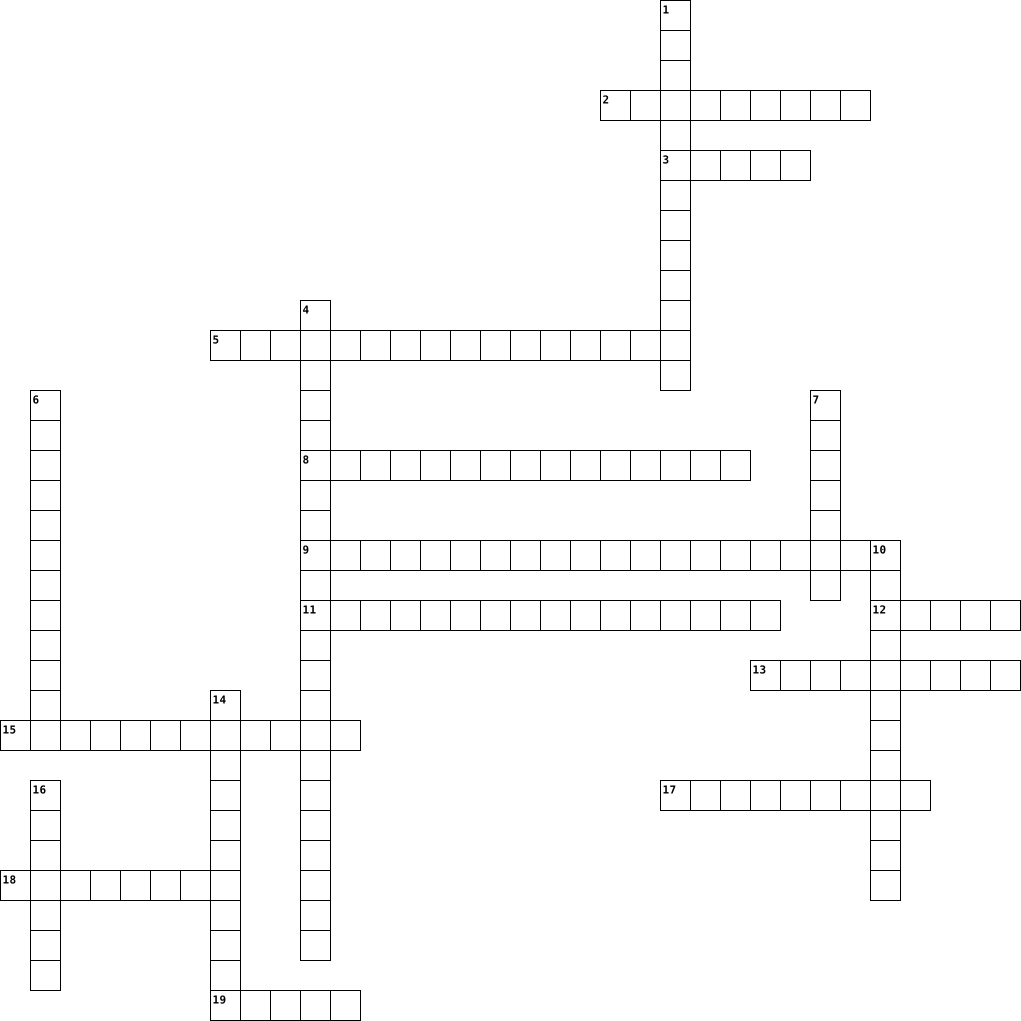
Across
- hole in the ground, not just mountains (7 letters)
- core:the inner-most part of the earth (5,4 letters)
- appears, one section rises over the other (7 letters)
- appears, one section drops (6 letters)
- appears due to sideways movement, one section moves relative to the other (6,4 letters)
- Tectonics (5 letters)
- mantle:the ______ part of the mantle (5,6 letters)
- outer layer of the earth (5 letters)
- material beneath or within the earth’s crust, from which igneous rock is formed (5 letters)
- volcano has many ________ (7 letters)
- molten, fluid rock that issues from a volcano or volcanic vent (4 letters)
- mantle:the ______ part of the mantle (5,6 letters)
Down
- rocks break under pressure (8 letters)
- (9 letters)
- series of vibrations induced in the earth’s crust (10 letters)
- rock:rocks formed by the cooling and solidifying of molten materials (7,4 letters)
- __________ of a volcano (8 letters)
- drifts:is the movement of the Earth’s continents relative to each other by appearing to drift across the ocean bed. (10,6 letters)
- crust:is the part of Earth’s lithosphere that surfaces in the ocean basins (7,5 letters)
19 Clues: (9 letters) • Tectonics (5 letters) • __________ of a volcano (8 letters) • outer layer of the earth (5 letters) • volcano has many ________ (7 letters) • rocks break under pressure (8 letters) • appears, one section drops (6 letters) • hole in the ground, not just mountains (7 letters) • mantle:the ______ part of the mantle (5,6 letters) • ...
Plate tectonics 2013-12-08

Across
- boundaries The boundary of plate, there are three types
- current currents in earth's mantle and is the cause of plate tectonics
- floor spreading Hess's theory that new sea floor forms when magma is forced up by plates moving apart
- Plastic like layer of the earth than the lithospheric plates float on
- Hess Sea Floor spreading was his theory
- The point after a surface rock reaches its elastic limit and brake
- Drift Wegener's theory that all the continents were once we a part of a supercontinent
- The second layer of the earth, made of lava
- boundary The boundary of plates that are moving away, and then cause lava to flow through the new crack in the earths crust (also know as a constructive boundary)
Down
- Layer of earth's crust that is about 100 km thick, made of the crust and the upper mantle
- boundary The boundary of plates that slide by each other, and causes earthquakes.
- One of two supercontinent that separated from pangaea
- Wegener Continental drift was his theory
- valley A valley between highlands caused by a fault
- A supercontinent that was made of all the continents
- ridge A underwater mountain range that the plates are moving apart and new land is being made
- boundary The boundary of plates that collide (also know as a destructive boundary)
- Time Scale A way to date rock by looking at little bits of iron in the rock and use that and the fact that the earth magnetic field has shifted
18 Clues: Hess Sea Floor spreading was his theory • Wegener Continental drift was his theory • The second layer of the earth, made of lava • valley A valley between highlands caused by a fault • One of two supercontinent that separated from pangaea • A supercontinent that was made of all the continents • boundaries The boundary of plate, there are three types • ...
Plate Tectonics 2021-01-12

Across
- A type of crust
- this happens in the mantle
- the energy of an earthquake
- the core surrounding the inner core
- a boundary type that moves in opposite directions
- a boundary type that moves together
- they sit on top of the lithosphere
- The second pysical layer of earth
- The first physical layer of earth
Down
- the center of an earthquake on the surface
- where convection happens
- A type of crust
- I burst and errupt with magma or lava
- the center of the earth
- the outer layer of earth
- a boundary type that moves apart
- The outside of a tectonic plate
- I happen at all boundary types
- The third physical layer of earth
19 Clues: A type of crust • A type of crust • the center of the earth • where convection happens • the outer layer of earth • this happens in the mantle • the energy of an earthquake • I happen at all boundary types • The outside of a tectonic plate • a boundary type that moves apart • The third physical layer of earth • The second pysical layer of earth • The first physical layer of earth • ...
Plate Tectonics 2021-06-16

Across
- when two or more plates collide
- a large slab of rock or parts of the crust which moves slowly, they interact with other plates differently
- when two plates move away from each other
- The deepest layer, solid and is very hot
- scientist who invented the theory of plate tectonics
- a well established explanation with a lot of backing evidence
- hot molten rock on the surface of the crust
- hot molten rock beneath the Earth's surface
Down
- a highly viscous, weak and ductile region of the upper crust
- the scale that measures the magnitude of an earthquake
- vents or openings in the Earth's crust, that release ash, gas, steam and hot liquid rock called lava
- when two plates slide across each other
- The liquid layer deep within the earth
- Thin shell on the outside of the Earth
- A sudden violent shaking of the ground caused by the sudden release of energy along a fault of a plate
- the rocky outer part of the Earth, made up of the brittle crust
- The mostly solid interior of the Earth and the largest layer
- A large wave caused by an earthquake or another disturbance
18 Clues: when two or more plates collide • The liquid layer deep within the earth • Thin shell on the outside of the Earth • when two plates slide across each other • The deepest layer, solid and is very hot • when two plates move away from each other • hot molten rock on the surface of the crust • hot molten rock beneath the Earth's surface • ...
Plate Tectonics 2021-10-20

Across
- earths magnetic field reversals
- the smallest of all plates
- where roughly 80% of earths volcanoes lie
- the theory that tried to explain why the continent moved before plate tectonics
- the largest of all plates
- consists of the crust and the upper mantle
- the number of major plates
- a type of boundary where two plate come together
- a place where lithosphere descends into the mantle
Down
- example of seafloor spreading and a rift zone
- the scientist who proposed continental drift
- ancient magnetism preserved in rocks
- an instrument used to study earthquakes
- a type of boundary where two plates slide past each other
- allows for the movement of the lithosphere
- a type of boundary where two plates move apart
- ancient supercontinent before it was split apart
- caused by the rising of mantle material to form islands and volcanoes
18 Clues: the largest of all plates • the smallest of all plates • the number of major plates • earths magnetic field reversals • ancient magnetism preserved in rocks • an instrument used to study earthquakes • where roughly 80% of earths volcanoes lie • allows for the movement of the lithosphere • consists of the crust and the upper mantle • ...
Plate Tectonics 2016-11-01

Across
- The movement caused within a fluid caused by the tendency of hotter fluid to rise and cooler material to sinkdense Closely compacted in substance
- A submarine ridge system
- Outer part of earth, inc. the crust and mantle
- The upper layer of earth's mantle, below the lithosphere
- One giant land mass, 200 million years ago
- Created Continental Drift Theory
- Long, narrow ditch
- A crack, split, or break in something
- Type of plate boundary
- Hard inner/outer layer of earth
Down
- Hot fluid similar to lava
- The gradual movement of continents through geologic time
- Type of plate boundary
- Closely compacted in substance
- Where two plates collide and the denser plate subducts under the less dense plate
- ______ spreading
- Used to join or strengthen things
- Capable of being attracted by a magnet
- Proposed theory about ocean-floor material
- Type of plate boundary
20 Clues: ______ spreading • Long, narrow ditch • Type of plate boundary • Type of plate boundary • Type of plate boundary • A submarine ridge system • Hot fluid similar to lava • Closely compacted in substance • Hard inner/outer layer of earth • Created Continental Drift Theory • Used to join or strengthen things • A crack, split, or break in something • Capable of being attracted by a magnet • ...
Plate Tectonics 2018-06-06

Across
- The place below the ground where an earthquake starts
- is a fast-moving current of deadly hot gas and volcanic matter
- a major area in the basin of the Pacific Ocean where many earthquakes and volcanic eruptions occur.
- basaltic lava rock ejected as fragments from a volcano, typically with a frothy texture
- Chain of islands formed at the edges of colliding tectonic plates where on plate subducts
- Boundary where plates are colliding
- is a continental transform fault that extends roughly 1,200 kilometers through California
- When continents separate and drift
- a supercontinent that existed during the late Paleozoic and early Mesozoic eras
Down
- New crust being formed at the ocean ridges and spreading outwards
- Process of continents breaking up, subsiding and letting the sea in
- Isolated place away from plate boundaries, where a lot of hot magma is being created
- A huge wave in the ocean caused by an undersea earthquake
- An instrument for detecting the seismic waves from an earthquake
- a mountain or hill, typically conical, having a crater or vent through which lava, rock fragments, hot vapour, and gas are or have been erupted from the earth's crust.
- Areas where one crust is sinking below another crust
- The point on the Earth's surface directly above the focus
- hot fluid or semi-fluid material below or within the earth's crust
18 Clues: When continents separate and drift • Boundary where plates are colliding • Areas where one crust is sinking below another crust • The place below the ground where an earthquake starts • A huge wave in the ocean caused by an undersea earthquake • The point on the Earth's surface directly above the focus • is a fast-moving current of deadly hot gas and volcanic matter • ...
Plate Tectonics 2025-12-07

Across
- ___ crust was close to ridge.
- ___ came up with sea floor spreading.
- What motion does sea floor spreading create?
- HARD: Continents move one ___ annually.
- ___ came up with continental drift.
- ___ crust is created by ridges.
- Evidence of sea floor spreading
- Why was continental drift denied?
- Oceanic crust is subducted to ___.
- Wegener's theory was ___.
Down
- Evidence of continental drift
- What subducts crust?
- Evidence of sea floor spreading
- What century did Wegener discover continental drift?
- What century did Hess discover sea floor spreading?
- Name of super-continent
- Process of crust being pulled down
- Evidence of continental drift
- ___ and SA fit together almost perfectly.
- What does crust come out of?
20 Clues: What subducts crust? • Name of super-continent • Wegener's theory was ___. • What does crust come out of? • Evidence of continental drift • ___ crust was close to ridge. • Evidence of continental drift • Evidence of sea floor spreading • ___ crust is created by ridges. • Evidence of sea floor spreading • Why was continental drift denied? • Process of crust being pulled down • ...
Plate Tectonics 2024-12-11

Across
- breaking apart of earth's surface
- boundary where 2 tectonic plate are moving toward each other
- single, large ocean that covered earth's surface
- theory explaining how lithosphere moves and changes shape
- supercontinent that formed 300 million years ago
- study of alignment of magnetic minerals in rocks
- single landmass that broke up to form continents
- molten rock in earth's surface
- solid plastic part of the mantle
- movement of heated material due to differences in density (different temperatures)
Down
- boundary where 2 tectonic plates are moving away from earth other
- process where oceanic seafloor forms when magma rises pushing older seafloor away
- boundary where 2 plates are sliding past each other
- undersea mountain chain with steep narrow valley
- can form when magma erupts onto earth's surface
- solid outer layer of earth made of crust and upper part of mantle
- piece of lithosphere with unique geologic features
- sudden movement of earth's surface
18 Clues: molten rock in earth's surface • solid plastic part of the mantle • breaking apart of earth's surface • sudden movement of earth's surface • can form when magma erupts onto earth's surface • single, large ocean that covered earth's surface • undersea mountain chain with steep narrow valley • supercontinent that formed 300 million years ago • ...
Plate Tectonics 2025-03-09

Across
- the deepest parts of the oceans.
- The Earth's ______________ field reverses from time to time.
- what causes plate tectonics
- Scientist who first proposed that thermal convection in the mantle causes continental drift.
- the most outer solid portion of the planet Earth
- what is one of the three types of boundaries?
- what is one of the three types of boundaries?
- the Theory of Continental _____________.
- what is the plastic layer below the lithosphere
- Alfred Wegener noticed that the coast of South America seemed to fit into the coast of this continent, just like a jigsaw puzzle
Down
- places where the sea floor is forced under
- Plate _____________
- Section of the Earth below the crust
- what is the liquid layer of the earth’s core
- scientist who first proposed the theory that the continents drifted
- what is one of the three types of boundaries?
- what causes sea floor spreading
- paleontologists noticed that these were the same on different continents even though the continents were separated by oceans
- what is the crust and part of the upper mantle
- Seafloor ______________
20 Clues: Plate _____________ • Seafloor ______________ • what causes plate tectonics • what causes sea floor spreading • the deepest parts of the oceans. • Section of the Earth below the crust • the Theory of Continental _____________. • places where the sea floor is forced under • what is the liquid layer of the earth’s core • what is one of the three types of boundaries? • ...
Plate tectonics 2025-04-22

Across
- the largest plate
- when one plate goes under another plate
- convergent plate boundaries can produce this
- when two plates crash together
- rigid layer of the uppermost mantle and crust
- an opening in the crust where lava and hot gases can erupt
- the ocean floor
- plates glide over Earth’s ____
- narrow valley between two diverging continental plates
- last name of person who developed plate tectonics theory
Down
- when two plates go in the opposite direction
- the center of the Earth
- how many major plates are there in the world?
- a type of convergent plate boundary.
- the study of earthquakes
- segment of the lithosphere that move and change shape
- When two plates slide past each other
- when all the continents were once joined together
18 Clues: the ocean floor • the largest plate • the center of the Earth • the study of earthquakes • when two plates crash together • plates glide over Earth’s ____ • a type of convergent plate boundary. • When two plates slide past each other • when one plate goes under another plate • when two plates go in the opposite direction • convergent plate boundaries can produce this • ...
Plate Tectonics Crossword Puzzle 2021-10-14

Across
- Trench, Long, narrow depressions on the sea floor
- An area where an oceanic plate sinks down into the Asthenosphere
- Volcano, Volcanoes along the shoreline, usually formed by convergent boundaries
- A boundary between two colliding Tectonic Plates
- Wegener, The scientist that came up with the theory of Continental Drift
- A boundary that causes plates to slide past each other
- A boundary where two Tectonic Plates move away from each other
- A supercontinent
- The rigid and outermost layer of the Earth
- The center of the Earth
Down
- Crust, The outer layer of the Earth's lithosphere
- Mountains, Mountains that are formed by the effects of folding on layers
- The Southern half of the Pangea that existed over 300 million years ago
- Striation, Scratches that are lodged onto a piece of land due to Glaciers moving
- The thinnest layer of the Earth
- The layer of the Earth between the Crust and the Core
- Caused by Convergent Boundaries, also occurs around fault lines
- Ridge, A seafloor mountain system that can be formed by plate tectonics
- Crust, The upper layer of the oceanic portion of a Tectonic Plate
- Valley, A lowland region formed by plate tectonics
20 Clues: A supercontinent • The center of the Earth • The thinnest layer of the Earth • The rigid and outermost layer of the Earth • A boundary between two colliding Tectonic Plates • Crust, The outer layer of the Earth's lithosphere • Trench, Long, narrow depressions on the sea floor • Valley, A lowland region formed by plate tectonics • ...
Plate Tectonics 2020-10-20

Across
- belts
- lithosphere
- minerals
- hess
- / two tectonic plates moving away from each other
- plate
- holmes / thought of using
- / when two tectonic plates slide against each other
Down
- fault
- tuzo wilson
- / two tectonic plates moving towards each other
- to
- tectonics
- zones
- wegener / he couldn't explain mechanism
15 Clues: to • hess • fault • belts • zones • plate • minerals • tectonics • tuzo wilson • lithosphere • holmes / thought of using • wegener / he couldn't explain mechanism • / two tectonic plates moving towards each other • / two tectonic plates moving away from each other • / when two tectonic plates slide against each other
Plate Techtonics 2025-12-10

Across
- The plates move on top of magma due to convection _____________
- Plate Tectonics moving creates these that sometimes spray lava.
- The lithosphere is broken into large rocky __________
- Convergent boundaries come _____________
- Transform boundaries can happen where any plate touches _____________
- Oceanic plates that move apart is an underwater mountain range that makes new ___________
- A famous fault is located in this State.
- Continental Convergent occurs when two continents __________
- An area on earth with a lot of volcanoes is known as "The Ring of _________"
Down
- Plate Tectonics cause the formation of this land feature.
- The more __________ crust sinks
- Plates moving apart can create _________
- Divergent boundaries move __________
- A natural disaster that causes the earth to shake
- This type of boundaries slide past each other
- A land form under water that forms in the shape of a V.
- This is when one crust sinks below another.
17 Clues: The more __________ crust sinks • Divergent boundaries move __________ • Plates moving apart can create _________ • Convergent boundaries come _____________ • A famous fault is located in this State. • This is when one crust sinks below another. • This type of boundaries slide past each other • A natural disaster that causes the earth to shake • ...
plate tectonics 2020-08-16

Across
- a system of detection of objects under water
- when rock solidifies while lined up with earths magnetic field
- violent sacking of the ground
- hot fluid within the earths crust
- outer part of earth consist of crust and mantle
- is where two plates slip sideways next to eachother
- center of an earthquake
- an elastic wave produced by earthquakes
Down
- came up with the theory of seafloor spreading
- when two plates collide and one dives under the other
- when two plates move away from each-other
- a mountain made of cooled magma
- the center of earth (really hot)
- a volcanic rock
- when rocks are slowly pulled apart
- the uper layer of earths mantle
- when rocks are squashed together
- a point on earths surface above the focus of an earthquake
18 Clues: a volcanic rock • center of an earthquake • violent sacking of the ground • a mountain made of cooled magma • the uper layer of earths mantle • the center of earth (really hot) • when rocks are squashed together • hot fluid within the earths crust • when rocks are slowly pulled apart • an elastic wave produced by earthquakes • when two plates move away from each-other • ...
plate tectonics 2020-08-16

Across
- a point on earths surface above the focus of an earthquake
- came up with the theory of seafloor spreading
- when two plates move away from each-other
- outer part of earth consist of crust and mantle
- hot fluid within the earths crust
- when two plates collide and one dives under the other
- the center of earth (really hot)
- when rocks are slowly pulled apart
- violent sacking of the ground
- when rock solidifies while lined up with earths magnetic field
- center of an earthquake
Down
- a system of detection of objects under water
- is where two plates slip sideways next to eachother
- a mountain made of cooled magma
- when rocks are squashed together
- an elastic wave produced by earthquakes
- the uper layer of earths mantle
- a volcanic rock
18 Clues: a volcanic rock • center of an earthquake • violent sacking of the ground • a mountain made of cooled magma • the uper layer of earths mantle • when rocks are squashed together • the center of earth (really hot) • hot fluid within the earths crust • when rocks are slowly pulled apart • an elastic wave produced by earthquakes • when two plates move away from each-other • ...
plate tectonics 2020-08-16

Across
- the center of earth (really hot)
- the uper layer of earths mantle
- a system of detection of objects under water
- when rock solidifies while lined up with earths magnetic field
- violent sacking of the ground
- center of an earthquake
- when rocks are squashed together
- when two plates collide and one dives under the other
- a volcanic rock
Down
- a point on earths surface above the focus of an earthquake
- when two plates move away from each-other
- an elastic wave produced by earthquakes
- hot fluid within the earths crust
- outer part of earth consist of crust and mantle
- when rocks are slowly pulled apart
- came up with the theory of seafloor spreading
- a mountain made of cooled magma
- is where two plates slip sideways next to eachother
18 Clues: a volcanic rock • center of an earthquake • violent sacking of the ground • the uper layer of earths mantle • a mountain made of cooled magma • the center of earth (really hot) • when rocks are squashed together • hot fluid within the earths crust • when rocks are slowly pulled apart • an elastic wave produced by earthquakes • when two plates move away from each-other • ...
Plate Tectonics 2020-05-03

Across
- first continent
- boundary at ocean ridges
- plates do not collide or move away at these boundaries
- this element helps make up the inner core
- magma erupting through the seafloor
- rigid upper part of the outermost layer
- this plate lies west of the Caribbean Sea
- denser crust sinking
- third most abundant element in the crust
- the crust is broken up into many
Down
- these mountains form where the Indian and Eurasian plates meet
- can be found at plate boundaries
- crust made of sima
- thickest layer
- these happen along faults
- this crust is thicker but lighter
- deepest part of the ocean floor
- there are seven of these on our planet
18 Clues: thickest layer • first continent • crust made of sima • denser crust sinking • boundary at ocean ridges • these happen along faults • deepest part of the ocean floor • can be found at plate boundaries • the crust is broken up into many • this crust is thicker but lighter • magma erupting through the seafloor • there are seven of these on our planet • ...
Plate Tectonics 2014-04-03

Across
- This supercontinent, the Pangaea, existed before the _____.
- This is mass divided by volume
- The crust and uppermost mantle
- When two plates slide past each other
- The heat transfer by the movement of currents within a fluid
- Found in the oceanic crust
- The process that takes place at the convergent boundaries by which one plate moves under another plate and sinks into the mantle
- Scientists say that the movement of this causes the Earth's magnetic field
- All life exists on this layer on Earth
- This layer's thickness is 2,867 km
Down
- Found in the continental crust
- When two plates collide, one plate can slide under another into the subduction zone, or slide above another plate to form mountains
- When two plates move away from each other
- Scientific theory that describes the motion of the Lithosphere
- The transfer of heat within a material between materials that are touching
- A well-substantiated explanation of some aspects of the world
- Under the Lithosphere
- dense ball of solid metal
18 Clues: Under the Lithosphere • dense ball of solid metal • Found in the oceanic crust • Found in the continental crust • This is mass divided by volume • The crust and uppermost mantle • This layer's thickness is 2,867 km • When two plates slide past each other • All life exists on this layer on Earth • When two plates move away from each other • ...
Plate Tectonics 2017-10-23

Across
- very hot rock
- Heat transferred by touching
- ancient thing that is preserved in rock
- valley- deep valley
- top of mantle into a single layer
- transferred by motion of a liquid
- boundary- Two plates divide
- spreading- where new oceanic crust is formed through volcanic activity and then gradually moves away from the ridge Deep-ocean trench- long, narrow, steep-sided depression in the ocean bottom
Down
- break in the crust were they slipped
- soft layer
- boundaries- Two plates slide past each other
- that carry energy
- drift- Wegener's idea that the continents moved over the surface of earth
- ridge- seams that form mountains that are in the middle of the ocean floor
- tectonics-a theory explaining the structure of the earth's crust convergent boundary- Two plates collide
- All the contents that were together
- core- ball of solid mental
- core- molten metal covering the inner core
18 Clues: soft layer • very hot rock • that carry energy • valley- deep valley • core- ball of solid mental • boundary- Two plates divide • Heat transferred by touching • top of mantle into a single layer • transferred by motion of a liquid • All the contents that were together • break in the crust were they slipped • ancient thing that is preserved in rock • ...
PLATE TECTONICS 2017-10-18

Across
- Magma that has flowed onto the Earth’s surface.
- These occur around the “Ring of Fire”.
- Type of current in the mantle that causes tectonic plates to move.
- Forms under the ocean at the site of a diverging boundary – a mid-ocean ……
- Huge wave caused by an undersea earthquake.
- Type of plate boundary where plates move away from each other.
- This forms on the ocean floor above a subduction zone – an ocean …….
- Large, but separate pieces of lithosphere are called …. plates.
- Thinnest type of crust.
Down
- Lava from a volcano cools and solidifies into this.
- The crust and uppermost solid mantle.
- Layer of the Earth where convection currents occur.
- Much of New Zealand’s south island rests on this plate.
- Type of plate boundary where plates move towards each other.
- Occurs when one plate sinks below another plate.
- Very hot molten rock that rises by convection within the mantle.
- Wegener proposed the theory of continental …… to explain why the same fossils exist on separate continents.
- Very fine, light rock particles that issue from a volcano & form a rapidly rising cloud - volcanic …
18 Clues: Thinnest type of crust. • The crust and uppermost solid mantle. • These occur around the “Ring of Fire”. • Huge wave caused by an undersea earthquake. • Magma that has flowed onto the Earth’s surface. • Occurs when one plate sinks below another plate. • Lava from a volcano cools and solidifies into this. • Layer of the Earth where convection currents occur. • ...
Plate Tectonics 2018-06-06

Across
- The point on the Earth's surface directly above the focus
- Isolated place away from plate boundaries, where a lot of hot magma is being created
- Process of continents breaking up, subsiding and letting the sea in
- hot fluid or semi-fluid material below or within the earth's crust
- New crust being formed at the ocean ridges and spreading outwards
- Chain of islands formed at the edges of colliding tectonic plates where on plate subducts
- is a continental transform fault that extends roughly 1,200 kilometers through California
- The place below the ground where an earthquake starts
Down
- When continents separate and drift
- a major area in the basin of the Pacific Ocean where many earthquakes and volcanic eruptions occur.
- An instrument for detecting the seismic waves from an earthquake
- is a fast-moving current of deadly hot gas and volcanic matter
- A huge wave in the ocean caused by an undersea earthquake
- Areas where one crust is sinking below another crust
- Boundary where plates are colliding
- a mountain or hill, typically conical, having a crater or vent through which lava, rock fragments, hot vapour, and gas are or have been erupted from the earth's crust.
- a supercontinent that existed during the late Paleozoic and early Mesozoic eras
- basaltic lava rock ejected as fragments from a volcano, typically with a frothy texture
18 Clues: When continents separate and drift • Boundary where plates are colliding • Areas where one crust is sinking below another crust • The place below the ground where an earthquake starts • The point on the Earth's surface directly above the focus • A huge wave in the ocean caused by an undersea earthquake • is a fast-moving current of deadly hot gas and volcanic matter • ...
Plate Tectonics 2023-10-19

Across
- when two plates go away from each other
- a single supercontinent
- where two plates meet
- two or more of Earth's tectonic plates converge at the subduction point forming a big ditch
- shaking of the earth when energy is released from friction caused by plate movement
- places where plates slide sideways past each other.
- large slabs of rock that divide Earth's crust, move constantly to reshape the Earth's landscape.
- the movement caused within a fluid by the tendency of hotter and therefore less dense material to rise, and colder, denser material to sink under the influence of gravity
- When something is cut in half in order to determine and gather information
Down
- a repetition
- a layer of the earth made of a soft solid
- how fast something moves, we measure plates cm/year
- hard solid rock also known as the crust
- a large plume of hot mantle material rising from deep within the Earth.
- the process by which the earth's surface slowly rises either due to increasing upward force applied from below or decreasing downward force (weight) from above.
- when two plates come together
- occur along divergent plate boundaries, where new ocean floor is created as the Earth's tectonic plates spread apart.
- when an oceanic plate and continental plate converge and the oceanic plate goes under the continental plate we call it this
18 Clues: a repetition • where two plates meet • a single supercontinent • when two plates come together • when two plates go away from each other • hard solid rock also known as the crust • a layer of the earth made of a soft solid • how fast something moves, we measure plates cm/year • places where plates slide sideways past each other. • ...
plate tectonics 2023-11-15

Across
- the part of the earth's surface directly above the starting point of an earthquake.
- a graph output
- In physics
- secondary waves
- an area of relatively level high ground
- a measure of the strength of earthquakes
- the reduction in volume
- one in which one side of the fault, the hanging wall, moves up and over the other side, the foot wall
- the block above the fault
Down
- The forces that cause deformation
- Shallow earthquakes produce stronger surface waves
- Measuring instrument
- the place inside Earth's crust where an earthquake originates
- the size or extent of something
- a sudden and violent shaking of the ground
- seismic waves
- the built up stress
- the deformation
18 Clues: In physics • seismic waves • a graph output • secondary waves • the deformation • the built up stress • Measuring instrument • the reduction in volume • the block above the fault • the size or extent of something • The forces that cause deformation • an area of relatively level high ground • a measure of the strength of earthquakes • a sudden and violent shaking of the ground • ...
Plate Tectonics 2024-03-12

Across
- When one plate is forced under another
- This type of crust is more dense and will subduct in a collision
- These waves are the fastest and can move through liquid and solid
- The boundary where two plates collide
- This is the tool used to measure the intensity of earthquakes
- Fossil and age evidence helped proved this theory
- The plates are gliding over the mantle
- The origin of the earthquake
- The crust and upper mantle comprises this
- These waves are slower
Down
- When two continental plates collide and the crust crumples upward
- This plastic like layer is the upper portion of the mantle
- Rift Valleys and ocean ridges are found at this boundary
- Harry Hess used this feature to hypothesize seafloor spreading
- This scale measures the amount of energy released in an earthquake
- When two plates slide past each other you get these
- When two continental plates converge these are formed
- This type of volcano has sloped sides and basaltic magma
18 Clues: These waves are slower • The origin of the earthquake • The boundary where two plates collide • When one plate is forced under another • The plates are gliding over the mantle • The crust and upper mantle comprises this • Fossil and age evidence helped proved this theory • When two plates slide past each other you get these • ...
Plate tectonics 2024-02-13

Across
- boundary that spreads apart
- zone where a oceanic plates subducts under a continental plate
- the thickest layer
- boundary which collides
- rock hard surface we stand on
- the crust, the mantle and the core
- where 2 plates compress
- layer touching the core
- innermost layer
- an area between 2 tectonic plates
Down
- boundary which plates slide across
- Plate tectonics is the scientific theory that Earth's lithosphere comprises a number of large tectonic plates, which have been slowly moving
- ies between the thermosphere and the stratosphere
- a theory of if the tectonic plates drift
- the layer we stand on
- the rigid outer part of the earth, consisting of the crust and upper mantle
- zone of Earth's mantle lying beneath the lithosphere and believed to be much hotter and more fluid than the lithosphere.
- theory that oceanic plates slowly move
18 Clues: innermost layer • the thickest layer • the layer we stand on • boundary which collides • where 2 plates compress • layer touching the core • boundary that spreads apart • rock hard surface we stand on • an area between 2 tectonic plates • boundary which plates slide across • the crust, the mantle and the core • theory that oceanic plates slowly move • ...
Plate Tectonics 2024-12-11

Across
- molten rock in earth's surface
- study of alignment of magnetic minerals in rocks
- breaking apart of earth's surface
- undersea mountain chain with steep narrow valley
- solid plastic part of the mantle
- boundary where 2 tectonic plates are moving away from earth other
- single, large ocean that covered earth's surface
- single landmass that broke up to form continents
Down
- solid outer layer of earth made of crust and upper part of mantle
- process where oceanic seafloor forms when magma rises pushing older seafloor away
- boundary where 2 plates are sliding past each other
- theory explaining how lithosphere moves and changes shape
- piece of lithosphere with unique geologic features
- supercontinent that formed 300 million years ago
- sudden movement of earth's surface
- boundary where 2 tectonic plate are moving toward each other
- movement of heated material due to differences in density (different temperatures)
- can form when magma erupts onto earth's surface
18 Clues: molten rock in earth's surface • solid plastic part of the mantle • breaking apart of earth's surface • sudden movement of earth's surface • can form when magma erupts onto earth's surface • study of alignment of magnetic minerals in rocks • undersea mountain chain with steep narrow valley • supercontinent that formed 300 million years ago • ...
Plate Tectonics 2024-12-11

Across
- solid outer layer of earth made of crust and upper part of mantle
- single, large ocean that covered earth's surface
- sudden movement of earth's surface
- study of alignment of magnetic minerals in rocks
- boundary where 2 plates are sliding past each other
- boundary where 2 tectonic plate are moving toward each other
- molten rock in earth's surface
- movement of heated material due to differences in density (different temperatures)
- supercontinent that formed 300 million years ago
- boundary where 2 tectonic plates are moving away from earth other
Down
- piece of lithosphere with unique geologic features
- single landmass that broke up to form continents
- process where oceanic seafloor forms when magma rises pushing older seafloor away
- breaking apart of earth's surface
- theory explaining how lithosphere moves and changes shape
- solid plastic part of the mantle
- undersea mountain chain with steep narrow valley
- can form when magma erupts onto earth's surface
18 Clues: molten rock in earth's surface • solid plastic part of the mantle • breaking apart of earth's surface • sudden movement of earth's surface • can form when magma erupts onto earth's surface • single landmass that broke up to form continents • single, large ocean that covered earth's surface • study of alignment of magnetic minerals in rocks • ...