
plate Crossword Puzzles
Plate tectonics 2021-12-17

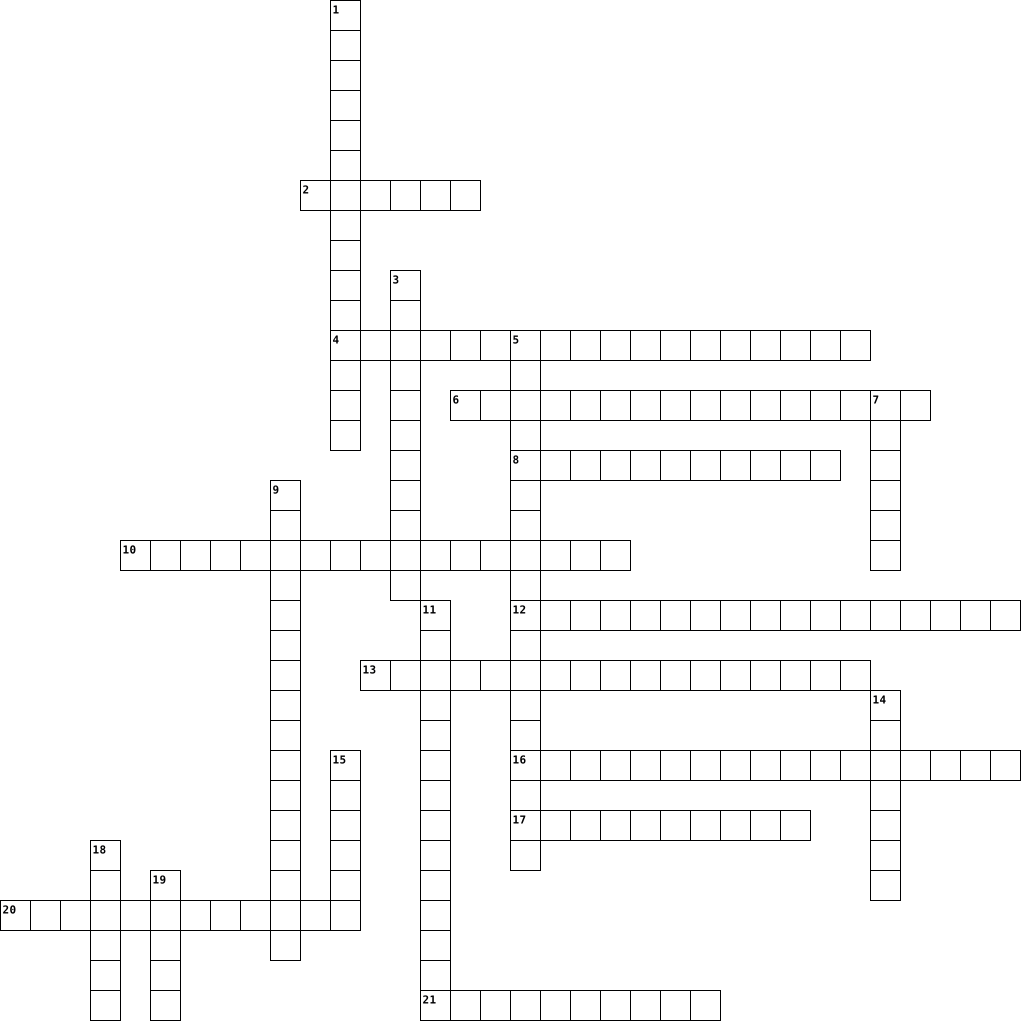
Across
- two plates slide against each other
- melted rock on Earth’s surface
- separate
- a slowly flowing layer of solid and melted rock formed by heat and pressure
- continents were joined together in one large landmass
- two tectonic plates grind past each other in a horizontal direction
- the solid outer part of Earth that includes the crust and upper mantle
- It is the only liquid layer, a sea of mostly iron and nickel
- A layer of the earth's crust that lies under the seven continents
- A dropped zone where two tectonic plates are pulling apart
- The innermost layer of the earth, an extremely hot, solid sphere of mostly iron and nickel
- The type of crust lying under the oceans of the world
Down
- collide
- A raised area or mountain range under the oceans formed
- molten hot rock
- An area where oceanic crust and continental crust are colliding
- The border between two tectonic plates
- The process that forms new ocean floor and oceanic crust
- one plate going under another
- the outermost layer of Earth.
- when an oceanic plate sinks underneath a
21 Clues: collide • separate • molten hot rock • one plate going under another • the outermost layer of Earth. • melted rock on Earth’s surface • two plates slide against each other • The border between two tectonic plates • when an oceanic plate sinks underneath a • continents were joined together in one large landmass • The type of crust lying under the oceans of the world • ...
Plate Tectonics 2021-12-30

Across
- caused by both divergent and convergent boundaries
- caused by earthqakes in the ocean
- the most well-known one is in Los anglas
- caused by divergent boundary
- thickest layer
- upper part of the mantle
- plates slide past each other
- when plates collide with each other
- father of plate tectonics
- contributes to the Earths magnetic field
Down
- when plates interact with each other
- oldest type of crust
- caused by transform boundaries"don't leave its my fault"
- thinnest layer of earth
- have been moving slowly for 3.4B years
- super contient
- where tectonic plates are located
- sold innermost layer
- youngest type of crust
- plates move away from each other
20 Clues: super contient • thickest layer • oldest type of crust • sold innermost layer • youngest type of crust • thinnest layer of earth • upper part of the mantle • father of plate tectonics • caused by divergent boundary • plates slide past each other • plates move away from each other • caused by earthqakes in the ocean • where tectonic plates are located • ...
Plate Tectonics 2017-01-23

Across
- A change of the magnetic poles
- When two tectonic plates move away from one another or diverge
- The outermost physical layer of Earth
- Changes the chemical makeup of a rock
- Two tectonic plates can move past one other in opposite directions
- The bending, tilting, and breaking of rock
- Wegner called it the huge landmass or supercontinent
- The process by which rock breaks down into smaller pieces or changes in composition
- System of ideas that explains many related observations about the natural world
- The difference between the highest and lowest elevations in a particular area
Down
- The procces by which one tectonic plate is pulled beneath another plate
- Lays down rock, sediment, and soil
- Procces by which new sea floor forms
- States that Earth's surface is made up of giant, moving slabs
- Hypothesis that todays's continents were once part of a single landmass
- Also called mechanical weathering, the breakdown of rock into smaller pieces
- When tectonic plates move toward each other and collide
- Shows the shape of Earth's surface with lines that represent different elevations
- The layer immediately below the lithoshpere
- The shape and size of the land features on Earth's surface
- Transports rock, sediment, and soil from one place to another
21 Clues: A change of the magnetic poles • Lays down rock, sediment, and soil • Procces by which new sea floor forms • The outermost physical layer of Earth • Changes the chemical makeup of a rock • The bending, tilting, and breaking of rock • The layer immediately below the lithoshpere • Wegner called it the huge landmass or supercontinent • ...
Plate Tectonics 2017-01-18

Across
- both ends folding horizontally
- set of cracks that form between two tectonic plates
- type of stress when a object is stretched
- when two tectonic plates slide past each other
- theory of how the continents moved apart
- upward arching folding
- bending of rock layers
- rising of Earth's surface
- a machine that measures the times of seismic waves
- places where sea-floor spreading takes place
- when Earth's magnetic poles change
- thinnest layer of Earth
- name of the super continent
- theory that the continents were together
- system of satellites
- made of the crust and rigid upper part of the mantle
- solid layer of Earth's core
Down
- type of stress when a object is squeezed
- when melted rock rises up to Earth's surfaceand erupts
- surface that rocks break and slide past eachother
- when two tectonic plates separate
- plastic layer of the mantle
- when tension causes larger blocks of Earth's crustto drop down on others
- center of Earth
- type of fault when hanging wall moves up
- change of shape of a rock caused by stress
- sinking of Earth's crust
- process of new oceanic lithosphere forming
- when two tectonic plates collide
- downward throughlike folds
- produced when there's a Earthquake
- amount of force
- blocks of crust on each side of the fault
- type of fault when the hanging wall moves down
34 Clues: center of Earth • amount of force • system of satellites • upward arching folding • bending of rock layers • thinnest layer of Earth • sinking of Earth's crust • rising of Earth's surface • downward throughlike folds • plastic layer of the mantle • name of the super continent • solid layer of Earth's core • both ends folding horizontally • when two tectonic plates collide • ...
Plate Tectonics 2017-03-23

Across
- a fissure in the earth's crust through which gases erupt
- crash together with violent impact
- reduce or cause to be reduced from a solid to a liquid state
- subject to or caused by an earth vibration
- a specialist in the history of the Earth recorded in rocks
- one of the large landmasses of the earth
- a crack in the earth's crust
- the chemistry of the earth's crust
- a geological process where one edge of a crustal plate is forced sideways and downward
- molten rock in the earth's crust
Down
- the sudden occurrence of a violent discharge
- igneous rock produced by eruption and solidified on or near the earth's surface
- a branch of geology studying the folding and faulting of the earth's crust
- a grouping of a number of similar things
- incapable of or resistant to bending
- relating to based on geology
- having undergone transformation by pressure, heat, etc.
- the longest unit of geological time
- relating to or characteristic of the crust of the earth or moon
- rock that in its molten form issues from volcanoes
20 Clues: relating to based on geology • a crack in the earth's crust • molten rock in the earth's crust • crash together with violent impact • the chemistry of the earth's crust • the longest unit of geological time • incapable of or resistant to bending • a grouping of a number of similar things • one of the large landmasses of the earth • subject to or caused by an earth vibration • ...
Plate Tectonics 2017-02-12

Across
- Boundary where two plates slide by each other
- Thin, dense lithospheric plates
- Lithospheric plate sinking into the mantle
- Boundary where two plates move apart
- Top layer of the mantle
- A vent in the earths surface where magma and gases erupt
- Valley in the ocean created where one lithospheric plate suducts another
- Movements within the earth's surface
- Long chains of undersea mountains
- Layer of earth under the crust
Down
- Molten rock that is beneath the earths surface
- Supercontinent
- Where most earthquakes and volcanoes happen
- Lower layer of the mantle
- Theory on how the pieces of the earth's surface move
- Cooled lava
- A break in the earth's crust
- Molten rock the erupts from volcanoes
- Boundary where two plates come together
- Thick, less dense lithospheric plates
20 Clues: Cooled lava • Supercontinent • Top layer of the mantle • Lower layer of the mantle • A break in the earth's crust • Layer of earth under the crust • Thin, dense lithospheric plates • Long chains of undersea mountains • Boundary where two plates move apart • Movements within the earth's surface • Molten rock the erupts from volcanoes • Thick, less dense lithospheric plates • ...
Plate Tectonics 2017-04-18

Across
- capable of being molded or changing shape
- hypothesis that continents are in constant motion
- magnets that orient themselves to point north
- circulation of material caused by differences in temperature and density
- mountain range located on the seafloor in the middle of the ocean
- where two plates collide
- new oceanic crust that forms at a mid-ocean ridge as old oceanic crust moves away
- force created by the sinking of a plate, or slab, that pulls on the rest of the plate
- ancient supercontinent, composed of land that forms today's continents
- cold, rigid outermost rock layer of Earth
Down
- sinking of a denser plate below a more buoyant plate at a convergent plate boundary
- where two plates slide by each other
- theory that Earth's surface is made of rock plates that move with respect to each other
- standard; or at a regular pattern
- naturally preserved remains, imprints, or traces of organisms
- event in which the magnetic field reverses direction
- where two plates separate
- magnets that orient themselves to point south
- force created by rising mantle of ocean ridges that creates potential for plates to move away from the ridge
- middle layer of Earth;between the crust above and the core below
20 Clues: where two plates collide • where two plates separate • standard; or at a regular pattern • where two plates slide by each other • capable of being molded or changing shape • cold, rigid outermost rock layer of Earth • magnets that orient themselves to point north • magnets that orient themselves to point south • hypothesis that continents are in constant motion • ...
Plate Tectonics 2017-12-18

Across
- When two tectonic _______ collide they can cause earthquakes.
- The area where two plates collide and one goes beneath the other and is destroyed.
- These are mainly formed from transform boundaries.
- Formed from Cementation and Compaction
- A crack in the earth, found at subduction zones.
- The Earth’s lithosphere is broken up into many _____________.
- Melted rock above ground.
- An action that occurs at all boundaries.
- This can cause subduction zones.
- This is the thinnest layer of the Earth.
Down
- Formed from cooling magma.
- Two plates moving apart makes a ______ boundary.
- The _____ is denser than the continental plates.
- The less dense plate.
- This is the thickest layer of the Earth.
- The first hundred kilometers of the Earth is called ______.
- Formed from heat and pressure.
- A formation where two plates fold
- Spews ash and magma.
- Earthquakes and faults are mainly made at this boundary.
20 Clues: Spews ash and magma. • The less dense plate. • Melted rock above ground. • Formed from cooling magma. • Formed from heat and pressure. • This can cause subduction zones. • A formation where two plates fold • Formed from Cementation and Compaction • This is the thickest layer of the Earth. • An action that occurs at all boundaries. • This is the thinnest layer of the Earth. • ...
Plate Tectonics 2018-02-24

Across
- The process by which oceanic crust sinks beneath a deep-ocean trench and back into the mantle at a convergent plate boundary.
- A deep valley along the ocean floor beneath which oceanic crust slowly sinks toward the mantle.
- A plate boundary where two plates move away from each other.
- A book published by Alfred Wegener.
- A section of the lithosphere that slowly moves over the asthenosphere, carrying pieces of continental and oceanic crust.
- A supercontinent or single landmass.
- Another reptile fossil that has been found in places now separated by oceans.
- Mid-Ocean ridges that are continually adding new material to the ocean floor.
- German scientist who became curious about why some continents look as though they could fit together.
- Any trace of an ancient organism that has been preserved in rock.
Down
- The way scientists mapped mid-ocean ridges in the mid-1900s.
- A plate boundary where two plates move past each other in opposite directions.
- A plate boundary where to plates move toward each other.
- The theory that the continents slowly drifted over Earth's surface.
- A break in Earth's crust along which rocks move.
- A deep valley that forms where two plates move apart.
- Reptile fossil that has been found in places now separated by oceans.
- The theory that pieces of Earth's lithosphere are in constant motion, driven by convection currents in the mantle.
- A fernlike plant that lived 250 million years ago.
- Mountain ranges that run along the middle of some ocean floors.
20 Clues: A book published by Alfred Wegener. • A supercontinent or single landmass. • A break in Earth's crust along which rocks move. • A fernlike plant that lived 250 million years ago. • A deep valley that forms where two plates move apart. • A plate boundary where to plates move toward each other. • The way scientists mapped mid-ocean ridges in the mid-1900s. • ...
Plate Tectonics 2018-02-24

Across
- Reptile fossil that has been found in places now separated by oceans.
- A fernlike plant that lived 250 million years ago.
- The way scientists mapped mid-ocean ridges in the mid-1900s.
- A deep valley that forms where two plates move apart.
- The process by which oceanic crust sinks beneath a deep-ocean trench and back into the mantle at a convergent plate boundary.
- A plate boundary where two plates move away from each other.
- A plate boundary where to plates move toward each other.
- A section of the lithosphere that slowly moves over the asthenosphere, carrying pieces of continental and oceanic crust.
- A break in Earth's crust along which rocks move.
- Any trace of an ancient organism that has been preserved in rock.
- German scientist who became curious about why some continents look as though they could fit together.
- The theory that pieces of Earth's lithosphere are in constant motion, driven by convection currents in the mantle.
Down
- A book published by Alfred Wegener.
- Mid-Ocean ridges that are continually adding new material to the ocean floor.
- A plate boundary where two plates move past each other in opposite directions.
- A supercontinent or single landmass.
- Mountain ranges that run along the middle of some ocean floors.
- A deep valley along the ocean floor beneath which oceanic crust slowly sinks toward the mantle.
- The theory that the continents slowly drifted over Earth's surface.
- Another reptile fossil that has been found in places now separated by oceans.
20 Clues: A book published by Alfred Wegener. • A supercontinent or single landmass. • A break in Earth's crust along which rocks move. • A fernlike plant that lived 250 million years ago. • A deep valley that forms where two plates move apart. • A plate boundary where to plates move toward each other. • The way scientists mapped mid-ocean ridges in the mid-1900s. • ...
Plate Tectonics 2018-02-12

Across
- An event that causes a magnetic field to reverse direction
- The rigid outer part of the earth, consisting of the crust and upper mantle
- Happens at subduction zones where one plate is pulled down into the mantle
- The process by which new oceanic crust forms along a mid-ocean ridge and older oceanic crust moves away from the ridge
- Outermost layer of a planet
- The process that results when magma rises at a mid-ocean ridge and pushes oceanic plates in two different directions away from the ridge
- Hypothesis which suggests that the continents are in constant motion
- Mountain range on the ocean floor, formed by magma at divergent plate boundaries
- The boundary between two plates that move toward each other
- Supercontinent
- Heat is higher up, cold sinks
- When one tectonic plate moves under another tectonic plate
Down
- Second to last layer of the Earth
- Innermost part of a core
- The boundary between two plates that slide past each other
- When magnetized objects reverse direction and orient themselves to point south
- The person who proposed that continents move
- Part of the Earth between the core and the crust
- Earth's surface is divided into large pieces of rigid rock which move over Earth's hot and semi-plastic mantle
- When magnetized objects orient themselves to point north
20 Clues: Supercontinent • Innermost part of a core • Outermost layer of a planet • Heat is higher up, cold sinks • Second to last layer of the Earth • The person who proposed that continents move • Part of the Earth between the core and the crust • When magnetized objects orient themselves to point north • An event that causes a magnetic field to reverse direction • ...
Plate Tectonics 2017-07-23

Across
- a break in a rock with movement
- concentration of heat in the mantle
- device for recording waves
- a break in a rock without movement
- outer portion of the earth
- two plates slide past
- science that study the earth
- central part of the earth
- chain of volcanoes
- denser and thin crust
- group of mountains
- less dense and thicker crust
- The outer part of the Earth consisting of the crust and upper mantle
- two plates move apart
- first type of seismic wave
- center point of the earthquake
Down
- part of the earth between the core and the the crust
- shaking of the surface of the Earth
- process or the bending of crust towards mantle
- consolidated mixture of minerals
- method uses distance to locate epicenter
- theory as resulting from the interaction of rigid lithospheric plates that move slowly
- upper layer of the earth's mantle, below the lithosphere
- central valley on an ocean floor
- geologic feature in convergent
- A long, narrow valley lying between two normal geologic faults
- two plates collide
- second type of seismic wave
- molten rock
- depression in the seafloor produced by subduction
- transfer of energy that travels through a medium
31 Clues: molten rock • chain of volcanoes • two plates collide • group of mountains • two plates slide past • denser and thin crust • two plates move apart • central part of the earth • device for recording waves • outer portion of the earth • first type of seismic wave • second type of seismic wave • science that study the earth • less dense and thicker crust • geologic feature in convergent • ...
Plate Tectonics 2017-10-17

Across
- The supercontinent that formed about 200 million years ago.
- The crust is ________ dense farther from the mid- ocean ridge.
- ______ dense materials rise.
- Stitched looking mountain ranges on the seafloor.
- Energy caused by the sudden breaking of rock within the earth or an explosion.
- Where does oceanic crust bend downward in the ocean floor?
- This part of the Earth contains our crust and the upper part of the mantle.
- This boundary divides.
- The ocean floor is brand new every 200 _____ years.
- What landform is made when two continental plates collide?
Down
- These are created when magma cools immediately once erupted from the ridge.
- The _______ has convection currents which cause continental drift.
- A break in the Earth's crust.
- ________ theorized the continents moved.
- The remains or impression of a prehistoric organism preserved in petrified form or as a mold or cast in rock.
- Subduction and seafloor spreading act like a ______.
- Movement in a gas or liquid in which the warmer parts move up and the cooler parts move down.
- Changes in what affect the ocean floor?
- This boundary slides.
- What did scientists use to map out the sea floor?
20 Clues: This boundary slides. • This boundary divides. • ______ dense materials rise. • A break in the Earth's crust. • Changes in what affect the ocean floor? • ________ theorized the continents moved. • Stitched looking mountain ranges on the seafloor. • What did scientists use to map out the sea floor? • The ocean floor is brand new every 200 _____ years. • ...
Plate Tectonics 2017-10-18

Across
- where part of the ocean floor goes into the mantle and creates new ocean material
- the theory that the continents once were together and the drifted apart
- where new ocean floor material comes up from the mantle
- slide past
- breaks in earths crust, San Andreas _____
- supercontinent 300 million years ago
- result of a force pushing on an object
- the act of material spreading out from the mid ocean ridges
- divide
- an instrument used to locate mid ocean ridges
- underwater canyons
- part of the crust and upper mantle
Down
- in the mantle, warms the earth
- where pieces of land diverges
- has the convection current
- force that builds up, volcanoes
- collide
- earthquakes
- pieces on the lithosphere that are broken into pieces
- organism preserved in rock
20 Clues: divide • collide • slide past • earthquakes • underwater canyons • has the convection current • organism preserved in rock • where pieces of land diverges • in the mantle, warms the earth • force that builds up, volcanoes • part of the crust and upper mantle • supercontinent 300 million years ago • result of a force pushing on an object • breaks in earths crust, San Andreas _____ • ...
Plate Tectonics 2017-10-17

Across
- How scientists study the inside of Earth since we can’t drill down that far
- A break in Earth’s crust where rocks slipped past each other
- Where seafloor spreading begins
- When molten material is added to make new oceanic crust
- Valley along the ocean floor where oceanic crust sinks into the mantle
- When pieces of Earth’s crust diverges on land
- Scientist that came up with the theory of continental drift
- What scientists use to explore the ocean floor
- The theory that Earth’s plates are in a slow, constant motion
- Produced when 2 continental plates collide
Down
- The remains of a prehistoric organism
- Causes the plates to move
- When oceanic crust sinks beneath a deep-ocean trench and back into the mantle
- Theory of how the continents spread away from each other
- When plates move away from each other
- 3rd layer of Earth that is very hot, yet solid where convection currents are
- Supercontinent that existed around 300 million years ago
- When plates come together
- Measure of how much mass there is in an object
- When plates slip past each other
20 Clues: Causes the plates to move • When plates come together • Where seafloor spreading begins • When plates slip past each other • The remains of a prehistoric organism • When plates move away from each other • Produced when 2 continental plates collide • When pieces of Earth’s crust diverges on land • Measure of how much mass there is in an object • ...
Plate Tectonics 2017-10-18

Across
- remnant of something that existed long ago; preserved in rock
- where the Earth’s crust has broken
- supercontinent formed 300 million years ago
- measures distance to an object through sound waves
- causes the Earth’s plates to move
- seperating plates
- forms faults
- theory of the slow, constant motion of Earth’s plates
- forms when crust diverges on land
- underwater mountain range
- mass divided by volume
- theorized that the continents slowly moved over the surface of Earth
- outer shell of the lithosphere
Down
- higher density crust sinks beneath a deep-ocean trench
- new crust pushes old rock further from mid-ocean ridges
- when molten material hardens quickly, these form
- plates come together
- the continents have moved over earth’s surface
- where oceanic crust bends downward
- 3,000 meters of hot, solid rock
20 Clues: forms faults • seperating plates • plates come together • mass divided by volume • underwater mountain range • outer shell of the lithosphere • 3,000 meters of hot, solid rock • causes the Earth’s plates to move • forms when crust diverges on land • where the Earth’s crust has broken • where oceanic crust bends downward • supercontinent formed 300 million years ago • ...
Plate tectonics 2017-10-18

Across
- one of the types of evidence that Wegener used to prove the continents were together
- movement in this cause earths magnetic current
- Wegener's idea that the continents have moved
- rocks farther from the mid ocean ridge are denser/ less dense
- a supercontinent from around 300 million years ago
- a "mountain range" that rock comes out of from the mantle
- a boundary when two plates ram into each other
- when ocean floor is pushed below continental crust
- rocks closer to the mid ocean ridge are warmer/ cooler
- the layer of mantle that the plates sit on
Down
- all of Earth's plate motion put into one theory
- breaks in Earth's crust
- an tool that uses sound waves and time to map the ocean floor
- what is used to prove something
- rocks fall into the mantle and are then heated and part of the mantle
- the scientist who founded the idea of continental drift
- a boundary where two plates separate
- the ocean continuously add new material to its floor
- where Earth’s crust diverges on land
- a boundary when two plates run along each other
- a rock or animal that was preserved in rock
21 Clues: breaks in Earth's crust • what is used to prove something • a boundary where two plates separate • where Earth’s crust diverges on land • the layer of mantle that the plates sit on • a rock or animal that was preserved in rock • Wegener's idea that the continents have moved • movement in this cause earths magnetic current • a boundary when two plates ram into each other • ...
Plate Tectonics 2017-10-17

Across
- heat transfer through touching materials
- result of a force pushing on an object
- earthquakes
- in the mantle, warms the earth
- heat transfer through movement of liquid
- organism preserved in rock
- collide
- slide past
- heat transfer by sun
- an instrument used to locate mid ocean ridges
- has the convection current
- part of the crust and upper mantle
Down
- pieces on the lithosphere that are broken into pieces
- force that builds up, volcanoes
- supercontinent 300 million years ago
- breaks in earths crust, San Andreas _____
- the act of material spreading out from the mid ocean ridges
- divide
- the theory that the continents once were together and the drifted apart
- layer of gas that gives us weather
20 Clues: divide • collide • slide past • earthquakes • heat transfer by sun • organism preserved in rock • has the convection current • in the mantle, warms the earth • force that builds up, volcanoes • layer of gas that gives us weather • part of the crust and upper mantle • supercontinent 300 million years ago • result of a force pushing on an object • heat transfer through touching materials • ...
Plate Tectonics 2017-10-23

Across
- the temperature of older crust is ______ than newer crust.
- when the mid-ocean ridge adds more sea floor.
- new crust is ____ ______ than old crust.
- a system for the detection of objects under water and for measuring the water's depth by radiating waves is called a?
- older crust is ____ _____ than newer crust.
- pieces separated by cracks.
- when plates move away from each other.
- when the ocean floor goes into a canyon, what are the canyons called?
- peices of Earth’s crust diverge on land.
- the name of the most popular supercontinent.
- When continents moved slowly over Earth's surface is called?
Down
- the remains of a historic thing molded in a form or as a mold in rock?
- a scientist who discovered pangea
- when plates slide on top or past each other.
- Where the ocean spreads.
- the sideways and downward movement of the edge of a plate of the earth's crust into the mantle beneath another plate is called what?
- when plates come together.
- the temperature of newer crust is _____ than older crust.
- plates movement into a theory.
- a break in the Earth's crust where sediment (rock and other things) have slipped past each other.
20 Clues: Where the ocean spreads. • when plates come together. • pieces separated by cracks. • plates movement into a theory. • a scientist who discovered pangea • when plates move away from each other. • new crust is ____ ______ than old crust. • peices of Earth’s crust diverge on land. • older crust is ____ _____ than newer crust. • when plates slide on top or past each other. • ...
Plate Tectonics 2017-10-23

Across
- an ancient organisms that has been preserved in rock
- Wegener- the person that came up with the theory of Continental Drift
- the process by which oceanic crust sinks beneath a deep-ocean trench and back into the mantle at a convergent plate boundary.
- valley-A deep valley that forms where two plates move apart.
- drift- Continents slowly move on Earth's surface
- core-a dense sphere of solid iron and nickel at the center of Earth
- tectonics-a section of the lithosphere that slowly moves over the asthenosphere, carrying pieces of continental and oceanic crust.
- floor spreading- the process by which molten material adds new oceanic crust to the ocean floor.
- soft layer of the mantle on which the lithosphere floats
- middle of the ocean contribute to seafloor spreading
Down
- the layer of the earth between the crust and the core
- core-the liquid layer of the Earth's core that lies beneath the Mantle and surrounds the inner Core
- Fractures in rock
- solid part of the earth consisting of the crust and outer mantle
- ocean ridge-a deep valley along the ocean floor beneath which oceanic crust slowly sinks toward the oceanic mantle.
- plates that rub against each other
- the outer layer of the Earth
- - plates collide together to make mountains
- A former supercontinent on the Earth in the distant past a large landmass
- ocean ridge-an undersea mountain chain where new ocean floor is produced at a divergent plate boundary.
20 Clues: Fractures in rock • the outer layer of the Earth • plates that rub against each other • - plates collide together to make mountains • drift- Continents slowly move on Earth's surface • an ancient organisms that has been preserved in rock • middle of the ocean contribute to seafloor spreading • the layer of the earth between the crust and the core • ...
plate tectonics 2017-10-20

Across
- Ocean Ridge mountain ranges
- Drift movement of the continents across the earth's surface
- Boundary plates move apart
- Core molten metal around the inner core
- the upper layer of the earth's mantle, below the lithosphere
- Boundary plates slip past each other
- locating objects underwater and measuring the water's depth by sound
- Valley pieces of earths crust come together to form a deep valley
- coarse grains with a light color
- Floor Spreading mid ocean ridges add new material all the time and it spreads
- a break in earths crust where rocks go past each other
Down
- layer of rock on earth's outer skin
- a layer of hot rock
- Boundary plates come together
- a group of crust and the uppermost mantle in a single layer
- a supercontinent
- Ocean Trench ocean floor goes into the floor into underwater canyons
- dark, fine, rock
- an ancient organism that has been preserved in rock
- Core dense ball of hard metal
20 Clues: a supercontinent • dark, fine, rock • a layer of hot rock • Boundary plates move apart • Ocean Ridge mountain ranges • Boundary plates come together • Core dense ball of hard metal • coarse grains with a light color • layer of rock on earth's outer skin • Boundary plates slip past each other • Core molten metal around the inner core • ...
Plate Tectonics 2017-10-24

Across
- supercontinent formed 300 million years ago
- the continents have moved over earth’s surface
- theory of the slow, constant motion of Earth’s plates
- seperating plates
- 3,000 meters of hot, solid rock
- higher density crust sinks beneath a deep-ocean trench
- where the Earth’s crust has broken
- forms when crust diverges on land
- new crust pushes old rock further from mid-ocean ridges
Down
- theorized that the continents slowly moved over the surface of Earth
- underwater mountain range
- remnant of something that existed long ago; preserved in rock
- forms faults
- plates come together
- causes the Earth’s plates to move
- when molten material hardens quickly, these form
- mass divided by volume
- where oceanic crust bends downward
- outer shell of the lithosphere
- measures distance to an object through sound waves
20 Clues: forms faults • seperating plates • plates come together • mass divided by volume • underwater mountain range • outer shell of the lithosphere • 3,000 meters of hot, solid rock • causes the Earth’s plates to move • forms when crust diverges on land • where oceanic crust bends downward • where the Earth’s crust has broken • supercontinent formed 300 million years ago • ...
Plate Tectonics 2016-09-18

Across
- Remains from an organism that was once living
- States that things happened today are the same as the past
- largest layer in the earth
- large opening in a collapsed volcano
- opening in a volcano that lets magma go through it
- an area in the mantle that is hotter than other parts in the mantle
- theory proven by alrfred wagner that rocks break and move
- area below the lithosphere
- Bits of rock or solidified lava that fall from the sky
Down
- scientist who studies seismic waves
- thin fossil made out of carbon
- Big waves in the ocean caused by seismic waves
- directly above an earthquake's focus
- release of nuclear particles from an unstable nuclei
- area that is in the upper mantle and the crust
- surface where rocks break and move
- the point under earth's surface where energy release happens
- measuring devise for volcanoes
- large landmass where all seven continents were together
- earth's outermost layer
20 Clues: earth's outermost layer • largest layer in the earth • area below the lithosphere • thin fossil made out of carbon • measuring devise for volcanoes • surface where rocks break and move • scientist who studies seismic waves • directly above an earthquake's focus • large opening in a collapsed volcano • Remains from an organism that was once living • ...
Plate Techtonics 2016-10-25

Across
- Zone / The area of the Earth through which faulting occurred during an earthquake.
- volcano / An active volcano that is in repose (quiescence) but is expected to erupt in the future.
- Likes to chase mice
- Man's best friend
- Flying mammal
- / An earthquake which follows a larger earthquake or main shock and originates in or near the rupture zone of the larger earthquake.
- / A small tremor that commonly precedes a larger earthquake or main shock by seconds to weeks and that originates in or near the rupture zone of the larger earthquake.
- Has a trunk
- / lava fragments about 1 centimeter (about 1/2 inch) in diameter
- cone / A steep-sided volcano formed by the explosive eruption of cinders that form around a vent.
- / Molten rock containing liquids, crystals, and dissolved gases that forms within the upper part of the Earth's mantle and crust.
- / A vent (opening) in the surface of the Earth through which magma erupts; it is also the landform that is constructed by the erupted material.
- / The term used for magma once it has erupted onto the Earth's surface.
Down
- boundary / The place where two or more plates in the Earth's crust meet.
- / Shaking of the Earth caused by a sudden movement of rock beneath its surface.
- / That point on the Earth's surface directly above the hypocenter of an earthquake.
- rocks / Sometimes sedimentary and igneous rocks are subject to pressures so intense or heat so high that they are completely changed.
- Large marsupial
- / Volcanic rock (or lava) that characteristically is light in color, contains 69 percent silica or more, and is rich in potassium and sodium.
- / An abrupt movement of soil and bedrock downhill in response to gravity.
- / hat point within the Earth from which originates the first motion of an earthquake and its elastic waves; where the break in the fault actually occurred.
- / One or a series of huge sea waves caused by earthquakes or other large-scale disturbance of the ocean floor.
- Zone / A region in which earthquakes are known to occur.
- / The layer of rock that lies between the crust and the outer core of the Earth
24 Clues: Has a trunk • Flying mammal • Large marsupial • Man's best friend • Likes to chase mice • Zone / A region in which earthquakes are known to occur. • / lava fragments about 1 centimeter (about 1/2 inch) in diameter • / The term used for magma once it has erupted onto the Earth's surface. • boundary / The place where two or more plates in the Earth's crust meet. • ...
Plate Tectonics 2016-01-26

Across
- core solid, dense center of the Earth
- outermost layer of the Earth
- a pulling force
- drift theory that continents drift apart
- a break in the Earth's crust
- outermost, rigid layer of the Earth
- spreading new lithosphere is created here
- zone a region where a an oceanic plate sinks down into the athenosphere
- current The pathway along which energy travels through a fluid.
- trench linear depression of the sea floor caused by the subduction of one plate under another.
Down
- boundary between two colliding plates
- boundary between two plates moving away from each other
- soft layer of the mantle
- layer between the crust and the core
- boundary between two plates that are sliding past each other
- a squeezing force
- plate piece of the lithosphere that moves on the asthenosphere
- ridge A chain of mountains on the ocean floor where the sea floor is spreading.
- the bending of rock layers
- core liquid layer of the Earth's core
20 Clues: a pulling force • a squeezing force • soft layer of the mantle • the bending of rock layers • outermost layer of the Earth • a break in the Earth's crust • outermost, rigid layer of the Earth • layer between the crust and the core • boundary between two colliding plates • core solid, dense center of the Earth • spreading new lithosphere is created here • ...
Plate Tectonics 2016-02-26

Across
- A fault in which the hanging wall moves down relative to the footwall.
- The outermost, ridged layer of the Earth that consists of the crust and the ridged upper part of the mantle.
- The layer of the Earth between the crust and the core.
- The process by which new oceanic lithosphere is created at mid-ocean ridges as older material is pulled away from the ridge
- "Middle Sphere" the strong, lower part of the mantle between the asthenosphere and the outer core.
- The region where an oceanic plate sinks down into the asthenosphere at a convergent boundary.
- A fault in which the hanging wall moves up relative to the footwall.
- The amount of force per unit area that is put on a given material
- The liquid layer of the Earth's core that lies beneath the mantle and surrounds the inner core.
- The bending of rock layers due to stress in the Earth's crust.
Down
- The thin, outermost layer of the Earth, or the uppermost part of the Lithosphere.
- The theory that continents can drift apart from one another and have done so in the past.
- The soft layer of the mantle on which pieces of the lithosphere move.
- The central spherical part of the Earth below the mantle.
- A fault in which the two fault blocks move past each other horizontally.
- The solid, dense center of the Earth.
- A break in the Earth's crust along which two blocks of the crust slide relative to one another.
- The type of stress that occurs when forces act to stretch an object.
- A piece of the lithosphere that moves around on top of the asthenosphere.
- The type of stress that occurs when an object is squeezed.
20 Clues: The solid, dense center of the Earth. • The layer of the Earth between the crust and the core. • The central spherical part of the Earth below the mantle. • The type of stress that occurs when an object is squeezed. • The bending of rock layers due to stress in the Earth's crust. • The amount of force per unit area that is put on a given material • ...
Plate Tectonics 2019-10-16

Across
- The pieces of earth’s lithosphere
- The part of the crust made of basalt
- When subduction takes place it happens at a __________ boundary
- One of the items in the earth that helped prove that Pangea existed
- The idea that continents slowly move over the Earth’s surface
- What happens at a transform boundary
- The one continent that existed millions of years ago
- What oceanic and continental plates create on a convergent boundary
- Cracks in Earth’s crust after plates rub against each other
- This boundary can form a rift valley
- A deep valley formed by plates moving away from each other
- The process of one plate sinking underneath another
Down
- Type of plate boundary that destroys things
- What Ocean floor sinks into back to the mantle
- The part of the crust made of granite
- The adding and widening of Earth’s oceans
- Part of the pattern created on the ocean floor
- A theory about seafloor spreading, Earth’s plates and the plates motion
- The part of the ocean floor that lava comes out of
- What two continental plates create on a convergent boundary
20 Clues: The pieces of earth’s lithosphere • The part of the crust made of basalt • What happens at a transform boundary • This boundary can form a rift valley • The part of the crust made of granite • The adding and widening of Earth’s oceans • Type of plate boundary that destroys things • What Ocean floor sinks into back to the mantle • ...
Plate Tectonics 2019-10-16

Across
- Type of plate boundary that destroys things
- This boundary can form a rift valley
- Part of the pattern created on the ocean floor
- The part of the crust made of basalt
- What oceanic and continental plates create on a convergent boundary
- What happens at a transform boundary
- One of the items in the earth that helped prove that Pangea existed
- When subduction takes place it happens at a __________ boundary
- Cracks in Earth’s crust after plates rub against each other
- A deep valley formed by plates moving away from each other
- The one continent that existed millions of years ago
Down
- The process of one plate sinking underneath another
- What Ocean floor sinks into back to the mantle
- What two continental plates create on a convergent boundary
- A theory about seafloor spreading, Earth’s plates and the plates motion
- The part of the ocean floor that lava comes out of
- The adding and widening of Earth’s oceans
- The part of the crust made of granite
- The idea that continents slowly move over the Earth’s surface
- The pieces of earth’s lithosphere
20 Clues: The pieces of earth’s lithosphere • This boundary can form a rift valley • The part of the crust made of basalt • What happens at a transform boundary • The part of the crust made of granite • The adding and widening of Earth’s oceans • Type of plate boundary that destroys things • What Ocean floor sinks into back to the mantle • ...
plate tectonics 2012-09-17

Across
- ridgs moving apart
- the crust forming on the ocean floor
- how many extremly large plates are there
- the evidence of the north and soth poles changing places
- the centre layer of the earth
- a mountain range is formed by the collision of plates
- the continents moving apart
- the crust sinking down
Down
- ridges moving togeather
- a ocean ridge in the atlantic ocean
- all the continents combined
- where the crust has sunk into the ground
- a plate in the pacific ocean
- the crust forming on the continents
- what we live on
- what island is located on the mid-atlantic ridge
- what land features are made from converging plates
- what is the top layer of the world
- the semi rock layer of the earth
- plates sliding past each other
20 Clues: what we live on • ridgs moving apart • the crust sinking down • ridges moving togeather • all the continents combined • the continents moving apart • a plate in the pacific ocean • the centre layer of the earth • plates sliding past each other • the semi rock layer of the earth • what is the top layer of the world • a ocean ridge in the atlantic ocean • ...
Plate Techtonics 2012-12-17

Across
- The layer of hot,solid material between earth's crust and core.
- a trace of an ancient organism that has been preserved in rocks.
- A layer of molten iron and nickle that surrounds the inner core of earth.
- a device that determines the distance of an object under water by recording echoes of sound waves.
- an undersea mountains chains where new ocean floor is produced;a divergent plate boundary.
- the process by witch oceanic crust sinks beneath a deep-ocean trench and back into the mantle at a convergent plate boundary.
- The soft layer of the mantle on which the lithosphere floats.
- Waves Vibration that travels through earth carrying the energy released during an earthquake.
- A dense sphere of solid iron and nickle at the center of the earth.
- the transfer of energy though space.
Down
- the transfer of heat within a material or between materials that are touching.
- A rigid layer made up of the uppermost part of the mantle and the crust.
- the hypothesis that the continents slowly move across earth surface.
- The force exerted on a surface divided by the area over which the force is exerted.
- the transfer of heat by movement of a fluids.
- A dark dense,igneous rock with a fine texture, found in oceanic crust.
- The layer of rock that form earth outer surface.
- A usually light-color igneous rock that is found in continental crust.
- the name of the single landmass that broke apart 200 million years ago and gave rise to today's continents.
- the amount of mass in a given space;mass per unit volume.
20 Clues: the transfer of energy though space. • the transfer of heat by movement of a fluids. • The layer of rock that form earth outer surface. • the amount of mass in a given space;mass per unit volume. • The soft layer of the mantle on which the lithosphere floats. • The layer of hot,solid material between earth's crust and core. • ...
PLATE TECTONICS! 2013-03-05

Across
- Most interior part of the earth
- Plates move towards each other creating seduction zones
- The crust under land masses
- Flow that transfers heat within a fluid
- Plates slide past each other creating...
- Really deep sections of the sea floor that come from seafloor spreading
- Name of the supercontinent from 200 million years ago.
- Middle section of the earth
- Sound waves that are used to measure earthquake intensity
Down
- when magma comes up and cools, then spreads out.
- When 2 plates move away from each other on the seafloor
- Movement of plates that shakes the ground
- Came up with the idea of continental drift
- Ridges Under Water Mountains
- Magma and ash erupts from under the surface through a mountain
- Plates move due to magma flow.
- Outermost layer of the earth
- One plate slides under another when colliding
- Crust in the section of the plates under the ocean
- Hot stuff that flows causing continental drift.
20 Clues: The crust under land masses • Middle section of the earth • Outermost layer of the earth • Ridges Under Water Mountains • Plates move due to magma flow. • Most interior part of the earth • Flow that transfers heat within a fluid • Plates slide past each other creating... • Movement of plates that shakes the ground • Came up with the idea of continental drift • ...
Plate Tectonics 2013-04-01

Across
- molten mixture of rock forming substances
- under continents
- valley that runs along the crest of mid ocean ridge
- when molten mixture reaches surface
- theroy that pieces of Earth's lithosphere(plates) have moved.
- flowing liquids(in the core)
- transfer of heat through solid matter as one atom strikes another
- Earth's surface or outermost layer
- plates under oceans
- Earth's moving section we call plates
Down
- transfer of heat by flowing materials such as liqud or gas
- system of underwater mountain ranges
- Earth's thickest and heaviest layer found just below crust
- a weak spot in the crust where molten material comes to the surface
- Earth's center made of mostly metals
- scientists who study earth
- a technology way that mapped the ocean floor
- solid(in the core)
- geologist Harry Hess sugested sea floor spreading in this year
- super mass of all of the continents
20 Clues: under continents • solid(in the core) • plates under oceans • scientists who study earth • flowing liquids(in the core) • Earth's surface or outermost layer • when molten mixture reaches surface • super mass of all of the continents • system of underwater mountain ranges • Earth's center made of mostly metals • Earth's moving section we call plates • ...
Plate Tectonics 2013-03-06

Across
- a system that determines the distance of an object under water.
- the name of the single landmass that broke apart 225million years ago
- a vibration that travels through Earth carrying energy released in an earthquake (2 wds)
- a soft layer which floats on the lithosphere
- the movement of a fluid caused by difference in temperature (2wrds)
- a ridge layer made up in the upper most part of the mantle
- a boundary where 2 plates move toward each other
- the layer of hot solid material between the core and crust
- the layer of rock that forms Earths outer core
- the amount of mass in a given space
- a break in the lithosphere
Down
- amount of force pushing on an area
- a dense sphere of solid iron and nickel in the center of the Earth (2wrds)
- a boundary that moves away from each other
- a boundary where 2 plates slide past each other
- a well tested concept that explains a wide range of observations
- the hypothesis that the continents slowly moved across the Earth’s surface
- where the oceanic crust sinks beneath a deep ocean trench
- a deep valley that forms where 2 plates move away from each other
- a layer of molten iron and nickel(2wrds0
20 Clues: a break in the lithosphere • amount of force pushing on an area • the amount of mass in a given space • a layer of molten iron and nickel(2wrds0 • a boundary that moves away from each other • a soft layer which floats on the lithosphere • the layer of rock that forms Earths outer core • a boundary where 2 plates slide past each other • ...
Plate Tectonics 2013-09-21

Across
- Created when the ocean floor plunges into deep under-water canyons
- Process where the ocean floor sinks beneath a deep-ocean trench and back into the mantle
- Greek word meaning 'all lands'
- waves of energy that travel through the Earth's layers, and are a result of an earthquake
- Dark rock with a fine texture
- Heat transfer through space
- Flow that transfers heat within a liquid
- Heat transfer within a material or between materials that are touching
- Continually adds new material to the ocean floor
- A well-tested concept that explains a wide range of observations
Down
- Earth's layer of hot rock
- Made mostly of metals, irons and nickel; consists of two parts-outer core and inner core
- radiation, conduction and convection
- Transfer by movement or fluids
- Amount of force surrounding an area
- Earth's soft layer below the Lithosphere
- A device that bounces waves off of underwater objects
- Upper layer of the mantle
- Any trace of an ancient organism that has been preserved in rock
- Layer of solid rock that includes both dry land and ocean floor
20 Clues: Earth's layer of hot rock • Upper layer of the mantle • Heat transfer through space • Dark rock with a fine texture • Transfer by movement or fluids • Greek word meaning 'all lands' • Amount of force surrounding an area • radiation, conduction and convection • Earth's soft layer below the Lithosphere • Flow that transfers heat within a liquid • ...
Plate Tectonics 2013-09-13
Across
- Who made the hypothesis of continents plowed across the ocean floors?
- the ocean floor plunging into deep under water canyons called
- the hypothesis that the continents slowly moved across Earth's surface.
- What often occur along the transform boundaries?
- the ocean floor is renewed every
- is a place where two plates slip past each other, moving in opposite directions
- adds new material to the ocean floor.
- where two plates move apart, or diverge
- a deep valley
- a fernlike plant that lived 250 million years ago.
- the process by which the ocean floor sinks beneath a deep-ocean trench and back into the mantle is called
Down
- an undersea mountain chain where new ocean floor is produced.
- in a process taking tens of millions of years, part of the sinks back into the mantle at deep ocean trenches
- where two plates come together, or converge is called a
- breaks in the earths crust where rocks have slipped past each other to form along these boundaries
- is a well tested concept that explains a wide range of observations
- pieces of the earths lithosphere are in a slow, constant motion, driven by convection currents in the mantle.
- The continents drifting together to form the supercontinent
- the lithosphere broken into separate sections is called
- Any Trace of an ancient organism that has been preserved in rock.
- a device that bounces sound waves off underwater objects and then records the echoes of these soundwaves.
21 Clues: a deep valley • the ocean floor is renewed every • adds new material to the ocean floor. • where two plates move apart, or diverge • What often occur along the transform boundaries? • a fernlike plant that lived 250 million years ago. • where two plates come together, or converge is called a • the lithosphere broken into separate sections is called • ...
Plate Tectonics 2013-11-30

Across
- Oceanic crust is destroyed
- Earths crust and upper mantle are broken into sections
- Less dense than oceanic crust
- Plates that slide past each other
- Thin layer in comparison to other three layers
- Theory that combined continental drift and seafloor spreading
- A movement of the ground that occurs when rocks inside the Earth break suddenly
- Continents have slowly moved to their current locations
- Theory that hot less dense below Earths crust rises toward the surface at the mid ocean ridges
- The crust and upper mantle are combined
- Plates that come together or collide
- When rock breaks and moves along surfaces
Down
- Plastic like layer below the lithosphere
- Largest layer of the Earth
- They occur when hot magma, solids,and gas erupt onto Earths surface
- Plates that move or pull apart from each other
- Cycle of heating, rising, cooling, and sinking
- Portion of the Earths crust that lies beneath ocean waters
- All land
- Rock, basalt under the ocean
20 Clues: All land • Largest layer of the Earth • Oceanic crust is destroyed • Rock, basalt under the ocean • Less dense than oceanic crust • Plates that slide past each other • Plates that come together or collide • The crust and upper mantle are combined • Plastic like layer below the lithosphere • When rock breaks and moves along surfaces • ...
Plate Tectonics 2013-11-26

Across
- The process by which oceanic
- The transfer of heat by movement of a fluid
- vibrations that carry the energy released in an earthquake
- Valley that forms where plates move apart.
- A trace of an ancient organism that has been preserved in a rock
- A single landmass that broke apart 200 million years ago
- Layer of hot,solid material between Earth's crust and core
- Layer of molten iron and nickel that surrounds the inner core of Earth
- Hypothesized that Earths continents moved
- A device that determines the distance of an object under water by recording echos of sound waves
Down
- carrying pieces of continental and oceanic crust
- The amount in a given space
- sinks beneath a deep-ocean trench and back into the mantle at a convergent plate boundary
- A section of the lithosphere that slowly moves over the
- Transfer of heat between a material
- Rigid layer made up of the upper part of the mantle and crust
- A break in Earth's crust where masses of rock slip past each other
- A dense sphere of iron and nickel at the middle of earth
- force pressing on an area
- Transfer of heat through space
20 Clues: force pressing on an area • The amount in a given space • The process by which oceanic • Transfer of heat through space • Transfer of heat between a material • Hypothesized that Earths continents moved • Valley that forms where plates move apart. • The transfer of heat by movement of a fluid • carrying pieces of continental and oceanic crust • ...
Plate Tectonics 2014-02-28

Across
- a fold in rock that bends upward into an arch
- a large area of flat land elevated high above sea level
- stress that stretches rock so that it becomes thinner in the middle
- a huge hole left by the collapse of a volcanic mountain
- a fold in rock that bends downward to form a valley
- the process by which molten material adds new oceanic crust to the ocean floor
- is a rock that usually is a light color and has a coarse texture
- stress that pushes masses of rock in opposite directions
- supercontinent
- layer of rock that forms Earth's outer skin
Down
- a layer of hot rock in the earth's interior
- any trace of an ancient organism that has been preserved in rock
- an undersea mountain chain where new ocean floor is produced
- the molten mixture of rock-forming substances, gases, and water from the mantle
- stress that squeezes rock until it folds or breaks
- when magma reaches the surface
- a weak spot in the crust where molten material, or magma, comes o the surface
- a device that records ground movement caused by seismic waves as they move through earth
- a giant wave usually caused by an earthquake beneath the ocean floor
- a fountain of water and steam the erupts from the ground
20 Clues: supercontinent • when magma reaches the surface • a layer of hot rock in the earth's interior • layer of rock that forms Earth's outer skin • a fold in rock that bends upward into an arch • stress that squeezes rock until it folds or breaks • a fold in rock that bends downward to form a valley • a large area of flat land elevated high above sea level • ...
Plate Tectonics 2015-03-22

Across
- The physical or chemical process that breaks down rock at the earth's surface
- The super continent
- The rocks on either side of the fault slip past each other sideways, with little up or down motion
- A huge mass of ice and snow that moves slowly over the land
- A German scientist that noticed that the continents were once connected
- Pushing against each other
- Sliding by each other
- There are 12 major _____
- A _______ often occur when transform plates slide past each other
- Is the process that allows plates to be in motion
Down
- It is between the core and the crust
- Tension in Earth's crust pulls rock apart, causing a ________
- Moving away from each other
- The process by which sediment settles out of the water or wind that is carrying it and is deposited in a new location
- New crust is being made at the __________
- A _________ has the same structure as a normal fault, but the blocks move in the opposite direction
- A device that scientists use to map the ocean floor
- The outer layer of the Earth
- The process by which water, ice, wind or gravity moves fragments of rock and soil
- The process by which the ocean floor sinks into the mantle
- The center of the Earth
21 Clues: The super continent • Sliding by each other • The center of the Earth • There are 12 major _____ • Pushing against each other • Moving away from each other • The outer layer of the Earth • It is between the core and the crust • New crust is being made at the __________ • Is the process that allows plates to be in motion • A device that scientists use to map the ocean floor • ...
Plate Tectonics 2015-03-18

Across
- There is approximately 12 major ______
- A huge mass of ice and snow that moves slowly over the land
- A deep valley along the ocean floor
- The process by which molten material adds new oceanic crust to the ocean floor
- A supercontinent
- A large steep hill.
- The layer of rock that forms Earth's outer surface
- Sliding by each other
- _______ is where new ocean floor is produced
- Opposite of a normal fault
Down
- The process that breaks down rock at the earth's surface
- The ______ is between the crust and core
- ___________ happens when continents slowly move across Earth's surface
- The rocks on either side of the fault slip past each other sideways, with little up or down motion
- __________ often occur when transform plates slide past each other
- Moving away from each other
- Tension in Earth's crust pulls rock apart, causing _______
- The process by which sediment settles out of the water or wind that is carrying it and is deposited in a new location
- The center of the earth
- Pushing against or going toward each other
- Moves fragments of rock and soil
21 Clues: A supercontinent • A large steep hill. • Sliding by each other • The center of the earth • Opposite of a normal fault • Moving away from each other • Moves fragments of rock and soil • A deep valley along the ocean floor • There is approximately 12 major ______ • The ______ is between the crust and core • Pushing against or going toward each other • ...
Plate Tectonics 2015-03-18

Across
- The process by which molten material adds new oceanic crust to the ocean floor
- The process by which sediment settles out of the water or wind that is carrying it and is deposited in a new location
- A supercontinent
- The rocks on either side of the fault slip past each other sideways, with little up or down motion
- The center of the earth
- _______ is where new ocean floor is produced
- Pushing against or going toward each other
- The process that breaks down rock at the earth's surface
- The layer of rock that forms Earth's outer surface
- Sliding by each other
Down
- Moving away from each other
- ___________ happens when continents slowly move across Earth's surface
- __________ often occur when transform plates slide past each other
- A deep valley along the ocean floor
- Tension in Earth's crust pulls rock apart, causing _______
- A large steep hill.
- A huge mass of ice and snow that moves slowly over the land
- Moves fragments of rock and soil
- There is approximately 12 major ______
- Opposite of a normal fault
- The ______ is between the crust and core
21 Clues: A supercontinent • A large steep hill. • Sliding by each other • The center of the earth • Opposite of a normal fault • Moving away from each other • Moves fragments of rock and soil • A deep valley along the ocean floor • There is approximately 12 major ______ • The ______ is between the crust and core • Pushing against or going toward each other • ...
Plate Tectonics 2015-03-16

Across
- earth's outermost layer,
- rigid,outermost layer of Earth that is about 100km thick, and is composed of the crust and part of the upper mantle
- dating method to determine the order of events and relative age of rocks by examining the position of rocks in a sequence
- core very dense, solid center od the Earth that is made of mostly iron with smaller amounts of oxygen, silicon, sulfur, or nickel
- drift hypothesis proposed by Alfred Wegener that the states that continents have moved slowly to their current locations on Earth
- plastic-like layer below the lithosphere
- fossil formed when an organism is buried, decays, and leaves behind a hollow place in rock
- tectonics theory that Earth's crust and upper mantle are broken into sections that move around on a plastic-like layer of the mantle
- time needed for one half-life the mass of a sample of a radioactive isotope to decay
- decay release of nuclear particles and energy from unstable atomic nuclei
- dating process that uses the properties of atoms in rocks and other objects to determine their exact ages, in years
- largest layer inside Earth, lying directly above the outer core and that is made mostly of silicon, oxygen, magnesium, and iron
- core liquid core that surrounds Earth's solid inner core, and that is made mostly of iron to move back and forth in the same direction the wave is moving
- measure of the energy released by an earthquake
- remains or traces of a once living organism reserved by rock pertified remains/fossils that form when some or all of the original materials that made up the organisms are replaced with minerals
Down
- fossil formed when sediments fill in a mold and harden into rock\
- current cycle of heating, rising, cooling, and sinking that is thought to be the force behind plate tectioncs
- fossil fossil of a species that existed on Earth for only a short time, were abundant, and were widespread geographically
- states that Earth processes happening today are similar to those that happened in the past
- single large landmass made up of all the continents connected together that broke apart 200 million years ago
- film fossil formed when the remains of a once living organism are subjected to heat and pressure, leaving only a thin film of carbon behind
- dating process to determine the absolute ages of rocks by measuring the amounts of parent and daughter materials in a rock
- superposition states that for undisturbed layers of rock, older rocks lie underneath younger and younger rocks
- spreading theory that magma from below Earth's crust is forced upward toward the surface at a mid-ocean ridge, flows from the cracks as the seafloor spreads apart and bcomes solid as it cools, forming new seafloor
24 Clues: earth's outermost layer, • plastic-like layer below the lithosphere • measure of the energy released by an earthquake • fossil formed when sediments fill in a mold and harden into rock\ • decay release of nuclear particles and energy from unstable atomic nuclei • time needed for one half-life the mass of a sample of a radioactive isotope to decay • ...
Plate Tectonics 2015-02-13

Across
- type of fault a tension force makes
- type of boundary a tension force makes
- currents that cause the asthenosphere to flow
- what a volcano is when it adds new land
- type of boundary a shearing force makes
- example of a hot spot
- type of mountains that a tension force makes
- type of mountains that a compression force makes
- type of fault a compression force makes
- area in the Pacific where volcanoes are common
Down
- area of land that has abruptly risen
- what a volcano is when it explodes and changes the landscape
- type of boundary a compression force makes
- what happens when one plate slides under another
- theory that led to plate tectonics
- what lava is called when it is underground
- where magma rises through the crust
- type of fault a shearing force makes
- what magma is called when it reaches the surface
- what the magma flows out of in a volcano
20 Clues: example of a hot spot • theory that led to plate tectonics • type of fault a tension force makes • where magma rises through the crust • area of land that has abruptly risen • type of fault a shearing force makes • type of boundary a tension force makes • what a volcano is when it adds new land • type of boundary a shearing force makes • ...
Plate tectonics 2014-12-29

Across
- current/is the flow that transfer wheat within a fluid
- transfer of energy through space
- spreading/the sea floor spreads apart along both sides of a mid-ocean ridge as new crust is added
- a measure of how much mass there is in a volume in a substance
- any trace of an ancient organism that has been preserved in rocks
- layer of the mantle that is soft
- uppermost and rigid layer of the mantle
- a rock that usually is a lights color and course grained texture
- layer of hot rock
Down
- heat transfer by the movement of currents within a fluid
- rock with a fine texture
- from a force pressuring on an area
- core/dense ball of solid metal
- core/is a layer of molten metal that surrounds the inner core
- the continents drifted together it formed a supercontinent known as
- drift/an idea that the continents slowly moved over Earths surface
- transfer within a material or between materials that are touching
- wave/Scientists infer earths inner structure by studying these
- process by which ocean floor sinks beneath a deep ocean trench and back into the mantle
- of rock that forms Earths outer skin
20 Clues: layer of hot rock • rock with a fine texture • core/dense ball of solid metal • transfer of energy through space • layer of the mantle that is soft • from a force pressuring on an area • of rock that forms Earths outer skin • uppermost and rigid layer of the mantle • current/is the flow that transfer wheat within a fluid • ...
Plate Tectonics 2014-09-28

Across
- When oceanic plate subducts under continental plate
- One of the two original continents that Pangaea split into.
- Innermost layer of Earth.
- Waves that are sent out and are timed coming back to map out objects
- Longest mountain chain
- The valley between two diverging plates
- Chunks of the Earth that float on the lithosphere.
- The other of the two continents that Pangaea split into.
- It means “millions of years ago”
- When two plates float toward each other.
- Melted rock
- Outer layer of Earth.
- Fault the runs through California.
- Layer of molten metal that covers the inner core.
- Crust that makes up the continents.
- smaller, less important plates
- Thickest layer of Earth.
- The seven major land masses on the planet Earth.
- Where hot rocks rise, and cool rocks fall creating a flowing circle
- First living organism
- When a divergent boundary occurs and the magma helps create a new part of the plate.
- String of mountains
- Produced by the inner core spinning within the outer core.
- Molten rock.
- Created theory of continental drift
- Immense forces that are sent up through the Earth.
- Solid ball of iron in the center of the Earth.
Down
- Earth’s supercontinent from over 200 MYA.
- Amount of force pressing on an object.
- Deepest trench in the world.
- One who studies geology.
- When two plates float apart.
- Upper layer of the mantle.
- Where lava erupts of out the earth
- Crust located under the ocean.
- Lower layer of the mantle.
- The study of tectonic plates.
- Forces that destroy landmasses.
- Forces that build landmasses.
- The study of the planet Earth.
- When two plates grind against each other.
- The landmass that is created when two plates come together along a Upper
- When one plate slides underneath the other.
- The theory of how the continents got where they are today.
- Vibrations that travel through the Earth.
- Where geology was first founded
- Larger, more important plate
- Magma that has come out of the earth
- A place where move relative to each other
49 Clues: Melted rock • Molten rock. • String of mountains • Outer layer of Earth. • First living organism • Longest mountain chain • One who studies geology. • Thickest layer of Earth. • Innermost layer of Earth. • Upper layer of the mantle. • Lower layer of the mantle. • Deepest trench in the world. • When two plates float apart. • Larger, more important plate • The study of tectonic plates. • ...
Plate Tectonics 2014-03-19

Across
- Currents/Heat from the core causes the mantle to move the lithospheric plates
- Hess/An American geologist, who studied mid-ocean ridges.
- of the world's main continuous expanses of land (Africa, Antarctica, Asia, Australia, Europe, North America, South America).
- mantle just below the lithosphere
- have only been found in South America and Africa
- of this tropical tree are found in South America, Africa, India, Australia and Antarctica!
- Wegener/German scientist who proposed (in 1915) that the continents were slowly drifting apart (the theory of continental drift)
- Spreading/The formation of new areas of oceanic crust, which occurs through the upwelling of magma at midocean ridges
- Earth's layer between the core and crust of the earth.
- transfers by touching (within a material or between materials)
- transfers through space
- Tectonics/A theory explaining the structure of the earth's crust and many associated phenomena as resulting from the interaction of rigid lithospheric plates that move slowly over the underlying mantle.
- Drift/The gradual movement of the continents across the earth's surface through geological time.
Down
- said that all of the continents were once joined together in a supercontinent
- of the Continents/The coastlines of Africa and South America looked like they fit together.
- of this creature are found in Africa and South America
- Evidence/Fossils of the same plants and animals are found today on widely separated continents (including Africa, South America, Antarctica, Australia, and Asia – India)
- scientist who studies the solid and liquid matter that constitutes the Earth as well as the processes and history that have shaped it.
- up of the earth's crust and the upper portion of the mantle
- transfers by movement of currents in liquids and gases; caused by differences in temperature and density
- Evidence/Evidence of glaciers on the equator and tropical forests in the arctic
21 Clues: transfers through space • mantle just below the lithosphere • have only been found in South America and Africa • of this creature are found in Africa and South America • Earth's layer between the core and crust of the earth. • Hess/An American geologist, who studied mid-ocean ridges. • up of the earth's crust and the upper portion of the mantle • ...
Plate Tectonics 2014-05-04

Across
- Solid rock layer.
- A electronic machine that records seismic waves.
- a long narrow depression on the bottom of the ocean.
- A long chain of volcanoes.
- A word that describes past periods of extensive glaciations.
- molten layer of the upper mantle.
- Energy wave that transfer into space.
Down
- A release of energy in the earth;s crust.
- Earth's thickest layer.
- somewhere inside the earth where the earthquake starts.
- The focus where the earthquake starts.
- A break or Fracture in a rock layers.
- measurement of the average kinetic energy.
- An opening in the earth's surface that can spew melted rocks and gases.
- Land that is made up of more than one continent.
- Crust and upper potion of the earth's mantle.
- Ground that is usually frozen from year to year.
- Tectonic plates that are pushing under another tectonic plate.
- Below earth's mantle which contains nickel and iron.
- An amount of Force in an area.
20 Clues: Solid rock layer. • Earth's thickest layer. • A long chain of volcanoes. • An amount of Force in an area. • molten layer of the upper mantle. • A break or Fracture in a rock layers. • Energy wave that transfer into space. • The focus where the earthquake starts. • A release of energy in the earth;s crust. • measurement of the average kinetic energy. • ...
Plate Tectonics 2014-05-04

Across
- An opening in the earth's surface that can spew melted rocks and gases.
- Crust and upper potion of the earth's mantle.
- the amount of mass contained in a given volume.
- Land that is made up of more than one continent.
- somewhere inside the earth where the earthquake starts.
- Tectonic plates that are pushing under another tectonic plate.
- Energy wave that transfer into space.
- average kinetic energy.
- Earth's thickest layer.
- location of excess radioactivity.
Down
- An amount of Force in an area.
- A break or Fracture in a rock layers.
- A long chain of volcanoes.
- molten layer of the upper mantle.
- The focus where the earthquake starts.
- A release of energy in the earth;s crust.
- Solid rock layer.
- AN amount or thermal energy that transfers from a area or a object.
- Below earth's mantle which contains nickel and iron.
- a long narrow depression on the bottom of the ocean.
- Ground that is usually frozen from year to year.
21 Clues: Solid rock layer. • average kinetic energy. • Earth's thickest layer. • A long chain of volcanoes. • An amount of Force in an area. • molten layer of the upper mantle. • location of excess radioactivity. • A break or Fracture in a rock layers. • Energy wave that transfer into space. • The focus where the earthquake starts. • A release of energy in the earth;s crust. • ...
Plate Tectonics 2016-03-21

Across
- process by which rocks,sediment or bits of soil are carried away
- openings in the crust where magma can reach the surface
- broken into pieces called tectonic plates
- soft upper layer of the mantle below the lithosphere
- tectonic plates move away from each other
- the denser plate is pushed beneath the other
- such as a cave or the top of a volcano
- the steepness or flatness of Earth's surface
- all Earth
- process by which rocks are borken down
- tectonic plates slide horizontally past each other
- to react chemically with oxygen
Down
- sediment carried by erosion settle out in a new location
- solid, yet soft enough to flow
- hypothesized that all the continents were once connected
- land retile
- tectonic plates move toward each other
- freshwater reptile
- layer beneath the crust
- breaking apart of the crust
20 Clues: all Earth • land retile • freshwater reptile • layer beneath the crust • breaking apart of the crust • solid, yet soft enough to flow • to react chemically with oxygen • tectonic plates move toward each other • such as a cave or the top of a volcano • process by which rocks are borken down • broken into pieces called tectonic plates • tectonic plates move away from each other • ...
Plate tectonics 2023-10-17

Across
- when the earth shakes
- a long cut in the ground
- sedimentary rocks typically occur in
- where heat rises under the earth crust
- a major fracture in the earths crust in North America
- the solid outer part of the earth
- a single supercontinent
- belt of volcanoes
- pieces of the earths crust
- preserved of plants and animals
Down
- elevated portion of the earth
- the layer of granitic and metamorphic rocks
- the layer of earth found under the oceans
- opening or vents where lava is
- horseshoe shape where the pacific plates meet the plate tectonics
- extensive systems of fractures and faults
- movement of continents
- glacial ice more than 50,000 square kilometers
- the denser,weaker layer of the earth
- the edge of a continent that lies under the ocean
20 Clues: belt of volcanoes • when the earth shakes • movement of continents • a single supercontinent • a long cut in the ground • pieces of the earths crust • elevated portion of the earth • opening or vents where lava is • preserved of plants and animals • the solid outer part of the earth • sedimentary rocks typically occur in • the denser,weaker layer of the earth • ...
Plate Tectonics 2023-10-23

Across
- The layer below Earth's crust made of molten rock/metal
- When two plates smash into each other
- The continents look like they fit together like a __________.
- Formed when plates collide on land
- Name for the area with lots of volcanic/earthquake activity
- North America is getting CLOSER to this continent, due to continental drift
- The name of the supercontinent, when all the continents were together
- A piece of Earth's crust that is broken
- __________ Wegner was the person who developed the Theory of Continental Drift
- Formed when divergent boundaries are on land
Down
- The name for the processes of Earth's crust moving; Plate ___________.
- Formed in subduction zones in the ocean (Marianas)
- __________ evidence tells us that the continents were together because of extinct plants/animals
- When one plate slides under another
- When who plates move away from each other
- Earth's outside layer
- North America is getting FURHTER from this continent, due to continental drift
- Formed when divergent boundaries are in the ocean
- ___________ feature evidence tells us that the continents were connected because of mountains or rock layers
- When two plates grind past each other
- Formed near subduction zones, can erupt
21 Clues: Earth's outside layer • Formed when plates collide on land • When one plate slides under another • When two plates smash into each other • When two plates grind past each other • A piece of Earth's crust that is broken • Formed near subduction zones, can erupt • When who plates move away from each other • Formed when divergent boundaries are on land • ...
Plate Tectonics 2023-11-16

Across
- rates small earthquakes based on its wave recorded
- the stress force that pulls on the crust and thins rock in the middle part
- force that squeezes rock until it folds or breaks
- where rocks on each side of the fault slip past eachother
- a point directly above the focus
- rates the total energy released in an earthquake
- a area beneath earths surface under stress
- seismic waves that move back and forth
- fault where a hanging wall moves up and a footwall moves down
- a large area of flat land elevated high above sea level
Down
- rates the amount of shaking from an eartquake
- seismic waves that move in a cirle
- a single number that geologists use to assign to an earthquake based on the earthquakes size
- a fold in rock that bends upwards
- fault where rock is pulled apart by tension in earths crust
- seismic waves that vibrate side to side
- is an instrument that records earthquakes seismic waves
- is the record of earths seismic waves produced by an seismograph
- stress that pushes a mass of rock in two oppisite directions
- shaking of earths tectonic plates
20 Clues: a point directly above the focus • a fold in rock that bends upwards • shaking of earths tectonic plates • seismic waves that move in a cirle • seismic waves that move back and forth • seismic waves that vibrate side to side • a area beneath earths surface under stress • rates the amount of shaking from an eartquake • rates the total energy released in an earthquake • ...
Plate motion 2023-11-07

Across
- When volcanos erupt this comes out it
- happens when plates move
- hot stuff under the surface for the earth
- fire star in the space
- A thing that is a mountain, dune, or volcano
- And landform that forms when you have a divergent plate boundary
- how they measured how fast the plates or continents are moving
- person who came up with the theory of plate movement
- how the plates rearrange them self
- the only rocky plant that is habitable
Down
- a place where two plates meet
- a tectonic plate covering most of North America, Cuba,
- lies between Earth's dense, super-heated core and its thin outer layer, the crust
- earths outer layer
- When two things move apart
- landform that spews lava out of it
- the top layer of something
- the speed at which the American plate moves each year
- we did it with water and sand a few weeks ago
- study of rocks and earth’s physical structure
20 Clues: earths outer layer • fire star in the space • happens when plates move • When two things move apart • the top layer of something • a place where two plates meet • landform that spews lava out of it • how the plates rearrange them self • When volcanos erupt this comes out it • the only rocky plant that is habitable • hot stuff under the surface for the earth • ...
Plate Tectonics 2023-12-20

Across
- The largest layer of Earth's interior, making up approximately 84% of Earth's volume.
- Sometimes when an animal dies and its body decays, it can leave an imprint in the sediment. If this imprint fills in with minerals from sediment and groundwater, it can harden to form a fossil. This fossil is called a _____ fossil.
- A plate boundary where two plates are colliding.
- An opening in the Earth's crust through which lava, ash, and gases erupt.
- A plate boundary where two plates are separating.
- An intense shaking of Earth's surface.
- A plate boundary where two plates are sliding past each other.
- The type the rock that is formed from lava or magma cooling.
- A large wave caused by movements in Earth's outer layer, or crust, which move ocean water.
- The type the rock that is formed through heat and pressure with going through a liquid state.
Down
- A zone in the upper mantle of the earth, consisting of hot, plastic rock, that underlies the solid lithosphere.
- A natural upward projection of the earth's surface, higher and steeper than a hill and often having a rocky summit.
- The type the rock that is composed of different sediments.
- The very hot, very dense center of our planet
- The outermost shell of a terrestrial planet.
- Any remains, impression, or trace of a living thing of a former geologic age.
- An area of the Earth's mantle from which hot plumes rise upward, forming volcanoes on the overlying crust.
- The imprint left by the shell on the rock that surrounded it.
- The rocky outer part of Earth. It is made up of the brittle crust and the top part of the upper mantle.
- Geological records of the activities and behaviors of past life.
20 Clues: An intense shaking of Earth's surface. • The outermost shell of a terrestrial planet. • The very hot, very dense center of our planet • A plate boundary where two plates are colliding. • A plate boundary where two plates are separating. • The type the rock that is composed of different sediments. • The type the rock that is formed from lava or magma cooling. • ...
Plate Tectonics 2023-12-13

Across
- Most are underwater and form submarine mountain ranges called oceanic spreading ridges.
- Earthquakes and Tsunamis.
- Movement of magma in the mantle causing the crust to move/break making earthquakes.
- Earthquakes occur as new crust is created and other crust is pushed out.
- Linear valleys or broken stream beds.
- What is one piece of evidence of the CD?
- What is the first piece of evidence?
- What is a third piece of evidence of CD?
- Who came up with the idea of SFS
- What is a third piece of evidence?
Down
- Water displaced by an earthquake.
- Two plates come together or converge.
- What did scientists use to discover it.
- Trenches, volcanoes, and mountains
- Weak point in the crust where molten material or magma, comes to the surface.
- What is a second piece of evidence of CD?
- A deep valley that forms where two plates move apart.
- Two plates that move apart or diverge.
- Two plates slip past each other moving in the opposite direction.
- Earthquakes, large lateral displacement of rock, and a broad zone of crustal deformation.
- What is a second piece of evidence?
- Shaking/Trembling that results from the movement of rock beneath the Earth's surface.
- Who came up with the idea of the CD?
23 Clues: Earthquakes and Tsunamis. • Who came up with the idea of SFS • Water displaced by an earthquake. • Trenches, volcanoes, and mountains • What is a third piece of evidence? • What is a second piece of evidence? • What is the first piece of evidence? • Who came up with the idea of the CD? • Two plates come together or converge. • Linear valleys or broken stream beds. • ...
Plate Tectonics 2023-12-17

Across
- A break in the Earth’s crust due to movement
- A crack in the surface of the Earth
- The hypothesis that states the continents broke up and drifted
- Magma that flows onto the Earth's surface
- A solid outer layer on Earths consisting if crust and mantle
- The amount of force per unit area that acts on a rock
- The process where new oceanic seafloor forms as magma rises
- The process that affects the Earth and changes appearance
- A spot in Earth’s mantle where hot magma rises to the surface
- The bending, tilting, and break up of Earth’s crust
- Type of boundary between two plates moving away from each other
- A form of ductile strain where rock layers bend
Down
- Liquid rock under the Earth’s surface
- Ground vibrations caused by Earth’s crust moving
- Below the lithosphere
- Super continent containing all the Earth’s landmass
- two plates that slide together
- Type of boundary between two plates sliding past each other
- large pieces of lithosphere that separate the Earth's crust.
- Below the lithosphere
- occur along divergent plate boundaries, where new ocean floor is created as the Earth's tectonic plates spread apart.
- Any change in a rock’s shape or volume caused by stress
- Break away caused by plate tectonics
- A vent or fissure in the Earth’s surface where magma and gasses are expelled
24 Clues: Below the lithosphere • Below the lithosphere • two plates that slide together • A crack in the surface of the Earth • Break away caused by plate tectonics • Liquid rock under the Earth’s surface • Magma that flows onto the Earth's surface • A break in the Earth’s crust due to movement • A form of ductile strain where rock layers bend • ...
Plate Tectonics 2024-02-08

Across
- plates that move due to convection currents
- the innermost layer of the earth
- the outer part of the layer under the mantle
- the inner part of the layer under the mantle
- what something is made up of
- the biggest layer of the earth
- theory of plates moving because of convection currents
- 1% of the earth
- when multiple things are getting pushed against each other with force
Down
- A convergent boundary when the denser plate slides under the other plate
- founded by Alfred Wegener
- the outermost layer of the earth
- when 2 plates slide side ways past eachother
- how plates move and interact with eachother
- layer under mantle
- when 2 plates move away from each other
- founded by Harry Hess
- the layer that is under the lithosphere
- when 2 plates collide
- crack in the earth
20 Clues: 1% of the earth • layer under mantle • crack in the earth • founded by Harry Hess • when 2 plates collide • founded by Alfred Wegener • what something is made up of • the biggest layer of the earth • the outermost layer of the earth • the innermost layer of the earth • when 2 plates move away from each other • the layer that is under the lithosphere • ...
Plate Tectonics 2024-02-08

Across
- plastic-like layer of the Earth
- the way it is put together
- thin, outer layer
- lower mantle
- innermost layer
- thickest layer of the Earth
- presented by Alfred Wegner
- crack on the Earth's surface
- how layers move and behave
- coming together
- presented by Harry Hess
Down
- sliding past each other
- how the plates move
- pieces of the crust
- moving apart
- pressed down on
- split into 2 parts
- crust+upper mantle
- going under another plate
- fully liquid layer
20 Clues: lower mantle • moving apart • innermost layer • pressed down on • coming together • thin, outer layer • split into 2 parts • crust+upper mantle • fully liquid layer • how the plates move • pieces of the crust • sliding past each other • presented by Harry Hess • going under another plate • the way it is put together • presented by Alfred Wegner • how layers move and behave • ...
Plate Tectonics 2024-02-08

Across
- an example of this is the San Andreas blank
- the outermost layer of the earth
- how dense, hard, liquid or solid and object is
- the layer after the crust but before the core
- when plates are moving twoard each other
- pressure in rocks that can cause them to fold or
- the theory that the plates are moving
- an area where volcanos re common
- the second to last layer of the earth
- the layer that is the crust and upper mantle
Down
- a procces that occurs deep in the ocean where new crust is made
- when plates are moving away from each other
- a layer of earth making up the core
- when rocks bend under pressure but dont break
- the theory that plates move over the mantle
- when plates are sliding past each other
- the hotest and most pressureized layer of the earth
- the innermost layer of earth
- the layer that is under the lithosphere
- the rocks that cover earth
20 Clues: the rocks that cover earth • the innermost layer of earth • the outermost layer of the earth • an area where volcanos re common • a layer of earth making up the core • the theory that the plates are moving • the second to last layer of the earth • when plates are sliding past each other • the layer that is under the lithosphere • when plates are moving twoard each other • ...
Plate Tectonics 2024-02-08

Across
- a break in a body of rock along which one block slides relative to another
- properties that involve a reaction to an applied load strength, ductility, hardness, impact resistance, and toughness
- tectonic plates collide and form mountains.
- the center of the earth
- tectonic plates slide past each other creating earthquakes
- the hypothesis that states the continents once formed a single landmass, broke up, and drifted to their present location
- stress that occurs when the forces act to squeeze an object
- the only liquid layer of the planet
- the middle layer of the earth which is also the largest
- the soft plastic-like layer of the mantle
Down
- the sinking of regions of the earth's crust to lower elevations
- solid outer layer that consists of the crust and the rigid upper part of the mantl
- the nature of something's ingredients or constituents
- tectonic plates move apart
- a block of lithosphere
- the thin, solid, rigid outermost layer of the earth
- the theory that explains how large pieces of the earth's crust move and change shape
- the inner most layer of the earth which is solid and made out of solid iron and nickel
- the strong, lower parts of the mantle
- the process by which new oceanic lithosphere forms and magma rises toward the surface and solidifies
20 Clues: a block of lithosphere • the center of the earth • tectonic plates move apart • the only liquid layer of the planet • the strong, lower parts of the mantle • the soft plastic-like layer of the mantle • tectonic plates collide and form mountains. • the thin, solid, rigid outermost layer of the earth • the nature of something's ingredients or constituents • ...
Plate Tectonics 2024-02-08

Across
- a break in a body of rock along which one block slides relative to another
- properties that involve a reaction to an applied load strength, ductility, hardness, impact resistance, and toughness
- tectonic plates collide and form mountains.
- the center of the earth
- tectonic plates slide past each other creating earthquakes
- the hypothesis that states the continents once formed a single landmass, broke up, and drifted to their present location
- stress that occurs when the forces act to squeeze an object
- the only liquid layer of the planet
- the middle layer of the earth which is also the largest
- the soft plastic-like layer of the mantle
Down
- the sinking of regions of the earth's crust to lower elevations
- solid outer layer that consists of the crust and the rigid upper part of the mantl
- the nature of something's ingredients or constituents
- tectonic plates move apart
- a block of lithosphere
- the thin, solid, rigid outermost layer of the earth
- the theory that explains how large pieces of the earth's crust move and change shape
- the inner most layer of the earth which is solid and made out of solid iron and nickel
- the strong, lower parts of the mantle
- the process by which new oceanic lithosphere forms and magma rises toward the surface and solidifies
20 Clues: a block of lithosphere • the center of the earth • tectonic plates move apart • the only liquid layer of the planet • the strong, lower parts of the mantle • the soft plastic-like layer of the mantle • tectonic plates collide and form mountains. • the thin, solid, rigid outermost layer of the earth • the nature of something's ingredients or constituents • ...
Plate Tectonics 2024-02-08

Across
- a theory that proves Alfred Wegners theory of continental drift. Made by Harry Hess
- a theory made by Alfred Wegner
- the earths crust is split into different parts of these
- The way the earth is set up
- squeezing stuff
- the innermost part in the earths composition and is solid due to immense
- Strong lower part of mantle
- the biggest part in the earths composition
- coming together and folding makes mountains and volcanos
- a boundary meaning moving apart
Down
- the outer part of the core
- it is all San Andreas Fault! A crack in the crust when a transform boundary takes place.
- a boundary where the heavier oceanic crust sinks under the lighter continental crust
- plates move side by side
- the innermost part of earth
- this mechanical properity includes the crust and upper mantle
- the earth is split into this way(lithosphere asthenosphere mesosphere core)
- a theory making fact that the tectonic plates are moving everyday
- The outer layer that we live on
- soft plastic like layer in the mechanical map of earth
20 Clues: squeezing stuff • plates move side by side • the outer part of the core • the innermost part of earth • The way the earth is set up • Strong lower part of mantle • a theory made by Alfred Wegner • The outer layer that we live on • a boundary meaning moving apart • the biggest part in the earths composition • soft plastic like layer in the mechanical map of earth • ...
Plate Tectonics 2024-02-08

Across
- the outer part of the core
- the innermost layer of the earth
- the inner part of the core
- first mechanical layer of the earth
- squeezing together
- top layer of the earth
- created the idea of continental drift
- the super-continent that was made up of the continents we know today
- 2nd layer of the earth
- two plates come together
Down
- tectonic plates split apart on the seafloor
- the creator of the theory seafloor spreading
- plates move away from each other
- the slow moving away of the continents
- the plates that make up the crust of the earth
- plates slide past each other
- 3rd mechanical layer of the earth
- Earth's tectonic plates dive back into the mantle
- fracture in the earth's crust
- second mechanical layer of the earth
20 Clues: squeezing together • top layer of the earth • 2nd layer of the earth • two plates come together • the outer part of the core • the inner part of the core • plates slide past each other • fracture in the earth's crust • plates move away from each other • the innermost layer of the earth • 3rd mechanical layer of the earth • first mechanical layer of the earth • ...
Plate Tectonics 2024-02-08

Across
- The strong lower part of the mantle.
- The thin layer/surface of our planet that we live on.
- The very hot and dense center of our planet made of iron and nickel.
- The inner most layer of the earth made up of solid iron and nickel.
- Properties that involve a reaction to an applied load.srength,ductiily,impact resistance,and toughness.
- The only liquid layer of the planet that was discovered by seismic activity.
- The nature of something's ingredients or constituents.
- The plastic like layer of the mantle.
- When 2 tectonic plates go the opposite direction of each other.
Down
- A theory proposed by Alfred Wegner that pieces of the earths crust moves.
- Broken up parts of the Lithosphere.
- The process where new oceanic lithosphere forms as magma rises towards the earths surface and solidifies.
- Tectonic plates that move which Alfred Wegener suggested and how that was Pangea was seperated.
- Stress that occurs when the forces act to squeeze an object.
- The sinking of regions of the Earth's crust to lower elevations.
- The middle layer of the earth which is the largest and makes up 66 percent of the earth.
- A large crack in the earth's surface.
- When 2 plates slide past each other.
- When 2 tectonic plates push together.
- The layer that is composed of the crust and the upper mantle.
20 Clues: Broken up parts of the Lithosphere. • The strong lower part of the mantle. • When 2 plates slide past each other. • A large crack in the earth's surface. • When 2 tectonic plates push together. • The plastic like layer of the mantle. • The thin layer/surface of our planet that we live on. • The nature of something's ingredients or constituents. • ...
Plate Tectonics 2024-02-09

Across
- Below the asthenospere
- Is a force that squeezes something together
- There are 7 major and 8 minor of these
- Two plates come together
- What we live on
- Is the crust and upper part of the mantle
- When two plates move away from each other
- The San Andreas _____ is one of the most famous examples of this
- _____ model of the earth
- The ______ ______ of the asthenosphere is like plastic
- Alfred Wegener is called the father of _____ ______
Down
- The asthenosphere makes up part of this
- Denser, weaker layer beneath the mantle
- _____ is solid because of pressure
- The San Andreas fault was created by this
- _____ is liquid
- The Ring of Fire was made near ______ _____
- Harry Hess came up with this concept
- Alfred Wegener was the first to think of this
- The center of our planet
20 Clues: _____ is liquid • What we live on • Below the asthenospere • Two plates come together • _____ model of the earth • The center of our planet • _____ is solid because of pressure • Harry Hess came up with this concept • There are 7 major and 8 minor of these • The asthenosphere makes up part of this • Denser, weaker layer beneath the mantle • ...
Plate tectonics 2022-10-27

Across
- two plates sliding past each other
- evidence for Wegeners hypothesis, scattered throughout the continents
- A large wave caused by an underwater earthquake
- The ancient landmass of all the continents
- very hot liquid rock under the earth
- a place where magma rises through the earths crust and forms a volcano
- two plates moving away from each other
- boundary causes mountain building
- a ———— valley is formed by a divergent boundary
- shake in the ground caused by the earth’s plates
Down
- spots where magma erupts from earths surface sometimes leading to destruction
- one plate going under the other
- The outermost layer of the earth
- What makes the plates move
- a long break in the rock where earthquakes happen
- thousand and four the year that the wave shook the world
- large caverns in the sea floor made by subduction
- are you enjoying this crossword
- One of the scientists who thought the continents were once connected
- the innermost layer of the earth made of metals
20 Clues: What makes the plates move • one plate going under the other • are you enjoying this crossword • The outermost layer of the earth • boundary causes mountain building • two plates sliding past each other • very hot liquid rock under the earth • two plates moving away from each other • The ancient landmass of all the continents • A large wave caused by an underwater earthquake • ...
Plate Tectonics 2023-03-10

Across
- The upper layer of the earths interior, including the crust and the brittle portion at the top of the mantle
- A form of stress produced by a force that acts to stretch a material.
- The phenomenon associated with volcanic activity
- An area of fracturing rocks
- Large, movable segments of the lithosphere
- The chemistry of the earths crust
- A specialist in the history of the earth recorded in rocks
- A split between two previously joined bodies
- The region's of the earth where living organisms exist
- A form of stress resulted from an equal and opposite force that does not act along the same line
Down
- The deformation of the lithosphere
- The centre of the earth
- Coming closer together.
- To undergo condensation
- The study of tectonism including its cause and effects
- An area of rock that has been bent by stress
- A brach of earth science that involves geology and physics
- To be different or develop in different directions.
- The top layer of solid earth
- The longest unit of geological time
20 Clues: The centre of the earth • Coming closer together. • To undergo condensation • An area of fracturing rocks • The top layer of solid earth • The chemistry of the earths crust • The deformation of the lithosphere • The longest unit of geological time • Large, movable segments of the lithosphere • An area of rock that has been bent by stress • ...
plate tectonics 2023-02-28

Across
- outer most solid shell
- highly active divergent boundaries
- continental rift and mid-ocean rift
- super continent
- lave erupted
- study of magnetic field frozen within rocks
- right lateral fault
- high sea wave
- believed continents were all together once
- map of ocean floor
Down
- two or more plates move toward one another
- when a dense oceanic plate meets a more buoyant one
- lots of fault zones over a wide area
- when subducting plate becomes liquid magma
- plates slide past horizontally to each other
- left lateral fault
- solid bulk of Earth's crust
- first scientist to put it together
- solid rock that moves
- proposed sea floor was spreading
20 Clues: lave erupted • high sea wave • super continent • left lateral fault • map of ocean floor • right lateral fault • solid rock that moves • outer most solid shell • solid bulk of Earth's crust • proposed sea floor was spreading • highly active divergent boundaries • first scientist to put it together • continental rift and mid-ocean rift • lots of fault zones over a wide area • ...
Plate tectonics 2023-02-24

Across
- vibrations that travel through Earth carrying the energy released during an earthquake
- A weak spot in the crust where magma has come to the surface
- earth's outermost layer of rock made up of both dry land and ocean floor ocean
- A theory stating that the earth's surface is broken into plates that move.
- a split, break, or breach
- Places where tectonic plates slide along beside one another as they move
- A supercontinent containing all of Earth's land that existed about 225 million years ago.
- The process by which molten material adds new oceanic crust to the ocean floor
- a scientist who studies the forces that make and shape planet earth
Down
- The hypothesis that states that the continents once formed a single landmass, broke up, and drifted to their present locations
- Lie beneath landmasses. Contains more silicon dioxide. Plates less dense than oceanic.
- North American, South American, Pacific, African, Eurasian, Indo-Australian, and Antarctica
- going in different directions; different from each other; departing from conversation, deviant
- A German scientist
- the edges of tectonic plates.
- One plate going under another plate
- A major belt of volcanoes that rims the
- A plate boundary where two plates move toward each other.
- Deep valley in the ocean floor that forms along a subduction zone
- Thin plates that form the ocean floor; more dense than continental plates.
20 Clues: A German scientist • a split, break, or breach • the edges of tectonic plates. • One plate going under another plate • A major belt of volcanoes that rims the • A plate boundary where two plates move toward each other. • A weak spot in the crust where magma has come to the surface • Deep valley in the ocean floor that forms along a subduction zone • ...
Plate Tectonics 2023-02-10

Across
- rocks break down
- every 5th lines drawn labeled with elevation
- landform created in convergent boundary
- When plates were all together
- landform created in divergent boundary
- earths __ made of plates that move
- rocks laying down
- rocks moving
- Plate tectonics fit like a __
Down
- difference in elevation between lines
- map used in space
- what causes volcanoes and trenches in convergent boundary
- lines that connect points of equal elevation
- plates colliding
- two plates move away
- landform created in transform boundary
- Scientist that discovered seafloor spreading
- Plates that move past each other
- large land masses moving
- map representing different elevations
20 Clues: rocks moving • rocks break down • plates colliding • map used in space • rocks laying down • two plates move away • large land masses moving • When plates were all together • Plate tectonics fit like a __ • Plates that move past each other • earths __ made of plates that move • difference in elevation between lines • map representing different elevations • ...
Plate Tectonics 2023-03-01

Across
- When two continents' plates drift away from each other
- Something to measure earthquakes with
- A plate relationship that form trenches
- A constant ____
- When mantle rises up above the crust
- Something happening over and over again
- A tear in the Earth's plates
- A wedge between two converging plates
- When all continents were connected
- A plate relationship that forms mid-ocean ridges
- People who study the Earth
- ________ plates
Down
- The crust and mantle
- The substance beneath the Earth's crust
- The outermost layer of the Earth.
- The cycle that brings hot mantle up towards the crust.
- Rift valleys where the crust has been stretched and _____ed
- When Africa,Antarctica,India,and South America were connected
- Happens at plate boundaries
- What's between two plates.
20 Clues: A constant ____ • ________ plates • The crust and mantle • What's between two plates. • People who study the Earth • Happens at plate boundaries • A tear in the Earth's plates • The outermost layer of the Earth. • When all continents were connected • When mantle rises up above the crust • Something to measure earthquakes with • A wedge between two converging plates • ...
Plate tectonics 2023-03-01

Across
- has a greater density than continental crust
- occurs when two tectonic plates move away from each other.
- has a less density than oceanic crust
- two oceanic plates converge
- plates are moving up and down each other
- they are made by earthquakes
- a hypothesis, first proposed in the 1960s by harry hess
- what moves the crust
- the primary source of the movement of plates
Down
- made the hypothesis of the sea floor spreading
- of irregular topography on the deep ocean floor
- a narrow elongated depression of the sea floor
- mountains formed in part igneous activity associated with the subduction of oceanic lithosphere beneath a continent
- older,denser portions of oceanic lithosphere descends
- a continues elevated zone on the floor of all the major ocean basins
- elevated areas of the sea floor characterized by high heat flow and volcanism
- a chain of volcanic islands generally located a few hundred km from trench
- what does a convergent plates make
- what is the oceanic crust made of
- plates are moving towards one another.
20 Clues: what moves the crust • two oceanic plates converge • they are made by earthquakes • what is the oceanic crust made of • what does a convergent plates make • has a less density than oceanic crust • plates are moving towards one another. • plates are moving up and down each other • has a greater density than continental crust • the primary source of the movement of plates • ...
Plate tectonics 2023-03-01

Across
- what moves the crust
- plates are moving towards one another.
- occurs when two tectonic plates move away from each other.
- a continues elevated zone on the floor of all the major ocean basins
- of irregular topography on the deep ocean floor
- what is the oceanic crust made of
- made the hypothesis of the sea floor spreading
- what does a convergent plates make
- a narrow elongated depression of the sea floor
- has a less density than oceanic crust
- plates are moving up and down each other
- mountains formed in part igneous activity associated with the subduction of oceanic lithosphere beneath a continent
- two oceanic plates converge
Down
- elevated areas of the sea floor characterized by high heat flow and volcanism
- a chain of volcanic islands generally located a few hundred km from trench
- they are made by earthquakes
- older,denser portions of oceanic lithosphere descends
- the primary source of the movement of plates
- a hypothesis, first proposed in the 1960s by harry hess
- has a greater density than continental crust
20 Clues: what moves the crust • two oceanic plates converge • they are made by earthquakes • what is the oceanic crust made of • what does a convergent plates make • has a less density than oceanic crust • plates are moving towards one another. • plates are moving up and down each other • the primary source of the movement of plates • has a greater density than continental crust • ...
Plate tectonics 2023-03-01

Across
- they move apart
- mountains formed in part by igneous activity associated with the subduction of oceanic lithosphere beneath a continent
- occurs when igneous rocks melt over a temp range
- a continuous elevated zone on the floor of all the major ocean basins and varying in width from 500 to 5,000 km (300-3,000 miles)
- a hypothesis first proposed in the 1960’s by Harry Hess
- can widen to form a narrow sea and eventually a new ocean basin
- a hypothesis which suggested that all present continents once existed as a single supercontinent Further, beginning about 200 million years ago
- linear zones of irregular topography on the deep ocean floor that follows transform faults and their int active extensions
- they slide past each other
- a chain of volcanic islands generally located a few hundred km from a trench where there is active subduction of one oceanic plate beneath another
- heat is continuously flowing outward from Earth’s interior causing convection in mantle
- a narrow elongated depression of the sea floor
Down
- there is evidence of a glacial period dating to the locate Paleozoic era in Southern Africa South America Australia and India
- coastlines look like they fit together like a puzzle
- a wll tested theory proposing that Earth’s outer shell consists of individual plates that interact in various ways and thereby produce earthquakes volcanoes mountains and the crust itself
- has a grater density than continental crust because it is mainly composed of dense ferromagnesian-rich mineral
- they move together
- continental crust is less likely to subduction due to its buoyancy
- Wegener documented several cases in which the same fossil organism is found only on landmasses that are now widely separated even though it is unlikely the organism could have crossed the ocean
- processes processes that deform Earth’s crust to create major structural features, mountains, continents, and ocean basins
- supercontinent containing all of the existing continents
- elevated areas of the sea floor
22 Clues: they move apart • they move together • they slide past each other • elevated areas of the sea floor • a narrow elongated depression of the sea floor • occurs when igneous rocks melt over a temp range • coastlines look like they fit together like a puzzle • a hypothesis first proposed in the 1960’s by Harry Hess • supercontinent containing all of the existing continents • ...
Plate Tectonics 2023-03-01
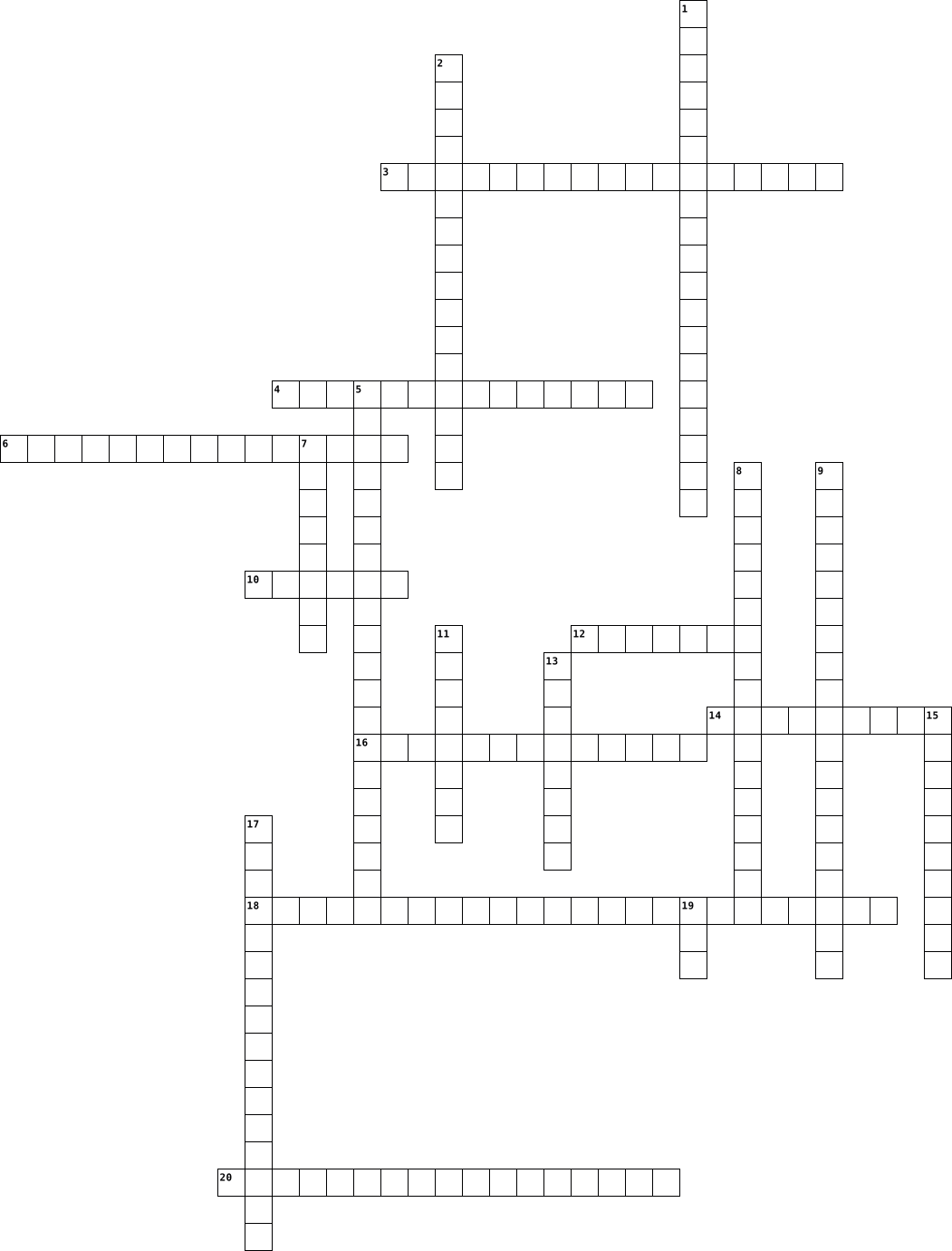
Across
- a characteristic of a particular substance that can be observed in a chemical reaction
- the scars left in plate interiors by the action of transform faults that offset mid-ocean ridge segments
- the transformation of some fraction of the mass of a solid rock into a liquid as a result of decompression, heat input, or addition of a flux
- Continents that were once one super continent
- the process of collecting and processing materials (that would otherwise be thrown away as trash) and remanufacturing them into new products.
- Large area of land
- large block or tabular section of the lithosphere that reacts to tectonic forces as a unit and moves as such
- when two plates slide past each other and make faults
- steep depressions in the deepest parts of the ocean
Down
- a geologic process in which tectonic plates—large slabs of Earth's lithosphere—split apart from each other
- divergent, convergent, and transform plate boundaries.
- Plates collide and create mountains
- relating to the structure of the surface of the earth and the way it is formed, changed, and moved by forces inside it
- one of the earliest ways geologists thought continents moved over time
- Plates move away from each other cause canyons
- Beginning or origin
- to project from the surrounding soil. ledges
- occurs when an oceanic plate runs into a continental plate and slides beneath it
- Causes movement of land/Earthquakes
- One billion years
20 Clues: One billion years • Large area of land • Beginning or origin • Plates collide and create mountains • Causes movement of land/Earthquakes • to project from the surrounding soil. ledges • Continents that were once one super continent • Plates move away from each other cause canyons • steep depressions in the deepest parts of the ocean • ...
plate tectonics 2023-03-12

Across
- extremely hot liquid/rock under the earth's surface
- lowlands where plates move away from each other
- the theory that the continents moved away from each other
- who came up with the plate tectonic theory?
- The moving of the plate tectonics can cause _______ to erupt.
- natural elevation of the earth's core
- a large wave caused by the displacement of water or underwater earthquakes
- also known as a continental glacier
- the outermost layer of of the earth
- a inner layer of the earth that is below the crust and is the largest inner layer
Down
- When plates collide/rub against each other it can cause…
- the zone where one plate goes under a different plate
- What is the name of “the supercontinent”?
- The place where there are many active volcanoes is called…
- a hot area found under the earth's crust
- when two plates move away from each other
- dence ice that slowly
- layer a layer that contains liquid iron and nickel
- ancient remains that helps support the continental drift theory
- Alfred Wegener says that the plates are always...
20 Clues: dence ice that slowly • also known as a continental glacier • the outermost layer of of the earth • natural elevation of the earth's core • a hot area found under the earth's crust • What is the name of “the supercontinent”? • when two plates move away from each other • who came up with the plate tectonic theory? • lowlands where plates move away from each other • ...
plate tectonics 2024-02-20

Across
- caused by divergent plate boundaries underwater
- outer layer of earth
- the gradual movement and formation of continents
- movement of one tectonic plate going under another
- mountain caused by plate tectonics that can spew magma
- cracks in earths crust where there is movement
- drives the movement of earths tectonic plates in the molten mantle.
- violent shaking caused by movement of plates
- lower layer of earths crust
Down
- hard part of earth containing crust and outer mantle
- a theory explaining the structure of the earth's crust and many associated phenomena as resulting from the interaction of rigid lithospheric plates which move slowly over the underlying mantle.
- a change is shape due to force
- amount per unit size
- formulated the first complete statement of the continental drift hypothesis
- Transfer of heat caused by molecular motion
- a hypothetical continent including all the landmass of the earth
- large hills caused by tectonic plates hitting eachother
- a slab made of earths crust
- molten rock in earths crust that can come out through volcanoes
- any of the world's main continuous expanses of land
20 Clues: outer layer of earth • amount per unit size • a slab made of earths crust • lower layer of earths crust • a change is shape due to force • Transfer of heat caused by molecular motion • violent shaking caused by movement of plates • cracks in earths crust where there is movement • caused by divergent plate boundaries underwater • ...
Plate Tectonics 2024-09-09

Across
- is the study of vibrations within Earth.
- a crack, split, or break in something.
- is a continuous range of undersea volcanic mountains that encircles the globe almost entirely underwater.
- is made of solid rocks and minerals.
- forms as magma deep inside the Earth pushes toward the surface but fails to break through the crust.
- is the rocky outer part of Earth.
- is any of several large geographical regions.
- are the processes that result in the structure and properties of the Earth's crust and its evolution through time.
- molten or partially molten rock from which igneous rocks form.
- This occurs when plates move towards each other and collide.
Down
- (Spreading):This is where two plates move away from each other.
- is the shaking caused by the rupture (breaking) and subsequent displacement of rocks (one body of rock moving with respect to another) beneath Earth’s surface.
- occurs at divergent plate boundaries.
- is a geological process in which the oceanic lithosphere and some continental lithosphere is recycled into the Earth's mantle at the convergent boundaries between tectonic plates.
- marks the position at which the flexed, subducting slab begins to descend beneath another lithospheric slab.
- an extended break in a body of rock, marked by the relative displacement and discontinuity of strata on either side of a particular surface.
- are The border between two tectonic plates.
- is a layer inside a planetary body bounded below by a core and above by a crust.
- are openings, or vents where lava, tephra (small rocks), and steam erupt onto the Earth's surface.
- was a supercontinent that existed during the late Paleozoic and early Mesozoic eras.
20 Clues: is the rocky outer part of Earth. • is made of solid rocks and minerals. • occurs at divergent plate boundaries. • a crack, split, or break in something. • is the study of vibrations within Earth. • are The border between two tectonic plates. • is any of several large geographical regions. • This occurs when plates move towards each other and collide. • ...
PLATE TECTONICS 2023-06-22

Across
- A ground-shaking release of energy caused by a break in the crust.
- The process by which magma rises to the surface at mid-ocean ridges and forms new ocean crust.
- Is the point at which two tectonic plates collide.
- Mountain ridges run along the seafloor.
- The belief that the Earth's continents have been in the same place since the Earth's formation.
- The process of denser crust of a tectonic plate sliding beneath less dense crust of another plate; occurs at convergent plate boundaries and produces deep sea trenches.
- The lithosphere is divided into large plates that interact with one another and cause geological activity.
- is the gravitational and subduction-induced pulling of a tectonic plate.
Down
- Is the separation of two tectonic plates.
- When new material at mid-ocean ridges pushes older material aside, tectonic plates shift.
- Is a current in the mantle that occurs when cooler, denser material sinks and warmer, less dense material rises.
- A layer of earth between the crust and outer core, which is divided into upper and lower sections.
- WAVES, The vibration caused by the release of energy during an earthquake.
- A devastating catastrophe caused by geological processes
- Occurs when two rocks are pressed together and one block rides up to overlay the other.
- For earthquakes, a number that represents strength.
- An instrument that measures and records ground vibration.
- In earth science, the location within earth where an earthquake starts.
- Two tectonic plates slide horizontally past each other.
- A large break in a rock.
- In mid ocean ridges a valley that runs along the centre of the ridge.
- The point on earths surfaces above where an earthquake starts.
- An opening in earths surface where magma and other materials are released.
23 Clues: A large break in a rock. • Mountain ridges run along the seafloor. • Is the separation of two tectonic plates. • Is the point at which two tectonic plates collide. • For earthquakes, a number that represents strength. • Two tectonic plates slide horizontally past each other. • A devastating catastrophe caused by geological processes • ...
PLATE TECTONICS 2023-06-22

Across
- An opening in earths surface where magma and other materials are released.
- The point on earths surfaces above where an earthquake starts.
- Mountain ridges run along the seafloor.
- A layer of earth between the crust and outer core, which is divided into upper and lower sections.
- An instrument that measures and records ground vibration.
- WAVES The vibration caused by the release of energy during an earthquake.
- The process of denser crust of a tectonic plate sliding beneath less dense crust of another plate; occurs at convergent plate boundaries and produces deep sea trenches.
- The process by which magma rises to the surface at mid-ocean ridges and forms new ocean crust.
- For earthquakes, a number that represents strength.
- The lithosphere is divided into large plates that interact with one another and cause geological activity.
- is the gravitational and subduction-induced pulling of a tectonic plate.
Down
- Is the point at which two tectonic plates collide.
- Is the separation of two tectonic plates.
- Occurs when two rocks are pressed together and one block rides up to overlay the other.
- Two tectonic plates slide horizontally past each other.
- Is a current in the mantle that occurs when cooler, denser material sinks and warmer, less dense material rises.
- In mid ocean ridges a valley that runs along the centre of the ridge.
- The belief that the Earth's continents have been in the same place since the Earth's formation.
- A ground-shaking release of energy caused by a break in the crust.
- A devastating catastrophe caused by geological processes
- In earth science, the location within earth where an earthquake starts.
- A large break in a rock.
- Deep valleys on the seafloor.
- When new material at mid-ocean ridges pushes older material aside, tectonic plates shift.
24 Clues: A large break in a rock. • Deep valleys on the seafloor. • Mountain ridges run along the seafloor. • Is the separation of two tectonic plates. • Is the point at which two tectonic plates collide. • For earthquakes, a number that represents strength. • Two tectonic plates slide horizontally past each other. • A devastating catastrophe caused by geological processes • ...
PLATE TECTONICS 2023-06-22

Across
- The process of denser crust of a tectonic plate sliding beneath less dense crust of another plate; occurs at convergent plate boundaries and produces deep sea trenches.
- A ground-shaking release of energy caused by a break in the crust.
- In mid ocean ridges a valley that runs along the centre of the ridge.
- is the gravitational and subduction-induced pulling of a tectonic plate.
- WAVES The vibration caused by the release of energy during an earthquake.
- For earthquakes, a number that represents strength.
- Mountain ridges run along the seafloor.
- Is the point at which two tectonic plates collide.
- An instrument that measures and records ground vibration.
- A layer of earth between the crust and outer core, which is divided into upper and lower sections.
Down
- Is a current in the mantle that occurs when cooler, denser material sinks and warmer, less dense material rises.
- The process by which magma rises to the surface at mid-ocean ridges and forms new ocean crust.
- Is the separation of two tectonic plates.
- Two tectonic plates slide horizontally past each other.
- An opening in earths surface where magma and other materials are released.
- A large break in a rock.
- The belief that the Earth's continents have been in the same place since the Earth's formation.
- Occurs when two rocks are pressed together and one block rides up to overlay the other.
- The lithosphere is divided into large plates that interact with one another and cause geological activity.
- A devastating catastrophe caused by geological processes
- Deep valleys on the seafloor.
- The point on earths surfaces above where an earthquake starts.
- When new material at mid-ocean ridges pushes older material aside, tectonic plates shift.
- In earth science, the location within earth where an earthquake starts.
24 Clues: A large break in a rock. • Deep valleys on the seafloor. • Mountain ridges run along the seafloor. • Is the separation of two tectonic plates. • Is the point at which two tectonic plates collide. • For earthquakes, a number that represents strength. • Two tectonic plates slide horizontally past each other. • A devastating catastrophe caused by geological processes • ...
PLATE TECTONICS 2023-06-29

Across
- A devastating catastrophe caused by geological processes
- Is the point at which two tectonic plates collide.
- Mountain ridges run along the seafloor.
- A ground-shaking release of energy caused by a break in the crust.
- In earth science, the location within earth where an earthquake starts.
- The process of denser crust of a tectonic plate sliding beneath less dense crust of another plate; occurs at convergent plate boundaries and produces deep sea trenches.
- Two tectonic plates slide horizontally past each other.
- In mid ocean ridges a valley that runs along the centre of the ridge.
- An instrument that measures and records ground vibration.
- The lithosphere is divided into large plates that interact with one another and cause geological activity.
- is the gravitational and subduction-induced pulling of a tectonic plate.
Down
- The point on earths surfaces above where an earthquake starts.
- When new material at mid-ocean ridges pushes older material aside, tectonic plates shift.
- For earthquakes, a number that represents strength.
- Is the separation of two tectonic plates.
- A large break in a rock.
- The process by which magma rises to the surface at mid-ocean ridges and forms new ocean crust.
- The belief that the Earth's continents have been in the same place since the Earth's formation.
- A layer of earth between the crust and outer core, which is divided into upper and lower sections.
- The vibration caused by the release of energy during an earthquake.
- Deep valleys on the seafloor.
- Is a current in the mantle that occurs when cooler, denser material sinks and warmer, less dense material rises.
- Occurs when two rocks are pressed together and one block rides up to overlay the other.
- An opening in earths surface where magma and other materials are released.
24 Clues: A large break in a rock. • Deep valleys on the seafloor. • Mountain ridges run along the seafloor. • Is the separation of two tectonic plates. • Is the point at which two tectonic plates collide. • For earthquakes, a number that represents strength. • Two tectonic plates slide horizontally past each other. • A devastating catastrophe caused by geological processes • ...
Plate Tectonics 2022-12-14

Across
- an example of a convergent boundary
- convection currents move through it to power tectonic plates
- top layer of the tectonic plates it has a high density and results from the cooling of magma
- earths largest plate and formed a part of a series of islands near North America
- transform boundaries cause when energy is released
- it is a plate that covers the entirety of a country, and it also covers a part of Asia
- lies above the fault plane
- Earth's lithosphere is recycled into earths mantle at convergent boundaries
- break in earth's crust
- are mostly found underwater
- the rigid outer part of the earth
Down
- can be between continental plates
- occurs at mid-ocean ridges,new oceanic crust is formed
- is the most important source of magma and is directly below the lithosphere
- it is a layer of rock that forms below the continents, and has a low density
- form deep trenches
- Earth's thin outer shell of rock
- drive the movement of tectonic plates
- two tectonic plates collide to form
- the theory that earth's continents moved over time, but they were on tectonic plates so they slowly moved away
- ocean to continent example of a transform boundary
21 Clues: form deep trenches • break in earth's crust • lies above the fault plane • are mostly found underwater • Earth's thin outer shell of rock • can be between continental plates • the rigid outer part of the earth • an example of a convergent boundary • two tectonic plates collide to form • drive the movement of tectonic plates • transform boundaries cause when energy is released • ...
Plate Tectonics 2022-12-19

Across
- The physical layer of the earth that is made of solid rock that slowly flows and that tectonic plates move on.
- the outermost physical layer of the earth.
- What is the mantle mostly made of?
- The part of the Earth on which the tectonic plates move is the
- What type of boundary is formed when plates separate?
- What is the area where two tectonic plates meet called?
- This process moves layers of rock by heating and cooling
- The type of boundary that is formed when plates slide past each other?
- Where does seafloor spreading take place?
Down
- the thin and solid outermost above the mantle.
- What crustal features might you find at a transform boundary?
- Who came up with the Continental Drift Theory?
- the strong, lower part of the mantle is a physical layer called what?
- by using...?
- The type tectonic plate boundary that form from a collision between two tectonic plates is a.
- What type of boundary occurs when one plate slides UNDER another?
- Who came up with the idea of Sea-floor Spreading?
- The compositional layer of the earth that comprises of 67% of the Earth's mass.
- the deep interior of the earth can be
- The liquid layer of the earth?
20 Clues: by using...? • The liquid layer of the earth? • What is the mantle mostly made of? • Where does seafloor spreading take place? • the outermost physical layer of the earth. • the thin and solid outermost above the mantle. • Who came up with the Continental Drift Theory? • the deep interior of the earth can be • Who came up with the idea of Sea-floor Spreading? • ...
Plate Tectonics 2022-10-03

Across
- Area of land that existed 245 million years ago
- Zones where mass of the crust is moving under another
- A scientist devoted to systematic investigation
- Incapable of or resistant to bending
- Pushes magma up through a thin hole
- The branch of geology studying the folding and faulting of the earth's crust
- Plates that push together
- Caused by an earthquake or earth vibration
- A large continuous extent of land
- Pertaining to the structure or movement of the earth's crust
- A single thickness of some substance or material
Down
- One of the large landmasses of the earth
- Cause to change; make different
- Of a feature that helps to identify a person or thing
- The practical application of science to commerce or industry
- Plates that pull apart
- Knowledge on which to base belief
- Long narrow depression on the sea floor
- The bottom of a sea or ocean
- Crash together with violent impact
20 Clues: Plates that pull apart • Plates that push together • The bottom of a sea or ocean • Cause to change; make different • Knowledge on which to base belief • A large continuous extent of land • Crash together with violent impact • Pushes magma up through a thin hole • Incapable of or resistant to bending • Long narrow depression on the sea floor • ...
plate tectonics 2022-10-03

Across
- when a new seafloor is formed
- all of or continents today connected
- to change shape or distort
- decrease in size of an object
- upper layer of earths mantle
- the center of the earth materials matter of which a thing is made by
- area on earth where 2 plates colide
- one plate pushed beneath another
- current that results from convection
- wave produced by earthquake
- zone of fractures between two rocks
- when 2 plates move away from another
Down
- state of being stretched tight
- theory states earth has moving plate
- when north and south poles switch
- connects to another plate boundary
- consists of crust and upper mantle
- the layer beneath the crust
- outermost layer of earth
- giant slabs of rock in core
- something thats in flattened state
- theory that states earth once fused
- third layer of atmosphere
23 Clues: outermost layer of earth • third layer of atmosphere • to change shape or distort • the layer beneath the crust • giant slabs of rock in core • wave produced by earthquake • upper layer of earths mantle • when a new seafloor is formed • decrease in size of an object • state of being stretched tight • one plate pushed beneath another • when north and south poles switch • ...
Plate Motion 2023-09-18

Across
- an object, diagram, or computer program that helps us understand something by making itsimpler or easier to see
- a feature that forms on the surface of a planet, such as a mountain, channel, or sand dune
- moving toward the same place
- something we observe to be similar over and over again
- to examine in detail for a purpose
- an underwater mountain range formed when two plates move apart
- any of Earth’s main continuous areas of land, such as Africa, Asia, and North America
- a sudden shaking of Earth’s surface
- an extinct reptile that lived about 300 million years ago
- the slow pulling apart of land that is caused by plate movement
- the outside or top layer of something
Down
- moving apart in different directions
- Earth’s outermost layer of hard, solid rock that is underneath the soil, vegetation,and water
- activity any of the many processes (such as eruptions and lava flows) in which gas, lava,and ash are pushed out on the surface of Earth
- the place where two plates meet
- the moment when two objects hit each other
- the layer of soft, solid rock underneath Earth’s plates
- hot liquid rock below the surface of Earth
- a long, deep indentation in the ocean floor formed when two plates move together
- one of the very large sections of hard, solid rock that make up Earth’s outer layer
- a set of interacting parts forming a complex whole
- hot liquid rock on the surface of Earth
- evidence of life from the past, such as fossilized bones, footprints, or leaf prints
- how often or fast something happens
- a diagram that shows what the inside of something looks like
- a natural spring that sends hot water and steam suddenly into the air from a hole in the ground
- the sudden pushing out of something, such as lava from a volcano
27 Clues: moving toward the same place • the place where two plates meet • to examine in detail for a purpose • a sudden shaking of Earth’s surface • how often or fast something happens • moving apart in different directions • the outside or top layer of something • hot liquid rock on the surface of Earth • the moment when two objects hit each other • ...
Plate Techonics 2023-09-13

Across
- A semi-fluid layer in Earth's upper mantle where tectonic plates "float" and move due to convection currents.
- Areas where tectonic plates interact, including subduction zones, transform faults, and rifts.
- can sometimes be ceramic but can be found underground
- Zone: An area where one tectonic plate is
- its in the middle of the earth
- A curved chain of volcanic islands formed at a convergent boundary where an oceanic plate subducts beneath another.
- Massive, rigid sections of Earth's crust and upper mantle that move and interact, leading to geological changes.
- Plume: A rising column of hot mantle material that can cause volcanic activity away from plate boundaries, creating hotspots.
- Boundary: Plate boundary where two plates move towards each other, causing compression and often leading to mountain formation.
- After affect of tectonic plates moving related to water
- When two tectonic plates meet head-on, causing intense pressure and leading to mountain building and earthquakes.
Down
- Boundary: Plate boundary where two plates move apart, creating new crust as magma rises to the surface.
- Interaction: The dynamic processes and geological features created by the interactions of tectonic plates.
- orgininal earth
- Something wiggling
- Ridge: An underwater mountain range formed at divergent boundaries, where new oceanic crust is continuously created.
- its liquid in the earth
- A deep valley formed at a divergent boundary on continents, such as the East African Rift.
- its the top of the earth
- The continuous motion of Earth's lithosphere, driven by forces like mantle convection and gravitational pull.
- Earthquake and volcanic events resulting from the movement and interactions of tectonic plates.
- Boundary: Plate boundary where two plates slide past each other horizontally, causing earthquakes along faults.
22 Clues: orgininal earth • Something wiggling • its liquid in the earth • its the top of the earth • its in the middle of the earth • Zone: An area where one tectonic plate is • can sometimes be ceramic but can be found underground • After affect of tectonic plates moving related to water • A deep valley formed at a divergent boundary on continents, such as the East African Rift. • ...
Plate Tectonics 2023-09-21

Across
- solid material that is moved to a new location
- A displacement of rock
- Where one plate slides under another
- Plates going towards each other
- Process that turns any rock into magma
- Breaking apart due to faulting
- where two or more plates meet
- Liquified rock that is underground
- naturally occurring elements or compounds
- Earths outerlayer divided into plates
- The thick part of the Earth's crust that forms large landmasses
Down
- The formation of new oceanic crust
- Plates rubbing against each other
- Plates moving away from each other
- movement of continents spreading apart from each other
- a giant supercontinent
- A zone formed by the boundary between two tectonic plates
- hardens magma and turns it into igneous rock
- Molten rock that breaks through Earth's surface
- The rigid outer part of the Earth
20 Clues: A displacement of rock • a giant supercontinent • where two or more plates meet • Breaking apart due to faulting • Plates going towards each other • Plates rubbing against each other • The rigid outer part of the Earth • The formation of new oceanic crust • Plates moving away from each other • Liquified rock that is underground • Where one plate slides under another • ...
Plate Motion 2022-11-17

Across
- The border between two plates
- Changed into a stone substance
- an elastic wave in the earth produced by an earthquake or other means.
- Second Layer of the Earth
- A Super continent made of all the continents we know today
- Gigantic pieces of the Earth's crust and uppermost mantle.
- The is the place inside Earth's crust where an earthquake originates
- When plates are pushed to together
- The is the measure of shaking at each location
- The outer layer of earth
Down
- When plates go the opposite way of each other
- A large sea wave that is caused by a earthquake
- When the Earths plates shift and overlap each other
- The point on the Earth's surface directly above the focus of an earthquake
- The imprint left by the shell on the rock that surrounded it
- Center of the Earth
- Measurement scale for the size of the earthquake
- Any of the Earth's named Mainlands
- A plant or a animal that has been preserved in the Earth's crust
- A fossil formed when a animal or plant has died
20 Clues: Center of the Earth • The outer layer of earth • Second Layer of the Earth • The border between two plates • Changed into a stone substance • Any of the Earth's named Mainlands • When plates are pushed to together • When plates go the opposite way of each other • The is the measure of shaking at each location • A large sea wave that is caused by a earthquake • ...
Plate Motion 2022-10-19

Across
- evidence from life from the past
- Hot liquid rock below the earth
- big explosive thing
- are stuff that move under us
- shakes the area
- The outside or top layer of something
- Something to be similar over and over again
- Hot liquid on the surface of earth
- A slow pulling apart of land
- moves away from each other
Down
- mid ___ range
- soft or hard rock
- moves together
- a feature that forms the planet
- a thing that drives the earth
- an animal the was extinct 300 million years ago
- 7 main lands of Earth
- long and narrow ditch
- how fast of something
- a diagram of something
- ____ of fire
21 Clues: ____ of fire • mid ___ range • moves together • shakes the area • soft or hard rock • big explosive thing • 7 main lands of Earth • long and narrow ditch • how fast of something • a diagram of something • moves away from each other • are stuff that move under us • A slow pulling apart of land • a thing that drives the earth • Hot liquid rock below the earth • a feature that forms the planet • ...
Plate Tectonics 2022-05-17

Across
- ‐ Any of various instruments for measuring and recording the vibrations of earthquakes
- plate ‐ a large piece of the lithosphere that floats and moves on the asthenosphere.
- ‐ A deep valley that forms at the edge of a continent when an oceanic plate sinks underneath a
- trench ‐ a long, narrow, deep area on the ocean floor that is formed at a convergent plate boundary.
- spot ‐ is formed when very hot rock rises from the mantle and erupts through Earth’s crust.
- ‐ Part of a grid used for describing positions on the earth's surface, consisting of half circles
- boundary ‐The boundary that occurs where two plates slide past each other.
- boundary ‐ an area where two or more tectonic plates meet.
- ‐ the layer of Earth between the core and the crust
- ‐ The point on earth’s surface that is vertically above the focus of an earthquake.
- ‐ melted rock on Earth’s surface.
- ‐ a straight line of travel where data is being collected.
Down
- ‐ The point of origin of an earthquake
- at the poles
- plate.
- landslide, or volcanic eruption.
- ‐ the outermost layer of Earth.
- ‐ a slowly flowing layer of solid and melted rock formed by heat and pressure
- ‐ the solid outer part of Earth that includes the crust and upper mantle.
- ‐ A huge ocean wave caused by a sudden, powerful shift on the ocean floor, like an undersea
- Scale ‐ A logarithmic scale, ranging from 1 to 10, for indicating the intensity of an earthquake
- - melted rock beneath Earth’s surface.
- ‐ A transference of energy
- Tectonics Vocabulary
- ‐ The distance from the center of a circle to any point on its circumference
25 Clues: plate. • at the poles • Tectonics Vocabulary • ‐ A transference of energy • ‐ the outermost layer of Earth. • landslide, or volcanic eruption. • ‐ melted rock on Earth’s surface. • ‐ The point of origin of an earthquake • - melted rock beneath Earth’s surface. • ‐ the layer of Earth between the core and the crust • boundary ‐ an area where two or more tectonic plates meet. • ...
Plate Motion 2023-10-02

Across
- a feature that forms on the surface of a planet, such as a mountain, channel, or sand dune
- something we observe to be similar over and over again
- an object, diagram, or computer program that helps us understand something by making it
- an extinct reptile that lived about 300 million years ago
- Earth’s outermost layer of hard, solid rock that is underneath the soil, vegetation, and
- or easier to see
- a natural spring that sends hot water and steam suddenly into the air from a hole in the
- hot liquid rock below the surface of Earth
- the sudden pushing out of something, such as lava from a volcano
- moving toward the same place
- a set of interacting parts forming a complex whole
- a diagram that shows what the inside of something looks like
- to examine in detail for a purpose
- the slow pulling apart of land that is caused by plate movement
- the place where two plates meet
Down
- any of the many processes (such as eruptions and lava flows) in which gas, lava,
- an underwater mountain range formed when two plates move apart
- hot liquid rock on the surface of Earth
- ash are pushed out on the surface of Earth
- one of the very large sections of hard, solid rock that make up Earth’s outer layer
- a sudden shaking of Earth’s surface
- how often or fast something happens
- the layer of soft, solid rock underneath Earth’s plates
- moving apart in different directions
- any of Earth’s main continuous areas of land, such as Africa, Asia, and North America
- the outside or top layer of something
- evidence of life from the past, such as fossilized bones, footprints, or leaf prints
- a long, deep indentation in the ocean floor formed when two plates move together
28 Clues: or easier to see • moving toward the same place • the place where two plates meet • to examine in detail for a purpose • a sudden shaking of Earth’s surface • how often or fast something happens • moving apart in different directions • the outside or top layer of something • hot liquid rock on the surface of Earth • ash are pushed out on the surface of Earth • ...
Plate Tectonics 2023-09-26

Across
- plates crashed together forming -------
- if simaler fosile are seen all around the world that means that the world may have been --------
- plates that are under the ocean
- was a theory in 1912
- how many major plates are there
- ice sheets,mountains,fosils and contanets fitting together is -------- that the theory of continental drift may be true
- plates crashed together
- what plate is the ring of fire mainly located
- was a theory 50 years ago
- what is the first layer of the earth called
Down
- plates that are under the continents
- which ocean is the fire located
- where is 90% of the world earthquakes
- a plates slides under anouther plate
- what is the center of the earth called
- move on the liquid layer
- south America and Africa --- together
- where does earthquakes happen on plates
- how minor plates are there
- mega continent
20 Clues: mega continent • was a theory in 1912 • plates crashed together • move on the liquid layer • was a theory 50 years ago • how minor plates are there • which ocean is the fire located • plates that are under the ocean • how many major plates are there • plates that are under the continents • a plates slides under anouther plate • where is 90% of the world earthquakes • ...
PLATE TECTONICS 2025-03-06

Across
- They move 5-10cm a year
- Mountain that spews out lava
- Makes plates "float" on the asthenosphere
- Boundary where plates move apart
- Top layer of Earth's surface
- Formed where there is a convergent boundary
- Happens usually along a Transform Boundary
- Largest mountain range
Down
- Middle layer of Earth's surface
- Scale that measures damage in an earthquake
- Holds the asthenosphere, crust, and upper mantle
- Plate we live on
- The theory scientists use to expain plate movement
- Made of liquid metals
- Boundary where plates grind past each other
- Boundary where plates collide
- Scale that measures energy in an earthquake
- Made of iron and nickel
- Wears down Earth's surface
- Mega Continent
20 Clues: Mega Continent • Plate we live on • Made of liquid metals • Largest mountain range • They move 5-10cm a year • Made of iron and nickel • Wears down Earth's surface • Mountain that spews out lava • Top layer of Earth's surface • Boundary where plates collide • Middle layer of Earth's surface • Boundary where plates move apart • Makes plates "float" on the asthenosphere • ...
Plate Tectonics. 2025-03-21

Across
- Where magma comes to the surface
- Fractures between two plates
- A layer of rock that is made up of ocean and continents
- Molten rock above the Earths surface
- A ring of volcanoes in a ocean
- When tectonic plates move away from eachother
- Liquid metal layer
- Molten rock below the earths surface
Down
- A long mountain range on the oceans floor
- The super continent
- The theory that the lithosphere is divided into various peices
- Outer part of mantle, layer that floats on liquid metal
- Currents caused by difference in temperature
- Carries the edge of one plate under another plate
- When plates move towards each other
- Place where lots of volcanic activities occur
- The theory that tectonic plates drift over time
- When tectonic plates rub against eachother
- The center of the Earth
- Uppermost layer of the earth
20 Clues: Liquid metal layer • The super continent • The center of the Earth • Fractures between two plates • Uppermost layer of the earth • A ring of volcanoes in a ocean • Where magma comes to the surface • When plates move towards each other • Molten rock above the Earths surface • Molten rock below the earths surface • A long mountain range on the oceans floor • ...
Plate Motion 2024-09-18

Across
- how often or fast something happens
- an object, diagram, or computer program that helps us understand something by making it simpler or easier to see
- hot liquid rock below the surface of Earth
- Earth’s outermost layer of hard, solid rock that is underneath the soil, vegetation, and water
- a feature that forms on the surface of a planet, such as a mountain, channel, or sand dune
- an extinct reptile that lived about 300 million years ago
- one of the very large sections of hard, solid rock that make up Earth’s outer layer
- moving apart in different directions
- a diagram that shows what the inside of something looks like
- a sudden shaking of Earth’s surface
- a long, deep indentation in the ocean floor formed when two plates move together
- something we observe to be similar over and over again
Down
- to examine in detail for a purpose
- moving toward the same place
- the outside or top layer of something
- the sudden pushing out of something, such as lava from a volcano
- the place where two plates meet
- evidence of life from the past, such as fossilized bones, footprints, or leaf prints
- a set of interacting parts forming a complex whole
- the layer of soft, solid rock underneath Earth’s plates
- any of Earth’s main continuous areas of land, such as Africa, Asia, and North America
- the slow pulling apart of land that is caused by plate movement
- a natural spring that sends hot water and steam suddenly into the air from a hole in the ground
23 Clues: moving toward the same place • the place where two plates meet • to examine in detail for a purpose • how often or fast something happens • a sudden shaking of Earth’s surface • moving apart in different directions • the outside or top layer of something • hot liquid rock below the surface of Earth • a set of interacting parts forming a complex whole • ...
plate tectonics 2025-03-31

Across
- thickest layer of earth
- core what is the liquid layer of the earth
- what is it called when two plates collide horizontally
- what is the outermost layer of the earth called
- the breaking down of rock is called
- what is Pangaea
- These form under water (on the ocean floor) at most convergent boundaries
- cracks in earth's crust
- what element makes up most of the earth's core
Down
- melted rock inside of earth
- Word used to describe the state of the mantle.
- who is alfred wegener
- the border between two tectonic plates is called
- Type of crust that is thick and contains granite.
- two plates collide they make...
- these shake the earth
- when two plates move away from each other
- what is it called when two plates collide vertically
- large solid area of land
- in earth's crust where magma comes out
- When one tectonic plate moves underneath another one, it's called this.
21 Clues: what is Pangaea • who is alfred wegener • these shake the earth • thickest layer of earth • cracks in earth's crust • large solid area of land • melted rock inside of earth • two plates collide they make... • the breaking down of rock is called • in earth's crust where magma comes out • when two plates move away from each other • core what is the liquid layer of the earth • ...
Plate Tectonic 2024-10-08

Across
- A zone where two tectonic plates are pulling apart
- Molten rock in the earths crust
- When tectonic plates are pushed together and the crust becomes shorter and thicker
- A transference of energy
- An instrument that measures and records the details of earthquakes
- the branch of geology studying the folding and faulting of the earth's crust
- The rigid outer part of the earth
- The border between two tectonic plates
- The centre of the earth which is very hot and dense
- a large piece of the lithosphere that floats and moves on the asthenosphere.
- The upper layer of the earths mantle which is below the lithosphere
Down
- The name for the chemistry of the earths crust
- The name for when two plates move apart from eachother
- When one plate is getting bent and pulled underneath another
- The outer most layer of the earth
- The process where the earth gets covered with glaciers or masses of ice
- The name given for the super continent which is believed to exist over 200 million years ago
- The name for when two plates move towards each other
- The natural disaster caused by Convergent plates
- The natural disaster caused by divergent plates
20 Clues: A transference of energy • Molten rock in the earths crust • The outer most layer of the earth • The rigid outer part of the earth • The border between two tectonic plates • The name for the chemistry of the earths crust • The natural disaster caused by divergent plates • The natural disaster caused by Convergent plates • A zone where two tectonic plates are pulling apart • ...
Plate tectonics 2024-10-25

Across
- the rigid part of the earth in between the crust and the upper mantle
- the layer of soft, rock underneath Earths plates
- something we observe to be similar over and over again
- the last name of the person that came up with continental drift
- Earths outer layer
- what they call the “plastic” layer
- moving apart in different directions
- a sudden shaking of Earths surface
- Earths innermost layer
Down
- a landform that forms when plates move apart
- the sudden pushing out of something
- the element that makes up most of Earths core
- to examine in detail for a purpose
- how often of fast something is moving
- the process in plate tectonics of the edge of one plate descending below the edge of another plate
- one of the very large sections of hard solid rock, that make up Earths outer layer
- an long deep indentation in the ocean floor form when 2 plates move together
- moving towards the same place
- the number of main plates on earth
- the thing that increases the further down you go in the earth
20 Clues: Earths outer layer • Earths innermost layer • moving towards the same place • to examine in detail for a purpose • what they call the “plastic” layer • the number of main plates on earth • a sudden shaking of Earths surface • the sudden pushing out of something • moving apart in different directions • how often of fast something is moving • ...