
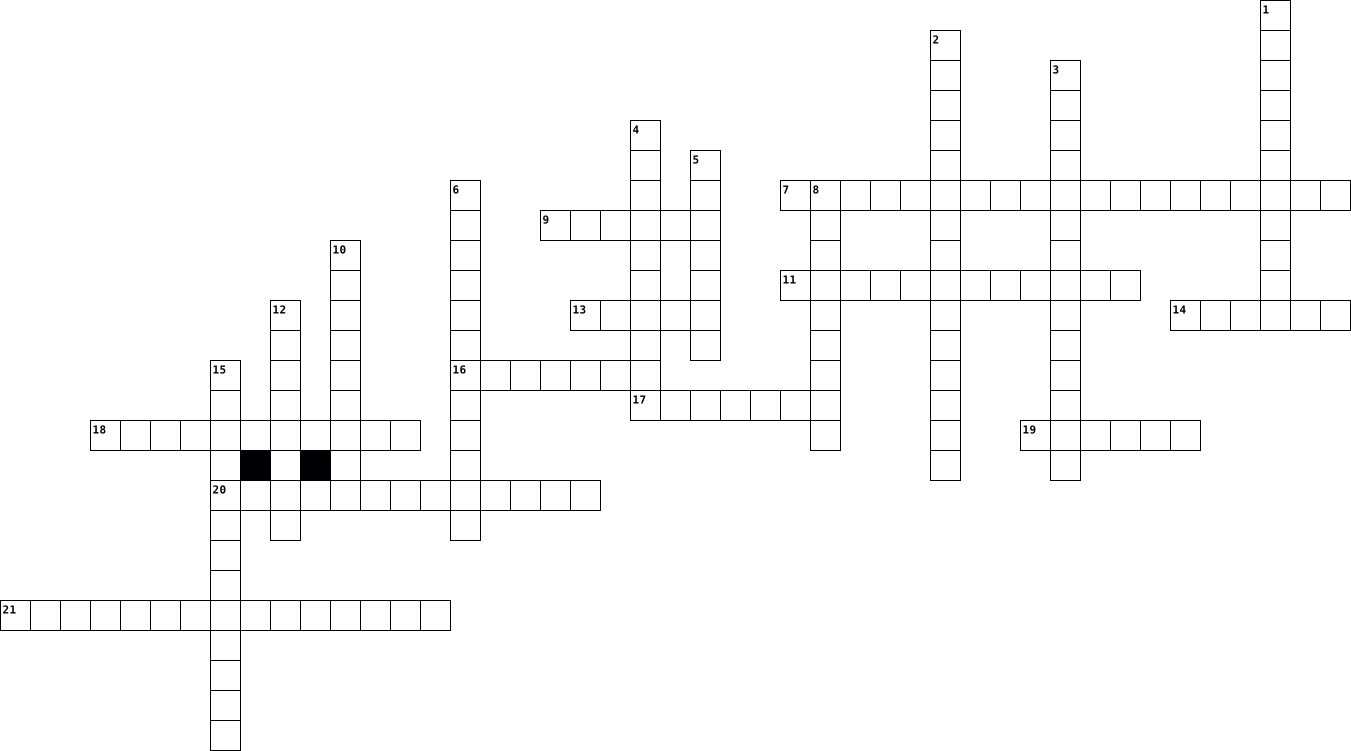
radiation biology Crossword Puzzles
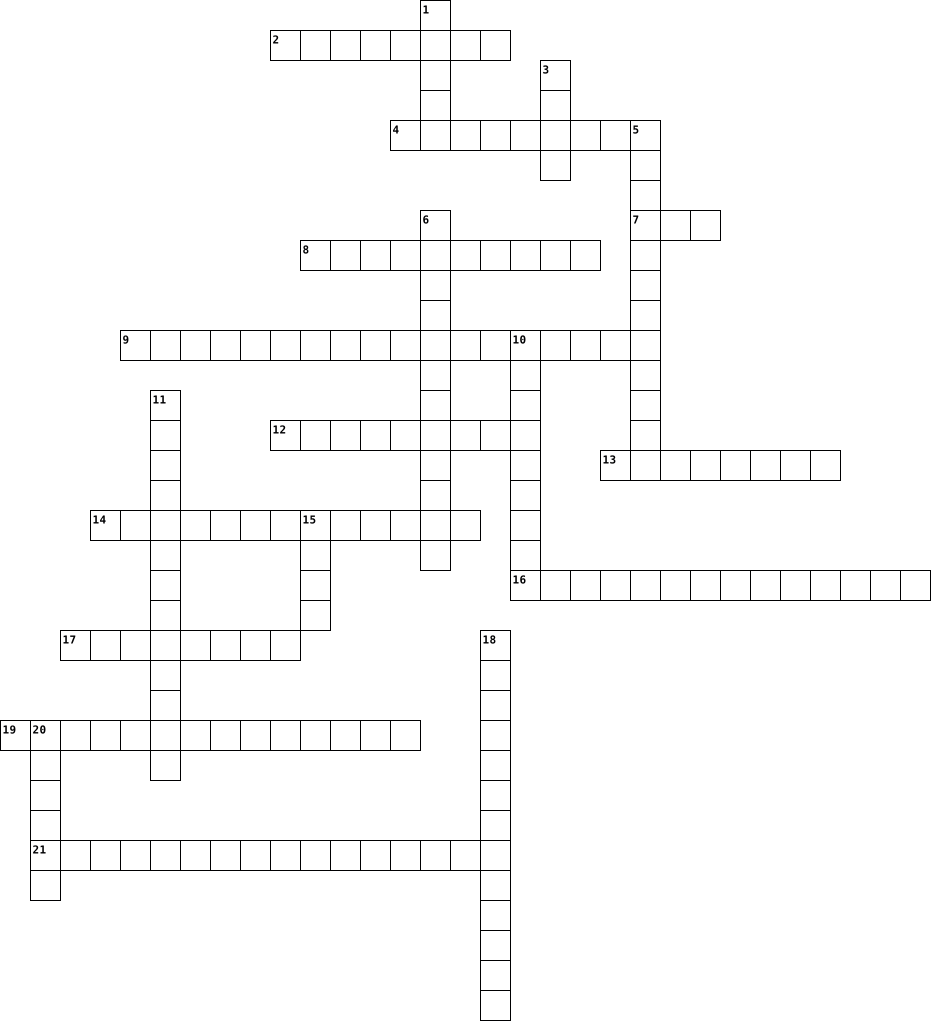
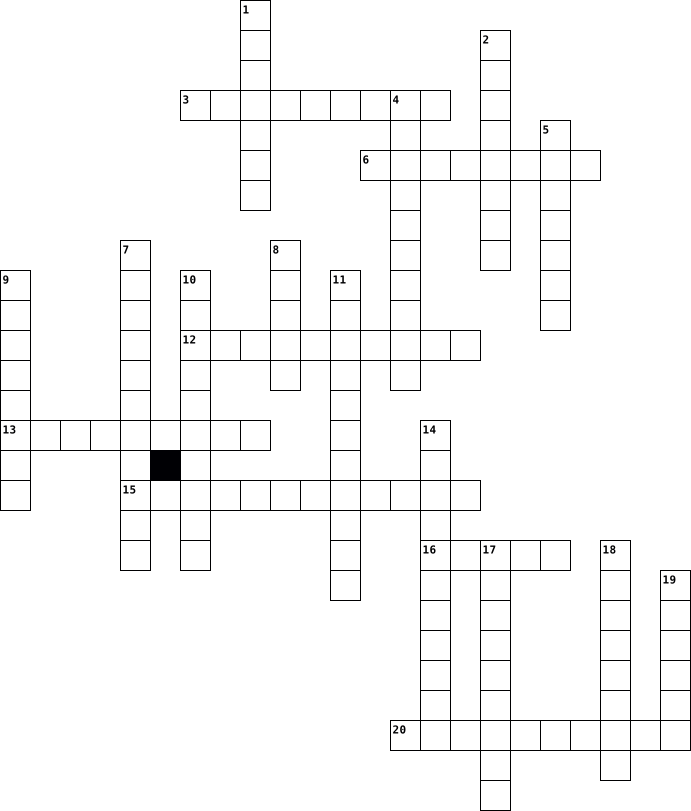
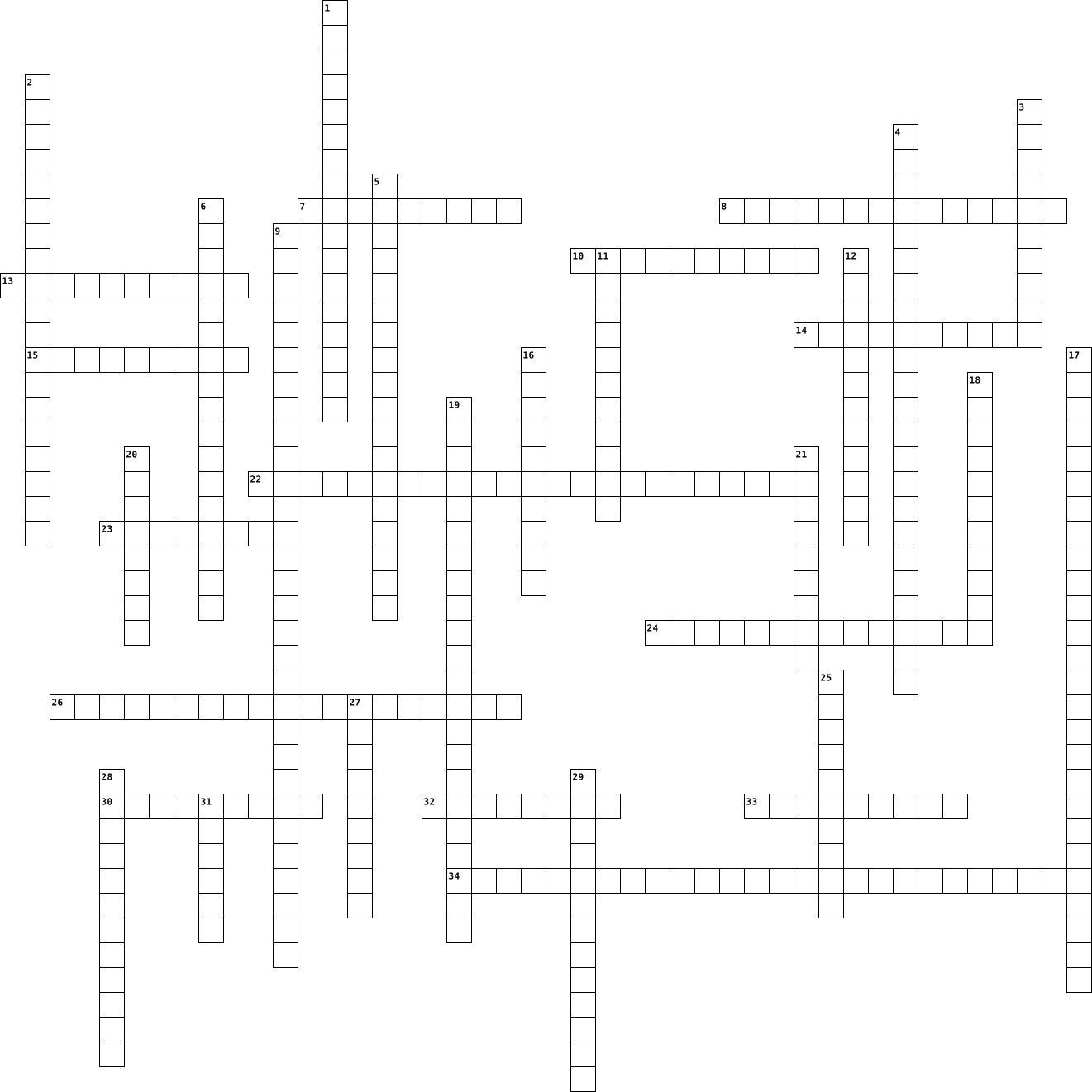
Dental Radiology Review 2024-10-16

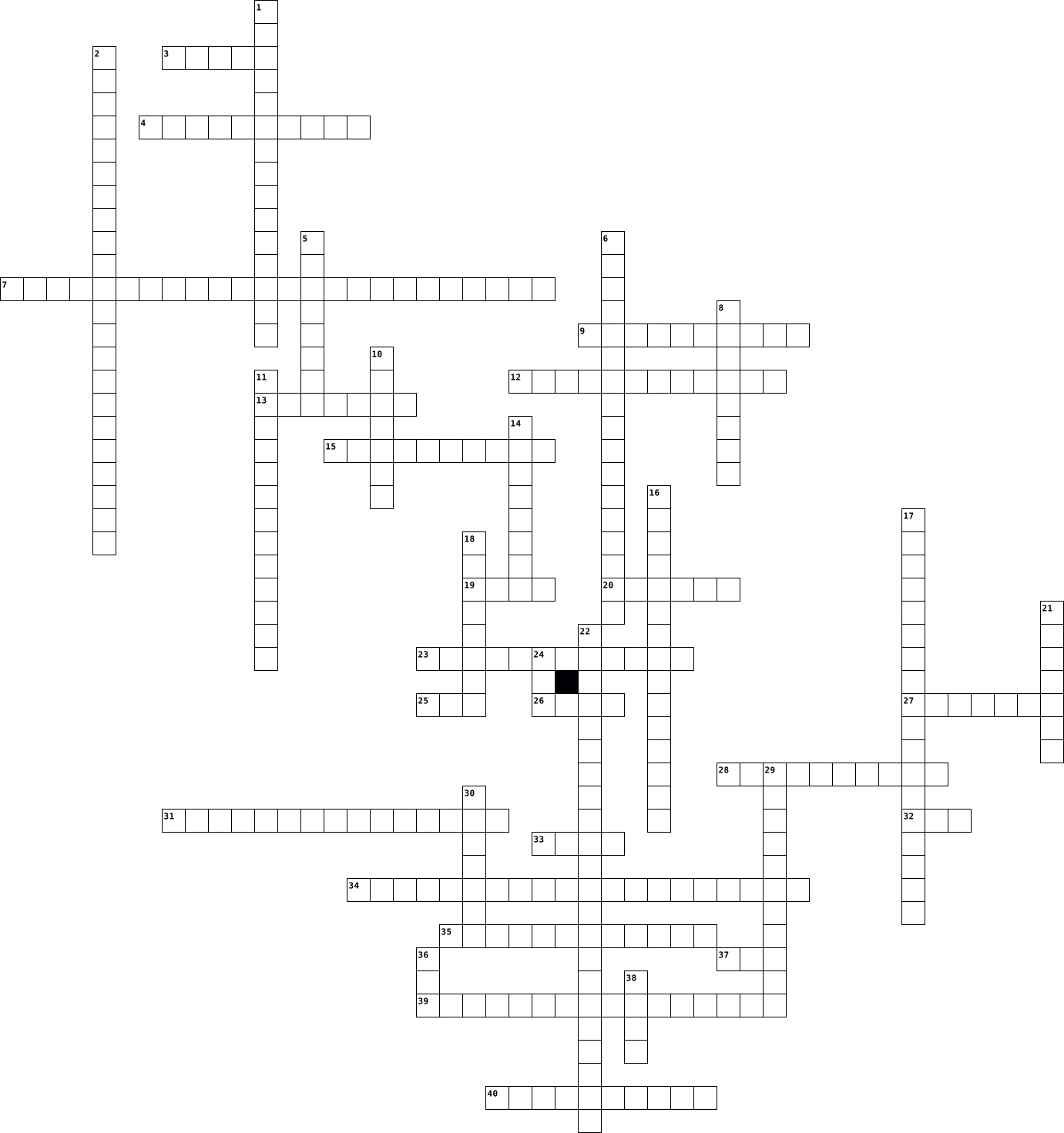
Across
- tungsten target where the electrons hit
- X-ray beam missed part of the film
- The radiation formed when the primary x-rays strike the patient
- dental film that has the highest speed for the greatest reduction in radiation exposure for the patient
- x-ray taken from inside pt's mouth
- easier for staff
- safelight color
- The central beam that comes from the x-ray tube head
- placing the dot towards the operator
- The form of radiation that escapes in all directions from the tube head
- Caused by too much angulation
- amount or quantity of radiation
- shows entire tooth and surrounding tissues
- computed Tomography
- dark film image
- Angled toward mesial/distal instead of interproximal
Down
- film backward in the patient's mouth results
- grey appearance
- sharpest image possible
- image Film is not completely immersed or tanks are low solution levels
- Magnetic Image
- conforms to dental arches
- common in general and specialty offices
- meaning part
- The radiation that is deflected from its path as it strikes matter
- x-ray taken outside pt's mouth
- Used to detect caries, faulty restorations, calculus, and bone
- light film image
- Dark fingerprint smudge marks
- quality of radiation
- Too little positive angulation for maxillary, or negative for mandibular
- Adult-4 child-2
- pt's skeletal structure and profile
33 Clues: meaning part • Magnetic Image • grey appearance • safelight color • Adult-4 child-2 • dark film image • light film image • easier for staff • computed Tomography • quality of radiation • sharpest image possible • conforms to dental arches • Dark fingerprint smudge marks • Caused by too much angulation • x-ray taken outside pt's mouth • amount or quantity of radiation • ...
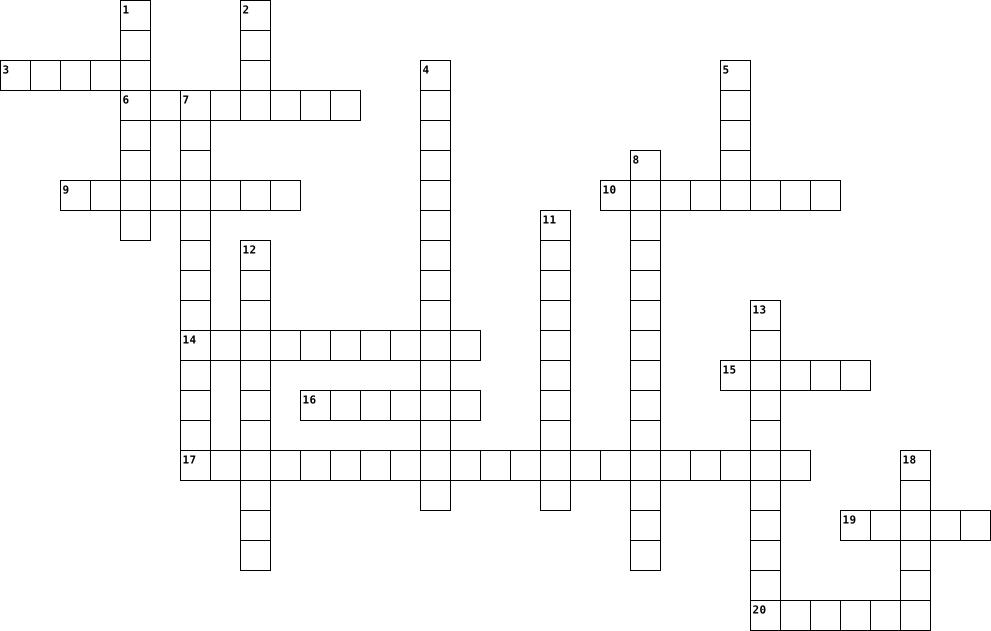
ENERGY IN THE EARTH SYSTEM 2023-12-14

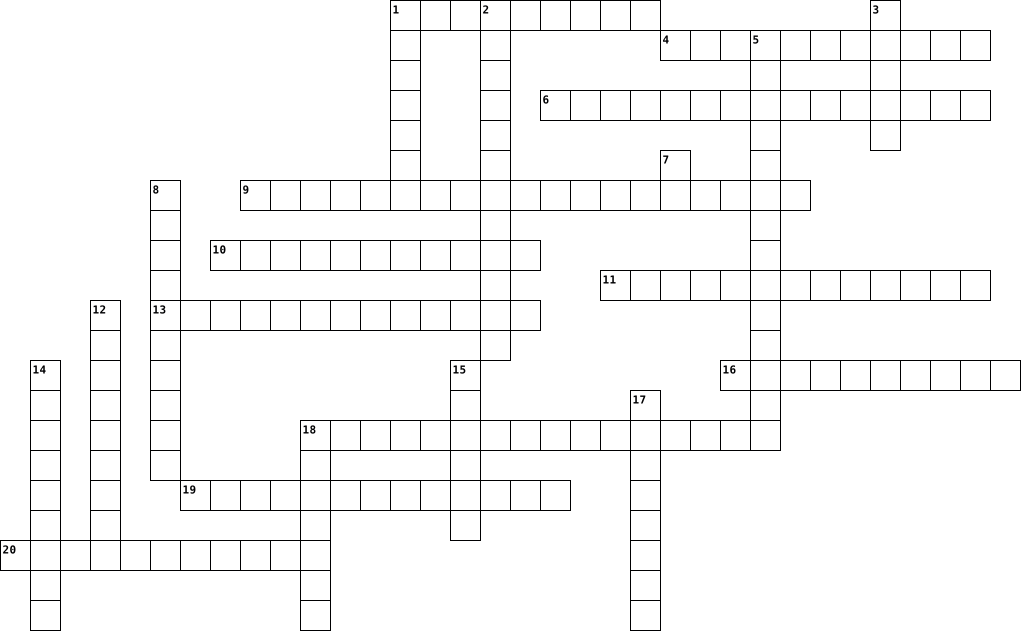
Across
- AN OCEAN ____________ IS A RIVER OF WATER IN THE OCEAN.
- TYPE OF ENERGY GIVEN OFF BY THE SUN.
- TYPE OF ELECTROMAGNETIC WAVE WITH THE LOWEST ENERGY.
- SOLAR ENERGY HELPS ___________ EARTH'S WATER SUPPLY.
- THE TRANSFER OF ENERGY BY ELECTROMAGNETIC WAVES.
- TYPE OF ELECTROMAGNETIC WAVE THAT YOU CAN SEE.
- WHEN WATER VAPOR CHANGES INTO WATER DROPLETS.
- GIVING OFF RADIANT ENERGY.
- THE MORE ENERGY THAT RADIATION HAS, THE GREATER THE ____________.
Down
- IN THE NORTHERN HEMISPHERE, WIND FLOWS THIS DIRECTION.
- A FORM OF RADIATION THAT IS EMITTED BY THE SUN.
- TAKING IN RADIANT ENERGY.
- THE AVERAGE WEATHER FOR A REGION.
- TYPE OF COLORED OBJECTS THAT ABSORB THE MOST RADIATION.
- SOLAR RADIATION IS A VERY IMPORTANT ____________ SOURCE.
- A ___________ CURRENT IS A PATTERN OF RISING & SINKING AIR OR FLUID.
- WHEN MOLECULES ARE HEATED UP, THEY BECOME LESS __________.
17 Clues: TAKING IN RADIANT ENERGY. • GIVING OFF RADIANT ENERGY. • THE AVERAGE WEATHER FOR A REGION. • TYPE OF ENERGY GIVEN OFF BY THE SUN. • WHEN WATER VAPOR CHANGES INTO WATER DROPLETS. • TYPE OF ELECTROMAGNETIC WAVE THAT YOU CAN SEE. • A FORM OF RADIATION THAT IS EMITTED BY THE SUN. • THE TRANSFER OF ENERGY BY ELECTROMAGNETIC WAVES. • ...
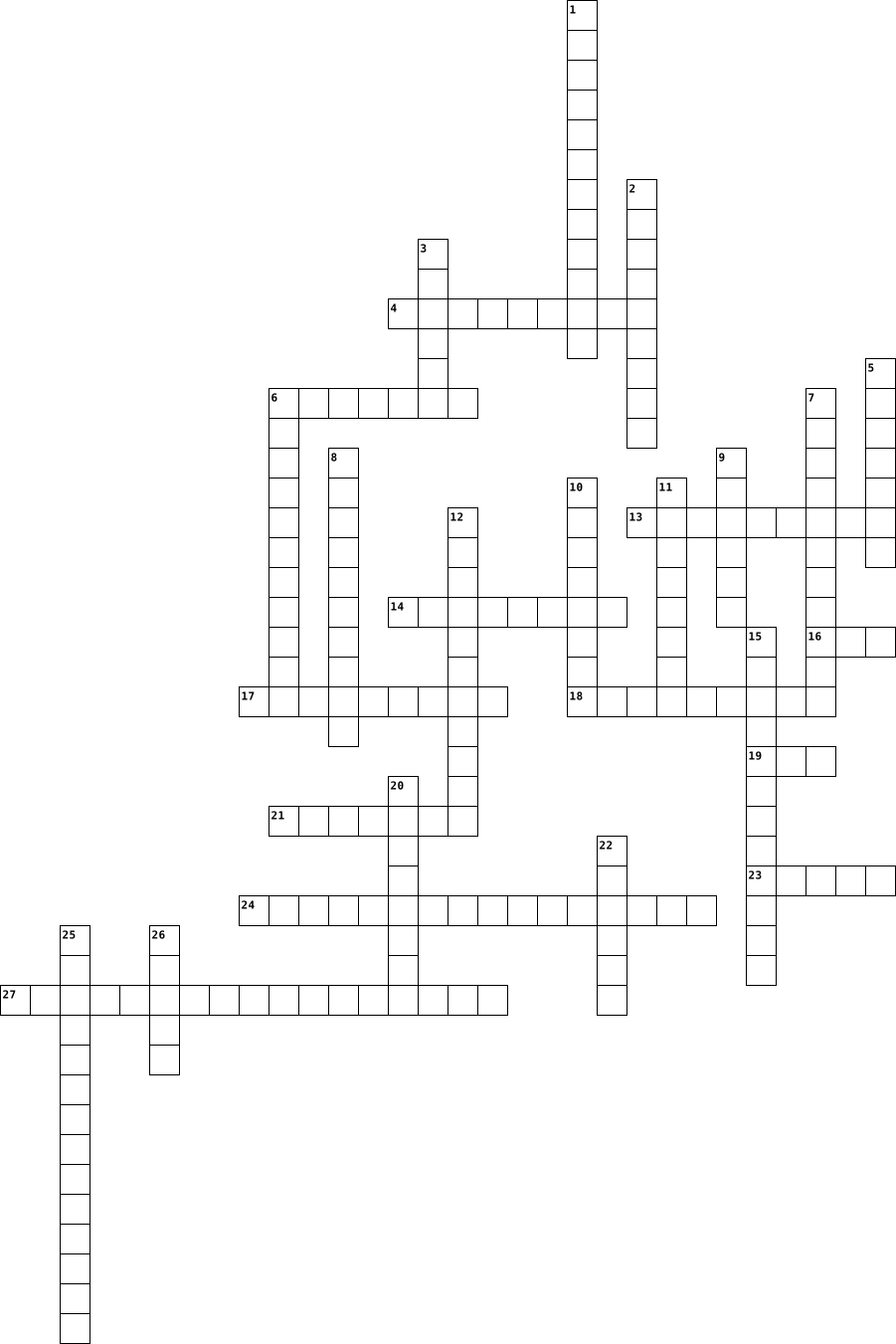
Biology 2021-06-15
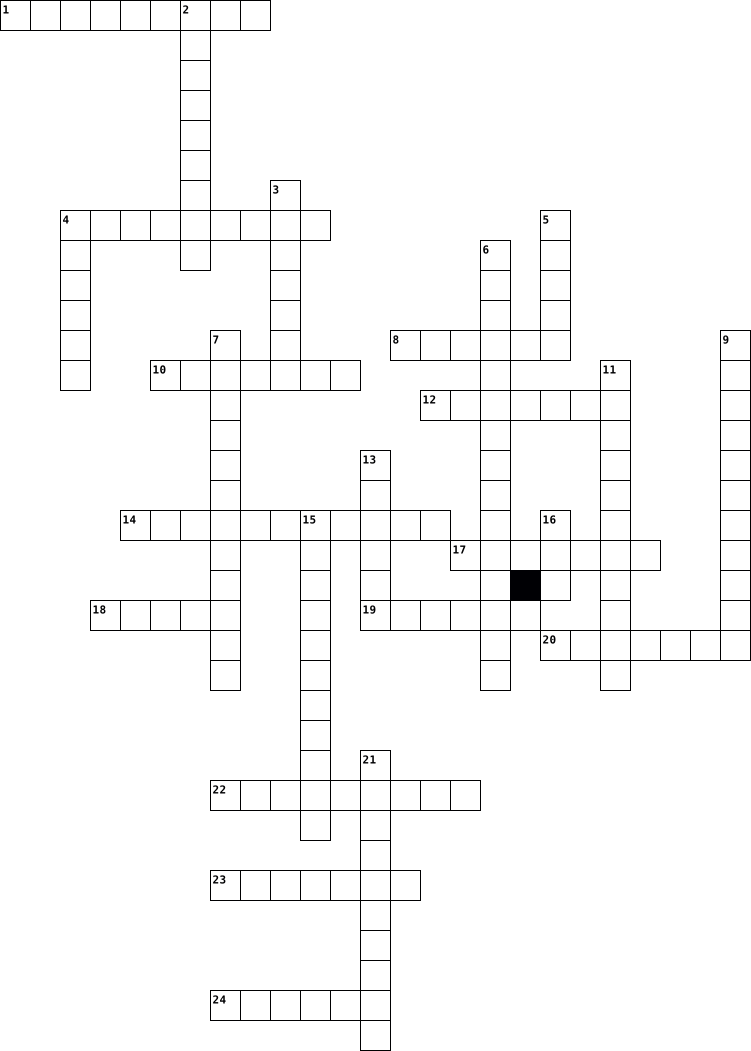
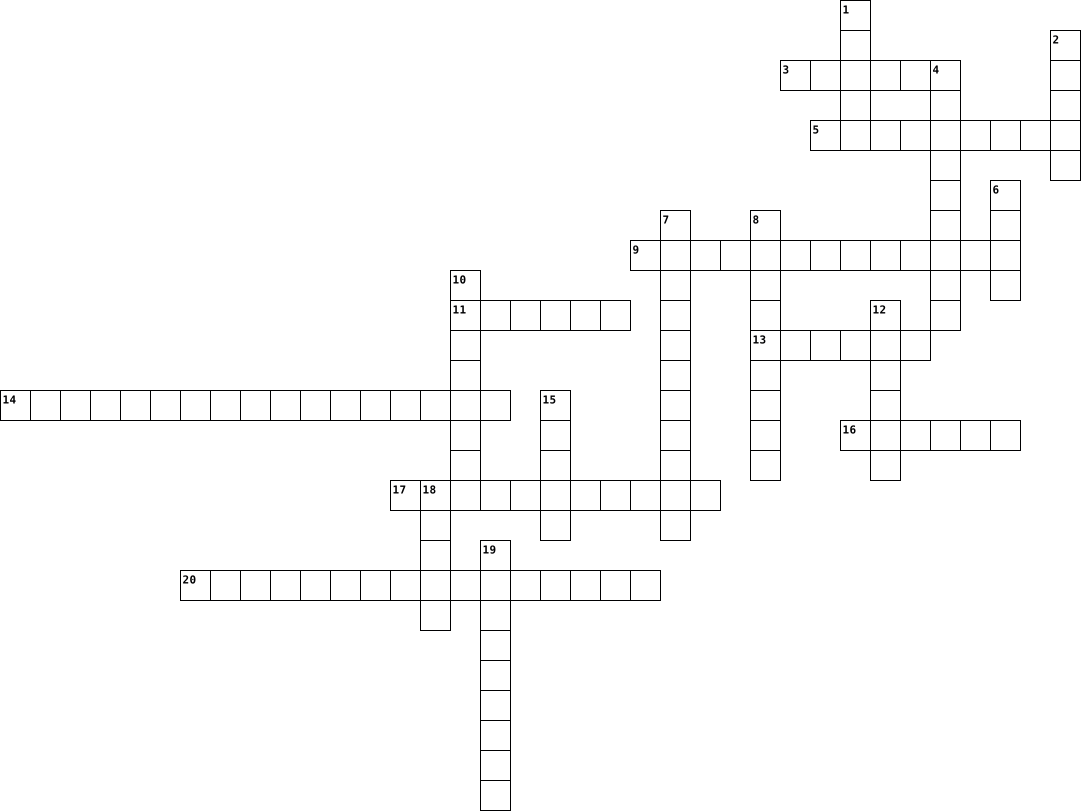
Across
- another name for homologous structures
- programmed cell death
- Site of the light-independent cycle
- produces 4 unique haploid gametes
- complementary base pair to Cytosine
- Where photosynthesis occurs
- contains CHON
- the result of uncontrolled cell division
- used as long term energy
- transport moves high to low concentration
- respiration that does not require O2
- made up of monomers
- Product of photosynthesis
Down
- organism containing a true nucleus
- produces 2 identical somatic cells
- transport moves low to high using ATP
- Site of the light dependent cycle
- monomer of carbs
- Site of cellular respiration
- another name for light-independent cycle
- Sugar in DNA
- replaces Thymine in RNA
- organisms without a nucleus
- used as energy storage
- another name for analogous structures
25 Clues: Sugar in DNA • contains CHON • monomer of carbs • made up of monomers • programmed cell death • used as energy storage • replaces Thymine in RNA • used as long term energy • Product of photosynthesis • Where photosynthesis occurs • organisms without a nucleus • Site of cellular respiration • Site of the light dependent cycle • produces 4 unique haploid gametes • ...
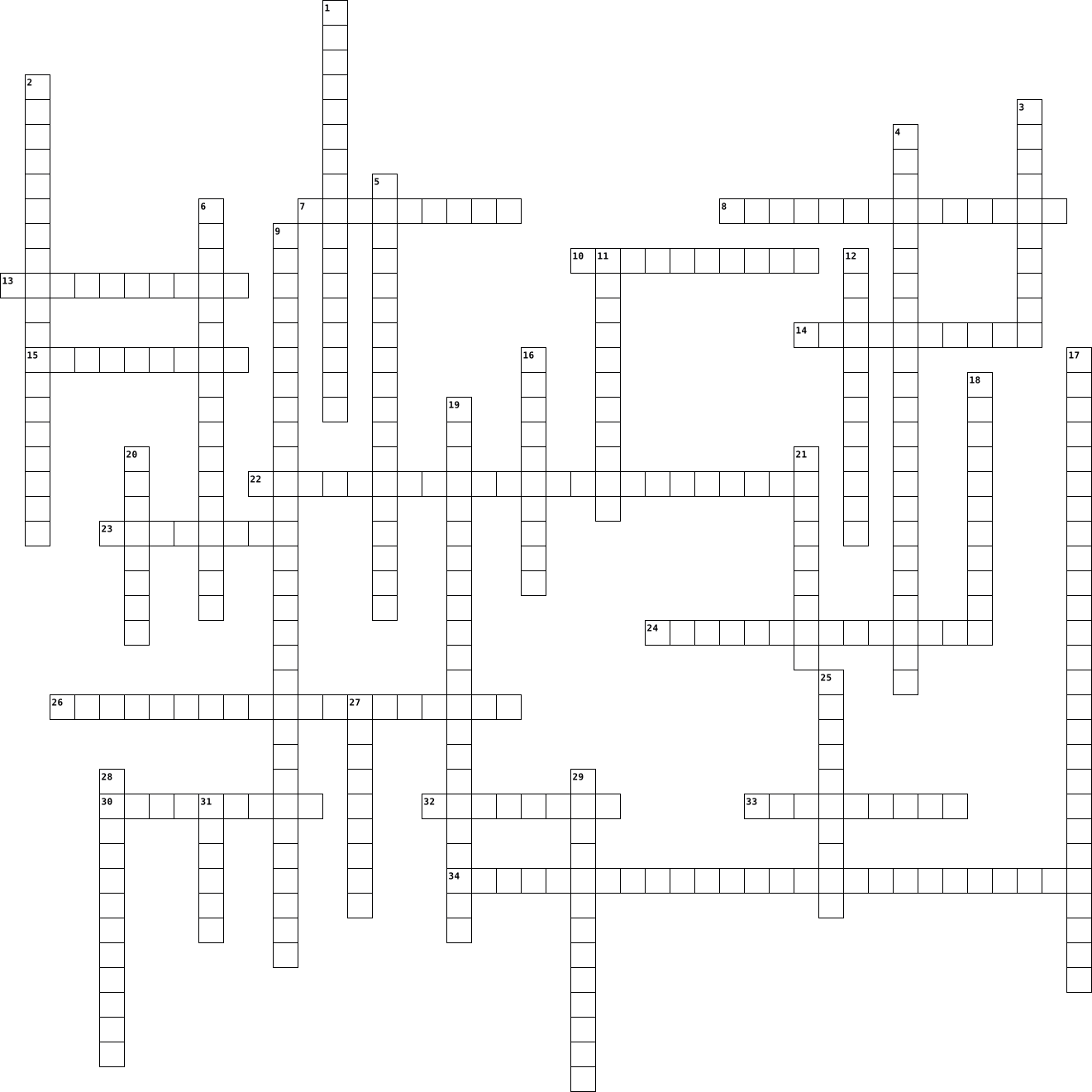
Biology 2022-09-25
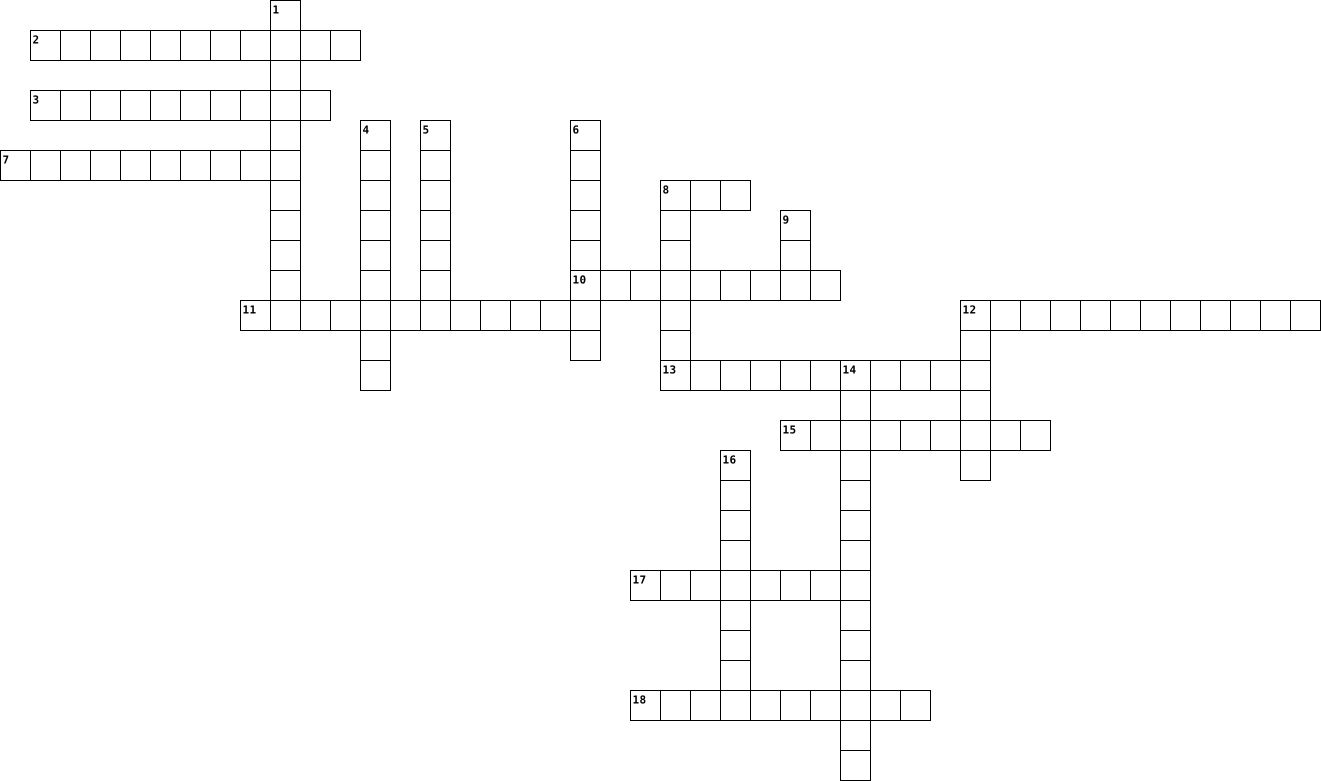
Across
- USED TO TRAP LIGHT ENERGY
- ALL THE GASES SURROUNDING EARTH
- USED IN PHOSPHATES
- MOLECULE WITH 2 PHOSPHATES
- ORGANISM THAT MAKES ITS OWN FOOD
- SECOND STEP OF ANAEROBIC RESPIRATION
- SITE OF STEPS 2 & 3 AEROBIC CELLULAR
- ORGANELLE – SITE OF PHOTOSYNTHESIS
- ALL LIVING THINGS ON EARTH
- USED IN PROTEINS & NUCLEIC ACIDS
- FIRST STEP OF AEROBIC RESPIRATION
Down
- ALL THE WATER ON EARTH
- ALL THE SOIL AND ROCKS ON EARTH
- CREATED DURING CHEMICAL REACTION
- CHANGED INTO PRODUCTS
- SITUATION IN WHICH OXYGEN IS PRESENT
- MOLECULE WITH 3 PHOSPHORUS GROUPS
- HAS MASS AND TAKES UP SPACE
- USING LIGHT ENERGY TO MAKE GLUCOSE
- A SITUATION where OXYGEN IS NOT PRESENT
20 Clues: USED IN PHOSPHATES • CHANGED INTO PRODUCTS • ALL THE WATER ON EARTH • USED TO TRAP LIGHT ENERGY • MOLECULE WITH 2 PHOSPHATES • ALL LIVING THINGS ON EARTH • HAS MASS AND TAKES UP SPACE • ALL THE GASES SURROUNDING EARTH • ALL THE SOIL AND ROCKS ON EARTH • CREATED DURING CHEMICAL REACTION • ORGANISM THAT MAKES ITS OWN FOOD • USED IN PROTEINS & NUCLEIC ACIDS • ...
Biology 2022-11-07
Across
- h1
- h15
- h5
- h6
- h8
- h10
- h13
- h19
- h11
- h12
Down
- h9
- h3
- h4
- h2
- h17
- h20
- h14
- h16
- h7
- h18
20 Clues: h9 • h1 • h3 • h4 • h2 • h5 • h6 • h8 • h7 • h15 • h17 • h20 • h14 • h16 • h10 • h18 • h13 • h19 • h11 • h12
biology 2022-09-07
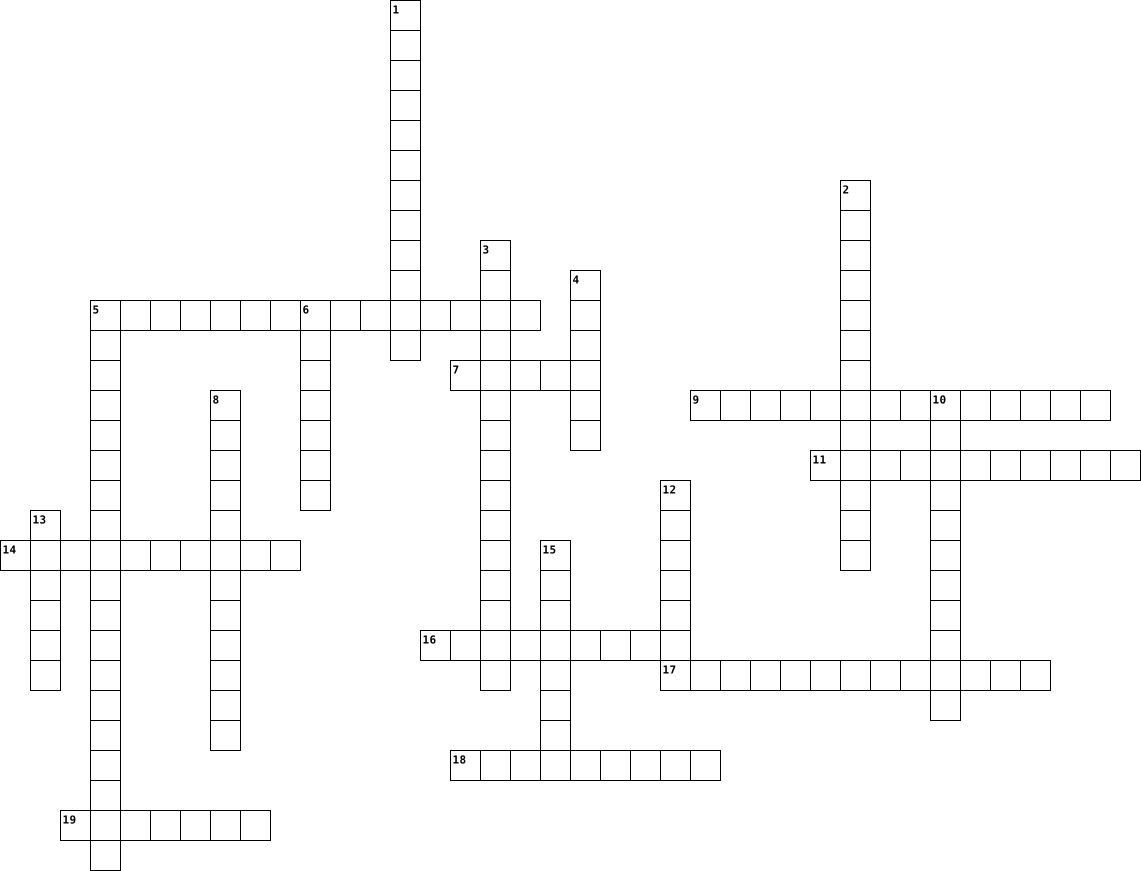
Across
- proses dimana n2 di keluarkan dari tanah disebut?
- molus domestica nama latin dari?
- pristiwa pengomposan kotoran hewan pada nitrogen cycle di sebut?
- bahasa latin dari black paper?
- bahasa latinnya manusia?
- genus dari ebola?
- nama latin dari kuda?
- suatu sistem ekologi yang terbentuk oleh hubungan timbal balik tak terpisahkan antara makhluk hidup dengan lingkungannya disebut?
- kepanjangan dari no3
Down
- bunga yang di lindungi di indonesia?
- family dari herpes?
- siklus biogeokimia yang menggambarkan transformasi dan translokasi dalam tanah, air, serta bahan organik hidup dan mati?
- ecosystem yang isinya cactus, unta, dan lain lain?
- kepanjangan dari DNA?
- hubungan alami dari rantai-rantai makanan dan representasi grafis dari proses makan-dan-dimakan dalam komunitas ekologis disebut?
- apa sebutan pristiwa dimana tanaman menyerap NO3?
- cycle dimana menggunakan asap dari kendaraan dan faktor industri?
- zat yang di keluarkan dari proses fotosintesis yang mengandung co2?
- fauna di indonesia sejenis kadal?
- singkatan dari ribonudeic acid?
20 Clues: genus dari ebola? • family dari herpes? • kepanjangan dari no3 • kepanjangan dari DNA? • nama latin dari kuda? • bahasa latinnya manusia? • bahasa latin dari black paper? • singkatan dari ribonudeic acid? • molus domestica nama latin dari? • fauna di indonesia sejenis kadal? • bunga yang di lindungi di indonesia? • proses dimana n2 di keluarkan dari tanah disebut? • ...
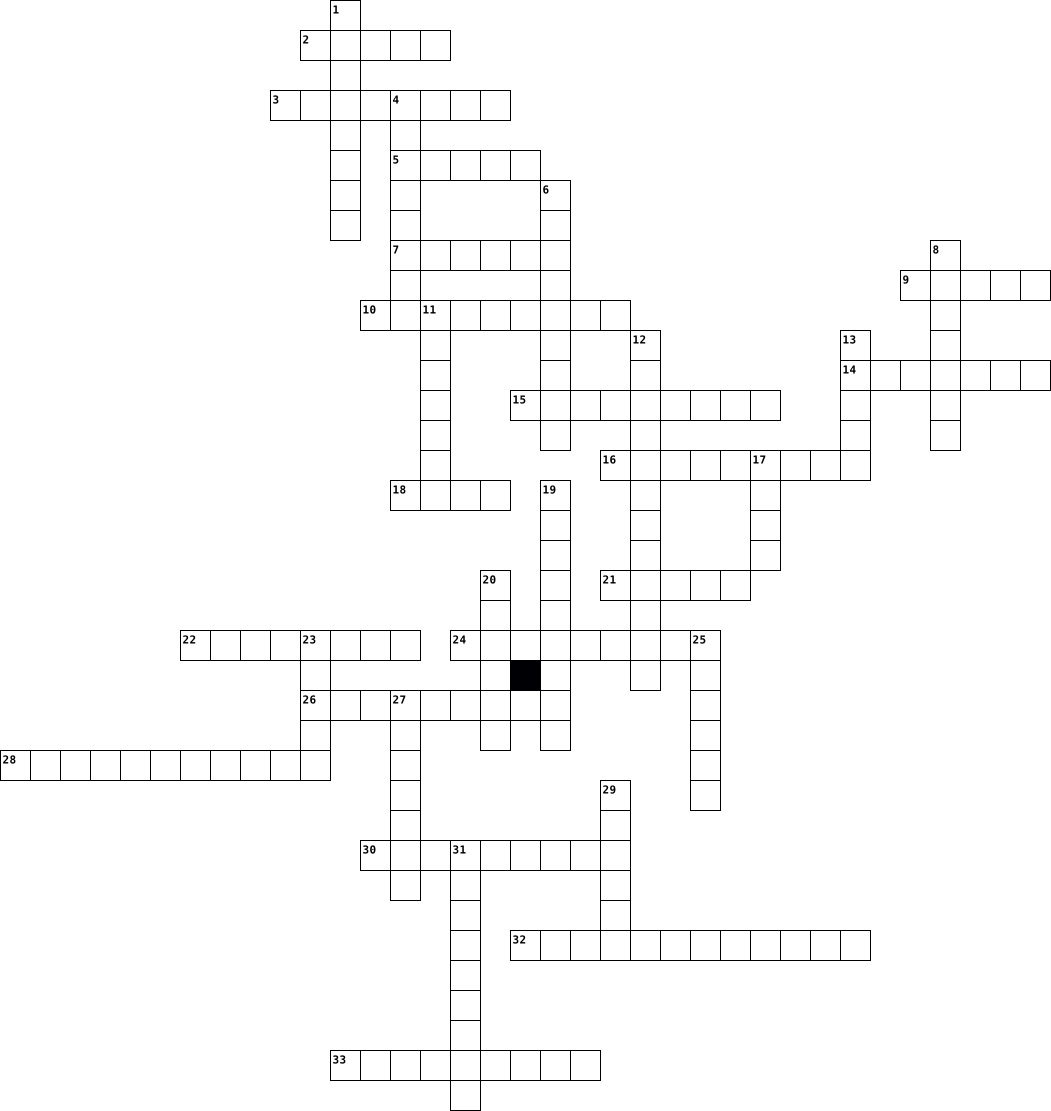
biology 2022-09-07
Across
- kepanjangan dari DNA?
- fauna di indonesia sejenis kadal?
- apa sebutan pristiwa dimana tanaman menyerap NO3?
- molus domestica nama latin dari?
- ecosystem yang isinya cactus, unta, dan lain lain?
- zat yang di keluarkan dari proses fotosintesis yang mengandung co2?
- kepanjangan dari no3
- bahasa latin dari black paper?
- jika hewan mati akan mengeluarkan senyawa co2 / carbon dioxide dan menyisahkan tubuh hewan yang akan berubah menjadi?
- nama latin dari kuda?
- siklus biogeokimia yang menggambarkan transformasi dan translokasi dalam tanah, air, serta bahan organik hidup dan mati?
Down
- cycle dimana menggunakan asap dari kendaraan dan faktor industri?
- proses dimana n2 di keluarkan dari tanah disebut?
- pristiwa pengomposan kotoran hewan pada nitrogen cycle di sebut?
- bahasa latinnya manusia?
- hubungan alami dari rantai-rantai makanan dan representasi grafis dari proses makan-dan-dimakan dalam komunitas ekologis disebut?
- bunga yang di lindungi di indonesia?
- suatu sistem ekologi yang terbentuk oleh hubungan timbal balik tak terpisahkan antara makhluk hidup dengan lingkungannya disebut?
- genus dari ebola?
- singkatan dari ribonudeic acid?
- family dari herpes?
21 Clues: genus dari ebola? • family dari herpes? • kepanjangan dari no3 • kepanjangan dari DNA? • nama latin dari kuda? • bahasa latinnya manusia? • bahasa latin dari black paper? • singkatan dari ribonudeic acid? • molus domestica nama latin dari? • fauna di indonesia sejenis kadal? • bunga yang di lindungi di indonesia? • proses dimana n2 di keluarkan dari tanah disebut? • ...
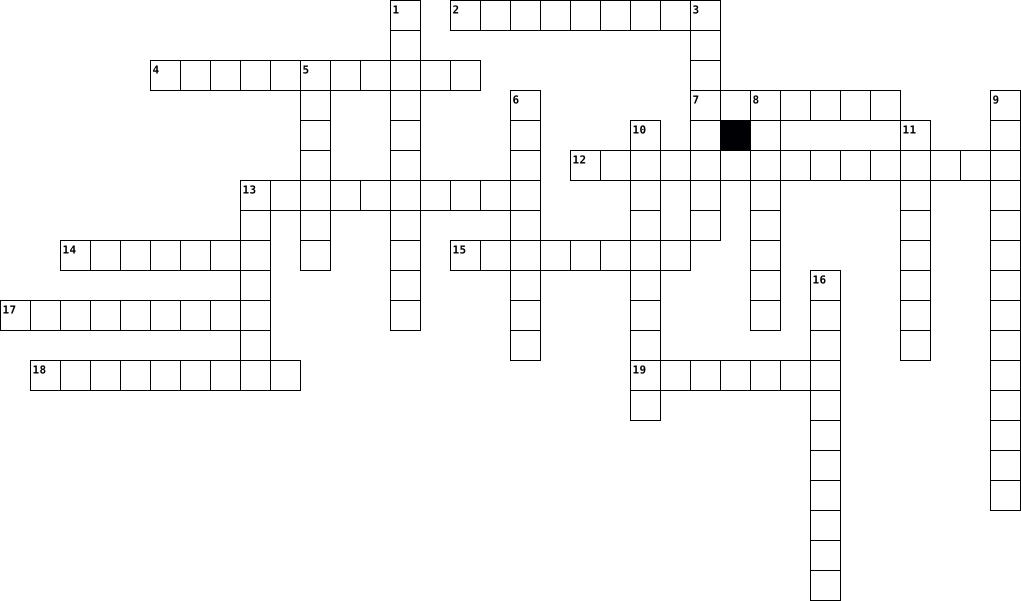
Biology 2022-10-03
Across
- sensor2
- epitel 2
- epitelium pipih berlapis
- jaringan5
- epitel 4
- jaringan1
- transisional
- epitelium kubus1
- epitel 5
- epitel 1
- epitel 3
- jaringan2
- epitelium batang selapis2
- otot5
- otot1
- epitelium pipih
- epitel 6
- jantung1
Down
- jaringan4
- jaringan3
- otot6
- jantung2
- epitelium batang berlapis semu1
- otot4
- epitelium kubus2
- epitelium batang berlapis semu2
- otot2
- sensor1
- membran1
- epitelium batang selapis1
- lemak1
- sensor3
- otot3
33 Clues: otot6 • otot4 • otot2 • otot5 • otot1 • otot3 • lemak1 • sensor2 • sensor1 • sensor3 • epitel 2 • jantung2 • epitel 4 • epitel 5 • epitel 1 • epitel 3 • membran1 • epitel 6 • jantung1 • jaringan4 • jaringan3 • jaringan5 • jaringan1 • jaringan2 • transisional • epitelium pipih • epitelium kubus2 • epitelium kubus1 • epitelium pipih berlapis • epitelium batang selapis2 • epitelium batang selapis1 • epitelium batang berlapis semu1 • ...
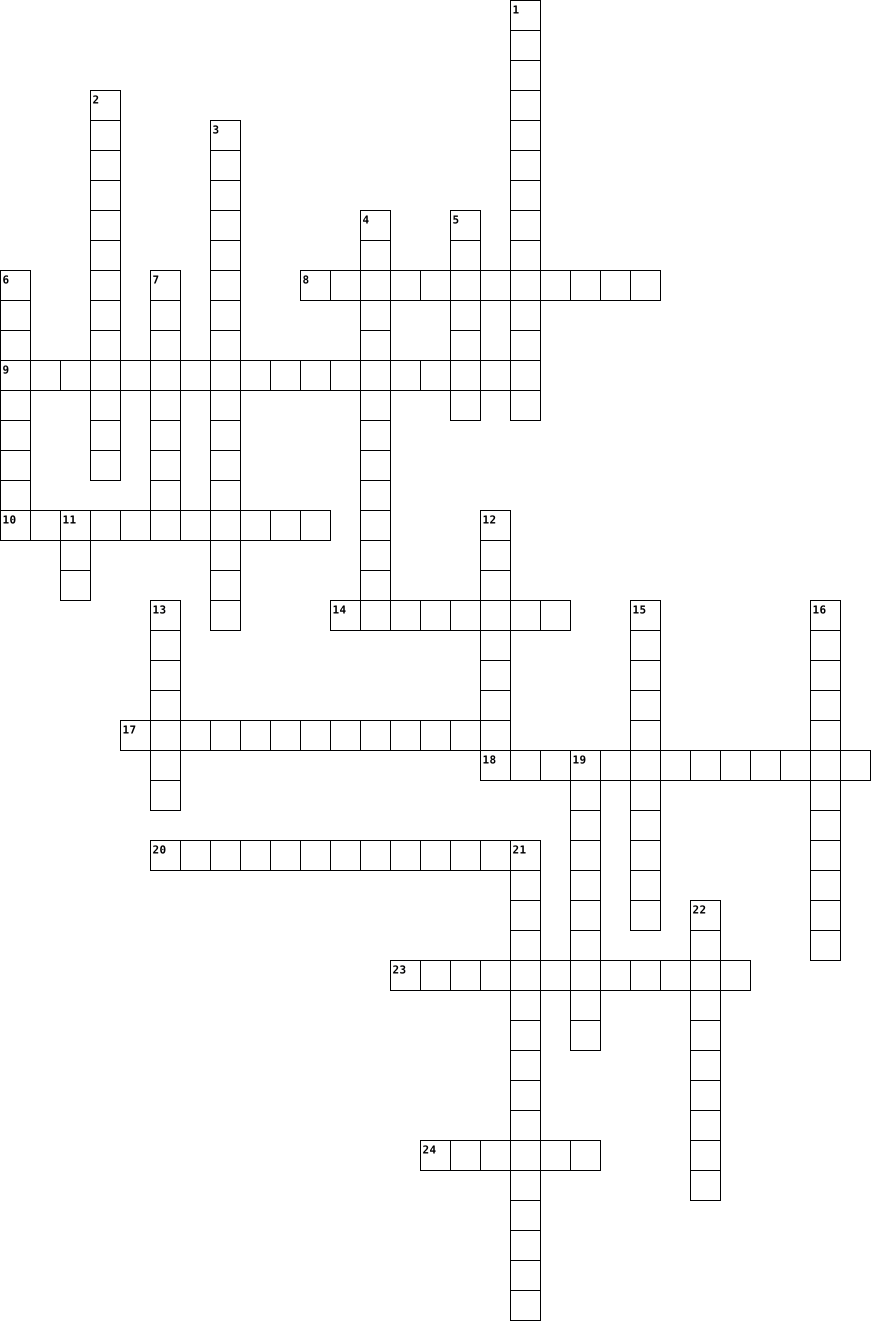
Biology 2022-11-02
Across
- Jenis leukosit yang plasmanya bersifat asam
- Salah satu bagian darah yang memiliki peranan bagi pembekuan darah
- Pembuluh darah yang mempunyai volume darah terbesar terdapat pada bagian
- Alat yang digunakan untuk mengukur tekanan darah
- Bagian yang bertanggung jawab atas kontraksi jantung
- Sel darap putih pada tubuh kita yang mempunyai peranan dalam keadaan alergi
- Protein dalam plasma darah yang digunakan untuk membentuk zat antibodi
- Darah yang kaya akan oksigen
- Bagian darah yang berperan dalam pengangkutan makanan
- Terjadinya pembekuan darah di daerah
Down
- Jantung manusia dilapisi oleh lapisan otot
- Kelainan karena darah tidak dapat membeku di sebut
- Zat makanan dan mineral yang terdapat dalam plasma darah
- sel darah putih
- darah disebut
- Bagian jantung yang menerima darah dari pulmo yaitu
- plasma darah yang tidak mengandung protein
- Leukimia disebabkan oleh saah satu sel darah yang berkembang pesat
- Zat yang membentuk benang-benang fibrin
- Komponen pada darah yang memiliki jumlah paling banyak
20 Clues: darah disebut • sel darah putih • Darah yang kaya akan oksigen • Terjadinya pembekuan darah di daerah • Zat yang membentuk benang-benang fibrin • Jantung manusia dilapisi oleh lapisan otot • plasma darah yang tidak mengandung protein • Jenis leukosit yang plasmanya bersifat asam • Alat yang digunakan untuk mengukur tekanan darah • ...
Biology 2022-11-12
Across
- is the change in the frequency of an allele in a population due to random chance
- the prevalence of dark-colored varieties of animals (especially moths) in industrial areas
- the process by which a cell makes proteins using the genetic information carried in mRNA
- gene expresses itself more strongly
- the reduced genetic diversity which results when a population is descended from a small number of colonizing ancestors
- is the oldest known bird, a bird-like dinosaur
- the process by which a cell makes an RNA copy of a piece of DNA
- informational flow from DNA to RNA
- one of two or more alternative forms of a gene
Down
- only females, results when one of the X chromosomes (23 chromosome) is missing or partially missing
- is used to predict the genotypes of a particular cross or breeding experiment
- is a method of dating rocks and minerals using Uranium isotopes
- 9:3:3:1 phenotypic ratio of a dihybrid cross
- cell division in sexually reproducing organisms
- coat colors is linked to the X chromosome, they are nearly always female
- a structure that has lost most or all of their ancestral function in a given species
- the first codon of mRNA transcript translated by a ribosome signaling the start
- region of crossing over between 2 chromosomes
- a cell that contains a single set of chromosomes
- a large RNA-protein complex that catalyses the removal of introns
- a person has an extra 21st chromosome
- a recessive disorder where the blood does not clot properly
- is the process through which populations of living organisms adapt and change
- similar structures that evolved from a common ancestor
24 Clues: informational flow from DNA to RNA • gene expresses itself more strongly • a person has an extra 21st chromosome • 9:3:3:1 phenotypic ratio of a dihybrid cross • region of crossing over between 2 chromosomes • is the oldest known bird, a bird-like dinosaur • one of two or more alternative forms of a gene • cell division in sexually reproducing organisms • ...
biology 2022-05-23
Across
- devices are used for generating
- It is a cross between two organisms with different variations
- refers to the modification of genetic material
- a living being and also the set of organs of a living being
- It is a nucleic acid made up of a chain of ribonucleotides
- They are passed from parent to child via one of the X or Y chromosomes.
- is a unit of information at a deoxyribonucleic acid locus
- It is each of the alternative forms that the same gene can have and that can manifest itself in specific modifications.
Down
- is the material that contains the hereditary information in humans and almost all other
- it is used to determine what specific variations exist in the individual
- single-celled prokaryotic organisms, found almost everywhere on Earth
- is the process by which the characteristics of parents are passed on to their offspring
- are the structures found in the center of cells that carry long pieces of DNA
- is when a change occurs in one or more genes
- It is the natural science that studies everything related to life and the organic
- considered as any state where there is a deterioration of the health of the human organism
- is any chemical compound that, when dissolved in water
- Action that consists of producing or creating something.
- organisms that can live or develop in the presence of diatomic oxygen
- is the membrane-bound organelle that contains the cell's chromosomes
20 Clues: devices are used for generating • is when a change occurs in one or more genes • refers to the modification of genetic material • is any chemical compound that, when dissolved in water • Action that consists of producing or creating something. • is a unit of information at a deoxyribonucleic acid locus • It is a nucleic acid made up of a chain of ribonucleotides • ...
biology 2022-06-08
Across
- tube brings the pollen to the ovule
- one single organism
- all the populations that live in an ecosystem
- the sum of the abiotic factors in an ecosystem
- bottom part of the stigma
- male reproductive cell storage
- the study of an environment
- the first of the food system.
- a non living factor
- meat eater
- the egg
- plant eater
- the person sitting next to an idiotic wizard
Down
- the stick of the stamen
- a system of biotic and abiotic things
- the male reproductive organ
- the middle part of the stigma
- a living factor
- the female part of a flower
- eats meat and plants
- male reproductive cells
- the big green leaves
- place were the eggs lay
- the colorful leaves
- beneath part of the flower
25 Clues: the egg • meat eater • plant eater • a living factor • one single organism • a non living factor • the colorful leaves • eats meat and plants • the big green leaves • the stick of the stamen • male reproductive cells • place were the eggs lay • bottom part of the stigma • beneath part of the flower • the male reproductive organ • the female part of a flower • the study of an environment • ...
Biology 2022-12-13
Across
- the study of living organisms
- study similar to biology
- Apparatus structure in the cytoplasm of animal cells
- substance in where the solute dissolves, originally water
- positive charge
- a dissolved substance
- a jelly substance
- cholesterol
- more than one part
- no charge
- negative charge
Down
- bag full of water
- a proposed explanation
- look at
- balance between body systems
- part/factor
- acid DNA
- process of export
- important body fuel
- the organelle that contains the DNA and controls the processes of the cell.
20 Clues: look at • acid DNA • no charge • part/factor • cholesterol • positive charge • negative charge • bag full of water • a jelly substance • process of export • more than one part • important body fuel • a dissolved substance • a proposed explanation • study similar to biology • balance between body systems • the study of living organisms • Apparatus structure in the cytoplasm of animal cells • ...
Biology 2022-12-09
Across
- populations living in a defined area
- chemical changes in cell or organism
- diffusion of water
- cells that contain nuclei
- organisms that live in same area
- atoms of same element. difference:#of neutrons
- system organs that perform specific functions
- moving from high to low concentration
- contains cell's genetic material: DNA
- contains sugar ribose
- stores genetic information
- material mixed together but not chemically comb
- any compound that forms H+ions in a solution
- attraction w/molecules of different substance
- factor that stands alone
- amount of solute to solvent in a solution
- contains the sugar deoxyribose
- 2 different parents
- molecules that combine to form proteins
- standard for comparison
- positively and negatively charged atoms
- smallest unit of most compounds
- electrons are moved from atom to atom
- mixtures of water and undissolved material
- monomers join together
- smallest function of life
- balancing all the body systems
- groups of tissues working together
- everything evenly distributed through solution
- changing 1 set of chemicals to anothe
- substance that is dissolved
- single parent
- pure substance with only one type of atom
- weak acids/bases that can react w/strong acids/
- attraction w/molecules of same substance
- individual living thing
- does not use energy
Down
- thin flexible barrier on all cells
- depends on other factors
- membrane inclosed organelle, has chromosomes
- when cells take in liquid
- two solutions are same strength
- pushing material out of cell
- forms when 2 electrons r shared w/atoms
- organized procedure for testing hypothesis
- two solutions, one is below strength
- groups of atoms
- factor that doesn't vary in experiment
- substance that dissolved the solute
- individual monomers that consist of 3 parts
- tissues, organs, and organ systems
- attraction w/positively charged nearb
- basic unit of matter
- uses energy
- concentration of solute is same throughout
- all cells perform different tasks
- diffusion through protein channels
- taking material into the cell
- means "cell eating"
- compound that produces hydroxide ions in solution
- educated guess or testable prediction
- group of similar cells that perform a function
- cells that do not contain nuclei
- two solutions, one is above strength
- negatively charged subatomic particle
- formed by chemical combo: 2 or more elements
- study of living organisms
- some cells have this strong supporting layer
- community + its nonliving surroundings
- contains nitrogen/carbon/hydrogen/oxygen
- double layered sheet in cell membranes
- the smaller units
- compounds made of carbon/hydrogen/oxygen atoms
- single sugar molecules
- big macromolecules formed from monosacc
- system indicating H+ions in a solution
- part of earth containing all ecosystem
- element that enters into a chemical reaction
78 Clues: uses energy • single parent • groups of atoms • the smaller units • diffusion of water • means "cell eating" • 2 different parents • does not use energy • basic unit of matter • contains sugar ribose • monomers join together • single sugar molecules • standard for comparison • individual living thing • depends on other factors • factor that stands alone • when cells take in liquid • ...
Biology 2022-12-09
Across
- organelle where proteins are made
- 3 letter section of tRNA that matches to a codon of mRNA
- single stranded nucleic acid used by cells has bases a, u, g, c
- monomer of proteins made of sugar, phosphate, and nitrogen base
- gene mutation when a base is added or deleted and it changes all amino acids after it
- refers to DNA and histone proteins that make up chromosomes
- enzyme used to unzip the DNA molecule during DNA replication
- gene mutation when a base is substituted changes only 1 amino acid
- making a copy of dna occurs during the s phase of interphase
- macromolecule made of amino acids used for enzymes transport and cell structure
- used to organize dna to fit in the nucleus, together with dna makes up chromatin
- segment of newly formed dna on the lagging strand connected together by ligase during dna replication
Down
- 3 letter sequence on mRNA that codes for an amino acid
- section of a gene that codes for a protein
- part of a nucleotide along with a 5 carbon sugar and phosphate group
- type of mutation that only effects 1 gene by adding, substituting or deleting bases
- monomer of a protein carried by tRNA molecules during transcription
- replicating strand of dna that adds nucleotides moving away from helicase
- type of rna used during translation carries the amino acid and matches up with the mRNA codon
- replicatin strand of dna that adds nucleotides moving towards helicase
- section of a gene between exons does not code for proteins
21 Clues: organelle where proteins are made • section of a gene that codes for a protein • 3 letter sequence on mRNA that codes for an amino acid • 3 letter section of tRNA that matches to a codon of mRNA • section of a gene between exons does not code for proteins • refers to DNA and histone proteins that make up chromosomes • ...
Biology 2022-12-19
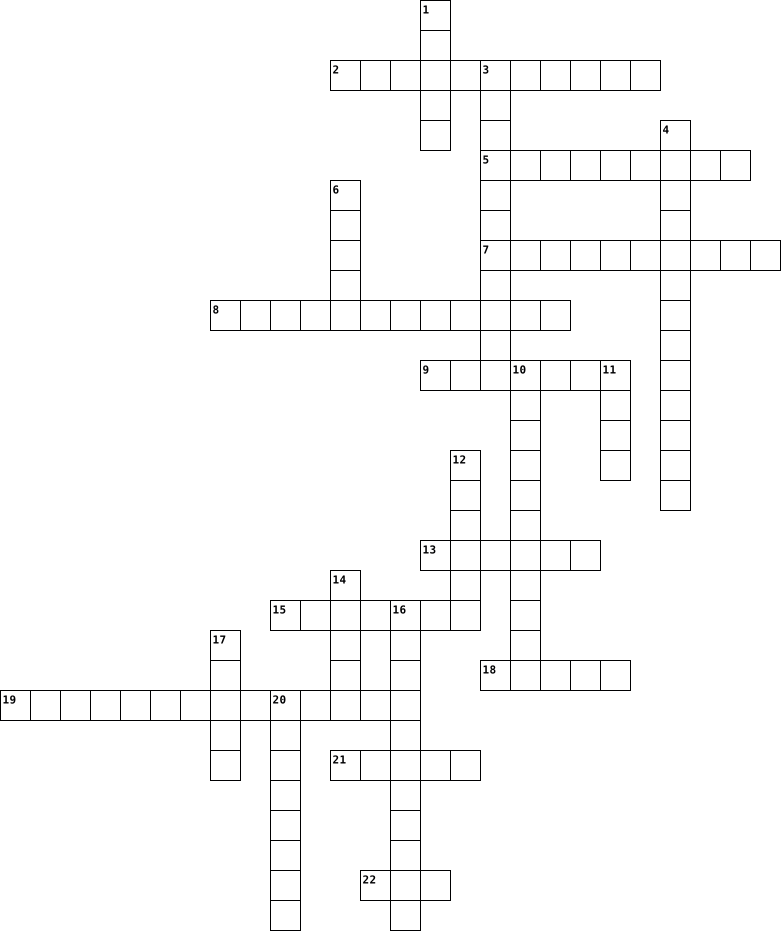
Across
- a group of seed-producing plants that have been around far longer than the angiosperms
- an important soil bacteria that helps to convert the atmospheric nitrogen into fixed nitrogen
- A fist sized organ that pumps blood
- helps to protect us against diseases
- how we move and live
- a cell that grows out of control,
- very small particles that can infect animals and plants and make them sick
- the most basic, structural and functional unit of life
- an important process that is observed in plants and certain microscopic organisms
- fluid connective tissue
- an essential molecule for life
Down
- found throughout the Earth including on land, in the water, in the air, and even in plants and animals
- organisms that consume dead or decaying organic matter
- fertilizer that contains living or latent microbes
- a part of the nervous system connected to the spinal cord
- Natures way of reusing carbon atoms
- covers our entire body and keeps the good stuff in and the bad stuff out
- a group of tissues in a living organism that has a specific form and function
- woody stem and is a perennial
- Things you use to see taste touch and so on
- we are supposed to have 206 of them
- it is the set of processes where traits from parents are passed on to their offspring either through sexual or asexual reproduction
22 Clues: how we move and live • fluid connective tissue • woody stem and is a perennial • an essential molecule for life • a cell that grows out of control, • A fist sized organ that pumps blood • Natures way of reusing carbon atoms • we are supposed to have 206 of them • helps to protect us against diseases • Things you use to see taste touch and so on • ...
Biology 2022-12-19
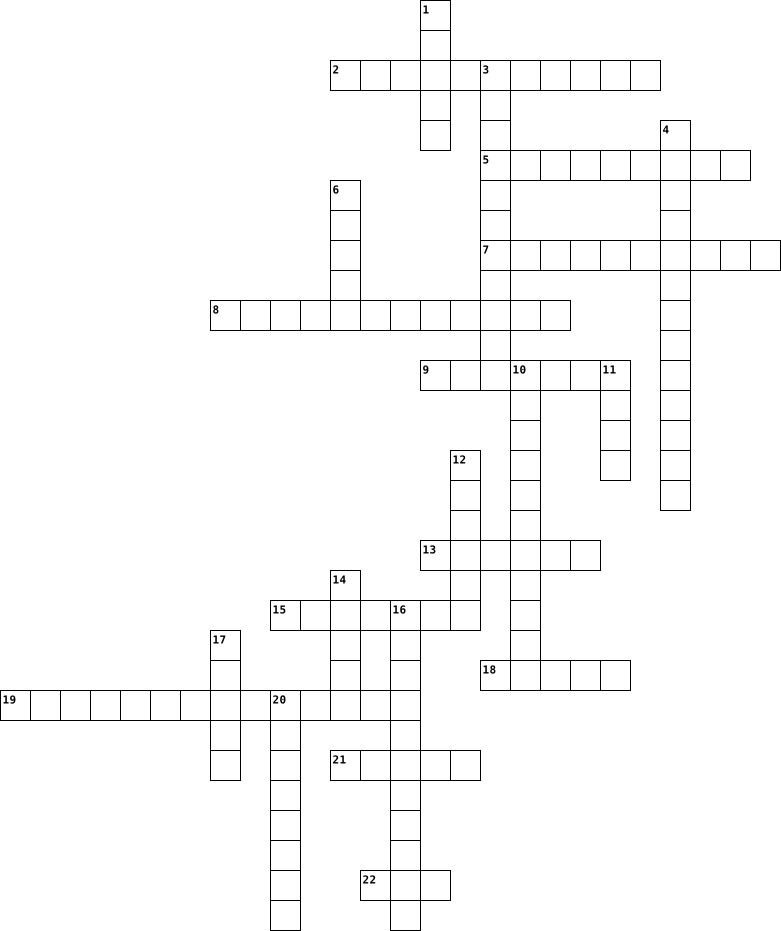
Across
- a group of seed-producing plants that have been around far longer than the angiosperms
- an important soil bacteria that helps to convert the atmospheric nitrogen into fixed nitrogen
- A fist sized organ that pumps blood
- helps to protect us against diseases
- how we move and live
- a cell that grows out of control,
- very small particles that can infect animals and plants and make them sick
- the most basic, structural and functional unit of life
- an important process that is observed in plants and certain microscopic organisms
- fluid connective tissue
- an essential molecule for life
Down
- found throughout the Earth including on land, in the water, in the air, and even in plants and animals
- organisms that consume dead or decaying organic matter
- fertilizer that contains living or latent microbes
- a part of the nervous system connected to the spinal cord
- Natures way of reusing carbon atoms
- covers our entire body and keeps the good stuff in and the bad stuff out
- a group of tissues in a living organism that has a specific form and function
- woody stem and is a perennial
- Things you use to see taste touch and so on
- we are supposed to have 206 of them
- it is the set of processes where traits from parents are passed on to their offspring either through sexual or asexual reproduction
22 Clues: how we move and live • fluid connective tissue • woody stem and is a perennial • an essential molecule for life • a cell that grows out of control, • A fist sized organ that pumps blood • Natures way of reusing carbon atoms • we are supposed to have 206 of them • helps to protect us against diseases • Things you use to see taste touch and so on • ...
biology 2022-10-17
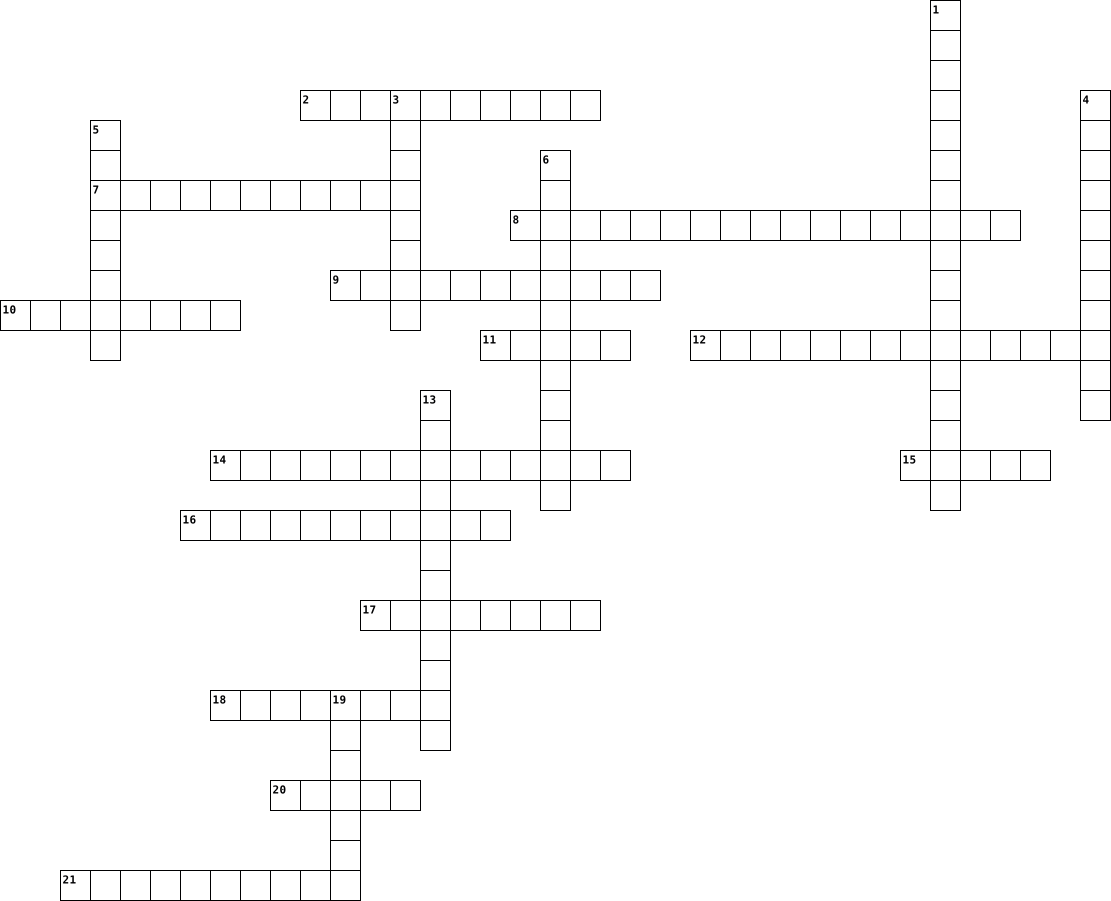
Across
- Alat kelamin jantan pada bunga
- Nama latin padi
- Nama lain jaringan meristem
- Kelompok tanaman tidak berpembuluh
- Pengganti epidermis yang rusak
- Jaringan yang mengangkut hasil fotosintesis
- Nama lain jaringan permanen
- Pendukung pertumbuhan tumbuhan
- Jaringan yang mengangkut mineral
- Penemu bahwa serbuk sari, dll memiliki inti sel
- Partikel penyusun atom bermuatan negatif
- Daun yang dilapisi lapisan lilin
- Alat kelamin betina pada bunga
- Lapisan terdalam korteks
Down
- Contoh dari jaringan pelindung
- Ahli botani dan farmasi pada 1990-1248 M
- Nama lain penguapan air
- Zat hijau daun
- Kelompok tanaman berpembuluh
- Tumbuhan berbiji tertutup
- Bagian terdalam dari epidermis
21 Clues: Zat hijau daun • Nama latin padi • Nama lain penguapan air • Lapisan terdalam korteks • Tumbuhan berbiji tertutup • Nama lain jaringan meristem • Nama lain jaringan permanen • Kelompok tanaman berpembuluh • Contoh dari jaringan pelindung • Alat kelamin jantan pada bunga • Pengganti epidermis yang rusak • Pendukung pertumbuhan tumbuhan • Bagian terdalam dari epidermis • ...
Biology 2023-01-17
Across
- a microscopic fungus consisting of single oval cells that reproduce by budding, and are capable of converting sugar into alcohol and carbon dioxide.
- a cell communication pathway mediated by extracellular nucleotides and nucleosides.
- a cellular process that harnesses the reduction of oxygen to generate high-energy phosphate bonds in the form of adenosine triphosphate.
- the breakdown of glucose by enzymes, releasing energy and pyruvic acid.
- an organelle found in large numbers in most cells, in which the biochemical processes of respiration and energy production occur.
- A chemical substance found in drinks such as beer, wine, and liquor.
- a series of chemical reactions to release stored energy through the oxidation of acetyl-CoA derived from carbohydrates, fats, and proteins.
- the smallest unit that makes up all living organisms and the tissues of the body.
- a chemical element with an atomic number of 8.
- the chemical breakdown of a substance by bacteria, yeasts, or other microorganisms.
- Its principal role is to act as a messenger carrying instructions from DNA for controlling the synthesis of proteins.
- is a nucleotide used in cells for DNA synthesis (or replication), as a substrate of DNA polymerase.
- is a biological catalyst and is almost always a protein.
- A product of fermentation.
- are organisms whose cells have a nucleus.
- a nucleoside phosphate comprised of a ribonucleoside and two phosphate groups.
- a coenzyme that functions as a universal electron carrier.
- a type of respiration where oxygen is not used or scarce.
- is found in all cells and separates the interior of the cell from the outside environment.
- is a polymer composed of two polynucleotide chains that coil around each other to form a double helix.
- is a type of membrane transport that does not require energy to move substances across cell membranes.
- the chemical breakdown of a compound due to reaction with water.
Down
- is the movement of molecules across a cell membrane from a region of lower concentration to a region of higher concentration against the concentration gradient.
- a series of protein complexes and other molecules that transfer electrons from electron donors to electron acceptors via redox reactions.
- is similar to paracrine signaling but there is a special structure called the synapse between the cell originating and the cell receiving the signal.
- Is a necessary function of everyday life and could not occur without ATP.
- a colorless, odorless, highly flammable gas, the chemical element of atomic number 1.
- A molecule made up of amino acids.
- is transparent to visible light but absorbs infrared radiation, acting as a greenhouse gas.
- Fermentation a biological process which converts sugars such as glucose, fructose, and sucrose into cellular energy, producing ethanol and carbon dioxide as by-products.
- Its main function is to deliver the acetyl group to the citric acid cycle to be oxidized for energy production.
- A chemical process in which oxygen is used to make energy from carbohydrates.
- A large group of single-cell microorganisms. Some cause infections and disease in animals and humans.
- Is a reaction that use atp through catabolism of ketone bodies.
- a metabolic process by which glucose or other six-carbon sugars are converted into cellular energy and the metabolite lactate.
- a central metabolic coenzyme/cosubstrate involved in cellular energy metabolism and energy production.
- a plastid that contains chlorophyll and in which photosynthesis takes place.
- a simple sugar which is an important energy source in living organisms and is a component of many carbohydrates.
- an important “energy molecule” found in all life forms.
- a redox-active coenzyme associated with various proteins, which is involved with several enzymatic reactions in metabolism.
40 Clues: A product of fermentation. • A molecule made up of amino acids. • are organisms whose cells have a nucleus. • a chemical element with an atomic number of 8. • an important “energy molecule” found in all life forms. • is a biological catalyst and is almost always a protein. • a type of respiration where oxygen is not used or scarce. • ...
Biology 2017-04-10
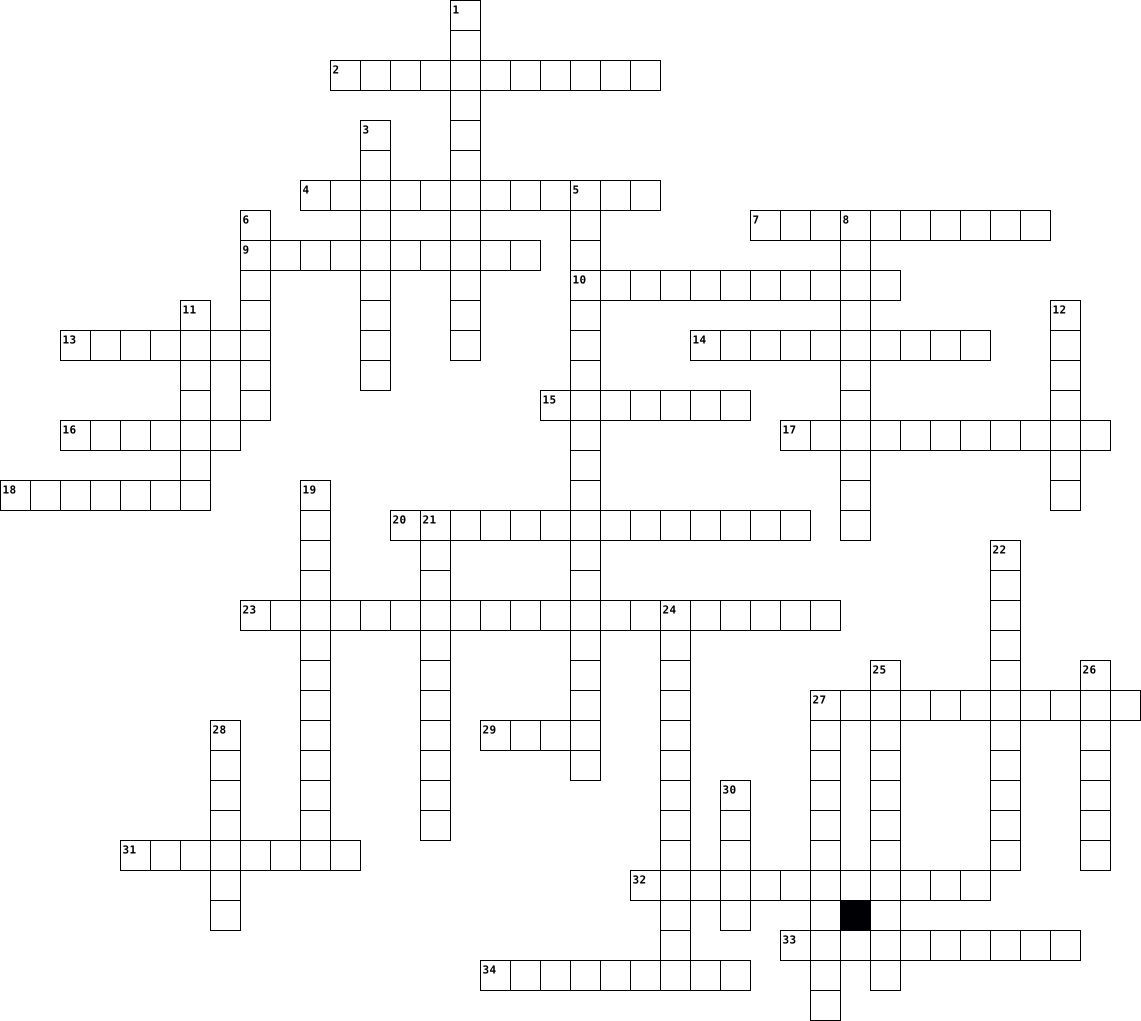
Across
- "water loving"
- one trait is dominant and the other is recessive
- a species in an area
- a trait that improves and organism's ability to survive and reproduce
- "water fearing"
- what is made from the enzyme and substrate binding together
- where the substrate binds with the enzyme
- an organism's ability to survive and reproduce
- binds with Adenine in RNA
- DNA forms this and is one of the differences between RNA and DNA
- binds with Adenine
- 23rd pair of chromosomes and determines gender
- the membrane allows only certain materials into and out of the cell
- maintaining stable internal conditions
- instructions for making proteins
- binds with Guanine
- a measurement
- both traits are either dominant or recessive
- the enzyme becomes deformed
Down
- makes up the cell membrane
- gets energy from the sun
- written by Charles Darwin
- egg and sperm
- single celled
- binds with Cytosine
- binds with Thymine in DNA and Uracil for RNA
- came up with the theory that species change over time
- to exit or move out
- a physical description
- multi celled
- to move in
- double
- needs to eat in order to get energy
- half
- making identical copies
35 Clues: half • double • to move in • multi celled • egg and sperm • single celled • a measurement • "water loving" • "water fearing" • binds with Adenine • binds with Guanine • binds with Cytosine • to exit or move out • a species in an area • a physical description • making identical copies • gets energy from the sun • written by Charles Darwin • binds with Adenine in RNA • makes up the cell membrane • ...
biology 2019-01-14
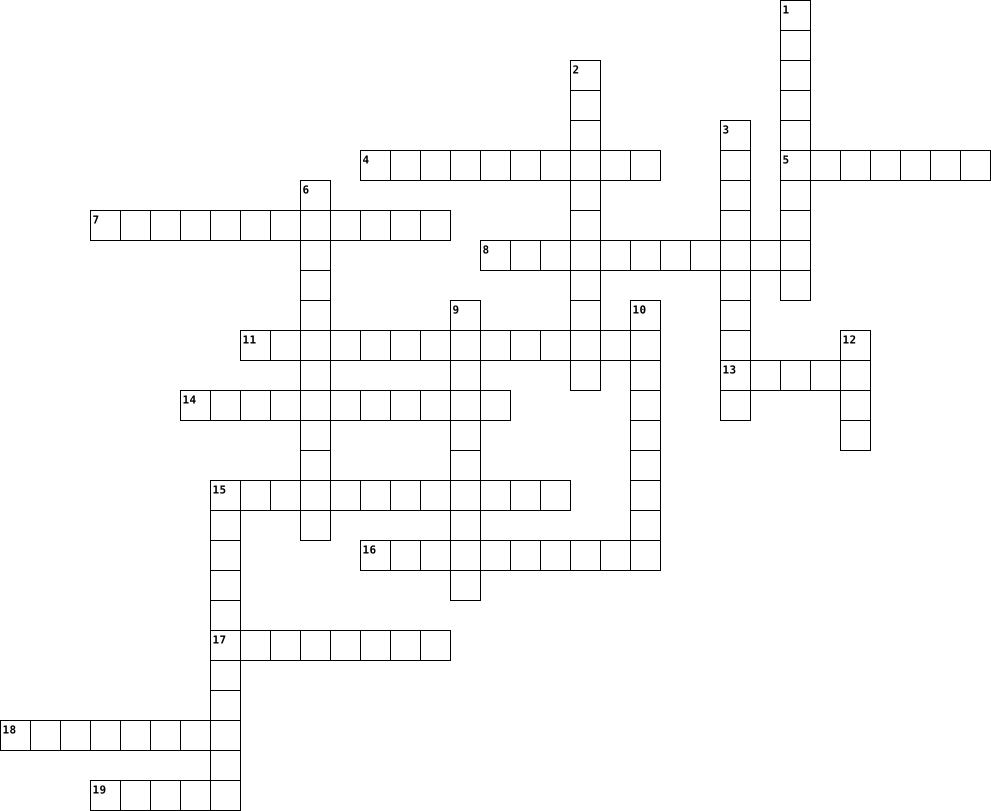
Across
- / minimum distance apart that two objects can appear seperate
- / facilitated diffusion is a _______ process
- / carbohydrates attached to proteins
- / process when cytoplasm divides
- / type of monomer
- size / magnification x actual size
- / type of cell with no nucleus
- / process that releases organelles from the cell
- / site of protein synthesis
- / stage in mitosis where spindle fibres form
- / amino, R and _______ group make up structure of an amino acid
- / bonds in tertiary structure of proteins
Down
- / first stage of mitosis
- / model of cell surface membrane
- / site which inhibitor molecule binds to
- / type of reaction that produces water
- / minimum amount of energy required to cause a reaction
- / test for reducing sugar
- / type of glucose in cellulose
- / when something is attracted to water
20 Clues: / type of monomer • / first stage of mitosis • / test for reducing sugar • / site of protein synthesis • / type of glucose in cellulose • / type of cell with no nucleus • / model of cell surface membrane • / process when cytoplasm divides • size / magnification x actual size • / carbohydrates attached to proteins • / type of reaction that produces water • ...
Biology 2019-05-07
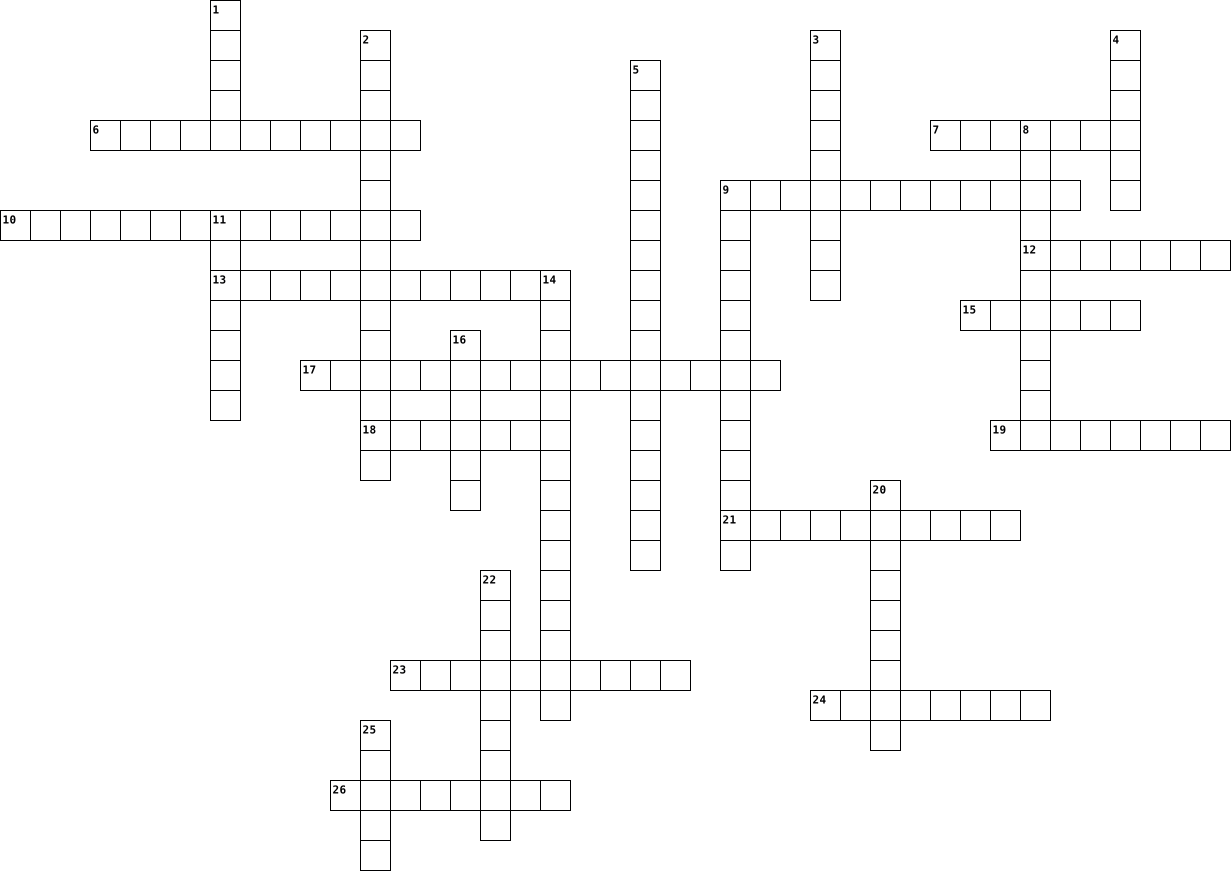
Across
- made of multiple organs
- sacs for storage, digestion, and control waste
- produces energy, a powerhouse of the cell
- method used to make food for plants from sunlight
- lives in fresh water, uses photosynthesis and uses flagellum
- surrounds the cell and controls exits and entries
- colony that uses cilia to move
- take in oxygen and breathe out carbon dioxide
- used to find a light on the surface
- living things made of cells
- cells that makes up an animal
- lives in fresh water and eats bacteria
- protects the cell and gives it strength
- pushes and pulls through water
Down
- made of multiple tissues
- digests nutrients and gets rid of unnecessary waste
- false foot
- lives in either water or soil, feeds on bacteria
- flows and pumps blood
- one cell
- two or more cells
- controls every system of cells and also stores DNA
- removes waste
- made of multiple cells
- cells that make up a plant
- different structures within a cell
- hair like structures used to move
27 Clues: one cell • false foot • removes waste • two or more cells • flows and pumps blood • made of multiple cells • made of multiple organs • made of multiple tissues • cells that make up a plant • living things made of cells • cells that makes up an animal • colony that uses cilia to move • pushes and pulls through water • hair like structures used to move • different structures within a cell • ...
Biology 2019-09-30
Across
- fat lack double bonds between the individual carbon atoms and tends to be solid and from animals
- the electronegativity of the atoms will be equal
- the part of the metabolism responsible for breaking complex molecules down into smaller molecules.
- a natural or artificial place where water is collected and stored for use
- formed from glycerol and three fatty acid groups
- Fat a form of unsaturated fat associated with a number of negative health effects
- complex the structure that results in the maximum energy point along the reaction path.
Down
- bond a chemical bond formed between two molecules when the carboxyl group of one molecule reacts with the amino group of the other molecule, releasing a molecule of water
- polysaccharides of glucose that serves as a form of energy storage in animals
- reaction an action that absorbs heat and cools the surroundings
- electron an outer shell electron that is associated with an atom, and that can participate in the formation of a chemical bond if the outer shell is not closed
- fat there is at least one double bond in the fatty acid chain and tends to be liquid from plants
- the electronegativity of the atoms will be different.
- lipid monomer
- monomers of nucleic acid
- a type of lipid that is made up of four interlocked rings of carbon called a steroid, only found in animal cells
- reaction an action that releases heat, causing the temperature of the immediate surroundings to rise
- the part which builds complex molecules from simpler ones
- heat the amount of heat one gram of a substance must absorb or lose to change its temperature by one degree Celsius.
- a fibrous substance consisting of polysaccharides, which is the major constituent in the exoskeleton
20 Clues: lipid monomer • monomers of nucleic acid • the electronegativity of the atoms will be equal • formed from glycerol and three fatty acid groups • the electronegativity of the atoms will be different. • the part which builds complex molecules from simpler ones • reaction an action that absorbs heat and cools the surroundings • ...
BIOLOGY 2019-09-22
Across
- part of microscope where specimen is positioned
- kingdom that includes unicellular organisms
- Where is the genophere located
- Which organelle contains motor proteins
- Type of cell that contains 80s ribosome
- Cell with cellulose cell walls
- What feeds autographically
- living organisms develop from non living matter
- Organelle that packages proteins
- Group of cell that performs a specific function
Down
- Point which magnified image is observed in a microscope
- organelle which exchanges genetic material
- Process where newly formed cells become specialised
- Who found the microscopic world of cells
- Part of the microscope that magnifies image of specimen
- Phospholipid bilayer that contains protein
- Specialised structures within cells
- Type of cell that reproduces through binary fission
- Which organelle does photosynthesis take place
- As a cell grows what increases
20 Clues: What feeds autographically • Where is the genophere located • Cell with cellulose cell walls • As a cell grows what increases • Organelle that packages proteins • Specialised structures within cells • Which organelle contains motor proteins • Type of cell that contains 80s ribosome • Who found the microscopic world of cells • organelle which exchanges genetic material • ...
Biology 2020-04-18
Across
- when the population increases
- an enzyme that synthesizes short rna
- an area on the planet with living beings
- made in ribosome, composed of a chain of amino acids
- 'the instucion manual' carries hereditary information
- makes up much of the inside of a cell
- a group of atoms together creating a compound
- copy of dna carries information to the ribosome the messenger
- the large membrane organelle 'the office'
- the basic units of life, this is as small as it gets.
- breaks down food and absorbs nutrients
- transports matierals to and from cells, blood.
Down
- responsible for making many some things
- a biological bunch of organisms interacting with each-other
- the natural habitat with a community of organisms and flora and fauna
- the different forms of a gene
- the likelihood that a particular event will occur
- one of the 'building blocks'
- when the beings are together creating more than one.
- when the cells get together they form this
- the being formed by the system that is fully funcional.
- made of rna where protein synthesis happens
- carries dna, in shape of an x
- in plant cell that makes it green
- the study of hereditary
- when the organs are together they make a functional ------ that helps the living being survive.
- detects informaton from the enviroment and controls body function
- the basic funcional unit in every living being.
28 Clues: the study of hereditary • one of the 'building blocks' • when the population increases • the different forms of a gene • carries dna, in shape of an x • in plant cell that makes it green • an enzyme that synthesizes short rna • makes up much of the inside of a cell • breaks down food and absorbs nutrients • responsible for making many some things • ...
biology 2021-09-17
Across
- Logical interpretation based on prior knowledge and experience.
- Plants that use the energy of sunlight to produce their own food.
- Organisms that break down chemicals to produce energy.
- Organisms that only eat plants.
- Organisms that are able to make their own food.
- Organisms that eat both plants and meat.
- Shines light through specimen using two lenses.
- A factor that changes in an experiment.
- Living creatures that are too small to see with the naked eye.
- Variable manipulated by the experimenter.
- Organisms that are internally warmed.
- The body of data from experiments and observations.
- Organisms that aren't internally warmed.
- The metric system which is the most widely used system of measurement.
Down
- Group in an experiment that is manipulated.
- An organism producing genetically identical offspring.
- Organisms that only eat meat.
- Observations involving numbers.
- when two parents produce genetically different offspring.
- Variable responding to the manipulated variable.
- Transmits a beam of electrons through a thinly sliced specimen.
- The idea that very simple life forms appeared through chemical reactions.
- Group in an experiment with no manipulation.
- A testable answer to a scientific question.
- Passes a beam of electrons over the surface of a specimen.
- The maintenance of stable internal condition.
- Observations that are not easily counted or measured.
- An abrupt change in DNA of an organism compared to its parents.
- Structures that allow living organisms to sense their condition.
- Chemical reactions in the body's cells that convert food into energy.
- Organisms that use energy and simple chemical building blocks to produce large chemicals.
- Organisms that depend on other organisms for food.
- Description of a natural relationship or principle often expressed in math terms.
- An explanation of something that has been throughly tested and thought out.
34 Clues: Organisms that only eat meat. • Observations involving numbers. • Organisms that only eat plants. • Organisms that are internally warmed. • A factor that changes in an experiment. • Organisms that eat both plants and meat. • Organisms that aren't internally warmed. • Variable manipulated by the experimenter. • Group in an experiment that is manipulated. • ...
biology 2021-09-17
Across
- Logical interpretation based on prior knowledge and experience.
- Plants that use the energy of sunlight to produce their own food.
- Organisms that break down chemicals to produce energy.
- Organisms that only eat plants.
- Organisms that are able to make their own food.
- Organisms that eat both plants and meat.
- Shines light through specimen using two lenses.
- A factor that changes in an experiment.
- Living creatures that are too small to see with the naked eye.
- Variable manipulated by the experimenter.
- Organisms that are internally warmed.
- The body of data from experiments and observations.
- Organisms that aren't internally warmed.
- The metric system which is the most widely used system of measurement.
Down
- Group in an experiment that is manipulated.
- An organism producing genetically identical offspring.
- Organisms that only eat meat.
- Observations involving numbers.
- when two parents produce genetically different offspring.
- Variable responding to the manipulated variable.
- Transmits a beam of electrons through a thinly sliced specimen.
- The idea that very simple life forms appeared through chemical reactions.
- Group in an experiment with no manipulation.
- A testable answer to a scientific question.
- Passes a beam of electrons over the surface of a specimen.
- The maintenance of stable internal condition.
- Observations that are not easily counted or measured.
- An abrupt change in DNA of an organism compared to its parents.
- Structures that allow living organisms to sense their condition.
- Chemical reactions in the body's cells that convert food into energy.
- Organisms that use energy and simple chemical building blocks to produce large chemicals.
- Organisms that depend on other organisms for food.
- Description of a natural relationship or principle often expressed in math terms.
- An explanation of something that has been throughly tested and thought out.
34 Clues: Organisms that only eat meat. • Observations involving numbers. • Organisms that only eat plants. • Organisms that are internally warmed. • A factor that changes in an experiment. • Organisms that eat both plants and meat. • Organisms that aren't internally warmed. • Variable manipulated by the experimenter. • Group in an experiment that is manipulated. • ...
Biology 2021-10-01
Across
- particles/a particle smaller than an atom-atom/the basic unit of a chemical element.
- biological community of interacting organisms and their physical environment.
- molecule containing a very large number of atoms, such as a protein, nucleic acid, or synthetic polymer.
- to or derived from living matter.
- group of people living in the same place or having a particular characteristic in common.
- regions of the surface, atmosphere, and hydrosphere of the earth (or analogous parts of other planets) occupied by living organisms.
- action or fact of forming a united whole.
- of the distinct types of material of which animals or plants are made, consisting of specialized cells and their products.
- to or derived from living matter.
- consisting of or deriving from living matter.
- individual animal, plant, or single-celled life form.
Down
- sweet crystalline substance obtained from various plants, especially sugar cane and sugar beet, consisting essentially of sucrose, and used as a sweetener in food and drink.
- action or process of adhering to a surface or object.
- a small room in which a prisoner is locked up or in which a monk or nun sleeps.
- assets in excess of liabilities; able to pay one's debts.
- spoonful of sugar"
- group of atoms bonded together, representing the smallest fundamental unit of a chemical compound that can take part in a chemical reaction.
- substance that has a molecular structure consisting chiefly or entirely of a large number of similar units bonded together, e.g., many synthetic organic materials used as plastics and resins.
- molecule that can be bonded to other identical molecules to form a polymer.
- chemical substance that neutralizes alkalis, dissolves some metals, and turns litmus red; typically, a corrosive or sour-tasting liquid of this kind.
- lowest part or edge of something, especially the part on which it rests or is supported.
- part of an organism that is typically self-contained and has a specific vital function, such as the heart or liver in humans.
22 Clues: spoonful of sugar" • to or derived from living matter. • to or derived from living matter. • action or fact of forming a united whole. • consisting of or deriving from living matter. • action or process of adhering to a surface or object. • individual animal, plant, or single-celled life form. • assets in excess of liabilities; able to pay one's debts. • ...
biology 2021-02-22
Across
- the pale part in sexual reproduction.
- base of radicle.
- the joining of male and female cells to produce a zygote.
- powdery substance that produce male gametes.
- one of the conditions needed for seed germination and needed for the embryo to respire.
- the transfer of pollen grains from the anthers of one flower to the stigma of another flower of the same species.
- a characteristic of fruits that can attract animals to disperse them.
- the transfer of pollen grains from the anther to the stigma.
- the transfer of pollen grains from an anther to the stigma in the same flower.
Down
- part of the plant that turned into a fruit
- a tube that connects the stigma to the ovary.
- true petals.
- .... pollinated flowers have smooth pollens, large anthers, and flowers that hangs down.
- the last stage in sexual reproduction in plants.
- water enters before germination.
- base of plumule.
- part pf a flower that mainly attract insects because of their colours.
- a smell.
- where fertilisation happens.
- contains a food store used by the embryo plant.
20 Clues: a smell. • true petals. • base of radicle. • base of plumule. • where fertilisation happens. • water enters before germination. • the pale part in sexual reproduction. • part of the plant that turned into a fruit • powdery substance that produce male gametes. • a tube that connects the stigma to the ovary. • contains a food store used by the embryo plant. • ...
Biology 2021-03-22

Across
- enzyme found in red blood cells
- tissue and location where gas exchange occurs between the outer environment and blood
- muscular tube connecting nose and mouth to larynx / esophagus
- how 2% of carbon dioxide is carried in blood, creates this when hemoglobin is attached to carbon dioxide
- 02 diffuses from this tissue of high concentration to low concentration in capillary
- in blood, balances fluid from becoming too low in pH or too high
- hair like structures that help catch and get rid of foreign debris
- exchange of air between lungs and the environment
- exchange of gases between blood and cells
- oxygen-binding molecules in red blood cells
Down
- uses the O2 and glucose to create ATP in cells
- exchange of gases between lungs and blood
- tube that connects the pharynx to the lungs
- when gases move from an area of high concentration to low
- CO2 diffuses from here of high concentration to low concentration in alveoli
- covers the trachea during swallowing to prevent choking
- oxygenated hemoglobin
- what is created when water and carbon dioxide create in CO2 transport
- 2 parts to breathing
- connections to pharynx and link for air between inside and outside
20 Clues: 2 parts to breathing • oxygenated hemoglobin • enzyme found in red blood cells • exchange of gases between lungs and blood • exchange of gases between blood and cells • tube that connects the pharynx to the lungs • oxygen-binding molecules in red blood cells • uses the O2 and glucose to create ATP in cells • exchange of air between lungs and the environment • ...
biology 2021-10-07

Across
- A large vacuole that rests at the center of most plant cells and is filled with a solution that contains a high concentration of solutes.
- A rigid structure on the outside of certain cells, usually plant and bacteria cells.
- The region of a cell that contains the cell's main DNA. Centre of a cell.
- shorter term for spermatozoon; male gamete
- DNA coiled around and supported by proteins, found in the nucleus of the cell.
- The removal of soluble waste materials.
- Powerhouse of the cell
- Hairlike projections that extend from the plasma membrane and are used for locomotion.
- Small part of all living things.
- The tendency of a solvent to travel across a semipermeable membrane into areas of higher solute concentration.
- The breakdown of food molecules with a release of energy.
- Conversion of light energy from the sun into chemical energy.products of photosynthesis are glucose and oxygen
Down
- A thin covering of tissue.
- An organelle containing chlorophyll for photosynthesis.
- A membrane that allows some molecules to pass through but does not allow other molecules to pass through.
- A pigment necessary for photosynthesis.
- main source of energy
- The breakdown of absorbed substances.
- Made of thousands of cells, connected by several body systems to do work to keep our bodies healthy & alive.
- A membrane-bounded "sac" within a cell.
- Sets of organs in our bodies that do the work to keep us healthy and alive.
21 Clues: main source of energy • Powerhouse of the cell • A thin covering of tissue. • Small part of all living things. • The breakdown of absorbed substances. • A pigment necessary for photosynthesis. • The removal of soluble waste materials. • A membrane-bounded "sac" within a cell. • shorter term for spermatozoon; male gamete • ...
Biology 2021-10-07

Across
- any eukaryotic organism
- a specialized structure that performs specific jobs
- responsible for nutrient storage, detoxification, and exportation
- a molecule consisting of a nitrogen containing base
- no nucleus
- helps detoxify alcohol and break down fats
- has a nucleus
Down
- a type of protein
- helps organize the assembly of microtubules during cell division
- responsible for manufacturing, warehousing, and shipping certain cellular products
- makes protein
- enables the cell to move around
- provides support and protection
- liquid portion of the cell
- allows the cell to stick to surfaces
- cleans the cell
- creates energy for the cell
- makes photosynthesis
- holds the genetic information
- contains the cell's DNA
20 Clues: no nucleus • makes protein • has a nucleus • cleans the cell • a type of protein • makes photosynthesis • any eukaryotic organism • contains the cell's DNA • liquid portion of the cell • creates energy for the cell • holds the genetic information • enables the cell to move around • provides support and protection • allows the cell to stick to surfaces • ...
BIOLOGY 2021-10-30

Across
- njesia me e vogel qe nderton proteinen
- nje pjese e jashtme qe mbulon si citoplazme qelizat e gjethes
- qelizor- mur i jashtem i qelizes
- hapesira ne pjesen e bremdshme te qelizes bimore
- sinonimi i yndyrnave
- lende kimike qe nevojiten ne sasi te vogla
- procesi i formimit te ushqimit tek bimet
- qeliza mesazhere
- perdoren per riparuar vetveten
Down
- jane lipide
- depozitimi i yndyrnave ne gjak shkakton..
- semundja e shkaktuar nga mungesa e proteinave
- lejon hyrjen e ajrit ne qelizat e gjethes
- organela te vogla ne gjethe
- sinonimi i sheqernave
- depozitimi i yndynave ne gjak
- obezitet
- nje organizem brenda gjethes
- karbohidrat lipid celuloze
- qelizat e trurit
20 Clues: obezitet • jane lipide • qelizat e trurit • qeliza mesazhere • sinonimi i yndyrnave • sinonimi i sheqernave • karbohidrat lipid celuloze • organela te vogla ne gjethe • nje organizem brenda gjethes • depozitimi i yndynave ne gjak • perdoren per riparuar vetveten • qelizor- mur i jashtem i qelizes • njesia me e vogel qe nderton proteinen • procesi i formimit te ushqimit tek bimet • ...
Biology 2021-05-13

Across
- what is respiration called without oxygen?
- when the making of a more complex molecule is sped up
- biological catalysts
- what kind of transport does osmosis use?
- eats both plants and meat
- which intestine has finger like projection called villi
- what do fertilisers enhance in the soil?
- ATP = ADP + ?
- what does blood enter the heart through?
- what does the pancreas release when there is high levels of glucose?
- a group of a single species
- - in mitosis, where do the chromosomes line up?
- what are hormones released by?
- how do bacteria reproduce
- what is the only source of new alleles?
- the set of genes an organism possesses
Down
- destroy pathogens by releasing antibodies
- what makes the blood clot?
- hollow dead tubes
- full name for 'G' base
- cells - ? - organs - systems
- first stage of photosynthesis
- which neuron is connected to a muscle?
- the stomata is a pore which allows ____
- what type of hairs absorb water via osmosis
- area for conscious thought
- non-living factors that can affect the distribution of plants and animals in an ecosystem
- liquid with the same concentration as the cell
- which ventricle has thicker walls?
- where does fertilisation occur?
- what is a random process?
- the gene that masks another gene
32 Clues: ATP = ADP + ? • hollow dead tubes • biological catalysts • full name for 'G' base • eats both plants and meat • what is a random process? • how do bacteria reproduce • what makes the blood clot? • area for conscious thought • a group of a single species • cells - ? - organs - systems • first stage of photosynthesis • what are hormones released by? • where does fertilisation occur? • ...
Biology 2021-05-14

Across
- living aspects of the environment
- dead leaves, animal feces
- a relationship in which one organism benefits and the other is harmed
- a succession that occurs in a formerly inhabited area
- the final step in decomposition
- when a species changes over time
- occurs between different species
- when competing species evolve different adaptations
- cocsume detritus
- occurs between same species
- plays an especially important role
- when a species inhabits an area devoid of plant life
- the positions in the food chain
- when one organism hunts and consumes another
- consume dead matter
- consumes both producers and consumers
Down
- consume meat
- the first species to colonize a disturbed area
- multiple food chains put together
- nonliving aspects of the environment
- the final stable stage of succession
- when two different species cannot occupy the same niche in the same place for a long time
- consume dead animals
- use energy from chemical compounds to make food by chemosynthesis
- the study of how living things interact with each other and their environment
- the role of a species in its environment
- use energy from sunlight to make food by photosynthesis
- a relationship in which both parties benefit
- a relationship in which one organism benefits and the other is not affected
- the physical environment in which a species lives
- consume plants
31 Clues: consume meat • consume plants • cocsume detritus • consume dead matter • consume dead animals • dead leaves, animal feces • occurs between same species • the final step in decomposition • the positions in the food chain • when a species changes over time • occurs between different species • multiple food chains put together • living aspects of the environment • ...
Biology 2021-11-12

Across
- it is a solution to test for starch
- it is the movement of small food molecules and ions through the wall of the intestine into the blood
- it is a protein that functions as a biological catalyst
- A sustainable ...... is one that is produced as rapidly as it is removed from the environment
- A ...... is the probability of that organism surviving and reproducing in the environment where it is found
- A ........... is made up of all the plants and animals living in an ecosystem
- What is the process of getting energy from ammonia?
- the movement of the sucrose and amino acids in the phloem, from regions of production to the regions of storage or to regions where they are used in respiration or growth
- The process by which energy is produced from food
- structure made up of a group of tissues, working together to perfrom a specific function
- it is the movement of digested food molecules into the cells of the body where they are used, becoming part of the cells.
- a group of organisms that can reproduce to produce fertile offspring
- A ..... is any substance taken into the body that modifies or affects chemical reactions in the body
- the removal of the nitrogen-containing part of amino acids to form urea
- fats are a solid form of a group of molecules is called.....
- Another version of genes are called ........
- it is the process by which plants manufacture carbohydrates from raw materials using the energy from light.
- Type of variation that is brought about by genes, but can also be caused by the environment is .........
- Dominance that is sometimes taken to mean the same as co-dominance is ........... dominance
- the ability to detect or sense stimuli in the internal or external environment and to make appropriate responses
Down
- Heroine, morphine and codeine belong to a group of drugs are called....
- it is a fluid filled space surrounded by a membrane which is found inside the cyptoplasm of plant cells to help to keep plants cells firm
- it is the net movement of molecules and ions from region of their higher concentration to a region of their lower concentration down a concentration gradient as a result of their random movement
- When a crop of single species is grown on the same land, year after year, it is called .........
- the loss of water vapour from the plant leaves by evaporation of water at the surfaces of the mesophyll cells followed by the diffusion of water vapour through the stomata
- EGC stands for
- it is a substances that increases the rate of a chemical reaction and is not changed by the reaction
- Coordination by chemicals is brought about by the.......
- the fusion of gamete nuclei
- the removal from organisms of toxic materials and substances in excess of requirements.
- The Goblet Cells secrete....
- The effect of greenhouse gas is that they trap .......... radiation and increase global temperature
- respiration the term for the chemical reactions in the cells that break down nutrient molecules to release energy without using oxygen
- it is proteins produced by white blood cells called lymphocytes
- .......... and wallflower are examples of insect-pollinated flowers
- Bacterial DNA that is in the form of circular strand and also small circular pieces called ..........
- The sounds you heart make can be heard by a......
- The ...... in our atmosphere contains about twenty one% of oxygen
- the defence against the pathogen by antibody production in the body
- it is the net movement of waterr molecules from a region of higher water potential to a region of lower water potential through a partially permeable membrane
- Nerve impulses from the sense organs to the central nervous system are called,,,,
41 Clues: EGC stands for • the fusion of gamete nuclei • The Goblet Cells secrete.... • it is a solution to test for starch • Another version of genes are called ........ • The process by which energy is produced from food • The sounds you heart make can be heard by a...... • What is the process of getting energy from ammonia? • ...
Biology 2023-01-22

Across
- Anaerobic process in which energy can be released from glucose even if oxygen is not available
- Provides energy needed for many essential processes in organisms and cells.
- Light-independent reactions or "dark reactions"
- Helps regulate kinase activity
- In this, starch or sugar is converted into lactic acid by yeast strains and bacteria
- Breaks down complex molecules and releases energy which is available for the body to use (shedding weight and burning calories)
- Is the source of energy for use and storage
- Is used for DNA synthesis by removing am oxygen atom from the sugar to yield deoxyribonucleotide.
- reaction, energy is absorbed from the surroundings. The bonds being formed are weaker than the bonds being broken.
- Pyruvate, end product of glycolysis is broken down into this and carbon dioxide
- Reaction yielding ATP through the catabolism of ketone bodies.
- Process of incorporating an inorganic carbon molecule into organic material
- Are important in activating proteins so that the proteins can perform particular functions in cells.
- The production of chemical compounds by reaction from simpler materials
- is the process of catabolizing glucose into acetyl-CoA, producing high-energy electron carriers that will be oxidized during oxidative phosphorylation, yielding ATP.
- Transmit the information from one neuron to the next.
- Is a simple sugar and carbohydrate nucleoside Triphosphate, Is a nucleotide containing a nitrogenous base bound to a 5-carbon sugar Adenine, Chemical compound that is used to make one of the building blocks of DNA and RNA
- synthesis of polymers from monomers
- 5 carbon sugar molecule
- Is the main source of energy for cells and an important part of aerobic respiration
- A positively charged particle equal and opposite to that of the electron.
Down
- Carries signal that relaxes those system
- Form of extracellular paracrine signaling that is mediated by purine nucleotide, including ATP.
- Is a molecule that participates in many biochemical reactions in protein, carbohydrate and lipid mechanism.
- Starch and the sugar present in grains and fruits ferment into vinegar and condiments.
- The act of bringing or coming together : pairing specifically.
- Carries signal that put body’s system on alert
- energy is released to the surroundings. The bonds being formed are stronger than the bonds being broken.
- Contraction of muscles , also used to make RNA
- Creates molecules the body needs for functionality and it uses energy in the process( building muscle mass)
- Process of breaking down fatty acids into substrates utilized in mitochondrial ATP production.
- When Oxygen is scarce or unavailable during cellular respiration, cells can undergo this respiration
- pumping of substances across membranes
- Are the basis for the remarkable ability of the brain to sense, interpret and ultimately act upon the environment.
- A phosphate group from ATP is then attached to each 3-phosphoglycerate by an enzyme forming 1,3 phosphoglycerate
- Are a type of fat (lipid) found in the blood. store unused calories and provide your body with energy.
- A large amount of energy is spent on maintaining ion concentrations for proper neuronal signaling and synaptic transmission.
- Is the stored form of glucose that's made up of many connected glucose molecules.
38 Clues: 5 carbon sugar molecule • Helps regulate kinase activity • synthesis of polymers from monomers • pumping of substances across membranes • Carries signal that relaxes those system • Is the source of energy for use and storage • Carries signal that put body’s system on alert • Contraction of muscles , also used to make RNA • Light-independent reactions or "dark reactions" • ...
biology 2023-02-01

Across
- Animals with mouths that develop from or near the blastopore
- the inner germ layer that develops into the lining of the digestive and respiratory systems
- Echinoderms and chordates are
- Process by which two species evolve in response to changes in each other
- Diagram that shows the evolutionary relationships among a group of organisms
- Ability of an organism to survive and reproduce in its environment
- hollow ball of cells
- the diminishing of a conditioned response; occurs in classical conditioning when an unconditioned stimulus (US) does not follow a conditioned stimulus (CS); occurs in operant conditioning when a response is no longer reinforced.
- Change in allele frequencies in a population over generations.
- Change over time
- fertilized egg
- A hypothesis that has been tested with a significant amount of data
Down
- study of embryos and their development
- A scientist who studies fossils
- the middle layer of an embryo in early development, between the endoderm and ectoderm.
- skin and nervous system
- Formation of new species
- these cells migrate becoming reorganized into a hollow ball that folds inwards at one location to form a layered structure
- A trait that helps an organism survive and reproduce
- large-scale evolutionary changes that take place over long periods of time
20 Clues: fertilized egg • Change over time • hollow ball of cells • skin and nervous system • Formation of new species • Echinoderms and chordates are • A scientist who studies fossils • study of embryos and their development • A trait that helps an organism survive and reproduce • Animals with mouths that develop from or near the blastopore • ...
BIOLOGY 2023-01-24

Across
- are derived from oxidation nonesterified or free fatty acids by the liver and used as an energy source by many tissues during periods of glucose deficiency
- is the respiration that requires oxygen to produce ATP
- is a reaction that yields ATP through the catabolism of ketone bodies
- starch and sugar present in grains and fruits ferment into vinegar condiments
- is an enzyme that is responsible for the great production of ATP's
- is an anaerobic process in which energy can be released from glucose even if oxygen is not available
- it is the ability to do work
- starch or sugar is converted into lactic yby yeast strains and bacteria
- a process occuring in mitochondria and accounts for majority of the ATP production
- is produced by fermenting various substrate into vinegar condiments
- sugar splitting that occurs in the cytosol of the cell. It does not require oxygen to breakdown glucose into pyruvate
- it helps regulate kinase activity
Down
- a large amount of energy is spent on maintaining ion contractios for proper neural signaling and synaptic transmission
- is a necessary function of everyday life and could not occur without ATP
- is the respiration that does not require oxygen to produce ATP . The process usses respiratory electron transport chain
- the whole reaction is catalyzed by the enzyme, pyruvic and decarboxylase and alcohol dehydrogenase
- is a form of cell signaling , a type of cellular communication in which a cell produces a signal to include changes in nearby cell
- is the breakdown of glucose to form energy
- is characterized by the use of hydrogen as an electron donor and carbon dioxide as an electron acceptor to produce acetyl CoA as the final product
- is the source of energy for use and storage at the cellular functioning.
- is energy demanding process at synapses by which a chemical signal is released from one neuron and diffuses to other neuron
- is the end product of glycolysis is broken down into alcohol and carbon dioxide
22 Clues: it is the ability to do work • it helps regulate kinase activity • is the breakdown of glucose to form energy • is the respiration that requires oxygen to produce ATP • is an enzyme that is responsible for the great production of ATP's • is produced by fermenting various substrate into vinegar condiments • ...
BIOLOGY 2023-03-01

Across
- a body tissue consisting of long cells that can contract and produce motion
- cables that carry electrical impulses between brain and body
- layer of cells that work together to perform a specific function.
- single-celled eukaryotes
- the hereditary material in humans and almost all other organisms
- organisms whose cells contain a nucleus and other membrane-bound organelles
- related to stomach
- microorganisms such as yeasts, moulds and mushrooms
- a protein which binds to a specific molecule
- an enzyme helps to digest lactose
- region of the body of a vertebrate between the thorax and the pelvis
- study of cancer
- plant structure that develops into a seed when fertilized
- citric acid cycle
- the basic structural and functional unit of the kidney
- poison produced by metabolic activities of living cells
- related to the heart.
- organisms that break down dead or decaying organisms
- any change in the dna sequence of a cell
- similar in position, structure, and evolutionary origin
- coding, decoding, regulation and expression of genes.
- the preserved remains of plants and animals
- a complex organ that controls thought, memory, vision, breathing, temperature, hunger and every process that regulates body.
- offspring followed by embryo stage
- watery fluid in the mouth
- the basic physical and functional unit of heredity
- macromolecular machines, found within all cells, that perform protein synthesis
- a part of the body that performs a specific function
- fats, waxes, sterols, fat-soluble vitamins, monoglycerides, diglycerides, phospholipids
- microspores in a seed
Down
- an organism that eats plants and animals
- small single-celled organisms, found almost everywhere on earth
- the body's largest organ
- the hollow, pear-shaped organ in a woman's pelvis
- part of the digestive system
- group of two or more atoms held together
- about 21 percent of the atmosphere
- the movement of molecules from a region of higher concentration to a region of lower concentration
- the building blocks of the fat in our bodies and in the food we eat
- conifers, cycads, ginkgo, and gnetophytes
- plant capable of synthesizing its own food from simple organic substances
- a temporary storage reservoir for urine
- a reddish fluid in vertebrates that is pumped by the heart
- molecules that combine to form proteins
- cells or tissues that are swollen from water uptake
- a protien carries oxygen
- an initial stage of development of a multicellular organism
- surrounds the plasma membrane of plant cells
- any opening in the body
- organ that removes toxins
- equal division of the cell's content into two daughter cells
- extrachromosomal dna molecule within a cell
- one organism kills and eats another organism
- all the different kinds of life you'll find in one area
- small-to-medium-sized perennial woody plant
- single-celled animal that catches food and moves about by protoplasm
- study of the relationships between living organisms, including humans, and their physical environment
57 Clues: study of cancer • citric acid cycle • related to stomach • related to the heart. • microspores in a seed • any opening in the body • the body's largest organ • single-celled eukaryotes • a protien carries oxygen • organ that removes toxins • watery fluid in the mouth • part of the digestive system • an enzyme helps to digest lactose • about 21 percent of the atmosphere • ...
Biology 2023-03-01

Across
- polygenictraits
- codominance
- purebred
- sicklecellanema
- heterozygous
- autosome
- karyotype
- pigment
- dominant
- recessive
- genetics
- inheritance
- testcross
- ratio
- hemophilia
- zygote
- normaldisorder
Down
- homozygous
- incompletedominance
- gametes
- phenotype
- Abnormaldisorder
- gene
- Huntingtonsdisease
- sexchromosome
- homozygousrecessive
- sexlinkedtraits
- colorblindness
- trait
- cysticfibrosis
- multiplealleles
- fertilization
- allele
- genotype
- trait
- hybrid
- malaria
37 Clues: gene • trait • trait • ratio • allele • hybrid • zygote • gametes • pigment • malaria • purebred • autosome • dominant • genotype • genetics • phenotype • karyotype • recessive • testcross • homozygous • hemophilia • codominance • inheritance • heterozygous • sexchromosome • fertilization • colorblindness • cysticfibrosis • normaldisorder • polygenictraits • sexlinkedtraits • sicklecellanema • multiplealleles • Abnormaldisorder • Huntingtonsdisease • ...
Biology 2023-02-22

Across
- the diversification of a group of organisms
- a type of natural selection in which genetic diversity decreases as the population stabilizes on a particular trait value
- variation in the relative frequency of different genotypes in a small population, owing to the chance disappearance
- the introduction of genetic material from one population of a species to another
- an animal establishes a home in a habitat because it has resources it can utilize or because the habitat is ideal for them.
- when individuals of the intermediate phenotype are less fit than those of both higher and lower phenotype
- The complete set of DNA in an organism
- the process whereby organisms better adapted to their environment tend to survive and produce more offspring
Down
- the inability of a species to breed successfully with related species due to geographical, behavioral, physiological, or genetic barriers or differences.
- occurs when two populations are separated by geographic barriers such as rivers, mountains, or bodies of water.
- an area that contains a chain or group of islands scattered in lakes, rivers, or the ocean.
- occurs when phenotypes at both extremes of the phenotypic distribution are selected against.
- the stock of different genes in an interbreeding population.
- The condition where a gene pool is not changing in frequency across generations
- the complete disappearance of a species from Earth
- how common an allele is in a population
- a type of reproductive isolation mechanism among sexual organisms
- an animal leaves its home because the habitat is no longer ideal for them and they need to find a more suitable environment
- one of two or more alternative forms of a gene that arise from mutation
- still in existence
20 Clues: still in existence • The complete set of DNA in an organism • how common an allele is in a population • the diversification of a group of organisms • the complete disappearance of a species from Earth • the stock of different genes in an interbreeding population. • a type of reproductive isolation mechanism among sexual organisms • ...
Biology 2023-02-28

Across
- insertion of a new cell wall
- chromosomes attach to spindles
- duplicated chromosome
- replicating DNA
- cell is growing
- helps split the cells
- pull chromosomes apart
- half of a chromosomes
- chromatids move to opposite ends
- growing and preparing for division
- spliting of cells
Down
- separation
- where the spindles attach to chromosomes
- second phase duplicates genetic material
- 2 parents reproduction
- cell spends least amount of time
- nucleus disappears in this phase
- ceviche furrow pinches and splits in two
- chromosomes move away from each other
- contains G1, S, and G2
20 Clues: separation • replicating DNA • cell is growing • spliting of cells • duplicated chromosome • helps split the cells • half of a chromosomes • 2 parents reproduction • pull chromosomes apart • contains G1, S, and G2 • insertion of a new cell wall • chromosomes attach to spindles • cell spends least amount of time • nucleus disappears in this phase • chromatids move to opposite ends • ...
Biology 2023-03-19

Across
- an animal anatomically and physiologically adapted to eating plant material
- physical rather than biological
- any product of the condensation of atmospheric water vapor that falls from clouds due to gravitational pull
- the process by which water vapor in the air is changed into liquid water
- microscopic, single-celled photosynthetic organisms that live suspended in water.
- relating to or resulting from living things
- a biological community of interacting organisms and their physical environment.
- an organism that eats other plants or animals for energy and nutrients.
- an organism that creates its own food or energy.
Down
- a class of organisms that obtain their energy through the oxidation of inorganic molecules, such as iron and magnesium.
- Living things that have to hunt, gather and eat their food
- the total quantity or weight of organisms in a given area or volume.
- process in living organisms involving the production of energy, typically with the intake of oxygen and the release of carbon dioxide from the oxidation of complex organic substances.
- an organism that produces complex organic compounds
- an animal that feeds on flesh
- an organism, especially a soil bacterium, fungus, or invertebrate, that decomposes organic material.
- the exhalation of water vapor through the stomata.
- the process of turning from liquid into vapor
- animal or person that eats food of both plant and animal origin.
- the capacity for doing work
20 Clues: the capacity for doing work • an animal that feeds on flesh • physical rather than biological • relating to or resulting from living things • the process of turning from liquid into vapor • an organism that creates its own food or energy. • the exhalation of water vapor through the stomata. • an organism that produces complex organic compounds • ...
Biology 2023-04-19

Across
- changes in the DNA sequence that can occur spontaneously or as a result of exposure to environmental factors, and can sometimes lead to genetic disorders or evolution
- the stage of the cell cycle when a cell is not actively dividing, but is carrying out normal functions and preparing for division
- a term used to describe a genetic trait that is only expressed in an organism's phenotype when two copies of the gene are present
- one of the four nitrogenous bases found in DNA and RNA, which pairs with cytosine
- the stage of mitosis where the chromosomes line up in the middle of the cell, ready to be separated into two new cells
- describing an inheritance pattern involving one/two genes, respectively, and their alleles, which determines the traits of offspring based on the combination of alleles inherited from their parents
- the process in which genetic information from DNA is copied into RNA
- the two phases of interphase in which a cell grows and carries out normal metabolic functions, and prepares for DNA replication and cell division
- the stage of mitosis during which the sister chromatids separate and are pulled to opposite ends of the cell by the spindle fibers
- the building blocks of DNA and RNA, consisting of adenine, guanine, cytosine, and thymine/uracil
- one of the four nitrogenous bases found in DNA and RNA, which pairs with thymine in DNA and with uracil in RNA
- nitrogenous base in DNA that pairs with adenine
- describing the pairing of nitrogenous bases in DNA or RNA, where adenine pairs with thymine/uracil, and guanine pairs with cytosine
- the final stage of the cell cycle where the cell's cytoplasm divides in two, resulting in two new daughter cells
Down
- a molecule that is one of the building blocks of nucleic acids like DNA and RNA, and is also a component of the cell membrane and ATP
- one of the four nitrogenous bases found in DNA and RNA, which pairs with guanine
- the first stage of mitosis, during which chromatin condeses into visible chromosomes, the nuclear envelope breaks down, and the spindle apparatus begins to form
- describing an organism that has two different alleles for a particular trait
- describing an organism that has two copies of the same allele for a particular trait
- characteristic that is expressed in an organism's phenotype if only one copy of the gene responsible is present
- the final stage of mitosis in which the chromosomes reach opposite ends of the cell, the spindle apparatus breaks down,a dn two new nuclei form
- the process in which the genetic information in RNA is used to build a protein
- a molecule that is one of the building blocks of nucleic acids like DNA and RNA, and is also a source of energy for the body
- genetic material that carries instructions for the development and function of all living organisms
- the process by which cells build proteins, including transcription, and translation
- the building block of DNA and RNA, consisting of a sugar molecule, a phosphate group, and a nitrogenous base
- the three-dimensional structure of DNA, consisting of two complementary strands of nucleotides wound around each other in a spiral shape
- the process of cell division that results in two genetically identical daughter cells, each with the same number of chromosomes as the parent cell
28 Clues: nitrogenous base in DNA that pairs with adenine • the process in which genetic information from DNA is copied into RNA • describing an organism that has two different alleles for a particular trait • the process in which the genetic information in RNA is used to build a protein • one of the four nitrogenous bases found in DNA and RNA, which pairs with guanine • ...
Biology 2023-04-17

Across
- Prophase, metaphase, anaphase, telophase
- Shaped as a double-helix
- composed of nitrogenous base, phosphate, sugar
- There are four different types in DNA
- Something that compliments something else
- another term for translation
- First stage of cell division
- strongly expressed gene
- paired with adenine in DNA
- paired with cytosine
- cells use RNA to make amino acid chain (protein
Down
- second stage of cell division
- paired guanine
- one dominant, one recessive
- DNA to RNA
- form of DNA
- growth stages
- paired with thymine in DNA
- abnormal gene
- structural change of a gene
- 2 dominant or 2 recessive
- Preparing for cell division
- cytoplasm divides into 2 daughter cells
23 Clues: DNA to RNA • form of DNA • growth stages • abnormal gene • paired guanine • paired with cytosine • strongly expressed gene • Shaped as a double-helix • 2 dominant or 2 recessive • paired with thymine in DNA • paired with adenine in DNA • one dominant, one recessive • structural change of a gene • Preparing for cell division • another term for translation • First stage of cell division • ...
biology 2023-04-18
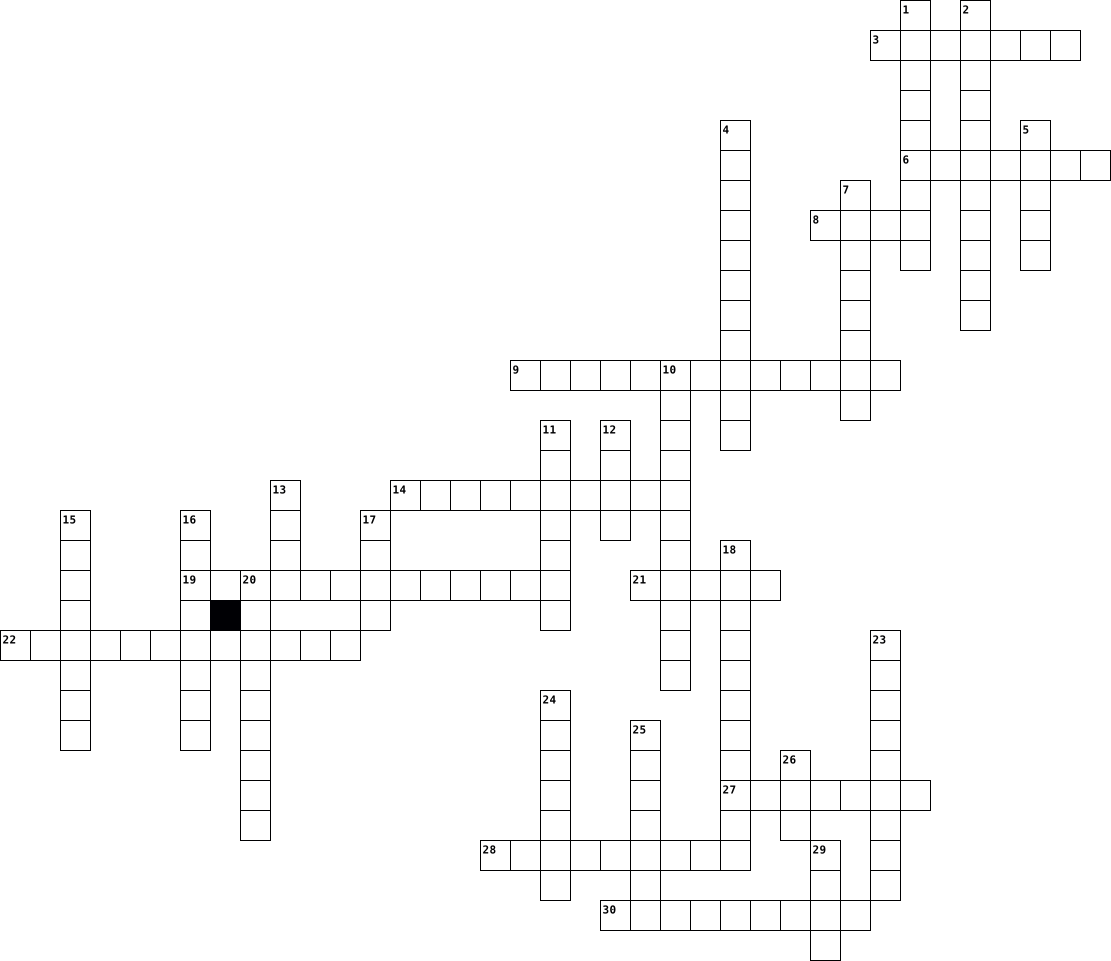
Across
- - relating to the skull or cramian .
- - part of nervous system consisting of sensory receptors received stimuli.
- - the basic unit of heredity passed from parent to child.
- - the process of copying a segment of DNA into RNA .
- - the portion of the brain in the back of the head between the cerebrum and the brain stem.
- - a genetic change in which a piece of one chromosome breaks off and attaches to another chromosome.
- - having to do with movement of body parts.
- - a type of mutation in which one nucleotide is replaced by a different nucleotide.
- - the space between the end of a nerve cell.
- - membranous true-like projections arising from the body of the neuron.
- - a type of cell that receives ang sends messages from the body .
Down
- - central trunk of the mamalian brain.
- - a neuron that conveys impulses from one neuron to another.
- - the process by which a double stranded DNA molecule is copied to produce two identical DNA molecule.
- - the genetic code is the set of rules used by living cells to translate information encoded within genetic material.
- - a type of genetic change that involves the absence of a segment of DNA.
- - a structure found inside the nucleus of a cell.
- - a chemical compound that is used to make one of the building blocks of DNA and RNA.
- body - the central part of a neuron that includes the nucleus but not the axons ang dendrites.
- syndrome- a condition in which a person has an extra chromosome.
- - the largest part of the brain.
- - any change in the DNA sequence of a cell.
- - the long threadline part of a nerve cell which impulses the conducted from the cell body to other cells.
- - a state of balance among all the body systems needed for the body to survive and function correctly.
- - trinucleotide sequence located at one end to transfer RNA molecule.
- - a chromosomal defect in which a segment of the chromosome breaks off and reattaches in the reverse direction.
- - a chemical compound that is used to make one of the building blocks of DNA.
- - it is a type of purine
- - the molecule inside cells that contains the genetic information responsible for the development.
- division - the process by which a single parent cell splits to form new cells.
30 Clues: - it is a type of purine • - the largest part of the brain. • - relating to the skull or cramian . • - central trunk of the mamalian brain. • - having to do with movement of body parts. • - any change in the DNA sequence of a cell. • - the space between the end of a nerve cell. • - a structure found inside the nucleus of a cell. • ...
biology 2023-04-14

Across
- a genetic mix between 2 indivisuals with homogezygous genotypes
- a term used to describe the physical structure of DNA
- the end of mitosis
- chromosomes become attached to the spindle fibers
- it is paired with adenine
- having two different alleles of a particular gene or genes
- it's between the first and second divisions of meiosis
- takes place in the ribosome
- it pairs with cytosine
- a compound consisting of a nucleoside linked to a phosphate group
- a gene that expresses itself more strongly
- a form of phosphoric acid, which contains phosphorus
- is when a cell makes an RNA copies of a piece of DNA
Down
- having two identical alleles of a particular gene or genes
- another word for sucrose
- chromosomes move away from one another to opposite poles of the spindle
- it pairs with guanine
- can be found in a nucleus
- when cytosine always combines with Guanine, and adenine always combines with thymine
- cell division that creates two daughter cells
- chromosomes move to opposite ends of the cell and two nuclei are formed
- Gap 1 and Gap 2 phase
- what would be substitution, deletion,insertion, and translocation
- the process of making proteins
- nitrogenous compounds that form an important part of the nucleotides
- it pairs with thymine
- genes that are only expressed if inherited from both parents
27 Clues: the end of mitosis • it pairs with guanine • Gap 1 and Gap 2 phase • it pairs with thymine • it pairs with cytosine • another word for sucrose • can be found in a nucleus • it is paired with adenine • takes place in the ribosome • the process of making proteins • a gene that expresses itself more strongly • cell division that creates two daughter cells • ...
Biology 2023-04-25

Across
- phase in the cell cycle where chromosomes are pulled apart by spindle fibers
- (A)-one of the 4 nitrogeonous bases
- building blocks of nucleic acid
- Phase in the cell cycle where the hromosomes all gather up in the middle preparing for division.
- (G)-one of the 4 nitrogenous bases
- The process of copying a section of DNA in to RNA
- Glucose or _____
- Cell division creating 2 identical daughter cells
- A salt or phosphorc acid
- Final stage in mitosis where the two cells are seperated
- Changes in the sequence of DNA in a cell
- Phases where the cell grows
- The process of making protien using transcription and translation
- Crosses between two parents to create offspring the types of crosses with two traits are called____
- (T)-one of the 4 nitrogenous bases
Down
- Bases pair up with eachother A to T, G to C the 4 bases are _____ to eachother
- The process of making RNA into protien
- (C)-one of the 4 nitrogenous bases
- gene is always expressed
- gene is only expressed wher both alleles are present
- Having 2 of the same alleles of a particular gene
- Phase where the cells completley divide leaving two identical daughter cells
- DNA is made up of two strands the sturcture is called ____
- deoxyribonucleic acid/ ribonucleic acid
- Has 2 different alleles of a gene one dominant one recessive
- Longest part of the cell cycle where G1,S, and G2 phase is
- Phase in the cell cycle where the nucleus dissolves and chromosomes untagle
- Molecules composed up of nitrogenus bases, sugar, and phosphates
28 Clues: Glucose or _____ • gene is always expressed • A salt or phosphorc acid • Phases where the cell grows • building blocks of nucleic acid • (C)-one of the 4 nitrogenous bases • (G)-one of the 4 nitrogenous bases • (T)-one of the 4 nitrogenous bases • (A)-one of the 4 nitrogeonous bases • The process of making RNA into protien • deoxyribonucleic acid/ ribonucleic acid • ...
Biology 2023-05-08

Across
- People who do not know they are sick
- A system that keeps you healthy
- A period from infection to symptoms
- A disease caused by dog bites
- There are good and bad ones
- ___ Phone
- ____ Postulates
- The smallest living thing
- When the body is not working as it should
- We need to breathe this in
- ___ Knobs
Down
- A type of contact
- Green and sticky to trap bacteria
- An example of indirect contact
- A bacteria is a ___ thing
- Can spread disease
- Something that can cause disease
- Covid is an example of this
- An example of a disease
- science, tech, engineering and math
- An example of a disease
- A mosquito is an example
- It carries red and chite cells
23 Clues: ___ Phone • ___ Knobs • ____ Postulates • A type of contact • Can spread disease • An example of a disease • An example of a disease • A mosquito is an example • A bacteria is a ___ thing • The smallest living thing • We need to breathe this in • Covid is an example of this • There are good and bad ones • A disease caused by dog bites • An example of indirect contact • ...
Biology 2023-04-26

Across
- process of 2 daughter cells dividing
- different alleles (Bb)
- deoxyribose
- same alleles(BB,bb)
- provide structural support
- prepares for mitosis
- double stranded nucleic acids (Dna/Rna)
- compatible with thymine
- compatible with guanine
- resting phase
- A,T,G,C
- division of cytoplasm
- hybrid that is heterozygous specific gen
- creation of proteins by cells
Down
- pull apart
- random change in a sequence of a gene
- spindle fibers
- Dna is a _____
- deoxyribonucleic acid
- compatible with adenine
- always expressed
- compatible with cytosine
- only expressed in both allele are present
- information is encoded in messenger Rna
- Ribonucleic acid
- two nuclei
- copying a segment of Dna/Rna
- where the nucleus dissolves
- cell grows in _____
- hybrid that is heterozygous two genes
30 Clues: A,T,G,C • pull apart • two nuclei • deoxyribose • resting phase • spindle fibers • Dna is a _____ • always expressed • Ribonucleic acid • same alleles(BB,bb) • cell grows in _____ • prepares for mitosis • deoxyribonucleic acid • division of cytoplasm • different alleles (Bb) • compatible with adenine • compatible with thymine • compatible with guanine • compatible with cytosine • ...
Biology 2023-05-10

Across
- _______ structure, features of different species that are similar in function but not necessarily in structure and which do not derive from a common ancestral feature
- the complete disappearance of a species from Earth
- natural _____, The idea that Organisms that are more adapted to their environment are more likely to survive and pass on the genes that aided their success.
- _______ isolation, when two populations are separated by geographic barriers such as rivers, mountains, or bodies of water
- ______ structure, Structures that have no apparent function and appear to be residual parts from a past ancestor
- a unit of heredity which is transferred from a parent to offspring and is held to determine some characteristic of the offspring.
- _____ isolation, a physical incompatibility between reproductive organs of two organisms.
- the capacity of an organism to pass on its DNA to its progeny
- the process by which different kinds of living organisms are thought to have developed and diversified from earlier forms during the history of the earth.
Down
- an alteration in the nucleic acid sequence of the genome of an organism, virus, or extrachromosomal DNA.
- ______ structure, similar physical features in organisms that share a common ancestor, but the features serve completely different functions
- _____ isolation, The separation of groups of organisms as a result of changes in their ecology or in the environment in which they live.
- _______ isolation, occurs when mismatches in mating traits prevent mating between two species/populations.
- The modification of an organism or its parts that makes it more fit for existence under the conditions of its environment
- _____ isolation, occurs when two populations differ in their periods of activity or reproductive cycles
- _____ drift, a variation in the relative frequency of different genotypes in a small population, owing to the chance disappearance of particular genes as individuals die or do not reproduce.
- the preserved remains of plants and animals whose bodies were buried in sediments, such as sand and mud, under ancient seas, lakes and rivers.
- genetic _______, the process in which two or more populations of an ancestral species accumulate independent genetic changes through time
- the formation of new and distinct species in the course of evolution.
- the continued existence of organisms which are best adapted to their environment, with the extinction of others, as a concept in the Darwinian theory of evolution.
20 Clues: the complete disappearance of a species from Earth • the capacity of an organism to pass on its DNA to its progeny • the formation of new and distinct species in the course of evolution. • _____ isolation, a physical incompatibility between reproductive organs of two organisms. • ...
Biology 2023-05-15

Across
- involved with Ag
- most likely to say something random
- named after a state
- my chemical romance
- always sits on the front row
- took my anatomy class last semester
- most likely to be worried about their grade
- last name sounds like a private school
- usually sitting next to Maddie
- most likely to start a DnD campaign
- the small one
- her older sister took my class already
- usually sitting next to Hayden
- the quiet one
- the other most quiet one
Down
- good morning announcements
- her mom works here
- the tall one
- last name is a motorcycle
- could you be any more blonde
- star football player
- probably got the highest test score
- most likely to start a movement
- colorful hair
- lol does she even go here half the time?
- the quiet one next to Zoe
- is currently in my anatomy class
- glasses
- the longest hair
- usually comes back after the bell
30 Clues: glasses • the tall one • colorful hair • the small one • the quiet one • involved with Ag • the longest hair • her mom works here • named after a state • my chemical romance • star football player • the other most quiet one • last name is a motorcycle • the quiet one next to Zoe • good morning announcements • could you be any more blonde • always sits on the front row • ...
Biology 2023-05-20

Across
- The green pigment in plants and algae that absorbs light energy for photosynthesis.
- A structural carbohydrate found in the cell walls of plants and some other organisms.
- The process by which organisms increase in size and complexity over time.
- The process by which organisms eliminate waste products from their body.
- The gel-like substance that fills the interior of cells and contains organelles, proteins, and other molecules.
- The organelles in eukaryotic cells that produce energy in the form of ATP.
- The organelle in eukaryotic cells that contains the cell's genetic material, or DNA.
- Membrane-bound structures in eukaryotic cells that store water, nutrients, and waste products.
- The process by which organisms produce offspring to continue their species.
- A small, circular piece of DNA found in some bacteria that can replicate independently of the chromosomal DNA.
- The metabolic process by which cells use oxygen to convert nutrients into energy and produce carbon dioxide as a waste product.
Down
- Organisms with cells that contain a nucleus and other membrane-bound organelles.
- Single-celled organisms that lack a nucleus or other membrane-bound organelles.
- The ability of organisms or their cells to move from one place to another.
- The organelle in plant cells that carries out photosynthesis.
- membrane: The thin, flexible barrier that surrounds cells and regulates the movement of materials in and out of the cell.
- The ability of organisms or cells to respond to changes in their environment or stimuli.
- A type of fungus that is used in baking and brewing, and can ferment sugars into alcohol and carbon dioxide.
- wall: A rigid outer layer that provides additional support and protection for cells in plants, fungi, and some bacteria.
- The cellular structure responsible for synthesizing proteins.
- The process of obtaining and using nutrients from food to support bodily functions.
21 Clues: The organelle in plant cells that carries out photosynthesis. • The cellular structure responsible for synthesizing proteins. • The process by which organisms eliminate waste products from their body. • The process by which organisms increase in size and complexity over time. • The ability of organisms or their cells to move from one place to another. • ...
Biology 2023-05-18

Across
- Study of past and present distribution of organisms
- Organisms that relies on other organisms fortis energy and food supply; also called a heterotroph
- Symbiotic relationship in which one organism benefits and the other is neither helped nor harmed
- a graphical representation of the energy found within the trophic levels of an ecosystem.
- the geologically altered remains of a once-living organism and/or its behaviour
- physical change in an organism that results over time in reaction to its environment
- organism that breaks down dead organic material
- the change in heritable traits of biological populations over successive generations
- Network of complex interactions formed by the feeding relationships among the various organisms in an ecosystem
- Selective breeding of plants and animals to promote the occurrence of desirable traits in offspring
- Assemblage of different populations that live together in a defined area
- reproductive success and reflects how well an organism is adapted to its environment.
- the direct or indirect interaction of organisms that leads to a change in fitness when the organisms share the same resource.
- Part of Earth in which life exists including land, water, and air or atmosphere
- The process by which organisms best adapted to their environment survive & reproduce to pass on favorable traits to their offspring
- Series of steps in an ecosystem in which organisms transfer by eating and being eaten
- an organism that mostly eats meat, or the flesh of animals
Down
- All the organisms that live in a place, together with their nonliving environment
- when two populations are separated by geographic barriers such as rivers, mountains, or bodies of water.
- the study of the development of the anatomy of an organism to its adult form
- the ancestor of two or more species in the later period.
- Largest number of individuals of a particular species that a particular environment can support
- he transfer of genetic material from one population to another
- Single species that is not usually abundant in a community yet exerts a strong control on the structure of a community
- Group of ecosystems that share similar climates and typical organisms
- a relationship between organisms in which one is harmed when both are trying
- Body parts that share a common function, but not an evolutionary history
- an organism that mostly feeds on plants
- a pattern of behavior in which animals travel from one habitat to another in search of food, better conditions, or reproductive needs
- Group of drugs used to block the growth and reproduction of bacterial pathogens
30 Clues: an organism that mostly feeds on plants • organism that breaks down dead organic material • Study of past and present distribution of organisms • the ancestor of two or more species in the later period. • an organism that mostly eats meat, or the flesh of animals • he transfer of genetic material from one population to another • ...
Biology 2023-05-18

Across
- Study of past and present distribution of organism's.
- Assemblage of different populations that live together in a defined area.
- Each step in a food chain or food web.
- Structor that is inherited from ancestors but which has lost much or all of its original function.
- The ability of organisms— or, more rarely, populations or species— to survive and reproduce in the environment in which they find themselves.
- Largest number of individuals of a particular species that a particular environment can support.
- The geologically altered remains of a once-living organism and/or its behaviour.
- Adjustment to living in accordance with interpersonal, social, and cultural norms.
- All the organism's that live in a place, together with their nonliving environment.
- A process that results in changes in the genetic material of a population over time.
- Network of complex interactions formed by the various organism's in an ecosystem.
- A pattern of behavior in which animals travel from one habitat to another in search of food, better conditions, or reproductive needs.
- An interaction between organisms or species in which both require a resource that is in limited supply.
- Groups of individuals of the same species that live in the same area.
- Factor that causes population growth to decrease.
Down
- Process by which organism's that are most suited to their environment survive and reproduce most successfully.
- Structures that are similar in different species of common ancestors.
- A graphical representation of the energy found within the trophic levels of an ecosystem.
- Part of Earth in which life exists, including land, water, and air or atmosphere.
- Non-native species whose introduction causes, or is likely to cause, economic harm, environmental harm, or harm to human health.
- Body parts that share a common function, but not an evolutionary history.
- Group of similar organism's that can breed and produce fertile offspring.
- Any kind of green plant.
- A defense mechanism or tactic that organisms use to disguise their appearance, usually to blend in with their surroundings.
- Group of ecosystems that share similar climates and typical organism's.
- A relationship between organisms that strive for the same resources in the same place.
- The similarity of one organism (the mimic) to another (the model) that enhances the mimic's fitness through its effect on the behavior of a third party, the operator.
- The study of the development of the anatomy of an organism to its adult form, provides evidence for evolution as embryo formation in widely-divergent groups of organisms tends to be conserved.
- The movement of genes into or out of a population. Geneticdrift
- Series of steps in an ecosystem in which organism's transfer energy by eating and being eaten.
30 Clues: Any kind of green plant. • Each step in a food chain or food web. • Factor that causes population growth to decrease. • Study of past and present distribution of organism's. • The movement of genes into or out of a population. Geneticdrift • Structures that are similar in different species of common ancestors. • ...
Biology 2023-05-18

Across
- The second stage of cell division
- Separates the cells interior from its surrounding environment
- makes ribosomes
- Union of chemical elements
- tool used to view cells
- The resting phase
- packaging and exporting like FedEx
- powerhouse of a cell
- photosynthetic organelles in plants
Down
- The first stage of cell division
- interior of the cell
- stores water in plants
- cell______ in plants it is the structure outside the membrane
- The stage of mitotic cell division
- The final phase of cell division
- organelles that break down substances
- genetic material of the cell
- makes protein
- A type of cell division
- Like the remote control center of the cell
20 Clues: makes protein • makes ribosomes • The resting phase • interior of the cell • powerhouse of a cell • stores water in plants • tool used to view cells • A type of cell division • Union of chemical elements • genetic material of the cell • The first stage of cell division • The final phase of cell division • The second stage of cell division • The stage of mitotic cell division • ...
Biology 2023-06-16

Across
- an organism that can produce its own food using light, water, carbon dioxide, or other chemicals
- biome (major life zone) of vegetation composed primarily of cone-bearing needle-leaved or scale-leaved evergreen trees, found in northern circumpolar forested regions characterized by long winters and moderate to high annual precipitation.
- the long-term, predictable atmospheric conditions of a specific area
- made of the layers of gases surrounding a planet or other celestial body
- organism on the food chain that depends on autotrophs (producers) or other consumers for food, nutrition, and energy
- lands where saturation with water is the dominant factor determining the nature of soil development and the types of plant and animal communities living in the soil and on its surface.
- the increases in cell size and number that take place during the life history of an organism
- the above-ground portion of vegetation in forests consisting of the tops of trees forming a kind of ceiling
- the study of the characteristics of populations
- the part of the earth's atmosphere which extends from the top of the troposphere to about 30 miles (50 kilometers) above the surface and in which temperature increases gradually to about 32°F (0°C) and clouds rarely form.
- the ability to endure unusually large doses of a drug or toxin
- the largest unit used by scientists to describe geographic regions around the world that share similar characteristics
- the act of leaving one's own country to settle permanently in another; moving abroad.
- made up of the trees, shrubs, and herbaceous plants that exist below the canopy
- an area with a particular combination of physical and biological environmental factors that affect which organisms can live within it
Down
- the action of coming to live permanently in a foreign country.
- an organism that consumes other organisms in a food chain
- the process by which plants use sunlight, water, and carbon dioxide to create oxygen and energy in the form of sugar
- the taking in and use of food and other nourishing material by the body.
- the role an organism plays in a community.
- microscopic organisms that live in watery environments, both salty and fresh
- the amount of living material provided by a given area or volume of the earth's surface, whether terrestrial or aquatic.
- a permanently frozen layer on or under Earth's surface
- the short term state of the atmosphere at a specific time and place, including the temperature, humidity, cloud cover, precipitation, wind, etc.
- dark, organic material that forms in soil when plant and animal matter decays
- the terrestrial biosphere in its contemporary, human-altered form using global ecosystem units defined by patterns of sustained direct human interaction.
- the microbial process of reducing nitrate and nitrite to gaseous forms of nitrogen, principally nitrous oxide (N2O) and nitrogen (N2)
- matter composed of leaves and other plant parts, animal remains, waste products, and other organic debris that falls onto the soil or into bodies of water from surrounding terrestrial communities.
- the synthesis of organic compounds by bacteria or other living organisms using energy derived from reactions involving inorganic chemicals, typically in the absence of sunlight.
- a partially enclosed, coastal water body where freshwater from rivers and streams mixes with salt water from the ocean
30 Clues: the role an organism plays in a community. • the study of the characteristics of populations • a permanently frozen layer on or under Earth's surface • an organism that consumes other organisms in a food chain • the action of coming to live permanently in a foreign country. • the ability to endure unusually large doses of a drug or toxin • ...
Biology 2013-05-23

Across
- Growing points in a plant where immature cells are capable of dividing.
- All the organisms in one species who live in the same place at the same time and breed together.
- Species concept where a group of similar organisms can interbreed and produce fertile offspring.
- Stage of protein synthesis in whihc the amino acid are assembled at ribosomes.
- Gene therapy where a gene is placed in adult differentiating cells.
- Specific position on chromosome.
- Enzyme catalysing construction of DNA strand from mRNA.
- Role a species plays in an organism.
- Formation of an RNA molecule using a length of DNA as a template.
- Behaviour not learned, very inflexible.
- Non-sister chromatids wrap round each other here.
- Mass of undifferentiated plant cells.
- Species concept where a group of organisms have similar morphology, physiology, embryology and behaviour.
- Characteristic coded for by one gene.
- Cell formed by fusion of two gametes.
- 10 base long, needed in sequencing and PCR.
Down
- Type of natural selectionin which the allele and genotype frequencies stay the same.
- Protein that forms the thick filament in muscle cells.
- Any food substance where a particular nutrient is higher than usual levels.
- Groups of homeobox genes.
- When bacteria take up DNA from their surrounding.
- All the genetic information of an organism.
- Characteristic coded for by many genes.
- Level at which organism feeds in a food chain.
- Without contamination.
- A monophyletic taxonomic group, single ancestor and all its descendants.
- Main component of thin filaments.
- Observable characteristics of organism.
- Trial and error learning
- Piece of tissue taken from plant to grow callus.
- Structural change to genetic material.
31 Clues: Without contamination. • Trial and error learning • Groups of homeobox genes. • Specific position on chromosome. • Main component of thin filaments. • Role a species plays in an organism. • Mass of undifferentiated plant cells. • Characteristic coded for by one gene. • Cell formed by fusion of two gametes. • Structural change to genetic material. • ...
Biology 2013-02-24
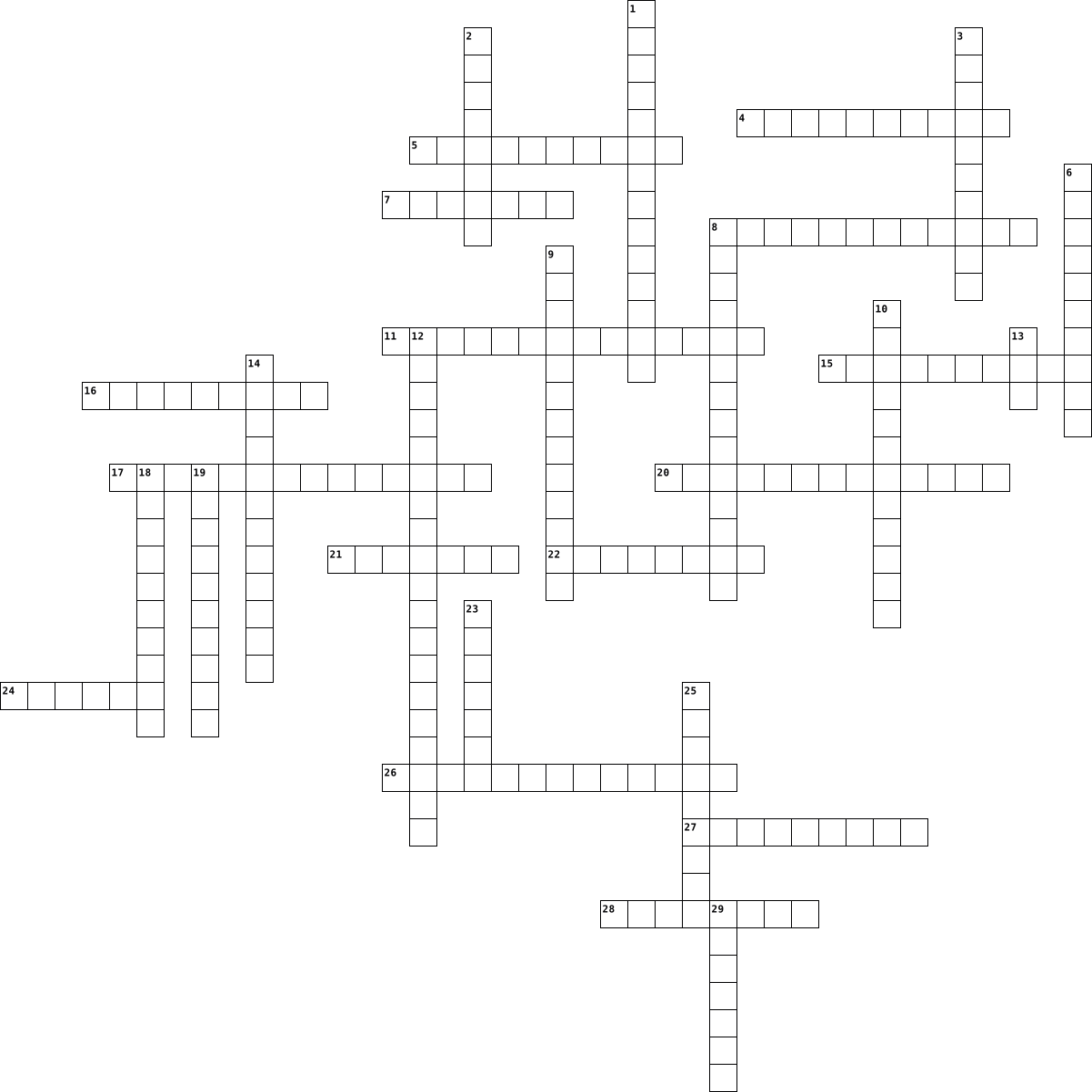
Across
- origin of new species due to the evolutinary process of descent with modification p272
- type of archaea that lives in oxygen-free habitats, such as swamps, and releases methan gas p325
- phase of cellualar respiration that requiers oxygen p323
- exchange of DNA between bacteria by means of a bacteriophage p322
- individual who studies fossils and the history of life p255
- having a chromosome number that is a multiple greater than twice that of the monoploid number p162
- type of archea that lives in extremely saly habitats p325
- large-scale evolutionary change, such as the formation of new species p272
- photosythetic bacterium that contains chlorophyll and releases oxygen; formerly called a blue-green algae p324
- ancient layer of sedimentary rock; results from slow deposition of silt, volcanic ash, and other materials p251
- sharing of genes between two populations through interbreeding p261
- protein coat or shell that surrounds a viriion's nucleic acid p310
- bacteria reproduction into two daughter cells without the utilization of a mitotic spindle p321
- in biological evolution, a possible cell forerunner that became a cell once it could reproduce p318
- total of all the genes of all the individuals in a population p260
Down
- change in gene frequencies between populations of a species over time p259
- alteration in chromosome structure or number and also an alteration in a gene due to a change in DNA composition p261
- polyploid organism that contains the genomes of two or more different speices p279
- cyanobacterial cell that sythesizes a nitrogen-fixing enzyme when nitrogen supplies dwindle p324
- taking up of extraneous genetic amterial from the environment by bacteria p318
- virus that infects bacteria p311
- study of fossils that results in knowledge about the history of life p250
- change in the genetic structure of populations due to selective breeding by humans p252
- viral DNA that has been integrated into host cell DNA p315
- study of geographical distribution of organisms p258
- polyploid organism that contains a duplicated genome of the same species p279
- RNA virus containing the ezyme reverse transcriptase that carries out RNA to DNA transcription p315
- one of the 3 domains of life; contains prokaryotic cells that often live in extreme habitats and have unique genetic, biochemical, and physiological characteristics p297
- spore formed within a cell p321
- self-replicating ring of accessory DNA in the cytoplasm of bacteria p322
30 Clues: spore formed within a cell p321 • virus that infects bacteria p311 • study of geographical distribution of organisms p258 • phase of cellualar respiration that requiers oxygen p323 • type of archea that lives in extremely saly habitats p325 • viral DNA that has been integrated into host cell DNA p315 • individual who studies fossils and the history of life p255 • ...
Biology 2013-11-12

Across
- an organelle in some plant cells that stores starch. Amyloplasts are found in starchy plants like tubers and fruits.
- (plural grana) A stack of thylakoid disks within the chloroplast is called a granum.
- reticulum (rough ER) a vast system of interconnected, membranous, infolded and convoluted sacks that are located in the cell's cytoplasm (the ER is continuous with the outer nuclear membrane). Rough ER is covered with ribosomes that give it a rough appearance. Rough ER transport materials through the cell and produces proteins in sacks called cisternae (which are sent to the Golgi body, or inserted into the cell membrane).
- an organelle within the nucleus - it is where ribosomal RNA is produced.
- (singular crista) the multiply-folded inner membrane of a cell's mitochondrion that are finger-like projections. The walls of the cristae are the site of the cell's energy production (it is where ATP is generated).
- body (also called the golgi apparatus or golgi complex) a flattened, layered, sac-like organelle that looks like a stack of pancakes and is located near the nucleus. The golgi body packages proteins and carbohydrates into membrane-bound vesicles for "export" from the cell.
- a large, membrane-bound space within a plant cell that is filled with fluid. Most plant cells have a single vacuole that takes up much of the cell. It helps maintain the shape of the cell.
- small organelles composed of RNA-rich cytoplasmic granules that are sites of protein synthesis.
- the thin layer of protein and fat that surrounds the cell, but is inside the cell wall. The cell membrane is semipermeable, allowing some substances to pass into the cell and blocking others.
Down
- spherical to rod-shaped organelles with a double membrane. The inner membrane is infolded many times, forming a series of projections (called cristae). The mitochondrion converts the energy stored in glucose into ATP (adenosine triphosphate) for the cell.
- disks are disk-shaped membrane structures in chloroplasts that contain chlorophyll. Chloroplasts are made up of stacks of thylakoid disks; a stack of thylakoid disks is called a granum. Photosynthesis (the production of ATP molecules from sunlight) takes place on thylakoid disks.
- chlorophyll is a molecule that can use light energy from sunlight to turn water and carbon dioxide gas into sugar and oxygen (this process is called photosynthesis). Chlorophyll is magnesium based and is usually green.
- is short for adenosine triphosphate; it is a high-energy molecule used for energy storage by organisms. In plant cells, ATP is produced in the cristae of mitochondria and chloroplasts.
- an elongated or disc-shaped organelle containing chlorophyll. Photosynthesis (in which energy from sunlight is converted into chemical energy - food) takes place in the chloroplasts.
- membrane the membrane that surrounds the nucleus.
- a process in which plants convert sunlight, water, and carbon dioxide into food energy (sugars and starches), oxygen and water. Chlorophyll or closely-related pigments (substances that color the plant) are essential to the photosynthetic process.
- reticulum (smooth ER) a vast system of interconnected, membranous, infolded and convoluted tubes that are located in the cell's cytoplasm (the ER is continuous with the outer nuclear membrane). The space within the ER is called the ER lumen. Smooth ER transport materials through the cell. It contains enzymes and produces and digests lipids (fats) and membrane proteins; smooth ER buds off from rough ER, moving the newly-made proteins and lipids to the Golgi body and membranes
- spherical body containing many organelles, including the nucleolus. The nucleus controls many of the functions of the cell (by controlling protein synthesis) and contains DNA (in chromosomes). The nucleus is surrounded by the nuclear membrane
- (also called the "microtubule organizing center") a small body located near the nucleus - it has a dense center and radiating tubules. The centrosomes is where microtubules are made. During cell division (mitosis), the centrosome divides and the two parts move to opposite sides of the dividing cell. Unlike the centrosomes in animal cells, plant cell centrosomes do not have centrioles.
- the jellylike material outside the cell nucleus in which the organelles are located.
- part of the chloroplasts in plant cells, located within the inner membrane of chloroplasts, between the grana.
- a thick, rigid membrane that surrounds a plant cell. This layer of cellulose fiber gives the cell most of its support and structure. The cell wall also bonds with other cell walls to form the structure of the plant.
22 Clues: membrane the membrane that surrounds the nucleus. • an organelle within the nucleus - it is where ribosomal RNA is produced. • (plural grana) A stack of thylakoid disks within the chloroplast is called a granum. • the jellylike material outside the cell nucleus in which the organelles are located. • ...
biology 2013-12-03
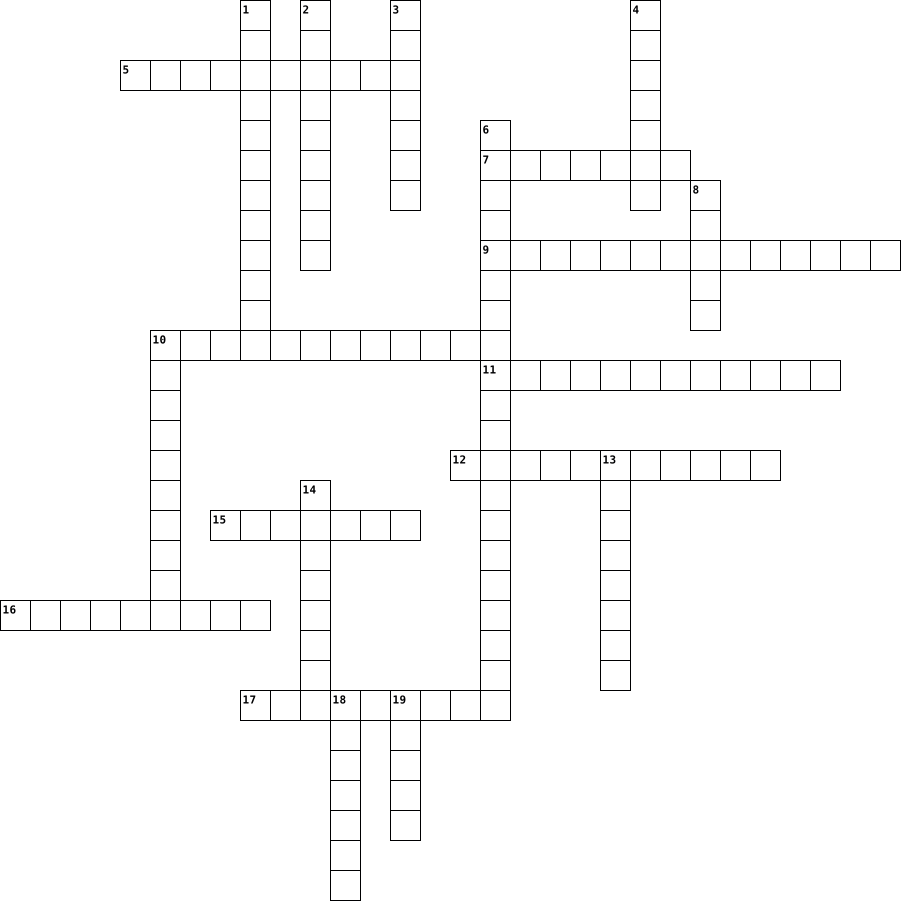
Across
- contains a nucleus. These organelles are common. nucleus, mitochondria, chloroplasts, endoplasmic reticulum and lysosomes
- acid constructed of subunits referred to as nucleotides and forms a helix
- process when plants, some bacteria and some protisans use energy from the sunlight to produce sugar
- When two alleles are different ex. Aa, Bb, Cc
- powerhouse of the cell functions as the area of energy release
- organism that lacks a nucleus. Major cell structures include, cell membrane, cytoplasm,genetic material, and ribosomes.
- A nuclear division when a single parental nucleus divides, creating 2 new nuclei (genetically identical). Seen with growth repair and cellular replacement.
- process when a solute passes from an area with a high concentration to an area with a low concentration. ex. spraying air freshener
- a major structure of prokaryotic cells provides support to the internal structure of the cell
Down
- comprised of one or more sugar subunits and classified accordingly
- Part of the earth's surface and atmosphere populated by living organisms
- the location for most of the nucleic acids a cell makes such as DNA & RNA
- has long chains of nitrogen bearing subunits referred to as amino acids
- interconnected memranes that helps with the transport and protein synthesis
- not a plant, although many vascular plants wouldn't be able to grow without this symiotic ______. The two major components are mycelium and sporangium. Mycelium is the vegetative area and the sporangium is where the spores are formed.
- When two alleles are the same ex. aa, bb, CC
- tiny structures where protein synthesis occurs (rotein of cell assembled)
- When the trait is expressed regardless of the second allele
- when a solute goes from an area of low concentration to an area with a higher concentration
- composed of fats and oils, phospholipids, sterols, and waxes
20 Clues: When two alleles are the same ex. aa, bb, CC • When two alleles are different ex. Aa, Bb, Cc • When the trait is expressed regardless of the second allele • composed of fats and oils, phospholipids, sterols, and waxes • powerhouse of the cell functions as the area of energy release • comprised of one or more sugar subunits and classified accordingly • ...
biology 2013-09-26

Across
- eefee"
- ewe"
- dd"
- ww"
- er"
- wetrr"
- err"
- ooxy"
- poly"
- wrvw"
Down
- ddwhc"
- wteswtg"
- ded"
- rrs"
- w2eww"
- erwarf"
- ee"
- trztr"
- ertee"
- 33"
20 Clues: dd" • ww" • er" • ee" • 33" • ewe" • ded" • rrs" • err" • ooxy" • poly" • wrvw" • eefee" • ddwhc" • w2eww" • wetrr" • trztr" • ertee" • erwarf" • wteswtg"
Biology 2014-01-09

Across
- Eats both plants and animals
- Feeds on carrion(dead animals)
- Maximum number of organisms an environment can hold
- The role a species plays in a community; It's total way of life
- The first step of the scientific method
- What is the cell membrane made of?
- The place in which an organism lives
- The monomer of carbohydrates
- The monomer of protein
- Organisms that take energy and use it to make their own food
- Relationship where one organism benefits and the other suffers
Down
- The total of different organisms in a ecosystem
- Lowest level of the organization pyramid with Biosphere being the highest
- Organelle inside the nucleus that is made of RNA and proteins
- Transportation across the membrane that requires energy
- The process of joining two smaller organic compounds to form one large organic compound
- Something that all organic compounds contain
- Which type of cell is more simple?
- reaction When two chemicals react and become something new
- When growth is rising at a steady rate with no limiting factors
- The relationship of two organisms in which both benefit each other
- Where substrates bind with the enzyme
22 Clues: The monomer of protein • Eats both plants and animals • The monomer of carbohydrates • Feeds on carrion(dead animals) • Which type of cell is more simple? • What is the cell membrane made of? • The place in which an organism lives • Where substrates bind with the enzyme • The first step of the scientific method • Something that all organic compounds contain • ...
Biology 2014-01-09

Across
- Transportation across the membrane that requires energy
- Which type of cell is more simple?
- The place in which an organism lives
- reaction When two chemicals react and become something new
- The first step of the scientific method
- The process of joining two smaller organic compounds to form one large organic compound
- When growth is rising at a steady rate with no limiting factors
- Lowest level of the organization pyramid with Biosphere being the highest
- The relationship of two organisms in which both benefit each other
- Feeds on carrion(dead animals)
Down
- Something that all organic compounds contain
- Maximum number of organisms an environment can hold
- The monomer of carbohydrates
- Where substrates bind with the enzyme
- The total of different organisms in a ecosystem
- The monomer of protein
- Organisms that take energy and use it to make their own food
- Eats both plants and animals
- Relationship where one organism benefits and the other suffers
- What is the cell membrane made of?
- Organelle inside the nucleus that is made of RNA and proteins
- The role a species plays in a community; It's total way of life
22 Clues: The monomer of protein • The monomer of carbohydrates • Eats both plants and animals • Feeds on carrion(dead animals) • Which type of cell is more simple? • What is the cell membrane made of? • The place in which an organism lives • Where substrates bind with the enzyme • The first step of the scientific method • Something that all organic compounds contain • ...
BIOLOGY 2015-03-06
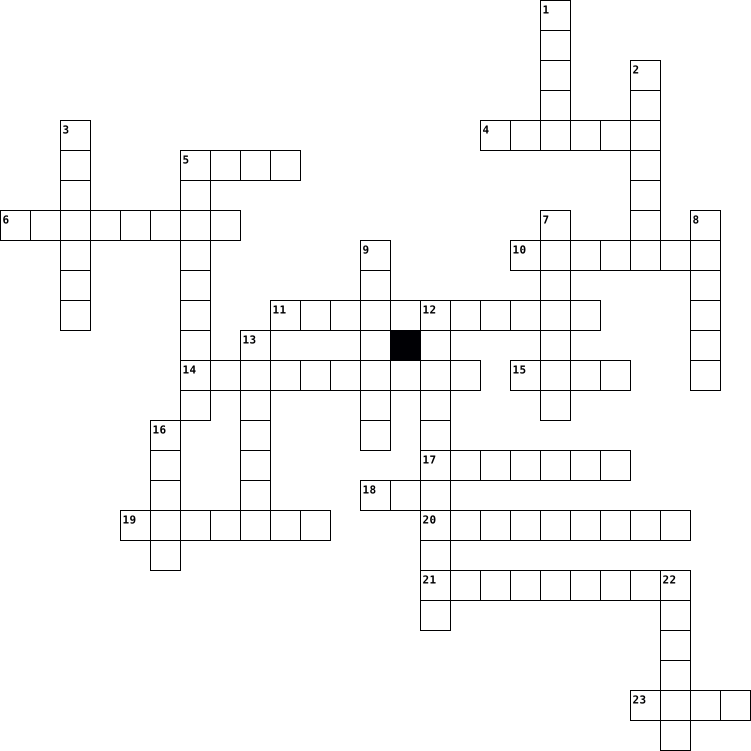
Across
- Who said humans come from primates (NAME)
- Try to survive in this world enjoying every moment (VERB)
- Australian animal which carries its babies in its pouch. (NOUN)
- Process which we catch the oxygen of the air (VERB)
- Research, examine. (VERB)
- Environmentally friendly. (ADJECTIVE)
- ____ temperatures can destroy our proteins' structure. (ADJECTIVE)
- He deny of the existence of spontaneous generation. (NAME)
- A long, double-stranded molecule that conatins all your information (NAME)
- To recover yourself after an illness. (PHRASAL VERB)
- It's one of the three vital functions. (VERB)
- Branch of biolgy which studies diets and food. (NOUN)
- Giraffe is an animal with a very ____ neck. (ADJECTIVE)
Down
- Liquid basic for life (NOUN)
- To discover something interesting. (PHRASAL VERB)
- Educate your children and rear. (PHRASAL VERB)
- What mothers do with her babies. (PHRASAL VERB)
- We have to it carbohydrates, lipids and ____ (NOUN)
- He is genetics' dad (NAME)
- Who discovered accidentally Penicillin (NAME)
- Color of water. (ADJECTIVE)
- Struggle with others for survive. (VERB)
- Color of leaves. (ADJECTIVE)
- Cell of the nervous system (NOUN)
24 Clues: Research, examine. (VERB) • He is genetics' dad (NAME) • Color of water. (ADJECTIVE) • Liquid basic for life (NOUN) • Color of leaves. (ADJECTIVE) • Cell of the nervous system (NOUN) • Environmentally friendly. (ADJECTIVE) • Struggle with others for survive. (VERB) • Who said humans come from primates (NAME) • Who discovered accidentally Penicillin (NAME) • ...
Biology 2014-10-13

Across
- organisms that capture energy from sunlight and use energy to produce food
- series of steps where organisms transfer energy by being eaten
- an interacting group of various species in a common location
- the total mass of organisms in a given area or volume
- the act of entering
- organisms that break down organic matter
- groups of individuals that belong to species and live in the same area
- any relationship where two species live closely together
- each step in a food chain
Down
- both organisms benefit in the relationship
- any biotic or abiotic factor that restricts the existence, number, reproduction, or distribution of organisms
- number of individuals an environment can support indefinitly
- when one organism benefits, and the other isn’t affected in the relationship
- links all food chains in an ecosystem
- part of life in which life exists including land, water, and air or atmosphere
- a biological community of interacting organisms and their physical environment
- the natural home or environment of an animal, plant, or other organism
- an organism’s job
- an organism deriving its nutritional requirements from complex organic substances
- the act of leaving
20 Clues: an organism’s job • the act of leaving • the act of entering • each step in a food chain • links all food chains in an ecosystem • organisms that break down organic matter • both organisms benefit in the relationship • the total mass of organisms in a given area or volume • any relationship where two species live closely together • ...
Biology 2014-11-12
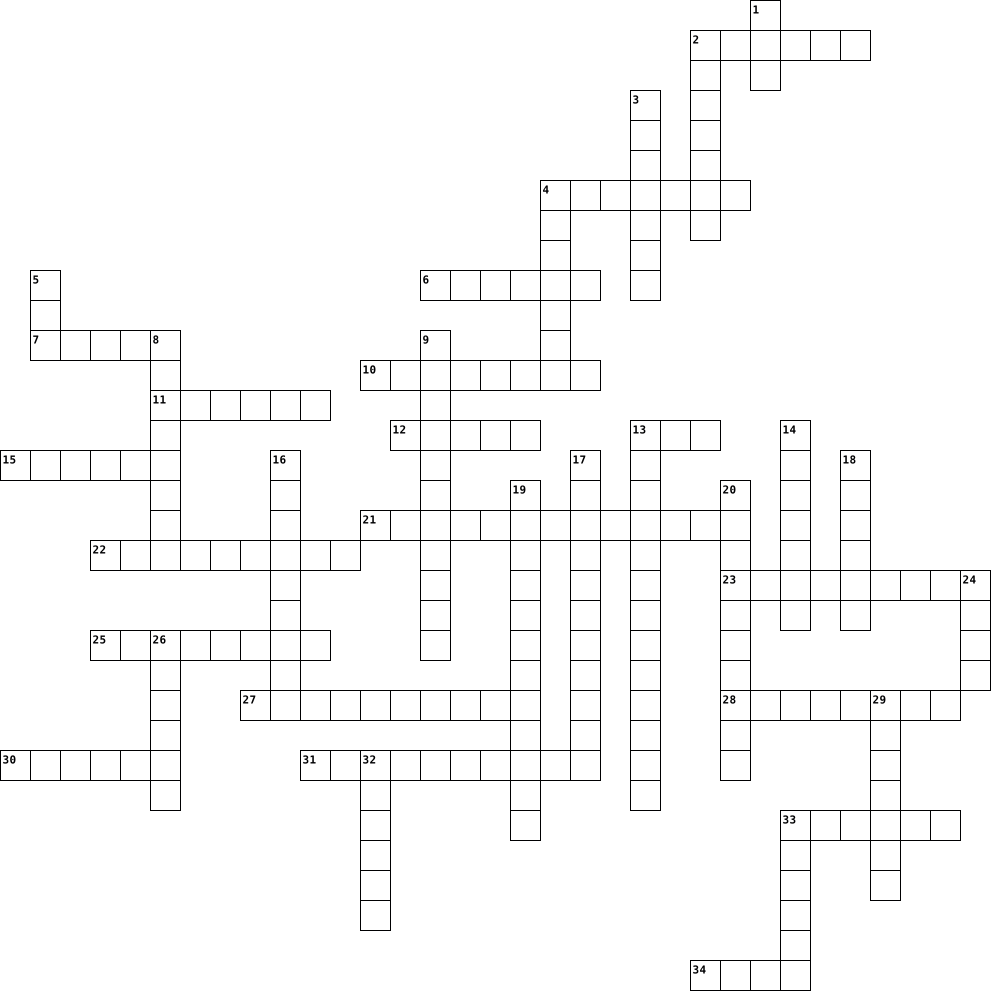
Across
- fission Form of asexual reproduction
- Attached to C on DNA
- Plant structures called grains that carry sperm in a protective case to the ovules
- Reproductive cells that grow into new individuals by mitosis
- first stage of mitosis
- Attached to A on DNA
- an identical genetic copy of organism's parent
- hormone released by pituitary gland
- chromatid Joined together by centromere and replicates during interphase
- Form of asexual reproduction in which each fragmentation develops into a clone of its parent
- The final stage of the cell cycle, which separates the two nuclei and cell contents into two daughter cells
- carries sperm from testes to ductus deferns
- fertilization Fertilization in which sperm are deposited inside the female's body where they meet egg cells
- reproduction Special cells dicide repeatedly to form structures that will develop into a plant identical to its parentn usually in plant stems and roots
- thrid stage of mitosis where chromosomes split apart
- The new dipliod cell formed by process of fertilization which receives half its chromosomes from its female parent and half from its male parent
- chromosomes A pair of matching chromosomes
- reproduction Reproducing using two parent
- cycle Stages in a cell's life repeated
Down
- Polymeric molecule
- Form of asexual reproduction which may undergo mitosis and cell division can develop into an identical organism
- Attached to T on DNA
- Specialized cell neccessary for reproduction;in animals,male and female gametes are called egg cells
- deferens A tiny muscular tube in the male reproductive system that carries sperm from the epididymis to the ejaculatory duct
- fertilization Fertilization in which sperm cell and egg cell unite outside of bodies of parents
- Transfer of male gametes in pollen from the male reproductive part of a plant to the female reproductive part of plant
- egg cell is penetrated by sperm and haplois genetic information of both male and female combines
- Attached to G on DNA
- second stage of mitosis where chromosomes line up in the middle
- Final stage of cell cycle which seperates two nuclei and cell contents to two daughter cell
- One of the nucleobases in RNA
- A steroid hormone from the androgen group and is found in mammals, reptiles, birds, and other vertebrates
- Longest stage in cell cycle
- cell Can develop into any kind of cell
- Sperm and testerone are produced and form in male reproductive system
- reproduction Reproducing using one parent
- Process which gametes arrive in the same place at the same time
- fibres Tiny tube like structures made by protein to help chromosomes pull apart
38 Clues: Polymeric molecule • Attached to T on DNA • Attached to C on DNA • Attached to A on DNA • Attached to G on DNA • first stage of mitosis • Longest stage in cell cycle • One of the nucleobases in RNA • hormone released by pituitary gland • fission Form of asexual reproduction • cell Can develop into any kind of cell • cycle Stages in a cell's life repeated • ...
Biology 2015-03-23
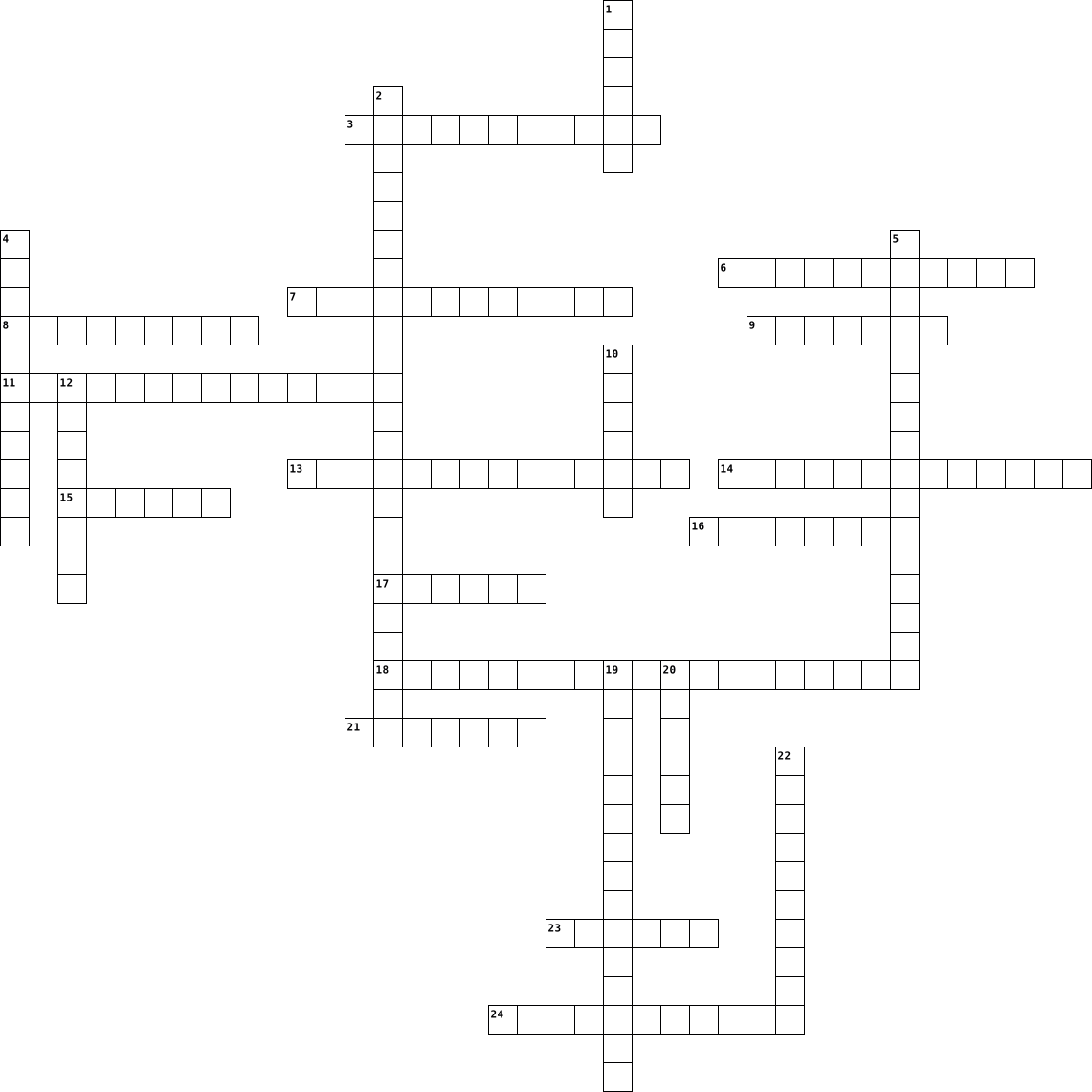
Across
- Sugar contained in DNA
- When a set of genes become repeated
- The directional growth movement by a plant organ in response to light from one direction
- An organisms appearance resulting from its inherited information
- Elastin, collagen, keratin, and actin are examples of this protein
- The mechanism used by organisms to maintain a water balance
- When a spindle fibre fails during meiosis and one homologous pair is not separated
- This membrane is fully permeable and saturated with water
- What happens when a plant cell is placed in a hypotonic solution
- Cell organelle that contains digestive enzymes
- A mass of undifferentiated plant cells produced during somatic fusion
- The deliberate selection by humans of organisms with useful characteristics
- A form of nuclear division which results in the production of four haploid gametes from one diploid gamete mother cell
- The single set of haploid chromosomes typical of a species
- Plants that have flexible stems that allow them to move with water movements
Down
- This enzyme seals the gene into the bacterial plasmid
- This enzyme cuts the DNA into small sections and cuts open the plasmid
- Provide specific immune response in the form of antibodies
- The 'weeding out' of organisms least well suited to the environment
- Produced from a cross between two genetically dissimilar parents from the same species
- A random change in the structure or amount of an organisms genetic material
- When ions or molecules move against a concentration gradient
- The light independent stage of photosynthesis happens here
- Plants adapted to living in very dry or exposed habitats (e.g desert)
24 Clues: Sugar contained in DNA • When a set of genes become repeated • Cell organelle that contains digestive enzymes • This enzyme seals the gene into the bacterial plasmid • This membrane is fully permeable and saturated with water • Provide specific immune response in the form of antibodies • The light independent stage of photosynthesis happens here • ...
Biology 2015-03-23
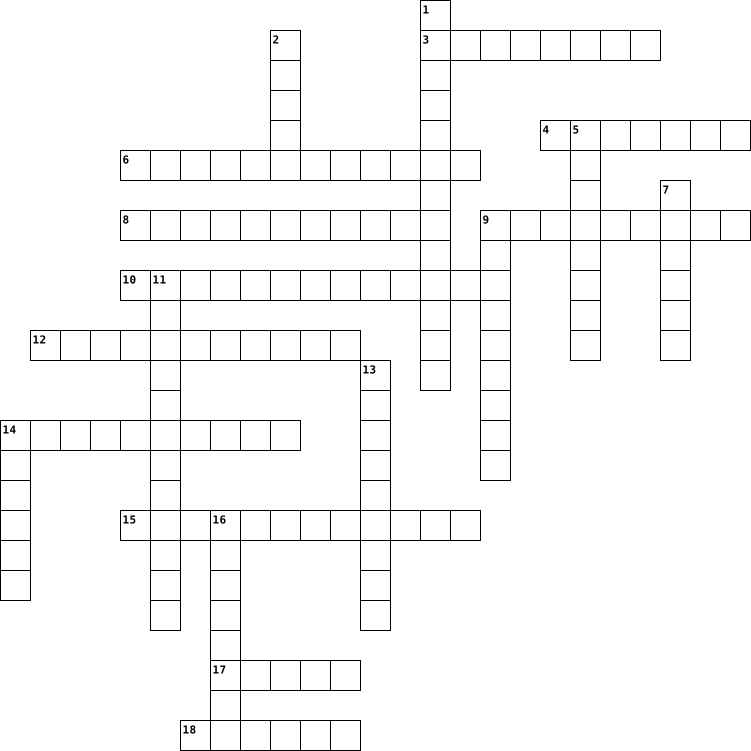
Across
- Element needed for formation of proteins, amino acids and nucleic acids.
- What is the name of the meristem that produces secondary xylem.
- Processes caused by light breaking down IAA on one side of the plant and elongation occurring on the dark side.
- What type of sugar is present in a DNA backbone?
- What gland produces ADH?
- What amino acid can PKU sufferers not break down?
- Drought is an example of a density-........ factor.
- Are humans ectotherms or endotherms?
- What occurs in the blood vessels when the temperature is above optimum?
- How many carbons are there in pyruvic acid?
- What structure in the chloroplast contains chlorphyll?
Down
- What type of competition occurs between members of different species?
- Number of haploid gametes produced by one gamete mother cell multiplied by the number of ATP molecules produced by anaerobic respiration?
- What layer synthesises alpha amylase when stimulated with GA?
- Where does the krebs cycle take place?
- An organism's appearance resulting from its inherited genetic information.
- What part of the brain monitors body temperature?
- What type of chemical reaction occurs to GP when it gains hydrogen; oxidation or reduction?
- What do tannins inhibit in a pathogen that attack a plant.
- What gene does the repressor molecule join to in the absence of lactose?
20 Clues: What gland produces ADH? • Are humans ectotherms or endotherms? • Where does the krebs cycle take place? • How many carbons are there in pyruvic acid? • What type of sugar is present in a DNA backbone? • What amino acid can PKU sufferers not break down? • What part of the brain monitors body temperature? • Drought is an example of a density-........ factor. • ...
biology 2015-03-30

Across
- The two products of Pyruvic Acid in anaerobic respiration are CO2 and this (in plants).
- Element responsible for chlorophyll production only.
- Where the plant bends to grow towards the light.
- Chromosome mutation where one set of genes is added on to another.
- The gain of hydrogen.
- Transpiration is this in windy conditions and high temperatures.
- The Cell Membrane contains proteins and these.
- Co-enzyme A binds with this in the Krebs Cycle.
- Contains digestive enzymes.
- Drug invented in the mid 1900's which caused abnormal limbs.
- An accessory pigment.
- Term used to describe the six carbon compound that is formed by RuBP and CO2 in the Calvin Cycle.
- Type of respiration where the Krebs Cycle and Cytochrome System do not take place.
- Enzyme that converts starch to maltose.
- Glucose is stored as this when we eat a lot.
- The Cell Wall is laid out in these.
- Site of protein synthesis.
- The loss of hydrogen.
- The specific part of the mitochondria where the Krebs Cycle occurs.
Down
- Base that pairs with Adenine in RNA.
- Site of aerobic respiration.
- Type of sugar in DNA.
- The reaction of organisms towards the length of day or night.
- Hydrogen carrier in respiration.
- Organism with 66 chromosomes.
- An example of this barrier would be an earthquake.
- A lateral meristem.
- Pigment that gives humans their skin colour.
- This happens in a hypertonic solution in a plant cell.
- Process where water evaporates from the leaves of a plant.
- The permeability of the Cell Membrane.
- A group of organisms that can interbreed to produce fertile offspring.
- Light dependent stage in photosynthesis.
- Final hydrogen acceptor.
- Name given to plants who have gone through complete non-disjunction.
- In the climax community the food webs are said to be more of this.
- Final stage in the transmission of a virus
- First stage in the transmission of a virus.
- A low water concentration.
- Number of carbons in Citric Acid.
- 38 molecules of ATP are formed during this type of respiration.
- Number of divisions in Meiosis.
- The name of the end community in succession.
- Number of carbons in Ribulose Biphosphate.
- Number of Carbons in GP.
45 Clues: A lateral meristem. • Type of sugar in DNA. • The gain of hydrogen. • An accessory pigment. • The loss of hydrogen. • Final hydrogen acceptor. • Number of Carbons in GP. • A low water concentration. • Site of protein synthesis. • Contains digestive enzymes. • Site of aerobic respiration. • Organism with 66 chromosomes. • Number of divisions in Meiosis. • Hydrogen carrier in respiration. • ...
Biology 2015-12-02

Across
- protist เซลล์เดียว มีคลอโรฟิลด์ เคลื่อนที่โดยแฟลกเจลลัม
- ไซยาโนแบคทีเรียสามรุตรึงไนโตรเจนเป็นไนเตรตได้
- สาหร่ายสีเขียวโปรตีนสูงนิยมทำเป็นอาหารเสริม
- protist ที่ใช้ซีเลียในการเคลื่อนที่
- เห็ดโมเรล
- protist เดียว เคลื่อนที่โดยใช้แฟลกเจลลา2เส้นแนวดิ่ง
- กลุ่ม protist เป็น Eukaryotic cell มีแต่ nucleus กับ ribosome
- แบคทีเรียแกรมบวกใช้ทำยาปฏิชีวนะ
- สิ่งมีชีวิตหลายเซลล์
- protist ที่เคลื่อนที่โดยใช้เท้าเทียม
- สาหร่าย
Down
- protist เซลลเดียวมีช่องว่างเล็กๆใต้เยื่หุ้มเซลล์ alvedi
- ยูแบคทีเรียแกรมลบที่มีรูปทรงเกลียว
- ยูแบคทีเรียแกรมลบที่เป็นปรสิต
- ยูแบคทีเรียที่สามารถสังเคราะห์ด้วยแสงได้
- ฟังไจ
- แบคทีเรียแกรมบวกผลิคกรดแลคติกได้ ทำโยเกิร์ตได้
- protist ขนาดเล็ก เป็นปรสิตเช่น plasmadium sp. โรคมาลาเรีย
- เห็ดทรัฟเฟิล
- เซลล์สืบพันธ์ของพืช
20 Clues: ฟังไจ • สาหร่าย • เห็ดโมเรล • เห็ดทรัฟเฟิล • เซลล์สืบพันธ์ของพืช • สิ่งมีชีวิตหลายเซลล์ • ยูแบคทีเรียแกรมลบที่เป็นปรสิต • แบคทีเรียแกรมบวกใช้ทำยาปฏิชีวนะ • ยูแบคทีเรียแกรมลบที่มีรูปทรงเกลียว • protist ที่ใช้ซีเลียในการเคลื่อนที่ • protist ที่เคลื่อนที่โดยใช้เท้าเทียม • ยูแบคทีเรียที่สามารถสังเคราะห์ด้วยแสงได้ • สาหร่ายสีเขียวโปรตีนสูงนิยมทำเป็นอาหารเสริม • ...
Biology 2015-11-25

Across
- สิ่งมีชีวิตหลายเซลล์
- protist ที่ใช้ซิเลียในการเคลื่อนที่
- ไซยาโนแบคทีเรียชนิดหนึ่ง ตรึงไนโตรเจนเป็นไนเตรตได้
- protist cell เดียว เคลื่อนที่โดยใช้แฟลเจลลา 2 เส้นแนวดิ่ง
- protist ขนาดเล็ก เป็นปรสิต เช่น plasmadium sp. โรคมาลาเรีย
- เห็ดทรัฟเฟิล
- กลุ่มprotist เป็น Eukaryotic cell มีแต่ nucleus กับ ribosome
- ไสปโรคีท ยูแบคทีเรียแกรมลบที่มีรูปทรงเกลียว
- protist cell เดียว มีช่องว่างเล็กๆใต้เยื่อหุ้มเซลล์ alvedi
- เซลล์สืบพันธุ์ของฟังไจ
Down
- แบคทีเรียแกรมบวกใช้ทำยาปฏิชีวนะ
- สาหร่าย
- คลาไมเดีย ยูแบคทีเรียแกรมลบที่เป็นปรสิต
- ยูแบคทีเรียที่สามารถสังเคราะห์ด้วยแสงได้
- ไซยาดนแบคทีเรียตรึงไนโตรเจนเป็นไนเตรตได้
- ฟังไจ
- แบคทีเรียแกรมบวก ผลิตกรดแลคติกได้ ทำโยเกิร์ตได้
- protist ที่เคลื่อนที่โดยใช้เท้าเทียม
- protist cell เดียวมีคลอโรฟิลล์ เคลื่อนที่ด้วยแฟลเจลลัม
- สาหร่ายสีเขียวโปรตีนสูงนิยมทำเป็นอาหารเสริม
- เห็ดโมเรล
21 Clues: ฟังไจ • สาหร่าย • เห็ดโมเรล • เห็ดทรัฟเฟิล • สิ่งมีชีวิตหลายเซลล์ • เซลล์สืบพันธุ์ของฟังไจ • แบคทีเรียแกรมบวกใช้ทำยาปฏิชีวนะ • protist ที่ใช้ซิเลียในการเคลื่อนที่ • protist ที่เคลื่อนที่โดยใช้เท้าเทียม • คลาไมเดีย ยูแบคทีเรียแกรมลบที่เป็นปรสิต • ยูแบคทีเรียที่สามารถสังเคราะห์ด้วยแสงได้ • ไซยาดนแบคทีเรียตรึงไนโตรเจนเป็นไนเตรตได้ • สาหร่ายสีเขียวโปรตีนสูงนิยมทำเป็นอาหารเสริม • ...
Biology 2015-11-29

Across
- สิ่งมีชีวิตหลายชนิดในอาณาจักรโครมาลวีโอลาตา เอกซ์คาวาตา ไรซาเรีย มีลักษณะคล้ายพืช แต่ไม่มีส่วนที่เป็นราก ลำต้น และใบที่แท้จริง
- protist ที่เคลื่อนที่โดยใช้เท้าเทียม
- แบคทีเรียแกรมบวกผลิคกรดแลคติกได้ ทำโยเกิร์ตได้
- เป็นเห็ดชนิดหนึ่งในกลุ่มเห็ดรา (Mycorrhizal Fungi) มีรสจัด และมีกลิ่นเฉพาะตัว ซึ่งในเมนูอาหารตะวันตก
- protist เดียว เคลื่อนที่โดยใช้แฟลกเจลลา2เส้นแนวดิ่ง
- เป็นเห็ดโคนที่มีผิวหมวกเห็ดเป็นรูพรุนเหมือนฟองน้ำ มีสีน้ำตาลอ่อนไปถึงน้ำตาลเข้ม
- ยูแบคทีเรียแกรมลบที่มีรูปทรงเกลียว
- เซลล์สืบพันธ์ของพืช
- สิ่งมีชีวิตกลุ่มหนึ่ง เดิมเคยจัดอยู่อาณาจักรเดียวกับพืช
- ยูแบคทีเรียแกรมลบที่เป็นปรสิต
Down
- สาหร่ายสีเขียวโปรตีนสูงนิยมทำเป็นอาหารเสริม
- สิ่งมีชีวิตหลายเซลล์
- กลุ่ม protist เป็น Eukaryotic cell มีแต่ nucleus กับ ribosome
- protist เซลล์เดียว มีคลอโรฟิลด์ เคลื่อนที่โดยแฟลกเจลลัม
- ยูแบคทีเรียที่สามารถสังเคราะห์ด้วยแสงได้
- แบคทีเรียแกรมบวกใช้ทำยาปฏิชีวนะ
- ไซยาโนแบคทีเรียสามรุตรึงไนโตรเจนเป็นไนเตรตได้
- protist ขนาดเล็ก เป็นปรสิตเช่น plasmadium sp. โรคมาลาเรีย
- protist เซลลเดียวมีช่องว่างเล็กๆใต้เยื่หุ้มเซลล์ alvedi
- protist ที่ใช้ซีเลียในการเคลื่อนที่
20 Clues: เซลล์สืบพันธ์ของพืช • สิ่งมีชีวิตหลายเซลล์ • ยูแบคทีเรียแกรมลบที่เป็นปรสิต • แบคทีเรียแกรมบวกใช้ทำยาปฏิชีวนะ • ยูแบคทีเรียแกรมลบที่มีรูปทรงเกลียว • protist ที่ใช้ซีเลียในการเคลื่อนที่ • protist ที่เคลื่อนที่โดยใช้เท้าเทียม • ยูแบคทีเรียที่สามารถสังเคราะห์ด้วยแสงได้ • สาหร่ายสีเขียวโปรตีนสูงนิยมทำเป็นอาหารเสริม • ไซยาโนแบคทีเรียสามรุตรึงไนโตรเจนเป็นไนเตรตได้ • ...
Biology 2015-11-29

Across
- ยูแบคทีเรียแกรมลบที่มีรูปทรงเกลียว
- เซลล์สืบพันธ์ของพืช
- แบคทีเรียแกรมบวกใช้ทำยาปฏิชีวนะ
- แบคทีเรียแกรมบวกผลิคกรดแลคติกได้ ทำโยเกิร์ตได้
- protist เซลลเดียวมีช่องว่างเล็กๆใต้เยื่หุ้มเซลล์ alvedi
- protist เซลล์เดียว มีคลอโรฟิลด์ เคลื่อนที่โดยแฟลกเจลลัม
- protist ที่ใช้ซีเลียในการเคลื่อนที่
- ยูแบคทีเรียที่สามารถสังเคราะห์ด้วยแสงได้
- สิ่งมีชีวิตหลายชนิดในอาณาจักรโครมาลวีโอลาตา เอกซ์คาวาตา ไรซาเรีย มีลักษณะคล้ายพืช แต่ไม่มีส่วนที่เป็นราก ลำต้น และใบที่แท้จริง
- เป็นเห็ดชนิดหนึ่งในกลุ่มเห็ดรา (Mycorrhizal Fungi) มีรสจัด และมีกลิ่นเฉพาะตัว ซึ่งในเมนูอาหารตะวันตก
- ยูแบคทีเรียแกรมลบที่เป็นปรสิต
Down
- สาหร่ายสีเขียวโปรตีนสูงนิยมทำเป็นอาหารเสริม
- protist เดียว เคลื่อนที่โดยใช้แฟลกเจลลา2เส้นแนวดิ่ง
- สิ่งมีชีวิตกลุ่มหนึ่ง เดิมเคยจัดอยู่อาณาจักรเดียวกับพืช
- ไซยาโนแบคทีเรียสามรุตรึงไนโตรเจนเป็นไนเตรตได้
- protist ขนาดเล็ก เป็นปรสิตเช่น plasmadium sp. โรคมาลาเรีย
- สิ่งมีชีวิตหลายเซลล์
- กลุ่ม protist เป็น Eukaryotic cell มีแต่ nucleus กับ ribosome
- เป็นเห็ดโคนที่มีผิวหมวกเห็ดเป็นรูพรุนเหมือนฟองน้ำ มีสีน้ำตาลอ่อนไปถึงน้ำตาลเข้ม
- protist ที่เคลื่อนที่โดยใช้เท้าเทียม
20 Clues: เซลล์สืบพันธ์ของพืช • สิ่งมีชีวิตหลายเซลล์ • ยูแบคทีเรียแกรมลบที่เป็นปรสิต • แบคทีเรียแกรมบวกใช้ทำยาปฏิชีวนะ • ยูแบคทีเรียแกรมลบที่มีรูปทรงเกลียว • protist ที่ใช้ซีเลียในการเคลื่อนที่ • protist ที่เคลื่อนที่โดยใช้เท้าเทียม • ยูแบคทีเรียที่สามารถสังเคราะห์ด้วยแสงได้ • สาหร่ายสีเขียวโปรตีนสูงนิยมทำเป็นอาหารเสริม • ไซยาโนแบคทีเรียสามรุตรึงไนโตรเจนเป็นไนเตรตได้ • ...
Biology 2015-09-19

Across
- Entire organism is made up of one single cell.
- smallest unit capable of all life functions
- Organisms that can make their own food.
- Organisms that use chemicals as energy.
- The simplest cells. Ex: bacteria.
- The study of all living things.
- The balance of internal conditions.
- Deoxyribonucleic Acid.
- Change over time, in order to survive within changing environments.
Down
- Organisms that eat plants and meat.
- A living organism made up of many specialized cells.
- Scientists that identify and name organisms.
- organisms that use sunlight to make food.
- Organisms that cannot make their own food, must consume other organisms.
- The first taxonomist.
- Examples of this Kingdom are Protozoans and algae.
- Examples of this Kingdom are mushrooms and yeasts.
- Organisms that eat plants.
- More complex cells. Ex: plants and animals.
- Organisms that eat meat.
20 Clues: The first taxonomist. • Deoxyribonucleic Acid. • Organisms that eat meat. • Organisms that eat plants. • The study of all living things. • The simplest cells. Ex: bacteria. • Organisms that eat plants and meat. • The balance of internal conditions. • Organisms that can make their own food. • Organisms that use chemicals as energy. • organisms that use sunlight to make food. • ...
Biology 2016-11-13

Across
- Sessile form of cnidarin.
- Most diverse arthropods
- density Measure of the number of individuals per unit area of habitat.
- Helps determine the population size.
- Aquatic, sessile animals that are either asymmetrical or radially symmetrical.
- Factors that limit population regardless of size.
- Gastrula's first indentation form in the mouth.
- Study of relationship amongst organisms and the enviroment.
- Unique stage in embryonic development of animals.
- Spiny-skinned marine animals.
- vascular system Enables echinoderms to move, sense their environment, acquire food, exchange gases, and get rid of metabolic wastes.
Down
- Population growth that stabilize indefinitely at the habitat' carrying capacity.
- Factors that limit large population.
- Immediate ancestor of animals.
- Segmented animals with jointed appendages and a chitin-rich exoskeleton.
- Improves flexibility and increases the potential for specialized body parts.
- Unsegmented worms that molt periodically.
- Population growth that is proportional to the size of the population.
- Bodies consist of repeated segments.
- Unsegmented animals that lack a coelom.
- Free swimming form of cnidarin.
- The three groups of primates are prosimians, monkeys, and ___.
22 Clues: Most diverse arthropods • Sessile form of cnidarin. • Spiny-skinned marine animals. • Immediate ancestor of animals. • Free swimming form of cnidarin. • Factors that limit large population. • Helps determine the population size. • Bodies consist of repeated segments. • Unsegmented animals that lack a coelom. • Unsegmented worms that molt periodically. • ...
Biology 2016-09-12
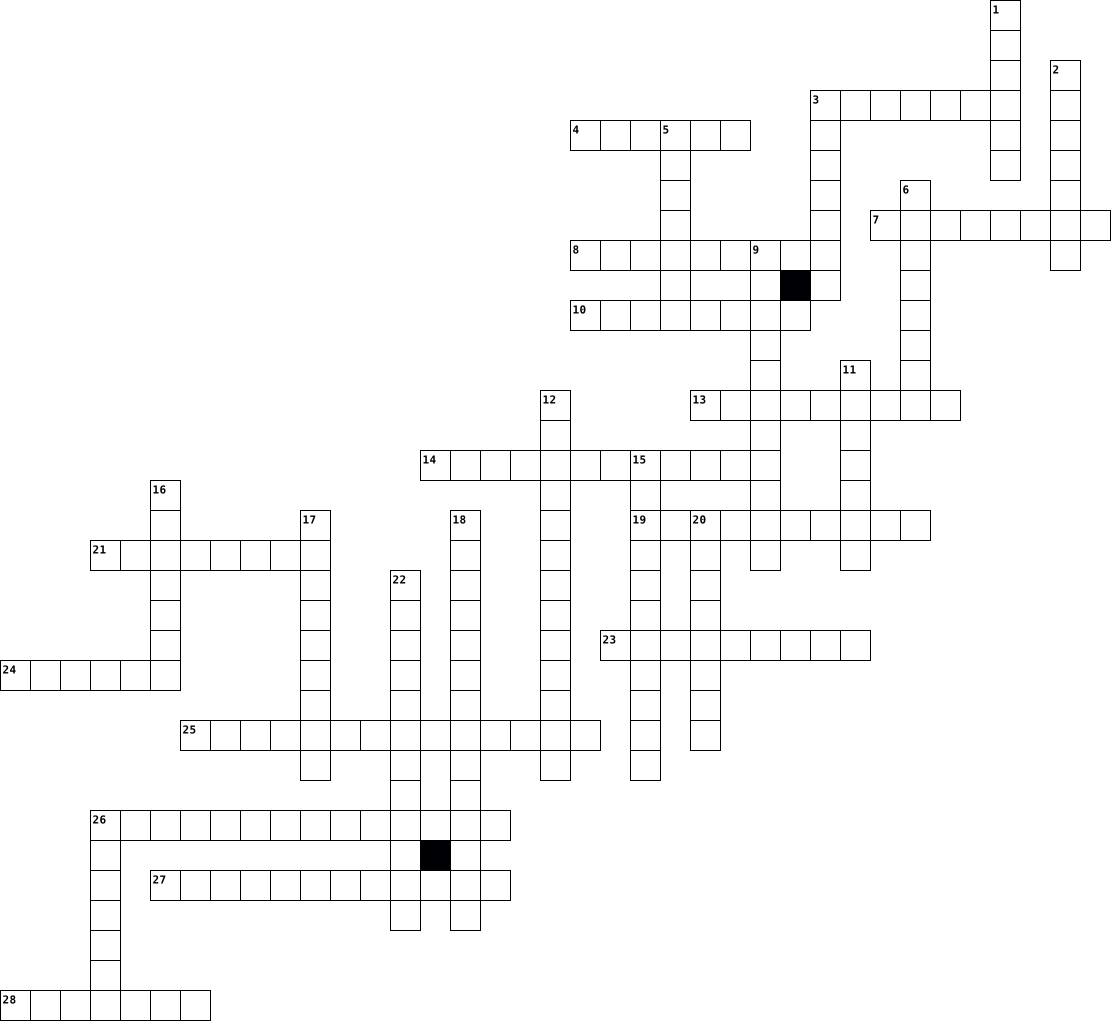
Across
- Many monomers that are linked together
- The chemical group that is attached to the alpha carbon in an amino acid
- Another term used for enzymes
- Only 20 of these are known
- A colorless liquid also known as C3H8O3
- not capable of dissolving
- These are used to provide energy
- A chemical process where water is added to a substance
- This type of sugar can be found in fruits
- This can either be saturated or unsaturated
- A type of protein that is also known as a catalyst
- Multiple sugars that contain hundreds, sometimes even thousands, of monosaccharides that are bonded together
- The most basic unit of carbohydrates, also known as simple sugars
- This type of fat is solid at room temperature
- Cholesterol is the most common of these
Down
- This is an important storage compound in the plant world.
- A disaccharide sugar made up of glucose and galactose and can be found in milk
- A molecule that consists of 2 or more amino acids, creating a short chain.
- Substances that contain carbon-based compounds
- This is an organic compound that has a _________ group
- Heart disease may develop in the system if this is too high
- This sugar is mainly in plants
- A major component of the cell membrane that makes up the bilayers of the membrane
- This chemical reaction occurs when water molecules are lost
- An important source of energy
- Cotton is an example of this.
- This kind of fat is a liquid at room temperature
- This chemical reaction happens when hydrogen bonds are relatively weak
- Two monosaccharides that are chemically bonded together are called this
- The subunits of larger molecules
30 Clues: not capable of dissolving • Only 20 of these are known • Another term used for enzymes • An important source of energy • Cotton is an example of this. • This sugar is mainly in plants • These are used to provide energy • The subunits of larger molecules • Many monomers that are linked together • A colorless liquid also known as C3H8O3 • Cholesterol is the most common of these • ...
Biology 2016-05-09

Across
- vascular tissue that carries water upward from the roots to every part of a plant
- the production of offspring
- a natural resource that can be replaced
- preserved remains or evidence of an ancient organism
- an organism that eats secondary consumers. Also called third level consumers.
- the disappearance of a species when the last of its members dies
- process by which a DNA template is used to produce a single-stranded RNA molecule (occurs in the nucleus)
- a fertilized egg
- when one allele is not completely dominant over the other allele (red flower crossed white flower to produce PINK flower)
- reproductive cells, have only half the number of chromosomes as body cells
- warming that results when solar radiation is trapped by the atmosphere
- an allele that is masked (in the phenotype) when a dominant allele is present
- the continuous process by which water moves from Earth's surface to the atmosphere and back
- the final stage of mitosis or meiosis, during which a nuclear membrane forms around each set of new chromosomes
Down
- a chain of amino acids
- movement of alleles into or out of a population due to the migration of individuals to or from the population
- organism that obtains food by consuming other living things; also called a consumer
- member of a population of genetically identical cells produced from a single cell
- a resource that cannot be reused or replaced easily (ex. gems, iron, copper, fossil fuels)
- process in which mRNA attaches to the ribosome and a protein is assembled
- three-nucleotide sequence on messenger RNA that codes for a single amino acid
- telease of harmful materials into the environment
- the ripened reproductive body of a seed plant. a matured seed
- series of events that cells go through as they grow and divide
- in gymnosperms, a seed-bearing structure
- evidence; information gathered from observations
- random change in allele frequency caused by a series of chance occurrences that cause an allele to become more or less common in a population
- an organism or cell having two sets of chromosomes or twice the haploid number; 2n
28 Clues: a fertilized egg • a chain of amino acids • the production of offspring • a natural resource that can be replaced • in gymnosperms, a seed-bearing structure • evidence; information gathered from observations • telease of harmful materials into the environment • preserved remains or evidence of an ancient organism • ...
Biology 2017-12-13

Across
- Different versions of a cells gene
- Synthesises proteins and have a flat round structure
- A segment of DNA that codes for a particular protein
- The phase of a cell's cycle in which a typical cell spends most of its life
- A unicellular organism that does not have membrane bound organelles
- Image of all chromosomes in the nucleus
- A cell containing 23 chromosomes
- A specialised structure within a living cell
- Forms a protein structure that divides the genetic material in a cell
- Long section of DNA
- A cell containing 46 chromosomes
- An organism's reproductive cells
- The first phase of mitosis
- The control centre of the cell
- It gives the cell its shape, structure and protection
Down
- The building blocks of life
- Programmed cell death
- The division of the nucleus which creates two identical cells
- The second stage of cell division
- Cyclinder shaped organelle, involved in cell division
- The carrier of genetic information
- Any cell of a living organism that is not a reproductive cell
- The final phase of cell division
- The sequence of cells that develop into eggs and sperm
- The part of a chromosome that links sister chromatids
- Any organism with cells with membrane-bound organelles
- All the organisms DNA
- A molecule made up of polymers of amino acids joined together by peptide bonds
- A parent cell making four non identical haploid cells
29 Clues: Long section of DNA • Programmed cell death • All the organisms DNA • The first phase of mitosis • The building blocks of life • The control centre of the cell • The final phase of cell division • A cell containing 23 chromosomes • A cell containing 46 chromosomes • An organism's reproductive cells • The second stage of cell division • Different versions of a cells gene • ...
Biology 2018-01-26

Across
- any cell or organism that possesses a clearly defined nucleus
- the cell that contains DNA
- several structures with specialized functions
- the first phase of of mitosis
- surrounds the cell membrane
- cell type is bacteria
- genetic material of an organism
- the third phase of mitosis
- a small set of microtubles arranged in a specific way
- the phase of the cell cycle in which a typical cell spends most of its life
- 2 sets of chromosomes
- Provide structure for the body
- any cell that makes up an organism, except for reproductive cell
- a small round organelle involved in protein synthesis
- form a protein structure that divides the genetic material in a cell
- the death of cells
Down
- a test to identify and evaluate the size, shape, and number of chromosomes in a sample of body cells
- has 1 round of division
- humans have 23 pairs of these
- the cells used during sexual reproduction to produce a new individual organism or zygote
- the final phase of cell division
- made up of hundreds or thousands of smaller units called amino acids
- DNA
- variant form of a gene
- sequence of DNA
- has 2 rounds of division
- one set of chromosomes
- is a multicellular organism is the population of its bodily cells
- the point of attachment of the Kinetochore
29 Clues: DNA • sequence of DNA • the death of cells • cell type is bacteria • 2 sets of chromosomes • variant form of a gene • one set of chromosomes • has 1 round of division • has 2 rounds of division • the cell that contains DNA • the third phase of mitosis • surrounds the cell membrane • humans have 23 pairs of these • the first phase of of mitosis • Provide structure for the body • ...
Biology 2018-01-26
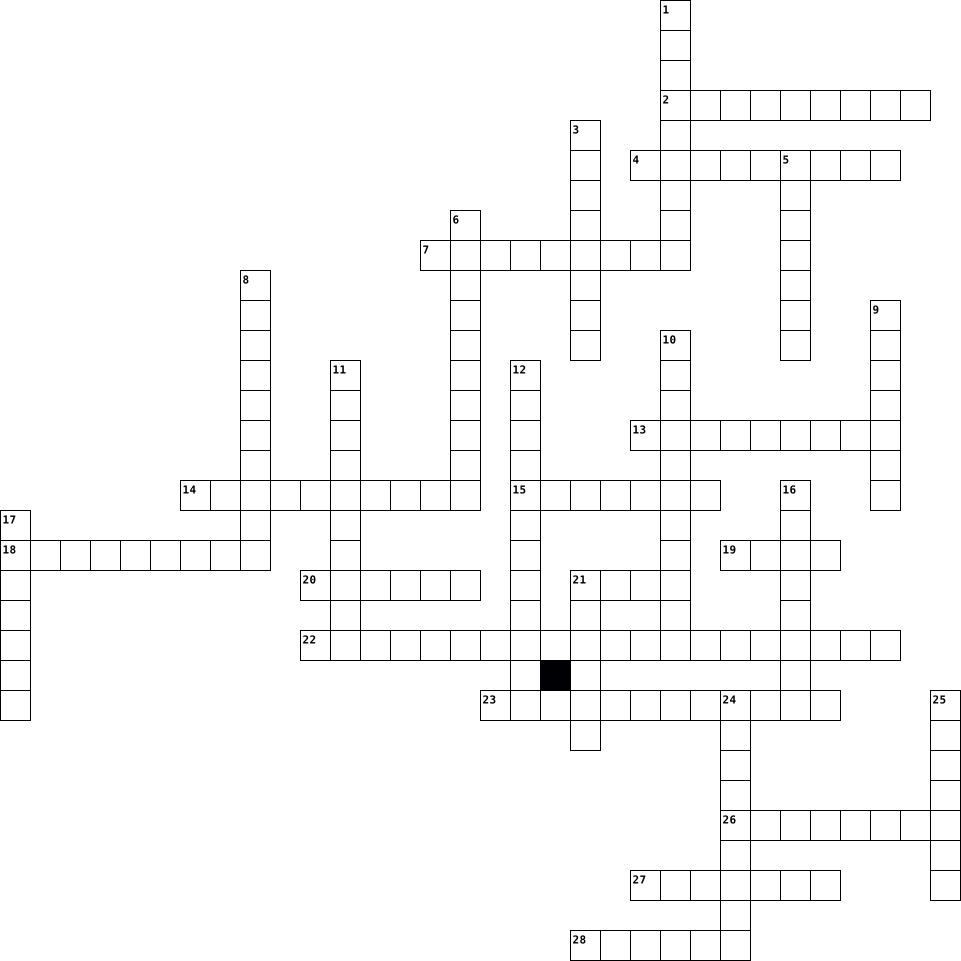
Across
- the death of cells
- the final phase of cell division
- the third phase of mitosis
- a test to identify and evaluate the size, shape, and number of chromosomes in a sample of body cells
- cell type is bacteria
- 2 sets of chromosomes
- any cell or organism that possesses a clearly defined nucleus
- Provide structure for the body
- the cells used during sexual reproduction to produce a new individual organism or zygote
- sequence of DNA
- DNA
- is a multicellular organism is the population of its bodily cells
- a small round organelle involved in protein synthesis
- has 1 round of division
- variant form of a gene
Down
- several structures with specialized functions
- the first phase of of mitosis
- one set of chromosomes
- the point of attachment of the Kinetochore
- humans have 23 pairs of these
- made up of hundreds or thousands of smaller units called amino acids
- any cell that makes up an organism, except for reproductive cell
- the phase of the cell cycle in which a typical cell spends most of its life
- form a protein structure that divides the genetic material in a cell
- surrounds the cell membrane
- has 2 rounds of division
- genetic material of an organism
- a small set of microtubles arranged in a specific way
- the cell that contains DNA
29 Clues: DNA • sequence of DNA • the death of cells • cell type is bacteria • 2 sets of chromosomes • one set of chromosomes • variant form of a gene • has 1 round of division • has 2 rounds of division • the third phase of mitosis • the cell that contains DNA • surrounds the cell membrane • the first phase of of mitosis • humans have 23 pairs of these • Provide structure for the body • ...
Biology 2018-06-21
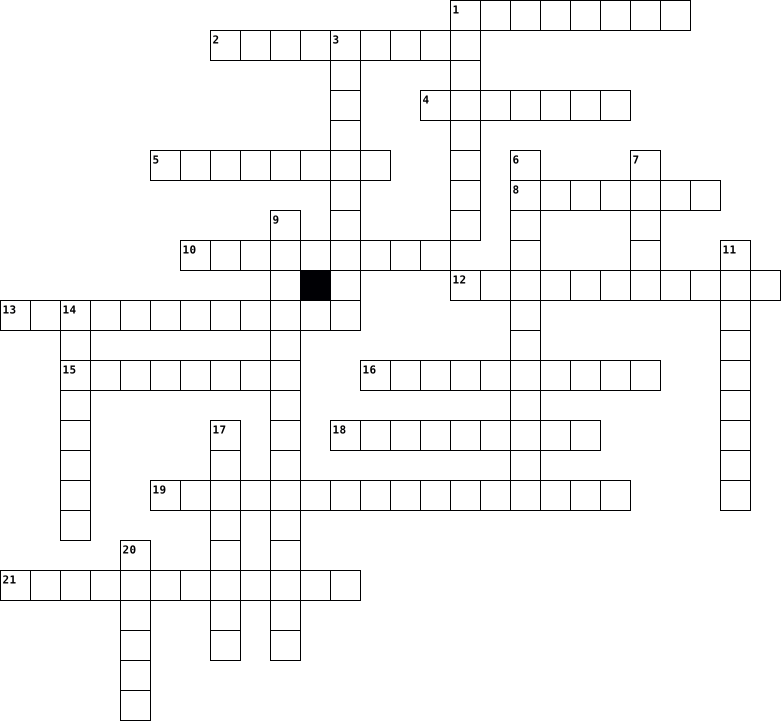
Across
- study of heredity
- external appearance of an organism
- study of animals
- Traits that are expressed
- study of relationship between living and non-living organism
- body chromosomes
- made up of gene located inside the nucleus
- study of bacteria
- naming,growing and classifying living things
- combinations of 2 same alleles
- Study of tissue
- of characteristic from parents to offspring
- study of micro organism
Down
- combination of genes in an organism
- study of organs
- combinations of 2 different alleles
- container of genes
- mating of 2 organism that differs in only one character
- Traits that are hidden
- study of cells
- study of viruses
- Study of plants
22 Clues: study of cells • study of organs • Study of tissue • Study of plants • study of animals • body chromosomes • study of viruses • study of heredity • study of bacteria • container of genes • Traits that are hidden • study of micro organism • Traits that are expressed • combinations of 2 same alleles • external appearance of an organism • combination of genes in an organism • ...
Biology 2022-04-01

Across
- energy sources like sugars
- segment of DNA that codes for a protein
- is produce 2 identical daughter cells
- fats and oils also store extra energy
- how gametes are made
- allele combination for a gene
- carries out photosynthesis
- No nucleus and are very simple
- all the same species living in a area
- one strand and starts in the nucleus and leaves
- Have a nucleus and organelles
- different forms of A gene
Down
- two strands and stays in the nucleus
- makes protein
- community of living things plus non-living
- pass good genes to their offspring
- break down glucose to release energy
- all living things living in a area
- makes an identical copy of an organism
- building blocks of body
- contains DNA in Eukaryotes
- extra protein around plant
- that speed up reactions in body
23 Clues: makes protein • how gametes are made • building blocks of body • different forms of A gene • energy sources like sugars • carries out photosynthesis • contains DNA in Eukaryotes • extra protein around plant • allele combination for a gene • Have a nucleus and organelles • No nucleus and are very simple • that speed up reactions in body • pass good genes to their offspring • ...
Biology 2021-12-07

Across
- What does water have to pass through in osmosis?
- How many bases code for one amino acid?
- What are cell walls made from?
- What is produced in anaerobic respiration in animals?
- The substrate fits into the enzyme's _____ _______.
- In active transport, particles have to pass through a ______ _________.
- Name the pigment which absorbs light for photosynthesis.
- Where in a cell does respiration take place?
- Add ________'s reagent to test for protein.
- What gas is produced in anaerobic respiration in yeast?
- Where in a cell are proteins synthesised?
- Which gas diffuses into the blood at the alvoli?
- An enzyme __________ at temperatures above its optimum.
Down
- How do plants store glucose?
- What do we call a plant cell that water has moved into by osmosis?
- Which stage of protein synthesis occurs in the nucleus?
- What do we call an animal cell that water has moved out of by osmosis?
- Name the monomers of protein
- Add _________ to test for starch
- Lipids are broken down into fatty acids and _________.
- Name the monomer of DNA
21 Clues: Name the monomer of DNA • How do plants store glucose? • Name the monomers of protein • What are cell walls made from? • Add _________ to test for starch • How many bases code for one amino acid? • Where in a cell are proteins synthesised? • Add ________'s reagent to test for protein. • Where in a cell does respiration take place? • ...
Biology 2021-12-03
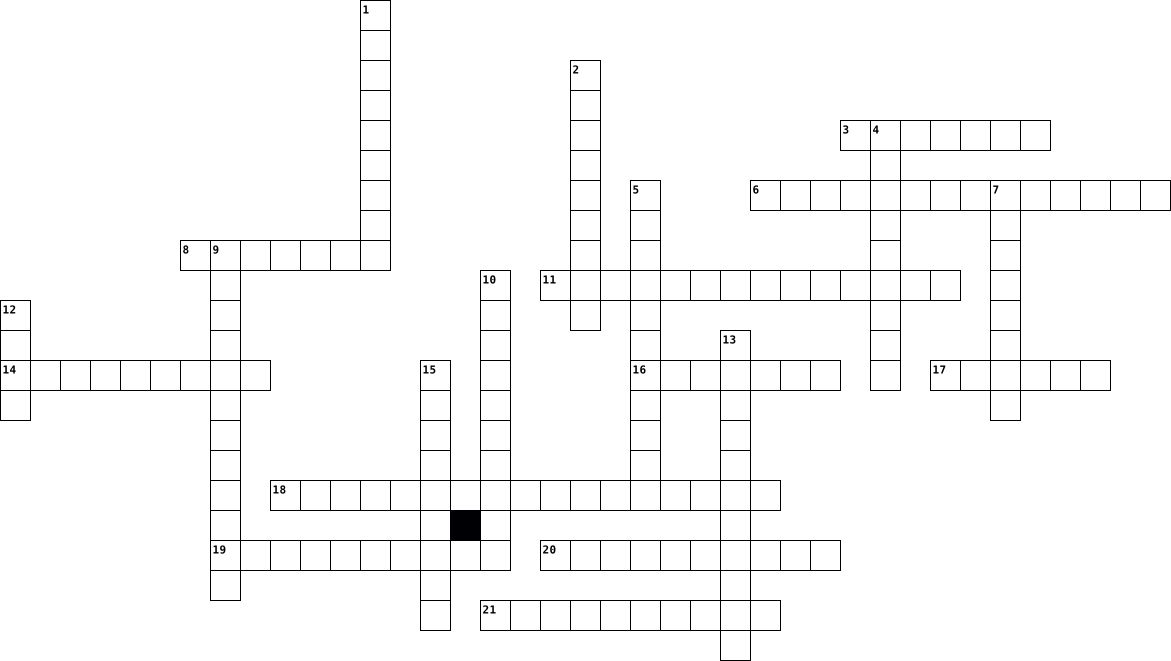
Across
- orgs. that are of the same kind
- the species that first colonize new habitats created by disturbance
- deals with the relations of organisms to one another and to their physical surrounding
- limits the reaction rate in any physiological process governed by many variables
- a biological community of interacting orgs.
- physical rather than biological
- relating to or resulting from living things
- the number of orgs. per unit of area
- the process by which a plant or animal community successively gives way to another until a stable climax is reached
- one benefits and the other is harmed
- all the inhabitants of a particular area
Down
- a group of people living in the same place
- interaction between two different organisms living in close physical association, typically to the advantage of both
- the preying of one animal on others
- the action of coming to live permanently in a foreign country
- an animal that naturally preys on others
- one benefits and the other derives neither benefit nor harm
- the act of leaving one's own country to settle permanently in another
- an animal that is hunted and killed by another for food
- interaction between organisms, populations, or species, in which birth, growth and death depend on gaining a share of a limited environmental resource
- symbiosis that is beneficial to both organisms involved
21 Clues: orgs. that are of the same kind • physical rather than biological • the preying of one animal on others • the number of orgs. per unit of area • one benefits and the other is harmed • an animal that naturally preys on others • all the inhabitants of a particular area • a group of people living in the same place • a biological community of interacting orgs. • ...
Biology 2021-11-22

Across
- Proses pembentukan atau penyusunan
- Daun biji/daun lembaga
- Tempat berlangsungnya proses fotosintesis
- Apa itu H2O
- Zat yang kaya akan energi dan berfungsi sebagai energi utama untuk proses metabolisme tubuh
- Salah satu faktor reaksi fotosintesis
- bagian tubuh yang berfungsi memisahkan produk bagian metabolisme dalam darah
- Proses perombakan atau penguraiaan senyawa atau molekul yang kompleks menjadi senyawa atau molekul sederhana
- tumbuhan
- Contoh dari penguraiaan molekul kompleks menjadi molekul sederhana
- Bahan dasar respirasi
- Senyawa berenergi tinggi yang diperoleh melalu proses respirasi seluler
- Senyawa organik yang mempercepat suatu reaksi kimia
- Bagian tumbuhan di atas tanah atau perkecambahan yang di tandai dengan bagian hipokotil terangkat ke permukaan tanah
- Media tanam bagi tanaman dan menyediakan makanan, unsur hara dan garam mineral
- Keseluruhan proses kimiawi suatu organisme atau makhluk hidup
- Enzim dalam darah yang berfungsi membekukan darah
Down
- Tempat berlangsungnya proses glikolisis
- Senyawa kimia hasil dari metabolisme glukosa yang disebut glikosisis
- Orang tubuh yang menghasilkan enzim pencernaan
- Dalam glikolisis dihasilkan 4 molekul ATP untuk setiap satu molekul glukosa. Dua molekul ATP diantarnya digunakan dalam reaksi
- sederhana menjadi molekul yang lebih kompleks
- Bahasa Yunani “metabole”
- Enzim pencernaan yang bertugas untuk memecah protein dalam makanan menjadi asam amino
- Pucuk lembaga/calon batang
- pembuangan hasil sisa metabolisme yang tidak dibutuhkan oleh tubuh
- Memecah Zat pati (karbohidrat) menjadi gula (glukosa) dan bekerja di luar sel
- salah satu enzim yang terdapat dalam ragi
- enzim amilase yang terdapat di dalam ludah
- Proses penyerapan air oleh biji sehingga beratnya bertambah
- Suatu keadaan bertambah panjangnya suatu tanaman karena kekurangan cahaya dalam pertumbuhannya
31 Clues: tumbuhan • Apa itu H2O • Bahan dasar respirasi • Daun biji/daun lembaga • Bahasa Yunani “metabole” • Pucuk lembaga/calon batang • Proses pembentukan atau penyusunan • Salah satu faktor reaksi fotosintesis • Tempat berlangsungnya proses glikolisis • Tempat berlangsungnya proses fotosintesis • salah satu enzim yang terdapat dalam ragi • enzim amilase yang terdapat di dalam ludah • ...
Biology 2022-01-04

Across
- Occurs when the F1 hybrid's phenotype is a blend of the characteristics of both parents.
- Mitosis is necessary for _____.
- The process by which a cell divides into two new daughter cells.
- The use of compounds against cancer is known as ______.
- The division of all cell parts besides the DNA.
- The process by which a cell makes a copy of its DNA prior to dividing.
- Mitosis results in genetically _____ daughter cells.
- Cells that can become more than one type of cell.
- The process of making proteins from mRNA.
- A cell with half of the genetic information of the original cell.
- Amino acids are dropped off until a ________ is encountered.
- Both alleles are expressed; neither one is dominant over the other.
Down
- During what phase of the Cell Cycle does the cell do most of its growing, increasing in size and making new proteins and organelles?
- Different genes get sorted into gametes independently of one another.
- A permanent change in the nitrogen base sequence of a gene.
- What are the two parts of tRNA?
- During _______, a cell becomes specialized and can no longer become any type of body cell.
- A disorder in which body cells lose the ability to control cell division.
- A cell with the full set of genetic information of the original cell
- The condensed forms of DNA.
20 Clues: The condensed forms of DNA. • Mitosis is necessary for _____. • What are the two parts of tRNA? • The process of making proteins from mRNA. • The division of all cell parts besides the DNA. • Cells that can become more than one type of cell. • Mitosis results in genetically _____ daughter cells. • The use of compounds against cancer is known as ______. • ...
biology 2022-01-14

Across
- a compound which is one of the four constituent bases of nucleic acids
- basic building block of nucleic acids
- the basic physical unit of inheritance
- of the structure of a DNA molecule
- bond-an intermolecular force
- a substance that is insoluble in water and soluble in alcohol, ether, and chloroform
- organism that lacks a distinct nucleus and other organelles due to the absence of internal membranes
- up of chemical 'building blocks' called amino acids
- compound that occurs in guano and fish scales
- the interatomic linkage that results from the sharing of an electron pair between two atoms
- a sequence of three nucleotides which together form a unit of genetic code
Down
- a single set of unpaired chromosomes
- A form of phosphoric acid
- to the body
- mature haploid male or female germ cell
- containing two complete sets of chromosomes-a threadlike structure of nucleic acids and protein found in the nucleus
- acid- molecules that combine to form proteins
- sugar derived from ribose
- whose cells have a nucleus enclosed within a nuclear envelope
- one of four chemical bases in DNA
- a biological catalyst
- simple sugar and carbohydrate
- helix-description of the structure of a DNA molecule
- is a nucleotide
- minute particle consisting of RNA and associated proteins
25 Clues: to the body • is a nucleotide • a biological catalyst • A form of phosphoric acid • sugar derived from ribose • bond-an intermolecular force • simple sugar and carbohydrate • one of four chemical bases in DNA • of the structure of a DNA molecule • a single set of unpaired chromosomes • basic building block of nucleic acids • the basic physical unit of inheritance • ...
Biology 2022-01-31

Across
- an organism causing disease to its host
- an infectious agent that can only replicate within a host organism
- microscopic organisms
- close ecological relationship between the individuals of two different species
- organism that breaks down dead organic material
- a substance that causes your immune system to fight against it
- a classification system
- most widely used method of generating phylogenetic trees
- having a high degree of resistance to an illness or disease
- chemical substance produced by a living organism,
- origin of the chroloplast and mitochondria
Down
- proteins produced by the body's immune system
- asexual reproduction by a separation of the body into two new bodies
- part of the body's immune system
- any member of a group of diverse eukaryotic any cell or organism that possesses a clearly defined nucleus
- small single-celled organisms.
- the science of naming, describing and classifying organisms
- any organism that lacks a distinct nucleus and other organelles due to the absence of internal membranes
- containing multiple cells
- medicine that trains the body's immune system so that it can fight a disease it has not come into contact with before.
- occurs when a large portion of a community (the herd) becomes immune to a disease, making the spread of disease from person to person unlikely
21 Clues: microscopic organisms • a classification system • containing multiple cells • small single-celled organisms. • part of the body's immune system • an organism causing disease to its host • origin of the chroloplast and mitochondria • proteins produced by the body's immune system • organism that breaks down dead organic material • ...
Biology 2023-08-22

Across
- Organic compounds providing energy through sugar, starch, and fiber consumption.
- Reaction releases heat, often feeling warm or hot.
- energy required to initiate a chemical reaction.
- Double sugar molecule formed by two monosaccharides through bonding.
- Organic compounds, the building blocks of proteins, essential for diverse biological functions.
- Single sugar molecule, fundamental unit for carbohydrates, energy source in cells.
- Essential biomolecule, diverse functions, composed of amino acids, crucial for life's processes.
- Building block of lipids, vital for energy storage and cellular structure.
Down
- Fats with double bonds, healthier than saturated fats, found in plant oils.
- Study of living organisms and processes.
- Complex carbohydrate formed from linked sugar molecules.
- Catalyst speeding up biochemical reactions.
- Acid Genetic information storage and transmission molecules.
- sweet, soluble carbohydrate, energy source, building block for complex molecules in organisms.
- serve as energy sources, insulation, and components of cell membranes.
- Endothermic reactions absorb heat, becoming cooler, often feeling cold to touch.
- Reactant acted upon by enzyme in biochemical reactions.
- Molecular unit comprising a base, sugar, and phosphate in nucleic acids.
- Three-carbon molecule in lipid structures.
- refer to saturated fats, meaning they have no double bonds between carbon atoms in their fatty acid chains.
20 Clues: Study of living organisms and processes. • Three-carbon molecule in lipid structures. • Catalyst speeding up biochemical reactions. • energy required to initiate a chemical reaction. • Reaction releases heat, often feeling warm or hot. • Reactant acted upon by enzyme in biochemical reactions. • Complex carbohydrate formed from linked sugar molecules. • ...
biology 2023-09-26

Across
- Respiration: The process by which cells break down glucose and other organic molecules to produce energy in the form of ATP.
- The study of the interactions between organisms and their environment.
- The process of cell division that reduces the chromosome number by half, leading to the formation of gametes (sperm and egg cells).
- Chemical messengers produced by glands that regulate various physiological processes in the body.
- The variety of life forms and species in a particular habitat, ecosystem, or the entire planet.
- A group of individuals that can interbreed and produce fertile offspring in nature, sharing common characteristics.
- The process of cell division that results in the production of two identical daughter cells, used for growth and repair.
- The science of classifying and naming living organisms based on their shared characteristics and evolutionary relationships.
- A trait or characteristic that enhances an organism's survival and reproduction in a specific environment.
- The process by which species change over time through the accumulation of genetic variations and adaptations.
- A permanent change in the DNA sequence of an organism, which can lead to genetic diversity.
Down
- The process of creating genetically identical organisms or cells through asexual reproduction.
- The complete set of an organism's genetic material, including all of its genes.
- Variation: Differences in the genetic makeup of individuals within a population, which is crucial for evolution and adaptation.
- A community of living organisms (biotic) interacting with their physical (abiotic) environment.
- The process by which green plants and some other organisms convert sunlight into chemical energy in the form of glucose, releasing oxygen as a byproduct.
- The basic structural and functional unit of all living organisms.
- The ability of an organism to resist or defend against infections and diseases.
- A molecule that carries genetic information and is responsible for the inheritance of traits in living organisms.
- A biological catalyst that speeds up chemical reactions in living organisms.
20 Clues: The basic structural and functional unit of all living organisms. • The study of the interactions between organisms and their environment. • A biological catalyst that speeds up chemical reactions in living organisms. • The complete set of an organism's genetic material, including all of its genes. • ...
biology 2023-09-26

Across
- Respiration: The process by which cells break down glucose and other organic molecules to produce energy in the form of ATP.
- The study of the interactions between organisms and their environment.
- The process of cell division that reduces the chromosome number by half, leading to the formation of gametes (sperm and egg cells).
- Chemical messengers produced by glands that regulate various physiological processes in the body.
- The variety of life forms and species in a particular habitat, ecosystem, or the entire planet.
- A group of individuals that can interbreed and produce fertile offspring in nature, sharing common characteristics.
- The process of cell division that results in the production of two identical daughter cells, used for growth and repair.
- The science of classifying and naming living organisms based on their shared characteristics and evolutionary relationships.
- A trait or characteristic that enhances an organism's survival and reproduction in a specific environment.
- The process by which species change over time through the accumulation of genetic variations and adaptations.
- A permanent change in the DNA sequence of an organism, which can lead to genetic diversity.
Down
- The process of creating genetically identical organisms or cells through asexual reproduction.
- The complete set of an organism's genetic material, including all of its genes.
- Variation: Differences in the genetic makeup of individuals within a population, which is crucial for evolution and adaptation.
- A community of living organisms (biotic) interacting with their physical (abiotic) environment.
- The process by which green plants and some other organisms convert sunlight into chemical energy in the form of glucose, releasing oxygen as a byproduct.
- The basic structural and functional unit of all living organisms.
- The ability of an organism to resist or defend against infections and diseases.
- A molecule that carries genetic information and is responsible for the inheritance of traits in living organisms.
- A biological catalyst that speeds up chemical reactions in living organisms.
20 Clues: The basic structural and functional unit of all living organisms. • The study of the interactions between organisms and their environment. • A biological catalyst that speeds up chemical reactions in living organisms. • The complete set of an organism's genetic material, including all of its genes. • ...
Biology 2023-09-14

Across
- No nucleus
- er No ribosomes
- Fluid outside of the nucleus
- Acts as the cells skeleton
- membrane Semipermeable
- Diffusion of water
- Stores material needed by the cell
- Make protein
- transport Energy required
Down
- Has nucleus
- er Has ribosomes
- Site of photosynthesis
- Organ system for locomotion
- Makes ATP
- Full of enzymes
- Control center
- Movement of solutes from high-low concentration
- body Packages proteins into vesicles
- Organ system for obtaining nutrients
- transport No energy required
20 Clues: Makes ATP • No nucleus • Has nucleus • Make protein • Control center • er No ribosomes • Full of enzymes • er Has ribosomes • Diffusion of water • Site of photosynthesis • membrane Semipermeable • transport Energy required • Acts as the cells skeleton • Organ system for locomotion • Fluid outside of the nucleus • transport No energy required • Stores material needed by the cell • ...
BIOLOGY 2023-09-13

Across
- life on other planets
- blood
- lizards, reptiles, snakes
- the study of plants
- in this field scientists would study Covid
- biology evolution
- how the body responds to injury
- mushroom and fungi
- microorganisms
- the classification of living things
- how a body responds to disease
- functions in organisms
Down
- the study of body structures
- the study of cells
- the study of insects
- hawks, eagles, chickens, cranes
- fishes
- the brain and the nervous system
- ancient life
- how organisms interact with the environment
- trees and shrubs
- genes and heredity
- chemical reactions in organisms
- a study of the animal kingdom
24 Clues: blood • fishes • ancient life • microorganisms • trees and shrubs • biology evolution • the study of cells • genes and heredity • mushroom and fungi • the study of plants • the study of insects • life on other planets • functions in organisms • lizards, reptiles, snakes • the study of body structures • a study of the animal kingdom • how a body responds to disease • hawks, eagles, chickens, cranes • ...
Biology 2023-10-24

Across
- Pengeluaran zat zat sisa pencernaan makanan.
- Enzim pankreas yang menghidrolisis lemak menjadi asam lemak dan gliserol.
- Senyawa yang terkandung dalam serat makanan.
- Kelenjar yang terletak di rahang bawah.
- Zat gizi untuk pertumbuhan dan pengganti sel sel rusak.
- Gigi Yang digunakan untuk merobek makanan.
- Jenis zat yang mampu memproduksi energi dalam satuan berat setara.
- Jenis zat makanan yang diuraikan enzim amilase.
- Organ penghasil empedu.
- Kelainan pencernaan, dimana feses terlalu keras.
Down
- Bagian usus besar yang arahnya naik.
- Lapisan luar akar gigi yang berbatasan dengan tulang rahang.
- Kelenjar terkecil dari kelenjar ludah.
- Organ pencernaan yang terletak di atas sisi perut bagian kiri dan terhubung dengan usus halus.
- Bagian usus yang menghubungkan ileum.
- Bagian usus halus yang pertama.
- Kelenjar ludah disebut.
- Gerakan yang dilakukan usus saat mendorong makanan.
- Zat yang membantu pencernaan secara kimiawi.
- Mineral untuk pertumbuhan tulang dan gigi.
20 Clues: Kelenjar ludah disebut. • Organ penghasil empedu. • Bagian usus halus yang pertama. • Bagian usus besar yang arahnya naik. • Bagian usus yang menghubungkan ileum. • Kelenjar terkecil dari kelenjar ludah. • Kelenjar yang terletak di rahang bawah. • Gigi Yang digunakan untuk merobek makanan. • Mineral untuk pertumbuhan tulang dan gigi. • ...
biology 2023-11-21

Across
- second biggest classification of life
- the thing all life strives for
- organized DNA
- the place where proteins are built
- fills the empty space inside cells
- Taxis
- a segment of DNA
- holds all code for an organism
- one of the oldest forms of life
- basic cells
- made up of amino acids
- complex cells
- the basic unit of life
- the standard of which an organism burns calories
- apple-tree car-garage
- sun into energy.
Down
- a scientific idea
- h2o
- delivers protein instructions
- the building blocks of protein
- the organ that is the control station
- holds dna
- the recyclers of the planet
- testing an idea
- the study of life.
- Ms.tanner's favorite form of life
- cellular energy
27 Clues: h2o • Taxis • holds dna • basic cells • organized DNA • complex cells • testing an idea • cellular energy • a segment of DNA • sun into energy. • a scientific idea • the study of life. • apple-tree car-garage • made up of amino acids • the basic unit of life • the recyclers of the planet • delivers protein instructions • the thing all life strives for • the building blocks of protein • ...
Biology 2023-11-29

Across
- mouth directed downward
- are lemurs, tarsiers, and lorises
- Clams, oysters, scallops, and mussels
- Dorsal supporting rod
- Octopuses, squids, and nautiluses
- out of water using pores and collar cell microvilli
- are barnacles, shrimp, lobsters, crabs, crayfish, and pill bugs
- internal organs
- Oral sucker and at least one other sucker for attachment
- brain, eyespots, and chemosensitive organs on the auricles
- well-developed senses enable sharks and rays to detect prey
- enable female to feed young without leaving them to find food
- few setae per segment
- repeating body units Well-developed nervous system
- collects waste and excretes it through an opening in the body wall
- various modifications
- is free-swimming filter feeder with bilateral symmetry
- To be a hominin, must have anatomy suitable for standing erect and walking on two feet
- body cavity
- are invertebrate chordates and found in shallow water and partially buried in sand
- one pair of appendages per segment
- no body cavity
- fins supported by bony spikes
- radial versus bilateral
- Nudibranchs, conchs, and snails, and are Herbivores or carnivores
- have many setae per segment
Down
- jointed vertebrate limbs
- are spiders, scorpions, ticks, mites, and harvestmen
- envelopes but does not enclose visceral mass
- generate internal heat
- body cavity incompletely lined with mesoderm
- leads to specialization
- animal is organized circularly.
- tonguelike with many teeth
- provides insulation against heat loss
- are monkeys, apes, and humans
- spiders, scorpions, ticks, mites, and harvestmen
- multicellularity
- not all body parts change at the same rate.
- body temperature matches the outside environment
- body cavity completely lined with mesoderm
- mouth directed upward from substrate
- how many chambered heart (amphibians)
- has brain and ventral nerve cord
- study of insects adapted to active life on land
- can be seen externally in rings encircling body of earthworm
- two pairs of appendages per segment
- animal has right and left halves.
- Annelids concluded what
- made of chitin, must be molted
50 Clues: body cavity • no body cavity • internal organs • multicellularity • Dorsal supporting rod • few setae per segment • various modifications • generate internal heat • mouth directed downward • leads to specialization • Annelids concluded what • radial versus bilateral • jointed vertebrate limbs • tonguelike with many teeth • have many setae per segment • are monkeys, apes, and humans • ...
BIOLOGY 2023-11-13

Across
- An organic compound composed of carbon, hydrogen, and oxygen.
- Fatty compounds that perform a variety of functions in your body.
- Needed for the diet/Not made in the body.
- A type of carbohydrate with a simple sugar structure.
- A simple sugar that serves as a building block for carbohydrates.
- A carbohydrate made up of multiple simple sugar units.
- A carbohydrate that consists of two simple sugar molecules.
- Proteins that act as biological catalysts, speeding up chemical reactions.
- Proteins that protect you when an unwanted substance enters your body.
- The primary energy storage molecule in animals.
Down
- Is a three-carbon alcohol with three hydroxyl groups attached to each carbon.
- Serves as chemical messengers.
- Protein that transports substances to cells.
- The primary storage form of carbohydrates in animals.
- A type of lipid that is a major component of cell membranes.
- Not needed for diet/can be made in the body.
- structure The specific sequence of amino acids in a protein.
- acids The building blocks of proteins.
- Protein that helps form cell parts.
- Large molecules composed of amino acids, often with structural and enzymatic roles.
20 Clues: Serves as chemical messengers. • Protein that helps form cell parts. • acids The building blocks of proteins. • Needed for the diet/Not made in the body. • Protein that transports substances to cells. • Not needed for diet/can be made in the body. • The primary energy storage molecule in animals. • The primary storage form of carbohydrates in animals. • ...
Biology 2024-02-22

Across
- studies fossils
- multicellular embryo
- Related Genes
- Outer layer
- Diagram
- Adapting
- Eliminated
- Fertilized egg
- study of formation
Down
- Mutation Rate
- Early Embryo
- Affects evolution
- Middle layer
- Mouth Develops First
- Reproductive Success
- Innermost layer
- Populations evolve
- Fossil Ages
- educated guess
- Second mouth
20 Clues: Diagram • Adapting • Eliminated • Outer layer • Fossil Ages • Early Embryo • Middle layer • Second mouth • Mutation Rate • Related Genes • educated guess • Fertilized egg • studies fossils • Innermost layer • Affects evolution • Populations evolve • study of formation • multicellular embryo • Mouth Develops First • Reproductive Success