
verbs Crossword Puzzles
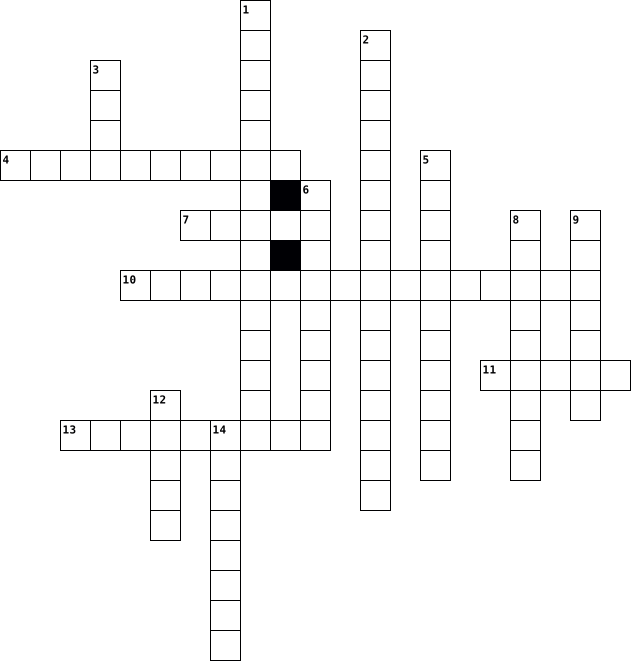
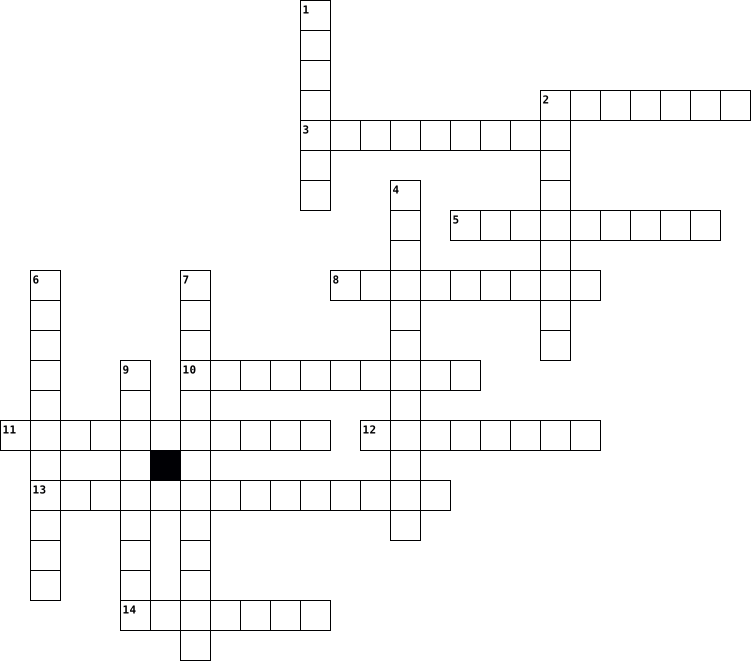
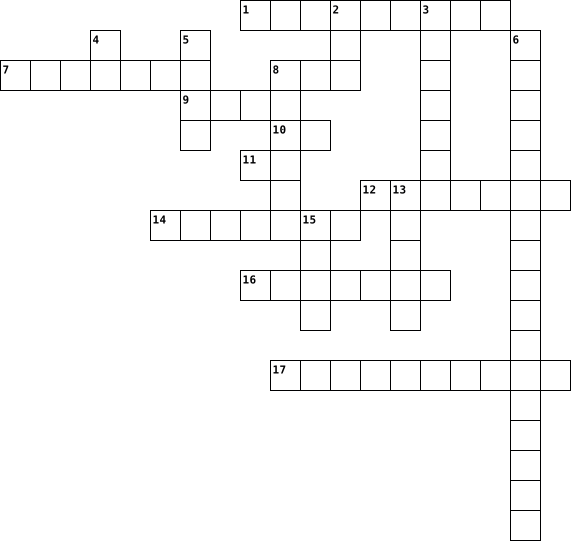
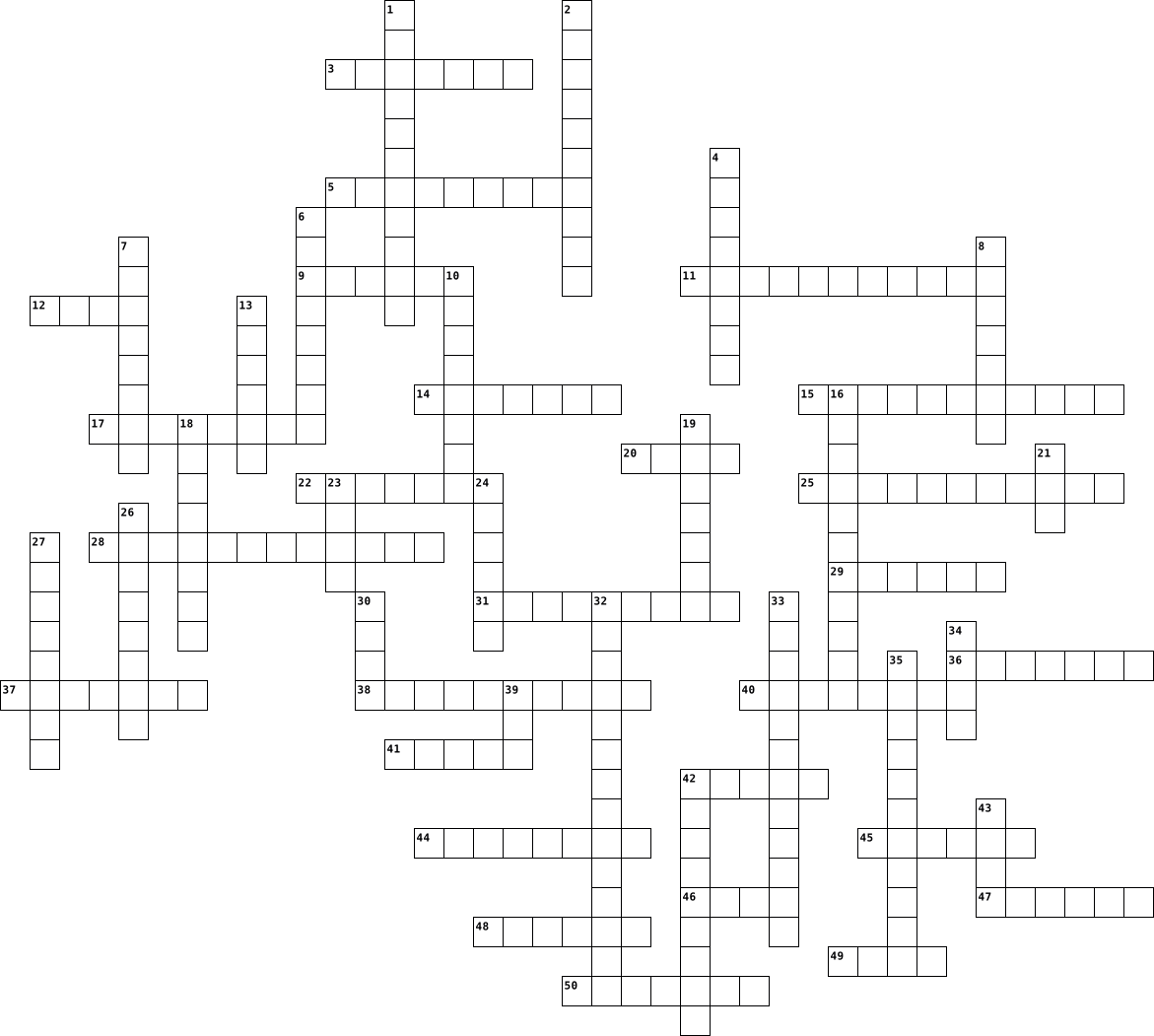
Section 1 Review 2022-09-28
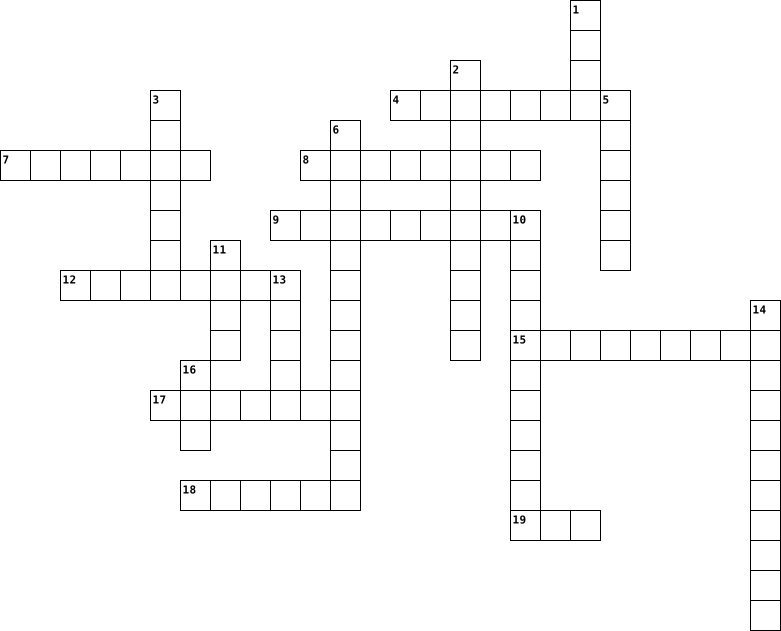
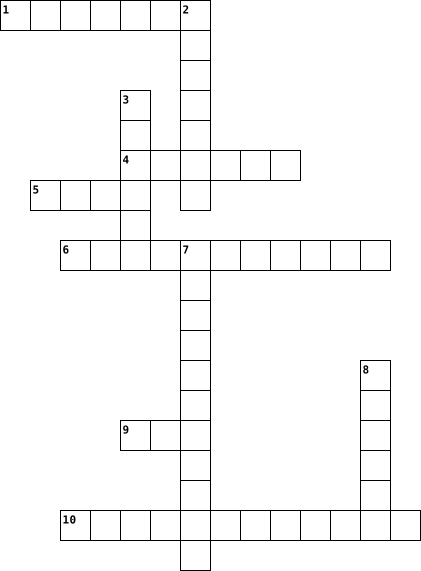
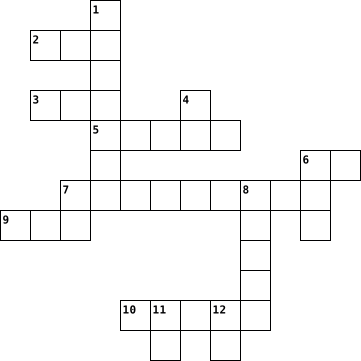
Across
- A blank subject is made up of two or more subjects that share the same verb.
- Blank verbs help main verbs express an action or show time.
- A blank object is a word or group of words that tells to whom or what the action is performed.
- The complete blank includes the verb and all the words that complete the verb’s meaning.
- A sentence blank is a part of a sentence that is written as if it were a complete sentence.
- A predicate blank follows a linking verb and describes a quality of the subject.
- The complete blank includes all the words that tell whom or what the sentence is about.
- A verb blank is made up of the main verb and one or more helping verbs.
- The subject of a command is usually.
Down
- A predicate blank follows a linking verb and defines or renames the subject.
- What kind of sentence is a command?
- Subject complements always follow blank verbs
- A blank object is a word or group of words that names the receiver of an action.
- What kind of sentence is a question?
- What kind of sentence shows strong feeling and ends in an exclamation point?
- A blank is a word used to express an action, a condition, or a state of being.
- In some sentences beginning with here or blank subjects follow verbs.
- What kind of sentence makes a statement and ends in a period?
- on A blank sentence consists of two or more sentences written as though they were a single sentence.
19 Clues: What kind of sentence is a command? • What kind of sentence is a question? • The subject of a command is usually. • Subject complements always follow blank verbs • Blank verbs help main verbs express an action or show time. • What kind of sentence makes a statement and ends in a period? • In some sentences beginning with here or blank subjects follow verbs. • ...
OMG 2025-05-16

Across
- verbs like ran, ate, loved, slept
- verbs like will run, will eat, will love, will sleep
- the type of noun that gets capitalized
- like a period and a comma combined
- the characters AND setting
- the genre that uses a plot diagram
- the lesson learned at the end of a story
- verbs like running, eating, loving, sleeping
Down
- the punctuation mark that shows possession
- NOT called "rising action"...
- called "coordinating conjunctions" they get COMMAS right before them
- like a sentence, but for poetry
- either positive negative or neutral
- a story told using I, me, or My
- either persuade, inform or criticize
- how many words can you use to annotate
- like a paragraph, but for poetry
17 Clues: the characters AND setting • NOT called "rising action"... • like a sentence, but for poetry • a story told using I, me, or My • like a paragraph, but for poetry • verbs like ran, ate, loved, slept • like a period and a comma combined • the genre that uses a plot diagram • either positive negative or neutral • either persuade, inform or criticize • ...
Recall 2018-07-30
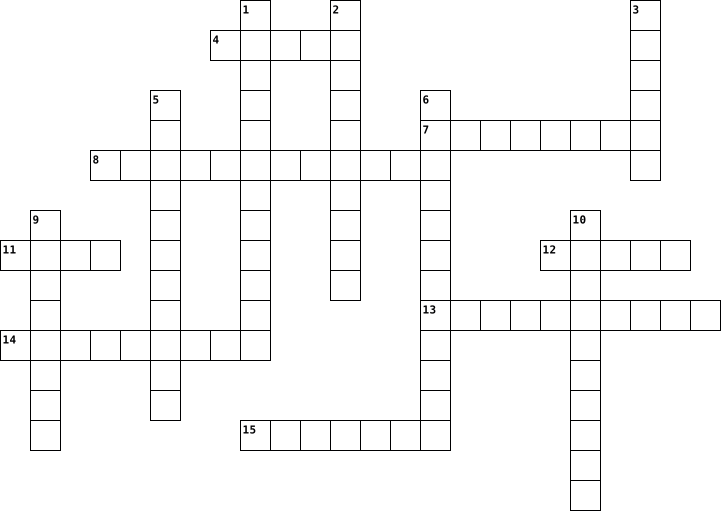
Across
- morphemes that cannot stand alone
- pronouns have the same forms as other kinds of pronouns, but are used differently
- verbs that do not require a noun phrase
- morphemes that can stand alone
- words that convey action, a state of being, or existence
- verbs that take a noun phrase after them
- meaningful elements in a word
- words that modify verbs, adjectives, or other adverbs
Down
- words that link other words, phrases, or clauses in a sentence
- words that describe nouns and pronouns
- term used to cover singular and plural
- a modifying word that determines the kind of reference a noun or noun group has
- words that link nouns or pronouns to other words within a sentence
- words that replace a noun that has already been mentioned
- process that transform a word into another word that has a related meaning
15 Clues: meaningful elements in a word • morphemes that can stand alone • morphemes that cannot stand alone • words that describe nouns and pronouns • term used to cover singular and plural • verbs that do not require a noun phrase • verbs that take a noun phrase after them • words that modify verbs, adjectives, or other adverbs • ...
Aisha Qurrotu A'yunina 2023-10-27
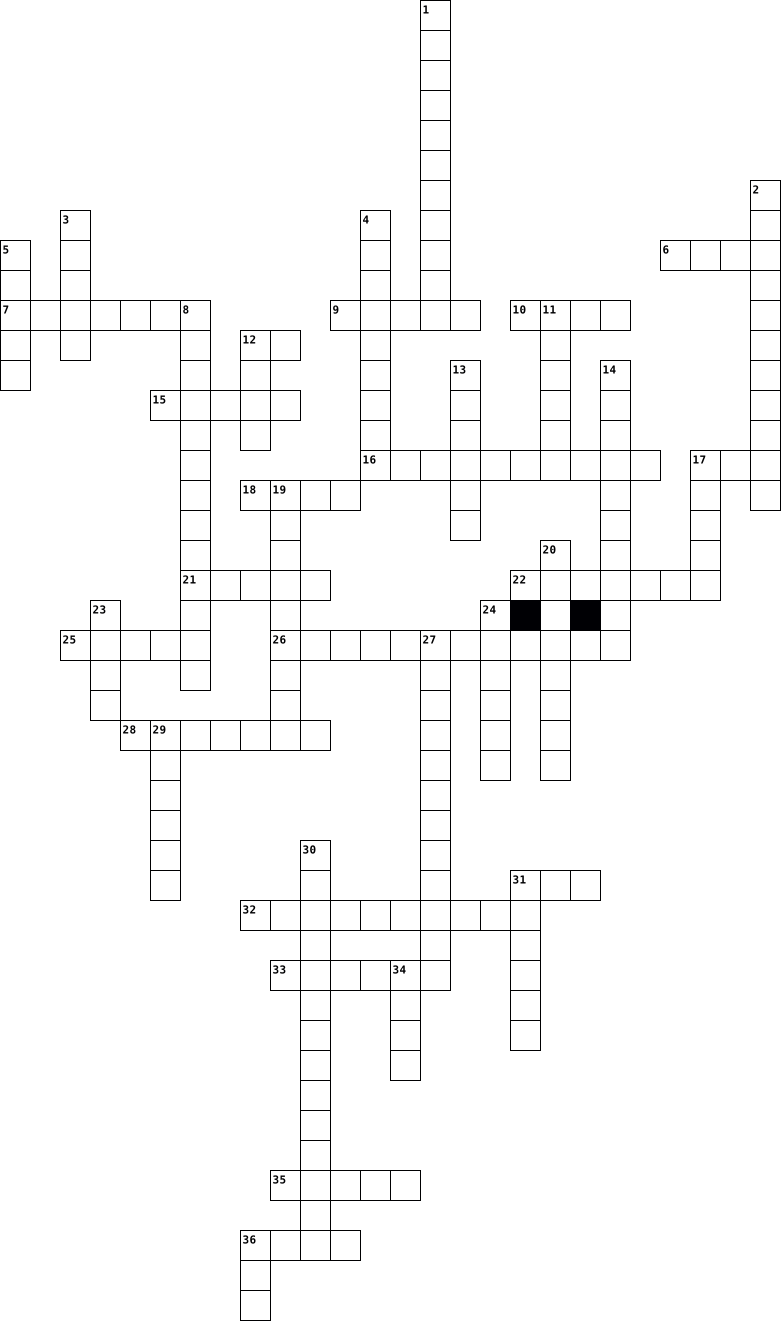
Across
- If the product had (be)....successful
- Conditional sentence type 2 also called....
- Reason why an event happens
- She would (passed)....the test if she studied hard
- You're....late
- I love reading....I was little
- Give more information but doesn't define....
- He likes the singer....is singing jazz song
- Conditional sentence type 3 also called....
- Used for unreal/hypothetical situations in the past....
- I stayed at home....it was raining
- The building....she lives is new
- Used to express the purpose of something....
- If you freeze water, it (became)....a solid
- If I give you money, your mood will (gotten).... better
- Verb used to explain word nearby....
- Verbs that depend on time of activity....
- Conditional sentence type 2 + conditional sentence type 3....
- I'm leaving....you wake up
Down
- 'Consequrntly' includes types of linking words namely....
- 'Since' includes types of linking words namely....
- Present + future....
- Verbs that shows the use of tense....
- Used for general truth....
- The base form of a verb....
- Verbs which show someone's activities....
- Anini is....a beautiful girl
- Transitive verbs is a predicate followed by an....
- Such is followed by....
- I know the man.... handphone was stolen
- So is followed by....
- Defines the antecedent located before the adjective clause....
- We met the girl....you told yesterday
- Prepositional + noun/pronoun =....
- Verbs as a predicate not followed by an object....
- An event that happens because of cause
- Infinitive w/out the marker to....
- The-ing form of a verb that serves as a noun....
- He has a shirt....you like
- I'll never forget the....you treated me
40 Clues: You're....late • Present + future.... • So is followed by.... • Such is followed by.... • Used for general truth.... • He has a shirt....you like • I'm leaving....you wake up • The base form of a verb.... • Reason why an event happens • Anini is....a beautiful girl • I love reading....I was little • The building....she lives is new • I stayed at home....it was raining • ...
Le passé composé 2022-12-07
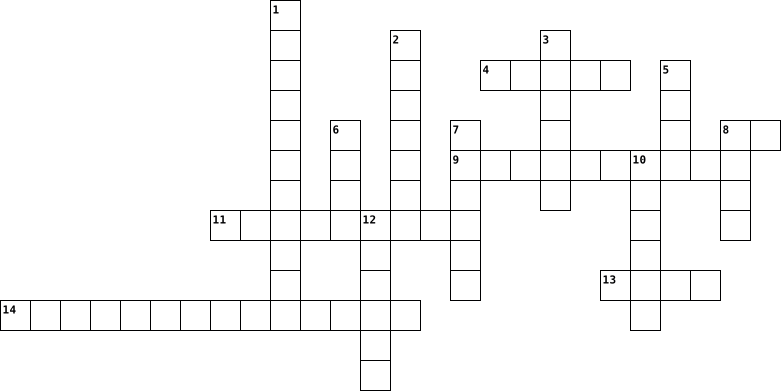
Across
- The auxiliary verb used in the passé composé with most regular verbs.
- The past participle of devoir.
- The name in French for the first term you need to correctly form the passé composé.
- Verbs that take être in the passé composé always display _________ between the past participle and the subject of the sentence,
- The past participle of venir.
- The name in French for the second term you need to correctly form the passé composé.
Down
- The name of the couple that can help you learn the verbs that take être in the passé composé.
- Pris is the past participle of this verb.
- A verb that takes être in the passé composé and is the last thing you will do in your life.
- The past participle of finir.
- The auxiliary verb used in the passé composé with most action verbs.
- A verb that takes être in the passé composé and is the first thing you do in your life.
- The number (in French) of forms needed to conjugate the passé composé.
- Elles sont ________ (aller)
- To learn the verbs that take être in the passé composé you can use a picture of la _________ d'être.
15 Clues: Elles sont ________ (aller) • The past participle of finir. • The past participle of venir. • The past participle of devoir. • Pris is the past participle of this verb. • The auxiliary verb used in the passé composé with most action verbs. • The auxiliary verb used in the passé composé with most regular verbs. • ...
Les Verbes au Présent 2020-11-24
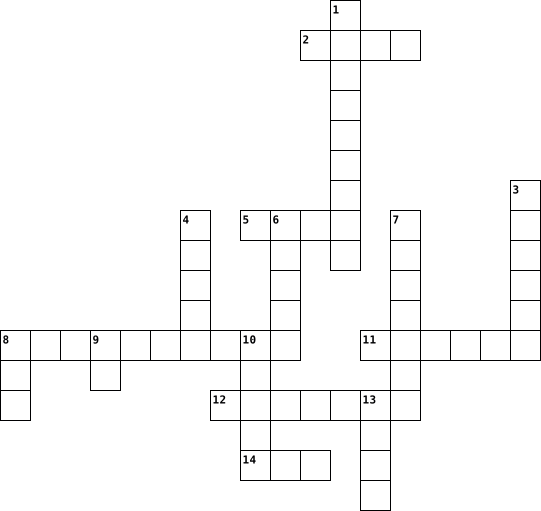
Across
- true or false: each of the three groups of verbs has their own ending
- when you remove these two letters from an infinitive verb you get me!
- ("To jump") The form we find verbs written in the dictionary
- les deux mots qui transforment la phrase au négatif
- I describe an action that is happening now
- correct ending for verbs ending in ER (masculin/pluriel)
Down
- les verbes qui finissent ave RE font partie de ce groupe.
- verbe Aimer au present: Nous _______
- je décide la terminaison du verbe conjugué
- how many groups of verb endings are there?
- Who do you find when you ask yourself "Who is doing the action?"
- verbs at the present time have this ending in English
- les verbes au 2e groupe finissent avec ces deux letters là.
- Je suis un mot qui décris une action
- Je suis le pluriel de "je"
15 Clues: Je suis le pluriel de "je" • verbe Aimer au present: Nous _______ • Je suis un mot qui décris une action • je décide la terminaison du verbe conjugué • how many groups of verb endings are there? • I describe an action that is happening now • les deux mots qui transforment la phrase au négatif • verbs at the present time have this ending in English • ...
VERBS 2022-09-08
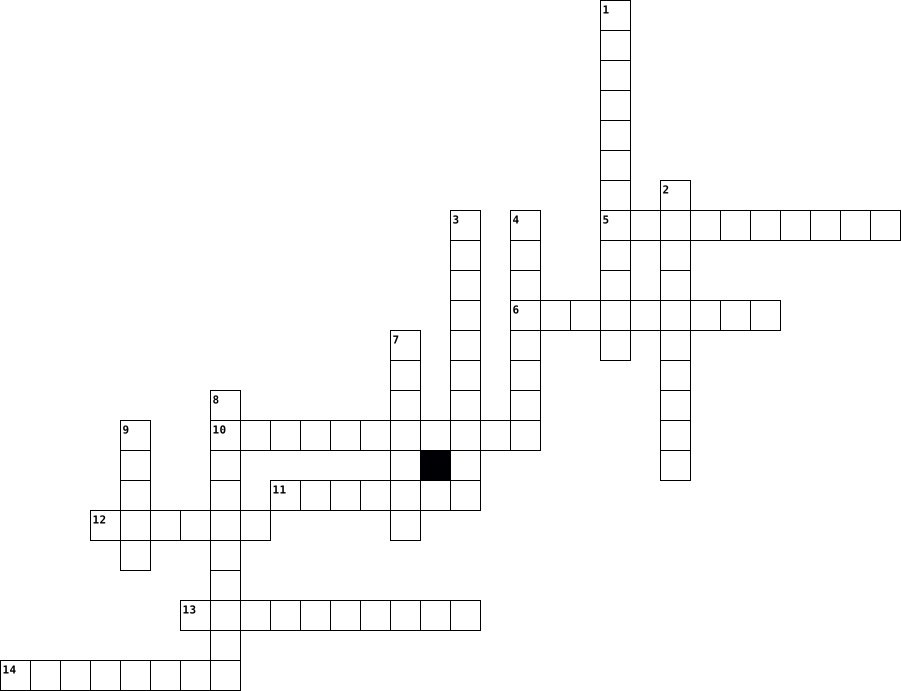
Across
- a form which consists of two words - a structural and a notional word
- a verb that is completely devoid of lexical meaning(combined with a notional verb)
- a verb denoting an action that can no longer continue, which has a limit
- verbs which do not admit of the continuous form
- one of the finite forms of the verb, which serves to express the manner in which the action is regarded
- verbs which require an object for a completed meaning
- a verb which has its own lexical meaning and independent syntactic function
Down
- a word with multiple meanings
- is a nonfinite verb form that has characteristics and functions of both verbs and adjectives
- a system that includes two verbs which take their forms from different roots
- a verb denoting an action that can go on
- verbs which admit of the continuous form
- a verb which is always connected with some other word and can not have an independent syntactic function
- the form of the verb which indicates the time of the action
14 Clues: a word with multiple meanings • a verb denoting an action that can go on • verbs which admit of the continuous form • verbs which do not admit of the continuous form • verbs which require an object for a completed meaning • the form of the verb which indicates the time of the action • a form which consists of two words - a structural and a notional word • ...
A1 2025-02-09

Across
- braunes Getränk.
- ...kommst du?
- Die Zahl 79
- ...ich wohne...in München.
- deutsche Hauptstadt.
- der...kommt aus Japan.
- 1. Person Singular des Verbs "sein"
- wo die Österreicher wohnen.
- woher kommen die Franzosen.
Down
- die Zahl 18.
- wer aus Portugal kommt.
- Wer aus Niederland kommt, spricht...
- Kaffe mit oder ohne...?
- 2. Person Plural des Verbs "wohnen".
- rotes Getränk.
- er...ein Instrument
- wo die Studenten studieren.
- Saft aus Orangen.
18 Clues: Die Zahl 79 • die Zahl 18. • ...kommst du? • rotes Getränk. • braunes Getränk. • Saft aus Orangen. • er...ein Instrument • deutsche Hauptstadt. • der...kommt aus Japan. • wer aus Portugal kommt. • Kaffe mit oder ohne...? • ...ich wohne...in München. • wo die Studenten studieren. • wo die Österreicher wohnen. • woher kommen die Franzosen. • 1. Person Singular des Verbs "sein" • ...
Infinitive Verbs 2023-11-29
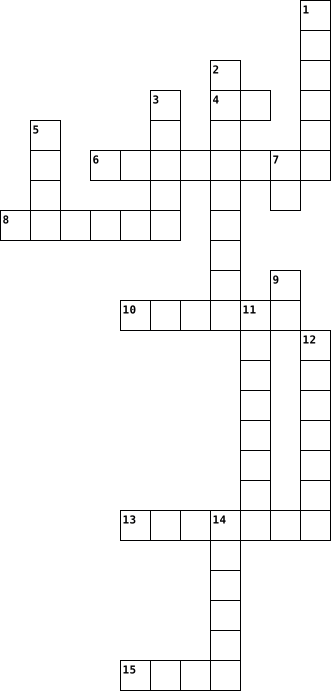
Across
- what verbs end in
- to listen
- to talk
- to run
- to shop
- to read
Down
- to ride
- to rest
- to play
- to play
- what verbs end in
- - what verbs end in __
- to study
- to draw
- to stroll
15 Clues: to run • to ride • to rest • to play • to play • to talk • to draw • to shop • to read • to study • to listen • to stroll • what verbs end in • what verbs end in • - what verbs end in __
Verbs 2023-11-02
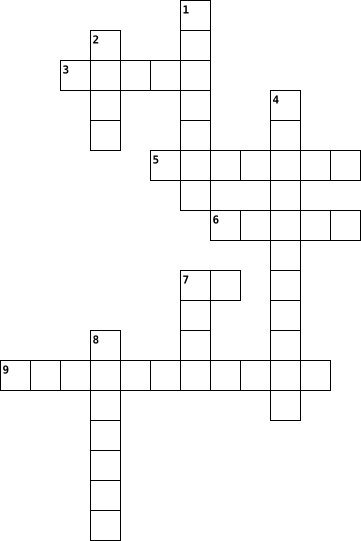
Across
- an adverb that is mistaken as a verb a lot
- what "modifies" verbs
- Example of a word that can be a helping verb or linking verb
- what do adverbs usually end in?
- The "to" forms of verbs
Down
- -ing words can be verbs, or _______ and participles
- What does every sentence need?
- A word that is formed by a verb
- what side do helper verbs must be on to make an -ing word a verb
- What kind of verbs express a state of being?
10 Clues: what "modifies" verbs • The "to" forms of verbs • What does every sentence need? • A word that is formed by a verb • what do adverbs usually end in? • an adverb that is mistaken as a verb a lot • What kind of verbs express a state of being? • -ing words can be verbs, or _______ and participles • Example of a word that can be a helping verb or linking verb • ...
Crossword Grammar 2021-11-05
Across
- Its called auxiliary verb.
- Tell where, when, how, or to what extent.
- Word that modifies a noun or pronoun.
- It links.
- Word used to name a person, place, thing or idea.
- They are used in a verb phrase.
- Can have mental or physical action.
- Expresses an action.
- Constructed by a proper noun and begins with capital letter.
Down
- It names any idea, characteristic, feeling or quality.
- Points out a noun.
- They may also be used as main verbs.
- Word that modifies a verb, adejective, or another adverb.
- Always begin with capital letter.
- They can be used as action verbs.
- Names any group of persons, places, things or ideas.
- Connects a subject with a noun,pronoun or adjective in the predicate.
- It introduces a subordinate clause.
- They can be perceived by one or more senses.
- Word used in place of a noun.
20 Clues: It links. • Points out a noun. • Expresses an action. • Its called auxiliary verb. • Word used in place of a noun. • They are used in a verb phrase. • Always begin with capital letter. • They can be used as action verbs. • It introduces a subordinate clause. • Can have mental or physical action. • They may also be used as main verbs. • Word that modifies a noun or pronoun. • ...
Past simple 2023-08-20
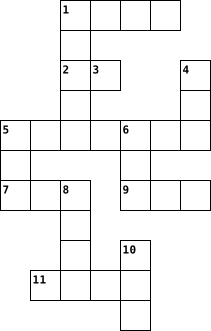
Across
- the past of say
- we add at the end of most of the verbs
- the past of the watch
- the past of see
- the past of do
- the past of go
Down
- the past of sleep
- we add at the end of the verbs ending in E
- we add at the end of verbs ending with y
- the past of be
- the past of have
- up the past of wake up
- the past of eat
13 Clues: the past of be • the past of do • the past of go • the past of say • the past of see • the past of eat • the past of have • the past of sleep • the past of the watch • up the past of wake up • we add at the end of most of the verbs • we add at the end of verbs ending with y • we add at the end of the verbs ending in E
Past simple 2021-06-23
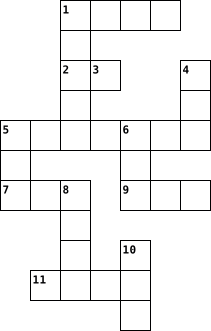
Across
- the past of say
- we add at the end of most of the verbs
- the past of the watch
- the past of see
- the past of do
- the past of go
Down
- the past of sleep
- we add at the end of the verbs ending in E
- we add at the end of verbs ending with y
- the past of be
- the past of have
- up the past of wake up
- the past of eat
13 Clues: the past of be • the past of do • the past of go • the past of say • the past of see • the past of eat • the past of have • the past of sleep • the past of the watch • up the past of wake up • we add at the end of most of the verbs • we add at the end of verbs ending with y • we add at the end of the verbs ending in E
Latin Grammar I 2025-10-04

Across
- What is the genitive singular ending for first-declension nouns?
- What kind of word takes the place of a noun?
- Which principal part gives the 1st person singular present active form of a verb?
- What kind of word expresses sudden emotion or feeling?
- To which conjugation do verbs with infinitives ending in -ēre belong?
- What is the infinitive ending of first-conjugation verbs?
- How many conjugations are there in Latin verbs?
- What kind of word shows the relationship between a noun (or pronoun) and another word?
Down
- What kind of word describes a noun’s quality or characteristic?
- What kind of word connects words or clauses?
- To which conjugation do verbs with infinitives ending in -āre belong?
- What kind of word modifies a verb, adjective, or another adverb?
- What is the system for classifying Latin verbs by their endings and stems?
- What kind of word names a person, place, thing, or idea?
- What is the system for classifying Latin nouns and adjectives by their case endings?
- From which principal part do you find the present stem of a Latin verb?
- What is the dative or ablative plural ending for first-declension nouns?
- What is the genitive plural ending for first-declension nouns?
- Which principal part gives the 1st person singular perfect active form of a verb?
- What kind of word shows action or being?
20 Clues: What kind of word shows action or being? • What kind of word connects words or clauses? • What kind of word takes the place of a noun? • How many conjugations are there in Latin verbs? • What kind of word expresses sudden emotion or feeling? • What kind of word names a person, place, thing, or idea? • What is the infinitive ending of first-conjugation verbs? • ...
engkish 2026-02-10

Across
- Reasoning opinion supported by logical reasons
- The Audience purpose to persuade the readers
- Exposition Text text that persuades readers to do or not do something
- The Reader ability to influence readers’ opinion
- And Effect relationship between reason and result
- Of Modal Verbs language feature using modal verbs
- Argument Recommendation generic structure consisting of thesis arguments and recommendation
- Must Have To modal verbs such as should must have to
- Text type of text focusing on arguments
- suggestion given at the end of the text
Down
- expression showing duty or responsibility
- Present Tense tense commonly used in hortatory exposition
- Suggestion expression showing strong advice
- Text type of text that gives arguments and recommendations
- part of text that states the writer’s opinion
- Influence Readers social function of hortatory exposition text
- Opinion power to affect someone’s decision
- Issue topic commonly discussed in hortatory exposition
- To Action sentence that encourages readers to take action
- Action something that must be done
20 Clues: Action something that must be done • Text type of text focusing on arguments • suggestion given at the end of the text • expression showing duty or responsibility • Opinion power to affect someone’s decision • Suggestion expression showing strong advice • The Audience purpose to persuade the readers • part of text that states the writer’s opinion • ...
Verbs 2024-05-14

Across
- Present tense of 'need'.
- ____________ is most often a noun that receives that action of the verb.
- Smell, taste, and look are examples of _______ words.
- _______________ is a noun or pronoun that comes between the verb and the direct object.
- Every verb has this many basic forms.
- The helping verb ________ is the first principal part to make future-tense verbs.
- We _________ a long way since this morning. (travel; present perfect)
- 'Have listened' is an example of ________ perfect tense.
- Was, is, and were are examples of _________ verbs.
Down
- A predicate ____________ describes the subject.
- Past plural tense of 'is'.
- These tenses express actions that are completed or perfected.
- Past tense of 'build'.
- Another word for a verb.
- Past tense of 'teach'.
- Drive, write, and play are examples of __________ verbs.
- Expresses an action completed before some past time or event.
- Prepositional phrases _____________ contain an important sentence part.
- A predicate ____________ renames the subject.
19 Clues: Past tense of 'build'. • Past tense of 'teach'. • Present tense of 'need'. • Another word for a verb. • Past plural tense of 'is'. • Every verb has this many basic forms. • A predicate ____________ renames the subject. • A predicate ____________ describes the subject. • Was, is, and were are examples of _________ verbs. • Smell, taste, and look are examples of _______ words. • ...
Persuasive language 2026-05-11

Across
- persuasive technique that appeals to logic
- persuasive technique that appeals to emotions
- words that take the place of names
- words that describe nouns
- punctuation mark used to emphasise urgency or shock
- language designed to appeal to people's emotions
- language that describes one thing as another, e.g., "He's a beast."
- the Ancient Greek philosopher who identified the three rhetorical appeals
- when a writer speaks to a person, this is ...address
Down
- words that sound like what they are describing
- verbs like should, must, will are ... verbs
- the technique in which words are repeated
- describing a non-living thing as having living qualities
- persuasive technique that establishes trust
- another technique is the power of ...
- words that describe verbs
- a short story that supports a point
- language that describes one thing as like another
- a question that doesn't require an answer
19 Clues: words that describe nouns • words that describe verbs • words that take the place of names • a short story that supports a point • another technique is the power of ... • the technique in which words are repeated • a question that doesn't require an answer • persuasive technique that appeals to logic • verbs like should, must, will are ... verbs • ...
Name: _______________ Language Arts 2026-05-28

Across
- Cause & effect is an example of a text _____ .
- Put a _____ between the name of a city & a state.
- Nouns, verbs, & adverbs are some parts of ______ .
- Before saying, "I'm done!" make sure you _____ .
- Words that mean the same. Ex: small and tiny
- Put a _____ at the end of a declarative sentence.
- A word that describes a noun.
- "Re-" is one example of a ___________ .
- The trees waved to me. Ex. of _______ .
- "I like my idea." This is first ____ point-of-view.
Down
- A short retelling of what you read is a _____ .
- Dave, Trenton, & Legos are examples of ____ nouns.
- This is a _____ sentence: Al runs, but he stops.
- An informational piece of writing is an ____ .
- A book title should be underlined & _____ .
- Another name for a story.
- In a story, form a new _____ if time goes by.
- Examples of _____ verbs: am, are, were, may, can
- Examples of ____ verbs: think, try, imagine, go
19 Clues: Another name for a story. • A word that describes a noun. • "Re-" is one example of a ___________ . • The trees waved to me. Ex. of _______ . • A book title should be underlined & _____ . • Words that mean the same. Ex: small and tiny • In a story, form a new _____ if time goes by. • Cause & effect is an example of a text _____ . • ...
The language of argument analysis 2025-04-19

Across
- contention
- forms
- features
- impact
- logos
- purpose
- alliteration
- ethos
- image
- why
- sentences
- verbs
- argument
- analysis
- cartoon
- visual
- effect
- article
- rhyme
- quote
- persuasion
- how
- introduction
- positioning
- details
- rhetoric
Down
- pun
- language
- conclusion
- topic
- memorable
- ideas
- phrase
- pathos
- tone
- appeals
- issue
- annotate
- aristotle
- support
- what
- headline
- synthesis
- kairos
- author
- allusion
- intention
- techniques
- evidence
- audience
- text
51 Clues: pun • why • how • tone • what • text • topic • forms • ideas • logos • ethos • image • issue • verbs • rhyme • quote • impact • phrase • pathos • kairos • author • visual • effect • purpose • appeals • support • cartoon • article • details • language • features • annotate • argument • headline • analysis • allusion • evidence • audience • rhetoric • memorable • sentences • aristotle • synthesis • intention • conclusion • contention • techniques • persuasion • positioning • alliteration • ...
Preterite Tense 2024-02-25
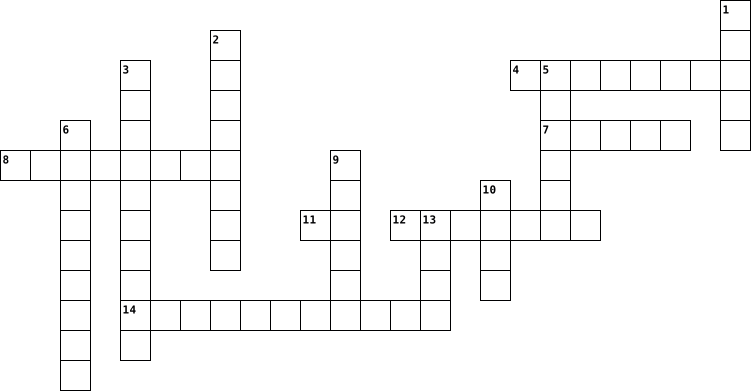
Across
- Conjugate CERRAR for USTEDES
- Conjugate TOCAR for YO
- Conjugate CORTAR for TU
- In what form do -car, -gar, -zar verbs change?
- Conjugate LAVAR for NOSOTROS
- What are the TWO verbs that are irregular in the preterite and change to a J in the stem?
Down
- AR and ER verbs do/don't stem change in the preterite?
- Conjugate PONER for ELLOS
- How do you say FINALLY in Spanish?
- The estar conjugation for el/ella
- Conjugate PRACTICAR for YO
- How do you say LAST NIGHT in Spanish?
- Define the infinitive verb: Caer
- What is yesterday in Spanish?
14 Clues: Conjugate TOCAR for YO • Conjugate CORTAR for TU • Conjugate PONER for ELLOS • Conjugate PRACTICAR for YO • Conjugate CERRAR for USTEDES • Conjugate LAVAR for NOSOTROS • What is yesterday in Spanish? • Define the infinitive verb: Caer • The estar conjugation for el/ella • How do you say FINALLY in Spanish? • How do you say LAST NIGHT in Spanish? • ...
Verbs 2023-11-02
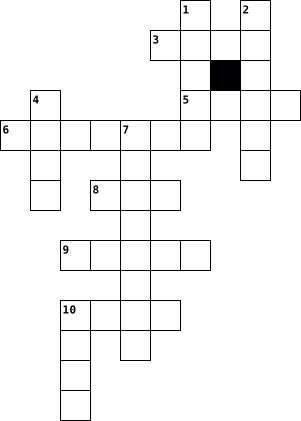
Across
- The word "being" can be a _____ or linking verb
- adverbs ____ verbs
- every sentence needs a ____
- a word that looks like a verb, but is not
- adverbs are ___ verbs
- verbs express action or _____________
Down
- another word that looks like a verb, but is not
- one of the characteristics of every verb
- ____ are the "to" form of verbs
- "Have" is an example of a he
10 Clues: adverbs ____ verbs • adverbs are ___ verbs • every sentence needs a ____ • "Have" is an example of a he • ____ are the "to" form of verbs • verbs express action or _____________ • one of the characteristics of every verb • a word that looks like a verb, but is not • The word "being" can be a _____ or linking verb • another word that looks like a verb, but is not
Affix Vocabulary/Grammar Unit 4 Review 2020-10-20
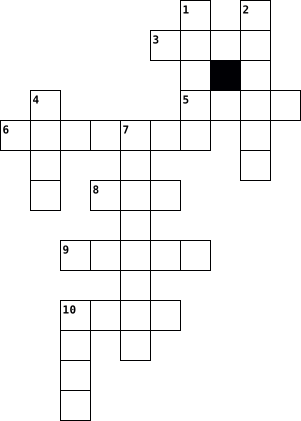
Across
- A word that can take the place of a noun is known as a ___________.
- Nouns that you can NOT see, touch, or interact with.
- The root words PATH means ______.
- The root word that means order.
- The root word that means sound.
- Words that describe nouns are called ________.
- If a subject of a sentence is plural, then the verb must be _________.
- If a subject of a sentence is singular, then the verb must be ________.
- Verbs that describe a state of existence, such as is or was, are called __________ verbs.
- The root word PHOTO means _________.
- The type of affix that adds to the end of a word and changes the meaning.
- The base meaning of a word, that affixes can be added to, is called the ________ of the word.
Down
- The root word that means love.
- The root words MIS and MIT mean ______.
- Words that describe verbs are called _________.
- The root word PORT means _______.
- The word PORTable means able to be __________.
- Any word that is a person, place, or thing.
- Words such as run, jump, and dance are examples of __________ verbs.
- The root word OMNI means _______.
- The type of affix that adds to the beginning of a word and changes the meaning.
- The root word LOG means _________ or word.
- The root words GRAPH and SCRIB both mean ________.
23 Clues: The root word that means love. • The root word that means order. • The root word that means sound. • The root word PORT means _______. • The root words PATH means ______. • The root word OMNI means _______. • The root word PHOTO means _________. • The root words MIS and MIT mean ______. • The root word LOG means _________ or word. • ...
madalyns crosswork 2023-11-02
Across
- a characteristic of every verb
- whats a verb that can be a action verb
- some words ending in -ing
- whats a verb that can be a linking verb
- adverbs that are sometimes mistaken for verbs
- what verb can be helping verb
Down
- whats a verb that are i not limited by person
- they are often near verbs
- In order for an -ing word to be a verb, there must be helping verbs to the
- Adverbs modify verbs, and they are often
- whats a verb that can be a helping
11 Clues: they are often near verbs • some words ending in -ing • what verb can be helping verb • a characteristic of every verb • whats a verb that can be a helping • whats a verb that can be a action verb • Adverbs modify verbs, and they are often • whats a verb that can be a linking verb • whats a verb that are i not limited by person • ...
madalyns crosswork 2023-11-02
Across
- a characteristic of every verb
- whats a verb that can be a action verb
- some words ending in -ing
- whats a verb that can be a linking verb
- adverbs that are sometimes mistaken for verbs
- what verb can be helping verb
Down
- whats a verb that are i not limited by person
- they are often near verbs
- In order for an -ing word to be a verb, there must be helping verbs to the
- Adverbs modify verbs, and they are often
- whats a verb that can be a helping
11 Clues: they are often near verbs • some words ending in -ing • what verb can be helping verb • a characteristic of every verb • whats a verb that can be a helping • whats a verb that can be a action verb • Adverbs modify verbs, and they are often • whats a verb that can be a linking verb • whats a verb that are i not limited by person • ...
Spanish Crossword 2022-04-22
Across
- Él leer
- Ellas Dormir
- Él Estar
- Ellos/Ellas/Ustedes Ending for ar Verbs
- Ellos Hacer
- to have
- Yo empezar
- Yo Tocar
Down
- 3rd person plural subjects
- Ustedes Poner
- Tú Cantar
- Form that car/gar/zar verbs change
- Yo Dibujar
- Ella ir
14 Clues: Él leer • to have • Ella ir • Él Estar • Yo Tocar • Tú Cantar • Yo Dibujar • Yo empezar • Ellos Hacer • Ellas Dormir • Ustedes Poner • 3rd person plural subjects • Form that car/gar/zar verbs change • Ellos/Ellas/Ustedes Ending for ar Verbs
Greek & Latin List 3 2024-04-26

Across
- comparative, most
- before
- not
- Farmers will do this soon.
- His story was ___. That could never happen.
- I did this because I was tired.
Down
- to try and stop something before it happens
- A shape with 6 sides.
- water
- middle
- past tense of verbs
- sides
- present tense of verbs
- plural form
- comparative, more
15 Clues: not • water • sides • before • middle • plural form • comparative, most • comparative, more • past tense of verbs • A shape with 6 sides. • present tense of verbs • Farmers will do this soon. • I did this because I was tired. • to try and stop something before it happens • His story was ___. That could never happen.
Grammar Rules 2026-03-18

Across
- one (form)
- .
- words that show who something belongs to
- normal verbs
- !
- words directly from a text
- person, place, or thing
- a verb tense (not present or future)
Down
- This - A not this - a
- more than one (form)
- not normal verbs
- ""
- ?
- short words like 'it', 'she', 'he', 'you', 'we', 'they', 'us' and 'them'
- ,
15 Clues: . • ? • , • ! • "" • one (form) • normal verbs • not normal verbs • more than one (form) • This - A not this - a • person, place, or thing • words directly from a text • a verb tense (not present or future) • words that show who something belongs to • short words like 'it', 'she', 'he', 'you', 'we', 'they', 'us' and 'them'
VERBS 2025-12-28

Across
- Verb ______ indicate the attitude the speaker has when speaking.
- Verbal that is the base form of verb with "to" in front of it.
- Types of verbs that connect the subject of a sentence with something that describes it.
- Part of sentence action verbs are in.
- Verbal that functions as an adjective.
- Verb mood that states basic facts.
- Tell when a verb happened. Past, present, future are examples.
Down
- Verb mood used when you wish something were true, or imagine it is possible.
- Verb mood that asks a question.
- Types of verbs used with other verbs to clarify when action is taking place or make a verb phrase.
- Verb moods that "If/Then" statements are told in that typically have commas and are often used in science for hypotheses.
- Verb mood used to give a command or request.
- Verbal that functions as a noun.
- Tells how a verb should happen or has happened.
14 Clues: Verb mood that asks a question. • Verbal that functions as a noun. • Verb mood that states basic facts. • Part of sentence action verbs are in. • Verbal that functions as an adjective. • Verb mood used to give a command or request. • Tells how a verb should happen or has happened. • Verbal that is the base form of verb with "to" in front of it. • ...
Verbs Crossword Puzzle 2023-11-02
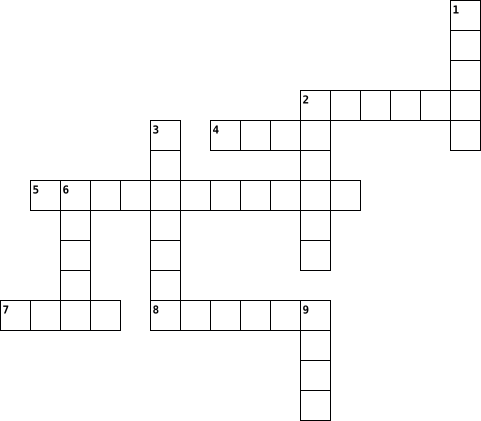
Across
- _____ verbs express action
- A characteristic of verbs
- The "to" form of verbs
- Every sentence needs one of these
- A word ending in -ing
Down
- This verb can be a helping verb or a linking verb
- A word that modifies a verb
- _____ verbs express a state of being
- An adverb that is commonly mistaken for a verb
- This verb can be a helping or an action verb
10 Clues: A word ending in -ing • The "to" form of verbs • A characteristic of verbs • _____ verbs express action • A word that modifies a verb • Every sentence needs one of these • _____ verbs express a state of being • This verb can be a helping or an action verb • An adverb that is commonly mistaken for a verb • This verb can be a helping verb or a linking verb
French voc 2023-12-26
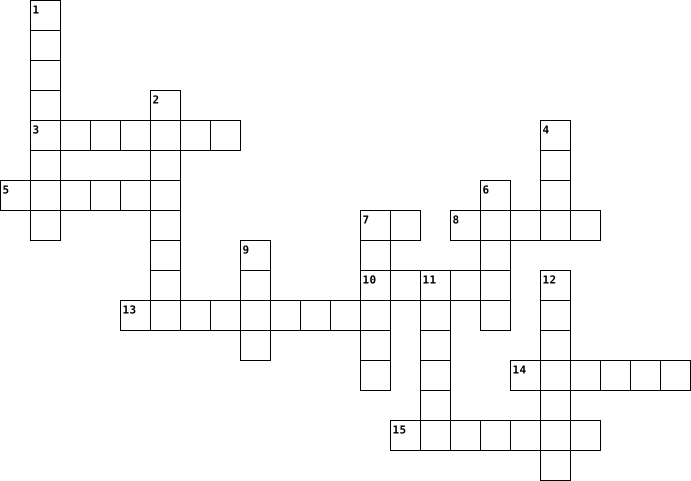
Across
- pluriel feminin form of short
- to sell
- je form for IR verbs
- sigulier feminin form of pretty
- super
- to descend
- to lose/waste
- to find/think
Down
- to look for
- to wait(for)
- sigulier masculin form of pretty
- sigulier masculin form of short
- ills/elles form for IR verbs
- singulier masculin form of expensive
- to think
- to bring (a person)
16 Clues: super • to sell • to think • to descend • to look for • to wait(for) • to lose/waste • to find/think • to bring (a person) • je form for IR verbs • ills/elles form for IR verbs • pluriel feminin form of short • sigulier masculin form of short • sigulier feminin form of pretty • sigulier masculin form of pretty • singulier masculin form of expensive
Verbs 2023-11-02
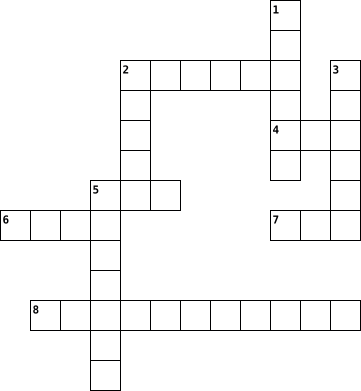
Across
- one of the characteristics of every verb
- one of the words mistaken for a verb but is not
- one of the words that can help linking verbs
- another characteristic for every verb
- one of the words that can help action verbs
- words ending in -ing can be ___________
Down
- something that looks like a verb but is not
- the other word mistaken for a verb
- Action verbs express ______
- modified verbs
10 Clues: modified verbs • Action verbs express ______ • the other word mistaken for a verb • another characteristic for every verb • words ending in -ing can be ___________ • one of the characteristics of every verb • something that looks like a verb but is not • one of the words that can help action verbs • one of the words that can help linking verbs • ...
Past Tense Verbs 2015-01-26
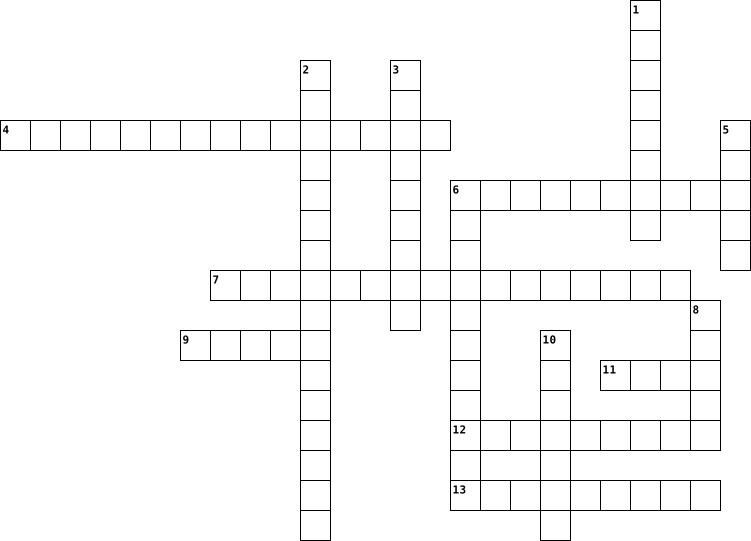
Across
- Personal pronoun used for woman
- Second personal pronoun
- Past tense of verb love
- Present tense of verb to be for the first personal pronoun
- Verbs that change when they are in past tense
- Past tense of verb to be
- Past tense of verb live
Down
- Verbs that mantains the original word in past tense
- Third personal pronoun for a man
- Present tense of verb to be for several personal pronouns
- Present tense of verb to be for third person
- Past of the verb like
- Personal pronoun used for things and animals
- Ending of the regular verbs
14 Clues: Past of the verb like • Second personal pronoun • Past tense of verb love • Past tense of verb live • Past tense of verb to be • Ending of the regular verbs • Personal pronoun used for woman • Third personal pronoun for a man • Present tense of verb to be for third person • Personal pronoun used for things and animals • Verbs that change when they are in past tense • ...
Wiederholung 2019-10-05
Across
- Zeitform des Verbs (Ich war in die Pfütze gesprungen.)
- Zeitform des Verbs: Er lief schnell zum Bäcker.
- Art des Pronomens: sich, dich, mich…
- Zeitform des Verbs: Ich werde in den Ferien auf Urlaub fliegen.
- Bestimme Die Art der unterstrichenen Präposition: Um 15 Uhr endet die Schule.
- Wie heißt die Grundform des Verbs (geben, laufen, lesen, sein, ...)
- Bestimme den Fall des unterstrichenen Nomens: Gestern habe ich mich für eine Stelle beworben.
Down
- Bestimme die Wortart des unterstrichenen Wortes: Sie ist eine gute Schülerin.
- andere Bezeichnung für das persönliche Fürwort (ich, er, wir)
- Bestimme den Fall des unterstrichenen Nomens: Der Schüler schreibt die Hausübung.
- Bestimme die Wortart des unterstrichenen Wortes: Zum Vorstellungsgespräch ziehe ich etwas Elegantes an.
- Bestimme die Wortart des unterstrichenen Wortes: Das Buch liegt auf dem Tisch.
- Bestimme den Fall des unterstrichenen Nomens: Das Buch gehört dem Schüler.
- Wie heißt der 2. Fall?
14 Clues: Wie heißt der 2. Fall? • Art des Pronomens: sich, dich, mich… • Zeitform des Verbs: Er lief schnell zum Bäcker. • Zeitform des Verbs (Ich war in die Pfütze gesprungen.) • andere Bezeichnung für das persönliche Fürwort (ich, er, wir) • Zeitform des Verbs: Ich werde in den Ferien auf Urlaub fliegen. • ...
madalyns crosswork 2023-11-02
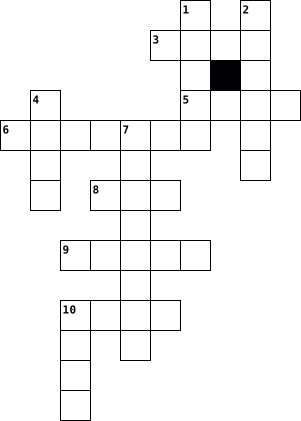
Across
- a characteristic of every verb
- whats a verb that can be a action verb
- some words ending in -ing
- whats a verb that can be a linking verb
- adverbs that are sometimes mistaken for verbs
- what verb can be helping verb
Down
- whats a verb that are i not limited by person
- they are often near verbs
- In order for an -ing word to be a verb, there must be helping verbs to the
- Adverbs modify verbs, and they are often
- whats a verb that can be a helping
11 Clues: they are often near verbs • some words ending in -ing • what verb can be helping verb • a characteristic of every verb • whats a verb that can be a helping • whats a verb that can be a action verb • Adverbs modify verbs, and they are often • whats a verb that can be a linking verb • whats a verb that are i not limited by person • ...
Preterite Tense 2022-04-22
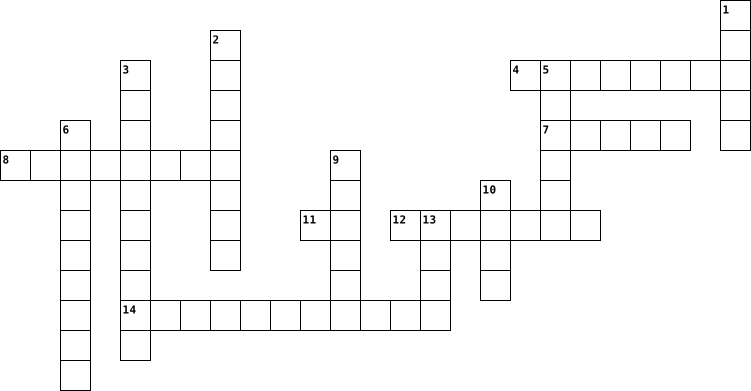
Across
- Conjugate CERRAR for USTEDES
- Conjugate TOCAR for YO
- Conjugate CORTAR for TU
- In what form do -car, -gar, -zar verbs change?
- Conjugate LAVAR for NOSOTROS
- What are the TWO verbs that are irregular in the preterite and change to a J in the stem?
Down
- AR and ER verbs do/don't stem change in the preterite?
- Conjugate PONER for ELLOS
- How do you say FINALLY in Spanish?
- The estar conjugation for el/ella
- Conjugate PRACTICAR for YO
- How do you say LAST NIGHT in Spanish?
- Define the infinitive verb: Caer
- What is yesterday in Spanish?
14 Clues: Conjugate TOCAR for YO • Conjugate CORTAR for TU • Conjugate PONER for ELLOS • Conjugate PRACTICAR for YO • Conjugate CERRAR for USTEDES • Conjugate LAVAR for NOSOTROS • What is yesterday in Spanish? • Define the infinitive verb: Caer • The estar conjugation for el/ella • How do you say FINALLY in Spanish? • How do you say LAST NIGHT in Spanish? • ...
Wiederholung 2019-10-05
Across
- Zeitform des Verbs: Er lief schnell zum Bäcker.
- Bestimme die Wortart des unterstrichenen Wortes: Zum Vorstellungsgespräch ziehe ich etwas Elegantes an.
- Art des Pronomens: sich, dich, mich…
- Bestimme den Fall des unterstrichenen Nomens: Das Buch gehört dem Schüler.
- Bestimme den Fall des unterstrichenen Nomens: Der Schüler schreibt die Hausübung.
Down
- Zeitform des Verbs (Ich war in die Pfütze gesprungen.)
- andere Bezeichnung für das persönliche Fürwort (ich, er, wir)
- Bestimme Die Art der unterstrichenen Präposition: Um 15 Uhr endet die Schule.
- Bestimme die Wortart des unterstrichenen Wortes: Das Buch liegt auf dem Tisch.
- Wie heißt die Grundform des Verbs (geben, laufen, lesen, sein, ...)
- Bestimme den Fall des unterstrichenen Nomens: Gestern habe ich mich für eine Stelle beworben.
- Wie heißt der 2. Fall?
- Zeitform des Verbs: Ich werde in den Ferien auf Urlaub fliegen.
- Bestimme die Wortart des unterstrichenen Wortes: Sie ist eine gute Schülerin.
14 Clues: Wie heißt der 2. Fall? • Art des Pronomens: sich, dich, mich… • Zeitform des Verbs: Er lief schnell zum Bäcker. • Zeitform des Verbs (Ich war in die Pfütze gesprungen.) • andere Bezeichnung für das persönliche Fürwort (ich, er, wir) • Zeitform des Verbs: Ich werde in den Ferien auf Urlaub fliegen. • ...
What is Structure? 2018-10-01
Across
- Verbs of movement
- Specific to the general
- Alliteration with the F sounds
- A flash-forward
- All knowing
- A main character in a story
- A literal lie
- Third person
- Verbs of emotion or being
Down
- Alliteration with the P sounds
- General to the specific
- First person
- Humans given qualities of animals
- Order of time
- A Flashback
15 Clues: A Flashback • All knowing • First person • Third person • Order of time • A literal lie • A flash-forward • Verbs of movement • General to the specific • Specific to the general • Verbs of emotion or being • A main character in a story • Alliteration with the P sounds • Alliteration with the F sounds • Humans given qualities of animals
unit 4 anti 2024-12-02

Across
- Nouns: growth, development; verbs: mature, develop
- stouthearted, courageous, daring
- calm, controlled, relaxed, leisurely
- liberate, release, free
- upright, energetic, dynamic
Down
- Verbs: launch, initiate, begin
- disagreement, strife
- Verbs: please, delight, soothe, pacify
- bland, mild, gentle, soothing
- Nouns: order, tidiness, organization
10 Clues: disagreement, strife • liberate, release, free • upright, energetic, dynamic • bland, mild, gentle, soothing • Verbs: launch, initiate, begin • stouthearted, courageous, daring • calm, controlled, relaxed, leisurely • Nouns: order, tidiness, organization • Verbs: please, delight, soothe, pacify • Nouns: growth, development; verbs: mature, develop
Past Simple 2022-04-25

Across
- read.
- seek.
- fill.
- there's no formula for these verbs.
- ring.
- happen.
- clap.
Down
- mean.
- verbal tense used to talk about actions finished/happened in the past.
- we add -ed, -d, or -ied to these verbs.
- confirm.
- raise.
- shake.
13 Clues: mean. • read. • seek. • fill. • ring. • clap. • raise. • shake. • happen. • confirm. • there's no formula for these verbs. • we add -ed, -d, or -ied to these verbs. • verbal tense used to talk about actions finished/happened in the past.
Nama: Puspa prana denira (12 IBB) sastra inggris 2023-10-26

Across
- What type of condition do type 3 conditional sentences describe
- to refer a reason
- The linking word that connects two events in chronological order
- Example of a type 0 conditional sentence
- condition,event, or one/several causes
- What is the other term often used to refer to "finite verbs"
- which shows someone activity
- In a type 2 conditional sentence, what verb tense is used in the if-clause
- use subject or object pronoun for people
- verbs which are put after or before centain words
- containing preposition followed by noun or pronoun
- Example of a type 2 conditional sentence
- verbs used to explain word nearby
- The linking word often used to indicate a result or effect
- The motive,driver,or action that produces a reaction
- In the sentence, "She walks to the park," what is the finite verb
- types of linking word, conjunction...... and prepositions
- A finite verb must agree in person and number with what part of speech in the sentence
- to modify a noun of time
- verbs that depend on time of activity
- use object pronoun for people especially in non defining
- In a type 1 conditional sentence, what type of condition is being referred to
Down
- contains preposition followed by adverb
- to modify a plane
- Give an example of a finite verb in the past tense
- refering to a whole sentence
- Which verb tense is often used to express actions that will happen in the future
- What is the term for sentences that express hypothetical situations or conditions
- contains preposition followed by adjective
- verbs that showns someone the use of sense
- verbs as a predicate followed by an object
- as,since,because for,due do the fact that are type of linking words
- The linking word that indicates one thing resulting directly from another
- In a type 0 conditional sentence, what kind of conditions or facts are presented
- Type 2 conditional sentences often deal with what kind of situations
- The linking word that signifies one thing leading to another
- The linking word used to express a cause or reason
- the ing form of a verb that serves as a noun
- use posesision for people, animal,and things
- that The linking word often used to express purpose or desired outcome
40 Clues: to refer a reason • to modify a plane • to modify a noun of time • refering to a whole sentence • which shows someone activity • verbs used to explain word nearby • verbs that depend on time of activity • condition,event, or one/several causes • contains preposition followed by adverb • Example of a type 0 conditional sentence • use subject or object pronoun for people • ...
Persuasive Language Techniques 2023-09-07

Across
- Verbs expressing necessity or possibility
- "Buy this now, now, now!"
- "You are amazing! You are awesome! You can do this!"
- Overdone
- "Leaping leopards levitate lowly"
- Language used to appeal to feelings
- Stick to the status quo
- They; them; their
Down
- Personal story
- Verbs commanding action
- Fancy nonsense words
- Question left unanswered
- Question answered immediately
- Everyday language that is relaxed and informal
- "Nine out of ten dentists recommend Colgate Total Toothpaste"
- Stretching the truth
- Appeal to logic
- We; us; our
- Appeals to morals and ethics
19 Clues: Overdone • We; us; our • Personal story • Appeal to logic • They; them; their • Fancy nonsense words • Stretching the truth • Verbs commanding action • Stick to the status quo • Question left unanswered • "Buy this now, now, now!" • Appeals to morals and ethics • Question answered immediately • "Leaping leopards levitate lowly" • Language used to appeal to feelings • ...
CROSSWORD PUZZLE PART 3 2025-07-06

Across
- To control the functioning of a system (verb). (Technical Document Word List)
- The Indonesian for "hidung." (Part of Body)
- The opposite of "old" (for things). (Adjective Quality)
- The department responsible for educational policy. (Government Department)
- A large indoor sports facility. (Part of School Area)
- LOT Indonesian for "tempat parkir." (Landmark on the Street)
- The act of communicating. (Suffix)
- The Indonesian for "perpustakaan." (Part of School Area)
- Past Simple (V2) of "drink." (Irregular Verbs)
- The Indonesian for "kementerian." (Government Department)
- A type of small lizard. (Animals)
- Past Simple (V2) of "feel." (Irregular Verbs)
- To connect two things. (Action Verb in Technical Work)
- Prefix meaning "after." (Prefix)
- The main room for lessons in a school. (Part of School Area)
- Indonesian for "sabar." (Personal Adjective)
- A public underground railway system. (Means of Transportation)
- A large predatory fish with sharp teeth. (Animals)
Down
- The Indonesian for "gajah." (Animals)
- The study of the human mind and behavior. (School Subject)
- The plural of "mouse." (Irregular Nouns)
- The quality of being transparent. (Substance Quality)
- A conjunction indicating result. (Basic Conjunctions)
- Adjective suffix meaning "full of" (e.g., in "careful"). (Suffix)
- The quality of being able to bend easily. (Substance Quality)
- The plural form of "woman." (Irregular Nouns)
- A tool used for grasping or pulling. (Basic Tools)
- To make a plan or decision happen (phrasal verb). (Phrasal Verbs)
- To make something become active (verb). (Technical Document Word List)
- Opposite of "happy." (Personal Adjective)
- A suffix for an adjective meaning "can be done." (Suffix)
- To search for something lost (phrasal verb). (Phrasal Verbs)
- A domesticated animal often kept for wool. (Animals)
- A small, private vehicle. (Means of Transportation)
- A word for a female human. (Irregular Nouns)
- Past Simple (V2) of "teach." (Irregular Verbs)
36 Clues: Prefix meaning "after." (Prefix) • A type of small lizard. (Animals) • The act of communicating. (Suffix) • The Indonesian for "gajah." (Animals) • The plural of "mouse." (Irregular Nouns) • Opposite of "happy." (Personal Adjective) • The Indonesian for "hidung." (Part of Body) • A word for a female human. (Irregular Nouns) • Indonesian for "sabar." (Personal Adjective) • ...
Work on Verbs 2022-01-26
Across
- Nous ______ (finir)
- Je m'_______ Pierre
- _____ se brossent les dents
- Nous ______ brossons les cheveux
- _____ réveiller - to wake up
- Tu _____ lèves à quelle heure?
- infinitive of nous marchons
- infinitive of J'invite mes amis
- reflexive infinitive meaning "to bathe"
- Vous _______ (choisir)
Down
- ______ jouent au foot
- infinitive meaning "to forget"
- Je _____ réveille
- Pierre ______ (rendre) visite à son frère
- the endings of regular ER verbs
- the ILS and ELLES ending of regular IR verbs
- infinitive of Ils vont
- _____ se maquille
18 Clues: Je _____ réveille • _____ se maquille • Nous ______ (finir) • Je m'_______ Pierre • ______ jouent au foot • infinitive of Ils vont • Vous _______ (choisir) • _____ se brossent les dents • infinitive of nous marchons • _____ réveiller - to wake up • infinitive meaning "to forget" • Tu _____ lèves à quelle heure? • the endings of regular ER verbs • infinitive of J'invite mes amis • ...
ENGLISH CROSSWORD 2019-03-12

Across
- ARE SINGULAR OR PLURAL, DEPENDING UPON THE "OF PHRASE".
- SUBJECT PERFORMS THE ACTION
- TAKES PLURAL VERB.
- TO POINT OUT THE RECEIVER OF AN ACTION
- SUCH AS EVERYONE,NOT ONE,NO ONE,ANYBODY,EACH,SOMEBODY,SOMEONE.
- PROMISES AND INTENTIONS
- USED AS NOUNS ARE CONSIDERED PLURAL AND THEY TAKE PLURAL VERBS.
Down
- SUCH AS JURY,TEAM,ETC.
- ALSO CALLED MODAL VERBS
- TAKES SINGULAR VERB.
- THAT ARE USED TO SHOW/INDICATE MODALITY
- VERBS THAT TAKE AN OBJECT
- EXPRESSING MOOD
- A WAY TO EXPRESS TO THE ATTITUDE OF THE SPEAKERS TO WHAT IS BEING SAID
- IS THE FORM OF VERB TAKES TO INDICATE WHETHER THE SUBJECT OF THE VERB PERFORMS OR RECEIVE THE ACTION.
15 Clues: EXPRESSING MOOD • TAKES PLURAL VERB. • TAKES SINGULAR VERB. • SUCH AS JURY,TEAM,ETC. • ALSO CALLED MODAL VERBS • PROMISES AND INTENTIONS • VERBS THAT TAKE AN OBJECT • SUBJECT PERFORMS THE ACTION • TO POINT OUT THE RECEIVER OF AN ACTION • THAT ARE USED TO SHOW/INDICATE MODALITY • ARE SINGULAR OR PLURAL, DEPENDING UPON THE "OF PHRASE". • ...
Greek & Latin List 4 2024-04-26

Across
- past tense of verbs
- We had many generations at the party.
- Mrs. Downing is a _____.
- Please stop acting like a kindergartner.
- do
- Her arm was broken and had to have a write for her.
Down
- script, write
- This means good or helpful
- good
- before
- many
- present tense of verbs
- one who
- sides
- plural form
15 Clues: do • good • many • sides • before • one who • plural form • script, write • past tense of verbs • present tense of verbs • Mrs. Downing is a _____. • This means good or helpful • We had many generations at the party. • Please stop acting like a kindergartner. • Her arm was broken and had to have a write for her.
Morphology and Syntax 2021-11-03
Across
- The job of conjunctions is to __ ideas, phrases, clauses
- Declarative sentences make a
- At what age do children reach and maintain adjective use?
- Adverbs which conjoin
- Adjectives are a(n) __ class of words
- True descriptive adjectives describe the of a noun
- Compound sentences have two __ clauses
- Smallest unit of language that has meaning
- "muscle" of the utterance
- Prefixes and suffixes
- Adjectives function as
- Verb form used to talk to another person
- Words with just one free morpheme
- Helping verbs
- Provide more info about verbs
- The role of auxiliary verbs is to __ the main verb
- Study and description of word formation
- Place holders
- How many nouns/pronouns do superlatives compare?
- Morphemes that cannot normally stand alone
- "relationship" bw the subject and the verb
- Verbs signify
- A person, place, thing or abstraction
- Give emotion to verb phrases
- Nouns that precede proper nouns
- Morphemes that can stand by themselves
- Verb+ing, act as a noun
Down
- Process of moving a verb through tenses
- Verbs that act on a noun or pronoun
- Pronouns used for self and others
- Can be inflected to create comparative
- Can change the meaning of a word
- Morphology and Syntax are foundational for
- The system of communication used by a
- Conjunctions are part of a __ set of words
- Most frequent prefixes acct for
- Function words that replace nouns
- Morphology + Syntax
- Manner adverbs answer
- Phonology, morphology, syntax, orthography
- Body of rules you use to construct sent
- Denial is indicated by
- Words that consists of two free morphemes
- Any word that is in existence prior to
- All the rules
- Conjunctions which conjoin words
- Any unit to which affixes can be attached to
- Expresses wishes, demands, or ideas
- How many word units in simple adjectives?
- where do prefixes appear on a base morpheme
- Affected by function and meaning
51 Clues: Helping verbs • All the rules • Place holders • Verbs signify • Morphology + Syntax • Adverbs which conjoin • Manner adverbs answer • Prefixes and suffixes • Adjectives function as • Denial is indicated by • Verb+ing, act as a noun • "muscle" of the utterance • Declarative sentences make a • Give emotion to verb phrases • Provide more info about verbs • Most frequent prefixes acct for • ...
Unit 6 Evidence of Learning (Spanish I) 2021-11-10

Across
- (Verb) To read.
- (Noun) Plaza.
- (Verb) To do or make.
- (Noun) Water.
- (Verb) to comprehend; to understand.
- (Noun) building.
- Then.
- Hey!
- What; asking for a definition.
- (Noun) center.
- (Verb) To have.
- (Verb) To drink.
- First-person conjugation of -ar ending verbs.
- Much.
- (Noun) avenue.
Down
- But.
- (Noun) city.
- (Verb) To see.
- Which; asking to choose from a few.
- (Verb) To eat.
- (Noun) juice.
- (Noun) Theatre.
- (Noun) Food.
- (Verb) To know.
- Good.
- Second-person plural conjugation of -ar ending verbs.
- (Noun) street.
27 Clues: But. • Hey! • Then. • Good. • Much. • (Noun) city. • (Noun) Food. • (Noun) Plaza. • (Noun) Water. • (Noun) juice. • (Verb) To see. • (Verb) To eat. • (Noun) center. • (Noun) street. • (Noun) avenue. • (Verb) To read. • (Noun) Theatre. • (Verb) To know. • (Verb) To have. • (Noun) building. • (Verb) To drink. • (Verb) To do or make. • What; asking for a definition. • Which; asking to choose from a few. • ...
Grammar 2025-10-10

Across
- Express physical and mental action
- "Kate read her book while she watched TV" find part of speech of underlined word
- Which type of verb expresses a state, feeling or posession rather than an action
- What part of speech replaces noun?
- A verb that needs a direct object to compkete its meaning
Down
- They follow a predictable pattern when conjugated
- "*Wow*, this video is really great" find part of speech of underlined word
- Which grammatical category of verb expresses speakerʼs attitude
- Do not require a direct object to complete their meaning
- according to their meaning verb are divided into ..... groups
10 Clues: Express physical and mental action • What part of speech replaces noun? • They follow a predictable pattern when conjugated • Do not require a direct object to complete their meaning • A verb that needs a direct object to compkete its meaning • according to their meaning verb are divided into ..... groups • ...
Verb Crossword Puzzle 2024-03-01

Across
- - refers to movement
- - a verb tense that pertains to actions which are already finished
- - verbs that do not require a direct object
- - verbs that either retain their form or changed entirely when turned to simple past or past participle.
- - verbs that is added with the main verb to create a "verb phrase"; auxiliary verb
Down
- - a special kind of auxiliary verb that express permission, possibility, necessity, etc.
- - verbs whose actions are directed to the object in the sentence
- - a verb tense that pertains to actions that have not yet occurred
- - a verb that connects the subject to a noun, pronoun, or adjective that describes it
- - verbs whose simple past or past particle forms may be added with -d or -ed
- - a verb tense that pertains to actions that are currently happening
11 Clues: - refers to movement • - verbs that do not require a direct object • - verbs whose actions are directed to the object in the sentence • - a verb tense that pertains to actions which are already finished • - a verb tense that pertains to actions that have not yet occurred • - a verb tense that pertains to actions that are currently happening • ...
Communications Definitions 2024-01-26

Across
- a word the replaces a noun in a sentence.
- Put important info at end of sentence/paragraph.
- Cannot stand alone and needs an independent clause to make sense.
- a word that describes a verb, adjective, clause or another adverb. Adverbs tell how, when or where something is done.
- A way of showing a reader that the material they are reading is more important than the other MATERIAL.
- When an independent clause follows another without the proper punctuation.
- A clause that can stand alone, make sense and is complete in itself.
- A part of a sentence, usually a phrase or dependent clause that is punctuated as if it were an independent clause.
Down
- Put important info a beginning of sentence/paragraph.
- a word that modifies a noun or pronoun. They may provide details about the noun or pronoun that gives you a better understanding of the person, place or thing.
- a word that names a person, place or thing
- Writing Sentences so that their parts are balanced and easy to read and understand. Match nouns with nouns, verbs with verbs, clauses with clauses and avoid mixing Active verbs with Passive Verbs
- a word that shows action or a state of being
- When two independent clauses are joined together inappropriately with a comma.
- Is a word that sounds the same as another word but has a different meaning and spelling.
- Is an adjective that limits the noun or pronoun it modifies. “the, a, and an are articles.
- Group of words that expresses a complete thought.
17 Clues: a word the replaces a noun in a sentence. • a word that names a person, place or thing • a word that shows action or a state of being • Put important info at end of sentence/paragraph. • Group of words that expresses a complete thought. • Put important info a beginning of sentence/paragraph. • Cannot stand alone and needs an independent clause to make sense. • ...
Intro to verbs 2023-11-02

Across
- One of the words mistaken for a verb but is actually an adverb.
- ________ modify verbs.
- Action verbs express _____.
- Words ending in ___ can be verbs.
- This word can be a helping or linking word.
Down
- Every sentence needs a _____.
- In order for an -ing word to be a verb, there must be helping verbs on the left.
- This word can be a helping or action verb.
- Infinitives are the "___" form of a verb.
- Whats one characteristic of a verb?
10 Clues: ________ modify verbs. • Action verbs express _____. • Every sentence needs a _____. • Words ending in ___ can be verbs. • Whats one characteristic of a verb? • Infinitives are the "___" form of a verb. • This word can be a helping or action verb. • This word can be a helping or linking word. • One of the words mistaken for a verb but is actually an adverb. • ...
First Trimester Review of Terms 2026-08-07

Across
- verbs that show movement
- pronoun used when giving emphasis to the antecedent
- nouns formed from two or more words combined
- pronoun that introduces a clause to give information
- nouns that show ownership
Down
- text that tells a story
- text that gives instructions
- verbs that link the subject to information
- nouns that cannot be seen, touched, tasted, or heard
- verbs used with main verb to create a verb phrase
- text that tells the sequence of events
- nouns that can be seen touched, tasted, or heard
- pronoun used when the subject and the object are the same
- a condensed version of a text
14 Clues: text that tells a story • verbs that show movement • nouns that show ownership • text that gives instructions • a condensed version of a text • text that tells the sequence of events • verbs that link the subject to information • nouns formed from two or more words combined • nouns that can be seen touched, tasted, or heard • verbs used with main verb to create a verb phrase • ...
homework 2024-09-13

Across
- Dang! Jiminy Cricket! OMG!
- These describe and modify nouns and verbs. They always have an object.
- go before nouns.
- are often preceded by articles (an, a, the).
- Modify verbs, adjectives and other adverbs
- using them. It's better to write/say "Laiq bolted out the door" or "Laiq dashed out the door" than "Laiq ran quickly out the door."
- example, it's better to write "Six students came to school" than "There were six students in school."
- And, Nor, But, Or, Yet, So
- saying "Mr. Abdalla gave Marley's homework to Mr. Montoro so he could bring it to her and she wouldn't fall behind in his class."
- These help simplify our language.
- what we say when we lose control
- followed by an exclamation point. Curse words are interjections. Sounds are as well.
- think (action), therefore I am (State of being)."
- call into two types: Proper and Common.
Down
- connect words, clauses and phrases
- nouns are almost always capitalized.
- have to say, "Mr. Abdalla gave Marley's homework to Mr. Montoro so Mr. Montoro could bring it to Marley and Marley wouldn't fall behind in Mr. Abdalla's class."
- Describe and modify nouns
- take the place of a noun.
- Actions and states of being
- is that young man. (Which young man) Marquis is that young man IN THE GREEN SHIRT.
- FANBOYS
- Persons, places, things, or ideas
- always want to use strong, precise verbs. Avoid using states of being as the main verb in a sentence.
- also go in a specific order: Opinion (greatest), size (small), physical quality (rough), shape (round), age (young), color (red), origin (American), material (rubber), type (L-shaped), purpose (cooking).
- ran. (Where did she run?) Lily ran UP THE HILL!
26 Clues: FANBOYS • go before nouns. • Describe and modify nouns • take the place of a noun. • Dang! Jiminy Cricket! OMG! • And, Nor, But, Or, Yet, So • Actions and states of being • what we say when we lose control • These help simplify our language. • Persons, places, things, or ideas • connect words, clauses and phrases • nouns are almost always capitalized. • ...
Prosedur Text 2025-11-07

Across
- Verbs used to show actions in procedure text
- In procedure text, verbs are used without a …
- “You need to prepare some ingredients” means you need some …
- “You need to prepare some tools” means you need some...
- The final part that shows the result
- Examples: mix, cut, boil, pour — all are …
- “Finally” is usually found in the … part
- The purpose of procedure text is to tell us how to … something
Down
- The main purpose is to give … to the reader
- A text type that gives instruction
- Things or tools needed to do the activity
- The structure: goal, materials, and …
- “Add sugar” means … sugar
- To mix things together with a spoon or mixer
- Part of the text that tells the purpose
- Words like first, then, next, finally are … words
16 Clues: “Add sugar” means … sugar • A text type that gives instruction • The final part that shows the result • The structure: goal, materials, and … • Part of the text that tells the purpose • “Finally” is usually found in the … part • Things or tools needed to do the activity • Examples: mix, cut, boil, pour — all are … • The main purpose is to give … to the reader • ...
interview (for space write -) 2026-01-14

Across
- Is "Avoid" Formal or Semi-formal?
- Is "Phrasal verbs" Formal or Semi-formal?
- "Look over" Without spaces
- Is "Suggestion" Formal? (TRE/FLS)
Down
- "Analyse" Without spaces
- Is "Avoid" Semi-formal? (TRE/FLS)
- What type of word is "Avoid"?
- Is "Formal verbs" Formal or Semi-formal?
- "I think you are wrong"
9 Clues: "I think you are wrong" • "Analyse" Without spaces • "Look over" Without spaces • What type of word is "Avoid"? • Is "Avoid" Formal or Semi-formal? • Is "Avoid" Semi-formal? (TRE/FLS) • Is "Suggestion" Formal? (TRE/FLS) • Is "Formal verbs" Formal or Semi-formal? • Is "Phrasal verbs" Formal or Semi-formal?
Ben Norell - PCSD-290 Morph&Syntax 2020-03-27

Across
- an adjective that modifies a noun by focusing on how much, how many, whose, etc.; can be grouped into nine types
- an adjective that describes a quality of the noun or pronoun it modifies “the TALL girl”
- the main verb and all phrases which follow the verb
- verbs that act like the verb “to be”, but look different (e.g., “She seems happy.”)
- a _______ morpheme that can occur only in combination—they are parts of a word
- a syntactic structure that contains one or more words but does not contain both a subjects and a verb
- a _______ pronoun refers to a noun and embeds or conjoins a clause to the rest of a sentence via subordination (e.g., who, why, that, which)
- Around __ years of age, verbs comprise about 30% of a child’s lexicon.
- A word or phrase in a reply might be omitted or _________ to avoid redundancies. For example: “Are you going to the store?” “I am.”
- Verbs are so important because they are the “_______” of the utterance - Turner, 1966.
- The earliest verbs a child uses are _______ verbs. (Brown’s Stage 1)
- The word “so” is a subordinating conjunction when it means “_________” or gives a reason.
- a class of words that provides additional information about nouns, pronouns, and verbs; is generally either an adjective or an adverb
- Once a child has developed the use of complex sentences, we should no longer count morphemes (for MLU) but should count _________.
- The Mean Length of Utterance in words (MLR-W) might also be called the Mean Length of ___________ (MLR), which counts words per utterance and not morphemes to better observe changes in syntactic complexity during later language development.
- the smallest unit of sound in a language that has meaning
- ______ voice: a sentence in which the subject is acted upon (e.g., “The door was opened by John.”)
- The earliest forms of pronouns a child develops are _________ pronouns.
- About 60% of a first lexicon are ________.
- when “to be” is the “helping” verb
- a _______ pronoun identifies or highlights a particular noun or antecedent (e.g., this, that, these, and those)
Down
- an _______ pronoun is used to ask a “wh-” question (e.g., “Who went to the party?”)
- Counting the words in each T-unit permits documentation of the change in _________.
- _________ verbs are the earliest verbs children will learn how to speak.
- a unit of meaning in written language
- an _______ clause expresses the main idea of a sentence and can stand alone and maintain full meaning
- an _______ pronoun has a general, unstated referent (e.g., nothing, some)
- the study of word formation, of the structure of words
- a modifier that describes a noun or pronoun; can be descriptive or limiting
- During the preschool period, verbs account for about _____________% of the lexicon.
- ______ voice: a sentence which the subject is the performer of an action (e.g., “John opened the door.”)
- a syntactic structure that contains a subjects and a predicate; is either independent (main) or independent (subordinate)
- a word that replaces a noun
- a modifier that provides information about verbs, adjectives, and other _______
- the smallest unit of meaning in a language
- _________ are rarely used by very young children. The first uses are “here” and “there” or “on top” or “in here”.
- an ______ verb that does not require an object (e.g., “He sleeps.”)
- the topic of the sentence, all-inclusive phrase up to the main verb
- a _______ morpheme that can stand alone as a word
- A syntactic structure containing at least one one independent clause with one complete thought; includes a subject and a predicate
40 Clues: a word that replaces a noun • when “to be” is the “helping” verb • a unit of meaning in written language • the smallest unit of meaning in a language • About 60% of a first lexicon are ________. • a _______ morpheme that can stand alone as a word • the main verb and all phrases which follow the verb • the study of word formation, of the structure of words • ...
vocabulario 4B 2026-02-03

Across
- number of irregular preterito verbs that we learned
- to give a gift
- parade
- every Sunday
- to kiss (each other)
- often
- to be born
- fireworks
- to cry
- yesterday
- the verb that has the e to i stem change; means to say goodbye
Down
- past verb tense used for habitual actions
- the baby (masc.)
- number of irregular imperfect verbs that we learned
- when I was a kid (fem.)
- to chat
16 Clues: often • parade • to cry • to chat • fireworks • yesterday • to be born • every Sunday • to give a gift • the baby (masc.) • to kiss (each other) • when I was a kid (fem.) • past verb tense used for habitual actions • number of irregular preterito verbs that we learned • number of irregular imperfect verbs that we learned • the verb that has the e to i stem change; means to say goodbye
Grammar Terminology Crossword 2025-06-12

Across
- The case used for 'of the'
- For verbs, 1st, 2nd, 3rd singular and plural
- Nominative, Dative, Genitive and Vocative are
- When a verb is happening (we've learned the Present)
- A group of verbs that share the same endings is a
- The case used for the person spoken to
Down
- Joining words are called
- These words describe verbs
- Whether a word is singular or plural
- The case used for the Subject
- The case used for the Object
- These words are People Places and Things
12 Clues: Joining words are called • These words describe verbs • The case used for 'of the' • The case used for the Object • The case used for the Subject • Whether a word is singular or plural • The case used for the person spoken to • These words are People Places and Things • For verbs, 1st, 2nd, 3rd singular and plural • Nominative, Dative, Genitive and Vocative are • ...
PROCEDURE TEXT 2025-11-04

Across
- What is the first part of a procedure text?
- What is a procedure text?
- What kind of sentence gives a command?
- The result of following all steps correctly is the final ______
- What tense is used in a procedure text?
- Why do we need sequence words?
- Give one example of a sequence word.
- The structure of procedure text is goal, materials, and -----
Down
- A procedure text usually uses _______ tense
- What is the purpose of a procedure text?
- The language feature that shows order is called ______ words
- The verbs like cut, mix, boil are called ______ verbs
- What are action verbs?
- What do we write in the materials part?
- Give one example of a procedure text title
- The goal of the text How to Make Fried Rice is making _____ rice
16 Clues: What are action verbs? • What is a procedure text? • Why do we need sequence words? • Give one example of a sequence word. • What kind of sentence gives a command? • What do we write in the materials part? • What tense is used in a procedure text? • What is the purpose of a procedure text? • Give one example of a procedure text title • ...
Final Exam 2026-05-20

Across
- students explore experiments and general natural phenomena.
- students solve problems using numbers, equations, and logic.
- we study maps and countries
- students learn how to sing, play instruments, and understand rhythm.
- students learn how to use accents and punctuation marks like “¿ ?” and “¡ !”
- We learn programming in this subject
- students learn grammar topics such as irregular verbs, modal verbs, and phrasal verbs.
Down
- study how living things (plants, animals, and humans) grow and survive
- Students play sports in
- students act in plays and perform in front of others.
- students draw, paint, and create visual artworks
- students build and program robots in
- we learn about important events from the past
- we do experiments with chemicals
- We study forces and energy
15 Clues: Students play sports in • We study forces and energy • we study maps and countries • we do experiments with chemicals • students build and program robots in • We learn programming in this subject • we learn about important events from the past • students draw, paint, and create visual artworks • students act in plays and perform in front of others. • ...
Crossword for LARKMEAD Y9s. Only finished by the best! 2016-11-29

Across
- - What kind of questions are asked only for a persuasive effect?
- - language aimed at convincing readers/listeners
- - language designed to create strong feeling
- - The kind of verbs expressing need (should, could, would etc.)
- - A belief - but not necessarily true
- - You've heard this persuasive feature ten million times already
- - Ceasar's famous triplet: "I came, I ---, I conquered"
Down
- - Anagram of "Dark Meal". Think about where you are!
- - My dog's name (remember, from last week's lesson?)
- - "Personal ---------" - persuasion delivered from an individual
- - Commanding and instructive verbs are called "---------- verbs"
- - Persuasive feature where nearby words all begin with the same sound
- - Facts that are number-based
- - "Personal --------" making readers connect with writers more closely
- - Simple truth - and therefore obviously very convincing
15 Clues: - Facts that are number-based • - A belief - but not necessarily true • - language designed to create strong feeling • - language aimed at convincing readers/listeners • - Anagram of "Dark Meal". Think about where you are! • - My dog's name (remember, from last week's lesson?) • - Ceasar's famous triplet: "I came, I ---, I conquered" • ...
crossword 2023-11-02

Across
- is a linking verb
- is a action verb
- is a action verb
- verbs help verbs
- are not verbs
- a characteristic of every verb
Down
- Words ending in ing can be verbs
- modify verbs
- is an action verb
- action verb
- is a linking verb
11 Clues: action verb • modify verbs • are not verbs • is a action verb • is a action verb • is a linking verb • is an action verb • is a linking verb • verbs help verbs • a characteristic of every verb • Words ending in ing can be verbs
Forms of Verbs 2021-08-26

Across
- 'Bought' is an ...... verb.
- When forming continuous tenses, ..... participle is added to the verbs.
- When forming Simple Present Tense, we only modify ..... verbs.
- Verb tenses are formed to reflect .....
- Verbs in ..... forms are also known as bare infinitives.
Down
- Verbs that act as nouns are known as .....
- I am ..... (watch) the television.
- My mother ..... (prepare) the ingredients beforehand.
- Subject-verb Agreement (SVA) refers to the agreement between a verb and its ......
- Neither I nor my siblings ..... (enjoy) eating durian.
10 Clues: 'Bought' is an ...... verb. • I am ..... (watch) the television. • Verb tenses are formed to reflect ..... • Verbs that act as nouns are known as ..... • My mother ..... (prepare) the ingredients beforehand. • Neither I nor my siblings ..... (enjoy) eating durian. • Verbs in ..... forms are also known as bare infinitives. • ...
verbs 2023-11-04

Across
- helping verbs
- something every sentence needs
- can be a helping verb
- not limited
- helping verb
- helping verbs to the left
Down
- verbs that help
- expresses state of action
- helping verb
- word ending
10 Clues: not limited • word ending • helping verb • helping verb • helping verbs • verbs that help • can be a helping verb • expresses state of action • helping verbs to the left • something every sentence needs
verbs 2023-11-04

Across
- helping verbs
- something every sentence needs
- can be a helping verb
- not limited
- helping verb
- helping verbs to the left
Down
- verbs that help
- expresses state of action
- helping verb
- word ending
10 Clues: not limited • word ending • helping verb • helping verb • helping verbs • verbs that help • can be a helping verb • expresses state of action • helping verbs to the left • something every sentence needs
Past Participles pour le Passé Composé 2026-06-05

Across
- Past Participle for "celebrated"
- *Past Participle for "was born"
- Past Participle for "improved"
- Past Participle for "understood"
- Past Participle for "finished"
- Past Participle for "received"
- Past Participle for "waited"
- Past Participle for "had"
Down
- Past Participle for "ate"
- *Past Participle for "went"
- Past Participle for "succeeded/passed (a class)"
- Past Participle for "chose"
- Past Participle for "drank"
- Helping verb for most verbs
- Past Participle for "did read"
- Past Participle for "melted"
- Helping verb for 17 verbs (and reflexives)
17 Clues: Past Participle for "ate" • Past Participle for "had" • *Past Participle for "went" • Past Participle for "chose" • Past Participle for "drank" • Helping verb for most verbs • Past Participle for "melted" • Past Participle for "waited" • Past Participle for "improved" • Past Participle for "did read" • Past Participle for "finished" • Past Participle for "received" • ...
Clone of Verbs 2020-12-07

Across
- If you are on the plane, you...
- If you play basketball you need to ... the ball.
- You do it in the morning with your teeth.
- If you have hometasks you must ... them.
- If you have a bike, you can ... it.
- You do it in the ocean or sea.
- You do this after you get tired.
- One of the verbs that has all same forms.
Down
- One of the verbs that has all same forms.
- One of the shortest verbs.
- One of the most popular verrbs.
- One of the longest verbs.
- You do this when you move very fast.
- You can read, write, listen and...
14 Clues: One of the longest verbs. • One of the shortest verbs. • You do it in the ocean or sea. • If you are on the plane, you... • One of the most popular verrbs. • You do this after you get tired. • You can read, write, listen and... • If you have a bike, you can ... it. • You do this when you move very fast. • If you have hometasks you must ... them. • ...
Modal Verbs 2017-02-25

Across
- Used to talk about possibility, permission and ability in the present.
- Modal verbs never take, such as do does or did.
- Deduction of 90% false.
- It is used in the first conditional and to talk about the future.
- A expression to say you have the ability to do sth.
- Can be used to talk about deduction 50% and possibility.
- Synonym of should.
- It is used to talk about abilities in the past.
Down
- A expression to say you have the permission to do sth.
- The verbs after modal verbs.
- Modal verb for a formal request,deduction 50% and possibility.
- Past of must.
- Modal verb used for giving advice.
- This modal verb is used only for the pronouns I and we.
- It's the same as don't need to.
- To talk about prohibition.
- Can be used instead of used to and for the second conditional.
17 Clues: Past of must. • Synonym of should. • Deduction of 90% false. • To talk about prohibition. • The verbs after modal verbs. • It's the same as don't need to. • Modal verb used for giving advice. • Modal verbs never take, such as do does or did. • It is used to talk about abilities in the past. • A expression to say you have the ability to do sth. • ...
Parts of Speech Crossword Puzzle 2022-09-14

Across
- A word describing a noun.
- _________ pronouns act as the object of a sentence—it receives the action of the verb.
- tell us where people focus their attention, a word replacing a noun.
- __________ verbs are words that come before
- ________ person examples are "you".
- ______ verbs are words that come after a helping verb.
- ________ nouns are general people, places, and things (These words are NOT capitalized).
Down
- ________ nouns are specific people, places, or things (These words ARE always capitalized).
- are a word describing a verb.
- _______ noun is one person, place, or thing.
- are action words.
- main action verb to support it.
- _______ person examples are "he", "she", "it" and "they".
- _______ nouns are more than 1 person, place, or thing.
- _______ person examples are "I" and "we".
- ________ pronouns act as the subject of a sentence—it performs the action of the verb.
- A person, place, thing, or idea.
17 Clues: are action words. • A word describing a noun. • are a word describing a verb. • main action verb to support it. • A person, place, thing, or idea. • ________ person examples are "you". • _______ person examples are "I" and "we". • __________ verbs are words that come before • _______ noun is one person, place, or thing. • ...
Jaxon's verb crossword 2023-11-02

Across
- these verbs can be helping verbs or action verbs
- express action or state of being
- this verb can be a helping verb or linking verb
- sometimes -ing words can be these
- these verbs can be helping verbs or action verbs
Down
- _______ modify verbs
- this verb can be a helping verb or linking verb
- words ending in ___ can be verbs
- finitives are not limited by
- one of the characteristics of a verb
10 Clues: _______ modify verbs • finitives are not limited by • express action or state of being • words ending in ___ can be verbs • sometimes -ing words can be these • one of the characteristics of a verb • this verb can be a helping verb or linking verb • this verb can be a helping verb or linking verb • these verbs can be helping verbs or action verbs • ...
Verbs 2017-08-07

Across
- If you are on the plane, you...
- If you play basketball you need to ... the ball.
- You do it in the morning with your teeth.
- If you have hometasks you must ... them.
- If you have a bike, you can ... it.
- You do it in the ocean or sea.
- You do this after you get tired.
- One of the verbs that has all same forms.
Down
- One of the verbs that has all same forms.
- One of the shortest verbs.
- One of the most popular verrbs.
- One of the longest verbs.
- You do this when you move very fast.
- You can read, write, listen and...
14 Clues: One of the longest verbs. • One of the shortest verbs. • You do it in the ocean or sea. • If you are on the plane, you... • One of the most popular verrbs. • You do this after you get tired. • You can read, write, listen and... • If you have a bike, you can ... it. • You do this when you move very fast. • If you have hometasks you must ... them. • ...
Verbs I 2017-08-07

Across
- You do it in the ocean or sea.
- One of the longest verbs.
- One of the verbs that has all same forms.
- You do it in the morning with your teeth.
- If you have hometasks you must ... them.
- One of the most popular verrbs.
- One of the shortest verbs.
Down
- You can read, write, listen and...
- You do this when you move very fast.
- One of the verbs that has all same forms.
- If you are on the plane, you...
- You do this after you get tired.
- If you have a bike, you can ... it.
- If you play basketball you need to ... the ball.
14 Clues: One of the longest verbs. • One of the shortest verbs. • You do it in the ocean or sea. • If you are on the plane, you... • One of the most popular verrbs. • You do this after you get tired. • You can read, write, listen and... • If you have a bike, you can ... it. • You do this when you move very fast. • If you have hometasks you must ... them. • ...
Verbs 2020-12-07

Across
- If you are on the plane, you...
- If you play basketball you need to ... the ball.
- You do it in the morning with your teeth.
- If you have hometasks you must ... them.
- If you have a bike, you can ... it.
- You do it in the ocean or sea.
- You do this after you get tired.
- One of the verbs that has all same forms.
Down
- One of the verbs that has all same forms.
- One of the shortest verbs.
- One of the most popular verrbs.
- One of the longest verbs.
- You do this when you move very fast.
- You can read, write, listen and...
14 Clues: One of the longest verbs. • One of the shortest verbs. • You do it in the ocean or sea. • If you are on the plane, you... • One of the most popular verrbs. • You do this after you get tired. • You can read, write, listen and... • If you have a bike, you can ... it. • You do this when you move very fast. • If you have hometasks you must ... them. • ...
Prepare! 5 - Units 1-4 Crossword 2021-12-20

Across
- Non-gradable adjective which begins by "f".
- Phrasal verbs which means 'to stop doing something for being too difficult or challenging'. It begins by "g".
- To switch a device or the lights on/off.
- Full of people.
- Gradable adjective of 'freezing'.
- To say or do something while another person is speaking so he/she must stop.
- Phrasal verbs which means 'to start a new hobby or activity'. It begins by "t"
- The opposite of 'wide'.
- Phrasal verbs which means 'to leave from a place'. It begins by "s".
Down
- Non-gradable adjective of 'hot'.
- Very large place where you can buy different items.
- The day before today.
- This is used by vehicles and people to cross mainly a river.
- Place where you can practice a wide range of activities.
- Boring.
- Month when summer begins.
16 Clues: Boring. • Full of people. • The day before today. • The opposite of 'wide'. • Month when summer begins. • Non-gradable adjective of 'hot'. • Gradable adjective of 'freezing'. • To switch a device or the lights on/off. • Non-gradable adjective which begins by "f". • Very large place where you can buy different items. • Place where you can practice a wide range of activities. • ...
PAST VERBS 2025-03-11

Across
- Synonym for "start" in its past form
- Past of "go"
- past of "grow"
- Infinitive of "spent"
- Infinitive of "sleep"
- Past of "break"
- Buy, become, find and see are ... verbs
- Past of "study"
Down
- Past of "build"
- Past of verb "to be"
- Change, decide, play and marry are... verbs
- Infinitive os "spoke"
- Past of "buy"
- Past of "write"
14 Clues: Past of "go" • Past of "buy" • past of "grow" • Past of "build" • Past of "break" • Past of "write" • Past of "study" • Past of verb "to be" • Infinitive of "spent" • Infinitive os "spoke" • Infinitive of "sleep" • Synonym for "start" in its past form • Buy, become, find and see are ... verbs • Change, decide, play and marry are... verbs
Grammer Crossword 2016-06-02

Across
- A word formed by a verb, and used as an adjective or noun
- Having or conveying the force of a question.
- A form that is derived from a verb, but that functions as a noun, and has an ending of "ing"
- The basic form of a verb, without an inflection binding it to a particular subject or tense.
- Expressing a condition in a sentence.
- Verbs The verb in a main clause.
- Voice The noun or noun phrase that would be the object of an active sentence (such as Our troops defeated the enemy).
- The quality of a verb that indicates whether its subject acts (active voice) or is acted upon (passive voice).
- Phrases A verb form that functions as an adjective by modifying nouns and pronouns.
- Voice When the verb of a sentence is in the active voice, the subject is doing the acting, as in the sentence “Kevin hit the ball.”
Down
- Relating to or denoting a mood of verbs expressing what is imagined or wished or possible.
- The use of a capital letter at the head of a word.
- A sentence where it is giving an authoritative command; peremptory.
- Tense The tense of a verb tells you when a person did something or when something existed or happened.
- Denoting a mood of verbs expressing simple statement of a fact.
- A word (other than a pronoun) used to identify any of a class of people, places, or things common noun, or to name a particular one of these proper noun.
- A word or phrase naming an attribute, added to or grammatically related to a noun to modify or describe it.
- A word or phrase that modifies or qualifies an adjective, verb, or other adverb or a word group, expressing a relation of place, time, circumstance, manner, cause, degree, etc.
- Verbs Verbs that, as their name suggests, help the main verb in a sentence by extending the meaning of the verb.
19 Clues: Verbs The verb in a main clause. • Expressing a condition in a sentence. • Having or conveying the force of a question. • The use of a capital letter at the head of a word. • A word formed by a verb, and used as an adjective or noun • Denoting a mood of verbs expressing simple statement of a fact. • A sentence where it is giving an authoritative command; peremptory. • ...
Latin Vocab Review 2021-12-03

Across
- we desire
- of the road
- to seek, search for
- to carry
- I hear
- a group of verbs that follow a pattern of similar endings
- you all praise
- the gender of nouns that have identical nom. and acc. forms
- son (nominative)
- you are
- singular or plural
- you sell
- to speak
- it is present
- and
- of the temples
- you all remain
- they flee
- but
- he hurries
- they smile
- 1st, 2nd, or 3rd for verbs
Down
- she fears
- the noun case used for direct objects
- to conquer, win
- from the father (ablative)
- of the waters
- because
- a group of nouns that follow a pattern of similar endings
- the type of verbs that begin with "to..."
- why
- horses (accusative)
- to the kings (dative)
- these need to match nouns in gender, number, and case
- in the cities (ablative)
- of the senators
- to the girl (dative)
- the noun case used for indirect objects
- the part of speech that includes "beyond," "from," and "in"
39 Clues: why • and • but • I hear • because • you are • to carry • you sell • to speak • she fears • we desire • they flee • he hurries • they smile • of the road • of the waters • it is present • you all praise • of the temples • you all remain • to conquer, win • of the senators • son (nominative) • singular or plural • to seek, search for • horses (accusative) • to the girl (dative) • to the kings (dative) • in the cities (ablative) • ...
The Past Simple Tense 2026-02-05

Across
- Auxiliary verb used in past simple questions
- Correct verb form in past simple questions
- Type of text that often uses the past simple
- Using a past verb after did
- Type of verb that does not follow a pattern
- Rule for verbs ending in y
- Tense used for completed actions in the past
- A common time word used with the past simple
- Sentence that says something did not happen
- Common ending for regular past verbs
- Past form of eat
- A word used after a time expression (two days ___)
Down
- Expression that shows when something happened
- Something that happened in the past
- Past form of buy
- Describes an action that has finished
- Past form of go
- Sentence type formed with Did + subject
- What happens to some verbs before adding -ed (DOUBLE __)
- Changes needed when adding -ed
- A time phrase showing when something happened
- Past form of see
- Something that was done
- Verb form used after did or did not
- Words used to make past simple negatives
25 Clues: Past form of go • Past form of buy • Past form of see • Past form of eat • Something that was done • Rule for verbs ending in y • Using a past verb after did • Changes needed when adding -ed • Something that happened in the past • Verb form used after did or did not • Common ending for regular past verbs • Describes an action that has finished • ...
Modal Verbs 2025-04-03

Across
- To Synonym of should.
- to Past of must.
- It is used to talk about abilities in the past.
- Modal verb for a formal request, deduction 50% and possibility.
- Modal verb used for giving advice.
- Used to talk about possibility, permission and ability in the present.
- It's the same as don't need to.
- Can be used to talk about deduction 50% and possibility.
- It is used in the first conditional and to talk about the future.
Down
- Can be used instead of used to and for the second conditional.
- Modal verbs never take, such as do does or did.
- To talk about prohibition.
- Deduction of 90% false.
- able to A expression to say you have the ability to do sth.
- The verbs after modal verbs.
- This modal verb is used only for the pronouns I and we.
16 Clues: to Past of must. • To Synonym of should. • Deduction of 90% false. • To talk about prohibition. • The verbs after modal verbs. • It's the same as don't need to. • Modal verb used for giving advice. • Modal verbs never take, such as do does or did. • It is used to talk about abilities in the past. • This modal verb is used only for the pronouns I and we. • ...
Present/PresentProgressive/FuturePlan 2023-03-14

Across
- "I'm gonna cry"
- ¿Qué ____ a hacer? (ir: tú)
- "Vamos a comer"
- Mis amigos _______ a ir a la fiesta
- Hay dos personas (comer: -ing) en el café
- "He is talking (right now)"
- Tú estás ______ malo / You're being bad
- '¿Qué estás haciendo?"
- "He's going to eat"
- Yo ____ ____ _____ al baño, ¿está bien?
- "-ing" for "-AR" verbs
- Voy a (throw up)
- "durmiendo"
- I'm eating (right now)
- Yo ______ a hacerlo mañana
- Mi papá va ____ cocinar esta noche
- correr: -ing
- "-ing" for "-IR" verbs
- Voy a bailar: here, "voy" means what?
Down
- "Are you going to do it?"
- s/he is going to eat
- "kissing"
- "Lo voy a leer"
- "-ing" for "-ER" verbs
- "¿Vas a ir?"
- we eat; we do eat; we're eating
- "they/y'all are eating"
- s/he has; does have/ is having
- ¿Qué _____ ____ ____? / What are we doing to do?
- pasar: -ing
- Mis perros _______ durmiendo en mi cama
- hacer: -ing
- "I'm going to sleep"
- "explicando"
- I go; I do go; I'm going
- escuchar: -ing
- "diciendo"
37 Clues: "kissing" • "diciendo" • pasar: -ing • hacer: -ing • "durmiendo" • "¿Vas a ir?" • "explicando" • correr: -ing • escuchar: -ing • "I'm gonna cry" • "Lo voy a leer" • "Vamos a comer" • Voy a (throw up) • "He's going to eat" • s/he is going to eat • "I'm going to sleep" • "-ing" for "-ER" verbs • '¿Qué estás haciendo?" • "-ing" for "-AR" verbs • I'm eating (right now) • "-ing" for "-IR" verbs • ...
(25.2) Cruciverba: Passato Prossimo-IRE+ERE+IRREGOLARI 2021-03-08

Across
- _____ rotto = you broke
- ITO is the _____ for IRE verbs.
- Ha _______ l'acqua dopo ha corso.
- SCRITTO is the past participle of which verb?
- Hanno chiuso = they _______.
- Mentre abbiamo guardato il film comico abbiamo ____ molto!
- Hai _____ il libro?
- The past participle of VINCERE
Down
- Step 1 of the passato prossimo is to conjugate the ______.
- Lei ha dipinto = she _______
- Which is the most common helping verb?
- ho aperto = I ______.
- Hai____il film di Disney?
- Ho ____ = I said
- Ho ____ = I cried
- PERSO is the past participle of which verb?
- Abbiamo _____ = we ran
- Avete _______ una domande.
- Lui ha ______ = He responded
- Past participle for ERE verbs
20 Clues: Ho ____ = I said • Ho ____ = I cried • Hai _____ il libro? • ho aperto = I ______. • Abbiamo _____ = we ran • _____ rotto = you broke • Hai____il film di Disney? • Avete _______ una domande. • Lei ha dipinto = she _______ • Hanno chiuso = they _______. • Lui ha ______ = He responded • Past participle for ERE verbs • The past participle of VINCERE • ITO is the _____ for IRE verbs. • ...
Inggris 2026-05-18

Across
- The final part of a Hortatory Exposition that contains suggestions or recommendations.
- Verbs that express feelings or thoughts (such as think, believe, feel) are called ... verbs.
- The tense most commonly used in both types of exposition texts.
- A language feature that uses evaluative words to convince readers (for example: important, valuable, trustworthy).
- The purpose of Analytical Exposition is to ... readers that an issue is important to pay attention to.
- The focus of exposition texts is on non-fiction or ... matters.
- A text type that aims to explain and support an opinion using logical reasons.
- The English word for “Argumen” (singular form).
- Hortatory or Analytical? A text discussing “Why schools should ban mobile phones.”
- Arguments in exposition texts should be supported by data, facts, or ... to make them stronger.
- Cause-and-effect conjunctions such as because, therefore, and as a result are called ... conjunctions.
- The characteristic of exposition texts because they present only one side of an argument is called ....
Down
- Connectors such as firstly, secondly, finally are called ... connectors.
- A type of exposition text aimed at influencing readers to do or not do something.
- Hortatory or Analytical? A text discussing “Why breakfast is important” without encouraging readers to take action.
- Another name for the Reiteration section in Analytical Exposition.
- Modal words such as should, must, ought to are often found in the ... section of a hortatory text.
- The final part of an Analytical Exposition that contains a conclusion or restatement.
- Helping verbs such as can, will, should are called ... verbs.
- The middle part of the text that contains reasons supporting the main idea.
- The first structure in both texts that introduces the topic or issue.
21 Clues: The English word for “Argumen” (singular form). • Helping verbs such as can, will, should are called ... verbs. • The tense most commonly used in both types of exposition texts. • The focus of exposition texts is on non-fiction or ... matters. • Another name for the Reiteration section in Analytical Exposition. • ...
SVA - Basic/Compound Subject Rules 2021-11-02

Across
- The plural form of the verb carry is _______.
- A subject in a sentence may be a noun or a _______.
- The women in the pool (swim-swims) well.
- Vern and Fred (need-needs) a ride to work.
- (Singular, Plural) verbs do not take an 'S'.
- Neither Matt nor his brothers (was-were) at the party.
- The man with the roses (look-looks) like your brother.
- Your friend (talk-talks) too much.
Down
- Either the cups or the glasses (are-is) in the dishwasher.
- The football players (run-runs) five miles every day.
- Subjects and verbs must agree in ______.
- Bill (drive-drives) a cab.
- The boys (walk-walks) to school every day.
- Subjects and verbs must also agree in ______.
- Margo and her parents (visit-visits) each other often.
- He (cook-cooks) dinner for his family.
16 Clues: Bill (drive-drives) a cab. • Your friend (talk-talks) too much. • He (cook-cooks) dinner for his family. • Subjects and verbs must agree in ______. • The women in the pool (swim-swims) well. • Vern and Fred (need-needs) a ride to work. • The boys (walk-walks) to school every day. • (Singular, Plural) verbs do not take an 'S'. • ...
High german language 2025-11-25

Across
- | Ikki unlining qo‘shilishidan hosil bo‘lgan tovush.
- verbs | Dental qo‘shimcha bilan tuslanadigan fe’llar.
- | Bitta unli tovushdagi fonema.
- | German runik alifbosining qadimgi shakli.
- | German she’riyatidagi bosh undosh uyg‘unligi.
- | German qabilasi, OHG bilan yaqin.
- | Qadimgi yuqori german tili.
- | Unlining grammatik sababli almashishi.
- | Undosh tovushlarning qattiqlashish jarayoni.
- | OHG yozuvlari ko‘p uchraydigan sulola davri.
- verbs | Ablaut orqali tuslanadigan fe’llar.
Down
- Gesetz | German tillaridagi birinchi tovush siljishi.
- | Old High German tilidagi eng mashhur doston.
- | Undosh tovushlarning yumshash jarayoni.
- | Qadimgi german runik yozuvi.
- | OHG tilidagi kelishiklar tizimi.
- | Old High Germanni ishlatgan german qabilasi.
- | So‘zning grammatik o‘zgarishi.
- | Unlining oldinga o‘zgarishi jarayoni.
- | German tillarining umumiy ajdodi.
20 Clues: | Qadimgi yuqori german tili. • | Qadimgi german runik yozuvi. • | Bitta unli tovushdagi fonema. • | So‘zning grammatik o‘zgarishi. • | OHG tilidagi kelishiklar tizimi. • | German qabilasi, OHG bilan yaqin. • | German tillarining umumiy ajdodi. • | Unlining oldinga o‘zgarishi jarayoni. • | Unlining grammatik sababli almashishi. • | Undosh tovushlarning yumshash jarayoni. • ...
Modal Verbs 2025-04-11

Across
- To Synonym of should.
- to Past of must.
- It is used to talk about abilities in the past.
- Modal verb for a formal request, deduction 50% and possibility.
- Modal verb used for giving advice.
- Used to talk about possibility, permission and ability in the present.
- It's the same as don't need to.
- Can be used to talk about deduction 50% and possibility.
- It is used in the first conditional and to talk about the future.
Down
- Can be used instead of used to and for the second conditional.
- Modal verbs never take, such as do does or did.
- To talk about prohibition.
- Deduction of 90% false.
- able to A expression to say you have the ability to do sth.
- The verbs after modal verbs.
- This modal verb is used only for the pronouns I and we.
16 Clues: to Past of must. • To Synonym of should. • Deduction of 90% false. • To talk about prohibition. • The verbs after modal verbs. • It's the same as don't need to. • Modal verb used for giving advice. • Modal verbs never take, such as do does or did. • It is used to talk about abilities in the past. • This modal verb is used only for the pronouns I and we. • ...
Fit in Grammatik? 2018-01-17

Across
- Handlungsrichtung eines Verbs (Aktiv/Passiv)
- grammatikalisches Geschlecht
- Aneinanderreihung von Hauptsätzen
- Das Verändern von Verben in der Zeit
- Wörter wie "und, oder, aber, weil, nachdem" gehören zu dieser Wortart
- Satzergänzung
- Fachbegriff für "Steigerung"
- Höchststufe der Steigerung
- Satzgliedteil
- Verkleinerungsform
- Eine Wortart, dic nicht verändert werden kann und Aussagen über Ort, Zeit, Grund und Zweck einer Handlung gibt
Down
- Zahlwörter
- Satzgegenstand
- Verbindung von Hauptsatz und Nebensätzen
- Die Wörter "Autsch, ups, herrje"gehören zu dieser Wortart
- Grundform eines Verbs
- So kann man einen Nebensatz auch nennen
- Bezeichnung für die nicht veränderbaren Wortarten
- Ein anderes Wort für "Fall"
- Satzaussage
20 Clues: Zahlwörter • Satzaussage • Satzergänzung • Satzgliedteil • Satzgegenstand • Verkleinerungsform • Grundform eines Verbs • Höchststufe der Steigerung • Ein anderes Wort für "Fall" • grammatikalisches Geschlecht • Fachbegriff für "Steigerung" • Aneinanderreihung von Hauptsätzen • Das Verändern von Verben in der Zeit • So kann man einen Nebensatz auch nennen • ...
French Review 2026-03-24

Across
- to buy
- how
- le livre est ___ la table
- in front of
- why
- nous + dance
- He walks
- to talk
- The way that yoda asks questions
- Conjugation of "aimer" with tu
- behind
- I like
Down
- Where can you find...?
- chocolate
- pastry shop
- ending for -er verbs conjugated with they
- to watch
- to/at and masculine noun
- who
- to/at and feminine noun
- ending for -er verbs conjugated with "nous"
- bakery
- in
- we
- How much/how many
- when
- negation sandwich
- the form of a verb with "to"
- from/of and feminine noun
29 Clues: in • we • how • who • why • when • to buy • bakery • behind • I like • to talk • to watch • He walks • chocolate • pastry shop • in front of • nous + dance • How much/how many • negation sandwich • Where can you find...? • to/at and feminine noun • to/at and masculine noun • le livre est ___ la table • from/of and feminine noun • the form of a verb with "to" • Conjugation of "aimer" with tu • The way that yoda asks questions • ...
Definitions 2021-01-16

Across
- what perfect, present, past and future are
- You are doing the thing
- the 4 types of verbs
- object/thing
- the standard usage of a vowel
- case expressing separation or movement away from
- limits or qualifies a word meaning
- the to- form of verbs
- describes a verb
- even more complete
- case of the direct object
Down
- something not complete
- The thing is being done to you
- 5 of them, done to nouns
- describes a noun
- expresses the subject of the sentence
- the indirect object (for and to)
- something must be done!
- a doing word
- a complete action
20 Clues: object/thing • a doing word • describes a noun • describes a verb • a complete action • even more complete • the 4 types of verbs • the to- form of verbs • something not complete • You are doing the thing • something must be done! • 5 of them, done to nouns • case of the direct object • the standard usage of a vowel • The thing is being done to you • the indirect object (for and to) • ...
SPM Review: Simple Tense (Past, Present, Future) 2015-02-08

Across
- refers to a time that action is happening now
- present tense, past tense, and future tense means _______
- tense that shows action for current events
- A _________ can be drawn to illustrate all three tenses.
- past tense verbs that do not end with -ed.
- past tense verbs that end with -ed
- tense that shows action for yesterday
Down
- verbs that follow 'will' are in the ___________ tense
- will or _____ used with base verb to make it future tense
- tells when the action takes place
- refers to a time that action has already happened
- refers to a time that action will happen
- The bear will walks to the honey tree. (right or wrong)
- It rained for three days.(right or wrong)
- The present tense is the ________ form of the verb.
15 Clues: tells when the action takes place • past tense verbs that end with -ed • tense that shows action for yesterday • refers to a time that action will happen • It rained for three days.(right or wrong) • tense that shows action for current events • past tense verbs that do not end with -ed. • refers to a time that action is happening now • ...
English 2 2020-06-10

Across
- she ___ spoken for 5 minutes
- these verbs change in their past form
- I _____ written a letter
- verbs that in the past end in -d or -ed
- past tense of talk
Down
- past tense of think
- usually known as the third form of verbs in past
- present tense of spoke
- past tense of cry
- present tense of wrote
10 Clues: past tense of cry • past tense of talk • past tense of think • present tense of spoke • present tense of wrote • I _____ written a letter • she ___ spoken for 5 minutes • these verbs change in their past form • verbs that in the past end in -d or -ed • usually known as the third form of verbs in past
MYP5 Unit 1 Why Travel? 2024-10-07

Across
- One of the Persuasive Appeals that focuses on logic, reason, or rational thinking.
- Escape. (Definition)
- City x Rural
- Goal x Beginning
- Register x Check out (Phrasal Verbs)
- Physical x Insensitive
- Start a journey. (Phrasal Verbs)
- Reporting. (Definition) The act of telling a story or describing events, usually in news.
- Engaging x Detached
- Point of view. (Definition) A particular way of seeing or thinking about something.
- Discovery x Inactivity
- Sarcasm x Sincerity
- Adjustment. (Definition) The process of becoming used to new surroundings or situations.
- Historical travel. (Two words) Visiting places connected to death or tragedy.
- Leave x Land (Phrasal Verbs)
- Plan or the course of the trip.
Down
- One of the Persuasive Appeals that focuses on emotions and feelings
- Trip x Stay
- Roam x Stay
- Very Clear and bright x Dull
- Notable place x Unimportant spot
- Thrill x Bore
- Tradition x Ignorance
- Find x Lose
- Travel x Staying at home
- One of the Persuasive Appeals that focuses on building credibility
- Legacy or it can refer to practices or characteristics that are passed down through the years, from one generation to the next
- The plan or the course of a journey or a trip.
- Trip. (Definition) A short journey or outing for pleasure or learning.
- Anticipate or wait yearn for something. (Used in emails a lot) (Phrasal Verbs)
- Flyer x Book
- (Definition) Being led or shown by someone knowledgeable.
- Steer x Drift
- Lost (The word is a name of a movie for Shailene Woodley)
- (Definition) A small booklet giving information about a product or place.
35 Clues: Trip x Stay • Roam x Stay • Find x Lose • City x Rural • Flyer x Book • Thrill x Bore • Steer x Drift • Goal x Beginning • Engaging x Detached • Sarcasm x Sincerity • Escape. (Definition) • Tradition x Ignorance • Physical x Insensitive • Discovery x Inactivity • Travel x Staying at home • Very Clear and bright x Dull • Leave x Land (Phrasal Verbs) • Plan or the course of the trip. • ...
Visible and Invisible Challenge Crossword 2022-04-20

Across
- I look at
- ___________ verbs are actions you can't see.
- I prepare
- I work
- I carry
Down
- I sail
- ____________ verbs are actions you CAN see.
- I live in
- I judge
- I adore
- I love
11 Clues: I sail • I work • I love • I judge • I adore • I carry • I live in • I look at • I prepare • ____________ verbs are actions you CAN see. • ___________ verbs are actions you can't see.
Syntactic changes in Middle English 2025-11-21

Across
- placement | The shift of verbs to a more fixed position in sentences
- influence | The impact of Norman French on English syntax
- agreement | The rule that subjects and verbs must match in person and number
- adjectives | Adjectives with different inflectional patterns
- | Helping verbs that became more common in Middle English
- | Words used more often after case endings disappeared
- loss | The disappearance of grammatical gender in nouns
- grammar | A grammar system based on separate words rather than endings
- clauses | Clauses beginning with who, which, that
Down
- influence | The effect of Norse languages on English structure
- | The way negative sentences were formed in Middle English
- order | The arrangement of words in a sentence
- | The way ownership was shown using -es or of
- loss | The reduction of grammatical endings in Middle English
- clauses | Dependent clauses introduced by because, when, if
- adjectives | Old English adjectives marked by inflections
- placement | The position of adjectives before nouns
- order | The fixed Subject–Verb–Object pattern in Middle English
- structure | A grammar type that relies on word order instead of inflections
- reduction | The decline of the Old English case system
20 Clues: | The way ownership was shown using -es or of • order | The arrangement of words in a sentence • clauses | Clauses beginning with who, which, that • placement | The position of adjectives before nouns • | Words used more often after case endings disappeared • reduction | The decline of the Old English case system • ...
Syntactic changes in Middle English 2025-11-21

Across
- placement | The shift of verbs to a more fixed position in sentences
- influence | The impact of Norman French on English syntax
- agreement | The rule that subjects and verbs must match in person and number
- adjectives | Adjectives with different inflectional patterns
- | Helping verbs that became more common in Middle English
- | Words used more often after case endings disappeared
- loss | The disappearance of grammatical gender in nouns
- grammar | A grammar system based on separate words rather than endings
- clauses | Clauses beginning with who, which, that
Down
- influence | The effect of Norse languages on English structure
- | The way negative sentences were formed in Middle English
- order | The arrangement of words in a sentence
- | The way ownership was shown using -es or of
- loss | The reduction of grammatical endings in Middle English
- clauses | Dependent clauses introduced by because, when, if
- adjectives | Old English adjectives marked by inflections
- placement | The position of adjectives before nouns
- order | The fixed Subject–Verb–Object pattern in Middle English
- structure | A grammar type that relies on word order instead of inflections
- reduction | The decline of the Old English case system
20 Clues: | The way ownership was shown using -es or of • order | The arrangement of words in a sentence • clauses | Clauses beginning with who, which, that • placement | The position of adjectives before nouns • | Words used more often after case endings disappeared • reduction | The decline of the Old English case system • ...
JEOPARDY 2! 2020-11-16

Across
- BEVERAGE RHYME TIME Regular java flavored with the candy that's in a Heath bar
- M-N-MS It's a period of 1000 years
- THE BOOK CASE In Tropic of Fear Nancy Drew met up with these brothers for a Hawaiian-themed mystery
- M-N-MS Used in photography it has atomic number 12
- (Warm Words) It can mean both crazy & pleasantly warm like a mild tropical climate
- (Warm Words)This word for an updraft of warm air is from the Greek for heat
- AN(IMAL)AGRAMS A slitherer we hope doesn't live up to its anagram: ANKLE TASTER
- BEVERAGE RHYME TIME Evian or Dasani for one's female child
- A_D VERBS Shortened a word
- DOUBLE O DOUBLE E 2-word name for the flat pan used to bake up some snickerdoodles
- A_D VERBS Turned away one's eyes from the Latin for to turn
- DOUBLE O DOUBLE E Be of these 2 words denoting happy spirits
- A_D VERBS Spirited someone away likely illegally
Down
- DOUBLE O DOUBLE E IBC or Barq's for example
- BEVERAGE RHYME TIME A salt-rimmed cocktail for a Spanish miss
- The only U.S. state whose name has one syllable
- 5-LETTER COUNTRIES Gaining independence in 1804 it was the second country in the Americas to free itself from colonial rule
- AN(IMAL)AGRAMS
- 5-LETTER COUNTRIES It stretches southward to Cape Horn
- The total number of dots on a pair of dice
- 5-LETTER COUNTRIES The rugged Mahabharat range of the Himalayas spans part of this landlocked Asian nation
- A_D VERBS Played piano at the soprano recital
- (Warm Words)Like a passionate affair a zone of the Earth between the tropics is called this T word
- A_D VERBS Aided or assisted specifically in the commission of a crime
- AN(IMAL)AGRAMS If it charges: HI CORONERS!
- one lion said to the other: PLATE ONE!
- (Warm Words) In the book of Daniel Nebuchadnezzar tosses 3 men into this alliterative furnace
27 Clues: AN(IMAL)AGRAMS • A_D VERBS Shortened a word • M-N-MS It's a period of 1000 years • one lion said to the other: PLATE ONE! • The total number of dots on a pair of dice • AN(IMAL)AGRAMS If it charges: HI CORONERS! • DOUBLE O DOUBLE E IBC or Barq's for example • A_D VERBS Played piano at the soprano recital • The only U.S. state whose name has one syllable • ...
Grammar Review 2023-02-05

Across
- words that describe nouns
- A homophone for "too"
- ______ verbs are words that help the main verb by extending its meaning.
- punctuation marks that surround dialogue.
- _______ verbs are words that describe specific actions, like running and laughing
- are words that show a relationship between other words. For example: over, on, after
- The words A, The, and An are all ________
Down
- The Y in FANBOYS stands for _____
- words that take the place of specific nouns
- ________ connect phrases and clauses.
- A word that sounds the same as another word, but it has a different meaning and spelling.
- a word that names a person, place, thing, or idea
- _________ conjunctions are words that join two sentences to make a compound sentence
- A sentence always starts with this.
- ______ verbs are words that link, or connect, the subject and further information about the subject
- a word that describes an adjective, a verb, or another adverb
16 Clues: A homophone for "too" • words that describe nouns • The Y in FANBOYS stands for _____ • A sentence always starts with this. • ________ connect phrases and clauses. • punctuation marks that surround dialogue. • The words A, The, and An are all ________ • words that take the place of specific nouns • a word that names a person, place, thing, or idea • ...
Present Perfect 2025-01-17

Across
- Tú form of haber
- They have bought
- Él/Ella/Usted form of haber
- Nosotros form of haber
- Señora Moore's favorite student (also the capitol of Chile)
- Vosotros form of haber
- We have drank
- Ending used to form regular past participles of verbs ending in -er & -ir
- Yo form of haber
- Ending used to form regular past participles of verbs ending in -ar
Down
- You have played
- You have sang
- They have died
- She has wrote
- He has seen
- I have read
- I have done
- Ellos/Ellas/Ustedes form of haber
18 Clues: He has seen • I have read • I have done • You have sang • She has wrote • We have drank • They have died • You have played • Tú form of haber • They have bought • Yo form of haber • Nosotros form of haber • Vosotros form of haber • Él/Ella/Usted form of haber • Ellos/Ellas/Ustedes form of haber • Señora Moore's favorite student (also the capitol of Chile) • ...
Present Perfect 2025-05-01

Across
- Tú form of haber
- They have bought
- Él/Ella/Usted form of haber
- Nosotros form of haber
- Señora Moore's favorite student (also the capitol of Chile)
- Vosotros form of haber
- We have drank
- Ending used to form regular past participles of verbs ending in -er & -ir
- Yo form of haber
- Ending used to form regular past participles of verbs ending in -ar
Down
- You have played
- You have sang
- They have died
- She has wrote
- He has seen
- I have read
- I have done
- Ellos/Ellas/Ustedes form of haber
18 Clues: He has seen • I have read • I have done • You have sang • She has wrote • We have drank • They have died • You have played • Tú form of haber • They have bought • Yo form of haber • Nosotros form of haber • Vosotros form of haber • Él/Ella/Usted form of haber • Ellos/Ellas/Ustedes form of haber • Señora Moore's favorite student (also the capitol of Chile) • ...
Verbs and Verb Phrases 2025-07-20

Across
- Verbs that require a direct object to complete meaning.
- Have, Be, and Do are _____ verbs.
- Phrasal verbs consist of a verb and an adverb or ____ known as "particle."
- The auxiliary verb used to form questions and negatives.
- Noun, Pronoun, or noun phrase that receives the action of verb.
Down
- Transitive verbs with more than one object.(include -)
- When the object is a ___ in transitive and separable verb phrases, the __ must go between the verb and particle.
- Basic form of a verb.
- Person or thing that is secondarily affected by action of verb.
- The "heart" of the sentence.
10 Clues: Basic form of a verb. • The "heart" of the sentence. • Have, Be, and Do are _____ verbs. • Transitive verbs with more than one object.(include -) • Verbs that require a direct object to complete meaning. • The auxiliary verb used to form questions and negatives. • Person or thing that is secondarily affected by action of verb. • ...
First Quarter puzzle #1 2022-10-07

Across
- the most important word of the sentence
- find by asking who or what before the verb
- done mischievously with others
- cannot stand alone
- done without emotion
- verbs that don't act
- can be direct or indirect
Down
- gives more information about persons, places, or things
- a word that joins or subordinates clauses
- says something about the subject
- without ever changing
- enhancing to try to impress the listener
- initials of seven coordinating conjunctions
- not santa
- voiced pain or agony
- gives more information about verbs or adjectives
- name, title
- unexpected
18 Clues: not santa • unexpected • name, title • cannot stand alone • voiced pain or agony • done without emotion • verbs that don't act • without ever changing • can be direct or indirect • done mischievously with others • says something about the subject • the most important word of the sentence • enhancing to try to impress the listener • a word that joins or subordinates clauses • ...