
verbs Crossword Puzzles
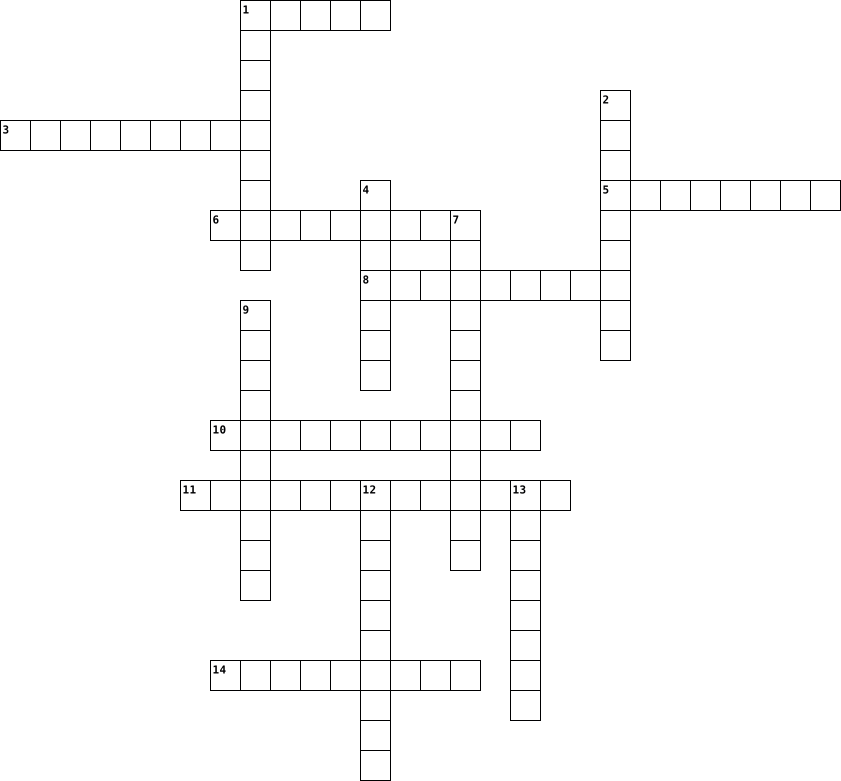
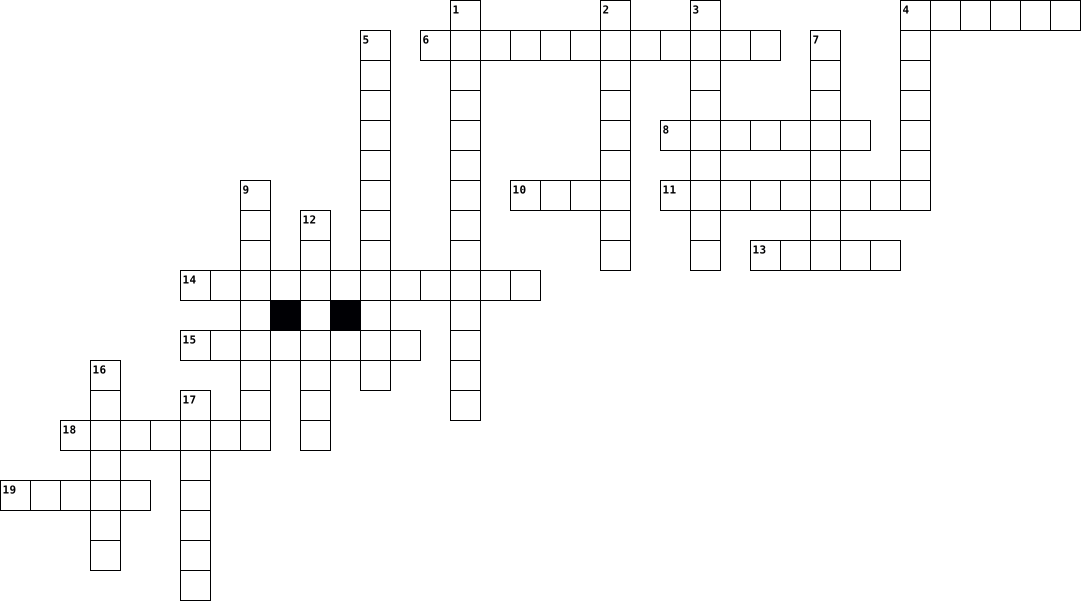
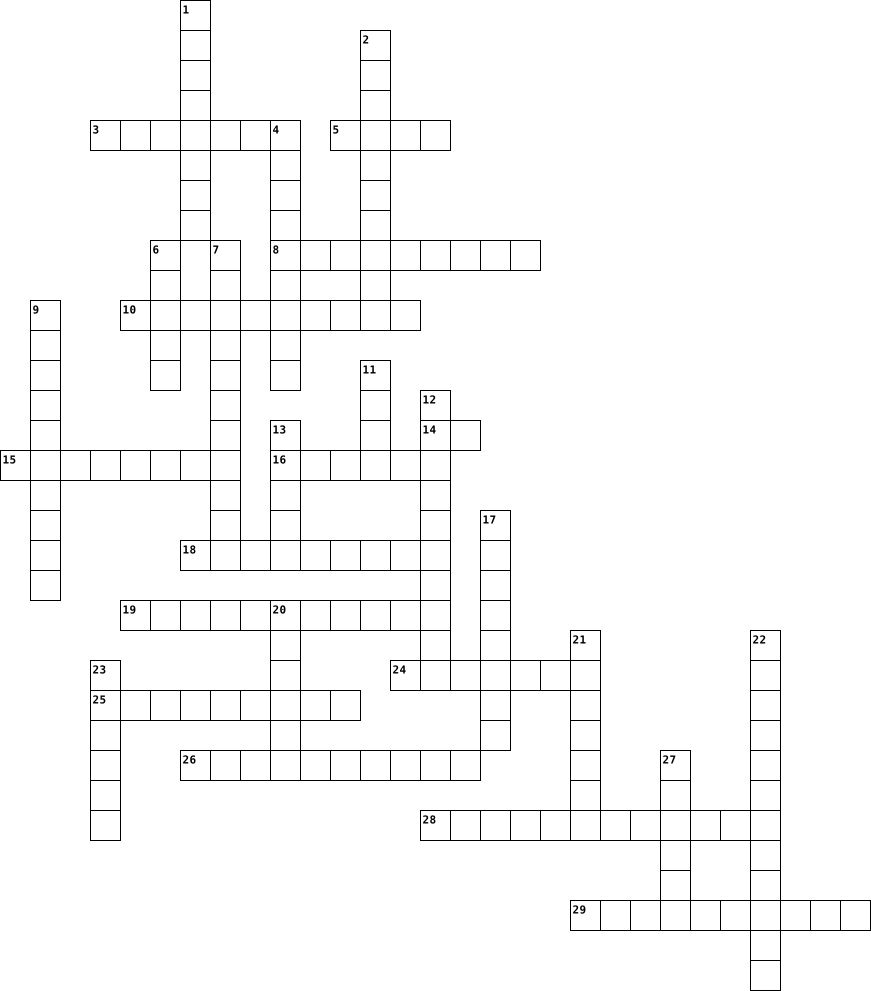
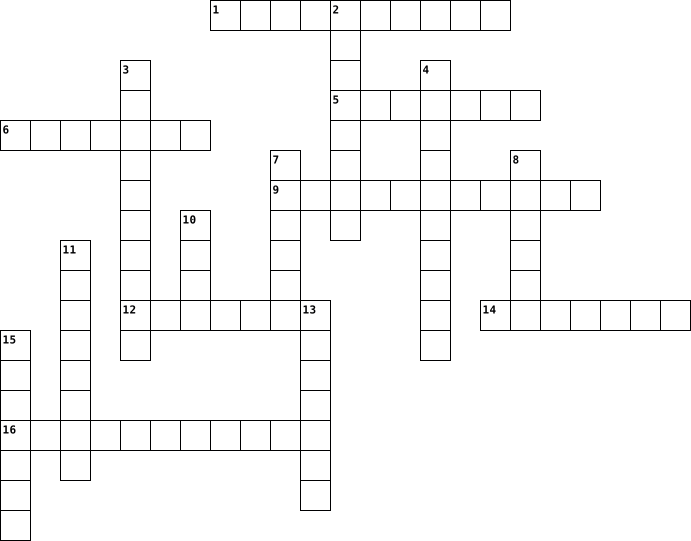
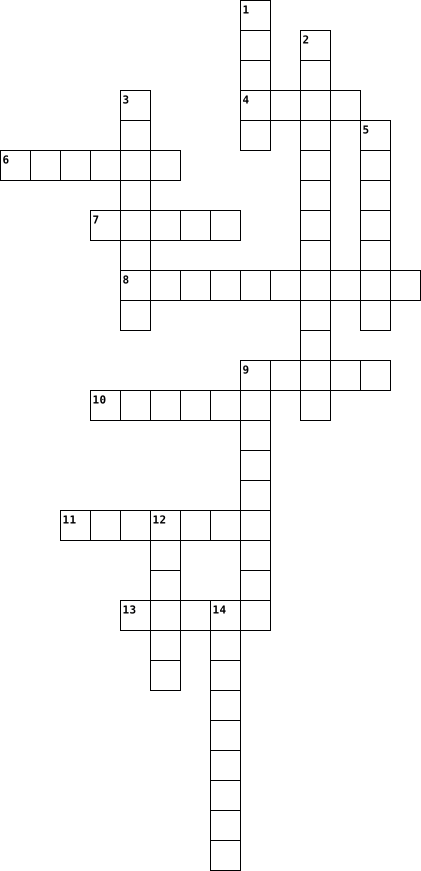
Pronouns and verbs 2026-04-15

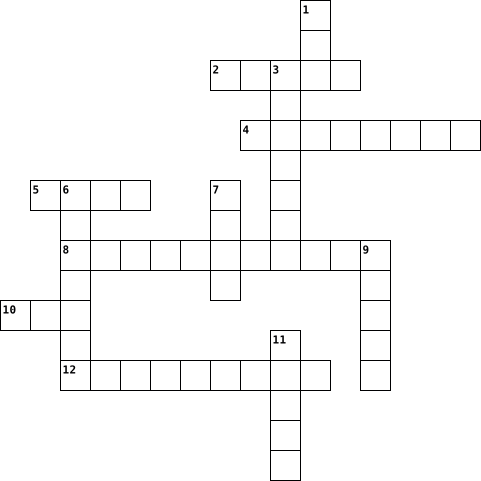
Across
- she
- we live
- the ending for ar verbs for ustedes/ellos
- the ending for ar verbs for nosotros
- we eat
- the ending for ar verbs for these pronouns is a
- you (formal)
- he
- we
Down
- they
- I
- the ending for ir and er verbs in the ellos case
- the ending for ir nosotros verbs
- he/she speaks
- the ending for ar verbs for tu
- the ending for ______ is o in the yo case
- the ending for er and it verbs in the tu case
- the ending for er nosotros verbs
- What Tu means
- the ending for which verbs in the usted case is E
20 Clues: I • he • we • she • they • we eat • we live • you (formal) • he/she speaks • What Tu means • the ending for ar verbs for tu • the ending for ir nosotros verbs • the ending for er nosotros verbs • the ending for ar verbs for nosotros • the ending for ar verbs for ustedes/ellos • the ending for ______ is o in the yo case • the ending for er and it verbs in the tu case • ...
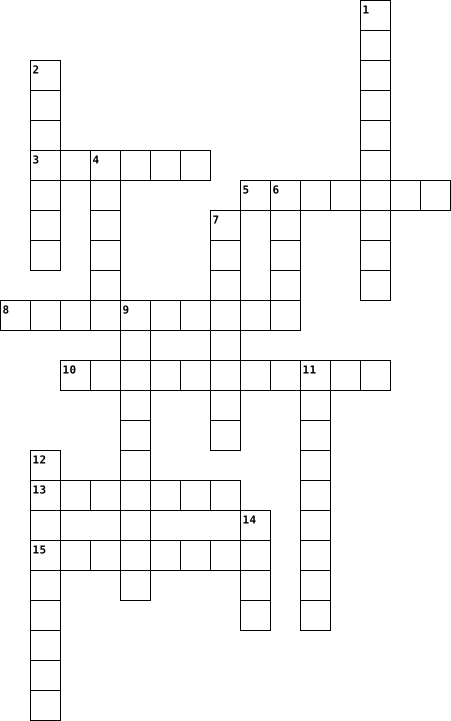
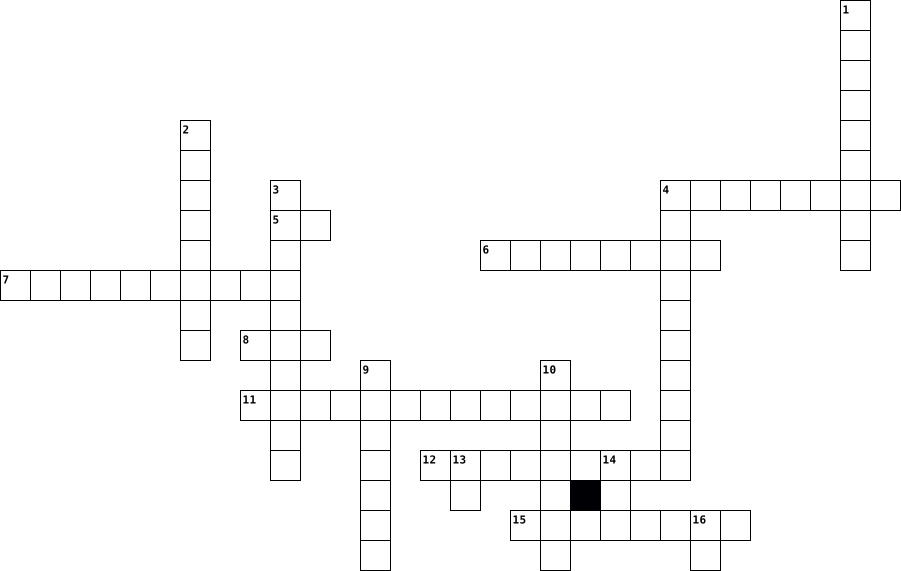
word building 2016-04-03
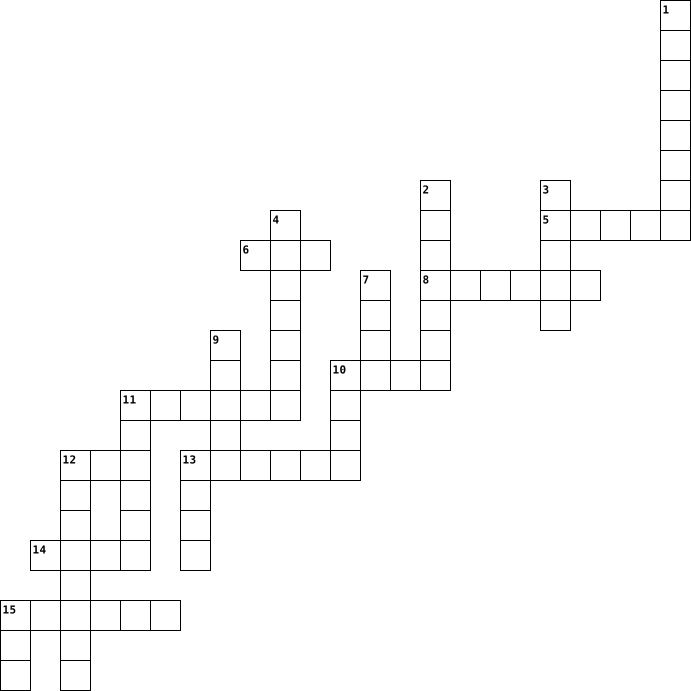
Across
- verbs die noun case?
- verbs exist noun case?
- verbs cheer adjective case?
- verbs annoy noun case?
- verbs enjoy adjective case?
- verbs celebrate adjective case?
- verbs disappear noun case?
- verb amaze noun case?
Down
- verbs differ adjective case?
- verbs discover noun case?
- verbs care adjective case?
- verbs evolve adjective case?
- verbs depress noun case?
- verbs excite noun case?
- verbs create adjective case?
15 Clues: verbs die noun case? • verb amaze noun case? • verbs exist noun case? • verbs annoy noun case? • verbs excite noun case? • verbs depress noun case? • verbs discover noun case? • verbs care adjective case? • verbs disappear noun case? • verbs cheer adjective case? • verbs enjoy adjective case? • verbs differ adjective case? • verbs evolve adjective case? • verbs create adjective case? • ...
Regular preterite crossword puzzle 2022-05-11
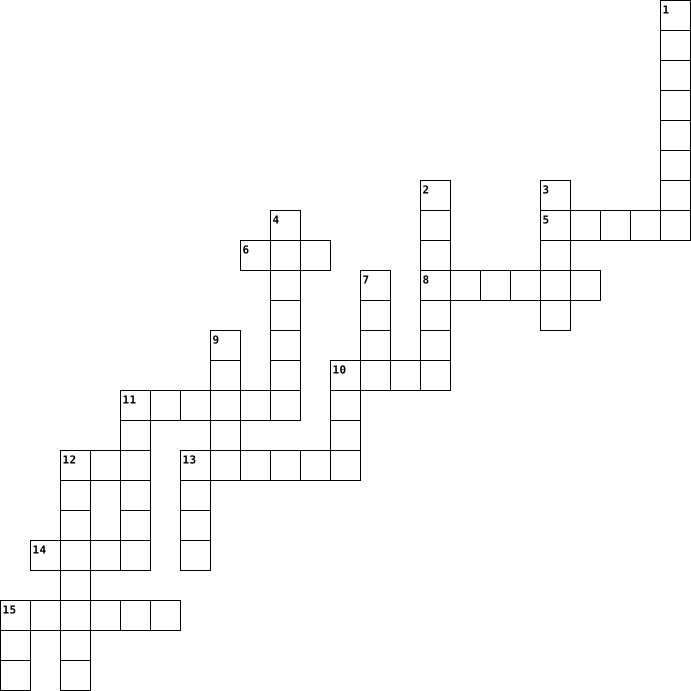
Across
- the ellos/ellas/uds form for ER/IR verbs
- the el/ella/usted form for DAR
- the vosotros form for ER/IR verbs
- the tú form for AR verbs
- the nosotros form for SER/IR
- the yo form for SER/IR
- the vosotros form for AR verbs
- the tú form for ER/IR verbs
- the ellos/ellas/uds form for SER/IR
Down
- the ellos form of HABLAR
- the tú form of COMER
- the ella form of VIVIR
- the vosotros form for DAR
- the nosotros form for ER/IR verbs
- the nosotros form for DAR
- the nosotros form for AR verbs
- the tú form for SER/IR
- the vosotros form for SER/IR
- the ellos/ellas/uds for AR verbs
- the el/ella/usted form for SER/IR
20 Clues: the tú form of COMER • the ella form of VIVIR • the tú form for SER/IR • the yo form for SER/IR • the ellos form of HABLAR • the tú form for AR verbs • the vosotros form for DAR • the nosotros form for DAR • the tú form for ER/IR verbs • the nosotros form for SER/IR • the vosotros form for SER/IR • the el/ella/usted form for DAR • the nosotros form for AR verbs • ...
Regular preterite crossword puzzle 2022-09-23
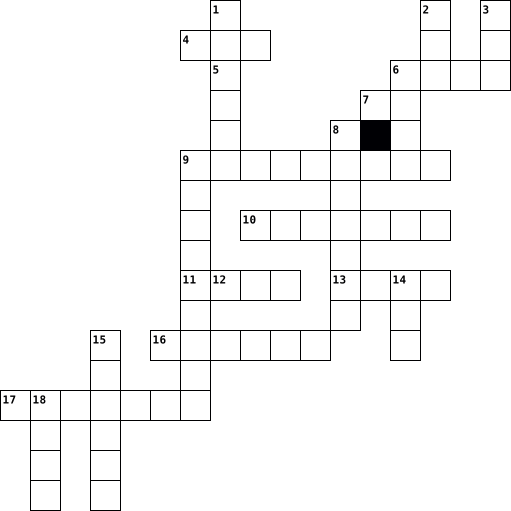
Across
- the ellos/ellas/uds form for ER/IR verbs
- the el/ella/usted form for DAR
- the vosotros form for ER/IR verbs
- the tú form for AR verbs
- the nosotros form for SER/IR
- the yo form for SER/IR
- the vosotros form for AR verbs
- the tú form for ER/IR verbs
- the ellos/ellas/uds form for SER/IR
Down
- the ellos form of HABLAR
- the tú form of COMER
- the ella form of VIVIR
- the vosotros form for DAR
- the nosotros form for ER/IR verbs
- the nosotros form for DAR
- the nosotros form for AR verbs
- the tú form for SER/IR
- the vosotros form for SER/IR
- the ellos/ellas/uds for AR verbs
- the el/ella/usted form for SER/IR
20 Clues: the tú form of COMER • the ella form of VIVIR • the tú form for SER/IR • the yo form for SER/IR • the ellos form of HABLAR • the tú form for AR verbs • the vosotros form for DAR • the nosotros form for DAR • the tú form for ER/IR verbs • the nosotros form for SER/IR • the vosotros form for SER/IR • the el/ella/usted form for DAR • the nosotros form for AR verbs • ...
El subjunctivo 2025-02-26

Across
- to prefer
- es bueno ____ lave los manos
- to need
- hacer(yo form)
- I wish
- hacer(tu form)
- saber(ellos/ellas form)
- to advise
- ending for ER verbs in tu form
- ending for Ar verbs in ellos/ellas form
- dar(nosotros form)
- es esencial que _____ más cuidado con la energía
Down
- to suggest
- to ask
- to want
- to recommend
- ir(yo form)
- ending for IR verbs in nosotros form
- saber(tu form)
- ser(tu form)
- ending for Ir verbs in ustedes form
- ending for AR verbs in tu form
- estar(yo form)
- es _____ que esté enferma
24 Clues: to ask • I wish • to want • to need • to prefer • to advise • to suggest • ir(yo form) • to recommend • ser(tu form) • hacer(yo form) • hacer(tu form) • saber(tu form) • estar(yo form) • dar(nosotros form) • saber(ellos/ellas form) • es _____ que esté enferma • es bueno ____ lave los manos • ending for ER verbs in tu form • ending for AR verbs in tu form • ending for Ir verbs in ustedes form • ...
Preterite Verbs 2012-11-11
Across
- Dar in el form
- Yo form of -ar verbs
- I did
- I watched
- We walked
- Hacer in nosotros form
- I came
- He has
- Vosotros form of -ar verbs
- You came
Down
- They gave
- Ir in yo form
- Ir in el form
- Hacer in el form
- Hacer in tu form
- You walked
- Yo form of -er verbs
- He watched
- Ir in tu form
- Tu form or -er verbs
20 Clues: I did • I came • He has • You came • They gave • I watched • We walked • You walked • He watched • Ir in yo form • Ir in el form • Ir in tu form • Dar in el form • Hacer in el form • Hacer in tu form • Yo form of -ar verbs • Yo form of -er verbs • Tu form or -er verbs • Hacer in nosotros form • Vosotros form of -ar verbs
verbs 2023-09-11
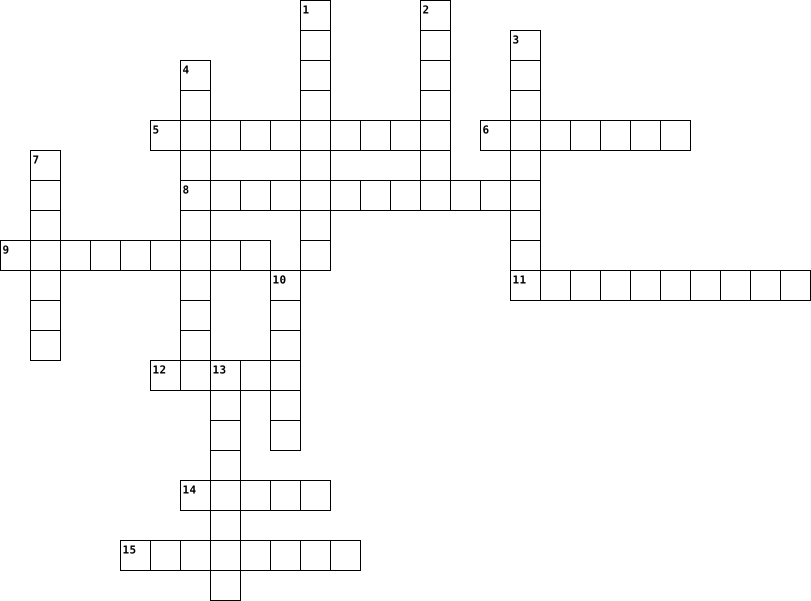
Across
- Verbs which require some type of object to complete their meaning
- Verbs which do not admit of the continuous form
- Verbs which do not require any object
- Verbs which are entirely devoid of lexical meaning and are used for building up analytical forms of verbs
- Forms of verbs which represent an action in its temporary development, have a meaning of process and duration
- The grammatical categoty of the verb which indicates the time of the action
- Verbs that are always accompanied by an infinitive, with which they form a modal predicate
- Verbs which do not imply any limit, the action can continue indefinitely
Down
- The function of verbs in the sentence
- Forms of verbs that express retrospectiveness, which consists of priority and revelance
- Forms of the verb which are built up by a change in the world itself (by means of suffixes, vowel change or both)
- Verbs which imply a limit beyond which the action cannot continue
- Verbs which form the Past Indefinite and the participle by adding the suffix -ed
- The grammatical categoty of the verb which serves to express the manner in which the action is regarded
- Verbs that have a lexical meaning of their own and can have an independent syntactic function in the sentence
15 Clues: The function of verbs in the sentence • Verbs which do not require any object • Verbs which do not admit of the continuous form • Verbs which imply a limit beyond which the action cannot continue • Verbs which require some type of object to complete their meaning • Verbs which do not imply any limit, the action can continue indefinitely • ...
The verb 2023-09-10
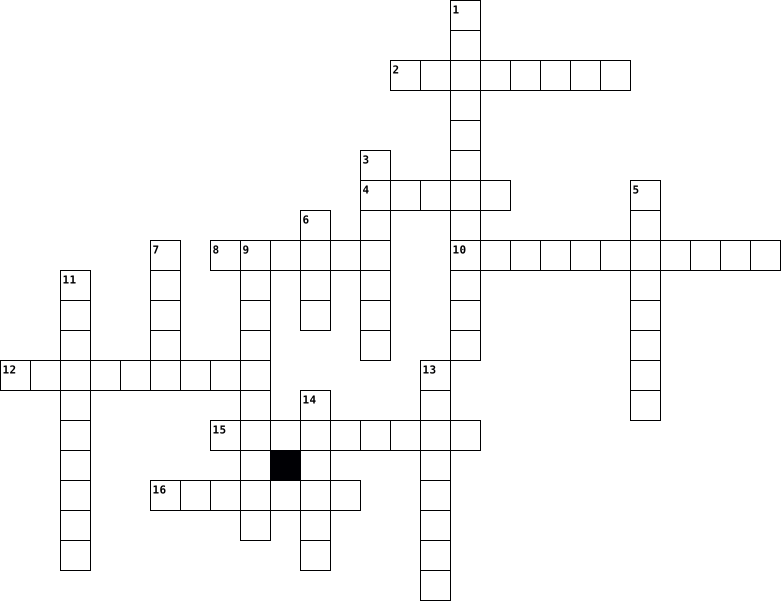
Across
- verbs that have a lexical meaning of their own and can have an independent syntactic function in the sentence
- the form of the verb which indicates the time of the action
- the form of the verb which serves to express the manner in which the action is regarded
- verbs that have final aim in view
- form that requires a change in the word itself
- verbs that have only grammatical meaning
- verbs that admit of the continuous form
Down
- verbs that do not require any object
- verbs that do not admit of the continuous form
- form that requires an auxiliary verb + notional verb
- both a notional and structural part of speech which denotes actions and state and might serve in the sentence as the predicate or a part of the predicate
- may be perfect and non-perfect (indefinite)
- verbs that cannot have an independent syntactic function in the sentence
- verbs that require some kind of object to complete their meaning
- verbs denoting the action that can go on indefinitely
- forms that function as the predicate in the sentence
16 Clues: verbs that have final aim in view • verbs that do not require any object • verbs that admit of the continuous form • verbs that have only grammatical meaning • may be perfect and non-perfect (indefinite) • verbs that do not admit of the continuous form • form that requires a change in the word itself • form that requires an auxiliary verb + notional verb • ...
Les verbes 2021-03-10
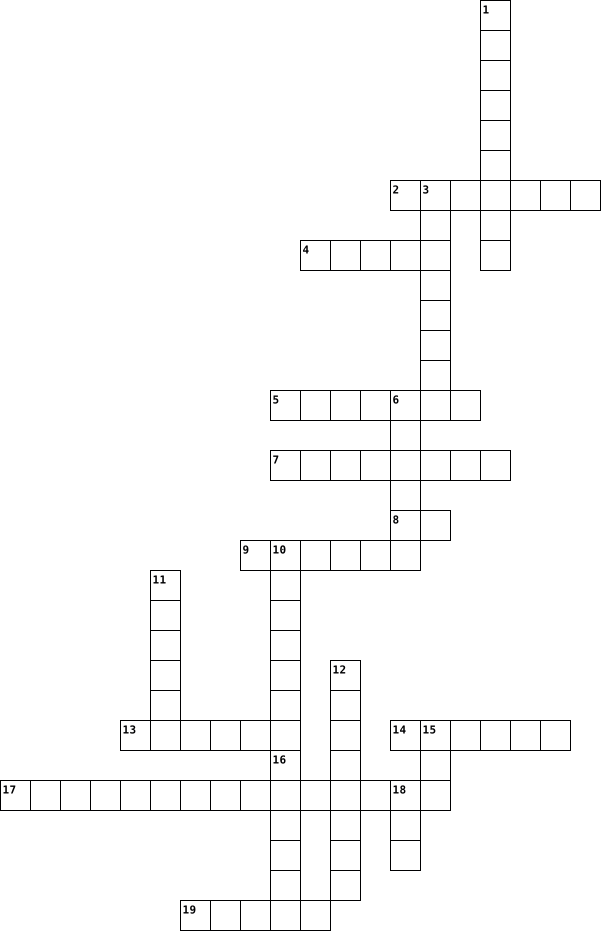
Across
- to buy
- to drink
- to take/have for food
- to wait for
- ending of all verbs with vous
- to win
- to loose
- to wear
- ending of all verbs with tu
- to (go) grocery shopping, 3 termes en fr
- to go
Down
- silverware, art. le en fr, pas d'espace
- to look for
- to give
- to need (3 termes en fr, pas d'espace)
- to sell
- the market, art. défini masc, pasd'espace
- ending of all verbs with nous
- ending of all verbs with ils/elles
19 Clues: to go • to buy • to win • to give • to sell • to wear • to drink • to loose • to look for • to wait for • to take/have for food • ending of all verbs with tu • ending of all verbs with vous • ending of all verbs with nous • ending of all verbs with ils/elles • to need (3 termes en fr, pas d'espace) • silverware, art. le en fr, pas d'espace • to (go) grocery shopping, 3 termes en fr • ...
Review for final 2023-12-12
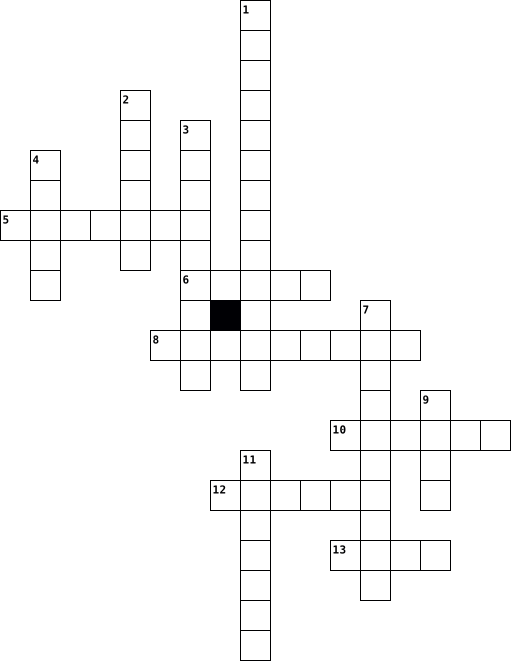
Across
- conjugate AR verbs Rafael y Miguel/caminar
- conjugate ar verbs yo/ayudar
- what mes do we celebrate dia de los muertos
- conjugate AR verbs tú/hablar
- conjugate AR verbs mi tía/limpiar
- cuantos meses hay en el año
Down
- what day "celebramos" Independencia de Estados Unidos
- conjugate AR verbs yo/cocinar
- conjugate AR verbs nosotros/brincar
- conjugate AR verbs Mi amigo/llamar
- conjugate AR verbs María y yo/preparar
- the opposite of bajo
- miercoles, jueves,_______, sabado
13 Clues: the opposite of bajo • cuantos meses hay en el año • conjugate ar verbs yo/ayudar • conjugate AR verbs tú/hablar • conjugate AR verbs yo/cocinar • miercoles, jueves,_______, sabado • conjugate AR verbs mi tía/limpiar • conjugate AR verbs Mi amigo/llamar • conjugate AR verbs nosotros/brincar • conjugate AR verbs María y yo/preparar • conjugate AR verbs Rafael y Miguel/caminar • ...
Action verbs 2021-06-25
Across
- when I grow up I will do _____ a great job (action verbs)
- an artist achieves a beautiful painting (action verbs)
- a person ______the clothes (action verbs)
- to express actions in English
- my dad is going to _____ me a cell phone (action verbs)
- I'm going to _____ my bad habits (action verbs)
Down
- my brother is going to ____ with his relationship (action verbs)
- my cousin can _____ her future (action verbs)
- scientists help ______problems (action verbs)
- I like ____ at full voice (action verbs)
- my brother goes to _____ the house (action verbs)
- my cousin goes to _____ at a famous university (action verbs)
12 Clues: to express actions in English • I like ____ at full voice (action verbs) • a person ______the clothes (action verbs) • my cousin can _____ her future (action verbs) • scientists help ______problems (action verbs) • I'm going to _____ my bad habits (action verbs) • my brother goes to _____ the house (action verbs) • an artist achieves a beautiful painting (action verbs) • ...
Affix Vocabulary/Grammar Unit 3 Review 2020-10-06
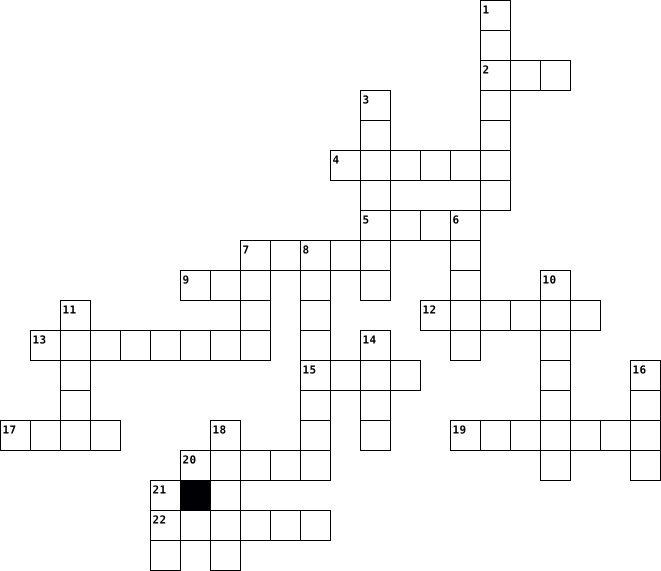
Across
- The root words JUR and JUS mean ______.
- Nouns that are not specific.
- The root word that means group.
- The root word that means write.
- The root words VIS and VID means ______.
- The type of affix that adds to the end of a word and changes the meaning.
- Nouns that you can see, touch, or interact with.
- The base meaning of a word, that affixes can be added to, is called the ________ of the word.
- The root word that means far off.
- A word that can take the place of a noun is known as a ___________.
- The root words LUC and LUM means _______.
- Words such as run, jump, and dance are examples of __________ verbs.
Down
- Verbs that come before a second, main verb, are called _________ verbs.
- The root word LOG means _________ or word.
- The word conGREGate means to cause to ________ together.
- This root word means give birth.
- Nouns that you can NOT see, touch, or interact with.
- Verbs that express existence and connect to a description, such as is or was, are called __________ verbs.
- Verbs that describe possibility or necessity, such as may, might, and must are called ________ verbs.
- Any word that is a person, place, or thing.
- The root word FLEX means _______.
- The GENEsis of something is the start, or ___________, of it.
- The root word that means hand.
23 Clues: Nouns that are not specific. • The root word that means hand. • The root word that means group. • The root word that means write. • This root word means give birth. • The root word FLEX means _______. • The root word that means far off. • The root words JUR and JUS mean ______. • The root words VIS and VID means ______. • The root words LUC and LUM means _______. • ...
CHAPTER 2. 2024-11-01

Across
- Second Verbs of “ Pull”
- The place of the story “The legend of Situ Bagendit”
- Body parts to see
- The colour of “Suci”
- Generic structur of Narrative text
- Text that purpose to entertain/amuse the reader
- Tempat tidur in english
- What the meaning of “Met”
- What the meaning of “Wood”
- What the title of story that you listened two last week
Down
- The setting area of the story “The Lion and Rabbit” Page 51
- The kind of narrative text
- What the meaning of “akhir”
- What the meaning of “ Who’s there”
- Second Verbs of “Datang”
- Second Verbs of “Mengetuk”
- Melihat in english
- Mengatakan in english
- pemburu in english
- Sifat yang selalu dilambangkan dengan warna merah ini english
- Gigi in english
- Second Verbs of “Arrive”
- First Verbs of “Ate”
- Berpura-pura ini english
- Suara ini english
25 Clues: Gigi in english • Body parts to see • Suara ini english • Melihat in english • pemburu in english • The colour of “Suci” • First Verbs of “Ate” • Mengatakan in english • Second Verbs of “ Pull” • Tempat tidur in english • Second Verbs of “Datang” • Second Verbs of “Arrive” • Berpura-pura ini english • What the meaning of “Met” • The kind of narrative text • Second Verbs of “Mengetuk” • ...
The verb 2023-09-10
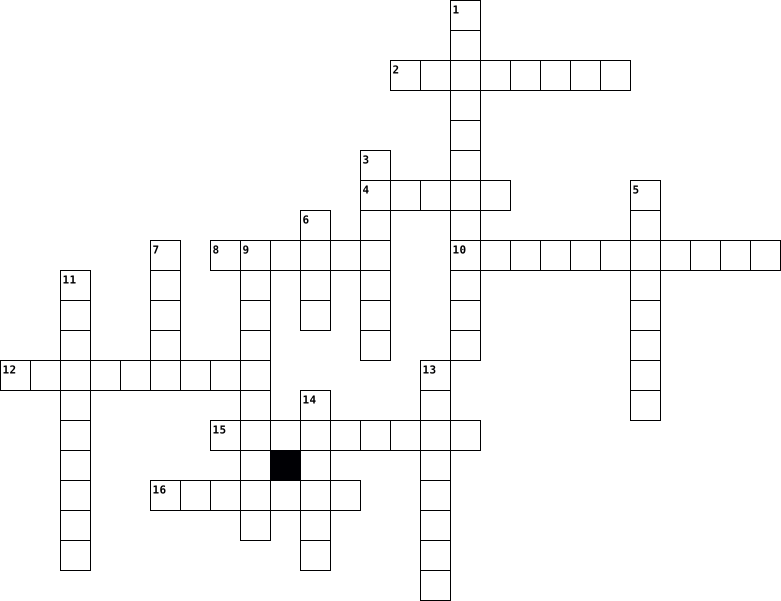
Across
- verbs that have a lexical meaning of their own and can have an independent syntactic function in the sentence
- the form of the verb which indicates the time of the action
- the form of the verb which serves to express the manner in which the action is regarded
- verbs that have final aim in view
- form that requires a change in the word itself
- verb that has only grammatical meaning
- verbs that admit of the continuous form
Down
- verbs that do not require any object
- verbs that do not admit of the continuous form
- form that requires an auxiliary verb + notional verb
- both a notional and structural part of speech which denotes actions and state and might serve in the sentence as the predicate or a part of the predicate
- may be perfect and non-perfect (indefinite)
- verbs that cannot have an independent syntactic function in the sentence
- verbs that require some kind of object to complete their meaning
- verbs denoting the action that can go on indefinitely
- forms that function as the predicate in the sentence
16 Clues: verbs that have final aim in view • verbs that do not require any object • verb that has only grammatical meaning • verbs that admit of the continuous form • may be perfect and non-perfect (indefinite) • verbs that do not admit of the continuous form • form that requires a change in the word itself • form that requires an auxiliary verb + notional verb • ...
Verbs 2026-01-03

Across
- In the sentence "He gobbles live fish," the verb is in the simple-present _____ .
- "The letter was received by Elena" is the _____-voice construction of "Elena received the letter."
- "Talk/Talked/Talked" vs. "go/went/gone" are examples of regular vs. _____ verbs.
- When we're talking about singular vs. plural for a verb (as in "She says" vs. "They say"), we're talking about _____ .
- Verbs with no objects are _____ , as in, "He grew tall."
- Simple, progressive, and perfect are _____ of a verb.
- "We could play piano when we were young." The verb "could" is a _____ verb (a type of helping verb).
- "He looks strange." "She is a chef." The verbs "looks" and "is" are _____ verbs.
- "Look down on" is a phrasal verb, but "look around" is a _____ verb.
Down
- In the sentence "We know nothing," the subject is in the first _____ plural.
- "Sam killed Bert" vs. "Bert was killed by Sam" are examples of active vs. passive _____ .
- "Understand," "anticipate," "imagine," and "believe" are all _____ verbs.
- In the sentence "You are just too much," the subject and verb are in the _____ person singular.
- Verbs that have objects are _____ , as in, "He grew corn.".
- The "nouned" form of a verb, functioning as a noun and ending in -ing (as in "Fishing is nice"), is called a(n) _____ .
- The verb "reading" in the sentence "He is reading" is a present _____ .
- If "to expectorate" is the infinitive, then just "expectorate" is the _____ infinitive.
- "Run," "slurp," "giggle," and "hunt" are all _____ verbs.
- "The king has spoken." The verb "has" is a(n) _____ verb, also called a helping verb.
- Verbs in their "dictionary" form, unconjugated and free of context, are infinitive, but conjugated verbs ("he SITS" vs. "to sit") are _____ .
- In the sentence "To err is human," the verb "to err" is in its _____ form.
21 Clues: Simple, progressive, and perfect are _____ of a verb. • Verbs with no objects are _____ , as in, "He grew tall." • "Run," "slurp," "giggle," and "hunt" are all _____ verbs. • Verbs that have objects are _____ , as in, "He grew corn.". • "Look down on" is a phrasal verb, but "look around" is a _____ verb. • ...
Crossword unit 7 2023-09-11
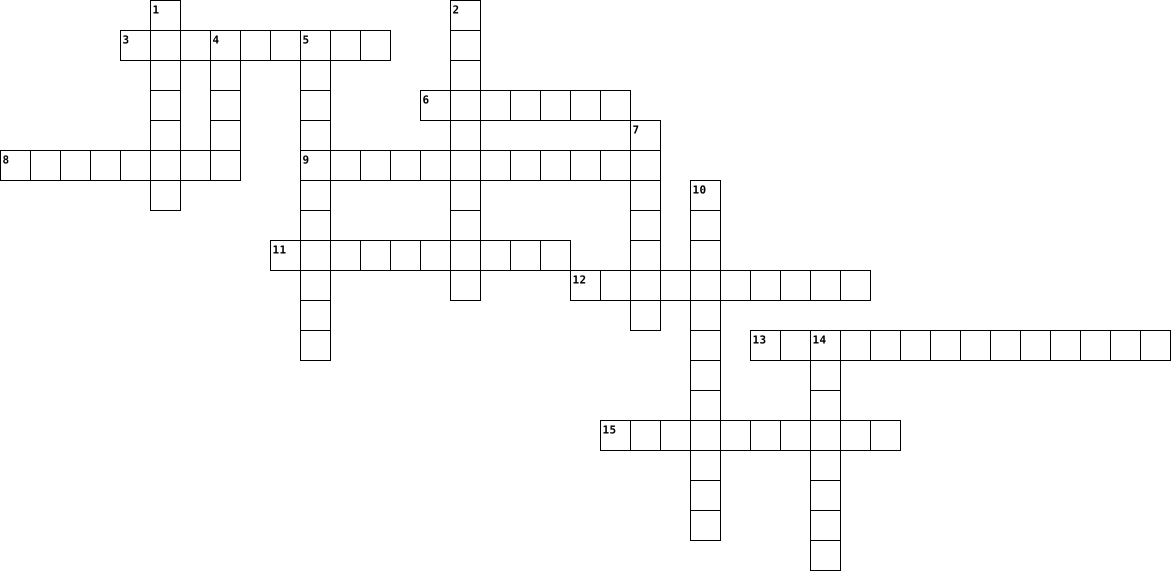
Across
- these forms are built up by a change in the word itself
- verbs which do not admit of the continuous form
- these verbs do not imply any such limit, and the action can go on indefinitel
- verbs that do not require any object
- these verbs may either preserve or lose their lexical meaning
- these forms consist of two components:an auxiliary verb which has no lexical meaning and a notional verb which is the bearer of lexical meaning
- these forms have a very broad meaning, they have no specialized aspect characteristics of their own and merely represent an action as occurring.
- verbs that require some kind of object to complete their meaning
Down
- verbs which admit of the continuous form
- these forms have a clear-cut aspect characteristic, which is to represent an action in its temporary development.
- the form of the verb which indicates the time of the action
- these verbs imply a limit beyond which the action can not continue
- with these verbs, the Past Indefinite and the participle are formed by adding the suffix -ed.
- these verbs may be notional as well as structural words.
- verbs always have a lexical meaning of their own and can have an independent syntactic function in the sentence.
15 Clues: verbs that do not require any object • verbs which admit of the continuous form • verbs which do not admit of the continuous form • these forms are built up by a change in the word itself • these verbs may be notional as well as structural words. • the form of the verb which indicates the time of the action • ...
Module 5 2017-10-28
Across
- patterns, based on first language
- Stage, the brain recognizes words
- verbs, verbs that are conjugated following the same pattern
- Alphabetical Phase, the brain makes connection between letters in the words and the phonemes to pronounce it
- meaning of word
- brain area for speaking
- Alphabetical Phase, reading becomes more fluent
- Stage, a brain representation of a word as a picture
- representation of a word with letters
- Prominent, languages that place the topic as the central part of a sentence
Down
- Phase, the brain does not have any systemic letter-sound-connection
- verbs, verbs that are conjugated differently from other verbs
- sounds that form syllabi
- letters at the end of the word
- stage, the brain begins to decode letters into sounds
- Networks, clusters of words of the same type in the brain
- brain area for comprehension of hear and spoken words
- rhythm, cadence, pitch of spoken language
- letters before a word
- Alphabetical Phase, the brain recognizes high frequency words
20 Clues: meaning of word • letters before a word • brain area for speaking • sounds that form syllabi • letters at the end of the word • patterns, based on first language • Stage, the brain recognizes words • representation of a word with letters • rhythm, cadence, pitch of spoken language • Alphabetical Phase, reading becomes more fluent • ...
Verb 2023-09-09
Across
- is the form of the verb which serves to express the manner in which the action is regarded.
- these verbs do not admit of the continuous dorm.
- these verbs require some other words to complete their meaning.
- these are verbs that imply a limit beyond which the action cannot continue.
- you can build up a new form of these verbs by adding suffix -ed.
- these verbs do not imply any such limit of the action.
Down
- this form of the verb consists of two words - a structural and a notional word.
- verbs which admit of the continuous form.
- this is a grammatical category showing the relation of the action and its doer to the speaker.
- this is the form of the verb which indicates the time of the action.
- these are verbs that have their own independent syntactic function in the sentence.
- these verbs do not usually have their own meaning and they cannot have an independent syntactic function in the sentence.
- these verbs have 3 forms that you have to remember.
- it is the usual function of the verb in the sentence.
- a part of speech denoting actions.
15 Clues: a part of speech denoting actions. • verbs which admit of the continuous form. • these verbs do not admit of the continuous dorm. • these verbs have 3 forms that you have to remember. • it is the usual function of the verb in the sentence. • these verbs do not imply any such limit of the action. • these verbs require some other words to complete their meaning. • ...
NARRATIVE TEXT_Story Types & Language 2026-03-14

Across
- Time sequence words
- Impossible magical events
- Language painting pictures
- Doing verbs in story
- Character conversations
- Word for unexpected event
- Story participants
- Traditional cultural story
- Magical tale with creatures
Down
- Tense for completed actions
- Verbs like thought knew felt
- Connective for next event
- Word for last event
- Historical heroic story
- Verbs like said told asked
- Upon a time story beginning
- Speech shown in quotation marks
- Animal story with moral
- Ancient explanatory story
- Report of story events
20 Clues: Story participants • Time sequence words • Word for last event • Doing verbs in story • Report of story events • Historical heroic story • Character conversations • Animal story with moral • Impossible magical events • Connective for next event • Ancient explanatory story • Word for unexpected event • Language painting pictures • Verbs like said told asked • Traditional cultural story • ...
Parts Of Speech Crossword #1 2017-05-25
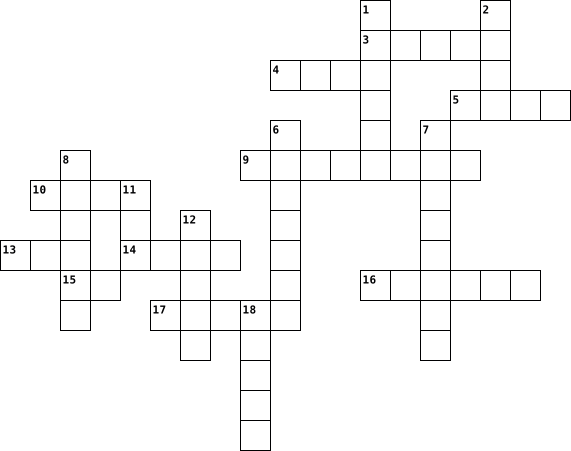
Across
- / this is a food that Italians eat (Concrete Nouns)
- / to jump in the air (action verbs)
- / a group of people who take part in an activity (collective nouns)
- / the day that comes after Friday (proper nouns)
- / to spring up (linking verbs)
- / the past tense of do (helping verbs)
- / this is a form of perception in the winter. (Concrete Noun)
- / __, are, is, was, were, been, being (state of being verb)
- / If you have to go to the hospital you are not in good ________. (Abstract Noun)
- / a group of students who are taught together (collective nouns)
Down
- / to show up (linking verbs)
- / A place where you can go to different stores in the same building (common noun)
- / if you are upset you are in a state of ________. (abstract noun)
- / Something you put in your locker (common noun)
- / the day that comes after Thursday (proper noun)
- / am, are, is, _____, were, been, being (state of being verb)
- / the past tense of can (helping verbs)
- / you do this at night (action verbs)
18 Clues: / to show up (linking verbs) • / to spring up (linking verbs) • / to jump in the air (action verbs) • / you do this at night (action verbs) • / the past tense of do (helping verbs) • / the past tense of can (helping verbs) • / Something you put in your locker (common noun) • / the day that comes after Friday (proper nouns) • ...
The verb 2023-09-10
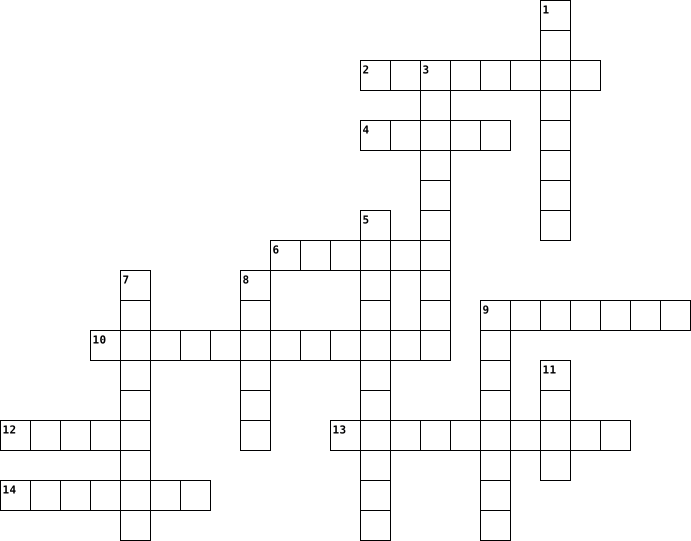
Across
- verbs that have a lexical meaning of their own and can have an independent syntactic function in the sentence
- may be perfect and non-perfect (indefinite)
- the form of the verb which serves to express the manner in which the action is regarded
- verbs that admit of the continuous form
- verbs that do not require any object
- the form of the verb which indicates the time of the action
- verbs that cannot have an independent syntactic function in the sentence
- verbs that do not admit of the continuous form
Down
- form that requires an auxiliary verb + notional verb
- verbs that require some kind of object to complete their meaning
- verbs that have final aim in view
- form that requires a change in the word itself
- forms that function as the predicate in the sentence
- verbs denoting the action that can go on indefinitely
- both a notional and structural part of speech which denotes actions and state and might serve in the sentence as the predicate or a part of the predicate
15 Clues: verbs that have final aim in view • verbs that do not require any object • verbs that admit of the continuous form • may be perfect and non-perfect (indefinite) • form that requires a change in the word itself • verbs that do not admit of the continuous form • form that requires an auxiliary verb + notional verb • forms that function as the predicate in the sentence • ...
The verb 2023-09-10
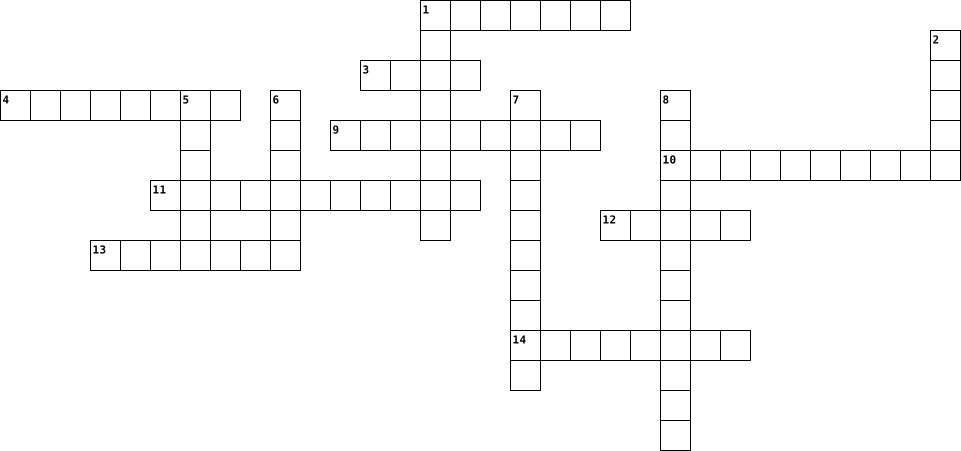
Across
- verbs that admit of the continuous form
- both a notional and structural part of speech which denotes actions and state and might serve in the sentence as the predicate or a part of the predicate
- verbs that have a lexical meaning of their own and can have an independent syntactic function in the sentence
- form that requires a change in the word itself
- verbs that require some kind of object to complete their meaning
- verbs that have final aim in view
- may be perfect and non-perfect (indefinite)
- verbs that do not admit of the continuous form
- form that requires an auxiliary verb + notional verb
Down
- verbs denoting the action that can go on indefinitely
- the form of the verb which indicates the time of the action
- the form of the verb which serves to express the manner in which the action is regarded
- forms that function as the predicate in the sentence
- verbs that cannot have an independent syntactic function in the sentence
- verbs that do not require any object
15 Clues: verbs that have final aim in view • verbs that do not require any object • verbs that admit of the continuous form • may be perfect and non-perfect (indefinite) • form that requires a change in the word itself • verbs that do not admit of the continuous form • forms that function as the predicate in the sentence • form that requires an auxiliary verb + notional verb • ...
The verb 2023-09-10
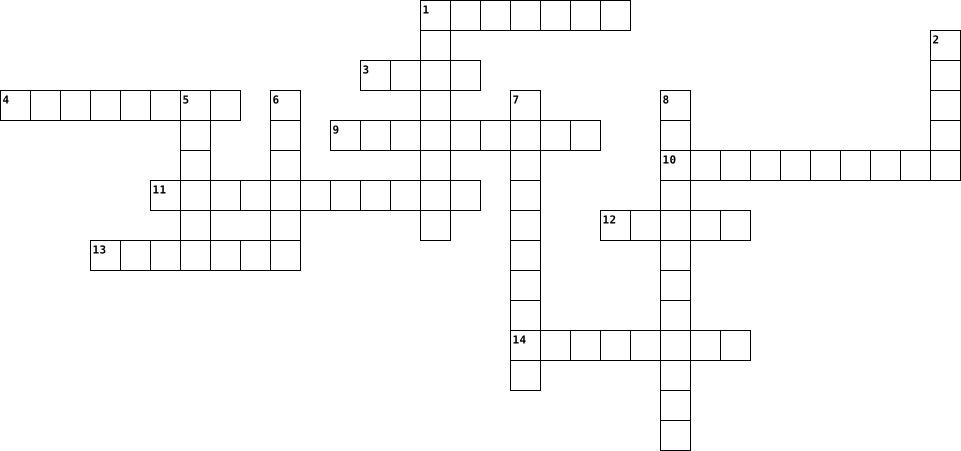
Across
- verbs that admit of the continuous form
- both a notional and structural part of speech which denotes actions and state and might serve in the sentence as the predicate or a part of the predicate
- verbs that have a lexical meaning of their own and can have an independent syntactic function in the sentence
- form that requires a change in the word itself
- verbs that require some kind of object to complete their meaning
- verbs that have final aim in view
- may be perfect and non-perfect (indefinite)
- verbs that do not admit of the continuous form
- form that requires an auxiliary verb + notional verb
Down
- verbs denoting the action that can go on indefinitely
- the form of the verb which indicates the time of the action
- the form of the verb which serves to express the manner in which the action is regarded
- forms that function as the predicate in the sentence
- verbs that cannot have an independent syntactic function in the sentence
- verbs that do not require any object
15 Clues: verbs that have final aim in view • verbs that do not require any object • verbs that admit of the continuous form • may be perfect and non-perfect (indefinite) • form that requires a change in the word itself • verbs that do not admit of the continuous form • forms that function as the predicate in the sentence • form that requires an auxiliary verb + notional verb • ...
verbs 2023-09-11
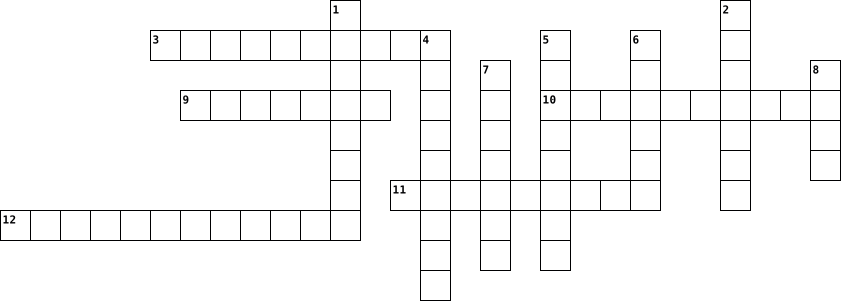
Across
- Verbs serving as auxiliary or modal verbs, closely connected with other words.
- Words denoting actions, encompassing activities, processes, states, relations, and more.
- Verbs that require an object to complete their meaning.
- What verbs have a limit to the action?
- What verbs do not require an object to complete their meaning?
Down
- Actions without a specific endpoint, can continue indefinitely
- Verbs denoting physical perceptions, emotions, thoughts, wishes, and more
- Verbs that connect the subject to a subject complement.
- Verbs with their own lexical meaning and independent syntactic function.
- Which verb forms have the following grammatical categories: person, number, mood, voice
- Verbs describing ongoing actions or activities
- What word denote actions, activities, processes, states and more?
12 Clues: What verbs have a limit to the action? • Verbs describing ongoing actions or activities • Verbs that connect the subject to a subject complement. • Verbs that require an object to complete their meaning. • Actions without a specific endpoint, can continue indefinitely • What verbs do not require an object to complete their meaning? • ...
Stative verbs 2021-06-23
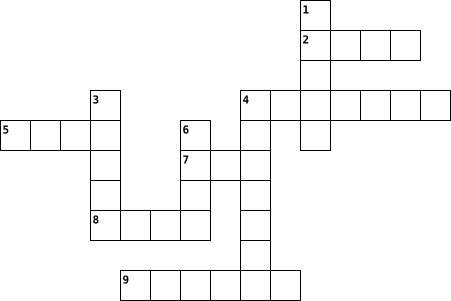
Across
- “ได้ยิน” Sensing verbs
- “ประกอบด้วย” Being/Qualities verbs
- “ชอบ” Emotion and Though verbs
- “เป็นเจ้าของ” Possession Verbs
- “มี” Possession Verbs
- “เป็นของ” Possession verbs
Down
- “คิดว่า” Emotion and Though verbs
- “หนัก” Being/Qualities verbs
- “บรรจุ” Being/Qualities verbs
- “รัก” Emotion and Though verbs
10 Clues: “มี” Possession Verbs • “ได้ยิน” Sensing verbs • “เป็นของ” Possession verbs • “หนัก” Being/Qualities verbs • “บรรจุ” Being/Qualities verbs • “ชอบ” Emotion and Though verbs • “รัก” Emotion and Though verbs • “เป็นเจ้าของ” Possession Verbs • “คิดว่า” Emotion and Though verbs • “ประกอบด้วย” Being/Qualities verbs
Quick review 2025-05-20

Across
- A suffix for a thing noun
- solía
- Como
- Suffix for verbs
- Separates 2 verbs
- porque
- The, A, An
- A strong suggestion
- por qué?
Down
- A casula way of telling someone what to do
- As a result
- Describes verbs and adjectives
- A suffix for adjective
- A Suffix for a person noun
- Llegar
- aunque
- Suffix for regular adverbs
17 Clues: Como • solía • porque • Llegar • aunque • por qué? • The, A, An • As a result • Suffix for verbs • Separates 2 verbs • A strong suggestion • A suffix for adjective • A suffix for a thing noun • A Suffix for a person noun • Suffix for regular adverbs • Describes verbs and adjectives • A casula way of telling someone what to do
Past tense Vocab puzzle 2024-11-21

Across
- Ella duerme
- Ellas trabajan
- Ending used for er verbs done by someone else
- Tú compras
- Yo voy
- Yo camino
- Tú escuchas
- Nosotros pasamos
- Ella hace
- Él nadar
- Ending for ir verbs done by us (we)
- Tú haces
- Yo corro
- Ellos hablan
Down
- Tú tomas
- Nosotros comemos
- Él juge
- Él va
- Nosotros lemos
- Yo toco
- Ellas miran
- Martha y Victor escriben
- Ending for ar verbs done by the person you're talking to
- Yo escribo
24 Clues: Él va • Yo voy • Él juge • Yo toco • Tú tomas • Él nadar • Tú haces • Yo corro • Yo camino • Ella hace • Tú compras • Yo escribo • Ella duerme • Ellas miran • Tú escuchas • Ellos hablan • Ellas trabajan • Nosotros lemos • Nosotros comemos • Nosotros pasamos • Martha y Victor escriben • Ending for ir verbs done by us (we) • Ending used for er verbs done by someone else • ...
Grammar 2020-06-15
Across
- ..... verbs are used in the continuous
- a notional part of speech which may express an action, a state, a condition and motion, syntactic function – predicate
- Verbs that help to build the forms of other verbs
- … is a word or phrase which is used before a noun to indicate the amount or quantity: 'Some', 'many', 'a lot of' and 'a few'
- Can the future indefinite be used in subordinate adverbial clauses of time and condition?
- Speech that consists of a reporting clause and a that-clause
- The clause that acts as the object of the verb
- The ...... present perfect takes place within a period of time before and including the moment of speaking, so it is relevant to the moment of speaking through its effect or virtually through its continuation at the moment of speaking
- … form is used to express the validity or truth of a basic assertion, while a negative form expresses its falsity
- .... verbs are not used in the continuous
- The ..... present perfect continuous up to the moment of speaking and the moment of speaking is excluded
- verbs require some object to complete its meaning
- The action in subordinate clause that happens at the same time with principal clause
- A word that introduces a noun
Down
- Stative verbs can be used in the continuous form if they have … meaning
- The Present Tense that is used to express declarations and announcements
- The phrasal verb can be a verb of beginning, duration,repetition and.....
- The Future Perfect in the past is formed by means of auxiliary verb ......... + have been + Participle I of the notional verb
- A word or phrase that links words, clauses, or sentences
- The Present Tense that is used to express actions generally characterizing the person denoted by the subject bringing out the person’s typical traits
- The property of a noun or pronoun that indicates how it relates to other parts of a sentence
- A word, phrase, clause that a pronoun can replace
- verbs express speaker’s attitude
- All the forms of the future continuous are …
- Verbs that denote means of transportation or movement (verbs of..)
- If Reporting speech and reported speech both are in Past tense. While converting to indirect speech, Reported speech will be converted to Past ..... Tense
- verbs have complete meaning without anything else
- The Simple ..... predicate – a single finite verb in all tenses
- How many types of predicate are there?
29 Clues: A word that introduces a noun • verbs express speaker’s attitude • ..... verbs are used in the continuous • How many types of predicate are there? • .... verbs are not used in the continuous • All the forms of the future continuous are … • The clause that acts as the object of the verb • Verbs that help to build the forms of other verbs • ...
Future Tense French 2023-05-08
Across
- You all will (eat)
- Ending for Vous
- He/She will (travel)
- We will (listen)
- Ending for Nous verbs
- We will (work)
- They all will (speak)
- You will (leave)
Down
- He/She will (watch)
- I will (dance)
- You all will (draw)
- They will (walk)
- I will (swim)
- You will (play)
- Ending for Tu verbs
- Ending for Ils/Elles
- Ending for Je verbs
17 Clues: I will (swim) • I will (dance) • We will (work) • Ending for Vous • You will (play) • They will (walk) • We will (listen) • You will (leave) • You all will (eat) • He/She will (watch) • You all will (draw) • Ending for Tu verbs • Ending for Je verbs • He/She will (travel) • Ending for Ils/Elles • Ending for Nous verbs • They all will (speak)
Linking Verbs 2019-05-06
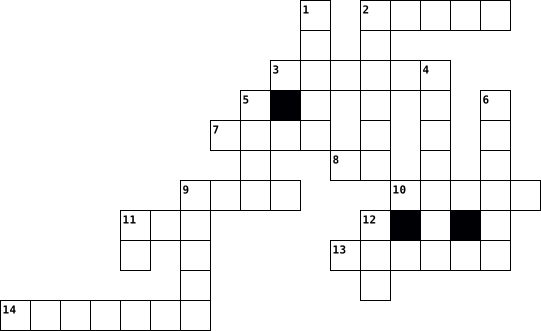
Across
- Louise ___ be the bride at the royal wedding.
- That doorbell ___ broken.
- My brother ___ mad too easily.
- The professor ___ absolutely certain.
- My sisters have ___ grief stricken.
- This sweater ___ itchy.
- The girls ___ happy because they’re eating at Stella’s tonight.
- This soup ___ delicious.
- ___ verbs are everywhere.
Down
- That sculpture ___ strange.
- Verbs that have to do with the five ___ are sometimes linking
- A linking verb links the ___ to a word or phrase in the predicate.
- Frances and Ella ___ tired.
- This tomato ___ rotten.
- Linking verbs are sometimes called 'states of ___' verbs.
- I ___ looking forward to summer vacation.
- That magician's show ___ amazing!
17 Clues: This tomato ___ rotten. • This sweater ___ itchy. • This soup ___ delicious. • That doorbell ___ broken. • ___ verbs are everywhere. • That sculpture ___ strange. • Frances and Ella ___ tired. • My brother ___ mad too easily. • That magician's show ___ amazing! • My sisters have ___ grief stricken. • The professor ___ absolutely certain. • I ___ looking forward to summer vacation. • ...
Bella's verbs 2023-11-03
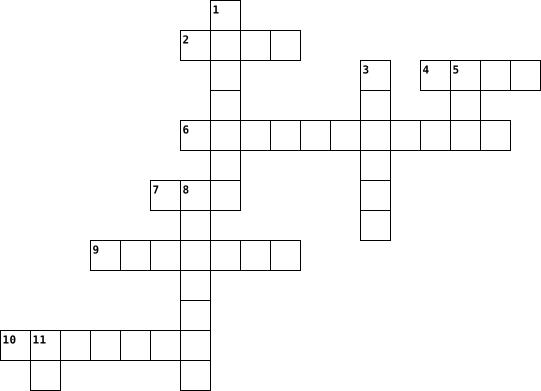
Across
- Every sentence needs a ____
- Is "can" a helping or main verb?
- “to” form of verbs that are not limited by person, number, tense, mood, and voice.
- are verbs with -ing still verbs?
- Is "been" a helping or main verb?
- ____ are modify verbs
Down
- an another name for -ing verbs
- Verbs express ___ or state of being.
- a linking verb
- Action verbs ____ action
- a action verb
11 Clues: a action verb • a linking verb • ____ are modify verbs • Action verbs ____ action • Every sentence needs a ____ • an another name for -ing verbs • Is "can" a helping or main verb? • are verbs with -ing still verbs? • Is "been" a helping or main verb? • Verbs express ___ or state of being. • “to” form of verbs that are not limited by person, number, tense, mood, and voice.
Grammar Crossword 2023-02-15
Across
- modify Nouns/Pronouns
- can take the place of Nouns
- modifies all things not Nouns/Pronouns
- these words link things together
- verbs that are form of the Verb 'to be'
- verbs that come before the main verb
- begins a phrase that often indicates a location in either space or time
Down
- sentence made up of two or more simple sentences linked together
- verbs that end in either -ed or -ing that function like Adjectives
- to + verb that will function as either a Noun, Adjective, or Adverb
- type of verbs such as Run, Write, Paint
- basic sentence with a Subject and Predicate
- person, place, thing, quality, or idea
- the words a, an, the are known as
- verbs ending in -ing that function as a Noun
- sentence with a dependent and independent clause
16 Clues: modify Nouns/Pronouns • can take the place of Nouns • these words link things together • the words a, an, the are known as • verbs that come before the main verb • modifies all things not Nouns/Pronouns • person, place, thing, quality, or idea • type of verbs such as Run, Write, Paint • verbs that are form of the Verb 'to be' • basic sentence with a Subject and Predicate • ...
Preterite Tense 2025-05-16

Across
- Ir/Ser preterite conjugation in the Yo form
- Car gar zar verbs have a spelling change in the __ form
- Empezar preterite conjugation in the Yo form
- Construir preterite conjugation in the ustedes form
- Hablar preterite conjugation in the Yo form
- Pedir preterite conjugation in the usted form
- I to Y verbs are verbs with stems ending with a _____
- Dar preterite conjugation in the Usted form
- For stem changing verbs, change the stem vowels only in the _____ person singular and plural
Down
- Gar changes to ___
- How many FUJI verbs don't follow the same format as the otheres
- Root word for preterite Estar (FUJI)
- Car changes to ___
- Er and Ir regular preterite verb endings are the ____
- Zar changes to __
- In I to Y verbs, the ______ person singular and plural is different
- How many types of irregular preterite verbs are there?
17 Clues: Zar changes to __ • Gar changes to ___ • Car changes to ___ • Root word for preterite Estar (FUJI) • Ir/Ser preterite conjugation in the Yo form • Hablar preterite conjugation in the Yo form • Dar preterite conjugation in the Usted form • Empezar preterite conjugation in the Yo form • Pedir preterite conjugation in the usted form • ...
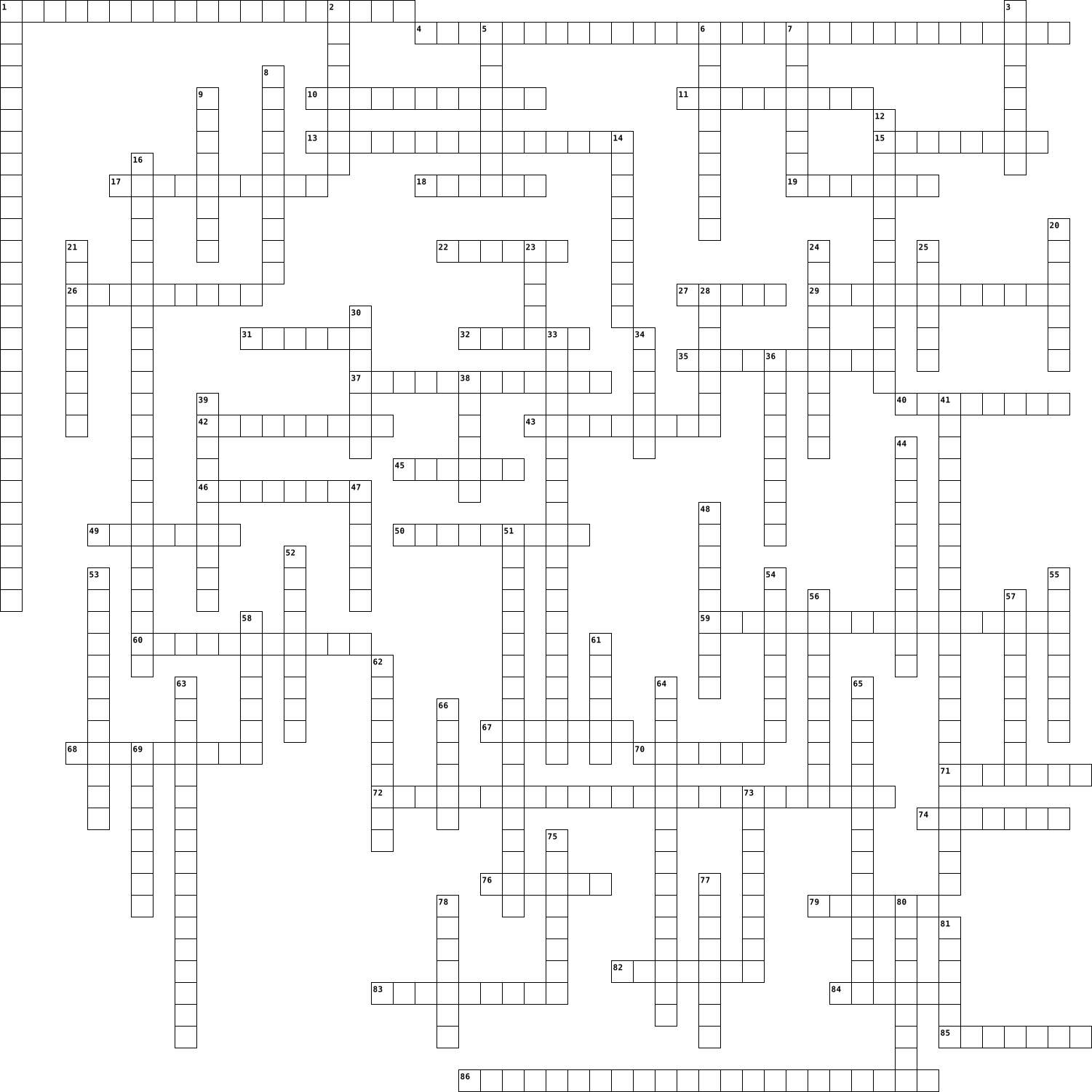
tema #6 Vocab 2022-03-31
Across
- Verbs used to talk about wishes
- used to talk about certainty
- avant-guard
- logos/designs
- it is fantastic that
- magazines
- antiquity, antique
- iron
- seguro to be unsure, not sure
- silk
- seamstress
- to ask for, to order
- compilation
- to found, establish
- glass
- to display, show
- to not understand
- runway (for models)
- handmade, artisan
- to advise, to counsel
- wool
- I hope (that); I wish (that)
- To not believe, Disbelief
- to not appear, to not seem
- medieval trades
- Verbs used to talk about doubt and denial
- work-related
- daily, everyday
- trace, track, footstep
- to hint, to insinuate, to suggest
- Verbs used to talk about knowledge
- to show
- to want, to wish
- fabric
- harmony, peace
- to need to
- legacy
- to order
- Verbs used to talk about emotions
Down
- Verbs used to talk about recommendations
- to become angry
- to not think
- to insist on
- to recommend
- ambition
- newspapers
- folds, pleats
- ready-to-wear
- buildings
- Verbs used to talk about perceptions
- garments
- sewing
- to doubt
- to be surprised
- to require, to demand
- hope
- de vestir articles of clothing
- Verbs used to talk about speech
- to want; to love
- outfits
- guidelines
- body of a car
- impersonales) Impersonal expressions
- embroidery
- linen
- cotton
- living spaces
- costume jewelry
- it's strange that
- to like very much
- fuselage (body of a plane)
- dressmaking
- to be delighted, to be happy
- huge
- to order, to send
- dress
- ocurrencias) Verbs used to talk about occurrences
- The Time Machine
- it is important that
- to be sorry, regret, feel
- influenced
- dress designer, dressmaker
- to prefer
- to regret; to feel sorry
- leather
- sleeves
- luxurious
87 Clues: iron • silk • hope • wool • huge • glass • linen • dress • sewing • cotton • fabric • legacy • outfits • to show • leather • sleeves • ambition • garments • to doubt • to order • buildings • magazines • to prefer • luxurious • newspapers • seamstress • guidelines • embroidery • influenced • to need to • avant-guard • compilation • dressmaking • to not think • to insist on • to recommend • work-related • folds, pleats • logos/designs • ready-to-wear • body of a car • ...
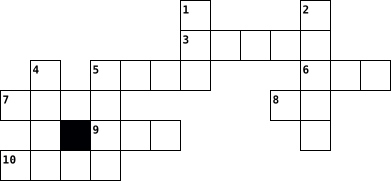
preterite 2023-04-05
Across
- ellos form for er and ir verbs
- ellos form for ar verbs
- preterite stem of decir
- nosotros form for er and ir verbs
- preterite stem of ir and ser
- preterite stem of tener
- tu form for er and ir verbs
Down
- preterite stem of venir
- preterite stem of andar
- nosotros form for ar verbs
- tu form for ar verbs
11 Clues: tu form for ar verbs • preterite stem of venir • preterite stem of andar • ellos form for ar verbs • preterite stem of decir • preterite stem of tener • nosotros form for ar verbs • tu form for er and ir verbs • preterite stem of ir and ser • ellos form for er and ir verbs • nosotros form for er and ir verbs
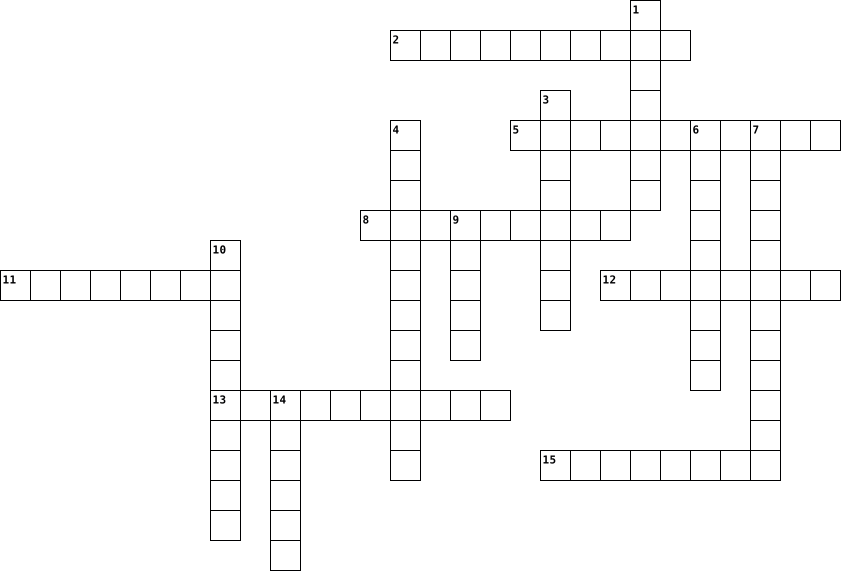
verb 2023-09-11
Across
- there are 2 sets of aspect - continuous and...
- verbs that imply a limit beyond which the action cannot continue
- forms that are built up by a change in the word itself are called...
- verbs can be defined as words making up the predicate of the sentence according to...
- what is the name of a verb that has a lexical meaning and can have independent syntactic functions?
- verbs that require some kind of object to complete their meaning
- how to call verbs that do not imply any such limit, and the action can go on indefinitely?
Down
- according to their relation to the continuous form, English verbs fall into two groups: dynamic and...
- there are two types of use of the finite form of the verb - absolute and...
- verbs that may be transitive in one meaning and intransitive in another
- a verb which is entirely devoid of lexical meaning
- verbs that do not require any object are called...
- the form of the verb which indicates the time of the action
- forms that consist of two components
- the form of the verb which serves to express the manner in which the action is regarded is called...
15 Clues: forms that consist of two components • there are 2 sets of aspect - continuous and... • a verb which is entirely devoid of lexical meaning • verbs that do not require any object are called... • the form of the verb which indicates the time of the action • verbs that imply a limit beyond which the action cannot continue • ...
REGULAR -AR VERB CONJUGATIONS CROSSWORD KEY 2024-04-20

Across
- LOS ESTUDIANTES (ESTUDIAR)
- THE PART OF THE VERB THAT YOU ADD THE ENDING TO AFTER YOU REMOVE THE LAST TWO LETTERS
- THE NOSOTROS & NOSOTRAS ENDING FOR -AR VERBS
- TÚ Y DIEGO (PAGAR)
- TO CHANGE A VERB TO MATCH A SUBJECT
- THE TÚ ENDING FOR -AR VERBS
- THE ORIGINAL FORM OF THE VERB BEFORE ALTERING IT, "TO [ACTION]"
- LA MADRE (LLAMAR) EL DOCTOR
Down
- YOU PLURAL FORMAL, CONJUGATED WITH THE -AN ENDING
- WE TALK
- USTEDES (APOYAR) EL CLUB.
- FIRST PERSON SINGULAR SUBJECT PRONOUN IN SPANISH
- THE STEM OF CAMINAR
- YOU FORMAL, CONJUGATED WITH THE -A ENDING
- LIMPIAR WITHOUT THE STEM
- A PRONOUN THAT CAN BE USED FOR "LA MADRE"
- THE VOSOTROS & NOSOTRAS ENDING FOR -AR VERBS
- THE ELLOS/ELLAS/USTEDES ENDING FOR -AR VERBS
18 Clues: WE TALK • TÚ Y DIEGO (PAGAR) • THE STEM OF CAMINAR • LIMPIAR WITHOUT THE STEM • USTEDES (APOYAR) EL CLUB. • LOS ESTUDIANTES (ESTUDIAR) • THE TÚ ENDING FOR -AR VERBS • LA MADRE (LLAMAR) EL DOCTOR • TO CHANGE A VERB TO MATCH A SUBJECT • YOU FORMAL, CONJUGATED WITH THE -A ENDING • A PRONOUN THAT CAN BE USED FOR "LA MADRE" • THE NOSOTROS & NOSOTRAS ENDING FOR -AR VERBS • ...
REGULAR -AR VERB CONJUGATIONS CROSSWORD KEY 2025-12-11

Across
- LOS ESTUDIANTES (ESTUDIAR)
- THE PART OF THE VERB THAT YOU ADD THE ENDING TO AFTER YOU REMOVE THE LAST TWO LETTERS
- THE NOSOTROS & NOSOTRAS ENDING FOR -AR VERBS
- TÚ Y DIEGO (PAGAR)
- TO CHANGE A VERB TO MATCH A SUBJECT
- THE TÚ ENDING FOR -AR VERBS
- THE ORIGINAL FORM OF THE VERB BEFORE ALTERING IT, "TO [ACTION]"
- LA MADRE (LLAMAR) EL DOCTOR
Down
- YOU PLURAL FORMAL, CONJUGATED WITH THE -AN ENDING
- WE TALK
- USTEDES (APOYAR) EL CLUB.
- FIRST PERSON SINGULAR SUBJECT PRONOUN IN SPANISH
- THE STEM OF CAMINAR
- YOU FORMAL, CONJUGATED WITH THE -A ENDING
- LIMPIAR WITHOUT THE STEM
- A PRONOUN THAT CAN BE USED FOR "LA MADRE"
- THE VOSOTROS & NOSOTRAS ENDING FOR -AR VERBS
- THE ELLOS/ELLAS/USTEDES ENDING FOR -AR VERBS
18 Clues: WE TALK • TÚ Y DIEGO (PAGAR) • THE STEM OF CAMINAR • LIMPIAR WITHOUT THE STEM • USTEDES (APOYAR) EL CLUB. • LOS ESTUDIANTES (ESTUDIAR) • THE TÚ ENDING FOR -AR VERBS • LA MADRE (LLAMAR) EL DOCTOR • TO CHANGE A VERB TO MATCH A SUBJECT • YOU FORMAL, CONJUGATED WITH THE -A ENDING • A PRONOUN THAT CAN BE USED FOR "LA MADRE" • THE NOSOTROS & NOSOTRAS ENDING FOR -AR VERBS • ...
Unidad 3: El Pretérito -AR 2025-02-23

Across
- We explored the ruins
- You all(Esp)exchanged money
- ustedes form ending
- You and I walked
- I arrived
- I started
- You(friend) arrived
- You(friend) ate dinner
- tú form ending
- The family ate breakfast
- ellos form ending
- I took pictures
Down
- vosotros form ending
- They bought
- I rode the subway
- She tasted food
- He traveled
- yo form ending on -zar verbs
- You all(LatAmer) ate lunch
- You(friend) took out money
- You started
- I looked for
- yo form ending on -car verbs
- You(friend) paid for
- yo form ending on -gar verbs
25 Clues: I arrived • I started • They bought • He traveled • You started • I looked for • tú form ending • She tasted food • I took pictures • You and I walked • I rode the subway • ellos form ending • ustedes form ending • You(friend) arrived • vosotros form ending • You(friend) paid for • We explored the ruins • You(friend) ate dinner • The family ate breakfast • You all(LatAmer) ate lunch • ...
CROSSWORD MAPS 2022-12-15
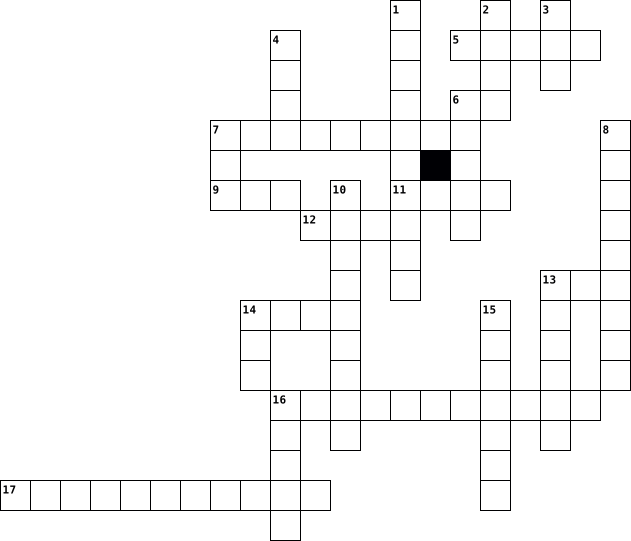
Across
- Interrogative pronouns
- Prepositions
- Idiomatic expressions
- Pronouns
- Determiners
- Adverbials
- Conjunctions
- Verbs
- The new pink bike
- Verb phrases
Down
- Satisfied collocations
- Demonstrative pronouns
- Their marriage was a cause for celebration
- nouns
- Transitional words
- Noun gender
- Reciprocal pronouns
- Adjectives
- Comparative and superlative
- Relative pronouns
- Phrasal verbs
- Adverbs
22 Clues: nouns • Verbs • Adverbs • Pronouns • Adjectives • Adverbials • Noun gender • Determiners • Prepositions • Conjunctions • Verb phrases • Phrasal verbs • Relative pronouns • The new pink bike • Transitional words • Reciprocal pronouns • Idiomatic expressions • Satisfied collocations • Demonstrative pronouns • Interrogative pronouns • Comparative and superlative • Their marriage was a cause for celebration
Fachbegriffe Deutsch 2019-11-14
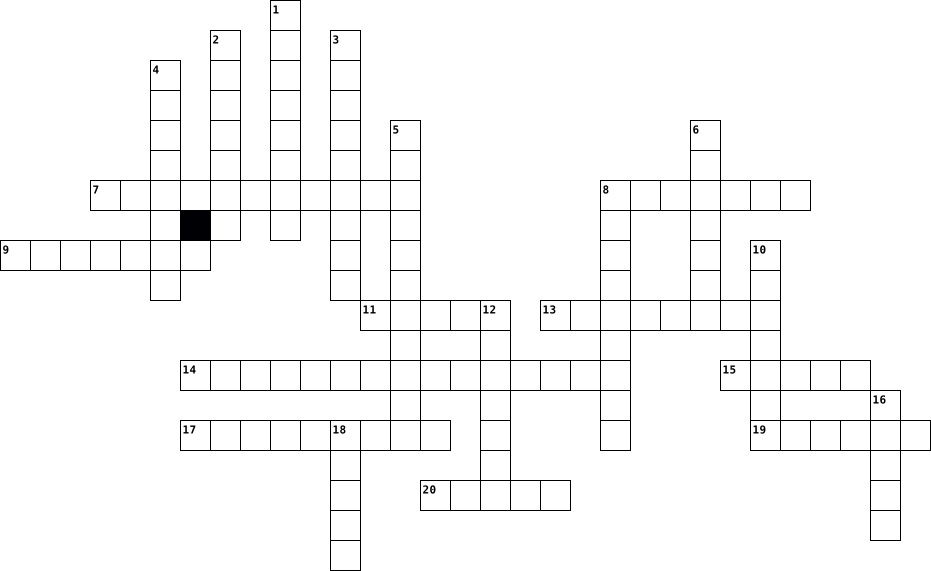
Across
- Beugung von Nomen
- sachliches grammatisches Geschlecht
- Steigerungsstufe des Adjektivs
- grammatischer Fall
- Einzahl
- Satzergänzung im 4.Fall
- grammatische Geschlecht
- Mitlaut
- Zeitform des Verbs
- 3.Fall
Down
- verbale Teil des Satzes
- 2.Fall
- weibliches grammatisches Geschlecht
- Eigenschaftswort
- Beugung des Verbs
- Begleiter des Nomens
- 1.Fall
- Zeitform
- Satzgegenstand
- Zeitform
- Hauptwort
21 Clues: 2.Fall • 1.Fall • 3.Fall • Einzahl • Mitlaut • Zeitform • Zeitform • Hauptwort • Satzgegenstand • Eigenschaftswort • Beugung des Verbs • Beugung von Nomen • grammatischer Fall • Zeitform des Verbs • Begleiter des Nomens • verbale Teil des Satzes • Satzergänzung im 4.Fall • grammatische Geschlecht • Steigerungsstufe des Adjektivs • weibliches grammatisches Geschlecht • sachliches grammatisches Geschlecht
Imperfecto y Futuro 2022-03-13
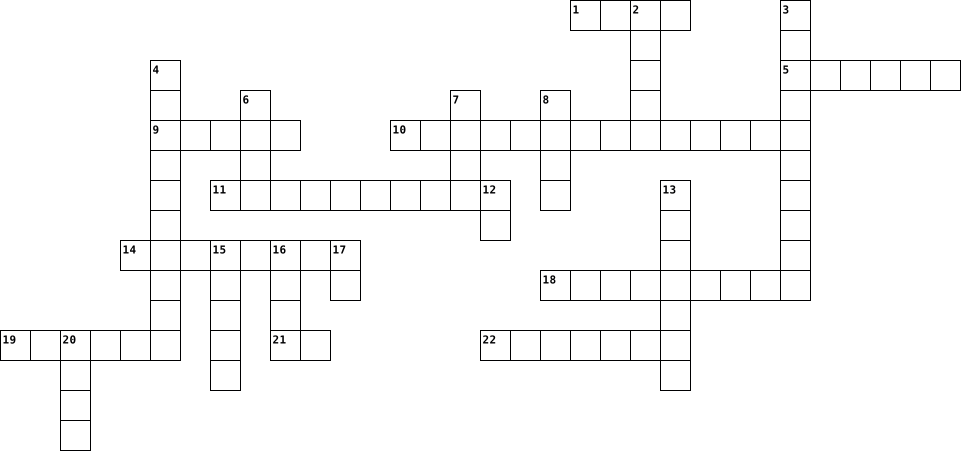
Across
- number of irregular verbs in the future tense
- El nino se ___ (will swim) en la playa.
- future tense conjugation of poder in the Ud. form
- a word that means frequently used as a imperfect indicator
- Los estudiantes ___ (will write) notas en la clase.
- future tense conjugation of venir in the vosotros form
- future tense conjugation of salir in the nosotros form
- used to talk about what is to come (imperfecto/futuro)
- the word will by itself does exist in Spanish
- Yo ___ (used to call) a mis abuelos todos los dias.
Down
- future tense conjugation of caber in the yo form
- Nosotros ___ (will sell) todos los juguetes.
- used to describe actions that used to happen or happened repeatedly in the past (imperfecto/futuro)
- number of verbs in the otros rule in the future tense
- Ella siempre ___ (used to read) cinco libros al mes.
- number of verbs in the DR rule in the future tense
- there are no shoe verbs in the imperfect tense (si/no)
- future tense conjugation of querer in the Uds. form
- future tense conjugation of decir in the tu form
- ___ (It used to be) las ocho y media de la mañana.
- ir, ser, and ver are the 3 irregular verbs in the imperfect tense (si/no)
- number of verbs in the BR rule in the future tense
22 Clues: El nino se ___ (will swim) en la playa. • Nosotros ___ (will sell) todos los juguetes. • number of irregular verbs in the future tense • the word will by itself does exist in Spanish • future tense conjugation of caber in the yo form • future tense conjugation of decir in the tu form • future tense conjugation of poder in the Ud. form • ...
Preterite Tense 2025-04-01

Across
- The irregular preterite form of "ver" for "nosotros".
- The verb that means "to speak" in the preterite for "ella".
- The preterite form of "ver" for "yo".
- The preterite form of "ir" for "ellos".
- The preterite form of "decir" for "yo".
- Conjugation ending for "yo" in the verb "ser" or "ir" in the preterite
- conjugation ending for regular "yo" ar verbs
- The preterite form of "tener" for "él/ella".
- Conjugation ending for regular "yo" er/ir verbs
Down
- The conjugation ending for "nosotros" in regular -ar verbs in the preterite.
- The irregular preterite form of "dar" for "tú".
- Conjugation ending for regular "él/ella" -ar verbs
- The preterite form of "hacer" for "yo".
- The preterite form of "andar" for "ellos".
- The conjugation ending for "vosotros" in regular -ar verbs in the preterite.
15 Clues: The preterite form of "ver" for "yo". • The preterite form of "hacer" for "yo". • The preterite form of "ir" for "ellos". • The preterite form of "decir" for "yo". • The preterite form of "andar" for "ellos". • conjugation ending for regular "yo" ar verbs • The preterite form of "tener" for "él/ella". • The irregular preterite form of "dar" for "tú". • ...
Subjuntivo 2016-01-27
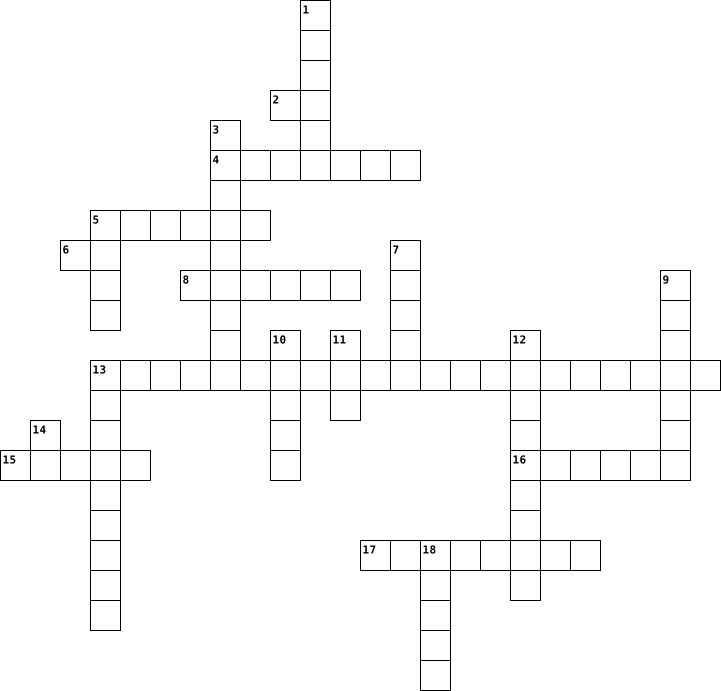
Across
- What verbs have the subjunctive endings e,es,e,emos,en?
- A Laura le duelen los _____(kidneys).
- What is the acronym for irregular verbs?
- IR and ____subjunctive verbs end with a,as,a,amos,an.
- A mí me _____(doler) los pies.
- What uses 'es mejor(que),es bueno(que),es raro(que)etc'?
- Es importante _____(to eat) los verduras. (Hint: use the infinitive!)
- Conjugate: Juan y Julia ____(bailar).
- What does the 'E' in WEIRDO stand for?
Down
- What acronym helps remember how to express the subjunctive?
- What kind of verbs are DISHES?
- The second step to conjugate a verb into subjunctive is to ____the -o.
- Te ____(doler) el cuello.
- Conjugate: Ud. _____(pensar).
- What is the 'D' in WEIRDO?
- What means 'to give' in DISHES?
- Conjugate: Nosotros _____(recibir).
- What is injection or shot?
- To conjugate a verb, first you have to put it in ____form.
- What means 'I hope or want' in WIERDO?
20 Clues: Te ____(doler) el cuello. • What is the 'D' in WEIRDO? • What is injection or shot? • Conjugate: Ud. _____(pensar). • What kind of verbs are DISHES? • A mí me _____(doler) los pies. • What means 'to give' in DISHES? • Conjugate: Nosotros _____(recibir). • A Laura le duelen los _____(kidneys). • Conjugate: Juan y Julia ____(bailar). • What does the 'E' in WEIRDO stand for? • ...
Verbs 2024-09-13

Across
- two verbs that take their forms from different roots
- verbs that form it's simple past tense
- verbs which admit of the Continuous form
- verbs that don't imply any such limit
- verbs that don't require any object
Down
- to this group belong the following part of speech
- verbs which don't admit of the Continuous form
- verbs that imply a limit beyond which the action cannot continue
- verbs that form their simple past
- this group differ from Notional words semantically
10 Clues: verbs that form their simple past • verbs that don't require any object • verbs that don't imply any such limit • verbs that form it's simple past tense • verbs which admit of the Continuous form • verbs which don't admit of the Continuous form • to this group belong the following part of speech • this group differ from Notional words semantically • ...
The Design Thinking Process 2023-03-03
Across
- feedback
- prototype
- ideation
- modified
- conversations
- change
- difficult
Down
- entrepreneurs
- statement
- analysis
- verbs
- interview
- empathise
- meaningful
14 Clues: verbs • change • analysis • feedback • ideation • modified • statement • interview • empathise • prototype • difficult • meaningful • entrepreneurs • conversations
Parts of speech 2025-09-23

Across
- : May, might, should, must — are what type of verbs?
- : Here, there, everywhere — are adverbs of ___.
- : A word that names a person, place, thing, or idea.
- : And, but, or — are ___ conjunctions.
- : Either…or, neither…nor — are ___ conjunctions.
- : Some, many, few, ten are ___ adjectives.
- : Words like Wow!, Oh!, Oops! are called ___.
- : Words like run, write, eat are what type of verbs?
- : Words like Ali, London, Monday are what type of noun?
- : Can, will, have, do — are called ___ verbs.
Down
- : This, that, these, those — are what type of pronouns?
- : Myself, yourself, himself — are what type of pronouns?
- : Am, is, are, seem, become — are what type of verbs?
- : At, in, on, under, between — are examples of ___.
- : Happiness, freedom, love are examples of ___ nouns.
- : Words like team, family, class are ___ nouns.
- : Because, although, if — are ___ conjunctions.
- : Quickly, slowly, well — are adverbs of ___.
- : I, you, he, she, it, we, they — are what type of pronoun?
- : Words like red, tall, beautiful are ___ adjectives.
20 Clues: : And, but, or — are ___ conjunctions. • : Some, many, few, ten are ___ adjectives. • : Quickly, slowly, well — are adverbs of ___. • : Words like Wow!, Oh!, Oops! are called ___. • : Can, will, have, do — are called ___ verbs. • : Here, there, everywhere — are adverbs of ___. • : Words like team, family, class are ___ nouns. • ...
prefix and suffix 2026-06-01

Across
- = many
- = turns verbs to nouns (enjoy....)
- = not (..credible)
- = seeing (...ual)
- = eye
- = sound
- = state (perform....)
- = opposite of (..scend)
- = again
- = seeing (...eo)
- = look (....tator)
Down
- = one
- = not (..possible)
- = not (..believable)
- = break
- = turns verbs to nouns (informa....)
- = look (.....acles)
- = person who (act..)
- = hearing
- = person who (teach..)
- = state (independ....)
- = not (...agree)
22 Clues: = one • = eye • = many • = break • = sound • = again • = hearing • = seeing (...eo) • = not (...agree) • = seeing (...ual) • = not (..possible) • = not (..credible) • = look (....tator) • = look (.....acles) • = not (..believable) • = person who (act..) • = state (perform....) • = person who (teach..) • = state (independ....) • = opposite of (..scend) • = turns verbs to nouns (enjoy....) • ...
Speech Family 2022-10-04
Across
- Part of sentence without the Subject
- ______ verbs changes the spelling
- more action than talk
- pick out the nouns
- Helps with identity
- I like talking about verbs
- I show position of nouns to each other
- Nouns know I have their back
- Past Tense of lend.
Down
- I watched 3 Tik Tok ______.
- It took five _____ to make the fries.
- Oh so dramatic
- Past Tense form of participle spent!
- I join thoughts or ideas.
- 10 hopping ________ from Austrailia
- nouns of more
- I like painting word pictures
- more person than 1
18 Clues: nouns of more • Oh so dramatic • pick out the nouns • more person than 1 • Helps with identity • Past Tense of lend. • more action than talk • I join thoughts or ideas. • I like talking about verbs • I watched 3 Tik Tok ______. • Nouns know I have their back • I like painting word pictures • ______ verbs changes the spelling • 10 hopping ________ from Austrailia • ...
ELA Crossword 2/25/13 2013-02-25
Across
- nouns nouns that name specific people, places or things
- the main part of a sentence that contains the verb.
- standard marks that make reading sentences easier
- marks puntctuation that encloses someone's words
- a connecting word that comebines two or more words in a sentence.
- the noun to which a pronoun refers
- a short word which combines with a noun to form a phrase of direction
- a noun which names who or what did the action in a sentence
- a mark of punctuation which stands for the missing letter or letters in a contraction.
- verbs short verbs that link the subject to the complete predicate
- serves the same function as italics to indicate a title
- a person, place or thinga
Down
- a verbal ending in ing which is used as a noun in a sentence.
- the proper punctuation for the first letter of a sentence or proper nouns
- words that describe nouns
- slanted writing which is used for titles of books, movies, TV shows or boats
- verbs a verb that shows action and takes a direct object
- objects nouns that appear after action verbs
- marks of punctuation that stand for a pause in a sentnece
- a shortened form of two words which uses an apostrophe
- a word which takes the place of a noun, such as he, she, it, etc.
- words that describe verbs, adjectives and adverbs
22 Clues: words that describe nouns • a person, place or thinga • the noun to which a pronoun refers • objects nouns that appear after action verbs • marks puntctuation that encloses someone's words • standard marks that make reading sentences easier • words that describe verbs, adjectives and adverbs • the main part of a sentence that contains the verb. • ...
VERBS 2024-09-10

Across
- These forms are built from basic verb stems and include past indefinite and participle forms.
- This form of verb shows the action's completion or continuity over time.
- The grammatical category indicating the time of the action.
- Verbs that do not require an object to complete their meaning.
- Words that express actions, processes, states, or relations.
- Verbs that are often used in continuous forms, reflecting ongoing actions.
Down
- Verbs that imply a limit or endpoint to the action.
- These verbs are used to build analytical forms and usually have no lexical meaning on their own.
- Forms of verbs that can act as the predicate and include tense, aspect, and voice.
- These verbs have no inherent endpoint, meaning actions can continue indefinitely.
- The category of verbs that includes those used to form a modal predicate or nominal predicate.
11 Clues: Verbs that imply a limit or endpoint to the action. • The grammatical category indicating the time of the action. • Words that express actions, processes, states, or relations. • Verbs that do not require an object to complete their meaning. • This form of verb shows the action's completion or continuity over time. • ...
Grammar French I 2024-05-08

Across
- where
- -why
- verb conjugation je -s, tu-s, il --, nous -ons, vous -ez, ils-ent
- to do, to make
- meaning to go
- adjectives ce, cet, cette, ces
- conjugation je-fais, tu-fais, il/elle-fait, nous-faisons, vous-faites, ils/elles-font
- quel, quelles, quelle, quels
- who
- je -is, tu-is, elle-it, nous-issons, vous -issez, ils - issent
- what
- voir past participle
- french tu, vous, and nous
- past participle lire
- goes with venir
Down
- pleuvoir past participle
- how
- du, de la, des, de l'
- boire past participle
- prendre past participle
- when
- conjugation je vais nous allons, tu vas vous allez, il/elle va ils/elles vont
- conjugation je prends, tu prends, il/elle/on prend, nous prenons, vous prenez, ils/ellesprennent
- past participle etre
- conjugation je viens tu viens il vient, nous venons, vous venez, ils viennent
- aller +infinitive
- past participle avoir
- helping verb most verbs
- verbs past tense of these verbs have é
- vouloir past participle
- faire past participle
- how much
- verbs have a change in nous form
- with whom
- mettre past participle
35 Clues: how • who • -why • when • what • where • how much • with whom • meaning to go • to do, to make • goes with venir • aller +infinitive • past participle etre • voir past participle • past participle lire • du, de la, des, de l' • boire past participle • past participle avoir • faire past participle • mettre past participle • prendre past participle • helping verb most verbs • vouloir past participle • ...
Modal Verb 2025-04-28

Across
- Modal verbs that express ability in the present.
- showing ability in the past.
- has meaning offer, example: “___ I help you?”
- Modal verbs that express possibility in the future.
- Modal verbs have meaning necessity.
- Has meaning "obligation".
- Past Form “can”.
- Modal verbs have meaning strongest suggestion.
Down
- form for prohibition.
- Expression Modals,usually used in Business Letter.
- express weakness possibility more than "may"
- Modal verbs that express permission in polite.
- Expression to offering help.
- to suggest in polite form.
- Modals + auxiliary verb,example: "___ have gone".
15 Clues: Past Form “can”. • form for prohibition. • Has meaning "obligation". • to suggest in polite form. • showing ability in the past. • Expression to offering help. • Modal verbs have meaning necessity. • express weakness possibility more than "may" • has meaning offer, example: “___ I help you?” • Modal verbs that express permission in polite. • ...
Intro to Verbs 2023-11-02
Across
- Verbs that act like nouns
- Verbs can be helping or ____
- Every sentence needs one
- ____ verbs express state of being
- Modify verbs
- One of the mistaken adverbs for verbs
Down
- One of the characteristics of every verb
- "To" form of verbs
- Verbs express action of state of _____
- One of the characteristics of every verb
10 Clues: Modify verbs • "To" form of verbs • Every sentence needs one • Verbs that act like nouns • Verbs can be helping or ____ • ____ verbs express state of being • One of the mistaken adverbs for verbs • Verbs express action of state of _____ • One of the characteristics of every verb • One of the characteristics of every verb
Grammar Review 2023-12-21
Across
- A word used in place of a noun.
- Adverbs that compare two actions.
- Adverbs that compare two or more actions.
- voice The subject receives the action of the verb.
- A place, a thing, or a person.
- Verbs that are used as nouns.
- Words that connect individual words or groups of words in sentences.
- After, although, as long as, because, since, unless, whether, and while.
- A noun or phrase that renames another noun in a sentence.
- Words that modify or describe verbs.
Down
- Words that show the relationship between a noun or a pronoun and another word in the sentence.
- A word that describes a noun or pronoun.
- Both/and, either/or, and neither/nor.
- And, but, or, nor, for, and yet.
- Words that add emphasis to adjectives or adverbs.
- Verbs that are used as nouns, adjectives, and adverbs.
- voice The subject performs the action of the verb.
- Verbs that are used as adjectives.
18 Clues: Verbs that are used as nouns. • A place, a thing, or a person. • A word used in place of a noun. • And, but, or, nor, for, and yet. • Adverbs that compare two actions. • Verbs that are used as adjectives. • Words that modify or describe verbs. • Both/and, either/or, and neither/nor. • A word that describes a noun or pronoun. • Adverbs that compare two or more actions. • ...
It really happened 2024-10-30

Across
- say a thing in common
- do it
- a thing it is a trend
- a thing you did in the past and now you
- the emotion you have
- the third line of the irregular verb
- verbs that are finished with ed
- when you have a memorable record
Down
- the secon line of the irregular verbs
- a thing it is tendency
- when you're relaxed
- the antonym of the verb
- verbs that have three different forms
- when you chase something
- the opposie of finish
- when you know a question and you
16 Clues: do it • when you're relaxed • the emotion you have • say a thing in common • a thing it is a trend • the opposie of finish • a thing it is tendency • the antonym of the verb • when you chase something • verbs that are finished with ed • when you know a question and you • when you have a memorable record • the third line of the irregular verb • the secon line of the irregular verbs • ...
Verbs 2023-09-11
Across
- Direct.(blank).prepositional.
- These verbs require some kind of object to complete their meaning.
- These verbs may preserve or lose their lexical meaning.
- These verbs have a limit beyond which the action cannot continue.
- Verbs that do not require any object.
Down
- verbs that son't have any limit and the action goes on.
- Verbs that may be transitive in one meaning and intransitive in another.
- Verbs that occur by forming Past Indefinite and The Particle.
- words that make up the predicate of the sentience
- One of the grammatical categories of the finite forms.
10 Clues: Direct.(blank).prepositional. • Verbs that do not require any object. • words that make up the predicate of the sentience • One of the grammatical categories of the finite forms. • These verbs may preserve or lose their lexical meaning. • verbs that son't have any limit and the action goes on. • Verbs that occur by forming Past Indefinite and The Particle. • ...
Parts of Speech Crossword 2022-09-13
Across
- _________ are action words.
- More than 1 person, place, or thing.
- _____________ verbs come before the main.
- __________ verbs come after helping verbs in a sentence.
- An example of a _____ person is "you".
- An example of a _____ person is "I" or "we".
- One person, place, or thing.
- An example of a _____ person is "he", "she", "it" and "they"
- A person, place, thing, or idea.
Down
- ___________ nouns are always NAMES of common nouns *These words ARE always capitalized*.
- __________ noun are general people, places, and things *These words are NOT capitalized*.
- A word describing a noun.
- A word replacing a noun.
- A word describing a verb.
- verbs in a sentence to help them out.
15 Clues: A word replacing a noun. • A word describing a noun. • A word describing a verb. • _________ are action words. • One person, place, or thing. • A person, place, thing, or idea. • More than 1 person, place, or thing. • verbs in a sentence to help them out. • An example of a _____ person is "you". • _____________ verbs come before the main. • ...
Verbs 2021-09-12
Across
- Structural verbs: link verb, ___ verb, auxiliary verb
- The objects transitive verbs take may be direct indirect or _______
- Finite for category: Person and _____
- Function of the verb in a sentence.
- The ______ forms have the function of the predicate in the sentence and may also be called the predicative forms.
- Tense, Aspect and ____
- Verbs that always have a lexical meaning of their own and can have an independent syntactic function in the sentence.
Down
- ____ is the form of the verb which serves to express the manner in which the action is regarded.
- ____ forms are built up by a change in the word itself.
- With ____ verbs, the Past Indefinite and the participle are formed by adding the suffix -ed
- The form of the verb which indicates the time of the action.
- A basic form of English verb: plain verb ___ (infinitive w/o to)
- ____ forms consist of two components
- Verbs which admit of the continuous form
14 Clues: Tense, Aspect and ____ • Function of the verb in a sentence. • ____ forms consist of two components • Finite for category: Person and _____ • Verbs which admit of the continuous form • Structural verbs: link verb, ___ verb, auxiliary verb • ____ forms are built up by a change in the word itself. • The form of the verb which indicates the time of the action. • ...
Verbs 2021-09-12
Across
- A basic form of English verb: plain verb ___ (infinitive w/o to)
- The ______ forms have the function of the predicate in the sentence and may also be called the predicative forms.
- Structural verbs: link verb, ___ verb, auxiliary verb
- ____ forms consist of two components
- The grammatical meaning of the Perfect forms is to express retrospectiveness, which consists of two elements — priority and relevance. In some grammars this category has been given the name ____.
- Finite for category: Person and _____
- Verbs which admit of the continuous form
- The form of the verb which indicates the time of the action.
Down
- Tense, Aspect and ____
- The objects transitive verbs take may be direct indirect or _______
- Verbs that always have a lexical meaning of their own and can have an independent syntactic function in the sentence.
- With ____ verbs, the Past Indefinite and the participle are formed by adding the suffix -ed
- Function of the verb in a sentence.
- ____ is the form of the verb which serves to express the manner in which the action is regarded.
- ____ forms are built up by a change in the word itself.
15 Clues: Tense, Aspect and ____ • Function of the verb in a sentence. • ____ forms consist of two components • Finite for category: Person and _____ • Verbs which admit of the continuous form • Structural verbs: link verb, ___ verb, auxiliary verb • ____ forms are built up by a change in the word itself. • The form of the verb which indicates the time of the action. • ...
Verbs 2021-09-12
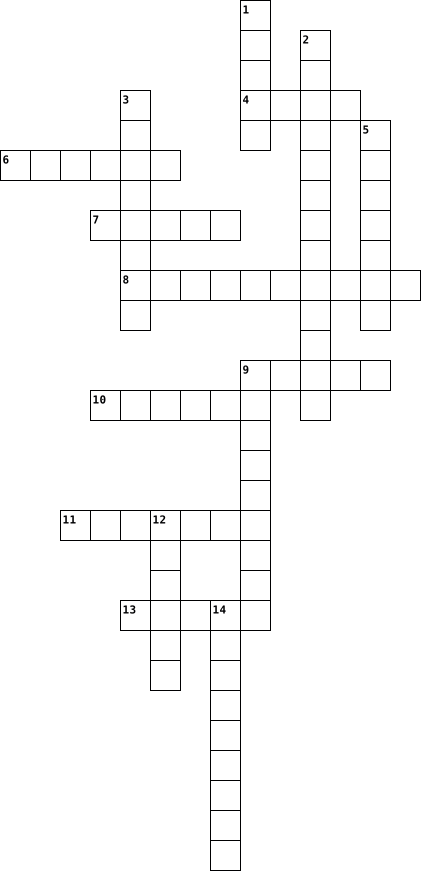
Across
- A basic form of English verb: plain verb ___ (infinitive w/o to)
- The ______ forms have the function of the predicate in the sentence and may also be called the predicative forms.
- Structural verbs: link verb, ___ verb, auxiliary verb
- ____ forms consist of two components
- The grammatical meaning of the Perfect forms is to express retrospectiveness, which consists of two elements — priority and relevance. In some grammars this category has been given the name ____.
- Finite form category: Person and _____
- Verbs which admit of the continuous form
- The form of the verb which indicates the time of the action.
Down
- Tense, Aspect and ____
- The objects transitive verbs take may be direct indirect or _______
- Verbs that always have a lexical meaning of their own and can have an independent syntactic function in the sentence.
- With ____ verbs, the Past Indefinite and the participle are formed by adding the suffix -ed
- Function of the verb in a sentence.
- ____ is the form of the verb which serves to express the manner in which the action is regarded.
- ____ forms are built up by a change in the word itself.
15 Clues: Tense, Aspect and ____ • Function of the verb in a sentence. • ____ forms consist of two components • Finite form category: Person and _____ • Verbs which admit of the continuous form • Structural verbs: link verb, ___ verb, auxiliary verb • ____ forms are built up by a change in the word itself. • The form of the verb which indicates the time of the action. • ...
Parts of Speech 2023-08-21
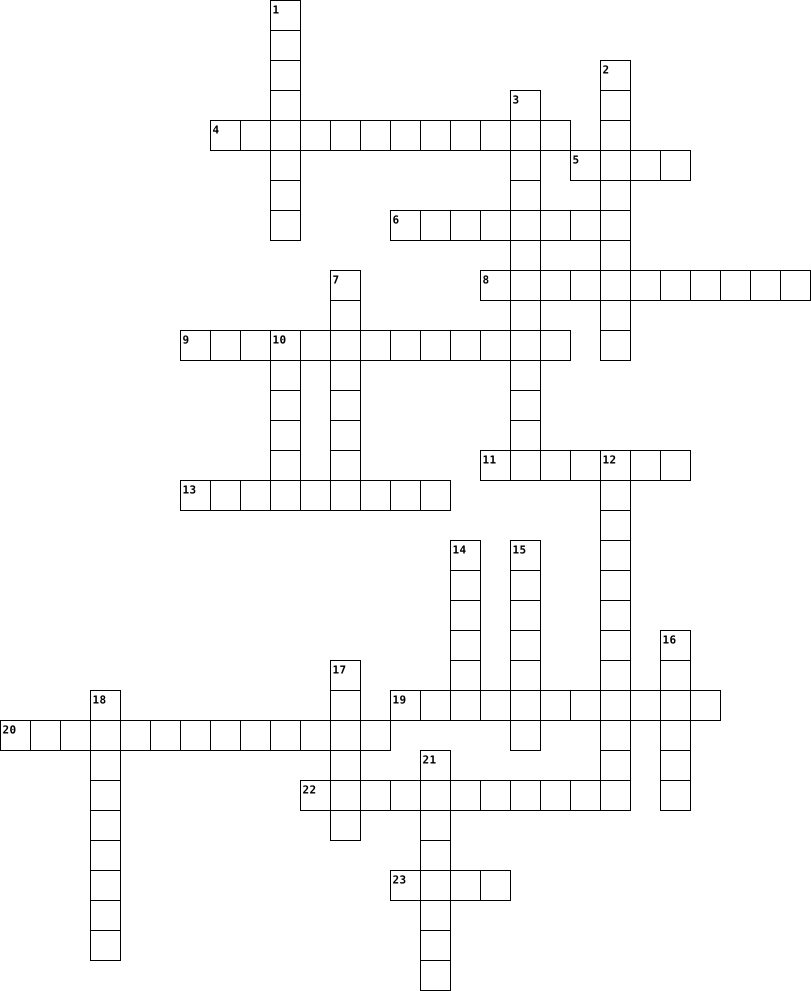
Across
- conjunctions that join words/word groups that are used in the same way
- a word that is used to express action or a state of being
- type of noun that can be touched, physical things
- pairs of conjunctions that join words/word groups that are used in the same way
- a phrase that is a made up of a preposition and a noun
- verbs that help main verbs express a state of being
- modify nouns, pronouns, and other ___________
- a word that joins words or word groups
- type of pronouns that are used to point out specifics, like people, places, things or ideas.
- word or phrase that shows the relationship of a noun/pronoun to another word
- functions as a subject or an object in sentences
Down
- pronoun refers to someone speaking in 1st, 2nd, or 3rd person
- The word that a pronoun stands in place of or refers to
- type of pronouns that introduce questions
- type of noun that usually feelings cannot be touched
- a group (more than one) of verbs acting as a single verb
- a word to express emotion
- verbs that describe what someone is doing
- a word that is used in place of one or more nouns
- type of noun that is more specific
- an adjective for the verb
- verbs that link subjects to the words that describe them
- prepositions that are two words or more
23 Clues: a word to express emotion • an adjective for the verb • type of noun that is more specific • a word that joins words or word groups • prepositions that are two words or more • type of pronouns that introduce questions • verbs that describe what someone is doing • modify nouns, pronouns, and other ___________ • functions as a subject or an object in sentences • ...
Reflexive Verbs (Jeremiah/Ava) 2024-05-31

Across
- to stay
- Nosotros Pronoun of Reflexive Verbs
- To Get Up Oneself
- To Brush Ones Hair
- Tú Pronoun of Reflexive Verbs
Down
- To Shower Oneself
- A ___ must be put infront of reflexive verbs
- To Wash Oneself
- To feel oneself
- ending used before conjugation on all reflexive verbs
- A ___ Verb is used when descirbing an action done to oneself
11 Clues: to stay • To Wash Oneself • To feel oneself • To Shower Oneself • To Get Up Oneself • To Brush Ones Hair • Tú Pronoun of Reflexive Verbs • Nosotros Pronoun of Reflexive Verbs • A ___ must be put infront of reflexive verbs • ending used before conjugation on all reflexive verbs • A ___ Verb is used when descirbing an action done to oneself
Verbs 2021-09-12
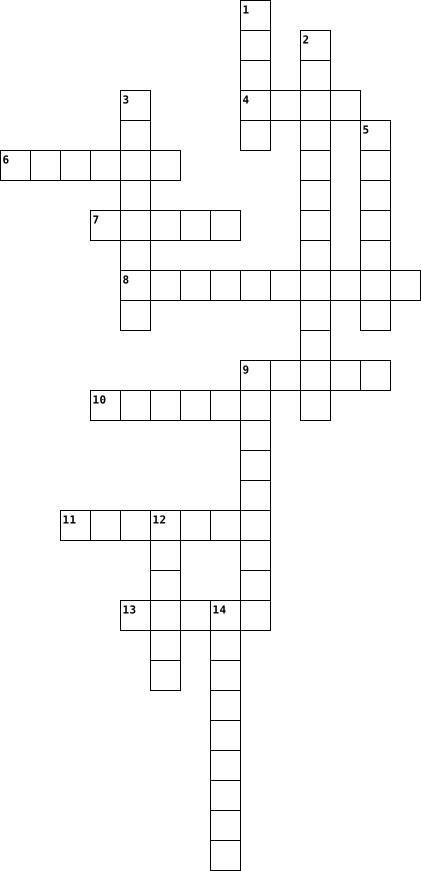
Across
- A basic form of English verb: plain verb ___ (infinitive w/o to)
- The ______ forms have the function of the predicate in the sentence and may also be called the predicative forms.
- Structural verbs: link verb, ___ verb, auxiliary verb
- ____ forms consist of two components
- The grammatical meaning of the Perfect forms is to express retrospectiveness, which consists of two elements — priority and relevance. In some grammars this category has been given the name ____.
- Finite for category: Person and _____
- Verbs which admit of the continuous form
- The form of the verb which indicates the time of the action.
Down
- Tense, Aspect and ____
- The objects transitive verbs take may be direct indirect or _______
- Verbs that always have a lexical meaning of their own and can have an independent syntactic function in the sentence.
- With ____ verbs, the Past Indefinite and the participle are formed by adding the suffix -ed
- Function of the verb in a sentence.
- ____ is the form of the verb which serves to express the manner in which the action is regarded.
- ____ forms are built up by a change in the word itself.
15 Clues: Tense, Aspect and ____ • Function of the verb in a sentence. • ____ forms consist of two components • Finite for category: Person and _____ • Verbs which admit of the continuous form • Structural verbs: link verb, ___ verb, auxiliary verb • ____ forms are built up by a change in the word itself. • The form of the verb which indicates the time of the action. • ...
V3 Crossword Filbert 2021-04-06
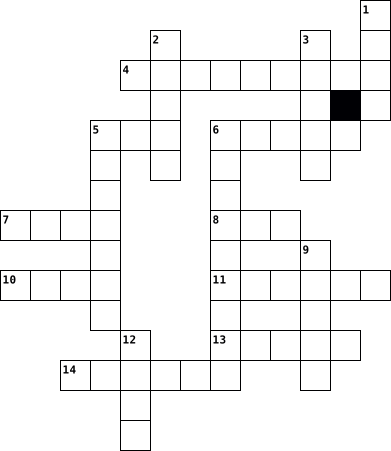
Across
- verbs : regular verbs :
- win
- fly accepted accept
- leave caused cause
- get cooked cook
- do cancelled cancel
- throw
- eat called call
- break enjoyed enjoy
Down
- tear
- drink wanted want
- blow tried try
- write
- forget continued continue
- wake
- sell created create
16 Clues: win • tear • wake • write • throw • blow tried try • drink wanted want • verbs : regular verbs : • get cooked cook • eat called call • leave caused cause • break enjoyed enjoy • fly accepted accept • do cancelled cancel • ...
Regular and Reflexive Verbs 2022-09-19
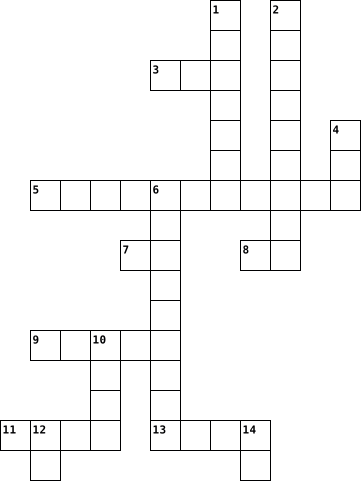
Across
- Yo _____ mi pasaporte en el aeropuerto. (usar)
- ________ a Madrid!
- Tu AR ending
- Ellos, ellas, uds. reflexive pronoun
- Ella _____ a Madrid. (viajar)
- Nosotros IR ending
- Regular verbs and reflexive verbs have the _____ endings.
Down
- All reflexive verbs need a ______.
- A _____ verb describes what one is doing to themselves.
- Nosotros reflexive pronoun
- Nosotros _____ los restaurantes locales. (visitar)
- Nosotros AR ending
- yo _____ ducho en el hotel.
- El, ella, ud. ER/IR ending
14 Clues: Tu AR ending • ________ a Madrid! • Nosotros AR ending • Nosotros IR ending • Nosotros reflexive pronoun • El, ella, ud. ER/IR ending • yo _____ ducho en el hotel. • Ella _____ a Madrid. (viajar) • All reflexive verbs need a ______. • Ellos, ellas, uds. reflexive pronoun • Yo _____ mi pasaporte en el aeropuerto. (usar) • Nosotros _____ los restaurantes locales. (visitar) • ...
Parts of Speech Crossword 2023-11-01
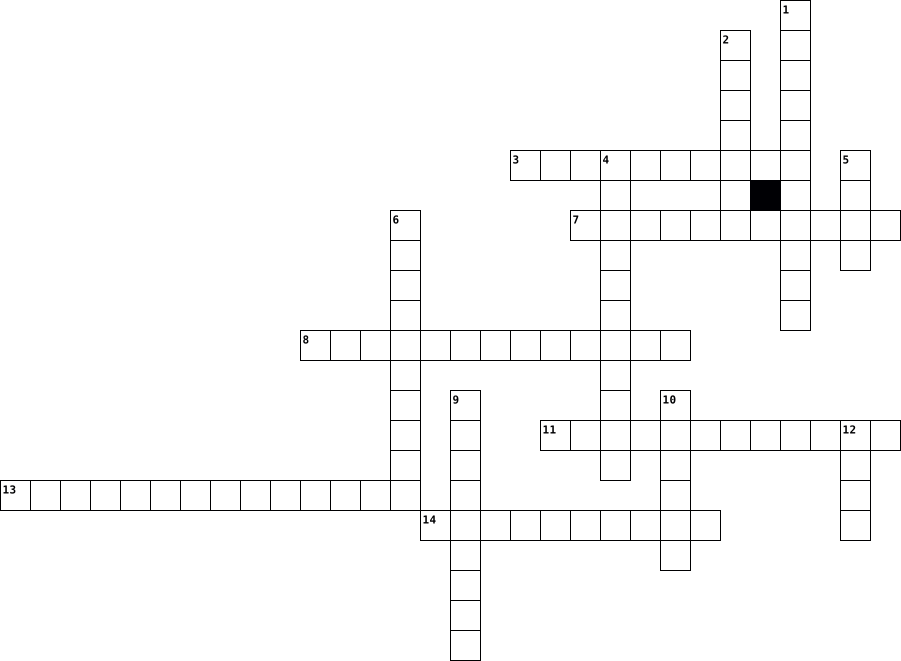
Across
- Names of people, places, things, or ideas.
- Verbs that help the main verb.
- Conjunctions that introduce subordinate (dependent) clauses.
- Conjunctions that connect words, phrases, and clauses (FANBOYS).
- Nouns that show ownership to people, places, things, or ideas.
- A verb that shows what a noun is doing.
Down
- Verbs that describe the subject.
- Nouns that refer to other nouns that have already been mentioned.
- Words that show direction, time, place, or spatial relationships to a noun.
- A word that expresses action or a state of being.
- Types of people, places, things, or ideas.
- Words that describe nouns.
- Verbs that describe other verbs.
- A person, place, thing, or idea.
14 Clues: Words that describe nouns. • Verbs that help the main verb. • Verbs that describe the subject. • Verbs that describe other verbs. • A person, place, thing, or idea. • A verb that shows what a noun is doing. • Names of people, places, things, or ideas. • Types of people, places, things, or ideas. • A word that expresses action or a state of being. • ...
CROSSWORD PUZZLE PART 1 2025-07-06

Across
- A very small insect that bites. (Animals)
- Prefix meaning "before." (Prefix)
- Indonesian for "tampan." (Appearance Quality)
- The study of numbers. (School Subject)
- Indonesian for "cerdas." (Personal Adjective)
- The upper part of your arm. (Part of Body)
- A large body of water. (Animals - habitat related)
- To arrange (phrasal verb). (Phrasal Verbs)
- Indonesian for "murah hati." (Personal Adjective)
- The main sense organ for sight. (Part of Body)
- A structure of public significance. (Landmark on the Street)
- To identify or pinpoint precisely (verb). (Technical Document Word List)
- Past Simple (V2) of "buy." (Irregular Verbs)
- A tool used to drive or remove screws. (Basic Tools)
- Indonesian for "pemadam kebakaran." (Job and Profession)
- Indonesian for "pekerja keras." (Personal Adjective)
- Relating to science (suffix). (Suffix)
- Phrasal verb meaning "to cancel." (Phrasal Verbs)
- A large fish, known for being a predator. (Animals)
Down
- A tool to measure distance. (Basic Tools)
- A place for experiments. (Part of School Area)
- Indonesian for "lapangan olahraga." (Part of School Area)
- Past Participle (V3) of "do." (Irregular Verbs)
- A large flightless bird, often farmed for meat/eggs. (Animals)
- Opposite of "dry." (Adjective Quality)
- Past Simple (V2) of "speak." (Irregular Verbs)
- The department responsible for public health. (Government Department)
- Prefix meaning "not" or "opposite of." (Prefix)
- The Indonesian for "gigi." (Irregular Nouns)
- A private four-wheeled vehicle. (Means of Transportation)
- AFFAIRS The department for international relations. (Government Department)
- A long paved path for walking beside a road. (Landmark on the Street)
- A mode of transport that runs on tracks. (Means of Transportation)
- Past Simple (V2) of "find." (Irregular Verbs)
- The state of being happy. (Suffix)
- Indonesian for "rambut merah." (Appearance Quality)
- A small, usually red, light controlling traffic. (Landmark on the Street)
37 Clues: Prefix meaning "before." (Prefix) • The state of being happy. (Suffix) • The study of numbers. (School Subject) • Opposite of "dry." (Adjective Quality) • Relating to science (suffix). (Suffix) • A very small insect that bites. (Animals) • A tool to measure distance. (Basic Tools) • The upper part of your arm. (Part of Body) • To arrange (phrasal verb). (Phrasal Verbs) • ...
Spanish Reflexive Verbs & Vocab 2021-02-27
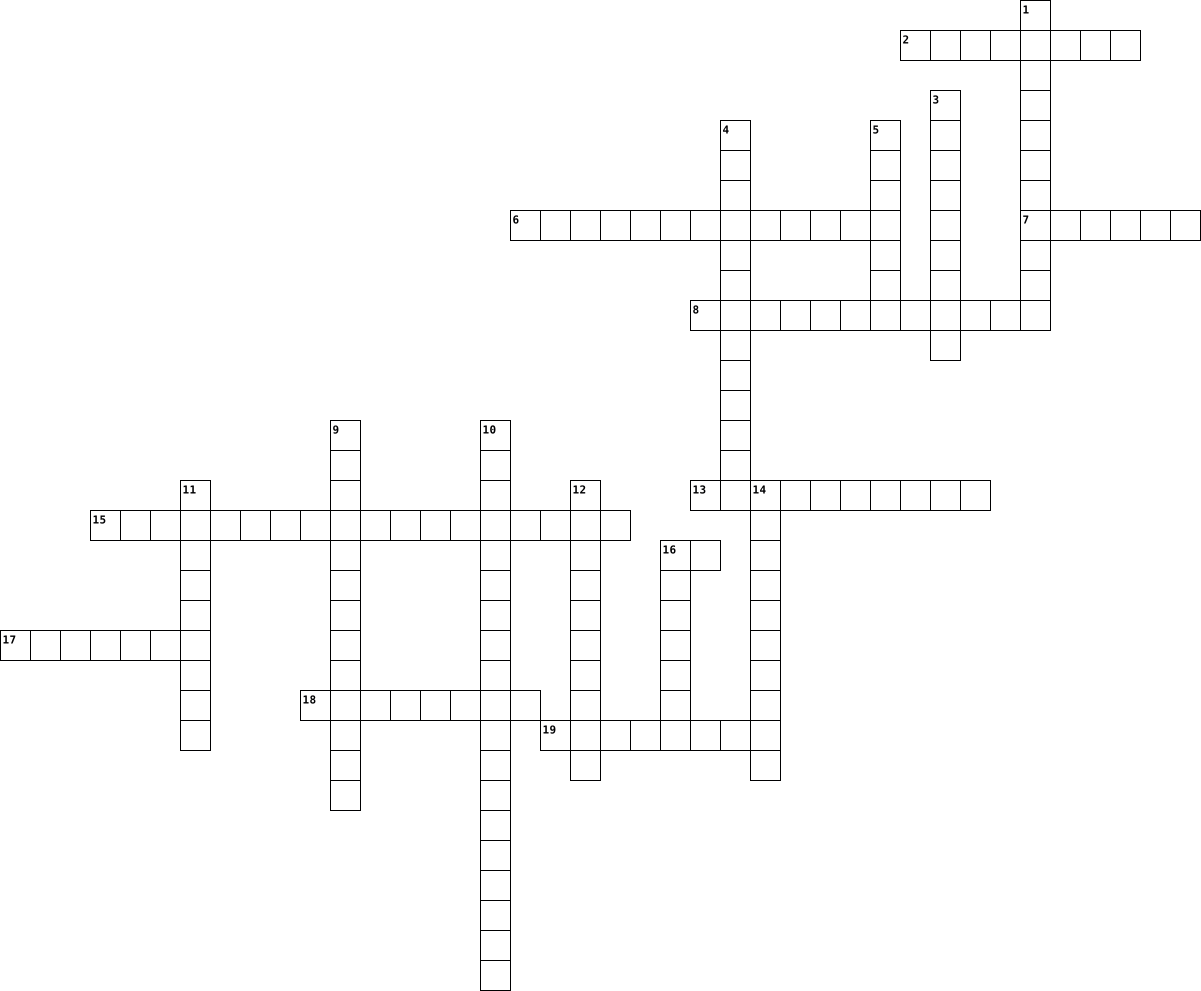
Across
- I shave
- deodorant
- face
- we go to bed
- legs
- the toothbrush
- reflexive verbs always end in ___.
- the comb
- reflexive verbs are actions you do to ___.
- the towel
Down
- you(inf) put on make up
- you all shave
- I put on clothes
- you(informal) dry off
- he puts on the cap
- I brush my teeth
- you(for) go to bed
- they brush
- they get up
- she showers
20 Clues: face • legs • I shave • the comb • deodorant • the towel • they brush • they get up • she showers • we go to bed • you all shave • the toothbrush • I put on clothes • I brush my teeth • he puts on the cap • you(for) go to bed • you(informal) dry off • you(inf) put on make up • reflexive verbs always end in ___. • reflexive verbs are actions you do to ___.
The Past is The Past 2025-12-09

Across
- verbs with standart rules
- days time word ending with ...ago
- opposite of late
- one time
- past of do
- past of beg
- past of eat
- opposite of after
- past of take
- verbs without standart rules
- past of buy
- past of see
Down
- opposite of today
- past of come
- past of play
- past of speak
- past of dress
- past of go
- opposite of begin
- "zaten, çoktan" in Turkish
20 Clues: one time • past of do • past of go • past of beg • past of eat • past of buy • past of see • past of come • past of play • past of take • past of speak • past of dress • opposite of late • opposite of today • opposite of after • opposite of begin • verbs with standart rules • "zaten, çoktan" in Turkish • verbs without standart rules • days time word ending with ...ago
Morphology and Syntax 2021-04-14
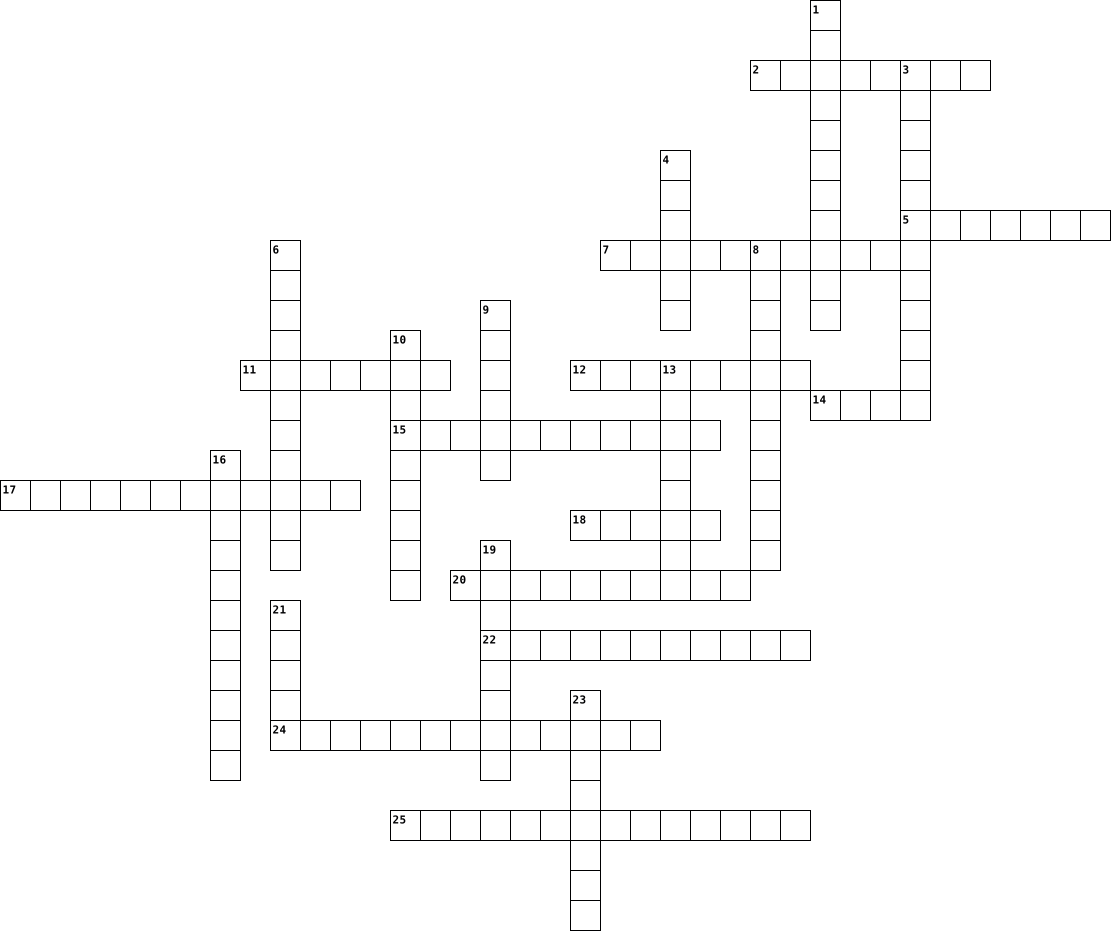
Across
- Form describes the grammatical class a word/phrase belongs to, while [blank] refers to the way it is used in a sentence.
- A subject compliment follows an intransitive (usually copular) verb, while a [blank] predicate follows a transitive verb.
- Words that belong to the grammatical classes of either pronouns, adverbs, or adjectives, but also provide additional information regarding quantity.
- Present participles of a verb that take the place of a noun or pronoun in a sentence.
- Nouns, verbs, adjectives, adverbs, conjunctions, and prepositions can either be simple, [blank], or phrasal.
- Nouns and pronouns have a [blank] which indicates whether they are being used as the subject, the object, or as a possessive.
- Declarative, imperative, [blank], and interrogative are the four types of sentences which function to provide information, give an order, express an emotion, or ask a question.
- These words join clauses of equal weight, and can be remembered with the mnemonic FANBOYS.
- This aspect of a verb indicates whether the subject is doing or receiving the action.
- Nouns, pronouns, or adjectives that are found in the predicate and provide additional information about the subject following intransitive verbs.
- Positive, [blank], and superlative are the three forms of gradable adjectives and adverbs.
- A finite group of words which serve to join clauses of unequal weight, where one clause has less importance than the other.
- Words that can function as pronouns or adjectives, and identify or highlight a particular antecedent.
Down
- This group of words joins two clauses of equal weight, but also gives information on manner, place, reason, etc.
- Some verbs facilitate the action passing on to a direct object, while [blank] verbs do not.
- Auxiliary verbs that provide information about certainty, intention, command, or emphasis.
- A pair of words which are usually spread apart in a sentence that join clauses together.
- These verbals are recognizable by the form “to+verb” and are used for efficiency.
- When a form of the verb “to be” serves as the main verb, it is called this.
- An optional element of the clausal structure that provides additional information about time, location, and manner.
- Words that may look like prepositions, but are meaningfully connected to verbs.
- Verbs in the progressive or perfect tenses that do not function as verbs, but rather as modifiers.
- Nouns have many different classes. One of them tells whether a noun can be counted or whether it is a [blank] noun.
- Indicative, imperative, and subjunctive are the three [blanks] of a verb which depict the speaker’s state of mind.
- There are two categories of adjectives. Ones which describe the quality of a noun or pronoun, and [blank] adjectives which tell how much, how many, or whose.
25 Clues: When a form of the verb “to be” serves as the main verb, it is called this. • Words that may look like prepositions, but are meaningfully connected to verbs. • These verbals are recognizable by the form “to+verb” and are used for efficiency. • Present participles of a verb that take the place of a noun or pronoun in a sentence. • ...
Regular Verbs, Irregular Verbs... & Westside :) 2025-10-30

Across
- A(n) ___________ is a phrase that means something other than what it looks like.
- To make a sentence negative, add the word "no" right (before/after) the verb.
- Other than the two verbs meaning "to be", what irregular verb did we learn in Spanish?
- What does Mrs. Childers call Westside's students?
- What does "ustedes" mean in English?
- Which of the two Spanish verbs meaning "to be" is used with more permanent traits?
- True or False: Spanish does NOT have a specific word like "it" to refer to non-living things.
- Which of the two Spanish verbs meaning "to be" is used with more temporary states?
- Verbs in Spanish and English change to match the _______________ of the sentence.
- A(n)____________ is also known as an "action word".
Down
- How do you say "we" in Spanish (if it is a mix of boys and girls)?
- What do we call verbs that change to match the subject according to the usual pattern?
- Who or what a sentence is about.
- What do we call verbs that do not change to match the subject according to the usual pattern?
- The name of Dr. Medina's daughter.
- Ms. V's full last name.
16 Clues: Ms. V's full last name. • Who or what a sentence is about. • The name of Dr. Medina's daughter. • What does "ustedes" mean in English? • What does Mrs. Childers call Westside's students? • A(n)____________ is also known as an "action word". • How do you say "we" in Spanish (if it is a mix of boys and girls)? • ...
verb cross word 2023-11-02
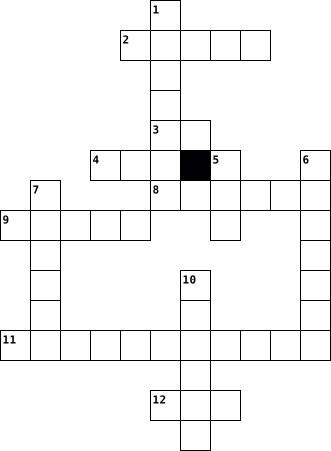
Across
- helping or linking verb
- helping verb
- can be helping of action
- sometimes ing words can be this
- adverb mistaken for verb
- form of verbs that are not limited by the characteristics of verbs
- adverb mistaken for verb
Down
- the first 8 of these are forms of to-be
- a helping verb
- they are often near verbs
- one of the characteristics of a verb
- action verbs express this
12 Clues: helping verb • a helping verb • helping or linking verb • can be helping of action • adverb mistaken for verb • adverb mistaken for verb • they are often near verbs • action verbs express this • sometimes ing words can be this • one of the characteristics of a verb • the first 8 of these are forms of to-be • form of verbs that are not limited by the characteristics of verbs
Grammatische Grundbegriffe 2022-03-07
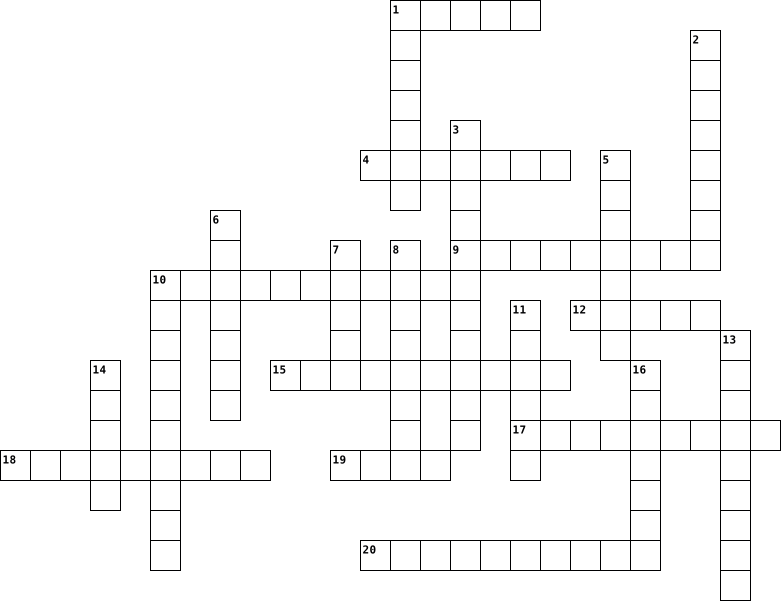
Across
- Hauptwort
- grammatische Zahl
- Grundform des Verbs
- Beugung des Verbs
- grammatisches Geschlecht
- männliches grammatisches Geschlecht
- Wen-Fall, 4. Fall
- Wer-Fall, 1. Fall
- Tätigkeitswort
- Höchststufe (Steigerung des Adjektivs)
Down
- sächliches grammatisches Geschlecht
- Eigenschaftswort
- Beugung von Nomen, Artikeln, Adjektiven
- Begleiter des Nomens
- Wessen-Fall, 2. Fall
- grammatischer Fall
- Einzahl
- Vergleichsstufe (Steigerung des Adjektivs)
- Mehrzahl
- weibliches grammatisches Geschlecht
- Wem-Fall, 3. Fall
- Grundstufe (Steigerung des Adjektivs)
22 Clues: Einzahl • Mehrzahl • Hauptwort • Tätigkeitswort • Eigenschaftswort • grammatische Zahl • Beugung des Verbs • Wem-Fall, 3. Fall • Wen-Fall, 4. Fall • Wer-Fall, 1. Fall • grammatischer Fall • Grundform des Verbs • Begleiter des Nomens • Wessen-Fall, 2. Fall • grammatisches Geschlecht • sächliches grammatisches Geschlecht • weibliches grammatisches Geschlecht • männliches grammatisches Geschlecht • ...
Verbs 2021-09-12
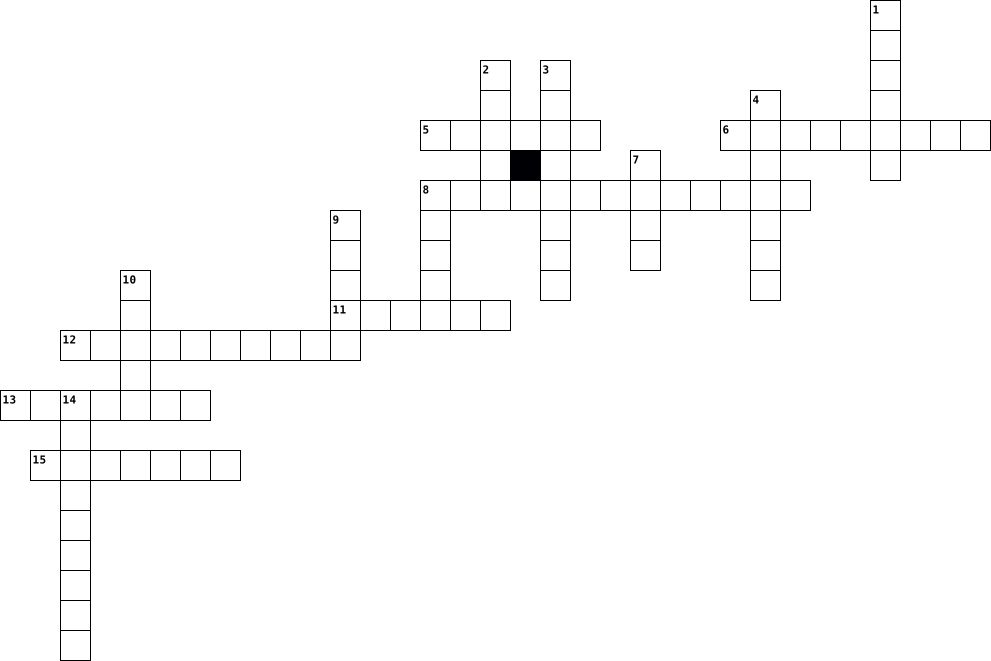
Across
- The ______ forms have the function of the predicate in the sentence and may also be called the predicative forms.
- ____ forms are built up by a change in the word itself.
- The objects transitive verbs take may be direct indirect or _______
- ____ is the form of the verb which serves to express the manner in which the action is regarded.
- ____ forms consist of two components
- retrospectiveness, which consists of two elements — priority and relevance. In some grammars this category has been given the name ____.
- With ____ verbs, the Past Indefinite and the participle are formed by adding the suffix -ed
Down
- Finite for category: Person and _____
- The form of the verb which indicates the time of the action.
- Verbs that always have a lexical meaning of their own and can have an independent syntactic function in the sentence.
- Verbs which admit of the continuous form
- A basic form of English verb: plain verb ___ (infinitive w/o to)
- The grammatical meaning of the Perfect forms is to
- Structural verbs: link verb, ___ verb, auxiliary verb
- Tense, Aspect and ____
- Function of the verb in a sentence.
16 Clues: Tense, Aspect and ____ • Function of the verb in a sentence. • ____ forms consist of two components • Finite for category: Person and _____ • Verbs which admit of the continuous form • The grammatical meaning of the Perfect forms is to • Structural verbs: link verb, ___ verb, auxiliary verb • ____ forms are built up by a change in the word itself. • ...
Raten oder wissen? 2020-03-29
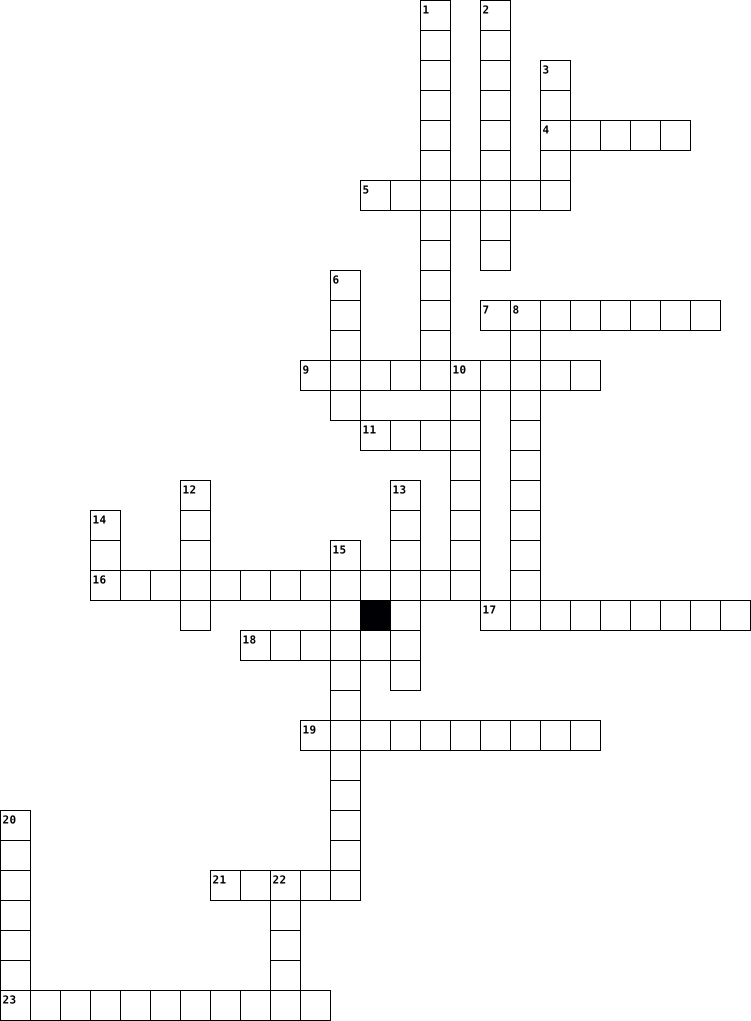
Across
- Hauptgestalt in "Mio, mein Mio"
- Zeitform der Vergangenheit
- Gegenteil von Fantasie
- Zeitform der Vergangenheit
- Tuwort
- Perfekt von (sie) essen
- Grundform des Verbs
- Prät. von (sie) gießen
- Menschenfresser
- Fragewort (Grund)
- Perfekt von (er) läuft
Down
- gruselige Zeit um Mitternacht
- Präteritum von (du) träumst
- Präteritum von (du) gibst
- kleine Fantasiefigur
- Prät. von (wir)entscheiden
- Inselbewohner
- Dingwort
- Zeitform der Gegenwart
- Präteritum von "sehe"
- veränderte Form des Verbs
- gefärbter Gegenstand
- große Fantasiefigur
23 Clues: Tuwort • Dingwort • Inselbewohner • Menschenfresser • Fragewort (Grund) • Grundform des Verbs • große Fantasiefigur • kleine Fantasiefigur • gefärbter Gegenstand • Präteritum von "sehe" • Gegenteil von Fantasie • Zeitform der Gegenwart • Prät. von (sie) gießen • Perfekt von (er) läuft • Perfekt von (sie) essen • Präteritum von (du) gibst • veränderte Form des Verbs • Zeitform der Vergangenheit • ...
Grammatische Grundbegriffe 2022-03-07
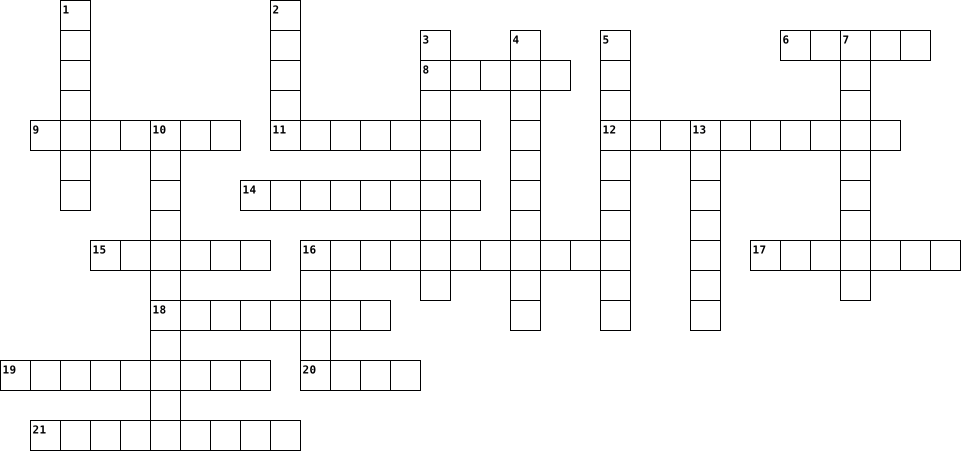
Across
- grammatisches Geschlecht
- grammatischer Fall
- Begleiter des Nomens
- sächliches grammatisches Geschlecht
- Vergleichsstufe (Steigerung des Adjektivs)
- Einzahl
- Mehrzahl
- Beugung von Nomen, Artikeln, Adjektiven
- Wessen-Fall, 2. Fall
- Eigenschaftswort
- Grundform des Verbs
- Tätigkeitswort
- weibliches grammatisches Geschlecht
Down
- grammatische Zahl
- Hauptwort
- Wen-Fall, 4. Fall
- Höchststufe (Steigerung des Adjektivs)
- männliches grammatisches Geschlecht
- Wer-Fall, 1. Fall
- Beugung des Verbs
- Grundstufe (Steigerung des Adjektivs)
- Wem-Fall, 3. Fall
22 Clues: Einzahl • Mehrzahl • Hauptwort • Tätigkeitswort • Eigenschaftswort • grammatische Zahl • Wen-Fall, 4. Fall • Wer-Fall, 1. Fall • Beugung des Verbs • Wem-Fall, 3. Fall • grammatischer Fall • Grundform des Verbs • Begleiter des Nomens • Wessen-Fall, 2. Fall • grammatisches Geschlecht • männliches grammatisches Geschlecht • sächliches grammatisches Geschlecht • weibliches grammatisches Geschlecht • ...
Parts of speech and grammar - MexCanadian 2015-08-19
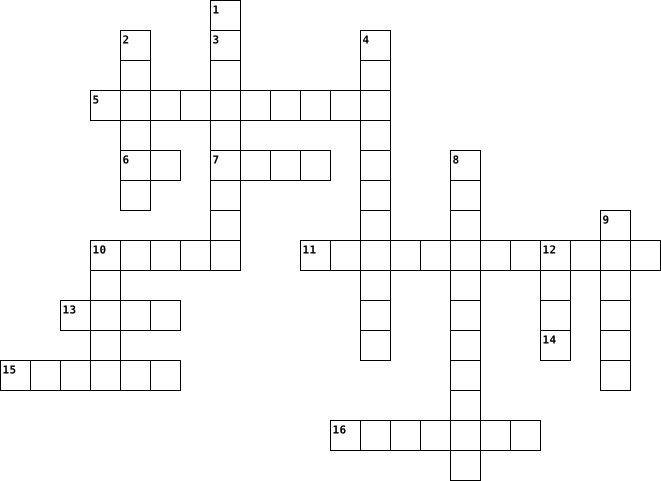
Across
- Pronunciation of regular verbs in past, case C
- The words my, your, our, his, her, its, are "____" adjectives
- Pronunciation of regular verbs in past, case A
- Word used to indicate one thing, person, place or idea that is in proximity
- Word used to indicate more than one thing, person, place or idea that is in proximity
- Expressions of emotion
- Words that name things
- Pronunciation of regular verbs in past, case B
- Words that help adverbs, adjectives and verbs
- Words that substitute nouns
Down
- Words that describe a person, a thing, and idea or a place
- Alberto is a "____" noun
- Words that show a relationship between words and a noun
- Words that link or unite two equal parts of speech, or equivalent groups of words
- gas is a "____" noun
- Word used to indicate more than one thing, person, place or idea that is not in proximity
- Word used to indicate one thing, person, place or idea that is not in proximity
17 Clues: gas is a "____" noun • Expressions of emotion • Words that name things • Alberto is a "____" noun • Words that substitute nouns • Words that help adverbs, adjectives and verbs • Pronunciation of regular verbs in past, case C • Pronunciation of regular verbs in past, case A • Pronunciation of regular verbs in past, case B • ...
Verbs 2025-04-11

Across
- Combination of Main Verb and Preposition or Adverb
- Expresses an action.
- States a Command
- Subject performs the action.
- Form of Be and Present Participle of Main Verb
- Action Passes from Doer to Reciever
- Modifies the Noun.
- Expresses a state of being.
- States a Fact or Question
- Renames the Subject.
Down
- Two or more verbs that work together as a unit.
- Present, Past, and Future Tense
- Verbs that often cause usage problems.
- Receives the Direct Object
- Action has a Doer and no Reciever.
- States an action or stater of being.
- What the Action Happens to.
- Used in forming tenses, moods, and voices of other verbs.
- Uses Form of Do to give Special Force to the Main Verb.
- Subject receives the action.
- Form of Have and the Past Participle of Main Verb
21 Clues: States a Command • Modifies the Noun. • Expresses an action. • Renames the Subject. • States a Fact or Question • Receives the Direct Object • What the Action Happens to. • Expresses a state of being. • Subject performs the action. • Subject receives the action. • Present, Past, and Future Tense • Action has a Doer and no Reciever. • Action Passes from Doer to Reciever • ...
language 2022-09-07
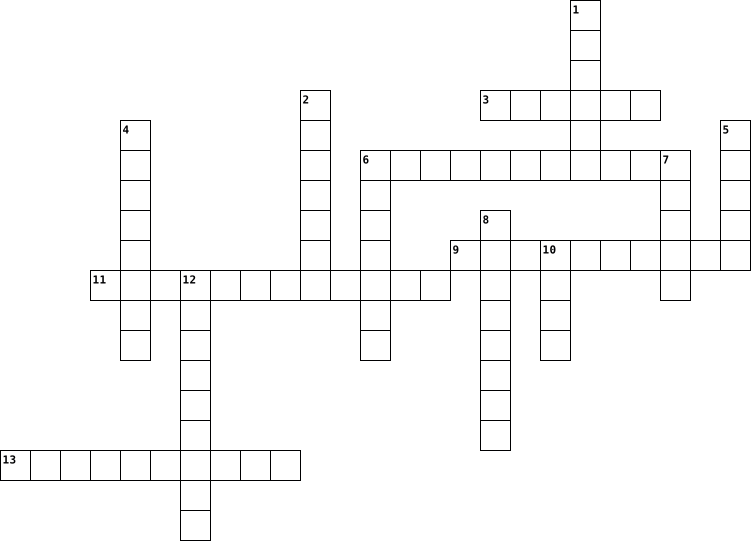
Across
- emphasis
- commas, periods
- similar spelling different meaning
- hard to define
- non-vowels
Down
- direct or indirect
- names or nouns
- Germanic
- action words
- punctuation
- person place or thing
- same spelling
- spoken
- verbs
14 Clues: verbs • spoken • emphasis • Germanic • non-vowels • punctuation • action words • same spelling • names or nouns • hard to define • commas, periods • direct or indirect • person place or thing • similar spelling different meaning
Spanish Reflexive Verbs & Vocab á é í ó ú ñ 2022-01-18
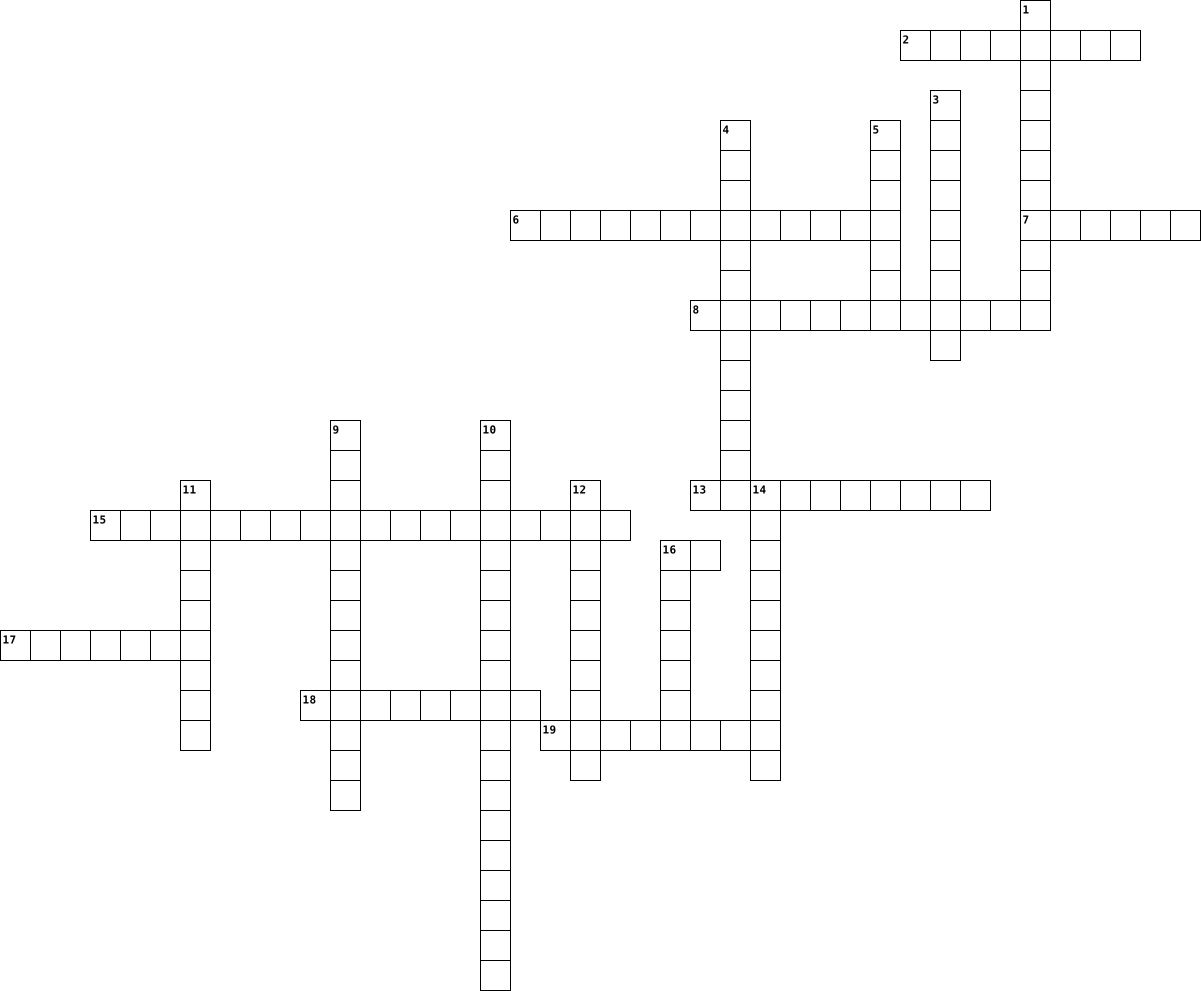
Across
- I shave
- deodorant
- face
- we go to bed
- legs
- the toothbrush
- reflexive verbs always end in ___.
- the comb
- reflexive verbs are actions you do to ___.
- the towel
Down
- you(inf) put on make up
- you all shave
- I put on clothes
- you(informal) dry off
- he puts on the cap
- I brush my teeth
- you(for) go to bed
- they brush
- they get up
- she showers
20 Clues: face • legs • I shave • the comb • deodorant • the towel • they brush • they get up • she showers • we go to bed • you all shave • the toothbrush • I put on clothes • I brush my teeth • he puts on the cap • you(for) go to bed • you(informal) dry off • you(inf) put on make up • reflexive verbs always end in ___. • reflexive verbs are actions you do to ___.
Grammatische Grundbegriffe 2022-03-07
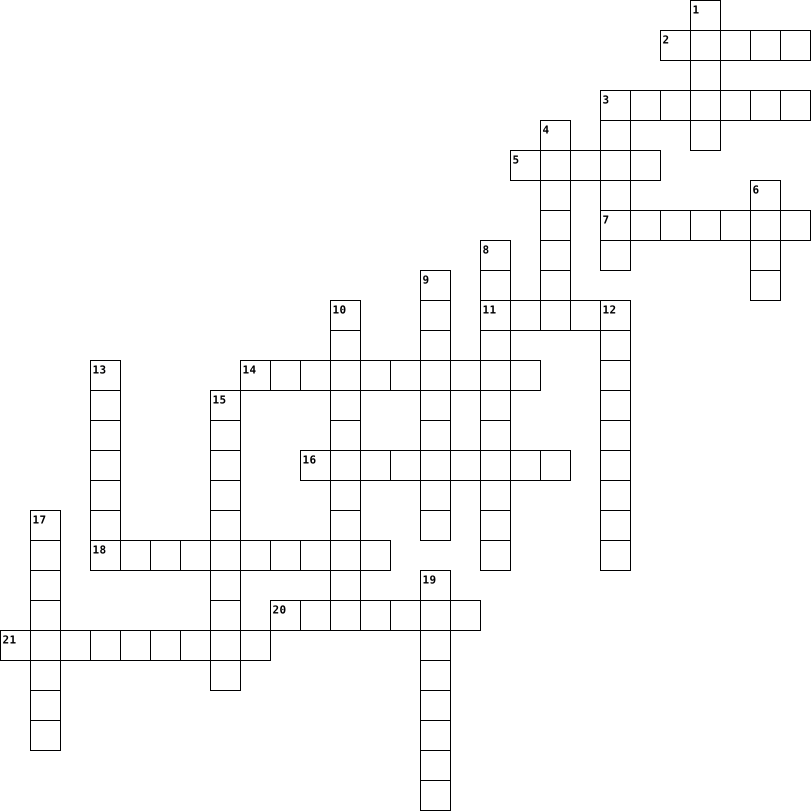
Across
- grammatischer Fall
- Grundstufe (Steigerung des Adjektivs)
- grammatisches Geschlecht
- Begleiter des Nomens
- Hauptwort
- männliches grammatisches Geschlecht
- Grundform des Verbs
- Höchststufe (Steigerung des Adjektivs)
- Wessen-Fall, 2. Fall
- Wen-Fall, 4. Fall
Down
- Wem-Fall, 3. Fall
- Mehrzahl
- sächliches grammatisches Geschlecht
- Tätigkeitswort
- Beugung des Verbs
- weibliches grammatisches Geschlecht
- Beugung von Nomen, Artikeln, Adjektiven
- Wer-Fall, 1. Fall
- grammatische Zahl
- Vergleichsstufe (Steigerung des Adjektivs)
- Eigenschaftswort
- Einzahl
22 Clues: Einzahl • Mehrzahl • Hauptwort • Tätigkeitswort • Eigenschaftswort • Wem-Fall, 3. Fall • Beugung des Verbs • Wer-Fall, 1. Fall • grammatische Zahl • Wen-Fall, 4. Fall • grammatischer Fall • Grundform des Verbs • Begleiter des Nomens • Wessen-Fall, 2. Fall • grammatisches Geschlecht • sächliches grammatisches Geschlecht • weibliches grammatisches Geschlecht • männliches grammatisches Geschlecht • ...
Grammatische Grundbegriffe 2022-03-07
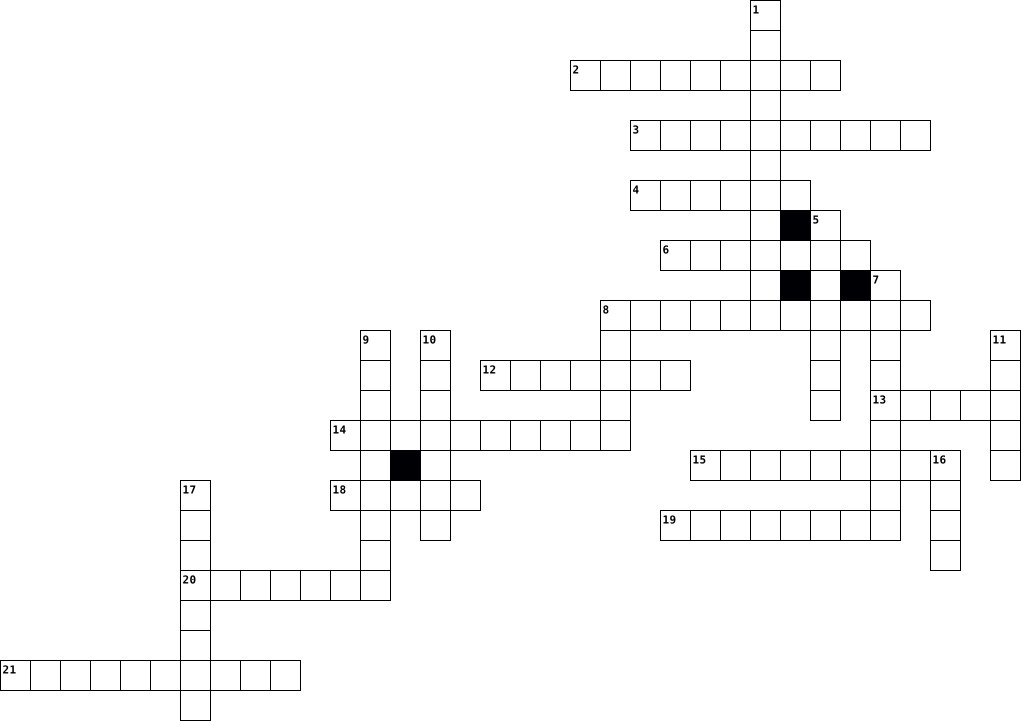
Across
- weibliches grammatisches Geschlecht
- männliches grammatisches Geschlecht
- Mehrzahl
- Begleiter des Nomens
- Beugung von Nomen, Artikeln, Adjektiven
- Grundstufe (Steigerung des Adjektivs)
- Hauptwort
- Höchststufe (Steigerung des Adjektivs)
- Grundform des Verbs
- grammatischer Fall
- Eigenschaftswort
- Wessen-Fall, 2. Fall
- Vergleichsstufe (Steigerung des Adjektivs)
Down
- Beugung des Verbs
- sächliches grammatisches Geschlecht
- Wer-Fall, 1. Fall
- Wem-Fall, 3. Fall
- Wen-Fall, 4. Fall
- grammatische Zahl
- grammatisches Geschlecht
- Tätigkeitswort
- Einzahl
22 Clues: Einzahl • Mehrzahl • Hauptwort • Tätigkeitswort • Eigenschaftswort • Beugung des Verbs • Wer-Fall, 1. Fall • Wem-Fall, 3. Fall • Wen-Fall, 4. Fall • grammatische Zahl • grammatischer Fall • Grundform des Verbs • Begleiter des Nomens • Wessen-Fall, 2. Fall • grammatisches Geschlecht • weibliches grammatisches Geschlecht • männliches grammatisches Geschlecht • sächliches grammatisches Geschlecht • ...
Grammatische Grundbegriffe 2022-03-08
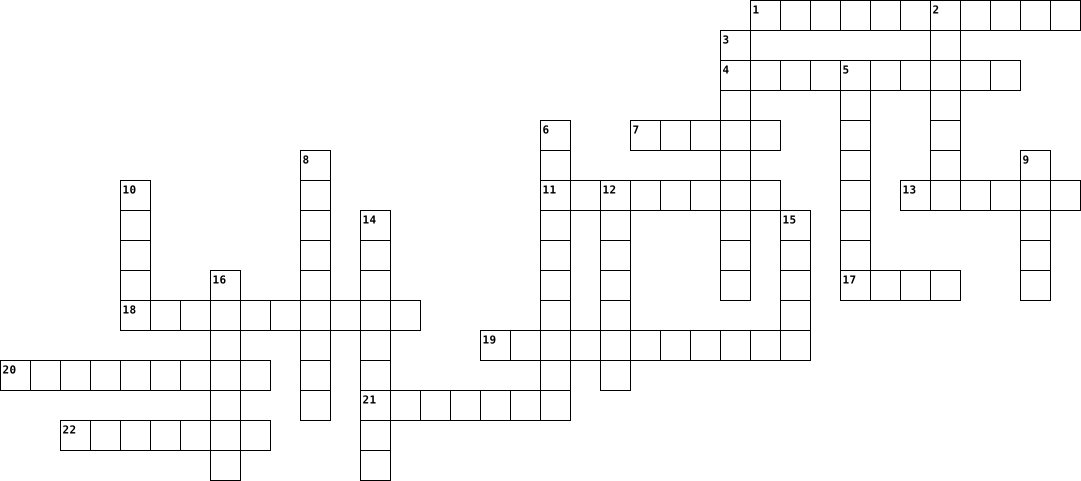
Across
- Beugung von Nomen, Artikeln, Adjektiven
- Vergleichsstufe (Steigerung des Adjektivs)
- grammatischer Fall
- Einzahl
- Mehrzahl
- Tätigkeitswort
- Höchststufe (Steigerung des Adjektivs)
- Beugung des Verbs
- Grundform des Verbs
- sächliches grammatisches Geschlecht
- Grundstufe (Steigerung des Adjektivs)
Down
- Begleiter des Nomens
- Wen-Fall, 4. Fall
- Eigenschaftswort
- männliches grammatisches Geschlecht
- Wer-Fall, 1. Fall
- Wem-Fall, 3. Fall
- grammatisches Geschlecht
- grammatische Zahl
- weibliches grammatisches Geschlecht
- Hauptwort
- Wessen-Fall, 2. Fall
22 Clues: Einzahl • Mehrzahl • Hauptwort • Tätigkeitswort • Eigenschaftswort • Wen-Fall, 4. Fall • Wer-Fall, 1. Fall • Wem-Fall, 3. Fall • grammatische Zahl • Beugung des Verbs • grammatischer Fall • Grundform des Verbs • Begleiter des Nomens • Wessen-Fall, 2. Fall • grammatisches Geschlecht • männliches grammatisches Geschlecht • weibliches grammatisches Geschlecht • sächliches grammatisches Geschlecht • ...
Recall 2018-07-30
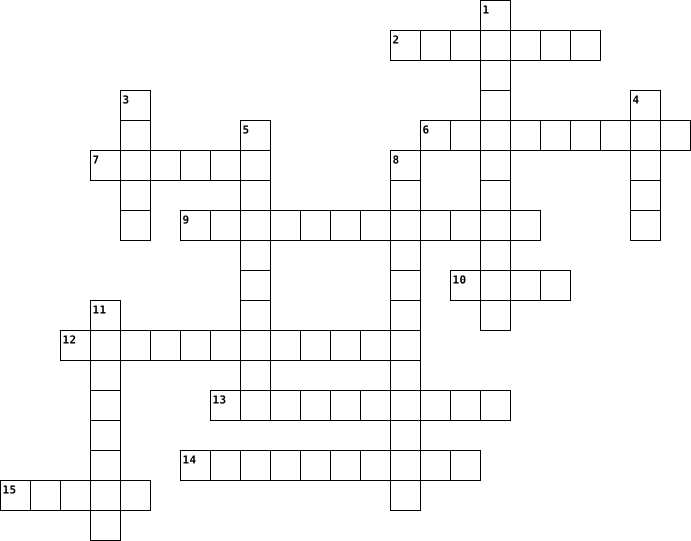
Across
- words that modify verbs, adjectives, or other adverbs
- meaningful elements in a word
- term used to cover singular and plural
- words that link other words, phrases, or clauses in a sentence
- morphemes that can stand alone
- words that link nouns or pronouns to other words within a sentence
- process that transform a word into another word that has a related meaning
- words that describe nouns and pronouns
- names persons, places, things,ideas, or qualities
Down
- a modifying word that determines the kind of reference a noun or noun group has
- morphemes that cannot stand alone
- words that convey action, a state of being, or existence
- verbs that take a noun phrase after them
- verbs that do not require a noun phrase
- words that replace a noun that has already been mentioned
15 Clues: meaningful elements in a word • morphemes that can stand alone • morphemes that cannot stand alone • term used to cover singular and plural • words that describe nouns and pronouns • verbs that do not require a noun phrase • verbs that take a noun phrase after them • names persons, places, things,ideas, or qualities • words that modify verbs, adjectives, or other adverbs • ...
Parts of Speech Part 1 2025-12-05

Across
- group of verbs that work together
- Noun that uses your 5 senses
- nouns that are general
- Describes a noun
- what are a, an and the called?
Down
- Verb that helps out other verbs
- type of noun that names something you cannot touch
- How many helping verbs are there?
- nouns that are specific and capitalized
- Person, place or thing
- Verb that links subject and predicate
- Describes a verb, adjective or adverb
- Action word
- Type of verb that shows action
14 Clues: Action word • Describes a noun • nouns that are general • Person, place or thing • Noun that uses your 5 senses • Type of verb that shows action • what are a, an and the called? • Verb that helps out other verbs • group of verbs that work together • How many helping verbs are there? • Verb that links subject and predicate • Describes a verb, adjective or adverb • ...
Unit 4 Syn 2024-12-02

Across
- craven, lily-livered
- prone, prostrate, supine, inactive
- Inturn, immure
- collect, cull
- noun: disorganization; verb: dishevel, mess up
- adjective: masterful; verbs: clinch, conclude
- frantic, overwrought
Down
- wreckage
- citadel, rampart
- gripe, grumble
- nouns:degeneration, deterioration; verb: wither
- treaty, covenant
- monetary, financial
- acrimonious, sardonic, scathing
- verbs: peeve, annoy, irk
15 Clues: wreckage • collect, cull • gripe, grumble • Inturn, immure • citadel, rampart • treaty, covenant • monetary, financial • craven, lily-livered • frantic, overwrought • verbs: peeve, annoy, irk • acrimonious, sardonic, scathing • prone, prostrate, supine, inactive • adjective: masterful; verbs: clinch, conclude • noun: disorganization; verb: dishevel, mess up • ...
Parts of Speech Part 1 2025-12-05

Across
- group of verbs that work together
- Noun that uses your 5 senses
- nouns that are general
- Describes a noun
- what are a, an and the called?
Down
- Verb that helps out other verbs
- type of noun that names something you cannot touch
- How many helping verbs are there?
- nouns that are specific and capitalized
- Person, place or thing
- Verb that links subject and predicate
- Describes a verb, adjective or adverb
- Action word
- Type of verb that shows action
14 Clues: Action word • Describes a noun • nouns that are general • Person, place or thing • Noun that uses your 5 senses • Type of verb that shows action • what are a, an and the called? • Verb that helps out other verbs • group of verbs that work together • How many helping verbs are there? • Verb that links subject and predicate • Describes a verb, adjective or adverb • ...
Fremdworträtsel zu den Wortarten 2013-03-18
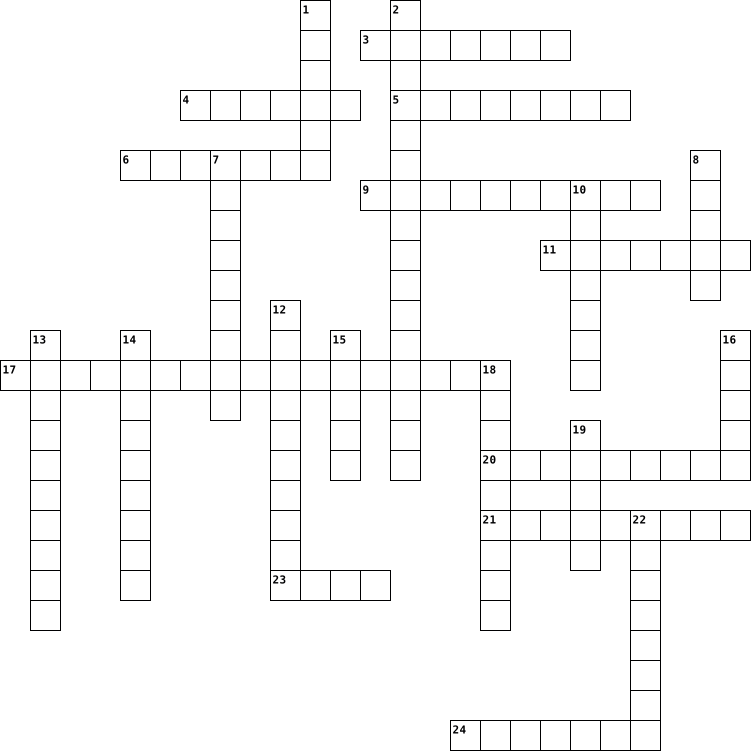
Across
- 2. Fall - Wessen?
- Plural (Mehrzahl) des Wortes Genus
- Einzahl
- Begleiter
- männliches Substantiv
- grammatische Zahl
- besitzanzeigendes Pronomen
- Befehls- und Aufforderungsform des Verbs
- 4. Fall - Wen? oder Was?
- Tunwort
- Grundstufe bei der Steigerung von Adjektiven
Down
- Mehrzahl
- Stellvertreter von Nomen
- Grundform des Verbs
- Fall
- sächliches Substantiv
- Höchststufe bei der Steigerung von Adjektiven
- Vergleichsstufe bei der Steigerung von Adjektiven
- weibliches Substantiv
- Namenwort
- 3. Fall - Wem?
- 1. Fall - Wer? oder Was?
- grammatisches Geschlecht
- Wiewort/Eigenschaftswort
24 Clues: Fall • Einzahl • Tunwort • Mehrzahl • Begleiter • Namenwort • 3. Fall - Wem? • 2. Fall - Wessen? • grammatische Zahl • Grundform des Verbs • männliches Substantiv • sächliches Substantiv • weibliches Substantiv • Stellvertreter von Nomen • 1. Fall - Wer? oder Was? • grammatisches Geschlecht • 4. Fall - Wen? oder Was? • Wiewort/Eigenschaftswort • besitzanzeigendes Pronomen • ...
Spanish Crossword 2022-04-22
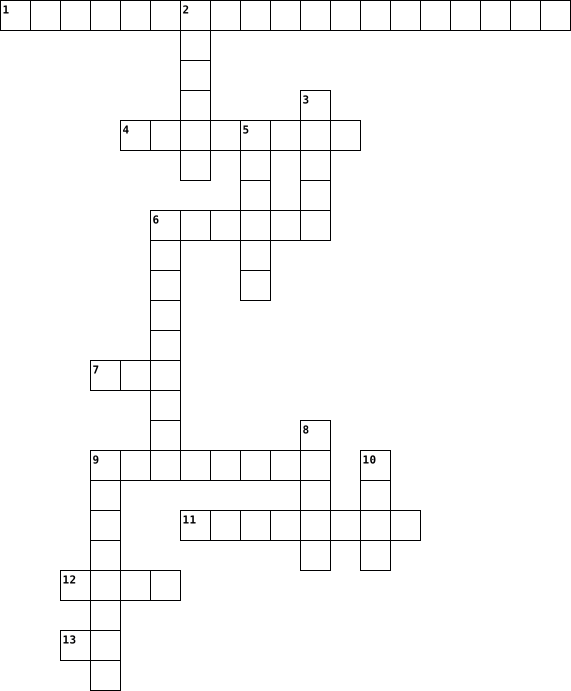
Across
- 3rd person plural subjects
- Ellos Hacer
- Yo Dibujar
- Ella ir
- Tú Cantar
- Ustedes Poner
- Él leer
- Form that car/gar/zar verbs change
Down
- Yo empezar
- Yo Tocar
- Él Estar
- Ellas Dormir
- to have
- Nosotros correr
- Ellos/Ellas/Ustedes Ending for ar Verbs
15 Clues: Ella ir • to have • Él leer • Yo Tocar • Él Estar • Tú Cantar • Yo empezar • Yo Dibujar • Ellos Hacer • Ellas Dormir • Ustedes Poner • Nosotros correr • 3rd person plural subjects • Form that car/gar/zar verbs change • Ellos/Ellas/Ustedes Ending for ar Verbs
End of Year Grammar Review 2024-05-28

Across
- nom.pl.f. these
- 1st pl. future
- 2nd pl. personal pronoun
- are verbs
- dat./abl.pl. 3rd decl.
- 1st pl. personal ending
- nom. and acc. are the same
- nom.s.m. this
- 1st s. personal pronoun
- 1st pl. personal pronoun
Down
- gen.pl. 1st decl.
- 2nd s. perfect
- 1st s. present I am able, I can
- 1st s. fut. pass. ending
- 2nd s. personal pronoun
- 1st s. future
- ere verbs
- pres. infin.
- nom.s.n. this
- 1st s. present I am
20 Clues: are verbs • ere verbs • pres. infin. • 1st s. future • nom.s.m. this • nom.s.n. this • 2nd s. perfect • 1st pl. future • nom.pl.f. these • gen.pl. 1st decl. • 1st s. present I am • dat./abl.pl. 3rd decl. • 2nd s. personal pronoun • 1st pl. personal ending • 1st s. personal pronoun • 1st s. fut. pass. ending • 2nd pl. personal pronoun • 1st pl. personal pronoun • nom. and acc. are the same • ...
Semester's review 2021-11-15
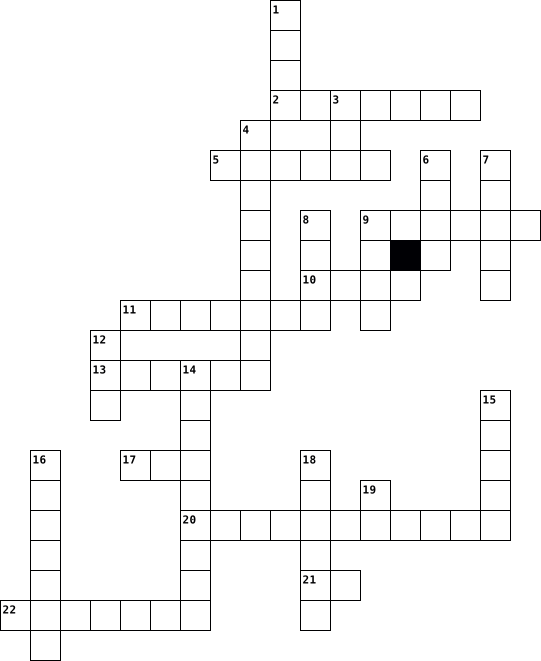
Across
- fruits, water, do exercises...
- past of "work"
- "deberías"
- "mucho" contable
- "despedida"
- "consejo"
- woman, girl, mom, sister, Maria...
- I can't count with numbers
- man, boy, father, Pedro...
- verbs that finish with "ed"
Down
- "mucho" incontable
- past of "eat"
- I can count with numbers
- "un montón"
- "saludo"
- "alguno/a"
- past of "sing"
- past of "be"
- verbs that change the words of it form.
- past of "write"
- "profesora"
- past of "buy"
- a thing or an animal
23 Clues: "saludo" • "consejo" • "alguno/a" • "deberías" • "un montón" • "despedida" • "profesora" • past of "be" • past of "eat" • past of "buy" • past of "work" • past of "sing" • past of "write" • "mucho" contable • "mucho" incontable • a thing or an animal • I can count with numbers • I can't count with numbers • man, boy, father, Pedro... • verbs that finish with "ed" • fruits, water, do exercises... • ...
PARTS OF SPEECH! 2022-10-18
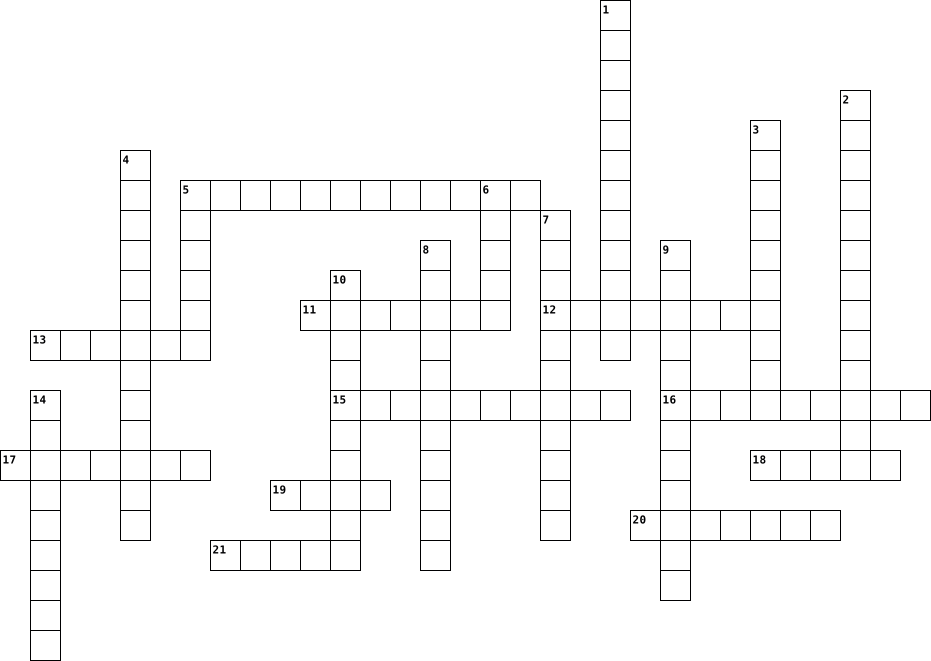
Across
- A word used to connect clauses or sentences
- It is a word that describes an adjective, a verb, or even itself.
- Are the words you substitute for specific nouns when the reader or listener knows which specific noun you’re referring to.
- VERBS Are words that express action or movement.
- NOUNS A word used to represent a group of people, animals, or things.
- Is used to refer back to a noun or pronoun in order to emphasize it.
- VERBS It is used with a main verb to help express the main verb's tense, mood, or voice.
- The total number of classification of nouns.
- How many types of adverbs do we have?
- VERBS Are verbs that don’t show an action but rather describe the subject.
- These are words that describe specific actions, or a state of being.
Down
- A word or phrase that is grammatically independent from the words around it, and mainly expresses feeling rather than meaning
- A pronoun that represents a noun and expresses its position as near or far, including in time.
- This type of pronoun shows ownership.
- Connects a dependent clause, with an independent clause.
- NOUNS It names a generic type of person, place, or thing.
- It is a word that names person, place, concept, or object.
- Are the words used before a noun, pronoun, or noun phrase to show direction, time, place, location, spatial relationship.
- Used to illustrate how two words or phrases within a sentence relate to each other.
- Connect words or phrases that serve the same grammatical purpose in a sentence.
- These are words that describe the qualities or states of being of nouns.
- These adverbs describe how often something happens.
22 Clues: This type of pronoun shows ownership. • How many types of adverbs do we have? • A word used to connect clauses or sentences • The total number of classification of nouns. • VERBS Are words that express action or movement. • These adverbs describe how often something happens. • Connects a dependent clause, with an independent clause. • ...
Chapter 6-10: Grammar Review 2019-12-06
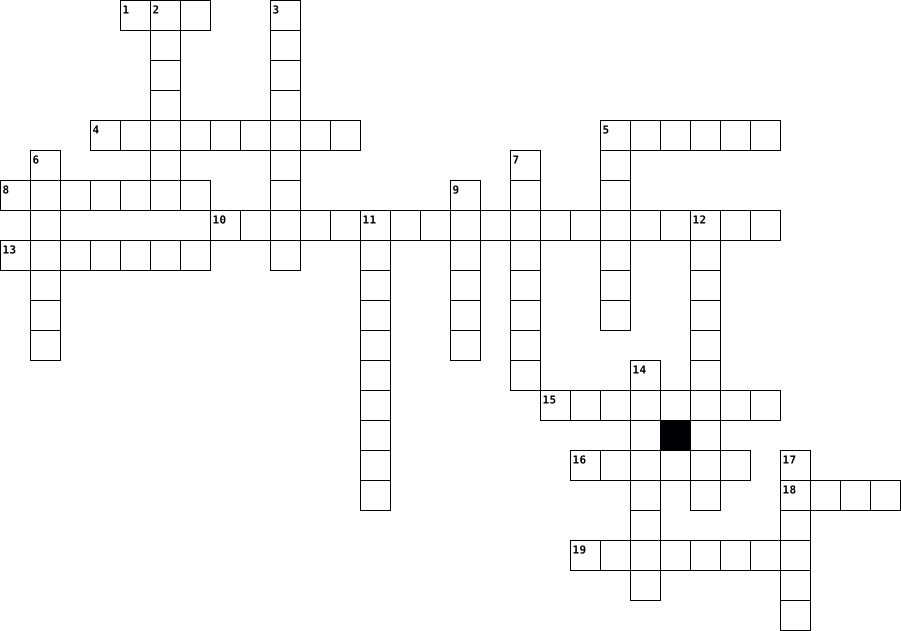
Across
- Sometimes subjects are ______ from their verbs. (Eg: The girl who met Peter yesterday talked to me about him.)
- A word can have different ______ _______. (Eg: Work can be verb. Work can also be noun)
- Nouns ending with –er, -ant, -or, -ary, -ist are most likely about__________.
- “May I go out?” Modal “may” in this sentence shows a __________.
- Preposition + Objects = ___________ ___________.
- “Talking to your friends in class is not nice.” The gerund here functions as a(n) ________.
- Prepositions can be put into 3 different categories : time, ________ and direction.
- A subject must agree with its verbs in __________. (Eg: singular,plural)
- After a modal verb, all verbs are in their __________ forms.
- To make a strong guess with clues that something happened in the past, you can use modal “_______ ________ + V3/PP”
Down
- Not all ______ end with –ly. Some are special like: fast, hard,well…
- Some idiomatic prepositional phrases must be ___________. (Eg: in a hurry, in danger, at work, at school ….)
- “I put the clock 5 minutes forward to make sure I’m always early.” The infinitive in this sentence is to show a(n) _________.
- Verbs with –ing at the end are called __________.
- Some nouns look like plural but take __________ verbs. (Eg: Mathematics is super hard for me.)
- Modals can have a _____ word or more than one words together (Eg: should, have to, had better, would rather…)
- To describe something you did, and you now wish that you didn’t do, you can use modal “______ ______ + V3/PP”
- Words ending with –al, -ive, -ative, -able are most likely to be __________.
- This is an adjective of "harm"
- “His hobby is playing basketball.” The gerund in this sentence functions as a(n) ________.
20 Clues: This is an adjective of "harm" • Preposition + Objects = ___________ ___________. • Verbs with –ing at the end are called __________. • After a modal verb, all verbs are in their __________ forms. • “May I go out?” Modal “may” in this sentence shows a __________. • Not all ______ end with –ly. Some are special like: fast, hard,well… • ...
Chapter 6-10: Grammar Review 2019-12-06

Across
- Not all ______ end with –ly. Some are special like: fast, hard,well…
- A word can have different ______ _______. (Eg: Work can be verb. Work can also be noun)
- Some nouns look like plural but take __________ verbs. (Eg: Mathematics is super hard for me.)
- Preposition + Objects = ___________ ___________.
- Verbs with –ing at the end are called __________.
- “His hobby is playing basketball.” The gerund in this sentence functions as a(n) ________.
- “I put the clock 5 minutes forward to make sure I’m always early.” The infinitive in this sentence is to show a(n) _________.
- To make a strong guess with clues that something happened in the past, you can use modal “_______ ________ + V3/PP”
- Sometimes subjects are ______ from their verbs. (Eg: The girl who met Peter yesterday talked to me about him.)
Down
- To describe something you did, and you now wish that you didn’t do, you can use modal “______ ______ + V3/PP”
- Some idiomatic prepositional phrases must be ___________. (Eg: in a hurry, in danger, at work, at school ….)
- Words ending with –al, -ive, -ative, -able are most likely to be __________.
- Modals can have a _____ word or more than one words together (Eg: should, have to, had better, would rather…)
- Prepositions can be put into 3 different categories : time, ________ and direction.
- After a modal verb, all verbs are in their __________ forms.
- “May I go out?” Modal “may” in this sentence shows a __________.
- This is an adjective of "harm"
- “Talking to your friends in class is not nice.” The gerund here functions as a(n) ________.
- A subject must agree with its verbs in __________. (Eg: singular,plural)
- Nouns ending with –er, -ant, -or, -ary, -ist are most likely about__________.
20 Clues: This is an adjective of "harm" • Preposition + Objects = ___________ ___________. • Verbs with –ing at the end are called __________. • After a modal verb, all verbs are in their __________ forms. • “May I go out?” Modal “may” in this sentence shows a __________. • Not all ______ end with –ly. Some are special like: fast, hard,well… • ...
Literary terms 2023-02-16
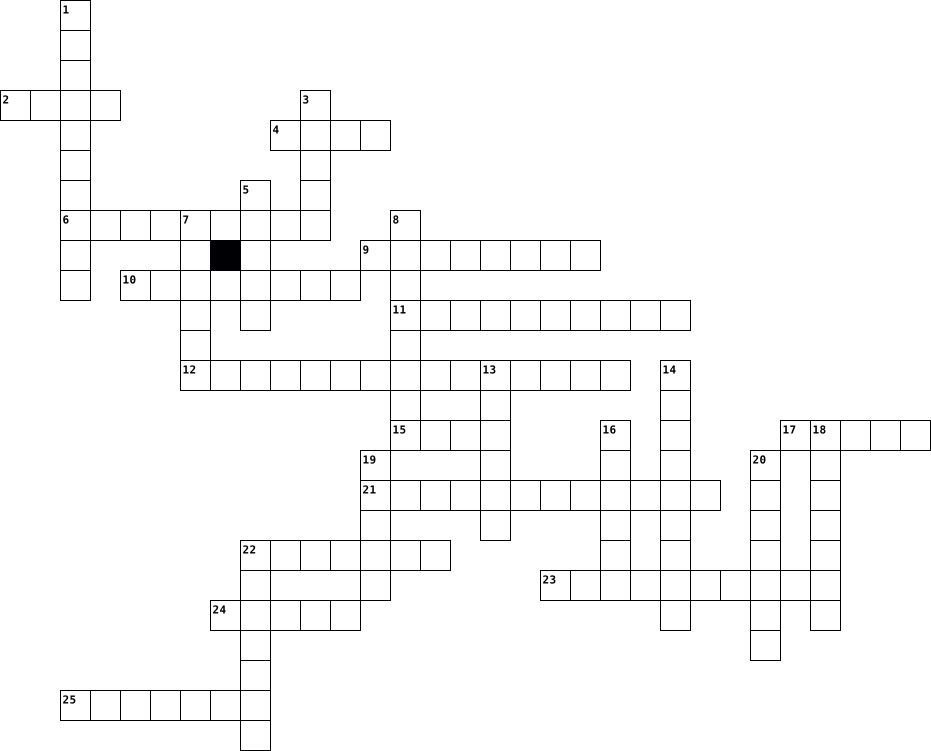
Across
- a male name
- paragraphs the middle paragraphs
- give credit to writers
- how did you get the information?
- to give credit to someone
- something in your own words
- evaluating yourself
- alter something
- draft before the final draft
- the intro to something
- put everything you wrote about into 1 or 2 sentences
- the end of something
- something someone said
- verbs opposite of active verbs
Down
- you might include information from this
- cited where all your credit is
- what the writing is about
- statement what you include before your topic sentence e
- pre set thing o work on
- voice authors voice
- reasons for a basic action
- verbs verb that has an action
- we did this before the final draft
- draft the final writing
- prompt where you write
- where you got your information from
26 Clues: a male name • alter something • evaluating yourself • voice authors voice • the end of something • give credit to writers • the intro to something • something someone said • pre set thing o work on • prompt where you write • draft the final writing • what the writing is about • to give credit to someone • reasons for a basic action • something in your own words • ...
Emmett Darwin Tweed the first of the united states of America's verb crossword puzzle. 2023-11-02
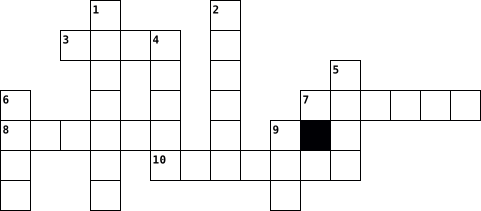
Across
- every sentence needs a _____
- adverbs ________ verbs
- verbs express _______ or a state of being
- words ending with ing
Down
- a _______ verb is a verb that is used with another verb
- 1 of the characteristics of a verb
- linking verbs express a state of _____
- Infinitives are like _____ in it original packaging
- some words can be helping words or ______ main verbs
- In order for an _____ word to be a verb, there must be helping verbs to the left.
10 Clues: words ending with ing • adverbs ________ verbs • every sentence needs a _____ • 1 of the characteristics of a verb • linking verbs express a state of _____ • verbs express _______ or a state of being • Infinitives are like _____ in it original packaging • some words can be helping words or ______ main verbs • a _______ verb is a verb that is used with another verb • ...
Chapter 6-10: Grammar Review 2019-12-06
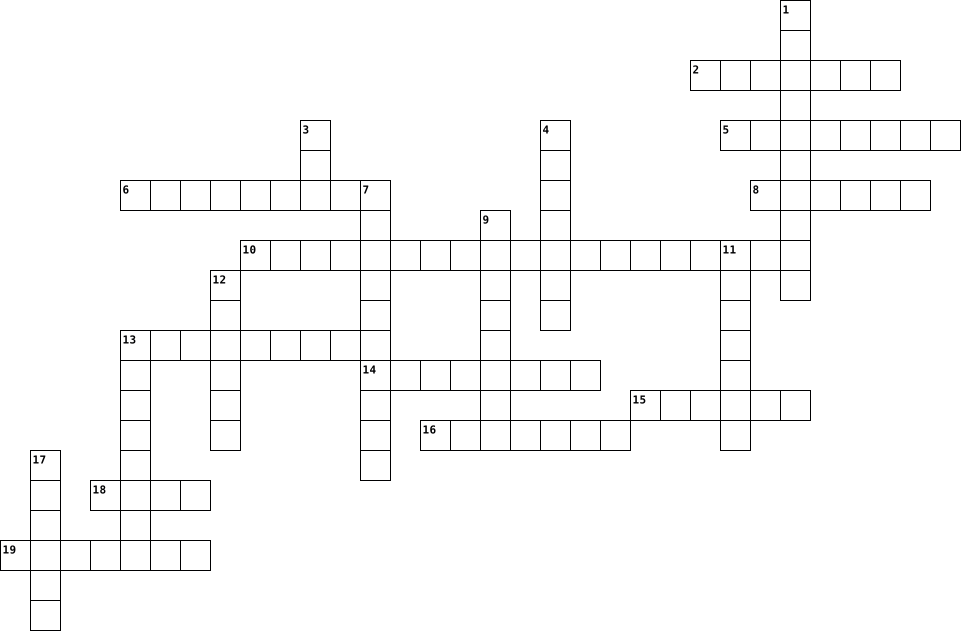
Across
- “Talking to your friends in class is not nice.” The gerund here functions as a(n) ________.
- Prepositions can be put into 3 different categories : time, ________ and direction.
- A word can have different ______ _______. (Eg: Work can be verb. Work can also be noun)
- Modals can have a _____ word or more than one words together (Eg: should, have to, had better, would rather…)
- Preposition + Objects = ___________ ___________.
- Some idiomatic prepositional phrases must be ___________. (Eg: in a hurry, in danger, at work, at school ….)
- This is an adjective of "harm"
- A subject must agree with its verbs in __________. (Eg: singular,plural)
- “I put the clock 5 minutes forward to make sure I’m always early.” The infinitive in this sentence is to show a(n) _________.
- After a modal verb, all verbs are in their __________ forms.
- “May I go out?” Modal “may” in this sentence shows a __________.
Down
- Words ending with –al, -ive, -ative, -able are most likely to be __________.
- Sometimes subjects are ______ from their verbs. (Eg: The girl who met Peter yesterday talked to me about him.)
- Verbs with –ing at the end are called __________.
- To describe something you did, and you now wish that you didn’t do, you can use modal “______ ______ + V3/PP”
- Some nouns look like plural but take __________ verbs. (Eg: Mathematics is super hard for me.)
- Not all ______ end with –ly. Some are special like: fast, hard,well…
- Nouns ending with –er, -ant, -or, -ary, -ist are most likely about__________.
- To make a strong guess with clues that something happened in the past, you can use modal “_______ ________ + V3/PP”
- “His hobby is playing basketball.” The gerund in this sentence functions as a(n) ________.
20 Clues: This is an adjective of "harm" • Preposition + Objects = ___________ ___________. • Verbs with –ing at the end are called __________. • After a modal verb, all verbs are in their __________ forms. • “May I go out?” Modal “may” in this sentence shows a __________. • Not all ______ end with –ly. Some are special like: fast, hard,well… • ...
Chapter 6-10: Grammar Review 2019-12-06
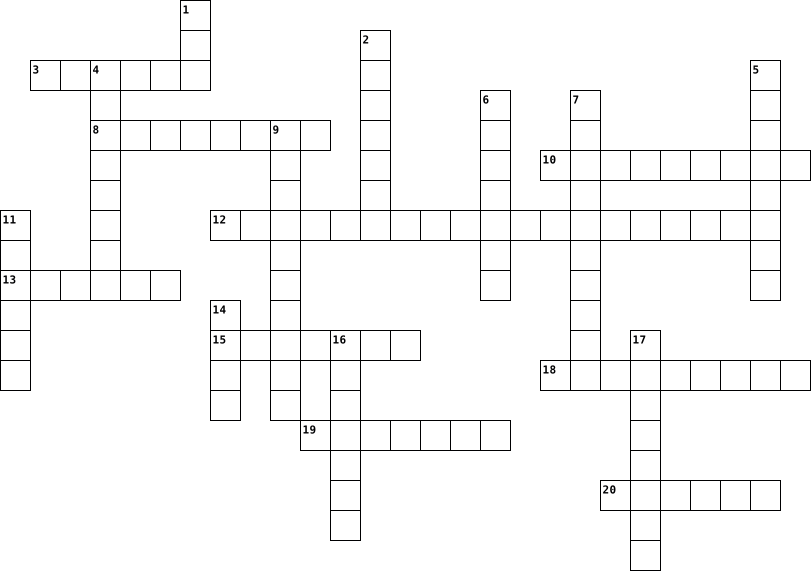
Across
- A subject must agree with its verbs in __________. (Eg: singular,plural)
- Some nouns look like plural but take __________ verbs. (Eg: Mathematics is super hard for me.)
- A word can have different ______ _______. (Eg: Work can be verb. Work can also be noun)
- Preposition + Objects = ___________ ___________.
- “His hobby is playing basketball.” The gerund in this sentence functions as a(n) ________.
- Not all ______ end with –ly. Some are special like: fast, hard,well…
- Some idiomatic prepositional phrases must be ___________. (Eg: in a hurry, in danger, at work, at school ….)
- “Talking to your friends in class is not nice.” The gerund here functions as a(n) ________.
- Modals can have a _____ word or more than one words together (Eg: should, have to, had better, would rather…)
Down
- Sometimes subjects are ______ from their verbs. (Eg: The girl who met Peter yesterday talked to me about him.)
- Verbs with –ing at the end are called __________.
- To make a strong guess with clues that something happened in the past, you can use modal “_______ ________ + V3/PP”
- This is an adjective of "harm"
- “I put the clock 5 minutes forward to make sure I’m always early.” The infinitive in this sentence is to show a(n) _________.
- To describe something you did, and you now wish that you didn’t do, you can use modal “______ ______ + V3/PP”
- Words ending with –al, -ive, -ative, -able are most likely to be __________.
- Nouns ending with –er, -ant, -or, -ary, -ist are most likely about__________.
- After a modal verb, all verbs are in their __________ forms.
- “May I go out?” Modal “may” in this sentence shows a __________.
- Prepositions can be put into 3 different categories : time, ________ and direction.
20 Clues: This is an adjective of "harm" • Preposition + Objects = ___________ ___________. • Verbs with –ing at the end are called __________. • After a modal verb, all verbs are in their __________ forms. • “May I go out?” Modal “may” in this sentence shows a __________. • Not all ______ end with –ly. Some are special like: fast, hard,well… • ...
Chapter 6-10: Grammar Review 2019-12-06
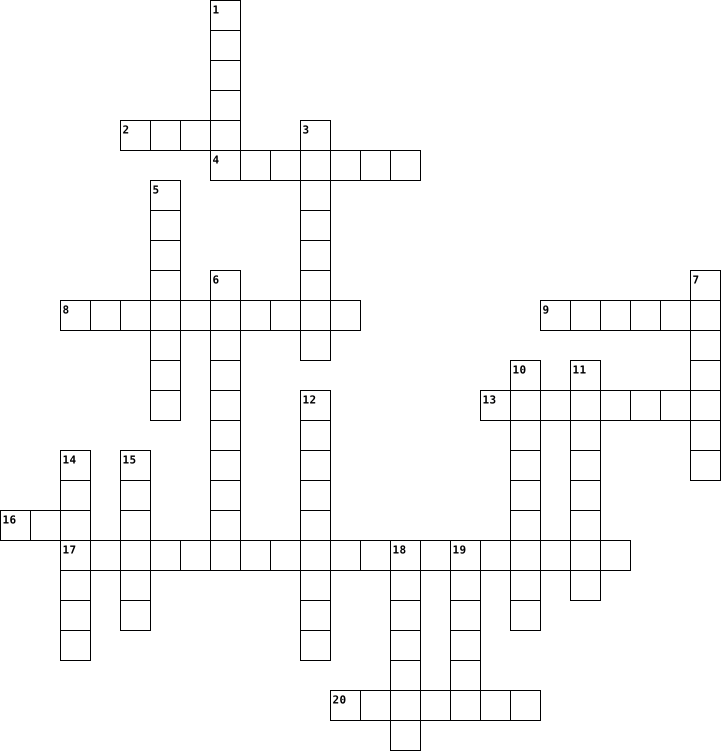
Across
- After a modal verb, all verbs are in their __________ forms.
- “May I go out?” Modal “may” in this sentence shows a __________.
- To describe something you did, and you now wish that you didn’t do, you can use modal “______ ______ + V3/PP”
- Modals can have a _____ word or more than one words together (Eg: should, have to, had better, would rather…)
- Prepositions can be put into 3 different categories : time, ________ and direction.
- Sometimes subjects are ______ from their verbs. (Eg: The girl who met Peter yesterday talked to me about him.)
- Preposition + Objects = ___________ ___________.
- “Talking to your friends in class is not nice.” The gerund here functions as a(n) ________.
Down
- A subject must agree with its verbs in __________. (Eg: singular,plural)
- To make a strong guess with clues that something happened in the past, you can use modal “_______ ________ + V3/PP”
- Some nouns look like plural but take __________ verbs. (Eg: Mathematics is super hard for me.)
- Words ending with –al, -ive, -ative, -able are most likely to be __________.
- Verbs with –ing at the end are called __________.
- A word can have different ______ _______. (Eg: Work can be verb. Work can also be noun)
- This is an adjective of "harm"
- Some idiomatic prepositional phrases must be ___________. (Eg: in a hurry, in danger, at work, at school ….)
- “I put the clock 5 minutes forward to make sure I’m always early.” The infinitive in this sentence is to show a(n) _________.
- “His hobby is playing basketball.” The gerund in this sentence functions as a(n) ________.
- Not all ______ end with –ly. Some are special like: fast, hard,well…
- Nouns ending with –er, -ant, -or, -ary, -ist are most likely about__________.
20 Clues: This is an adjective of "harm" • Preposition + Objects = ___________ ___________. • Verbs with –ing at the end are called __________. • After a modal verb, all verbs are in their __________ forms. • “May I go out?” Modal “may” in this sentence shows a __________. • Not all ______ end with –ly. Some are special like: fast, hard,well… • ...
Page 1 of 100 Next