
world war 2 Crossword Puzzles
World War I 2016-12-13

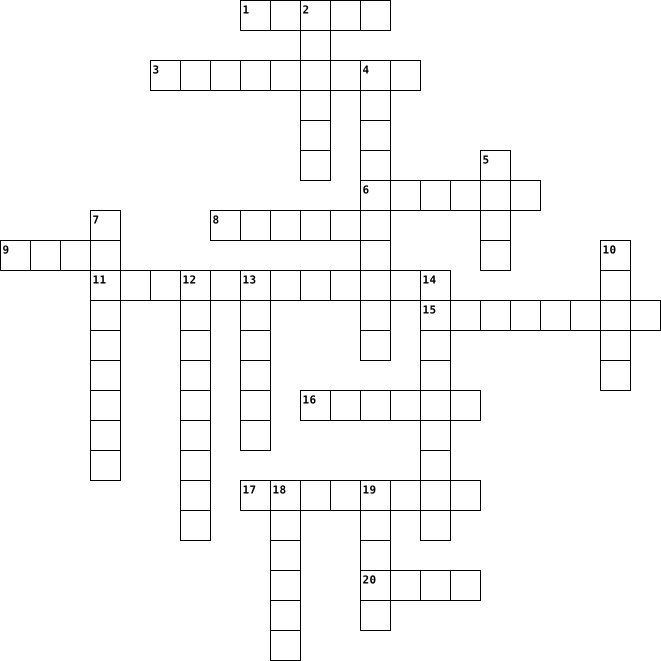
Across
- Country that mobilized first
- Weapon named after German Generals wife
- Britain's highest award
- Area between opposing Trenches
- Germanys telegram to Mexico
- US President during WWI
- Assassinated by the Black Hand
- Country that germany crossed to get to France
- Last Tsar Of Russia
- Blamed for everything that happened in WWI
- Cease fire during WWI
Down
- Side that Britain was on
- King of Great Britain
- First country to declare war
- Country that switched sides
- Treaty that ended the war
- Weapon that Germany had that killed many in the trenches
- Largest battle in WWI
- Fire fights between two fronts
- Country that joined later in the war
- Civilian boat sunk by U-Boat 20 in 1915
21 Clues: Last Tsar Of Russia • King of Great Britain • Largest battle in WWI • Cease fire during WWI • Britain's highest award • US President during WWI • Side that Britain was on • Treaty that ended the war • Country that switched sides • Germanys telegram to Mexico • Country that mobilized first • First country to declare war • Area between opposing Trenches • Fire fights between two fronts • ...
World War I 2016-12-13

Across
- Country that switched sides
- Country that germany crossed to get to France
- Side that Britain was on
- Civilian boat sunk by U-Boat 20 in 1915
- Assassinated by the Black Hand
- Treaty that ended the war
- Britain's highest award
- Area between opposing Trenches
- Fire fights between two fronts
- King of Great Britain
- Last Tsar Of Russia
- Country that joined later in the war
Down
- Cease fire during WWI
- US President during WWI
- Weapon named after German Generals wife
- Germanys telegram to Mexico
- Largest battle in WWI
- Country that mobilized first
- First country to declare war
- Weapon that Germany had that killed many in the trenches
- Blamed for everything that happened in WWI
21 Clues: Last Tsar Of Russia • Cease fire during WWI • Largest battle in WWI • King of Great Britain • US President during WWI • Britain's highest award • Side that Britain was on • Treaty that ended the war • Country that switched sides • Germanys telegram to Mexico • Country that mobilized first • First country to declare war • Assassinated by the Black Hand • Area between opposing Trenches • ...
World War 1 2017-12-12

Across
- They were 1st seen in this war
- Admiral in the British navy
- Soldiers who fought on foot
- Usually for cowardice when facing the enemy
- Britian, France, Russia, America
- Minister of war
- Land Between The trenches
- The trenches closet to the enemy lines
- Telegram sent to Mexico from Germany
- Men of a certain age had to join the military
- One of the main weapons used in this war
- Was a big problem in the war
Down
- also known as submarines
- Agreed cease fire in the war (this actually ended the war)
- When the German Advance was stopped
- Neither side achieved much in this battle
- Tons of soldiers were killed by this
- Germany, Austria, Turkey
- Poison gas used in the war
- Germany's king
20 Clues: Germany's king • Minister of war • also known as submarines • Germany, Austria, Turkey • Land Between The trenches • Poison gas used in the war • Admiral in the British navy • Soldiers who fought on foot • Was a big problem in the war • They were 1st seen in this war • Britian, France, Russia, America • When the German Advance was stopped • Tons of soldiers were killed by this • ...
World War 1 2017-11-20

Across
- line of trenches which stretched from the English channel across the battlefields of France and Belgium (where the fighting is at)
- the ground between the two opposing trenches
- a type of weapon that contains a poisonous substance
- received the medal of honor for his actions in World War 1, didn't want to kill a ton of German soldiers, wanted the German soldiers to just surrender so he wouldn't have to keep shooting them down one by one
- the year World War 1 ended
- used to break down the trenches
- part of the central powers
- a type of cannon
- the largest and most heavily armored type of warship
- leader of the US forces
Down
- part of the allied powers
- a famous battleship in WW1 that had a uniform main battery and steam turbines
- a form of warfare in which armies conduct attacks on each other from opposite positions in fortified trenches
- group of vessels or vehicles that travel together under protection of an armed escort
- came home the most decorated regiment, all black unit, 369th Regiment
- this sidearm first saw combat in 1916, was created to "stop a horse" since our soldiers were fighting Moro tribesman in the Spanish-American War who fought under narcotics.
- a person who physically fights a war
- a name for U.S. infantry
- also, part of the allied powers but dropped out when the U.S. joined the war
- soldiers who fight on foot
20 Clues: a type of cannon • leader of the US forces • a name for U.S. infantry • part of the allied powers • the year World War 1 ended • part of the central powers • soldiers who fight on foot • used to break down the trenches • a person who physically fights a war • the ground between the two opposing trenches • a type of weapon that contains a poisonous substance • ...
World War II 2017-05-18

Across
- Project that led to development of atomic bombs
- Invaded by Italy in 1934-35
- Hitler's lightening war
- The D Day invasion landed on the beaches of this country
- Taken over by Japan in 1931
- Country invaded by Germany causing France and Great Britain to declare war
- Director of the Manhattan Project
- German air force
- Italian Dictator
- US General who led allied forces during European Theater
- Beginning of WWII. Little activity in Western Europe
- Communist leader of the Soviet Union during WWII
Down
- Japanese Emperor during WWII
- President of the U.S. 1932-45
- American general who oversaw the occupation of Japan
- German fascist dictator
- The bombing of this harbor brought the U.S. into WWII
- Germany's desire to expand and gain more territory
- Auschwitz, Treblinka and Dachau were all _____ camps
- Huge death camp in Poland
- One of the 2 Japanese cities where the atomic bomb was dropped. Nagasaki was the other
- Keeping peace by accepting demands of the aggressor
- Hitler's Final Solution was the extermination of _____
- Prime Minister of Great Britain during WWII
- U.S., France, Great Britain
- Signed non-aggression pact with Germany
26 Clues: German air force • Italian Dictator • German fascist dictator • Hitler's lightening war • Huge death camp in Poland • Invaded by Italy in 1934-35 • Taken over by Japan in 1931 • U.S., France, Great Britain • Japanese Emperor during WWII • President of the U.S. 1932-45 • Director of the Manhattan Project • Signed non-aggression pact with Germany • ...
World War One 2018-06-07

Across
- Canada's most well-known battle
- disease suffered by many soldiers
- November 11, 1918
- Canadian battle in 1918
- aka World War One
- preferred gun of Canadian soldiers
- Treaty of ____ ended the war
- type of helmet Canadians would eventually wear
- forcing citizens to join the military
- modern term is PTSD
- amassing large amounts of weapons
- stationed close the front lines, seeing much tragedy
- style of warfare
- new type of military vehicle
- tremendous casualties and loss
Down
- Sir General Arthur ___ led the Canadian forces
- First Nations runner
- use of symbols and images to have people think a certain way
- makeshift gas mask
- number of weeks of the average pilot
- our side
- intense feeling of pride in one's country
- aliens people in Canada from Triple Alliance countries
- area between enemy trenches
- flying ace
- many sent to internment camps
- terrorist organisation that killed the Archduke and Archduchess
- new jobs for women
- having the vote
29 Clues: our side • flying ace • having the vote • style of warfare • November 11, 1918 • aka World War One • makeshift gas mask • new jobs for women • modern term is PTSD • First Nations runner • Canadian battle in 1918 • area between enemy trenches • Treaty of ____ ended the war • new type of military vehicle • many sent to internment camps • tremendous casualties and loss • ...
World War I 2016-02-25

Across
- an authorization or order given to a lesser authority by a superior one; a territory governed under such an authorization or order from the League of Nations
- information, especially of a biased or misleading nature, used to promote or publicize a particular political cause or point of view
- a rise in prices caused by an increase in the supply of money and a resulting decline in its value
- The systematic and planned extermination of an entire national, racial, political, or ethical group.
- a relationship in which the protection and partial control of one nation is held by another, more powerful nation
- Someone who is not an active member of a police or military force
- the predominance of the armed forces in making and carrying out the policies of a nation; the glorification of military preparedness and armed strength
- a nation or government in which total control is in the hands of one all-powerful ruler
- limiting the amount of something that people are allowed to have when there is not enough for everyone to have as much as they want
- a situation in which progress by either side in a contest or dispute is blocked by the other side; a draw or deadlock
Down
- imperialism the domination of one nation by another nation—and companies within it—that is economically more powerful
- A policy of making concessions to an aggressor in the hopes of avoiding war. Associated with Neville Chamberlain's policy of making concessions to Adolf Hitler.
- of influence A foreign region in which a nation has control over trade and other economic activities.
- relating to or favoring a concentration of power in a leader or leaders who are not responsible to the people and which calls for blind submission to authority
- truce They came together for Christmas
- entente-allies Britain, France and Russia all had economic and territorial ambitions and they all disliked Germany, so they formed an alliance for protection.
- man's land' The space between opposing trenches.
- a person or country that attacks first, without being provoked
- the policy of extending a nation’s power and influence by gaining control over territory through political or military means
- of versailles Treaty that ended World War I
- powers The alliance of Austria-Hungary, Germany, Bulgaria, and the Ottoman Empire during World War I.
21 Clues: truce They came together for Christmas • of versailles Treaty that ended World War I • man's land' The space between opposing trenches. • a person or country that attacks first, without being provoked • Someone who is not an active member of a police or military force • a nation or government in which total control is in the hands of one all-powerful ruler • ...
First World War 2016-11-22

Across
- These rodents fed on bodies and scraps, so were very common in Western Front trenches
- A raised area at the top of a trench, allowing soldiers to fire at the enemy from behind cover
- Trenches were constructed using this pattern, to prevent enemy fire or shells travelled along their length (3,3)
- A term for army divisions or regiments who fight on foot
- An early battle of World War I, fought in September 1914, the Battle of the .....
- Constant immersion in mud and water caused this common ailment, a form of gangrene (6,4)
- River in northern France, the scene of a major Allied offensive in July 1916
- German military planning of the late 1800s was largely concerned with avoiding a war fought on two ......
- The process of recruiting, training, organising and moving armies, particularly at the start of a conflict
- The area between two combatant trenches, '.. .... land' (2,4)
- A timber platform or deck laid at the bottom of a trench to allow easy movement
- Name given to the German, Austro-Hungarian and Ottoman alliance, the ....... Powers
Down
- A gunman who shoots at enemy forces, usually from an elevated or concealed position
- Name given to the German military plan involving a rapid invasion of France through neutral Belgium and the Netherlands
- The capital city of Serbia
- A long knife or dagger, attached to the end of a rifle and used as a close quarters weapon
- method of slowly advancing your artillery bombardment to move over the enemy trenches
- A collective term for weapons such as cannon or howitzers, which project large calibre shells or projectiles
- commander of the British forces during the battle of the Somme
- Type of wire used as an anti-personnel device on the Western Front
- A term used to describe his unconditional backing of Austria-Hungary was the kaiser's '..... ......' (5,6)
- Austro-Hungarian forces invaded this eastern European nation on August 12th 1914
- A collective term for soldiers mounted on horseback
- A city and region in north-eastern France, the scene of a major battle during most of 1916
- German military commander and Chief of the General Staff 1906-14, Helmuth von ......
25 Clues: The capital city of Serbia • A collective term for soldiers mounted on horseback • A term for army divisions or regiments who fight on foot • The area between two combatant trenches, '.. .... land' (2,4) • commander of the British forces during the battle of the Somme • Type of wire used as an anti-personnel device on the Western Front • ...
world war 1 2019-02-04

Across
- the Zimmerman Note was sent where
- in what month did the United States join the War
- originally was neutral in the war
- Germany's response to British blockade
- water in the trenches led to
- becomes obsessed with the stab in the back theory
- what made the Untied States join the war
- congress passed this in 1917
- reduced the threat of u-boats
- was shot into the trenches
- German politicians who singed the treaty become known as what
Down
- instead of Germany blaming the military they blamed who
- extreme pride in ones country
- what did troops fight in
- Wilson created this
- blamed Germany for the war
- Allies
- the archduke of Austria-Hungry
- Assassination of Franz Ferdinand
- central powers
20 Clues: Allies • central powers • Wilson created this • what did troops fight in • blamed Germany for the war • was shot into the trenches • water in the trenches led to • congress passed this in 1917 • extreme pride in ones country • reduced the threat of u-boats • the archduke of Austria-Hungry • Assassination of Franz Ferdinand • the Zimmerman Note was sent where • ...
World War I 2019-02-04

Across
- Franz Ferdinand was assassinated in what country
- Blocked the German Coast
- How many men would be selected for service
- Competition for colonies as a source of raw materials
- 6 major points in this treaty. Crippled the German economy
- In January, 1918 Wilson created this in Congress
- Extreme pride in one's country
- Building up militaries to protect colonies overseas
- Cause of World War II
- Formed with other countries to protect each other
- How many men registered
- Another word for submarine
Down
- Princip was a member of this group
- Assassinated Franz Ferdinand
- Men between the age of 21-30 were required to register for the army
- Was a telegram from Germany to Mexico that asked Mexico to attack the United States
- Filthy, filled with polluted water, rats and lice
- To much water in trenches lead to this disease
- How many will see combat in Europe
- What passenger ship did Germany sink on May 17, 1915
20 Clues: Cause of World War II • How many men registered • Blocked the German Coast • Another word for submarine • Assassinated Franz Ferdinand • Extreme pride in one's country • Princip was a member of this group • How many will see combat in Europe • How many men would be selected for service • To much water in trenches lead to this disease • ...
World War I 2019-03-03

Across
- end to fighting
- agreement between nations to help each other when attacked
- not participating in a war; no alliances, no taking sides, but will trade
- savings bond used by many nations to fund the world wars
- belief that your nation is the best
- money a defeated country pays for damages of war
- Wilson’s plan for peace
- the murder of an important person
- Austria-Hungary, Germany, Ottoman Empire (Turkey)
- African Americans moved from the South to the North
- forced Germany to accept the blame for WWI
- foreign policy of having little or nothing to do with other nations
- information spread to promote a cause
Down
- having a large military force, even in times of peace
- combat where troops fight from trenches facing each other
- a fixed portion that is allotted, especially in times of scarcity and war
- Serbia, France, Russia, Great Britain, Italy, United States (later)
- organization set up to settle conflicts through negotiation
- required recruitment into military service
- power is split between nations so no one nation can dominate another
- submarines used by Germany in WWI
- fear of communism
22 Clues: end to fighting • fear of communism • Wilson’s plan for peace • the murder of an important person • submarines used by Germany in WWI • belief that your nation is the best • information spread to promote a cause • required recruitment into military service • forced Germany to accept the blame for WWI • money a defeated country pays for damages of war • ...
World War II 2012-11-28

Across
- Laws passed prohibiting sexual relations between Jews and persons of German blood.
- A party led by Adolf Hitler.
- Many Canadians died trying to defend this English colony in Asia.
- A naval base in Hawaii that was hit in a surprise attack by Japan on December 7, 1941.
- A treaty Germany signed with the Soviet Union.
- An international peacekeeping organization to promote world peace, security, and economic development.
- A leader who has total control of a government.
- The president of the U.S.A. during WWII.
- The dictator of Italy during WWII.
- To pay for the war effort, the Canadian government sold this.
- A top secret project to build the atomic bomb.
- The period between the declaration of war on September 1939 to May 1940 when no fighting took place because the Allies were preparing for war.
- Japanese prime minister and mastermind of Japanese military.
Down
- Nickname of the place where all of the Jews were rounded and sent to.
- The date the Allies celebrated victory in Europe on May 8, 1945.
- The first city in Japan that was hit by an atomic bomb on August 6, 1945.
- The prime minister of Canada during WWII.
- Hitler’s plan to eliminate the existence of Jews in Europe.
- One of Hitler’s best weapons to hinder successful Allied convoy trips.
- The first day of the Allied invasion of Normandy.
- Become the Minister of “Everything” for Canada.
- Enabled Canada to make its own decisions about war.
- The plan to end the war in Europe.
- In 1939, Germany invaded this place to officially start WWII.
- This battle was considered both a success and a failure.
- Flight school in Canada for Allied countries.
- A new method of warfare that was made by Germany. “Lightning War”.
- The dictator of Germany during WWII.
- A nuclear weapon in which enormous energy is released by nuclear fission.
- The dictator of the Soviet Union during WWII.
- The prime minister of England during WWII.
31 Clues: A party led by Adolf Hitler. • The plan to end the war in Europe. • The dictator of Italy during WWII. • The dictator of Germany during WWII. • The president of the U.S.A. during WWII. • The prime minister of Canada during WWII. • The prime minister of England during WWII. • Flight school in Canada for Allied countries. • The dictator of the Soviet Union during WWII. • ...
World War I 2013-01-14

Across
- Entente like the triple alliance
- germans nor the french could dislodge each other from trenches.
- reliance of military strength.
- this is where the Allies tried to open a Balkan front.
- the military does this when they need more soldiers.
- War WWI
- Alfred von Schlieffen a plan that's named after him.
- leaders for any military force.
- if Attrition the german goal was to bleed the french army white.
- Francis Ferdinand has a wife named Sophia, amd both were killed.
- William II the ruler of germany.
Down
- government tried to arouse enthusiasm for the war.
- Princp killed the king of Austria
- uses this technique to get them ready for war.
- there are two different alliances.
- something to help the soldiers from getting hurt (safety).
- of Verdun fortress city on the German border.
- Plan general Alfred von Schlieffen.
- Warfare death, rat infestations,trench fever etc.
- the United States have an ____ to fight.
- of Arabia urged Arab princes to revolt against their Ottoman overlords in 1917.
- Nicholas II ordered partial mobilizatonof the Russian army.
22 Clues: War WWI • reliance of military strength. • leaders for any military force. • Entente like the triple alliance • William II the ruler of germany. • Princp killed the king of Austria • there are two different alliances. • Plan general Alfred von Schlieffen. • the United States have an ____ to fight. • of Verdun fortress city on the German border. • ...
World War 1 2013-01-13

Across
- germany, Austria Hungry , Italy
- married to sophie
- schlieffen plan
- Great Britain , France , Russia
- preparing for war
- lost 170,000 casualities
- a song on just dance
- other countries didnt approve
- increase in production
- won battle of Tannenburg
- heavy loses
- strong and prepared
- not pleasant to the nose
- athlete foot
- headaches , skin rashes, leg pains
Down
- like to eat sandwiches
- forced to retire
- wanted to bring back paul von hidenburg
- independent slavic state
- if you see this in your trench you'd scream
- patrol and breakfast truce
- war might be from battle fields
- to be honest
- all males sign this when they turn 18
- abuse animal commercial
25 Clues: heavy loses • to be honest • athlete foot • schlieffen plan • forced to retire • married to sophie • preparing for war • strong and prepared • a song on just dance • like to eat sandwiches • increase in production • abuse animal commercial • independent slavic state • lost 170,000 casualities • won battle of Tannenburg • not pleasant to the nose • patrol and breakfast truce • ...
World War I 2013-01-10

Across
- cotton factories will be converted into making munitions
- an explosive that hit people in long distances
- when 2 or more countries agree to help each other
- battles with ships below the surface of the water
- was going to be the new ruler of Serbia
- bullet factory
- Germany lost this battle
- disease on foot
- includes Germany, Austria-Hungary, and Italy
- a rifle used in WWI
- a note you will receive telling you to join the military
- the German hand grenade
- dragged out WWI for a long time
- a Russian-supported, small nation
Down
- liberators are called this
- string with sharp ends
- posters are used to make people think differently
- a powerful gun
- after this battle, a technique was used that dragged out of war
- killed the Archduke of Serbia
- both sides always fighting
- a belief to always have a ready amount of troops
- includes Great Britain, France, and Germany
- 2 or more factions that fight each other constantly
- you cannot cross the other side because of the trench
25 Clues: a powerful gun • bullet factory • disease on foot • a rifle used in WWI • string with sharp ends • the German hand grenade • Germany lost this battle • liberators are called this • both sides always fighting • killed the Archduke of Serbia • dragged out WWI for a long time • a Russian-supported, small nation • was going to be the new ruler of Serbia • ...
World War I 2013-01-10

Across
- Lakes Russia had about 170,000 casualties in this battle
- Russia supports this country
- Germany, Austria-Hungary, and Italy
- a battle that started on September 6 and ended on September 10
- a country located in Austria-Hungary
- Warfare kept both sides in the same position during battle
- like athletes foot, but worse
- when both sides shoot out into no man's land to kill off anyone before dawn
- he urged many Arab princes to go against their Ottoman overlords and revolt
- Emperor of Austira-Hunagry who gave full support for Germany
- South West part of Constantinople
- critters like rats, frogs, lice, slugs,and horned beetles invaded the trenches
- member of The Black hand who assassinated the Arch-Duke
- a military draft
Down
- Arch-Duke and heir to the throne of Austria-Hungary
- The Russian army had partial mobilization due to his order
- general known for the creation of the Schlieffen plan
- used to make Germany look evil
- a battle that occurred on August 30
- France, Great Britain, and Russia
- caused by lice and not discovered until after the war
- a symbolic war
- a process where troops are being assembled for war
- war tactic that consisted of wearing down the enemy by constant attacks
- he assured the emperor that Americans will not land on the continent
25 Clues: a symbolic war • a military draft • Russia supports this country • like athletes foot, but worse • used to make Germany look evil • France, Great Britain, and Russia • South West part of Constantinople • Germany, Austria-Hungary, and Italy • a battle that occurred on August 30 • a country located in Austria-Hungary • a process where troops are being assembled for war • ...
World War I 2013-01-11

Across
- led to elongated years of WWI
- another word for change
- tell someone something positively
- was assassinated
- organizing troops
- In order to mobilize all resources of their nations for the war effect
- young men going to war
- War prepared
- mobilized Russian army in 1914
- Russian army lost in this battle as they moved into Eastern Germany
- Allies tried opening a Balkan Fort
- France and Germany fought a bogged down war here
- cunning for advantage to oneself
- Gavrilo Princip had strong love for this
- alliance formed in 1907
Down
- the central power
- influential ideas (biased)
- Serbian native who ate a sandwich
- made a plan to WWI quick but backfired
- requite
- belief of continuous attacks during war
- US president who believed in total war mobilization
- began new era of warfare
- surprise attack for political or religious reasons (on important person)
- country uses all resources during war
25 Clues: requite • War prepared • was assassinated • the central power • organizing troops • young men going to war • another word for change • alliance formed in 1907 • began new era of warfare • influential ideas (biased) • led to elongated years of WWI • mobilized Russian army in 1914 • cunning for advantage to oneself • Serbian native who ate a sandwich • tell someone something positively • ...
World War I 2013-03-13

Across
- A country in europe where they speak French.
- A country in europe where they speak German.
- An association of countries established in 1919 by the Treaty of Versailles to promote international cooperation.
- An organized military force.
- A war where you use all of your resources.
- The city where the Big Three met to create the treaty for WWI
- The person that represented Britain in Versailles.
- Something that is designed to inflict physical damage.
- A country in europe where they speak English.
Down
- Paying back someone a certain amount of money for damage they cause.
- A state of armed conflict.
- The person that represented America in Versailles.
- Made up of Germany, Ottomans, and Austria-Hungary.
- When one country controls another country until they think they are ready for independence.
- An agreement between two or more countries.
- An empire that was part of the central powers.
- Made up of Britain, France, U.S., and later Italy.
- An extensive group of states or countries under a single supreme authority.
- The person that represented France in Versailles.
- The type of warfare that was used in WWI
20 Clues: A state of armed conflict. • An organized military force. • The type of warfare that was used in WWI • A war where you use all of your resources. • An agreement between two or more countries. • A country in europe where they speak French. • A country in europe where they speak German. • A country in europe where they speak English. • ...
World War 1 2013-04-05

Across
- What ship that sunk brought America into entering WW1?
- The Battle of what was the last "open" battle of the Western Front?
- Who was the leader of Great Britain during WW1?
- The Battle of what witnessed the first use of the modern tank?
- The German fleet of ships was known as the?
- What was the only naval engagement of WW1?
- Who was the political leader of France during WW1, (but not the president)
- What was known as the cease fire which occurred between the German and French troops in the Western Trenches which is known as the ___ Truce of 1914
- What battle saw the first use of chemical weapons?
- Who was the man that was assassinated and led to the outbreak of WW1?
- Who wasn't one of the leaders who was known collectively as the "Big Four" at the Peace Meetings following WW1?
- What involved digging, barbed wire and "no man's land"
- What is it called for the right of self-determination by countries and also for the formation of the League of Nations?
- Which country wasn't in the Triple Entente?
- Who was the leader of Italy during WW1?
Down
- Who was the British general of the British troops in France during WW1?
- What was the German plan for destroying French forces by outflanking them?
- Who was the German chancellor who favored war during WW1
- Who was the top German commander during WW1 who was inspirational at the Battle of Tannenberg?
- What type of warfare resulted in the use of masks by foot soldiers?
- Who was the king of Germany during WW1?
- Who was Austria's foreign minister?
- What ended the war between Russia and the Central Powers?
- A member of the Triple Alliance.
- Which country was a member of the Triple Entente?
- What was the longest of the WW1 battles?
- What was the name given to Great Britain's navy?
- What was used to drop bombs on the enemy as well as find out the enemy's position?
- The name for the powers who fought against the Central Powers was the ___ Powers.
- Who was the American president during WW1?
- Who was the commander of the American troops in Europe during WW1?
- Who assassinated the Archduke Francis Ferdinand?
- Who was the top French commander during WW1?
33 Clues: A member of the Triple Alliance. • Who was Austria's foreign minister? • Who was the king of Germany during WW1? • Who was the leader of Italy during WW1? • What was the longest of the WW1 battles? • What was the only naval engagement of WW1? • Who was the American president during WW1? • The German fleet of ships was known as the? • ...
World War 1 2013-02-24

Across
- Love for one's country
- Russian Emperor, took control of the army
- Devised the Schlieffen Plan
- "Central Powers"
- US president, banned child labor
- all of a country's resources are used for war
- Glorification of the military
- temporary suspension of war by agreement of the warring parties
- German Emperor, and declared war on France
- Overseas rule
- Persuaded the Allies to unify under the command of Ferdinand Foch
- his assassination sparked the war
- Caused the US to enter the war
- a form of combat where both sides hide in protective trenches
- The Balkan States or their inhabitants
- Great Britain, Russia, France
Down
- Stopped the German advance at Marne
- The German plan to win the war
- submarine warfare in which any ship will be sunk without warning
- a coded message showing Germany's promise of US territory to Mexico
- Member of the Black Hand, tasked with assassinating the Heir of the Austrian Throne
- German Chancellor, formed the Triple Alliance
- Germany Austria-Hungary, Italy
- deliberate spreading of rumors
- "Allied Powers"
- a fixed allowance of food
26 Clues: Overseas rule • "Allied Powers" • "Central Powers" • Love for one's country • a fixed allowance of food • Devised the Schlieffen Plan • Glorification of the military • Great Britain, Russia, France • The German plan to win the war • Germany Austria-Hungary, Italy • deliberate spreading of rumors • Caused the US to enter the war • US president, banned child labor • ...
World War I 2013-02-22

Across
- Due to the arms buildup and competition for colonies in the late 19th century, countries began to make ___; one MAIN causes of WWI.
- collective term for the four Allied leaders who presided over the Paris Peace Conference; included Wilson, Lloyd George, Clemenceau, and Orlando
- term for the longing of an ethnic group with a common culture to live in a nation-state; one of the MAIN causes of WWI
- The Western Front battles of the ___, Verdun, and the Somme resulted in stalemates and massive casulaties due to the use of trench warfare,
- Germany, Austria-Hungary, & the Ottoman Empire
- Instead of gaining self-determination, many colonies were administered by the ___ system as a result of the Treaty of Versailles. This essentially put the League of Nations in charge of the colonies.
- One reason that the US joined the war in 1917 was due to ___ ___ ___, a policy of indiscriminate U-boat attacks on any and all ships.
- US president who proposed the League of Nations , drafted the Fourteen Points, & represented the US at the Paris Peace Conference
- term for a war to which all the countries involved devote all their resources.
- document authored by Woodrow Wilson which aimed to create a lasting peace by fixing the problems that had caused WWI (but was rejected by the other members of the Big Four)
- pandemic disease which spread throughout the world in 1918, possibly facilitated by the movement of troops returning home from war
- term for a situation in which neither side is winning or losing; characteristic of the war on the Western Front
- group of authors and artists who responded with disillusionment and pessimism to the horrors of the Great War
- term for a government’s requirement that young men serve in the military
- The Treaty of ___ was very harsh towards Germany, & created economic problems and resentment which eventually led to WWII.
- new weapon which choked or burned victims; could backfire if the wind shifted
- one aspect of life on the home-front which required citizens to strictly limit foods and other products that were needed by soldiers on the front
- This kind of warfare led to lots of casualties but not much change in territory.
- This country was given all the war guilt & lost all its colonies & much of its territory at home.
- Britain, France, Russia, & eventually the US
Down
- term for a metal balloon or blimp used to drop bombs
- This was a telegram from Germany to Mexico, promising the Mexicans lost territory in the US in return for their help.
- Christian national group in the Ottoman Empire whose ‘relocation’ led to the deaths of 1 million members of the group
- During or shortly after WWI, women in the US, Great Britain, Belgium, Sweden, and Hungary earned ___, or the right to vote.
- ___ took over the jobs traditionally done by men while the men were away at war.
- Serbian nationalism in Bosnia led to the assassination of ___ ___
- The Treaty of ___-___ marked Russia's withdrawal from the war and resulted in a huge loss of territory for Russia.
- term for a country’s prioritization of the military; one of the MAIN causes of WWI
- the only superpower that did not join the League of Nations
- term for payments to repair damage inflicted in a war; Germany was required to pay these after WWI, which led to economic issues
- term for the right of nationalities or colonies to choose their own governments; idea prevalent in the Fourteen Points (but not in the Treaty of Versailles)
- term for a system in which a group of nations acts together to preserve peace (such as the League of Nations)
- nickname for the Austro-Hungarian Empire which acknowledged its volatility due to the large number of nationalities living under one government
- On the Eastern Front, ___ suffered huge losses due to its lack of industrialization and the ineptitude of Czar Nicholas II.
- term for one-sided advertising which appeals to people’s emotions in to shape public opinion
- Russia withdrew from the war in 1917 due to takeover by Bolsheviks (communists) led by ___.
- term for a German submarine
- term for an agreement to stop fighting
38 Clues: term for a German submarine • term for an agreement to stop fighting • Britain, France, Russia, & eventually the US • Germany, Austria-Hungary, & the Ottoman Empire • term for a metal balloon or blimp used to drop bombs • the only superpower that did not join the League of Nations • Serbian nationalism in Bosnia led to the assassination of ___ ___ • ...
World War II 2013-03-05

Across
- Saving Private Ryan
- Bats, dolphins, and submarines
- Heil ______
- What a coward
- Isn't just known for e=mc²
- What was Hitler referred to as by his followers
- No one saw the Germans coming
- The group's goal was to achieve vast expansion through aggressive warfare
- During this, Japanese air craft carriers were really easy to hit
- Given a Nobel Peace Prize for his plan
- Who we just fought, ends up as our allies under this agreement
- This was created with the same ideas Wilson had 20 years ago
- Too bad he couldn't see the German dictator's death
- NATO vs. The Warsaw Pact
- Arbeit macht frei
- They made it possible for Park City to be a tourist town
- Death for his ideas
- Good thing all the ships were offshore
- 25000 Americans dead within a 3 mile radius
- What was used to kill the greatest amount of Jews
- Referred to as "auxiliaries"
- руководитель of Russia
Down
- The decisions made here define much of the modern world
- The identifier of Mexican Americans
- If you lose, don't bother coming home
- He destroyed Japan's capital
- It's like party hopping but thousands of people die
- one of the most notable for the prosecutions
- Handed one of the most secret code name operations 72 days into office
- The sound a snake makes
- Father of the Atomic Bomb
- How are we similar to Germans
- A tower was rebuilt again and again here
- In German is the Indian Rhinoceros
- Replaced Churchill
- Hammer and a sickle take over
- Little Boy > city
- Germans had enigma, we had ______
- I'll trade you meat for your shoes
- All because of revenge and the Treaty of Versailles
40 Clues: Heil ______ • What a coward • Arbeit macht frei • Little Boy > city • Replaced Churchill • Saving Private Ryan • Death for his ideas • руководитель of Russia • The sound a snake makes • NATO vs. The Warsaw Pact • Father of the Atomic Bomb • Isn't just known for e=mc² • He destroyed Japan's capital • Referred to as "auxiliaries" • How are we similar to Germans • No one saw the Germans coming • ...
World War II 2013-03-08

Across
- June 6, 1944
- Pacific battle where Japanese forces hid in their surroundings and waited for Americans to cross the beach. America raised its flag on the hill here
- battle that ended any realistic plan Hitler had of dominating Europe
- deadliest beach during the invasion of Normandy
- type of bombing with the goal being to target a country's ability to make war
- Japanese pilots who deliberately crashed their planes into American ships
- buy now and government pays you back later with interest
- limited amount of goods that could be purchased
- code name for the project of developing the atomic bomb
- what the US considered Japanese, German and Italian people in America
- island only 340 miles from Japan that had an airbase that was a strategic requirement for the invasion of Japan
- first US offensive in the Pacific that took place in the Solomon Islands
- plan for the systematic extermination of Jews
- temporary imprisonment of members of a specific group
- program that brought laborers from Mexico
- German commander in North Africa nicknamed the Desert Fox
- atomic bomb dropped on Hiroshima
- massive Allied Invasion of France was given the codename Operation
Down
- atomic bomb dropped on Nagasaki
- 1943 riots in Los Angeles
- Night of the Broken Glass
- Eisenhower put this man, nicknamed Blood and Guts, in command of North Africa
- German counterattack after the invasion of Normandy was called the Battle of the
- American strategy of capturing different islands, creating a path to Japan
- laws in Germany denying German citizenship to Jews
- African American labor leader
- if you controlled this region you controlled the Mediterranean Sea
- 9066. Allowed for internment in America
- Italian leader during the war
- German submarine
- type of non-stop bombing with the goal being to inflict maximum damage
- native born Americans of Japanese descent
- Supreme Commander of the Allied invasion at Normandy
- turning point of the war in the Pacific where America scored a decisive blow against Japan
- Roosevelt, Churchill and Stalin were known as the
35 Clues: June 6, 1944 • German submarine • 1943 riots in Los Angeles • Night of the Broken Glass • African American labor leader • Italian leader during the war • atomic bomb dropped on Nagasaki • atomic bomb dropped on Hiroshima • 9066. Allowed for internment in America • native born Americans of Japanese descent • program that brought laborers from Mexico • ...
World War II 2013-03-08

Across
- first US offensive in the Pacific that took place in the Solomon Islands
- American strategy of capturing different islands, creating a path to Japan
- turning point of the war in the Pacific where America scored a decisive blow against Japan
- temporary imprisonment of members of a specific group
- battle that ended any realistic plan Hitler had of dominating Europe
- Pacific battle where Japanese forces hid in their surroundings and waited for Americans to cross the beach. America raised its flag on the hill here
- African American labor leader
- if you controlled this region you controlled the Mediterranean Sea
- type of bombing with the goal being to target a country's ability to make war
- 9066. Allowed for internment in America
- program that brought laborers from Mexico
- limited amount of goods that could be purchased
- Supreme Commander of the Allied invasion at Normandy
- German submarine
- buy now and government pays you back later with interest
- German commander in North Africa nicknamed the Desert Fox
Down
- code name for the project of developing the atomic bomb
- native born Americans of Japanese descent
- island only 340 miles from Japan that had an airbase that was a strategic requirement for the invasion of Japan
- deadliest beach during the invasion of Normandy
- Roosevelt, Churchill and Stalin were known as the
- type of non-stop bombing with the goal being to inflict maximum damage
- what the US considered Japanese, German and Italian people in America
- German counterattack after the invasion of Normandy was called the Battle of the
- 1943 riots in Los Angeles
- Italian leader during the war
- June 6, 1944
- massive Allied Invasion of France was given the codename Operation
- Eisenhower put this man, nicknamed Blood and Guts, in command of North Africa
29 Clues: June 6, 1944 • German submarine • 1943 riots in Los Angeles • African American labor leader • Italian leader during the war • 9066. Allowed for internment in America • native born Americans of Japanese descent • program that brought laborers from Mexico • deadliest beach during the invasion of Normandy • limited amount of goods that could be purchased • ...
World War 1 2012-03-07

Across
- Who was the leader for the French Army?
- Who ended WWI?
- The man that was raised to power after the war ended
- The year the German Zeppelin's were destroyed
- What was one of the many gases used on WWI?
- Allies to the Germans' during the war
- The Duke that was shot while visiting Sarajevo, the capitol of Bosnia
- The British Royal Air Force standard flying boat
- What was along the outside of the trenches to keep the enemy out?
- What color were the Uniforms in WWI?
- The German airship used for bombing
- When did WWI end?
- The fighting machine that served for the British Army
Down
- What was the name of Archduke Franz Ferdinand's wife?
- Who was the leader for the German Army?
- What was the first battle in the war?
- The country that won the war
- What was the hole that the soldiers dug, lined with sandbags, and put duck boards on the bottom called?
- What was one of the three most used weapons in WWI?
- The German submarine that torpedoed ships crossing the ocean
- Who was Hitler after when he rose to power?
- How many men were the german reduced to during the war?
- How much land did the German's lose during the war?
- What were the British Soldiers called?
- The treaty that the German's signed to end the war
- The total number of people who died in the war
- The number of German soldiers killed during the war
- What was the last section of soldiers in the trench called?
- The dangerous weapon used for burning the duck boards in the trenches
- Allies to the French during the war
- What was another name for a French Helmet?
- Who worked in the mens spots when they went off to war?
- What was another name for a German helmet?
- The only power of WWi to overturn the terms of it's defeat, and negotiate with the Allies as an equal
- Number of French soldiers killed during the war
- What were the german soldiers called?
- What place did the war have devastating effects on?
37 Clues: Who ended WWI? • When did WWI end? • The country that won the war • Allies to the French during the war • The German airship used for bombing • What color were the Uniforms in WWI? • What was the first battle in the war? • Allies to the Germans' during the war • What were the german soldiers called? • What were the British Soldiers called? • ...
World War I 2013-04-30

Across
- In the beginning of the war, made up of Russia, Great Britain, and France
- In the beginning of the war, made up of Germany, Austria-Hungary, and Italy
- U.S. president during WWI
- Governments enacted these in order to save resources
- deadliest weapon used during WWI
- nickname for the 369th Infantry
- Serbian terrorist group that assasinated the Archduke of Austria Hungary
- the peace agreement that was harsh on Germany
- belief that other countries should model yours
- reliance on military strength
Down
- Germans blew up this American Liner
- The Germans were practicing this- eventually led to the U.S. entering the Great War
- most used weapon of WWI
- document sent from Germany to Mexico asking for an alliance
- a truce to end fighting is called an...
- a war based on wearing down your opponent
- fighting from ditches with "No Man's Land" in between
- land between the trenches
- an organization to prevent future wars
- invanding another country for its' resources
- used to influence public opinion
21 Clues: most used weapon of WWI • U.S. president during WWI • land between the trenches • reliance on military strength • nickname for the 369th Infantry • deadliest weapon used during WWI • used to influence public opinion • Germans blew up this American Liner • an organization to prevent future wars • a truce to end fighting is called an... • a war based on wearing down your opponent • ...
World War I 2013-04-29

Across
- first seen in this war. Failed badly in the Somme but much more successful at the Battle of Flers
- soldiers who fought on foot. Took many casualties from machine gun fire, poison gas and poor and out-of-date tactics. Suffered trench warfare.
- Information given to show something or someone in a biased way
- the name given to a new ‘breed’ of ship in the British navy
- new type of fighting; offensive fighting
- A law requiring men of a certain age to serve in the military
- We call it a U-boat. Germans have another way of saying it.
- Wilson's idea for national groups to have their own land and government
- a limited portion or allowance of food or goods; limitation for use
- feeling intense loyalty to one's country or group
- goods whose importation or exportation or possession is prohibited by law
- person morally opposed to war
- another name of the central Powers ( Germany, A-H and Italy until 1915)
- non-participation in war
- usually for cowardice in the face of the enemy
- nations mobilize all available resources in order to destroy another nation's ability to engage in war
- unable to read or right
- telegram sent by German foreign minster to German ambassador in Mexico, suggesting alliance that promised Mexico if war with U.S. broke out, Germany would give Mexico back the territory they lost
- In Germany, Adolph Hitler’s ideology of ‘National Socialism’ (Nazism) offered a second authoritarian alternative to liberal democracy.
- In the late nineteenth century, the major industrialized states used their increasing economic and technological power to build up stocks of modern weapons such as machine guns and battleships.
- German Ambassador to Mexico who sent an infamous telegram
- a collection of merchant ships with an escort of warships
- helped stop the Germans from getting into France
Down
- Germany’s king
- The systematic use of spies to get military or political secrets
- another name of the allies (Great Britain, France, U.S, Russia)
- replaced wooden obstacles at the end of the 19th century
- name of the front line that ran through France and Belgium. For three years, as a result of trench warfare, it barely moved a great deal.
- British ship that was sunk by German u-boat; flying an American flag and Americans on board
- flying weapon that replaced zeppelins during WWI
- Medical condition caused by prolonged exposure to the distressing experiences of trench warfare
- Hitler became an advocate of fascism, an ideology that saw politics in terms of racial conflict between different nations, championed authoritarianism, and despised liberal values.
- ended the war and but didn't do anything
- blistering on inside and outside; mainly used to disable enemy (blindness and vomiting)
- European nations competing with other European nations to gain land
- Germany & Austria- Hungary against Russia & Serbia.
- building up your nation
- land between the British/French trenches and the German trenches.
- temporary colonies
- final warning made by one party to another that implies serious threat of penalties if the terms are not accepted
- plagued soldiers from all sides in the trenches. Carried disease which could spread to soldiers.
41 Clues: Germany’s king • temporary colonies • unable to read or right • building up your nation • non-participation in war • person morally opposed to war • new type of fighting; offensive fighting • ended the war and but didn't do anything • usually for cowardice in the face of the enemy • flying weapon that replaced zeppelins during WWI • ...
world war ll 2015-04-06

Across
- agreement between individuals or parties
- large ship that has alot of armoe and is used in fighting wars
- system of government that is centralized and dictatorial
- "land of the free"
- the United States stays out of political and economic problems of othercountries
- conflict between nations
- action of destroying
- patriotic feeling
- a U.S. Navy base in Hawaii that was attacked by Japanese airplanes
Down
- /desire of government that a country should be prepared to defend nationalinterests
- 32nd president
- large body of people
- a negative ruler with full power over a country
- a person who doesn't support or believe in the principles of communism
- aggressive action against someone
- act providing U.S. military aid to foreign nations during World War II
- consists of nations germany, italy, and japan
- armed forces of a country
- nationalistic right-wing system of government and social organization
- across the sea
20 Clues: 32nd president • across the sea • patriotic feeling • "land of the free" • large body of people • action of destroying • conflict between nations • armed forces of a country • aggressive action against someone • agreement between individuals or parties • consists of nations germany, italy, and japan • a negative ruler with full power over a country • ...
WORLD WAR II 2015-03-23

Across
- the company that converted from making automobiles to aircraft during World War II
- a program that provided military aid to Great Britain
- this project developed the atomic bomb
- the master race Adolf Hitler envisioned in his literary work
- the establishment of a fixed allotment of goods deemed essential for the military
- these acts outlawed arms sales or loans to warring nations
- the country that joined forces with the United States and Great Britain during the Normandy invasion
- the ideology of NAZISM was detailed in this literary work
- the beach where the bloodiest fighting occurred during Operation Overlord
- the GERMAN brand of FASCISM
Down
- the President of the United States who decided to use the atomic bomb against Japan
- he started the FASCIST movement after World War I
- the country invaded by both Adolf Hitler and Joseph Stalin
- the desired eye color of an ARYAN expressed by Adolf Hitler
- opposition to political and economic entanglements with other countries
- the country that attacked the United States at Pearl Harbor
- the aircraft that dropped the atomic bomb on the city of Hiroshima
- the name of the atomic bomb that was dropped on the city of Nagasaki
- the joint powers of Italy, Germany, and Japan
- the documentary entitled "TIME OF FEAR" focused on Japanese-American internment camps located in this state
20 Clues: the GERMAN brand of FASCISM • this project developed the atomic bomb • the joint powers of Italy, Germany, and Japan • he started the FASCIST movement after World War I • a program that provided military aid to Great Britain • the ideology of NAZISM was detailed in this literary work • the country invaded by both Adolf Hitler and Joseph Stalin • ...
WORLD WAR II 2015-03-23
Across
- the country that attacked the United States at Pearl Harbor
- he started the FASCIST movement after World War I
- the establishment of a fixed allotment of goods deemed essential for the military
- the country that joined forces with the United States and Great Britain during the Normandy invasion
- the desired eye color of an ARYAN expressed by Adolf Hitler
- opposition to political and economic entanglements with other countries
- the documentary entitled "TIME OF FEAR" focused on Japanese-American internment camps located in this state
- the name of the atomic bomb that was dropped on the city of Nagasaki
- the aircraft that dropped the atomic bomb on the city of Hiroshima
- the joint powers of Italy, Germany, and Japan
Down
- the country invaded by both Adolf Hitler and Joseph Stalin
- these acts outlawed arms sales or loans to warring nations
- the company that converted from making automobiles to aircraft during World War II
- the ideology of NAZISM was detailed in this literary work
- the beach where the bloodiest fighting occurred during Operation Overlord
- a program that provided military aid to Great Britain
- the President of the United States who decided to use the atomic bomb against Japan
- this project developed the atomic bomb
- the GERMAN brand of FASCISM
- the master race Adolf Hitler envisioned in his literary work
20 Clues: the GERMAN brand of FASCISM • this project developed the atomic bomb • the joint powers of Italy, Germany, and Japan • he started the FASCIST movement after World War I • a program that provided military aid to Great Britain • the ideology of NAZISM was detailed in this literary work • the country invaded by both Adolf Hitler and Joseph Stalin • ...
WORLD WAR II 2015-02-19

Across
- he was the President of the United States who decided to use the atomic bomb against Japan
- the literary work of Adolf Hitler
- he was a fascist leader in the country of Germany
- he established a totalitarian regime in the country of Italy
- the confinement of Japanese-Americans in the United States during World War II
- Night of Broken Glass
- Germany, Italy, and Japan were known as these powers
- organized drives to collect scrap iron, tin cans, paper, rags, and cooking fat for recycling into war goods
- this treaty sowed the seeds of instability in Europe
- June 6, 1944 the first day of the invasion in Europe
- fought inflation by freezing pries on most goods
- the totalitarian leader of the Soviet Union
- the systematic murder of six million JEWS across Europe
- the deliberate and systematic murder of an entire population
Down
- a suicide-plane attack
- establishing fixed allotments of goods deemed essential for the military
- this project became the code name associated with the development of the atomic bomb
- lightning war
- a Jewish-American scientist that worked on the development of the atomic bomb
- became prime minister of Japan in 1941
- government that tried to exert complete control over its citizens
- giving up principles to pacify an aggressor
- the type of pact signed between Hitler and Stalin
- Victory in Europe Day
- the atomic bomb code named Little Boy was dropped on this Japanese city
- this battle centered on a major industrial center on the Volga River
- stressed nationalism and placed the interests of the state above those of individuals
- the German brand of fascism
- he led a rebellion against the Spanish republic
29 Clues: lightning war • Night of Broken Glass • Victory in Europe Day • a suicide-plane attack • the German brand of fascism • the literary work of Adolf Hitler • became prime minister of Japan in 1941 • giving up principles to pacify an aggressor • the totalitarian leader of the Soviet Union • he led a rebellion against the Spanish republic • ...
World War I 2015-02-11

Across
- When neither side gains any ground
- My gun is bigger than your gun theory
- American ship sunk by German U-boats
- Invention used by U-boats to see
- Type of warfare that used machine guns and resulted in little to no movement
- Germany, Aust-Hung, Italy
- Telegram sent to Mexico that the US intercepted
- Aircrafts used which used a machine gun
- Person who shot Ferdinand which arguably starts the war
- ”Dude got shot”
Down
- Weapon used that suffocated people to death
- France, Russia, England
- President of US during this time
- German leader is called this
- Weapon used mainly in trench warfare
- Armored weapon devised to break the stalemate
- Invention that helps move troops
- German plan to surround France at the start of war
- Giant airships like the Hindenburg
- Troops who were quick and moved around alot
20 Clues: ”Dude got shot” • France, Russia, England • Germany, Aust-Hung, Italy • German leader is called this • President of US during this time • Invention used by U-boats to see • Invention that helps move troops • When neither side gains any ground • Giant airships like the Hindenburg • American ship sunk by German U-boats • Weapon used mainly in trench warfare • ...
World War 1 2014-11-30

Across
- A mask used to protect soldiers from harmful gases which may have poisoned them otherwise
- When a soldier flees from their regiment during a war, punishable by death
- Battle in which tanks were first used
- The British boat that was sunk, a reason that the US joined the war due to US casualties.
- Media which is created as an attempt to persuade people to feel a certain way
- Soldiers who fought on foot
- Alliance that consisted of Germany, Austria- Hungary and the Ottoman Empire
- A huge lead blimp which was used before airplanes were introduced to drop bombs and such
- Large, Heavily armored vehicles that were first used in WW1
- First used in combat in WW1, were later mounted with machine guns and involved in dogfights
- Suffered the most casualties, left war early to deal with internal conflict
- Paying for damaged that was caused by the war
- The expansion and growth of industry on a wide scale
- A war strategy which prevented anything from going into or out of a country
- Automatic weapon which proved very effective in combat
- The word for men joining the war to serve as soldiers
- When a country expands by force, usually involves taking over other nations
- A weapon which put out a huge flame intended to burn enemies and enemies' stuff
- a small artillery weapon which fires grenade-like bombs
- Term used for a gun fight between two or more planes
- A dug out ditch which soldiers fought from much of WW1
- A knife that was attached to the end of rifle barrels
Down
- German submarines
- A love for ones country and a desire for self-rule
- The name of a German king
- The betrayal of a nation or leader
- The man that's assassination was the spark of WW1
- The process a country goes through when it is preparing for war
- A foot infection caused by being constantly exposed to water that was in the trenches
- Alliance that consisted of Britain, Russia, France and later the US
- Formal agreement between two or more nations usually relating to peace
- The very dangerous open area between opposite trenches
- An agreement to stop fighting until a treaty has been negotiated
- Countries that work together incase of an attack or war
- When a country decides to isolate itself from a war and not choose sides
- A type of battle which involves many dug out trenches and no man's land
- Small, handheld bomb which is thrown at the enemy
- A poisonous gas that was used in WW1 as a weapon
- when a country's military quickly expands and has a great influence on the government and policy
- Huge guns which launch high caliper bullets towards enemies and cause a lot of damage
- When the government borrowed money from civilians to pay for the war
- Had the largest navy in the world
42 Clues: German submarines • The name of a German king • Soldiers who fought on foot • Had the largest navy in the world • The betrayal of a nation or leader • Battle in which tanks were first used • Paying for damaged that was caused by the war • A poisonous gas that was used in WW1 as a weapon • The man that's assassination was the spark of WW1 • ...
World War 1 2014-11-30

Across
- a small artillery weapon which fires grenade-like bombs
- Large, Heavily armored vehicles that were first used in WW1
- Automatic weapon which proved very effective in combat
- Formal agreement between two or more nations usually relating to peace
- German submarines
- A foot infection caused by being constantly exposed to water that was in the trenches
- The betrayal of a nation or leader
- The man that's assassination was the spark of WW1
- Suffered the most casualties, left war early to deal with internal conflict
- An agreement to stop fighting until a treaty has been negotiated
- First used in combat in WW1, were later mounted with machine guns and involved in dogfights
- A mask used to protect soldiers from harmful gases which may have poisoned them otherwise
- Countries that work together incase of an attack or war
- When a country decides to isolate itself from a war and not choose sides
- A war strategy which prevented anything from going into or out of a country
- when a country's military quickly expands and has a great influence on the government and policy
- Battle in which tanks were first used
- Soldiers who fought on foot
- Media which is created as an attempt to persuade people to feel a certain way
- Paying for damaged that was caused by the war
- Small, handheld bomb which is thrown at the enemy
- The British boat that was sunk, a reason that the US joined the war due to US casualties.
- A dug out ditch which soldiers fought from much of WW1
- The word for men joining the war to serve as soldiers
Down
- Had the largest navy in the world
- When a soldier flees from their regiment during a war, punishable by death
- A type of battle which involves many dug out trenches and no man's land
- When a country expands by force, usually involves taking over other nations
- Alliance that consisted of Germany, Austria- Hungary and the Ottoman Empire
- Term used for a gun fight between two or more planes
- Huge guns which launch high caliper bullets towards enemies and cause a lot of damage
- A weapon which put out a huge flame intended to burn enemies and enemies' stuff
- The very dangerous open area between opposite trenches
- The expansion and growth of industry on a wide scale
- A poisonous gas that was used in WW1 as a weapon
- The name of a German king
- A love for ones country and a desire for self-rule
- A huge lead blimp which was used before airplanes were introduced to drop bombs and such
- Alliance that consisted of Britain, Russia, France and later the US
- The process a country goes through when it is preparing for war
- When the government borrowed money from civilians to pay for the war
- A knife that was attached to the end of rifle barrels
42 Clues: German submarines • The name of a German king • Soldiers who fought on foot • Had the largest navy in the world • The betrayal of a nation or leader • Battle in which tanks were first used • Paying for damaged that was caused by the war • A poisonous gas that was used in WW1 as a weapon • The man that's assassination was the spark of WW1 • ...
World War II 2014-04-23

Across
- an organization that many had hoped would succeed where the leage of nations failed
- Named for the city that served as the center of Nazism
- where members of specifically designated groups were confined
- Temporary imprisonment of members of a specific group
- Flying in the night to avoid being shot down
- War in the Bataan peninsula
- African American fighter squadron
- Capturing Japanese held island in a steady path toward japan
- Allies hit Germany in force. Occurred on June 6th, 1944
Down
- worked with Red Cross to save thousands of Eastern European Jews
- Development of the atomic bomb
- Giving up completley without concessions
- international agreement governing the treatment of wounded soldiers and prisoners of war
- Bringing laborers from Mexico to America to work on farms
- Helped kindle hope for American military in pacific
- of War Information Worked closely with the media to encourage support of war effort
- the big three agreed that Poland, Bulgaria, and Romania would hold free elections
- Pilots who deliberately crashed their planes into American ships
- where prisoners were systematically exterminated
- Attacked by Japanese
20 Clues: Attacked by Japanese • War in the Bataan peninsula • Development of the atomic bomb • African American fighter squadron • Giving up completley without concessions • Flying in the night to avoid being shot down • where prisoners were systematically exterminated • Helped kindle hope for American military in pacific • Temporary imprisonment of members of a specific group • ...
World War I 2014-07-01

Across
- An agreement with opposing sides to stop fighting.
- Treaty of what?
- Serve as a memorial or reminder.
- Distortion of the truth to persuade people.
- Extending ones empire (taking over new land).
- Ballot which voters decide on a political question.
- Turkey was named this Empire during WWI.
- War Precautions Act restricted this.
- Landed here on the 25th of April 1915.
Down
- Australia's Prime Minister in the peace conference.
- Month that the Armistice was signed.
- Month of Anzac Day.
- Building up a country's armed forces.
- Australia was seen to be brave, loyal, courageous.
- Franz Ferdinand is heir to this empire.
- Where Australia's fought during the war.
- A wooden board to stand on that prevents muddy boots.
- Compulsory enlistment for state service.
- Germany's plan to attack Belgium to get through France.
- Restriction or control of what people can say, hear, sea or read.
- Village in the Western Front where the AIF fought.
21 Clues: Treaty of what? • Month of Anzac Day. • Serve as a memorial or reminder. • Month that the Armistice was signed. • War Precautions Act restricted this. • Building up a country's armed forces. • Landed here on the 25th of April 1915. • Franz Ferdinand is heir to this empire. • Where Australia's fought during the war. • Compulsory enlistment for state service. • ...
WORLD WAR I 2014-05-08

Across
- member if 3 different alliances
- Type of artillery gun capable of protecting shells at considerable heights and ranges
- Did not make a part of the triple entente
- joined by or relating to members of a team
- they stopped fighting for the night and celebrated together
- The process of preparing for war, requiring the enlistment, training, equipping and movement of large numbers of troops.
- a thing designed or used for inflicting bodily harm or physical damage
- president od france during Worl War I
- In the late nineteenth century, the major industrialized states used their increasing economic and technological power to build up stocks of modern weapons such as machine guns and battleships
- Describes a conflict where both sides attempt to wear down or exhaust the other, without attempting a decisive assault or attempt at victorY
- The rear of a trench, the side furthest away from the enemy line
- Acronym for the Australian and New Zealand Army Corps, a joint national force assembled in 1915 to participate in the Gallipoli campaign
- Seeking and/or enjoying popular support; appealing to the people
- Words, documents or images intended to persuade, often through distortion or misrepresentation
- A period in history involving dramatic political, social and/or economic change within a particular nation or region
- where they first used modern tanks
- the belief or desire of a government or people that a country should maintain a strong military
- the german fleet of ships was known as the...
- American president during World War I
- Steel balls or fragments from an exploding artillery shell, which injure or kill nearby personnel
- A bulge or projection out from a trench line, and thus the point closest to the enemy
- Derogatory term for Germans, a reference to barbaric warriors of the early Middle Ages.
Down
- One who campaigns to obtain the right to vote; usually refers to women’s reform groups and activists in Britain in the first quarter of the 20th century
- A term for an aerial gun battle between aircraft, particularly during World War I
- french commander durin World War I
- the longest battle in World War I
- A political ideology, economic system and theory of history, developed in the 1800s by Karl Marx
- A concerted bombardment of a trenchline, front or area, usually with artillery
- Leader of france at the time of World war I
- A foreign policy approach where a nation does not commit to alliances and/or avoids ‘taking sides’ in international disputes
- assassinated the archduke francis ferdinand
- A defensive post, an earth bunker or concrete shelter, designed to house riflemen or machine-gunners
- Government control or restrictions on the media or publishing, the banning of dissent or criticism
- patriotic feeling, principles, or efforts,feeling pride for your country
- A political-economic system where a powerful nation conquers
- Europe’s diplomatic organisation before 1914 and its heavy commitment to alliances, allegedly as a deterrent to war
- The name of the German king or emperor, derived from the Latin ‘Caesar’
- The process where a society or state enacts policies to enable it to become more modern, either in political, economic, industrial or technological terms
- The betrayal of a nation or leader, often in a time of war
- The act of requiring citizens to perform compulsory military service, especially in times of war
- A small, hand-held bomb with a short fuse, able to be primed and then thrown at the enemy
- is a tolerance attributable to a lack of involvement
- Payments of money or goods made for deaths, injuries and destruction inflicted during a war
- Sections of an army comprised of soldiers who advance or move about on foot
- elating to, or characterized by industry
- A term derived from chess, meaning that both sides cannot advance; a deadlock or ‘stand-off’
- Yje king of Germany during World War I
- Any political system where at least some executive power is vested in a hereditary monarch, who is also the head of state
48 Clues: member if 3 different alliances • the longest battle in World War I • french commander durin World War I • where they first used modern tanks • president od france during Worl War I • American president during World War I • Yje king of Germany during World War I • elating to, or characterized by industry • Did not make a part of the triple entente • ...
World War One 2014-05-04

Across
- weapons used to sink merchant ships
- agreement to stop fighting; signed 11/11/18
- Russia would protect Serbia because of ____
- treaty that ends Eussian participation in the war
- had a goal of creating greater Slavic state
- means two front war
- plan german plan for a two front war
- country the Germans were going through in the Schlieffen Plan
- straits leading to Constantinople
- strongest army in Europe
- strong feeling of pride in your country
- means glorification of the military
- allied country who fought in battle of Verdun
- side of ww1 that the US joined
Down
- country Franz Ferdinand was heir to
- called the "Colossus of Europe"
- hand society that supported Pan-Slavism
- fifth reason for ww1
- used to fight on No Man's Land
- treaty that ended WW1
- joined Triple Entente to keep balance of power
- domination of one country in another
- empire that is constantly loosing land
- where soldiers fought on the western front
- was promised part of Austria-Hungary by the Allies
25 Clues: means two front war • fifth reason for ww1 • treaty that ended WW1 • strongest army in Europe • used to fight on No Man's Land • side of ww1 that the US joined • called the "Colossus of Europe" • straits leading to Constantinople • country Franz Ferdinand was heir to • weapons used to sink merchant ships • means glorification of the military • domination of one country in another • ...
World War One 2014-05-04

Across
- joined Triple Entente to keep balance of power
- where soldiers fought on the western front
- weapons used to sink merchant ships
- domination of one country in another
- fifth reason for ww1
- agreement to stop fighting; signed 11/11/18
- strong feeling of pride in your country
- empire that is constantly loosing land
- country Franz Ferdinand was heir to
- called the "Colossus of Europe"
- hand society that supported Pan-Slavism
- straits leading to Constantinople
- strongest army in Europe
Down
- allied country who fought in battle of Verdun
- treaty that ends Eussian participation in the war
- country the Germans were going through in the Schlieffen Plan
- was promised part of Austria-Hungary by the Allies
- had a goal of creating greater Slavic state
- means two front war
- means glorification of the military
- Russia would protect Serbia because of ____
- plan german plan for a two front war
- treaty that ended WW1
- side of ww1 that the US joined
- used to fight on No Man's Land
25 Clues: means two front war • fifth reason for ww1 • treaty that ended WW1 • strongest army in Europe • side of ww1 that the US joined • used to fight on No Man's Land • called the "Colossus of Europe" • straits leading to Constantinople • weapons used to sink merchant ships • means glorification of the military • country Franz Ferdinand was heir to • domination of one country in another • ...
World War One 2014-05-04

Across
- country Franz Ferdinand was heir to
- had a goal of creating greater Slavic state
- plan german plan for a two front war
- society that supported Pan-Slavism
- fifth reason for ww1
- called the "Colossus of Europe"
- empire that is constantly loosing land
- allied country who fought in battle of Verdun
- domination of one country in another
- treaty that ended WW1
- strongest army in Europe
- agreement to stop fighting; signed 11/11/18
Down
- straits leading to Constantinople
- means two front war
- country the Germans were going through in the Schlieffen Plan
- joined Triple Entente to keep balance of power
- treaty that ends Eussian participation in the war
- weapons used to sink merchant ships
- strong feeling of pride in your country
- means glorification of the military
- was promised part of Austria-Hungary by the Allies
- where soldiers fought on the western front
- side of ww1 that the US joined
- Russia would protect Serbia because of ____
- used to fight on No Man's Land
25 Clues: means two front war • fifth reason for ww1 • treaty that ended WW1 • strongest army in Europe • side of ww1 that the US joined • used to fight on No Man's Land • called the "Colossus of Europe" • straits leading to Constantinople • society that supported Pan-Slavism • country Franz Ferdinand was heir to • weapons used to sink merchant ships • means glorification of the military • ...
World War 1 2014-03-25

Across
- lio
- gdf
- eryy
- hfds
- States gfdgdf
- dsgfs
- das
- fjdis
- ewo
- dgso
- sf
- fsfs
- fiowut
- hisdgo
- fidusg
- gfdsg
- hgfdhd
- fdgfd
- gdeg
- Britain fsdg
- fkdsgj
Down
- gfrd
- gfd
- uds
- gfds
- hdif
- fjus
- fds
- fwdko
- fasdjk
- jg
- ffsd
- gfdg
- ghg
- rewa
- hfsdj
- fds
37 Clues: sf • jg • lio • gfd • gdf • uds • das • ewo • fds • ghg • fds • gfrd • eryy • hfds • gfds • hdif • dgso • fjus • fsfs • ffsd • gfdg • rewa • gdeg • dsgfs • fjdis • fwdko • gfdsg • fdgfd • hfsdj • fasdjk • fiowut • hisdgo • fidusg • hgfdhd • fkdsgj • Britain fsdg • States gfdgdf
World War II 2015-12-10

Across
- : Germany makes a deal with Russia
- : occurs 8 hours after Pearl Harbor
- : they fail to stop countries from invading
- : to get rid of undesirable people there was a plan called
- : controlled by the government
- : a battle in Normandy on June 6, 1944
- why the USA joins the war
- : the first time battle was declared
- : “lighting war”
- : had met future husbands
- : a closed community people forced to live in
- : one of the best kept secrets in Canada during the war
- : Tommy Prince was part of the joint Canadian and American elite soldiers called
- : many Nazis prosecuted for
Down
- : people got less than usual
- : to control the perception of others
- Japanese sent to camps
- : a dictator
- released twice in Japan
- : Shoah
- : one side started off without enough guns
- : lead by Arthur Harris
- : the USA was the best at this tactic
- : an armada of boats sent to rescue
- : protected other ships from being sunk by torpedoes
- : a submersible vessel
- : promised to not bring in conscription but did
- : the greatest sacrifice of Canadian lives during the war
- : fighting in populated areas
- : under supervision from the Nazis because of their religion
30 Clues: : Shoah • : a dictator • : “lighting war” • Japanese sent to camps • : a submersible vessel • released twice in Japan • : lead by Arthur Harris • why the USA joins the war • : had met future husbands • : many Nazis prosecuted for • : people got less than usual • : fighting in populated areas • : controlled by the government • : Germany makes a deal with Russia • ...
World war 1 2016-05-12

Across
- retreat
- the people defending Gallipoli
- unloading soilders by boat
- the straits between the meditarenin and the sea of marmara
- Attack
- moving round
- a place to locate a enemy
- word for a person who died in war
- a common illness in war
- the people in charge
- the forces made up of British, French, New Zealanders and Australians
- hilltops
Down
- a draw
- a temporary peace to bury dead or similar
- another name for soldiers
- attacking a enemy with bombs and weapons
- Nepalese soldiers fighting for the British
- anther name for attack
- the ships of military
- commander of navy
- extra troops
- New Zealand and Australia army corps
- going round the side of an enemy
23 Clues: a draw • Attack • retreat • hilltops • extra troops • moving round • commander of navy • the people in charge • the ships of military • anther name for attack • a common illness in war • another name for soldiers • a place to locate a enemy • unloading soilders by boat • the people defending Gallipoli • going round the side of an enemy • word for a person who died in war • ...
World War ll 2023-12-19

Across
- Prime Minister of Japan during WWII
- Germany's take over of Austria
- Prime Minister of Great Britain during WWII
- Hitlers first defeat
- Russian dictator
- Italian dictator
- Germany, Italy, Japan
- Forign countries had to bring their own ships to trade with America
- The treaty that ended WWI
- Ex: Night of the long knives
- Stalin's secret police
Down
- Hitlers followers. Nazis
- FDR's and Churchill's idea of the post-war world
- Germany's new form of warfare. "Lightning war"
- France, Great Britain, USA
- Mussolini's followers. Fascists
- Started the New Deal program
- Hitlers secret police
- The strategy European powers used on Hitler before the war
- Wrote Mein Kampf
20 Clues: Russian dictator • Italian dictator • Wrote Mein Kampf • Hitlers first defeat • Hitlers secret police • Germany, Italy, Japan • Stalin's secret police • Hitlers followers. Nazis • The treaty that ended WWI • France, Great Britain, USA • Started the New Deal program • Ex: Night of the long knives • Germany's take over of Austria • Mussolini's followers. Fascists • ...
World War 1 2024-01-31

Across
- spying
- a war tactic that includes underground tunnels
- pride in one's country
- an understanding or agreement
- enemy planes
- making it illegal to express negative thoughts about the government
- soldiers of the American Expeditionary Forces
- lend money and be paid back with interest
- countries working together to solve world disputes
Down
- widespread disease that effects entire countries
- another word for a German emperor
- an American passenger ship
- first used by the British in 1916
- When nothing can be done by either side of the war
- Financial compensation paid to someone who has been wronged
- isolating a country by refusing to enter alliances or agreements
- guns too big to carry
- Self government
- the land between trenches that is neutral
- a political system where people own and control everything
- a group traveling together, often for safety
21 Clues: spying • enemy planes • Self government • guns too big to carry • pride in one's country • an American passenger ship • an understanding or agreement • another word for a German emperor • first used by the British in 1916 • the land between trenches that is neutral • lend money and be paid back with interest • a group traveling together, often for safety • ...
World War II 2024-01-03

Across
- the German word for "lightening war"
- this group of people's language was used to talk in secret code during the war in the Pacific
- people bought these to finance the war
- this even brought America into the war
- people were encouraged to grow these during the war
- this presidential order forced the relocation of all Japanese Americans
- the invasion of Normandy on June 6, 1944
- the secret code name given to the project that created the atomic bomb
- people were encouraged to do this during the war to ensure there was enough food and materials
- Japanese soldiers forced American soldiers to march 60 miles across the Philippine Island
Down
- the mass killing of all Jewish Peoples in Europe
- a national policy of avoiding involvement in world affairs
- the name of the country that Germany invaded that officially started World War II
- this battle is considered the turning point in the war in the Pacific
- US President who ordered to drop the atomic bomb on Japan
- the American General who commanded allied troops in the Pacific
- the first African American soldier to receive the Medal of Honor
- this strategy was used to bypass certain heavily fortified islands in the Pacific
- the name of the fascist dictator of Germany
- a nuclear weapon in which enormous energy is released by nuclear fission; used to destroy the Japanese cities of Hiroshima and Nagasaki
20 Clues: the German word for "lightening war" • people bought these to finance the war • this even brought America into the war • the invasion of Normandy on June 6, 1944 • the name of the fascist dictator of Germany • the mass killing of all Jewish Peoples in Europe • people were encouraged to grow these during the war • ...
world war l 2023-11-27

Across
- analyze the telegram to determine if the United States should have entered World War I
- the belief or desire of a government or people that a country should maintain a strong
- the first worldwide intergovernmental organisation whose principal mission was to maintain world peace
- make (something) movable or capable of movement
- is identification with one's own nation and support for its interests, especially to the exclusion or detriment of the interests of other nations
- communist revolution in russia
- a political theory derived from Karl Marx, advocating class war and leading to a society in which all property is publicly owned and each person works and is paid according to their abilities and needs
- a situation in which further action or progress by opposing or competing parties seems impossible.
- the making of amends for a wrong one has done, by paying money to or otherwise helping those who have been wronged.
- a passenger ship sunk by geman submarines
Down
- a Russian revolutionary, politician
- The name referred to the geographical location of the two original members of the alliance
- this called the big three
- The Points, Summarized · 1. Open diplomacy without secret treaties · 2. Economic free trade on the seas during war and peace · 3. Equal trade conditions
- the state of being joined or associated
- peace document signed at the end of World War I by the Allied powers and Germany in the Hall of Mirrors in the Palace
- a country taking control of other countrys
- leader of the Progressive Movement, was the 28th President of the United States (1913-1921).
- a debt obligation issued by the U.S. Department of the Treasury in conjunction with the Federal Reserve
- naval submarines operated by Germany
- AN ACT to provide for the common defense by increasing the strength of the Armed Forces of the United States
- an agreement made by opposing sides in a war to stop fighting for a certain time; a truce
- is a type of land warfare using occupied lines largely comprising military trenches
23 Clues: this called the big three • communist revolution in russia • a Russian revolutionary, politician • naval submarines operated by Germany • the state of being joined or associated • a passenger ship sunk by geman submarines • a country taking control of other countrys • make (something) movable or capable of movement • ...
World War 1 2024-02-14

Across
- When a strong country takes over a weaker country for resources
- This means to not take sides in the war
- President of the United States during World War 1
- New weapon that Germany used to sink ships.
- An extreme pride in your country
- Competition between countries to increase military strength
- Type of warfare where soldiers dig into the ground for protection
- Country that stopped fighting in 1917 because they had a revolution
- Agreement to stop fighting on November 11, 1918
- New military vehicle that protects soldiers inside it.
- An agreement between countries to help defend each other
Down
- The alliance of Germany, Austria Hungary, and Turkey
- Coded message from Germany to Mexico proposing an alliance
- The ship Germany sunk, killing Americans
- Area between trenches (you wouldn't want to go there)
- The alliance of Britain, France, Russia, and Serbia
- Archduke who was assassinated on June 28, 1914
- Famous German pilot
- The country that Austria-Hungary declared war on for killing the Archduke
- This is a modern canon
20 Clues: Famous German pilot • This is a modern canon • An extreme pride in your country • This means to not take sides in the war • The ship Germany sunk, killing Americans • New weapon that Germany used to sink ships. • Archduke who was assassinated on June 28, 1914 • Agreement to stop fighting on November 11, 1918 • President of the United States during World War 1 • ...
World War One 2023-03-24

Across
- Este hombre llegó con 14 puntos para llevar la paz a Europa
- Austria no estaba segura de querer ir a la guerra, pero este país les dio un cheque en blanco y prometió pagar por la guerra.
- Austria le dio a Serbia esto... Haz esto... ¡sino!
- La mayor parte de la guerra se libró en un _______
- para prepararse para la guerra
- ¿Cuál fue la más mortífera de las nuevas armas?
- El archiduque Francisco Fernando, que fue asesinado, era de este país.
- cuando dos partes acuerdan dejar de luchar
- La glorificación de los militares
- alemán Zimmermann que envió una nota a México y les pidió que invadieran los Estados Unidos
- Cuando nadie está ganando una guerra
Down
- El crucero que los alemanes hundieron y más de 120 estadounidenses murieron.
- Para no elegir un bando durante una pelea
- Alemania invadió este país con el fin de llegar a Francia más rápido
- El tratado de paz que puso fin a la Primera Guerra Mundial
- El país de Alemania fue el primero en utilizar esto en el océano.
- Pagos por daños de guerra. Alemania debía más de 30 mil millones de dólares
- Este país cambió de bando durante la guerra y esperaba recibir los territorios de Alsacia y Lorena.
- La ciudad donde Franz Ferdinand fue fusilado
- La Mano Negra era de ______. Mataron a Franz Ferdinand
20 Clues: para prepararse para la guerra • La glorificación de los militares • Cuando nadie está ganando una guerra • Para no elegir un bando durante una pelea • cuando dos partes acuerdan dejar de luchar • La ciudad donde Franz Ferdinand fue fusilado • ¿Cuál fue la más mortífera de las nuevas armas? • Austria le dio a Serbia esto... Haz esto... ¡sino! • ...
World War One 2023-03-13

Across
- What country did the battle of Passchendaele took place?
- Which policy attempted to limit food consumption by civilians on the home front?
- The Alliance between Germany, Italy and Austria-Hungary was call what?
- What was the name of the French ship at the Halifax explosion?
- To replace the dead soldiers, the government introduce this, forcing civilians to join the army.
- Rat, mud, and shell shock are all associated with this?
- What German region had to be returned to France?
- What was "no man's land"?
- What were bonds used to raise money for the war effort called?
- Who was the Canadian minister of the militia during WWI?
- What was the main weapon used at the battle of Ypres?
Down
- Which Canadian General planned and executed the assault on Vimy Ridge?
- This Treaty marked the end of WWI.
- What is trench foot?
- Britain, France and Russia were all consisted of this alliance.
- Deadly gas was first used as a weapon at this battle?
- In 1914, which training camp did Canadian volunteers attend?
- Which law granted the Canadian government the power to arrest suspected spies?
- What rifle was issued to Canadian soldiers at the outbreak of WWI?
- Who was Canada's Prime Minister during WWI?
20 Clues: What is trench foot? • What was "no man's land"? • This Treaty marked the end of WWI. • Who was Canada's Prime Minister during WWI? • What German region had to be returned to France? • Deadly gas was first used as a weapon at this battle? • What was the main weapon used at the battle of Ypres? • Rat, mud, and shell shock are all associated with this? • ...
World War 1 2023-02-09

Across
- large scale of counterattack by an armed force
- new machinery used by Germans in warfare
- slavic reigon of intense nationalism
- alliance during WW1 between U.S., Great Britain,France, and Russia
- a demand that is final
- gathering resources and preparing for war
- major front in WW1
- russia and germany front
- nations declaring to stay out or not pick sides in disputes
- self proclaimed holy man who claimed to heal the sick
- form of warfare where opposing enemies fight each other
- compulsory enlistment for state service
- german troops were weak, malnourished, and has little supplies
- restricting access to ideas and information
Down
- Germanys military plan at the outbreak of WW1
- major alliance at center of Europe
- this cause of WW1 and a policy of building up strong armies
- act of enlisting people into the armed forces
- woodrow wilsons plan for organizing after the war
- ideas that are spread to influence peoples opinions
- introduction of armored vehicles
- allies could draw from Britain, France, and the USA
- alliance between Germany, Austria, and Italy
- a temporary peace agreement to end war
- quickly led to severe depression in Germany
25 Clues: major front in WW1 • a demand that is final • russia and germany front • introduction of armored vehicles • major alliance at center of Europe • slavic reigon of intense nationalism • a temporary peace agreement to end war • compulsory enlistment for state service • new machinery used by Germans in warfare • gathering resources and preparing for war • ...
World War 1 2023-03-01

Across
- of influence an area where a nation has special trading privileges
- Riders a nickname for a military unit organized by Theodore Roosevelt during the Spanish American War
- Points President Wilson's Peace Plan in 1918
- Bonds an investment used to raise money for World War 1
- Soldiers a nickname for the African American members of the 9th and 10th Cavalries during the Spanish American War
- Journalism reporting that relied on sensational stories and headlines that are often biased or untrue
- J. Pershing American General commanding American Forces in France
- German fleet of powerful submarines
- to add or take over
- a policy of powerful countries seeking to control the economic and political affairs of weaker countries
- of Versailles Treaty in 1919 where Germany had to take responsibility for the war and pay the allies reparations
- acts of cruelty and brutality
- People who believed in group ownership, sharing of profits and believed war benefited factory owners, not the workers.
- narrow strip of land that has water on each side with a strip of land connecting two larger bodies of land
- British passenger ship torpedoed and sunk in 1915 by a German submarine
- cash payments for losses suffered during war or enslavement
- Telegraph 1917 secret message sent from Germany to urge Mexico to attack the US if the USA declared war against Germany
- a nation whose independence is limited by the control of a more powerful country
- to give up sovereign power, office, or responsibility usually formally
- loyalty and devotion to a nation especially as expressed by praise of one nation above all others and intense concern with promotion of its culture and interests
Down
- a policy of moving large numbers of people into camps for political or military purposes
- Amendment Amendment to the Cuban Constitution that allowed the USA to intervene in Cuba and gave the USA control of the naval base at Guantanamo Bay
- Service Act required all men 18 - 30 to register for a military draft, requiring people to serve in the military
- he belief that one race is superior to another
- of Brest-Litovsk Agreement in March 1918 between Germany and Russia, ending Russia's participation in the war.
- a policy of extending a nation’s boundaries
- a policy of staying out of world affairs
- People who refuse to fight because they don't believe in violence
- an addition to an earlier state principle
- not taking a side
- the ruler of Germany from 1871 to 1918
- Powers France, Britain, Russia, Italy and the USA in WW1
- diplomacy President Taft’s policy of building strong economic ties to Latin America
- of Nations political organization established by the Allied powers at end of World War I; replaced by United Nations 1946
- Rebellion an uprising in China against westerners and western influence in 1900
- an agreement to stop fighting between the two sides
- diplomacy President Wilson’s policy of condemning imperialism, spreading democracy, and promoting peace
- Powers .Germany, Austria-Hungary, Bulgaria and the Ottoman (Turkish) Empire in WW1
38 Clues: not taking a side • to add or take over • acts of cruelty and brutality • German fleet of powerful submarines • the ruler of Germany from 1871 to 1918 • a policy of staying out of world affairs • an addition to an earlier state principle • a policy of extending a nation’s boundaries • Points President Wilson's Peace Plan in 1918 • ...
World War II 2023-03-07

Across
- The Japanese bombed Pearl Harbor in Hawaii.
- Now called Volgograd.
- Concentration Camp in Poland.
- Dictator of Italy.
- Also Bombed by America on August 6, 1945.
- Prime Minister of Britain.
- The Royal Air Force and Royal Navy defended Britain from Germany.
- Bombed by America on August 6, 1945.
- President of the United States.
- How Hitler was killed.
- The Tuskegee Airmen were the first African airmen to complete their training.
Down
- Dictator of the Soviet Union.
- Thousands of Americans and Filipinos were forced to march.
- The Reuben James was torpedoed by a German Submarine.
- Dictator of Japan.
- Dictator of Germany.
- Harbor Bombed by Japan in 1941.
- Considered by the Soviet Union to be one of the greatest battles of their Great Patriotic War.
- The order authorized the evacuation of those deemed a threat to the country.
- Bombed Pearl Harbor in 1941 and was bombed by the U.S. in 1945.
20 Clues: Dictator of Japan. • Dictator of Italy. • Dictator of Germany. • Now called Volgograd. • How Hitler was killed. • Prime Minister of Britain. • Dictator of the Soviet Union. • Concentration Camp in Poland. • Harbor Bombed by Japan in 1941. • President of the United States. • Bombed by America on August 6, 1945. • Also Bombed by America on August 6, 1945. • ...
World War I 2023-03-14

Across
- Came to the aid of Serbia after Austria-Hungary declared war.
- Atrocities committed against this nation, by Germany, contributed to the U.S. siding with the Allies prior to the U.S. entering the war.
- They tried to initiate revolution among the proletariats of Russia.
- When a nation channels all its resources toward a war effort.
- Working class of Russia.
- Power is equally distributed amongst other nations.
- Describes people whose moral or religious beliefs forbid them from going to war.
- A strong sense of pride and support for one's nation.
- President of the United States during WWI.
- Loyal to the Communists.
- Wilson's proposal for what should be done to Europe after the war ended.
- On May 7th, 1915, it was sunk by an "unterseeboat" and with 128 Americans on board.
- Loyal to the Czars.
- Established in 1922, it was formed by 15 nations across Northern Asia and Eastern Europe. (Abbv.)
- Campaigns waged within a country to help support or discourage a cause.
- Established by Great Britain in the North Sea on Germany.
- Leader of the Bolsheviks.
- Number synonymous with the final day of WWI.
- Passed in May of 1917, it allowed for the draft of young men into military service. Ten million were signed up by the following month.
- "Holy" man and advisor to the Czar family.
- Austro-Hungary, Germany, Ottoman Empire, and Bulgaria.
- Warfare used by the Germans in the Atlantic Ocean that proved to be catastrophic to the Allies.
- Finished in 1911, it runs 5,772 miles, and is one of the longest railways in the world.
- Local council of workers and soldiers throughout Russia.
- Became the leader of the Soviet Union five years after Lenin's death.
- Limiting the use of a nation’s goods and services and creating a surplus.
- The first major American offensive of WWI.
Down
- Germany's attempt to bring Mexico into the war.
- Building up a nation's forces in preparation for war.
- Killed twice as many people as the war did during the same time period.
- After the war ended, many of these were seized from Germany.
- When Lenin returned from exile in 1917, he and the Bolsheviks took control of this Soviet first.
- Formally ending the war, this treaty forced Germany to pay warbonds, and dismantle its military forces.
- Commander of U.S. forces in Europe during WWI.
- The biggest and final allied offensive of WWI.
- Name of the assassinated archduke of Austro-Hungarian empire.
- Weapon first operated in warfare during WWI.
- It allowed postal authorities to ban treasonable or seditious newspapers, magazines, or printed materials mail services.
- Wealthy peasants.
- Nation blamed for Franz Ferdinand's death.
- Name of networked labor camps scattered throughout Russia.
- Women's movement for equality during WWI.
- Treaty between Russia and Germany that ended Russia's involvement in the war.
- Serbia, Great Britain, Russia, United States, France, Italy, etc;
- Peace symbol first in New York City used by women suffragists.
- Name of Wilson's international world peace organization that was supported in Europe but not in the United States.
- Ottoman Empire.
- Armed factory workers in Russia.
- Name of the Russian Revolution in November of 1917.
- Movement of African-Americans from South North prior to, and during the war.
- Building up one's nation by weakening other territories.
- The longest and most costliest offensive operation of WWI.
- Nation that lost the most troops to battle during WWI.
- Symbols on the new Russian flag that represented what the "nation" stood by.
- Responsible for the assassination of Franz Ferdinand.
55 Clues: Ottoman Empire. • Wealthy peasants. • Loyal to the Czars. • Working class of Russia. • Loyal to the Communists. • Leader of the Bolsheviks. • Armed factory workers in Russia. • Women's movement for equality during WWI. • President of the United States during WWI. • Nation blamed for Franz Ferdinand's death. • "Holy" man and advisor to the Czar family. • ...
World War II 2023-03-30

Across
- One reason why the US enters WWI
- a union formed for a mutual benefit
- A country or area that another country has full control of what happens there
- Rapid fire machine guns, Long range artillery, Poison gas
- A fight to have the government set up public schools and require basic education for all children
- Protests and other methods to gain the right to vote
- The channeling of a nation's entire resources into the war effort
- an idea and movement that holds that the nation should be congruent with the state
- An economic system where the means of production are owned by the state.
- A joint stock company with the intention of exploring and trading with India and the surrounding areas (abbv.)
- British forces fought a war in China that benefitted drug smugglers
- the belief that a country should use military force to gain power
- this assassination sparked WWI
Down
- Trenches bring the conflict into a deadly stalemate (where neither side is able to defeat the other)
- A man-made disaster that was a disease that had impacted the growth of potatoes and caused a famine.
- Indian soldiers who worked for the British East India Company rebelled against the company.
- An organization to regulate European colonization and trade in Africa
- Labor unions formed to protect an further their rights and interests
- An organization to prevent a repetition of World War I and maintain world peace
- The marketplace decides what will be made and sold
- the peace treaty which ended the First Opium War between Great Britain and the Qing dynasty of China on 29 August 1842.
- a policy of extending a country's power and influence through diplomacy or military force
- Competition of European nations for controlling the continent
- "Survival of the Fittest"
24 Clues: "Survival of the Fittest" • this assassination sparked WWI • One reason why the US enters WWI • a union formed for a mutual benefit • The marketplace decides what will be made and sold • Protests and other methods to gain the right to vote • Rapid fire machine guns, Long range artillery, Poison gas • Competition of European nations for controlling the continent • ...
World War II 2023-04-05

Across
- Ocean were US and Japan battled
- Emperor of Japan
- Type of bomb tested at Los Alamos, NM
- Empire in Asia
- special project where they created the bomb
- what they had to do with bombs
- leader of germany
- major injury from atom bomb
- The way the bomb destroys
- the residue from the bomb
- Air raid bombing
- leader of Soviet Union
Down
- way the atom bomb was delivered
- dictator and government allows no opposition
- "I have become death, the destroyer of worlds"
- Where Japanese attacked Americans
- where US first dropped an atomic bomb
- President of the US
- Japanese pilots who crashed planes to attack
- warfare that was extremely lethal
- The political group in Germany
21 Clues: Empire in Asia • Emperor of Japan • Air raid bombing • leader of germany • President of the US • leader of Soviet Union • The way the bomb destroys • the residue from the bomb • major injury from atom bomb • what they had to do with bombs • The political group in Germany • way the atom bomb was delivered • Ocean were US and Japan battled • Where Japanese attacked Americans • ...
World War 1 2023-04-07

Across
- A general association of nations to keep world peace
- Wilson's plan to preserve peace and democracy
- Communist
- Illegal war materials
- Triple alliance
- Submarines
- Leader of Bolshevik revolution
- Triple entente
- Cease fire
- A wearing down process until a victory can be achieved
- Member of the Big four
Down
- French word for alliance
- everyone is impacted
- An area full of tension that is ready to explode Balkan Peninsula
- Alliance that included Germany, Italy, and Austria-Hungary
- Serbian terrorist group
- British passenger ship sunk by torpedo
- One sided information to sway public opinion
- Payment for war damages
- Germany/Harshest War
- Glorification of military;military build up
21 Clues: Communist • Submarines • Cease fire • Triple entente • Triple alliance • everyone is impacted • Germany/Harshest War • Illegal war materials • Member of the Big four • Serbian terrorist group • Payment for war damages • French word for alliance • Leader of Bolshevik revolution • British passenger ship sunk by torpedo • Glorification of military;military build up • ...
World War I 2024-02-26

Across
- Nickname for President Theodore Roosevelt
- Jane Addams' living quarters
- An intercepted letter for Mexico from Germany
- War border between Germany and France
- Book written by President Wilson in 1913 about his presidential policies
- A city that famous muckrakers often worked in
- A false body of water created to shorten the trip from the atlantic to pacific ocean
- A new type of warfare used for the first time in WWI
- Theodore Roosevelt's domestic policy program
- When a battle ends in a tie
- This man took over Russia, creating the Soviet Union
- A short day of peace between German and British soldiers in 1914
Down
- Someone who wants to preserve nature
- False headlines typically created to sell papers or magazines
- Nickname for President Woodrow Wilson
- Land preserved by Theodore Roosevelt
- The three big leaders of Europe shared this relative
- This # amendment allowed for white women to vote in the US
- Woodrow Wilson's plan for the allies at the end of WWI
- The treaty of _______ ended WWI
- Franz Ferdinand's political title
- Factory fire where hundreds of women perished
- Ideas spread to influence others
- Author of "The Jungle"
- Nickname for President William Taft
- The middle area between trenches, typically extremely deadly
- Foreign policy where the US lends money to foreign countries in exchange for power
- Ideology that holds a group or culture together
- War border between Germany and Russia
- Laws passed to end the sale, distribution, and consumption of alcohol
- An international body created to assist with foreign policy decisions
31 Clues: Author of "The Jungle" • When a battle ends in a tie • Jane Addams' living quarters • The treaty of _______ ended WWI • Ideas spread to influence others • Franz Ferdinand's political title • Nickname for President William Taft • Someone who wants to preserve nature • Land preserved by Theodore Roosevelt • Nickname for President Woodrow Wilson • ...
World War II 2024-02-21

Across
- honorable suicide
- "sunk twice"
- "Ducks in a bathtub"
- "Wake a slumbering..."
- Midway
- Iwo Jima
- Airplane
- Philippines
- Greater Asian Empire
Down
- Making the Bomb
- clear path to Nuke Japan
- shouldn't have invaded Manchuria
- not at Pearl Harbor
- Pacific Admiral
- beginning of the end
- Japan is stopped
- pushing Japanese back strategy
- underwater
- Little Boy
- warning system
20 Clues: Midway • Iwo Jima • Airplane • underwater • Little Boy • Philippines • "sunk twice" • Making the Bomb • Pacific Admiral • Japan is stopped • honorable suicide • warning system • not at Pearl Harbor • "Ducks in a bathtub" • beginning of the end • Greater Asian Empire • "Wake a slumbering..." • clear path to Nuke Japan • pushing Japanese back strategy • shouldn't have invaded Manchuria
World War II 2024-03-12

Across
- Germany could not attack the English by sea so they attacked through this instead. (pg 417)
- Americans supported this policy that the country should not be involved in any war (pg 414)
- British Prime Minister who is famous for saying, “We shall defend our island whatever the cost may be.” (pg 417)
- Means “lightning war.” A new type of warfare first used by the Germans in WWII. (pg 415)
- The United States did this to Japanese assets because of the Japanese actions in Indochina (pg 419)
- In 1940, the United States started the first peacetime one of these. (pg 418)
- Country that Hitler promised to give Stalin in exchange for the Soviets pledge to not attack Germany (pg 41)
- This word means “political union.” Germany had this union with Austria in 1938. (pg 413)
- This British Prime Minister claimed “I believe it is peace for our time” after meeting with Adolf Hitler. (pg 411)
- He became the Japanese prime minister in 1941 and began preparing Japan for war against the United States. (pg 419)
- France relied on the ______ Line, a string of heavily armed fortresses along the German border. (pg 415)
- Hitler’s violation of the Treaty of Versailles boosted his _________ in Germany (pg 412)
Down
- During the Pearl Harbor attack, the Japanese failed to sink any of these types of ships. (The answer is in plural form) (pg 419).
- Japan turned this area of China into an industrial and military base for future expansion (pg 412)
- This is the German speaking region of Czechoslovakia that Hitler wanted to bring back under German control. (pg 413)
- In October of 1936, Germany and Italy created an alliance, known as the ______ Powers (pg 413)
- German word for “living space.” (pg 414)
- Hitler did not want to fight on two ___________, east and west, at the same time. (pg 414)
- Great Britain and France did little to stop Hitler’s expansion because they believed in this idea (pg 413)
- The period of time during the German air war against England where they specifically attacked cities (pg 418).
- The unoccupied part of France that was ruled by a pupper German government was known as this (pg 417)
- In October of 1935, Italy invaded this African country. (pg 413)
- Hitler wanted the return of this city because it was an ethnically German city in the Polish Corridor close to the Baltic Sea. (pg 414)
- Abbreviation for the Royal Air Force, (Great Britain's air force) (pg 417)
- Port city in France that saw hundreds of thousands of French and British troops trapped during the German invasion of France. (pg 415)
25 Clues: German word for “living space.” (pg 414) • In October of 1935, Italy invaded this African country. (pg 413) • Abbreviation for the Royal Air Force, (Great Britain's air force) (pg 417) • In 1940, the United States started the first peacetime one of these. (pg 418) • Means “lightning war.” A new type of warfare first used by the Germans in WWII. (pg 415) • ...
World War l 2024-04-14

Across
- The _______ Telegram was a secret message from Germany to Mexico
- Staying out of foreign affairs completely
- Trying to build up an empire or country
- Franz ________, the Austrian Archduke whose assassination sparked the war
- An alliance during the war with Britain, France, Russia,and later Italy and the US
- The _____ Service Act instituted the military draft
- People who believe that war is violent and unneccessary
- The League of _____ was established after WWI to provide a forum for nations to discuss foreign policies
- A direct donation to the war by citizens buying a piece of paper
- Guns that could fire 400-600 bullets a minute
- British passenger ship carrying Americans that Germany sank using U-Boats
- An alliance during the war with Germany, Austria-Hungary, Ottoman Empire and Italy (until 1915)
- Submarines that launched torpedos attacking supply ships
- Pre-war alliance with Germany, Austria-Hungary and Italy
- Countries choosing not to take side/help with either side in the conflict
- The buildup of weapons and military to have a strong country
- Assassin of Archduke Ferdinand
- Charles ____ was convicted of violating the Sedition Act
Down
- Preventing soldiers from inhaling poisonous gases
- Laws helping to enfore the Selective Service Act
- Extreme feeling of pride in one's country
- an unstable situation (ready to explode)
- Lies spread that hurt one cause to help another
- The bombed-out area between the opposing trenches
- Agreements/promises to defend and help another country
- Gas put in shells that exploded over the other sides trenches
- He led the Committee on Public Information, which coordinated America's propaganda during WWI
- Two conflicts in the Balkan Peninsula over independence and territory
- Fighting by defending a position in a deep ditch
- The president of the US during WWI
- Pre-war alliance with Great Britain, France and Russia
- The Treaty of ______ officially ended the war and included harsh punishments of Germany
32 Clues: Assassin of Archduke Ferdinand • The president of the US during WWI • Trying to build up an empire or country • an unstable situation (ready to explode) • Extreme feeling of pride in one's country • Staying out of foreign affairs completely • Guns that could fire 400-600 bullets a minute • Lies spread that hurt one cause to help another • ...
World War 1 2024-05-13

Across
- Had a history of mistrust and conflict with Germany
- The sinking of what ship that brought the United States closer to entering WWI
- Declared war on France when France mobilized its army
- Leader of Italy during WW1: _______ Orlando
- The worst gas used in WW1
- British general of British Troops in France during WW1: Sir Douglas ____
- Declared war on Germany, joining the Allied Forces
- President of France during WW1: _______ Poincare
- Who assassinated the Archduke Francis Ferdinand: _______ Princip
- The only major naval engagement of World War I: Battle of ______
- Truce in 1914 between German and French troops
- Last open battle of WW1
- Name given to Great Britain's navy: The _____ _____
- Ended the war between Russia and the Central Powers: Treaty Of
- The king of Germany during WW1: _______ II
- The leader of Great Britain during WW1: Lloyd ______
- How many treaties did Turkey sign inn WW1
- Has an alliance with Serbia because of shared Slavic thnic heritage
- Commander of the American troops in Europe during WW1: John ________
- Top French commander during WW1: ______ Joffre
- Austria's foreign minister who was known to be a war hawk: _______ Berchtold
- The top commander during WW1 who was inspirational at the Battle of Tannerberg: Paul Von __________
- The German chancellor during WW1, favored war: Otto _______
- The sinking of Lusitania was one of the many reasons this country entered the war
Down
- Needless killing and the waste of life for minimal benefit
- The German fleet of ships were known as: ____ ____ Fleet
- The last "open" battle of the Western Front
- Attempt by Germany to bring Mexico into the war: __________ Telegram
- The German Plan of totally destroying French Forces by outflanking them was called
- Declares war on Serbia with Germany's support
- Used to drop bombs on the enemy as well as find out the enemy's position
- What type of warfare involved digging, barbed wire, and "no man's land"
- American president during WW1: Woodrow ______
- An explosive that shot directly with a flatter trajectory
- Explosive that could be lobbed into a trench system
- Powers who fought against the Central Powers
- When war becomes a "numbers game"
- Political leader of France during WW1, but not its president: Georges __________
- Type of warfare that resulted in the use of masks
- The Triple Alliance was formed by Germany, Austria-Hungary, and
- Called for the right of self-determination by countries and also for the formation of the League of Nations: ______'s 14 Points
- Why were there intermittent truces or cease-fires between opposing trench systems
- Battle that saw the first use of chemical weapons
- Which battle witnessed the first use of the modern tank
- This man's death set off a chain reaction which ultimately led to the outbreak of World War I: Francis _________
- How many days could men spend in the trench system before being relieved
46 Clues: Last open battle of WW1 • The worst gas used in WW1 • When war becomes a "numbers game" • How many treaties did Turkey sign inn WW1 • The king of Germany during WW1: _______ II • The last "open" battle of the Western Front • Leader of Italy during WW1: _______ Orlando • Powers who fought against the Central Powers • Declares war on Serbia with Germany's support • ...
World War 1 2024-05-13

Across
- Ended the war between Russia and the Central Powers: Treaty Of
- The German Plan of totally destroying French Forces by outflanking them was called
- Used to drop bombs on the enemy as well as find out the enemy's position
- Top French commander during WW1: ______ Joffre
- Austria's foreign minister who was known to be a war hawk: _______ Berchtold
- An explosive that shot directly with a flatter trajectory
- Name given to Great Britain's navy: The _____ _____
- Last open battle of WW1
- Has an alliance with Serbia because of shared Slavic ethnic heritage
- Needless killing and the waste of life for minimal benefit
- Declared war on Germany, joining the Allied Forces
- President of France during WW1: _______ Poincare
- When war becomes a "number game
- Leader of Italy during WW1: _______ Orlando
- What type of warfare involved digging, barbed wire, and "no man's land"
- The German chancellor during WW1, favored war: Otto _______
- Political leader of France during WW1, but not its president: Georges __________
- Battle that saw the first use of chemical weapons
- Declared war on France when France mobilized its army
- Called for the right of self-determination by countries and also for the formation of the League of Nations: ______'s 14 Points
- Why were there intermittent truces or cease-fires between opposing trench systems
Down
- The last "open" battle of the Western Front
- The only major naval engagement of World War I: Battle of ______
- Declares war on Serbia with Germany's support
- Commander of the American troops in Europe during WW1: John ________
- The sinking of Lusitania was one of the many reasons this country entered the war
- The Triple Alliance was formed by Germany, Austria-Hungary, and
- Explosives that could be lobbed into a trench system
- How many treaties did Turkey sign in WW1
- Type of warfare that resulted in the use of masks
- The sinking of what ship that brought the United States closer to entering WWI
- The worst gas used in WW1
- Who assassinated the Archduke Francis Ferdinand: _______ Princip
- American president during WW1: Woodrow ______
- Which battle witnessed the first use of the modern tank
- Powers who fought against the Central Powers
- How many days could men spend in the trench system before being relieved
- Had a history of mistrust and conflict with Germany
- The top commander during WW1 who was inspirational at the Battle of Tannerberg: Paul Von __________
- Attempt by Germany to bring Mexico into the war: __________ Telegram
- The German fleet of ships were known as: ____ ____ Fleet
- The king of Germany during WW1: _______ II
- Truce in 1914 between German and French troops
- The leader of Great Britain during WW1: Lloyd ______
- This man's death set off a chain reaction which ultimately led to the outbreak of World War I: Francis _________
- British general of British Troops in France during WW1: Sir Douglas ____
46 Clues: Last open battle of WW1 • The worst gas used in WW1 • When war becomes a "number game • How many treaties did Turkey sign in WW1 • The king of Germany during WW1: _______ II • The last "open" battle of the Western Front • Leader of Italy during WW1: _______ Orlando • Powers who fought against the Central Powers • Declares war on Serbia with Germany's support • ...
World War One 2024-09-30

Across
- To prepare troops for war
- The assassin of Archduke
- Location of a major naval battle in WWI
- Message from Germany to Mexico intercepted by Britain
- Russian communist revolutionaries
- Conference that negotiated the terms of peace
- Deadly chemical weapon used during WWI
- Policy Aggressive military buildup
- Who helped the Allies by providing fresh troops
- Underwater explosives used to blockade ports
- What was redrawn to create new countries after the war
Down
- Powerful warships used by Germany and Britain
- Agreements between nations for mutual defense
- Assassinated Archduke
- Belgium's stance at the start of WWI
- Type of warfare Germany used to sink Allied ships
- Compensation that Germany had to pay
- Media used to sway public opinion in favor of the war
- Germany's promise to Austria
- Large armored vehicles used in WWI
20 Clues: Assassinated Archduke • The assassin of Archduke • To prepare troops for war • Germany's promise to Austria • Russian communist revolutionaries • Policy Aggressive military buildup • Large armored vehicles used in WWI • Belgium's stance at the start of WWI • Compensation that Germany had to pay • Deadly chemical weapon used during WWI • Location of a major naval battle in WWI • ...
World War II 2023-04-14

Across
- Battle that both US and Japan used a new type of warfare
- Planes that bombed Tokyo
- This country moved on to take HongKong, the Philipines,Thailand, Singapore,and the Dutch East indias
- The allies were happy even after a loss because they had stopped whos southward advance
- leader of Russia
- intercepted a japanese strike force
- Germany Japan Italy
- Yamamato called for an attack on pearl harbor saying
- Japan was met with strong resistance when they invaded this country
- U.S G.b USSR
- American general who commanded the southwest Pacific in WWII
Down
- Japan was cut off from a oil supply from this country
- President of United States
- suprise Japanese Bombing upon the U.S
- Marshal Admiral of the imperial Japanese Navy
- Series of land and naval fights between Allies and Japan at Guadalcanal, one of the southern solomon islands
- The US caught japan sending
- led the bombing of tokyo
- What Japans military leaders admired
- The US was well aware on Japans plan to attack
- U.S and Japanese naval battle that lasted 5 days
- Japan took this island with US bases on it
- Japan invaded for coal, iron
- Leader of Germany
- Taken by the US lightly because of lack of fortification
25 Clues: U.S G.b USSR • leader of Russia • Leader of Germany • Germany Japan Italy • Planes that bombed Tokyo • led the bombing of tokyo • President of United States • The US caught japan sending • Japan invaded for coal, iron • intercepted a japanese strike force • What Japans military leaders admired • suprise Japanese Bombing upon the U.S • Japan took this island with US bases on it • ...
World War II 2023-05-10
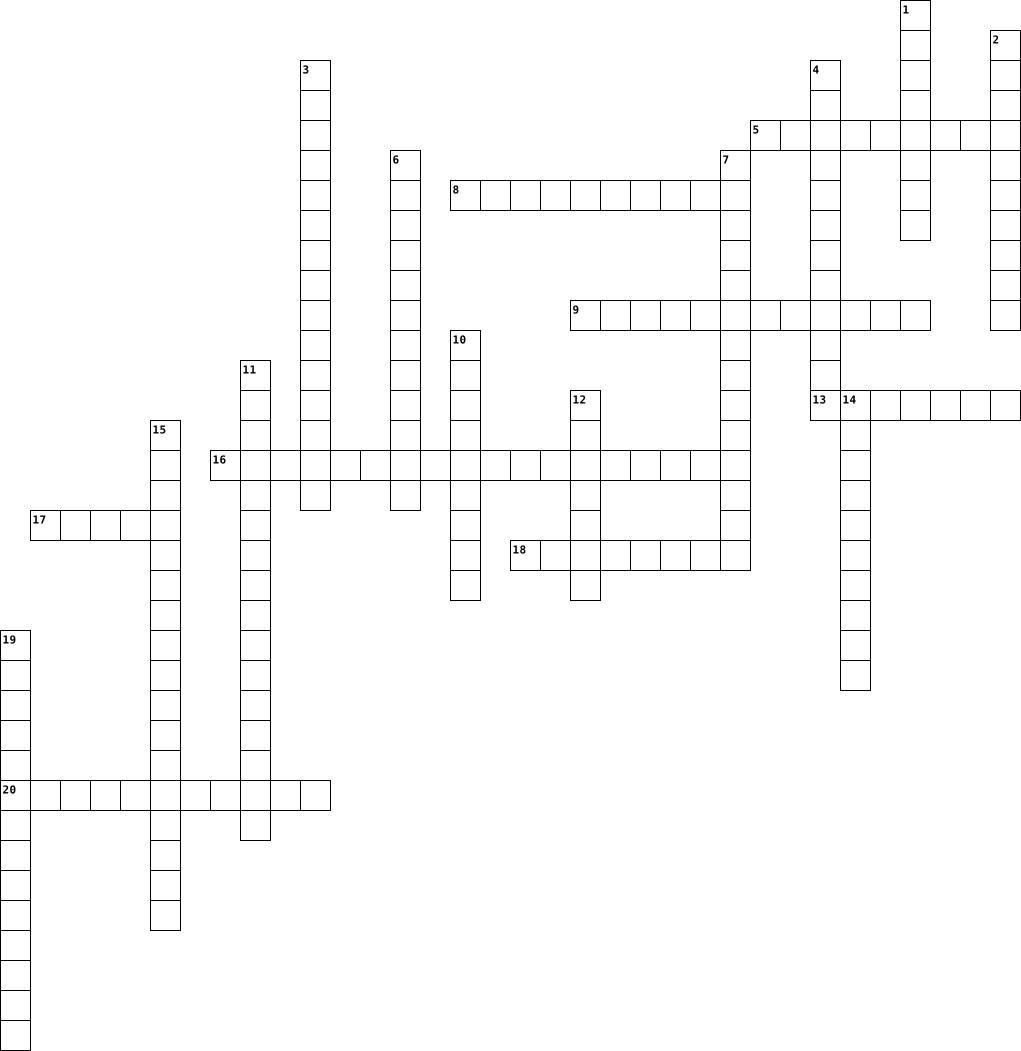
Across
- the United States and Britain were the main countries on this side.
- the communist party in the Russian Revolution led by Vladmir Lenin.
- the anti-communist party in the Russian Revolution who was backed by allied countries.
- germany, Italy, and Japan were the main leaders of this side.
- the president of the United States during WW2.
- a german political party during WW2.
- the Russian man "that wouldn't die".
- the dictator of Germany during WW2.
Down
- a military conflict in which nations mobilize all available resources.
- a russian political party led by Vladmir Lenin.
- the prime minister of Italy during WW2.
- the mass-murdering of Jews during WW2.
- the dictator of Russia during WW2.
- when prices rise at a rapid rate.
- known as the "Deadliest War".
- the royal Russian family who was executed by the communist party in 1918.
- extreme nationalism or a dictator who teaches extreme nationalism.
- the general of the Japanese army during WW2.
- the prime minister of England during WW2.
- the symbol of the Jewish religeon.
20 Clues: known as the "Deadliest War". • when prices rise at a rapid rate. • the dictator of Russia during WW2. • the symbol of the Jewish religeon. • the dictator of Germany during WW2. • a german political party during WW2. • the Russian man "that wouldn't die". • the mass-murdering of Jews during WW2. • the prime minister of Italy during WW2. • ...
World War II 2023-05-31

Across
- This leader was executed a hung on display with his mistress
- Hitler made this a government policy meaning hatred towards jews
- A cause of WWII when Hitler was allowed to take over part of Czechoslovakia but then ended up taking over all of it
- Battle involving Canadians capturing this Italian town
- Germany invaded this country on September 1, 1939 to start WWII
- These camps were designed for mass murder
- This country signed the non-aggression pact with Germany
- Spain's leader during WWII
- The US dropped the atomic bomb called "little boy" on this city
- Emperor of Japan during WWII
- NRMA soldiers were nicknamed this
- Battle over the skies against Germany
- A miracle happened at this beach in France
Down
- William Mackenzie King promised that he wouldn't introduce this law in the 1939 election
- The US dropped another atomic bomb called "fat man" on this city
- Russia's leader during WWII
- The beach that Canada landed on during operation overload
- A german word that means lightning warfare
- Jews were forced into these places in Poland during the Holocaust
- Battle in France that didn't go as planned for the Allies
- Internment camps were made for these people following the Pearl Harbour attack
- Battle involving Germany trying to stop Canada from transporting materials to Britain
- Evil dictator who led Germany through WWII
- These things were censored during WWII
- This country declared war on Germany independently on September 10, 1939
- This leader was paralyzed from the waist down
- Canada surrenders to the Japanese in this country
- Known for his "we shall fight on the beaches" speech
- This person was put in charge of making sure goods were made properly and quickly
- Canada's prime minister during WWII
30 Clues: Spain's leader during WWII • Russia's leader during WWII • Emperor of Japan during WWII • NRMA soldiers were nicknamed this • Canada's prime minister during WWII • Battle over the skies against Germany • These things were censored during WWII • These camps were designed for mass murder • A german word that means lightning warfare • Evil dictator who led Germany through WWII • ...
World War 1 2023-01-10

Across
- What treaty created 9 new nations
- When was the women's peace party founded
- 30 million people died worldwide due to what
- Destroyers escort merchant ships across Atlantic
- Devotion to the interest and culture of oneś nation
- What was signed November 11th, 1918
- Person who opposes war on moral ground
- Who Won the 1916 Election
- Germany must accept sole responsibility for war
- What Alliance contained France, Britain and Russia
Down
- How many miles of land gained in first battle
- Point 14 is what
- Power Key of Europe
- Woodruw Wilson plane for world peace
- What Alliance Contained Germany, Austria-Hungary and Italy
- Who pulled out of war in 1917
- 4 Letter Acronym for the causes of WorldWar1
- What began in 1915
- man's land What was the land between each sides trench
- Biased communication designed to influence people
20 Clues: Point 14 is what • What began in 1915 • Power Key of Europe • Who Won the 1916 Election • Who pulled out of war in 1917 • What treaty created 9 new nations • What was signed November 11th, 1918 • Woodruw Wilson plane for world peace • Person who opposes war on moral ground • When was the women's peace party founded • 30 million people died worldwide due to what • ...
World War 1 2023-01-17

Across
- George Creel used this as a way to sway public opinion to support the war
- the signing of the armistice
- U.S. president during the first World War
- made it illegal to discuss anything negative about the war
- agency created to help "sell" the war
- what Germany was responsible for signing accepting full blame for the war
- this memo encouraged an alliance between Mexico and Germany
- German u-boats
- soldiers dug out long lines in the country side to protect them from the enemies bullets
- a new country created in 1919 that took territory away from both Germany and Russia
- Germans plan of attack
- this ship was blown up crossing the Atlantic killing 128 Americans on board
- he was appointed the head of the Food Administration
- country that dropped out of WW1 due to their own revolution
- this is a seize fire
- drafting young men for the military service
- this heir to the Austrian throne was assassinated by a Serbian Nationalist
Down
- Great Britain, France, Russia, and the United States
- they served in segreated units during the war
- the Balkan peninsula was referred to at the beginning of the war
- protected merchant ships that were escorted across the Atlantic
- Wilson's plan for peace
- the action that Germans took by sinking all ships that entered the area surrounding Great Britain
- this treaty ended WW1
- created to settle disputes between workers and factory owners
- when neither side is able to advance or gain ground
- countries made up Austria-Hungary, Germany, and the Ottoman Empire
- extreme patriotism in one's country
- area between the trenches
- sponsored the idea of "lightless nights" in order to conserve fuel
- another name for WW1
- build up a nations weapons
- the area of fighting between the French and Germans
- war damages
34 Clues: war damages • German u-boats • another name for WW1 • this is a seize fire • this treaty ended WW1 • Germans plan of attack • Wilson's plan for peace • area between the trenches • build up a nations weapons • the signing of the armistice • extreme patriotism in one's country • agency created to help "sell" the war • U.S. president during the first World War • ...
World War 1 2023-02-08

Across
- between France Great Britain and Russia
- arms race between Brits and Germans
- fighting in the trenches
- end threat
- Austria-Hungary Germany
- temporary peace agreement
- acronym for the war
- germany promised to stop sinking merchant or passenger ships
- deadlock
- cooperation and peace among nations
- allies fought central powers
- between Germany Austria-Hungary and Italy
- pushed Europe into war
- where Serbians fought germans Austrians and turks
- increase in national pride
Down
- British passenger boat that got sunk
- Wilson tried to get lasting peace
- treaty that ended ww1
- Mexico ally with germany
- major cause of WW1
- Germans paid a fine to Allies
- intense competition in Europe over Africa
- serbia russia france
- germans would sink any ship they saw
- ideas spread to influence public opinion
- countries devote all their resources to the war
26 Clues: deadlock • end threat • major cause of WW1 • acronym for the war • serbia russia france • treaty that ended ww1 • pushed Europe into war • Austria-Hungary Germany • Mexico ally with germany • fighting in the trenches • temporary peace agreement • increase in national pride • allies fought central powers • Germans paid a fine to Allies • Wilson tried to get lasting peace • ...
World War 1 2022-11-16

Across
- A war fought within one's country
- The person who wrote a book about a communism government
- A ruler who has total control over a country
- Once the dictator of Germany.
- When there isn't much of something
- A theory that says everything should be owned by the government not by the people
- Workers, soldiers, and peasants chosen by one's council
- Believed that Russia's royal family should be overthrown and that Russia should be a communist country
- Taxes on imported goods
- Friendship between two countries
- A country's army that sometimes fights other counties army
- Going through hard times
Down
- A government that is run by a dictator
- People who fight in their country's military
- A very good time fro the economy
- To pay money as a punishment
- Pride in ones country
- The that the great depression started
- The treaty that ended WW1
- A political movement in Germany
20 Clues: Pride in ones country • Taxes on imported goods • Going through hard times • The treaty that ended WW1 • To pay money as a punishment • Once the dictator of Germany. • A political movement in Germany • A very good time fro the economy • Friendship between two countries • A war fought within one's country • When there isn't much of something • The that the great depression started • ...
World War 1 2022-11-16

Across
- A war fought within one's country
- The person who wrote a book about a communism government
- A ruler who has total control over a country
- Once the dictator of Germany.
- When there isn't much of something
- A theory that says everything should be owned by the government not by the people
- Workers, soldiers, and peasants chosen by one's council
- Believed that Russia's royal family should be overthrown and that Russia should be a communist country
- Taxes on imported goods
- Friendship between two countries
- A country's army that sometimes fights other counties army
- Going through hard times
Down
- A government that is run by a dictator
- People who fight in their country's military
- A very good time fro the economy
- To pay money as a punishment
- Pride in ones country
- The that the great depression started
- The treaty that ended WW1
- A political movement in Germany
20 Clues: Pride in ones country • Taxes on imported goods • Going through hard times • The treaty that ended WW1 • To pay money as a punishment • Once the dictator of Germany. • A political movement in Germany • A very good time fro the economy • Friendship between two countries • A war fought within one's country • When there isn't much of something • The that the great depression started • ...
World War 1 2022-11-30

Across
- Central Powers
- Used for reconnaissance/spotting
- Used to combat trenches
- Weapon used that made it much more efficient but cooling to be an issue
- Would destroy the lungs by killing the soldier slowly and painfully
- Barbed wire entanglements
- Used to protect a soldiers face against posion gas
- Defended Serbia
- Allied Powers
- Battle that stopped German advance
- Payments for war damage
- Another word for submarine
- A small bomb
- Treaty negotiated with Germany
- Wanted control of the Dardenelle & Bosporus Straits
- Government that has total, complete control over all aspects of life
- Religon essentially eliminated
- Another word for WW1
Down
- Belief that a nation needs a large military
- Zeppelins first __________ used---spying
- War goal for Austria-Hungary
- All decisions made by the government
- The longest battle
- Replaced with communism over Stalin's Control
- first war that included the use of planes
- Artillery creates this
- Supported Austria
- A strong love for one's country
- treaties to defend one another in event of war-"balance of power"
- First full-scale offensive with the tank
- Designed to combat trench warfare
- Stalin eliminated millions of people he saw as threat to his power
- Policy of building up an empire
- Opinions expressed for the purpose of encouraging the actions of others
- "Big push" attack across river Somme by British
- A long narrow ditch
- Word for the total number of people killed
- Declared war on Serbia on July 28
38 Clues: A small bomb • Allied Powers • Central Powers • Defended Serbia • Supported Austria • The longest battle • A long narrow ditch • Another word for WW1 • Artillery creates this • Used to combat trenches • Payments for war damage • Barbed wire entanglements • Another word for submarine • War goal for Austria-Hungary • Treaty negotiated with Germany • Religon essentially eliminated • ...
World War I 2022-10-20

Across
- commander of the American Expeditionary Force (AEF)
- headed by Bernard Baruch and coordinated the production of war materials
- headed by George Creel tried to "sell" the war to the American people
- a strike that involves all
- branch of military that enlisted women in WWI (noncombat roles)
- the cost of food, clothing, shelter, and other essentials that people need to survive
- Wilson's peace plan that he thought would establish long lasting peace in Europe
- agreement between Germany and the Allies that brought the war to an official end and imposed harsh punishments on Germany
Down
- Message to German ambassador to Mexico that stated if Mexico became an ally of Germany in WWI, it would regain lost territories
- governor of Massachusetts during the Boston Police Strike
- headed the General Intelligence Division which eventually became the FBI
- Consisted of Russia, Great Britain, and France
- Assassinated Archduke Franz Ferdinand which ignited the start of WWI
- massive population movement of African Americans from the south to northern cities; changed American politics
- act made it illegal to speak against the war publicly
- in a community, not just workers in a particular industry
- to protect against German U-boats, American ships travelled in a large group called a
- The aggressive build-upon armed forces to intimidate and threaten other nations
- Consisted of Germany, Austria-Hungary, and Italy
- nationwide fear over the spreading power and influence of communism
- the space between opposing trenches
21 Clues: a strike that involves all • the space between opposing trenches • Consisted of Russia, Great Britain, and France • Consisted of Germany, Austria-Hungary, and Italy • commander of the American Expeditionary Force (AEF) • act made it illegal to speak against the war publicly • governor of Massachusetts during the Boston Police Strike • ...
World War I 2022-10-14

Across
- Massive population movement of African Americans
- Archduke of Austro-Hungary
- Woodrow Wilson's plan that he brought to the Parris Peace conference to preserve peace
- Consisted of Germany, Austria-Hungary, and the Ottoman Empire
- Merchant Ships and troop transports gathered in groups
- Authorized the enlistment of women in the War
- General association of Nations was created to establish global cooperation and security
- Aggressive build-up of armed forces to intimidate and threaten other nations
- British passenger ship sunk by German submarines
- Truce or an agreement to stop fighting
- Established to coordinate the production of war materials
Down
- The space between opposing trenches
- Strike that involves all workers in a community
- Spying to acquire government information
- Boston Governor and called in the National Gaurd to stop riots
- Information designed to influence opinion
- Conscription system was created by Congress and Woodrow Wilson
- Treaty with Germany that resulted in the end of the war
- Consisted of Russia, Great Britain, and France
- A feeling of intense pride in one's homeland
20 Clues: Archduke of Austro-Hungary • The space between opposing trenches • Truce or an agreement to stop fighting • Spying to acquire government information • Information designed to influence opinion • A feeling of intense pride in one's homeland • Authorized the enlistment of women in the War • Consisted of Russia, Great Britain, and France • ...
World war two 2022-05-20

Across
- american and japanese aircraft carriers and fighter planes clashed
- the british stopped the afrika korps in july
- the united states sent billions of dollars' worth of aid in the form of weapons, tanks, airplanes, etc
- the extermination of an entire group of people
- hitler's national socialist party
- hitler signed an alliance with mussolini forming this
- In los angeles in june 1943 groups of sailors attacked mexican americans wearing zoot suits
- In hawaii, japanese military leaders had already begun planning a large-scale attack to destroy the U.S naval fleet stationed here
- american, british, and canadian troops invaded france on june 6, 1944
- a political system in which the government controls every aspect of citizens' lives
- thus became a key turning point of the war
- gained complete control over italy,restored order to italy and improved the economy through public works project
Down
- purposely crashing piloted planes into enemy ships
- to oversee the conversion of factories to war production
- forced relocation and imprisonment
- mussolini's rule was based on this, a political system in which state or government is seen as more important than individuals
- began on june 4 1942, when japan started bombing the islands.
- britain and france, declared war on germany
- became dictator of the soviet union, he terriorized those he saw as political enemies
- a policy of avoiding war with an aggressive nation by giving in to its demands
20 Clues: hitler's national socialist party • forced relocation and imprisonment • thus became a key turning point of the war • britain and france, declared war on germany • the british stopped the afrika korps in july • the extermination of an entire group of people • purposely crashing piloted planes into enemy ships • hitler signed an alliance with mussolini forming this • ...
World War 1 2022-05-24

Across
- pride in one’s country
- German policy to sink any ship, without warning
- Britain, France, Russia(left early), USA(joined late)
- International war where all of a country's resources are devoted to war
- Launched burning fuel
- Small projectile that is launched by hand or other and explodes
- In between both sides trenches where there are craters, bombs, and shootings
- the dissemination of facts to influence public opinion
- A country who has another territory under its influence in order to gain power
- Belief country should maintain a strong military
- Rifle with a blade fixed to the muzzle
- A.K.A. “Red Baron”
- Germany, Austria-Hungary, Turkey(Ottoman Empire)
- The war ends
- What country did Wilson’s 14 points come from?
- What year did Russia withdraw from the war?
- “The Great War” or “War to end all wars”
Down
- Note from German foregin secretary to Mexico
- Who had the idea of the League of Nations?
- Treaty negotiated with Germany
- Designed to combat trench warfare
- Government that has total control over all aspects of life
- an agreement that if one country is attacked the other country comes to defend
- Woodrow Wilson, Georges Clemenceau, David Lloyd George, Vittorio Orlando
- a draw, or where both sides can no longer make progress
- First used by Germany, but used by all in war
- basically the linchpin of ww1 due to his assassination
- Used for bombing and spying, but easy to shoot down,
- Austria declared war on Serbia
- Which country did not wish to punish Germany after the war?
- A.K.A. Submarines
- Used for reconnaissance / spotting
- Spying, intimidation, and brutality
- Deep ditches to defend their positions
- Blisters internally and externally
- 600-1000 rounds per minute
- Year the war ended
- Battle of Verdun
- What year did WW1 start?
- What year did the Lusitania sink?
40 Clues: The war ends • Battle of Verdun • A.K.A. Submarines • A.K.A. “Red Baron” • Year the war ended • Launched burning fuel • pride in one’s country • What year did WW1 start? • 600-1000 rounds per minute • Treaty negotiated with Germany • Austria declared war on Serbia • Designed to combat trench warfare • What year did the Lusitania sink? • Used for reconnaissance / spotting • ...
World War I 2022-05-04

Across
- Event that happened on November 11 at 11am to end the fighting during the war
- Wilson Name of the president of the US during the First World War
- The taking over of other lands, usually in less industrially developed areas by stronger countries for the natural and human resources
- Flu Name of the global pandemic that infected 500 million and killed as many as 50 million
- Crisis Event when Austria-Hungary took the Balkans, a part of the Ottoman Empire, which had been weakening for decades
- Belief in the superiority of one's own nation over others; actions taken for the success of one country at the expense of another
- War A war that draws on all of society's military, economic, and civilian resources
- Treaty of _______________; ended the first world war officially, punishing Germany for the entire war
- Republic Name of the new German government following the removal of the Kaiser in 1918
- Fight to take back a French fort system; not a meaningful victory
- Check Policy Name of the agreement between Germany and Austria-Hungary where Germany promised to help with whatever, whenever, against whomever.
- New class of battleship made my the British during an arms race with Germany
- Scary new weapons that Germans used'
- Austria-Hungary issued an _____________ to Serbia
Down
- Countries competing to build the biggest strongest military; included the belief that some conflict was good
- Name of the Russian revolution of 1918
- Type of warfare the Germans turned to in 1916; goal was to win by wearing down the enemy to the point of collapse through losses in their economy and morale
- Franz ___________; name of the Austro-Hungarian heir that was assassinated
- belief that progress is good and that humanity must continue to ask questions for the betterment of human kind
- Name of the passenger ship that was sunk by the German submarines, earning them a warning from the United States
- Name of the new Russian government that signed a treaty with Germany in 1918
- Hand Group that was responsible for assassinating the heir of the Austro-Hungarian throne
- Name of the alliance group that was made up of Germany, Italy, and Austria Hungary (Triple _______________)
- Plan Name of the Germany plan that cut through a neutral country to get to France
- The only naval battle of the entire war in which both sides had battleships
- Winter Name given to the winter of 1916-1917 in Germany in which the civilians were starving
- Genocide Mass extermination of the Armenians carried out by the Ottoman Empire from 1915 to 1923
- First use of tanks; joint British and French offensive between July and November 1916
- ditches dug for troops to take cover in
- First World War was the first ______ war due to the involvement of scientists and physicists in the development of weapons and other war technology
- name of the german submarines
- Name of the neutral country that Germany cut through to get to France
- What Defense of the Realm Act is abbreviated to
- Germany sent the Zimmerman Telegraph to _______ in an attempt to keep the US out of the war
- Name of the alliance group that was made up of Britain, France, Russia, and the United States (Triple ________________)
35 Clues: name of the german submarines • Scary new weapons that Germans used' • Name of the Russian revolution of 1918 • ditches dug for troops to take cover in • What Defense of the Realm Act is abbreviated to • Austria-Hungary issued an _____________ to Serbia • Wilson Name of the president of the US during the First World War • ...
World War I 2025-03-17

Across
- Used for surveillance of the opposition in WWI.
- Resource the Alsace-Lorraine region was plentiful in.
- Nickname given to US, France, Britain, and Italy.
- The Brest-Litovsk Treaty ended the war between Germany and who?
- Name of the deadliest battle in all of WWI.
- Information used to promote/damage a cause.
- The rulers of Britain, Germany and Russia were all this relation.
- Last name of the assassin from Serbia.
- Man who controlled most of Germany's affairs prior to 1890.
- Kind of gas used by the Germans in WWI.
- Situation where either side isn't winning.
- Country that joined WWI simply because they were friends with Britain.
- First country to surrender at the end of the War.
- number of points in the proposed peace plan for WWI.
- Invention created to cross land, trenches and barbed wire.
- African country the Germans pretended interest in to rile up France and Britain.
- Continent the British and the French owned a vast majority of.
- A Treaty or agreement.
- Wilfred Owen compared WWI to these.
- To give up the throne.
- Amount (in the hundreds) a machine gun could fire.
- Extreme pride in ones homeland.
- Name of the Treaty that ended WWI.
Down
- Which country was the most industrialized going into WWI?
- Name given to Britain, France and Russia pre-WWI.
- Britain had the largest of these going into WWI.
- Country the Germans would go through according to the Schlieffen Plan.
- Location of the peace conference to settle differences with Germany.
- Countries of A-H, Germany, Ottoman Empire and Bulgaria that made up these powers.
- The draft.
- A fixed amount given to each person
- Country the heir to the Austrian-Hungarian throne was assassinated.
- The area between trenches.
- The Alsace-Lorraine region was taken from this country by Germany.
- Payment for damages.
- Country who declared war first in WWI.
- Passenger ship sunk by the Germans that angered Americans.
- Economic state most European countries were in at the end of WWI.
- Ranking of Germany in power pre-WWI.
- A country decides its allegiances & government
- The Zimmerman Telegram went to which country from Germany.
- Countries of Russia, Italy, Serbia, Britain and France made up these powers.
- Which country received full blame for WWI?
- City in which the heir to the Austrian-Hungarian throne was assassinated.
- American President during WWI.
- Country who considered themselves the "big brother" of the countries in the Balkans.
- Last name of the heir to the Austrian-Hungarian throne.
- Month of Armistice Day.
48 Clues: The draft. • Payment for damages. • A Treaty or agreement. • To give up the throne. • Month of Armistice Day. • The area between trenches. • American President during WWI. • Extreme pride in ones homeland. • Name of the Treaty that ended WWI. • A fixed amount given to each person • Wilfred Owen compared WWI to these. • Ranking of Germany in power pre-WWI. • ...
World War I 2025-03-11

Across
- a formal agreement between people or nations to help one another
- the control of foreign lands by stronger states
- an international organization to maintain peace
- a radical socialist group led by Vladmir Lenin
- US president that wanted to ensure peace without humiliating the defeated Central Powers
- situation with no chance for progress
- Germany and Austria-Hungary
- spreading of ideas to promote or to harm a cause
- a policy of aggressive military build up
- forced Germany to accept blame, pay reparations, and limit the size of their military
- used to attack ships at sea
- Austrian archduke killed on June 28, 1914
Down
- Russia, France, Serbia, and Great Britain
- feeling of unity as a nation
- rapid fire weapon that could fire many bullets at once
- most feared new weapon that blinded and choked its victims
- not aligned with either side
- fighting in trenches
- joined the Allied Powers in April 1917
- payment for war damages
20 Clues: fighting in trenches • payment for war damages • Germany and Austria-Hungary • used to attack ships at sea • feeling of unity as a nation • not aligned with either side • situation with no chance for progress • joined the Allied Powers in April 1917 • a policy of aggressive military build up • Russia, France, Serbia, and Great Britain • Austrian archduke killed on June 28, 1914 • ...
World War II 2025-03-20

Across
- Nations internation organization
- the "Night of Broken Glass"
- Mussolini a veteran of the war
- Stalin Soviet dictator
- "lightning war"
- a system in which the government controls all areas of peoples lives
- a political system
- camp a type of prison camp
- created a secret police
- crime wiolation of the laws
Down
- MacArthur supreme commander
- bomb a nuclear weapon
- Solution shipping Jews to killing centers
- Powers war declared in response Germany invading Poland
- hostility and discrimination agains the Jews people
- Churchill British Prime Minister
- the deliberate destruction of a racial, political, or cultural group of people
- Powers the align with Italy and Japan
- Hitler German army veteran
- government-sponsored murder of millions of Jews
- a policy created to increase farmer's output
- Hirohito took the throne of Japan in 1926
- Trials a war crime trial
- a German political party renamed by Hitler
- district in which Jews were isolated
25 Clues: "lightning war" • a political system • created a secret police • camp a type of prison camp • Trials a war crime trial • the "Night of Broken Glass" • Stalin Soviet dictator • MacArthur supreme commander • bomb a nuclear weapon • Mussolini a veteran of the war • Hitler German army veteran • Churchill British Prime Minister • ...
World War 1 2024-05-13

Across
- How many days could men spend in the trench system before being relieved
- Name given to Great Britain's navy: The _____ _____
- Declared war on France when France mobilized its army
- Truce in 1914 between German and French troops
- American president during WW1: Woodrow ______
- Who assassinated the Archduke Francis Ferdinand: _______ Princip
- How many treaties did Turkey sign in WW1
- Used to drop bombs on the enemy as well as find out the enemy's position
- The worst gas used in WW1
- The king of Germany during WW1: _______ II
- The German chancellor during WW1, favored war: Otto _______
- Why were there intermittent truces or cease-fires between opposing trench systems
- Had a history of mistrust and conflict with Germany
- British general of British Troops in France during WW1: Sir Douglas ____
- Explosives that could be lobbed into a trench system
- Attempt by Germany to bring Mexico into the war: __________ Telegram
- An explosive that shot directly with a flatter trajectory
- Ended the war between Russia and the Central Powers: Treaty Of
- Needless killing and the waste of life for minimal benefit
- The last "open" battle of the Western Front
- Top French commander during WW1: ______ Joffre
- Last open battle of WW1
- When war becomes a "number game
- The sinking of what ship that brought the United States closer to entering WWI
- The sinking of Lusitania was one of the many reasons this country entered the war
Down
- Declares war on Serbia with Germany's support
- What type of warfare involved digging, barbed wire, and "no man's land"
- Commander of the American troops in Europe during WW1: John ________
- Leader of Italy during WW1: _______ Orlando
- The leader of Great Britain during WW1: Lloyd ______
- Political leader of France during WW1, but not its president: Georges __________
- Which battle witnessed the first use of the modern tank
- Battle that saw the first use of chemical weapons
- The German Plan of totally destroying French Forces by outflanking them was called
- The German fleet of ships were known as: ____ ____ Fleet
- The top commander during WW1 who was inspirational at the Battle of Tannerberg: Paul Von __________
- Declared war on Germany, joining the Allied Forces
- Has an alliance with Serbia because of shared Slavic ethnic heritage
- Powers who fought against the Central Powers
- President of France during WW1: _______ Poincare
- The Triple Alliance was formed by Germany, Austria-Hungary, and
- Called for the right of self-determination by countries and also for the formation of the League of Nations: ______'s 14 Points
- Austria's foreign minister who was known to be a war hawk: _______ Berchtold
- This man's death set off a chain reaction which ultimately led to the outbreak of World War I: Francis _________
- The only major naval engagement of World War I: Battle of ______
- Type of warfare that resulted in the use of masks
46 Clues: Last open battle of WW1 • The worst gas used in WW1 • When war becomes a "number game • How many treaties did Turkey sign in WW1 • The king of Germany during WW1: _______ II • Leader of Italy during WW1: _______ Orlando • The last "open" battle of the Western Front • Powers who fought against the Central Powers • Declares war on Serbia with Germany's support • ...
World War I 2024-10-28

Across
- Believed the war showed a willingness of sacrifice from Black Americans
- Led the U.S. Food Administration during the war
- This plan failed because Russians quickly mobilized
- President during the war
- Austria-Hungary, Germany, Italy
- Promised a "return to normalcy"
- Pandemic that killed 50 million worldwide
- Large ship sank by the Germans in 1915
- Bought to raise money for the war effort
- This protocol in 1925 prohibited chemical warfare
- Famous telegram sent from Germany to Mexico
- Russia, France, Britain
- U.S. Congress declared war on them in April 1917
- American stance when WWI started
- Thought its own people might rebel
- Wanted to weaken Germany to never threaten peace again
- Summer of shocking racial violence in cities
- This treaty was designed to punish Germany
- Location of a major race massacre in Oklahoma
Down
- Unwilling to accept a League of Nations
- Holiday of a truce from both sides
- Could not be officers in the war
- Support over one's own nation over the interest of other nations
- Former president that urged America to avoid foreign alliances
- Assassinated Franz Ferdinand
- Leader of the Bolsheviks
- New technologies and weapons made it the first _______ war
- Set up to prevent ships from getting goods to countries
- Trench warfare resulted in this as neither side could gain advantages
- Espionage and Sedition Act stifled this
- Longest battle of the war
- Declared war on Germany when they invaded Belgium
- Willing to accept Wilson's treaty with modifications
- Germany's chance for a quick victory failed at this battle
- Protected Serbia because it was a slavic country
35 Clues: Russia, France, Britain • Leader of the Bolsheviks • President during the war • Longest battle of the war • Assassinated Franz Ferdinand • Austria-Hungary, Germany, Italy • Promised a "return to normalcy" • Could not be officers in the war • American stance when WWI started • Holiday of a truce from both sides • Thought its own people might rebel • ...
WORLD WAR I 2024-11-18

Across
- **Mobilize** - To prepare and organize troops for active service.
- **Honor** - High respect or esteem; a sense of what is right.
- **Pacifist** - A person who believes that war and violence are wrong.
- **Motivation** - The reason why someone does something.
- **Courage** - The ability to face fear or danger.
- **Morale** - The confidence, enthusiasm, and discipline of a person or group, especially in difficult situations.
- **Influence** - The power to change or affect someone’s behavior or thinking.
- **Frontline** - The military line or part of an army that is closest to the enemy.
- **Encourage** - To give support or confidence to someone.
- **Sentiment** - A feeling or emotion, often related to patriotism or social norms.
Down
- **White Feather** - A symbol given to men as a sign of cowardice for not joining the army.
- **Expectation** - A belief that something will happen or that someone should act in a certain way.
- **Campaign** - A series of actions aimed at achieving a particular goal, often used in military or political contexts.
- **Recruit** - To get people to join the military.
- **Patriotic** - Showing love and support for one's country.
- **Conscription** - The requirement to join the military, also known as a draft.
- **Voluntarism** - The act of volunteering or the practice of relying on volunteers.
- **Shame** - A painful feeling of being embarrassed or guilty.
- **Patriotic Duty** - The belief that it is one's responsibility to serve their country.
- **Comradeship** - The feeling of friendship and trust among people in a group, especially soldiers.
20 Clues: **Recruit** - To get people to join the military. • **Courage** - The ability to face fear or danger. • **Motivation** - The reason why someone does something. • **Encourage** - To give support or confidence to someone. • **Patriotic** - Showing love and support for one's country. • **Honor** - High respect or esteem; a sense of what is right. • ...
World War 1 2025-01-29

Across
- a French statesman who served as Prime Minister of France from 1906 to 1909 and again from 1917 until 1920. A physician turned journalist, he played a central role in the politics of the Third Republic, particularly amid the end of the First World War.
- Guy who got killed, reason world War 1 started
- a union or association formed for mutual benefit, especially between countries or organizations.
- an agreement made by opposing sides in a war to stop fighting for a certain time; a truce.
- a statement of principles for peace that was to be used for peace negotiations in order to end World War I.
- a person or group that provides assistance and support in an ongoing effort, activity, or struggle. a political ally.
- agreement by the German government during World War I to stop the indiscriminate sinking of nonmilitary ships.
- identification with one's own nation and support for its interests, especially to the exclusion or detriment of the interests of other nations.
- an American fighter pilot in World War I and a Medal of Honor recipient.
- a group of ships sailing together for protection,
- a type of combat in which opposing troops fight from trenches facing each other.
Down
- an American army general who served as the commander of the American Expeditionary Forces during World War I
- information, especially of a biased or misleading nature, used to promote or publicize a particular political cause or point of view.
- a cold injury that occurs gradually over several days of exposure to cold, but not freezing, temperatures
- British passenger ship that was owned by the Cunard Line and was first launched in 1906.
- A coded note that was a cause of the US joining the US
- authorized the Federal Government to temporarily expand the military through conscription. The act eventually required all men between the ages of 21 to 45 to register for military service.
- a policy of extending a country's power and influence through diplomacy or military force.
- disputed ground between the front lines or trenches of two opposing armies.
- the belief or desire of a government or people that a country should maintain a strong military capability and be prepared to use it aggressively to defend or promote national interests.
- an American soldier who was one of the most decorated United States Army soldiers of World War I.
21 Clues: Guy who got killed, reason world War 1 started • a group of ships sailing together for protection, • A coded note that was a cause of the US joining the US • an American fighter pilot in World War I and a Medal of Honor recipient. • disputed ground between the front lines or trenches of two opposing armies. • ...
World War I 2024-12-11

Across
- Strait where Gallipoli landings took place.
- Individual who caused the death of this puzzle's subject.
- Country which joined WWI in 1917.
- Name for traumatic stress caused by 19.
- Group which killed this puzzle's subject.
- Triple ______ (alliance of Britain, France, and Russia).
- Cause of death of this puzzle's subject.
- New military technology first used in WWI.
- Country where this puzzle's subject died.
- Weapon which caused the most casualties during WWI.
Down
- Defensive structure used to keep soldiers safe from 17 and 19.
- Army corps of Australia's forces in WWI.
- Country Germany attempted to move through to attack France.
- Month in which the armistice was signed, and Remembrance Day is observed.
- This puzzle's subject.
- Type of military unit used early in WWI, later replaced with tanks.
- City where this puzzle's subject died.
- The nationality of this puzzle's subject.
- New type of weapon that favoured defensive tactics.
- Battle in which over one million soldiers died.
20 Clues: This puzzle's subject. • Country which joined WWI in 1917. • City where this puzzle's subject died. • Name for traumatic stress caused by 19. • Army corps of Australia's forces in WWI. • Cause of death of this puzzle's subject. • Group which killed this puzzle's subject. • The nationality of this puzzle's subject. • Country where this puzzle's subject died. • ...
World War 1 2025-06-05

Across
- Word used to describe when two or more nations are 'friends' and will help each other
- Something that awaited men returning home with trench foot
- Word used for announcement of war
- Something young men thought they would return from war as
- A group of people who opposed conscription because their labour force would be taken away
- Name of the city where Franz Ferdinand was assassinated
- Word used to describe a situation where men are forced to fight for their country
- Name given to the vote in Australia in 1916 and 1917 regarding conscription
- Name given to Australian and New Zealand soldiers
- Punishment that could be given to men who disobeyed orders at the war front
- The country were most of the western front was located
- Name of a country that was part of the triple alliance
- Day where enemy soldiers exchanged gifts outside trenches
- creature that made lives miserable for those in the trenches
- Stretch of land between two enemy trenches
- Name of the country Germany invaded to reach France
- Type of food commonly eaten in the trenches
- Country that was part of the triple entente
Down
- Place Australian troops trained before going to Gallipoli
- Word that could sum up the outcome of the Gallipoli campaign
- Disease which could eat away at the feet of soldiers
- Another word for PTSD
- Word used to describe men who were too frightened to enlist
- Something often seen in no-man's land
- Nationality of the men involved in the assassination of Franz Ferdinand
- Name of the German plan to invade France through Belgium
- Reason young Australian men were keen to enlist for the war
- Another name for modern day Turkey
- Continent where most fighting in World War 1 occurred
- Name of the country Austria-Hungary blamed for the assassination of Franz Ferdinand
- Country Austria-Hungary was allied to
- Word used to describe a situation where a nation focuses on maintaining a powerful military
- Word that describes the hills at Gallipoli
- Age Australian men had to be to enlist for war
- Problem associated with trenches especially in winter
- Word used to describe a sense of pride and love of one's nation
- Only job women could do during World War 1
- Name of a country that was part of the triple entente
38 Clues: Another word for PTSD • Word used for announcement of war • Another name for modern day Turkey • Something often seen in no-man's land • Country Austria-Hungary was allied to • Word that describes the hills at Gallipoli • Only job women could do during World War 1 • Stretch of land between two enemy trenches • Type of food commonly eaten in the trenches • ...
World War Two 2024-12-21

Across
- Attack that brought America into the war
- / Germany and Italy; _____ Powers
- / Emperor of Japan
- / Allied Commander-In-Chief of Italy
- / Island off the southern coast of Italy
- / Last name of the Italian dictator
- / German main tank
- / One form of assault on Sicily
- Cassino / Historic hilltop abbey
- / Views of the government of the Soviet Union
Down
- / Important port and airfield town
- / Views of Italian government up until September 1943
- / RAF mai German n fighter plane
- / Area where Operation Shingle took place
- / Believed in naval assaults
- / Italian government signed this with the allies on September 3, 1943
- / Views of most allied governments
- / Operation name for the invasion of Sicily
- / Capital of Italy
- / Invasion area on southwest coast of mainland Italy
20 Clues: / Emperor of Japan • / Capital of Italy • / German main tank • / Believed in naval assaults • / One form of assault on Sicily • / RAF mai German n fighter plane • Cassino / Historic hilltop abbey • / Germany and Italy; _____ Powers • / Important port and airfield town • / Views of most allied governments • / Last name of the Italian dictator • / Allied Commander-In-Chief of Italy • ...
FIRST WORLD WAR 2025-09-03

Across
- canadian fighter pilot
- no man's ____
- unrestricted use of these
- type of truce in 1914
- weapon introduced in the Battle of the Somme
- longest battle 302 day
- assassination city
- - author of In Flander's Fields
- , shell shock
- month US entered the war in 1917
- Competition between empires for colonial territory.
- the eastern and western battlegrounds
- unified force at Vimy
- The aggressive build-up of military forces.
Down
- assassinated
- Red Baron
- name of the serbian secret society
- plan to invade France quickly
- leader was Lenin
- location of the first battle for the canadians
- The complex network of military alliances that created a domino effect.
- month in 1918 that ended the war
- neutral country
- nicholas II
- city of the treaty
- role of plans in WWI at first
- name of the first world war
- Intense patriotism and rivalry between nations.
- motorized tansportant to the battle of the marne
- chlorine and mustard
30 Clues: Red Baron • nicholas II • assassinated • no man's ____ • , shell shock • neutral country • leader was Lenin • assassination city • city of the treaty • chlorine and mustard • type of truce in 1914 • unified force at Vimy • canadian fighter pilot • longest battle 302 day • unrestricted use of these • name of the first world war • plan to invade France quickly • role of plans in WWI at first • ...
World War I 2025-11-14

Across
- A rapid-fire, automatic weapon
- The peace treaty signed in June 1919 that formally ended the war. It placed full blame for the war on Germany
- A British passenger liner sunk by a German U-boat in May 1915
- A formal agreement to stop fighting. It was signed between the Allies and Germany at 5:00 AM on November 11, 1918
- The Prime Minister of France (1917–1920)
- This telegram was a secret communication from Germany to Mexico proposing a military alliance
- The U.S. President during WWI
- The longest battle of WWI, fought between French and German forces. It resulted in over 700,000 casualties
- Intense pride in one's nation
- Second Battle here was The final major German offensive
- Large-caliber guns that used high-explosive shells, shrapnel, and new recoil systems to fire further and much faster than previous cannons
- The use of German submarines (U-boats) to sink any merchant ship in a designated war zone
- Germany's execution of the Schlieffen Plan required marching through this neutral country
Down
- The main form of combat on the Western Front
- An unsuccessful Allied campaign to seize the Dardanelles Strait
- Germany's pre-war operational plan to quickly defeat France
- The policy of extending a country's power and influence through colonization
- Woodrow Wilson's peace plan and the formation of the League of Nations
- The last Emperor of Russia.
- Battle infamous for the horrific casualties: on the first day alone, the British suffered 57,000 casualties
- Assassination of this Austrian Archduke led to start of WWI
- Following the assassination, Austria-Hungary issued a harsh set of demands to Serbia.
- The 1917 Russian Revolution led to the collapse of the Tsarist regime. The new Bolshevik government signed this treaty with the Central Powers
- The last German Emperor (Kaiser)
- A system of formal agreements between nations for mutual defense
- Manfred von Richthofen
- The policy of building up strong armed forces and aggressively preparing for war.
- This A critical early Allied victory where French and British forces stopped the German advance near Paris
28 Clues: Manfred von Richthofen • The last Emperor of Russia. • The U.S. President during WWI • Intense pride in one's nation • A rapid-fire, automatic weapon • The last German Emperor (Kaiser) • The Prime Minister of France (1917–1920) • The main form of combat on the Western Front • Second Battle here was The final major German offensive • ...
world war 1 2025-11-11

Across
- Country with capital berlin
- a note from Germany to mexico proposing an alliance against US
- celebration of the end of the war
- german painter who painted to cope after he fought
- happened to archduke Ferdinand and started war
- long narrow ditch used by soldiers for shelter
- the 28th President
- assembly of nations made to keep peace
- final agreement to end war
Down
- forbade spoken attacks on US government
- Country with lots of bread & wine
- a position of not taking sides during the war
- Country with bald eagle
- glorification of nations military
- bigest navel battle in world history-ends german control over seas
- persuasion from media to sway public's opinions
- nationalist who assassinated ferdinand
- the area between two opposing trenches
- ship that Germany sunk enraging America
- name for american soldiers fighting
20 Clues: the 28th President • Country with bald eagle • final agreement to end war • Country with capital berlin • Country with lots of bread & wine • glorification of nations military • celebration of the end of the war • name for american soldiers fighting • nationalist who assassinated ferdinand • the area between two opposing trenches • assembly of nations made to keep peace • ...
World War 1 2026-01-20

Across
- President of the United States in WW1
- Military commander for Germany
- Germanys submarine warfare
- Military commander for Germany
- Military commander of the United States
- Assasination of him injured the war
- Military commander for France
- Leader of Russia at the start of WW1
- Reason to russias withdraw
- Military commander for Britain
- Emperor of the German empire
- Tsar of Bulgaria autumn WW1
Down
- Military commander for Ottoman Empire
- Prime minister of Britain
- Sultan of the Ottoman Empire
- Military commander for Austria-Hungary
- Military commander for Austria-Hungary
- King of Britain during the war
- Ruler of Austria-Hungary
- Prime minister of France
- Military commander for France
- Military commander of Russia
- Jellicoe Military commander for Britain
- Military commander the the Ottoman Empire
- Military commander for russia
- Germany signed a treaty ending the fighting
26 Clues: Ruler of Austria-Hungary • Prime minister of France • Prime minister of Britain • Germanys submarine warfare • Reason to russias withdraw • Tsar of Bulgaria autumn WW1 • Sultan of the Ottoman Empire • Military commander of Russia • Emperor of the German empire • Military commander for France • Military commander for France • Military commander for russia • ...
World War II 2025-12-16

Across
- Put in place by the Canadian government to stop employers pay from increasing.
- Put in place by Canadian government to increase their revenue by taxing Canadian citizens.
- Set up after the attacks on Pearl Harbor to isolate Japanese Canadians.
- Longest lasting battle of World War II.
- Canada sold these to Canadian citizens to help pay for the war effort.
- Fast ship that if needed would go out and attack enemy ships or U-boats.
- Acronym for the Canadian navy.
- Same name as ohl team and was a popular plane in Canadian manufacturing.
- Goal of this battle was to raid German sites (get in and get out).
- Groups that came together and made little supply bags to make things easier and more comfortable for soldiers.
- First battle fought by Canadians in World War II.
- Canadas Prime Minister during World War II.
- acronym for Canadian women in the war industry.
- Where families grew their own vegetables in gardens instead of flowers.
- Canadian award given for bravery.
Down
- A plane with the same name as a natural disaster.
- Put in charge of production of Hurricanes and got the nickname "Queen of the Hurricanes".
- limits put on necessities by the Canadian government to conserve necessities for the war.
- Ships that carry merchandise in the convoy to aid allied soldiers overseas.
- Secret spy training site for allies, based in Canada.
- Put in place by Canadian government to stop inflation.
- The ship that led the convoy system and had lots of artillery aboard.
- Canadas minister of everything.
- A stylish but practical way to dress for women in World War II.
- The amount of days Canada declared war on Germany after Britain and France.
- Acronym for Canadian air force.
- Soldiers had to leave guns behind and were rescued by Britain ships and citizen boats.
- Acronym put before every Canadian battle ships name.
- Canadian ships travelled in this form to defend from attacking German U-boats.
- Flight training program for allies, based in Canada.
30 Clues: Acronym for the Canadian navy. • Canadas minister of everything. • Acronym for Canadian air force. • Canadian award given for bravery. • Longest lasting battle of World War II. • Canadas Prime Minister during World War II. • acronym for Canadian women in the war industry. • A plane with the same name as a natural disaster. • ...
World War II 2025-12-05

Across
- Wartime tax used by the Canadian government to help the war effort
- Canadian and British plane named after a natural disaster
- Practical fashion for Women in Canada during WWII
- Canadian Airforce
- Series of battles in Italy
- Program in Canada that trained aircrew
- Volunteer groups that support soldiers by providing aid and making comfort items
- Queen of Hurricanes
- A temporary hold on increasing price of goods or services
- A program that trained spies, based in Canada
- Acronym for Canadian Navi
- The highest decoration in the Canadian decoration system
- A battleship that hunted u-boats and escorted convoys
- ships in the middle of a convoy that carry goods and supplies
- A temporary policy that stops wage increase during wartime
Down
- Plane Named after the nickname of Sir Robert Mclean’s daughter
- longest lasting battle during WWII
- Canadian government sold these to help
- Code name: Operation Overlord
- System put in place by the Canadian government to divide goods to citizens
- Camp that held all "enemy aliens”
- home or community gardens during wartime
- The acronym put before the name of every Canadian ship
- group of ships that travel together in a formation
- Coastal Escort vessel
- Longest serving Prime Minister in Canada
- Soldiers were rescued by battleships and British Citizens
- Bloodiest Day in Canadian Military history
- Minister of Everything
- The first battle Canada fought in During WWII
30 Clues: Canadian Airforce • Queen of Hurricanes • Coastal Escort vessel • Minister of Everything • Acronym for Canadian Navi • Series of battles in Italy • Code name: Operation Overlord • Camp that held all "enemy aliens” • longest lasting battle during WWII • Canadian government sold these to help • Program in Canada that trained aircrew • home or community gardens during wartime • ...
World War I 2026-02-05

Across
- a tie or deadlock
- Heir's assassination that sparked the war
- German "unterseeboot"
- country that is protected and controlled by another
- abstract art movement inspired by the horrors of WWI
- British passanger ship sunk by German navy
- German telegram urging Mexican invasion of US
- agreement to stop fighting
- extreme pride in your country/ culture
- false or exaggerated information
- Britain, France and Russia
- Serbian nationalist who assassinated Austrian Archduke
- prepare military for war
- Serbia's protector
- "the sun never sets on this empire"
- Germany's Kaiser during WWI
- nickname given to the Balkan region
- Wilson's plan for peace
- payment for war damages
- Germany, Italy and Austria-Hungary
Down
- "general association of nations"
- limiting the amount of something people are allowed to have
- stretched across Belgium and northern France
- right of people to choose their own government
- Wilson, Clemenceau, George, and Orlando
- area between enemy trenches
- R.R. that linked Europe and Asia
- key penninsula in Eastern part of present day Turkey
- country that attacks first, without being provoked
- not supporting either side in a dispute
- victims of genocide at hands of Ottomans
- treaty that ended WWI
- Germany's plan to defeat France before Russia could mobilize
- devoting all of a county's resources to winning a war
34 Clues: a tie or deadlock • Serbia's protector • German "unterseeboot" • treaty that ended WWI • Wilson's plan for peace • payment for war damages • prepare military for war • agreement to stop fighting • Britain, France and Russia • area between enemy trenches • Germany's Kaiser during WWI • "general association of nations" • R.R. that linked Europe and Asia • false or exaggerated information • ...
World War I 2026-02-11

Across
- Sophie was this
- tiny trench bugs
- had revolution
- caused competition
- backup buddies
- build up of arms
- sunk
- US plan in beginning of war
- German payments for losses
- date of remembrance
- Princip was this
- New weapon of death
- what main added up to
- site of assassination
- women worked there in war
- Monday savings
- WEdnesday savings
- wanted peace
Down
- German advantage
- Treaty and palace
- pride in country
- goin nowhere
- Shot to start war
- cause of much death at end of war
- place of hellfighters
- This terrorist group hated AUstrian Rule
- What the winning countries wanted to do
- senator against treaty
- Wilsons PLan
- group with France during War
- food of WWI
- was sent zimmerman note
- Land you dont wanna be in
- delivery birds
- causes of the war
- Fired the shot
- animals with many losses
- stop fighting agreement
- Bonds sold to make money
- died with hubby
- Walking in mud causes this
41 Clues: sunk • food of WWI • goin nowhere • Wilsons PLan • wanted peace • had revolution • backup buddies • delivery birds • Fired the shot • Monday savings • Sophie was this • died with hubby • German advantage • pride in country • tiny trench bugs • build up of arms • Princip was this • Treaty and palace • Shot to start war • causes of the war • WEdnesday savings • caused competition • date of remembrance • ...
World War Two 2026-02-12

Across
- A reason why something happens.
- Importance of something.
- Germany, Italy, and Japan in WWII.
- Civilian life during wartime.
- Forced military service.
- Building up armed forces aggressively.
- Hitler’s political beliefs and system.
- A result of an action.
- Extending a country’s power over others.
- The act of fighting in war.
- Fighting between Allies and Japan.
Down
- Agreements between countries to support each other.
- A strict, controlling political system.
- Peace treaty ending World War I.
- Battle area in Western Europe.
- Australian and New Zealand Army Corps.
- A point of view.
- Warships that travel underwater.
- Information used to influence opinions.
- German bombing attacks on Britain.
- Strong pride in one’s country.
- A series of military battles.
- Fast, surprise German attack strategy.
- A powerful bomb using nuclear energy.
- Limiting supplies of food and goods.
- Voluntarily joining the military.
26 Clues: A point of view. • A result of an action. • Importance of something. • Forced military service. • The act of fighting in war. • Civilian life during wartime. • A series of military battles. • Battle area in Western Europe. • Strong pride in one’s country. • A reason why something happens. • Peace treaty ending World War I. • Warships that travel underwater. • ...
World War 1 2026-04-30

Across
- Soldiers killed or injured.
- Building up military strength aggressively.
- Information used to influence public opinion.
- Soldiers who fight on foot.
- Country where conflict began.
- Area where fighting takes place.
- Title of Franz Ferdinand before his death.
- Large-caliber guns used in warfare.
- Major Allied nation.
- Country that exited the war early.
- Part of Austria-Hungary empire.
- Agreement between countries for support.
- Treaty that officially ended the war.
- Armored vehicle introduced in WWI.
- Leading Central power.
- Sharp wire used for defense.
- Nations fighting together against a common enemy.
- Payments demanded from Germany after the war.
- A long, narrow ditch used for protection in battle.
- Large group of territories ruled by one state.
- Powers led by Germany and Austria-Hungary.
- Managing international relations.
- Long and brutal battle in France.
Down
- Title of Germany's emperor.
- Allied country with a strong navy.
- Pride in one's country, a cause of war.
- Not taking sides in the war.
- Chemical weapon used in trench warfare.
- Underwater warship used by Germany.
- Failed Allied campaign in the Ottoman Empire.
- Preparing troops and resources for war.
- Effort to cut off supplies to an enemy.
- Front located in Russia and Eastern Europe.
- City where the war began.
- German submarine.
- The killing that sparked the war.
- Winning side of the conflict.
- Agreement to stop fighting.
- Dangerous area between enemy trenches.
- Empire allied with Central Powers.
- Formal agreement between nations
- Partner in the Austro-Hungarian Empire.
- Psychological trauma for war.
- A deadly type of poison gas.
- Site of one of the deadliest battles.
- Front located in France and Belgium.
46 Clues: German submarine. • Major Allied nation. • Leading Central power. • City where the war began. • Title of Germany's emperor. • Soldiers killed or injured. • Soldiers who fight on foot. • Agreement to stop fighting. • Not taking sides in the war. • Sharp wire used for defense. • A deadly type of poison gas. • Country where conflict began. • Winning side of the conflict. • ...
World War 1 2026-05-18

Across
- Biased Information to manipulate public opinion
- A gas known as a blistering agent
- Practice of negotiating and building relationships
- Opposed the axis powers
- Deaths of civilians and troops
- The land in-between combat and trenches
- Neither side is winning or losing
- A form of combat in deep ditches
Down
- A blimp like aircraft
- A formal partnership between two countries
- A gas that is a toxic and yellow-green color
- Siberian terrorist group
- Historical communication system
- Practice of treating people equally
- Opposed the allied powers
- A military conflict that uses all of the nations resources
- A armored combat vehicle with treads
- Pledging loyalty to your country
- German submarines
- Leading member of the central powers
20 Clues: German submarines • A blimp like aircraft • Opposed the axis powers • Siberian terrorist group • Opposed the allied powers • Deaths of civilians and troops • Historical communication system • Pledging loyalty to your country • A form of combat in deep ditches • A gas known as a blistering agent • Neither side is winning or losing • Practice of treating people equally • ...
World War 1 2026-06-10

Across
- ____ Shock
- A weapon capable of firing many bullets rapidly.
- A leading cause of death along with disease in the trenches.
- The Triple Entente of France, ____, and Russia before WWI.
- Sharp wire used to block enemy movement.
- Strong pride and loyalty to one's nation.
- A group of ships traveling together for protection.
- The average depth of a trench system was about one ___.
- A soldier killed, wounded, captured, or missing.
- Warfare Fighting from deep ditches dug into the ground.
- No ____ land
- The belief that a country should maintain a strong military and be prepared to use it.
- Austria-Hungary sent Serbia this.
- The peace treaty that officially ended the war with Germany.
- Refusing to take sides in a conflict.
- Protects the head and shoulders of soldiers
- Gathering information about enemy positions.
- The whole reason World War 1 started was because Francis Ferdinand was ___.
- Protects the soldiers' back
- Extending a trench system on one end
Down
- When war becomes a "numbers game"
- Sometimes causes of forest fires during WWI.
- A naval vessel that operates underwater.
- Preparing troops and military resources for war.
- A policy of extending a country's power through colonies or influence.
- ____ Telegram. A secret German message encouraging Mexico to ally against the United States.
- ____ Points; Peace proposals presented by Woodrow Wilson.
- Large guns used to fire shells over long distances.
- Digging straight into the ground
- Trench systems were built in this type of pattern.
- Soldiers who fight on horseback.
- The Triple Alliance of Germany, Austria-Hungary, and ___ before WWI.
- The _____ front; Main battlefront stretching across France and Belgium.
- An explosie that could be lobbed into a trench system
- A situation where neither side can gain an advantage.
- An agreement between countries to support each other.
- A British passenger ship sunk by a German U-Boat in 1915.
- Information used to influence public opinion.
- The most common type of gas the Germans used during WWI.
- A blade attached to the end of a rifle.
- Going over the ___.
- An armored vehicle first used extensively in WWI.
- Trench Warfare best symbolized this.
- Digging tunnels and then removing the top.
- A major 1916 battle known for enormous casualties.
- One of the longest battles of WWI, fought in 1916.
46 Clues: ____ Shock • No ____ land • Going over the ___. • Protects the soldiers' back • Digging straight into the ground • Soldiers who fight on horseback. • When war becomes a "numbers game" • Austria-Hungary sent Serbia this. • Trench Warfare best symbolized this. • Extending a trench system on one end • Refusing to take sides in a conflict. • A blade attached to the end of a rifle. • ...