
divergent Crossword Puzzles
Elaborate: Plate Tectonics 2020-09-30

Across
- big wave of water
- ground shaking
- mountain with lava
- crash
- slide past
Down
- irregularly shaped slab of solid rock,
- slide under
- pull apart
- volcano ring
- hot liquid
10 Clues: crash • pull apart • hot liquid • slide past • slide under • volcano ring • ground shaking • big wave of water • mountain with lava • irregularly shaped slab of solid rock,
Elaborate: Plate Tectonics 2020-09-30

Across
- ground shaking
- pull apart
- volcano ring
- irregularly shaped slab of solid rock,
- big wave of water
- hot liquid
Down
- slide under
- mountain with lava
- crash
- slide past
10 Clues: crash • pull apart • slide past • hot liquid • slide under • volcano ring • ground shaking • big wave of water • mountain with lava • irregularly shaped slab of solid rock,
Divergent Crossword Puzzle 2022-03-04

Across
- what does Tris view Al as
- who was stabbed in the eye
- the main character
- what faction does Caleb choose
- who does this kill
- how many fears does tris have
Down
- who bullies tris is the story
- what does the serum do (2 words)
- who jumped off the ledge into chasm
- what’s fours real name
10 Clues: the main character • who does this kill • what’s fours real name • what does Tris view Al as • who was stabbed in the eye • who bullies tris is the story • how many fears does tris have • what faction does Caleb choose • what does the serum do (2 words) • who jumped off the ledge into chasm
PLATE TECTONICS 2019-12-28

Across
- Sea-floor________ creates new sea floor
- Scientific explanation
- Breaks in rocks
- Outer earth layer
- Drift that Broke Pangaea
- Result of volcanism or tectonic force
- Boundary type associated with earthquakes
- Earth layer of solid slow-flowing rock
- Boundary Type where plates move apart
- Deepest trench
Down
- Original large continent
- One plate sinks below another
- Proposed continental drift
- Lava Mountain
- Pangaea fragment
- Earthquake measurer
- Petrified remains
- Boundary type where plates collide
- Current explaining plate motion
- Geological plate
20 Clues: Lava Mountain • Deepest trench • Breaks in rocks • Pangaea fragment • Geological plate • Outer earth layer • Petrified remains • Earthquake measurer • Scientific explanation • Original large continent • Drift that Broke Pangaea • Proposed continental drift • One plate sinks below another • Current explaining plate motion • Boundary type where plates collide • ...
DCP #1 Review 2021-09-30

Across
- system of stars and nebulae held by gravity
- large dense sphere of gas undergoing nuclear fusion
- slide
- seafloor spreading
- brightest stars on HR Diagram
- 24 hours
- separate
- tilt
- birthplace of stars
- cold air (convection)
- coolest stars found on HR Diagram
- puzzle pieces
Down
- lousy weather
- dimmest stars on HR Diagram
- severe storms
- increased temps
- happy weather
- hot air(convection)
- collide
- 365 days
- hottest stars found on HR Diagram
21 Clues: tilt • slide • collide • 24 hours • separate • 365 days • lousy weather • severe storms • happy weather • puzzle pieces • increased temps • seafloor spreading • hot air(convection) • birthplace of stars • cold air (convection) • dimmest stars on HR Diagram • brightest stars on HR Diagram • hottest stars found on HR Diagram • coolest stars found on HR Diagram • system of stars and nebulae held by gravity • ...
one of us is lying 2023-03-11

Across
- instrument that Bronwyn plays
- Addys ex-boyfriend
- Coopers boyfriend
- Simons allergy
- Sport that Cooper plays
- Coopers ex girlfriend
- The criminal
- Name of Simons website
- Class that Bronwyn cheated in
- The nerd
Down
- The nerd
- Movie series that Nate and Bronwyn watch
- Color that Addy dyed her hair
- Simons best friend
- The princess
- The omniscient narrator
- Nates bearded dragon
- Bronwyn's dream college
- Bronwyns little sister
- the sickness Maeve had
- Addys older sister
21 Clues: The nerd • The nerd • The princess • The criminal • Simons allergy • Coopers boyfriend • Simons best friend • Addys ex-boyfriend • Addys older sister • Nates bearded dragon • Coopers ex girlfriend • Bronwyns little sister • the sickness Maeve had • Name of Simons website • The omniscient narrator • Bronwyn's dream college • Sport that Cooper plays • instrument that Bronwyn plays • ...
FAMOUS AUTHORS 2012-10-30
Across
- The Last Song
- The Hunger Games
- My Sisters Keeper
- Hush Hush Saga
- Vampire Academy
- The Lord of the Rings
- Mortal Instruments and the Infernal Devices
- Tomorrow When the War Began
- Gallagher Girls Series
- Inkheart
Down
- Vampire Diaries and the Secret Circle
- The Inheritance Cycle
- To Kill A Mockingbird
- Fallen Series
- I Am Number 4
- The Host and Twilight Series
- Percy Jackson saga
- Harry Potter
- Romeo and Juliet
- Divergent
- The Chronicles of Narnia
21 Clues: Inkheart • Divergent • Harry Potter • The Last Song • Fallen Series • I Am Number 4 • Hush Hush Saga • Vampire Academy • The Hunger Games • Romeo and Juliet • My Sisters Keeper • Percy Jackson saga • The Inheritance Cycle • To Kill A Mockingbird • The Lord of the Rings • Gallagher Girls Series • The Chronicles of Narnia • Tomorrow When the War Began • The Host and Twilight Series • ...
S.Studies: Tic Tac Toe 2017-10-04

Across
- Mass departure of people
- Showing dislike
- Push,elbow or bump someone roughly
- Dishonest talk
- Unworthy of a response
- Something that represents something else
- Outward behavior
- Not certain
- Abandon
- Irritatingly strong
Down
- Not logical
- Replace in power
- Natural ability to do something
- Admitting someone into a group
- Without flaw
- A sign of something
- Threats or violence that makes someone go against their will
- Develop in different directions
- Possible actions
- Position of agreement
20 Clues: Abandon • Not logical • Not certain • Without flaw • Dishonest talk • Showing dislike • Replace in power • Possible actions • Outward behavior • A sign of something • Irritatingly strong • Position of agreement • Unworthy of a response • Mass departure of people • Admitting someone into a group • Natural ability to do something • Develop in different directions • Push,elbow or bump someone roughly • ...
VOCAB 2023-12-12

Across
- Rising up
- Standard
- Critical thinking
- Something puzzling
- After death
- Lacking harmony
- Measured
- Related to a career
- Differing from the standard
Down
- Slang for a specific group
- Perfect example
- To work together
- Aware of circumstances
- Separate into parts
- To be smart
- Son and Sun
- Mind Blowing
- Informal conversation
- Opposite of me
- Examine in detail
- Planned
- Growing rapidly
- Knowing
- persuasive and vivid writing
- Written in stone
25 Clues: Planned • Knowing • Standard • Measured • Rising up • To be smart • Son and Sun • After death • Mind Blowing • Opposite of me • Perfect example • Lacking harmony • Growing rapidly • To work together • Written in stone • Critical thinking • Examine in detail • Something puzzling • Separate into parts • Related to a career • Informal conversation • Aware of circumstances • Slang for a specific group • ...
Version 3 2025-12-09

Across
- Nameless.
- Straying from main point.
- Ordinary, common.
- Joining of parts.
- Respectable due to age.
- To work together.
- To verify confirm.
- Sympathy, mercy.
- Rabble-rousing leader.
- Watchful, alert.
- Theory requiring proof.
- Able to see the future.
- Long life.
- Hard-working.
Down
- Pleasure seeker.
- Rash, impulsive.
- State of being renewed.
- Follower of customs.
- Variant, moving apart.
- Outstanding.
- Persuader of legislators.
- Talented beyond one's age.
- Instinctive, untaught.
- More than enough.
24 Clues: Nameless. • Long life. • Outstanding. • Hard-working. • Pleasure seeker. • Rash, impulsive. • Sympathy, mercy. • Watchful, alert. • Ordinary, common. • Joining of parts. • To work together. • More than enough. • To verify confirm. • Follower of customs. • Variant, moving apart. • Instinctive, untaught. • Rabble-rousing leader. • State of being renewed. • Respectable due to age. • Theory requiring proof. • ...
Plate Tectonic Boundaries & Features 2021-10-31

Across
- When plates split apart from each other.
- Two plates moving past each other in opposite directions creating friction.
- Formed primarily by convergent plate boundaries.
- Outermost layer of the Earth's crust.
- The process where large plates of the Earth's crust constantly move over the mantle's fluid.
- Where cold sea water seeps into the Earth's crust and gets heated by the magma.
- A mountain range with a central valley on an ocean floor. (Divergent)
Down
- Process where one lithospheric plate slides below another at a convergent plate boundary.
- Formed by divergent plate boundaries.
- Two plates that move away from each other.
- Two plates or more come together.
- A long, narrow and deep depression on the ocean floor with relatively steep sides. (Convergent)
- A theory supporting the possibility that continents are able to move over Earth's surface.
- A single landmass of all of Earth's continents.
- Wegener, A German polar researcher, geophysicist and meteorologist who proposed the theory of continental drift.
15 Clues: Two plates or more come together. • Formed by divergent plate boundaries. • Outermost layer of the Earth's crust. • When plates split apart from each other. • Two plates that move away from each other. • A single landmass of all of Earth's continents. • Formed primarily by convergent plate boundaries. • ...
Plate Tectonics Quiz Crossword 2023-11-06

Across
- This is when a denser crust dives below a less dense crust
- New crust is formed at this type of plate boundary
- This concept detects the magnetic reversals of Earth from rocks on the Ocean Floor
- American Navy Captain who discovered Sea-Floor Spreading
- A deep ocean ______ forms at a convergent boundary where subduction is occurring
- The fossil of this ancient reptile was strong evidence to support Continental Drift
- This is the name of the most recent supercontinent on Earth
- Coal forms in these (starts with an S)
- These happen at all types of plate boundary
Down
- This type of melting occurs during the subduction process
- The strongest earthquakes are associated with this type of plate boundary
- This forms underneath the ocean at a divergent boundary
- Sea-Floor spreading is an example of this type of plate boundary
- Evidence of these frozen phenomena has been found in central South America and Africa
- These mountains are an example of continental-continental convergence
- Alfred _______ is the scientist who came up with the hypothesis of Continental Drift
16 Clues: Coal forms in these (starts with an S) • These happen at all types of plate boundary • New crust is formed at this type of plate boundary • This forms underneath the ocean at a divergent boundary • American Navy Captain who discovered Sea-Floor Spreading • This type of melting occurs during the subduction process • ...
Part s of Earth 2012-11-25

Across
- Was Wegner's idea approved?
- Smaller tectonic plates
- Deepest trench
- Discovered sea floor spreading
- Rock found in oceanic crust
- Main tectonic plates
- Earths center layer
Down
- Fault in California
- Earths middle layer
- Rock found in continental crust
- Deepest part of the world
- Proposed the idea of continental drift
- Earths top layer
- Plates that move apart
- Super Continent
- Lower Mantle
- Length of marianas trench
- total number of continents
- Upper Mantle
19 Clues: Lower Mantle • Upper Mantle • Deepest trench • Super Continent • Earths top layer • Fault in California • Earths middle layer • Earths center layer • Main tectonic plates • Plates that move apart • Smaller tectonic plates • Deepest part of the world • Length of marianas trench • total number of continents • Was Wegner's idea approved? • Rock found in oceanic crust • ...
Unit 8 Vocabulary 2023-02-08

Across
- an agent, substitute
- tireless
- to cause anger
- capable of being grasped
- clothes, apparel
- to make of no value
- puzzling, mystifying
- thin and bony
- to be of use
- very earnest, emotional
- to join at one end or be next to
Down
- to plunge straight down
- a person who collects usable items
- to pass through
- very close friend
- to declare publicly
- self controlled
- to limit, be sparing or frugal
- hatred, ill will
- going in different directions
20 Clues: tireless • to be of use • thin and bony • to cause anger • to pass through • self controlled • clothes, apparel • hatred, ill will • very close friend • to declare publicly • to make of no value • an agent, substitute • puzzling, mystifying • to plunge straight down • very earnest, emotional • capable of being grasped • going in different directions • to limit, be sparing or frugal • ...
Main Character Energy 2026-03-04

Across
- Legends and Lattes
- The Fellowship of the Ring
- The Secret Garden
- A Court of Thorns and Roses
- _____ of the Emerald Sea
- The Hobbit
- Wicked
- ____ and the Nightmare Painter
- Dungeon Crawler ____
- A Court of Silver Flames
- Twilight
- Dead Until Dark
Down
- Fourth Wing
- Magical Midlife Madness
- Divergent
- _____ Wilde's Encyclopaedia of Faeries
- The Crescent City series
- Pride and Prejudice
- Throne of Glass
- The Hunger Games
- Donn's Hill
- The Lightning Thief
- Mistborn
- The Golden Compass
24 Clues: Wicked • Mistborn • Twilight • Divergent • The Hobbit • Fourth Wing • Donn's Hill • Throne of Glass • Dead Until Dark • The Hunger Games • The Secret Garden • Legends and Lattes • The Golden Compass • Pride and Prejudice • The Lightning Thief • Dungeon Crawler ____ • Magical Midlife Madness • _____ of the Emerald Sea • The Crescent City series • A Court of Silver Flames • The Fellowship of the Ring • ...
unit eight words 2025-01-15

Across
- a very close friend
- to join at one end or be next to
- a person who collects or removes usable items from waste
- to be of use
- to make of no value or consequence
- to pass through
- to cause anger
- to limit
- an agent
- to plunge straight down
- capable of being grasped by the senses or mind
Down
- puzzling
- clothes
- hatred
- going in different directions
- tireless
- very earnest
- to declare publicly
- thin and bony
- self controlled
20 Clues: hatred • clothes • puzzling • tireless • to limit • an agent • to be of use • very earnest • thin and bony • to cause anger • to pass through • self controlled • a very close friend • to declare publicly • to plunge straight down • going in different directions • to join at one end or be next to • to make of no value or consequence • capable of being grasped by the senses or mind • ...
4H Words Unit 2 & 3 (E-N) 2025-03-12

Across
- majority
- despicable
- substantial
- superficial
- crop (landbouw)
- minority
- to reimburse
- to postpone
- approach
- notable
- to provoke
- advantage
- proficient
- disruptive (van gedrag bv)
- equality
- gravity
- to distinguish
- disturbing
Down
- custom
- baffled
- to claim
- whereas
- grief
- prescription (van arts)
- scholarship
- purchase
- affectionate
- equality
- nevertheless
- divergent
- eager
- encounter
- elated (heel blij)
- to reject
- controversial
- to perpetrate (misdaad)
- species
37 Clues: grief • eager • custom • baffled • whereas • notable • gravity • species • to claim • majority • purchase • equality • minority • approach • equality • divergent • encounter • advantage • to reject • despicable • to provoke • proficient • disturbing • scholarship • substantial • superficial • to postpone • affectionate • nevertheless • to reimburse • controversial • to distinguish • crop (landbouw) • elated (heel blij) • prescription (van arts) • ...
Plate motion 2025-10-16

Across
- – Crack where movement occurs
- – Ancient supercontinent
- – Semi-fluid layer below lithosphere
- – Earth’s innermost layer
- – Earth's outer shell
- – One plate sinks below another
- – Mid-ocean mountain chain
- – Plates sliding past
- – Plates moving together
Down
- – Molten rock below surface
- – Moving slab of lithosphere
- – Layer beneath the crust
- – Rigid outer part of Earth
- – Erupting mountain
- – Heat-driven mantle motion
- – Plates moving apart
- – Deep ocean valley
- – Oceanic crust surface
- – Edge between two plates
- – Ground shaking from movement
20 Clues: – Erupting mountain • – Deep ocean valley • – Earth's outer shell • – Plates moving apart • – Plates sliding past • – Oceanic crust surface • – Ancient supercontinent • – Plates moving together • – Layer beneath the crust • – Earth’s innermost layer • – Edge between two plates • – Mid-ocean mountain chain • – Molten rock below surface • – Rigid outer part of Earth • ...
Plate Tectonics 2023-10-18

Across
- Lava mountain
- Outermost shell
- Diffrent
- Below the crust
- Past each other
Down
- Towards each other
- Below lithosphere
- Caused by plates moving
- Supercontinent
- Outer part of the earth
10 Clues: Diffrent • Lava mountain • Supercontinent • Outermost shell • Below the crust • Past each other • Below lithosphere • Towards each other • Caused by plates moving • Outer part of the earth
ACT 2017-07-01

Across
- beginner
- hard-working
- arrogant, condescending
- to delay unnecessarily
- impulsive action
- agreement after a quarrel
- respectable due to age
- more than enough
- outstanding
- calm, casual
- meek
- talented beyond one's age
- variant, moving apart
- temporary, fleeting
- sympathy, mercy
- persistent, resolute
- sharing of feelings
- phony, false
Down
- agreeable
- disloyal
- trust among friends
- hateful
- diplomatic, polite
- secret, stealthy
- guilt diminishing
- inflammatory
- harmful
- overused, cliched
- nameless
- watchful, alert
- wealthy
31 Clues: meek • hateful • harmful • wealthy • disloyal • beginner • nameless • agreeable • outstanding • hard-working • inflammatory • calm, casual • phony, false • sympathy, mercy • watchful, alert • secret, stealthy • impulsive action • more than enough • guilt diminishing • overused, cliched • diplomatic, polite • trust among friends • temporary, fleeting • sharing of feelings • persistent, resolute • variant, moving apart • ...
Famous Authors 2012-10-29
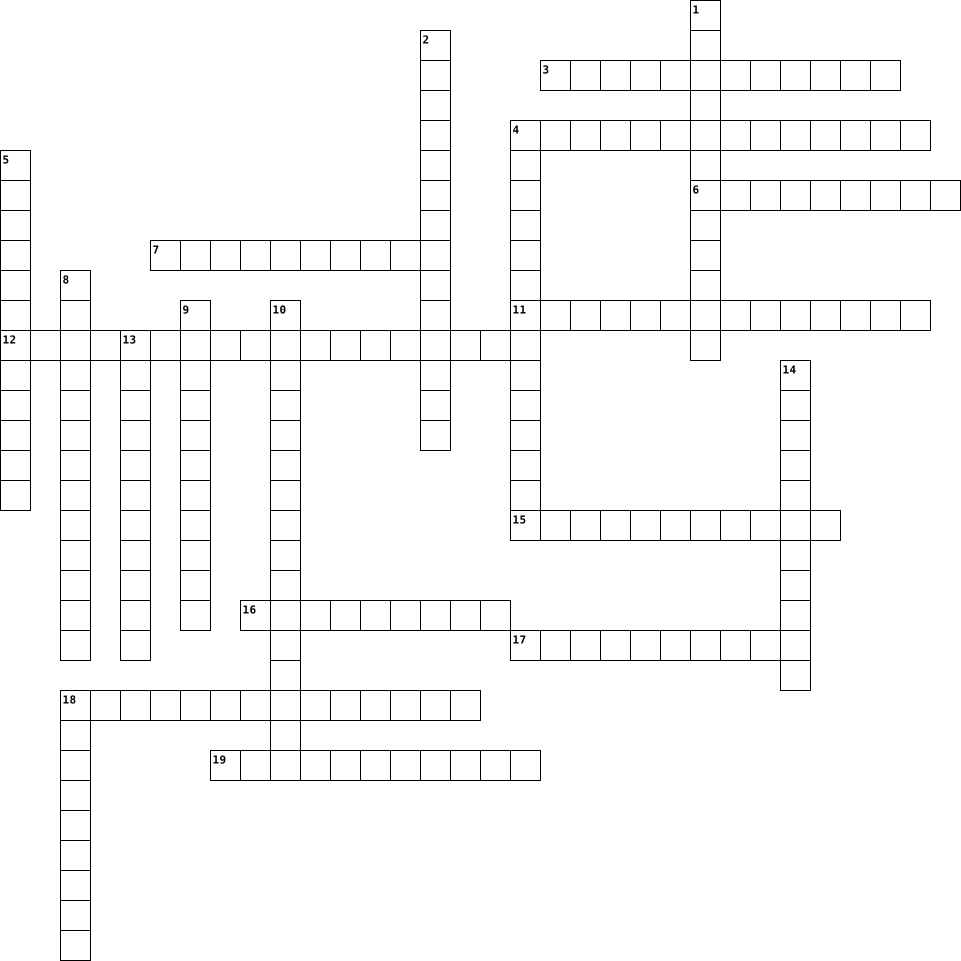
Across
- I Am Number 4
- the Hunger Games
- Vampire Diaries and the Secret Circle
- Gallagher Girls Series
- The Last Song
- Eragon, Eldest, Brisingr and Inheritance
- Percy Jackson
- To Kill A Mockingbird
- Fallen series
- Inkheart
- Harry Potter
Down
- Vampire Academy
- City Immortal Instruments
- The Host and Twilight Series
- Divergent
- The Lord of the Rings
- My sisters keeper
- the hush hush series
- Romeo and Juliet
- Tomorrow When the War Began
- The chronicles of Narnia
21 Clues: Inkheart • Divergent • Harry Potter • I Am Number 4 • The Last Song • Percy Jackson • Fallen series • Vampire Academy • the Hunger Games • Romeo and Juliet • My sisters keeper • the hush hush series • The Lord of the Rings • To Kill A Mockingbird • Gallagher Girls Series • The chronicles of Narnia • City Immortal Instruments • Tomorrow When the War Began • The Host and Twilight Series • ...
Famous Authors 2012-10-30
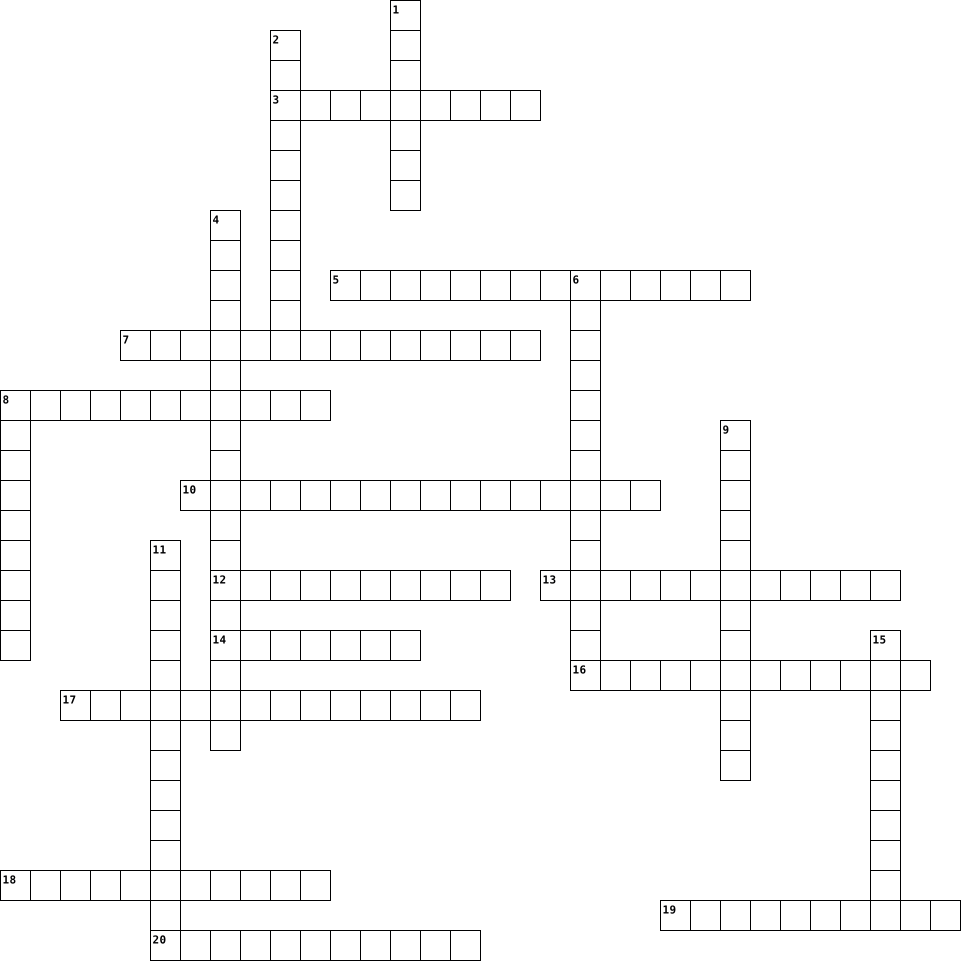
Across
- To Kill A Mockingbird
- The Last Song
- Mortal Instruments and the Infernal Devices
- My Sisters Keeper
- Hush Hush Saga
- Gallagher Girls Series
- Divergent
- Vampire Diaries and the Secret Circle
- Vampire Academy
- Inkheart
- Percy Jackson saga
- The Lord of the Rings
- Romeo and Juliet
Down
- The Chronicles of Narnia
- Tomorrow When the War Began
- The Inheritance Cycle
- The Host and Twilight Series
- Harry Potter
- I Am Number 4
- The Hunger Games
- Fallen Series
21 Clues: Inkheart • Divergent • Harry Potter • The Last Song • I Am Number 4 • Fallen Series • Hush Hush Saga • Vampire Academy • The Hunger Games • Romeo and Juliet • My Sisters Keeper • Percy Jackson saga • To Kill A Mockingbird • The Inheritance Cycle • The Lord of the Rings • Gallagher Girls Series • The Chronicles of Narnia • Tomorrow When the War Began • The Host and Twilight Series • ...
How well do you know me? 2023-10-13
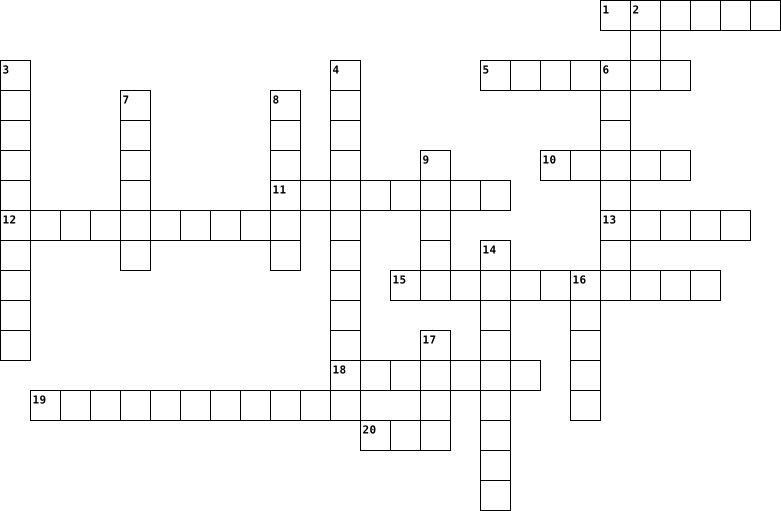
Across
- My favourite drink.
- My favourite tv show.
- My favourite colour.
- Something I’m good at.
- My current car.
- My eye colour.
- My zodiac sign.
- My dream vacation.
- My second home.
- The name we call each other.
Down
- My hair colour during high school.
- Something I hate.
- My favourite place to eat.
- My Birth month.
- My Mcdonalds order.
- My favourite time of day.
- My favourite food.
- My favourite movie.
- My favourite book.
- My favourite hoodie.
20 Clues: My eye colour. • My Birth month. • My current car. • My zodiac sign. • My second home. • Something I hate. • My favourite food. • My favourite book. • My dream vacation. • My favourite drink. • My Mcdonalds order. • My favourite movie. • My favourite colour. • My favourite hoodie. • My favourite tv show. • Something I’m good at. • My favourite time of day. • My favourite place to eat. • ...
Plate Tectonics 2023-03-08

Across
- how to measure earthquakes
- a valley
- 2nd wave to hit seismograph
- a narrow section on the ocean floor
- caused by transform boundary
- sinking
- moving plates
- gradual destruction
- above earthquake
- a numerical earthquake scale
- Move towards each other
Down
- Move past each other
- when new ocean crust forms
- ridge in the atlantic ocean
- first wave to hit seismograph
- Move away from each other
- straight line
- zone where plates meet
- above stratosphere
- supercontinent
20 Clues: sinking • a valley • straight line • moving plates • supercontinent • above earthquake • above stratosphere • gradual destruction • Move past each other • Move towards each other • Move away from each other • how to measure earthquakes • when new ocean crust forms • ridge in the atlantic ocean • 2nd wave to hit seismograph • caused by transform boundary • a numerical earthquake scale • ...
Crossword Puzzle:Plate tectonics 2023-02-24

Across
- A scientific theory that explains how major land form are created as a result of Earth's subterranean movements
- the boundary that collides together creates mountains and volcanoes
- A super continent that incorporated almost all the land masses on earth
- is part of upper mantle
- is made of earth's crust and upper mantle
- the boundary that pulls apart creates rift valleys and mid ocean ridges
- a landform created by a convergent boundary, but is not a volcano or a subduction zone
- is not continental crust
Down
- the boundary that slides past each other creates faults and trenches
- a land form created from a convergent boundary and spews lava
- a land form created from divergent boundaries but is not a mid-ocean ridge
- Occurs when the surface is exposed to connective heat transfer governed by Newton's law of cooling
- is not oceanic crust
- Boundary line that form social distinctions and divided political areas
- a destructive activity caused by convergent and divergent boundaries
15 Clues: is not oceanic crust • is part of upper mantle • is not continental crust • is made of earth's crust and upper mantle • a land form created from a convergent boundary and spews lava • the boundary that collides together creates mountains and volcanoes • the boundary that slides past each other creates faults and trenches • ...
Plate movement via convection 2023-10-10

Across
- Supercontinentnal mass
- Pull in which the subducting crust is heavy enough to pull the rest of itself over the edge
- Is Considered "The classic" force and is the new curst forming at divergent boundaries that pushes the plates
- Theory that Earth's surface is dramatically reshaping itself in an endless, slow-motion movement
- what is the method of heat transfer called?
- What is plate tectonics?
- These currents cause the movement of the tectonic plates that make up the Earth's crust
- Top solid layer of mantle
Down
- Under solid part
- "Pangea is called this today"
- Boundary Where new crust is generated as the plates pull away or separate from each other
- proposed at one time the continents were joined together once and moved slowly to current locations
- What natural disaster does the movement of tectonic plates cause?
- Boundary where crust comes together
- Force where smaller convection currents near the subducting crust
15 Clues: Under solid part • Supercontinentnal mass • What is plate tectonics? • Top solid layer of mantle • "Pangea is called this today" • Boundary where crust comes together • what is the method of heat transfer called? • What natural disaster does the movement of tectonic plates cause? • Force where smaller convection currents near the subducting crust • ...
plate tectonics 2022-03-23

Across
- ocean split down the middle by a big crack
- the remains of ancient living animals
- a type of fault where the crust moves sideways part each other
- plate boundary where the plates slowly collide together
- the process in which the crust pushes downward into the mantle at a fault line.
- circulatory patterns of heat in the magma believed to be the driving force behind plate movement.
- earths crust the slowly moves
Down
- the movement of the ocean floor at a divergent
- the uppermost solid part of the earths crust
- V-shaped valleys that are the deepest parts of the oceans where subduction occurs.
- a type of plate boundary where the plates slowly move apart from each other.
- another name for the crake in the mid-ocean ridge mountains
12 Clues: earths crust the slowly moves • the remains of ancient living animals • ocean split down the middle by a big crack • the uppermost solid part of the earths crust • the movement of the ocean floor at a divergent • plate boundary where the plates slowly collide together • another name for the crake in the mid-ocean ridge mountains • ...
Science Crossword Puzzle 2014-12-18

Across
- Best Class Section
- 9x10
- ___________ boundary makes trenches
- ___________ current
- Acid rain is ________ weathering
- Moving away of rocks
Down
- Least dense layer
- ________ zone
- Density of a cube with a mass of 52 and a volume of 4
- Atomic Number of Potassium
- Bobby is #___!
- Supercontinent
- 101 is _______!
13 Clues: 9x10 • ________ zone • Bobby is #___! • Supercontinent • 101 is _______! • Least dense layer • Best Class Section • ___________ current • Moving away of rocks • Atomic Number of Potassium • Acid rain is ________ weathering • ___________ boundary makes trenches • Density of a cube with a mass of 52 and a volume of 4
Boundaries 2023-12-08

Across
- Divergent boundaries cause?
- when two plates slide past eachother?
- when two plate pull away from each other?
Down
- uneven Convergent cause?
- when two plates crush into each other?
- transform boundaries cause
6 Clues: uneven Convergent cause? • transform boundaries cause • Divergent boundaries cause? • when two plates slide past eachother? • when two plates crush into each other? • when two plate pull away from each other?
Insurgent by Veronica Roth 2021-12-17

Across
- nickname for abnegation people
- Main female character
- main characters brother
- Tobias's father
- Tris's results from the test
- main male character
- Tris's real name
- faction of peace
- Tobias's last name
- name of the book
- who is trying to take over
Down
- Four's real name
- main way of traveling
- faction of truth
- Tris's birth faction
- Tris's best friend
- the bad guy
- Tobias's mother
- Tris's last name
- the faction that Tris and Tobias are part of
20 Clues: the bad guy • Tobias's father • Tobias's mother • Four's real name • faction of truth • Tris's real name • Tris's last name • faction of peace • name of the book • Tris's best friend • Tobias's last name • main male character • Tris's birth faction • Main female character • main way of traveling • main characters brother • who is trying to take over • Tris's results from the test • ...
ryker 2024-12-03

Across
- not compatible
- lack of respect
- rash
- more than enough
- wait
- staying away from the main point
- hard working
- dry
- opponent
- provide evidence
- a guess
- feeling for someone
- some who seeks pleasure
- done quicky without care
- building
Down
- short story
- secret
- untrust worthy
- secret person
- fake
- different
- move apart
- try to match
- hard working
- bold/brave
- will happen
- lacking image
- not important
- creating a appearance
- leader
- showing skill
31 Clues: dry • rash • fake • wait • secret • leader • a guess • opponent • building • different • move apart • bold/brave • short story • will happen • try to match • hard working • hard working • secret person • lacking image • not important • showing skill • not compatible • untrust worthy • lack of respect • more than enough • provide evidence • feeling for someone • creating a appearance • some who seeks pleasure • ...
Down To Know 2022-10-26

Across
- shy, quiet, modest
- moral corruption
- not wanting to talk
- not original
- to alter ones form
- godly, exceedingly wonderful
- large book
- to imitate
- intimidating
- to criticize openly
- calm
Down
- to be dull
- dried up, dehydrated
- prepared to fight
- to swell out
- to violate
- left speechless
- praise for ones achievement
- divergent
- one who expects to get something in return
- solemn sound of a bell
- to be swollen
- skillful, capable
23 Clues: calm • divergent • to be dull • to violate • large book • to imitate • to swell out • not original • intimidating • to be swollen • left speechless • moral corruption • prepared to fight • skillful, capable • shy, quiet, modest • to alter ones form • not wanting to talk • to criticize openly • dried up, dehydrated • solemn sound of a bell • praise for ones achievement • godly, exceedingly wonderful • ...
Final crossword puzzle 2022-12-14

Across
- pressure, cloudy,
- measure,
- surface, nearest,
- altitude temp, distinguish layers,
- inside of the earth,
- boundaries, move apart,
- mid-ocean ridge, underwater chain,
- law, A pattern in nature,
- energy release,
- the process of liquid changing,
- from oceans and lakes, water,
Down
- drift Slowly moved,
- freezes,
- fresh water,
- humidity, the measure of the amount,
- highest concentration,
- normal reverse, movement of two blocks,
- water carbon dioxide.
- and record, an examination,
- 7 steps of
- waves, the first to reach,
- cold and warm,
22 Clues: freezes, • measure, • 7 steps of • fresh water, • cold and warm, • energy release, • pressure, cloudy, • surface, nearest, • drift Slowly moved, • inside of the earth, • water carbon dioxide. • highest concentration, • boundaries, move apart, • law, A pattern in nature, • waves, the first to reach, • and record, an examination, • from oceans and lakes, water, • the process of liquid changing, • ...
Plate motion 2025-10-16

Across
- – Earth's outer shell
- – Ancient supercontinent
- – Earth’s innermost layer
- – Oceanic crust surface
- – Semi-fluid layer below lithosphere
- – Plates moving apart
- – Ground shaking from movement
- – Plates sliding past
- – One plate sinks below another
- – Erupting mountain
Down
- – Molten rock below surface
- – Heat-driven mantle motion
- – Layer beneath the crust
- – Rigid outer part of Earth
- – Plates moving together
- – Moving slab of lithosphere
- – Mid-ocean mountain chain
- – Crack where movement occurs
- – Deep ocean valley
- – Edge between two plates
20 Clues: – Deep ocean valley • – Erupting mountain • – Earth's outer shell • – Plates moving apart • – Plates sliding past • – Oceanic crust surface • – Ancient supercontinent • – Plates moving together • – Layer beneath the crust • – Earth’s innermost layer • – Edge between two plates • – Mid-ocean mountain chain • – Molten rock below surface • – Heat-driven mantle motion • ...
Science 20 Geology Vocabulary 2026-01-05

Across
- Large slab of Earth's crust
- moving apart
- Volcanic rock fragments
- Hot flowing liquid
- Upper mantle
- hot molten rock
- Rigid shell of the earth
- Light
- Above Eearthquake
- Second seismic wave
Down
- Crack in the Earth's crust
- Rock changed by heat and pressure
- Heat by motion
- records sound motion from seismic waves
- Earths solid central layer
- Super continent
- Volcanic rock type
- super hot liquid layer of earth
- Scales to measure earthquakes
- together
- Fastest seismic wave
21 Clues: Light • together • moving apart • Upper mantle • Heat by motion • Super continent • hot molten rock • Above Eearthquake • Volcanic rock type • Hot flowing liquid • Second seismic wave • Fastest seismic wave • Volcanic rock fragments • Rigid shell of the earth • Crack in the Earth's crust • Earths solid central layer • Large slab of Earth's crust • Scales to measure earthquakes • ...
Crossword vocabulary welcome, unit 1 and 2 Elizabeth and Fleur G3d 2020-09-27

Across
- apology
- divergent
- something you can't tell
- flu shot, SHOT, SHOT, SHOT (now your drunk)
- opposite of buy
- corona
- TH and HS are...
- how blind people read
- oeh oeh sorryyyy yeah oehh oehh sorry.... song of justin Bieber
- say hello from the other side
- sigaret
- always tell the...
Down
- the opposite of offline
- chirurg
- Dutch, English, Chinese
- thought transference / psychic communication
- i'm in PAAAIIINNNNN
- shake your head
- the opposite of warm
- closing a paper
- lately
- a wasp ... in a spider webbbbb bzzzz
22 Clues: corona • lately • apology • chirurg • sigaret • divergent • opposite of buy • shake your head • closing a paper • TH and HS are... • always tell the... • i'm in PAAAIIINNNNN • the opposite of warm • how blind people read • the opposite of offline • Dutch, English, Chinese • something you can't tell • say hello from the other side • a wasp ... in a spider webbbbb bzzzz • ...
Tectonic Plates by Sean 2021-09-22

Across
- it erupts
- plate under the pacific ocean
- older tectonic plate
- got separated from Gondwana
- the layer under the outer core
- newer tectonic plate
- eastern of Pacific Ocean basin
- supercontinent
- the layer under the mantle
- surrounds the ocean floor
- when plates slide
- the layer under the crust
Down
- when plates collide
- East African Rift
- earth surface
- plates move together
- when it cools it creates stone
- plates move apart
- makes plates move
- when plates move
20 Clues: it erupts • earth surface • supercontinent • when plates move • East African Rift • plates move apart • makes plates move • when plates slide • when plates collide • plates move together • older tectonic plate • newer tectonic plate • surrounds the ocean floor • the layer under the crust • the layer under the mantle • got separated from Gondwana • plate under the pacific ocean • ...
Plate Tectonics 2022-03-24

Across
- Land risk
- Energy released
- Crack
- Side
- Ocean
- Wave caused by earthquake
- Falling snow/ice
- Instrument that records earthquake details
- Hanging wall goes down
- Waves that travel along ground surface
- Apart
Down
- Slide past each other (Fault)
- Liquid under volcano
- Land
- Mud flows down volcano slope
- Record of earthquake
- Point where earthquake starts
- Reaches Earth’s surface
- Shaking caused by rock movement under the surface.
- Hanging wall goes up
20 Clues: Land • Side • Crack • Ocean • Apart • Land risk • Energy released • Falling snow/ice • Liquid under volcano • Record of earthquake • Hanging wall goes up • Hanging wall goes down • Reaches Earth’s surface • Wave caused by earthquake • Mud flows down volcano slope • Slide past each other (Fault) • Point where earthquake starts • Waves that travel along ground surface • ...
Plate Tectonics 2024-02-08

Across
- plastic-like layer of the Earth
- the way it is put together
- thin, outer layer
- lower mantle
- innermost layer
- thickest layer of the Earth
- presented by Alfred Wegner
- crack on the Earth's surface
- how layers move and behave
- coming together
- presented by Harry Hess
Down
- sliding past each other
- how the plates move
- pieces of the crust
- moving apart
- pressed down on
- split into 2 parts
- crust+upper mantle
- going under another plate
- fully liquid layer
20 Clues: lower mantle • moving apart • innermost layer • pressed down on • coming together • thin, outer layer • split into 2 parts • crust+upper mantle • fully liquid layer • how the plates move • pieces of the crust • sliding past each other • presented by Harry Hess • going under another plate • the way it is put together • presented by Alfred Wegner • how layers move and behave • ...
Final crossword puzzle 2022-12-14

Across
- highest concentration,
- pressure, cloudy,
- and record, an examination,
- inside of the earth,
- water carbon dioxide.
- fresh water,
- the process of liquid changing,
- drift Slowly moved,
- boundaries, move apart,
- waves, the first to reach,
Down
- freezes,
- altitude temp, distinguish layers,
- surface, nearest,
- energy release,
- from oceans and lakes, water,
- law, A pattern in nature,
- measure,
- mid-ocean ridge, underwater chain,
- cold and warm,
- 7 steps of
- humidity, the measure of the amount,
- normal reverse, movement of two blocks,
22 Clues: freezes, • measure, • 7 steps of • fresh water, • cold and warm, • energy release, • pressure, cloudy, • surface, nearest, • drift Slowly moved, • inside of the earth, • water carbon dioxide. • highest concentration, • boundaries, move apart, • law, A pattern in nature, • waves, the first to reach, • and record, an examination, • from oceans and lakes, water, • the process of liquid changing, • ...
Kaydence 2025-01-15

Across
- tireless
- clothes or apparel
- to pass through or gain entrance to gradually
- to limit
- self-controlled
- thin and bony
- to cause anger
- to make no value or consequence
- capable of being grasped by the mind
- a very close friend
Down
- different from each other
- to make use of
- to declare publicly
- emotional
- an animal that feeds on refuse to dead bodies
- hatred, ill-will
- to plunge straight down
- puzzling
- up against
- substitute
20 Clues: tireless • to limit • puzzling • emotional • up against • substitute • thin and bony • to make use of • to cause anger • self-controlled • hatred, ill-will • clothes or apparel • to declare publicly • a very close friend • to plunge straight down • different from each other • to make no value or consequence • capable of being grasped by the mind • to pass through or gain entrance to gradually • ...
Hello 2025-08-31

Across
- my favourite football player
- first child
- my favourite movie
- your favourite movie
- who loves the most?
- I really like this name for a girl
- Something eyes?
- your car
- I know, she…
- month we became together
- one of our first movies
Down
- name of our first child together
- I’ll flip you like a what!?!?
- I’m Mike and you’re?
- what’s gone?
- Name of our future dog
- giving
- that’s so…
- How you feel with lipgloss
- what we watched together
20 Clues: giving • your car • that’s so… • first child • what’s gone? • I know, she… • Something eyes? • my favourite movie • who loves the most? • I’m Mike and you’re? • your favourite movie • Name of our future dog • one of our first movies • month we became together • what we watched together • How you feel with lipgloss • my favourite football player • I’ll flip you like a what!?!? • ...
Sylsta Yaiiiii 2026-04-07

Across
- Bakteriedeling
- Kyssesyge
- kan gøre en kvinde steril
- Undersøge en bestemt bakterie
- Ens celler efter binær fission
- Et domæne
- Vokser
- Form for bakterier
- 2.fase
- Metode
Down
- Bakteriers evne til at overleve
- Form for bakterier
- Agarplade
- 3.fase
- Bliver mere forskellige
- Undersøge af luftbårne mikroorganismer
- bakterier der lever i ekstreme forhold
- Bliver mere ens
- Et domæne
- Et domæne
- Modstandsdygtige
- 1.fase
- 4.fase
- Vækstmedie
- Sikre sig der ikke er fejlkilder
25 Clues: 3.fase • 1.fase • 4.fase • Vokser • 2.fase • Metode • Agarplade • Kyssesyge • Et domæne • Et domæne • Et domæne • Vækstmedie • Bakteriedeling • Bliver mere ens • Modstandsdygtige • Form for bakterier • Form for bakterier • Bliver mere forskellige • kan gøre en kvinde steril • Undersøge en bestemt bakterie • Ens celler efter binær fission • Bakteriers evne til at overleve • Sikre sig der ikke er fejlkilder • ...
Macie science 123 2017-01-08

Across
- / crust sinks
- / plates collide
- / stretching the rock
- / rocks move horizontally
- / plates slide
- / squeezing the rock
- / How rate of movement is measured
- / hanging wall drops
Down
- / how crust changes because of stress
- / plates separate
- / crust rises to higher elevations
- / hanging wall rises
- / bending rock because of stress
13 Clues: / crust sinks • / plates slide • / plates collide • / plates separate • / hanging wall rises • / squeezing the rock • / hanging wall drops • / stretching the rock • / rocks move horizontally • / bending rock because of stress • / crust rises to higher elevations • / How rate of movement is measured • / how crust changes because of stress
Tectonic Plates 2021-05-03

Across
- When two plates separate
- When the Lithosphere is basically recycled
- What makes up the mantle
Down
- When two plates collide together
- Occurs at divergent boundaries
- When two plates slide across each other
6 Clues: When two plates separate • What makes up the mantle • Occurs at divergent boundaries • When two plates collide together • When two plates slide across each other • When the Lithosphere is basically recycled
JOSH MOORE 4TH HOUR SCIENCE 2021-09-27

Across
- movement of heat energy through space
- sideways and downward movement
- seafloor spreading
- long deep depressions
- liquid and solid center
- plates slide past each other
- solid outer
- hot solid rock
- divergent boundary on land
Down
- plates spread
- soft layer bellow liposphere
- crust in the upper mantle
- hot rises cold sinks
- plates move together
- original supercontinent
- heat transfer
- break in the crust where earthquakes occur
17 Clues: solid outer • plates spread • heat transfer • hot solid rock • seafloor spreading • hot rises cold sinks • plates move together • long deep depressions • original supercontinent • liquid and solid center • crust in the upper mantle • divergent boundary on land • soft layer bellow liposphere • plates slide past each other • sideways and downward movement • movement of heat energy through space • ...
Find the title of the story 2025-01-09

Across
- webs, powers, responsability
- virtual world, love, egg
- no marriage, soldier, empire
- ring, middle earth, dragon
- love, vampires,werewolves
- stranded, island, Robinson
- ocean, quest, half god
- pirate, treasure, gum gum
- trauma, initiation, vigilante
- factions, dauntless, choice
- ninja, hokage, konoha
Down
- magic, teenager, stupefix
- challenges,strength, semi-god
- districts, lottery, death
- hyrule, temples, master sword
- apocalypse, labyrinth, running
- neo, robots, kung fu
17 Clues: neo, robots, kung fu • ninja, hokage, konoha • ocean, quest, half god • virtual world, love, egg • magic, teenager, stupefix • love, vampires,werewolves • districts, lottery, death • pirate, treasure, gum gum • ring, middle earth, dragon • stranded, island, Robinson • factions, dauntless, choice • webs, powers, responsability • no marriage, soldier, empire • ...
Lab Room Activity 2022-11-16

Across
- moving against each other
- a word
- down movement valley
- movement of earth
Down
- Earth Plate
- Layer in earth
- coming together
- main layer of the earth
- Moving away
- lava
10 Clues: lava • a word • Earth Plate • Moving away • Layer in earth • coming together • movement of earth • down movement valley • main layer of the earth • moving against each other
Salim loera crossword 2023-03-06

Across
- earth crust
- our home plant
- a dividing line
- can cause eruptions
- floor bottom of ocean
- of fire seismic earthquakes
Down
- can extending
- big rocks
- change apperance
- close togther
10 Clues: big rocks • earth crust • can extending • close togther • our home plant • a dividing line • change apperance • can cause eruptions • floor bottom of ocean • of fire seismic earthquakes
Cracked plates 2023-09-15

Across
- Crash together.
- Glancing blow or criticism.
- Earthquake's size measure.
- Repeated decorative design.
- Coming together.
- Defined limits or borders.
- Earth's crustal segment.
- Family member or comparative term.
Down
- Moving apart.
- Change in form or nature.
- Scientific educated guess.
- Ground-shaking seismic events.
- A grid of data.
13 Clues: Moving apart. • Crash together. • A grid of data. • Coming together. • Earth's crustal segment. • Change in form or nature. • Earthquake's size measure. • Scientific educated guess. • Defined limits or borders. • Glancing blow or criticism. • Repeated decorative design. • Ground-shaking seismic events. • Family member or comparative term.
Science Crossword Puzzle 2021-02-23

Across
- Best Class Section
- 9x10
- ___________ boundary makes trenches
- ___________ current
- Acid rain is ________ weathering
- Moving away of rocks
Down
- Least dense layer
- ________ zone
- Density of a cube with a mass of 52 and a volume of 4
- Atomic Number of Potassium
- Bobby is #___!
- Supercontinent
- 101 is _______!
13 Clues: 9x10 • ________ zone • Bobby is #___! • Supercontinent • 101 is _______! • Least dense layer • Best Class Section • ___________ current • Moving away of rocks • Atomic Number of Potassium • Acid rain is ________ weathering • ___________ boundary makes trenches • Density of a cube with a mass of 52 and a volume of 4
Macie science 123 2017-01-08

Across
- / bending rock because of stress
- / plates collide
- / crust rises to higher elevations
- / crust sinks
- / hanging wall rises
- / how crust changes because of stress
- / plates slide
- / hanging wall drops
Down
- / plates separate
- / How rate of movement is measured
- / stretching the rock
- / squeezing the rock
- / rocks move horizontally
13 Clues: / crust sinks • / plates slide • / plates collide • / plates separate • / squeezing the rock • / hanging wall rises • / hanging wall drops • / stretching the rock • / rocks move horizontally • / bending rock because of stress • / How rate of movement is measured • / crust rises to higher elevations • / how crust changes because of stress
science 2021 2021-11-25

Across
- non-living factors
- subduction plate movement
- biggest part of brain
- acidic or basic
- lateral plate movement
- living organisms
- any substance found in vaccines
- excess nutrients in water
Down
- spreading plate movement
- biotic and abiotic factors working together
- regulation of body factors
- blood sugar
- nerve cell
13 Clues: nerve cell • blood sugar • acidic or basic • living organisms • non-living factors • biggest part of brain • lateral plate movement • spreading plate movement • subduction plate movement • excess nutrients in water • regulation of body factors • any substance found in vaccines • biotic and abiotic factors working together
Immaculate Crossword Puzzle #1 2022-06-28

Across
- Building where students learn
- Opposite of cat
- Allow you to see
- A word that sounds like son
- Walking fast
- Sport played on a court
- $
Down
- Can call people on this
- Book by Veronica Roth
- Opposite of an antonym
- Abcdef...
- Has clouds in it
- Joyful feeling
13 Clues: $ • Abcdef... • Walking fast • Joyful feeling • Opposite of cat • Allow you to see • Has clouds in it • Book by Veronica Roth • Opposite of an antonym • Can call people on this • Sport played on a court • A word that sounds like son • Building where students learn
Lab Room Activity 2022-11-16

Across
- moving against each other
- a word
- down movement valley
- movement of earth
Down
- Earth Plate
- Layer in earth
- coming together
- main layer of the earth
- Moving away
- lava
10 Clues: lava • a word • Earth Plate • Moving away • Layer in earth • coming together • movement of earth • down movement valley • main layer of the earth • moving against each other
Sadlier Unit 8 Synonyms & Antonyms Review 2025-02-24

Across
- synonym for proxy
- antonym for divergent
- synonym for fervent
- synonym for cronies
Down
- antonym for plummet
- synonym for infiltrated
- antonym for gaunt
- synonym for rankle
- synonym for stint
- synonym for enmity
- antonym for nullified
11 Clues: antonym for gaunt • synonym for proxy • synonym for stint • synonym for rankle • synonym for enmity • antonym for plummet • synonym for fervent • synonym for cronies • antonym for divergent • antonym for nullified • synonym for infiltrated
Rokko’s Divergent vocabulary crossword puzzle 2023-05-05

Across
- inherent ability/talent
- formal entry into an organization, position, or office
- without mercy or pity
- favorite saying; slogan
- sequence of likely events
- secret and sly
- servile/submissive dependent
- organization involved in a pact/treaty
- take the place or move into
- act of deceiving/acting in bad faith
- contain or include
- without fault or error
- having a common center
- strong & sharp, as a taste or smell
- a very steep cliff
- flow over or cover completely
- lack of respect & feeling of contempt
- convey or express a meaning
Down
- hesitant or lacking confidence; unsettled in mind or opinion
- weak, unsteady, or uncertain
- move apart in different directions
- arousing animosity/hostility
- leave/abandon someone
- cause extensive destruction/ruin
- unreasonable; illogical
- give in, as to influence or pressure
- behavior
- escaping hostile environment
- rough contact with while moving
- the act of misleading
- discouraging through fear
- compulsory force or threat
- imitating situation/process
- totally exterminate/destroy
- group’s ideas and beliefs
35 Clues: behavior • secret and sly • contain or include • a very steep cliff • without mercy or pity • leave/abandon someone • the act of misleading • without fault or error • having a common center • inherent ability/talent • favorite saying; slogan • unreasonable; illogical • sequence of likely events • discouraging through fear • group’s ideas and beliefs • compulsory force or threat • ...
Divergent Crossword by: Sammi Aiken 2013-05-16

Across
- Veronica_____ (author's last name)
- name of initiate who gets stabbed in the eye during training
- Tobias' dad's name
- the number of fears Beatrice has
- the people who don't fit into one faction
- name of Beatrice's best friend during training
- Tobias' second fear
- woman who prints lies about Abnegation
- the game the Dauntless like to play
- the name of the person who delivers the simulation to Beatrice first
- Beatrice's brother's name
Down
- what you have to spill on your chosen faction's symbol
- person Beatrice goes zip lining with
- the faction Beatrice's brother joins
- the name Beatrice is called because she is from Abnegation
- the brave faction
- the faction that wears grey
- the truthful faction
- the peaceful faction
- four's real name
20 Clues: four's real name • the brave faction • Tobias' dad's name • Tobias' second fear • the truthful faction • the peaceful faction • Beatrice's brother's name • the faction that wears grey • the number of fears Beatrice has • Veronica_____ (author's last name) • the game the Dauntless like to play • person Beatrice goes zip lining with • the faction Beatrice's brother joins • ...
Divergent Chapters 1-4 Vocabulary 2025-10-15

Across
- a status in which a person is not welcome into any faction
- to give up to the control or influence of another person or agent
- a faction of people who value honesty and directness above all else, believing that truthfulness will lead to a more peaceful and perfect society
- the strength of mind that enables a person to endure pain or hardship; courage or bravery
- something that is made to look, feel, or behave like something else especially so that it can be studied or used to train people
- the use of power to impose one's will on another, pressure
- not safe, strong, or steady; dangerous or risky
- the way objects in space are arranged in proper relation to one another
- open dislike for someone or something considered unworthy of one's concern or respect
- to impart knowledge of a new thing or situation to, educate
- excessive pride in or admiration of one's own appearance or achievements
- serenely free of interruption or disturbance
- to show especially by a conventional token (such as word, signal, or gesture)
- to put into a hiding place, conceal
Down
- to criticize (someone) severely or angrily especially for personal failings
- general suitability or capacity for learning
- having an often intentionally veiled or uncertain meaning, cryptic
- something that decorates or beautifies; regalia
- differing from each other or from a standard
- a faction dedicated to intelligence, knowledge, and curiosity
- a faction dedicated to peace, kindness, and harmony, believing that conflict and hatred are the root of society's problems
- the quality or state of being double or twofold
- a faction focused on unselfishness and unity
- to affect or appeal to someone in a personal or emotional way
- a faction showing fearlessness and determination
- not showing that something is certainly true, imprecise or inexact
26 Clues: to put into a hiding place, conceal • general suitability or capacity for learning • differing from each other or from a standard • a faction focused on unselfishness and unity • serenely free of interruption or disturbance • something that decorates or beautifies; regalia • the quality or state of being double or twofold • ...
Divergent Vocabulary Chapter 1-20 2024-04-15

Across
- not allow
- nervous or surprised
- a deep pit
- cut
- punished
- wiggling or squirming
- most important
- a person who goes against their country
- easily scared or not brave
Down
- out of control or crying
- give up or sacrifice
- to go against someone or your country
- does not make sense
- truth
- stiff or hard
- skill or ability
- a loud cry
- group
- bad smell
- calm
20 Clues: cut • calm • truth • group • punished • not allow • bad smell • a deep pit • a loud cry • stiff or hard • most important • skill or ability • does not make sense • give up or sacrifice • nervous or surprised • wiggling or squirming • out of control or crying • easily scared or not brave • to go against someone or your country • a person who goes against their country
Divergent - Courtney Curry 2022-03-04

Across
- what did everyone use to call tris in dauntless?
- what was tris ranking after the fear simulation?
- what is tris tattoo?
- what faction is the political leader?
Down
- what is fours real name?
- the faction Caleb chose
- who knew tris was divergent?
- what do Tris and Tobias take to make sure tge simulation can't be restarted?
- how many fears did tris have in the fear simulation?
- who gave four the serum?
10 Clues: what is tris tattoo? • the faction Caleb chose • what is fours real name? • who gave four the serum? • who knew tris was divergent? • what faction is the political leader? • what did everyone use to call tris in dauntless? • what was tris ranking after the fear simulation? • how many fears did tris have in the fear simulation? • ...
divergent spilts apart 2022-11-01

Across
- sliding
- mountains that magma flow out of
- crust that makes up the contents
- wave of energy
Down
- colliding
- overlapping
- the amount of molecules in a object
- broken stream beds
- Splits Apart
- mountain chain
10 Clues: sliding • colliding • overlapping • Splits Apart • mountain chain • wave of energy • broken stream beds • mountains that magma flow out of • crust that makes up the contents • the amount of molecules in a object
Vocabulary 8A by Makaylah Golden 2025-02-13

Across
- to cause anger
- a person who collects
- thin,bare
- wipe out,cancel
Down
- self-controlled
- plunge,a fastened weight
- different directions
- a friend
- clothes
- to support,prop up
10 Clues: clothes • a friend • thin,bare • to cause anger • self-controlled • wipe out,cancel • to support,prop up • different directions • a person who collects • plunge,a fastened weight
Unit 2 - Ocean Geology 2019-10-10

Across
- two plates slide past each other
- Without light
- Flat,featureless part of the seafloor that can extend for thousands of miles
- plates collide or come together
- gap located at the center of the mid-ocean ridge where the plates are pulling apart
- decreases the deeper you go in the ocean
- Steeply sloping edge of a continental shelf that drops to the ocean basin
- Underwater mountain chain, runs through middle of the ocean created by divergent boundary
- Open ocean within the Pelagic
- Plates divide or move apart
- Neritic and Oceanic (the whole ocean basin)
Down
- Division where sunlight occure
- underwater mountain formed by volcanic activity, below sea level
- when one plate slides under another plate
- created when a continent-continent plates collide
- Deep ocean trough created when an ocean plates slide under a continental plate
- zone where aphotic zone begins
- Relatively flat part of the continent that sticks out underwater
- increases the deeper you go in the ocean
- a ring-shaped reef, island, or chain of islands formed of coral around a sunken island
- created when two plates slide past each other
- zone where trenches occur
- Ocean seafloor or bottom
- Volcano that sunk beneath ocean’s surface and top flattened from wave action
- Division of Pelagic near shoreline
25 Clues: Without light • Ocean seafloor or bottom • zone where trenches occur • Plates divide or move apart • Open ocean within the Pelagic • Division where sunlight occure • zone where aphotic zone begins • plates collide or come together • two plates slide past each other • Division of Pelagic near shoreline • increases the deeper you go in the ocean • ...
Plate tectonics , internal structure of earth and earthquake 2021-09-11

Across
- the wave of energy caused by the sudden breaking of rock within the earth or by an explosion
- where plates slide passed each other
- the majority of the mantle from the core-mantle boundary is solid
- a line of volcanoes above the melting oceanic plate
- outermost layer of earth
- overlies a plastic layer
- where two separate plates are pushing into each other
- it is mountain range of western south american
- point of origin of earthquake
Down
- earth has rigid outer layer
- below the crust lies the dense and extending to a depth of 2900 km
- where two plates are moving apart
- shaking of ground
- they are always slowly moving, but they get stuck at their edges due to friction
- first major discontinuity occurs at a depth of 30-40km below the continents
- continent-continent convergent boundary example in mountain range
- found along divergent plate boundaries
- it lies at the center of the earth it is denser than the mantle
- they rolls along the ground just like a wave rolls across a lake or an ocean
- it is occurs within earth's interior at a depth of about 2900km (1800mi) below the surface
- plates move relative to each other
21 Clues: shaking of ground • outermost layer of earth • overlies a plastic layer • earth has rigid outer layer • point of origin of earthquake • where two plates are moving apart • plates move relative to each other • where plates slide passed each other • found along divergent plate boundaries • it is mountain range of western south american • ...
Plate Tectonics 2012-02-08
Across
- The remains or impression of a prehistoric organism preserved in petrified form or as a mold or cast in rock.
- Boundary moving towards each other.
- A mountain that opens downward to a pool of molten rock.
- A sudden and violent shaking of the ground.
- A living organism; tree, shrub, herb, grass, and flower.
- name of Wegener's theory.
- Example of Convergent Boundary.
- Relatively hard, naturally formed mineral or petrified matter; stone.
- Proposed the theory of the Plate Tectonics.
- The layer of the Earth between the crust and the core.
- The separation of the continents by plate tectonics.
- This occurs in Continental Boundary (Ocean vs. Continent).
Down
- This happens in a Convergent Boundary (Continent vs. Continent).
- A person.
- Boundary moving apart from each other.
- sudden occurrence of a violent discharge of steam and volcanic material.
- The crustal plates are moving over the mantle.
- A long high sea wave caused by an earthquake or other disturbance.
- Example of Transform-Fault Boundary (Hint: It is a fault).
- Example of Divergent Boundary (Hint: It is a ridge).
- Boundary moving side by side.
- A living organism that feeds on organic matter; fish, deer, snake, bird, and coyote.
22 Clues: A person. • name of Wegener's theory. • Boundary moving side by side. • Example of Convergent Boundary. • Boundary moving towards each other. • Boundary moving apart from each other. • A sudden and violent shaking of the ground. • Proposed the theory of the Plate Tectonics. • The crustal plates are moving over the mantle. • ...
Plate Tectonics (Boundaries) 2014-02-20

Across
- two plates that pull away from each other.
- two plates slipping passed one another.
- a line of volcanos located on the outer edges of the Pacific plate
- the plate that hold most of earths water
- the year that the theory became known (in 1900's)
- a land form that is formed where a convergent plate comes together usually shoots out lava
- the plate that holds North America
- two plates pushing against each other that can form mountains.
Down
- the plate in witch the Caribbean lies
- the plate that holds the third largest continent(Africa)
- the plate that upholds fiji
- caused by a divergent plate pulling away from one another and creates an underwater ridge Ex: Mid Atlantic Ridge
- holds the worlds largest continent/also the worlds largest country(Russia)
- the plate in witch South America is located
- the plate just west of the South American plate (stats with a N)
- these are caused by two convergent plates running into each other (they move upward)
- the man who came up with the theory of plate tectonics and continental drift
- the plate in witch Antarctica is located
- the plate in witch the philippines are located
- the plate that lies bettween the eurasian plate and the african plate(Arabian sea)
20 Clues: the plate that upholds fiji • the plate that holds North America • the plate in witch the Caribbean lies • two plates slipping passed one another. • the plate that hold most of earths water • the plate in witch Antarctica is located • two plates that pull away from each other. • the plate in witch South America is located • the plate in witch the philippines are located • ...
Tectonics 2.0 2016-11-17

Across
- The plates make up this layer of the Earth.
- German for Continental Drift
- Common result of transform plates.
- Describing what you can directly see.
- This is formed between two divergent plates.
- Geologists in the early 1900's explained Wegener's observations by suggesting these existed.
- Rock layers that are broken and uneven.
- Wegener believed all the continents were once attached, he called this supercontinent this.
- When plates are moving apart.
- Common result of subduction.
- Force that drives tectonic plate motion.
Down
- The guy who came up with the original idea of Continental Drift
- The belief that the continents have been moving across the planet over time.
- A break between two tectonic plates
- Soil types and Fossils
- The first observation that Wegener made his inference based on.
- We now know that continents move because they are attached to these.
- The human tendency to only look for evidence for what you already think is true.
- Goo that the plates are floating on.
- Explanations of what you see, valid unless observations disprove them.
- Common result of two continental plates converging.
- When plates are moving together.
- When one plate pushes under another.
- When two plates are moving next to each other.
24 Clues: Soil types and Fossils • German for Continental Drift • Common result of subduction. • When plates are moving apart. • When plates are moving together. • Common result of transform plates. • A break between two tectonic plates • Goo that the plates are floating on. • When one plate pushes under another. • Describing what you can directly see. • ...
Plate Tectonics 2022-04-06

Across
- it when earth starts to violently shake the ground cuausing a grate destition.
- when the plates move towards each other and collide.
- It is the solid, outer part of the earth.
- is when the goo that comes out when the volcano erupts.
- it occurs when two tecitonic plates move away from each other.
- is a low temperature of the atomsphere.
- there re there differnt plate boundary is convergent, divergent and transform.
- is when the lava is cooling down.
- the places where plates slide sidways past each other.
- is the only liquid layerand a small amout of the other substances.
- is the layer if the earth that is
Down
- is the result of collision between landmasses.
- when plates come together and one rides on top of each other.
- are the largest deperssion on the
- is a method thatconverts a mixture or solution of chemical substances.
- is a massive,irregularly shaped slab of soild rock.
- happens when subdcution rides on top on of each other.
- the brown outer part, at the bottem of the sea floor.
- is the mostly solid bulk of earths interior.
- a deep cleft between cliffs form weathering
- is the deepest hottest layer in the earth.
21 Clues: are the largest deperssion on the • is when the lava is cooling down. • is the layer if the earth that is • is a low temperature of the atomsphere. • It is the solid, outer part of the earth. • is the deepest hottest layer in the earth. • a deep cleft between cliffs form weathering • is the mostly solid bulk of earths interior. • ...
The Restless Earth 2022-02-28
Across
- Largest Mountain range formed by convergence
- Molten rock that reaches the surface
- The Earth's crust is broken into these Plates
- Exact spot where Earthquake happens
- Tectonic boundary where plates move apart
- These seismic waves travel fastest
- Motlen rock beneath the Earth's surface
- The line along which plates move causing quakes
- Circular motion of magma that moves the plates
- Location on surface directly above the focus
- When a tectonic plate is forced downward
- This type of rebound or snapping back of plates
- These seismic waves travel slow
- Tectonic boundary where plates come together
- Tectonic boundary where plates slide by another
Down
- Type of volcano with gentle slopes like Hawaii
- Layer below the crust that is semi molten
- Large ocean waves created by oceanic earthquake
- Earth's interior layer made of solid iron
- Inside layer made of hot liquid iron and nickel
- Type of waves given off by earthquakes
- A type of valley produced by divergent plates
- measurement of how thick or thin liquid is
- Term used to describe hot melted rock
- The name of the plate that outlines Ring of Fire
- The bending of tectonic plates
- Composite Volcanoes are also known as these type
- Scale that measures the magnitude of earthquakes
28 Clues: The bending of tectonic plates • These seismic waves travel slow • These seismic waves travel fastest • Exact spot where Earthquake happens • Molten rock that reaches the surface • Term used to describe hot melted rock • Type of waves given off by earthquakes • Motlen rock beneath the Earth's surface • When a tectonic plate is forced downward • ...
Vocabulary Unit 8 2025-03-03

Across
- A word that is the opposite of nullify
- Going in different directions; different from each other
- To cancel or wipe out
- Clothing; to dress
- A person who collects or removes usable items from waste materials; an animal that feeds on dead bodies
- A word that is the opposite of stoic
- Thin and bony; starved-looking
- A bird that is considered a scavenger
- A very close friend; pal
- This word is the opposite of crony
- A word that is an antonym of divergent
Down
- Calm; not showing any emotion in response to pleasure or pain
- A word that is a synonym of proclaim
- To declare publicly or officially
- This creature is known to be very cryptic (no spaces)
- What thing abuts the wall close to the classroom entrance?
- A word that is a synonym of infiltrate
- Hatred; ill-will
- A word that is an antonym of enmity
- To pass through or gain entrance to gradually
- A word that is the opposite of plummet
- To join at one end or be next to; to support or prop up
- A word that is the opposite of gaunt
- Puzzling; mystifying
- To plunge straight down
- What type of attire would you probably wear to a wedding?
26 Clues: Hatred; ill-will • Clothing; to dress • Puzzling; mystifying • To cancel or wipe out • To plunge straight down • A very close friend; pal • Thin and bony; starved-looking • To declare publicly or officially • This word is the opposite of crony • A word that is an antonym of enmity • A word that is a synonym of proclaim • A word that is the opposite of stoic • ...
Earth Layer & Plate Tectonics Review 2026-02-05

Across
- A type of volcano with flat, gently sloping sides and generally nonexplosive eruptions.
- flow Rapidly moving clouds of hot ash, gas, and debris.
- Type of plate boundary where two plates are moving apart.
- This type of landform occurs at a continental – oceanic convergent boundary.
- This forms when an earthquake occurs under the ocean.
- Slower moving seismic waves that travel side to side and can't travel through liquids.
- This type of landform is created at a continental–continental convergent boundary.
- Earth’s crust is broken into pieces called _____.
- Fast moving seismic waves that travel horizontally.
- This event occurs at a transform boundary.
Down
- Scientist who proposed the theory of continental drift.
- New seafloor is created at this oceanic-oceanic divergent boundary.
- Circular flow of heating and cooling magma in the mantle.
- Theory that Earth’s continents were once joined together and have since broken apart.
- Volcanoes form over these unusually hot regions of Earth’s mantle.
- The point on Earth’s surface directly above the focus where an Earthquake originates.
- Type of plate boundary where two plates are moving toward each other
- A crack in Earth’s crust.
- Magma that flows onto Earth’s surface.
- A supercontinent made of all of Earth’s land masses.
- Type of plate boundary where two plates are sliding past each other horizontally.
21 Clues: A crack in Earth’s crust. • Magma that flows onto Earth’s surface. • This event occurs at a transform boundary. • Earth’s crust is broken into pieces called _____. • Fast moving seismic waves that travel horizontally. • A supercontinent made of all of Earth’s land masses. • This forms when an earthquake occurs under the ocean. • ...
PLate motion 2021-03-26

Across
- Plate
- boundary
- section
- Boundary
- soild parts
- Outer Layer
Down
- studies earth
- drills underground
- Studies fossils
9 Clues: Plate • section • boundary • Boundary • soild parts • Outer Layer • studies earth • Studies fossils • drills underground
Plate Tectonics (Boundaries) 2014-02-20

Across
- these are caused by two convergent plates running into each other (they move upward)
- the year that the theory became known (in 1900's)
- the plate in witch the Caribbean lies
- the plate that lies bettween the eurasian plate and the african plate(Arabian sea)
- the plate in witch the philippines are located
- the plate that holds North America
- a line of volcanos located on the outer edges of the Pacific plate
- the plate in witch Antarctica is located
Down
- two plates that pull away from each other.
- the plate in witch South America is located
- the plate that hold most of earths water
- two plates pushing against each other that can form mountains.
- a land form that is formed where a convergent plate comes together usually shoots out lava
- two plates slipping passed one another.
- caused by a divergent plate pulling away from one another and creates an underwater ridge Ex: Mid Atlantic Ridge
- holds the worlds largest continent/also the worlds largest country(Russia)
- the man who came up with the theory of plate tectonics and continental drift
- the plate that holds the third largest continent(Africa)
- the plate that upholds fiji
- the plate just west of the South American plate (stats with a N)
20 Clues: the plate that upholds fiji • the plate that holds North America • the plate in witch the Caribbean lies • two plates slipping passed one another. • the plate that hold most of earths water • the plate in witch Antarctica is located • two plates that pull away from each other. • the plate in witch South America is located • the plate in witch the philippines are located • ...
Plate Tectonics Crossword Puzzle 2022-05-15

Across
- Long narrow mountains formed by magma at divergent boundaries
- Two plates move toward each other
- Vents in earth's crust through which molten rock flows
- Blocks of crust that move horizontally past each other
- The partially melted portion of the mantle
- The size of an earthquake
- rising mantle material at mid-ocean ridges push plates away from the ridge
- Earth is broken down into large rigid pieces that move with respect to each other
- This rock is formed by erosion
- Two plates collide, one can sink other the other, when this happens it pulls on the rest of the plate
Down
- The process that occurs when one tectonic plate moves under another tectonic plate
- The crust and uppermost part of the mantle
- This rock is formed by heat and pressure
- The circulation within fluids caused by differences in density and thermal energy
- Two plates move away from each other
- Magma that erupts onto earth's surface
- Molten rock stored beneath earth's surface
- A crack or fracture in earth's crust along which movement occurs
- A vibration caused by the rupture and sudden movement of rocks along a crack in earth's crust
- This rock is formed when hot molten rock crystallizes
20 Clues: The size of an earthquake • This rock is formed by erosion • Two plates move toward each other • Two plates move away from each other • Magma that erupts onto earth's surface • This rock is formed by heat and pressure • The crust and uppermost part of the mantle • Molten rock stored beneath earth's surface • The partially melted portion of the mantle • ...
Marine Science Chapter3 2023-09-29

Across
- Landmass that is believed to have once been the only continent on earth surrounded by water
- How fast (in centimetres) continents move per year
- the uppermost layer of the earth, it is brittle and lightweight
- invented the continental drift theory
- layer of the earth that is approximate to the temperature of the sun
- move along the earth's surface
- mass per unit volume
- heat transferred by contact
- some of the oceanic crust will melt along with the sediments. As the plates come together water fills the empty space
- Plates that move towards each other
- Section of the Mantle that is hotter than the Asthenosphere
Down
- less dramatic but are useful in analyzing Earth's interior structure
- Plates that move apart
- Consists of 68% of the mass of the earth
- Ocean located left of California and Chile
- one of the surface exresssions of plumes of magma rising from relatively stationery sources of heat in the mantle
- form when divergent plates spilt
- 7 landmasses located around the world
- loss of energy through radiation
- the ability of an object to float in a fluid by displacing a volume of that fluid equal in weight to the floating object's own weight
- largest known plume
- heat transferred without contact
22 Clues: largest known plume • mass per unit volume • Plates that move apart • heat transferred by contact • move along the earth's surface • form when divergent plates spilt • loss of energy through radiation • heat transferred without contact • Plates that move towards each other • 7 landmasses located around the world • invented the continental drift theory • ...
Geology Review 2023-09-26

Across
- type of crust we are on
- sublayer of the mantel that is closest to the core
- Earth's crust split into large pieces
- pressure and temperature ___________________(s)with depth
- a process in the pass that occurs today
- plates divide at this boundary
- _____________ are formed at oceanic vs oceanic convergent boundaries
- plate _________________, where two plates meet
- a type of seismic wave that can go through all layers of the earth
- the layer that has the most pressure and highest temperature is the ___________ core
- series of waves that build upon each other
- molten rock inside the Earth's crust
- a wave that is phirst and phast
Down
- the more dense layer of crust, will be the one to subduct
- a break in the rock where earthquakes occur
- __________________________ current, heating and cooling of magma causes continental drift
- hotter magma rises, cooler magma sinks because of the difference in ___________________
- plates that slide at this boundary
- 75% of all volcanoes are located here
- plates collide at this boundary
- at divergent boundaries new _______ ___________ is created
- ____________ ____________ are formed at convergent boundaries
- vibrations that are detected in Earthquakes and volcanic eruptions ____________ waves
- molten rock outside the Earth's crust
- a type of seismic wave that is slow and second
25 Clues: type of crust we are on • plates divide at this boundary • plates collide at this boundary • a wave that is phirst and phast • plates that slide at this boundary • molten rock inside the Earth's crust • Earth's crust split into large pieces • 75% of all volcanoes are located here • molten rock outside the Earth's crust • a process in the pass that occurs today • ...
Geology Crossword Puzzle 2024-11-05

Across
- Mountain created by volcanic activity
- Outer layer of Earth
- Hot spot where magma reaches Earth's surface
- Tectonic plate boundary where plates pull apart
- Type of earthquake waves that move through solids and liquids
- Liquid layer surrounding Earth's inner core
- Term for large landmasses formed by Earth's tectonic activity
- Layer of Earth composed of iron and nickel
- The process by which one tectonic plate is forced under another
- Seismic waves that travel through solids only
- Theory that Earth's continents were once joined
- Large, destructive ocean wave caused by underwater disturbance
- Supercontinent before it split apart
- Scientist who developed the theory of plate tectonics
Down
- Boundary where two plates collide
- Term for Earth's crust and upper mantle
- Volcano type known for explosive eruptions
- A geological feature formed by divergent plate boundaries
- Long crack in Earth's crust where movement occurs
- Earth's layer responsible for tectonic movements
- Type of volcano formed by gentle eruptions
- Earthquake's point of origin beneath the surface
- Violent shaking of the Earth's surface
- The study of Earth's physical structure
- Solid, innermost layer of Earth
- Fault line in California known for earthquakes
- Plate boundary where plates move apart
- Volcanic eruption's release of molten rock
- Plate boundary where plates slide past each other
- A natural disaster caused by seismic activity
- Volcanic material ejected from a volcano
31 Clues: Outer layer of Earth • Solid, innermost layer of Earth • Boundary where two plates collide • Supercontinent before it split apart • Mountain created by volcanic activity • Violent shaking of the Earth's surface • Plate boundary where plates move apart • Term for Earth's crust and upper mantle • The study of Earth's physical structure • ...
Sea Floor Features 2025-09-16

Across
- continental volcanic arc due to oceanic-continental plate convergence
- ocean with many active plate boundaries
- abundant features on the Pacific Ocean floor due to lack of sedimentation
- sediment derived from diatoms foraminifera and other organismal remains
- a superheated water spout found at midocean ridges
- finest particle size of sediment that takes the longest to settle
- an underwater volcano
- area of high earthquake and volcanic activity around the Pacific ocean due to convergent plate boundaries
- continental margin with a narrow shelf and steep slope
Down
- type of continental margin that does not mark a plate boundary
- stripes that form a symmetrical pattern around mid ocean ridges
- a linear lowland area between two uplifted areas found at a divergent plate boundary
- forms at convergent boundaries
- steepest part of a continental margin
- deepest flattest parts of the earth
- bump of sediment found at the base of a passive continental margin
- the Aleutian Islands and the islands of Japan are formed in this convergent boundary
- the earths crust
- molten lava from the upper mantle that wells up forming new seafloor
- sediment derived from weathering
- formed by the tests of diatoms and radiolarians specifically
- a divergent boundary between two oceanic plates
- volcanic island xxx that forms on the less dense of two oceanic plates at a subduction zone
23 Clues: the earths crust • an underwater volcano • forms at convergent boundaries • sediment derived from weathering • deepest flattest parts of the earth • steepest part of a continental margin • ocean with many active plate boundaries • a divergent boundary between two oceanic plates • a superheated water spout found at midocean ridges • ...
Science Puzzle 2021-10-13

Across
- pliable
- mostly solid bulk of earth's interior
- a thin piece of earth that we stand on
- pulling
- metal ball in the middle of the earth
- narrow excavation in ground
- rigid outer part of the earth
- break easily
Down
- separate
- merge
- pushing
- upper layer of earth's mantle
- change of shape
- fluid layer in the earth
- change appearance
15 Clues: merge • pliable • pushing • pulling • separate • break easily • change of shape • change appearance • fluid layer in the earth • narrow excavation in ground • upper layer of earth's mantle • rigid outer part of the earth • mostly solid bulk of earth's interior • metal ball in the middle of the earth • a thin piece of earth that we stand on
SAT Crossword 2022-05-02

Across
- Fleeting, temporary
- The act of bringing together and forgiving
- Secret
- To delay, often unnecessarily
- Very large, spacious
- Peak
Down
- Togetherness, trust, friendship
- Unproven theory, educated guess
- Work together
- Person who acts in pursuit of pleasure
- Being impulsive, acting without thinking
- Practical
- Moving apart
- Casual, calm, at ease
- Something that makes the situation not as bad
15 Clues: Peak • Secret • Practical • Moving apart • Work together • Fleeting, temporary • Very large, spacious • Casual, calm, at ease • To delay, often unnecessarily • Togetherness, trust, friendship • Unproven theory, educated guess • Person who acts in pursuit of pleasure • Being impulsive, acting without thinking • The act of bringing together and forgiving • ...
unit 1 word wizard 6th grade 2025-09-29

Across
- false story; unfounded rumor
- fundamental elements; first principles
- divergent; peripheral
- to travel; to roam
- copper-colored; auburn
- to pilfer; to steal
- to assent to; to consent to
- to deny; to declaim
Down
- discontent; unhappy
- to adapt; to get used to
- to berate; to reproach
- deception; blame avoidance
- relevant circumstances; relationships
- connection; nexus
- to command; to order
15 Clues: connection; nexus • to travel; to roam • discontent; unhappy • to pilfer; to steal • to deny; to declaim • to command; to order • divergent; peripheral • to berate; to reproach • copper-colored; auburn • to adapt; to get used to • deception; blame avoidance • to assent to; to consent to • false story; unfounded rumor • relevant circumstances; relationships • ...
PLATE TECTONICS 2016-06-14

Across
- supercontinent formed 250 million years ago
- a weaker place in the middle of a plate where magma comes up and volcanoes form
- the place where the earthquake is felt at the surface
- a scale that measures the strenght of an earthquake
- the flow of magma in the mantle that causes plates to move
- a big space filled with magma under the volcano
- boundary where two plates move apart
- when lava escapes the volcano via a weaker spot in the volcano
- the ocean around which we can find the ring of fire
- a famous example of a transform boundary in the USA
Down
- the continental plate is made from this material
- in this part of the mantle, convection currents take place
- the combination of the crust and the solid part of the mantle
- this plate is the thinnest
- a big wave formed when an earthquake takes place in the water
- short-term help given when a disaster took place
- at this boundary one can find explosive volcanoes
- this formed in the middle of the ocean at the divergent boundary
- the process in which one plate goes underneath the under
- magma at the earth's surface
- when a volcano explodes, it is called an ...
- a scale that measures the damage an earthquake causes
22 Clues: this plate is the thinnest • magma at the earth's surface • boundary where two plates move apart • supercontinent formed 250 million years ago • when a volcano explodes, it is called an ... • a big space filled with magma under the volcano • the continental plate is made from this material • short-term help given when a disaster took place • ...
Plate Tectonics (Boundaries) 2014-02-20

Across
- two plates that pull away from each other.
- two plates slipping passed one another.
- a line of volcanos located on the outer edges of the Pacific plate
- the plate that hold most of earths water
- the year that the theory became known (in 1900's)
- a land form that is formed where a convergent plate comes together usually shoots out lava
- the plate that holds North America
- two plates pushing against each other that can form mountains.
Down
- the plate in witch the Caribbean lies
- the plate that holds the third largest continent(Africa)
- the plate that upholds fiji
- caused by a divergent plate pulling away from one another and creates an underwater ridge Ex: Mid Atlantic Ridge
- holds the worlds largest continent/also the worlds largest country(Russia)
- the plate in witch South America is located
- the plate just west of the South American plate (stats with a N)
- these are caused by two convergent plates running into each other (they move upward)
- the man who came up with the theory of plate tectonics and continental drift
- the plate in witch Antarctica is located
- the plate in witch the philippines are located
- the plate that lies bettween the eurasian plate and the african plate(Arabian sea)
20 Clues: the plate that upholds fiji • the plate that holds North America • the plate in witch the Caribbean lies • two plates slipping passed one another. • the plate that hold most of earths water • the plate in witch Antarctica is located • two plates that pull away from each other. • the plate in witch South America is located • the plate in witch the philippines are located • ...
Science Crossword Mr. Gorman 2015-02-13

Across
- The fault block below the fault
- The bending of rock layers due to stress
- What kind of ridges does the Divergent boundary usually form?
- What does the convergent boundary form?
- What type of polarity points toward the south pole?
- The oldest rock is found on the outside of a fold
- The fault block above the fault
- _ _ _ _ _ _ _ _ _ _ _ drift is the theory that the continents were once one great landmass, but broke up and moved to their current locations
- _ _ _ _ _ tectonics is the theory that explains how large pieces of Earth outermost layer move and change shape
- The boundary between tectonic plates that are colliding
Down
- The boundary between to plates that are moving away from each other
- The rock layers that have folded so both ends of the fold are horizontal
- The boundary between tectonic plates that are sliding past each other horizontally
- The vocab for changes shape
- What does the Transform boundary make around ridges?
- Who came up with the continental drift theory?
- The supercontinent from about 245 million years ago
- The amount of force per unit
- When the edge of a plate sinks and takes the rest of the plate with it
- Youngest rocks are found on the outside
20 Clues: The vocab for changes shape • The amount of force per unit • The fault block below the fault • The fault block above the fault • What does the convergent boundary form? • Youngest rocks are found on the outside • The bending of rock layers due to stress • Who came up with the continental drift theory? • The oldest rock is found on the outside of a fold • ...
Science 2021-10-12

Across
- One of the main metals in the Earth's core
- An oceanic plate which also happens to be the largest plate on Earth
- A shell mostly made up of solid rocks and minerals
- The state of matter where matter is most tightly packed
- The state of matter where matter is less tightly packed than a solid but not gaseous
- A group of islands scattered across a body of water
- The moving of Earth's magma, making tectonic plates too move
- One of the main metals in the Earth's core
- Lie along boundaries of tectonic plates where earthquakes occur frequently
- Beneath the crust and made mostly of rocks and mineral
- Scientist who proposed the continental drift theory
- The remains of dead animals and plants after long periods of time
Down
- The outer part of the Earth containing the crust and outer mantle
- The innermost layer of the Earth, comprised of mostly iron and nickel
- Deposit of dead plants compressed and heated over the course of millions of years
- Occur along divergent plate boundaries, where new ocean floor is made
- Occurs when two convergent plates collide
- Able to be shaped and molded easily
- At the border of divergent plates, and can occur both on land and under water
- The upper layer of the Earth below the Lithosphere
- Either created by erosion or by subduction
21 Clues: Able to be shaped and molded easily • Occurs when two convergent plates collide • One of the main metals in the Earth's core • One of the main metals in the Earth's core • Either created by erosion or by subduction • A shell mostly made up of solid rocks and minerals • The upper layer of the Earth below the Lithosphere • ...
Plate Tectonics 2022-03-09

Across
- plates there are 7 major plates and 8 _____
- which layer of the earth is broken into pieces called tectonic plates
- when the denser plate sinks below the other plate
- A boundary that forms where two plate slide past each other
- A boundary that forms where two plates move toward each other
- A boundary that forms where two plate move away from each other
- As a slab sinks, it pulls on the rest of the plate with a force
- the circulation of material caused by differences in temperature and density
- there are 7 _______ and 8 minor plates
- Happens when a transform boundary takes place
- what continent is on the Eurasian plate
Down
- the lithosphere is comprised of 15 of them
- happens when a divergent boundary takes place
- you will find he continent Asia on this plate
- The continent on the Indo-Australian plate
- form when a convergent boundary takes place
- the lower mantle
- rising mantle material at mid-ocean ridges creates the potential for plates to move away from the ridge
- you will find Houston Texas on this plate
- earth's surface is made of rigid slabs of rock, or plates, that move with respect to each other
20 Clues: the lower mantle • there are 7 _______ and 8 minor plates • what continent is on the Eurasian plate • you will find Houston Texas on this plate • the lithosphere is comprised of 15 of them • The continent on the Indo-Australian plate • plates there are 7 major plates and 8 _____ • form when a convergent boundary takes place • happens when a divergent boundary takes place • ...
Plate Tectonics 2024-02-05

Across
- Layer of Earth beneath the crust and above the core, composed of solid rock
- Earth's outermost layer, composed of solid rock, and divided into continental and oceanic types.
- Supercontinent that existed over 200 million years ago.
- Theory proposed by Alfred Wegener to explain the movement of continents.
- Point on Earth's surface directly above the focus of an earthquake.
- Fracture in Earth's crust along which movement has occurred.
- Type of mountain formed by the folding of rock layers due to tectonic forces.
- One of the major tectonic plates covering parts of Europe and Asia.
- Sudden shaking or trembling of the ground caused by the movement of tectonic plates.
Down
- Boundary where two tectonic plates collide.
- Vibrations that travel through Earth's crust during an earthquake.
- Boundary where two tectonic plates slide past each other horizontally.
- Boundary where two tectonic plates move apart.
- tectonics Theory that Earth's outer shell is divided into several plates that glide over the mantle.
- The number of major tectonic plates that make up Earth's lithosphere.
- Where the edges of tectonic plates interact
- Underwater mountain range formed by divergent plate boundaries.
- Jamaica, Haiti and Dominica Republic are located on this minor plate.
- Earth's innermost layer.
- Point within Earth where an earthquake originates.
20 Clues: Earth's innermost layer. • Boundary where two tectonic plates collide. • Where the edges of tectonic plates interact • Boundary where two tectonic plates move apart. • Point within Earth where an earthquake originates. • Supercontinent that existed over 200 million years ago. • Fracture in Earth's crust along which movement has occurred. • ...
Plate Tectonics 2020-11-23

Across
- This is an example of a volcanic island.
- A type of plate boundary where oceanic crust is pushed into the mantle.
- The name of the deepest oceanic trench.
- A movement caused when a liquid or a gas is heated.
- An area of weakness found between two transform plates.
- The main part of the earth, where magma is found.
- These are found underwater at divergent plate boundaries.
- A type of mountain found at a collision plate boundary.
- Formed at destructive plate boundaries, they are the deepest parts of the ocean
- An example of a fold mountain in Asia.
- The centre of the earth, the heat source.
Down
- A plate boundary where plates are divergent.
- A type of movement where plates slide past each other.
- A massive, irregularly shaped slab of solid rock, generally composed of both continental and oceanic rock.
- Type of crust where our continents are found.
- Solid rock, the outermost layer of the earth.
- A shaking of the ground caused by the movement of plates.
- The term for when oceanic crust is pushed under continental crust.
- A famous fault line in California
- A crater or vent through which lava, and gas have been erupted from the earth's crust.
20 Clues: A famous fault line in California • An example of a fold mountain in Asia. • The name of the deepest oceanic trench. • This is an example of a volcanic island. • The centre of the earth, the heat source. • A plate boundary where plates are divergent. • Type of crust where our continents are found. • Solid rock, the outermost layer of the earth. • ...
Tectonic Plates 2025-02-10

Across
- the rigid outer part of the earth, consisting of the crust and upper mantle.
- is a geological features that forms at a subduction zone.
- A geological feature that happens when 2 converging continental plates form.
- valley A feature that is found on continents at a divergent boundary
- Trench a long, narrow depression in the ocean floor that's formed by the
- An area of fracturing between rocks resulting from stress.
- when the plates move away from each other.
- the outermost layer of the planet
- the bending of rock layers due to stress in the Earth's crust.
- a region where two plates are being pulled away from each other.
- the center of the Earth
- is formed on cooling.
- are geological features that form when one tectonic plates subducts under another
- These currents cause the tectonic plates to move.
Down
- of tectonic plates.
- when one tectonic plates goes underneath another plate.
- - a sudden shaking of the ground that occurs when the Earth's crust releases
- Process that causes tectonic plates to move.
- boundary the edge where two pla
- 2 tectonic plates sliding by each other.
- Tectonic plates that move towards each other.
- energy
- hot fluid material below or within the earth's crust from which lava and other igneous
23 Clues: energy • of tectonic plates. • is formed on cooling. • the center of the Earth • boundary the edge where two pla • the outermost layer of the planet • 2 tectonic plates sliding by each other. • when the plates move away from each other. • Process that causes tectonic plates to move. • Tectonic plates that move towards each other. • ...
Seafloor 2025-09-17

Across
- finest particle size of sediment that takes the longest to settle
- a linear lowland area between two uplifted areas found at a divergent plate boundary
- molten lava from the upper mantle that wells up forming new seafloor
- stripes that form a symmetrical pattern around mid ocean ridges showing ancient pole reversals
- the Aleutian Islands and the islands of Japan are formed in this convergent boundary
- formed by the tests of diatoms and radiolarians specifically
- forms at convergent boundaries
- deepest flattest parts of the earth
- sediment derived from weathering
- bump of sediment found at the base of a passive continental margin
- volcanic island shape that forms on the less dense of two oceanic plates at a subduction zone
- area of high earthquake and volcanic activity around the Pacific ocean due to convergent plate boundaries
Down
- a superheated water spout found at midocean ridges
- sediment derived from diatoms foraminifera and other organismal remains
- steepest part of a continental margin
- an underwater volcano
- a divergent boundary between two oceanic plates
- the earths crust
- continental margin with a narrow shelf and steep slope
- continental volcanic arc due to oceanic-continental plate convergence
- type of continental margin that does not mark a plate boundary
21 Clues: the earths crust • an underwater volcano • forms at convergent boundaries • sediment derived from weathering • deepest flattest parts of the earth • steepest part of a continental margin • a divergent boundary between two oceanic plates • a superheated water spout found at midocean ridges • continental margin with a narrow shelf and steep slope • ...
Tectonic Plates 2023-01-18

Across
- rigid outer layer of the Earth
- occurs when 2 tectonic plates collide, and 1 plate moves under the other and sinks into the mantle
- boundary where 2 tectonic plates move away from each other in opposite directions
- molten rock caused by plate tectonics and convection currents in the mantle
- boundary when two plates slide past each other
Down
- shaking of the ground that occur when two plates suddenly slide past one another
- the amount per unit size
- boundary where tectonic plates come together or converge or develop
- vents in the Earth's crust through which molten rock, gases, and steam escape to the surface
- valley that occurs in divergent boundaries
10 Clues: the amount per unit size • rigid outer layer of the Earth • valley that occurs in divergent boundaries • boundary when two plates slide past each other • boundary where tectonic plates come together or converge or develop • molten rock caused by plate tectonics and convection currents in the mantle • ...
plate tectonics 2022-03-22

Across
- circulatory patterns of heat in the magma believed to be the driving force behind plate movement.
- V-shaped valleys that are the deepest parts of the oceans where subduction occurs.
- the movment of the ocean floor at a divergent
- ocean split down the middle by a big crack
Down
- a type of plate boundary where the plates slowly move apart from each other.
- the process in which the crust pushes downward into the mantle at a fault line.
- earths crust the slowly moves
- the remains of ancciant living animals
- plate boundary where the plates slowly collide together
- the uppermost solid part of the earths crust
10 Clues: earths crust the slowly moves • the remains of ancciant living animals • ocean split down the middle by a big crack • the uppermost solid part of the earths crust • the movment of the ocean floor at a divergent • plate boundary where the plates slowly collide together • a type of plate boundary where the plates slowly move apart from each other. • ...
What´s Shaking? 2021-10-13

Across
- upper layer of earth´s mantle
- continental and oceanic crust
- earth´s thickest layer
- to move away
- earth´s outermost layer
- a tight, pulling force
- layer above innercore
Down
- to bend, stretch, or flow when force is applied
- intersecting
- fragile and breakable
- to squeeze
- ditch
- earth´s center
- change of shape
- to alter in form
15 Clues: ditch • to squeeze • intersecting • to move away • earth´s center • change of shape • to alter in form • fragile and breakable • layer above innercore • earth´s thickest layer • a tight, pulling force • earth´s outermost layer • upper layer of earth´s mantle • continental and oceanic crust • to bend, stretch, or flow when force is applied
Tectonic Plates 2022-04-05

Across
- formed by divergent plate boundaries
- a current in a fluid that results from convection.
Down
- a theory explaining the structure of the earth's crust
- coming closer together, especially in characteristics or ideas.
- hot fluid or semifluid material below or within the earth's crust from which lava and other igneous rock is formed on cooling.
- tending to be different or develop in different directions.
- loose sleeveless cloak or shawl, worn especially by women.
- the tough outer part of a loaf of bread.
- make a thorough or dramatic change in the form, appearance, or character.
9 Clues: formed by divergent plate boundaries • the tough outer part of a loaf of bread. • a current in a fluid that results from convection. • a theory explaining the structure of the earth's crust • loose sleeveless cloak or shawl, worn especially by women. • tending to be different or develop in different directions. • ...
Plate Tectonics and Earth's Structure Crossword Puzzle 2017-02-20

Across
- theory that earth's outer shell is divided into several plates that glide over the mantle,the rocky inner layer above the core.The plates act like a hard and rigid shell compared to Earth's mantle.This strong outer layer is called lithosphere.
- plates are dividing
- layer that surrounds the core and is made mainly of silicon,oxygen,iron,and magnesium
- sliding and lithosphere is neither formed nor destroyed
- the man who came up with the theory of Continental Drift
- transform boundary in United States
- spreading new land/crust is being generated
- Drift theory first proposed by scientist Alfred Wegener in 1912.
- super continent that incorporated almost all the landmasses on Earth.
Down
- two continental plates involved
- hot,dense metals that sank, due to gravity, after the earth formed
- movement that can occur along plate boundaries
- currents in the mantle cause the plates to move
- plates are sliding past one another
- formation convergent and lithosphere is destroyed
- thin,outermost layer that covers the planet and floats on the plastic mantle
- United States mountain range created by collision of two continental plates
- movement that can occur along plate boundaries
- divergent and lithosphere is formed
- movement that can occur along plate boundaries
20 Clues: plates are dividing • two continental plates involved • plates are sliding past one another • transform boundary in United States • divergent and lithosphere is formed • spreading new land/crust is being generated • movement that can occur along plate boundaries • movement that can occur along plate boundaries • movement that can occur along plate boundaries • ...
Earthquake Puzzle 2022-02-02

Across
- The underground origin of an earthquake.
- The pulling and or stretching of rock at a divergent boundary.
- Instrument used by geologists to track the speed of seismic waves.
- Type of boundary where plates are moving apart from each other.
- The above ground origin of an earthquake.
- The squeezing of rock at a convergent plate boundary.
- Surface wave and most destructive they move in a rolling motion.
Down
- Occurs as a break in the Earth’s brittle crust.
- Shearing takes place at this type of fault associated with transform boundaries.
- The cause for rock folding and the formation of faults.
- Type of boundary where plates are pushed toward each other.
- Wave that can only move through solids and may cause moderate damage.
- This can occur deep in the crust where temperatures are high due to stress.
- A type of fault where tension causes the hanging wall to move down.
- The result of stress in the Earth’s crust.
- Type of boundary where plates move along side each other.
- A type of fault where compression forces the hanging wall to move up.
- Fastest of the seismic waves and can travel through liquid, solid, or gas.
18 Clues: The underground origin of an earthquake. • The above ground origin of an earthquake. • The result of stress in the Earth’s crust. • Occurs as a break in the Earth’s brittle crust. • The squeezing of rock at a convergent plate boundary. • The cause for rock folding and the formation of faults. • Type of boundary where plates move along side each other. • ...
VOCAB 8A 2025-02-14

Across
- make no value
- thin;bare
- self-controlled
- a person who collects
- to support;prop up
Down
- different directions
- plunge;a fastened weight
- clothes
- a close friend
- to cause anger
10 Clues: clothes • thin;bare • make no value • a close friend • to cause anger • self-controlled • to support;prop up • different directions • a person who collects • plunge;a fastened weight
Factionos Crossword 2013-12-04

Across
- Tobias's nickname
- brave faction
- what Beatrice and Tobias are
- honest faction
- peaceful faction
Down
- intelligent faction
- Beatrice's brother
- selfless faction
- Beatrice's nickname
9 Clues: brave faction • honest faction • selfless faction • peaceful faction • Tobias's nickname • Beatrice's brother • intelligent faction • Beatrice's nickname • what Beatrice and Tobias are
Divergent Crossword (By Jehan Irfan) 2014-04-29

Across
- Where the story takes place
- The name of the liquid that the Dauntless use for simulations
- Beatrice's nickname when she goes to Dauntless
- A bully who picks on Tris when she goes to Dauntless
- The selfless faction
- When you turn 16, you go to the ____ Ceremony to choose your faction
- Tris's full name
- Tris's brother
- The leader of the Erudite faction
- Tobias has 4 of them
- Tris gets 3 of these on her collarbone
- Four said: Be ____, Tris
Down
- Tris's best friend
- Tris's friend who jumps off the chasm
- Tobias's abusive father
- The 'fearless' and brave faction
- Rebels who are aware that they're in simulations
- Four throws 3 of these at Tris in place of Al
- The smart faction
- The peaceful faction
- Four's real name
21 Clues: Tris's brother • Tris's full name • Four's real name • The smart faction • Tris's best friend • The selfless faction • Tobias has 4 of them • The peaceful faction • Tobias's abusive father • Four said: Be ____, Tris • Where the story takes place • The 'fearless' and brave faction • The leader of the Erudite faction • Tris's friend who jumps off the chasm • ...