
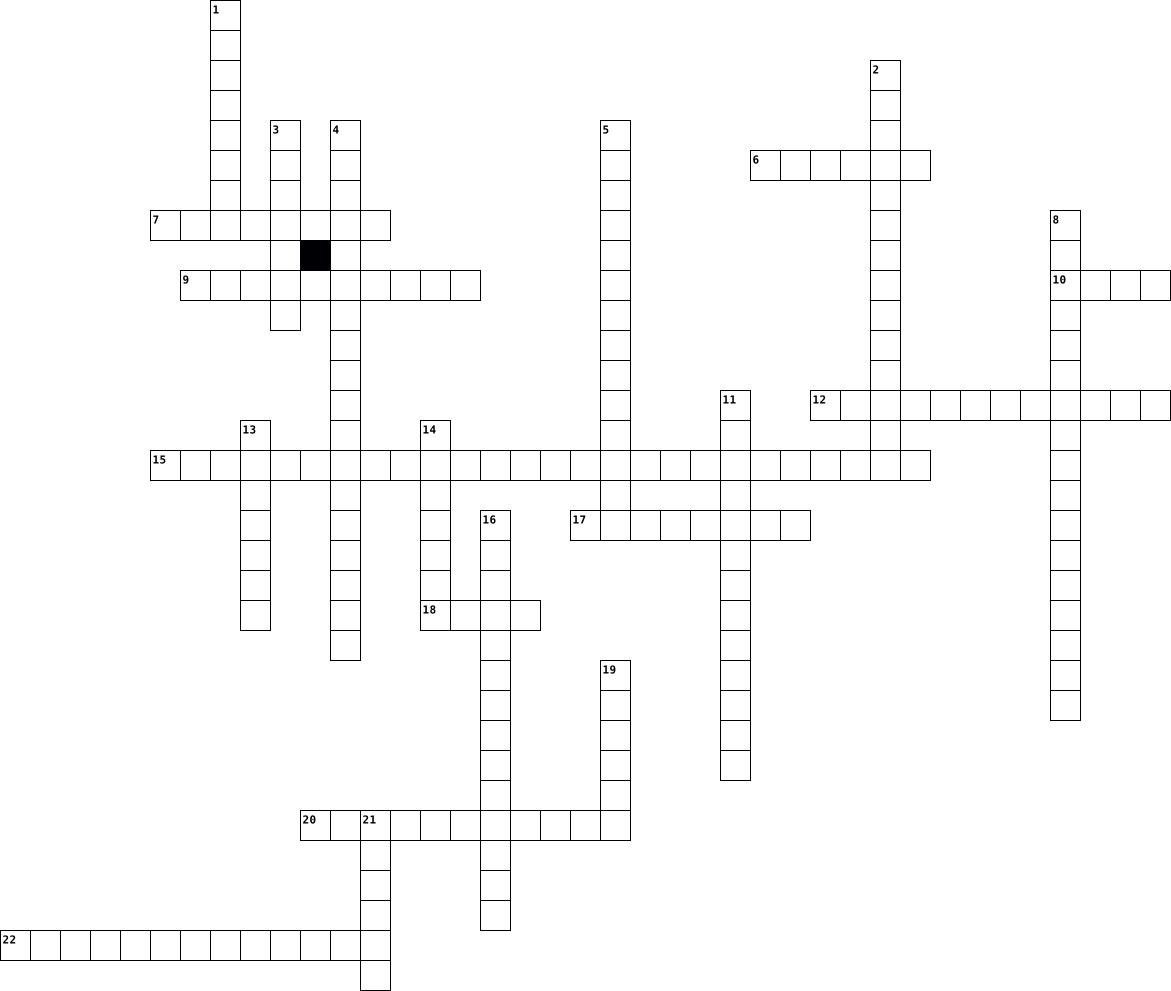
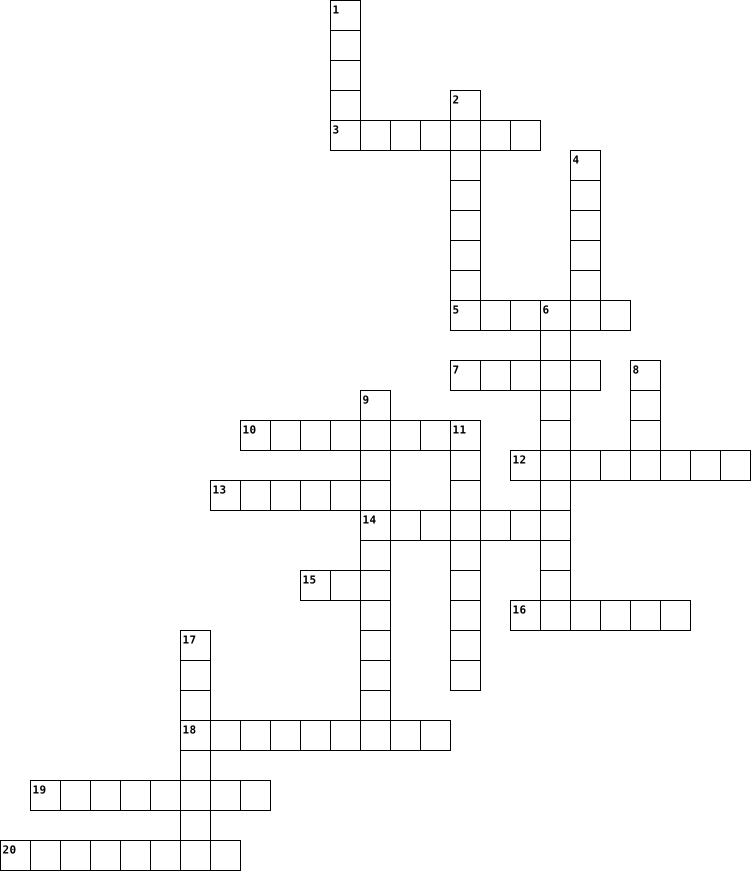
matter Crossword Puzzles
matter 2020-09-06
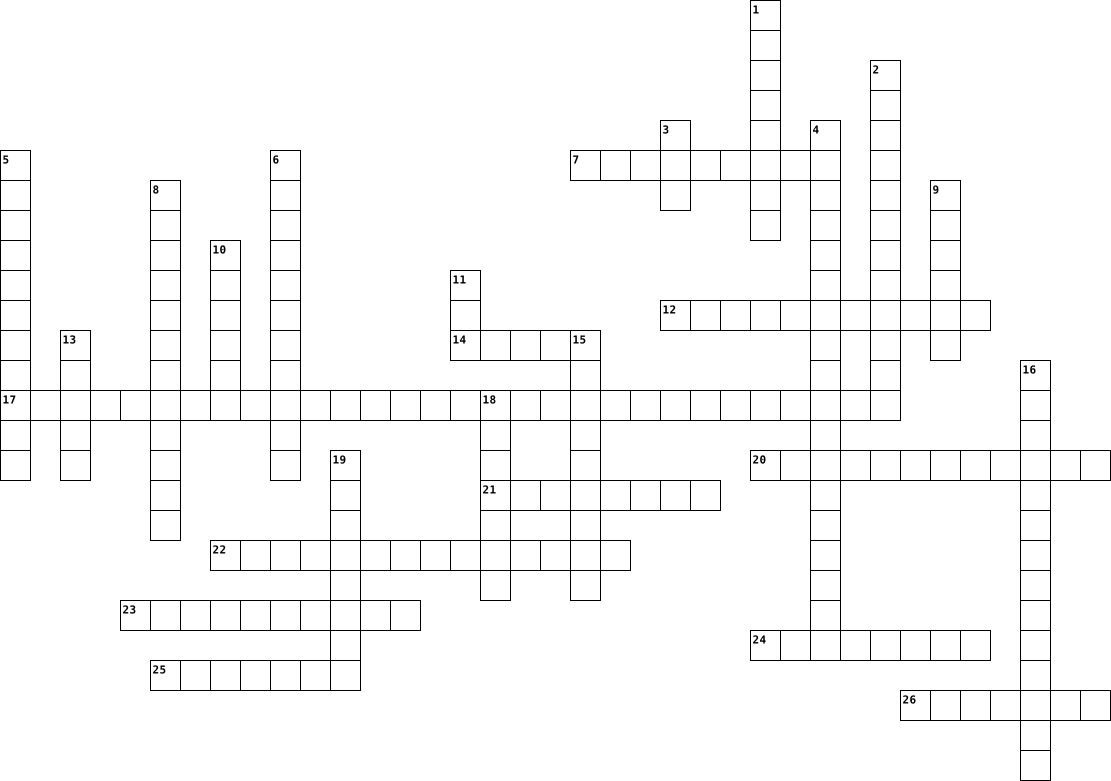
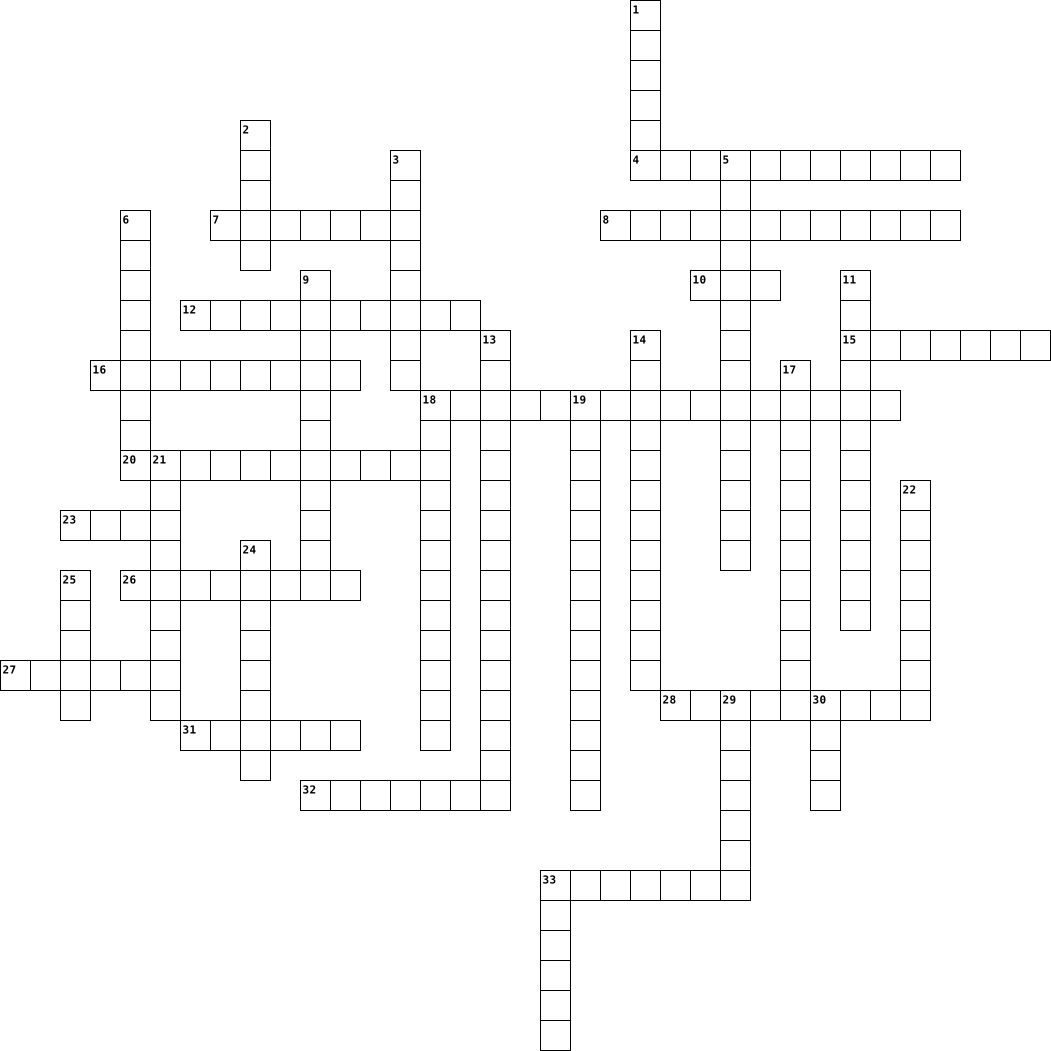
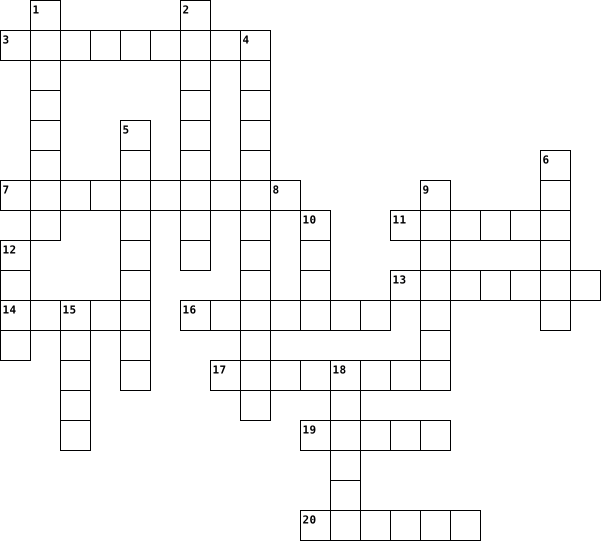
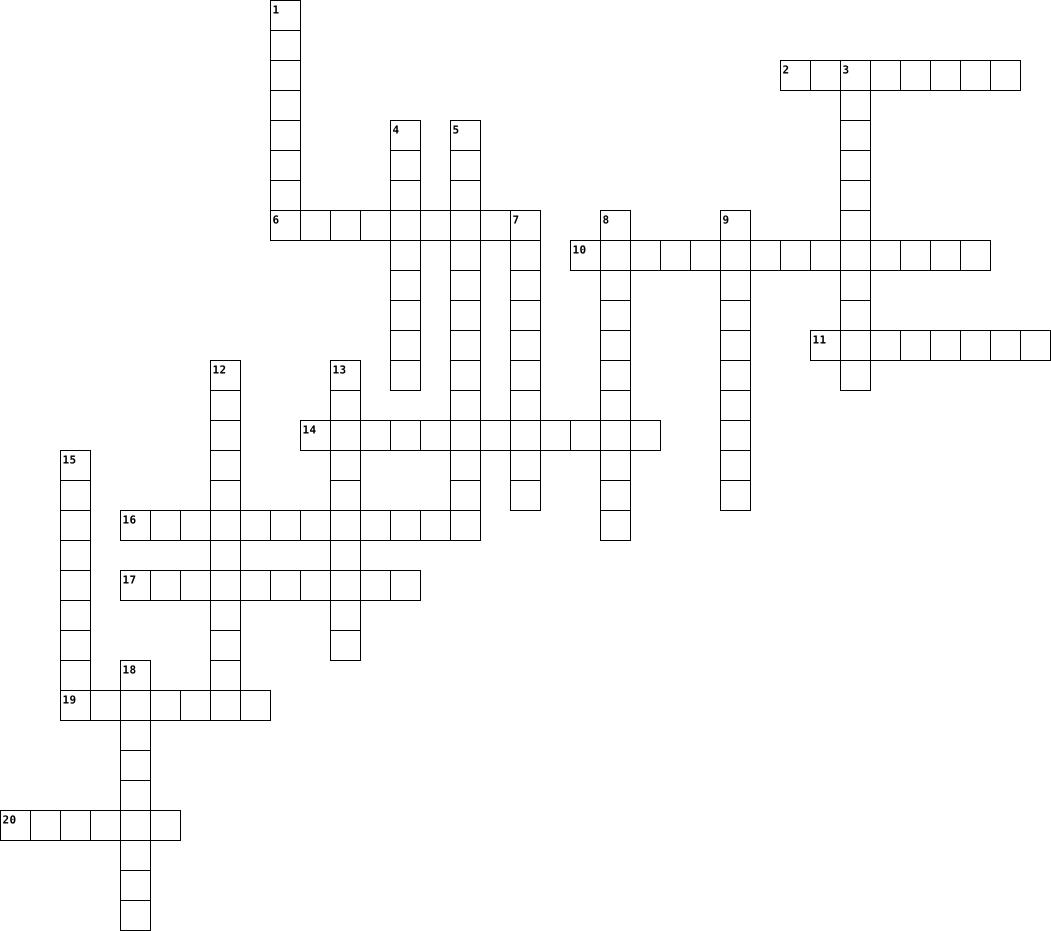
Across
- The process in which on heating there is an increase in volume and decrease in density of a substance
- The process in which on cooling there is a decrease in volume and increase in density of a substance
- State that cannot be compressed
- Force of attraction between the particles of matter
- The temperature at which a solid melts to become a liquid
- Water cycle is a _________ change. (Physical/ Chemical)
- The random movement of particles in a fluid
- The process where a gas, on cooling, directly changes to solid without
- This change is mostly irreversible and one or more new substances are formed
- The process where solid changes into a liquid on heating at a particular
- The process where a liquid changes into a vapour on heating at a particular
Down
- The process where a liquid converts into a solid on cooling
- The process where vapour changes to a liquid on cooling
- State with no definite shape and volume but is highly compressible
- Space between the particles of matter
- The process where a liquid changes into vapour at any temperature below its boiling point
- The process where a solid, on heating, directly changes into gas without changing into liquid
- The temperature at which a liquid starts boiling
- Another word for melting
- Anything that has mass and occupies space
- This state shows maximum expansion
- The substance that boils at 100 degree Celsius
- The intermixing of the substance by natural movement of their particles
- Synonym for freezing
- __________ sublimes at room temperature.
- into liquid
26 Clues: into liquid • Synonym for freezing • Another word for melting • State that cannot be compressed • This state shows maximum expansion • Space between the particles of matter • __________ sublimes at room temperature. • Anything that has mass and occupies space • The random movement of particles in a fluid • The substance that boils at 100 degree Celsius • ...
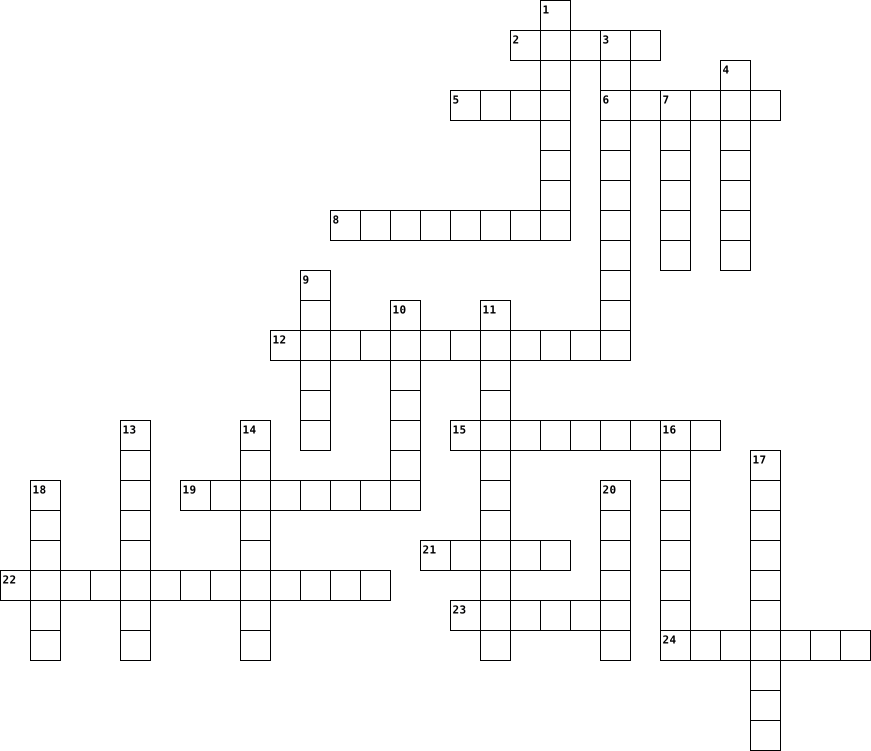
Matter 2022-02-09
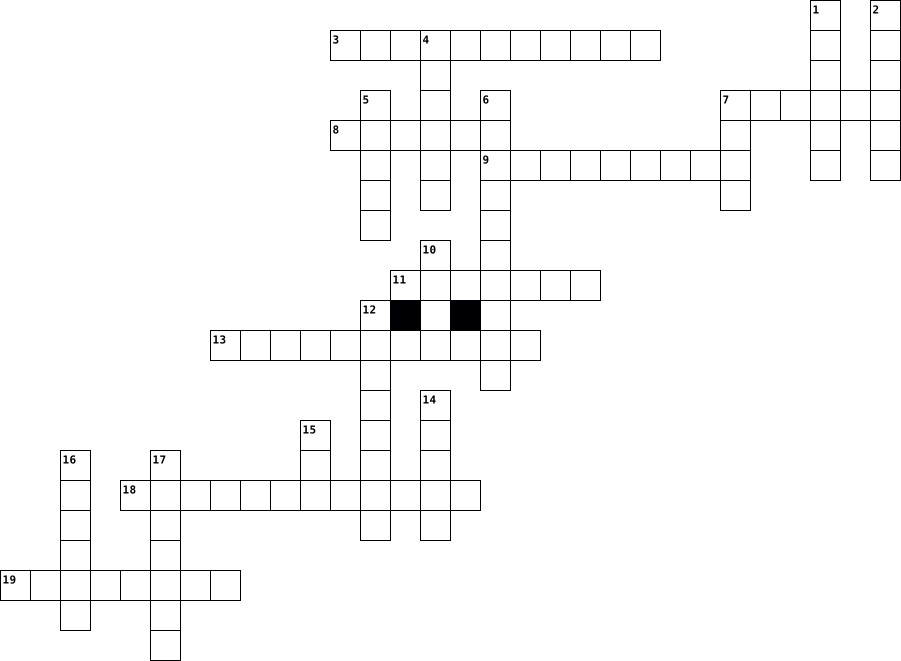
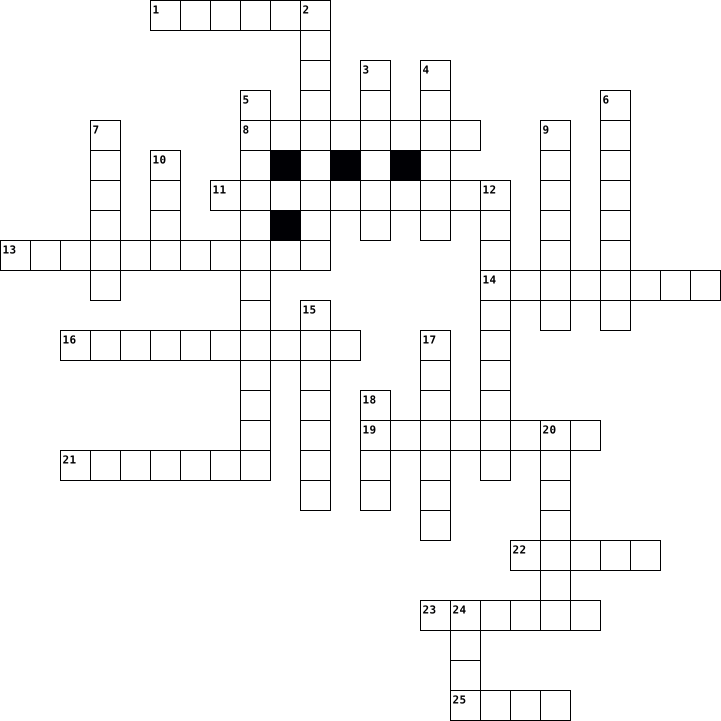
Across
- when a solid turns into a gas
- anything that has mass and takes up space
- anything that takes up space
- makes up matter
- solid turning into a liquid
- when a liquid turns into a gas
- when gas turns into a liquid
- liquid turning into a solid
Down
- liquid gas solid
- the ability to work
- water
- ice cube
- when a gas turns into a solid
- the weight of something
- makes particles go faster
- little bits of water
- water molecules in a gas
- oxygen
- matter changes
- it can cause evaporation
20 Clues: water • oxygen • ice cube • matter changes • makes up matter • liquid gas solid • the ability to work • little bits of water • the weight of something • water molecules in a gas • it can cause evaporation • makes particles go faster • solid turning into a liquid • liquid turning into a solid • anything that takes up space • when gas turns into a liquid • when a solid turns into a gas • ...
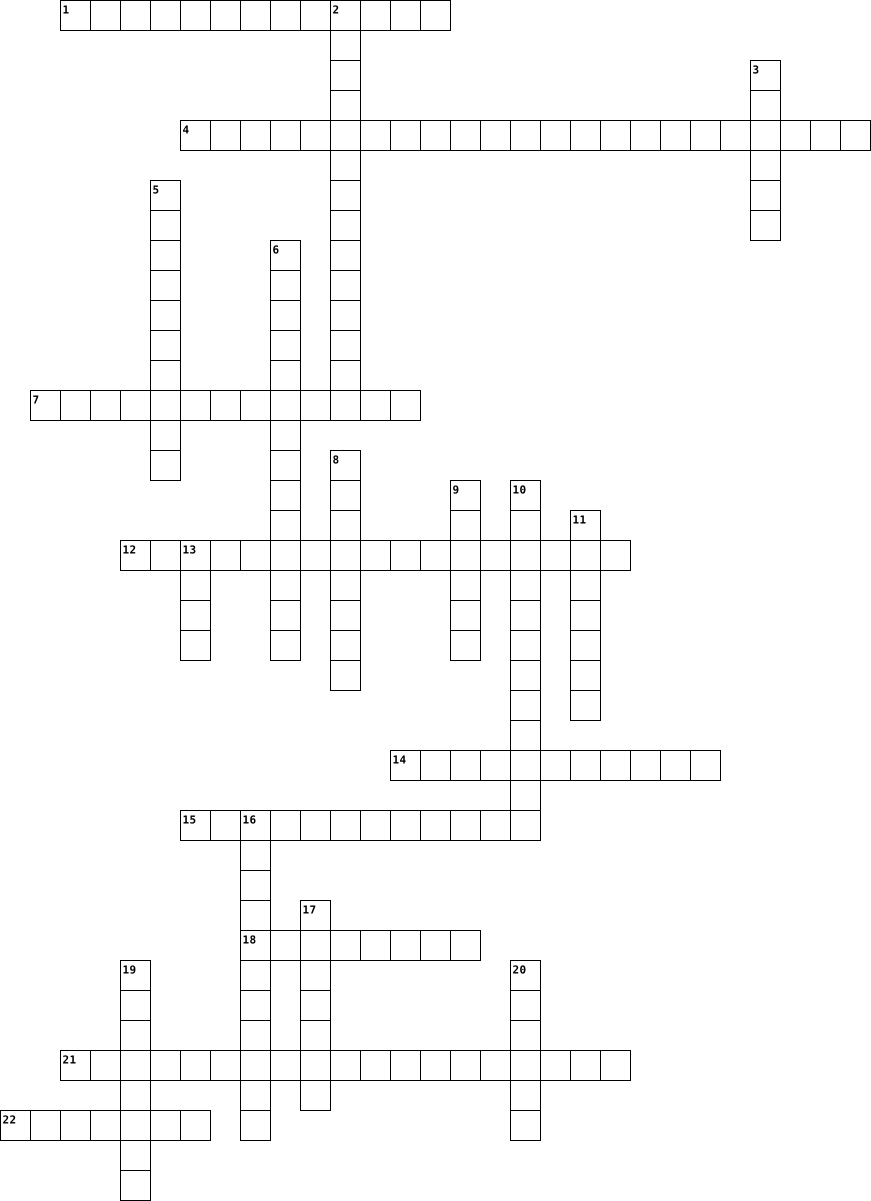
matter 2022-02-09
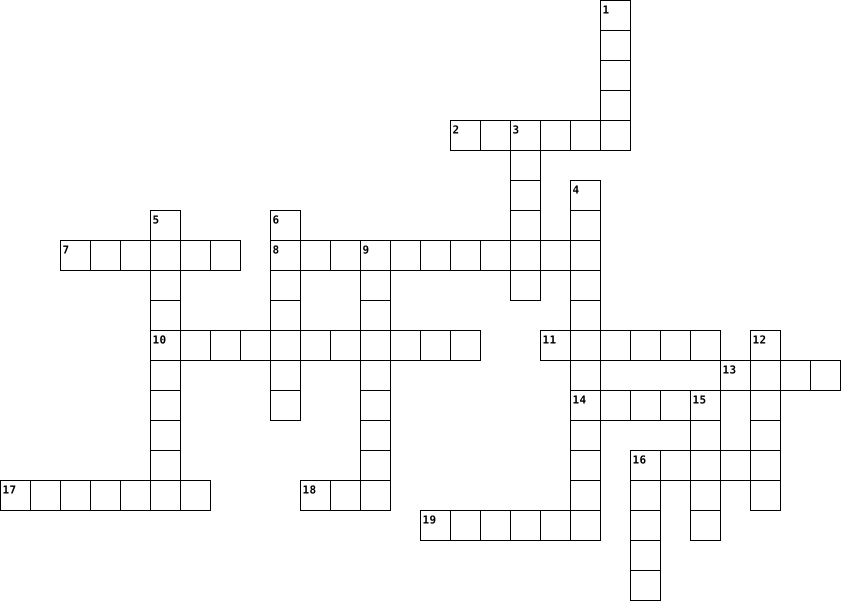
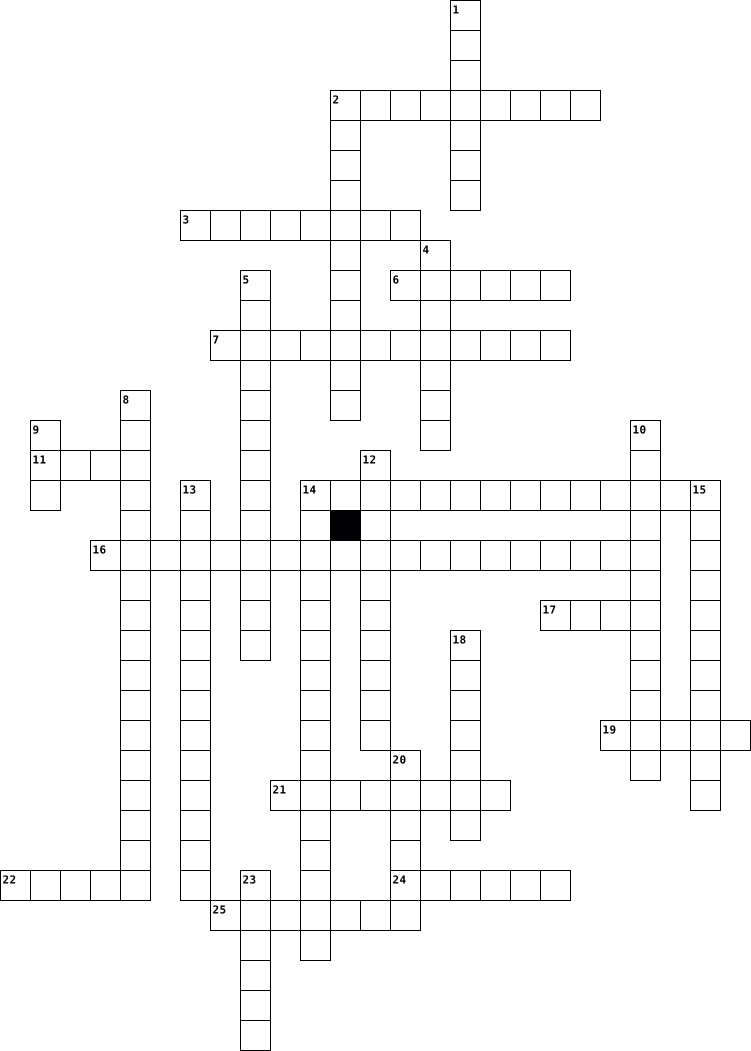
Across
- amount of a substance
- when i turn from a liquid to a solid
- is a type of its of vaporization
- the transition of a substance direct from a solid-state to a gas state
- this is something that we get from
- is how much matter an object contains
- is the smallest unit of ordinary
- we find matter in three different
- when u are adding heat to something so the particles move faster
- this is air
- the air we breath
Down
- how much something takes up
- takes up shape of a container and is loose
- water droplets on a widow
- when you change from a solid to a gas
- when i turn from a solid to a liquid
- is the smallest localized object
- anything that has mass or volume
- when i am a liquid inside of container
- this thing is hard
20 Clues: this is air • the air we breath • this thing is hard • amount of a substance • water droplets on a widow • how much something takes up • is a type of its of vaporization • is the smallest localized object • anything that has mass or volume • is the smallest unit of ordinary • we find matter in three different • this is something that we get from • when i turn from a solid to a liquid • ...
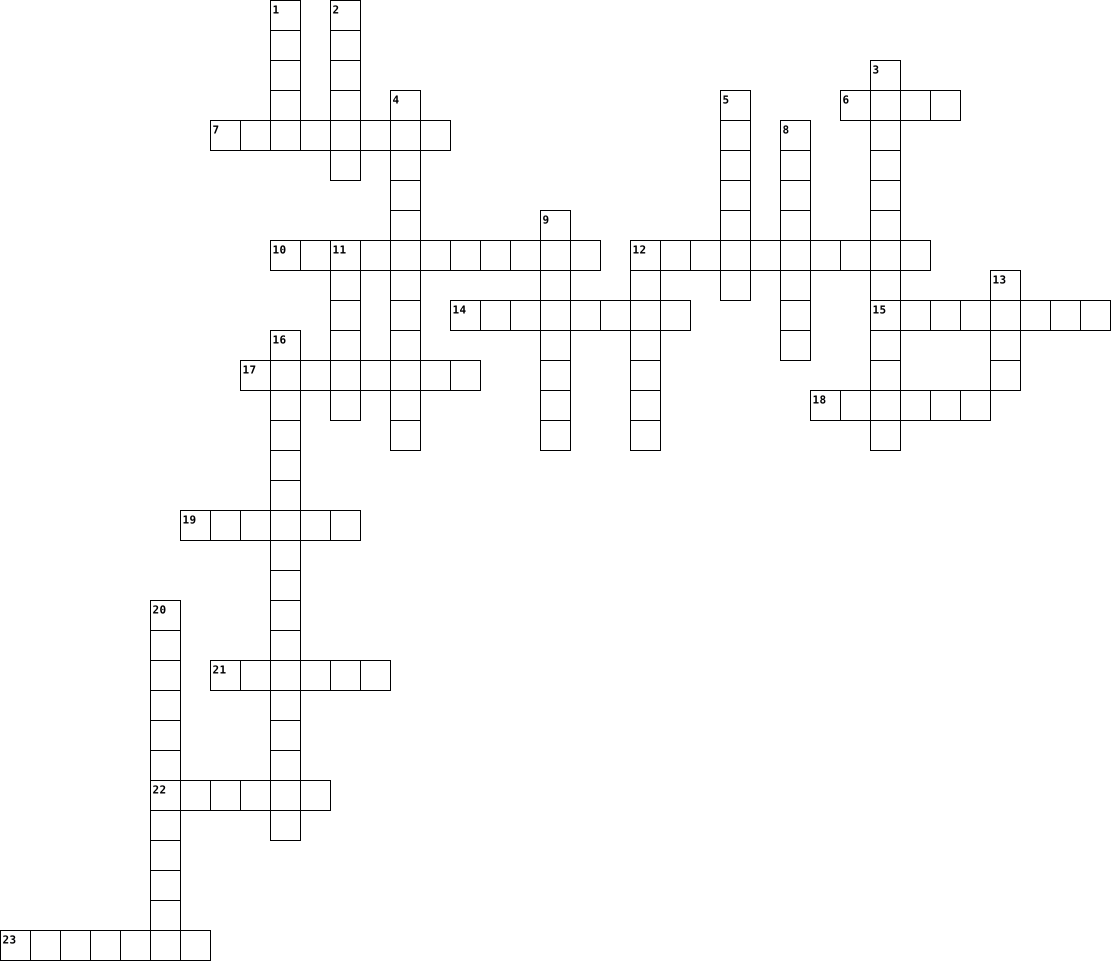
Matter 2021-11-20
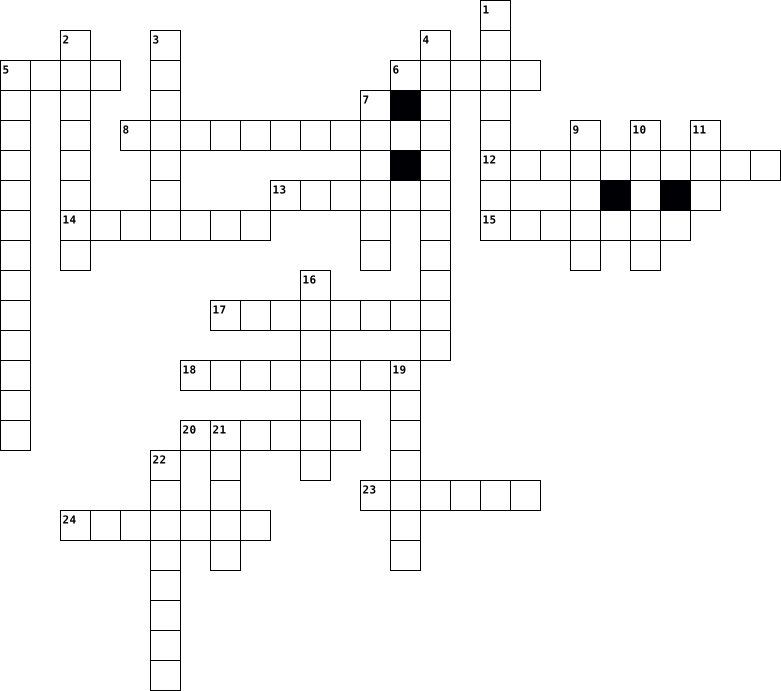
Across
- The smallest single neutral particle that makes up all life.
- H2O
- the relative average of all isotopes of an element.
- An experiment took place in which microscopes picked up where the positively charged alpha particle rays went when directed at a thin piece of gold.
- positively charged subatomic particle
- the name of the outermost shell in an atoms electron configuration
- the center of an atom that contains the dna, protons and neutrons
- Two or more atoms bonded together.
- a charge that electrons have
- an ion that has lost electrons
- the rows of the periodic table
- JJ created a model of an atom where the electrons are scattered in a mass of positively charged nucleus replicating a plum pudding.
Down
- negatively charged subatomic particle
- a charge that protons have
- the different types of atoms of an element that contains different amounts of neutrons.
- the number of protons and electrons added together.
- the number of protons, electrons and place in the periodic table
- John's atomic theory consisted of, all gas has weight, atoms are the smallest particle, simple multiple proportion, elements combine into molecules of simple ratios, elements join together to form compounds, water always contains twice as much hydrogen as oxygen, when chemicals react with each other the total mass of the chemicals does not change, pure oxygen has the same properties wherever it is found on the Earth or in space, gases some of which are invisible, have mass and different gases have different masses, modern microscopes produce images of surfaces that look bumpy
- a configuration of rings in which the electrons are placed,
- the columns of the periodic table
- an atom that has gained or lost an electron
- a neutrally charged subatomic particle
- A pure substance consisting of one type of atom.
- an ion that has gained electrons
- Two or more different elements bonded together.
25 Clues: H2O • a charge that protons have • a charge that electrons have • an ion that has lost electrons • the rows of the periodic table • an ion that has gained electrons • the columns of the periodic table • Two or more atoms bonded together. • negatively charged subatomic particle • positively charged subatomic particle • a neutrally charged subatomic particle • ...
Matter 2013-05-29
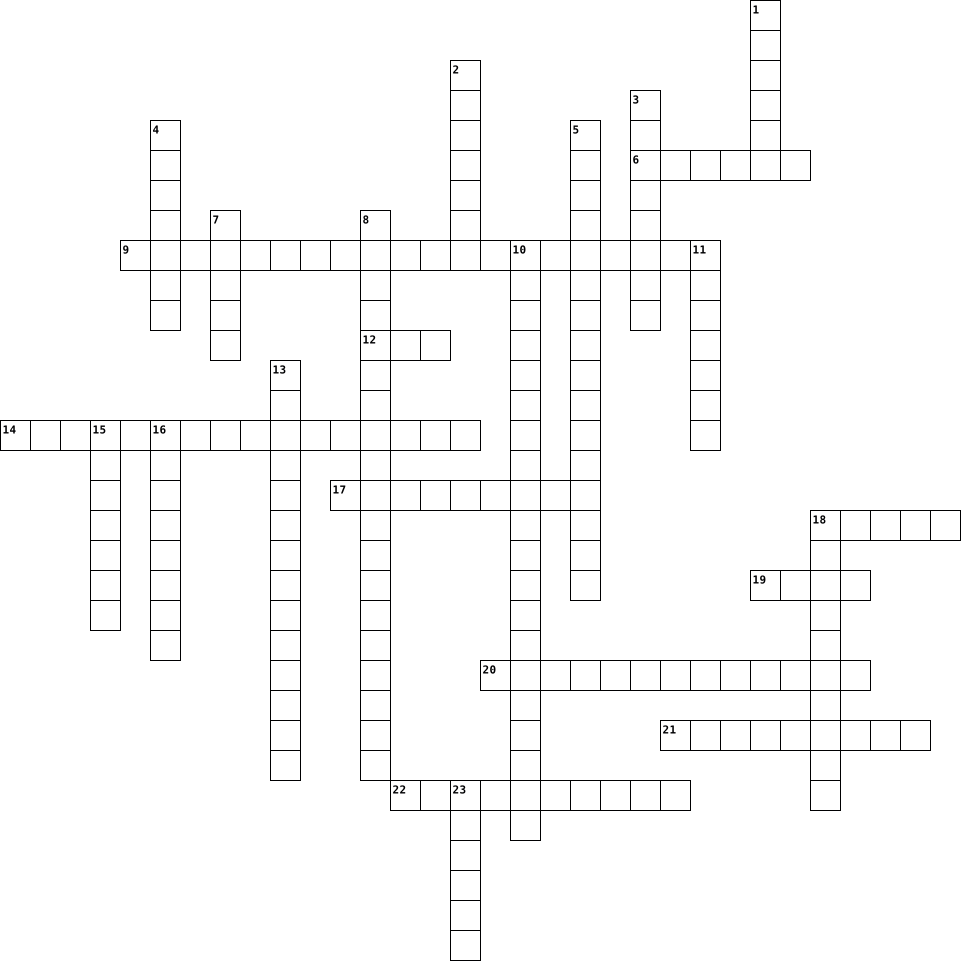
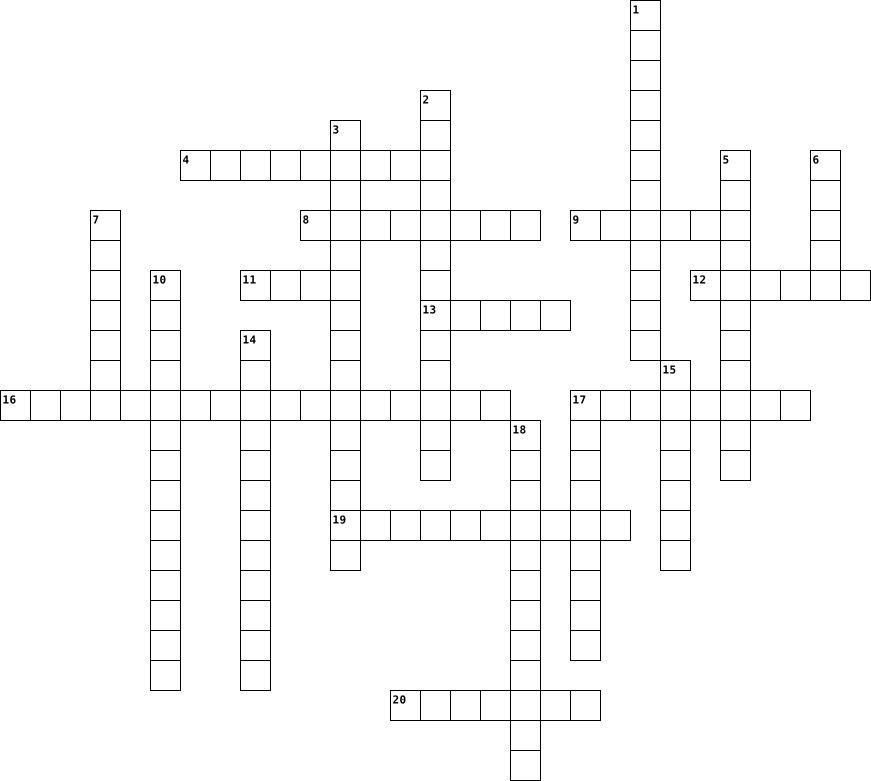
Across
- solid, liquid or gas; the substance(s) of which anything is composed of.
- include Filtration,Chromatography, and Distillation
- does not have specific volume and uniformly fills up a container
- describe the qualities of a substance that can be demonstrated without changing the composition of the substance
- any variety of matter that has a definite, unvarying set of properties and for which all samples have identical composition
- definite shape and volume
- a measure of the quantity of matter
- separates mixtures of liquids based on their boiling points: separation of crude oils and distilling of ’spirits’ to separate alcohol from fermentation mixture
- any homogeneous mixture that are separated into two catagories: solutes and solvents
- separates heterogeneous mixtures by particle size
Down
- a measure of the space that matter takes up
- a physical combination of two or more substances
- two or more different elements combine
- contains only one kind of atom
- describe how matter behaves when it changes into another kind of matter
- one can see the parts of the mixture easily
- evenly mixed and are not able to see the parts that make it up, also known as solutions
- not evenly blended and you can see the parts that make it up
- does the dissolving; also determines the state of matter of the solution
- separates homogeneous mixtures by mass and polarity
- being dissolved by the solvent
- very small particles that not settle, they scatter light
- smaller particles that either float or sink
- has a specific volume and takes the shape of a container
24 Clues: definite shape and volume • contains only one kind of atom • being dissolved by the solvent • a measure of the quantity of matter • two or more different elements combine • a measure of the space that matter takes up • one can see the parts of the mixture easily • smaller particles that either float or sink • a physical combination of two or more substances • ...
Matter 2013-05-29
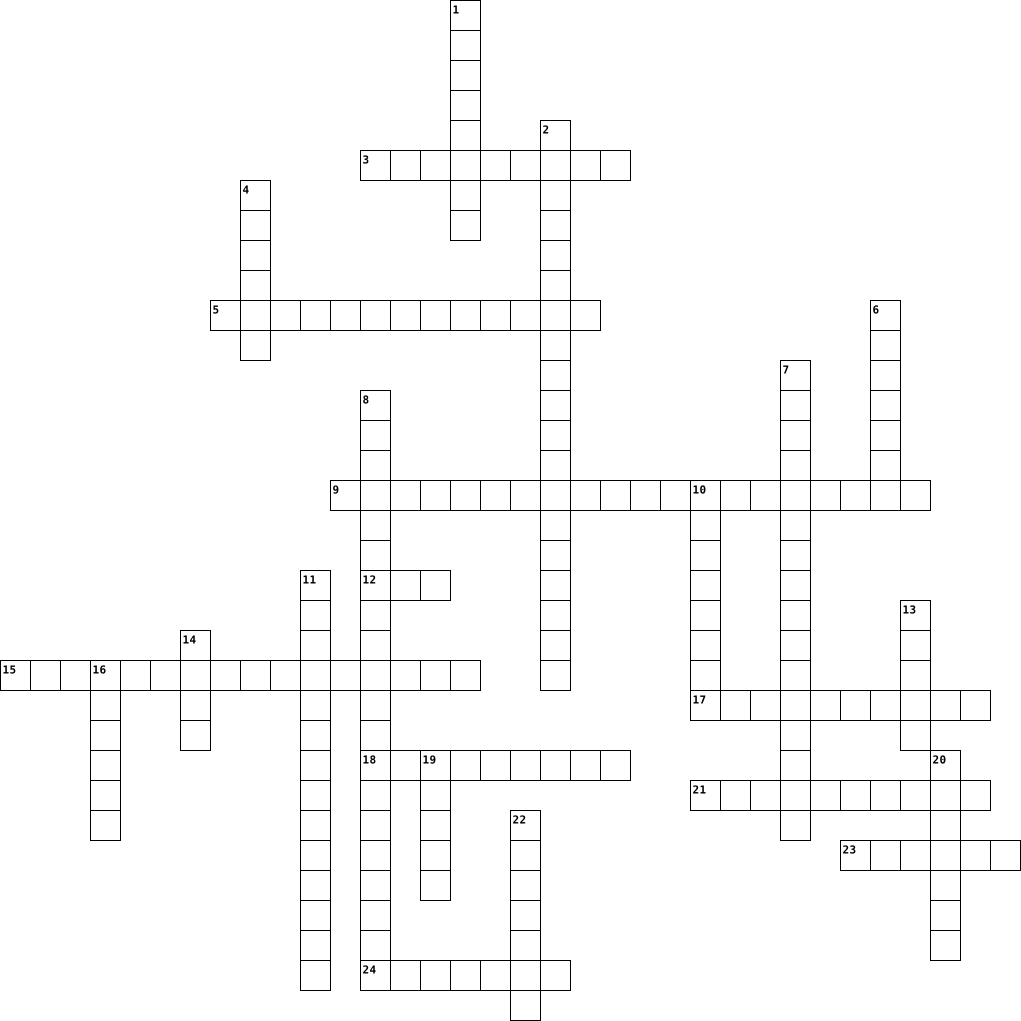
Across
- any homogeneous mixture that are separated into two catagories: solutes and solvents
- separates mixtures of liquids based on their boiling points: separation of crude oils and distilling of ’spirits’ to separate alcohol from fermentation mixture
- include Filtration,Chromatography, and Distillation
- does not have specific volume and uniformly fills up a container
- describe how matter behaves when it changes into another kind of matter
- smaller particles that either float or sink
- any variety of matter that has a definite, unvarying set of properties and for which all samples have identical composition
- separates heterogeneous mixtures by particle size
- a measure of the space that matter takes up
- contains only one kind of atom
Down
- two or more different elements combine
- evenly mixed and are not able to see the parts that make it up, also known as solutions
- has a specific volume and takes the shape of a container
- a physical combination of two or more substances
- describe the qualities of a substance that can be demonstrated without changing the composition of the substance
- not evenly blended and you can see the parts that make it up
- very small particles that not settle, they scatter light
- separates homogeneous mixtures by mass and polarity
- definite shape and volume
- a measure of the quantity of matter
- solid, liquid or gas; the substance(s) of which anything is composed of.
- one can see the parts of the mixture easily
- being dissolved by the solvent
- does the dissolving; also determines the state of matter of the solution
24 Clues: definite shape and volume • being dissolved by the solvent • contains only one kind of atom • a measure of the quantity of matter • two or more different elements combine • smaller particles that either float or sink • one can see the parts of the mixture easily • a measure of the space that matter takes up • a physical combination of two or more substances • ...
Matter 2013-02-12
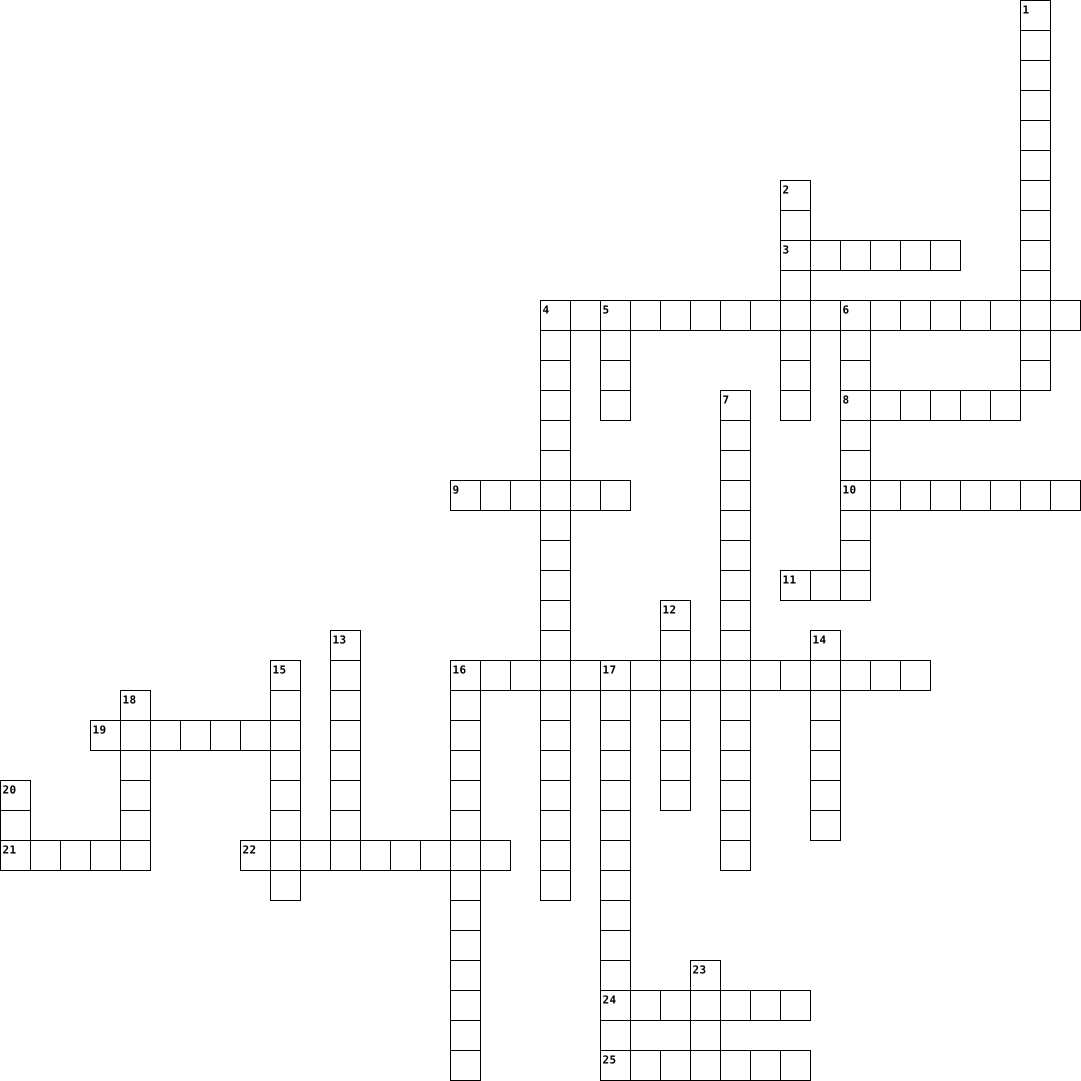
Across
- Anything that takes up space or has mass also has _________.
- Mixture where the substance is the same throughout.
- Positive sub-atomic particle.
- The amount of mass in an object; heaviness.
- Sugar in water; Tea
- Molecule or atom that has an uneven amount of protons and electrons, giving it an either positive or negative charge.
- Example: Size, Shape, ect.
- Two or more substances that are not chemically bound together; Mixed.
- State of matter where molecules are tightly packed.
- Energy Energy based on position.
- Neutral sub-atomic particle.
- Part of the Periodic Table; cannot be broken down any simpler.
Down
- Energy of Movement.
- Pure chemical substance made of at least two elements.
- Mixture where there are visably different levels or phases.
- Body or amount of matter
- An example of this is sand in water.
- Example: Acidity
- Fog and Smoke are examples of __________.
- Group of two or more atoms held together by Chemicals that maintain a neutral charge.
- Mass per volume unit.
- Negative sub-atomic particle.
- A change in shape is a ___________________.
- Burning is a __________________.
- State of matter where molecules are somewhat loose.
- State of matter where molecules are spread apart.
- Is the 'building-block' matter unit that is made up of electrons circling around a nucleus.
27 Clues: Example: Acidity • Energy of Movement. • Sugar in water; Tea • Mass per volume unit. • Body or amount of matter • Example: Size, Shape, ect. • Neutral sub-atomic particle. • Positive sub-atomic particle. • Negative sub-atomic particle. • Burning is a __________________. • Energy Energy based on position. • An example of this is sand in water. • ...
Matter 2015-03-12
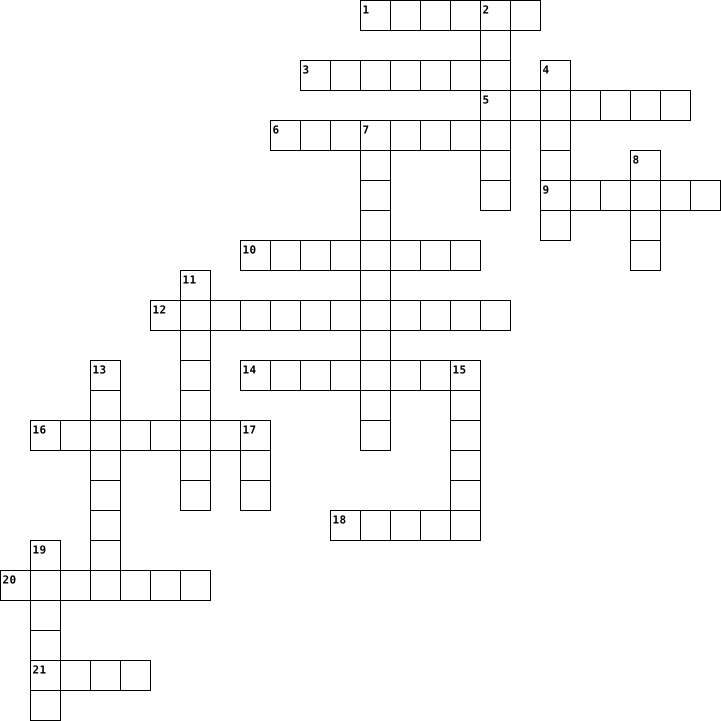
Across
- of matter a usually reversible change in the physical properties of a substance,as size or shape
- a liquid, usually water, in which a medication or juice is dissolved.
- point when a solid becomes a liquid
- the smallest physical unit of an element or compound
- anything that has mass and takes up space.
- composed of two or more parts, elements, or ingredients
- the state of being condensed.
- change a usually reversible change in the physical properties of a substance,as size or shape
- point when a liquid becomes a solid
- atoms are closest together
- point when liquid becomes a gas
- the amount of space an object takes up
Down
- A component or constituent of a whole or one of the parts into which a whole may be resolved by analysis
- atoms are the farthest apart
- liquid water becoming a gas
- the smallest component of an element having the chemical properties of the element
- an aggregate of two or more substances that are not chemically
- change irreversible chemical reaction
- atoms are close but slide by each other
- atoms move the second fastest and are far apart
- the amount of space, measured in cubic units, that an object or substance occupies.
21 Clues: atoms are closest together • liquid water becoming a gas • atoms are the farthest apart • the state of being condensed. • point when liquid becomes a gas • point when a solid becomes a liquid • point when a liquid becomes a solid • change irreversible chemical reaction • the amount of space an object takes up • atoms are close but slide by each other • ...
matter 2016-03-31
Across
- state of matter(ice like)
- liquid mixtures with solid substances
- which are obtained from raw materials
- only have one component
- are particles that connot be seen
- all that occupies a space and can be weighed
- amount of heat a body can give off or absorb
- amount of matter in a body
- we cannot see the substances that make up
- how concentrate the mass is
Down
- has two or more different substances
- which are used in exactly the same stats
- are components of matter
- length, surface, volume
- we can distingish the components
- state of matter(air like)
- is the distance between two bodies
- is the space occupied by length and width
- is total space occupied by lenght and width
- state of matter(water like)
20 Clues: length, surface, volume • only have one component • are components of matter • state of matter(ice like) • state of matter(air like) • amount of matter in a body • state of matter(water like) • how concentrate the mass is • we can distingish the components • are particles that connot be seen • is the distance between two bodies • has two or more different substances • ...
Matter 2022-09-21
Across
- another word for power
- have a positive charge
- normal electrical and thermal energy
- The total weight of an object
- Everything that has mass
- flows freely but is of constant volume
- the rings of electrons about the nucleus
- Apart or aspect of something abstract
- can repel and attract
- firm and stable in shape
Down
- Characteristics of an item
- the central and most important part
- a table of all elements
- expand freely to fill the container
- have a neutral charge
- low electrical and thermal conductivity
- a group of atoms bonded together
- colorless fluid
- have a negative charge
- high electrical and thermal conductivity
20 Clues: colorless fluid • have a neutral charge • can repel and attract • another word for power • have a positive charge • have a negative charge • a table of all elements • Everything that has mass • firm and stable in shape • Characteristics of an item • The total weight of an object • a group of atoms bonded together • the central and most important part • ...
Matter 2022-09-21
Across
- another word for power
- have a positive charge
- normal electrical and thermal energy
- The total weight of an object
- Everything that has mass
- flows freely but is of constant volume
- the rings of electrons about the nucleus
- Apart or aspect of something abstract
- can repel and attract
- firm and stable in shape
Down
- Characteristics of an item
- the central and most important part
- a table of all elements
- expand freely to fill the container
- have a neutral charge
- low electrical and thermal conductivity
- a group of atoms bonded together
- colorless fluid
- have a negative charge
- high electrical and thermal conductivity
20 Clues: colorless fluid • have a neutral charge • can repel and attract • another word for power • have a positive charge • have a negative charge • a table of all elements • Everything that has mass • firm and stable in shape • Characteristics of an item • The total weight of an object • a group of atoms bonded together • the central and most important part • ...
Matter 2022-09-09
Across
- The change in state from a solid to a liquid
- a lipped cylindrical glass container for laboratory use.
- liquid to gas
- A group of atoms bonded together
- Gas to liquid
- a change from one state (solid or liquid or gas) to another without a change in chemical composition
- solid to gas
- The change of state from a liquid to a solid
- negatively charged particle
- a change of matter from one form to another without a change in chemical properties
- molecule 2 hydrogen atoms(+), 1 oxygen atom(-)
Down
- states of matter
- A small particle in the nucleus of the atom, with no electrical charge
- Basic unit of matter
- used to measure the volume of a liquid
- A change that occurs when one or more substances change into entirely new substances with different properties.
- gas to solid
- positively charged particle
- Amount of space occupied by an object
- the degree of compactness of a substance.
- An atom's central core, containing protons and neutrons.
- solid, liquid, gas, plasma
- temperature of water 32 degrees Fahrenheit and 0 degrees Celsius
23 Clues: gas to solid • solid to gas • liquid to gas • Gas to liquid • states of matter • Basic unit of matter • solid, liquid, gas, plasma • positively charged particle • negatively charged particle • A group of atoms bonded together • Amount of space occupied by an object • used to measure the volume of a liquid • the degree of compactness of a substance. • ...
Matter 2022-09-09
Across
- Amount of space occupied by an object
- negatively charged particle
- gas to solid
- Basic unit of matter
- Gas to liquid
- 32 degrees Fahrenheit and 0 degrees Celsius
- The change of state from a liquid to a solid
- liquid, solid, plasma
- solid to gas
- 2 hydrogen atoms(+), 1 oxygen atom(-)
Down
- A group of atoms bonded together
- A change that occurs when one or more substances change into entirely new substances with different properties.
- A small particle in the nucleus of the atom, with no electrical charge
- to gas
- solid, liquid, gas, plasma
- used to measure the volume of a liquid
- An atom's central core, containing protons and neutrons.
- the degree of compactness of a substance.
- The change in state from a solid to a liquid
- a change of matter from one form to another without a change in chemical properties
- positively charged particle
- a lipped cylindrical glass container for laboratory use.
22 Clues: to gas • gas to solid • solid to gas • Gas to liquid • Basic unit of matter • liquid, solid, plasma • solid, liquid, gas, plasma • negatively charged particle • positively charged particle • A group of atoms bonded together • Amount of space occupied by an object • 2 hydrogen atoms(+), 1 oxygen atom(-) • used to measure the volume of a liquid • the degree of compactness of a substance. • ...
matter 2022-09-09
Across
- change
- Basic unit of matter
- a lipped cylindrical glass container for laboratory use.
- change a change of matter from one form to another without a change in chemical properties
- Gas to liquid
- cygas, liquid, solid, plasma
- The change of state from a liquid to a solid
- molecule 2 hydrogen atoms(+), 1 oxygen atom(-)
- An atom's central core, containing protons and neutrons
- Amount of space occupied by an object
- A small particle in the nucleus of the atom, with no electrical charge
Down
- change A change that occurs when one or more substances change into entirely new substances with different properties.
- solid to gas
- the degree of compactness of a substance.
- of space occupied by an object
- positively charged particle
- The change in state from a solid to a liquid
- Liquid to gas
- temperature of water 32 degrees Fahrenheit and 0 degrees Celsius
- change A change that occurs when one or more substances change into entirely new substances with different properties.
- negatively charged particle
- gas to solid
- of matter solid, liquid, gas, plasma
- of matterlinder used to measure the volume of a liquid
24 Clues: change • solid to gas • gas to solid • Liquid to gas • Gas to liquid • Basic unit of matter • positively charged particle • negatively charged particle • cygas, liquid, solid, plasma • of space occupied by an object • of matter solid, liquid, gas, plasma • Amount of space occupied by an object • the degree of compactness of a substance. • The change in state from a solid to a liquid • ...
Matter 2022-09-09
Across
- 2 hydrogen atoms(+), 1 oxygen atom(-)
- states of matter
- an atom's central core, containing protons and neutrons.
- use to measure the volume of a liquid
- solid to gas
- Liquid to gas
- negatively charged particle
- of water 32 degrees Fahrenheit and 0 degrees Celsius
- The change in state from a solid to a liquid
Down
- A change that occurs when one or more substances change into entirely new substances with different properties.
- a lipped cylindrical glass container for laboratory use.
- gas to solid
- a change of matter from one form to another without a change in chemical properties
- a group of atoms bonded together states of matter solid, liquid, gas, plasma
- amount of space occupied by an object
- Gas to liquid
- a small particle in the nucleus of the atom, with no electrical charge
- basic unit of matter
- a change from one state (solid or liquid or gas) to another without a change in chemical composition
- the degree of compactness of a substance.
- The change of state from a liquid to a solid
- positively charged particle
22 Clues: gas to solid • solid to gas • Gas to liquid • Liquid to gas • states of matter • basic unit of matter • negatively charged particle • positively charged particle • 2 hydrogen atoms(+), 1 oxygen atom(-) • amount of space occupied by an object • use to measure the volume of a liquid • the degree of compactness of a substance. • The change of state from a liquid to a solid • ...
matter 2022-09-09
Across
- liquid, solid, plasma states of matter
- change A change that occurs when one or more substances change into entirely new substances with different properties.
- solid to gas
- gas to solid
- temperature of water v32 degrees Fahrenheit and 0 degrees Celsius
- negatively charged particle
- The change of state from a liquid to a solid
- liquid, gas, plasma
- positively charged particle
- Amount of space occupied by an object
- of matter
- The change in state from a solid to a liquid
Down
- change a change from one state (solid or liquid or gas) to another without a change in chemical composition
- nucleus An atom's central core, containing protons and neutrons.
- 2 hydrogen atoms(+), 1 oxygen atom(-)
- Liquid to gas
- A small particle in the nucleus of the atom, with no electrical charge
- change a change of matter from one form to another without a change in chemical properties
- A group of atoms bonded together
- a lipped cylindrical glass container for laboratory use.
- the degree of compactness of a substance.
- Basic unit of matter
- used to measure the volume of a liquid
- Gas to liquid
24 Clues: of matter • solid to gas • gas to solid • Liquid to gas • Gas to liquid • liquid, gas, plasma • Basic unit of matter • negatively charged particle • positively charged particle • A group of atoms bonded together • 2 hydrogen atoms(+), 1 oxygen atom(-) • Amount of space occupied by an object • liquid, solid, plasma states of matter • used to measure the volume of a liquid • ...
Matter 2022-09-16
Across
- A change that occurs when one or more substances change into entirely new substances with different properties.
- The change in state from a solid to a liquid
- A small particle in the nucleus of the atom, with no electrical charge
- Liquid to gas
- a lipped cylindrical glass container \
- The change of state from a liquid to a solid
- solid to gas
- A group of atoms bonded together
- negatively charged particle
- The change of state from a liquid to a solid
Down
- a change from one state (solid or liquid or gas) to another without a change in chemical composition
- Gas to liquid
- a change of matter from one form to another without a change in chemical properties
- 32 degrees Fahrenheit and 0 degrees Celsius
- positively charged particle
- gas to solid
- solid, liquid, gas, plasma
- used to measure the volume of a liquid
- the degree of compactness of a substance.
- An atom's central core, containing protons and neutrons.
- statesofmatter
- of space occupied by an object
- Basic unit of matter
- 2 hydrogen atoms(+), 1 oxygen atom(-)
24 Clues: gas to solid • solid to gas • Gas to liquid • Liquid to gas • statesofmatter • Basic unit of matter • solid, liquid, gas, plasma • positively charged particle • negatively charged particle • of space occupied by an object • A group of atoms bonded together • 2 hydrogen atoms(+), 1 oxygen atom(-) • used to measure the volume of a liquid • a lipped cylindrical glass container \ • ...
Matter 2021-02-16
Across
- earth Any of the six chemical elements that comprise Group 2 (IIa) of the periodic table.
- A tiny bit of matter that makes up everything in the universe.
- The information centre of the cell.
- A chemical element that forms a salt when it reacts with metal.
- A substance whose atoms all have the same number of protons.
- A chemical element that forms a simple substance having properties intermediate between those of a typical metal and a typical nonmetal.
- The amount of a substance in a defined space.
- number The sum of the number of nucleons in an atom.
- An elementary particle that is identical with the nucleus of the hydrogen atom.
- A row of chemical elements.
- An uncharged elementary particle that has a mass nearly equal to that of the proton.
- The spontaneous net movement of solvent molecules through a selectively permeable membrane into a region of higher solute concentration.
- metal Any of the six chemical elements that make up Group 1 (Ia) of the periodic table.
Down
- A chemical element that forms a simple substance having properties intermediate between those of a typical metal and a typical nonmetal.
- The negatively charged particles of atoms.
- number The number of a chemical element in the periodic system.
- number The number of protons found in the nucleus of every atom of that element.
- Lattice of positive ions surrounded by a cloud of delocalized electrons.
- A group of two or more atoms that form the smallest identifiable unit.
- table A tabular array of the chemical elements organized by atomic number.
- The ability to do work.
- A material formed by chemically bonding two or more chemical elements.
- The movement of a substance from an area of high concentration to an area of low concentration.
- A chemical element that forms a salt when it reacts with metal.
- Any of various self-contained units of matter or energy that are the fundamental constituents of all matter.
- Smallest unit into which matter can be divided without the release of electrically charged particles.
- A chemical notation of one or two letters representing a chemical element.
- A vertical column in the Periodic Table.
- theory A fundamental theory of matter that explains physical properties in terms of the motion of atoms and molecules.
- Anything that has mass and volume.
30 Clues: The ability to do work. • A row of chemical elements. • Anything that has mass and volume. • The information centre of the cell. • A vertical column in the Periodic Table. • The negatively charged particles of atoms. • The amount of a substance in a defined space. • number The sum of the number of nucleons in an atom. • ...
matter 2021-02-15
Across
- an element intermediate in properties between the typical metals and nonmetals
- a thing that is composed of two or more separate elements
- any of the elements beryllium , magnesium , calcium , strontium , barium ,and radium
- another name for atomic number
- any of the elements lithium , sodium , potassium , rubidium , caesium , and francium
- an element that readily forms positive ions
- the movement of a solvent
- anything that has mass and volume
- table a table of chemical elements arranged in order of atomic number
- a group of atoms bonded together
- the capacity for doing work
- theory is a theory that all matter consists of many very small particles
- a measure of how crowded the solute particles are
- the spreading of something more widely
Down
- a stable subatomic particle with a charge of negative electricity
- a notation of one or two letters representing a chemical element
- the number of a chemical element in the periodic system
- a column in the periodic table of the chemistry elements
- lacks the characteristics of a metal
- smaller than or occurring within an atom
- the smallest particle of a chemical
- the total of protons and neutrons in a nucleus
- any of the elements fluorine , chlorine , bromine , iodine , and astatine
- a row of chemical elements in the periodic table
- a portion of matter
- a substance whose atoms all have the same number of protons
- a stable subatomic particle occurring in all atomic nuclei
- a mixture of metals or a metal combined with one or more other elements
- a subatomic particle of about the same mass as a proton but without an electric charge
29 Clues: a portion of matter • the movement of a solvent • the capacity for doing work • another name for atomic number • a group of atoms bonded together • anything that has mass and volume • the smallest particle of a chemical • lacks the characteristics of a metal • the spreading of something more widely • smaller than or occurring within an atom • ...
Matter 2021-02-15
Across
- a mark or character used as a conventional representation of an object, function, or process.
- a column in the periodic table of the chemical elements
- admixture of metals, or a metal combined with one or more other elements
- the number of protons in the nucleus of an atom
- a subatomic particle, with a positive electric charge of
- a sub-atomic particle with no net electrostatic charge
- the sum of the numbers of protons and neutrons present in the nucleus of an atom.
- natural materials that do not produce heat or electricity and that are structurally brittle
- the movement of water from a less concentrated solution to a more concentrated solution through a partially permeable membrane
- a material that, when freshly prepared, polished, or fractured, shows a lustrous appearance and conducts electricity and heat relatively well.
- anything that occupies space and has mass
- particles that are smaller than atoms
- any substance that cannot be decomposed into simpler substances by ordinary chemical processes
- an element that has properties that are intermediate between those of metals and nonmetals
- the number of protons in the nucleus of an atom
Down
- law that states: Matter is made up of particles that are constantly moving
- any of the six chemical elements that make up Group 1 (Ia) of the periodic table
- Arrangement of the elements
- the movement of a substance from an area of high concentration to an area of low concentration
- a tabular array of the chemical elements organized by atomic number
- are a group in the periodic table consisting of five chemically related elements
- any of numerous subatomic constituents of the physical world that interact with each other
- the ability to do work
- a membrane-bound organelle that contains genetic material (DNA) of eukaryotic organisms.
- the amount of a component in a given area or volume
- a negatively charged subatomic particle.
- metals that are named after their oxides
- the smallest unit of ordinary matter that forms a chemical element.
- a substance that contains atoms of two or more different elements, and these atoms are chemically joined together.
- a particle made up of two or more atoms that are chemically bonded together
30 Clues: the ability to do work • Arrangement of the elements • particles that are smaller than atoms • a negatively charged subatomic particle. • metals that are named after their oxides • anything that occupies space and has mass • the number of protons in the nucleus of an atom • the number of protons in the nucleus of an atom • ...
Matter 2021-02-15
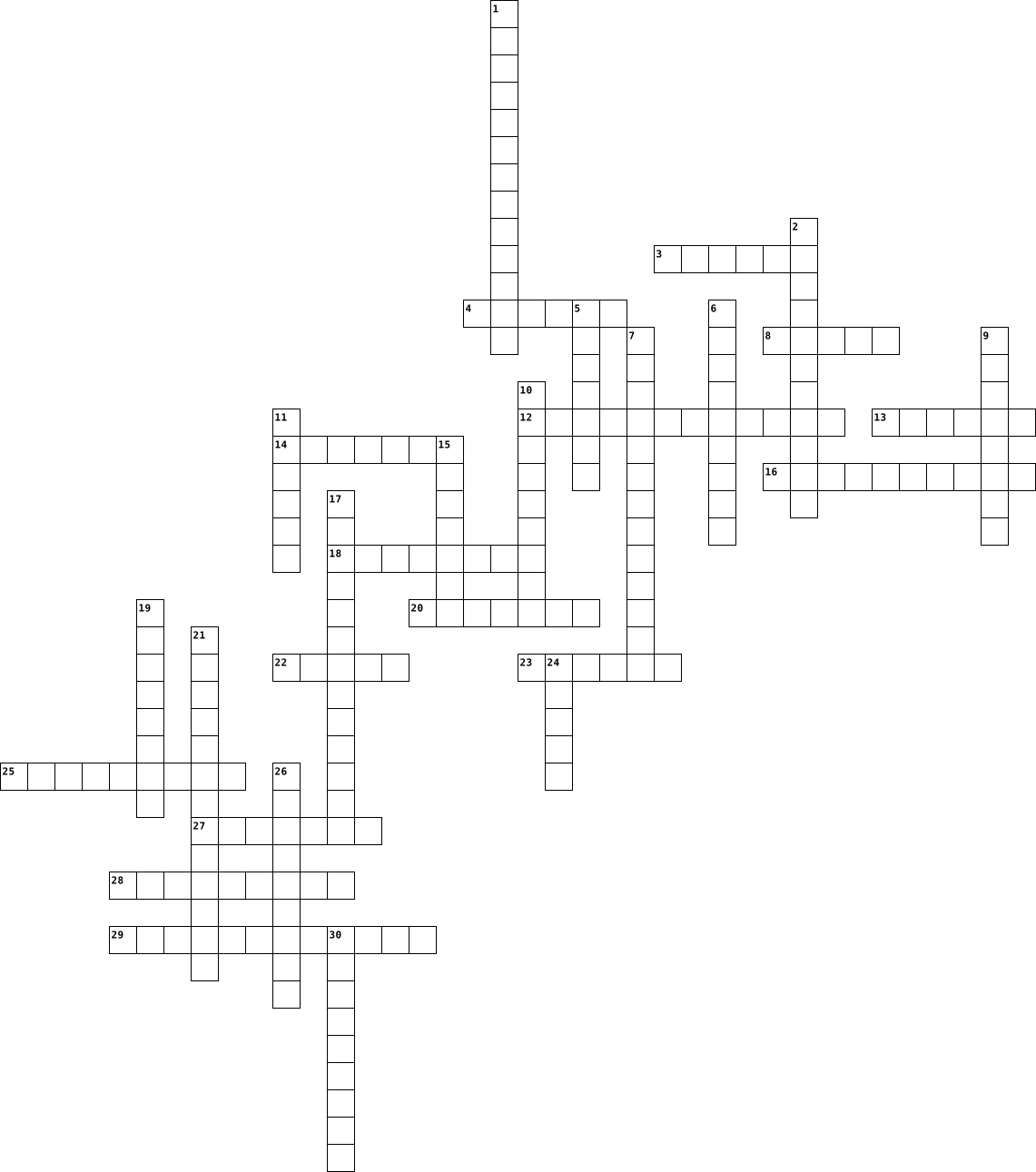
Across
- a mark or character used as a conventional representation of an object, function, or process.
- a column in the periodic table of the chemical elements
- admixture of metals, or a metal combined with one or more other elements
- the number of protons in the nucleus of an atom
- A proton is a subatomic particle, with a positive electric charge of
- a sub-atomic particle with no net electrostatic charge
- the sum of the numbers of protons and neutrons present in the nucleus of an atom.
- e natural materials that do not produce heat or electricity and that are structurally brittle
- the movement of water from a less concentrated solution to a more concentrated solution through a partially permeable membrane
- a material that, when freshly prepared, polished, or fractured, shows a lustrous appearance and conducts electricity and heat relatively well.
- anything that occupies space and has mass
- particles that are smaller than atoms
- any substance that cannot be decomposed into simpler substances by ordinary chemical processes
- an element that has properties that are intermediate between those of metals and nonmetals
- the number of protons in the nucleus of an atom
Down
- law that states: Matter is made up of particles that are constantly moving
- any of the six chemical elements that make up Group 1 (Ia) of the periodic table
- Arrangement of the elements
- the movement of a substance from an area of high concentration to an area of low concentration
- a tabular array of the chemical elements organized by atomic number
- are a group in the periodic table consisting of five chemically related elements
- any of numerous subatomic constituents of the physical world that interact with each other
- the ability to do work
- a membrane-bound organelle that contains genetic material (DNA) of eukaryotic organisms.
- the amount of a component in a given area or volume
- a negatively charged subatomic particle.
- metals that are named after their oxides
- the smallest unit of ordinary matter that forms a chemical element.
- a substance that contains atoms of two or more different elements, and these atoms are chemically joined together.
- a particle made up of two or more atoms that are chemically bonded together
30 Clues: the ability to do work • Arrangement of the elements • particles that are smaller than atoms • a negatively charged subatomic particle. • metals that are named after their oxides • anything that occupies space and has mass • the number of protons in the nucleus of an atom • the number of protons in the nucleus of an atom • ...
Matter 2021-02-16
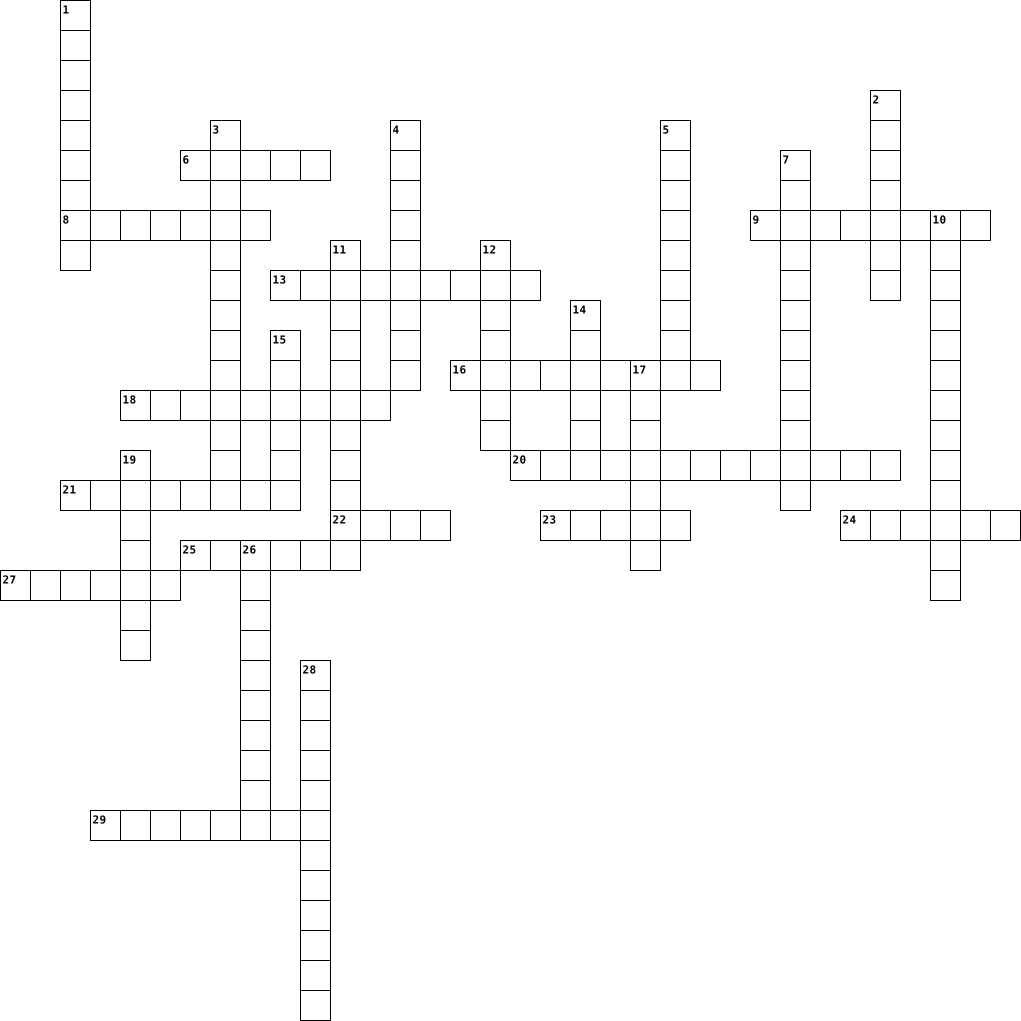
Across
- a material that is typically hard, opaque, shiny, and has good electrical and thermal conductivity the measure of the ease at which an electric charge or heat can pass through a material
- the movement of a solvent
- a chemical element that mostly lacks the characteristics of a metal
- a group of atoms bonded together
- a substance formed from two or more elements chemically united in fixed proportions
- ___________ particles are smaller than atoms
- the body of theory which explains the physical properties of matter in terms of the motions of its constituent particles
- a group in the periodic table consisting of five chemically related elements: fluorine (F), chlorine (Cl), bromine (Br), iodine (I), and astatine (At).
- the basic building block of ordinary matter
- an admixture of metals
- the ability to do work
- abbreviations used in chemistry for chemical elements
- anything that has mass and takes up place (it has volume)
- a stable subatomic particle with a charge of negative electricity
Down
- the movement of a substance from an area of high concentration to an area of low concentration
- the positively charged central core of an atom the smallest particle of an element that retains the chemical retains the chemical and physical properties of the element
- tabular display of the chemical elements
- ions,atoms or molecules
- an element that has properties that are intermediate between those of metals and nonmetals
- the number of protons in the nucleus of an atom is called
- any of the six chemical elements that comprise Group 2 (IIa) of the periodic table
- _________metals are the most electropositive (the least electronegative) of elements
- a set of elements occupying a horizontal row in the periodic table
- a subatomic structure
- a set of elements occupying a column in the periodic table
- the particles in an atom that has a neutral charge
- each of more than one hundred substances that cannot be chemically interconverted or broken down into simpler substances and are primary constituents of matter
- the sum of the numbers of protons and neutrons present in the nucleus of an atom is called
- number of protons in the nucleus of an atom is called
29 Clues: a subatomic structure • an admixture of metals • the ability to do work • ions,atoms or molecules • the movement of a solvent • a group of atoms bonded together • tabular display of the chemical elements • the basic building block of ordinary matter • ___________ particles are smaller than atoms • the particles in an atom that has a neutral charge • ...
Matter 2021-08-30
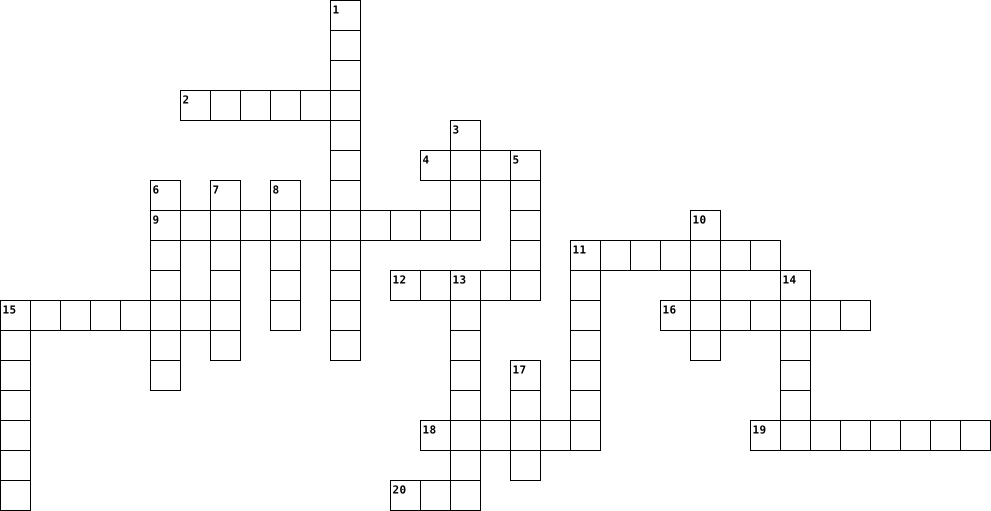
Across
- fixed volume but no fixed shape and cannot be compressed
- matter is anything that has ____ and occupies ____
- process where the liquid turns to gas with the help of the natural sun
- evaporation takes place on the ____ of the liquid but boiling takes place in the water
- water ____ is a natural process where rain forms
- cannot change the size of the object also known as fixed
- process where the liquid turns to gas with the help of a fire
- the ____ the object is exposed to sunlight, the slower the water evaporates
- process where the liquid turns to solid
- no fixed shape and volume but can be compressed
Down
- process where gas turns to liquid
- melting, boiling and evaporation are processes of heat _____
- matter is anything that has ____ and occupies ____
- process where solid turns to liquid
- the stronger the wind present, the _____ the water evaporates
- fixed shape and fixed volume but cannot be compressed
- water _____ is in gas form
- the ____ the size of the object, the faster the water evaporates
- ____ is an action of squeezing the matter
- the ____ the temperature of the surroundings, the faster the water evaporates
- water _____ is in liquid form
- condensation and freezing are processes of heat ___
22 Clues: water _____ is in gas form • water _____ is in liquid form • process where gas turns to liquid • process where solid turns to liquid • process where the liquid turns to solid • ____ is an action of squeezing the matter • no fixed shape and volume but can be compressed • water ____ is a natural process where rain forms • matter is anything that has ____ and occupies ____ • ...
Matter 2021-05-13
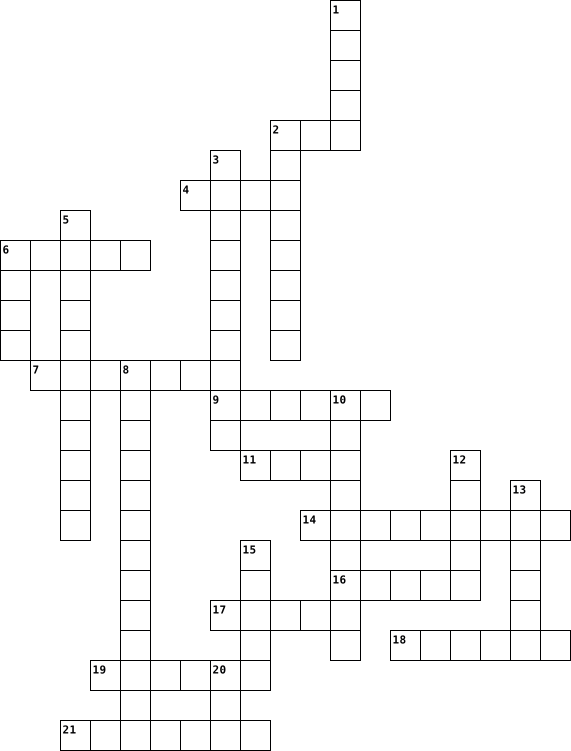
Across
- When atoms are in this state of matter, they fly around freely.
- The amount of matter something contains is its
- Solid matter does not change
- You might pour this thick, red liquid on a hot dog or hamburger.
- This is the type of gas that animals' bodies need to stay alive.
- This is liquid rock that pours out of a volcano.
- Liquid matter takes the shape of its
- The tiny particles that matter is made of are
- If you place a solid in a liquid, it will either sink or
- The amount of space that matter takes up is its
- Raindrops are this state of matter.
- At 32 degrees Fahrenheit, water
Down
- When a solid is heated up and turns into a liquid, it
- This liquid is needed by most cars and trucks to run.
- Water in the form of a gas is called(2 words)
- This is a liquid that you might pour on pancakes or waffles.(two words)
- Solid white flakes of water that fall from the sky are known as
- This is the type of gas that plants need to make food.
- On a warm day, the liquid water in a puddle will _____ and turn into a gas.
- At 212 degrees Fahrenheit, water
- This is a very light gas found in some balloons.
- Matter that has a definite shape and volume is in this state.
- Water, in solid form is
23 Clues: Water, in solid form is • Solid matter does not change • At 32 degrees Fahrenheit, water • At 212 degrees Fahrenheit, water • Raindrops are this state of matter. • Liquid matter takes the shape of its • Water in the form of a gas is called(2 words) • The tiny particles that matter is made of are • The amount of matter something contains is its • ...
Matter 2022-06-06
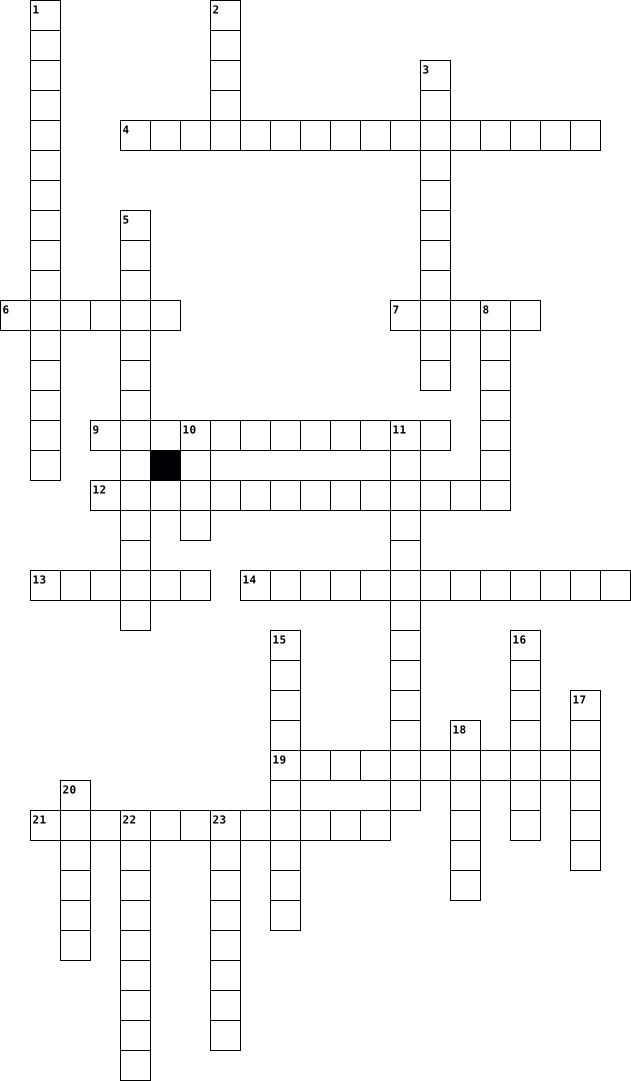
Across
- The ability to be incorporated into a liquid;often forming a solution.
- Two or more substances that are together in the same place but their atoms are not chemically bonded.
- The change of state from a liquid to a gas.
- A state of matter with no definite shape or volume.
- The transfer of thermal energy from one particle matter to another.
- A substance that cannot be broken down into any other substances by chemical or physical means.
- Ability to be pressed or hammered out of shape without breaking or cracking.
- A solid that is made up of crystals in which particles are arranged in a regular, repeating pattern.
- The process by which molecules at the surface of a liquid absorb enough energy to change to a gas.
- A measure of how much matter is in an object.
- A substance made of two or more elements chemically combined in a specific ratio,or proportion.
- A measure of the force of gravity acting on an object.
- A single kind of matter that is pure and has a specific set of properties.
- The amount of space that matter occupies.
- The measurement of a substance is contained in a given volume.
- The change in state from a solid to a liquid.
Down
- A state of matter that has no definite shape but has a definite volume.
- A state of matter that has a definite shape and a definite volume.
- The change in state from liquid to solid.
- The result of an inward pull among the molecules of o liquid that brings the molecules on the surface closer together;causes the surface to act as if it has thin skin.
- Ability to burn, ignite or catch on fire
- The change in state from a solid directly to a gas without passing through the liquid state.
- The force of attraction that holds two atoms together.
- A characteristic of a pure substance that can be observed without changing it into another substance.
- The temperature at which a substance changes from solid to a liquid;the same as the freezing point;or temperature at which a liquid changes into a solid.
- The temperature at which a liquid boils.
- The change of state from a to a liquid.
- A solid made up of particles that are not arranged in a regular pattern.
- A liquids resistance to flowing.
- The force pushing on a surface by the area of that surface.
- A neutral group of two or more atoms held together by covalent bonds.
- Any substance that can flow.
- Vaporization that occurs at and below the surface of a liquid.
- The basic particle from which all elements are made;the smallest particle of an element that has the properties of that element.
- Anything that has mass and takes up space.
35 Clues: Any substance that can flow. • A liquids resistance to flowing. • The change of state from a to a liquid. • Ability to burn, ignite or catch on fire • The temperature at which a liquid boils. • The change in state from liquid to solid. • The amount of space that matter occupies. • Anything that has mass and takes up space. • The change of state from a liquid to a gas. • ...
Matter 2022-07-26
Across
- How matter looks, feels, interacts
- amount of space an object takes up
- smallest unit or part of all things
- ability to burn with oxygen present
- water changing to ice
- measure of the pull of gravity on an object
- rain, snow, sleet, and hail
- liquid to a gas
- gas to a liquid
Down
- changes to create something new
- molecules will expand to fill a container
- water stored beneath the Earth's surface
- one substance changes into another
- two or more substances are physically combined
- amount of matter in an object
- plants give water back to the environment
- water that gathers after running downhill
- will flow to conform to the shape of a container
- excess water that runs down hill
- anything that has mass and takes up space
- maintain a rigid form without a container
- a solid disappears when mixed into a liquid
- sugar dissolved in water
23 Clues: liquid to a gas • gas to a liquid • water changing to ice • sugar dissolved in water • rain, snow, sleet, and hail • amount of matter in an object • changes to create something new • excess water that runs down hill • How matter looks, feels, interacts • one substance changes into another • amount of space an object takes up • smallest unit or part of all things • ...
Matter 2022-11-14
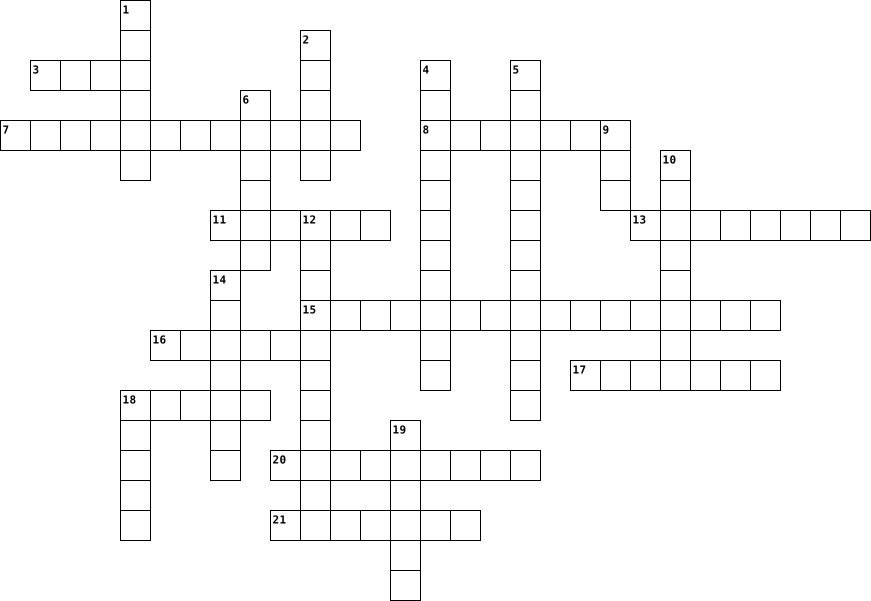
Across
- The amount of matter in an object
- gas becomes a liquid.
- liquid becomes a gas
- This has mass and takes up space
- liquid becomes a solid
- A trait of matter that can be observed or measured
- The amount of space an object occupies
- reflects the degree of packing of particles
- Tightly packed particles
- Ability of a substance to be stretched into a wire.
- how the substance looks and feels.
Down
- The way that a substance reflects light
- how the object absorbs and reflects light
- solid becomes a gas
- Ability of a substance to be hammered flat and to retain the new shape.
- The color left behind when a material is rubbed
- Particles that are very far apart and move freely
- Measure of how easily a material is scratched
- A measure of the average kinetic energy
- solid becomes a liquid
- The "habit" of an object or the form
- Packed particles but still have space between them
22 Clues: solid becomes a gas • liquid becomes a gas • gas becomes a liquid. • liquid becomes a solid • solid becomes a liquid • Tightly packed particles • This has mass and takes up space • The amount of matter in an object • how the substance looks and feels. • The "habit" of an object or the form • The amount of space an object occupies • The way that a substance reflects light • ...
Matter 2022-10-26
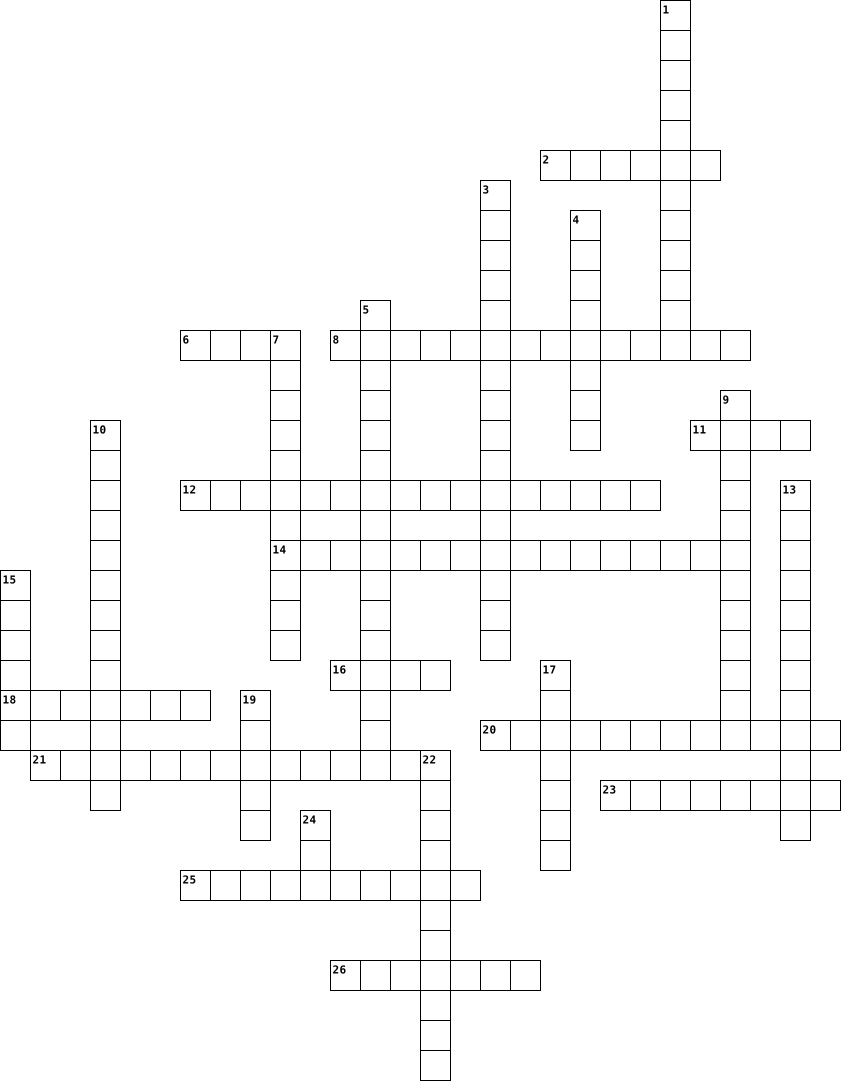
Across
- state of matter that a definite volume, but no definite shape
- is the amount of matter an object has
- change in the size, shape, or state of matter with no new matter being formed (2 words)
- if this is added a puddle of water can evaporate into the air.
- ability of a material to change its chemical makeup (2 words)
- increase in size of a substance due to a change in temperature (2 words)
- the smallest particle of an element that still has the properties of that element
- physical combination of two or more substances
- change of state from a gas to a liquid as energy is removed
- change in matter that results in new substances being formed (2 words)
- the reversing of melting point is called this
- change of state from a gas to a solid
- change of state from a solid to a liquid as energy is added
Down
- change of state from a liquid to a gas as energy is added
- characteristic that can be measured or detected by the senses (2 words)
- two or more atoms joined together by chemical bonds
- a process in which one or more substances are changed into one or more different substances, or a specific example of one more chemical changes
- change of state from a solid to a gas
- to measure the temperature at which a liquid turns into a solid (2 words)
- physical form that matter takes; the three states of matter are gas, liquid and solid.
- at this time the molecules in your system have enough energy to become a gas (2 words)
- is the amount of space the matter takes up
- mass per unit volume of a substance
- state of matter that has a definite shape and volume
- this occurs when individual liquid molecules gain enough energy to escape the system and become a gas.
- state of matter that has no definite shape or volume
26 Clues: mass per unit volume of a substance • is the amount of matter an object has • change of state from a solid to a gas • change of state from a gas to a solid • is the amount of space the matter takes up • the reversing of melting point is called this • physical combination of two or more substances • two or more atoms joined together by chemical bonds • ...
Matter 2017-12-12
Across
- Responsible for current flow
- Process of losing or gaining an electron
- Has Mass and Occupies space
- Neutral charged particle
- Path of electron as it moves around nucleus
- The centre of an Atom
- Force that holds Atom to Atom together
- Insulator made from Silica
- Positively charged particle
Down
- Negatively charged particle
- Element with less than half its valence shell filled is most likely
- Has 4 Valence Electrons
- Has few free Electrons
- Used for Motor brushes
- Furthest orbit from the Nucleus
- Outermost shell
- An electron that can move from Atom to Atom
- Has unique number of protons
- Used in Electrical equipment
- Excellent conductor of Electricity
20 Clues: Outermost shell • The centre of an Atom • Has few free Electrons • Used for Motor brushes • Has 4 Valence Electrons • Neutral charged particle • Insulator made from Silica • Negatively charged particle • Has Mass and Occupies space • Positively charged particle • Responsible for current flow • Has unique number of protons • Used in Electrical equipment • Furthest orbit from the Nucleus • ...
Matter 2017-12-03
Across
- positively charged particles inside an atom
- negatively charged particles in an atom.
- along the zig zag line
- a mixture that is evenly mixed throughout
- Elements are arranged on a chart called the ________ table.
- elements and compounds are pure ____________.
- a substance made of two or more different atoms chemically joined
- protons and neutrons are found here
- elements in the same column up and down on the periodic table are in the same ______
- elements in the same group have similar properties and are sometimes referred to as a _______
- the protons and the neutrons in the nucleus make up the atomic ______
Down
- to the right of the zig zag line
- most elements are _______.
- the periodic table is arranged by _______________
- a mixture that is not evenly mixed
- one substance is dissolved in another
- elements in the same row across the periodic table are in the same _________.
- a substance that contains a variety of elements and compounds that are not chemically combined
- a compound that has a pH above 7
- particles will settle out if not shaken or stirred
- particles inside an atom that have no charge
- a substance made of only one kind of atom
- a compound that has a pH below 7
- a compound that has a pH of 7
- the smallest particle of an element that still has the properties of the element
25 Clues: along the zig zag line • most elements are _______. • a compound that has a pH of 7 • to the right of the zig zag line • a compound that has a pH above 7 • a compound that has a pH below 7 • a mixture that is not evenly mixed • protons and neutrons are found here • one substance is dissolved in another • negatively charged particles in an atom. • ...
Matter 2018-05-04
Across
- cannot be separated by physical means
- The change of state from a liquid to a solid state
- measure of the amount of force of attraction between objects due to gravity.
- metric temperature scale on which water freezes a 0 degrees and boils at 100 degrees
- The temperature at which a substance changes from a liquid phase to a gas phase
- process by which a substance becomes a new and different substance
- mixture that is not uniform in composition ; samples might not be the same
- the amount of matter in an object
- phase in which matter has a definite shape and volume; particles are packed together
- contains two or more elements chemically combined that can not be physically separated
- state in which matter can exist: solid, liquid, gas or plasma
- anything with mass and takes up space
- made up of two types of matter that can be physically separated
Down
- When a substance turns from a solid to a liquid
- the process in which a solid changes directly into a gas
- measurement of how much mass is contained in a given volume of an object
- the temperature at which a substance changes from a liquid phase to a solid phase
- a mixture in which the composition is uniform throughout; samples would have the same makeup.
- matter that takes both the shape and volume of its container; particles are spaced apart
- when a gas turns to a liquid
- when a gas turns straight to a solid
- shorthand way of representing an element
- property that describes how a substance changes into a new substance
- The change of a substance from a liquid to a gas
- simplest type of a substance; has only one kind of atom
- the amount of space that a substance or object occupies, or that is enclosed within a container, especially when great.
- matter with no definite shape but with a definite volume
27 Clues: when a gas turns to a liquid • the amount of matter in an object • when a gas turns straight to a solid • cannot be separated by physical means • anything with mass and takes up space • shorthand way of representing an element • When a substance turns from a solid to a liquid • The change of a substance from a liquid to a gas • ...
Matter 2023-11-03
Across
- The change from a solid directly to a gas
- The change from a liquid to a solid
- An ionized gas with no definite shape or volume
- Maple syrup has a _______ viscosity
- Have a definite shape and definite volume
- Have no definite shape or volume
- Have particles arranges in regular, repeating pattern
- The change from a liquid to a gas
- Change that occurs when a gas changes to a solid
- The change from a solid to a liquid
Down
- The change from a gas to a liquid
- For water, the temp is 0 degree C
- Gets softer and softer with increasing heat, but does not melt
- Takes place at the surface of a liquid
- Anything that can flow
- Take the shape of the container they're in, but have a definite volume
- cohesion among molecules of a liquid
- For water, the temp is 100 degree C
- occurs when a liquid changes to a gas below its surface, in addition to at the surface
- A liquids resistance to flow
- For water, the temp is 1 degree C
21 Clues: Anything that can flow • A liquids resistance to flow • Have no definite shape or volume • The change from a gas to a liquid • For water, the temp is 0 degree C • The change from a liquid to a gas • For water, the temp is 1 degree C • The change from a liquid to a solid • Maple syrup has a _______ viscosity • For water, the temp is 100 degree C • ...
Matter 2023-11-03
Across
- simplest type of pure substance
- are formed when solids, liquids,or gases disolve in a solvent
- separation process which uses the action of centrifugal force
- is the degree to which a chemical substance can damage a living organism
- refers to whether a compound will burn when exposed to flame
- the ability of matter to be bent or hammered into thin sheets without falling into pieces
- elements posseses the characteristics of both metal and nonmetal
- involves separating a mixture based on the different sizes of components
- measurement of the extent of something along it's greatest dimension
Down
- consist of fine particles of substance finely dispersed in another
- is a technique used to separate out homogeneous mixture where there is no one or more dissolve solids
- ability of matter to stretch under stress
- the separation of mixture by passing it in a solution or suspension or as a vapor
- particles of a solid suspended by shaking or stirring in a liquid or gas
- is the quality of being hot
- a separation method used to separate out substance in mixtures comprised of particles os some of which are large enough in size
- a purification process where the components of a liquid mixture are vaporized and then condensed and isolated
- degree to which a substance dissolves in a solvent to make a solution
- they are formed from bonds of atoms
- it is only useful method if the solid particles readily settle to the bottom
20 Clues: is the quality of being hot • simplest type of pure substance • they are formed from bonds of atoms • ability of matter to stretch under stress • refers to whether a compound will burn when exposed to flame • are formed when solids, liquids,or gases disolve in a solvent • separation process which uses the action of centrifugal force • ...
MATTER 2023-09-01
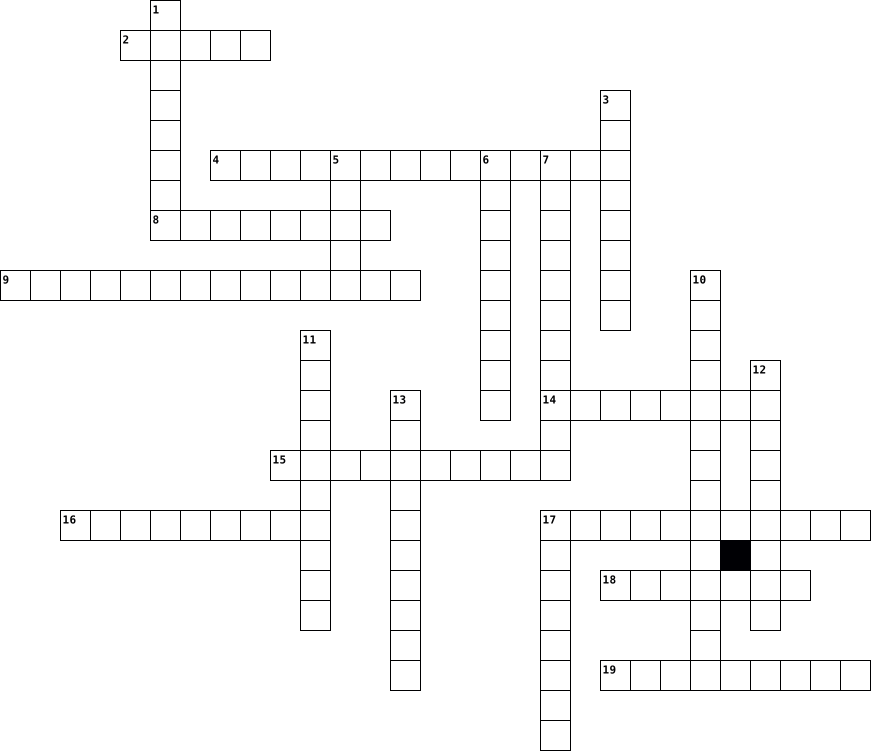
Across
- MTL
- CMCLG
- CVLT
- PESBTCES
- SLTN
- ETDS
- CMPD
- CLHNG
- ORC
- INTS
Down
- MTLC
- EMNT
- INC
- HMGNS
- NLGSSS
- PHALC
- SPEN
- IRC
- FLRN
- CLDS
20 Clues: MTL • INC • IRC • ORC • MTLC • EMNT • CVLT • SPEN • FLRN • SLTN • ETDS • CMPD • CLDS • INTS • CMCLG • HMGNS • PHALC • CLHNG • NLGSSS • PESBTCES
Matter 2023-08-25
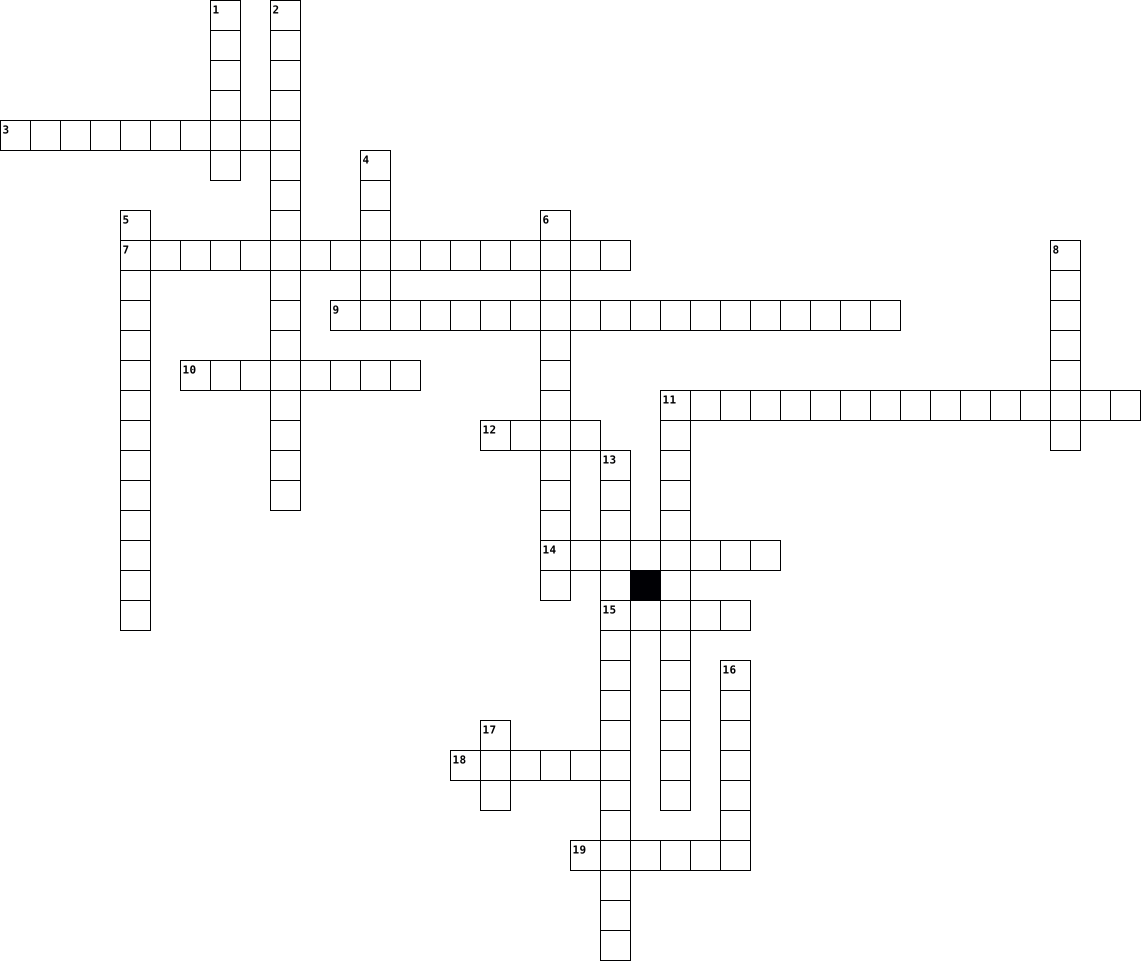
Across
- mixture where the particles settle out over time
- mixtures that is uniform throughout
- mixture where you can see the differences
- composed two or more elements in a fixed ratio
- property of matter that does not change the identity of the matter
- the amount of material in an object
- property property of matter that causes the substance to change into another substance
- has a definite shape and volume
- anything that takes up space and has mass
- mass with gravity acting you
Down
- has a definite shape, but not a definite volume
- describing matter where the amount does not change the value
- the amount of space you take up
- changes the identity of a substance
- either a compound or element
- variable combination of two or more substances
- changes the form of a substance without changing its identity
- describing matter that depends on the amount of the substance you have
- composed of identical atoms
- has no definite shape or volume
20 Clues: composed of identical atoms • either a compound or element • mass with gravity acting you • the amount of space you take up • has a definite shape and volume • has no definite shape or volume • changes the identity of a substance • mixtures that is uniform throughout • the amount of material in an object • mixture where you can see the differences • ...
Matter 2023-10-03
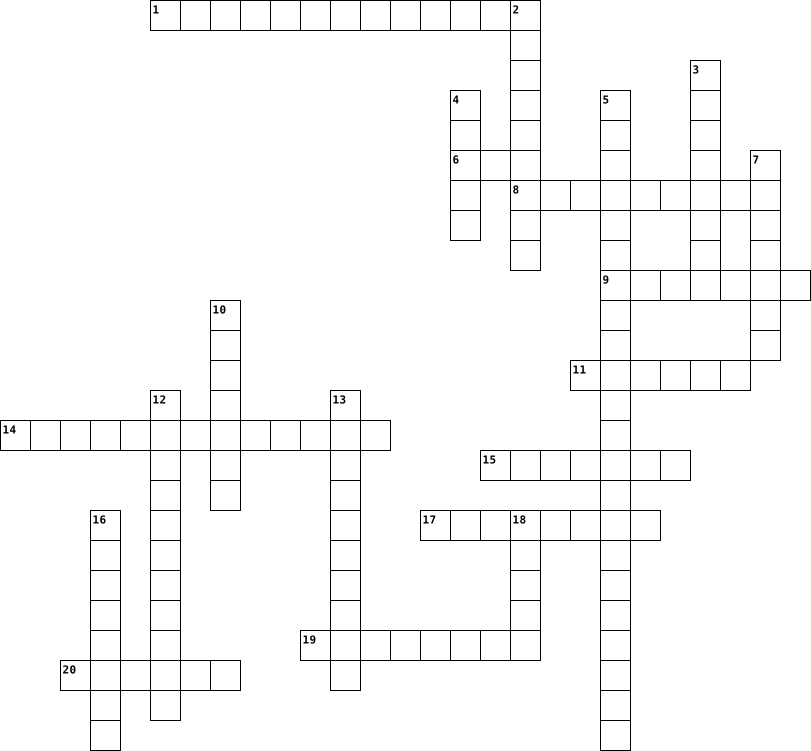
Across
- Can not be physically seperated
- Variable shape, variable volume
- Boiling point, density, conductivity - intensive or extensive?
- Heterogeneous,medium size particles, Tyndall effect, particles don´t settle
- Gas-like, variable shape and volume. Ex. stars
- Not a uniform composition
- Can be physically separated
- Color, smell, magnetism are all _______ properties
- Can be chemically separated
- Variable shape, fixed volume
Down
- Volume and mass - intensive or extensive?
- Flammability, radioactivity, toxicity are all ______ properties
- Precipitate, gas, increase in temperature, ________
- Particles of matter are always in motion
- Melting, volume, color, _______
- Can not be chemically separated
- Uniform composition
- Heterogeneous, large particles,Tyndall effect, particles settle
- Homogeneous, particles don´t settle, no Tyndall effect, very small particles
- Fixed shape, fixed volume
20 Clues: Uniform composition • Not a uniform composition • Fixed shape, fixed volume • Can be physically separated • Can be chemically separated • Variable shape, fixed volume • Can not be physically seperated • Variable shape, variable volume • Melting, volume, color, _______ • Can not be chemically separated • Particles of matter are always in motion • ...
MATTER 2023-09-27
Across
- amount of mass per unit of volume (more dense=sinks,less dense=floats)
- anything that has mass and takes up space
- basic building blocks of any matter
- _____table A chart of the elements showing the repeating pattern of their properties
- the amount of force exerted per unit area of a surface
- particles further apart and can flow
- A pure substance made of only one kind of atom. molecule A group of atoms bonded together
- particles very far apart and rarely touch each other
- A measure of the force of gravity on an object
- A single kind of matter that is pure and has a specific set of properties.
- _____Property A characteristic of a pure substance that describes its ability to change into different substances
- A group of atoms bonded together
Down
- particles are tightly packed
- SI unit for mass
- amount of space an object takes up (measure in milliliters and liters)
- A measure of how hot or cold something is.
- amount of matter in an object (measured in grams or kilograms)
- heat removed from gas, changing it to liquid
- The study of the properties of matter and how matter changes
- _____property can be observed using your senses: color, shape, size,texture,function, density, state of matter
20 Clues: SI unit for mass • particles are tightly packed • A group of atoms bonded together • basic building blocks of any matter • particles further apart and can flow • anything that has mass and takes up space • A measure of how hot or cold something is. • heat removed from gas, changing it to liquid • A measure of the force of gravity on an object • ...
Matter 2024-08-28

Across
- process due to which a liquid changes into a gas at a fixed temperature by absorbing heat
- property of a gas and liquid
- example of a liquid
- is a matter that doesn't have a definite shape but has a definite volume and mass
- matter that has a definite mass and shape
- substance that exists in a gaseous state such that its temperature is lower than the boiling point of its liquid state
- process due to which a liquid changes into a solid by releasing heat
- anything that has mass and occupies space
- example of a gas
- different particles attract each other
- particles attract each other
Down
- process due to which a solid directly changes into a gas without undergoing the liquid state by absorbing heat
- sublimating substance
- is a matter that doesn't have a definite shape and volume but a definite mass
- process due to which a gas changes into a liquid at a fixed temperature by releasing heat
- is a particular kind of matter
- homogenous material made up of only one kind of atoms or molecules such that it composition remains same throughout
- process in which a solid changes into a liquid by absorbing heat
- small particles which make up matter
- example of a solid
20 Clues: example of a gas • example of a solid • example of a liquid • sublimating substance • property of a gas and liquid • particles attract each other • is a particular kind of matter • small particles which make up matter • different particles attract each other • matter that has a definite mass and shape • anything that has mass and occupies space • ...
Matter 2024-08-25

Across
- change in matter that produces one ore more new substances
- a group of 2 or more atoms held together by chemical bonds
- a change in which energy is absorbed
- different parts cannot be easily separated
- force of gravity on an object
- a change in which energy is given off
- amount of space matter occupies
- anything that has mass and takes up space
- made of two or more substances thar are together in the same place but not chemically bonded
- amount of matter in an object
- single kind of matter
- study of matter and how it changes
Down
- the measurement of how hot or cold something is
- force of attraction between two atoms
- matter is not created or destroyed in any chemical or physical change
- different parts that can be separated out
- substance made of two ore more elements that are chemically combined in a set ratio
- a substance that cannot be broken down into any other substances by chemical or physical means
- energy stored in the chemical bonds between atoms is a form of energy
- total energy of the motion of all the particles in an object
- measure of mass of a substance contained in a given volume
- basic particle from which all elements are made
- characteristics
23 Clues: characteristics • single kind of matter • force of gravity on an object • amount of matter in an object • amount of space matter occupies • study of matter and how it changes • a change in which energy is absorbed • force of attraction between two atoms • a change in which energy is given off • different parts that can be separated out • ...
Matter 2026-02-11

Across
- A mixture that forms when one substance dissolves another.
- a specific type of matter with a uniform, definite composition and distinct properties
- A liquid's resistance to flowing
- The amount of energy required for the liquid at its boiling point to become a gas
- Matter is not created nor destroyed in any chemical or physical change
- mass per unit volume of a substance
- point the temperature at which a substance changes from a liquid to a gas
Down
- anything that has mass and takes up space; solid, liquid, or gas
- A measure of how much solute can dissolve in a given solvent at a given temperature
- a combination of two or more substances (solids, liquids, or gases) that are physically blended but not chemically bonded
- The ease and speed with which an element combines, or reacts, with other elements and compounds
- The change of state from a liquid to a gas
- the process by which one or more substances change to produce one or more different substances
- The temperature at which a liquid changes to a gas
- a measure of how hot or cold something is
- a chemical change in which a substance combines with oxygen, as when iron oxidizes , forming rust
- Amount of energy required to change a substance from the solid phase to the liquid phase
- the chemical property of being able to burn
- a pure substance made of only one type of atom, which can't be broken down into simpler substances by chemical means
- The change of a substance from a liquid to a gas
- point the specific temperature at which a substance changes state from a solid to a liquid
- A liquid substance capable of dissolving other substances
- A substance made up of atoms of two or more different elements joined by chemical bonds
23 Clues: A liquid's resistance to flowing • mass per unit volume of a substance • a measure of how hot or cold something is • The change of state from a liquid to a gas • the chemical property of being able to burn • The change of a substance from a liquid to a gas • The temperature at which a liquid changes to a gas • A liquid substance capable of dissolving other substances • ...
Matter 2024-10-29

Across
- the way light bounces off an object
- describes how energy such as electricity of heat can move through a material
- a mixture where the composition is the same throughout; different parts are mixed so well that they won’t settle out on their own
- the ability of matter to dissolve in a liquid
- the material that something is made of
- a measure of the amount of matter in the object
- a physical combination of two or more substances that are blended together without forming new substances
- one or more substances are changed to form a new substance
- has a definite volume, but no definite shape
Down
- a mixture of substances that are blended so completely that the mixture looks the same everywhere
- substances mixed together to form a chemical change
- a combination of two or more substances that is not uniform; you can and can be separated by physical or chemical means
- anything that has mass and takes up space
- the amount of space an object takes up
- a change in matter but not what it is made of
- has no definite shape, nor definite volume
- the smallest unit of matter
- has a definite shape and takes up a definite amount of space (volume)
- a minute portion of matter
- a type of mixture in which the particles of one material are scattered through another without settling out
20 Clues: a minute portion of matter • the smallest unit of matter • the way light bounces off an object • the amount of space an object takes up • the material that something is made of • anything that has mass and takes up space • has no definite shape, nor definite volume • has a definite volume, but no definite shape • a change in matter but not what it is made of • ...
Matter 2025-02-11

Across
- idea that molecules are in constant motion
- when two or more pure substances are together but not chemically combined
- random movement of molecules, how heat and gases spread
- a substance that cannot be broken down
- made up of two or more elements bonded together
- phase change where liquids become a gas
- phase change that decreases energy between plasma and gas
- phase change that increases energy in a gas
- phase change that decreases energy between liquids and solids
- ionized gas that emits electrons
- phase change that increases energy and causes solids to become liquid
- type of system that allows energy to move but mass can not move in or out
- states that matter can not be created nor destroyed
Down
- type of property that changes with the amount of the object, like volume for example
- phase change that goes straight from a solid to a gas, skipping liquid
- phase change where gases become liquid, like water vapor in clouds
- type of property that doesn't change with the amount of the object that you have, like color for example
- type of system that allows both energy and mass to move in and out
- anything that has mass and takes up space
- mixtures with the same molecules throughout that appear uniform throughout
- state of matter that has a geometric pattern within its molecules
- mixture with two or more compounds that can be distinguished
- state of matter that does not have bonds
- state of matter that has a fixed volume but not a fixed shape
- type of property that can be observed without changing the identity of a substance
25 Clues: ionized gas that emits electrons • a substance that cannot be broken down • phase change where liquids become a gas • state of matter that does not have bonds • anything that has mass and takes up space • idea that molecules are in constant motion • phase change that increases energy in a gas • made up of two or more elements bonded together • ...
Matter 2024-12-09

Across
- Anything that has mass and volume
- He created a model of the atom
- A pure substance made with with only one type of atom
- The number of protons and neutrons added together
- When a substance changes into a new substance
- A positively charged particle of an atom
- A physical property describing a substance's ability to be stretched into wire
- Has a definite volume but not shape
- Describes matter's ability to change into another substance
- An atomic particle with no charge
- A negatively charged particle of an atom
Down
- A chemical property describing a substance's ability to burn
- An arrangement of all known elements
- Characteristic that can be observed without changing a substance
- The number of protons in the nucleus
- Does not have definite shape or volume
- Chopping wood into smaller pieces is this type of change
- It has 20 protons and is found in your teeth and bones
- Has a definite shape and definite volume
- The center of an atom
20 Clues: The center of an atom • He created a model of the atom • Anything that has mass and volume • An atomic particle with no charge • Has a definite volume but not shape • An arrangement of all known elements • The number of protons in the nucleus • Does not have definite shape or volume • Has a definite shape and definite volume • A positively charged particle of an atom • ...
Matter 2025-01-10

Across
- depends on the size of the sample
- filtration
- mixture that looks the same and cannot be told apart
- contains 2 or more substances
- can be observed without changing the chemical make-up of the substance
- matter that has the same properties and/or characteristics
- Takes on the shape, but not volume of its container
- mixture that has clear different components
- separation that is determined by boiling points
Down
- Characteristics a substance is recognized by
- When something is separated based on size and solubility
- Something that consists of mass and takes up space
- Characteristic describing a chemical change
- Exists on earth in all 3 states of matter
- Definite characteristic of a solid
- A substance that does not have the ability to break up by a chemical change
- Chemically combined and consists of 2 or more elements
- doesn’t depend on the size of the sample
- States of matter commonly found on earth
- separation determined by size and charge
20 Clues: filtration • contains 2 or more substances • depends on the size of the sample • Definite characteristic of a solid • doesn’t depend on the size of the sample • States of matter commonly found on earth • separation determined by size and charge • Exists on earth in all 3 states of matter • Characteristic describing a chemical change • ...
Matter 2024-12-16

Across
- Chemical combination of elements
- Anything that has mass and takes up space
- Change from liquid to gas
- Change from solid to liquid
- Phase of matter with definite volume, but no definite shape
- Heat is absorbed
- Change from gas to liquid
- Process used to separate sand from water
- How elements combine to form a compound
- Change from solid to gas
- Phase of matter in which particles vibrate in place
- Mixture that is nonuniform
Down
- Change from gas to solid
- Process used to separate two liquids based on boiling points
- How elements combine to form a mixture
- Change from liquid to solid
- Can be used to remove iron from a mixture
- Heat is released
- Mixture that is uniform
- Phase of matter in which particles are in constant random motion
- Physical combination of elements
- Simplest form of matter
22 Clues: Heat is released • Heat is absorbed • Mixture that is uniform • Simplest form of matter • Change from gas to solid • Change from solid to gas • Change from liquid to gas • Change from gas to liquid • Mixture that is nonuniform • Change from liquid to solid • Change from solid to liquid • Chemical combination of elements • Physical combination of elements • ...
Matter 2025-01-07

Across
- The part of an atom with no charge
- A property that does not depend on the amount of substance, like density
- The state of matter with the highest energy particles
- A positively charged particle in the nucleus of an atom
- A gas that behaves according to the kinetic molecular theory
- The process where a gas turns into a liquid
- The process of a solid turning directly into a gas
- A mixture that has uniform composition throughout
- The smallest unit of an element
- The state of matter with a definite shape and volume
Down
- A pure substance that cannot be broken down further
- The resistance of a liquid to flow
- A measure of how much space an object occupies
- A solid solution of metals, like steel
- The temperature at which a liquid becomes a gas
- The ability to be drawn into wires
- The energy of motion
- A substance made of two or more elements chemically combined
- A property describing how light is reflected from a surface
- The amount of matter in an object
20 Clues: The energy of motion • The smallest unit of an element • The amount of matter in an object • The part of an atom with no charge • The resistance of a liquid to flow • The ability to be drawn into wires • A solid solution of metals, like steel • The process where a gas turns into a liquid • A measure of how much space an object occupies • ...
Matter 2024-12-20

Across
- A property that can be changed without changing the chemical make-up
- Anything that has mass and occupies space(volume).
- Separation based on size and solubility.
- Property that depends on size of the sample "how much" usually mass or volume
- A substance that can't be broken down by a chemical change. the simplest form of matter.
- Set of characteristics by which a substance is recognized. Can be observable like color or odor.
- Separation based on boiling points.
- Separation based on size and charge (polarity)
Down
- A mixture with different composition, visibly different parts.
- Made up of 2 or more different elements chemically combined.
- A mixture that has the same, uniform composition throughout. There are no visible parts.
- Consists of 2 or more substances; each element retains its individual properties or characteristics.
- Smallest unit of matter
- The scientific method of measuring the change in energy of a system,
- Property that does not depend on size. Usually melting/boiling point.
- Matter which has the same properties or characteristics.
- Definite volume but no definite shape
- Fastest moving particles with no definite shape or volume
- Definite shape and Volume
- A property that describes a chemical change **perminant
20 Clues: Smallest unit of matter • Definite shape and Volume • Separation based on boiling points. • Definite volume but no definite shape • Separation based on size and solubility. • Separation based on size and charge (polarity) • Anything that has mass and occupies space(volume). • A property that describes a chemical change **perminant • ...
Matter 2024-12-27

Across
- Definite volume but no definite shape
- Separation based on size and charge (polarity)
- A property that describes a chemical change **perminant
- Separation based on boiling points.
- A mixture with different composition, visibly different parts.
- Property that depends on size of the sample "how much" usually mass or volume
- Fastest moving particles with no definite shape or volume
- Definite shape and Volume
- A substance that can't be broken down by a chemical change. the simplest form of matter.
- Matter which has the same properties or characteristics.
- Property that does not depend on size. Usually melting/boiling point.
Down
- Consists of 2 or more substances; each element retains its individual properties or characteristics.
- Separation based on size and solubility.
- A property that can be changed without changing the chemical make-up
- Smallest unit of matter
- The scientific method of measuring the change in energy of a system
- Set of characteristics by which a substance is recognized. Can be observable like color or odor.
- Made up of 2 or more different elements chemically combined.
- A mixture that has the same, uniform composition throughout. There are no visible parts.
- Anything that has mass and occupies space(volume).
20 Clues: Smallest unit of matter • Definite shape and Volume • Separation based on boiling points. • Definite volume but no definite shape • Separation based on size and solubility. • Separation based on size and charge (polarity) • Anything that has mass and occupies space(volume). • A property that describes a chemical change **perminant • ...
MATTER 2025-03-09

Across
- No new substance is formed
- held together by ionic bonds
- Solids held together by covalent bonds
- transforms into something new
- has a distorted structure the microscopic level
- super hot and energetic
- very strong and hard to break
- gas to solid
- how easily a liquid evaporates
- all substances and materials
- temperature at which a liquid turns into gas rapidly
- super cold and made up of bosons
- made up of fermions that repel each other
- solid to liquid
- solid to gas
- do not have a fixed shape but they have a fixed volume
- small particles
Down
- liquid to solid
- gas to liquid
- liquid sticks to other surfaces
- same forces that holds liquid together
- liquid to gas
- liquid moving throuigh small spaces
- their particles are separated from each other
- held together by metallic bonds
- liquid molecules stick to each other
- arranged in a regular repeating pattern
- how much gas a liquid releases into the air
- skin of the surface of a liquid
- how fast or slow a liquid flows
30 Clues: gas to solid • solid to gas • gas to liquid • liquid to gas • liquid to solid • solid to liquid • small particles • super hot and energetic • No new substance is formed • held together by ionic bonds • all substances and materials • transforms into something new • very strong and hard to break • how easily a liquid evaporates • liquid sticks to other surfaces • held together by metallic bonds • ...
Matter 2025-07-23

Across
- compounds that contain carbon and which comes from living
- have definite volume but it lacks definite shape
- substances composed of two or more elements or compounds which are not chemically combined
- possess Tyndall effect
- compounds that do not contain carbon
- a mixture consists of two or more phases
- heterogeneous mixture of two or more substances
- A method which is separation of solid components from a homogenous mixture
- effect, The phenomenon of scattering of a beam of light by colloidal particles, when passed through colloidal solution
- a mixture consists of only one phase
Down
- change change in the extrinsic properties of a substance without changing its chemical composition
- good conductor of heat and electricity
- have definite shape and definite volume
- property characteristic that can be observed without changing the composition of a substance
- A method which separate components containing an undissolved solid in a liquid
- contains two or more elements
- simplest form of a substance that cannot be decomposed by simple chemical means
- ionized of gases composed of charged particles
- it is anything that has mass and occupies space
- homogeneous mixture of two or more substances
20 Clues: possess Tyndall effect • contains two or more elements • compounds that do not contain carbon • a mixture consists of only one phase • good conductor of heat and electricity • have definite shape and definite volume • a mixture consists of two or more phases • homogeneous mixture of two or more substances • ionized of gases composed of charged particles • ...
Matter, matter, do YOU matter? 2025-03-11

Across
- IF THE VAPOR IS FLAMMABLE IT CAN BE A FIRE HAZARD
- THIS CHANGE HAPPENS AT THE MOLECULAR LEVEL
- HOW MUCH A LIQUID RESISTS MOVING FREELY
- LIQUID CLIMBS A NARROW TUBE ON ITS OWN
- THE TEMPERATURE WHERE LIQUID STARTS BUBBLING INTO GASEOUS FORM
- PROPOSED THE ATOMIC THEORY IN 1803
- CHANGE OF LIQUID INTO GAS
- STRONGEST KIND OF BOND HOLDING SOLIDS TOGETHER
- PART OF AN ATOM THAT IS NEGATIVELY CHARGED
- STATE OF MATTER THAT HAS NO FIXED SHAPE OR VOLUME
- IS A PHASE CHANGE FROM LIQUID TO SOLID
- CHANGING THE PHYSICAL PROPERTIES OF A SUBSTANCE
- ACCOUNTS OF THE SURFACE TENSION
- PROCESS OF CHANGING SOLID TO GAS WITHOUT LIQUID STATE
- PHASE CHANGE FROM SOLID TO LIQUID USING HEAT
- PROCESS OF CHANGING GAS TO SOLID WITHOUT LIQUID PHASE
Down
- TYPE OF SOLID HELD TOGETHER BY METALLIC BONDS
- A TYPE OF SOLID THAT HAS A RANDOM AND DISORDERED STRUCTURE
- TYPE OF SOLID HELD TOGETHER BY THE SAME FORCES THAT HOLDS LIQUIDS TOGETHER
- CREATED TO EXPLAIN THE PROPERTIES OF GASES
- HELD TOGETHER BY IONIC BONDS
- THIN LAYER OF PARTICLES THAT ARE STRONGLY ATTRACTED TO EACH OTHER
- PART OF AN ATOM THAT IS POSITIVELY CHARGED
- THE CHANGE OF PHASE FROM ONE FORM TO ANOTHER
- SOLIDS STRUCTURE IS MADE UP OF CRYSTAL LATTICE
- STATE OF MATTER THAT HAS A FIXED VOLUME AND SHAPE
- PART OF AN ATOM THAT HAS NEUTRAL CHARGE
- MADE UP OF ELECTRICALLY-CHARGED PARTICLES AND HOT IONIZED GAS
- PROCESS WHERE WATER IS TURNED INTO ITS GASEOUS FORM
- CHANGE OF GAS INTO LIQUID FORM
30 Clues: CHANGE OF LIQUID INTO GAS • HELD TOGETHER BY IONIC BONDS • CHANGE OF GAS INTO LIQUID FORM • ACCOUNTS OF THE SURFACE TENSION • PROPOSED THE ATOMIC THEORY IN 1803 • LIQUID CLIMBS A NARROW TUBE ON ITS OWN • IS A PHASE CHANGE FROM LIQUID TO SOLID • HOW MUCH A LIQUID RESISTS MOVING FREELY • PART OF AN ATOM THAT HAS NEUTRAL CHARGE • THIS CHANGE HAPPENS AT THE MOLECULAR LEVEL • ...
Matter 2016-05-10
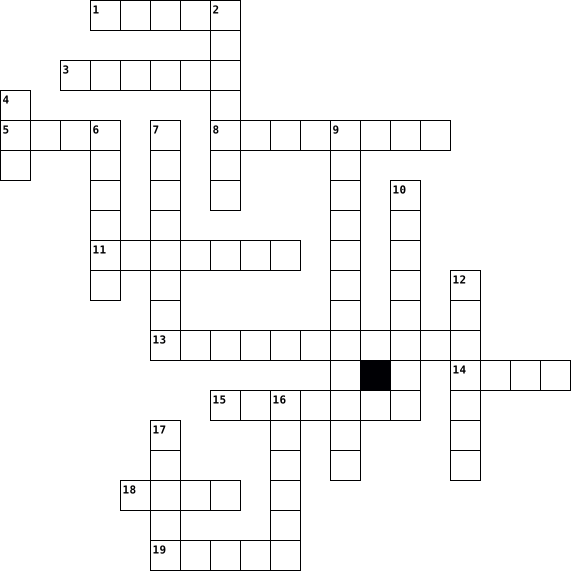
Across
- it's what items do in water, if their densities are less than 1.0 g per mL
- the amount of space that matter occupies
- the smallest particle of an element
- two or more atoms bonded together
- a pure substance that cannot be broken down into other substances
- the change of state from liquid to gas
- it's what items do in water, if their densities are greater than 1.0 g per mL
- the change of state from solid to liquid
- a measure of how much matter is in an object; similar to weight
- a state of matter with molecules that are arranged very close together
Down
- type of energy, always moves from warmer to cooler
- a state of matter that has no definite shape and no definite volume
- anything that has mass and takes up space
- it means "to save", as in the law that states that matter can neither be created nor destroyed
- the change of state from gas to liquid
- the change of state from liquid to solid
- how much mass of a substance is packed into a given volume
- a state of matter that has no definite shape but a definite volume
- the units we use to measure mass
19 Clues: the units we use to measure mass • two or more atoms bonded together • the smallest particle of an element • the change of state from gas to liquid • the change of state from liquid to gas • the amount of space that matter occupies • the change of state from liquid to solid • the change of state from solid to liquid • anything that has mass and takes up space • ...
Matter 2021-04-16
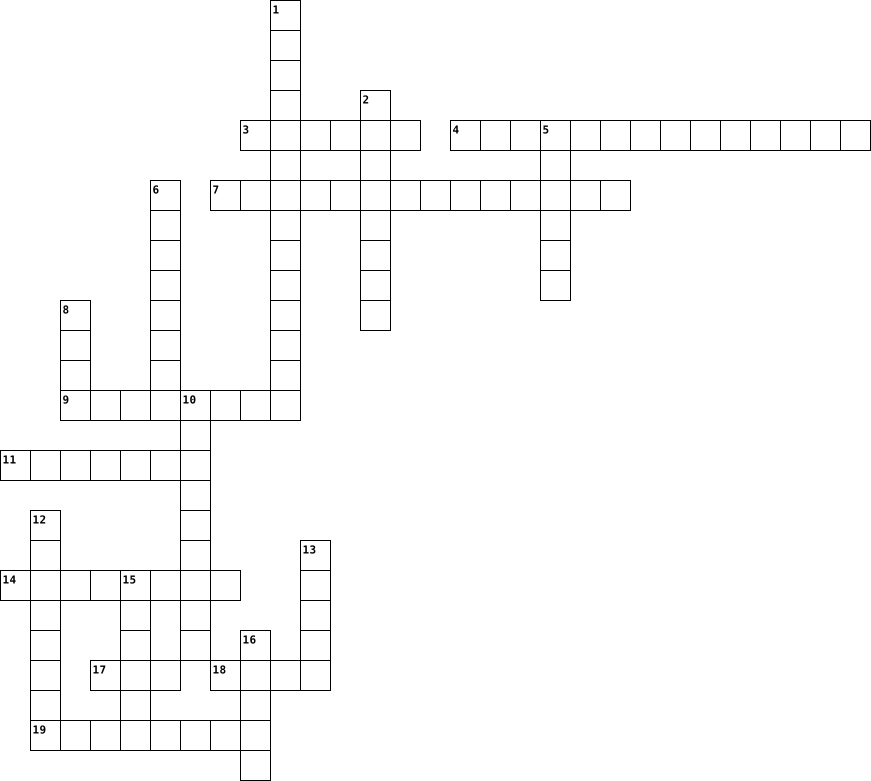
Across
- matter with definite volume but indefinite shape
- when two or more types of matter interact to form a new type of matter
- the different physical forms of matter
- a substance made of one or more kinds of atoms joined together by chemical bonds
- a combination of different types of matter than can be separated back into its original parts
- a quality used to describe something
- matter with indefinite volume and shape
- a connection that holds atoms together
- information that helps us answer a question or solve a problem
Down
- when matter changes form but no new type of matter is formed
- to separate and spread out particles of matter into another substance
- anything that has mass and takes up space
- to maintain a constant quantity
- a small particle of chemical matter
- the science of what matter is made of and how matter changes
- tiny pieces of matter that are too small to be seen
- matter with definite shape and volume
- to grow bigger
- pictures or examples of things we cannot physically see
19 Clues: to grow bigger • to maintain a constant quantity • a small particle of chemical matter • a quality used to describe something • matter with definite shape and volume • the different physical forms of matter • a connection that holds atoms together • matter with indefinite volume and shape • anything that has mass and takes up space • ...
Matter 2021-09-19
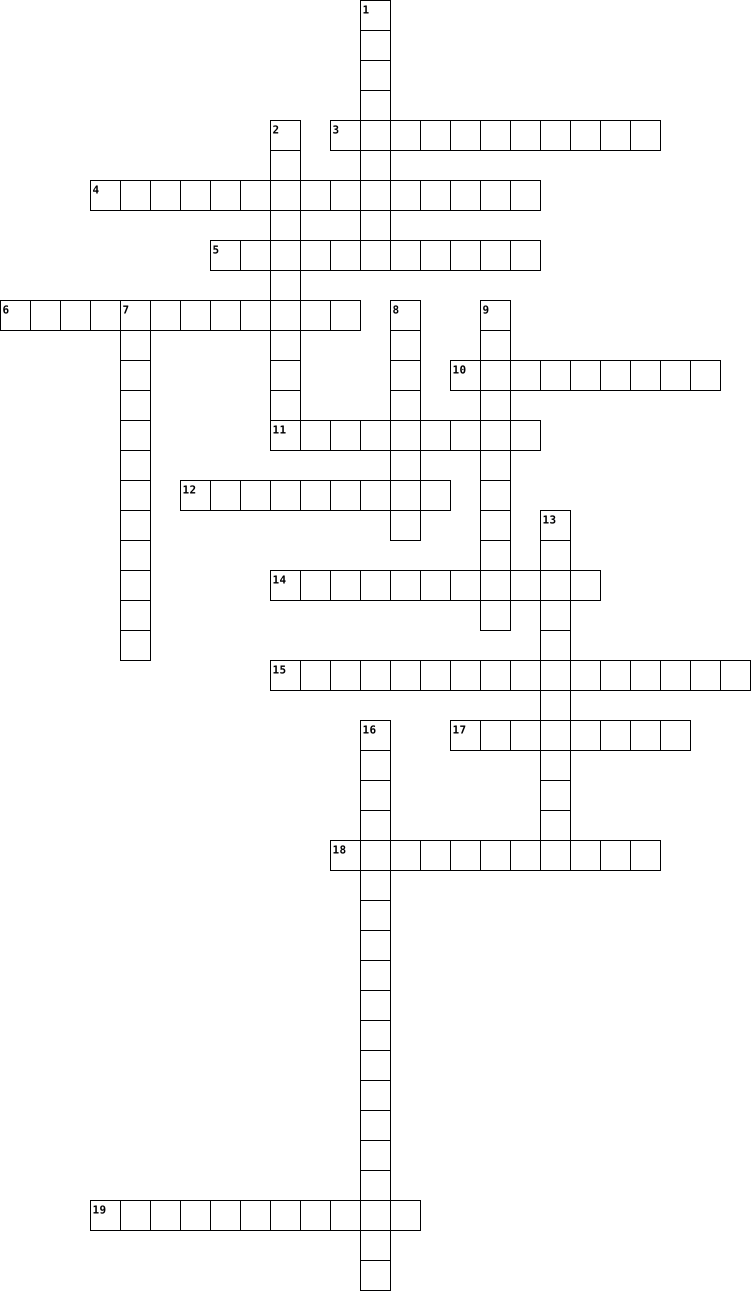
Across
- house did Jesus go into when he healed the mother-in-law
- bring into captivity every thought to the _________ of Christ
- _______ of our warfare are not carnal
- ye first the _______ of God
- part of the serpent did Moses grab
- must be closed to enter into the heart of prayer
- did God anoint to lead the children of Israel to freedom
- were the children of Israel kept captive
- was moved with __________ toward the multitude
- did God tell Moses to throw on the ground
- shall mount up with wings as ______
- flesh profiteth _______
Down
- the morning will I direct my ______ unto thee
- said I brought thee out of the house of _______
- made man to have ________
- laws of matter yield to the law of ____
- did Moses go ask that the children of Israel could be set free
- did the rod become when Moses threw it on the ground
- rule for a rule that God gave Moses
19 Clues: flesh profiteth _______ • made man to have ________ • ye first the _______ of God • part of the serpent did Moses grab • rule for a rule that God gave Moses • shall mount up with wings as ______ • _______ of our warfare are not carnal • laws of matter yield to the law of ____ • were the children of Israel kept captive • did God tell Moses to throw on the ground • ...
Matter 2021-09-22
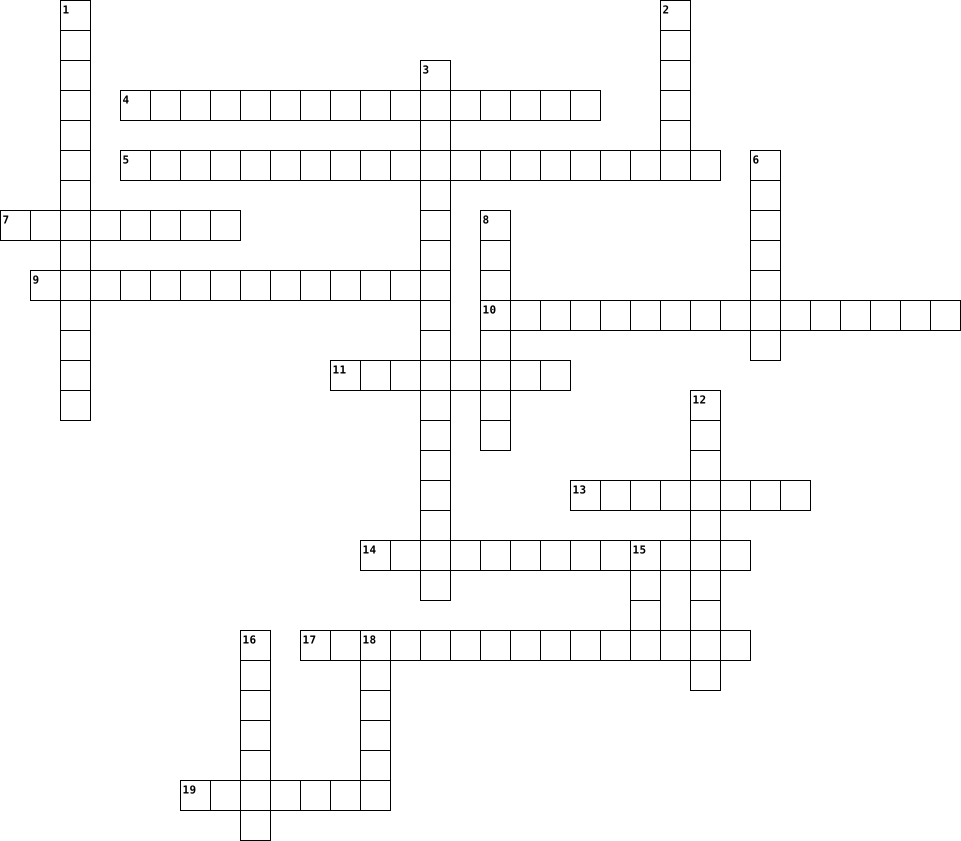
Across
- the way a substance reacts with others to form new substances with different properties.
- substances are not uniformly mixed
- the smallest unit of a substance that exhibits all of the properties characteristic of that
- to change the color,heat,gasses,or percipitate in any form thats difficult to reverse.
- a characteristic of a substance that can be observed or measured without changing the composition of the substance.
- the force exerted per unit area of a surface.
- describes 2 or more liquids that are able to dissolve into each other in various portions.
- any matter that has a fixed composition and definite properties.
- the chemical symbols and numbers indicating the atoms contained in the basic unit of a substance.
- the mass per unit volume.
Down
- a change in physical form but not in composition.
- is anything that has mass and occupies
- mixing occurs between individual units
- a combination of more than one pure substance.
- a substance made of atoms of more than one element bound together.
- describes 2 or more liquids that do not mix into each other.
- the smallest particle that has the properties of an element.
- a substance that cannot be broken down into simpler substances.
- the ability to change or move matter.
19 Clues: the mass per unit volume. • substances are not uniformly mixed • the ability to change or move matter. • is anything that has mass and occupies • mixing occurs between individual units • the force exerted per unit area of a surface. • a combination of more than one pure substance. • a change in physical form but not in composition. • ...
Matter 2022-07-04
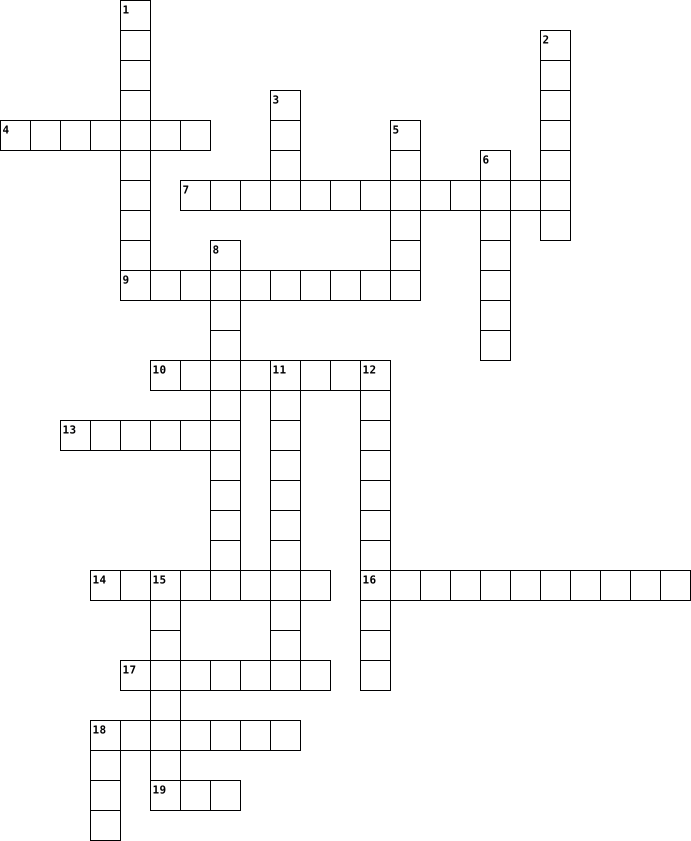
Across
- boiling point of water in celcius scale
- latent heat for gas
- gas to solid
- factor of evaporation
- have max. Intermolecular force
- solids have shape
- factor of evaporation
- solid to liquid
- liquid to gas
- perfume is a compressed
Down
- gas can be easily
- evaporation causes
- melting point of ice in celcius scale
- latent heat for solids
- energy is due to movement
- gas to liquid
- solid to gas
- a surface phenomenon
- liquid to solid
- boiling is a phenomena
20 Clues: gas to solid • solid to gas • gas to liquid • liquid to gas • liquid to solid • solid to liquid • gas can be easily • solids have shape • evaporation causes • latent heat for gas • a surface phenomenon • factor of evaporation • factor of evaporation • latent heat for solids • boiling is a phenomena • perfume is a compressed • energy is due to movement • have max. Intermolecular force • ...
Matter 2022-05-20
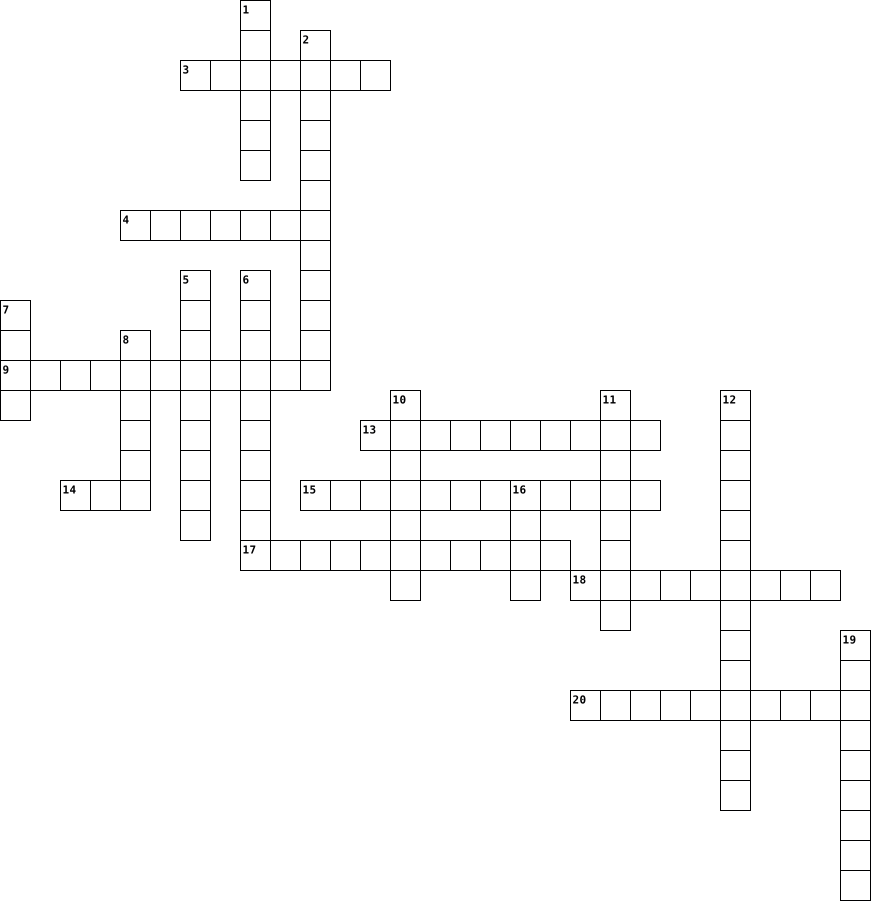
Across
- a type of mixture where particles remain
- used to separate mixtures with metals
- separating a substance by boiling and
- separation method that completely
- bottom
- separating a substance by boiling,
- and condensation
- pouring liquid off the top of a mixture
- that are physically combined matter amount of material in a substance
Down
- amount of space taken up by an object
- process of a gas changing to a liquid
- components of a suspension
- liquids that do not mix together
- all the sediments have settled to
- substance that is dissolved in a solution
- matter that consists of two or more
- compounds
- method of separating mixtures with
- smallest particle that makes up matter
- and do settle at the bottom
20 Clues: bottom • compounds • and condensation • components of a suspension • and do settle at the bottom • liquids that do not mix together • all the sediments have settled to • separation method that completely • method of separating mixtures with • separating a substance by boiling, • matter that consists of two or more • amount of space taken up by an object • ...
Matter 2022-02-10
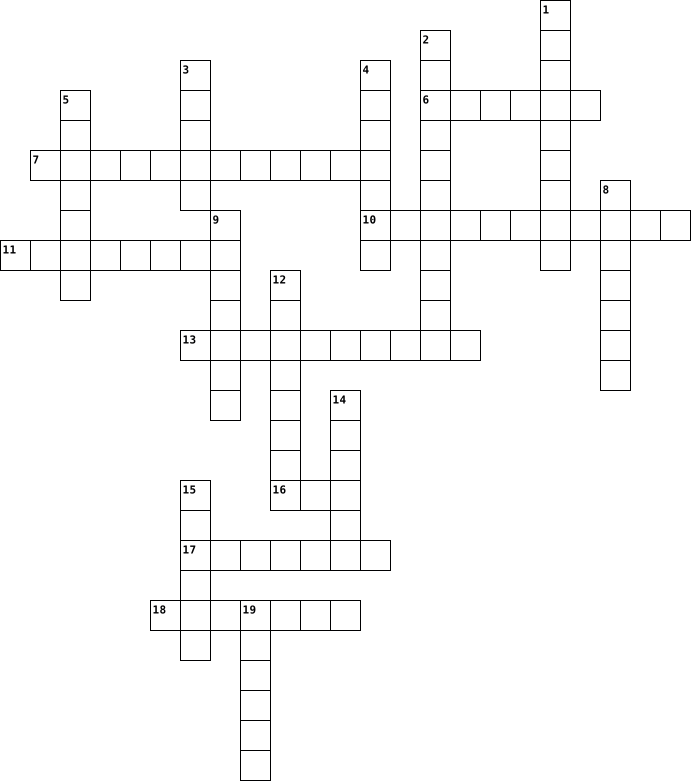
Across
- ___ law states that pressure of a gas increases if volume decreases and vice versa when temperature is constant
- when a liquid changes into a gas it is called ____
- vaporization that occurs only at the surface of a liquid is called ____
- particles in gasses are constantly in motion. When particles collide with the walls of the container, it results in ___
- Particles move in all _____
- ___ is a state of matter with no fixed shape or volume
- when kinetic energy in an object increases, ___ energy increases as well
- particles ____ with the sides of the container and other particles
Down
- ___ energy decreases when objects get closer together
- when a solid turns directly into a gas without going through the liquid state it is called ___
- ____ is a state of matter with fixed shape and volume
- ___ in temperature, volume, and pressure affect the behavior of gasses more than they affect solids and liquids
- ____ law states that the volume of a gas increases with increasing temperature if the pressure is constant
- the faster particle move, the more ___ energy they have
- when a solid changes to liquid due to rising thermal energy and temperature, it is called ____
- when a substance goes from a liquid to a solid it is called ____
- is a state of matter consisting of negative and positive charged particles
- particles are always in constant ____
- ___ is a state of matter with no fixed shape but fixed volume
19 Clues: Particles move in all _____ • particles are always in constant ____ • when a liquid changes into a gas it is called ____ • ___ energy decreases when objects get closer together • ____ is a state of matter with fixed shape and volume • ___ is a state of matter with no fixed shape or volume • the faster particle move, the more ___ energy they have • ...
Matter 2022-10-12
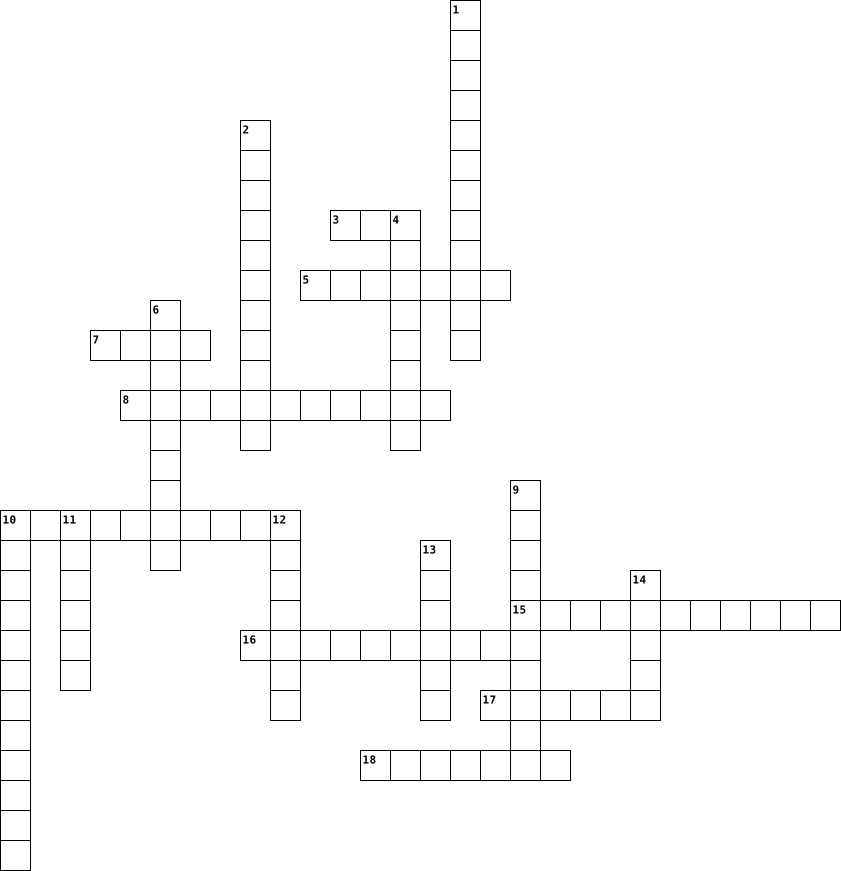
Across
- state of matter that cannit be seen but felt
- - mixture that forever mix
- - basic unit of matter
- separate liquid or liquid that do not mix at all
- uniform mixture
- separate liquid from soluble solid
- separate liquid to undissolved solid
- state of matter that flow freely
- one kind of atom
Down
- sepate mix liquid that are uniformly mix
- picked by hand
- mixture of solute and solvent
- smallest particle of substances
- mixture of material that suspend at the bottom
- non-uniform mixture - matter composed of different element
- separate metal and non-metal
- separate bug and fine particles
- occupy space, has mass
- object that has length, width, and height
19 Clues: picked by hand • uniform mixture • one kind of atom • - basic unit of matter • occupy space, has mass • - mixture that forever mix • separate metal and non-metal • mixture of solute and solvent • smallest particle of substances • separate bug and fine particles • state of matter that flow freely • separate liquid from soluble solid • separate liquid to undissolved solid • ...
Matter 2022-10-17
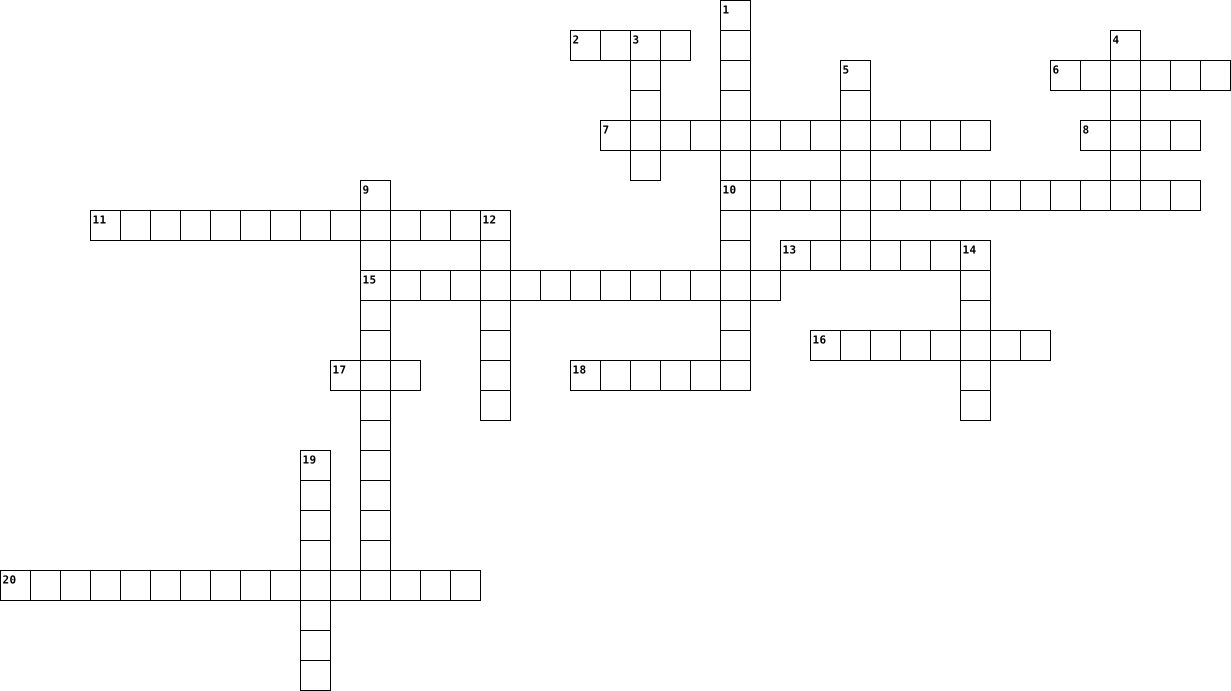
Across
- Amount of matter in a substance or object
- State of matter lacking a fixed volume and fixed shape that contains ions so it can conduct electricity and respond to magnetism
- Energy of moving matter
- Smallest particle of an element that still has the element’s properties
- Property of matter that can be measured or observed only when matter changes to a different substance
- Change in matter that occurs when matter changes chemically into an entirely different substance with different chemical properties
- Rigid, lattice-like framework of many atoms bonded together that is formed by some compounds such as table salt (NaCl)
- Different forms (solid, liquid, gas, and plasma) in which matter can exist without the chemical makeup of matter changing
- Unique substance that forms when two or more elements combine chemically
- State of matter that has neither a fixed volume nor a fixed shape
- Ability to cause changes in matter
- Property of matter that can be measured or observed without matter changing to a different substance
Down
- Theory that all matter consists of constantly moving particles
- State of matter that has a fixed volume and fixed shape
- Anything that has mass and volume
- Amount of mass in a given volume of matter
- Change in one or more of matter’s physical properties
- Pure substance that cannot be separated into any other substances
- State of matter that has a fixed volume but not a fixed shape
- Smallest particle of a compound that still has the compound’s properties
20 Clues: Energy of moving matter • Anything that has mass and volume • Ability to cause changes in matter • Amount of matter in a substance or object • Amount of mass in a given volume of matter • Change in one or more of matter’s physical properties • State of matter that has a fixed volume and fixed shape • State of matter that has a fixed volume but not a fixed shape • ...
Matter 2022-10-28
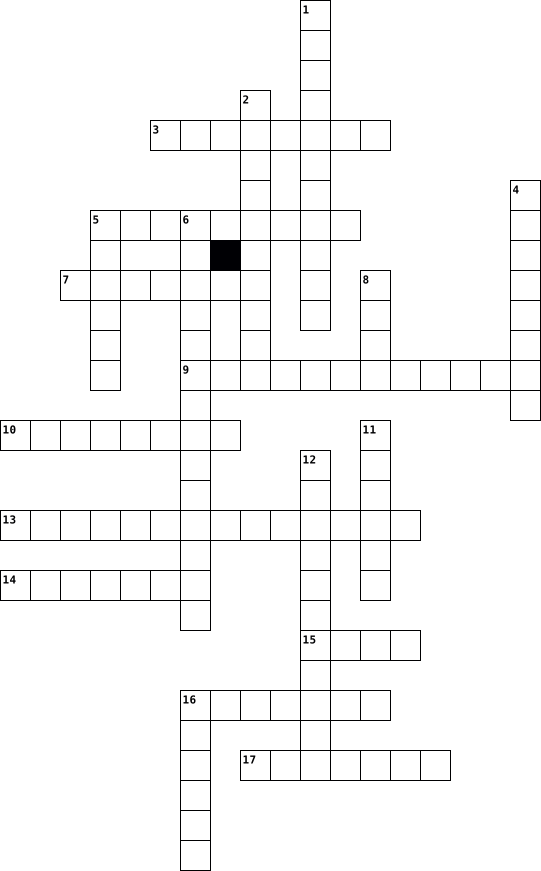
Across
- Change from liquid to solid
- Fluid's resistance to flowing
- Substance made up of all identical atoms
- Change from gas to liquid
- Two or more atoms bonded together
- Change does not alter chemical composition
- Rapid process changing from liquid to gas
- Building blocks of all matter
- Change from solid to liquid
- Mass per unit of volume
Down
- Change from solid directly to gas
- Change from gas directly to solid
- Two or more substances chemically combined
- Amount of space taken up
- Change that alters chemical composition
- Amount of matter
- Pull of gravity on object
- Slow process changing from liquid to gas
- Anything that has mass and occupies space
19 Clues: Amount of matter • Mass per unit of volume • Amount of space taken up • Change from gas to liquid • Pull of gravity on object • Change from liquid to solid • Change from solid to liquid • Fluid's resistance to flowing • Building blocks of all matter • Change from solid directly to gas • Change from gas directly to solid • Two or more atoms bonded together • ...
Matter 2023-09-07
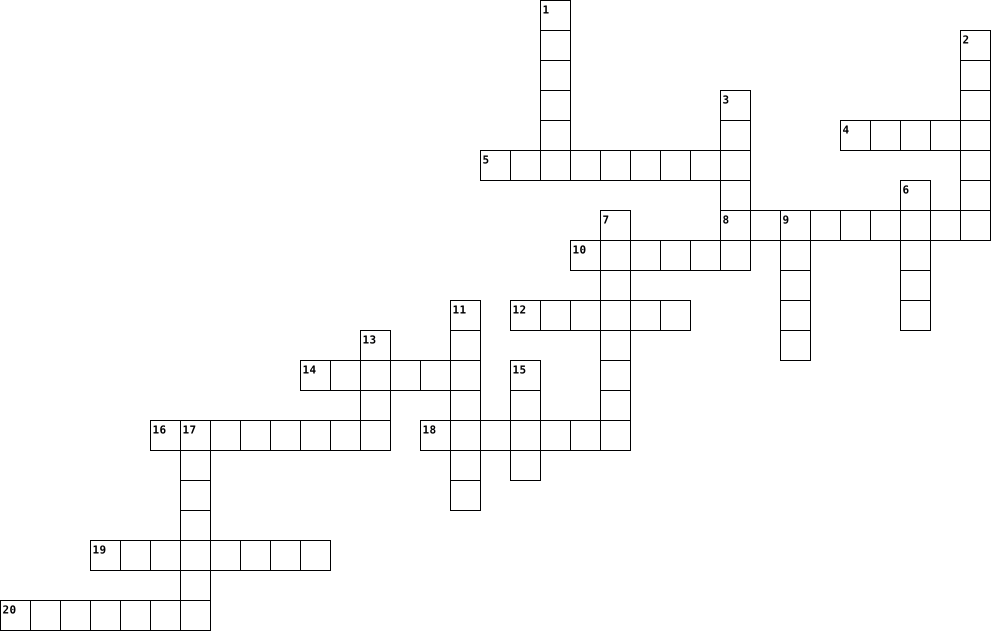
Across
- In a gas, particles are very (apart/close)
- Matter is made of tiny _____ that are always moving
- Negative electric charge, found outside the nucleus
- Most elements are ____. They conduct heat and are easily shaped into a new form
- Anything that has mass and takes up space
- ______ is a state of matter that is not common on Earth
- The simplest form of matter, there are over 110 of them
- _____ can take the shape of their container
- The ____ table is the way scientists have organized all the elements in a chart
- the center of an atom
Down
- Where gravity is the strongest, the ____ of the Earth
- Positive electric charge, found in the nucleue
- _____ are very light and can float around
- A brick is a ______
- No electric charge, found in the nucleus
- Gravity is a force that pulls matter towards the _____
- The force that pull everything to the Earth's ground
- The measure of matter an object has
- There are _____ states of matter
- Water, juice, and the ocean are all considered ______
20 Clues: A brick is a ______ • the center of an atom • There are _____ states of matter • The measure of matter an object has • No electric charge, found in the nucleus • _____ are very light and can float around • Anything that has mass and takes up space • In a gas, particles are very (apart/close) • _____ can take the shape of their container • ...
Matter 2023-11-05
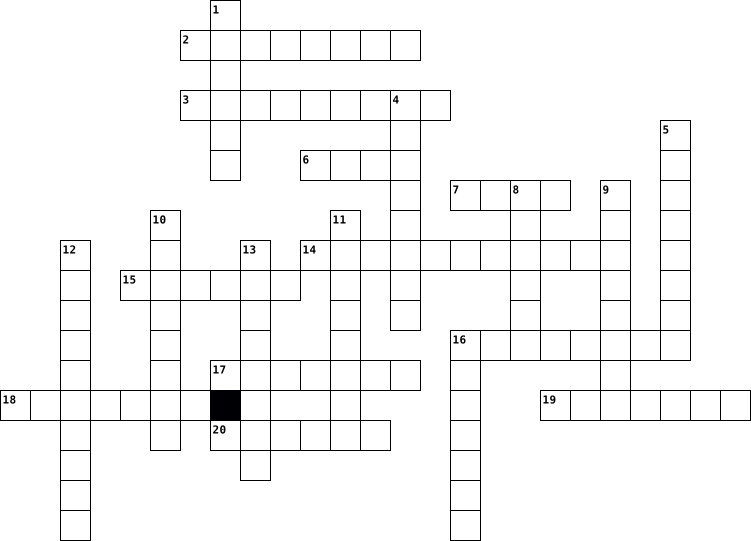
Across
- A mixture containing a solvent and solute & that is the same throughout
- A single type of pure matter with specific characteristics.
- The smallest particle of an element that has all of the element's properties
- A measure of how much mass is in an object
- The measure of how much solute can dissolve in a solvent at a given temperature
- The measure of the force of gravity acting on an object
- Change One or more substances breaks apart or combines to make a new substance.
- Two or more substances together in the same place but they are not chemically bonded
- The measure of how much mass is in a given volume
- The part of a solution that is the largest part and it also dissolved the solute
- Anything that has mass and takes up space.
Down
- The amount of space matter occupies
- Two or more elements chemically combined in a specific ratio
- property Characteristic of a substance that describes its ability to change into different substances
- The part of the solution that is dissolved by the solvent
- Change A material's appearance changes but it is still the same material.
- A pure substance that cannot be broken down into other substances by chemical or physical means.
- Two or more atoms held together by covalent bonds
- A mixture in which particles can be seen and easily separated
- Property A characteristic of a pure substance that can be observed without it changing into another substance
- A mixture that contains small, undissolved particles that don't settle out.
21 Clues: The amount of space matter occupies • A measure of how much mass is in an object • Anything that has mass and takes up space. • Two or more atoms held together by covalent bonds • The measure of how much mass is in a given volume • The measure of the force of gravity acting on an object • The part of the solution that is dissolved by the solvent • ...
Matter 2024-02-27
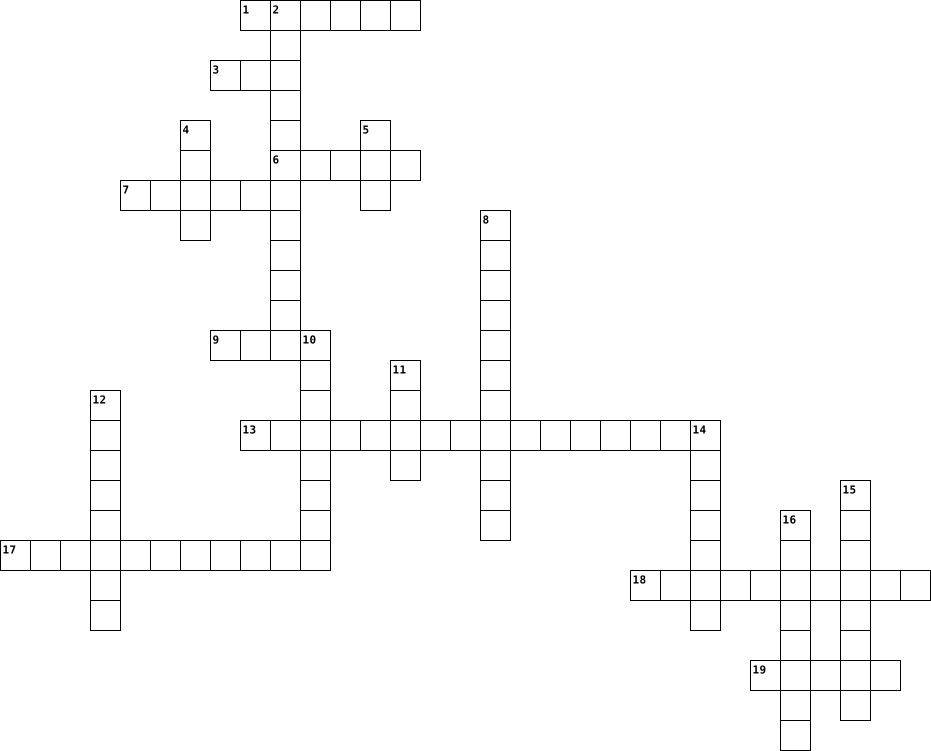
Across
- has mass and takes up space
- chemical formula for water
- change in _____ is an indicator of chemical reaction
- positively charged subatomic particle
- exothermic reactions _____ bonds
- change that produces a new substance
- an insoluable solid in a liquid solution
- releases energy
- endothermic reactions ____ bonds
Down
- number of protons in an element
- smallest unit of matter
- chemical formula for carbon dioxide
- absorbs energy
- group of atoms bonded together
- chemical formula for salt
- evaporating water is a ______ change
- neutrally charged subatomic particle
- burning wood is a ______ change
- negatively charged subatomic particle
19 Clues: absorbs energy • releases energy • smallest unit of matter • chemical formula for salt • chemical formula for water • has mass and takes up space • group of atoms bonded together • number of protons in an element • burning wood is a ______ change • exothermic reactions _____ bonds • endothermic reactions ____ bonds • chemical formula for carbon dioxide • ...
Matter 2024-04-12
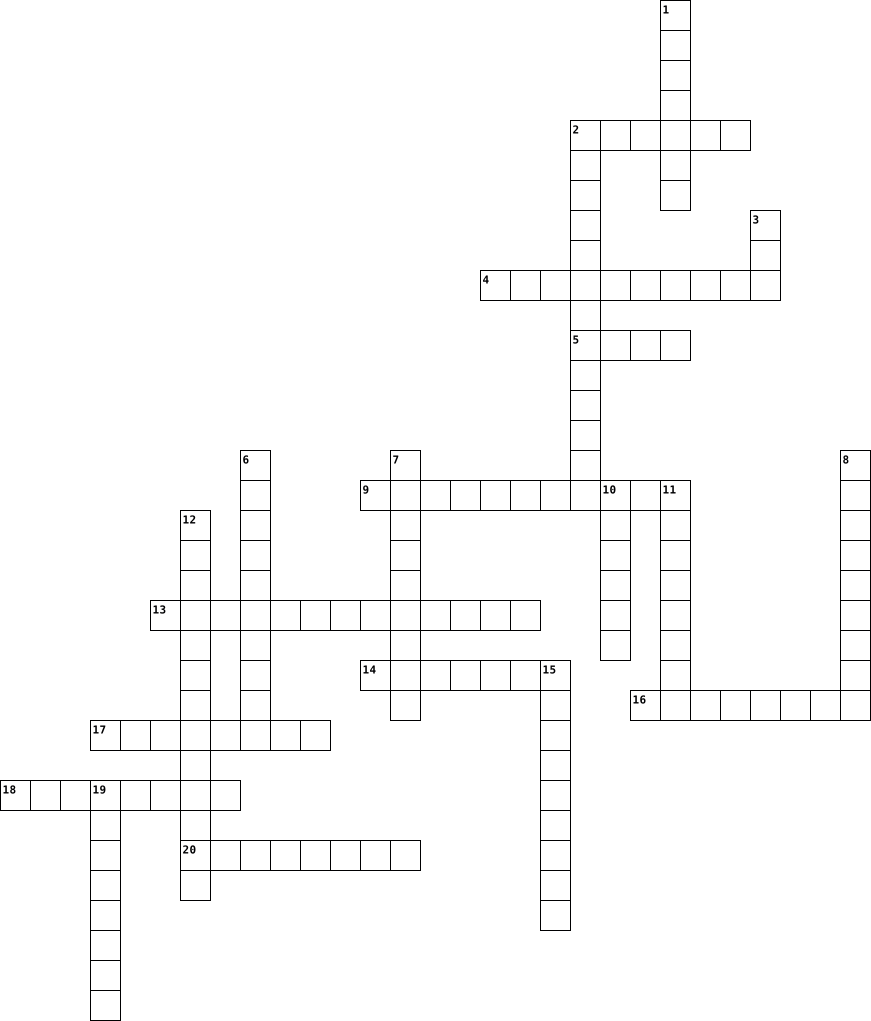
Across
- have definite shapes and volumes
- a mixture in which two or more substances are uniformly spread out and the different materials can not be easily distinguished (water or milk)
- is the amount of matter in an object
- a chemical reaction that absorbs energy in the form of heat
- a mixture in which the different materials can easily be distinguished (chicken noodle soup)
- a material that is made up of two or more substances
- All units that make up all matter are called atoms (periodic table)
- a change in a substance that does not change what the substance is (phase changes)
- a characteristic of a substance that can be observed without changing the substance into another substance (mass, volume, color)
- a change in which a substance is changed into a different substance (reactions)
Down
- have definite volume but not definite shape- they assume the shape of the container
- the different types of matter (solid, liquid, gas)
- They do not have their own shape or volume, but assume the shape and the volume of the container
- a chemical reaction that releases energy in the form of heat
- properties are not dependent upon how much material is present (density, odor, and color)
- material made of two or more elements combined
- anything that occupies the space and has a mass
- a characteristic of a substance that can only be observed by changing it into a different substance (rusting, tarnish, burning)
- Matter that is either an element or a compound
- properties do depend on the size of a sample (mass & volume)
- a homogeneous mixture
21 Clues: a homogeneous mixture • have definite shapes and volumes • is the amount of matter in an object • material made of two or more elements combined • Matter that is either an element or a compound • anything that occupies the space and has a mass • the different types of matter (solid, liquid, gas) • a material that is made up of two or more substances • ...
Matter 2025-02-05

Across
- Takes in heat
- A liquids resistance to flowing
- Electrons are completely stripped of this state of matter
- State of matter in which there is a set volume but not a set shape
- liquid to a gas
- Smallest building block of matter
- Changing directly from a solid to a gas
- When a substance absorbs heat
- Liquid state turning to a solid state
Down
- When a solid turns to a liquid
- The force that holds together atoms
- How hot or cold an object is Solid
- Gives off heat
- State of matter in which the atoms are locked
- State of matter in which there is no set volume and particles move freely
- The process where a gas turns directly into a solid
- How much matter that's in an object
- The temperature at which a liquid turns to a gas
- An explanation on how the particles in gas behave
19 Clues: Takes in heat • Gives off heat • liquid to a gas • When a substance absorbs heat • When a solid turns to a liquid • A liquids resistance to flowing • Smallest building block of matter • How hot or cold an object is Solid • The force that holds together atoms • How much matter that's in an object • Liquid state turning to a solid state • Changing directly from a solid to a gas • ...
Matter 2025-12-09

Across
- electrons on the outer shell
- electricly charged particles
- definite shape and definite volume
- measures the weight of an atom
- positively charged atoms in the nucleus
- smallest part of existing element
- horizontally sorted in the periodic table
- gas to liquid
- anything that takes up space and has a mass
- no definite shape but definite volume
- liquid to solid
Down
- negatively charged atoms
- vertically sorted on the periodic table
- also known as the protons and electrons
- no definite shape or volume
- solid to liquid
- sorts the elements
- liquid to gas
- Cannot be broken down
19 Clues: liquid to gas • gas to liquid • solid to liquid • liquid to solid • sorts the elements • Cannot be broken down • negatively charged atoms • no definite shape or volume • electrons on the outer shell • electricly charged particles • measures the weight of an atom • smallest part of existing element • definite shape and definite volume • no definite shape but definite volume • ...
Matter 2020-05-22
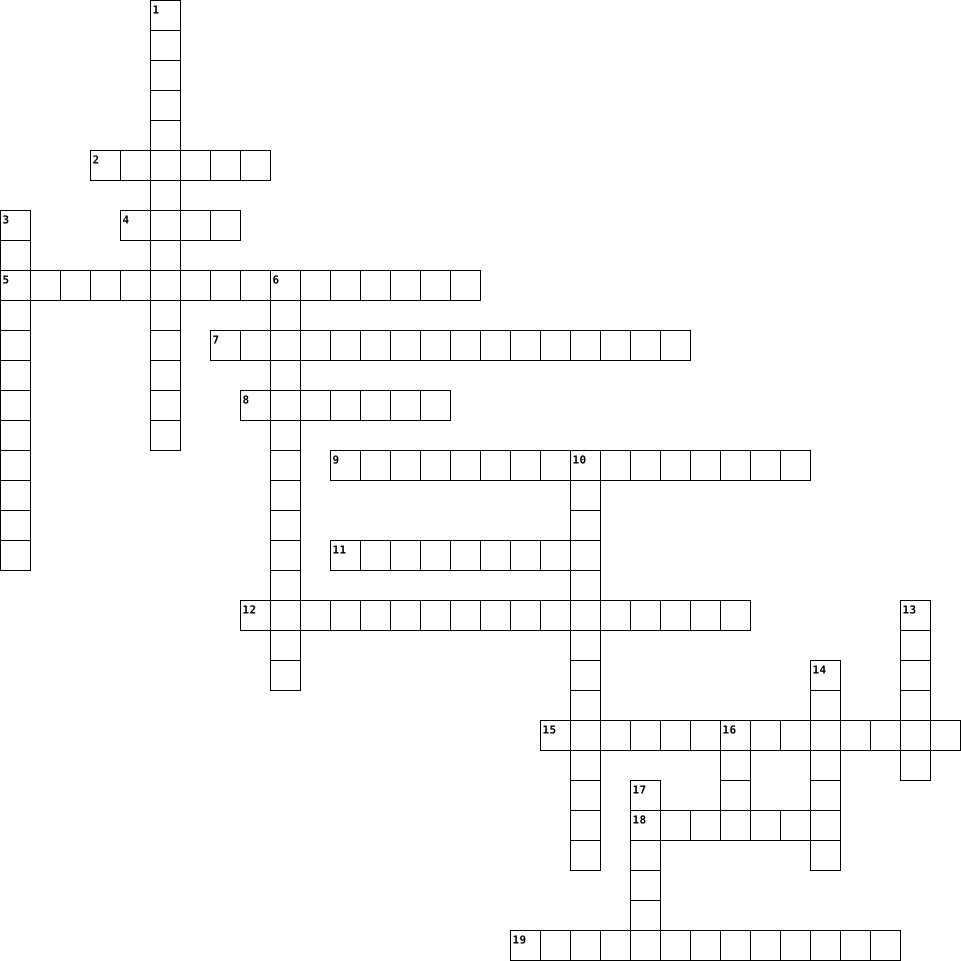
Across
- anything that has mass and takes up space
- the measurement of the amount of matter in an object
- a change in which energy is given off
- a characteristic of a pure substance that describes its ability to change into a different substance
- made of two or more substances that are together in the same place but not chemically combined
- a characteristic of a pure substance that can be observed without changing into another substance
- groups or two or more atoms held together by chemical bonds
- a change in which energy is taken in, like ice melting
- energy stored in the chemical bonds between atoms
- a pure substance that cannot be broken down into any other substance by physical or chemical means
- the energy of matter in motion
Down
- the energy of an object because of its position
- a force of attraction between two atoms
- a change in matter that produces one or more new substances
- any change that alters the form or appearance of matter, but does not make any substance a different substance
- the ability to do work or cause change
- a relationship between the mass of a material in a given volume
- the basic particle from which all elements are made
- a measure of the force of gravity on you
19 Clues: the energy of matter in motion • a change in which energy is given off • the ability to do work or cause change • a force of attraction between two atoms • a measure of the force of gravity on you • anything that has mass and takes up space • the energy of an object because of its position • energy stored in the chemical bonds between atoms • ...
Matter! 2014-09-21
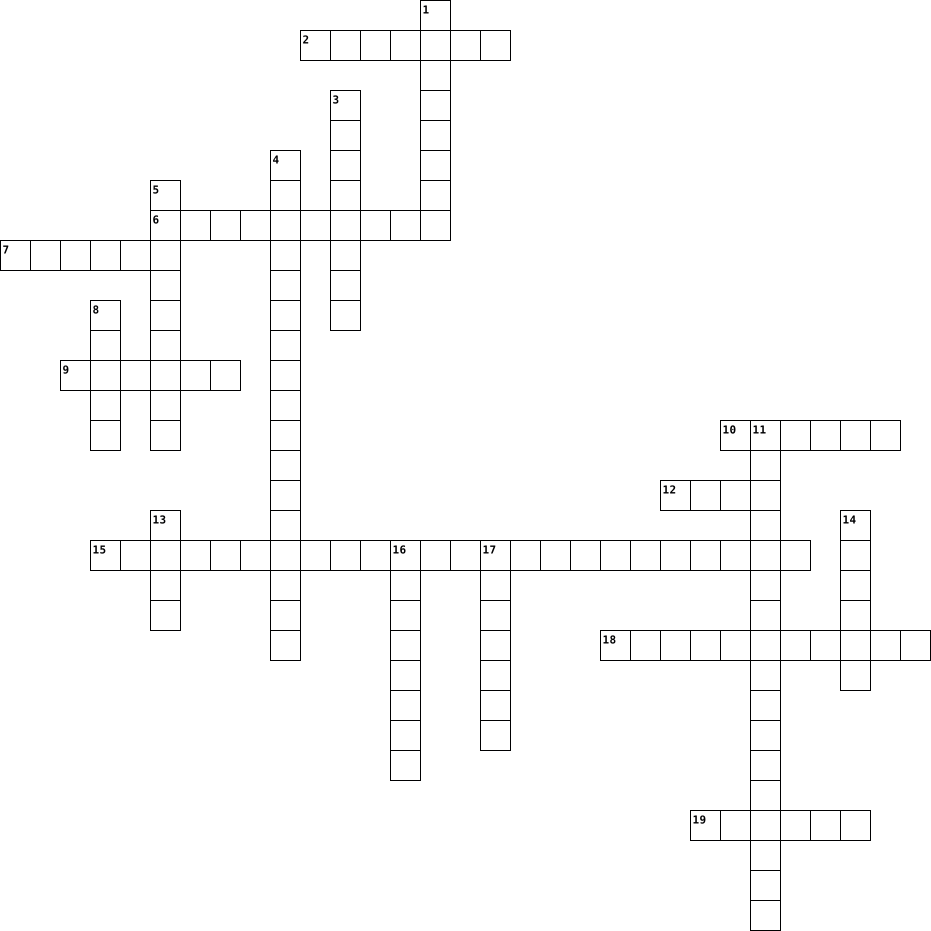
Across
- Science concerned with discovering ways to turn metals to gold.
- Supposition or proposed explanation.
- Space taken up by a substance.
- Anything that takes up space.
- Glass container for lab use.
- Safe way to smell chemicals.
- What you do to show you understood the lab.
- What you do when you do a lab.
- Capacity to do work or transfer heat.
Down
- Shape assumed by the surface of a liquid in a cylindrical container.
- Facts gathered from a lab.
- Property that depends on type of matter.
- Science that deals with the structure and properties of a substance.
- Assertion of the truth.
- Property that depends on amount of matter.
- Often substituted by weight.
- Length, grams, seconds
- Storage for harmful chemicals.
- Mass/Volume
19 Clues: Mass/Volume • Length, grams, seconds • Assertion of the truth. • Facts gathered from a lab. • Glass container for lab use. • Safe way to smell chemicals. • Often substituted by weight. • Anything that takes up space. • Space taken up by a substance. • Storage for harmful chemicals. • What you do when you do a lab. • Supposition or proposed explanation. • ...
Matter 2023-01-30
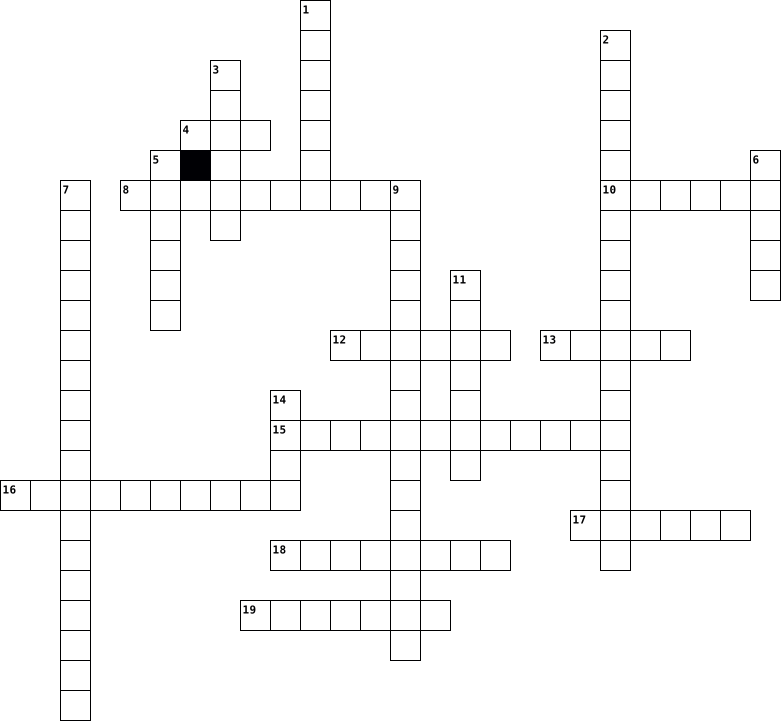
Across
- electrically charged particle
- educated guess from research or observation
- positively charged particle
- anything that has mass and takes up space
- vertical columns gives umber of valence electrons
- refers to the number of protons
- refers to the number of protons and neutrons
- horizontal rows that show many energy shells
- has a negative charge and little to no mass
- does not have a charge but it has mass
Down
- electrons number of electrons in outer shell
- can be seen or measured
- has a positive charge and it has mass
- letter or group of letters representing an element
- negatively charged particle
- refers to how an element reacts
- way to solve a problem
- simplest form of matter
- amount of matter in an object
19 Clues: way to solve a problem • can be seen or measured • simplest form of matter • negatively charged particle • positively charged particle • electrically charged particle • amount of matter in an object • refers to how an element reacts • refers to the number of protons • has a positive charge and it has mass • does not have a charge but it has mass • ...
Matter 2025-02-05

Across
- Takes in heat
- A liquids resistance to flowing
- Electrons are completely stripped of this state of matter
- State of matter in which there is a set volume but not a set shape
- liquid to a gas
- Smallest building block of matter
- Changing directly from a solid to a gas
- When a substance absorbs heat
- Liquid state turning to a solid state
Down
- When a solid turns to a liquid
- The force that holds together atoms
- How hot or cold an object is Solid
- Gives off heat
- State of matter in which the atoms are locked
- State of matter in which there is no set volume and particles move freely
- The process where a gas turns directly into a solid
- How much matter that's in an object
- The temperature at which a liquid turns to a gas
- An explanation on how the particles in gas behave
19 Clues: Takes in heat • Gives off heat • liquid to a gas • When a substance absorbs heat • When a solid turns to a liquid • A liquids resistance to flowing • Smallest building block of matter • How hot or cold an object is Solid • The force that holds together atoms • How much matter that's in an object • Liquid state turning to a solid state • Changing directly from a solid to a gas • ...
Matter 2025-11-18

Across
- Very close, regular pattern, Vibrate in a fixed position, low energy
- The movement of particles from an area of high concentration to low concentration across a concentration gradient
- Only certain elements are attracted to a magnet, leaving the non-magnetic particles behind
- The liquid containing dissolved solids evaporates and leaves the solid behind.
- Close, randomly arranged, move around each other, medium energy
- Formed when the solvent and solute mix together
- solid to liquid
- Particles of the solid get stuck in the filter paper, and the solvent passes through.
- The substance being dissolved
Down
- The small particles fall through the holes, leaving the larger particles behind.
- liquid to gas
- The solid breaks up into tiny particles that mix with the particles of the liquid to make a solution
- Liquids that don't mix together
- Liquids that can mix together
- solid to gas
- gas to liquid
- Far apart, randomly arranged, move quickly in all directions, highest energy
- liquid to solid
- The liquid/substance that does the dissolving
19 Clues: solid to gas • liquid to gas • gas to liquid • liquid to solid • solid to liquid • Liquids that can mix together • The substance being dissolved • Liquids that don't mix together • The liquid/substance that does the dissolving • Formed when the solvent and solute mix together • Close, randomly arranged, move around each other, medium energy • ...
Matter 2025-12-10

Across
- electrons on the outer shell
- electricly charged particles
- definite shape and definite volume
- measures the weight of an atom
- positively charged atoms in the nucleus
- smallest part of existing element
- horizontally sorted in the periodic table
- gas to liquid
- anything that takes up space and has a mass
- no definite shape but definite volume
- liquid to solid
Down
- negatively charged atoms
- vertically sorted on the periodic table
- also known as the protons and electrons
- no definite shape or volume
- solid to liquid
- sorts the elements
- liquid to gas
- Cannot be broken down
19 Clues: liquid to gas • gas to liquid • solid to liquid • liquid to solid • sorts the elements • Cannot be broken down • negatively charged atoms • no definite shape or volume • electrons on the outer shell • electricly charged particles • measures the weight of an atom • smallest part of existing element • definite shape and definite volume • no definite shape but definite volume • ...
Matter 2022-09-03
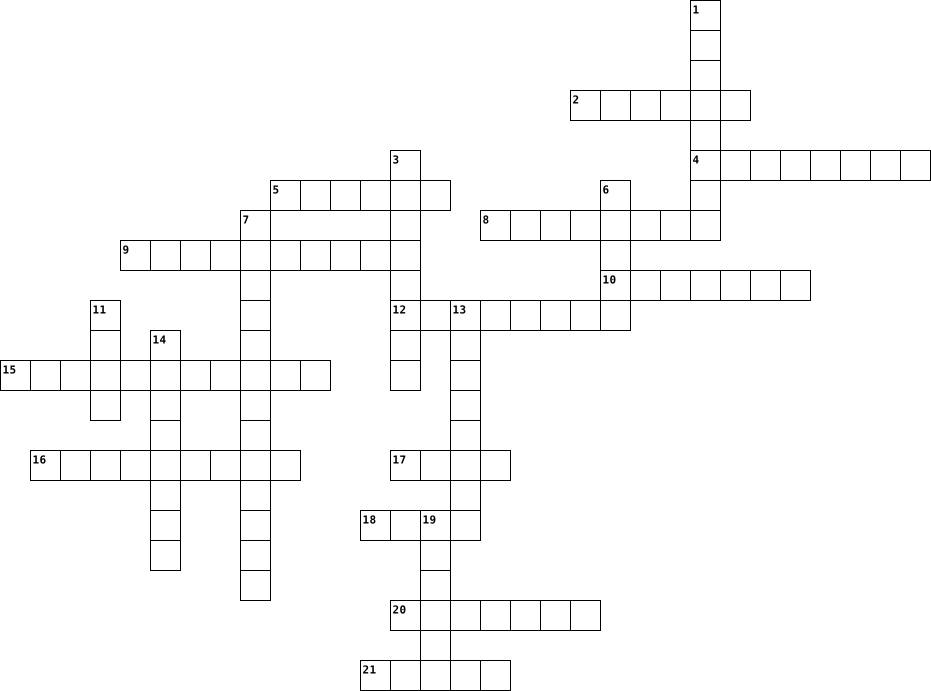
Across
- Matter is anything that has mass and _____.
- Compounds can be separated through _____ methods.
- Mass is different from _____.
- Liquid water being heated to become a gas is an example of a _____ change.
- A compound has different ____ from the individual elements that make it up.
- Simplest form of matter.
- Chemical combination of two or more elements.
- Mixture with no visible boundaries and uniform throughout.
- Homogeneous mixtures are called ______.
- Elements and compounds are examples of _______ substances.
- Quantity of matter that an object contains.
- ___ have fixed volumes but assume the shape of the container.
- ___ do not have fixed volumes nor shapes.
Down
- The conversion of elements into a compound is a __ change.
- Mixtures can be separated through _____ means.
- A pure chemical substances has a ____ chemical composition and properties.
- Mixture with not uniform composition.
- Basic unit of matter.
- Physical combinations of two or more pure substances in variable composition.
- A chemical change is a chemical ____.
- ___ are rigid and have a fixed volume.
21 Clues: Basic unit of matter. • Simplest form of matter. • Mass is different from _____. • Mixture with not uniform composition. • A chemical change is a chemical ____. • ___ are rigid and have a fixed volume. • Homogeneous mixtures are called ______. • ___ do not have fixed volumes nor shapes. • Matter is anything that has mass and _____. • ...
matter 2022-09-09
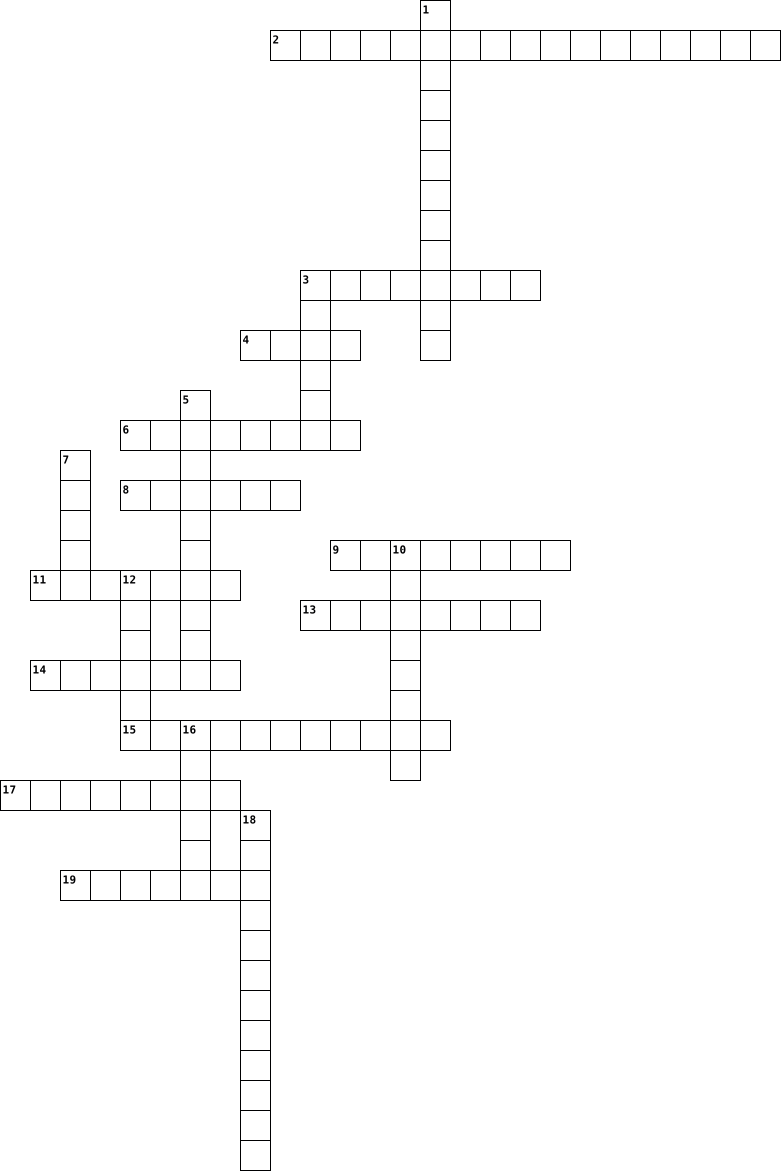
Across
- used to measure the volume of a liquid
- change a change of matter from one form to another without a change in chemical properties
- Basic unit of matter
- temperature of water 32 degrees Fahrenheit and 0 degrees Celsius water molecule 2 hydrogen atoms, 1 oxygen atom
- nucleus An atom's central core, containing protons and neutrons.
- The change of state from a liquid to a solid
- the degree of compactness of a substance.
- A group of atoms bonded together
- The change in state from a solid to a liquid
- solid to gas
- change A change that occurs when one or more substances change into entirely new substances with different properties.
- A small particle in the nucleus of the atom, with no electrical charge
Down
- Liquid to gas
- positively charged particle
- gas to solid
- change a change from one state solid or liquid or gas to another without a change in chemical composition
- negatively charged particle
- of matter solid, liquid, gas,plasma
- lipped cylindrical glass container for laboratory use
- Gas to liquid
20 Clues: gas to solid • solid to gas • Liquid to gas • Gas to liquid • Basic unit of matter • positively charged particle • negatively charged particle • A group of atoms bonded together • of matter solid, liquid, gas,plasma • used to measure the volume of a liquid • the degree of compactness of a substance. • The change of state from a liquid to a solid • ...
Matter 2022-07-04
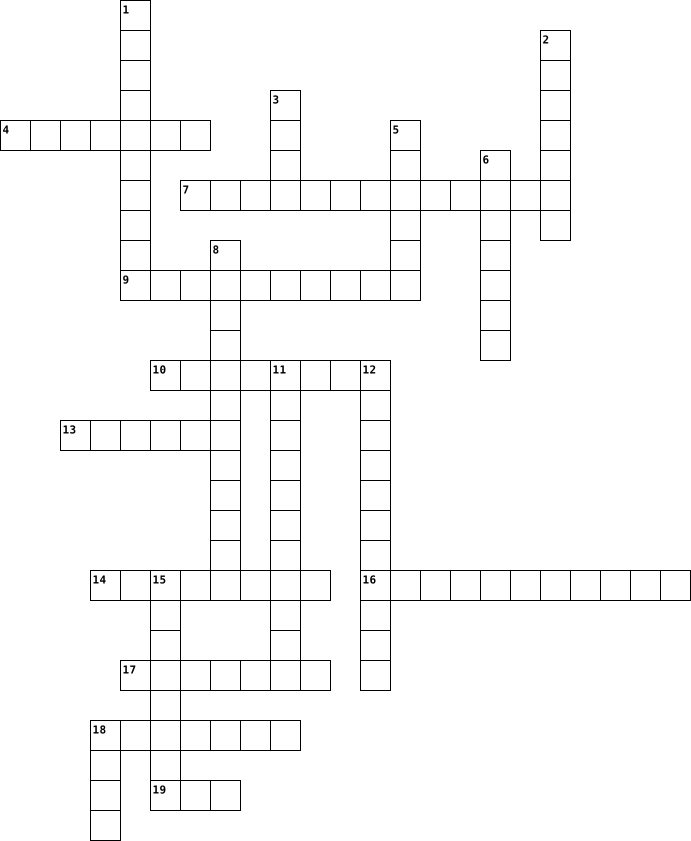
Across
- boiling point of water in celcius scale
- latent heat for gas
- gas to solid
- factor of evaporation
- have max. Intermolecular force
- solids have shape
- factor of evaporation
- solid to liquid
- liquid to gas
- perfume is a compressed
Down
- gas can be easily
- evaporation causes
- melting point of ice in celcius scale
- latent heat for solids
- energy is due to movement
- gas to liquid
- solid to gas
- a surface phenomenon
- liquid to solid
- boiling is a phenomena
20 Clues: gas to solid • solid to gas • gas to liquid • liquid to gas • liquid to solid • solid to liquid • gas can be easily • solids have shape • evaporation causes • latent heat for gas • a surface phenomenon • factor of evaporation • factor of evaporation • latent heat for solids • boiling is a phenomena • perfume is a compressed • energy is due to movement • have max. Intermolecular force • ...
Matter 2021-02-16
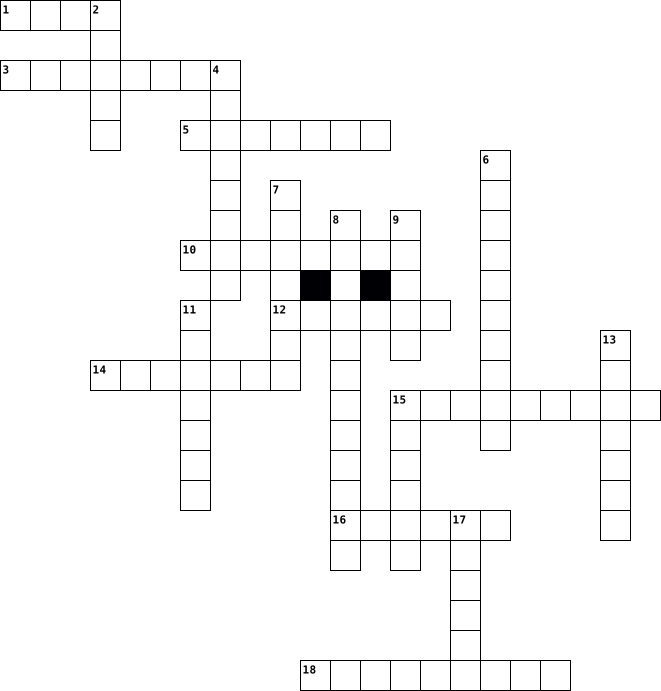
Across
- the smallest particle of a chemical element
- the least amount possible
- a span of time or a timeframe
- not metal
- a thing that represents something else
- the information center of the cell
- a group of atoms bonded together
- power derived from the use of resources
- the spreading of somethin more widely
Down
- a solid material good with electrical conductivity
- a stable subatomic particle
- another name for nucleon number
- the process of unconscious thought
- number of chemical elements
- an admixture of metals
- any element in group VIIA of the periodic table
- an essential part of something
- anything that occupies space
- a number of things located together
19 Clues: not metal • an admixture of metals • the least amount possible • a stable subatomic particle • number of chemical elements • anything that occupies space • a span of time or a timeframe • an essential part of something • another name for nucleon number • a group of atoms bonded together • the process of unconscious thought • the information center of the cell • ...
MATTER 2017-03-11
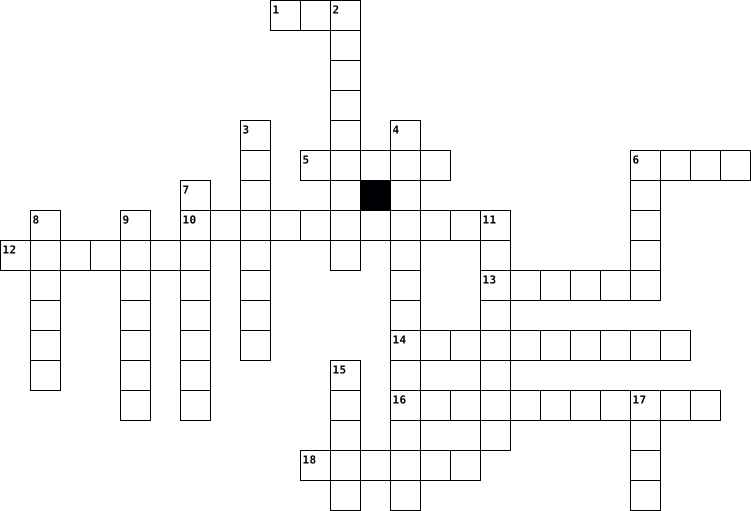
Across
- ____ state of matter does not definite shape or volume
- chemical reactions happen at different _____
- an object that has a high density will
- ______ mixture are uniform throughout
- is a measure of the amount of matter in a given amount of space
- ____ state of matter has definite volume and takes shape of the container
- _____ reaction produces heat energy
- ______ reaction absorbs heat energy
- is the amount of space that matter takes up
Down
- means that no more material may be dissolved into the mixture
- when matter goes through a ____ change, a new substance is formed
- _______mixture is unevenly distributed
- ____ state of matter has a definite shape and volume
- ____ change is a change in the state of matter (size or shape)
- is the amount of force that gravity puts on that amount of matter
- is a physical combination of 2 or more substance
- _____ is a mixture that is homogeneous
- is a homogeneous mixture metals
- is the amount matter within an object
19 Clues: is a homogeneous mixture metals • _____ reaction produces heat energy • ______ reaction absorbs heat energy • ______ mixture are uniform throughout • is the amount matter within an object • _______mixture is unevenly distributed • an object that has a high density will • _____ is a mixture that is homogeneous • is the amount of space that matter takes up • ...
MATTER 2018-05-01
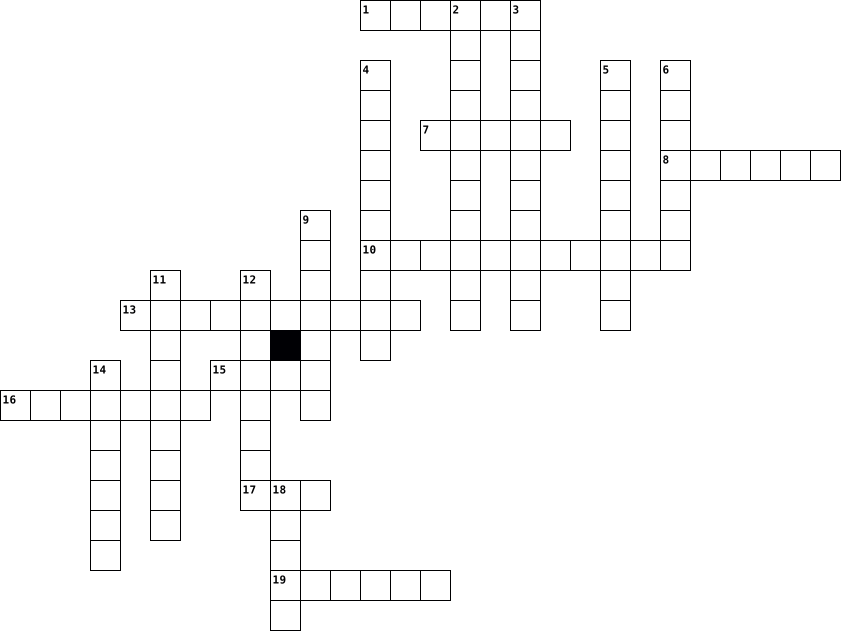
Across
- m
- n
- j
- o
- q
- h
- i
- g
- k
Down
- d
- p
- b
- e
- a
- c
- r
- f
- l
- s
19 Clues: m • d • p • b • e • a • n • j • c • o • r • f • q • l • h • i • g • s • k
Matter 2022-02-09
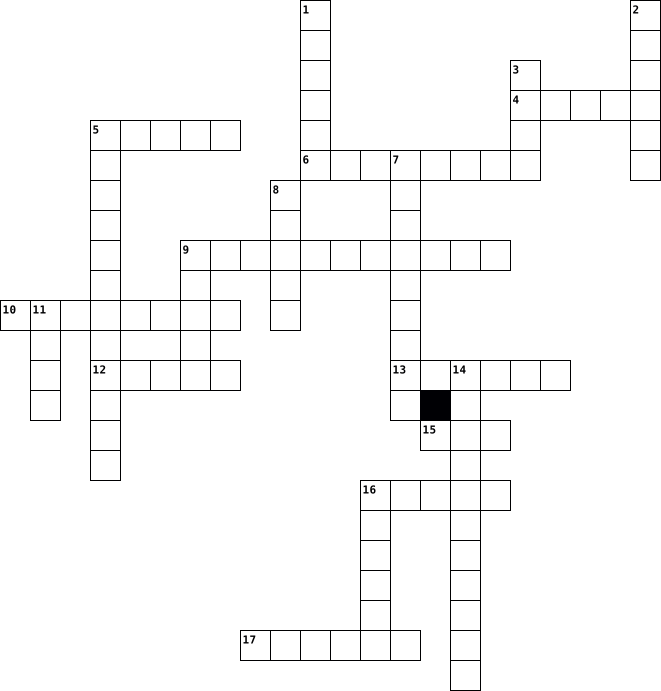
Across
- small things that make up everything
- what water goes through
- small things of water
- going from a solid to a gas
- A change that can be reverrsed
- how many states of matter there are
- needed to create different states of matter.
- If you melt a liquid it becomes a.
- evaporated water
- how much space an item takes up.
Down
- water is a.
- matter goes through
- how much an item ways.
- going from vapor to a liquid
- small things that make matter
- a chair is a.
- compounds make up.
- what makes water go through a cycle
- if you make a liquid really hot.
- how much space an item takes up.
20 Clues: water is a. • a chair is a. • evaporated water • compounds make up. • matter goes through • small things of water • how much an item ways. • what water goes through • going from a solid to a gas • going from vapor to a liquid • small things that make matter • A change that can be reverrsed • if you make a liquid really hot. • how much space an item takes up. • ...
Matter 2025-09-09

Across
- matter that can only be chemically separated, an element or a compound
- a subatomic particle found in the nucleus with no charge
- a chart that organizes all elements
- a pure substance with two or more elements chemically combined
- a state of matter with no definite shape or volume
- two or more substances that are physically combined
- how many protons are in an atom
- how well a substance can dissolve in a liquid
- a state of matter with a definite shape and volume
- columns on the period table that have similar properties
Down
- a mixture with visibly different parts
- a pure substance with only one kind of atom
- a subatomic particle found outside the nucleus with a negative charge
- a mixture that looks the same throughout
- anything that takes up space or has mass
- a state of mater with definite volume but no definite shape
- a subatomic particle found in the nucleus with a positive charge
- the total number of protons and neutrons in the atom
- the building blocks of matter
19 Clues: the building blocks of matter • how many protons are in an atom • a chart that organizes all elements • a mixture with visibly different parts • a mixture that looks the same throughout • anything that takes up space or has mass • a pure substance with only one kind of atom • how well a substance can dissolve in a liquid • ...
Matter 2015-03-11
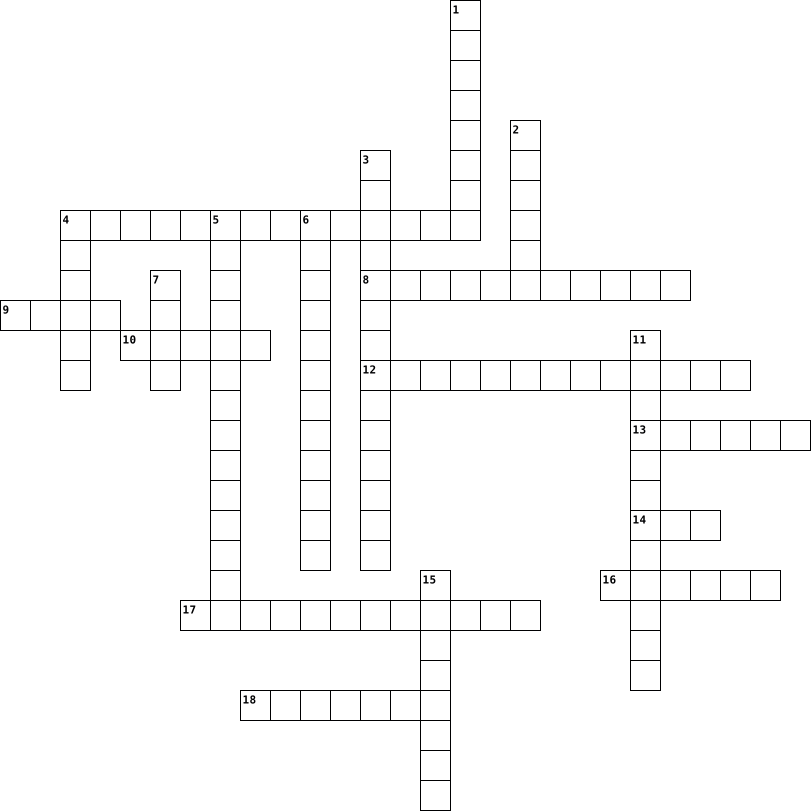
Across
- change you can see
- water turning to water vapor
- measured by volume
- hard phase of matter
- point at which liquid turns to a solid
- water
- steam, really hot water
- the amount of mass in an object
- point at which solid turns to a liquid
- a substance that cannot be broken down
Down
- larger than an atom
- anything that has mass
- solid liquid gas plasma
- electricity
- change you cannot see
- the step of the water cycle before precipitation
- smaller than a molecule
- point at which water bubbles and gets very hot
- a mixture of a single substance
19 Clues: water • electricity • change you can see • measured by volume • larger than an atom • hard phase of matter • change you cannot see • anything that has mass • solid liquid gas plasma • smaller than a molecule • steam, really hot water • water turning to water vapor • a mixture of a single substance • the amount of mass in an object • point at which liquid turns to a solid • ...
matter 2022-09-09
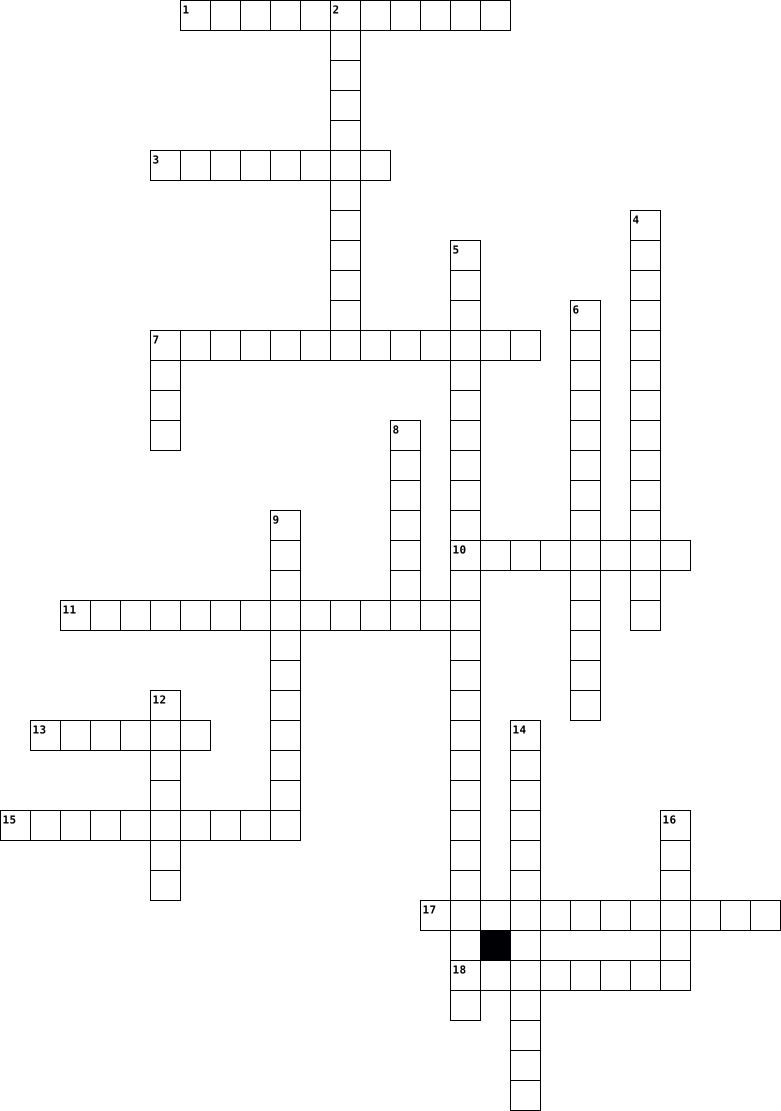
Across
- a change from one state (solid or liquid or gas) to another without a change in chemical composition
- the change of state from a liquid to a solid
- An atom's central core, containing protons and neutrons.
- A group of atoms bonded together
- a change of matter from one form to another without a change in chemical properties
- of matter solid, liquid, gas, plasma
- gas to solid
- Liquid to gas
- negatively charged particle
Down
- Gas to liquid
- plasma states of matter
- 32 degrees Fahrenheit and 0 degrees Celsius
- A change that occurs when one or more substances change into entirely new substances with different properties.
- basic unit of matter
- a small particle in the nucleus of the atom, with no electrical charge
- solid to gas
- The change in state from a solid to a liquid
- 2 hydrogen atoms(+), 1 oxygen atom(-)
- positively charged particle
19 Clues: solid to gas • gas to solid • Gas to liquid • Liquid to gas • basic unit of matter • plasma states of matter • positively charged particle • negatively charged particle • A group of atoms bonded together • of matter solid, liquid, gas, plasma • 2 hydrogen atoms(+), 1 oxygen atom(-) • 32 degrees Fahrenheit and 0 degrees Celsius • the change of state from a liquid to a solid • ...
Matter 2021-09-30
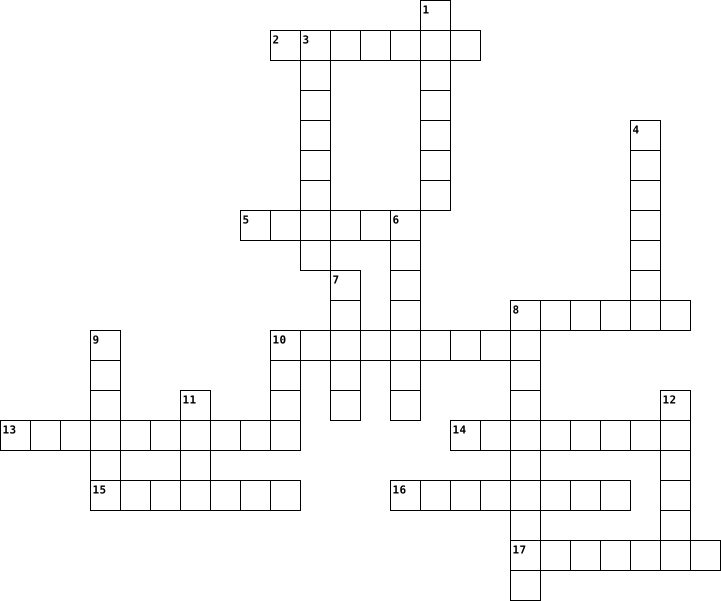
Across
- neutral particle of an atom
- a positively charged particle in the nucleus of an atom
- anything that has mass and takes up space
- metal that can be hammered or rolled into thin sheets
- material that doesn’t carry electrons easily
- neutral group of atoms that are held together by chemical bonds
- substance consisting entirely of one type of atom
- two or more elements chemically combined
- the concentration of matter in an object
Down
- to transfer
- negatively charged particle
- metal that can be formed into wires
- center of an atom
- mixture of metals
- elements that have properties of both metals and nonmetals
- the amount of space that an object takes up
- the amount of matter in an object
- smallest unit of an element that has all properties of that element
- a measure of the pull of gravity on an object
19 Clues: to transfer • center of an atom • mixture of metals • neutral particle of an atom • negatively charged particle • the amount of matter in an object • metal that can be formed into wires • two or more elements chemically combined • the concentration of matter in an object • anything that has mass and takes up space • the amount of space that an object takes up • ...
Matter 2018-11-06
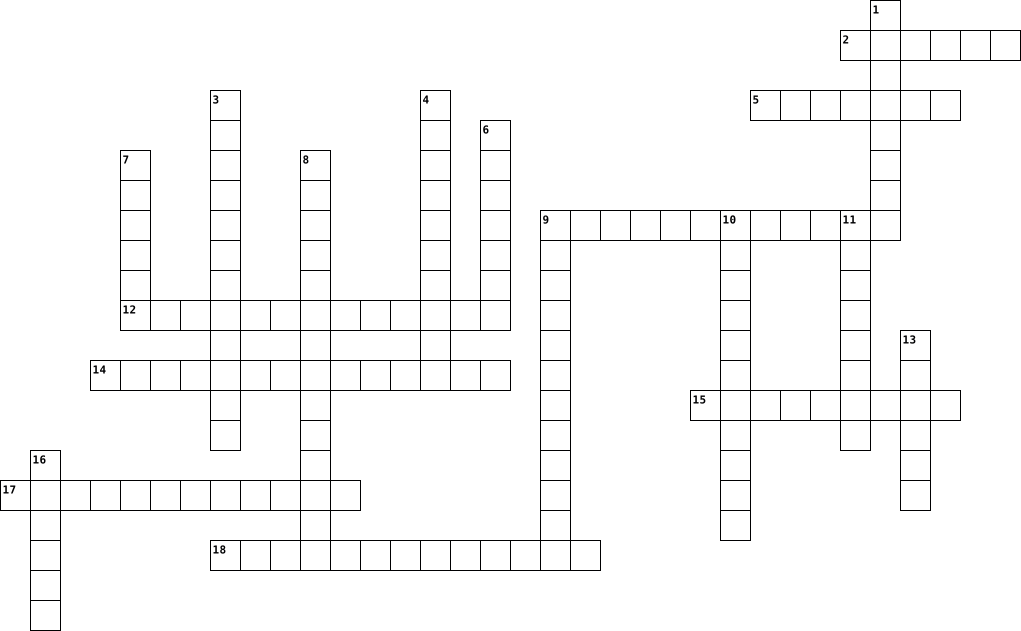
Across
- the property of something that is great in magnitude
- the quality of being opaque to a degree; the degree to which something reduces the passage of light
- the transmission of heat or electricity or sound
- the spontaneous emission of a stream of particles or electromagnetic rays in nuclear decay
- (chemistry) any process determined by the atomic and molecular composition and structure of the substances involved
- attraction for iron; associated with electric currents as well as magnets; characterized by fields of force
- the temperature at which a solid turns into a liquid
- the temperature in which a liquid turns into a solid when cooled
Down
- the quality or state of being firm or strong in structure.
- the quality of being easily ignited and burning rapidly
- the process of gas to plasma
- the degree of compactness of an substance
- a visual attribute of things that results from the light they emit or transmit or reflect
- a change from one state (solid or liquid or gas) to another without a change in chemical composition
- the process of changing from a gaseous to a liquid or solid state
- the degree of hotness or coldness of a body or environment (corresponding to its molecular activity)
- the degree to which something is poisonous
- the visual property of something that shines with reflected light
- the vertical force exerted by a mass as a result of gravity
19 Clues: the process of gas to plasma • the degree of compactness of an substance • the degree to which something is poisonous • the transmission of heat or electricity or sound • the property of something that is great in magnitude • the temperature at which a solid turns into a liquid • the quality of being easily ignited and burning rapidly • ...
Matter 2025-12-10

Across
- electrons on the outer shell
- electricly charged particles
- definite shape and definite volume
- measures the weight of an atom
- positively charged atoms in the nucleus
- smallest part of existing element
- horizontally sorted in the periodic table
- gas to liquid
- anything that takes up space and has a mass
- no definite shape but definite volume
- liquid to solid
Down
- negatively charged atoms
- vertically sorted on the periodic table
- also known as the protons and electrons
- no definite shape or volume
- solid to liquid
- sorts the elements
- liquid to gas
- Cannot be broken down
19 Clues: liquid to gas • gas to liquid • solid to liquid • liquid to solid • sorts the elements • Cannot be broken down • negatively charged atoms • no definite shape or volume • electrons on the outer shell • electricly charged particles • measures the weight of an atom • smallest part of existing element • definite shape and definite volume • no definite shape but definite volume • ...
Matter 2025-02-10

Across
- Theory A scientific model that explains the behavior of matter.
- The process where particles of a substance mix with a liquid to form a solution.
- The three physical forms in which matter can exist: solid, liquid, and gas.
- The change of a liquid to a gas when heat is added.
- Groups of atoms bonded together.
- A state of matter where particles move around each other but remain close.
- A state of matter where particles move quickly and are far apart.
- The decrease in volume of a substance when cooled.
- A measure of the average kinetic energy of particles in a substance.
- Everything that has mass and takes up space.
- A state of matter where particles are closely packed and vibrate in place.
Down
- The energy of motion; increases as temperature rises.
- The empty areas between particles that allow dissolving and mixing.
- The smallest unit of matter that retains its properties.
- A material made up of only one type of particle.
- The amount of space an object or substance occupies.
- The increase in volume of a substance when heated.
- The change of a gas to a liquid when heat is removed.
- The force that pulls particles toward each other.
19 Clues: Groups of atoms bonded together. • Everything that has mass and takes up space. • A material made up of only one type of particle. • The force that pulls particles toward each other. • The increase in volume of a substance when heated. • The decrease in volume of a substance when cooled. • The change of a liquid to a gas when heat is added. • ...
Matter 2025-08-30

Across
- a mixture in which one ingredient dissolves into another
- a tool used to separate solids and liquids and different sized solids from one another
- whether matter sinks or floats in water
- a combination of two or more particles
- is a solid, liquid, or gas
- the amount of matter in a material
- a state of matter with a definite shape and volume
- a single part of a mixture
- the ability of a material to allow energy to pass through it.
Down
- the amount of thermal energy a material has
- attraction to a magnet
- to keep or stay the same
- a state of matter with no definite shape or volume
- a change to the observable properties
- a very small unit that makes up MATTER
- a characteristic
- a state of matter with definite volume and no definite shape
- to break down into smaller pieces
- when water vapor is heated and changes into water
19 Clues: a characteristic • attraction to a magnet • to keep or stay the same • is a solid, liquid, or gas • a single part of a mixture • to break down into smaller pieces • the amount of matter in a material • a change to the observable properties • a very small unit that makes up MATTER • a combination of two or more particles • whether matter sinks or floats in water • ...
MATTER 2021-10-10
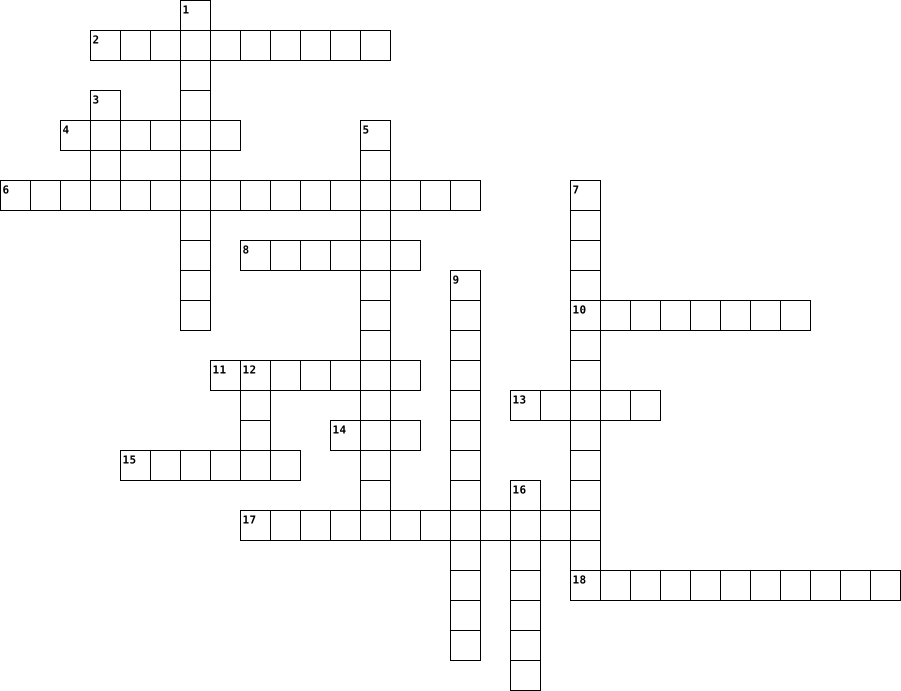
Across
- water that has changed to gas
- anything that takes up space and has mass
- how something looks,feels,smells,tastes
- does not have its own shape but has its own volume
- two or more kinds of matter mixed evenly
- space tool for comparing mass
- matter that has its own shape and volume
- matter that does not have its own shape or volume
- how much space matter takes up
- gas changes to a liquid
- liquid changes to a gas
Down
- how hot or cold something is
- amount of matter in something
- change that forms a different kind of matter
- change in the way matter looks, but not the kind
- one way matter exists:solid,gas
- tiny building block of matter
- made of two or more kinds of matter
18 Clues: gas changes to a liquid • liquid changes to a gas • how hot or cold something is • water that has changed to gas • amount of matter in something • space tool for comparing mass • tiny building block of matter • how much space matter takes up • one way matter exists:solid,gas • made of two or more kinds of matter • how something looks,feels,smells,tastes • ...
Matter 2022-05-30
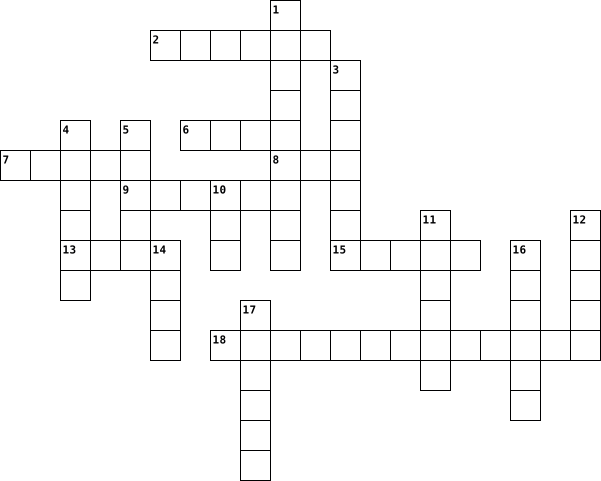
Across
- This liquid is needed by most cars and trucks
- This is liquid rock that pours out of a volcano
- If you place a solid in a liquid, it will either sink or
- Water, in solid form is
- A gas that animals' bodies need to stay alive
- The amount of matter something contains
- Matter that has a definite shape and volume
- gas that plants need to make food
Down
- Liquid matter takes the shape of its
- At 32 degrees Fahrenheit, water
- The amount of space that matter takes up is its
- The tiny particles that matter is made of are
- Atoms in this state of matter, they move freely
- Raindrops are this state of matter
- Solid matter does not change
- Solid white flakes of water that fall from sky
- This is a very light gas found in some balloons
- Water in the form of a gas is called
18 Clues: Water, in solid form is • Solid matter does not change • At 32 degrees Fahrenheit, water • gas that plants need to make food • Raindrops are this state of matter • Liquid matter takes the shape of its • Water in the form of a gas is called • The amount of matter something contains • Matter that has a definite shape and volume • This liquid is needed by most cars and trucks • ...
Matter 2025-02-25

Across
- Which is used as bleaching agent
- Latin name of copper
- Atoms having a charge is
- Anything that occupies space and mass
- Metals can be drawn into thin wires by
- The gas used in balloons
- Scientist who introduced pictorial symbols for element
- Which is used in electronic devices
- Which have high density
Down
- The symbol O stands for
- Chemical name of sugar
- The metal used in aerospace industries
- Which is used for manufacturing ammonia
- The element represented by Au
- Which are solid at room temperature
- Daimond a form of
- Constituent element of Vinegar
- Metal that is melt at room temperature
18 Clues: Daimond a form of • Latin name of copper • Chemical name of sugar • The symbol O stands for • Which have high density • Atoms having a charge is • The gas used in balloons • The element represented by Au • Constituent element of Vinegar • Which is used as bleaching agent • Which are solid at room temperature • Which is used in electronic devices • ...
Matter 2022-10-26
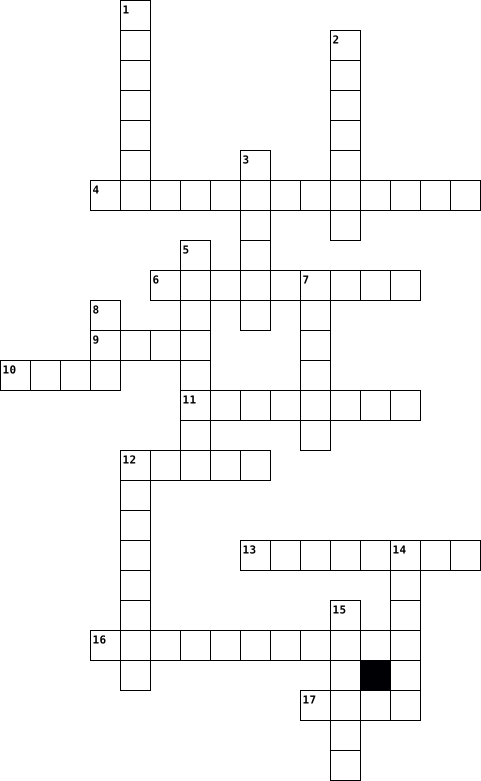
Across
- In a ____________ mixture you can see the different parts.
- The study of matter
- Smallest unit of matter
- The amount of matter
- Made of two or more elements bonded together
- State of matter with a definite shape and volume
- A _______ property that can be observed without changing the identity of the substance.
- What something is made of
- substance Matter can be divided into a mixture or a _________ __________.
Down
- A ____________ is a type of matter that can be separated physically.
- Made of only one type of atom
- The amount of space something occupies
- Burning a match is an example of a __________ change.
- Each element has an abbreviation called an element _____________.
- State of matter with an indefinite shap and indefinite volume
- A homogeneous mixture is also known as a ____________.
- A chemical reaction is also known as a chemical ________.
- State of matter with an indefinite shape and definite volume
18 Clues: The study of matter • The amount of matter • Smallest unit of matter • What something is made of • Made of only one type of atom • The amount of space something occupies • Made of two or more elements bonded together • State of matter with a definite shape and volume • Burning a match is an example of a __________ change. • ...
Matter 2022-10-04
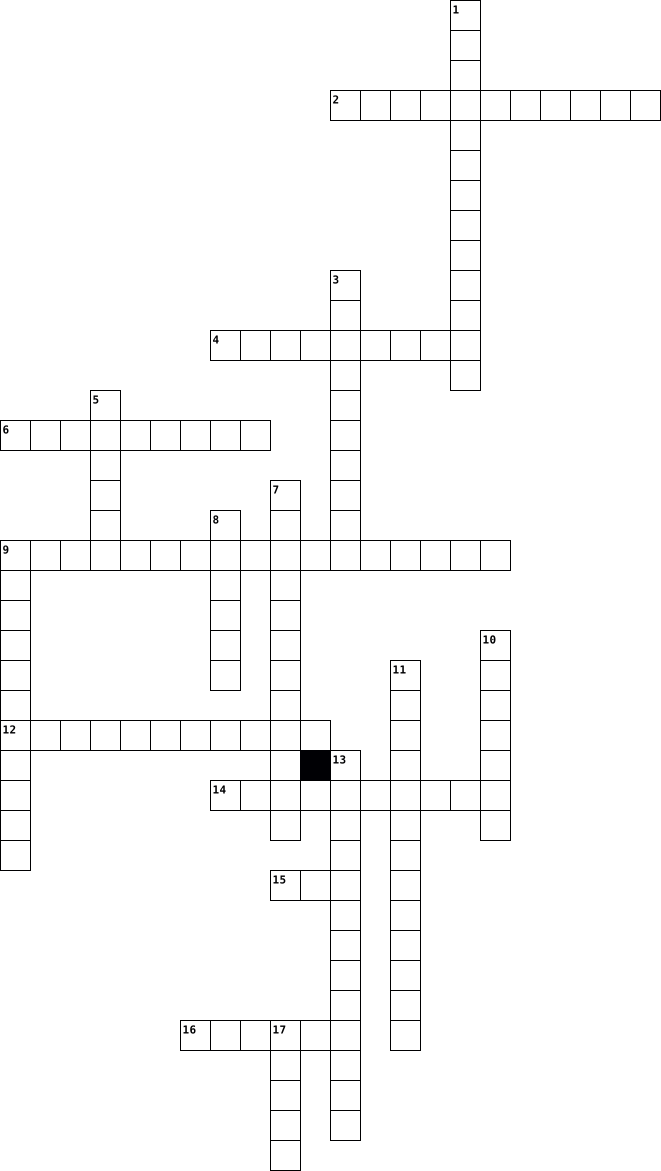
Across
- matter transforming from one state to another
- a bag of chips popping at a high altitude is an example of ___________
- Microwaves heat food using ___________
- is the same temperature as boiling point
- transforming from a solid to gas without the liquid state
- Food cooking on a hot pan is an example of ____________
- the state of matter than is normally not visible
- the state of matter where electrons are free floating from the molecules
Down
- the same temperature as 9 down
- Heating through a liquid
- the phase of matter that has a constant volume but not constant shape
- The temperature that liquid begins to turn into gas
- Solids, liquids, and gases are all
- squeezing the same amount of air particle into a smaller space is an example of __________
- a solid turning into liquid
- Liquid states have less __________ than gaseous states
- Matter that has a fixed composition of molecules
- State of matter where the particles vibrate
18 Clues: Heating through a liquid • a solid turning into liquid • the same temperature as 9 down • Solids, liquids, and gases are all • Microwaves heat food using ___________ • is the same temperature as boiling point • State of matter where the particles vibrate • matter transforming from one state to another • Matter that has a fixed composition of molecules • ...
Matter 2026-02-12

Across
- A change directly from the solid to the gaseous state without becoming liquid
- A state of matter that has no definite shape but has a definite volume.
- The change in state from a solid to a liquid
- Substances change phases by adding or subtracting energy
- Releases heat and energy
- The amount of space an object takes up
- the principle stating that matter is not created or destroyed during a chemical reaction
- the idea that all matter is made up of tiny particles in constant motion
Down
- The change of state from a liquid to a gas
- A change directly from a gas to a solid without becoming a liquid.
- Absorbs heat and energy
- A state of matter with no definite shape or volume
- The change of state from a liquid to a solid
- A measure of how hot (or cold) something is; specifically, a measure of the average kinetic energy of the particles in an object.
- a state of matter that consists of free-moving ions and electrons
- Anything that has mass and takes up space
- The change of state from a gas to a liquid
- A state of matter that has a definite shape and a definite volume
18 Clues: Absorbs heat and energy • Releases heat and energy • The amount of space an object takes up • Anything that has mass and takes up space • The change of state from a liquid to a gas • The change of state from a gas to a liquid • The change in state from a solid to a liquid • The change of state from a liquid to a solid • A state of matter with no definite shape or volume • ...
Matter 2016-10-20
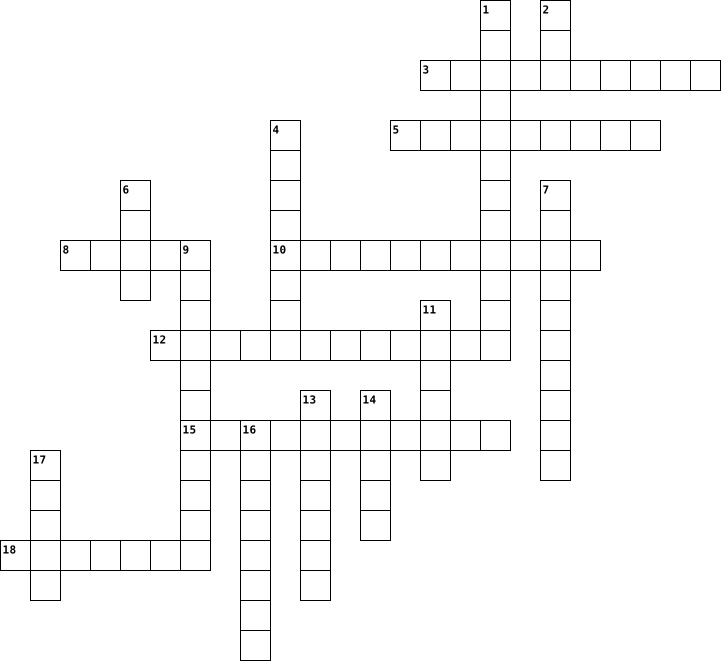
Across
- A gas or vapor changes directly into a solid without first changing to a liquid
- law The direct proportion of the volume of a gas to its temperature in Kelvins if the pressure and the number of particles of the gas are constant
- change Reversible physical change that occurs when a substance changes from one state of matter to another
- Phase of change in which a substance changes from a solid to a gas or vapor without changing to a liquid first
- A substance changes from a gas or vapor to a liquid
- Process that changes a substance from a liquid to a gas at temperatures below the substances boiling point
- energy An object has due to its motion
Down
- Phase change in which a substance changes from a liquid into a gas
- The state of matter in which material has no definite shape or volume
- The result of a force distributed over an area
- of vaporization The energy a substance must absorb in order to change from a liquid to a gas
- Description of a change in which a system releases energy to its surroundings
- Description of a change in which a system absorbs energy from its surroundings
- Has a definite volume but no definite shape
- law The volume of a gas is inversely proportional to its pressure
- pressure Pressure caused by the collisions of particles in a vapor with the walls of a container
- zero Temperature of 0 Kelvins
- Materials that have a definite shape and definite volume
18 Clues: zero Temperature of 0 Kelvins • energy An object has due to its motion • Has a definite volume but no definite shape • The result of a force distributed over an area • A substance changes from a gas or vapor to a liquid • Materials that have a definite shape and definite volume • law The volume of a gas is inversely proportional to its pressure • ...
Matter 2021-11-01
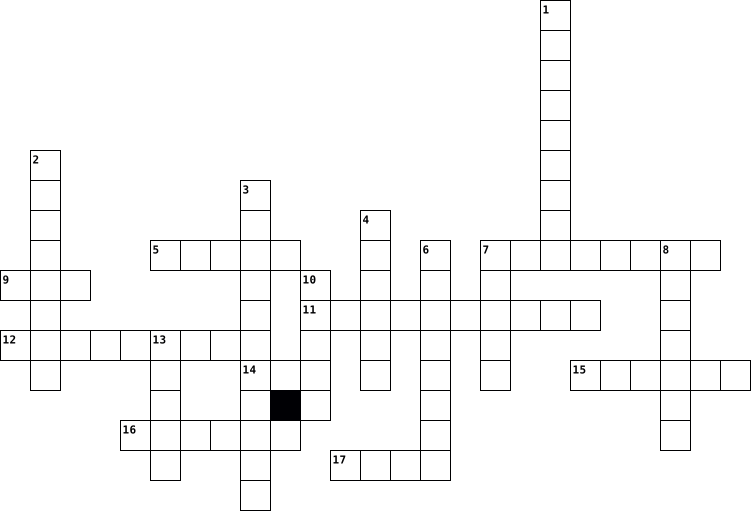
Across
- What runs but never gets tired
- How strong or week a object is
- Has atoms that can move anywere
- Yes or no it soaks up liquids.
- Stands for my car very fast hi bye
- A type of solid
- Amount of space it takes up
- Freely moving atoms
- amount of matter in a object
Down
- Liquids take the shape of their?
- Yes or no it can float
- How much it can be bent before it breaks
- Comes mostly from stars and outer space
- The ability for the object to be scratched
- a type of gas
- What it feels like when you touch it
- A type of liquid
- has tightly packed molecules
18 Clues: a type of gas • A type of solid • A type of liquid • Freely moving atoms • Yes or no it can float • Amount of space it takes up • has tightly packed molecules • amount of matter in a object • What runs but never gets tired • How strong or week a object is • Yes or no it soaks up liquids. • Has atoms that can move anywere • Liquids take the shape of their? • ...
Matter 2021-12-03
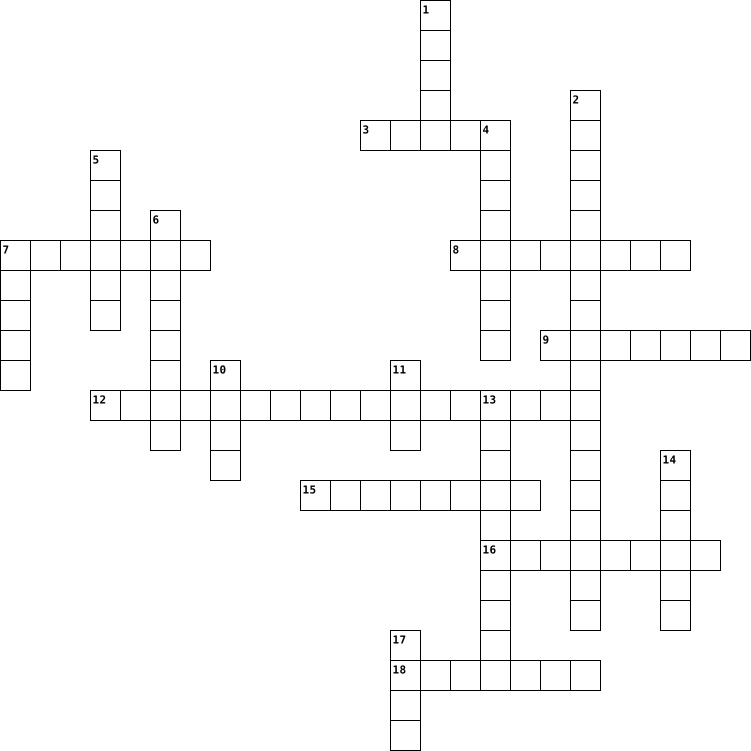
Across
- has a definite shape and volume
- combination of two or more substances
- mixture; substance dissolved in other
- a tool used to measure mass
- used to determine the volume
- small portion of matter
- the curved surface when measuring a liquid has a definite volume but not a definite shape
- bring closer together
Down
- force away or apart
- when a force brings an object to it
- solid substance mixes in a liquid
- anything that has mass and volume
- a characteristic of the substance
- a unit of length in the metric system
- a unit of length in the metric system
- does not have definite shape or
- a very small unit of length
- amount of space an object occupies
- amount of matter in an object
19 Clues: force away or apart • bring closer together • small portion of matter • a tool used to measure mass • a very small unit of length • used to determine the volume • amount of matter in an object • has a definite shape and volume • does not have definite shape or • solid substance mixes in a liquid • anything that has mass and volume • a characteristic of the substance • ...
matter 2022-02-09
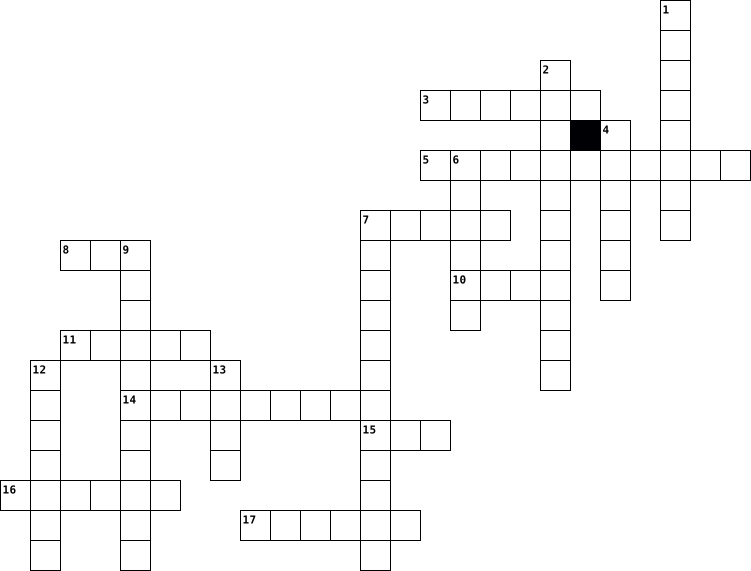
Across
- everything around us
- the phase of liquid going from liquid to gas
- solid to liquid to gas
- floats through the air and rises
- the weight of the object
- hold-able wont leak through hands
- parasitical on everything aka matter
- is a gas and always in the ___-you cannot see it
- the stage after melting
- when two chemicals fuse together or could be object
Down
- liquid state to solid state
- the rotting of particals on an object
- dioxide in gas form
- the space taken up
- evaparated water on like a water bottle
- a transition from a solid to gas state
- liquid from solid state
- what the sun gives off
18 Clues: the space taken up • everything around us • dioxide in gas form • solid to liquid to gas • what the sun gives off • liquid from solid state • the stage after melting • the weight of the object • liquid state to solid state • floats through the air and rises • hold-able wont leak through hands • parasitical on everything aka matter • the rotting of particals on an object • ...
Matter 2024-01-29
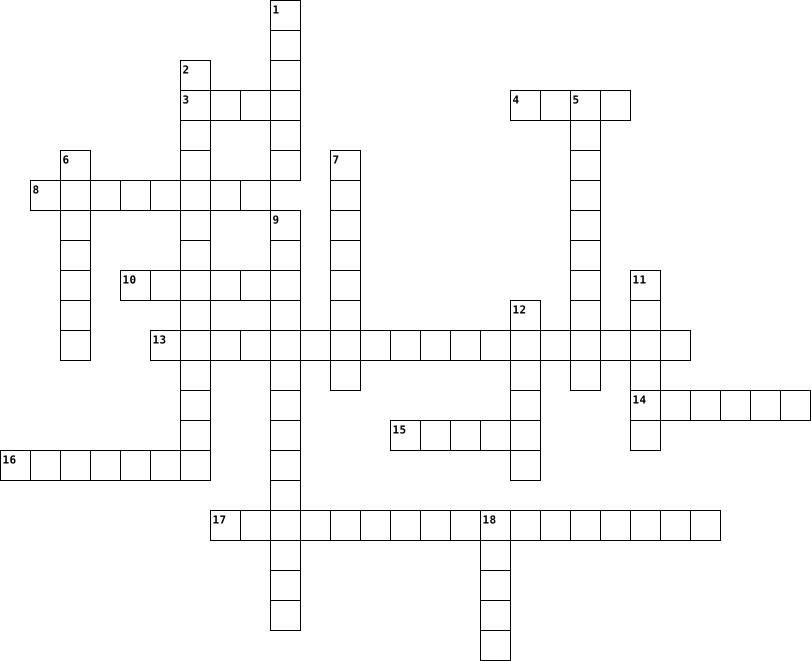
Across
- chemical change has taken place when this is present
- the amount of matter in an object
- a type of mixture in which the particles of the two substances are hard to separate
- the amount of space that an object takes up
- characteristics of a substance that can be observed or measured without changing it
- has a definite volume, but no definite shape
- used when trying to find the volume of a solid
- a combination of two or more things that each keep their own physical properties
- what you measure the volume of a liquid in
Down
- you look at the _____ of the bubble when measuring a liquid's volume
- a change in which NO new substances are formed
- the ability for a substance to be dissolved
- example of when a substance changes from a liquid to a gas
- the type of change when cutting a straw into pieces
- a change in which one or more new substances are formed
- The particles of matter in a liquid move more ____ than in a solid
- a measure of the pull of gravity on an object
- an example of a physical property
18 Clues: the amount of matter in an object • an example of a physical property • what you measure the volume of a liquid in • the ability for a substance to be dissolved • the amount of space that an object takes up • has a definite volume, but no definite shape • a measure of the pull of gravity on an object • a change in which NO new substances are formed • ...
Matter 2025-08-29

Across
- Seeing science as part of God’s creation.
- The smallest unit of matter.
- How heavy something is because of mass and gravity.
- The negative parts that orbit an atom’s nucleus.
- Two or more atoms joined together.
- A force that pulls things toward each other.
- A substance made when elements join.
- What happens when an object pushes water aside.
- The liquid God gave us to live.
Down
- A substance made of only one kind of atom.
- What takes up space and has mass.
- The positive parts of an atom’s nucleus.
- A tool to compare mass.
- The neutral parts of an atom’s nucleus.
- Mass divided by volume.
- To find out how long, heavy, or big something is.
- How much space something takes up.
- A measure of mass.
- A force that pulls things toward Earth.
19 Clues: A measure of mass. • A tool to compare mass. • Mass divided by volume. • The smallest unit of matter. • The liquid God gave us to live. • What takes up space and has mass. • How much space something takes up. • Two or more atoms joined together. • A substance made when elements join. • The neutral parts of an atom’s nucleus. • A force that pulls things toward Earth. • ...