
nutrition in plants Crossword Puzzles
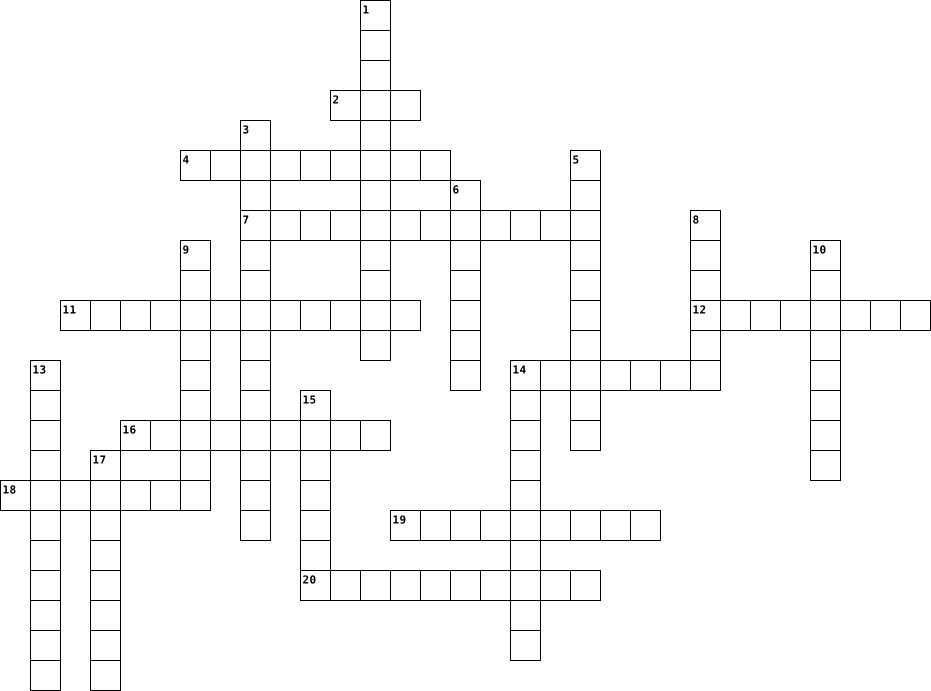
Class 7 - Science - Mid Term Revision 2014-09-13

Across
- A pouch connected to the junction of the small and large intestines.
- Removal of undigested and unutilized food from the body.
- Name given to a cyclone in the Pacific Ocean.
- The pulpy acidic fluid which passes from the stomach to the small intestine, consisting of gastric juices and partly digested food.
- A space within the cytoplasm of a cell containing fluid or matter.
- The mode of nutrition in which some plants get their food from other living organisms.
- The breaking down of complex insoluble food substances into simple soluble food substances with the help of digestive juices prepared by the body.
- Small Intestine.
- The usage of absorbed food by the body for energy, growth and repair.
- Instrument to measure wind speed.
- Materials that allow heat energy to pass through them easily.
- Winds that blow from the polar region towards 60ON and 60OS.
- The process by which food is taken inside the body of an organism.
- The partially digested food in ruminants that is brought back to the mouth for proper chewing.
- Name given to a cyclone in the Atlantic Ocean.
- A parasitic plant / animal that is draws only some of its nutrition from its host. Ex: Mistletoe
- The process of obtaining large crystals from the saturated solutions.
- A green pigment that is present in chloroplasts of leaf cells and is responsible for photosynthesis.
- Substances that are sour in taste are called acids.
- Acid injected into the body when an ant bites.
- Winds that blow from 30ON and 30OS towards the Polar Regions.
- Cutting of paper is a _____________ change.
- Tearing teeth.
- The mode of nutrition in which an organism cannot prepare its own food but obtains readymade food made by green plants directly or indirectly.
- The average weather pattern at a place over a long period of time say 20-30 years.
- The transfer of heat energy in a liquid or gas due to the actual movement of the particles of the liquid/gas.
- Red Eyed frogs and Lion Tailed Macaque live in this region.
- Finger like projections on the walls of the small intestine. The villi have capillary vessels close to the surface that absorb nutrients from the food as it passes through the small intestine.
- The hard outer layer of teeth.
- The special relationship between two different types of living organisms that work for each other’s benefit.
- Special structure present in some parasitic plants for absorbing ready-made food.
- Ripening of fruits is a ________________ change.
- This common substance found in kitchen contains acetic acid.
- The material within a living cell.
- Separating the long fine quality fleece from the broken low quality fleece.
- Acids that occur naturally in the environment. They are weak acids.
- Fibre extracted from multiple cocoons and reeled together to form long, strong continuous strands.
- Substances that give relief to people suffering from stomach acidity.
- Silk produced from damaged or waste cocoons that do not yield long strands.
- The process of taking food by an organism and its digestion, absorption and utilization by the body.
- A dense part of a living cell that contains genetic material.
- Cavity The oral cavity consisting of the teeth, tongue and salivary glands.
- This is added when soil is too basic.
- Soil that is highly sticky and retains water.
- Twisting the fibres to impart strength.
- Hard dense bony tissue forming the bulk of a tooth, beneath the enamel.
Down
- Winds that blow from the 30ON and 30OS towards the Equator.
- The natural indicator derived from Lichen.
- A sticky deposit on teeth in which bacteria grow.
- Acid present in Lemons and Oranges.
- Acid found in Curds.
- A component of the stomach’s gastric juice that digests proteins in the food to form simple soluble substances called peptones.
- Acid in sugarcane juice.
- An enzyme present in saliva that converts starch, present in the food we eat to sugar.
- Substances that are neither acidic nor basic – Sugar, Salt, Honey.
- Removing hair from the body of a sheep.
- The first part of the small intestine immediately beyond the stomach.
- The transfer of heat energy from the hot portions to the cold portions of a body without the actual movement of molecules of the material.
- The transfer of heat energy from a hot object to cold object without the need for a medium. This happens via electromagnetic waves.
- A low pressure area surrounded by High pressure winds all around. Also the name given to such atmospheric formations in the Indian Ocean.
- A substance to help us find out if a substance is basic or acidic.
- Coating of iron with zinc to prevent rusting.
- form of energy that causes the sensation of coldness or hotness.
- Acids prepared by the minerals of the earth. They are strong acids and are dangerous.
- Rearing of silkworms to produce silk.
- When an acidic solution is mixed with a basic solution, both the solutions neutralize the effect of each other. The resulting mixture is neither acidic nor basic. Water and salt are formed as a result of a neutralization reaction. Heat is given out.
- Substances that are bitter in taste and soapy to touch are called bases.
- Removing the burrs (knots) from the fleece.
- Rate at which water moves in between the soil particles.
- A small vestigial (having no purpose) organ at the beginning of the large intestine.
- Cells that are present on either side of stomata. These cells regulate the exchange of gases by opening or closing the stomata.
- Cutting teeth.
- The pushing down of food by the walls of the food pipe (oesophagus) in a wave like action.
- The process by which green plants use a pigment called chlorophyll and sunlight energy to make their own food (glucose) from carbon dioxide and water.
- The muscular cavity behind the nose and mouth, connecting them to the oesophagus.
- Severe storm accompanied by lightning, thunder, high wind speeds and heavy rains.
- The mode of nutrition in which an organism obtains its food from dead and decaying organic matter.
- The mode of nutrition in which an organism makes its own food from simple substances like carbon dioxide, water and minerals.
- –Taking in / Absorbing simple soluble digested food substances into the body fluids.
- false feet in organisms like amoeba that help it ingest food.
- Materials that do not allow heat energy to pass through them easily.
- The mode of nutrition in which certain plants feed on insects to obtain nitrogen.
- The silky covering spun by the silkworm for its protection during metamorphosis.
- A greenish yellow gland behind the stomach which secretes digestive enzymes into the duodenum. It is also responsible for releasing insulin into the blood to regulate blood sugar.
- and Molars Crushing and grinding teeth.
- A parasitic plant / animal that is totally dependant on its host for all its nutritional requirements. Ex: Cuscuta
- The bacteria present in root nodules of leguminous plants. They are responsible for fixing nitrogen from air into the soil.
- Instrument to measure relative humidity.
- The natural indicator that turns red in the presence of bases, It is also used in Indian cooking.
- Process of taking out threads from the cocoon.
- Yearly Mass movement of animals/birds to escape harsh winters and search for food.
- Acid present in fizzy soft drinks.
- The combining of Iron metal with oxygen in the presence of water to form iron oxide.
- Twisting of raw silk fibres to produce strong silk strands.
- Grass eating animals that chew the cud regurgitated (brought back) from its rumen.
- Soil that contains an equal amount of Sand and Clay particles.
- A single celled micro-organism.
- Washing the fleece of sheep to get rid of dirt, grease, sweat and other impurities.
- Tiny pores present on the surface of leaves that allow for exchange of gases.
- Soil that is non sticky and allows water to percolate easily.
100 Clues: Cutting teeth. • Tearing teeth. • Small Intestine. • Acid found in Curds. • Acid in sugarcane juice. • The hard outer layer of teeth. • A single celled micro-organism. • Instrument to measure wind speed. • Acid present in fizzy soft drinks. • The material within a living cell. • Acid present in Lemons and Oranges. • Rearing of silkworms to produce silk. • ...
Lipids in Nutrition 2023-02-06

Across
- Word on ingredient list that indicates presence of trans fats
- ____-3 Fatty Acids found in fish oil and flax seed
- number of kcals per gram provided by fats
- Alpha-___________ Acid, a form of Omega-3
- "Good Cholesterol"
Down
- stored form of lipids in the body
- Very Low Density Lipoprotein
- "Bad Cholesterol"; ideally, should be below 100 mg/dL
- Absence of menstruation; can occur due to lack of dietary fat
- multi-ringed lipid
- A form of fat in the diet that should be limited
- substance from the liver that emulsifies fats
- naturally occurring fatty acids with hydrogens on the same side of the double bond
13 Clues: multi-ringed lipid • "Good Cholesterol" • Very Low Density Lipoprotein • stored form of lipids in the body • number of kcals per gram provided by fats • Alpha-___________ Acid, a form of Omega-3 • substance from the liver that emulsifies fats • A form of fat in the diet that should be limited • ____-3 Fatty Acids found in fish oil and flax seed • ...
Soils Crossword Puzzle 2023-08-30

Across
- form of inorganic nitrogen found naturally in the soil, plays a role in nutrition of plants
- taxonomy principal reference to soil classification
- measure of acidity or alkalinity in a soil
- conductivity measure of salts in soil
- rate at which water moves through the soil.
- loose soil structure.
- structure how the soil particles fit together
Down
- created through decomposition and weathering of rock
- water necessary for plant and animal growth
- density indicator of soil compaction, weight of the soil in a given volume.
- amount of air space between soil particles
- holding capacity ability of a soil to hold water for plant use.
- a blocky or platy structure.
- almost equal parts of sand, silt and clay.
- quality a review of the soil’s general health
15 Clues: loose soil structure. • a blocky or platy structure. • conductivity measure of salts in soil • measure of acidity or alkalinity in a soil • amount of air space between soil particles • almost equal parts of sand, silt and clay. • rate at which water moves through the soil. • structure how the soil particles fit together • ...
Marine Food Webs 2024-01-16

Across
- a relationship between individuals of two species in which one species obtains food or other benefits from the other without either harming or benefiting the latter
- a seamount with a flat top
- an organism that takes inorganic chemicals and transforms it into energy.
- also known as the 'wolves of the sea'
- the study of organisms and how they interact with the environment around them
- a relationship in which both species are mutually benefited
- a relationship between different species in which one organism lives on or in the other organism and benefits from it by causing some harm
- an organism, often a bacterium, fungus, or invertebrate that feeds on and breaks down dead plant or animal matter, making organic nutrients available to the ecosystem.
- an organism that can produce its own food using light, water and carbon dioxide
- an organism that mostly feeds on plants
- an organism that cannot produce its own food and must eat other plants and/or animals to get energy
Down
- the rich variety of life on Earth
- an underwater mountain with steep sides rising from the seafloor
- animals that live on or near the bottom of the ocean
- a biological interaction where one organism, the predator, kills and eats another organism, its prey
- of, relating to, or living or occurring in the open sea
- an organism that consume dead and decaying organic matter known as detritus to obtain energy and nutrition
- an organism that eats other plants or animals for energy and nutrients
- an organism that mostly eats meat, or the flesh of animals
- a community of living organisms (plants, animals, and microorganisms) interacting with each other and their physical environment
- the biogeographic realm consisting of the deep sea, lacking higher plant life because of the absence of light, and occupied chiefly by carnivorous animals
21 Clues: a seamount with a flat top • the rich variety of life on Earth • also known as the 'wolves of the sea' • an organism that mostly feeds on plants • animals that live on or near the bottom of the ocean • of, relating to, or living or occurring in the open sea • an organism that mostly eats meat, or the flesh of animals • ...
Eva's Crossword Puzzle 2022-11-04

Across
- elimination of feces, undigested food
- system of cell
- need iron to make it
- requires oxygen o2
- blood back to the heart
- simple substances to more complex
- important organ to detox part of the excretory system
- tired, weigh gain
- system of cell
- balance blood sugar (glucose)
Down
- Only life process not needed for survival
- calcium, magnesium, iron
- motion
- Lack of iron in blood
- They don't make it's own food
- Lowers blood sugar
- help break things down
- taking in nutrition, protein, vitamins
- it tells the thyroid to release it's hormone
19 Clues: motion • system of cell • system of cell • tired, weigh gain • requires oxygen o2 • Lowers blood sugar • need iron to make it • Lack of iron in blood • help break things down • blood back to the heart • calcium, magnesium, iron • They don't make it's own food • balance blood sugar (glucose) • simple substances to more complex • elimination of feces, undigested food • ...
Animal Science 2022-12-02
Across
- governs legal issues affecting the farming and ranching industries
- study of the allocation, distribution, and utilization of the resources used, along with the commodities produced
- branch of science that deals with microorganisms
- study of bacteria
- science of soil management and crop production.
- branch of biology that deals with the relations of organisms to one another and to their physical surroundings
- branch of science that deals with nutrients and nutrition, particularly in humans
- branch of science concerned with the bodily structure of humans, animals, and other living organisms
- science of studying plant diseases that renders the disease-management answers to the farmers
- branch of zoology concerned with the study of insects
Down
- branch of biology or medicine concerned with the study of parasitic organisms
- a field that focuses on communication about agriculture-related information
- branch of biology that deals with the normal functions of living organisms and their parts
- scientific study of the behavior, structure, physiology, classification, and distribution of animals
- scientific study of plants, including their physiology, structure, genetics, ecology, distribution, classification, and economic importance
- branch of science that deals with the identification of the substances of which matter is composed
- study of genes and heredity
- main role is to solve problems found in agricultural production
- branch of biology and medicine concerned with the study of embryos and their development.
- focuses on firm financial management anywhere in the agricultural sector and the use and issuance of credit to firms in the agricultural sector.
- science of animal behavior
21 Clues: study of bacteria • science of animal behavior • study of genes and heredity • science of soil management and crop production. • branch of science that deals with microorganisms • branch of zoology concerned with the study of insects • main role is to solve problems found in agricultural production • governs legal issues affecting the farming and ranching industries • ...
Plants in action 2013-04-14

Across
- I GROW UNDER GROUND AND IM ORANGE
- SOMETHING GROWS ON ME, IT'S RED AND JUICY
- I GROW UNDER THE SEA I MIGHT LIVE ON THE BEACH
- I COME FROM A OAK TREE
- I GROW ON A BUNDELL WITH OTHER ONES AND I'M GREEN
Down
- WE CAN GET BERANT AND COME IN DIFFENERET COLOURS
- WE SMELL NICE AND COME IN DIFFENERET COLOURS
- I DROP FROM A TREE
- I EAT FLYS
- WE GROW ON TREES
- WE SMELL NICE
- WE HELP THE FLOWERS
- LIGHT WE CAN HELP PLANTS
13 Clues: I EAT FLYS • WE SMELL NICE • WE GROW ON TREES • I DROP FROM A TREE • WE HELP THE FLOWERS • I COME FROM A OAK TREE • LIGHT WE CAN HELP PLANTS • I GROW UNDER GROUND AND IM ORANGE • SOMETHING GROWS ON ME, IT'S RED AND JUICY • WE SMELL NICE AND COME IN DIFFENERET COLOURS • I GROW UNDER THE SEA I MIGHT LIVE ON THE BEACH • WE CAN GET BERANT AND COME IN DIFFENERET COLOURS • ...
Reproduction in Plants 2013-10-13

Across
- This has a sticky coating so pollen sticks to it
- The female gametes
- These are only found in insect pollinated plants
- This shares its name with part of a lightbulb
- The collective name for the male section of a flower
- These are brightly coloured to attract insects
- Ovules are stored here
- The collective name for the female section of a flower
Down
- A way in which the flower attracts insects
- One way in which pollen is dispersed
- The process in which pollen is transported to the stigma
- This is further from the stigma in wind pollinated plants
- One way in which pollen is dispersed
- The male gametes
14 Clues: The male gametes • The female gametes • Ovules are stored here • One way in which pollen is dispersed • One way in which pollen is dispersed • A way in which the flower attracts insects • This shares its name with part of a lightbulb • These are brightly coloured to attract insects • This has a sticky coating so pollen sticks to it • ...
Transport in Plants 2019-03-23

Across
- The part of a plant where glucose is used up so has a lower concentration
- Another name for dissolved substances that move around plants: a_______
- __-_________ proteins help move sucrose into the phloem (no hyphen)
- This, along with light, temperature and wind, is one of the main factors that affects transpiration rate
- A plant that is adapted to reduce water loss (generic name)
- The movement of dissolves substances (e.g. sugars) around a plant
- _____ _____ the hypothesis that best explains phloem transport (no space)
Down
- plants adapted to dry climates have these on their epidermis to trap moisture
- Cactic have these instead of leaves to reduce their surface area
- ______ grass: a plant that is adapted to a dry climate
- The process by which solutes are loaded into the sieve tube elements (no space)
- Plants that live in aquatic environment
- An area of the plant where glucose is made and has a high concentration
13 Clues: Plants that live in aquatic environment • ______ grass: a plant that is adapted to a dry climate • A plant that is adapted to reduce water loss (generic name) • Cactic have these instead of leaves to reduce their surface area • The movement of dissolves substances (e.g. sugars) around a plant • __-_________ proteins help move sucrose into the phloem (no hyphen) • ...
Adaptation in Plants 2025-07-26

Across
- Roots that grow above soil
- A plant that grows in the desert
- Large, flat areas of land
- Trees that are green throughout the year
- Trees that shed leaves during the dry season
- Leaves need these to release and absorb gases
- Areas which have clayey soil
Down
- Non-green plants do not contain this
- Plants that grow in water
- Plants that feed on insects
- Flowerless tree growing on mountains
- An example of underwater plant
- A place where living organism lives in nature
13 Clues: Plants that grow in water • Large, flat areas of land • Roots that grow above soil • Plants that feed on insects • Areas which have clayey soil • An example of underwater plant • A plant that grows in the desert • Non-green plants do not contain this • Flowerless tree growing on mountains • Trees that are green throughout the year • Trees that shed leaves during the dry season • ...
energy flow in ecosystems 2023-03-27

Across
- Outlines who eats whom
- an orgamism that depends on autotroughs for food
- an organism that breaks down dead materal
- an organism that can make its own food
Down
- consists of all food chains in an ecosystem
- interacting organisms and the enviroment
- bottom level of energy pyramid
- an organism that eats other plants/animals for nutrition
8 Clues: Outlines who eats whom • bottom level of energy pyramid • an organism that can make its own food • interacting organisms and the enviroment • an organism that breaks down dead materal • consists of all food chains in an ecosystem • an orgamism that depends on autotroughs for food • an organism that eats other plants/animals for nutrition
Yesenia R, Unit 9 Crossword 2026-06-07

Across
- (9)A type of dentition where all the teeth in the animal are identical
- (9)Is made up of the coral polyps
- (9)The biome that is a cold desert and has snow as precipitation
- (9)Term used when an animal is vividly colored to advertise the fact that it is poisonous
- (9)The term that refers to the role of a species in an ecosystem
Down
- (9)Non-parasite plants that grow on other plants or objects
- (9)A type of algae that is found in corals
- (9)The type of defense in animals that secretes toxins
- (9)A type of heterotrophic nutrition where food is ingested internally
- (9)The biome that has constant movement and has 3.5% salinity
10 Clues: (9)Is made up of the coral polyps • (9)A type of algae that is found in corals • (9)The type of defense in animals that secretes toxins • (9)Non-parasite plants that grow on other plants or objects • (9)The biome that has constant movement and has 3.5% salinity • (9)The biome that is a cold desert and has snow as precipitation • ...
nutrients in plants 2016-05-28

Across
- cells cells controlling the opening and closing of stomata
- organisms that work together for mutual benefits
- organisms that directly or indirectly depend on plants
- green pigment present in leaves
- cells containing chlorophyll
- organism that can make their own food
Down
- chemical used to test starch
- bacteria found in the roots of leguminous plants
- pitcher plant is a
- organisms that live on or in other organism and derive their food from them
- 'photo' in the word photosynthesis means
- tiny pores on an leaf that inhales carbon dioxide releases oxygen
- ultimate source of energy
13 Clues: pitcher plant is a • ultimate source of energy • chemical used to test starch • cells containing chlorophyll • green pigment present in leaves • organism that can make their own food • 'photo' in the word photosynthesis means • bacteria found in the roots of leguminous plants • organisms that work together for mutual benefits • ...
Transport in Plants 2014-02-06

Across
- The main body of the plant.
- The process by which plants make food using carbon dioxide, water & light energy.
- The transport of dissolved material within a plant.
- Vein like structures through which food is transported round a plant.
- The part of the plant that you find in the soil.
- The central cavity of a hollow structure in an organism or cell.
Down
- The net movement of water from an area of high concentration to an area of low concentration.
- The movement of water through a plant from the roots to the leaves as a result of the loss of water by evaporation from the surface of the leaves.
- Openings in the leaves of plants.
- The loss of water vapour from the leaves of plants through the stomata.
- The net movement of particles of a gas or a solute from an area of high concentration to an area of low concentration.
- The part of the plant where most photosynthesis occurs.
- Vein like tissue which transports water and minerals up a plant.
13 Clues: The main body of the plant. • Openings in the leaves of plants. • The part of the plant that you find in the soil. • The transport of dissolved material within a plant. • The part of the plant where most photosynthesis occurs. • Vein like tissue which transports water and minerals up a plant. • The central cavity of a hollow structure in an organism or cell. • ...
Reproduction in plants 2024-04-01

Across
- A cell that is formed by the fusion of two gametes.
- The pollen tube grows through the ___________ into the ovule.
- The female part of a flower.
- The sticky part of female part that receives pollen.
- The structure that develops from an ovule after fertilisation, it contains an embryo plant.
- The ovule is surrounded by several protective layers of cells.
Down
- The transfer of pollen grains from anther to the stigma.
- Division of a cell nucleus resulting in two genetically identical nuclei.
- the fusion of the nuclei of two gametes.
- Having two complete sets of chromosomes.
- The coloured structures that attract insects or birds to a flower.
- grains Small structures which contain the male gamete of a flower.
- small structures that contain the female gametes.
13 Clues: The female part of a flower. • the fusion of the nuclei of two gametes. • Having two complete sets of chromosomes. • small structures that contain the female gametes. • A cell that is formed by the fusion of two gametes. • The sticky part of female part that receives pollen. • The transfer of pollen grains from anther to the stigma. • ...
Light in Plants 2023-05-01

Across
- ___ Plants begin flowering once the nights get shorter
- ___ Light gives off Red and Orange wavelengths
- Stretching in plants caused by elongation of internodes due to low light intensity
- Light ___ refers to the intensity of light
- Plants that respond to periods of light
- ____ Light gives off higher levels of blue wavelengths
- Light-sensitive pigments that absorb light
- Ranges of Wavelengths are placed on the ___ Spectrum
Down
- Day ___ Plants don't appear to respond to change in day length
- refers to the color or wavelength of light
- Blue-green pigment involved in photoperiodic responses
- The length of time that a plant is exposed to sunlight or darkness
- ___ Plants begin flowering once the nights get longer
13 Clues: Plants that respond to periods of light • refers to the color or wavelength of light • Light ___ refers to the intensity of light • Light-sensitive pigments that absorb light • ___ Light gives off Red and Orange wavelengths • Ranges of Wavelengths are placed on the ___ Spectrum • ___ Plants begin flowering once the nights get longer • ...
Reproduction in Plants 2013-10-13

Across
- These are brightly coloured to attract insects
- A way in which the flower attracts insects
- This shares its name with part of a lightbulb
- These are only found in insect pollinated plants
- The collective name for the male section of a flower
- The male gametes
Down
- The collective name for the female section of a flower
- The female gametes
- One way in which pollen is dispersed
- The process in which pollen is transported to the stigma
- This has a sticky coating so pollen sticks to it
- One way in which pollen is dispersed
- This is further from the stigma in wind pollinated plants
- Ovules are stored here
14 Clues: The male gametes • The female gametes • Ovules are stored here • One way in which pollen is dispersed • One way in which pollen is dispersed • A way in which the flower attracts insects • This shares its name with part of a lightbulb • These are brightly coloured to attract insects • This has a sticky coating so pollen sticks to it • ...
Reproduction in Plants 2013-10-13

Across
- This has a sticky coating so pollen sticks to it
- These are only found in insect pollinated plants
- The collective name for the female section of a flower
- This shares its name with part of a lightbulb
- The collective name for the male section of a flower
- A way in which the flower attracts insects
- The male gametes
Down
- This is further from the stigma in wind pollinated plants
- One way in which pollen is dispersed
- The process in which pollen is transported to the stigma
- One way in which pollen is dispersed
- These are brightly coloured to attract insects
- Ovules are stored here
- The female gametes
14 Clues: The male gametes • The female gametes • Ovules are stored here • One way in which pollen is dispersed • One way in which pollen is dispersed • A way in which the flower attracts insects • This shares its name with part of a lightbulb • These are brightly coloured to attract insects • This has a sticky coating so pollen sticks to it • ...
Reproduction in plants 2022-03-30

Across
- contain the female gamete called egg cells
- protect the parts of a flower before it opens up
- supports the stigma
- produces pollen
- contain the male gametes of a plant
- supports the flower and connects it to plant
Down
- it is the male part of a flower
- contains ovules
- it is the reproductive organs of a plant
- attract insects as it is colourful
- it is the female part of a flower
- receives pollen during pollination
- supports the anther
13 Clues: contains ovules • produces pollen • supports the stigma • supports the anther • it is the male part of a flower • it is the female part of a flower • attract insects as it is colourful • receives pollen during pollination • contain the male gametes of a plant • it is the reproductive organs of a plant • contain the female gamete called egg cells • ...
Reproduction in plants 2023-07-22

Across
- Term that refers insect pollination
- Margins or edges of its leaves give rise to new plants
- Reproductive underground stem in plants like, ginger, turmeric,and banana
- A piece of stem of the new variety in grafting
- Male gametes of plants are contained in it
- An example of plants reproducing through their roots
- It is otherwise called 'tissue culture'
Down
- Type of reproduction in which new organisms are produced from a single parent
- Method of reproduction in onion
- Reproductive structures of moss, ferns and fungi
- Fertilised egg
- Strawberry reproduces by this method.
- Transfer of pollen grains from one flower to another
13 Clues: Fertilised egg • Method of reproduction in onion • Term that refers insect pollination • Strawberry reproduces by this method. • It is otherwise called 'tissue culture' • Male gametes of plants are contained in it • A piece of stem of the new variety in grafting • Reproductive structures of moss, ferns and fungi • An example of plants reproducing through their roots • ...
Transport in Plants 2024-02-28

Across
- Small channels in cell walls that connect cytoplasms of neighbouring cells.
- An unbroken chain of water molecules being pulled up the xylem.
- A waxy strip in the cell walls of endodermis cells.
- Caused by transpiration at leaves and resulting in low pressure in leaves
- A woody substance that strengthens cell walls of xylem.
Down
- Water is pulled up through the xylem vessels to replace the water lost through transpiration.
- A pathway where water travels through living parts of cells.
- A pathway where water travels through non-living parts of cells.
- The loss of water vapour from a plant's surface via the stomata.
- A plant tissue that contains stem cells which differentiate into xylem and phloem
- When water molecules stick together by hydrogen bonds.
- When water molecules stick to the walls of the xylem vessels.
- Plural term for Stoma
13 Clues: Plural term for Stoma • A waxy strip in the cell walls of endodermis cells. • When water molecules stick together by hydrogen bonds. • A woody substance that strengthens cell walls of xylem. • A pathway where water travels through living parts of cells. • When water molecules stick to the walls of the xylem vessels. • ...
Class 7 - Science - Mid Term Revision 2014-09-13

Across
- A pouch connected to the junction of the small and large intestines.
- Removal of undigested and unutilized food from the body.
- Name given to a cyclone in the Pacific Ocean.
- The pulpy acidic fluid which passes from the stomach to the small intestine, consisting of gastric juices and partly digested food.
- A space within the cytoplasm of a cell containing fluid or matter.
- The mode of nutrition in which some plants get their food from other living organisms.
- The breaking down of complex insoluble food substances into simple soluble food substances with the help of digestive juices prepared by the body.
- Small Intestine.
- The usage of absorbed food by the body for energy, growth and repair.
- Instrument to measure wind speed.
- Materials that allow heat energy to pass through them easily.
- Winds that blow from the polar region towards 60ON and 60OS.
- The process by which food is taken inside the body of an organism.
- The partially digested food in ruminants that is brought back to the mouth for proper chewing.
- Name given to a cyclone in the Atlantic Ocean.
- A parasitic plant / animal that is draws only some of its nutrition from its host. Ex: Mistletoe
- The process of obtaining large crystals from the saturated solutions.
- A green pigment that is present in chloroplasts of leaf cells and is responsible for photosynthesis.
- Substances that are sour in taste are called acids.
- Acid injected into the body when an ant bites.
- Winds that blow from 30ON and 30OS towards the Polar Regions.
- Cutting of paper is a _____________ change.
- Tearing teeth.
- The mode of nutrition in which an organism cannot prepare its own food but obtains readymade food made by green plants directly or indirectly.
- The average weather pattern at a place over a long period of time say 20-30 years.
- The transfer of heat energy in a liquid or gas due to the actual movement of the particles of the liquid/gas.
- Red Eyed frogs and Lion Tailed Macaque live in this region.
- Finger like projections on the walls of the small intestine. The villi have capillary vessels close to the surface that absorb nutrients from the food as it passes through the small intestine.
- The hard outer layer of teeth.
- The special relationship between two different types of living organisms that work for each other’s benefit.
- Special structure present in some parasitic plants for absorbing ready-made food.
- Ripening of fruits is a ________________ change.
- This common substance found in kitchen contains acetic acid.
- The material within a living cell.
- Separating the long fine quality fleece from the broken low quality fleece.
- Acids that occur naturally in the environment. They are weak acids.
- Fibre extracted from multiple cocoons and reeled together to form long, strong continuous strands.
- Substances that give relief to people suffering from stomach acidity.
- Silk produced from damaged or waste cocoons that do not yield long strands.
- The process of taking food by an organism and its digestion, absorption and utilization by the body.
- A dense part of a living cell that contains genetic material.
- Cavity The oral cavity consisting of the teeth, tongue and salivary glands.
- This is added when soil is too basic.
- Soil that is highly sticky and retains water.
- Twisting the fibres to impart strength.
- Hard dense bony tissue forming the bulk of a tooth, beneath the enamel.
Down
- Winds that blow from the 30ON and 30OS towards the Equator.
- The natural indicator derived from Lichen.
- A sticky deposit on teeth in which bacteria grow.
- Acid present in Lemons and Oranges.
- Acid found in Curds.
- A component of the stomach’s gastric juice that digests proteins in the food to form simple soluble substances called peptones.
- Acid in sugarcane juice.
- An enzyme present in saliva that converts starch, present in the food we eat to sugar.
- Substances that are neither acidic nor basic – Sugar, Salt, Honey.
- Removing hair from the body of a sheep.
- The first part of the small intestine immediately beyond the stomach.
- The transfer of heat energy from the hot portions to the cold portions of a body without the actual movement of molecules of the material.
- The transfer of heat energy from a hot object to cold object without the need for a medium. This happens via electromagnetic waves.
- A low pressure area surrounded by High pressure winds all around. Also the name given to such atmospheric formations in the Indian Ocean.
- A substance to help us find out if a substance is basic or acidic.
- Coating of iron with zinc to prevent rusting.
- form of energy that causes the sensation of coldness or hotness.
- Acids prepared by the minerals of the earth. They are strong acids and are dangerous.
- Rearing of silkworms to produce silk.
- When an acidic solution is mixed with a basic solution, both the solutions neutralize the effect of each other. The resulting mixture is neither acidic nor basic. Water and salt are formed as a result of a neutralization reaction. Heat is given out.
- Substances that are bitter in taste and soapy to touch are called bases.
- Removing the burrs (knots) from the fleece.
- Rate at which water moves in between the soil particles.
- A small vestigial (having no purpose) organ at the beginning of the large intestine.
- Cells that are present on either side of stomata. These cells regulate the exchange of gases by opening or closing the stomata.
- Cutting teeth.
- The pushing down of food by the walls of the food pipe (oesophagus) in a wave like action.
- The process by which green plants use a pigment called chlorophyll and sunlight energy to make their own food (glucose) from carbon dioxide and water.
- The muscular cavity behind the nose and mouth, connecting them to the oesophagus.
- Severe storm accompanied by lightning, thunder, high wind speeds and heavy rains.
- The mode of nutrition in which an organism obtains its food from dead and decaying organic matter.
- The mode of nutrition in which an organism makes its own food from simple substances like carbon dioxide, water and minerals.
- –Taking in / Absorbing simple soluble digested food substances into the body fluids.
- false feet in organisms like amoeba that help it ingest food.
- Materials that do not allow heat energy to pass through them easily.
- The mode of nutrition in which certain plants feed on insects to obtain nitrogen.
- The silky covering spun by the silkworm for its protection during metamorphosis.
- A greenish yellow gland behind the stomach which secretes digestive enzymes into the duodenum. It is also responsible for releasing insulin into the blood to regulate blood sugar.
- and Molars Crushing and grinding teeth.
- A parasitic plant / animal that is totally dependant on its host for all its nutritional requirements. Ex: Cuscuta
- The bacteria present in root nodules of leguminous plants. They are responsible for fixing nitrogen from air into the soil.
- Instrument to measure relative humidity.
- The natural indicator that turns red in the presence of bases, It is also used in Indian cooking.
- Process of taking out threads from the cocoon.
- Yearly Mass movement of animals/birds to escape harsh winters and search for food.
- Acid present in fizzy soft drinks.
- The combining of Iron metal with oxygen in the presence of water to form iron oxide.
- Twisting of raw silk fibres to produce strong silk strands.
- Grass eating animals that chew the cud regurgitated (brought back) from its rumen.
- Soil that contains an equal amount of Sand and Clay particles.
- A single celled micro-organism.
- Washing the fleece of sheep to get rid of dirt, grease, sweat and other impurities.
- Tiny pores present on the surface of leaves that allow for exchange of gases.
- Soil that is non sticky and allows water to percolate easily.
100 Clues: Cutting teeth. • Tearing teeth. • Small Intestine. • Acid found in Curds. • Acid in sugarcane juice. • The hard outer layer of teeth. • A single celled micro-organism. • Instrument to measure wind speed. • Acid present in fizzy soft drinks. • The material within a living cell. • Acid present in Lemons and Oranges. • Rearing of silkworms to produce silk. • ...
Eva's Crossword Puzzle 2022-11-04

Across
- important organ to detox part of the excretory system
- Lack of iron in blood
- taking in nutrition, protein, vitamins
- simple substances to more complex
- motion
- balance blood sugar (glucose)
- Lowers blood sugar
- need iron to make it
Down
- tired, weigh gain
- it tells the thyroid to release it's hormone
- Only life process not needed for survival
- help break things down
- system of cell
- They don't make it's own food
- system of cell
- blood back to the heart
- requires oxygen o2
- elimination of feces, undigested food
- calcium, magnesium, iron
19 Clues: motion • system of cell • system of cell • tired, weigh gain • requires oxygen o2 • Lowers blood sugar • need iron to make it • Lack of iron in blood • help break things down • blood back to the heart • calcium, magnesium, iron • They don't make it's own food • balance blood sugar (glucose) • simple substances to more complex • elimination of feces, undigested food • ...
Eva's Crossword Puzzle 2022-11-04

Across
- elimination of feces, undigested food
- system of cell
- need iron to make it
- requires oxygen o2
- blood back to the heart
- simple substances to more complex
- important organ to detox part of the excretory system
- tired, weigh gain
- system of cell
- balance blood sugar (glucose)
Down
- Only life process not needed for survival
- calcium, magnesium, iron
- motion
- Lack of iron in blood
- They don't make it's own food
- Lowers blood sugar
- help break things down
- taking in nutrition, protein, vitamins
- it tells the thyroid to release it's hormone
19 Clues: motion • system of cell • system of cell • tired, weigh gain • requires oxygen o2 • Lowers blood sugar • need iron to make it • Lack of iron in blood • help break things down • blood back to the heart • calcium, magnesium, iron • They don't make it's own food • balance blood sugar (glucose) • simple substances to more complex • elimination of feces, undigested food • ...
MRS GREN THE LIFE PROCESSES 2022-09-11

Across
- producing organisms of the same kind.
- How do plants make their own food.
- Taking in oxygen and and taking out carbondioxide.
- obtaining food, vitamins and minerals for healthy growth.
Down
- the ability to sense a stimuli and respond to it.
- getting rid of wastes like carbon dioxide and water.
- using oxygen and food to produce energy.
- changing one’s position or place.
- Increase in one’s size and number or cells.
9 Clues: changing one’s position or place. • How do plants make their own food. • producing organisms of the same kind. • using oxygen and food to produce energy. • Increase in one’s size and number or cells. • the ability to sense a stimuli and respond to it. • Taking in oxygen and and taking out carbondioxide. • getting rid of wastes like carbon dioxide and water. • ...
Crossword of chapter 1&2 2023-07-01

Across
- condition where a person passes stool frequently
- components of food are called
- microscopic single celled organism
- mode of nutrition where organism make food for themselves
- the jelly like substance that surrounds the nucleus
Down
- processes where organism take food made by plants
- process where animal rechew cud to break down plant matter
- the solution given to diarrhoea patients
- the grass is rich in a type of carbohydrate
- the by-product of photosynthesis
10 Clues: components of food are called • the by-product of photosynthesis • microscopic single celled organism • the solution given to diarrhoea patients • the grass is rich in a type of carbohydrate • condition where a person passes stool frequently • processes where organism take food made by plants • the jelly like substance that surrounds the nucleus • ...
Life and Cells 2025-09-01

Across
- Plant structures that absorb water and anchor the plant
- Simple sugar broken down in respiration
- The group below order in classification
- Green pigment in plants that traps light energy
- Scientist who developed the modern classification system
- Reproductive structure that grows into a new plant
- Process that releases energy from glucose
- Membrane enclosed part of a cell with a specific job
- Something that once carried out MRS GREN but no longer does
- The basic unit of life
- Bacteria that can photosynthesise, also called blue-green algae
- Plants with naked seeds, such as pines
- Outer layer that gives plant cells their shape
- A specific type of animal e.g. Canis familiaris
- One of MRS GREN, means changing position
- Reproductive cell of fungi, mosses, and ferns
- Mobile organisms that internally digest their food
- Gas needed for respiration
- A grouping of similar species e.g. Canis
- Flat green organs that capture sunlight
- Organelle that breaks down waste in animal cells
- Something that has never carried out MRS GREN
- One of MRS GREN, taking in and using food
- Something that carries out all of MRS GREN
- Organelle like structure that makes proteins
- Organisms that make their own food
- Organelle that controls the cell, contains DNA
- Multicellular organisms that usually photosynthesise
- Sorting things into groups
Down
- One of MRS GREN, making more of the same kind
- Organelle where photosynthesis takes place
- Organelle where respiration takes place
- Jelly-like substance where reactions occur
- Reproductive part of angiosperm plants
- Organisms that eat others for energy
- A tree that classifies by splitting groups into two
- Animals with a backbone
- Cold-blooded vertebrate with scales
- The group below class in classification
- Tiny pores on leaves that let gases in and out
- Thin layer that controls what enters and leaves a cell
- Non-vascular plants such as mosses and liverworts
- Type of cell with a nucleus
- The group below phylum in classification
- Animals without a backbone
- The science of naming and grouping organisms
- Warm-blooded vertebrate with feathers and eggs
- Cold-blooded vertebrate that lives on land and water
- One of MRS GREN, means getting bigger or developing
- Flowering plants with seeds in fruits
- dioxide Gas released during respiration
- One of MRS GREN, removing waste from the body
- Process where plants make glucose using light
- System that transports water and food in plants
- Warm-blooded vertebrate with hair and milk for young
- Things in the environment that cause a response
- The largest group in classification
- Able to move from one place to another
- Organelle that stores water and other substances
- Type of cell without a nucleus
- The group below kingdom in classification
61 Clues: The basic unit of life • Animals with a backbone • Animals without a backbone • Gas needed for respiration • Sorting things into groups • Type of cell with a nucleus • Type of cell without a nucleus • Organisms that make their own food • Cold-blooded vertebrate with scales • The largest group in classification • Organisms that eat others for energy • ...
Soils Crossword Puzzle 2023-08-30

Across
- form of inorganic nitrogen found naturally in the soil, plays a role in nutrition of plants
- taxonomy principal reference to soil classification
- measure of acidity or alkalinity in a soil
- conductivity measure of salts in soil
- rate at which water moves through the soil.
- loose soil structure.
- structure how the soil particles fit together
Down
- created through decomposition and weathering of rock
- water necessary for plant and animal growth
- density indicator of soil compaction, weight of the soil in a given volume.
- amount of air space between soil particles
- holding capacity ability of a soil to hold water for plant use.
- a blocky or platy structure.
- almost equal parts of sand, silt and clay.
- quality a review of the soil’s general health
15 Clues: loose soil structure. • a blocky or platy structure. • conductivity measure of salts in soil • measure of acidity or alkalinity in a soil • amount of air space between soil particles • almost equal parts of sand, silt and clay. • rate at which water moves through the soil. • structure how the soil particles fit together • ...
Water in Plants 2015-01-22

Across
- sticks to something
- Water absorbed through roots, travels through the plants, then evaporates through leaves
- Diffusion of water across a selectively permeable membrane
- tissue that carries sugar down a plant
Down
- One of many openings in a leaf or a stem of a plant that enable gas exchange to occur.
- A layer of cells in a plant that produces new phloem and xylem cells.
- Compounds in food that an organism requires for proper growth, maintenance, and functioning.
- Action the ability to flow through small areas
- porous; penetrable
- Movement of molecules from an area of higher concentration to an area of lower concentration.
- sticks to itself
- Tissue that carries water up a plant.
- Absorbs water and minerals from the ground. Anchors plant in ground.
13 Clues: sticks to itself • porous; penetrable • sticks to something • Tissue that carries water up a plant. • tissue that carries sugar down a plant • Action the ability to flow through small areas • Diffusion of water across a selectively permeable membrane • Absorbs water and minerals from the ground. Anchors plant in ground. • ...
transport in plants 2021-01-27

Across
- this instrument can be used to measure the rate of transpiration
- movement of food in plants from the stems to growing tissues and storage tissues.
- substances move from a high concentration to where there is a low concentration
- the organelle in plant cells where photosynthesis takes place
- this plant vessel is used to transport nutrients and glucose
- this is where photosynthesis happens in the leaf
Down
- this is where gases diffuse into the plant and gas exchange happens
- water loss from the lower epidermis/ stomata of a leaf
- this plant vessel is used to transport water
- this part of the epidermis contains guard cells and stomata
- type of transport that requires energy to move substances against the concentration gradient
- the movement of water through a semi permeable membrane
- this part of the epidermis secretes a waxy substance
13 Clues: this plant vessel is used to transport water • this is where photosynthesis happens in the leaf • this part of the epidermis secretes a waxy substance • water loss from the lower epidermis/ stomata of a leaf • the movement of water through a semi permeable membrane • this part of the epidermis contains guard cells and stomata • ...
Reproduction in Plants 2025-01-22

Across
- Seeds dispersed by water are normally waterproof and have a ________ husk
- Plants have ________ seeds found within juicy fruits
- Contains the female reproductive cells and becomes the seeds
- Plants disperse their seeds to reduce ___________
- During ________, roots appear before the leaves
- Receives pollen grains
- Contains pollen grains
Down
- Non-flowering plants such as mosses and ferns reproduce from ______
- Process when the male reproductive cell fuses with the female reproductive cell
- Process which pollen grains are transferred to the stigma
- Wind-pollinated flowers have large and ________ stigma
- Pollen grains contain the ________ reproductive cell
- Becomes the fruit and contains ovules
13 Clues: Receives pollen grains • Contains pollen grains • Becomes the fruit and contains ovules • During ________, roots appear before the leaves • Plants disperse their seeds to reduce ___________ • Plants have ________ seeds found within juicy fruits • Pollen grains contain the ________ reproductive cell • Wind-pollinated flowers have large and ________ stigma • ...
Reproduction in plants 2025-09-17

Across
- The process by which flowers produce fruits and seeds is called
- When pollen from the same flower lands on its stigma, it is called
- Fertilization in flowering plants occurs inside the
- The male reproductive part of the flower is
- The transfer of pollen from the anther to the stigma
- The part of the stamen that produces pollen grains
- The sticky surface at the top of the pistil that receives pollen
- The green, leaf-like part that protects the bud before it blooms
Down
- When pollen from one flower lands on the stigma of another flower, it is called
- The swollen base of the pistil that develops into fruit
- The stalk that holds the anther
- After fertilization, the ovary develops into a
- The male gamete in plants is contained inside the
- The colorful part of a flower that attracts insects
- The part of the stamen that produces pollen grains
15 Clues: The stalk that holds the anther • The male reproductive part of the flower is • After fertilization, the ovary develops into a • The male gamete in plants is contained inside the • The part of the stamen that produces pollen grains • The part of the stamen that produces pollen grains • Fertilization in flowering plants occurs inside the • ...
Foods in nutrition. 2022-01-05

Across
- is granulated sugar covered in molasses.
- dormant yeast contained in flour granules.
- is pulverized granulated sugar with a trace of added cornstarch.
- spot an area of concentrated heat that can cause uneven baking and browning.
- flour twice as fast at normal yeast.
Down
- highly refinable sucrose crystals made of boiling the juice of sugar cane or sugar beets.
- flour natural color and slightly as white.
- flour contains added baking powder and salt.
- is a moist combination of yeast and starch that are perishable.
- is to turn the oven on like 10 minutes beforehand of using it.
- the combination of wheat flour and a liquid.
- agent or leavener is a substance that triggers a chemical reaction.
- chemically treated flour to neutralize or counteract the presence of gluten.
13 Clues: flour twice as fast at normal yeast. • is granulated sugar covered in molasses. • flour natural color and slightly as white. • dormant yeast contained in flour granules. • flour contains added baking powder and salt. • the combination of wheat flour and a liquid. • is to turn the oven on like 10 minutes beforehand of using it. • ...
Unit 4 Cellular Energy 2023-11-28

Across
- a process that occurs in both aerobic and anaerobic respiration
- an organism that needs to consume other organisms for food
- the process by which cells release energy from food is called ___.
- the process by which organisms use chemicals like methane as a source of energy
- fermentation occurs after glycolysis when oxygen is not available.
- the organelle in plant cells where photosynthesis takes place
- an organism that make its own food, such as green plants and algae
- the energy molecule our bodies use as "currency"
Down
- the process where light energy is converted into chemical energy in the form of glucose
- the process through which water molecules are broken apart
- one type of fermentation is called alcohol fermentation, what is the other type?
- the loss of water through a plant's leaves is called ___.
- a pigment found in chloroplasts
- the ability to do work
- Van Helmont’s experiment showed that plants get the carbon for their nutrition from ___.
- the structures within leaves that open and close to allow water vapor out and exchange oxygen and carbon dioxide
- the structure or place where light-dependent reactions take place within chloroplasts
- true or false, energy is stored in the bond between the 1st & 2nd phosphates in ATP
18 Clues: the ability to do work • a pigment found in chloroplasts • the energy molecule our bodies use as "currency" • the loss of water through a plant's leaves is called ___. • the process through which water molecules are broken apart • an organism that needs to consume other organisms for food • the organelle in plant cells where photosynthesis takes place • ...
LISTENING DICTATION 2026-03-11

Across
- Something unhealthy people fall into.
- Sweet food that grows on trees or plants.
- A way of living that keeps you healthy.
- A diet with the right kinds of food.
- Physical activity that keeps your body strong.
Down
- The food that gives your body energy and nutrients.
- Green plants we eat as food.
- Food like burgers and fries that is not healthy.
8 Clues: Green plants we eat as food. • A diet with the right kinds of food. • Something unhealthy people fall into. • A way of living that keeps you healthy. • Sweet food that grows on trees or plants. • Physical activity that keeps your body strong. • Food like burgers and fries that is not healthy. • The food that gives your body energy and nutrients.
CHO 2022-11-28

Across
- a polysaccharide that is the stored form of energy in plants
- one of the six essential nutrients and are a major source of energy for your body
- is the sum of dietary and functional fibers in a food
- carbohydrates that are made up of many sugar units
- sometimes called blood sugar because it circulates the bloodstream
- helps the body lower blood glucose back to normal level
- made up of two sugar units
- are isolated, nondigestable carbohydrates that have been proven to have beneficial effects on human health
- a characterized by a lack
- include the naturally occurring sugars in fruits, vegetables, and milk
- a measure of the speed at wich various carbohydrates are digested into glucose, absorbed, and enter the bloodstream
- carbohydrates composed of single sugar units
Down
- when food ingredients, such as fiber, are added to foods to provide health benefits beyond basic nutrition , the foods are called
- include starch and fiber
- are chemicals produced in the body and released into the bloodstream to regulate specific body processes
- the bodys stored form of glucose
- all of the mono- and dissaccharides are collectively refered to as
- a concentrated source of nutrient, usually in pill or liquid or powder form
- carbohydrates and lignins found in plants, wich cannot be digested by human enzymes are reffered to as
- tooth decay
20 Clues: tooth decay • include starch and fiber • a characterized by a lack • made up of two sugar units • the bodys stored form of glucose • carbohydrates composed of single sugar units • carbohydrates that are made up of many sugar units • is the sum of dietary and functional fibers in a food • helps the body lower blood glucose back to normal level • ...
Health 2024-11-13

Across
- Condition
- Vitamins
- Medicine
- Doctor
- Cough
- Recover
- Diet
Down
- Nutrition
- Symptom
- Muscle
- Checkup
- Exercise
- Fever
- Healthy
14 Clues: Diet • Fever • Cough • Muscle • Doctor • Symptom • Checkup • Healthy • Recover • Vitamins • Medicine • Exercise • Nutrition • Condition
Biology 2022-03-23

Across
- synthesis
- for photosynthesis
Down
- body needs
- around
- organism
- for body
6 Clues: around • organism • for body • synthesis • body needs • for photosynthesis
James Broyles 2017-10-16

Across
- uses databases and reference materials to conduct research for medical information
- responsible for testing and monitoring water supplies and making certain water is safe
- gather samples and observational data in the field and conduct tests in the lab
- analyst develop new products
- Some concentrate on plants in a range of ecosystems from deserts to tropical forests
- takes photos of sea life
- they study the regional waterways and freshwater ecosystems
- provide medical nutrition therapy.
Down
- Studies and analyzes OT patterns, causes, and effects of health
- They take and examine medical photos
- They work in crime labs
- They diagnose and treat blood disorders
- Creates dentures,crowns or bending wires
- does surgeries
- that study the structure and composition of biological forms or bodies.
- study the connection between the material's atomic structure and its chemical and physical properties
- Cares for sick people
- preforms chemical and physical tests
- diagnose diseases and other health problems in pets
- study animals and other wildlife
20 Clues: does surgeries • Cares for sick people • They work in crime labs • takes photos of sea life • analyst develop new products • study animals and other wildlife • provide medical nutrition therapy. • They take and examine medical photos • preforms chemical and physical tests • They diagnose and treat blood disorders • Creates dentures,crowns or bending wires • ...
The living organisms- Characteristics and Habitat 2021-06-09

Across
- Place where organisms live
- Process of exchange of gases for living
- Example of floating plant
- The ship of the desert
- The vegetation of tropical rain forest
- Example of coniferous tree having cones used for decorations
- Bending of stem towards sunlight
- Small changes in the body for a short period for adjustment
- An Abiotic component
- The factors to which organisms respond
Down
- Inactivity shown by animals during summer
- Technique used by animals to protect them from predators
- Process of taking in food by organisms
- A migratory bird
- Process of getting rid of wastes
- Waste removal in plants
- Anything that has mass and occupies space
- Inactivity shown by animals during winter
- Animal with long hair, found in mountains provides milk
- Production of new organism of own kind
- Seeds change into it during germination
- Increase in size and mass of organisms
- This is used by water animals to breathe
- It has small spines to prevent excess loss of water
24 Clues: A migratory bird • An Abiotic component • The ship of the desert • Waste removal in plants • Example of floating plant • Place where organisms live • Process of getting rid of wastes • Bending of stem towards sunlight • Process of taking in food by organisms • Production of new organism of own kind • The vegetation of tropical rain forest • Increase in size and mass of organisms • ...
Soils Crossword Puzzle 2023-08-30

Across
- form of inorganic nitrogen found naturally in the soil, plays a role in nutrition of plants
- taxonomy principal reference to soil classification
- measure of acidity or alkalinity in a soil
- conductivity measure of salts in soil
- rate at which water moves through the soil.
- loose soil structure.
- structure how the soil particles fit together
Down
- created through decomposition and weathering of rock
- water necessary for plant and animal growth
- density indicator of soil compaction, weight of the soil in a given volume.
- amount of air space between soil particles
- holding capacity ability of a soil to hold water for plant use.
- a blocky or platy structure.
- almost equal parts of sand, silt and clay.
- quality a review of the soil’s general health
15 Clues: loose soil structure. • a blocky or platy structure. • conductivity measure of salts in soil • measure of acidity or alkalinity in a soil • amount of air space between soil particles • almost equal parts of sand, silt and clay. • rate at which water moves through the soil. • structure how the soil particles fit together • ...
Unit 4 Vocab 2024-11-06

Across
- Electron Acceptor: Molecule in chloroplasts that accepts high-energy eletrons
- group of pigments and proteins in chloroplasts that accepts high-energy electrons
- an organism that makes its own food, like plants, through photosynthesis or chemosynthesis
- organelle in plant cells and some algae where photosynthesis takes place
- Reactions: first part of photo synthesis where light energy becomes chemical energy. This occurs in the thlakoid membranes of chloroplasts
- a stack of thylakoid membranes in chloroplast
- Transport Chain: series o molecules found in the mitochondria and chloroplasts that move electron to make energy
- processes that happen without oxygen
- Acid Fermentation: type of fermentation that makes lactic acid, common in muscles
- a molecule that absorbs light, giving color to plants
Down
- Red, orange, or ywlloe pigment that help in photosynthesis
- an organism that gets energy by consuming other organisms for its energy and nutrition
- an anaerobic process that follows glycolysis, making lactic acid or alcohol
- the first stage cellular respiration in which glucose is broken down into pyruvic acid and ATP
- a sac inside chloroplasts where light Reactions occur
- Pathway: an adaption some plants use to store CO2 at night for daytime photosynthesis
- Acid: a 3-cardon molecule formed during glycolysis, important in cellular respiration
- fluid in chloroplast around the grana where the Calvin cycle happens
- respiration: Process where cells break down food to make energy or ATP
- process where cardon is taken from the air by green plants, algae, and some bacteria. it makes glucose from sunlight, water, and cardon, dioxide
- Fixation: Process of converting CO2 into organic compounds, like in photosynthesus
- fermentation: type of fermentation that makes alcohol and CO2 as seen in yeasts and some bateria
- green pigment found in chloroplasts
- tiny openings on leaves that let CO2 in and O2 out
- Respiration: respiration that uses oxygen to produce energy
- Cycle: part of photosynthesis where CO2 is turned into glucose using ATP energy
- Cycle: series of reactions in mitochondria that produce energy and CO2 during aerobic respiration
27 Clues: green pigment found in chloroplasts • processes that happen without oxygen • a stack of thylakoid membranes in chloroplast • tiny openings on leaves that let CO2 in and O2 out • a sac inside chloroplasts where light Reactions occur • a molecule that absorbs light, giving color to plants • Red, orange, or ywlloe pigment that help in photosynthesis • ...
Jobs in health and social care 2025-09-18

Across
- conseiller
- specialist, psychomotricien
- dieteticien
- worker, assistant social
- nourrir
- accompagner
- soigner
- infirmier
- worker, éducateur de jeunes enfants
- issue, problème de nutrition
Down
- soutenir
- test, prise de sang
- médicaments
- assistant, aide soignant
- psychologue
- safe-femme
- care of, s'occuper de
- le bien être
- habiller
- educator, éducateur spécialisé
- assistant, auxiliaire de puériculture
21 Clues: nourrir • soigner • soutenir • habiller • infirmier • conseiller • safe-femme • médicaments • psychologue • dieteticien • accompagner • le bien être • test, prise de sang • care of, s'occuper de • assistant, aide soignant • worker, assistant social • specialist, psychomotricien • issue, problème de nutrition • educator, éducateur spécialisé • worker, éducateur de jeunes enfants • ...
Where does our garbage go? 2023-04-21

Across
- a mixture of rotted leaves, plants, or vegetables that can be used in a garden to give nutrition to growing plants.
- to use trash to make new things.
- the power to make things like televisions, lights and computers work.
- a word used to describe someone who is kind to the earth and protects it from harm.
Down
- things that make the environment dirty, like garbage, chemicals, or gases.
- to use something again in a different way instead of throwing it out.
- a power failure; when the electricity goes out.
- to throw garbage away in places it does not belong.
- to use less of something, like paper or electricity.
9 Clues: to use trash to make new things. • a power failure; when the electricity goes out. • to throw garbage away in places it does not belong. • to use less of something, like paper or electricity. • to use something again in a different way instead of throwing it out. • the power to make things like televisions, lights and computers work. • ...
Photosynthesis 2022-04-19

Across
- An organism that can trap an inorganic carbon source using energy from light or from chemicals
- The reaction which converts light energy into chemical energy
- Adenine diphosphate
- A yellow, orange or red plant pigment used as an accessory pigment in photosynthesis
- A green pigment responsible for light capture in photosynthesis in algae and plants
- A pigment that is not essential to photosynthesis but which absorbs light of different wavelengths and passes the energy to chlorophyll a
- A reaction in which a complex molecule is broken down to simpler ones, involving the addition of water
- The product formed from photosynthesis which plants use as food
- The process by which bacteria uses energy from inorganic substances are used to make sugars
- A pore in the epidermis of the leaf, bounded by two guard cells
- A cycle of reactions in photosynthesis in which carbon dioxide is fixed into carbohydrate
Down
- An organism that cannot produce its own food, instead taking nutrition from other sources
- "Packets" of energy that travel in waves which compose light
- The splitting of water using light energy
- A cluster of light-harvesting accessory pigments surrounding a primary pigment or reaction center
- The matrix of chloroplast in which the light independent reactions photosynthesis occur
- photosynthetic organelle in eukaryotes
17 Clues: Adenine diphosphate • photosynthetic organelle in eukaryotes • The splitting of water using light energy • "Packets" of energy that travel in waves which compose light • The reaction which converts light energy into chemical energy • The product formed from photosynthesis which plants use as food • A pore in the epidermis of the leaf, bounded by two guard cells • ...
Photosynthesis 2022-04-19

Across
- The product formed from photosynthesis which plants use as food
- A yellow, orange or red plant pigment used as an accessory pigment in photosynthesis
- A cluster of light-harvesting accessory pigments surrounding a primary pigment or reaction center
- The reaction which converts light energy into chemical energy
- A pigment that is not essential to photosynthesis but which absorbs light of different wavelengths and passes the energy to chlorophyll a
- A pore in the epidermis of the leaf, bounded by two guard cells
- A cycle of reactions in photosynthesis in which carbon dioxide is fixed into carbohydrate
- Photosynthetic organelle in eukaryotes
- An organism that cannot produce its own food, instead taking nutrition from other sources
Down
- An organism that can trap an inorganic carbon source using energy from light or from chemicals
- The matrix of chloroplast in which the light independent reactions of photosynthesis occur
- A reaction in which a complex molecule is broken down to simpler ones, involving the addition of water
- A green pigment responsible for light capture in photosynthesis in algae and plants
- "Packets" of energy that travel in waves which compose light
- Adenine diphosphate
- The splitting of water using light energy
- The process by which bacteria uses energy from inorganic substances are used to make sugars
17 Clues: Adenine diphosphate • Photosynthetic organelle in eukaryotes • The splitting of water using light energy • "Packets" of energy that travel in waves which compose light • The reaction which converts light energy into chemical energy • The product formed from photosynthesis which plants use as food • A pore in the epidermis of the leaf, bounded by two guard cells • ...
le climate change p.2 2024-12-09

Across
- is a process by which an element or compound transitions from its liquid state to its gaseous state below the temperature at which it boils
- the action or process of precipitating a substance from a solution.
- the state or quality of producing something, especially crops:
- Obtains its nutrition by eating primary consumers and secondary consumers
- the total quantity or weight of organisms in a given area or volume:
- Evaporation of water from plants
- type of ecological succession in which plants and animals first colonize a barren, lifeless habitat.
- noun form of denitrify
Down
- is the process by which microscopic organisms break down nitrogen-containing chemicals from dead organic matter into simpler substances like ammonia
- is a type of ecological succession that occurs after a major ecological disturbance has altered an area but has not rendered it completely lifeless12345.
- a hierarchical series of organisms each dependent on the next as a source of food.
- species that are the first to colonize newly created environments
- a monumental structure with a square or triangular base and sloping sides that meet in a point at the top, especially one built of stone as a royal tomb in ancient Egypt.
- the strength and vitality required for sustained physical or mental activity:
- a substance that provides nourishment essential for growth and the maintenance of life:
- Organism that eats primary consumers for energy
- the process by which water is transferred from the land to the atmosphere by evaporation from the soil and other surfaces and by transpiration from plants.
- water which collects as droplets on a cold surface when humid air is in contact with it:
- the action of breathing:
- is a term used in anthropology and sociology t
20 Clues: noun form of denitrify • the action of breathing: • Evaporation of water from plants • is a term used in anthropology and sociology t • Organism that eats primary consumers for energy • the state or quality of producing something, especially crops: • species that are the first to colonize newly created environments • ...
Origins & History of Life 2022-04-11

Across
- period in which first birds appear
- period in which first flowering plants appear
- the number of mass extinctions indicated by the fossil record
- the first organisms on the planet; consist of very simple cells with no complex organelles or nucleus
- era in which life first formed
- period in which dinosaurs arose and the first small mammals appeared
- gas that was absent from the atmosphere when Earth formed
- the first vertebrates on land
- period in which first land animals appeared
Down
- organisms that can produce their own food
- the first organisms probably belonged to this domain
- period in which the petroleum and coal deposits we depend on were produced
- primates that walk upright
- the current era (age of mammals)
- the first organisms (probably), that had to take nutrition from other organic sources
- small arboreal mammals with forward-facing eyes that appear in the cenozoic
- period in which shelled invertebrates inhabited the ocean
- period in which first vertebrates appeared
- period dominated by fish
19 Clues: period dominated by fish • primates that walk upright • the first vertebrates on land • era in which life first formed • the current era (age of mammals) • period in which first birds appear • organisms that can produce their own food • period in which first vertebrates appeared • period in which first land animals appeared • period in which first flowering plants appear • ...
For Lim-ao NHS 2025-11-13

Across
- Poster winner
- BFP contact
- DepEd curriculum
- Youth symposium
- Organizing department
- Drill focus
- Healthy eating event
- Aqua Surge element
- Water team
- Fire safety method
- Grade 10 learners
Down
- Nutrition Month month
- Intramurals theme
- Recycled outfit contest
- Science Month focus
- Fire bureau
- School location
- Intramurals concept
- Intramural mandate
- Police unit
20 Clues: Water team • BFP contact • Fire bureau • Drill focus • Police unit • Poster winner • Youth symposium • School location • DepEd curriculum • Intramurals theme • Grade 10 learners • Aqua Surge element • Intramural mandate • Fire safety method • Science Month focus • Intramurals concept • Healthy eating event • Nutrition Month month • Organizing department • Recycled outfit contest
Ecosystem 2024-01-02

Across
- an animal that eats both plants and animals
- describes the role an organism plays in a community
- all the living organisms that live in a habitat
- a term used to describe the number and variety of species in an ecosystem
- a group of organisms of the same species that live in the same area at the same time and can potentially interbreed.
- these are the living things in an ecosystem
- an organism that breaks down dead or decaying organisms
- an animal that is eaten by or falls prey to a predator
- a place where a plant, animal or microbes lives
- an animal that only eats plants
- a complex network of interconnecting and overlapping food chains showing feeding relationships within a community.
- an organism that can produce its own food using light, water, carbon dioxide, or other chemicals.
Down
- the surroundings of a living thing, including weather conditions
- a community of living organisms interacting with their non-living environment
- main source of energy
- there are the non-living things in an ecosystem
- organisms that consume dead and decaying organic matter known as detritus to obtain energy and nutrition
- an animal that only eats other animals
- an animal that feeds or preys on another animal
- a series of organisms that eat one another so that energy and nutrients flow from one to the next.
- another term for consumer
21 Clues: main source of energy • another term for consumer • an animal that only eats plants • an animal that only eats other animals • an animal that eats both plants and animals • these are the living things in an ecosystem • there are the non-living things in an ecosystem • all the living organisms that live in a habitat • an animal that feeds or preys on another animal • ...
Science Revision 2024-05-16

Across
- the transfer of pollen from an anther and a stigma
- the set of female reproductive organs in plants
- the substance that helps organisms respire and grow
- a tube that grown from the pollen grain
- different types of organisms
- a nutrient that is used as the main source of energy
- a substance that can speed up process in in living things
- double membrane structure
- something that no longer exists
- when pollen is transferred from a flower into the same flower
- the range of different species of organisms in an area
- the food that you eat
- more risk of a heart attack
- when a seed starts to grow
- female reproductive organ in which egg cells are produced
- sorting things into groups
Down
- relies on wind for reproduction
- a mixture of food thats good for you
- a type of prokaryote microorganism
- when pollen is transferred to the flower of the same species
- attractive flowers
- the spreading of seeds away from a parent plant
- an organ system that breaks down food
- where a community lives
- turns biuret solution purple
- a process in which energy is released from a substance
- off spring of parents
- a group of organisms that can reproduce with each other
- a process that plants use to make their own food
- the total amount of surface area of an object
30 Clues: attractive flowers • off spring of parents • the food that you eat • where a community lives • double membrane structure • when a seed starts to grow • sorting things into groups • more risk of a heart attack • different types of organisms • turns biuret solution purple • relies on wind for reproduction • something that no longer exists • a type of prokaryote microorganism • ...
nutrition crossword 2026-02-03

Across
- non-digestible plant fiber that aids in bowel function
- soft, non-irritaing eating plan used to ease discomfort
- macronutrients that provide glucose, the body's primary energy source
- a condition resulting from inadequate or imbalanced nutrient intake
- biochemical process that converts food into energy and cellular components
- mechanical and chemical breakdown of food into absorbale nutrients
- lipid found in blood and cells, essential for hormone synthesis
- eating plans that limit dietary fat intake
- eating disorder characterized by self-starvation and excessive weight loss
- substances that protect cells from oxidative damage
Down
- high blood pressure
- nutrition consisting mainly of fluids
- science of food and its effects on health and disease
- unit of energy in nutrition, measures the energy food provides
- process by which nutrients are taken up into the bloodstream
- lipids that provide energy,aid nutrient absorption, and support cell structure
- plans emphasizing dietary fiber to improve digestion and lower cholesterol
- eating disorder involving binge-eating followed by purging
- eating plan that reduces cholesterol intake
- nutrients the body cannot synthesize and must obtain through food
20 Clues: high blood pressure • nutrition consisting mainly of fluids • eating plans that limit dietary fat intake • eating plan that reduces cholesterol intake • substances that protect cells from oxidative damage • science of food and its effects on health and disease • non-digestible plant fiber that aids in bowel function • ...
Vocab 4 2024-11-08

Across
- Process where Carbon is taken from the air by green plants, algae, and some bacteria. It makes glucose from sunlight, water, and carbon dioxide.
- a stack of thylakoid membranes in a chloroplast
- Molecule in chloroplasts that accepts high-energy electrons.
- Type of fermentation that makes alcohol and COz, as seen in yeast and some bacteria.
- Organelle in plant cells and some algae where photosynthesis takes place.
- Type of fermentation that makes lactic acid, common in muscles.
- Fluid in chloroplasts around the grana (thylakoid stacks), where the Calvin Cycle (light-independent reactions) happens.
- an organism that gets energy by consuming other organisms for its energy and nutrition.
- Respiration that uses oxygen to produce energy
Down
- Series of reactions in mitochondria that produce energy and COs during aerobic respiration.
- An anaerobic process that follows glycolysis, making lactic acid or alcohol.
- Part of photosynthesis where CO, is turned into glucose using ATP energy.
- Group of pigments and proteins in chloroplasts that capture light energy.
- first stage of cellular respiration in which glucose is broken down into pyruvic acid and ATP.
- Series of molecules found in the mitochondria and chloroplasts that move electrons to make energy.
- An organism that makes its own food, like plants, through photosynthesis or chemosynthesis
- Process of converting COz into organic compounds, like in photosynthesis. 17. Stomata (singular: stoma): Tiny openings on leaves that let COz in and O2 out.
- CAM (Crassulacean Acid Metabolism). An adaptation some plants use to store CO: at night for daytime photosynthesis. 19. Cellular Respiration:.Process where cells break down food (carbon compounds) to make energy or АТР.
- A sac inside chloroplasts where light reactions occur.
- Red, orange, or yellow pigments that help in photosynthesis.
- A 3-carbon molecule formed during glycolysis, important in cellular respiration.
- green pigment found in chloroplasts
- Reactions First part of photosynthesis where light energy becomes chemical energy. This occurs in the thylakoid membranes of chloroplasts.
- Processes that happen without oxygen.
- A molecule that absorbs light, giving color to plants.
25 Clues: green pigment found in chloroplasts • Processes that happen without oxygen. • Respiration that uses oxygen to produce energy • a stack of thylakoid membranes in a chloroplast • A sac inside chloroplasts where light reactions occur. • A molecule that absorbs light, giving color to plants. • Molecule in chloroplasts that accepts high-energy electrons. • ...
Honey bees and Beekeeping 2026-03-23

Across
- Specialized gland in worker bees that produces brood food
- Sticky resin collected from plants for hive repair
- Bees collect this from flowers to make honey
- Species name of the Western honeybee
- The largest bee in the colony, responsible for laying eggs
Down
- Communication method showing direction and distance to flowers
- Secreted substance used by larvae and the queen for nutrition
- Male bees that do not have a stinger
- Structure on hind legs used to carry pollen
- Seasonal mass departure of a colony
- Bee organ that produces wax
- Tool used by beekeepers to safely open a hive
- Bees collect this protein-rich substance to feed larvae
13 Clues: Bee organ that produces wax • Seasonal mass departure of a colony • Male bees that do not have a stinger • Species name of the Western honeybee • Structure on hind legs used to carry pollen • Bees collect this from flowers to make honey • Tool used by beekeepers to safely open a hive • Sticky resin collected from plants for hive repair • ...
Ruminant Crossword 2024-10-29

Across
- Ration Feed allowance for an animal during a 24-hour period that has all the nutrients the animal needs in the right proportions and amounts.
- Good tasting
- The organ in the digestive system that receives the feed and adds chemical that help in the digestive process.
- An organic compound needed in small amounts for nutrition.
- A feed containing more then 18 percent crude fiber when dry; examples: hay, silage, and pasture.
- An animal dietary supplement is a substance for oral consumption by horses, whether in or on feed offered separately.
- The first and largest compartment of the ruminant stomach.
- An organic compound made up of amino acids and containing carbon, hydrogen, oxygen, and nitrogen.
- Organic compound containing carbon, hydrogen, and oxygen.
- Inorganic substance needed in small amounts for proper nutrition.
- Feed contains less than 18 percent crude fiber when dry; grains and protein supplements are concentrates.
Down
- The second compartment of the ruminant stomach
- Organic compound composed of carbon, hydrogen, and oxygen that is solid at body temperature; fats contain more carbon and hydrogen that do carbohydrates and are mainly glyceryl esters of certain acids that are soluble in ether but not water.
- The practice of eating plants as the main part of their diet.
- The fourth compartment, or true stomach, of the ruminant animal.
- The third compartment of the ruminant stomach.
- An omnivore is an animal that regularly consumes significant quantities of both plant and animal matter.
- The type and amounts of food and drink habitually ingested by a person or an animal; Ration without reference to a specific time period.
- Complex carbohydrates such as cellulose and lignin.
- An animal that feeds on flesh.
20 Clues: Good tasting • An animal that feeds on flesh. • The second compartment of the ruminant stomach • The third compartment of the ruminant stomach. • Complex carbohydrates such as cellulose and lignin. • Organic compound containing carbon, hydrogen, and oxygen. • An organic compound needed in small amounts for nutrition. • ...
Chapter 7 LP Nutrition Flood 2022-09-21
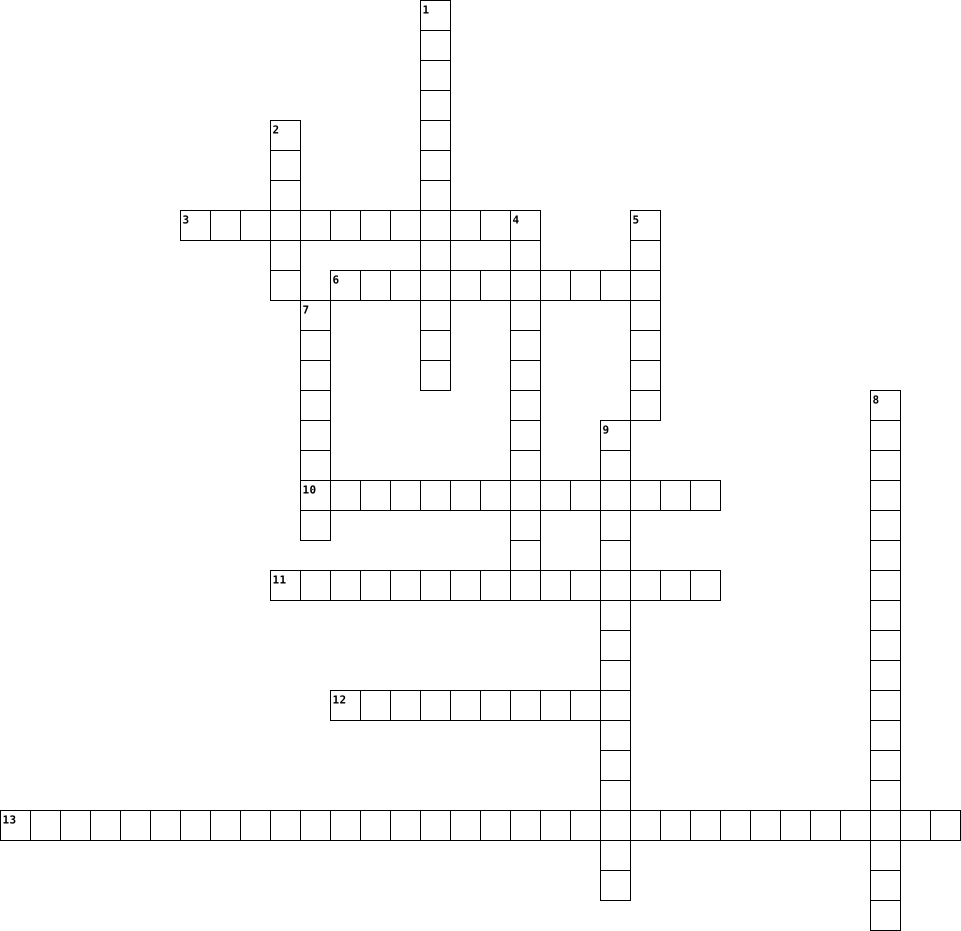
Across
- years of calcium deficiency
- fat-like substance in blood
- people with concern providing support for others
- tends to be a liquid at room temperature and comes from plants
- component of blood that carries oxygen to all cells
- promotes sensible food choices and good health
Down
- the accumulation of blood in large muscles in the legs; causes the brain and heart to lack blood
- a state of bodily/mental tension from enough blood
- factor in high cholesterol
- causes people to overeat and make themselves puke due to guilt
- a state of physical,emotional, and mental health
- a simple guide to good nutrition
- intense fear of being obese "fat phobia"
13 Clues: factor in high cholesterol • years of calcium deficiency • fat-like substance in blood • a simple guide to good nutrition • intense fear of being obese "fat phobia" • promotes sensible food choices and good health • a state of physical,emotional, and mental health • people with concern providing support for others • a state of bodily/mental tension from enough blood • ...
Unit 4 vocab 2024-11-01

Across
- Series of reactions in mitochondria that produce energy and CO2 during aerobic respiration
- Group of pigments and proteins in chloroplasts that capture light energy
- not, without
- first part of photosynthesis where light energy becomes chemical energy. This occurs in the thylakoid membranes of chloroplasts
- Fluid in chloroplasts around the grana, where the Calvin cycle happens
- a molecule that absorbs light, giving color to plants
- An organism that makes its food, like plants, through photosynthesis or chemosynthesis
- process, action
- mouth
- A 3 carbon molecule formed during glycolysis, important in cellular respiration
- green pigment found in chloroplasts
- Red, orange, or yellow pigments that help in photosynthesis
- air, oxygen
- a stack of thylakoid membranes in a chloroplast
- breakdown, destroy
- Process where cells break down food to make energy or ATP
- Tiny openings on leaves that let CO2 in and O2 out
Down
- An anaerobic process that follows glycolysis, making lactic acid or alcohol
- process where green plants, algae, and some bacteria take carbon from the air. it makes glucose from sunlight, water, and carbon dioxide
- Type of fermentation that makes alcohol and CO2 as seen in yeast and some bacteria
- Processes that happens without oxygen
- type of fermentation that makes lactic acid
- An adaptation some plants use to store CO2 at night for daytime Photosynthesis
- Process of converting CO2 into organic compounds, like in photosynthesis
- an organism that gets energy by consuming other organisms for its energy and nutrition
- Series of molecules found in the mitochondria and chloroplasts that move electrons to make energy
- Part of photosynthesis where CO2 is turned into glucose using atp energy
- self
- Molecule in chloroplasts that accepts high energy electrons
- A sac inside chloroplasts where light reactions occur
- nutrient material, nourishment
- organelle in plant cells and some algae where photosynthesis takes place
- light
- Glycolysis is the first stage of cellular respiration in which glucose is broken down into pyruvic acid and ATP
- green
- Respiration that uses oxygen to produce energy
- together
37 Clues: self • mouth • light • green • together • air, oxygen • not, without • process, action • breakdown, destroy • nutrient material, nourishment • green pigment found in chloroplasts • Processes that happens without oxygen • type of fermentation that makes lactic acid • Respiration that uses oxygen to produce energy • a stack of thylakoid membranes in a chloroplast • ...
Unit 4 Biology: Photosynthesis 2024-10-31

Across
- An organism that gets energy by consuming other organisms for its energy and nutrition.
- Processes that happen without oxygen.
- Molecule in chloroplasts that accepts high-energy electrons.
- A sac inside chloroplasts where light reactions occur.
- CAM (Crassulacean Acid Metabolism). An Adaption some plants use to store CO2 at night for daytime photosynthesis.
- A molecule that absorbs light, giving color to plants.
- Process of converting CO2 into organic compounds, like in photosynthesis.
- Respiration that uses oxygen to produce energy.
- Organelle in plant cells and some algae where photosynthesis takes place.
- An anaerobic process that follows glycolysis, making lactic acid or alcohol.
- Red, orange, or yellow pigments that help in photosynthesis.
- Series of reactions in mitochondria that produce energy and CO2 during aerobic respiration.
Down
- Tiny openings on leaves that let CO2 in ad O2 out.
- Process where cells break down food (carbon compounds) to make energy or ATP.
- Type of fermentation that makes alcohol and CO2, as seen in yeast and some bacteria.
- Process where Carbon is taken from the air by green plants, algae, and some bacteria. It makes glucose from sunlight, water, and carbon dioxide.
- Type of fermentation that makes lactic acid, common in muscles.
- First part of photosynthesis where light energy becomes chemical energy. This occurs in the thylakoid membranes of chloroplasts.
- A stack of thylakoid membranes in a chloroplast.
- Green pigment found in chloroplasts.
- Series of molecules found in the mitochondria and chloroplasts that move electrons to make energy.
- An organism that makes its own food, like plants, through photosynthesis or chemosynthesis
- Fluid in chloroplasts around the grana (thylakoid stacks), where the Calvin Cycle (light-independent reactions) happens.
- The first stage of cellular respiration in which glucose is broken down into pyruvic acid and ATP.
- A 3-carbon molecule formed during glycolysis, important in cellular respiration.
- Group of pigments and proteins in chloroplasts that capture light energy.
- Part of photosynthesis where CO2 is turned into glucose using ATP energy.
27 Clues: Green pigment found in chloroplasts. • Processes that happen without oxygen. • Respiration that uses oxygen to produce energy. • A stack of thylakoid membranes in a chloroplast. • Tiny openings on leaves that let CO2 in ad O2 out. • A sac inside chloroplasts where light reactions occur. • A molecule that absorbs light, giving color to plants. • ...
Photosynthesis 2022-04-19

Across
- An organism that can trap an inorganic carbon source using energy from light or from chemicals
- An organism that cannot produce its own food, instead taking nutrition from other sources
- A reaction in which a complex molecule is broken down to simpler ones, involving the addition of water
- A pigment that is not essential to photosynthesis but which absorbs light of different wavelengths and passes the energy to chlorophyll a
- A yellow, orange or red plant pigment used as an accessory pigment in photosynthesis
- A cluster of light-harvesting accessory pigments surrounding a primary pigment or reaction center
- The product formed from photosynthesis which plants use as food
- Photosynthetic organelle in eukaryotes
- Adenine diphosphate
- A green pigment responsible for light capture in photosynthesis in algae and plants
Down
- The process by which bacteria uses energy from inorganic substances are used to make sugars
- "Packets" of energy that travel in waves which compose light
- The reaction which converts light energy into chemical energy
- The splitting of water using light energy
- The matrix of chloroplast in which the light independent reactions of photosynthesis occur
- A cycle of reactions in photosynthesis in which carbon dioxide is fixed into carbohydrate
- A pore in the epidermis of the leaf, bounded by two guard cells
17 Clues: Adenine diphosphate • Photosynthetic organelle in eukaryotes • The splitting of water using light energy • "Packets" of energy that travel in waves which compose light • The reaction which converts light energy into chemical energy • A pore in the epidermis of the leaf, bounded by two guard cells • The product formed from photosynthesis which plants use as food • ...
Photosynthesis 2022-04-19
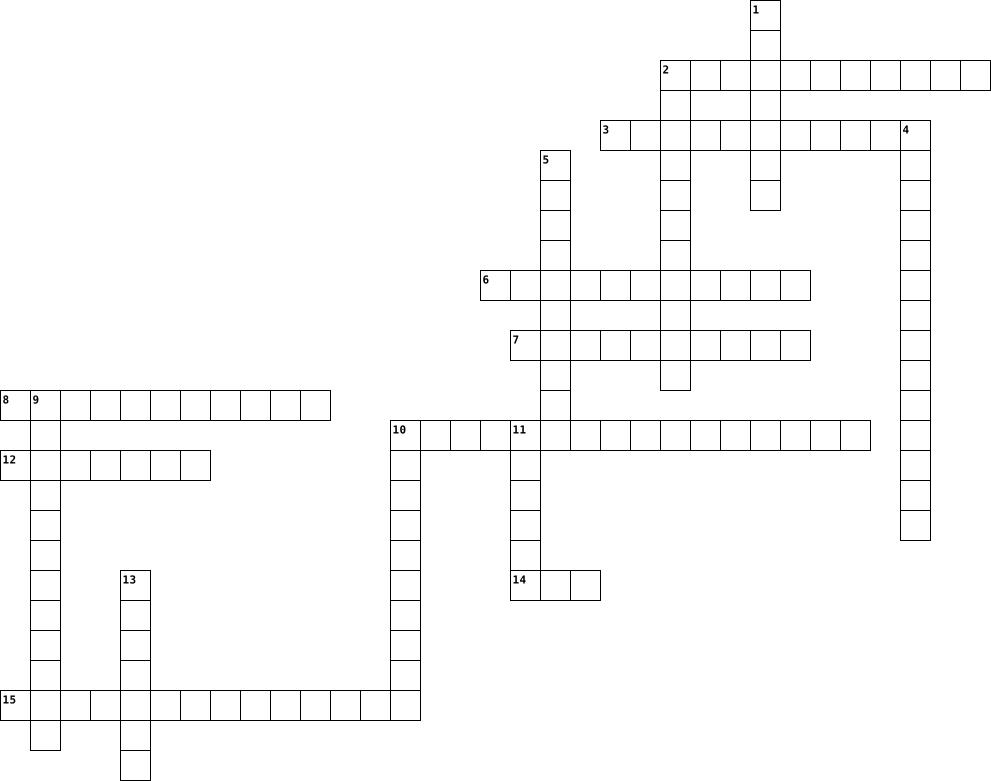
Across
- A yellow, orange or red plant pigment used as an accessory pigment in photosynthesis
- A green pigment responsible for light capture in photosynthesis in algae and plants
- A cluster of light-harvesting accessory pigments surrounding a primary pigment or reaction center
- A reaction in which a complex molecule is broken down to simpler ones, involving the addition of water
- Photosynthetic organelle in eukaryotes
- A pigment that is not essential to photosynthesis but which absorbs light of different wavelengths and passes the energy to chlorophyll a
- A pore in the epidermis of the leaf, bounded by two guard cells
- Adenine diphosphate
- The process by which bacteria uses energy from inorganic substances are used to make sugars
Down
- "Packets" of energy that travel in waves which compose light
- A cycle of reactions in photosynthesis in which carbon dioxide is fixed into carbohydrate
- The reaction which converts light energy into chemical energy
- The splitting of water using light energy
- An organism that cannot produce its own food, instead taking nutrition from other sources
- An organism that can trap an inorganic carbon source using energy from light or from chemicals
- The matrix of chloroplast in which the light independent reactions of photosynthesis occur
- The product formed from photosynthesis which plants use as food
17 Clues: Adenine diphosphate • Photosynthetic organelle in eukaryotes • The splitting of water using light energy • "Packets" of energy that travel in waves which compose light • The reaction which converts light energy into chemical energy • A pore in the epidermis of the leaf, bounded by two guard cells • The product formed from photosynthesis which plants use as food • ...
Unit 4 Bio vocab 2024-10-29

Across
- Fermentation: Type of fermentation that makes alcohol and CO₂, as seen in yeast and some bacteria.
- air, oxygen
- together
- - nutrient material, nourishment
- Acid: A 3-carbon molecule formed during glycolysis, important in cellular respiration.
- -sis - process, action
- Pathway: CAM (Crassulacean Acid Metabolism). An adaptation some plants use to store CO₂ at night for daytime photosynthesis.
- Group of pigments and proteins in chloroplasts that capture light energy.
- Process where Carbon is taken from the air by green plants, algae, and some bacteria. It makes glucose from sunlight, water, and carbon dioxide.
- green pigment found in chloroplasts
- light
- First part of photosynthesis where light energy becomes chemical energy. This occurs in the thylakoid membranes of chloroplasts.
- Tiny openings on leaves that let CO₂ in and O₂ out.
- Transport Chain: Series of molecules found in the mitochondria and chloroplasts that move electrons to make energy.
- Fixation: Process of converting CO₂ into organic compounds, like in photosynthesis.
- a stack of thylakoid membranes in a chloroplast
- A molecule that absorbs light, giving color to plants.
- Acid Fermentation: Type of fermentation that makes lactic acid, common in muscles.
Down
- Processes that happen without oxygen.
- Respiration: Process where cells break down food (carbon compounds) to make energy or ATP.
- An organism that makes its own food, like plants, through photosynthesis or chemosynthesis
- Glycolysis is the first stage of cellular respiration in which glucose is broken down into pyruvic acid and ATP.
- Respiration: Respiration that uses oxygen to produce energy
- A sac inside chloroplasts where light reactions occur.
- Fluid in chloroplasts around the grana (thylakoid stacks), where the Calvin Cycle (light-independent reactions) happens.
- An anaerobic process that follows glycolysis, making lactic acid or alcohol.
- Acceptor: Molecule in chloroplasts that accepts high-energy electrons.
- green
- Cycle: Part of photosynthesis where CO₂ is turned into glucose using ATP energy.
- Red, orange, or yellow pigments that help in photosynthesis.
- Cyclem: Series of reactions in mitochondria that produce energy and CO₂ during aerobic respiration.
- - breakdown, destroy
- an organism that gets energy by consuming other organisms for its energy and nutrition.
- Organelle in plant cells and some algae where photosynthesis takes place.
- mouth
- an- not, without
- self
37 Clues: self • green • light • mouth • together • air, oxygen • an- not, without • - breakdown, destroy • -sis - process, action • - nutrient material, nourishment • green pigment found in chloroplasts • Processes that happen without oxygen. • a stack of thylakoid membranes in a chloroplast • Tiny openings on leaves that let CO₂ in and O₂ out. • ...
Science Crossword Class 7 2025-11-13

Across
- : Breaking down of food into simpler forms.
- A Process by which green plants make food using sunlight, carbon dioxide and water.
- : Substance that turns blue litmus red.
- : Substance that turns red litmus blue.
- : Small pores on leaves for gaseous exchange.
- : Movement of water and minerals through xylem.
- : Liquid part of blood.
- : Mode of transfer of heat through solids.
- : Device used to measure temperature.
Down
- : Process of taking in and utilizing food.
- : Organ used for breathing.
- : Reaction between an acid and a base forming salt and water.
- : A large area covered chiefly with trees and undergrowth.
- is a Gas taken in during respiration.
- : Type of change in which a new substance is formed.
- : Material that allows heat to pass easily.
- : Burning of fuel.
- : A reversible change.
- : Process by which living beings release energy from food.
- : Green pigment in leaves.
- : Loss of water as vapour from leaves.
- : Process opposite to condensation.
- : Organ that pumps blood in animals.
23 Clues: : Burning of fuel. • : A reversible change. • : Liquid part of blood. • : Green pigment in leaves. • : Organ used for breathing. • : Process opposite to condensation. • : Organ that pumps blood in animals. • is a Gas taken in during respiration. • : Device used to measure temperature. • : Loss of water as vapour from leaves. • : Substance that turns blue litmus red. • ...
Unit 4 Vocab 2024-11-06

Across
- Acid Fermentation type of fermentation that makes lactic acid, common in muscles
- fluid in chloroplast around the grana where the Calvin cycle happens
- Cycle part of photosynthesis where CO2 is turned into glucose using ATP energy
- green pigment found in chloroplasts
- an organism that gets energy by consuming other organisms for its energy and nutrition
- Acid a 3-cardon molecule formed during glycolysis, important in cellular respiration
- Pathway an adaption some plants use to store CO2 at night for daytime photosynthesis
- an anaerobic process that follows glycolysis, making lactic acid or alcohol
- a stack of thylakoid membranes in chloroplast
- Respiration respiration that uses oxygen to produce energy
- tiny openings on leaves that let CO2 in and O2 out
- Reactions first part of photo synthesis where light energy becomes chemical energy. This occurs in the thlakoid membranes of chloroplasts
- fermentation type of fermentation that makes alcohol and CO2 as seen in yeasts and some bateria
- Transport Chain series o molecules found in the mitochondria and chloroplasts that move electron to make energy
- Red, orange, or ywlloe pigment that help in photosynthesis
Down
- a molecule that absorbs light, giving color to plants
- CYcle series of reactions in mitochondria that produce energy and CO2 during aerobic respiration
- a sac inside chloroplasts where light Reactions occur
- Fixation Process of converting CO2 into organic compounds, like in photosynthesus
- respiration Process where cells break down food to make energy or ATP
- Electron Acceptor Molecule in chloroplasts that accepts high-energy eletrons
- organelle in plant cells and some algae where photosynthesis takes place
- an organism that makes its own food, like plants, through photosynthesis or chemosynthesis
- the first stage cellular respiration in which glucose is broken down into pyruvic acid and ATP
- process where cardon is taken from the air by green plants, algae, and some bacteria. it makes glucose from sunlight, water, and cardon, dioxide
- group of pigments and proteins in chloroplasts that accepts high-energy electrons
- processes that happen without oxygen
27 Clues: green pigment found in chloroplasts • processes that happen without oxygen • a stack of thylakoid membranes in chloroplast • tiny openings on leaves that let CO2 in and O2 out • a molecule that absorbs light, giving color to plants • a sac inside chloroplasts where light Reactions occur • Red, orange, or ywlloe pigment that help in photosynthesis • ...
Photosynthesis 2022-04-19

Across
- A reaction in which a complex molecule is broken down to simpler ones, involving the addition of water
- A green pigment responsible for light capture in photosynthesis in algae and plants
- The reaction which converts light energy into chemical energy
- A yellow, orange or red plant pigment used as an accessory pigment in photosynthesis
- The splitting of water using light energy
- The process by which bacteria uses energy from inorganic substances are used to make sugars
- A pore in the epidermis of the leaf, bounded by two guard cells
- "Packets" of energy that travel in waves which compose light
- An organism that can trap an inorganic carbon source using energy from light or from chemicals
Down
- An organism that cannot produce its own food, instead taking nutrition from other sources
- A cycle of reactions in photosynthesis in which carbon dioxide is fixed into carbohydrate
- A pigment that is not essential to photosynthesis but which absorbs light of different wavelengths and passes the energy to chlorophyll a
- Adenine diphosphate
- A cluster of light-harvesting accessory pigments surrounding a primary pigment or reaction center
- The product formed from photosynthesis which plants use as food
- The matrix of chloroplast in which the light independent reactions photosynthesis occur
- photosynthetic organelle in eukaryotes
17 Clues: Adenine diphosphate • photosynthetic organelle in eukaryotes • The splitting of water using light energy • "Packets" of energy that travel in waves which compose light • The reaction which converts light energy into chemical energy • The product formed from photosynthesis which plants use as food • A pore in the epidermis of the leaf, bounded by two guard cells • ...
Digestive System 2023-10-11

Across
- - practice of eating plants as the main part of their diet
- - feed containing less than 18% crude fiber when dry, grains and protein supplements are concentrates.
- animal or person that eats food of both plant and animal origin.
- - organic compound composed of carbon hydrogen and oxygen that is solid at body temperature; fats contain more carbon and hydrogen than do carbohydrates and are mainly glyceryl estes if certain acids that are soluble in ether but not in water.
- an organic compound needed in small amounts for nutrition
- inorganic substances needed in small amounts for proper nutrition
- The third compartment of the ruminant stomach
- fact or quality of being acceptable or agreeable to the taste
- something that completes or enhances something else when added to it.
- the second compartment of ruminant stomach
Down
- - complex carbohydrates such as cellulose and lignin
- Ration - federal allowance for an animal during a 24 hour period that has all the nutrients the animal needs in the right proportions and amounts
- - The fourth compartment, or true stomach, of the ruminant animal
- the organ in the digestive system that receives the feed and adds chemicals that help in the digestion process.
- a feed containing more than 18% crude fiber when dry,examples:hay,silage, and pasture
- - an animal that feeds on flesh
- - organic compound containing carbon, hydrogen, and oxygen
- an organic compound made up of amino acids and containing carbon, hydrogen, oxygen, and nitrogen
- the type of amount of food and drink habitually ingested by an animal or a person ration without reference to a specific time period.
- the first and largest compartment of the ruminant's stomach
- handout is a supplement to the official manual
21 Clues: - an animal that feeds on flesh • the second compartment of ruminant stomach • The third compartment of the ruminant stomach • handout is a supplement to the official manual • an organic compound needed in small amounts for nutrition • - complex carbohydrates such as cellulose and lignin • the first and largest compartment of the ruminant's stomach • ...
Lina's ecosystem 2016-10-27

Across
- the one that eats the primary producers
- studying the relationships between living organisms and their environment
- a place in which an organism lives
Down
- the sequence of who eats whom in a biological community to obtain nutrition
- who eats plants and animals
- a place where interactions between abiotic and biotic things occur
- both organisms benefit and sometimes neither species can survive without the other
- an animal that eats another animal
- an animal that is being eaten by the predator
- a definition of a living thing
10 Clues: who eats plants and animals • a definition of a living thing • an animal that eats another animal • a place in which an organism lives • the one that eats the primary producers • an animal that is being eaten by the predator • a place where interactions between abiotic and biotic things occur • studying the relationships between living organisms and their environment • ...
Science 2020-12-01

Across
- obtaining energy from sunlight for nutrition
- The movement of water molecules through a particular membrane
- water
- is a detectable change in the physical or chemical structure
- response to an external stimulus
Down
- Pressure the pressure exerted on a plant cell wall by water passing into the cell by osmosis
- growth of an organism in response to contact with a solid object
- the growth of the parts of plants by force of gravity
- a space within the cytoplasm of a cell
- droops due to lack of water
10 Clues: water • droops due to lack of water • response to an external stimulus • a space within the cytoplasm of a cell • obtaining energy from sunlight for nutrition • the growth of the parts of plants by force of gravity • is a detectable change in the physical or chemical structure • The movement of water molecules through a particular membrane • ...
SCIENCE CROSSWORD PUZZLE 2021-10-01

Across
- the bodily process of discharging waste matter
- the act of reasoning about the future
- the act of making and recording a measurement
- a prominent aspect of something
- a proposal intended to explain certain facts or observations
- a single complete act of breathing in and out
Down
- reaction of compounds with the aid of radiant energy (especially in plants)
- the process of generating offspring
- a position or opinion or judgment reached after consideration
- a source of materials to nourish the body
10 Clues: a prominent aspect of something • the process of generating offspring • the act of reasoning about the future • a source of materials to nourish the body • the act of making and recording a measurement • a single complete act of breathing in and out • the bodily process of discharging waste matter • a proposal intended to explain certain facts or observations • ...
B4.2 - Modes of nutrition 2025-03-25

Across
- A plant that is rooted in the soil and grows twisting up along a tree, using it as a scaffold __________________________
- Adaptations of predators and prey can be __________, ____________, or _______________ (write your answer as one word) __________________________
- An animal that’s eaten by a predator __________________________
- A form of animal nutrition that involves internal digestion __________________________
- The breakdown of food molecules into smaller molecules; can be internal or external
- One of the three domains of life; its members have many different ways of obtaining energy and organic compounds __________________________
- The process by which photoautotrophs convert light energy into chemical energy __________________________
- An organism that gets its complex organic compounds by eating other organisms __________________________
- Can live in either of two modes - e.g. a ________________ anaerobe can use oxygen or live without it __________________________
- Must live in one mode - e.g. an ________________ anaerobe cannot live in the presence of oxygen __________________________
Down
- An organism that can make complex organic compounds from inorganic compounds like carbon dioxide __________________________
- A compound, often toxic, that is synthesized by an organism but isn’t essential for its growth or survival - caffeine is an example __________________________
- After being absorbed, molecules are incorporated into body tissues and used to make other molecules __________________________
- An animal that eats plants __________________________
- A form of animal nutrition that involves external digestion __________________________
- Can act as an autotroph or a heterotroph; the protist Euglena is an example __________________________
- A type of epiphyte that eventually kills the tree it’s living on
- An animal that captures and eats prey animals __________________________
- A plant that grows on trees, often starting out where branches meet the trunk; not rooted in the soil __________________________
19 Clues: An animal that eats plants __________________________ • An animal that’s eaten by a predator __________________________ • A type of epiphyte that eventually kills the tree it’s living on • An animal that captures and eats prey animals __________________________ • The breakdown of food molecules into smaller molecules; can be internal or external • ...
plants 2016-03-12

Across
- transports food, water and nutrients around the plant
- hole that let CO2 in and O out
- our brain is one of our vital ______
- a substance formed by decomposed animals
- p________ mesophyll
- a gas that is taken in by plants
- spaces between guard cells
- part of the palisale mesophyll
- used to remove green chorophyll
- transports water
- absorbs sunlight for photosynthesis
- colour where no starch is present
- absorbs infared radiation
- used to anchor a plant
- stored glucose
- the sun provides l________
- burning of natural resources
- a gas respired by a plant
- produced when food is broken down
Down
- there is a upper and lower section to this
- in plant cell walls
- to test for starch
- process used to make fossil fuels
- top layer of the leaf structure
- a large group of organic compounds in food
- opens to create a hole
- process used to make food
- s______ mesophyll
- protects a cell
- there are many different gases in this area, a_____ s______
- when a plant is deprived of starch
- transports glucose
- a living thing is made up of many _____
- green substance in leaves
- dead animals decopose. this process is called __________
- a process that involes oxygen
- colour that shows starch
- this is used to make food
38 Clues: stored glucose • protects a cell • transports water • s______ mesophyll • to test for starch • transports glucose • in plant cell walls • p________ mesophyll • opens to create a hole • used to anchor a plant • colour that shows starch • process used to make food • green substance in leaves • absorbs infared radiation • this is used to make food • a gas respired by a plant • ...
Plants 2018-05-09

Across
- A point where leaf is attached to the stem
- ____ cells control the opening and closing of stomata
- Pattern of veins in a leaf
- Loss of water from the plant
- Material found in cell walls to strengthen them
- Main carbohydrate produced in photosynthesis
- Causes a reaction in an organism
- Plant tissue capable of mitosis
- Ripens bananas and other fruit
- Process through which water is absorbed by the roots
- Can cause the roots to grow down into the soil
Down
- ____ tissue is a covering layer in a plant
- Seed leaf
- Modified stems are also known as ____
- Change in growth of a plant in response to light
- Affects the enzyme activity in plants
- Roots that don't develop from a radicle
- Change in the growth of a plant as a result of an external response
- Change in growth of a plant in response to gravity
- Vessel that is living and has companion cells present
- Sticking of similar molecules to each other
- Little openings in a leaf
22 Clues: Seed leaf • Little openings in a leaf • Pattern of veins in a leaf • Loss of water from the plant • Ripens bananas and other fruit • Plant tissue capable of mitosis • Causes a reaction in an organism • Modified stems are also known as ____ • Affects the enzyme activity in plants • Roots that don't develop from a radicle • ____ tissue is a covering layer in a plant • ...
PLANTS 2013-04-02

Across
- type of seedless vascular plant
- plant have a single seed leave
- male reproductive organ in flowering plants
- diploid generation of a plant life cycle
- division of hornworts
- division of club moss
- spores on the underside of fern leaves
- division of mosses
- covered seeds
- female reproductive organ in flowering plants
- vascular tissue that transports water
Down
- naked seed
- leaves of ferns
- largest group of gymnosperms
- ripened ovary
- division of liverworts
- covering on leaves that reduces water loss
- seed begins to grow and break through the seed coat
- found in all plants
- division of flowering plants
- water loss through evaporation
- plant having two seed leaves
- openings on the underside of leaves used for gas exchange
- plant ancestor
- type of seedless nonvascular plant
- vascular tissue that transport food
26 Clues: naked seed • ripened ovary • covered seeds • plant ancestor • leaves of ferns • division of mosses • found in all plants • division of hornworts • division of club moss • division of liverworts • largest group of gymnosperms • division of flowering plants • plant having two seed leaves • plant have a single seed leave • water loss through evaporation • type of seedless vascular plant • ...
Plants 2013-11-04

Across
- Used to anchor plant
- Primary growth for height
- Loosely packed cells
- Used for storage, metabolism, and support
- Where branch connects to main stem
- Found underneath the leaf
- Outside tissue
- Used to transport water and nutrients
- Secondary growth for width
- Irregular shaped Cell
- Found at the tip of roots for protection
Down
- attaches leaf to branch
- Secondary root
- Extremely rigid dead cells
- A covering to protect new growth
- Area between two nodes
- of dividing cells
- Bud at the end of the stem
- Waxy layer that provides protection
- Primary site of photosynthesis
20 Clues: Secondary root • Outside tissue • of dividing cells • Used to anchor plant • Loosely packed cells • Irregular shaped Cell • Area between two nodes • attaches leaf to branch • Primary growth for height • Found underneath the leaf • Extremely rigid dead cells • Bud at the end of the stem • Secondary growth for width • Primary site of photosynthesis • A covering to protect new growth • ...
Plants 2021-10-15

Across
- Iris has a bulb and blooms in mid summer
- has prickly things on it
- large and very brightly colored flowers
- the large flowerheads look like pom poms growing on bushes that can get as tall as trees
- it can make your skin really itchy
- highly fragrant; red, purple, pink, or white flowers
- when you blow it all of its pieces fly away
- it grows pineapples
- glossy evergreen leaves
- helps make clothes
- catches small flying insects
- helps you breathe underwater
Down
- a fragrant flower that's commonly reddish-pink
- a spreading vine
- attacks anyone who came near its branches
- makes chocolate
- has honey in it
- adds a minty flavor to food and drinks
- screams when you take it out of its pot
- grows grape-like fruits
20 Clues: makes chocolate • has honey in it • a spreading vine • helps make clothes • it grows pineapples • grows grape-like fruits • glossy evergreen leaves • has prickly things on it • catches small flying insects • helps you breathe underwater • it can make your skin really itchy • adds a minty flavor to food and drinks • large and very brightly colored flowers • ...
Plants 2021-11-29

Across
- A seed absorbs water and the root breaks through the seed
- Contains structures that will later turn into sperm cells
- a type of seedless plant that often grows on the forest floor
- Anchors the plant and absorbs water and nutrients
- Water molecules sticking to other water molecules
- A type of plant that transports materials through vessels/tubes
- Protects the root from injury
- A stalklike structure that holds up the anther
- A female reproductive part of the flower. Consists of a stigma, style, and ovary
- A plant's growth response toward or away from a stimuli
- A tree trunk grows and expands at different rates, causing _____________ to form
- A tropism that plants move against
- Separates phloem from xylem
- The main plant hormone that speeds up growth
- Captures the Sun's energy for photosynthesis
- Colorful, leaflike structures that attract pollinators
- A tropism that some plants (vines) move towards
Down
- Water molecules sticking to other objects
- A plant that produces seeds that have no protective fruit or pedal
- An organism that has cells with nuclei. One of the 3 main characteristics of a plant
- Contains a young plant inside a protective coating
- A protective coating around a seed
- A plant that proceeds seeds inside a protective fruit or pedal
- A tropism that all plants move towards
- An organelle that protects and supports the cell. One of the 3 main characteristics of a plant.
- a tiny cell that can grow into a new organism
- Water moving against gravity by the forces of cohesion and adhesion
- Male reproductive parts of a flower. Made up of the anther and the filament
- A small leaflike part of the flower that protects the developing flower
- Produces pollen and is held up by the filament
- Provides the plant with support and a way to transport materials
- A chemical that affects growth and development
- Something that makes its own food. One of the 3 main characteristics of a plant.
33 Clues: Separates phloem from xylem • Protects the root from injury • A protective coating around a seed • A tropism that plants move against • A tropism that all plants move towards • Water molecules sticking to other objects • The main plant hormone that speeds up growth • Captures the Sun's energy for photosynthesis • a tiny cell that can grow into a new organism • ...
Plants 2022-03-22

Across
- The _____ layer is where photosynthesis happens in the leaf.
- The type of vascular tissue that moves sugar/food
- Seedless plants can be used in the formation of _____, one of the three fossil fuels.
- Angiosperms with flower parts in fours or fives, branching veins, and two cotyledons in their seeds
- Angiosperms with flower parts in threes, parallel veins, and one cotyledon in their seeds
- Small openings in the leaf surface that allow for gases to be exchanged
- The waxy, protective layer on stems and leaves of plants is the _____.
- A non-flowering seed plant
- A ______ is the part of the seed used for food storage.
- _____ plants have structures that move water and other substances.
- An apple tree is an example of this type of seed plant
Down
- A(n) _____ is a plant that completes its life cycle in one year.
- Cell walls are made of ______ to give the plant more support and strength.
- _____ cells open and close stomata.
- The process plants do to make sugar
- Moss plants are held in place by root-like structures called _____.
- The type of vascular tissue that produces new xylem and phloem cells
- Seedless nonvascular plants have _____ instead of stems.
- The type of vascular tissue that moves water
- The first plants to grow in new or disturbed areas are _____ species.
- The green pigment found in the chloroplasts of plants
- Veins/vascular bundles are located in the ______ layer of leaves in a plant.
- Scientists hypothesize plants evolved directly from green _____.
23 Clues: A non-flowering seed plant • _____ cells open and close stomata. • The process plants do to make sugar • The type of vascular tissue that moves water • The type of vascular tissue that moves sugar/food • The green pigment found in the chloroplasts of plants • An apple tree is an example of this type of seed plant • ...
Plants 2022-02-01

Across
- root system with one main root
- type of leaf with one leaf blade on one leaf stem
- type of stem made of wood
- consist of a seed coat, baby plant, and store of food
- absorbs water and anchors the plant
- the way pollen gets from the male to female part of the flower
- the sprouting of a seed
- plant who does not protect its seeds; often has cones
- seedless, nonvascular plant
Down
- process by which a plant makes food
- ripened ovary
- type of leaf with multiple leaf blades on one leaf stem
- the way a plant grows towards the light
- type of stem that is soft and green
- plant whose life cycle is many years
- seedless, vascular plant
- transport tube for food
- root system with many main roots coming off of plant
- transport tube for water
- plant who protects its seeds in an ovary
20 Clues: ripened ovary • transport tube for food • the sprouting of a seed • seedless, vascular plant • transport tube for water • type of stem made of wood • seedless, nonvascular plant • root system with one main root • process by which a plant makes food • type of stem that is soft and green • absorbs water and anchors the plant • plant whose life cycle is many years • ...
Plants 2022-10-04

Across
- edible reproductive body of seed plant
- Cultivation plants and water .
- retants water and nutrients
- any living thing such as fruits that humans consider troublesome.
- part of plant consumed by humans or animals
- media mixers of components that provide nutrients to the plants
- Culture biological research.
- to cut twigs,branches,roots
- proning on plants to make plants grow.
- growing plants in an air mist environment without soil.
- act of plotting plants to grow as one plant.
- Breeding ,raising and harvesting fish and aquatic plants.
- store nutrients
- cherry,citrus.
- grows in opposite directions of the root supports leves, flowers,frits
Down
- green plants use sunlight to get food from carbon monoxide and water .
- A flower plant that takes two years to complete its biological life cycle
- to form new roots to grow.
- for plants that produce bulbs.
- fertilize the plant
- provide nutrients or nourishment.
- store food in the plant
- growing in soil,sand,gravel,liquids.
- A plant that lives more than two years
- provide compost to the plant
- Moss a component of most potting soil
- mortified stemes
- blossom of the a plant
- engineering A process that uses laboratory based technologies to alter the DNA.
- plants that only live through one season, do not grow back year to year.
30 Clues: cherry,citrus. • store nutrients • mortified stemes • fertilize the plant • blossom of the a plant • store food in the plant • to form new roots to grow. • retants water and nutrients • to cut twigs,branches,roots • provide compost to the plant • Culture biological research. • Cultivation plants and water . • for plants that produce bulbs. • provide nutrients or nourishment. • ...
Plants 2021-04-25

Across
- sniegpulkstenīte
- auksts
- sēkliņa
- ceriņi
- gaiss
- saknes
- tree priede
- dzeloņi
- saulespuķe
- auga sula
- paparde
- skābeklis
- ēnains
- roze
- sauss
- mitrs
- saulesgaisma
- mežs
- pienene
- auglis
- sniegs
- ledus
- orhideja
Down
- pumpurs
- adatas
- lilija
- kaktusi
- lapas
- zieds
- dioxide ogļskābā gāze
- peonija
- zvaniņš
- fotosintēze
- magone
- stumbrs
- saulains
- sēnes
- tuksnesis
- tree palma
- lietus
- narcise
- tulpe
- karsts
- gāze
- margrietiņa
- zars
- augt
47 Clues: roze • gāze • mežs • zars • augt • lapas • gaiss • zieds • sēnes • sauss • mitrs • tulpe • ledus • adatas • lilija • auksts • ceriņi • saknes • magone • ēnains • lietus • karsts • auglis • sniegs • pumpurs • kaktusi • sēkliņa • peonija • zvaniņš • dzeloņi • stumbrs • paparde • narcise • pienene • saulains • orhideja • tuksnesis • auga sula • skābeklis • saulespuķe • tree palma • tree priede • fotosintēze • margrietiņa • saulesgaisma • sniegpulkstenīte • dioxide ogļskābā gāze
Plants 2021-04-01

Across
- Tissue that interacts with environment such as epidermis
- Connects Stigma to Ovary
- sticky surface atop pistil that catches pollen
- A deactivated version of ATP
- Tissue used for food storage
- Chemical that absorbs light energy for photosynthesis
- Female part of flower
- Organism that makes its own food
- This Tissue is used for transport
- Vascular Tissue that moves water
- hairs Increase the surface area for water absorption
- Respiration with Oxygen
- Vascular tissue that moves sugars
- Male part of Flower
- Scientific name for sugars
- Male gamete of plants
- These are required to start the chemical reaction
- These are the what gets produced during the reaction
Down
- Respiration without Oxygen
- Contains the pollen
- Holds the Anther aloft
- Waxy layer on leaf surface
- Chemical Currency produced by Cell Respiration
- C(6)H(12)0(6)
- Contains the eggs
- Opening in Leaf surface for gas exchange
- Processed used by plants to make food
- Tissue that makes new xylem and phloem and causes widening of plant (Secondary growth)
- Used by cells to make energy in ATP
- This Tissue is responsible for primary plant growth
30 Clues: C(6)H(12)0(6) • Contains the eggs • Contains the pollen • Male part of Flower • Female part of flower • Male gamete of plants • Holds the Anther aloft • Respiration with Oxygen • Connects Stigma to Ovary • Respiration without Oxygen • Waxy layer on leaf surface • Scientific name for sugars • A deactivated version of ATP • Tissue used for food storage • Organism that makes its own food • ...
Plants 2021-02-19

Across
- the other word of glucose
- a green pigment found in plants
- that controls water loss and gas exchange
- test What experiment to see if the plant is doing photosynthesis
- something that plants need that is a liquid
- the plant cell that produces glucose
- to see if glucose is being made in the plant
- the Factors affecting rate of photosynthesis that is only 3 word
- how does the oxygen and carbon dioxide exchange
- a waste product of plants
Down
- something that is between 2 epidermal cell layer
- how does the water get into the roots of a plant
- how does the sugar from the source go to the sink
- what is the process called when plants make sugar and oxygen
- the Factors affecting rate of photosynthesis that is only 1 word
- a layer of something that makes it water proof and reduce water loss
- the cell that is in the roots that absorbs water
- Something that plants need and it is not from the Earth
- other word storage
- Something that plants need in order to do photosynthesis and animals release it as a waste
20 Clues: other word storage • the other word of glucose • a waste product of plants • a green pigment found in plants • the plant cell that produces glucose • that controls water loss and gas exchange • something that plants need that is a liquid • to see if glucose is being made in the plant • how does the oxygen and carbon dioxide exchange • ...
Plants!!!! 2024-01-11

Across
- Produces leaves on plants
- Kingdom plants belong to.
- Two leaves at each node
- Water and sugar conducting tissues in a leaf
- A protective covering on leaves
- Study of plants
- The outermost layer of bark
- Most plants have roots, stems and _____
- A leaf with only one blade on a petiole
- Necessary for a plant’s survival
- Three types of leaf venation are parallel, palmate and _____
- Have taproot systems
- Anchor the plant and absorb water
- A softer and more flexible type of stem
- Stems that are hard and not flexible
- Thick-walled cells in a plant
Down
- The cell walls of plants are made of this
- The flat green part of a leaf
- Xylem is made of long _______ cells
- Part of a leaf between the node and blade
- The outermost tissue of leaves
- The arrangement of veins in a leaf
- region where a leaf is attached
- Outside the xylem of a tree trunk
- Converts the sun’s light energy into food
- The xylem and phloem are arranged in _______ bundles
- Made of layers of xylem
- A system of thicker and longer roots
- Color of chloroplasts
- A leaf with individual leaflets
- A root system that has a cluster of roots
- Travels in the phloem to growing parts of a plant
- Turgor Pressure is caused by this
- Carries a sugar solution from the leaves
- Plants make their own food
35 Clues: Study of plants • Have taproot systems • Color of chloroplasts • Two leaves at each node • Made of layers of xylem • Produces leaves on plants • Kingdom plants belong to. • Plants make their own food • The outermost layer of bark • The flat green part of a leaf • Thick-walled cells in a plant • The outermost tissue of leaves • region where a leaf is attached • ...
Plants 2024-02-23

Across
- product of pine trees used in tars and turpentine
- have leaves called fronds
- plants with veins and tube to transport water
- hold the leaves of a plant
- trees with cones and needles
- carry water and nutrients from roots to leaves
- nonvascular plant looks similar to moss liver leaves
- resemble small evergreen trees
- flowering vascular plants
- live for three or more years come back each year
- underground stems of horsetails
Down
- needs two growing seasons to develope
- tubes carry sugar and food for a plant
- main central root of a plant
- plants with very little veins and tube
- group of angiosperms that have 4-5 peddles
- lives in hot dry deserts and rainforests conifer like
- angiosperm that lives for only one season
- root like structure of mosses
- Largest sequoia in California
- monocots tend to have these kinds of roots
- underground growth of a plant
- non flowering plant that produces cones
- nonvascular plant only a few millimeters tall
- tree with fan-shaped leaves
- one cotyledon in the seed( corn)
26 Clues: have leaves called fronds • flowering vascular plants • hold the leaves of a plant • tree with fan-shaped leaves • main central root of a plant • trees with cones and needles • root like structure of mosses • Largest sequoia in California • underground growth of a plant • resemble small evergreen trees • underground stems of horsetails • one cotyledon in the seed( corn) • ...
Plants! 2024-02-29

Across
- The female part of the flower, consisting of the stigma, style, ovary and ovule.
- The joining of plant sperm and egg to make a seed, after pollination has taken place.
- This plant structure is the site of reproduction.
- The male part of the flower, consisting of the anther and filament.
- The petals on a flower are collectively referred to as the ______.
- A mode of reproduction that results in new organisms by the combination of genetic information of two individuals of different sexes.
- This plant structure is responsible for photosynthesis.
- This plant structure functions to anchor and support as well as absorb minerals and water from the soil.
- The nutrients that the baby plant will live off of until it is mature enough to photosynthesize.
Down
- A form of asexual propagation in which reproduction occurs through the vegetative parts of a plant such as stems, leaves, buds, and roots
- This part of the flower develops into a fruit.
- The sepals on a petal are collectively referred to as the ______.
- Offspring produced from asexual reproduction are _____ to their parent plant.
- This part of the flower develops into a seed.
- The transferal of pollen from anther to stigma.
- A mode of reproduction results in new offspring that is produced by a single parent. The new individuals produced are genetically and physically identical to each other.
- In the ovule, an egg cell and sperm cell fuse to form the _____ (baby plant).
- A large primary root that gives rise to smaller lateral roots.
- reproductive cells, similar to seeds, that are capable of developing into a new individual without fusion with another reproductive cell.
- This plant structure functions to support leaves, flowers, and fruits and transport water and minerals.
20 Clues: This part of the flower develops into a seed. • This part of the flower develops into a fruit. • The transferal of pollen from anther to stigma. • This plant structure is the site of reproduction. • This plant structure is responsible for photosynthesis. • A large primary root that gives rise to smaller lateral roots. • ...
Plants 2020-07-01

Across
- What the ovary develops into after fertilisation
- Where respiration takes place
- The site where photosynthesis occurs
- Holds up the stigma
- Produces pollen
- The part of the flower that holds the anther up
- The transfer of pollen from the anther to the stigma
- Catches pollen
- Ball of cell that forms when fertilised egg divides
- Movement of seeds away from the parent plant
Down
- Reproductive cells
- Contains cell sap and helps keep the cell firm
- The development of a plant from a seed
- A chemical reaction where carbon dioxide and water are converted into glucose and oxygen
- Where chemical reactions take place in a cell
- Male reproductive part of the flower
- Smallest unit in an organism
- Where the nucleus of a pollen grain joins with an ovule
- Controls the cell and contains genetic material
- Produces ovules
- The female reproductive part of the flower
21 Clues: Catches pollen • Produces pollen • Produces ovules • Reproductive cells • Holds up the stigma • Smallest unit in an organism • Where respiration takes place • The site where photosynthesis occurs • Male reproductive part of the flower • The development of a plant from a seed • The female reproductive part of the flower • Movement of seeds away from the parent plant • ...
PLANTS 2020-10-21

Across
- Container of cells who work hard on photosynthesis
- We get nutrient from fresh fruit and vegetables
- Green pigment in the leaf which captures the energy from light
- dioxide Gas that are being used by plants during photosynthesis
- Nutrient that is used to make new cells, and used for making important chemicals in the body
- Roots ____ water from underground
- Process of green plant converting light energy into chemical energy
- Iron in red meat, calcium in dairy products
- Part of the plant that hold the plant still on the ground
- A hollow tube carrying either water or minerals around
- Nutrients that do not provide energy
- Potential, Kinetic, Light, sound, Chemical, Thermal, etc.
- A type of carbohydrate that can be found on corn, pasta, beans, potatoes, rice, etc
- Long hollow tubes that carry water and minerals from the roots of the plant
Down
- Too much of these nutrients would increase the blood sugar levels too high
- Cells in the leaf that absorbs light
- Substances in food that the body uses to provide energy
- Sweet, duh
- Roots ______ the plant firmly on the ground, preventing any force to shove the plant over
- Material made of living cells and tissues
- Gas that plants let out after the process of photosynthesis
- Absorbed by the Chloroplast and converted to energy by the chlorophyll
- Protector of the leaf's cells
- Is a lower tiny hole inside a leaf that left carbon dioxide get into the leaf
- Mainly provides energy stored under the skin, also needed to make new cell membranes
25 Clues: Sweet, duh • Protector of the leaf's cells • Roots ____ water from underground • Cells in the leaf that absorbs light • Nutrients that do not provide energy • Material made of living cells and tissues • Iron in red meat, calcium in dairy products • We get nutrient from fresh fruit and vegetables • Container of cells who work hard on photosynthesis • ...
PLANTS 2020-10-20

Across
- highly specialized organelle that serves as the information and administrative center of the cell.
- he action or process of distributing seeds over a wide area.
- part of the flower where it's the most colorful
- the vascular tissue in plants that conducts water and dissolved nutrients upward from the root and also helps to form the woody element in the stem.
- is a fluid-filled pocket in the cell's cytoplasm
- the ovules are inside the _____
- the ovule changes and becomes a _____
- the female gametes are inside the ______
- the process by which green plants and some other organisms use sunlight to synthesize foods from carbon dioxide and water.
- substance needed for making chlorophyll
- pores in the epidermis of the leaf or stem of a plant
- it contains mineral salts
Down
- a group of green pigments used by organisms that convert sunlight into energy via photosynthesis.
- The jellylike material that makes up much of a cell inside the cell membrane
- the transfer of pollen from anther to a stigma
- the nucleus of a male and female gamete joined together
- something sweet and sugary that insects eat
- this is where pollen grains are made
- the zygote divides the form ____
- also known as O2
- the vascular tissue in plants that conducts sugars and other metabolic products downward from the leaves.
- the ovary changes into a fruit
- a substance needed so the plant can make proteins
- long, slender stalk that connects the stigma and the ovary.
- plant changes some of the glucose into different kind of carbohydrate
25 Clues: also known as O2 • it contains mineral salts • the ovary changes into a fruit • the ovules are inside the _____ • the zygote divides the form ____ • this is where pollen grains are made • the ovule changes and becomes a _____ • substance needed for making chlorophyll • the female gametes are inside the ______ • something sweet and sugary that insects eat • ...
Plants 2020-10-20

Across
- The parts of a flower that are often conspicuously coloured.
- Is the membrane found in all cells that separates the interior of the cell from the outside environment.
- It is a polymer made by plants to store energy.
- Plants need this to stand upright.
- It is the gaseous phase of water.
- It is a pore, found in the epidermis of leaves, stems, and other organs, that controls the rate of gas exchange.
- The way plants make food.
- It is the process by which water changes from a liquid to a gas or vapour.
- Plants use this energy of the sun to change water and carbon dioxide into a sugar.
- The part of the pistil where pollen germinates.
- This substance provide mineral salts, which help the plant grow larger and healthier.
- A substance needed so that the plant can make proteins.
- It is the transfer of pollen from a male part of a plant to a female part of a plant.
Down
- Transports water from the roots up to the leaves.
- Contains the male gametes and are made in anthers of flowers.
- Occurs when one of the sperm cells fuses with the egg inside of an ovule.
- It means lack, or shortage.
- The pollen producing part of a flower, usually with a slender filament supporting the anther.
- These are substances plants get from the soil.
- Is a highly specialised organelle that serves as the information and administrative centre of the cell.
- It is a green photosynthetic pigment found in plants, algae, and cyanobacteria.
- A substance needed to make chlorophyll.
- The part of the stamen where pollen is produced.
- Is a thick solution that fills each cell and is enclosed by the cell membrane.
- The enlarged basal portion of the pistil where ovules are produced.
25 Clues: The way plants make food. • It means lack, or shortage. • It is the gaseous phase of water. • Plants need this to stand upright. • A substance needed to make chlorophyll. • These are substances plants get from the soil. • It is a polymer made by plants to store energy. • The part of the pistil where pollen germinates. • The part of the stamen where pollen is produced. • ...
Plants 2020-10-20

Across
- produced when the zygote starts to divide
- the movement of energy from one place to another
- are brightly colored to attract insects and birds, they are the reproductive organs of plants
- a sweet and sugary thing that insects/birds feed on
- the nucleus of a male gamete and the nucleus of a female gamete join together
- while the ovule changes into a seed, the ovary is also changing into a........
- produced by anthers, contains the male gametes of the flower
- contains female gametes and are inside the ovaries
- when the ovule begins to change it gradually grows into a........
- the way that plants make food
- produce pollens
- the tough outer coat of the seed
- is also needed for making chlorophyll, a shortage of this makes plant leaves grow yellow
Down
- substances plants normally get from soil
- transfer of pollen from another to a stigma
- helps to avoid competitions with the parent plant
- needed so the plants can make proteins, also needed to make Chlorophyll
- contain mineral salts
- a different kind of carbohydrate, is made of thousands of glucose molecules linked together
- a new cell formed after fertilisation
- a group of chemicals which sugar belong to
- needed by plants for support, cooling, transport, and photosynthesis
- also known as sugar
- most colorful part of the flower
- the receptive tip of a carpel, the part of the pistil where the pollen germinates
25 Clues: produce pollens • also known as sugar • contain mineral salts • the way that plants make food • most colorful part of the flower • the tough outer coat of the seed • a new cell formed after fertilisation • substances plants normally get from soil • produced when the zygote starts to divide • a group of chemicals which sugar belong to • ...
Plants 2020-10-20

Across
- reproductive structure found in flowering plants.
- the part of a flower that contain the ovules
- distribute or spread over a wide area.
- a group of chemical found in living organisms, which include sugar, starch and cellulose
- a mineral salt that plants need to make protein and chlorophyll
- the part of a flower that receive pollen grains duing pollination
- a type of carbohydrate that is stored inside plant cells
- the part of a flower that contain the female gametes
- a sugary substance made by flowers, which attract insects
- the colourful part of a flower that attract insects
- the transfer of pollen from another to a stigma
- tiny grains, produced in the anthers of a flower which contain male gametes
- the cell is formed when a male gamete fuses with a female gamete
- a structure that contain seed.
Down
- the joining together of the nucleus of a male gamete and the nucleus of a female gamete
- microscopic structures that carry the male reproductive cell of plants.
- new organism which has developed from a zygote
- a mineral salt that plants need to make chlorophyll
- storage bubbles found in cells.
- a structure that contain an embryo plant and food stores to help it to begin to grow into new plant
- mineral ions that plants need for healthy growth, and that are added to soil to help grow crops better.
- the action or process of distributing things or people over a wide area
- mainly made by plants and most algae during photosynthesis from water and carbon dioxide, using energy from sunlight, where it is used to make cellulose in cell walls, which is the most abundant carbohydrate.
- the process by which green plants and certain other organisms transform light energy into chemical energy.
- the parts of a flower in which pollen is made
25 Clues: a structure that contain seed. • storage bubbles found in cells. • distribute or spread over a wide area. • the part of a flower that contain the ovules • the parts of a flower in which pollen is made • new organism which has developed from a zygote • the transfer of pollen from another to a stigma • reproductive structure found in flowering plants. • ...
Plants 2020-10-20

Across
- a plastid that contains chlorophyll
- a green pigment that captures energy from light
- plants transfer some of the ___ into the food that they make
- a part of a plant that absorbs water and minerals from the soil
- a gas used by plants in photosynthesis
- this protects the cells inside the leaf
- tiny holes in the lower epidermis that let carbon dioxide get into the leaf
- the part of a leaf that attaches it to the plant
- the part of a leaf that carries water to the cells of the leaf
- cells that provide a really big surface through which water and minerals can be absorbed
- an important gas produced by plants
Down
- a layer of a leaf that has lots of air spaces and contains cells that do a small amount of the photosynthesis
- vessels that carry water and minerals from the roots to the leaves
- a waxy substance covering leaves
- the way plants make food from light
- plants get energy from ___
- a coloured substance
- every ___ begins with a plant
- material that is made of living cells and tissues
- roots absorb minerals and water from the ___
- this is a tube that transports sugars
- a substance the plant gets from the roots that is used in photosynthesis
- these are the organs that carry out photosynthesis in most plants
- plants use carbon dioxide from the ___
- a layer of a leaf that contains cells that do most of the photosynthesis
25 Clues: a coloured substance • plants get energy from ___ • every ___ begins with a plant • a waxy substance covering leaves • a plastid that contains chlorophyll • the way plants make food from light • an important gas produced by plants • this is a tube that transports sugars • a gas used by plants in photosynthesis • plants use carbon dioxide from the ___ • ...
Plants 2020-10-20

Across
- Sugars belong to a group called
- It's a tiny hole where the pollen tube grew into the ovule
- A leaf of the embryo of a seed plant, which, upon germination, either remains in the seed or emerges
- It is the tough outer coat of the seed
- It's a molecule made of thousands of glucose molecules linked together in a long chain
- It's a tiny plant that grows on the surface of ponds and lakes
- It's a cell which transport water from roots up to leaves
- It is where female gametes in plants are located
- This occurs when an animal is tranferring pollen from an anther to a stigma
- It's produced at the base of the petals
- It's used for plant's reproduction so that it can grow again
- A green pigment, present in all green plants, responsible for the absorption of light to provide energy for photosynthesis
Down
- The way that plants make food
- It produces a little group of cells
- This is needed so that the plants can make protein
- Is a material of natural or synthetic origin that is applied to soil
- The scattering, of organisms over periods within a given area or over the Earth.
- Fertilisers contains this
- It's produced when male nucleus fuses with female nucleus inside an ovule
- This is one of the reactants in photosynthesis
- This is also needed for making chlorophyll
- The part of a stamen that contains the pollen
- What does photosynthesis reaction need to make it happen
- This is usually the most colorful part of flower
- This is where energy is stored
25 Clues: Fertilisers contains this • The way that plants make food • This is where energy is stored • Sugars belong to a group called • It produces a little group of cells • It is the tough outer coat of the seed • It's produced at the base of the petals • This is also needed for making chlorophyll • The part of a stamen that contains the pollen • ...
Plants 2020-12-01

Across
- a very stinky flower
- a fragrant flower usually offered during Valentines
- A vegetable
- a plant that is used by humans for clothes
- a yellow fruit that is green when unripe
- found in lakes
- uses mouth to catch prey
- a type of tree known for its white and black trunk
- a type of oat
- a vegetable
- a fruit found in the tropics and used for water
- it is usually found in lawns
Down
- usually grows on rocks beside grass
- a vegetable, a delicacy to rabbits
- a tall and smelly flower and blooms every 3 years
- attracts insect with a dewy liquid and digests it
- Used to make a Christmas Tree
- a red fruit that usually comes in groups
- another vegetable
- a type of tree
- a spiky succulent
21 Clues: A vegetable • a vegetable • a type of oat • a type of tree • found in lakes • another vegetable • a spiky succulent • a very stinky flower • uses mouth to catch prey • it is usually found in lawns • Used to make a Christmas Tree • a vegetable, a delicacy to rabbits • usually grows on rocks beside grass • a red fruit that usually comes in groups • a yellow fruit that is green when unripe • ...
Plants 2024-09-25

Across
- - Two diploid organisms giving birth to a polyploid offspring that is bigger, more vigorous, and healthier is called _____.
- - A particle of light is known as a ________.
- Pump - The pump responsible for forming the concentration gradient across the plasma membrane in plants is called the ______.
- - This is a component of starch with a straight chain and gibberellins are produced here.
- Center - This is where chlorophyll loses an electron to the electron transport chain and converts light to chemical energy.
- - These are colored plastids used for pigment synthesis and storage.
- - The whole set of genes is called the ______.
- - The difference between a secondary and primary cell wall is a secondary cell wall contains the molecule ______.
- - This fat is composed of 3 fatty acids and a glycerol.
- Pressure - This refers to the pressure of cell contents against the wall.
- Splitting Complex - This complex associated with Photosystem II is responsible for oxygen production.
- band - This marks where the cell wall will form in plant cells.
- - In symplastic transport, small molecules move through _____ with ease.
- - There are two stages of _______; one happens in the ER and the other in the Golgi to protect proteins from degradation.
- - In alternative splicing, it is possible to splice ______ selectively resulting in different products.
- - A seedless watermelon is an example of a ______ crop which is why it is sterile and does not make seeds.
- - The process that recycles 2 phosphoglycolate into carbon dioxide and a three carbon molecule is called.
- - The complex between Cytochrome B6F and Photosystem I is called.
Down
- - C4 plants assimilate carbon dioxide in what cells first.
- - Cross linking glycans are known as _______.
- - The condensed and unusable form of chromatin is _____.
- - The membrane of the vesicle which contains multiple protein pumps is called the _____.
- Zone; These are formed by pectin to make the cell wall strong by using ionic bonds of carboxyl groups.
- - This is biosynthesized using molecules from the Calvin Cycle, stores energy, and is accumulated at night to get energy.
- - The transport of sodium into the cell and hydrogens outside the cell which occurs in opposite directions without ATP happens using the Sodium Hydrogen ______
- - This pathway is through the cell wall instead of through plasmodesmata which is called symplastic.
- - The enzyme that is available in abundance because it is inefficient and catalyzes the carboxylation and oxygenation reaction is called.
- - Nitrate is converted into ______ using nitrate reductase and this is why nitrate reductase must be carefully regulated.
- Bond - This bond is made by the bond between two cysteines.
- - This is a protein found in wheat and rye which some people are resistant to.
- - This is the stage in mitosis where chromosomes move to the poles as the spindle contracts.
- - The model plant is ______ because it is small, has rapid development, and a large number of genetic resources.
- - The process of replicating DNA in the absence of mitosis is called ____.
- - This is a pigment like chlorophyll that extends the range of wavelengths.
- - Plants make their own food from sunlight which makes them an _______.
35 Clues: - Cross linking glycans are known as _______. • - A particle of light is known as a ________. • - The whole set of genes is called the ______. • - This fat is composed of 3 fatty acids and a glycerol. • - The condensed and unusable form of chromatin is _____. • - C4 plants assimilate carbon dioxide in what cells first. • ...
Plants 2024-09-25

Across
- - Two diploid organisms giving birth to a polyploid offspring that is bigger, more vigorous, and healthier is called _____.
- - A particle of light is known as a ________.
- Pump - The pump responsible for forming the concentration gradient across the plasma membrane in plants is called the ______.
- - This is a component of starch with a straight chain and gibberellins are produced here.
- Center - This is where chlorophyll loses an electron to the electron transport chain and converts light to chemical energy.
- - These are colored plastids used for pigment synthesis and storage.
- - The whole set of genes is called the ______.
- - The difference between a secondary and primary cell wall is a secondary cell wall contains the molecule ______.
- - This fat is composed of 3 fatty acids and a glycerol.
- Pressure - This refers to the pressure of cell contents against the wall.
- Splitting Complex - This complex associated with Photosystem II is responsible for oxygen production.
- band - This marks where the cell wall will form in plant cells.
- - In symplastic transport, small molecules move through _____ with ease.
- - There are two stages of _______; one happens in the ER and the other in the Golgi to protect proteins from degradation.
- - In alternative splicing, it is possible to splice ______ selectively resulting in different products.
- - A seedless watermelon is an example of a ______ crop which is why it is sterile and does not make seeds.
- - The process that recycles 2 phosphoglycolate into carbon dioxide and a three carbon molecule is called.
- - The complex between Cytochrome B6F and Photosystem I is called.
Down
- - C4 plants assimilate carbon dioxide in what cells first.
- - Cross linking glycans are known as _______.
- - The condensed and unusable form of chromatin is _____.
- - The membrane of the vesicle which contains multiple protein pumps is called the _____.
- Zone; These are formed by pectin to make the cell wall strong by using ionic bonds of carboxyl groups.
- - This is biosynthesized using molecules from the Calvin Cycle, stores energy, and is accumulated at night to get energy.
- - The transport of sodium into the cell and hydrogens outside the cell which occurs in opposite directions without ATP happens using the Sodium Hydrogen ______
- - This pathway is through the cell wall instead of through plasmodesmata which is called symplastic.
- - The enzyme that is available in abundance because it is inefficient and catalyzes the carboxylation and oxygenation reaction is called.
- - Nitrate is converted into ______ using nitrate reductase and this is why nitrate reductase must be carefully regulated.
- Bond - This bond is made by the bond between two cysteines.
- - This is a protein found in wheat and rye which some people are resistant to.
- - This is the stage in mitosis where chromosomes move to the poles as the spindle contracts.
- - The model plant is ______ because it is small, has rapid development, and a large number of genetic resources.
- - The process of replicating DNA in the absence of mitosis is called ____.
- - This is a pigment like chlorophyll that extends the range of wavelengths.
- - Plants make their own food from sunlight which makes them an _______.
35 Clues: - Cross linking glycans are known as _______. • - A particle of light is known as a ________. • - The whole set of genes is called the ______. • - This fat is composed of 3 fatty acids and a glycerol. • - The condensed and unusable form of chromatin is _____. • - C4 plants assimilate carbon dioxide in what cells first. • ...
PLANTS 2024-07-16

Across
- The product of photosynthesis that released back into the air.
- Seeds with one cotyledon.
- When the cotyledons emerge out of the soil during germination.
- The baby plant inside the seed is called ….
- The process by which a seed produces a baby plant or seedling.
- A green substance on the plant.
- The part of seed that grows upwards to make up the shoot system is called ….
- Selected quality of seed and spread the seed.
- When the cotyledons remain inside the soil.
- The portion of embryo or seedling above the cotyledon is called ….
- animal dung used for fertilising land is called ….
- Agriculture practice that loosen the soil.
- ‘A Nose’ of plants.
Down
- The seed leaves inside a seed are called ….
- The portion of embryo or seedling below the cotyledon is called ….
- The part of seed that grows downwards to make up the root system is called ….
- The part of seed that give a food for growing.
- Seeds with two cotyledons.
- Water enters the seed either through a tiny opening in the seed called ….
- The other name of seed coat.
- Seeds which are affected by light are called ….
- The supply of water to land or crops by channels.
- The practice of growing crops for food or other useful this is called ….
23 Clues: ‘A Nose’ of plants. • Seeds with one cotyledon. • Seeds with two cotyledons. • The other name of seed coat. • A green substance on the plant. • Agriculture practice that loosen the soil. • The seed leaves inside a seed are called …. • The baby plant inside the seed is called …. • When the cotyledons remain inside the soil. • Selected quality of seed and spread the seed. • ...
PLANTS! 2023-02-23

Across
- This holds up a plant
- Part of plant underground
- Fruit from a palm tree
- Another name for dirt
- People eat the seeds from this
- Used to make clothes
- Who brings pollen to flowers?
- Part of plant, absorbs sunlight
- Another name for soil
- What do plants drink?
Down
- Tree that makes syrup
- What is an almond?
- A closed flower
- An apple or orange
- The stem of a tree
- Tool for digging
- You plant this in a garden
- A bug who lives under ground
- This warms the soil
- This makes people sneeze
- Who builds nests in trees
- A rose, tulip, or dandylion
22 Clues: A closed flower • Tool for digging • What is an almond? • An apple or orange • The stem of a tree • This warms the soil • Used to make clothes • This holds up a plant • Tree that makes syrup • Another name for dirt • Another name for soil • What do plants drink? • Fruit from a palm tree • This makes people sneeze • Part of plant underground • Who builds nests in trees • ...
Plants 2023-02-23

Across
- nickname of a British islander
- can be grown from a bush or a pole
- used to protect sailors from scurvy
- it can be a sweet or savory dish
- a cruciferous vegetable
- some call it a gator pear
- the most widely consumed grain in the world
- when a vegetable is not a vegetable
- more vitamin c than an orange
Down
- a parsley look alike
- wrapped in a protective leaf
- almost always included in Italian dishes
- one of the hotest peppers in the world
- tough nut to crack, but good to drink and eat
- not raised from seed, but spores
- an edible thistle
- has eyes but can not see
- dangerous if not cooked before eating
- it has to be unwrapped to be eaten
- edible berries and also used for oil
- one of the 3 sisters of the southwestern indian culture
21 Clues: an edible thistle • a parsley look alike • a cruciferous vegetable • has eyes but can not see • some call it a gator pear • wrapped in a protective leaf • more vitamin c than an orange • nickname of a British islander • not raised from seed, but spores • it can be a sweet or savory dish • can be grown from a bush or a pole • it has to be unwrapped to be eaten • ...
Plants 2023-06-14

Across
- Tulips are elegant flowers that bloom in spring. They have vibrant petals and come in different colors. They are a symbol of new beginnings and are often seen in gardens.
- Has a trunk
- Large marsupial
- tree Maple trees are deciduous trees with vibrant autumn leaves. They are known for their distinctive leaf shape and are often associated with maple syrup production.
- Sunflowers are tall plants with bright yellow petals that resemble the sun. They grow in gardens and follow the sun throughout the day.
- Daffodils are cheerful yellow flowers that bloom in early spring. They have trumpet-shaped petals and symbolize new beginnings and rebirth.
- Orchids are delicate and exotic flowers. They have vibrant colors and intricate patterns. They require special care and are often grown indoors.
- Ferns are leafy green plants that thrive in moist and shady areas. They have feathery leaves and reproduce through spores. They add a lush and tropical feel to gardens.
- Likes to chase mice
- flytrap Venus flytraps are carnivorous plants that trap insects with their specialized leaves. When an insect lands on their leaves, they snap shut, trapping their prey.
Down
- Trees are large plants with a woody trunk and branches. They provide shade, produce oxygen, and some bear fruits like apples or oranges. They are essential for the environment.
- Lavender is a fragrant herb with purple flowers. It is used in aromatherapy and can have a calming effect. It also attracts butterflies and bees to gardens.
- tree Palm trees are tall, tropical trees with long, feathery leaves. They are often associated with beaches and warm climates. They provide shade and a sense of relaxation.
- Dandelions are small yellow flowers with fluffy white seeds. They are known for their ability to spread with the wind. Children often make wishes while blowing their seeds away.
- Flying mammal
- Man's best friend
- Bamboo is a fast-growing plant with tall, hollow stems. It is known for its strength and versatility. It is used in construction, crafts, and even as a food source.
- Roses are beautiful flowers with a sweet fragrance. They come in various colors like red, pink, and white. They are often given as a symbol of love and friendship.
- Succulents are plants with thick, fleshy leaves that store water. They come in various shapes and sizes and are known for their ability to survive in arid conditions.
- Cacti are unique plants that can survive in hot and dry environments. They have thick stems and spines to store water. They come in various shapes and sizes.
- Ivy is a climbing plant with glossy leaves. It attaches itself to walls or other structures with its tendrils. It adds a touch of greenery and elegance to buildings.
21 Clues: Has a trunk • Flying mammal • Large marsupial • Man's best friend • Likes to chase mice • Sunflowers are tall plants with bright yellow petals that resemble the sun. They grow in gardens and follow the sun throughout the day. • Daffodils are cheerful yellow flowers that bloom in early spring. They have trumpet-shaped petals and symbolize new beginnings and rebirth. • ...
Plants 2023-03-21

Across
- Receives pollen during fertilization
- In dicots, vascular bundles are arranged in a __________.
- The colored portion of a flower
- The leaf part of an embryo that is present in a seed; also called seed leaf
- The female reproductive organ
- Flower that is missing stamens, pistil, petals, or sepals
- Stem of the flower
- The tissues that transport water and nutrients up the plant (from the roots up the stem and to the leaves)
- In monocots, ________ parts are often in multiples of 3.
- Vascular plants that produce seeds by flowers
- In monocots, vascular bundles are ________ throughout the stem.
- Flower that has both male and female structures
- Flowering plant that has only one cotyledon per seed
- “Tubes” that move water and nutrients throughout some plants
- Flower that has stamens, pistil, petals, and sepals
- The male reproductive organ; produces pollen
- Roots are usually __________ in monocots.
Down
- Root-like structures in non-vascular plants
- The male reproductive system of angiosperms
- Flowering plant that has two cotyledons per seed
- Plants that contain vascular tissue but produce spores instead of seeds
- The structure that holds the anther
- The slender part of a pistil, extending from the ovary to the stigma
- Vascular plants that may produce seeds in a cone
- Plants that do not contain vascular tissue
- Reproductive cell which will become the seed when fertilized by pollen
- The female reproductive system of angiosperms
- Carrots, beets, and potatoes are examples of ___________.
- The tissues that carry food from the leaves to wherever it is needed
- Small leaves under a flower
- Flower that has either male or female structures
- Veins are _________ in dicots.
- Veins are ___________ in monocots.
33 Clues: Stem of the flower • Small leaves under a flower • The female reproductive organ • Veins are _________ in dicots. • The colored portion of a flower • Veins are ___________ in monocots. • The structure that holds the anther • Receives pollen during fertilization • Roots are usually __________ in monocots. • Plants that do not contain vascular tissue • ...