
biology Crossword Puzzles
subjects 2022-11-25
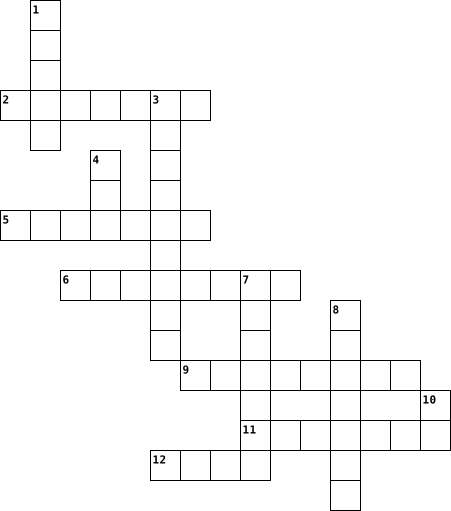
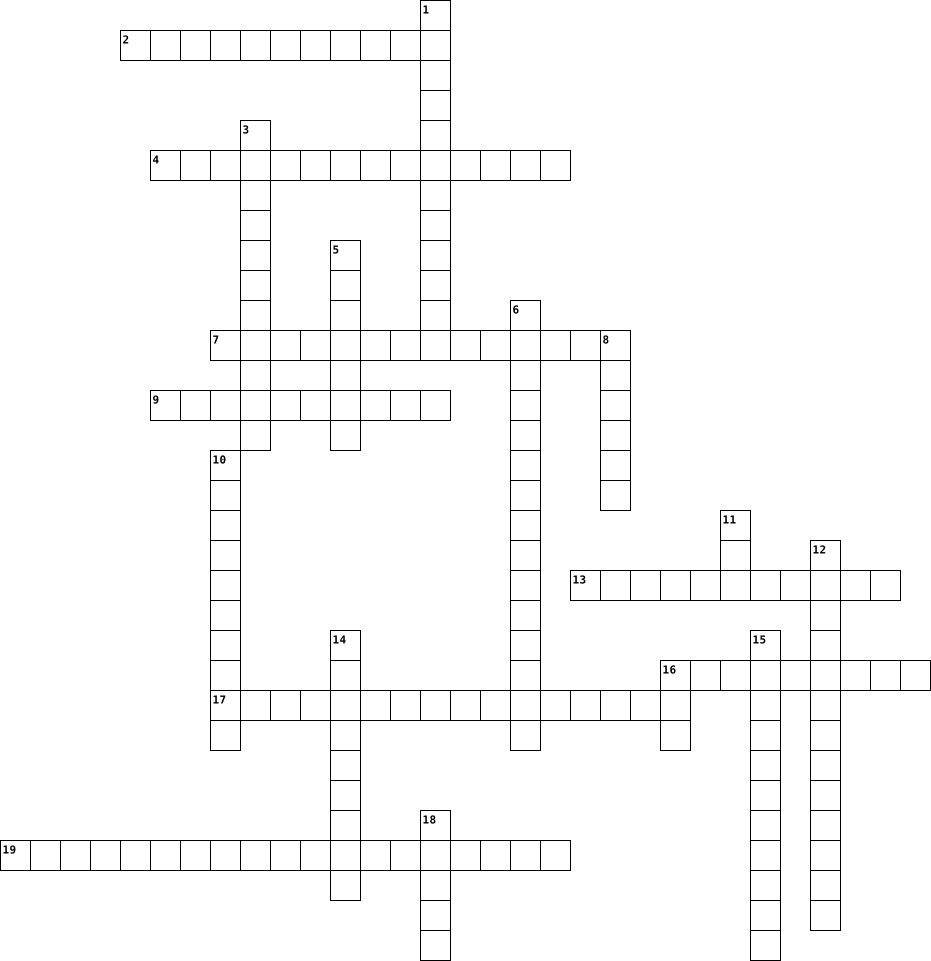
Across
- biology
- history
- computer
- politics
- science
- math
Down
- music
- geography
- art
- English
- Chinese
- pe
12 Clues: pe • art • math • music • biology • history • English • Chinese • science • computer • politics • geography
Class Schedule 2024-12-05

Across
- theatre 9:50
- math 8:17
- algebra 2:05
- science 5:23
- geometry 10:40
- government 6:00
- choir 1:45
- spanish 10:35
- gym 3:25
Down
- history 9:30
- physics 4:00
- yearbook 11:21
- biology 12:15
- chemistry 1:20
- art 7:05
- business 7:12
- geography 6:55
- economics 12:08
- english 8:10
19 Clues: art 7:05 • gym 3:25 • math 8:17 • choir 1:45 • history 9:30 • physics 4:00 • theatre 9:50 • algebra 2:05 • science 5:23 • english 8:10 • biology 12:15 • business 7:12 • spanish 10:35 • yearbook 11:21 • chemistry 1:20 • geography 6:55 • geometry 10:40 • economics 12:08 • government 6:00
Biology 2021-03-02

Across
- an organism that cannot produce its own food, instead taking nutrition from other sources of organic carbon, mainly plant or animal matter
- species' average population size in a particular habitat
- an organism that can produce its own food using light, water, carbon dioxide, or other chemicals
- all food chains in a ecosystem
- are adapted and often highly specialized for hunting, with acute senses such as vision, hearing, or smell
- the animals predators eat
- linear sequence of organisms through which nutrients and energy pass as one organism eats another
- the way in which an organism fits into an ecological community
- a relationship between individuals of two species in which one species obtains food or other benefits from the other without either harming or benefiting the latter
- the ecological interaction between two or more species where each species has a net benefit
Down
- the process in which light energy is converted to chemical energy in the form of sugars
- living organism that shapes its environment
- are vulnerable to endangerment in the near future
- animals that may go extinct soon
- place were organism makes its home
- the regions of the surface, atmosphere, and hydrosphere of the earth occupied by living organisms
- basic membrane-bound unit that contains the fundamental molecules of life and of which all living things are composed
- factors non-living chemical and physical parts of the environment that affect living organisms and the functioning of ecosystems
- the branch of biology that deals with the relations of organisms to one another and to their physical surroundings
- the relationship between different species in which one organism lives on or in the other organism and benefits from it by causing some harm
20 Clues: the animals predators eat • all food chains in a ecosystem • animals that may go extinct soon • place were organism makes its home • living organism that shapes its environment • are vulnerable to endangerment in the near future • species' average population size in a particular habitat • the way in which an organism fits into an ecological community • ...
Biology 2021-03-05

Across
- becoming better suited to your environment
- burning
- remaining waste after food
- a chemical element with the atomic number of six
- to be able to be maintained at a certain level
- populations of different species
- a plant that grows on another plant - especially one that it not parasitic
- physical rather than biological
- Predator, highest in the food chain
- without organized physical structure
- the condition that separates plants and animals from inorganic matter
- respiration without oxygen
- the process of intake and release of air to produce energy
Down
- the process of felling trees on a large scale
- a single species
- the process of decay
- the process in which organisms use sunlight to produce nutrients
- a repeating and often entrapping process.
- an even distribution
- a substance produced by a living organism that acts as a catalyst
- decayed material which stores carbon
- Level, each of the several hierarchical levels in an ecosystem
- the dependence of two or more things on each other
- the invisible gaseous substance surrounding the earth
- single organisms
25 Clues: burning • a single species • single organisms • the process of decay • an even distribution • remaining waste after food • respiration without oxygen • physical rather than biological • populations of different species • Predator, highest in the food chain • decayed material which stores carbon • without organized physical structure • a repeating and often entrapping process. • ...
Biology 2021-03-19

Across
- enlarged segment of cartilage that supports epiogottis
- exchange of air between our lungs and the environment
- this and alveoli are where oxygen in the lungs is exchanged with carbon dioxide in the blood
- location where gas exchange occurs between outer environment and blood
- makes up 21% of air
- organs that contain air passage to alveoli
- adheres lungs to chest wall
- connects pharynx to lungs, lined with mucus
- movement of particles from high concentration to low concentration
- provides increased SA in the nasal passages for warming of air
- tiny, hair-like structures that catch and get rid of foreign debris
- gases move between blood and cells
- large flat muscle that separates the chest cavity from the abdominal cavity
Down
- contains ciliated and mucus-producing cells but arent supported by rings of cartilage
- flap of cartilage that lies behind the tongue
- makes up 2% of air
- volume of air that is inhaled and exhaled when breathing (at rest)
- volume of air that remains in the lungs after full exhalation
- gases move between lungs and blood
- muscular tube connecting to nose and mouth through larynx and esophagus
- carry air into the lungs and branch into branchioles
- makes up 78% of the air
- an enzyme found in red blood cells that speeds up carbon dioxide reaction
23 Clues: makes up 2% of air • makes up 21% of air • makes up 78% of the air • adheres lungs to chest wall • gases move between lungs and blood • gases move between blood and cells • organs that contain air passage to alveoli • connects pharynx to lungs, lined with mucus • flap of cartilage that lies behind the tongue • carry air into the lungs and branch into branchioles • ...
Biology 2020-12-18

Across
- type of reproduction that does not involve the fusion of gametes or change in the number of chromosomes
- microbe that can cause damage in a host
- specific characteristic of an organism
- adenine (A), guanine (G), thymine (T), and cytosine (C).
- any individual entity that embodies the properties of life
- Some cells in multicellular organisms are modified to carry out a particular function
- detectable change in the physical or chemical structure of an organism's internal or external environment.
- specific characteristic of an organism
- simple cells that do not have a true nucleus or other cell organelles.
- proteins that act as biological catalysts
- self-regulating process by which biological systems tend to maintain stability while adjusting to conditions that are optimal for survival.
- an organic compound made up of small molecules called amino acids
- carrier of genetic information.
Down
- Cell division gives rise to genetically identical cells in which the total number of chromosomes is maintained.
- response within a system
- the process of creating proteins from an mRNA template.
- type of cell division that reduces the number of chromosomes in the parent cell by half and produces four gamete cells
- infectious agent that replicates only inside the living cells of an organism.
- designed to target bacterial infections within the body
- ribonucleic acid
- The presence of two identical alleles at a particular gene locus
- refers to the observable physical properties of an organism
- induce cell growth, division and death; control membrane channels or regulate cell binding
- the process by which the information in a strand of DNA is copied into a new molecule of messenger RNA (mRNA)
- smallest unit of life
- microscopic, single-celled organisms that thrive in diverse environments
- biological agents that elicit an immune response to a specific antigen derived from an infectious disease-causing pathogen
- having or consisting of many cells.
- regulate physiology and behavior
- consist of strands of DNA wrapped in a double helix around a core of proteins
30 Clues: ribonucleic acid • smallest unit of life • response within a system • carrier of genetic information. • regulate physiology and behavior • having or consisting of many cells. • specific characteristic of an organism • specific characteristic of an organism • microbe that can cause damage in a host • proteins that act as biological catalysts • ...
Biology 2021-01-08

Across
- synthesizes primers for rna.
- pairs with cytosine.
- replicated dna that goes in the 3’ to 5’ direction.
- combine to form proteins.
- pairs with guanine.
- the building block of DNA and RNA.
- protein is synthesized from the mRNA.
- Synthesizes dna from nucleotides.
- Converts the information from dna into proteins.
- helps decode mRNA.
Down
- keeps dna strands unraveled during replication.
- synthesizes rna.
- pairs with thymine.
- Replicated dna that goes in the 5’ to 3’ direction.
- Holds together amino acids.
- Breaks the hydrogen bonds between the dna bases.
- forms peptide bonds.
- three dna nucleotides.
- joins together Okazaki fragments.
- winds and unwinds coiled up dna.
- DNA’s I formation is copied into mRNA.
- also pairs with adenine.
- Pairs with adenine.
- carries the messages from the decoded dna.
- Stores information for cells to follow.
25 Clues: synthesizes rna. • helps decode mRNA. • pairs with thymine. • pairs with guanine. • Pairs with adenine. • pairs with cytosine. • forms peptide bonds. • three dna nucleotides. • also pairs with adenine. • combine to form proteins. • Holds together amino acids. • synthesizes primers for rna. • winds and unwinds coiled up dna. • joins together Okazaki fragments. • ...
Biology 2020-10-29

Across
- Compound that contains carbon
- All have the same chemical formula( C H O)
- Substances enzyme can work with
- Organic substance. fats, oils, waxes. BBB= 3 fatty acids and glycerol
- To split using water
- Type of bond that hooks Amino acides toghether to form protiens
- A mixture of water and nondissolved particles
- acids Organic substance. BBB= nucleotide, ex. DNA and RNA
- Sugar+phophate+base, BBB for nucleic acids, in DNA
- Double stranded and double helix, A-T;C-G
- Compound that has no carbon, expception=CO2
- Mixture where particles are uniformly spread out
- Protein that speeds up reactions, recyclable
- Organic substance. many functions, BBB= amino acids
Down
- One sugar, C6,H12,O6
- 2 monosachrides combined, aka 2 sugars
- Large compounds, polymers, are constructed from smaller compounds
- Many monossacharides combined, whole string of sugar
- Single stranded, NO thymine, A-U;C-G
- Organic substance. simple sugar, BBB= monosachride
- Two or more elements combined but not chemically
21 Clues: One sugar, C6,H12,O6 • To split using water • Compound that contains carbon • Substances enzyme can work with • Single stranded, NO thymine, A-U;C-G • 2 monosachrides combined, aka 2 sugars • Double stranded and double helix, A-T;C-G • All have the same chemical formula( C H O) • Compound that has no carbon, expception=CO2 • Protein that speeds up reactions, recyclable • ...
BIOLOGY 2020-02-12

Across
- the chemical breakdown of sugar
- transformation, A change from one form of energy to another
- Light-absorbing molecule
- macromolecule containing hydrogen and nitrogen
- A molecule containing carbon that is a part of or produced by living systems.
- the ability to do work
- control center of the cell
- compound used by cells to store and release energy
- requires oxygen
- unable to go through
- the study of how energy flows through living organisms
- the cell's metabolic process
- cycle citric acid cycle
- power house of the cell
- The changing of organic matter into other chemical forms such as fuels.
- the temperature at which a substance freezes
- An organelle found in plant and algae cells where photosynthesis occurs
- a very large organic molecule composed of many small molecules
- nucleic acid that is capable of replication and determining the structure of a cell
- a class of nutrients that builds body tissues and supplies energy and is made of amino acids
- Nicotinamide adenine dinucleotide phosphate
- saclike photosynthetic membranes found in chloroplasts
Down
- A long molecule consisting of many similar or identical monomers linked together.
- A green pigment found in the chloroplasts of plants
- a catalyst produced by a living organism that brings on a specific biochemical reaction
- the measurement of the amount of solute within a volume of a solvent
- A simple compound whose molecules can join together to form polymers
- A group of membrane‐bound organelles commonly found in photosynthetic organisms and mainly responsible for the synthesis and storage of food.
- stack of thylakoids
- A difference in the concentration of a substance across a distance.
- the diffusion of water
- the measurement of how hot or cold something is
- a biochemical pathway of photosynthesis in which carbon dioxide is converted into glucose using ATP
- process doesn't require oxygen.
- a group of atoms bonded together
- fluid portion of the chloroplast outside of the thylakoids
- made of carbon hydrogen and and oxygen atoms and is a major source of energy for the human body lipids, energy rich organic compounds such as fats oils and waxes
- the process plants use to create energy in the form of sugar
- a metabolic process that makes alcohol
- process that requires oxygen
- the heat required to raise the temperature of the unit mass of a given substance by a given amount (usually one degree).
- the study of energy transformations
- hydrogen ion concentration
43 Clues: requires oxygen • stack of thylakoids • unable to go through • the ability to do work • the diffusion of water • power house of the cell • Light-absorbing molecule • control center of the cell • hydrogen ion concentration • the cell's metabolic process • cycle citric acid cycle • process that requires oxygen • the chemical breakdown of sugar • a group of atoms bonded together • ...
Biology 2021-04-14
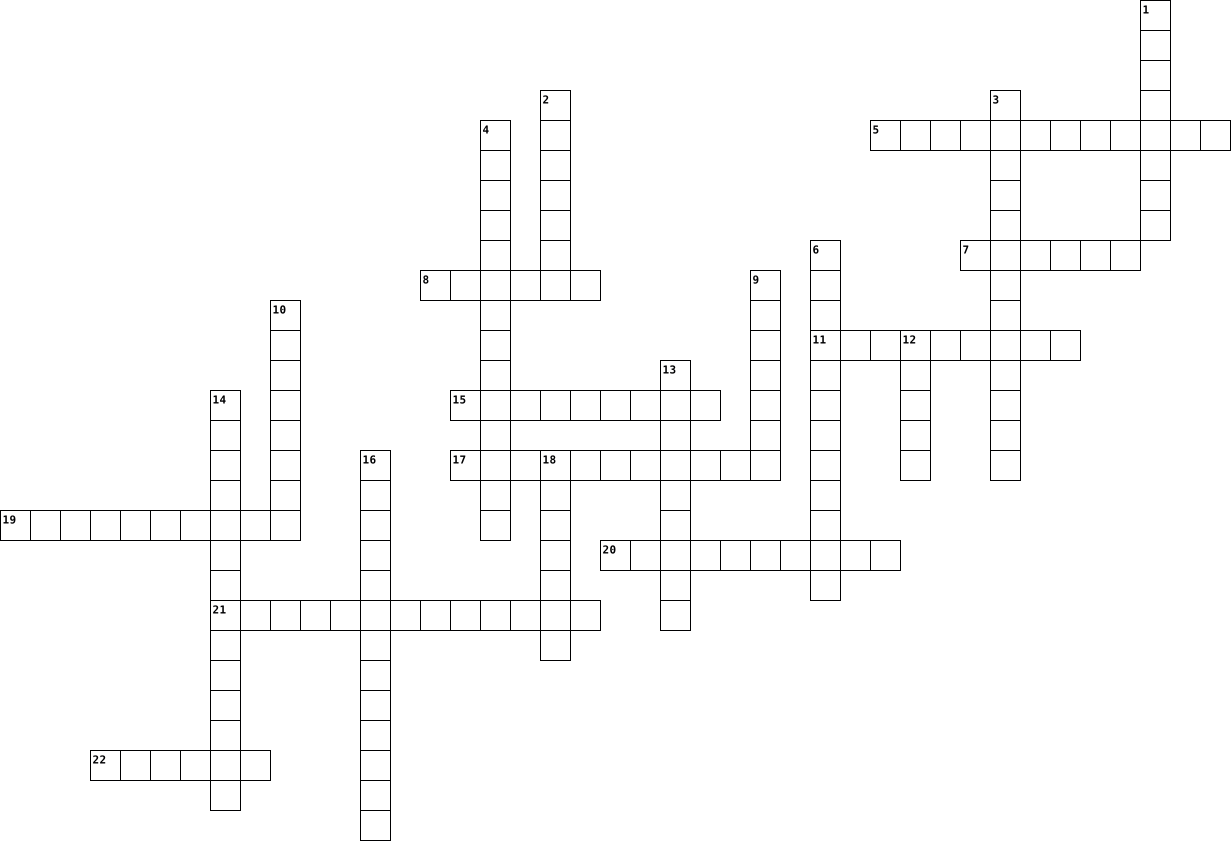
Across
- Organic molecules such as proteins, nucleic acids, carbohydrates, and fats.
- A specialized protein that catalyzes (speeds up) the chemical reactions of a cell.
- Polysaccharide made up of a chain of glucose (monosaccharide) molecules
- The reactant , molecule upon which an enzyme acts
- lipid that is a solid at room temperature
- A carbon based molecule made by living things.
- process of adding a water molecule in the protein molecule to break it apart into amino acids. Now the body can use the amino acids to make its own proteins.
- modify (enzymes) especially by heat, acid, alkali, or ultraviolet radiation so that all of the original properties are removed or diminished.(doesn't match the active site any longer)
- are macromolecules that always contain carbon, hydrogen, and oxygen.
- molecule consisting of CH and a little O includes: fats, oils and waxes. monomer is a glycerol and three fatty acids.
Down
- enzyme that speeds up chemical reaction by lowering the activation energy
- a word used to describe a molecule that contains the element
- the strength of a solution.
- A polymer of 3 or more monosaccharides, formed by dehydration reactions.
- A lipid made of a phosphate group and two fatty acids; Consists of a hydrophilic polar head and two hydrophobic non-polar tails; forms cell membranes.
- A carbohydrate (C₆H₁₂O₆) produced by photosynthesis. It is the form of sugar that is used by the body for energy.
- a chemical substance formed as a result of a chemical reaction
- When something ends in -ose it is said to be a?
- a chemical substance that is present at the start of a chemical reaction (will be broken down)
- The building block of carbohydrate; a single sugar.
- Primary source of energy
- A smaller unit that is the BUILDING BLOCK of a polymer.
22 Clues: Primary source of energy • the strength of a solution. • lipid that is a solid at room temperature • A carbon based molecule made by living things. • When something ends in -ose it is said to be a? • The reactant , molecule upon which an enzyme acts • The building block of carbohydrate; a single sugar. • A smaller unit that is the BUILDING BLOCK of a polymer. • ...
Biology 2021-05-13
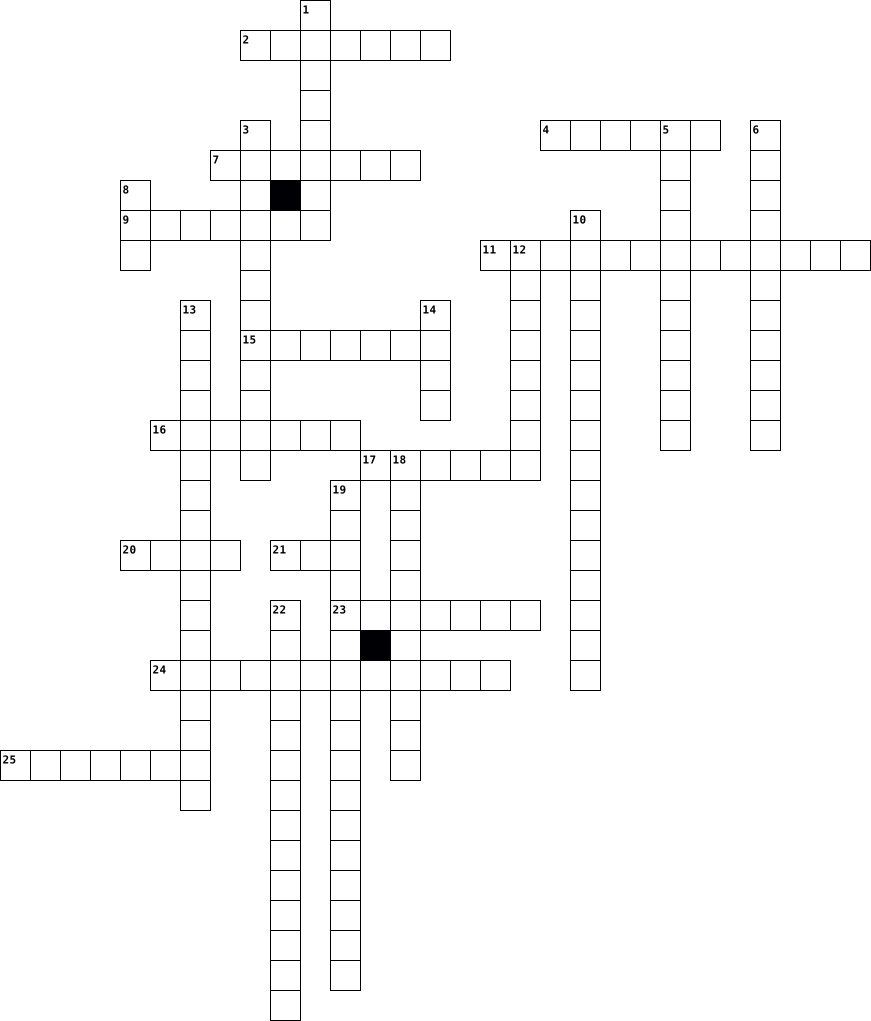
Across
- tube reinforced by rings of cartilage which connects the throat to the lungs.
- an action that is performed without conscious thought as a response to a stimulus.
- tiny air sacs of the lungs which allow for rapid gaseous exchange.
- the fundamental units of the brain and nervous system, the cells responsible for receiving sensory input, sending motor commands to our muscles, and relaying the electrical signals at every step in between.
- small gland that makes steroid hormones and adrenaline.
- also called neuronal junction, the site of transmission of electric nerve impulses between two nerve cells or between a neuron and a muscle/gland.
- a part of the cell responsible for growth and reproduction
- organ part of the lymphatic system that makes white blood cells which are part of the immune system and help fight infection.
- part of a neuron that carries a nerve impulse away from the cell body.
- complex of nerve tissues that controls the activities of the body.
- a hormone produced in the pancreas which regulates the amount of glucose in the blood.
- coordinates both the autonomic nervous system and the activity of the pituitary, controlling body temperature, thirst, hunger, and other homeostatic systems, and involved in sleep and emotional activity.
- chemical substances that act like messenger molecules in the body.
Down
- a large gland behind the stomach which secretes the hormones called insulin and glucagon into the blood.
- a tubular structure carrying blood through the tissue and organs; vein, artery and capillary.
- the condition in which all acting influences are balanced or cancelled by equal opposing forces, resulting in a stable system.
- primary endocrine organ that secretes hormones, such as melatonin.
- the nervous system outside the brain and spinal cord.
- occurs to maintain homeostasis – change in the rate of hormone production to oppose the effects of the hormone.
- a disease in which the body’s ability to produce or respond to the hormone insulin is impaired, resulting in poor control of glucose levels in the blood.
- the organs and tissues involved in circulation blood through the body
- membrane a thin membrane enclosing the cytoplasm of a cell
- metabolic equilibrium maintained by biological mechanisms
- the organs involved in respiration; transporting oxygen and removing carbon dioxide; nose, trachea, bronchi, lungs, etc.
- small pea-sized gland that plays a major role in regulating vital body functions and general wellbeing.
25 Clues: the nervous system outside the brain and spinal cord. • small gland that makes steroid hormones and adrenaline. • metabolic equilibrium maintained by biological mechanisms • membrane a thin membrane enclosing the cytoplasm of a cell • a part of the cell responsible for growth and reproduction • primary endocrine organ that secretes hormones, such as melatonin. • ...
BIOLOGY 2021-10-30

Across
- sinonimi i sheqernave
- qelizat e trurit
- obezitet
- lejon hyrjen e ajrit ne qelizat e gjethes
- njesia me e vogel qe nderton proteinen
- hapesira ne pjesen e bremdshme te qelizes bimore
- organela te vogla ne gjethe
- karbohidrat lipid celuloze
Down
- procesi i formimit te ushqimit tek bimet
- jane lipide
- nje organizem brenda gjethes
- qeliza mesazhere
- perdoren per riparuar vetveten
- sinonimi i yndyrnave
- qelizor- mur i jashtem i qelizes
- depozitimi i yndyrnave ne gjak shkakton..
- semundja e shkaktuar nga mungesa e proteinave
- depozitimi i yndynave ne gjak
- nje pjese e jashtme qe mbulon si citoplazme qelizat e gjethes
- lende kimike qe nevojiten ne sasi te vogla
20 Clues: obezitet • jane lipide • qeliza mesazhere • qelizat e trurit • sinonimi i yndyrnave • sinonimi i sheqernave • karbohidrat lipid celuloze • organela te vogla ne gjethe • nje organizem brenda gjethes • depozitimi i yndynave ne gjak • perdoren per riparuar vetveten • qelizor- mur i jashtem i qelizes • njesia me e vogel qe nderton proteinen • procesi i formimit te ushqimit tek bimet • ...
BIOLOGY 2021-10-30
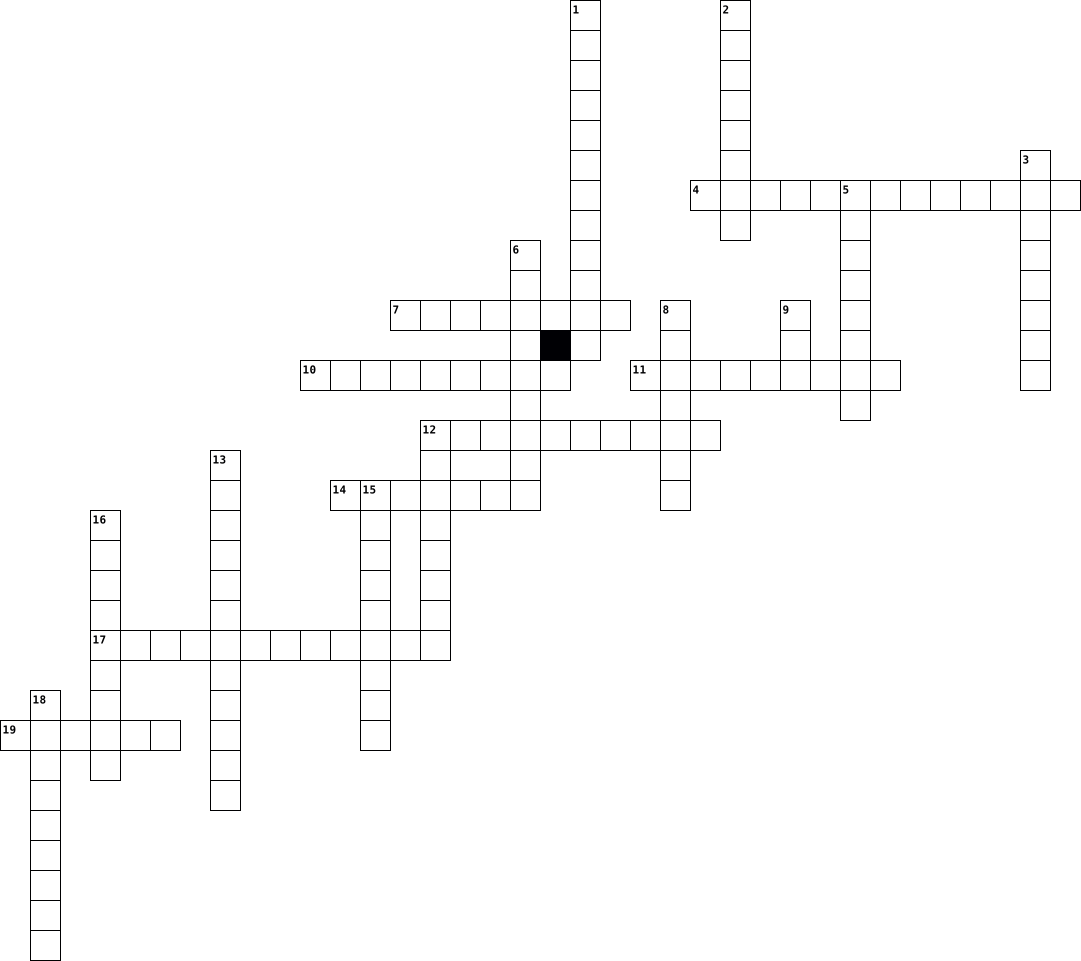
Across
- sinonimi i sheqernave
- qelizat e trurit
- obezitet
- lejon hyrjen e ajrit ne qelizat e gjethes
- njesia me e vogel qe nderton proteinen
- hapesira ne pjesen e bremdshme te qelizes bimore
- organela te vogla ne gjethe
- karbohidrat lipid celuloze
Down
- procesi i formimit te ushqimit tek bimet
- jane lipide
- nje organizem brenda gjethes
- qeliza mesazhere
- perdoren per riparuar vetveten
- sinonimi i yndyrnave
- qelizor- mur i jashtem i qelizes
- depozitimi i yndyrnave ne gjak shkakton..
- semundja e shkaktuar nga mungesa e proteinave
- depozitimi i yndynave ne gjak
- nje pjese e jashtme qe mbulon si citoplazme qelizat e gjethes
- lende kimike qe nevojiten ne sasi te vogla
20 Clues: obezitet • jane lipide • qeliza mesazhere • qelizat e trurit • sinonimi i yndyrnave • sinonimi i sheqernave • karbohidrat lipid celuloze • organela te vogla ne gjethe • nje organizem brenda gjethes • depozitimi i yndynave ne gjak • perdoren per riparuar vetveten • qelizor- mur i jashtem i qelizes • njesia me e vogel qe nderton proteinen • procesi i formimit te ushqimit tek bimet • ...
Biology 2021-05-17
Across
- complex series of chemical reactions
- use light energy to make molecules for the next stage of photosynthesis
- convert light energy into chemical energy
- flattened membrane sac inside the chloroplast
- organelles that conduct photosynthesis
- does not require oxygen
- second of two major stages in photosynthesis
- breaks down organic compounds
Down
- where pyruvic acid goes when there's no oxygen
- pigment located in membranes within the chloroplasts of plants and algae
- where the reactions of glycolysis take place
- does not occur during the calvin cycle
- colorless fluid surrounding the grana
- a pair of curved cells that surround a stoma
- two hydrogens and oxygen
- occurs naturally in Earth's atmosphere as a trace gas
- organisms undergo cellular respiration
- organism that cannot produce its own food
- product of cellular respiration (1)
- essential electron donor in all organisms
20 Clues: does not require oxygen • two hydrogens and oxygen • breaks down organic compounds • product of cellular respiration (1) • complex series of chemical reactions • colorless fluid surrounding the grana • does not occur during the calvin cycle • organelles that conduct photosynthesis • organisms undergo cellular respiration • convert light energy into chemical energy • ...
Biology 2021-09-13

Across
- VARIABLE, The variable manipulated by the experimenter
- VARIABLE, The variable responding to the manipulated variable
- THEORY, an explanation of some part of the natural world that has been thoroughly tested and is supported by a significant amount of evidence from observations and experiments
- Organisms that eat only organisms other than plants.
- GROUP, the group in an experiment that experiences no manipulation (does not contain the independent variable)
- The maintenance of stable internal conditions.
- LAW, a description of a natural relationship or principle, often expressed in mathematical terms, and supported by a significant amount of evidence
- REPRODUCTION, Process by which a single organism produces genetically identical offspring
- The sum total of all processes in an organism that convert energy and matter from outside sources and use that energy and matter to sustain the organism's life functions
- OBSERVATIONS, Observations involving numbers, such as counting or measuring.
- The study of life. the Greek word bios means "life", and -logy means "study of".
- OBSERVATIONS, Observations that are not easily counted or measured, such as color or texture
- Organisms that only eat plants.
- REPRODUCTION, Process by which two parents produce genetically different offspring.
- organisms that are able to make their own food
- living creatures that are too small to see with the naked eye
- Organisms that eat both plants and other organisms.
- The smallest units of an organism considered alive
- organism that lacks an internal mechanism for regulating body heat
- an abrupt and marked change in the DNA of an organism compared to that of its parents
Down
- ELECTRON MICROSCOPE, a microscope that transmits a beam of electrons through a thinly sliced specimen
- Logical interpretation based on prior knowledge, experience, or evidence
- The process by which physical and biological characteristics are transmitted from the parent (parents) to the offspring.
- SYSTEM OF UNITS, the metric system (SI), which is the most widely used system of measurement in science
- The idea that long ago, very simple life forms spontaneously appeared through chemical reactions
- the sum total of all processes in an organism that break down chemicals to produce energy and simple chemical building blocks
- The process by which green plants and some other organisms use the energy of sunlight and simple chemicals to produce their own food.
- The sum total of all processes in an organism that use energy and simple chemical building blocks to produce large chemicals and structures necessary for life.
- GROUP, The group in an experiment that is manipulated
- a suggested, testable answer to a well-defined scientific question or a possible, testable explanation for observations
- The Latin prefix uni means "one", so unicellular means "single-celled"
- ELECTRON MICROSCOPE, a microscope that passes a beam of electrons over the surface of a specimen
- Organisms that is internally warmed by heat-generating metabolic process.
- organisms that depend on other organisms for their food
- The collected body of data from experiments and observations.
- LIGHT MICROSCOPE, a microscope that shines light through a specimen using two lenses to magnify an image
- A factor that changes in an experiment
- Special structures that allow living organisms to sense the conditions of their internal or external environment.
38 Clues: Organisms that only eat plants. • A factor that changes in an experiment • The maintenance of stable internal conditions. • organisms that are able to make their own food • The smallest units of an organism considered alive • Organisms that eat both plants and other organisms. • Organisms that eat only organisms other than plants. • ...
Biology 2021-09-15

Across
- process by which plants and some other organisms use light energy to convert water and carbon dioxide into oxygen and high-energy carbohydrates such as sugars and starches
- organelle that is the site of ATP (energy) production
- An organelle found only in plant and algae cell, site of photosynthesis occurs
- The fluid of the chloroplast surrounding the thylakoid membrane; involved in the synthesis of organic molecules from carbon dioxide and water
- second stage of cellular respiration, in which pyruvic acid is broken down into carbon dioxide, takes place in the mitochondria, produces ATP and NADH
- stacks of thylakoids
- Respiration that does not require oxygen
- A flattened membrane sac inside the chloroplast, used to convert light energy into chemical energy, site of the light reactions
- main energy source that cells use for most of their work, made up of adenosine, ribose and 3 phosphates
- Process that releases energy by breaking down glucose and other food molecules in the presence of oxygen, takes place in plants and animals, happens in 3 processes
Down
- uses the high-energy electrons from the Krebs cycle to convert ADP into ATP, takes place in the mitochondria, produces the most ATP of any of the processes (34 ATP)
- a lower-energy molecule that can be converted into ATP by the addition of a phosphate group, made up of adenosine, ribose and 2 phosphates
- one of the carrier molecules that transfers high-energy electrons from chlorophyll to other molecules
- reactions of photosynthesis in which energy from ATP and NADPH is used to build high-energy compounds such as sugars, also called dark reaction, no light needed, creates NADP+ and ADP, takes place in the stroma
- Green pigment in plants that absorbs light energy used to carry out photosynthesis
- Process by which cells release energy in the absence of oxygen
- the breakdown of glucose by enzymes, releasing energy and pyruvate, 1st step in cellular respiration, takes place in the cytoplasm
- electron carrier that provides high-energy electrons for photosynthesis
- Respiration that requires oxygen
- reactions reactions of photosynthesis that use energy from light to produce ATP and NADPH, also produces O2
20 Clues: stacks of thylakoids • Respiration that requires oxygen • Respiration that does not require oxygen • organelle that is the site of ATP (energy) production • Process by which cells release energy in the absence of oxygen • electron carrier that provides high-energy electrons for photosynthesis • ...
Biology 2021-11-22

Across
- Proses pembentukan atau penyusunan molekul sederhana menjadi molekul yang lebih kompleks
- Bagian tumbuhan di atas tanah atau perkecambahan yang di tandai dengan bagian hipokotil terangkat ke permukaan tanah
- pembuangan hasil sisa metabolisme yang tidak dibutuhkan oleh tubuh
- Tempat berlangsungnya proses fotosintesis
- Suatu keadaan bertambah panjangnya suatu tanaman karena kekurangan cahaya dalam pertumbuhannya
- Pucuk lembaga/calon batang
- Daun biji/daun lembaga
- enzim amilase yang terdapat di dalam ludah
- Senyawa berenergi tinggi yang diperoleh melalu proses respirasi seluler
- salah satu enzim yang terdapat dalam ragi
- Memecah Zat pati (karbohidrat) menjadi gula (glukosa) dan bekerja di luar sel
- Tempat berlangsungnya proses glikolisis
- Dalam glikolisis dihasilkan 4 molekul ATP untuk setiap satu molekul glukosa. Dua molekul ATP diantarnya digunakan dalam reaksi
- Media tanam bagi tanaman dan menyediakan makanan, unsur hara dan garam mineral
Down
- Keseluruhan proses kimiawi suatu organisme atau makhluk hidup
- Bahan dasar respirasi
- Orang tubuh yang menghasilkan enzim pencernaan
- Senyawa kimia hasil dari metabolisme glukosa yang disebut glikosisis
- bagian tubuh yang berfungsi memisahkan produk bagian metabolisme dalam darah
- Senyawa organik yang mempercepat suatu reaksi kimia
- Contoh dari penguraiaan molekul kompleks menjadi molekul sederhana
- Proses penyerapan air oleh biji sehingga beratnya bertambah
- Zat yang kaya akan energi dan berfungsi sebagai energi utama untuk proses metabolisme tubuh
- Proses perombakan atau penguraiaan senyawa atau molekul yang kompleks menjadi senyawa atau molekul sederhana
- Salah satu faktor reaksi fotosintesis
- Bahasa Yunani “metabole”
- Enzim pencernaan yang bertugas untuk memecah protein dalam makanan menjadi asam amino
- Enzim dalam darah yang berfungsi membekukan darah
- tumbuhan
- Apa itu H2O
30 Clues: tumbuhan • Apa itu H2O • Bahan dasar respirasi • Daun biji/daun lembaga • Bahasa Yunani “metabole” • Pucuk lembaga/calon batang • Salah satu faktor reaksi fotosintesis • Tempat berlangsungnya proses glikolisis • Tempat berlangsungnya proses fotosintesis • salah satu enzim yang terdapat dalam ragi • enzim amilase yang terdapat di dalam ludah • ...
Biology 2021-11-22

Across
- Pada kecambah yang batang dan akarnya tumbuh tinggi, dan terletak di sebelah bawah kotiledon
- tumbuhan dapat tumbuh sangat cepat ditempat gelap
- auksin berasal dari bahasa Yunani yaitu
- Peluruhan daun pada musim kering disebabkan oleh hormon
- Hormon yang berfungsi untuk memperbesar ukuran buah
- Hasil individu baru dari pembuahan gamet betina oleh gamet jantan dan mengalami pertumbuhan pada reproduksi seksual
- Tidak berkecambah atau gagal berkecambah. Biji tersebut sebenarnya hidup walaupun diletakan di tempat yang dianggap telah memenuhi persyaratan bagi suatu perkecambahan
- Hormon yang berfungsi untuk menunda pengguguran daun, bunga dan buah
- Pelarut dan media untuk terjadianya reaksi metabolisme tubuh
- Organel tempat berlangsungnya reaksi respirasi aerob di dalam sel makhluk hidup adalah
- Akar tanaman dapat terus tumbuh ke bawah tanah karena adanya pengaruh hormon
- Hormon yang berfungsi untuk meransang pembentukan bunga dan buah
- Unsur yang dibutuhkan oleh tumbuhan untuk bahan fotosintesis dan didapat dari tanah yaitu
- Pada proses perkecambahan, embrio memanfaatkan cadangan makanan yang ada dalam biji. Cadangan makanan di simpan pada bagian
- Makakan/mineral yang sangat diperlukan untuk pertumbuhan
- Kultur tanaman yang dilakukan dengan cara menggunakan larutan nutrisi yang disemprotkan pada akar tanaman yaitu
Down
- pada biji monokotil terdapat suatu struktur yang berfungsi untuk melindungi plumula yaitu
- Proses meresapnya air ke dalam biji yang dapat memicu perkecambahan disebut dengan
- salah satu faktor eksternal pertumbuhan tanaman
- Pertumbuhan tanaman yang menuju arah datangnya cahaya
- Tunas tumbuhan dapat bengkok keatas karena pengaruh hormon
- Hormon yang berfungsi untuk memperlambat gugurnya daun
- Terbentuknya buah sebelum penyerbukan dan buah tanpa biji dapat diusahakan dengan penambahan
- Faktor dalam atau internal yang mempengaruhi pertumbuhan dan perkembangan pada tumbuhan
- Penebalan dinding rahim dipengaruhi oleh hormon
- Salah satu contoh reaksi anabolisme adalah
- Calon akar
- alat untuk mengukur kecepatan pertumbuhan tanaman
- Contoh hormon sitokinin yaitu
- Unsur yang didapat dari udara untuk pertumbuhan serta perkembangan tumbuhan hijau yaitu
30 Clues: Calon akar • Contoh hormon sitokinin yaitu • auksin berasal dari bahasa Yunani yaitu • Salah satu contoh reaksi anabolisme adalah • salah satu faktor eksternal pertumbuhan tanaman • Penebalan dinding rahim dipengaruhi oleh hormon • tumbuhan dapat tumbuh sangat cepat ditempat gelap • alat untuk mengukur kecepatan pertumbuhan tanaman • ...
Biology 2021-12-06

Across
- Process of breaking down nitrogen containing chemicals from dead organic matter
- way water moves between being water vapour to liquid water then back to water vapour
- Natural or industrial process that causes free nitrogen
- action of clearing a wide area of trees
- way oxygen moves in arious forms through nature
- process that occurs when gases in Earth's atmosphere trap the Sun's heat
- gradual increase in the overall temperature of the earth's atmosphere generally attributed to the greenhouse effect caused by increased levels of carbon dioxide, CFCs, and other pollutants
- second layer of the atmosphere as you go upward
- the series of processes by which nitrogen and its compounds are interconverted in the environment and in living organisms, including nitrogen fixation and decomposition
- envelope of gases surrounding the earth or another planet
- Process of breathing
- process of burning something
Down
- Another word for rain
- layer in the earth's stratosphere at an altitude of about 10 km (6.2 miles) containing a high concentration of ozone, which absorbs most of the ultraviolet radiation reaching the earth from the sun
- state or process of rotting
- gradual process that occurs when the impact of water or wind detaches and removes soil particles, causing the soil to deteriorate
- oxidation of ammonium salts to nitrites
- type of biogeochemical cycle in which the reservoir is the air or the oceans (via evaporation)
- biogeochemical cycle where various carbon compounds are interchanged among the various layers of the earth, namely, the biosphere, geosphere, pedosphere, hydrosphere and atmosphere
- Process used by plants to make energy in form of sugar
- Exhalation of water vapour through stomata
- loss of nitrogen from soil
- process of Formation of water vapours by heating
- A cycle which comprises the weathering of an existing rock, followed by the erosion of minerals, their transport and deposition, then burial
- Conversion of vapour or gas to liquid
25 Clues: Process of breathing • Another word for rain • loss of nitrogen from soil • state or process of rotting • process of burning something • Conversion of vapour or gas to liquid • oxidation of ammonium salts to nitrites • action of clearing a wide area of trees • Exhalation of water vapour through stomata • way oxygen moves in arious forms through nature • ...
Biology 2021-12-03

Across
- The animal that is attacked.
- A non living thing
- One type of living thing
- Various species that interact
- To attack another species for food.
- A living thing
- First organisms that appear in an area
- The replacement of one community by another in one location.
- Greatest factor in keeping the size of population.
- The concentration of a species in one area.
- Entering a new area after leaving an old one.
Down
- A group of organisms that are one species
- An interaction that is beneficial to both species.
- An interaction where one organism gets a benefit and hurts the other.
- Leaving your own area to go to another one.
- An interaction when one species gains a benefit and doesn't hurt the other.
- A branch of biology that deals with the relationships of organisms.
- An interaction between two species
- A community of species that interact with their environment
- Fighting over resources.
- An organism that eats another animal
21 Clues: A living thing • A non living thing • One type of living thing • Fighting over resources. • The animal that is attacked. • Various species that interact • An interaction between two species • To attack another species for food. • An organism that eats another animal • First organisms that appear in an area • A group of organisms that are one species • ...
Biology 2021-12-01

Across
- a glass shelter for plants that absorbs sunlight
- humus is present in ___
- many or alot
- exhalation of water vapour through stomata
- a layer in the stratopshere
- what plants do at night
- variety of plants and animal life in the world or a particular area
- a must
- _______ and component
- a substance that pollutes something
Down
- animals living on the ground are known as _____ animals
- explosion
- a component
- the biosphere is made of lithosphere, hydrosphere, and _______
- what organisms do in the soil to dead matter
- and inorganic substance that occurs naturally
- living things
- when something is floating that thing is _____
- what we breathe
- something we need to do work
20 Clues: a must • explosion • a component • many or alot • living things • what we breathe • _______ and component • humus is present in ___ • what plants do at night • a layer in the stratopshere • something we need to do work • a substance that pollutes something • exhalation of water vapour through stomata • what organisms do in the soil to dead matter • ...
Biology 2021-11-15
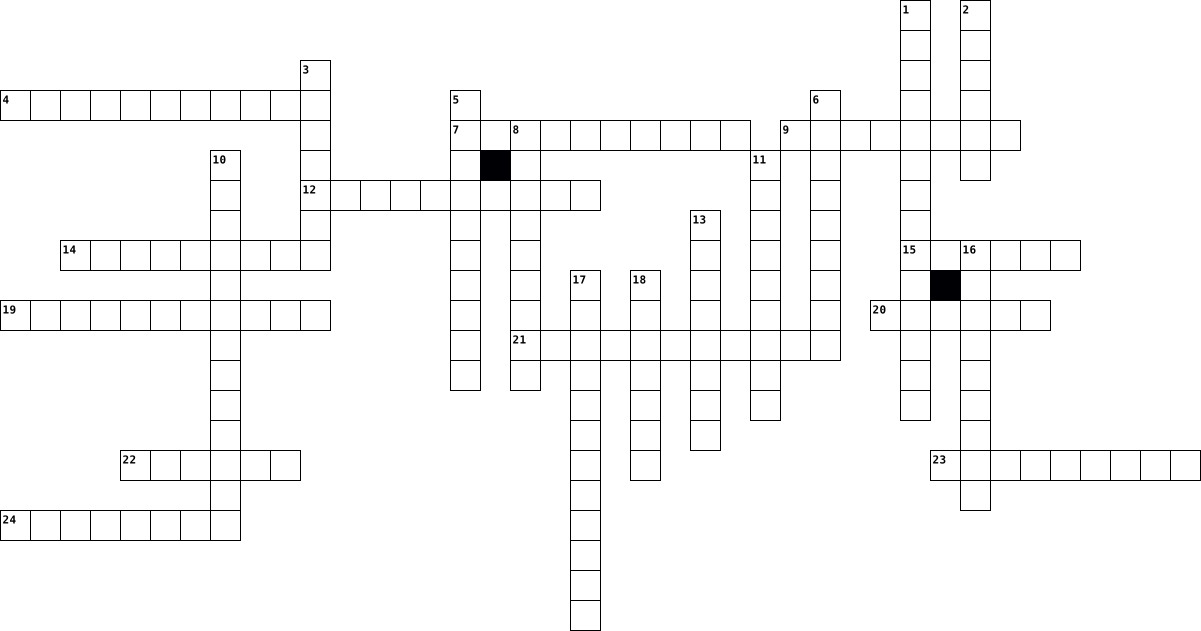
Across
- An apparent link or relationship between two factors.
- The hormone produced during 'fight or flight' moments.
- Nerve cells carrying signals from the central nervous system to the effector organs.
- The end product of anaerobic respiration in animals.
- Used to destroy a tumour, but can also cause mutations and cancer in healthy organisms.
- An abnormal growth of cells.
- The regulation of the internal conditions of a cell or organism to maintain optimum conditions.
- A rapid automatic response to stimuli
- Breaking down glucose in an exothermic reaction, releasing energy for the cells.
- An abnormal growth of cells, contained in one area and do not invade other tissues.
- Respiration in the absence of Oxygen.
- Carbohydrate store of glucose in animals.
Down
- The process by which plants make food from Carbon Dioxide and water.
- The common name for a malignant tumour
- A hormone involved in controlling blood sugar levels (decreasing sugar levels)
- Substance that increases the risk of developing cancer.
- A hormone controlling the menstrual cycle.
- Nerve cells that detect stimuli.
- Methods of preventing pregnancy
- The release of an egg (ovum) from the ovary.
- A hormone involved in controlling blood sugar levels (increasing sugar levels)
- An abnormal growth of cells, invading neighbouring tissues and spreading to the blood and other parts of the body.
- A hormone controlling the production of sperm.
- changes in the external or internal environment.
24 Clues: An abnormal growth of cells. • Methods of preventing pregnancy • Nerve cells that detect stimuli. • A rapid automatic response to stimuli • Respiration in the absence of Oxygen. • The common name for a malignant tumour • Carbohydrate store of glucose in animals. • A hormone controlling the menstrual cycle. • The release of an egg (ovum) from the ovary. • ...
Biology 2022-01-27

Across
- A cell which contains only one set of chromosomes
- Phagocytic white blood cells are also known as.....
- A disease that is transferred by mosquitos.
- What is the first step in protein synthesis?
- Are protein molecules which can be defined as biological catalysts
- An ..... is a particular variety of a gene.
- The smaller molecules from which DNA and RNA molecules are made
- Are involved in seed germination and controlling stem elongation
- A type of allele that when present on its own will not affect the individual
- The removal of these unwanted products of metabolism
- Tiny air sacs that function as basic respiratory units
Down
- is the control of body temperature
- These are finger-like extensions of the cell surface membrane
- Plant cells are linked to neighbouring cells by means of fine strands of cytoplasm called......
- Any agent that causes cancer is called.....
- The parts of a flower that are often conspicuously colored
- An organ used for breathing
- The ends of chromosomes are ‘sealed’ by structures called .....
- Is a long molecule that contains our unique genetic code
- The type of nuclear division that halves the chromosome number
- Involves the engulfing of the material by the cell surface membrane to form a small sac
21 Clues: An organ used for breathing • is the control of body temperature • Any agent that causes cancer is called..... • A disease that is transferred by mosquitos. • An ..... is a particular variety of a gene. • What is the first step in protein synthesis? • A cell which contains only one set of chromosomes • Phagocytic white blood cells are also known as..... • ...
BIOLOGY 2022-02-19

Across
- Mukus dan partikel asing yang terperangkap dalam trakea
- Pertukaran udara antara paru-paru dan lingkungan eksternal
- Volume udara sisa dalam paru-paru setelah melakukan ekspirasi maksimal
- Penyempitan saluran napas yang bersifat sementara akibat hipersensitivitas terhadap rangsangan tertentu
- Virus penyebab gangguan sistem pernapasan
- salah satu faktor frekuensi pernapasan
- organ saluran pernapasan
- Penyakit infeksi oleh bakteri (Corynebacterium diphtheriae)
- Jumlah total udara yang dapat ditampung dalam paru-paru (Kapasitas ...)
- pernapasan yang dilakukan saat kondisi istirahat
- Jumlah udara yang yang dapat dikeluarkan setelah inspirasi maksimal (Kapasitas ...)
- Mekanisme pernapasan yang dilakukan oleh otot interkostal disebut...
Down
- selaput pembungkus paru-paru
- Kombinasi hemoglobin dan oksigen
- Alat pengukur laju respirasi
- Alat yang digunakan untuk melakukan pernapasan buatan
- Otot yang berkontraksi dan bergerak mendatar ketika menarik napas
- Saluran yang memanjang dari laring sampai bronkus
- Mekanisme pernapasan yang dilakukan oleh otot diafragma disebut
- Proses memasukkan udara ke paru paru
20 Clues: organ saluran pernapasan • selaput pembungkus paru-paru • Alat pengukur laju respirasi • Kombinasi hemoglobin dan oksigen • Proses memasukkan udara ke paru paru • salah satu faktor frekuensi pernapasan • Virus penyebab gangguan sistem pernapasan • pernapasan yang dilakukan saat kondisi istirahat • Saluran yang memanjang dari laring sampai bronkus • ...
Biology 2022-01-05

Across
- Disaccharide made of one glucose and one galactose, found in milk.
- Sugar, salt, starch, and cellulose are polar, that’s why they create hydrogen bonds with water molecules, won’t repel water and are known as being …………….
- Oils, fats, and greasy substances are nonpolar, that’s why they repel water and are ……………….
- When a fatty acid is ……………… it has no double bonds and has straight chains.
- The process of water vapor turning back into liquid water.
- Cells from which all other cells with specialized functions are generated.
- A tendency in which water molecules attract each other and stick together.
- Has a 3 dimensional shape and consists of amino acids joined by peptide bonds.
- Range of pH and temperature in which it works with maximum activity.
- Complex carbohydrate/polysaccharide which consists of 3000 or more glucose units, for example: it helps in making cell walls and fibers for plants.
Down
- transition of a cell from one cell type to another and it involves a switch from one pattern of gene expression to another.
- An idea stating that organic substances can only be synthesized by organisms.
- When a lipid is …………………. it possesses hydrophobic and hydrophilic parts.
- An organic compound that is insoluble in water, including fats, waxes, oils, hormones etc.
- A type of lipid synthesized by animal cells in order to become an essential component of animal cell membranes.
- Disaccharide, which is produced by the breakdown starches during digestion, consists of two molecules of glucose connected via an α-linkage.
- The smallest unit that can live on its own and that makes up all living organisms and the tissues of the body. Formed by cell membrane and contains genetic material and cytoplasm.
- The reacting molecule that binds to the enzyme.
- Complex cellular mechanism that is used to translate genetic codes into chains of amino acids.
- Chemical or enzymatic reaction involved in the breakdown of organic or non-organic materials such as proteins, sugars, fatty acids, etc.
20 Clues: The reacting molecule that binds to the enzyme. • The process of water vapor turning back into liquid water. • Disaccharide made of one glucose and one galactose, found in milk. • Range of pH and temperature in which it works with maximum activity. • When a lipid is …………………. it possesses hydrophobic and hydrophilic parts. • ...
biology 2022-04-01

Across
- controls what enters and leaves the cell
- community of living things plus their non-living surroundings
- has no nucleus
- different forms of a gene
- carries out photosynthesis in plant cells
- organisms that are best adapted for their environment have the highest fitness and will therfore survive, reproduce, and pass on their good genes to their offspring
- make up cell membranes and store extra energy
- occurs in chloroplasts
- diagrams that show evolutionary relationships between organisms
- segment of dna that codes for a particular protein
- has nucleus
- all of the same species living in a particular area
Down
- all of the living things (all species) living in a particular area
- make protein
- allele combination for a gene/trait
- females choose males based on "sexy" or "showy" phenotypes or behaviors
- energy sources like sugars and starches
- acids carry genetic info
- extra protection around plant and bacteria cells
- contains dna in eukaryotes
- break down glucose to release energy for the cell to use
- building blocks of body or enzymes that speed up reactions in body
- if two species share lots of physical similarities, they are probably related
- occurs in mitochondria
24 Clues: has nucleus • make protein • has no nucleus • occurs in chloroplasts • occurs in mitochondria • acids carry genetic info • different forms of a gene • contains dna in eukaryotes • allele combination for a gene/trait • energy sources like sugars and starches • controls what enters and leaves the cell • carries out photosynthesis in plant cells • ...
Biology 2021-09-28

Across
- + CO2 + H2O : Reactants of cellular respiration
- : Transformation of glucose to into ATP
- : Smallest unit of living things
- to stimuli : Fight or flight response
- : Locate at the right side of the arrow
- : The high energy form of adenosine triphosphate
- : Living things that use the sun’s energy directly to make glucose
- : The used form form of adenosine triphosphate
- : Genetic material changes over time through within a species
- Organization : Cell -> Tissue -> Organ -> Organ system -> Organism
- : Maintaining Balance
- : passing DNA through the family
- Fusion : Gravity condolences nuclei and forms atoms to collide and produce the origin of energy
- : Cell division
Down
- + oxygen : Products of Photosynthesis
- : Living thighs that cannot use the sun's energy directly
- : Plants rely on animals and animals rely on plants
- + CO2 + H2O : Reactants of cellular respiration
- : Located at the left side of the arrow
- : A process in which plants use the sun to make glucose
- : The process that transforms glucose into ATP
21 Clues: : Cell division • : Maintaining Balance • : Smallest unit of living things • : passing DNA through the family • + oxygen : Products of Photosynthesis • to stimuli : Fight or flight response • : Transformation of glucose to into ATP • : Located at the left side of the arrow • : Locate at the right side of the arrow • : The used form form of adenosine triphosphate • ...
biology 2021-09-29

Across
- individual animal, plant, or single-celled life form.
- the basic unit of a chemical element.
- particle smaller than an atom
- group of organs that work together to perform a complex function
- substance that has a molecular structure consisting chiefly or entirely of a large number of similar units bonded together,
- the smallest structural and functional unit of an organism
- the inhabitants of a particular town, area, or country.
- regions of the surface, atmosphere, and hydrosphere of the earth
- of a large group of organic compounds occurring in foods and living tissues
- assets in excess of liabilities; able to pay one's debts.
Down
- group of people living in the same place or having a particular characteristic in common.
- molecule that can be bonded to other identical molecules to form a polymer.
- of atoms,
- chemical substance that neutralizes alkalis, dissolves some metals, and turns litmus red; typically, a corrosive or sour-tasting liquid of this kind.
- a group of atoms bonded together
- a molecule containing a very large
- consisting of or deriving from living matter.
- sweet crystalline substance obtained from various plants
- group of cells that have similar structure and that function together as a unit.
- action or fact of forming a united whole.
- part of an organism that is typically self-contained
- biological community of interacting organisms and their physical environment.
- lowest part or edge of something, especially the part on which it rests or is supported.
- action or process of adhering to a surface or object.
- to or derived from living matter.
25 Clues: of atoms, • particle smaller than an atom • a group of atoms bonded together • to or derived from living matter. • a molecule containing a very large • the basic unit of a chemical element. • action or fact of forming a united whole. • consisting of or deriving from living matter. • part of an organism that is typically self-contained • ...
Biology 2021-09-17

Across
- - the specific reactants that an enzyme acts on
- - a substance that decrease activation energy and increase the rate of chemical reaction.
- - a physical quantity that expresses hot and cold.
- - bacteria, viruses, or other microorganisms that can cause diseases.
- - the amount of energy that needs to absorb for a chemical reaction to start.
- - a group of two or more atoms.
- - The measure of the amount of a sub-component in a solution.
- - lasting attractions between atoms, ions or molecules that enables the formation of chemical compounds.
- - an enzyme in saliva that breaks down starch into simple sugars.
Down
- - the processor the body that provide resistance to infection and toxin.
- - can restore previous situation.
- - substances that are formed as the result of chemical reactions.
- - cell of the immune system and also known as leukocyte.
- - living things.
- - substances that take part in and undergo change during the reactions.
- - reactants are converted to one or more different products.
- - polysaccharide that is made and stored by plants.
- - The reversible chemical reaction. However, no net changes in the amount of reactants and products occurs.
- - a measure of how acidic or basic water is.
- - act as biological catalyst for chemical reactions in living things.
- - monomers that make proteins.
21 Clues: - living things. • - monomers that make proteins. • - a group of two or more atoms. • - can restore previous situation. • - a measure of how acidic or basic water is. • - the specific reactants that an enzyme acts on • - a physical quantity that expresses hot and cold. • - polysaccharide that is made and stored by plants. • ...
Biology 2021-10-01

Across
- bond cause water molecules to attract to each other
- natural sugar in milk
- monosaccharides
- no charge
- polysaccharide
- compounds made from carbon,hydrogen
- molecule made from two hydrogen atoms and 1 oxygen atom
- make up everything
- negatively charged
- acid macromolecules contains hydrogen,oxygen,nitrogen,carbon,phosphorus
Down
- positively charge
- containing or made from milk
- substance made from atoms
- reaction changes one set of chemicals
- most common element
- element carbon,hydrogen,oxygen
- proteins,lipids,carbohydrates,
- atom or molecule with negative/positive charge
- structure nucleus+protons+neutrons
- chemical reactions need them to speed up
20 Clues: no charge • polysaccharide • monosaccharides • positively charge • make up everything • negatively charged • most common element • natural sugar in milk • substance made from atoms • containing or made from milk • element carbon,hydrogen,oxygen • proteins,lipids,carbohydrates, • structure nucleus+protons+neutrons • compounds made from carbon,hydrogen • reaction changes one set of chemicals • ...
biology 2022-04-18

Across
- making a copy
- an area classified according to the species that live in that location
- sustenance the body needs for energy
- complex amino acids
- fats, waxes, oils
- converting light from the sun to chemical energy
- plant vascular tissue that lets in water
- abiotic and biotic factors functioning together as a unit
- information-carrying molecules in cells
- the ability to do work
- sugar molecules
Down
- any organism that cant produce its own food
- plants in a food web
- an interacting group of various species in a common location
- the regions of the surface and atmosphere of the earth occupied by living organisms
- a group of the same species living within a given area
- plant vascular system that conducts food
- proteins that help speed up metabolism
- a chemical compound found in all living organisms
- something that occupies space and has mass
20 Clues: making a copy • sugar molecules • fats, waxes, oils • complex amino acids • plants in a food web • the ability to do work • sustenance the body needs for energy • proteins that help speed up metabolism • information-carrying molecules in cells • plant vascular system that conducts food • plant vascular tissue that lets in water • something that occupies space and has mass • ...
Biology 2017-04-07
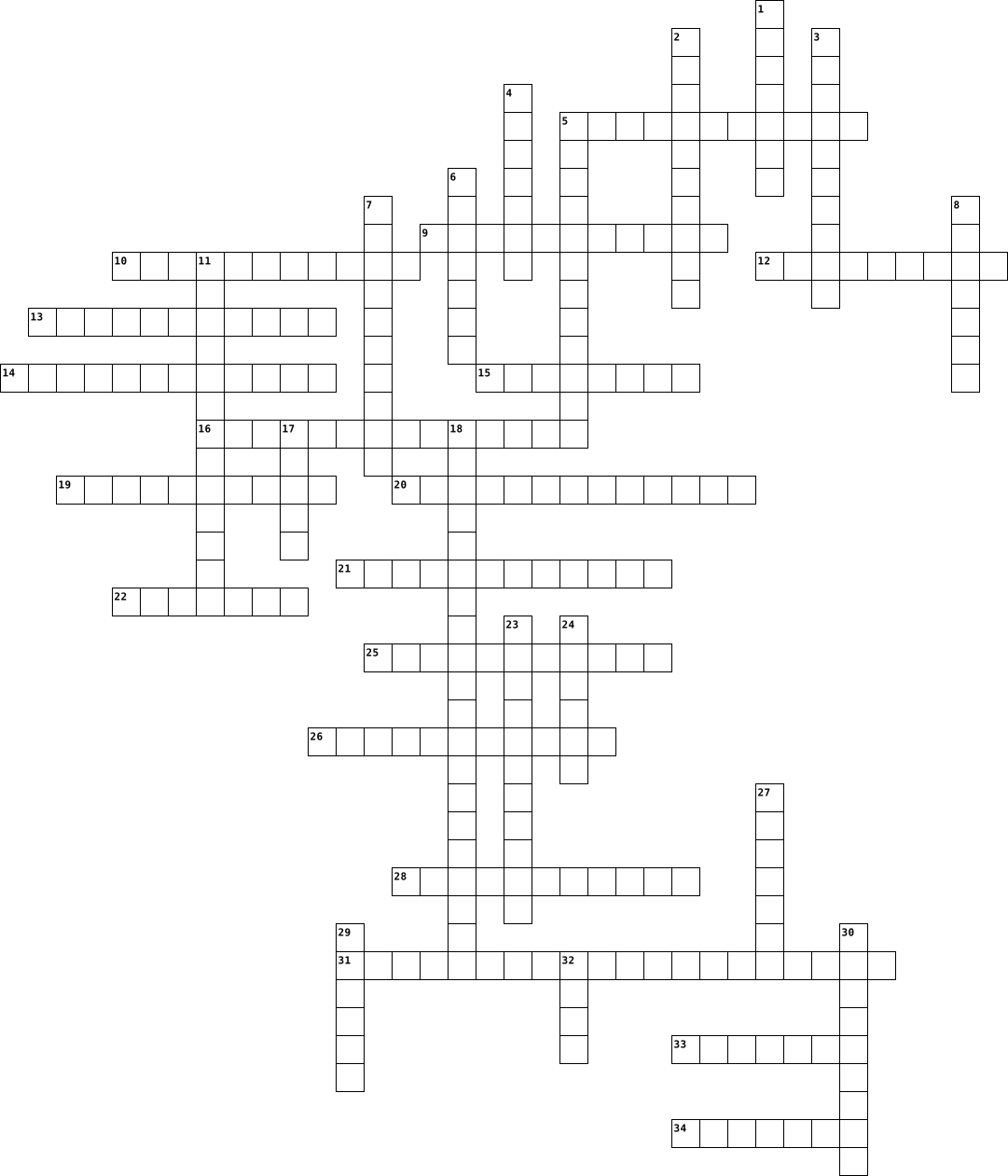
Across
- "water loving"
- to exit or move out
- single celled
- gets energy from the sun
- to move in
- makes up the cell membrane
- binds with Guanine
- 23rd pair of chromosomes and determines gender
- a species in an area
- multi celled
- a measurement
- an organism's ability to survive and reproduce
- needs to eat to get energy
- "water fearing"
- a description
- written by Charles Darwin
- what is made from the enzyme and substrate binding together
- binds with Thymine in DNA and Uracil in RNA
Down
- binds with Adenine
- both traits are either dominant or recessive
- where the substrate binds with the enzyme
- half
- one trait is dominant and one is recessive
- egg and sperm
- a trait that improves an organism's ability to survive and reproduce
- double
- came up with the theory that species change over time
- making identical copies
- the membrane allows only certain things to go into and out of the cell
- maintaining stable internal conditions
- binds with Adenine in RNA
- binds with Cytosine
- Helix is formed by DNA
- when the enzyme becomes deformed
- instructions for making proteins
35 Clues: half • double • to move in • multi celled • egg and sperm • single celled • a measurement • a description • "water loving" • "water fearing" • binds with Adenine • binds with Guanine • to exit or move out • binds with Cytosine • a species in an area • Helix is formed by DNA • making identical copies • gets energy from the sun • binds with Adenine in RNA • written by Charles Darwin • ...
Biology 2017-12-13
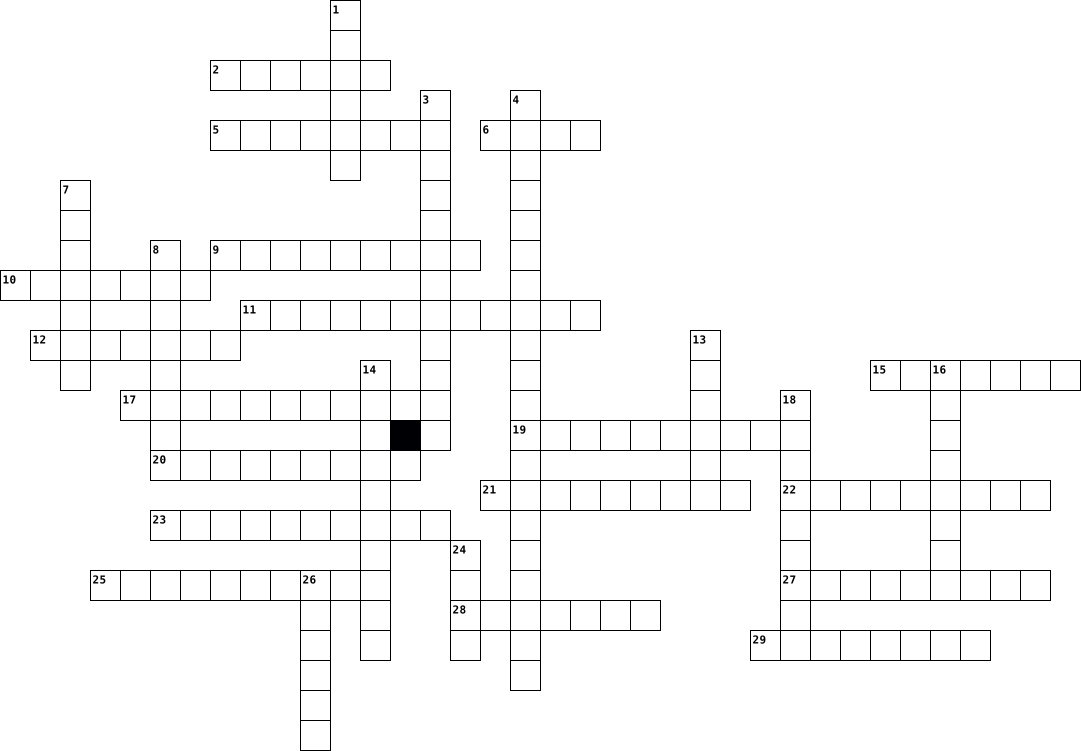
Across
- All the organisms DNA
- Image of all chromosomes in the nucleus
- The building blocks of life
- Programmed cell death
- The division of the nucleus which creates two identical cells
- Forms a protein structure that divides the genetic material in a cell
- A cell containing 46 chromosomes
- A cell containing 23 chromosomes
- Any cell of a living organism that is not a reproductive cell
- Long section of DNA
- Any organism with cells with membrane-bound organelles
- The second stage of cell division
- The final phase of cell division
- A unicellular organism that does not have membrane bound organelles
- The phase of a cell's cycle in which a typical cell spends most of its life
- A specialised structure within a living cell
- The control centre of the cell
- It gives the cell its shape, structure and protection
Down
- An organism's reproductive cells
- The sequence of cells that develop into eggs and sperm
- The carrier of genetic information
- A molecule made up of polymers of amino acids joined together by peptide bonds
- Synthesises proteins and have a flat round structure
- A parent cell making four non identical haploid cells
- The part of a chromosome that links sister chromatids
- The first phase of mitosis
- Cyclinder shaped organelle, involved in cell division
- A segment of DNA that codes for a particular protein
- Different versions of a cells gene
29 Clues: Long section of DNA • All the organisms DNA • Programmed cell death • The first phase of mitosis • The building blocks of life • The control centre of the cell • An organism's reproductive cells • A cell containing 46 chromosomes • A cell containing 23 chromosomes • The final phase of cell division • The second stage of cell division • The carrier of genetic information • ...
Biology 2017-12-13
Across
- A cell containing 23 chromosomes
- Cyclinder shaped organelle, involved in cell division
- A unicellular organism that does not have membrane bound organelles
- Image of all chromosomes in the nucleus
- A molecule made up of polymers of amino acids joined together by peptide bonds
- The part of a chromosome that links sister chromatids
- Synthesises proteins and have a flat round structure
- The carrier of genetic information
- Different versions of a cells gene
- The building blocks of life
- A cell containing 46 chromosomes
- The second stage of cell division
- The control centre of the cell
- A specialised structure within a living cell
- A parent cell making four non identical haploid cells
Down
- The first phase of mitosis
- Long section of DNA
- Any organism with cells with membrane-bound organelles
- Any cell of a living organism that is not a reproductive cell
- The phase of a cell's cycle in which a typical cell spends most of its life
- Forms a protein structure that divides the genetic material in a cell
- Programmed cell death
- An organism's reproductive cells
- The sequence of cells that develop into eggs and sperm
- The final phase of cell division
- The division of the nucleus which creates two identical cells
- It gives the cell its shape, structure and protection
- A segment of DNA that codes for a particular protein
- All the organisms DNA
29 Clues: Long section of DNA • Programmed cell death • All the organisms DNA • The first phase of mitosis • The building blocks of life • The control centre of the cell • A cell containing 23 chromosomes • An organism's reproductive cells • The final phase of cell division • A cell containing 46 chromosomes • The second stage of cell division • The carrier of genetic information • ...
Biology 2017-12-13
Across
- A unicelluar organism with no membrane-bound organelles
- A molecule consisting of polymers of amino acid joined together by peptide bonds
- A specialised structure within a living cell
- Long section of DNA
- control centre of the cell
- Forms a protein structure that divides the genetic material in a cell
- All the Organisms DNA
- The carrier of genetic information
- A parent cell making four non-identical haploid cells
- Any cell of a living organism that isn't a reproductive cell
- building blocks of life
- An organisms reproductive cell
- The final phase of cell division
- It gives a cell shape, sturcture and protection
- Image of all chromosones in the nucleus
Down
- Any organism with membrane-bound organelles
- Cylinder shaped organelle, involved in cell division
- The part of a chromosome that links sister chromatid
- The phase of a cell's cycle in which a typical cell spends the majority of its life
- controlled cell death
- synthesises proteins and have a flat round structure
- A cell that contains 46 chromosones
- Are instructions of how to build a protein
- The first phase of mitosis
- A cell that contains 23 chromosones
- The sequence of cells that develop into eggs and sperm
- division of the nucleus, which creates two identical cells
- Different versions of the cells gene
- The second stage of cell division
29 Clues: Long section of DNA • controlled cell death • All the Organisms DNA • building blocks of life • The first phase of mitosis • control centre of the cell • An organisms reproductive cell • The final phase of cell division • The second stage of cell division • The carrier of genetic information • A cell that contains 46 chromosones • A cell that contains 23 chromosones • ...
Biology 2017-12-13
Across
- It gives a cell shape, sturcture and protection
- Image of all chromosones in the nucleus
- A unicelluar organism with no membrane-bound organelles
- The carrier of genetic information
- The part of a chromosome that links sister chromatid
- A molecule consisting of polymers of amino acid joined together by peptide bonds
- Any cell of a living organism that isn't a reproductive cell
- The second stage of cell division
- A cell that contains 23 chromosones
- The first phase of mitosis
- All the Organisms DNA
- Cylinder shaped organelle, involved in cell division
- Any organism with membrane-bound organelles
- control centre of the cell
- Different versions of the cells gene
Down
- The final phase of cell division
- Forms a protein structure that divides the genetic material in a cell
- An organisms reproductive cell
- controlled cell death
- The sequence of cells that develop into eggs and sperm
- The phase of a cell's cycle in which a typical cell spends the majority of its life
- Long section of DNA
- A specialised structure within a living cell
- A cell that contains 46 chromosones
- A parent cell making four non-identical haploid cells
- division of the nucleus, which creates two identical cells
- building blocks of life
- Are instructions of how to build a protein
- synthesises proteins and have a flat round structure
29 Clues: Long section of DNA • controlled cell death • All the Organisms DNA • building blocks of life • The first phase of mitosis • control centre of the cell • An organisms reproductive cell • The final phase of cell division • The second stage of cell division • The carrier of genetic information • A cell that contains 46 chromosones • A cell that contains 23 chromosones • ...
Biology 2017-12-13
Across
- Forms a protein structure that divides the genetic material in a cell
- All the organisms DNA
- The part of a chromosome that links sister chromatids
- A cell containing 46 chromosomes
- Programmed cell death
- A unicellular organism that does not have membrane bound organelles
- Any organism with cells with membrane-bound organelles
- Image of all chromosomes in the nucleus
- The final phase of cell division
- The control centre of the cell
- A parent cell making four non identical haploid cells
- The sequence of cells that develop into eggs and sperm
- It gives the cell its shape, structure and protection
- Long section of DNA
- Cyclinder shaped organelle, involved in cell division
- The building blocks of life
- A segment of DNA that codes for a particular protein
Down
- The division of the nucleus which creates two identical cells
- The phase of a cell's cycle in which a typical cell spends most of its life
- A cell containing 23 chromosomes
- An organism's reproductive cells
- The carrier of genetic information
- A specialised structure within a living cell
- The second stage of cell division
- Any cell of a living organism that is not a reproductive cell
- Synthesises proteins and have a flat round structure
- The first phase of mitosis
- A molecule made up of polymers of amino acids joined together by peptide bonds
- Different versions of a cells gene
29 Clues: Long section of DNA • All the organisms DNA • Programmed cell death • The first phase of mitosis • The building blocks of life • The control centre of the cell • A cell containing 23 chromosomes • An organism's reproductive cells • A cell containing 46 chromosomes • The final phase of cell division • The second stage of cell division • The carrier of genetic information • ...
biology 2018-03-10

Across
- ___ initiates the DNA replication
- a virus infection which the host cell is not killed immediately
- an enzyme that converts RNA to DNA
- a protein shell for a virus
- a virus infection which the host cell is killed
- a virus that infects only bacteria
- a nonliving, infectious particle
- an outbreak of a disease that affects many people
- cuts DNA into fragments by recognizing specific nucleotide sequence
- a virus that contains single-stranded RNA and produces reverse transcriptase
- ___is the study and comparison of all the proteins
- an infectious agent
Down
- an organism that can live with or without oxygen
- bacteria produce clone through ___
- when the bacteriophage's DNA enters the bacteria cell and attach the bacterial chromosome
- organism that genome has been altered and has one or more genes from other organisms
- an electrical current used to separate a mixture of DNA fragments from each other
- a genetic structure in a cell that can replicate independently, typically a small circular DNA strand
- an end of a DNA double helix with unpaired nucleotides at one end
- method of increasing the quantity of DNA by adding primers and enzymes
- an infectious protein
- a technique that places a gene into a cell to correct a genetic disorder
- an infectious agent that can cause disease in plants
- use computer to organize and analyze biological data especially genetics
- a specialized cell with a thick, protective wall
25 Clues: an infectious agent • an infectious protein • a protein shell for a virus • a nonliving, infectious particle • ___ initiates the DNA replication • bacteria produce clone through ___ • an enzyme that converts RNA to DNA • a virus that infects only bacteria • a virus infection which the host cell is killed • an organism that can live with or without oxygen • ...
Biology 2018-02-24

Across
- which organelle contains the cell's DNA?
- Non membrane bounded organelles responsible for protein synthesis
- Which cellular process results in the formation of sugar from Carbon Dioxide?
- Traits that will be expressed
- Both alleles are the same
- Term used to refer to a cell that contains only a single set of chromosomes, and genes
- What is DNA organized as?
- Cellular energy is required to move substances from low to high concentration
- Every…………..has a characteristic number of chromosomes.
- organelles that capture the energy from sunlight and convert it into chemical energy in a process called photosynthesis.
- Organism or cell having 2 sets of chromosomes or twice the haploid number
- What do chromosomes contain?
- alleles are different
- a rigid layer of nonliving material that surrounds the cell of plants and some organisms.
- Movement of particles through a membrane from high to low concentration.
- The combination of alleles
- Filled with enzymes used to break down food into particle that can be used
Down
- RNA
- saclike structure that store materials, water salts proteins and carbs in the cytoplasm.
- Heat The amount of head necessary to raise the temp of 1 g of that molecule by 1* C.
- Power plant of the cell that uses energy released the breakdown food molecules to produce ATP
- Does not require energy to move substances from high to low concentration
- Has a membrane, a nucleus, and mitochondria.
- thin flexible barrier around a cell regulates what enter and leaves the cell
- Series of reactions that occur in the mitochondria during cellular respiration.
- Funtion of ribosomes?
- The plasma membranes of cells are composed of?
- DNA
- Function of ribosomes?
- The traits which an organism show (as opposed to what its genes code for)?
- Has no defined nucleus and a series of organelles that carry out functions of the cell
- A substance made of sugar that is common in the cell wall of many organisms.
- apparatus What is referred to as the packing, processing and shipping organelle?
- Which of the following proteins catalyze different reactions or processes?
- Diffusion of water through a selectively permeable membrane.
35 Clues: RNA • DNA • Funtion of ribosomes? • alleles are different • Function of ribosomes? • Both alleles are the same • What is DNA organized as? • The combination of alleles • What do chromosomes contain? • Traits that will be expressed • which organelle contains the cell's DNA? • Has a membrane, a nucleus, and mitochondria. • The plasma membranes of cells are composed of? • ...
Biology 2018-01-28

Across
- smallest structural and functional unit of an organism, consists of cytoplasm and a nucleus enclosed in a membrane
- the region of a chromosome to which the microtubules attach
- any organism whose cells have a cell nucleus and other organelles enclosed within membranes
- made of proteins and RNA, helps in protein synthesis
- the first phase of mitosis
- a sequence of DNA and RNA which codes for a molecule that has a function
- a unicellular organism that lacks a membrane-bound nucleus
- the final phase of cell division
- a type of cell division that results in two daughter cells each having the same number and kind of chromosomes as the parent nucleus
- multicellular organism that are differentiated or segregated that tin the usual processes of reproduction
- a thread-like structure of a nucleic acids and protein found in the nucleus of most living cells carrying genetic information in the form of genes
- having a single set of unpaired chromosomes
- any cell of a living organism other than the reproductive cells
- having two sets of chromosomes or double the haploid number of chromosomes in the germ cell
- a mature haploid male or female germ cell
Down
- organelle found in eukaryotic cells
- the death of cells which occurs as a normal and controlled part of an organism's growth or development
- thread-like chain of nucleotides carrying the genetic instructions used in the growth, development, function and reproduction of all known living organisms
- one of the several structures with specialized functions, suspended in the cytoplasm of a eukaryotic cell
- a test to identify and evaluate the size, shape and number of chromosomes in a sample of body cells
- the phase of the cell cycle in which a typical cell spends most of its life
- they form a protein structure that divides the genetic material in a cell
- a molecule composed of polymers of amino acids joined together by peptide bonds
- the complete set of genes or genetic material present in a cell or organism
- the third phase of mitosis
- each pair of minute cylindrical organelles near the nucleus in animal cells, involved in the development of spindle fibres in cell division
- a type of cell division that results in four cells each with half the number of chromosomes of the parent cell
- wall outside the membrane, has to protect and support the cell
- variant form of a gene
29 Clues: variant form of a gene • the first phase of mitosis • the third phase of mitosis • the final phase of cell division • organelle found in eukaryotic cells • a mature haploid male or female germ cell • having a single set of unpaired chromosomes • made of proteins and RNA, helps in protein synthesis • a unicellular organism that lacks a membrane-bound nucleus • ...
Biology 2018-01-26

Across
- one set of chromosomes
- the phase of the cell cycle in which a typical cell spends most of its life
- DNA
- any cell or organism that possesses a clearly defined nucleus
- humans have 23 pairs of these
- is a multicellular organism is the population of its bodily cells
- the third phase of mitosis
- any cell that makes up an organism, except for reproductive cell
- a small set of microtubles arranged in a specific way
- genetic material of an organism
- several structures with specialized functions
- a test to identify and evaluate the size, shape, and number of chromosomes in a sample of body cells
- has 2 rounds of division
- has 1 round of division
- 2 sets of chromosomes
Down
- the first phase of of mitosis
- made up of hundreds or thousands of smaller units called amino acids
- form a protein structure that divides the genetic material in a cell
- the point of attachment of the Kinetochore
- cell type is bacteria
- the cells used during sexual reproduction to produce a new individual organism or zygote
- the cell that contains DNA
- the final phase of cell division
- variant form of a gene
- surrounds the cell membrane
- the death of cells
- Provide structure for the body
- sequence of DNA
- a small round organelle involved in protein synthesis
29 Clues: DNA • sequence of DNA • the death of cells • cell type is bacteria • 2 sets of chromosomes • one set of chromosomes • variant form of a gene • has 1 round of division • has 2 rounds of division • the cell that contains DNA • the third phase of mitosis • surrounds the cell membrane • the first phase of of mitosis • humans have 23 pairs of these • Provide structure for the body • ...
Biology 2017-11-30

Across
- 10 Bio
- 18
- 16
- 13
- 3
- 20
- 12 bio
- 23
- 25
- 7 Bio
- 14
- 27
- 9 Bio
- 15
- 11 Bio
Down
- 8 Bio
- 24
- one
- 22
- 28
- 26
- 5
- 19
- two
- 4
- 6 Bio
- 17
- 21
28 Clues: 5 • 3 • 4 • 24 • 18 • 22 • 28 • 26 • 16 • 13 • 20 • 19 • 17 • 23 • 21 • 25 • 14 • 27 • 15 • one • two • 12 bio • 11 Bio • 10 Bio • 9 Bio • 8 Bio • 7 Bio • 6 Bio
Biology 2016-11-13

Across
- Study of relationship amongst organisms and the enviroment.
- Bodies consist of repeated segments.
- Population growth that stabilize indefinitely at the habitat' carrying capacity.
- The three groups of primates are prosimians, monkeys, and ___.
- Segmented animals with jointed appendages and a chitin-rich exoskeleton.
- Improves flexibility and increases the potential for specialized body parts.
- Unique stage in embryonic development of animals.
- Sessile form of cnidarin.
- Factors that limit population regardless of size.
- Unsegmented worms that molt periodically.
- Population growth that is proportional to the size of the population.
- Aquatic, sessile animals that are either asymmetrical or radially symmetrical.
Down
- Immediate ancestor of animals.
- Most diverse arthropods
- Factors that limit large population.
- density Measure of the number of individuals per unit area of habitat.
- Unsegmented animals that lack a coelom.
- Spiny-skinned marine animals.
- Free swimming form of cnidarin.
- vascular system Enables echinoderms to move, sense their environment, acquire food, exchange gases, and get rid of metabolic wastes.
- Helps determine the population size.
- Gastrula's first indentation form in the mouth.
22 Clues: Most diverse arthropods • Sessile form of cnidarin. • Spiny-skinned marine animals. • Immediate ancestor of animals. • Free swimming form of cnidarin. • Factors that limit large population. • Bodies consist of repeated segments. • Helps determine the population size. • Unsegmented animals that lack a coelom. • Unsegmented worms that molt periodically. • ...
BIOLOGY 2019-02-28

Across
- joint
- shape
- flat
- the single set of chromosomes found in gametes
- hair-like appendages on the cell membrane
- cartilage
- movement of particles or fluids out of the cell
- cells that receive and transmit signals (2 words)
- worms
- cells with ability to contract (2 words)
- the scientific study of living organisms
- a method of classifying organisms based on their evolutionary relationships
- "cell drinking" of liquids and dissolved substances
- life
- the central points where two chromatids are joined
- rabbit
- animal
- the site of protein synthesis
- passive movement of a substance down a concentration gradient and across a cell membrane that requires a carrier protein
- algae, protazoans
- passive movement of a substance from an area of high concentration
- plant
- uneven
- fish
- membrane bound sacs that contain hydrolytic enzymes
- passive movement of water through a semi-permeable membrane from the dilute solution to the more concentrated solution
- yeast, molds, mushrooms
- the concentration of particles in a fluid compared to the concentration of particlesin the cytosol of a cel
Down
- the clear, viscous fluid of the cell
- to eat
- flesh
- even
- bacteria
- "cell eating" of large particles
- bone
- stage of cell division when the cytoplasm pinches and divides
- process in which the chromatids of homologous chromosomes exchange strands of DNA (2 words)
- sheets of cell that cover or line other tissues ( 2 words)
- cells that surround themselves with a nonliving extracellular matrix (2 words)
- joining of an ovum and a spermatozoon
- the double set of chromosomes found in cells of the body
- membrane bound sacs formed from other membranes
- whip-like appendage on the cell membrane
- foot
- double
- movement of substance across a cell membrane that requires a carrier protein and ATP (2 words)
- DNA in long loose fiber
- digits
- figure-like projections formed from the cell membrane itself
- process by which the body produces new cell for growth and to replace worn out and damaged cells; results in two daughter cells that are identical to the parent cells
- process by which the body produces new cells for reproduction; results in four cells that have half as many chromosomes as the parent cell
51 Clues: even • flat • bone • foot • life • fish • flesh • joint • shape • worms • plant • to eat • double • digits • rabbit • animal • uneven • bacteria • cartilage • algae, protazoans • DNA in long loose fiber • yeast, molds, mushrooms • the site of protein synthesis • "cell eating" of large particles • the clear, viscous fluid of the cell • joining of an ovum and a spermatozoon • whip-like appendage on the cell membrane • ...
biology 2019-01-01

Across
- The evolutionary history of a species
- the substances changed during a chemical reaction. On left side of equation
- compounds that remove H+ ions from a solution
- division of the cytoplasm
- organelle that contains enzymes
- release of substances out of cell by the fusion of vesicle with the membrane
- multi-phase division of the nucleus
- tool that provides an enlarged image of an object
- the substance that is present in the greater amount of a solution and dissolves into another substance
- a segment of DNA that stores genetic information
- fungus that grows symbiotically with algae, resulting in a composite organs that grows on rocks or tree trunks
Down
- Outer protein coat of a virus
- fusion of an egg and sperm cell
- cell that has only one copy of each chromosome
- Process that requires oxygen to occur
- an underground network of hyphae.
- Process that does not require oxygen
- small organelle that contains and transports materials within the cytoplasm
- a polymer made of monomers called amino acids
- an organized group of related parts that interact to form a whole
20 Clues: division of the cytoplasm • Outer protein coat of a virus • fusion of an egg and sperm cell • organelle that contains enzymes • an underground network of hyphae. • multi-phase division of the nucleus • Process that does not require oxygen • The evolutionary history of a species • Process that requires oxygen to occur • compounds that remove H+ ions from a solution • ...
biology 2019-01-01

Across
- The evolutionary history of a species
- the substances changed during a chemical reaction. On left side of equation
- compounds that remove H+ ions from a solution
- division of the cytoplasm
- organelle that contains enzymes
- release of substances out of cell by the fusion of vesicle with the membrane
- multi-phase division of the nucleus
- tool that provides an enlarged image of an object
- the substance that is present in the greater amount of a solution and dissolves into another substance
- a segment of DNA that stores genetic information
- fungus that grows symbiotically with algae, resulting in a composite organs that grows on rocks or tree trunks
Down
- Outer protein coat of a virus
- fusion of an egg and sperm cell
- cell that has only one copy of each chromosome
- Process that requires oxygen to occur
- an underground network of hyphae.
- Process that does not require oxygen
- small organelle that contains and transports materials within the cytoplasm
- a polymer made of monomers called amino acids
- an organized group of related parts that interact to form a whole
20 Clues: division of the cytoplasm • Outer protein coat of a virus • fusion of an egg and sperm cell • organelle that contains enzymes • an underground network of hyphae. • multi-phase division of the nucleus • Process that does not require oxygen • The evolutionary history of a species • Process that requires oxygen to occur • compounds that remove H+ ions from a solution • ...
Biology 2019-09-12
Across
- two identical alleles
- reproductive
- governed by multiple variations for a single locus
- evaporation of water from plant leaves
- learning to change
- determine the identity of items in the natural world
- hair color, eye color
- classification of something
- carries messages to and from the brain and spinal cord
- bones and joints
- two copies one from each parent
- babies
- blood and blood vessels
- natural selection
- the orientation of a plant in response to light
- the vascular tissues in plants that conducts sugars downward for the leaves
- formal naming system for living things
- GI tract,gallbladder
- leaves, stems, flowers, grows above ground
- bee carrying pollen
- pollen producing reproductive organ of a flower
Down
- gene can be more popular or disappear
- circulates blood through the body
- a tiny opening or pore that is used for gas exchange
- taking in oxygen and expelling carbon dioxide
- different species have the same function but evolved differently
- some giraffes have long necks others are short
- the turning of an organism in a particular direction in response to an external stimulus
- behavior, biochemical properties
- Heart
- bodys defense system
- organ system consisting of skin, hair, nails
- sweat glands, liver
- different animals have structures that appear similar but not in function
- two different alleles
- the vascular tissues in plants that conducts water upward from the root
- the thyroid gland
- one copy from the parent
- grows underground like a carrot
- development
- muscular, nervous
41 Clues: Heart • babies • development • reproductive • bones and joints • natural selection • the thyroid gland • muscular, nervous • learning to change • sweat glands, liver • bee carrying pollen • bodys defense system • GI tract,gallbladder • two identical alleles • hair color, eye color • two different alleles • blood and blood vessels • one copy from the parent • classification of something • ...
Biology 2019-05-06

Across
- another term for pseudopodium
- a space or vesicle within the cytoplasm of a cell
- Lets things in and out of the cell
- moves about by extending finger like projections of protoplasm
- makes and disposes urine
- a green single-celled freshwater organism with a flagellum
- delivers blood to the body
- a dense organelle present in most eukaryotic cells
- one cellular organism
- a cell with a flagella
- a cell in a plant
Down
- this makes organs
- a cell with multiple cellular organisms
- using the sun to get food
- breaks down food
- any of a number of organized or specialized structures
- a single-celled freshwater animal that has a characteristic slipper-like shape
- brings in and delivers air to cells
- a circular cell with Daughter cells attached to it
- protects the cell
- this makes an organ system
- an organelle found in large numbers in most cells
- in a cell to see (hint: eye)
- Another word for organs
- a cell in a animal
- cilium
26 Clues: cilium • breaks down food • this makes organs • protects the cell • a cell in a plant • a cell in a animal • one cellular organism • a cell with a flagella • Another word for organs • makes and disposes urine • using the sun to get food • this makes an organ system • delivers blood to the body • in a cell to see (hint: eye) • another term for pseudopodium • Lets things in and out of the cell • ...
Biology 2019-05-07
Across
- pulls cell through water
- made of multiple cells
- cells that make up a plant
- hair like structure used to move
- produces energy, a powerhouse of the cell
- false foot
- control system of the cell, stores DNA
- System that helps flow and pump blood for organism
- used to find a light on the surface
- lives in a colony in freshwater, uses photosynthesis
- surrounds the cell, controls entrance and exit
- made up of multiple organs
- method used to make food for plants
- sacs for storage, digestion, and waste control
- where something has one cell
Down
- lives in fresh water, uses photosynthesis and eats own food
- protects the cell and provides strength
- more than one cell to make something up
- System that helps you breathe
- System that digests nutrients to feed the organism
- made up of multiple tissues
- System that helps get rid of waste
- something that is alive and made up of cells
- specialized structures within a living cell
- cells that make up an animal
- lives in freshwater and eats bacteria, cilia hair like to move
- live in either water or soil, feed on bacteria or small protists
27 Clues: false foot • made of multiple cells • pulls cell through water • cells that make up a plant • made up of multiple organs • made up of multiple tissues • cells that make up an animal • where something has one cell • System that helps you breathe • hair like structure used to move • System that helps get rid of waste • used to find a light on the surface • ...
Biology 2019-05-08
Across
- organized structures within a cell
- Stores waste in the cell
- A plants way of making food
- The control center of the cell
- Cells found in organisms like mammals
- More than 1 cell
- Many organs with the same job
- produces energy for the cell
- Removes waste from the body
- Works to remove cell waste
- Works to break down food and remove waste
- Protects cell and provides strength
- Movement method for paramecium
- Unicellular organisms with pseudopods
Down
- Fake foot
- One cell
- These use cilia to move and feed on bacteria
- Many organ systems working together
- A hairlike structure used for a volvox’s movement
- Many cells with the same job
- Works to transfer oxygen and nutrients through the body
- A unicellular organism that lives in a colony
- Many tissues with the same job
- Controls enter and exit
- A unicellular organism that has a flagellum and an eyespot
- Cells found in plants
- A light-sensitive spot on some organisms
27 Clues: One cell • Fake foot • More than 1 cell • Cells found in plants • Controls enter and exit • Stores waste in the cell • Works to remove cell waste • A plants way of making food • Removes waste from the body • Many cells with the same job • produces energy for the cell • Many organs with the same job • The control center of the cell • Many tissues with the same job • ...
Biology 2019-05-08

Across
- Hint: Has a wall
- single celled aquatic organism
- single cell
- structures in cells
- expose of waste
- organs put together with a specific function
- pumps blood through the body
- surrounds the cytoplasm
- produces food
- helps a cell moe around
- single celled animal that catches food
Down
- A part of a person with a function
- Organisms cell
- feeds the cell
- covers plant cell
- a small space inside cytoplasm
- includes lungs
- breaks down food
- creates oxygen from carbon dioxide
- Multiple cells
- Single celled Freshwater animal
- controls the cell
- Single celled freshwater organism
- Light sensitive spot
- material animals and plants are made of
- like a hair
- (Hint) Person
27 Clues: single cell • like a hair • produces food • (Hint) Person • Organisms cell • feeds the cell • includes lungs • Multiple cells • expose of waste • Hint: Has a wall • breaks down food • covers plant cell • controls the cell • structures in cells • Light sensitive spot • surrounds the cytoplasm • helps a cell moe around • pumps blood through the body • single celled aquatic organism • ...
Biology 2012-08-26
Across
- / what a person believes
- /facts that man has gathered by observing the physical universe
- reasoning /usually classified as inductive or deductive
- group /the group exposed to the independent variable
- by definition / that which is true because man has defined it as in mathematics, grammar, spelling, and the meanings of words
- /to pour
- /something that is true
- an eduacated guess that attempts to answer the problem
- /small
- truth /those truths god has recorded in scripture
- experiment /A scientific investigation in which both the control group and experimental group(s) are kept under similar variables
- group /the roup not exposed to the independent variable
Down
- truth /those truths, the natural laws, that god established but did not reveal in scripture
- /any statement not a part of revealed or unrevealed truth
- /a greek physician who lived about 350 BC
- method /a logical procedure for choosing an answer to a question
- variable /one thing that is changed
- reasoning /begins with a number of observed facts and uses them to derive a general conclusion
- reasoning / begins with general principles assumed to be true and draws conclusions about particulars
- / that which is thought to be true, is not revealed truth but may be part of unrevealed truth
- of science /mans observations of the physical world
- /the sudy of living organisms, divided into many specialized fields
- /testimony of the power of god
- of signatures /prescribes remedies for various ailments
24 Clues: /small • /to pour • /something that is true • / what a person believes • /testimony of the power of god • variable /one thing that is changed • /a greek physician who lived about 350 BC • truth /those truths god has recorded in scripture • of science /mans observations of the physical world • group /the group exposed to the independent variable • ...
Biology 2013-09-12
Across
- A polymer is a large molecule composed of smaller molecules
- an infection that only lives inside of living cells
- a molecule containing a very large number of atoms
- any of a large group of organic compounds
- plant viruses
- large biological molecules consisting of one or more chains of amino acids
- a virus that infects and replicates within bacteria
- viral DNA bceomes part of a host cell's DNA
- a protein shell of a virus
- a complex organic substance present in living cells, esp. DNA or RNA,
- compounds made from amine and carboxylic acid
Down
- form the basic structural unit of nucleic acids
- a virus harmfull when triggered
- naturally occurring molecules that include fats, waxes
- improves immunity to particular diseases
- anything that can produce disease
- a virus that replicates itself in a reverse process
- when viral DNA bceomes part of a host cell's DNA
- an infection made of protein
- a widespread infection
20 Clues: plant viruses • a widespread infection • a protein shell of a virus • an infection made of protein • a virus harmfull when triggered • anything that can produce disease • improves immunity to particular diseases • any of a large group of organic compounds • viral DNA bceomes part of a host cell's DNA • compounds made from amine and carboxylic acid • ...
biology 2013-09-26

Across
- ertee"
- err"
- 33"
- wetrr"
- ded"
- poly"
- ww"
- trztr"
- ooxy"
Down
- ee"
- ddwhc"
- erwarf"
- eefee"
- rrs"
- wteswtg"
- er"
- w2eww"
- wrvw"
- ewe"
- dd"
20 Clues: ee" • 33" • er" • ww" • dd" • err" • rrs" • ded" • ewe" • poly" • wrvw" • ooxy" • ertee" • ddwhc" • eefee" • wetrr" • w2eww" • trztr" • erwarf" • wteswtg"
biology 2015-03-23
Across
- Site of Photolysis.
- The movement of water from an area of high water concentration to an area of low water concentration down a concentration gradient.
- This is where tRNA is found.
- The loss of hydrogen.
- A change in the structure or amount of an organisms genetic material.
- Site of the Calvin Cycle.
- This happens in a Hypertonic solution in a plant cell.
- The formation of a new species.
- Site of protein synthesis.
- Controls RNA synthesis
- A group of organisms that can interbreed and produce fertile offspring.
Down
- A lateral meristem located between the outer ring and the phloem.
- The enzyme that converts starch to maltose.
- Absorbs light in the blue and red regions.
- This allows the transport of water up the stem through the cohesion and adhesion of water molecules.
- This organism has 66 chromosomes.
- This is the loss of water from a plant due to evaporation.
- The element responsible for the production of chlorophyll only.
- 20p short of a pound.
- Transports substances to cell membrane for secretion.
- Contains digestive enzymes which breaks down parts or all of the cell.
- Low salt high water concentration.
- The gain of hydrogen.
- The basic unit of the genetic code.
24 Clues: Site of Photolysis. • The loss of hydrogen. • 20p short of a pound. • The gain of hydrogen. • Controls RNA synthesis • Site of the Calvin Cycle. • Site of protein synthesis. • This is where tRNA is found. • The formation of a new species. • This organism has 66 chromosomes. • Low salt high water concentration. • The basic unit of the genetic code. • ...
Biology 2015-09-25
Across
- protein/ (of a reaction or process) accompanied by the release of heat.
- any of a class of organic compounds that are fatty acids or their derivatives and are insoluble in water
- protein/ protein that accelerates the speed of chemical reactions such as digestive enzymes which break down food in the digestive tract
- a substance produced by a living organism that acts as a catalyst to speed up a specific biochemical reaction.
- a molecule containing a very large number of atoms, such as a protein, nucleic acid, or synthetic polymer.
- a figure expressing the acidity or alkalinity of a solution on a logarithmic scale on which 7 is neutral, lower values are more acid, and higher values more alkaline
- form the basic structural unit of a nucleic acid
- energy/ the minimum quantity of energy that the reacting species must possess in order to undergo a specified reaction.
- reaction/ transformation of one molecule to a different molecule inside a cell and mediated by enzymes
- protein/ move many substances throughout the body. An example is hemoglobin that transports oxygen from the lungs to the other parts of the body to be used by cells in cellular respiration
- bonding/ an attraction between atoms that allows the formation of chemical substances that contain two or more atoms
- the chemical processes that occur within a living organism in order to maintain life.
Down
- a molecule that can be bonded to other identical molecules to form a polymer.
- (of a reaction or process) accompanied by or requiring the absorption of heat.
- the process of breaking down food by mechanical and enzymatic action into substances that can be used by the body.
- protein/ used for support such as connective tissue and keratin that forms hair and finger nails.
- any of a large group of organic compounds occurring in foods and living tissues and including sugars, starch, and cellulose
- (of a reaction or process) accompanied by the release of heat.
- any of a class of nitrogenous organic compounds that consist of large molecules composed of one or more long chains of amino acids and are an essential part of all living organisms, especially as structural components of body tissues such as muscle, hair, collagen, etc., and as enzymes and antibodies
- a molecule that binds to an enzyme and decreases its activity
- stance that has a molecular structure consisting chiefly or entirely of a large number of similar units bonded together
- Acid/ a complex organic substance present in living cells, especially DNA or RNA, whose molecules consist of many nucleotides linked in a long chain.
- protein/ help control movement such as proteins in the muscles which help control contraction.
- acids/ a simple organic compound containing both a carboxyl (—COOH) and an amino (—NH2) group.
24 Clues: form the basic structural unit of a nucleic acid • a molecule that binds to an enzyme and decreases its activity • (of a reaction or process) accompanied by the release of heat. • protein/ (of a reaction or process) accompanied by the release of heat. • a molecule that can be bonded to other identical molecules to form a polymer. • ...
Biology 2015-11-17
Across
- amino acid
- contains chlorophyll
- HIV
- chromosomes become attached to spindle fibers
- powerhouse of the cell
- nucleic acid biomolecule
- part of the cell cycle
- fatty acids
- final phase of cell division
Down
- disease in which cells divide uncontrollably
- cytoplasmic division
- plant process that creates glucose and oxygen
- female reproductive cell
- move away from one another to opposite poles
- smallest functional unit of an organism
- contains hydrogen, oxygen and carbon
- genetic information
- the first stage of cell division
- results in four daughter cells
- study of living organism
- male reproductive cell
21 Clues: HIV • amino acid • fatty acids • genetic information • cytoplasmic division • contains chlorophyll • powerhouse of the cell • part of the cell cycle • male reproductive cell • female reproductive cell • nucleic acid biomolecule • study of living organism • final phase of cell division • results in four daughter cells • the first stage of cell division • contains hydrogen, oxygen and carbon • ...
Biology 2015-11-29
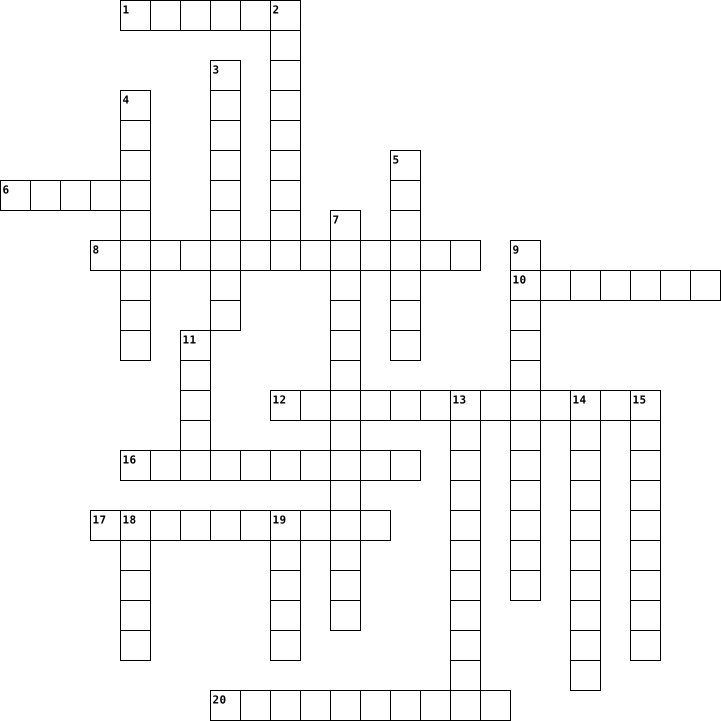
Across
- ไซยาโนแบคทีเรียสามรุตรึงไนโตรเจนเป็นไนเตรตได้
- เป็นเห็ดโคนที่มีผิวหมวกเห็ดเป็นรูพรุนเหมือนฟองน้ำ มีสีน้ำตาลอ่อนไปถึงน้ำตาลเข้ม
- แบคทีเรียแกรมบวกผลิคกรดแลคติกได้ ทำโยเกิร์ตได้
- เป็นเห็ดชนิดหนึ่งในกลุ่มเห็ดรา (Mycorrhizal Fungi) มีรสจัด และมีกลิ่นเฉพาะตัว ซึ่งในเมนูอาหารตะวันตก
- ยูแบคทีเรียที่สามารถสังเคราะห์ด้วยแสงได้
- ยูแบคทีเรียแกรมลบที่มีรูปทรงเกลียว
- กลุ่ม protist เป็น Eukaryotic cell มีแต่ nucleus กับ ribosome
- ยูแบคทีเรียแกรมลบที่เป็นปรสิต
Down
- สาหร่ายสีเขียวโปรตีนสูงนิยมทำเป็นอาหารเสริม
- สิ่งมีชีวิตหลายเซลล์
- protist ที่ใช้ซีเลียในการเคลื่อนที่
- protist เซลล์เดียว มีคลอโรฟิลด์ เคลื่อนที่โดยแฟลกเจลลัม
- protist เดียว เคลื่อนที่โดยใช้แฟลกเจลลา2เส้นแนวดิ่ง
- แบคทีเรียแกรมบวกใช้ทำยาปฏิชีวนะ
- สิ่งมีชีวิตกลุ่มหนึ่ง เดิมเคยจัดอยู่อาณาจักรเดียวกับพืช
- protist ขนาดเล็ก เป็นปรสิตเช่น plasmadium sp. โรคมาลาเรีย
- protist ที่เคลื่อนที่โดยใช้เท้าเทียม
- protist เซลลเดียวมีช่องว่างเล็กๆใต้เยื่หุ้มเซลล์ alvedi
- สิ่งมีชีวิตหลายชนิดในอาณาจักรโครมาลวีโอลาตา เอกซ์คาวาตา ไรซาเรีย มีลักษณะคล้ายพืช แต่ไม่มีส่วนที่เป็นราก ลำต้น และใบที่แท้จริง
- เซลล์สืบพันธ์ของพืช
20 Clues: เซลล์สืบพันธ์ของพืช • สิ่งมีชีวิตหลายเซลล์ • ยูแบคทีเรียแกรมลบที่เป็นปรสิต • แบคทีเรียแกรมบวกใช้ทำยาปฏิชีวนะ • ยูแบคทีเรียแกรมลบที่มีรูปทรงเกลียว • protist ที่ใช้ซีเลียในการเคลื่อนที่ • protist ที่เคลื่อนที่โดยใช้เท้าเทียม • ยูแบคทีเรียที่สามารถสังเคราะห์ด้วยแสงได้ • สาหร่ายสีเขียวโปรตีนสูงนิยมทำเป็นอาหารเสริม • ไซยาโนแบคทีเรียสามรุตรึงไนโตรเจนเป็นไนเตรตได้ • ...
Biology 2015-01-29
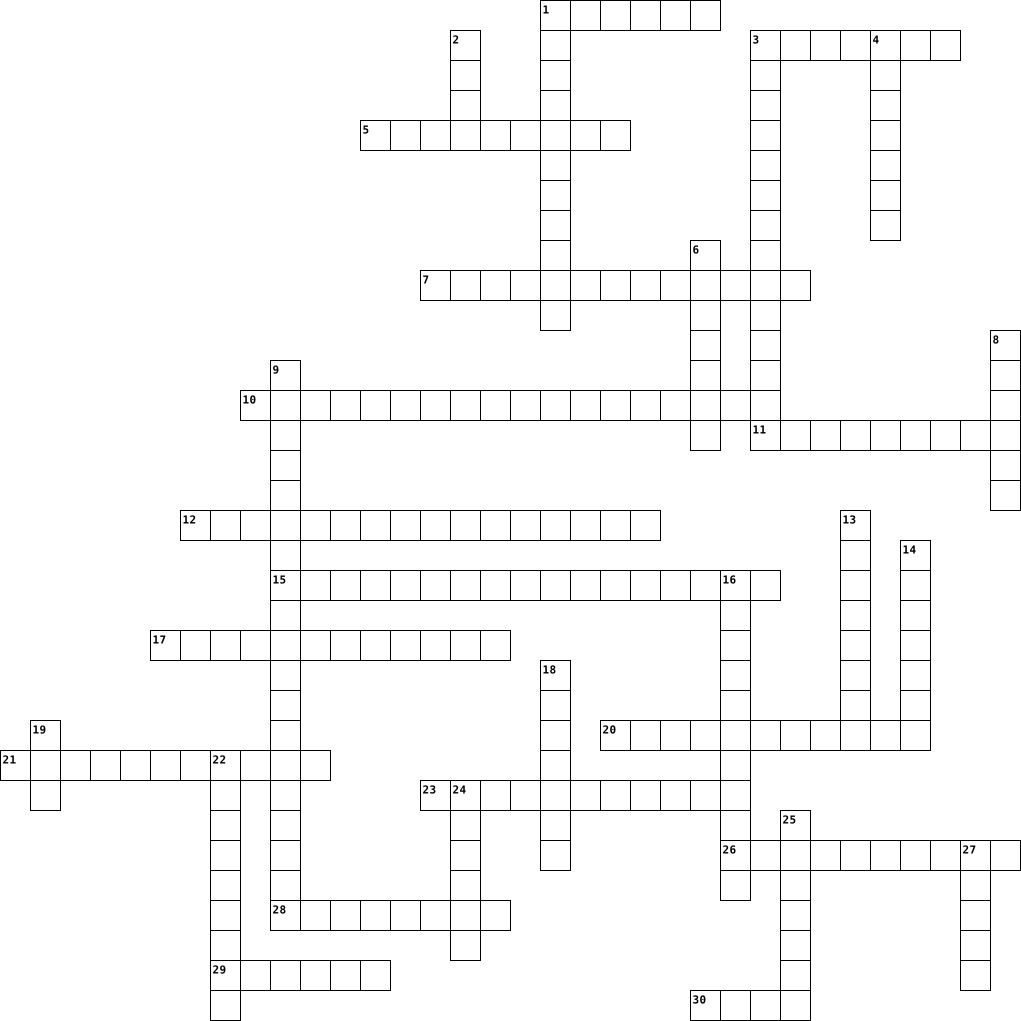
Across
- Protein catalyst that speeds up the rate of specific biological reactions
- Large muscular sac that continues the mechanical and chemical digestion of food
- first step in digestion
- Type of nutrient that is major source of energy for the body
- response that blocks further actions of a stimulus
- It connects the mouth to the stomach
- It provides support for the body and connects its parts
- Process by which enzymes break down food into small molecules that the body can use
- movements of the body are possible because o it
- Contractions of smooth muscles that provide the force that moves food through the esophagus toward the stomach
- Bile is stored in it
- Constant internalphysical and chemical conditions that organisms maintain
- Type of tissue that lines the interior and exterior body surfces
- Chemical substance that an organism needs to sustain life
- Fingerlike projection in the small intestine
- Basic unit of all forms of life
Down
- step in which the body eliminates what it does not need
- fluis loaded with lipids and salts
- nutrients are absorbed throughout its walls
- Found in saliva, it breaks the chemical bonds in starches
- Measure of heat energy in food
- Enzyme that breaks down proteins into smaller polypeptide fragments
- Physical breakdown of large pieces of food
- organic molecules that the body needs in very small amounts
- Group of similar cells that perform a particular function
- group of organs that perform closely related functions
- Type of tissue that transmit nerve impulses throughout the body
- Made up of fatty acids and glycerol
- converts food into small molecules
- Group of tissues that work together to perform closely related functions
- Inorganic nutrient the body needs
- acids Compound with an amino group on one end and a carboxyl group on the other end
32 Clues: Bile is stored in it • first step in digestion • Measure of heat energy in food • Basic unit of all forms of life • Inorganic nutrient the body needs • fluis loaded with lipids and salts • converts food into small molecules • Made up of fatty acids and glycerol • It connects the mouth to the stomach • Physical breakdown of large pieces of food • ...
BIOLOGY 2014-09-30
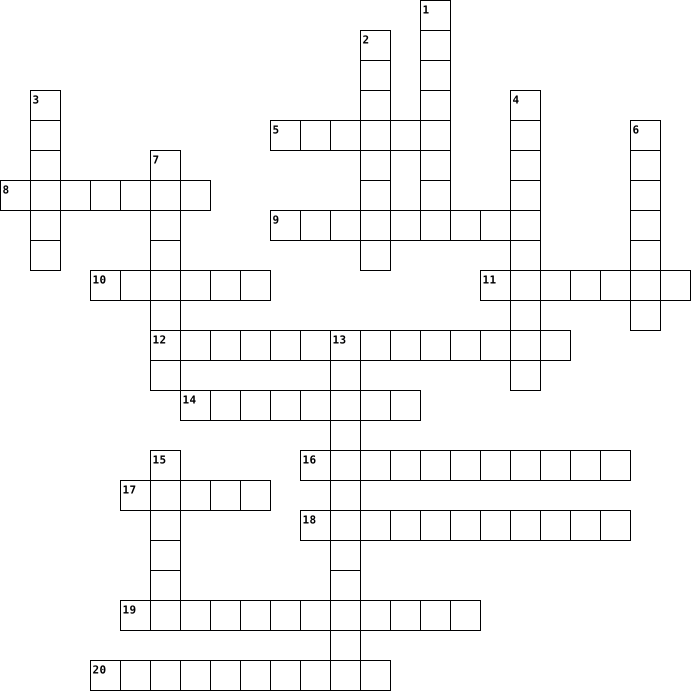
Across
- a pyrimidine in RNA that replaces Thymine
- macromolecules composed of amino acids
- when two amino acids combine
- an organic catalyst that accelerates a specific chemical reaction by lowering the energy required
- consists of four carbon rings
- a sugar that cant be broken down by hydrolysis to a simple sugar
- a three carbon alcohol with hydroxyl group on each carbon
- a longer chain of amino acids which may contain up to hundreds
- any of a group of organic compounds that are insoluble in water but soluble in nonpolar solvents
- not readily reacting with water
- to alter physical properties
- two isomeric chemical compounds that are mirror images
Down
- substance that increase speed that a reaction occurs
- animal starch
- typical form of a carbohydrate used for energy storage in plants
- monomer of nucleic acid
- main component of cell walls of fungi and exoskeletons of insects and fish
- a molecule of RNA that has catalytic properties
- compound containing carbon hydrogen and oxygen
- 5 carbon sugar in ribonucleic acid
20 Clues: animal starch • monomer of nucleic acid • when two amino acids combine • to alter physical properties • consists of four carbon rings • not readily reacting with water • 5 carbon sugar in ribonucleic acid • macromolecules composed of amino acids • a pyrimidine in RNA that replaces Thymine • compound containing carbon hydrogen and oxygen • ...
Biology 2014-09-11
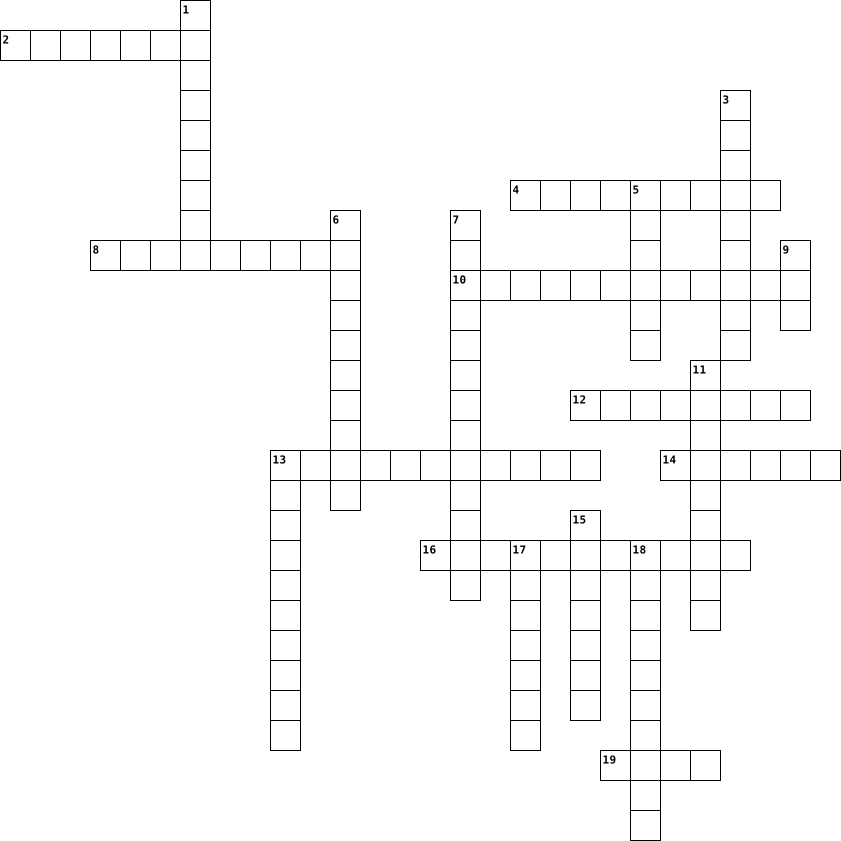
Across
- The study of of ife
- Movement of materials into, out of or throughout an organism
- Regions of Earth occupied by living organisms
- Produce more of a species
- A thing or event that evokes a specific functional reaction
- Convert food energy to cellular energy
- Increase cell size or cell number
- A constant enternal environment
- Process Actvities that are performed by all living things
Down
- Organisms make or build compounds
- Removal of wastes made by cells metabolisms
- Reproduction Reproduction that requires both parents
- The sum of all chemical activites
- The process of fertilizing an egg
- Carrier of genetic information
- Consume materials from the environment and convert them to a usable form
- Control and coordination of lifes activities
- Reproduction Reproduction with only one parent needed
- Branch of biology which deals with organisms relations to each other
- The process in which one thing absoprbs another
20 Clues: The study of of ife • Produce more of a species • Carrier of genetic information • A constant enternal environment • Organisms make or build compounds • The sum of all chemical activites • The process of fertilizing an egg • Increase cell size or cell number • Convert food energy to cellular energy • Removal of wastes made by cells metabolisms • ...
Biology 2023-10-23

Across
- reproduction Process by which offspring are produced from a single parent; does not involve the joining of gametes.
- Common name for a class of diseases characterized by uncontrolled cell division
- Loose combination of DNA and proteins that is present during interphase.
- that organizes chromosomes and around which DNA wraps.
- fission Asexual reproduction in which a cell divides into two equal parts.
- Second phase of mitosis when spindle fibers align the chromosomes along the cell equator.
- Programmed cell death.
- Last phase of mitosis when a complete set of identical chromosomes is positioned at each pole of the cell, nuclear membranes start to form, the chromosomes begin to uncoil, and the spindle fibers disassemble.
- Process by which cell divides its nucleus and contents.
- Long, continuous thread of DNA that consists of numerous genes and regulatory information.
- third phase of mitosis which chromatids separate and are pulled to opposite sides of the cell.
- Region of condensed chromosome that looks pinched; where spindle fibers attach during meiosis and mitosis
- Having no dangerous effect on health, especially referring to an abnormal growth of cells that are not cancerous
- Process by which the cell cytoplasm divides.
Down
- Process by which unspecialized cells develop into their mature form and function.
- First phase of mitosis when chromatin condenses, the nuclear envelope breaks down, the nucleolus disappears, and centrosomes and centrioles migrate to opposite sides of the cell.
- Cancerous tumor in which cells break away and spread to other parts of the body; causing harm to the organism's health.
- To spread by transferring a disease-causing agent from the site of the disease to other parts of the body.
- One half of a duplicated chromosome
- Broad group of proteins that stimulate cell division.
- Repeating nucleotide at the ends of DNA molecule that do not form genes and help prevent the loss of genes.
- Cell that can divide for long periods of time while remaining undifferentiated.
- Substance that produces or promotes the development of cancer.
- Cycle Pattern of growth, DNA replication, and cell division that occurs in a eukaryotic cell.
24 Clues: Programmed cell death. • One half of a duplicated chromosome • Process by which the cell cytoplasm divides. • Broad group of proteins that stimulate cell division. • that organizes chromosomes and around which DNA wraps. • Process by which cell divides its nucleus and contents. • Substance that produces or promotes the development of cancer. • ...
Biology 2023-11-14

Across
- - Allows food and drink to go from the mouth to the stomach.
- - You eat food with it.
- - Make up everything in our body
- - Removes toxins.
- - Allows air to come through.
- - Plays a massive part in our digestive system.
- lobe - Thinking, emotions, personality, judgment, self-control, muscle control and movements and memory storage.
- - Pumps your blood.
- - What this topic is.
- - Emotions, processing information from your senses, storing and retrieving memories, and understanding language.
- - How things work.
- - Grows larger as we consume more protein.
- - Parts of the brain that control certain things.
- - Body's largest organ.
Down
- - They make up the structure of our body.
- - What you breath in.
- -
- lobe - Taste, hearing, touch, sight and smell.
- - Controls what we do
- lobe - Visuospatial processing, distance and depth perception, colour determination, object and face recognition, and memory formation.
- - Air goes to them.
- - Thicker than veins.
- marrow - The spongy stuff in our bones.
- - Blue and red and transport blood.
- - What you see with.
25 Clues: - • - Removes toxins. • - How things work. • - Air goes to them. • - Pumps your blood. • - What you see with. • - What you breath in. • - Controls what we do • - Thicker than veins. • - What this topic is. • - You eat food with it. • - Body's largest organ. • - Allows air to come through. • - Make up everything in our body • - Blue and red and transport blood. • ...
Biology 2023-11-13

Across
- Special cells
- A microscopic membrane of lipids and proteins which forms the external boundary of the cytoplasm of a cell or encloses a vacuole
- Tools that zooooooooom in on stuff
- Makes up your blood
- Helps you get the nutrients from the food you eat
- The boundary between the cell inside and outside
- Helps you get rid of waste
- Living things that contain more than one cell
- The rest of the cell
- Makes up your muscles
- Any of the distinct types of material of which animals or plants are made
- A set of things working together as parts of a mechanism
- A minute particle consisting of RNA and associated proteins found in large numbers in the cytoplasm of living cells
- The powerhouse of the cell - converts
- Helps your blood around your body
- The brain of the cell
- Your bones system
Down
- What plants are made of
- Living things that contain only one cell
- The things that make up living things
- Helps you breathe
- Makes up your nerves
- A network of membranous tubules within the cytoplasm of a eukaryotic cell
- What animals are made of
- What fungi are made of
- Where photosynthesis occurs
- Stores the waste and nutrients
- You use this to move
- The study of living things
- You use this to feel
30 Clues: Special cells • Helps you breathe • Your bones system • Makes up your blood • Makes up your nerves • The rest of the cell • You use this to move • You use this to feel • Makes up your muscles • The brain of the cell • What fungi are made of • What plants are made of • What animals are made of • Helps you get rid of waste • The study of living things • Where photosynthesis occurs • ...
Biology 2023-11-13

Across
- The scientific study of living organisms and their interactions with each other and their environments.
- The liquid component of blood, where blood cells are suspended.
- Organelles in eukaryotic cells responsible for generating energy in the form of ATP through cellular respiration.
- Systems: The skeletal system, providing support, protection, and assistance in movement.
- Cells: Cells that have specific structures and functions suited to perform particular tasks in the body.
- Organisms composed of multiple cells.
- Tissue that contracts to produce movement in animals.
- Membrane-bound sacs within cells that store substances such as water, nutrients, or waste products.
- Wall: A rigid outer layer that provides structural support to plant cells, fungi, and some bacteria.
- A structure made up of different tissues working together to perform specific functions in the body.
- The central organelle that contains the genetic material (DNA) and controls cellular activities.
Down
- Cellular structures that synthesize proteins.
- Organelles in plant cells that conduct photosynthesis, converting light energy into chemical energy.
- The gel-like substance within cells that surrounds the organelles.
- Relating to the process of breaking down food into absorbable nutrients.
- System: The system of the heart and blood vessels responsible for circulating blood throughout the body.
- Tissue: A group of similar cells working together to perform a specific function.
- Pertaining to the circulation of fluids, often referring to the circulatory system.
- The basic structural and functional units of living organisms.
- Specialized structures within a cell that perform specific functions, e.g., mitochondria, nucleus, chloroplasts.
- A simple sugar that serves as a primary source of energy in living organisms, particularly through cellular respiration.
- Membrane: Also known as the plasma membrane, it surrounds the cell, regulates what enters and exits the cell, and provides structural support.
- Cells: Eukaryotic cells found in plants, characterized by a cell wall, chloroplasts, and a central vacuole.
- Tissue that transmits electrical impulses in animals.
- Cells: Eukaryotic cells found in animals, lacking a cell wall and often having a round or irregular shape.
25 Clues: Organisms composed of multiple cells. • Cellular structures that synthesize proteins. • Tissue that contracts to produce movement in animals. • Tissue that transmits electrical impulses in animals. • The basic structural and functional units of living organisms. • The liquid component of blood, where blood cells are suspended. • ...
biology 2023-12-11

Across
- a threadlike structure of nucleic acids and protein found in the nucleus of most living cells, carrying genetic information in the form of genes.
- an adaptor molecule composed of RNA, typically 76 to 90 nucleotides in length
- one of two strands of DNA found at the replication fork, or junction, in the double helix
- Proteins are large biomolecules and macromolecules that comprise one or more long chains of amino acid residues.
- the process of copying a segment of DNA into RNA
- a segment of a DNA or RNA molecule containing information coding for a protein or peptide sequence
- a polymer composed of two polynucleotide chains that coil around each other to form a double helix.
- a class of enzymes thought to be vital to all organisms
- a distinct sequence of nucleotides forming part of a chromosome
- the material of which the chromosomes of organisms other than bacteria
Down
- In molecular biology, messenger ribonucleic acid is a single-stranded molecule of RNA
- an alteration in the nucleic acid sequence of the genome of an organism
- a sugar of the pentose class which occurs widely in nature as a constituent of nucleosides and several vitamins and enzymes
- Amino acids are organic compounds that contain both amino and carboxylic acid functional groups
- the positively charged central core of an atom, consisting of protons and neutrons and containing nearly all its mass
- a segment of a DNA or RNA molecule which does not code for proteins and interrupts the sequence of genes
- the process in living cells in which proteins are produced using RNA molecules as templates
- a compound consisting of a nucleoside linked to a phosphate group
- a sequence of three nucleotides which together form a unit of genetic code in a DNA or RNA molecule
- a single DNA strand that, during DNA replication
20 Clues: the process of copying a segment of DNA into RNA • a single DNA strand that, during DNA replication • a class of enzymes thought to be vital to all organisms • a distinct sequence of nucleotides forming part of a chromosome • a compound consisting of a nucleoside linked to a phosphate group • the material of which the chromosomes of organisms other than bacteria • ...
Biology 2023-12-14

Across
- only eats mean
- group of living organisms that live in and interact with each other in the same enviorment
- illegal hunting or capturing of wild animals
- fish eating mammal with dense fur and webbed feet
- The air you breathe
- Carbon Dioxide
- the different form or versions of a gene.
- an singe animal, plant, or single-celled life form.
Down
- only eats plants
- animal that is hunted and killed by another animal for food
- organism that cant produce its own food and eat other plants and animals to get energy
- preys on other animals
- the largest living land animal is grey and have tusks
- light energy is converted to chemical energy
- molecule that carries genetic information
- the main thing sea urchins eat
- eats both plants and meat
- the other name for an killer whale
- large carnivorous mammal that lives in prides
- orginism the creates there own foood and energy
20 Clues: only eats mean • Carbon Dioxide • only eats plants • The air you breathe • preys on other animals • eats both plants and meat • the main thing sea urchins eat • the other name for an killer whale • molecule that carries genetic information • the different form or versions of a gene. • light energy is converted to chemical energy • illegal hunting or capturing of wild animals • ...
Biology 2024-02-01

Across
- Ribonucleic acid; the intermediary translating DNA instructions into cellular actions
- Cells Cells accountable for muscle contraction and movement
- Cells Specialized cells participating in sexual reproduction; sperm cells (males) and egg cells (females)
- Cells Cells possessing a cell wall, chloroplasts, a large central vacuole, and various organelles; Eukaryotic
- Deoxyribonucleic acid; the genetic information carrier in cells
- Variable An external factor capable of influencing the dependent variable, potentially leading to inaccuracies in conclusions
- Variable The manipulated element in an experiment designed to observe its impact on the dependent variable
- Complex molecules constituted by chains of amino acids, serving diverse structural and functional roles in cells
- Group The group in an experiment exposedto the specific treatment or change being investigated
- Cells Specialized cells forming the structural framework of bones
Down
- Cells Cells devoid of a cell wall, featuring a flexible membrane and various organelles; Eukaryotic
- Variable The observed or measured aspect in an experiment, influenced by alterations in the independent variable
- Cells Single-celled microorganisms lacking a nucleus; Prokaryotic
- The repetition of an experiment multiple times to affirm the reliability and consistency of obtained results
- Acids The fundamental units forming proteins
- The unpredictable assignment of elements to different groups or conditions to ensure fairness in an experiment
- Cells Cells with a rigid cell wall, chloroplasts, and a large central vacuole; Eukaryotic
- Group The unchanged group in an experiment providing a baseline for comparison with the experimental group
- Variable (Constants) Elements deliberately kept consistent in an experiment to ensure that observed effects are attributable to the independent variable
- Cells transmitting electrical impulses and chemical signals in the nervous system
20 Clues: Acids The fundamental units forming proteins • Cells Cells accountable for muscle contraction and movement • Deoxyribonucleic acid; the genetic information carrier in cells • Cells Single-celled microorganisms lacking a nucleus; Prokaryotic • Cells Specialized cells forming the structural framework of bones • ...
Biology 2022-10-24

Across
- fight infection and stop disease
- site for respiration in a cell
- produce antibodies that stick pathogens
- waste product of respiration
- movement down its concentration gradient
- flexible layer surrounding the cell
- respiration organ
- broken down part of cells
- carries blood cells and platelets
- food substance for energy
- diffusion of water
Down
- surround, engulf and destroy pathogens
- cells that carry oxygen
- where blood cells and platelets are made
- shape of red blood cell
- contains genetic material of organism
- element needed for respiration
- red pigment that binds with oxygen
- device used to see cells
- liquid that makes up most of the cell
20 Clues: respiration organ • diffusion of water • cells that carry oxygen • shape of red blood cell • device used to see cells • broken down part of cells • food substance for energy • waste product of respiration • site for respiration in a cell • element needed for respiration • fight infection and stop disease • carries blood cells and platelets • red pigment that binds with oxygen • ...
Biology 2022-10-24

Across
- fight infection and stop disease
- site for respiration in a cell
- produce antibodies that stick pathogens
- waste product of respiration
- movement down its concentration gradient
- flexible layer surrounding the cell
- respiration organ
- broken down part of cells
- carries blood cells and platelets
- food substance for energy
- diffusion of water
Down
- surround, engulf and destroy pathogens
- cells that carry oxygen
- where blood cells and platelets are made
- shape of red blood cell
- contains genetic material of organism
- element needed for respiration
- red pigment that binds with oxygen
- device used to see cells
- liquid that makes up most of the cell
20 Clues: respiration organ • diffusion of water • cells that carry oxygen • shape of red blood cell • device used to see cells • broken down part of cells • food substance for energy • waste product of respiration • site for respiration in a cell • element needed for respiration • fight infection and stop disease • carries blood cells and platelets • red pigment that binds with oxygen • ...
Biology 2022-10-27

Across
- Provides the claim with supporting details from evidence, and scientific background
- To bind legally or morally; it is your duty to do it
- Standards by which something may be judged or decided
- A set of rules that must be followed at all times in the science classroom
- An interacting group of various species in one location
- A set of specific steps to be followed in order to complete a lab
- Any factor that can be controlled, changed, or measured in an experiment.
- The average of a group of numbers
- The amount of a substance in a given volume
- A process plants use to produce food from carbon dioxide and water
- An explanation of what you observe based on past experience
Down
- A colorless, odorless gas in the air that we breathe
- An idea that supports a natural phenomena
- Something that is detected or measured with any of the 5 senses
- A non-living component of the environment
- The state of being one, having the same characteristics
- Being the only one of its kind; unlike anything else
- A living component of the environment
- A one sentence answer to a scientific question that does not give explanations
- A graph that shows trends and data over time
- all the living and nonliving things in an area
21 Clues: The average of a group of numbers • A living component of the environment • An idea that supports a natural phenomena • A non-living component of the environment • The amount of a substance in a given volume • A graph that shows trends and data over time • all the living and nonliving things in an area • A colorless, odorless gas in the air that we breathe • ...
biology 2023-03-09

Across
- The fishlike shape of whales is not evidence that whales evolved from what?
- The remains or imprint of a once-living organism found in layers of rock?
- Over time, animals may change behavior or physical appearance in response to environmental changes.
- Has a trunk
- Man's best friend
- What caused the speciation of the finches Darwin observed?
- Minerals seeping into an organism’s remains forms what?
- The fact that an organism’s offspring are not identical is known as?
- A spider may produce hundreds of eggs, only a few of which may survive. This is an example of?
- The process consisting of separation, adaptation, and division is what?
- Name the two scientists that conceived of the mechanisms for evolution?
- Who published a book referred to as inheritance of acquired characteristics?
- Physical separation can cause what to occur?
- Large marsupial
- Dog owners breeding their pets to produce friendlier offspring is an example of?
- What does the theory of evolution not try to explain?
- What are the two main sources of genetic diversity?
- Where did Darwin notice the different adaptations of the finches?
- What process often begins by a portion of a population becoming physically or geographically isolated?
- Give an example of convergent evolution?
- Name the two types of speciation?
Down
- Name the four evolutionary forces?
- Many insects can adapt very quickly to insecticides because?
- What is the process by which individuals that are better adapted to their environment survive and reproduce more successfully than others called?
- What process would farmer use to produce vegetables that will grow in a specific climate?
- How are fossils placed in the fossil record?
- Similar DNA and similar traits are two signs that different species may have what?
- Give an example of a vestigial structure?
- What shows that ancient mammals gave rise to modern whales?
- Starvation, disease, competition, and predation limit what?
- A specific characteristic that can be passed from parent to offspring is called a?
- Likes to chase mice
- The greater the similarity of DNA and traits in species then what does that say about them?
- Flying mammal
- What did Darwin not understand about ht process of evolution?
35 Clues: Has a trunk • Flying mammal • Large marsupial • Man's best friend • Likes to chase mice • Name the two types of speciation? • Name the four evolutionary forces? • Give an example of convergent evolution? • Give an example of a vestigial structure? • How are fossils placed in the fossil record? • Physical separation can cause what to occur? • ...
Biology 2023-03-06

Across
- Zat yang menyebabkan kerusakan lingkungan
- Polusi suara yang menyebabkan reaksi menyakiti telinga dengan bobot suara 120-150 dB
- Parameter pengukuran yang digunakan untuk mengetahui tingkat keasamaan/pH
- Berasal dari buangan kendaraan bermotor dan beberapa proses industri
- Indikator biologi yang menunjukan perairan yang tercemar zat organik
- Penduduk sulit tidur merupakan akibat dari pencemaran
- Bahan ini sukar dihancurkan. Bila terlalu banyak mencemari tanah, tanah tersebut akan sulit ditumbuhi tumbuhan. Merupakan sampah
- Penghargaan lingkungan yang diberikan kepada kota-kota terbersih di Indonesia dan daerah yang berhasil membuat NKLD
- Pencemaran udara yang berasal dari gas buang kendaraan bermotor
- Limbah yang berasal dari rumah tangga, restoran, dan Hotel
- Menyebabkan rusaknya ozon, kanker kulit, katarak dan kerusakan pada tanaman. Termasuk dampak bahan polutan
Down
- Derajat pemenuhan kebutuhan dasar manusia dalam kondisi lingkungan
- Penyebab bintang-bintang tidak terlihat jelas pada malam hari salah satunya adalah polusi
- Contoh bakteri sumber pencemaran air adalah
- Bio-polutan, limbah urban, penggunaan pestisida dapat menyebabkan pencemaran
- Hujan asam dapat menyebabkan pencemaran.
- Bahan kimiawi yang senantiasa memancarkan energi disebut zat
- Dampak CFCs selain menyebabkan rusaknya ozon, katarak, dan kerusakan tanaman adalah kanker
- Mode pakaian yang tidak sesuai norma, narkoba, dan minuman keras termasuk polusi
- Penanaman pohon kembali dengan maksud mengurangi polusi udara
- Memanfaatkan Kembali barang bekas tanpa harus memprosesnya terlebih dulu , misal menggunakan bekas kemasan air mineral untuk pembibitan tanaman adalah
- Pencemaran air raksa di Minamata, Jepang termasuk ke dalam tingkat pencemaran.
22 Clues: Hujan asam dapat menyebabkan pencemaran. • Zat yang menyebabkan kerusakan lingkungan • Contoh bakteri sumber pencemaran air adalah • Penduduk sulit tidur merupakan akibat dari pencemaran • Limbah yang berasal dari rumah tangga, restoran, dan Hotel • Bahan kimiawi yang senantiasa memancarkan energi disebut zat • ...
Biology 2024-02-29

Across
- an intercellular structure made of both RNA and protein, and it is the site of protein synthesis in the cell.
- the structure in a cell that contains the chromosomes.
- the gelatinous liquid that fills the inside of a cell
- a structure that helps cells maintain their shape and internal organization
- a membrane-bound cell organelle that contains digestive enzymes.
- an organism whose cells contain a nucleus within a membrane
- the spreading of something more widely.
- The cell wall is the outer covering of a cell, present adjacent to the cell membrane, which is also called the plasma membrane
- any external solution that has the same solute concentration and water concentration compared to body fluids.
- a small cavity or space in tissue, especially in nervous tissue as the result of disease.
- the spontaneous passage or diffusion of water or other solvents through a semipermeable membrane
- generate most of the chemical energy needed to power the cell's biochemical reactions
- a minute cylindrical organelle near the nucleus in animal cells, occurring in pairs and involved in the development of spindle fibers in cell division.
Down
- a large, dynamic structure that serves many roles in the cell including calcium storage, protein synthesis and lipid metabolism
- ion pumps, exocytosis and endocytosis.
- organisms whose cells lack a nucleus and other organelles
- produce energy through photosynthesis and oxygen-release processes, which sustain plant growth and crop yield
- a self-regulating process by which a living organism can maintain internal stability while adjusting to changing external conditions
- transport, sorting and modification of both protein and lipid
- the semipermeable membrane surrounding the cytoplasm of a cell.
20 Clues: ion pumps, exocytosis and endocytosis. • the spreading of something more widely. • the gelatinous liquid that fills the inside of a cell • the structure in a cell that contains the chromosomes. • organisms whose cells lack a nucleus and other organelles • an organism whose cells contain a nucleus within a membrane • ...
biology 2024-02-25

Across
- main type of sugar in the blood and is the major source of energy for the body's cells
- pigment is present in all green plants and a few other organisms.
- the ability to do work
- an organism that can produce its own food using light, water, carbon dioxide, or other chemicals
- an organism that eats other plants or animals for energy and nutrients
- the process of cellular respiration that takes place in the presence of oxygen gas to produce energy from food
- the chemical reactions in the body's cells that change food into energy
- the type of respiration through which cells can break down sugars to generate energy in the absence of oxygen.
- plant cell organelles that convert light energy into relatively stable chemical energy via the photosynthetic process
- metabolic process that produces chemical changes in organic substances through the action of enzymes.
Down
- the process by which green plants and certain other organisms transform light energy into chemical energy
- A colorless, odorless gas
- a chemical your body produces when your cells break down carbohydrates for energy
- the process by which cells derive energy from glucose
- energy-carrying molecule found in the cells of all living things
- tiny little openings in the exterior surface of an organism's skin or a structure
- the anaerobic transformation of fructose and glucose (sugars) into ethanol and carbon dioxide
- a biological molecule consisting of one adenine, one sugar, and two phosphates
- substances produced by living organisms that have a color resulting from selective color absorption
- The cells and tissues that support and give structure to organs, glands, or other tissues in the body
20 Clues: the ability to do work • A colorless, odorless gas • the process by which cells derive energy from glucose • energy-carrying molecule found in the cells of all living things • pigment is present in all green plants and a few other organisms. • an organism that eats other plants or animals for energy and nutrients • ...
Biology 2024-02-28

Across
- kedua untai polinukleotida induk atau yang lama tidak berubah dan berfungsi sebagai cetakan adalah model
- Karbohidrat yang terpenting bagi tubuh karena bertindak sebagai bahan bakar metabolik utama
- proses anabolisme yang menggunakan senyawa kimia sebagai sumber energi.
- bagian enzim yang berupa senyawa non-protein.
- proses anabolisme yang menggunakan cahaya sebagai sumber energi.
- lokasi yang menunjukkan posisi gen pada kromosom.
- Enzim dan substrat bergabung membentuk kompleks enzim substrat seperti kunci yang masuk ke gembok
- Struktur Gula pada Rna
- Kromosom yang mengendalikan sifat-sifat tubuh, seperti warna mata, warna kulit, tinggi badan, dan lain-lain.
- Kromosom yang menentukan jenis kelamin, contohnya X dan Y. Sel kelamin dari betina hanya memiliki gonosom X, sedangkan sel kelamin jantan memiliki gonosom X atau Y yang akan menentukan jenis kelamin setelah terjadi fertilisasi.
- Teori evolusi siapa yang terbentuk karena adanya seleksi alam
- Sentromer pada ujung kromatid
- Yang mengandung kode genetik yang nantinya akan membentuk suatu gen dalam tubuh adalah
- Memacu perkembangan embrio pada perkecambahan
- gen yang bermutasi terdapat pada autosom
- suatu protein yang terdapat pada membrane tilakoid yang mengandung pigmen fotosintetik dan senyawa organic di dalamnya.
- Keadaan genetik dari suatu individu atau populasi yang dibedakan menjadi 3: AA, Aa, aa
- Yang menghasilkan 2 ATP + 2 NADH + 2 Asam Piruvat
Down
- Reaksi penguraian senyawa kompleks menjadi senyawa yang lebih sederhana dan menghasilkan energi (reaksi eksergonik).
- Proses penyusunan nukleotida rna, diatas dna pencetak disebut
- Spermatogenesis terjadi pada organ
- Proses pembentukan gamet jantan (sperma) dan gamet betina (ovum)
- kofaktor yang berupa senyawa organic (vitamin) yang berikatan secara non-kovalen dengan enzim.
- individu yang mengalami perubahan materi genetik
- Merupakan substansi kimia yang sangat aktif dalam proses metabolisme dimana masih dapat dipengaruhi oleh faktor luar,seperti contohnya hormon auksin.
- Berfungsi sebagai mengatur reaksi kimia dalam sel terutama reaksi sintesis protein dan enzim sehingga mempengaruhi bentuk dan ukuran tumbuhan.
- Molekul yang akan mempercepat reaksi dari ikatan substrat dan enzim.
- peristiwa hilangnya sebagian segmen kromosom
- bagian enzim yang berupa senyawa protein yang mengandung binding site.
- reaksi penyusunan senyawa kompleks dari senyawa sederhana dan memerlukan energi (reaksi endergonic).
- Bagian dari kromosom yang didalamnya tidak terdapat gen dan tidak menyerap warna adalah
- Pada pembelahan mitosis kromosom terlihat jelas pada fase
32 Clues: Struktur Gula pada Rna • Sentromer pada ujung kromatid • Spermatogenesis terjadi pada organ • gen yang bermutasi terdapat pada autosom • peristiwa hilangnya sebagian segmen kromosom • bagian enzim yang berupa senyawa non-protein. • Memacu perkembangan embrio pada perkecambahan • individu yang mengalami perubahan materi genetik • ...
Biology 2024-04-20

Across
- a negatively charged ion.
- energy the energy possessed by a body by virtue of its position relative to others, stresses within itself, electric charge, and other factors.
- an atom or molecule with a net electric charge due to the loss or gain of one or more electrons.
- bond a weak type of bond that forms between a hydrogen atom and an electronegative atom in another molecule.
- a measure of the tendency of an atom to attract a bonding pair of electrons.
- a unit of mass used for expressing atomic and molecular weights.
- bond a type of chemical bond that involves the electrostatic attraction between oppositely charged ions.
- a state in which opposing forces or influences are balanced
- elements chemical elements present in tiny amounts in a given environment or organism.
- the combining power of an element, especially as measured by the number of hydrogen atoms it can displace or combine with.
Down
- bond a chemical bond that involves the sharing of electron pairs between atoms.
- a substance consisting of atoms which all have the same number of protons.
- a region in an atom where there is a high probability of finding electrons.
- covalent a type of covalent bond where electrons are shared unequally between atoms, resulting in a partial positive and partial negative charge.
- covalent a type of covalent bond where electrons are shared equally between atoms.
- number the total number of protons and neutrons in an atomic nucleus.
- variants of a particular chemical element which differ in neutron number.
- mass the mass of an atom of a chemical element expressed in atomic mass units.
- a positively charged ion.
- a substance formed when two or more chemical elements are chemically bonded together.
20 Clues: a negatively charged ion. • a positively charged ion. • a state in which opposing forces or influences are balanced • a unit of mass used for expressing atomic and molecular weights. • number the total number of protons and neutrons in an atomic nucleus. • variants of a particular chemical element which differ in neutron number. • ...
Biology 2024-04-23

Across
- medziaga, atsirandanti dirvozemyje trukstant oro ir pilnai nesuirus augalinems atliekoms
- Pesticidu rusis, naudojama apsaugoti nuo grybeliniu ligu
- Ukininku specializacija viename augale
- bakterijos, augalinius ir gyvuninous baltymus paverciancios nitratais
- Pesticidu rusis, naikinanti piktzoles
- Populiacijos augimo etapas, kai ji auga sparciausiai
- Su salies demografija susijusi propagandiniu, ekonominiu ir teisiniu priemoniu sistema
- Kovos su piktzolemis ir kenkejais priemone
- Aplinkos maksimalus galimu individu skaicius, priklausantis nuo jos istekliu
Down
- veiksniai, kurie neisvengiamai veikia kiekviena bendrijos organizma
- medziaga, atsirandanti dirvozemyje puvant organinems atliekoms
- vienas iš gyvybei svarbiausių cheminiu elementu
- Aplinkos reiškinys, neleidziantis populiacijoms augti iki begalybes
- Ore tvyranciu tersalu migla
- Populiacijos augimo etapas, kai jos dydis nekinta
- žemės ekosistemų visuma
- Drusku kaupimasis dirvozemyje, Išgaravus vandeniui
- Pesticidu rusis, naikinanti vabzdzius kenkejus
- didziausias oro tarsos saltinis Lietuvoje (2009 m. duom.)
- Demografinis reiskinys, kai sparciai dideja gyventoju skaicius
20 Clues: žemės ekosistemų visuma • Ore tvyranciu tersalu migla • Pesticidu rusis, naikinanti piktzoles • Ukininku specializacija viename augale • Kovos su piktzolemis ir kenkejais priemone • Pesticidu rusis, naikinanti vabzdzius kenkejus • vienas iš gyvybei svarbiausių cheminiu elementu • Populiacijos augimo etapas, kai jos dydis nekinta • ...
Biology 2024-04-26

Across
- Powerhouse of the cell
- Cell organelle that stores materials such as water, salts, proteins, and carbohydrates
- Control center of the cell
- The basic unit of structure and function in living things
- A type of protein that speeds up a chemical reaction in a living thing
- A group of ecosystems that share similar climates and typical organisms
- Energy-requiring process that moves material across a cell membrane against a concentration difference
- fertilized egg cell
- Movement of molecules from an area of higher concentration to an area of lower concentration.
Down
- An organism's particular role in an ecosystem, or how it makes its living.
- An organism's physical appearance, or visible traits.
- the struggle between organisms to survive in a habitat with limited resources
- Energy-rich organic compounds, such as fats, oils, and waxes, that are made of carbon, hydrogen, and oxygen.
- Any difference between individuals of the same species.
- An organism or cell having only one complete set of chromosomes.
- A close relationship between two species that benefits at least one of the species.
- Cell division that produces reproductive cells in sexually reproducing organisms
- A segment of DNA on a chromosome that codes for a specific trait
- single-stranded nucleic acid that contains the sugar ribose
- A biological community of interacting organisms and their physical environment.
20 Clues: fertilized egg cell • Powerhouse of the cell • Control center of the cell • An organism's physical appearance, or visible traits. • Any difference between individuals of the same species. • The basic unit of structure and function in living things • single-stranded nucleic acid that contains the sugar ribose • ...
Biology 2024-04-28

Across
- aids in blood clotting
- connects the pharynx to your stomach
- connects your throat to your lungs
- make up the nerves in the nervous system.
- joint example is the neck.
- system in charge of waste removal.
- site of exchange for carbon dioxide and oxygen
- carry blood to the heart
- system in charge of movement.
- carries blood from the heart to the body
- system in charge of transport.
Down
- attaches muscles to bone
- ball-and-socket-joint
- bottom chambers of the heart
- the space between 2 neurons.
- where 2 bones meet.
- carries blood away from the heart
- system in charge of control.
- top chambers of the heart
- tiny finger-like projections that absorb digested food
- system in charge of gas exchange
- muscle that makes up the heart
- reaction to a stimulus
23 Clues: where 2 bones meet. • ball-and-socket-joint • aids in blood clotting • reaction to a stimulus • attaches muscles to bone • carry blood to the heart • top chambers of the heart • joint example is the neck. • bottom chambers of the heart • the space between 2 neurons. • system in charge of control. • system in charge of movement. • muscle that makes up the heart • ...
Biology 2024-03-20

Across
- a living organism that shapes its environment
- an interacting group of various species in a common location
- made up of the parts of Earth where life exists
- organism that obtains energy by eating both plants and animals
- an area classified according to the species that live in that location.
- organisms that obtains energy by consuming plants and animals bodys
- organisms that uses energy from their environment to create their own food
- any relationship between 2 organisms that live very closely with one another
- close relationship 2 species one is benefited and one is harmed
Down
- close relationship where one benefits and the other is not affected
- a particular section, group, or type of people or animals living in an area
- a non-living part of an ecosystem that shapes its environment
- organisms that obtains energy by eating only plants
- organism that breaks down straight matter into its chemical exponents
- organisms that obtains energy by eating only other animals
- close relationship where both organisms are benefited
- a biological community of interacting organisms and their physical environment.
- a biological interaction where one organism, the predator, kills and eats another organism, its prey
- an organism that is able to form nutritional organic substances
- an organism that eats other plants or animals for energy and nutrients
20 Clues: a living organism that shapes its environment • made up of the parts of Earth where life exists • organisms that obtains energy by eating only plants • close relationship where both organisms are benefited • organisms that obtains energy by eating only other animals • an interacting group of various species in a common location • ...
Biology 2024-05-10

Across
- Passing of traits from parents to offspring.
- Group of animals that have no backbone.
- Metabolic process that consumes sugar in the absence of oxygen.
- Basic division of biological classification.
- A genetic variant.
- Highly motile unicellular organism.
- Marine pioneer & co-inventor of scuba.
- Movement of a high concentration of molecules through a membrane to a lower concentration.
- requiring an absence of free oxygen.
- Smallest particle of an element or compound with the chemical properties of that element or compound.
- World's foremost expert on chimpanzees
- Fundamental building blocks of proteins and part of biochemical processes.
- Branched extension of a nerve cell that transmits impulses.
- Position an organism occupies in a food chain.
- Close living relationship between different species.
- Nutrient-bearing portion of the egg.
- The different kinds of life found in one area.
- Integral component of aquatic food chain.
Down
- Process by which most plants, some algae and bacteria convert sunlight into energy.
- A large in a cell that creates, packages and secretes many products made by a cell.
- Community of living organisms and non-living components interacting as a system.
- Submicroscopic, infectious, parasitic particle of genetic material.
- Study of the animal kingdom.
- A group of like tissues that contract to produce force.
- Discoverer of VJ recombination (antibody diversity).
- Juvenile form many animals & insects undergo before metamorphosis into adults.
- Photosynthetic pigments found in cyanobacteria, algae, or plants.
- Having or consisting of only one cell.
- A substance or treatment of no intended therapeutic value.
- Single-celled organisms which lack a true nucleus.
- Species very likely to become extinct in near future.
- The body's largest organ.
- Australian wildlife conservationist.
33 Clues: A genetic variant. • The body's largest organ. • Study of the animal kingdom. • Highly motile unicellular organism. • requiring an absence of free oxygen. • Nutrient-bearing portion of the egg. • Australian wildlife conservationist. • Marine pioneer & co-inventor of scuba. • Having or consisting of only one cell. • World's foremost expert on chimpanzees • ...
Biology 2024-07-29

Across
- used to help chemical reactions take place
- controls what happens in the cell and stores information in the DNA
- eating too much
- lack of iron
- system different organs working together to perform similar function
- where the chemical reactions take place
- gives body energy
- eating too little
- processes food eaten in the mouth
- process by which plants make their own food
Down
- when substances move from high concentration to low concentration
- cells of the same type carrying out the same function
- controls what enters and leaves the cell
- helps undigested food pass quickly through the gut
- used to help make bones strong and help blood carry oxygen
- contains chlorophyll and site of photosynthesis
- used for growth
- release energy from food by aerobic respiration
- provides support and inflates the cell
- different types of tissue performing similar functions
- dissolves chemicals so that chemical reactions can take place
- gives body energy and can be stored
- gives rigid support to cell and made from cellulose
- lack of vitamin C
24 Clues: lack of iron • eating too much • used for growth • gives body energy • eating too little • lack of vitamin C • processes food eaten in the mouth • gives body energy and can be stored • provides support and inflates the cell • where the chemical reactions take place • controls what enters and leaves the cell • used to help chemical reactions take place • ...
Biology 2024-09-05

Across
- Contains DNA
- movement of solutes
- helps during cell division
- converts light energy
- Modifies and sorts proteins
- Break down polymers
- Store materials needed by cell
- Source of energy
- Made by Ribosomes
Down
- acts as cell skeleton
- Energy storage membranes
- Speed up chemical reactions
- Polymers
- produces energy
- DNA
- Make proteins
- No nucleus
- Fluid outside Nucleus
- Has nucleus
- Diffusion of water
20 Clues: DNA • Polymers • No nucleus • Has nucleus • Contains DNA • Make proteins • produces energy • Source of energy • Made by Ribosomes • Diffusion of water • movement of solutes • Break down polymers • acts as cell skeleton • converts light energy • Fluid outside Nucleus • Energy storage membranes • helps during cell division • Speed up chemical reactions • Modifies and sorts proteins • ...
Biology 2024-05-17

Across
- into the water
- the area of land that is drained by a water
- temperature of water
- materials to resist pressure at depth
- water that is caused by the polar molecules pulling
- live near the surface.
- the area where a freshwater stream or river
- river or stream; a branch of
- gases and minerals escape from earth's
- with the ocean. Often a nursery for young.
- the temperature of 1 gram of a substance by 1
- the tendency of water to stick to other
- underground soil and
- free-swimming animals that can move
- Tension-the tightness across the surface
- water to the surface
- Solvent-The quality of water that makes
- he movement of deep, cold, and
- Basin-the area drained by a river and its
- water that fills the cracks and spaces
- Ocean Zone-he area of the ocean beyond
Down
- the water column
- Tiny algae and animals that float in
- The tendency of water molecules to stick
- organisms that live on the bottom of the
- small river or stream that flows into a
- a device that determines the distance of an
- an underwater vehicle built of
- or other body of water; bottom-dwellers
- edge of the continental shelf. Most diverse
- Celsius...amount of heat required to increase
- each other.
- Heat-The amount of energy required to
- Vents-spots on the ocean floor where
- river
- can
- the amount of matter in a given space; mass
- one another
- under water by recording echoes of sound waves
- unit volume
- is able to dissolve more substances than any other
- underground bed or layer yielding ground
- and are carried by waves and currents
- layers
- for wells and springs etc
45 Clues: can • river • layers • each other. • one another • unit volume • into the water • the water column • temperature of water • underground soil and • water to the surface • live near the surface. • for wells and springs etc • river or stream; a branch of • an underwater vehicle built of • he movement of deep, cold, and • free-swimming animals that can move • Tiny algae and animals that float in • ...
Biology 2024-05-17

Across
- into the water
- the area of land that is drained by a water
- temperature of water
- materials to resist pressure at depth
- water that is caused by the polar molecules pulling
- live near the surface.
- the area where a freshwater stream or river
- river or stream; a branch of
- gases and minerals escape from earth's
- with the ocean. Often a nursery for young.
- the temperature of 1 gram of a substance by 1
- the tendency of water to stick to other
- underground soil and
- free-swimming animals that can move
- Tension-the tightness across the surface
- water to the surface
- Solvent-The quality of water that makes
- he movement of deep, cold, and
- Basin-the area drained by a river and its
- water that fills the cracks and spaces
- Ocean Zone-he area of the ocean beyond
Down
- the water column
- Tiny algae and animals that float in
- The tendency of water molecules to stick
- organisms that live on the bottom of the
- small river or stream that flows into a
- a device that determines the distance of an
- an underwater vehicle built of
- or other body of water; bottom-dwellers
- edge of the continental shelf. Most diverse
- Celsius...amount of heat required to increase
- each other.
- Heat-The amount of energy required to
- Vents-spots on the ocean floor where
- river
- can
- the amount of matter in a given space; mass
- one another
- under water by recording echoes of sound waves
- unit volume
- is able to dissolve more substances than any other
- underground bed or layer yielding ground
- and are carried by waves and currents
- layers
- for wells and springs etc
45 Clues: can • river • layers • each other. • one another • unit volume • into the water • the water column • temperature of water • underground soil and • water to the surface • live near the surface. • for wells and springs etc • river or stream; a branch of • an underwater vehicle built of • he movement of deep, cold, and • free-swimming animals that can move • Tiny algae and animals that float in • ...
Biology 2024-05-23

Across
- It suspends the organelles and provides an environment for chemical reactions within the cell
- Organisms who's cells lack a nucleus and other organelles
- Provides shape, structure, and protection for the cell
- Any cell or organism that possesses a clearly defined nucleus
- The small rings of DNA
- Stores genetic information
- Where the DNA is prokaryotic cells
- Creates special structures called spindle fibers that are used on cell division
- Modifies, sorts, and ships proteins
- Projections that aid in locations and feeding
- Flattened stack of tubular membranes that modifies proteins and packages them for distribution outside the cell
- A structure that has one or more specific jobs to preform in a cell
- Makes lipids and membranes (detoxifies the liver, stores calcium in the muscle
Down
- Uses enzymes to digest bacteria, viruses, and old organelles
- Stores water in order to maintain plant shapes
- Hair-like structures that helps with movement and attachment
- The site of photosynthesis
- Crates energy or ATP from food
- Any number of organized structures with a living cell
- Provides structure for cells and movement for organelles
- Makes proteins
- Maintains homeostasis by controlling what enters and leaves the cell
- Makes and transports proteins
- Stores food, water, or wastes within the cells
24 Clues: Makes proteins • The small rings of DNA • The site of photosynthesis • Stores genetic information • Makes and transports proteins • Crates energy or ATP from food • Where the DNA is prokaryotic cells • Modifies, sorts, and ships proteins • Projections that aid in locations and feeding • Stores water in order to maintain plant shapes • ...
BIOLOGY 2024-10-08

Across
- Salah satu makhluk hidup yang masuk ke dalam kingdom monera..
- Phylum untuk hewan tubuh lunak dan bercangkang..
- Satu satunya kingdom yang mencakup organisme prokariotik seperti bakteri
- Keanekaragaman hayati dibutuhkan sebagai penunjang kehidupan bagi makhluk hidup, merupakan salah satu dari nilai manfaat yaitu..
- Biji tidak dilindungi oleh daun buah, belum memiliki bunga sejati, bunga disebut strobilus...
- Golongan hewan yang tidak mempunyai tulang belakang...
- Phylum untuk hewan tubuh dan kakinya beruas-ruas....
- Teknik yang digunakan untuk menambah populasi dari hewan yang terancam penuh
- Suatu proses pengklasifikasian makhluk hidup perlu adanya proses identifikasi...
- Variasi atau perbedaan sifat dan penampilan antarindividu berbeda jenis/spesies dalam satu familia
- Keanekaragamaan warna pada bunga mawar, merupakan keragaman
- Klasifikasi yang tidak ada di sistem klasifikasi tumbuhan..
- Kingdom yang mencakup organisme eukariotik yang fotosintetik
- Sistem klasifikasi yang dikemukakan oleh Carolus Linnaeus dengan kelompok makhluk hidup plantae dan animalia...
- Dikemukakan oleh Lamarck, mengelompokkan makhluk hidup berdasarkan ciri-ciri alami adalah klasifikasi sistem...
- Alga hijau, cokelat, dan api termasuk ke dalam kingdom..
Down
- Berdasarkan struktur, morfologi, fisiologi, reproduksi, dan habitatnya merupakan sistem klasifikasi...
- Pada tahun 1977 Carl Woese mengemukaan sistem 6 kingdom. Kingdom yang ditambahkan adalah...
- Biji dibungkus oleh daun buah, memiliki bunga sekati/sebenrnya...
- Sistem klasifikasi Herbert Copeland dikemukakan pada tahun
- Tumbuhan paku termasuk ke dalam kingdom..
- Sistem klasifikasi lima kingdom dikemukakan oleh...
- Teknik dimana tanaman atau jaringan hewan yang memiliki karakteristik yang diinginkan dalam lingkungan laboratorium
- Golongan hewan yang mempunyai ruas-ruas tulang belakang...
- Perlindungan dan pemeliharaan tumbuhan/hewan di luar habitat aslinya
- Klasifikasi yang disusun dengan melihat keturunan dan hubungan kekerabatan, yaitu...
- Variasi bentuk dan jenis bentang alam
- Perlindungan agar tumbuhan dan hewan dapat hidup di habitat aslinya
- Ada berapa kingdom dalam sistem klasifikasi...
- Salah satu sub filum yang masuk kedalam kingdom animalia...
- Klasifikasi yang tidak ada di sistem klasifikasi hewan...
31 Clues: Variasi bentuk dan jenis bentang alam • Tumbuhan paku termasuk ke dalam kingdom.. • Ada berapa kingdom dalam sistem klasifikasi... • Phylum untuk hewan tubuh lunak dan bercangkang.. • Sistem klasifikasi lima kingdom dikemukakan oleh... • Phylum untuk hewan tubuh dan kakinya beruas-ruas.... • Golongan hewan yang tidak mempunyai tulang belakang... • ...
BIOLOGY 2024-10-08

Across
- Kingdom yang mencakup organisme eukariotik yang fotosintetik
- Biji dibungkus oleh daun buah, memiliki bunga sekati/sebenrnya...
- Sistem klasifikasi Herbert Copeland dikemukakan pada tahun
- Sistem klasifikasi yang dikemukakan oleh Carolus Linnaeus dengan kelompok makhluk hidup plantae dan animalia...
- Klasifikasi yang disusun dengan melihat keturunan dan hubungan kekerabatan, yaitu...
- Ada berapa kingdom dalam sistem klasifikasi...
- Suatu proses pengklasifikasian makhluk hidup perlu adanya proses identifikasi...
- Sistem klasifikasi lima kingdom dikemukakan oleh...
- Teknik dimana tanaman atau jaringan hewan yang memiliki karakteristik yang diinginkan dalam lingkungan laboratorium
- Pada tahun 1977 Carl Woese mengemukaan sistem 6 kingdom. Kingdom yang ditambahkan adalah...
- Perlindungan dan pemeliharaan tumbuhan/hewan di luar habitat aslinya
- Berdasarkan struktur, morfologi, fisiologi, reproduksi, dan habitatnya merupakan sistem klasifikasi...
- Klasifikasi yang tidak ada di sistem klasifikasi tumbuhan..
- Klasifikasi yang tidak ada di sistem klasifikasi hewan...
Down
- Variasi bentuk dan jenis bentang alam
- Golongan hewan yang tidak mempunyai tulang belakang...
- Biji tidak dilindungi oleh daun buah, belum memiliki bunga sejati, bunga disebut strobilus...
- Dikemukakan oleh Lamarck, mengelompokkan makhluk hidup berdasarkan ciri-ciri alami adalah klasifikasi sistem...
- Golongan hewan yang mempunyai ruas-ruas tulang belakang...
- Alga hijau, cokelat, dan api termasuk ke dalam kingdom..
- Phylum untuk hewan tubuh lunak dan bercangkang..
- Salah satu makhluk hidup yang masuk ke dalam kingdom monera..
- Keanekaragamaan warna pada bunga mawar, merupakan keragaman
- Variasi atau perbedaan sifat dan penampilan antarindividu berbeda jenis/spesies dalam satu familia
- Tumbuhan paku termasuk ke dalam kingdom..
- Satu satunya kingdom yang mencakup organisme prokariotik seperti bakteri
- Phylum untuk hewan tubuh dan kakinya beruas-ruas....
- Salah satu sub filum yang masuk kedalam kingdom animalia...
- Perlindungan agar tumbuhan dan hewan dapat hidup di habitat aslinya
- Keanekaragaman hayati dibutuhkan sebagai penunjang kehidupan bagi makhluk hidup, merupakan salah satu dari nilai manfaat yaitu..
- Teknik yang digunakan untuk menambah populasi dari hewan yang terancam penuh
31 Clues: Variasi bentuk dan jenis bentang alam • Tumbuhan paku termasuk ke dalam kingdom.. • Ada berapa kingdom dalam sistem klasifikasi... • Phylum untuk hewan tubuh lunak dan bercangkang.. • Sistem klasifikasi lima kingdom dikemukakan oleh... • Phylum untuk hewan tubuh dan kakinya beruas-ruas.... • Golongan hewan yang tidak mempunyai tulang belakang... • ...
Biology 2024-10-21

Across
- A no living factor
- The position of an organisms on a food web
- The study of development of an embryo
- The area of resources used by a species
- Organism that eat primary consumers
- A group of individuals of the same species
- An event hat drastically reduces the size of a population
- An organism that consumers other organisms
- Herbivores
- Organisms that eat secondary consumers
Down
- A group of biotic and abiotic factors
- A living factor
- The variety of all living things and their interactions
- A change in the number of members of a certain species
- the ability to survive
- found in a certain ecosystem due to natural processes such as natural distribution found in a certain ecosystem due to natural processes such as natural distribution
- Species that are non native and causes harm
- 2 organisms that look or behave in the same way but are different
- The position of a species within an ecosystem
- An organisms that produces its own food
20 Clues: Herbivores • A living factor • A no living factor • the ability to survive • Organism that eat primary consumers • A group of biotic and abiotic factors • The study of development of an embryo • Organisms that eat secondary consumers • The area of resources used by a species • An organisms that produces its own food • The position of an organisms on a food web • ...
biology 2023-04-18

Across
- the molecule inside cells that contains the genetic information responsible for the development
- -a genetic change in which a piece of one chromosome breaks off and attaches to another chromosome
- membranous true-like projections arising from the body of the neuron
- - a chromosomal defect in which a segment of the chromosome breaks off and reattaches in the reverse direction
- cell- a type of cell that receives ang sends messages from the body
- division- the process by which a single parent cell splits to form new cells
- the largest part of the brain
- the long threadline part of a nerve cell which impulses the conducted from the cell body to other cells
- a chemical compound that is used to make one of the building blocks of DNA
- part of nervous system consisting of sensory receptors received stimuli
- a type of genetic change that involves the absence of a segment of DNA
- body- the central part of a neuron that includes the nucleus but not the axons ang dendrites
- the genetic code is the set of rules used by living cells to translate information encoded within genetic material
- any change in the DNA sequence of a cell
- the basic unit of heredity passed from parent to child
- a type of mutation in which one nucleotide is replaced by a different nucleotide
Down
- the process of copying a segment of DNA into RNA
- a chemical compound that is used to make one of the building blocks of DNA and RNA
- syndrome- a condition in which a person has an extra chromosome
- a structure found inside the nucleus of a cell
- the portion of the brain in the back of the head between the cerebrum and the brain stem
- a state of balance among all the body systems needed for the body to survive and function correctly
- it is a type of purine
- a neuron that conveys impulses from one neuron to another
- the space between the end of a nerve cell
- the process by which a double stranded DNA molecule is copied to produce two identical DNA molecule
- relating to the skull or cramian
- having to do with movement of body parts
- trinucleotide sequence located at one end to transfer RNA molecule
- stem- central trunk of the mamalian brain
30 Clues: it is a type of purine • the largest part of the brain • relating to the skull or cramian • having to do with movement of body parts • any change in the DNA sequence of a cell • the space between the end of a nerve cell • stem- central trunk of the mamalian brain • a structure found inside the nucleus of a cell • the process of copying a segment of DNA into RNA • ...
Biology 2023-05-08

Across
- V-shaped diagram that helps show species relationships
- Type of lipid used to make cell membranes
- Organism's alleles are the same
- Organism's alleles are different
- Change in a species over time
- Cell division that makes 4 genetically unique gametes
- _____ acid, macromolecule made of nucleotides, carries genetic information
- Must inherit 2 of these alleles to show the trait
- Cell division that makes 2 geneticall identical somatic cells
Down
- Macromolecule used to store energy for plants; glucose and cellulose
- Photograph of an organism's chromosomes
- Solution where there is more water outside the cell; cell will swell
- Programmed cell suicide
- Structure that no longer serves a purpose
- Anaerobic respiration used when oxygen isn't present
- Macromolecule made of amino acids, used for enzymes and structure
- Organism uses sunlight to create food for energy
- Uncontrolled cell division
- Biological catalysts; speed up chemical reactions in the body
- Macromolecule used to store energy in animals; wax and fat
20 Clues: Programmed cell suicide • Uncontrolled cell division • Change in a species over time • Organism's alleles are the same • Organism's alleles are different • Photograph of an organism's chromosomes • Structure that no longer serves a purpose • Type of lipid used to make cell membranes • Organism uses sunlight to create food for energy • ...
biology 2023-05-10

Across
- When an animal has a connection to the first see they see when they are born
- cannot produce on its own
- organisms such as worms or single celled animal
- yeasts,molds,mushrooms are what?
- A process of sexual reproduction that occurs after pollination and germination
- keeping a clean environment
- reproductive organs of plants
- microscopic single celled
- the male part of the flower
- mushroom,puffballs,shelf fungi
- food storage for the embryo
Down
- symbiotic relationship between fungus and algae
- an animal's response to a stimulus
- mold that grows on fruit
- transfer of pollen from the anther to the stigma
- truffles, morels
- bread molds
- automatic neuromuscular action
- surrounds and protects the petals
- female part of the flower
20 Clues: bread molds • truffles, morels • mold that grows on fruit • cannot produce on its own • microscopic single celled • female part of the flower • keeping a clean environment • the male part of the flower • food storage for the embryo • reproductive organs of plants • automatic neuromuscular action • mushroom,puffballs,shelf fungi • yeasts,molds,mushrooms are what? • ...
Biology 2023-05-03

Across
- A cell lacking a nucleus or any other membrane-enclosed organelle.
- a group of interacting individuals of the same species located in the same area.
- The smallest unit of an organism that performs all of life's functions.
- a system comprised of both living and non living factors.
- an an organism made of many cells working together.
- One of the three taxonomic domains of organisms; has cells that contain a membrane-enclosed nucleus.
- Kingdom of single-celled and simple multiple-celled eukaryotic organisms
- One of the three taxonomic domains of organisms; consists of a specialized group of unicellular prokaryotes that can live in extreme environments.
- Kingdom of prokaryotic, single-celled organisms that live in extreme environments.
- One of the three taxonomic domains of organisms; includes prokaryotic, single-celled organisms that lack a membrane-enclosed nucleus and can be classified by shape.
- contains information that forms the hereditary material of all cells.
- the entire organism is a single cell.
Down
- A cell with a nucleus and membrane-bound organelles.
- factors that are living.
- Kingdom of autotrophic eukaryotes that includes all plants.
- an organism that gets its energy from eating other organisms.
- Kingdom of heterotrophic eukaryotes that reproduce through asexual spores and have cell walls.
- all of the populations of different species in a particular area.
- organisms who make their own food.
- Kingdom of prokaryotic, single-celled organisms.that lack a membrane-enclosed nucleus and can be classified by shape.
- factors that are neither living nor have ever been living.
- a cell lacking a nucleus or any other membrane-enclosed organelle.
- Kingdom of heterotrophic eukaryotes that includes all animals.
- A self-contained living thing.
24 Clues: factors that are living. • A self-contained living thing. • organisms who make their own food. • the entire organism is a single cell. • an an organism made of many cells working together. • A cell with a nucleus and membrane-bound organelles. • a system comprised of both living and non living factors. • factors that are neither living nor have ever been living. • ...
biology 2023-05-08

Across
- another name for fats
- enzyme that digests sugar
- pressure on plant cells
- breaks down fats
- helps to neutralize acid
- macromolecule made up of sugars
- makes up cell walls
- tiny projections in small intestine
- secretes enzymes for digestion
- top and bottom of leaf
- macromolecule made up of amino acids
- movement of water to more particles
Down
- surrounds all cells
- enzyme that digests protein
- animal cells do this in water
- suffix that all enzymes have
- where the DNA is stored
- made up of tightly wound DNA
- ideal conditions for a reaction
- biological catalyst
- prevents food from going into lungs
21 Clues: breaks down fats • surrounds all cells • makes up cell walls • biological catalyst • another name for fats • top and bottom of leaf • pressure on plant cells • where the DNA is stored • helps to neutralize acid • enzyme that digests sugar • enzyme that digests protein • suffix that all enzymes have • made up of tightly wound DNA • animal cells do this in water • ...
Biology 2023-04-12

Across
- When a strand of DNA is "Right" for the RNA
- Chromosomes line up in middle
- When mRNA is turned into amino acids
- Matches with Adenine
- When a trait is shown more
- First stage of mitosis
- Ways to figure out traits
- New nuclei forms
- Makes up DNA
- Different
- Matches with Cytosine
- Matches with Guanine
- Adenine,thymine,guanine,cytosine
Down
- Chromosomes go on each end of cell
- When proteins are created
- When DNA is turned into RNA
- Biggest part if nucleotide
- Longest part of the cell cycle
- Helix Structure of DNA
- Same
- Division of cytoplasm
- The smallest part of a nucleotide
- Matches with Thymine
- Genetic material
- A less shown trait
- Nuclear cell division
- Growth of a cell
- Random source of genetic variation in a population
28 Clues: Same • Different • Makes up DNA • Genetic material • New nuclei forms • Growth of a cell • A less shown trait • Matches with Adenine • Matches with Thymine • Matches with Guanine • Division of cytoplasm • Nuclear cell division • Matches with Cytosine • Helix Structure of DNA • First stage of mitosis • When proteins are created • Ways to figure out traits • Biggest part if nucleotide • ...
Biology 2023-01-09

Across
- biological community of interacting organisms and their physical environment.
- a group of organisms living in the same place or having a particular characteristic in common.
- the basic unit of a chemical element.
- all the inhabitants of a particular town, area, or country.
- the systematic organization of organisms into levels.
- the intermingling of substances by the natural movement of their particles.
- part of an organism that is typically self-contained and has a specific vital function such as the heart or liver in humans.
- the tendency toward a relatively stable equilibrium between interdependent elements, especially as maintained by physiological processes.
- a class of nitrogenous organic compounds that have large molecules composed of one or more long chains of amino acids and are an essential part of all living organisms, especially as structural components of body tissues such as muscle, hair, etc., and as enzymes and antibodies.
- the regions of the surface atmosphere and hydrosphere of the earth (or analogous parts of other planets) occupied by living organisms.
- an organism consisting of a cell or cells in which the genetic material is DNA in the form of chromosomes contained within a distinct nucleus eukaryotes include all living organisms other than the eubacteria and archaebacteria.
- a microscopic single-celled organism that has neither a distinct nucleus with a membrane nor other specialized organelles. Prokaryotes include the bacteria and cyanobacteria.
- a molecule containing a very large number of atoms such as a protein nucleic acid or synthetic polymer.
- function of the output of a system, process, or mechanism is fed back in a manner that tends to reduce the fluctuations in the output.
- any of a class of organic compounds that are fatty acids or their derivatives and are insoluble in water but soluble in organic solvents. They include many natural oils, waxes, and steroids.
Down
- a group of atoms bonded together, representing the smallest fundamental unit of a chemical compound that can take part in a chemical reaction.
- set of things working together as parts of a mechanism or an interconnecting network.
- molecules that combine to form proteins.
- a complex organic substance present in living cells, especially DNA or RNA, whose molecules consist of many nucleotides linked in a long chain.
- solution that has a high solute concentration and low water concentration compared to body fluids.
- the distinct types of material of which animals or plants are made, consisting of specialized cells and their products.
- a large group of organic compounds that includes sugars starch and cellulose containing hydrogen and oxygen in the same ratio as water (2:1) and used as structural materials and for energy storage within living tissues.
- any external solution that has the same solute concentration and water concentration compared to body fluids.
- a process that occurs in a feedback loop which exacerbates the effects of a small disturbance.
- carbon atoms are the basis of most molecules that make up living things.
- the net movement of water across a semipermeable membrane
- class of organic chemical compounds composed only of the elements carbon (C) and hydrogen (H).
- individual animal, plant, or single-celled life form.
- the smallest structural and functional unit of an organism.
- number of organized or specialized structures within a living cell.
- solution containing a lower amount of solute in comparison to the solute concentration in other solutions across a semipermeable membrane.
31 Clues: the basic unit of a chemical element. • molecules that combine to form proteins. • the systematic organization of organisms into levels. • individual animal, plant, or single-celled life form. • the net movement of water across a semipermeable membrane • all the inhabitants of a particular town, area, or country. • ...
Biology 2022-11-02

Across
- have 2 copies of every gene that can interact if various ways
- a change in one or more genes
- the set of observable characteristics of an individual resulting from the interaction of its genotype with the environment.
- follow rules of probability (multiply percentages to find probability of inheriting multiple traits)
- having two different alleles
- 1 dominant allele overrides all others
- inheritance of linked genes
- a chart that diagrams the inheritance of a trait or health condition through generations of a family
- color blindness, albinism, etc
- having two identical alleles of a particular gene or genes.
Down
- location, structure (nucleotides that code for a protein)
- 0 dominant alleles
- used to predict offspring
- 2+ dominant alleles
- the genetic constitution of an individual organism
- the failure of one or more pairs of homologous chromosomes or sister chromatids to separate normally during nuclear division, usually resulting in an abnormal distribution of chromosomes in the daughter nuclei.
- the production by a single gene of two or more apparently unrelated effects.
- different versions of a gene
- the genetic properties or features of an organism, characteristic, etc.
- one of the pairs of inherited traits will be dominant and the others recessive unless both the factors are recessive.
20 Clues: 0 dominant alleles • 2+ dominant alleles • used to predict offspring • inheritance of linked genes • having two different alleles • different versions of a gene • a change in one or more genes • color blindness, albinism, etc • 1 dominant allele overrides all others • the genetic constitution of an individual organism • location, structure (nucleotides that code for a protein) • ...
Biology 2023-01-11

Across
- Organisms that rely on other organisms for their energy and food suply
- An organism that lives an or in a host organism and gets its food from or at the expense of its host
- A series of steps in which organisms transfer energy by eating and being eaten
- Living factors that influence an ecosystem
- The envelope of gases surrounding the earth or another planet
- Group of organisms so similar to another that they can breed and produce fertile offspring
- The scientific study of interaction among organisms and between organisms and between organisms and the environment
- The flow of energy through an ecosystem is one of the most important factors that determines the ability to sustain life
- A serie of predictable changes in an environment
- Different populations that live together in a defined area
- State of matter from gas to liquid;reverse of vaporization
- Contains the combined portions of the planet in which all of life exist,including land,water and atmosphere
- The continuous movement of water within the Earth and atmosphere
Down
- process by which water on the ground enters soil
- Breaks down dead/decay matter.Bacteria and Fungi are examples of
- Provide populations of wildlife with food,water,shelter and space
- Each step in a food chain/web
- A group of ecosystem that have the same climate and similar dominant communities
- Process of becoming a vapor
- same species and live in same area
- Physical,non-living factors that influence an ecosystem
- A collection of all organisms that live in a particular place together with their nonliving environment
- web A network of complex feeding relationships among the various organisms in an ecosystem
- The role the species plays,and includes the type of food it eats,where it lives,where it reproduces,and its relationships with other species
- eat meat and plants
25 Clues: eat meat and plants • Process of becoming a vapor • Each step in a food chain/web • same species and live in same area • Living factors that influence an ecosystem • process by which water on the ground enters soil • A serie of predictable changes in an environment • Physical,non-living factors that influence an ecosystem • ...
biology 2023-01-23

Across
- compound
- any of the class of sugars
- scale a measure of how acidic/basic water is.
- The chemical changes that take place in a cell or an organism
- organic compounds that are fatty acids or their derivatives
- nucleoside linked to phosphate
- The substances that go into a chemical reaction
- the surface on which an organism
- from within
Down
- a diverse category of products and are generally large, complex molecules
- reaction when chemical bonds between atoms are formed or broken
- a substance that molecular structure consisting chiefly of or entirely of similar units bound together
- large group of organic compounds
- biological catalyst and is almost always a protein.
- energy the amount of energy required to reach the transition state
- acid: complex organic substance
- acid molecules that combine to form proteins
- to
- of
- enzyme
- molecule made up of amino acids
- a molecule which can facilitate a chemical reaction without being consumed or changed.
22 Clues: to • of • enzyme • compound • from within • any of the class of sugars • nucleoside linked to phosphate • acid: complex organic substance • molecule made up of amino acids • large group of organic compounds • the surface on which an organism • acid molecules that combine to form proteins • scale a measure of how acidic/basic water is. • The substances that go into a chemical reaction • ...