
hygiene Crossword Puzzles
¿Cómo se llama? 2019-07-08

Across
- name; Get to know the community by talking directly with them. Introduce yourself and create conversations.
- thank you; Always be kind and respectful to the patients. Making them feel comfortable helps build trust between the community and the organization.
- stand up; When seeing patients in the Doctor station, you will often have to ask the patient to stand up in order to examine them properly. Do so in a respectful manner.
- help; Offer your help to the doctors whenever you get in and out of the stations.
- medicine; It focuses on access to free healthcare such as mobile clinics and patient follow-ups, as well as preventive medicine such as educational workshops.
- development; It offers easier access to basic everyday needs. These include staircases, school projects, water projects, and hygiene projects.
- sit down; When rotating between patients, ask them to sit down once they get to the triage, doctor, or dentist stations.
- sick; Patients will often come sick, please take the necessary precautions such as always wearing gloves and a mask when helping them.
Down
- scale; in the triage station, ask the patients to step on the scale in order to get an accurate weight.
- blood pressure; You will be asked to calculate the patients' blood pressure when arriving at the Mobile Clinics in order to differentiate between low, normal, and high blood pressure.
- spit; When rotating through the toothbrushing station, you will ask the kids to spit out their water residue after properly brushing their teeth. Bring a smile to their faces!
- water; a basic necessity that Medlife focuses on communities for not only it's accessibility but cleanliness as well.
- education; poor infrastructure communities don't have access to quality education often due to lack of accessibility.
- doctor; You will be assigned to a station with a local doctor. Don't be afraid to ask any questions, they will be happy to help you learn and understand the patients' needs.
14 Clues: help; Offer your help to the doctors whenever you get in and out of the stations. • scale; in the triage station, ask the patients to step on the scale in order to get an accurate weight. • name; Get to know the community by talking directly with them. Introduce yourself and create conversations. • ...
EUROPE AND RUSSIA 2021-02-07

Across
- blasting substance
- Europe's neighbor
- Spanish speaking country
- new process caused unemployment
- port city in Germany
- Dublin's country
- Portugal's continent
- golf prop
- bullfight cheer
- farm vehicle
- "O give __ home" (2 words)
- land unit
- caused by repeated bad harvests
- spanish woman
- leave your country to go to another
- second world war
- spanish water
- small
- Important European island country
- war to end all wars
- Sea below Europe
- mountains separating Europe from Asia
- church bench
- passed with flying colors
- Cattle feed
- napoleon ___
- disease caused by poor hygiene
- pickup truck feature
- summer coolers
- Swiss city
- and so on...
- Country on two continents
- farm animals
- prayer finale
- The country of Paris
- woman in France
- rowing device
- Moscow's country
- Atlas Chart
- Help!
- no food
- ___ day at a time
- fired a gun
- slippery fish
- Singer Willie __
- animal docs
- month before dec.
- school vehicle
- trucker's vehicle
- slippery fish
- French friend
- Athen's country
Down
- map guide
- canned fish
- nap in Spanish
- kitty sound
- original thought
- lawn starter
- School subj.
- Opposite of ENE
- fiesta need
- westernmost Scandinavian country
- Joan of ___
- Solid water
- Most western European country
- love in Italian
- city of the Vatican
- birch or cedar
- D-Day beach
- hearing organs
- pigs home
- French 'farewell'
- Germany's eastern neighbor
- stag's mate
- spanish party
- compass points
- Pope _ II calling for a holy war
- boot peninsula
- Italian seaport
- Christmas month
- Lamb's mother
- didn't tell the truth
- omelet's ingredient
- "__ Hard" Bruce Willis film
- port many left Europe from
- military conflict
- political and religious ill-treatment
- Country responsible for two world wars
- compass pt.
- numero __
- European war against Muslims
- the Swiss mountains
- complete
- bro's sibling
- Johnny ___
- ___and then
- language spoken in Paris
- coyotes hideaway
- grooms response (2 words)
- Vienna's country
- have debt
- spanish river
- French for water
- Stokholm native
- Norwegian capital and port
- Rural business
- Mediterranean ___
107 Clues: small • Help! • no food • complete • map guide • golf prop • pigs home • land unit • numero __ • have debt • Swiss city • Johnny ___ • canned fish • kitty sound • fiesta need • Joan of ___ • Solid water • D-Day beach • stag's mate • Cattle feed • compass pt. • ___and then • Atlas Chart • fired a gun • animal docs • lawn starter • School subj. • farm vehicle • church bench • napoleon ___ • and so on... • farm animals • spanish party • ...
Chapter 4 Oral Health and Preventive Techniques 2021-10-25

Across
- Bad breath
- Stage where tooth has erupted into the oral cavity, absorption rate of topical fluoride is highest at this stage
- Toothbrush Powered by electricity or batteries; the toothbrush moves while merely being held by the individual
- Effect that inhabits the growth of acids responsible for decay
- Abnormal dryness of the mouth and may be due to radiation or chemotherapy treatments
- Another word for decay or cavities
- The toothpaste used with brushing and flossing for patient oral hygiene self care
- A small hand-held brush with soft nylon bristles twisted in wire and adapted into a handle
- Fluoride that is directly applied to the teeth; this fluoride only penetrates the outer layer of the tooth enamel; available as a gel, rinse, foam, and liquid
- Fluoride Poisoning that is RARE; occurs when large amounts of fluoride are ingested, inhaled, or absorbed into the body at one time
- _________ Device that uses water to flush away debris from orthodontic brackets and other prosthetic devices
- When excessive amounts of fluoride disturbs the normal pattern of development; occurs during preeruption stage
- The process of adding fluoride to the water supply
- Fluoride Poisoning that is the ingestion of high fluoride levels in the water or combinations of several fluoride sources over a period of time
Down
- Used to remove plaque and debris from under fixed bridges, orthodontic wires, and retainers
- Enamel Discolorations; another name for dental fluorosis
- The enamel shows varying degrees of white areas or brown lines
- Minerals, calcium, and phosphate are lost from the enamel surface
- Dental Stimulator A device placed into the interproximal area that is angled toward the occlusal surface and rotated in a circular pattern
- Occurs when the minerals are replaced in the tooth
- A sticky mass that contains bacteria and grows in colonies on the teeth
- Fluoride that is ingested and then circulated through the body to developing teeth; includes fluoridated water, foods with fluoride, fluoride tablets, and drops
- Toothbrush Powered by the human hand
- Stage before teeth have erupted into the mouth, systemic fluoride affects the tooth at this stage
- Y-shaped device with a handle used by some individuals to hold the floss tightly
- Inflammation of the gingival tissue
26 Clues: Bad breath • Another word for decay or cavities • Inflammation of the gingival tissue • Toothbrush Powered by the human hand • Occurs when the minerals are replaced in the tooth • The process of adding fluoride to the water supply • Enamel Discolorations; another name for dental fluorosis • The enamel shows varying degrees of white areas or brown lines • ...
Earthquake Preparedness 2013-10-23

Across
- You should include feminine hygiene in the _________ kits for female members of the family.
- You should make sure there are ____ areas in each room of your house.
- What item will protect you if an earthquake occurs while at the grocery store?
- A shovel, flashlight, tissues and ____ _______ are necessities of items you should keep in your car. (two words)
- What type of shower doors are not safe?
- You should ____ your food storage
- ____ your brain!
- Each ______ of the family should have their own emergency kit.
- You should never _____ or enter a building during an earthquake.
- You should keep drug ___________ on you at all times for the medications that you take.
- One of the most important things to do during an earthquake is to stay ____!
- What can you use to make a porta-potty?
- Keeping this item in your vehicle will help you if you are stuck.
- If an earthquake occurs while you are driving you _________ leave your car. (two words)
- You should keep a case of ____ in your vehicle, covered with a space blanket at all times.
Down
- Often times, you will only have ____ minutes to gather your things when you are alarmed by police that you need to evacuate.
- There are so many episodes to ____________!
- You should also have a ____ for pets to stay somewhere in the event of evacuation.
- In case of phones tying up, you should have what type of contact available? (three words)
- Turn your ____ toward the glass.
- Squat and cover your ____.
- You should pack _____________ for children in their emergency kits.
- How much water should you have per person, per day, available? (two words)
- You should take the water out of your car if it gets more than luke warm because of ________ that will grow.
- You should make sure you have these extra items for the flashlight in your car?
- You should make sure your water heater is always ______.
- You should include items you use on a _____ _____ in your food storage. (two words)
- A ______ in the middle of a room or outside is a great structure to hold on to during an earthquake.
- When you smell or hear gas you should _______ the meter. (two words)
- What is a good place to stable yourself if you are on campus inside a building?
30 Clues: ____ your brain! • Squat and cover your ____. • Turn your ____ toward the glass. • You should ____ your food storage • What type of shower doors are not safe? • What can you use to make a porta-potty? • There are so many episodes to ____________! • You should make sure your water heater is always ______. • Each ______ of the family should have their own emergency kit. • ...
Region of Peel's Water 2013-11-29

Across
- ______ Activated Carbon is used to filter out the dirt that is suspended in the water
- Water that leaves our water treatment facility is safe for ________
- ________is added to our drinking water to help build strong teeth and dental hygiene
- Waste water is first past through a copper _______ when it arrives at the waste water treatment facility
- When water falls from clouds
- _____ and snow are examples of precipitation
- The aeration tank pumps oxygen into the water to help the friendly ________ breakdown any remaining scum or sludge
- ________ is converted to Ozone at the water treatment facility
- The process the Region of Peel uses to filter water is called _________
- There is a screen at the mouth of the _______ pipe in the lake to keep out larger objects
- The Membrane Filter is cleaned by __________, where water is pumped backwards through the filters
- In some parts of Caledon people get their drinking water from _________
- Large ______ are used to transport waste water from your homes to the Region of Peel's treatment facility
- After the aeration tank the water goes to a _________ tank, where bacteria sinks to the bottom
- Water is sent to everyone's ________ in the Region of Peel after it is cleaned for drinking
- The primary ________ tanks in waste water process is to let the sludge sink to the bottom and the scum float to the top
Down
- After water evaporates, this occurs in the sky
- Wells take fresh water from the ______ for people to drink
- When the sun heats the water this invisible process occurs
- The incinerator’s _____ is collected and placed in a lagoon, which gives it a reddish colour
- _________ is skimmed off of the top of the tanks of waste water using a slow moving bridge
- Water is suctioned through a _________ Filter to remove any remaining particles
- At the ______ _______ treatment facility water is cleaned and returned to the lake
- The driving force for the natural water cycle
- The Region of Peel's source of drinking water is _______ Ontario
- _________ gas is pumped into the water to kill any bacteria.
- ________is added to water before it goes out to people’s homes, to ensure freshness
- This is removed from the settling tanks and incinerated with the scum
- Chlorine is used to keep ________ from clogging up the intake pipe
29 Clues: When water falls from clouds • _____ and snow are examples of precipitation • The driving force for the natural water cycle • After water evaporates, this occurs in the sky • Wells take fresh water from the ______ for people to drink • When the sun heats the water this invisible process occurs • _________ gas is pumped into the water to kill any bacteria. • ...
City of Langley OH&S 2015-03-30

Across
- Force liquid or gas into the body.
- Facing a hazardous agent.
- A set of related steps.
- Personal health habits.
- A substance that dissolves other substances.
- A regular and careful check of a workplace.
- An unwanted and harmful material.
- The interaction between people and work environment.
- An area or location where the probability of injury is high – 2 words.
- A condition in which body temperature drops.
- Breathing in of an airborne gas
- A physical factor that may cause harm.
- Analyzing information about an incident.
- A statement of committee functions.
- Happens over time due to repetitive use on and ongoing basis – 3 words.
- A step-by-step description.
- Short for “Material Safety Data Sheet”.
- Taking of every reasonable precaution – 2 words.
- A serious injury that is life-threatening.
- Harmful or poisonous.
- Detailed procedures for responding to an emergency – 2 words
- The immediate care given to a person who is injured or ill – 2 words.
- Recognized principles to reduce accidents.
- Measures designed to eliminate or reduce hazards.
- The make-up of air surrounding a worker – 2 words.
- A material capable of catching fire and burning.
- The probability of a worker suffering an injury.
- An area which is not designed for continuous human occupancy with limited openings.
Down
- A set of physical reactions.
- Swallowing of a substance.
- The sum of all tasks.
- Connecting the earth to electrical devices.
- Fine particles that form harmful vapours.
- Death resulting from an accident.
- A statement of intent and a coordinated management action plan.
- Short for “Workplace Hazardous Materials Information System”.
- The breakdown of a material or substance.
- Overheating of the body – 2 words.
- Short for “Personal Protective Equipment”.
- To force shut down for maintenance, repair or other reasons.
- A design to ensure and maintain a safe and healthy workplace – 4 words.
- Deficiencies and lack of adequate organizational controls – 2 words.
- A payment received as a result of injury.
- Maintenance of a work environment.
- Supplying and exhausting air.
- The process of gathering and analyzing information.
- A substance capable of producing an explosion.
- A state of complete physical, mental and social well-being.
- A harmful chemical substance that affects the body.
- A substance that will burn the skin or eyes.
- An event resulting in harm.
51 Clues: The sum of all tasks. • Harmful or poisonous. • A set of related steps. • Personal health habits. • Facing a hazardous agent. • Swallowing of a substance. • A step-by-step description. • An event resulting in harm. • A set of physical reactions. • Supplying and exhausting air. • Breathing in of an airborne gas • Death resulting from an accident. • An unwanted and harmful material. • ...
The Blood Of Olympus 2014-10-30

Across
- Large river that runs through Rome, said to be able to wash away greek blessings.
- Flying ship made to do the Quest of Seven.
- 30-40 foot tall beings created to kill the gods and other powerful creatures, can only be killed by a god and demigod working together.
- Son of Zeus, main character who goes on the Quest of Seven.
- Title of the book
- Goddess of victory.
- Goddess of Hygiene, protector of Asclepius.
- Giant pit which contains, Killed monsters, Cronus, Chaos, Darkness, And most Titans.
- God of the underworld, Hazel and Nico's dad.
- Villain of the story, son of Apollo.
- Giant born to destroy the fates, Most important part of the Gaea ceremony.
- Larger of the two greek peninsula.
- Ancient citadel of Athens, Gaea awoke here.
- Founders of rome.
- Forty foot tall statue of athena that stood in the parthenon, brought peace between the Greeks and Romans.
- Camp for Greek Demigods
- Author of the book
- 3 women who weave the strains of fate into the universe.
- God of Fire and forging, Leo's dad.
- Goddess of sea storms percy runs into during a massive storm
- Ancient catapults made to launch large objects long distances.
Down
- Half snake half human beings banished to the undergrounds of Athens.
- Pipers Dagger, can see the future
- Lord of the winds.
- Protagonist, son of Poseidon.
- God of quick, violent war, Franks father.
- Goddess of the sprit of war, Reyna's mom.
- God of beauty, Piper's mom.
- Serum that can cure death, used on Leo Valdez.
- Greek island, home to Odysseus.
- Large human like creatures with incredible power. (Evil)
- Minor god of Medicine, Created Philosophers cure for Leo.
- King of the giants, born to kill zeus.
- Lord of the gods, god of the heavens.
- Girl Leo gets banished to an island with and Falls in love with her.
- Normal sized horses which have wings and can fly.
- Goddess of war stagy, Annabeth's mom.
- Goddess of Marriage, Erased Jason and Percy memories to save the world.
- Camp for Roman Demigods
- Satyre who helps deliver the athena parthenos to Camp Half-Blood
40 Clues: Title of the book • Founders of rome. • Lord of the winds. • Author of the book • Goddess of victory. • Camp for Roman Demigods • Camp for Greek Demigods • God of beauty, Piper's mom. • Protagonist, son of Poseidon. • Greek island, home to Odysseus. • Pipers Dagger, can see the future • Larger of the two greek peninsula. • God of Fire and forging, Leo's dad. • ...
Motivation 2014-05-18

Across
- This occurs when managers pass on responsibility to their subordinates.
- His principles of scientific management assumed that employees are primarily motivated by money.
- Job _________ refers to broadening or increasing the number of tasks that an employee performs.
- An output-based payment systems whereby workers are paid a certain amount of money based on their level of output.
- The human need to be accepted as part of a friendship group or family.
- A kind of motivation occurs when people engage in an activity out of their own desire.
- Involves granting workers the authority to be in charge of their own jobs and to execute their own ideas.
- The government allows people to earn a certain amount of money before they pay income tax is known as ...
- A man who found that effective team leader strive to accomplish challenging tasks, build teams and develop the individual.
- Occurs when staff work with fellow employees.
- A kind of motivation occurs when people participate in an activity because of the benefits and rewards associated with doing so.
- He devised Theory X & Theory Y to represent the different assumptions that managers have about their employees.
Down
- Job _______ involves giving workers more complex and challenging tasks to exploit their potential.
- Are the rewards received in addition to a worker's wages or salaries.
- One way to pay in performance-related pay. Paid to staff who complete their employment contracts.
- Measures the level of output per worker.
- The desires necessary to make people feel safe and stable. (Two words)
- He investigated the factors that caused satisfaction and dissatisfaction at work.
- Salaries are an example of _______ ________ payment systems. (Two words)
- Job ________ is a type of job enlargement that involves workers performing different tasks at the same level of complexity in a systematic way.
- In the _______ _______ of team working, these managers were put into different teams and given a series of psychometric tests and complex exercises.
- One category of financial motivation is time-based payment systems which rewards staff based on the time they devote to their work.
- Are factors that can lead to the psychological growth of workers and hence increase satisfaction and performance at work.
- _______ factors are aspects of work that do not motivate but must be net to prevent dissatisfaction.
- The desire, effort and passion to achieve something.
25 Clues: Measures the level of output per worker. • Occurs when staff work with fellow employees. • The desire, effort and passion to achieve something. • Are the rewards received in addition to a worker's wages or salaries. • The desires necessary to make people feel safe and stable. (Two words) • The human need to be accepted as part of a friendship group or family. • ...
Motivation 2014-05-18

Across
- Are the rewards received in addition to a worker's wages or salaries.
- A kind of motivation occurs when people participate in an activity because of the benefits and rewards associated with doing so.
- Salaries are an example of _______ ________ payment systems. (Two words)
- Involves granting workers the authority to be in charge of their own jobs and to execute their own ideas.
- Occurs when staff work with fellow employees.
- He devised Theory X & Theory Y to represent the different assumptions that managers have about their employees.
- Measures the level of output per worker.
- The desire, effort and passion to achieve something.
- _______ factors are aspects of work that do not motivate but must be net to prevent dissatisfaction.
- In the _______ _______ of team working, these managers were put into different teams and given a series of psychometric tests and complex exercises.
- The government allows people to earn a certain amount of money before they pay income tax is known as ...
- Job ________ is a type of job enlargement that involves workers performing different tasks at the same level of complexity in a systematic way.
- A man who found that effective team leader strive to accomplish challenging tasks, build teams and develop the individual.
- An output-based payment systems whereby workers are paid a certain amount of money based on their level of output.
- The human need to be accepted as part of a friendship group or family.
- His principles of scientific management assumed that employees are primarily motivated by money.
Down
- He investigated the factors that caused satisfaction and dissatisfaction at work.
- This occurs when managers pass on responsibility to their subordinates.
- One category of financial motivation is time-based payment systems which rewards staff based on the time they devote to their work.
- The desires necessary to make people feel safe and stable. (Two words)
- Job _______ involves giving workers more complex and challenging tasks to exploit their potential.
- One way to pay in performance-related pay. Paid to staff who complete their employment contracts.
- Are factors that can lead to the psychological growth of workers and hence increase satisfaction and performance at work.
- Job _________ refers to broadening or increasing the number of tasks that an employee performs.
- A kind of motivation occurs when people engage in an activity out of their own desire.
25 Clues: Measures the level of output per worker. • Occurs when staff work with fellow employees. • The desire, effort and passion to achieve something. • Are the rewards received in addition to a worker's wages or salaries. • The desires necessary to make people feel safe and stable. (Two words) • The human need to be accepted as part of a friendship group or family. • ...
CNA Review, Part 1 2014-05-22

Across
- a resident assessment that must be done within 14 days of admission, yearly and with a significant change; information gathered helps write the care plan
- required 75 hours of training or CNAs
- If a resident has a concern that is not met and the problem is not resolved, he/she may contact a trained individual
- N0 CPR
- Registered nurse
- discarded after each use
- hygiene single most important thing that you can do to prevent the spread of infection
- all employers must have a written plan which details ways to eliminate or reduce employees to infectious waste. This is known as a/an_____________Control Plan.
- activities of daily living
- process of exchanging information with others
- if you do not know how to communicate with a person, you may need to check the ____________ ____________
- form of communication without using words
- sharps/infectious waste are disposed of in a _____________container
- a person given 6 months or less to live may receive this care
- process occurs every 9-15 months to make sure long-term care facilities follow state/federal regulations; determine if quality of care if being given
- persons living in long-term care
- information that you see, hear, touch, or smell
Down
- an individual on isolation or transmission-based precautions may be
- Appoints someone to make medical decisions
- pathogens or microorganisms found in human blood that can cause infections/diseases in humans
- an illness or disease gradual in onset, with no known cure
- a person is expected to die from an illness
- a person can make ______________choices about a doctor, care, treatment, as well as what to wear, and what they desire to participate in
- writing down your nursing observations is called charting or ____________
- movement, facial expressions, and posture can express different attitudes/emotions; ___________language
- inadequate fluid intake can result in
- nurse transfers authority to you
- to keep private things private
- ______________director plans events to help residents socialize
- a federal government agency that makes rules to protect workers from hazards on the job
- a legal document that allows a person to choose what medical care they wish to receive if they cannot make their own decisions. This is an advanced _________________.
- when applying PPE, which includes a gown, the gloves are pulled _____________the sleeve
32 Clues: N0 CPR • Registered nurse • discarded after each use • activities of daily living • to keep private things private • nurse transfers authority to you • persons living in long-term care • required 75 hours of training or CNAs • inadequate fluid intake can result in • form of communication without using words • Appoints someone to make medical decisions • ...
Be Someone You Would Be Proud To Know 2014-09-18

Across
- the ability to act first or on one's own
- The state of feeling grateful.
- favorably disposed attitude toward someone or something
- The state of being punctual
- The quality of being truthful
- the ability to cope with difficult situations, or unusual problems
- The habit or characteristic of doing things without delay.
- the good attitude/behaviour displayed by players of a game; fairness, determination, winning or losing gracefully
- Work with an another person or in a team.
- the quality that allows someone to continue trying to do something even though it is difficult
- the property of being cleanly, or habitually clean; good hygiene
- An obligation of a party to perform an assigned job and to be held accountable for the outcome of the results.
- reliance on one's own powers and resources rather than those of others.
- acting generously
- The quality of being obedient.
- The act or an instance of considering
- the ability to control oneself, in particular one's emotions and desires or the expression of them in one's behavior, especially in difficult situations
- The ability to allow for the beliefs or practices of others.
- free from bias or injustice
Down
- The state of being vested with the rights, privileges, and duties of a citizen in a country.
- The state of being peaceful.
- The act, quality, or condition of being honest; to be truthful
- The act of being polite.
- The state or quality of being unique or one-of-a-kind.
- the ability to pursue what one thinks is right despite temptations to abandon it.
- excellence of manners or social conduct; polite behavior.
- The quality of being patient.
- not influenced or controlled by others in matters of opinion, conduct, etc.; thinking or acting for oneself:
- belief in oneself and one's powers or abilities
- The characteristic of being respectful.
- The characteristic of being dependable; the ability to be depended upon.
- faithfulness or devotion to some person, cause or nation
- being kind
- The state of being neat.
- the state or degree of being ready
- love of one's own country
- the state of being joyful
- quality of a confident character
38 Clues: being kind • acting generously • The act of being polite. • The state of being neat. • love of one's own country • the state of being joyful • The state of being punctual • free from bias or injustice • The state of being peaceful. • The quality of being truthful • The quality of being patient. • The state of feeling grateful. • The quality of being obedient. • ...
Parts of Skin and Eyes 2023-10-14

Across
- The deepest layer of skin
- Bubble of fluid formed on the skin
- keeps eyes moist
- The upper and outermost layer of skin
- use of extreme cold to freeze and remove abnormal tissue
- transparent part of eye
- condition when retina pulls away from its normal position at the back of the eye
- small aperture located in the centre of the iris
- General skin disease which can be seen from red rash and itchiness
- colored portion of the eye
- Maintaining cleanliness and health
- A homeostatic process that maintain internal body temperature
- an extension of the central nervous system in the eye
- white portion of the eye
- when the naturally clear lens of the eye becomes cloudy
- produces fluid in the eye called aqueous humor
Down
- Proteins that bind skin cells to one another
- human eye possesses a single large lens whereas insect eyes have many small lenses, having one lens per eye subunit
- To protect the body from heat and regulates body temperature
- what you can see to each side or up and down without moving your head
- loss of peripheral vision
- Soft tissues in the body that helps us move
- the part of your eye that processes what you see directly in front of you (your central vision)
- A condition where the skin gets burnt from the sun
- a surgery to remove the lens of the eye and replace it with artificial lens
- largest Organ in our body
- Condition where the pores on the skin get clogged
- Condition where the skin inflammation causes it to get dry and itchy
- The thickest layer of skin
- Substance in the body that gives the skin color
- Cords in your body that carries electrical impulses to the brain
- provides nutrients to the eye and helps keeps its shape
- visual organ found in arthropods such as insects and crustaceans
- the central retinal artery and vein, and their branches
- A skin condition where the immune system mistakenly attacks the skin cells
- Branch of medicine dealing with the skin
- innermost layer of the eye
- body organ that we use to see
- The measurement of heat/cold
- A condition where the immune system reacts abnormally towards something
40 Clues: keeps eyes moist • transparent part of eye • white portion of the eye • The deepest layer of skin • loss of peripheral vision • largest Organ in our body • The thickest layer of skin • colored portion of the eye • innermost layer of the eye • The measurement of heat/cold • body organ that we use to see • Bubble of fluid formed on the skin • Maintaining cleanliness and health • ...
Agents of Disease 2023-10-09

Across
- action of making a person or animal resistant to a particular infectious disease or pathogen
- widespread occurrence of an infectious disease over a whole country or the world at a particular time
- bacterium, virus, or other microorganism that can cause disease
- member of a large group of unicellular microorganisms which have cell walls but lack organelles and an organized nucleus, including some that can cause disease
- disease caused by a pathogenic organism
- in which a parasite or commensal organism lives
- organism, typically a biting insect or tick, that transmits a pathogen, disease, or parasite from one animal or plant to another
- person or animal that transmits a disease-causing organism to others, especially without themselves displaying symptoms
- medicine (such as penicillin or its derivatives) that inhibits the growth of or destroys microorganisms
- single-celled organism of the kingdom Protista, such as a protozoan or simple alga
- resulting from or showing the effect of mutation
- substance used to stimulate immunity to a particular infectious disease or pathogen
- conditions or practices conducive to maintaining health and preventing disease, especially through cleanliness
- any of a group of spore-producing organisms feeding on organic matter, including molds, yeast, mushrooms, and toadstools
Down
- simple, nonflowering, and typically aquatic plant of a large group that includes the seaweeds and many single-celled forms
- phylum or group of phyla that comprises the single-celled microscopic animals, which include amoebas, flagellates, ciliates, sporozoans, and many other forms
- A microorganism
- submicroscopic infectious agent that replicates only inside the living cells of an organism
- widespread occurrence of an infectious disease in a community at a particular time
- organism that lives in or on an organism of another species (its host) and benefits by deriving nutrients at the other's expense
- disorder of structure or function in a human, animal, or plant, especially one that has a known cause and a distinctive group of symptoms, signs, or anatomical changes
- sudden or violent start of something unwelcome, such as disease
- Loss of susceptibility of bacteria to the killing or growth-inhibiting properties of an antibiotic agent
- communication of disease from one person to another by close contact
24 Clues: A microorganism • disease caused by a pathogenic organism • in which a parasite or commensal organism lives • resulting from or showing the effect of mutation • bacterium, virus, or other microorganism that can cause disease • sudden or violent start of something unwelcome, such as disease • communication of disease from one person to another by close contact • ...
Jazz Age: 1920s 2023-11-01

Across
- An organization that battled against segregation and discrimination against African Americans
- A group that most wanted to restrict immigrants by using threats and violent attacks
- An attempt to arrest foreign anarchists, communists, and radical leftists
- A bribery scandal where the Ohio Gang and the President had leased Navy reserves to private oil companies
- 5 nations agreed to limit their navy
- This occurred after prohibition was placed, even though people expected it to die down because of it
- Artistic development, racial pride, and a political organized organization was called this
- The act that created taxes on products that were brought from Europe
- The line of assembling automobiles; created by Henry Ford
- Many appliances and items were being producted very quickly and in strong numbers, what is this called?
- The president during the 1920s
- The political policy that promotes the interests of native-born over those of immigrants
- The friends of the President, that were being involved in financial scandals
- The device that was very popular during the 1920s, and was mass producted, and considered a "luxury item"
- The banning of alcohol
Down
- Many companies used this to get customers to purchase their products
- A pact that made it illegal to declare war
- These immigrant men were arrested for murder because they were anarchists
- People that would illegally sell alcohol
- Secret bars that people would go to after prohibition was enforced
- The last name of the man that invented the line of automobile assembly
- An agreement with France, Britain, Germany, and America to help Germany pay war debts
- Women that wore short skirts and bobbed hair, were considered rebellious in the 1920s
- The big scare of communism, where Americans accused immigrants of importing socialist and communist ideas
- Warren Harding attempted to restore economic growth by getting the government out of the economy, this is known as...
- Many African Americans migrated from the rural south to industrial cities in the North
- Something that Americans would use to purchase things, when they couldn't afford them
- New products came to the market after disposable income rose, like hygiene and household cleaning products. What are these called?
- A trial involving a teacher teaching the theory that man descended from animals
- Remaining apart from other countries affairs
30 Clues: The banning of alcohol • The president during the 1920s • 5 nations agreed to limit their navy • People that would illegally sell alcohol • A pact that made it illegal to declare war • Remaining apart from other countries affairs • The line of assembling automobiles; created by Henry Ford • Secret bars that people would go to after prohibition was enforced • ...
New Hire Review 2023-04-03

Across
- The Culture __________ Program is designed to engage Team Members in ensuring our culture is alive and growing.
- Culture __________ is our annual survey empowering you to give feedback on our culture and your experience as a Whole Foods Market Team Member.
- At Whole Foods Market, our Higher Purpose is to __________ People and the Planet.
- Sourced for __________ supports workers, communities, and the environment.
- The Job __________ is an annual self-assessment which is a written reflection of the past year, where you can highlight any successes, areas of opportunity, feedback received, and progress made on goals set at the beginning of the year.
- These six core __________ are the backbone of our company culture and how we aspire to do business everyday.
- Where can you find our company's personalized news, information, and your digital team member discount card can be viewed on its mobile app?
- The original Whole Foods Market, opened on __________ 20, 1980, with 10,500 square feet and a staff of 19.
- What is our mentorship program called?
- __________ Planet, __________ Kids, and __________ Cities are three of our foundations.
- What is our scheduling and time-keeping tool?
Down
- On what holiday in 1981, did a flood damage our Austin store's inventory and equipment totaling about $400,000.
- Team Members vote and Whole Foods Market gives to our local communities describes our Store __________ Program.
- Hepatitis A, E.Coli, Norovirus, Salmonella, and Shigella are all forms of this type of illness, which if diagnosed, Team Members are required to stay out of work system-free for no less than 24 hours.
- Wearing a name badge, appropriate uniform, non-slip shoes, and personal hygiene are all examples within our __________ code policy.
- How long is an unpaid meal period?
- 5 points in 30 days = __________ Notice.
- Schedules are posted __________ weeks in advance.
- __________ is Wellesley's Store Trainer, Culture Champion Ambassador, and your new best friend!
- Team Members who anticipate that they will be calling out sick for work must report to their Team Leader (or Shift Leader) __________ hours prior to the beginning of their shift.
- In 2003, Whole Foods Market becomes America's First National Certified __________ Grocer.
- Where do you go to view and manage your Pay, Time Off, Contact Information, Personal Information, Service Hours, Policies and more?
- John Mackey is our founder and __________ Buechel is our current CEO.
23 Clues: How long is an unpaid meal period? • What is our mentorship program called? • 5 points in 30 days = __________ Notice. • What is our scheduling and time-keeping tool? • Schedules are posted __________ weeks in advance. • John Mackey is our founder and __________ Buechel is our current CEO. • Sourced for __________ supports workers, communities, and the environment. • ...
Employee Benefits 2024-03-25

Across
- an employee can buy ownership in a company at a discounted price
- flexible spending account allows you to use nontaxable money on certain out-of-pocket care costs
- someone who relies on someone else for income and care
- a formal request to an insurance company asking for a payment when the policyholder has an accident, illness, or injury
- someone who receives money if an insured person dies
- paid by percentage
- family and medical leave act is a mandatory benefit which allows eligible employees to take up to 12 weeks off for unpaid leave for certain situations
- provides money to pay for health care for illness, injury, or, in some cases, preventative care
- required benefit is set at 6.2% that both the employee and employer must pay to prepare for retirement
- provides payments for both liability and property insurance on a vehicle
- programs that allow workers to choose the benefits that best meet their personal needs
Down
- a salary-reduction retirement plan offered by a for-profit institution where the employer may match your contributions up to a certain percentage
- provides payment to replace earnings during times when workers cannot work due to illness or injury
- if you get injured at work and cannot work for a while, this mandatory employee benefit will help supplement the income you would be losing
- cash set aside that can be used to cover the costs of unexpected expenses
- a salary-reduction retirement plan offered by tax-exempt institution, such as a hospital or non-profit organization
- employers may offer employee benefits in the form of products or services that add extra value for employees beyond earned wages
- benefit of being paid for a day off such as: New Year’s Day, Easter, Memorial Day, Independence Day, Labor Day, Thanksgiving, and Christmas
- paid time off can be earned by employees while they work
- employer pays a portion of the premium to provide oral hygiene coverage for employees
- requires the insured individual to pay a fixed percentage of the loss after the deductible has been paid
- the risks covered and amount of money paid for losses under an insurance policy
22 Clues: paid by percentage • someone who receives money if an insured person dies • someone who relies on someone else for income and care • paid time off can be earned by employees while they work • an employee can buy ownership in a company at a discounted price • provides payments for both liability and property insurance on a vehicle • ...
034 2024-05-11

Across
- Beskyttelse mot plagsomme knott og mygg.
- Et redskap for å fiske i elver og innsjøer.
- En vanlig campingdestinasjon i Norge.
- Klar, kaldt vann i fjellområdene.
- Et allsidig verktøy som er praktisk på turen.
- En ekspert som gir råd om utendørseventyr.
- Kaffe tilberedt over åpen ild.
- Beskyttelse mot skadelige UV-stråler.
- En spesifikk plass for bållaging i naturen.
- En bærbar bolig for friluftsliv.
- En pause for mat og hvile ved bålet.
- Utstyr for personlig hygiene i naturen.
- En kontrollert ild for matlaging og varme.
- En isolert bag for å holde mat og drikke kaldt.
- En beholder for å transportere vann.
- En utforskende tur til høyere terreng.
- En eventyrlysten tur med kano.
- En ryggsekk for å bære campingutstyr.
- Områder som er beskyttet for å bevare naturen.
- Et nødvendig verktøy for matlaging og andre oppgaver.
- Robuste sko for terrengvandring.
- En isolert madrass for å forhindre kulde fra bakken.
- En beskyttelse mot irriterende insekter.
Down
- Områder utenfor allfarvei, perfekt for camping.
- Utstyr for matlaging over bål eller primus.
- Et naturlig vannområde for bading og fiske.
- En enkel overnattingsplass i fjellet.
- Å leie en kano for padleturer.
- En populær fiskemetode i Norges innsjøer og elver.
- Et fiskeredskap som etterligner byttedyr.
- Å tilberede mat over åpen flamme.
- Kart som viser terreng og stier i området.
- Strømmende vannvei som gir fiskemuligheter.
- En varm sovepose for komfortabel søvn utendørs.
- Et egnet sted for å svømme i naturens vann.
- En båt for fisking i innsjøer og elver.
- Et lysende verktøy for mørke netter i teltet.
- Merkede stier som guider turgåere.
- Å nyte naturen og utendørslivet.
- Å bo i telt under friluftseventyr.
- Klart vann for bading og avkjøling.
- Å finne spiselige sopper i skogen.
- En rack for å tørke våte klær og utstyr.
- En smal båt for padling på innsjøer og elver.
- Utstyr for å fange minner fra turen.
- En krok brukt til å fange fisk.
- En behagelig måte å sove utendørs på.
- Å søke etter vilt for mat eller sport.
- Nødvendig tillatelse for sportsfiske.
- Å forberede måltider utendørs.
- En enhet for matlaging over åpen flamme.
- En bærbar gasskomfyr for matlaging i naturen.
52 Clues: Å leie en kano for padleturer. • Kaffe tilberedt over åpen ild. • En eventyrlysten tur med kano. • Å forberede måltider utendørs. • En krok brukt til å fange fisk. • Å nyte naturen og utendørslivet. • En bærbar bolig for friluftsliv. • Robuste sko for terrengvandring. • Klar, kaldt vann i fjellområdene. • Å tilberede mat over åpen flamme. • Merkede stier som guider turgåere. • ...
Feeding 2023-01-27

Across
- This is where you secure the feeding tube to the person's garment.
- These are provided by between meal snacks.
- This happens when the abdomen is enlarge and swollen.
- Food must be appetizing, each resident's dietary needs must be met, Hot food is served hot and cold foot is served cold, 3 meals a day, other foods are offered if the resident refuses food served: these are all _________ Dietary Requirements
- Eating utensils that are curved, a plate with a guard, a cup with handles on each side, sippy cups are all examples of ______________.
- Difficult swallowing
- Who decides what food or fluid to start with when feeding a person
- The backward flow of stomach contents into the mouth
- How full the teaspoon should be when feeding
- This is where A NG tube is inserted th
- The numbers of this are used to help a visually impaired person locate food
- If you were counting these, you leave your person in fowlers after they receive their tube feeding for 60 to 120
Down
- Check items on the tray with those listed on the _________________
- Your resident has juice, milk and water on his tray. How many straws do you need?
- You place this over the person's chest when preparing to feed them.
- This a major risk from feeding tubes
- This is the type of dysphagia diet where food has no lumps and mounds on a plate like mashed potatoes
- Assist the person to use the bathroom, provide oral care, position the person comfortably, Assisting with hand hygiene
- Who is the person who checks a feeding tube for placement before a feeding?
- This is the position you are in when feeding a resident
- Too much of this in your diet can lead to swelling, increased heart workload, and disease of the heart, liver or kidneys
- This a feeding tube that is inserted through a surgically created opening
- Breathing fluid, food, vomitus, or object into the lungs
- This is the utensil you use when feeding a resident
- This is a key part of healthy eating for a diabetic patient
- Your patient cannot eat or drink
- This is the position you keep your resident after they received a tube feeding.
- When food remains or is hidden in the mouth
- This type nutrition is giving nutrients into the GI tract using a feeding tube
29 Clues: Difficult swallowing • Your patient cannot eat or drink • This a major risk from feeding tubes • This is where A NG tube is inserted th • These are provided by between meal snacks. • When food remains or is hidden in the mouth • How full the teaspoon should be when feeding • This is the utensil you use when feeding a resident • ...
To Kill a Mockingbird Crossword Puzzle 2025-05-04

Across
- "Shoot all the blue jays you want...but remember it's a sin to kill a ___" (Lee 90).
- One of Scout's neighbors, her house burned down in a fire
- Scout's aunt, Atticus' sister
- Scout and Jem's cousin, Aunt Alexandra's grandson
- Mayella Ewell's father, attempted to kill Scout and Jem
- Boo Radley's older brother, almost shot Jem
- "Don't pay no 'tention to Lula, she's ___ because Reverend Sykes...." (Lee 119).
- She is the "victim" of the Robinson case, accuses Tom of raping her
- Where Jem and Scout find gifts from Boo Radley
- Tom Robinson's wife
- The judge in the Robinson case
- A black man who is accused of committing rape
- The protagonist's father, a lawyer
- "We asked Miss Stephanie to ____..." (160).
- Scout's uncle, Atticus' brother
- Miss Caroline ___ was Scout's first grade teacher
- Her first name is Grace, she came up with the Halloween pageant idea
- The practice of being unjust or unfair
- Scout and Jem's friend, his full name is Charles Baker Harris
- Understanding and entering into another's feelings
- "Boo" Radley, saved Scout and Jem from Bob Ewell
Down
- "The ____ never took anything they can't pay back" (Lee 20).
- "Putting his life's history on display for the ___ of the neighborhood" (49)
- "The Maycomb jail was the most ___ and hideous of the county's buildings" (150).
- "I felt the starched walls of pink cotton ___ closing in on me..." (136).
- Scout's classmate, gave a presentation about Hitler
- A cantankerous old lady, was also a morphine addict
- "...when debate became more ___ than professional..." (171).
- "'Called 'em off on a snipe hunt,' was the ___ answer" (151).
- The ancestral home/farm for Scout's family
- The main setting of the book; a county
- The protagonist of the book
- "...we were not to play an ___ game he had seen us playing..." (49)
- The protagonist's older brother
- The sheriff of Maycomb county
- "...but I took ___ at Mrs. Dubose's assessment of the family's mental hygiene" (102).
- "With these attributes, however, he would not remain as ___ as we wished him to..." (89).
- "She was never bored, and given the slightest chance she would exercise her royal ___..." (129).
- "...a gesture of ___ that cemented our friendship" (43).
- Discrimination against someone's race
40 Clues: Tom Robinson's wife • The protagonist of the book • Scout's aunt, Atticus' sister • The sheriff of Maycomb county • The judge in the Robinson case • The protagonist's older brother • Scout's uncle, Atticus' brother • The protagonist's father, a lawyer • Discrimination against someone's race • The main setting of the book; a county • The practice of being unjust or unfair • ...
poverty crossword 2025-01-23

Across
- a serious disagreement or argument, typically a protracted one.
- a person without a home, and therefore typically living on the streets.
- conditions or practices conducive to maintaining health and preventing disease, especially through cleanliness.
- a current medium of exchange in the form of coins and banknotes; coins and banknotes collectively
- pitiably small or inadequate
- behavior involving physical force intended to hurt, damage, or kill someone or something
- lack of proper nutrition, caused by not having enough to eat, not eating enough of the right things, or being unable to use the food that one does eat.
- lack of stability; the state of being unstable
- treatment of a person, group, or concept as insignificant or peripheral.
- a time of intense difficulty, trouble, or danger.
- the basic physical and organizational structures and facilities
- the unjust or prejudicial treatment of different categories of people
- dishonest or fraudulent conduct by those in power, typically involving bribery
- money received, especially on a regular basis, for work or through investments.
Down
- the state of being scarce or in short supply; shortage
- the wealth and resources of a country or region, especially in terms of the production and consumption of goods and services.
- a feeling of discomfort or weakness caused by lack of food, coupled with the desire to eat.
- the governing body of a nation, state, or community.
- conditions relating to public health, especially the provision of clean drinking water and adequate sewage disposal.
- a regular payment made during a person's retirement from an investment fund to which that person or their employer has contributed during their working life:
- lack of proportion or relation between corresponding things
- lacking sufficient money to live at a standard considered comfortable or normal in a society.
- the action of stopping something from happening or arising.
- difference in size, degree, circumstances, etc.; lack of equality.
- the action of limiting something
- the state of being without or not having enough of something.
- a sudden event, such as an accident or a natural catastrophe, that causes great damage or loss of life.
- the state of being unemployed.
- the process of becoming progressively worse
- a distinctive attribute or characteristic possessed by someone or something.
30 Clues: pitiably small or inadequate • the state of being unemployed. • the action of limiting something • the process of becoming progressively worse • lack of stability; the state of being unstable • a time of intense difficulty, trouble, or danger. • the governing body of a nation, state, or community. • the state of being scarce or in short supply; shortage • ...
Hus 2024-12-12

Across
- En lyskilde, vanligvis bærbar.
- En struktur i et rom for oppvarming eller matlaging med ild.
- En bevegelig barriere brukt til å åpne eller lukke en inngang.
- Et apparat brukt for å holde mat kald.
- Et dyrket område utendørs, ofte brukt til å dyrke planter eller grønnsaker.
- Et lavere nivå av et hus, ofte brukt til lagring eller tekniske formål.
- En korridor som forbinder rom i et hus.
- Den øverste dekningen på et hus, som beskytter mot vær og vind.
- Strømkilden som gir energi til å lyse opp og drive apparater.
- Et apparat som brukes til å kontrollere vannstrømmen.
- Plassen eller rommet på toppen av et hus, vanligvis under taket.
- En grense eller innhegning laget av stolper og tråd eller tre.
- Et rom med fasiliteter for personlig hygiene.
- Et rengjøringsapparat brukt til å suge opp skitt fra gulv.
- En reflekterende overflate brukt for å se seg selv.
- En glidende oppbevaringskomponent, ofte i møbler.
- Et rom brukt til å sove.
- Et rom for avslapning og underholdning i et hjem.
- Et rom hvor måltider serveres og spises.
Down
- Den nedre overflaten av et rom eller en bygning, vanligvis dekket med tepper eller tre.
- Et apparat brukt til rask oppvarming av mat med elektromagnetiske bølger.
- En maskin som brukes til automatisk å vaske oppvask.
- Et mykt gulvbelegg laget av stoff, ofte dekker et helt rom.
- Et lite rom eller plass for å lagre klær eller andre ting.
- Et stykke tøy brukt til å tørke seg selv eller oppvask.
- Et kjøkkenapparat brukt til matlaging, vanligvis med brennere.
- Systemet med rør og innretninger brukt til vann og avløp.
- Stoffdraper som brukes til å dekke vinduer for personvern eller dekorasjon.
- Et rom hvor mat tilberedes og lages.
- En flat horisontal overflate for å holde ting, vanligvis på en vegg.
- Et oppbevaringsrom for tallerkener, mat eller kjøkkenartikler.
- Et rom for parkering av biler, ofte tilknyttet huset.
- Et sett med trinn for å gå fra ett nivå til et annet.
- Et dekket område ved inngangen til et hus, vanligvis ute.
- Et stort, komfortabelt sete for flere personer.
- En vertikal struktur som brukes til å ventilere røyken fra en peis.
- Et åpning i en vegg som slipper inn lys og luft.
- En vertikal struktur som deler rom eller omslutter plass.
38 Clues: Et rom brukt til å sove. • En lyskilde, vanligvis bærbar. • Et rom hvor mat tilberedes og lages. • Et apparat brukt for å holde mat kald. • En korridor som forbinder rom i et hus. • Et rom hvor måltider serveres og spises. • Et rom med fasiliteter for personlig hygiene. • Et stort, komfortabelt sete for flere personer. • Et åpning i en vegg som slipper inn lys og luft. • ...
house 2024-12-12

Across
- A fixture used to control the flow of water.
- A storage space for dishes, food, or kitchen items.
- A room used for sleeping.
- A flat horizontal surface for holding items, usually on a wall.
- A cleaning appliance used for sucking up dirt from floors.
- A cultivated area outside, often for growing plants or vegetables.
- An opening in a wall that lets in light and air.
- A space for parking vehicles, often attached to the house.
- A small room or space for storing clothes or other items.
- The power source that provides energy to light and operate appliances.
- A large, comfortable seat for several people.
- A vertical structure that divides rooms or encloses space.
- A room where food is prepared and cooked.
- A vertical structure used to vent smoke from a fireplace.
- A kitchen appliance used for cooking, typically with burners.
- A machine used for washing dishes automatically.
- A source of light, typically portable.
- The lower surface of a room or building, typically covered in carpet or wood.
- A movable barrier used to open or close an entrance.
Down
- A reflective surface used for seeing oneself.
- A structure in a room for heating or cooking using fire.
- An appliance used for quickly heating food with electromagnetic waves.
- A covered area at the entrance of a house, typically outside.
- The system of pipes and fixtures used for water and waste disposal.
- A lower level of a house, often used for storage or utilities.
- A space for relaxation and entertainment in a home.
- Fabric drapes used to cover windows for privacy or decoration.
- A sliding storage compartment, often in furniture.
- A piece of cloth used for drying oneself or dishes.
- A soft floor covering made of fabric, often covering a whole room.
- A passage or corridor connecting rooms in a house.
- An appliance used to keep food cold.
- A room with facilities for personal hygiene.
- A boundary or enclosure made of posts and wire or wood.
- The space or room at the top of a house, typically under the roof.
- A room where meals are served and eaten.
- A set of steps for going from one level to another.
- The top covering of a house, protecting it from the elements.
38 Clues: A room used for sleeping. • An appliance used to keep food cold. • A source of light, typically portable. • A room where meals are served and eaten. • A room where food is prepared and cooked. • A fixture used to control the flow of water. • A room with facilities for personal hygiene. • A reflective surface used for seeing oneself. • ...
. 2025-09-01

Across
- one of the potential hazards to food safety. They include pesticides, food additives, cleaning supplies, and toxic metals.
- Substances added to food for color, flavor, or preservation and can be potentially be a hazard to food safety (add - or leave blank if black area that separates words).
- One of the barriers to control microorganism growth; a kitchen rule meaning Clean As You Go.
- Seafood group, including shrimp, crab, and lobster, that can spoil quickly — a potential food safety risk.
- Chicken, turkey, and duck are some of its examples.
- one of the potential hazards to food safety. They include bacteria, viruses, parasites, fungi, and toxins.
- The transfer of harmful bacteria from one food or surface to another(add - or leave blank if black area that separates words).
- Organism that needs another living thing to survive and may cause illness.
- Harmful chemicals that can make food unsafe to eat. Ex:Saxitoxin – causes paralytic shellfish poisoning, found in shellfish.
- Scaly animal we eat, like tuna or tilapia, and easily get spoils
- Practices that keep food, equipment, and people clean to prevent contamination.
- One of the cost of foodborne illness that will result in legal fees
Down
- one of the potential hazards to food safety. They include hair, dirt, and metal staples.
- one of its indication is discoloration, odors, fuzzy or powdery texture
- One of the costs of foodborne illness; a feeling of shame caused by a food safety mistake.
- Change in food’s natural color showing it may be spoiled.
- An instance where two or more individuals contract the same disease after consuming the same food
- One type of biological hazard; tiny infectious agents that can contaminate food.
- Oval food that can carry Salmonella if not cooked well.
- Unwanted soil or dust that can contaminate food
- Main cause of food becoming unsafe to eat.
- Dairy drink and base for products like cheese and yogurt.
- High-protein food that favors the rapid growth of microorganisms (beef, pork, lamb).
- Make utensils and work areas safe by removing harmful microorganisms. Ex:Soak utensils in water heated to at least 171°F (77°C) for 30 seconds.
- One example of a biological hazard; microorganisms like molds and yeasts that can spoil food.
25 Clues: Main cause of food becoming unsafe to eat. • Unwanted soil or dust that can contaminate food • Chicken, turkey, and duck are some of its examples. • Oval food that can carry Salmonella if not cooked well. • Change in food’s natural color showing it may be spoiled. • Dairy drink and base for products like cheese and yogurt. • ...
RUBBISH AND RECYCLING 2026-03-19

Across
- Old or discarded articles that are considered to have little value.
- CAP The small circular lid used to close a plastic or glass bottle.
- AWAY To put something in the bin because you no longer want or need it.
- container often used for storing jam or honey.
- JAR
- DUMPING The crime of disposing of waste in a way that avoids official collection.
- A punishment, usually a fine, imposed for breaking an environmental law.
- Paper or soft plastic used to cover a gift or a product.
- Small pieces of rubbish, such as wrappers or cans, dropped in public places.
- POUCH A small, flexible bag used for liquids or small snack items.
- The standard British English term for waste material or garbage.
- TRAY A flat, rigid container used for holding food items like meat or fruit.
- A piece of paper or plastic attached to a product giving information about it.
- An adjective describing something shiny, sparkling, and reflective.
- To make something smaller or use less of a resource.
- To put a substance, such as paint or glue, onto a surface for a second time.
- A pre-cooked meal that only requires heating before eating.
Down
- The natural world, including the air, water, and land in which we live.
- TUBE The long, squeezable container used for dental hygiene paste.
- To use an item again for its original purpose or a new one.
- To convert waste into reusable material to help the environment.
- An amount or quantity that is left over when requirements have been met.
- BASKET An open container kept in an office or bedroom specifically for paper.
- To use more of something than is necessary, or the material itself.
- Relating to the natural world and the impact of human activity on its health.
- The illegal act of leaving large amounts of rubbish in unauthorized places.
- The standard American English term for household waste or rubbish.
- The total amount of a specific good or service that is available to consumers.
- BIN A container in a public area where people can drop small items of trash.
- A large site where waste is disposed of by burying it under layers of earth.
- The materials used to wrap or protect goods before they are sold.
- WASTE Leftover organic material from meals that is disposed of.
32 Clues: JAR • container often used for storing jam or honey. • To make something smaller or use less of a resource. • Paper or soft plastic used to cover a gift or a product. • To use an item again for its original purpose or a new one. • A pre-cooked meal that only requires heating before eating. • WASTE Leftover organic material from meals that is disposed of. • ...
Seth to Seattle 2026-04-01

Across
- Besides himself, this is the most frequently featured subject on Mitchell’s Instagram.
- The car part in Maxwell’s previous car was replaced due to a Massachusetts law.
- This individual was abandoned as an infant and forced to grow up in a nontraditional household.
- Seth’s beverage addiction is ______.
- One of Mitchell's favorite book series.
- What was in the first picture Nick ever sent Seth?
- This designer brand also makes authentic Italian pasta that Seth bought in Falmouth.
- The farthest distance Seth has traveled to meet a boy is _,600 miles.
- The road that David currently lives on.
- This English surname literally means Leicester (Roman town on the River Soar).
- This Italian bread dates back to Ancient Rome and is a favorite of David.
- This is Seth’s preferred menu item at Doggz & Hoggz.
- This brand produces the cropped shirts used for the family trip shirts.
- This multiplayer Nintendo game does not have online capabilities, ensuring true in-person family bonding.
- This is the month that Seth tells people his birthday is in when it actually isn’t.
- This single-use personal hygiene product is always in Seth’s car.
Down
- The name of the condo that Seth lived while in the U.S. Virgin Islands.
- Seth and Nick’s preferred online retailer is ______.
- This customizable trio of shareable starters at Chili's Grill & Bar is best known for its variety of dipping combinations.
- This online retailer also owns and operates the doctor’s office Seth visits.
- Whose blend makes superior cold brew from Davenport Coffee?
- The name of Nick’s current car is ______.
- This Dallas-area mall is the place where Seth and Maxwell would have dinner and is also one of Nick’s favorite malls in the lower 48 states.
- This tropical foliage thrives outside of Seth's condo.
- This tower has 848 stairs and provides unparalleled views of the Pacific Northwest including 4 volcanoes.
- This frozen treat can be enjoyed at your local Dairy Queen or when Seth undercooks dessert.
- This is Nick’s preferred coffee shop in Old Town Tacoma.
- This apparent "best flavor" at Smitty’s Ice Cream is a popular choice among customers.
- The name of Seth's current condo building.
- This is the name David gave to Seth’s sourdough starter.
30 Clues: Seth’s beverage addiction is ______. • One of Mitchell's favorite book series. • The road that David currently lives on. • The name of Nick’s current car is ______. • The name of Seth's current condo building. • What was in the first picture Nick ever sent Seth? • Seth and Nick’s preferred online retailer is ______. • ...
Motivation 2014-05-18

Across
- Salaries are an example of _______ ________ payment systems. (Two words)
- He devised Theory X & Theory Y to represent the different assumptions that managers have about their employees.
- One category of financial motivation is time-based payment systems which rewards staff based on the time they devote to their work.
- Job _________ refers to broadening or increasing the number of tasks that an employee performs.
- The desire, effort and passion to achieve something.
- This occurs when managers pass on responsibility to their subordinates.
- The desires necessary to make people feel safe and stable. (Two words)
- The human need to be accepted as part of a friendship group or family.
- An output-based payment systems whereby workers are paid a certain amount of money based on their level of output.
- In the _______ _______ of team working, these managers were put into different teams and given a series of psychometric tests and complex exercises.
- A kind of motivation occurs when people engage in an activity out of their own desire.
Down
- Occurs when staff work with fellow employees.
- Involves granting workers the authority to be in charge of their own jobs and to execute their own ideas.
- A man who found that effective team leader strive to accomplish challenging tasks, build teams and develop the individual.
- The government allows people to earn a certain amount of money before they pay income tax is known as ...
- A kind of motivation occurs when people participate in an activity because of the benefits and rewards associated with doing so.
- His principles of scientific management assumed that employees are primarily motivated by money.
- Are factors that can lead to the psychological growth of workers and hence increase satisfaction and performance at work.
- _______ factors are aspects of work that do not motivate but must be net to prevent dissatisfaction.
- Job ________ is a type of job enlargement that involves workers performing different tasks at the same level of complexity in a systematic way.
- Are the rewards received in addition to a worker's wages or salaries.
- Job _______ involves giving workers more complex and challenging tasks to exploit their potential.
- Measures the level of output per worker.
- One way to pay in performance-related pay. Paid to staff who complete their employment contracts.
- He investigated the factors that caused satisfaction and dissatisfaction at work.
25 Clues: Measures the level of output per worker. • Occurs when staff work with fellow employees. • The desire, effort and passion to achieve something. • Are the rewards received in addition to a worker's wages or salaries. • The desires necessary to make people feel safe and stable. (Two words) • The human need to be accepted as part of a friendship group or family. • ...
Be Someone You Would Be Proud To Know 2014-09-18

Across
- acting generously
- love of one's own country
- the ability to control oneself, in particular one's emotions and desires or the expression of them in one's behavior, especially in difficult situations
- free from bias or injustice
- not influenced or controlled by others in matters of opinion, conduct, etc.; thinking or acting for oneself:
- The characteristic of being dependable; the ability to be depended upon.
- the property of being cleanly, or habitually clean; good hygiene
- the quality that allows someone to continue trying to do something even though it is difficult
- An obligation of a party to perform an assigned job and to be held accountable for the outcome of the results.
- the ability to cope with difficult situations, or unusual problems
- The act of being polite.
- The state of being punctual
- Work with an another person or in a team.
- The state of being neat.
- The state of feeling grateful.
- the ability to act first or on one's own
- quality of a confident character
Down
- the state of being joyful
- The state or quality of being unique or one-of-a-kind.
- The quality of being obedient.
- not influenced or controlled by others in matters of opinion, conduct, etc.; thinking or acting for oneself:
- reliance on one's own powers and resources rather than those of others.
- the good attitude/behaviour displayed by players of a game; fairness, determination, winning or losing gracefully
- The habit or characteristic of doing things without delay.
- being kind
- the ability to pursue what one thinks is right despite temptations to abandon it.
- The act or an instance of considering
- The characteristic of being respectful.
- belief in oneself and one's powers or abilities
- The ability to allow for the beliefs or practices of others.
- The state of being peaceful.
- The quality of being truthful
- excellence of manners or social conduct; polite behavior.
- the state or degree of being ready
- favorably disposed attitude toward someone or something
- The state of being vested with the rights, privileges, and duties of a citizen in a country.
- faithfulness or devotion to some person, cause or nation
- The act, quality, or condition of being honest; to be truthful
- The quality of being patient.
39 Clues: being kind • acting generously • The act of being polite. • The state of being neat. • the state of being joyful • love of one's own country • free from bias or injustice • The state of being punctual • The state of being peaceful. • The quality of being truthful • The quality of being patient. • The quality of being obedient. • The state of feeling grateful. • ...
The Blood Of Olympus 2014-10-30

Across
- Flying ship made to do the Quest of Seven.
- Pipers Dagger, can see the future
- Villain of the story, son of Apollo.
- Camp for Greek Demigods
- 3 women who weave the strains of fate into the universe.
- Goddess of Hygiene, protector of Asclepius.
- 30-40 foot tall beings created to kill the gods and other powerful creatures, can only be killed by a god and demigod working together.
- Ancient citadel of Athens, Gaea awoke here.
- Protagonist, son of Poseidon.
- Half snake half human beings banished to the undergrounds of Athens.
- Larger of the two greek peninsula.
- Large human like creatures with incredible power. (Evil)
- Founders of rome.
- Title of the book
- King of the giants, born to kill zeus.
- Lord of the winds.
- Camp for Roman Demigods
- Goddess of Marriage, Erased Jason and Percy memories to save the world.
- Ancient catapults made to launch large objects long distances.
- Satyre who helps deliver the athena parthenos to Camp Half-Blood
- Girl Leo gets banished to an island with and Falls in love with her.
- Greek island, home to Odysseus.
Down
- Normal sized horses which have wings and can fly.
- Large river that runs through Rome, said to be able to wash away greek blessings.
- Son of Zeus, main character who goes on the Quest of Seven.
- Goddess of sea storms percy runs into during a massive storm
- Giant born to destroy the fates, Most important part of the Gaea ceremony.
- Forty foot tall statue of athena that stood in the parthenon, brought peace between the Greeks and Romans.
- Giant pit which contains, Killed monsters, Cronus, Chaos, Darkness, And most Titans.
- God of beauty, Piper's mom.
- God of Fire and forging, Leo's dad.
- Goddess of war stagy, Annabeth's mom.
- Author of the book
- God of quick, violent war, Franks father.
- Serum that can cure death, used on Leo Valdez.
- Lord of the gods, god of the heavens.
- Goddess of the sprit of war, Reyna's mom.
- God of the underworld, Hazel and Nico's dad.
- Goddess of victory.
- Minor god of Medicine, Created Philosophers cure for Leo.
40 Clues: Founders of rome. • Title of the book • Author of the book • Lord of the winds. • Goddess of victory. • Camp for Greek Demigods • Camp for Roman Demigods • God of beauty, Piper's mom. • Protagonist, son of Poseidon. • Greek island, home to Odysseus. • Pipers Dagger, can see the future • Larger of the two greek peninsula. • God of Fire and forging, Leo's dad. • ...
The Blood Of Olympus 2014-10-30

Across
- Camp for Roman Demigods
- Goddess of Hygiene, protector of Asclepius.
- Goddess of sea storms percy runs into during a massive storm
- Author of the book
- God of the underworld, Hazel and Nico's dad.
- Lord of the winds.
- Goddess of war stagy, Annabeth's mom.
- 3 women who weave the strains of fate into the universe.
- Founders of rome.
- Half snake half human beings banished to the undergrounds of Athens.
- King of the giants, born to kill zeus.
- Serum that can cure death, used on Leo Valdez.
- Giant pit which contains, Killed monsters, Cronus, Chaos, Darkness, And most Titans.
- Satyre who helps deliver the athena parthenos to Camp Half-Blood
- Lord of the gods, god of the heavens.
- Villain of the story, son of Apollo.
- Camp for Greek Demigods
- Ancient citadel of Athens, Gaea awoke here.
- 30-40 foot tall beings created to kill the gods and other powerful creatures, can only be killed by a god and demigod working together.
Down
- Girl Leo gets banished to an island with and Falls in love with her.
- Goddess of the sprit of war, Reyna's mom.
- Title of the book
- Greek island, home to Odysseus.
- Goddess of Marriage, Erased Jason and Percy memories to save the world.
- God of Fire and forging, Leo's dad.
- Protagonist, son of Poseidon.
- Forty foot tall statue of athena that stood in the parthenon, brought peace between the Greeks and Romans.
- God of quick, violent war, Franks father.
- Pipers Dagger, can see the future
- Large river that runs through Rome, said to be able to wash away greek blessings.
- Ancient catapults made to launch large objects long distances.
- Larger of the two greek peninsula.
- Flying ship made to do the Quest of Seven.
- Giant born to destroy the fates, Most important part of the Gaea ceremony.
- Goddess of victory.
- God of beauty, Piper's mom.
- Normal sized horses which have wings and can fly.
- Minor god of Medicine, Created Philosophers cure for Leo.
- Son of Zeus, main character who goes on the Quest of Seven.
- Large human like creatures with incredible power. (Evil)
40 Clues: Title of the book • Founders of rome. • Author of the book • Lord of the winds. • Goddess of victory. • Camp for Roman Demigods • Camp for Greek Demigods • God of beauty, Piper's mom. • Protagonist, son of Poseidon. • Greek island, home to Odysseus. • Pipers Dagger, can see the future • Larger of the two greek peninsula. • God of Fire and forging, Leo's dad. • ...
Immune System and Disease Prevention 2016-09-30

Across
- the result of pathogens or germs invading the body, multiplying, and harming some of your body's cells.
- the body's response to injury or disease, resulting in a condition of swelling, pain, heat, and redness.
- a substance that can cause cancer.
- the length of time that a particular disease can be spread from person to person.
- a disease that can spread to a person from another person, an animal, or an object.
- a sore throat caused by streptococcal bacteria
- cause a further breakdown in body cells, tissues, and organs as they progress.
- all disorders that are present when a baby is born.
- a highly communicable viral disease characterized by fever, chills, fatigue, headache, muscle aches and respiratory symptoms.
- proteins that attach to antigens, keeping them from harming the body.
- Characteristics or behaviors that increase the likelihood of developing a medical disorder or disease
- a bacterial disease that usually affects the lungs.
- organisms that are more complex than bacteria but cannot make their own food.
Down
- The smallest and simplest pathogens.
- the ability to resist the pathogens that cause a particular disease
- a Disease caused by the hepatitis B virus that affects the liver.
- a disease that cannot be spread from one person to another.
- an organism, such as an insect, that transmits pathogens.
- cleanliness.
- a preparation of dead or weakened pathogens that is introduced into the body to cause an immune system response.
- able to spread to other by direct or indirect contact.
- diseases that are present continuously or off and on over a long time.
- system A secondary circulatory system that helps the body fight pathogens and maintains its fluid balance.
- System a combination of body defenses made up of all the cells, tissues, and organs that fight pathogens that enter the body.
- a viral disease characterized by an inflammation of the liver and yellowing of the skin and the whites of the eyes.
- a viral disease characterized by a severe sore throat and swelling of the lymph glands in the next and around the throat area.
- Simple one-celled organisms
- Organisms that are so small they can only be seen through a microscope.
- A serious inflammation of the lungs
- substances that send the immune system into action.
30 Clues: cleanliness. • Simple one-celled organisms • a substance that can cause cancer. • A serious inflammation of the lungs • The smallest and simplest pathogens. • a sore throat caused by streptococcal bacteria • all disorders that are present when a baby is born. • substances that send the immune system into action. • a bacterial disease that usually affects the lungs. • ...
Immune System and Disease Prevention 2016-09-30

Across
- A serious inflammation of the lungs
- a viral disease characterized by a severe sore throat and swelling of the lymph glands in the next and around the throat area.
- a highly communicable viral disease characterized by fever, chills, fatigue, headache, muscle aches and respiratory symptoms.
- an organism, such as an insect, that transmits pathogens.
- Organisms that are so small they can only be seen through a microscope.
- a substance that can cause cancer.
- the result of pathogens or germs invading the body, multiplying, and harming some of your body's cells.
- able to spread to other by direct or indirect contact.
- the length of time that a particular disease can be spread from person to person.
- diseases that are present continuously or off and on over a long time.
- all disorders that are present when a baby is born.
- a disease that can spread to a person from another person, an animal, or an object.
- a Disease caused by the hepatitis B virus that affects the liver.
- Simple one-celled organisms
Down
- the body's response to injury or disease, resulting in a condition of swelling, pain, heat, and redness.
- the ability to resist the pathogens that cause a particular disease
- cleanliness.
- a preparation of dead or weakened pathogens that is introduced into the body to cause an immune system response.
- substances that send the immune system into action.
- a disease that cannot be spread from one person to another.
- cause a further breakdown in body cells, tissues, and organs as they progress.
- proteins that attach to antigens, keeping them from harming the body.
- organisms that are more complex than bacteria but cannot make their own food.
- System a combination of body defenses made up of all the cells, tissues, and organs that fight pathogens that enter the body.
- a bacterial disease that usually affects the lungs.
- a sore throat caused by streptococcal bacteria
- Characteristics or behaviors that increase the likelihood of developing a medical disorder or disease
- The smallest and simplest pathogens.
- system A secondary circulatory system that helps the body fight pathogens and maintains its fluid balance.
- a viral disease characterized by an inflammation of the liver and yellowing of the skin and the whites of the eyes.
30 Clues: cleanliness. • Simple one-celled organisms • a substance that can cause cancer. • A serious inflammation of the lungs • The smallest and simplest pathogens. • a sore throat caused by streptococcal bacteria • substances that send the immune system into action. • a bacterial disease that usually affects the lungs. • all disorders that are present when a baby is born. • ...
Surgical Radiography 2021-01-20

Across
- Licensed physician specially trained and qualified to perform surgical procedures
- A screw with a hollow shaft and a low pullout strength compared to conventional screws which can be reasonable precision and minimal trauma
- Aparoscopic procedure in which three or four small incisions are made in the upper right quadrant between the levels of the xiphoid process and umbilicus
- Sterile clothing worm during surgical procedures to protect the surgical sweet from sources of contamination
- A 'C' shaped x-ray imaging intensifier
- A method of protecting yourself
- / A room in a hospital specially equipped for surgical operations
- Artificially induced loss of ability to feel pain done to permit the performance of other painful procedures
- Surgical procedure performed to alleviate pain caused by neural impingement
- An x-ray procedure that makes it possible to see internal organs in motion
- Reconstruction or replacement of a joint
Down
- Condition and practices that help to maintain health and prevent the spread of diseases
- The absence of bacteria, viruses and other microorganisms
- The area between the draped patient and the instrument table
- A metal rod forced into the medullary cavity of long, weight bearing bones which allows ambulation within weeks rather than months.
- The image intensifier is comprised of a large cylindrical, tapered tube with several internal structures in which an incident x-ray distribution is converted into a corresponding light image of non-limiting brightness
- Something that is completely clean and free of germs
- / Type of surgery to fix a broken or fractured hip. Using pins, screws or plates to help hold broken bones together so the hip can heal correctly
- Monitors and coordinates all activities in the OR, provides supplies to scrub nurses and manages patient care
- Sterile fabric used to isolate the surgical site from possible sources of contamination
- An imaging test that uses x-rays and a special dye to see inside the arteries
- Responsible for maintaining the integrity, safety and efficacy of the sterile field
- A chemical substance used in imaging procedures to help show what is happening inside the body.
- Radiograph of the urinary tract following injection of contrast medium directly into the urethra, bladder, etc.
- The presence of an infectious agent on a body surface (may also be on clothes, bedding, surgical instruments or dressings)
25 Clues: A method of protecting yourself • A 'C' shaped x-ray imaging intensifier • Reconstruction or replacement of a joint • Something that is completely clean and free of germs • The absence of bacteria, viruses and other microorganisms • The area between the draped patient and the instrument table • / A room in a hospital specially equipped for surgical operations • ...
Surgical Radiography 2021-01-20

Across
- The absence of bacteria, viruses and other microorganisms
- The image intensifier is comprised of a large cylindrical, tapered tube with several internal structures in which an incident x-ray distribution is converted into a corresponding light image of non-limiting brightness
- Radiograph of the urinary tract following injection of contrast medium directly into the urethra, bladder, etc.
- Surgical procedure performed to alleviate pain caused by neural impingement
- A method of protecting yourself
- An imaging test that uses x-rays and a special dye to see inside the arteries
- An x-ray procedure that makes it possible to see internal organs in motion
- Licensed physician specially trained and qualified to perform surgical procedures
- A metal rod forced into the medullary cavity of long, weight bearing bones which allows ambulation within weeks rather than months.
- Type of surgery to fix a broken or fractured hip. Using pins, screws or plates to help hold broken bones together so the hip can heal correctly
- A chemical substance used in imaging procedures to help show what is happening inside the body.
- A 'C' shaped x-ray imaging intensifier
Down
- Responsible for maintaining the integrity, safety and efficacy of the sterile field
- Sterile clothing worm during surgical procedures to protect the surgical sweet from sources of contamination
- The presence of an infectious agent on a body surface (may also be on clothes, bedding, surgical instruments or dressings)
- Condition and practices that help to maintain health and prevent the spread of diseases
- A room in a hospital specially equipped for surgical operations
- The area between the draped patient and the instrument table
- Artificially induced loss of ability to feel pain done to permit the performance of other painful procedures
- Monitors and coordinates all activities in the OR, provides supplies to scrub nurses and manages patient care
- Aparoscopic procedure in which three or four small incisions are made in the upper right quadrant between the levels of the xiphoid process and umbilicus
- Something that is completely clean and free of germs
- A screw with a hollow shaft and a low pullout strength compared to conventional screws which can be reasonable precision and minimal trauma
- Sterile fabric used to isolate the surgical site from possible sources of contamination
- Reconstruction or replacement of a joint
25 Clues: A method of protecting yourself • A 'C' shaped x-ray imaging intensifier • Reconstruction or replacement of a joint • Something that is completely clean and free of germs • The absence of bacteria, viruses and other microorganisms • The area between the draped patient and the instrument table • A room in a hospital specially equipped for surgical operations • ...
FACS Food Vocab 2021-03-02

Across
- to put dry ingredients through a sieve or sifter to remove lumps
- to thoroughly cover a food with a liquid or dry mixture
- all the food and drink a person regularly consumes
- Cook in the oven in dry heat without a cover
- to combine two or more ingredients until evenly distributed
- to combine solid fat with dry ingredients until lumps of the desired size remain; may be done using a pastry blender, two knives or a fork
- a person with this disorder repeatedly binges and then purges, by vomiting or taking laxatives, to prevent weight gain
- to shred food into coarse pieces by rubbing it on teeth of a utensil or a rough surface.
- A mixing process in which dough is folded, pressed, and squeezed to strengthen the gluten strands and allow yeast dough to develop the proper texture
- to cut into small pieces
- the number of servings or portions that a recipe produces
- a shortened form of a word
- to heat a liquid until bubbles rise to the surface, a method of cooking food in a boiling liquid
Down
- to heat the oven to the correct temperature before adding the food
- chemical substances in food that help to maintain the body
- the amount of a food item customarily eaten at one time
- to cook with vapor produced by a boiling liquid without allowing it to come into contact with the water
- the same amount expressed in different ways by using different units of measure
- the arrangement of the table that each diner will need for a meal; also called a cover
- maintaining a clean condition in order to promote hygiene and prevent disease
- to add ingredients carefully as not to lose air bubbles; the utensil is passed down through the mixture, across the bottom, and up the opposite side of the bowl, gently turning the mixture over.
- to blend until smooth and fluffy
- detailed instructions for preparing particular foods
- fitting tasks together to make the best use of time; doing two tasks at the same time
- a psychological disorder where a person eats very little or refuses to eat as they see themselves overweight even when they are dangerously underweight
25 Clues: to cut into small pieces • a shortened form of a word • to blend until smooth and fluffy • Cook in the oven in dry heat without a cover • all the food and drink a person regularly consumes • detailed instructions for preparing particular foods • the amount of a food item customarily eaten at one time • to thoroughly cover a food with a liquid or dry mixture • ...
Issue 1 2021-07-15

Across
- Something with the potential to cause (6)Harm
- The second thing you should do if have a task is considered too risky (Product based)(10)
- Face covering (4)
- The predominant colour of a first aid box
- Hand protection (6)
- Drill A method of showing how effective evacuations are (4)
- Items that are worn for safety purposes (Ints) (3)
- Place an injured person in this position until helps arrives
- ---- Practice but not legal (4)
- Three components needed for Fire (6-4-4)
- An abbreviated term to ensure electrical item safety (3)
- What is the biggest more single killer at work (7)
- A condition caused by coming into contact with outdated lagging materials (10)
- Safe Condition Sign colour
- Device to prevent contact with moving parts (5)
- Work at Height Equipment (6)
- Who is responsible for Health & Safety (8)
- Repetitive ----- Injury (6)
- Essential to complete a COSHH assessment (6-4-5)
- The main aim of First Aid (2-8-4)
Down
- Item used to protect your head (4-3)
- The likelihood of harm occurring (4)
- A mandatory colour in safety signage
- How many fire muster points are there on the main site (5)
- Where is the accident book located (3-4)
- A mechanical aid for moving heavy objects (7)
- Who enforces Health and Safety (3)
- A step by step method of performing a more complicated task (4-6-2-4)
- A way through which harmful substances can enter the body (4)
- a special assessment for people who may need assistance in getting away from a burning building (INTs)(4)
- 'H' in HSE (6)
- before, a term used in food hygiene (4)
- Regulations that cover substances (Abrv)(5)
- How often does the fire alarm get tested (6)
- The colour of a sign that states we must not do
- A Manual Handling task (7)
- An unwanted sound (5)
- Display -------- Equipment (6)
- Health and safety at work -- Act 1974 (Abrv)(3)
- that was too close for comfort (4-4)
- What sort of accidents have to go in the accident book (3)
- A Blue label on this type of fire extinguisher
- An international labelling method for hazardous substances (INTs)(3)
- ----To Work, is a document required for the most hazardous of tasks (6)
44 Clues: 'H' in HSE (6) • Face covering (4) • Hand protection (6) • An unwanted sound (5) • A Manual Handling task (7) • Safe Condition Sign colour • Repetitive ----- Injury (6) • Work at Height Equipment (6) • Display -------- Equipment (6) • ---- Practice but not legal (4) • The main aim of First Aid (2-8-4) • Who enforces Health and Safety (3) • Item used to protect your head (4-3) • ...
Horses of the Night crossword 2023-11-17

Across
- When Chris is unable to escape into his mind anymore, the chaos outside during the war was too much for him, he takes this action out of desperation and frustration.
- The difficulties caused Chris to go back to Shallow Creek
- Perspective on reality expressed by Chris when he was camping with Venessa
- The symbol symbolizes how Chris separates himself from reality.
- Richard Haliburton, a literary device
- What isn’t in the lake behind Chris’s House.
- The old, weathered, cheap suit we see Chris wear when Vanessa is 11
- Town north of Winnipeg
- Vanessa's thoughts of Chris when she saw how he reacted to Grandfather Connor’s harsh comments, and the reason why she believed that he was nice to him.
- The high low-sweeping spruce trees shutting out the sun with their dusky out-fanned branches
- Chris’ imaginary ranch where his two racing horses are held
- Chris's age when he starts seeing the complexity of reality
- The reality of what is inside the lake.
- Chris uses these to escape from the harsh reality of the world, where he is incapable of achieving his dreams.
- Shows the extreme difficulty, poverty, and unsatisfactory life Chris had in Shallow Creek. The lack of hygiene and lack of competent living standards
Down
- How Vanessa thinks about her feelings after seeing Chris’s house
- Duchess and Firefly are an example of which literary device?
- The Great Depression and Drought were abstract and external concepts; they were malevolent gods whose evil I only noticed superstitiously.
- Even Vanessa’s family could not afford this, and yet Chris is delusional to believe he can sell this to everyone in the town.
- One of the main forces driving Chris to be unable to achieve his dreams and makes the reality more challenging to him.
- Symbolizes Vanessa’s initial impressions of Chris, as well as one of his first escapes from reality and writing his homework assignment.
- Symbolizes Chris’s escape into delusions and imagination instead of facing reality head on.
- Symbolizes Grandfather Connor’s unwavering and stubborn nature, as well as his negative attitude towards Chris and his father
- Chris’s imagination when he realizes that he is not able to get into university, that he hopes that he can become one of these.
- One of the symbols that pulls Chris back into the harsh reality he is facing.
25 Clues: Town north of Winnipeg • Richard Haliburton, a literary device • The reality of what is inside the lake. • What isn’t in the lake behind Chris’s House. • The difficulties caused Chris to go back to Shallow Creek • Chris’ imaginary ranch where his two racing horses are held • Chris's age when he starts seeing the complexity of reality • ...
National Safe Work Month Work Cover WA 2023-07-24

Across
- If an accident happens but there is no injury, this is a ‘near ’ ____ and needs to be reported to your supervisor (4)
- Something that has the potential to cause harm (6)
- Repeated and unreasonable behaviour directed towards a worker or a group of workers that creates a risk to health and safety (7)
- Safety clothing and equipment (abbrev) (3)
- These are a type of protective footwear (6,5)
- You should use a professional arborist when felling these near powerlines, roads or buildings (5)
- All workplaces must have an emergency ________ procedures that informs workers what to do in an emergency (8)
- ____________ hazards are anything in the design or management of work that increases the risk of psychological or physical harm (12)
- Before conducting excavation work, Dial Before You ___ (3)
- People can often fall from one of these (6)
- An exclusion ____ is used to keep people out of an area (4)
- National focus on WHS held each October (4,4,5)
- Use at least one of these to manage risks (8)
Down
- This happens if you stay out in the sun too long (7)
- A person elected by a workgroup to represent workers’ interests relating to health and safety (abbrev) (3)
- Work Health and Safety(acronym) (3)
- A PCBU has the primary ____ __ ____ to ensure the health and safety of workers and others at the workplace (4,2,4)
- You should set the top of your computer monitor to be level with your ____ (4)
- All workplaces must have a first aid ___ as well as people trained to administer first aid (3)
- You should never be this when working with potentially aggressive people (5)
- _____, trips and falls (5)
- This is related to the probability or extent of exposure to a hazard (4)
- An unplanned event resulting in personal injury or person in need of first aid, damage to equipment and property, death or a combination of death, damage to equipment (8)
- Wearing ear protection can reduce exposure to _____ induced hearing loss (5)
- You must drink this liquid to stay hydrated particularly when working in the heat (5)
- Another name for an employee (6)
- All workplaces should have a ____ and alcohol policy. (4)
- Good hand hygiene includes using ____ and water (4)
- Vulnerable workers are most often a _____ worker (5)
29 Clues: _____, trips and falls (5) • Another name for an employee (6) • Work Health and Safety(acronym) (3) • Safety clothing and equipment (abbrev) (3) • People can often fall from one of these (6) • These are a type of protective footwear (6,5) • Use at least one of these to manage risks (8) • National focus on WHS held each October (4,4,5) • ...
A Phillips Crossword #1 2023-07-23

Across
- God's waiting room
- one that loves sweets
- Papa's favorite colors to wear
- tapioca pearls
- our favorite golden retriever
- Kalani's alma mater
- luck of the ___________
- Alan's chilis
- always faithful
- formal military attire
- the only AI at Papa's house
- a yellow-green gas at room temperature
- "X" on a bowling scoresheet
- North American cereal plant that yields large grains
- whiskered fish
- grow this plant to attract butterflies to your yard
- narrow boat with pointed ends
- Portuguese donuts
- where Kyler works
- big glass of beer
- Mama & Papa's alma mater
- U.S. army parachute team
- flower commonly found in Hawaii
- summer fruit
- reptile that looks like a dinosaur that usually lives in fresh water
- where Mama got appendicitis
- score of 40-40 in tennis
- drama show where the main character has a photographic memory
- loves and devotes oneself to their home & country
- teenage amateur detective in a fictional book
Down
- where Papa met Mama
- mammal that we always love to see
- Papa's favorite dinner
- Kalani's favorite fruit to wear
- Walt's famous park in Florida
- famous Vietnamese noodle soup
- what the Phillips family is full of
- utensil comprised of two sticks that are equal in size
- the golden state
- the best time to run on the beach
- Brazilian fighting style
- fabric sleeve to keep drinks cold
- band that sings "Maybe"
- Kole’s favorite anime ever
- marine invertebrates that typically form compact colonies of many identical individual polyps
- branch of medicine dealing with hygiene, epidemiology, and disease prevention
- big bird that scoops up fish
- aromatic evergreen shrub of the mint family; also a color
- hang loose
- where Papa gets his coffee
- Papa's favorite ice cream flavor
- naval base in Japan
- Papa's favorite invention
- artificial waterway
- treasure island
- drink with lemonade and tea; named after a golfer
- where Auntie Pilar has dual citizenship
- feathery and grand palm tree that grows to sizes up to 18 feet long
- number of Phillips grandkids
- 3 under par
- where Kyler trains
- bug that will ruin the paint on your car
- sea cow
63 Clues: sea cow • hang loose • 3 under par • summer fruit • Alan's chilis • tapioca pearls • whiskered fish • always faithful • treasure island • the golden state • Portuguese donuts • where Kyler works • big glass of beer • God's waiting room • where Kyler trains • where Papa met Mama • Kalani's alma mater • naval base in Japan • artificial waterway • one that loves sweets • Papa's favorite dinner • ...
Parts of Skin and Eyes 2023-10-14

Across
- innermost layer of the eye
- colored portion of the eye
- Bubble of fluid formed on the skin
- an extension of the central nervous system in the eye
- largest Organ in our body
- when the naturally clear lens of the eye becomes cloudy
- body organ that we use to see
- the central retinal artery and vein, and their branches
- provides nutrients to the eye and helps keeps its shape
- General skin disease which can be seen from red rash and itchiness
- the part of your eye that processes what you see directly in front of you (your central vision)
- Cords in your body that carries electrical impulses to the brain
- Condition where the skin inflammation causes it to get dry and itchy
- use of extreme cold to freeze and remove abnormal tissue
- A homeostatic process that maintain internal body temperature
- what you can see to each side or up and down without moving your head
- The measurement of heat/cold
- The deepest layer of skin
- A condition where the skin gets burnt from the sun
- Branch of medicine dealing with the skin
Down
- Proteins that bind skin cells to one another
- Substance in the body that gives the skin color
- The upper and outermost layer of skin
- transparent part of eye
- Condition where the pores on the skin get clogged
- loss of peripheral vision
- keeps eyes moist
- condition when retina pulls away from its normal position at the back of the eye
- white portion of the eye
- A condition where the immune system reacts abnormally towards something
- a surgery to remove the lens of the eye and replace it with artificial lens
- visual organ found in arthropods such as insects and crustaceans
- small aperture located in the centre of the iris
- Maintaining cleanliness and health
- To protect the body from heat and regulates body temperature
- Soft tissues in the body that helps us move
- produces fluid in the eye called aqueous humor
- The thickest layer of skin
- human eye possesses a single large lens whereas insect eyes have many small lenses, having one lens per eye subunit
- A skin condition where the immune system mistakenly attacks the skin cells
40 Clues: keeps eyes moist • transparent part of eye • white portion of the eye • loss of peripheral vision • largest Organ in our body • The deepest layer of skin • innermost layer of the eye • colored portion of the eye • The thickest layer of skin • The measurement of heat/cold • body organ that we use to see • Bubble of fluid formed on the skin • Maintaining cleanliness and health • ...
Nonprofit Technology Crossword from Raise HECK 2022-07-25

Across
- Database to house all the interactions people have with your organization
- When you provide constituents with a seamless experience whether online, in mail, phones, social media
- Programming language that powers web pages
- Someone who donates a large amount is a _____ donor
- Another name for monthly recurring givers
- What determines whether your email reaches the inbox
- Twitter, Instagram, Facebook
- Type of text that you add to an image to make it accessible to screen readers
- Type of fundraising where people ask friends and family to donate
- A 501(c)3 or 501(c)4
- Type of email bounces from an out-of-the-office autoresponder
- Subset of your supporters based on criteria you define
- Two records in your database for the same person
- Programming to connect databases with each other
- When you move from one CRM to another
- Another name for a spam trap
- When you clean up your data
Down
- When your video or article is shared widely it has gone _____
- Electronic donations from a bank account
- When you keep your data in separate systems it's in a ____
- Data __________
- Type of email open you'll see due to Apple's Privacy Protection Program
- When you have two versions of an email, which one won?
- Programming language to control fonts, colors and layout on a web page
- A document that outlines what changes a software company will make to its product
- If you take online donations, you must be ___ compliant
- When you make your web content appear high in search results
- If you implement a new CRM, you need to manage this
- Send email to people who are _______ with your email
- Tool that connects your supporters with elected officials
- Software that does just one thing
- The array of technology your organization uses
- It's important to make your donation pages ______-friendly
- Type of bounce when the email doesn't exist anymore
- When someone clicks a link in your email and answers the CTA on the form
- unsolicited bulk email
- Another word for an unsubscribe
- How other organizations perform in an area of measurement
- Coordinated set of communications over a period of time with a specific purpose
39 Clues: Data __________ • A 501(c)3 or 501(c)4 • unsolicited bulk email • When you clean up your data • Twitter, Instagram, Facebook • Another name for a spam trap • Another word for an unsubscribe • Software that does just one thing • When you move from one CRM to another • Electronic donations from a bank account • Another name for monthly recurring givers • ...
History Of Mental Health 2022-11-14

Across
- ____________ is a branch or category of medicine which studies the treatment of mental disorders.
- What was banned from using in the hospital in 1977?
- what is the possession of knowledge of self, ability to meet basic needs and assume responsibility for own behaviour and growth; to integrate thoughts, feelings and actions; and successfully resolve conflicts?
- ____________ is the surgical drilling of holes in the skull to treat head injuries and epilepsy and allow evil spirits trapped in the skull
- Asylum name changed to _________________ in the year _________
- What types of people believed that “Emotion disorders were an organic dysfunction of the brain?”
- ___________ is mental disease of slaves that caused blacks to have urge to run away.
- A mentally ill person living in the year 1600 would most likely be locked away in
- Who proposed that mental illness was a disturbance of four (4) body fluids or ‘humours’?
- Who was the first person to use the term “Schizophrenia”?
- ___________________is the possession by demonic spirits, displeasure of the gods, eclipses, planetary gravitation, curses and sin
- What year was the policy decision made from the ministry of health and environment, for psychiatric patients to be treated at local hospitals and clinics in Jamaica?
- Who is considered to be the father of American Psychiatry and wrote the first textbook on psychiatry
- Training schools for nurses in the psychiatric setting were started in 1882. So what year were nurses being employed in State Mental Hospitals?
Down
- Who made the mental hygiene movement popular?
- In Jamaica, _______________ amended to give mental health officers the power to enter premises and assist the police to remove persons who are suspected to be mentally ill
- In what era were the mentally ill persons, especially women, began to be persecuted as witches who were possessed?
- Beheading, hanging and burning at the stake were common occurrences in what era or year?
- A condition characterized by alterations in thought, mood, or behaviour; usually associated with distress or impaired behaviour is known as?
- Who was a retired school teacher who discovered the appalling treatment of prisoners especially those who were mentally ill.
- Which year were normal ovaries removed to treat ‘mental madness’ and ‘hysterical vomiting’ in some women?
- What period is known/referred to as the decade of the Brain?
22 Clues: Who made the mental hygiene movement popular? • What was banned from using in the hospital in 1977? • Who was the first person to use the term “Schizophrenia”? • What period is known/referred to as the decade of the Brain? • Asylum name changed to _________________ in the year _________ • ...
Lotto Crossword 2022-07-08

Across
- (especially of an animal) in a wild state, especially after escape from captivity or domestication.(5)
- having or showing a quick-witted intelligence. Or exceptionally well dressed(5)
- a written agreement used to determine the share of wealth and assets upon the death of the author (4)
- a stinging winged insect which collects nectar and pollen, produces wax and honey, and lives in large communities (3)
- difficult to believe; extraordinary.(10)
- a large plant-eating domesticated mammal with solid hoofs and a flowing mane and tail, used for riding, racing, and to carry and pull loads.(5)
- when you eat (or drink) at a restaurant or bar and leave without paying the bill.(4, 3, 4)
- lure (someone) into a relationship by means of a fictional online persona.(7)
- a small disposable cloth treated with a cleansing agent, used especially for personal hygiene. Or a useless pushover of a man (3, 4)
- an aerosol spray containing oils derived from cayenne pepper, irritant to the eyes and respiratory passages and used as a disabling weapon.(6, 5)
- belonging to or associated with the speaker (2)
- attractive in a pretty or endearing way. (4)
Down
- brush and clean the coat of (a horse, dog, or other animal).(5)
- denoting the second of a specified or implied group of two (5)
- sufficiently great or important to be worthy of attention; noteworthy Or having a particular meaning; indicative of something (11)
- loose wet sand that yields easily to pressure and sucks in anything resting on or falling into it.(9)
- pleasing the senses or mind aesthetically.(9)
- move or act in an awkward or confused manner.or ______bee (6)
- the female ruler of an independent state, especially one who inherits the position by right of birth.(5)
- intercept and hold (something which has been thrown, propelled, or dropped).(5)
- favourite expression (4, 1, 3)
- accomplishing a desired aim or result.(10)
- a pleased, kind, or amused facial expression, typically with the corners of the mouth turned up and the front teeth exposed (5)
- causing laughter or amusement; humorous.(5)
- lively, bold, and full of spirit; cheeky. (5)
- a female sheep (3)
26 Clues: a female sheep (3) • favourite expression (4, 1, 3) • difficult to believe; extraordinary.(10) • accomplishing a desired aim or result.(10) • causing laughter or amusement; humorous.(5) • attractive in a pretty or endearing way. (4) • pleasing the senses or mind aesthetically.(9) • lively, bold, and full of spirit; cheeky. (5) • ...
Disease 2025-11-12

Across
- a treatment that helps your body gain immunity to a virus
- having good hygiene, covering your mouth when coughing or sneezing and avoiding close contact with sock people are all ways to
- a microscopic infectious agent that is not a living cell and can only reproduce by invading a living host cell and inserting their DNA
- a degenerative lung disease that can be caused by living in places with air pollution or by smoking and vaping
- small number of bacteria that are able to cause disease
- an organism that can be used as a food source, break down organic matter and act as decomposers
- a skin cancer that is caused by sunlight exposure (UV light/radiation)
- ringworm, tinea, and candida are all examples of
- a treatment that will kill bacteria or prevent them from multiplying in your body
- a pathogen moving from host to host though direct contact, airborne, vectors, bodily fluids, foodborne or waterborne are all types of
- disease that can be spread when you touch the infected person
- Measles, mumps, rubella and warts are all examples of
Down
- non-infectious diseases that are caused by genetics, environment or lifestyle
- a disease that is easily spread from one person to another
- the process of external fluids entering your body, causing you to become infected with a disease
- involves a person becoming infected when they contact an object previously touched by an infected person
- produces water droplets from a person which contain pathogens and when these land in other peoples mouths or eyes, they can get infected with the disease
- microscopic and unicellular organisms
- a disease that can be spread when a person consumes food or water that contains a pathogen
- separating material or people which are able to spread disease from uninfected people
- A disease that can be spread from person to person
- organisms or other things that can cause disease
- a disease that is not easily transmitted from person to person
- animals or objects that are able to transmit a disease
- whooping cough, tetanus and gastroenteritis are all examples of
- Anything that stopes the normal functioning of the body
26 Clues: microscopic and unicellular organisms • organisms or other things that can cause disease • ringworm, tinea, and candida are all examples of • A disease that can be spread from person to person • Measles, mumps, rubella and warts are all examples of • animals or objects that are able to transmit a disease • small number of bacteria that are able to cause disease • ...
Lucas' Diseases Crossword 2025-11-12

Across
- Animals or insects that carry and pass on diseases.
- Carries oxygen and nutrients but can also spread infections like HIV.
- Spread through contaminated water.
- Fluid in the mouth that can spread disease through bites or sharing utensils.
- The way a disease spreads from one host to another.
- (10,8) Harmful bacteria that cause disease.
- Disease from bacterial infection through cuts or wounds.
- Not spread from one person to another.
- (6,6) Spread through substances like blood or saliva.
- Caused by a virus; can’t be treated with antibiotics.
- Waste fluid from the body; can contain pathogens in some infections.
- (6,7) Catching a disease by touching an infected person.
- (8,5) Reproductive fluid that can carry sexually transmitted infections.
- Caused by fungi such as yeasts or moulds.
- Liquid from eyes that can contain trace pathogens but mostly protects against infection.
- (6,6) Substances like blood or saliva that can carry infections.
- Medicines that kill or stop bacteria from growing.
- Easily spread from person to person.
- Releases droplets carrying germs into the air.
Down
- Lung disease often caused by smoking; damages air sacs.
- Condition where the body can’t properly regulate blood sugar.
- A microorganism that causes disease.
- Poisonous types of fungi that resemble mushrooms.
- Deadly form of skin cancer caused by UV exposure.
- Spreads germs from the lungs or throat through the air.
- Spread by eating contaminated food.
- Study of heredity and how traits and diseases are passed down.
- Keeping clean to prevent infection and illness.
- Fungi, some edible but others poisonous.
- Spread through the air in tiny droplets.
- Disease where cells grow uncontrollably, forming tumors.
- Isolation to prevent spread of disease.
- Caused by bacteria; often treatable with antibiotics.
- (8,12) When disease spreads through a surface or object, not person-to-person touch.
- Area between abdomen and thigh; common site of swelling or infection.
- Injection that helps the body build immunity to disease.
- (8,5) Bodily fluid that can transmit sexually transmitted infections.
- Viral infection that causes swollen salivary glands.
- (6,5) Nourishes infants and can transmit some infections from mother to child.
- Viral disease causing fever and rash; prevented by vaccination.
- (4,5) Body cells that viruses invade to reproduce.
41 Clues: Spread through contaminated water. • Spread by eating contaminated food. • A microorganism that causes disease. • Easily spread from person to person. • Not spread from one person to another. • Isolation to prevent spread of disease. • Fungi, some edible but others poisonous. • Spread through the air in tiny droplets. • Caused by fungi such as yeasts or moulds. • ...
Disease 2025-11-12

Across
- Animals or insects that carry and pass on diseases.
- Carries oxygen and nutrients but can also spread infections like HIV.
- Spread through contaminated water.
- Fluid in the mouth that can spread disease through bites or sharing utensils.
- The way a disease spreads from one host to another.
- (10,8) Harmful bacteria that cause disease.
- Disease from bacterial infection through cuts or wounds.
- Not spread from one person to another.
- (6,6) Spread through substances like blood or saliva.
- Caused by a virus; can’t be treated with antibiotics.
- Waste fluid from the body; can contain pathogens in some infections.
- (6,7) Catching a disease by touching an infected person.
- (8,5) Reproductive fluid that can carry sexually transmitted infections.
- Caused by fungi such as yeasts or moulds.
- Liquid from eyes that can contain trace pathogens but mostly protects against infection.
- (6,6) Substances like blood or saliva that can carry infections.
- Medicines that kill or stop bacteria from growing.
- Easily spread from person to person.
- Releases droplets carrying germs into the air.
Down
- Lung disease often caused by smoking; damages air sacs.
- Condition where the body can’t properly regulate blood sugar.
- A microorganism that causes disease.
- Poisonous types of fungi that resemble mushrooms.
- Deadly form of skin cancer caused by UV exposure.
- Spreads germs from the lungs or throat through the air.
- Spread by eating contaminated food.
- Study of heredity and how traits and diseases are passed down.
- Keeping clean to prevent infection and illness.
- Fungi, some edible but others poisonous.
- Spread through the air in tiny droplets.
- Disease where cells grow uncontrollably, forming tumors.
- Isolation to prevent spread of disease.
- Caused by bacteria; often treatable with antibiotics.
- (8,12) When disease spreads through a surface or object, not person-to-person touch.
- Area between abdomen and thigh; common site of swelling or infection.
- Injection that helps the body build immunity to disease.
- (8,5) Bodily fluid that can transmit sexually transmitted infections.
- Viral infection that causes swollen salivary glands.
- (6,5) Nourishes infants and can transmit some infections from mother to child.
- Viral disease causing fever and rash; prevented by vaccination.
- (4,5) Body cells that viruses invade to reproduce.
41 Clues: Spread through contaminated water. • Spread by eating contaminated food. • A microorganism that causes disease. • Easily spread from person to person. • Not spread from one person to another. • Isolation to prevent spread of disease. • Fungi, some edible but others poisonous. • Spread through the air in tiny droplets. • Caused by fungi such as yeasts or moulds. • ...
Chapter 4 Personal Qualities of a Healthcare Worker 2026-02-06

Across
- tactful means having the ability to say or do the kindest or most fitting in a difficult situation
- essential part of effective communication
- Leader,More of an informal type of leader. This leader believes in noninterference in the affairs of others.
- Management,a system of practical skills that allows an individual to use time in the most effective way possible
- Diversity,the existence of a variety of cultural or ethnic groups within a society.
- frequently defined as an individual who leads or guides others
- a method that can be used to determine whether communication was successful
- of many professionals with diffferent levels of education, ideas, backgrounds and interests
- Leader,encourages the participation of all individuals in decisions that have to be made or problems that have to be solved
- must always use good judgement in what you say and do
- of information thought, ideas, and feelings
- able to identify with and understand another person's feeling , situation, and motives
- Hygiene,is when you need to keep yourself clean
- must enjoy work and display a positive attitude
Down
- the skill or ability to encourage people to work together and so their best to achieve common goals
- and integrity are important in any career field
- that you are qualified and capable of performing a task
- Player,in any health care field, you will become part of a team
- willing to be held accountable for your actions
- Communication,involves the use of facial expressions, body language, gestures, eye contact, and touch to convey messages or ideas
- must be tolerant and understanding
- ability to begin or to follow through with a task
- learn you must be willing to learn and to adapt to changes
- of Critcism,patients, families, employers, co-workers, and others may critize you
- and patients rely on you, so you must respect respect the responsibility required in your position
- Leader,a dictator type of leader who maintains total control and makes all the decisions
- as a desired result or purpose toward which one is working
- be defined as the body's reaction to any stimulus that requires a person to adjust to a changing environment
28 Clues: must be tolerant and understanding • essential part of effective communication • of information thought, ideas, and feelings • and integrity are important in any career field • willing to be held accountable for your actions • Hygiene,is when you need to keep yourself clean • must enjoy work and display a positive attitude • ...
Chpt 12 (pt1): Preoperative Surgical Case Management 2025-12-03

Across
- These must be counted along with sharps and instruments.
- The CST may perform duties of the assistant ______.
- Fluid used to inflate the catheter balloon.
- The phase of case management that involves preparing the OR and gathering supplies.
- Must be placed under the axilla in lateral position.
- Most common type of catheter used.
- The catheter bag must be kept ______ than the bladder to prevent backflow.
- Patients should be transported feet ______.
- Organisms that live deeper below the skin surface.
- The phase of case management that occurs during the surgical procedure.
- Position used to displace abdominal organs cephalad (head-down).
- These items, such as rings, should be removed or taped.
- Skin prep should begin here and work toward the periphery.
- Position where the patient is on their back.
- This must be removed to allow the pulse oximeter to function properly.
- Major mode of heat loss along with convection.
- Type of solution that provides a rapid reduction in microbes but is flammable.
- Patients are usually admitted to a ______-day surgery unit.
- Oral hygiene prevents this type of complication.
Down
- Patient and case preparation routines occur ______.
- This prep technique uses a "paint" and "scrub".
- This hand is used to stabilize the anatomy and does not return to the sterile setup.
- Position for a female patient during catheterization.
- Heat loss due to air currents (wind chill effect).
- Condition caused by a drop in core body temperature.
- Standard unit of measurement for catheter size.
- Minimum number of people required to transfer an immobile patient.
- The strap applied 2 inches above the knees.
- The situation described in textbooks is often the "______" one, though variations occur.
- Position also known as Jackknife.
- Personal Protective Equipment (Abbr.).
- The phase that includes caring for instrumentation after use.
- The CST often performs the first ______ role.
- Nerve injury caused by stirrups or extending feet beyond the table.
- These are crossed over the chest in the supine position (temporarily) or tucked.
- Food or fluid in the stomach increases the risk of ______ during anesthesia.
- Area considered contaminated and often prepped last or with separate sponges.
- Acronym for "nothing by mouth".
38 Clues: Acronym for "nothing by mouth". • Position also known as Jackknife. • Most common type of catheter used. • Personal Protective Equipment (Abbr.). • Fluid used to inflate the catheter balloon. • The strap applied 2 inches above the knees. • Patients should be transported feet ______. • Position where the patient is on their back. • ...
Wrestling and Dance 2026-05-06

Across
- Build it by reframing nervous energy as excitement to dance.
- Tendonitis in the tissue that connects the calf to the heel caused by overuse.
- In dance, movements should be like this to take up maximum space.
- Incorporate it in your workouts by setting a specific, actionable goal for each rehearsal.
- Recovery of this nature includes mobility work, massage, and plenty of sleep.
- Wrestlers who are well-rounded in this way have a lower chance of being injured.
- Use an awareness of this to avoid foods that are high in fat for better energy during matches.
- Practice this type of wrestling and drilling to build sport-specific endurance.
- Prioritize gear like this to reduce the risk of injury.
- Push your strength in the weight room to improve this with exercises such as pull ups and power cleans.
- These are just as important in dance as the big moves and moments.
- Mastering an awareness of this means you make better formations with those around you.
- It affects dancers, divers, and gymnasts, caused by hyperextending the spine.
Down
- It is especially important in wrestling to prevent the transmission of diseases that cause skin issues.
- Reduce training volume but not intensity.
- Prioritizing this allows dancers to have improved stability and alignment.
- Dancers should match their facial expressions to the energy.
- Use Tabata protocols in exercises such as kettle bell swings.
- Build this awareness to improve flow wrestling skills.
- Bolster it with a routine that allows you to be focused, grateful, and calm before a match.
- Jump training that improves your capacity for explosive power.
- This kind of strength is important to improve your grappling abilities.
- Achieve it in dance by making all movements meaningful.
- Common for wrestlers including ringworm and mat herpes.
- Build this base with long and slow training in disciplines such as running and swimming.
- Common injury in wrestling caused by twisting or contact in takedowns.
- Study it to analyze matches and technique of high-level wrestlers.
- Aim for anything that builds full body control when working on this area.
- Without regular conditioning, dancers don't have enough of this to get through routines.
- An ear injury that is caused by blunt force trauma.
- It means you dance with the rhythm, not just on top of it.
31 Clues: Reduce training volume but not intensity. • An ear injury that is caused by blunt force trauma. • Build this awareness to improve flow wrestling skills. • Achieve it in dance by making all movements meaningful. • Common for wrestlers including ringworm and mat herpes. • Prioritize gear like this to reduce the risk of injury. • ...
C. difficile (C. diff) 2022-08-19

Across
- A dangerous and life-threatening complication of C. diff.
- ________ is used for recurring C. diff and requires GI or ID approval for use.
- Floors 6 and 7 at UMMC have a new IP. What is his name?
- One of the largest risk factors for C. diff.
- _________ colitis is the inflammation (swelling/irritation) of the large intestine due to C. diff.
- A technology that has been shown to disinfect surfaces and kill spores without direct contact. (Not in use at UMMC)
- _______ stool is not appropriate for testing and laboratory staff will reject the sample.
- What does CDI stand for?
- In 2018, the name for Clostridium difficile (C. diff) was changed to _______ difficile.
- The only EPA approved disinfectant for C. diff at M Health Fairview.
- The physical removal of germs and debris from a surface.
- EVS cleans C. diff patient rooms with bleach or other sporicidal disinfectant _____.
- Diarrhea is defined as greater than or equal to _____ stools in a 24 hour period.
- How long can C. diff spores live on surfaces?
- This class of antibiotics has been associated with high risk for C. diff infections in the setting of an epidemic.
Down
- Hand hygiene must be performed with ____ ___ _____ when caring for C. diff patients.
- The chemical name for bleach.
- You should not use ____ alcohol when exiting a C. diff room.
- In controlled studies, it has been shown that contrary to popular belief, nurses cannot ______ C. diff.
- C. difficile produces 2 _______ that are responsible for its pathogenicity.
- If a patient develops diarrhea after C. diff treatment we should not repeat ______.
- One of the personal protective equipment used when caring for C. diff patients.
- More than _______ percent of C. diff deaths occur in people 65 and older.
- The primary treatment for C. diff at UMMC.
- The type of isolation required for C. diff infections.
- A patient should not be tested for C. diff if they have had ________ in the past 48 hours.
- C. difficile is a _____- forming gram positive bacilli.
- The presence of an organism without symptoms of disease.
- The killing of germs on a surface.
- Besides antibiotics, another form of treatment for C. diff.
30 Clues: What does CDI stand for? • The chemical name for bleach. • The killing of germs on a surface. • The primary treatment for C. diff at UMMC. • One of the largest risk factors for C. diff. • How long can C. diff spores live on surfaces? • The type of isolation required for C. diff infections. • Floors 6 and 7 at UMMC have a new IP. What is his name? • ...
kitchen utensil/items. 2022-09-12

Across
- zipper bags – great for storing prepared ingredients in the fridge or freezer.
- square pieces of fabric make it easy to remove hot pots from the stove and protect your hands in the process.
- just for cookies, but for anything that requires easy slide-off access to remove once cooked.
- – admittedly, this looks more like an odd-shaped spoon than a fork.
- will be used to remove food from the water. The slots in the spoon will allow the majority of water to fall away in the process.
- – great for serving up soups, but also for more fluid food such as dahl
- – this high-sided tin is great for roasting things in, as it lets the juices gather at the bottom
- you’ll need one for stirring your cooking. We recommend a traditional wooden spoon as it’s less likely to warp or melt in direct heat.
Down
- especially good for potatoes, but great for pulping other food such as avocado.
- – an essential piece of kitchenware. You can use this to shallow fry a variety of ingredients.
- – this is essential for ensuring good hygiene in your kitchen.
- – even if you don’t admit to eating much pizza, these are quite good to have. They can also be used to divide up flatbread.
- opener – if you prefer beer over wine, then you’ll certainly need one of these
- – whilst you will be doing a lot of cooking in the frying pan/skillet, you’ll need a high-sided pan too, especially for sauces.
- – although many wine bottles now come with screw caps, there’s still plenty that have a wooden or a plastic cork in them. Don’t get caught out by not having one of these about the house
- is great for removing food from frying pans/skillets. The slots in the spatula will allow excess grease and fat to fall away whilst removing.
- these will help prevent nasty burns when removing things from the oven
- – if you have an oven, you’re going to need something to bake food in
- if you’re making sauces, you’ll definitely want one of these. Admittedly, electric whisks and whisk attachments to hand blenders take a lot of effort out of whisking.
- these are great for lifting things out of water, or turning thick meat over in a frying pan/skillet, such as salmon fillets.
20 Clues: – this is essential for ensuring good hygiene in your kitchen. • – admittedly, this looks more like an odd-shaped spoon than a fork. • – if you have an oven, you’re going to need something to bake food in • these will help prevent nasty burns when removing things from the oven • – great for serving up soups, but also for more fluid food such as dahl • ...
Keeping Food Safe (Chapter 2) 2020-09-09

Across
- single-cell organisms that can proliferate, some of which are pathogenic
- Something potentially dangerous or harmful
- The type of hazard that can come from everyday items like sanitizers or cleaners
- The most important part of personal hygiene
- The conditions that foodborne pathogens need to grow in food
- To standardize the accuracy of a measuring device
- Living species that can be seen only through a microscope
- Pathogenic organisms that are smaller than a single cell, and can survive in foods even under refrigeration
- The most important tool used to monitor temperature
- To introduce an allergen to a food via equipment that was previously used with a food item containing an allergen
- Remove unwanted substances by chemical action
- A designation of foods that are vulnerable for pathogen growth
- Practices and strategies for maintaining physical cleanliness and not spreading disease to others
- A disease transmitted to a person by food
- Organisms that live off of a living host's metabolism
- Reducing pathogens on a surface to safe levels
- Groups of people who are especially vulnerable to foodborne illness
Down
- Removing dirt and debris from a surface
- Disease-causing microorganisms
- The type of hazard that happens when objects get into food
- The introduction of a harmful entity to a food item, beverage or water
- The path food take in foodservice, usually from purchase to service
- The bodies negative reaction to a food protein
- 41 degrees Fahrenheit to 135 degrees Fahrenheit
- A type of fungus that can be beneficial or damaging to food, depending on the type
- The human body's defense system to prevent and fight disease
- A widely used food safety management system that includes identification of areas where problems could occur and strategies to decrease or eliminate risks
- Method used to rotate food storage from oldest to newest
- The transfer of pathogens from one surface or food to another
- The type of hazard that is caused from a microorganism either carried by or found in humans, mammals or animals, soil, water, plants
- Any employee who handles food directly or works with the surfaces that food will touch
- Microorganisms that grow by spore, like yeast, mold or mushrooms
32 Clues: Disease-causing microorganisms • Removing dirt and debris from a surface • A disease transmitted to a person by food • Something potentially dangerous or harmful • The most important part of personal hygiene • Remove unwanted substances by chemical action • The bodies negative reaction to a food protein • Reducing pathogens on a surface to safe levels • ...
Unit 3 Pages 1-2 2021-10-19

Across
- (n.) a unit for measuring the amount of energy that food will produce
- (adj.) containing a lot of fat
- (n.) a liquid used for removing dirt or make-up from your face
- (adj.) intended to kill or reduce the harmful effects of bacteria
- (n.) a substance found in fat, blood and other cells in your body
- (n.) a substance used to give a particular colour to food
- (n.) a strong chemical used for cleaning things, killing germs and removing colour from things
- (n.) a substance added to food or drink to give it a particular flavour
- (adj.) food that is nutritious is full of the natural substances that help your body grow properly and stay healthy
- (n.) the practice of keeping your body and the surroundings clean in order to prevent illness and disease
- (adj.) food or waste that is contaminated has harmful or dangerous things in it
- (n.) one of several food substances such as sugar which consists of oxygen, hydrogen and carbon, and provides your body with heat and energy
Down
- (n.) the amount of food, drink, etc. that you take into the body
- (n.) a thing that is added to something else to improve or complete it (e.g. vitamins and other foods eaten in addition to what you usually eat)
- (n.) a natural feeling of wanting to eat food
- (n.) food that is needed to stay alive, grow and stay healthy
- (n.) a chemical substance used to prevent food from decaying
- (v.) if you flush a toilet or if it flushes, you make water go through it to clean it
- (adj.) produced without using artificial chemicals
- (n.) the fine powder of dirt that forms in buildings, on furniture, etc.
- (n.) a natural substance found in food that is necessary for the growth and good health of your body
- (v.) to change food that you have eaten into substances that your body can use
- (n.) a very small living thing that can cause disease
- (n.) one of the many substances found in food such as meat, eggs, fish or beans, that is necessary for your body to grow and stay healthy
24 Clues: (adj.) containing a lot of fat • (n.) a natural feeling of wanting to eat food • (adj.) produced without using artificial chemicals • (n.) a very small living thing that can cause disease • (n.) a substance used to give a particular colour to food • (n.) a chemical substance used to prevent food from decaying • ...
New Hire Review 2023-04-03

Across
- Sourced for __________ supports workers, communities, and the environment.
- How long is an unpaid meal period?
- Culture __________ is our annual survey empowering you to give feedback on our culture and your experience as a Whole Foods Market Team Member.
- __________ Planet, __________ Kids, and __________ Cities are three of our foundations.
- At Whole Foods Market, our Higher Purpose is to __________ People and the Planet.
- Team Members vote and Whole Foods Market gives to our local communities describes our Store __________ Program.
- What is our mentorship program called?
- Schedules are posted __________ weeks in advance.
- The Job __________ is an annual self-assessment which is a written reflection of the past year, where you can highlight any successes, areas of opportunity, feedback received, and progress made on goals set at the beginning of the year.
- Hepatitis A, E.Coli, Norovirus, Salmonella, and Shigella are all forms of this type of illness, which if diagnosed, Team Members are required to stay out of work system-free for no less than 24 hours.
- Team Members who anticipate that they will be calling out sick for work must report to their Team Leader (or Shift Leader) __________ hours prior to the beginning of their shift.
- The Culture __________ Program is designed to engage Team Members in ensuring our culture is alive and growing.
Down
- Where can you find our company's personalized news, information, and your digital team member discount card can be viewed on its mobile app?
- Wearing a name badge, appropriate uniform, non-slip shoes, and personal hygiene are all examples within our __________ code policy.
- __________ is Wellesley's Store Trainer, Culture Champion Ambassador, and your new best friend!
- In 2003, Whole Foods Market becomes America's First National Certified __________ Grocer.
- Where do you go to view and manage your Pay, Time Off, Contact Information, Personal Information, Service Hours, Policies and more?
- The original Whole Foods Market, opened on __________ 20, 1980, with 10,500 square feet and a staff of 19.
- 5 points in 30 days = __________ Notice.
- On what holiday in 1981, did a flood damage our Austin store's inventory and equipment totaling about $400,000.
- __________ Mackey is our founder and Jason Buechel is our current CEO.
- What is our scheduling and time-keeping tool?
22 Clues: How long is an unpaid meal period? • What is our mentorship program called? • 5 points in 30 days = __________ Notice. • What is our scheduling and time-keeping tool? • Schedules are posted __________ weeks in advance. • __________ Mackey is our founder and Jason Buechel is our current CEO. • Sourced for __________ supports workers, communities, and the environment. • ...
Central Catheter Care 2014-05-19

Across
- A _________ central catheter is NOT used routinely for access, it may be used in a life-threatening emergency. It is accessed, cleaned, and flushed differently than other catheters.
- A central catheter must be stabilized to prevent ________, which can damage the intima and cause phlebitis and infection.
- The almost-forgotten component of central catheter care is to changing the ______
- The CDC recommends using _____________ used to disinfect the skin at each central line dressing change.
- The dressing helps _________ the catheter.
- Central catheter placement using ___________ allows measurement of the patient's vein size.
- If the dressing gets ____ and is no longer intact, change it to prevent infection.
- More than 80% of _________ are linked to vascular access devices and 50% of these are preventable.
- The IHI recommends bundling to improve patient outcomes and prevent________ (initials)
- Patients with central lines should be assed ______ to determine continued patient need.
Down
- If you meet _________ during flushing, or if no blood return is seen - assess patency before administering medications and fluids.
- The catheter is flushed to maintain patency and help prevent _____ from forming to act as a barrier inside the catheter.
- A catheter that is too ________ can cause arm swelling and DVT.
- The type of ___________ used depends on the therapy required and patient characteristics.
- tunneled A _________ catheter is typically inserted in the neck, chest or groin. It is used for acute short-term conditions, and comes with single, double, triple or quadruple lumens.
- hygiene Always perform good ________ before performing any for a central catheter. (two words)
- An _____________ port (also called a portacath) is attached to a reservoir and is placed surgically beneath the skin.
- When changing the cap, be sure to do this to the new cap with saline and to clean the hub.
- A ________ catheter must be inserted invasively. It has a cuff that stimulates tissue growth and helps hold it in place.
- The infusion Nurses Society recommends changing the cap on the same schedule as changing this.
- Central catheters are ____________ by location, type, indication, and tip location.
- dialysis catheter is often ________ with a solution, such as large heparin doses which must be withdrawn before use.
- days A central line transparent dressing should be changed every ______ _____ (2 words)
- Failure to _____ between giving medications can cause catheter occlusion from precipitate formation.
24 Clues: The dressing helps _________ the catheter. • A catheter that is too ________ can cause arm swelling and DVT. • The almost-forgotten component of central catheter care is to changing the ______ • If the dressing gets ____ and is no longer intact, change it to prevent infection. • ...
Parts of Skin and Eyes 2023-10-14

Across
- The upper and outermost layer of skin
- condition when retina pulls away from its normal position at the back of the eye
- body organ that we use to see
- visual organ found in arthropods such as insects and crustaceans
- loss of peripheral vision
- General skin disease which can be seen from red rash and itchiness
- the central retinal artery and vein, and their branches
- Substance in the body that gives the skin color
- small aperture located in the centre of the iris
- A condition where the skin gets burnt from the sun
- use of extreme cold to freeze and remove abnormal tissue
- Condition where the skin inflammation causes it to get dry and itchy
- Soft tissues in the body that helps us move
- To protect the body from heat and regulates body temperature
- keeps eyes moist
- a surgery to remove the lens of the eye and replace it with artificial lens
- A condition where the immune system reacts abnormally towards something
- Proteins that bind skin cells to one another
- Bubble of fluid formed on the skin
- transparent part of eye
Down
- what you can see to each side or up and down without moving your head
- human eye possesses a single large lens whereas insect eyes have many small lenses, having one lens per eye subunit
- The measurement of heat/cold
- The thickest layer of skin
- white portion of the eye
- A homeostatic process that maintain internal body temperature
- colored portion of the eye
- largest Organ in our body
- The deepest layer of skin
- Cords in your body that carries electrical impulses to the brain
- Branch of medicine dealing with the skin
- an extension of the central nervous system in the eye
- A skin condition where the immune system mistakenly attacks the skin cells
- provides nutrients to the eye and helps keeps its shape
- when the naturally clear lens of the eye becomes cloudy
- Maintaining cleanliness and health
- produces fluid in the eye called aqueous humor
- Condition where the pores on the skin get clogged
- innermost layer of the eye
- the part of your eye that processes what you see directly in front of you (your central vision)
40 Clues: keeps eyes moist • transparent part of eye • white portion of the eye • loss of peripheral vision • largest Organ in our body • The deepest layer of skin • The thickest layer of skin • colored portion of the eye • innermost layer of the eye • The measurement of heat/cold • body organ that we use to see • Maintaining cleanliness and health • Bubble of fluid formed on the skin • ...
Oct spellist 2025-10-21

Across
- succession; the act of coming one after the other
- beyond the scope of normal explanation
- various sorts put together
- loud and noisy
- confounded; bewildered
- having four sides and four angles
- at right angles to a horizontal plane
- commanded not to do
- breaking in upon some action; obstructing
- principles of health and sanitation
- a precise mind
- to magnify beyond the limits of truth
- neglect or avoid doing (work or duty)
- edge; brink; to be on the border
- reasonable
- having no personal reference
- one of the tendons at the back of the knee
- the highest amount; highest point or the greatest possible
- the act of showing to be just, right or proper
- by chance; haphazard
- branched hanging support for several lights
- that cannot be destroyed; enduring
- to fill again
- wide part of river into which the tide flows
- from a foreign country
- person who makes or gives a guarantee
- to talk indistinctively
- an inclination
- expressing duty
- showing passage of music at the end of the piece
Down
- to reduce to a lower rank; to reduce the quality
- affected by paralysis
- to walk without lifting the feet
- copy of a work of art
- carrying on legal proceedings against a person
- threatening
- mental view of the relative importance of things
- a person belonging to the middle class
- made up of or illustrated by pictures
- make appear small by comparison
- organise activities to get something done
- with a leg on each side
- an implied comparison of two different things
- to make it necessary
- meaningless talk, sound of flowing water
- the act of holding back; restraint
- irritate with persistent fault-finding
- having a strong sharp taste or smell
- burial ground
- having to do with ships, sailors or navigation
- to stretch out or stretch forth
- light colour
- to say what will be done to hurt or punish
- a great calamity
- a means of living; what is needed to support life
- keeping on the alert; watchful
- wish harm upon
- full of meaning
- having to do with or produced by an injury or shock
- a long cry of grief and pain; to lament or mourn
60 Clues: reasonable • threatening • light colour • burial ground • to fill again • loud and noisy • a precise mind • wish harm upon • an inclination • full of meaning • expressing duty • a great calamity • commanded not to do • to make it necessary • by chance; haphazard • affected by paralysis • copy of a work of art • confounded; bewildered • from a foreign country • with a leg on each side • ...
Population and Health: Key Trends, Challenges and Solutions 2025-09-05

Across
- Leptospirosis, Cholera, Lung Cancer, Diabetes, Heart Attack, etc. (n)(p)
- This can be formal or informal, and during the pre-colonial period in the Philippines, this was done through vocational training. (n)
- It is a long-term phenomenon that occurs when people experience a lasting global temperature change. (n)
- Some of these are air, water, and noise. (n)
- This is done to help married couples be prepared and be stable in the future (financially, mentally, physically). (n)
- An Unbalanced diet of a person. Lack of food and nutrients that the body needs, which leads to a disease or sometimes death. (n)
- People choose to live in cities because of easy access to resources. (n)
- This involves the movement of people from one place to another. (n)
- This is done to protect/ prevent people from having diseases like Measles, Flu, Infections, etc. (n)
- Vaccination, medications, free screening, or regular checkups. (p)
- The population of people over time. Change in the number of people depending on the development of a country or area. (n)
- The actions and strategies made by the government and researchers to address certain problems or issues. (n)(p)
- The average life span of a person in a certain country. (n)
- Hospitals, clinics, health centers. (n)
Down
- Refers to the number or rate of illness in a certain population. (n)
- This is the differences among people in terms of health conditions where health services are not given to others. (n)
- Artificial Intelligence (AI), Machines, Smartphones. (p)
- There are 17 of these, which aim to address global issues by 2030. (n)(p)
- Too many people residing in a certain area. (n)
- This is the rate of deaths that a certain country has per year. (n)
- Process of developing a discovery that is useful in the world. (n)
- Having clean water, proper waste management, maintaining personal hygiene, and preventing the spread of bacteria. (n)
- The number of children that a woman must have over her lifetime. (n)
- High-income people have more access to healthcare services than those with low income capacity. Being unfair to others. (n)
- A major social issue, especially here in the Philippines, where a lot of families do not have the privilege to access resources. They are typically located in remote or impoverished areas. (n)
25 Clues: Hospitals, clinics, health centers. (n) • Some of these are air, water, and noise. (n) • Too many people residing in a certain area. (n) • Artificial Intelligence (AI), Machines, Smartphones. (p) • The average life span of a person in a certain country. (n) • Process of developing a discovery that is useful in the world. (n) • ...
The Skills & Traits of a Healthy, Productive Person! 2024-05-07

Across
- Planning ahead, using a calendar and being on-time to places like work is this.
- Skills like floating, treading water and using different strokes make up this.
- Heading a group, making significant decisions and effectively delegating tasks shows this.
- Topic of a TED Talk we watched this year, this involves having passion and perseverance.
- Understanding this type of literacy will help people make good decisions regarding money.
- Realizing each person will experience this and making changes to ensure success are important.
- Thanking people as well as listening and being polite to others show this.
- Respecting this involves an acceptance of people of different races, genders and ethnicities.
- Ability to understand, sense and share the feelings of another person is this trait.
- These high rates on credit cards create financial problems for millions of people each year.
- Using objective analysis and evaluation to form judgments is this type of thinking.
- Learning how to make a variety of foods to increase healthy eating is this.
- Calculating how much money to save and spend in a period of time is this.
- This document shows a person's education, accomplishments and activities to an employer.
Down
- Using proper sentences, emotion and active listening is involved with this.
- These natural occurrences like tornadoes, earthquakes and floods must be taken seriously.
- Proper grammar and punctuation along with clear, coherent ideas make up this skill.
- Maintaining cleanliness to prevent infections and diseases is this.
- Development of an action plan to achieve a result or reward is this.
- Giving one's time to help others in need without being paid is known as this.
- Helping a sick or injured person until medical help arrives is this.
- Avoiding this with classmates, family, bosses and co-workers can make life more enjoyable.
- Adapting to change and making adjustments quickly and calmly are part of this trait.
- Following traffic laws and using appropriate speeds are vital while doing this.
- Knowing how to see online where mail packages are in the postal system is this.
- Revealing personal information and attacking people within this media can be dangerous.
- Healthy activity known as this can be done by running, walking, weight training and sports.
27 Clues: Maintaining cleanliness to prevent infections and diseases is this. • Development of an action plan to achieve a result or reward is this. • Helping a sick or injured person until medical help arrives is this. • Calculating how much money to save and spend in a period of time is this. • Thanking people as well as listening and being polite to others show this. • ...
Safety with Animals 2025-02-10

Across
- Animals can detect ________ that humans cannot
- ____________ should be even and diffused
- useful for rectal exams and reproductive evaluations
- Allow it to calm down for _________ minutes and then calmly try to retrieve it
- This animal has a strong enough bite to break bones
- Always leave yourself an __________ route when working with animals
- An animals safety zone
- Patterns that Herd animals often become agitated and fearful when a lone animal is separate from the herd
- There are ___types of restraints routinely used on animals
- - basic tool for restraining cattle
- Horses and cattle can see________________
- Handlers are more susceptible to injuries such as trampling or crushing
- periods should be short and animals should be allowed to relax between training sessions.
- Tend to be more docile than beef cattle
- using tranquilizers or anesthetics
- For sheep a Turning ______ squeezes the sheep and turns it on its side or upside down
- This animal Defends themselves by running, striking, biting, and/or kicking
- chutes should have non-slip floors and animals should never be left unattended
- a disease caused by parasites, Transmitted by consumption of uncooked or partially cooked pork
- Point of balance is the ______line at the animal’s shoulder
- a clamp used to grasp the very sensitive nasal septum and can severely restrict activity
Down
- should be strong enough to contain crowded livestock
- Organisms are found in poultry and in wild and domestic animals
- Type of restraint using body or devices
- Wear ___________, closed-toe shoes
- Diseases that can be transmitted between animals and people
- grasp sensitive areas such as ear, neck skin, or nose
- Follow all safety precautions, be aware of the surroundings, and prepared to respond to any change in situation.
- a portable wall to coax or trap pig in a desired area
- This is a Flock animals and may feel threatened if separated
- Livestock have excellent ___________
- A Disease Spread through bite of infected tick
- It can take up to _______ minutes for an animal’s heart rate to return to normal after being agitated
- Deadly virus that affects the central nervous system
- Males will fight other males or people to establish dominance
- Health & Hygiene is _________to good livestock management
36 Clues: An animals safety zone • Wear ___________, closed-toe shoes • using tranquilizers or anesthetics • - basic tool for restraining cattle • Livestock have excellent ___________ • Type of restraint using body or devices • Tend to be more docile than beef cattle • ____________ should be even and diffused • Horses and cattle can see________________ • ...
Bathroom 2024-10-11

Across
- A small cloth used to wash the body or face.
- A solid form of soap used for washing the body.
- A stopper used to block the drain of a sink or bathtub.
- A bar or rod where towels are hung to dry.
- A mat placed on the floor of the shower to prevent slipping.
- An electrical or manual tool used to shave facial hair.
- The fixture on the wall that water sprays from when you use the shower.
- A large container for sitting in and bathing, filled with water.
- A curtain used to keep water inside the shower or bathtub area.
- A fixture for relieving oneself.
- Paper used for personal hygiene after using the toilet.
- A plastic cap worn to keep hair dry while showering.
- A reflective surface, often used for personal grooming.
- A product used to make the bathroom smell pleasant.
- A liquid alternative to soap, used for washing the body.
- A tool used to unblock the toilet or drain.
- A place where you stand to wash, with water coming from a showerhead.
- A device that controls the flow of water from the sink.
Down
- A cabinet used for storing medicine and other personal
- A liquid product used to clean hair.
- A brush used to clean the inside of the toilet bowl.
- A sharp blade used to remove facial hair.
- A cloth used to dry the body after bathing or washing.
- A small towel used to dry hands.
- An electrical appliance that blows hot air to dry hair.
- Small rings used to hang the shower curtain on the curtain rod.
- A small tray that holds soap.
- A small brush used for cleaning teeth.
- A device used to measure weight.
- A rod that holds the shower curtain in place.
- The opening where water flows out from the sink, shower, or bathtub.
- A paste applied to the toothbrush to clean teeth.
- A basin where water is used to wash hands or face.
- A container used to hold dirty clothes.
- A substance used for washing the body, often found in a soap dish.
- A product used after shampooing to soften and detangle hair.
36 Clues: A small tray that holds soap. • A small towel used to dry hands. • A device used to measure weight. • A fixture for relieving oneself. • A liquid product used to clean hair. • A small brush used for cleaning teeth. • A container used to hold dirty clothes. • A sharp blade used to remove facial hair. • A bar or rod where towels are hung to dry. • ...
Preliminary Exam 2025 2025-08-24

Across
- Difficulty digesting certain foods such as lactose
- Positive feedback given to encourage behaviour
- Opening of the cervix during the first stage of labour
- Play Playing with others and sharing ideas or roles
- The moment when a sperm fertilises an ovum to create new life
- Main nutrient providing energy for growth and activity
- Painful breast infection caused by blocked milk ducts
- Cord Structure connecting baby to placenta for nutrients and waste removal
- Substitute milk used when breastfeeding is not possible
- Development of communication through words and sounds
- Test of amniotic fluid to detect genetic disorders
- Guidance that teaches children acceptable behaviour
- Mineral that prevents anaemia and carries oxygen in blood
- First milk rich in antibodies and nutrients for newborns
- Substance in food that helps digestion and prevents constipation
- Behaviour shown by a child expressing frustration or denial
- Development of learning to share, cooperate, and play
- Gradual introduction of solid foods alongside milk feeds
- Inorganic nutrients like iron and calcium for body function
Down
- Fluid Liquid that cushions and protects the developing baby
- Organ that provides oxygen and nutrients to the baby during pregnancy
- Condition caused by excess body fat and poor diet
- Development of motor skills such as crawling and walking
- Play Acting out real-life roles and social situations
- Practices that prevent food poisoning and illness
- The delivery of the placenta in stage three of labour
- Tightening of uterine muscles during labour
- The release of an egg from the ovary during the menstrual cycle
- Feeding a baby directly with milk from the mother’s breast
- Reaction of the immune system to a food substance
- Concentrated source of energy and insulation
- Nutrient that builds and repairs body tissues
- Play Play that involves testing, investigating, and trying new things
- Nutrients needed in small amounts for good health
- Play Playing alongside but not directly with other children
- Scan that uses sound waves to create images of the baby in the womb
- Study of food and how it affects growth and development
- Key stage or achievement in child development
- Development of thinking, learning, and problem-solving
- Mineral needed for strong bones and teeth
40 Clues: Mineral needed for strong bones and teeth • Tightening of uterine muscles during labour • Concentrated source of energy and insulation • Nutrient that builds and repairs body tissues • Key stage or achievement in child development • Positive feedback given to encourage behaviour • Condition caused by excess body fat and poor diet • ...
All included 2026-06-05

Across
- Work that a person does to earn money.
- A sweet cream made mainly from butter and sugar.
- An activity done regularly to improve a skill.
- Special clothes worn by members of a group or organization.
- The art of creating dance movements for performers.
- A sweet baked food made from dough.
- To cook food with hot water vapor.
- Ingredients added to improve the flavor of food.
- To cook a liquid gently without fully boiling it.
- Help or assistance provided to others.
- The process of choosing performers for a movie or show.
- A style of cooking from a particular country or region.
- The ability to work well with other people.
- The food your body needs to stay healthy.
- A dessert with a pastry crust and a sweet filling.
- To decorate food before serving it.
- An ability learned through training or experience.
- Systems and conditions that keep an area clean and safe.
- A substance that helps bread become larger and softer.
- A company that manages singers, actors, and entertainers.
- A plan that shows when events or activities will happen.
- Something you hope to achieve in the future.
- The process that helps dough rise by using yeast.
Down
- A job or profession that someone follows for a long time.
- Sweet foods such as candies and chocolates.
- To cut food into small pieces using a knife.
- Information shared to attract public attention.
- A sweet topping spread over a cake.
- Activities used to make a person, event, or product more popular.
- Practices that help keep people and places clean.
- A light, flaky pastry that is popular in France.
- cake A soft and airy cake made with eggs, sugar, and flour.
- A person who buys goods or services.
- A television or radio program sent to many people.
- The achievement of a goal or desired result.
- A test to see if someone is good enough for a performance.
- A soft dessert often made with milk and sugar.
- To cook food over direct heat.
- Shows, performances, or activities that people enjoy.
- A person who helps create and manage movies, music, or shows.
40 Clues: To cook food over direct heat. • To cook food with hot water vapor. • A sweet topping spread over a cake. • A sweet baked food made from dough. • To decorate food before serving it. • A person who buys goods or services. • Work that a person does to earn money. • Help or assistance provided to others. • The food your body needs to stay healthy. • ...
Mental Health Matters 2025-04-14

Across
- Taking a nice warm ____ can help relax your muscles and your mind. Light a candle, throw in a cup of Epsom salt, and use this time to focus on being in your body.
- Reframing '____' as 'joyful movement' can help shed some of the shame/guilt people associate with not being active enough, and help you focus on moving your body in ways that feel good and fun (e.g. dancing, walking, playing outside).
- When you're feeling panicked, sometimes it can help to take a few ____ ____ to slow down your heart rate.
Down
- Personal ____ can be hard for those struggling with their mental health. Focussing on ONE task at a time (e.g. taking a shower or brushing your teeth) can be a great place to start.
- ____ is a fantastic way to center your mind. Just five minutes of closing your eyes and focussing on your breath can improve mental clarity and calmness.
- Regularly having colourful ____ can make a difference in your mental health. By eating a variety of fruits, veggies, and fiber-rich grains, you are helping fuel your mind and body.
6 Clues: When you're feeling panicked, sometimes it can help to take a few ____ ____ to slow down your heart rate. • ____ is a fantastic way to center your mind. Just five minutes of closing your eyes and focussing on your breath can improve mental clarity and calmness. • ...
First Aid Kit 2023-11-03

Across
- Type of handwear or clothing that covers the hands and fingers. They serve various purposes, including protection, warmth, hygiene, and fashion.
- transparent protective device, usually made of plastic or similar materials, that covers the face to shield it from splashes, debris, or potentially hazardous substances. It is often used in healthcare settings and other situations where facial protection is required.
- Tools with two sharp blades used to cut materials such as paper, fabric, or other thin substances. They are typically operated by squeezing the handles together.
- and held tools with two narrow, pointed ends that are used for grasping and manipulating small objects, such as splinters or fine particles.
Down
- sterile pads or materials placed directly on a wound to promote healing and protect it from infection. They come in various sizes and are used in medical first aid and healthcare settings.
- is a handheld portable device that emits light from a bulb or LED. It is used to provide illumination in dark or low-light conditions.
- piece of material, such as gauze or fabric, used to cover and protect wounds or injuries.
- is a container or pouch filled with ice or a gel that can be frozen and used for cooling or reducing swelling in injuries or to alleviate discomfort in various medical situations.
- adhesive bandages or strips that are used to cover and protect small wounds, cuts, or abrasions.
- also known as a space blanket or emergency blanket, is a lightweight, reflective, and insulating sheet made of thin metallic foil. It is often used to retain body heat and provide insulation in emergency situations or outdoor activities.
10 Clues: piece of material, such as gauze or fabric, used to cover and protect wounds or injuries. • adhesive bandages or strips that are used to cover and protect small wounds, cuts, or abrasions. • is a handheld portable device that emits light from a bulb or LED. It is used to provide illumination in dark or low-light conditions. • ...
HTH666 - Chapter 3 2021-10-27

Across
- __________theory suggests that individuals are motivated to perform if they know that their extra performance is recognized and rewarded.
- The company policy and administration, technical supervision, job security, working conditions, interpersonal relationship with peers, subordinates and supervisors, salary, job security, personal life, etc are related to the conditions in which the job has to be performed. They are known as __________ factors as identified by Frederick Herzberg.
- The process of welcoming new employees into the organization and officially making them a part of the organization.
- A company hires employees outside of the organization that are not currently working there refers to __________ recruitment.
- A process of attracting suitable people to apply for job vacancies.
- The process of choosing the most suitable candidate from a group of applicants, for an available position.
- The practices among those with power or influence of favouring relatives or friends, especially by giving them jobs.
Down
- A job __________ is a written statement of educational qualifications, specific qualities, level of experience, physical, emotional, technical and communication skills required to perform a job, responsibilities involved in a job and other unusual sensory demands.
- A technique of studying a job to identify the skills, knowledge, experience and other requirements necessary to perform the job.
- Job __________ includes information such as job title, job location, reporting to and of employees, job summary, nature and objectives of a job, tasks and duties to be performed, working conditions, machines, tools and equipment to be used by a prospective worker and hazards involved in it.
- A document indicates a concise picture of your skills and qualifications for a specific position, so length tends to be shorter and dictated by years of experience.
11 Clues: A process of attracting suitable people to apply for job vacancies. • The process of choosing the most suitable candidate from a group of applicants, for an available position. • The process of welcoming new employees into the organization and officially making them a part of the organization. • ...
The Blood Of Olympus 2014-10-30

Across
- Villain of the story, son of Apollo.
- Ancient catapults made to launch large objects long distances.
- Goddess of Marriage, Erased Jason and Percy memories to save the world.
- Forty foot tall statue of athena that stood in the parthenon, brought peace between the Greeks and Romans.
- God of the underworld, Hazel and Nico's dad.
- 30-40 foot tall beings created to kill the gods and other powerful creatures, can only be killed by a god and demigod working together.
- Goddess of sea storms percy runs into during a massive storm
- Girl Leo gets banished to an island with and Falls in love with her.
- Title of the book
- Son of Zeus, main character who goes on the Quest of Seven.
- Larger of the two greek peninsula.
- Goddess of Hygiene, protector of Asclepius.
- Goddess of victory.
- Ancient citadel of Athens, Gaea awoke here.
- Satyre who helps deliver the athena parthenos to Camp Half-Blood
- Flying ship made to do the Quest of Seven.
- Minor god of Medicine, Created Philosophers cure for Leo.
- Lord of the gods, god of the heavens.
Down
- Large river that runs through Rome, said to be able to wash away greek blessings.
- Camp for Greek Demigods
- Large human like creatures with incredible power. (Evil)
- King of the giants, born to kill zeus.
- Pipers Dagger, can see the future
- Founders of rome.
- Lord of the winds.
- Camp for Roman Demigods
- Author of the book
- Serum that can cure death, used on Leo Valdez.
- Greek island, home to Odysseus.
- 3 women who weave the strains of fate into the universe.
- Giant born to destroy the fates, Most important part of the Gaea ceremony.
- God of beauty, Piper's mom.
- Goddess of the sprit of war, Reyna's mom.
- Half snake half human beings banished to the undergrounds of Athens.
- God of quick, violent war, Franks father.
- Normal sized horses which have wings and can fly.
- Goddess of war stagy, Annabeth's mom.
- Protagonist, son of Poseidon.
- God of Fire and forging, Leo's dad.
- Giant pit which contains, Killed monsters, Cronus, Chaos, Darkness, And most Titans.
40 Clues: Founders of rome. • Title of the book • Lord of the winds. • Author of the book • Goddess of victory. • Camp for Greek Demigods • Camp for Roman Demigods • God of beauty, Piper's mom. • Protagonist, son of Poseidon. • Greek island, home to Odysseus. • Pipers Dagger, can see the future • Larger of the two greek peninsula. • God of Fire and forging, Leo's dad. • ...
Sanitation Vocab 1 2014-10-08

Across
- Personal cleanliness practices
- This bacteria is often linked with contaminated ground beef and contaminated produce
- Associated with foods such as salads containing TCS food (potato, tuna, shrimp, macaroni). Also associated with contaminated water. Control flies!
- Inspects retail and foodservice operations
- When any rule of time or temperature is not followed during food preparation or storage.
- Conducts research into the causes of foodborne illness outbreaks
- Usually found by word of mouth. Should be willing to show you their operation
- Foodborne illness caused by one of four categories of microorganisms.
- A protein in a food or ingredient that some people are sensitive to
- Referred to as the "cruise ship virus." Highly contagious within only a few hours after consumption.
- Biological contaminant. Includes yeasts, molds and mushrooms
Down
- Indicates the acidity or alkalinity level of a food.
- A poison. Can't be destroyed by cooking or freezing.
- This bacterial foodborne illness is only found in humans. Exclude food handlers who have been diagnosed with an illness caused by this bacteria.
- These microscopic organisms can be found almost everywhere. They live in and on our bodies. When given the right conditions they will double in number approximately every 20 minutes.
- A bodily reaction that serves as an indicator one has been contaminated by a pathogen.
- Inspects meat, poultry and eggs
- An object that has made it's way into food. Examples are stamples, wood, metal shavings and bones.
- Requires time and temperature control for safety
- A disease-causing organism.
- Requires no further cooking or preparation
- Examples: Spraying chemical sanitizer info food. Adding too much chlorine to the sanitizer water in the 3 compartment sink. Spraying pesticides in the kitchen.
- As a means to prevent this foodborne illness, staff who have jaundice must be excluded from the operation. A carier of this virus can be symptom-free but still spread the illness to others.
- Those people who are most likely to become sick from a foodborne illness.
- This is the result of eating contaminated food.
- Temperature range where bacteria thrive.
- Carried by humans and animals. Need to be inside a living cell to grow. Not destroyed by normal cooking temperatures.
- A symptom of some foodborne illnesses. Yellowing of the skin and eyes.
- Writes the Food Code. Inspects all food except for meat, poultry and eggs.
29 Clues: A disease-causing organism. • Personal cleanliness practices • Inspects meat, poultry and eggs • Temperature range where bacteria thrive. • Inspects retail and foodservice operations • Requires no further cooking or preparation • This is the result of eating contaminated food. • Requires time and temperature control for safety • ...
Homework Menu Document Unit 6 2023-01-09

Across
- Ensures citizens the right to see a judge within a reasonable amount of time
- No Catholic can inherit the throne of England
- General that defeated the loyalists in the English Civil war, became a military dictator
- United England and Scotland into the United Kingdom
- the leader of the cabinet
- Powerful family in Austria
- Stated women could rule in Austria
- Discovered the law of gravity
- Created St.Petersburg to be the 'window' to europe, modernized the diets, hygiene, and dress of the russians
- The Sun King, ordered the construction of the palace of versailles
- theory that the sun is at the center of the universe
- The period where the monarchy was restored to England
- Son of james I; challenged and dissolved parlament, started the English Civil War
- A bloodless revolution that ended the reign of James II
- first permanent English settlement
- the monarchs power is limited by a constitution
- Ended the French and Indian War
Down
- Made England a limited constitutional monarchy
- Russian ruler who took territory from Poland, created schools for girls, and gained a warm-water port by defeating the Ottoman turks
- Monarchs who signed the english bill of rights, making england a limited constitutional monarchy
- Powerful Family in Russia
- second permanent English settlement
- English fight for the throne between the Lancaster and York Families
- Powerful Family in Prussia
- The father of modern science
- Cheif minister who wanted France to be an absolute monarchy by limiting the power of noble and removing the Huguenots
- Discovered how blood circulates throughout the body
- Powerful family in France
- Created the laws of planetary motion
- a group of advisors to the monarch
- a spanish navy fleet defeated by the Protestant Wind in 1588
- Invented Heliocentric theory
- Founder of the stuart dynasty, made the King James Bible
- War between England and France for territory in America
- English dynasty founded by Henry VII
- Queen of Austria that ruled due to pragmatic sanction
- Grants religious freedom to dissenters
- Ruler after Cromwell that restored the monarchy to England
- Introduced culture to Prussia and expanded its borders
39 Clues: Powerful Family in Russia • the leader of the cabinet • Powerful family in France • Powerful Family in Prussia • Powerful family in Austria • The father of modern science • Invented Heliocentric theory • Discovered the law of gravity • Ended the French and Indian War • Stated women could rule in Austria • a group of advisors to the monarch • first permanent English settlement • ...
Schizophrenia Crossword Puzzle 2020-04-02

Across
- type of schizophrenia where the symptoms fit the general description of schizophrenia, but do not fit specifically into any of the above categories
- fixed false beliefs or suspicions not shared by others in the person’s culture and that are firmly held even when there is evidence to the contrary
- the period of time during adolescence when subtle symptoms of schizophrenia begin to develop
- Rarest type of schizophrenia that is characterized by unusual, limited, and sudden movements, patients have a tendency to mimic the behaviors and mannerisms of those around them
- well-being of the mind that is just as important as physical health
- hearing, seeing or feeling things that are not there
- what a person with schizophrenia hears
- type of schizophrenia that is characterized by an exaggeration of the negative systems that include slow movement, poor memory, lack of concentration, and poor hygiene
- "highs" that somebody with schizophrenia experiences
- love and encouragement you get from people that you are related to; it is vital for managing symptoms, and is the best way to ensure positive mental health
Down
- A mental health condition where the person afflicted hears voices that aren’t actually coming from a physical source in the real world.
- type of schizophrenia that can be equated to a mix of paranoid, hebephrenic, and catatonic, but does not fit into one category alone
- environmental, physical, or psychological factors that can make you feel uncomfortable
- type of schizophrenia that is the most common, and is characterized by moderate to severe hallucinations and delusions
- type of schizophrenia where Positive symptoms are rare, and negative symptoms are most prominent early and worsen later on.
- a severe mental disorder in which thought and emotions are so impaired that contact is lost with external reality.
- type of schizophrenia characterized by unusual bodily sensations
- specialized, focused education that assists patients with practical life skills so that they may be ready to manage their own job and finances in the future
- AKA "disorganized schizophrenia"; type of schizophrenia that is characterized by responding inappropriately to emotional situations
- therapy focused on improving behavior by identifying potentially harmful and/or self-destructive behaviors and fixing them
- "lows" that somebody with schizophrenia experiences
21 Clues: what a person with schizophrenia hears • "lows" that somebody with schizophrenia experiences • hearing, seeing or feeling things that are not there • "highs" that somebody with schizophrenia experiences • type of schizophrenia characterized by unusual bodily sensations • well-being of the mind that is just as important as physical health • ...
Surgical Radiography 2021-01-20

Across
- Artificially induced loss of ability to feel pain done to permit the performance of other painful procedures
- Radiograph of the urinary tract following injection of contrast medium directly into the urethra, bladder, etc. (2)
- A type of surgery to fix a broken or fractured hip. Using pins, screws or plates to help hold broken bones together so the hip can heal correctly (2)
- A metal rod forced into the medullary cavity of long, weight bearing bones which allows ambulation within weeks rather than months (2)
- Surgical procedure performed to alleviate pain caused by neural impingement
- An imaging test that uses x-rays and a special dye to see inside the arteries
- Sterile fabric used to isolate the surgical site from possible sources of contamination
- Reconstruction or replacement of a joint
- A method of protecting yourself
- Licensed physician specially trained and qualified to perform surgical procedures
- operation mode on a mobile C-arm that reduces the dose to the patients
- Responsible for maintaining the integrity, safety and efficacy of the sterile field (2)
- The area between the draped patient and the instrument table(2)
- A ‘C’ shaped x-ray imaging intensifier
Down
- A room in a hospital specially equipped for surgical operations (2)
- Something that is completely clean and free of germs
- Laparoscopic procedure in which three or four small incisions are made in the upper right quadrant between the levels of the xiphoid process and umbilicus
- Preferably an RN; monitors and coordinates all activities in the OR, provides supplies to scrub nurses and manages patient care (2)
- Condition and practices that help to maintain health and prevent the spread of diseases
- A chemical substance used in imaging procedures to help show what is happening inside the body.
- Comprised of a large cylindrical, tapered tube with several internal structures in which an incident x-ray distribution is converted into a corresponding light image of non-limiting brightness (2)
- Hardware with a hollow shaft and a low pullout strength compared to conventional screws which can be reasonable precision and minimal trauma
- An x-ray procedure that makes it possible to see internal organs in motion. Using real time video.
- The absence of bacteria, viruses and other microorganisms
24 Clues: A method of protecting yourself • A ‘C’ shaped x-ray imaging intensifier • Reconstruction or replacement of a joint • Something that is completely clean and free of germs • The absence of bacteria, viruses and other microorganisms • The area between the draped patient and the instrument table(2) • A room in a hospital specially equipped for surgical operations (2) • ...
Food Safety 2020-10-18

Across
- Single celled microorganisms that live in soil,water and the bodies of plant and animals
- One of the common food allergen
- …………… Is an allergy symptom
- chiller can use to cool the hot food in short time
- One of the common symptoms of food related illness
- Ice scoop should dip in ………….. bucket after each use.
- Microorganisms that causes food…………….. does not change the appearance, smell or taste of any food
- Illness is any illness that is caused by
- it is important for everyone to maintain good ...........hygiene
- Food items should be stored away from walls and at least ……. Inches off the floor.
- Chopping board color for Ready To Eat food is .............
- How many times you can reheat the cooked food?
- Major food source for Lactose intolerance
- Acronym for “conditions for bacteria to grow"
- Microwave is one of the ……………… method
- Washing your ………… is one of the best ways to reduce the risk of food related illness.
Down
- Service krew must hold the dishes by the bottom or …....
- Chopped potatoes for soup can be handled with …….. hands
- ………… thermometers are using to check the surface temperature of a griddle
- Nontyphoidal Salmonella is commonly available in ……… and eggs
- Bacteria and ……………… are the most common causes of food related illness
- Viruses that causes food related illnesses mainly come from ……………
- Ice point method and ………… point method, are two ways to calibrate a thermometer.
- One of the major virus that causes Food related illness.
- Never use …………… equipment to reheat the food, unless it is built to do so.
- During cooking temperature check chefs' should check the temperature in the .......... part of the food
- Minimum cooking temperature of ground fish/meat is ………… degrees of Celsius
- ………………… contamination is the transfer of harmful microorganisms from one food or surface to another
- When two or more people get the same illness after eating the same food, it is called an ……………
- HACCP is part of the Food Safety ........ System
- hot food must be cooled from 57 - 21 within ....... hours
- Disposable gloves should change after ………. hours of continuous use
- Red color chopping board should use to process the raw .......
- Food which need time and temperature control to limit pathogen growth called ……… food
34 Clues: …………… Is an allergy symptom • One of the common food allergen • Microwave is one of the ……………… method • Illness is any illness that is caused by • Major food source for Lactose intolerance • Acronym for “conditions for bacteria to grow" • How many times you can reheat the cooked food? • HACCP is part of the Food Safety ........ System • ...
DEVELOPMENTAL ASPECTS OF THE RESPIRATORY SYSTEM 2019-12-10

Across
- A pair of spongy,air-filled organs located on either side of the chest (thoracic).
- What is the name of a group of symptoms that consistently occur together?
- What is the problem of external factors that leads to aspiration pneumonia?
- What is a very small drop of a liquid?
- What enzymes that delivered from clogging ducts that cause impairs food digestion?
- An instance of secreting a thick mucus to an excessive or abnormal degree that clogs the repiratory passages and puts the child at risk for fatal respiratory infections.
- What position that caused the blood oxygen level decreased?
- What is a type of cell that become sluggish in the lung when our age increase?
- Tuberculosis cases in AIDS patient are increasingly by what?
- What medicine that can prevent infection?
- What technique that applied to the chest to loosen the thick mucus?
- What is a fatty molecule made by the cuboidal alveolar cells?
- What gene that makes CFTR unable to reach the plasma membrane to perform its normal role?
- What makes the lungs never completely mature?
- What illness that caused by chronically inflamed and hypersensitive bronchial passages that responds to many irritants?
- What glands that produce an extremely salty perspiration?
Down
- What things that we have to take care of to decreased a chronic respiratory disease?
- What fibrosis that puts the child at risk for fatal respiratory infections?
- One of the conventional therapy is to inhale this saline droplets.
- What is medical conditions that are associated with specific symptoms and signs?
- What is the process of sweating called?
- What is the name of reticulum that CFTR gets stuck in?
- What is thick slippery secretion that clogs the respiratory passages?
- Obstruction of this large membranous tube are the most problem that occur respiratory problems.
- What thing that works as a chloride ion (CI-) into and out of cells?
- What ion that known as CI-?
- What is infectious disease that commonly known as the flu?
- What death that also called sudden infant death syndrome?
- What a mucous membrane also called?
- What is one of the conventional therapy for CF that involves mucus-dissolving?
30 Clues: What ion that known as CI-? • What a mucous membrane also called? • What is a very small drop of a liquid? • What is the process of sweating called? • What medicine that can prevent infection? • What makes the lungs never completely mature? • What is the name of reticulum that CFTR gets stuck in? • What death that also called sudden infant death syndrome? • ...
AGLL 1051 - Glossary 2023-11-27

Across
- tough, flexible substance found in the exoskeleton of insects, including bees. It provides structural support and protection to the bee's body.
- jaw-like structure located in a bee’s head
- pollen baskets on bee's hind legs
- communication that involves physical contact among bees, which is an essential way they share information and coordinate tasks within the colony.
- bee’s sense of smell
- intricate division of labor and organization within a beehive, where worker bees perform specific tasks, and the colony works together for its survival and growth.
- each bee has a specific role in the colony
- corbicula
- the pattern of veins on a bee's wings.
- a sticky substance derived from tree resins to seal cracks and gaps in the hive. It serves as a protective barrier against intruders and maintains hive hygiene.
- Bees have large compound eyes that consist of many individual lenses. This eye structure allows them to have excellent vision and detect movement, colors, and patterns effectively.
- the ventral (underside) segments of a bee's abdomen.
- bee’s tongue
Down
- part of bee’s digestive system
- Honey bees have three small simple eyes on the top of their head called ocelli. These eyes help bees navigate by sensing the direction and intensity of sunlight.
- small openings in the bee's exoskeleton that serve as the entrance and exit points for air to reach the respiratory system.
- a behavior observed in honey bees when constructing beeswax combs. Bees hang in chains and form festoons to create the hexagonal shape of the comb, ensuring proper spacing and alignment.
- the dorsal (upper) segments of a bee's abdomen.
- stinging insects
- bees live in eusocial societies, meaning they exhibit an advanced level of social organization with division of labor and cooperative care of the young.
- In a beehive, when worker bees have finished filling a cell with honey, pollen, or developing brood (baby bees), they cap the cell with a layer of beeswax. This process seals the contents within the cell and protects it until it's needed.
- chemical substances produced by bees to communicate with each other.
- hind legs of workers are specialized for collecting and storing pollen. Pollen combs are used to clean pollen from hairs on body.
23 Clues: corbicula • bee’s tongue • stinging insects • bee’s sense of smell • part of bee’s digestive system • pollen baskets on bee's hind legs • the pattern of veins on a bee's wings. • jaw-like structure located in a bee’s head • each bee has a specific role in the colony • the dorsal (upper) segments of a bee's abdomen. • the ventral (underside) segments of a bee's abdomen. • ...
Patient Safety Week 2024: Infection Control 2024-02-27

Across
- Sharps should be disposed of in sharps containers marked with a ______ symbol
- This isolation includes wearing a surgical mask in addition to gown and gloves to prevent exposure to respiratory viruses such as influenza
- Central line dressings need to be clean, dry, intact, and _____
- Should be trimmed and clean at all times
- Urinary catheters are not indicated for ________
- _______ contact isolation is for patients with known or suspected c. diff infections and requires a terminal clean of the patient room with bleach-based products
- Hands must be ___________ with soap and water if they are visibly soiled, or if there has been contact with blood or body fluids
- Patients must have ___ or more watery loose stools within 24 hours to send a c. diff test
- Central line dressings should be changed within _______ days
- This isolation includes wearing a gown and gloves
- Patients with a _________ have an increased risk of developing a UTI
- Never ______ needles after use
- These precautions should be utilized for all aspects of patient care
- All patients with a central line should be bathed daily with _________ prep
Down
- _______ lines have a higher risk of blood-stream infections than lines in other sites
- The foley collection bag should never be touching the _______
- The number one intervention for preventing infection
- Any spills of blood or body fluids should be reported to ___ immediately
- Wash your hands immediately after removing ___________
- This isolation requires the use of an N95 mask to prevent the inhalation of infectious particles in the air
- The pathogen that alcohol hand sanitizer is ineffective against
- Equipment that is shared between patients should be __________ after each use
- ______ time is the length of time needed for a disinfectant to work
- _________ catheters are alternatives to foleys and can be used for men or women
- _____ control is putting a mask on the patient (if tolerable) if they are exhibiting a significant amount of respiratory secretions
- The overuse and misuse of antibiotics causes antibiotic _________________
- You should perform hand ____________ between care of every patient
- Indication for foley use should be documented _______
- This PPE component is a barrier for your mouth and nose to protect the patient
- ________ droplet contact isolation is for patients with COVID-19
- Keep all ports not in use ______
- Presence of an organism in a person without any signs of infection
32 Clues: Never ______ needles after use • Keep all ports not in use ______ • Should be trimmed and clean at all times • Urinary catheters are not indicated for ________ • This isolation includes wearing a gown and gloves • The number one intervention for preventing infection • Indication for foley use should be documented _______ • ...
Parts of Skin and Eyes 2023-10-14

Across
- keeps eyes moist
- Maintaining cleanliness and health
- use of extreme cold to freeze and remove abnormal tissue
- Branch of medicine dealing with the skin
- General skin disease which can be seen from red rash and itchiness
- Condition where the pores on the skin get clogged
- transparent part of eye
- A homeostatic process that maintain internal body temperature
- body organ that we use to see
- when the naturally clear lens of the eye becomes cloudy
- Substance in the body that gives the skin color
- provides nutrients to the eye and helps keeps its shape
- A skin condition where the immune system mistakenly attacks the skin cells
- condition when retina pulls away from its normal position at the back of the eye
- colored portion of the eye
- Soft tissues in the body that helps us move
- The thickest layer of skin
- innermost layer of the eye
- Bubble of fluid formed on the skin
Down
- Cords in your body that carries electrical impulses to the brain
- The measurement of heat/cold
- Condition where the skin inflammation causes it to get dry and itchy
- visual organ found in arthropods such as insects and crustaceans
- an extension of the central nervous system in the eye
- Proteins that bind skin cells to one another
- The deepest layer of skin
- a surgery to remove the lens of the eye and replace it with artificial lens
- what you can see to each side or up and down without moving your head
- A condition where the skin gets burnt from the sun
- A condition where the immune system reacts abnormally towards something
- the part of your eye that processes what you see directly in front of you (your central vision)
- largest Organ in our body
- loss of peripheral vision
- small aperture located in the centre of the iris
- To protect the body from heat and regulates body temperature
- white portion of the eye
- the central retinal artery and vein, and their branches
- The upper and outermost layer of skin
- human eye possesses a single large lens whereas insect eyes have many small lenses, having one lens per eye subunit
- produces fluid in the eye called aqueous humor
40 Clues: keeps eyes moist • transparent part of eye • white portion of the eye • The deepest layer of skin • largest Organ in our body • loss of peripheral vision • colored portion of the eye • The thickest layer of skin • innermost layer of the eye • The measurement of heat/cold • body organ that we use to see • Maintaining cleanliness and health • Bubble of fluid formed on the skin • ...
Disease 2025-11-13

Across
- involves a person becoming infected when they contact an object previously touched by an infected person
- a pathogen moving from host to host through direct contact, airborne, vectors, bodily fluids, foodborne or waterborne are all types of
- having good hygiene, covering your mouth when coughing or sneezing and avoiding close contact with sick people are all ways to
- small number of bacteria that are able to cause disease
- a degenerative lung disease that can be caused by living in places with air pollution or by smoking and vaping
- a skin cancer that is caused by sunlight exposure (UV light/radiation)
- measles, mumps, rubella and warts are all examples of
- whooping cough, tetanus and gastroenteritis are all examples of
- disease that can be spread when you touch the infected person
- produces water droplets from a person which contain pathogens and when these land in other people’s mouths or eyes, they can get infected with the disease
- microscopic and unicellular organisms
- a disease that can be spread when a person consumes food or water that contains a pathogen
Down
- a treatment that helps your body gain immunity to a virus
- a microscopic infectious agent that is not a living cell and can only reproduce by invading a living host cell and inserting their DNA
- separating material or people which are able to spread disease from uninfected people
- the process of external fluids entering your body, causing you to become infected with a disease
- Anything that stops the normal functioning of the body
- animals or objects that are able to transmit a disease
- a disease that is easily spread from one person to another
- organisms or other things that can cause disease
- a disease that is not easily transmitted from person to person
- non-infectious diseases that are caused by genetics, environment or lifestyle
- an organism that can be used as a food source, break down organic matter and act as decomposers
- a treatment that will kill bacteria or prevent them from multiplying in your body
- a disease that can be spread from person to person
- ringworm, tinea, and candida are all examples of
26 Clues: microscopic and unicellular organisms • organisms or other things that can cause disease • ringworm, tinea, and candida are all examples of • a disease that can be spread from person to person • measles, mumps, rubella and warts are all examples of • Anything that stops the normal functioning of the body • animals or objects that are able to transmit a disease • ...
work for people 2025-12-04

Across
- a medical professional with a degree in medicine, trained to diagnose, treat, and prevent illnesses and injuries
- a person who prepares and cooks food, typically in a restaurant, hotel, or private household
- a person who plays a musical instrument, sings, or composes music professionally
- a professional who prepares and examines financial records, handles budgeting, tax preparation, and financial reporting
- a female server who takes orders, serves food and drinks, and assists customers in a restaurant, café, or similar establishment
- a person who tends to gardens, plants, and landscapes, including planting, watering, pruning, and maintaining green spaces
- a person who creates original music, such as symphonies, songs, or film scores
- the head of a faculty, school, or department in a university or college, responsible for academic and administrative management
- a senior manager in an organization, or a person who oversees the production of a film, play, or other creative work
- a person who engages in agricultural production, such as growing crops, raising livestock, or managing a farm
- a person who plans, organizes, and controls the activities of a team or department to achieve organizational goals
- a person who poses for artists, photographers, or fashion designers, often to promote products or showcase clothing
Down
- a person with specialized technical skills who operates, maintains, or repairs equipment, or provides technical support
- a person who collects, writes, and reports news for newspapers, magazines, television, radio, or online media
- a person responsible for receiving payments, giving change, and managing cash transactions, typically in retail stores, restaurants, or banks
- a person whose job is to clean and maintain the hygiene of buildings, offices, homes, or other spaces
- a person who works in the steel manufacturing industry, involved in smelting, rolling, or processing steel
- a person who performs in plays, films, television shows, or other theatrical or cinematic productions
- a person employed to handle correspondence, manage schedules, and perform administrative tasks for an individual or organization
- a person who oversees and directs the work of employees, ensuring tasks are completed efficiently and correctly
- a healthcare professional who assists doctors, provides patient care, administers treatments, and supports recovery
- a qualified professional who provides legal advice, represents clients in legal matters, and advocates for them in courts
22 Clues: a person who creates original music, such as symphonies, songs, or film scores • a person who plays a musical instrument, sings, or composes music professionally • a person who prepares and cooks food, typically in a restaurant, hotel, or private household • ...
TLE 2026-01-14

Across
- – Food storage
- – Long thin pasta
- – Cooking in an oven
- – A thickening agent
- – Liquid seasoning from fish
- – A pungent seasoning bulb
- – A basic aromatic vegetable
- – Hand protection
- – Mixed vegetables dish
- – Enhancing flavor
- – Natural sweetener
- – Smooth thick soup
- – For liquids
- – Cooking oil
- – Measures temperature
- – Base of soups
- – Thick cream soup
- – Protective clothing
- – Basic liquid made from bones and vegetables
- – Cooking instructions
- – Soup with thick consistency
- – A cold emulsion sauce
- – Dried leaf seasoning
- – A liquid food served hot or cold
- – Green leafy vegetable
- – Mixture of oil and water
- – Liquid from cow
- – Sauce from meat stock
- – Cold storage
- – Energy-giving nutrient
- – Sweetener
- – A spicy seasoning
- – Electric mixer
- – Starchy tuber
- – Sweet spice
- – Healthy oil
- – Measures cooking time
- – Food presentation
- – Cooking in hot water
- – A dairy fat used in cooking
- – A basic flavor enhancer
- – Pizza herb
- – Dried aromatic plants
- – Cleanliness in kitchen
- – Food decoration
- – Very fine chopping
- – Cooking over fire
Down
- – Whole pepper
- – Cooking in oil
- – Safe food handling
- – Salty Asian seasoning
- – Purple vegetable
- – Fermented milk
- – Leafy vegetable
- – Cutting into thin pieces
- – Noodle product
- – For small amounts
- – Transparent soup
- – Thick dairy product
- – Cutting into small pieces
- – Oil and vinegar dressing
- – A cutting tool
- – A crunchy green stalk
- – Turning tool
- – Used for binding
- – A cooking herb
- – Body building nutrient
- – A round leafy vegetable
- – Flat cooking utensil
- – Gentle boiling
- – Sauce made with milk
- – Milk product
- – Liquid seasoning
- – Chopping surface
- – Sour liquid
- – Deep cooking vessel
- – White flower vegetable
- – Cutting into cubes
- – Garnishing herb
- – Mixing tool
- – Cooking fat
- – Food materials
- – Used for thickening
- – Sauce from tomatoes
- – Staple grain
- – Study of food nutrients
- – Clear soup from meat
- – Energy and insulation nutrient
- – A green herb
- – Chunky soup
- – Dry heat cooking
- – Soup server
- – An orange root vegetable
- – Clear refined soup
- – Fresh aromatic leaves
- – Green flower vegetable
- – Onion, carrot, and celery mixture
- – Cooking with vapor
- – List of dishes
- – Hot spice
100 Clues: – Sweetener • – Hot spice • – Pizza herb • – For liquids • – Cooking oil • – Sour liquid • – Mixing tool • – Cooking fat • – Chunky soup • – Soup server • – Sweet spice • – Healthy oil • – Whole pepper • – Food storage • – Turning tool • – Milk product • – Staple grain • – A green herb • – Cold storage • – Base of soups • – Starchy tuber • – Cooking in oil • – Fermented milk • – Noodle product • – A cutting tool • ...
TLE 2026-01-14

Across
- – Food storage
- – Long thin pasta
- – Cooking in an oven
- – A thickening agent
- – Liquid seasoning from fish
- – A pungent seasoning bulb
- – A basic aromatic vegetable
- – Hand protection
- – Mixed vegetables dish
- – Enhancing flavor
- – Natural sweetener
- – Smooth thick soup
- – For liquids
- – Cooking oil
- – Measures temperature
- – Base of soups
- – Thick cream soup
- – Protective clothing
- – Basic liquid made from bones and vegetables
- – Cooking instructions
- – Soup with thick consistency
- – A cold emulsion sauce
- – Dried leaf seasoning
- – A liquid food served hot or cold
- – Green leafy vegetable
- – Mixture of oil and water
- – Liquid from cow
- – Sauce from meat stock
- – Cold storage
- – Energy-giving nutrient
- – Sweetener
- – A spicy seasoning
- – Electric mixer
- – Starchy tuber
- – Sweet spice
- – Healthy oil
- – Measures cooking time
- – Food presentation
- – Cooking in hot water
- – A dairy fat used in cooking
- – A basic flavor enhancer
- – Pizza herb
- – Dried aromatic plants
- – Cleanliness in kitchen
- – Food decoration
- – Very fine chopping
- – Cooking over fire
Down
- – Whole pepper
- – Cooking in oil
- – Safe food handling
- – Salty Asian seasoning
- – Purple vegetable
- – Fermented milk
- – Leafy vegetable
- – Cutting into thin pieces
- – Noodle product
- – For small amounts
- – Transparent soup
- – Thick dairy product
- – Cutting into small pieces
- – Oil and vinegar dressing
- – A cutting tool
- – A crunchy green stalk
- – Turning tool
- – Used for binding
- – A cooking herb
- – Body building nutrient
- – A round leafy vegetable
- – Flat cooking utensil
- – Gentle boiling
- – Sauce made with milk
- – Milk product
- – Liquid seasoning
- – Chopping surface
- – Sour liquid
- – Deep cooking vessel
- – White flower vegetable
- – Cutting into cubes
- – Garnishing herb
- – Mixing tool
- – Cooking fat
- – Food materials
- – Used for thickening
- – Sauce from tomatoes
- – Staple grain
- – Study of food nutrients
- – Clear soup from meat
- – Energy and insulation nutrient
- – A green herb
- – Chunky soup
- – Dry heat cooking
- – Soup server
- – An orange root vegetable
- – Clear refined soup
- – Fresh aromatic leaves
- – Green flower vegetable
- – Onion, carrot, and celery mixture
- – Cooking with vapor
- – List of dishes
- – Hot spice
100 Clues: – Sweetener • – Hot spice • – Pizza herb • – For liquids • – Cooking oil • – Sour liquid • – Mixing tool • – Cooking fat • – Chunky soup • – Soup server • – Sweet spice • – Healthy oil • – Whole pepper • – Food storage • – Turning tool • – Milk product • – Staple grain • – A green herb • – Cold storage • – Base of soups • – Starchy tuber • – Cooking in oil • – Fermented milk • – Noodle product • – A cutting tool • ...
Vocabulary Crossword! 2024-10-17

Across
- for a particular purpose or person
- something that is being discussed or described
- to like one thing or person better than the other
- to take in electricity so that it is stored and ready to use
- an organized journey with a particular purpose
- making you feel afraid
- an event that happens by chance or that is without apparent or deliberate cause.
- to respect somebody for what they've done or to respect their qualities
- a section of a piece of writing that consists of several sentences about one subject
- to give all of your attention to something
- to become aware of somebody or something
- the state of being forced to do something because of a duty, a promise, or a law
- the words "a", "an" or "the"
- to think carefully about the different available possibilities and choose one of them
- a collection of things, such as works of art, that is shown to the public
- to pierce or wound with a poisonous or irritating process
- having good luck
- out to use up or finish a supply of something
Down
- to have the opportunity (to do something)
- a special building with equipment that scientists use to watch the stars
- having or showing the mental strength to face danger, fear, or difficulty
- rising or falling quickly, not gradually
- difficult to do or understand
- different from what is usual or normal
- the sharp, thin end of something
- time the time at which a business closes to customers
- the parts of a dead animal or plant that have become hard and turned into rock
- a case of silk that some insects make to cover themselves as they turn into adults
- something that is done to cure an illness or injury
- the practice of keeping yourself clean in order to prevent illness and disease
- having monetary or material value
- time the time at which a business opens to customers
- the name of a book, poem, painting, piece of music, etc.
- language a language that uses hand movements to communicate rather than spoken words
- a way that you follow to get from one place to another
35 Clues: having good luck • making you feel afraid • the words "a", "an" or "the" • difficult to do or understand • the sharp, thin end of something • having monetary or material value • for a particular purpose or person • different from what is usual or normal • rising or falling quickly, not gradually • to become aware of somebody or something • ...
LIVING SPACES vocabulary review 2 2025-02-27

Across
- – Enough for a purpose.
- – Overcrowded, poor urban areas with bad living conditions.
- – A neighborhood mainly for housing, not businesses.
- – A restaurant's signature dish.
- – Disrupt or change dramatically.
- – A road made of small, round stones.
- – The process of renovating an area, often making it too expensive for original residents.
- – To go in the direction of something. phr v
- – Too much artificial light affecting the environment or night sky.
- – Lack of proper hygiene and waste disposal systems.
- – A small house, often in the countryside.
- – To purchase a large amount of something, often property or land.
- – The place where someone grew up.
- – To receive loud applause or cheers, especially in a performance.
- – Full of activity and movement.
- – Noisy and possibly disruptive.
- – Decorated and equipped with expensive, high-quality items.
- – A road where vehicles are not allowed, only for people walking.
- – Related to cities and towns.
- – An attractive and popular area to live in.
- – Unreasonably costly.
Down
- – Expensive and of high quality.
- – A planned area with many houses or apartments.
- – Homes that are reasonably priced for people with low or average incomes.
- – A designated path for bicycles.
- – Worn-out or in poor condition.
- – To think of an idea or solution. phr v
- – A city with a population of over 10 million people.
- – The condition of not having a stable home.
- – To become too expensive for someone to afford.
- – red, yellow, and green signals.
- – A mix of smoke and fog, often caused by pollution.
- – A property owned for occasional use, not as a primary residence.
- – Deliberate damage to property.
- – A residential area outside a city center.
- – Excessive or harmful noise in an area.
- – A house or apartment that is rented out rather than owned.
- – The regular journey to and from work or school.
- – Large shared areas in a building or community.
- – Familiar and cozy things that make a place feel like home.
- – Trendy, modern, or slightly risky.
- – Have a view of
- – A short trip to a city for leisure.
- – The uncontrolled expansion of a city into surrounding areas.
- – A house used for vacations.
- – To become popular or understood. phr v
- – the main government building of a town or city.
47 Clues: – Have a view of • – Unreasonably costly. • – Enough for a purpose. • – A house used for vacations. • – Related to cities and towns. • – Expensive and of high quality. • – Worn-out or in poor condition. • – A restaurant's signature dish. • – Deliberate damage to property. • – Full of activity and movement. • – Noisy and possibly disruptive. • – A designated path for bicycles. • ...
Healthy Balanced Life 2025-09-02

Across
- – Hurting someone on purpose, again and again, with words or actions.
- – How well your body parts work together to do things like catch a ball or ride a bike.
- – Being careful to avoid danger or harm.
- – A feeling you get when things feel too hard or overwhelming.
- – A special relationship between people who care about and support each other.
- rate – How fast your heart beats, especially when you exercise.
- – A peaceful and relaxed feeling in your body and mind.
- – Keeping your body clean to stay healthy and stop the spread of germs.
- – Being thankful for the good things in your life.
- – How happy, healthy, and comfortable you feel in your body and mind.
- – Eating the right kinds of food to help your body grow and stay strong.
- – The ways you deal with hard feelings or problems.
- – Gentle movements you do before exercise to get your body ready.
- – How long you can keep going when doing something active, like running or swimming.
- – Feelings like happy, sad, angry, or excited.
- – Bouncing back after something tough happens.
- – A disagreement or argument between people.
Down
- – How easily your body can bend and stretch.
- network – People you can trust and talk to, like family, friends, or teachers.
- – Believing in yourself and what you can do.
- – Slow movements or stretches you do after exercise to help your body relax.
- – Moving your body to stay fit and healthy, like running, swimming, or dancing.
- – Choosing what to do after thinking about your options.
- – How much power your muscles have to lift, push, or pull things.
- – Staying steady and not falling over when you move or stand still.
- – The words you say to yourself in your head, which can be helpful or unhelpful.
- – A feeling of worry or nervousness, especially when you're unsure about something.
- – Having a healthy mix of rest, play, learning, and eating well.
- – Treating others kindly and valuing their thoughts and feelings.
- – Parts of your body that help you move and lift things.
- signals – Messages your body gives you, like feeling tired, hungry, or scared.
- – How strong, fast, and healthy your body is.
- – How your body and mind change as you get older.
- – The part of you that thinks, feels, and remembers.
- – Paying close attention to what you're doing and how you're feeling right now.
35 Clues: – Being careful to avoid danger or harm. • – How easily your body can bend and stretch. • – Believing in yourself and what you can do. • – A disagreement or argument between people. • – How strong, fast, and healthy your body is. • – Feelings like happy, sad, angry, or excited. • – Bouncing back after something tough happens. • ...
first aid 2025-11-16

Across
- – Loss of blood that must be controlled quickly.
- – A broken bone.
- injury – Injury caused by a needle or lancet.
- – Brain injury caused by a blow to the head.
- – Material used to support or cover an injury.
- – Sudden loss of brain function caused by interrupted blood flow.
- – Sudden brief loss of consciousness (fainting).
- pack – Used to reduce swelling and pain.
- precautions – Measures that protect workers from infection.
- – Overheating of the body in extreme heat.
- attack – Blockage of blood supply to the heart muscle.
- – Injury where skin or tissue is damaged.
- – Protective equipment worn to reduce contamination.
- – Checked before starting CPR.
- – Not awake and not responding.
- – First step: check the scene for this before helping.
- – Potentially infectious material.
- – Low blood sugar.
- – Rhythmic beating of the heart.
- – Primary assessment sequence for First Aid emergencies.
- – Sudden, uncontrolled electrical disturbance in the brain.
- aid kit – Set of supplies used to treat minor injuries.
- – Blood flow throughout the body.
- hygiene – Cleaning hands to reduce infection risk.
- – When equipment or skin becomes soiled with pathogens.
- – Condition where organs do not get enough blood flow.
- – Dangerous low body temperature.
- – Must be cleared to ensure the person can breathe.
Down
- – Sterile cloth used to clean or dress wounds.
- mask – Barrier device used during rescue breaths.
- – Tissue damage caused by heat, chemicals, or electricity.
- – Breathing too rapidly, causing dizziness.
- – Full term for the AED device.
- signs – Measurements such as pulse and breathing.
- – Injury involving overstretched muscles or tendons.
- – Number of breaths per minute.
- – Support for an injured arm.
- – Injury involving overstretched ligaments.
- – Auto-injector used to treat anaphylaxis.
- container – Rigid bin used for safe needle disposal.
- position – Safe placement for an unconscious, breathing casualty.
- – Sterile salt solution used for irrigation.
- – The chest push action during CPR.
- – Device that delivers a shock during cardiac arrest.
- – Severe, life-threatening allergic reaction.
- – Chest pain due to reduced blood flow to the heart.
- – Checking if the person can answer or react.
- – Airway blockage by food or a foreign object.
- – Contact with blood or body substances.
- – Condition causing narrowing of the airways.
- – Lifesaving technique for no pulse and no breathing.
51 Clues: – A broken bone. • – Low blood sugar. • – Support for an injured arm. • – Checked before starting CPR. • – Full term for the AED device. • – Number of breaths per minute. • – Not awake and not responding. • – Rhythmic beating of the heart. • – Blood flow throughout the body. • – Dangerous low body temperature. • – Potentially infectious material. • ...
Noise Hazard Assessment & HCP Enrollment 2024-09-25

Across
- Devices worn over or in the ears to reduce the level of noise reaching the inner ear and protect against hearing damage.
- A document summarizing the findings, recommendations, and control measures identified by the Industrial Hygienist.
- A unit of sound measurement.
- Chemicals or substances that can damage the hearing system, either alone or in combination with noise exposure.
- Short-duration, high-intensity noise events, such as explosions or gunfire, that can cause immediate hearing damage.
- A hearing test that measures an individual's hearing sensitivity at different frequencies. It is used to establish a baseline hearing level, monitor changes in hearing over time, and identify potential hearing loss.
- A professional trained in identifying, evaluating, and controlling workplace hazards, including noise, to protect employee health and safety.
Down
- A personal noise monitoring device worn by an employee to measure their noise exposure over time. It calculates the 8-hour TWA and provides data for assessing noise hazards and determining the need for hearing protection.
- A report summarizing the findings and recommendations of an industrial hygiene survey, including noise measurements, exposure limit exceedances, and recommended mitigation options.
- Methods to reduce noise exposure by modifying or redesigning equipment, processes, or work areas to minimize noise generation or transmission.
- The initial hearing test conducted before an employee is exposed to hazardous noise. It serves as a reference point for future hearing tests and helps identify any pre-existing hearing loss.
- A unit of sound level measurement that is weighted to approximate the human ear's response to different frequencies. It is commonly used to assess noise exposure and its potential impact on hearing.
- A smartphone app that functions as a Sound Level Meter for informal noise spot checks.
- A smartphone app recommended by the National Institute for Occupational Safety and Health (NIOSH) that functions as a Sound Level Meter for informal noise spot checks.
- The average noise exposure over 8 hours.
- The maximum instantaneous sound pressure level reached during a noise event. It is important for assessing the risk of hearing damage from impulse or impact noise.
16 Clues: A unit of sound measurement. • The average noise exposure over 8 hours. • A smartphone app that functions as a Sound Level Meter for informal noise spot checks. • Chemicals or substances that can damage the hearing system, either alone or in combination with noise exposure. • ...
Keep the Germs Out! Practice good oral hygiene! 2021-11-21

Across
- Name of the prescribed saliva substitute
- A side effect of some chemotherapy regimens that may cause oral sores
- Number of times you should brush your teeth each day
Down
- How often you should change your toothbrush
- May travel from your mouth to cause infection in your body
- Number of times you should rinse your mouth each day
- Notify your nurse or doctor if you notice one of these
7 Clues: Name of the prescribed saliva substitute • How often you should change your toothbrush • Number of times you should rinse your mouth each day • Number of times you should brush your teeth each day • Notify your nurse or doctor if you notice one of these • May travel from your mouth to cause infection in your body • ...
MP-060-2:2013-C01 WORKPLACE SAFETY, HYGIENE AND MAINTENANCE 2021-07-27

Across
- menghilangkan kotoran
- melindungi kulit tangan dari terkena bahan rawatan
- digunakan untuk memadam kebakaran yang berpunca daripada arus elektrik seperti papan transformer , gas dan wap
- melindungi tapak kaki dari terpijak benda tajam/menjaga kebersihan diri
Down
- digunakan untuk memadam kebakaran yang melibatkan bahan logam dan bahan bukan logam seperti kalium,magnesium, natrium dan titanium
- melindungi dari nafas berbau dan menjaga kebersihan diri
- menyedut habuk dari permaidani, kusyen dan sudut yang sukar dicapai
- melindungi pakaian seragam juruestetik
- digunakan untuk memadam kebakaran jenis cecair seperti minyak, cat dan varnish
- digunakan untuk memadam kebakaran yang melibatkan bahan pepejal seperti kain,kertas dan kayu
10 Clues: menghilangkan kotoran • melindungi pakaian seragam juruestetik • melindungi kulit tangan dari terkena bahan rawatan • melindungi dari nafas berbau dan menjaga kebersihan diri • menyedut habuk dari permaidani, kusyen dan sudut yang sukar dicapai • melindungi tapak kaki dari terpijak benda tajam/menjaga kebersihan diri • ...
Health 2024-01-05

Across
- Being vibrant means having a lively and colorful personality. It's like radiating positive energy and enthusiasm for life.
- Having a strong body means your muscles are powerful, and you can carry and lift things easily. It's like feeling confident in your physical abilities.
- Eating fresh food means enjoying items that are not processed or overly cooked. It's like savoring the natural flavors of fruits, vegetables, and other wholesome options.
- A balanced diet includes a mix of different foods in the right proportions. It's like having a little bit of everything to keep your body well-nourished.
- Nutritious food is full of essential nutrients that your body needs to grow and stay healthy. It's like eating a variety of colorful fruits and vegetables.
- Staying hydrated means drinking enough water to keep your body and skin healthy. It's like quenching your thirst and feeling refreshed.
- Being energetic means having lots of energy to play, run, and do activities without feeling tired. It's like having a lively and active lifestyle.
- Being rested means getting enough sleep to let your body and mind recover. It's like feeling recharged and ready for a new day.
- Being alert means staying focused and aware. It's like having a sharp mind that helps you learn, solve problems, and make good decisions.
Down
- Being nourished means providing your body with the right nutrients for growth and well-being. It's like fueling your body with healthy and delicious foods.
- Having a glowing complexion means having healthy and radiant skin. It's like taking care of your skin through good hygiene and skincare practices.
- Being resilient means bouncing back from challenges and staying strong. It's like facing difficulties with courage and finding solutions.
- Being fit means keeping your body strong and active through exercise. It's like having the energy to play sports or run around without feeling tired too quickly.
- Being happy contributes to overall health. It's like having a positive outlook on life, enjoying activities, and sharing smiles with others.
- Staying active means moving your body regularly through exercise and activities. It's like having fun while keeping your body in motion.
15 Clues: Being vibrant means having a lively and colorful personality. It's like radiating positive energy and enthusiasm for life. • Being rested means getting enough sleep to let your body and mind recover. It's like feeling recharged and ready for a new day. • ...
MYON 701 2020-07-31

Across
- An injury is damage that occurs to the body. It is a general term that refers to the damage caused by accidents
- Ciencia que estudia las enfermedades que afectan al ser humano, los modos de prevenirlas y las formas de tratamiento para curarlas.
- food The gastronomy of Europe, or alternatively the gastronomy of the West
- Restoration or recovery of health and elimination of illness, injury or physical damage
- in medicine, is a term to describe the isolation of people or animals for a non-specific period of time as a method to avoid or limit the risk of a disease or pest spreading.
- is a situation or place separated from another in which there are things of the same type or with which it has a relationship.
- Indicates that something or someone completely occupies some point in the space that separates two things or is located in the middle of them; It can refer to both physical space and time.
- Action that a person does in a disinterested way for another to alleviate his work, to achieve a certain purpose, to alleviate or avoid a situation of trouble or risk that may affect him, etc.
- Wrapping irregular participle. It is also used as an adjective.
Down
- Mild or severe alteration of the normal functioning of an organism or any of its parts due to an internal or external cause.
- Cleaning or grooming to maintain health or prevent disease.
- Ancient Egypt was an agricultural civilization that originated along the middle and lower reaches of the Nile River, and that reaches three epochs of splendor in the periods called the Old Kingdom, the Middle Kingdom and the New Kingdom
- Relative to Done, Pyrenean valley of Spain, or its inhabitants.
- A disease that attacks large numbers of people or animals in one place and over the same period of time
- Papyrus is the name given to the writing medium made from Cyperus papyrus, an aquatic marsh herb of the ciperaceae family very common in the Nile River in Egypt and in some places in the Mediterranean basin.
15 Clues: Cleaning or grooming to maintain health or prevent disease. • Relative to Done, Pyrenean valley of Spain, or its inhabitants. • Wrapping irregular participle. It is also used as an adjective. • food The gastronomy of Europe, or alternatively the gastronomy of the West • Restoration or recovery of health and elimination of illness, injury or physical damage • ...
House 2023-06-18
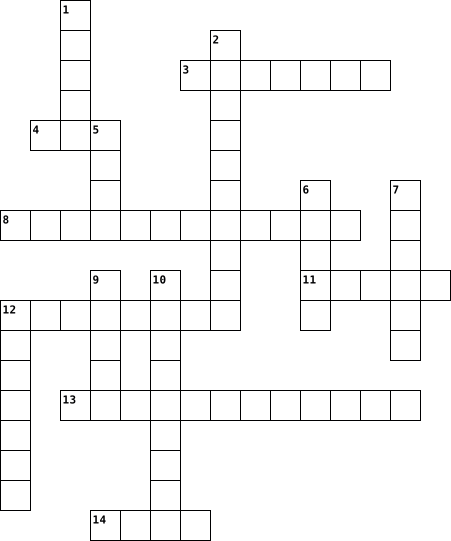
Across
- The area in the house where meals are prepared and cooked.
- A piece of furniture used for sleeping and resting. They typically consist of a mattress, a frame, and bedding such as sheets, blankets, and pillows.
- An electrical appliance used for storing and preserving food at a cool temperature. They have compartments and shelves for organizing different types of food items.
- A dedicated space in the house for reading, studying, or working. There typically have a desk or table, a comfortable chair, and bookshelves or storage for books and study materials.
- A room in the house used for personal hygiene and grooming. There usually have a toilet, sink, and bathtub or shower.
- A designated area or room in the house where individuals can get dressed, apply makeup, and groom themselves.
- A type of seating furniture designed for comfort and relaxation.They typically have padded seats and backrests, providing a comfortable place to sit or lie down.
Down
- A piece of furniture with a flat surface, often supported by legs. They are used for various activities such as dining, studying, or working.
- A common area in the house where family members relax, entertain guests, and spend quality time together. There typically have comfortable seating like sofas or chairs, a television, and sometimes a coffee table.
- An opening in a wall or partition that allows entry or exit from a room or building.
- A building where people live.They have a roof, walls, and windows. A house is a comforting and safe space where individuals and families can relax and feel at home.
- An opening in a wall or roof that allows light and air to enter and provides a view of the outside.
- A piece of furniture with a seat and backrest designed for sitting. They provide support and comfort when sitting for extended periods.
- A piece of furniture with multiple shelves used for storing books and other items. Bookshelves can be freestanding or attached to walls. They provide a designated space for organizing and displaying books, magazines, and other personal belongings.
- A room in the house where people sleep and rest.
15 Clues: A room in the house where people sleep and rest. • The area in the house where meals are prepared and cooked. • An opening in a wall or partition that allows entry or exit from a room or building. • An opening in a wall or roof that allows light and air to enter and provides a view of the outside. • ...
MSE/AIMS 2017-11-10

Across
- A formal assessment of cognitive functions such as intelligence, thought processes, and capacity for insight (physical behavior, nonverbal communication, appearance, speech patterns, mood and affect, thought content, perceptions, cognitive ability, and insight and judgment) (Halter, 2014).
- A brief test for the tracking of tardive dyskinesia and other involuntary movements. It examines facial, oral, extremity, and trunk movement (Halter, 2014).
- Regular rhythmic movements, usually of the lower limbs, with constant pacing sometimes seen; often noticed in people taking antipsychotic medication (hint: reversible EPS)(Halter, 2014).
- A variety of signs and symptoms that are often side effects of the use of certain psychotropic drugs, particularly phenothiazines (Halter, 2014).
- (writhing, worm like) movements especially of the tongue and face; a slow, worm like movement of the tongue (fasciculations), lip-smacking movements, and in-and-out tongue protrusion are typical (Halter, 2014).
- A serious and irreversible side effect of phenothiazines and related drugs; consists of involuntary tonic muscle spasms typically involving the tongue, fingers, toes, neck, trunk, or pelvis (Halter, 2014).
- Happy, sad, labile, and euphoric are terms used to describe a client's ________(Halter, 2014).
Down
- A medication-induced temporary constellation of symptoms associated with Parkinson’s disease, including tremor, reduced accessory movements, impaired gait, and stiffening of muscles (hint:reversible EPS) (Halter, 2014).
- The external manifestation of a feeling or emotion that is manifested in facial expression, tone of voice, and body language (broad, restricted, or flat) (Halter, 2014).
- Grooming and dress; Level of hygiene;Pupil dilation or constriction; Facial expression; Height, weight, nutritional status; Presence of body piercing or tattoos, scars, etc.; Relationship between appearance and age describes a client's _______(Halter, 2014).
- Articulation problems, slurring, stuttering, mumbling are examples of speech ___________(Halter, 2014).
- Involves asking the client time, place, and person (Halter, 2014).
- Acute, often painful, sustained contraction of muscles, usually of the head and neck, which typically occurs from 2 to 5 days after the introduction of antipsychotic medications (hint:reversible EPS)(Halter, 2014).
- Alert, confused, clouded, stuporous, unconscious, or comatose can be used to describe the client's level of ___________(Halter, 2014).
- Rate, volume, disturbances, and cluttering are characteristics of a client's pattern of __________(Halter, 2014).
15 Clues: Involves asking the client time, place, and person (Halter, 2014). • Happy, sad, labile, and euphoric are terms used to describe a client's ________(Halter, 2014). • Articulation problems, slurring, stuttering, mumbling are examples of speech ___________(Halter, 2014). • ...
Epidemiology 2014-11-05

Across
- When I am visible to you, you cannot see me, but when I am invisible, you long to see me. I am plenty with someone patient, but all the more scarce with a hasty one. I am greater than all, but still in the control of those who value my existence. Who am I?
- The study of the distribution and determinants of health-related states or events (including disease), and the application of this study to the control of diseases and other health
- There are 2 main factors which contribute to the distribution and prevalence Gingivitis. Oral hygiene is excellent, therefore the second factor must be
- A situation or condition, or a characteristic of a patient, that can be used to estimate the chance of recovery from a disease, the chance of the disease recurring or the outcome of the disease, what factor is this?
- It is an index used for the recording the prevalence and severity of gingivitis in school children by noting and scoring 3 areas
Down
- describes the level of occurring pathologic changes ie. describing the amount of attachment loss at the diseased sites, expressed as a mean value
- the risk of periodontal disease increases with this
- This disease index comprises of three (3) components, all used in conjunction. Each component is scored individually using the six (6) Ramfjord teeth
- This index,developed by Loe and Silness in 1967, records qualitative changes in the gingiva and takes intoconsideration the color and firmness of gingival tissue along with the presence of blood during probing.
- I have marked redness and edema, ulceration with tendency to spontaneous bleeding, according to the GI, what type of inflammation am I?
- The first index used to measure periodontitis was developed by this person
- Index used by clinicians for periodontal screening and monitoring of their patients on a routine basis
12 Clues: the risk of periodontal disease increases with this • The first index used to measure periodontitis was developed by this person • Index used by clinicians for periodontal screening and monitoring of their patients on a routine basis • ...
Y6 Education Topic 2023-09-10

Across
- systematic instruction in sports, exercises, and hygiene given as part of a school or college program.
- the art or science of restoring or preserving health or due physical condition, as by means of drugs, surgical operations or appliances, or manipulations: often divided into medicine proper, surgery, and obstetrics.
- to trace or form (characters, letters, words, etc.) on the surface of some material, as with a pen, pencil, or other instrument or means; inscribe:
- the art or science of making practical application of the knowledge of pure sciences, as physics or chemistry, as in the construction of engines, bridges, buildings, mines, ships, and chemical plants
- the Germanic language of England, widespread and standard also in the United States, Canada, and other countries colonized or settled by England, historically termed Old English (c450–c1150), Middle English (c1150–c1475), and Modern English (after c1475).
- the principles and regulations established in a community by some authority and applicable to its people, whether in the form of legislation or of custom and policies recognized and enforced by judicial decision.
Down
- Speech. the oral interpretation of written language.
- a person professionally engaged in the design of certain large constructions other than buildings and the like
- an art of sound in time that expresses ideas and emotions in significant forms through the elements of rhythm, melody, harmony, and color.
- systematic knowledge of the physical or material world gained through observation and experimentation.
- the science dealing with the areal differentiation of the earth's surface, as shown in the character, arrangement, and interrelations over the world of such elements as climate, elevation, soil, vegetation, population, land use, industries, or states, and of the unit areas formed by the complex of these individual elements.
- a period of time, usually an academic or calendar year, in which a student takes a break from school to travel, work, or volunteer, typically after ending high school and before starting college.
12 Clues: Speech. the oral interpretation of written language. • systematic instruction in sports, exercises, and hygiene given as part of a school or college program. • systematic knowledge of the physical or material world gained through observation and experimentation. • ...
POVERTY 2025-01-23

Across
- This might seem like a no-brainer: Without a ….. or a livelihood, people will face poverty
- Many of the world’s poorest populations rely on farming or … and gathering to eat and earn a living
- A lack of …. from roads, bridges, and wells, to cables for light, cell phones, and internet can isolate communities living in rural areas. So, Living off the grid often means living without the ability to go to school, work, or the market to buy and sell goods.
- Poor …. infrastructure such as sanitation and hygiene facilities can compound this, or create other barriers to escaping poverty, such as keeping girls out of school during menstruation.
- The devastating impact of a lack of financial and social safety nets on families living in extreme poverty. Even like unexpected medical expenses can quickly bankrupt a family, called with…..
Down
- …..is one of the most common forms of risk driving poverty today. Large-scale, protracted violence that we’ve seen in areas like Syria can grind society to a halt, destroying infrastructure and causing people to flee (often with nothing but the clothes on their backs).
- …. is also a cause and maintainer of poverty. If a person doesn’t get enough food, they’ll lack the strength and energy needed to work
- Insecurity happens when ……. cannot ensure the safety and security of their citizens, it can lead to displacement, loss of livelihoods, and widespread suffering, exacerbating poverty.
- Without ….., many find it difficult, if not impossible, to escape extreme poverty.
- Ineffective governments also contribute to several of the other ….. of extreme poverty mentioned above, as they are unable to provide necessary infrastructure or healthcare, or ensure the safety and security of their citizens in the event of conflict.
10 Clues: Without ….., many find it difficult, if not impossible, to escape extreme poverty. • This might seem like a no-brainer: Without a ….. or a livelihood, people will face poverty • Many of the world’s poorest populations rely on farming or … and gathering to eat and earn a living • ...
Motivation 2025-03-13

Across
- This theory argues that the behaviour of individuals is such as to maximize pleasure and to minimize pain in whatever form it may occur. It has 3 elements: expectancy, instrumentality and valence
- Comes from the rewards (or punishment) associated with working on and completing a task
- This theory states that employees become demotivated towards their jobs and employer if they feel that their inputs are greater than their outputs
- Represents the first formal attempt at analyzing employee motivation. It tells us that people are only motivated by money
Down
- This theory states that there are motivating factors (aspects of a worker’s job that can lead to positive job satisfaction, such as achievement, recognition, meaningful and interesting work and advancement at work) and hygiene factors (: aspects of a worker’s job that have the potential to cause dissatisfaction, such as pay, working conditions, status and over-supervision by managers).
- Represented by a pyramid, it states that our needs determine our actions – we will always try to satisfy them and we will be motivated to do so. If work can be organised so that we can satisfy some or all of our needs at work, then we will become more productive and satisfied.
- This theory argues that an individual’s motivation depends upon their needs and that these needs are determined by the individual’s experience, these three needs exist, to differing extents, in all employees, irrespective of their role or status within the business. The needs are achievement, affiliation and authority
- Comes from the satisfaction of working on and completing a task
- Consists of 3 psychological needs: autonomy, relatedness, competence
9 Clues: Comes from the satisfaction of working on and completing a task • Consists of 3 psychological needs: autonomy, relatedness, competence • Comes from the rewards (or punishment) associated with working on and completing a task • Represents the first formal attempt at analyzing employee motivation. It tells us that people are only motivated by money • ...
Surgical Radiography 2021-01-20

Across
- Mecial hardware with a hollow shaft and a low pullout strength compared to conventional screws which can be reasonable precision and minimal trauma (2)
- An imaging test that uses x-rays and a special dye to see inside the arteries
- A room in a hospital specially equipped for surgical operations (2)
- Type of surgery to fix a broken or fractured hip. Using pins, screws or plates to help hold broken bones together so the hip can heal correctly (2)
- A ‘C’ shaped x-ray imaging intensifier
- operation mode on a mobile C-arm that reduces the dose to the patients
- Licensed physician specially trained and qualified to perform surgical procedures
- Comprised of a large cylindrical, tapered tube with several internal structures in which an incident x-ray distribution is converted into a corresponding light image of non-limiting brightness (2)
- Responsible for maintaining the integrity, safety and efficacy of the sterile field (2)
- Sterile fabric used to isolate the surgical site from possible sources of contamination
- Condition and practices that help to maintain health and prevent the spread of diseases
- Laparoscopic procedure in which three or four small incisions are made in the upper right quadrant between the levels of the xiphoid process and umbilicus
- Reconstruction or replacement of a joint
- A feature on the mobile C-arm used to hold the previous image in order to compare the old image and the new image (2)
- A metal rod forced into the medullary cavity of long, weight bearing bones which allows ambulation within weeks rather than months. (2)
Down
- An x-ray procedure that makes it possible to see internal organs in motion. Using real time video.
- Artificially induced loss of ability to feel pain done to permit the performance of other painful procedures
- Surgical procedure performed to alleviate pain caused by neural impingement
- Radiograph of the urinary tract following injection of contrast medium directly into the urethra, bladder, etc. (2)
- A chemical substance used in imaging procedures to help show what is happening inside the body.
- Preferably an RN; monitors and coordinates all activities in the OR, provides supplies to scrub nurses and manages patient care (2)
- A method of protecting yourself
- The absence of bacteria, viruses and other microorganisms
- Something that is completely clean and free of germs
- The area between the draped patient and the instrument table (2)
25 Clues: A method of protecting yourself • A ‘C’ shaped x-ray imaging intensifier • Reconstruction or replacement of a joint • Something that is completely clean and free of germs • The absence of bacteria, viruses and other microorganisms • The area between the draped patient and the instrument table (2) • A room in a hospital specially equipped for surgical operations (2) • ...
4.01 Key Terms Crossword 2021-11-19

Across
- the size relationships of one body part to another
- Is stimulated when something is put into baby’s mouth
- The selection of a doctor to administer proper health care
- the ability to see, which for infants is blurry at birth but within a week or so, the infant is aware of surroundings
- Activities involving the large muscle or motor skills
- Taking care of the teeth and getting regular checkups and home care
- A reflex when touched on the cheek, the infant turns the head looking for food
- To scare or surprise
- Giving the baby proper nourishment
- A small quantity of something eaten, drunk, or sampled to assess its effect on the sensory receptors on the surface of the tongue or in the mouth
- The number of inches tall an infant measures lying down
- The way a person holds a baby
- To react to a stroke on the bottom of the foot
- Babies develop control of the head and neck muscles first, control of muscles move down baby to the end with legs and feet
- Maintenance of proper hygiene
Down
- Large muscle development takes place first leading to more fine muscle and complex abilities later
- The sound produced by using the vocal organs, especially the sounds used in speech
- The steps for putting on a device to absorb body elimination waste
- The resting of the body
- Occurring automatically and involuntarily as a result of the nervous system's reaction to a stimulus
- To detect or recognize something by means of sensitive nerves in the nose
- To take hold of somebody or something firmly, especially with the hand
- Increases in physical, cognitive, emotional, and social skills
- The increase in a baby's size and weight
- The period between birth and one year
- Activities involving the fingers and small muscles
- Routine visits to the doctor to maintain good health
- Selection and wearing of appropriate clothing
- To put a part of the body, especially the fingertips, in contact with something so as to feel it
- Development begins at the trunk of the body and moves outward to hands and fingers
- The amount of body mass a baby has; the infant gains one to two pounds per month in the first six months
- the perceptions of sound, made possible by vibratory changes in air pressure on the ear
- shape the description of how an infant looks
33 Clues: To scare or surprise • The resting of the body • The way a person holds a baby • Maintenance of proper hygiene • Giving the baby proper nourishment • The period between birth and one year • The increase in a baby's size and weight • shape the description of how an infant looks • Selection and wearing of appropriate clothing • To react to a stroke on the bottom of the foot • ...
Survival_02 2024-01-28

Across
- A feature in the landscape that can be readily recognized —anything from a prominent tree or rock, to a church or a lake.
- Adaptability, capacity to recover.
- A reduced representation of a portion of the surface of Earth.
- The physical features of a stretch of land.
- A state in which normal procedures are suspended and extra-ordinary measures are taken in order to avert a disaster.
- A sudden ecological phenomenon of sufficient magnitude to require external assistance.
- All of the clothing and equipment carried by a soldier.
- Permanent reduction of the risk of a disaster.
- A large area of land marked by an absence of trees and mainly level terrain
- The angle between the direction the compass needle points and the true-north line.
- Rapidly whirling, funnel-shaped air spiral that emerges from a violent thunderstorm and reaches the ground.
- The ratio between a distance on the map and the actual distance in the field.
- When you don’t have enough water in your body for it to function properly.
- Moisture that falls on the earth, such as rain, hail, mist, or snow
- A device that burns brightly, and can be used to signal for help. They can only be used once.
- The process of determining one ’ s location in the fi eld with the help of landscape features, map, or compass, or with all three combined.
Down
- A mass of land jutting up much higher than the surrounding area.
- Originally the nautical term for the direction of an object from the ship. In orienteering defined as “a direction stated in compass degrees.”
- A conspicuous feature in the landscape shown on the map and used by the orienteer to check progress.
- When a joint is separated; when a bone comes out of its socket.
- The techniques and practices involved with keeping yourself clean and healthy.
- The process of making water clean and safe enough to drink.
- Done in secret.
- A health condition that results from bad weather around you.
- Something that you use to block the wind from hitting you.
- Used whatever was available to make or create something.
- Able to be eaten.
- Confidence, enthusiasm, and discipline at any given time.
- The scraps or remains of something destroyed.
- Having to do with the ocean.
- Something that keeps you warm and protects you from the cold.
31 Clues: Done in secret. • Able to be eaten. • Having to do with the ocean. • Adaptability, capacity to recover. • The physical features of a stretch of land. • The scraps or remains of something destroyed. • Permanent reduction of the risk of a disaster. • All of the clothing and equipment carried by a soldier. • Used whatever was available to make or create something. • ...
Crossword 2020-01-17

Across
- influenced by Darwin, survival of the fittest, theory of evolution to describe society… “Social Darwinism”.. Thought that helping the weak would make the process slower.. The best would survive
- choices people make to satisfy needs and wants
- how the environment affects behavior and personality
- the unintended consequences of society
- is formed from characteristics and elements of the given phenomena, but it is not meant to correspond to all of the characteristics of any one particular case
- perspective parts that produce a stable social system
- understanding of how people make sense of their world
- the scientific study of the human mind and its functions, especially those affecting behavior in a given context.
- an exchange between two or more individuals
- founded sociology as a distinct subject, and coined the term sociology, social order/social change, believed that society changes through social dynamics, practiced “cerebral hygiene”.. Applied scientific methods to the study of social interactions...
- how social groups affect each other
Down
- understanding of how people make sense of their world
- behavior that influences or is influenced by organisms sufficiently alive to respond to one another.
- the study of the development, structure, and functioning of human society.
- ability to see connection between the world and your personal life
- the theory that all aspects of a society serve a function and are necessary for the survival of that society.
- competition and perspective
- perspectives assumptions about the nature of things
- bad consequence something has
- Developed the first sociology course in France.. Interested in the function of religion holding society together. Educated in France and Germany
- how a person interacts with others in a society
- the scientific study of human society and social relationships.
- Weber More interested in seperate groups than society as a whole.. Focused study on how society affects the individual and the meaning of people's actions. Developed “ideal type”
- a way of viewing humanity as a society.
- organization and operation of government
- the intended consequences of society
- perspectives in sociology and social psychology that emphasize a materialist interpretation of history, dialectical method of analysis, a critical stance toward existing social arrangements, and political program of revolution or, at least, reform.
- how someone reacts to 1 other person
- writer/editor for radical newspaper, society is influenced on how the economy is set up. Believed conflict is the main way social change happens. Wanted a classless society...
- anything that represents something else
30 Clues: competition and perspective • bad consequence something has • how social groups affect each other • the intended consequences of society • how someone reacts to 1 other person • the unintended consequences of society • a way of viewing humanity as a society. • anything that represents something else • organization and operation of government • ...
2nd Industrial Revolution (Part I) 2024-04-08

Across
- American inventor famous for the light bulb and his efforts to expand the use of direct current electricity
- An american railroad that ran 1,776 miles from the Atlantic to the Pacific , completed in 1869
- English chemist who created the first simple electric motor and first dynamo; all modern electrical generators and transformers are based off of his ideas
- identical components that could be used in place of one another
- The inventor of the telegraph and morse code
- A railroad, completed in 1904, running through Russia from Moscow to Vladivostok on the Pacific coast spanning over 6,000 miles
- obtained the first patent for the telephone in 1876
- German engineer who invented the gasoline-powered internal combustion engine in 1861
- Italian immigrant in New york who reportedly invented a telephone like device by 1856, well ahead of Alexander Graham Bell, but his patent was rejected
- a group of corporations who join forces in an effort to fix prices, set production quotas, or control markets
- developed a new process for making steel cheaper in 1856
- fractional shares of ownership in a company sold to investors
- French chemist who showed the link between microbes and disease by 1870; he also developed vaccines against rabies and anthrax
Down
- a machine that generates electricity
- American automobile manufacturer who began making cars cheaper using the assembly line and interchangeable parts
- British army nurse who insisted on better hygiene in field hospitals and promoted the idea that "The first requirement in a hospital, is that it should do no harm to the sick."
- business that is owned my many investors who have purchased stock
- bicycle makers who designed and flew the first airplane in North Carolina, 1903
- English surgeon who discovered how antiseptics prevented infection and insisted that surgeons sterilize their instruments and wash their hands before operating
- the process of manufacturing a product on a moving platform or belt, where workers specialize in adding specific parts as it moves along in the process
- Italian who invented and experimented with radio in the 1890s and early 1900s allowing wireless communication across the Atlantic
- developed by Samuel Morse by 1844, the telegraph could send coded messages long distances over wires using electricity
- Swedish chemist who invented dynamite to be used for construction but later used for warfare
- German engineer who obtained the first patent for an automobile which had three wheels in 1886
24 Clues: a machine that generates electricity • The inventor of the telegraph and morse code • obtained the first patent for the telephone in 1876 • developed a new process for making steel cheaper in 1856 • fractional shares of ownership in a company sold to investors • identical components that could be used in place of one another • ...
Smrt 2023-06-06

Across
- Something given, done or said to respect
- Man’s best friend
- To remove something from service
- To give the power to perform a certain risk
- A way to express your feelings or thoughts usually
- A short saying that expresses an idea
- To creat Interest by marking exaggerated claims
- The combination of audio, images, and videos
- A decorative style of the 1920s
- the quality or state being
- Extremely impressive or surprising
- Not clean
- To bring up to mind
- Extremely small.
- The act of telling or showing thoughts
- Lasting for only a short period
- The way the parts of something are put together
- Appropiate or suitable
- Small, loose, clingy bit of fiber or fluff
- A large size or quantity
- Easily recognized or identified
- Boring or lacking originality
- Any space that is free and open to everyone
- To make a dirty mark
- To make fun of say insulting things to.
- amounts that are part of a whole
- Marks, scratching, or drawings made on a surface
- Capable of reflecting light
- Arranged in pr according to the order in time
- Charming or fascinating
- lasting or meant to last a long time
- The way things are seen
- A fake name adopted by someone
- Being nothing more than
Down
- not made known to the public
- Add decoraciones or seasonings
- Someone who watches or observes
- To create or imagine something
- Intended to clean something thoroughly
- To resist or stand up to
- A small castle with wet sand
- Destruction or damage of property done on purpose
- A persons who sees or observes
- Contributing to health and hygiene
- To keep tapping or kicking a ball quickly to keep it moving.
- something that excites and attracts the eyes
- A symbolic representation of the universe
- Fine parchment made from the skin
- Of highest rank or importance
- Dull and ordinary
- A name
- The act of explaining or understanding
- Very large
- Art made of threads
- So shaded
- A work of art consisting of mostly inanimate object
- The setting of word or phrase
- The art or procedure of making prints
- To represent or be an ideal example of
- differ from normal reality
- Substances that are used as food
- Worthy of praise
- Made up of lines or shapes
- Something that is unpleasant or offensive
64 Clues: A name • Not clean • So shaded • Very large • Extremely small. • Worthy of praise • Man’s best friend • Dull and ordinary • To bring up to mind • Art made of threads • To make a dirty mark • Appropiate or suitable • Charming or fascinating • The way things are seen • Being nothing more than • To resist or stand up to • A large size or quantity • the quality or state being • differ from normal reality • ...