
plants Crossword Puzzles
Plants, Plants, Plants! 2021-07-23

Across
- These absorb water and dissolved nutrients, and anchor the plant in the soil.
- These usually have both male and female parts for reproduction.
- Water evaporates from the leaves of the plants, leaving room for more water molecules to take their place. This helps the water travel up the plant.
- Plants ____ __ _____ soil. Plant roots hold the soil together.
- Some plants have long _______ which help them reach water from deep underground.
- The process by which plants make their own food using water, energy from the sun, and carbon dioxide. This produces oxygen and glucose.
- The process of gases entering and exiting a plant
- Making clothing out of cotton is an example of using plants for____________
- These produce food for the plant, take in and release gases, and allow water to exit the plant.
- The process of particles moving from an area of high concentration to an area of low concentration.
- Cacti stems are adapted to store lots of _______ to help them survive in the dry desert.
- These provide a pathway for movement of water and food. They also support the leaves and reproductive structures.
Down
- Plants produce this during photosynthesis, and it helps animals breathe.
- Humans often use plants for _______. An example would be making chocolate out of cocoa.
- The process of water moving across a membrane from an area of high water concentration to an area of low water concentration.
- Some plants are adapted to have colourful flowers that attract insects like bees. These insects ________ the plants as they go from flower to flower.
- The process that helps water move up a plant through the attraction between molecules and the walls of tiny tubes in the stem.
- There are separate male and female _________ for reproduction.
- Plants provide ____________ which protects organisms from weather and predators.
- These contain an embryo that will form a new plant, and they often contain a food supply for the embryo as well.
- Some plants have ________ roots, which form a thick mat that gathers water at the upper layers of the soil.
21 Clues: The process of gases entering and exiting a plant • Plants ____ __ _____ soil. Plant roots hold the soil together. • There are separate male and female _________ for reproduction. • These usually have both male and female parts for reproduction. • Plants produce this during photosynthesis, and it helps animals breathe. • ...
Plants, Plants, Plants! 2025-12-23

Across
- These absorb water and dissolved nutrients, and anchor the plant in the soil.
- These usually have both male and female parts for reproduction.
- Water evaporates from the leaves of the plants, leaving room for more water molecules to take their place. This helps the water travel up the plant.
- Plants ____ __ _____ soil. Plant roots hold the soil together.
- Some plants have long _______ which help them reach water from deep underground.
- The process by which plants make their own food using water, energy from the sun, and carbon dioxide. This produces oxygen and glucose.
- The process of gases entering and exiting a plant
- Making clothing out of cotton is an example of using plants for____________
- These produce food for the plant, take in and release gases, and allow water to exit the plant.
- The process of particles moving from an area of high concentration to an area of low concentration.
- Cacti stems are adapted to store lots of _______ to help them survive in the dry desert.
- These provide a pathway for movement of water and food. They also support the leaves and reproductive structures.
Down
- Plants produce this during photosynthesis, and it helps animals breathe.
- Humans often use plants for _______. An example would be making chocolate out of cocoa.
- The process of water moving across a membrane from an area of high water concentration to an area of low water concentration.
- Some plants are adapted to have colourful flowers that attract insects like bees. These insects ________ the plants as they go from flower to flower.
- The process that helps water move up a plant through the attraction between molecules and the walls of tiny tubes in the stem.
- There are separate male and female _________ for reproduction.
- Plants provide ____________ which protects organisms from weather and predators.
- These contain an embryo that will form a new plant, and they often contain a food supply for the embryo as well.
- Some plants have ________ roots, which form a thick mat that gathers water at the upper layers of the soil.
21 Clues: The process of gases entering and exiting a plant • Plants ____ __ _____ soil. Plant roots hold the soil together. • There are separate male and female _________ for reproduction. • These usually have both male and female parts for reproduction. • Plants produce this during photosynthesis, and it helps animals breathe. • ...
Plants, Plants, Plants! 2016-03-22

Across
- These absorb water and dissolved nutrients, and anchor the plant in the soil.
- These usually have both male and female parts for reproduction.
- Water evaporates from the leaves of the plants, leaving room for more water molecules to take their place. This helps the water travel up the plant.
- Plants ____ __ _____ soil. Plant roots hold the soil together.
- Some plants have long _______ which help them reach water from deep underground.
- The process by which plants make their own food using water, energy from the sun, and carbon dioxide. This produces oxygen and glucose.
- The process of gases entering and exiting a plant
- Making clothing out of cotton is an example of using plants for____________
- These produce food for the plant, take in and release gases, and allow water to exit the plant.
- The process of particles moving from an area of high concentration to an area of low concentration.
- Cacti stems are adapted to store lots of _______ to help them survive in the dry desert.
- These provide a pathway for movement of water and food. They also support the leaves and reproductive structures.
Down
- Plants produce this during photosynthesis, and it helps animals breathe.
- Humans often use plants for _______. An example would be making chocolate out of cocoa.
- The process of water moving across a membrane from an area of high water concentration to an area of low water concentration.
- Some plants are adapted to have colourful flowers that attract insects like bees. These insects ________ the plants as they go from flower to flower.
- The process that helps water move up a plant through the attraction between molecules and the walls of tiny tubes in the stem.
- There are separate male and female _________ for reproduction.
- Plants provide ____________ which protects organisms from weather and predators.
- These contain an embryo that will form a new plant, and they often contain a food supply for the embryo as well.
- Some plants have ________ roots, which form a thick mat that gathers water at the upper layers of the soil.
21 Clues: The process of gases entering and exiting a plant • Plants ____ __ _____ soil. Plant roots hold the soil together. • There are separate male and female _________ for reproduction. • These usually have both male and female parts for reproduction. • Plants produce this during photosynthesis, and it helps animals breathe. • ...
plants 2016-03-12

Across
- transports food, water and nutrients around the plant
- hole that let CO2 in and O out
- our brain is one of our vital ______
- a substance formed by decomposed animals
- p________ mesophyll
- a gas that is taken in by plants
- spaces between guard cells
- part of the palisale mesophyll
- used to remove green chorophyll
- transports water
- absorbs sunlight for photosynthesis
- colour where no starch is present
- absorbs infared radiation
- used to anchor a plant
- stored glucose
- the sun provides l________
- burning of natural resources
- a gas respired by a plant
- produced when food is broken down
Down
- there is a upper and lower section to this
- in plant cell walls
- to test for starch
- process used to make fossil fuels
- top layer of the leaf structure
- a large group of organic compounds in food
- opens to create a hole
- process used to make food
- s______ mesophyll
- protects a cell
- there are many different gases in this area, a_____ s______
- when a plant is deprived of starch
- transports glucose
- a living thing is made up of many _____
- green substance in leaves
- dead animals decopose. this process is called __________
- a process that involes oxygen
- colour that shows starch
- this is used to make food
38 Clues: stored glucose • protects a cell • transports water • s______ mesophyll • to test for starch • transports glucose • in plant cell walls • p________ mesophyll • opens to create a hole • used to anchor a plant • colour that shows starch • process used to make food • green substance in leaves • absorbs infared radiation • this is used to make food • a gas respired by a plant • ...
Plants 2018-05-09

Across
- A point where leaf is attached to the stem
- ____ cells control the opening and closing of stomata
- Pattern of veins in a leaf
- Loss of water from the plant
- Material found in cell walls to strengthen them
- Main carbohydrate produced in photosynthesis
- Causes a reaction in an organism
- Plant tissue capable of mitosis
- Ripens bananas and other fruit
- Process through which water is absorbed by the roots
- Can cause the roots to grow down into the soil
Down
- ____ tissue is a covering layer in a plant
- Seed leaf
- Modified stems are also known as ____
- Change in growth of a plant in response to light
- Affects the enzyme activity in plants
- Roots that don't develop from a radicle
- Change in the growth of a plant as a result of an external response
- Change in growth of a plant in response to gravity
- Vessel that is living and has companion cells present
- Sticking of similar molecules to each other
- Little openings in a leaf
22 Clues: Seed leaf • Little openings in a leaf • Pattern of veins in a leaf • Loss of water from the plant • Ripens bananas and other fruit • Plant tissue capable of mitosis • Causes a reaction in an organism • Modified stems are also known as ____ • Affects the enzyme activity in plants • Roots that don't develop from a radicle • ____ tissue is a covering layer in a plant • ...
PLANTS 2013-04-02

Across
- type of seedless vascular plant
- plant have a single seed leave
- male reproductive organ in flowering plants
- diploid generation of a plant life cycle
- division of hornworts
- division of club moss
- spores on the underside of fern leaves
- division of mosses
- covered seeds
- female reproductive organ in flowering plants
- vascular tissue that transports water
Down
- naked seed
- leaves of ferns
- largest group of gymnosperms
- ripened ovary
- division of liverworts
- covering on leaves that reduces water loss
- seed begins to grow and break through the seed coat
- found in all plants
- division of flowering plants
- water loss through evaporation
- plant having two seed leaves
- openings on the underside of leaves used for gas exchange
- plant ancestor
- type of seedless nonvascular plant
- vascular tissue that transport food
26 Clues: naked seed • ripened ovary • covered seeds • plant ancestor • leaves of ferns • division of mosses • found in all plants • division of hornworts • division of club moss • division of liverworts • largest group of gymnosperms • division of flowering plants • plant having two seed leaves • plant have a single seed leave • water loss through evaporation • type of seedless vascular plant • ...
Plants 2013-11-04

Across
- Used to anchor plant
- Primary growth for height
- Loosely packed cells
- Used for storage, metabolism, and support
- Where branch connects to main stem
- Found underneath the leaf
- Outside tissue
- Used to transport water and nutrients
- Secondary growth for width
- Irregular shaped Cell
- Found at the tip of roots for protection
Down
- attaches leaf to branch
- Secondary root
- Extremely rigid dead cells
- A covering to protect new growth
- Area between two nodes
- of dividing cells
- Bud at the end of the stem
- Waxy layer that provides protection
- Primary site of photosynthesis
20 Clues: Secondary root • Outside tissue • of dividing cells • Used to anchor plant • Loosely packed cells • Irregular shaped Cell • Area between two nodes • attaches leaf to branch • Primary growth for height • Found underneath the leaf • Extremely rigid dead cells • Bud at the end of the stem • Secondary growth for width • Primary site of photosynthesis • A covering to protect new growth • ...
Plants 2021-10-15

Across
- Iris has a bulb and blooms in mid summer
- has prickly things on it
- large and very brightly colored flowers
- the large flowerheads look like pom poms growing on bushes that can get as tall as trees
- it can make your skin really itchy
- highly fragrant; red, purple, pink, or white flowers
- when you blow it all of its pieces fly away
- it grows pineapples
- glossy evergreen leaves
- helps make clothes
- catches small flying insects
- helps you breathe underwater
Down
- a fragrant flower that's commonly reddish-pink
- a spreading vine
- attacks anyone who came near its branches
- makes chocolate
- has honey in it
- adds a minty flavor to food and drinks
- screams when you take it out of its pot
- grows grape-like fruits
20 Clues: makes chocolate • has honey in it • a spreading vine • helps make clothes • it grows pineapples • grows grape-like fruits • glossy evergreen leaves • has prickly things on it • catches small flying insects • helps you breathe underwater • it can make your skin really itchy • adds a minty flavor to food and drinks • large and very brightly colored flowers • ...
Plants 2021-11-29

Across
- A seed absorbs water and the root breaks through the seed
- Contains structures that will later turn into sperm cells
- a type of seedless plant that often grows on the forest floor
- Anchors the plant and absorbs water and nutrients
- Water molecules sticking to other water molecules
- A type of plant that transports materials through vessels/tubes
- Protects the root from injury
- A stalklike structure that holds up the anther
- A female reproductive part of the flower. Consists of a stigma, style, and ovary
- A plant's growth response toward or away from a stimuli
- A tree trunk grows and expands at different rates, causing _____________ to form
- A tropism that plants move against
- Separates phloem from xylem
- The main plant hormone that speeds up growth
- Captures the Sun's energy for photosynthesis
- Colorful, leaflike structures that attract pollinators
- A tropism that some plants (vines) move towards
Down
- Water molecules sticking to other objects
- A plant that produces seeds that have no protective fruit or pedal
- An organism that has cells with nuclei. One of the 3 main characteristics of a plant
- Contains a young plant inside a protective coating
- A protective coating around a seed
- A plant that proceeds seeds inside a protective fruit or pedal
- A tropism that all plants move towards
- An organelle that protects and supports the cell. One of the 3 main characteristics of a plant.
- a tiny cell that can grow into a new organism
- Water moving against gravity by the forces of cohesion and adhesion
- Male reproductive parts of a flower. Made up of the anther and the filament
- A small leaflike part of the flower that protects the developing flower
- Produces pollen and is held up by the filament
- Provides the plant with support and a way to transport materials
- A chemical that affects growth and development
- Something that makes its own food. One of the 3 main characteristics of a plant.
33 Clues: Separates phloem from xylem • Protects the root from injury • A protective coating around a seed • A tropism that plants move against • A tropism that all plants move towards • Water molecules sticking to other objects • The main plant hormone that speeds up growth • Captures the Sun's energy for photosynthesis • a tiny cell that can grow into a new organism • ...
Plants 2022-03-22

Across
- The _____ layer is where photosynthesis happens in the leaf.
- The type of vascular tissue that moves sugar/food
- Seedless plants can be used in the formation of _____, one of the three fossil fuels.
- Angiosperms with flower parts in fours or fives, branching veins, and two cotyledons in their seeds
- Angiosperms with flower parts in threes, parallel veins, and one cotyledon in their seeds
- Small openings in the leaf surface that allow for gases to be exchanged
- The waxy, protective layer on stems and leaves of plants is the _____.
- A non-flowering seed plant
- A ______ is the part of the seed used for food storage.
- _____ plants have structures that move water and other substances.
- An apple tree is an example of this type of seed plant
Down
- A(n) _____ is a plant that completes its life cycle in one year.
- Cell walls are made of ______ to give the plant more support and strength.
- _____ cells open and close stomata.
- The process plants do to make sugar
- Moss plants are held in place by root-like structures called _____.
- The type of vascular tissue that produces new xylem and phloem cells
- Seedless nonvascular plants have _____ instead of stems.
- The type of vascular tissue that moves water
- The first plants to grow in new or disturbed areas are _____ species.
- The green pigment found in the chloroplasts of plants
- Veins/vascular bundles are located in the ______ layer of leaves in a plant.
- Scientists hypothesize plants evolved directly from green _____.
23 Clues: A non-flowering seed plant • _____ cells open and close stomata. • The process plants do to make sugar • The type of vascular tissue that moves water • The type of vascular tissue that moves sugar/food • The green pigment found in the chloroplasts of plants • An apple tree is an example of this type of seed plant • ...
Plants 2022-02-01

Across
- root system with one main root
- type of leaf with one leaf blade on one leaf stem
- type of stem made of wood
- consist of a seed coat, baby plant, and store of food
- absorbs water and anchors the plant
- the way pollen gets from the male to female part of the flower
- the sprouting of a seed
- plant who does not protect its seeds; often has cones
- seedless, nonvascular plant
Down
- process by which a plant makes food
- ripened ovary
- type of leaf with multiple leaf blades on one leaf stem
- the way a plant grows towards the light
- type of stem that is soft and green
- plant whose life cycle is many years
- seedless, vascular plant
- transport tube for food
- root system with many main roots coming off of plant
- transport tube for water
- plant who protects its seeds in an ovary
20 Clues: ripened ovary • transport tube for food • the sprouting of a seed • seedless, vascular plant • transport tube for water • type of stem made of wood • seedless, nonvascular plant • root system with one main root • process by which a plant makes food • type of stem that is soft and green • absorbs water and anchors the plant • plant whose life cycle is many years • ...
Plants 2022-10-04

Across
- edible reproductive body of seed plant
- Cultivation plants and water .
- retants water and nutrients
- any living thing such as fruits that humans consider troublesome.
- part of plant consumed by humans or animals
- media mixers of components that provide nutrients to the plants
- Culture biological research.
- to cut twigs,branches,roots
- proning on plants to make plants grow.
- growing plants in an air mist environment without soil.
- act of plotting plants to grow as one plant.
- Breeding ,raising and harvesting fish and aquatic plants.
- store nutrients
- cherry,citrus.
- grows in opposite directions of the root supports leves, flowers,frits
Down
- green plants use sunlight to get food from carbon monoxide and water .
- A flower plant that takes two years to complete its biological life cycle
- to form new roots to grow.
- for plants that produce bulbs.
- fertilize the plant
- provide nutrients or nourishment.
- store food in the plant
- growing in soil,sand,gravel,liquids.
- A plant that lives more than two years
- provide compost to the plant
- Moss a component of most potting soil
- mortified stemes
- blossom of the a plant
- engineering A process that uses laboratory based technologies to alter the DNA.
- plants that only live through one season, do not grow back year to year.
30 Clues: cherry,citrus. • store nutrients • mortified stemes • fertilize the plant • blossom of the a plant • store food in the plant • to form new roots to grow. • retants water and nutrients • to cut twigs,branches,roots • provide compost to the plant • Culture biological research. • Cultivation plants and water . • for plants that produce bulbs. • provide nutrients or nourishment. • ...
Plants 2021-04-25

Across
- sniegpulkstenīte
- auksts
- sēkliņa
- ceriņi
- gaiss
- saknes
- tree priede
- dzeloņi
- saulespuķe
- auga sula
- paparde
- skābeklis
- ēnains
- roze
- sauss
- mitrs
- saulesgaisma
- mežs
- pienene
- auglis
- sniegs
- ledus
- orhideja
Down
- pumpurs
- adatas
- lilija
- kaktusi
- lapas
- zieds
- dioxide ogļskābā gāze
- peonija
- zvaniņš
- fotosintēze
- magone
- stumbrs
- saulains
- sēnes
- tuksnesis
- tree palma
- lietus
- narcise
- tulpe
- karsts
- gāze
- margrietiņa
- zars
- augt
47 Clues: roze • gāze • mežs • zars • augt • lapas • gaiss • zieds • sēnes • sauss • mitrs • tulpe • ledus • adatas • lilija • auksts • ceriņi • saknes • magone • ēnains • lietus • karsts • auglis • sniegs • pumpurs • kaktusi • sēkliņa • peonija • zvaniņš • dzeloņi • stumbrs • paparde • narcise • pienene • saulains • orhideja • tuksnesis • auga sula • skābeklis • saulespuķe • tree palma • tree priede • fotosintēze • margrietiņa • saulesgaisma • sniegpulkstenīte • dioxide ogļskābā gāze
Plants 2021-04-01

Across
- Tissue that interacts with environment such as epidermis
- Connects Stigma to Ovary
- sticky surface atop pistil that catches pollen
- A deactivated version of ATP
- Tissue used for food storage
- Chemical that absorbs light energy for photosynthesis
- Female part of flower
- Organism that makes its own food
- This Tissue is used for transport
- Vascular Tissue that moves water
- hairs Increase the surface area for water absorption
- Respiration with Oxygen
- Vascular tissue that moves sugars
- Male part of Flower
- Scientific name for sugars
- Male gamete of plants
- These are required to start the chemical reaction
- These are the what gets produced during the reaction
Down
- Respiration without Oxygen
- Contains the pollen
- Holds the Anther aloft
- Waxy layer on leaf surface
- Chemical Currency produced by Cell Respiration
- C(6)H(12)0(6)
- Contains the eggs
- Opening in Leaf surface for gas exchange
- Processed used by plants to make food
- Tissue that makes new xylem and phloem and causes widening of plant (Secondary growth)
- Used by cells to make energy in ATP
- This Tissue is responsible for primary plant growth
30 Clues: C(6)H(12)0(6) • Contains the eggs • Contains the pollen • Male part of Flower • Female part of flower • Male gamete of plants • Holds the Anther aloft • Respiration with Oxygen • Connects Stigma to Ovary • Respiration without Oxygen • Waxy layer on leaf surface • Scientific name for sugars • A deactivated version of ATP • Tissue used for food storage • Organism that makes its own food • ...
Plants 2021-02-19

Across
- the other word of glucose
- a green pigment found in plants
- that controls water loss and gas exchange
- test What experiment to see if the plant is doing photosynthesis
- something that plants need that is a liquid
- the plant cell that produces glucose
- to see if glucose is being made in the plant
- the Factors affecting rate of photosynthesis that is only 3 word
- how does the oxygen and carbon dioxide exchange
- a waste product of plants
Down
- something that is between 2 epidermal cell layer
- how does the water get into the roots of a plant
- how does the sugar from the source go to the sink
- what is the process called when plants make sugar and oxygen
- the Factors affecting rate of photosynthesis that is only 1 word
- a layer of something that makes it water proof and reduce water loss
- the cell that is in the roots that absorbs water
- Something that plants need and it is not from the Earth
- other word storage
- Something that plants need in order to do photosynthesis and animals release it as a waste
20 Clues: other word storage • the other word of glucose • a waste product of plants • a green pigment found in plants • the plant cell that produces glucose • that controls water loss and gas exchange • something that plants need that is a liquid • to see if glucose is being made in the plant • how does the oxygen and carbon dioxide exchange • ...
Plants!!!! 2024-01-11

Across
- Produces leaves on plants
- Kingdom plants belong to.
- Two leaves at each node
- Water and sugar conducting tissues in a leaf
- A protective covering on leaves
- Study of plants
- The outermost layer of bark
- Most plants have roots, stems and _____
- A leaf with only one blade on a petiole
- Necessary for a plant’s survival
- Three types of leaf venation are parallel, palmate and _____
- Have taproot systems
- Anchor the plant and absorb water
- A softer and more flexible type of stem
- Stems that are hard and not flexible
- Thick-walled cells in a plant
Down
- The cell walls of plants are made of this
- The flat green part of a leaf
- Xylem is made of long _______ cells
- Part of a leaf between the node and blade
- The outermost tissue of leaves
- The arrangement of veins in a leaf
- region where a leaf is attached
- Outside the xylem of a tree trunk
- Converts the sun’s light energy into food
- The xylem and phloem are arranged in _______ bundles
- Made of layers of xylem
- A system of thicker and longer roots
- Color of chloroplasts
- A leaf with individual leaflets
- A root system that has a cluster of roots
- Travels in the phloem to growing parts of a plant
- Turgor Pressure is caused by this
- Carries a sugar solution from the leaves
- Plants make their own food
35 Clues: Study of plants • Have taproot systems • Color of chloroplasts • Two leaves at each node • Made of layers of xylem • Produces leaves on plants • Kingdom plants belong to. • Plants make their own food • The outermost layer of bark • The flat green part of a leaf • Thick-walled cells in a plant • The outermost tissue of leaves • region where a leaf is attached • ...
Plants 2024-02-23

Across
- product of pine trees used in tars and turpentine
- have leaves called fronds
- plants with veins and tube to transport water
- hold the leaves of a plant
- trees with cones and needles
- carry water and nutrients from roots to leaves
- nonvascular plant looks similar to moss liver leaves
- resemble small evergreen trees
- flowering vascular plants
- live for three or more years come back each year
- underground stems of horsetails
Down
- needs two growing seasons to develope
- tubes carry sugar and food for a plant
- main central root of a plant
- plants with very little veins and tube
- group of angiosperms that have 4-5 peddles
- lives in hot dry deserts and rainforests conifer like
- angiosperm that lives for only one season
- root like structure of mosses
- Largest sequoia in California
- monocots tend to have these kinds of roots
- underground growth of a plant
- non flowering plant that produces cones
- nonvascular plant only a few millimeters tall
- tree with fan-shaped leaves
- one cotyledon in the seed( corn)
26 Clues: have leaves called fronds • flowering vascular plants • hold the leaves of a plant • tree with fan-shaped leaves • main central root of a plant • trees with cones and needles • root like structure of mosses • Largest sequoia in California • underground growth of a plant • resemble small evergreen trees • underground stems of horsetails • one cotyledon in the seed( corn) • ...
Plants! 2024-02-29

Across
- The female part of the flower, consisting of the stigma, style, ovary and ovule.
- The joining of plant sperm and egg to make a seed, after pollination has taken place.
- This plant structure is the site of reproduction.
- The male part of the flower, consisting of the anther and filament.
- The petals on a flower are collectively referred to as the ______.
- A mode of reproduction that results in new organisms by the combination of genetic information of two individuals of different sexes.
- This plant structure is responsible for photosynthesis.
- This plant structure functions to anchor and support as well as absorb minerals and water from the soil.
- The nutrients that the baby plant will live off of until it is mature enough to photosynthesize.
Down
- A form of asexual propagation in which reproduction occurs through the vegetative parts of a plant such as stems, leaves, buds, and roots
- This part of the flower develops into a fruit.
- The sepals on a petal are collectively referred to as the ______.
- Offspring produced from asexual reproduction are _____ to their parent plant.
- This part of the flower develops into a seed.
- The transferal of pollen from anther to stigma.
- A mode of reproduction results in new offspring that is produced by a single parent. The new individuals produced are genetically and physically identical to each other.
- In the ovule, an egg cell and sperm cell fuse to form the _____ (baby plant).
- A large primary root that gives rise to smaller lateral roots.
- reproductive cells, similar to seeds, that are capable of developing into a new individual without fusion with another reproductive cell.
- This plant structure functions to support leaves, flowers, and fruits and transport water and minerals.
20 Clues: This part of the flower develops into a seed. • This part of the flower develops into a fruit. • The transferal of pollen from anther to stigma. • This plant structure is the site of reproduction. • This plant structure is responsible for photosynthesis. • A large primary root that gives rise to smaller lateral roots. • ...
Plants 2020-07-01

Across
- What the ovary develops into after fertilisation
- Where respiration takes place
- The site where photosynthesis occurs
- Holds up the stigma
- Produces pollen
- The part of the flower that holds the anther up
- The transfer of pollen from the anther to the stigma
- Catches pollen
- Ball of cell that forms when fertilised egg divides
- Movement of seeds away from the parent plant
Down
- Reproductive cells
- Contains cell sap and helps keep the cell firm
- The development of a plant from a seed
- A chemical reaction where carbon dioxide and water are converted into glucose and oxygen
- Where chemical reactions take place in a cell
- Male reproductive part of the flower
- Smallest unit in an organism
- Where the nucleus of a pollen grain joins with an ovule
- Controls the cell and contains genetic material
- Produces ovules
- The female reproductive part of the flower
21 Clues: Catches pollen • Produces pollen • Produces ovules • Reproductive cells • Holds up the stigma • Smallest unit in an organism • Where respiration takes place • The site where photosynthesis occurs • Male reproductive part of the flower • The development of a plant from a seed • The female reproductive part of the flower • Movement of seeds away from the parent plant • ...
PLANTS 2020-10-21

Across
- Container of cells who work hard on photosynthesis
- We get nutrient from fresh fruit and vegetables
- Green pigment in the leaf which captures the energy from light
- dioxide Gas that are being used by plants during photosynthesis
- Nutrient that is used to make new cells, and used for making important chemicals in the body
- Roots ____ water from underground
- Process of green plant converting light energy into chemical energy
- Iron in red meat, calcium in dairy products
- Part of the plant that hold the plant still on the ground
- A hollow tube carrying either water or minerals around
- Nutrients that do not provide energy
- Potential, Kinetic, Light, sound, Chemical, Thermal, etc.
- A type of carbohydrate that can be found on corn, pasta, beans, potatoes, rice, etc
- Long hollow tubes that carry water and minerals from the roots of the plant
Down
- Too much of these nutrients would increase the blood sugar levels too high
- Cells in the leaf that absorbs light
- Substances in food that the body uses to provide energy
- Sweet, duh
- Roots ______ the plant firmly on the ground, preventing any force to shove the plant over
- Material made of living cells and tissues
- Gas that plants let out after the process of photosynthesis
- Absorbed by the Chloroplast and converted to energy by the chlorophyll
- Protector of the leaf's cells
- Is a lower tiny hole inside a leaf that left carbon dioxide get into the leaf
- Mainly provides energy stored under the skin, also needed to make new cell membranes
25 Clues: Sweet, duh • Protector of the leaf's cells • Roots ____ water from underground • Cells in the leaf that absorbs light • Nutrients that do not provide energy • Material made of living cells and tissues • Iron in red meat, calcium in dairy products • We get nutrient from fresh fruit and vegetables • Container of cells who work hard on photosynthesis • ...
PLANTS 2020-10-20

Across
- highly specialized organelle that serves as the information and administrative center of the cell.
- he action or process of distributing seeds over a wide area.
- part of the flower where it's the most colorful
- the vascular tissue in plants that conducts water and dissolved nutrients upward from the root and also helps to form the woody element in the stem.
- is a fluid-filled pocket in the cell's cytoplasm
- the ovules are inside the _____
- the ovule changes and becomes a _____
- the female gametes are inside the ______
- the process by which green plants and some other organisms use sunlight to synthesize foods from carbon dioxide and water.
- substance needed for making chlorophyll
- pores in the epidermis of the leaf or stem of a plant
- it contains mineral salts
Down
- a group of green pigments used by organisms that convert sunlight into energy via photosynthesis.
- The jellylike material that makes up much of a cell inside the cell membrane
- the transfer of pollen from anther to a stigma
- the nucleus of a male and female gamete joined together
- something sweet and sugary that insects eat
- this is where pollen grains are made
- the zygote divides the form ____
- also known as O2
- the vascular tissue in plants that conducts sugars and other metabolic products downward from the leaves.
- the ovary changes into a fruit
- a substance needed so the plant can make proteins
- long, slender stalk that connects the stigma and the ovary.
- plant changes some of the glucose into different kind of carbohydrate
25 Clues: also known as O2 • it contains mineral salts • the ovary changes into a fruit • the ovules are inside the _____ • the zygote divides the form ____ • this is where pollen grains are made • the ovule changes and becomes a _____ • substance needed for making chlorophyll • the female gametes are inside the ______ • something sweet and sugary that insects eat • ...
Plants 2020-10-20

Across
- The parts of a flower that are often conspicuously coloured.
- Is the membrane found in all cells that separates the interior of the cell from the outside environment.
- It is a polymer made by plants to store energy.
- Plants need this to stand upright.
- It is the gaseous phase of water.
- It is a pore, found in the epidermis of leaves, stems, and other organs, that controls the rate of gas exchange.
- The way plants make food.
- It is the process by which water changes from a liquid to a gas or vapour.
- Plants use this energy of the sun to change water and carbon dioxide into a sugar.
- The part of the pistil where pollen germinates.
- This substance provide mineral salts, which help the plant grow larger and healthier.
- A substance needed so that the plant can make proteins.
- It is the transfer of pollen from a male part of a plant to a female part of a plant.
Down
- Transports water from the roots up to the leaves.
- Contains the male gametes and are made in anthers of flowers.
- Occurs when one of the sperm cells fuses with the egg inside of an ovule.
- It means lack, or shortage.
- The pollen producing part of a flower, usually with a slender filament supporting the anther.
- These are substances plants get from the soil.
- Is a highly specialised organelle that serves as the information and administrative centre of the cell.
- It is a green photosynthetic pigment found in plants, algae, and cyanobacteria.
- A substance needed to make chlorophyll.
- The part of the stamen where pollen is produced.
- Is a thick solution that fills each cell and is enclosed by the cell membrane.
- The enlarged basal portion of the pistil where ovules are produced.
25 Clues: The way plants make food. • It means lack, or shortage. • It is the gaseous phase of water. • Plants need this to stand upright. • A substance needed to make chlorophyll. • These are substances plants get from the soil. • It is a polymer made by plants to store energy. • The part of the pistil where pollen germinates. • The part of the stamen where pollen is produced. • ...
Plants 2020-10-20

Across
- produced when the zygote starts to divide
- the movement of energy from one place to another
- are brightly colored to attract insects and birds, they are the reproductive organs of plants
- a sweet and sugary thing that insects/birds feed on
- the nucleus of a male gamete and the nucleus of a female gamete join together
- while the ovule changes into a seed, the ovary is also changing into a........
- produced by anthers, contains the male gametes of the flower
- contains female gametes and are inside the ovaries
- when the ovule begins to change it gradually grows into a........
- the way that plants make food
- produce pollens
- the tough outer coat of the seed
- is also needed for making chlorophyll, a shortage of this makes plant leaves grow yellow
Down
- substances plants normally get from soil
- transfer of pollen from another to a stigma
- helps to avoid competitions with the parent plant
- needed so the plants can make proteins, also needed to make Chlorophyll
- contain mineral salts
- a different kind of carbohydrate, is made of thousands of glucose molecules linked together
- a new cell formed after fertilisation
- a group of chemicals which sugar belong to
- needed by plants for support, cooling, transport, and photosynthesis
- also known as sugar
- most colorful part of the flower
- the receptive tip of a carpel, the part of the pistil where the pollen germinates
25 Clues: produce pollens • also known as sugar • contain mineral salts • the way that plants make food • most colorful part of the flower • the tough outer coat of the seed • a new cell formed after fertilisation • substances plants normally get from soil • produced when the zygote starts to divide • a group of chemicals which sugar belong to • ...
Plants 2020-10-20

Across
- reproductive structure found in flowering plants.
- the part of a flower that contain the ovules
- distribute or spread over a wide area.
- a group of chemical found in living organisms, which include sugar, starch and cellulose
- a mineral salt that plants need to make protein and chlorophyll
- the part of a flower that receive pollen grains duing pollination
- a type of carbohydrate that is stored inside plant cells
- the part of a flower that contain the female gametes
- a sugary substance made by flowers, which attract insects
- the colourful part of a flower that attract insects
- the transfer of pollen from another to a stigma
- tiny grains, produced in the anthers of a flower which contain male gametes
- the cell is formed when a male gamete fuses with a female gamete
- a structure that contain seed.
Down
- the joining together of the nucleus of a male gamete and the nucleus of a female gamete
- microscopic structures that carry the male reproductive cell of plants.
- new organism which has developed from a zygote
- a mineral salt that plants need to make chlorophyll
- storage bubbles found in cells.
- a structure that contain an embryo plant and food stores to help it to begin to grow into new plant
- mineral ions that plants need for healthy growth, and that are added to soil to help grow crops better.
- the action or process of distributing things or people over a wide area
- mainly made by plants and most algae during photosynthesis from water and carbon dioxide, using energy from sunlight, where it is used to make cellulose in cell walls, which is the most abundant carbohydrate.
- the process by which green plants and certain other organisms transform light energy into chemical energy.
- the parts of a flower in which pollen is made
25 Clues: a structure that contain seed. • storage bubbles found in cells. • distribute or spread over a wide area. • the part of a flower that contain the ovules • the parts of a flower in which pollen is made • new organism which has developed from a zygote • the transfer of pollen from another to a stigma • reproductive structure found in flowering plants. • ...
Plants 2020-10-20

Across
- a plastid that contains chlorophyll
- a green pigment that captures energy from light
- plants transfer some of the ___ into the food that they make
- a part of a plant that absorbs water and minerals from the soil
- a gas used by plants in photosynthesis
- this protects the cells inside the leaf
- tiny holes in the lower epidermis that let carbon dioxide get into the leaf
- the part of a leaf that attaches it to the plant
- the part of a leaf that carries water to the cells of the leaf
- cells that provide a really big surface through which water and minerals can be absorbed
- an important gas produced by plants
Down
- a layer of a leaf that has lots of air spaces and contains cells that do a small amount of the photosynthesis
- vessels that carry water and minerals from the roots to the leaves
- a waxy substance covering leaves
- the way plants make food from light
- plants get energy from ___
- a coloured substance
- every ___ begins with a plant
- material that is made of living cells and tissues
- roots absorb minerals and water from the ___
- this is a tube that transports sugars
- a substance the plant gets from the roots that is used in photosynthesis
- these are the organs that carry out photosynthesis in most plants
- plants use carbon dioxide from the ___
- a layer of a leaf that contains cells that do most of the photosynthesis
25 Clues: a coloured substance • plants get energy from ___ • every ___ begins with a plant • a waxy substance covering leaves • a plastid that contains chlorophyll • the way plants make food from light • an important gas produced by plants • this is a tube that transports sugars • a gas used by plants in photosynthesis • plants use carbon dioxide from the ___ • ...
Plants 2020-10-20

Across
- Sugars belong to a group called
- It's a tiny hole where the pollen tube grew into the ovule
- A leaf of the embryo of a seed plant, which, upon germination, either remains in the seed or emerges
- It is the tough outer coat of the seed
- It's a molecule made of thousands of glucose molecules linked together in a long chain
- It's a tiny plant that grows on the surface of ponds and lakes
- It's a cell which transport water from roots up to leaves
- It is where female gametes in plants are located
- This occurs when an animal is tranferring pollen from an anther to a stigma
- It's produced at the base of the petals
- It's used for plant's reproduction so that it can grow again
- A green pigment, present in all green plants, responsible for the absorption of light to provide energy for photosynthesis
Down
- The way that plants make food
- It produces a little group of cells
- This is needed so that the plants can make protein
- Is a material of natural or synthetic origin that is applied to soil
- The scattering, of organisms over periods within a given area or over the Earth.
- Fertilisers contains this
- It's produced when male nucleus fuses with female nucleus inside an ovule
- This is one of the reactants in photosynthesis
- This is also needed for making chlorophyll
- The part of a stamen that contains the pollen
- What does photosynthesis reaction need to make it happen
- This is usually the most colorful part of flower
- This is where energy is stored
25 Clues: Fertilisers contains this • The way that plants make food • This is where energy is stored • Sugars belong to a group called • It produces a little group of cells • It is the tough outer coat of the seed • It's produced at the base of the petals • This is also needed for making chlorophyll • The part of a stamen that contains the pollen • ...
Plants 2020-12-01

Across
- a very stinky flower
- a fragrant flower usually offered during Valentines
- A vegetable
- a plant that is used by humans for clothes
- a yellow fruit that is green when unripe
- found in lakes
- uses mouth to catch prey
- a type of tree known for its white and black trunk
- a type of oat
- a vegetable
- a fruit found in the tropics and used for water
- it is usually found in lawns
Down
- usually grows on rocks beside grass
- a vegetable, a delicacy to rabbits
- a tall and smelly flower and blooms every 3 years
- attracts insect with a dewy liquid and digests it
- Used to make a Christmas Tree
- a red fruit that usually comes in groups
- another vegetable
- a type of tree
- a spiky succulent
21 Clues: A vegetable • a vegetable • a type of oat • a type of tree • found in lakes • another vegetable • a spiky succulent • a very stinky flower • uses mouth to catch prey • it is usually found in lawns • Used to make a Christmas Tree • a vegetable, a delicacy to rabbits • usually grows on rocks beside grass • a red fruit that usually comes in groups • a yellow fruit that is green when unripe • ...
Plants 2024-09-25

Across
- - Two diploid organisms giving birth to a polyploid offspring that is bigger, more vigorous, and healthier is called _____.
- - A particle of light is known as a ________.
- Pump - The pump responsible for forming the concentration gradient across the plasma membrane in plants is called the ______.
- - This is a component of starch with a straight chain and gibberellins are produced here.
- Center - This is where chlorophyll loses an electron to the electron transport chain and converts light to chemical energy.
- - These are colored plastids used for pigment synthesis and storage.
- - The whole set of genes is called the ______.
- - The difference between a secondary and primary cell wall is a secondary cell wall contains the molecule ______.
- - This fat is composed of 3 fatty acids and a glycerol.
- Pressure - This refers to the pressure of cell contents against the wall.
- Splitting Complex - This complex associated with Photosystem II is responsible for oxygen production.
- band - This marks where the cell wall will form in plant cells.
- - In symplastic transport, small molecules move through _____ with ease.
- - There are two stages of _______; one happens in the ER and the other in the Golgi to protect proteins from degradation.
- - In alternative splicing, it is possible to splice ______ selectively resulting in different products.
- - A seedless watermelon is an example of a ______ crop which is why it is sterile and does not make seeds.
- - The process that recycles 2 phosphoglycolate into carbon dioxide and a three carbon molecule is called.
- - The complex between Cytochrome B6F and Photosystem I is called.
Down
- - C4 plants assimilate carbon dioxide in what cells first.
- - Cross linking glycans are known as _______.
- - The condensed and unusable form of chromatin is _____.
- - The membrane of the vesicle which contains multiple protein pumps is called the _____.
- Zone; These are formed by pectin to make the cell wall strong by using ionic bonds of carboxyl groups.
- - This is biosynthesized using molecules from the Calvin Cycle, stores energy, and is accumulated at night to get energy.
- - The transport of sodium into the cell and hydrogens outside the cell which occurs in opposite directions without ATP happens using the Sodium Hydrogen ______
- - This pathway is through the cell wall instead of through plasmodesmata which is called symplastic.
- - The enzyme that is available in abundance because it is inefficient and catalyzes the carboxylation and oxygenation reaction is called.
- - Nitrate is converted into ______ using nitrate reductase and this is why nitrate reductase must be carefully regulated.
- Bond - This bond is made by the bond between two cysteines.
- - This is a protein found in wheat and rye which some people are resistant to.
- - This is the stage in mitosis where chromosomes move to the poles as the spindle contracts.
- - The model plant is ______ because it is small, has rapid development, and a large number of genetic resources.
- - The process of replicating DNA in the absence of mitosis is called ____.
- - This is a pigment like chlorophyll that extends the range of wavelengths.
- - Plants make their own food from sunlight which makes them an _______.
35 Clues: - Cross linking glycans are known as _______. • - A particle of light is known as a ________. • - The whole set of genes is called the ______. • - This fat is composed of 3 fatty acids and a glycerol. • - The condensed and unusable form of chromatin is _____. • - C4 plants assimilate carbon dioxide in what cells first. • ...
Plants 2024-09-25

Across
- - Two diploid organisms giving birth to a polyploid offspring that is bigger, more vigorous, and healthier is called _____.
- - A particle of light is known as a ________.
- Pump - The pump responsible for forming the concentration gradient across the plasma membrane in plants is called the ______.
- - This is a component of starch with a straight chain and gibberellins are produced here.
- Center - This is where chlorophyll loses an electron to the electron transport chain and converts light to chemical energy.
- - These are colored plastids used for pigment synthesis and storage.
- - The whole set of genes is called the ______.
- - The difference between a secondary and primary cell wall is a secondary cell wall contains the molecule ______.
- - This fat is composed of 3 fatty acids and a glycerol.
- Pressure - This refers to the pressure of cell contents against the wall.
- Splitting Complex - This complex associated with Photosystem II is responsible for oxygen production.
- band - This marks where the cell wall will form in plant cells.
- - In symplastic transport, small molecules move through _____ with ease.
- - There are two stages of _______; one happens in the ER and the other in the Golgi to protect proteins from degradation.
- - In alternative splicing, it is possible to splice ______ selectively resulting in different products.
- - A seedless watermelon is an example of a ______ crop which is why it is sterile and does not make seeds.
- - The process that recycles 2 phosphoglycolate into carbon dioxide and a three carbon molecule is called.
- - The complex between Cytochrome B6F and Photosystem I is called.
Down
- - C4 plants assimilate carbon dioxide in what cells first.
- - Cross linking glycans are known as _______.
- - The condensed and unusable form of chromatin is _____.
- - The membrane of the vesicle which contains multiple protein pumps is called the _____.
- Zone; These are formed by pectin to make the cell wall strong by using ionic bonds of carboxyl groups.
- - This is biosynthesized using molecules from the Calvin Cycle, stores energy, and is accumulated at night to get energy.
- - The transport of sodium into the cell and hydrogens outside the cell which occurs in opposite directions without ATP happens using the Sodium Hydrogen ______
- - This pathway is through the cell wall instead of through plasmodesmata which is called symplastic.
- - The enzyme that is available in abundance because it is inefficient and catalyzes the carboxylation and oxygenation reaction is called.
- - Nitrate is converted into ______ using nitrate reductase and this is why nitrate reductase must be carefully regulated.
- Bond - This bond is made by the bond between two cysteines.
- - This is a protein found in wheat and rye which some people are resistant to.
- - This is the stage in mitosis where chromosomes move to the poles as the spindle contracts.
- - The model plant is ______ because it is small, has rapid development, and a large number of genetic resources.
- - The process of replicating DNA in the absence of mitosis is called ____.
- - This is a pigment like chlorophyll that extends the range of wavelengths.
- - Plants make their own food from sunlight which makes them an _______.
35 Clues: - Cross linking glycans are known as _______. • - A particle of light is known as a ________. • - The whole set of genes is called the ______. • - This fat is composed of 3 fatty acids and a glycerol. • - The condensed and unusable form of chromatin is _____. • - C4 plants assimilate carbon dioxide in what cells first. • ...
PLANTS 2024-07-16

Across
- The product of photosynthesis that released back into the air.
- Seeds with one cotyledon.
- When the cotyledons emerge out of the soil during germination.
- The baby plant inside the seed is called ….
- The process by which a seed produces a baby plant or seedling.
- A green substance on the plant.
- The part of seed that grows upwards to make up the shoot system is called ….
- Selected quality of seed and spread the seed.
- When the cotyledons remain inside the soil.
- The portion of embryo or seedling above the cotyledon is called ….
- animal dung used for fertilising land is called ….
- Agriculture practice that loosen the soil.
- ‘A Nose’ of plants.
Down
- The seed leaves inside a seed are called ….
- The portion of embryo or seedling below the cotyledon is called ….
- The part of seed that grows downwards to make up the root system is called ….
- The part of seed that give a food for growing.
- Seeds with two cotyledons.
- Water enters the seed either through a tiny opening in the seed called ….
- The other name of seed coat.
- Seeds which are affected by light are called ….
- The supply of water to land or crops by channels.
- The practice of growing crops for food or other useful this is called ….
23 Clues: ‘A Nose’ of plants. • Seeds with one cotyledon. • Seeds with two cotyledons. • The other name of seed coat. • A green substance on the plant. • Agriculture practice that loosen the soil. • The seed leaves inside a seed are called …. • The baby plant inside the seed is called …. • When the cotyledons remain inside the soil. • Selected quality of seed and spread the seed. • ...
PLANTS! 2023-02-23

Across
- This holds up a plant
- Part of plant underground
- Fruit from a palm tree
- Another name for dirt
- People eat the seeds from this
- Used to make clothes
- Who brings pollen to flowers?
- Part of plant, absorbs sunlight
- Another name for soil
- What do plants drink?
Down
- Tree that makes syrup
- What is an almond?
- A closed flower
- An apple or orange
- The stem of a tree
- Tool for digging
- You plant this in a garden
- A bug who lives under ground
- This warms the soil
- This makes people sneeze
- Who builds nests in trees
- A rose, tulip, or dandylion
22 Clues: A closed flower • Tool for digging • What is an almond? • An apple or orange • The stem of a tree • This warms the soil • Used to make clothes • This holds up a plant • Tree that makes syrup • Another name for dirt • Another name for soil • What do plants drink? • Fruit from a palm tree • This makes people sneeze • Part of plant underground • Who builds nests in trees • ...
Plants 2023-02-23

Across
- nickname of a British islander
- can be grown from a bush or a pole
- used to protect sailors from scurvy
- it can be a sweet or savory dish
- a cruciferous vegetable
- some call it a gator pear
- the most widely consumed grain in the world
- when a vegetable is not a vegetable
- more vitamin c than an orange
Down
- a parsley look alike
- wrapped in a protective leaf
- almost always included in Italian dishes
- one of the hotest peppers in the world
- tough nut to crack, but good to drink and eat
- not raised from seed, but spores
- an edible thistle
- has eyes but can not see
- dangerous if not cooked before eating
- it has to be unwrapped to be eaten
- edible berries and also used for oil
- one of the 3 sisters of the southwestern indian culture
21 Clues: an edible thistle • a parsley look alike • a cruciferous vegetable • has eyes but can not see • some call it a gator pear • wrapped in a protective leaf • more vitamin c than an orange • nickname of a British islander • not raised from seed, but spores • it can be a sweet or savory dish • can be grown from a bush or a pole • it has to be unwrapped to be eaten • ...
Plants 2023-06-14

Across
- Tulips are elegant flowers that bloom in spring. They have vibrant petals and come in different colors. They are a symbol of new beginnings and are often seen in gardens.
- Has a trunk
- Large marsupial
- tree Maple trees are deciduous trees with vibrant autumn leaves. They are known for their distinctive leaf shape and are often associated with maple syrup production.
- Sunflowers are tall plants with bright yellow petals that resemble the sun. They grow in gardens and follow the sun throughout the day.
- Daffodils are cheerful yellow flowers that bloom in early spring. They have trumpet-shaped petals and symbolize new beginnings and rebirth.
- Orchids are delicate and exotic flowers. They have vibrant colors and intricate patterns. They require special care and are often grown indoors.
- Ferns are leafy green plants that thrive in moist and shady areas. They have feathery leaves and reproduce through spores. They add a lush and tropical feel to gardens.
- Likes to chase mice
- flytrap Venus flytraps are carnivorous plants that trap insects with their specialized leaves. When an insect lands on their leaves, they snap shut, trapping their prey.
Down
- Trees are large plants with a woody trunk and branches. They provide shade, produce oxygen, and some bear fruits like apples or oranges. They are essential for the environment.
- Lavender is a fragrant herb with purple flowers. It is used in aromatherapy and can have a calming effect. It also attracts butterflies and bees to gardens.
- tree Palm trees are tall, tropical trees with long, feathery leaves. They are often associated with beaches and warm climates. They provide shade and a sense of relaxation.
- Dandelions are small yellow flowers with fluffy white seeds. They are known for their ability to spread with the wind. Children often make wishes while blowing their seeds away.
- Flying mammal
- Man's best friend
- Bamboo is a fast-growing plant with tall, hollow stems. It is known for its strength and versatility. It is used in construction, crafts, and even as a food source.
- Roses are beautiful flowers with a sweet fragrance. They come in various colors like red, pink, and white. They are often given as a symbol of love and friendship.
- Succulents are plants with thick, fleshy leaves that store water. They come in various shapes and sizes and are known for their ability to survive in arid conditions.
- Cacti are unique plants that can survive in hot and dry environments. They have thick stems and spines to store water. They come in various shapes and sizes.
- Ivy is a climbing plant with glossy leaves. It attaches itself to walls or other structures with its tendrils. It adds a touch of greenery and elegance to buildings.
21 Clues: Has a trunk • Flying mammal • Large marsupial • Man's best friend • Likes to chase mice • Sunflowers are tall plants with bright yellow petals that resemble the sun. They grow in gardens and follow the sun throughout the day. • Daffodils are cheerful yellow flowers that bloom in early spring. They have trumpet-shaped petals and symbolize new beginnings and rebirth. • ...
Plants 2023-03-21

Across
- Receives pollen during fertilization
- In dicots, vascular bundles are arranged in a __________.
- The colored portion of a flower
- The leaf part of an embryo that is present in a seed; also called seed leaf
- The female reproductive organ
- Flower that is missing stamens, pistil, petals, or sepals
- Stem of the flower
- The tissues that transport water and nutrients up the plant (from the roots up the stem and to the leaves)
- In monocots, ________ parts are often in multiples of 3.
- Vascular plants that produce seeds by flowers
- In monocots, vascular bundles are ________ throughout the stem.
- Flower that has both male and female structures
- Flowering plant that has only one cotyledon per seed
- “Tubes” that move water and nutrients throughout some plants
- Flower that has stamens, pistil, petals, and sepals
- The male reproductive organ; produces pollen
- Roots are usually __________ in monocots.
Down
- Root-like structures in non-vascular plants
- The male reproductive system of angiosperms
- Flowering plant that has two cotyledons per seed
- Plants that contain vascular tissue but produce spores instead of seeds
- The structure that holds the anther
- The slender part of a pistil, extending from the ovary to the stigma
- Vascular plants that may produce seeds in a cone
- Plants that do not contain vascular tissue
- Reproductive cell which will become the seed when fertilized by pollen
- The female reproductive system of angiosperms
- Carrots, beets, and potatoes are examples of ___________.
- The tissues that carry food from the leaves to wherever it is needed
- Small leaves under a flower
- Flower that has either male or female structures
- Veins are _________ in dicots.
- Veins are ___________ in monocots.
33 Clues: Stem of the flower • Small leaves under a flower • The female reproductive organ • Veins are _________ in dicots. • The colored portion of a flower • Veins are ___________ in monocots. • The structure that holds the anther • Receives pollen during fertilization • Roots are usually __________ in monocots. • Plants that do not contain vascular tissue • ...
Plants 2022-12-16

Across
- big lump with nobs
- eats bugs
- makes you cry
- long green vegetable
- Make bread
- under water plant
- flower that faces sun
- part that gets water
- tree with maple
- makes you itchy
Down
- purple fruit: warning breathes fire
- has vanilla
- how plants make food
- does not belong on pizza
- sweat red fruit
- spiky flower
- edible Thanos
- support for advance plant
- kentucky flower
- panda bear munch on it
20 Clues: eats bugs • Make bread • has vanilla • spiky flower • makes you cry • edible Thanos • sweat red fruit • kentucky flower • tree with maple • makes you itchy • under water plant • big lump with nobs • how plants make food • long green vegetable • part that gets water • flower that faces sun • panda bear munch on it • does not belong on pizza • support for advance plant • purple fruit: warning breathes fire
plants 2025-04-29

Across
- – A tall, fast-growing plant eaten by pandas
- – A strong tree that produces acorns
- – A plant used to make flour and bread
- – A spring flower often seen in gardens
- – A tall plant with a trunk and branches
- – A short green plant that covers the ground
- – A white flower with a yellow center
- – A tree with needles and cones
- – A leafy green plant that grows in shade
- – A soft green plant that grows in damp places
- – A plant with long, climbing stems
- – A flower often used in weddings and funerals
Down
- – A desert plant with spines
- – A green herb often used in Italian cooking
- – A fragrant purple plant used in oils and soaps
- – A flowering plant with thorns
- – A tall plant that turns to face the sun
- – A tall crop plant with yellow kernels
- – A plant with a cool, fresh scent used in tea
- – A climbing plant that grows on walls
20 Clues: – A desert plant with spines • – A flowering plant with thorns • – A tree with needles and cones • – A plant with long, climbing stems • – A strong tree that produces acorns • – A white flower with a yellow center • – A plant used to make flour and bread • – A climbing plant that grows on walls • – A spring flower often seen in gardens • ...
plants 2025-05-06

Across
- – Part of a stamen that contains pollen
- – To begin to grow from a seed
- – Supports the anther in a flower
- – Plant species with male and female flowers on separate individuals
- – Protects a flower bud before it opens
- – Flower part that contains the ovules
- – First leaf or first pair of leaves in a seedling
- – Structure that develops into a seed after fertilization
- – Connects the stigma to the ovary
- – Anchors the plant and absorbs water and nutrients
- – Male reproductive part of a flower
Down
- – Part of the pistil that receives pollen
- – Process plants use to convert sunlight into energy
- – Plant embryo with a food supply and protective coat
- – Colorful part of a flower used to attract pollinators
- – Study of plants
- – Powdery substance used for plant reproduction
- – Tissue that transports food in plants
- – A plant with two seed leaves
- – A plant with one seed leaf
- – Tissue that transports water in plants
- – Supports plant and transports nutrients
22 Clues: – Study of plants • – A plant with one seed leaf • – To begin to grow from a seed • – A plant with two seed leaves • – Supports the anther in a flower • – Connects the stigma to the ovary • – Male reproductive part of a flower • – Flower part that contains the ovules • – Part of a stamen that contains pollen • – Protects a flower bud before it opens • ...
Plants 2025-05-06

Across
- – Part of a stamen that contains pollen
- – To begin to grow from a seed
- – Supports the anther in a flower
- – Plant species with male and female flowers on separate individuals
- – Protects a flower bud before it opens
- – Flower part that contains the ovules
- – First leaf or first pair of leaves in a seedling
- – Structure that develops into a seed after fertilization
- – Connects the stigma to the ovary
- – Anchors the plant and absorbs water and nutrients
- – Male reproductive part of a flower
Down
- – Part of the pistil that receives pollen
- – Process plants use to convert sunlight into energy
- – Plant embryo with a food supply and protective coat
- – Colorful part of a flower used to attract pollinators
- – Study of plants
- – Powdery substance used for plant reproduction
- – Tissue that transports food (sugars) in plants
- – A plant with two seed leaves (cotyledons)
- – A plant with one seed leaf (cotyledon)
- – Tissue that transports water in plants
- – Supports plant and transports nutrients
22 Clues: – Study of plants • – To begin to grow from a seed • – Supports the anther in a flower • – Connects the stigma to the ovary • – Male reproductive part of a flower • – Flower part that contains the ovules • – Part of a stamen that contains pollen • – Protects a flower bud before it opens • – A plant with one seed leaf (cotyledon) • – Tissue that transports water in plants • ...
plants 2025-07-24

Across
- it adds bulk to the food
- Part of the plant that grows below the soil
- Mineral that Helps in the formation of the blood
- Part of the plant that goes above the soil
- Removal of excess water through the leaves
- Part of the plant on which all parts of the plant grow
- helps in the Regulating the body temperature
- A type of a nutrient that Is one of the protective foods
- Kitchen of the plant
- complex sugar
- Removal of water from food
- Broad and flat surface of the leaf
Down
- Process by which green plants make their own food one their own
- Nutrient that gives more energy than the carbohydrates
- Underground stem
- the process of storing the food for long time use
- A type of a nutrient That helps in the development of the muscles
- All the food items contain this special substance
- mineral that helps in the formation of strong bones and teeth
- thick Line passing through the middle of the leaf
- The food that we eat everyday
21 Clues: complex sugar • Underground stem • Kitchen of the plant • it adds bulk to the food • Removal of water from food • The food that we eat everyday • Broad and flat surface of the leaf • Part of the plant that goes above the soil • Removal of excess water through the leaves • Part of the plant that grows below the soil • helps in the Regulating the body temperature • ...
Plants! 2022-12-04

Across
- provides energy for cell activities
- a part of the woody stem
- the wall of plant cells that surrounds the cell membrane
- a running down
- converts to ATP
- important for food making by green plants
- the cell headquarters
- a protoplasm or living substance
- has one seed leaf
- the capacity to do work
- needed by us to breathe
Down
- provides energy storage
- a plant that continues to grow after a year from the same plant body
- a flower part often green or inconspicuous
- structure of genes and inheritance]
- an organic catalyst
- a seed leaf
- a flower part the leaf like appendages occurring inside the sepals, but outside the stamens
- water and mineral conducting tissue of a plants vascular system
- a plant that completes its life cycle within a years time
- provides the major portion of the life fabric or structure
- a specific pattern of flower arrangement
- two seed leaves
- xylem of a tree
- the basic structural units of plants and animals
- where seeds are produced
26 Clues: a seed leaf • a running down • converts to ATP • two seed leaves • xylem of a tree • has one seed leaf • an organic catalyst • the cell headquarters • provides energy storage • the capacity to do work • needed by us to breathe • a part of the woody stem • where seeds are produced • a protoplasm or living substance • provides energy for cell activities • structure of genes and inheritance] • ...
plants 2023-05-09

Across
- 열매과일
- 비료
- 알뿌리 전구
- 독이있는
- 코끼리코 나무몸통
- 야자수 손바닥
- 대나무
- 단풍나무
- 가시
- 허브 약초
- 씨앗
Down
- 뿌리
- 잡초
- 바늘 뾰족한 잎
- 나뭇가지 분점 지점
- 꽃이피다
- 새싹
- 줄기
- 꽃잎
- 나무껍질
- 관목
- 봉오리
22 Clues: 뿌리 • 잡초 • 비료 • 새싹 • 줄기 • 꽃잎 • 관목 • 가시 • 씨앗 • 대나무 • 봉오리 • 열매과일 • 꽃이피다 • 독이있는 • 나무껍질 • 단풍나무 • 허브 약초 • 알뿌리 전구 • 야자수 손바닥 • 바늘 뾰족한 잎 • 코끼리코 나무몸통 • 나뭇가지 분점 지점
Plants 2025-02-02

Across
- vascular plants with seeds in fruit and flowers
- simple type of plant with no seeds spores, non vascular
- type of organism that makes its own food
- data that includes measurements and numbers
- animal with a backbone
- type of symmetry where an organism is identical across a line drawn dowon its middle
- warm blooded, has fur/ hair, gives birth to live young (no eggs)
- cold blooded, has lungs and gills
- organ of plant that anchors the plant and absorbs water and nutrients
- warm blooded, lays hard eggs, has feathers
- random example of an invertebrate
Down
- invertebrate with an exoskeleton, jointed legs and segmented body
- plant organ that collects sunlight
- vascular plant with seed cones
- cold blooded, has dry scales and lungs
- process by which plants make food
- our phylum (group of animals)
- data that you use your sense for
- type of organism that has cells with a nucleus
- long thin part of the plant that allows it to grow up from the ground
- vascular plant with spores
- cold blooded, has gills
22 Clues: animal with a backbone • cold blooded, has gills • vascular plant with spores • our phylum (group of animals) • vascular plant with seed cones • data that you use your sense for • process by which plants make food • cold blooded, has lungs and gills • random example of an invertebrate • plant organ that collects sunlight • cold blooded, has dry scales and lungs • ...
Plants 2026-05-17

Across
- bulb in the ground
- a plant that is used to make fabric
- a plant that grows on the side of homes
- has thorns
- delicate oriental flower
- large pink blooms
- a bell shaped flowers
- makes you itch
- vibrant yellow and orange flowers
- a large plant with spring and summer flowers
- very prickly
- a sad tree that looks like its crying
Down
- red Christmas flower
- yellow spring flower
- helps us breath
- he loves me he loves me not
- Texas state flower
- a yellow flowering spring bush
- Christmas flower that blooms in December
- sweet smelling spring flower
20 Clues: has thorns • very prickly • makes you itch • helps us breath • large pink blooms • bulb in the ground • Texas state flower • red Christmas flower • yellow spring flower • a bell shaped flowers • delicate oriental flower • he loves me he loves me not • sweet smelling spring flower • a yellow flowering spring bush • vibrant yellow and orange flowers • a plant that is used to make fabric • ...
PLANTS 2013-04-01

Across
- divsion of ferns
- type of plants that reproducing using spores
- vascular tissue that transports water
- division of whisk ferns
- division of hornworts
- division of club mosses
- type of seedless vascular plant
- seed begins to grow and breaks through the seed coat
- organisms that produce their own food
- root like structures that anchors ferns in the ground
- ripened ovary
- division that includes cycad
- diploid generation of a plant life cycle
- female reproductive orgain in flowing plants
- plant ancestor
- oldest living tree
- two seed leaves
- water lost through evaporation
- division that includes flowering plants
- leaves of ferns
- largest group of gymnosperms
- type of seedless nonvascular plant
- single seed leaf
Down
- division of liverworts
- largest living tree
- naked seed plants
- found in all plants
- general life cycle of plants
- vascular tissue that transports nutrients
- male reproductive organ in flowering plants
- covering on leaves that reduces water loss
- type of meristem tissue that increases the diameter of the root
- spores on the underside of fern leaves
- type of meristem tissue that increases root length
- division of mosses
- covered seed plants
- openings on the underside of leaves that allows gas exchange
- gametophyte stage is the dominant stage in this nonvascular plant
- clusters of sporangia
39 Clues: ripened ovary • plant ancestor • two seed leaves • leaves of ferns • divsion of ferns • single seed leaf • naked seed plants • oldest living tree • division of mosses • largest living tree • found in all plants • covered seed plants • division of hornworts • clusters of sporangia • division of liverworts • division of whisk ferns • division of club mosses • general life cycle of plants • ...
Plants 2014-12-04

Across
- The green pigment that also makes energy for photosynthesis
- The part of the plant that transports materials through the stem
- The process of water being taken into the leaves of the plant where it evaporates
- Pores in the plant that release gases
- The organelle responsible for photosynthesis
- The response a plant makes to the changing of seasons
- The process in which water and carbon dioxide is turned into useable energy (specifically sugars) and oxygen
- A type of plant that needs to be in a moist environment to survive
- The part of the plant that serves as a transport route
Down
- The process of taking in molecules, rearranging them, then releasing them.
- A type of plant that has roots, stems, and leaves
- The part of the plant responsible for sugar production
- When a plant turns to face the sun
- A plant that lives for more than two years
- A plant hormone that regulates plant growth
- A plant that lives for two years
- A plant that lives for only a year
- A kingdom of life with multicellular, autotrophic organisms
- The large storage space found in a plant cell
- This part of the plant has lots of chloroplasts to create oxygen and sugars through photosynthesis
- The ______ absorb nutrients from the ground
21 Clues: A plant that lives for two years • When a plant turns to face the sun • A plant that lives for only a year • Pores in the plant that release gases • A plant that lives for more than two years • A plant hormone that regulates plant growth • The ______ absorb nutrients from the ground • The organelle responsible for photosynthesis • ...
Plants 2015-11-08

Across
- Green pigment in plants used in photosynthesis
- Movement of water in plants as it is taken up through the roots and released from the leaves as water vapour
- Lack of something, such as nutrients
- Process carried out by green plants to make their own food
- Gas in the air that is produced by plants
- Waste organic material
- Single-cell thick transparent layer in the upper surface of a leaf
- Plant cells that join to form a 'pipeline' through the stem of a plant
- Leaf cells either side of each stoma that control the opening and closing of the stoma
Down
- Large carbohydrate molecule
- Specialised cell in roots of plants; the cell has long, hair-like extensions
- Gas used by plants to make food
- A very small hole
- Waxy, waterproof, protective outer layer of a leaf
- Tiny pore on the underneath surface of a leaf through which gases can move in and out
- Orange-coloured liquid used to test for starch
- Plant leaf cell that is long and narrow and packed with chloroplasts
- What we call more than one stoma
- Chemical put on soil to increase soil fertility and allow better growth of crop plants
- Small sugar molecule
20 Clues: A very small hole • Small sugar molecule • Waste organic material • Large carbohydrate molecule • Gas used by plants to make food • What we call more than one stoma • Lack of something, such as nutrients • Gas in the air that is produced by plants • Green pigment in plants used in photosynthesis • Orange-coloured liquid used to test for starch • ...
Plants 2016-01-28

Across
- the most common gymnosperm around here
- the waxy layer on leaves
- a plant hormone that speeds up cell growth
- the pigment used in photosynthesis
- a curled up fern frond
- the male reproductive part of a flower
- a gymnosperms reproductive structure
- the organelle that can store food and water
- a response to touch
- the vascular tissue that transports food
- the gymnosperms that resemble palm trees
- the non-vascular plant on page 92
- small pores to allow gases in and out of a leaf
- flowering plant
- a seed plant that makes naked seeds
- produces new xylem and phloem each year
- my daughters name
- the name of a ferns leaves
- an angiosperm with branching veins on its leaves
Down
- my sons name
- a plant which comes back every year
- the colorful part of a flower
- the female reproductive part of a flower
- the type of flower on page 89
- a plant that dies after 1 growing season
- the organelle where photosynthesis takes place
- the seedless vascular plant on page 95
- CO2+H2O+Sunlight
- a response to light
- an angiosperm with 6 petals
- xylem and phloem are what type of tissues?
- a plants response to a stimulus
- a response to gravity
- the vascular tissue that transports water
- plant hibernation
- moss does not have roots, instead it has a _______
- the part the pollen is located on
37 Clues: my sons name • flowering plant • CO2+H2O+Sunlight • plant hibernation • my daughters name • a response to light • a response to touch • a response to gravity • a curled up fern frond • the waxy layer on leaves • the name of a ferns leaves • an angiosperm with 6 petals • the colorful part of a flower • the type of flower on page 89 • a plants response to a stimulus • ...
Plants 2018-02-05

Across
- Leads to the ovary that contains the female egg cells called ovules.
- A fine to coarse powdery substance comprising pollen grains which are male microgametophytes of seed plants, which produce male gametes.
- The receptive tip of a carpel, or of several fused carpels, in the gynoecium of a flower.
- Group of seed-producing plants that includes conifers, cycads, Ginkgo, and gnetophytes.
- Tissue that contains chloroplasts and is photosynthetic.
- An embryonic leaf in seed-bearing plants.
- A single layer of cells that covers the leaves, flowers, roots and stems of plants.
- Is any plant with a growth habit of trailing or scandent (that is, climbing) stems, lianas or runners.
- A protecting film covering the epidermis of leaves, young shoots and other aerial plant organs without periderm.
- A tiny opening or pore that is used for gas exchange.
Down
- A flowering plant with an embryo that bears two cotyledons (seed leaves).
- Plants with savory or aromatic properties that are used for flavoring food, in medicine, or as fragrances.
- One of the two types of transport tissue in vascular plants, phloem being the other.
- The inner tissue of a leaf, containing many chloroplasts.
- A flowering plant whose seeds contain only one embryonic leaf, or cotyledon.
- A plant that has flowers and produces seeds enclosed within a carpel.
- The living tissue that transports the soluble organic compounds made during photosynthesis and known as photosynthates.
- Specialized cells in the epidermis of leaves, stems and other organs that are used to control gas exchange.
- A part of the female reproductive organ of the flower or gynoecium.
- The part of a stamen that contains the pollen.
20 Clues: An embryonic leaf in seed-bearing plants. • The part of a stamen that contains the pollen. • A tiny opening or pore that is used for gas exchange. • Tissue that contains chloroplasts and is photosynthetic. • The inner tissue of a leaf, containing many chloroplasts. • A part of the female reproductive organ of the flower or gynoecium. • ...
Plants 2021-01-21

Across
- salah satu fungsinya adalah untuk membawa hasil fotosintesis
- bagian dari parenkim dari daun itu sendiri. Jaringan parenkim yang menyusun daun tersebut disebut dengan jaringan mesofil pada daun atau daging daun
- jaringan pembulu yang berfungsi ntuk mengangkut air dan nutrisi yang diserap akar ke seluruh bagian tumbuhan
- jaringan yang berfungsi untuk memberikan perlindungan terhadap jaringan-jaringan yang terdapat pada bagian dalam Batang disebut jaringan
- berfungsi atau berperan untuk menyerap air dan mineral dari tanah
- bagian tumbuhan yang umumnya memiliki karakteristik datar, hijau dan terletak di batang
- (jawaban digabung dan tidak menggunakan soasi)bagian bunga yang secara langsung berpengaruh terhadap terjadinya proses penyerbukan dan pembuahan pada bunga itu sendiri. terdapat dua Bagian bunga fertil yaitu kepala putik (pistillum) serta benang sari (Stamen)
- (jawaban digabung dan tidak menggunakan spasi)bagian bunga yang hanya berfungsi sebagai perhiasan dan kelengkapan bunga itu sendiri. Ia tidak secara langsung mempengaruhi terjadinya proses penyerbukan dan pembuahan
- bahasa indonesianya stem
- lubang-lubang yang sangat kecil dan halus pada tumbuhan yang dijumpai dalam jumlah yang sangat banyak pada bagian batang tumbuhan dewasa
- proses penyerapan energi cahaya untuk menghasilkan gas oksige
- organisme multiseluler yang tergolong ke dalam kerajaan Plantae
Down
- pigmen yang dimiliki oleh berbagai organisme dan menjadi salah satu molekul berperan utama dalam fotosintesis
- bagian terluar dari batang atau akar tumbuhan yang dibatasi di bagian luar oleh epidermis dan di bagian dalam oleh endodermis. Korteks tersusun dari jaringan penyokong yang tidak terdiferensiasi dan menyusun jaringan dasar.
- tumbuhan berbunga yang bijinya hanya mempunyai satu kotiledon
- jaringan yang berfungsi untuk memberikan perlindungan terhadap jaringan-jaringan yang terdapat pada bagian dalam Batang disebut jaringa
- tumbuhan yang bijinya memiliki 2 daun benih benih adalah tanaman atau bagian dari tanaman yang digunakan untuk mengembang biakkan tanaman tersebut
- aringan yang ditemukan di bagian dalam daun, tersusun dari sel parenkim yang fotosintetik, yang juga disebut sel klorenkim
- bukaan-bukaan kecil di daun yang memiliki ukuran maksimal 0.0001 mm yang memiliki sel penjaga
- akar samping yang keluar dari pangkal batang atau buku, umumnya bergerombol dan berfungsi menggantikan akar tunggang yang enggak berkembang
- alat reproduksi utama tanaman yang di dalamnya bisa ada putik atau benang sari
- tabung tengah batang dan akar tumbuhan berpembuluh yang terduru dari jaringan pembuluh, jaringan dasar, dan perisiklus
- pori yang ditemukan di epidermis daun, batang dan semua bagian tanaman lainnya yang ditemukan di atas tanah
23 Clues: bahasa indonesianya stem • salah satu fungsinya adalah untuk membawa hasil fotosintesis • tumbuhan berbunga yang bijinya hanya mempunyai satu kotiledon • proses penyerapan energi cahaya untuk menghasilkan gas oksige • organisme multiseluler yang tergolong ke dalam kerajaan Plantae • berfungsi atau berperan untuk menyerap air dan mineral dari tanah • ...
Plants 2021-02-22

Across
- What is the sprouting of a plant from a seed?
- What is the part in flower that catches pollen?
- What does Anther contain?
- What is the process of joining an egg cell and sperm cell in plant?
- What produces the female egg cells?
- What does the ovary change into after fertilization?
- What is the part of flower that has varied colour.
- What is a long-stalk like part of a plant that supports the stigma.
- What is the part of plants that is located under the petal?
Down
- What contains the female egg cells?
- What is an animal that helps bring fertilization?
- What are the plants that produce cones
- What is the Male reproductive structure of flower in plants?
- What is the most common pollinator?
- How many parents are needed for asexual reproduction in plants?
- What is the reproductive part of a plant?
- What is another term for flowering plants?
- What is the male part of the plant that is located on top of the filament?
- How does flowering plants reproduce?
- How many parents are needed for sexual reproduction in plants?
20 Clues: What does Anther contain? • What contains the female egg cells? • What is the most common pollinator? • What produces the female egg cells? • How does flowering plants reproduce? • What are the plants that produce cones • What is the reproductive part of a plant? • What is another term for flowering plants? • What is the sprouting of a plant from a seed? • ...
Plants 2021-02-22

Across
- What are the plants that produce cones
- What produces the female egg cells?
- What is the most common pollinator?
- What is the Male reproductive structure of flower in plants?
- What does the ovary change into after fertilization?
- What is another term for flowering plants?
- What is the part of flower that has varied colour.
- What is a long-stalk like part of a plant that supports the stigma.
- What is an animal that helps bring fertilization?
- What contains the female egg cells?
- How many parents are needed for asexual reproduction in plants?
- What is the male part of the plant that is located on top of the filament?
Down
- What is the reproductive part of a plant?
- How many parents are needed for sexual reproduction in plants?
- What is the sprouting of a plant from a seed?
- What is the part in flower that catches pollen?
- How does flowering plants reproduce?
- What is the process of joining an egg cell and sperm cell in plant?
- What is the part of plants that is located under the petal?
- What does Anther contain?
20 Clues: What does Anther contain? • What produces the female egg cells? • What is the most common pollinator? • What contains the female egg cells? • How does flowering plants reproduce? • What are the plants that produce cones • What is the reproductive part of a plant? • What is another term for flowering plants? • What is the sprouting of a plant from a seed? • ...
Plants 2021-01-03

Across
- Something's job. (8)
- Type of sugar made during photosynthesis. (7)
- Chemical reaction that plants use to make their own food. It needs light to work. (14)
- the yellowing seen on the leaves of plants when they cannot make chlorophyll due to a lack of magnesium ions
- When a plant does not have enough water and droops. (7)
- the movement of sugars from the leaves to the rest of the plant through the phloem
- Green substance found inside chloroplasts. It absorbs light. (11)
Down
- Chemical reaction that releases energy from glucose. It uses up oxygen and produces (11)
- Green disc containing chlorophyll. Found in plant cells. Where glucose is made by photosynthesis. (11)
- The random movement of particles from where there are a lot of them to where there are fewer of them. (9)
- Carries water and dissolved mineral salts up a plant. (5)
- A substance used to make cell walls. (9)
- Insoluble carbohydrate made from glucose and used as a storage material in plants. (6)
- Soak up. (6)
- The building blocks of proteins. (5,5)
- Small holes on the underside of leaves which let gases into and out of the leaf. (7)
- cell found in roots with a large surface area to help the cell absorb water quickly. (4,4,4)
- Cells which open and close the stomata. (5,5)
- the loss of water vapour from the leaves of plants through the stomata when they are opened to allow gas exchange for photosynthesis. It involves evaporation from the surface of the cells and diffusion through the stomata
- Mineral salt that plants need to make proteins. (7)
- Carries glucose and other soluble substances up and down the plant. (6)
21 Clues: Soak up. (6) • Something's job. (8) • The building blocks of proteins. (5,5) • A substance used to make cell walls. (9) • Type of sugar made during photosynthesis. (7) • Cells which open and close the stomata. (5,5) • Mineral salt that plants need to make proteins. (7) • When a plant does not have enough water and droops. (7) • ...
PLANTS 2020-12-15

Across
- Hindu name is Tulsi
- a fruit from the rose family
- A cluster of bananas
- peanuts are nuts - true or false
- one of the oldest living tree species
- Flower that resembles a mythical creature
- This fruit has 200 seeds
- What colour were carrots originally
- Arum, largest and gross smelling flower in the world
- Female part of a plant
- Fastest growing plant
- A calming tea
Down
- herb that comes from Norse word meaning “to lull”
- Cacti are also ___________
- longest living organisms on Earth
- plants scent is known to calm anxiety
- made up of 1000-2000 individual flowers
- Red Gum, most widely distributed eucalypts
- Correct name for wattle
- a cutting used to grow another plant
- Which country has the most plant species
21 Clues: A calming tea • Hindu name is Tulsi • A cluster of bananas • Fastest growing plant • Female part of a plant • Correct name for wattle • This fruit has 200 seeds • Cacti are also ___________ • a fruit from the rose family • peanuts are nuts - true or false • longest living organisms on Earth • What colour were carrots originally • a cutting used to grow another plant • ...
Plants 2021-03-04

Across
- Plant that absorbs hydrocarbons from petrochemical pollution.
- Plants used in playgrounds to keep kids safe.
- Plant that helps cleaning up lead.
- Plants that absorb nutrients from soil.
- Plant that helps with heavy metals and petroleum contaminants.
- Type of plant that absorbs heavy metals on its roots.
- Include benzene, formaldehyde, trichloroethylene, ammonia, xylene and toluene.
- Air filtering plant that is non toxic for animals.
- Air filtering plants filter air through...
- Plants that absorb CO2 and release 02.
- Process in which plants absorb nutrients from soil.
Down
- Plant that absorbs copper and mercury from the soil.
- Air filtering plant that filters CO2 and every organic pollutant.
- Include water ferns and water hyacinth.
- Slow growing air filtering plant that needs good sunlight.
- Type of plant used in Chernobyl to absorb radiation.
- Plant that releases moisture into the air.
- Plant that can pull fecal matter and mold spores from the air.
- Plant that has a nighttime oxygen production.
- An institution that made research of air filtering plants.
20 Clues: Plant that helps cleaning up lead. • Plants that absorb CO2 and release 02. • Include water ferns and water hyacinth. • Plants that absorb nutrients from soil. • Plant that releases moisture into the air. • Air filtering plants filter air through... • Plants used in playgrounds to keep kids safe. • Plant that has a nighttime oxygen production. • ...
Plants 2020-09-21

Across
- Plant that has specialized cells and vascular tissue, but does not produce seeds.
- action of water molecules pulling each other up a narrow tube is called
- Asexual reproduction in angiosperm plants (two words) where new plants may grow from the roots, stems, leaves, or small growths called plantlets.
- The stalk which the pollen grains travel down.
- in many
- The part of the flower that visually attracts specific insects, birds, and bats to the flower to aid in pollination.
- Category of plant that has no specialized cells
Down
- The xylem and phloem are
- The stalk of the stamen.
- when water from the xylem is constantly evaporating from the stomata in the leaves.
- Category of plant that has specialized cells, vascular tissue, and produces seeds in cones.
- At the base of the carpel is the _______ where eggs are formed and where seeds later develop.
- Mosses and ferns reproduce using...
- In the ___ stem, the vascular bundles are arranged in a ring, with pith concentrated at the core of the stem.
- Some ocean algae lives in mutual symbiosis with
- A floating organism that does photosynthesis, responsible for 80% of the total photosynthesis on Earth.
- The top of the stamen.
- Tissue responsible for transporting water upward from the roots.
- provides structural support
- stems have the vascular bundles scattered throughout the plant interior
20 Clues: in many • The top of the stamen. • The xylem and phloem are • The stalk of the stamen. • provides structural support • Mosses and ferns reproduce using... • The stalk which the pollen grains travel down. • Some ocean algae lives in mutual symbiosis with • Category of plant that has no specialized cells • Tissue responsible for transporting water upward from the roots. • ...
Plants 2020-10-20

Across
- nutrients that living organisms need for making new cells
- sweet and sugary things that is produced at the base of the petals
- the most colourful parts of a flower
- a store of chemical potential energy
- plants need this to grow healthy
- the place where the female gametes are found
- farmers often add this to soil
- where the pollen grains are found
- the transfer of pollen from an another to a stigma
- a little group of cells made when the zygote divides
- long tubes that plants contain
Down
- the way that plants make food
- the mineral salt needed so the plant can make proteins
- organs where sexual reproduction takes place
- a different type of carbohydrates
- the process of the nucleus of a male gamete and the nucleus of a female gamete joining together
- the mineral salt that is needed for making chlorophyll
- contains the male gametes
- flower's male gametes
- the smell flowers make to attract insects
- plants need tis to grow healthy
- the way new plants gets to new places to grow
- a cell made when the two gametes are joined together
- the ovule begins to grow to this
- the ovary changes into this and this contains seeds
25 Clues: flower's male gametes • contains the male gametes • the way that plants make food • farmers often add this to soil • long tubes that plants contain • plants need tis to grow healthy • plants need this to grow healthy • the ovule begins to grow to this • a different type of carbohydrates • where the pollen grains are found • the most colourful parts of a flower • ...
Plants 2020-10-20

Across
- contain mineral salts
- substances plants normally get from soil
- is also needed for making chlorophyll, a shortage of this makes plant leaves grow yellow
- a sweet and sugary thing that insects/birds feed on
- the movement of energy from one place to another
- they are the reproductive organs of plants
- a tiny hole where pollen tube grow into the ovule
- the way that plants make food
- the tough outer coat of the seed
- a different kind of carbohydrate, is made of thousands of glucose molecules linked together
- the nucleus of a male gamete and the nucleus of a female gamete join together
- needed by plants for support, cooling, transport, and photosynthesis
Down
- the receptive tip of a carpel, the part of the pistil where the pollen germinates
- helps to avoid competitions with the parent plant
- produced when the zygote starts to divide
- produced by anthers, contains the male gametes of the flower
- a group of chemicals which sugar belong to
- transfer of pollen from a anther to a sigma
- most colorful part of the flower
- also known as sugar
- a new cell formed after fertilisation
- while the ovule changes into a seed, the ovary is also changing into a........
- needed so the plants can make proteins, also needed to make Chlorophyll
- when the ovule begins to change it gradually grows into a........
- contains female gametes and are inside the ovaries
25 Clues: also known as sugar • contain mineral salts • the way that plants make food • most colorful part of the flower • the tough outer coat of the seed • a new cell formed after fertilisation • substances plants normally get from soil • produced when the zygote starts to divide • a group of chemicals which sugar belong to • they are the reproductive organs of plants • ...
Plants 2020-10-20

Across
- mineral ions that plants need for healthy growth, and that are added to the soil to help crops grow better
- a group of chemicals found in living organisms, which includes sugar, starch and cellulose
- the part of a flower that receives pollen grains during pollination
- the colourful parts of a flower that help to attract insects
- the parts of a flower that contain the ovules
- substances such as nitrate and magnesium, which plants absorb from the soil through their roots, and which they need for healthy growth
- a tiny hole in the covering of a seed, which allows the seed to absorb water when it germinates
- tiny grains, produced in the anthers of a flower, which contain the male gametes
- the tough, protective outer covering of a seed
Down
- the cell that is formed when a male gamete fuses with a female gamete
- a mineral salt that plants need to make chlorophyll
- spread over a wide area
- the parts of a flower in which pollen is made
- a type of carbohydrate that is stored inside plant cells
- a structure that contains seeds; developed from ovaries after fertilisation, and often help the seeds to be spread away from the parent plant
- the joining together of the nucleus of a male gamete and the nucleus of a female gamete
- the parts of a flower that contain the female gametes
- the transfer of a pollen from an anther to a stigma
- the process by which green plants and some other organisms use sunlight to synthesize foods from carbon dioxide and water
- plants that germinate, grow, flower, produce seeds and die in less than a year
- a very young, new organism, which has developed from a zygote
- a mineral salt that plants need to make protein and chlorophyll
- structures found inside some kinds of seeds
- a structure that contains an embryo plant, and food stores to help it to begin to grow into a new plant
- a sugary substance made by flowers, which attract insects
25 Clues: spread over a wide area • structures found inside some kinds of seeds • the parts of a flower in which pollen is made • the parts of a flower that contain the ovules • the tough, protective outer covering of a seed • a mineral salt that plants need to make chlorophyll • the transfer of a pollen from an anther to a stigma • ...
Plants 2020-10-20

Across
- this contains the plant's male g
- the female gametes in aflower is found inside the_______
- what source of energy allows photosynthesis to happen
- this is another function of water for the plant
- what do the ovary changed to after fertilisation
- what combines with carbon dioxide in chloroplasts to make glucose and oxygen
- what do the ovule become at the end after fertilisation
- what mineral does plants require to make proteins and chlorophyll
- fruits that is shaped like a parachute requires _______ to be dispersed
- what do fertilisers contain
- stapelia has a smell of rotting ______
- cells that does photosynthesis and make the plant look green
Down
- the transfer of pollen from an anther to a stigma is called ____________
- flowers are the ___________ organ of a plant
- long tubes in plants which transports water from the roots up to the leaves
- sugar belongs to a group of chemicals called ______________
- what is involved in sexual reproduction
- this mineral is also required for plants to make chlorophyll
- what sweet and sugary part of flower bees feed on
- when the necleus of a male gametes join with a female gamete
- for a plant to grow well, they need to be _________ from the parent plant
- in what form is glucose stored in plants
- plants are brightly colored to attract_____
- what is produced at the anthers
- water helps plants stand _________
25 Clues: what do fertilisers contain • what is produced at the anthers • this contains the plant's male g • water helps plants stand _________ • stapelia has a smell of rotting ______ • what is involved in sexual reproduction • in what form is glucose stored in plants • plants are brightly colored to attract_____ • flowers are the ___________ organ of a plant • ...
plants 2020-09-16

Across
- Category of plant that has specialized cells, vascular tissue, and produces seeds in flowers; 90% of all currently living plant species belong to the last category.
- At the top of the carpel is a sticky or feathery surface called the stigma designed to capture ___(two words)____ and send them down to the ovary.
- Xylem and phloem are organized in many…(two words)
- A floating organism that does photosynthesis, responsible for 80% of the total photosynthesis on Earth.
- As the seeds develop, the ovary develops into _______ that surrounds, helps fertilize, and helps disperse the seeds.
- The action of water molecules pulling each other up a narrow tube (two words).
- The stalk of the stamen.
- Leaf-like structure that covers developing flowers.
- Cones and flowers provide an organized structure where _________ can take place and seeds can develop.
- Category of plant that has specialized cells but no vascular tissue and does not produce seeds.
- Plant embryo (baby) that has been encased in its own food supply and protective covering.
- Tissue that fills the space between vascular bundles in stems, also provides structural support to the plant.
- The top of the stamen.
Down
- Mosses and ferns reproduce using…
- Evaporation of water from plants.
- Plant category in which the vascular bundles are arranged in a ring in the stem.
- Asexual reproduction in angiosperm plants (two words) where new plants may grow from the roots, stems, leaves, or small growths called plantlets.
- The stalk which the pollen grains travel down.
- Some ocean algae lives in mutual symbiosis with…
- The part of the flower that visually attracts specific insects, birds, and bats to the flower to aid in pollination.
- Category of plant that has no specialized cells, no vascular tissue, and does not produce seeds.
- Plant that has specialized cells and vascular tissue, but does not produce seeds.
- The male parts of the flower. They are stalks that support the pollen grains. Flowers normally have multiple of these.
- Plant category in which the vascular bundles are scattered throughout the stem.
- Tissue responsible for transporting water upward from the roots.
- The female part of the flower (also called a pistil).
- Tissue that carries nutrients like sugars around the plant (both upward and downward directions from the leaves) to the parts of the plant where need nutrients.
- Category of plant that has specialized cells, vascular tissue, and produces seeds in cones.
- At the base of the carpel is the _______ where eggs are formed and where seeds later develop.
29 Clues: The top of the stamen. • The stalk of the stamen. • Mosses and ferns reproduce using… • Evaporation of water from plants. • The stalk which the pollen grains travel down. • Some ocean algae lives in mutual symbiosis with… • Xylem and phloem are organized in many…(two words) • Leaf-like structure that covers developing flowers. • ...
Plants 2023-09-11

Across
- process by which a plant grows from a seed
- organic compounds produced within the plants
- growth of plants in response to light
- loss or evaporation of water from plant leaves through stomata
- phase of the cell cycle in which a cell growth
- process by which a cell releases energy
- first root of the plant
- compound formed as a result of glycolosis
- process of converting light energy
- plant cell which is limp through a reduction of pressure inside the cell
- third stage of mitosis
Down
- region of DNA typically found in the center of a chromosome
- single piece of coiled DNA which contains many genes
- area in the cell where microtubules are produced
- solute concentration is lower outside of the cell than inside
- first stage of mitosis
- condition or process of aging
- fourth stage of mitosis
- second stage of mitosis
- phase of the cell cycle
- solute concentration is greater outside of the cell than inside
- chemical product of photosynthesis
- also known as M phase process by which new cells are created
- process in which cells lose water in a hypertonic solution
- one copy of a duplicated chromosome
25 Clues: first stage of mitosis • third stage of mitosis • fourth stage of mitosis • second stage of mitosis • phase of the cell cycle • first root of the plant • condition or process of aging • chemical product of photosynthesis • process of converting light energy • one copy of a duplicated chromosome • growth of plants in response to light • process by which a cell releases energy • ...
Plants 2023-08-08

Across
- an animal or natural element that helps flowers reproduce
- the part of the plant that contains the seeds
- the process through which plants make their food
- the colourful part of a plant used for reproduction
- a non-flowering plant that reproduces using cones
- anchors the plant, and absorbs water and nutrients from the soil
- a kind of sugar that a plant uses for food
- when the male seed fuses with the female egg
- carries food around the plant
- many non-flowering plants reproduce using these
Down
- the gas that plants release into the air
- how seeds are spread
- the female part of the flower
- green pigment inside a leaf that helps it to trap sunlight
- holds the plant upright, and carries food and water
- a small green non-flowering plant
- the part of a plant that makes food
- a non-flowering plant with long wide leaves
- carries water and nutrients up the stem to the leaves
- a root system with many small root hairs
- the male part of a plant
- little openings on a leaf that let in carbon dioxide
22 Clues: how seeds are spread • the male part of a plant • the female part of the flower • carries food around the plant • a small green non-flowering plant • the part of a plant that makes food • the gas that plants release into the air • a root system with many small root hairs • a kind of sugar that a plant uses for food • a non-flowering plant with long wide leaves • ...
Plants 2023-10-23

Across
- What is needed for plants go get bigger and thrive
- Garden and household waste
- Key in capturing, storing, and converting the sun's energy into biomolecules
- Nitrogen, Phosphorus, Potassium
- Provide crops with nutrients like potassium, phosphorus, and nitrogen, which allow crops to grow bigger, faster, and to produce more food.
- Where plants get carbon dioxide
- Enables the plant to capture sunlight energy by photosynthesis, driving plant growth and grain yield
- Plants need this to move nutrients and perform photosynthesis
- Holds the flowers, leaves and roots of a plant.
- Holds the plants up and provides source for nutrients from roots
- Reduces transpiration, leaf tipping, and can discourage mite pests.
- Required for seeds to germinate and plants to grow
Down
- A seed that is germinated, has formed a root or has developed its first set of leaves.
- Associated with the movement of water, nutrients and carbohydrates in plant tissue.
- The heat or coolness that a plant needs at different times of its life cycle
- Responsible for reproduction by producing fruits and seeds.
- Substances that nourish a plant
- the sprouting of a seed or spore
- Stimulate root and leaf development
- Where plants get their energy to make glucose
- Take in water and nutrients.
21 Clues: Garden and household waste • Take in water and nutrients. • Substances that nourish a plant • Nitrogen, Phosphorus, Potassium • Where plants get carbon dioxide • the sprouting of a seed or spore • Stimulate root and leaf development • Where plants get their energy to make glucose • Holds the flowers, leaves and roots of a plant. • ...
Plants 2023-04-19

Across
- venenoso
- borde
- sépalo
- alcanzar
- sap savia bruta
- leñoso
- floración
- tallo
- cono
- sexual
- tóxico
- rizoma
- pétalo
- sap savia elaborada
- germinar
- asexual
- rama
- aguja
- helecho
Down
- fotosíntesis
- musgo
- caduco
- angiosperma
- herbáceo
- corolla
- pistil
- gimnosperma
- pecíolo
- hojas perennes
- raíz
- tronco
- from emerger de
- sin floración
- cáliz
- blade lámina de la hoja
- maduro
- bulbo
- arbusto
- estambre
- tubérculo
- estolón
41 Clues: cono • raíz • rama • musgo • borde • tallo • cáliz • bulbo • aguja • caduco • sépalo • pistil • leñoso • tronco • sexual • tóxico • rizoma • pétalo • maduro • corolla • pecíolo • arbusto • asexual • estolón • helecho • venenoso • alcanzar • herbáceo • germinar • estambre • floración • tubérculo • angiosperma • gimnosperma • fotosíntesis • sin floración • hojas perennes • sap savia bruta • from emerger de • sap savia elaborada • blade lámina de la hoja
Plants 2023-05-26

Across
- Plants breathe this in for use in photosynthesis
- A cross between two species or varieties
- One of the 3 main nutrients plants need to grow, chemical symbol P
- Anchors plant to the ground, absorbs water and nutrients from the soil
- Develops into a seed once fertilized
- The lines running through a leaf, vascular tissue
- One of the 3 main nutrients plants need to grow, chemical symbol K
- Outer part of plant cell, animal cells do not have these
- An unwanted plant
- Development of a plant from a seed; sprouting
- The seed from an oak tree
- The main stem of a tree
- Produced by a plant to attract animals to spread seeds
- A word for a baby plant, sprouted recently
- Base of the pistil, contains the ovules (eggs)
- The part of a plant cell where photosynthesis occurs
- Male part of the flower, produces and holds the pollen
Down
- A tree that sheds its leaves in the fall
- Chemical symbol for carbon dioxide
- One of the 3 main nutrients plants need to grow, chemical symbol N
- A tree that does not shed its leaves in the fall
- The small openings on the bottom of leaves, plants breathe through these
- Top of the pistil, sticky so pollen can adhere
- How plants make energy from the sun
- Where photosynthesis occurs
- tube-like structure connecting the stigma and ovary
- A flower before it blooms
- Provides support for the plant, transports water and nutrients
- What a flowering plant produces to make a new plant
- The sweet, sugary fluid made by plants to attract pollinators
- The male parts of a flower
- Colorful modified leaf, attracts pollinators
- Thin stalk, supports the anther
- The green outer part of a flower, encloses the developing bud
- The female parts of a flower
- Grows in the desert, protects itself with thorns
36 Clues: An unwanted plant • The main stem of a tree • A flower before it blooms • The seed from an oak tree • The male parts of a flower • Where photosynthesis occurs • The female parts of a flower • Thin stalk, supports the anther • Chemical symbol for carbon dioxide • How plants make energy from the sun • Develops into a seed once fertilized • A tree that sheds its leaves in the fall • ...
Plants 2023-08-02

Across
- Plant with tart red fruit
- Edible flower
- Vine that produces a fuzzy brown fruit
- Evergreen tree with needles
- Plant, an African grass
- Bell-shaped wildflower
- Bush with large, fragrant flowers
- Tree with clusters of purple flowers
- Herb used in Italian cooking
- Plant in the grass family
- Tree known for its white bark
- Smooth-skinned fruit
- Colorful, drooping flowers
- Tree that produces hard-shelled nuts
- Evergreen tree with red berries
- Mediterranean tree with small, oily fruit
- Flytrap, carnivorous plant
- Plant with seeds that are cooked like grain
- Fruit related to the apple and pear
- Tree with berries used for wine and jam
- Early-spring flowering shrub
- Small tree with white or pink spring flowers
Down
- Succulent with a cool, crystalline appearance
- Groundcover plant with red berries
- Plant that produces fruit for wine
- Summer squash
- Evergreen shrub with aromatic berries
- Small, often purple, flower
- World's most expensive spice, from a type of crocus
- French herb used in cooking
- Easter flower
- Daisy-like flower
- Tree used for making longbows
- Evergreen shrub with roselike flowers
- Herb used in Italian cooking
- Type of succulent
- Aromatic herb used incooking
- Small citrus fruit
- Herb with fuzzy leaves
- Shade-tolerant plant with large leaves
- Popular flower used in boutonnieres
- Everlasting flower
- Yellow-flowered weed
- Parasitic plant used for kissing at Christmas
- Shade-loving flowering plant
- Tree that produces a creamy fruit
- Shrub with fragrant spring flowers
- Tree known for its colorful fall leaves
- Perennial herb with feathery leaves
- Fruit that's often treated as a vegetable
50 Clues: Summer squash • Edible flower • Easter flower • Daisy-like flower • Type of succulent • Small citrus fruit • Everlasting flower • Yellow-flowered weed • Smooth-skinned fruit • Bell-shaped wildflower • Herb with fuzzy leaves • Plant, an African grass • Plant with tart red fruit • Plant in the grass family • Colorful, drooping flowers • Flytrap, carnivorous plant • Small, often purple, flower • ...
plants 2021-04-30

Across
- is plant that grow in desert
- plant is captured plant
- is a quantic plant
- have main function is to ward off cockroaches and other insects
- is a plant that has parallel leave
- plant serve to increase appetite
- is a leafy plant
- is a plant that can be extracted from the tree for tapped
- plant have medical properties for hair and skin.
Down
- palm is a plant with stringy root
- is one type of plant that lives on water float
- leaf is a plan with curved leaves
- is plant with a taproot
- ailment that heal
- is a seed-bearing plant with a runoff point
- is a plant that depends on its host
- princess is a plant whose leaves are squashed to the touch
- is plant that attain to other plant
- is a thorny plant
- plant has a pleasant aroma
- has squirrel’s tail blooming on its foliage
21 Clues: is a leafy plant • ailment that heal • is a thorny plant • is a quantic plant • is plant with a taproot • plant is captured plant • plant has a pleasant aroma • is plant that grow in desert • plant serve to increase appetite • palm is a plant with stringy root • leaf is a plan with curved leaves • is a plant that has parallel leave • is a plant that depends on its host • ...
Plants 2024-09-25

Across
- Its large, elephant ear-shaped leaves have earned it a common nickname.
- A plant that lives on others, relying on air and rain for nutrients, rather than the soil.
- Commonly called "Devil's Ivy," this resilient trailing plant thrives even in low light.
- Also called the "moth orchid" for its wing-like blooms.
- This plant's showy flowers and variegated leaves make it a favorite for shady gardens.
- This type of orchid often grows on trees and produces a cascade of blooms.
- A prized flowering plant often associated with luxury and exotic varieties.
- A medicinal plant whose sap has been used for thousands of years to treat skin ailments.
- Known for its ability to store water in its thick, fleshy leaves or stems.
- A fragrant orchid species often referred to as the "queen of orchids."
- Famous for its vibrant leaf patterns, this plant is known to "pray" by folding its leaves at night.
Down
- Known for its calming scent, this plant’s purple flowers are used in aromatherapy.
- Its bright red spathes resemble hearts, earning it the nickname "flamingo flower."
- A popular houseplant, also known as a symbol of peace, often mistaken for a lily.
- Often mistaken for palms, these ancient plants date back to the age of dinosaurs and produce cones.
- Tropical plant whose relatives include the pineapple, known for its striking rosette.
- A tropical tree often grown as a houseplant, sometimes called a rubber plant or fig.
- Also called "air plants," these grow without soil and are a part of the bromeliad family.
- This tropical plant is often named after a mythical beast due to its large, perforated leaves.
- An ancient vascular plant that reproduces through spores instead of seeds.
20 Clues: Also called the "moth orchid" for its wing-like blooms. • A fragrant orchid species often referred to as the "queen of orchids." • Its large, elephant ear-shaped leaves have earned it a common nickname. • This type of orchid often grows on trees and produces a cascade of blooms. • Known for its ability to store water in its thick, fleshy leaves or stems. • ...
Plants 2025-03-08

Across
- Where solutes e.g sucrose are used or stored
- Transported in the xylem
- Movement of assimilates
- Examples include starch amylose, starch amylopectin and cellulose
- Used to measure the rate of transpiration
- Structures through which water molecules are lost from leaves
- Causes mass flow
- Process by which water enters roots
Down
- Factor which affects the rate of transpiration
- Found in cell walls of xylem cells
- Loss of water from leaves
- Type of diffusion by which sucrose moves
- Proportional to the kinetic energy of a molecule
- Type of chemical bond found in sucrose
- Monosaccharide found in sucrose
- Type of cell which contains many mitochondria
- Result in cohesion between water molecules
- Where solutes e.g. sucrose are made
- Movement from source to sink
- Removing the bark and phloem from a tree (xylem unaffected)
20 Clues: Causes mass flow • Movement of assimilates • Transported in the xylem • Loss of water from leaves • Movement from source to sink • Monosaccharide found in sucrose • Found in cell walls of xylem cells • Where solutes e.g. sucrose are made • Process by which water enters roots • Type of chemical bond found in sucrose • Type of diffusion by which sucrose moves • ...
PLANTS 2024-10-07

Across
- hnojit
- trvalky
- plody
- sklízet
- zahrada
- sad
- kukuřice
- skleník
- semena
- větve
- zavlažovat
- chmelnice (bez mezery)
- plodiny
- hnůj
- hadice
- konev (bez mezery)
- stonek
- hnojiva
- kukuřičný klas (bez mezery)
- kůra
- dráty
- rostliny
- doba kvetení (bez mezery)
- listy
- květy, květiny
- kmen
- záhon
- obdělávat, zúrodňovat
- řádky
- chmel
Down
- dvouleté
- větvičky
- plevel
- rýč
- zavlažování
- výhonky
- prořezávat (stromy)
- průmyslové zemědělství (bez mezery)
- šištice
- poupata
- ječmen
- pšenice
- jednoleté
- pesticidy
- bio zemědělství (bez mezery)
- motyka
- klasy
- sbírat
- hrábě
- pole
- zalévat
- oves
- zasadit
- období růstu (bez mezery)
- kořeny
- žito
56 Clues: rýč • sad • hnůj • kůra • pole • oves • žito • kmen • plody • větve • klasy • hrábě • dráty • listy • záhon • řádky • chmel • hnojit • plevel • semena • ječmen • hadice • motyka • sbírat • stonek • kořeny • trvalky • výhonky • šištice • sklízet • zahrada • skleník • poupata • pšenice • plodiny • hnojiva • zalévat • zasadit • dvouleté • větvičky • kukuřice • rostliny • jednoleté • pesticidy • zavlažovat • zavlažování • květy, květiny • konev (bez mezery) • prořezávat (stromy) • ...
Plants 2025-04-23

Across
- fern leaves
- some spores develop into these small structures
- where spores are produced
- form on the outside of the flower bud
- heart shaped gametophyte plant
- where the egg is produced
- underground stem
- male reproductive organ
- a series of events that results in the growth of a plant from a seed
- sticky part where pollen grains land
Down
- the transfer of pollen grains of a species to the female part of the plant of the same species
- when a sperm and egg combine to produce the first cell of the new organism
- base of the pistil where ovules are found
- growth of a new plant directly from an existing plant
- the colorful part of the flower
- pollen grains form here
- supports or holds up the stigma
- holds up the anther
- where pollen is located in a gymnosperm
- female reproductive organ
20 Clues: fern leaves • underground stem • holds up the anther • pollen grains form here • male reproductive organ • where spores are produced • where the egg is produced • female reproductive organ • heart shaped gametophyte plant • the colorful part of the flower • supports or holds up the stigma • sticky part where pollen grains land • form on the outside of the flower bud • ...
Plants 2024-03-21

Across
- Tiny extensions of a root that increase surface area for absorption.
- Tissue that transports water and minerals from roots to the rest of the plant.
- Colorful part of a flower that attracts pollinators.
- Small protuberances on a plant from which leaves or flowers grow.
- Female reproductive part of a flower.
- Flowering plant that produces seeds within a fruit.
- Roots that grow horizontally from the main root.
- Small openings on leaves for gas exchange in plants.
- Pigment responsible for the green color in plants.
- Leaf stalk that attaches the leaf blade to the stem.
Down
- Reproductive structure of angiosperms.
- Flat part of a leaf.
- Type of plant lacking specialized vascular tissues.
- Seed-producing plant with "naked" seeds.
- Type of flowering plant with a single cotyledon in its seed.
- Primary root growing straight down.
- Part of a plant that supports leaves and flowers.
- Having specialized tissues for water and nutrient transport.
- Type of flowering plant with two cotyledons in its seed.
- Male reproductive part of a flower.
- Region of a root where growth occurs.
- Tissue that transports food in plants.
22 Clues: Flat part of a leaf. • Primary root growing straight down. • Male reproductive part of a flower. • Female reproductive part of a flower. • Region of a root where growth occurs. • Reproductive structure of angiosperms. • Tissue that transports food in plants. • Seed-producing plant with "naked" seeds. • Roots that grow horizontally from the main root. • ...
Plants 2022-03-22

Across
- The _____ layer is where photosynthesis happens in the leaf.
- The type of vascular tissue that moves sugar/food
- Seedless plants can be used in the formation of _____, one of the three fossil fuels.
- Angiosperms with flower parts in fours or fives, branching veins, and two cotyledons in their seeds
- Angiosperms with flower parts in threes, parallel veins, and one cotyledon in their seeds
- Small openings in the leaf surface that allow for gases to be exchanged
- The waxy, protective layer on stems and leaves of plants is the _____.
- A non-flowering seed plant
- A ______ is the part of the seed used for food storage.
- _____ plants have structures that move water and other substances.
- An apple tree is an example of this type of seed plant
Down
- A(n) _____ is a plant that completes its life cycle in one year.
- Cell walls are made of ______ to give the plant more support and strength.
- _____ cells open and close stomata.
- The process plants do to make sugar
- Moss plants are held in place by root-like structures called _____.
- The type of vascular tissue that produces new xylem and phloem cells
- Seedless nonvascular plants have _____ instead of stems.
- The type of vascular tissue that moves water
- The first plants to grow in new or disturbed areas are _____ species.
- The green pigment found in the chloroplasts of plants
- Veins/vascular bundles are located in the ______ layer of leaves in a plant.
- Scientists hypothesize plants evolved directly from green _____.
23 Clues: A non-flowering seed plant • _____ cells open and close stomata. • The process plants do to make sugar • The type of vascular tissue that moves water • The type of vascular tissue that moves sugar/food • The green pigment found in the chloroplasts of plants • An apple tree is an example of this type of seed plant • ...
plants 2025-08-11

Across
- stam
- smörblomma
- tulpan
- gran
- havre
- ek
- ris
- sädesslag
- björk
- barr
- majs
- ros
Down
- blåklocka
- löv
- tall
- blommor
- träd
- vete
- kotte
- solros
- lönn
21 Clues: ek • löv • ris • ros • stam • tall • gran • träd • vete • barr • majs • lönn • havre • kotte • björk • tulpan • solros • blommor • blåklocka • sädesslag • smörblomma
Plants 2022-12-16

Across
- support for advance plant
- make you cry
- makes you itchy
- doesn't belong on pizza
- pandas eat it
- part that gets water
- spike flower
- eats bug
- makes bread
- long and tasty vegetables
- yummy to eat and is red
- tree with sample
Down
- flowers that faces the sun
- how plants make food
- edible and purple
- big lump of nobs
- purple fruit
- pretty part of a plant
- under water plant
- has vanilla
20 Clues: eats bug • has vanilla • makes bread • make you cry • purple fruit • spike flower • pandas eat it • makes you itchy • big lump of nobs • tree with sample • edible and purple • under water plant • how plants make food • part that gets water • pretty part of a plant • doesn't belong on pizza • yummy to eat and is red • support for advance plant • long and tasty vegetables • flowers that faces the sun
Plants 2022-08-31

Across
- the outer skin layer of the root
- an example of a spore producing plant
- absorbs water like a sponge
- helps hold the plant up
- a type of root that doesn't touch the ground
- a seed plant that doesn't produce a flower
- covers the end of the root
- a single cell that is a copy of the plant
- an example of a nonvascular plant
- a series of hollow tubes that transports water up the plant
Down
- the stored energy layer of the root
- an undeveloped plant
- an example of a gymnosperm plant
- the part of the plant that anchors it to the ground/surface
- a seed plant that does produce a flower
- these plants have no vascular system
- thin roots that branch out and are shallow
- these plants can grow as tall as they want
- an example of a angiosperm plant
- 1 stalk that goes deep into the ground
20 Clues: an undeveloped plant • helps hold the plant up • covers the end of the root • absorbs water like a sponge • the outer skin layer of the root • an example of a gymnosperm plant • an example of a angiosperm plant • an example of a nonvascular plant • the stored energy layer of the root • these plants have no vascular system • an example of a spore producing plant • ...
Plants 2026-01-09

Across
- – The process by which plants break down glucose using oxygen to release energy for growth and maintenance.
- – The part of the flower that contains ovules (eggs) and develops into a fruit after fertilization.
- – The fluid-filled space inside the chloroplast surrounding the grana.
- – Stacks of thylakoids that increase surface area for photosynthesis.
- – A green pigment in chloroplasts that absorbs light energy for photosynthesis.
- – The tube that connects the stigma to the ovary and allows pollen to travel downward.
- - An example of a bryophyte
- – A non-flowering plant
- – The sticky top that receives pollen.
- – The stalk that holds up the anther.
- – The plant organ that anchors the plant and absorbs water and minerals from the soil.
Down
- – A fertilized ovule containing an embryo and a food supply for a new plant. Often found in the middle of fruits.
- – A flowering plant that produces seeds enclosed within a fruit.
- – The process by which plants use light energy to make glucose from carbon dioxide and water, releasing oxygen.
- – The part of the stamen that produces pollen.
- – An example of a pteridophyte
- – A plant cell organelle where photosynthesis happens.
- – The plant organ that supports the plant, leaves and flowers and transports water, minerals, and sugars.
- – The transfer of pollen from the anther to the stigma of a flower.
- – The main photosynthetic organ of a plant, adapted to capture light and exchange gases.
20 Clues: – A non-flowering plant • - An example of a bryophyte • – An example of a pteridophyte • – The stalk that holds up the anther. • – The sticky top that receives pollen. • – The part of the stamen that produces pollen. • – A plant cell organelle where photosynthesis happens. • – A flowering plant that produces seeds enclosed within a fruit. • ...
Plants 2026-03-19

Across
- money from your job
- what something costs to buy
- a person who writes music
- dirt
- the underground part
- to give money for something
- to not sink in water
- a group of flowers
- a ceremony to marry two people
- the long part that leaves grow on
- Something made to sell
Down
- a woman getting married
- a colorful part of a plant
- the main part in music
- to do with Gods
- Meet for the first time
- to feel good about yourself
- Taiwan is this
- something you plant
- a green part from the stem
- valuable
- people from the Netherlands
- coveted with mud
- a piece of writing
24 Clues: dirt • valuable • Taiwan is this • to do with Gods • coveted with mud • a group of flowers • a piece of writing • money from your job • something you plant • the underground part • to not sink in water • the main part in music • Something made to sell • a woman getting married • Meet for the first time • a person who writes music • a colorful part of a plant • a green part from the stem • ...
Plants 2026-03-03

Across
- – scientific study of plants.
- – Root ___ are tiny extensions of root cells that increase surface area for water absorption.
- The ___ Fly trap is a famously semi-carnivorous plant
- – a plant that completes its life cycle in two growing seasons.
- – vascular tissue that transports sugars and other organic compounds throughout the plant.
- – part of the stamen that produces pollen.
- – the stalk that attaches a leaf blade to the plant stem.
- – plant hormone that regulates growth, especially root and bud development.
- – the union of male and female reproductive cells in plants to form a seed.
- – growth response of a plant toward or away from an environmental stimulus.
- – structure in seed plants that contains the female reproductive cells.
- – green pigment in plant cells that captures light energy for photosynthesis.
- – slender stalk that supports the anther in a flower’s stamen.
- – the process where a seed begins to grow and sprout.
Down
- – small pores on leaves and stems that allow gases to enter and leave the plant.
- – a flowering plant that produces seeds enclosed within a fruit.
- – a plant that completes its life cycle in one growing season.
- – process of water evaporating from plant leaves through stomata.
- – leaflike structure that protects a flower bud before it opens.
- the broad, flat part of a plant that captures sunlight.
- – the reproductive structure of a plant where seeds are produced.
- – one of the often colorful parts of a flower that attract pollinators.
- – protective outer covering of a woody stem or trunk.
- – female reproductive part of a flower, including stigma, style, and ovary.
- – vascular tissue that transports water and dissolved nutrients from roots upward.
- – a seed plant that produces “naked” seeds not enclosed in a fruit.
- – waxy outer layer on leaves that helps reduce water loss.
- – male reproductive organ of a flower, typically consisting of anther and filament.
- – transfer of pollen from male to female flower parts so fertilization can occur.
- – structure containing a plant embryo and stored food that can grow into a new plant.
- fine dust‑like grains produced by the male parts of seed plants that contain the male reproductive material
- – process by which plants use sunlight to convert carbon dioxide and water into glucose and oxygen.
- – the mature ovary of a flowering plant that contains seeds.
33 Clues: – scientific study of plants. • – part of the stamen that produces pollen. • The ___ Fly trap is a famously semi-carnivorous plant • – protective outer covering of a woody stem or trunk. • – the process where a seed begins to grow and sprout. • the broad, flat part of a plant that captures sunlight. • – the stalk that attaches a leaf blade to the plant stem. • ...
Plants 2022-10-04

Across
- A way for water to get to a plant
- its parent organism is generative anatomical point
- engineering giving different/new characteristics
- it grows from the stem and is the main way for photosynthesis to take place
- growing for a long time
- Culture a group of plant cells
- needs two years to finish its life cycle
- it grows from the root and it also grows and sprouts out leaves
- takes several years to grow
- study of chemical elements
- the removal of particular parts of the plant
- working in between plants and fish
- adds nutrients to plants growing in sand, gravel, and liquid
- a plant broken into two or more parts
Down
- media other words for materials that the plant grows in
- to control aquatic plants
- a specialized part of the plant
- a plant you can eat its seeds, leaves, stems, and flowers
- where the plant grows from/where its seed is planted at
- where plant tissues are joined together to grow together
- partially attached to its mother plant while it forms its own roots
- a creature that injurious a plant
- a plant part used for horticulture for vegetative
- a mineral that is used to help enhance a boost in the plant’s growth
- Moss dead fibrous
- a method used on young plants to encourage branching
- the process of a plant using sunlight, water, and carbon dioxide to make oxygen and sugar
- a mineral that naturally occurred when it is added to the soil
- a flowering plant with fleshy/dry ripened ovary, enclosing their seeds in side
29 Clues: Moss dead fibrous • growing for a long time • to control aquatic plants • study of chemical elements • takes several years to grow • Culture a group of plant cells • a specialized part of the plant • A way for water to get to a plant • a creature that injurious a plant • working in between plants and fish • a plant broken into two or more parts • ...
plants 2019-01-07

Across
- Transpiration is fastest if it is… (hint: temperature) (3)
- Transpiration is fastest if it is… (hint: water) (5)
- Transpiration is fastest if it is… (hint: light) (6)
- A nutrient needed to make proteins (7)
- A specialised cell with lots of chloroplasts (8)
- Transpiration is fastest if it is… (hint: air flow) (5)
- The organ that contains palisade cells (4)
- Glucose can be dissolved in water (7)
- The N in MRS GREN (9)
- Made of cellulose and supports cell (8)
- A green pigment inside chloroplasts (11)
- Root hair cells absorb this (5)
- Using glucose to release energy (11)
- Where respiration occurs (12)
- Controls what enters and leaves the cell (12)
- The smallest part of an organism (4)
- A gas absorbed by plants (13)
- A group of similar tissues working together (5)
- A gas released by plants (6)
- Absorbs sunlight (12)
- Root hair cells have a large ____ area (7)
- A group of identical cells (6)
- A specialised tissue that transports water in plants (5)
Down
- The organ that contains root hair cells (4)
- The reproductive organ of plants (6)
- What piece of equipment measures transpiration (9)
- What do plants convert glucose into during the day? (6)
- Where proteins are made (9)
- The cell wall is made of this (9)
- A nutrient needed for healthy roots (9)
- How plants produce food (14)
- A specialised tissue that transports glucose in plants (6)
- A nutrient needed for photosynthesis (9)
- A specialised cell with a large surface area (8)
- Stores genetic material and controls the cell (7)
- The movement of water through a plant (13)
- Stores cell sap (7)
- Phosphate deficiency causes this leaf colour (6)
- Chloroplasts absorb this (5)
- Magnesium deficiency causes this leaf colour (6)
- Which type of cell has more parts: plant or animal? (5)
- Starch cannot be dissolved in water (9)
- A sugar produced by photosynthesis (7)
- Which type of cell has fewer parts: plant or animal? (6)
- A nutrient needed for healthy flowers (9)
- This organ supports plants (4)
46 Clues: Stores cell sap (7) • The N in MRS GREN (9) • Absorbs sunlight (12) • Where proteins are made (9) • How plants produce food (14) • Chloroplasts absorb this (5) • A gas released by plants (6) • Where respiration occurs (12) • A gas absorbed by plants (13) • This organ supports plants (4) • A group of identical cells (6) • Root hair cells absorb this (5) • ...
Plants 2019-01-12

Across
- A thin protective layer attached to the epidermis (7)
- The outermost layer in plants (9)
- The movement of sugar around plants using phloem (13)
- A gas absorbed by plants (13)
- A chemical needed to make proteins (7)
- Movement of substances from high to low concentration (9)
- A chemical needed to make chlorophyll (9)
- Where proteins are made in cells (9)
- The movement of water through a plant (13)
- The green pigment in plants (11)
- A gas released by plants (6)
- Allows enzymes to work (6)
- Where respiration takes place in cells (12)
- Holes in the bottom of leaves (5)
- Supports the cell (8)
- A type of transport process that doesn't require energy. Substances are moved from high to low concentration. (7)
- Transpiration is fastest if it is... (hint: humidity) (3)
- Where cell sap is stored (7)
Down
- The type of energy that plants need (5)
- Where genetic material is stored in the cell (7)
- A type of transport process that requires energy. Substances are moved from low to high concentration. (6)
- A liquid absorbed by plants (5)
- The process plants use to make food (14)
- A nutrient for plants with symbol K (9)
- Humans and cats are examples of this (6)
- Equipment used to measure transpiration (9)
- Controls what enters and leaves the cell (12)
- A process that releases energy from glucose (11)
- Where photosynthesis occurs in cells (12)
- Transpiration is fastest if it is ... (hint: air flow) (5)
- The tissue in plants that carries the xylem and phloem tubes (8)
- Where chemical reactions occur in cells (9)
- An organism that does photosynthesis (5)
- Tubes in plants that move glucose around the plant (6)
- Transpiration is fastest if it is... (hint: light intensity) (6)
- Tubes in plants that move water and dissolved ions around the plant (5)
- A sugar made by plants (7)
- A nutrient for plants with symbol PO4 (9)
- Any chemical that plants need to grow (8)
- The organ where photosynthesis occurs (4)
- Transpiration is fastest if it is... (hint: temperature) (3)
- The cell where photosynthesis occurs (8)
- The plant organ used for reproduction (6)
43 Clues: Supports the cell (8) • A sugar made by plants (7) • Allows enzymes to work (6) • A gas released by plants (6) • Where cell sap is stored (7) • A gas absorbed by plants (13) • A liquid absorbed by plants (5) • The green pigment in plants (11) • The outermost layer in plants (9) • Holes in the bottom of leaves (5) • Where proteins are made in cells (9) • ...
Plants 2020-09-18

Across
- the exception for monocot
- one that can grow in places that are too barren for a lot of other species
- the true stems of ferns are underground, and the leaves, called ___ come up from the ground
- responsible for carrying nutrients like sugars around the plant
- angiosperms are categorized according to the number of their seed leaves
- female parts of the flower
- develops into fruit that surrounds, helps fertilize, and helps disperse the seeds
- when the water goes up the xylem, it is defying what?
- the major component of sand and is used to make glass
- the seed has two embryonic leaves
- male parts of the flower
- provides structural support for the plant
Down
- the critical structure in the stem
- stored inside pollen grains
- water evaporating from the leaf
- a floating organism that does photosynthesis
- non-vascular, do not have xylem or phloem
- the xylem and phloem are organized in many
- responsible for transporting water up the roots
- organisms whose cells each have a nucleus
- a plant embryo that has been encased in its own food supply
21 Clues: male parts of the flower • the exception for monocot • female parts of the flower • stored inside pollen grains • water evaporating from the leaf • the seed has two embryonic leaves • the critical structure in the stem • non-vascular, do not have xylem or phloem • organisms whose cells each have a nucleus • provides structural support for the plant • ...
Plants 2020-03-09

Across
- Taken by roots of plant and used in photosynthesis
- Fourth step in plant life cycle
- Opening where gas enters and leaves the plant
- Organelle where photosynthesis takes place
- All plants start as _____
- Pollen being taken from one plant to another
- Why do bees pollinate flowers?
- Female organs of a plant
- Process a plant uses to turn sugar into ATP or energy
- Gas that plant need to create sugar
- Needed for cellular respiration
Down
- Flowers with both male and female organs
- Stalk of a flowers female organs
- Pollination by insects
- Three elements that are important for a plant
- Process a plant uses to create sugar
- Second stage in plant life cycle
- Organ that holds pollen in flower
- Captured by the top of the leaf
- Male organs of plants
- Sugar created by plant
21 Clues: Male organs of plants • Pollination by insects • Sugar created by plant • Female organs of a plant • All plants start as _____ • Why do bees pollinate flowers? • Fourth step in plant life cycle • Captured by the top of the leaf • Needed for cellular respiration • Stalk of a flowers female organs • Second stage in plant life cycle • Organ that holds pollen in flower • ...
Plants 2020-10-20

Across
- It is a pore, found in the epidermis of leaves, stems, and other organs, that controls the rate of gas exchange.
- This substance provide mineral salts, which help the plant grow larger and healthier.
- A substance needed so that the plant can make proteins.
- These are substances plants get from the soil.
- It is the gaseous phase of water.
- It means lack, or shortage.
- Is the membrane found in all cells that separates the interior of the cell from the outside environment.
- The way plants make food.
- The enlarged basal portion of the pistil where ovules are produced.
- They are storage bubbles found in cells. They are found in both animal and plant cells but are much larger in plant cells.
- Contains the male gametes and are made in anthers of flowers.
- A substance needed to make chlorophyll.
Down
- Transports water from the roots up to the leaves.
- It is a polymer made by plants to store energy.
- The part of the pistil where pollen germinates.
- Occurs when one of the sperm cells fuses with the egg inside of an ovule.
- Plants use this energy of the sun to change water and carbon dioxide into a sugar.
- Plants need this to stand upright.
- The parts of a flower that are often conspicuously coloured.
- It is a green photosynthetic pigment found in plants, algae, and cyanobacteria.
- It is the process by which water changes from a liquid to a gas or vapour.
- Is a thick solution that fills each cell and is enclosed by the cell membrane.
- It is the transfer of pollen from a male part of a plant to a female part of a plant.
- It is a structural layer surrounding some types of cells, just outside the cell membrane.
- Is a highly specialised organelle that serves as the information and administrative centre of the cell.
- The pollen producing part of a flower, usually with a slender filament supporting the anther.
- The part of the stamen where pollen is produced.
27 Clues: The way plants make food. • It means lack, or shortage. • It is the gaseous phase of water. • Plants need this to stand upright. • A substance needed to make chlorophyll. • These are substances plants get from the soil. • It is a polymer made by plants to store energy. • The part of the pistil where pollen germinates. • The part of the stamen where pollen is produced. • ...
Plants 2020-10-20

Across
- It means lack, or shortage.
- It is a structural layer surrounding some types of cells, just outside the cell membrane.
- It is the gaseous phase of water.
- Is the membrane found in all cells that separates the interior of the cell from the outside environment.
- Is a thick solution that fills each cell and is enclosed by the cell membrane.
- They are storage bubbles found in cells. They are found in both animal and plant cells but are much larger in plant cells.
- It is a green photosynthetic pigment found in plants, algae, and cyanobacteria.
- Occurs when one of the sperm cells fuses with the egg inside of an ovule.
- This substance provide mineral salts, which help the plant grow larger and healthier.
- The pollen producing part of a flower, usually with a slender filament supporting the anther.
- The parts of a flower that are often conspicuously coloured.
- The part of the stamen where pollen is produced.
- Plants use this energy of the sun to change water and carbon dioxide into a sugar.
- A substance needed to make chlorophyll.
Down
- It is the transfer of pollen from a male part of a plant to a female part of a plant.
- Transports water from the roots up to the leaves.
- These are substances plants get from the soil.
- Is a highly specialised organelle that serves as the information and administrative centre of the cell.
- It is a pore, found in the epidermis of leaves, stems, and other organs, that controls the rate of gas exchange.
- It is the process by which water changes from a liquid to a gas or vapour.
- A substance needed so that the plant can make proteins.
- Contains the male gametes and are made in anthers of flowers.
- The way plants make food.
- It is a polymer made by plants to store energy.
- The enlarged basal portion of the pistil where ovules are produced.
25 Clues: The way plants make food. • It means lack, or shortage. • It is the gaseous phase of water. • A substance needed to make chlorophyll. • These are substances plants get from the soil. • It is a polymer made by plants to store energy. • The part of the stamen where pollen is produced. • Transports water from the roots up to the leaves. • ...
Plants 2020-10-20

Across
- It is a polymer made by plants to store energy.
- It is the gaseous phase of water.
- It is a green photosynthetic pigment found in plants, algae, and cyanobacteria.
- The parts of a flower that are often conspicuously coloured.
- It is the process by which water changes from a liquid to a gas or vapour.
- The enlarged basal portion of the pistil where ovules are produced.
- Transports water from the roots up to the leaves.
- It means lack, or shortage.
- Contains the male gametes and are made in anthers of flowers.
- Is a thick solution that fills each cell and is enclosed by the cell membrane.
- The pollen producing part of a flower, usually with a slender filament supporting the anther.
- This substance provide mineral salts, which help the plant grow larger and healthier.
- A substance needed to make chlorophyll.
Down
- It is a structural layer surrounding some types of cells, just outside the cell membrane.
- Occurs when one of the sperm cells fuses with the egg inside of an ovule.
- These are substances plants get from the soil.
- The way plants make food.
- Plants use this energy of the sun to change water and carbon dioxide into a sugar.
- A substance needed so that the plant can make proteins.
- It is the transfer of pollen from a male part of a plant to a female part of a plant.
- They are storage bubbles found in cells. They are found in both animal and plant cells but are much larger in plant cells.
- Is the membrane found in all cells that separates the interior of the cell from the outside environment.
- It is a pore, found in the epidermis of leaves, stems, and other organs, that controls the rate of gas exchange.
- The part of the stamen where pollen is produced.
- Is a highly specialised organelle that serves as the information and administrative centre of the cell.
25 Clues: The way plants make food. • It means lack, or shortage. • It is the gaseous phase of water. • A substance needed to make chlorophyll. • These are substances plants get from the soil. • It is a polymer made by plants to store energy. • The part of the stamen where pollen is produced. • Transports water from the roots up to the leaves. • ...
Plants 2020-10-20

Across
- is also needed for making chlorophyll, a shortage of this makes plant leaves grow yellow
- produced by anthers, contains the male gametes of the flower
- contain mineral salts
- substances plants normally get from soil
- a tiny hole where the pollen tube grows into the ovule
- a different kind of carbohydrate, is made of thousands of glucose molecules linked together
- the way that plants make food
- the movement of energy from one place to another
- while the ovule changes into a seed, the ovary is also changing into a........
- are brightly colored to attract insects and birds, they are the reproductive organs of plants
- needed by plants for support, cooling, transport, and photosynthesis
- a new cell formed after fertilisation
Down
- helps to avoid competitions with the parent plant
- contains female gametes and are inside the ovaries
- produce pollens
- most colorful part of the flower
- a group of chemicals which sugar belong to
- transfer of pollen from another to a stigma
- the nucleus of a male gamete and the nucleus of a female gamete join together
- also known as sugar
- a sweet and sugary thing that insects/birds feed on
- the tough outer coat of the seed
- when the ovule begins to change it gradually grows into a........
- needed so the plants can make proteins, also needed to make Chlorophyll
- produced when the zygote starts to divide
- the receptive tip of a carpel, the part of the pistil where the pollen germinates
26 Clues: produce pollens • also known as sugar • contain mineral salts • the way that plants make food • most colorful part of the flower • the tough outer coat of the seed • a new cell formed after fertilisation • substances plants normally get from soil • produced when the zygote starts to divide • a group of chemicals which sugar belong to • ...
plants 2020-10-20

Across
- substance that is vital for the plants to stand upright
- contain male gametes of the flower
- group of cells that is formed from dividing the zygote
- sugar that plants make
- the new cell that forms after the 2 gametes joined together
- the way plants make food
- it produces pollen
- it contains a lot of water in their vacuoles
- something plants need to grow strong and large
- seeds getting separated from the parent plant
- usually the most beautiful parts of the flower
- it contain seeds
- substance needed for the plant to make proteins
Down
- substance that provides mineral salts for the plant
- sugars in plants belong to a group of chemical called ......
- transfer of pollen from the anther to the stigma
- a young new plant
- contain female gametes of the flower
- sweet and sugary substance produced at the base of the petals
- when the male and female gamete nucleus join together
- the type of carbohydrate plants store
- substance needed for the plant to make chlorophyll
- part ta=hat gets the gametes of a flower
23 Clues: it contain seeds • a young new plant • it produces pollen • sugar that plants make • the way plants make food • contain male gametes of the flower • contain female gametes of the flower • the type of carbohydrate plants store • part ta=hat gets the gametes of a flower • it contains a lot of water in their vacuoles • seeds getting separated from the parent plant • ...
plants 2020-04-01

Across
- the reproductive part of the plant
- very dry and hot area with very little rainfall
- what plants need to continue to grow
- scattering or distribution of something
- this provides a covering for the seeds
- substances that living things need to grow
- other plant parts that don’t include seeds
- to start to grow
- plants with stems such as tree trunks, that are hard
- support the plant and act as the plumbing system
Down
- process by which plants produce its food using sun carbon dioxide & water & nutrients
- the green pigment found in plants that helps the plant make food
- contain new plants
- special features that allow a plant or animal to live in a certain place or habitat
- plants with stems that are usually soft and bendable
- what seeds need to start to grow
- the movement of pollen from one plant to another
- a place characterized by its climate & the plants & animals that live there
- where the food is made in a plant
- absorb water and minerals from the soil
20 Clues: to start to grow • contain new plants • what seeds need to start to grow • where the food is made in a plant • the reproductive part of the plant • what plants need to continue to grow • this provides a covering for the seeds • scattering or distribution of something • absorb water and minerals from the soil • substances that living things need to grow • ...
Plants 2021-09-16
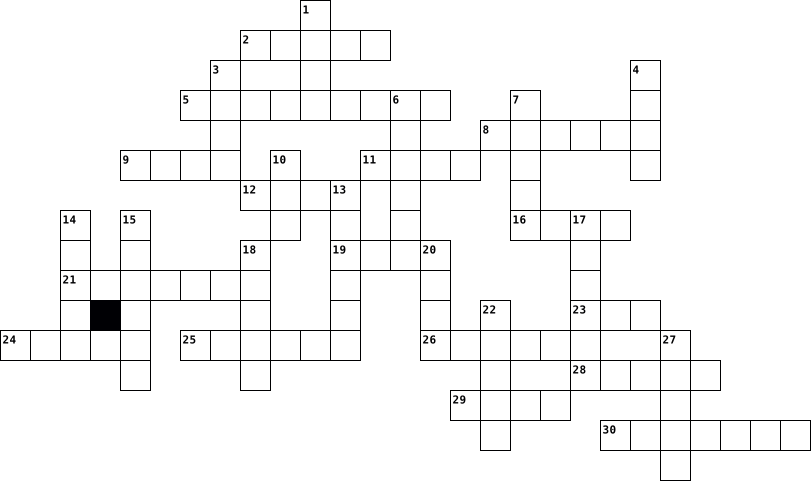
Across
- it is a woody plant
- prevents plantsfrom cating diseases
- has a really strong fragrance
- you can eat this
- attracts butterfly
- can improve memory
- 4th most popular
- protests tree
- has leaves that grow equally
- grows 9 feet per year
- used as medicine
- native to China
- bees love this
- grows 2 feet per year
- has evergreen leaves
- attracts insects
Down
- greek word for rainbow messenger
- grows into another branch
- take more than 40% of the forest
- lucky to find 4 leaves
- belongs in the mint family
- can reach up from 39 to 59 feet
- a developing plant
- grew in battle feild
- has a sweet taste
- produces food
- not a flower and doesn't have seeds
- grows 18 inches per day
- found in freshwater
- expensive
30 Clues: expensive • produces food • protests tree • bees love this • native to China • you can eat this • 4th most popular • used as medicine • attracts insects • has a sweet taste • attracts butterfly • can improve memory • a developing plant • it is a woody plant • found in freshwater • grew in battle feild • has evergreen leaves • grows 9 feet per year • grows 2 feet per year • lucky to find 4 leaves • ...
Plants 2021-02-22

Across
- What are the plants that produce cones
- What produces the female egg cells?
- What is the most common pollinator?
- What is the Male reproductive structure of flower in plants?
- What does the ovary change into after fertilization?
- What is another term for flowering plants?
- What is the part of flower that has varied colour.
- What is a long-stalk like part of a plant that supports the stigma.
- What is an animal that helps bring fertilization?
- What contains the female egg cells?
- How many parents are needed for asexual reproduction in plants?
- What is the male part of the plant that is located on top of the filament?
Down
- What is the reproductive part of a plant?
- How many parents are needed for sexual reproduction in plants?
- What is the sprouting of a plant from a seed?
- What is the part in flower that catches pollen?
- How does flowering plants reproduce?
- What is the process of joining an egg cell and sperm cell in plant?
- What is the part of plants that is located under the petal?
- What does Anther contain?
20 Clues: What does Anther contain? • What produces the female egg cells? • What is the most common pollinator? • What contains the female egg cells? • How does flowering plants reproduce? • What are the plants that produce cones • What is the reproductive part of a plant? • What is another term for flowering plants? • What is the sprouting of a plant from a seed? • ...
Plants 2023-03-02
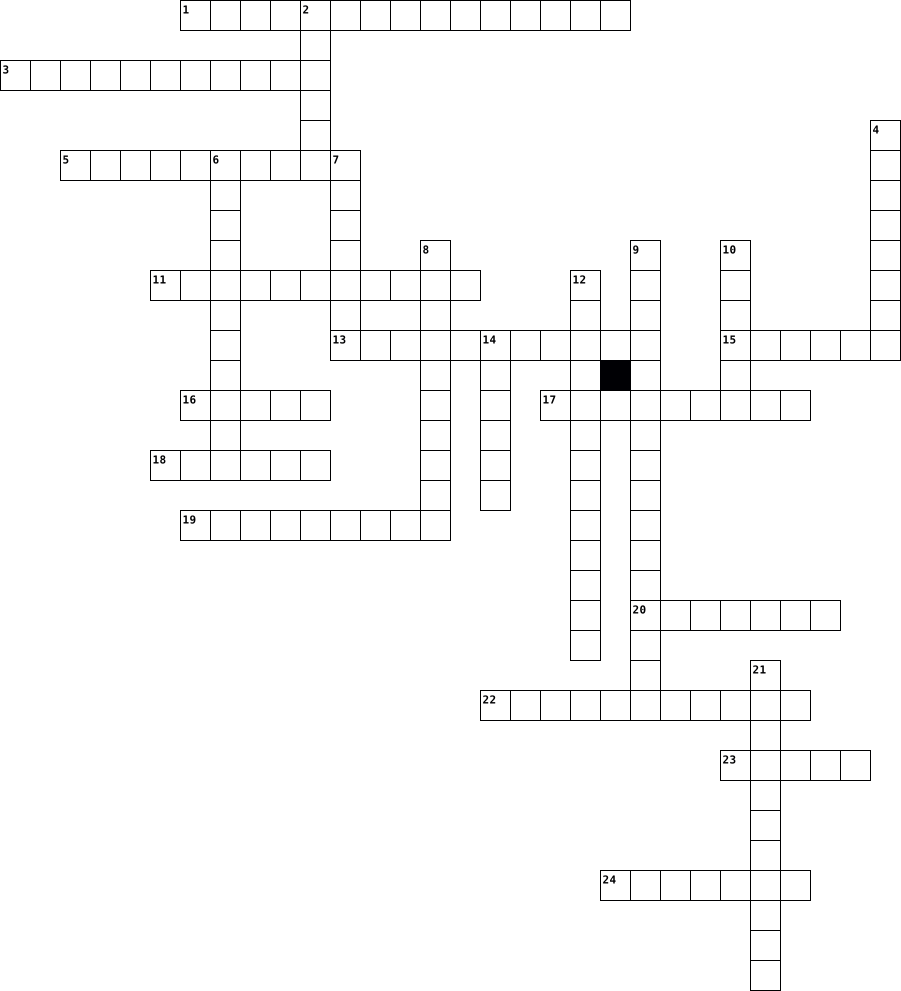
Across
- pollination that transfers from the male part to the female part of the same plant
- cone bearing plants, have needle like leaves
- control the opening and closing of stomata
- the emergence of a plant from a seed
- flowering bearing plants, produces sees
- male part of the flower where the pollen is
- carries water in the stem/root
- the release of the seeds from a parent plant
- carries food in the stem/root
- angiosperms that lose their leaves in winter
- type a root system where there is one main root into the ground
- the transfer of pollen from the male part of the plant to the female part of the plant
- where the seeds develop in a flower
- type of root system where there is group of roots
Down
- female part of the flower
- type of plants with xylem and phloem
- makes the leaf green
- openings in a leaf that let co2 and oxygen in and out of leaf and water vapor
- gymnosperms that never lost their leaves
- pollination between two different plants
- attracts pollinators
- the fusion of pollen and ovules(eggs) which makes seeds
- the male part of the flower
- type of plants that have no roots, leaves or stems and reproduce with spores
24 Clues: makes the leaf green • attracts pollinators • female part of the flower • the male part of the flower • carries food in the stem/root • carries water in the stem/root • where the seeds develop in a flower • type of plants with xylem and phloem • the emergence of a plant from a seed • flowering bearing plants, produces sees • gymnosperms that never lost their leaves • ...
Plants 2023-04-02

Across
- What is the process when a seed begins to grow/sprout
- Usually have bright colors and attract pollinators
- What helps transport water and minerals
- _______is the process for plants that uses water,carbon dioxide and sunlight to make energy
- Where is the ovule located in a plant
- What organ forms seeds
- A group of flowering plants that only have one seed leaf is called what
- A group of flowering plants that have two seed leaves is what
- What supports the plant and holds the leaves
- There are two parts of the stamen,the Anther and _____
Down
- What is a yellow,powdery substance that is moved from one plant to another
- What supports the petals when in bloom
- The male fertilizing organ of a plant
- What connects the stigma to the ovary
- What is the seed leaf within the seed called
- What part of the pistil germinates pollen
- Helps transport organic compounds throughout the plant
- This has three organs-leaves,stems,and roots
- What part of the Stamen makes pollen
- This helps anchor the plant
- What is the study of plants?
21 Clues: What organ forms seeds • This helps anchor the plant • What is the study of plants? • What part of the Stamen makes pollen • The male fertilizing organ of a plant • What connects the stigma to the ovary • Where is the ovule located in a plant • What supports the petals when in bloom • What helps transport water and minerals • What part of the pistil germinates pollen • ...
plants 2023-04-26
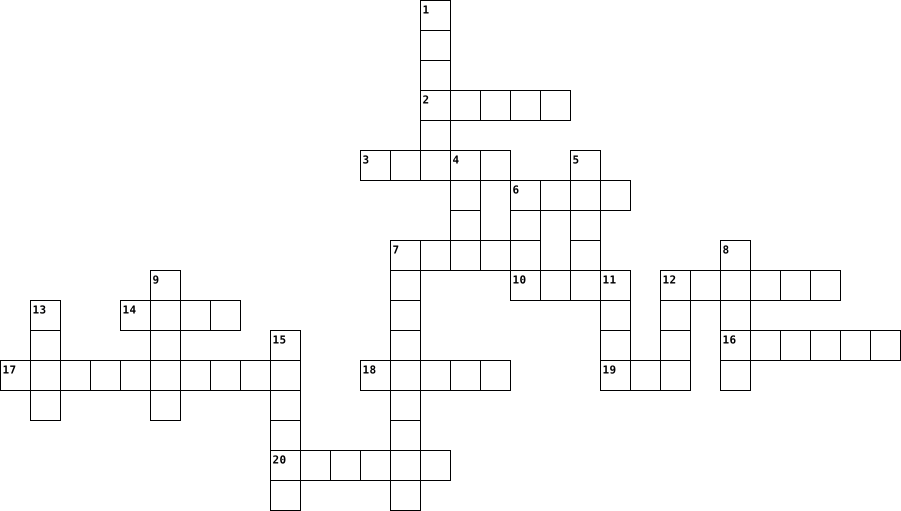
Across
- 꽃 피다
- 가시
- 나무껍질
- 꽃잎
- 관목
- 새싹 싹이나다
- 야자수 손바닥
- 침엽수 잎 바늘
- 비료
- 큰 가지
- 봉오리
- 선인장
Down
- 대나무
- 뿌리
- 잔디 풀
- 전구 알뿌리 구근
- 독이있는
- 나무 몸통부분 코끼리코
- 단풍나무
- 허브 약초
- 씨앗
- 잡초
- 나뭇가지 분점
23 Clues: 가시 • 뿌리 • 꽃잎 • 관목 • 씨앗 • 잡초 • 비료 • 대나무 • 봉오리 • 선인장 • 꽃 피다 • 잔디 풀 • 나무껍질 • 독이있는 • 단풍나무 • 큰 가지 • 허브 약초 • 새싹 싹이나다 • 야자수 손바닥 • 나뭇가지 분점 • 침엽수 잎 바늘 • 전구 알뿌리 구근 • 나무 몸통부분 코끼리코
Plants 2023-05-04

Across
- cone bearing plants
- plants make their own food
- no vascular tissue
- tissue for transporting water and minerals throughout the plant
- root system made of many small thin roots
- protects the ovary
- tissue where plant growth occurs
- protects tip of root
- growth area in the root
- attract pollinators
- supports the anther
- flowering plants
- one seed leaf in the embryo
- contains ovules with egg inside
- two seed leaves in the embryo
- male reproductive system of a plant
- transports sperm to egg
- female reproductive system of a plant
- nonvascular plants
Down
- outermost layer of tissue
- tissue used for storage and photosynthesis
- transports water throughout the plant
- stigma receives pollen from the same plant
- produces pollen containing sperm
- pollen from one plant is carried to the stigma of another
- vascular seedless plants
- opens during the day and closes a night to save water
- long thick root that points straight downward
- sticks to pollen grains as they land
- development of the seed
- transports food(glucose) throughout the plant
- hairs increases root surface area for absorption
- used for photosynthesis
33 Clues: flowering plants • no vascular tissue • protects the ovary • nonvascular plants • cone bearing plants • attract pollinators • supports the anther • protects tip of root • growth area in the root • development of the seed • transports sperm to egg • used for photosynthesis • vascular seedless plants • outermost layer of tissue • plants make their own food • one seed leaf in the embryo • ...
Plants 2023-05-26

Across
- Plants breathe this in for use in photosynthesis
- A cross between two species or varieties
- One of the 3 main nutrients plants need to grow, chemical symbol P
- Anchors plant to the ground, absorbs water and nutrients from the soil
- Develops into a seed once fertilized
- The lines running through a leaf, vascular tissue
- One of the 3 main nutrients plants need to grow, chemical symbol K
- Outer part of plant cell, animal cells do not have these
- An unwanted plant
- Development of a plant from a seed; sprouting
- The seed from an oak tree
- The main stem of a tree
- Produced by a plant to attract animals to spread seeds
- A word for a baby plant, sprouted recently
- Base of the pistil, contains the ovules (eggs)
- The part of a plant cell where photosynthesis occurs
- Male part of the flower, produces and holds the pollen
Down
- A tree that sheds its leaves in the fall
- Chemical symbol for carbon dioxide
- One of the 3 main nutrients plants need to grow, chemical symbol N
- A tree that does not shed its leaves in the fall
- The small openings on the bottom of leaves, plants breathe through these
- Top of the pistil, sticky so pollen can adhere
- How plants make energy from the sun
- Where photosynthesis occurs
- tube-like structure connecting the stigma and ovary
- A flower before it blooms
- Provides support for the plant, transports water and nutrients
- What a flowering plant produces to make a new plant
- The sweet, sugary fluid made by plants to attract pollinators
- The male parts of a flower
- Colorful modified leaf, attracts pollinators
- Thin stalk, supports the anther
- The green outer part of a flower, encloses the developing bud
- The female parts of a flower
- Grows in the desert, protects itself with thorns
36 Clues: An unwanted plant • The main stem of a tree • A flower before it blooms • The seed from an oak tree • The male parts of a flower • Where photosynthesis occurs • The female parts of a flower • Thin stalk, supports the anther • Chemical symbol for carbon dioxide • How plants make energy from the sun • Develops into a seed once fertilized • A tree that sheds its leaves in the fall • ...
PLANTS 2023-05-31

Across
- - A desert plant with thick, fleshy stems and spines.
- - A fragrant herb with purple flowers.
- - A delicate flower known for its intricate beauty.
- - A tall plant with a large yellow flower that follows the sun.
- - A tropical plant with spiky leaves and a sweet fruit.
- - A tree with a long, slender trunk and large fan-shaped leaves.
- - A large, colorful flower with many petals.
- - A simple and cheerful flower with white petals and a yellow center.
- - A fleshy plant adapted to store water in arid environments.
- - A climbing vine with glossy leaves.
- - A large tree with sturdy branches and lobed leaves.
Down
- - A common weed with yellow flowers that turn into white fluffy seed heads.
- - A bulbous plant with vibrant, cup-shaped flowers.
- - A tree with distinctive lobed leaves that turn vibrant colors in the fall.
- - A leafy plant that reproduces through spores.
- - A flowering plant known for its fragrant and colorful blooms.
- - A flower often associated with love and admiration.
- - A tall, fast-growing plant with hollow stems.
- - A graceful flower with showy petals and a pleasant fragrance.
- - A carnivorous plant that traps and consumes insects.
20 Clues: - A climbing vine with glossy leaves. • - A fragrant herb with purple flowers. • - A large, colorful flower with many petals. • - A leafy plant that reproduces through spores. • - A tall, fast-growing plant with hollow stems. • - A bulbous plant with vibrant, cup-shaped flowers. • - A delicate flower known for its intricate beauty. • ...
Plants 2023-06-13

Across
- A fast-growing plant with tall, hollow stems. Bamboo is used for various purposes, including construction, furniture, and as a food source for certain animals.
- Tree A type of evergreen tree with needle-like leaves and woody cones. Pine trees are known for their fresh scent and are often used during the holiday season as Christmas trees.
- A beautiful flowering plant with thorns and fragrant petals. Roses come in different colors and are often used to symbolize love and beauty.
- Flytrap A carnivorous plant that catches and consumes insects. The Venus Flytrap has hinged leaves with trigger-sensitive hairs that snap shut when triggered by prey.
- Plant A low-growing plant that produces small, juicy, red fruits. Strawberry plants have white flowers and are often grown in home gardens and used in desserts.
- A desert plant that is adapted to survive in dry environments. Cacti have thick stems and spines to store water and protect themselves from animals. They can have vibrant flowers.
- A fragrant herb with small purple flowers and narrow leaves. Lavender is often used in aromatherapy, beauty products, and cooking for its soothing and calming properties.
- Tree A tree with a tall, slender trunk and large, fan-shaped leaves. Palm trees are associated with tropical climates and are often seen in beach landscapes.
- A spring-flowering bulbous plant with yellow or white flowers. Daffodils are a sign of the arrival of spring and are often seen in gardens and parks.
- A leafy plant that thrives in shaded and moist environments. Ferns have feathery or lacy leaves and reproduce through spores instead of seeds. They add a lush green look to gardens.
Down
- Tree A large and sturdy tree with broad leaves and acorns. Oak trees provide shade and serve as homes for many animals. They can live for hundreds of years.
- A festive plant with bright red, pink, or white leaves that are often mistaken as flowers. Poinsettias are commonly seen during the Christmas season.
- Tree A tree with distinctive lobed leaves that change color in the fall. Maple trees are known for their sap, which is used to make maple syrup. They are also a symbol of Canada.
- A delicate and exotic flower known for its intricate blooms and variety of colors. Orchids require special care and are often grown indoors or in greenhouses.
- A climbing plant with long, trailing stems and glossy leaves. Ivy can be found growing on walls, fences, and trees. It adds a decorative touch to gardens and landscapes.
- A tall plant with a large, round flower head that follows the movement of the sun. Sunflowers are known for their bright yellow petals and edible seeds.
- A popular flower with fringed petals and a spicy fragrance. Carnations come in various colors and are often used in bouquets and as decorative flowers.
- A spring-blooming flower with cup-shaped petals. Tulips come in various colors and are associated with elegance and grace. They are often seen in gardens and flower bouquets.
- A common weed with bright yellow flowers and fluffy seed heads. Dandelions disperse their seeds through the wind, and children often blow on them to make a wish.
- A flowering plant with large, showy blooms and long, slender stems. Lilies are associated with purity and are often used in bouquets and floral arrangements.
20 Clues: A beautiful flowering plant with thorns and fragrant petals. Roses come in different colors and are often used to symbolize love and beauty. • A festive plant with bright red, pink, or white leaves that are often mistaken as flowers. Poinsettias are commonly seen during the Christmas season. • ...
Plants 2023-06-22
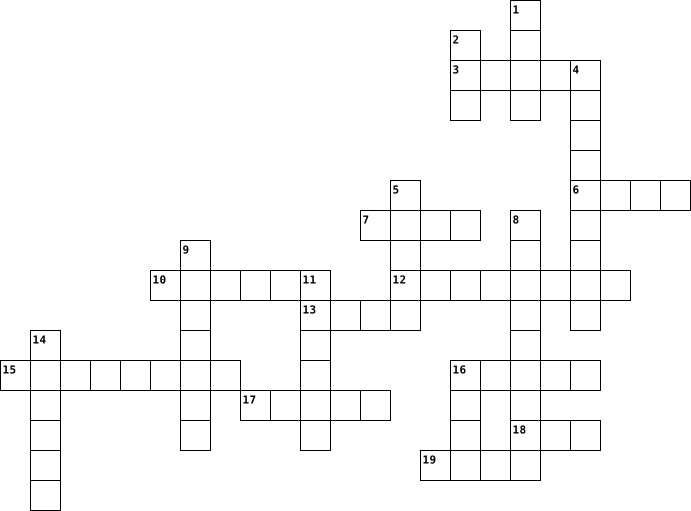
Across
- Flytrap Carnivorous plant that catches and consumes insects
- Elegant flower with showy petals and a pleasant fragrance
- Tall, tropical tree with large fan-shaped leaves
- Fast-growing plant with hollow, jointed stems
- Fragrant flowering plant often used in perfumes and aromatherapy
- Fragrant flower often given as a symbol of love
- Spring-flowering bulb with yellow or white flowers
- Colorful flower with cup-shaped petals
- Simple, white flower with a yellow center
- Large tree known for its strength and longevity
- Leafy plant that reproduces via spores
Down
- Evergreen tree with needle-like leaves and cones
- Climbing or trailing plant often seen on walls and fences
- Large, yellow flower that follows the sun's movement
- Deciduous tree with distinctive lobed leaves and colorful autumn foliage
- Common weed with yellow flowers and fluffy seed heads
- Group of simple flowers with colorful petals
- Exotic flower known for its beauty and variety
- Desert plant known for its ability to store water
- Tall, woody perennial plant with a trunk and branches
20 Clues: Colorful flower with cup-shaped petals • Leafy plant that reproduces via spores • Simple, white flower with a yellow center • Group of simple flowers with colorful petals • Fast-growing plant with hollow, jointed stems • Exotic flower known for its beauty and variety • Fragrant flower often given as a symbol of love • Large tree known for its strength and longevity • ...
Page 1 of 100 Next