
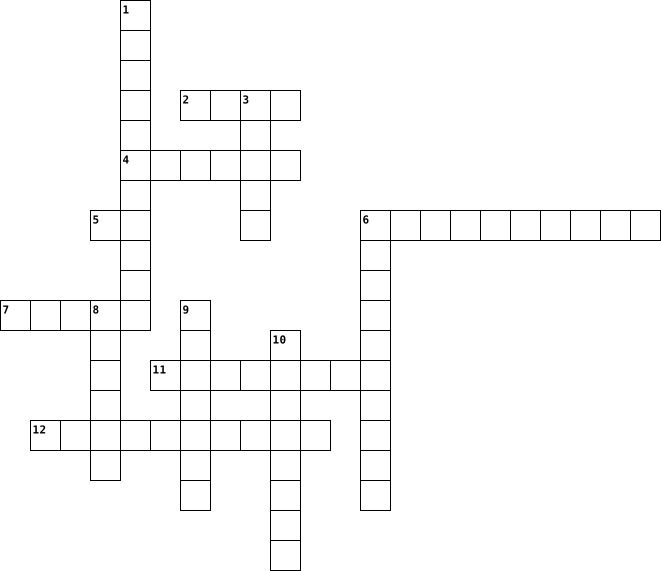
plate tectonics Crossword Puzzles
Plate tectonics 2017-10-18

Across
- a rock or animal that was preserved in rock
- one of the types of evidence that Wegener used to prove the continents were together
- breaks in Earth's crust
- a boundary when two plates ram into each other
- a boundary where two plates separate
- the layer of mantle that the plates sit on
- Wegener's idea that the continents have moved
- the scientist who founded the idea of continental drift
Down
- a boundary when two plates run along each other
- the ocean continuously add new material to its floor
- rocks farther from the mid ocean ridge are denser/ less dense
- all of Earth's plate motion put into one theory
- when ocean floor is pushed below continental crust
- rocks fall into the mantle and are then heated and part of the mantle
- an tool that uses sound waves and time to map the ocean floor
- movement in this cause earths magnetic current
- a "mountain range" that rock comes out of from the mantle
- what is used to prove something
- where Earth’s crust diverges on land
- a supercontinent from around 300 million years ago
- rocks closer to the mid ocean ridge are warmer/ cooler
21 Clues: breaks in Earth's crust • what is used to prove something • a boundary where two plates separate • where Earth’s crust diverges on land • the layer of mantle that the plates sit on • a rock or animal that was preserved in rock • Wegener's idea that the continents have moved • a boundary when two plates ram into each other • movement in this cause earths magnetic current • ...
Plate Tectonics 2017-10-18

Across
- At a _______ boundary, plates come together or converge.
- Earth’s plates are in slow constant motion
- Boundary where earthquakes happen
- The theory that the continents have moved
- Supercontinent
- Sea-floor ______
- Earth’s plates meet at ______.
- San Andreas is an example of a _____.
- Molten material that forms the ocean floor
- Magma close to the mid-ocean ridge is hotter and ________.
Down
- Deep valley formed from divergent plates
- The layers of magnetic fields that differ with each stripe
- This is created when an oceanic plate goes underneath a continental plate
- Boundary where plates move away from each other
- Cooled lava in pillow like shapes
- Magma on the ocean floor farther away from the mid-ocean ridge is _____ and denser.
- Underwater mountain ranges are also known as ________.
- When one plate goes under the other
- Drilling _____ Scientists collected from the ocean floor.
- Tool that helped scientists see map the ocean floor
20 Clues: Supercontinent • Sea-floor ______ • Earth’s plates meet at ______. • Cooled lava in pillow like shapes • Boundary where earthquakes happen • When one plate goes under the other • San Andreas is an example of a _____. • Deep valley formed from divergent plates • The theory that the continents have moved • Earth’s plates are in slow constant motion • ...
Plate Tectonics 2017-10-17

Across
- The remains of a prehistoric organism
- When plates come together
- When plates move away from each other
- Valley along the ocean floor where oceanic crust sinks into the mantle
- When pieces of Earth’s crust diverges on land
- When molten material is added to make new oceanic crust
- The theory that Earth’s plates are in a slow, constant motion
- How scientists study the inside of Earth since we can’t drill down that far
Down
- Produced when 2 continental plates collide
- Scientist that came up with the theory of continental drift
- When oceanic crust sinks beneath a deep-ocean trench and back into the mantle
- Causes the plates to move
- Theory of how the continents spread away from each other
- When plates slip past each other
- 3rd layer of Earth that is very hot, yet solid where convection currents are
- Where seafloor spreading begins
- Measure of how much mass there is in an object
- A break in Earth’s crust where rocks slipped past each other
- Supercontinent that existed around 300 million years ago
- What scientists use to explore the ocean floor
20 Clues: Causes the plates to move • When plates come together • Where seafloor spreading begins • When plates slip past each other • The remains of a prehistoric organism • When plates move away from each other • Produced when 2 continental plates collide • When pieces of Earth’s crust diverges on land • Measure of how much mass there is in an object • ...
plate tectonics 2017-10-17

Across
- when one plate goes under the other, sinking into the mantle
- the outermost layer of the earths layers
- where magma comes out to form rocks
- the supercontinent formed 300 billion years ago
- used to reserch what you cant see in the depths of the ocean
- the scientist who discovered continental drift
- famous mountain ranges formed by convergent boundaries
- core the layer above the inner core
- when two plates collide
- a fault line in California
- when pieces of earth diverge on land
- a representation of an object or process
Down
- breaks in earths crust where rocks have slipped past each other
- the amount of space a object takes up
- earthquakes, erosion, and tornadoes are examples of these
- when two plates come apart
- the innermost part of earth
- when two plates slip past each other
- a ridged layer made up of the uppermost part of the mantle and crust
- the largest part of the earths layers
- very old rock
21 Clues: very old rock • when two plates collide • when two plates come apart • a fault line in California • the innermost part of earth • where magma comes out to form rocks • core the layer above the inner core • when two plates slip past each other • when pieces of earth diverge on land • the amount of space a object takes up • the largest part of the earths layers • ...
Plate Tectonics 2017-10-17

Across
- Idea that continents moved across the surface of Earth.
- The addition of new oceanic crust from mid-ocean ridges.
- A trace of an organism that has been preserved.
- A German scientist that had the idea of continental drift.
- These form when two plates collide and neither are dense enough to sink.
- The process oceanic crust sinks back into the mantle.
- Where pieces of Earth's crust move away from each other on land.
- Where plates move apart from each other.
- Where part of the oceanic crust sinks back into the mantle.
- A break in Earth’s crust where rocks slid past each other.
Down
- Forms only when molten hardens quickly under water.
- Forms chains of mountains that rise upwards from the ocean floor.
- A natural disaster that occurs when plates suddenly slip on their boundary.
- The last supercontinent.
- Where plates move towards each other.
- Combined knowledge of sea-floor spreading, Earth’s plates, and plate motions.
- Where plates slip past each other.
- Where Earth's plates meet, there are three different types.
- Pieces of Earth's lithosphere separated by cracks.
- A device that uses sound to measure the distance to an object.
20 Clues: The last supercontinent. • Where plates slip past each other. • Where plates move towards each other. • Where plates move apart from each other. • A trace of an organism that has been preserved. • Pieces of Earth's lithosphere separated by cracks. • Forms only when molten hardens quickly under water. • The process oceanic crust sinks back into the mantle. • ...
plate tectonics 2017-10-23

Across
- how much mass there is in a given amount of volume
- a mountain that erupts
- underwater ocean ranges
- pieces of earth separated by cracks
- german scientist who discovered that the continents were together at one point
- the uppermost part of the mantle
- plates collide
- plates slip past eachother
- a large body of water
- forms when pieces of earth's crust diverge on land
- a process where the ocean floor sinks in the mantle
Down
- a supercontinent that existed 2 million years ago
- any trace of an ancient organism preserved in rock
- - an idea that continents slowly move
- earth's plates that are in slow constant motion
- plates come together
- a process that adds new material to the ocean floor
- a layer of hot rock
- deep underwater canyons
- heat transfer from air currents
- breaks in the earth's crust
21 Clues: plates collide • a layer of hot rock • plates come together • a large body of water • a mountain that erupts • underwater ocean ranges • deep underwater canyons • plates slip past eachother • breaks in the earth's crust • heat transfer from air currents • the uppermost part of the mantle • pieces of earth separated by cracks • - an idea that continents slowly move • ...
plate tectonics 2017-10-23

Across
- a mountain that erupts
- earth's plates that are in slow constant motion
- a process that adds new material to the ocean floor
- german scientist who discovered that the continents were together at one point
- a supercontinent that existed 2 million years ago
- heat transfer from air currents
- plates come together
- plates slip past eachother
- deep underwater canyons
- pieces of earth separated by cracks
Down
- a process where the ocean floor sinks in the mantle
- forms when pieces of earth's crust diverge on land
- a layer of hot rock
- underwater ocean ranges
- any trace of an ancient organism preserved in rock
- the uppermost part of the mantle
- plates collide
- breaks in the earth's crust
- a large body of water
- - an idea that continents slowly move
- how much mass there is in a given amount of volume
21 Clues: plates collide • a layer of hot rock • plates come together • a large body of water • a mountain that erupts • underwater ocean ranges • deep underwater canyons • plates slip past eachother • breaks in the earth's crust • heat transfer from air currents • the uppermost part of the mantle • pieces of earth separated by cracks • - an idea that continents slowly move • ...
Plate Tectonics 2018-03-02

Across
- A chain of volcanic islands formed at an ocean-ocean convergent boundary.
- A chain of volcanic mountains formed at an ocean-continental convergent boundary.
- Large supercontinent that existed 250 million years ago.
- The zone below the lithosphere.
- Places where new seafloor is being created.
- What pushes the rest of a plate away from the mid-ocean ridge?
- Two or more tectonic plates or fragments are near the end of their life cycle.
- A theory explaining the structure of the earth's crust.
Down
- The sideways and downward movement of the edge of a plate of the earth's crust into the mantle beneath another plate.
- The outer part of the Earth's crust.
- Credited with the theory of Plate Tectonics.
- Large pieces of earths crust that move due to convection currents.
- The process by which new organic lithosphere (sea floor) forms as magma rises to Earths surface and solidifies.
- Plates slide sideways past each other.
- The hypothesis that the continents slowly move across Earth's surface.
- Area where magma from the mantle continually breaks through the crust.
- Credited with the theory of Continental Drift
- The process by which earths crust breaks apart.
- Depression formed at a subduction zone.
- Huge trenches on Earth's seafloor.
20 Clues: The zone below the lithosphere. • Huge trenches on Earth's seafloor. • The outer part of the Earth's crust. • Plates slide sideways past each other. • Depression formed at a subduction zone. • Places where new seafloor is being created. • Credited with the theory of Plate Tectonics. • Credited with the theory of Continental Drift • ...
Plate Tectonics 2018-03-28

Across
- Molten rock, gases, and solid crystals and minerals
- Two plates sliding past each other
- Two plates pushing toward each other
- Two plates moving apart from each other
- Crust that underlies oceans
- A vent in the Earth' surface through which magma and gases erupt
- The innermost part of the Earth
- A sudden jerk of land of the release of tension
- The last supercontinent
- A dropped zone where plates are pulling apart
Down
- Two tectonic plates _____ past each other in a horizontal direction
- The collision between two continental plates form _________
- Located directly below the crust
- Directly underneath the Lithosphere
- Made up of crust and a tiny bit of the upper mantle
- Crust that underlies continents
- The border between two tectonic plates
- Deep ocean ______, or valley
- The topmost layer of the Earth
- A crack or fracture in the Earth's crust
20 Clues: The last supercontinent • Crust that underlies oceans • Deep ocean ______, or valley • The topmost layer of the Earth • Crust that underlies continents • The innermost part of the Earth • Located directly below the crust • Two plates sliding past each other • Directly underneath the Lithosphere • Two plates pushing toward each other • The border between two tectonic plates • ...
Plate Tectonics 2019-04-29

Across
- remains of past life that is scattered throughout the continents which can prove the Continental Drift theory
- when two plates with oceanic crust at their edges converge and the denser of the two plates sinks under the other
- Wegener person who first discovered the Continental Drift theory
- shaking of Earth due to transform plate boundaries
- currents the most accepted theory on what makes the plates move
- plate boundary two plates collide by sliding past each other
- Earth 225 million years ago as one whole mass
- Arc when some magma breaks through Earth's solid surface and forms a series of volcanoes and volcanic islands
- Tectonics theory Theory that Earth's lithosphere is broken up into sections or pieces called plates and they cause major changes in Earth's surface
Down
- Puzzle the Continental Drift can be proven because the continents used to fit like a...
- plate boundary two plates separate
- plate boundary two plates collide
- Warped ocean Basin if there is a continent near the two converging plates with oceanic crust, the crust at the margin of the continent may become bent down
- trench the bending down of the subducting plate warps the crust, producing a long, steep, and narrow depression
- spots major regions of volcanic activity in the interior parts of plates away from plate boundaries
- plate convergence that results in the growth of young mountain ranges
- high land features that form due to converging plate boundaries
- the pieces Earth's lithosphere is broken up into are called...
- ocean ridge a balsaltic mountain range at the bottom of the ocean that is composed mostly is volcanoes and lava flows
- Wegener thought this separated the continents at first, but he was wrong
20 Clues: plate boundary two plates collide • plate boundary two plates separate • Earth 225 million years ago as one whole mass • shaking of Earth due to transform plate boundaries • plate boundary two plates collide by sliding past each other • the pieces Earth's lithosphere is broken up into are called... • currents the most accepted theory on what makes the plates move • ...
PLATE TECTONICS 2023-06-22

Across
- A ground-shaking release of energy caused by a break in the crust.
- The process by which magma rises to the surface at mid-ocean ridges and forms new ocean crust.
- Is the point at which two tectonic plates collide.
- Mountain ridges run along the seafloor.
- The belief that the Earth's continents have been in the same place since the Earth's formation.
- The process of denser crust of a tectonic plate sliding beneath less dense crust of another plate; occurs at convergent plate boundaries and produces deep sea trenches.
- The lithosphere is divided into large plates that interact with one another and cause geological activity.
- is the gravitational and subduction-induced pulling of a tectonic plate.
Down
- Is the separation of two tectonic plates.
- When new material at mid-ocean ridges pushes older material aside, tectonic plates shift.
- Is a current in the mantle that occurs when cooler, denser material sinks and warmer, less dense material rises.
- A layer of earth between the crust and outer core, which is divided into upper and lower sections.
- WAVES, The vibration caused by the release of energy during an earthquake.
- A devastating catastrophe caused by geological processes
- Occurs when two rocks are pressed together and one block rides up to overlay the other.
- For earthquakes, a number that represents strength.
- An instrument that measures and records ground vibration.
- In earth science, the location within earth where an earthquake starts.
- Two tectonic plates slide horizontally past each other.
- A large break in a rock.
- In mid ocean ridges a valley that runs along the centre of the ridge.
- The point on earths surfaces above where an earthquake starts.
- An opening in earths surface where magma and other materials are released.
23 Clues: A large break in a rock. • Mountain ridges run along the seafloor. • Is the separation of two tectonic plates. • Is the point at which two tectonic plates collide. • For earthquakes, a number that represents strength. • Two tectonic plates slide horizontally past each other. • A devastating catastrophe caused by geological processes • ...
Plate Tectonics 2023-11-02

Across
- an earthquake that measures 300 km or more.
- a wave that travels through the earth
- earthquake closest to the surface
- produces a print out
- also known as Secondary wave
- the strength of an earthquake
- a plate that moves side to side, up and down, underneath each other
- spot on surface abouve the focus
- a scale that measures more accurately
- the secondary wave travels through ___ only.
- a wave travels through liquids
Down
- location of the 1st motion in Earth
- also known as primary wave
- when the earth moves
- ____ zones-areaws where no body waves are detected.
- a wave that travels below ground
- rebound though to cause rocks to move
- 70-300 km
- amount of damage
- record vibrations in the ground
- a wave travels up and down, side to side
- oldest measurement scale
22 Clues: 70-300 km • amount of damage • produces a print out • when the earth moves • oldest measurement scale • also known as primary wave • also known as Secondary wave • the strength of an earthquake • a wave travels through liquids • record vibrations in the ground • a wave that travels below ground • spot on surface abouve the focus • earthquake closest to the surface • ...
Plate Tectonics 2023-11-15

Across
- Weaker, upper portion of the Earth's mantle.
- The dense, innermost layer of the Earth.
- Can occur with lava from volcanoes.
- Combination of Earth's outermost layer and the upper mantle; is divided into tectonic plates.
- Can include bones, footprints, leaf prints, or being cast in a substance.
- Large section of hard, solid rock that make up earth's outermost layer.
- Hot liquid rock that is on Earth's surface.
- Underwater mountain range made by divergent plate boundaries.
- Northern continental mass formed when Pangaea broke apart approximately 180 million years ago.
- Any of Earth's main continuous areas of land, such as Africa.
- The thin, outermost layer of the Earth, types include oceanic and continental.
- Two plates sliding past each other.
Down
- The large, single continental landmass that formed approximately 245 million years ago.
- Two plates moving away from each other.
- Process of one plate moving under another plate.
- A deep indentation in the ground that is made by convergent plate boundaries.
- Early idea that continents float on the mantle and moved relative to one another over geologic time.
- Commonly caused by transform plate boundaries.
- Hot liquid rock that is below Earth's surface.
- Southern continental mass formed when Pangaea broke apart approximately 180 million years ago.
- Mountains, channels, and sand dunes are an example of a _______.
- A layer of soft, solid rock under Earth's plates, serves as the middle layer of the Earth.
- Two plates moving towards each other.
23 Clues: Can occur with lava from volcanoes. • Two plates sliding past each other. • Two plates moving towards each other. • Two plates moving away from each other. • The dense, innermost layer of the Earth. • Hot liquid rock that is on Earth's surface. • Weaker, upper portion of the Earth's mantle. • Commonly caused by transform plate boundaries. • ...
Plate Tectonics 2023-11-15

Across
- A break in Earth's crust along which rocks move
- A plate boundary where two plates move past each other in oppsite directions
- The transfer of thermal energy by the movement fluid
- The theory that pieces of Earth's lithosphere are in constant motion, driven by convection currents in the mantle.
- A string of volcanoes that form as the result of subduction of one oceaic plate benath a second oceanic plate
- The process by which oceanic crust sinks beneath a deep ocean treach and back into athe mantle at a convergent plate boundary
- The transfer of energy by electromagnetic waves
- The name of th esingle landmass that began to break apart 200 million years ago and gave rise to today's continenets
- The preserved remains or traces of an organism that lived in the past
- A plate boundary where two platemove away from each other
- The molten mixture of rock forming substances, gasses, and water from the mantle
- A plate boundary where two plates move toward each other
- The transfer of thermal energy from one particleof matter to another
- A section of the lithospher that slowly moves over the asthenosphere, carrying pieces of continental and oceanic crust
Down
- The process by which molten material adds nre oceanic crust to the ocean floor
- An area where magma from deep within the manlts through the crust above it
- The hypothesis that the continents slowly move across Earth's surface
- The movement of a fluid, caused by differences in temperature, that transfers heat from one part of the fluid to another
- Liquid magma that reaches the surface
- The measurement of how much mass of a substance is contained in a given volume
- An undersea mountain chain where new ocean floor is produced; a divergent plate boundary under the ocean
- A deep valley that forms where two plates move apart
- A deep valley along the ocean floor beneath which oceanic crust slowly sinks toward the mantle
- A weak spot in the crust where magma has come to the surface
- A major belt of volcanes that rims the Pacific Ocean
25 Clues: Liquid magma that reaches the surface • A break in Earth's crust along which rocks move • The transfer of energy by electromagnetic waves • The transfer of thermal energy by the movement fluid • A deep valley that forms where two plates move apart • A major belt of volcanes that rims the Pacific Ocean • A plate boundary where two plates move toward each other • ...
Plate Tectonics 2023-11-15

Across
- Plate boundary where two plates slip past each other
- Famous string of volcanoes
- A molten mixture of gases, water, and rock-forming substances from the mantle
- Crust that is on the land under mountains
- Valley where the sea floor subducts back into the mantle
- The process of continually adding new material to the ocean floor
- Liquid magma at the surface
- A process in which one plate goes under another at a convergent boundary
- The stress force that pulls on the crust, and thins rock in the middle
- Underwater mountain chain where sea floors are renewed
Down
- Plate boundary where two plates collide
- Crust under the ocean
- Breaks in Earth's crust where rocks have slipped past each other
- A curved chain of volcanoes located at the edge of a plate
- Forms where pieces of Earths crust separate
- The stress force that squeezes the crust, forming mountains
- A vent on the surface where magma escapes from the mantle
- The outer layer of Earth
- An area where magma melts through the crust above it
- Plate boundary where two plates move away from each other
20 Clues: Crust under the ocean • The outer layer of Earth • Famous string of volcanoes • Liquid magma at the surface • Plate boundary where two plates collide • Crust that is on the land under mountains • Forms where pieces of Earths crust separate • Plate boundary where two plates slip past each other • An area where magma melts through the crust above it • ...
Plate Tectonics 2023-12-15

Across
- consists of the upper mantle and lower crust
- supercontinent
- Earths longest mountain range
- measures earthquakes
- Results of a transform boundary
- Slides past each other
- Moves together
- Moves apart
- Where two plates move away from eachother
- Causes seafloor spreading
Down
- A person that studies plate tectonics
- The # of the major plates
- Comes from the mantle
- Came up with the Contintntal drift theory
- Where divergent boundries divide in the ocean
- Future Supercontinent
- Mountain that has magma in it
- A result of convergent boundaries
- the area below the lithosphere
- When one plate slides under another
20 Clues: Moves apart • supercontinent • Moves together • measures earthquakes • Comes from the mantle • Future Supercontinent • Slides past each other • The # of the major plates • Causes seafloor spreading • Mountain that has magma in it • Earths longest mountain range • the area below the lithosphere • Results of a transform boundary • A result of convergent boundaries • ...
Plate Tectonics 2024-04-23

Across
- layer of Earth below the lithosphere that flows like a liquid
- pieces of rock that have been weathered
- the reason something has occurred or is occurring
- primary layer where plants and organisms live
- occur along plate boundaries
- the oceanic crust and the upper mantle
- type of crust that is made up mostly of granite and is less dense
- rock that requires heat and pressure
- rock that is formed when lava cools and hardens
- the only liquid layer of Earth
- Father of Continental Drift
- two events happening at the same time, but not causing one
Down
- largest layer of Earth
- large pieces of crust that are constantly moving
- natural process that breaks down rock
- Earth's supercontinent
- top layer of soil made up of living and decomposed materials
- the theory that the continents were once a giant landmass and have slowly drifted apart
- type of crust that is made up mostly of basalt and is more dense
- solid layer of rock
- can be found in sedimentary rock
- thinnest layer of Earth
- the center of the Earth
- process in which oceanic crust sinks below the less dense continental crust
- hot molten rock
- occurs along mid-ocean ridges
- cycle that occurs in the mantle, where heated material rises then cools and sinks
- tallest mountain in the Himalayas
- rock with many layers
- natural forces that move rocks
30 Clues: hot molten rock • solid layer of rock • rock with many layers • largest layer of Earth • Earth's supercontinent • thinnest layer of Earth • the center of the Earth • Father of Continental Drift • occur along plate boundaries • occurs along mid-ocean ridges • the only liquid layer of Earth • natural forces that move rocks • can be found in sedimentary rock • ...
Plate Tectonics 2024-03-14

Across
- atlantic ocean hot spot
- plate boundary that results in shallow earthquakes and no volcanoes
- pacific ocean hot spot
- scientific theory that explains how major landforms are created as a result of Earth's subterranean movements
- plate boundary found at midocean ridges
- rock that makes up oceanic plates
- the study of prehistoric Earth's magnetic fields recorded in rocks, sediment, or archeological materials.
- the rigid, outermost rocky shell of a terrestrial planet or natural satellite. On Earth, it is composed of the crust and the lithospheric mantle, the topmost portion of the upper mantle that behaves elastically on time scales of up to thousands of years or more.
- plate boundary that results in subduction
- movement caused within a fluid by the tendency of hotter and therefore less dense material to rise, and colder, denser material to sink under the influence of gravity, which consequently results in transfer of heat.
Down
- process that occurs at mid-ocean ridges, where new oceanic crust is formed through volcanic activity and then gradually moves away from the ridge.
- ocean with a midocean ridge going down the center, broke up Pangaea, expanding over time.
- rock that makes up continental plates
- long chains of active volcanoes with intense seismic activity found along ocean-oceanic convergent tectonic plate boundaries.
- Earth's largest ocean, surrounded by convegergent boundaries, getting smaller over time
- a buoyant mass of material in the mantle, which rises because of its buoyancy
- a seafloor mountain system formed by plate tectonics. This feature is where seafloor spreading takes place along a divergent plate boundary.
- geological process in which the oceanic lithosphere and some continental lithosphere is recycled into the Earth's mantle at convergent boundaries
- a layer inside a planetary body bounded below by a core and above by a crust.
- long, narrow depressions on the seafloor that form at the boundary of tectonic plates where one plate is pushed, or subducts, beneath another.
- layer of earth that generates earth's magnetic field
- volcanic locales thought to be fed by underlying mantle that is anomalously high temperature compared with the surrounding mantle.
- the outermost solid shell of a rocky planet, dwarf planet, or natural satellite. It is usually distinguished from the underlying mantle by its chemical makeup
23 Clues: pacific ocean hot spot • atlantic ocean hot spot • rock that makes up oceanic plates • rock that makes up continental plates • plate boundary found at midocean ridges • plate boundary that results in subduction • layer of earth that generates earth's magnetic field • plate boundary that results in shallow earthquakes and no volcanoes • ...
Plate Tectonics 2024-02-29

Across
- a continuous elevated zone on the floor of all the major ocean basins.
- hypothesis that said all present continents nice existed as a single supercontinent
- Process that deforms Earth’s Crust for structural features.
- Primary driving force for movement of tectonic plates
- German Meteorologist and geophysicist
- trench a narrow and elongated depression of the seafloor
- when igneous rocks melt over a temp range.
- The name of the supercontinent including all of the existing continents
- Where two plates move apart.
- a boundary in which two plates more together.
- a hypothesis that said new ocean crust is produced at the crests of mid-ocean ridges.
Down
- a chain of volcanic islands
- Two ocean slabs converge.
- a boundary when two plates slide past one another.
- when two continental plates collide
- Largest plate
- elevated areas of the seafloor characterized by high heat flow and volcanism.
- as tectonic forces continue to pull apart the crust, the fragments sink which causes this.
- linear zones of irregular topography on the deep-ocean floor.
- Theory that says Earths outer shell consists of individual plates.
20 Clues: Largest plate • Two ocean slabs converge. • a chain of volcanic islands • Where two plates move apart. • when two continental plates collide • German Meteorologist and geophysicist • when igneous rocks melt over a temp range. • a boundary in which two plates more together. • a boundary when two plates slide past one another. • ...
Plate Tectonics 2024-02-08

Across
- theory that explains how large pieces of the earht crust move and change shape
- Harry Hess came up with this idea
- The center of the earth , like a ball of hot metal. is mostly iron and nickel
- The hypothesis that states the continents once formed a single landmass, broke up, and drifted to their present location
- the nature of somethings ingredients or constitutions
- soft plastic like layer of the mantle on which the tectonic plates move
- New seafloor, rift-valleys, Mid-Atlantic ridge
- Stress that occurs when the forces act to squeeze and object
Down
- A block of lithosphere that consists of the crust and the rigid, outermost part of the mantle
- is solid but moving (magma, honey) Makes up 66% of the earth
- strong , lower part of the mantle between the asthenosphere and the outer core
- Properties that involve a reaction to an applied load strength, ductility, hardness, impact resistance, and toughness
- Mountains, Trenches, volcanoes, earthquakes, subduction zone
- The thin, solid, rigid outermost layer of the earth
- the only liquid layer of the planet. it is iron and nickel
- The sinking of regions of the earths crust to lower elevations
- Tectonic plates slide past each other resulting in earthquakes
- A break in a body of rock along which one block slides relative to another
- inner most layer of the earth. It is solid iron and nickel
- Solid outer layer that consists of the crust and the rigid upper part of mantle
20 Clues: Harry Hess came up with this idea • New seafloor, rift-valleys, Mid-Atlantic ridge • The thin, solid, rigid outermost layer of the earth • the nature of somethings ingredients or constitutions • the only liquid layer of the planet. it is iron and nickel • inner most layer of the earth. It is solid iron and nickel • ...
Plate Tectonics 2024-02-08

Across
- a form of volcano's shaped like a boot
- the thinnest layer
- the outer layer of Earth (Mantle,Crust)
- a piece of earth that sepereates
- part of earth
- 2 plates move away
- the inner part of the core
- the theory of a famous scientist
- a plate that has to do with land
- plates move together
- crack in earth
Down
- the sea floor moves
- discovered sea floor spreading
- a force that pushes together
- discovered continental drift
- plates move side by side
- hard
- layer of the atmosphere of the earth
- the hottest layer
- to plates collide to cause a shake
- shifting that moves Earth 2 cm a year
- the thickest layer
- a plate that has to do with water
- liquid, iron-nickel layer of the Earth between the solid inner core and lower mantle
24 Clues: hard • part of earth • crack in earth • the hottest layer • the thinnest layer • 2 plates move away • the thickest layer • the sea floor moves • plates move together • plates move side by side • the inner part of the core • a force that pushes together • discovered continental drift • discovered sea floor spreading • a piece of earth that sepereates • the theory of a famous scientist • ...
Plate Tectonics 2024-02-08

Across
- a break in a body of rock along which one block slides relative to another
- properties that involve a reaction to an applied load strength, ductility, hardness, impact resistance, and toughness
- tectonic plates collide and form mountains.
- the center of the earth
- tectonic plates slide past each other creating earthquakes
- the hypothesis that states the continents once formed a single landmass, broke up, and drifted to their present location
- stress that occurs when the forces act to squeeze an object
- the only liquid layer of the planet
- the middle layer of the earth which is also the largest
- the soft plastic-like layer of the mantle
Down
- the sinking of regions of the earth's crust to lower elevations
- solid outer layer that consists of the crust and the rigid upper part of the mantl
- the nature of something's ingredients or constituents
- tectonic plates move apart
- a block of lithosphere
- the thin, solid, rigid outermost layer of the earth
- the theory that explains how large pieces of the earth's crust move and change shape
- the inner most layer of the earth which is solid and made out of solid iron and nickel
- the strong, lower parts of the mantle
- the process by which new oceanic lithosphere forms and magma rises toward the surface and solidifies
20 Clues: a block of lithosphere • the center of the earth • tectonic plates move apart • the only liquid layer of the planet • the strong, lower parts of the mantle • the soft plastic-like layer of the mantle • tectonic plates collide and form mountains. • the thin, solid, rigid outermost layer of the earth • the nature of something's ingredients or constituents • ...
Plate Tectonics 2024-02-08

Across
- a break in a body of rock along which one block slides relative to another
- properties that involve a reaction to an applied load strength, ductility, hardness, impact resistance, and toughness
- tectonic plates collide and form mountains.
- the center of the earth
- tectonic plates slide past each other creating earthquakes
- the hypothesis that states the continents once formed a single landmass, broke up, and drifted to their present location
- stress that occurs when the forces act to squeeze an object
- the only liquid layer of the planet
- the middle layer of the earth which is also the largest
- the soft plastic-like layer of the mantle
Down
- the sinking of regions of the earth's crust to lower elevations
- solid outer layer that consists of the crust and the rigid upper part of the mantl
- the nature of something's ingredients or constituents
- tectonic plates move apart
- a block of lithosphere
- the thin, solid, rigid outermost layer of the earth
- the theory that explains how large pieces of the earth's crust move and change shape
- the inner most layer of the earth which is solid and made out of solid iron and nickel
- the strong, lower parts of the mantle
- the process by which new oceanic lithosphere forms and magma rises toward the surface and solidifies
20 Clues: a block of lithosphere • the center of the earth • tectonic plates move apart • the only liquid layer of the planet • the strong, lower parts of the mantle • the soft plastic-like layer of the mantle • tectonic plates collide and form mountains. • the thin, solid, rigid outermost layer of the earth • the nature of something's ingredients or constituents • ...
Plate Tectonics 2024-02-08

Across
- the middle layer of the earth.
- The mechanical model; lithosphere, asthenosphere, mesosphere, outer core, inner core. (look at me on ice)
- a boundary where the plates move away from eachother
- the outer layer of the core.
- a divergent boundary where new crust is formed in the ocean
- the theory that the continents are always moving.
- the cracked-up parts of earths crust.
- when something is pressed together.
- the center of the earth.
- the 3rd mechanical layer
- the 1st mechanical layer
Down
- the theory of plates moving on the asthenosphere
- when the plates slide past eachother
- what something is composed of.
- when the plates come together.
- when one plate (usually the denser, oceanic plate) go under another.
- A long rigid crack in the earths surface.
- the inner layer of earths center
- the very outer layer of the earth.
- the 2nd mechanical layer
20 Clues: the 2nd mechanical layer • the center of the earth. • the 3rd mechanical layer • the 1st mechanical layer • the outer layer of the core. • the middle layer of the earth. • what something is composed of. • when the plates come together. • the inner layer of earths center • the very outer layer of the earth. • when something is pressed together. • ...
Plate Tectonics 2024-02-09

Across
- colliding
- makes up 66% of the Earth
- Alfred Wegener discovered what?
- soft plastic-like layer
- strong,lower part of the mantle
- made of iron and nickel
- hottest layer on Earth
- makes up 1% of the Earth
- a fracture or zone between 2 blocks
- Harry Hess discovered what?
- only layer which is liquid
- slide past each other
- explains how large pieces of the crust move
Down
- move away from each other
- rigd upper part of the mantle
- large pieces of Earth's crust
- the sinking regions of the Earths crust
- properties involve reaction to applied force
- act to squeeze an object
- nature of something's ingredients
20 Clues: colliding • slide past each other • hottest layer on Earth • soft plastic-like layer • made of iron and nickel • makes up 1% of the Earth • act to squeeze an object • move away from each other • makes up 66% of the Earth • only layer which is liquid • Harry Hess discovered what? • rigd upper part of the mantle • large pieces of Earth's crust • Alfred Wegener discovered what? • ...
Plate Tectonics 2024-02-08

Across
- Solid outer layer that consists of the crust.
- The center of the Earth and is mostly made up of iron and nickel.
- zone The sinking of regions.
- core The inner most layer of our planet
- Plate A block of lithosphere that consists of the crust.
- The soft plastic layer.
- The thinnest layer on Earth.
- Spreading The process by which thee new oceanic lithosphere forms.
- A break in the Earth's crust.
- Stress that occurs when the forces act to squeeze.
- Drift The thinking that states that the continents moved once.
Down
- The nature of something's ingredient or constituents.
- Properties Properties that involve a reaction.
- Boundary Where Tectonic Plates slide past each other.
- core The only liquid layer of the planet.
- Boundary Where Tectonic Plates drift apart.
- The strong lower part of the mantle.
- Tectonic Theory The theory that explains how large pieces of the Earth's crust move.
- Boundary Where Tectonic Plates collide.
- The biggest layer and the middle layer of the Earth.
20 Clues: The soft plastic layer. • The thinnest layer on Earth. • A break in the Earth's crust. • zone The sinking of regions. • The strong lower part of the mantle. • core The inner most layer of our planet • Boundary Where Tectonic Plates collide. • core The only liquid layer of the planet. • Solid outer layer that consists of the crust. • ...
Plate Tectonics 2024-02-22

Across
- The longest mountain chain in the world
- This type of plate boundary forms folded mountains
- This type of boundary forms trenches and volcanoes
- This type of boundary contains both collision and subduction boundaries
- Mount Saint Helens, part of this mountain range, erupted in 1980
- This boundary forms fault lines
- This boundary type forms when plates move apart
- Harry Hess's theory
- This hot spot lies in the Pacific Ocean
- The tallest folded mountains in the world
- These occur at ALL plate boundaries
- The deepest feature in the world
- Iceland is a hot spot that lies along this feature
Down
- The Nazca and S. American plates form this feature
- A theory that precedes plate tectonics
- Wegener's evidence for continental drift
- This plate subducts under North America in the Pacific Northwest
- These are present at ALL divergent boundaries and subduction boundaries
- This feature formed by a continental-continental divergent boundary
- These form when two continental plates converge
- This feature causes severe earthquakes in California
- This technology was used to map the seafloor
22 Clues: Harry Hess's theory • This boundary forms fault lines • The deepest feature in the world • These occur at ALL plate boundaries • A theory that precedes plate tectonics • The longest mountain chain in the world • This hot spot lies in the Pacific Ocean • Wegener's evidence for continental drift • The tallest folded mountains in the world • ...
Plate Tectonics 2024-04-05

Across
- - scrapes across rocks where a glacier once was
- - type of boundary between two colliding plates
- -currents are found in the mantle and cause the tectonic plates to move
- - when two plates move away from each other
- - South America matches up with this continent.
- - the other result of plate tectonics
- - the scientist who is most known for the continental drift theory
- - the outer most layer of earth
- - the lithosphere is divided into...
- - what element makes up most of the Earth's core
Down
- - the Earth is made up of these and they are constantly moving along above the mantle.
- - what is the liquid layer of Earth's core.
- - evidence of dead plants and animals
- - this idea developed in the 20th century
- - result of plate tectonics
- - the Earth's crust is divided into plates that shift over time.
- - this piece of evidence explains why palm tree fossils have been found in very cold regions
- - continents fit together like_______ pieces
- - the super continent was called
- - the layer of Earth which is believed to be responsible for plate movement
20 Clues: - result of plate tectonics • - the outer most layer of earth • - the super continent was called • - the lithosphere is divided into... • - evidence of dead plants and animals • - the other result of plate tectonics • - this idea developed in the 20th century • - what is the liquid layer of Earth's core. • - when two plates move away from each other • ...
Plate Tectonics 2025-11-06

Across
- Type of boundary where two plates collide
- Type of boundary where new crust is generated as plates move apart
- Molten rock found beneath the Earth's surface
- boundaries
- Deepest parts of the ocean, often found at
- Type of crust that is thinner and denser, found under oceans
- The layer of Earth between the crust and the outer core
- Vibration of the Earth due to the release of energy
- Scientist who proposed the theory of continental drift
- Piece of evidence for divergent plates (2words)
Down
- Lower part of the mantle
- The process where oceanic crust plunges beneath another plate
- A vent or mountain from which lava, ash, and cinders are expelled
- Less dense plate
- The age of the rock furthest from a ridge
- Type of boundary where two plates slide past each other horizontally
- Rigid, outermost layer of the Earth, composed of the crust and upper mantle
- The theory that the lithosphere is divided into plates that move
- Plates moving apart
- Movement of matter due to differences in density, believed to drive plate motion
- Break in a rock along which movement occurs
- Scientist who proposed tectonic theory
- Supercontinent that existed 245 million years ago
23 Clues: boundaries • Less dense plate • Plates moving apart • Lower part of the mantle • Scientist who proposed tectonic theory • The age of the rock furthest from a ridge • Type of boundary where two plates collide • Deepest parts of the ocean, often found at • Break in a rock along which movement occurs • Molten rock found beneath the Earth's surface • ...
Plate Tectonics 2026-04-07

Across
- Cracks in Earth’s crust where movement happens.
- The breaking down of rocks into smaller pieces.
- The dropping off of sediments in a new location.
- Boundary A place where two tectonic plates move away from each other.
- Molten rock beneath Earth’s surface.
- The surface location directly above the focus of an earthquake.
- Boundary A place where two tectonic plates collide.
- Core The liquid layer of Earth’s core.
- The movement of one tectonic plate under another.
Down
- The underground origin point of an earthquake.
- Boundary A place where plates slide past each other horizontally.
- A thick layer of hot, semi-solid rock beneath the crust that slowly flows.
- Molten rock that flows on Earth’s surface.
- A sudden release of energy in Earth’s crust.
- Tectonics The theory that Earth’s surface is divided into moving plates.
- An opening in Earth’s crust where magma, gas, and ash escape.
- The central part of Earth, made mostly of iron and nickel.
- Plates Massive sections of Earth’s crust that move slowly over time.
- Core The solid, extremely hot center of Earth.
- The movement of rock and soil from one place to another.
- The thin, solid outer layer of Earth.
21 Clues: Molten rock beneath Earth’s surface. • The thin, solid outer layer of Earth. • Core The liquid layer of Earth’s core. • Molten rock that flows on Earth’s surface. • A sudden release of energy in Earth’s crust. • The underground origin point of an earthquake. • Core The solid, extremely hot center of Earth. • Cracks in Earth’s crust where movement happens. • ...
Plate Tectonics 2024-10-15

Across
- The country that fits with Europe during Pangaea.
- The country that fits with South America during Pangaea.
- One of the minor tectonic plates.
- A supercontinent that existed during the late Paleozoic and early Mesozoic eras.
- Where two or more lithospheric plates collide with each other.
- inches How often the plates move per year.
- Came up with the theory of Continental Drift.
- A theory explaining the structure of the earth's crust.
- Places where three plates meet.
- When two tectonic plates move away from each other.
- Places where plates slide sideways past each other.
Down
- The Ring where 90% of the world's earthquakes occur with over 450 volcanoes.
- At one time all of the continents formed one super-continent.
- The theory became solidified.
- Caused by the moving of transform plates.
- The largest major tectonic plate.
- One of the seven major tectonic plates.
- The cause of the movement of convergent plates.
- The molten layer of rock the plates lay on.
- Evidence of the Continental Drift Theory.
20 Clues: The theory became solidified. • Places where three plates meet. • One of the minor tectonic plates. • The largest major tectonic plate. • One of the seven major tectonic plates. • Caused by the moving of transform plates. • Evidence of the Continental Drift Theory. • inches How often the plates move per year. • The molten layer of rock the plates lay on. • ...
Plate tectonics 2024-10-25

Across
- There are 12 on earth
- the outside or top layer of something
- Underwater mountain range formed when two plates move apart
- The person who invented the theory of plate tectonics
- Earth’s outermost layer of hard, solid rock that is underneath the soil, vegetation, and water
- when two plates slide next to each other
- a feature that forms on the surface of a planet, such as a mountain, channel, or sand
- The name of the puzzle
- hot liquid rock on the surface of Earth
- these often happen at convergent boundaries when two plates colide
Down
- something we observe to be similar over and over again
- When two plates move together and one goes under the other
- when two plates are moving apart from each other
- an object, diagram, or computer program that helps us understand something by making it simpler or easier to see
- these happen often at a divergent boundary when the mantle is coming up between two plates
- our teacher
- the layer under the land and ocean
- The planet we live on
- the layer of soft, solid rock underneath Earth's plates
- any of the many processes (such as eruptions and lava flows) in which gas, lava, and ash are pushed out on the surface of Earth
- a set of interacting parts forming a complex whole
21 Clues: our teacher • There are 12 on earth • The planet we live on • The name of the puzzle • the layer under the land and ocean • the outside or top layer of something • hot liquid rock on the surface of Earth • when two plates slide next to each other • when two plates are moving apart from each other • a set of interacting parts forming a complex whole • ...
Plate tectonics 2024-10-25

Across
- these often happen at convergent boundaries when two plates colide
- The name of the puzzle
- an object, diagram, or computer program that helps us understand something by making it simpler or easier to see
- our teacher
- when two plates slide next to each other
- Underwater mountain range formed when two plates move apart
- when two plates are moving apart from each other
- the outside or top layer of something
- Earth’s outermost layer of hard, solid rock that is underneath the soil, vegetation, and water
Down
- The person who invented the theory of plate tectonics
- any of the many processes (such as eruptions and lava flows) in which gas, lava, and ash are pushed out on the surface of Earth
- When two plates move together and one goes under the other
- a feature that forms on the surface of a planet, such as a mountain, channel, or sand
- these happen often at a divergent boundary when the mantle is coming up between two plates
- something we observe to be similar over and over again
- There are 12 on earth
- the layer of soft, solid rock underneath Earth's plates
- The planet we live on
- a set of interacting parts forming a complex whole
- the layer under the land and ocean
20 Clues: our teacher • There are 12 on earth • The planet we live on • The name of the puzzle • the layer under the land and ocean • the outside or top layer of something • when two plates slide next to each other • when two plates are moving apart from each other • a set of interacting parts forming a complex whole • The person who invented the theory of plate tectonics • ...
Plate Tectonics 2025-02-11

Across
- plates come together
- huge wave from earthquake
- adds more crust to ocean floor
- layer of hot rock
- valley deep valley from 2 plates moving apart
- vibrations from an earthquake
- deep valley along ocean floor
- undersea mountain chain
- breaks in earths crust
- hypothesis on slow moving continents
- heat transfer by movement of fluid
Down
- shaking and trembling
- molten mixture
- tectonics slow constant moving
- earths lithosphere pieces
- earths outer surface
- mountain that forms in earths crust
- plates move apart
- ocean floor sinks
- slip past each other
20 Clues: molten mixture • layer of hot rock • plates move apart • ocean floor sinks • plates come together • earths outer surface • slip past each other • shaking and trembling • breaks in earths crust • undersea mountain chain • huge wave from earthquake • earths lithosphere pieces • vibrations from an earthquake • deep valley along ocean floor • tectonics slow constant moving • ...
Plate Tectonics 2025-02-04

Across
- The process that forms new ocean floor and oceanic crust. Magma oozes up from the mantle through a crack in the ocean floor, filling in the space between the plates and spreading out from the plate boundary.
- movement is felt as an earthquake.
- The type of crust lying under the oceans of the world. It is only 4 to 6 miles (7 to 10 km) thick and usually younger than continental crust.
- (35 to 70 km) thick and very old.
- The border between two tectonic plates
- A deep valley that forms at the edge of a continent when an oceanic plate sinks underneath a continental plate.
- occurs where two plates
- occurs where one plate slides under another as the two are pushed together.
- The place where a collision between two continental plates crunches and folds the rocks at the boundary, lifting them up and leading to mountain formation
- grind past each other in a horizontal direction
Down
- A raised area or mountain range under the oceans formed when magma fills the space between two tectonic plates that are spreading apart.
- occurs where two plates slide against each other. But rather than sliding smoothly, the plates build up tension, then release the tension with a spurt of movement.
- there is land at the edge of one of these plates,the ocean plate will subduct, or slide under that plate.
- Zone, The place where one plate is getting bent and pulled under the edge of another plate.
- A crack or fracture in
- zone
- layer of the earth's crust that lies under the seven continents. It is about 20 to 40
- crust where two tectonic
- apart, allowing magma, or molten rock, to rise from the Earth' s interior to fill in the gap. The two plates move away from each other like two conveyor belts moving in opposite directions.
- two tectonic plates are pulling apart.
- A
- The name given to the supercontinent that existed more than 225 million years ago, in which the present-day continents were joined together in one large landmass.
22 Clues: A • zone • A crack or fracture in • occurs where two plates • crust where two tectonic • (35 to 70 km) thick and very old. • movement is felt as an earthquake. • The border between two tectonic plates • two tectonic plates are pulling apart. • grind past each other in a horizontal direction • occurs where one plate slides under another as the two are pushed together. • ...
Plate Tectonics 2025-02-04

Across
- A deep valley that forms at the edge of a continent when an oceanic plate sinks underneath a continental plate.
- The name given to the supercontinent that existed more than 225 million years ago, in which the present-day continents were joined together in one large landmass.
- The border between two tectonic plates
- A raised area or mountain range under the oceans formed when magma fills the space between two tectonic plates that are spreading apart.
- zone
- occurs where two plates move apart, allowing magma, or molten rock, to rise from the Earth' s interior to fill in the gap. The two plates move away from each other like two conveyor belts moving in opposite directions.
- Zone, The place where one plate is getting bent and pulled under the edge of another plate.
- The type of crust lying under the oceans of the world. It is only 4 to 6 miles (7 to 10 km) thick and usually younger than continental crust.
- A
- crust where two tectonic
- movement is felt as an earthquake.
- A crack or fracture in
- The place where a collision between two continental plates crunches and folds the rocks at the boundary, lifting them up and leading to mountain formation
- occurs where one plate slides under another as the two are pushed together.
Down
- The process that forms new ocean floor and oceanic crust. Magma oozes up from the mantle through a crack in the ocean floor, filling in the space between the plates and spreading out from the plate boundary.
- grind past each other in a horizontal direction
- (35 to 70 km) thick and very old.
- two tectonic plates are pulling apart.
- layer of the earth's crust that lies under the seven continents. It is about 20 to 40
- there is land at the edge of one of these plates,the ocean plate will subduct, or slide under that plate.
- occurs where two plates slide against each other. But rather than sliding smoothly, the plates build up tension, then release the tension with a spurt of movement.
21 Clues: A • zone • A crack or fracture in • crust where two tectonic • (35 to 70 km) thick and very old. • movement is felt as an earthquake. • The border between two tectonic plates • two tectonic plates are pulling apart. • grind past each other in a horizontal direction • occurs where one plate slides under another as the two are pushed together. • ...
Plate Tectonics 2024-09-26

Across
- When two plates come together
- Smooth and ropey lava
- A solid material that is ejected from a volcano
- A mudflow caused by a volcanic eruption
- "All lands"
- When magma reaches the surface
- A long narrow split where basaltic magma flows out
- ThSouthern-day continents of SOuth America, Africa, Antarctica, and the subcontinent of India
- Found at the edge of a continent
- Magma that is thick and traps gas bubbles
- The crust is made up of plates that float on the asthemosphere
- The theory that all landmasses on earth were once together
Down
- When two plates move away from each other
- Larger rocks that are blown from the crater of a volcano
- The seafloor is spreading along theMid-Ocean Ridge
- Pebble-sized material that is thrown from a volcano
- The modern-day continents of North America, Europe, Asia, and Greenland
- When two plates slide against each other
- The Earth's crust is broken up into plates made up of continental and oceanic rock
- Molten rock beneath the surface
- Magma that is thin and flows easily
- Sharp and blocky lava
22 Clues: "All lands" • Smooth and ropey lava • Sharp and blocky lava • When two plates come together • When magma reaches the surface • Molten rock beneath the surface • Found at the edge of a continent • Magma that is thin and flows easily • A mudflow caused by a volcanic eruption • When two plates slide against each other • When two plates move away from each other • ...
Plate Tectonics 2024-11-21

Across
- The top or outer layer of the Earth
- When one plate is pushed beneath another
- Plate boundary that forms a ridge
- The dividing line where two plates meet
- A large mountain with explosive capabilities formed at a convergent boundary
- The point on the Earth's surface directly above an earthquake
- A natural disaster common near transform boundaries and caused by quick motions of tectonic plates.
- A deep canyon-like ocean feature that is caused when one plate subducts under another
- The "layer" of the Earth that includes the crust and a tiny portion of the upper mantle
- Boundary where two plates collide with one another
Down
- Driving force behind plate tectonics as it moves heat from the interior of the Earth to the exterior
- This type of valley forms at divergent boundaries
- Boundary that forms a fault
- Term used to refer to the liquid part of the upper mantle
- Formed at a convergent boundary where two continental plates meet
- Formed at a divergent boundary where two oceanic plates pull apart
- This crust is typically thicker but less dense
- A scientist who studies earthquakes
- This crust is typically thinner but more dense
- A break in the Earth's crust that happens at transform boundaries
20 Clues: Boundary that forms a fault • Plate boundary that forms a ridge • The top or outer layer of the Earth • A scientist who studies earthquakes • The dividing line where two plates meet • When one plate is pushed beneath another • This crust is typically thicker but less dense • This crust is typically thinner but more dense • This type of valley forms at divergent boundaries • ...
Plate Tectonics 2024-12-16

Across
- traces of animals or plants
- plates slip past each other
- when plates move
- a structure that forms when molten material reaches the surface
- large, explosive volcano
- shearing occurs at transform boundaries
- a break in the rock of Earth's crust or mantle
- plates move away from each other
- an area of the mantle where hot rock rises upward
- a sudden and violent shaking of the ground
Down
- two plates move together
- continents slowly moving over time
- a force that acts on a rock to change its shape or volume
- vibrations that travel through Earth carrying energy
- one plate subducts under the other
- oldest layer on bottom, youngest on top
- compression occurs at convergent boundaries
- tension occurs at divergent boundaries
- what magma is called when it reaches Earth's surface
- Earths crust is broken into these
20 Clues: when plates move • two plates move together • large, explosive volcano • traces of animals or plants • plates slip past each other • plates move away from each other • Earths crust is broken into these • continents slowly moving over time • one plate subducts under the other • tension occurs at divergent boundaries • oldest layer on bottom, youngest on top • ...
Plate Tectonics 2025-03-18

Across
- the hypothesis of continental ________ states that the continents were once connected, but drifted apart over time
- a mountain-like structure which erupts lava periodically
- the enormous tidal wave
- the type of boundary where two plates are moving apart
- when two p[lates collide and one goes underneath the other
- a rapid shaking of the ground due to a transform boundary
- the meteorologist who proposed the theory of tectonic plates
- the middle layer of the earth
- a type of valley where there is a depression feature in the crust due to a divergent boundary
- the material which new crust is formed from
- the seafloor area where old crust is subducted
Down
- masses which continentals sit on top of
- the outer layer of the earth
- the type of boundary where two plates slide past each other horizontally
- the force that causes the movement of tectonic plates
- the number of major tectonic plates
- the name of supercontinent which is proposed in continental drift theory
- the seafloor area where new crust is formed
- the innermost layer of the earth
- the area where two plates meet
- the type of boundary where two plates are moving toward each other
21 Clues: the enormous tidal wave • the outer layer of the earth • the middle layer of the earth • the area where two plates meet • the innermost layer of the earth • the number of major tectonic plates • masses which continentals sit on top of • the seafloor area where new crust is formed • the material which new crust is formed from • the seafloor area where old crust is subducted • ...
Plate Tectonics 2025-10-13

Across
- The process where new oceanic crust forms at mid-ocean ridges and moves outward.
- A boundary where two continental plates push together to form mountains.
- Magnetic patterns in rocks that show evidence of plate movement over time.
- An island nation on a constructive plate boundary, formed by volcanic activity.
- The liquid metal layer surrounding the Earth’s solid centre.
- The scale used to measure the magnitude or energy released by an earthquake.
- Boundaries within the Earth where the composition or density of materials changes.
- The scale that measures the effects and damage caused by an earthquake.
- The thick layer of hot, semi-molten rock beneath the crust.
- A type of plate boundary where plates slide past each other.
Down
- Efforts made months or years after a disaster to aid recovery and rebuild communities.
- Effects of a hazard on people’s lives, health, and wellbeing.
- The effects of an event on ecosystems, habitats, and natural resources.
- The line where two tectonic plates meet.
- The Earth’s thin, solid outer shell where we live.
- A type of boundary where one plate is forced under another.
- The financial costs or benefits resulting from a natural disaster or event.
- Actions taken right after a disaster to save lives and reduce damage.
- A type of boundary where plates move apart and new crust is created.
- The hottest layer at the very centre of the Earth, made mostly of iron and nickel.
20 Clues: The line where two tectonic plates meet. • The Earth’s thin, solid outer shell where we live. • A type of boundary where one plate is forced under another. • The thick layer of hot, semi-molten rock beneath the crust. • The liquid metal layer surrounding the Earth’s solid centre. • A type of plate boundary where plates slide past each other. • ...
Plate Tectonics 2026-04-15

Across
- the name given to the area of the Pacific Ocean that is prone to earthquakes and volcanic activity is the Ring of _____
- The crust is thinner under ____________.
- undersea valleys formed through subduction
- occur when molten material, or magma, reaches Earth's surface
- plate boundary where plates move towards each other
- the last name of the scientist who developed the theory of continental drift
- __________ spreading--the process that caused South America and Africa to drift apart
- The ___________ of an earthquake measures the energy released by the earthquake.
- occur when the Earth's crust moves during an earthquake creating a wave or series of waves
Down
- mid-ocean _________ are zipper-like chains of undersea mountains
- the hypothesis that all the continents were once fused together and over time they drifted apart is called continental _____
- The ________________ crust is less dense than oceanic crust.
- the name of the large landmass that scientists believed was a supercontinent
- plate boundary where plates move past each other in opposite directions
- plate boundary where plates move away from each other
- occur when stress builds up causing the plates to lurch into motion releasing great amounts of energy
- The tool scientists use to predict volcanic eruptions.
- The tectonic plates are moved by _________ currents.
- There is strong evidence that suggest ______ and South America were once connected to each other.
- ocean trenches are where the oceanic crust sinks back into the mantle when it meets a continental crust
20 Clues: The crust is thinner under ____________. • undersea valleys formed through subduction • plate boundary where plates move towards each other • The tectonic plates are moved by _________ currents. • plate boundary where plates move away from each other • The tool scientists use to predict volcanic eruptions. • ...
Plate Tectonics 2026-05-27

Across
- The most scary, biggest, baddest and awesome creatures to ever rule the world!!!!
- One of the ways to jump over a wall in Fortnite
- what Bakugon's do
- Get down on your hands and knees
- One of the ways paleontologists found out about dinosaurs
- Add an s to what aliens do to humans in movies
- how to measure earthquakes
- People usually don't eat this part of apples
- Power of an earthquake
- There is an infamous one in Japan
- Opposite of the marianas trench
- The outside of a piece of bread
Down
- Giant wave caused by earthquakes
- 2014 Sci-fi movie
- #Top1000 player in MLB the show #Best NBA2K Player
- They move 1 to 15 centimeters per year—driven by the intense heat transferd from Earth's core
- They help hold your food while you eat
- A place where it is more than 10 km below the surface of the ocean
- Where most people sat and waited in ww1
- It's used in lots of stories, A Rolling _____
- battle of vimy_____
- Giant mass of land from millions of years ago
- The process that includes mountain building
- Both parties of a realationship need to respect
24 Clues: 2014 Sci-fi movie • what Bakugon's do • battle of vimy_____ • Power of an earthquake • how to measure earthquakes • Opposite of the marianas trench • The outside of a piece of bread • Giant wave caused by earthquakes • Get down on your hands and knees • There is an infamous one in Japan • They help hold your food while you eat • Where most people sat and waited in ww1 • ...
Layers of the Earth Vocabulary 2023-10-19

Across
- a mechanism that helps power plate tectonics. The cooling, dense oceanic slab sinks at a subduction zone and pulls the rest of the plate with it.
- Type of plate boundary where the plates move apart as magma rises to the surface from the asthenosphere.Ex: Mid-ocean ridges; mid-atlantic ridge, East Africa Rift
- Type of plate boundary where plates move toward each other. One plate sinks beneath another along a subduction zone. Descending plate melts, gnerating magma. No subduction zone for two continental plates colliding. Ex: Chile and the West coast of South America, Japan
- the record of the orientation of the magnetic poles with respect to the rock being studied - Remnant magnetism in ancient rocks
- This layer of the mantle makes up the greatest volume of the earth. It is solid.
- Middle layer of the mantle. This layer is “plastic” – the rock is soft and weak, so it is in this layer that the heat convection currents can flow. This powers plate tectonics.
- the outermost layer of the earth which makes up the ocean floor. Thin and dense enough to be subducted.
- This is solid iron-nickel material
- a mechanism that helps power plate tectonics. The creation of new oceanic crust at divergent margins (mid-ocean ridges) pushes the plates away from each other.
Down
- theory that the lithosphere is divided into rigid plates that move over the asthenosphere. Movement is on a global scale, resulting in continental drift and changing the shape, size and location of continents and ocean basins.
- Crust plus Upper mantle. This makes up the tectonic plates
- the outermost layer of the earth. Thick crust, less dense so may not be subducted.
- the magnetic and geographic north and south poles are located at approximately the same place. This is the current day orientation of the magnetic field.
- Type of plate boundary where the plates slide sideways past each other. Example is the San Andreas Fault.
- An idea before plate tectonics that showed that the continents had all fit together into a giant supercontinent (Pangaea) at some point in the past. Continents had somehow moved through the oceans to their present position. Did not provide a mechanism for movement of the continents.
- the idea that new oceanic crust is created at divergent plate margins. The ocean crust and continental crust move together as a unit.
- Solid mantle material
- the magentic north and south poles reverse positions. Magnetic north pole coincides with geographic south pole
18 Clues: Solid mantle material • This is solid iron-nickel material • Crust plus Upper mantle. This makes up the tectonic plates • This layer of the mantle makes up the greatest volume of the earth. It is solid. • the outermost layer of the earth. Thick crust, less dense so may not be subducted. • ...
Plate tectonics crossword 2022-11-02

Across
- a large piece of the lithosphere that floats and moves on the asthenosphere
- where plate tectonics move together
- an area where two or more tectonic plates meet
Down
- formed by the surface eruption of magma from within the earth's upper mantle
- occurs at divergent boundaries
- a long, seismically active submarine ridge system situated in the middle of an ocean
- where plate tectonics slide past each other
- where plate tectonics move apart
- plate movement that is caused by convection currents in molten rock
- a straight line of travel where data is being collected
10 Clues: occurs at divergent boundaries • where plate tectonics move apart • where plate tectonics move together • where plate tectonics slide past each other • an area where two or more tectonic plates meet • a straight line of travel where data is being collected • plate movement that is caused by convection currents in molten rock • ...
Plate Tectonics 2020-10-20
Across
- tuzo wilson
- holmes
- theory
- zone
- tectonics
- plate
- plate
Down
- isotopes
- hess
- zones
- fault
- crust
- belts
13 Clues: hess • zone • zones • fault • crust • belts • plate • plate • holmes • theory • isotopes • tectonics • tuzo wilson
Plate Tectonics 2020-12-13

Across
- A vent in the Earths surface
- The area where one plate is being pulled under another
- a vibration from underground movement along a fault plane
- layer between the crust and the core
- A break in the Earths crust resulting from dipslacement
- horizontal plate boundary
- Solid dense layer of the Earth
- outermost,rigid layer of Earth
- Outermost layer of the Earth
- an instrument for measuring movement
Down
- the gradual movement of very large land masses
- Molten rock, gases, and solid crystals
- Liquid layer of Earth
- A dropped zone where plates are pulling apart
- Spreading Goelogical process in which the Lithosphere splits apart
- relating to or associated with heat
- Soft layer of mantle
- a crack in Earths crust
- Plates moving apart
- Moving towards each other
20 Clues: Plates moving apart • Soft layer of mantle • Liquid layer of Earth • a crack in Earths crust • horizontal plate boundary • Moving towards each other • A vent in the Earths surface • Outermost layer of the Earth • Solid dense layer of the Earth • outermost,rigid layer of Earth • relating to or associated with heat • layer between the crust and the core • ...
plate tectonics 2021-06-17

Across
- the remains or impression of a prehistoric plant or animal embedded in rock and preserved in petrified form.
- volcano is currently active
- a mudflow formed of water and volcanic ash
- current in a fluid that results from convection
- intensely hot area in the mantle below Earth's crust
- the third layer of the Earth
- lava and other igneous rock is formed on cooling.
- mountain that has a crater or vent through which lava comes out
- rigid outer part of the earth, consisting of the crust and upper mantle
- the envelope of gases surrounding the earth or another planet.
- breakdown of rock by the action of bacteria, plants and animals.
- he mostly-solid bulk of Earth's interior
- two tectonic plates move away from each other
- started out as some other type of rock, but have been substantially changed from their original igneous
- the point on the earth's surface vertically above the focus of an earthquake.
Down
- large slabs of Earth's lithosphere—split apart from each other
- types of rock that are formed by the accumulation or deposition of mineral
- upper layer of the earth's mantle, below the lithosphere
- two plates slide past one another
- plate ________ theory
- volcanoes that wont erupt again
- solid material found in the centre of some planets
- volcanoes that have not erupted in a long time but are expected to erupt again
- A theory explaining the structure of the earth's crust
- sideways and downward movement of the edge of a plate of the earth's crust
- ground shaking caused by the energy that is released when rock on either side of a fault suddenly moves.
- formed from the solidification of molten rock material
27 Clues: plate ________ theory • volcano is currently active • the third layer of the Earth • volcanoes that wont erupt again • two plates slide past one another • he mostly-solid bulk of Earth's interior • a mudflow formed of water and volcanic ash • two tectonic plates move away from each other • current in a fluid that results from convection • ...
Plate tectonics 2021-06-21

Across
- molten rock under the surface
- the top layer of rocks on the Earth, the crust and the uppermost mantle
- a boundary between tectonic plates or a weak spot on a plate, where earthquakes occur and the relative position of the ground changes
- All of the living things on Earth
- rock formed from layers of dirt, silt or sand
- rock rock that has been changed without completely melting by high temperature and pressure
- type of fault where the plates move towards each other
- type of rock formed from cooled molten rock
- exact point where an earthquake originated (under the ground)
- the middle layer of molten hot rock of the Earth
Down
- type of fault where the ground separates
- the solid layer on the outside of the Earth
- All the rocks and minerals, molten and solid, making up the Earth
- All of the gases surrounding the Earth
- type of fault where two plates moves along each other in opposite directions
- tectonics study of the movement of the Earth’s crust as a series of large slabs moving in different directions
- molten rock that has erupted onto the surface
- one plate moves under another
- point on the ground where an earthquake originated
- the movement of magma into other layers of rock
- centre of the Earth, extremely hot and dense with high iron content
- the bending of rock into anticlines and synclines as the rock gets compressed
22 Clues: molten rock under the surface • one plate moves under another • All of the living things on Earth • All of the gases surrounding the Earth • type of fault where the ground separates • the solid layer on the outside of the Earth • type of rock formed from cooled molten rock • molten rock that has erupted onto the surface • rock formed from layers of dirt, silt or sand • ...
Plate Tectonics 2022-09-18

Across
- creates a fault
- forms from water being less dense and plates sliding underneath the more dense plate
- divergent boundaries create this
- cause of plate tectonics
- causes trenches, faults, volcanoes
- Boundary that causes Earthquakes
- long narrow depressions on the seafloor that form when one plate is pushed beneath another
- the rigid outer part of earth consisting of the earths crust
Down
- Earths crust and upper mantle broken down into plates
- plates that create trenches
- Plate below ocean
- upper layer of the earths Mantle
- boundaries that move away from each other
- how many plates are there?
- fracture or zone of fractures between two blocks of rock
- how many boundaries are there
- Lithosphere is ______ _____ then Asthenosphere
- convection currents never
- Plate below continent
- forms from only convergent boundaries
20 Clues: creates a fault • Plate below ocean • Plate below continent • cause of plate tectonics • convection currents never • how many plates are there? • plates that create trenches • how many boundaries are there • upper layer of the earths Mantle • divergent boundaries create this • Boundary that causes Earthquakes • causes trenches, faults, volcanoes • ...
PLATE TECTONICS 2022-09-08

Across
- A device used to record earthquake
- A continuous mass on the ocean floor.
- Vibration of Earth
- The science that studies Earth.
- The outer portion of the earth.
- Consolidated mixture of minerals.
- A record made by a seismograph.
- two plates slide past each other.
- A theory
- Mountains formed by igneous activity
Down
- two plates move
- thick part of the Earth’s crust
- Second type of earthquake wave
- Rigid sections of the lithosphere
- The thin part of the Earth’s crust
- A mass of molten rock
- moving apart.
- A slab of rock thrusts into the mantle.
- A break in a rock
- A depression in the seafloor
- A concentration of heat in the mantle
21 Clues: A theory • moving apart. • two plates move • A break in a rock • Vibration of Earth • A mass of molten rock • A depression in the seafloor • Second type of earthquake wave • thick part of the Earth’s crust • The science that studies Earth. • The outer portion of the earth. • A record made by a seismograph. • Rigid sections of the lithosphere • Consolidated mixture of minerals. • ...
Plate tectonics 2022-09-15

Across
- semifluid below or within the crust
- when the sea floor diverges
- what boundary has the plates come apart
- what happens to divergent plates
- what plate is under the ocean
- what boundary has the plates come together
- what boundary has plates slide past each other
- the semi fluid that spews out of
- the upper mantle and crust of the earth
- when magma rises cools and sinks back down
- how many boundaries are there
- what does cold air do
Down
- the thin layer below the lithosphere
- what happens to plates in a convergent boundary
- what forms when you have a oceanic plate in a convergent boundary
- this forms when 3 oceanic plates collide
- what plate is under the continent’s
- what happens in a transform boundary
- when a oceanic and continental plate collide this forms
- when 2 continental plates collide what forms
- what forms when 2 oceanic plates are in a convergent boundary
- what does hot air do
22 Clues: what does hot air do • what does cold air do • when the sea floor diverges • what plate is under the ocean • how many boundaries are there • what happens to divergent plates • the semi fluid that spews out of • semifluid below or within the crust • what plate is under the continent’s • the thin layer below the lithosphere • what happens in a transform boundary • ...
plate tectonics 2022-12-13

Across
- a way plates move to move away from each other
- the only core created out of water
- what holds north america
- created by a convergent boundary
- the plates holding the crust of the earth
- convergen is when it creates seafloor spreading
- what the tectonic plates hold up
- a natural disaster caused by transform boundary
- the supercontinent before they all split up
- has the crust and upper mantle
- the crust under the ocean
- the smoke out of a volcano
Down
- holds the south american plate
- a rocky liquid that can get up to 1,300 degrees celsius
- when divergen plates spread apart making trenches
- is most of the earths weight
- holds europe and asia
- a trench that is under water
- is the inner core of the earth
- a direction the plates go so it makes a mountain
- a movement plates take to create faults, and earthquakes
- the upper part of the mantle
- huge rock filled with magma
23 Clues: holds europe and asia • what holds north america • the crust under the ocean • the smoke out of a volcano • huge rock filled with magma • is most of the earths weight • a trench that is under water • the upper part of the mantle • holds the south american plate • is the inner core of the earth • has the crust and upper mantle • created by a convergent boundary • ...
Plate Tectonics 2022-12-14

Across
- an example of a convergent boundary
- convection currents move through it to power tectonic plates
- top layer of the tectonic plates it has a high density and results from the cooling of magma
- earths largest plate and formed a part of a series of islands near North America
- transform boundaries cause when energy is released
- it is a plate that covers the entirety of a country, and it also covers a part of Asia
- lies above the fault plane
- Earth's lithosphere is recycled into earths mantle at convergent boundaries
- break in earth's crust
- are mostly found underwater
- the rigid outer part of the earth
Down
- can be between continental plates
- occurs at mid-ocean ridges,new oceanic crust is formed
- is the most important source of magma and is directly below the lithosphere
- it is a layer of rock that forms below the continents, and has a low density
- form deep trenches
- Earth's thin outer shell of rock
- drive the movement of tectonic plates
- two tectonic plates collide to form
- the theory that earth's continents moved over time, but they were on tectonic plates so they slowly moved away
- ocean to continent example of a transform boundary
21 Clues: form deep trenches • break in earth's crust • lies above the fault plane • are mostly found underwater • Earth's thin outer shell of rock • can be between continental plates • the rigid outer part of the earth • an example of a convergent boundary • two tectonic plates collide to form • drive the movement of tectonic plates • transform boundaries cause when energy is released • ...
Plate Tectonics 2022-12-12

Across
- the amount per unit size.
- is a large continuous extent of land.
- someone who studies the history of Earth's rocks and fossils.
- crash together with violent impact.
- a rigid layer of the Earth's crust that is believed to drift slowly.
- relating to or occurring or living in or frequenting the open ocean.
- the circular motion of hot minerals being heated up and cooled down beneath Earth's crust.
- relating to eruptions of gas and lava from the earth's crust.
- any long ditch cut in the ground.
- a solid inorganic substance occurring in nature.
Down
- a person with advanced knowledge of empirical fields.
- The bottom of the sea or ocean.
- an underwater mountain
- one of the large landmasses of the earth.
- pertaining to the structure or movement of the earth's crust.
- The study of rocks and fossils and their history on Earth.
- downward movement of the edge of a plate of the Earth's crust into the mantle beneath another plate.
- rock that in its molten form issues from volcanos.
- subject to or caused by an earthquake or earth vibration.
- molten rock in the Earth's crust.
20 Clues: an underwater mountain • the amount per unit size. • The bottom of the sea or ocean. • any long ditch cut in the ground. • molten rock in the Earth's crust. • crash together with violent impact. • is a large continuous extent of land. • one of the large landmasses of the earth. • a solid inorganic substance occurring in nature. • ...
Plate tectonics 2022-11-16

Across
- an example of a fold mountain formed at a continental-continental convergent plate boundary
- Part of the Eart that is in molten state
- The outermost layer of the Earth
- One of the most famous ocean ridges in the world
- The hottest part of the Earth composed of metals
- Type of crust that is composed of heavy rock
- when two plates slide past one another
- When two plates collide
- The currents that cause plate movement
- The supercontinent that existed over 200 million years ago
- One of the major seven plates of the world
Down
- Makes up 80% of the Earth's volume
- Molten rock when it's under the earth's surface
- Type of plate boundary that separates
- Makes up the crust and rigid upper mantle
- The process of the heavier plate sinking below the lighter plate into the mantle
- Man who proposed Continental Drift
- Type of crust that is composed of light rock
- Home to the most famous fault line in the world
- landform created from a transform plate boundary
20 Clues: When two plates collide • The outermost layer of the Earth • Makes up 80% of the Earth's volume • Man who proposed Continental Drift • Type of plate boundary that separates • when two plates slide past one another • The currents that cause plate movement • Part of the Eart that is in molten state • Makes up the crust and rigid upper mantle • ...
Plate Tectonics 2022-12-16

Across
- Volcano
- Transform
- Tectonic
- Crust
- Asthenosphere
- OuterCore
- Divergent
- Plates
- Valley
- LowerMantle
- Boundary
- UpperMantle
Down
- Subduction
- Collide
- Continental
- Mountains
- InnerCore
- Convergent
- Lithosphere
- Earthquake
- Wegener
- MountEverest
- Oceanic
- Magma
24 Clues: Crust • Magma • Plates • Valley • Collide • Volcano • Wegener • Oceanic • Tectonic • Boundary • Mountains • InnerCore • Transform • OuterCore • Divergent • Subduction • Convergent • Earthquake • Continental • Lithosphere • LowerMantle • UpperMantle • MountEverest • Asthenosphere
Plate Tectonics 2022-10-04

Across
- continent that includes brazil
- occurs as tectonic plates are pushed together and the crust becomes shorter and thicker
- where two plates move away from each other
- continent under eurasia
- continent that includes australia and surrounding ocean
- when two plates slide past each other
- continent that includes canada and america
- continental made up of europe and asia
- continent farthest north
- the outer shell on the earth
- the rigid outer part of the earth, consisting of the crust and upper mantle
Down
- natural disaster that shakes the ground
- plate in the pacific ocean
- the gradual movement of the continents across the earth's surface through time.
- hot, dense, center of our planet
- when plates move towards each other and collide
- energy waves travelling out from an earthquake
- earth's layer made out of solid rock
- large-scale processes affecting the structure of the earth's crust.
- long, narrow depressions on the seafloor that form at the boundary of tectonic plates
20 Clues: continent under eurasia • continent farthest north • plate in the pacific ocean • the outer shell on the earth • continent that includes brazil • hot, dense, center of our planet • earth's layer made out of solid rock • when two plates slide past each other • continental made up of europe and asia • natural disaster that shakes the ground • ...
Plate tectonics 2020-03-23

Across
- are formed when lava flows underwater
- a sudden volent shaking of the ground
- the most common volcano
- erupt regularly, but not enough to be classified as active
- how fast a point on the ground is shaking
- the number of times something happens in a certain amount of time
- the gradual movement of the continents across the earths surface
- a tube formed by cooling of lava walls while fluid lava contiues to flow
- induced by the movement of magma
- outer layer of the earth
- the size of an earhtquake
- Moltern Rock outside of the earths surface
- found mainly under the ocean
- the place where two convergent plates come togther
- a mountain or hill that has a vent through which lava and rock fragments can erupt from.
- sleeping volcano, can erupt but hasnt in a very long time
- the point on the earths surface vertically above the focus of an earthquake
- lava with a ropelike surface texture, low viscosity
- made up of iron and nickel
Down
- Magma rock underneath the earths surface
- moving apart
- theory of the continental drift by ________
- Make up the larger land masses we live on
- solids and gases in the air after a volcano erupts
- made up of magma, very thick
- a way to express the magnitued of an earthquake
- earthquake poduced by the detonation of chemicals or nuclear devices
- the main vent in a volcano
- can erupt at any time
- the world is made up of these
- earthquake is small, happen underground and in mines.
- the rock that comes out of a vocano
- volcano built from layers of cooled lava
- sliding
- Block lava, has high viscosity
- volcano has no magma chamber
- pushing together
- least explosive volcano
- a zone of volcanoes surrounding the pacific ocean
- center of the earth
- the largest earthquake in a sequence
41 Clues: sliding • moving apart • pushing together • center of the earth • can erupt at any time • the most common volcano • least explosive volcano • outer layer of the earth • the size of an earhtquake • the main vent in a volcano • made up of iron and nickel • made up of magma, very thick • volcano has no magma chamber • found mainly under the ocean • the world is made up of these • ...
Plate Tectonics 2019-04-28

Across
- Measures earthquakes.
- A scale measures intensity of earthquakes.
- Vent in the Earth's surface through which magma and gases erupt.
- Earth's crust that makes up continents.
- Sudden violent shaking of the ground, sometimes causing great destruction.
- One plate is being pulled under the edge of another.
- ________plates collide.
- Scientist that developed the Continental Drift Theory.
- Steep-sided depression in the ocean floor.
- All the continents where one.
- Transform boundaries tectonic plates are not moving directly toward.
Down
- Rigid outer part of the earth.
- best studied strike-slip fault
- Convergent boundaries tectonic plates.
- Arc-shaped chain of volcanoes formed above a subduction zone.
- How many major plates.
- What plate boundary causes earthquakes.
- Liquid layer of the Earth.
- Place where two plates meet.
- Divergent boundaries tectonic plates are moving -------- from each other.
20 Clues: Measures earthquakes. • How many major plates. • ________plates collide. • Liquid layer of the Earth. • Place where two plates meet. • All the continents where one. • Rigid outer part of the earth. • best studied strike-slip fault • Convergent boundaries tectonic plates. • Earth's crust that makes up continents. • What plate boundary causes earthquakes. • ...
Plate Tectonics 2019-10-16

Across
- A theory about seafloor spreading, Earth’s plates and the plates motion
- The part of the ocean floor that lava comes out of
- The part of the crust made of basalt
- Part of the pattern created on the ocean floor
- One of the items in the earth that helped prove that Pangea existed
- The idea that continents slowly move over the Earth’s surface
- What oceanic and continental plates create on a convergent boundary
- Type of plate boundary that destroys things
- The part of the crust made of granite
Down
- What Ocean floor sinks into back to the mantle
- A deep valley formed by plates moving away from each other
- When subduction takes place it happens at a __________ boundary
- The one continent that existed millions of years ago
- The adding and widening of Earth’s oceans
- This boundary can form a rift valley
- What happens at a transform boundary
- The pieces of earth’s lithosphere
- The process of one plate sinking underneath another
- Cracks in Earth’s crust after plates rub against each other
- What two continental plates create on a convergent boundary
20 Clues: The pieces of earth’s lithosphere • The part of the crust made of basalt • This boundary can form a rift valley • What happens at a transform boundary • The part of the crust made of granite • The adding and widening of Earth’s oceans • Type of plate boundary that destroys things • What Ocean floor sinks into back to the mantle • ...
PLATE TECTONICS 2019-12-28

Across
- Sea-floor________ creates new sea floor
- Scientific explanation
- Breaks in rocks
- Outer earth layer
- Drift that Broke Pangaea
- Result of volcanism or tectonic force
- Boundary type associated with earthquakes
- Earth layer of solid slow-flowing rock
- Boundary Type where plates move apart
- Deepest trench
Down
- Original large continent
- One plate sinks below another
- Proposed continental drift
- Lava Mountain
- Pangaea fragment
- Earthquake measurer
- Petrified remains
- Boundary type where plates collide
- Current explaining plate motion
- Geological plate
20 Clues: Lava Mountain • Deepest trench • Breaks in rocks • Pangaea fragment • Geological plate • Outer earth layer • Petrified remains • Earthquake measurer • Scientific explanation • Original large continent • Drift that Broke Pangaea • Proposed continental drift • One plate sinks below another • Current explaining plate motion • Boundary type where plates collide • ...
Plate Tectonics 2020-07-24

Across
- continents moved slowly to their current location
- the layer of earth on which the crust floats
- seven great land masses on the globe
- supercontinent that incorporated almost all of Earth's landmasses in early geologic time
- is a region where plates meet
- the strong, lower part of the mantle between the asthenosphere and the outer core
- the plastic-like layer below the lithosphere
- the thin, outer surface of the earth
- is the process in which the ocean floor is extended when two plates move apart
- when denser rock is pushed down into the mantle so that it melts back into magma
- very dense type of crust
Down
- it is the largest of all tectonic plates
- boundary where plates slide past each other horizontally along transform faults
- plates that move apart
- current in Earth's mantle that transfers heat in earths interior and is the driving force for plate tectonics
- plate boundaries where two plates come together
- it is made up of two parts – the crust and the rigid upper part of the mantle
- the innermost layer of the earth
- Earth's crust and part of the upper mantle are broken into sections
- portion of the Earth's crust that lies beneath the ocean floor
20 Clues: plates that move apart • very dense type of crust • is a region where plates meet • the innermost layer of the earth • seven great land masses on the globe • the thin, outer surface of the earth • it is the largest of all tectonic plates • the layer of earth on which the crust floats • the plastic-like layer below the lithosphere • ...
Plate Tectonics 2020-09-17

Across
- This is the type of plate boundary that results in earthquakes like those experienced along the San Andreas fault in southern California.
- This device is used to measure small changes in magnetic fields.
- This is the name for the landmass comprising all modern continents.
- This is where an oceanic plate subducts under a continental one.
- Another word for Gravity Pull.
- This man created the plate tectonic theory.
- This is the layer that the crust is floating upon.
- This is the term for the transfer of thermal energy by heated matter.
- This is important because its role is both the movement of continents and the distribution and evolution of species.
- This is a type of tectonic plate on earth.
Down
- This plate boundary is when two tectonic plates move apart.
- This plays a role in preventing a runaway greenhouse effect.
- This is the movement of the Earth’s tectonic plates caused by.
- This does NOT act as evidence for the theory of plate tectonics.
- This results from tectonic plates quickly sliding against each other at sites where strain has built up.
- In the event of two continental plates moving part, this is what it's called.
- The name for the process of one plate going under another.
- This type of sound wave is used to observe the seafloor.
- This is the rate that the earth's plates move.
- This is the deepest trench in the world, and is found in the ocean.
20 Clues: Another word for Gravity Pull. • This is a type of tectonic plate on earth. • This man created the plate tectonic theory. • This is the rate that the earth's plates move. • This is the layer that the crust is floating upon. • This type of sound wave is used to observe the seafloor. • The name for the process of one plate going under another. • ...
Plate Tectonics 2021-08-27

Across
- when two plates under the ocean diverge and move apart they create a mid-ocean what
- last name of scientist who discovered sea-floor spreading
- the solid outer layer of the Earth
- plate boundary where plates are colliding
- the coal fields of North America and this continent match up
- scientist who proposed the continental drift theory
- oceanic crust is mainly this type of rock
- pangaea broke apart 175 what years ago
- supercontinent
- South America and this continent look like they actually fit together
- Ring of Fire is a long chain of what in the pacific ocean
- scratches in rocks that are created by glaciers moving
Down
- crust is neither created or what (only cycled on the planet)
- overall long-term weather of a certain area
- when two continental plates diverge and move away from each other they create a rift what
- fossils of the same what are found on separate continents
- caused when plates move and the earth shakes
- Type of current in the mantle where magma moves up and down dragging the plates across the Earth
- mountain chain that consists of the same rocks as the British Isles
- plate boundary where plates are moving away from each other
20 Clues: supercontinent • the solid outer layer of the Earth • pangaea broke apart 175 what years ago • plate boundary where plates are colliding • oceanic crust is mainly this type of rock • overall long-term weather of a certain area • caused when plates move and the earth shakes • scientist who proposed the continental drift theory • ...
Plate Tectonics 2021-02-11

Across
- The sinking of regions of the of the Earth's crust to lower elevations
- The process my which new oceanic lithosphere forms as magma, and rises toward the surface and solidifies
- Stress that occurs when forces act to squeeze an object
- The layer of rock between the Earth's crust and core
- Global Positioning System
- The thin and solid outermost layer of he Earth above the mantle
- A break in a body of rock along which one block slides relative to another
- When rocks are pushed together by compression
- The soft layer of the mantle on which the tectonic plates move
- The bending of rock layers due to stress
- The rising of regions of the Earth's crust to higher elevations
Down
- A thinner and denser crust than continental crust
- The strong, lower part of the mantle between the asthenosphere and the outer core
- The solid, outer layer of the Earth that consists of the crust and the rigid upper part of the mantle
- Stress that occurs when forces act to stretch an object
- A block of lithosphere that consists of the crust and the rigid, outermost part of the mantle
- When rocks are pulled apart because of tension
- The hypothesis that states that the continents once formed a single landmass, broke up, and drifted to their present locations
- A thicker and less dense crust than oceanic crust
- The central part of the Earth below the mantle
20 Clues: Global Positioning System • The bending of rock layers due to stress • When rocks are pushed together by compression • When rocks are pulled apart because of tension • The central part of the Earth below the mantle • A thinner and denser crust than continental crust • A thicker and less dense crust than oceanic crust • ...
Plate Tectonics 2021-03-03

Across
- The crust that forms the ocean floor
- When plates are pulled apart at mid-ocean ridges
- The layer beneath the Earth's crust
- When older crust is pushed below new ocean crust and squeezes the plates sideways
- When one plate sinks below another during a collision
- The place below the ground where the earthquake begins
- An instrument that detects the seismic waves caused by an earthquake
- A chain of islands formed at the edges of plate boundaries where one plate subducts
- A place where extremely hot material from inside the Earth erupts at the surface
- Where plates are moving apart in opposite directions
- A section of the Earth's crust that moves about on the Earth's surface
- Rapid movement of the ground, usually up and down
- crust Crust that forms the ocean floor
Down
- Where plates are colliding with each other
- Where plates are sliding parallel to each other but in opposite directions
- A huge wave in the ocean caused by an earthquake on the sea floor
- mountain Mountains formed by crust crumpling upwards as plates collide
- The point on the Earth's surface directly above the focus of an earthquake
- When continents separate by moving across the Earth's surface
- An isolated place away from plate boundaries where lots of magma is collected
- The centre of the Earth
- Transverse seismic waves that travels through the Earth
- A zone where Earth's crust and mantle and being pulled apart
- Patterns of magnetism trapped in rocks on each side of plate boundaries
- The Earth's crust AND upper mantle, it's tectonic plates
- A longitudinal seismic wave that travels fast through the Earth
- The layer beneath the Earth's crust
- Molten rock that has erupted onto the Earth's surface
- Molten rock below the Earth's surface
- A depression in the ocean floor
30 Clues: The centre of the Earth • A depression in the ocean floor • The layer beneath the Earth's crust • The layer beneath the Earth's crust • The crust that forms the ocean floor • Molten rock below the Earth's surface • crust Crust that forms the ocean floor • Where plates are colliding with each other • When plates are pulled apart at mid-ocean ridges • ...
Plate Tectonics 2021-10-10

Across
- outermost, rigid later of the Earth
- type of volcano also called a composite volcano, which is large and has steep slopes
- the layer between the crust and the core
- liquid layer of the Earth's core
- type of volcano that is the biggest and has large gentle slopes
- simplest type of volcano, conical with low, steep sides and often found on sides of other types of volcanoes
- this is the region around much of the rim of the Pacific cean where many volcanic eruptions and earthquakes occur
- boundary where two tectonic plates move away from each other
- when magma erupts onto the surface it is called this
- mountains created where two or more continental plates are pushed together. The Himalayan mountains are an example.
- a long narrow depression in a surface
- molten rock in the Earth's crust
- the science of the history of the Earth as recorded in rocks
- volcano that buried the ancient town of Pompeii in Italy
- the study of the movement of Earth's crust
- continental transform fault that extends through California
Down
- vibration from underground movement along a fault plane
- type of volcano that is big, round and shaped like a cauldron
- a crack in the Earth's crust through which gases escape
- boundary where two tectonic plates slide by each other
- outermost layer of the Earth
- the movement of the edge of one tectonic plate under another
- region formed where two plates move apart and can be found on land or the bottom of the sea
- process the happens at mid-ocean ridges where new oceanic crust is formed through volcanoes and then gradually moves away from the ridge
- the theory that continents drift apart
- the edges where two plates meet
- a long, underwater ocean ridge created by divergent boundary
- the branch of geology that studies earthquakes
- boundary between two colliding tectonic plates
- a break or crack in the Earth's surface
- soft later of the mantle
31 Clues: soft later of the mantle • outermost layer of the Earth • the edges where two plates meet • liquid layer of the Earth's core • molten rock in the Earth's crust • outermost, rigid later of the Earth • a long narrow depression in a surface • the theory that continents drift apart • a break or crack in the Earth's surface • the layer between the crust and the core • ...
Plate Tectonics 2021-10-11

Across
- A crack in rock formations.
- This type of fault is when plates slide past each other.
- The theory that the surface of the Earth is made of moving pieces. (5,9)
- These currents keep the magma moving.
- The layer of magma below the lithosphere.
- Area where land is being torn apart by tectonic forces (4,6).
- Caused by plates suddenly moving.
- The Earths plates fit together like this (6,6).
- The area where plates meet.
- Rocks that are being bent.
Down
- The outer layer of the Earth.
- Area where one plate slides under another (10,4)
- Plates that move apart.
- Molten rock coming from a volcano.
- Area where plates under the sea are moving apart (3,5,5)
- A fold that bends upwards.
- Plates that move together.
- A fold that bends downwards.
- Caused by earthquakes under the sea.
- Molten rock below a volcano.
20 Clues: Plates that move apart. • A fold that bends upwards. • Plates that move together. • Rocks that are being bent. • A crack in rock formations. • The area where plates meet. • A fold that bends downwards. • Molten rock below a volcano. • The outer layer of the Earth. • Caused by plates suddenly moving. • Molten rock coming from a volcano. • Caused by earthquakes under the sea. • ...
Plate Tectonics 2021-10-20

Across
- the process that results when a dense oceanic plate sinks beneath a more buoyant plate along a subduction zone , pulling the rest of the plate that trails behind it
- a slice of lithosphere that has been added to the margin of a continent during plate collision.
- plates split new land forms
- plates collide
- the process by which supercontinentsform and break apart over time
- a driving force that cause tectonic plates to move around
- a molten mixture of rock forming substances,gases, and water from the mantle
- large hole formed by the collapse of a volcano's magma chamber.
- The location within Earth along a fault at which the first motion of an earthquake occurs.
- spot an area where
- Zone A region of numerous, closely spaced faults.
- plates are pushed apart through mantle convection
- the shaking and trembling that results from the movement of rock beneath Earth's surface
- A measure of the strength of an earthquake.
- In geology, a seismic wave that travels along the surface of a medium and that has a stronger effect near the surface of the medium than it has in the interior.
- An instrument that records vibrations in the ground.
- a seismic water wave
- the process that results when magma rises at a mid ocean ridge and pushes oceanic plates in two different directions away from the ridge
- a force that acts on rock to change its shape or volume.
- wave The energy released by the earthquake travels in all directions from the focus.
- The point on Earth's surface directly above an earthquake's starting point (or focus).
- fragments of rock that form during a volcanic eruption
- process by which new crust forms at midocean ridges
- Wave like ripples formed in rocks caused by compressional stress that raise the height of rock
- P waves are seismic waves that cause particles of rock to move in a back-and-forth direction that is parallel to the direction in which the waves are traveling.
- a mountain that forms in earths crust when molten material, or magma, reaches the surface
- a scientific theory describing the large scale motion of earths plates
- plates slide past each other, forming faults and causing earthquakes
- any activity that includes the movement of magma toward or onto earth's surface.
Down
- In geology, a seismic wave that travels through the body of a medium.
- A crack in the Earth's surface where slabs of crust slip past each other
- form as blocks of rock move up or down along normal fault
- Zone An area of Earth's surface where no direct seismic waves form a particular earthquake can be detected.
- changes in shape or size of rock body cause by stress.
- Large ocean that used to surround Pangaea
- Deformation resulting from stress
- the motion of the continents over time
- the process that occurs when one tectonic plate moves under another tectonic plate
- magma when it reaches the surface
- The sudden return of elastically deformed rock to its undeformed shape.
- A supercontinent containing all of Earth's land that existed about 225 million years ago
- mountain that forms as continental crust crumples and bends into folds
- the study of changes in Earth's magnetic field
- S waves are the second-fastest seismic waves and arrive at detection sites right after the P waves come in.
- a gently sloping, shallow area of the ocean floor that extends outward from the edge of a continent.
- an undersea mountain chain where new ocean floor is produced at a divergent plate boundary
- A tracing of an earthquake motion that is recorded by a seismograph.
- The rock that makes up Earth's crust is slightly less dense than the rock in the mantle, so it floats.
- Gap An area along a fault where relatively few earthquakes have occurred recently but where strong earthquakes are known to have occurred in the past.
- formed when magma pushes up on layers of rocks
- long line of mountains that were formed at about same time and by same processes
51 Clues: plates collide • spot an area where • a seismic water wave • plates split new land forms • Deformation resulting from stress • magma when it reaches the surface • the motion of the continents over time • Large ocean that used to surround Pangaea • A measure of the strength of an earthquake. • the study of changes in Earth's magnetic field • ...
Plate Tectonics 2021-04-29

Across
- 1 continental and 1 oceanic plate collide
- is located at the center of the Earth
- exemplified by the North American Plate
- consisting of the crust and upper
- the edges where two plates meet
- an elevated region with a central valley on an ocean floor
- the liquid inner layer of the earth
- 2 continental plates collide
- thin shell on the outside of Earth
- the structure of the earth's crust
- 2 plates move away from each other
Down
- What causes Earth’s tectonic plates to move
- formed by divergent plate boundaries
- 2 plates slide in the opposite direction
- third layer of the Earth
- very thick layer of rock inside the planet
- Earth's lithosphere—split apart from each other
- the result of collision between two landmasses
- the upper layer of the earth's
- The ball-shaped and very hot
20 Clues: third layer of the Earth • 2 continental plates collide • The ball-shaped and very hot • the upper layer of the earth's • the edges where two plates meet • consisting of the crust and upper • thin shell on the outside of Earth • the structure of the earth's crust • 2 plates move away from each other • the liquid inner layer of the earth • formed by divergent plate boundaries • ...
plate tectonics 2021-11-05

Across
- the layer of rock that forms earth's outer surface
- created by two pieces of continental crust converging
- a boundary where two plates are moving apart - hint: create new crust
- the supercontinent that existed millions of years ago
- the solid, outer layer of the earth that consists of the crust and the upper part of the mantle
- where two or more plates meet
- the process by which Earth's crust breaks apart
- a vent on the earths surface where magma and gases are expelled
- an underwater chain of mountains.
- boundary between two plates that are sliding past each other
- the man who came up with the theory of plate tectonics
- creates midocean ridges, earthquakes, and volcanic activity
Down
- boundary between two colliding plates - keywords: ocean trench
- when one tectonic plates dives under another
- layer that the tectonic plates slide on, also before the crust
- Alfred Wegner's hypothesis that the continents were once a supercontinent
- a deep valley that forms on land at a divergent boundary where two plates move apart
- a theory proposed by Alfred Wegener that explains how large pieces of land called plates move and change shape of the earth.
- the deepest layer of the earth with an inner and outer version
- currents in the mantle from the magma being heated by the core of the earth
20 Clues: where two or more plates meet • an underwater chain of mountains. • when one tectonic plates dives under another • the process by which Earth's crust breaks apart • the layer of rock that forms earth's outer surface • created by two pieces of continental crust converging • the supercontinent that existed millions of years ago • ...
plate tectonics 2021-11-05

Across
- boundary between two colliding plates - keywords: ocean trench
- the supercontinent that existed millions of years ago
- the solid, outer layer of the earth that consists of the crust and the upper part of the mantle
- an underwater chain of mountains.
- currents in the mantle from the magma being heated by the core of the earth
- the layer of rock that forms earth's outer surface
- the deepest layer of the earth with an inner and outer version
- created by two pieces of continental crust converging
- where two or more plates meet
Down
- a deep valley that forms on land at a divergent boundary where two plates move apart
- the man who came up with the theory of plate tectonics
- a boundary where two plates are moving apart - hint: create new crust
- Alfred Wegner's hypothesis that the continents were once a supercontinent
- a vent on the earths surface where magma and gases are expelled
- boundary between two plates that are sliding past each other
- layer that the tectonic plates slide on, also before the crust
- the process by which Earth's crust breaks apart
- when one tectonic plates dives under another
- a theory proposed by Alfred Wegener that explains how large pieces of land called plates move and change shape of the earth.
- region around much of the rim of the Pacific Ocean where volcanoes and earthquakes occur frequently
- creates midocean ridges, earthquakes, and volcanic activity
21 Clues: where two or more plates meet • an underwater chain of mountains. • when one tectonic plates dives under another • the process by which Earth's crust breaks apart • the layer of rock that forms earth's outer surface • the supercontinent that existed millions of years ago • created by two pieces of continental crust converging • ...
Plate Tectonics 2021-11-09

Across
- adjoins the crust to form the lithosphere.
- two plates that move apart or rift.
- when the denser oceanic plate subducts under the other one.
- made mostly up of iron, very hot.
- two plates that are sliding past each other.
- the gradual movement as the continents drift apart over time.
- solid rock that flows slowly.
- liquid layer.
- when the material pushes upward after the collision of two plates.
Down
- process that occurs at mid-ocean ridges where oceanic crust is formed where volcanic activity has occurred.
- a scientific theory that explains the earth's continental movements.
- the middle layer and one of the thickest layers of the earth.
- the collision of two plates.
- when a more dense oceanic plate slides under a less dense continental plate.
- when the denser oceanic plate subducts under the continental plate.
- a supercontinent that incorporated almost all of the continents together a few hundred years ago.
- apart of the middle layer and has a higher temperature and pressure than the upper mantle.
- rigid outer layer (crust).
- solid very dense.
- outer layer.
20 Clues: outer layer. • liquid layer. • solid very dense. • rigid outer layer (crust). • the collision of two plates. • solid rock that flows slowly. • made mostly up of iron, very hot. • two plates that move apart or rift. • adjoins the crust to form the lithosphere. • two plates that are sliding past each other. • when the denser oceanic plate subducts under the other one. • ...
Plate Tectonics 2021-11-09

Across
- the middle layer and one of the thickest layers of the earth.
- solid rock that flows slowly.
- adjoins the crust to form the lithosphere.
- made mostly up of iron, very hot.
- two plates that are sliding past each other.
- outer layer.
- when the denser oceanic plate subducts under the continental plate.
- two plates that move apart or rift.
- the gradual movement as the continents drift apart over time.
- when the material pushes upward after the collision of two plates.
- a scientific theory that explains the earth's continental movements.
Down
- the collision of two plates.
- rigid outer layer (crust).
- apart of the middle layer and has a higher temperature and pressure than the upper mantle.
- liquid layer.
- process that occurs at mid-ocean ridges where oceanic crust is formed where volcanic activity has occurred.
- when the denser oceanic plate subducts under the other one.
- when a more dense oceanic plate slides under a less dense continental plate.
- solid very dense.
- a supercontinent that incorporated almost all of the continents together a few hundred years ago.
20 Clues: outer layer. • liquid layer. • solid very dense. • rigid outer layer (crust). • the collision of two plates. • solid rock that flows slowly. • made mostly up of iron, very hot. • two plates that move apart or rift. • adjoins the crust to form the lithosphere. • two plates that are sliding past each other. • when the denser oceanic plate subducts under the other one. • ...
Plate tectonics 2023-01-22

Across
- A break or crack in the Earth's lithosphere along which rocks move
- Dense ball of solid material at the center of he Earth
- Theory that pieces of the Earth's lithosphere are in motion,driven by convection currents in the mantle
- A deep valley where two plates move apart
- The layer of rock that forms the Earth's outer surface
- A deep canyon on the ocean floor
- The process by which oceanic crust sinks beneath a deep-ocean trench and back into the mantle at a convergent plate boundary
- The undersea mountain mountain chain where new ocean floor is produced; a divergent plate boundary
- German Scientist who developed the Theory of the Continental Drift in 1912.
Down
- The name of the single landmass that broke apart about 225 million years ago
- A plate boundary where two plates move toward each other
- A layer of molten iron and nickel that surrounds the inner core of the Earth
- A plate boundary where two plates grind against each other, moving it different directions
- A soft layer of the mantle on which the lithosphere floats
- Thickest layer of the Earth; it consists of two layers - the lithosphere and the asthenosphere
- A rigid layer made up of the uppermost part of the mantle and the crust
- The process by which molten material adds new oceanic crust to the ocean floor
- Cause the plates to move; between the lithosphere and the asthenosphere
- A plate boundary where two plates move away from each other
- Alfred Wegener's hypothesis that the continents were once one huge land mass but have since then drifted apart
20 Clues: A deep canyon on the ocean floor • A deep valley where two plates move apart • Dense ball of solid material at the center of he Earth • The layer of rock that forms the Earth's outer surface • A plate boundary where two plates move toward each other • A soft layer of the mantle on which the lithosphere floats • ...
Plate Tectonics 2023-01-28

Across
- the supercontinent that existed millions of years ago
- Current, the driving force of plate tectonics in which hot plastic like material sinks back to the mantle
- breaks in Earth’s crust where rocks have slipped past each other
- a deep valley in a wide area
- any trace of an ancient organism that has been preserved in rock
- part of the ocean floor sinks back into the mantle
- created by two pieces of continental crust converging or coming together
- continents were once joined together in a single landmass andhave slowly moved apart
- can up with PANGEAE
- the boundaries between two plates that are diverging
- older strips or rock move outward from either side of the ridge
Down
- the idea that the Earth’s crust and upper mantle are broken intosections called plates that move around on the mantle
- the boundaries between two plates that are sliding
- caused by plate tectonics
- the crust and part of the upper mantle
- the plastic-like layer below the lithosphere
- all the continents were once joined together in a single landmass
- the boundaries between two plates that are converging
- major tectonic plates in pieces
- ocean floor sinks beneath a deep-ocean trench and back into themantle again
20 Clues: can up with PANGEAE • caused by plate tectonics • a deep valley in a wide area • major tectonic plates in pieces • the crust and part of the upper mantle • the plastic-like layer below the lithosphere • the boundaries between two plates that are sliding • part of the ocean floor sinks back into the mantle • the boundaries between two plates that are diverging • ...
Plate Tectonics 2023-02-07

Across
- Is the mostly-solid bulk of Earth's interior.
- consisting of the crust and outer mantle
- The gradual movement and formation of continents, as described by plate tectonics
- A land mass that projects well above its surroundings
- the remains or impression of a prehistoric organism that's petrified
- Each of several large landmasses thought to have divided to form the present continents
- The solid part of the earth consisting of the crust and outer mantle
- an elevated region with a central valley on an ocean floor at the boundary between two diverging tectonic plates
- a hypothetical continent including all the landmasses of the earth put together
- A science that deals with the history of the earth as recorded in rocks
- The lower layer of the crust
Down
- Shaking and vibration at the surface of the earth
- The transfer of heat through a fluid
- A mountain formed by volcanic material
- The branch of geology studying the folding and faulting of the earth's crust
- the formation of new areas of oceanic crust, which occurs through the upwelling of magma at mid ocean ridges
- The outer layer of Earth
- Rock formed from consolidated clay sediments
- A German meteorologist, geophysicist and polar researcher who outlined his theory of Continental Drift.
- Molten rock in the earth's crust
20 Clues: The outer layer of Earth • The lower layer of the crust • Molten rock in the earth's crust • The transfer of heat through a fluid • A mountain formed by volcanic material • consisting of the crust and outer mantle • Rock formed from consolidated clay sediments • Is the mostly-solid bulk of Earth's interior. • Shaking and vibration at the surface of the earth • ...
plate tectonics 2023-02-09

Across
- parallel pattern of rock material found at identical locations across the Mid-Atlantic Ridge
- the amount of matter in a given space or volume
- when a denser plate is pushed down and beneath a less dense plate
- solid fragments of weathered rock are eroded and then dropped into a new place
- when two tectonic plates move toward each other and collide
- mechanical or chemical processes that break rocks into smaller pieces
- process by which water, ice, wind, and gravity remove and transport sediments
- tectonic plates that lie under surface land masses
- seafloor mountain system formed by divergent boundaries
Down
- 1st theory describing the history of Earth's Surface
- Supercontinentat that incorporated most all of the landmasses on Earth
- long crack in the surface of the Earth
- 2nd theory describing the history of the Earth's surface
- when two plates move away from each other
- photos or images taken of Earth from space
- circular movement of fluids caused by the rising of hotter, less dense fluid and the falling of cooler, denser fluid
- huge pieces of lithosphere that slowly move on the asthenosphere
- Tectonic plates that are at the bottom of the ocean
- distance above sea level
- when twon plates slide past each other
20 Clues: distance above sea level • long crack in the surface of the Earth • when twon plates slide past each other • when two plates move away from each other • photos or images taken of Earth from space • the amount of matter in a given space or volume • tectonic plates that lie under surface land masses • Tectonic plates that are at the bottom of the ocean • ...
Plate tectonics 2023-03-01

Across
- mountains formed in part igneous activity associated with the subduction of oceanic lithosphere beneath a continent
- of irregular topography on the deep ocean floor
- the primary source of the movement of plates
- a narrow elongated depression of the sea floor
- plates are moving towards one another.
- occurs when two tectonic plates move away from each other.
- older,denser portions of oceanic lithosphere descends
- has a greater density than continental crust
- a continues elevated zone on the floor of all the major ocean basins
Down
- two oceanic plates converge
- plates are moving up and down each other
- what does a convergent plates make
- what is the oceanic crust made of
- elevated areas of the sea floor characterized by high heat flow and volcanism
- has a less density than oceanic crust
- what moves the crust
- a chain of volcanic islands generally located a few hundred km from trench
- a hypothesis, first proposed in the 1960s by harry hess
- made the hypothesis of the sea floor spreading
- they are made by earthquakes
20 Clues: what moves the crust • two oceanic plates converge • they are made by earthquakes • what is the oceanic crust made of • what does a convergent plates make • has a less density than oceanic crust • plates are moving towards one another. • plates are moving up and down each other • the primary source of the movement of plates • has a greater density than continental crust • ...
Plate tectonics 2023-03-01

Across
- they are made by earthquakes
- a chain of volcanic islands generally located a few hundred km from trench
- the primary source of the movement of plates
- mountains formed in part igneous activity associated with the subduction of oceanic lithosphere beneath a continent
- two oceanic plates converge
- what moves the crust
- plates are moving up and down each other
- a hypothesis, first proposed in the 1960s by harry hess
- of irregular topography on the deep ocean floor
Down
- what is the oceanic crust made of
- older,denser portions of oceanic lithosphere descends
- a narrow elongated depression of the sea floor
- elevated areas of the sea floor characterized by high heat flow and volcanism
- a continues elevated zone on the floor of all the major ocean basins
- what does a convergent plates make
- occurs when two tectonic plates move away from each other.
- has a greater density than continental crust
- has a less density than oceanic crust
- made the hypothesis of the sea floor spreading
- plates are moving towards one another.
20 Clues: what moves the crust • two oceanic plates converge • they are made by earthquakes • what is the oceanic crust made of • what does a convergent plates make • has a less density than oceanic crust • plates are moving towards one another. • plates are moving up and down each other • the primary source of the movement of plates • has a greater density than continental crust • ...
Plate Tectonics 2023-02-15

Across
- One high and low tide each day.
- The planet we live on.
- The season made up of orange, brown, red, and green leaves.
- Gigantic pieces of the Earth's crust and uppermost mantle.
- Coldest season of the year.
- Made up of the crust and the uppermost solid layer of the mantle.
- A solar eclipse that is visible from a small area on Earth.
- These were what made up the Pangea and contains countries.
- What the continents made up 250 years ago.
- Above South America.
- Includes Columbia and under its northern counterpart.
- The thinnest layer of the earth.
- Two high and low tides each day.
- When two plates collide.
Down
- Two high and low tides each day of different heights.
- A hot liquid which moves through the earth's mantle.
- The smallest of the seven continents.
- The transfer of thermal energy by particles moving through a fluid or gas.
- When two plates move away from each other.
- When two plates slide past each other.
- when an oceanic plate runs into a continental plate and slides beneath it.
- This happens when the Sun, Moon, and Earth are not precisely aligned during an eclipse.
- The biggest part of the Pangea.
- the border between two plates.
- The coldest continent.
- An eclipse that happens when the Moon is farthest from Earth.
- Hottest season of the year
- This is the best season for planting, gardening, and collecting vegetables.
- The second largest part of the Pangea.
- The thickest layer of the earth.
- Narrow depressions caused by convergent boundaries form at the boundary of tectonic plates where one plate is subducted beneath another plate.
31 Clues: Above South America. • The planet we live on. • The coldest continent. • When two plates collide. • Hottest season of the year • Coldest season of the year. • the border between two plates. • One high and low tide each day. • The biggest part of the Pangea. • The thickest layer of the earth. • The thinnest layer of the earth. • Two high and low tides each day. • ...
Plate Tectonics 2023-03-16

Across
- when an oceanic plate runs into a continental plate and slides beneath it.
- Discovered that the continent's movement was caused by the seafloor spreading.
- a continuous body of salt water that is contained in enormous basins on Earth's surface.
- extremely hot liquid and semi-liquid rock located under Earth's surface.
- the solid, outer part of Earth.
- Two tectonic plates that are moving away from each other.
- the process of deformation that produces the earth's continents, ocean basins, mountains, folds, and faults.
- a massive, irregularly shaped slab of solid rock.
- a continuous slow movement from one place to another.
- Creator of the continental drift theory.
Down
- an opening in the earth's crust through which lava, volcanic ash, and gases escape.
- long-term shifts in temperatures and weather patterns.
- any sudden shaking of the ground caused by the passage of seismic waves through Earth's rocks.
- a fracture or zone of fractures between two blocks of rock.
- a landform that rises prominently above its surroundings.
- Two plates sliding past each other.
- one of Earth's seven main divisions of land.
- massive bodies of slowly moving ice.
- the movement of the plates that make up Earth's crust.
- a supercontinent that incorporated almost all the landmasses on Earth.
20 Clues: the solid, outer part of Earth. • Two plates sliding past each other. • massive bodies of slowly moving ice. • Creator of the continental drift theory. • one of Earth's seven main divisions of land. • a massive, irregularly shaped slab of solid rock. • a continuous slow movement from one place to another. • long-term shifts in temperatures and weather patterns. • ...
Plate Tectonics 2023-03-15

Across
- Result of Tectonic plates pushing together
- Type of scientists that study the earth
- Form along the edge of Tectonic plates
- The Tectonic plate theory was developed
- Mountain Building Process
- The theory preceding the tectonic plate theory
- What does the slipping of tectonic plates cause?
- Plates of earth that move over the liquid layer
- Region on earth with a lot of tectonic activity, located around the Pacific Ocean
Down
- South America and Africa are a ___________
- What Tectonic Plate is Canada on?
- Two plates moving towards each other
- All the continents used to be a
- The ______ also has tectonic plates
- _______ found in the ground support the theory
- Layer under the tectonic plates
- Came up with the Theory of Continental Drift
- What is the zone between two tectonic plates called?
- Two plates moving away from each other
- Name of the supercontinent
20 Clues: Mountain Building Process • Name of the supercontinent • All the continents used to be a • Layer under the tectonic plates • What Tectonic Plate is Canada on? • The ______ also has tectonic plates • Two plates moving towards each other • Form along the edge of Tectonic plates • Two plates moving away from each other • Type of scientists that study the earth • ...
PLATE TECTONICS 2023-06-22

Across
- When new material at mid-ocean ridges pushes older material aside, tectonic plates shift.
- The belief that the Earth's continents have been in the same place since the Earth's formation.
- The process of denser crust of a tectonic plate sliding beneath less dense crust of another plate; occurs at convergent plate boundaries and produces deep sea trenches.
- A ground-shaking release of energy caused by a break in the crust.
- Mountain ridges run along the seafloor.
- An opening in earths surface where magma and other materials are released.
- A layer of earth between the crust and outer core, which is divided into upper and lower sections.
- The process by which magma rises to the surface at mid-ocean ridges and forms new ocean crust.
- Occurs when two rocks are pressed together and one block rides up to overlay the other.
- For earthquakes, a number that represents strength.
- The point on earths surfaces above where an earthquake starts.
- Is the separation of two tectonic plates.
- A large break in a rock.
- Two tectonic plates slide horizontally past each other.
Down
- An instrument that measures and records ground vibration.
- Is the point at which two tectonic plates collide.
- Deep valleys on the seafloor.
- The lithosphere is divided into large plates that interact with one another and cause geological activity.
- A devastating catastrophe caused by geological processes
- WAVES The vibration caused by the release of energy during an earthquake.
- Is a current in the mantle that occurs when cooler, denser material sinks and warmer, less dense material rises.
- In mid ocean ridges a valley that runs along the centre of the ridge.
- is the gravitational and subduction-induced pulling of a tectonic plate.
- In earth science, the location within earth where an earthquake starts.
24 Clues: A large break in a rock. • Deep valleys on the seafloor. • Mountain ridges run along the seafloor. • Is the separation of two tectonic plates. • Is the point at which two tectonic plates collide. • For earthquakes, a number that represents strength. • Two tectonic plates slide horizontally past each other. • A devastating catastrophe caused by geological processes • ...
PLATE TECTONICS 2023-06-22

Across
- The lithosphere is divided into large plates that interact with one another and cause geological activity.
- When new material at mid-ocean ridges pushes older material aside, tectonic plates shift.
- The belief that the Earth's continents have been in the same place since the Earth's formation.
- Mountain ridges run along the seafloor.
- A large break in a rock.
- Deep valleys on the seafloor.
- WAVES The vibration caused by the release of energy during an earthquake.
- A layer of earth between the crust and outer core, which is divided into upper and lower sections.
- A ground-shaking release of energy caused by a break in the crust.
- A devastating catastrophe caused by geological processes
- Is the separation of two tectonic plates.
- Occurs when two rocks are pressed together and one block rides up to overlay the other.
Down
- Is a current in the mantle that occurs when cooler, denser material sinks and warmer, less dense material rises.
- In earth science, the location within earth where an earthquake starts.
- Two tectonic plates slide horizontally past each other.
- The process of denser crust of a tectonic plate sliding beneath less dense crust of another plate; occurs at convergent plate boundaries and produces deep sea trenches.
- An opening in earths surface where magma and other materials are released.
- An instrument that measures and records ground vibration.
- In mid ocean ridges a valley that runs along the centre of the ridge.
- Is the point at which two tectonic plates collide.
- The process by which magma rises to the surface at mid-ocean ridges and forms new ocean crust.
- is the gravitational and subduction-induced pulling of a tectonic plate.
- The point on earths surfaces above where an earthquake starts.
- For earthquakes, a number that represents strength.
24 Clues: A large break in a rock. • Deep valleys on the seafloor. • Mountain ridges run along the seafloor. • Is the separation of two tectonic plates. • Is the point at which two tectonic plates collide. • For earthquakes, a number that represents strength. • Two tectonic plates slide horizontally past each other. • A devastating catastrophe caused by geological processes • ...
PLATE TECTONICS 2023-06-22

Across
- The lithosphere is divided into large plates that interact with one another and cause geological activity.
- When new material at mid-ocean ridges pushes older material aside, tectonic plates shift.
- The belief that the Earth's continents have been in the same place since the Earth's formation.
- Mountain ridges run along the seafloor.
- A large break in a rock.
- Deep valleys on the seafloor.
- WAVES The vibration caused by the release of energy during an earthquake.
- A layer of earth between the crust and outer core, which is divided into upper and lower sections.
- A ground-shaking release of energy caused by a break in the crust.
- A devastating catastrophe caused by geological processes
- Is the separation of two tectonic plates.
- Occurs when two rocks are pressed together and one block rides up to overlay the other.
Down
- Is a current in the mantle that occurs when cooler, denser material sinks and warmer, less dense material rises.
- In earth science, the location within earth where an earthquake starts.
- Two tectonic plates slide horizontally past each other.
- The process of denser crust of a tectonic plate sliding beneath less dense crust of another plate; occurs at convergent plate boundaries and produces deep sea trenches.
- An opening in earths surface where magma and other materials are released.
- An instrument that measures and records ground vibration.
- In mid ocean ridges a valley that runs along the centre of the ridge.
- Is the point at which two tectonic plates collide.
- The process by which magma rises to the surface at mid-ocean ridges and forms new ocean crust.
- is the gravitational and subduction-induced pulling of a tectonic plate.
- The point on earths surfaces above where an earthquake starts.
- For earthquakes, a number that represents strength.
24 Clues: A large break in a rock. • Deep valleys on the seafloor. • Mountain ridges run along the seafloor. • Is the separation of two tectonic plates. • Is the point at which two tectonic plates collide. • For earthquakes, a number that represents strength. • Two tectonic plates slide horizontally past each other. • A devastating catastrophe caused by geological processes • ...
PLATE TECTONICS 2023-06-29

Across
- The process of denser crust of a tectonic plate sliding beneath less dense crust of another plate; occurs at convergent plate boundaries and produces deep sea trenches.
- When new material at mid-ocean ridges pushes older material aside, tectonic plates shift.
- The process by which magma rises to the surface at mid-ocean ridges and forms new ocean crust.
- In mid ocean ridges a valley that runs along the centre of the ridge.
- The point on earths surfaces above where an earthquake starts.
- Two tectonic plates slide horizontally past each other.
- Occurs when two rocks are pressed together and one block rides up to overlay the other.
- An opening in earths surface where magma and other materials are released.
- Deep valleys on the seafloor.
- is the gravitational and subduction-induced pulling of a tectonic plate.
- An instrument that measures and records ground vibration.
- The lithosphere is divided into large plates that interact with one another and cause geological activity.
- WAVES The vibration caused by the release of energy during an earthquake.
Down
- Is the point at which two tectonic plates collide.
- Is the separation of two tectonic plates.
- Is a current in the mantle that occurs when cooler, denser material sinks and warmer, less dense material rises.
- A layer of earth between the crust and outer core, which is divided into upper and lower sections.
- A devastating catastrophe caused by geological processes
- For earthquakes, a number that represents strength.
- Mountain ridges run along the seafloor.
- A ground-shaking release of energy caused by a break in the crust.
- In earth science, the location within earth where an earthquake starts.
- A large break in a rock.
- The belief that the Earth's continents have been in the same place since the Earth's formation.
24 Clues: A large break in a rock. • Deep valleys on the seafloor. • Mountain ridges run along the seafloor. • Is the separation of two tectonic plates. • Is the point at which two tectonic plates collide. • For earthquakes, a number that represents strength. • Two tectonic plates slide horizontally past each other. • A devastating catastrophe caused by geological processes • ...
Plate Tectonics 2012-02-08
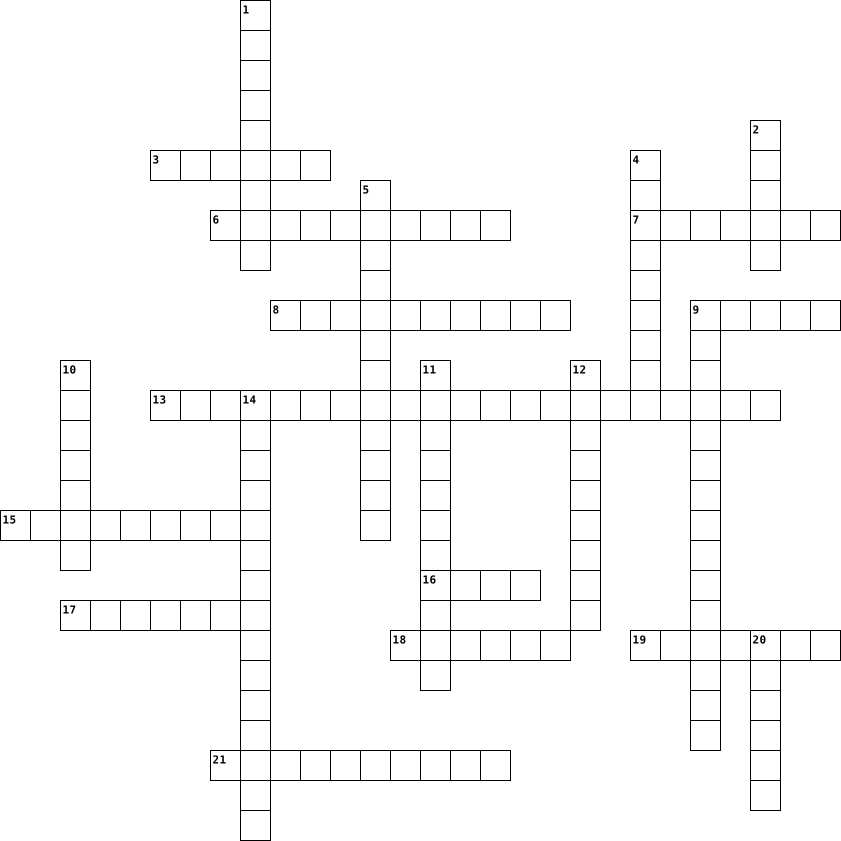
Across
- The remains or impression of a prehistoric organism preserved in petrified form or as a mold or cast in rock.
- Boundary moving towards each other.
- A mountain that opens downward to a pool of molten rock.
- A sudden and violent shaking of the ground.
- A living organism; tree, shrub, herb, grass, and flower.
- name of Wegener's theory.
- Example of Convergent Boundary.
- Relatively hard, naturally formed mineral or petrified matter; stone.
- Proposed the theory of the Plate Tectonics.
- The layer of the Earth between the crust and the core.
- The separation of the continents by plate tectonics.
- This occurs in Continental Boundary (Ocean vs. Continent).
Down
- This happens in a Convergent Boundary (Continent vs. Continent).
- A person.
- Boundary moving apart from each other.
- sudden occurrence of a violent discharge of steam and volcanic material.
- The crustal plates are moving over the mantle.
- A long high sea wave caused by an earthquake or other disturbance.
- Example of Transform-Fault Boundary (Hint: It is a fault).
- Example of Divergent Boundary (Hint: It is a ridge).
- Boundary moving side by side.
- A living organism that feeds on organic matter; fish, deer, snake, bird, and coyote.
22 Clues: A person. • name of Wegener's theory. • Boundary moving side by side. • Example of Convergent Boundary. • Boundary moving towards each other. • Boundary moving apart from each other. • A sudden and violent shaking of the ground. • Proposed the theory of the Plate Tectonics. • The crustal plates are moving over the mantle. • ...
Plate Tectonics 2012-10-02

Across
- The Thinnest layer of the Earth
- Caused by two plates rubbing against each other
- Formed by subduction
- Includes the crust and the upper most part of the mantle
- The result of two plates separating
- Magma rotating in a circular motion due to temperature
- Directly above the focus of an earthquake
- The result of two plates colliding
- In which boundary do two plates collide
- Magma coming directly from the mantle and forming volcanoes
Down
- The deepest layer of the Earth
- The thickest layer of the Earth
- Includes the upper mantle
- In which boundary do two plates separate
- In which boundary do two plates rub against each other
- The liquid layer below the mantle
- The area between two ridges
- When the oceanic plate goes underneath the continental plate
- Formed by the friction of subduction
- When two ridges separate
20 Clues: Formed by subduction • When two ridges separate • Includes the upper mantle • The area between two ridges • The deepest layer of the Earth • The thickest layer of the Earth • The Thinnest layer of the Earth • The liquid layer below the mantle • The result of two plates colliding • The result of two plates separating • Formed by the friction of subduction • ...
plate tectonics 2012-12-05

Across
- is magma older or younger away from the mid ocean ridge?
- when plates move past each other.
- is magma older or younger toward the mid ocean ridge?
- beneath this layer is a plastic like substance.
- where 2 oceanic plates collide.
- when earth's plates collide they form volcanoes and_.
- differences in the rock in the asthenosphere.
- the great rift valley in africa is _.
- where is the asthenosphere located.
- what is hawaii made of?
- composed of the crust and a part of the upper mantle.
Down
- the crust and upper mantle.
- the result of plate movement can be seen at.
- active volcanoes are most likely found at _ plates.
- an example of a transform boundary.
- magma's cycle of heating, rising, cooling, and sinking.
- in order to complete a convection current the rising material must_ back into earth.
- when oceanic plates collide what landforms are made.
- what is magma called after it explodes out of the volcano.
- what was the big continent called.
20 Clues: what is hawaii made of? • the crust and upper mantle. • where 2 oceanic plates collide. • when plates move past each other. • what was the big continent called. • an example of a transform boundary. • where is the asthenosphere located. • the great rift valley in africa is _. • the result of plate movement can be seen at. • differences in the rock in the asthenosphere. • ...
Plate Tectonics 2013-03-02

Across
- Measurement of angular distance on the Earth east or west of the prime meridian
- Melted rock beneath Earth's surface
- plate boundaries Where two tectonic plates move away from each other
- currents Movement within hot fluids, when the heat source is on the bottom, such as in a boiling pot of soup on the stove
- Opening in Earth's crust where melted rock reaches Earth's surface
- ("all land") the single huge supercontinent that existed 245 million years ago, when all of Earth's continents were joined together
- scale Numerical description of the size of seismic waves produced by an earthquake
- The rigid, brittle layer made up of the crust and the uppermost part of the mantle. It is broken up into pieces called tectonic plates
- plates Large pieces of the lithosphere that slowly move on top of the asthenosphere
- Imaginary east-west line that circles Earth halfway between geographic poles
Down
- The process by which one tectonic plate sinks below another, returning to the mantle, where the rock is re-melted
- wave Vibration produced by an earthquake
- convection Convection currents in the mantle that occur because hot rock in the lower part of the mantle is less dense and rises, and cooler rock in the upper part of the mantle cools, becomes more dense, and sinks
- drift The theory that all of Earth's continents were once joined together into a single large landmass, and then moved apart, forming the continents we see today
- plate boundaries Where two tectonic plates move toward each other
- Measurement of angular distance on the Earth north or south of the equator
- plate boundary Where two tectonic plates slip past each other, moving in opposite direction
- Instrument that measures and records seismic waves
- Point on Earth's surface directly above an earthquakes focus
- The true location of an earthquake and source of seismic waves
20 Clues: Melted rock beneath Earth's surface • wave Vibration produced by an earthquake • Instrument that measures and records seismic waves • Point on Earth's surface directly above an earthquakes focus • The true location of an earthquake and source of seismic waves • plate boundaries Where two tectonic plates move toward each other • ...
Plate Tectonics 2013-02-19

Across
- The Earthquake intensity scale based on observation.
- Pieces of the Earth's Crust that float around on the mantle.
- The idea that the continents were once one but have gradually moved apart.
- The scientist who first proposed the idea of continental drift.
- The type of plate that contains a continent.
- The type of boundary where two plates rub against one another, ofen causing an earthquake.
- The type of heat transfer used in the mantle.
- The zone at a convergent boundary where a plate is being destroyed.
- The part of the mantle where convection currents occur.
- The type of boundary where two plates are moving away from one another.
- The layer of the Earth that contains the Upper Manlte and the Lower crust.
- The outer layer of Earth.
Down
- The type of boundary where two plates are moving towards one another.
- The theory most scientists believe now where the Earth consists of several plates on it's crust that are always moving.
- The material that makes up most of the core.
- The type of plate that contains the planet's oceans.
- The 'super continent' that existed 200 billion years ago.
- The spot at a divergent boundary where hot magma rises from the mantle and cools on the surface.
- The very center of the Earth.
- The Earthquake intensity scale based on the measurement of instruments.
20 Clues: The outer layer of Earth. • The very center of the Earth. • The material that makes up most of the core. • The type of plate that contains a continent. • The type of heat transfer used in the mantle. • The Earthquake intensity scale based on observation. • The type of plate that contains the planet's oceans. • The part of the mantle where convection currents occur. • ...
Plate Tectonics 2013-01-01

Across
- The theory of Earth's continents being all together and then splitting into several different continents.
- The transfer of energy through space or air.
- Beginning of the formation of new ocean floor.
- The largest layer of Earth.
- The thinnest layer of Earth.
- Plate boundaries that move together.
- The hottest layer of Earth.
- The reason Earth's plates move.
- Deep V-shaped valleys where subduction occurs.
- The transfer of heat between two solid objects that are touching.
Down
- Formed the longest mountain chain in the world.
- The along which rocks break move.
- Continental Drift led to this theory.
- The transfer of heat by movement of particles in liquids.
- Plate boundaries that move past each other, horizontally
- The name of the ancient continent.
- Proposed the theory of Continental Drift.
- Where pressure increases inside the Earth
- Plate boundaries that move apart.
- The process of ocean crust diving under continental crust.
20 Clues: The largest layer of Earth. • The hottest layer of Earth. • The thinnest layer of Earth. • The reason Earth's plates move. • The along which rocks break move. • Plate boundaries that move apart. • The name of the ancient continent. • Plate boundaries that move together. • Continental Drift led to this theory. • Proposed the theory of Continental Drift. • ...
Plate tectonics 2013-04-06

Across
- theory that continents drift apart
- the sinking of regions of earth's crust to lower elevations
- solid dense center of the earth
- a squeezing force
- boundary between two plates that are sliding past each other
- new lithosphere is created here
- the rising of regions of earth's crust to higher elevations
- the strong lower part of the mantle between the asthenosphere and outer core
- piece of the lithosphere that moves on the asthenosphere
- a region where a an oceanic plate sinks down into the asthenosphere
- liquid layer of the earth's core
Down
- outermost,rigid layer of the earth
- a break in the earths crust
- boundary between two colliding plates
- the bending of rock layers
- a pulling force
- layer between the crust and core
- soft layer of the mantle
- boundary between two plates moving away from each other
- outermost layer of the earth
20 Clues: a pulling force • a squeezing force • soft layer of the mantle • the bending of rock layers • a break in the earths crust • outermost layer of the earth • solid dense center of the earth • new lithosphere is created here • layer between the crust and core • liquid layer of the earth's core • outermost,rigid layer of the earth • theory that continents drift apart • ...
Plate Tectonics 2013-10-30

Across
- the mantle is the ____ layer of earth
- seeds of an apple is like this part of the earth
- liquid that rises from the core that creates ocean ridges
- a fossil plant found all over the world
- when magma comes up and creates new ridges
- people accepted wegeners theory after his ____
- the bounderie where plates move part
- the force that represents the divergent bounderies
- the man who found evidence of seafloor spread
Down
- the man that discovered pangea
- a huge wave caused by a earthquake in the ocean
- the ____ dense material sank to the core of earth
- the word that means all land
- the bounderie where two plates slide past eachother
- the earth is _____ under continental mountain ranges
- the peel of an apple is like this to the earth
- we live in this era
- the bounderie where two plates collide
- when the ocean shakes; usally on faults
- places in earth where two plates move
20 Clues: we live in this era • the word that means all land • the man that discovered pangea • the bounderie where plates move part • the mantle is the ____ layer of earth • places in earth where two plates move • the bounderie where two plates collide • a fossil plant found all over the world • when the ocean shakes; usally on faults • when magma comes up and creates new ridges • ...
Plate Tectonics 2013-09-13

Across
- breaks in the earths crust where rocks have slipped past each other to form along these boundaries
- Any Trace of an ancient organism that has been preserved in rock.
- Who made the hypothesis of continents plowed across the ocean floors?
- an undersea mountain chain where new ocean floor is produced.
- The continents drifting together to form the supercontinent
- where two plates come together, or converge is called a
- pieces of the earths lithosphere are in a slow, constant motion, driven by convection currents in the mantle.
- where two plates move apart, or diverge
- a fernlike plant that lived 250 million years ago.
- What often occur along the transform boundaries?
- the process by which the ocean floor sinks beneath a deep-ocean trench and back into the mantle is called
Down
- adds new material to the ocean floor.
- is a place where two plates slip past each other, moving in opposite directions
- in a process taking tens of millions of years, part of the sinks back into the mantle at deep ocean trenches
- is a well tested concept that explains a wide range of observations
- a deep valley
- the ocean floor plunging into deep under water canyons called
- a device that bounces sound waves off underwater objects and then records the echoes of these soundwaves.
- the hypothesis that the continents slowly moved across Earth's surface.
- the ocean floor is renewed every
- the lithosphere broken into separate sections is called
21 Clues: a deep valley • the ocean floor is renewed every • adds new material to the ocean floor. • where two plates move apart, or diverge • What often occur along the transform boundaries? • a fernlike plant that lived 250 million years ago. • where two plates come together, or converge is called a • the lithosphere broken into separate sections is called • ...
Plate Tectonics 2013-09-22

Across
- /a large volcanic crater
- /also called P wave
- /a numerical scale expressing the magnitude of an earthquake on the basis of seismograph oscillations
- /An example of Transformation Fault Boundary
- /a type of seismic wave
- /mark sites of convection downwelling of Earth's lithosphere
- /is the belt or zone of the continental lithosphere where the extensional deformation is occurring
- /A type of volcano
- /also called S wave
- /is an isolated region of the earth that produces lava
- /a sudden and violent shaking of the ground, as a result of movement
Down
- /the crust that takes place in the ocean
- /Also known as Seafoor Spreading
- /is directly below the epicenter in the earthquake
- /the point on the earth's surface vertically above the focus of an earthquake
- /a destructive mudflow on the slopes of a volcano
- /a fracture along which the blocks of crust on either side have moved to one another parallel to the fracture
- /a geophysicist who studies earthquakes
- /a smaller earthquake following the main shock of a large earthquake
- /a mild tremor preceding the violent shaking movement of an earthquake
20 Clues: /A type of volcano • /also called P wave • /also called S wave • /a type of seismic wave • /a large volcanic crater • /Also known as Seafoor Spreading • /a geophysicist who studies earthquakes • /the crust that takes place in the ocean • /An example of Transformation Fault Boundary • /a destructive mudflow on the slopes of a volcano • ...
Plate Tectonics 2013-12-10

Across
- Continent
- Spreading/Material continually being added
- Plate
- De Fuca/Smallest Plate
- of boundary where plates rub against each other
- Tectonics/Theory of plates in motion
- Scientist
Down
- of an ancient organism that has been preserved
- that uses sound waves to measure distance
- Drift/Wegener's Theory
- Andreas Fault/Transform boundary in California
- of the lithosphere
- of boundary where plates push together
- floor sinking into mantle
- Trench/Underwater canyons
- of boundary where plates pull apart
- America/Africa and what other continent appear to fit together like puzzle pieces
- Ridge/Long, underwater mountain chains
- in the crust where plates slip past each other
- of tectonic plates there are
20 Clues: Plate • Continent • Scientist • of the lithosphere • Drift/Wegener's Theory • De Fuca/Smallest Plate • floor sinking into mantle • Trench/Underwater canyons • of tectonic plates there are • of boundary where plates pull apart • Tectonics/Theory of plates in motion • of boundary where plates push together • Ridge/Long, underwater mountain chains • ...
Plate Tectonics 2013-11-26

Across
- An individual part of the Earth's Crust.
- Movements in the earth's crust mostly by transform boundary.
- Located under the continents.
- 2 plates move away from each other.
- Plate One of three plates colliding with the Eurasian Plate.
- The name for the Continents before they were seperated.
- 2 plates slide/move past each other.
- A mountain range or long narrow hilltop.
Down
- Tectonics The movement of tectonic plates.
- Range a line of mountains connected by high ground.
- A line that marks the limits of an area.
- 2 plates collide and one goes under the other plate.
- Any of the world's main continuous expanses of land.
- Occurs when two plates collide & lava erupts.
- Plate A landmass consisting of the continents, Europe & Asia.
- Occurs when two plates collide.
- The outermost rough shell of Earth.
- Plate A tectonic plate which includes the continent of Africa.
- Wegner Created the Theory of Continental Drift.
- Located under the ocean floor.
20 Clues: Located under the continents. • Located under the ocean floor. • Occurs when two plates collide. • 2 plates move away from each other. • The outermost rough shell of Earth. • 2 plates slide/move past each other. • An individual part of the Earth's Crust. • A line that marks the limits of an area. • A mountain range or long narrow hilltop. • ...