
plate tectonics Crossword Puzzles
Plate Tectonics 2014-09-12

Across
- Molten rock stored beneath Earth's surface
- The process that results when a dense oceanic plate sinks beneath a more buoyant plate
- The type of rock that forms when lava crystallizes and cools
- The thick middle layer of the Earth
- The process by which new oceanic crust forms along a mid-ocean ridge and older crust moves away
- The type of boundary between two plates that move toward each other
- The circulation of particles within a material caused by differences in thermal energy and density
- The dense metallic center of the Earth
- The rigid outermost layer of the Earth that includes the upper mantle and crust
- The type of boundary between two plates that slide past one another
Down
- Name given to a supercontinent that began to break apart 200 million years ago
- Magma that erupts onto Earth's surface
- The process that occurs when one tectonic plate moves under another tectonic plate
- The partially melted portion of the mantle below the lithosphere
- the rigid slabs of rock that make up the Earth's surface
- The movement of Earth's continents over time
- Long, narrow mountain range on the ocean floor
- The process that results when magma rises and pushes oceanic plates in two different directions
- The brittle, rocky outer layer of Earth
- The type of boundary between two plates that move away from each other
20 Clues: The thick middle layer of the Earth • Magma that erupts onto Earth's surface • The dense metallic center of the Earth • The brittle, rocky outer layer of Earth • Molten rock stored beneath Earth's surface • The movement of Earth's continents over time • Long, narrow mountain range on the ocean floor • the rigid slabs of rock that make up the Earth's surface • ...
Plate Tectonics 2014-03-03

Across
- the force exerted on a surface divided by the total area over which the force is exerted
- Vibrations that travel through Earth carrying the energy released during an earthquacke
- the layer of rock that forms Earth's outer surface
- a plate boundary where two plates move toward each other
- a large stream of moving water that flows through the oceans
- a break or crack in Earth's lithosphere along which the rocks move
- a rigid layer made up of the uppermost part of the mantle and the crust
- the soft layer of the mantle on which the lithosphere floats
- the theory that pieces of Earth's lithosphere are in constant motion, driven by continental currents in the mantle
- a dark, dense, igneous rock with a fine texture, found in oceanic crust
- the amount of mass of a substance in a given volume; mass per unit volume
- a well-tested concept that explains a wide range of observations
- the layer of hot, solid material between Earth's surface and core
- a usually light-colored rock that is found in continental crust
Down
- a plate boundary where two plates move past each other in opposite directions
- the name of the single landmass that broke apart 200 million years ago and broke into today's continents
- the process by which molten material adds new oceanic crust to the ocean floor
- a plate boundary where two plates move away
- the direct transfer of energy through space by electromagnetic waves
- the hypothesis that the continent slowly move across Earth's surface
- the direct transfer of thermal energy from one substance to another substance that it's touching
21 Clues: a plate boundary where two plates move away • the layer of rock that forms Earth's outer surface • a plate boundary where two plates move toward each other • a large stream of moving water that flows through the oceans • the soft layer of the mantle on which the lithosphere floats • a usually light-colored rock that is found in continental crust • ...
Plate Tectonics 2014-03-03

Across
- a rigid layer made up of the uppermost part of the mantle and the crust
- the soft layer of the mantle on which the lithosphere floats
- a break or crack in Earth's lithosphere along which the rocks move
- the direct transfer of energy through space by electromagnetic waves
- the hypothesis that the continent slowly move across Earth's surface
- the layer of hot, solid material between Earth's surface and core
- a plate boundary where two plates move toward each other
- a plate boundary where two plates move past each other in opposite directions
- a plate boundary where two plates move away
- a well-tested concept that explains a wide range of observations
- the amount of mass of a substance in a given volume; mass per unit volume
- a usually light-colored rock that is found in continental crust
Down
- the theory that pieces of Earth's lithosphere are in constant motion, driven by continental currents in the mantle
- the direct transfer of thermal energy from one substance to another substance that it's touching
- a large stream of moving water that flows through the oceans
- Vibrations that travel through Earth carrying the energy released during an earthquacke
- the force exerted on a surface divided by the total area over which the force is exerted
- a dark, dense, igneous rock with a fine texture, found in oceanic crust
- the name of the single landmass that broke apart 200 million years ago and broke into today's continents
- the process by which molten material adds new oceanic crust to the ocean floor
- the layer of rock that forms Earth's outer surface
21 Clues: a plate boundary where two plates move away • the layer of rock that forms Earth's outer surface • a plate boundary where two plates move toward each other • a large stream of moving water that flows through the oceans • the soft layer of the mantle on which the lithosphere floats • a usually light-colored rock that is found in continental crust • ...
Plate Tectonics 2014-08-08

Across
- An area of rock bent as a result of stress.
- A Mountain or hill, typically conical that contains a vent of lava.
- A large movement of water as a result of an earthquake or tectonic activity.
- A depression in the Earth's crust.
- The theory that the layout of the earths continents changes.
- A large mass of land risen from the crust as a result of tectonic activity.
- The centre of the Earth.
- The thick, dense layer of earth between The Earth's core and crust
- Geology/ the study of the earths physical history.
- The process of tectonic plates moving apart.
- Large moveable sections of the lithosphere.
- The deformation of the lithosphere.
- Interaction between two or more plates resulting in a plate to get pushed/pulled down.
- A Split between two bodies.
Down
- An area of fracturing between rocks resulting from stress.
- A depression in the oceans floor caused when two plates converge causing one plate to get pushed downwards.
- The process of two or more tectonic plates moving toward each other.
- Sublayers of the earths crust that move, collide and cause earthquakes, volcanoes, and tsunamis.
- The study of tectonism
- The outer layer of earth.
20 Clues: The study of tectonism • The centre of the Earth. • The outer layer of earth. • A Split between two bodies. • A depression in the Earth's crust. • The deformation of the lithosphere. • An area of rock bent as a result of stress. • Large moveable sections of the lithosphere. • The process of tectonic plates moving apart. • Geology/ the study of the earths physical history. • ...
Plate tectonics 2014-04-29

Across
- Tectonics Theory that Earth's crust and upper mantle are broken into sections that move around on a plastic-like layer of the mantle.
- Cone Steep-sided volcano made of loosely packed tephra.
- Core Liquid core that surrounds Earth's solid inner core.
- The point beneath Earth's surface where energy release occurs, in a earthquake.
- scientist who studies earthquakes and seismic wave.
- Earth's outermost layer.
- Rigid, outermost layer of Earth that is about 100km thick, and is composed of the crust and part of the upper mantle.
- powerful seismic sea wave that can travel thousands of kilometers in all directions and that begins over an earthquake focus.
- Single large landmass made up of all the continents connected together that broke apart 200 million years ago.
- Largest layer inside Earth, lying directly above the outer core.
Down
- core Earths innermost part.
- surface along which rocks break and move.
- Wave waves of energy that reach Earth's surface during an earthquake, travel outward from the epicenter, and move rock particles up and down, and side to side.
- point of Earth's surface directly above an earthquake's focus.
- Waves Waves that travel outward from an Earthquake's focus and cause particles in rocks to move back and forth in the same direction the wave is moving.
- A volcano formed by alternating layers of tephra and lava and that is found mostly where Earth's plates come together.
- Device used by seismologists to record primary, secondary, surface waves from earthquake.
- A broad volcano with gently sloping sides.
- waves Waves that travel outward from an earthquake's focus and move through Earth by causing particles in rocks to vibrate at right angles to the direction of the wave.
- Waves Energy waves that are produced at and travel outward from the earthquake's focus.
- Large opening formed when the top of a volcano collapse.
21 Clues: Earth's outermost layer. • core Earths innermost part. • surface along which rocks break and move. • A broad volcano with gently sloping sides. • scientist who studies earthquakes and seismic wave. • Cone Steep-sided volcano made of loosely packed tephra. • Large opening formed when the top of a volcano collapse. • ...
plate tectonics 2015-03-06

Across
- person who studies earthquakes
- break in earth's crust
- squeezing force
- boundary between two colliding plates
- solid dense center of the earth
- outermost rigid layer
- the point directly above the focus
- theory proposed by Alfred Wegner
- piece of the lithosphere that moves on the asthenosphere
- boundary between two plates moving away
- bending of rock layers
- measure of energy released in an e-quake
Down
- layer between the crust and core
- where energy is being released from an earthquake
- where an oceanic plate sinks down into the asthenosphere
- layer of the mantle
- pulling force
- boundary between two plates sliding past each other
- liquid layer of earth's core
- outermost layer of the earth
20 Clues: pulling force • squeezing force • layer of the mantle • outermost rigid layer • break in earth's crust • bending of rock layers • liquid layer of earth's core • outermost layer of the earth • person who studies earthquakes • solid dense center of the earth • layer between the crust and core • theory proposed by Alfred Wegner • the point directly above the focus • ...
Plate Tectonics 2015-01-20

Across
- A scientist who studies earthquakes
- A seismic wave that can travel through the interior of the earth
- An instrument that records the motions of the Earth especially earthquakes
- An earthquake that comes after a larger one
- Magma that flows out onto Earths surface from a volcano
- move more slowly than P waves but in an earthquake they are usually bigger
- A shaking or movement of Earths surface
- A super continent existing 200 million years ago
- The theory of pangea and the landmass coming apart
- The innermost densest layer of Earth
Down
- The fastest body waves that arive befor S waves
- The ability to cause change
- A point within earth that originates the first movement of an earthquake
- A site at which one or more seismographs are set up and routinely monitored
- The layer of the Earth between the crust and the core
- The process in which a solid takes on the characteristics of a thick heavy liquid
- The ability to cause change
- The transfer of heat energy through liquids and gases, fluids, by moving particals
- the point on the Earths surface that is the center of the earth quake
- A break in rock along where slabs are moved
- Earths outer layer
21 Clues: Earths outer layer • The ability to cause change • The ability to cause change • A scientist who studies earthquakes • The innermost densest layer of Earth • A shaking or movement of Earths surface • An earthquake that comes after a larger one • A break in rock along where slabs are moved • The fastest body waves that arive befor S waves • ...
Plate Tectonics 2015-01-25

Across
- The outermost part of Earth that is mostly made up of granite.
- Steep-walled depression around a volcano's vent.
- The point of Earth's surface directly above an earthquake's focus.
- A device used by scientists to record primary, secondary, surface waves from earthquakes.
- The theory that explains how and why continents move
- Rigid, outermost layer of the earth that is about 100km thick.
- A common rock type within the oceanic crust.
- The large opening formed when the top of a volcano collapses.
- A scientist who studies earthquakes and seismic waves.
- Surface along which rocks break and move?
- There are ___ primary plates that form Earth's crust.
Down
- The name Alfred Wegener gave to the super-continent.
- A geological process in which one edge of one crustal plate is forced below the edge of another.
- A common rock type found within the continental crust.
- A sudden movement along the boundary of a tectonic plate is called?
- Tectonic plates float on the _?
- Seismic sea wave
- What lies directly beneath the crust?
- Opening in the earth's surface that often forms a mountain when layers of lava and volcanic ash erupt and build up.
- Measure of the energy released by an earthquake.
20 Clues: Seismic sea wave • Tectonic plates float on the _? • What lies directly beneath the crust? • Surface along which rocks break and move? • A common rock type within the oceanic crust. • Steep-walled depression around a volcano's vent. • Measure of the energy released by an earthquake. • The name Alfred Wegener gave to the super-continent. • ...
Plate Tectonics 2015-03-09

Across
- Earthquakes cause the ground to turn to liquid.
- Cracks in the planet's surface.
- A mechanism which defines the magnitude of seismic waves.
- The status of New York City if an earthquake hits it.
- A city in Japan that has large earthquakes.
- The expression of the internal and external processes and events that affect a planetary body.
- The U.S. state that has the San Andres Fault in it.
- A shaking or vibrating movement.
- The result of a sudden release of energy in the Earth's crust.
- A piece of land surrounded by water that can be formed by earthquakes.
Down
- Engaged in action.
- A home made to withstand an earthquake.
- A statement or event that indicates a possible or impending danger, problem, or other unpleasant situation.
- The smaller movements after a quake as the Earth re-adjusts itself.
- Large-scale processes affecting the structure of the earth's crust.
- An area that refers to the frequency, type and size of earthquakes experienced over a period of time.
- When somethings falls.
- Pressure or tension exerted on a material object.
- A recognizable, naturally formed feature on the Earth's surface.
- A type of fault that has the two plates move paste each other.
20 Clues: Engaged in action. • When somethings falls. • Cracks in the planet's surface. • A shaking or vibrating movement. • A home made to withstand an earthquake. • A city in Japan that has large earthquakes. • Earthquakes cause the ground to turn to liquid. • Pressure or tension exerted on a material object. • The U.S. state that has the San Andres Fault in it. • ...
plate tectonics 2016-08-02

Across
- – largest type of crust
- – the spot underground where rock breaks causing an earthquake
- – when the earths crust is pushed up from its sides
- – the earths thickest layer
- – the super continent
- - the largest recorded shock
- – what layer of the earth is liquid state due to extremely high temperatures
- – most common type of volcano, explosive eruptions and lava flow
- – semi rigid part of the mantle
- – plates sliding against each other
- – debris thrown from volcanos with viscous magma
- – lava with a high viscosity, blocky and rough
- – the area on the ground directly above where an earthquake occurs
- – the north side of Pangaea
- – an earthquake that occurs after a larger seismic event
- – the south side of Pangaea
- - an opening in the side of a volcano through which volcanic materials (like lava, gases, and pyroclastic debris) erupt.
- – lava that is parcially cooled, low viscosity, thin (like water)
- – what layer of the earth is solid due to tremendous pressure
Down
- – areas of the earths surface through which magma and volcanic gases pass
- – a volcano that is not very steep but can be big with non- explosive eruptions
- – occurs in the middle of the plate tectonics
- waves – waves trapped near the surface, they are the slowest and most destructive
- - hot molten or semi-fluid rock erupted from a volcano or fissure, or solid rock resulting from cooling of this.
- – a volcano small in size with steep slopes, moderately explosive with shot eruptions
- – smallest type of crust
- – A point source of the Earth's surface through which lavas, pyroclastics, and gas are erupted.
- – a tube formed by cooling and solidifying of the lava walls while fluid lava continued to flow inside
- – plates pulling away from each other
- – the line which rocks break and move
- – the scale which measures the magnitude of earthquakes
- – plates pushing together
- – waves that travel along the worlds outer layers
- – a form of closed lava tube (with a bulbous end) that forms when lava flows into water (e.g. a lake) and cools very rapidly
- - a large underground pool of liquid rock found beneath the surface of the Earth.
- – occurs on the tectonic plate boundaries
- - hot fluid or semi-fluid material below or within the earth's crust from which lava and other igneous rock is formed on cooling.
- – all material ejected from a volcano
- – scientist behind the theory of the continental drift
- – the fastest travel waves with the greatest velocity
- – an earthquake that occurs before a larger seismic event
- – the earths thinnest layer
42 Clues: – the super continent • – largest type of crust • – smallest type of crust • – plates pushing together • – the earths thickest layer • – the north side of Pangaea • – the south side of Pangaea • – the earths thinnest layer • - the largest recorded shock • – semi rigid part of the mantle • – plates sliding against each other • – the line which rocks break and move • ...
Plate Tectonics 2017-01-04

Across
- Several large slabs of the lithosphere that hold the continents and oceans and are slowly but constantly moving around the earth.
- A layer of the earth's crust that lies under the seven continents. It is about 20 to 40 miles (35 to 70 km) thick and very old.
- BOUNDARY The boundary that occurs where two plates slide past each other.
- Molten rock that flows beneath the earth's surface and is made up of gases, liquids, and crystals. When it reaches the surface, it is called lava.
- The place where one plate is getting bent and pulled under the edge of another plate.
- The innermost layer of the earth, an extremely hot, solid sphere of mostly iron and nickel. It is 3,200 to 3,960 miles (5,150 to 6,378 km) below the surface and about 750 miles (1,200 km) thick.
- A deep valley that forms at the edge of a continent when an oceanic plate sinks underneath a continental plate.
- Made up of the crust and a tiny bit of the upper mantle, this zone is divided into several constantly (very slowly) moving plates of solid rock that hold the continents and oceans.
- A trembling and shaking of the earth's surface resulting from the sudden release of energy in the crust, either along fault lines or from volcanic activity.
- The boundary that occurs where two plates are moving apart from each other.
Down
- The process that forms new ocean floor and oceanic crust. Magma oozes up from the mantle through a crack in the ocean floor, filling in the space between the plates and spreading out from the plate boundary.
- Hard and rigid, the earth's outermost and thinnest layer. It is only a few miles (5 km) thick under the oceans and averages 20 miles (30 km) thick under the continents.
- This layer of the earth lies between the mantle and the solid inner core. It is the only liquid layer, a sea of mostly iron and nickel about 1,400 miles (2,300 km) thick.
- A dropped zone where two continental tectonic plates are pulling apart.
- The type of crust lying under the oceans of the world. It is only 4 to 6 miles (7 to 10 km) thick and usually younger than continental crust.
- A crack or fracture in Earth's crust where two tectonic plates grind past each other in a horizontal direction.
- A hot, malleable semiliquid zone in the upper mantle, on which the plates of the lithosphere move (or float).
- This dense layer of the earth is made of hot, semisolid rock and is located directly below the crust. It is about 1,800 miles (2,900 km) thick.
- A raised area or mountain range under the oceans formed when magma fills the space between two tectonic plates that are spreading apart.
- The place where a collision between two continental plates crunches and folds the rocks at the boundary, lifting them up and leading to mountain formation.
- The boundary that occurs where two plates are pushing toward each other.
- The border between two tectonic plates.
- The name given to the supercontinent that existed more than 225 million years ago, in which the present-day continents were joined together in one large landmass.
- A huge ocean wave caused by a sudden, powerful shift on the ocean floor, like an undersea earthquake, landslide, or volcanic eruption.
24 Clues: The border between two tectonic plates. • A dropped zone where two continental tectonic plates are pulling apart. • The boundary that occurs where two plates are pushing toward each other. • BOUNDARY The boundary that occurs where two plates slide past each other. • The boundary that occurs where two plates are moving apart from each other. • ...
Plate Tectonics 2016-01-26

Across
- liquid layer of the Earth's core
- outermost, rigid layer of the Earth
- layer between the crust and the core
- new lithosphere is created here
- outermost layer of the Earth
- theory that continents drift apart
- solid, dense center of the Earth
- piece of the lithosphere that moves on the asthenosphere
- the bending of rock layers
Down
- soft layer of the mantle
- a pulling force
- a squeezing force
- boundary between two colliding plates
- A chain of mountains on the ocean floor where the sea floor is spreading.
- a region where a an oceanic plate sinks down into the athenosphere
- a break in the Earth's crust
- The pathway along which energy travels through a fluid
- boundary between two plates moving away from each other
- boundary between two plates that are sliding past each other
- A supercontinent that existed about 200 million years ago but broke apart into several continents.
20 Clues: a pulling force • a squeezing force • soft layer of the mantle • the bending of rock layers • a break in the Earth's crust • outermost layer of the Earth • new lithosphere is created here • liquid layer of the Earth's core • solid, dense center of the Earth • theory that continents drift apart • outermost, rigid layer of the Earth • layer between the crust and the core • ...
Plate Tectonics 2017-03-07

Across
- A large supercontinent which formed millions of years ago
- Violent shaking of the Earth which is caused by rocks breaking under stress
- A fracture in rock where the tectonic plates have moved
- The layer of molten rock located beneath the Earth's crust
- A mountain with a vent where magma have or are erupted
- A thin part of the crust that which lays under the oceans
- A series of underwater mountains that form as a result of tectonic plates moving apart and allowing magma to rise to the surface
- The boundary between two tectonic plates that are moving together
- The current or flow of air or liquid that results from the transfer of thermal energy through convection
- A theory that the middle of the ocean is spreading apart, forming new oceanic crust
- The continual movement of the continents over time
- The transfer of the thermal energy by the movement of molecules in air or liquid from one place to another
- The boundary between two tectonic plates that are moving apart
- Lithosphere; the outer layer of the Earth
Down
- the geologist which first thought of the thoery of continental drift
- A deep valley that forms as a result of tectonic plates moving apart on land
- A series of large waves that result from an underwater earthquake
- The movement of one tectonic plate under another tectonic plate
- Underwater cliffs between the beach and the ocean
- A large leyer of solid rock that covers part of the surface of the Earth; Movement of tectonic plates can cause earthquakes
- A deep ditch under the ocean along a tectonic plate boundary
- A place where two tectonic plates colided which causes a large land mass to elevate
- Core The layer of the Earth which is responsible for the magnectic field
- The boundary between two tectonic plates that are sliding past each other
- Molten rocks which appear on the surface of the Earth
- Semiliquid rock found beneath the Earth's surface
- A place in the mantle that melts rocks into magma
- The theory that the surface of the Earth is divided into a series of plates that are continually moving
- Something that acts like a liquid but is a solid
- The centre of the Earth
30 Clues: The centre of the Earth • Lithosphere; the outer layer of the Earth • Something that acts like a liquid but is a solid • Underwater cliffs between the beach and the ocean • Semiliquid rock found beneath the Earth's surface • A place in the mantle that melts rocks into magma • The continual movement of the continents over time • ...
Plate Tectonics 2017-10-23

Across
- a break in the Earth's crust where sediment (rock and other things) have slipped past each other.
- when plates move away from each other.
- older crust is ____ _____ than newer crust.
- a scientist who discovered pangea
- the temperature of newer crust is _____ than older crust.
- when the ocean floor goes into a canyon, what are the canyons called?
- when plates slide on top or past each other.
- Where the ocean spreads.
- plates movement into a theory.
- new crust is ____ ______ than old crust.
- the sideways and downward movement of the edge of a plate of the earth's crust into the mantle beneath another plate is called what?
Down
- the remains of a historic thing molded in a form or as a mold in rock?
- when plates come together.
- the name of the most popular supercontinent.
- when the mid-ocean ridge adds more sea floor.
- pieces separated by cracks.
- a system for the detection of objects under water and for measuring the water's depth by radiating waves is called a?
- peices of Earth’s crust diverge on land.
- When continents moved slowly over Earth's surface is called?
- the temperature of older crust is ______ than newer crust.
20 Clues: Where the ocean spreads. • when plates come together. • pieces separated by cracks. • plates movement into a theory. • a scientist who discovered pangea • when plates move away from each other. • peices of Earth’s crust diverge on land. • new crust is ____ ______ than old crust. • older crust is ____ _____ than newer crust. • the name of the most popular supercontinent. • ...
Plate Tectonics 2017-10-23

Across
- the earth's motion into a single theory
- mountains under water
- separating of the plates
- wegeners idea that the continents move is called
- supercontinent
- force pressing on something
- when somthing goes back into the mantle
- the last layer in our earth
- a device that shows us down far below the ocean
- a dark fined grained rock
Down
- colliding of the plates
- breaks in earths crust
- any trace of anything ancient
- when the oceanic crust bends down
- a deep valley
- generates earthquakes
- the pieces called what?
- a part of the earths inner
- outer skin of the earth
- a rock that is normally light colored
20 Clues: a deep valley • supercontinent • mountains under water • generates earthquakes • breaks in earths crust • colliding of the plates • the pieces called what? • outer skin of the earth • separating of the plates • a dark fined grained rock • a part of the earths inner • force pressing on something • the last layer in our earth • any trace of anything ancient • ...
plate tectonics 2017-10-23

Across
- breaks in the earth's crust
- a large body of water
- the uppermost part of the mantle
- a mountain that erupts
- heat transfer from air currents
- any trace of an ancient organism preserved in rock
- earth's plates that are in slow constant motion
- deep underwater canyons
- plates collide
- german scientist who discovered that the continents were together at one point
- pieces of earth separated by cracks
- plates slip past eachother
Down
- a process where the ocean floor sinks in the mantle
- how much mass there is in a given amount of volume
- a process that adds new material to the ocean floor
- a layer of hot rock
- forms when pieces of earth's crust diverge on land
- plates come together
- - an idea that continents slowly move
- underwater ocean ranges
- a supercontinent that existed 2 million years ago
21 Clues: plates collide • a layer of hot rock • plates come together • a large body of water • a mountain that erupts • deep underwater canyons • underwater ocean ranges • plates slip past eachother • breaks in the earth's crust • heat transfer from air currents • the uppermost part of the mantle • pieces of earth separated by cracks • - an idea that continents slowly move • ...
plate tectonics 2017-10-23

Across
- pieces of earth separated by cracks
- heat transfer from air currents
- underwater ocean ranges
- breaks in the earth's crust
- the uppermost part of the mantle
- how much mass there is in a given amount of volume
- plates collide
- plates slip past eachother
Down
- any trace of an ancient organism preserved in rock
- a layer of hot rock
- earth's plates that are in slow constant motion
- a large body of water
- a supercontinent that existed 2 million years ago
- deep underwater canyons
- - an idea that continents slowly move
- german scientist who discovered that the continents were together at one point
- a process where the ocean floor sinks in the mantle
- a process that adds new material to the ocean floor
- plates come together
- a mountain that erupts
- forms when pieces of earth's crust diverge on land
21 Clues: plates collide • a layer of hot rock • plates come together • a large body of water • a mountain that erupts • deep underwater canyons • underwater ocean ranges • plates slip past eachother • breaks in the earth's crust • heat transfer from air currents • the uppermost part of the mantle • pieces of earth separated by cracks • - an idea that continents slowly move • ...
plate tectonics 2017-10-20

Across
- what type of rock is found farther away from a ridge
- where dose sea floor spreading begin
- where pieces of earths crust diverge on land, a deep valley forms
- what type of belt does seafloor spreading and subduction make when working together
- what is created when along a mid ocean ridge and is destroyed at a deep ocean trench
- what boundary slips past each other
- the theory that earths plate slow constant motion is called
- what boundary colloid together
- what did scientist really find at the bottom of the ocean
- what is the thickest layer of the earth
- when the ocean floor sinks beneath the deep ocean trench is called
- when two continental plates colloid what do they make
Down
- when two plates move away from each other is called
- when the oceanic crust bends downward is called
- who thought of continental drift
- what did scientist use to find things at the bottom of the ocean
- when it adds more material is called
- what pulls the older,denser oceanic crust down beneath the trench and back into the mantle
- what idea did wegner come up with
- super continent 300 million years ago
20 Clues: what boundary colloid together • who thought of continental drift • what idea did wegner come up with • what boundary slips past each other • where dose sea floor spreading begin • when it adds more material is called • super continent 300 million years ago • what is the thickest layer of the earth • when the oceanic crust bends downward is called • ...
Plate Tectonics 2017-10-17

Across
- What scientists use to explore the ocean floor
- Produced when 2 continental plates collide
- A break in Earth’s crust where rocks slipped past each other
- Valley along the ocean floor where oceanic crust sinks into the mantle
- Scientist that came up with the theory of continental drift
- When plates slip past each other
- Causes the plates to move
- 3rd layer of Earth that is very hot, yet solid where convection currents are
- Where seafloor spreading begins
- When pieces of Earth’s crust diverges on land
Down
- Supercontinent that existed around 300 million years ago
- How scientist study the inside of Earth since we can’t drill down that far
- The theory that Earth’s plates are in a slow, constant motion
- When plates move away from each other
- When oceanic crust sinks beneath a deep-ocean trench and back into the mantle
- When molten material is added to make new oceanic crust
- Theory of how the continents spread away from each other
- The remains of a prehistoric organism
- When plates come together
- Measure of how much mass there is in an object
20 Clues: Causes the plates to move • When plates come together • Where seafloor spreading begins • When plates slip past each other • When plates move away from each other • The remains of a prehistoric organism • Produced when 2 continental plates collide • When pieces of Earth’s crust diverges on land • What scientists use to explore the ocean floor • ...
Plate Tectonics 2017-10-17

Across
- The layer of Earth under the crust
- Solid but bendable metal
- A measure of how much mass there is in a given volume of water
- Plates collide
- This forms where pieces of Earth’s crust diverge on land
- Wegener’s idea that the continents slowly moved over Earth’s surface
- This begins at a mid-ocean ridge
- Supercontinent about 300 million years ago
- Plates slip past each other
Down
- This forms long chains of mountains that rise up from the ocean floor
- A deep underwater canyon
- The theory of this states that Earth’s plates are in slow, constant motion, driven by convection currents in the mantle
- Layer of rock that forms Earth’s outer skin
- Plates divide
- The crust and uppermost mantle
- Any trace of an ancient organism that has been preserved in rock
- Breaks in Earth’s crust where rocks have slipped past each other
- When the ocean floor sinks beneath a deep-ocean trench and back into the mantle again
- Caused at a transform boundary
- These are broken into pieces separated by cracks
20 Clues: Plates divide • Plates collide • A deep underwater canyon • Solid but bendable metal • Plates slip past each other • The crust and uppermost mantle • Caused at a transform boundary • This begins at a mid-ocean ridge • The layer of Earth under the crust • Supercontinent about 300 million years ago • Layer of rock that forms Earth’s outer skin • ...
Plate Tectonics 2017-10-18

Across
- old man made item
- beginning of seafloor spreading
- 300 million years ago this supercontinent existed
- land slides together
- land converges
- what continents rest on
- causes movement of our plates
- uses sound waves to measure distance
- mass/volume
- diverging on land
Down
- where subduction occurs
- geologists theory of...
- crust falling into the mantle
- what our plates sit on
- Earth’s largest layer
- conveyor belt
- divides land
- famous scientist who discovered Pangaea
- continents moving slowly over Earth’s surface
- San Andreas …
20 Clues: mass/volume • divides land • conveyor belt • San Andreas … • land converges • old man made item • diverging on land • land slides together • Earth’s largest layer • what our plates sit on • where subduction occurs • geologists theory of... • what continents rest on • crust falling into the mantle • causes movement of our plates • beginning of seafloor spreading • ...
Plate Tectonics 2018-02-14

Across
- super continent proposed by Wegener
- one plate will move under the other.
- Ridge located near the center of the Atlantic Ocean pulls apart each year.
- a point on the Earth's surface, not where the earthquake originates.
- are mantle materials that are hotter than normal.
- theory that explains how mountains form, why crustal plates move and where great earthquakes are likely to strike.
- largest plate on Earth.
- portion of the mantle that consists of extremely hot, plastic-like rock that is partially melted.
- when oceanic crust sinks into the mantel and pulls the lithosphere
- outermost and thinnest layer of the Earth's three zones
Down
- plates move in opposite but parallel directions along a fracture.
- There are large and small plates that cover the Earth. Subduction zones form where these plates are recycled.
- natural remnant magnetism in rock bodies
- surrounds the core and is mostly solid rock.
- believed to be what helps keep the plates moving.
- It has a subduction zone, transform fault, and triple junction.
- These faults occur where large blocks of land can be forced over the top of another block of land at a low angle.
- motion of matter resulting in changes of temperature
- when gravity causes the oceanic lithosphere to slide down the oceanic ridges
- concentration of heat in the mantle that produces magma
20 Clues: largest plate on Earth. • super continent proposed by Wegener • one plate will move under the other. • natural remnant magnetism in rock bodies • surrounds the core and is mostly solid rock. • are mantle materials that are hotter than normal. • believed to be what helps keep the plates moving. • motion of matter resulting in changes of temperature • ...
Plate Tectonics 2018-02-24

Across
- German scientist who became curious about why some continents look as though they could fit together.
- A plate boundary where to plates move toward each other.
- A section of the lithosphere that slowly moves over the asthenosphere, carrying pieces of continental and oceanic crust.
- A break in Earth's crust along which rocks move.
- A plate boundary where two plates move past each other in opposite directions.
- The theory that pieces of Earth's lithosphere are in constant motion, driven by convection currents in the mantle.
- Reptile fossil that has been found in places now separated by oceans.
- A deep valley that forms where two plates move apart.
- Mid-Ocean ridges that are continually adding new material to the ocean floor.
- A fernlike plant that lived 250 million years ago.
- Any trace of an ancient organism that has been preserved in rock.
- The theory that the continents slowly drifted over Earth's surface.
Down
- The process by which oceanic crust sinks beneath a deep-ocean trench and back into the mantle at a convergent plate boundary.
- A book published by Alfred Wegener.
- A deep valley along the ocean floor beneath which oceanic crust slowly sinks toward the mantle.
- Mountain ranges that run along the middle of some ocean floors.
- The way scientists mapped mid-ocean ridges in the mid-1900s.
- Another reptile fossil that has been found in places now separated by oceans.
- A plate boundary where two plates move away from each other.
- A supercontinent or single landmass.
20 Clues: A book published by Alfred Wegener. • A supercontinent or single landmass. • A break in Earth's crust along which rocks move. • A fernlike plant that lived 250 million years ago. • A deep valley that forms where two plates move apart. • A plate boundary where to plates move toward each other. • The way scientists mapped mid-ocean ridges in the mid-1900s. • ...
Plate Tectonics 2018-02-24

Across
- The theory that pieces of Earth's lithosphere are in constant motion, driven by convection currents in the mantle.
- A deep valley along the ocean floor beneath which oceanic crust slowly sinks toward the mantle.
- A book published by Alfred Wegener.
- The process by which oceanic crust sinks beneath a deep-ocean trench and back into the mantle at a convergent plate boundary.
- A plate boundary where two plates move away from each other.
- A break in Earth's crust along which rocks move.
- Reptile fossil that has been found in places now separated by oceans.
- A plate boundary where two plates move past each other in opposite directions.
- Any trace of an ancient organism that has been preserved in rock.
- A deep valley that forms where two plates move apart.
Down
- A fernlike plant that lived 250 million years ago.
- A plate boundary where to plates move toward each other.
- A section of the lithosphere that slowly moves over the asthenosphere, carrying pieces of continental and oceanic crust.
- The theory that the continents slowly drifted over Earth's surface.
- German scientist who became curious about why some continents look as though they could fit together.
- Mid-Ocean ridges that are continually adding new material to the ocean floor.
- The way scientists mapped mid-ocean ridges in the mid-1900s.
- Another reptile fossil that has been found in places now separated by oceans.
- A supercontinent or single landmass.
- Mountain ranges that run along the middle of some ocean floors.
20 Clues: A book published by Alfred Wegener. • A supercontinent or single landmass. • A break in Earth's crust along which rocks move. • A fernlike plant that lived 250 million years ago. • A deep valley that forms where two plates move apart. • A plate boundary where to plates move toward each other. • The way scientists mapped mid-ocean ridges in the mid-1900s. • ...
Plate tectonics 2016-08-13

Across
- A device used to record earthquake waves.
- A boundary in which two plates move toward each other, causing one of the slabs of the lithosphere to subduct beneath an overriding plate.
- The rigid outer part of the earth, consisting of the crust and upper mantle.
- A sudden and violent shaking of the ground, sometimes causing great destruction, as a result of movements within the earth's crust or volcanic action
- The thick part of the Earth’s crust, not located under the ocean.
- A region where the crustal plates are moving apart.
- A large natural elevation of the earth's surface rising abruptly from the surrounding level; a large steep hill.
- Valley A large elongated depression with steep walls formed by the downward displacement of a block of the earth's surface between nearly parallel faults or fault systems.
Down
- The thin part of the Earth’s crust located under the oceans.
- Soft, weak upper portion of the mantle where the lithospheric plates float and move around.
- A depression in the seafloor produced by subduction process.
- A break in a rock along which movement has occurred.
- The sideways and downward movement of the edge of a plate of the earth's crust into the mantle beneath another plate.
- Spot A concentration of heat in the mantle capable of creating magma.
- tectonic A theory which suggests that Earth’s crust is made up of plates that interact in various ways, thus producing earthquakes, mountains, volcanoes, and other geologic features.
- Rigid sections of the lithosphere that move as a unit.
- A mountain or hill, typically conical, having a crater or vent through which lava, rock fragments, hot vapor, and gas are being or have been erupted from the earth's crust.
- A boundary produced when two plates slide past to each other.
- The outer portion of the Earth.
- The science that studies Earth.
20 Clues: The outer portion of the Earth. • The science that studies Earth. • A device used to record earthquake waves. • A region where the crustal plates are moving apart. • A break in a rock along which movement has occurred. • Rigid sections of the lithosphere that move as a unit. • The thin part of the Earth’s crust located under the oceans. • ...
Plate Tectonics 2022-03-24

Across
- The theory that the lithosphere is broken up into large plates that move and then rejoin; considered the unifying theory of geology.
- A plate boundary where two plates move toward each other.
- A weak spot in the middle of a tectonic plate where magma surfaces; forms a volcano.
- A plate boundary where two plates move past each other in opposite directions.
- The parts of Earth's crust that form the continents.
- A plate boundary where two plates move away from each other.
- A dense sphere of solid iron and nickel at the center of Earth.
- The idea that continents have moved and are still moving slowly across the Earth's surface.
- Any of the many processes (such as eruptions and lava flows) in which gas, lava, and ash are pushed out on the surface of Earth.
- A break in the earth's crust.
- The region where two tectonic plates are in contact.
- one of the seven large landmasses on the earth.
- The "plastic" layer of the earth between the crust and the core.
- Earth's crust located under the ocean.
- The rising of regions of the Earth's crust to higher elevations.
- A layer of liquid iron and nickel that surrounds the inner core of Earth.
Down
- The process that creates new sea floor as plates move away from each other at the mid-ocean ridges.
- the upper layer of the earth's mantle, below the lithosphere, in which there is relatively low resistance to plastic flow and convection is thought to occur.
- A series of volcanoes formed at a subduction zone.
- The thin and solid outermost layer of the Earth above the mantle.
- The region where oceanic plates sink down into the asthenosphere.
- A block of lithosphere that consists of the crust and the rigid, outermost part of the mantle.
- A deep valley that forms where two plates move apart.
- A rigid layer made up of the uppermost part of the mantle and the crust.
- The shaking that results from the movement of rock beneath Earth's surface.
25 Clues: A break in the earth's crust. • Earth's crust located under the ocean. • one of the seven large landmasses on the earth. • A series of volcanoes formed at a subduction zone. • The parts of Earth's crust that form the continents. • The region where two tectonic plates are in contact. • A deep valley that forms where two plates move apart. • ...
Plate Tectonics 2022-03-10

Across
- What mountains were formed through continental collision
- supercontinent by alfred wegner
- Another word for deep valley
- what happens when two continental plates pull apart
- pieces of earth's crust move on top of the?
- continents fit together because of their?
- when plates slide past each other it's called what
- The soft layer the mantle is, what?
- The outermost shell of the earth
- What boundary is most likely to have a volcano explode on it
- what occurs when two plate tectonics rub
Down
- when a new crust is added, it's called what
- How long ago was pangea
- what is inside of the earth
- which crust is the earth's thinnest
- what is it called when plates move towards each other
- who came up with pangea
- what drives pate movement
- where does the magma get it's heat from
- the continental crust is thicker or thinner than the oceanic crust?
20 Clues: How long ago was pangea • who came up with pangea • what drives pate movement • what is inside of the earth • Another word for deep valley • supercontinent by alfred wegner • The outermost shell of the earth • which crust is the earth's thinnest • The soft layer the mantle is, what? • where does the magma get it's heat from • what occurs when two plate tectonics rub • ...
Plate tectonics 2022-03-09

Across
- Fault in California
- South America's plate
- Divergent boundary separates in the ocean
- Created when two continental crust converge
- Asia's plate
- Created when oceanic and continental crust converge
- <-- -->
- Convergent boundary in India that created mountains
- Australia's plate
- The layer of the earth that lubricates tectonic plates
Down
- North America's plate
- Trench in the Pacific ocean between Hawaii and the Philippines
- Two oceanic plates converge
- /\ \/
- Antarctic plate
- Europe's plate
- The layer of the earth that the plates are
- Africa's plate
- Transform boundary rapidly releases energy
- --> <--
20 Clues: /\ \/ • <-- --> • --> <-- • Asia's plate • Europe's plate • Africa's plate • Antarctic plate • Australia's plate • Fault in California • North America's plate • South America's plate • Two oceanic plates converge • Divergent boundary separates in the ocean • The layer of the earth that the plates are • Transform boundary rapidly releases energy • Created when two continental crust converge • ...
Plate Tectonics 2022-04-06

Across
- it when earth starts to violently shake the ground cuausing a grate destition.
- when the plates move towards each other and collide.
- It is the solid, outer part of the earth.
- is when the goo that comes out when the volcano erupts.
- it occurs when two tecitonic plates move away from each other.
- is a low temperature of the atomsphere.
- there re there differnt plate boundary is convergent, divergent and transform.
- is when the lava is cooling down.
- the places where plates slide sidways past each other.
- is the only liquid layerand a small amout of the other substances.
- is the layer if the earth that is
Down
- is the result of collision between landmasses.
- when plates come together and one rides on top of each other.
- are the largest deperssion on the
- is a method thatconverts a mixture or solution of chemical substances.
- is a massive,irregularly shaped slab of soild rock.
- happens when subdcution rides on top on of each other.
- the brown outer part, at the bottem of the sea floor.
- is the mostly solid bulk of earths interior.
- a deep cleft between cliffs form weathering
- is the deepest hottest layer in the earth.
21 Clues: are the largest deperssion on the • is when the lava is cooling down. • is the layer if the earth that is • is a low temperature of the atomsphere. • It is the solid, outer part of the earth. • is the deepest hottest layer in the earth. • a deep cleft between cliffs form weathering • is the mostly solid bulk of earths interior. • ...
Plate Tectonics 2021-12-03

Across
- This is a fancy word for "sinking" or the downgoing motion of a plate
- This is a feature that is created in ocean/ocean convergence
- This is a feature that is created in continent/continent convergence
- This is the process in which the seafloor spreads allowing crust to move farther from the ridge over geologic time.
- This boundary involves crust that divides
- This is common at all types of plate boundaries
- This type of crust is thicker than oceanic
- The plates in which the lithosphere is divided (puzzle pieces)
- How much the continents move each year
- This is a narrow ditch at the bottom of the ocean, located above a subduction zone
- This boundary involves crust that slides
- This zone allows for one plate (denser plate) to sink or subduct below another one
- The San Andreas Fault is located in this state
- This is a zone of seismic and tectonic activity along the edges of lithospheric plates
Down
- This is a feature created in continent/oceanic convergence
- This boundary involves crust that collides
- This type of crust is denser than continental
- The Mid-Atlantic Ridge is located in this ocean
- The name of the supercontinent that existed 300 million years ago
- This forms at a divergent boundary where the plates spread
- This mountain range is a result of the collision of India with Southern Asia
21 Clues: How much the continents move each year • This boundary involves crust that slides • This boundary involves crust that divides • This boundary involves crust that collides • This type of crust is thicker than oceanic • This type of crust is denser than continental • The San Andreas Fault is located in this state • The Mid-Atlantic Ridge is located in this ocean • ...
Plate Tectonics 2022-02-10

Across
- Heat transferring through empty space
- waves made during an earthquake
- Heat transferred through contact with matter
- when two plates slide past eachother
- a mountain with magma in it
- a colorful rock found on the crust
- The second layer of the earth
- the 4 and last layer of the earth
- third layer of the earth
- happens when two plate pull away from eachother
Down
- the tectonic plates shaking when they move
- A black volcanic rock
- a part of the crust and upper mantle
- the reason why the Pacific is getting smaller
- The rigid outer part of the crust and mantle
- An extended break in a body of rock
- when two plate collide
- super continents
- Granite and basalt is one
- first layer of the earth
20 Clues: super continents • A black volcanic rock • when two plate collide • third layer of the earth • first layer of the earth • Granite and basalt is one • a mountain with magma in it • The second layer of the earth • waves made during an earthquake • the 4 and last layer of the earth • a colorful rock found on the crust • An extended break in a body of rock • ...
Plate Tectonics 2022-02-22

Across
- The boundary between two plates that are sliding against each other
- A mountain system on the seafloor; created by divergent boundaries
- Pieces of the Earth in the lithosphere that float on top of the asthenosphere
- The theory describing how the pieces of the lithosphere are drifting on the ocean; disproven by Henry Hess
- A super continent from about 300 years ago that included most of the landmass on Earth
- Tectonic plates that are under land masses on the surface
- The amount of matter in the tectonic plates
- When a lighter plate pushes the heavier plate under it and creates a convergent boundary
- A tectonic plate that lies under Antartica and part of the surrounding ocean
- A tectonic plate that lies under South America and all the way to the Mid-Atlantic Ridge
Down
- The boundary between two plates that are diverging
- The boundary between two plates that are converging
- The theory describing how plates on the lithosphere are floating on top of the asthenosphere
- The formation of new oceanic crust caused by magma and volcanic activity
- A tectonic plate that lies under part of the Pacific Ocean
- A tectonic plate that lies under North America, Greenland, Siberia, and part of the surrounding ocean
- Tectonic plates that lie on the bottom of the ocean
- A tectonic plate that lies under most of Europe and Asia
- A tectonic plate that lies under most of the Pacific Ocean; made up of only oceanic crust
- An area where earthquakes frequently occur; caused by a transform boundary
20 Clues: The amount of matter in the tectonic plates • The boundary between two plates that are diverging • The boundary between two plates that are converging • Tectonic plates that lie on the bottom of the ocean • A tectonic plate that lies under most of Europe and Asia • Tectonic plates that are under land masses on the surface • ...
Plate Tectonics 2022-03-02

Across
- the type of evidence supporting continental drift which involves the continents sticking together like a puzzle
- type of spreading away from each other
- a hypothesis which suggests all continents were connected and drifted apart
- a hypothesis that suggest new oceanic crust is produced at the crests of mid-ocean trenches
- type of crust that is less dense
- elevated areas of the seafloor characterized by volcanism
- a mountain range created by continental-continental convergence
Down
- type of spreading towards each other
- the largest plate
- temperature ‘’ as density decreases
- a structure formed by continental-continental convergence
- a structure formed by both continental-oceanic convergence and oceanic-oceanic convergence
- the layer of earth that is below the crust and where convection occurs
- the process which moves plate tectonics
- type of crust that is more dense
- type of plate that we live on
- type of spreading that moves side-to-side
- the type of evidence supporting continental drift which involves animal remains
- temperature ‘’ as density increases
- the name of the supercontinent present 200 million years ago
20 Clues: the largest plate • type of plate that we live on • type of crust that is more dense • type of crust that is less dense • temperature ‘’ as density decreases • temperature ‘’ as density increases • type of spreading towards each other • type of spreading away from each other • the process which moves plate tectonics • type of spreading that moves side-to-side • ...
Plate Tectonics 2022-01-03

Across
- Inner layer
- the remains or impression of a prehistoric plant or animal
- the rigid outer part of the earth
- a long high sea wave caused by an earthquake
- a slab of solid rock
- moving closer together
- make a marked change
- layer between crust and core
- moving away
- a long narrow natural elevation or striation
- the sideways and downward movement of the edge of a plate of the earth's crust into the mantle beneath another plate
Down
- soft layer of the mantle
- the bending of rock layers
- an opening in Earths crust where lava or volcanic ash can escape
- outermost solid layer
- a large natural elevation of the earth's surface
- a supercontinent that incorporated almost all the landmasses on Earth
- a sudden violent shaking in the ground
- a long, narrow ditch
- any of the world's main continuous expanses of land
- Earth's lithosphere pulls apart to form long, narrow, faulted rift valleys and rift zones
21 Clues: Inner layer • moving away • a slab of solid rock • a long, narrow ditch • make a marked change • outermost solid layer • moving closer together • soft layer of the mantle • the bending of rock layers • layer between crust and core • the rigid outer part of the earth • a sudden violent shaking in the ground • a long high sea wave caused by an earthquake • ...
Plate Tectonics 2022-04-19

Across
- Two plates that move besides each other
- Large movable segments of the lithosphere
- The gradual movement of the continents across the earth's surface
- The smallest tectonic plate
- Pieces of the lithosphere independently travel and move on the mantle
- German climatologist who first theorized continental drift
- Sub marine mountain ridges where new seafloor is created by seafloor spreading
- Viscous liquid part of mantle underneath the lithosphere
- Two plate that move towards each other
Down
- A mountain range formed when two continental plates collide
- American geophysicist who theorized seafloor spreading
- Boundaries between plates
- The tectonic plate that we are on right now
- Crust and uppermost mantle
- The formation of new areas of oceanic crust, which occurs through the upwelling of magma at mid ocean ridges and its subsequent outward movement on either side
- The hypothetical landmass that existed when all continents were joined
- The tectonic plate where most earthquakes occur
- Two plates that move away from each other
- The action or process in plate tectonics of the edge of one crustal plate descending below the edge of another
- Long, narrow depressions on the seafloor that form at the boundary of tectonic plates where one plate is pushed, or subducts
20 Clues: Boundaries between plates • Crust and uppermost mantle • The smallest tectonic plate • Two plate that move towards each other • Two plates that move besides each other • Large movable segments of the lithosphere • Two plates that move away from each other • The tectonic plate that we are on right now • The tectonic plate where most earthquakes occur • ...
Plate Tectonics 2022-02-01

Across
- a preserved part of a long dead plant
- pieces of earth's crust and the top of the mantle
- what magma becomes when it spews out of a volcano
- hot liquid from inside earth that can be seen in volcanoes
- current in a liquid that results in convection
- energy released from a focus inside the earth that makes the ground shake and rumble
- the surface right above the focus
- the second deepest part of the earth, made from liquid iron
- where energy is released creating an earthquake
- thickest layer of the earth
Down
- outer part of the earth
- center of the earth, solid surface that only stays together due to the pressure
- where all countries and where we live are
- what makes the continents move 1-4 centimeters every year
- A Theory That All Continents Were Once Together
- A hole in the surface of the earth created from plates pushing against each other
- Creator Of The Pangea Theory
- top layer of the earth
- earth's tilt
- a tool used to show the magnitude of earthquakes
20 Clues: earth's tilt • top layer of the earth • outer part of the earth • thickest layer of the earth • Creator Of The Pangea Theory • the surface right above the focus • a preserved part of a long dead plant • where all countries and where we live are • current in a liquid that results in convection • A Theory That All Continents Were Once Together • ...
Plate Tectonics 2023-10-05

Across
- Name for a volcanos mouth
- the result of sudden movemnt of materials within the earth
- second layer of the earth
- Plate boundary were plates slide against eachother
- young oceanic tectonic plate beneath the pacific ocean
- Fourth layer of earth
- cracks on the earth's crust where there is movement
- plate boundary where one plate goes under the other
- top layer of the earth
- name of the super continent
Down
- an instrument that responds to ground noises and shaking such as caused by quakes, volcanic eruptions, and explosions
- the plates the move under the earth
- the sting of earthquakes and volcanoes around the edges of the pacific ocean
- geological process in which the oceanic lithosphere and some continental lithosphere is recycled into the Earth's mantle at convergent boundaries
- third layer of the earth
- plate boundary where plates separate
- the real shape of the earth
- another word for volcano
- stuff that comes out of volcano
- violent shaking of the ground
20 Clues: Fourth layer of earth • top layer of the earth • third layer of the earth • another word for volcano • Name for a volcanos mouth • second layer of the earth • the real shape of the earth • name of the super continent • violent shaking of the ground • stuff that comes out of volcano • the plates the move under the earth • plate boundary where plates separate • ...
Plate tectonics 2023-09-25

Across
- the reason the Lower mantle does not melt
- Weak layer of the mantle that is partially melted
- heat transferred by contact
- Ocean basins form at this
- the name of the super continent
- Mass per unit volume
- uppermost layer of the Earth
- heat transferred without contact
- what is in the center of the Earth?
Down
- the theory that all the Earth's land was once joined into a super continent.
- cool and rigid outer layer of the mantle
- The type of waves that move along the Earth's surface
- the lose of energy through radiation
- waves that are useful in analyzing the Earth's interior surface
- when ocean and continent come together at this boundary
- these plate boundaries slide past each other
- the reason boats float on top of the water and doesn't sink
- Layer of the mantle that does not melt
- the second layer of the Earth
- the crust that is made up of mostly basalt
- the crust made up of mostly granite
21 Clues: Mass per unit volume • Ocean basins form at this • heat transferred by contact • uppermost layer of the Earth • the second layer of the Earth • the name of the super continent • heat transferred without contact • the crust made up of mostly granite • what is in the center of the Earth? • the lose of energy through radiation • Layer of the mantle that does not melt • ...
Plate Tectonics 2023-10-19

Across
- Tectonic plates can move less than a ___________a day
- Name of the biggest tectonic plate
- The layer in which earthquakes are most likely to occur
- The country where the largest earthquake occurred
- This is caused when two tectonic plates collide with each other
- The movement of tectonic plates causes ____________ and volcanoes
- The plate tectonic theory was developed _________ years ago
- Name of the supercontinent, 300 million years ago
- The planet where the largest volcano is in the Solar System
- Scotland is located on this tectonic plate
- This action is when tectonic plates move into each other
- Layer of the Earth that is closest to the Earth's core
Down
- This action is when tectonic plates move apart
- Tectonic plate motion cause __________ to rise
- The number of major tectonic plates
- This action is when tectonic plates move against each other
- The state where the largest volcano is located
- The thickest layer of the Earth
- Name of the smallest tectonic plate
- Last name of the man who came up with the Theory of Continental Drift
20 Clues: The thickest layer of the Earth • Name of the biggest tectonic plate • The number of major tectonic plates • Name of the smallest tectonic plate • Scotland is located on this tectonic plate • This action is when tectonic plates move apart • Tectonic plate motion cause __________ to rise • The state where the largest volcano is located • ...
Plate Tectonics 2023-10-12

Across
- Natural feature of the earths surface
- Caused by friction of tectonic plates disrupting the earth
- Caused by plate diverging and cracking
- The outer most layers of the earth
- Plate that covers the Continent of Antarctica and some of the Southern Ocean
- Super Continent
- Plate that covers South America, part of the Atlantic Ocean and boundary at Africa
- Plate that covers most of North American, Cuba and the Bahamas
- Plates move away from each other
- Plate bounded by North American Plate and
Down
- Solid outer part of the earth
- There are 7 of these in the world
- Caused by the movement of plates
- Plate that lies deep in the Ocean on the West side of North America
- Largest water masses
- American Plate
- Plates move toward each other
- They shift and move together, apart, and past
- Movement of the continents from tectonic plates
- Plates move past each other
- Circular hot rocks that rise from deep in the mantel
21 Clues: American Plate • Super Continent • Largest water masses • Plates move past each other • Solid outer part of the earth • Plates move toward each other • Caused by the movement of plates • Plates move away from each other • There are 7 of these in the world • The outer most layers of the earth • Natural feature of the earths surface • Caused by plate diverging and cracking • ...
plate tectonics 2023-11-21

Across
- a type of fault in which rocks on either side move past each other sideways with little up or down motion
- the movement of a fluid, caused by differences in tempature,that transforms heat from one part of the fluid to another
- a plate boundary where two plates move away from each other
- stress that pushes masses of rock in opposite directions,in a sideways movement
- an undersea mountain chain where new ocean floor is produced;a divergent boundary under the sea
- the process by which oceanic crust sinks beneath a deep ocean-trench and back into the mantle at a convergent plate boundary
- the theory that pieces of earths lithosphere are in constant motion,driven by convection currents in the mantle
- a deep valley along the ocean floor beneath which oceanic crust slowly sinks toward the mantle
- the process by which molten material adds new oceanic crust to the ocean floor
Down
- a plate boundary where two plates move toward each other
- a type of fault where the hanging wall slides upward; caused by compression in the crust
- a dense sphere of solid iron and nickel at the center of earth
- the layer of hot, solid material between earths crust and core
- a layer of molten iron and nickel that surrounds the inner core of earth
- the name of the single landmass that began to break apart 200 million years ago and gave rise to today's continents
- a type of fault where the hanging wall slides downward;caused by tension in the crust
- stress that stretches rock so it becomes thinner in the middle
- the hypothesis that the continents slowly move across earths surface
- a plate boundary where two plates move past each other
- stress that squeezes rock until it folds or breaks
20 Clues: stress that squeezes rock until it folds or breaks • a plate boundary where two plates move past each other • a plate boundary where two plates move toward each other • a plate boundary where two plates move away from each other • a dense sphere of solid iron and nickel at the center of earth • the layer of hot, solid material between earths crust and core • ...
Plate Tectonics 2023-11-14

Across
- A sudden or violent shaking of the ground
- Plates that slide past eachother sideways
- an opening in Eath's crust that spits out lava
- Gigantic pieces of the Earth's crust and uppermost mantle
- The movement of continents from the motion of tectonic plates
- A super continent that joined all the continents together at one point in time
- The movement of a lquid where the hotter material rises and the cooler material sinks
- A string of Islands created by volcanoes
- A long valley formed by the sinking of the Earth's crust
Down
- Plates that pull away from eachother
- The measurement of the amount of mass in a substance
- The transfer of heat by touching between materials
- A hot fluid that is from the mantle
- Magma at the surface of Earth
- The transfer of energy through waves and particles
- An area where deep material in the Earth rises and melts into magma
- The remains of an acient organism that is preserved into a rock
- A break in Earth's crust
- Plates that push towards eachother
- Two tectonic plates meet at convergent boundaries, and one of the plates moves under the other
20 Clues: A break in Earth's crust • Magma at the surface of Earth • Plates that push towards eachother • A hot fluid that is from the mantle • Plates that pull away from eachother • A string of Islands created by volcanoes • A sudden or violent shaking of the ground • Plates that slide past eachother sideways • an opening in Eath's crust that spits out lava • ...
Plate Tectonics 2023-11-16

Across
- A boundary that consists of sliding against each other horizontally
- Molten rock (after it reaches surface)
- A massive chunk of the earths crust that are moved by convection currents
- A cycle of liquids where the cold liquid sinks, reheats, and then rises to cool back down.
- Molten rock (below the surface)
- A boundary that consists of pulling away from each other
- The idea that says that all continents are slowly moving back together
- The major circle of volcanoes around the Pacific Ocean
- A mountain that forms when magma reaches the su
- A pocket of magma that forms under the surface to later form a volcano
- A natural event that occurs when two plates collide
- The earth's crust being pushed back into the mantle due to new material forming
- A split in the sea floor that forms between two plates. They push out new material constantly and are the reason sea floor spreading occurs
Down
- A supercontinent originally thought of by Alfred Wegener
- A boundary that consists of pushing together
- A deep part of the ocean that pulls down the old seafloor into the mantle
- A valley caused by two tectonic plates diverging
- A string of islands formed by convergent boundaries
- The movement of liquid in the earth that drives the plates to move
- A pattern of magnetic fields in strips of rock
- A break in the earth's crust that usually results as a center for seismic activity
- The process of the seafloor being replaced by a new layer
- A preserved piece of bone or plant encased in rock or clay
23 Clues: Molten rock (below the surface) • Molten rock (after it reaches surface) • A boundary that consists of pushing together • A pattern of magnetic fields in strips of rock • A mountain that forms when magma reaches the su • A valley caused by two tectonic plates diverging • A string of islands formed by convergent boundaries • ...
Plate Tectonics 2023-11-15

Across
- Where the ocean floor sinks beneath a deep ocean trench and back to the mantle
- A central point where earthquakes start
- The record of earthquakes seismic waves
- A decrease in volume of any object resulting from applied stress
- A force that changes shape or volume on rock
- Breaks in earth's crust where rocks have slipped past each other
- Heat transfer between materials that are touching
- Hot molten rock which was from a erupted volcano
- A force that pulls on rock and thins rock
- A molten mixture of rock-forming substances, gases, and water from the mantle
- An instrument that records and measures seismic waves of an earthquake
Down
- A mountain that forms in Earth's crust when molten material, or magma reach the surface
- Any trace of an ancient organism that has been preserved in rock
- Broken into pieces separated by cracks
- The point on the earth's surface above the focus
- A sudden violent shaking which destroys earth
- A supercontinent that existed millions of years ago
- Change of shape without change of volume
- A large area of elevated land above sea level
- The measure of how much mass there is in a volume of substance
20 Clues: Broken into pieces separated by cracks • A central point where earthquakes start • The record of earthquakes seismic waves • Change of shape without change of volume • A force that pulls on rock and thins rock • A force that changes shape or volume on rock • A sudden violent shaking which destroys earth • A large area of elevated land above sea level • ...
Plate Tectonics 2024-02-27

Across
- What the continents are on
- Is under the plates
- Where all the plates are
- 4th layer of the earth
- The continental _____
- When one plate goes under another
- When two plates converge
- Are Made when 2 plates converge
- The type of boundary when plates brush past each other
- When plates come together (Example: Volcano)
- Are found in the crust of the earth
Down
- 2nd layer of the earth
- The supercontinentient
- When 2 plates hit each other
- When 2 plates collide a ____ happens
- happens at mid-ocean ridges
- 1st layer of the earth
- Type of crust (land)
- Type of crust (ocean)
- The type of boundary when plates go away from each other
- Person who studies plates
21 Clues: Is under the plates • Type of crust (land) • The continental _____ • Type of crust (ocean) • 2nd layer of the earth • The supercontinentient • 4th layer of the earth • 1st layer of the earth • Where all the plates are • When two plates converge • Person who studies plates • What the continents are on • happens at mid-ocean ridges • When 2 plates hit each other • ...
Plate Tectonics 2023-12-18

Across
- center of the earth
- substance's mass per unit of volume
- thickest earth layer
- large scale processes that affect the earths crust
- An area of fracturing between rocks resulting from stress
- the amount of force pushing on a surface
- uppermost layer of the oceanic plates
- a vibration that travels through earth
- region of the upper mantle of earth
- two tectonic plates pushing away from each other
Down
- thinnest earth layer
- two tectonic plates colliding
- geological process in which the oceanic lithosphere and some continental lithosphere is recycled into the Earth's mantle at convergent boundaries.
- features expressed on the surface
- Rigid, outermost rocky shell
- science that deals with the earth's physical structures
- two tectonic plates sliding past each other
- the transfer of heat energy by fluid
- piece of the lithosphere that moves on the asthenosphere
- supercontinent that existed during the late Paleozoic and early Mesozoic eras
20 Clues: center of the earth • thinnest earth layer • thickest earth layer • Rigid, outermost rocky shell • two tectonic plates colliding • features expressed on the surface • substance's mass per unit of volume • region of the upper mantle of earth • the transfer of heat energy by fluid • uppermost layer of the oceanic plates • a vibration that travels through earth • ...
Plate Tectonics 2023-12-07

Across
- one plate slides under another plate
- the outermost layer of Earth
- two plates move apart from each other
- dropped zone where two tectonic plates are pulling apart
- any instrument used for measuring and recording the vibrations of earthquakes
- seismic waves that move in a back and forth/push-pull motion
- supercontinent from 225 years ago, made up of all continents
- the thick shell of dense, rocky matter that surrounds Earth's core
- seismic waves that move in a side-to-side motion
- the point on Earth's surface vertically above the focus of an earthquake
- the border between two tectonic plates
- a slow flowing layer of solid and melted rock formed by heat and pressure
- a huge ocean wave caused by a sudden shift on the ocean floor
Down
- the point of origin of an earthquake
- two plates slide past each other
- A 1-10 scale that indicates the intensity of an earthquake
- melted rock under the surface of Earth
- theory that explains the causes of global seismic and volcanic activity
- melted rock on the surface of Earth
- shaking of Earth's surface due to a release of energy in the crust
20 Clues: the outermost layer of Earth • two plates slide past each other • melted rock on the surface of Earth • the point of origin of an earthquake • one plate slides under another plate • two plates move apart from each other • melted rock under the surface of Earth • the border between two tectonic plates • seismic waves that move in a side-to-side motion • ...
Plate Tectonics 2024-02-28

Across
- the layer of earth that protects us from uv rays
- weather of the earth
- the water surrounding the continents
- when a hot spot meets a mountain (spews out molten rock)
- the location of the earthquake
- the rich land upon us
- when tectonic plates converge
- deep parts of the ocean and of land
- the hottest line on earth
- what the sun is considered
Down
- a major tropical storm
- the deepest part of the ocean
- when the tectonic plates start moving
- the main tool used for finding earthquakes
- the climate of the earth
- what we breath
- how the tectonic plates con-join
- someone who studies science related subjects
- what forms mountains
- the name for earth
20 Clues: what we breath • the name for earth • weather of the earth • what forms mountains • the rich land upon us • a major tropical storm • the climate of the earth • the hottest line on earth • what the sun is considered • the deepest part of the ocean • when tectonic plates converge • the location of the earthquake • how the tectonic plates con-join • deep parts of the ocean and of land • ...
Plate Tectonics 2023-10-26

Across
- The age of the oldest continent
- A plate boundary where to plates slide past each other
- A big puff of hot mantle coming up from deep in the earth
- Molten rock under the surface of the earth
- She helped prove the theory of plate tectonics
- Anything having to do with vibration in the earth’s crust
- A period in history when glaciers covered most of the earth
- A plate boundary where plates move away from each other
- When the earth’s plates split apart from each other
- Where the crust is being pulled apart to form a trench
Down
- Part of the upper mantle that is solid but can flow
- Another word for the crust of the earth
- Alfred Wegener’s hypothesis
- It uses sound to detect things on or under water
- Movement in the mantle because of changes in temperature
- The study of the bottom of bodies of water
- An area that surrounds most of the Pacific Ocean where a lot of volcanoes erupt and earthquakes happen
- A supercontinent
- This volcano is located in Pompeii and erupted in 79 CE
- The part of the earth’s surface right above the starting point of an earthquake
20 Clues: A supercontinent • Alfred Wegener’s hypothesis • The age of the oldest continent • Another word for the crust of the earth • The study of the bottom of bodies of water • Molten rock under the surface of the earth • She helped prove the theory of plate tectonics • It uses sound to detect things on or under water • Part of the upper mantle that is solid but can flow • ...
Plate Tectonics 2023-10-30

Across
- Most earthquakes occur at plate ___ where the stress is the greatest
- Measured by a seismograph
- The strength of an earthquake
- Body waves that are slower
- Amount of damage
- Body waves that are the fastest
- Slower moving waves that may cause the greatest damage
- A fracture between two or more blocks of rock
- Is there a reliable way to predict earthquakes?
- Types of ___ can affect how buildings respond to seismic waves
Down
- Instrument that measures and records details of earthquakes
- Spot on surface above the focus
- Measured by observation
- Location of the first motion in Earth
- The difference between arrival times of P and S waves
- Areas where no body waves are detected
- Tsunamis form when the epicenter is on the ___ floor
- A type of surface wave
- What an earthquake can cause (water)
- Secondary (S) waves travel through ___ only
20 Clues: Amount of damage • A type of surface wave • Measured by observation • Measured by a seismograph • Body waves that are slower • The strength of an earthquake • Spot on surface above the focus • Body waves that are the fastest • What an earthquake can cause (water) • Location of the first motion in Earth • Areas where no body waves are detected • ...
Plate Tectonics 2023-10-30

Across
- slowest moving waves
- the theory that proposes that Earths outer shell consist of individual plates that interact in various ways
- how many types of surface waves
- the amount of layers Earth is made up of
- areas of low earthquake activity
- the lateral movement of continents resulting from the motion of crustal plates
- caused by a sudden release of energy when rocks move along a fault.
- measures ground motion and can be used to determine determine the distance seismic waves travel
- spot on surface above the focus
- fastest waves that travel through liquids or gases
- a long high sea wave caused by an earthquake
Down
- location of first motion in Earth
- what plates are made of
- the strength of an earthquake
- slower waves that travel through solids only
- areas where no body waves are detected
- refers to the deformation of the crust as a consequence of plate interaction
- where plates slide past each other
- small earthquakes that precede a large earthquake
- the layer of earth we live on
20 Clues: slowest moving waves • what plates are made of • the strength of an earthquake • the layer of earth we live on • how many types of surface waves • spot on surface above the focus • areas of low earthquake activity • location of first motion in Earth • where plates slide past each other • areas where no body waves are detected • the amount of layers Earth is made up of • ...
plate tectonics 2024-02-08

Across
- the theory that explains how large pieces of the earths crust move and change shape
- the sinking of regions of the earths crust to lower elevations
- soft plastic-like layer of the mantle on which the tectonic plates move
- a break in a body of rock along which one block slides relative to another
- the thickest layer of the earth
- the inner most layer of the earth
- these make a new seafloor, rift-valleys, etc.
- strong, lower part of the mantle between the asthenosphere and the outer core
- the layer of the earth that we live on
- alfred wegner
- this creates mountains, treches, earthquakes, etc.
Down
- tectonic plates slide past each other resulting in earthquakes
- solid outer layer that consists of the crust and the rigid upper part of the mantle
- stress that occurs when the forces act to squeeze an object
- properties that involve a reaction to an applied load strength, ductility, hardness, impact resistance, and toughness
- Harry Hess came up with this idea
- this layer of the earth takes up 33% of the the earth
- core the only liquid layer of the earth
- the nature of somethings ingredients
- plate there are 10 of these on earth
20 Clues: alfred wegner • the thickest layer of the earth • the inner most layer of the earth • Harry Hess came up with this idea • the nature of somethings ingredients • plate there are 10 of these on earth • the layer of the earth that we live on • core the only liquid layer of the earth • these make a new seafloor, rift-valleys, etc. • ...
Plate Tectonics 2024-02-08

Across
- a break in a body of rock along which one block slides relative to another
- properties that involve a reaction to an applied load strength, ductility, hardness, impact resistance, and toughness
- tectonic plates collide and form mountains.
- the center of the earth
- tectonic plates slide past each other creating earthquakes
- the hypothesis that states the continents once formed a single landmass, broke up, and drifted to their present location
- stress that occurs when the forces act to squeeze an object
- the only liquid layer of the planet
- the middle layer of the earth which is also the largest
- the soft plastic-like layer of the mantle
Down
- the sinking of regions of the earth's crust to lower elevations
- solid outer layer that consists of the crust and the rigid upper part of the mantl
- the nature of something's ingredients or constituents
- tectonic plates move apart
- a block of lithosphere
- the thin, solid, rigid outermost layer of the earth
- the theory that explains how large pieces of the earth's crust move and change shape
- the inner most layer of the earth which is solid and made out of solid iron and nickel
- the strong, lower parts of the mantle
- the process by which new oceanic lithosphere forms and magma rises toward the surface and solidifies
20 Clues: a block of lithosphere • the center of the earth • tectonic plates move apart • the only liquid layer of the planet • the strong, lower parts of the mantle • the soft plastic-like layer of the mantle • tectonic plates collide and form mountains. • the thin, solid, rigid outermost layer of the earth • the nature of something's ingredients or constituents • ...
Plate Tectonics 2024-02-08

Across
- a break in a body of rock along which one block slides relative to another
- properties that involve a reaction to an applied load strength, ductility, hardness, impact resistance, and toughness
- tectonic plates collide and form mountains.
- the center of the earth
- tectonic plates slide past each other creating earthquakes
- the hypothesis that states the continents once formed a single landmass, broke up, and drifted to their present location
- stress that occurs when the forces act to squeeze an object
- the only liquid layer of the planet
- the middle layer of the earth which is also the largest
- the soft plastic-like layer of the mantle
Down
- the sinking of regions of the earth's crust to lower elevations
- solid outer layer that consists of the crust and the rigid upper part of the mantl
- the nature of something's ingredients or constituents
- tectonic plates move apart
- a block of lithosphere
- the thin, solid, rigid outermost layer of the earth
- the theory that explains how large pieces of the earth's crust move and change shape
- the inner most layer of the earth which is solid and made out of solid iron and nickel
- the strong, lower parts of the mantle
- the process by which new oceanic lithosphere forms and magma rises toward the surface and solidifies
20 Clues: a block of lithosphere • the center of the earth • tectonic plates move apart • the only liquid layer of the planet • the strong, lower parts of the mantle • the soft plastic-like layer of the mantle • tectonic plates collide and form mountains. • the thin, solid, rigid outermost layer of the earth • the nature of something's ingredients or constituents • ...
Plate Tectonics 2024-02-08

Across
- The strong lower part of the mantle.
- The thin layer/surface of our planet that we live on.
- The very hot and dense center of our planet made of iron and nickel.
- The inner most layer of the earth made up of solid iron and nickel.
- Properties that involve a reaction to an applied load.srength,ductiily,impact resistance,and toughness.
- The only liquid layer of the planet that was discovered by seismic activity.
- The nature of something's ingredients or constituents.
- The plastic like layer of the mantle.
- When 2 tectonic plates go the opposite direction of each other.
Down
- A theory proposed by Alfred Wegner that pieces of the earths crust moves.
- Broken up parts of the Lithosphere.
- The process where new oceanic lithosphere forms as magma rises towards the earths surface and solidifies.
- Tectonic plates that move which Alfred Wegener suggested and how that was Pangea was seperated.
- Stress that occurs when the forces act to squeeze an object.
- The sinking of regions of the Earth's crust to lower elevations.
- The middle layer of the earth which is the largest and makes up 66 percent of the earth.
- A large crack in the earth's surface.
- When 2 plates slide past each other.
- When 2 tectonic plates push together.
- The layer that is composed of the crust and the upper mantle.
20 Clues: Broken up parts of the Lithosphere. • The strong lower part of the mantle. • When 2 plates slide past each other. • A large crack in the earth's surface. • When 2 tectonic plates push together. • The plastic like layer of the mantle. • The thin layer/surface of our planet that we live on. • The nature of something's ingredients or constituents. • ...
Plate Tectonics 2024-02-08

Across
- The only liquid layer of the Earth
- A hypothesis that states the continents once formed a single landmass
- Properties that involve a reaction to an applied load
- Strong, lower part of the mantle
- The theory that explains how plate tectonics move and change shape
- Tectonic plates move apart from each other
- Tectonic plates collide together
- The thin, solid, rigid outermost layer of the Earth
Down
- Something's ingredients or constituents
- Soft plastic-like layer of the mantle
- Solid outer layer of the outermost part of the Earth
- Innermost layer of the Earth
- The sinking of the regions of the Earth's crust
- The middle layer of the Earth
- The process by which new oceanic lithosphere forms
- Tectonic plates slide past each other
- A piece of lithosphere that floats on the asthenosphere
- Stress that occurs when the forces act to squeeze an object
- A break in a body of rock
- The center of the Earth
20 Clues: The center of the Earth • A break in a body of rock • Innermost layer of the Earth • The middle layer of the Earth • Strong, lower part of the mantle • Tectonic plates collide together • The only liquid layer of the Earth • Soft plastic-like layer of the mantle • Tectonic plates slide past each other • Something's ingredients or constituents • ...
Plate Tectonics 2024-02-09

Across
- The strong, lower part of the mantle between the Asthenosphere and the outer core.
- The soft plastic-like layer of the mantle on which the tectonic plates move.
- Solid outer layer that consists of the crust and the rigid upper part of the mantle.
- A block of lithosphere that consists of the crust and the rigid, outermost part of the mantle.
- The nature of something ´ s ingredients or constituents
- The hypothesis that states the continents once formed a single landmass, broke up, and drifted to their present location.
- The center of the Earth, like a ball of hot metal and it is mostly iron and nickel.
- The middle layer of the Earth which is the largest layer.
- Tectonic plates move apart together and form depending on the types.
- Properties that involve a reaction to an applied load strength, ductility, hardness, impact resistance, and toughness.
Down
- The process by which new oceanic lithosphere forms as magma rises toward the surface and solidifies.
- The only liquid layer of the planet.
- The theory that explains how large pieces of the Earth ´ s crust move and change shape.
- Stress that occurs when the forces act to squeeze an object.
- The sinking of regions of the Earth ´ s crust to lower elevations.
- Tectonic plates slide past each other resulting in earthquakes.
- A break in a body of rock along which one block slides relative to another.
- The inner most layer of the Earth.
- The thin,solid, rigid outermost layer of the Earth.
- Tectonic plates collide together and from various land forms depending on the types that converge.
20 Clues: The inner most layer of the Earth. • The only liquid layer of the planet. • The thin,solid, rigid outermost layer of the Earth. • The nature of something ´ s ingredients or constituents • The middle layer of the Earth which is the largest layer. • Stress that occurs when the forces act to squeeze an object. • ...
Plate Tectonics 2025-02-05

Across
- an area on Earth where two or more plates collide
- a strip of volcanoes mapped out on plate boundaries that looks like a circle
- Tectonics a scientific theory that explains how major landforms are created as a result of Earth's subterranean movements
- can be a bone/imprinting of an extinct being/ plant from possibly millions of years ago
- a mountain like land form, generally over a hotspot, that erupts molten rock
- occurs when two tectonic plates move away from each other
- heat traveling through an empty space
- molten rock that erupts through volcano
- a spot where sea-floor spreading occurs
- when the cooler, more dense plate ____, this happens
- the process of heat transferring from one object to another
- a chain or group of islands that forms from volcanic activity along a subduction zone
- the_____in the mantle is what causes plates to move
Down
- heat traveling through a liquid, naturally evaporating the less dense material, which causes condensation and humidity
- the process of a continent moving
- a supercontinent that existed millions of years ago
- places where plates slide sideways past each other
- the process of a ocean plate expanding, occurs at mid-ocean ridges
- a large chunk of rock that makes up our land
- Mass divided by Volume=?
- Molten rock that flows out of the volcano
- this forms when one ocean plate subducts under another
- an area where the earth's crust is splitting apart
- a area below a plate that generally a volcano is over, and is also pretty hot
- a spot where the rock breaks because of an earthquake
25 Clues: Mass divided by Volume=? • the process of a continent moving • heat traveling through an empty space • molten rock that erupts through volcano • a spot where sea-floor spreading occurs • Molten rock that flows out of the volcano • a large chunk of rock that makes up our land • an area on Earth where two or more plates collide • ...
Plate Tectonics 2025-02-05

Across
- a large elongated depression with steep walls formed by the downward displacement of a block of the earth's surface between nearly parallel faults or fault systems.
- a small area or region with a relatively hot temperature in comparison to its surroundings.
- a fracture or zone of fractures between two blocks of rock.
- a curved chain of volcanic islands located at a tectonic plate margin, typically with a deep ocean trench on the convex side.
- a long, seismically active submarine ridge system situated in the middle of an ocean basin and marking the site of the upwelling of magma associated with seafloor spreading. An example is the Mid-Atlantic Ridge.
- under another, and collision, where two plates crash together.
- formed where two tectonic plates pass laterally by one another
- the quantity of something per unit volume, unit area, or unit length
- the remains or impression of a prehistoric organism preserved in petrified form or as a mold or cast in rock.
- energy that moves from one place to another in a form that can be described as waves or particles
- the formation of new areas of oceanic crust, which occurs through the upwelling of magma at midocean ridges and its subsequent outward movement on either side.
- massive slab of solid rock made up of Earth's lithosphere (crust and upper mantle).
- the movement of continents resulting from the motion of tectonic plates
- a string of volcanoes and sites of seismic activity, or earthquakes, around the edges of the Pacific Ocean
Down
- a theory explaining the structure of the earth's crust and many associated phenomena as resulting from the interaction of rigid lithospheric plates which move slowly over the underlying mantle
- the sideways and downward movement of the edge of a plate of the earth's crust into the mantle beneath another plate.
- the process by which heat or electricity is directly transmitted through a substance when there is a difference of temperature or of electrical potential between adjoining regions, without movement of the material.
- the movement caused within a fluid by the tendency of hotter and therefore less dense material to rise, and colder, denser material to sink under the influence of gravity, which consequently results in transfer of heat.
- subduction, where one plate
- occurs when two tectonic plates move away from each other
- a mountain or hill, typically conical, having a crater or vent through which lava, rock fragments, hot vapor, and gas are being or have been erupted from the earth's crust.
- hot fluid or semifluid material below or within the earth's crust from which lava and other igneous rock is formed on cooling.
- steep depressions in the deepest parts of the ocean
- hot molten or semifluid rock erupted from a volcano or fissure, or solid rock resulting from cooling of this.
- a supercontinent that incorporated almost all the landmasses on Earth
- the quantity of something per unit volume, unit area, or unit length
26 Clues: subduction, where one plate • steep depressions in the deepest parts of the ocean • occurs when two tectonic plates move away from each other • a fracture or zone of fractures between two blocks of rock. • under another, and collision, where two plates crash together. • formed where two tectonic plates pass laterally by one another • ...
Plate Tectonics 2025-03-07

Across
- Harry Hess used it to map the ocean floor
- proposed the theory of continental drift
- extremely hot area that created the Hawaiian Islands
- created on land by divergent boundary
- smallest plate affecting the USA
- boundary that causes subduction
- boundary where plates move apart
- heat transfer mechanism found in the mantle
- short life but there were many
- impression of prehistoric organism
Down
- rigid layer formed by the crust and upper mantle
- Earth's plates are in ________ motion
- Mid Atlantic _________
- deepest part of the ocean
- sudden and violent movement that creates P and S Waves
- created when two oceanic plates converge
- the ring of fire surrounds this plate
- Law that states oldest layers are deeper
- where two plates interact
- all continents united as one
- type of boundary that produced the St Andreas
- denser crust that will subduct
22 Clues: Mid Atlantic _________ • deepest part of the ocean • where two plates interact • all continents united as one • denser crust that will subduct • short life but there were many • boundary that causes subduction • smallest plate affecting the USA • boundary where plates move apart • impression of prehistoric organism • Earth's plates are in ________ motion • ...
Plate Tectonics 2025-03-18

Across
- Lighter, older, and more buoyant of the two types of tectonic plates.
- Pieces of the Earth’s crust the shift and move.
- American geologist who proposed seafloor spreading as a mechanism for Plate Tectonics.
- Where two plates push into each other.
- Partially molten layer of the Earth that facilitates.
- The provider of heat for the mantle which drives plate tectonics.
- Outer layer of Earth’s geosphere, composed of the crust and outer mantle.
Down
- A shaking of the ground caused by plate interactions.
- Younger, denser, and less buoyant of the two types of tectonic plates.
- The process by which two continental plates split apart and form a new ocean.
- A chain of mountains and underwater volcanoes where new oceanic plate forms.
- A deep, narrow depression in the seafloor formed around subduction zones.
- The process where one plate sinks under another and melts into the Mantle.
- Where two plates pull apart.
- Where two plates slide past one another.
- The hard outermost layer of the Earth. Like the edges of bread.
- German meteorologist and geophysicist that proposed the theory of Continental Drift.
- Heat transfer method; when material rises and falls based off of temperature.
- The movement of the tectonic plates across the surface of the Earth, the formation and destruction of these plates, and the natural phenomena these processes cause.
- Valley formed from continental rifting.
20 Clues: Where two plates pull apart. • Where two plates push into each other. • Valley formed from continental rifting. • Where two plates slide past one another. • Pieces of the Earth’s crust the shift and move. • A shaking of the ground caused by plate interactions. • Partially molten layer of the Earth that facilitates. • ...
Plate Tectonics 2025-03-13

Across
- Material closer to crust —-> cools —-> density increases —-> _____
- The primary driving force for movement of tectonic plates
- Super continent containing all of the existing continents
- A chain of volcanic islands
- elevated areas of the seafloor characterized by high heat flow and volcanism
- How many lithospheric plates does earth have in total
- How many segments is earths lithosphere broken up into
- Material heated —-> density lowers —-> _____
- Boundary Two plates pull apart
- processes that deform earths crust to create major features
- A narrow, Elongated depression of the sea
Down
- Seven plates account for what percent of earths surface
- A deep canyon like structure
- Hypothesis that suggests that all continents were once a supercontinent
- German meteorologist and geophysicist
- The largest plate
- Boundary Two plates move together
- What way is heat continuously flowing from earths core
- A continuous elevated zone on the floor of all major ocean basins
- Plate boundary Two plates slide past one another
20 Clues: The largest plate • A chain of volcanic islands • A deep canyon like structure • Boundary Two plates pull apart • Boundary Two plates move together • German meteorologist and geophysicist • A narrow, Elongated depression of the sea • Material heated —-> density lowers —-> _____ • Plate boundary Two plates slide past one another • ...
Plate Tectonics 2025-10-21

Across
- Melted rock that erupts onto the surface.
- The Earth’s outermost solid layer.
- Boundary where plates slide past each other.
- The ancient “supercontinent” that broke apart.
- Relating to structure and movement of Earth’s crust.
- A crack in the crust where movement occurs.
- The thick layer of hot rock beneath the crust.
- Deep valley in the ocean floor formed by subduction.
- Boundary where two plates move apart.
- ridge Underwater mountain chain formed by diverging plates.
- The Earth’s center, made mostly of iron and nickel.
Down
- Melted rock found beneath Earth’s surface.
- The soft, flowing layer beneath the lithosphere.
- When one plate sinks beneath another.
- Sudden shaking of the ground from plate movement.
- A large ocean wave caused by an underwater earthquake.
- A large section of Earth’s crust that moves.
- Boundary where two plates collide.
- The rigid outer part of the Earth (crust + upper mantle).
- A mountain where lava, ash, and gas erupt.
20 Clues: The Earth’s outermost solid layer. • Boundary where two plates collide. • When one plate sinks beneath another. • Boundary where two plates move apart. • Melted rock that erupts onto the surface. • Melted rock found beneath Earth’s surface. • A mountain where lava, ash, and gas erupt. • A crack in the crust where movement occurs. • ...
Plate Tectonics 2023-09-28

Across
- string of volcanoes, or seismic activity around the edges of the pacific ocean
- result of plates releasing stress
- A crack or fracture in Earth's crust where two tectonic plates grind past each other in a horizontal
- result of magma from the earth making its way to the surface
- Plates that come together
- Plate located under South America
- theory explaining the structure of the earth's crust
- plate located under North America
- The name given to the supercontinent that existed more than 225 million years ago, in which the present day continents were joined together
- Melted rock beneath the Earth's surface
Down
- Plates that spread apart
- Plate located under Europe and Asia
- Plate located under Africa
- outer most layer of the Earth
- symbolizes the edge of the plates
- plate located under the pacific ocean
- Plate located under India and Oceania
- part of the earth's crust that moves
- big wave because of release of energy in the earth's crust
- melted rock on the Earth's surface
20 Clues: Plates that spread apart • Plates that come together • Plate located under Africa • outer most layer of the Earth • result of plates releasing stress • symbolizes the edge of the plates • Plate located under South America • plate located under North America • melted rock on the Earth's surface • Plate located under Europe and Asia • part of the earth's crust that moves • ...
Plate Tectonics 2024-09-25

Across
- The outermost layer of the earth
- The point of origin of an earthquake
- Huge wave caused by sudden plate movement
- the layer of hot and solid material between Earth's crust and core
- Continents have moved to a different place
- Vibration from underground movement
- A deep valley formed because of plate movement
- Melted rock on Earth’s surface
- A break in the earth's crust
- bending of rock layers
- A person who studies the properties of the earth
Down
- When plates meet and one slides under or over
- When plates crash into one another
- innermost layer of the earth, very hot
- When plates slide past each other
- An opening in the earth's crust where gases erupt
- Two tectonic plates are pulling apart
- Supercontinent
- How major landforms are created due to movement
- When molten adds new crust to the ocean floor
20 Clues: Supercontinent • bending of rock layers • A break in the earth's crust • Melted rock on Earth’s surface • The outermost layer of the earth • When plates slide past each other • When plates crash into one another • Vibration from underground movement • The point of origin of an earthquake • Two tectonic plates are pulling apart • innermost layer of the earth, very hot • ...
Plate Tectonics 2025-08-01

Across
- A location where magma rises through the crust away from plate boundaries
- The shaking of Earth's surface caused by the sudden movement of tectonic plates
- A deep valley formed at a divergent boundary on land
- A theory that explains the movement of Earth’s lithospheric plates
- Mountains formed when rocks are compressed at convergent boundaries
- When one plate sinks under another at a convergent boundary
- A famous transform fault in California
- A supercontinent that existed millions of years ago when all continents were joined
- The force of a sinking plate pulling the rest of the plate with it
- A plate boundary where two plates move away from each other
- The process of new oceanic crust forming at mid-ocean ridges
- The scientist who proposed the theory of continental drift
- The idea that continents were once joined and have slowly moved apart
- A plate boundary where two plates slide past each other
- A curved chain of volcanic islands caused by oceanic-oceanic subduction
Down
- The circular motion in the mantle that drives plate movement
- A landform formed when magma reaches Earth's surface, often at convergent boundaries
- A deep ocean valley formed at a subduction zone
- Patterns on the ocean floor showing Earth's magnetic field reversals
- A mountain range formed by continental-continental convergence
- A major area in the Pacific Ocean known for frequent earthquakes and volcanoes
- A soft, flowing layer of the mantle that tectonic plates move on
- Large pieces of Earth’s lithosphere that move on the asthenosphere
- The amount of mass in a given volume; affects subduction and convection
- A plate boundary where two plates move toward each other
- The thin outermost layer of Earth
- A dense, solid layer of metal at Earth's center
- A break in Earth's crust where movement has occurred
- A liquid layer made of iron and nickel that creates Earth's magnetic field
- The thick, hot layer of rock beneath Earth's crust
- Island arc formed at an oceanic-oceanic convergent boundary
- An underwater mountain range formed by divergent plates
- The rigid outer layer of Earth made up of the crust and upper mantle
- Technology used to measure the movement of tectonic plates
- Mountains formed at an oceanic-continental convergent boundary
35 Clues: The thin outermost layer of Earth • A famous transform fault in California • A deep ocean valley formed at a subduction zone • A dense, solid layer of metal at Earth's center • The thick, hot layer of rock beneath Earth's crust • A deep valley formed at a divergent boundary on land • A break in Earth's crust where movement has occurred • ...
Plate Tectonics 2026-03-17

Across
- One plate going under anotherridge Underwater mountain chain
- Crack in Earth’s surface
- Study of Earth’s plates
- Melted rock on Earth’s surface
- Large piece of Earth’s crust
- Earth’s outer layer
- Plates moving together
- Ancient supercontinent
- Deep valley in the ocean floor
- Layer beneath the crust
- Opening where lava erupts
- Center of the Earth
Down
- Large landmass
- Plates moving apart
- Rigid outer layer including crust and upper mantle
- Edge where plates meet
- Sudden shaking of the ground
- Ocean floor spreading area
- Melted rock beneath Earth’s surface
- Soft layer under the lithosphere
- Plates sliding past each other
21 Clues: Large landmass • Plates moving apart • Earth’s outer layer • Center of the Earth • Edge where plates meet • Plates moving together • Ancient supercontinent • Study of Earth’s plates • Layer beneath the crust • Crack in Earth’s surface • Opening where lava erupts • Ocean floor spreading area • Sudden shaking of the ground • Large piece of Earth’s crust • Melted rock on Earth’s surface • ...
Plate Tectonics 2026-03-02

Across
- A deep valley along the ocean floor caused by the subduction of an oceanic plate.
- A boundary where two plates move toward each other, causing collision or subduction.
- The supercontinent that existed roughly 300 million years ago.
- pertaining to the structure or movement of the earth's crust
- The rigid outer layer, composed of the crust and upper mantle.
- Valley A deep valley formed where two plates are pulling apart on a continent.
- A boundary where two plates slide horizontally past each other, often causing earthquakes.
- The process where an oceanic plate dives beneath a continental or another oceanic plate into the mantle.
- the bottom of a sea or ocean
- Arc A string of volcanoes formed parallel to a subduction zone.
Down
- the branch of geology studying the folding and faulting of the earth's crust
- A massive, rigid piece of the lithosphere.
- A boundary where two plates move away from each other, allowing magma to rise and create new crust.
- An underwater mountain range formed by plate tectonics, typically at a divergent boundary.
- A fracture in Earth’s crust where rocks on either side have slipped past each other.
- A major belt of volcanoes and earthquakes surrounding the Pacific Ocean.
- The plastic-like, upper part of the mantle below the lithosphere, on which the plates move.
- An area where magma from deep within the mantle melts through the crust, forming volcanoes (e.g., Hawaii).
- Current The transfer of heat in the mantle that drives plate movement, where hot, less dense material rises and cooler, denser material sinks.
- The outdated hypothesis that continents once formed a single landmass (Pangaea) and slowly drifted apart.
20 Clues: the bottom of a sea or ocean • A massive, rigid piece of the lithosphere. • pertaining to the structure or movement of the earth's crust • The supercontinent that existed roughly 300 million years ago. • The rigid outer layer, composed of the crust and upper mantle. • Arc A string of volcanoes formed parallel to a subduction zone. • ...
Plate Tectonics 2024-04-17

Across
- plates move apart, or diverge
- sinking movement of ocean floor back into the mantle
- a molten mixture of rock-forming substances, gases, and water from the mantle
- made of alternating layers of lava flows and ash flows
- a force that changes the shape or volume of rocks
- zipper line chains of undersea mountains
- molten rock flows up through the crack in earths crust and hardens into solid strips of new rock on both sides of the crack
- an area where lava frequently erupts at the surface, independent of plate boundary
- single number that geologists use to assign to an earthquake based on earthquake's size
- dead
- wave or series of waves produced by an earthquake or landslide
- stress that pushes masses of rock in opposite directions in a sideways movement
Down
- plates slip past each other
- a structure that forms in Earth's crust
- sleeping
- an idea that can be tested by experimentation or investigation
- plates come together
- undersea valleys that are the deepest parts of the ocean
- shaking and trembling that results from plate movement
- stress that squeezes rock until it folds or breaks
- ideas that are supported by a vast, diverse array of evidence
- a break in Earth's crust along which rocks move
- once magma reaches the surface
- stress that stretches rocks is that it becomes thinner in the middle
24 Clues: dead • sleeping • plates come together • plates slip past each other • plates move apart, or diverge • once magma reaches the surface • a structure that forms in Earth's crust • zipper line chains of undersea mountains • a break in Earth's crust along which rocks move • a force that changes the shape or volume of rocks • stress that squeezes rock until it folds or breaks • ...
Plate Tectonics 2025-02-07

Across
- Where two tectonic plates meet
- This type of rock is by sediment that is compacted and cemented
- Upward movement of rock layers
- The dropping of pieces of weathered rock carried by water, wind, or ice
- The longest unit of time
- The outer part of the Earth
- The unit of time periods are broken up into
- An opening in the Earth's surface through which magma is released
- Melted rock that reaches the Earth's surface
- A process by which weathered rock is picked up and moved to new places
- The type of plates that make up sections of the lithosphere
- Consists of three eons and includes much of the earth's history
- Process by which rock layers are squeezed together and pushed up
Down
- The permanent dying out of of a species or larger group of organisms
- This law states that in undisturbed sedimentary rock layers, older layers of rock lie under younger rock layers
- Melted rock beneath the Earth's surface
- These are the units that eons are divided up into
- This type of rock forms when existing rock is exposed to high heat, high pressure, or both
- Material that is deposited
- This type of fossil is of an organism that existed only for a short period of geologic time
- The study of earth's history, processes, and structures
- This type of rock forms when melted rock cools and hardens
- Is the age of an object in comparison to another object or event
- A great variety of living things appeared during this time
- The preserved remains of or evidence of organisms that lived in the distant past
- This breaks rock down to smaller pieces
- When there are no more of individuals of those species living on Earth
- A block of time during which unique rock layers were laid down
- Break or crack in the Earth's surface in which spreading occurs
29 Clues: The longest unit of time • Material that is deposited • The outer part of the Earth • Where two tectonic plates meet • Upward movement of rock layers • Melted rock beneath the Earth's surface • This breaks rock down to smaller pieces • The unit of time periods are broken up into • Melted rock that reaches the Earth's surface • ...
Plate Tectonics 2024-12-17

Across
- ‐ A huge ocean wave caused by a sudden, powerful shift on the ocean floor
- where two plates slide against each other
- ‐The border between two tectonic plates.
- melted rock on Earth’s surface.
- an area where two or more tectonic plates meet
- the layer of Earth between the core and the crust
- ‐ a large piece of the lithosphere that floats and moves on the asthenosphere
- ‐A layer of the earth's crust that lies under the seven continents
- is formed when very hot rock rises from the mantle and erupts through Earth’s crust.
- a divergent boundary occurs where two plates
Down
- melted rock beneath Earth’s surface.
- the solid outer part of Earth that includes the crust and upper mantle
- ‐ Any of various instruments for measuring and recording the vibrations of earthquakes
- ‐ The name given to the supercontinent that existed more than 225 million years ago
- where one plate slides under another as the two are pushed together.
- the outermost layer of Earth.
- Zone ‐ An area where oceanic crust and continental crust are colliding.
- ‐A crack or fracture in Earth's crust where two tectonic plates grind past each other horizontially
- ‐ a slowly flowing layer of solid and melted rock formed by heat and pressure
- plate ‐ a large piece of the lithosphere that floats and moves on the asthenosphere.
20 Clues: the outermost layer of Earth. • melted rock on Earth’s surface. • melted rock beneath Earth’s surface. • ‐The border between two tectonic plates. • where two plates slide against each other • a divergent boundary occurs where two plates • an area where two or more tectonic plates meet • the layer of Earth between the core and the crust • ...
Plate Tectonics 2025-02-04

Across
- A crack or fracture in
- occurs where two plates
- a zone where two tectonic plates are pulling apart.
- The border between two tectonic plates
- The place where a collision between two continental plates crunches and folds the rocks at the boundary, lifting them up and leading to mountain formation
- The type of crust lying under the oceans of the world. It is only 4 to 6 miles (7 to 10 km) thick and usually younger than continental crust.
- (35 to 70 km) thick and very old.
- A deep valley that forms at the edge of a continent when an oceanic plate sinks underneath a continental plate.
- The process that forms new ocean floor and oceanic crust. Magma oozes up from the mantle through a crack in the ocean floor, filling in the space between the plates and spreading out from the plate boundary.
Down
- there is land at the edge of one of these plates,the ocean plate will subduct, or slide under that plate.
- movement is felt as an earthquake.
- crust where two tectonic
- occurs where two plates slide against each other. But rather than sliding smoothly, the plates build up tension, then release the tension with a spurt of movement.
- apart, allowing magma, or molten rock, to rise from the Earth' s interior to fill in the gap. The two plates move away from each other like two conveyor belts moving in opposite directions.
- occurs where one plate slides under another as the two are pushed together.
- The name given to the supercontinent that existed more than 225 million years ago, in which the present-day continents were joined together in one large landmass.
- Zone, The place where one plate is getting bent and pulled under the edge of another plate.
- grind past each other in a horizontal direction
- layer of the earth's crust that lies under the seven continents. It is about 20 to 40
- A raised area or mountain range under the oceans formed when magma fills the space between two tectonic plates that are spreading apart.
20 Clues: A crack or fracture in • occurs where two plates • crust where two tectonic • (35 to 70 km) thick and very old. • movement is felt as an earthquake. • The border between two tectonic plates • grind past each other in a horizontal direction • a zone where two tectonic plates are pulling apart. • occurs where one plate slides under another as the two are pushed together. • ...
Plate Tectonics 2025-03-28

Across
- what is the major landform in San andreas
- large parts of the earth that move due to convection currents
- movement leading to faulting, folding of plates
- the way earth is built
- the hottest part of the earth
- the thickest layer of the earth
- plates move away from eachother
- Alfred wegener came up with this
- synonym of crust
Down
- a rock's response to stress
- Alfred Wegener's theory
- plates move towards eachother
- zone happens when oceanic plate goes under continental plate
- plates that move laterally past eachother
- Happens when 2 divergent boundaries move away from eachother
- the plasticy type material layer
- the densest layer and is solid
- plates Tectonics move on it
- the thinnest layer of the earth
- the part made of iron and nickel
20 Clues: synonym of crust • the way earth is built • Alfred Wegener's theory • a rock's response to stress • plates Tectonics move on it • plates move towards eachother • the hottest part of the earth • the densest layer and is solid • the thinnest layer of the earth • the thickest layer of the earth • plates move away from eachother • the plasticy type material layer • ...
Plate Tectonics 2025-04-11

Across
- volcanic material
- theory explaining Earth's moving crust
- liquid layer below the mantle
- measure of earthquakes strength
- sudden movement across the fault line
- layer broken into tectonic plates
- measured in hertz
- part of earth's mantle under the lithosphere
- earthquake synonym
- top layer of the earth
- huge wave caused by underwater earthquake
Down
- cracks in earths crust
- the very middle of the earth
- lava before it erupts
- ground shakes due to tectonic movement
- echo of an earthquake
- built up force beneath the surface
- solid part of the earth
- mass/volume
- layer between the crust and the core
20 Clues: mass/volume • volcanic material • measured in hertz • earthquake synonym • lava before it erupts • echo of an earthquake • cracks in earths crust • top layer of the earth • solid part of the earth • the very middle of the earth • liquid layer below the mantle • measure of earthquakes strength • layer broken into tectonic plates • built up force beneath the surface • ...
Plate tectonics 2024-10-25

Across
- an object, diagram, or computer program that helps us understand something by making it simpler or easier to see
- these often happen at convergent boundaries when two plates colide
- hot liquid rock on the surface of Earth
- When two plates move together and one goes under the other
- a feature that forms on the surface of a planet, such as a mountain, channel, or sand
- the layer under the land and ocean
- any of the many processes (such as eruptions and lava flows) in which gas, lava, and ash are pushed out on the surface of Earth
- the layer of soft, solid rock underneath Earth's plates
- Earth’s outermost layer of hard, solid rock that is underneath the soil, vegetation, and water
- something we observe to be similar over and over again
Down
- Underwater mountain range formed when two plates move apart
- The person who invented the theory of plate tectonics
- the outside or top layer of something
- these happen often at a divergent boundary when the mantle is coming up between two plates
- The planet we live on
- our teacher
- when two plates slide next to each other
- There are 12 on earth
- The name of the puzzle
- when two plates are moving apart from each other
- a set of interacting parts forming a complex whole
21 Clues: our teacher • The planet we live on • There are 12 on earth • The name of the puzzle • the layer under the land and ocean • the outside or top layer of something • hot liquid rock on the surface of Earth • when two plates slide next to each other • when two plates are moving apart from each other • a set of interacting parts forming a complex whole • ...
Plate tectonics 2024-10-25

Across
- There are 12 on earth
- The person who invented the theory of plate tectonics
- the layer under the land and ocean
- any of the many processes (such as eruptions and lava flows) in which gas, lava, and ash are pushed out on the surface of Earth
- The name of the puzzle
- Underwater mountain range formed when two plates move apart
- the outside or top layer of something
- the layer of soft, solid rock underneath Earth's plates
- when two plates are moving apart from each other
- when two plates slide next to each other
- a feature that forms on the surface of a planet, such as a mountain, channel, or sand
- an object, diagram, or computer program that helps us understand something by making it simpler or easier to see
Down
- our teacher
- hot liquid rock on the surface of Earth
- these often happen at convergent boundaries when two plates colide
- a set of interacting parts forming a complex whole
- When two plates move together and one goes under the other
- The planet we live on
- something we observe to be similar over and over again
- Earth’s outermost layer of hard, solid rock that is underneath the soil, vegetation, and water
- these happen often at a divergent boundary when the mantle is coming up between two plates
21 Clues: our teacher • There are 12 on earth • The planet we live on • The name of the puzzle • the layer under the land and ocean • the outside or top layer of something • hot liquid rock on the surface of Earth • when two plates slide next to each other • when two plates are moving apart from each other • a set of interacting parts forming a complex whole • ...
Plate tectonics 2024-10-25

Across
- Underwater mountain range formed when two plates move apart
- any of the many processes (such as eruptions and lava flows) in which gas, lava, and ash are pushed out on the surface of Earth
- when two plates are moving apart from each other
- something we observe to be similar over and over again
- when two plates slide next to each other
- an object, diagram, or computer program that helps us understand something by making it simpler or easier to see
- The person who invented the theory of plate tectonics
- a set of interacting parts forming a complex whole
Down
- a feature that forms on the surface of a planet, such as a mountain, channel, or sand
- There are 12 on earth
- The name of the puzzle
- hot liquid rock on the surface of Earth
- Earth’s outermost layer of hard, solid rock that is underneath the soil, vegetation, and water
- the layer of soft, solid rock underneath Earth's plates
- the layer under the land and ocean
- these often happen at convergent boundaries when two plates colide
- these happen often at a divergent boundary when the mantle is coming up between two plates
- our teacher
- When two plates move together and one goes under the other
- the outside or top layer of something
- The planet we live on
21 Clues: our teacher • There are 12 on earth • The planet we live on • The name of the puzzle • the layer under the land and ocean • the outside or top layer of something • hot liquid rock on the surface of Earth • when two plates slide next to each other • when two plates are moving apart from each other • a set of interacting parts forming a complex whole • ...
Plate tectonics 2024-10-25

Across
- a feature that forms on the surface of a planet, such as a mountain, channel, or sand
- The person who invented the theory of plate tectonics
- something we observe to be similar over and over again
- hot liquid rock on the surface of Earth
- our teacher
- Earth’s outermost layer of hard, solid rock that is underneath the soil, vegetation, and water
- the layer of soft, solid rock underneath Earth's plates
- Underwater mountain range formed when two plates move apart
- a set of interacting parts forming a complex whole
- when two plates slide next to each other
Down
- When two plates move together and one goes under the other
- the layer under the land and ocean
- these often happen at convergent boundaries when two plates colide
- There are 12 on earth
- The name of the puzzle
- these happen often at a divergent boundary when the mantle is coming up between two plates
- the outside or top layer of something
- an object, diagram, or computer program that helps us understand something by making it simpler or easier to see
- when two plates are moving apart from each other
- any of the many processes (such as eruptions and lava flows) in which gas, lava, and ash are pushed out on the surface of Earth
- The planet we live on
21 Clues: our teacher • There are 12 on earth • The planet we live on • The name of the puzzle • the layer under the land and ocean • the outside or top layer of something • hot liquid rock on the surface of Earth • when two plates slide next to each other • when two plates are moving apart from each other • a set of interacting parts forming a complex whole • ...
Plate Tectonics 2024-10-30

Across
- - the biggest layer of earths layers
- - Consists of Australia, Antarcticaand South America
- - The process in which one lithospheric plate collides with and is forced down under another plate and drawn back into the Earth's mantle
- - places where plates slide sideways past each other
- - The circular motion of liquids or gasses caused by density differences
- - The theory that the configuration of Earth's continents was once different than it is today
- - Formed when two continental plates collide
- - happens in a trench
- - the uppermost layer of earth
- - created when a divergent boundary happens
Down
- - supercontinent that was in form 300 million years ago
- - The place where two plates meet.
- - German who came up with the plate tectonics theory
- isn’t declared a continent but close to a continent much like India
- - a layer made of of iron
- - boundary between two colliding plates
- - boundary between two plates moving away from each other.
- - happens in a trench
- - North America, Greenland, Europe and Asia
- - a supposition or a system of ideas intended to explain something
- - liquid, spans from 7200–9000 degrees
21 Clues: - happens in a trench • - happens in a trench • - a layer made of of iron • - the uppermost layer of earth • - The place where two plates meet. • - the biggest layer of earths layers • - liquid, spans from 7200–9000 degrees • - boundary between two colliding plates • - North America, Greenland, Europe and Asia • - created when a divergent boundary happens • ...
Plate Tectonics 2024-11-05

Across
- any of Earth's main continuous areas of land, such as Africa, Asia, and North America
- a sudden shaking of Earth's surface
- a natural spring that sends hot water and steam suddenly into the air from a hole in the ground
- evidence of life from the past, such as fossilized bones, footprints, or leaf prints
- the outside or top layer of something
- layer Earth’s outermost layer of hard, solid rock that is underneath the soil, vegetation, and water
- the layer of soft, solid rock underneath Earth's plates
- something we observe to be similar over and over again
- moving toward the same place
- a feature that forms on the surface of a planet, such as a mountain, channel, or sand dune
- section a diagram that shows what the inside of something looks like
- ridge an underwater mountain range formed when two plates move apart
- activity any of the many processes (such as eruptions and lava flows) in which gas, lava, and ash are pushed out on the surface of Earth
Down
- a long, deep indentation in the ocean floor formed when two plates move together
- the slow pulling apart of land that is caused by plate movement
- hot liquid rock below the surface of Earth
- one of the very large sections of hard, solid rock that make up Earth’s outer layer
- the sudden pushing out of something, such as lava from a volcano
- hot liquid rock on the surface of Earth
- boundary the place where two plates meet
- how often or fast something happens
- to examine in detail for a purpose
- moving apart in different directions
- a set of interacting parts forming a complex whole
- an extinct reptile that lived about 300 million years ago
- an object, diagram, or computer program that helps us understand something by making it simpler or easier to see
26 Clues: moving toward the same place • to examine in detail for a purpose • a sudden shaking of Earth's surface • how often or fast something happens • moving apart in different directions • the outside or top layer of something • hot liquid rock on the surface of Earth • boundary the place where two plates meet • hot liquid rock below the surface of Earth • ...
Plate Tectonics 2025-10-30

Across
- magnetic striping when the seafloor is spreading and the oceanic crust is aging
- plates that slide horizontally past each other
- rocks that make up the oceanic crust
- helped find enemy submarines
- Primary waves
- is a liquid because the seismic waves that make up earthquakes
- a single super continent
- Secondary waves are samples of rocks or volcanic rocks
- moving plates over the mantle that are driven by deep heat and convection currents
- plates that move toward each other
Down
- Any flat areas although many are dotted with volcanic mountains
- The hot core warms up the base of the mantle which is called
- what is the brittle crust and uppermost mantle called
- rise up above the deep seafloor as a long chain of mountains
- makes up the continental crust
- who came up with the continental theory
- when the plates move the continents and slowly drift apart
- plates that move away from each other
- a device that measures the magnetic field intensity
- found at the edges of the continents or in the sea near chains of active volcanoes
20 Clues: Primary waves • a single super continent • helped find enemy submarines • makes up the continental crust • plates that move toward each other • rocks that make up the oceanic crust • plates that move away from each other • who came up with the continental theory • plates that slide horizontally past each other • a device that measures the magnetic field intensity • ...
Plate Tectonics 2025-08-15

Across
- This is the area where you will find most of the volcanoes in the world
- The layer of the earth with the lowest density
- The theory that plates slowly move the continents over time
- Type of boundary where two plates slide past each other
- Layer of the earth that includes crust and solid upper mantle
- Contains solid iron inside the earth
- Lava that is below the Earth’s surface
- Layer of the earth that contains magma
- This is created in the ocean when subduction occurs
- Process where one plate moves below another plate
- This is where two tectonic plates meet
- The process of circulating liquid as it heats and cools
Down
- The 750-mile long fault in California that is created by a transform boundary
- Large chunks of lithosphere that gradually move
- Layer of the earth that contains the asthenosphere
- This natural disaster is caused by plates moving
- The scientist credited for the Continental Drift theory
- Type of boundary where two plates separate
- The deepest part of the ocean floor
- The prehistoric conglomerate of the 7 continents all combined
- The mountain range in Colorado that is created by a collision at a convergent boundary
- Contains liquid iron inside the earth
- Type of boundary where two plates collide
23 Clues: The deepest part of the ocean floor • Contains solid iron inside the earth • Contains liquid iron inside the earth • Lava that is below the Earth’s surface • Layer of the earth that contains magma • This is where two tectonic plates meet • Type of boundary where two plates collide • Type of boundary where two plates separate • ...
Plate Tectonics 2026-03-30

Across
- A supercontinent that existed 200,000,000 years ago.
- When a cold ocean plate slides under a lighter one
- What is the name of the flow of a falling plume of an eruption?
- Broad, gently sloping volcano type
- Point where earthquake starts
- Depression on top of volcano
- A deep valley on the ocean floor marking a subduction zone
- Something's resistance to flow
- The vibration of the earth's crust
- Boundary type where two plates push towards each other
- Linear zone where crust is pulled apart
- The layer above the outer core
Down
- Molten rock beneath the earth's surface
- Largest, most violent volcano type
- Point on surface right above where earthquake starts
- The outer shell of the earth
- Visible crack on earth's crust
- Boundary type where two plates pull away from each other
- This process is the main reason plates move
- Boundary type where two plates slide across each other vertically
20 Clues: The outer shell of the earth • Depression on top of volcano • Point where earthquake starts • Visible crack on earth's crust • Something's resistance to flow • The layer above the outer core • Largest, most violent volcano type • Broad, gently sloping volcano type • The vibration of the earth's crust • Molten rock beneath the earth's surface • ...
Plate Tectonics 2026-04-17

Across
- The crust and uppermost mantle; Earth's outer layer, broken into several large, rigid pieces called tectonic plates.
- A light colored, low-density rock that makes up the continents.
- type of boundary when two tectonic plates move away from each other.
- type of boundary when two plates come together.
- A scientist who studies the structure of earth to understand how it changes over time.
- Comes from a Greek word meaning "to build."
- The thick layer of hot rock beneath earth's crust.
- type of plate that forms the ocean floor, thinner and denser
- type of plate that carries mostly landmasses, thicker but less dense.
- Molten rock.
- The slow movement of Earth's continents across the planet's surface over millions of years.
Down
- A crack or break in earth's crust where two pieces of rock slide past each other, which can cause earthquakes.
- The rising of hot rock from the mantle to Earth's surface.
- A dark, dense rock that underlies the ocean floor.
- Huge moving slabs that together make up Earth's outer layer.
- A hot, soft layer of the mantle beneath the plates.
- type of boundary where two plates slide past each other.
- happens when crust is pushed down to the mantle and melts into magma
- The naturally preserved remains, imprints, or traces of organisms that lived long ago.
- A supercontinent that existed millions of years ago when all of earth's continents were joined together as one giant landmass.
20 Clues: Molten rock. • Comes from a Greek word meaning "to build." • type of boundary when two plates come together. • A dark, dense rock that underlies the ocean floor. • The thick layer of hot rock beneath earth's crust. • A hot, soft layer of the mantle beneath the plates. • type of boundary where two plates slide past each other. • ...
Plate Tectonics Pick-A-Project: Project 1 2022-12-12
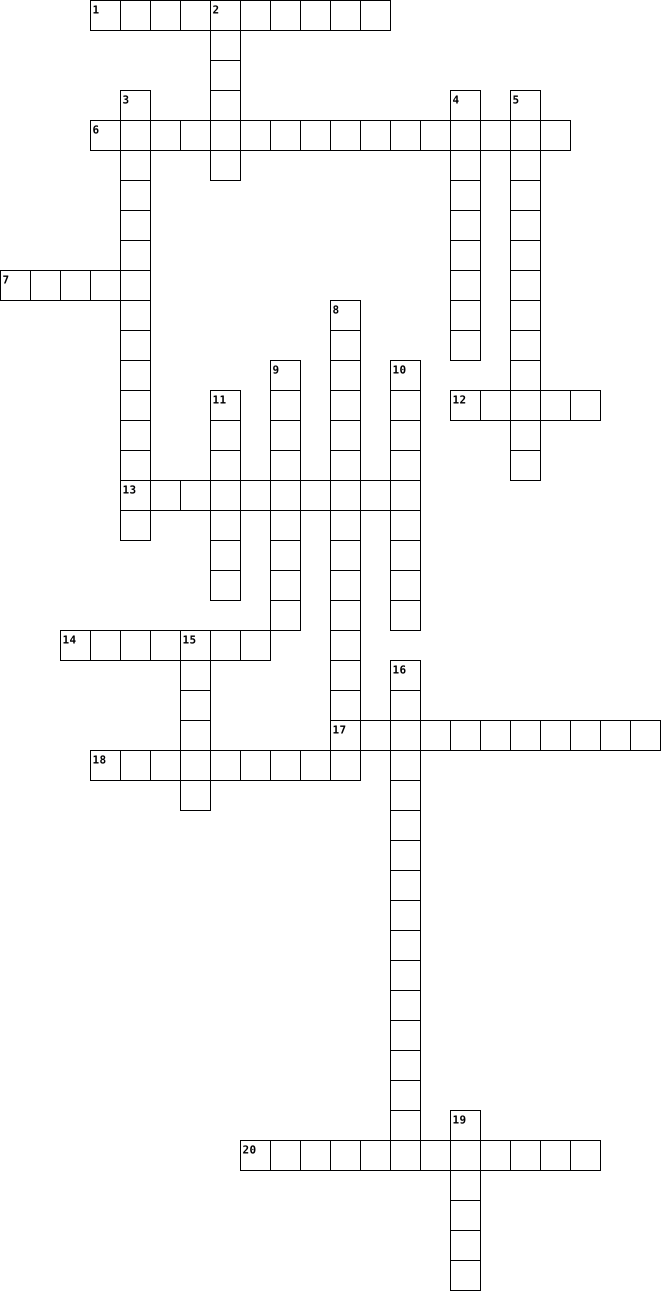
Across
- Where does the heat that causes the Convection currents, coming from
- the borders of the plates
- What is the coldest layer of Earth
- Is a break in Earth’s crust where slabs of crust slip past each other.
- Two boundaries to go closer to each other.
- A famous supercontinent
- Forms at Transform boundaries
- Forms at Convergent boundaries
- An example of a divergent boundary
Down
- What are underwater mountains called
- what makes up the structure of Earth's crust
- Two plates that slide past each other
- Has the same structure as a normal fault, but blocks move in opposite directions.
- Forms at Divergent boundaries.
- The boundary of two plates moving away from each other
- What are near the borders of the plate boundaries
- What is a factor that causes plate tectonics to be pulled apart.
- During Pangaea,Modern Day South America was connected to ...
- Rocks on either side of the fault slip past each other sideways with little up-or-down motion
- Which layer has a lot of magma and liquid minerals
20 Clues: A famous supercontinent • the borders of the plates • Forms at Transform boundaries • Forms at Divergent boundaries. • Forms at Convergent boundaries • What is the coldest layer of Earth • An example of a divergent boundary • What are underwater mountains called • Two plates that slide past each other • Two boundaries to go closer to each other. • ...
Crossword Puzzle for Plate Tectonics 2020-10-28
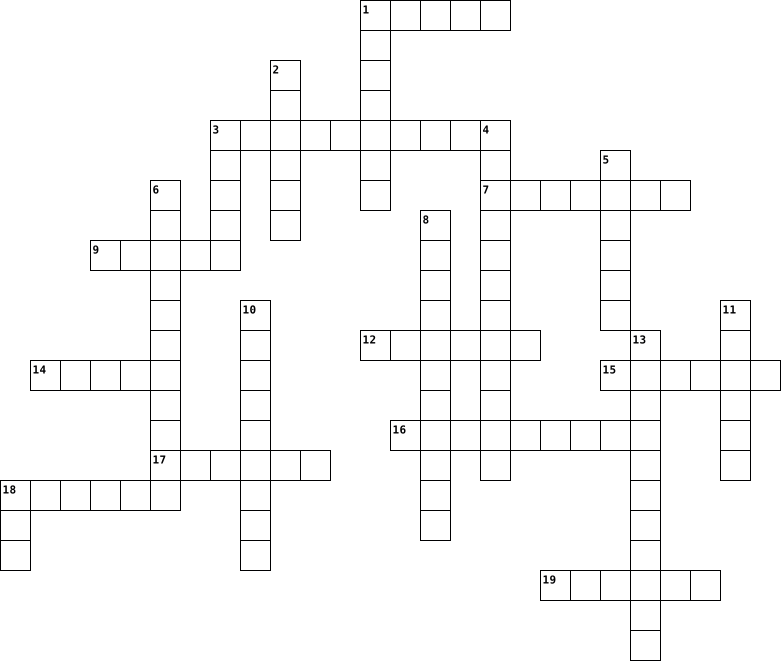
Across
- volcanoes erupt from this substance called "Lava'. Once the magma is ready to be set free it causes the volcano to erupt.
- Boundary, A convergent boundary is an area on Earth where two or more plates collide.
- The mantle lies between Earth's dense, super-heated core and its thin outer layer, the crust
- Subduction as the process by which tectonic plates sink into Earth's mantle.
- “Crust” describes the hard surface shell coving the mantle of our planet.
- Tectonics, a theory explaining the structure of the earth's crust.
- As the magma flows out, it cools, hardening to form new crust, This fills in the gap created by the Tectonic plates.
- Boundary, A divergent boundary occurs when two tectonic plates move away from each other
- The researchers believe this shift is the earliest proof that modern like plate motion happened between two to four billion years ago.
- inside the crust and core it is pitch solid.
- A tectonic plate can be a massive, irregularly shaped solid rock.
Down
- Earth has many different layers such as, the mantle, Core, and crust.
- When two plates come in contact with each other through plate tectonics, scientists can use the density of the plates to predict what will happen.
- Earth's core is the very hot and dense center of our planet.
- The lower boundary of a plate depends on the temperature of the mantle material.
- Once a tectonic plate Alters is shifts something in or out of the earth.
- The continents are made within the plates.
- a process that takes place at convergent boundaries of tectonic plates.
- Boundary, Transform boundaries are places where plates slide sideways past each other.
- in earth, Earth's shell cracked into these plates.
- Earthquakes occur along lines, cracks in Earth's crust where tectonic plates meet.
- floor, Bathymetry, the shape of the ocean floor, is largely a result of a process called plate tectonics.
22 Clues: The continents are made within the plates. • inside the crust and core it is pitch solid. • in earth, Earth's shell cracked into these plates. • Earth's core is the very hot and dense center of our planet. • A tectonic plate can be a massive, irregularly shaped solid rock. • Tectonics, a theory explaining the structure of the earth's crust. • ...
Crossword Puzzle for Plate Tectonics 2020-10-28

Across
- volcanoes erupt from this substance called "Lava'. Once the magma is ready to be set free it causes the volcano to erupt.
- Boundary, A convergent boundary is an area on Earth where two or more plates collide.
- The mantle lies between Earth's dense, super-heated core and its thin outer layer, the crust
- Subduction as the process by which tectonic plates sink into Earth's mantle.
- “Crust” describes the hard surface shell coving the mantle of our planet.
- Tectonics, a theory explaining the structure of the earth's crust.
- As the magma flows out, it cools, hardening to form new crust, This fills in the gap created by the Tectonic plates.
- Boundary, A divergent boundary occurs when two tectonic plates move away from each other
- The researchers believe this shift is the earliest proof that modern like plate motion happened between two to four billion years ago.
- inside the crust and core it is pitch solid.
- A tectonic plate can be a massive, irregularly shaped solid rock.
Down
- Earth has many different layers such as, the mantle, Core, and crust.
- When two plates come in contact with each other through plate tectonics, scientists can use the density of the plates to predict what will happen.
- Earth's core is the very hot and dense center of our planet.
- The lower boundary of a plate depends on the temperature of the mantle material.
- Once a tectonic plate Alters is shifts something in or out of the earth.
- The continents are made within the plates.
- a process that takes place at convergent boundaries of tectonic plates.
- Boundary, Transform boundaries are places where plates slide sideways past each other.
- in earth, Earth's shell cracked into these plates.
- Earthquakes occur along lines, cracks in Earth's crust where tectonic plates meet.
- floor, Bathymetry, the shape of the ocean floor, is largely a result of a process called plate tectonics.
22 Clues: The continents are made within the plates. • inside the crust and core it is pitch solid. • in earth, Earth's shell cracked into these plates. • Earth's core is the very hot and dense center of our planet. • A tectonic plate can be a massive, irregularly shaped solid rock. • Tectonics, a theory explaining the structure of the earth's crust. • ...
PLATE TECTONICS 2016-06-14

Across
- supercontinent formed 250 million years ago
- a weaker place in the middle of a plate where magma comes up and volcanoes form
- the place where the earthquake is felt at the surface
- a scale that measures the strenght of an earthquake
- the flow of magma in the mantle that causes plates to move
- a big space filled with magma under the volcano
- boundary where two plates move apart
- when lava escapes the volcano via a weaker spot in the volcano
- the ocean around which we can find the ring of fire
- a famous example of a transform boundary in the USA
Down
- the continental plate is made from this material
- in this part of the mantle, convection currents take place
- the combination of the crust and the solid part of the mantle
- this plate is the thinnest
- a big wave formed when an earthquake takes place in the water
- short-term help given when a disaster took place
- at this boundary one can find explosive volcanoes
- this formed in the middle of the ocean at the divergent boundary
- the process in which one plate goes underneath the under
- magma at the earth's surface
- when a volcano explodes, it is called an ...
- a scale that measures the damage an earthquake causes
22 Clues: this plate is the thinnest • magma at the earth's surface • boundary where two plates move apart • supercontinent formed 250 million years ago • when a volcano explodes, it is called an ... • a big space filled with magma under the volcano • the continental plate is made from this material • short-term help given when a disaster took place • ...
plate tectonics 2016-08-02

Across
- – when the earths crust is pushed up from its sides
- tube – a tube formed by cooling and solidifying of the lava walls while fluid lava continued to flow inside
- volcano – a volcano that is not very steep but can be big with non- explosive eruptions
- – the scale which measures the magnitude of earthquakes
- – the south side of Pangaea
- – the line which rocks break and move
- material – debris thrown from volcanos with viscous magma
- – largest type of crust
- – a form of closed lava tube (with a bulbous end) that forms when lava flows into water (e.g. a lake) and cools very rapidly
- – the super continent
- waves – the fastest travel waves with the greatest velocity
- – an earthquake that occurs before a larger seismic event
- waves – waves trapped near the surface, they are the slowest and most destructive
- – occurs on the tectonic plate boundaries
- – lava that is parcially cooled, low viscosity, thin (like water)
- – plates pushing together
- – plates pulling away from each other
- cone volcano – a volcano small in size with steep slopes, moderately explosive with shot eruptions
Down
- – smallest type of crust
- – the earths thickest layer
- – plates sliding against each other
- – lava with a high viscosity, blocky and rough
- – semi rigid part of the mantle
- vent – A point source of the Earth's surface through which lavas, pyroclastics, and gas are erupted.
- – the earths thinnest layer
- - the largest recorded shock
- volcano – most common type of volcano, explosive eruptions and lava flow
- – areas of the earths surface through which magma and volcanic gases pass
- core – what layer of the earth is solid due to tremendous pressure
- – the north side of Pangaea
- – an earthquake that occurs after a larger seismic event
- – the area on the ground directly above where an earthquake occurs
- core – what layer of the earth is liquid state due to extremely high temperatures
- – occurs in the middle of the plate tectonics
- - hot fluid or semi-fluid material below or within the earth's crust from which lava and other igneous rock is formed on cooling.
- waves – waves that travel along the worlds outer layers
- – all material ejected from a volcano
- – the spot underground where rock breaks causing an earthquake
- – scientist behind the theory of the continental drift
- vent - an opening in the side of a volcano through which volcanic materials (like lava, gases, and pyroclastic debris) erupt.
40 Clues: – the super continent • – largest type of crust • – smallest type of crust • – plates pushing together • – the earths thickest layer • – the south side of Pangaea • – the earths thinnest layer • – the north side of Pangaea • - the largest recorded shock • – semi rigid part of the mantle • – plates sliding against each other • – the line which rocks break and move • ...
Plate tectonics 2015-12-22

Across
- plates spread apart from each other
- reversal\shown by sea floor spreading
- mountains/feature forms with a converget collision
- and earthquake/ recorded over history
- a type of rock that forms on Icelands boundry
- that is surrounded by half divergent and half converget
- rest on
- of rocks/recorded by radioactive dating processes
- Andres fault/ example of a transform boundry
- a feature form with in a transform boundry causeing a crack in the earths surface
Down
- collision/when two continental plates come together
- ocean ridge/ a feature formes with divergetn boundry that caused the Mid Atlantic ridge
- two plates slide past each other
- color of the oldest land
- are plates located
- type of crust made from granite
- currents/in the mantle force the plates to move in a predictable motion
- of crust made from basalt
- example of a folded mountain
- eath crust is made up of moving plates
20 Clues: rest on • are plates located • color of the oldest land • of crust made from basalt • example of a folded mountain • type of crust made from granite • two plates slide past each other • plates spread apart from each other • reversal\shown by sea floor spreading • and earthquake/ recorded over history • eath crust is made up of moving plates • ...
Plate Tectonics 2015-12-23

Across
- when 2 plates slide past each other
- Plate associated with the ring of fire
- color of the oldest rock
- color of the newest rcok
- The layer are earth sphere located
- Forms as a result of a transform boundary
- type of crust made of Granite
- plates rest on
- the mid ocean ridge is a place where ______________ crust is formed
- type of rock that forms on Icelands boundary
Down
- feature that forms on a subduction boundary
- Place where molten rock erupt through the Earth's crust
- oceanic crust is ____________________ than continental crust
- shaking in the ground,when plates move
- feature that is a result of a continental-oceanic convergent boundary
- 2 plates spread apart from each other
- a feature that can result from an oceanic-oceanic convergent boundary
- continental crust is ______________________ than oceanic crust
- An Example of a Folded mountain
- type of crust that is made from Basalt
20 Clues: plates rest on • color of the oldest rock • color of the newest rcok • type of crust made of Granite • An Example of a Folded mountain • The layer are earth sphere located • when 2 plates slide past each other • 2 plates spread apart from each other • Plate associated with the ring of fire • shaking in the ground,when plates move • type of crust that is made from Basalt • ...
Plate Tectonics 2017-01-26

Across
- The joining of all the landmasses on Earth; it means "all lands" in Greek
- The edges of plates
- The layer of rigid rock that includes all of the crust and the upper portion of the mantle
- A long, narrow, steep-sided depression in the ocean bottom.
- Cracks in the Earth’s crust
- Places where two plates grind past each other
- The sinking of older, more dense crust
- A German astronomer and meteorologist who created the “continental drift” theory
- Pieces of the earth's lithosphere
- A process in which new ocean floor is created from molten material rising in margins between plates or ridges and spreading out
- A depression of the Earth’s surface in which an ocean lies
Down
- A large area in which plates are moving away from each other, forming several fractures and faults
- A sudden and violent shaking of the ground
- A layer of solid rock that behaves like a fluid
- Places where two plates come together
- Separating plates beneath the ocean; the longest chain of mountains (or volcanoes) in the world; circles the Earth
- Heat that circulates in the Earth, causing magma to flow and tectonic plates to shift
- Places where two plates move apart or divide
- A continental transform fault that extends about 800 miles through California
- A mountain or hill having a crater or vent through which lava, rock fragments, hot vapor, and gas are being or have been erupted from the earth's crust
- A belt of volcanoes and frequent seismic activity around the edges of the Pacific Ocean
21 Clues: The edges of plates • Cracks in the Earth’s crust • Pieces of the earth's lithosphere • Places where two plates come together • The sinking of older, more dense crust • A sudden and violent shaking of the ground • Places where two plates move apart or divide • Places where two plates grind past each other • A layer of solid rock that behaves like a fluid • ...
Plate Tectonics 2017-01-24

Across
- What Wegner called a landmass or supercontinent
- Connects points of equal elavation
- The layer immediately below the lithosphere
- The process by which new sea floor forms
- Two tectonic plates can move past one other in opposite directions
- Changes the chemical makeup of a rock
- Amount of force per area put on a body
- Studies of the sea floor revealed underwater mountain belts
- System of ideas that explains many related observations about the natural world
- The process by which rock breaks down into smaller pieces or changes in comparison
- The difference between the highest and lowest elevations in particular area
- The process by which one tectonic plate is pulled beneath another plate
Down
- States that Earth's surface is made up of giant moving slabs
- Change of magnetic poles
- The bending, tilting, and breaking of rock
- The shape and size of the land features on Earth's surface
- When tectonic plates move toward each other and collide
- Also called mechanical weathering is the breakdown of rock into smaller pieces
- A thicker contour line that often has an elevation label
- Shows the shape of Earth's surface with lines that represent different evalations
- When two tectonic plates move away from one anotheror diverge
- Hypothesis that today's continents were once part of a single landmass.
- The outermost physical layer of Earth
- Lays down rock, sediment, and soil
- Transports rock,sediment,and soil from one place to another
25 Clues: Change of magnetic poles • Connects points of equal elavation • Lays down rock, sediment, and soil • Changes the chemical makeup of a rock • The outermost physical layer of Earth • Amount of force per area put on a body • The process by which new sea floor forms • The bending, tilting, and breaking of rock • The layer immediately below the lithosphere • ...
Plate Tectonics 2017-02-28

Across
- A thin part of the crust that which lays under the oceans
- A series of large waves that result from an underwater earthquake
- A large supercontinent which formed millions of years ago
- Semiliquid rock found beneath the Earth's surface
- A series of underwater mountains that form as a result of tectonic plates moving apart and allowing magma to rise to the surface
- The boundary between two tectonic plates that are sliding past each other
- The theory that the surface of the Earth is divided into a series of plates that are continually moving
- A place where two tectonic plates colided which causes a large land mass to elevate
- The layer of molten rock located beneath the Earth's crust
- the geologist which first thought of the thoery of continental drift
- Underwater cliffs between the beach and the ocean
- The boundary between two tectonic plates that are moving together
- A place in the mantle that melts rocks into magma
Down
- The transfer of the thermal energy by the movement of molecules in air or liquid from one place to another
- The current or flow of air or liquid that results from the transfer of thermal energy through convection
- The boundary between two tectonic plates that are moving apart
- A fracture in rock where the tectonic plates have moved
- Core The layer of the Earth which is responsible for the magnectic field
- Violent shaking of the Earth which is caused by rocks breaking under stress
- A theory that the middle of the ocean is spreading apart, forming new oceanic crust
- The centre of the Earth
- The continual movement of the continents over time
- Something that acts like a liquid but is a solid
- Molten rocks which appear on the surface of the Earth
- A mountain with a vent where magma have or are erupted
- The movement of one tectonic plate under another tectonic plate
- A deep valley that forms as a result of tectonic plates moving apart on land
- A large leyer of solid rock that covers part of the surface of the Earth; Movement of tectonic plates can cause earthquakes
- A deep ditch under the ocean along a tectonic plate boundary
- Lithosphere; the outer layer of the Earth
30 Clues: The centre of the Earth • Lithosphere; the outer layer of the Earth • Something that acts like a liquid but is a solid • Semiliquid rock found beneath the Earth's surface • Underwater cliffs between the beach and the ocean • A place in the mantle that melts rocks into magma • The continual movement of the continents over time • ...
Plate Tectonics 2017-02-11

Across
- The layer more dense the the continental crust
- When two plates move away from each other
- When two plates collide head on with each other
- The layer with the least density
- The shape most volcanoes come in
- Molten rock the erupts from volcanoes
- The rigid outer part of the earth, consisting of the crust and upper mantle
- Molten rock that is beneath the earths surface
- Cooled lava
- A vent in the earths surface where magma and gases erupt
Down
- When two plates slide past each other
- The layer of the earth under the crust
- Heat transfer in a gas/liquid by the rotation of currents from one region to another
- Portion of motion of a tectonic plate that can be accounted for by its subduction
- Happens when the force of two plates sliding past each other releases
- A type of excavation or depression in the ground
- An elevated region with a central valley on an ocean floor
- Force proposed for plate motion in plate tectonics
- Where most volcanoes and earthquakes happen
- The downward movement of the edge of a plate of the earth's crust into the mantle
- Usually caused by transform boundaries
21 Clues: Cooled lava • The layer with the least density • The shape most volcanoes come in • When two plates slide past each other • Molten rock the erupts from volcanoes • The layer of the earth under the crust • Usually caused by transform boundaries • When two plates move away from each other • Where most volcanoes and earthquakes happen • ...
Plate Tectonics 2017-02-12

Across
- Thin, dense lithospheric plates
- Molten rock that is beneath the earths surface
- Theory on how the pieces of the earth's surface move
- A break in the earth's crust
- Lower layer of the mantle
- Molten rock the erupts from volcanoes
- Lithospheric plate sinking into the mantle
- Boundary where two plates come together
- Where most earthquakes and volcanoes happen
- Layer of earth under the crust
- Supercontinent
Down
- Thick, less dense lithospheric plates
- Movements within the earth's surface
- Long chains of undersea mountains
- Top layer of the mantle
- Boundary where two plates move apart
- A vent in the earths surface where magma and gases erupt
- Boundary where two plates slide by each other
- Cooled lava
- Valley in the ocean created where one lithospheric plate suducts another
20 Clues: Cooled lava • Supercontinent • Top layer of the mantle • Lower layer of the mantle • A break in the earth's crust • Layer of earth under the crust • Thin, dense lithospheric plates • Long chains of undersea mountains • Movements within the earth's surface • Boundary where two plates move apart • Thick, less dense lithospheric plates • Molten rock the erupts from volcanoes • ...
Plate Tectonics 2017-02-18

Across
- Magma that has reached the surface
- Theory that the lithosphere is divided into tectonic plates that float around on the asthenosphere
- What mountain range formed from the collision of the India and Eurasia plate?
- What mountain formed along the coast of South Africa as a result of plate subduction after a collision
- Heated, less dense air or liquid rises and cooler, more dense air or liquid sinks
- What islands were formed from the collision of two oceanic plates?
- Who proposed the theory of continental drift?
- Theory that continents were once one big land mass and over time they drifted apart
- What type of plate boundary slides past the other to create fault lines?
- Cool, rigid outermost layer of the earth. Consists of the upper most part of the mantle and the crust
Down
- Hot, molten rock from deep within the earth
- Materialized remains of organisms that show how long an animal lived and the structure of their body
- When magma oozes from mid ocean ridges, creating new crust that gradually moves away from the ridge and makes one ocean bigger and the other smaller
- What islands were formed over a hotspot?
- When two plates collide and the more dense one sinks under the earths surface
- Who proposed the idea of plate tectonics?
- Solid layer with plasticity in the upper mantle just below the lithosphere
- What type of plate boundary pulls away from the other to form rift valleys?
- What type of plate boundary collides with the other to create mountains?
- Area in the mantle from which magma rises from a narrow plume to form volcanic mountains
20 Clues: Magma that has reached the surface • What islands were formed over a hotspot? • Who proposed the idea of plate tectonics? • Hot, molten rock from deep within the earth • Who proposed the theory of continental drift? • What islands were formed from the collision of two oceanic plates? • What type of plate boundary collides with the other to create mountains? • ...
Plate tectonics 2017-10-19

Across
- when ocean floor is pushed below continental crust
- what is used to prove something
- all of Earth's plate motion put into one theory
- a "mountain range" that rock comes out of from the mantle
- the scientist who founded the idea of continental drift
- rocks fall into the mantle and are then heated and part of the mantle
- rocks closer to the mid ocean ridge are warmer/ cooler
- rocks farther from the mid ocean ridge are denser/ less dense
- a boundary when two plates ram into each other
- the ocean continuously add new material to its floor
- where Earth’s crust diverges on land
Down
- breaks in Earth's crust where rocks slipped past each other
- a boundary where two plates separate
- rocks closer to the midocean ridge are denser/ less dense
- Wegener's idea that the continents have moved
- one of the types of evidence that Wegener used to prove the continents were together
- a rock or animal that was preserved in rock
- rocks further from the mid ocean ridge are warmer/ cooler
- a boundary when two plates run along each other
- an tool that uses sound waves and time to map the ocean floor
- a supercontinent from around 300 million years ago
21 Clues: what is used to prove something • a boundary where two plates separate • where Earth’s crust diverges on land • a rock or animal that was preserved in rock • Wegener's idea that the continents have moved • a boundary when two plates ram into each other • all of Earth's plate motion put into one theory • a boundary when two plates run along each other • ...
plate tectonics 2017-10-19

Across
- ocean ridge-When does sea floor spreading begin?
- As the plates move what do they do?
- boundaries- what boundaries is two plates that move slowly away from each other?
- drift-Wegener's idea that continents slowly moved over Earth's surface became known as?
- boundaries- What boundaries is where two plates slip past each other,moving past each other?
- was the name of the scientist?
- its when wegener made a what about the continents were once joined together in a single landmass and have since drifted apart?
- valley-where peices of Earth's crust diverge on land,a deep valley called a ?
- supercontinent,or single landmass,about 300 million years ago.
- is any trace of any trace of an ancient organism that has been preserved in rock.
Down
- and shape-the processes of subduction and sea floor spreading can change what?
- the process by which the ocean floor sinks beneath a deep ocean trench and back into a mantle is called?
- these pieces became the what?
- thing did wegener infer lived on a single landmass
- floor- part of what sinks back into the mantle at deep ocean trench?
- did scientist mapped mid ocean ridges using?
- floor spreading-what adds more crust to the ocean floor?
- boundaries-What boundaries is where two plates collide?
- ocean trench-At what trench does the oceanic crust bend downward?
- oceans- what ocean is expanding?
20 Clues: these pieces became the what? • was the name of the scientist? • oceans- what ocean is expanding? • As the plates move what do they do? • did scientist mapped mid ocean ridges using? • ocean ridge-When does sea floor spreading begin? • thing did wegener infer lived on a single landmass • boundaries-What boundaries is where two plates collide? • ...
Plate Tectonics 2017-10-18

Across
- The layer of hot, solid material between Earth’s crust and core.
- The hypothesis that the continents slowly move across Earth's surface
- The process by which oceanic trench and back into the mantle at a convergent plate boundary.
- A rigid layer made up of the uppermost part of the uppermost part of the mantle and the crust.
- A dense sphere of solid iron and nickel at the center of Earth.
- lithosphere are in constant motion, driven by convection currents in the mantle.
- The name of the single landmass that began to break apart 200 million years ago and gave rise to today's continents.
- A deep valley along the ocean floor beneath which oceanic crust slowly sinks toward the mantle.
- A layer of molten iron and nickel that surrounds the inner core of Earth.
- The measurement of how much mass of a substance is contained in a given volume.
- Boundary A plate boundary where two plates move past each other in opposite directions.
Down
- The movement of a fluid, caused by differences in temperature that transfer heat from one part of the fluid to another.
- A deep valley that forms where two plates move apart.
- The transfer of heat by the movement of a fluid.
- The layer of rock that forms Earth’s outer surface.
- A boundary where two plates move toward each other.
- The transfer of energy by electromagnetic waves.
- The theory that pieces of Earth's
- The transfer of heat from one particle of matter to another.
- The soft layer of the mantle on which the lithosphere floats.
- is any trace of an ancient organism that has been preserved in rock.
21 Clues: The theory that pieces of Earth's • The transfer of heat by the movement of a fluid. • The transfer of energy by electromagnetic waves. • The layer of rock that forms Earth’s outer surface. • A boundary where two plates move toward each other. • A deep valley that forms where two plates move apart. • The transfer of heat from one particle of matter to another. • ...