
us history Crossword Puzzles
US History 2017-03-02
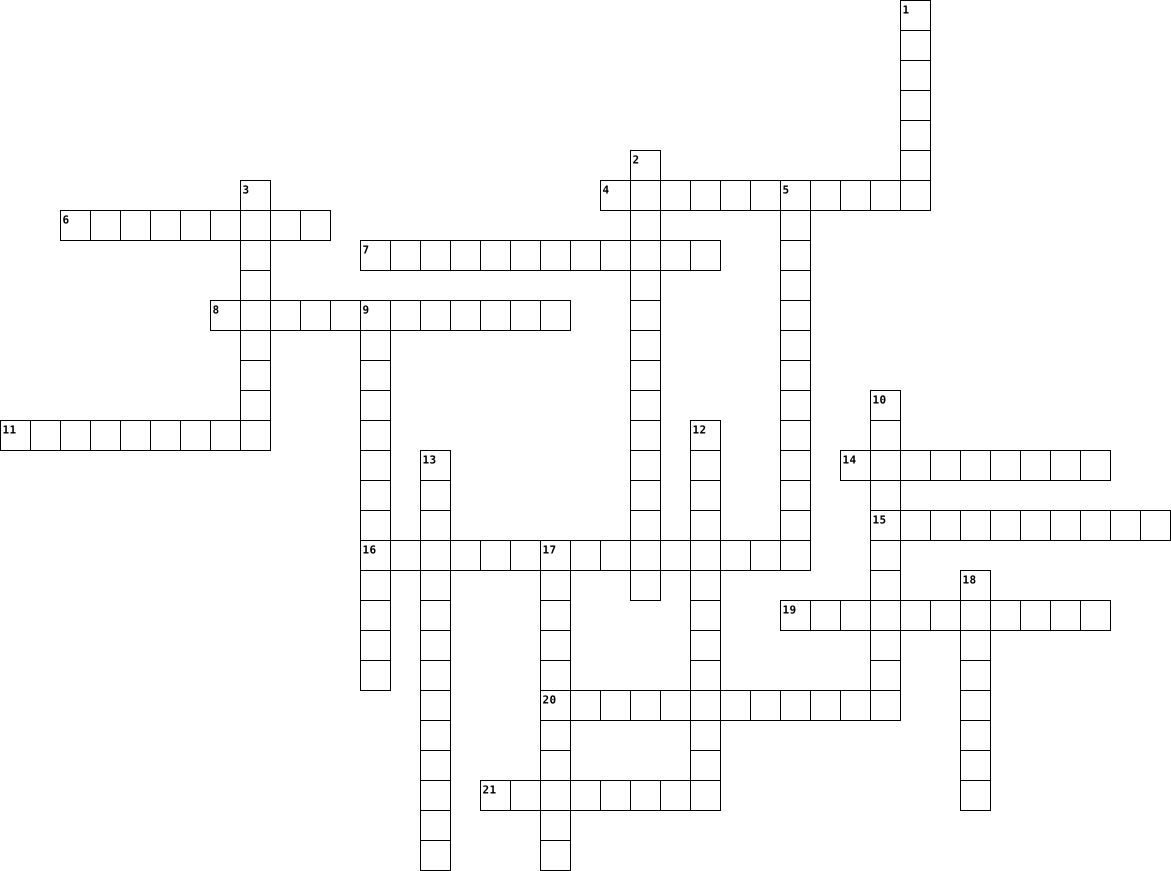
Across
- political party that South had
- political party that North had
- an American,approached the Spanish with a plan for Texas settlement:
- one of the first female nurses to serve in the Civil war, known as her First Aid
- a town that Free-soilers refused to follow laws and started
- Thanks to this, by 1850, California’s population had reached 93,000
- The pro-slavery legislature established the town of 000000000
- a president of the North, was strongly against slavery
- to incorparate into the domain of a city, country, or state
- opposing to slavery
- First Europeans to visit what would become Texas
Down
- one of the Nebraska Territory divided into: Nebraska and 000000
- of parts of New Mexico, Arizona, and California
- a war between citizens of the North and South
- a movement in the 19th C that focused on the abolishment of slavery
- Delaware, Kentucky, Maryland, Missouri
- favoring slavery
- President Lincoln’s plan that suffocating the South like a snake by cutting off their resources
- an abolitionist Senator from MA
- a type of rule in which military commanders are in control and citizens’ rights and freedoms are suspended
- law determined the residents of Utah could decide whether to allow slavery
21 Clues: favoring slavery • opposing to slavery • political party that South had • political party that North had • an abolitionist Senator from MA • Delaware, Kentucky, Maryland, Missouri • a war between citizens of the North and South • of parts of New Mexico, Arizona, and California • First Europeans to visit what would become Texas • ...
US History 2018-06-03
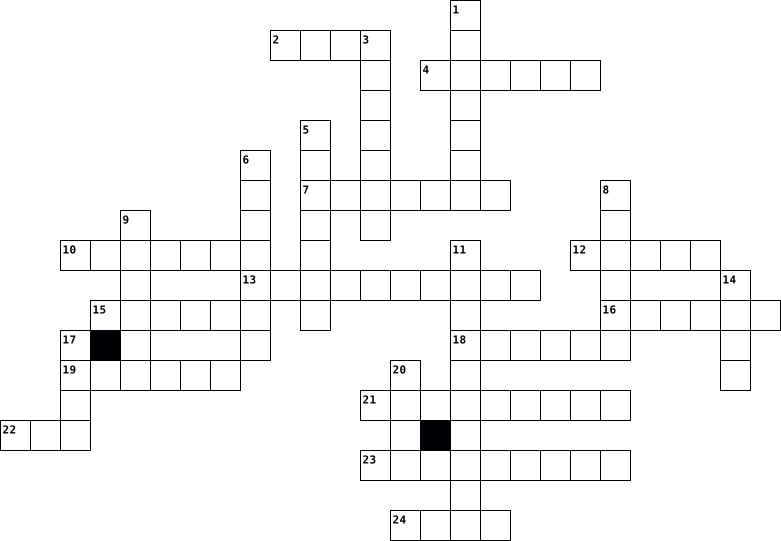
Across
- Amendment (1913) Legalized the federal income tax
- Journalism journalism that is based upon sensationalism and crude exaggeration.
- freedom from punishment
- Reserve Act Act of Congress that created and established the Federal Reserve System
- Cabot Lodge an American Republican Congressman and historian from Massachusetts.
- Writers who exposed corruption and abuses in politics, business, meat-packing, child labor, and more, primarily in the first decade of the twentieth century
- Day O'Connor After her 1981 appointment by President Ronald Reagan, she became the first female Court justice.
- Darwinism the theory that individuals, groups, and peoples are subject to the same Darwinian laws of natural selection as plants and animals.
- Of Paris signed in Paris by representatives of King George III
- Carnegie An American industrial leader of the late nineteenth and early twentieth centuries.
- Strike (1892) Shuts down the factory and locks out its employees
- Fourteen Points a statement of principles for peace that was to be used for peace negotiations in order to end World War I.
- Tariff Tariff of 1913 which, in addition to lowering and even eliminating some tariffs
- Amendment gave women the right to vote in 1920.
Down
- Anti-Trust Act The first law to restrict monopolistic trusts and business combinations
- Act Proposal for railroad regulation enacted in 1906 that extended the authority of the Interstate Commerce Commission
- vote to bring charges of serious crimes against a president
- Strike Strike against the Pullman Palace Car Company
- v Ferguson upheld the rights of states to pass laws allowing or even requiring racial segregation in public and private
- Bellamy an American author and socialist, most famous for his utopian novel, Looking Backward
- Houses Product of the late nineteenth-century movement to offer a broad array of social services in urban immigrant neighborhoods
- Act A federal law intended to turn Native Americans into farmers
- Addams known as the "mother" of social work
- d Rockefeller An American businessman of the late nineteenth and early twentieth centuries
24 Clues: freedom from punishment • Addams known as the "mother" of social work • Amendment gave women the right to vote in 1920. • Amendment (1913) Legalized the federal income tax • Strike Strike against the Pullman Palace Car Company • vote to bring charges of serious crimes against a president • Of Paris signed in Paris by representatives of King George III • ...
US History 2021-12-14
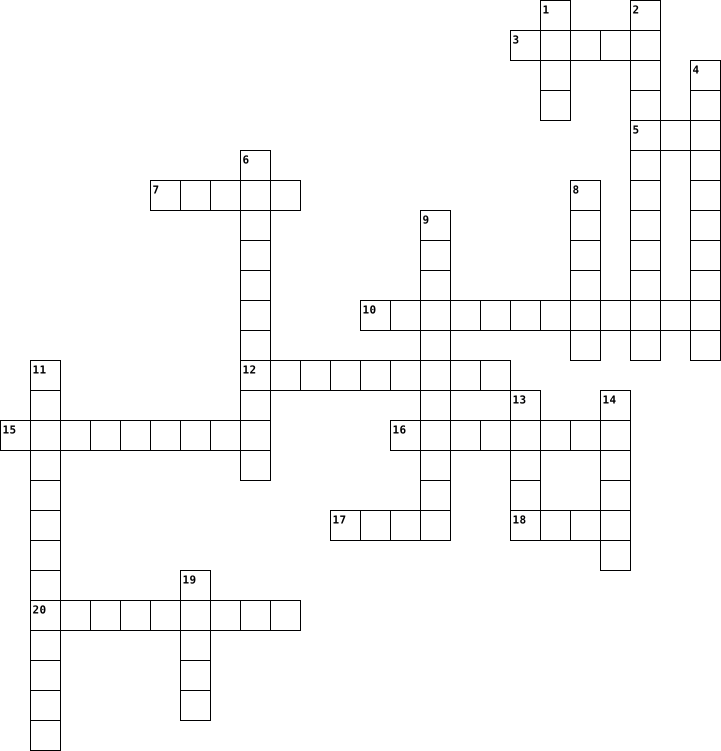
Across
- taxed imports of goods
- what helped the BEIC by shipping surplus tea to colonies
- the revolution Treaty of pairs did what?
- limit settlement west of Appalachian mts
- cut tea taxes in britian
- B and F extended rivalry to America
- turning point in american revolution
- amount of people that died in the Boston Massacre
- Revere Who warned the minutemen that the British were coming
- and Concord where was the first battle of the American revolution
Down
- 4th 1776 what date was the declaration of independence signed traditionally
- what country did the Acolonist'solonists rebel aga July
- Act which acts forced colonists to house British soldiers
- declared parliments right to make laws
- Jefferson Who wrote the declaration of independence
- passed act by parliament closed bostons port
- relationship between GB and America
- required colonists to pay direct tax on paper use
- of Yorktown what battle did general Cornwallis surrender
- monarch that ruled over england
20 Clues: taxed imports of goods • cut tea taxes in britian • monarch that ruled over england • relationship between GB and America • B and F extended rivalry to America • turning point in american revolution • declared parliments right to make laws • limit settlement west of Appalachian mts • the revolution Treaty of pairs did what? • passed act by parliament closed bostons port • ...
Us history 2022-02-15
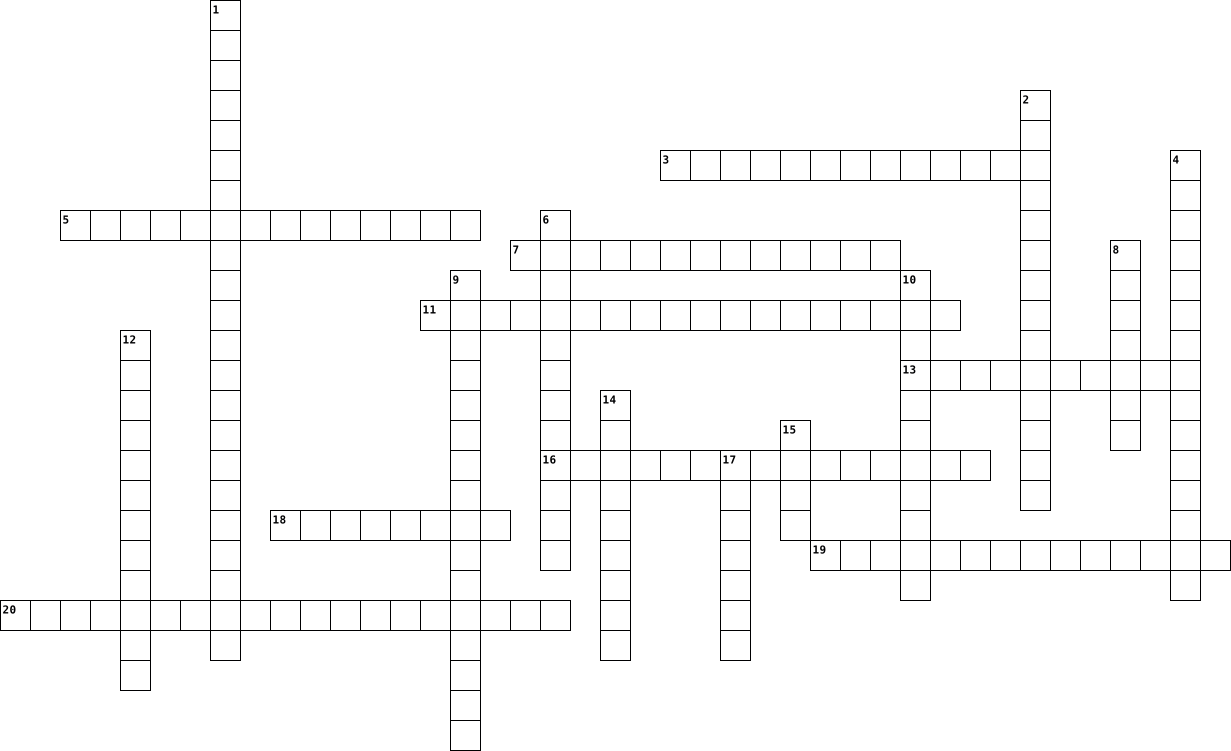
Across
- based on states rights for laws
- the branch of government that interprets the laws
- used as a torture method by patriots to out loyalists
- a government in which the powers are split into groups
- power is divided between state and national government
- the branch of government that enforces the laws
- colonists who support the crown in the revolution
- those who opposed the constitution
- rule by the people
Down
- solved the problem on how enslaved people would be represented in congress
- colonist general who was mistreated after winning a battle and switched sides becoming a traitor
- solved the problem of representation in congress
- notorious antifederalist
- Those who supported the colonists in the revolution
- unanimous vote to become 1st president, virginia war general
- patriot who helped get the french on the colonists side
- based on national government
- a change to the constitution
- to reject
- to formally accuse of misconduct
20 Clues: to reject • rule by the people • notorious antifederalist • based on national government • a change to the constitution • based on states rights for laws • to formally accuse of misconduct • those who opposed the constitution • the branch of government that enforces the laws • solved the problem of representation in congress • the branch of government that interprets the laws • ...
US History 2022-05-11
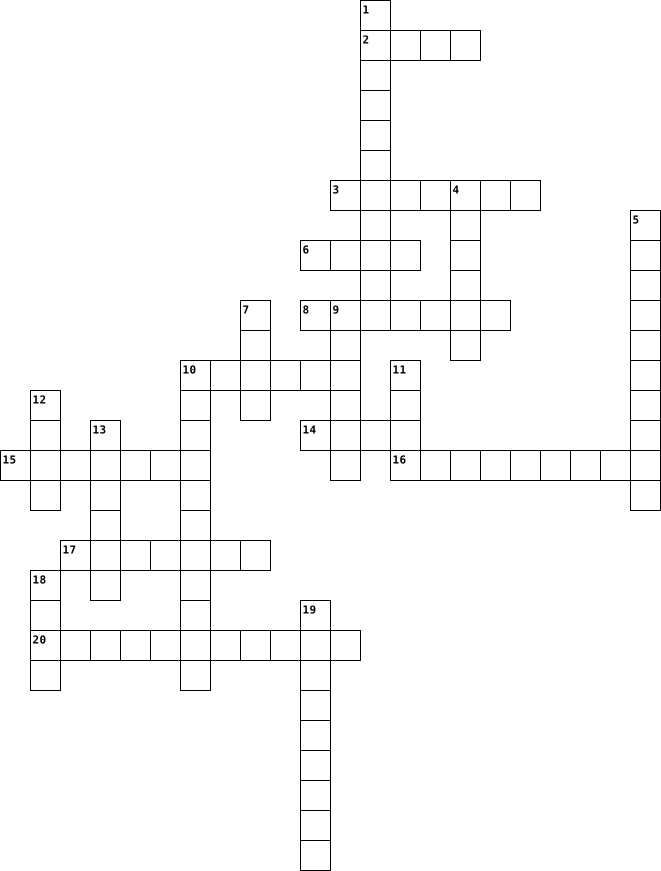
Across
- the Arab oil company that stopped giving US oil in 1973
- the side that President Reagan supported in Nicaragua in the 1980s Iran-Contra Affair
- the Middle Eastern country in which US hostages were taken from the US Embassy
- War America lost this war and failed to contain Communism
- the President who organized the Camp David Accords
- the domain of a website connected to an educational institution
- the name of your US History teacher
- the land of this nation shrunk when Israel was created in 1948
- Nixon's policy to ease tensions with the Soviet Union in the Cold War
- the Soviet Union invaded this country in the Middle East in 1979
Down
- to compare how sources agree or disagree
- the President involved in the Iran-Contra Affair
- the name of the Muslim Revolutionary Group that the US supplied with weapons in Afghanistan
- this man became President after Nixon resigned in 1974
- the country in the Middle East the US ALWAYS supports
- America's policy to stop the spread of Communism
- d'etat the French word meaning to overthrow a government
- the domain of a website connected to the government
- Union the country America opposes in the Cold War
- the title of the leader in Iran
- the name of the scandal that forced Nixon to resign from the Presidency
21 Clues: the title of the leader in Iran • the name of your US History teacher • to compare how sources agree or disagree • the President involved in the Iran-Contra Affair • America's policy to stop the spread of Communism • Union the country America opposes in the Cold War • the President who organized the Camp David Accords • ...
US History 2023-08-27

Across
- President when the Great Depression hit, had homeless towns named after him
- Withdrawal from commercial relations with a person or organization as a punishment or protest
- A fashionable young women intent on enjoying herself and acting wild
- Widespread of Fear of a potential rise of communism
- Failed attack launched by the CIA during the Kennedy Administration
- Truman’s foreign policy that the U.s. would provide aid to countries under the influence of communism
- The first satellite sent into space by the soviets
- Notional barrier separating East and West Europe
- Provided American citizens an opportunity to assist with the war effort
- Fought Between North and South Korea
- Act of voluntary giving by individuals or groups to promote the common good
- Illegal Distribution of alcohol
- The act of coming to live permanently in a foreign country
- Refused to give her seat to a white man
- Belief of a government that a country should maintain a strong military capability and be prepared to use it aggressively
- Rail line connecting The East and West coasts of the United States
- A diverse array of media that reach a large audience via mass communication
- Theory that a political event in one country will cause similar events in neighboring countries
- Journalists during the Progressive Era who exposed corrupt businesses
Down
- Had an “I had A Dream” Speeth
- Art and Science of maintaining peaceful relationships between nations
- The state of of not supporting or helping either side in a conflict
- The act of separating people, historically on the basis of race and gender
- The process of making an area more urban
- Declared the separate but equal doctrine unconstitutional
- Leader of the Progressive movement
- Largest and Most widespread civil rights and empowerment movement by Mexican descent people in the United States
- President responsible for the Watergate Scandal
- First American Volunteer Group of China Air Force formed to help oppose the Japanese invasion
- Persistent high inflation combined with high unemployment and stagnant demand in a countries economy
- Philanthropist and industrialists, helped build the American Steel Industry
- Leader during the civil rights movement in America
- Youngest President
- Large companies that controlled an industry or a sector
- Surprise military strike by the Imperial Japanese Navy Air Service upon a U.s. Military base
- Era of intense Social and political reform aimed at making progress toward a better society
- Leading a society in which all properties and publicly owned by the government
- Assassinated In Dallas
- Nixons attempt to cover up its involvement in the 1972 break
- The largest seaborne invasion in history
40 Clues: Youngest President • Assassinated In Dallas • Had an “I had A Dream” Speeth • Illegal Distribution of alcohol • Leader of the Progressive movement • Fought Between North and South Korea • Refused to give her seat to a white man • The process of making an area more urban • The largest seaborne invasion in history • President responsible for the Watergate Scandal • ...
US History 2023-12-12
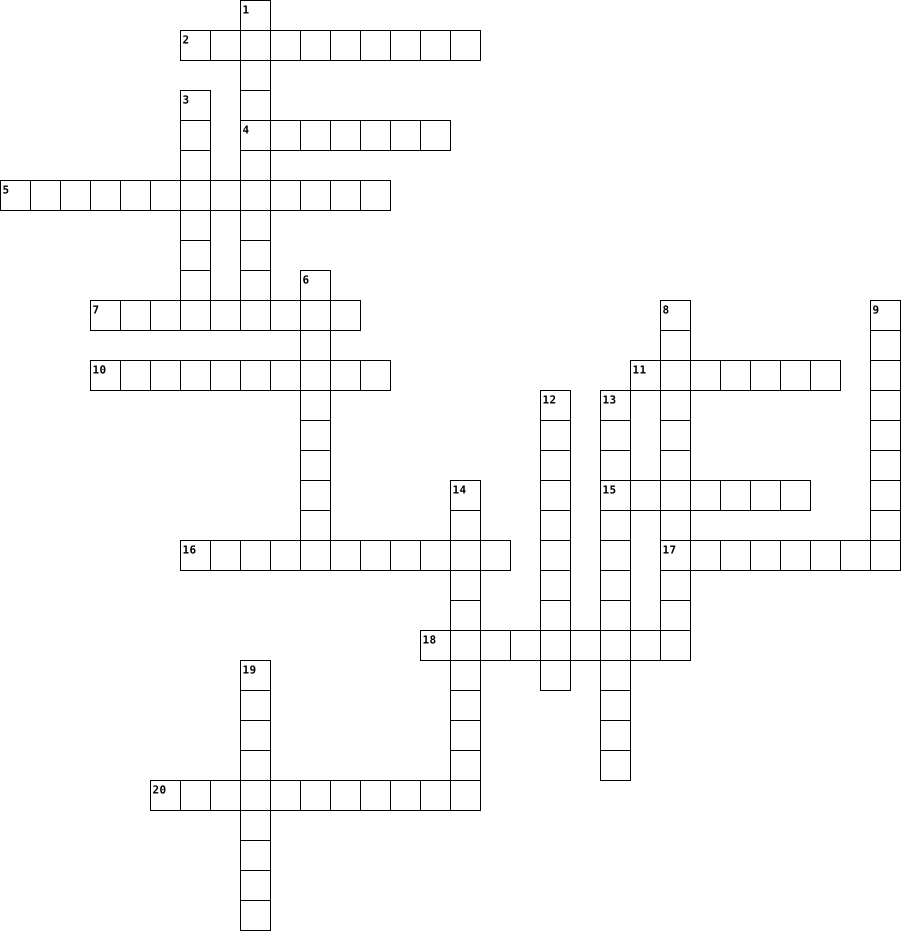
Across
- desegregated, especially racially.
- of or relating to a form of government or a country in which power is divided between one central and several regional governments.
- to murder by sudden or secret attack often for political reasons.
- a type of government as well as an economic system that eliminates socioeconomic class struggles.
- the state of not being equal, especially in status, rights, and opportunities.
- the offense of willfully telling an untruth in a court after having taken an oath or affirmation.
- an area of the production, distribution and trade, as well as consumption of goods and services.
- the action of separating people, historically on the basis of race and/or gender.
- the armed forces of a country.
- a person who comes to a country to live there.
- a process by which a legislative body or other legally constituted tribunal initiates charges against a public official for misconduct.
Down
- persistent high inflation combined with high unemployment and stagnant demand in a country's economy.
- hopefulness and confidence about the future or the successful outcome of something.
- to take in and utilize as nourishment.
- a situation where a person actively searches for employment but is unable to find work.
- a person or organization having power or control in a particular, typically political or administrative, sphere.
- machinery and equipment developed from the application of scientific knowledge.
- the ending of a policy of racial segregation.
- where investors buy and sell shares of companies.
- cease resistance to an enemy or opponent and submit to their authority.
20 Clues: the armed forces of a country. • desegregated, especially racially. • to take in and utilize as nourishment. • the ending of a policy of racial segregation. • a person who comes to a country to live there. • where investors buy and sell shares of companies. • to murder by sudden or secret attack often for political reasons. • ...
US History 2024-03-19
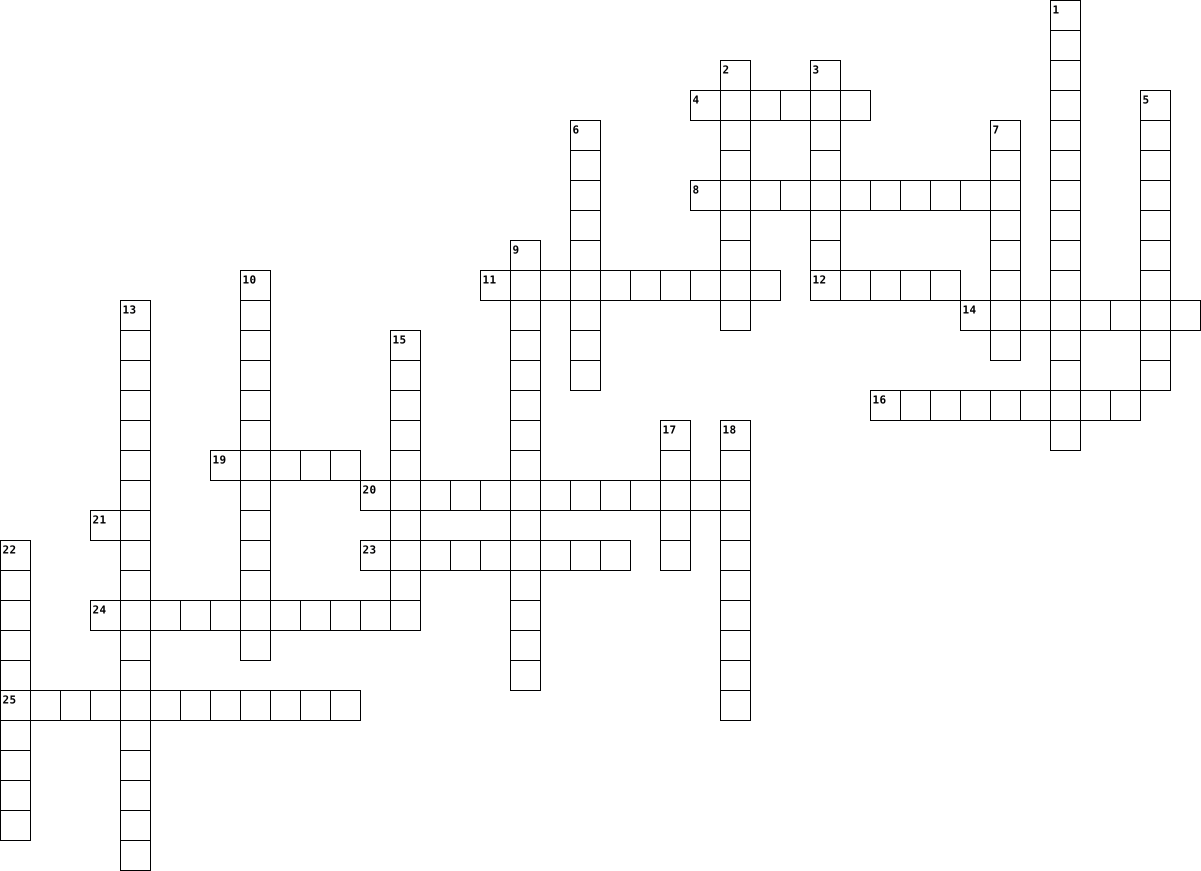
Across
- Alexander Graham Bell used this to get credit for the telephone
- Founder of US Standard Oil
- Where the first shots of the civil war were fired
- This department store was created in New York City
- The 14th amendments is what made all Americans
- Location of one of the Carnegie factory steel strikes
- A majority of Americans worked on these in the 1880s
- Union military general in the west during the civil war
- Thomas Edison’s electric company abbreviation
- Thomas Jefferson’s first Vice President
- This invention made womens live easier
- Inventor of the lightbulb
Down
- This president was assassinated in 1901
- Many immigrants worked in
- This battle took place in September of 1862
- Federal holiday that celebrates the end of slavery
- famous nickname for the 16th president
- Last name of a major donor in the Pittsburgh area
- Name of the assassin of Lincoln
- The first state to leave the Union
- Founder of AT&T
- This city had the largest slave market
- There are only 14 of these stores left in the US
- Location of the costliest battle in the Civil War
- Infamous Confederate general
25 Clues: Founder of AT&T • Many immigrants worked in • Inventor of the lightbulb • Founder of US Standard Oil • Infamous Confederate general • Name of the assassin of Lincoln • The first state to leave the Union • famous nickname for the 16th president • This city had the largest slave market • This invention made womens live easier • This president was assassinated in 1901 • ...
US HISTORY 2024-04-01
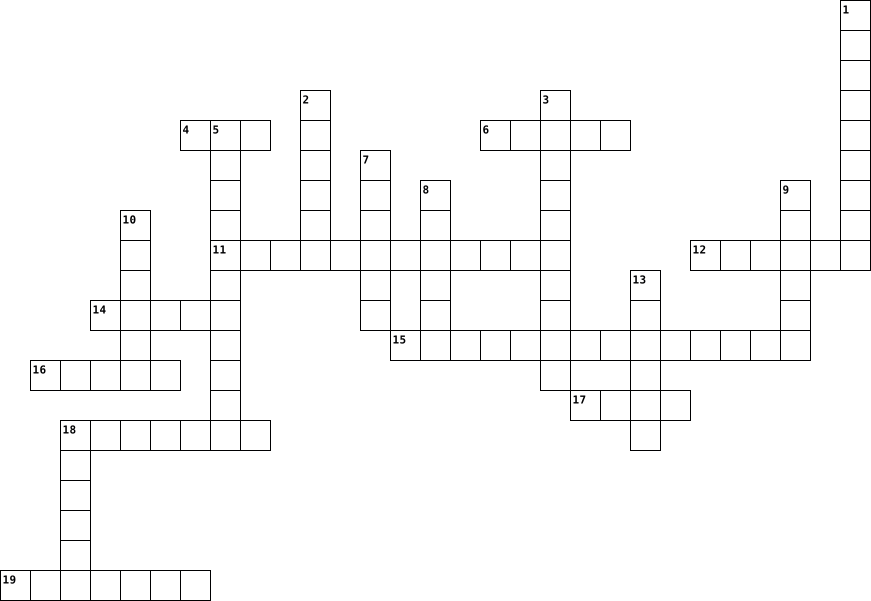
Across
- Break it and you get put in jail
- Something that shows you did something or didnt
- Paper of our nations rights
- To formally accuse
- Something close by or in your town
- Something you are expected to do
- Like a democrat or a republican
- To put a vote on an election
- A person of a nation or country
- When your freed of wrong doing
Down
- People that are in the country illegally
- Something that cant be taken away
- What makes the choices for our nation
- Practice of farming
- Our class subjects
- Jeopardy Illegal act of trying someone twice
- When you admit to doing something
- To send an immigrant back to their homeland
- When people argue or talk about something
- and balances ways to pay for things
20 Clues: Our class subjects • To formally accuse • Practice of farming • Paper of our nations rights • To put a vote on an election • When your freed of wrong doing • Like a democrat or a republican • A person of a nation or country • Break it and you get put in jail • Something you are expected to do • Something that cant be taken away • When you admit to doing something • ...
US history 2024-12-19

Across
- they were young women known for their energetic, freedom and embracing lifestyles.
- this is when someone who illegally makes distributions or sell alcohol.
- was the president at the time
- marked the beginning of the Great Depression
- these were counties built by homeless people during the great depression.
- where most of the dust bowl storms were at
- this was an illegal bar that operated during probation.
- this is where families went because of the dust bowl
- having no money
- this is a strict adherence to specific theology.
- these were makeshift communities built by homeless people during the great depression.
Down
- were the production in importation, transportation, and sale of alcohol Beverages were banned in the US.
- the biggest money tragedy at this time
- this was the fear of communist spreading in the United States.
- The policy of favoring native born individuals over immigrants.
- this refers to making guesses.
- they were often resembled a city dump then a place of living.
- this was a group of politicians associated with President Warren Harding.
- a storm that destroyed everything
- this was the series of programs introduced by Franklin Roosevelt to combat the great depression.
20 Clues: having no money • was the president at the time • this refers to making guesses. • a storm that destroyed everything • the biggest money tragedy at this time • where most of the dust bowl storms were at • marked the beginning of the Great Depression • this is a strict adherence to specific theology. • this is where families went because of the dust bowl • ...
US history 2025-10-17

Across
- First name of the woman who refused to give up her seat on a bus in Montgomery in 1955.
- The incredible achievement of landing a man on the moon in 1969 (three words, no space).
- The "Race" between the US and the USSR to achieve superior missile and exploration capabilities.
- A famous neighbourhood in New York City associated with African American culture and history.
- The decades-long conflict between the United States and the Soviet Union (two words, no space).
- The controversial war the US fought in Southeast Asia from the 1950s to 1970s.
- The actor-turned-president who famously told Gorbachev to "Tear down this wall!".
- The US president assassinated in Dallas in 1963.
- The First Lady who later became Secretary of State and a presidential candidate (First name).
- The first major armed conflict of the Cold War era (adjective describing the nationality).
Down
- The Act passed after 9/11 that greatly expanded government surveillance powers.
- The only US president to resign from office due to the Watergate scandal.
- The Caribbean island nation that was the focus of a missile crisis in 1962.
- The military alliance formed by the US and Western allies to counter the Soviet threat (acronym).
- The practice of making accusations of subversion or treason without proper regard for evidence in the 1950s.
- The massive movement for equality and an end to segregation in the 1950s and 60s (two words, no space).
- The month in 2001 when terrorist attacks hit the World Trade Center (only the month).
- The German city where a wall was built in 1961 to divide East and West.
- The decade when the Civil Rights Act and Voting Rights Act were passed (spelled out).
- The first African American president of the United States.
- The political scandal involving a break-in at the Democratic National Committee headquarters.
- The first name of Martin ___ King Jr., a key leader of the Civil Rights Movement.
22 Clues: The US president assassinated in Dallas in 1963. • The first African American president of the United States. • The German city where a wall was built in 1961 to divide East and West. • The only US president to resign from office due to the Watergate scandal. • The Caribbean island nation that was the focus of a missile crisis in 1962. • ...
US History 2025-06-13

Across
- Luciano, Famous for turning the mob into a national scale crime syndicate
- Steinbeck, The Grapes of Wrath
- Huxley, Brave New World
- Scott Fitzgerald, The Great Gatsby
- Ilyich Lenin, founder of the Soviet Union
- Marquez, One Hundred Years of Solitude
- Camus, The Stranger
- Flair, Voted by 300,000 for Man of the Century and a Wrestler
- Luther King Jr., civil rights leader
- Chaplin, comic genius
Down
- Ford, founder of Ford Motor Co.
- Salinger, The Catcher in the Rye
- Orwell, 1984
- Ali, heavyweight boxing champion
- Disney, creator of animation and multimedia empire
- Heller, Catch-22
- D. Roosevelt, Famous for being a president and a popular man
- Lee, To Kill a Mockingbird
- Nabokov, Lolita
- Gates, co-founder of Microsoft
- Chanel, designer
- Bradbury, Fahrenheit 451
22 Clues: Orwell, 1984 • Nabokov, Lolita • Heller, Catch-22 • Chanel, designer • Camus, The Stranger • Chaplin, comic genius • Huxley, Brave New World • Bradbury, Fahrenheit 451 • Lee, To Kill a Mockingbird • Steinbeck, The Grapes of Wrath • Gates, co-founder of Microsoft • Ford, founder of Ford Motor Co. • Salinger, The Catcher in the Rye • Ali, heavyweight boxing champion • ...
US History 2024-11-18

Across
- – Leader inspiring the movement
- – Emotion felt by the protagonist’s followers
- – Aldina’s favorite drink
- – Word symbolizing equality and unity
- – Key theme of sacrifice and loyalty
- – Main character's close ally
- – First European nation to recognize America as independent
- – Location where key decisions are made
- – Secret meeting place for planning
- – A moral belief driving the protagonist
- – Type of supplies smuggled to aid the cause
- – Movement aiming for change
Down
- – A public declaration of aims and goals by a party
- – Risk associated with defiance
- – When one hits something, a synonym is to ____
- – Social system in place in England and into the colonies that defined social status
- – Type of strategy used by the protagonist
- – Initial conflict that sparks action
- – Type of government targeted by the movement
- – The protagonist's main rival
- – A symbol used by the organization
- – A tool used for covert communication
- – Region or territory under control
- – Early opposition group
24 Clues: – Early opposition group • – Aldina’s favorite drink • – Movement aiming for change • – Main character's close ally • – The protagonist's main rival • – Leader inspiring the movement • – Risk associated with defiance • – A symbol used by the organization • – Secret meeting place for planning • – Region or territory under control • – Key theme of sacrifice and loyalty • ...
US HISTORY 2024-12-23

Across
- During the ________________ Revolution, the U.S. experienced rapid industrialization, with innovations in technology, transportation, and manufacturing.
- The final "stake" that completed the in Utah.
- The 9/11 attacks in 2001 led to the War on Terror, including the wars in Afghanistan and ________.
- English settlers who departed The Pilgrims, also known as the Pilgrim Fathers, were the English settlers who travelled to North Americatravelled to North America
- The Declaration of Independence was signed in this city, marking the Thirteen American Colonies' decision to separate from Great Britain, establishing themselves as independent states.
- This state, although called "The Final Frontier, was the 49th out of all 50 states to be admitted to the union on January 3, 1959.
- The Louisiana Purchase was the acquisition of the territory of Louisiana by the United States from the __________ First Republic in 1803. This consisted of most of the land in the Mississippi River's drainage basin west of the river.
- __________________ of Confederation was an agreement among the 13 states of the United States (formerly the Thirteen Colonies) that was to serve as the nation's first frame of government.
- The U.S. was involved in a controversial war to prevent the spread of communism, but the war ended in a defeat for the U.S. and a unified communist ____________. (1955–1975)
- Driven in on May 10, 1869, at Promontory Summit in Utah, marked the completion of the First Transcontinental Railroad in the United States. (2 words)
- The Confederacy (Southern states) seceded from the Union, leading to the _______ _______ (1861–1865) over slavery and states' rights. The Union, led by President Abraham Lincoln, ultimately won.
- A period of economic prosperity, social change, and cultural movements like jazz, the Harlem Renaissance, and the rise of consumerism.
- The ________ Depression began when the stock market crash of 1929 triggered an economic collapse that led to widespread unemployment and poverty.
- US state that was once an independent country, known for its Alamo battle
- The U.S. entered this war after the attack on Pearl Harbor in 194, and as a result, the U.S. emerged as one of the world's two superpowers. (Abbr)
- The Continental Divide generally follows the crest of the __________ Mountain range (within the US).
- HAWK North Carolina city where the first successful airplane flight took place in 1903.
- This Midwest home of bears and Sox" was the second largest US city in 1970.
- This historic meadow located near the River Thames in Surrey, England, famously known for being the site where King John signed the Magna Carta in 1215
- HARBOR U.S. naval base attacked on December 7, 1941.
- The ________ Rights Movement was the period when African Americans and other marginalized groups fought for equality through nonviolent protests, legislation, and legal battles, including the right to vote.
- In 1607, ____________________, Virginia, became the first permanent English settlement. The Pilgrims established Plymouth Colony in 1620.
- From 1892 to 1954, nearly 12 million immigrants arriving at the Port of New York and New Jersey were processed here.
- This period () ended with the withdrawal of federal troops from the South, leading to the rise of Jim Crow laws.
- A charter guaranteeing individual freedoms and rights to the citizens of a country.
- The U.S. entered ______ in 1917, helping the Allies to victory, and emerging as a global power. (Abbr)
- The U.S. and the Soviet Union competed to dominate space exploration, with the U.S. landing the first humans on the ________ in 1969.
- The __________________ Proclamation was a major turning point in 1863, when President Lincoln ordered declared slaves in Confederate-held territory to be free.
Down
- President Franklin D. Roosevelt's programs aimed at providing relief, recovery, and reform to the country.
- The Jacksonian Democracy, Manifest Destiny, Slavery, Sectionalism, and Industrialization took place within the years of 1820–1860, known as the ________________ Period.
- The first president of the United States and the current capitol building location (DC).
- The ____________________ of the United States is the supreme law of the United States, superseding the nation's first constitution, the "weaker" Articles of ().
- President who served during World War II.
- A period of geopolitical tension between the U.S. (and its allies) and the Soviet Union, marked by proxy wars, nuclear arms races, and ideological conflict between capitalism and communism. The Soviet Union collapsed in 1991, and the U.S. emerged as the world's dominant superpower, susequently ending this. (2 words)
- The Declaration of Independence was signed in this city.
- By the 1700s, 13 British ____________ were established along the eastern coast, each with varying economies, cultures, and governments.
- The belief that the U.S. was destined to expand across the continent led to the annexation of territories like Texas and the acquisition of Oregon, California, and other areas through war and treaties.
- 1776
- Llocation of the 1620 Pilgrim settlement.
- MOST (not all) TV and radio stations to the west of this river, which empties into the Gulf of Mexico, have call letters that begin with "K," while most TV and radio stations east of it begin with "W."
- date (incl year) the Declaration of Independence was signed
- The first palce that served as the US Capital
- CARTA This (aka "Great Charter") is one of the most significant documents in the history of constitutional law, establishing the principle that the king was not above the law and that subjects had certain rights. (2 words)
- Tensions between the colonies and Britain over taxation and representation led to the American _______________ (1775–1783), and the U.S. won its independence with the Treaty of Paris in 1783.
- of Independence is a historic document adopted by the Continental Congress on July 4, 1776. It marked the Thirteen American Colonies' decision to separate from Great Britain and establish themselves as independent states.
- __________________ was the period from 1865–1877 when, after a certain war, the U.S. worked to reintegrate the Southern states and address the rights of freed African Americans.
- President who issued the Emancipation Proclamation
- The Civil War general who became president in 1869
- The last state to be admitted to the union on August 21, 1959.
49 Clues: 1776 • President who served during World War II. • Llocation of the 1620 Pilgrim settlement. • The final "stake" that completed the in Utah. • The first palce that served as the US Capital • President who issued the Emancipation Proclamation • The Civil War general who became president in 1869 • HARBOR U.S. naval base attacked on December 7, 1941. • ...
US History 2024-12-13

Across
- An intense religious sermon written by Jonathan Edwards that was the catalyst for the Great Awakening
- Spanish clergyman who criticized slavery
- English-born American political philosopher who wrote "Common Sense" and inspired colonial patriots to declare independence
- Colony in New England founded by John Winthrop
- The chief of the indigenous people near Jamestown
- An American general who defected to the British mid-war and became associated with treason
- A highly-influential pamphlet written by Thomas Paine that promoted colonial rebellion against Britain
- Territory occupied by France in North America
- The battles that marked the outbreak of armed conflict between the Kingdom of Great Britain and Patriot militias from America's thirteen colonies in the Revolutionary War
- Daughter of Powhatan associated with Jamestown
- Humble submission and respect
- An armed uprising in Western Massachusetts and Worcester in response to a debt crisis among the citizenry and in opposition to the state government's increased efforts to collect taxes 1786 and 1787
- Explorer and soldier with an important role in the Virginia Colony and Jamestown
- Thomas Jefferson's draft for a legal separation of state and church, considering the US government as completely unaffiliated with any religion
- An essay written by James Madison that argued for the ratification of the United States Constitution with support from Alexander Hamilton
- Spanish conquistador who conquered the Inca
- Assembly of elected officials that served as the first English government in North America
- Native American people who dominated northern Mexico at the time of the Spanish conquest in the early 16th century
- A tremendous writer during the days of the revolution who wrote poems, advised the founding fathers, and chronicled the American Revolution in a work that would be published in 1805
- Exchange of disease, culture, etc. between Europe and the Americas
- Empire in the Peruvian Highlands with llamas and Machu Picchu
- A concept that considers a woman to be the legal possession of her husband, submitting all of her authority and status to him
- A British imposition that required the colonists to pay a tax, represented by a stamp, on various forms of papers, documents, and playing cards
- Those who were conservative and nationalistic, dominated the national government under Alexander Hamilton from 1789 to 1801, and believed in a strong national government
- The first permanent English settlement in North America
- A sea route connecting the Atlantic to the Pacific
- A war on Great Britain declared by the US in response to British naval Impressment of US citizens; the war
- British American Puritan who sparked the Great Awakening and wrote "Sinners in the Hands of an Angry God"
- A woman's social obligation to be a good wife and a good mother, and to raise and educate her children well, especially the boys that would grow up to be voters
- A decree from King George III that at least temporarily forbade all new British settlements west of a line drawn along the Appalachian Mountains, which was delineated as an Indian Reserve
- A labor contract in which a European person would work for free for several years in the American colonies in exchange for eventual release there
- English Protestants who believed that the reforms of the Church of England did not go far enough; the liturgy was still too Catholic for them
- A war that took place during the Seven Years' War, which pitted the North American colonies of the British Empire against those of the French, each side being supported by various Native American tribes; the British won
Down
- Native Americans' vulnerability to European diseases
- Belief that everything has a spiritual essence
- The unofficial British policy where parliamentary rules and laws were loosely or not enforced on the American colonies and trade
- The nation's first frame of government, finalized by Congress on November 15, 1777; it came into force on March 1, 1781, after being ratified by all 13 colonial states
- An ideological and political movement in the Thirteen Colonies which peaked when colonists initiated an ultimately successful war for independence against the Kingdom of Great Britain
- A rejected plan to create a unified government for the Thirteen Colonies at the Albany Congress on July 10, 1754 in Albany, New York, proposed by Benjamin Franklin
- A series of religious revivals in American Christian history
- The stage of the Atlantic slave trade in which millions of enslaved Africans[2] were forcibly transported to the Americas as part of the triangular slave trade
- Spanish conquistador who conquered the Aztecs
- An uprising of Virginia settlers led by Nathaniel _____ in a revolt against William Berkeley
- English Puritan leader who founded Rhode Island and advocated for peaceful interactions with the Natives
- English settlers who travelled to North America on the Mayflower and established the Plymouth Colony in Plymouth, Massachusetts
- An oceanic trade in African men, women, and children which lasted from the mid-sixteenth century until the 1860s
- The first written legal document in the English colonies
- Puritan reformer who was put on trial and convicted in Boston for heresy
- A process of making things "more British"
- A British declaration that they could tax the colonies whenever and however they wanted
- Those who advocated for a more decentralized form of government with greater protections for individual rights and stronger representation for the states. Principally, they were afraid that the national government would be too robust and would, thus, threaten states and individual rights
- A Native American prophet who preached about rejecting British lifestyles; this inspired Pontiac's Rebellion
- An armed conflict after the French and Indian War from 1763 to 1765 that was instigated by Native Americans around the Great Lakes; their revolt was unsuccessful, and Britain gained more territory
- First governor of The Massachusetts Bay Colony and a leading Puritan founder of New England
- The supreme law of the United States that superseded the Articles of Confederation on March 4, 1789
55 Clues: Humble submission and respect • Spanish clergyman who criticized slavery • A process of making things "more British" • Spanish conquistador who conquered the Inca • Spanish conquistador who conquered the Aztecs • Territory occupied by France in North America • Belief that everything has a spiritual essence • Colony in New England founded by John Winthrop • ...
US History 2025-03-31

Across
- George Washington's foreign policy was not to make.....
- pamphlet written by Thomas Paine, urging colonists to seek independence
- when a stronger country takes over a weaker country for resources
- his ideas on natural rights and consent of government were using in American government foundation
- foreign policy under Thomas Jefferson, US stopped trading with Europe
- people who exposed the truth during Industrial Revolution
- president that issued the emancipation proclamation
- prevented European colonization in the Western Hemisphere
- wanted the Bill of Rights in the Constitution
- war between Mexico and US
- belief that Americans should expand west
Down
- every citizen regardless of race and gender can vote
- all people born in US are citizens
- Native Americans received allotment in return for assimilation
- law that broke monopolies
- did not deem the Bill of Rights were necessary in the Constitution
- enforced the Monroe Doctrine with police power
- what did we annex from Mexico
- when one person has full control over a product or indusrty
- all Chinese immigration to US was banned
- fought for woman suffrage and was jailed for voting
- muckraker who went against Monopolies
22 Clues: law that broke monopolies • war between Mexico and US • what did we annex from Mexico • all people born in US are citizens • muckraker who went against Monopolies • all Chinese immigration to US was banned • belief that Americans should expand west • wanted the Bill of Rights in the Constitution • enforced the Monroe Doctrine with police power • ...
US history 2025-04-13

Across
- Tried to use CIA to murder him
- Chemical warfare US used in the Vietnam war
- If one country goes to communism, others will too
- limited president to not involve US in foreign conflicts
- Unarmed students were killed in protest, sparked ain't war movemnet
- Country split into north and south where they one was supported by different governments
- France had to leave Vietnam and it was split into 2
- leader of communist revolution in cuba
- categorized people if they were for or against involvement war
- Takes over for JFK, escalated Vietnam war
- Communist Korean leader, admired declaration of independence
- Gulf by vietnam where LBJ said north attacked US ships
- US attacked by Vietcong and north viatnamese
- United states war crime where they killed unarmed civilians
Down
- South Vietnamese who wanted communism
- Pulled america out of the war
- Soviets begin installing missiles in cuba
- Government selected citizens to fight in the Vietnamese war
- youngest elected president and promoted civil rights
- to withdraw American troops from the war
- LBJ said North Vietnam attacked US ships
- enabled north Vietnam to send troops and weapons to south Vietnam
- studied the involvement of America's involvement
- Democratic leader of south Vietnam
24 Clues: Pulled america out of the war • Tried to use CIA to murder him • Democratic leader of south Vietnam • South Vietnamese who wanted communism • leader of communist revolution in cuba • to withdraw American troops from the war • LBJ said North Vietnam attacked US ships • Soviets begin installing missiles in cuba • Takes over for JFK, escalated Vietnam war • ...
Us History 2024-10-01

Across
- This is the treaty where France gives the US florida
- Led the Texans in there fight for freedom against santa anna
- This president passed the Indian removal act
- Proved that ships are steamed powered
- This was Jefferson not shipping France and great Britain any goods
- This person wrote the national anthem while watching fort Mchenry get destroyed
- Who fought of the coast pirates
- Wife of a president who saved the constitution and declaration of independence when the white house got attacked
- Fort Americans tried to defend form Santa Anna and his 4000 troops
Down
- Who was the translator for Lewis and clark
- This person helped many people come to freedom through a system called the underground railroad
- Who caused a war because they still had troops in the US
- Who invented the cotton gin
- Was an African preacher who started a revolt of slaves
- Fort where texans surrendered to Mexicans and Santa had them all killed
- Who did the US get land form in the Louisiana purchase
- This tribe walked the trail of tears
- A fever that was not a sickness actually a fever for Gold
- Dictator of Mexico
- What did the Missouri compromise give the US
20 Clues: Dictator of Mexico • Who invented the cotton gin • Who fought of the coast pirates • This tribe walked the trail of tears • Proved that ships are steamed powered • Who was the translator for Lewis and clark • This president passed the Indian removal act • What did the Missouri compromise give the US • This is the treaty where France gives the US florida • ...
US History 2026-05-21

Across
- laws enacted to limit rights of African Americas
- law that forbid Chinese from immigrating to United States.
- US annexed this state to make a military base
- document in which colonists declared their independence from Britain
- warned Europe not to colonize the western hemisphere
- the name of Southern States during the Civil War
- economic system in which there is free market
- gave cheap land to Americans to settle in the Great Plains
- in which war did Germany sink Lusitania?
- law gave Native Americans had to assimilate and in return they received citizenship and
- the political system implemented in Soviet Union
- strengthened Monroe Doctrine with military force
- time period in which the South had to be rebuilt and repaired after the Civil War
- war between Mexico and United States because US annexed Mexico
Down
- Canal made by US in South America
- law passed by Andrew Jackson in which Natives were kicked off their land and placed in reservations.
- economic system in which government owns everything
- FDR implemented programs to help the economy
- the name of the Northern States during the Civil War
- this pamphlet was created to encourage colonists to seek independence from Britain
- the political system implemented in United States
- under the New Deal,gave jobs to 250,000 young men to build bridges, canals, roads, plant trees, etc
- war between Spain and United States because
- his ideas made entails democracy
- economic crisis that disrupted the entire world
- telegram that was intercepted by Britain n which Germany tried to recruit Mexico on their side
- this clause is used to amend/change the constitution
- war between the South and North over slavery
- Spain sank this ship
- Act limited the percentage of Immigrant to enter United States to only 3%.
30 Clues: Spain sank this ship • his ideas made entails democracy • Canal made by US in South America • in which war did Germany sink Lusitania? • war between Spain and United States because • FDR implemented programs to help the economy • war between the South and North over slavery • US annexed this state to make a military base • economic system in which there is free market • ...
US HISTORY 2022-03-15
Across
- is an agreement to cease fire
- is a tax on incoming goods.
- was an agreement to balance free and slave states
- was invented by Eli Whitney.
- ended the War of 1812.
- standardized parts that could be used in place of one another were called
- was a famous Indian guide who helped Lewis and Clark.
- explored the Louisiana Purchase.
- was the 3rd President of the US
- was in 1803 and it doubled the size of the U.S
- was invented by Robert Fulton in 1807
Down
- was made up of the Presidencies of
- allowed merchants to trade only with countries other than France and England
- stated America was for Americans.
- The forcible seizure of american sailors into the Royal Navy was called
- was a Supreme Court Justice for over 30 years.
- stretched from Georgia to Illinois.
- is the devotion to the culture and interests of one’s country.
- John C. Calhoun and Henry Clay were known as
19 Clues: ended the War of 1812. • is a tax on incoming goods. • was invented by Eli Whitney. • is an agreement to cease fire • was the 3rd President of the US • explored the Louisiana Purchase. • stated America was for Americans. • was made up of the Presidencies of • stretched from Georgia to Illinois. • was invented by Robert Fulton in 1807 • ...
US History 2024-05-22

Across
- Legislation related to stock market regulation
- Economic policy of the 1920s
- Treaty that ended World War I
- U.S. president during the majority of WWII
- The right to vote
- Program to pull the U.S. out of the Great Depression
- Famous speech given by Martin Luther King, Jr.
- U.S. economic policy where tax cuts for the wealthy benefit all
- Post-WWII struggle between the U.S. and Soviet Union
Down
- 1961 failed invasion attempt to overthrow Fidel Castro
- WWII icon for working women
- Major event that caused the Great Depression
- A group that exposed corruption in the early 1900s
- Law to end segregation in public schools
- Attack on December 7, 1941
- The military alliance formed to combat communism
- War that started in 1950 with North Korean invasion
- Legislation regulating meat inspection
- Program that employed young men in public works during the New Deal
19 Clues: The right to vote • Attack on December 7, 1941 • WWII icon for working women • Economic policy of the 1920s • Treaty that ended World War I • Legislation regulating meat inspection • Law to end segregation in public schools • U.S. president during the majority of WWII • Major event that caused the Great Depression • Legislation related to stock market regulation • ...
US History 2025-01-28

Across
- building where goods are manufactured
- Method Ask questions to perform experiments
- Hobbes English philosopher scientist, and historian best known for his political philosophy
- of Influence a territory or region where an external group or institution holds power or authority in a foreign territory.
- Conference A meeting that negotiated african territory
- advocated the separation of executive and legislative and judicial powers
- A theory that is strong at variance with beliefs
- one of the greatest of all French writers
- political system with one ruler
- Locke a British philosopher, Oxford academic and medical researcher.
- Watt Improved the steam engine
Down
- Socialism is a populist economic and political system based on collective, common, or public ownership of the means of production
- Theory The sun in the center of the solar system
- Extending a country's power
- Newton he discovered the 3 laws of motion
- Making an area more urban
- Making your own business
- The government owns all businesses
- Discovered the four moons of jupiter
19 Clues: Making your own business • Making an area more urban • Extending a country's power • political system with one ruler • Watt Improved the steam engine • The government owns all businesses • Discovered the four moons of jupiter • building where goods are manufactured • Newton he discovered the 3 laws of motion • one of the greatest of all French writers • ...
US HISTORY 2015-03-29
Across
- On Washington: an event where civil rights leaders went to protest racial discrimination and to show support for major civil rights legislation that was pending in Congress.
- Market: a market in which share prices are rising, encouraging buying.
- Flagler: He was also a key figure in the development of the Atlantic coast of Florida
- The U.S. has military bases all over the world and outright occupies Iraq and Afghanistan is an example of?
- Amendment: prohibits the federal and state governments from denying a citizen the right to vote based on that citizen's "race, color, or previous condition of servitude."
- a pact, coalition or friendship between two or more parties.
- a belief in the power of regular people, and in their right to have control over their government
- Migration: the movement of 6 million African Americans
Down
- Amendment: addresses citizenship rights and equal protection
- Renaissance: cultural center, drawing black writers, artists, musicians, photographers, poets
- Dubious: felt that African Americans had the same rights as Whites and should not have to sacrifice their constitutional rights to gain a status they already deserved.
- more than 6 million European Jews, as well as members of other persecuted groups, such as gypsies and homosexuals, were murdered at concentration camps .
- during the war the United States maintained its___.
- Island: Europeans came through this island.
- Island: Chinese people came through this island.
- System: ships sailing in groups and protected by armed vessels
- Exclusion Act: was the first law implemented to prevent a specific ethnic group from immigrating to the United States
- T. Washington: believed that the best interests of black people in the post-Reconstruction era could be realized through education in the crafts and industrial skills
- Age: coined by F. Scott Fitzgerald
19 Clues: Age: coined by F. Scott Fitzgerald • Island: Europeans came through this island. • Island: Chinese people came through this island. • during the war the United States maintained its___. • Migration: the movement of 6 million African Americans • Amendment: addresses citizenship rights and equal protection • a pact, coalition or friendship between two or more parties. • ...
US History 2025-05-09

Across
- Alcohol ban
- Nixon scandal
- Deal FDR’s recovery plan
- Lincoln’s proclamation
- Controversial 1960s war
- 1930s economic crisis
- War US-Soviet standoff
- Presidential charge
- Post-Civil War era
- Withdrawal from the Union
- War for independence
Down
- Founding document
- Constitutional change
- Division of power
- Added to the Constitution
- End of slavery
- Rights 1960s movement
- Destiny 19th-century expansion belief
- Right to vote
- Early American settlement
20 Clues: Alcohol ban • Nixon scandal • Right to vote • End of slavery • Founding document • Division of power • Post-Civil War era • Presidential charge • War for independence • Constitutional change • 1930s economic crisis • Lincoln’s proclamation • Rights 1960s movement • Controversial 1960s war • War US-Soviet standoff • Deal FDR’s recovery plan • Added to the Constitution • Early American settlement • ...
us history 2022-03-15
Across
- was in 1803 and it doubled the size of the U.S.
- is the devotion to the culture and interests of one’s country.
- allowed merchants to trade only with countries otherthan France and England.
- stated America was for Americans.
- John C. Calhoun and Henry Clay were known as
- was invented by Robert Fulton in 1807.
- Standardized parts that could be used in place of one another were called
- ended the War of 1812.
- stretched from Georgia to Illinois.
- The forcible seizure of American sailors into the Royal Navy was called.
Down
- is an agreement to cease fire.
- is a tax on incoming goods.
- explored the Louisiana Purchase.
- was an agreement to balance free and slave states.
- was a famous Indian guide who helped LewisandClark.
- what led to the War of 1812.
- was a Supreme Court Justice for over 30 years.
- was invented by Eli Whitney.
- was the 3 rd President of the U.S.
19 Clues: ended the War of 1812. • is a tax on incoming goods. • what led to the War of 1812. • was invented by Eli Whitney. • is an agreement to cease fire. • explored the Louisiana Purchase. • stated America was for Americans. • was the 3 rd President of the U.S. • stretched from Georgia to Illinois. • was invented by Robert Fulton in 1807. • ...
US HISTORY 2023-02-02
Across
- prohibited the manufacture, sale of intoxicating liquours
- prohibited the sale of misbranded food
- demanding the removal of an elected official.
- a power reserved to the voters to propose legislation
- to protect the consumer against unfair trade practices
- unscrupulous use of a politician's authority
- citizens could claim 160 acres of surveyed government land
- to Regulate Commerce with foreign & domestic land
- CONGRESS CAN FORCE FEDERAL INCOME TAX
- a direct vote by the electorate on a proposal, law,
Down
- a legislative proposal before Congress
- admittance of foreigners to citizenship of a country
- power to the people
- orgniztion that has political control
- the first significant law restricting immigration
- limiting immigrants by their nationality
- outlaws both formal cartels and attempts to monopolize
- direct election of U.S. senators by the voters
- authorized the President to break up reservation land
19 Clues: power to the people • orgniztion that has political control • CONGRESS CAN FORCE FEDERAL INCOME TAX • a legislative proposal before Congress • prohibited the sale of misbranded food • limiting immigrants by their nationality • unscrupulous use of a politician's authority • demanding the removal of an elected official. • direct election of U.S. senators by the voters • ...
Us history 2021-10-01
Across
- the Supreme Court upheld the Granger laws by a vote of seven to two. The states thus won the right to regulate the railroads for the benefit of farmers and consumers.
- ported the Great Strike of 1877and later organized for theUnited Mine Workers of America(UMW)
- a pio-neer on the new industrial frontier when he established the world’s first research laboratory in Menlo Park, New Jersey.
- a process in which he bought out his suppliers—coal fields and iron mines, ore freighters, and railroad lines—in order to control the raw materials and transportation systems.
- The stockholders gave this company a contract to lay track at two to three times the actual cost—and pocketed the profits.
- perhaps the most dramatic invention was the telephone
- took a different approach to mergers: they joined with competing companies in trust agreements. Participants in a trust turned their stock over to a group of trustees—people who ran the separate companies one large corporation.
- lines followed, and regional lines multiplied as well. At the start of the Civil War, the nation had had about 30,000 miles of track. By 1890, that figure was nearly six times greater.
- successfully used steam engine to drill for oil near Titusville, Pennsylvania, that removing oil from beneath the earth’s surface became practical
Down
- headed by William “Big Bill '' Haywood, the Wobblies Included miners, lumberers, and cannery, and dock workers.
- led the CigarMakers’ International Union to join with other craft unions in 1886.
- This act established the right of the federal government to supervise railroad activities and established a five-member Interstate CommerceCommission (ICC) for that purpose.
- with Gompers as its president, focused on collective bargaining, or negotiations between representatives of labor and management, to reach written agreements on wages, hours, and working conditions.
- developed indepen-dently by the British manufacturer Henry Bessemer and American ironmakerWilliam Kelly around 1850, soon became widely used
- grew out of the English naturalist Charles Darwin’s theory of biological evolution
- made it illegal to form a trust that interfered with free trade between states or with other countries.
- he attempted to form such an industrial union—the American Railway Union (ARU).
- invented thetypewriter in 1867 and changed the world ofwork
- came to this country in 1848, at age 12. Six years later, he worked his way up to become private secretary to the local superintendent of the Pennsylvania Railroad.
19 Clues: perhaps the most dramatic invention was the telephone • invented thetypewriter in 1867 and changed the world ofwork • led the CigarMakers’ International Union to join with other craft unions in 1886. • he attempted to form such an industrial union—the American Railway Union (ARU). • ...
US History 2024-06-13

Across
- Alcohol ban
- Nixon scandal
- Deal FDR’s recovery plan
- Lincoln’s proclamation
- Controversial 1960s war
- 1930s economic crisis
- War US-Soviet standoff
- Presidential charge
- Post-Civil War era
- Withdrawal from the Union
- War for independence
Down
- Founding document
- Constitutional change
- Division of power
- Added to the Constitution
- End of slavery
- Rights 1960s movement
- Destiny 19th-century expansion belief
- Right to vote
- Early American settlement
20 Clues: Alcohol ban • Nixon scandal • Right to vote • End of slavery • Founding document • Division of power • Post-Civil War era • Presidential charge • War for independence • Constitutional change • 1930s economic crisis • Lincoln’s proclamation • Rights 1960s movement • Controversial 1960s war • War US-Soviet standoff • Deal FDR’s recovery plan • Added to the Constitution • Early American settlement • ...
US History 2023-04-18
Across
- STICK Sharpened spear hidden in ground,
- Helicopter landing Zone.
- The lead and most dangerous position on a palrol inlo enemy lerritory.
- TRAP Hidden explosive device designed to injure (he enemy.
- as opposed lo the Vietcong
- in Action
- Killed in Action
- STATE Refers lo killing and wounding of student antiwar protesters at Kent State
- Front line U.S. troops, who. had the toughesi, most dangerous jobs.
Down
- GREEN GIANT Large U.S. helicopter gunship.
- Vietnamese peasant home, usually very simple, with a thatched rool.
- PROGRAM kill village leaders believed lo be pro-Communist.
- Derisive U.S. slang erm for Vietnamese.
- A U.S. attack helicopter.
- BEAK Section of Laos that juts into Vietnam
- troops slang for kilometers, measuring distance in Vietnam.*
- A major Indochina River
- Basic rifle used by U.S. Iroops in Vielnam.
- ACCORDS A 1954 agreement to lemporarily divide Vietnam into North and South.
19 Clues: in Action • Killed in Action • A major Indochina River • Helicopter landing Zone. • A U.S. attack helicopter. • as opposed lo the Vietcong • STICK Sharpened spear hidden in ground, • Derisive U.S. slang erm for Vietnamese. • GREEN GIANT Large U.S. helicopter gunship. • BEAK Section of Laos that juts into Vietnam • Basic rifle used by U.S. Iroops in Vielnam. • ...
US HISTORY 2021-11-27
Across
- more than half
- income raised by government
- to provide living quarters
- process by which an amendment if approved
- to the federal government
- as a guarantee that he or she will be
- principles of shared power
- document that gives police particular
- in Chief chief of armed forces
Down
- sovereignty authority of the people
- for a trial
- law bills proposed law
- process following of procedures established
- violation of the allegiance owed by a person to his or her own country
- minimum number of members that must be present to conduct sessions
- or powers
- money that a accused person provides to the
- powers powers listed in the Constitution as
- powers retained by the states
19 Clues: or powers • for a trial • more than half • law bills proposed law • to the federal government • to provide living quarters • principles of shared power • income raised by government • powers retained by the states • in Chief chief of armed forces • sovereignty authority of the people • as a guarantee that he or she will be • document that gives police particular • ...
Us History / 2023-12-13
Across
- What new relationship with Hawaii did Congress approve in 1898?
- Grow for sale rather than farmers use
- Evolution
- 32nd president
- Large plantations, cattle farms, cotton tobacco, sugar
- Madison
- Only landowning, white males could ____
- Three way process involving rum, captured Africans and finished goods
- During the California Gold Rush, about 25,000 laborers migrated to California from
- Which side had a more difficult time rebuilding after the Civil War?
Down
- Invented first airplane
- First permanent English settlement in americas
- Where did Lee finally surrender to Grant?
- Cotton gin
- Labored for 4-7 years
- Motor company
- first credited with developing a North American strain of tobacco “Brown gold”
- Lightbulb inventor
- DNA helix
19 Clues: Madison • Evolution • DNA helix • Cotton gin • Motor company • 32nd president • Lightbulb inventor • Labored for 4-7 years • Invented first airplane • Grow for sale rather than farmers use • Only landowning, white males could ____ • Where did Lee finally surrender to Grant? • First permanent English settlement in americas • Large plantations, cattle farms, cotton tobacco, sugar • ...
US History 2025-03-24

Across
- Power is divided between the national government and the states.
- Domain, Government has the right to take private property.
- of Powers, Divides the power of the government into three branches.
- Pluribus Unum, "Out of many, one" – motto on the Great Seal of the U.S.
- de Tocqueville, French writer who identified five values of democracy. )
- Rights, Rights a person is born with.
- Railroad, Connected the East and West coasts with continuous rail transportation.
- Wire, Strong wire used to fence in animals and protect land.
- Houses, Home made of earth, used by settlers in the Great Plains.
- The participation of common people in government.
- of Rights, The first ten amendments to the Constitution.
Down
- Act, Encouraged western expansion by granting settlers 160 acres of land.
- Protection from a tyrannical government.
- Equality in society.
- Government takes a "hands-off" approach to the economy.
- Begins with "We the People..."
- Destiny, Belief that settlers were destined to expand westward.
- Act, Goal was to assimilate Native Americans into American culture.
- Sovereignty, The authority of the government comes from the people.
19 Clues: Equality in society. • Begins with "We the People..." • Rights, Rights a person is born with. • Protection from a tyrannical government. • The participation of common people in government. • Government takes a "hands-off" approach to the economy. • of Rights, The first ten amendments to the Constitution. • Domain, Government has the right to take private property. • ...
US History 2025-05-09

Across
- Alcohol ban
- Nixon scandal
- Deal FDR’s recovery plan
- Lincoln’s proclamation
- Controversial 1960s war
- 1930s economic crisis
- War US-Soviet standoff
- Presidential charge
- Post-Civil War era
- Withdrawal from the Union
- War for independence
Down
- Founding document
- Constitutional change
- Division of power
- Added to the Constitution
- End of slavery
- Rights 1960s movement
- Destiny 19th-century expansion belief
- Right to vote
- Early American settlement
20 Clues: Alcohol ban • Nixon scandal • Right to vote • End of slavery • Founding document • Division of power • Post-Civil War era • Presidential charge • War for independence • Constitutional change • 1930s economic crisis • Lincoln’s proclamation • Rights 1960s movement • Controversial 1960s war • War US-Soviet standoff • Deal FDR’s recovery plan • Added to the Constitution • Early American settlement • ...
US History 2022-03-15
Across
- John C. Calhoun and Henry Clay were known as
- Standardized parts that could be used in place of one another were called
- was invented by Robert Fulton in 1807.
- is a tax on incoming goods.
- The sinking of the American boat started the war of 1812
- ended the war of 1812
- was a famous Indian guide who helped Lewis and Clark.
- was made up of the Presidencies of
- stated America was for Americans.
- invented by Eli Whitney
Down
- stretched from Georgia to Illinois.
- was in 1803 and it doubled the size of the U.S.
- agreement to balance free and slave states
- is an agreement to cease fire.
- was the 3 rd President of the U.S.
- The forcible seizure of American sailors into the Royal Navy was called
- Explored the Louisiana Purchase.
- was a Supreme Court Justice for over 30 years.
- is the devotion to the culture and interests of one’s country.
19 Clues: ended the war of 1812 • invented by Eli Whitney • is a tax on incoming goods. • is an agreement to cease fire. • Explored the Louisiana Purchase. • stated America was for Americans. • was the 3 rd President of the U.S. • was made up of the Presidencies of • stretched from Georgia to Illinois. • was invented by Robert Fulton in 1807. • agreement to balance free and slave states • ...
US History 2024-05-14

Across
- The party favored centralization, federalism, modernization, industrialization
- a tax or duty to be paid on a particular class of imports or exports.
- withdraw from commercial or social relations with (a country, organization, or person) as a punishment or protest.
- the right to vote in political elections.
- a policy of remaining apart from the affairs or interests of other groups, especially the political affairs of other countries.
- a system of government by the whole population or all the eligible members of a state, typically through elected representatives.
- a political philosophy and movement that seeks to advance the human condition through social reform
- the divinely ordained right of the United States to expand its borders to the Pacific Ocean and beyond
- form of government in which a state is ruled by representatives of the citizen body
- overemphasized political, economic, and social loyalty to a region of a country rather than the country as a whole
Down
- an asset or object bought or obtained, typically by a library or museum.
- identification with one's own nation and support for its interests
- an official ban on trade or other commercial activity with a particular country.
- the action of signing or giving formal consent to a treaty, contract, or agreement, making it officially valid.
- Europe between the fall of Rome in 476 CE and the beginning of the Renaissance in the 14th century.
- a person who favors the abolition of a practice or institution, especially capital punishment or (formerly) slavery.
- the process of making an area more urban.
- subject (someone) to hostility and ill-treatment, especially because of their ethnicity, religion, or sexual orientation or their political beliefs.
- a person who comes to live permanently in a foreign country.
19 Clues: the right to vote in political elections. • the process of making an area more urban. • a person who comes to live permanently in a foreign country. • identification with one's own nation and support for its interests • a tax or duty to be paid on a particular class of imports or exports. • an asset or object bought or obtained, typically by a library or museum. • ...
Syllabus Hunt 2025-08-08

Across
- Grades Tests and quizzes are part of this system
- The study of past events
- Students explore major turning ______ in US History
- The first and last 10 minutes of class are when you may not use this
- The United States is described as a global ______
- Teacher’s last name for this US History class
- The classroom is in room H____
- Badge issued by the school
- Year the course content begins
- Students must pass the US History ______ Test to graduate
Down
- One thing you should "limit" during class
- US History is an 11th ______ course
- One weekly help session held after school
- This type of paper is required for notes
- Device students must bring daily
- You lose this many points per week for late work
- ring, This type of binder is required
- Writing tools required for class
- Cheating results in this grade
19 Clues: The study of past events • Badge issued by the school • The classroom is in room H____ • Year the course content begins • Device students must bring daily • Writing tools required for class • US History is an 11th ______ course • Cheating results in this grade • ring, This type of binder is required • This type of paper is required for notes • ...
US History 2013-04-10

Across
- ____ amendment provided direct election of senators
- _____ amendment gave African American men the right to vote
- _____ amendment created a graduated income tax
- Written mostly by Jefferson to list the grievances (complaints) against Great Britain and to declare independence from Great Britain
- _____ amendment gave freedom to the slaves in all of the states
- ____ amendment ended poll taxes
- Treaty that ended World War I. Was extremely harsh on Germany
Down
- Document, which formed the first government of the U.S. near the end of the American Revolution. States had more power than the national government.
- ___ amendment gave women the right to vote
- A document outlining the basic form and rules of the U.S. government
- Major ideas found in the U.S. Constitution of limiting the power to tax and right to a fair trail
- Foundation for American government for freedoms such as freedom of speech and trial by jury
- Declaration by Truman to economically assist any country fighting Communism after World War II. The declaration marked the beginning of the Containment Policy (plan to keep Communism from spreading)
- Peace plan issued by Wilson that called for freedom of the seas, reduction of armaments, and end to secret diplomacy. Important part was the creation of the League of Nations a national peace organization
- Essays written by James Madison, Alexander Hamilton, and John Jay to support the ratification of the Constitution
- First ten amendments to the Constitution guaranteeing individual liberties and due process
- ____ amendment required states to give citizenship to all citizens born in the United States and gave other basic civil rights
- Gave the right of 18 years old to vote
18 Clues: ____ amendment ended poll taxes • Gave the right of 18 years old to vote • ___ amendment gave women the right to vote • _____ amendment created a graduated income tax • ____ amendment provided direct election of senators • _____ amendment gave African American men the right to vote • Treaty that ended World War I. Was extremely harsh on Germany • ...
US History 2023-06-07

Across
- American pamphleteer and Founding Father who wrote "Common Sense."
- commander-in-chief during the war.
- The British general who surrendered at Yorktown.
- The document that declared the independence of the American colonies.
- French military officer who aided the American cause.
- Volunteer soldiers ready for rapid deployment during the war.
- of Paris The treaty that officially ended the Revolutionary War.
- Famous phrase associated with Patrick Henry's speech.
- British soldiers hired to fight against the American colonists.
Down
- measure imposed on the American colonies by the British.
- The strategy of avoiding direct engagement with the enemy while wearing them down.
- The American military alliance with France during the war.
- American military officer known for his winter encampment at Valley Forge.
- The group of colonial delegates that convened to oppose British policies.
- A significant victory for the Americans in New York.
- The location where the American Declaration of Independence was adopted.
- The final major battle of the Revolutionary War.
- The first major battle of the Revolutionary War.
18 Clues: commander-in-chief during the war. • The British general who surrendered at Yorktown. • The final major battle of the Revolutionary War. • The first major battle of the Revolutionary War. • A significant victory for the Americans in New York. • French military officer who aided the American cause. • Famous phrase associated with Patrick Henry's speech. • ...
us history 2023-01-05
Across
- American jazz pianist
- implemented protectionist trade policie
- amaican political activist
- Was a millatary soldier
- unemployment cause these kind of lines
- the area where there was no water
- person identified with the state of Oklahoma
- a testimony to the truth
- Jamaican-American writer and poet
- to return someone to their home land
Down
- they farm land that is rented
- this act say anything with .5 achool is banned
- A comic book writer
- Austrian neurologist
- a shantytown built by unemployed and destitute people during the Depression
- the nickname for the wall street crash
- editor of Harper's Magazine
- encourage people to be from local businesses
18 Clues: A comic book writer • Austrian neurologist • American jazz pianist • Was a millatary soldier • a testimony to the truth • amaican political activist • editor of Harper's Magazine • they farm land that is rented • the area where there was no water • Jamaican-American writer and poet • to return someone to their home land • the nickname for the wall street crash • ...
US History 2014-04-29
Across
- Amendment gave African American men the right to vote
- Papers Essays written by James Madison, Alexander Hamilton, and John Jay to support the ratification of the Constitution
- Constitution a document outlining the basic form and rule of the U.S. government.
- Carta major ideas found in the US constitution of limiting the power to tax and right to a fair trail
- of Versailles Treaty that ended WWI
- Amendment provided direct election of senators
- of Rights First ten amendments to the constitution
- Amendment ended poll taxes
- Bill of Right foundation of American government for freedoms such as freedom of speech and trial by jury.
Down
- of Confederation Document which formed the first government of the U.S. near the end of the American revolution. States had more power than the national government.
- points Peace plan issued by Wilson that called for the freedom of the seas
- Amendment created graduated income tax
- of Independence written mostly by Jefferson to list the grievances (complaints) against Great Britain and to declare independence from Great Britain
- Doctrine Declaration by Truman to economically assist any country fighting Communism after WWI
- Amendment all citizens born in the US get citizenship
- Amendment gave women right to vote
- Amendment gave freedom to slaves in all states
- Amendment The right of 18 year olds to vote
18 Clues: Amendment ended poll taxes • Amendment gave women right to vote • of Versailles Treaty that ended WWI • Amendment created graduated income tax • Amendment The right of 18 year olds to vote • Amendment provided direct election of senators • Amendment gave freedom to slaves in all states • of Rights First ten amendments to the constitution • ...
us history 2024-03-19
Across
- standardized parts that could be used in place of one another
- stretched from Georgia to Illinois
- was the third us president
- was invented by Eli Whitney
- The forcible seizure of American sailors into the Royal navy
- was in 1803 and it doubled the size of the us
- ended the War of 1812
- was invented by Fulton in 1807
- allowed merchants to trade only with countries other than France and England
- was made up of the presidencies of Jefferson/Madison/Monroe
Down
- is a tax on incoming goods
- stated America was for Americans
- John C. Calhoun and Henery Clay were known as these
- is an agreement to cease fire
- Explored the Louisiana purchase
- was a famous Indian who helped Lewis and Clark
- is the devotion to the culture and interest of ones country
- was a ship that sank in which led to the War of 1812
18 Clues: ended the War of 1812 • is a tax on incoming goods • was the third us president • was invented by Eli Whitney • is an agreement to cease fire • was invented by Fulton in 1807 • Explored the Louisiana purchase • stated America was for Americans • stretched from Georgia to Illinois • was in 1803 and it doubled the size of the us • was a famous Indian who helped Lewis and Clark • ...
US History 2025-10-05

Across
- President who led the Union during the Civil War
- Forced relocation of Native Americans under Jackson
- Doubled the U.S. territory under Jefferson
- Proclamation that freed enslaved people in the South
- First U.S. president
- Laws that limited speech and press under John Adams
- Conflict with Mexico that gained the Southwest territories
- Fifth president who promoted national unity and strong foreign policy
- President who signed the Indian Removal Act
Down
- Constitutional amendment that ended slavery
- Agreement that balanced free and slave states
- Led the nation during the War of 1812
- Warned Europe not to interfere with the Americas
- Law requiring escaped slaves to be returned to their owners
- Wrote the Declaration of Independence
- Supreme Court case denying citizenship to African Americans
- President who expanded the U.S. to the Pacific Ocean
- War fought between the U.S. and Britain
18 Clues: First U.S. president • Led the nation during the War of 1812 • Wrote the Declaration of Independence • War fought between the U.S. and Britain • Doubled the U.S. territory under Jefferson • Constitutional amendment that ended slavery • President who signed the Indian Removal Act • Agreement that balanced free and slave states • ...
US History 2021-05-05
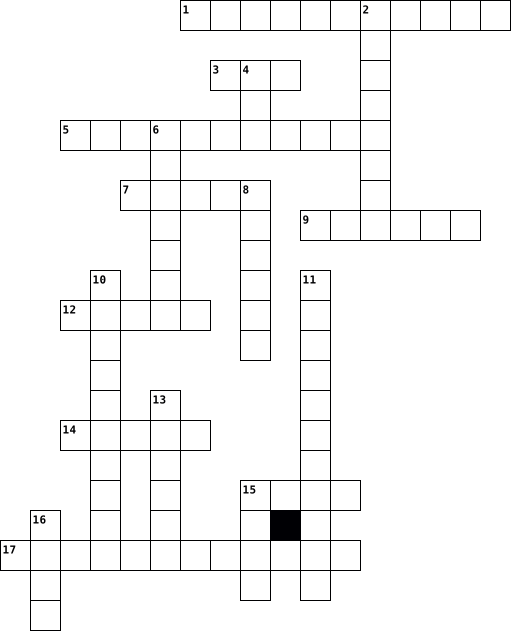
Across
- Movement addressed issues of American societies beliefs and morals
- Crow laws put in place to enforce separate but equal
- Clause a provision that allows people or entities to follow old rules that once governed their activity instead of newly implemented ones
- National advancement of colored people
- Du Bois He was a historian, author, and civil rights, activist.
- B. Anthony women's rights activist who played a pivotal role in the women's suffrage movement
- laws restricted on who can work (age ect.)
- Amendment right for women to vote
- Movement political environmental movement meant to protect land, animals, and other things in the future.
Down
- the right to vote in political elections
- B. Wells an American investigative journalist, major leader in the civil rights movements
- Movement secret meeting near Niagra falls led by W.E.B Du Bois about full civil liberties.
- v. Ferguson came up with separate but equal
- Journalists who established leaders as corrupt
- the action of setting something or someone apart
- T. Washington dominant leader in the African American community. Also an American educator and journalist.
- Amendment direct election of senators to represent each state
- tax tax levied on all adults
18 Clues: tax tax levied on all adults • Amendment right for women to vote • National advancement of colored people • the right to vote in political elections • laws restricted on who can work (age ect.) • v. Ferguson came up with separate but equal • Journalists who established leaders as corrupt • the action of setting something or someone apart • ...
US History 2023-10-02
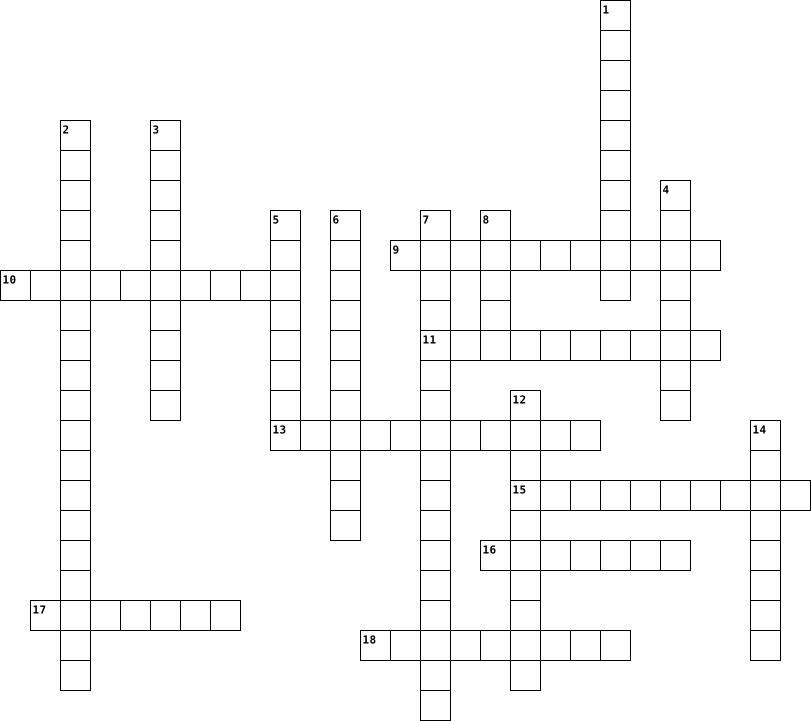
Across
- U.S. Immigration Station
- poverty, lack of social mobility, violence, or persecution
- a very tall building of many stories
- historical site that opened in 1892 as an immigration station
- a person who comes to live permanently in a foreign country
- a building or group of buildings where goods are manufactured or assembled chiefly by machine
- the practice of agriculture
- a permanent road laid with rails
Down
- built his wealth in railroads
- the first significant law restricting immigration into the United States
- a motivating cause that attracts a person to migrate to another region or country
- a room or a set of rooms forming a separate residence within a house or block of apartments
- Used steel to make buildings
- Refined Kerosine Seller
- the development of industries in a country or region on a wide scale
- Frick Weakened dam by lowering it
- conditions relating to public health, especially the provision of clean drinking water and adequate sewage disposal
- the policy of protecting the interests of native-born or established inhabitants against those of immigrants
18 Clues: Refined Kerosine Seller • U.S. Immigration Station • the practice of agriculture • Used steel to make buildings • built his wealth in railroads • a permanent road laid with rails • Frick Weakened dam by lowering it • a very tall building of many stories • poverty, lack of social mobility, violence, or persecution • a person who comes to live permanently in a foreign country • ...
us history 2021-01-13
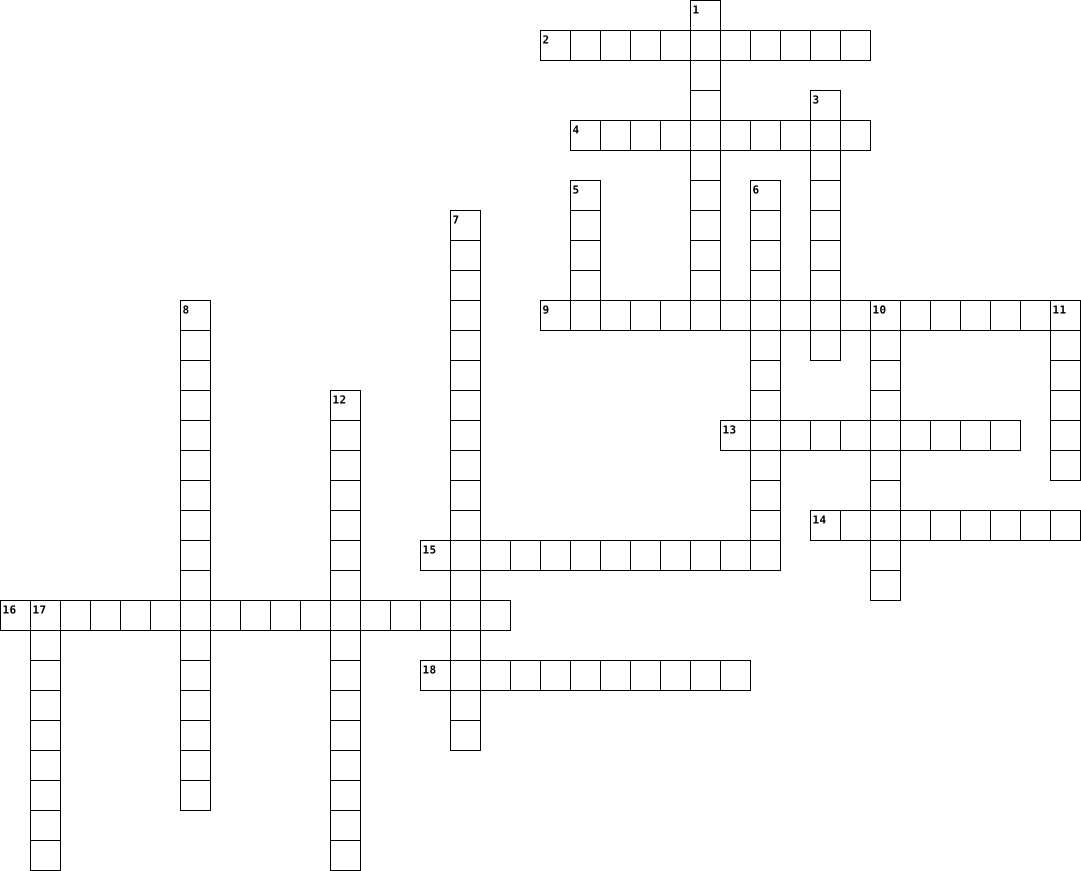
Across
- a policy of extending a country's power and influence through diplomacy or military force.
- a general vote by the electorate on a single political question which has been referred to them for a direct decision.
- an armed conflict between Spain and the United States in 1898.
- the ability to assess and initiate things independently.
- a 1906 novel by the American journalist and novelist Upton Sinclair (1878–1968).
- is a political philosophy in support of social reform.
- was an American statesman, conservationist, naturalist, historian, and writer, who served as the 26th president of the United States from 1901 to 1909.
- an artificial 82 km waterway in Panama that connects the Atlantic Ocean with the Pacific Ocean.
Down
- were state and local laws that enforced racial segregation in the Southern United States
- were reform-minded journalists in the Progressive Era in the United States who exposed established institutions and leaders as corrupt.
- s a civil rights organization in the United States, formed in 1909 as an interracial endeavor to advance justice for African Americans by a group including W. E. B. Du Bois, Mary White Ovington, Moorfield Storey and Ida B. Wells.
- a person favoring a policy of remaining apart from the affairs or interests of other groups, especially the political affairs of other countries.
- an addition to the Monroe Doctrine articulated by President Theodore Roosevelt in his State of the Union address in 1904 after the Venezuela Crisis of 1902–1903.
- was a peace agreement between Spain and the United States that ended the Spanish-American War.
- was an American writer, investigative journalist, biographer and lecturer. She was one of the leading muckrakers of the Progressive Era of the late 19th and early 20th centuries and pioneered investigative journalism.
- to call back
- was a landmark decision of the U.S. Supreme Court that upheld the constitutionality of racial segregation laws for public facilities as long as the segregated facilities were equal in quality, a doctrine that came to be known as "separate but equal"
- was a settlement house in Chicago, Illinois, United States that was co-founded in 1889 by Jane Addams and Ellen Gates Starr.
18 Clues: to call back • is a political philosophy in support of social reform. • the ability to assess and initiate things independently. • an armed conflict between Spain and the United States in 1898. • a 1906 novel by the American journalist and novelist Upton Sinclair (1878–1968). • ...
US HISTORY 2023-09-13
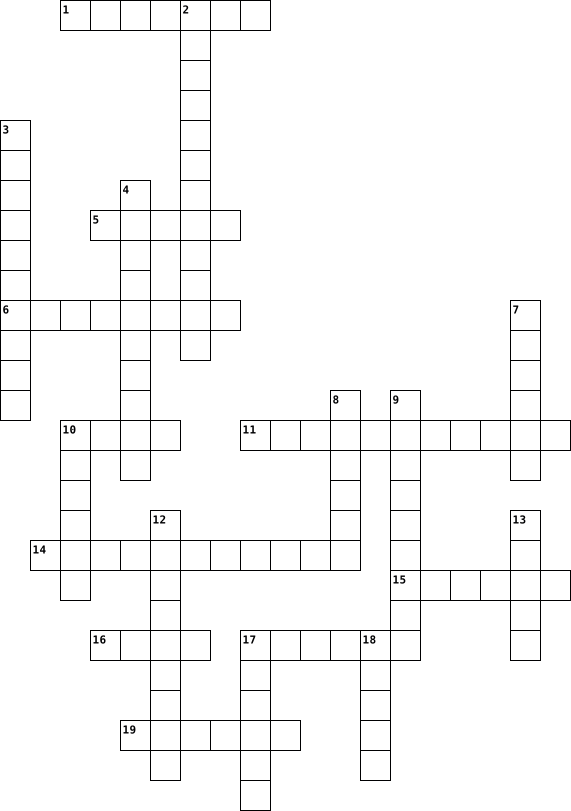
Across
- Attucks
- Act 1764
- without Representation
- of Liberty
- Acts
- of Independence
- Paine
- Locke
- Tea Party
- of Paris, 1763
Down
- of 1763
- of Correspondence
- Act
- of Bunker Hill
- Sense
- and Concord
- Adams
- of Liberty
- Act
- Massacre
- Tree
21 Clues: Act • Act • Acts • Tree • Sense • Adams • Paine • Locke • Attucks • of 1763 • Act 1764 • Massacre • Tea Party • of Liberty • of Liberty • and Concord • of Bunker Hill • of Paris, 1763 • of Independence • of Correspondence • without Representation
Us history 2023-09-13
Across
- Attucks
- Act 1764
- without Representation
- of Liberty
- Acts
- of Independence
- Paine
- Locke
- Tea Party
- of Paris, 1763
Down
- of 1763
- of Correspondence
- Act
- of Bunker Hill
- Sense
- and Concord
- Adams
- of Liberty
- Act
- Massacre
- Tree
21 Clues: Act • Act • Acts • Tree • Sense • Adams • Paine • Locke • Attucks • of 1763 • Act 1764 • Massacre • Tea Party • of Liberty • of Liberty • and Concord • of Bunker Hill • of Paris, 1763 • of Independence • of Correspondence • without Representation
US History 2023-10-12
Across
- where the final battle of the revolutionary war took place
- a phrase used to describe a common punishment the colonists had given to British tax collectors
- German mercenaries
- well known for his famous midnight ride
- "Lexington and _____"
- "No taxation without _______"
- women excelled at this form of spying
Down
- the famous three words on a revolutionary war graphic made during the French and Indian War
- "Outgunned, outplanned, outnumbered ______"
- a nickname for the colonists used by loyalists
- The famous future president who defended the British during the case of the Boston Massacre
- The second unalienable right listed in the Declaration of Independence
- The building in which the 2nd Continental Congress met
- head chief of writing the Declaration of Independence
- where the continental army was stationed for six months
- The negative word used to describe the rule of King George III
- acts made by the British government as a retaliation to the Boston tea party
- The man who was off charming the French into joining the colonists' side
18 Clues: German mercenaries • "Lexington and _____" • "No taxation without _______" • women excelled at this form of spying • well known for his famous midnight ride • "Outgunned, outplanned, outnumbered ______" • a nickname for the colonists used by loyalists • head chief of writing the Declaration of Independence • The building in which the 2nd Continental Congress met • ...
US HISTORY 2024-05-22

Across
- - Landmark Supreme Court case that established the principle of judicial review.
- - Movement advocating for equal rights and treatment of African Americans.
- - The United States _____________ is the supreme law of the land.
- - Declaration of _____________ was adopted on July 4, 1776.
- - African American civil rights activist who refused to give up her bus seat in Montgomery, Alabama.
- - Symbolic figure representing women who worked in factories during World War II.
- - Series of conflicts between Native American tribes and the United States government.
- - New York City borough where the Statue of Liberty is located.
Down
- - Secret research project that developed the atomic bomb during World War II.
- - President Abraham Lincoln's _____________ Proclamation declared freedom for slaves in Confederate states.
- - Era in US history when the manufacture, sale, and transportation of alcoholic beverages were banned.
- - Major battle of the Civil War fought in Pennsylvania in 1863.
- - Period after the Civil War when the South was rebuilt and readmitted to the Union.
- - Belief that it was America's destiny to expand westward across the North American continent.
- - Political scandal that led to the resignation of President Richard Nixon.
- - Severe economic downturn that lasted from 1929 to the late 1930s.
- - Conflict between the Northern and Southern states from 1861 to 1865.
- - Period of geopolitical tension between the United States and the Soviet Union.
18 Clues: - Declaration of _____________ was adopted on July 4, 1776. • - Major battle of the Civil War fought in Pennsylvania in 1863. • - New York City borough where the Statue of Liberty is located. • - The United States _____________ is the supreme law of the land. • - Severe economic downturn that lasted from 1929 to the late 1930s. • ...
US History 2024-06-11

Across
- Space shuttle disaster in 1986 claiming the lives of all seven crew members
- Energy crisis of the 1970s caused by an Arab oil embargo
- President Reagan's economic plan of tax cuts and deregulation
- Scandal involving secret US support for the Nicaraguan Contra rebels
- First Gulf War fought in 1991 to liberate Kuwait from Iraqi invasion
- President who signed the North American Free Trade Agreement (NAFTA) in 1993
- Secret Pentagon documents leaked in 1971 revealing US involvement in Vietnam
- Widespread fear of nuclear war between the US and Soviet Union during the Cold War
Down
- Major nuclear accident at a Pennsylvania power plant in 1979
- First African American Supreme Court Justice, appointed in 1986
- Massive internet stock market bubble that burst in 2000
- Social and political movement that advocated for equality for women throughout the 1970s and 1980s
- President who resigned in 1974 due to the Watergate scandal
- Fall of the Berlin Wall in 1989, symbolizing the end of the
- Landmark Supreme Court case in 1973 legalizing abortion nationwide
- Landmark legislation passed in 1972 protecting the environment
- Series of international trade agreements promoting free trade
- US military intervention in Panama in 1989 to remove dictator Manuel Noriega
18 Clues: Massive internet stock market bubble that burst in 2000 • Energy crisis of the 1970s caused by an Arab oil embargo • President who resigned in 1974 due to the Watergate scandal • Fall of the Berlin Wall in 1989, symbolizing the end of the • Major nuclear accident at a Pennsylvania power plant in 1979 • President Reagan's economic plan of tax cuts and deregulation • ...
US history 2021-09-20
Across
- Never ending or occurring repeatedly
- Incorporating a territory within the domain of another country
- The act of putting something into action; the ceremony that marks the beginning of a 4 year presidential term
- A military blockade of a city or fortified place to force it into
- During war it’s the act of wearing down by constant attack
- The process of freeing enslaved persons
- An act of rebellion
- NOUN; the action of withdrawing from a political alliance, federal union, Or political organization
- The belief that the expansion of the United States westward, towards The Pacific Ocean was ordained by God in order to civilize and Democratize
Down
- VERB; formal withdrawal from a political alliance, federal union, or political organization
- During the years prior to the Civil War:the idea that people living in a territory would have the right to vote themselves to decide whether or not the territory would allow slavery
- The intent or desire to do evil
- The rebuilding of the former Confederate states after the Civil War
- A set of laws that regulated slavery and defined the relationshipb between enslaved Africans and free whites
- The division of the country along regional lines over a particular issue
- Term for the south’s reliance on slavery
- To formally charge a public official with misconduct in office
17 Clues: An act of rebellion • The intent or desire to do evil • Never ending or occurring repeatedly • The process of freeing enslaved persons • Term for the south’s reliance on slavery • During war it’s the act of wearing down by constant attack • Incorporating a territory within the domain of another country • To formally charge a public official with misconduct in office • ...
us history 2022-02-02
Across
- march of the sea
- election of 1876
- freedmen bureau
- fort Sumter
- nullification
- Nebraska act
- Gettysburg
- California gold rush
Down
- impeachment
- Trent affair
- market revolution
- manifest destiny
- Gettysburg address
- rights bill of 1866
- cotton gin
- underground railroad
- Fredericksburg
- union blockade
18 Clues: cotton gin • Gettysburg • impeachment • fort Sumter • Trent affair • Nebraska act • nullification • Fredericksburg • union blockade • freedmen bureau • march of the sea • manifest destiny • election of 1876 • market revolution • Gettysburg address • rights bill of 1866 • underground railroad • California gold rush
us history 2022-02-02
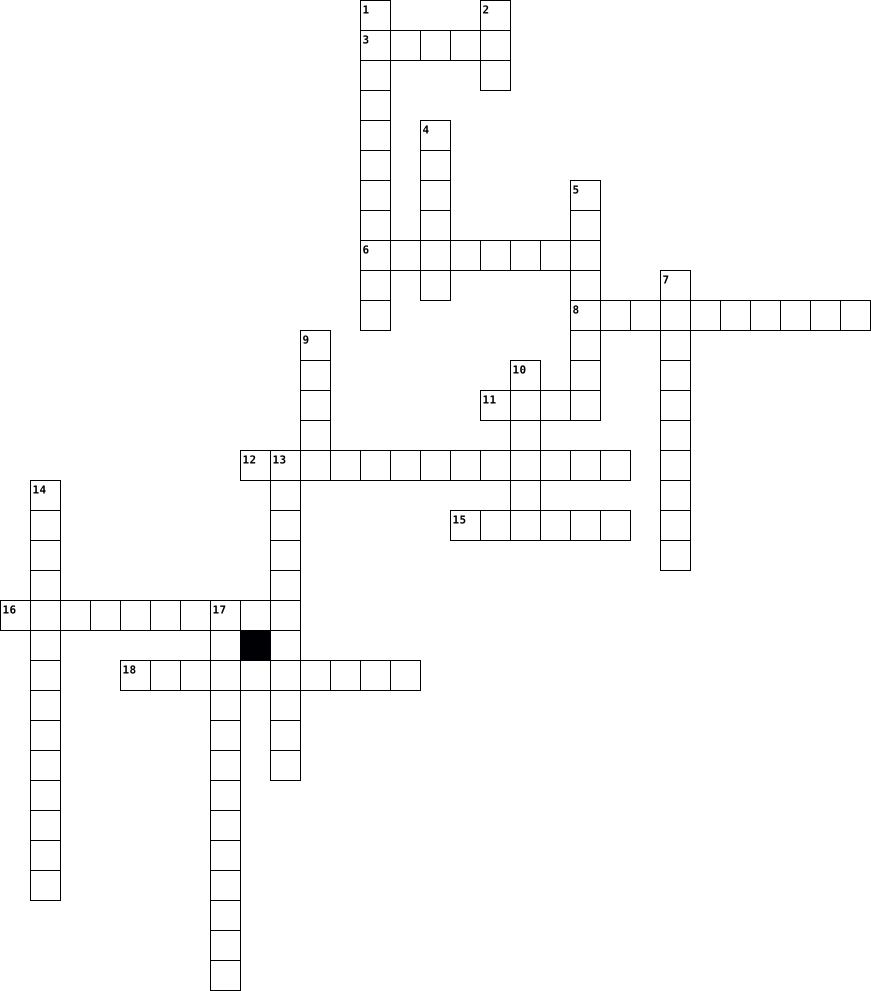
Across
- march of the sea
- election of 1876
- freedmen bureau
- fort Sumter
- nullification crisis
- kansas-Nebraska act
- Gettysburg
- California gold rush
Down
- impeachment
- Trent affair
- market revolution
- manifest destiny
- Gettysburg address
- bill of rights 1866
- cotton gin
- underground railroad
- Fredericksburg
- union blockade
18 Clues: cotton gin • Gettysburg • impeachment • fort Sumter • Trent affair • Fredericksburg • union blockade • freedmen bureau • march of the sea • manifest destiny • election of 1876 • market revolution • Gettysburg address • bill of rights 1866 • kansas-Nebraska act • nullification crisis • underground railroad • California gold rush
US History 2015-02-10
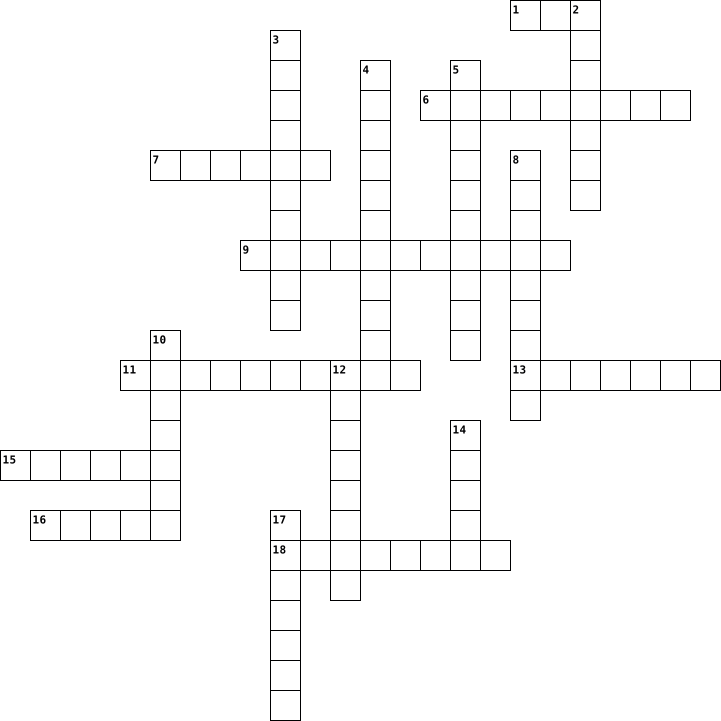
Across
- "I have a Dream"
- Popular political party during the great Depression
- Cuba threatened the US with what type of weapons
- President Wilson agreed to repeal this Act
- Allies of the US during Korean War 1950
- Civil Right Act of 1964 (President)
- Founding member of National Association for the advancement of Colored People-NAACP
- Said, "I'm not a crook"
- Orville and Wilber Wright built first_________.
Down
- President who died in 1962
- Act that threatened individual freedoms
- From Washington DC to New Orleans (Congress of Racial Equality)
- Ended in 1945
- Refused to give up seat on bus
- Voting Rights Act 1965 (President)
- russian spies
- Father of the Bill of rights
- Father of Constitution
18 Clues: Ended in 1945 • russian spies • "I have a Dream" • Father of Constitution • Said, "I'm not a crook" • President who died in 1962 • Father of the Bill of rights • Refused to give up seat on bus • Voting Rights Act 1965 (President) • Civil Right Act of 1964 (President) • Act that threatened individual freedoms • Allies of the US during Korean War 1950 • ...
US History 2023-04-27
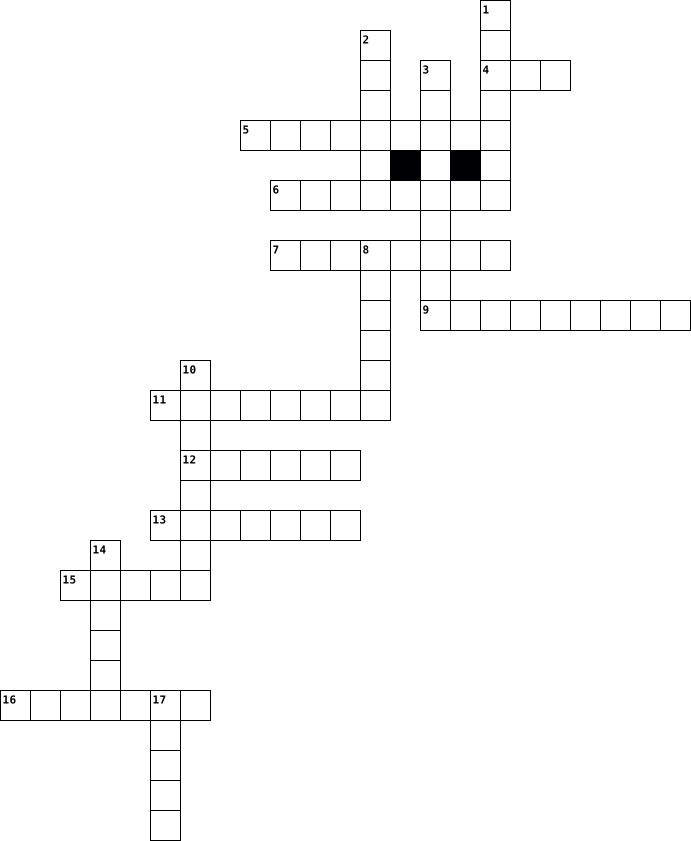
Across
- President who created the New Deal
- Amendment that ended prohibtion
- Amendment that gives equal rights to all men
- Amendment that ends slavery
- Amendment that made presidents only serve 2 terms
- Amendment that created women's suffrage
- President who failed the American people in the great depression
- President who said we would go to the moon
- President who had the Watergate scandal
- President who was impeached for lying under oath
Down
- Amendment that gives all men the right to vote
- President who got blamed for the Iran Hostage Crisis
- President who created the National Park System
- President who used trickle down economics
- Amendment that made alcohol illegal
- President during WW1, created the league of nations
- President who changed healthcare
17 Clues: Amendment that ends slavery • Amendment that ended prohibtion • President who changed healthcare • President who created the New Deal • Amendment that made alcohol illegal • Amendment that created women's suffrage • President who had the Watergate scandal • President who used trickle down economics • President who said we would go to the moon • ...
US history 2023-02-09

Across
- A war fought from 1939 to 1945
- US President Franklin Douglas Roosevelt
- insect whose larvae feed on cotton crops
- A British passenger ship that was sunk by a German U-Boat
- the historic period (1933-1940) in the U.S. during which President Franklin Roosevelt's economic policies were implemented
- Georgia governor that fought against Roosevelt's New Deal policies
- Another leading component to the start of the Great Depression.
- a long period without rain
- A nickname for the Great Plains regions hit by drought
Down
- His best known accomplishments as a Senator are his support of the military and along with his partnership of Carl Vinson
- Japanese bombed Pearl Harbor on Dec. 7, 1941. The attack devastated the American
- Father of the Two-Ocean Navy
- A war fought from 1914 to 1918
- A telegram Germany Sent to Mexico to convince Mexico to attack the U.S.
- allowed sales or loans of war materials to any country whose defense the president deems vital to the defense of the U.S
- New Deal program designed to build the capabilities to bring electricity to rural areas
- So many crops were grown, a lot of them were thrown away.
17 Clues: a long period without rain • Father of the Two-Ocean Navy • A war fought from 1939 to 1945 • A war fought from 1914 to 1918 • US President Franklin Douglas Roosevelt • insect whose larvae feed on cotton crops • A nickname for the Great Plains regions hit by drought • A British passenger ship that was sunk by a German U-Boat • ...
US HISTORY 2025-10-24

Across
- Month that we vote for the president
- Blue political party
- war between north and south
- Ocean on the west coast
- 12/25
- taken to be slaves
- FL Governor
- vetoes bills
- US President
- 07/04/1776
- 1st 10 amendments of the constitution
Down
- wrote the declaration of independence
- supreme law of the land
- "father of our country"
- Ocean on the east coast
- longest river in the US
- red political party
17 Clues: 12/25 • 07/04/1776 • FL Governor • vetoes bills • US President • taken to be slaves • red political party • Blue political party • supreme law of the land • "father of our country" • Ocean on the west coast • Ocean on the east coast • longest river in the US • war between north and south • Month that we vote for the president • wrote the declaration of independence • ...
us history 2022-02-02
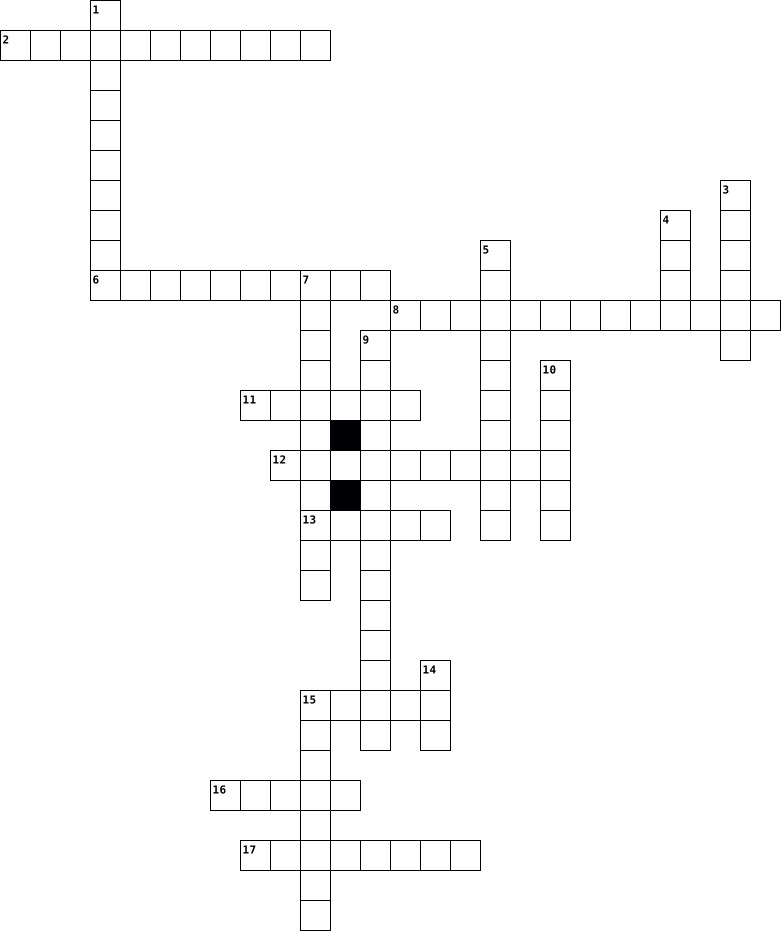
Across
- impeachment
- Gettysburg
- nullification
- market revolution
- freedmen bureau
- blockade union blockade
- march of the sea
- rights bill of 1866
- election of 1876
Down
- Gettysburg address
- cotton gin
- fort Sumter
- California gold rush
- underground railroad
- Fredericksburg
- Nebraska act
- Trent affair
- manifest destiny
18 Clues: cotton gin • Gettysburg • impeachment • fort Sumter • Nebraska act • Trent affair • nullification • Fredericksburg • freedmen bureau • march of the sea • manifest destiny • election of 1876 • market revolution • Gettysburg address • rights bill of 1866 • California gold rush • underground railroad • blockade union blockade
US History 2022-05-07
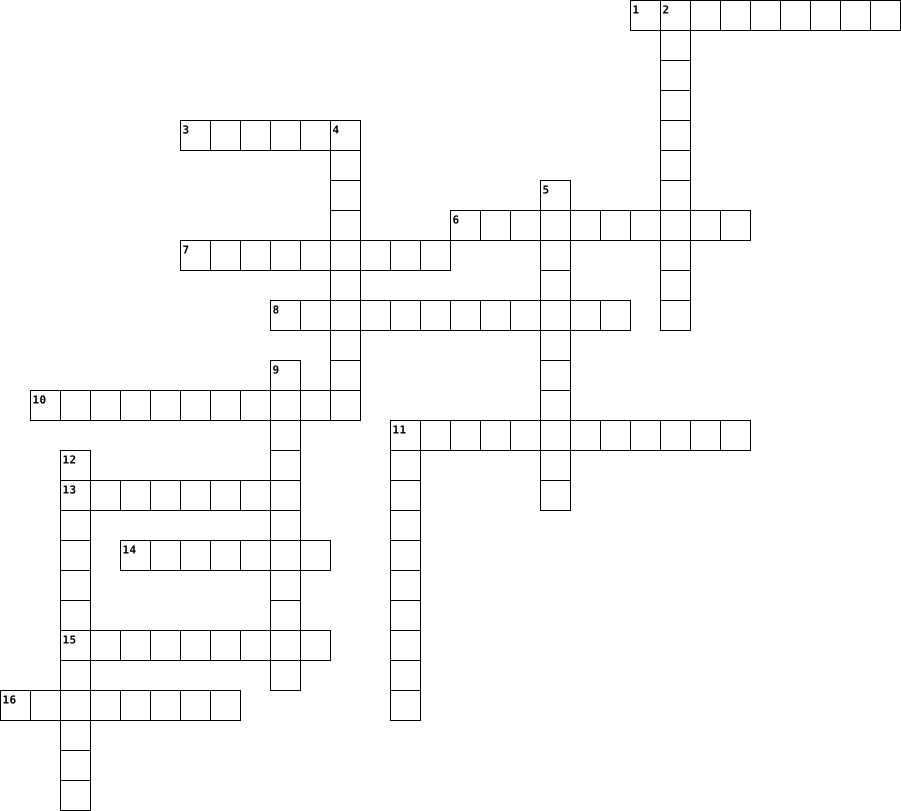
Across
- A reformer who favors putting an end to slavery
- A government tax on imports or exports
- A long and severe recession in an economy or market
- The orientation of those who favor government by the people
- The act of settling a group of people in a new place
- The act of keeping something from spreading
- Freeing someone from the control of another
- A legal right to vote
- All the weapons and equipment that a country has
- A sustained increase in the money supply of a country
- A market in which there are many buyers but only one seller
Down
- The social class between the lower and upper classes
- A member of a former political party in the United States that favored a strong centralized federal government
- Legal prevention of the manufacture, sale, and transportation of alcoholic beverages in the United States from 1920 to 1933 under the terms of the Eighteenth Amendment
- The practice of requiring separate housing, education and other services for people of color
- Those qualified to vote
- A policy of nonparticipation in international relations
17 Clues: A legal right to vote • Those qualified to vote • A government tax on imports or exports • The act of keeping something from spreading • Freeing someone from the control of another • A reformer who favors putting an end to slavery • All the weapons and equipment that a country has • A long and severe recession in an economy or market • ...
US History 2023-05-03
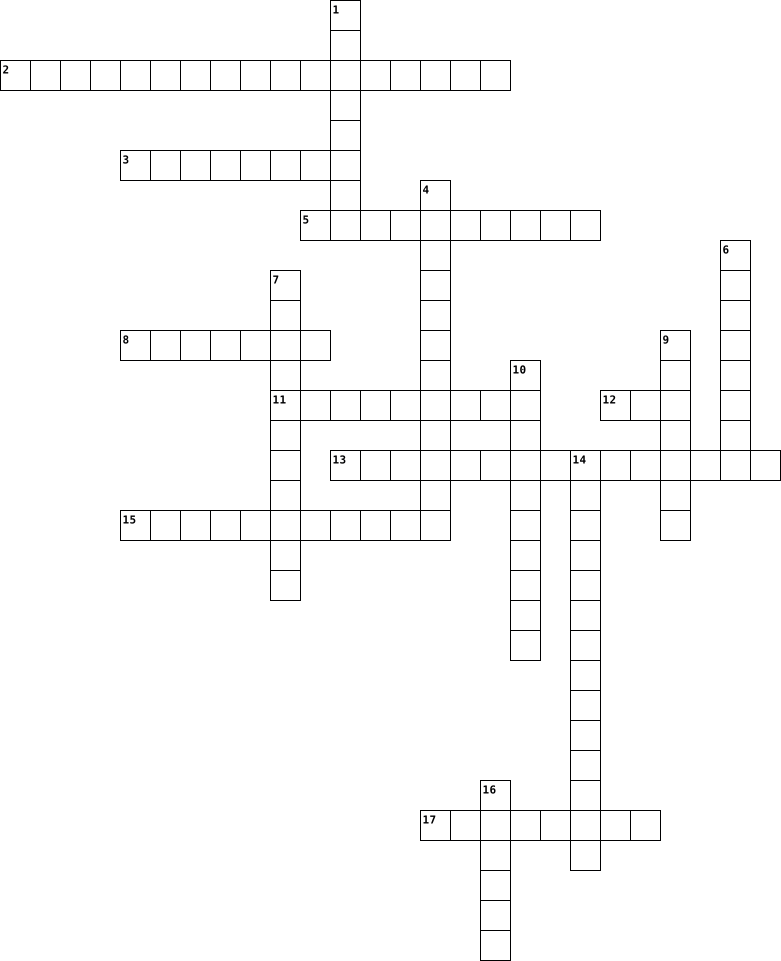
Across
- Former slave and leader in the abolition movement in the US
- American Warship sunk in Cuba, cause of the Spanish American War
- ________ camps unjustly held Japanese Americans during WWII
- FDR's government programs that aimed at helping the US out of the Great Depression
- ship that was sunk by the German submarines in 1915, cause of US entry into WWI
- houses in the great plains were made out of ______ because of the lack of wood
- Symbol of women in the workforce during WWII
- Outlawing alcohol, the 18th amendment
- Innovative transportation that moved people and goods across the country in the late 1800s
Down
- Wilson's _________ Points were his plans for the end of WWI
- The word used to describe a country becoming more urban than rural
- the right to vote
- The cause of US involvement in WWII
- This region includes Nebraska, Kansas and Illinois
- Booker T._______________ was an advocate for educational equality
- The period between 1865 and 1877 where the united states was rebuilding after the Civil War
- The battle of __________ was the turning point in the Pacific theater of WWII
17 Clues: the right to vote • The cause of US involvement in WWII • Outlawing alcohol, the 18th amendment • Symbol of women in the workforce during WWII • This region includes Nebraska, Kansas and Illinois • Wilson's _________ Points were his plans for the end of WWI • Former slave and leader in the abolition movement in the US • ...
Us history 2024-11-27

Across
- This was the area people reunited with their family's and immigrating to the US on Ellis Island.
- How many questions were on the test the immigrants needed to pass?
- _______ consistently was kept as the top immigrants in Texas.
- Due to most immigrants not speaking English their was a _________.
- Can make immigrants leave their home country
- When there are good ___ opportunities, many people will immigrate to a country.
- This country consistently was had the most immigrants in Montana
Down
- Immigrants may have been ______ by people with less pay or charging more.
- Many immigrants faced ________ by groups of people.
- The UK mainly had immigrants in this state during 1890-1920.
- A ruler that may cause people to leave due to them being too harsh.
- This can cause a country to have more immigrants that left their own countries because of war.
- Doctors checked for sick or mentally unstable people here
- Most immigrants from this country in St. Luis have made a well known neighborhood
- Most immigrants from this country where found in North Dakota
- A good _______ can make people want to come to a country
- _____ wars can cause people to leave their country.
17 Clues: Can make immigrants leave their home country • Many immigrants faced ________ by groups of people. • _____ wars can cause people to leave their country. • A good _______ can make people want to come to a country • Doctors checked for sick or mentally unstable people here • The UK mainly had immigrants in this state during 1890-1920. • ...
US History 2021-09-21
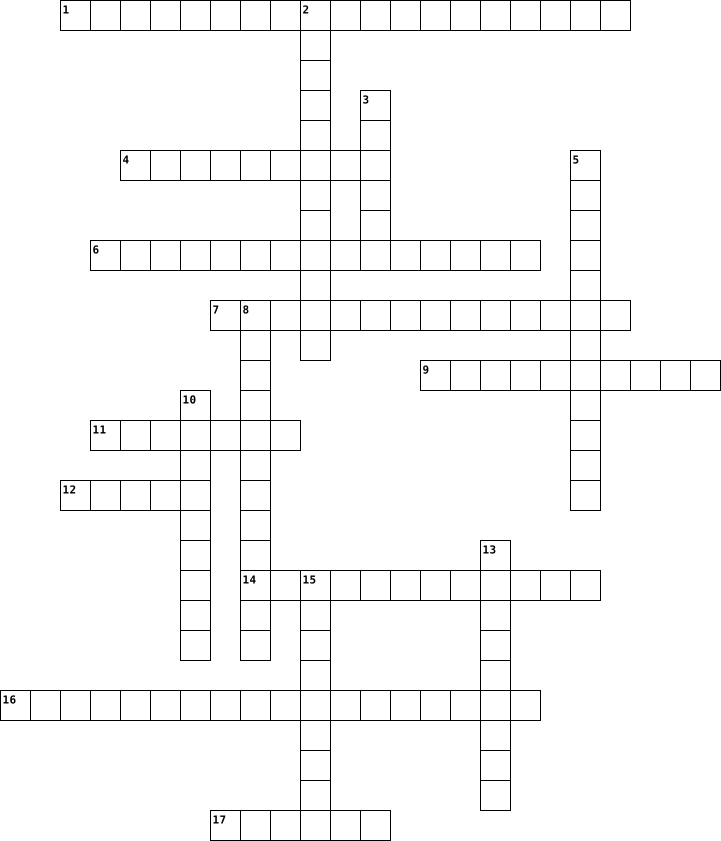
Across
- Term for the south’s reliance on slavery
- Never ending or occurring repeatedly
- The belief that the expansion of the United States westward, towards The Pacific Ocean was ordained by God in order to civilize and Democratize
- The rebuilding of the former Confederate states after the Civil War
- incorporating a territory within the domain of another country
- To formally charge a public official with misconduct in office
- A military blockade of a city or fortified place to force it into surrendering
- An act of rebellion
- during the years prior to the Civil War: the idea that people living in a territory would have the right to vote themselves to decide whether or not the territory would allow slavery
- verb; formal withdrawal from a political alliance, federal union, or political organization
Down
- The act of putting something into action; the ceremony that marks the beginning of a 4 year presidential term
- The intent or desire to do evil
- The division of the country along regional lines over a particular issue
- The process of freeing enslaved persons
- noun; the action of withdrawing from a political alliance, federal union, or political organization
- During war it’s the act of wearing down by constant attack
- A set of laws that regulated slavery and defined the relationship Between enslaved Africans and free whites
17 Clues: An act of rebellion • The intent or desire to do evil • Never ending or occurring repeatedly • The process of freeing enslaved persons • Term for the south’s reliance on slavery • During war it’s the act of wearing down by constant attack • To formally charge a public official with misconduct in office • incorporating a territory within the domain of another country • ...
us history 2022-02-02
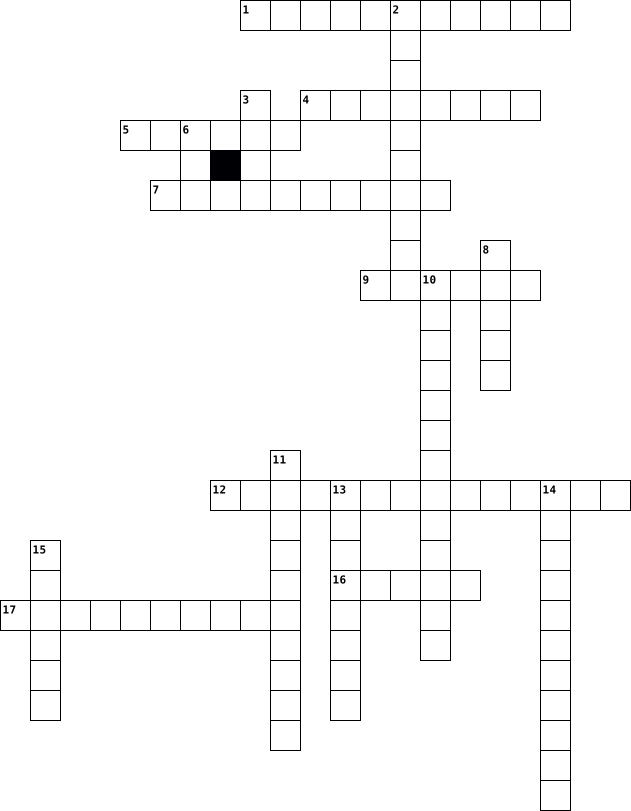
Across
- impeachment
- manifest destiny
- cotton gin
- Gettysburg
- Nebraska act
- Fredericksburg
- rights bill of 1866
- freedmen bureau
Down
- california gold rush
- fort Sumter
- Trent affair
- march of the sea
- nulification
- Gettysburg address
- election of 1876
- underground railroad
- market revolution
17 Clues: cotton gin • Gettysburg • impeachment • fort Sumter • Trent affair • Nebraska act • nulification • Fredericksburg • freedmen bureau • manifest destiny • march of the sea • election of 1876 • market revolution • Gettysburg address • rights bill of 1866 • california gold rush • underground railroad
US History 2024-03-15

Across
- Exposing the abuses of government and taxes
- Business leader who amass fortune
- Giving women right to vote
- A monetary system
- when you buy your suppliers out
- weathly us business men who make money
Down
- Gave congress power to collect taxes
- People coming into the country
- US senators would elect people instead of leg
- The process of aquring competitors
- Political movement that embraced "Common man"
- A industrialization people left their farms
- Migration from an country
- Outlawed the making, selling of alcohol
- Opposing immigration grew anti immigrant group
- Group of workers who seek to improve economic
16 Clues: A monetary system • Migration from an country • Giving women right to vote • People coming into the country • when you buy your suppliers out • Business leader who amass fortune • The process of aquring competitors • Gave congress power to collect taxes • weathly us business men who make money • Outlawed the making, selling of alcohol • ...
US History 2023-09-07
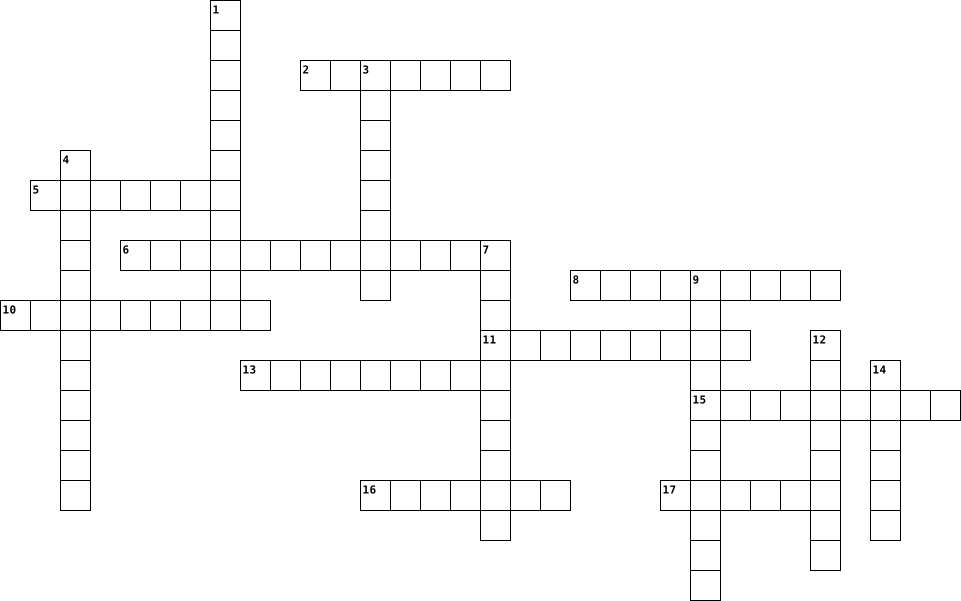
Across
- your social studies teacher
- a place for debtors from England
- _______era-also known as the age of reason
- 3 branches-interprets laws
- _______ compact written in 1620
- the first great _______ - religious movement
- the first permanent settlement established in 1607
- 3 branches-enforces laws
- new ________ colonies had rocky soil
- _________ colonies known as "The Breadbasket" and the "Melting Pot"
Down
- 3 branches-makes laws
- a colony for English catholics
- colony created for Quakers by William Penn
- _______Trade- term used to describe the trade between Europe, Africa and the Americas
- colony were they wrote the first constitution in America
- ______ colonies that had good soil for farming
- the _______ passage-route from Africa to America that brought the slaves
17 Clues: 3 branches-makes laws • 3 branches-enforces laws • 3 branches-interprets laws • your social studies teacher • a colony for English catholics • _______ compact written in 1620 • a place for debtors from England • new ________ colonies had rocky soil • colony created for Quakers by William Penn • _______era-also known as the age of reason • ...
US History 2022-11-15
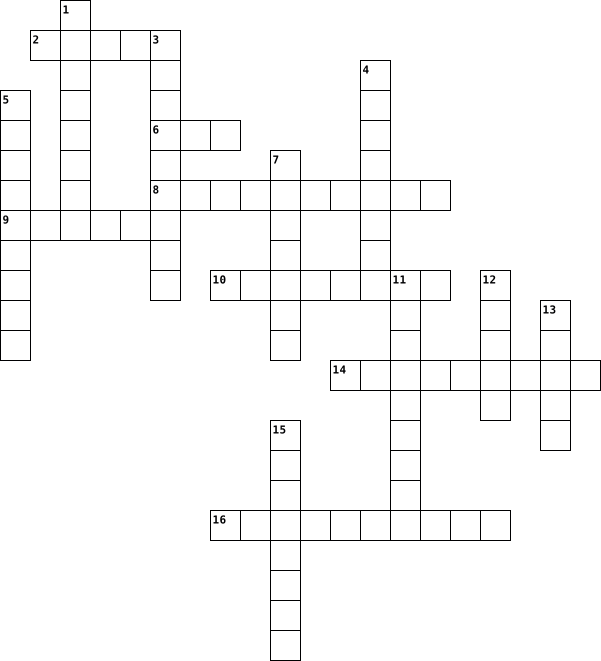
Across
- voice of Anti-Federalists
- number of senators from each state
- president of constitutional convention
- name of upper house
- number of states in 1787
- this type of legislature has two houses
- people in favor of Constitution
Down
- leader of Federalists
- ordinance that set rules
- slave clause forcing return of slaves
- organized by the Land Ordinance
- first name of New Jersey proposer
- college where votes are based on reps
- Articles could not impose these
- name of rebellion against judges
- last name of Virginia Plan proposer
16 Clues: name of upper house • leader of Federalists • ordinance that set rules • number of states in 1787 • voice of Anti-Federalists • organized by the Land Ordinance • Articles could not impose these • people in favor of Constitution • name of rebellion against judges • first name of New Jersey proposer • number of senators from each state • last name of Virginia Plan proposer • ...
US history 2022-11-08
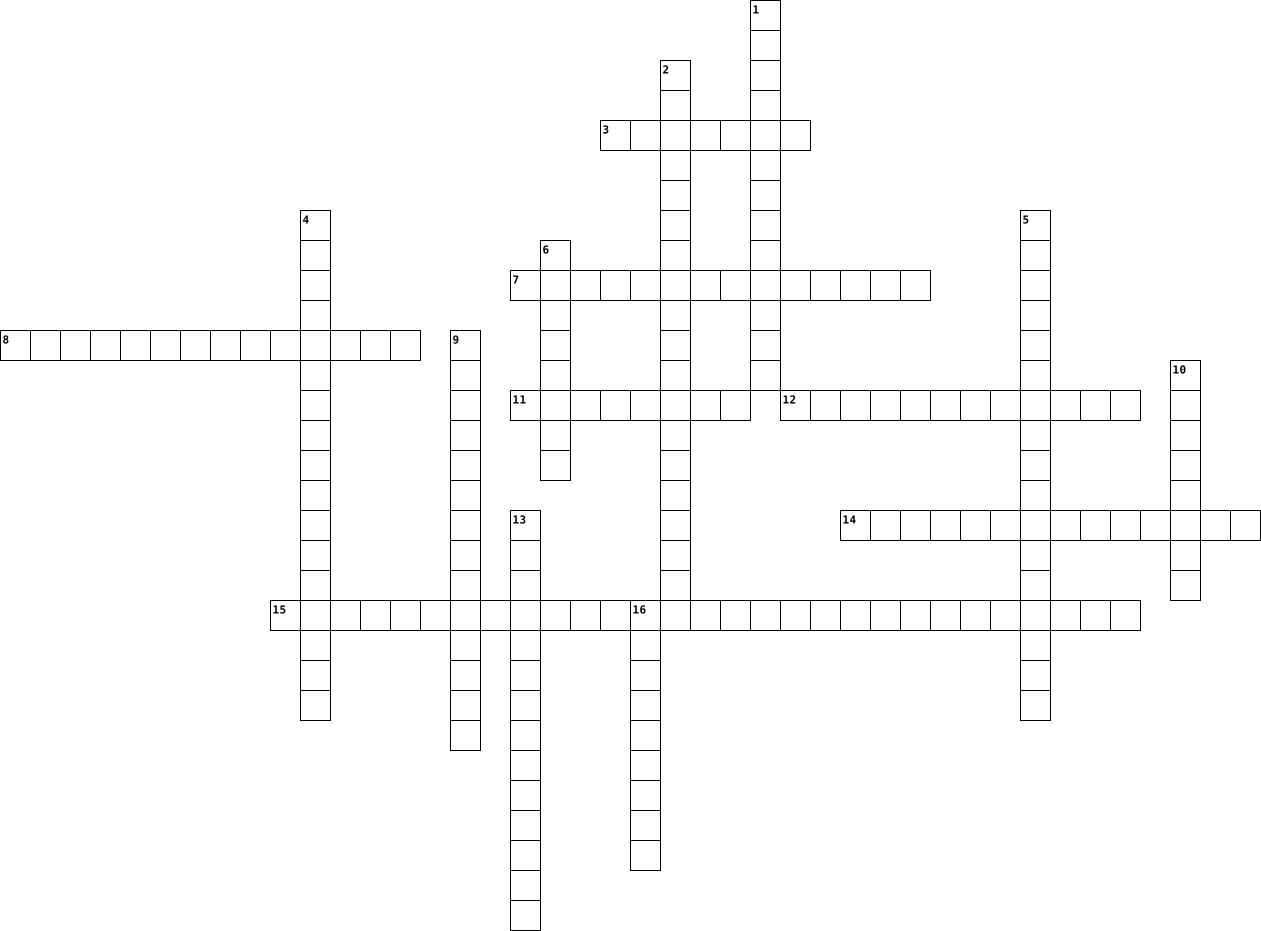
Across
- Young western women who wore short skirts, had short hair, and listened to jazz music. This was not normal for this time period.
- 30th president of the united states
- These were anarchists who thought social justice would only show up with destruction of government
- This is what people called the Drought strikens southern plains
- When the stock market crashed
- Was an African American trumpet and singer.
- President D. Roosevalut was trying to repair the nations economy
Down
- was the 31 president of the United states
- 32nd president help restore the countrie after the great depression.
- When African American culture centered into Harlem, Manhattan
- Signed into law by President D Roosevault this would give retired people some money.
- Was a famous american baseball player, he was unemployed in the great depression.
- Inequalities when resources, opportunities, privileges, are distributed based on your social class.
- Was a gangster who ran a soup kitchen during the great depression
- People trying to chance social classes.
- Where alchohal is illeagy sold
16 Clues: When the stock market crashed • Where alchohal is illeagy sold • 30th president of the united states • People trying to chance social classes. • was the 31 president of the United states • Was an African American trumpet and singer. • When African American culture centered into Harlem, Manhattan • This is what people called the Drought strikens southern plains • ...
US History 2025-04-03

Across
- The process of converting information into a secure format to prevent unauthorized access.
- A network of everyday objects, devices, and systems connected to the internet, allowing them to share data and interact.
- A set of instructions or rules designed to perform a specific task or solve a problem.
- A device that forwards data between computer networks, allowing internet access.
- A security system designed to monitor and control incoming and outgoing network traffic based on predetermined security rules.
- A set of tools and protocols that allow different software applications to communicate with each other.
- A wearable device that tracks time and provides other functions like fitness tracking and notifications.
- The fifth generation of mobile network technology, offering faster internet speeds and better connectivity.
Down
- A decentralized and distributed digital ledger used to record transactions across multiple computers.
- Reality A computer-generated simulation of a 3D environment that users can interact with through special equipment.
- Computing – Storing and accessing data and programs over the internet rather than on your computer's hard drive.
- A device that connects your home network to the internet via a telephone line or cable.
- Data Large and complex data sets that require advanced methods for processing and analysis.
- A computer or system that provides services to other computers in a network.
- Learning A branch of artificial intelligence where computers learn from data and make predictions without explicit programming.
- Reality A technology that overlays digital information (like images or text) on top of the real world, often seen through a device like a smartphone or glasses.
16 Clues: A computer or system that provides services to other computers in a network. • A device that forwards data between computer networks, allowing internet access. • A set of instructions or rules designed to perform a specific task or solve a problem. • A device that connects your home network to the internet via a telephone line or cable. • ...
US History 2024-11-27

Across
- geopolitical philosophy that emphasises political expediency over moral concerns
- most noticeable or important
- the quality of being religious or reverent
- preferential treatment of one’s family or close acquaintances
- either of two small wingless parasitic insects that live on the skin of mammals and birds
- a disease caused by a deficiency of vitamin C
- to desire something that one should not
Down
- the action of signing or giving formal consent to a treaty,
- a means of securing the necessities of life
- a mild or indirect word or expression substituted for one considered to be too harsh or blunt when referring to something unpleasant or embarrassing
- the state or quality of lasting forever
- a gastrointestinal disease
- is the renunciation of your religion
- an outcast
- fake doctor, a fraud
- having or showing sharp powers of judgement; astute
16 Clues: an outcast • fake doctor, a fraud • a gastrointestinal disease • most noticeable or important • is the renunciation of your religion • the state or quality of lasting forever • to desire something that one should not • the quality of being religious or reverent • a means of securing the necessities of life • a disease caused by a deficiency of vitamin C • ...
US history 2022-01-29
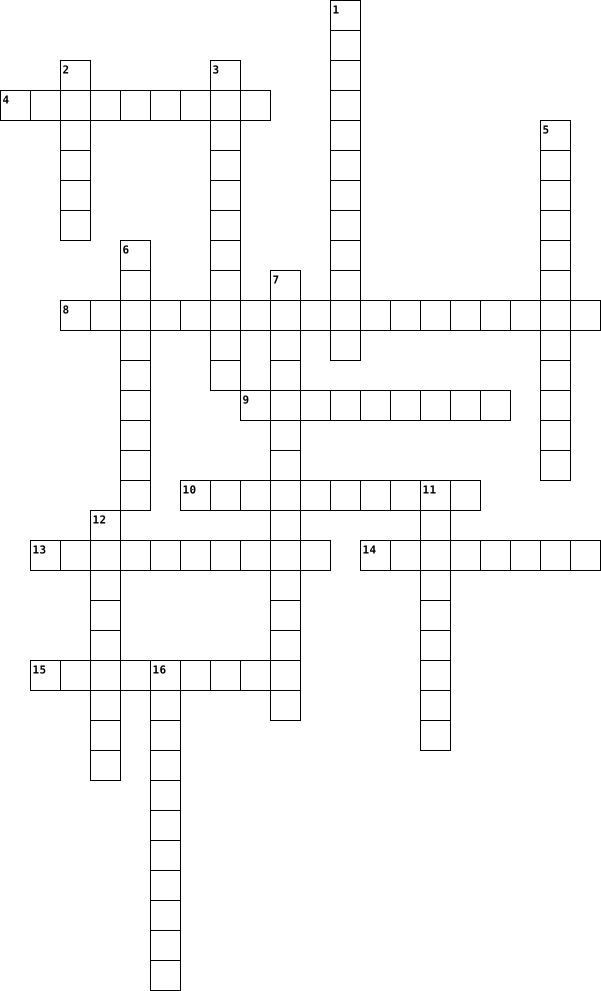
Across
- no further progress in war or battle
- Zone that are military free
- Vietnamese minister
- was a collective defense treaty signed in Warsaw
- imaginary line separating north and south Korea
- A race between weapons
- War fought in Korea
Down
- the willingness to bring your people to the brink of war
- chemical substance used in Vietnam and very flammable
- the collecting of items and survival goods
- strong nuclear weapon
- the government leadership used by United States
- shelters used for protection against possible nuclear bombs
- a political theory derived from Karl Marx, advocating class war and leading to a society in which all property is publicly owned and each person works and is paid according to their abilities and needs.
- A race to get into space
- dangerous chemical used to clear dense vegetation
16 Clues: Vietnamese minister • War fought in Korea • strong nuclear weapon • A race between weapons • A race to get into space • Zone that are military free • no further progress in war or battle • the collecting of items and survival goods • the government leadership used by United States • imaginary line separating north and south Korea • ...
US History 2022-11-07
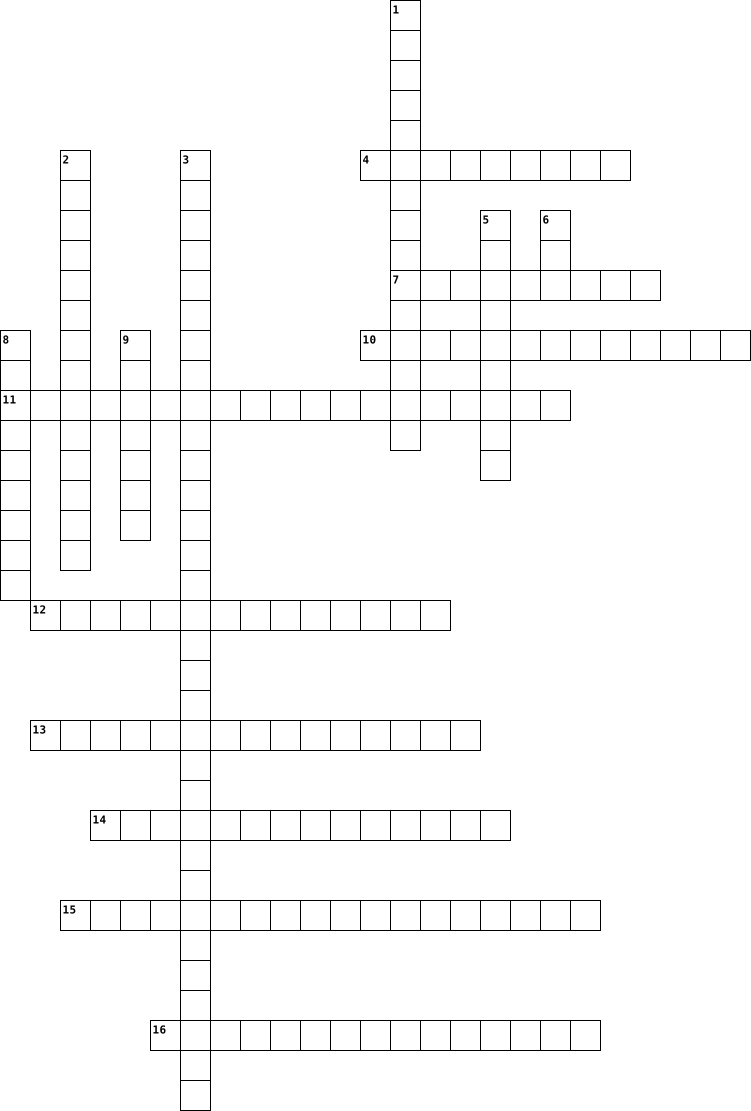
Across
- American gangster who dominated crime in Chicago
- Famous American professional baseball player
- The day the stock market crashed
- Pays retired workers over the age of 65
- 31st president of the US
- American trumpeter and vocalist
- Charged with robbery and murder
- A period of rich cultural activity of African Americans
- 30th president of the United States who helped found the FBI
Down
- Going from one social status to another
- The formation of divisions separating social classes
- Regulates fair wages that would stimulate economic recovery
- A place where alcohol is served illegally
- 32nd US president
- Severe dust storms, major drought
- Energetic young women with a freedom-embracing lifestyle
16 Clues: 32nd US president • 31st president of the US • American trumpeter and vocalist • Charged with robbery and murder • The day the stock market crashed • Severe dust storms, major drought • Going from one social status to another • Pays retired workers over the age of 65 • A place where alcohol is served illegally • Famous American professional baseball player • ...
US History 2023-03-07
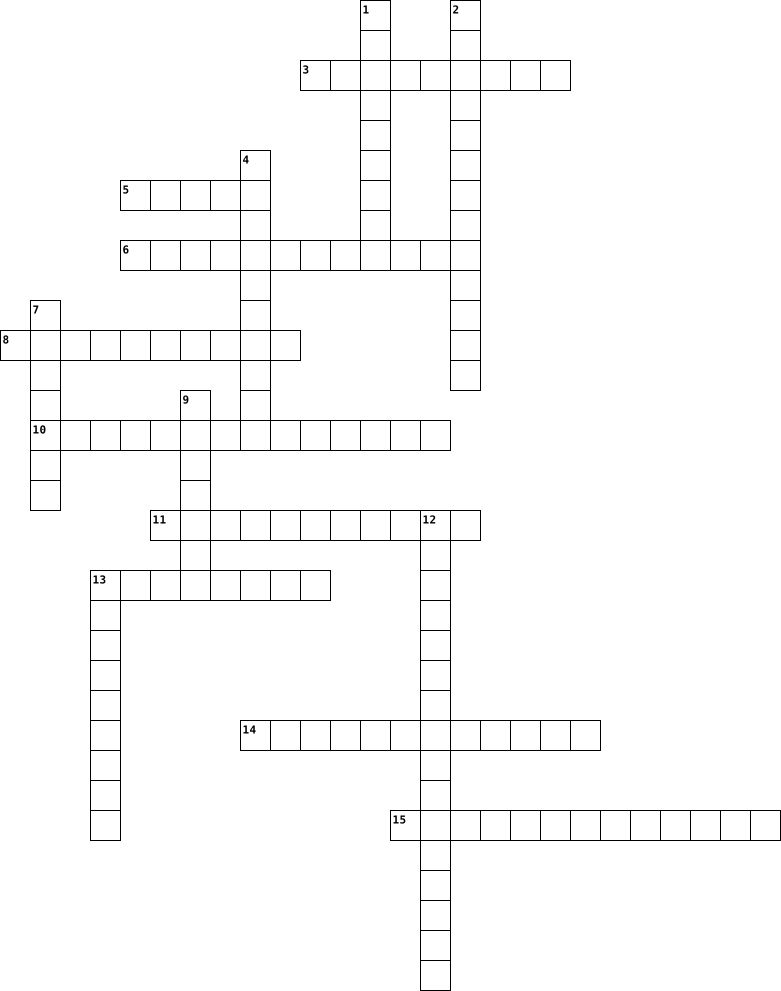
Across
- Slave that got ruled as properties
- The name of the north
- Failed slave rebellion
- State that allows slavery
- Election of Lincoln
- Name of the south
- Dred Scott's owner
- People against slavery
- economy in the south
Down
- State that does not allow slavery
- economy in the north
- when a state joins
- Africans forced to do tasks
- 16th president
- Added California as a free state
- when a state leaves
16 Clues: 16th president • Name of the south • when a state joins • Dred Scott's owner • Election of Lincoln • when a state leaves • economy in the north • economy in the south • The name of the north • Failed slave rebellion • People against slavery • State that allows slavery • Africans forced to do tasks • Added California as a free state • State that does not allow slavery • ...
us history 2023-05-19
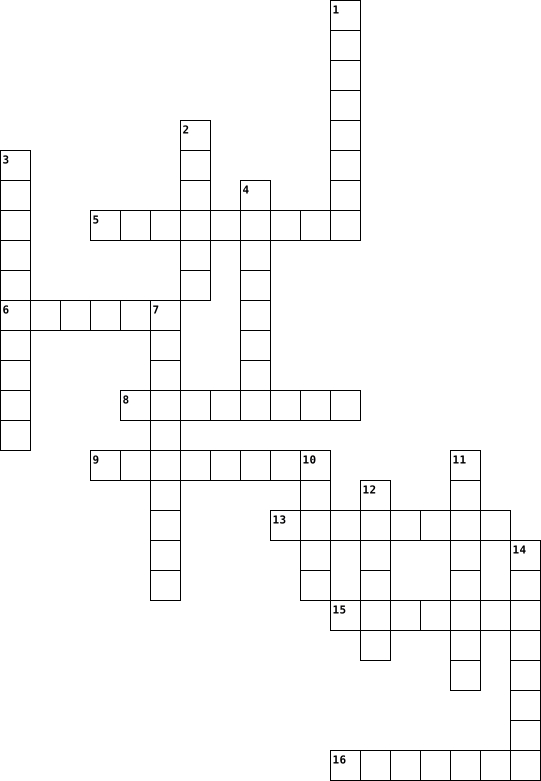
Across
- pre halloween beauty date
- Christmas pj
- early game to be less awkward
- insta post date
- cutest girl
- ya bebe
- double date
Down
- I smashed them
- stealing fountain drinks
- when Derek is gone
- with Sasha and Arnou
- cover her eyes
- our first child
- we missed the final (stuck at work)
- can be played without nets
- our first competition
16 Clues: ya bebe • cutest girl • double date • Christmas pj • I smashed them • cover her eyes • insta post date • our first child • when Derek is gone • with Sasha and Arnou • our first competition • stealing fountain drinks • pre halloween beauty date • can be played without nets • early game to be less awkward • we missed the final (stuck at work)
US History 2023-04-26
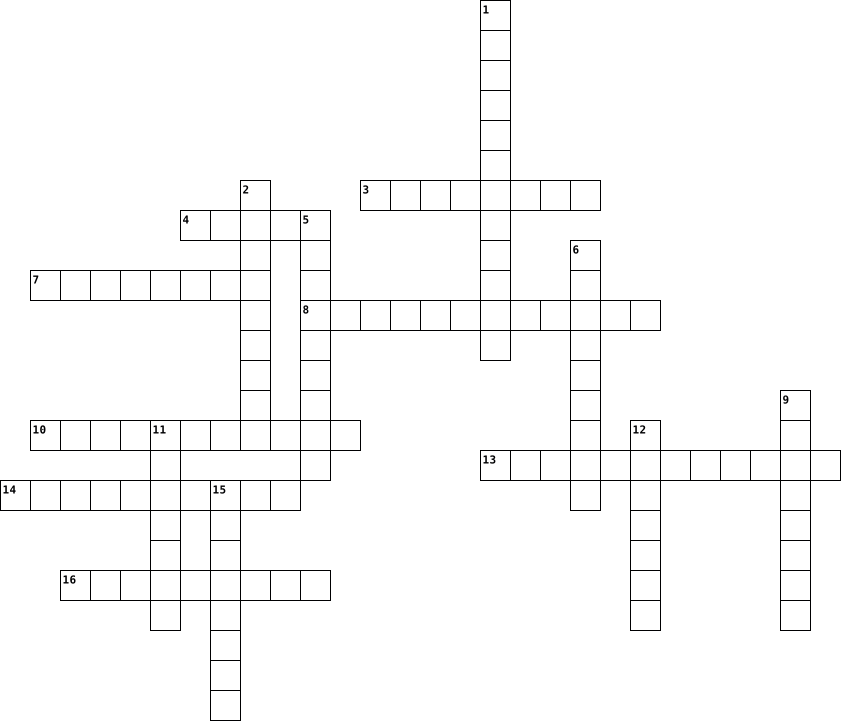
Across
- Which form of government is led by a king or queen?
- How many branches are the in the US?
- Which group makes up the Legislative branch?
- What is the current form of government?
- Which branch creates laws?
- Where is the US capital?
- Who was the first president?
- This party wants a bigger government
Down
- What do we call the first ten amendments?
- Who is the head of the Executive branch?
- Which branch executes laws?
- Which form of government is led by a few?
- Which branch interprets laws?
- This group of Congress includes 100 people
- No government!! AH!!!
- How many original colonies did the US have?
16 Clues: No government!! AH!!! • Where is the US capital? • Which branch creates laws? • Which branch executes laws? • Who was the first president? • Which branch interprets laws? • How many branches are the in the US? • This party wants a bigger government • What is the current form of government? • Who is the head of the Executive branch? • What do we call the first ten amendments? • ...
US History 2025-05-14

Across
- a real or imagined cause for complaint, especially unfair treatment
- geopolitical philosophy that emphasises political expediency over moral concerns
- president in the 1990s who was impeached
- a person who has an obsessive desire for power
- is the renunciation of your religion
- abnormally thin or weak, especially because of illness or a lack of food
- a conference or meeting for discussion, especially among friends or colleagues, Native American in origin
- first US president
Down
- the action of signing or giving formal consent to a treaty, contract, or agreement, making it officially valid
- to desire something that one should not
- issued Emancipation Proclamation
- order to join up to a nation’s armed services
- a warning or proviso of specific stipulations, conditions, or limitations
- the saying of the same thing twice over in different words, generally considered to be a fault of style
- intended for or likely to be understood by only a small number of people with a specialized knowledge or interest
- US president to have been impeached twice
16 Clues: first US president • issued Emancipation Proclamation • is the renunciation of your religion • to desire something that one should not • president in the 1990s who was impeached • US president to have been impeached twice • order to join up to a nation’s armed services • a person who has an obsessive desire for power • ...
US History 2025-05-14

Across
- other countries could import into the US
- America becomes a world power through imperialism
- poverty and unemployment around the whole country
- income tax laws and direct election of senators
- the US and Soviets competing over who goes to space first
- Al Qaeda attacked the World Trade Center and the Pentagon
Down
- prohibition, speakeasies, and Red Scare
- African Americans and other minorities fighting for their rights
- stalemates, trench warfare, u-boats and tanks
- fascism, Adolf Hitler, D-Day, Hiroshima and Nagasaki
- people migrating west
- monopolies and corruption
- small time period where returning soldiers were offered peace
- mass genocide of Jews in concentration camps
- The US tried to assist another country from falling into communism
- USA and Soviet Union competing over atomic bombs
16 Clues: people migrating west • monopolies and corruption • prohibition, speakeasies, and Red Scare • other countries could import into the US • mass genocide of Jews in concentration camps • stalemates, trench warfare, u-boats and tanks • income tax laws and direct election of senators • USA and Soviet Union competing over atomic bombs • ...
US History 2022-12-15
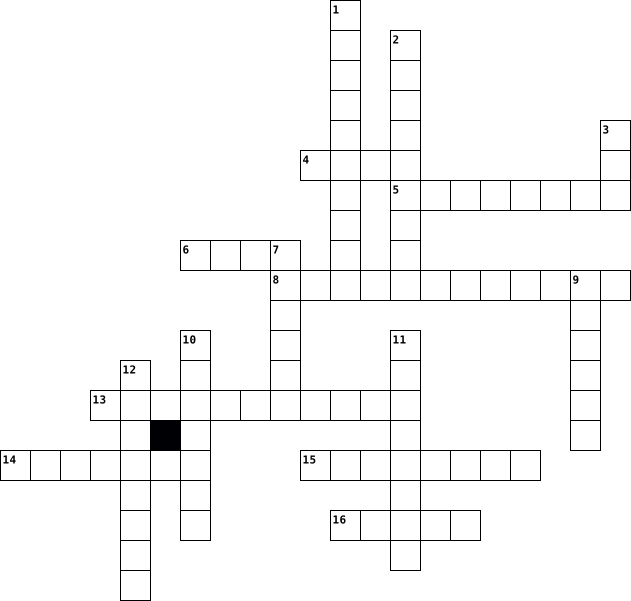
Across
- man who made the model T
- woman's right to vote
- production is when you have multiple of one thing
- amendment brought back liquor and alcohol
- made money in oil
- was the president of the civil war
- line forms a line to pass stuff to one another
- is another word for North
Down
- to make an agreement
- slave who sued for his freedom
- nineteenth amendment is for women the right to vote
- when not one person comes to work
- means to leave the country
- Niles North High school
- made his money in steel
- is total control of an industry
16 Clues: made money in oil • to make an agreement • woman's right to vote • Niles North High school • made his money in steel • man who made the model T • is another word for North • means to leave the country • slave who sued for his freedom • is total control of an industry • when not one person comes to work • was the president of the civil war • amendment brought back liquor and alcohol • ...
US History 2021-03-08

Across
- Focusing on nature, it advocated the idea of personal knowledge of God, believing that no intermediary was needed for spiritual insight
- God existed in only one person, and not in the orthodox Trinity
- It was an attempt to have no more slavery to be brought to Missouri
- The largest part of a general process of biological globalization that followed the transoceanic voyaging in the 15th and the 16th century
- Declaration of freedom of the slaves
- Eli Whitney invented it which is more effective than the handpicking process
- It was a political protest that occurred on December 16, 1773, at Griffin's Wharf in Boston where American colonists were angry at Britain for imposing taxation on tea
- It was the North American conflict in a large imperial war between Great Britain and French known as the Seven Years' War
Down
- It was the first permanent English settlement in the Americas
- The purchase made by Jefferson, evaluated as a great purchase since it expanded the land of America
- A law that restricted design trade to English ships effective chiefly in the 17th and 18th century
- It increased taxes on imported goods
- It is known as the response from Douglas to Lincoln
- One of the most influential pamphlets ever written by Thomas Paine
- A communal society in which has a "communitarian" nature
- The campaign of 1844 & an expression of the mighty emotional upsurge
16 Clues: It increased taxes on imported goods • Declaration of freedom of the slaves • It is known as the response from Douglas to Lincoln • A communal society in which has a "communitarian" nature • It was the first permanent English settlement in the Americas • God existed in only one person, and not in the orthodox Trinity • ...
US History 2021-03-08
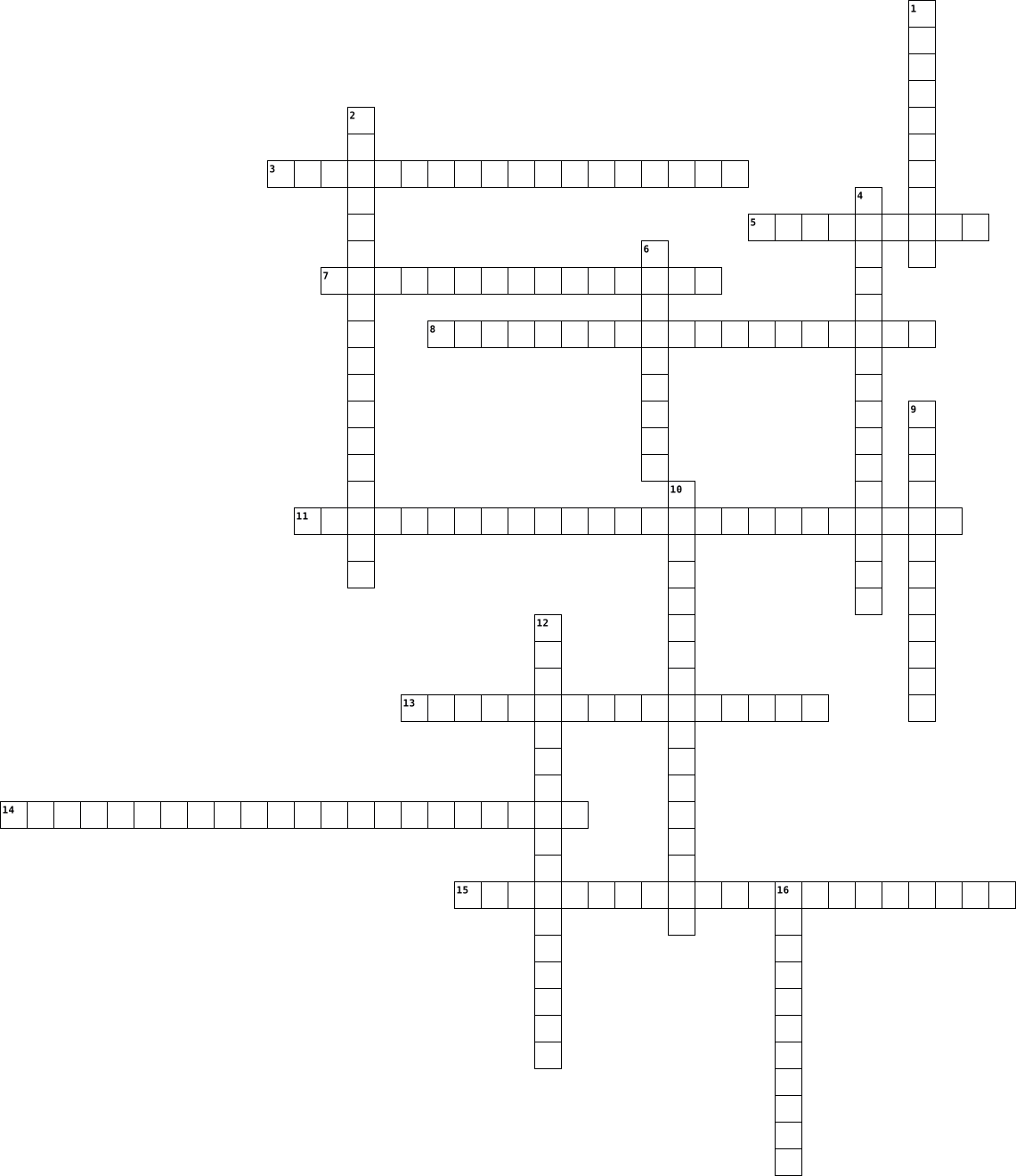
Across
- The largest part of a general process of biological globalization that followed the transoceanic voyaging in the 15th and the 16th century
- God existed in only one person, and not in the orthodox Trinity
- A law that restricted design trade to English ships effective chiefly in the 17th and 18th century
- It was an attempt to have no more slavery to be brought to Missouri
- Declaration of freedom of the slaves
- It was a political protest that occurred on December 16, 1773, at Griffin's Wharf in Boston where American colonists were angry at Britain for imposing taxation on tea
- It increased taxes on imported goods
- It was the North American conflict in a large imperial war between Great Britain and French known as the Seven Years' War
Down
- Eli Whitney invented it which is more effective than the handpicking process
- The purchase made by Jefferson, evaluated as a great purchase since it expanded the land of America
- The campaign of 1844 & an expression of the mighty emotional upsurge
- It was the first permanent English settlement in the Americas
- One of the most influential pamphlets ever written by Thomas Paine
- It is known as the response from Douglas to Lincoln
- Focusing on nature, it advocated the idea of personal knowledge of God, believing that no intermediary was needed for spiritual insight
- A communal society in which has a "communitarian" nature
16 Clues: Declaration of freedom of the slaves • It increased taxes on imported goods • It is known as the response from Douglas to Lincoln • A communal society in which has a "communitarian" nature • It was the first permanent English settlement in the Americas • God existed in only one person, and not in the orthodox Trinity • ...
US History 2022-11-07
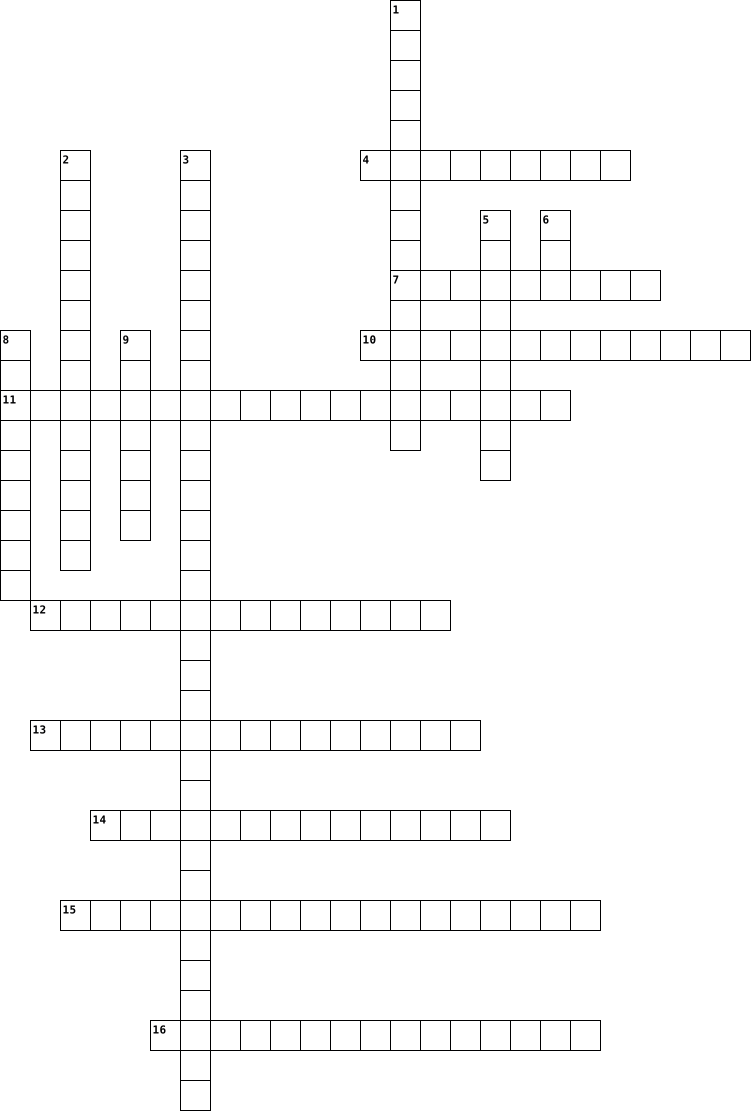
Across
- American gangster who dominated crime in Chicago
- Famous American professional baseball player
- The day the stock market crashed
- Pays retired workers over the age of 65
- 31st president of the US
- American trumpeter and vocalist
- Charged with robbery and murder
- A period of rich cultural activity of African Americans
- 30th president of the United States who helped found the FBI
Down
- Going from one social status to another
- The formation of divisions separating social classes
- Regulates fair wages that would stimulate economic recovery
- A place where alcohol is served illegally
- 32nd US president
- Severe dust storms, major drought
- Energetic young women with a freedom-embracing lifestyle
16 Clues: 32nd US president • 31st president of the US • American trumpeter and vocalist • Charged with robbery and murder • The day the stock market crashed • Severe dust storms, major drought • Going from one social status to another • Pays retired workers over the age of 65 • A place where alcohol is served illegally • Famous American professional baseball player • ...
US History 2022-10-28
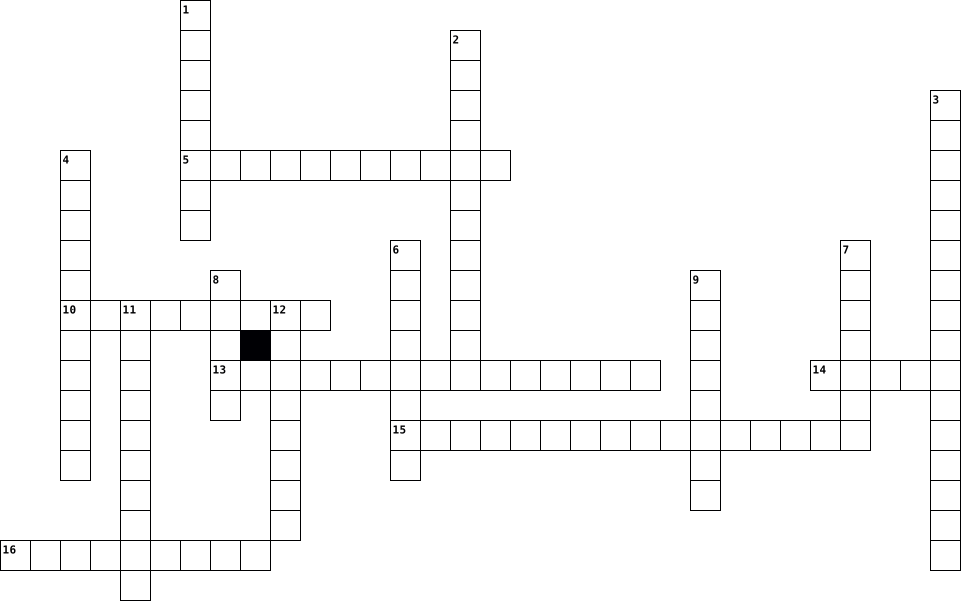
Across
- an island in San Francisco Bay
- a person who comes to live permanently in a foreign country.
- an institution in an inner-city area providing educational, recreational, and other social services to the community.
- a shoot or twig inserted into a slit on the trunk or stem of a living plant, from which it receives sap
- materials or substances such as minerals, forests, water, and fertile land that occur in nature and can be used for economic gain.
- the power to control appointments to office or the right to privileges
Down
- the law authorized the President to break up reservation land, which was held in common by the members of a tribe, into small allotments to be parceled out to individuals.
- the process of making an area more urban.
- authorized the federal government to institute proceedings against trusts in order to dissolve them.
- a historical site that opened in 1892 as an immigration station
- a piece of land held by an owner.
- an outlying district of a city, especially a residential one.
- an arrangement whereby a person holds property as its nominal owner for the good of one or more beneficiaries.
- the exclusive possession or control of the supply of or trade in a commodity or service.
- a place where different peoples, styles, theories, etc. are mixed together.
- the policy of protecting the interests of native-born or established inhabitants against those of immigrants.
16 Clues: an island in San Francisco Bay • a piece of land held by an owner. • the process of making an area more urban. • a person who comes to live permanently in a foreign country. • an outlying district of a city, especially a residential one. • a historical site that opened in 1892 as an immigration station • ...
US history 2024-03-04
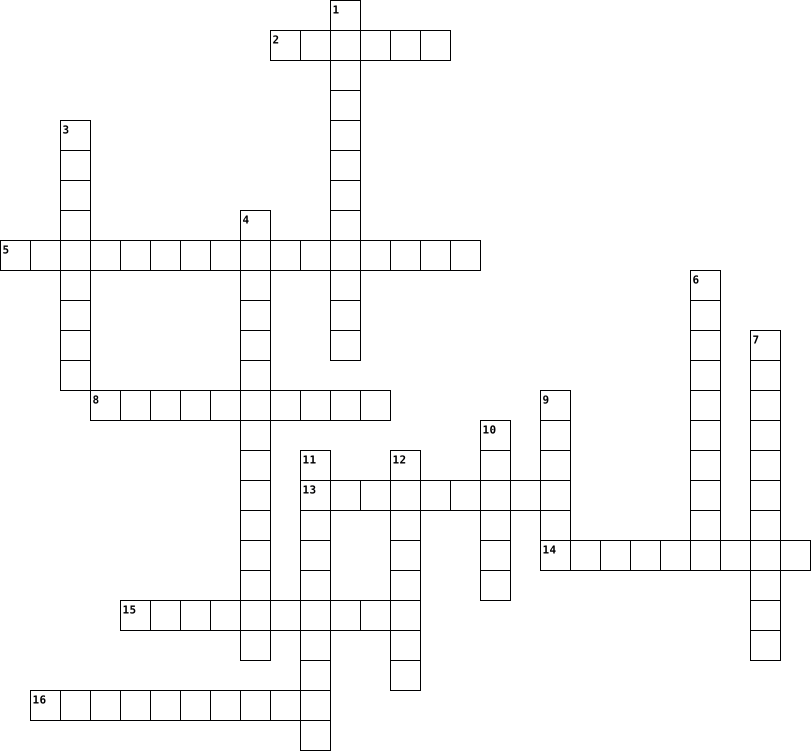
Across
- money in the bank
- assassinated leader of AH
- payment for war damages
- the flu
- secret alcohol seller
- cause of wwI that lead to a arms race
- struggle,sadness
Down
- president during the start of wwI
- a great movement of people to a new place
- a large group of senators
- a leading republican foreign policy expert
- commander of US forces in Europe
- underwater machines
- group of merchant ships that sailed together
- note sent to Mexico to invade the US
- staged a revolution and gained control of Russia
16 Clues: the flu • struggle,sadness • money in the bank • underwater machines • secret alcohol seller • payment for war damages • a large group of senators • assassinated leader of AH • commander of US forces in Europe • president during the start of wwI • note sent to Mexico to invade the US • cause of wwI that lead to a arms race • a great movement of people to a new place • ...
US History 2024-05-06

Across
- a main road, especially one connecting major towns or cities.
- a period marked by a significant increase of births.
- The Montgomery bus boycott was a political and social protest campaign against the policy of racial segregation on the public transit system of Montgomery, Alabama. It was a foundational event in the civil rights movement in the United
- an American couple who were executed in 1953 as spies for the Soviet Union.
- created in 1938 to investigate alleged disloyalty and rebel activities on the part of private citizens, public employees and organizations
- the principle that the US should give support to countries or peoples threatened by Soviet forces or Communist insurrection.
- the rights of citizens to political and social freedom and equality.
- an outlying part of a city or town
- a geopolitical strategic foreign policy pursued by the United State
- former Cali Governor
- Person who refused to give her seat up to a white man
Down
- American government official accused in 1948 of having spied for the Soviet Union in the 1930s.
- a civil rights protest during which African Americans refused to ride city buses in Montgomery, Alabama, to protest segregated seating
- , period of public fear and anxiety over the supposed rise of communist or socialist ideologies in a noncommunist state.
- a law that provided a range of benefits for some of the returning World War II veterans.
- Blockade from 24 June 1948 to 12 May 1949, cutting off all land and river transit between West Berlin and West Germany.
16 Clues: former Cali Governor • an outlying part of a city or town • a period marked by a significant increase of births. • Person who refused to give her seat up to a white man • a main road, especially one connecting major towns or cities. • a geopolitical strategic foreign policy pursued by the United State • ...
US History 2026-01-20

Across
- First English colony in America
- Helped found the NAACP
- Oil robber baron
- Leader of the USSR during WWII
- Sea route that connected North & South America
- Political party formed to oppose Andrew Jackson
- FDR's plan to stop the Great Depression
- Site of the 2nd atomic bomb drop
Down
- Military Leader of Japan during WWII
- Invented the light bulb
- Father of the Constitution
- Gave the ok to drop the nukes
- Country divided at 38th parallel
- A coup led to this new state
- 16th President of the Union
- Major religious group in colonial Pennsylvania
16 Clues: Oil robber baron • Helped found the NAACP • Invented the light bulb • Father of the Constitution • 16th President of the Union • A coup led to this new state • Gave the ok to drop the nukes • Leader of the USSR during WWII • First English colony in America • Country divided at 38th parallel • Site of the 2nd atomic bomb drop • Military Leader of Japan during WWII • ...
US History 2014-08-21
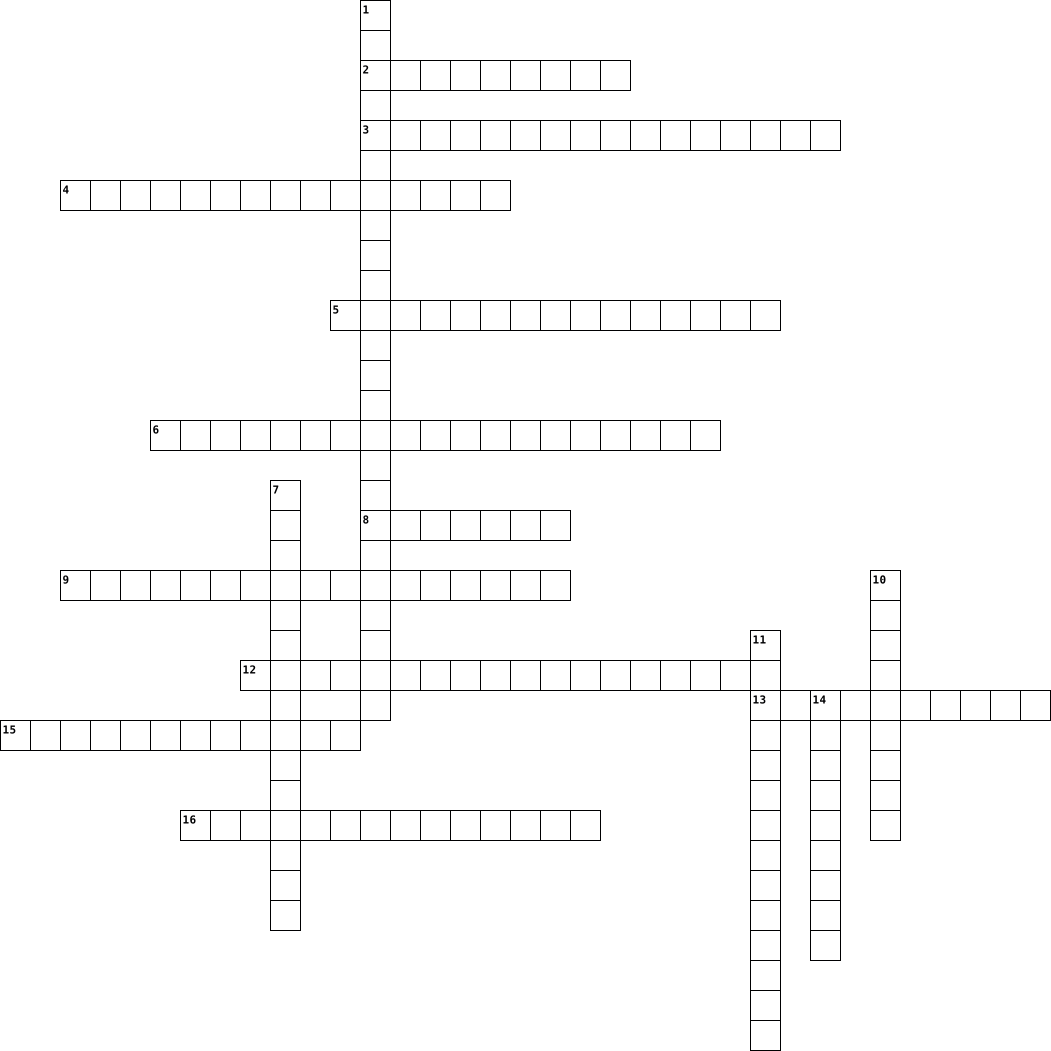
Across
- eliminate slavery
- agreement between the federal government and the southern states to keep the South from seceding.
- a largely southern political party that favored slavery.
- a confederate sympathizer and professional actor.
- largest battle of the American Civil War.
- location of a major civil war battle in Maryland.
- a speech that was given by president Abraham Lincoln.
- 1820 to appease slave state concerns over a federal abolition of slavery.
- a union stronghold in South Carolina.
- a union general who served under President Lincoln.
- the 16th president
Down
- issued on January 1, 1863.
- a new political party that emerged in the North in the mid 1800's.
- is the act of a state to leave the nation under which it belongs and become a sovereign nation of its own.
- president of the Confederate states of America.
- general of the confederate troops during the Civil War.
16 Clues: eliminate slavery • the 16th president • issued on January 1, 1863. • a union stronghold in South Carolina. • largest battle of the American Civil War. • president of the Confederate states of America. • a confederate sympathizer and professional actor. • location of a major civil war battle in Maryland. • a union general who served under President Lincoln. • ...
us history 2022-02-02
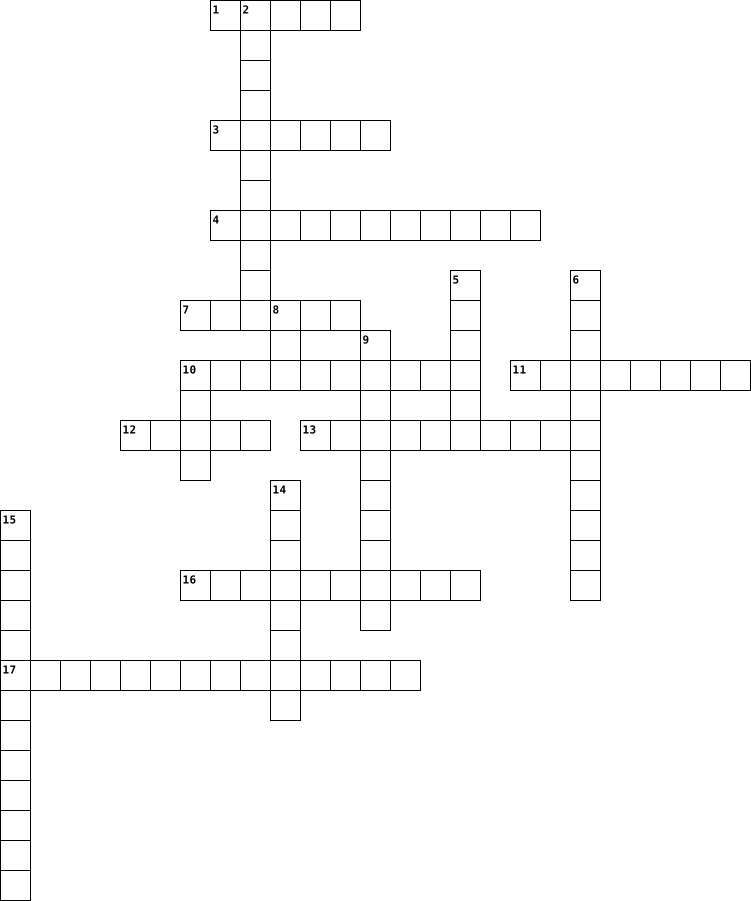
Across
- rights bill of 1866
- market revolution
- impeachment
- cotton gin
- freedmen bureau
- election of 1876
- march of the sea
- Gettysburg address
- California gold rush
- Fredericksburg
Down
- impeachment
- Nebraska act
- underground railroad
- Trent affair
- Gettysburg
- fort Sumter
- manifest destiny
- nullification
18 Clues: cotton gin • Gettysburg • impeachment • impeachment • fort Sumter • Nebraska act • Trent affair • nullification • Fredericksburg • freedmen bureau • election of 1876 • march of the sea • manifest destiny • market revolution • Gettysburg address • rights bill of 1866 • underground railroad • California gold rush
US History 2022-11-07
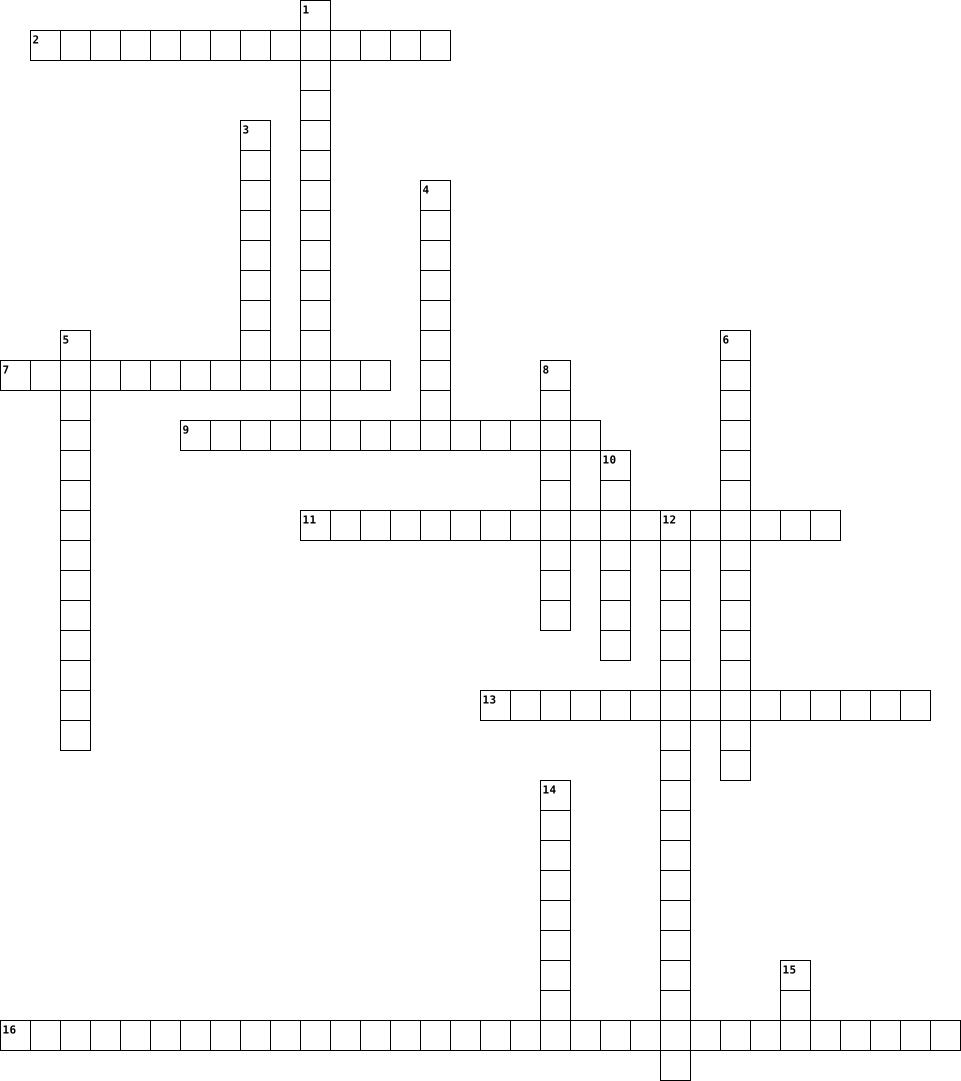
Across
- The formation of divisions separating social classes
- The day the stock market crashed
- 31st president of the US
- A period of rich cultural activity of African Americans
- Going from one social status to another
- Regulates fair wages that would stimulate economic recovery
Down
- 30th president of the United States who helped found the FBI
- American gangster who dominated crime in Chicago
- Famous American professional baseball player
- Charged with robbery and murder
- American trumpeter and vocalist
- A place where alcohol is served illegally
- Energetic young women with a freedom-embracing lifestyle
- Pays retired workers over the age of 65
- Severe dust storms, major drought
- 32nd US president
16 Clues: 32nd US president • 31st president of the US • Charged with robbery and murder • American trumpeter and vocalist • The day the stock market crashed • Severe dust storms, major drought • Pays retired workers over the age of 65 • Going from one social status to another • A place where alcohol is served illegally • Famous American professional baseball player • ...
US History 2021-09-21
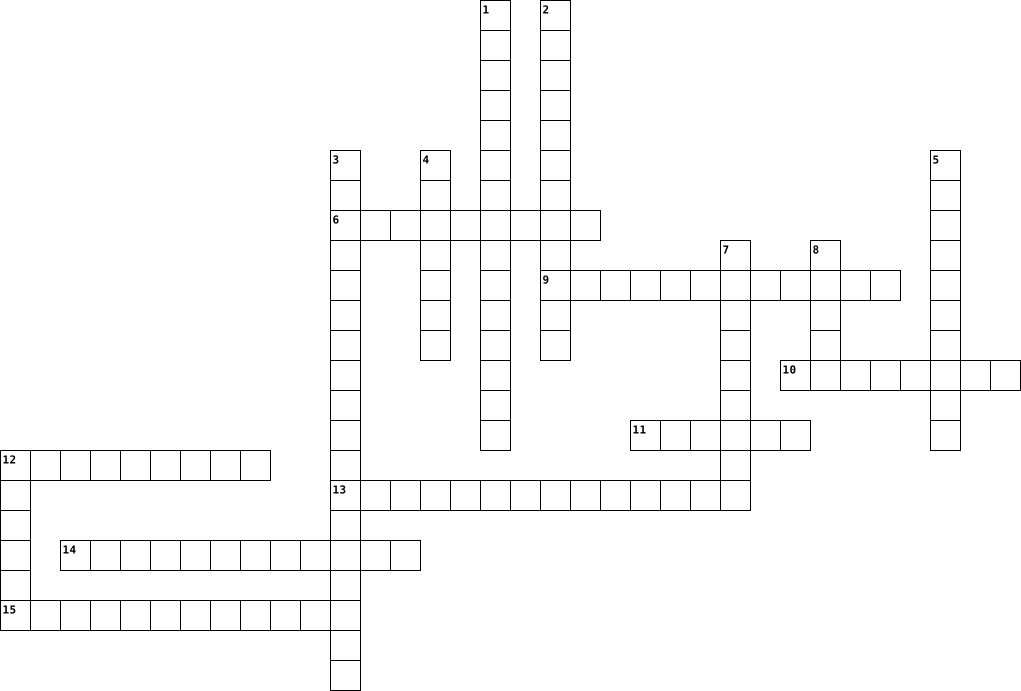
Across
- Never ending or occurring repeatedly
- An act of rebellion attrition During war it’s the act of wearing down by constant attack
- Institution Term for the south’s reliance on slavery
- The intent or desire to do evil
- A set of laws that regulated slavery and defined the relationship Between enslaved Africans and free whites
- The rebuilding of the former Confederate states after the Civil War
- The division of the country along regional lines over a particular issue
- The process of freeing enslaved persons
Down
- The belief that the expansion of the United States westward, towards The Pacific Ocean was ordained by God in order to civilize and Democratize
- The act of putting something into action; the ceremony that marks the beginning of a 4 year presidential term
- during the years prior to the Civil War: the idea that people living in a territory would have the right to vote themselves to decide whether or not the territory would allow slavery
- To formally charge a public official with misconduct in office
- incorporating a territory within the domain of another country
- noun; the action of withdrawing from a political alliance, federal union, or political organization
- A military blockade of a city or fortified place to force it into surrendering
- verb; formal withdrawal from a political alliance, federal union, or political organization
16 Clues: The intent or desire to do evil • Never ending or occurring repeatedly • The process of freeing enslaved persons • Institution Term for the south’s reliance on slavery • To formally charge a public official with misconduct in office • incorporating a territory within the domain of another country • The rebuilding of the former Confederate states after the Civil War • ...
US HISTORY 2021-11-09
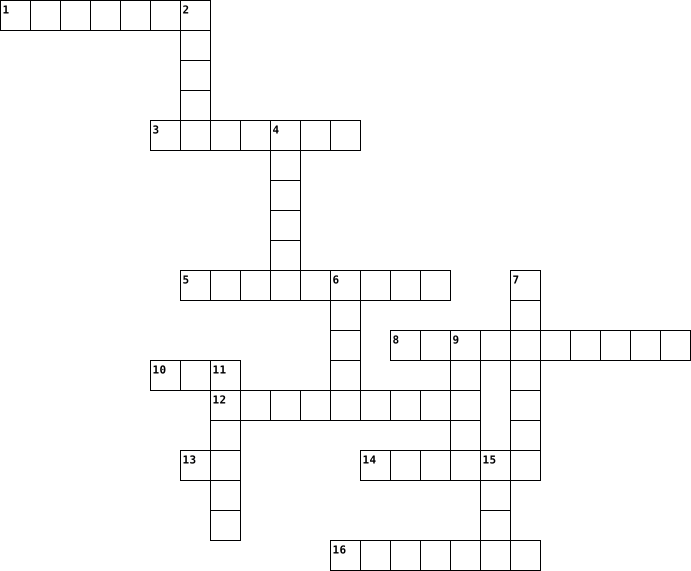
Across
- The Manifest Destiny stated that the US would expand its territory all the way to the ___ Ocean.
- The Northern states of the US wanted to abolish it but the Southern states did not.
- First English settlement in what is now the US.
- Last name of the first president of the US.
- ___ was dumped into the ocean by angry colonists at the Boston Tea Party.
- Territory bought from France by the US.
- The ___ defeated Great Britain in the battle of New Orleans.
- Lost the war against the British in the 7-Year War.
- As a result of the ___-American War, Mexico lost more than 55% of its territory.
Down
- As a result of the American ___ War, slavery was abolished in the US.
- In 1898, the US became an ___, when it became interested in controlling other nations.
- Territory that became independent from Mexico and then became part of the US.
- Created the Stamp Act to recoup some percentage of the cost of the 7-Year War.
- Florida belonged to this country before becoming part of the US.
- This territory was bought from Russia and became the largest state in the US.
- As a result of the Spanish-American War, the US took control of ____.
16 Clues: Territory bought from France by the US. • Last name of the first president of the US. • First English settlement in what is now the US. • Lost the war against the British in the 7-Year War. • The ___ defeated Great Britain in the battle of New Orleans. • Florida belonged to this country before becoming part of the US. • ...
US History 2025-05-20

Across
- Harding's promise to recover from the turmoil of the previous decade - to nativist ideas
- awakening of African American culture in New York City
- first item to be mass-manufactured in the 1920's and a cause of prosperity
- loyalty and devotion to one's own nation, prioritizing its interests above others
- an agreement made between two or more countries to give each other help if needed
- used to maximize the production of goods
- disliking foreigners - anti-immigrant attitude
- movement of African Americans to industrial cities in search of jobs
Down
- Americans afraid of Communists infiltrating the U.S. government
- focused hate and violence toward African Americans, immigrants, and Jewish people
- a period of time with no alcohol
- music that was contributed from the Harlem Renaissance
- Scandal during Harding's presidency - cabinet member was jailed for corruption
- this group of people influenced the ratification of the Eighteen Amendment
- muscle destroying disease
- writers and artists who felt disillusioned and disconnected after WWI
16 Clues: muscle destroying disease • a period of time with no alcohol • used to maximize the production of goods • disliking foreigners - anti-immigrant attitude • music that was contributed from the Harlem Renaissance • awakening of African American culture in New York City • Americans afraid of Communists infiltrating the U.S. government • ...
Black History Month Crossword 2023-02-02
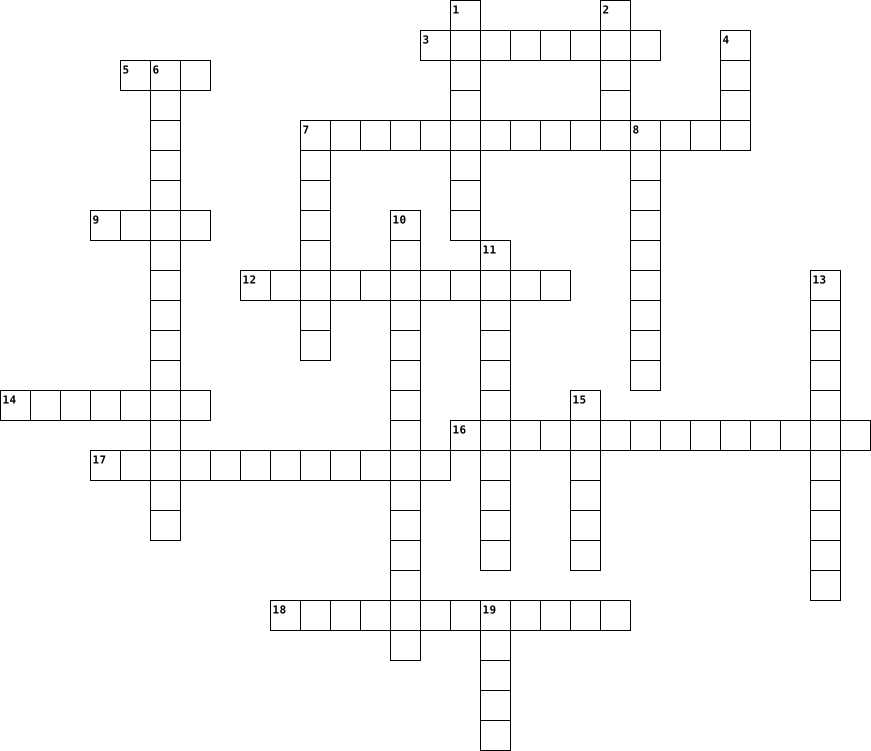
Across
- Black History month is in this month
- This color represents blood in black history month
- Black history month's month in the US was chosen based on Frederick ___'s and Abraham ___'s birthday
- ___ Bridges was one of the first black kids to go to a white school
- The name of a famous speech MLK gave
- ___ Tubman helped people escape slavery through the underground railroad
- Known as the father of Black History Month in the US
- First woman to be vice president
- The ___ proclamation was an official order that Abraham Lincoln issued that freed slaves in the US
Down
- ___ Banneker was a black man who helped plan out Washington DC and pleaded for the abolition of slavery
- This color represents growth in black history month
- ___ Baptiste was known as the founder of Chicago and translated many languages for many groups of people
- ___ Freeman was the first black woman to sue for her freedom
- Frederick ___ became a national leader of the abolitionist movement in Massachusetts and New York
- ___ Colvin was the first woman to refuse changing their seat on a bus
- The black history month theme of 2023
- To separate differnt kinds of people based on something about them
- Laws that segregated black people
- This color represents prosperity in black history month
- The association that started Black History Month
20 Clues: First woman to be vice president • Laws that segregated black people • Black History month is in this month • The name of a famous speech MLK gave • The black history month theme of 2023 • The association that started Black History Month • This color represents blood in black history month • This color represents growth in black history month • ...
Black History Month Crossword 2026-02-03

Across
- Black History month is in this month
- This color represents blood in black history month
- Black history month's month in the US was chosen based on Frederick ___'s and Abraham ___'s birthday
- ___ Bridges was one of the first black kids to go to a white school
- The name of a famous speech MLK gave
- ___ Tubman helped people escape slavery through the underground railroad
- Known as the father of Black History Month in the US
- First woman to be vice president
- The ___ proclamation was an official order that Abraham Lincoln issued that freed slaves in the US
Down
- ___ Banneker was a black man who helped plan out Washington DC and pleaded for the abolition of slavery
- This color represents growth in black history month
- ___ Baptiste was known as the founder of Chicago and translated many languages for many groups of people
- ___ Freeman was the first black woman to sue for her freedom
- Frederick ___ became a national leader of the abolitionist movement in Massachusetts and New York
- ___ Colvin was the first woman to refuse changing their seat on a bus
- The black history month theme of 2023
- To separate differnt kinds of people based on something about them
- Laws that segregated black people
- This color represents prosperity in black history month
- The association that started Black History Month
20 Clues: First woman to be vice president • Laws that segregated black people • Black History month is in this month • The name of a famous speech MLK gave • The black history month theme of 2023 • The association that started Black History Month • This color represents blood in black history month • This color represents growth in black history month • ...
Black History Month Crossword 2026-01-30

Across
- Black History month is in this month
- This color represents blood in black history month
- Black history month's month in the US was chosen based on Frederick ___'s and Abraham ___'s birthday
- ___ Bridges was one of the first black kids to go to a white school
- The name of a famous speech MLK gave
- ___ Tubman helped people escape slavery through the underground railroad
- Known as the father of Black History Month in the US
- First woman to be vice president
- The ___ proclamation was an official order that Abraham Lincoln issued that freed slaves in the US
Down
- ___ Banneker was a black man who helped plan out Washington DC and pleaded for the abolition of slavery
- This color represents growth in black history month
- ___ Baptiste was known as the founder of Chicago and translated many languages for many groups of people
- ___ Freeman was the first black woman to sue for her freedom
- Frederick ___ became a national leader of the abolitionist movement in Massachusetts and New York
- ___ Colvin was the first woman to refuse changing their seat on a bus
- The black history month theme of 2023
- To separate differnt kinds of people based on something about them
- Laws that segregated black people
- This color represents prosperity in black history month
- The association that started Black History Month
20 Clues: First woman to be vice president • Laws that segregated black people • Black History month is in this month • The name of a famous speech MLK gave • The black history month theme of 2023 • The association that started Black History Month • This color represents blood in black history month • This color represents growth in black history month • ...
US History 2021-09-25
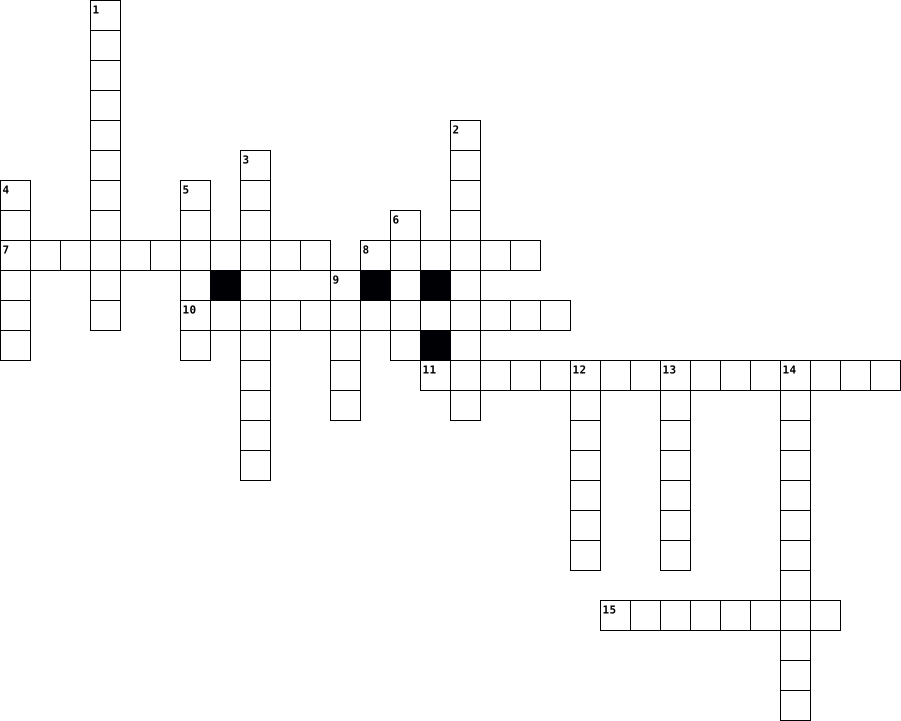
Across
- to take pride in your country
- taxes that you have to pay to purchase goods from foreign countries
- a movement resulting in the ideas of natural born rights
- crazy people who do not want the constitution and prefer anarchy
- lands beyond our settlements
Down
- The document that started the revolutionary war was a ________________.
- The old government that we had to put up with but never want to see again
- the part of the government that makes decisions
- man a solider that was able to come when ever asked to fight for the army
- The guy on the oat meal packages
- money paid by the people to be used for the greater good of the public
- the group that fought for America in the American Revolution fake hair
- the government that is above the state government.
- goods we send out of the country
- we won ____________________ from our old mother country
15 Clues: lands beyond our settlements • to take pride in your country • The guy on the oat meal packages • goods we send out of the country • the part of the government that makes decisions • the government that is above the state government. • we won ____________________ from our old mother country • a movement resulting in the ideas of natural born rights • ...
US HISTORY 2014-05-16
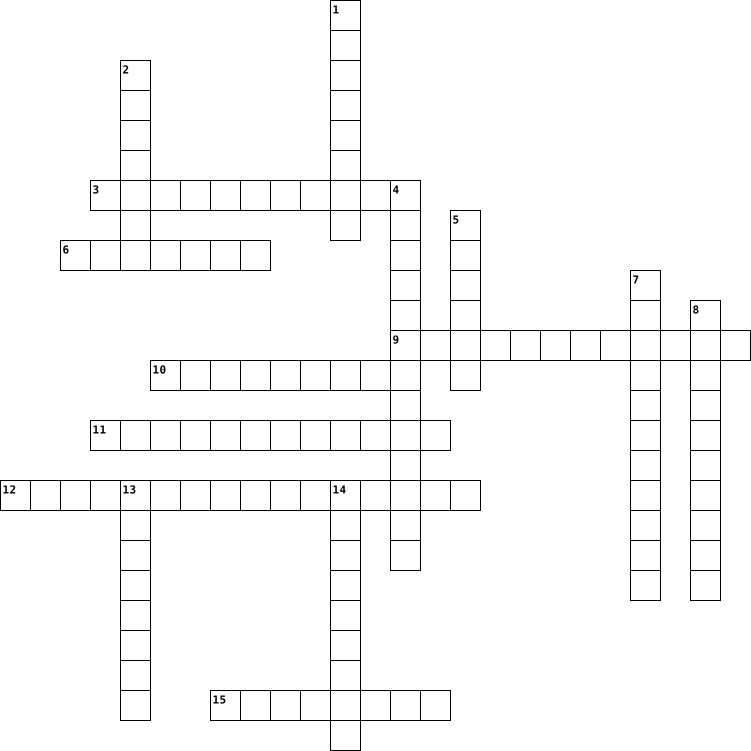
Across
- combination of high inflation and high unemployment
- to charge a public official with wrong doing in office
- the reduction or removal of government control
- scandal scandal that led to president Nixon's resignation 1974
- 200th anniversary
- movement calling for greter attention to non European cultures in such areas as education
- a political coalition of conservative groups formed in 1980
Down
- sanctions trade restrictions and other economic measures intended to punish another nation
- a listening device used to intercept telephone info.
- pres. Nixon's call for a new partnership between federal gov. and state gov.
- Spanish for counterrevolution
- gov. program that guarantees payments to a particular group
- laying off workers to cut cost
- a computer network that links millions of people around the world
- the systematic segregation of people of different racial backgrounds
15 Clues: 200th anniversary • Spanish for counterrevolution • laying off workers to cut cost • the reduction or removal of government control • combination of high inflation and high unemployment • a listening device used to intercept telephone info. • to charge a public official with wrong doing in office • gov. program that guarantees payments to a particular group • ...
US History 2024-04-29
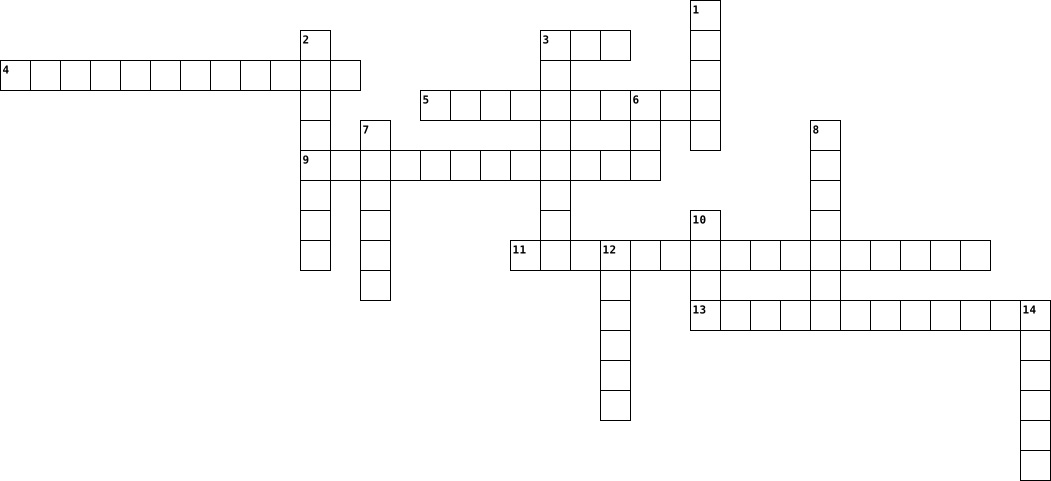
Across
- Needed to run the government
- Country that colonized the USA
- First US President
- Formal start of someone's presidency/start of office
- Skills and Knowledge of workers in creating products and services
- Horse riders that delivers products to places via horses
Down
- Means to change
- George Washington's hometown
- Original number of states in the USA
- How many were the original Bill of Rights
- Tax imposed on imported goods
- Complete: For whom to __________
- Right to bear ___________.
- Means to approve
- people from Africa that were forced to do work.
15 Clues: Means to change • Means to approve • First US President • Right to bear ___________. • George Washington's hometown • Needed to run the government • Tax imposed on imported goods • Country that colonized the USA • Complete: For whom to __________ • Original number of states in the USA • How many were the original Bill of Rights • people from Africa that were forced to do work. • ...
US History 2025-05-20

Across
- The 1929 stock market crash.
- President of the US during WW1.
- a U.S. battleship, exploded and sank in Havana Harbor on February 15, 1898.
- Many regarded the music as a threat to American values.
- Became president after FDR died.
- President that had a scandal in 1998
- known for being a labor leader and civil rights activist who cofounded the United Farm Workers (UFW)
- She refused to give up her seat for a white passenger.
- American legislation that granted 160 acres of federal land to any adult U.S. citizen
Down
- Rebelled against the traditional image of femininity
- Islamist terrorist suicide attacks by al-Qaeda against the United States in 2001.
- a period of intense competition between the United States and the Soviet Union during the Cold War
- Fought for civil rights and equality for African Americans and other marginalized groups
- First Word Harlem
- First Africa American President
15 Clues: First Word Harlem • The 1929 stock market crash. • President of the US during WW1. • First Africa American President • Became president after FDR died. • President that had a scandal in 1998 • Rebelled against the traditional image of femininity • She refused to give up her seat for a white passenger. • Many regarded the music as a threat to American values. • ...
US History 2023-10-30
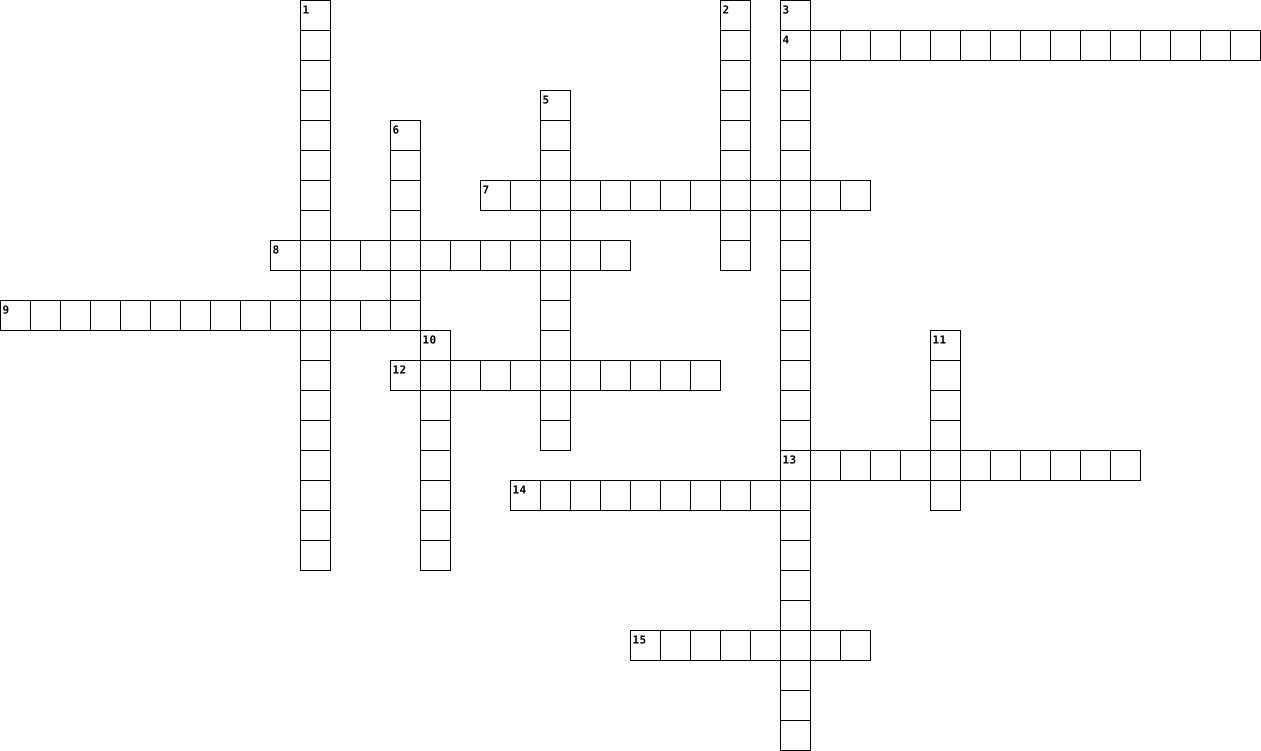
Across
- passed in 1649
- middle colony
- alliance among independent states
- government should protect rights
- Political change
- political independence
- Virginia congress
- colonial contracts with England
Down
- power of the people
- legal restrictions on women
- in 1692
- new england colony
- Human labor bought and sold
- southern colony
- people have natural rights
15 Clues: in 1692 • middle colony • passed in 1649 • southern colony • Political change • Virginia congress • new england colony • power of the people • political independence • people have natural rights • legal restrictions on women • Human labor bought and sold • colonial contracts with England • government should protect rights • alliance among independent states
Us History 2024-05-19

Across
- Military alliance formed in response to NATO.
- City where a wall divided East and West sectors.
- Leader of the USSR during the Cuban Missile Crisis
- Berlin Airlift Countered this soviet blockade called?
- The first satellite in orbit
- Soviet Leader at the begging of the Iron Curtain
- Capital city of Hungary.
- Period of tension between the us and Ussr.
Down
- Alliance of the Soviet Union and allies.
- When did the Korean war start (decade)
- Capital City of East Germany
- US program to aid European countries after ww2
- U.S. spy plane shot down over Soviet territory in 1960.
- Soviet Union's main spy agency
- Barrier that divided Germany
15 Clues: Capital city of Hungary. • Capital City of East Germany • The first satellite in orbit • Barrier that divided Germany • Soviet Union's main spy agency • When did the Korean war start (decade) • Alliance of the Soviet Union and allies. • Period of tension between the us and Ussr. • Military alliance formed in response to NATO. • US program to aid European countries after ww2 • ...
US History 2025-01-07

Across
- Cherokee forced migration
- Explored with Clark
- 1840s potato famine
- Continental Army leader
- Indigenous people killed by Columbus
- ________ and Indian War 1754
- New Jersey vs.
- Smith of Jamestown
Down
- Hung or burned
- Boston or Wounded Knee
- free speech amendment
- People’s History author
- ________ Removal Act 1830
- Jamestown crop
- Search and seizure amendment
15 Clues: Hung or burned • Jamestown crop • New Jersey vs. • Smith of Jamestown • Explored with Clark • 1840s potato famine • free speech amendment • Boston or Wounded Knee • People’s History author • Continental Army leader • Cherokee forced migration • ________ Removal Act 1830 • ________ and Indian War 1754 • Search and seizure amendment • Indigenous people killed by Columbus