
immunity Crossword Puzzles
Specific Immunity 2020-12-01

Across
- this type of adaptive immune cell does the actual “end” work (activating, killing, making antibodies)
- way of getting adaptive immunity starting with antigen (4 ways of getting adaptive immunity)
- abbreviation of the cell surface molecule that makes each B cell unique from another, before activation
- name for macrophages, dendritic cells, B cells
- when a selected, specific, unique T or B cell is activated and proliferates, you get many _____ of the cell.
- way of getting adaptive immunity "in the wild" (4 ways of getting adaptive immunity)
- way of getting adaptive immunity starting with antibody (4 ways of getting adaptive immunity)
Down
- the MHC molecule on cell surfaces holds this form of antigen for display or presentation
- way of getting adaptive immunity with human intervention (4 ways of getting adaptive immunity)
- type of adaptive cell that works during a secondary immune response
- name for a differentiated immune cell that produces specific antibody proteins in great amounts
- abbreviation of the cell surface molecule that makes each T cell unique from another, before activation
- stem of antibody molecule
- how lymphocytes start out, before selection and activation
14 Clues: stem of antibody molecule • name for macrophages, dendritic cells, B cells • how lymphocytes start out, before selection and activation • type of adaptive cell that works during a secondary immune response • way of getting adaptive immunity "in the wild" (4 ways of getting adaptive immunity) • ...
Immunity Challenge 2015-08-18

Across
- Cook Islands fan favorite award winner
- The first unanimous winner
- The number of male winners
- Only two time winner
- You're playing for it right now.
- The first quitter
- Caribbean's blue tribe
- "Not in a __________ way, that's for sure"
- 17th Survivor season
- Amount of castaways on Season 31
- Castaways left in Caribbean
Down
- Caribbean's pink tribe
- Evacuated on Day 3
- the island introduced in Season 10
- Host's last name
- The number of days in most Survivor seasons (use a hyphen in your answer)
- The prize money is one _______ dollars
- Four time player, one time winner
- the merged tribe name in Caribbean (combined into one word)
- Season name subtitle is "The Brazilian Highlands"
- The last name of the first winner
21 Clues: Host's last name • The first quitter • Evacuated on Day 3 • Only two time winner • 17th Survivor season • Caribbean's pink tribe • Caribbean's blue tribe • The first unanimous winner • The number of male winners • Castaways left in Caribbean • You're playing for it right now. • Amount of castaways on Season 31 • Four time player, one time winner • The last name of the first winner • ...
Immunity Crossword 2024-03-12

Across
- Initiates blood clotting
- Blood cells that perform the function of destroying disease-causing microorganisms
- fluid that circulates within the lymphatic vessels
- Human Immunodeficiency Virus, the virus that causes A.I.D.S.
- A weakened or inactive version of a pathogen that stimulates the body's production of antibodies.
- a substance produced by the body that destroys or inactivates an antigen that has entered the body
- An individual does not produce his or her own antibodies, but rather receives them directly from another source
- single-celled prokaryotic organism
- A disease causing agent
Down
- Cells that use phagocytosis to engulf foreign organisms
- White blood cells
- a form of acquired immunity in which the body produces its own antibodies against disease-causing antigens
- Defenses against any pathogen
- "Cell eating"
- Bean-shaped filters that cluster along the lymphatic vessels of the body
- White blood cells that are involved in the immune response
- A non-cellular infectious agent
- A system that protects the body from foreign substances and pathogenic organisms by producing the immune response
- A protein that, when introduced in the blood, triggers the production of an antibody
- Acute, contagious respiratory infection
20 Clues: "Cell eating" • White blood cells • A disease causing agent • Initiates blood clotting • Defenses against any pathogen • A non-cellular infectious agent • single-celled prokaryotic organism • Acute, contagious respiratory infection • fluid that circulates within the lymphatic vessels • Cells that use phagocytosis to engulf foreign organisms • ...
Systemic Immunity 2023-02-23

Across
- An innate immune cell which develops from a monocyte
- The type of cell that prevents overreaction
- The abbreviation for the name of the complex used in antigen presentation
- Small cellular fragments involved in immunity as well as clotting
- Antibodies that recognise self proteins
- The cell organelle in which pathogens are digested
- The abbreviation for unstable reactive molecules released during cell death
- The molecular found in the membrane of Gram negative bacteria
- The mineral which is involved in granule release from neutrophils
- The abbreviation for protein found studded on NETs released from neutrophils
- The type of cell death which results if cells do not get survival signals
- The abbreviation for self-structures that activate cells when damaged
- The type of cell expansion which occurs to generate identical daughter cells
- Antimicrobial peptides contained within granules
- The concentration of leukocytes that appear in blood after centrifugation
Down
- A type of microvesicle used to communicate between cells
- The joining between and APC and an adaptive immune cell
- A protein which binds Iron
- An innate cell which samples the environment
- The fusion of a phagosome containing a pathogen and a lysosome containing enzymes
- The directional movement of cells
- A lymphocyte-like cell that doesn’t form memory
- the variable region of the antibody that binds to the pathogen
- The abbreviation for a conserved part of a pathogen
- A cell involved in histamine release
- The process where B cells generate diverse receptor combinations
- An immune cell which produces NETs
27 Clues: A protein which binds Iron • The directional movement of cells • An immune cell which produces NETs • A cell involved in histamine release • Antibodies that recognise self proteins • The type of cell that prevents overreaction • An innate cell which samples the environment • A lymphocyte-like cell that doesn’t form memory • Antimicrobial peptides contained within granules • ...
Blood & Immunity 2023-01-24

Across
- Platelets
- Red blood cells
- sider/o
- Iron containing pigment found in RBCs
- Acquired Immune Deficiency Syndrome
- ____ carries oxygen and nutrients to the body's cells
- White blood cells
- The transfer of blood into another person's circulation
- The study of blood
- Blood disorder when the blood does not clot
- The shape of an RBC
- Causes RBCs to be abnormally shaped; ____ cell disease
- Based on genetic makeup
Down
- Carry blood away from the heart
- Where new blood cells are created
- The stopping of the flow of blood
- Ven/o
- A, B, AB, O
- Systolic/Diastolic; the average is 120/80
- Fights any invading germs in the blood
- Blood cancer
- ____ is 90% water
- Acquired during life (not born with)
- Mass of coagulated liquid/blood
- The ratio of the volume of RBCs to the total blood volume
- Protection against disease
- Lack of healthy RBCs and hemoglobin
27 Clues: Ven/o • sider/o • Platelets • A, B, AB, O • Blood cancer • Red blood cells • ____ is 90% water • White blood cells • The study of blood • The shape of an RBC • Based on genetic makeup • Protection against disease • Carry blood away from the heart • Mass of coagulated liquid/blood • Where new blood cells are created • The stopping of the flow of blood • Acquired Immune Deficiency Syndrome • ...
Adaptive Immunity 2025-04-01

Across
- killed virus
- administered into the dermis
- transimission of organism through birth canal
- inflammation of the brain
- antibodies passed to fetus/infant from mom
- activated CD4 cell
- cell membranes
- effector B cells
- ingest, eliminate and felt into on antigens
- attracts and stimulates other immune cells
- trigger immune response
- cell-bound antigens
- activates CD8 cell
- eats, breaks down
- bone marrow and thymus
- nonspecific, regulate growth and activation of lymphocyte
- antigen receptor
- antigen processing
- primed to respond to the same antigen
- inflammation of meninges
- injection of immune serum
- masks dangerous parts of bacterial exotoxins; viruses
- protozoa, toxoplasma Gondi- mild symptoms
- severe nausea and frequent vomiting
- immunoglobulins
- dead or attenuated pathogen
- cell-mediated
Down
- soluble antigens
- spleen, lymph nodes and tonsils
- mature in bone marrow
- primes immune system for future exposure to a virulent pathogen
- live virus
- 3 plus loose stools in 24 hours.
- antigenic determinant
- use subunits to make them more immunogenic
- flood cell markers
- certain bacterial capsules
- promote Tc and B cells
- small protein produced by WBC and tissue cells
- inflammatory disease of the meninges and brain
- administrated beneath skin
- DNA complexed to proteins
- antibody-mediated
- administered in muscle
- same encounter possibly years later
- mature in thymus
- caused by rusty nail
- crosses placenta to fetus
- nerves that travel to the periphery of the body
- B cells, macrophages and denitritic cells
- related to dengue, west Nile and yellow fever
- initial encounter with antigen
- major histocompatibility protein
- movement of WBC from blood unto tissue
- contact with pathogen
- brain and spinal cord
- fixes and activates antigen-antibody complex
- stimulates release of histamines
- monomer in plasma
- carry out attack
- pentamer
61 Clues: pentamer • live virus • killed virus • cell-mediated • cell membranes • immunoglobulins • soluble antigens • effector B cells • mature in thymus • antigen receptor • carry out attack • antibody-mediated • eats, breaks down • monomer in plasma • activated CD4 cell • flood cell markers • activates CD8 cell • antigen processing • cell-bound antigens • caused by rusty nail • mature in bone marrow • ...
HP IMMUNITY 2025-04-17

Across
- TYPE 2 HYPERSENSITIVITY
- THE BODY'S NATURAL OR INDUCED RESPONSE TO INFECTION
- THIS TYPE OF HYPERSENSITIVITY IS CALLED IMMUNE COMPLEX-MEDIATED
- AN INCREASED NUMBER OF WBC PRODUCTION
- PRODUCES AND STORES HEMATOPOIETIC STEM CELLS (2WORDS)
- This type of immunity occurs when you receive antibodies from another person
- A decreased NUMBER OF WBC
- OCCURS WHEN THE IMMUNE SYSTEM IS UNABLE TO RESPOND EFFECTIVELY
- ALSO KNOWN AS HIVES
- IMMUNE SYSTEMS THAT EFFECTIVELY IDENTIFY AND DESTROY ANTIGENS
- FOREIGN SUBSTANCES THAT TRIGGER THE IMMUNE RESPONSE
- THIS TYPE OF IMMUNITY OCCURS THROUGH EXPOSURE TO DISEASE OR THROUGH VACCINATION
Down
- TOGETHER THESE PROTEINS MAKE UP THE HUMORAL IMMUNE RESPONSE
- OVERREACTION OF THE IMMUNE SYSTEM
- THIS TYPE OF IMMUNITY RESULTS FROM A PREVIOUS EXPOSURE TO AN ANTIGEN
- ALSO KNOWN AS SEASONAL ALLERGIES (2WORDS)
- DISORDERS ARE CAUSED WHEN THE BODY CAN'T RECOGNIZE ITSELF
- TYPE 4 HYPERSENSITIVITY
- ACUTE SYSTEMIC TYPE 1 HYPERSENSITIVITY RESPONSE
- INFECTIONS THAT USUALLY DON'T AFFECT PEOPLE WITH INTACT IMMUNE SYSTEMS
- ANOTHER NAME FOR WBC
- IS THE LARGEST LYMPHOID ORGAN
- THIS TYPE OF HYPERSENSITIVITY IS CALLED IgE-MEDIATED
23 Clues: ALSO KNOWN AS HIVES • ANOTHER NAME FOR WBC • TYPE 2 HYPERSENSITIVITY • TYPE 4 HYPERSENSITIVITY • A decreased NUMBER OF WBC • IS THE LARGEST LYMPHOID ORGAN • OVERREACTION OF THE IMMUNE SYSTEM • AN INCREASED NUMBER OF WBC PRODUCTION • ALSO KNOWN AS SEASONAL ALLERGIES (2WORDS) • ACUTE SYSTEMIC TYPE 1 HYPERSENSITIVITY RESPONSE • THE BODY'S NATURAL OR INDUCED RESPONSE TO INFECTION • ...
Vaccine Crossword 2025-03-06

Across
- The vaccine given to protect against meningococcal disease
- The vaccine that protects against Haemophilus influenzae type b
- immunity This type of immunity is achieved through the administration of ready-made antibodies
- The vaccine that prevents human papillomavirus
- The flu vaccine
- The vaccine for measles, mumps, and rubella
- The vaccine used to prevent chickenpox
- The vaccine for inactivated polio
Down
- Passive immunity the immunity type provided by the mother’s antibodies to a newborn
- The vaccine that protects against diphtheria, tetanus, and pertussis
- active immunity Immunization type achieved by contracting an infectious agent
- The vaccine for hepatitis B
- The disease-screening test that checks for metabolic and endocrine disorders in newborns
- The vaccine for hepatitis A
- The document developed by the CDC that explains vaccine risks and benefits
- The federal act that provides compensation for vaccine injuries
- The oral vaccine used to prevent severe diarrhea
- The vaccine used to prevent pneumonia caused by bacteria
18 Clues: The flu vaccine • The vaccine for hepatitis B • The vaccine for hepatitis A • The vaccine for inactivated polio • The vaccine used to prevent chickenpox • The vaccine for measles, mumps, and rubella • The vaccine that prevents human papillomavirus • The oral vaccine used to prevent severe diarrhea • The vaccine used to prevent pneumonia caused by bacteria • ...
Host Defenses II – Adaptive Defenses & Immunization 2026-03-19

Across
- CELLS Cells that kill infected cells
- microorganism
- that bind to antigens
- substance that triggers an immune response
- White blood cells that are key in adaptive immunity
- ability to resist infection
- immediate defense system
- Cells involved in cell-mediated immunity
Down
- of antigen to create immunity
- of immune system to respond faster second time
- immunity with memory
- of engulfing pathogens
- CELLS Cells that activate other immune cells
- Cells that produce antibodies
- CELLS Cells that control immune response
15 Clues: microorganism • immunity with memory • that bind to antigens • of engulfing pathogens • immediate defense system • ability to resist infection • of antigen to create immunity • Cells that produce antibodies • CELLS Cells that kill infected cells • CELLS Cells that control immune response • Cells involved in cell-mediated immunity • substance that triggers an immune response • ...
Blood and Immune System 2018-10-06

Across
- part of determining blood type
- blood cells are ___ in the red bone marrow
- clotting cell is
- medication to minimize immune response and required to prevent rejection of a transplanted organ
- what do you not find in whole solid blood
- condition that is a cancer
- medication taken to prevent blood clot formation
- thrombocytes
- abbreviation for an HIV-AIDS test
Down
- medication that is a steroid for treating autoimmune diseases
- immunity either inherited, genetic or acquired
- term for blood infection
- anemia caused by common vitamin deficiency
- term meaning too many red cells
- phagocytic cell
- active acquired ____ immunity, vaccine provided immunization
- active acquired ___ immunity, memory cells to protect from future exposure
- acquired immunity through the placenta, breast milk or a donor
18 Clues: thrombocytes • phagocytic cell • clotting cell is • term for blood infection • condition that is a cancer • part of determining blood type • term meaning too many red cells • abbreviation for an HIV-AIDS test • what do you not find in whole solid blood • blood cells are ___ in the red bone marrow • anemia caused by common vitamin deficiency • ...
Chapter 12 - Host Defenses 2 2026-03-20

Across
- A ______ cell is a cell meant for future protection
- This cell is involved in cell-mediated immunity "_ Cell"
- These trigger the immune response
- A molecule that presents antigens to T Cells
- Specific antigen binding site
- This cell kills infected cells, expresses CD8
- Breast feeding is and example of what type of immunity
- This type of immunity has specific responses with a memory function
- Key WBC in adaptive immunity
Down
- This cell modulate the immune response
- This cell coordinates the immune response, express CD4
- Inducing immunity using antigens, stimulate primary and memory reponse
- A protein that binds pathogens
- A ______ cell is an antibody-secreting B Cell
- This cell produces antibodies "_ Cell"
15 Clues: Key WBC in adaptive immunity • Specific antigen binding site • A protein that binds pathogens • These trigger the immune response • This cell modulate the immune response • This cell produces antibodies "_ Cell" • A molecule that presents antigens to T Cells • A ______ cell is an antibody-secreting B Cell • This cell kills infected cells, expresses CD8 • ...
Blood and Immune System 2018-10-06

Across
- part of determining blood type
- blood cells are ___ in the red bone marrow
- clotting cell is
- medication to minimize immune response and required to prevent rejection of a transplanted organ
- what do you not find in whole solid blood
- condition that is a cancer
- medication taken to prevent blood clot formation
- thrombocytes
- abbreviation for an HIV-AIDS test
Down
- medication that is a steroid for treating autoimmune diseases
- immunity either inherited, genetic or acquired
- term for blood infection
- anemia caused by common vitamin deficiency
- term meaning too many red cells
- phagocytic cell
- active acquired ____ immunity, vaccine provided immunization
- active acquired ___ immunity, memory cells to protect from future exposure
- acquired immunity through the placenta, breast milk or a donor
18 Clues: thrombocytes • phagocytic cell • clotting cell is • term for blood infection • condition that is a cancer • part of determining blood type • term meaning too many red cells • abbreviation for an HIV-AIDS test • what do you not find in whole solid blood • blood cells are ___ in the red bone marrow • anemia caused by common vitamin deficiency • ...
Altered Immunity 2016-02-21

Across
- Due to the action of _______ cells the body has a much more rapid response when re-exposed to the same antigen.
- The happens when there is an immune response due to the presense of cells from another individual.
- This type of immunity is specific and has a memory of antigens.
- These non-specific cells circulate until destroying a threatening cell they come into contact with.
- The process by which the body recognizes foreign substances and neutralizes them.
- Basophils and ____ cells work to establish an allergic reaction.
- This is given to a person to stimulate immunity through exposure to an antigen.
- A substance that induces a state of sensitivity or an immune response.
- These T lymphocytes limit the immune response.
- These develop in the bone marrow.
- These are common antigens that are usually harmless.
- These are produced and differentiated in the central organs of the lymphatic system.
- These offer greatest protection against parasites.
- These rapidly respond to bacterial infections.
Down
- This type of immunity is a rapid, first responder.
- Another name for antibodies.
- After B lymphocytes bind with an antigen, they differentiate into plasma cells and produce _____.
- These mature and fully differentiate in the thymus.
- These are "antigen presenting" cells.
- The lymphatic system _____ antigens captured by the cells of the immune system.
- These T lymphocytes activate other cells of the immune response.
- The immune response is the body's _____ line of defense.
- This happens when the body cannot recognize "self" from "nonself".
- Cytotoxic T lymphocytes are the primary cells involved in _________ immunity.
- These T lymphocytes destroy antigen carrying cells.
25 Clues: Another name for antibodies. • These develop in the bone marrow. • These are "antigen presenting" cells. • These T lymphocytes limit the immune response. • These rapidly respond to bacterial infections. • This type of immunity is a rapid, first responder. • These offer greatest protection against parasites. • These mature and fully differentiate in the thymus. • ...
Immunity Crossword 2015-12-02

Across
- hairs in the trachea that prevent dust from entering lungs
- one of the first lines of defense
- a nonliving pathogen
- sticky protein secreted by platelets
- increased blood flow to an injured area
- platelets form these
- one of the functions of the blood
- liquid tissue
- antibacterial enzyme found in tears
- proteins that are made to attack antigens
- scientific name for red blood cell
- pathogens name tag
- protein that dilates blood vessels
- a chemical that attracts oxygen
- a living pathogen
Down
- another name for vaccinations
- the 'fight' against pathogens
- cancer of the blood
- first line of defense in the tummy
- temporary protection against a pathogen
- misshapen blood cells
- scientific name for white blood cell
- iron containing pigment
23 Clues: liquid tissue • a living pathogen • pathogens name tag • cancer of the blood • a nonliving pathogen • platelets form these • misshapen blood cells • iron containing pigment • another name for vaccinations • the 'fight' against pathogens • a chemical that attracts oxygen • one of the first lines of defense • one of the functions of the blood • first line of defense in the tummy • ...
Blood & Immunity 2023-01-24

Across
- Causes RBCs to be abnormally shaped; ____ cell disease
- Threads of ____ trap blood cells and plasma to form a clot
- The ratio of the volume of RBCs to the total blood volume
- Complete Blood Count
- The shape of an RBC
- The stopping of the flow of blood
- Systolic/Diastolic; the average is 120/80
- Blood disorder when the blood does not clot
- Acquired Immune Deficiency Syndrome
- Lack of healthy RBCs and hemoglobin
- Where new blood cells are created
- A type of white blood cell that surrounds and kills microorganisms
- The transfer of blood into another person's circulation
- Red blood cells
- Ven/o
Down
- Based on genetic makeup
- Platelets
- Mass of coagulated liquid/blood
- Protection against disease
- Iron containing pigment found in RBCs
- A, B, AB, O
- White blood cells
- The study of blood
- Blood cancer
- Acquired during life (not born with)
- ____ is 90% water
- ____ carries oxygen and nutrients to the body's cells
- Carry blood away from the heart
- sider/o
- Fights any invading germs in the blood
30 Clues: Ven/o • sider/o • Platelets • A, B, AB, O • Blood cancer • Red blood cells • White blood cells • ____ is 90% water • The study of blood • The shape of an RBC • Complete Blood Count • Based on genetic makeup • Protection against disease • Mass of coagulated liquid/blood • Carry blood away from the heart • The stopping of the flow of blood • Where new blood cells are created • ...
Blood & Immunity 2023-01-25

Across
- Ven/o
- Where new blood cells are created
- Iron containing pigment found in RBCs
- The study of blood
- Systolic/Diastolic; the average is 120/80
- Mass of coagulated liquid/blood
- Causes RBCs to be abnormally shaped; ____ cell disease
- Complete Blood Count
- Acquired Immune Deficiency Syndrome
- Carry blood away from the heart
- The stopping of the flow of blood
- Platelets
- White blood cells
- A type of white blood cell that surrounds and kills microorganisms
- Blood disorder when the blood does not clot
- A, B, AB, O
- sider/o
Down
- Based on genetic makeup
- Red blood cells
- The ratio of the volume of RBCs to the total blood volume
- Acquired during life (not born with)
- The transfer of blood into another person's circulation
- ____ is 90% water
- Blood cancer
- Protection against disease
- The shape of an RBC
- Lack of healthy RBCs and hemoglobin
- Fights any invading germs in the blood
- Threads of ____ trap blood cells and plasma to form a clot
- ____ carries oxygen and nutrients to the body's cells
30 Clues: Ven/o • sider/o • Platelets • A, B, AB, O • Blood cancer • Red blood cells • ____ is 90% water • White blood cells • The study of blood • The shape of an RBC • Complete Blood Count • Based on genetic makeup • Protection against disease • Mass of coagulated liquid/blood • Carry blood away from the heart • Where new blood cells are created • The stopping of the flow of blood • ...
Microbiology & Immunity 2022-10-12

Across
- antibodies
- the process where microorganisms are transferred into a culture medium
- long lived cells
- most common type of leucocyte; they engulf and digest bacteria
- divide into plasma cells
- y shaped proteins produced in immune response
- enzymes found in tears and other secretions capable of breaking down the cell walls of bacteria
- glycoproteins found on the surface of cells, toxins that stimulate the production of an antibody
- free from living microorganisms
- a microorganism that has been altered in someway
Down
- a common non specific response to infection involing the release of histamines that causes vasodilation, heat and soreness
- when a highproportion of the popiatipm is immune to a pathogen
- engulf pathogens by phagocytosis
- assist in both humoral and cell mediated response
- grouping of cells caused by antibodies binding to the antigen of the pathogen
- a cell displaying an antigen
- destroy pathogens by producing chemicals
- a type of RNA virus that controls the production of DNA corresponding to the viral RNA and inserts it into the host cell's DNA
- make up main cellular component of immune system. Very large nucleus
- signalling molecules
- oily substance produced by the skin which inhibits the growth of microorganisms
21 Clues: antibodies • long lived cells • signalling molecules • divide into plasma cells • a cell displaying an antigen • free from living microorganisms • engulf pathogens by phagocytosis • destroy pathogens by producing chemicals • y shaped proteins produced in immune response • a microorganism that has been altered in someway • assist in both humoral and cell mediated response • ...
Infection + Immunity 2022-05-30

Across
- antibiotic that causes mRNA codon to be misread
- S.aureus strain that is vancomycin-resistant and characterised by its thick cell wall and fewer peptidoglycan cross-links
- group of human coronaviruses that SARS-CoV2 belongs to
- when a bacterial population is susceptible to an antibiotic but isn't killed over the treatment duration
- crucial target for antifungals
- abbreviation; compound that when added to LPS lowers its charge and prevents colistin interaction
- antibiotics that interfere with mRNA binding to ribosome
- broad-spectrum antibiotics that cannot be used against Acinetobacter, Pseudomonas or enterobacteria but is highly effective against mycobacterial infections
- gene that prevents vancomycin from binding by altering antibiotic binding target
- antibiotic that blocks polypeptide exit tunnel and prevents peptide elongation
- last-line treatment option for A.baumanii infections; type of polymyxin
Down
- antibiotic that binds to 50S + inhibits peptide bond formation
- antibiotics that prevent bacterial growth
- antibiotic for M.tuberculosis which likely works by inhibiting arabinogalactan formation
- abbreviation; bacteria that are non-susceptible to at least 1 agent in all but 2 or less antimicrobial categories
- antibiotic that interacts with LPS and causes bacterial cell death
- antibiotics that kill bacteria
- when the level of activity is more than the addition of the 2 separate activities
- gene that encodes modified PBP which has low affinity for beta-lactams in MRSA
- anti-IL6 receptor antagonist typically used for severe rheumatoid arthritis but repurposed for COVID-19
- amoxicillin is often combined with XXX acid to improve antimicrobial response
21 Clues: antibiotics that kill bacteria • crucial target for antifungals • antibiotics that prevent bacterial growth • antibiotic that causes mRNA codon to be misread • group of human coronaviruses that SARS-CoV2 belongs to • antibiotics that interfere with mRNA binding to ribosome • antibiotic that binds to 50S + inhibits peptide bond formation • ...
Inflammation & Immunity 2025-03-17

Across
- Messenger cells of the body
- 70% of the total WBC/ Star of the show
- Inflammation with an immediate response to injury
- Acquired Immunity through an infusion of mom to baby
- Inflammation that continues for week to years after injury
- Protects the entrance to the body
- Primary immunoglobulin in blood
- Always present with infection
- Found in cell membrane of B lymphocytes
- Vaccine's are examples of what type of prevention
- CRP & ESR will increase if inflammation is ___
- Immune response (Allergic reaction-auto immune response)
Down
- Pain, Swelling, Redness, Heat, Loss of function are all ___ signs of inflammation
- Most prominent in response to viral antigens
- Responsible for allergic & hypersensitivity reactions
- Immune response (Where we want to be)
- Treatment for a response is what type of prevention
- Immunity that is natural, present at birth, and nonspecific
- White blood cells are attracted to the area of inflammation by
- Not always present with inflammation
- In association with allergic reaction hypersensitivity immune reactions
- Provides protection from diseases/ illness (Normal response)
- Little sister to IgA- kills bacteria
- Acquired Immunity that is acquired through a vaccine
- Immune response (Immunodeficiency's)
- Screening for presence of an immune reaction is what type of prevention
26 Clues: Messenger cells of the body • Always present with infection • Primary immunoglobulin in blood • Protects the entrance to the body • Not always present with inflammation • Little sister to IgA- kills bacteria • Immune response (Immunodeficiency's) • Immune response (Where we want to be) • 70% of the total WBC/ Star of the show • Found in cell membrane of B lymphocytes • ...
Immunity Crossowrd 2026-03-04

Across
- Acid found in the genital tract of females
- Programed cell death
- The largest lymphatic organ that filters blood.
- Part of the antibody that binds to antigens
- Type of immune cell that attacks parasites.
- Activated B cells remain in the
- Movement of white blood cells out of the vessel into the tissue
- Released by NK cells to create a pore in a pathogen's membrane
- Substance that lowers the pH of the skin
- Stage of a fever where the temperature returns to normal
- Covering of a microbe with antibodies to make it ineffective
Down
- Type of innate proteins that cause Opsonization, Inflammation, and Cytolysis
- Nasal hairs that trap microbes
- What type of cell eats pathogens?
- Type of immunity that is specific and has memory.
- First encounter between an antigen and a lymphocyte
- Type of thymic selection that tests if a T cell reacts to self-antigens
- Anticoagulant released by Basophils and Mast cells
- Class of cytokines that impede viral reproduction
- Type of lymphocyte that can not make direct contact with an antigen
- Fever-inducing molecules that act on the hypothalamus
- Autocrine that stimulates CD4 and CD8 cells
22 Clues: Programed cell death • Nasal hairs that trap microbes • Activated B cells remain in the • What type of cell eats pathogens? • Substance that lowers the pH of the skin • Acid found in the genital tract of females • Part of the antibody that binds to antigens • Type of immune cell that attacks parasites. • Autocrine that stimulates CD4 and CD8 cells • ...
Innate Immunity 2025-11-03

Across
- First line of defense
- consists of tightly packed cells with
- flows out
- causes neutrophils and macrophages to phagocytize bacteria
- defenses against any pathogen
- second line of defense
- Washes eye
- a protective protein
- in perspiration, tears, saliva, and urine
- causes opsonization
- cause inflammation
- symptom in second line of defense
- bind serum iron
- lyse bacterial cells
- membrane attack complex (MAC attack)
Down
- one organism (microbe)benefits,and the other (host) is unharmed
- Abnormally high body temperature
- Low pH (3–5)
- immunity or resistance to a specific pathogen
- Washes microbes out
- Vasodilation, increased permeability of blood vessels
- normal microbiota compete with pathogens or alter the environment
- escalator transports microbes trapped in mucus away from the lungs
- lack of resistance to a disease
- Ingestion of microbes or particles by a cell performed by phagocytes
- third line of defense
- traps microbes
- ability to ward off disease
- attach to pathogen-associated molecular patterns
29 Clues: flows out • Washes eye • Low pH (3–5) • traps microbes • bind serum iron • cause inflammation • Washes microbes out • causes opsonization • a protective protein • lyse bacterial cells • First line of defense • third line of defense • second line of defense • ability to ward off disease • defenses against any pathogen • lack of resistance to a disease • Abnormally high body temperature • ...
Blood and Immune System 2018-10-06

Across
- part of determining blood type
- blood cells are ___ in the red bone marrow
- clotting cell is
- medication to minimize immune response and required to prevent rejection of a transplanted organ
- what do you not find in whole solid blood
- condition that is a cancer
- medication taken to prevent blood clot formation
- thrombocytes
- abbreviation for an HIV-AIDS test
Down
- medication that is a steroid for treating autoimmune diseases
- immunity either inherited, genetic or acquired
- term for blood infection
- anemia caused by common vitamin deficiency
- term meaning too many red cells
- phagocytic cell
- active acquired ____ immunity, vaccine provided immunization
- active acquired ___ immunity, memory cells to protect from future exposure
- acquired immunity through the placenta, breast milk or a donor
18 Clues: thrombocytes • phagocytic cell • clotting cell is • term for blood infection • condition that is a cancer • part of determining blood type • term meaning too many red cells • abbreviation for an HIV-AIDS test • what do you not find in whole solid blood • blood cells are ___ in the red bone marrow • anemia caused by common vitamin deficiency • ...
Immunology 2023-10-17

Across
- - Disease prevention
- - Immune attack on self
- - Inborn immunity
- - Disease-causing microorganism
- - Foreign substance identifier
- - Large immune cell
- System - Body's protection
- - Bacterial infection treatment
- - Resistance to disease
- - White blood cell
- - Fights viruses
- - Type of lymphocyte
- - Triggers allergic reaction
- - Immunization process
Down
- - Specialist in immunology
- - Microorganism invasion
- - Weakened immunity
- - Immune response
- - Cell signaling protein
- Response - Body's defense mechanism
- - White blood cell type
- Modulation - Balancing immune response
- - Fights bacteria
- Memory - Protection after exposure
- - Reduces immune activity
- - Related to immune cells
- - Y-shaped immune protein
- - Antibody type
- - Produces antibodies
- Blood Cells - Immune system cells
30 Clues: - Antibody type • - Fights viruses • - Immune response • - Inborn immunity • - Fights bacteria • - White blood cell • - Weakened immunity • - Large immune cell • - Disease prevention • - Type of lymphocyte • - Produces antibodies • - Immunization process • - Immune attack on self • - White blood cell type • - Resistance to disease • - Microorganism invasion • - Cell signaling protein • ...
Immunity 2023-05-24

Across
- a substance that cause an allergic reaction
- a reaction when body reacts to something that's normally harmless like pollen, dust or animal fur
- release histamine to initiate inflammation
- most abundant leukocyte; phagocytic; lives 1-2 days
- a process white blood cells engulf the entire pathogens
- the precursor of macrophages;
- most of these cells reside in the lymphoid tissues
Down
- a group of responses to a tissue irritant marked by signs of redness, heat, swelling, and pain
- substances that trigger immune responses
- a type of protein molecule with immune function that is made exclusively by B cells
- associated with allergic reactions and parasitic infestations
11 Clues: the precursor of macrophages; • substances that trigger immune responses • release histamine to initiate inflammation • a substance that cause an allergic reaction • most of these cells reside in the lymphoid tissues • most abundant leukocyte; phagocytic; lives 1-2 days • a process white blood cells engulf the entire pathogens • ...
Immunity 2025-11-12

Across
- what specialised white blood cell is involved in the detection and destruction of harmful organisms
- what is the process of white blood cells that engulf bacteria
- where does the T cell mature?
- which protein is produced by the body in response to an antigen
- the most common type of white blood cell
Down
- what releases histamines and increases allergic reactions.
- a foreign substance that stimulates antibody production
- whats the state of homeostatic imbalance
- that fight infections
- the ability to react to antigens
- what is formed in the bone marrow and released into the blood?
11 Clues: that fight infections • where does the T cell mature? • the ability to react to antigens • whats the state of homeostatic imbalance • the most common type of white blood cell • a foreign substance that stimulates antibody production • what releases histamines and increases allergic reactions. • what is the process of white blood cells that engulf bacteria • ...
Immunity 2024-11-13

Across
- regulation of cell-mediated immunity and humoral antibody response; attack by HIV causes immunodeficiency
- This organ shrinks with age and is responsible for differentiation and maturation of T lymphocytes
- differentiates into plasma cells when activated and produces antibodies
- found in skin and mucus membranes, these cells help to capture antigen at sites of contact with external environment
- substance that causes the body to mount an immune response
- Non-specific type of immunity that is fast to act but has no memory
Down
- Specific immunity that has a memory and is antigen-specific
- produced in response to antigens to neutralize them
- chemical messenger between cell types that instruct cells to perform its activities
- chemical mediator that causes vascular permeability and massive vasodilation
- releases cytolytic substance to destroy foreign antigens
11 Clues: produced in response to antigens to neutralize them • releases cytolytic substance to destroy foreign antigens • substance that causes the body to mount an immune response • Specific immunity that has a memory and is antigen-specific • Non-specific type of immunity that is fast to act but has no memory • ...
Chapter 12 Key Terms 2026-02-20

Across
- natural defenses that protect against all foreign material
- Immune response to harmless antigen
- response to tissue injury
- kill cells that do notself-markersf markers
- Do not make antibodies/constitute thecell mediated arm of the adaptive defenses
- cell that engulfs and digests particles
- Group of plasma proteins that normally circulate in inactive forms
- immunity produceed by an encounter with an antigen
- abundant cell in lymphat and connective tissues
- Short lived immunity resulting from the introduction of donated antibodies obtained from an immune animal or human donor
- agent or chemical substance tht induces fever
Down
- inventory of molecules
- B cell clone
- Toxins, foreign proteins, or Bacteria
- deficient production or function of immune cells or certain molecules required for normal immunity
- antibodies released by sensitized B cells and their plasma cell progeny
- substance that can provide immunity
- Capable of responding to specific antigen
- Body produces antibodies and sensitized T cells that attack and damage its own tissues
- disease causing microorganism
- Proteins produced by virus infected cells
- targets specific antigen
- T and B cell clones
- produce antibodies or oversee humoral immunity
- conferred by lymphocytes called T cells
25 Clues: B cell clone • T and B cell clones • inventory of molecules • targets specific antigen • response to tissue injury • disease causing microorganism • Immune response to harmless antigen • substance that can provide immunity • Toxins, foreign proteins, or Bacteria • cell that engulfs and digests particles • conferred by lymphocytes called T cells • ...
Week 6 Immune system overview 2021-08-12

Across
- Phagocytoses microbes
- Humoral immunity product
- Differentation flexibility
- Peripheral lymphoid organ
- Intercellular messaging system
- Asymmetric and symmetric division (2 words)
- Biochemical innate defense
- Stimulate immune system
- Transport fluid
- Generative lymphoid organ (2 words)
- From one's body (2 words)
- Innate physical barrier
- Induce an immune response
Down
- Late response (2 words)
- Innate and adaptive (3 words)
- Present antigens (2 words)
- Eliminate antigens
- Commitment
- Triggers inflammation
- Starting blood cells
- Induce disease immunity
- Drive adaptive immunity
- Reduces immune strength
- Autoimmune disease
- T cell organ
25 Clues: Commitment • T cell organ • Transport fluid • Eliminate antigens • Autoimmune disease • Starting blood cells • Phagocytoses microbes • Triggers inflammation • Late response (2 words) • Induce disease immunity • Drive adaptive immunity • Reduces immune strength • Stimulate immune system • Innate physical barrier • Humoral immunity product • Peripheral lymphoid organ • From one's body (2 words) • ...
Immunology 2024-07-19

Across
- Disease-causing microorganisms
- Proteins released by cells in response to pathogens
- Type of immunity developed after exposure to a pathogen
- Another name for white blood cells
- A substance that triggers an immune response
- The body's defense mechanism against infections
- Immune response where antibodies are produced
- Protein produced by B cells that binds to antigens
- This type of cell retains a memory of past infections
- Lymphoid organ that filters blood
Down
- The fluid component of blood
- The type of immunity present at birth
- Vaccines provide this type of immunity
- The process of making an organism immune to infection
- A harmful immune response against self-antigens
- Type of white blood cell that engulfs and digests foreign substances
- The organ where T cells mature
- Type of T cell that kills infected cells
- Cells that present antigens to T cells
- Type of T cell that helps regulate immune responses
20 Clues: The fluid component of blood • Disease-causing microorganisms • The organ where T cells mature • Lymphoid organ that filters blood • Another name for white blood cells • The type of immunity present at birth • Vaccines provide this type of immunity • Cells that present antigens to T cells • Type of T cell that kills infected cells • ...
science 2022-07-15

Across
- resting-potential
- antibody
- neuron
- pathogen
- leukocyte
- synapse
- vaccination
- temporal-lobe
- myelin-sheath
- nerve-impulse
Down
- dendrite
- synaptic-cleft
- action-potential
- platelet
- neurotransmitter
- antigen
- macrophage
- immunity
18 Clues: neuron • synapse • antigen • dendrite • antibody • pathogen • platelet • immunity • leukocyte • macrophage • vaccination • temporal-lobe • myelin-sheath • nerve-impulse • synaptic-cleft • action-potential • neurotransmitter • resting-potential
Lymphatic and Immune System Test Review 2024-12-02

Across
- lymph vessels or ducts
- describes one-celled microscopic organisms
- any substance that the body regards as foreign
- an example of an antibiotic resistant bacteria infection
- type of cancer treatment that uses chemical agents
- a test used to screen for the presence of HIV antibodies
- breast
- type of immunity also known as passive immunity
- a state of being resistant to a specific disease
- new
Down
- a ruptured ______ is a medical emergency
- formation
- eat or swallow
- type of immunity from having a contangous disease
- a tumor that is not life-threatening but can cause damage as it grows
- a term that describes a disease fightening protein created by the immune system
- a benign tumor made up of abnormal lympahatic vessels
- lymph nodes
- a cancer that has spread from one place to another
- __________lymph nodes are located in the armpits
20 Clues: new • breast • formation • lymph nodes • eat or swallow • lymph vessels or ducts • a ruptured ______ is a medical emergency • describes one-celled microscopic organisms • any substance that the body regards as foreign • type of immunity also known as passive immunity • __________lymph nodes are located in the armpits • a state of being resistant to a specific disease • ...
Circulation & Immunity 2014-02-11

Across
- The two lower chambers of the heart.
- A substance used to stimulate an immune response to create antibodies, to prevent future attacks from a certain pathogen.
- A foreign substance that results in an immune response from the body.
- The largest artery in the heart; supplies oxygenated blood to the circulatory system.
- When someone is given antibodies rather than producing it in their own immune system.
- Thin blood vessels used for exchange of materials.
Down
- Thick blood vessel that carries blood away from the heart.
- A large vein that delivers deoxygenated blood to the heart.
- Remove dead cells and bacteria.
- Controls the passage of blood in and out of the heart chambers.
- A blood protein that specializes in counteracting a specific antigen.
- Cells involved in immunity, fighting off pathogens and disease.
- Cells that contain hemoglobin and carry oxygen.
- When the immune system is triggered to create antibodies because of exposure to a disease.
- Cell fragment involved in blood clotting.
- Blood vessels that carry oxygen depleted blood towards the heart.
- The liquid part of the blood.
- The two upper chambers of the heart.
- A division that separates two chambers.
19 Clues: The liquid part of the blood. • Remove dead cells and bacteria. • The two lower chambers of the heart. • The two upper chambers of the heart. • A division that separates two chambers. • Cell fragment involved in blood clotting. • Cells that contain hemoglobin and carry oxygen. • Thin blood vessels used for exchange of materials. • ...
Adaptive Immunity 2022-09-27

Across
- Effector Th1 CD4 cell subset produce IFN gamma, activate macrophages and stimulate IgG production.
- CD8+ cells recognize intracellular antigens presented on ________ surface molecule.
- Helper T cells that prime and coordinated CD8 and B cells.
- Effector Th2 CD4 cell subset that produce IL-4 and IL-13 and activates alternative macrophages that dampen inflammatory responses.
- Changing of the immunoglobulin (Ig) class produced by the B cell.
- Antibody coated infected cells are recognized by NK cells and kill.
- Antibodies that interact with virus at the host receptor site and blocks viral entry.
Down
- Antibody mediated phagocytosis of microbes.
- _______ cells produce antibodies that mediate protective immunity.
- Cells that present antigens & prime adaptive response.
- Hallmark of adaptive immunity.
- Immunity type mediated by B cells.
- Is a major antiviral immunoglobulin
- CD4+ cells recognize extracellular antigens presented on ___________ surface molecule.
- Antibodies that perform effector functions at sites distant from the production site.
- Activated CD8+ cells that produce Perforin/Granzyme to kill infected cells.
- Secretory antibody that have access to mucosal surfaces.
- Presentation of ______ occurs in lymph nodes and mucosa.
- T and B cells receptor ________ emerge from random gene rearrangement and selection.
19 Clues: Hallmark of adaptive immunity. • Immunity type mediated by B cells. • Is a major antiviral immunoglobulin • Antibody mediated phagocytosis of microbes. • Cells that present antigens & prime adaptive response. • Secretory antibody that have access to mucosal surfaces. • Presentation of ______ occurs in lymph nodes and mucosa. • ...
Lymphatic & Immune System 2024-11-11

Across
- found in all tissues, engulf pathogens, travel to lymph nodes to activate T cells
- Occurs when individual receives another person’s antibodies
- Occurs when individual creates their own immunity
- capability of removing/killing pathogens, foreign substances & cancer cells
- tiny close-ended vessels that are found throughout body & take up excess interstitial fluid
- form a one way system that carries lymph
- T cells mature & learn to recognize combinations of self-molecules & foreign molecules
- where lymphocytes develop & mature (______ lymphoid organs)
- Contains mostly red pulp that filters & cleanses blood
- cytokines that affect the behavior of other cells
- fluid inside the capillaries & vessels
- Recognize & respond to antigens presented by various types of cells
- large lymphocytes that kill virus-infected cells & cancer cells
Down
- use of vaccines to achieve immunity
- “Acquired Immunity”
- Where all blood cells are produced including lymphocytes
- fully functional immunity without previous exposure to invaders
- receptor protein in plasma membrane allowing cells to combine with antigen
- Recognize & respond to antigens only presented by specialized antigen-presenting cells
- Long living & great in numbers so when the same antigen is presented again, immune response is rapid
- where some lymphocytes are activated by antigens (______ lymphoid organs)
21 Clues: “Acquired Immunity” • use of vaccines to achieve immunity • fluid inside the capillaries & vessels • form a one way system that carries lymph • Occurs when individual creates their own immunity • cytokines that affect the behavior of other cells • Contains mostly red pulp that filters & cleanses blood • Where all blood cells are produced including lymphocytes • ...
C3.2 Defence against disease 2025-11-21

Across
- White blood cell involved in adaptive immunity
- Process of inducing immunity
- Molecule that marks pathogens for phagocytosis
- T cell that stimulates other immune cells
- Return to health after disease
- Protein complex presenting antigens to T cells
- Protein produced to target antigens
- Ability of an organism to prevent disease
- Substance that prevents viral replication
- Organelle containing digestive enzymes
- Organism causing disease
- Condition where the immune system attacks the body’s own cells
- Signalling molecule that regulates immune responses
- Change in pathogen antigens to evade immune response
- Large phagocytic white blood cell
- Proteins that assist in destroying pathogens
- First white blood cell to respond to infection
- Molecule that triggers an immune response
Down
- Reduces activity of other immune cells
- Invasion of host by harmful organisms
- Immunity involving T cells acting directly
- Vesicle containing engulfed pathogens
- Local response to infection or tissue damage
- Protein released by infected cells to prevent viral replication
- Immunity mediated by antibodies
- Process by which cells engulf pathogens
- Kills infected or abnormal cells
- Lymphocyte that destroys infected or cancerous cells
- Administration of antigen to stimulate immunity
29 Clues: Organism causing disease • Process of inducing immunity • Return to health after disease • Immunity mediated by antibodies • Kills infected or abnormal cells • Large phagocytic white blood cell • Protein produced to target antigens • Invasion of host by harmful organisms • Vesicle containing engulfed pathogens • Reduces activity of other immune cells • ...
Chapter 16 2025-03-03

Across
- B cell involved in this type of immunity.
- Milk high in antibodies.
- Type of lymphocyte with no B or T cell surface marker
- Protein that protects body against infection and some types of cancer.
- Type of B cell associated with primary immunity.
- Antigen
- No gamma globulins circulating in blood.
- Cancer of plasma cells.
- Immune response mediated by T Cell
- Type of immunity involved when antibodies are transferred from a mother to her fetus.
- Type of T Cell
Down
- Vaccination gives this type of immunity.
- Antibody
- Cancer of lymphatic system.
- Substance capable of producing an immune response.
- Rheumatoid arthritis and systemic lupus are this type of disease.
- CD8+ cell
17 Clues: Antigen • Antibody • CD8+ cell • Type of T Cell • Cancer of plasma cells. • Milk high in antibodies. • Cancer of lymphatic system. • Immune response mediated by T Cell • Vaccination gives this type of immunity. • No gamma globulins circulating in blood. • B cell involved in this type of immunity. • Type of B cell associated with primary immunity. • ...
Microbiology Crossword Module 4: Vaccinations 2023-02-09

Across
- Live attenuated vaccines usually do not cause an infection, however, when it does it is referred to as ________
- A type of vaccine that the contain genetic material of a bacteri/virus that causes the disease by which gives cells the instructions to make proteins specific to the virus
- Active immunity you acquire after antibodies build up following exposure to illness
- The chemical that is used along with heat the kills bacteria/viruses to be used by inactivated vaccines
- The _________ of a vaccine refers to its ability to protect illness in vaccinated people in a controlled setting
- Polysaccharide fractional inactive vaccines are a long chain of sugar molecules which creates a more ________ effect
- The _________ of a vaccine refers to its ability to protect people in the real worlds defying immune differences, age, and medical concerns
- Active immunity you acquire through antibodies made following a vaccination
- Passive immunity you acquire when antibodies are passed from mother to fetus
- Do polysaccharide vaccines require the activation of T-Cells
- Immunity you develop after being exposed
- Toxoid vaccines are _______ susceptible to changes
- Together, the % of people who are immune and the probability of contact contribute to _______
- The most important factor in terms of herd immunity
- Usually, live attenuated drugs only require ______ dose (with the exception of the pill for rotavirus)
Down
- In live attenuated vaccines, the immune response is _______ to the actual infection because the immune response does not differentiate
- A vaccine compromised of whole or fractional killed viruses/bacteria
- Inactivated factional vaccines can be protein based or _________ based
- Inactivated vaccines require ________ doses as the first only primes the immune system and further doses create and maintain humoral immunity
- True or false: the closer a vaccine is to the real deal the more effective it is
- This type of vaccines use the toxins that are made by other ger cells in which cause the disease ultimately leading to immunity from the toxin rather than the cell
- A type of vaccine where a weakened form of the live disease is injection
- Toxoid vaccines require ________ doses
- Passive immunity you acquire when antibodies are acquired from immune serum medicine
- Passive immunity is _____________
- Active immunity lasts a ________ time
- Immunity you acquire from someone or something else
- Polysaccharide vaccines are used in pneumonia, meningitis and _______ infections
- Vaccines that are capable of initiating a response to two different antigens at the same time therefore is a good booster vaccine
- The phenomenon whereby if enough people are vaccinated in a given population, the disease cannot spread as well the immunity has
- Live attenuated vaccines may cause severe and fatal effects of the population that is _____________
- Polyssacharide vaccines should only be used for ages ____ and older
- The intentional exposure of a pathogen in a form that cannot cause infection leads to a developed long-term protection
33 Clues: Passive immunity is _____________ • Active immunity lasts a ________ time • Toxoid vaccines require ________ doses • Immunity you develop after being exposed • Toxoid vaccines are _______ susceptible to changes • Immunity you acquire from someone or something else • The most important factor in terms of herd immunity • ...
Immunology 2024-11-06

Across
- Any organism with the potential to cause an infection
- Histamine causes
- Signaling protein that induces a response
- Immunoglobulin that helps activate B cells. Much of its function is unknown
- Proteins produced by the liver that are key in signal cascades of the innate immune response
- Will present antigen fragments to adaptive immune system
- Really fast replication
- The type of immunity that has a faster, generic response
- What are helminths
- Immunoglobulin in breast milk, protects GI tract of young animals from pathogens
- Type of adaptive immunity in which B cells will produce antibodies against a specific antigen. Deals with feely circulating pathogens
- Antibodies bind to binding sites on antigen, making it unable to bind with any body cell
- Type of adaptive immunity that focuses on the destruction of infected cells by T cells
- Type of innate immunity that produces a localized response
- Cause of clumps of antigen, limiting their mobility
- Immunoglobulin that deals with microbial infection and antigen invasion. Is that first antibody produced in response to antigen presence
- Signaling proteins produced by macrophages that create a state of inflammation in an infected tissue
Down
- Tags all of the cells in the body as 'good' or 'bad' (MHC)
- Immunoglobulin that focuses on innate immunity, can pass thru the placenta, most plentiful antibody, detoxes, important for recognition of antigen-antibody complexes by neutrophils, macrophages
- Type of innate immunity that recruits more cells (cytokines)
- The body's ability to combat deviation from 'normal' through production of an effective and efficient immune response
- The body's mechanism of maintaining homeostasis, distinguishing harmful from non-harmful organism, and producing an appropriate response
- Has the ability to cause an immune response
- Process of tagging a cell or antigen so it can be identified by the immune system
- Immunoglobulin that deals with helminths and allergy response. Least common
- The type of immunity that has a slower, more specific response. Causes a systemic whole body response
- Produced by the body cells. Tags them as 'good'
27 Clues: Histamine causes • What are helminths • Really fast replication • Signaling protein that induces a response • Has the ability to cause an immune response • Produced by the body cells. Tags them as 'good' • Cause of clumps of antigen, limiting their mobility • Any organism with the potential to cause an infection • Will present antigen fragments to adaptive immune system • ...
Herd Immunity Crossword 2022-03-12

Across
- _______ immunity is also known as antibody-mediated immunity
- severity of disease
- the _______ immune system "remembers" pathogens so we get less sick in the future
- disease that was eliminated by herd immunity
- artificially induces the immune response
- causes disease
- can indicate possible disease
- rare pathogen consisting of infectious protein
Down
- treats disease
- white blood cell
- ____ immunity protects entire populations from infection
- the _____ immune system is the first line of defense against pathogens
- non-living and prone to mutation
- chemical messenger of the immune system
- an antibody binds to this
15 Clues: treats disease • causes disease • white blood cell • severity of disease • an antibody binds to this • can indicate possible disease • non-living and prone to mutation • chemical messenger of the immune system • artificially induces the immune response • disease that was eliminated by herd immunity • rare pathogen consisting of infectious protein • ...
Lymphatic and Immune System 2022-02-23

Across
- Immunity that you are born with; not from exposure
- Disease-causing organisms such as bacteria or viruses
- Lymphatic vessels travel in which direction to the capillaries
- a type of pneumonia common in immune compromised patients such as those with AIDS
- Immunity that is acquired from another person
- Lymph nodes located in the neck region
- Lymphatic vessels bring lymph toward this cavity
Down
- Caused by the Epstein-Barr virus
- An antibiotic resistant staph infection
- Lymph nodes located in the groin region
- Released during the cellular immunity process; attacks pathogenic cells
- Interstitial fluid that is filtered as it travels through lymphatic vessels
- Immunity that develops in response to a specific pathogen
- Released during the humoral immunity process; produces antibodies
- Lymph nodes located in the upper chest region
- Lymph nodes located in the armpit region
16 Clues: Caused by the Epstein-Barr virus • Lymph nodes located in the neck region • An antibiotic resistant staph infection • Lymph nodes located in the groin region • Lymph nodes located in the armpit region • Lymph nodes located in the upper chest region • Immunity that is acquired from another person • Lymphatic vessels bring lymph toward this cavity • ...
Immunity 2021-08-05

Across
- These special white blood cells 'swallow' harmful bacteria and viruses in your blood
- This can cause diseases such as athlete's foot
- These are produced by your body to kill bacteria and viruses.
- This is the cause of Covid 19 and cannot be killed by antibiotics
- This will stop people from dying of Covid 19.
Down
- These are in your nose to stop dust with bacteria from entering your lungs
- This is the medicine given by doctors to kill bad bacteria
- These living cells cause disease and can be killed by antibiotics
- This is in your stomach to kill harmful bacteria that you might eat with your food
- This type of immunity happens when 95% of the population is vaccinated.
- This is all around your body to prevent bacteria and viruses from entering your body
11 Clues: This will stop people from dying of Covid 19. • This can cause diseases such as athlete's foot • This is the medicine given by doctors to kill bad bacteria • These are produced by your body to kill bacteria and viruses. • These living cells cause disease and can be killed by antibiotics • This is the cause of Covid 19 and cannot be killed by antibiotics • ...
Immunity 2021-08-05

Across
- These special white blood cells 'swallow' harmful bacteria and viruses in your blood
- This can cause diseases such as athlete's foot
- These are produced by your body to kill bacteria and viruses.
- This is the cause of Covid 19 and cannot be killed by antibiotics
- This will stop people from dying of Covid 19.
Down
- These are in your nose to stop dust with bacteria from entering your lungs
- This is the medicine given by doctors to kill bad bacteria
- These living cells cause disease and can be killed by antibiotics
- This is in your stomach to kill harmful bacteria that you might eat with your food
- This type of immunity happens when 95% of the population is vaccinated.
- This is all around your body to prevent bacteria and viruses from entering your body
11 Clues: This will stop people from dying of Covid 19. • This can cause diseases such as athlete's foot • This is the medicine given by doctors to kill bad bacteria • These are produced by your body to kill bacteria and viruses. • These living cells cause disease and can be killed by antibiotics • This is the cause of Covid 19 and cannot be killed by antibiotics • ...
Herd Immunity Crossword 2022-03-12

Across
- causes disease
- can indicate possible disease
- severity of disease
- white blood cell
- non-living and prone to mutation
- rare pathogen consisting of infectious protein
- artificially induces the immune response
- ____ immunity protects entire populations from infection
- _______ immunity is also known as antibody-mediated immunity
Down
- treats disease
- the _____ immune system is the first line of defense against pathogens
- the _______ immune system "remembers" pathogens so we get less sick in the future
- chemical messenger of the immune system
- an antibody binds to this
- disease that was eliminated by herd immunity
15 Clues: treats disease • causes disease • white blood cell • severity of disease • an antibody binds to this • can indicate possible disease • non-living and prone to mutation • chemical messenger of the immune system • artificially induces the immune response • disease that was eliminated by herd immunity • rare pathogen consisting of infectious protein • ...
Immunity in children 2026-03-12

Across
- Microorganisms living in the intestines that support immunity.
- Proteins that recognize and neutralize pathogens.
- The organ where many immune cells develop and mature.
- Viral diseases and bacterial _________ are common in children.
- Main cells in adaptive immunity: T and _____
- Essential nutrients that help support immune system function.
Down
- _____ milk provides natural immunity to infants.
- Infections common in children: respiratory and ________.
- A type of immunity developed after vaccination or infection.
- Exposure to other _____ increases infection risk in children.
- _______ stimulate immunity and prevent disease.
- White blood cells responsible for immune defense.
- Maternal antibodies transfer to the fetus through the _______.
- The first line of defense against infections.
14 Clues: Main cells in adaptive immunity: T and _____ • The first line of defense against infections. • _______ stimulate immunity and prevent disease. • _____ milk provides natural immunity to infants. • Proteins that recognize and neutralize pathogens. • White blood cells responsible for immune defense. • The organ where many immune cells develop and mature. • ...
Immunity 2013-03-11

Across
- GI friendly, NSAID
- causes lung or liver damage
- cannot be taken with dairy
- guards agains TB but should not be taken by people with HIV
- used to treat STDs
- guards against shingles
- treatment for acute flare in gout
Down
- people taking this med are at risk for infection, GI bleeding, hyperglycemia
- take full dose of medication to prevent
- Type of antibiotic that can cause hearing loss
- Major antibiotic that alters birth contorl
11 Clues: GI friendly, NSAID • used to treat STDs • guards against shingles • cannot be taken with dairy • causes lung or liver damage • treatment for acute flare in gout • take full dose of medication to prevent • Major antibiotic that alters birth contorl • Type of antibiotic that can cause hearing loss • guards agains TB but should not be taken by people with HIV • ...
Immunity 2022-06-03

Across
- proteins that your immune system makes to help fight infection and protect you from getting sick in the future.
- Has engulfed a pathogen
- producing immune cells.
- They help the body fight infection and other diseases.
- The antibody remain in the cell surface forming a ?
- a system the network of vessels through which lymph drains from the tissues into the blood.
Down
- part of the immune system that enhances the ability of antibodies and phagocytic cells to clear microbes and damaged cells from an organism, promote inflammation, and attack the pathogen's cell membrane.
- Are larger than neutrophils
- lymphocytes are produced in the marrow, and play an important part in the body's immune system
- A complex network of cells, tissues, organs, and the substances they make that helps the body fight infections and other diseases
- stores and filters blood and makes white blood cells that protect you from infection
11 Clues: Has engulfed a pathogen • producing immune cells. • Are larger than neutrophils • The antibody remain in the cell surface forming a ? • They help the body fight infection and other diseases. • stores and filters blood and makes white blood cells that protect you from infection • ...
Immunity 2023-12-13

Across
- When a disease spreads rapidly across a number of countries and continents
- Artificial active immunity which is injected
- Y-shaped glycoproteins which bind to a specific antigen
- enzymes in this organelle digest pathogens
- The first milk produced by a mammalian mother which is very high in antibodies
Down
- Antibodies cause pathogens to clump together
- Gland where T lymphocytes mature
- the process of pathogens being engulfed by phagocytes
- cell-signalling molecules which stimulate the specific immune system
- Chemical produced by T killer cells which kills pathogen by making holes in the cell membrane
- Chemicals which bind to pathogens and tag them so that they can be recognised by phagocytes
11 Clues: Gland where T lymphocytes mature • enzymes in this organelle digest pathogens • Antibodies cause pathogens to clump together • Artificial active immunity which is injected • the process of pathogens being engulfed by phagocytes • Y-shaped glycoproteins which bind to a specific antigen • cell-signalling molecules which stimulate the specific immune system • ...
Immune Crossword Puzzle 2026-02-06

Across
- Cell, A type of lymphocyte that actively produces and secretes antibodies to fight current infection.
- Cell, Act as an alert system Release histamine, heparin, cytokines, and GF (Responsible for anaphylaxis), Activated with tissue damage!
- Cell, Capture antigens from pathogens and presenting them to T cells. Responsible for activating T cells and initiating the immune response.
- A type of cell that patrols tissue, performs phagocytosis, and can contribute to tissue repair and inflammation.
- Performs Phagocytosis, non-specific defense 1st to arrive in inflammatory response Most abundant granulocyte.
- A type of active or passive immunity that is developed via medical intervention, such as vaccines or antibody injections, introducing protective components without the risk of infection.
- Primarily combats parasites. Releasing enzymes that neutralize histamine.
- T Cell, A type of lymphocyte that does not directly kill infected cells. Coordinate responses by activating other immune cells with the releasing cytokines.
- a protein produced by the immune system's B cells to identify and neutralize foreign invaders like bacteria, viruses, and toxins.
Down
- Releases histamine and heparin (Responsible for anaphylaxis) , and help detect and destroy early cancer cells. Least Common granulocyte
- T Cell, A type of lymphocyte that directly destroy infected cells by releasing substances that trigger apoptosis.
- Immunity, A type of acquired immunity that is earned because it is developed by the creation of our own antibodies.
- Immunity, An adaptive defense that works slowly, but provide specialized and long-lasting defense against pathogens.
- Any substance that can provoke an immune response by being recognized as foreign by the body's immune system.
- B Cell, A type of lymphocyte that is activated when encounter an antigen Remains in the body after infection is resolved Can respond quickly to the same antigen in the future.
- Immunity, A type of acquired immunity when we borrow the immunity that another individual has already created.
- A type of active or passive immunity that is acquired through normal life experiences, such as directly contracting a disease or receiving maternal antibodies, leading to immune system exposure to pathogens.
- Killer Cell, Kill cells that are infected without prior exposure to the pathogen. Release enzymes that create pore in the target cell membrane.
- Immunity, A non-specific defense that work quickly, but is not specialized for individual pathogens such as skin and mucous membranes.
19 Clues: Primarily combats parasites. Releasing enzymes that neutralize histamine. • Cell, A type of lymphocyte that actively produces and secretes antibodies to fight current infection. • Any substance that can provoke an immune response by being recognized as foreign by the body's immune system. • ...
Immunity system 2022-05-03

Across
- The __________ is part of the nonspicific immune response that occurs after bacteria has penetrated the bodies first line of defense.
- The Bcell matures into a _______.
- __________ is the hypothesis process that suggests lymphocytes have antigen receptors on their surface long before they came across an antigen.
- _________ create pores in target cells causing them to explode and die.
- having _____ blood can cause problems for women pregnant with Rh+ kids.
- The most common type of white blood cell is the ___________.
- around 85% of US residents of western European descent are ___________.
- _______ antibodies can be produced in a lab by fusing Bcells and lymphoma cells.
- ______ causes swelling and limits mobility.
- This cell has cytoplasmic extensions.
- is important when determining what type of blood would be compatible with a patient.
- T-cells are responidble for _______ immunity.
Down
- An _______ can be split up into five classes: IgG, Igd, IgE, IgM, and IgA.
- A __________ is a large phogocyte formed from monoctyes.
- this type of cell is responsible for antibody-medicated immunity.
- This is also known as specific immune response.
- A common symptom of a widespread infector is a _______.
- Nonspecific immunity is also known as________.
- Another word for antibody; the shorthand is Ig.
- This is also known as specific immune response.
20 Clues: The Bcell matures into a _______. • This cell has cytoplasmic extensions. • ______ causes swelling and limits mobility. • T-cells are responidble for _______ immunity. • Nonspecific immunity is also known as________. • This is also known as specific immune response. • Another word for antibody; the shorthand is Ig. • This is also known as specific immune response. • ...
Immune System 2025-05-05

Across
- The type of immunity all animals have.
- The small accessible part of an antigen that binds to an antigen receptor.
- A type of phagocytic cell.
- Cells involved in adaptive immunity.
- MHC.
- Substances that can elicit a response from a B or T cell.
- A barrier defense.
- bind only to antigen fragments presented on another cell in the context
Down
- Otherwise known as antivirals.
- __ T cells directly destroy cells they recognize.
- Released by macrophages and neutrophils.
- Disease causing agents.
- A systemic inflammatory response.
- Pattern Recognition Receptors.
- The response of an adaptive immunity.
- There are __ types of involved in innate immunity.
16 Clues: MHC. • A barrier defense. • Disease causing agents. • A type of phagocytic cell. • Otherwise known as antivirals. • Pattern Recognition Receptors. • A systemic inflammatory response. • Cells involved in adaptive immunity. • The response of an adaptive immunity. • The type of immunity all animals have. • Released by macrophages and neutrophils. • ...
Adaptive Immunity spr21 2021-05-03

Across
- name for a differentiated immune cell that produces specific antibody proteins in great amounts
- way of getting adaptive immunity starting with antigen (4 ways of getting adaptive immunity)
- T cells are part of this branch of adaptive immunity
- way of getting adaptive immunity starting with antibody (4 ways of getting adaptive immunity)
- abbreviation of the cell surface molecule that makes each T cell unique from another, before activation
- stem of antibody molecule
- this adaptive immune cell has the central role to activate other immune cells
- abbreviation of the cell surface molecule that makes each B cell unique from another, before activation
Down
- type of adaptive cell that works during a secondary immune response
- every lymphocyte is this, before selection
- when a selected, specific, unique T or B cell is activated and proliferates, you get many _____ of the cell.
- way of getting adaptive immunity with human intervention (4 ways of getting adaptive immunity)
- name for macrophages, dendritic cells, B cells
- this type of adaptive immune cell does the actual “end” work (activating, killing, making antibodies)
- the MHC molecule on cell surfaces holds this form of antigen for display or presentation
15 Clues: stem of antibody molecule • every lymphocyte is this, before selection • name for macrophages, dendritic cells, B cells • T cells are part of this branch of adaptive immunity • type of adaptive cell that works during a secondary immune response • this adaptive immune cell has the central role to activate other immune cells • ...
Health 2024-02-05

Across
- The administration of a vaccine to stimulate the immune system
- microorganism that carries disease
- type of white blood cell that produces antibodies
- Swimmer
- occurrence of cases of a disease in a population
- passing on a pathogen
- habitat of a pathogen
- Immunity that results from the body's own immune system
Down
- single celled organism that can be both helpful and hurtful
- defense mechanisms of the immune system that develop in response to exposure to specific pathogens
- immunity that is transferred
- organism or agent that carries and transmits a pathogen from one host to another.
- invasion of pathogens into the body
- epidemic that spreads over a large area
- submicroscopic infectious agent that requires a host cell to replicate and can cause various diseases in animals, plants, and bacteria.
- type of white blood cell that destroys infected cells
16 Clues: Swimmer • passing on a pathogen • habitat of a pathogen • immunity that is transferred • microorganism that carries disease • invasion of pathogens into the body • epidemic that spreads over a large area • occurrence of cases of a disease in a population • type of white blood cell that produces antibodies • type of white blood cell that destroys infected cells • ...
Immunity 2022-01-13

Across
- a long molecule that contains unique genetic code
- the process of ingesting the pathogen
- harmful substances that triggers the immune system
- A type of pathogen that depends on a host to replicate
- A harmful organism that can cause disease
- a simple, safe, and effective way of protecting you against harmful diseases, before you come into contact with them
Down
- a protein produced by the body's immune system when it detects harmful substances
- medicines that fight bacterial infections in people and animals produced by fungi
- protected against a particular disease or illness
- A type of white blood cell that engulfs the pathogen
- Chemical found in the body
11 Clues: Chemical found in the body • the process of ingesting the pathogen • A harmful organism that can cause disease • a long molecule that contains unique genetic code • protected against a particular disease or illness • harmful substances that triggers the immune system • A type of white blood cell that engulfs the pathogen • ...
Immunity 2013-03-11

Across
- causes lung or liver damage
- guards against shingles
- GI friendly, NSAID
- treatment for acute flare in gout
- people taking this med are at risk for infection, GI bleeding, hyperglycemia
- cannot be taken with dairy
- guards agains TB but should not be taken by people with HIV
Down
- used to treat STDs
- Type of antibiotic that can cause hearing loss
- take full dose of medication to prevent
- Major antibiotic that alters birth contorl
11 Clues: used to treat STDs • GI friendly, NSAID • guards against shingles • cannot be taken with dairy • causes lung or liver damage • treatment for acute flare in gout • take full dose of medication to prevent • Major antibiotic that alters birth contorl • Type of antibiotic that can cause hearing loss • guards agains TB but should not be taken by people with HIV • ...
Immunity 2026-01-20

Across
- Cells that are made to remember a pathogen so that if you get it again, you can quickly make antibodies to fight it.
- A white blood cell that engulfs and digests pathogens.
- A pathogen that replicates by dividing in two (binary fission).
- Usually an injection of dead or weakened pathogen to provide immunity.
- A disease causing microorganism
- Released by lymphocytes to fight off pathogens.
- Released by white blood cells to fight toxins.
Down
- A white blood cell that makes and releases antibodies
- A pathogen that replicates and causes damage by entering the host cell and taking over the DNA replication mechanisms.
- The surface receptor that is a specific shape depending on what the pathogen or cell is. Antibodies fit in these like a jigsaw.
- A medicine that kills bacteria, not viruses.
11 Clues: A disease causing microorganism • A medicine that kills bacteria, not viruses. • Released by white blood cells to fight toxins. • Released by lymphocytes to fight off pathogens. • A white blood cell that makes and releases antibodies • A white blood cell that engulfs and digests pathogens. • A pathogen that replicates by dividing in two (binary fission). • ...
Adaptive Immunity 2023-11-03

Across
- Effector Th1 CD4 cell subset produce IFN gamma, activate macrophages and stimulate IgG production.
- CD8+ cells recognize intracellular antigens presented on ________ surface molecule.
- Helper T cells that prime and coordinated CD8 and B cells.
- Effector Th2 CD4 cell subset that produce IL-4 and IL-13 and activates alternative macrophages that dampen inflammatory responses.
- Changing of the immunoglobulin (Ig) class produced by the B cell.
- Antibody coated infected cells are recognized by NK cells and kill.
- Antibodies that interact with virus at the host receptor site and blocks viral entry.
Down
- Antibody mediated phagocytosis of microbes.
- _______ cells produce antibodies that mediate protective immunity.
- Cells that present antigens & prime adaptive response.
- Hallmark of adaptive immunity.
- Immunity type mediated by B cells.
- Is a major antiviral immunoglobulin
- CD4+ cells recognize extracellular antigens presented on ___________ surface molecule.
- Antibodies that perform effector functions at sites distant from the production site.
- Activated CD8+ cells that produce Perforin/Granzyme to kill infected cells.
- Secretory antibody that have access to mucosal surfaces.
- Presentation of ______ occurs in lymph nodes and mucosa.
- T and B cells receptor ________ emerge from random gene rearrangement and selection.
19 Clues: Hallmark of adaptive immunity. • Immunity type mediated by B cells. • Is a major antiviral immunoglobulin • Antibody mediated phagocytosis of microbes. • Cells that present antigens & prime adaptive response. • Secretory antibody that have access to mucosal surfaces. • Presentation of ______ occurs in lymph nodes and mucosa. • ...
Immunity system 2022-05-03

Across
- The __________ is part of the nonspicific immune response that occurs after bacteria has penetrated the bodies first line of defense.
- The Bcell matures into a _______.
- __________ is the hypothesis process that suggests lymphocytes have antigen receptors on their surface long before they came across an antigen.
- _________ create pores in target cells causing them to explode and die.
- having _____ blood can cause problems for women pregnant with Rh+ kids.
- The most common type of white blood cell is the ___________.
- around 85% of US residents of western European descent are ___________.
- _______ antibodies can be produced in a lab by fusing Bcells and lymphoma cells.
- ______ causes swelling and limits mobility.
- This cell has cytoplasmic extensions.
- is important when determining what type of blood would be compatible with a patient.
- T-cells are responidble for _______ immunity.
Down
- An _______ can be split up into five classes: IgG, Igd, IgE, IgM, and IgA.
- A __________ is a large phogocyte formed from monoctyes.
- this type of cell is responsible for antibody-medicated immunity.
- This is also known as specific immune response.
- A common symptom of a widespread infector is a _______.
- Nonspecific immunity is also known as________.
- Another word for antibody; the shorthand is Ig.
- This is also known as specific immune response.
20 Clues: The Bcell matures into a _______. • This cell has cytoplasmic extensions. • ______ causes swelling and limits mobility. • T-cells are responidble for _______ immunity. • Nonspecific immunity is also known as________. • This is also known as specific immune response. • Another word for antibody; the shorthand is Ig. • This is also known as specific immune response. • ...
IMMUNE SYSTEM 2023-12-20

Across
- POISONOUS SECRETIONS
- IMMUNITY PRODUCED BY ONE'S OWN BODY.
- INJECTION GIVEN WHEN BITTEN BY A POSINOUS SNAKE.
- CAUSING GERMS.
- IMMUNITY DURING LIFETIME
Down
- FOR GENERAL INFECTIONS
- INBORN IMMUNITY
- IMMUNITY FROM OUTSIDE SOURCE
- SPECIAL PROTEINS IN BLOOD
- ARTIFICIALLY ACQUIRED ACTIVE IMMUNITY
- NATURAL RESISTANCE TO PARTICULAR KIND OF GERM.
11 Clues: CAUSING GERMS. • INBORN IMMUNITY • POISONOUS SECRETIONS • FOR GENERAL INFECTIONS • IMMUNITY DURING LIFETIME • SPECIAL PROTEINS IN BLOOD • IMMUNITY FROM OUTSIDE SOURCE • IMMUNITY PRODUCED BY ONE'S OWN BODY. • ARTIFICIALLY ACQUIRED ACTIVE IMMUNITY • NATURAL RESISTANCE TO PARTICULAR KIND OF GERM. • INJECTION GIVEN WHEN BITTEN BY A POSINOUS SNAKE.
Immune System 2022-01-13

Across
- an organism that carries a pathogen
- A pathogen with a cell wall
- A pathogen that needs a host to replicate.
- Something that lymphocytes produce
- An organism that can cause disease
- ______ immunity is immunity that lasts a long time but is slow-acting
- ______ B-Cells are cells that remember the pathogen and will create a rapid immune response if the pathogen is seen again
- Type of a white blood cell that makes antibodies
Down
- pathogen in the saliva of female mosquitoes
- This is an artificial way to stimulate the production of antibodies and provide immunity
- Mushrooms, mould and yeasts are part of this group
- Antibiotic __________ is when bacteria develop the ability to defeat the drugs designed to kill them
- The whole process of phagocytes killing the pathogens
- _______ immunity is immunity that lasts a short time but is fast-acting
- Causes the production of antibodies
- Phagocytes ______ the pathogen and digests it with enzymes
16 Clues: A pathogen with a cell wall • Something that lymphocytes produce • An organism that can cause disease • an organism that carries a pathogen • Causes the production of antibodies • A pathogen that needs a host to replicate. • pathogen in the saliva of female mosquitoes • Type of a white blood cell that makes antibodies • Mushrooms, mould and yeasts are part of this group • ...
Chapter 13 2026-03-24

Across
- – immunity gained from receiving preformed antibodies
- – T cell that directly kills infected or abnormal cells
- – immunity developed from exposure to antigen and production of antibodies
- – immunity involving T cells attacking infected cells
- – a protein produced by B cells that binds to a specific antigen
- – T cell that activates B cells and other immune cells
- – ability of immune system to remember and respond quickly to antigens
Down
- – immunity involving antibodies circulating in body fluids
- – initial immune response when first exposed to an antigen
- – introduction of antigen to stimulate immunity without causing disease
- – faster and stronger immune response upon re exposure
- – activated B cell that secretes large amounts of antibodies
- – lymphocyte that matures in thymus and helps control immune responses
- – long lasting cell that provides faster response upon second exposure
- – process where specific lymphocytes are selected and multiply after antigen exposure
- – a foreign substance that triggers a specific immune response
- – lymphocyte that matures in bone marrow and produces antibodies
- – molecules on cell surfaces that present antigens to T cells
18 Clues: – immunity gained from receiving preformed antibodies • – immunity involving T cells attacking infected cells • – faster and stronger immune response upon re exposure • – T cell that activates B cells and other immune cells • – T cell that directly kills infected or abnormal cells • – immunity involving antibodies circulating in body fluids • ...
x2004 2017-02-23

Across
- Tissue fluid in a lymphatic capillary
- Immunity This includes external and Internal defenses
- Injecting a dead disease into the body
- fluid Surronds tissue cells
- This cell is involved in antibody mediated immunity
- A small white blood cell that come in two types, and its nucleus is dented or flat
- immunity Acquired as a person experiences antigens
- Lymphoid organ that gets smaller over time
Down
- Organ on the left side of the body and close to the pancreas
- duct Drains lymph from the whole body mines the right top side
- A large white blood cell that Is a phagocyte
- Organs that provide protection in the mouth against microbes
- This cell is involved cell-mediated immunity
- acquired immunity Includes injections and vaccines
- Stimulating the destruction of antigens
15 Clues: fluid Surronds tissue cells • Tissue fluid in a lymphatic capillary • Injecting a dead disease into the body • Stimulating the destruction of antigens • Lymphoid organ that gets smaller over time • A large white blood cell that Is a phagocyte • This cell is involved cell-mediated immunity • acquired immunity Includes injections and vaccines • ...
Immune System 2014-03-07

Across
- Proteins that recognize and bind to antigens.
- Human body system which fights infections.
- Soft tissues within the bones.
- Injection of a weakened pathogen to produce immunity.
- Line of defense which keeps pathogens out.
- Elevated body temperature in response to infection.
- Immunity produced by exposure to an antigen.
Down
- Line of defense which fights pathogens that enter the body.
- Your body's most important nonspecific defense.
- Immunity against antigens and pathogens in the body fluids.
- Immunity against abnormal cells or pathogens within cells.
- Proteins that help cells fight viral infections.
- Viruses, bacteria or other pathogens.
- Short-term immunity caused when antibodies from other animals are injected into the body.
14 Clues: Soft tissues within the bones. • Viruses, bacteria or other pathogens. • Human body system which fights infections. • Line of defense which keeps pathogens out. • Immunity produced by exposure to an antigen. • Proteins that recognize and bind to antigens. • Your body's most important nonspecific defense. • Proteins that help cells fight viral infections. • ...
Micro Chapter 13 2026-03-19

Across
- This immunity is responsible for the ability to recognize traits of pathogens to eliminate them
- Blank immunity is fast acting and treated with antibodies but does not produce memory
- These T cells recognize MCH I and destroy cells they recognize
- Where are B and T cells are produced
- Which lymphocyte uses MHC II molecules
- Where T cells mature
- These cells have heavy and light chains
- These substances are produced and used to produce a response from B or T cells
Down
- These T cells modulate the immune response
- Only these types of organisms have adapted immunity
- Adapted immunity is slower/faster than innate immunity
- This response is what happens when B cells release antibodies to mark a pathogen for elimination
- These cells have alpha and beta chains
- These cells are WBCs responsible for adaptive immunity
- Smallest part of the antigen that binds to the B or T cell
15 Clues: Where T cells mature • Where are B and T cells are produced • These cells have alpha and beta chains • Which lymphocyte uses MHC II molecules • These cells have heavy and light chains • These T cells modulate the immune response • Only these types of organisms have adapted immunity • Adapted immunity is slower/faster than innate immunity • ...
Immune system Ch 18 2024-06-17

Across
- IgG,IgA,IgM,IgD,IgE
- immunity effective against host cells
- decline in immune system (seen in older adults)
- collection of microbes that live on body
Down
- really low WBC's
- ability to destroy pathogens
- immunity that involves antibody production
- crosses placenta to provide passive immunity
- releases histamine
- Natural killer,T cells,B cells
- med given for anaphylaxis
- first produced in infection
- passed through breastfed infants
13 Clues: really low WBC's • releases histamine • IgG,IgA,IgM,IgD,IgE • med given for anaphylaxis • first produced in infection • ability to destroy pathogens • Natural killer,T cells,B cells • passed through breastfed infants • immunity effective against host cells • collection of microbes that live on body • immunity that involves antibody production • ...
Chapter 13 2026-03-25

Across
- An early method of immunization using material from smallpox sores.
- Immune cells that produce antibodies.
- Immunity developed by the body’s own immune response.
- The introduction of antigens to stimulate an immune response and memory.
- The body’s ability to resist infection or disease.
- A virus used historically to provide protection against smallpox.
Down
- A microorganism that can cause disease.
- A serious infectious disease once used in early immunization practices.
- The initial immune response when first exposed to a pathogen.
- The process of protecting against disease by inducing immunity.
- Substances that trigger an immune response in the body.
- A type of immunity gained through external antibodies.
- The immune system’s ability to remember and respond faster to pathogens.
- Proteins produced by the immune system to fight pathogens.
- The introduction of a substance into the body to stimulate immunity.
15 Clues: Immune cells that produce antibodies. • A microorganism that can cause disease. • The body’s ability to resist infection or disease. • Immunity developed by the body’s own immune response. • A type of immunity gained through external antibodies. • Substances that trigger an immune response in the body. • Proteins produced by the immune system to fight pathogens. • ...
5B Unit 5 crossword 2024-03-07

Across
- reliable
- saucers
- land
- scratch
- tortoise
- enemy
- immunity
Down
- fear
- claws
- straw hat
- rainforest
- daydream
- herb
- giant
14 Clues: fear • herb • land • claws • giant • enemy • saucers • scratch • reliable • daydream • tortoise • immunity • straw hat • rainforest
3.1.5-3.1.7 2023-03-22

Across
- chain of what?
- growth medium
- refers to number of deaths in a certain group in a certain period of time.
- someone who investigates growth, structure, and development of microorganisms
- type of immunity acquired over a lifetime
- cause of disease or condition
- what shape is strepto?
- type of WBC, produced by thymus
- technique of preventing contamination
- type of WBC, matures in bone marrow and produces antibodies
- clear plastic container
- what bacteria is spiral in form?
- type of immunity acquired from mother
- having a disease or symptoms of disease
- what gram stain is purple?
Down
- bacteria that lives with us all the time.
- what gram stain is pink?
- Someone who studies viruses and models herd immunity
- what bacteria is spherical in shape?
- what shape is staphylo?
- protein produced by B-Cells
- anything that stimulates an immune response
- what bacteria grow in
- what bacteria is rod shaped?
- type of immunity acquired from infection
25 Clues: growth medium • chain of what? • what bacteria grow in • what shape is strepto? • what shape is staphylo? • clear plastic container • what gram stain is pink? • what gram stain is purple? • protein produced by B-Cells • what bacteria is rod shaped? • cause of disease or condition • type of WBC, produced by thymus • what bacteria is spiral in form? • what bacteria is spherical in shape? • ...
chapter 8 2020-07-05

Across
- cell fragments for blood clotting
- combining form for juice
- protein iron compound in RBCs
- combining form for clot
- the blood transports_____ into the cells
- injection of a serum containing antibodies
- erythrocytes are a ____
- combining form for color
- placenta to fetus antibodies
- immunity from foreign antibodies
- causes a formation of antibodies against it
- combining form for bone marrow
- cells of the immune system
- combining form for form
Down
- combining form for clear fluid
- carries____ away from digestive organs
- combining form for net
- combining form for eat
- destroys an antigen
- immunity when an infection develops
- combining form for germ or bud
- combining form for thymus
- immunity when a vaccine is given
- the blood carries_____ away from the cells
- blood also contains ____
- immunity when the body produces its own antibodies
- combining form for splen
- leukocytes are a ____
- ____ filters microorganisms and foreign particles
- combining form for blood
- combining form for formation
31 Clues: destroys an antigen • leukocytes are a ____ • combining form for net • combining form for eat • combining form for clot • erythrocytes are a ____ • combining form for form • combining form for juice • blood also contains ____ • combining form for color • combining form for splen • combining form for blood • combining form for thymus • cells of the immune system • ...
Lymphatic and Immune System 2014-02-24

Across
- A T cell that presents antigens to other T cells
- Cells that eat antigens
- fluid not drained by the lymphatic vessels
- A lymphocyte that remembers how to react when an antigen is presented for a second time
- Type of white blood cells involved in adaptive immunity
- Cell that produces histamine
- Lymphocytes that circulate throughout the body looking for antigens
- One of two secondary lymphoid organs where lymphocytes meet anitgens
- Another word for immunoglobulin
- Immunity that develops after an antigen is presented, such as a vaccien
Down
- Immunity that is always in place and doesn't require an antigen to activate
- A disease where the body's immune system fights itself
- A T cell that destroys antigens
- Chemical that causes the the inflammatory reaction
- Phagocytic cell in the tissue
- fluid carried by the immune system
- Where the B Cells mature, and all blood stem cells come from
- Where the T Cells mature
- Hypersensitivity to an antigen, such as pollen
- Immunity that passes across the placenta during pregnancy
20 Clues: Cells that eat antigens • Where the T Cells mature • Cell that produces histamine • Phagocytic cell in the tissue • Another word for immunoglobulin • A T cell that destroys antigens • fluid carried by the immune system • fluid not drained by the lymphatic vessels • Hypersensitivity to an antigen, such as pollen • A T cell that presents antigens to other T cells • ...
Immunity System 2025-09-07

Across
- A response in the second line of defence that raises body temperature to inhibit pathogen growth.
- A process in which phagocytes engulf and digest pathogens.
- A defensive process where an invading cell is broken apart by antibodies and complement proteins.
- A foreign substance, usually a protein, that triggers an immune response.
- Antibody action where soluble antigens form insoluble complexes.
- The body’s ability to resist infection by harmful microorganisms.
- Special lymphocytes that remain after infection and provide long-term protection.
- A localised tissue response causing redness, heat, swelling, and pain.
- This line of defence involves physical and chemical barriers.
- Antibody action that coats pathogens to make them easier for phagocytes to recognise.
Down
- This line of defence involves fever, inflammation, and phagocytosis.
- The first line of defence that uses secretions such as saliva, tears, and stomach acid.
- The body’s first line of defence that blocks pathogens from entering, such as skin and mucous membrane.
- A protein produced by lymphocytes that binds specifically to antigens.
- This line of defence is highly specific and involves antibodies and memory cells.
- Antibody action that coagulate antigens together for easier removal.
- Antibody action that neutralises the harmful effects of toxins or viruses.
- The general term for disease-causing microorganisms like bacteria and viruses.
18 Clues: A process in which phagocytes engulf and digest pathogens. • This line of defence involves physical and chemical barriers. • Antibody action where soluble antigens form insoluble complexes. • The body’s ability to resist infection by harmful microorganisms. • This line of defence involves fever, inflammation, and phagocytosis. • ...
Puzzle 29: Immune System 2025-09-09

Across
- – Matures T-cells.
- – Protein that neutralizes pathogens.
- – Engulfs pathogens.
- – Developed immunity.
- – Fights infections.
- – Fights bacteria.
- – Method of immunization.
- – Innate immunity.
- – Fights viruses.
- – Blood cell formation.
- – Reaction to infection.
- – Immune system remembers pathogens.
- – Signaling protein.
- – Produces antibodies.
- – Protein aiding immune attack.
- – Another term for white blood cell.
Down
- – Process of gaining immunity.
- – Response to infection.
- – Stores and filters blood.
- – Filters lymph.
- – Trains immune system.
- – Disease-causing agent.
- – Engulfs pathogens.
- – Triggers immune response.
- – Immune overreaction.
- – Pathogen invasion.
- – Defends the body.
- – Fluid transporting immune cells.
- – Immune cell targeting pathogens.
- – Raises body temperature to fight infection.
30 Clues: – Filters lymph. • – Fights viruses. • – Matures T-cells. • – Fights bacteria. • – Innate immunity. • – Defends the body. • – Engulfs pathogens. • – Fights infections. • – Engulfs pathogens. • – Pathogen invasion. • – Signaling protein. • – Developed immunity. • – Immune overreaction. • – Produces antibodies. • – Trains immune system. • – Blood cell formation. • – Response to infection. • ...
5B Unit 5 crossword 2024-03-07

Across
- claws
- fear
- rainforest
- enemy
- saucers
- land
- giant
- herb
Down
- reliable
- tortoise
- straw hat
- daydream
- immunity
- scratch
14 Clues: fear • land • herb • claws • enemy • giant • saucers • scratch • reliable • tortoise • daydream • immunity • straw hat • rainforest
5B Unit 5 crossword 2024-03-07

Across
- enemy
- fear
- straw hat
- land
- rainforest
- saucers
- giant
- herb
Down
- reliable
- claws
- tortoise
- daydream
- immunity
- scratch
14 Clues: fear • land • herb • enemy • claws • giant • saucers • scratch • reliable • tortoise • daydream • immunity • straw hat • rainforest
Survivor Blood Moon: Jeffisms 2018-12-27
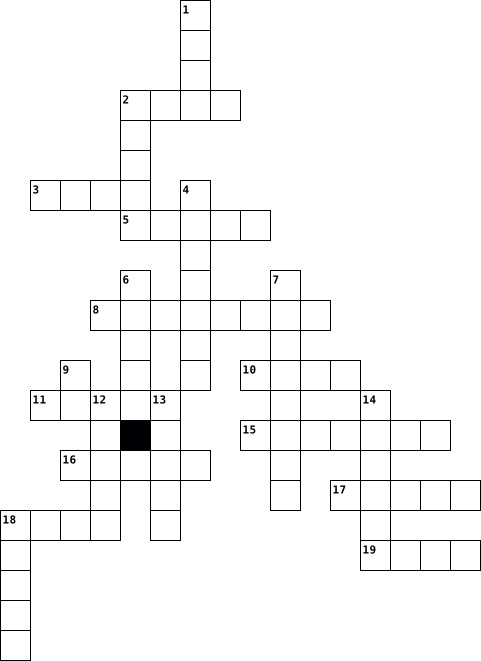
Across
- "..____ represents your life"
- "Come on in, ____"
- I'll go ____
- 'Once the votes are read, the ____ '
- 'Grab your stuff, ____'
- 'Once the ____ are read'
- 'I've got ____'
- '...the decision is ____'
- 'The ____of Survivor state that if a hidden immunity...'
- 'OK, it is ____'
- 'Getting your first ____ at the new..'
Down
- 'Everyone else is _____ game.'
- '____ ; I'll take back the immunity idol'
- 'Wanna know what you're ____ ?'
- 'The person voted out will be asked to ____'
- 'I'll see you tonight at Tribal Council, where ____'
- "Survivors ready? ____!"
- 'the _____ has spoken.'
- 'The rules of Survivor ____ that if a hidden immunity idol..'
- 'This is part of the _____ at Tribal Council'
- 'You need to bring me your ____'
21 Clues: I'll go ____ • 'I've got ____' • 'OK, it is ____' • "Come on in, ____" • 'Grab your stuff, ____' • 'the _____ has spoken.' • "Survivors ready? ____!" • 'Once the ____ are read' • '...the decision is ____' • "..____ represents your life" • 'Everyone else is _____ game.' • 'Wanna know what you're ____ ?' • 'You need to bring me your ____' • 'Once the votes are read, the ____ ' • ...
Infectious Diseases 2025-02-20

Across
- Field that prevents disease in commodities
- Organism that spreads diseases
- Tennis Player
- Specialized immunity developed over time; learned after exposure to a pathogen
- Temporary immunity from another source
- Microorganism that causes diseases
- Single celled organism
- Body's defense against infection
- White blood cell that
- First line of defense against disease; present at birth
Down
- Immune system's memory of previous infections
- Long-term immunity from infection or vaccine
- Regional disease outbreak
- Global disease outbreak
- Microscopic germ that infects cells and can caus disease
- Pathogens invade the body
- How diseases spread
- White blood cell that makes antibodies
- Injection to prevent disease
- Place where pathogens survive
20 Clues: Tennis Player • How diseases spread • White blood cell that • Single celled organism • Global disease outbreak • Regional disease outbreak • Pathogens invade the body • Injection to prevent disease • Place where pathogens survive • Organism that spreads diseases • Body's defense against infection • Microorganism that causes diseases • Temporary immunity from another source • ...
Infection 102e.1 2023-01-17

Across
- hepatitis A virus
- human papilloma virus
- body neutralizer
- passive immunity
- body immunity
- fungi
- non-infection fungus
- pathogenic bacteria
- methicillin staphylococcus aureus
- single cell infection
- all over body
Down
- herpes simplex virus
- hepatitis B virus
- obtains nutrients from host
- slime
- human immunodeficiency virus
- itch mite
- hepatitis C virus
- submicroscopic bacteria
- confined
20 Clues: slime • fungi • confined • itch mite • body immunity • all over body • body neutralizer • passive immunity • hepatitis A virus • hepatitis B virus • hepatitis C virus • pathogenic bacteria • herpes simplex virus • non-infection fungus • human papilloma virus • single cell infection • submicroscopic bacteria • obtains nutrients from host • human immunodeficiency virus • methicillin staphylococcus aureus
Innate Immunity 2022-09-27

Across
- an RNA helicase that recognize dsRNA in the cytoplasm
- cells that phagocytize infected cells and inactivate extracellular viruses
- play a very small role in the inactivating viruses
- interferon produced by epithelial cells
- promotes phagocytosis and induce lysis of microbes
- programmed cell death an intrinsic response of infected cells
- interferon produced by T and NK cells
- PRR that recognizes CPG motifs in viral DNA
- first cells that responds to a viral infection
- physical intrinsic barrier against infection
Down
- key antigen-presenting cells for induction of adaptive immunity
- a type of immunity you are born with
- antiviral cytokines
- bridges innate and adaptive immunity
- PRR that recognizes dsRNA within endosomes
- interferon produced by most if not all nucleated cells
- pattern recognition receptors (PRR) within cellular endosomes that sense foreign molecules
- interferon stimulated genes that establish antiviral state
18 Clues: antiviral cytokines • a type of immunity you are born with • bridges innate and adaptive immunity • interferon produced by T and NK cells • interferon produced by epithelial cells • PRR that recognizes dsRNA within endosomes • PRR that recognizes CPG motifs in viral DNA • physical intrinsic barrier against infection • first cells that responds to a viral infection • ...
Immunity system 2022-05-03

Across
- This is also known as specific immune response.
- _________ create pores in target cells causing them to explode and die.
- ______ causes swelling and limits mobility.
- The __________ is part of the nonspicific immune response that occurs after bacteria has penetrated the bodies first line of defense.
- An _______ can be split up into five classes: IgG, Igd, IgE, IgM, and IgA.
- __________ is the hypothesis process that suggests lymphocytes have antigen receptors on their surface long before they came across an antigen.
- is important when determining what type of blood would be compatible with a patient.
- This is also known as specific immune response.
- _______ antibodies can be produced in a lab by fusing Bcells and lymphoma cells.
- around 85% of US residents of western European descent are ___________.
Down
- T-cells are responidble for _______ immunity.
- The Bcell matures into a _______.
- having _____ blood can cause problems for women pregnant with Rh+ kids.
- A common symptom of a widespread infector is a _______.
- The most common type of white blood cell is the ___________.
- Nonspecific immunity is also known as________.
- This cell has cytoplasmic extensions.
- this type of cell is responsible for antibody-medicated immunity.
- A __________ is a large phogocyte formed from monoctyes.
19 Clues: The Bcell matures into a _______. • This cell has cytoplasmic extensions. • ______ causes swelling and limits mobility. • T-cells are responidble for _______ immunity. • Nonspecific immunity is also known as________. • This is also known as specific immune response. • This is also known as specific immune response. • ...
Week 7 Chapter 11 and 12 Review 2026-03-04

Across
- Lymphatic nodules that prevent the helpful bacteria found in the colon from spreading into the ileum and casuing a pathological state
- Part of the respiratory system that consists of the larynx, trachea, bronchi and lungs
- location where external/pulmonary respiration occurs, blood changes from blue to red
- contains the vocal folds which produce sound when they vibrate
- type of respiration where oxygen will diffuse from the systemic capillaries into the tissue
- acquired immunodeficiency syndrome
- immunity we are born with
- Natural passive immunity
- paired organs in the thoracic cavity
- exchange of gases between the atmosphere, blood and cells
- Natural active immunity
- Duct that collects the drainage from the right upper extremity and right side of the head/neck
- another name for tertiary bronchi
- at the superior border of this thoracic vertebrae the trachea branches into a right and left primary bronchus that enter the respective lungs
- human immunodeficiency virus
Down
- Artificial passive immunity
- most inferior part of the thoracic duct
- membrane that encloses and protects the lungs
- Artificial active immunity
- Part of the respiratory system that consists of the nose, pharynx and associated structures
- System that assists the respiratory system by transporting gases
- another name for secondary bronchi
- Type of system the lymphatic system is considered due to the structure of and flow between tissues and lyphatic capillaries
- duct that collect the drainage from the left side of the body and everything below the ribcage on the right side of the body
- immunity that develops upon exposure to an antigen
- another name for primary bronchi
- type of respiration where oxygen will diffuse from the alveoli into the pulmonary capillaries
27 Clues: Natural active immunity • Natural passive immunity • immunity we are born with • Artificial active immunity • Artificial passive immunity • human immunodeficiency virus • another name for primary bronchi • another name for tertiary bronchi • acquired immunodeficiency syndrome • another name for secondary bronchi • paired organs in the thoracic cavity • ...
Infectious Diseases Crossword 2025-02-20

Across
- I'm Me!
- Immunity The body’s first line of defense, present at birth, and responds to a broad range of pathogens
- Health The field concerned with protecting and improving the health of people and communities
- A substance or organism that causes disease or illness
- The process of introducing a vaccine to stimulate the immune system against disease
- Immunity Immunity that is passed from one individual to another, such as from mother to baby through breast milk
- An organism that carries and transmits pathogens to another living being
- A natural habitat or environment where pathogens live and multiply
- A microscopic infectious agent that requires a host cell to replicate, often causing diseases
- Response The body's reaction to a foreign substance (like a pathogen) that it recognizes as harmful
- A global outbreak of a disease affecting a large number of people in multiple countries or continents
Down
- A type of white blood cell that produces antibodies to fight infections
- A sudden increase in the number of cases of a disease above what is normally expected in a specific area
- The invasion and multiplication of harmful microorganisms in the body
- Immunity Immunity that develops after exposure to a pathogen, either through infection or vaccination
- The process of spreading or transferring a disease from one individual to another
- A type of white blood cell involved in the adaptive immune response, particularly in recognizing and attacking infected cells
- Single-celled organisms that can cause infections and diseases
- Immunity A specific immune response that develops over time and involves T and B cells
- Memory The ability of the immune system to remember past infections and respond more effectively upon future exposure
20 Clues: I'm Me! • A substance or organism that causes disease or illness • Single-celled organisms that can cause infections and diseases • A natural habitat or environment where pathogens live and multiply • The invasion and multiplication of harmful microorganisms in the body • A type of white blood cell that produces antibodies to fight infections • ...
Host Defenses II - Adaptive Immunity & Immunization 2026-03-24

Across
- gel-like substance inside cells where reactions occur
- activated B cells that secrete antibodies
- white blood cells involved in adaptive immunity
- nonspecific first line defense against pathogens
- introduction of antigen to stimulate immunity
- immunity specific immune response with memory
- early method of inducing immunity using smallpox material
Down
- long-lived cells that remember past infections
- cells that engulf and digest pathogens
- lymphocytes that produce antibodies
- substances that trigger an immune response
- invasion and multiplication of pathogens in the body
- covalent bond that stabilizes protein structure
- protein that specifically binds to antigens
- lymphocytes that help regulate and kill infected cells
15 Clues: lymphocytes that produce antibodies • cells that engulf and digest pathogens • activated B cells that secrete antibodies • substances that trigger an immune response • protein that specifically binds to antigens • introduction of antigen to stimulate immunity • immunity specific immune response with memory • long-lived cells that remember past infections • ...
Survivor 2025-11-27

Across
- what is Jeff’s last name ?
- when you are close with someone they are your ?
- how many people start in the game ?
- what they compete in
- who decides who wins the show?
- where the jury goes after getting out
- removing someone’s immunity idol
- what makes you safe ?
Down
- the tribe has what?
- what the contestants are called
- who won immunity last week?
- an unexpected vote
- where do they go for a reward?
- who won season one?
- what does blue sophi have?
- outwit outplay ?
- what is rizos nickname ?
17 Clues: outwit outplay ? • an unexpected vote • the tribe has what? • who won season one? • what they compete in • what makes you safe ? • what is rizos nickname ? • what does blue sophi have? • what is Jeff’s last name ? • who won immunity last week? • where do they go for a reward? • who decides who wins the show? • what the contestants are called • removing someone’s immunity idol • ...
Immune System 2023-10-30

Across
- Class 2 MHC molecules attaches to what type of T cell?
- What are the proteins releases by lymphocytes and macrophages called?
- Cell-Mediated and Antibody Mediated immunity both what type of immunity
- Adaptive immunity is what kind is Defense?
- Protein marker on pathogen surface?
- Lymphocytes matured in the thymus?
Down
- cells Macrophages and Neutrophils are both what type of cell?
- Cytotoxic T cells are what kind of immunity?
- One specific type of Leukocytes are called?
- Cells that turn into plasma cells?
- Bradykinin causes what kind of inflammation sign?
- What kind of immunity develops in response to antigen exposure?
- What does immune surveilance and destroys cells directly?
13 Clues: Cells that turn into plasma cells? • Lymphocytes matured in the thymus? • Protein marker on pathogen surface? • Adaptive immunity is what kind is Defense? • One specific type of Leukocytes are called? • Cytotoxic T cells are what kind of immunity? • Bradykinin causes what kind of inflammation sign? • Class 2 MHC molecules attaches to what type of T cell? • ...
The Lymphatic System 2024-05-05

Across
- a buildup of excess interstitial fluid in the tissues
- lymphatic tissue arranged into compact, spherical structures without a capsule
- chemicals that promote fever by acting on the hypothalamus
- concentrations of lymphatic tissue without a connective tissue capsule
- the process by which the body protects itself from pathogenic invaders
- groups of lymphocytes and macrophages
- this is antiviral
Down
- also called nonspecific immunity
- also called specific or adaptive immunity
- watery liquid formed from interstitial fluid
- encapsulated masses of lymphatic tissue
- immunity acquired immunity provided by antibodies in the blood plasma
- this is antibacterial
- does not filter lymph
- also called thymus lymphocytes
15 Clues: this is antiviral • this is antibacterial • does not filter lymph • also called thymus lymphocytes • also called nonspecific immunity • groups of lymphocytes and macrophages • encapsulated masses of lymphatic tissue • also called specific or adaptive immunity • watery liquid formed from interstitial fluid • a buildup of excess interstitial fluid in the tissues • ...
adaptive body defenses 2019-12-07

Across
- it contains pathogens that are dead or attenuated
- region that contain heavy and light chain
- antibodies that used to descendants of a single cell
- process where lymphocytes begins to grow and multiplies rapidly
- immunity that prevents an outbreak of the disease or infection
- first types of adaptive immunity
- type of memory that memory cells are responsible for
- others name for antibody mediated immunity
- ability of responding to a specific antigen by binding to it with antigen specific receptors
- called name for IgM antibodies
- Cells that produce antibodies and oversee humoral immunity.
- immune sera that used to treat poisonous snakes bite
- occur in both monomer and dimer
- antibody that contain serum from the surviving animals
- cell that directly attack invading antigen
- the case' name of troublesome small molecules
Down
- major types of cells that acting as APCs
- obtained from the serum of an immune human or animal donor
- Foreign molecules that recognized adaptive immune system
- others name for antibodies
- immunity that acquired when we receives vaccines
- Others name for adaptive body defense
- important aspect of adaptive body defense that can recognizes and mounts even stronger attacks on previously encountered pathogens
- source of natural acquired of passive immunity
- lymphoid organ that place for immature lymphocytes divide rapidly
- Factors that protect our body from future attacks by the same pathogen
- one of the ways for antibodies to inactivate antigens
- it is originate from hemocytoblasts in red bone narrow
- bathe body surface that mainly can found secretory IgA
- essentially identical in different antibodies of the same class
30 Clues: others name for antibodies • called name for IgM antibodies • occur in both monomer and dimer • first types of adaptive immunity • Others name for adaptive body defense • major types of cells that acting as APCs • region that contain heavy and light chain • others name for antibody mediated immunity • cell that directly attack invading antigen • ...
Chapter 31 Crossword 2023-05-11

Across
- A type of immunity the body makes when responding to an infecting pathogen
- Theory proposing that specific microorganisms cause disease
- The proteins made by B cells
- When the host's immune system attacks a donors tissue
- A type of immunity that occurs without the body going through an immune response
- Body system that fights diseases and infections
- A type of immunity that depends on T cells attaching and bursting infected body cells
- A substance that causes an allergic reaction
- Protein markers on the surface of cells and viruses that act as identification
- Cells that make proteins to inactivate pathogens
- Body response that presents through swelling, redness, warmth, and pain
- A disease in which the bone marrow and other blood-forming organs create immature or abnormal leukocytes
- A substance used to prevent disease-causing microorganisms
- Something that carries and transmits a pathogen
- A type of immunity that relies on antibodies to destroy or inactivate infected body cells
- Cell that surrounds and engulfs pathogens
Down
- This happens when germs develop resistance to the drugs used to kill them
- A disease where there is a severe loss of the body’s cellular immunity
- Proteins made by infected body cells
- Infections that occur more often or severely in people with weakened immune systems
- Specialized T and B cells that can "remember" antigens
- An immune response to a substance to which the body has become hypersensitive to
- Cells that destroy infected body cells
- Substance used to create immunity or resistance to an infectious disease or pathogen
- A disease-causing agent
- A virus that attacks the body’s immune system
- A severe life-threatening allergic reaction to an antigen
27 Clues: A disease-causing agent • The proteins made by B cells • Proteins made by infected body cells • Cells that destroy infected body cells • Cell that surrounds and engulfs pathogens • A substance that causes an allergic reaction • A virus that attacks the body’s immune system • Body system that fights diseases and infections • Something that carries and transmits a pathogen • ...
Survivor: Big Hero 6 Final 5 Immunity Challenge 2025-05-16

Across
- This tribe won the first Immunity challenge of the season.
- The name of Will's "Food Truck Cousin"
- One of the items in the Scavenger Hunt, was ____ stapled to a tree.
- This player was one of two who were DQ'd from the first ever immunity challenge.
- The pool of gauntlet challenges was everything from previous Split-Up immunities besides, co-op challenges, web games, and ___.
- This advantage allows a player to win Individual Immunity, assuming they make it into the top 3 scores for the challenge.
- This tribe contained exclusively returning players.
- There were this many duels during the first ever Split-Up Challenge.
- This player won the Sliding Tile Puzzle duel during the premerge.
- This was the Wavering Advantage on sale during the Final 14 cycle.
- This tribe won a Split-up challenge 4-1.
Down
- Rayn insisted they could do well in this challenge as a spectator, and was made fun of for only scoring a 4/8 in #tree-mail.
- This player was voted out during a Tribal Council where 6 votes were negated.
- This player was voted out after being ineligible to win Individual Immunity.
- This player was the only returning winner on this seasons cast.
- This tribe won both Individual Immunities in the premerge.
- The first of two web games used for Immunity Challenges: This one featured in a Step-Up immunity challenge.
- In the Codenames Challenge rules, we gave you an example of three words. Red Teams words were Mustard and Ketchup, while Blue Team's single word was ___.
- Out of everyone who chose the easiest Pyctogram, ____ got the fastest score.
- As revealed in #tree-mail, in the universe of Big Hero 6 bot fighting is not illegal, but _____ on bot fighting is.
20 Clues: The name of Will's "Food Truck Cousin" • This tribe won a Split-up challenge 4-1. • This tribe contained exclusively returning players. • This tribe won the first Immunity challenge of the season. • This tribe won both Individual Immunities in the premerge. • This player was the only returning winner on this seasons cast. • ...
immunity 2016-04-22

Across
- protein on microbes that trigger response
- introduction of vaccine containing the disease
- how body protect itself from infection
- one of the main causes of lung cancer
- pox this viral disease was eradicated in 1970's
- liquid component of blood
Down
- blood cells responsible for the defence in your body
- microorganisms that cause diseases
- drugs that work against bacteria
- protein produced by white blood cells as defence
10 Clues: liquid component of blood • drugs that work against bacteria • microorganisms that cause diseases • one of the main causes of lung cancer • how body protect itself from infection • protein on microbes that trigger response • introduction of vaccine containing the disease • pox this viral disease was eradicated in 1970's • protein produced by white blood cells as defence • ...
Immunity Crossword 2022-10-17

Across
- Cytotoxic T cells release these serine proteases that trigger programmed cell death
- Blood serum will contain what type of antibiodies
- B cells have receptors on their surface that react directly with antigens (pathogens) in blood etc. This gives rise to what biological cell process
- Class 2 MHC proteins s are released by what type of cell
- Antibodies are also called what
- Does antibody concentration increase or decrease after second exposure to a specific antigen?
- A second exposure of the antigen stimulates what cells, resulting in a rapid response to produce plasma cells and cytotoxic t cells
Down
- This type of specific immune response defends against intracellular pathogens and cancers
- Immune system containing 3rd line of defence
- This is the name of pathogen inactivation via antibodies where the antibodies block viral binding sites and coats bacterial toxins
- What type of T cell interacts/ stimulates with B cells
- What type of linkages bind the heavy and light chains of proteins on antibodies together?
- Specific immune response involving B cells is BLANK mediated
- B and T cells are also known as what
- True or false- b and T cell response only occur at different times
- Differentiates into macrophages and dendritic cells
- True or false: Each B cell is specific for a particular antigen
17 Clues: Antibodies are also called what • B and T cells are also known as what • Immune system containing 3rd line of defence • Blood serum will contain what type of antibiodies • Differentiates into macrophages and dendritic cells • What type of T cell interacts/ stimulates with B cells • Class 2 MHC proteins s are released by what type of cell • ...
Respiratory & Immunity 2024-10-02

Across
- The sacs where gas exchange occurs
- The body’s response to an unrecognized substance
- A reflex that acts as a barrier
- The process of bringing oxygen into the lungs
- The organ that connects the larynx to the bronchi
- Type of immunity that the body develops after an infection
Down
- The second line of defense includes inflammation and ___
- The abnormal substances recognized by antibodies
- This organ has three lobes on the right side
- The first line of defense includes mechanical barriers like ___
- The main muscle for ventilation
- The structure that prevents food from entering the airway
- White blood cells that produce antibodies
- The two layers covering the lungs
- The main function of the immune system
- The respiratory system's upper tract includes the ___
- This type of immunity is passed from mother to fetus
17 Clues: The main muscle for ventilation • A reflex that acts as a barrier • The two layers covering the lungs • The sacs where gas exchange occurs • The main function of the immune system • White blood cells that produce antibodies • This organ has three lobes on the right side • The process of bringing oxygen into the lungs • The abnormal substances recognized by antibodies • ...
adaptive body defenses 2019-12-07

Across
- region that contain heavy and light chain
- type of memory that memory cells are responsible for
- the case' name of troublesome small molecules
- Cells that produce antibodies and oversee humoral immunity.
- process where lymphocytes begins to grow and multiplies rapidly
- Others name for adaptive body defense
- one of the ways for antibodies to inactivate antigens
- first types of adaptive immunity
- others name for antibody mediated immunity
- called name for IgM antibodies
- cell that directly attack invading antigen
- immunity that prevents an outbreak of the disease or infection
- Foreign molecules that recognized adaptive immune system
- important aspect of adaptive body defense that can recognizes and mounts even stronger attacks on previously encountered pathogens
Down
- major types of cells that acting as APCs
- antibodies that used to descendants of a single cell
- bathe body surface that mainly can found secretory IgA
- it contains pathogens that are dead or attenuated
- source of natural acquired of passive immunity
- obtained from the serum of an immune human or animal donor
- Factors that protect our body from future attacks by the same pathogen
- ability of responding to a specific antigen by binding to it with antigen specific receptors
- antibody that contain serum from the surviving animals
- others name for antibodies
- immunity that acquired when we receives vaccines
- it is originate from hemocytoblasts in red bone narrow
- lymphoid organ that place for immature lymphocytes divide rapidly
- occur in both monomer and dimer
- immune sera that used to treat poisonous snakes bite
- essentially identical in different antibodies of the same class
30 Clues: others name for antibodies • called name for IgM antibodies • occur in both monomer and dimer • first types of adaptive immunity • Others name for adaptive body defense • major types of cells that acting as APCs • region that contain heavy and light chain • others name for antibody mediated immunity • cell that directly attack invading antigen • ...
adaptive body defenses 2019-12-07

Across
- region that contain heavy and light chain
- the case' name of troublesome small molecules
- immune sera that used to treat poisonous snakes bite
- major types of cells that acting as APCs
- immunity that acquired when we receives vaccines
- others name for antibody mediated immunity
- Foreign molecules that recognized adaptive immune system
- type of memory that memory cells are responsible for
- cell that directly attack invading antigen
- Cells that produce antibodies and oversee humoral immunity.
- Others name for adaptive body defense
- occur in both monomer and dimer
- others name for antibodies
- first types of adaptive immunity
- antibody that contain serum from the surviving animals
- called name for IgM antibodies
- one of the ways for antibodies to inactivate antigens
- it contains pathogens that are dead or attenuated
Down
- process where lymphocytes begins to grow and multiplies rapidly
- Factors that protect our body from future attacks by the same pathogen
- source of natural acquired of passive immunity
- ability of responding to a specific antigen by binding to it with antigen specific receptors
- it is originate from hemocytoblasts in red bone narrow
- lymphoid organ that place for immature lymphocytes divide rapidly
- bathe body surface that mainly can found secretory IgA
- obtained from the serum of an immune human or animal donor
- antibodies that used to descendants of a single cell
- immunity that prevents an outbreak of the disease or infection
- essentially identical in different antibodies of the same class
- important aspect of adaptive body defense that can recognizes and mounts even stronger attacks on previously encountered pathogens
30 Clues: others name for antibodies • called name for IgM antibodies • occur in both monomer and dimer • first types of adaptive immunity • Others name for adaptive body defense • major types of cells that acting as APCs • region that contain heavy and light chain • others name for antibody mediated immunity • cell that directly attack invading antigen • ...
Chapter 12 2026-03-19

Across
- agents that have potential to cause disease
- a systemic inflammatory response, triggered by substances released by macrophages
- found on potential pathogens
- found on innate immune cells
- hostile to many microbes
- a type of leukocyte/red blood cell
- provide innate defense interfering with viruses and helping activate macrophages
- circulate within hemolymph and carry out phagocytosis there is no blood
- found throughout the body
Down
- traps and allows for the removal of microbes
- mast cells release this
- stimulate development of adaptive, immunity and cells that contact the environment, such as skin
- have a immunity and adaptive immunity
- all have innate immunity
- involved in allergic and anti-helminth responses
- circulate in the blood and are attracted by signals from infected tissue
16 Clues: mast cells release this • all have innate immunity • hostile to many microbes • found throughout the body • found on potential pathogens • found on innate immune cells • a type of leukocyte/red blood cell • have a immunity and adaptive immunity • agents that have potential to cause disease • traps and allows for the removal of microbes • ...
Survivor 2025-11-27

Across
- what the contestants are called
- what does blue sophi have?
- what is Jeff’s last name ?
- where do they go for a reward?
- what is rizos nickname ?
- who decides who wins the show?
- what they compete in
- who won season one?
- the tribe has what?
Down
- where the jury goes after getting out
- removing someone’s immunity idol
- who won immunity last week?
- outwit outplay ?
- what makes you safe ?
- an unexpected vote
- how many people start in the game ?
16 Clues: outwit outplay ? • an unexpected vote • who won season one? • the tribe has what? • what they compete in • what makes you safe ? • what is rizos nickname ? • what does blue sophi have? • who won immunity last week? • what is Jeff’s last name ? • where do they go for a reward? • who decides who wins the show? • what the contestants are called • removing someone’s immunity idol • ...
Immune System 2022-01-13

Across
- The whole process of phagocytes killing the pathogens
- An organism that can cause disease
- Something that lymphocytes produce
- Phagocytes ______ the pathogen and digests it with enzymes
- Type of a white blood cell that makes antibodies
- ______ B-Cells are cells that remember the pathogen and will create a rapid immune response if the pathogen is seen again
- A pathogen that needs a host to replicate.
Down
- This is an artificial way to stimulate the production of antibodies and provide immunity
- Type of a white blood cell that engulfs pathogens
- Antibiotic __________ is when bacteria develop the ability to defeat the drugs designed to kill them
- ______ immunity is immunity that lasts a long time but is slow-acting
- Causes the production of antibodies
- _______ immunity is immunity that lasts a short time but is fast-acting
- A pathogen with a cell wall
- Mushrooms, mould and yeasts are part of this group
15 Clues: A pathogen with a cell wall • An organism that can cause disease • Something that lymphocytes produce • Causes the production of antibodies • A pathogen that needs a host to replicate. • Type of a white blood cell that makes antibodies • Type of a white blood cell that engulfs pathogens • Mushrooms, mould and yeasts are part of this group • ...
Immuno Week 1 2016-09-02

Across
- anything recognized by the immune system as foreign
- gives rise to mature T cells and B cells
- differentiation of all blood cells from a stem cell
- principal effector of humoral immunity
- recognizes the lack of MHC molecules on the cell surface of tumors
- contributes to cell mediated immunity
Down
- gives rise to platelets
- the immune system protects us from these
- arm of the immune response that acts immediately
- plays a critical role in the interplay between the innate and adaptive immune response
- these produce artificially acquired immunity
- process of expanding t or b cells of single specificities to fight infection
- protection from infection
- has a polymorphonuclear appearance
- arm of the immune response that exhibits memory to past infection
- produces antibodies
16 Clues: produces antibodies • gives rise to platelets • protection from infection • has a polymorphonuclear appearance • contributes to cell mediated immunity • principal effector of humoral immunity • the immune system protects us from these • gives rise to mature T cells and B cells • these produce artificially acquired immunity • arm of the immune response that acts immediately • ...
Infectious Midterm 2019-03-04

Across
- / type of prevention that comes first (example: wearing sunscreen) /
- / any process that eliminates, removes, or deactivates all forms of microbiotic life in a specific region
- / “M” antibiotics in 7 classes of antibiotics
- / describes anything located outside of a cell
- / final type of prevention when patient already has disease (examples: rehabilitation, treatment) /
- / “T” antibiotics in 7 classes of antibiotics
- / “F” antibiotics in 7 classes of antibiotics
- / immunity that develops in response to infection
- / “C” antibiotics in 7 classes of antibiotics
- / immunity acquired from transfer of antibody from one person to another (example: mother to offspring)
- / this type of prevention includes cancer screenings /
- / heat (cardinal sign of inflammatory response)
Down
- / “S” antibiotics in 7 classes of antibiotics
- / antimicrobial product used on humans (example: mouthwash)
- / pain (cardinal sign of inflammatory response)
- / intracellular immunity that is cell-mediated by T-lymphocytes (slower)
- / antimicrobial product used on objects (example: Lysol)
- / swelling (cardinal sign of inflammatory response)
- / elimination of disease
- / “bacteri___,” kills bacteria
- / describes anything located inside of a cell
- / “P” antibiotic in 7 classes of antibiotics
- / lessening of number of cases of disease
- / redness (cardinal sign of inflammatory response)
- / “A” antibiotics in 7 classes of antibiotics
- / “bacterio___,” slows bacterial growth or reproduction
- / extracellular immunity that is antibody-mediated by B-lymphocytes (faster)
- / inherent immunity present before infection
28 Clues: / elimination of disease • / “bacteri___,” kills bacteria • / lessening of number of cases of disease • / “P” antibiotic in 7 classes of antibiotics • / inherent immunity present before infection • / describes anything located inside of a cell • / “M” antibiotics in 7 classes of antibiotics • / “A” antibiotics in 7 classes of antibiotics • ...
Immune System - Key Terms 2023-11-27

Across
- One group/response of adaptive immunity involving T-lymphocytes.
- How many complement pathways are there?
- When a "helper" T cell encounters an antigen-presenting cell in the body, it releases __________ once activated.
- The complement system is part of the innate immune system (true or false?).
- A process that effectively eats large foreign substances (pathogens) as part of the innate response
- Many pathogens share certain repeating patterns on their surface.
- Circulating antibodies are produced and secreted by plasma B lymphocytes
Down
- Where are T-cells formed?
- Natural killer and Macrophages are an example of these type of cells.
- A non-specific type of immunity
- A form of short-term immunity. E.g. the passing of antibodies from a mother to an infant.
- Immunity can be split into how many types?
- One group/response of adaptive immunity involving free circulating antibodies.
- APC stands for 'Antigen _________ Cell'
- Where do T-cells mature?
15 Clues: Where do T-cells mature? • Where are T-cells formed? • A non-specific type of immunity • How many complement pathways are there? • APC stands for 'Antigen _________ Cell' • Immunity can be split into how many types? • One group/response of adaptive immunity involving T-lymphocytes. • Many pathogens share certain repeating patterns on their surface. • ...
Module 1 crossword 2026-02-26

Across
- State of protection resulting from immune recognition and response
- Molecule capable of being specifically recognised by B‑ or T‑cell receptors
- Granulocyte associated with helminth immunity and allergic inflammation
- Cytokine family with key roles in antiviral defence and immune regulation
- Active immunological non‑responsiveness to self antigens
- White blood cell central to adaptive immunity, including B and T cells
- Short‑lived granulocyte that provides rapid antimicrobial activity
- Antigen‑specific immune response characterised by clonal expansion and memory
Down
- Phagocytic innate immune cell involved in antigen presentation and cytokine release
- Soluble signalling protein that regulates immune cell activation and differentiation
- Immunoglobulin produced by plasma cells that binds antigen
- Germline‑encoded arm of immunity providing immediate, non‑specific defence
- Plasma protein cascade that enhances opsonisation and microbial lysis
- Preparation that induces protective immunity without causing disease
- Subclass of cytokines that directs leukocyte migration via chemotaxis
15 Clues: Active immunological non‑responsiveness to self antigens • Immunoglobulin produced by plasma cells that binds antigen • State of protection resulting from immune recognition and response • Short‑lived granulocyte that provides rapid antimicrobial activity • Preparation that induces protective immunity without causing disease • ...
Immunoprophylaxis & Vaccines. 2025-02-23

Across
- A serious allergic reaction that can occur after vaccination.
- A substance that stimulates the immune system to produce immunity against a disease.
- A weakened or inactivated pathogen used in vaccines.
- A protein that neutralizes pathogens.
- The first vaccine was developed for this disease by Edward Jenner.
Down
- The delay between vaccination and the development of immunity.
- A type of immunity achieved through vaccination.
- The study of immunity and immune responses.
- An immunity acquired from the mother through the placenta or breast milk.
- The process of giving a vaccine to develop immunity.
- A global organization that monitors vaccines and immunization programs.
- A vaccine type that contains a live but weakened pathogen.
12 Clues: A protein that neutralizes pathogens. • The study of immunity and immune responses. • A type of immunity achieved through vaccination. • A weakened or inactivated pathogen used in vaccines. • The process of giving a vaccine to develop immunity. • A vaccine type that contains a live but weakened pathogen. • ...