
plate tectonics Crossword Puzzles
Plate Tectonics 2022-11-17

Across
- The pieces that the crust is made of.
- When plates pull apart.
- The thing that forms when one plate goes under another.
- What earthquakes sometimes form(comes from the ocean).
Down
- When plates collide.
- Liquid inside the mantle.
- When plates slide against each other.
7 Clues: When plates collide. • When plates pull apart. • Liquid inside the mantle. • The pieces that the crust is made of. • When plates slide against each other. • What earthquakes sometimes form(comes from the ocean). • The thing that forms when one plate goes under another.
plate tectonics 2019-05-16

Across
- the tough or outer part
- slabs
- dives earths mantle pushes plates
- boundaries when to plates are moving toward each other
Down
- subtracted under neath north america plate
- plate found under neath the pacific ocean
- boundaries boundaries moving away from each other
7 Clues: slabs • the tough or outer part • dives earths mantle pushes plates • plate found under neath the pacific ocean • subtracted under neath north america plate • boundaries boundaries moving away from each other • boundaries when to plates are moving toward each other
Plate tectonics 2025-12-12

Across
- drift the idea that long ago one very large landmass was split into the continents we have today
- a set of ideas that explains observations and is supported by evidence
- current movement of material like rock inside Earth caused by differences in density. This movement can go up and down or in circles and helps move tectonic plates
Down
- the process where one tectonic plates moves under another plate and slides down into the Earth because of plate movements
- reversal when Earth's magnetic north and south poles swap places
- tectonics Earth's outer layer is made of big moving pieces
- spreading the process where new ocean floor forms as hot rock rises at places called mid-ocean ridges. The hot rock (magma)cools and becomes solid rock and the older ocean floor moves away from the ridge
7 Clues: tectonics Earth's outer layer is made of big moving pieces • reversal when Earth's magnetic north and south poles swap places • a set of ideas that explains observations and is supported by evidence • drift the idea that long ago one very large landmass was split into the continents we have today • ...
Plate Tectonics 2025-11-17

Across
- football/soccer
- mate
- all ocean
- really cold
Down
- football the real way
- no water
- paris
7 Clues: mate • paris • no water • all ocean • really cold • football/soccer • football the real way
plate tectonics 2026-06-04

Across
- spots
- zone
- Ridge
- center
- basins
Down
- boundaries
- plate
- boundaries
- boundaries
9 Clues: zone • spots • plate • Ridge • center • basins • boundaries • boundaries • boundaries
PLATE TECTONICS CROSSWORD PUZZLE 2016-07-10

Across
- Large slab of solid rock
- The boundaries where plates slide sideways past each other.
- What kind of boundary it is when Seafloor spreading occurs at___.
- the relatively thin part of the earth's crust that underlies the ocean basins. It is geologically young compared with the continental crust and consists of basaltic rock overlain by sediments.
- ____from the Greek root “to build”.
- the relatively thick part of the earth's crust that forms the large landmasses. It is generally older and more complex than the oceanic crust.
Down
- What is the name of the Mesozoic supercontinent that consisted of all of the present continents?
- refers to the key geological theory that explains how the Earth’s surface changes now and has changed in the past.
- The zone along a plate boundary where one plate is forced under another plate is____.
9 Clues: Large slab of solid rock • ____from the Greek root “to build”. • The boundaries where plates slide sideways past each other. • What kind of boundary it is when Seafloor spreading occurs at___. • The zone along a plate boundary where one plate is forced under another plate is____. • ...
Restless Earth Vocab 2024-04-12

Across
- Extinction events that occur over a longer time period
- Large, rigid pieces of the Earth's lithosphere that move and interact with each other along plate boundaries
- Name of the ancient supercontinent when it was all one landmass
- A group of the same species living in the same area]
- Sudden Events That Led To Mass Extinction
- Formed as a result of high temperature and pressure deep within the earth changing a rock that already existed
- Includes the crust and upper part of the mantle, and is divided into tectonic plates
- Hot material rises, cooler materials sink. It drives plate tectonics
- Forms after weathering and erosion when sediments compact and cement
- An opening in the Earth's crust through which molten rock is pushed out and creates new rock
- Where tectonic plates slide past each other. Causes Earthquakes
- Fractures or zones of weakness in the Earth's crust
Down
- Tectonic plates move away from each other, usually forms new crust and rift valleys
- Instruments used to measure and record seismic waves
- The semi-liquid layer of the mantle where convection currents happen
- New oceaninc crust is formed as tectonic plates pull apart and magma rises
- Located between the mantle and the outer core
- Formed at plate boundaries usually when plates collide
- Deep, elongated depressions in the ocean, often associated with subduction zones
- Rock formed when lava or magma cools and hardens
- Tectonic plates move toward each other, usually forms mountains and volcanoes
21 Clues: Sudden Events That Led To Mass Extinction • Located between the mantle and the outer core • Rock formed when lava or magma cools and hardens • Fractures or zones of weakness in the Earth's crust • Instruments used to measure and record seismic waves • A group of the same species living in the same area] • Extinction events that occur over a longer time period • ...
Restless Earth 2024-04-12

Across
- Where tectonic plates slide past each other. Causes earthquackes
- Deep, elongated depression in the ocean, often associated with subduction zones
- Name of the ancient supercontinent when all one landmass
- an opening in the earth's crust through which molten rock is pushed out and creates new rock
- located between the mantle and the outer core
- formed at plate boundaries usually when plates collide
- New oceanic crust if formed as tectonic plates pull apart and magma rises
- Insturments used to measure and record seismic waves
- Formed as a result of high temperature and pressure deep within earth changing a rock that already existed
- Tectonic plates move away from each other, usually Forms new crust and rift valleys
- tectonic plates move toward each other, usually forms mountains and valcanoes
Down
- plates large rigid pieces of the earth lithosphere that move and interact with each other along plate boundaries
- hot material rises, cooler meterals sink. It drives plate tectonics
- that occur over a longer time period
- Includes the crust and upper part of the mantle, and is divided into tectonic
- A group of the same species living in the same area
- Sudden Events That led to a mass extinction
- fractures or zones of weakness in the Earth's crust
- Rock formed when lava or magma cools and hardens
- The semi-fluid layer of the mantle where convection currents happen
- Forms after weathering and erosion when sediments compact and cement
21 Clues: that occur over a longer time period • Sudden Events That led to a mass extinction • located between the mantle and the outer core • Rock formed when lava or magma cools and hardens • A group of the same species living in the same area • fractures or zones of weakness in the Earth's crust • Insturments used to measure and record seismic waves • ...
Restless Earth Vocab List 2024-04-12

Across
- New oceanic crust is formed as tectonic plates pull apart and magma rises
- Hot material rises, cooler materials sink. It drives plate tectonics
- An opening in the Earth's crust through which molten rock is pushed out and creates new rock
- Forms after weathering and erosion when sediments compact and cement
- Instruments used to measure and record seismic waves
- Formed as a result of high temperature and pressure deep within Earth changing a rock that already existed
- Includes the crust and upper part of the mantle, and is divided into tectonic plates
- Name of the ancient supercontinent when it was all one landmass
- A group of the same species living in the same area
- Fractures or zones of weakness in the Earths crust
- The semi-fluid layer of the mantle where convection currents happen
- Rock formed when lava or magma cools and hardens
Down
- Sudden events that led to a mass extinction
- Deep, elongated depressions in the ocean, often associated with subduction zones
- Formed at plat boundaries usually when plate collide
- Large, rigid pieces of the Earth's lithosphere that move and interact with each other along plate boundries
- Tectonic plates SLIDE past each other, causes Earth quakes
- Tectonic plates move toward each other, usually forms mountains and volcanoes
- Tectonic plates move away from each other, usually forms new crust and rift valleys
- Extinction events extinction events that occur over a longer time period
- Located between the mantle and the outer core
21 Clues: Sudden events that led to a mass extinction • Located between the mantle and the outer core • Rock formed when lava or magma cools and hardens • Fractures or zones of weakness in the Earths crust • A group of the same species living in the same area • Formed at plat boundaries usually when plate collide • Instruments used to measure and record seismic waves • ...
restless earth vocab 2024-04-12

Across
- extinction events that occur over a long time period
- hot material rises,cooler materials sink. it drives plate tectonics
- deep, elongated depressions in the ocean, often associated with subduction zones.
- name of the ancient supercontinent when it was all one land mass
- new ocean crust is formed as tectonic plates pull apart and magma rises
- fractures or zones of weakness in the earths crust
- includes the crust and upper part of the mantle, and is divided into tectonic plates
- formed at the plate boundaries usually when plates collide
- tectonic plates move away from each other, usually forms new crust and rift valleys
- a group of the same species living in the same area
- instruments used to measure and record seismic waves
- an opening in the earths crust through which molten rock is pushed out and creates new rock
Down
- sudden events that led to mass extinction
- tectonic plates move toward eachtoher, usually forms mountains and volcanoes
- located between the mantle and the outer core
- large,rigid pieces of the earths lithosphere that move and interact with each other along plate boundaries
- where tectonic plates slide past eachtoher. causes earthquakes
- the semi-fluid layer of the mantle where convection currents happen
- forms after weathering and erosion when sediments compact and cement
- rock formed when lava or magma cools and hardens
- formed as a result of high temperature and pressure deep within earth changing a rock that already existed
21 Clues: sudden events that led to mass extinction • located between the mantle and the outer core • rock formed when lava or magma cools and hardens • fractures or zones of weakness in the earths crust • a group of the same species living in the same area • extinction events that occur over a long time period • instruments used to measure and record seismic waves • ...
Restless Earth Vocab List 2024-04-12

Across
- A group of the same species living in the same area
- Includes the crust and upper part of the mantle, and is divided into tectonic plates
- Extinction events that occur over a longer period of time
- Sudden events that led to a mass extinction
- Rock Formed when lava or magma cools and hardens
- Tectonic plates move toward each other, usually forms mountains and volcanoes
- Large, rigid pieces of Earth's lithosphere that move and interact with each other along plate boundries
- Located between the mantle and the outer core
- The semi-fluid layer of the mantle where convection currents happen
Down
- Where tectonic plates slide past each other causing earthquakes
- Forms after weathering and erosion when sediments compact and cement
- Hot material rises, cooler materials sink. It drives plate tectonics.
- Formed at plate boundaries usually when plates collide
- An opening in the Earth's crust through which molten rock is pushed out and creates new rock.
- Tectonic plates move away from each other, usually forms new crust and rift valleys
- New Oceanic crust is formed as tectonic plates pull apart and magma rises
- Name of the ancient super-continent when it was all one landmass
- Fractures or zones of weakness in the Earth's crust.
- Deep, elongated depressions in the ocean, often associated with subduction zones
- Instruments used to measure and record seismic waves
- Formed as a result of high temperatures and pressure deep within Earth, changing a rock that already existed
21 Clues: Sudden events that led to a mass extinction • Located between the mantle and the outer core • Rock Formed when lava or magma cools and hardens • A group of the same species living in the same area • Fractures or zones of weakness in the Earth's crust. • Instruments used to measure and record seismic waves • Formed at plate boundaries usually when plates collide • ...
Restless Earth Vocab Crossword 2024-04-12

Across
- located between the mantle and the outer core.
- rock formed when lava or magma cools and hardens.
- name of the acienct supercontinent when it was all one landmass.
- includes crust n upper part of the mantle, and is divided into tectonic plates.
- forms after weathering and erosion when sendments compact and cement.
- instruments used to measure and record seismic waves.
- sudden events that led to a mass extinction.
- tectonic plates move toward another,usually forms mountains n volcanoes.
- hot material rises, cooler materials sink, it drives plate tectonics.
- new oceanic crust is formed as tectonic plates pull apart and magma rises.
Down
- tectonic plates move away from one another, usually forms new crust n rift valleys.
- formed as a result of high temp and pressure deep within Earth changing a rock that already existed.
- extinction events that occur over longer time period.
- the semi-fluid layer of the mantle where convection currents happen.
- formed plate boundaries usually when plates collide.
- where tectonic plates slide past each other
- fractures or zones of weakness in the earths crust.
- large, rigid peices of the Earth's lithosphere that move and interact with each other along plate boundries.
- a group of the same species living in the same area.
- deep, elongated depressions in the ocean, often associated with subduction zones.
- an opening in the earths crust through which molten rock is pushed out and creates new rock.
21 Clues: where tectonic plates slide past each other • sudden events that led to a mass extinction. • located between the mantle and the outer core. • rock formed when lava or magma cools and hardens. • fractures or zones of weakness in the earths crust. • formed plate boundaries usually when plates collide. • a group of the same species living in the same area. • ...
earth vocab 2024-04-12

Across
- located between the mantle and the outer core.
- large, rigid pieces if the Earth's lithosphere that move and interact with each other along plate boundaries.
- new oceanic crust is formed as tectonic plates pull apart and magma rises.
- extinction events that occur over a long time period.
- tectonic plates move away from each other, usually forms new crust and rift valleys.
- deep, elongated depressions in the ocean, often associated with subduction zones.
- fractures or zones of weakness in the Earth's crust.
Down
- formed as a result of high temperature and pressure deep within earth changing a rock that already existed.
- includes the crust and upper part of the mantle, and it is divided into tectonic plates.
- rock formed when lava or magma cools and hardens.
- where tectonic plates SLIDE past each other. Causes earthquakes
- the semi-fluid layer of the mantle where convection currents happen.
- sudden events that led to a mass extinction.
- an opening in the Earth's crust through which molten rock is pushed out and creates new rock.
- a group of the same species living in the same area.
- name of the ancient supercontinent when it was all one landmass.
- tectonic plates move toward each other, usually forms mountains and volcanoes.
- instruments used to measure and record seismic waves.
- hot material rises, cooler material sink. It drives plate tectonics.
- forms after weathering and erosion when sediments compact and cement.
- formed at plate boundaries usually when plates collide.
21 Clues: sudden events that led to a mass extinction. • located between the mantle and the outer core. • rock formed when lava or magma cools and hardens. • a group of the same species living in the same area. • fractures or zones of weakness in the Earth's crust. • instruments used to measure and record seismic waves. • extinction events that occur over a long time period. • ...
Restless Earth Vocab List 2024-04-12

Across
- tectonic plates move toward each other usually forms mountains and volcanoes
- a group of the same species living in the same area
- tectonic plates move away from each other usually forms new crust and rift valleys
- hot material rises, cooler materials sink it drives plate tectonics
- instruments used to measure and record seismic waves
- fractures or zones of weakness in the earth crust
- large rigid pieces of the earths litosphere that move and interact with each other along plate boundaries
- where tectonic plates SLIDE past each other couses earthquakes
- the semi-fluid layer of the mantle where convection currents happen
- formed at plate boundaries usually when plates collide
- rock formed when lava or magma cools and hardens
Down
- forms after weathering and erosion when sediments compact and cement
- includes the crust and upper part of the mantle and is divided into tectonic plates
- new oceanic crust is formed as tectonic plates pull apart and magma rises
- located between the mantle and the outer core
- an opening in the earths crust through which molten rock is pushed out and creates new rock
- extinction events that occur over a longer time period
- sudden events that led to a mass extinction
- deep elongated depressions in the ocean often associated with subduction zones
- name of the ancient supercontinent when it was all one landmass
- formed as a result of high temperature and pressure deep within earth
21 Clues: sudden events that led to a mass extinction • located between the mantle and the outer core • rock formed when lava or magma cools and hardens • fractures or zones of weakness in the earth crust • a group of the same species living in the same area • instruments used to measure and record seismic waves • extinction events that occur over a longer time period • ...
earths vocabulary 2024-04-12

Across
- sudden events that led to mass extinction.
- hot material rises, cooler materials sink. it dives plate tectonics.
- extinction events that occur over a larger time period.
- fractures or zones of weakness in earths crust.
- formed at plate boundaries usually when plates collide.
- forms after weathering and erosion when sediments compact and cement.
- where tectonic plates slide past each other causes earthquakes.
- the semi-fluids layer of the mantle where convection currents happen.
- formed as a result of high temperature and pressure deep within earth charging a rock that already existed.
- boundary tectonic plates move toward each other, usually form mountains and volcanoes.
- tectonic plates move away from each other, usually forms new crust and rift valleys
Down
- located between the mantle and the outer core.
- rock formed when lava of magma cools and hardens.
- large, riged pieces of the earths lithosphere that moves and interact with each other along plate boundaries.
- deep elongated deprssions in the ocean often associated with subduction zones
- new oceanic crust is formed as tectonic plates pull apart and magma rises.
- instrument used to measure and record seismic waves.
- a group of the same species living in the same area.
- an opening in earths crest through which molten rock is pushed out and creates new rock.
- includes the crust and upper part of the mantle, and divided into tectonic plates.
- name of the ancient supercontinent when it was all one landmass.
21 Clues: sudden events that led to mass extinction. • located between the mantle and the outer core. • fractures or zones of weakness in earths crust. • rock formed when lava of magma cools and hardens. • instrument used to measure and record seismic waves. • a group of the same species living in the same area. • extinction events that occur over a larger time period. • ...
Earth Vocab 2024-04-12

Across
- New oceanic crust is formed as tectonic plates pull apart and magma rises.
- Name of the ancient supercontinent when it was all one landmass.
- Sudden events that led to a mass extinction
- Instruments used to measure and record seismic waves
- Tectonic plates move away from each other, usually forms new crust and rift valleys
- Includes the crust and upper part of the mantle,and is divided into tectonic plates
- Hot material rises, cooler materials sink.It drives plate tectonics
- An opening in the Earth's crust though which molten rock is pushed out and creates new rock.
- Tectonic plates move toward each other, usually forms mountains and volcanoes
- where tectonic plates SLIDE past each other. Causes earthquakes
Down
- Formed at plate boundaries usually when plates collide.
- Extinction events that occur over a longer time period
- Formed as a result of high temperature and pressure deep within earth changing a rock that already existed
- Rock formed when lava or magma cools and hardens
- The semi-fluid layer of the mantle where convection currents happen
- Deep, elongated depressions in the ocean, often associated with subduction zones.
- A group of the same species living in the same area
- Fractures or zones of weakness in the Earth's crust.
- Located between the mantle and the outer core
- Large, rigid pieces of the Earth's lithosphere that move and interact with each other along plate bondaries
- Forms after weathering and erosion when sediments compact and cement
21 Clues: Sudden events that led to a mass extinction • Located between the mantle and the outer core • Rock formed when lava or magma cools and hardens • A group of the same species living in the same area • Instruments used to measure and record seismic waves • Fractures or zones of weakness in the Earth's crust. • Extinction events that occur over a longer time period • ...
restless earth vocabulary crossword 2024-04-12

Across
- large, rigid pieces of the Earth's lithosphere that move and interact with each other alone plate boundaries
- Where tectonic plates slide past each other. Causes earthquakes
- new oceanic crust is formed as tectonic plates pull apart and magma rises
- Includes the crust and upper part of the mantle, and is divided into tectonic plates
- an opening in the earth's crust through which molten rock is pushes out and creates rock
- sudden events led to amass extinction
- fractures or zones of weakness in earth;s crust
- formed at plate boundaries usually when plates collide
- formed when lava or magma cools and hardens
- The semi-fluid layer of the mantle where convection currents happen
- Forms after weathering and erosion when sediments compact and cement
- Hot material rises, cooler materials sink, it drives plate tectonics
- Deep, elongated depressions in the ocean, often associated with subduction zones
Down
- Formed as a result of high temperature and pressure deep within earth changing a rock that already existed
- Instruments used to measure and record seismic waves
- tectonic plates move away from each other, usually forms new crust and rift valleys
- Events: Extinction events that occur over a larger time period
- A group of the same species living in the same area
- tectonic plates move toward each other, usually forms mountains and volcanoes
- name of the ancient supercontinent when it was all one landmass
- Located between the mantle and outer core
21 Clues: sudden events led to amass extinction • Located between the mantle and outer core • formed when lava or magma cools and hardens • fractures or zones of weakness in earth;s crust • A group of the same species living in the same area • Instruments used to measure and record seismic waves • formed at plate boundaries usually when plates collide • ...
earth systems 2024-04-12

Across
- an opening in the Earth's crust through which molten rock is pushed out and creates a new rock
- new oceanic crust is formed as tectonic plates pull apart and magma rises
- located between the mantle and the outer core
- extinction events that occur over a longer period of time
- includes the crust and upper part of the mantle, and is divided into tectonic plates
- rock formed when lava or magma cools and hardens
- deep, elongated depressions in the ocean, often associated with subductions
- where tectonic plates SLIDE past each other. causes earth quakes
- large, rigid pieces of the Earth's lithosphere that move and interact with each other along plate bounderies
- the semi-fluid layer of the mantle where convection currents happen
- a group of the same species living in the same area
Down
- tectonic plates move towards each other usually forms mountains and volcanoes
- hot materials rises, cooler materials sink. it drives plate tectonics
- fractures or zones of weakness in the Earth's crust
- sudden events that led to a mass extinction
- formed at plate boundaries usually when plates collide
- instruments used to measure and record seismic waves
- name of the ancient supercontinent when it was all one landmass
- forms after weathering and erosion when sediments compact and cement
- tectonic plates move away from each other, usually forms new crust and rift valleys
- formed as a result of high temperature or pressure deep within earth changing a rock that already existed
21 Clues: sudden events that led to a mass extinction • located between the mantle and the outer core • rock formed when lava or magma cools and hardens • fractures or zones of weakness in the Earth's crust • a group of the same species living in the same area • instruments used to measure and record seismic waves • formed at plate boundaries usually when plates collide • ...
Restless Earth Vocabulary 2024-04-12

Across
- where tectonic plates slide past each other. Causes earthquakes
- The semi-fluid layer of the mantle where convection currents happen
- Formed as a result of high temperature and pressure deep within earth changing a rock that already existed
- Formed after weathering and erosion when sediments compact and cement
- new oceanic crust is formed as tectonic plates pull apart and magma rises
- Tectonic plates move away from each other, usually forms new crust and rift valleys
- Extinction events that occur over a longer time period
- Large, rigid pieces of the Earth's lithosphere that move and interact with each other along plate boundries
- A group of the same species living in the same area
- Includes the crust and upper part of the mantle, and is divided into tectonic plates
- Name of the ancient supercontinent when it was all one landmass
- Deep, elongated depressions in the ocean, often associated with subduction zones
Down
- AN opening in the Earth's crust through which molten rock is pushed out and creates new rock
- Located between the mantle and the outer core
- Formed at plate boundaries usually when plates collide
- Hot materials rise, cooler materials sink. It drives plate tectonics
- Sudden events that led to a mass extinction
- Tectonic plates move toward each other, usually forms mountains and volcanoes
- Rock formed when lava or magma cools and hardens
- Fractures or zones of weakness in the Earth's crust
- Instruments used to measure and record seismic waves
21 Clues: Sudden events that led to a mass extinction • Located between the mantle and the outer core • Rock formed when lava or magma cools and hardens • A group of the same species living in the same area • Fractures or zones of weakness in the Earth's crust • Instruments used to measure and record seismic waves • Formed at plate boundaries usually when plates collide • ...
Restless Earth Vocab 2025-04-07

Across
- Fractures or zones of weakness in the Earth's crust.
- The semi-fluid layer of the mantle where convection currents happen.
- Tectonic plates move toward each other, usually Forms mountains and volcanoes.
- Forms after weathering and erosion when sediments compact and cement.
- Rock formed when lava or magma cools and hardens.
- Deep, elongated depressions in the ocean, often associated with subduction zones.
- New oceanic crust is formed as tectonic plates pull apart and magma rises.
- Where tectonic plates SLIDE past each other. Causes earthquakes.
- An opening in the Earth's crust through which molten rock is pushed out and creates new rock.
- Hot material rises, cooler materials sink. It drives plate tectonics.
Down
- Extinction events that occur over a longer time period.
- Sudden events that led to a mass extinction.
- A group of the same species living in the same area.
- Large, rigid pieces of the Earth's lithosphere that move and interact with each other along plate boundaries.
- Instruments used to measure and record seismic waves.
- Tectonic plates move away from each other, usually Forms new crust and rift valleys.
- Name of the ancient supercontinent when it was all one landmass.
- Formed at plate boundaries usually when plates collide.
- Includes the crust and upper part of the mantle, and it is divided into tectonic plates.
- Formed as a result of high temperature and pressure deep within Earth changing a rock that already existed.
- Located between the mantle and the outer core.
21 Clues: Sudden events that led to a mass extinction. • Located between the mantle and the outer core. • Rock formed when lava or magma cools and hardens. • A group of the same species living in the same area. • Fractures or zones of weakness in the Earth's crust. • Instruments used to measure and record seismic waves. • ...
Restless Earth Vocab Study Guide 2025-04-07

Across
- Name of the ancient supercontinent when it was all one landmass.
- Where tectonic plates SLIDE past each other. Causes earthquakes.
- Instruments used to measure and record seismic waves.
- Hot material rises, cooler materials sink. It drives plate tectonics.
- Fractures or zones of weakness in the Earth's crust.
- Sudden events that led to a mass extinction.
- New oceanic crust is formed as tectonic plates pull apart and magma rises.
- Tectonic plates move away from each other, usually forms new crust and rift valleys.
- Forms after weathering and erosion when sediments compact and cement.
- Rocks formed when lava or magma cools and hardens.
Down
- Formed at plate boundaries usually when plates collide.
- An opening in the Earth's crust through which molten rock is pushed out and creates new rock.
- Extinction events that occur over a longer time period
- The semi-fluid layer of the mantle and the outer core.
- Large, rigid pieces of the Earth's lithosphere that move and interact with each other along plate boundaries.
- Deep, elongated depressions in the ocean, often associated with subduction zones.
- Formed as a result of high temperature and pressure deep within Earth changing a rock that already existed.
- Includes the crust and upper part of the mantle, and is divided into tectonic plates.
- A group of the same species living in the same area.
- Tectonic plates move toward each other, usually forms mountains and volcanoes.
- Located between the mantle and the outer core.
21 Clues: Sudden events that led to a mass extinction. • Located between the mantle and the outer core. • Rocks formed when lava or magma cools and hardens. • A group of the same species living in the same area. • Fractures or zones of weakness in the Earth's crust. • Instruments used to measure and record seismic waves. • ...
Unit 5 Vocab Kennedy Hudson 2025-10-16

Across
- A natural resource that is consumed faster than rate in which it is replaced.
- the transportation of material by a mobile agent
- magma that reaches Earth's surface
- The point beneath Earth's surface where rock breaks under stress and causes an earthquake
- rock is broken down by chemical reactions; changes the rock's molecular composition
- an natural,inorganic solid
- a concentration of heat in the mantle capable of producing magma
- A plate boundary where two plates move past each other in opposite directions
- the point on the Earth's surface directly above the focus of an earthquake
- rock is physically broken into smaller pieces; no change in rock composition.
Down
- the process by which plate tectonics produces new oceanic lithosphere
- A natural resource that can be replaced at the same or below rate at which the resource is consumed
- loose particles created by weathering and erosion of rock
- A liquid's resistance to flowing -or- the thickness of a liquid
- A body of molten rock found at depth
- plate boundary two plates move away from each other
- a fracture in Earth along
- rock formed by the alteration of preexisting, solid rock
- A device that records ground movements
- a rock formed by the crystallization of molten magma
- vibrations that travel through Earth carrying the energy released during an earthquake
- two plates move towards each other.
- naturally occurring mixture of one or more minerals or organic matter
- rock formed from the weathered products of preexisting rocks
24 Clues: a fracture in Earth along • an natural,inorganic solid • magma that reaches Earth's surface • two plates move towards each other. • A body of molten rock found at depth • A device that records ground movements • the transportation of material by a mobile agent • plate boundary two plates move away from each other • a rock formed by the crystallization of molten magma • ...
Plate Techtonics 2017-04-20

Across
- of the earth between the crust and the core
- tectonics/theory that the earth is made of moving plates
- directly above the focus of the earthquake
- core/ solid innermost part of the earth
- that records the intensity,duration,and nature of an earthquake
- melted rock beneath the ground
- core/ liquid part of the core
- continent
- melted rock on the surface
Down
- the plates collide
- the plates move apart
- where the earthquake begins
- in the rock
- shaking or movement of the earth
- of energy released by an earthquake
- earthquake after the main earthquake
- layer of the earth
- they move past each other
- in rocks
19 Clues: in rocks • continent • in the rock • the plates collide • layer of the earth • the plates move apart • they move past each other • melted rock on the surface • where the earthquake begins • core/ liquid part of the core • melted rock beneath the ground • shaking or movement of the earth • of energy released by an earthquake • earthquake after the main earthquake • ...
Tectonic Plates Crossword 2016-03-21
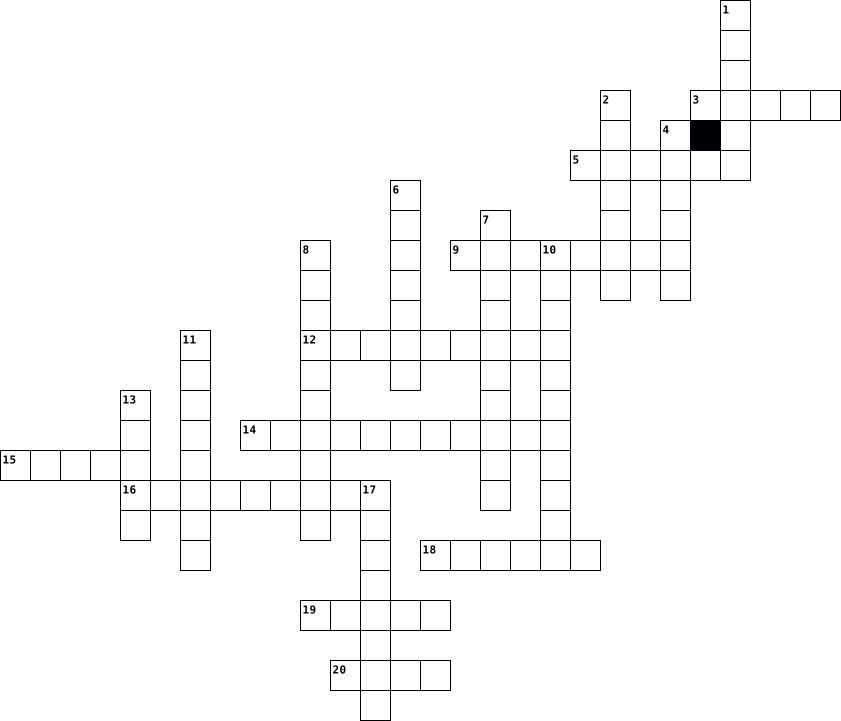
Across
- / a crack or fracture in the earths crust that is associated with movement
- Wegner / the scientist who named Pangaea
- Arc / a arc shaped chain of volcanoes formed above a subduction zone
- Boundary / when two plates are moving apart/away from each other
- / the solid outer section of Earth
- / molten rock, gases, and solid crystals and minerals
- Boundary / when two plates grind against each other to make an earth quake
- / the rocky inner layer above the core
- Core / the only liquid layer of earth
- / the out come of two continental plates diverge
Down
- Arcs / the out come of when two oceanic plates collide, and the older plate it forced under the younger one
- / a vent in the earths surface through which magma and gases erupt
- / a steep-sided depression in the ocean floor
- / when the continents on earth used to be connected in one big piece of land
- boundary / when two plates are pushing towards each other
- Zone / the area where one plate is being pulled under the edge of the other
- Crust / the earth's crust the makes up the continents
- / where two plates meet
- Tectonics / a theory that Earth's outer shell is divided into several plates that move over the mantle, the plates act like a hard and rigid shell
- / a high, large mass of earth and rock that rises above the earth's surface with steep or sloping sides
20 Clues: / where two plates meet • / the solid outer section of Earth • Core / the only liquid layer of earth • / the rocky inner layer above the core • Wegner / the scientist who named Pangaea • / a steep-sided depression in the ocean floor • / the out come of two continental plates diverge • Crust / the earth's crust the makes up the continents • ...
Restless Earth 2024-04-12

Across
- new oceanic crust is formed as tectonic plates pull apart and magma rises
- rock formed when lava or magma cools and hardens
- formed at plate boundaries usually when plates collide
- the semi-liquid layer of the mantle where convection currents happen
- cycles: hot material rises, cool materials sink; drives plate tectonics
- extinction events that occur over a long time period
- name of the ancient supercontinent when it was all one landmass
- formed as a result of high temperature and pressure deep within Earth changing a rock that already existed
- a group of the same species living in the same area
- located between the mantle and outer core
Down
- instruments used to measure and record seismic waves
- sudden events that led to a mass extinction
- forms after weathering and erosion when sediments compact and cement
- tectonic plates move away from each other usually forms new crust and rift valleys
- large rigid pieces of the Earth's lithosphere that move and interact with each other along plate boundaries
- fractures or zones of weakness in the Earth's crust
- includes the crust and upper part of the mantle; is divided into tectonic plates
- tectonic plates move toward each other usually forming mountains and volcanoes
- an opening in the Earth's crust through which molten rock is pushed out and creates new rock
- where tectonic plates slide past each other, causing earthquakes
- deep elongated depressions in the ocean, often associated with subduction zones
21 Clues: located between the mantle and outer core • sudden events that led to a mass extinction • rock formed when lava or magma cools and hardens • fractures or zones of weakness in the Earth's crust • a group of the same species living in the same area • instruments used to measure and record seismic waves • extinction events that occur over a long time period • ...
Restless Earth Vocabulary List 2024-04-12

Across
- Formed t plate boundaries usually when plates collide
- New oceanic crust is formed as tectonic plates pull apart and magma rises
- Includes the crust and upper part of the mantle, and is divided into tectonic plates
- Located between the mantle and the outer core
- Rock formed lava or magma cools and hardens
- Formed as a result of high temperature and pressure deep within earth changing a rock that already existed
- Tectonic plates move away from each other, usually forms new crust and rift valleys
- An opening in the Earth's crust through which molten rock is pushed out and creates new rock
- Deep, elongated depressions in the ocean, often associated with subduction zones
- Name of the ancient supercontinent when it was all one landmass
Down
- Where tectonic plates SLIDE past each other. Causes earthquakes
- A group of the same species living in the same area
- Fractures or zones of weakness in the Earth's crust
- Tectonic plates move toward each other, usually forms mountains and volcanoes
- Extinction events that occur over a longer time period
- The semi-fluid layer of the mantle where convection currents happen
- Hot material rises, cooler materials sink. It drives plate tectonics
- Forms after weathering and erosion when sediments compact and cement
- Plates Large, rigid pieces of earth's lithosphere that move and interact with each other along plate boundaries
- sudden events that led to a mass extinction
- Instruments used to measure and record seismic waves
21 Clues: Rock formed lava or magma cools and hardens • sudden events that led to a mass extinction • Located between the mantle and the outer core • A group of the same species living in the same area • Fractures or zones of weakness in the Earth's crust • Instruments used to measure and record seismic waves • Formed t plate boundaries usually when plates collide • ...
Choice Board 2024-04-12

Across
- located between the mantle and the outer core.
- Extinction events that occur over a longer time period.
- Fractures or zones of weakness in the Earth's crust
- An opening in the Earth's crust through which molten rock is pushed out and creates new rock.
- tectonic plates move away from each other, usually forms new crust and rift valleys.
- Instruments used to measure and record seismic waves.
- tectonic plates move toward each other, usually forms mountains and volcanoes.
- Forms after weathering and erosion when sediments compact and cement
- Hot material rises, cooler materials sink. It drives plate tectonics.
- formed at plate boundaries usually when plates collide.
- Sudden events that led to a mass extinction
Down
- where tectonic plates SLIDE past each other. Causes earthquakes
- new oceanic crust is formed as tectonic plates pull apart and magmarises.
- A group of the same species living in the same area.
- Rock formed when lava or magma cools and hardens.
- Includes the crust and upper part of the mantle, and is divided into tectonic plates.
- Name of the ancient supercontinent when it was all one landmass.
- The semi-fluid layer of the mantle where convection currents happen.
- Large, rigid pieces of the Earth's lithosphere that move and interact with each other along plate boundaries.
- Formed as a result of high temperature and pressure deep within earth changing a rock that already existed.
- Deep, elongated depressions in the ocean, often associated with subduction zones.
21 Clues: Sudden events that led to a mass extinction • located between the mantle and the outer core. • Rock formed when lava or magma cools and hardens. • Fractures or zones of weakness in the Earth's crust • A group of the same species living in the same area. • Instruments used to measure and record seismic waves. • Extinction events that occur over a longer time period. • ...
restless earth vocab 2024-04-12

Across
- extinction events that occur over a long time period
- hot material rises,cooler materials sink. it drives plate tectonics
- deep, elongated depressions in the ocean, often associated with subduction zones.
- name of the ancient supercontinent when it was all one land mass
- new ocean crust is formed as tectonic plates pull apart and magma rises
- fractures or zones of weakness in the earths crust
- includes the crust and upper part of the mantle, and is divided into tectonic plates
- formed at the plate boundaries usually when plates collide
- tectonic plates move away from each other, usually forms new crust and rift valleys
- a group of the same species living in the same area
- instruments used to measure and record seismic waves
- an opening in the earths crust through which molten rock is pushed out and creates new rock
Down
- sudden events that led to mass extinction
- tectonic plates move toward eachtoher, usually forms mountains and volcanoes
- located between the mantle and the outer core
- large,rigid pieces of the earths lithosphere that move and interact with each other along plate boundaries
- where tectonic plates slide past eachtoher. causes earthquakes
- the semi-fluid layer of the mantle where convection currents happen
- forms after weathering and erosion when sediments compact and cement
- rock formed when lava or magma cools and hardens
- formed as a result of high temperature and pressure deep within earth changing a rock that already existed
21 Clues: sudden events that led to mass extinction • located between the mantle and the outer core • rock formed when lava or magma cools and hardens • fractures or zones of weakness in the earths crust • a group of the same species living in the same area • extinction events that occur over a long time period • instruments used to measure and record seismic waves • ...
restless earth vocab 2024-04-12

Across
- extinction events that occur over a long time period
- hot material rises,cooler materials sink. it drives plate tectonics
- deep, elongated depressions in the ocean, often associated with subduction zones.
- name of the ancient supercontinent when it was all one land mass
- new ocean crust is formed as tectonic plates pull apart and magma rises
- fractures or zones of weakness in the earths crust
- includes the crust and upper part of the mantle, and is divided into tectonic plates
- formed at the plate boundaries usually when plates collide
- tectonic plates move away from each other, usually forms new crust and rift valleys
- a group of the same species living in the same area
- instruments used to measure and record seismic waves
- an opening in the earths crust through which molten rock is pushed out and creates new rock
Down
- sudden events that led to mass extinction
- tectonic plates move toward eachtoher, usually forms mountains and volcanoes
- located between the mantle and the outer core
- large,rigid pieces of the earths lithosphere that move and interact with each other along plate boundaries
- where tectonic plates slide past eachtoher. causes earthquakes
- the semi-fluid layer of the mantle where convection currents happen
- forms after weathering and erosion when sediments compact and cement
- rock formed when lava or magma cools and hardens
- formed as a result of high temperature and pressure deep within earth changing a rock that already existed
21 Clues: sudden events that led to mass extinction • located between the mantle and the outer core • rock formed when lava or magma cools and hardens • fractures or zones of weakness in the earths crust • a group of the same species living in the same area • extinction events that occur over a long time period • instruments used to measure and record seismic waves • ...
Earth Systems 2024-04-12

Across
- Tectonic plates move away from each other, usually forms new crust and rift valleys.
- The semi-fluid layer of the mantle where convection currents happen
- Hot material rises, cooler materials sink. It drives plate tectonics.
- Rock formed when lava or magma cools and hardens.
- Fractures or zones of weakness in the Earth's crust
- Large, rigid pieces of the Earth's lithosphere that move and interact with each other along plate boundaries.
- A group of the same species living in the same area
- tectonic plates move toward each other, usually forms mountains and volcanoes.
- Includes the crust and upper part of the mantle, and is divided into tectonic plates
- Formed as a result of high temperature and pressure deep within earth changing a rock that already existed
Down
- Extinction events that occur over a longer time period
- Sudden events that led to a mass extinction
- where tectonic plates SLIDE past each other. Causes earthquakes
- Name of the ancient supercontinent when it was all one landmass
- Instruments used to measure and record seismic waves
- new oceanic crust is formed as tectonic plates pull apart and magma rises
- an opening in the Earth's crust through which molten rock is pushed out and creates new rock
- Deep, elongated depressions in the ocean, often associated with subduction zones
- formed at plate boundaries usually when plates collide
- located between the mantle and the outer core
- Forms after weathering and erosion when sediments compact and cement
21 Clues: Sudden events that led to a mass extinction • located between the mantle and the outer core • Rock formed when lava or magma cools and hardens. • Fractures or zones of weakness in the Earth's crust • A group of the same species living in the same area • Instruments used to measure and record seismic waves • Extinction events that occur over a longer time period • ...
Interactions in the Physical Environment (Review) 2022-03-08

Across
- one of the things needed for soil
- where the plats move apart
- a string of volcanos and earthquakes around the edge of the Pacific Ocean
- the second layer of the earth
- two plays come together
- the fourth layer of the earth
- Flat plains between mountains
- the outer layer of the earth
- weathering of a natural material
Down
- the name of the man who purposed the theory that the earth was always in motion
- who made a more complete version theory known as plate tectonics
- low precipitation, temperature extreme variations from high to low
- rain,snow,hail
- two plates slide past each other
- the third layer of the earth
- something needed for soil
16 Clues: rain,snow,hail • two plays come together • something needed for soil • where the plats move apart • the third layer of the earth • the outer layer of the earth • the second layer of the earth • the fourth layer of the earth • Flat plains between mountains • two plates slide past each other • weathering of a natural material • one of the things needed for soil • ...
the insides 2017-02-16

Across
- Exactly why tectonic plates move
- Contributes to the heat inside he Earth
- On average it switches every 200,000 years
- The type of plate underlying most land
- Temperatures as high as 10,000 F
- It keeps the inner core solid
- Molten rock in side the earth
- Process that controls the structure and properties of the Earth's crust
Down
- What happens where oceanic plates and continental plates collide
- The outermost and thinnest part of the earth
- The layer of rock between the crust and the core
- Boundaries where plates move together
- Crack in the earth
- 200 miles wide at their widest point
- Consists of the crust and rigid upper mantle
- Boundaries where plates move apart
16 Clues: Crack in the earth • It keeps the inner core solid • Molten rock in side the earth • Exactly why tectonic plates move • Temperatures as high as 10,000 F • Boundaries where plates move apart • 200 miles wide at their widest point • Boundaries where plates move together • The type of plate underlying most land • Contributes to the heat inside he Earth • ...
Layers of Earth, Plate Tectonics and Continental Drift 2023-05-15

Across
- This word means "rocky globe" and is the part that is composed mostly of rock. It includes the crust and the outer mantle.
- Very large pieces of land that move due to convection currents in the mantle.
- An area where two plates move towards each other.
- The soft but mobile layer of rock found below the lithosphere. AKA lower mantle.
- An area where two plates move AWAY from each other, causing seafloor spreading and new land to be made.
- Cycles of hot molten rock in the mantle that rise to nearer the surface, cool, and then sink back to the much warmer core of earth.
- Scientist who first stated the theory of continental drift and plate tectonics.
- This term refers to an area around the Pacific Plate that is particularly abundant in volcanoes, earthquakes, and mountain ranges.
- The major boundary that runs up and down California.
Down
- A type of convergent boundary where one plate sinks underneath a different plate.
- This is by far the largest portion of Earth lying between the Earth's crust and core.
- A natural and renewable energy resource that is produced by Earth's naturally occurring heat, steam, and hot water.
- The liquid layer surrounding the inner core, this layer is made up of iron and nickel.
- This is an underwater crust phenomenon that occurs at divergent plate boundaries.
- The outermost layer of the Earth made up of the lithosphere and asthenosphere together.
- A structure of the crust that forms at a divergent boundary.
- The most center part of the planet that is solid and made mostly of iron.
- An area where two plates meet, but instead of colliding together or spreading apart, the plates slip past each other, edge against edge. A good example of this is the San Andreas Fault is a good example of this.
- The supercontinent that existed at the end of the Paleozoic Era consisted of all land masses and continents joined together.
19 Clues: An area where two plates move towards each other. • The major boundary that runs up and down California. • A structure of the crust that forms at a divergent boundary. • The most center part of the planet that is solid and made mostly of iron. • Very large pieces of land that move due to convection currents in the mantle. • ...
restless earth vocab 2025-04-08

Across
- forms after weathering and erosion when sediments compact and cement
- name of the ancient supercontinent when it was all one landmass
- new oceanic crust is formed as tectonic plates pull apart and magma rises
- large, rigid pieces of the earths lithosphere that move and interact with each other along plate boundraries
- instruments used to measure and record seismic waves
Down
- the semi-fluid layer of the mantle where convection currents happen
- rock formed when lava or magma cools or hardens
- includes the crust and upper part of the mantle, and is divided into tectonic plates
- where tectonic plates slide past each other. causes eathquakes
- hot material rises, cooler materials sink. it drives plate tectonics
- located between the mantle and outer core
11 Clues: located between the mantle and outer core • rock formed when lava or magma cools or hardens • instruments used to measure and record seismic waves • where tectonic plates slide past each other. causes eathquakes • name of the ancient supercontinent when it was all one landmass • the semi-fluid layer of the mantle where convection currents happen • ...
plate tectonics 2022-10-25

Across
- outermost layer of earth’s surface
- a volcano that scientists believe will not erupt again
- a hole in the earth from which molten rock, gases and ash erupt
- thickest layer of earth
Down
- plate boundary where plates move away from each other
- plate boundary where plates slide past each other
- plate boundary where plates move towards each other
7 Clues: thickest layer of earth • outermost layer of earth’s surface • plate boundary where plates slide past each other • plate boundary where plates move towards each other • plate boundary where plates move away from each other • a volcano that scientists believe will not erupt again • a hole in the earth from which molten rock, gases and ash erupt
PLATE TECTONICS 2022-12-07

Across
- movement of the edge of one tectonic plate under another.
- a land mass that projects well above its surroundings; higher than a hill
- the solid part of the earth consisting of the crust and outer mantle
- molten rock in the earth's crust
Down
- drift the gradual movement and formation of continents (as described by plate tectonics)
- shaking and vibration at the surface of the earth resulting from underground movement along a fault plane or from volcanic activity.
- a fissure in the earth's crust (or in the surface of some other planet) through which molten lava and gases erupt
7 Clues: molten rock in the earth's crust • movement of the edge of one tectonic plate under another. • the solid part of the earth consisting of the crust and outer mantle • a land mass that projects well above its surroundings; higher than a hill • drift the gradual movement and formation of continents (as described by plate tectonics) • ...
plate tectonics 2019-05-16

Across
- subtracted under neath north america plate
- boundaries boundaries moving away from each other
- slabs
- the tough or outer part
Down
- dives earths mantle pushes plates
- plate found under neath the pacific ocean
- boundaries when to plates are moving toward each other
7 Clues: slabs • the tough or outer part • dives earths mantle pushes plates • plate found under neath the pacific ocean • subtracted under neath north america plate • boundaries boundaries moving away from each other • boundaries when to plates are moving toward each other
Plate Tectonics 2020-10-20

Across
- / two tectonic plates moving towards each other
- minerals
- wegener / he couldn't explain mechanism
- to
- holmes / thought of using
Down
- / two tectonic plates moving away from each other
- / when two tectonic plates slide against each other
7 Clues: to • minerals • holmes / thought of using • wegener / he couldn't explain mechanism • / two tectonic plates moving towards each other • / two tectonic plates moving away from each other • / when two tectonic plates slide against each other
Plate Tectonics 2021-10-03

Across
- plates move together
- molten rock
- crack,split, or break in something
- a line that marks the limits of an area; a dividing line
Down
- plates move under/over each other
- plates move away
- plates slide past each other
7 Clues: molten rock • plates move away • plates move together • plates slide past each other • plates move under/over each other • crack,split, or break in something • a line that marks the limits of an area; a dividing line
Plate tectonics 2021-10-12

Across
- HottestLayer
- MovesTowardEachother
- HotRock
Down
- LaysOnLand
- LaysOnWater
- MovesAwayFromEachother
- RubsSideToSide
7 Clues: HotRock • LaysOnLand • LaysOnWater • HottestLayer • RubsSideToSide • MovesTowardEachother • MovesAwayFromEachother
Plate Tectonics 2021-04-22

Across
- Created by convergent plate boundary's
- Created by transform plate boundary's
- When 2 plates go apart from each other
Down
- When 2 plates go towards each other
- ranges Created by divergent plate boundary's
- When 2 plates go toward each other
- how are plate boundary's formed
7 Clues: how are plate boundary's formed • When 2 plates go toward each other • When 2 plates go towards each other • Created by transform plate boundary's • Created by convergent plate boundary's • When 2 plates go apart from each other • ranges Created by divergent plate boundary's
Plate Tectonics 2023-03-23

Across
- The planet we live on?
- As the denser tectonic plate subducts, or sinks below, or the less-dense tectonic plate, hot rock from below can intrude into the cooler plate above.
- What happens When one slide passes the other?
- convergent plate boundaries where two tectonic plates are crashing into each other. As the two plates collide one plate is forced down underneath the other.
Down
- When two tectonic ______ collide together it forms a tsunami.
- One of earths layers that has five letters.
- Where two continental plates collide. Since both plates have a similar thickness and weight, neither one will sink under the other. Instead, they crumple and fold until the rocks are forced up to form a _____
7 Clues: The planet we live on? • One of earths layers that has five letters. • What happens When one slide passes the other? • When two tectonic ______ collide together it forms a tsunami. • As the denser tectonic plate subducts, or sinks below, or the less-dense tectonic plate, hot rock from below can intrude into the cooler plate above. • ...
Plate Tectonics 2021-12-28

Across
- currents
- plates
- boundaries
- boundaries
- arcs
Down
- plates
- boundaries
- valley
- ranges
- ocean trenches
10 Clues: arcs • plates • plates • valley • ranges • currents • boundaries • boundaries • boundaries • ocean trenches
Plate tectonics 2021-12-18

Across
- the material that forms on earths hard surface
- a great landmass surrounded by oceans
- a deep valley that forms when two plates move apart
- the layer of hot, solid material between the core and the crust
Down
- a scientist who studies the make up and shape of earth
- a layer of rock that forms earths outer surface
- the study of the earth
7 Clues: the study of the earth • a great landmass surrounded by oceans • the material that forms on earths hard surface • a layer of rock that forms earths outer surface • a deep valley that forms when two plates move apart • a scientist who studies the make up and shape of earth • the layer of hot, solid material between the core and the crust
Plate Tectonics 2023-09-28

Across
- Flying mammal
- De fuca
- Likes to chase mice
- plate
- Man's best friend
Down
- Has a trunk
- Large marsupial
- plate
8 Clues: plate • plate • De fuca • Has a trunk • Flying mammal • Large marsupial • Man's best friend • Likes to chase mice
Plate Tectonics 2023-09-05

Across
- magma rises from Earth's mantle and creates new oceanic crust
- the theory that the crust is divided into large pieces called tectonic plates that move slowly
- a circular movement of fluids caused by the rising of hotter, less dense fluid and the falling of cooler, denser fluid
Down
- the theory that continents were once connected but have drifted apart
- boundary in which two plates move away from each other
- boundary in which two plates converge
- boundary where two tectonic plates slide past each other
7 Clues: boundary in which two plates converge • boundary in which two plates move away from each other • boundary where two tectonic plates slide past each other • magma rises from Earth's mantle and creates new oceanic crust • the theory that continents were once connected but have drifted apart • ...
Plate Tectonics 2023-11-15

Across
- Occur along spreading centers where plates are moving apart and new crust is being created by magma
- Where plates are moving toward (or under) each other
- Occurs between an oceanic plate and a largely continental plate
- In some regions, the boundaries are not well defined because the plate-movement deformation occurring there extends over a broad belt called a:
- When two continents meet head-on
Down
- The zone between two plates sliding horizontally past one another is called a:
- When two oceanic plates converge
7 Clues: When two oceanic plates converge • When two continents meet head-on • Where plates are moving toward (or under) each other • Occurs between an oceanic plate and a largely continental plate • The zone between two plates sliding horizontally past one another is called a: • ...
Plate Tectonics 2026-01-25

Across
- The deepest part of the oceans.
- The mountain range that runs through California, all the way up to Alaska.
- The island that has tropical plants on it even though it is a very cold island.
- The lines in the ocean floor where plate tectonics meet.
Down
- The meteorologist who theorized continental drift.
- The sinking of the ocean floor back into the earth.
- The supercontinent from millions of years ago.
7 Clues: The deepest part of the oceans. • The supercontinent from millions of years ago. • The meteorologist who theorized continental drift. • The sinking of the ocean floor back into the earth. • The lines in the ocean floor where plate tectonics meet. • The mountain range that runs through California, all the way up to Alaska. • ...
Plate Tectonics 2024-05-22

Across
- Boundary places where plates slide sideways past each other
- Boundary new crust is forming from magma that rises to the Earth's surface between the two plates
- Wegener Father of all plate tectonics
- What happens when two plates collide
Down
- boundary When two plates collide
- plates Pieces of earths crust that move around
- lava that moves the plates
7 Clues: lava that moves the plates • boundary When two plates collide • What happens when two plates collide • Wegener Father of all plate tectonics • plates Pieces of earths crust that move around • Boundary places where plates slide sideways past each other • Boundary new crust is forming from magma that rises to the Earth's surface between the two plates
science vocab ch.9 2023-01-12

Across
- - The circulation of material caused by differences in temperature and density
- ridge - The mountain ranges in the middle of the oceans
- - continents that were once a part of a supercontinent.
- boundary - forms where two plates slide past each other
- boundary - forms where two plates separate
- - The denser sinks below the more buoyant plate
Down
- tectonics - Earth’s surface is made of rigid slabs of rocks, or plates, that move with respect to each other
- drift - continents that are in constant motion on the surface of Earth
- spreading - The process by which new oceanic crust forms along a mid-ocean ridge and older oceanic crust moves away from the ridge
- reversal - When the magnetic field reverses direction
- boundary - forms where two plates collide
11 Clues: boundary - forms where two plates collide • boundary - forms where two plates separate • - The denser sinks below the more buoyant plate • reversal - When the magnetic field reverses direction • ridge - The mountain ranges in the middle of the oceans • - continents that were once a part of a supercontinent. • boundary - forms where two plates slide past each other • ...
Alex Janssen 2015-04-30

Across
- proposed mechanism for plate motion in plate tectonics
- the portion of motion of a tectonic plate that can be accounted for by its subduction
- a feature that exists between two tectonic plates that are moving away from each other
- the lithosphere of the earth is divided into a small number of plates which float on and travel independently over the mantle and much of the earth's seismic activity occurs at the boundaries of these plates
- hypothetical landmass that existed when all continents were joined, from about 300 to 200 million years ago
- instrument used for measuring magnetic forces, especially the earth's magnetism
- Changes in direction or orientation of the magnetic field of the Earth that have occurred from time to time
- sideways and downward movement of the edge of a plate of the earth's crust into the mantle beneath another plate
- line on a diagram or map connecting points relating to the same time or equal times
Down
- actively deforming region where two (or more) tectonic plates or fragments of the lithosphere move toward one another and collide
- large elongated depression with steep walls formed by the downward displacement of a block of the earth's surface between nearly parallel faults or fault systems
- study of the magnetic record in rocks
- strike-slip fault that offsets a mid-ocean ridge in opposing directions on either side of an axis of seafloor spreading
- gradual movement of the continents across the earth's surface through geological time
- process of the ocean floor moving away from an ocean ridge
15 Clues: study of the magnetic record in rocks • proposed mechanism for plate motion in plate tectonics • process of the ocean floor moving away from an ocean ridge • instrument used for measuring magnetic forces, especially the earth's magnetism • line on a diagram or map connecting points relating to the same time or equal times • ...
XC Science 9/22 2022-09-23

Across
- boundaries when plates slip past each other
- Drift Continents of the world were once joined together but over time have split and drifted apart
- Known as the super continent
Down
- boundary when plates move together or collide
- one plate slips below another plate because it is more dense. The heavier plate is pushed down into the mantle. Causes deep ocean trenches and volcanoes to form
- boundary when plates move away from each other or diverge
- tectonics the outer layer of Earth is broken into many large and small plates. The continents and oceans ride on top of plates. The motion causes continental drift.
7 Clues: Known as the super continent • boundaries when plates slip past each other • boundary when plates move together or collide • boundary when plates move away from each other or diverge • Drift Continents of the world were once joined together but over time have split and drifted apart • ...
Continental Drift 2023-05-31

Across
- A long, narrow, elevated geomorphological landform
- Another name for Pangaea
- A continuous slow movement from one place to another
- A layer of the Earth
Down
- The remains or impression of a prehistoric organism
- The layer of Earth that is on the top
- What we live on
- What happens after there is an earthquake
- A single supercontinent
- Something that continents are made on top of
- Scientific study of the deformation of the rocks that make up the Earth's crust
11 Clues: What we live on • A layer of the Earth • A single supercontinent • Another name for Pangaea • The layer of Earth that is on the top • What happens after there is an earthquake • Something that continents are made on top of • A long, narrow, elevated geomorphological landform • The remains or impression of a prehistoric organism • ...
Plate Tectonics and Volcanism 2020-09-02

Across
- A type of lithospheric plate that is made of heavier basalt and gabbro rocks.
- These are massive, irregular slabs of solid rock that covers the surface of the Earth.
- It means carpenter or builder.
- These are areas or columns where magma rises toward the Earth's surface.
- A supercontinent that broke into two smaller supercontinents.
- He developed and published the world's first atlas.
Down
- The body of water that separated Laurasia and Gondwanaland.
- It is also known as submarine volcanoes.
- It refers to the idea that Earth contracted during the cooling process producing the physical features of the planet's surface.
- A tectonic plate that is considered as both a primary and secondary plate.
- He proposed the Continental Drift Theory.
- A supercontinent that existed 1,100 million years ago.
- It refers to the equilibrium that exists on the Earth's surface.
- A mountain that opens downward to a reservoir of magma.
- These are locations on the Earth's surface that have experienced volcanic activities for a long time.
15 Clues: It means carpenter or builder. • It is also known as submarine volcanoes. • He proposed the Continental Drift Theory. • He developed and published the world's first atlas. • A supercontinent that existed 1,100 million years ago. • A mountain that opens downward to a reservoir of magma. • The body of water that separated Laurasia and Gondwanaland. • ...
Theory of Plate Tectonics 2021-10-14

Across
- spreading of oceanic crust
- fracture in the ground where earthquakes usually occur
- moving in different directions
- coming together
- rigid outer part of the earth
- sideways downward movement of a tectonic plate
Down
- mountain with an opening where magma shoots through
- valley between highlands
- one plate moving up and one moving down
- long narrow ditch
- breaking off
- tectonic plates moving upward together
- mountain range in south america
- long chain of active volcanic islands
- outermost shell of the earth
15 Clues: breaking off • coming together • long narrow ditch • valley between highlands • spreading of oceanic crust • outermost shell of the earth • rigid outer part of the earth • moving in different directions • mountain range in south america • long chain of active volcanic islands • tectonic plates moving upward together • one plate moving up and one moving down • ...
Ch.5 Plate tectonics 2022-01-04

Across
- is a mountain that forms in Earth's crust when,molten material or magma reaches the surface.
- form long chains of mountains that rise up from the ocean floor.
- plates slip past each other.
- Heat transfer by the movement of fluid.
- breaks in Earth's crust where rocks have slipped past eachother-form along these boundaries.
Down
- adds more crust to the ocean floor.
- plates move apart, or diverge.
- an area where material deep within Earth's mantle rises through the crust and melts to form magma
- when magma reaches the surface.
- crust closer to the a mid-ocean ridge moves away from the ridge and toward a deep ocean trench.
- A large landmass or super continent
- one major belt of volcanoes
- pieces of Earth's crust diverge on land, a deep valley forms.
- any trace of an ancient organism that has been preserved in rock.
- is a measure of how much mass there is in a given volume of a substance.
15 Clues: one major belt of volcanoes • plates slip past each other. • plates move apart, or diverge. • when magma reaches the surface. • adds more crust to the ocean floor. • A large landmass or super continent • Heat transfer by the movement of fluid. • pieces of Earth's crust diverge on land, a deep valley forms. • form long chains of mountains that rise up from the ocean floor. • ...
Plate Tectonics Crossword Puzzle 2021-12-14

Across
- Molten Rock that is found beneath the ground
- The area where two plate rub against each other
- When one plates goes under another
- Where two oceanic plates diverge
- Magma that cools quickly
- When two continental plates diverge
- When two plates rub against each other
- Found in subduction zones where plates collide
Down
- A sudden violent shaking of the ground
- A mountain that erupts lava and ash
- When two plates collide
- When two continental plates collide
- Magma that cools slowly
- A weak-spot in the Earth's crust that lets magma come through
- When two plates push apart
15 Clues: When two plates collide • Magma that cools slowly • Magma that cools quickly • When two plates push apart • Where two oceanic plates diverge • When one plates goes under another • A mountain that erupts lava and ash • When two continental plates collide • When two continental plates diverge • A sudden violent shaking of the ground • When two plates rub against each other • ...
Earth's Layers & plate Tectonics 2022-01-10

Across
- Earth's solid outer crust
- the formation of new areas of oceanic crust
- raise the level of
- oceanic trench area marginal to a continent
- moved over geologic time
- an unattractive or unsatisfactory feature
Down
- a sudden and violent shaking of the ground
- when two tectonic plates move away from each other
- When two plates come together
- places where plates slide sideways past each other
- chain of volcanoes formed above a subducting plate
- pieces of Earth's crust and uppermost mantle
- divergent, convergent, and transform plate boundaries
- a lot of action
- a lowland region that forms where Earth's tectonic plates move apart
15 Clues: a lot of action • raise the level of • moved over geologic time • Earth's solid outer crust • When two plates come together • an unattractive or unsatisfactory feature • a sudden and violent shaking of the ground • the formation of new areas of oceanic crust • oceanic trench area marginal to a continent • pieces of Earth's crust and uppermost mantle • ...
Earth's History: Plate Tectonics 2026-02-05

Across
- boundary A plate boundary where two plates move away from each other.
- The process by which oceanic crust sinks beneath a deep-ocean trench and back into the mantle at a convergent plate boundary.
- ridge An underwater moutain chain where new ocean floor is formed
- Greatness of size, strength, or importance
- Magma that reaches Earth's surface
- The shaking that results from the movement of rock beneath Earth's surface.
Down
- boundary A plate boundary where two plates move toward each other.
- boundary A plate boundary where two plates move past each other in opposite directions
- spreading The process by which molten material adds new oceanic crust to the ocean floor
- A giant wave usually caused by an earthquake beneath the ocean floor.
- A break in the earth's crust
- Molten rock beneath the earth's surface
- volcano A volcano that has not erupted for a long time, but may erupt again one day.
- trench Deep valley in the ocean floor that forms along a subduction zone
- spot An area where magma from deep within the mantle melts through the crust above it
15 Clues: A break in the earth's crust • Magma that reaches Earth's surface • Molten rock beneath the earth's surface • Greatness of size, strength, or importance • ridge An underwater moutain chain where new ocean floor is formed • boundary A plate boundary where two plates move toward each other. • boundary A plate boundary where two plates move away from each other. • ...
Unit 2 Plate Tectonics 2018-02-06

Across
- the study of fossil magnetism in rocks
- An undersea mountain chain that creates new ocean floor through diverging oceanic plates
- valley created at a divergent boundary where plates are spreading apart
- a hypothesis that has been tested and not found faulty
- region where 2 plates are SLIDING past each other
- movement of tectonic plates over time
- sections of lithosphere that the Earth's surface is divided into
- region where 2 plates are COLLIDING
- region where 2 plates are SPREADING APART
Down
- the idea that over time the continents have slowly drifted apart
- the supercontinent that the continental drift was based on
- fixed area of the mantle where hot magma rises through the lithosphere above it
- plates in the ocean separate allowing magma to rise and create new crust
- A valley that lies along the bottom of the ocean at a subduction zone
- process of when a denser oceanic plate moves under a less dense continental plate
15 Clues: region where 2 plates are COLLIDING • movement of tectonic plates over time • the study of fossil magnetism in rocks • region where 2 plates are SPREADING APART • region where 2 plates are SLIDING past each other • a hypothesis that has been tested and not found faulty • the supercontinent that the continental drift was based on • ...
Earth and Plate Tectonics 2017-10-09

Across
- made up of iron and nickel.
- Theory that explains how continents shift position on the earth's surface
- hard layer on the outer most part of the earth.
- When oceanic crust is formed from volcanic activity and gradually moves away from the ridge.
- Theory that the earth's outer shell is divided into several plates that glide over earth's mantle.
- Waves of energy caused by sudden breaking of rock within the earth or explosion.
- Move through the body of an object unlike surface waves.
- region of the upper part of the earth's mantle.
Down
- a current in a fluid that results from convection.
- region surrounding the earth.
- Crust, mantle, Convection currents, Outer core, inner core
- rigid outer part of the earth.
- Supercontinent that eventually split up in the the continents we know today.
- largest part of the earth that takes up 84% of the earth's total volume.
- First waves of an earthquake that arrive on the seismograph.
15 Clues: made up of iron and nickel. • region surrounding the earth. • rigid outer part of the earth. • hard layer on the outer most part of the earth. • region of the upper part of the earth's mantle. • a current in a fluid that results from convection. • Move through the body of an object unlike surface waves. • Crust, mantle, Convection currents, Outer core, inner core • ...
Kendans Plate Tectonics crossword 2021-12-09

Across
- rigid outer part of the Earth, consisting the crust and upper mantle
- a cylinder-shaped mountain that erupts with magma
- the oldest type of rock is where from the mid ocean ridge
- who discovered idea that the seafloor wasn't flat
- what forms when 1 continental and 1 oceanic plate collide
- where Earth gets most of its heat
Down
- a rock that is made from heat and pressure
- a type of rock formed from the cooling of magma
- Ridge an area at ocean floor that creates new rock
- boundary when two plates move towards each other
- a very hard dangerous shaking in the ground
- a type of rock formed at the mid-ocean ridge
- a dangerous material that comes from volcanoes
- original name for supercontinent
- what the continents looked like as one
15 Clues: original name for supercontinent • where Earth gets most of its heat • what the continents looked like as one • a rock that is made from heat and pressure • a very hard dangerous shaking in the ground • a type of rock formed at the mid-ocean ridge • a dangerous material that comes from volcanoes • a type of rock formed from the cooling of magma • ...
Plate Tectonics Vocab Review 2022-03-03

Across
- process that takes place at convergent boundaries when one tectonic plate sinks into the mantle as the plates converge
- a chain of volcanic mountains formed along the coast of a continent
- A deep valley that forms where two plates move apart.
- When two plates move away from each other this is called __ boundaries.
- A layer of soft mantle that is made of molten material
- formed when two oceanic plates collide
- stress that occurs when forces act to squeeze an object
Down
- The outermost rigid layer of Earth
- Layer located between the core and the crust
- formed when two plates collide and there is no subduction
- What element makes up most of Earth's core?
- Layer is responsible for the Earth's magnetic field
- When two plates collide they make __ boundaries.
- The movement of matter that results from differences in density
- stress that occurs when forces act to stretch an object
15 Clues: The outermost rigid layer of Earth • formed when two oceanic plates collide • What element makes up most of Earth's core? • Layer located between the core and the crust • When two plates collide they make __ boundaries. • Layer is responsible for the Earth's magnetic field • A deep valley that forms where two plates move apart. • ...
Chap. 17 Plate Tectonics 2022-11-28

Across
- huge pieces of crust and rigid upper mantle that fit together at their edges to cover Earth's surface
- a region where two plates slide horizontally past each other
- a long narrow depression formed when continental crust begins to separate
- is an imaginary line on a map that shows points that have the same age, that is they formed at the same time
- a device that can detect small changes in magnetic field
- two tectonic plates are moving toward each other
- a single landmass that broke apart 200 mya
- a process where older portion of the sea-floor sinks, the weight of the uplifted ridge is thought to push the oceanic plate toward the trench formed at the subduction zone
Down
- a hypothesis developed by Alfred Wegener that proposed that Earth's continents had once been joined as a single landmass that broke apart and sent the continents adrift
- the theory that explains how new oceanic crust is formed at ocean ridges, slowly moved away from ocean ridges and destroyed at deep ocean trenches
- the weight of the relatively cool, dense subducting plate pulls the trailing slab into the subduction zone
- process where two plates collide, the denser plate eventually descends below the other less dense plate
- regions where two tectonic plates are moving apart
- happens when the flow in the outer core changes, and Earth's magnetic field changes direction
- is the study of history of Earth's magnetic field
15 Clues: a single landmass that broke apart 200 mya • two tectonic plates are moving toward each other • is the study of history of Earth's magnetic field • regions where two tectonic plates are moving apart • a device that can detect small changes in magnetic field • a region where two plates slide horizontally past each other • ...
Plate Tectonics & Rock Cyle 2026-04-21

Across
- soft rock that flows out of a volcano and onto Earth’s surface
- movement of loose rock, soil, and sand from one place to another
- loose earth materials such as sand, soil, and rocks found on the surface of Earth
- the surface of the Earth
- solid rock found everywhere on Earth often under sediments
- part of Earth's crust containing less dense granite usually found under continental land
- the movement of bedrock caused by plates getting stuck on each other and then roughly moving past each other
- under the crust where it is hot and rock begins to melt, move, and shift
Down
- the section of the crust between fault lines
- soft rock found below or within Earth’s crust
- to cause damage or to destroy
- to build up
- part of Earth's crust containing denser basalt rock that is usually found under the ocean
- crack in Earth’s crust
- the size of something(earthquakes)
15 Clues: to build up • crack in Earth’s crust • the surface of the Earth • to cause damage or to destroy • the size of something(earthquakes) • the section of the crust between fault lines • soft rock found below or within Earth’s crust • solid rock found everywhere on Earth often under sediments • soft rock that flows out of a volcano and onto Earth’s surface • ...
Science 3 period 2023-03-06

Across
- tall rock made towers that have tips at the top
- A planet full of life
- a path along the pasific ocean with alot of volcanoes
- 3 dimentional surface zone
- The bottom of the sea
- where certain forces stop
- the deformation of the rocks that make up the Earth's crust
Down
- Spreading
- a fracture or zone of fractures between two blocks of rock.
- intentionally brings together intellectually diverse researchers to develop effective ways of communicating across disciplines
- to become somthing
- a mountain with a hole full of lava
12 Clues: Spreading • to become somthing • A planet full of life • The bottom of the sea • where certain forces stop • 3 dimentional surface zone • a mountain with a hole full of lava • tall rock made towers that have tips at the top • a path along the pasific ocean with alot of volcanoes • a fracture or zone of fractures between two blocks of rock. • ...
Tectonic plates 2025-05-19

Across
- Formations in which forms the crust of the earth
- A part in the ocean where plates are being constructed
- A part in the ocean where plates are being broken
- zone, This is where a tectonic plate sliders under another
- A part in the ocean where tectonic plates are moving apart from each other
- The movement of tectonic plates where they are pulled towards and one of them ends up beneath the other
Down
- Where tectonic plates are driven on top of
- Something that is caused by the release of stress by a tectonic plate breaking
- A part in the ocean where tectonic plates are moving towards each other
- The outer most layer of the earth
10 Clues: The outer most layer of the earth • Where tectonic plates are driven on top of • Formations in which forms the crust of the earth • A part in the ocean where plates are being broken • A part in the ocean where plates are being constructed • zone, This is where a tectonic plate sliders under another • ...
Plate Tectonics Part 2 2023-03-21

Across
- driving force behind plate tectonics
- oceanic crust sinks below continental crust to create volcanoes
- Molten rock BELOW Earth's surface
- To cause damage or DESTROY
- the force applied to a rock and may cause deformation
- two plates come together as result of compression
Down
- opening in the earth's crust where lava, ash, gasses escape
- new ocean floor created at mid-ocean ridge that moves plates apart
- To build up or CREATE
- Squeezing stress that pushes objects together
- two plates pull apart as result of tension
- two plates slide past each other in opposite directions as result of shear
- Stress that pulls an object apart
- Parallel forces acting in opposite directions
- Molten rock ON Earth's surface
15 Clues: To build up or CREATE • To cause damage or DESTROY • Molten rock ON Earth's surface • Stress that pulls an object apart • Molten rock BELOW Earth's surface • driving force behind plate tectonics • two plates pull apart as result of tension • Squeezing stress that pushes objects together • Parallel forces acting in opposite directions • ...
Plate Tectonics Quiz Crossword 2023-11-06

Across
- This is when a denser crust dives below a less dense crust
- New crust is formed at this type of plate boundary
- This concept detects the magnetic reversals of Earth from rocks on the Ocean Floor
- American Navy Captain who discovered Sea-Floor Spreading
- A deep ocean ______ forms at a convergent boundary where subduction is occurring
- The fossil of this ancient reptile was strong evidence to support Continental Drift
- This is the name of the most recent supercontinent on Earth
- Coal forms in these (starts with an S)
- These happen at all types of plate boundary
Down
- This type of melting occurs during the subduction process
- The strongest earthquakes are associated with this type of plate boundary
- This forms underneath the ocean at a divergent boundary
- Sea-Floor spreading is an example of this type of plate boundary
- Evidence of these frozen phenomena has been found in central South America and Africa
- These mountains are an example of continental-continental convergence
- Alfred _______ is the scientist who came up with the hypothesis of Continental Drift
16 Clues: Coal forms in these (starts with an S) • These happen at all types of plate boundary • New crust is formed at this type of plate boundary • This forms underneath the ocean at a divergent boundary • American Navy Captain who discovered Sea-Floor Spreading • This type of melting occurs during the subduction process • ...
Topic 5 Plate Tectonics 2024-12-03

Across
- a current caused by the rising of heated fluid and sinking of cooled fluid
- a principle that states that younger rocks lie above older rocks if the layers have not been disturbed
- waves of energy that travel through the Earth
- A scale that rates an earthquake's magnitude based on the size of its seismic waves.
- Sections of the Earth's crust that move due to convection currents.
- A vent or fissure in the Earth's surface through which magma and gases are expelled
- A break in the earth's crust
- A plate boundary where two plates move past each other in opposite directions
- A large landmass that contains all, or nearly all, of the existing continents.
Down
- the gradual movement of the continents across the earth's surface through geological time.
- A plate boundary where two plates move away from each other.
- The shaking that results from the movement of rock beneath Earth's surface.
- areas that are below sea level
- A plate boundary where two plates move toward each other.
- One plate going under another plate
15 Clues: A break in the earth's crust • areas that are below sea level • One plate going under another plate • waves of energy that travel through the Earth • A plate boundary where two plates move toward each other. • A plate boundary where two plates move away from each other. • Sections of the Earth's crust that move due to convection currents. • ...
Landforms and Plate Tectonics 2025-01-13

Across
- Wegener called the supercontinent, where all of the continents were once together.
- when magma reaches the surface.
- heat transfer between materials that are touching.
- Wegener's idea that the continents slowly moved over Earth's surface.
- deep underwater canyons.
- is an area where molten material from deep within Earth's mantle rises through the crust and melts to form magma.
- the transfer of energy that is carried in rays like light.
Down
- is a mountain that forms in Earth's crust when molten material, or magma, reaches the surface.
- is a molten mixture of rock-forming substances, gases, and water from the mantle.
- mid-ocean ranges adding new material to ocean floors.
- mountain ranges that run across middle of ocean floor.
- is any trace of an ancient organism that has been preserved in rock.
- the flow that transfers heat within a fluid.
- heat transfer by the movement of a fluid.
- Earth's lithosphere and solid outer shell broken into pieces and separated by cracks.
15 Clues: deep underwater canyons. • when magma reaches the surface. • heat transfer by the movement of a fluid. • the flow that transfers heat within a fluid. • heat transfer between materials that are touching. • mid-ocean ranges adding new material to ocean floors. • mountain ranges that run across middle of ocean floor. • ...
Rock Cycle & Plate Tectonics 2025-11-10

Across
- Wegener, This scientist believed all continents were once a large landmass.
- These are directly responsible for the texture of rocks and can be rounded or jagged.
- The downward movement of one of Earth's plates beneath another one.
- An area where two or more tectonic plates move on a collision course.
- Currents, The movement of fluid cause by differences in temperature.
- This is determined by the size shape and pattern of its grains.
- A natural mixture of sand gravel and crushed stone.
- An area where two plates slide past each other in opposite directions.
Down
- Rock, After millions of years of heat and pressure it will change existing rock into a different type of stone.
- Tuzo Wilson, This scientist observed cracks in the continents similar to the ones that had already been discovered on the ocean floor.
- Rock, The process of compaction and cementation form these sand particles into stone.
- An area where two or more tectonic plates move away from one another.
- Composition, This is what determines the color of all rock types.
- Rock, The most common and fastest forming rock type on Earth.
- Cycle, This process shows the basic relationships among igneous, sedimentary, and metamorphic rocks.
15 Clues: A natural mixture of sand gravel and crushed stone. • Rock, The most common and fastest forming rock type on Earth. • This is determined by the size shape and pattern of its grains. • Composition, This is what determines the color of all rock types. • The downward movement of one of Earth's plates beneath another one. • ...
Rock Cycle & Plate Tectonics 2025-11-10

Across
- These are directly responsible for the texture of rocks and can be rounded or jagged.
- After millions of years of heat and pressure it will change existing rock into a different type of stone.
- The movement of fluid cause by differences in temperature.
- An area where two plates slide past each other in opposite directions.
- This process shows the basic relationships among igneous, sedimentary, and metamorphic rocks.
- An area where two or more tectonic plates move away from one another.
Down
- This scientist observed cracks in the continents similar to the ones that had already been discovered on the ocean floor.
- The process of compaction and cementation form these sand particles into stone.
- An area where two or more tectonic plates move on a collision course.
- The downward movement of one of Earth's plates beneath another one.
- The most common and fastest forming rock type on Earth.
- This scientist believed all continents were once a large landmass.
- This is what determines the color of all rock types.
- This is determined by the size shape and pattern of its grains.
- A natural mixture of sand gravel and crushed stone.
15 Clues: A natural mixture of sand gravel and crushed stone. • This is what determines the color of all rock types. • The most common and fastest forming rock type on Earth. • The movement of fluid cause by differences in temperature. • This is determined by the size shape and pattern of its grains. • This scientist believed all continents were once a large landmass. • ...
Set 1 Plate Tectonics 2026-04-17

Across
- The idea that continents moved over time
- active region where most earthquakes and volcanoes occur
- destroy or tear down existing formations
- A deep ocean valley created at a convergent boundary
- When one plate sinks under another
- The soft flowing layer beneath the lithosphere
- boundary where plates slide past each other
Down
- tectonic boundary where two plates move away from each other
- boundary where plates collide
- the scientific theory that Earth's outer shell divided into several large, rigid plates that glide slowly
- developing the theory of continental drift
- massive rigid slabs of solid rock composing Earth’s outer shell
- natural processes that build up the Earth’s surface by creating new landforms
- Earth's continents and ocean basins have remained in their current positions and have not changed
- The supercontinent
15 Clues: The supercontinent • boundary where plates collide • When one plate sinks under another • The idea that continents moved over time • destroy or tear down existing formations • developing the theory of continental drift • boundary where plates slide past each other • The soft flowing layer beneath the lithosphere • A deep ocean valley created at a convergent boundary • ...
plate tectonics 2014-04-02

Across
- molten rock below the earth's surface
- the separating of continents by drifting across the oceans
- a layer of 'plastic' semi-solid rock in the lower mantle
Down
- patterns of magnetism trapped in rocks on each side of the plate boundaries
- a place where extremely hot material from inside the earth erupts at the surface
- molten rock that has erupted onto the earth's surface
- a huge wave in the ocean caused by an earthquake occurring on the seafloor
7 Clues: molten rock below the earth's surface • molten rock that has erupted onto the earth's surface • a layer of 'plastic' semi-solid rock in the lower mantle • the separating of continents by drifting across the oceans • a huge wave in the ocean caused by an earthquake occurring on the seafloor • ...
Plate Tectonics 2014-11-04

Across
- Moves Along
- Moving under
- A valley under water
Down
- When the ground shakes
- A large destructive wave of water
- Moving Away
- Lava come out of
7 Clues: Moving Away • Moves Along • Moving under • Lava come out of • A valley under water • When the ground shakes • A large destructive wave of water
plate tectonics 2022-03-21

Across
- boundary
- plate form
- spreading
- zone
- boundary
Down
- valley
- currents
- plate
- ridge
- boundary
10 Clues: zone • plate • ridge • valley • boundary • currents • boundary • boundary • spreading • plate form
Plate tectonics 2022-11-02

Across
- tectonic plates moving away from eachother
- causes mountains to form
- rock in the mantle below the
- Two tectonic plates come together or converge and overlap
Down
- by convection current in molten rock or magma
- tonic plates slide past each other
- at divergent boundaries
7 Clues: at divergent boundaries • causes mountains to form • rock in the mantle below the • tonic plates slide past each other • tectonic plates moving away from eachother • by convection current in molten rock or magma • Two tectonic plates come together or converge and overlap
plate tectonics 2021-04-01

Across
- forms with two continental plates colliding
- form with transform
- two plates colliding
- forms with a continental and oceanic plate colliding
Down
- two plates seperating
- forms with divergent plates on the continet
- two plates sliding past one another
7 Clues: form with transform • two plates colliding • two plates seperating • two plates sliding past one another • forms with divergent plates on the continet • forms with two continental plates colliding • forms with a continental and oceanic plate colliding
Plate Tectonics 2021-07-23

Across
- the outer hard shell of the earth which is about 100 Km thick
- The jelly-like layer of earth lying beneath the Lithosphere
- Innermost shell of the earth
- convergent Plate boundary
Down
- Discontinuity between Mantle and core
- Discontinuity between crust and Mantle
- an oceanic trench located in the western Pacific ocean
7 Clues: convergent Plate boundary • Innermost shell of the earth • Discontinuity between Mantle and core • Discontinuity between crust and Mantle • an oceanic trench located in the western Pacific ocean • The jelly-like layer of earth lying beneath the Lithosphere • the outer hard shell of the earth which is about 100 Km thick
Plate Tectonics 2021-02-01

Across
- is a layer of rigid rock that consists of the crust and the upper part of Earth’s mantle
- tectonic process whereby plates move away from each other.
- describes how the plates move, interact, and change the physical landscape.
- is a violent shaking of Earth’s surface.
Down
- a violent shaking of Earth’s surface.
- where two plates are moving toward one another. When the two converging plates both contain continental crust, it is called a collision zone
- center of Earth,
- openings in Earth’s crust where lava, gas, and ash can erupt.
8 Clues: center of Earth, • a violent shaking of Earth’s surface. • is a violent shaking of Earth’s surface. • tectonic process whereby plates move away from each other. • openings in Earth’s crust where lava, gas, and ash can erupt. • describes how the plates move, interact, and change the physical landscape. • ...
Plate Tectonics 2021-02-11

Across
- boundary where two plates are sliding past each other
- boundary where two plates are pulling apart
- oceanic lithosphere sinking under another plate
Down
- location where two or more tectonic plates meet
- location where new ocean crust is formed
- boundary where two plates are pushing together
- a v-shaped valley on the ocean floor formed at a subduction zone
7 Clues: location where new ocean crust is formed • boundary where two plates are pulling apart • boundary where two plates are pushing together • location where two or more tectonic plates meet • oceanic lithosphere sinking under another plate • boundary where two plates are sliding past each other • a v-shaped valley on the ocean floor formed at a subduction zone
Plate Tectonics 2023-09-28

Across
- Is when two tectonic plates come together.
- makes oceanic trenches, and folded mountains.
- Makes transform faults.
- one plate going straight the other going diagnaly down.
- when two plates slide past each other.
- only plate boundary that doesn't have magma.
Down
- A valley
- Happens when two tectonic plates that move away.
- Melted rocks. In the mantle.
- is what causes tectonic plates to move.
10 Clues: A valley • Makes transform faults. • Melted rocks. In the mantle. • when two plates slide past each other. • is what causes tectonic plates to move. • Is when two tectonic plates come together. • only plate boundary that doesn't have magma. • makes oceanic trenches, and folded mountains. • Happens when two tectonic plates that move away. • ...
Plate tectonics 2024-03-25

Across
- A freshwater animal
- the solid bulk of Earth's interior
- the outermost shell of a terrestrial planet
Down
- Broken pieces of the lithosphere
- chains separated by a central valley.
- an object that's reduced to liquid form by heating
- ridge two parallel
7 Clues: ridge two parallel • A freshwater animal • Broken pieces of the lithosphere • the solid bulk of Earth's interior • chains separated by a central valley. • the outermost shell of a terrestrial planet • an object that's reduced to liquid form by heating
plate tectonics 2025-03-27

Across
- A boundary where two tectonic plates slide past each other.
- When two plates collide.
- A large section of the Earth's lithosphere that moves as a unit.
- In between the crust and the mantle.
Down
- When two plates collide but one falls below the other.
- Beneath the lithosphere.
- Two plates that pull away from each other.
7 Clues: Beneath the lithosphere. • When two plates collide. • In between the crust and the mantle. • Two plates that pull away from each other. • When two plates collide but one falls below the other. • A boundary where two tectonic plates slide past each other. • A large section of the Earth's lithosphere that moves as a unit.
plate tectonics 2025-09-23

Across
- A ______________ boundary is an area where two tectonic plates are moving toward one another.
- A __________________boundary is where two tectonic plates move away from each other.
- Detects and records seismic waves
- A ________________ boundary is when two plates slide past each other.
Down
- Minerals in the ocean-floor align with the magnetic field and remain when rock solidifies.
- A collection of all continents in one landmass
- A ______________wave is a vibration generated by an earthquake or explosion
7 Clues: Detects and records seismic waves • A collection of all continents in one landmass • A ________________ boundary is when two plates slide past each other. • A ______________wave is a vibration generated by an earthquake or explosion • A __________________boundary is where two tectonic plates move away from each other. • ...
plate tectonics 2025-11-18

Across
- trench
- ridge
- boundary
- mantle
- boundary
Down
- plate
- zone
- boundary
- boundary
- valley
10 Clues: zone • plate • ridge • trench • valley • mantle • boundary • boundary • boundary • boundary
Tectonic Plates 2025-03-04

Across
- zone the area where subduction occurs
- ridge a long chain of mountains extending throughout all the oceans
- outer part of the earth's crust and the mantle
- core inner most layer of the earth
- boundary where plates move together; plate collide and interact producing features including trenches, volcanoes and mountains, destructive plate boundaries as they destroy lithospheric crust
- boundary where plates move apart, most are spreading centers located along the crests of mid-ocean ridges, some spreading centers occur on continents, they are constructive boundaries making new crust
Down
- crust crust found under the oceans
- core the liquid layer of the earth
- crust crust found on land
- spreading the process when new ocean floor forms along Earth’s mid-ocean ridges and slowly moves outward across ocean basins; new oceanic lithosphere is formed and the floor becomes wider
- trench long, steep valleys found at the deepest part of the Earth’s oceans
- tectonics theory Earth’s lithospheric plates move slowly relative to each other, driven by convection currents in the mantle
- valley deep central valley running down the center of a ridge
13 Clues: crust crust found on land • core inner most layer of the earth • crust crust found under the oceans • core the liquid layer of the earth • zone the area where subduction occurs • outer part of the earth's crust and the mantle • valley deep central valley running down the center of a ridge • ridge a long chain of mountains extending throughout all the oceans • ...
Science 2022-10-14

Across
- current, a current caused by the rising of heated fluid and sinking of cooled fluid
- spreading, The process by which new oceanic crust forms along a mid-ocean ridge and older oceanic crust moves away from the ridge
- tectonics, the theory that Earth's surface is broken into large, rigid pieces that move with respect to each other
- when two plates rub against each other
Down
- when two plates collide
- when two plates separate
- is when a plate goes under another plate mid-ocean mid ridge when plates separate lava comes out.
- valley, when the plates separate and the land in the middle goes down
- drift,Wegener's hypothesis which suggested that the continents are in constant motion on Earth's surface
- all continents were once part of a super-continent before it began to break apart ~200 million years ago
10 Clues: when two plates collide • when two plates separate • when two plates rub against each other • valley, when the plates separate and the land in the middle goes down • current, a current caused by the rising of heated fluid and sinking of cooled fluid • is when a plate goes under another plate mid-ocean mid ridge when plates separate lava comes out. • ...
Earthquakes 2023-11-27

Across
- Primary, moves like a slinky
- Surface, most surface destruction
- Right goes up, Left goes down
- Left goes up, Right goes down
- Tectonics theory that Earth's lithosphere is divided into several large plates
Down
- Secondary, moves in right angles
- Type of boundary where plates slide against each other
- shaking of the Earth
8 Clues: shaking of the Earth • Primary, moves like a slinky • Right goes up, Left goes down • Left goes up, Right goes down • Secondary, moves in right angles • Surface, most surface destruction • Type of boundary where plates slide against each other • Tectonics theory that Earth's lithosphere is divided into several large plates
Restless Earth Vocabulary List 2024-04-12

Across
- Includes the crust and upper part of the mantle,and is divided into tectonic plates
- Instruments used to measure and record seismic waves
- Extinction events that occur over a longer time period
- Large,rigid pieces of the earths lithosphere that move and interact with each other along plate boundaries
- Sudden events that led to a mass extinction
- where tectonic plates slide past each other.causes earthquakes
- Located between the mantle and the outer core
Down
- A group of the same species living in the same area
- tectonic plates move toward each other,usually forms mountains and valcanoes
- Forms after weathering and erosion when sediments compact and cement
- Hot material rises,cooler materials sink.It drives plate tectonics
- Formed as a result of high temperature and pressure deep within earth changing a rock that already existed
- Rock formed when lava or magma cools and hardens
- The semi-fluid layer of the mantle where convection currents happen
- tectonic plates move away from each other,usually forms new crust and rift valleys
15 Clues: Sudden events that led to a mass extinction • Located between the mantle and the outer core • Rock formed when lava or magma cools and hardens • A group of the same species living in the same area • Instruments used to measure and record seismic waves • Extinction events that occur over a longer time period • ...
Plate Boundary Crossword Puzzle 2025-07-29

Across
- The outermost sold shell of the Earth
- A mountain or hill, typically conical, having a crater or vent through which lava, rock fragments, hot vapor, and gas are sing or have been erupted from the earth's crust
- This process occurs when one tectonic plate slides beneath another
- TECTONICS The theory that the Earth's lithosphere is divided into plates that move
- The edge between two tectonic plates
- The rigid outer layer of the Earth, consisting of the crust and
- The central part of the Earth
- The shaking of the ground caused by the movement of tectonic plates
- Molten rock beneath the Earth's surface
Down
- CRUST: The relatively thin part of the Earth's crust that anderies the ocean batins
- This boundary is where plates collide, leading to mountain formation or volcanic activity
- mantle
- A fracture or zone of fractures between two blocks of rock
- This boundary is where plates slide past each other horizontally
- This boundary occurs when plates move apart, often forming mid-ocean ridges.
15 Clues: mantle • The central part of the Earth • The edge between two tectonic plates • The outermost sold shell of the Earth • Molten rock beneath the Earth's surface • A fracture or zone of fractures between two blocks of rock • The rigid outer layer of the Earth, consisting of the crust and • This boundary is where plates slide past each other horizontally • ...
Devin Miller 2015-04-30

Across
- Changes in direction or orientation of the magnetic field of the Earth that have occurred from time to time
- is the theory that Earth's outer shell is divided into several plates that glide over the mantle, the rocky inner layer above the core.
- or sliding plate force is a proposed mechanism for plate motion in plate tectonics.
- the sideways and downward movement of the edge of a plate of the earth's crust into the mantle beneath another plate
- was a supercontinent that existed during the late Paleozoic and early Mesozoic eras. It formed approximately 300 million years ago and then began to break apart after about 100 million years
- also known as conservative plate boundary since these faults neither create nor destroy lithosphere, is a type of fault whose relative motion is predominantly
Down
- is a linear-shaped lowland between several highlands or mountain ranges created by the action of a geologic rift or fault.
- an instrument used for measuring magnetic forces, especially the earth's magnetism.
- is the study of the record of the Earth's magnetic field in rocks, sediment.
- is a process that occurs at mid-ocean ridges, where new oceanic crust is formed through volcanic activity and then gradually moves away from the ridge.
- is a linear feature that exists between two tectonic plates that are moving away from each other.
- a line on a diagram or map connecting points relating to the same time or equal times.
- is an actively deforming region where two (or more) tectonic plates or fragments of the lithosphere move toward one another and collide.
- is the movement of the Earth's continents relative to each other, thus appearing to "drift" across the ocean bed
- is the portion of motion of a tectonic plate that can be accounted for by its subduction
15 Clues: is the study of the record of the Earth's magnetic field in rocks, sediment. • an instrument used for measuring magnetic forces, especially the earth's magnetism. • or sliding plate force is a proposed mechanism for plate motion in plate tectonics. • a line on a diagram or map connecting points relating to the same time or equal times. • ...
Unit 07: Investigating Plate Tectonics 2025-02-06

Across
- boundaries plate boundaries where the plates are moving past each other in different directions
- drift theory the hypothesis that the Earth’s continents were once one large landmass and have moved over geologic time relative to each other
Down
- boundaries plate boundaries where the plates are moving apart
- each rock layer is older than the one above it
- mineral replacements, preserved remains, or traces of organisms that lived in the past
- boundaries plate boundaries where the plates are moving toward each other
- tectonics Earth's surface is broken into large pieces called plates that are constantly moving and changing at a very slow rate
7 Clues: each rock layer is older than the one above it • boundaries plate boundaries where the plates are moving apart • boundaries plate boundaries where the plates are moving toward each other • mineral replacements, preserved remains, or traces of organisms that lived in the past • ...
The Ocean Station Lab 2021-09-02

Across
- Its gravitational pull affects the tides
- an underwater mountain formed by volcanic activity
- The saltiness of a body of water
- Caused by the moon's gravity
- A mountain range on the seafloor created by plate tectonics
Down
- The directional movement of seawater
- The process of warm air rising and cool air sinking
- A circulation that causes ocean currents, meaning heat and salt
- of or relating to the sea
- Heats the Earth unequally, creating convection currents
10 Clues: of or relating to the sea • Caused by the moon's gravity • The saltiness of a body of water • The directional movement of seawater • Its gravitational pull affects the tides • an underwater mountain formed by volcanic activity • The process of warm air rising and cool air sinking • Heats the Earth unequally, creating convection currents • ...
The Ocean Station Lab 2021-09-02

Across
- Heats the Earth unequally, creating convection currents
- A mountain range on the seafloor created by plate tectonics
- an underwater mountain formed by volcanic activity
- The process of warm air rising and cool air sinking
Down
- A circulation that causes ocean currents, meaning heat and salt
- The saltiness of a body of water
- Caused by the moon's gravity
- of or relating to the sea
- The directional movement of seawater
- Its gravitational pull affects the tides
10 Clues: of or relating to the sea • Caused by the moon's gravity • The saltiness of a body of water • The directional movement of seawater • Its gravitational pull affects the tides • an underwater mountain formed by volcanic activity • The process of warm air rising and cool air sinking • Heats the Earth unequally, creating convection currents • ...
Waves 2023-10-10

Across
- place inside the earth's crust where the earthquake originates.
- the distance between successive points on a wave
- the point on the earth's surface above the focus
- wave, a seismic wave trapped near the surface of the earth.
- a person who studies earthquakes.
- sudden slip on a fault resulting in the ground shaking.
- tectonics, a theory in geology that the lithosphere is divided into a small number of sections that travel over the mantle.
- movement caused when hotter less dense material rises and cooler denser material sinks
Down
- first wave to arrive at a seimograph.
- shakes the ground perpendicular to the direction the wave is moving.
- scale, a mathematical devise used to compare the size of earthquakes
- mountains, formed when two or more tectonic plates are pushed together
- a long crack in the surface of the earth where an earthquake can occur
- wave, a wave generated by an earthquake
- formed when two tectonic plates collide and one plate is submerged under the other.
15 Clues: a person who studies earthquakes. • first wave to arrive at a seimograph. • wave, a wave generated by an earthquake • the distance between successive points on a wave • the point on the earth's surface above the focus • sudden slip on a fault resulting in the ground shaking. • wave, a seismic wave trapped near the surface of the earth. • ...
fdhdf 2024-09-29

Across
- The theory that earth is grape shaped.
- Upper mantle and the crust.
- Slabs of solid rock that envelope the earth’s surface.
- Apparent fit of the continents and ancient rocks.
- Refers to the evidence that mountain ranges like European coal fields match up with north American coal fields.
- Located on the floor of the Atlantic ocean and stretches from the arctic ocean.
- Proponent of continental drift theory.
Down
- It is the hypothesis let to the conclusion that new ocean floor was created at the oceanic Ridges
- He gave rise to the theory of plate tectonic.
- Thinner but denser than continental plate.
- Theory of Clarence Edward Dutton, the process that emanates from the earth’s surface.
- It is the outermost layer and is fragmented into a dozen large and small solid plates.
- the northern eastern Eurasia, and one of the largest subduction zone.
- Uppermost layer of the solid part of the earth. Divided into continental and oceanic.
- It is the deepest landforms on earth.
15 Clues: Upper mantle and the crust. • It is the deepest landforms on earth. • The theory that earth is grape shaped. • Proponent of continental drift theory. • Thinner but denser than continental plate. • He gave rise to the theory of plate tectonic. • Apparent fit of the continents and ancient rocks. • Slabs of solid rock that envelope the earth’s surface. • ...
Geology Terms 2026-05-13

Across
- Zone: A boundary where one tectonic plate dives beneath another.
- A solid inorganic substance with a specific chemical formula and crystalline structure.
- Rock that has been changed by extreme heat and pressure.
- Rock formed from the cooling and solidification of magma or lava.
- The process of loose sediment turning into solid rock through pressure and cementation.
- The physical, chemical, or biological breaking down of rocks into smaller pieces.
Down
- An arched, upward fold in rock layers.
- Rock formed by the accumulation and consolidation of sediments.
- The breakdown and removal of rock material by water, wind, or ice.
- Tectonics The theory explaining the movement of Earth's lithosphere.
- Minerals or rocks with no definite crystalline structure
- A downward, bowl-shaped fold in rock layers
- The study of rock layers (strata) and layering
- A fracture in rock along which movement has occurred.
- Cycle The continuous process by which rocks change from one type to another (e.g., magma to igneous to sedimentary).
15 Clues: An arched, upward fold in rock layers. • A downward, bowl-shaped fold in rock layers • The study of rock layers (strata) and layering • A fracture in rock along which movement has occurred. • Minerals or rocks with no definite crystalline structure • Rock that has been changed by extreme heat and pressure. • ...
Geography 2013-11-26
Across
- Sonys last Generation system
- A rock that formss from magma
- Scale/Magnitude Amount of energy of an earthquake
- Drift The break up of pangea
- A supercontinent that included all of the earths land mass
- Butter Smooth,Crunchy,Brown and Yummy
- About 10 Percent of this cover the earth
- Fire the must see movie right now
- One Microsoft Current home system
- That white stuff out
Down
- has the same last name as me
- Nintendos current handheld system
- Shield Canadas oldest region
- Plains Once a glacial lake
- A zone of molten magma in the earths surface
- Its the centre of the planet
- Ejection of lava from an active volcano
- Mountains North Americas oldest mountain chain
- Tectonics Earths outer shell consists of plates that move
- The brittle outer shell of the earths surface
20 Clues: That white stuff out • has the same last name as me • Sonys last Generation system • Its the centre of the planet • A rock that formss from magma • Nintendos current handheld system • Plains Once a glacial lake • Drift The break up of pangea • Shield Canadas oldest region • Ejection of lava from an active volcano • ...