
nutrition in plants Crossword Puzzles
Nutrition Crossword 2025-08-22

Across
- – Builds and repairs tissues
- – Minerals that help balance fluids in the body
- – Overly wordy explanations that confuse nutrition facts
- – Boosts immunity and helps heal wounds
- – Primary energy source for teens
- – Aids digestion and keeps you full
- – Electrolyte often overconsumed in processed foods
- – Mineral that supports growth and immune function
Down
- – Mineral that helps carry oxygen in blood
- – A substance that provides nourishment
- Essential for hydration and nutrient transport
- – Vitamin important for cell division and growth
- – Regulates heartbeat and muscle function
- – Lack of a nutrient that causes health problems
- – Healthy fat found in fish and flaxseeds
- – Helps absorb calcium
- – Supports brain development and hormone production
- – Strengthens bones and teeth
- – Vitamin needed for nerve function and red blood cells
- – Mineral that supports muscle and nerve function
20 Clues: – Helps absorb calcium • – Builds and repairs tissues • – Strengthens bones and teeth • – Primary energy source for teens • – Aids digestion and keeps you full • – A substance that provides nourishment • – Boosts immunity and helps heal wounds • – Regulates heartbeat and muscle function • – Healthy fat found in fish and flaxseeds • – Mineral that helps carry oxygen in blood • ...
Animal Nutrition 2026-02-24

Across
- Digestive disorder in ruminants caused by excessive gas buildup.
- The muscular organ that mechanically breaks down feed in poultry.
- Indigestible plant material that aids in digestion.
- Daily ration
- The study of how nutrients are used in the body
- The tube that carries food from the mouth to the stomach.
- The opening at the end of the digestive tract in poultry for waste elimination
- Mineral important for bone development and milk production.
- The section of the digestive system where water is primarily absorbed before waste is excreted.
Down
- Finger-like projections in the small intestine that increase surface area for absorption.
- The section of the digestive tract where most nutrient absorption occurs.
- Stomach compartment in ruminants known as the “true stomach.”
- Animals with a single-chambered stomach like pigs and humans.
- Microorganisms in the rumen that help break down cellulose.
- The first stomach compartment in a cow.
- Type of digestive system found in cattle and sheep.
- The gland that produces digestive enzymes and insulin.
- The organ that produces bile to help break down fats.
- Third stomach compartment that absorbs water and nutrients.
- Second stomach compartment in a cow that traps foreign objects.
- Paired fermentation pouches in poultry and some herbivores used for fiber digestion.
21 Clues: Daily ration • The first stomach compartment in a cow. • The study of how nutrients are used in the body • Indigestible plant material that aids in digestion. • Type of digestive system found in cattle and sheep. • The organ that produces bile to help break down fats. • The gland that produces digestive enzymes and insulin. • ...
Nutrition Crossword 2026-02-03

Across
- the body’s main source of quick energy from foods like grains and fruits
- a condition of consistently high blood pressure
- all the chemical processes that keep the body functioning
- a condition caused by not getting enough nutrients
- a disorder combining binge eating, purging, and severe food restriction
- having an excessive amount of body fat
- the process of breaking food down into usable nutrients
- a unit of energy that food provides to the body
- a disease that causes bones to become weak and brittle
- nutrients that store energy and help protect organs
- diets high in fiber to improve digestion and heart health
- mellitus a disease where the body cannot properly control blood sugar levels
Down
- the process of nutrients moving from the digestive system into the bloodstream
- a condition where fatty deposits build up and narrow the arteries
- an eating disorder marked by extreme food restriction and fear of weight gain
- overall physical, mental, and social well-being
- the number of calories your body needs to stay alive at rest
- wave-like muscle contractions that move food through the digestive tract
- a fat-like substance needed by the body but harmful in excess
- a calculation using height and weight to estimate body fat
20 Clues: having an excessive amount of body fat • a condition of consistently high blood pressure • overall physical, mental, and social well-being • a unit of energy that food provides to the body • a condition caused by not getting enough nutrients • nutrients that store energy and help protect organs • a disease that causes bones to become weak and brittle • ...
Equine Nutrition 2026-02-09

Across
- eating numerous small meals throughout the day
- documents denoting an animal’s health records
- Skin Fold Test: test which checks for ____________
- plant material such as pasture or hay
- administering drugs orally using a wormer, dewormer or drench
- labor saving device; automatically fills with water for a horse to drink at its leisure
- ___________HeartRate: heart rate measurement taken when relaxed, but awake
- diagnostic test for equine infections anemia; developed by Dr. Leroy Coggins in the 1970s
- act of vaccinating; introduction of previously treated microorganisms with the intent to develop immunity
Down
- number of breaths taken within a set amount of time
- Equine Infectious Anemia also called _________; disease affecting horses which is transmitted by bloodsucking insects
- disease affecting horses which is the inflammation of the brain and spinal cord
- diseas which sometimes causes abortion in pregnant mares
- quality of hay, whether good or bad; is affected maturity at harvest, color, and amount of weeds, mold and dust present
- equine distemper, contagious upper respiratory tract infection
- A piece of equipment out of which horses eat
- deadly viral infection spread by infected animals
- ______ Watering System: water placed in a large tank for horses to drink out of
- highly contagious infection of the nose, throat and lungs
- anaerobic bacteria; infectious disease introduced through a puncture wound which is characterized by the spasm of involuntary muscles
20 Clues: plant material such as pasture or hay • A piece of equipment out of which horses eat • documents denoting an animal’s health records • eating numerous small meals throughout the day • deadly viral infection spread by infected animals • Skin Fold Test: test which checks for ____________ • number of breaths taken within a set amount of time • ...
Nutrition Crossword 2025-10-30

Across
- Waxy, fat-like substance found in the blood
- Physical drive to eat
- Leading cause of death in USA
- What to look for when choosing a protein
- True/False - Oil is a food group according to MyPlate
- Means that you need to get this nutrient through your diet
- Vitamins, minerals and water are what type of nutrient
- Carbohydrates, Fats, and Proteins are all forms of
- Psychological desire for food
- Type of fat found in Vegetable oils, nuts and seeds
- Calories in a gram of Protein and Carbohydrates
- Milk is high in Vitamin D, Protein and this Mineral
- Macronutrient that isn't a vitamin or mineral
Down
- Kale is a form of a dark green ________
- Substances in food that your body needs to grow, repair and supply you with energy
- Calories in a gram of fat
- Unsaturated, Saturated and Trans are all types of what nutrient
- Nutrient found in grans but is not added back
- What energy is measured in
- Macronutrient used for repairing muscles
- A subdivision of protein
- Macronutrient that comes from the sun
- Body's primary source of energy
- Iron and Calcium are forms of what macronutrient
- Preferred fat for our diet
25 Clues: Physical drive to eat • A subdivision of protein • Calories in a gram of fat • What energy is measured in • Preferred fat for our diet • Leading cause of death in USA • Psychological desire for food • Body's primary source of energy • Macronutrient that comes from the sun • Kale is a form of a dark green ________ • What to look for when choosing a protein • ...
Prenatal Nutrition 2025-11-18

Across
- Prevents worsening nausea and supports maternal health
- Group needing extra B12, DHA, iodine, and iron
- Condition prevented by adequate iron intake
- Risk increased by excessive pregnancy weight gain
- Risk of overly restricting carbohydrates during pregnancy
- Help prevent blood sugar spikes when eaten between meals
- Fetal overgrowth risk from uncontrolled gestational diabetes
- Low-GI carbohydrate source recommended for GDM
- Nutrient that should make up 35–45% of calories for GDM
Down
- Index used to select foods that prevent glucose spikes
- Sensitivity needed to make nutrition therapy acceptable
- Bland food recommended during nausea
- Maternal lipids associated with increased fetal fat
- Nutrient needed to prevent neural tube defects
- Term describing weight gain guidelines based on BMI
- Common symptom managed with small, frequent meals
- Increases risk of low birthweight and poor nutrient status
- Recommended at 150 minutes per week during pregnancy
- Whole-grain option included in sample pregnancy menus
- Often required for iron and folic acid during pregnancy
20 Clues: Bland food recommended during nausea • Condition prevented by adequate iron intake • Nutrient needed to prevent neural tube defects • Group needing extra B12, DHA, iodine, and iron • Low-GI carbohydrate source recommended for GDM • Common symptom managed with small, frequent meals • Risk increased by excessive pregnancy weight gain • ...
2.4 Ruoka ja ravinto 2024-10-14

Across
- ankanliha
- juhla-ateria
- karitsanliha
- kofeiini
- resepti
- ruokavalio
- kalkkunanliha
- soija
Down
- hedelmä
- pihvi
- naudanliha
- ainesosa
- kokki
- ravinto
14 Clues: pihvi • kokki • soija • hedelmä • resepti • ravinto • kofeiini • ainesosa • ankanliha • naudanliha • ruokavalio • juhla-ateria • karitsanliha • kalkkunanliha
Bio Terms 2018-09-19

Across
- something capable of living
- help to maintain homeostasis
- chemical substances in food
- releasing of chemicals
- producing new offspring
- removal of wastes
- one parent
- study of life
- materials enter and leaves cells
- combining substances to make more
Down
- breakdown of food
- involves two parents
- maintaining internal environment
- material converted to something else
- getting rid of undigested food
- involves all chemical reactions
- taking in of food
- increase in size
18 Clues: one parent • study of life • increase in size • breakdown of food • removal of wastes • taking in of food • involves two parents • releasing of chemicals • producing new offspring • something capable of living • chemical substances in food • help to maintain homeostasis • getting rid of undigested food • involves all chemical reactions • maintaining internal environment • ...
Plants (Chapter 1) 2021-05-17

Across
- A green material that helps take in the energy from the sun.
- form a main thick root
- the roll of this plant part is to transport food, water, and nutrients to different parts of the plant.
- Leaves of conifer plants have this on them.
- Plants that lose their leaves in the fall
- This develops before a fruit
- When plants react to gravity.
- A material that an organism needs to grow and be healthy
- All of the stages that an organism goes through (put both words together)
- What a plant does when it does not get enough water
- When a plant grows in a certain direction in response to a stimulus
Down
- This is the stem of a violet
- This plant part takes in the water and nutrients
- The process of making food for the plant
- New organisms that form from one's own kind.
- Plants that do not lose their leaves in the fall
- This plant part is used to make food
- Plants release this as a waste product throughout their leaves
- Plants take this in through their leaves (put both words together)
- Conifer plants form seeds inside this structure.
- What ferns and mosses reproduce with.
- Has spreading roots
- to make more of one's kind.
- When a plant reacts to light.
- To pass characteristics from parents to offspring
- A characteristic
26 Clues: A characteristic • Has spreading roots • form a main thick root • to make more of one's kind. • This is the stem of a violet • This develops before a fruit • When plants react to gravity. • When a plant reacts to light. • This plant part is used to make food • What ferns and mosses reproduce with. • The process of making food for the plant • ...
crossword 2023-02-10

Across
- a type of consumer that only eats plants
- the moving of sediment after its weathered
- a living thing in an ecosystem
- the first succession on rock with no dirt
- the amount of energy passed on in the consumer triangle (spelled with percent)
- eats primary consumer
- physical change weathering
- a type of consumer that only eats meat
- plant growth in response to gravity
- plant growth in response to light
- a type of consumer that eats both plants and animals
Down
- the amount of different organisms in an area
- a process that plants use to make food
- eats secondary consumer
- living things like plants break down rock
- the depositing of sediment after erosion
- the process that breaks down rock into sediment
- the second succession with dirt
- eats producer and is first consumer
- transports water up from the roots in plants
- a nonliviing thing in an ecosystem
- a web of many food chains linked together
- plant growth in response to touch
23 Clues: eats primary consumer • eats secondary consumer • physical change weathering • a living thing in an ecosystem • the second succession with dirt • plant growth in response to touch • plant growth in response to light • a nonliviing thing in an ecosystem • eats producer and is first consumer • plant growth in response to gravity • a process that plants use to make food • ...
PLANT CLASSIFICATION 2020-03-05

Across
- organism that can produce its own food
- produced by most vascular plants for reproduction
- tubes that transport sugar molecules throughout the plant
- plants that do not have xylem and phloem;use diffusion and osmosis to get water and nutrients
- angiosperm with two cotyledons inside its seed, flower parts in multiples of four or five, and vascular bundles in rings within stem, tap roots, and netted leaf veins
- live one growing season
- live more than two years
- cell wall made of this
Down
- angiosperm whose seeds have one cotyledon, petals in multiples of 3, scattered vascular bundles within the stem, fibrous roots, parallel veins in the leaves
- flowering plants
- kingdom of all plants
- sticky fluid that can be found in the xylem and phloem (contains sugars)
- produce naked seeds and cones
- produced by non-vascular plants for reproduction
- monocot leaf veins
- plants that have tissues that deliver needed materials throughout a plant
- cone bearing tree
- dicot leaf veins
- two year life cycle
- tubes that transfer water and minerals throughout a plant
20 Clues: flowering plants • dicot leaf veins • cone bearing tree • monocot leaf veins • two year life cycle • kingdom of all plants • cell wall made of this • live one growing season • live more than two years • produce naked seeds and cones • organism that can produce its own food • produced by non-vascular plants for reproduction • produced by most vascular plants for reproduction • ...
M. Davis Protein 2017-01-23

Across
- chemical process by which plants make carbohydrates
- building block of proteins that link together in many arrangements
- formed when plants combine single glucose units into more complicated structures
- type of lipid, commonly called fats
- used in the place for sugar to sweeten foods yet add few or no calories
- sugars formed from simple glucose units into more complicated structures
- green pigment in plants; photosynthesis happens with this
Down
- form when two monoccharides combine
- chemical process that turns vegetable oils into solids
- formed from plants; made of carbon, hydrogen, and oxygen
- completed structures; starches
- fiber plant materials that are eaten but cannot be digested
- complicated chemical arrangement that plants form by combining single glucose units
- chemical "packages" that transport fatty acids through bloodstream
- sugars extracted from plants and used to sweeten foods
- person's main source of energy;found mostly in plant
- sugars with single-unit chemical structure
- fat-like substance in all body cells; needed for body processes
- chemical structures that make up fats
- lipoprotein that picks up cholesterol and takes it back to liver for excretion
20 Clues: completed structures; starches • form when two monoccharides combine • type of lipid, commonly called fats • chemical structures that make up fats • sugars with single-unit chemical structure • chemical process by which plants make carbohydrates • person's main source of energy;found mostly in plant • chemical process that turns vegetable oils into solids • ...
Etobicoke Gardening Fun 2025-05-08

Across
- A river that flows through Etobicoke.
- A garden tool with a long handle and a row of tines at the end for gathering leaves or smoothing soil.
- A district in Toronto, formerly a city.
- The reproductive part of a plant, often colorful.
- Living organisms of the kind exemplified by trees, shrubs, herbs, grasses, ferns, and mosses.
- Essential liquid for plant growth.
- Light from the sun, necessary for photosynthesis.
- A neighbourhood in south Etobicoke.
- The process of gathering in crops.
- A tool with a broad blade and typically upturned sides, used for moving earth or snow.
- Decayed organic material used as a plant fertilizer.
- The upper layer of earth in which plants grow.
Down
- Trimming a plant to shape it or remove dead/overgrown branches.
- The activity of growing and cultivating plants.
- Unwanted plants growing in a garden.
- A major avenue in Etobicoke.
- A neighbourhood in north Etobicoke.
- Small objects produced by a plant from which a new plant can grow.
- A long-handled gardening tool with a thin metal blade, used mainly for weeding.
- Plants or parts of plants used as food.
20 Clues: A major avenue in Etobicoke. • Essential liquid for plant growth. • The process of gathering in crops. • A neighbourhood in north Etobicoke. • A neighbourhood in south Etobicoke. • Unwanted plants growing in a garden. • A river that flows through Etobicoke. • A district in Toronto, formerly a city. • Plants or parts of plants used as food. • ...
Nutrition and exercise vocab 2023-11-03

Across
- A type of nutrition in food
- In good physical condition
- Physical activity
- A simple type of exercise
Down
- Food you need for health and growth
- Relating to the body as opposed to the mind
- The strength for physical and mental health
7 Clues: Physical activity • A simple type of exercise • In good physical condition • A type of nutrition in food • Food you need for health and growth • Relating to the body as opposed to the mind • The strength for physical and mental health
Ecolgy 2023-03-17

Across
- / a large naturally occurring community of flora and fauna occupying a major habitat, e.g. forest or tundra.
- / An autotrophic organism capable of producing complex organic compounds from simple inorganic molecules through the process of photosynthesis
- / the animal being hunted; The organisms being eaten.
- / organism on the food chain that depends on autotrophs (producers) or other consumers for food, nutrition, and energy
- / an organism that mostly feeds on plants.
- / an organism that eats plants and animals.
- / interaction between two different organisms living in close physical association, typically to the advantage of both
- Web / consists of all the food chains in a single ecosystem
- / mutual dependence between things
- / the strength and vitality required for sustained physical or mental activity.
- / he role an organism plays in a community
- / a group of organisms that can reproduce with one another in nature and produce fertile offspring.
- / a type of symbiotic relationship where all species involved benefit from their interactions.
- / Association between two different organisms wherein one benefits at the expense of the other
- / the area and resources used by a particular species (the habitat of a species) or an assemblage of animals and plants together with their abiotic environment
Down
- / made up of the parts of Earth where life exists
- / A group of individuals of the same species within a community
- / an action that benefits another or a group of others
- / an organism that mostly eats meat, or the flesh of animals.
- / an organism, especially a soil bacterium, fungus, or invertebrate, that decomposes organic material.
- Factor / a living organism that shapes its environment
- / the direct or indirect interaction of organisms that leads to a change in fitness when the organisms share the same resource.
- Chain / outlines who eats whom
- / the study of the relationships between living organisms, including humans, and their physical environmen
- / an organism that primarily obtains food by the killing and consuming of other organisms
- / an ecological community comprised of biological, physical, and chemical components, considered as a unit.
- / a relationship between individuals of two species in which one species obtains food or other benefits from the other without either harming or benefiting the latter.
- Factor / a non-living part of an ecosystem that shapes its environment.
- / the ecological process by which energy is transferred from living animal to living animal based on the behavior of a predator that captures and kills a prey before eating it
- / an interacting group of various species in a common location.
30 Clues: Chain / outlines who eats whom • / mutual dependence between things • / he role an organism plays in a community • / an organism that mostly feeds on plants. • / an organism that eats plants and animals. • / made up of the parts of Earth where life exists • / the animal being hunted; The organisms being eaten. • ...
9B Plants 2018-09-20

Across
- venus ______ traps are types of plants which photosynthesise as well as trapping insects to get extra minerals
- the time of day when photosynthesis happens the quickest because there is the most sunlight
- root hair cells are found underground where there is no light so this means they will not have _______________
- True or false, plants respire all the time
- a chemical process which is used by plants to make their own food
- root hair cells are long and ____________ to help absorb lots of water
- carbon dioxide + water --> glucose + _____________
- tiny microscopic organisms that photosynthesise, they are found in lakes rivers and fish tanks
- _________ __________+ water --> glucose + oxygen
- green substance in plants
- a sugar made during photosynthesis
Down
- part of the plant that absorbs sunlight
- _______ + carbon dioxide --> glucose + oxygen
- a factor that can slow down the rate of photosynthesis if it is in short supply e.g. lack of water or lack of sunlight
- a process that releases energy in plants
- a store of glucose (sugars) in plants
- a tube that carries sugars all around the plant
- a tube that carries water up plants from roots to the stem
- part of the plant that absorbs water
- these things act as tiny scissors to break down the stores off starch to release glucose (sugars)
20 Clues: green substance in plants • a sugar made during photosynthesis • part of the plant that absorbs water • a store of glucose (sugars) in plants • part of the plant that absorbs sunlight • a process that releases energy in plants • True or false, plants respire all the time • _______ + carbon dioxide --> glucose + oxygen • a tube that carries sugars all around the plant • ...
Childserve Crossword 2026-03-01

Across
- Sudden burst of electrical activity in the brain causing convulsions
- Lung sounds that signify an increase in mucous in the lungs
- Assessment finding that indicates in increased work of breathing
- Life support device that mechanically moves breathable air for patients unable to breathe on their own
- First phase in the nursing process
Down
- Provides essential medical and non-medical assistance for kids with chronic illnesses and disabilities
- Surgical procedure creating a hole in neck/windpipe to aid in breathing
- Surgically placed medical device that delivers nutrition, fluids and medication directly into the stomach
- How nutrition is delivered
- Process to remove secretions from airway
- Assessment finding that indicates in increased work of breathing
11 Clues: How nutrition is delivered • First phase in the nursing process • Process to remove secretions from airway • Lung sounds that signify an increase in mucous in the lungs • Assessment finding that indicates in increased work of breathing • Assessment finding that indicates in increased work of breathing • ...
ESAFE 2022-11-02

Across
- def4
- DEF11
- def1
- def8
- def14
- def10
- def6
Down
- DEF12
- def9
- def3
- def2
- DEF13
- def5
- def15
- def7
15 Clues: def9 • def4 • def3 • def2 • def1 • def8 • def5 • def7 • def6 • DEF12 • DEF11 • DEF13 • def14 • def15 • def10
Spanish 2 Crossword 2024-05-01

Across
- Nutritivo
- Almendras
- Lechuga
- Mariscos
- Fresas
- Pimienta
Down
- Plátano
- Cafe
- Sabroso
- Tostado
- Vegetables
- Vinagre
- Cocido
- Mantequilla
- Rico
15 Clues: Cafe • Rico • Cocido • Fresas • Plátano • Sabroso • Tostado • Vinagre • Lechuga • Mariscos • Pimienta • Nutritivo • Almendras • Vegetables • Mantequilla
Human Nutrition DIET 320 2024-09-24

Across
- top part of the stomach
- calories from
- stores bile
- Assessment tools
- all diseases have this in common
- goal of nutrition
- food with acid
- makes bile
- second part of the small intestine
- constricts gallbladder
Down
- salivary gland below tongue
- heartburn
- calories from protein
- found in many energy drinks
- cells that release acid
- common component of disaccharides
- cells that release enzymes
- first part of the large intestine
- first sphincter
- produces insulin
20 Clues: heartburn • makes bile • stores bile • calories from • food with acid • first sphincter • Assessment tools • produces insulin • goal of nutrition • calories from protein • constricts gallbladder • top part of the stomach • cells that release acid • cells that release enzymes • salivary gland below tongue • found in many energy drinks • all diseases have this in common • ...
Medical Terminology 2013-08-26

Across
- relating to bleeding
- difficult motion
- midbrain
- against infection
- lead away from
- inflammation of a gland
Down
- sugar in tissues
- sweet taste
- reduced pain sense
- defective nutrition
- double joint
- within the ear
12 Clues: midbrain • sweet taste • double joint • within the ear • lead away from • sugar in tissues • difficult motion • against infection • reduced pain sense • defective nutrition • relating to bleeding • inflammation of a gland
Gardening 2024-05-22

Across
- Transfer of pollen (adult)
- Underground storage (child)
- Plant that comes back each year (adult)
- Small gardening tool (adult)
- Provide nutrients (adult)
- Chemical for pest control (adult)
- New plant growth (child)
- Helps retain moisture (adult)
- Area where plants grow (child)
- Edible plant part with seeds (child)
- Growing plants (child)
- Earth for planting (child)
- Person who tends to plants (adult)
- Edible plant (child)
- Natural gardening method (adult)
- Gathering crops (adult)
- Tool for digging (adult)
- Giving plants a drink (child)
- Tiny plant beginnings (child)
- Decomposed organic matter (adult)
- Animal that moves pollen (adult)
- Small green plant (child)
- Anchor plant in soil (child)
Down
- Chemical for killing insects (adult)
- Small hand tool (adult)
- Blooming plant (child)
- Tool for gathering leaves (child)
- Flower in full bloom (child)
- Nutrients for plants (adult)
- Decorative garden figure (child)
- Beetle that eats pests (child)
- Loosen soil (adult)
- Insect that pollinates flowers (child)
- Removing dead branches (adult)
- Moving a plant (adult)
- Tool for breaking up soil (child)
- Plant used for flavoring (child)
- Cutting back branches (adult)
- Essential for plant growth (adult)
- Structure for growing plants (adult)
- Plant that lives for one season (child)
- Container for plants (child)
- Provides energy for plants (child)
- Removing unwanted plants (adult)
- Protective ground covering (adult)
- Beneficial soil creatures (child)
- Clay pot material (adult)
- Support for climbing plants (child)
48 Clues: Loosen soil (adult) • Edible plant (child) • Blooming plant (child) • Moving a plant (adult) • Growing plants (child) • Small hand tool (adult) • Gathering crops (adult) • New plant growth (child) • Tool for digging (adult) • Provide nutrients (adult) • Clay pot material (adult) • Small green plant (child) • Transfer of pollen (adult) • Earth for planting (child) • ...
early childhood 2023-08-24

Across
- food guidance system
- hormone in pancreas
- causes allergic reaction
- improves health
- lack of nutrients
- science of food
- fear of something new
- severe allergireactionon
Down
- eat too much
- body can't control blood sugar
- not eating enough
- damaging immune response
- chemical substances in food
13 Clues: eat too much • improves health • science of food • not eating enough • lack of nutrients • hormone in pancreas • food guidance system • fear of something new • causes allergic reaction • damaging immune response • severe allergireactionon • chemical substances in food • body can't control blood sugar
NUTRITION TYPES 2026-01-14

Across
- A mode of nutrition where organisms rely on consuming other organisms or organic matter for energy.
- Animals that feed primarily on other animals, often acting as predators.
- An association where one species benefits while the other is neither harmed nor helped.
- A mode of feeding where an organism feeds on dead and decaying organic matter.
- A symbiotic relationship where both species benefit from the association.
- The organism that is harmed in a parasitic relationship.
Down
- A relationship where one organism benefits at the expense of another (the ,host) which is harmed.
- A parasite, such as a tick or flea, that lives outside the body of its host.
- A major type of nutrition where organisms can manufacture their own food.
- A type of nutrition involving the ingestion of complex food, digestion, absorption, and assimilation.
- An organism, like a human or a bear, that feeds on both plant and animal sources.
- Root-like structures used by mushrooms to release enzymes and absorb nutrients from substrates like logs.
12 Clues: The organism that is harmed in a parasitic relationship. • Animals that feed primarily on other animals, often acting as predators. • A major type of nutrition where organisms can manufacture their own food. • A symbiotic relationship where both species benefit from the association. • A parasite, such as a tick or flea, that lives outside the body of its host. • ...
Ecology 2025-03-05

Across
- A living thing.
- A group of the same species living in the same area.
- An organism that eats both plants and animals.
- Organisms that eat other organisms.
- The process by which organisms convert glucose into energy.
- Energy from the sun used by plants in photosynthesis.
- A simple path that shows how energy moves from one organism to another.
- Energy stored in chemical bonds, like in food.
- An organism that eats only plants.
- The part of the leaf where gas exchange occurs.
Down
- An organism that hunts other organisms for food.
- Organisms that break down dead matter.
- All the populations of different species in an area.
- Non-living parts of an environment, such as water and sunlight.
- A network of interconnected food chains.
- An organism that is hunted and eaten.
- Living parts of an environment, such as animals and plants.
- A simple sugar produced in photosynthesis.
- An organism that eats only animals.
- The process by which plants make their own food using sunlight.
- Organisms that make their own food, like plants.
- The study of interactions between organisms and their environment.
- A system of interacting living and non-living things in an area.
23 Clues: A living thing. • An organism that eats only plants. • An organism that eats only animals. • Organisms that eat other organisms. • An organism that is hunted and eaten. • Organisms that break down dead matter. • A network of interconnected food chains. • A simple sugar produced in photosynthesis. • An organism that eats both plants and animals. • ...
Letter F 2026-01-23

Across
- carbohydrate
- the way,manner
- calcium
- stress
- vitamin
- protein
- even when
Down
- to concentrate
- balanced
- snack
- healthy
- nutrition
- advice
- weight
- to tolerate
- diet
16 Clues: diet • snack • advice • stress • weight • healthy • calcium • vitamin • protein • balanced • nutrition • even when • to tolerate • carbohydrate • to concentrate • the way,manner
Photosynthesis 2025-12-04

Across
- Plants that fix carbon in two cell types.
- Stacks of thylakoids
- Gas used in the Calvin Cycle.
- Main green pigment in plants
- Fluid around thylakoids.
- Sugar made in the Calvin Cycle.
- First stage using sunlight for energy.
- Plants that use the basic photosynthesis pathway.
- Organisms that make their own food.
- Leaf openings for gas exchange.
Down
- Energy source for light reactions
- Cycle that makes sugars from CO₂. Cycle
- Membrane sacs that hold light reactions.
- Unit used to measure light wavelength
- Light humans can see
- Main energy molecule made in light reactions.
- Plant cell organelle for photosynthesis.
- Gas released in light reactions.
- Split during light reactions.
- Plants that open stomata at night.
- Light-absorbing molecules.
21 Clues: Light humans can see • Stacks of thylakoids • Fluid around thylakoids. • Light-absorbing molecules. • Main green pigment in plants • Gas used in the Calvin Cycle. • Split during light reactions. • Sugar made in the Calvin Cycle. • Leaf openings for gas exchange. • Gas released in light reactions. • Energy source for light reactions • Plants that open stomata at night. • ...
Plants: JS 2020-09-21

Across
- sticky portion at the top of the style where pollen grains frequently land
- tough structure that protects a root as it forces its way through the soil
- the insect or animal that carries the pollen to the pistil
- the process by which a plant captures energy in sunlight and uses it to make food
- small openings on the surface layers of the leaf, control when gasses enter and leave the leaf
- A growth response of a plant toward or away from a stimulus
- cell organelle that stores materials such as water, salts, proteins, and carbohydrates
- a low-growing plant that lacks true vasculartissue specialized tissue in plants that carries water and nutrients
- tiny leafy-stemmed flowerless plants, a nonvascular plant that has simple parts
- a plant having a life cycle that normally takes two seasons from germination to death to complete
Down
- green pigment in plants that absorbs light energy used to carry out photosynthesis
- young plant that develops from the zygote, or fertilized egg
- the joining of a sperm cell and an egg cell
- chemical messenger
- the ripened reproductive body of a seed plant
- Waxy, protective layer that covers the stems, leaves, and flowers of many plants. Helps prevent water loss.
- an organelle found in plant and algae cells where photosynthesis occurs
- the fertilized egg; it enters a 2-week period of rapid cell division and develops into an embryo
- a fine dust that contains the sperm of seed-producing plants
- a plant having a life cycle that normally takes two seasons from germination to death to complete
- reproductive organ of angiosperm plants especially one having showy or colorful parts
21 Clues: chemical messenger • the joining of a sperm cell and an egg cell • the ripened reproductive body of a seed plant • the insect or animal that carries the pollen to the pistil • A growth response of a plant toward or away from a stimulus • young plant that develops from the zygote, or fertilized egg • a fine dust that contains the sperm of seed-producing plants • ...
Identify Plants 2022-03-25

Across
- The part of the flower that carries the pollen Name of part of a flower
- Name for a woody stem with bark
- Flowers arranged on umbrella-like inflorescence Name of Plant family
- Make up the calyx, whorl on a flower below the petals Name of part of a flower
- A group of flowers arranged on a stem. The way they are arranged can help identify the plant family and therefore the plant
- Flowers have two lips, inflorescence flowers arranged in whorls on stem, often have square stems Name of Plant family
- Where most photosynthesis takes place, may be simple or compound
- The way scientists name, describe and organize plants into closely related groups
- A variety of plant that exists because people have selected and grown it in cultivation. Written with capital letters and in ‘inverted commas’. No underline or italics. Doesn’t sound like Latin.
- Flowers have 2 wings a keel and a standard/bearer, roots host bacteria which make atmospheric Nitrogen available to plants Name of Plant family
Down
- Flowers have four petals arranged in the shape of a cross Name of Plant family
- Flowers typically have 5 petals fused or joined, 5 sepals joined, 5 stamens. Many plants have some part that is poisonous Name of Plant family
- The study of external features of a plant, helpful for identification. Can include details of leaves, flowers, fruit, stems/trunk, roots
- The female part of the flower ovary, style and stigma Name of part of a flower
- Each one in a particular genus is similar, but not identical. Starts with a small letter
- A naming system for plants that uses two names, Genus and species
- Make up the corolla, the whorl of a flower that is often colourful or adapted to attract pollinators Name of part of a flower
- The first part of binomial name, starts with a capital letter
- - Composite flowerhead - made up of disk and ray florets Name of Plant family
- Has a seed with a foot. Important NZ Genus of trees
- A type of inflorescence, each flower arranged around a main stem, without individual stalks
- A grouping of a number of genera, that have similar flowers, fruit and/or seeds
- The end result after a flower has been pollinated. The beginning of a new plant.
- Inflorescences arranged on a coiled stem, flowers often blue or purple Name of Plant family
- Edge of leaf, can be toothed, or smooth/entire
25 Clues: Name for a woody stem with bark • Edge of leaf, can be toothed, or smooth/entire • Has a seed with a foot. Important NZ Genus of trees • The first part of binomial name, starts with a capital letter • Where most photosynthesis takes place, may be simple or compound • A naming system for plants that uses two names, Genus and species • ...
Identify Plants 2022-03-25

Across
- A naming system for plants that uses two names, Genus and species
- Flowers arranged on umbrella-like inflorescence Name of Plant family
- Make up the calyx, whorl on a flower below the petals Name of part of a flower
- A grouping of a number of genera, that have similar flowers, fruit and/or seeds
- Flowers typically have 5 petals fused or joined, 5 sepals joined, 5 stamens. Many plants have some part that is poisonous Name of Plant family
- - Composite flowerhead - made up of disk and ray florets Name of Plant family
- A type of inflorescence, each flower arranged around a main stem, without individual stalks
- Flowers have two lips, inflorescence flowers arranged in whorls on stem, often have square stems Name of Plant family
- A variety of plant that exists because people have selected and grown it in cultivation. Written with capital letters and in ‘inverted commas’. No underline or italics. Doesn’t sound like Latin.
- A group of flowers arranged on a stem. The way they are arranged can help identify the plant family and therefore the plant
- Where most photosynthesis takes place, may be simple or compound
- The part of the flower that carries the pollen Name of part of a flower
Down
- Inflorescences arranged on a coiled stem, flowers often blue or purple Name of Plant family
- Has a seed with a foot. Important NZ Genus of trees
- Flowers have four petals arranged in the shape of a cross Name of Plant family
- The first part of binomial name, starts with a capital letter
- Each one in a particular genus is similar, but not identical. Starts with a small letter
- The end result after a flower has been pollinated. The beginning of a new plant.
- The study of external features of a plant, helpful for identification. Can include details of leaves, flowers, fruit, stems/trunk, roots
- Edge of leaf, can be toothed, or smooth/entire
- Flowers have 2 wings a keel and a standard/bearer, roots host bacteria which make atmospheric Nitrogen available to plants Name of Plant family
- Name for a woody stem with bark
- Make up the corolla, the whorl of a flower that is often colourful or adapted to attract pollinators Name of part of a flower
- The way scientists name, describe and organize plants into closely related groups
- The female part of the flower ovary, style and stigma Name of part of a flower
25 Clues: Name for a woody stem with bark • Edge of leaf, can be toothed, or smooth/entire • Has a seed with a foot. Important NZ Genus of trees • The first part of binomial name, starts with a capital letter • Where most photosynthesis takes place, may be simple or compound • A naming system for plants that uses two names, Genus and species • ...
Green Plants 2013-10-10

Across
- Essential for photosynthesis
- Plants grow in this
- This is produced in the plant and released into the air
- This provides energy for the plant
- This helps with photosynthesis to produce food for the plant
- This is transferred when an animal eats another animal or plant
- This moves from the roots, to the leaf through the stem
- The parts inn a plant cell that carry out photosynthesis
- Something added to the soil to help the plant grow
- Plants are called these in the food chain
- The plant absorbs this from the air
Down
- Used to stop slugs, flies ect from eating plants
- This is made in the leaf and it provides the food
- The process that plants use to get energy
- Lots of glucose molecules join together to make this
- This is the sugar made in the plant
- This acts as an anchor for the plant
- A natural fertiliser, usually comes from horses
- The green pigments in the plant
- This attracts bees so the flower can pollinate and reproduce
- This supports the flower and carries the nutrients around the flower
21 Clues: Plants grow in this • Essential for photosynthesis • The green pigments in the plant • This provides energy for the plant • This is the sugar made in the plant • The plant absorbs this from the air • This acts as an anchor for the plant • The process that plants use to get energy • Plants are called these in the food chain • A natural fertiliser, usually comes from horses • ...
Plants & Trees 2014-04-02

Across
- Makes good soup
- Good luck.
- Good for bad breath.
- Makes good sauce
- Makes good ... tea
- Has Annoying pine cones that fall.
- That orange thing.
- During spring grows big juicy bitter red berrys.
Down
- Don't touch it you'll get itchy.
- Soft tree
- Roses are red ...
- The furst nations commonly used this tree.
- A common cat name.
- Pretty during early spring and delicious during late spring.
- It will stain your cloths.
- Rad? ish.
- Commonly used in Quebec for maple syrup.
- And a ... on top
- Good spice to spice things up. get it?
- Smell and look pretty but to feel so good.
20 Clues: Soft tree • Rad? ish. • Good luck. • Makes good soup • Makes good sauce • And a ... on top • Roses are red ... • A common cat name. • Makes good ... tea • That orange thing. • Good for bad breath. • It will stain your cloths. • Don't touch it you'll get itchy. • Has Annoying pine cones that fall. • Good spice to spice things up. get it? • Commonly used in Quebec for maple syrup. • ...
Plants & animals 2014-01-16

Across
- mänd
- põldlõoke
- kastan
- nirk
- kask
- harakas
- saarmas
- siil
- sookurg
- kuusk
Down
- kadakas
- siidisaba
- kuldnokk
- ilves
- mäger
- kobras
- mutt
- pappel
- rästik
- vares
20 Clues: mänd • nirk • kask • mutt • siil • ilves • mäger • vares • kuusk • kastan • kobras • pappel • rästik • kadakas • harakas • saarmas • sookurg • kuldnokk • siidisaba • põldlõoke
Seedless Plants 2023-02-01

Across
- reproductive structures that make pollen
- tissue that conducts water and dissolved minerals
- when plants use sunlight to make their own food
- club mosses
- plants that prodce flowers
- a complex polymer that strengthens cell walls
- cell that divides via mitosis
- type of green algae most related to plants
Down
- a waxy coating that minimizes water loss from aerial parts
- when wind or animals deliver pollen to female parts
- seedless plants that lack vascular tissue
- does not use gametes to reproduce
- tissue that transports sugars made from photosynthesis
- uses gametes to reproduce
- a dormant plant embryo
- pores in the epidermis of the stems
- a reproductive cell
- grains that consist of male gametophytes of seed plants
- haploid generation, gamete-producing stage of life cycle
- whisk ferns, horsetails, true ferns
- what kingdom are seedless plants in
21 Clues: club mosses • a reproductive cell • a dormant plant embryo • uses gametes to reproduce • plants that prodce flowers • cell that divides via mitosis • does not use gametes to reproduce • pores in the epidermis of the stems • whisk ferns, horsetails, true ferns • what kingdom are seedless plants in • reproductive structures that make pollen • ...
Prairie Plants 2023-04-06

Across
- legume toxic to livestock
- grazed when young, poor when mature
- adapted to fire and used in meds
- good luck plant
- type of soil grasses grow in
- flowers open at night
- potential biofuel
- purple disk florets eaten by pronghorn
- drought and salt resistant
- plant that looks like a hat
Down
- smoke rids of fleas and gnats
- bright flowers attracts butterflies
- reddish blue green foliage
- herbaceous non woody flowering plant
- mature with 6-30 flower blooms
- large golden seed head, flowers in fall
- tallest grass species
- looks like a broom
- grass withstand periodic flooding and drought
- curly leaf grass grows shallow soil
- seeds eaten by rodents
- lots of seeds and heavily grazed
- grows on rocky slopes
23 Clues: good luck plant • potential biofuel • looks like a broom • tallest grass species • flowers open at night • grows on rocky slopes • seeds eaten by rodents • legume toxic to livestock • reddish blue green foliage • drought and salt resistant • plant that looks like a hat • type of soil grasses grow in • smoke rids of fleas and gnats • mature with 6-30 flower blooms • ...
Plants Review 2020-10-27

Across
- contains ovules
- catches pollen
- contains pollen
- between the xylem & phloem in dicot stems
- detects gravity
- leaves that protect the flower
- embryonic root
- transports food in the plant
- leaf type in monocots
- protects the seed
- has only one cotyledon
- leaf type in dicots
- transports water in the plant
- center of stem in dicots
- male part of the flower
Down
- type of root in monocots
- green stems
- type of root in dicots
- waxy covering of the leaf
- allows gas exchange in leaves
- how water enters the seed
- where photosynthesis occurs
- where the seed was attached to ovule
- has two cotyledons
- embryonic stem
- where stems exchange gases
- where growth of roots and stems occur
27 Clues: green stems • catches pollen • embryonic root • embryonic stem • contains ovules • contains pollen • detects gravity • protects the seed • has two cotyledons • leaf type in dicots • leaf type in monocots • type of root in dicots • has only one cotyledon • male part of the flower • type of root in monocots • center of stem in dicots • waxy covering of the leaf • how water enters the seed • ...
Classifying plants 2021-04-12

Across
- vascular tussue that moves food
- it´s stems contain silica
- like a palm tree
- root like structure
- like leaves
- flowering plants
- protects the cell
- structure tha contain youn plant inside
- carpet-like
Down
- spore container in mosses
- transport water and minerals
- leaves with parallel veins
- young ferns leaves
- has fronds
- vascular plants whit naked seeds
- leaves with branched veins
- tiny structure that contain sperm cells
- connected cells
- angiosperm that live at the ocean's edge
- chinese and jananese cared for it
20 Clues: has fronds • like leaves • carpet-like • connected cells • like a palm tree • flowering plants • protects the cell • young ferns leaves • root like structure • spore container in mosses • it´s stems contain silica • leaves with parallel veins • leaves with branched veins • transport water and minerals • vascular tussue that moves food • vascular plants whit naked seeds • ...
medicinal plants 2021-05-01

Across
- leaves serve as heat-reducing medicines and fevers
- leaved act as cures for fever and side sickness
- serves as rheumatick sciantica and backache
- berries serve asa cure for acid and cough
- works as a cure for sweets and diabetes
- served as a cure for dengue fever
- enhances the appetite
- roots served as medicine for bad breath and body odor
- of thorns serves as an antidote to the venom of snakes
- ACTS as asore throat medicine and gets a cold
Down
- as a cure for cold medicine and it digestion
- served as a cure for eye and heart ailments
- is a lozenge for pain
- plants serves as medicine for mouth ulcers and bleeding gums
- saga can cure cough ulcers
- served as an eye pain medication and a nosebleed
- works as a cure for sweet pee and colitis
- served as a cancer and diabetes preventive medicine
- serves as an antidote to both venom and stomach ulcer
- leaves serve as a high-blood-reducing medicine
- serves as a cure for deep-hot soup soup and rock urine
21 Clues: is a lozenge for pain • enhances the appetite • saga can cure cough ulcers • served as a cure for dengue fever • works as a cure for sweets and diabetes • works as a cure for sweet pee and colitis • berries serve asa cure for acid and cough • served as a cure for eye and heart ailments • serves as rheumatick sciantica and backache • ...
Plants: Gymnosperms 2021-08-27

Across
- Name for zygote after it starts to split and develop.
- Can be useful in helping new trees grow.
- Male cones produce ______.
- Main type of gymnosperm. Includes pines, firs, hemlocks, spruces, junipers, larches, cedars, and cypress trees.
- The English word for the Greek word gymno.
- Formed when a sperm and egg cell join together.
- Place where pollen gets get to in female cones.
- Sega's last official console before they became a software development company only. (Again, couldn't think of anymore botany questions, but hey, these are still pretty good questions.)
Down
- Reproductive cell in male cones.
- German super heavy tank, also known as the Panzer VIII. (I don't really think 20 questions was feasible for such a small section. 15 would have been good.)
- Soviet supersonic fighter jet introduced in 1970. (Sorry, I couldn't think of any more botany questions)
- Used to help the seed coat spread itself to a different area.
- Place where pollen sticks to in female cones.
- Name for all cone bearing plants.
- Covering formed around an embryo.
- Reproductive structure of a gymnosperm.
- Reproductive cell in female cones.
- Pollen is carried on two little "________".
- Male cones are _____.
- Standard class capital ship for the Republic during the clone wars. (I hope you don't make us do these in class, because I think only a few people will understand my questions.)
20 Clues: Male cones are _____. • Male cones produce ______. • Reproductive cell in male cones. • Name for all cone bearing plants. • Covering formed around an embryo. • Reproductive cell in female cones. • Reproductive structure of a gymnosperm. • Can be useful in helping new trees grow. • The English word for the Greek word gymno. • Pollen is carried on two little "________". • ...
Plants Crossword 2021-09-29

Across
- I'am mistaken for plants. But i have no chlorophyll
- I store water
- black bark
- My roots can breathe and i protect coastline
- Once trapped there is no escape
- I can heal wounds
- Used for furniture
- I can be used as a macro-food
- I'am very big for an algae
Down
- My oil cures cold and cough
- I'am shy
- People use me in rainy season
- My gel is good for skin
- My spores are found under my leaves
- My stigma and style are expensive
- People think I'am a vegetable
- Used me to make temporary tattoos
- I grow under water
- Friendship between algae and fungi
- I'am worn in hair buns
20 Clues: I'am shy • black bark • I store water • I can heal wounds • I grow under water • Used for furniture • I'am worn in hair buns • My gel is good for skin • I'am very big for an algae • My oil cures cold and cough • People use me in rainy season • People think I'am a vegetable • I can be used as a macro-food • Once trapped there is no escape • My stigma and style are expensive • ...
Plants Crossword 2021-09-29

Across
- I store water
- I'am shy
- I can heal wounds
- Used me to make temporary tattoos
- I'am worn in hair buns
- My spores are found under my leaves
- black bark
- People think I'am a vegetable
- I'am very big for an algae
- I grow under water
Down
- I'am mistaken for plants. But i have no chlorophyll
- People use me in rainy season
- Friendship between algae and fungi
- My gel is good for skin
- Once trapped there is no escape
- My stigma and style are expensive
- My roots can breathe and i protect coastline
- Used for furniture
- My oil cures cold and cough
- I can be used as a macro-food
20 Clues: I'am shy • black bark • I store water • I can heal wounds • Used for furniture • I grow under water • I'am worn in hair buns • My gel is good for skin • I'am very big for an algae • My oil cures cold and cough • People use me in rainy season • People think I'am a vegetable • I can be used as a macro-food • Once trapped there is no escape • My stigma and style are expensive • ...
Seedless Plants 2022-06-08

Across
- phloem
- whisk-ferns
- plants
- liverworts
- green
- water
- spores
- xylem
- roots
- living-tissue
- vascular
- spike-moss
Down
- moss
- non-vascular
- pines
- horsetails
- ferns
- club-moss
- ground
- seedless
20 Clues: moss • pines • ferns • green • water • xylem • roots • phloem • plants • spores • ground • seedless • vascular • club-moss • liverworts • horsetails • spike-moss • whisk-ferns • non-vascular • living-tissue
Fodder Plants 2017-10-24

Across
- - naeris
- - tomat
- - mais
- - kapsas
- - sinep
- - raps
- - küüslauk
- - lillkapsas
- - porgand
- - vaarikas
- - redis
- - raps
- - õun
- - oder
- - riis
Down
- - beat
- - nisu
- - silo
- - kartul
- - sibul
- - maasikas
- - seller
- - pudelkõrvits
- - spinat
- beet - suhkrupeet
- - viinamari
- - kirss
- - kõrvits
- - uba
- - porrulauk
30 Clues: - uba • - õun • - beat • - nisu • - silo • - mais • - raps • - raps • - oder • - riis • - sibul • - tomat • - sinep • - kirss • - redis • - kartul • - naeris • - kapsas • - seller • - spinat • - porgand • - kõrvits • - maasikas • - küüslauk • - vaarikas • - viinamari • - porrulauk • - lillkapsas • - pudelkõrvits • beet - suhkrupeet
Carnivirous plants 2024-01-15

Across
- unfortunate
- something that eats away the flys innards
- lasting only a couple of times
- a shortening, tightening or shrinkage of something
- feeding on insects suh as worms and other invertebrates
- a plan to make an action until it can achieve the goal
- a red patch on the ground
- to have some parts that join together
- a whitish fiber that impulses signals to the brain of a living thing
- deficient faulty inadequate incomplete meager poor scant scarce unsatisfactory of something
- a sticky poisoned paper that is used to kill insects indoor
- the prosses of becoming liquid
- a sugary fluid made by plants
- a large container
- a reddish fleshy pad
- something delightful or delicate
Down
- the opposite way of something
- a very high level of complexity
- an expert in natural history
- a sticky or liquidy substance
- the outer edge of something
- causes something to happen
- a slender and felxible limb of an animal
- something that is ruled by a king or queen
- cause something to break all of a sudden
- skimming over a surface of water
26 Clues: unfortunate • a large container • a reddish fleshy pad • a red patch on the ground • causes something to happen • the outer edge of something • an expert in natural history • the opposite way of something • a sticky or liquidy substance • a sugary fluid made by plants • lasting only a couple of times • the prosses of becoming liquid • a very high level of complexity • ...
Reproducing Plants 2024-04-23

Across
- one that has both male and female parts
- contains sepals, petals, pistils, and stamens
- the transfer of pollen to a stigma, ovule, flower, or plant to allow fertilization
- the action of arranging something in layers
- is a horticultural technique whereby tissues of plants are joined so as to continue their growth together
- a mode of reproduction in which only one parent is involved to reproduce offspring
- an asexual reproduction method in which a new organism develops from a bud of an existing organism.
- an asexual reproduction method in which a new organism develops from a bud of an existing organism
- A flower, also known as a bloom or blossom, is the reproductive structure found in flowering plants.
Down
- develops from a single ovary (pistil)
- the process by which a plant grows from a seed into a seedling
- Dried fruit is fruit from which the majority of the original water content has been removed either naturally, through sun drying, or through the use of specialized dryers or dehydrators
- a thing at a rudimentary stage that shows potential for development
- the part of a seed which acts as a food store for the developing plant embryo, usually containing starch with protein and other nutrients
- GP = seeds germinated/total seeds x 100
- a fine powder produced by certain plants when they reproduce
- the usually edible reproductive body of a seed plant
- the part of the ovary of seed plants that contains the female germ cell and after fertilization becomes the seed
- 1.5 to 2.0 inches or even deeper
- a piece cut off from something, especially what remains when something is being trimmed or prepared
- flowers that have either male parts or female parts, but not both
21 Clues: 1.5 to 2.0 inches or even deeper • develops from a single ovary (pistil) • one that has both male and female parts • GP = seeds germinated/total seeds x 100 • the action of arranging something in layers • contains sepals, petals, pistils, and stamens • the usually edible reproductive body of a seed plant • a fine powder produced by certain plants when they reproduce • ...
Plants Crossword 2024-05-28

Across
- "Vitamins and minerals are examples of these."
- "Superman is very ____."
- "Not wet; without water or moisture."
- "The sun is very ____."
- "Opposite of past."
- "Not bright or shiny; not interesting."
- "B, C, D are examples of these letters."
- "Opposite of mean. A ____ person."
- "You wait for the train here. Bus ____."
- "A, E, I, O, U are examples of these letters."
- "Plants grow in this. Another word for dirt."
Down
- "After rain, the ground is ____."
- "Things that are the same between two or more items."
- "To look for something."
- "Opposite of similarities."
- "You do this in math to find an answer."
- "To hold and take something from one place to another."
- "Watching paint dry is ____."
- "Farmers do this when crops are ready. ____ the crops."
- "You ____ money when you work."
20 Clues: "Opposite of past." • "The sun is very ____." • "To look for something." • "Superman is very ____." • "Opposite of similarities." • "Watching paint dry is ____." • "You ____ money when you work." • "After rain, the ground is ____." • "Opposite of mean. A ____ person." • "Not wet; without water or moisture." • "Not bright or shiny; not interesting." • ...
Plants/Animals 2024-04-30

Across
- El Labo
- El Oso
- El Perro
- El Arbol
- El Aveno
- El Arbusto
- El Gato
- El Buho
- El Burro
- El Caballo
- El Mono
- El Pavo
Down
- El Cesped
- El Lago
- El Pajaro
- El Cerdo
- El Oceano
- El Cangrejo
- El Hamster
- El Bosque
- El Mono
- El Pato
- El Heno
- El Conejo
24 Clues: El Oso • El Labo • El Lago • El Mono • El Gato • El Buho • El Pato • El Heno • El Mono • El Pavo • El Cerdo • El Perro • El Arbol • El Aveno • El Burro • El Cesped • El Pajaro • El Oceano • El Bosque • El Conejo • El Arbusto • El Hamster • El Caballo • El Cangrejo
Plants Crossword 2026-02-23

Across
- a thing, such as a row of trees or a fence, wall, or screen, that provides shelter or protection from the wind
- the biological process by which a dormant seed, spore, or reproductive body resumes metabolic activity and develops into a new seedling or organism
- a flowering plant with an embryo that bears two cotyledons
- the organic component of soil formed by the decomposition of leaves and other plant material by soil microorganisms
- a fine grained sediment consisting of rock and mineral particles
- A large strengthened vein along the midline of a leaf
- The process where soluble salts, such as sodium chloride, accumulate in soil or water to levels that impair plant growth, degrade land, and pollute water sources
- A flowering plant with an embryo that bears a single cotyledon
- a biological process in plants that convert light energy into chemical energy using water and carbon dioxide
Down
- The process of wearing or being worn by long exposure to the atmosphere
- the soil lying immediately under the surface soil typically containing more clay, stones, etc
- the process of transitioning a molecule, cell, or gene from an inactive state to an active, functional state, often triggered by environmental cues, signaling pathways, or energy input
- A compact growth on a plant that develops into a leaf, flower, or shoot
- A method of procedure that has characterized natural science since the 17th century
- A loose granular substance, typically pale yellowish brown, resulting from the erosion of siliceous and other rocks
- Plant leaves collectively
- the relative proportions of mineral particles that make up a soil
- single parent reproducing identical offspring
- a fertile soil of clay and sand containing humus
- A regulatory substance produced in an organism and transported in tissue fluids such as blood or sap to stimulate specific cells or tissues into action
20 Clues: Plant leaves collectively • single parent reproducing identical offspring • a fertile soil of clay and sand containing humus • A large strengthened vein along the midline of a leaf • a flowering plant with an embryo that bears two cotyledons • A flowering plant with an embryo that bears a single cotyledon • ...
toxic plants 2024-09-01

Across
- A colorful houseplant with toxic parts.
- A charming but toxic garden plant with bell-shaped flowers.
- An invasive plant that can be toxic to pets.
- Common hedge plant that can be harmful if eaten in large quantities.
- An herb with toxic compounds that can cause skin irritation.
- Another name for belladonna, which is highly poisonous.
- Contains nicotine, which can be toxic in large amounts.
- A toxic plant famously associated with Socrates' death.
- Known as angel’s trumpet, contains toxic alkaloids.
- Known for its bell-shaped flowers and toxic cardiac effects.
- A decorative plant with berries that can be toxic if ingested.
- A plant known for its hallucinogenic and toxic properties.
- The seeds of this plant can be toxic if consumed.
- Commonly known as dumb cane; can cause oral irritation.
- Beautiful flowers but the seeds and pods are toxic.
- A plant that secretes a milky latex which can be irritating.
- Known for its arrow-shaped leaves and toxic properties.
- A deadly nightshade used historically in cosmetics.
- An ornamental plant that contains alkaloids toxic to humans.
- Used medicinally, but can cause digestive upset if overused.
- While medicinal in small doses, can be toxic in large amounts.
- An herb with toxic properties if consumed in large amounts.
- Source of a toxic oil used in various industrial products.
- A decorative plant whose seeds are extremely toxic.
- While beneficial in moderation, large amounts can be toxic.
Down
- A succulent plant that can cause heart issues if ingested.
- Known as autumn crocus; contains colchicine, a potent toxin.
- Contains toxins that can be harmful to humans and animals.
- A garden flower that is toxic to humans if ingested.
- A plant with beautiful blooms but can cause digestive issues.
- Sometimes referred to as summer snapdragon, can be toxic.
- While generally not toxic, some species have irritating spines.
- Often called Christmas rose, but parts are highly toxic.
- Also known as Datura, causes hallucinations and can be deadly.
- A decorative shrub that can be harmful if ingested.
- Some varieties contain opium, which is highly addictive and toxic.
- A plant with berries and leaves that are toxic if eaten.
- An evergreen shrub with toxic red berries and foliage.
- A spring flower that can cause nausea if parts are eaten.
- While edible in moderation, the seeds can be toxic.
- A plant with large, trumpet-shaped flowers that can be deadly.
- Known as squill; its bulbs and flowers can be toxic.
- A vibrant flowering plant that is toxic to pets.
- Often used as a holiday decoration but can be toxic if ingested.
- A flower that can cause severe digestive distress if ingested.
- The leaves are toxic, while the stalks are edible.
- Commonly called monkshood or wolfsbane, often used in folklore.
- A carnivorous plant that can cause irritation if touched.
- Also called wild ginger, some species have toxic properties.
- An ornamental shrub that can cause nausea if consumed.
50 Clues: A colorful houseplant with toxic parts. • An invasive plant that can be toxic to pets. • A vibrant flowering plant that is toxic to pets. • The seeds of this plant can be toxic if consumed. • The leaves are toxic, while the stalks are edible. • Known as angel’s trumpet, contains toxic alkaloids. • A decorative shrub that can be harmful if ingested. • ...
Biblical Plants 2024-12-12

Across
- Job's plant.
- Jericho symbol.
- Jonah's shade.
- Evergreen tree.
- Linen source.
- Abraham's tree.
- Zacchaeus' tree.
- Harvest grain.
- Measured plant.
- Evergreen tree.
Down
- Purification plant.
- Small seed.
- Loaves grain.
- Promised fruit.
- Sharon flower.
- Lebanon tree.
- Aaron's rod.
- Adam's covering.
- Grapevine.
- Jotham's fable.
- Oil source.
- Jacob's rod.
- Paul's affliction.
- Palm fruit.
24 Clues: Grapevine. • Small seed. • Oil source. • Palm fruit. • Job's plant. • Aaron's rod. • Jacob's rod. • Loaves grain. • Lebanon tree. • Linen source. • Jonah's shade. • Sharon flower. • Harvest grain. • Jericho symbol. • Promised fruit. • Evergreen tree. • Abraham's tree. • Jotham's fable. • Measured plant. • Evergreen tree. • Adam's covering. • Zacchaeus' tree. • Paul's affliction. • Purification plant.
Plants Structure 2024-11-16

Across
- Waxy protective layer
- Photosynthesis site
- Attracts pollinators
- Underground stem storing nutrients
- Nutrient transport tissue
- Gas exchange openings
- Point of leaf attachment
- Pollinator attractor
- Outer layer of plant cells
- Supports leaves and transports nutrients
Down
- Energy source for photosynthesis
- Water transport tissue
- Water movement
- Basic unit of life
- Anchors plant to soil
- Protective plant structure
- Growth response to stimulus
- Stress hormone
- Reproductive structure
- Primary photosynthetic organ
20 Clues: Water movement • Stress hormone • Basic unit of life • Photosynthesis site • Attracts pollinators • Pollinator attractor • Waxy protective layer • Anchors plant to soil • Gas exchange openings • Water transport tissue • Reproductive structure • Point of leaf attachment • Nutrient transport tissue • Protective plant structure • Outer layer of plant cells • Growth response to stimulus • ...
Plants & Gardening 2025-03-11

Across
- The process of a flower opening up, or the flower itself.
- A small, green plant that grows in damp areas, lacking true roots or stems.
- Decayed organic material used to enrich soil.
- A plant with sharp spines on its leaves or stem, often found in wild areas.
- A method of growing plants without soil, using a water-based nutrient solution.
- The artificial application of water to soil to help plants grow.
- The act of cutting off dead or overgrown branches to encourage healthy growth.
- A young plant just beginning to grow from a seed.
- The small part of a plant that can grow into a new plant.
- A slender, curling part of a plant that helps it climb by clinging to surfaces.
- A small to medium-sized plant with woody stems, smaller than a tree.
- The main structure of a plant that supports leaves and flowers.
- A substance added to soil to provide nutrients and promote plant growth.
- A plant that keeps its leaves all year round.
- A structure with glass or plastic walls used to grow plants in a controlled environment.
- A low-growing plant with many branches, smaller than a tree.
- A container used to grow plants, often made of clay or plastic.
- An underground storage organ in some plants, like onions and tulips.
- The part of a plant that contains reproductive organs, often colorful and fragrant.
- A plant with narrow leaves, commonly covering lawns and fields.
- The upper layer of earth where plants grow, composed of minerals, organic matter, and nutrients.
Down
- Describing trees or shrubs that shed their leaves annually.
- The variety of plant and animal life in a particular habitat.
- A piece of land planted with fruit trees.
- The process by which plants use sunlight to make food from carbon dioxide and water.
- The part of a plant that grows underground, absorbing water and nutrients.
- Referring to trees that produce cones and usually have needle-like leaves.
- A plant with a long, thin stem that climbs or spreads over surfaces.
- The process of transferring pollen from one flower to another, allowing plants to reproduce.
- A gardening technique where a part of one plant is attached to another to grow as a single plant.
- The process by which a seed develops into a new plant.
- A place where young plants are grown and cared for until they are ready to be planted elsewhere.
- A layer of material spread over the soil to retain moisture and suppress weeds.
- The process of gathering ripe crops or plants for use.
- The flat, green part of a plant where photosynthesis occurs.
- An unwanted plant that grows where it is not intentionally planted.
- A plant used for cooking, medicine, or fragrance, like basil or mint.
- A plant that lives for more than two years, growing back each season.
- A limb growing out from the main stem or trunk of a plant.
39 Clues: A piece of land planted with fruit trees. • Decayed organic material used to enrich soil. • A plant that keeps its leaves all year round. • A young plant just beginning to grow from a seed. • The process by which a seed develops into a new plant. • The process of gathering ripe crops or plants for use. • The process of a flower opening up, or the flower itself. • ...
Plants & Animals 2025-05-01

Across
- system - the body system that works to control and coordinate all bodily functions and includes nerve cells (neurons), the brain and the spinal cord.
- cell - the photosynthetic cells found in leaves of plants.
- system - the body’s largest organ that consists of skin, hair, and nails.
- system - body system that removes waste and excess water from the body and includes the lungs, skin, kidneys, and urinary bladder.
- - the sticky, receptive surface at the top of a flower’s female reproductive organ where pollen grains land and begin the process of fertilization.
- system - the body system involved in breathing and gas exchange and includes the nasal passages, the pharynx, the larynx, the epiglottis, the trachea, bronchi, the lungs, and the diaphragm.
- system - body system that functions as a communication system and includes the pituitary gland, the thyroid gland, the parathyroid gland, the thymus gland, the pineal gland, the pancreas, the adrenal glands, the ovaries, and the testes.
- - organism’s reaction to a stimulus (a change in an organism’s environment)
- - part of the plant that supports leaves, flowers, and fruits, transports water and dissolved substances from the roots to other parts of the plant.
Down
- system - a network of tissues and vessels that carry blood and lymph through the body and includes the heart, arteries, veins and capillaries.
- system - body system that works to protect the body from infection and disease and includes the skin, mucus, and white blood cells.
- - vascular plant tissue that transports water and dissolved minerals away from the roots through the plant.
- system - the above ground part of a plant, including stems, leaves, flowers, and fruits, which is responsible for photosynthesis, nutrient transport, and reproduction.
- - plant structure that develops into a seed when fertilized.
- - a tiny opening on the surface of a plant leaf or stem, surrounded by guard cells , which control the exchange of gases like carbon dioxide and oxygen between the plant and its environment.
- gravitropism - the growth of plants in respect to gravity; roots are positive because they grow down and stems are negative because they grow up against gravity.
- - the growth movement of a plant in response to light
- - organ of a plant that anchors it into the ground and takes in water and nutrients.
- system - the body system involved in producing offspring
- cell - one of a pair of cells that function in the opening and closing of a plant’s stomata by changes in their shape.
20 Clues: - the growth movement of a plant in response to light • system - the body system involved in producing offspring • cell - the photosynthetic cells found in leaves of plants. • - plant structure that develops into a seed when fertilized. • system - the body’s largest organ that consists of skin, hair, and nails. • ...
Seedless Plants 2026-05-05

Across
- Marchantia
- Small little plant that looks like a pine tree branch, little yellow dots
- Anchor plant to a surface
- Curled up, emerging fronds
- Will lycopodium produce spores or gametes
- porous, dorsally flat body, looks waxy
- Which stage is haploid
- How are moss spores dispersed
- Lycopodium
- All plants undergo this process
- Transports water
- Fern
- plant body
- Which stage is diploid
- Transports nutrients
- Outermost cell layer
Down
- Mnium and Sphagnum
- Characteristic shared between all plants
- Short plant with branches that look like a sea star
- Is the sporophyte connected to the gametophyte in bryophytes
- Horsetail, tall, green, rings
- the leaves of a fern that produces spores
- Underground stem
- short plant with leaves similar to ferns
24 Clues: Fern • Marchantia • Lycopodium • plant body • Transports water • Underground stem • Mnium and Sphagnum • Transports nutrients • Outermost cell layer • Which stage is haploid • Which stage is diploid • Anchor plant to a surface • Curled up, emerging fronds • How are moss spores dispersed • Horsetail, tall, green, rings • All plants undergo this process • porous, dorsally flat body, looks waxy • ...
Plants & Photosynthesis 2026-05-20

Across
- Anything that has mass and takes up space, like carbon or oxygen molecules.
- The tiny green structure inside a plant cell where food is made.
- The gas plants release into the air as a byproduct that allows us to breathe.
- Plant tubes that carry water and nutrients up from the roots.
- Any substance like nitrogen or phosphorus that an organism needs to grow and stay healthy.
- A diagram showing how energy and matter pass from one living thing to another.
- Rain, snow, sleet, or hail that falls to the ground.
- Plant sweat; water moving through a plant and evaporating out of the leaves.
- An organism that makes its own food; also called a producer.
Down
- The gas plants absorb from the air to use as a building block for food.
- The broad category of energy molecules that sugars and starches belong to.
- The process plants use to turn sunlight, water, and air into food.
- Plant tubes that carry food down and around from the leaves.
- The specific simple sugar made by plants to store energy.
- An element plants get by splitting water molecules to help build sugars.
- A method of growing plants in a nutrient-rich water solution instead of soil.
- The flat green plant parts where photosynthesis mainly happens.
- The process where liquid water heats up and turns into a gas.
- The science or practice of farming crops and raising livestock.
- Microscopic mouth-like pores on leaves that let gases in and out.
- A method of growing plants suspended in the air with misted roots instead of soil.
- An organism that must eat other living things for energy; a consumer.
- The main trunk of a plant that provides support and moves water and food.
- Underground plant parts that absorb water and anchor the plant.
24 Clues: Rain, snow, sleet, or hail that falls to the ground. • The specific simple sugar made by plants to store energy. • Plant tubes that carry food down and around from the leaves. • An organism that makes its own food; also called a producer. • The process where liquid water heats up and turns into a gas. • ...
Nursing Care 2024-01-24

Across
- Dyspnoe
- Sepsis
- Nosokomial
- Hypovolämie
- Ernährung
- Kommunikation
Down
- Asepsis
- Hygiene
- Ischämie
- Patient
- Polypharmazie
- Überwachung
- Komfort
- Medikation
14 Clues: Sepsis • Asepsis • Hygiene • Dyspnoe • Patient • Komfort • Ischämie • Ernährung • Nosokomial • Medikation • Überwachung • Hypovolämie • Polypharmazie • Kommunikation
Intertidal life 2025-11-17

Across
- one organism kills and consumes another for nutrition
- State of extreme dryness
- area above the high-tide line that is rarely submerged but is regularly hit by waves and sea spray
- Area that is submerged only at spring tides
- occurs when the moon is parallel to the sun
Down
- interactions between organisms and species to get a limited resource
- area between the high tide and low tide
- the attractive force between any two objects with mass
- taking natural resources like plants or animals at a rate faster than the population can naturally replace itself
- tides occurs when the moon is perpendicular to the sun
- Rising and falling of the sea
11 Clues: State of extreme dryness • Rising and falling of the sea • area between the high tide and low tide • Area that is submerged only at spring tides • occurs when the moon is parallel to the sun • one organism kills and consumes another for nutrition • the attractive force between any two objects with mass • tides occurs when the moon is perpendicular to the sun • ...
Nutrition Crossword 2025-04-03

Across
- A compound that helps prevent damage to cells from free radicals
- A mineral that helps build strong bones and teeth.
- A mineral important for transporting oxygen in the blood.
- label: provides information about nutrition on food items
- Plate: a visual aid that helps provide a guide on how to rat a balance diet
- this macronutrient builds muscles, and are hormones
Down
- Density: the amount of nutrients (vitamins, minerals, protein, etc.) in a food relative to its calorie content.
- this macronutrient provides energy, provide insulation, and are hormones
- A mineral found in salt that is important for fluid balance but should be consumed in moderation.
- this macronutrient provides energy
- A type of carbohydrate that helps with digestion and keeps you full.
- Density: the amount of calories in a given weight of food.
12 Clues: this macronutrient provides energy • A mineral that helps build strong bones and teeth. • this macronutrient builds muscles, and are hormones • A mineral important for transporting oxygen in the blood. • label: provides information about nutrition on food items • Density: the amount of calories in a given weight of food. • ...
Cycle Vocab 2022-05-12

Across
- Is the chemical process by which organic compounds release energy.
- cycle Is a repeating cycle of processes during which nitrogen moves through both living and non-living things.
- Part of the water cycle that flows over land as surface water instead of being absorbed into groundwater or evaporating.
- Is the process by which bacteria and fungi break dead organisms into their simple compounds.
- The process by which green plants and some other organisms use sunlight to synthesize foods from carbon dioxide and water. Photosynthesis in plants generally involves the green pigment chlorophyll and generates oxygen as a byproduct.
- cycle The cycle of processes by which water circulates between the earth's oceans, atmosphere, and land, involving precipitation as rain and snow, drainage in streams and rivers, and return to the atmosphere by evaporation and transpiration.
- acids A complex organic substance present in living cells, especially DNA or RNA, whose molecules consist of many nucleotides linked in a long chain.
- A relatively inert gas plentiful in air.
Down
- Is an organic compound such as sugar or starch, and is used to store energy.
- cycle Is nature's way of reusing carbon atoms, which travel from the atmosphere into organisms in the Earth and then back into the atmosphere over and over again.
- Water held underground in the soil or in pores and crevices in rock.
- cycle Is the process by which phosphorus moves through the lithosphere, hydrosphere, and biosphere.
- Is the process of absorption of vitamins, minerals, and other chemicals from food as part of the nutrition of an organism.
- The process by which the earth's surface slowly rises either due to increasing upward force applied from below or decreasing downward force (weight) from above.
14 Clues: A relatively inert gas plentiful in air. • Is the chemical process by which organic compounds release energy. • Water held underground in the soil or in pores and crevices in rock. • Is an organic compound such as sugar or starch, and is used to store energy. • Is the process by which bacteria and fungi break dead organisms into their simple compounds. • ...
features and life characteristics 2018-09-24

Across
- taking materials and making them useful
- entering or leaving cells
- constant internal environment
- all the chemical reactions
- releasing chemical energy
- chemical substance in food
- invokes two parents
- the study of life
Down
- controls and coordinates organism
- simple substances to more complex
- invokes one parent
- increase in size
- getting rid of undigested food
- breaking down of food
- taking in of food
- removal of metabolic wastes
16 Clues: increase in size • taking in of food • the study of life • invokes one parent • invokes two parents • breaking down of food • entering or leaving cells • releasing chemical energy • all the chemical reactions • chemical substance in food • removal of metabolic wastes • constant internal environment • getting rid of undigested food • controls and coordinates organism • ...
What is Plant? 2024-03-18

Across
- The location of the green pigment in plants
- a nonflowering seed plant
- the living parts of the environment
- a plant that has specialized tissues that conduct materials from one part to another
- includes liverworts, hornworts, mosses.
- Almost all food is made from...
- the type of tissue in plants that conducts water
- Plant cells have a cell ___ that surrounds the cell membrane
- the nonliving parts of the environment
Down
- A waxy layer that coats most of the surfaces of plants to prevent drying out
- the structure of a plant that supplies a plant with water and dissolve minerals
- the type of tissue that conducts food in a vascular plant
- organisms can be impacted by environmental and ___ factors.
- a flower seed plant
- A green pigment in plants
- Plants need, sunlight, carbon dioxide, and ___ to make food during photosynthesis.
- The process plants use to make energy
17 Clues: a flower seed plant • a nonflowering seed plant • A green pigment in plants • Almost all food is made from... • the living parts of the environment • The process plants use to make energy • the nonliving parts of the environment • includes liverworts, hornworts, mosses. • The location of the green pigment in plants • the type of tissue in plants that conducts water • ...
Unit 3 - Nursery Management 2023-04-20

Across
- Snails and slugs are examples of ________
- from of grafting using a bud instead of scion
- ____ is determined byt the production type and crops
- ______ is needed for new plants or plants that grow in shaded area
- Grown outdoors, plants exposed to the elements
- Joining separate plant parts together to form a union
- Moles, Voles, Mice, Squirrels are examples of _______
- Typically used on woody ornamentals during the winter to help reduce overwintering injury and protect young plants in early spring
- Tasked used to shape plant material. make plants more compact, train growth patterns
- Method of training a plant to grow flat against a wall/rail/trellis
- type of plant production when you have a production pot inside a socket pot
- type of production where plants are grown in individual pots or flats
- top part of the graft
- type of production where the plants are sold without soil arounf the roots
Down
- Lobed leaves with clusters of small white flowers, can grow to 1 ft
- Method of sexual (seed) propagation where you chill seeds to simulate winter conditions
- enclosed or covered structure, temperature and moisture strictly managed, smaller plants
- Forcing roots to grow on a stem of a plant while the plant is still attached
- Type of production where plants are sold with the roots and soil wrapped in burlap
- Hairy stemmed plant with white flowers, leaves are pointed
- type of production where the plants are grown directly in the soil (typically trees but also shrubs)
- This is used to trap and collect hear during the day and release it at night in the winter
- Method of sexual (seed) propagation used to break the seed coat
- Broadleaf plant with pink/purple flowers and hairy stems
- bottom part of the graft
- Sell to other nurseries and commercial Gardners, generally much larger than retail stores
- Sell to the general public, work closely with wide variety of customers
27 Clues: top part of the graft • bottom part of the graft • Snails and slugs are examples of ________ • from of grafting using a bud instead of scion • Grown outdoors, plants exposed to the elements • ____ is determined byt the production type and crops • Joining separate plant parts together to form a union • Moles, Voles, Mice, Squirrels are examples of _______ • ...
7B3 revision 2022-05-13

Across
- an organism that consumes plants not meat and is a common prey of many animals
- many times it is an apex predator but not all the time
- a organism that consumes smaller organisms but is not a apex predator
- the smallest microorganism with no cell wall or cytoplasm
Down
- a organism that can only be seen blunder a microscope
- can break down deceased organisms and waste
- some of these can be good for you or it can be bad
- a organism providing nutrition to other organisms
8 Clues: can break down deceased organisms and waste • a organism providing nutrition to other organisms • some of these can be good for you or it can be bad • a organism that can only be seen blunder a microscope • many times it is an apex predator but not all the time • the smallest microorganism with no cell wall or cytoplasm • ...
12FT - Contemporary Nutrition Issues 2020-04-16

Across
- iron deficient under-nutrition condition
- something that can cause a life-threatening reaction
- dietary material that aids in digestion
- choices a person makes about eating and exercise
- a person ages between 13-19
Down
- the state of being free from illness
- a plant used as food
- the science of eating
8 Clues: a plant used as food • the science of eating • a person ages between 13-19 • the state of being free from illness • dietary material that aids in digestion • iron deficient under-nutrition condition • choices a person makes about eating and exercise • something that can cause a life-threatening reaction
12FT - Contemporary Nutrition Issues 2020-04-16

Across
- iron deficient under-nutrition condition
- something that can cause a life-threatening reaction
- dietary material that aids in digestion
- choices a person makes about eating and exercise
- a person ages between 13-19
Down
- the state of being free from illness
- a plant used as food
- the science of eating
8 Clues: a plant used as food • the science of eating • a person ages between 13-19 • the state of being free from illness • dietary material that aids in digestion • iron deficient under-nutrition condition • choices a person makes about eating and exercise • something that can cause a life-threatening reaction
Crossword 2023-01-23

Across
- The Bullard summer escape
- The Best College in the 'cac
- Who introduced M+E?
- Emily's Hometown?
- The place of "boiling tides"
- month of engagement
- the street in Portland
- The lake Emily lived on
Down
- Matt's first love
- "the place of much water"
- it means “friends
- Emily's college major
- The Forest City
- The first date location
- black black bear home
- the pup
- monday night madness
- place of engagement
- Matt's Hometown
19 Clues: the pup • The Forest City • Matt's Hometown • Matt's first love • it means “friends • Emily's Hometown? • Who introduced M+E? • place of engagement • month of engagement • monday night madness • Emily's college major • black black bear home • the street in Portland • The first date location • The lake Emily lived on • "the place of much water" • The Bullard summer escape • ...
Culinary Nutrition 2021-03-01

Across
- a chemical compound that helps the body to carry out its functions.
- does not provide all the amino acids
- is essential to sustain life
- An unsaturated fat that goes through the hydrogenation process becomes a
- A fat that is liquid at room temperature is known as a
- Too much LDL, or bad cholesterol, can contribute to what kind of problems
- vegan eats only unprocessed vegan foods that have not been heated above 115 degrees F.
- is the temperature at which an oil will smoke in a pan.
- are the body’s main source of energy
- A serious fluid imbalance in the body is called
- When the body breaks down simple and complex carbohydrates into a usable energy source is known as
- is the seeds and pods from certain plants
- a unique form of complex carbohydrate that does not provide energy
- cooking is the process of preparing small amounts of food several times throughout a food service period
Down
- An uncontrolled division and growth of cells that interferes with normal body functions is
- gives information on serving size, calories, and nutrients in the food
- a nutrient that builds, maintains, and repairs body tissues is called
- are natural chemicals such as those found in plants, fruits, vegetables, grains, and dry
- A substance that helps control many bodily functions and are grouped by how they function with a letter are called
- is a diet that includes unprocessed foods, and organically grown fruits and vegetables
- regulates bodily functions and helps carry some vitamins through the system: it is a source of stored energy and a cushion for body organs
- does not eat any meat or animal products
- are an essential part of your bones and teeth
- is a substance added to a food to improve it in some way
- A source that provides all of the amino acids is
- An illness that affects the body’s ability to convert blood sugar into energy is called
- is a process in which hydrogen is added under pressure to polyunsaturated fats, such as soybean oil.
- is a food in which one or more of the ingredients have been ground in a food processor or blender
- This type of fat is solid at room temperature
- allergy is an allergic reaction triggered by the immune system in response to a particular food
30 Clues: is essential to sustain life • does not provide all the amino acids • are the body’s main source of energy • does not eat any meat or animal products • is the seeds and pods from certain plants • are an essential part of your bones and teeth • This type of fat is solid at room temperature • A serious fluid imbalance in the body is called • ...
Sports Nutrition 2020-01-31

Across
- degree or intensity of heat
- low blood sugar
- should be 2-4 hours prior to an intense training session
- a unit of energy
- these consist of cookies, crackers, baked goods, etc. . .
- you should choose this and limit red meat consumption
- Drinking too much water can alter this
- carbohydrates, fats, and proteins
- this can vary considerably among athletes
- a meal eaten in the middle of the day
- needs for this are influenced by gender, age, body mass, etc
- remember to practice eating new foods before these.
- the body draws upon these to store it to fuel working muscles
Down
- consists of olive oil, almonds, walnuts, canola oil, avocado, fatty fish and peanut oil
- the body’s primary energy source during exercise
- this is the last opportunity to "top-off" your body's fuel tank
- sport drinks, chocolate milk, and smoothies
- easily digested foods have this
- provides valuable nutrients and reduces inflammation
- plays a role in sending messages throughout the body
- foods such as meat, full-fat dairy, fatty fish, and egg yolk
- this causes muscles to cramp, alter blood pressure, and cause weight loss
- avoid this both before and after competition
- an essential nutrient
- examples of this food source are nuts, seeds, avocado
25 Clues: low blood sugar • a unit of energy • an essential nutrient • degree or intensity of heat • easily digested foods have this • carbohydrates, fats, and proteins • a meal eaten in the middle of the day • Drinking too much water can alter this • this can vary considerably among athletes • sport drinks, chocolate milk, and smoothies • avoid this both before and after competition • ...
Hydration & Nutrition 2020-03-03

Across
- Japanese chicken dish (5)
- essential micronutrient (7)
- mixed drink, usually alcoholic (8)
- Mexican fruit (7)
- oat bar (8)
- amateur popular TV cook competition (10)
- fine Italian red (6)
- Irish stout (8)
- evening meal (6)
- Japanese horseradish (6)
- jelly, sponge, fruit and custard (6)
- organ meats (5)
- Spanish appetizer (5)
- salt-cured pork usually (5)
- British chef and restaurateur (6,6)
- Traditional Scottish cuisine (6)
- pink fleshed fish (6)
- mein noodle dish (4,4)
- eggplant (9)
- also known as celery root (8)
- Indian spice from the ginger family (8)
- Hungarian soup (7)
- mollusc delicacy (6)
- Italian sweetbread (9)
- Creole / Cajun meal (9)
- cheese to gorge on (7)
- Christmas vegetable (6)
- Scottish carbonated soft drink (4,4)
- Cape gooseberry (8)
- spore-bearing fruiting body of a fungus (8)
- popular Indian dish (7)
- pomme de terre (6)
Down
- Spanish seafood dish (6)
- small sea snail (6)
- protein-rich grains (6)
- dried cured meat product (5)
- salt cured roe (6)
- French chicken dish (3,2,3)
- heat bath for gently heating delicate foods (4,5)
- tenderloin centre cut (13)
- Roald Dahl Giant (5)
- Derbyshire tart (8)
- middle eastern pastry (7)
- cylindrical lasagne (10)
- Good Friday spiced sweet bread (3,5,3)
- classic British meal (9,3)
- Egg picnic fare (6,3)
- ice cream meringue dessert (5,6)
- flat round cake of minced beef (9)
- Cuban highball cocktail drink (6)
- Cantonese steamed dumpling (3,3)
- layered sweet German pastry (7)
- genus of peppers (8)
- classic greek dish (8)
- special course of food (4)
- pearl barley dish from Italy (7)
56 Clues: oat bar (8) • eggplant (9) • Irish stout (8) • organ meats (5) • evening meal (6) • Mexican fruit (7) • salt cured roe (6) • Hungarian soup (7) • pomme de terre (6) • small sea snail (6) • Derbyshire tart (8) • Cape gooseberry (8) • Roald Dahl Giant (5) • fine Italian red (6) • mollusc delicacy (6) • genus of peppers (8) • Egg picnic fare (6,3) • Spanish appetizer (5) • pink fleshed fish (6) • ...
Health & Nutrition 2021-03-25

Across
- These have no nutritional value
- This food belongs to the fruit group
- Supports immune system
- eat between 1600 - 2000 caloires/day
- a serving size
- eggs, nuts, beans, fish, meat, and milk
- Foods containing sugars,starch and gluten
Down
- similar but not quite the same
- Starches and sugars give the body energy
- An example of a sweet that is high in sugar
- This vitamin comes from sunlight
- how we measure food
- zero calories but super healthy for you
- Supports healthy skin
- Asparagus are part of which food group?
- cheese, milk, and ice cream
- This food is part of the milk/dairy group
- How many food groups are there?
- some people are sensitive to this stretchy food
- eat in moderation or not all
- Natural sugars are found in
21 Clues: a serving size • how we measure food • Supports healthy skin • Supports immune system • cheese, milk, and ice cream • Natural sugars are found in • eat in moderation or not all • similar but not quite the same • These have no nutritional value • How many food groups are there? • This vitamin comes from sunlight • This food belongs to the fruit group • ...
Nutrition Crossword 2021-05-24

Across
- ________ is a primary method to make your food taste better
- corn contains _______ which is associated with heart disease improvement and prevention
- a hidden negative impact of organic food is fear of eating ______ grown food
- According to the American Academy of Pediatrics, "mentioning diet or weight around children can predispose them to eating______."
- a food _______ is a place without access to affordable, fresh food
- foods high in Vitamin A are often ____ in color
- Vitamin ____ is important for vision and the immune system
- babies, children, and adults come in all ____ sizes
- _______ can be reduced with a greater intake of soluable fiber
- ______ is multi-dimensional and includes physical, mental, and cultural aspects
- a balanced meal contains fat and _____
Down
- elimination diets have risks including malnutrition, fear of foods, and long term ____ with bad foods
- red cabbage and blueberries are both full of _____
- restricting foods can lead to ______ eating
- allowing someone to decide how much to eat helps create a healthy ______ with food
- when a snack contains a cookie, adding greek yogurt and a fruit makes it a ______ snack
- foods like _______ and maple syrup can be used in place of granualted sugar in many foods
- the "clean plate club" creates a _____ relationship with food
- a necessary nutrient for bodily function, bananas, spinach, and potatoes are _____ dense foods
- radicals antioxidants protect cells against _____
- culture intuitive eating is a way for people to unlearn _______ and rebuild trust in their bodies
21 Clues: a balanced meal contains fat and _____ • restricting foods can lead to ______ eating • foods high in Vitamin A are often ____ in color • radicals antioxidants protect cells against _____ • red cabbage and blueberries are both full of _____ • babies, children, and adults come in all ____ sizes • Vitamin ____ is important for vision and the immune system • ...
Nutrition Crossword 2021-10-21

Across
- dietary material containing substances such as cellulose, lignin, and pectin, that are resistant to the action of digestive enzymes
- the way in which a person or group lives
- a compound of the sterol type found in most body tissues.
- the energy needed to raise the temperature of 1 gram of water through 1 degree C
- taken as a dietary supplement
- a simple sugar which is an important energy source in living organisms and is a component of many carbohydrates.
- any of a class of nitrogenous organic compounds that consist of large molecules composed of one or more long chains of amino acids are an essential part of living things.
- the strength and vitality required for sustained physical or mental activity
- produced or involving production without the use of chemical fertilizers, pesticides, or other artificial agents.
- A substance that inhibits oxidation, especially one used to counteract the deterioration of store food products
- in good health
Down
- lack of proper nutrition, caused by not having enough to eat, not eating enough of the right things, or being unable to use the food that one does not eat.
- A solid inorganic substance of natural occurrence.
- engage in physical activity to sustain or improve health and fitness.
- a large amount of excess tissue
- a hexose sugar found especially in honey and fruit.
- Any of a large group of organic compounds occurring in foods and living tissues and including sugars, starch, and cellulose
- The SL unit of work or energy, equal to work done by a force of one newton when its point of application moves one meter in the direction of action of the force, equivalent to one 3600th of a watt-hour
- The kinds of food that a person, animal, or community habitually eats.
- the process of providing or obtaining the food necessary for health and growth.
20 Clues: in good health • taken as a dietary supplement • a large amount of excess tissue • the way in which a person or group lives • A solid inorganic substance of natural occurrence. • a hexose sugar found especially in honey and fruit. • a compound of the sterol type found in most body tissues. • engage in physical activity to sustain or improve health and fitness. • ...
Animal Nutrition 2021-09-08

Across
- One common form of malnutrition
- It helps to keep the alimentary canal working properly
- The stomach wall contains ____ cells that secrete mucus
- Deficiency disease that causes bones to become soft and deformed
- What small molecules from carbohydrates that the body can use?
- ____ heart disease is the heart muscles run short of oxygen and cannot work properly
- egestion is when food that can't be digested or abosrbed is ____ from body
- the food an animal eats every day
- Disease in which there are not enough red blood cells
- Before food is used, it has to exit the alimentary canal and into the bloodstream
Down
- The process in which our teeth helps
- A sticky film that forms over teeths
- Kind of teeth used for biting off pieces of food
- ___ digestion is the breakdown of large insoluble molecules into small soluble molecules
- Large insoluble food are broken down to small molecules
- to take in more energy than they use
- Malnutrition is caused by not eating a ____ diet
- Digestion that breaks down food without chemical change to the molecules
- Organic substances that are only needed in tiny amounts
- ____ and molars are used for grinding food
20 Clues: One common form of malnutrition • the food an animal eats every day • The process in which our teeth helps • A sticky film that forms over teeths • to take in more energy than they use • ____ and molars are used for grinding food • Kind of teeth used for biting off pieces of food • Malnutrition is caused by not eating a ____ diet • ...
Nutrition Vocab 2022-03-29

Across
- Substances in food that your body needs to function.
- An eating disorder in which a strong fear of weight gain leads people to starve themselves on purpose.
- Extreme eating behaviors that can lead to serious illness or death.
- The balance between the calories you take in from food and the calories your body uses.
- A method for assessing your body size based on your height and weight.
- A unit of heat that measures the energy available in food.
- Small units that make up protein.
- Weighing less than is healthy for a person of your gender, height, age, and body type.
- A visual reminder to help consumers make healthy food choices.
- The way you see your body
- Compounds that help to regulate body functions.
Down
- An eating disorder in which a person repeatedly eats large amounts of food and then purges.
- The starches and sugars found in foods, especially in plant foods.
- The nutrients used to build and repair cells.
- Weighing more than is healthy for a person of your gender, height, age, and type.
- Nutrients that promote normal growth, give you energy, and keep your skin healthy.
- A disorder in which a person repeatedly eats too much food at one time.
- The study of nutrients and how the body uses them.
- The emotional desire for food.
- Elements in foods that help your body work properly.
- Have a high amount of nutrients relative to their number of calories.
- The body’s physical need for food.
- Tough, stringy part of raw fruits, raw vegetables, whole wheat, and other grains.
23 Clues: The way you see your body • The emotional desire for food. • Small units that make up protein. • The body’s physical need for food. • The nutrients used to build and repair cells. • Compounds that help to regulate body functions. • The study of nutrients and how the body uses them. • Substances in food that your body needs to function. • ...
Food & Nutrition 2021-11-17

Across
- Diet based on traditional foods people have eaten for many generations in countries around the Mediterranean Sea.
- Noom has ____ steps that it follows when its customers are trying to lose weight.
- Maintaining certain levels of these _______ reduces risk of inflammation.
- Vegan diet is low in cholesterol and high in fruits and ________, which is a good recipe for a healthy heart and normal blood pressure.
- Mediterranean diet is ranked number __ in the world
- In Best Diets Overall, the MIND Diet was ranked number ___.
- A reduction in carbs that puts your body into a metabolic state called
- An alternative fuel called _____ is produced from stored fat.
- Flexitarian consists of two words: vegetarian and _____
- _____ is our main source of energy is in steady flow of 120 grams daily.
- Noom Diet uses an ____ to track your foods.
- The Zone Diet focuses on _________.
- Emphasizes food that will keep you feeling satiated for longer periods.
- Several studies have discovered brain-health benefits from following the diet _____.
- Barry Sears has set a “zone” or level of ______.
- Diet that takes information from two different diets- DASH and Mediterranean
- The Mediterranean diet is generally safe for everyone along all ____ groups
Down
- Weight Watchers judges foods with a ____ _____.
- Vegans tend to have more ________ in their body due to the mass consumption of fruits and lowered blood levels from saturated fats.
- this diet os not a weight loss diet.
- This oil is the number one source of monounsaturated fatty acids
- _______ diets can cause significant reductions in blood sugar and insulin levels.
- Don’t eat any animal byproducts, meaning they don’t eat meat, dairy, eggs, or any foods containing these items.
- Weight Watchers also permits ______ fruits and vegetables throughout the day.
- Zeroes in on the foods in each that specifically improve _____ _____.
- The intent of Keto diet is primarily weight
- Most people can _____ Noom to fit their needs.
- MIND diet may lower a person’s chance of _____ decline
- Weight Watchers is a great diet option for those with various health ______.
- As of 2017, __% of Americans identified as vegan.
- A very low carb and high fat diet
- Diet that does not completely eliminate meat to still get all the health benefits.
- This diet is not taking any food groups away, but adding new ones called
33 Clues: A very low carb and high fat diet • The Zone Diet focuses on _________. • The intent of Keto diet is primarily weight • Noom Diet uses an ____ to track your foods. • this diet os not a weight loss diet. • Most people can _____ Noom to fit their needs. • Weight Watchers judges foods with a ____ _____. • Barry Sears has set a “zone” or level of ______. • ...
Nutrition 2 2021-11-08

Across
- unit of heat raises 1 gram of water by 1 degree.
- an organic compound essential to living cells
- of a quantity that can fulfill a need or requirement
- a particular course of action intended to achieve a result
- a disease characterized by high glucose levels in the blood
- forceful exertion
- a manner of living that reflects one's values and attitudes
- keep in a certain state, position, or activity
- an organic substance essential to normal metabolism
- characterized by energetic movement
- lack of an adequate quantity or number
- necessary activity.
Down
- an essential component of living cells and source of energy
- deficient in alertness or activity
- free from infirmity or disease
- the state of being more than full
- what something is used for
- the condition of someone who knows and comprehends
- possessing or displaying forceful exertion
- a state of poor nourishment
- a substance in the blood that can cause heart disease
- the condition of being excessively overweight
22 Clues: forceful exertion • necessary activity. • what something is used for • a state of poor nourishment • free from infirmity or disease • the state of being more than full • deficient in alertness or activity • characterized by energetic movement • lack of an adequate quantity or number • possessing or displaying forceful exertion • an organic compound essential to living cells • ...
Nutrition Crossword 2022-01-20

Across
- Provides energy for the body
- need for healthy bone & teeth
- is a desire, rather than a need to eat
- protects from starvation
- Goal: 20-30 _ of fiber per day
- substances in food that your body needs to grow & repair.
- Process by which the body takes in food.
- Help to build and maintain cells
- Waxy lipid-like substance found in blood stream and can restrict blood flow in arteries
- liquid at room temp (oils)
- of heat that measure the energy value of food. The energy needed to raise the temperature of 1kg of water by 1 degree celsius.
- packed and builds up in arteries (Low density liporotein)
Down
- natural or created
- Healthy) tightly packed and moves through blood stream (high density lipoprotein)
- complex carbohydrate found in vegetables, fruits and whole grains (bran cereals, oatmeal, beans etc.
- maintains fluid/electrolytes balance
- 1) Heat Cramps – muscular contractions
- Cannot be used for energy, but helps move waste through digestive system and helps prevent intestinal problems (constipation)
- a simple sugar that is the body’s main source of energy.
- in the liver and muscles
- Nutritional compounds our bodies need in large quantities for daily functioning.
- solid at room temp/ come from animals
22 Clues: natural or created • protects from starvation • in the liver and muscles • liquid at room temp (oils) • Provides energy for the body • need for healthy bone & teeth • Goal: 20-30 _ of fiber per day • Help to build and maintain cells • maintains fluid/electrolytes balance • solid at room temp/ come from animals • is a desire, rather than a need to eat • ...
Nutrition Puzzle 2021-06-11

Across
- An unhealthy fat usually from animals and is usually solid at room temperature
- The nutrients your body needs in larger amounts
- The nutrients your body needs in smaller amounts, commonly referred to as vitamins and minerals
- A unit of energy released when nutrients are broken down
- The simplest of all carbohydrates, this is the major provider of energy for our body's cells
- Nutrients required in small amounts, and are classified as "Fat-Soluble" or "Water Soluble"
- Nutrients that occur naturally in rocks and soil
- A high calorie nutrient, this nutrient supplies energy, insulates, and protects organs and nerves
- Vitamins A, D, E, and K found in olive oils, liver, eggs, and certain vegetables
- starches and sugars found in foods which supply energy for our body
Down
- Proteins that contain all nine essential amino acids needed in your body
- Smaller links that are bound together chemically to form proteins
- Vitamin C and the B vitamins, are found in fruits, vegetables, and other sources
- Carbohydrates made up of sugars that are linked together to form long chains
- Also known as sugar
- Proteins that lack one or more essential amino acids
- A healthier fat usually from plans and is usually liquid at room temperature
- A type of complex carbohydrate that is found in plants and is necessary for proper functioning of the intestines
- Substances in foods that the body needs to regulate bodily functions, promote growth, repair body tissues, and obtain energy
- Minerals that regulate many processes in cells such as regulating water movement between cells
- This nutrient aids in the growth and repair of your body's tissues
21 Clues: Also known as sugar • The nutrients your body needs in larger amounts • Nutrients that occur naturally in rocks and soil • Proteins that lack one or more essential amino acids • A unit of energy released when nutrients are broken down • Smaller links that are bound together chemically to form proteins • ...
Nutrition Vocabulary 2022-04-13

Across
- gas that has no color or smell and is in the air that we breathe
- tube through which blood flows
- thick sweet food made from sugar and fruit; you eat it with butter on bread
- regular, stable
- food that has carbo-hydrates in it and that gives your body energy; rice or potatoes have a lot of starch in them
- give
- food that is made from cows
- seed that comes from a climbing plant. Can cook.
- breakfast food made from wheat or corn; eaten with
- a cell
- cell wall that separates the inside/outside
Down
- made of wax
- oil from plants and vegetables
- hard object that comes from plants
- like ―jam”
- round green seed that is cooked and eaten as a vegetable
- keep
- an acid that the cells in your body need to use food
- chemical that is in coal or diamonds
- quantity
- chemical substance that has a pH of less than 7
- fat type of fat from meat and milk products; it is not as healthy as fats from vegetables or fish
- colorless gas that can burn ; combined with oxygen you get water
- stop ; not let through
24 Clues: keep • give • a cell • quantity • like ―jam” • made of wax • regular, stable • stop ; not let through • food that is made from cows • oil from plants and vegetables • tube through which blood flows • hard object that comes from plants • chemical that is in coal or diamonds • cell wall that separates the inside/outside • chemical substance that has a pH of less than 7 • ...
Animal Nutrition 2022-04-20

Across
- nutrient that is responsible for regulating body temperature and makes up majority of body
- mixture of all feedstuffs so that livestock get all nutrients in one bite
- nutrient stores energy also known as fats
- nutrients that have specific duties in the body like clotting blood or boosting immune system
- a dried shredded fiber substitute that has to be wet before feeding
- nutrient that provides energy to the body
- feedstuff that is a unique blend of protein, fat and fiber
- grain that is shorter and fatter with a split down the middle
- nutrient that is responsible for skeletal growth and maintains body systems
- a mixture that contains perfect blend of minerals and salt
Down
- makes up the bulk of a TMR such as hay and silages
- minerals needed in high amounts
- type of carb that is rich in fiber such as roughages
- minerals needed in lower amounts
- type of carb that is easily digestible sugars and starches
- common feed additive that adds sugar and sweetness
- the process where substance is broken down chemically by bacteria/yeast/microorganisms
- nutrient that is found in muscles that grows new tissues
- grains as also called this because they have such a high energy and protein level
- this grain looks like a boat
20 Clues: this grain looks like a boat • minerals needed in high amounts • minerals needed in lower amounts • nutrient stores energy also known as fats • nutrient that provides energy to the body • makes up the bulk of a TMR such as hay and silages • common feed additive that adds sugar and sweetness • type of carb that is rich in fiber such as roughages • ...
Nutrition Crossword 2022-04-19

Across
- Type of fatty acid that is found in fish oils
- type of protein that is adequate in all essential amino acids and is easily digestible
- part of the cell membrane that is made up of lipids
- Fat cell
- Type of cell that contains the least amount of water
- building up
- any chemical element or compound in the diet that supports normal reproduction, growth, lactation, or maintenance of life processes.
- Type of monosaccharide that the body can absorb and transport through the blood stream
- type of energy balance in which the animal is gaining weight
- type of adipose tissue found in mammals only and is broken down to create heat
- type of polysaccharide that is stored as an energy reserve in potatoes and corn
- This life process can cause a mature animal’s water consumption to increase by 3 fold
- Disease occurring in lactating females that are not receiving enough energy so they break down muscle mass for energy resulting in a build-up of “ketone bodies”
- The average pig and human loose about 1 gallon of water a day by doing this
- The amount of material in the feed that is NOT water
- Nutrient that is required in the greatest quantity
- Disaccharide formed by combining glucose and glucose
- type of nutrient that is consumed mainly for its amino acid content
- Amino Acid required in cat diets
- Which of the 6 essential nutrients is missing from this list Water, Carbohydrates, Lipids, Vitamins and Minerals
Down
- Role of water in the joints, spinal column and amniotic fluid
- represented by the acronym “ADG”
- Requirement for human and animal health
- type of lipids that are liquid at room temperature
- tearing down
- most common form of maltose in nature
- tool used to balance rations
- Vitamins A, D, E, K are these type of vitamins
- Nutrient formed by combining CO2 and H2O
- DNA and RNA are this type of Monosaccharide
- Worldwide consumers spend $70 Billion annually on this food market
- type of energy balance in which the animal is losing weight
- The feed to gain ratio is a representation of an animals feed ______________.
- Adipose tissue that is deposited within the muscle; indicator of juiciness, flavor and tenderness
- Disaccharide formed by combining glucose and fructose
- Disaccharide formed by combining glucose and galactose
- another name for water hating
- Plant process that combines CO2 and H2O
- type of nutrient that is required in the body in sufficient quantities to satisfy metabolic needs.
- If water is restricted animals will excrete more of these so that blood maintains osmosis
- long-term disease that develops in companion animals whose weight has not been managed
- Type of food that usually consist of 80% water
- type of carbohydrate that is usually found in plant cell walls
- Feed often represents this percentage of production costs on a livestock operation
44 Clues: Fat cell • building up • tearing down • tool used to balance rations • another name for water hating • represented by the acronym “ADG” • Amino Acid required in cat diets • most common form of maltose in nature • Requirement for human and animal health • Plant process that combines CO2 and H2O • Nutrient formed by combining CO2 and H2O • DNA and RNA are this type of Monosaccharide • ...
liz nutrition 2016-05-18

Across
- not uzsed of any pestacites
- not the moonlight
- group of complex that help your body maintain normal metabolism
- nutrients that are needed by the body in small amounts
- nitrients that belong to a group of compounds called lipids
- complex carbs that are compressed of many sugars linked together
- units of energy obtained from carbohydrates protiens and fats
- suns ray
- eating right
Down
- simple carbohydrates that are easily digested and provide a boost of energy for the body
- the liquid part of blood
- body organs
- the oxygen carrying part of red blood cells
- sugars and straches that the body uses for energy
- essential substances that your body needs in order to grow and stay healthy
- substance that provide building materials needs in order to grow
- assists with normal nerve functioning
- mineral that helps build strong teeth
- not frozen canned or dry
- the most important nutrient
20 Clues: suns ray • body organs • eating right • not the moonlight • the liquid part of blood • not frozen canned or dry • not uzsed of any pestacites • the most important nutrient • assists with normal nerve functioning • mineral that helps build strong teeth • the oxygen carrying part of red blood cells • sugars and straches that the body uses for energy • ...
Nutrition Midterm 2016-02-25

Across
- a deficiency of Vit C
- major extracellular ion
- starts sugar breakdown in the mouth
- major intracellular ion
- sugar needed by brain
- daily need is 1200mg
- one sugar
- powerful antioxidant
- from the breakdown of starch
- can be converted from carotene
- the body's first choice for energy
- 9 calories per gram
- most important dietary carbohydrate worldwide
- contains outer bran, inner germ, and endosperm
- important mineral in enhancing immune system
- animal starch found in livers and muscles
- example of dietary fiber
- 10%-30% of total calories come from this group
- common table sugar
Down
- gastric enzyme important in infant's digestion of milk
- limit when taking Coumadin
- alcoholism can lead to a deficiency
- most common fats in the mouth
- eats eggs and plant based foods
- "the four Ds"
- primary location for fat digestion
- where cholesterol is made
- stable form in folic acid
- a sterol
- deficiency that causes pain and paralysis of legs and arms and CV changes
- buiding blocks of proteins
- inactive proenzyme of pepsin
- plasma protein example
- sugar found in milk
- acute protein-energy malnutrition
- vitamin B3
- part of basic structure of protein
- needs to be in diet since your body doesn't make it
- 60% of body is made of this
- sugar found in fruit
40 Clues: a sterol • one sugar • vitamin B3 • "the four Ds" • common table sugar • sugar found in milk • 9 calories per gram • daily need is 1200mg • powerful antioxidant • sugar found in fruit • a deficiency of Vit C • sugar needed by brain • plasma protein example • major extracellular ion • major intracellular ion • example of dietary fiber • where cholesterol is made • stable form in folic acid • ...
Nutrition Crossword 2019-03-29
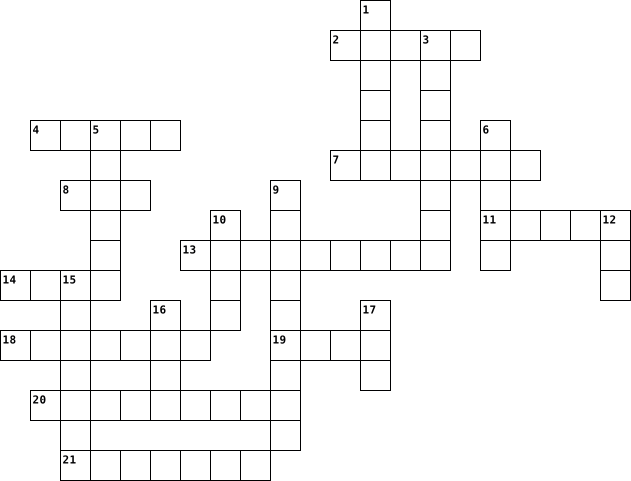
Across
- You should drink at least eight cups of this a day
- _____ bread is better than white bread because it has more fibre
- Milk, cheese & yogurt are good sources of ...
- Butter, oil & mayonnaise are high in ___
- An a____ a day keeps the doctor away
- What does Spongebob live in?
- Bread, potatoes and pasta are examples of carbohydrates, can you name another?
- What is this? The Food _______
- Number of fruit and vegetables you should eat a day
- What's Homer Simpsons favourite food, but should only be eaten as a treat?
- What’s Popeye’s favourite food, which is green?
Down
- Monkeys eat them, good source of potassium
- Should do at least 60 minutes of this per day
- An example of a citrus fruit ?
- Very sweet, should not be eaten often
- Most important meal of the day
- It makes your bones strong
- What came first the chicken or the …..
- Good for eyes, rabbits eat them
- Salmon and trout are examples of ____
- About many hours sleep should you get per night?
21 Clues: It makes your bones strong • What does Spongebob live in? • An example of a citrus fruit ? • Most important meal of the day • What is this? The Food _______ • Good for eyes, rabbits eat them • An a____ a day keeps the doctor away • Very sweet, should not be eaten often • Salmon and trout are examples of ____ • What came first the chicken or the ….. • ...
Nutrition Vocab 2012-09-18

Across
- A type of carbohydrate that your body needs in high doses for proper functioning
- this is caused by poor regulation of internal body processes
- Foods that has all 9 amino acids
- Minerals help regulate this
- The indigestible portion of plant foods
- the high level of _____ in sodas interferes with calcium metabolism and may weaken bones
- lack of vitamin B
- You need these in your body to give you energy
- This helps build muscle
- These help the body produce energy
- lack of vitamin C
Down
- A type of carbohydrate that contains 1 or 2 sugars
- Carbohydrates, proteins, and fats are considered as these
- This is essential for body functions
- lack of vitamin D
- Foods that don't have all 9 amino acids
- this is the amount of water that is in your body
- a simple sugar that provides the body with its primary source of energy
- this deficiency affects the development of bones and causes brittle bones later in life
- stored energy
- These are the building blocks of fats
- This is the most important thing for survival
- you need this to do things
23 Clues: stored energy • lack of vitamin D • lack of vitamin B • lack of vitamin C • This helps build muscle • you need this to do things • Minerals help regulate this • Foods that has all 9 amino acids • These help the body produce energy • This is essential for body functions • These are the building blocks of fats • Foods that don't have all 9 amino acids • ...
nutrition crossword 2013-03-04

Across
- protein helps build and repair muscle ______.
- if you re 9-13 years old how many servings of fruit should you have a day?
- water contains no ________.
- athletes should drink lots of _____ while exercising.
- milk and dairy products are high in _______.
- a great source of vitamin D is the ___.
- what category makes up the biggest section of the food pyramid?
- what meal of the day is most important?
- athletes must stay ________.
- the number one source of protein is____.
- athletes should eat about ___ hours before a competition.
- fat supply's the body with ______.
Down
- avoid ____ food.
- if athletes are hungry between games they should try pizza with _______.
- carrots are a great source of _______ A.
- a good drink athletes could have before a game is _________ milk.
- athletes require more _________.
- a diet is what someone eats and drinks not about______.
- athletes should have lots of _______ in their diet.
- can stress affect food choices?
20 Clues: avoid ____ food. • water contains no ________. • athletes must stay ________. • can stress affect food choices? • athletes require more _________. • fat supply's the body with ______. • a great source of vitamin D is the ___. • what meal of the day is most important? • carrots are a great source of _______ A. • the number one source of protein is____. • ...
Nutrition Crossword 2013-03-06

Across
- Substances found in the Earth.
- The fuel for muscles and brain.
- If you eat good you will stay _________.
- Starches and sugars that come mostly from plant food.
- A person who plays sports and is active.
- A personalized program that involves your food intake.
- You need to keep a good __________ to stay healthy.
- A nutrient that repairs body tissue.
- Avoid eating ________ before athletic activities.
- It is important to drink lots of _______ to say hydrated.
Down
- A _______ is a unit that measures the amount of energy in food.
- This occurs when six essential nutrients are lacking.
- How many cups of water should you have a day.
- Grain Healthier alternative to white bread.
- Supply the body with energy.
- It is recommended to get 60 mins of ______ everyday.
- The food guide is only a ________.
- A good recovery drink is _________ milk.
- How many servings of fruits and vegetable should you have everyday.
- The food group that contains pasta and bread.
- ________ are needed to change energy into food.
- ________ drinks are a bad choice because of high levels of sugar and caffeine.
- A good source of protein.
- A food group that involves cheese and milk.
24 Clues: A good source of protein. • Supply the body with energy. • Substances found in the Earth. • The fuel for muscles and brain. • The food guide is only a ________. • A nutrient that repairs body tissue. • If you eat good you will stay _________. • A good recovery drink is _________ milk. • A person who plays sports and is active. • Grain Healthier alternative to white bread. • ...
Nutrition Crossword 2012-07-23

Across
- Food grown without chemicals naturally
- What we eat.
- Found in humans and in the ground.
- Another word for fat.
- Blood flow throughout the body.
- Main source of energy.
- ------ are rich in vitamin c.
- Unwell or sick.
- Carrot, tomatos, and pumkins are all types of ------------.
- Working
- A nutrient that is vital to life in small amounts.
- Condition of how a person lives.
- Overweight.
- Food is --------- to survive
- Chemical formula known as Na.
- Sum of food consumed by a person.
- Mass Index Also known as BMI.
Down
- Human body is made up of 60% of -------.
- Units of energy in food.
- Known as lack of nutrients.
- -------, such as chicken is a healthy white meat.
- ------ are what we need to live and grow.
- Meat is known as ------ for the body.
- A waxy fat like substance found in Blood.
- Weight gained.
- Physical activity that keeps us fit an healthy.
- ------- makes bones strong and healthy.
- A healthy --------, is a good -----------.
- Food gives us -----.
- A sweet substance
30 Clues: Working • Overweight. • What we eat. • Weight gained. • Unwell or sick. • A sweet substance • Food gives us -----. • Another word for fat. • Main source of energy. • Units of energy in food. • Known as lack of nutrients. • Food is --------- to survive • ------ are rich in vitamin c. • Chemical formula known as Na. • Mass Index Also known as BMI. • Blood flow throughout the body. • ...
Nutrition Review 2015-03-01

Across
- 6 to 8 ounces per day
- neurotransmitter that is responsible for positive feelings, increased release with sugar consumption
- amino acids that help the body produce new cells
- high-density lipoproteins that are "good" cholesterol
- lipid manufactured by liver for production of bile, vitamin D and some hormones
- inorganic substances that help body cells and tissues function
- protects cells from damage by free radicals--an antioxidant
- the number of teaspoons of added sugar per day allowed
- 2 1/2 to 3 cups per day
- a water-soluble antioxidant that helps improve immunity
- 5 to 6 ounces per day
- main source of energy
- fat-like substances that are insoluble in water
- helps blood coagulate
- low-density lipoproteins that are "bad" cholesterol
- stimulates kidneys to increase urine output to decrease water in the body
- sugar from fruit
- undigested substances that aid in digestion
- number of teaspoons in a 16-ounce Coke
Down
- sugar from milk
- neutralize free radicals
- organic substances needed to help cells and tissue function properly
- amount of fat in a glass of skim milk
- sugar from grain
- sugar stored by the body
- causes the same adverse effects as too much sugar
- disease caused by lack of thiamine
- minerals that become charged when dissolved in fluids; maintains body's water balance
- needed for healthy skin and good vision
- HPB, or high blood pressure, that is worsened by sodium
- weakened bones caused by insufficient vitamin D
- 3 cups per day
- the "sunshine" vitamin that helps build strong bones
- processed sugar
- used to store energy, build cells, and distribute vitamins
- 1 1/2 cups per day
- helps provide energy
37 Clues: 3 cups per day • sugar from milk • processed sugar • sugar from grain • sugar from fruit • 1 1/2 cups per day • helps provide energy • 6 to 8 ounces per day • 5 to 6 ounces per day • main source of energy • helps blood coagulate • 2 1/2 to 3 cups per day • neutralize free radicals • sugar stored by the body • disease caused by lack of thiamine • amount of fat in a glass of skim milk • ...
Children's Nutrition 2014-12-18

Across
- Age at which a child's appetite slows down
- A child's appetite will slow down during periods of __ growth
- Children are very susceptible to commercials for this type of food
- What kinds of snacks should you have available for children throughout the day
- Should be a key objective in an early childhood program
- Children need to eat more frequently because they have _ _.
- Children consumer more for their _ _ than adults.
- Many of the leading diseases can be attributed to this
- The reason meals should be served at the same time each day
- Half of your plate should be made up of fruits and __.
- __ exposure is more likely to influence a child's food choices then instruction about healthy foods
Down
- Where should children eat meals and snacks
- Half of the calories from this food comes from sugar
- The visual representation of the dietary recommendations of the FDA
- Children enjoy _ _ fruits and vegetables.
- This food group is represented by a cup beside the plate
- One of the main ingredients in granola bars
- Children are more likely to try new foods if they are involved in __.
- Good habit to start after meals
- Food that is 85% fat
20 Clues: Food that is 85% fat • Good habit to start after meals • Children enjoy _ _ fruits and vegetables. • Age at which a child's appetite slows down • Where should children eat meals and snacks • One of the main ingredients in granola bars • Children consumer more for their _ _ than adults. • Half of the calories from this food comes from sugar • ...
Plant nutrition 2014-07-30

Across
- In photosynthesis, light energy is transferred to ________ energy
- Structure within a plant cell which contains CHLOROPHYLL
- A product of photosynthesis
- Used to test for the presence of STARCH
- These change shape to open or close the STOMATA (5,5)
- Transports sugars (mainly sucrose) around the plant
- Used to make DNA
- Layer of elongated cells packed full of chloroplasts
- Upper and lower layer of cells within a leaf
- The rate of photosynthesis plateaus due to _________ factors
- A product of photosynthesis
- Pores in the underside of a leaf which allows for gas exchange
- Required for enzymes
- The main storage carbohydrate in plants
- Transports water and dissolved minerals
Down
- Made from glucose; used in cell walls
- Green pigment which absorbs light
- Waxy; helps to prevent water loss
- Reaction which releases energy
- Required for the production of CHLOROPHYLL
- The middle layer of the leaf (comprising of PALISADE AND SPONGY)
- The movement of water vapour out of a leaf
- Used in the production of amino acids
- Layer of rounded cells with air spaces allowing for gas exchange
- Required for photosynthesis (in addition to CO2)
25 Clues: Used to make DNA • Required for enzymes • A product of photosynthesis • A product of photosynthesis • Reaction which releases energy • Green pigment which absorbs light • Waxy; helps to prevent water loss • Made from glucose; used in cell walls • Used in the production of amino acids • Used to test for the presence of STARCH • The main storage carbohydrate in plants • ...
Nutrition Crossword 2014-04-04

Across
- good cholesterol
- necessary for muscle contractions
- fats meat, milk, and butter are _____
- the energy in food
- pastas and beans are _____
- soluble vitamins A,D,E and K
- a healthy diet gives you _____
- proteins are needed for growth, repair and _____
- most important nutrient
- hormone naturally made by the body
- chemical element needed for the bodily process
- essential nutrients needed for development and growth
- needed for red blood cells to carry oxygen
- cannot be digested by humans
Down
- a healthy diet prevents _____
- fats olive oil, peanut oil, and canola oil are _____
- body's main source of energy
- fats are also known as _____
- provides quick energy
- bad cholesterol
- fats help protect _____
- hydrogenated oils artificial fats that are very unhealthy
- acids proteins are made up of _____
23 Clues: bad cholesterol • good cholesterol • the energy in food • provides quick energy • fats help protect _____ • most important nutrient • pastas and beans are _____ • body's main source of energy • fats are also known as _____ • soluble vitamins A,D,E and K • cannot be digested by humans • a healthy diet prevents _____ • a healthy diet gives you _____ • necessary for muscle contractions • ...
Nutrition Quest 2014-05-13

Across
- long term diabetes
- Ratio to weight to height
- energy put into the body from foods
- changes to the food caused by a process
- Fat from your waist to your hip
- unborn baby
- process of making gradual permanent changes to the body
- Person that suffers from obesity
- Person who is skinny from not eating food
- Controlling your weight
- Foods with nutrients
- when a person eats larges amount in a short period of time
- Vigorous activity that causes intense burst of activity
- Allergic to a food
- Eating disorder in which a person is scared of fat
- Exercise for the body
- a overweight person
- a physical or mental tension
- body intake
Down
- lack of water in the body
- what your body consumes
- how long something lives
- a eating disorder or binge
- adverse physical reaction
- amount of nutrients needed
- Physician who cares for infants
- Diet for what a person needs
- popular weight loss method
- Activity that keeps you healthy
- minimum amount of energy to maintain body process
- Production of breast milk
- a healthy maintained weight
- influence on making you do something
- condition marked by emotions
- care for a women during pregnancy
- Vigorous activity that increase heart and breathing rate
36 Clues: unborn baby • body intake • long term diabetes • Allergic to a food • a overweight person • Foods with nutrients • Exercise for the body • what your body consumes • Controlling your weight • how long something lives • lack of water in the body • Ratio to weight to height • adverse physical reaction • Production of breast milk • a eating disorder or binge • amount of nutrients needed • ...
Nutrition Crossword 2023-10-19

Across
- this type of fat can decrease the risk of cardiovascular disease and type 2 diabetes
- help the body use fat efficiently, provide fiber, and come in complex and simple forms
- diet that eliminates poultry, meats, fish, eggs, and dairy and all foods derived from animals
- necessary for the absorption of vitamins A, D, E, and K
- type of diet that may be ordered for patients with high blood pressure, heart disease, or kidney disease
- most of these cannot be made by the body
- diet that omits all meats, fish, poultry, and dairy but allows eggs
- this type of fat can increase cholesterol levels
- these can be divided into 2 groups: whole and refined
- these contain folic acid, potassium, and vitamin c
- needed for tissue growth and repair and can be found in meat, eggs, and nuts
- type of diet that may be ordered for patients with heart disease, gallbladder disease, or liver disease
Down
- diet that includes clear juices, broth, gelatin, and popsicles
- type of diet that requires exact measurements of fluid intake
- most essential nutrient for life
- food consistency that has been blended into a thick paste
- diet that excludes all meats, fish, poultry, but allows eggs and dairy
- low in fat and calories and good sources of dietary fiber, potassium, and vitamins A, E, and C
- diet that requires careful control of calories and carbohydrates
- found in cured meats, such as ham, bacon, and hot dogs
- help build bones, make hormones, and help in blood formation
- diet that consists of chopped or blended foods that are easier to chew and swallow
- this food group contains calcium
- necessary substance that provides energy, promotes growth and health, and helps regulate metabolism
24 Clues: most essential nutrient for life • this food group contains calcium • most of these cannot be made by the body • this type of fat can increase cholesterol levels • these contain folic acid, potassium, and vitamin c • these can be divided into 2 groups: whole and refined • found in cured meats, such as ham, bacon, and hot dogs • ...
Nutrition Vocabulary 2023-11-21

Across
- Basic building block of fats
- Sugar that is extracted from plants, used to sweeten foods
- Green pigment in plants
- The process by which plants use the sun's energy to make oxygen and glucose
- A food that lacks one or more of the essential amino acid
- The body's main source of energy
- Sugar made of several monosaccharides
- A carbohydrate that requires more work for the body to digest
- Tastes like sugar but with little or no calories
- Sugar with a single chemical unit
Down
- A food that contains all nine essential amino acids
- Plant material that can't be digested
- A basic fat molecule
- A carbohydrate that supplies energy for the body
- Carbohydrate with simple chemical structure
- Carbohydrate with more complex chemical structure than sugar
- Molecule that combines with others of itself to make proteins
- Your body needs it but can't make it
- Protein that transports oxygen in the blood to all cells in your body
- Sugar with two monosaccharide
20 Clues: A basic fat molecule • Green pigment in plants • Basic building block of fats • Sugar with two monosaccharide • The body's main source of energy • Sugar with a single chemical unit • Your body needs it but can't make it • Plant material that can't be digested • Sugar made of several monosaccharides • Carbohydrate with simple chemical structure • ...
Nutrition Crossword 2023-11-28

Across
- increase LDL cholesterol levels and lower HDL cholesterol levels
- poisoning from too much of a substance
- substances that protect cells and the immune system from damage by harmful chemicals
- the process by which plants use the sun's energy to convert carbon dioxide and water into oxygen and glucose
- the green pigment in plants
- the form of carbohydrate that supplies energy to the body
- a sugar made of two monosaccharides
- a sugar made of several monosaccharides
- the body's main source of energy
Down
- a substance that tastes sweet but has few or no calories
- the basic building blocks of fats
- an unstable substance that can damage body cells
- a carbohydrate with a more complex structure than a sugar
- sugar that is extracted from plants and used to sweeten food
- a fat-protein unit
- a sugar with a single chemical unit
- a fatlike substance in cells that is needed for many body processes
- plant material that cannot be digested
- a molecule that combines with other amino acid molecules to make proteins
- a protein that transports oxygen in the blood to all cells in your body
20 Clues: a fat-protein unit • the green pigment in plants • the body's main source of energy • the basic building blocks of fats • a sugar with a single chemical unit • a sugar made of two monosaccharides • poisoning from too much of a substance • plant material that cannot be digested • a sugar made of several monosaccharides • an unstable substance that can damage body cells • ...
nutrition quiz 2022-10-25

Across
- a measurement of the amount of energy produced when food is burned by the body.
- contain one or more double or triple bonds between the molecules
- substances that must be obtained from the diet because the body cannot make them in sufficient quantity to meet its needs.
- adding greatly-needed nutrients to foods that might not have had them in the first place.
- an essential nutrient and is needed by the body in relatively small amounts(provided that substantial sweating does not occur) to maintain a balance of body fluids and keep muscles and nerves running smoothly.
- if a food does not contain nutrients or if the calories from sugar and fats outweigh the nutrients found in the food,
- made up of many amino acids joined together
- substances that our bodies need to develop and function normally.They include vitamins A,c,d,e,and b
- is a colorless, transparent, odorless liquid that forms the seas, lakes, rivers, and rain and is the basis of the fluids of living organisms.
- a collection of foods that share similar nutritional properties or biological classifications.
- sugars that are added during the processing of foods
Down
- rich in energy and is made up of carbon, hydrogen, and oxygen with complex chains
- a guide developed by the USDA for healthful eating that identifies daily meal proportions for the fruit, vegetable, grains, proteins, dairy food groups
- a waxy substance found in your blood
- a food that has nutrients added back that were lost during processing
- a molecule compound
- is the process by which your body converts what you eat and drink into energy
- chemical substances in food that help to maintain the body.
- inorganic elements that come from the soil and water and are absorbed by plants or eaten by animals, such as calcium, potassium, and zinc.
- type of cardiohydrate that the body cant digest
- a lot of energy and is made up of carbon, hydrogen, and oxygen
21 Clues: a molecule compound • a waxy substance found in your blood • made up of many amino acids joined together • type of cardiohydrate that the body cant digest • sugars that are added during the processing of foods • chemical substances in food that help to maintain the body. • a lot of energy and is made up of carbon, hydrogen, and oxygen • ...
Health Nutrition 2024-03-07

Across
- A nutrient that provides energy (20-30%), transports vitamins, and helps in brain development. There are two types--saturated and unsaturated.
- Good fat, found in plant products (oils and nuts-except tropical oils). Moderate amounts can lead to a decreased risk of cardiovascular disease.
- eat the _______________amount of calories for you
- A substance or ingredients that promotes growth, provide energy, and maintains life
- The main source of fuel for the body (45-65%), composed of two types--simple and complex.
- cut back on foods___________in salt
- What color is protein on MyPlate?
- switch to what kind of milk?
- pay attention to _______________and hunger
- Assists in moving waste throughout the digestive system, found in whole grains, fruits and vegetables.
- Substances in foods that assist in regulating the body's functions. There are two types--fat soluble and water soluble.
- make at least half your grains______________
- found in many processed foods and can increase the risk of high blood pressure/heart disease
- Bad fat, with effects similar to saturated fat. This type of fat is created through processing hydrogen and vegetable oil, which makes the oil harden. Found in many processed foods, such as fried foods, cookies, crackers, muffins and hamburg buns.
- whole_______________are better for you than refined grains
- check the ____________________ list in food packages to find whole-grain foods
- Micromineral; maintains healthy blood; Found in beans and fortified cereals.
- Water soluble; for growth and function of various cells. It can be found in dark leafy greens, whole grain cereals, and salmon.
- Starches, which give long-term energy, found in grains, pasta and root vegetables.
- choose food and drinks with ______________ to no added sugars
- cut back on foods high in ____________fats
- What color is grains on MyPlate?
- B Vitamins, and Vitamin C which dissolve in water (not stored in body)
- Elements in food sources that aids the body's processes.
- Macromineral; Aids in muscle and nerve functions, forms strong bones and teeth. Found in dairy products, broccoli, kale and spinach.
- Fat soluble; This is beneficial to vision and can be found in orange vegetables, milk, and eggs
Down
- Micromineral; for 100 enzymes to carry out vital chemical reactions; found in shellfish, beef, poultry and pork.
- Bad fat, found in animal products and tropical oils (palm and coconut). An increased amount of saturated fat in the diet can increase the risk of cardiovascular disease and some cancers.
- A, D, E, K, which dissolve in fat (can overdose on these; can be stored in body)
- choose, ___________, frozen, canned, or dried fruits and vegetables
- Provides _________ _______ ex: white breads or sugar Simple Carbohydrates
- eat _______, orange, and dark green vegetables such as tomatoes, sweet potatoes, and broccoli
- make _________ your plate fruits and vegetables
- A substance that contains all the essential amino acids (animal products).
- be __________________________active
- Fat soluble; This is put in milk to help absorb and retain other nutrients. It will help form strong bones and teeth. found in salmon, tuna and egg yolks
- Various sugars found in food, such as fructose (fruit sugar), lactose (milk sugar), and sucrose (table sugar) which give short-term energy.
- fat free/low fat milk has the same______________________and less fat
- A substance that lacks one or more of the essential amino acids (plant products).
- choose a______________ of protein
- drink more ________________
- What color is dairy on MyPlate?
- choose _______% whole-grain cereals, breads, crackers, rice, and pasta
- Provides _______ _____ _____ EX Whole Grains Complex Carbohydrates
- being physically active helps to ____________________calories
- Transports vitamins, regulates body temperature and lubricates joints
- choose whole or cut up fruits more than fruit ______________
- Macromineral; needed to maintain normal levels of fluids in cells; found in dried fruits, beans, and potatoes
- cut back on foods high in added ________________
- needed in small amounts less than 100mg/day
- Water soluble; This is found in citrus fruits, green peppers and tomatoes. It helps to strengthen the immune system and gums.
- Substances in our food that build and repair cells, as well as, provide energy (10-15%); composed of two types-complete and incomplete.
- needed in larger amounts; more than 100mg/day
- keep meat and poultry portions_____________ and lean
- look our for salt or________________ in foods that you buy
55 Clues: drink more ________________ • switch to what kind of milk? • What color is dairy on MyPlate? • What color is grains on MyPlate? • What color is protein on MyPlate? • choose a______________ of protein • cut back on foods___________in salt • be __________________________active • pay attention to _______________and hunger • cut back on foods high in ____________fats • ...
Nutrition Crossword 2024-03-16

Across
- When your body eats all the necessary foods in order for you grow and be healthy.
- _____ is something that happens in your body that helps break down foods.
- There are many different types of _____ which help with your bones and strength. (One can of them works naturally when you are in the sun)
- You need to eat lots of _____ for energy and it is found in many foods.
- _____ include things like oxygen, carbon, hydrogen and gives you energy (it includes sugar which gives you energy).
- _____ helps your nerves, muscles and heart to grow and be healthy.
- A food that comes from a tree or other plants that contains seeds, mostly sweet and includes tomatoes.
- A plant or part of a plant that is extremely healthy for us and helps our bodies, everyone eats this and includes food like cabbage, carrots and many more.
- This is in every food that you eat, and it can help you do sports, workouts but also helps your brain for to be able to learn.
- _____ are an oily substance originally found in animal bones.
Down
- _____ share a collection of foods that have been separated into sections for what are healthy things for eating.
- _____ is a unit that measures the amount of energy you get from your foods that you eat.
- A way of eating that restricts other food.
- When foods are made in entirely of plants or partly made of plants.
- It is essential for our bodies for transporting oxygen and is extremely important for our growth.
- _____ is something we do need in our lives and comes from the flesh of animals.
- _____ is when you eat enough meat, poultry, eggs, dairy, vegetables, fruit but also sugary things occasionally.
- _____ includes many foods such as chicken, eggs, ducks, turkey and many more.
- A medical professional that can help you stay healthy by eating the right foods and helping you with your diet.
- _____ is a diet you can change to
20 Clues: _____ is a diet you can change to • A way of eating that restricts other food. • _____ are an oily substance originally found in animal bones. • _____ helps your nerves, muscles and heart to grow and be healthy. • When foods are made in entirely of plants or partly made of plants. • You need to eat lots of _____ for energy and it is found in many foods. • ...
Nutrition Crossword 2024-04-04

Across
- A food group that includes chicken, turkeys, ducks, eggs and even feathers.
- _____ is a type of diet where you don’t eat pasta or flour and wheat, you don’t eat gluten.
- ______ maintains your energy levels and is a mineral that you can collect with fruits and vegetables.
- _____ is a food that grows from trees and plants and contains seeds inside of them, some may include bananas, mangoes, strawberries and many more.
- _____ includes many foods that are free from animal products, it is not vegetarian but it means that you only eat plants.
- _____ comes from animals such as cows, sheep, pigs.
- _____ is something that happens in your body that helps break down foods.
- _____ are organic compounds or substances that contain carbon, hydrogen and oxygen.
- _____ is when you eat enough meat, poultry, eggs, dairy, vegetables, fruit but also sugary things occasionally.
- This is in every food that you eat and it can help you do sports, workouts but also helps your brain to be able to learn.
- There are many different types of _____ which help with your bones and strength. (One can of them works naturally when you are in the sun)
Down
- 5 groups of foods that we need for our body to grow and sustain a healthy life.
- When your body eats all the necessary foods in order for you to grow and be healthy.
- _____ is a unit that measures the amount of energy you get from your foods that you eat.
- _____ are an oily substance originally found in animal bones.
- _____ is essential for our bodies and is found in many foods to help us build our growth development and our muscles.
- You need to eat lots of _____ for energy and it is found in many foods.
- A medical professional that can help you stay healthy by eating the right foods and helping you with your diet.
- These are plants that take up most of the pie chart in a food group pyramid and include cabbage, spinach, beans and many more.
- A way of eating that restricts other food.
20 Clues: A way of eating that restricts other food. • _____ comes from animals such as cows, sheep, pigs. • _____ are an oily substance originally found in animal bones. • You need to eat lots of _____ for energy and it is found in many foods. • _____ is something that happens in your body that helps break down foods. • ...