
cells Crossword Puzzles
Project 22' 2022-09-15

Across
- stages are:g1,g2,and s
- one cell divides into two identical cells
- caused when cells overgrow
- for cell division
- of cytoplasm
- Cycle,It is the cycle that cells go through in their life and it separates them and makes new cells
- cell,results of a single-dividing parent cell
- two sister charadid separate from each other
Down
- spindle fiber begins to disappear
- a long dna molecule
- this phase DNA replication is in use
- genetic information
- spindle fibers pull and push the duplicated chromosome
- cells,cells that carry out specific functions
- this stage new cells grow
- copied chromatin coils together tightly
- of cell cycle,The cell is fully grown
- chromatids,identical copies formed by DNA
- cell,a cell that makes other cells
- a cluster of dividing cells made by a fertilized egg
20 Clues: of cytoplasm • for cell division • a long dna molecule • genetic information • stages are:g1,g2,and s • this stage new cells grow • caused when cells overgrow • spindle fiber begins to disappear • cell,a cell that makes other cells • this phase DNA replication is in use • of cell cycle,The cell is fully grown • copied chromatin coils together tightly • ...
Characteristics of Life and The Cell Theory 2021-09-30

Across
- describes why
- process of using materials
- used a microscope to observe cork
- cells come from ______________ cells
- Schwann concluded that all animals were made of cells
- organisms can be _____________ (made of 1 cell) or multicellular (made of more than 1 cell)
- concluded all plants were made of cells
- DNA is inherited from your ______________
- all living things ___________ and develop during at least part of their life
- living things need a constant supply of materials and ______________
Down
- process of keeping the internal environment stable/balanced/constant
- organisms detect and respond to internal and external ___________
- stimuli that come from within the organism
- cells are the basic unit of _____________ and function
- observed teeth scrapings, first to view living organisms
- the genetic code
- all living things are made of _____________
- reasoned that all cells come from preexisting cells
- Virchow observed cells ______________
- explains what/how
20 Clues: describes why • the genetic code • explains what/how • process of using materials • used a microscope to observe cork • cells come from ______________ cells • Virchow observed cells ______________ • concluded all plants were made of cells • DNA is inherited from your ______________ • stimuli that come from within the organism • all living things are made of _____________ • ...
Tissues 2021-11-04

Across
- stretchy yellow connective tissue fibers consisting of the protein elastin
- mature bone cells
- neurons and neuroglia
- a hard, mineralized connective tissue that forms the skeleton
- thin collagenous fibers
- fat-storing tissue
- consists of a single layer of thin, flattened cells
Down
- membrane that lines a cavity that does not open to the outside of the body
- cordlike or bandlike masses of white fibrous connective tissue that connects muscles to bones
- groups are similar cells that perform specialized functions
- cartilage cell
- cells that produce fibers in connective tissue
- layer of extracellular matrix that anchors epithelial tissue to underlying connective tissue
- a flexible type of cartilage with many elastic fibers
- nerve cells
- tissue with cells that are in layers
- band between adjacent cardiac muscle cells
- tissue with cells that appear to be in layers, but are not
- tissue with flattened or scalelike cells
- tissue that stores fat
20 Clues: nerve cells • cartilage cell • mature bone cells • fat-storing tissue • neurons and neuroglia • tissue that stores fat • thin collagenous fibers • tissue with cells that are in layers • tissue with flattened or scalelike cells • band between adjacent cardiac muscle cells • cells that produce fibers in connective tissue • consists of a single layer of thin, flattened cells • ...
Blood 2024-11-01

Across
- fragments of cells that aid in blood clotting
- another name for red blood cells
- the system that transports blood
- the liquid part of blood that is 90% water
- transferring of blood to another person
- blood type markers attached to cells
- oxygen-carrying protein that makes blood red
- can differentiate into many types of cells
Down
- blood that is carrying oxygen to cells
- chemical messengers in the bloodstream
- thin vessels that join venules to arterioles
- small arteries
- type O negative blood
- another name for white blood cells
- blood cells that help fight infection
- vessels that carry blood away from the heart
- little veins that join to form larger veins
- type AB positive blood
- a condition that results from low red blood cells
- blood cells that carry oxygen
- vessels that carry blood toward the heart
21 Clues: small arteries • type O negative blood • type AB positive blood • blood cells that carry oxygen • another name for red blood cells • the system that transports blood • another name for white blood cells • blood type markers attached to cells • blood cells that help fight infection • blood that is carrying oxygen to cells • chemical messengers in the bloodstream • ...
hematology 2015-11-05

Across
- formation of blood cells
- rate in which red blood cells settle at the bottom of a tube
- higher than normal level of red blood cells
- test including RBC, Hgb, Hct, WBC, platelets, ect
- leukocytes that assist in phagocytosis
- another word for platelets
- ion that is electricly charged
- another word for thrombocytes
- test that evaluates the % of packed red blood cells in total volume
- fluid portion of the blood
- what is Hgb?
- when hemoglobin is carrying carbon dioxide
Down
- WBC that recognize previously invading organism
- kissing disease
- % of immature red blood cells in relation to erythrocytes
- leukocytes that capture invading microorganisms
- fluid portion remaining after clotting
- immature red blood cells
- Hct performed on an extremely small amount of blood
- chemical that prevents clotting
- red cells, white cells, and platelets are these
- WBC that attack bacteria
- indicating average size of red blood cells
- red blood are called what?
- when Hgb is carrying oxygen
- number of red blood cells per cubic millimeter of blood
- condition in which levels of red blood cells are too low
- granular leukocytes
- study of blood and the tissues that produce it
- white blood cells are called what?
30 Clues: what is Hgb? • kissing disease • granular leukocytes • formation of blood cells • immature red blood cells • WBC that attack bacteria • red blood are called what? • another word for platelets • fluid portion of the blood • when Hgb is carrying oxygen • another word for thrombocytes • ion that is electricly charged • chemical that prevents clotting • white blood cells are called what? • ...
Cell Theory, and Levels of Organization 2023-10-02

Across
- The major organization of biological organisms from smallest to largest.
- Invented the first compound microscope.
- The controller of the cell, holds all of the DNA in chromosomes.
- Contains fluid, used for storage, bigger in plant cells.
- Helps with cell division in animal cells
- The powerhouse of the cell.
- Helps the cell maintain shape.
- Gel like material that fills the cell and surrounds the organelles.
- Organs working together
- Known as the father of microbiology.
- Discovered all plants are made of cells
- The scientific thesis that overall states that all biological organisms are created from cells, cells are the basic unit of life, and cells come from pre-existing cells.
- Basic unit of life
Down
- Discovered all animals are made of cells
- Produce proteins
- Rigid outer layer of plant cells only.
- A living thing
- Organelle that packages proteins
- The protective barrier that allow thing in and out of the cell.
- Contains chlorophyll in which photosynthesis takes place.
- Named cells, and there is no documentation on what he looked like.
- Breaks down worn out cell material; Only found in animal cells.
- A group of cells working together
- Multiple tissues working together
- Transportsprotiens inside the cell [abbreviation]
25 Clues: A living thing • Produce proteins • Basic unit of life • Organs working together • The powerhouse of the cell. • Helps the cell maintain shape. • Organelle that packages proteins • A group of cells working together • Multiple tissues working together • Known as the father of microbiology. • Rigid outer layer of plant cells only. • Invented the first compound microscope. • ...
Cellular Therapy 2024-02-23

Across
- Donor cells attack the recipient
- Hallmark presenting sign of CRS (Cytokine Release Syndrome)
- ANC low or absent
- Transplant from a matched donor
- % donor cells vs recipient cells
- Chemotherapy prepares the body for cellular therapy infusion
- Neurotoxicity from CAR-T
- Test to determine if donor is a match
- First line treatment of GVHD
- Common complication of the oral cavity after transplant due to chemo and GVH prophylaxis.
- Transplant from recipient's own stem cells
- Bone Marrow Transplant
- Person receiving the bone marrow transplant
Down
- Stem cells start to grow and make healthy blood cells
- Starts at day +180 to protect from infectious diseases.
- Cancer of the blood cells
- Best treatment of GVHD
- Occurs at all stages of cellular therapy
- Collection of stem cells from the bone marrow
- Oral agent used to protect against Pneumocystis pneumonia (PCP)
- Common target organ of GVHD
- Process of pushing stem cells into the peripheral blood for collection
- Collection of stem cells from peripheral blood
- All BMT policies and procedures can be found here
- Cancer that begins in the cells of the lymph system
- Formation of blood cellular components
- Chimeric antigen receptor T-cell therapy
- Cancer that starts in the plasma cells
- National database for cellular therapy research
29 Clues: ANC low or absent • Best treatment of GVHD • Bone Marrow Transplant • Neurotoxicity from CAR-T • Cancer of the blood cells • Common target organ of GVHD • First line treatment of GVHD • Transplant from a matched donor • Donor cells attack the recipient • % donor cells vs recipient cells • Test to determine if donor is a match • Formation of blood cellular components • ...
The Immune System 2016-05-29

Across
- / increase body temperature to speed up immune system
- / Y-shaped protein produced by plasma cells
- / causes blood vessels to dilate
- / can rapidly respond to any future exposure to the same antigen
- / white blood cell that can kill tumor cells
- / cytokine that stimulates Tc cells B cells, and other Th cells to become active
- / an innate immune defense by physical injury or infection of tissue
- / type of immune response that involves activation of B cells and leads to production of antibodies
- / acquired immunodeficiency syndrome
- / these cells respond to only certain cues
- / produce antibodies
- / hyper sensitive immune responses to allergens
- / surface protein that binds to class I MHC molecules
- / fight pathogens in the cell-mediated immune response
- / these cells circulate for a lifetime
- / particular lymphocyte that matches a specific antigen is identified and activated
- / conferred by action of B cells and T memory cells for a specific pathogen
Down
- / programmed cell death
- / secreted by blood vessel endothelium and monocytes
- / secretes cytokines that promote response of B cells and Tc cells
- / kill body cells infected with pathogens
- / location of maturation of T cells
- / 30 blood proteins that function as local regulators
- / ingest invading microbes
- / also called antibodies
- / protects underlying tissues from pathogens
- / stimulates helper T cells to produce interleukin-2
- / immunological disorder in which immune system turns against itself
- / extreme allergic reaction from sudden dilation of blood vessels
- / antibody secreting effector cell of humoral immunity
- / protein that has antiviral or immune regulatory functions
- / short term immunity
- / membranes lines all body passages and cavities
- / human immunodeficiency virus
- / destroy microbes
35 Clues: / destroy microbes • / produce antibodies • / short term immunity • / programmed cell death • / also called antibodies • / ingest invading microbes • / human immunodeficiency virus • / causes blood vessels to dilate • / location of maturation of T cells • / acquired immunodeficiency syndrome • / these cells circulate for a lifetime • / kill body cells infected with pathogens • ...
Connective Tissue 2024-06-17

Across
- Macrophages found in the skin.
- Cells that increase in number during parasitic infestations.
- Amorphous collagen type found in basement membranes.
- Process of neutrophils migrating to connective tissue.
- Macrophages found in the nervous system.
- Long polysaccharide molecule in ground substance.
- Adipose tissue found in hibernating animals and infants.
- Thin type III collagen fibers coated with glycoprotein.
- Appearance of white adipose cells in tissue sections.
- Core protein with many GAGs attached.
- Cytoplasm characteristic of plasma cells.
- Collagen type present in hyaline cartilage.
- Antibody-producing cells arising from B lymphocytes.
- Protein that makes up collagen fibers.
- Most abundant type of collagen, present in skin and tendons.
- Undifferentiated stem cells located adjacent to capillaries.
- Thinner fibers made of elastin protein allowing stretch and recoil.
- Aggregates of RER in plasma cells.
- Macrophages found in the liver.
Down
- Cells that store fat in adipose tissue.
- Substance from mast cells inducing smooth muscle contraction.
- Collagen type forming thin reticular fibers.
- Cells that synthesize fibers and ground substance.
- Proteins that bind plasma membrane proteins to collagen.
- Featureless substance composed of GAG, proteoglycans, and glycoproteins.
- Severe hypersensitivity reaction mediated by mast cells.
- connective tissue that is jelly-like matrix present in the umbilical cord.
- First-line defense cells that increase in bacterial infection.
- Connective tissue comprising branching elastic fibers.
- Cells that originate in the bone marrow as monocytes.
- Adipose tissue constituting almost all adult adipose tissue.
- Tissue consisting of branched reticular fibers.
- Connective tissue with fewer fibers and more cells.
- connective tissue that is Gel-like amorphous matrix found in embryos.
- Most abundant protein fiber in the body, resists stretching.
- Tissue with cells that store fat.
- Connective tissue with densely arranged fibers.
- Macrophages found in the bone.
- Substance released by mast cells causing increased vessel permeability.
39 Clues: Macrophages found in the skin. • Macrophages found in the bone. • Macrophages found in the liver. • Tissue with cells that store fat. • Aggregates of RER in plasma cells. • Core protein with many GAGs attached. • Protein that makes up collagen fibers. • Cells that store fat in adipose tissue. • Macrophages found in the nervous system. • ...
Chapter 34 2025-05-05

Across
- Nodes / Structures that swell during infections as white blood cells multiply
- / Cell that engulfs large particles or pathogens
- Immunity / Immunity gained by exposure to disease or vaccines
- Proteins / Molecules that mark pathogens for destruction and assist the immune response
- Memory / Immune system’s ability to remember past invaders and respond faster
- / White blood cells that send signals to other immune cells
- Immunity / Immune system that learns and remembers specific pathogens
- / Y-shaped protein that binds specifically to antigens
- Immunity / Immunity received from another source, like mother’s milk or antibody injections
- / Overreaction of the immune system to a harmless substance
Down
- / A weakened or missing immune response, which reduces the body’s defense
- TCells / White blood cells that kill virus-infected cells
- / Signaling proteins that help immune cells communicate and coordinate
- / White blood cells that create antibodies
- Immunity / Immune response involving antibody production by B cells
- / Molecule that triggers an immune response
- Immunity / General, non-specific immune defense present at birth
- Immunity / Immune response involving direct attack on infected cells
- / Large immune cell that engulfs invaders and activates adaptive immunity
- Diseases / Conditions in which the immune system attacks the body’s own cells
- / Substances that introduce antigens to stimulate immunity without causing illness
- Cells / B cells that secrete antibodies during an immune response
22 Clues: / White blood cells that create antibodies • / Molecule that triggers an immune response • / Cell that engulfs large particles or pathogens • / Y-shaped protein that binds specifically to antigens • TCells / White blood cells that kill virus-infected cells • / White blood cells that send signals to other immune cells • ...
Immune Sytem 2015-05-18

Across
- bacteria that cause disease
- cells developed in the thymus
- B cells develop here
- stem cell for all immune system cells
- type of immunity with immediate response
- immune system's antigen identification process
- system of protection & recovery
- cells that fight against infection
- body's cells attack its own healthy cells
- substances that make the immune system create antibodies
Down
- blood cells that clot bleeding
- cells that remember the same antigen
- cells that have no immunological memory
- first line of defense for external factors
- organ that filters lymph
- largest kind of white blood cell
- organ that stores and filters blood
- type of immunity with slow response
18 Clues: B cells develop here • organ that filters lymph • bacteria that cause disease • cells developed in the thymus • blood cells that clot bleeding • system of protection & recovery • largest kind of white blood cell • cells that fight against infection • organ that stores and filters blood • type of immunity with slow response • cells that remember the same antigen • ...
Cell Types and Organelles 2023-10-10

Across
- Found in only eukaryotic cells, it produces usable energy from food for cells to use
- Complex cells found in plants and animals
- The smallest unit of life that can accomplish all of the tasks of living things
- Protein factories found in all cell types
- These organisms have eukaryotic cells and cannot do photosynthesis
- These organisms have eukaryotic cells and use web-like structures called mycelium to find nutrients
- These are unicellular prokaryotes that are found in very high numbers in and on your own body
- This is found in eukaryotic cells and is responsible for producing and transporting materials around the cell
- These organisms have eukaryotic cells and can do photosynthesis because they have chloroplasts
- This acts as a storage container for food, water or waste in eukaryotic cells
- This part of the microscope is where the slide and object will rest while viewing
- Simple cells found in bacteria and archaea
- An organism that is composed of more than one cell, for example, an ostrich
Down
- Three ideas that describe the relationship between cells and living things
- A type of observation or data that is expressed as a number
- An organism that is only one cell, for example, a bacterium
- A type of observation or data that is expressed using descriptive words
- Found in all cells, it determines what enters and exits the cells
- The name for one of the rotating lenses on a compound microscope
- Found in all cell types, contains instructions for making proteins
- The term used to describe any one of many parts of a cell
- This type of microscope is used for large objects and does not allow viewing of individual cells
- Found in all plant, algae and fungal cells, in addition to most bacterial cells
- Found only in plant and algae cells, it produces food from carbon dioxide and water, using the sun's energy
- This type of microscope is used for very thin objects and can allow you to view individual cells
- These are unicellular prokaryotes that live in the most extreme places on earth
- Found in only eukaryotic cells, it protects the DNA
27 Clues: Complex cells found in plants and animals • Protein factories found in all cell types • Simple cells found in bacteria and archaea • Found in only eukaryotic cells, it protects the DNA • The term used to describe any one of many parts of a cell • A type of observation or data that is expressed as a number • An organism that is only one cell, for example, a bacterium • ...
Integument 2025-11-12

Across
- cells have "spikes"
- doesn't allow anything between cells
- stinky sweat glands
- dead or alive they are stratified squamous
- most of the dermis
- from sebaceous glands
- the skin's personal immune system cells
- on a Q-tip
- pigment of the skin and eyes
Down
- allows rapid signal transmission between cells
- stem cell layer with melanocytes and tactile cells
- layer stains like polka dots in cells
- only found in thick skin
- goosebumps
- under the epidermis
- does not secrete melatonin
- most superficial layer of the epidermis
- hold two cells together like a snap
- sweat glands all over; active from birth
- responsible for fingerprints
20 Clues: goosebumps • on a Q-tip • most of the dermis • cells have "spikes" • under the epidermis • stinky sweat glands • from sebaceous glands • only found in thick skin • does not secrete melatonin • responsible for fingerprints • pigment of the skin and eyes • hold two cells together like a snap • doesn't allow anything between cells • layer stains like polka dots in cells • ...
Immunology Acronym 2023-09-26

Across
- adaptive immune responses in which there is a major role for effector T cells
- Repeating patterns on microbes that are recognized by PRRs on immune cells
- white blood cells with multi-lobed nuclei and cytoplasmic granules
- thymus derived lymphocyte that are comprised of two different subsets CD4 and CD8
- a cell wall component of gram negative bacteria which can be bound by TLR-4 on macrophages and dendritic cells.
- cell that starts as a monocytes in the blood and tuns into this cell in the interstitial space
- designation for a family of cell surface molecules involved in the presentation of peptide antigens to Tcells
- autoimmune disease where autoantibodies against DNA, RNA, and proteins associated with nucleic acids) form immune complexes
- B lymphocyte that upon activation can differentiate into plasma cells secreting antibody molecules or B memory cells
- Regulatory CD4+ cells
- general designation of many of the different cytokines, chemical messengers secreted by immune cells that help in their communication with other cells
- receptors on immune cells and epithelial cells that recognize and bind PAMPs on microbes
- member of TNF receptor family expressed on certain cells that makes them susceptible to being killed by cells expressing the fas ligand
Down
- acute phase protein that binds to phosphocholine that can trigger complement activation and acts as a opsonin
- protein family to antibodies and B-cell receptors belong
- large granular lymphocyte that serves as an innate effector cell by inducing apoptosis of target cells
- cells characterized by the cytokines including IL-4; involved in stimulating B cells to produce IgE antibody against helminths
- a type of APC that presents antigen in the context of MHC to T cells
- soluble acute phase response protein that can bind mannose on pathogens; can activate the lectin pathway of complement and acts as an opsonin
- a cell that is able to present an antigen via MHC molecules to Tcell receptors on tcells
- multiple drug treatment for HIV infection
- an immunoglobulin that is expressed on B cell surface
- Receptors on immune cells and epithelial cells that recognize and bind to PAMP's on microbes
- the end stage of disease in HIV infection
- the AG receptor on Tcells
- immunoglobulin secreted by plasma cells
26 Clues: Regulatory CD4+ cells • the AG receptor on Tcells • immunoglobulin secreted by plasma cells • multiple drug treatment for HIV infection • the end stage of disease in HIV infection • an immunoglobulin that is expressed on B cell surface • protein family to antibodies and B-cell receptors belong • white blood cells with multi-lobed nuclei and cytoplasmic granules • ...
Immune Sytem 2015-05-18

Across
- type of immunity with immediate response
- type of immunity with slow response
- cells that remember the same antigen
- B cells develop here
- cells that have no immunological memory
- system of protection & recovery
- cells developed in the thymus
- largest kind of white blood cell
- stem cell for all immune system cells
- substances that make the immune system create antibodies
- blood cells that clot bleeding
Down
- first line of defense for external factors
- cells that fight against infection
- body's cells attack its own healthy cells
- organ that filters lymph
- immune system's antigen identification process
- organ that stores and filters blood
- bacteria that cause disease
18 Clues: B cells develop here • organ that filters lymph • bacteria that cause disease • cells developed in the thymus • blood cells that clot bleeding • system of protection & recovery • largest kind of white blood cell • cells that fight against infection • type of immunity with slow response • organ that stores and filters blood • cells that remember the same antigen • ...
Lymphocytes 2020-08-05

Across
- found in this system
- type of microorganisms NK and T-cells destroy
- made up of 70%
- produced in the
- are a type of lymphocyte
- purpose of t cells
- circulate through
- type of t-cell
- average diameter in microns
Down
- what defines this cell as eukaryotic
- type of t-cell
- produced by t-cells
- type of t-cell
- MSGREN Approved
- having lymphocytes allows for this
- type of lymphocyte
- are a type of lymphocyte
- purpose of b-cells (... antibodies)
- processed used by antibodies to detect
- type of blood cells
- t-cells mature in this location
21 Clues: type of t-cell • type of t-cell • made up of 70% • type of t-cell • MSGREN Approved • produced in the • circulate through • type of lymphocyte • purpose of t cells • produced by t-cells • type of blood cells • found in this system • are a type of lymphocyte • are a type of lymphocyte • average diameter in microns • t-cells mature in this location • having lymphocytes allows for this • ...
Immunology Exam #2 Crossword Puzzle 2023-02-21

Across
- A process in which cells can consume their own intracellular proteins to digest into peptides they can use to display on their surface.
- Class of antibody that is first activated from naive B cells.
- Protein on the surface of CTLs that bind to a protein on the target cell to induce cellular apoptosis (two words).
- Class of molecules that only bind to CD4.
- Naive T cells that are exposed to ______ are induced to become regulatory T cells.
- Class of antibody that protects mucosal surfaces.
- CD4 and CD8 are examples of co-_____.
- Class I MHC molecules that present protein fragments that come from inside the cell.
- Protein inside a cell who's job it is to chop up and recycle other proteins into peptide fragments.
- An example of mucosal-associated lymphoid tissues that function as secondary lymphoid organs (two words).
- Class of antibody that causes allergies.
- When many BCRs are brought close together, causing B cells to activate
- Cells that produce IFNa and IFNb in response to viral attack are ______ dendritic cells.
- Areas where B cells and T cells can enter through from the blood to get to secondary lymphoid organs are called the high ______ venule.
- The _____ main function is to filter blood.
- T cells that inhibit immune response (abbrev. name).
- "Islands" in the secondary lymphoid organs that are rich with B cells contained by by a lose network of FDCs are called lymphoid _____.
- Th2 helper T cells target ______ infections.
- When B cells change the type of antibodies they produce (two words).
Down
- When B cells become crosslinked on FDCs and they begin to proliferate, this area becomes the center of B cell development (two words).
- External region of a transmembrane protein that binds to molecules.
- FDCs produce a ______ called CXCL13 that attract naive B cells.
- The first "exam" T cells must pass in order to continue on to becoming properly functioning T cells (two words).
- The area where APCs and T cells come into contact through adhesion molecules is called the _____ synapse.
- B7 protein on the surface of APCs that "plugs into" CD28 on a T cell surface is an example of co-_______.
- Proteins that give organs their specific identity (two words).
- Th17 helper T cells target ______ infections.
- ______ proteins are proteins that help inhibit T cells as the infection is beginning to subside, such as VTLA-4 and PD-1.
- B cells that undergo T cell-______ activation typically also undergo somatic hypermutation/class switching.
- CTLs produce this component that triggers apoptosis (two words).
- _____ selection eliminates T cells whos receptors recognize self antigens presented on MHC molecules.
- A method in which T cells are eliminated after they have been restimulated several times during various viral infections (abbrev. name).
- The part of the lymphnodes where T cells tend to accumulate.
- Rearranged genes in a cell mutate to increase affinity of receptors for it's cognate antigen (two words).
- Class II MHC molecules that present protein fragments that come from outside the cell.
- Region where BCR binds to its antigen.
- The part of the lymphnodes where B cells tend to accumulate.
- Location in which T cells learn tolerance to self.
- Process in which IgG antibodies create a a "bridge" between NK cells and it's target cell, making NK cells more effective killers (abbrev. name).
- Virgin T cells are allowed to visit specific cites in the body due to _____ molecules.
- The antigen that a B cell can recognize.
- Class of molecules that only bind to CD8.
- _____ selection eliminates T cells whos receptors cannot recognize self MHC molecules.
43 Clues: CD4 and CD8 are examples of co-_____. • Region where BCR binds to its antigen. • Class of antibody that causes allergies. • The antigen that a B cell can recognize. • Class of molecules that only bind to CD4. • Class of molecules that only bind to CD8. • The _____ main function is to filter blood. • Th2 helper T cells target ______ infections. • ...
Immunology Acronyms 2022-10-02

Across
- member of TNF receptor family expressed on certain cells that makes them susceptible to being killed by cells expressing the Fas ligand
- soluble acute phase response protein that can bind mannose on pathogens; can activate the lectin pathway of Complement and acts as an opsonin
- family name for cytokines that help cells to resist viral infections; type 1 interferons include IFN-alpha and IFN-beta, as distinguished from IFN-gamma.
- a T cell subset that is responsible for suppressing or limiting immune responses
- acute phase protein that binds to phosphocholine, a constituent of certain bacteria, that can trigger Complement activation and acts as an opsonin
- a transcription factor that causes several hundred tissue-specific genes to be transcribed by a subpopulation of epithelial cells in the thymus
- protein family to which antibodies and B-cell receptors belong
- the Ag receptor on T cells
- cells surface ligands for the leukocyte integrins; critical in binding of lymphocytes and other leukocytes to certain cells
- a cell that is able to present antigen via MHC molecules to T cell receptors on T cells
- designation for a family of cell surface molecules involved in the presentation of peptide antigens to T cells
- multiple drug treatment for HIV infection
- immunoglobulin secreted by plasma cells
- the part of an antibody (that can be isolated by protease digestion) responsible for antigen binding, consisting of the light chain and amino-terminal half of the heavy chain disulfide-bonded together
- designation for specific cell-surface molecules on immune cells that help to differentiate one immune cell from another
- CD8+ T cells with the effector function of targeting and killing virally infected cells and tumor cells by apoptosis
- short DNA sequences flanking Ig and TCR V, D and J gene segments that serve as the binding sites for the RAG complex, allowing Ig and TCR gene rearrangement (somatic recombination)
- a type of APC that presents antigen in the context of MHC to T cells
- repeating molecular patterns on microbes that are recognized by PRRs on immune cells
Down
- white blood cells with multi-lobed nuclei and cytoplasmic granules
- general designation of many of the different cytokines, chemical messengers secreted by immune cells that help in their communication with other cells
- an immunoglobulin that is expressed on B cell surface
- a family of Pattern Recognition Receptors present on many leukocytes and epithelial cells that recognize PAMPs on pathogens and help initiate immune responses
- the regions of the antigen binding loops of Ig molecules, antibodies and T cell receptors that come into contact with antigen
- a molecule that is recognized in native (original) structure by antibodies or B cell receptor, or a peptide that is presented by MHC molecules to T cell receptor
- immune response
- adaptive immune responses in which there is a major role for effector T cells
- Cell adhesion molecule
- end product of the Complement cascade that can kill pathogens directly by forming a pore in pathogen membrane leading to lysis
- name of MHC gene complex and proteins in humans
- receptors on immune cells and epithelial cells that recognize and bind to PAMPs on microbes
- the end stage of disease in HIV infection
- a mechanism NK cells use to induce apoptosis in virally infected cells or tumor cells
- transcription factor expressed in Treg cells that is needed for Treg cell function
- sIg on B cells that binds Ag and transmits signal 1 to activate B cells.
- a cell wall component of gram negative bacteria which can be bound by TLR-4 on macrophages and dendritic cells
- autoimmune disease where autoantibodies (against DNA, RNA, and proteins associated with nucleic acids) form immune complexes
37 Clues: immune response • Cell adhesion molecule • the Ag receptor on T cells • immunoglobulin secreted by plasma cells • multiple drug treatment for HIV infection • the end stage of disease in HIV infection • name of MHC gene complex and proteins in humans • an immunoglobulin that is expressed on B cell surface • protein family to which antibodies and B-cell receptors belong • ...
Immune System 2025-10-16

Across
- Location where T cells mature
- Large protein molecules produced by plasma cells to bind specific antigens
- Specialized macrophages in the liver
- Surface molecule used by cells to display antigen fragments for recognition
- Term for swelling, redness, heat, and pain — classic signs of this immune response
- Term for the immune system’s ability to distinguish self from non-self
- Enzyme-containing vesicle that fuses with a phagosome to digest pathogens
- Process of engulfing and destroying pathogens by immune cells
- Chemical released by mast cells that causes vasodilation and swelling during inflammation
- Substance that triggers an immune response when recognized as foreign
- Innate immune cells that kill infected or cancerous cells without prior sensitization
- Process of a neutrophil squeezing through a capillary wall during inflammation
- First antibody produced in a primary immune response
Down
- These proteins, when activated, can form a membrane attack complex
- Chemical messengers released by helper T cells to activate other immune cells
- Antiviral proteins secreted by virus-infected cells that help protect neighboring cells
- This T cell coordinates immune responses by activating both B and T cells
- Small molecule that is not immunogenic unless attached to a larger carrier
- Cells that remain after infection to provide faster response upon re-exposure
- This type of lymphocyte directly attacks infected or cancerous cells
- Proteins that form pores in the membranes of target cells leading to cytolysis
- Proteins that coat pathogens to enhance phagocytosis
- Type of immunity you are born with that provides the first line of defense
- This complement process tags pathogens to make them easier to phagocytose
- Class of antibodies that crosses the placenta to provide passive immunity to the fetus
25 Clues: Location where T cells mature • Specialized macrophages in the liver • Proteins that coat pathogens to enhance phagocytosis • First antibody produced in a primary immune response • Process of engulfing and destroying pathogens by immune cells • These proteins, when activated, can form a membrane attack complex • ...
Immunology Acronym Puzzle 2022-09-25

Across
- A mechanism NK cells use to induce apoptosis in virally infected cells or tumor cells
- Repeating molecular patterns on microbes that are recognized by PRRs on immune cells
- The regions of the antigen binding loops of Ig molecules, antibodies and T cell receptors that come into contact with antigen
- CD8+ T cells with the effector function of targeting and killing virally infected cells and tumor cells by apoptosis
- Adaptive immune responses in which there is a major role for effector T cells
- A cell wall component of gram-negative bacteria which can be bound by toll-like receptor-4 on macrophages and dendritic cells
- Receptors on immune cells and epithelial cells that recognize and bind to PAMPs on microbes
- The antigen receptor on T cell
- General designation of many of the different cytokines, chemical messengers secreted by immune cells that help in their communication with other cells
- A T cell subset that is responsible for suppressing or limiting immune responses
- Name of the major histocompatibility gene complex and proteins in humans
- Soluble acute phase response protein that can bind mannose on pathogens; can activate the lectin pathway of Complement and acts as an opsonin
- A transcription factor that causes several hundred tissue-specific genes to be transcribed by a subpopulation of epithelial cells in the thymus
- A molecule that is recognized in native (original) structure by antibodies or B cell receptor
Down
- Abbreviation for the multiple drug treatments for HIV infection
- The designation for specific cell-surface molecules on immune cells that help to differentiate one immune cell from another
- Surface immunoglobulin on B cells that binds antigen and transmits signal 1 to activate B cells
- A cell that is able to present antigen via MHC molecules to T cell receptors on T cells
- Acute phase protein that binds to phosphocholine, a constituent of certain bacteria, that can trigger Complement activation and acts as an opsonin
- Thymus-derived lymphocyte that are comprised of two different subsets, CD4 T cells and CD8 T cells
- Family name for cytokines that help cells to resist viral infections
- Autoimmune disease where autoantibodies (against DNA, RNA, and proteins associated with nucleic acids) form immune complexes
- An immunoglobulin that is expressed on B cell surface
- The end stage of disease in HIV infection
- Large mononuclear phagocyte that takes residence in many different tissues and organs and contributes to innate immune responses
- Subset of CD4+ T cells characterized by the cytokines they produce; involved in stimulating B cells to produce antibody against extracellular pathogens
- Amino acid sequence in cytoplasmic domains of membrane receptors involved in signal transduction
- The part of an antibody responsible for antigen binding, consisting of the light chain and amino-terminal half of the heavy chain disulfide-bonded together
- White blood cells with multi-lobed nuclei and cytoplasmic granules
- Immunoglobulin secreted by plasma cells
- An autoimmune disease where autoantibodies against DNA, RNA, and proteins associated with nucleic acids form immune complexes
- Protein family to which antibodies and B-cell receptors belong
- Transcription factor expressed in Treg cells that is needed for Treg cell function
- End product of the Complement cascade that can kill pathogens directly by forming a pore in pathogen membrane leading to lysis
- The antigen receptor on T cells
35 Clues: The antigen receptor on T cell • The antigen receptor on T cells • Immunoglobulin secreted by plasma cells • The end stage of disease in HIV infection • An immunoglobulin that is expressed on B cell surface • Protein family to which antibodies and B-cell receptors belong • Abbreviation for the multiple drug treatments for HIV infection • ...
Immunology Abbreviation Crossword 2023-09-21

Across
- antibody dependent cellular cytotoxicity: a mechanism NK cells use to induce apoptosis in virally infected cells or tumor cells
- Pathogen associated molecular patterns: repeating molecular patterns on microbes that are recognized by PRRs on immune cells
- interferon: family name for cytokines that help cells to resist viral infections; type 1 interferons include IFN-alpha and IFN-beta, as distinguished from IFN-gamma.
- T-cell receptor: the Ag receptor on T cells
- Mannose-binding lectin: soluble acute phase response protein that can bind mannose on pathogens; can activate the lectin pathway of Complement and acts as an opsonin
- B lymphocyte that upon activation can differentiate into plasma cells secreting antibody molecules or B memory cells
- Complementarity determining regions: the regions of the antigen binding loops of Ig molecules, antibodies and T cell receptors that come into contact with antigen
- Membrane attack complex: end product of the Complement cascade that can kill pathogens directly by forming a pore in pathogen membrane leading to lysis
- Recombination signal sequences: short DNA sequences flanking Ig and TCR V, D and J gene segments that serve as the binding sites for the RAG complex, allowing Ig and TCR gene rearrangement (somatic recombination)
- Human leukocyte antigen: name of MHC gene complex and proteins in humans
- Immunoglobulin, protein family to which antibodies and B-cell receptors belong
Down
- Cluster of differentiation: designation for specific cell-surface molecules on immune cells that help to differentiate one immune cell from another
- Antibody immunoglobulin secreted by plasma cells
- Cell adhesion molecule
- Pattern recognition receptors: receptors on immune cells and epithelial cells that recognize and bind to PAMPs on microbes
- Polymorphonuclear leukocytes: white blood cells with multi-lobed nuclei and cytoplasmic granules
- interleukin: general designation of many of the different cytokines, chemical messengers secreted by immune cells that help in their communication with other cells
- Natural killer cell: large granular lymphocyte that serves as an innate effector cell by inducing apoptosis of target cells (virally infected cells or tumor cells)
- Dendritic cell: a type of APC that presents antigen in the context of MHC to T cells
- Toll-like receptor: a family of Pattern Recognition Receptors present on many leukocytes and epithelial cells that recognize PAMPs on pathogens and help initiate immune responses
- C-reactive protein: acute phase protein that binds to phosphocholine, a constituent of certain bacteria, that can trigger Complement activation and acts as an opsonin
- B cell receptor sIg on B cells that binds Ag and transmits signal 1 to activate B cells
- Major histocompatibility complex: designation for a family of cell surface molecules involved in the presentation of peptide antigens to T cells
- Human immunodeficiency virus
- Autoimmune regulator: a transcription factor that causes several hundred tissue-specific genes to be transcribed by a subpopulation of epithelial cells in the thymus
25 Clues: Cell adhesion molecule • Human immunodeficiency virus • T-cell receptor: the Ag receptor on T cells • Antibody immunoglobulin secreted by plasma cells • Human leukocyte antigen: name of MHC gene complex and proteins in humans • Immunoglobulin, protein family to which antibodies and B-cell receptors belong • ...
Vocab Ch. 5 failsafe2435 2021-10-28

Across
- protoplasm in the cell
- specialised cells together
- edge of the cell
- not prokaryotic
- Multiple cells groups together and structured to do a specific function
- membrane
- allows bacteria to swim
- a group of organs
- a group of cells
Down
- an animal with multiple cells
- rna particle
- a microscopic network of protein filaments and tubules in the cytoplasm of many living cells, giving them shape and coherence.
- "tiny organ"
- keeps the dna
- all living things are made up of cells
- stacks of chlorophyll
- chlorophyll plastid
- keeps the cells chromosomes
- an animal with one cell
- not eukaryotic
20 Clues: membrane • rna particle • "tiny organ" • keeps the dna • not eukaryotic • not prokaryotic • edge of the cell • a group of cells • a group of organs • chlorophyll plastid • stacks of chlorophyll • protoplasm in the cell • an animal with one cell • allows bacteria to swim • specialised cells together • keeps the cells chromosomes • an animal with multiple cells • ...
Immunology Exam #2 Crossword Puzzle 2023-02-21

Across
- A process in which cells can consume their own intracellular proteins to digest into peptides they can use to display on their surface.
- Class of antibody that is first activated from naive B cells.
- Protein on the surface of CTLs that bind to a protein on the target cell to induce cellular apoptosis (two words).
- Class of molecules that only bind to CD4.
- Naive T cells that are exposed to ______ are induced to become regulatory T cells.
- Class of antibody that protects mucosal surfaces.
- CD4 and CD8 are examples of co-_____.
- Class I MHC molecules that present protein fragments that come from inside the cell.
- Protein inside a cell who's job it is to chop up and recycle other proteins into peptide fragments.
- An example of mucosal-associated lymphoid tissues that function as secondary lymphoid organs (two words).
- Class of antibody that causes allergies.
- When many BCRs are brought close together, causing B cells to activate
- Cells that produce IFNa and IFNb in response to viral attack are ______ dendritic cells.
- Areas where B cells and T cells can enter through from the blood to get to secondary lymphoid organs are called the high ______ venule.
- The _____ main function is to filter blood.
- T cells that inhibit immune response (abbrev. name).
- "Islands" in the secondary lymphoid organs that are rich with B cells contained by by a lose network of FDCs are called lymphoid _____.
- Th2 helper T cells target ______ infections.
- When B cells change the type of antibodies they produce (two words).
Down
- When B cells become crosslinked on FDCs and they begin to proliferate, this area becomes the center of B cell development (two words).
- External region of a transmembrane protein that binds to molecules.
- FDCs produce a ______ called CXCL13 that attract naive B cells.
- The first "exam" T cells must pass in order to continue on to becoming properly functioning T cells (two words).
- The area where APCs and T cells come into contact through adhesion molecules is called the _____ synapse.
- B7 protein on the surface of APCs that "plugs into" CD28 on a T cell surface is an example of co-_______.
- Proteins that give organs their specific identity (two words).
- Th17 helper T cells target ______ infections.
- ______ proteins are proteins that help inhibit T cells as the infection is beginning to subside, such as VTLA-4 and PD-1.
- B cells that undergo T cell-______ activation typically also undergo somatic hypermutation/class switching.
- CTLs produce this component that triggers apoptosis (two words).
- _____ selection eliminates T cells whos receptors recognize self antigens presented on MHC molecules.
- A method in which T cells are eliminated after they have been restimulated several times during various viral infections (abbrev. name).
- The part of the lymphnodes where T cells tend to accumulate.
- Rearranged genes in a cell mutate to increase affinity of receptors for it's cognate antigen (two words).
- Class II MHC molecules that present protein fragments that come from outside the cell.
- Region where BCR binds to its antigen.
- The part of the lymphnodes where B cells tend to accumulate.
- Location in which T cells learn tolerance to self.
- Process in which IgG antibodies create a a "bridge" between NK cells and it's target cell, making NK cells more effective killers (abbrev. name).
- Virgin T cells are allowed to visit specific cites in the body due to _____ molecules.
- The antigen that a B cell can recognize.
- Class of molecules that only bind to CD8.
- _____ selection eliminates T cells whos receptors cannot recognize self MHC molecules.
43 Clues: CD4 and CD8 are examples of co-_____. • Region where BCR binds to its antigen. • Class of antibody that causes allergies. • The antigen that a B cell can recognize. • Class of molecules that only bind to CD4. • Class of molecules that only bind to CD8. • The _____ main function is to filter blood. • Th2 helper T cells target ______ infections. • ...
Biology 8.3 - Cancer Revision 2021-02-09

Across
- A mutated protons-oncogene
- Tumour cell's nucleus is larger and ? than normal cells
- Tumour cells have different ? on their surface
- ? tumours are cancers
- Tumour cells don't respond to ? regulating processes
- ? tumours are not cancerous
- It happens too ? (hypomethylation)
- The addition of a methyl group
- Mutations that occur after cells are fertilised
- cells can break off MT and spread other parts of the body in the ? or lymphatic system
- BT can cause ? and put pressure on organs
- Tumour ? genes
- If a mutation occurs in proto-oncogenes the gene can become ?
- TSG ? cell division by producing proteins that stop cells dividing or cause them to self-destruct
- Proto?
Down
- Mutations that affect the rate of cell division can cause ? cell division
- Benign tumours are covered in ? tissue to stop cells invading other tissues
- A tumour is a mass of ? cells
- Tumours that invade and destroy surrounding tissue are called ?
- If a mutation occurs in a TSG, the gene is ?
- Proto-oncogenes ? cel division by producing proteins that make cells divide
- Malignant tumours grow ?
- Oestrogen can ? mutations directly into the DNA of certain breast cells
- cancer Increased exposure to oestrogen increases a woman's risk of developing ?
- It happens too ? (hypermethylation)
- Tumour cell divide (by mitosis)more ? than normal cells
- Tumour cells have an ? shape
- The result of uncontrollable cell division
- Tumour cells have a larger ? than normal cells
- oestrogen can stimulate ? cells to divide and replicate
- Some women may be exposed to more ? than others
- Benign tumours grow ? than malignant tumours
- Some benign tumours can ? malignant
33 Clues: Proto? • Tumour ? genes • ? tumours are cancers • Malignant tumours grow ? • A mutated protons-oncogene • ? tumours are not cancerous • Tumour cells have an ? shape • A tumour is a mass of ? cells • The addition of a methyl group • It happens too ? (hypomethylation) • It happens too ? (hypermethylation) • Some benign tumours can ? malignant • BT can cause ? and put pressure on organs • ...
Unit 3 vocab 2022-10-11

Across
- Movement of molecules throughout the cell and the Highway of the cell
- Cell absorbs external material
- Permeability, only allowing some molecules through while blocking others
- Wall, Only in plants and the hard outer layer of the cell
- bilayer, These membranes are flat sheets that form a continuous barrier around all cells
- Creates Protein
- Passive transport that happens with water
- specialized structures within a living cell
- occurs in pairs and are involved in the development of spindle fibers in cell division
- Solution, Cell Swells
- cells, Cells that have a nucleus
- is the source of energy for use and storage
- Only in plants cells and the location of photosynthesis
- Allows you to look at cells through a magnifying lens
- The specialization of cells
- Able to dissolve other substances
Down
- A substance that is dissolved
- Solution, Cells have an equal amount of water and solvent
- Cell, Cell without a nucleus
- Jelly like substance in all cells
- Contains digestive enzymes
- movement of substances through a permeable barrier
- Only found in Eukaryotic cells and is the Brain of the cell
- Solution, Cell Shrinks
- Cells released
- Membrane, Separates the interior of the cell from the outside environment
- Diffusion, Diffusion that requires a transport protein but not ATP
- The Powerhouse of the cell
- Cells, cells from which all other cells with specialized functions are generated
- Apparatus, Transports throughout the cell
- Bigger in plants and Disposes of waste
- Transport, Requires ATP
- the basic building blocks of all living things
- Membrane, Determines what goes in and out of the cell
34 Clues: Cells released • Creates Protein • Solution, Cell Swells • Solution, Cell Shrinks • Transport, Requires ATP • Contains digestive enzymes • The Powerhouse of the cell • The specialization of cells • Cell, Cell without a nucleus • A substance that is dissolved • Cell absorbs external material • cells, Cells that have a nucleus • Jelly like substance in all cells • ...
Immune cells and general features of host defense 2023-10-09

Across
- production of blood cells.
- Activated B cells produce antibodies.
- defense Present at birth, provide nonspecific resistance to infection.
- cells trap pathogens and participate in immune reactions
- 1-3% - orange granules and bilobed nucleus; destroy eukaryotic pathogens.
- 92% water, metabolic proteins, globulins, clotting factors, hormones, and all other chemicals and gases to support normal physiological functions.
- protective cells and fluids; inflammation and phagocytosis – nonspecific
- Lobed nucleus
- normal cells of the body.
- 3-7% - largest of WBCs, kidney-shaped nucleus; phagocytic. Same for macrophages.
- any barrier that blocks invasion at the portal of entry – nonspecific
- unlobed, rounded nucleus
- molecules shared by microorganisms. PAMPS.
Down
- Specific, must be acquired.
- 0.5% - constricted nuclei, dark blue granules; release potent chemical mediators.
- the liquid portion of the blood after a clot has formed – minus clotting factors.
- cells undifferentiated cells, precursor of new blood cells.
- develop from bone marrow stem cells, lose nucleus, simple biconcave sacs of hemoglobin.
- cells nonmotile elements bound to connective tissue.
- 55-90% - lobed nuclei with lavender granules; phagocytes
- Activated T cells modulate immune functions and kill foreign cells
- final differentiation of monocytes
- innate capacity to recognize and differentiate any foreign material. Leukocytes.
- receptors on WBCs for PAMPs. PRRs.
- formed elements in circulating blood that are not whole cells.
- the study of body’s second and third lines of defense.
- acquired with exposure to foreign substance; produces protective antibodies and creates memory cells – specific
- 20-35%, specific immune response
- Enzyme that hydrolyses the cell wall of bacteria.
- Foreign material.
30 Clues: Lobed nucleus • Foreign material. • unlobed, rounded nucleus • normal cells of the body. • production of blood cells. • Specific, must be acquired. • 20-35%, specific immune response • final differentiation of monocytes • receptors on WBCs for PAMPs. PRRs. • Activated B cells produce antibodies. • molecules shared by microorganisms. PAMPS. • ...
Biology Vocab Crossword 2025-11-24

Across
- Cycle – A series of events in which a cell grows, prepares for division, and
- – The division of the cell’s nucleus.
- Reproduction – The production of genetically unique offspring through the
- – During this phase, the chromosomes condense and the nuclear
- cells.
- Reproduction – The production of genetically identical offspring from a
- – The ability to replace specific cells in an organism’s tissues.
- of two separate parent cells.
- – The ability of a cell to develop into any cell.
- – Bundles of DNA
- divides to form to daughter cells.
- – The spot on a condensed chromosome where the two sister
- – A stage of an organism’s development.
- – The hollow ball of cells with a cluster of cells inside known as the
- – The division of the cell’s cytoplasm.
- – The ability of cells to develop into any of the cells of the body.
- – A protein discovered in the 1980’s that helps regulate the cell cycle.
- – One full copy of a chromosome.
Down
- – The organelle that produces spindles for cell division. Not found in
- Factors – External regulatory proteins that stimulate cell growth and
- – The process by which cells become specialized.
- – The complex that forms when DNA wraps around histones.
- – The process of programmed cell death.
- – A disorder in which the body’s cells lose the ability to control cell
- – A mass of cancer cells.
- mass.
- Cells – Cells that have the ability to turn into other cells.
- breaks down.
- Division – The process by which a cell reproduces into two new daughter
- parent.
- are attached.
- – The longest phase of the cell cycle.
32 Clues: mass. • cells. • parent. • breaks down. • are attached. • – Bundles of DNA • – A mass of cancer cells. • of two separate parent cells. • – One full copy of a chromosome. • divides to form to daughter cells. • – The division of the cell’s nucleus. • – The longest phase of the cell cycle. • – The process of programmed cell death. • – A stage of an organism’s development. • ...
immunity 2024-02-26

Across
- germs that infect you leading to sickness
- medicines that fight bacterial infections in people and animals
- a toxin or other foreign substance which induces an immune response in the body
- cells that develop from stem cells in bone marrow
- cells develop from stem cells in the bone marrow and become different types of white blood cells
- cells that help fight infections
- being resistant to particular infections
- immunity someone is infected with the disease
- line of defense the innate immune system
- proteins that protect you when an unwanted substance enters your body
- cells that form antibodies
Down
- the act of introducing a vaccine into the body to produce protection from a specific disease
- immune system- the cells and proteins that defend the body against infection
- immunity the body is given immunity to a disease by intentionally exposing to small quantities of it
- cell within the body capable of engulfing and absorbing bacteria and other small cells and particles.
- important component of the first-line defense against pathogens and tumor cells
- one of two cycles that a virus can use to reproduce inside a host cell
- happens when germ like bacteria and fungi develop the ability to defeat drugs designed to kill them
- cycle that involves the incorporation of the viral genome into the host cell genome, infecting it from within
- line of defense nonspecific resistance that destroys invaders in a generalized way without targeting specific individuals
- line of defense immune cells that target specific antigens
21 Clues: cells that form antibodies • cells that help fight infections • being resistant to particular infections • line of defense the innate immune system • germs that infect you leading to sickness • immunity someone is infected with the disease • cells that develop from stem cells in bone marrow • line of defense immune cells that target specific antigens • ...
Prokaryotic and Eukaryotic Cell Crossword 2021-10-03

Across
- the scientist that created more advanced microscopes to view cells in more detail
- this is one of the kingdoms of eukaryotic cells
- the largest, centralized membrane-bound organelle that contains the cell's genetic information in the form of DNA
- this type of cell contains a nucleus and membrane-bound organelles
- this is the TYPE of microscope we use to view cells
- the first scientist to discover and name cells
- suffix meaning "nucleus"
- we must use this instrument to view cells
- the first scientist to conclude that all living organisms are made from cells
- the most basic unit of life
Down
- this type of LOW POWER microscope is used to see the surface of a specimen
- this is one of the kingdoms of prokaryotic cells
- this type of cell does not contain a nucleus or membrane-bound organelles
- prefix meaning "before"
- the first scientist to discover that cells come from other cells
- the first scientist to discover that plants are made from cells
- prefix meaning "true"
- small "organs" within a eukaryotic cell
- how many categories of cells are there?
- this type of HIGH POWER microscope is used to view thin slices of specimen
20 Clues: prefix meaning "true" • prefix meaning "before" • suffix meaning "nucleus" • the most basic unit of life • small "organs" within a eukaryotic cell • how many categories of cells are there? • we must use this instrument to view cells • the first scientist to discover and name cells • this is one of the kingdoms of eukaryotic cells • ...
Plant and Animal Cell Crossword 2013-09-29

Across
- an animal cell is______
- a single-celled organism
- the variety of______in cells reflects differences in cell function
- the process by which cells change in structure and become capable of carrying out specialized functions
- a protein "framework" inside an animal cell that gives the cell it's shape
- the basic units of structure and function in living things
- this forms during cytokinesis in plant cells
- organisms that are composed of many cells
- organisms that can make their own food
- the regular sequence of growth and division that cells undergo
Down
- cells that can differentiate throughout life
- organisms that can't make their own food
- in plant cells, the cell membrane is located_____the cell wall
- theses organelles capture energy from sunlight and use it to produce food for plants
- the cell membrane is this, some substances can enter while others can't
- they carry out specific functions within a cell
- only for animal cells, this separates the cell from it's environment
- small, round structures that break down materials using chemicals; only found in animal cells
- a rigid layer of nonliving material that helps to protect and support plant cells
- a plant cell has a shape like a ______
20 Clues: an animal cell is______ • a single-celled organism • a plant cell has a shape like a ______ • organisms that can make their own food • organisms that can't make their own food • organisms that are composed of many cells • cells that can differentiate throughout life • this forms during cytokinesis in plant cells • they carry out specific functions within a cell • ...
Organelle Functions 2023-11-13

Across
- The jelly-like substance that fills the cell
- Instrument used to observe cells
- Rigid outer layer of a plant cell
- Organelle responsible for energy production in the cell
- Organelle responsible for photosynthesis in plant cells
- Organelle containing digestive enzymes
- Organelle that contains the cell's genetic material
- First person to observe living cells
- Organelle involved in processing and packaging of proteins
- Theory that explains the origin of eukaryotic cells from prokaryotic cells
- The basic structural and functional unit of all living organisms
- Botanist who proposed that all plants are made of cells
- The scientific theory that describes the properties of cells
Down
- Type of cell without a nucleus or membrane-bound organelles
- Specialized structure within a cell that performs a specific function
- Organelle responsible for storage within the cell
- Scientist who proposed that all cells come from pre-existing cells
- First person to observe cells under a microscope
- Network of protein filaments that maintains cell shape
- The semipermeable membrane surrounding the cell
- Type of cell with a nucleus and membrane-bound organelles
- Organelle involved in protein and lipid synthesis
- Zoologist who proposed that all animals are made of cells
23 Clues: Instrument used to observe cells • Rigid outer layer of a plant cell • First person to observe living cells • Organelle containing digestive enzymes • The jelly-like substance that fills the cell • The semipermeable membrane surrounding the cell • First person to observe cells under a microscope • Organelle responsible for storage within the cell • ...
Stem Cell Crossward 2025-01-07

Across
- Type of factors that can diffuse through the niche
- A natural process where niche function declines
- State of non division that reduces molecular damage
- Most developmentally capable stem cell type
- Cardinal property of stem cells where they give rise to more specialized cells
- Type of regulation depending on external signals
- Physical forces in the niche
- Important signaling pathway in stem cell niches
- Type of stem cells that divide daily
- Adult or tissue-specific stem cells
- Blood-forming stem cell type
- Capacity of stem cell to develop into different types
- _ amplifying cells increase differentiated cell numbers
- Capacity of stem cell to develop into different types
- Developmental pathway of specialized cells
Down
- Type of regulation from within the cell
- Cell developmental decision
- Transit amplifying cell with limited self-renewal
- Stem cells making only one cell type
- Most developmentally capable stem cell type
- Specialized microenvironment that maintains stem cells
- Stem cells that can make two cell types
- Experimental technique joining two animals' circulation
- Ability to develop into all cell types except extra-embryonic tissues
- Adult stem cells making multiple cell types in tissue
- Division producing one stem cell and one differentiated cell
- Process of making more stem cells
27 Clues: Cell developmental decision • Physical forces in the niche • Blood-forming stem cell type • Process of making more stem cells • Adult or tissue-specific stem cells • Stem cells making only one cell type • Type of stem cells that divide daily • Type of regulation from within the cell • Stem cells that can make two cell types • Developmental pathway of specialized cells • ...
Characteristics of Life, Domains and Kingdoms 2026-04-20

Across
- makes own food or eats food to get energy
- Kingdom Prokaryotic cells ex. E-coli
- the number of the characteristics of life do you need to be considered a living thing
- cells- No nucleus DNA is just floating around
- one parents reproduction
- Domain that have Prokaryotic cells and live in extreme places
- making new organisms
- a change in environment
- have Prokaryotic cells E-coli
- Maintaining internal balance- body temp
- Kingdom Eukaryotic cells - make their own food. Have a cell wall ex. grass trees, etc.
- Kingdom Eukaryotic cells that are heterotrophs and decomposers ex. mushrooms
- inside organism- ex. hunger/thirst
- cells- DNA is found in the nucleus
Down
- There are 3 of them and their are the biggest organization of species
- Eukaryotic cells that are both autotroph and heterotrophs
- outside organism- temp. Light
- made of cells and cells become different materials.
- Kingdom Eukaryotic cells- ex. algae
- Two parents reproduction
- Living organisms share 6 fundamental characteristics
- things get bigger
- Kingdom Eukaryotic cells- eat food for energy- no cell wall Ex. dog, cat etc.
- changes over time
- Kingdom that have Prokaryotic cells and live in extreme places
- 6 total and they are the second biggest organization of species
26 Clues: things get bigger • changes over time • making new organisms • a change in environment • Two parents reproduction • one parents reproduction • outside organism- temp. Light • have Prokaryotic cells E-coli • inside organism- ex. hunger/thirst • cells- DNA is found in the nucleus • Kingdom Eukaryotic cells- ex. algae • Kingdom Prokaryotic cells ex. E-coli • ...
Cell Cycle 2022-09-14

Across
- A cell whith membrane bound structures
- when cells dissapear
- contains organells
- where the nucleus divides.
- A nucelar membrane forms around the chromatin
- the coils from visible duplicated chromosomes
- the genetic information in a cell
- preporation of cell division
- Smallest unit of life
- Stages cytokinesis and daughter cells
Down
- a cells growth and development
- smaller than others
- orginisims grow,develop,replace the old damaged cells.
- Is the shortest phase
- a threadlike structure of nucleic acids and protein found in the nucleus of most living cells, carrying genetic information in the form of genes.
- the 3rd stage of mitosis
- A cell that is the source of other cells
- G1,G2,and S.
- differs in plant and animal cells.
- rapid growth and replication of organells
20 Clues: G1,G2,and S. • contains organells • smaller than others • when cells dissapear • Is the shortest phase • Smallest unit of life • the 3rd stage of mitosis • where the nucleus divides. • preporation of cell division • a cells growth and development • the genetic information in a cell • differs in plant and animal cells. • Stages cytokinesis and daughter cells • ...
Chapter 4 Review 2022-11-06

Across
- The diffusion of water through a membrane
- a group of tissues working together
- All living things are made of cells, cells are the basic unit of life, and cells come from other cells
- the scientist that discovered all animals are made from cells
- The first scientist to see cells under a microscope
- a group of cells working together
- the type of cell that is complex and makes up plants, animals, and humans
- A membrane bound structure inside the cell
- the scientist that named cells
- Prokaryotic cell reproduction
- a chemical signal sent from one part of the body to another (from chapter 3)
- Movement of molecules from high concentration to low concentration
- a hydrophobic molecule that stores energy (from chapter 3)
Down
- A solution where there is more solute inside the cell
- the scientist to discover all cells come from other cells
- the scientist that discovered all plants are made from cells
- A solution where there is more solute outside the cell
- a group of organs and tissues working together
- the type of cell that is the most simple
- an organism's normal conditions
- A solution where there is equal solute inside and outside of the cell
21 Clues: Prokaryotic cell reproduction • the scientist that named cells • an organism's normal conditions • a group of cells working together • a group of tissues working together • the type of cell that is the most simple • The diffusion of water through a membrane • A membrane bound structure inside the cell • a group of organs and tissues working together • ...
Lymphatic System Review 2023-11-03

Across
- Where lymphocytes are stored
- B-cells and T-cells
- The ability to resist an infection before symptoms appear
- Cells that engulf and destroy pathogens
- A dead or modified version of a pathogen which elicits the adaptive immune response
- Sticky substance that traps pathogens in the body tracts
- The only fully eradicated human
- Binds to antigens, blocking the pathogen from infecting more hosts
Down
- Protein markers on the outside of pathogens and cells used to identify
- Cell death
- Examples of this type of pathogen are athlete's foot and ringworm
- Part of the brain that regulates body temperature
- Chemicals released by the white blood cells that induce fever
- Where T-cells mature
- Proteins that kill pathogens by puncturing their cell membranes
- Bacterial infection that causes contraction of all muscles
- The adaptive immune cell that produces antibodies
- Proteins on T cells that pop the membranes of infected cells
- protist-borne infection that comes from drinking water contaminated by an animal
- Infection caused by eating cysts in undercooked meat; causes weightloss
- Where B-cells and T-cells are produced; where B-cells mature
- Chemical that induces inflammation
22 Clues: Cell death • B-cells and T-cells • Where T-cells mature • Where lymphocytes are stored • The only fully eradicated human • Chemical that induces inflammation • Cells that engulf and destroy pathogens • Part of the brain that regulates body temperature • The adaptive immune cell that produces antibodies • Sticky substance that traps pathogens in the body tracts • ...
Cell Review by Cartee 2024-01-23

Across
- nucleus that makes ribosomes and transports them to the cytoplasm
- jelly like substance in the cell containing all organelles in the cell
- Protective layer for plant and animal cells
- that cells are made of three parts
- cells found in animals
- much more complex type of cells with a nucleus
- organisms that exist composed of on cell
- protein making factories in the cell
- cells packaging, sorting, and distNuclear membranele
- organelle that contains digestive material
- cells powerhouse
- movement of things in and out of the cell without using energy
- cells control system
Down
- protective double membrane
- in plant cells only they are the organelles that produce food
- moving things in and out of the cell membrane
- organisms with multiple cells
- cells found in plants
- protective layer of a plant cell outside the membrane
- movement of molecules from an area of low concentration to a area of high concentration
- The basic structural and functional unit of all forms of life; they are able to replicate independently.
- temporary storage bubble
- cells transportation
- very simple single-celled bacteria that does not have a nucleus
24 Clues: cells powerhouse • cells transportation • cells control system • cells found in plants • cells found in animals • temporary storage bubble • protective double membrane • organisms with multiple cells • that cells are made of three parts • protein making factories in the cell • organisms that exist composed of on cell • organelle that contains digestive material • ...
Crossword puzzle: Plant & Animal Cells 2025-11-05

Across
- Small sac for transport ot storage in cells
- Organelle that protects and provides shape and support for plant cells
- Storage organelle that is larger in plant cells than in animal cells
- Organelle that packages proteins
- Structure involved in animal cell division
- Cells that don't have a nucleus
- Organelle responsible for Cellular respiration
- Organelle that breaks down materials in cells
- Molecule that contains genetic instructions
- Organelle that controls what comes into and out of the cell
Down
- Site of protein synthesis
- Cells that have a nucleus
- Organelle that contains genetic material
- Specialized "organs" within a cell
- Small structure inside the nucleus
- Organelle responsible for photosynthesis
- Organelle responsible for transport within cell
- Membrane around plant vacuole
- Molecule used in protein synthesis
- Jelly-like substance inside cells
20 Clues: Site of protein synthesis • Cells that have a nucleus • Membrane around plant vacuole • Cells that don't have a nucleus • Organelle that packages proteins • Jelly-like substance inside cells • Specialized "organs" within a cell • Small structure inside the nucleus • Molecule used in protein synthesis • Organelle that contains genetic material • ...
Chapter 7 Section 1 2017-11-08

Across
- What contains cells genetic material in the form of DNA?
- this is the basic structural and functional unit of all living organisms.
- who is an English scientist that gives us the term cell?
- the 2nd principle is "Cells are the _____ unit of structure."
- Eukaryotic cells are how many times larger than prokaryotic cells?
- What are specialized structures that carry out specific cell functions?
- Scientists have grouped cells into how many broad categories?
- one theory is that eukaryotic cells evolved from prokaryotic cells millions of _____ ago.
- what helps control what enters and leaves the cell?
- Do cells generally have a number of functions in common?
- Organelles enable cell functions to take place in different _____ of the cell at the same time.
- the first principle is that "All _______ organisms are composed of one or more cells.
Down
- in the late 1600s, what did Dutch scientist Anton design?
- True or False? Cells differ based on functions they perform?
- one of the fundamental ideas of modern biology and includes 3 principles.
- What contains a nucleus and other organelles?
- Scientists often stain cells with what to see them better when using a light microscope?
- What produces a three-dimensional image?
- Cells exist in various ______ and sizes.
- What doesn't contain a nucleus or other organelles?
- Many scientists think that prokaryotes are similar to the first what that lived on the earth?
- Cells _______ down molecules to generate energy.
- What plant is a eukaryote and starts with an a and ends in an e?
- Each of your _____ cells has a plasma membrane.
24 Clues: What produces a three-dimensional image? • Cells exist in various ______ and sizes. • What contains a nucleus and other organelles? • Each of your _____ cells has a plasma membrane. • Cells _______ down molecules to generate energy. • What doesn't contain a nucleus or other organelles? • what helps control what enters and leaves the cell? • ...
CARDIAC MUSCLE 2019-12-11

Across
- The heart acts as a ________ to propel blood.
- Cardiac muscle fibers are ________ than skeletal muscle fibers.
- Cardiac muscle fibers also possess many mitochondria and _______.
- Pacemaker cells are ________ to other cardiac muscle cells, allowing them to pass along signals.
- Cardiac muscle tissue is one of the three types of _______ tissue.
- Exercise can __________ your cardiac muscle.
- Pacemaker cells control the ________ of your heart.
- cardiac muscle has __________.
- ________ muscle is found in the heart wall.
- Cardiac cells have only a _________ nucleus.
Down
- When a cardiac muscle cell contracts, the ________ filament pulls the actin filaments toward each other.
- _________ of cardiac muscle is pumping blood.
- Your nervous system sends _________ to pacemaker cells that prompt them to either speed up or slow down your heart rate.
- The heart acts as a pump to propel blood through the _______ vessels.
- This through specialized cells called _______ cells.
- Cardiac muscle cells also contain _________.
- Involuntary heart ________ also a function of cardiac muscle.
- Cardiac muscle cells appear striated or striped under a __________.
- Cells joined end-to-end with ________ disk in between.
- Cardiac cells have only a single _________.
- Cardiac muscle also called heart muscle or ________.
- The cell uses ATP to ______ this contraction.
22 Clues: cardiac muscle has __________. • Cardiac cells have only a single _________. • ________ muscle is found in the heart wall. • Cardiac muscle cells also contain _________. • Exercise can __________ your cardiac muscle. • Cardiac cells have only a _________ nucleus. • The heart acts as a ________ to propel blood. • _________ of cardiac muscle is pumping blood. • ...
The Immune System 2024-10-15

Across
- Stimulates an immune response
- Cell division resulting in more cells and differentiation into plasma cells or memory B cells
- respond to chemicals released by pathogens and cells during infection
- also called immunoglobulins
- attenuated virus/bacteria that trigger an immune response and memory cells
- these cells secrete antibodies that bind to antigens, making them easier targets for phagocytes
- play an important role in the adaptive immune system
- bind to receptors on T-cells stimulating rapid mitosis
- These blood cells are also known as lymphocytes
Down
- these fragments of the virus interact with aclass 1 MHC
- Trigger programmed cell death
- these types of cells respond rapidly to a second exposure of antigens resulting in plasma cells and cytotoxic t cells
- ------- are the same in all of the antibodies
- The immune system that has two types of specific responses called cell-mediated and antibody mediated
- these cells are specific to a particular antigen
- engulphs the pathogen
- assists the T-cell receptor
- T.Cells Are activated by cells infiected with a pathogen
18 Clues: engulphs the pathogen • assists the T-cell receptor • also called immunoglobulins • Trigger programmed cell death • Stimulates an immune response • ------- are the same in all of the antibodies • These blood cells are also known as lymphocytes • these cells are specific to a particular antigen • play an important role in the adaptive immune system • ...
IPID fun 2019-09-29

Across
- a cell wall component of gram negative bacteria which can be bound by TLR-4 on macrophages and dendritic cells
- multiple drug treatment for HIV infection
- name of MHC gene complex and proteins in humans
- white blood cells with multi-lobed nuclei and cytoplasmic granules
- repeating molecular patterns on microbes that are recognized by PRRs on immune cells
- a mechanism NK cells use to induce apoptosis in virally infected cells or tumor cells
- white blood cells with multi-lobed nuclei and cytoplasmic granules
- immune response
- Member of TNF receptor family expressed on certain cells that makes them susceptible to being killed by cells expressing the Fas ligand
- family name for cytokines that help cells to resist viral infections
- the Ag receptor on T cells
- a type of APC that presents antigen in the context of MHC to T cells
- Plasma cells secrete this immunoglobullin
- general designation of many of the different cytokines, chemical messengers secreted by immune cells that help in their communication with other cells
- thymus-derived lymphocyte that are comprised of two different subsets
- Human immunodeficiency virus
Down
- the regions of the antigen binding loops of Ig molecules, antibodies and T cell receptors that come into contact with antigen
- large mononuclear phagocyte that takes residence in many different tissues and organs and contributes to innate immune responses and can act as an effector cell in adaptive immune responses
- the part of an antibody (that can be isolated by protease digestion) responsible for antigen binding, consisting of the light chain and amino-terminal half of the heavy chain disulfide-bonded together
- a transcription factor that causes several hundred tissue-specific genes to be transcribed by a subpopulation of epithelial cells in the thymus
- Cell adhesion molecule
- soluble acute phase response protein that can bind mannose on pathogens
- adaptive immune responses in which there is a major role for effector T cells
- a cell that is able to present antigen via MHC molecules to T cell receptors on T cells
- receptors on immune cells and epithelial cells that recognize and bind to PAMPs on microbes
- adaptive immune responses in which there is a major role for effector T cells
- a cytokine produced by macrophages and T cells that is highly pro-inflammatory
- killer cell large granular lymphocyte that serves as an innate effector cell by inducing apoptosis of target cells
- a family of Pattern Recognition Receptors present on many leukocytes and epithelial cells that recognize PAMPs on pathogens and help initiate immune responses
- end product of the Complement cascade that can kill pathogens directly by forming a pore in pathogen membrane leading to lysis
- a molecule that is recognized in native (original) structure by antibodies or B cell receptor, or a peptide that is presented by MHC molecules to T cell receptor
31 Clues: immune response • Cell adhesion molecule • the Ag receptor on T cells • Human immunodeficiency virus • multiple drug treatment for HIV infection • Plasma cells secrete this immunoglobullin • name of MHC gene complex and proteins in humans • white blood cells with multi-lobed nuclei and cytoplasmic granules • ...
IPID fun 2019-09-29

Across
- general designation of many of the different cytokines, chemical messengers secreted by immune cells that help in their communication with other cells
- repeating molecular patterns on microbes that are recognized by PRRs on immune cells
- Cell adhesion molecule
- receptors on immune cells and epithelial cells that recognize and bind to PAMPs on microbes
- a cell wall component of gram negative bacteria which can be bound by TLR-4 on macrophages and dendritic cells
- Human immunodeficiency virus
- white blood cells with multi-lobed nuclei and cytoplasmic granules
- large granular lymphocyte that serves as an innate effector cell by inducing apoptosis of target cells
- adaptive immune responses in which there is a major role for effector T cells
- a type of APC that presents antigen in the context of MHC to T cells
- multiple drug treatment for HIV infection
- the part of an antibody (that can be isolated by protease digestion) responsible for antigen binding, consisting of the light chain and amino-terminal half of the heavy chain disulfide-bonded together
- the regions of the antigen binding loops of Ig molecules, antibodies and T cell receptors that come into contact with antigen
- end product of the Complement cascade that can kill pathogens directly by forming a pore in pathogen membrane leading to lysis
- a mechanism NK cells use to induce apoptosis in virally infected cells or tumor cells
Down
- thymus-derived lymphocyte that are comprised of two different subsets
- white blood cells with multi-lobed nuclei and cytoplasmic granules
- immune response
- soluble acute phase response protein that can bind mannose on pathogens
- a cell that is able to present antigen via MHC molecules to T cell receptors on T cells
- adaptive immune responses in which there is a major role for effector T cells
- Member of TNF receptor family expressed on certain cells that makes them susceptible to being killed by cells expressing the Fas ligand
- a transcription factor that causes several hundred tissue-specific genes to be transcribed by a subpopulation of epithelial cells in the thymus
- name of MHC gene complex and proteins in humans
- family name for cytokines that help cells to resist viral infections
- large mononuclear phagocyte that takes residence in many different tissues and organs and contributes to innate immune responses and can act as an effector cell in adaptive immune responses
- Plasma cells secrete this immunoglobullin
- a family of Pattern Recognition Receptors present on many leukocytes and epithelial cells that recognize PAMPs on pathogens and help initiate immune responses
- a molecule that is recognized in native (original) structure by antibodies or B cell receptor, or a peptide that is presented by MHC molecules to T cell receptor
- the Ag receptor on T cells
- a cytokine produced by macrophages and T cells that is highly pro-inflammatory
- a type of APC that presents antigen in the context of MHC to T cells
32 Clues: immune response • Cell adhesion molecule • the Ag receptor on T cells • Human immunodeficiency virus • multiple drug treatment for HIV infection • Plasma cells secrete this immunoglobullin • name of MHC gene complex and proteins in humans • white blood cells with multi-lobed nuclei and cytoplasmic granules • ...
Red Blood Cells 2023-03-24

Across
- immediate vasoconstriction
- immature red blood cells
- within a cell
- oxygen carrying part of red blood cells
- squeezing of leukocytes through blood vessel wall
- white blood cell
- Excessive or profuse bleeding
- Manufacture of new White blood cells Also derived from red bone marrow stem cells
- chemical released by platelets that causes vasoconstriction
- cancer of white blood cells
- protein portion of hemoglobin
Down
- percent of red blood cells in blood
- Ballooning of a weakened portion of an arterial wall
- hemoglobin with no oxygen
- lack of red blood cells
- production of red blood cells
- mature red blood cell
- hemoglobin carrying oxygen-bright red in color
- clear, straw-colored liquid portion of blood
- the iron based component of hemoglobin that carries oxygen
20 Clues: within a cell • white blood cell • mature red blood cell • lack of red blood cells • immature red blood cells • hemoglobin with no oxygen • immediate vasoconstriction • cancer of white blood cells • production of red blood cells • Excessive or profuse bleeding • protein portion of hemoglobin • percent of red blood cells in blood • oxygen carrying part of red blood cells • ...
Immune System! 2024-12-04

Across
- your most important nonspecific barrier
- organ where T-cells are educated to only recognize non-self
- this is the immune response that involves cells
- these white blood cells engulf debris, cells, and pathogens
- when B-cells are activated, they become this type of cell that secretes antibody
- the level of antibody in your blood for a particular pathogen
- these white blood cells are made in the bone marrow and secrete antibodies
- these "natural ___" cells are voracious killers of tumor cells and infected cells
Down
- this is the immune response that produces antibody
- most common white blood cell in serum
- the acronym to remember the characteristics of inflammation
- this membrane lines our openings to the outside world and catches antigens coming in
- anything the body recognizes as YOU
- this T-cell is critical to directing the attack of our immune system
- anything the body recognizes as foreign
- acronym for cells that have processed antigen and marked themselves
- Y-shaped protein that attack antigen
- after an infection, T-cells, B-cells, and Cytotoxic cells become this to "remember"
18 Clues: anything the body recognizes as YOU • Y-shaped protein that attack antigen • most common white blood cell in serum • your most important nonspecific barrier • anything the body recognizes as foreign • this is the immune response that involves cells • this is the immune response that produces antibody • the acronym to remember the characteristics of inflammation • ...
Chapter 14 Review 2025-10-27

Across
- Present Intracellular antigens and are transported to the cell membrane and displayed on this MHC
- Like memory T cells, remain in reserve to respond to next infection
- the ingestion of bacteria and other material by phagocytes
- A form of acquired immunity that develops in response to antigen exposure
- The specialized cells multiply to attach to the pathogen
- Immunity that results from the presence of antibodies in blood and lymph.
- Are made up of Neutrophils which are bacteria phages and Eosinophils which protect us from parasitic infection
- The process of which cells attach to the surface or to another cell
- Bean-shaped filters that cluster along the lymphatic vessels of the body. They phagocytize foreign substances. They function as a cleanser of lymph as wells as a site of T and B cell activation.
- These cells are activated by Class I MHC. Function to suppress the activity of B-Cells and T-Cells
- Functions to make tears. Tears are used to lubricate the eyes and with the aid of the eyelids, prevent microbes from becoming established on the eye. Tears also wash away foreign particles like dust.
- Areas that ling the mouth, noser, lungs, stomach, intestines etc.. These membrane line the boy cavities and secrete mucus. Mucus lubricates the surface of the membrane and traps microbes and foreign particles
- the body's natural defense to tissue injury or infection, involving a complex signaling cascade that triggers redness, heat, swelling, and pain
- the watery fluid in the lymph vessels collected from the tissue spaces
- the process of drawing antigen-presenting cells (APCs), such as dendritic cells and macrophages, to a specific location to initiate an immune response
- Signaling proteins secreted by T cells and other cells to aid and regulate the immune response
- These cells recognize the original invading pathogen which allows for faster response when antigen is encountered in the future.
- Found in antigen presenting cells and are transported to the cell membrane and displayed on this MHC
- Masses of lymphatic tissue in the back of the oropharynx. They function to capture pathogens and phagocytize foreign
- Immune system must be able to tell the difference between
- Cells that release cytosine (such as histamine) that promote inflammation.
- Foreign substances that trigger the attack of antibodies in the immune response.
- Immune system must be able to remember previously encountered antigens
- Regulator cells that activate, or call up, B cells to produce antibodies
- The production of lymphocytes from lymphoid stem cells
- Cells created in the thymus that produce substances that attack infected cells in the body
- Plasma cells make and secrete large numbers of antibodies; Helper B cells and Memory B cells similar in function to T cell equivalents
- dendritic cells, macrophages, and B cells, which process antigens and activate cells of the immune system
- Immune system cell responsible for suppressing viruses and destroying tumor cells
- The skin, mucous membranes, and secretions help remove bacteria and fungi
- Chemical stored in mast cells that triggers dilation and increased permeability of capillaries.
- vessels that receive lymph from the lymph capillaries and circulate it to the lymph nodes
- type of immunity produced by T cells that attack infected or abnormal body cells
Down
- An immune organ located near the heart. Is the site of T cell maturation and is larger in children and adolescents.
- When a B cell recognizes an antigen, which triggers a two-step process involving antigen presentation and T helper cell activation it also produces Cytokines which specialize B-Cells into plasma cells.
- A system of over 30 proteins made in the liver that bind to bacteria, attracting phagocytes and promoting inflammation.
- Chemicals released by the immune system communicate with the brain and is produced by many different cells
- A form of acquired immunity that you receive from someone else usually a parent
- An organ that is part of the lymphatic system; it produces lymphocytes, filters the blood, stores blood cells, and destroys old blood cells.
- Inflammation that is ongoing and is caused by foreign bodies, ongoing defense against pathogens (like allergies), autoimmune diseases.
- Cell movement that occurs in response to chemical stimulus
- Enzyme that breaks down bacterial cell walls.
- They are lipid molecules that trigger and sustain inflammatory responses. They attract neutrophils from the blood to the site of injury.
- Cells manufactured in the bone marrow that create antibodies for isolating and destroying invading bacteria and viruses.
- Y shaped molecule composed of 2 Heavy chains and 2 light chains. They have 2 variable regions which function as antigen binding sites.
- Amoeboid cells that develop from monocytes, that roam connective tissue and engulf foreign particles and debris of dead cells.
- Initial response to a specific antigen. During a primary response, T and B lymphocytes are activated and specific antibodies and memory cells to the antigen produced.
- Different cells specialize and become different types of cells
- System must be able to fight any foreign antigen at any time
- Inflammation occurring for a limited time period; rapidly developing
- T cell will only become activated if it binds to a the foreign antigen and at the same time receives a second signal, costimulation. Molecules on the surface of the APC cause the cells to bind to each other temporarily.
- Is when a phagocytic cell surrounds and engulfs a target particle or microorganism
- Having a specific defense against a specific antigen
- These cells are activated by Class II MHC. Function to stimulate proliferation of other T and B Cells that are already bound to the antigens
- Cells that develop from B cells and produce antibodies.
- These cells are activated by Class I MHC. Like natural killer cells but only T-Cells directly attack and kill other cells
- Being able to tell the difference between self and non-self antigens
- Response to a specific antigen only after having been exposed to it
- Region closer to the membrane that is relatively constant between receptors
- Response to a specific antigen in a later interactions with the same foreign substance; faster and more effective due to "memory"
- Region in antibody that is further from the membrane and amino acid sequence varies between receptors
- A group of bioactive, hormone-like chemicals derived from fatty acids that have a wide variety of biological effects including roles in inflammation, platelet aggregation, vascular smooth muscle dilation and constriction, cell growth, protection of from acid in the stomach, and many more.
- The initial exposure to antigen which enters a B-Cell and they get presented by the Class II MHC
- Cells that develop from B cells and produce antibodies.
- Step where antigen-presenting cells (APCs) break down internalized antigens into smaller peptides for presentation on MHC molecules to T cells
- Antigen receptors on the surface of the T-Cell recognize and bind to antigen fragments presented by MHC
66 Clues: Enzyme that breaks down bacterial cell walls. • Having a specific defense against a specific antigen • The production of lymphocytes from lymphoid stem cells • Cells that develop from B cells and produce antibodies. • Cells that develop from B cells and produce antibodies. • The specialized cells multiply to attach to the pathogen • ...
Cells quiz 2023-09-07

Across
- _______ cells in humans have lots of mitochondria for movement
- This sub-cellular structure is where respiration happen
- Organisms made up of more than one cell are called __________ organisms
- This reaction takes place in the chloroplasts
- The cell __________ controls substances coming in and out
- A small loop of DNA that some bacterial cells have
- Plant cell walls are made of this compound
- Animal cells and plant cells are examples of __________ cells
- Small hair-like structures that some bacterial cells have
- This structure is found in plant cells and is full of sap
- Bacterial cells are examples of _____________ cells
- Organisms made up of only one cell are called u________ organisms
Down
- This sub-cellular structure is where most reactions in a cell occur
- Some bacterial cells have these for movement
- DNA is found here in eukaryotic cells
- This reaction transfers energy to our cells
- Bacterial cell walls are made of this compound
- Chloroplasts contain this compound
18 Clues: Chloroplasts contain this compound • DNA is found here in eukaryotic cells • Plant cell walls are made of this compound • This reaction transfers energy to our cells • Some bacterial cells have these for movement • This reaction takes place in the chloroplasts • Bacterial cell walls are made of this compound • A small loop of DNA that some bacterial cells have • ...
Immunology Acronyms 2021-09-26

Across
- APC that presents Ag in the context of MHC to T cells
- Repeating molecular patterns on microbes
- Key transcription factor required to bind to IL-2
- Part of Ab responsible for Ag binding
- Family of cytokines that cells resist viral infections
- End product of Complement cascade that kills pathogens
- Soluble protein that binds to mannose on pathogens
- Transcription factor expressed by Treg cells
- Region of Ab where Fc receptors bind
- TNF receptor on cells increasing susceptibility to death by cells with Fas ligand
- Adaptive IR where effector T cells play a major role
- Multiple drug treatment for HIV infection
- AA sequence involved in signal transduction
- Molecule recognized by Ab or BCR or peptide presented by MHC to TCR
- protein that binds to phosphocholine on bacteria
- CD8+ T cells with effector function
- Ag receptor on T cells
- Cell surface molecules that present peptide Ag to T cells
- Receptors that recognize and bind to PAMP's
- Regions of Ag binding loops of Ig molecules
- Ig secreted by plasma cells
- cells, Activates macrophages and promotes CTL responses
- Short DNA sequences flanking Ig and TCR (V,D & J) gene segments
- Family of PRR that recognize PAMPs
- T cell subset responsible for suppressing or limiting IR
Down
- Receptors that bind to Fc portion of IgG molecules
- WBC with multi-lobed nuclei and cytoplasmic granules
- Cell surface ligands for leukocyte integrins
- Cytokine produced by mPhi and T cells
- Part of Ab
- General designation of cytokines and chemical messengers secreted by immune cells
- Chemokine receptor family of G-protein-coupled transmembrane receptors
- Transcription factor that activates expression of pro-inflammatory genes
- cell, Large granular lymphocyte; innate effector
- Mechanism NK cells use to induce apoptosis
- Protein family of antibodies and B-cell receptors
- Ig expressed on B cell surface
- Transcription factor causing gene transcription in the thymus
- cell-surface molecules that help differentiate immune cells
- Cell wall component of gram negative bacteria
- MHC gene complex and proteins in humans
- Chemokine family of cell-attracted cytokines
- slg on B cells that binds Ag and transmits signal 1 to activate B cells.
- Autoimmune disease
- cells, Stimulates B cells to produce Ab against pathogens
45 Clues: Part of Ab • Autoimmune disease • Ag receptor on T cells • Ig secreted by plasma cells • Ig expressed on B cell surface • Family of PRR that recognize PAMPs • CD8+ T cells with effector function • Region of Ab where Fc receptors bind • Cytokine produced by mPhi and T cells • Part of Ab responsible for Ag binding • MHC gene complex and proteins in humans • ...
Immunology Acronym Activity 2022-09-25

Across
- IL; general designation for different cytokines & chemical messengers secreted by immune cells
- Human leukocyte antigen; name of MHC gene complex and proteins in humans
- T-cell receptor; the antigen receptor on T-cells
- Ag; a molecule recognized by Ab or BCR and is presented by MHC molecules to TCRs
- leukocytes PMN; WBCs with multi-lobed nuclei and cytoplasmic granules
- Tumor necrosis factor; a cytokine produced by macrophages and T-cells that is highly pro-inflammatory
- Pathogen associated molecular patterns; repeated molecular patterns on microbes
- T-lymphocytes CTL; CD8+ T-cells with the function of targeting and killing virally infected cells by apoptosis
- Cluster of differentiation; cell-surface molecules on immune cells that help differentiate one immune cell from another
- C-reactive protein
- Major histocompatibility complex; Family of cell surface molecules that present antigens to T-cells
- Human immunodeficiency virus
- Ab; Immunoglobulin secreted by plasma cells
- Recognize PAMPs on pathogens and help initiate immune response
- End stage of disease in HIV infection
Down
- Pattern recognition receptors; receptors on immune cells that bind to PAMPs on microbes
- LPS; a cell wall component of gram negative bacteria which can be bound by TLR-4 on macrophages and dendritic cells
- Ig; protein family to which antibodies and b-cell receptors belong
- Subset of CD4+ T-cells that produce cytokines to stimulate B-cells to produce antibodies
- Highly active anti-retroviral therapy; a multiple drug therapy treatment for HIV infection
- surface immunoglobulin; an immunoglobulin expressed on B-cell surface
- Thymus derived lymphocyte comprised of two subsets: CD4 T-cells and CD8 T-cells
- Cell-mediated immunity; adaptive immune responses mainly due to effector T-cells
- Regulatory CD4+ T-cells responsible for suppressing immune responses
- Natural killer cell; large granular lymphocyte that induce apoptosis of compromised cell
- Presents antigen via MHC molecules to T-cell receptors
- Membrane attack complex; end product of the Complement cascade that kills pathogens directly by forming a pore in pathogen membrane leading to lysis
- Cell adhesion molecule
- Member of TNF receptor family expressed on certain cells allowing for them to be killed by cells expressing Fas ligand
- T-cell that express co-receptor protein CD4, which plays a role in adaptive immunity
- Antibody dependent cellular cytotoxicity; mechanism by which NK cells induce apoptosis
31 Clues: C-reactive protein • Cell adhesion molecule • Human immunodeficiency virus • End stage of disease in HIV infection • Ab; Immunoglobulin secreted by plasma cells • T-cell receptor; the antigen receptor on T-cells • Presents antigen via MHC molecules to T-cell receptors • Recognize PAMPs on pathogens and help initiate immune response • ...
Immunology Terms 2023-09-26

Across
- Acute phase protein that binds to phosphocholine, a constituent of certain bacteria, can trigger complement activation and acts as an opsonin
- Large mononuclear phagocyte that takes residence in many different tissues and organs and contributes to innate immune responses and can act as an effector cell in adaptive immune responses
- Repeating molecular patterns on microbes that are recognized by PRRs on immune cells
- Cells surface ligands for the leukocyte integrins; critical in binding of lymphocytes and other leukocytes to certain cells
- Large granular lymphocyte that serves as an innate effector cell by inducing apoptosis of target cells
- A mechanism NK cells use to induce apoptosis in virally infected cells or tumor cells
- General designation of many of the different cytokines
- Amino acid sequence in cytoplasmic domains of membrane receptors involved in signal transduction (tyrosine-based)
- Family name for cytokines that help cells to resist viral infections
- Member of TNF receptor family expressed on certain cells that makes them susceptible to being killed by cells expressing its ligand
- A type of APC that presents antigen in the context of MHC to T cells
- Regulatory CD4+ T cells, a T cell subset that is responsible for suppressing or limiting immune responses
- Characteristic of leukocytes; WBCs with multi-lobed nuclei and cytoplasmic granules
- Immunoglobulin secreted by plasma cells
Down
- The part of antibody that consists of the carboxy terminal halves of the two heavy chains disulfide-bonded to each other
- A cell wall component of gram negative bacteria which can be bound by TLR-4 on macrophages and dendritic cells
- Name of MHC gene complex and proteins in humans
- A transcription factor that causes several hundred tissue-specific genes to be transcribed by a subpopulation of epithelial cells in the thymus
- Cytokine produced by effector CD4+ T cells, CD8+ T cells, NK cells; primary actions are to act with IL-12 to induce TH1 differentiation & to fully activate macrophages
- Family name for chemokines, chemicals that are a sub-class of cytokines with cell-attractant properties
- A molecule that is recognized in native (original) structure by antibodies or B cell receptors, or a peptide that is presented by MHC molecules to T cell receptor
- A family of pattern recognition receptors present on many leukocytes and epithelial cells that recognize PAMPs on pathogens and help initiate immune responses
- Cytokine produced by macrophages and T cells that is highly pro-inflammatory
- Lymphocyte that upon activation can differentiate into plasma cells secreting antibody molecules or respective memory cells
- Highly active anti-retroviral therapy: multiple drug treatment for HIV infection
25 Clues: Immunoglobulin secreted by plasma cells • Name of MHC gene complex and proteins in humans • General designation of many of the different cytokines • Family name for cytokines that help cells to resist viral infections • A type of APC that presents antigen in the context of MHC to T cells • ...
Acromym immunology 2023-09-22

Across
- the part of an antibody responsible fro antigen binding, consisting of the light chain and amino-terminal half of the heavy chain disulfide bonded together
- adaptive immune response in which there is a major role for effector T Cells
- human immunodeficiency virus
- a molecule that is recognized in native structure by antibodies or B cell receptor.
- general designation of many of the different cytokines
- cell. a type of APC that presents antigen in the context of MHC to T cells
- cell adhesion molecule
- end product of the complement cascade that can kill pathogens directly by forming a pore in pathogen membrane leading to lysis
- immune response
- slg on B cells that bind Ag and transmit signal 1 to activate B cells
- actute protein that binds to phosphocholine
- CD* T cells with the effector function of targeting and killing virally infected cells and tumor cells by apoptosis
Down
- name of MHC gene complex and proteins in humans
- transcription factor expressed in Treg that is needed for Treg cell function
- the regions of the antigen binding loops of ig molecules, antibodies and T cells receptors that come into contact with antigen
- multiple drug treatment for HIV infection
- a mechanism NK cells use to induce apoptosis in virally infected cells or tumor cells
- protein family to which antibodies and B-cell receptors belong
- cells surface ligands for the leukocyte integrins
- the part of the antibody that consists of the carboxy terminal halves of the two heavy chains disulfide bonded to each other
- immunoglobulin secreted by plasma cells
- presenting cell. a cell that is able to present antigen via MHC molecules to T cell receptos on T cells
- family name for cytocines that help cells to resist viral infections
- large granular lymphocyte that serves as an innate effector cell by inducing apoptosis of target cells(virally infected cells or tumor cells)
- large mononuclear phagocytes that takes residence in many different tissues and organs and contributes to innate immune responses and can act as an effector cell in adaptive immune responses
- thymus-derived lymphocyte that are comprised of two different subsets, CD4 T cells and CD8 Tcells
- a transcription factor that cause several hundred tissue-specific genes to be transcribed by subpopulation of epithelial cells in the thymus
27 Clues: immune response • cell adhesion molecule • human immunodeficiency virus • immunoglobulin secreted by plasma cells • multiple drug treatment for HIV infection • actute protein that binds to phosphocholine • name of MHC gene complex and proteins in humans • cells surface ligands for the leukocyte integrins • general designation of many of the different cytokines • ...
Immunology Acronym Crossword Puzzle 2022-10-03

Across
- c-reactive protein
- immune response
- Regulatory CD4+ T cells, regulatory T cells: a T cell subset that is responsible for suppressing or limiting immune responses
- Recombination-activating gene
- intracellular adhesion molecules: cells surface ligands for the leukocyte integrins; Critical in binding of lymphocytes and other leukocytes to certain cells.
- Cytotoxic T lymphocytes
- Recombination signal sequences
- Acquired immune deficiency syndrome
- protein family to which antibodies and B-cell receptors belong
- Cell adhesion molecule
- Human immunodeficiency virus
- Antibody dependent cellular cytotoxicity
- tumor necrosis factor-alpha
- Complementarity determining regions
- lipopolysaccharide
- large granular lymphocyte that serves as an innate effector cell by inducing apoptosis of target cells
Down
- Family names of chemokine receptors, the receptors that chemokines bind to all cell attraction to specific areas in the body.
- receptors on immune cells and epithelial cells that recognize and bind to PAMPs on microbes
- family name for cytokines that help cells to resist viral infections; type 1 interferons include IFN-alpha and IFN-beta, as distinguished from IFN-gamma.
- Interleukin
- immunoglobulin secreted by plasma cells
- Systemic lupus erythematosus
- Cell mediated immunity
- Toll-like receptor
- Human leukocyte antigen
- a molecule that is recognized in native (original) structure by antibodies or B cell receptor, or a peptide that is presented by MHC molecules to T cell receptor.
- Major histocompatibility complex
- B lymphocyte that upon activation can differentiate into plasma cells secreting antibody molecules or B memory cells.
- Antigen presenting cell
- Cluster of differentiation
- T-cell receptor: the Ag receptor on T cells
- thymus-derived lymphocyte that are comprised of two different subsets, CD4 T cells and CD8 T cells
- B cell receptor: sIg on B cells that binds Ag and transmits signal 1 to activate B cells.
33 Clues: Interleukin • immune response • c-reactive protein • Toll-like receptor • lipopolysaccharide • Cell mediated immunity • Cell adhesion molecule • Cytotoxic T lymphocytes • Human leukocyte antigen • Antigen presenting cell • Cluster of differentiation • tumor necrosis factor-alpha • Systemic lupus erythematosus • Human immunodeficiency virus • Recombination-activating gene • ...
Tissue Types, Structure, and Epithelial Components 2025-11-17

Across
- Small projections that increase surface area for absorption.
- The ability of a tissue to return to its original shape.
- Epithelial tissues that line organs and surfaces.
- The sides of epithelial cells in contact with neighboring cells.
- Tissue that covers and lines body surfaces and cavities.
- Substances that cause mutations leading to cancer.
- Hair-like structures that move substances across the cell surface.
- Proteins with carbohydrate chains that aid in cell adhesion.
- Strong, flexible fibers that provide tensile strength.
- A single layer of cells appearing stratified.
- A mucus-secreting unicellular gland.
- Long sugar chains that attract water into the ECM.
- Proteins that help cells stick to one another.
- The free surface of epithelial tissue facing the external environment.
- Multiple layers of epithelial cells.
- A hard protein that provides structural strength in epithelial tissue.
- Tissue responsible for movement.
- Movement of substances between epithelial cells.
Down
- (ECM) The material surrounding cells, providing structural support.
- The ability of a tissue to stretch.
- Flattened epithelial cells.
- The ECM layer produced by connective tissue.
- Structural fibers that provide strength and elasticity.
- Proteins with glycosaminoglycan chains that form a gel-like matrix.
- The side of epithelial cells attached to the basement membrane.
- A structure anchoring epithelial tissue to connective tissue.
- A group of cells working together to perform a function.
- Tissue that transmits electrical signals for communication.
- Tall, column-like epithelial cells.
- Movement of substances through epithelial cells.
- The ECM layer produced by epithelial cells.
- The gel-like substance in the extracellular matrix.
- Cancers arising from epithelial tissue.
- Cube-shaped epithelial cells.
- A single layer of epithelial cells.
- Fibers that allow tissues to stretch and return to shape.
- Epithelial cells that stretch and change shape.
- The study of tissues and their structures.
- Thin fibers forming supportive networks.
- Tissue that supports, protects, and binds other tissues.
40 Clues: Flattened epithelial cells. • Cube-shaped epithelial cells. • Tissue responsible for movement. • The ability of a tissue to stretch. • Tall, column-like epithelial cells. • A single layer of epithelial cells. • A mucus-secreting unicellular gland. • Multiple layers of epithelial cells. • Cancers arising from epithelial tissue. • Thin fibers forming supportive networks. • ...
Immunology Acronym Crossword Puzzle 2022-10-03

Across
- Family names of chemokine receptors, the receptors that chemokines bind to all cell attraction to specific areas in the body.
- Cluster of differentiation
- protein family to which antibodies and B-cell receptors belong
- Major histocompatibility complex
- Human immunodeficiency virus
- family name for cytokines that help cells to resist viral infections; type 1 interferons include IFN-alpha and IFN-beta, as distinguished from IFN-gamma.
- immune response
- Toll-like receptor
- large granular lymphocyte that serves as an innate effector cell by inducing apoptosis of target cells
- Acquired immune deficiency syndrome
- Cytotoxic T lymphocytes
- c-reactive protein
- Antigen presenting cell
- Recombination signal sequences
Down
- Regulatory CD4+ T cells, regulatory T cells: a T cell subset that is responsible for suppressing or limiting immune responses
- B lymphocyte that upon activation can differentiate into plasma cells secreting antibody molecules or B memory cells.
- Cell adhesion molecule
- immunoglobulin secreted by plasma cells
- a molecule that is recognized in native (original) structure by antibodies or B cell receptor, or a peptide that is presented by MHC molecules to T cell receptor.
- Complementarity determining regions
- thymus-derived lymphocyte that are comprised of two different subsets, CD4 T cells and CD8 T cells
- tumor necrosis factor-alpha
- T-cell receptor: the Ag receptor on T cells
- Systemic lupus erythematosus
- Interleukin
- Recombination-activating gene
- Cell mediated immunity
- lipopolysaccharide
- Antibody dependent cellular cytotoxicity
- intracellular adhesion molecules: cells surface ligands for the leukocyte integrins; Critical in binding of lymphocytes and other leukocytes to certain cells.
- Human leukocyte antigen
- B cell receptor: sIg on B cells that binds Ag and transmits signal 1 to activate B cells.
- receptors on immune cells and epithelial cells that recognize and bind to PAMPs on microbes
33 Clues: Interleukin • immune response • Toll-like receptor • lipopolysaccharide • c-reactive protein • Cell adhesion molecule • Cell mediated immunity • Human leukocyte antigen • Cytotoxic T lymphocytes • Antigen presenting cell • Cluster of differentiation • tumor necrosis factor-alpha • Human immunodeficiency virus • Systemic lupus erythematosus • Recombination-activating gene • ...
Cell Structure and Specialised Cells 2023-11-20

Across
- This organelle controls the activities in cells.
- The process which releases energy in cells is...
- Root hair cells increase the ... area of the root.
- Nerve cells have ... that allow them to connect to other nerve cells.
- Sperm cells contain lots of ... to release energy needed to swim.
- This specialised cell transports water in plants.
- This specialised cell creates movement.
- Plant cells have ... that absorb light energy.
- This organelle makes performs protein synthesis.
- Muscle cells create movement through relaxing and ...
Down
- Chemical reactions take place in the...
- This specialised cell transports sugar in plants.
- Sperm cells have a tail so they can...
- Plant cells use light energy to make food by...
- Specialised cells have a specific structure relating to their...
- This specialised cell transmits electrical impulses.
- This specialised cell fertilises an egg.
- A cell ... controls what goes in and out the cell.
18 Clues: Sperm cells have a tail so they can... • Chemical reactions take place in the... • This specialised cell creates movement. • This specialised cell fertilises an egg. • Plant cells have ... that absorb light energy. • Plant cells use light energy to make food by... • This organelle controls the activities in cells. • The process which releases energy in cells is... • ...
Immunology Acronym Crossword Puzzle 2022-10-03

Across
- c-reactive protein
- immune response
- Regulatory CD4+ T cells, regulatory T cells: a T cell subset that is responsible for suppressing or limiting immune responses
- Recombination-activating gene
- intracellular adhesion molecules: cells surface ligands for the leukocyte integrins; Critical in binding of lymphocytes and other leukocytes to certain cells.
- Cytotoxic T lymphocytes
- Recombination signal sequences
- Acquired immune deficiency syndrome
- Immunoglobulin, protein family to which antibodies and B-cell receptors belong
- Cell adhesion molecule
- Human immunodeficiency virus
- Antibody dependent cellular cytotoxicity
- tumor necrosis factor-alpha
- Complementarity determining regions
- lipopolysaccharide
- large granular lymphocyte that serves as an innate effector cell by inducing apoptosis of target cells
Down
- Family names of chemokine receptors, the receptors that chemokines bind to all cell attraction to specific areas in the body.
- receptors on immune cells and epithelial cells that recognize and bind to PAMPs on microbes
- family name for cytokines that help cells to resist viral infections; type 1 interferons include IFN-alpha and IFN-beta, as distinguished from IFN-gamma.
- Interleukin
- immunoglobulin secreted by plasma cells
- Systemic lupus erythematosus
- Cell mediated immunity
- Toll-like receptor
- Human leukocyte antigen
- a molecule that is recognized in native (original) structure by antibodies or B cell receptor, or a peptide that is presented by MHC molecules to T cell receptor.
- Major histocompatibility complex
- B lymphocyte that upon activation can differentiate into plasma cells secreting antibody molecules or B memory cells.
- Antigen presenting cell
- Cluster of differentiation
- T-cell receptor: the Ag receptor on T cells
- thymus-derived lymphocyte that are comprised of two different subsets, CD4 T cells and CD8 T cells
- B cell receptor: sIg on B cells that binds Ag and transmits signal 1 to activate B cells.
33 Clues: Interleukin • immune response • c-reactive protein • Toll-like receptor • lipopolysaccharide • Cell mediated immunity • Cell adhesion molecule • Cytotoxic T lymphocytes • Human leukocyte antigen • Antigen presenting cell • Cluster of differentiation • tumor necrosis factor-alpha • Systemic lupus erythematosus • Human immunodeficiency virus • Recombination-activating gene • ...
Immunology Acronym Crossword Puzzle 2022-10-03

Across
- Family names of chemokine receptors, the receptors that chemokines bind to all cell attraction to specific areas in the body.
- Systemic lupus erythematosus
- Major histocompatibility complex
- lipopolysaccharide
- Antibody dependent cellular cytotoxicity
- T-cell receptor: the Ag receptor on T cells
- c-reactive protein
- family name for cytokines that help cells to resist viral infections; type 1 interferons include IFN-alpha and IFN-beta, as distinguished from IFN-gamma.
- Human leukocyte antigen
- immune response
- Toll-like receptor
- B cell receptor: sIg on B cells that binds Ag and transmits signal 1 to activate B cells.
- a molecule that is recognized in native (original) structure by antibodies or B cell receptor, or a peptide that is presented by MHC molecules to T cell receptor.
- Cell mediated immunity
- Cytotoxic T lymphocytes
- Interleukin
Down
- Acquired immune deficiency syndrome
- B lymphocyte that upon activation can differentiate into plasma cells secreting antibody molecules or B memory cells.
- Cell adhesion molecule
- Recombination signal sequences
- Antigen presenting cell
- receptors on immune cells and epithelial cells that recognize and bind to PAMPs on microbes
- large granular lymphocyte that serves as an innate effector cell by inducing apoptosis of target cells
- Complementarity determining regions
- thymus-derived lymphocyte that are comprised of two different subsets, CD4 T cells and CD8 T cells
- protein family to which antibodies and B-cell receptors belong
- tumor necrosis factor-alpha
- Regulatory CD4+ T cells, regulatory T cells: a T cell subset that is responsible for suppressing or limiting immune responses
- Human immunodeficiency virus
- immunoglobulin secreted by plasma cells
- Recombination-activating gene
- intracellular adhesion molecules: cells surface ligands for the leukocyte integrins; Critical in binding of lymphocytes and other leukocytes to certain cells.
- Cluster of differentiation
33 Clues: Interleukin • immune response • lipopolysaccharide • c-reactive protein • Toll-like receptor • Cell adhesion molecule • Cell mediated immunity • Antigen presenting cell • Human leukocyte antigen • Cytotoxic T lymphocytes • Cluster of differentiation • tumor necrosis factor-alpha • Systemic lupus erythematosus • Human immunodeficiency virus • Recombination-activating gene • ...
Immune System Vocabulary 2024-01-16

Across
- kill viral infected cells nonspecifically
- when WBCs squeeze through capillary wall to get to the site of infection
- protein that punches holes in viral infected cells
- Specific defense that uses T cells
- Dead or weakened organism that induces immunity w/out causing disease
- T cell that kills antibody/antigen bound cells
- Usually displays self molecule, found on all nucleated cells
- when a molecule is coated with proteins to make phagocytosis easier
- Inflammatory response that slows the growth of pathogen by denaturing its proteins
- Also called a Helper T Cell
- link MHC II molecules to TCR on T helper cells causing cytokines to be released indefinitely
- Specific defense that uses antibodies
- Tissue cells that consume foreign, dead, damaged materials
- Protein that binds to antigen
Down
- The process of antigen finding the right B and T cell is called __________
- Any foreign material that causes an immune response
- lymph tissue in the intestines
- T cell stimulates the production of cytokines and interacts directly with antigens
- Invasion of microorganisms by pathogen
- cells that produce antibodies
- Cascade of proteins in innate immune system that helps eliminate a pathogen
- Immune cell found in tissues but not blood
- cells that engulf and present pieces of other molecules on their surface
- like macrophages, but in the blood
- proteins that help activate B and T cells
- Cells that engulf and destroy invading microbes
- when WBCs attach to the capillary wall as a result of cytokine signaling
- Short lived B cells that churn out free antibody
- phagocytes that consume and then die, contribute to pus
- Disease causing agent
- Cells that develop in thymus and recognize antigen/ antibody bound cells
- Swelling and redness; response to tissue damage
- Usually displays self molecule, only found on macrophages, dendritic cells, and B cells
- Also called a Cytotoxic T Cell (Lymphocyte)
34 Clues: Disease causing agent • Also called a Helper T Cell • cells that produce antibodies • Protein that binds to antigen • lymph tissue in the intestines • Specific defense that uses T cells • like macrophages, but in the blood • Specific defense that uses antibodies • Invasion of microorganisms by pathogen • kill viral infected cells nonspecifically • ...
Tissue Types, Structure, and Epithelial Components 2025-02-08

Across
- Small projections that increase surface area for absorption.
- The ability of a tissue to return to its original shape.
- Epithelial tissues that line organs and surfaces.
- The sides of epithelial cells in contact with neighboring cells.
- Tissue that covers and lines body surfaces and cavities.
- Substances that cause mutations leading to cancer.
- Hair-like structures that move substances across the cell surface.
- Proteins with carbohydrate chains that aid in cell adhesion.
- Strong, flexible fibers that provide tensile strength.
- A single layer of cells appearing stratified.
- A mucus-secreting unicellular gland.
- Long sugar chains that attract water into the ECM.
- Proteins that help cells stick to one another.
- The free surface of epithelial tissue facing the external environment.
- Multiple layers of epithelial cells.
- A hard protein that provides structural strength in epithelial tissue.
- Tissue responsible for movement.
- Movement of substances between epithelial cells.
Down
- (ECM) The material surrounding cells, providing structural support.
- The ability of a tissue to stretch.
- Flattened epithelial cells.
- The ECM layer produced by connective tissue.
- Structural fibers that provide strength and elasticity.
- Proteins with glycosaminoglycan chains that form a gel-like matrix.
- The side of epithelial cells attached to the basement membrane.
- A structure anchoring epithelial tissue to connective tissue.
- A group of cells working together to perform a function.
- Tissue that transmits electrical signals for communication.
- Tall, column-like epithelial cells.
- Movement of substances through epithelial cells.
- The ECM layer produced by epithelial cells.
- The gel-like substance in the extracellular matrix.
- Cancers arising from epithelial tissue.
- Cube-shaped epithelial cells.
- A single layer of epithelial cells.
- Fibers that allow tissues to stretch and return to shape.
- Epithelial cells that stretch and change shape.
- The study of tissues and their structures.
- Thin fibers forming supportive networks.
- Tissue that supports, protects, and binds other tissues.
40 Clues: Flattened epithelial cells. • Cube-shaped epithelial cells. • Tissue responsible for movement. • The ability of a tissue to stretch. • Tall, column-like epithelial cells. • A single layer of epithelial cells. • A mucus-secreting unicellular gland. • Multiple layers of epithelial cells. • Cancers arising from epithelial tissue. • Thin fibers forming supportive networks. • ...
immune crossword 2023-10-04

Across
- the part of an antibody responsible fro antigen binding, consisting of the light chain and amino-terminal half of the heavy chain disulfide bonded together
- adaptive immune response in which there is a major role for effector T Cells
- human immunodeficiency virus
- a molecule that is recognized in native structure by antibodies or B cell receptor.
- general designation of many of the different cytokines
- cell. a type of APC that presents antigen in the context of MHC to T cells
- cell adhesion molecule
- end product of the complement cascade that can kill pathogens directly by forming a pore in pathogen membrane leading to lysis
- immune response
- slg on B cells that bind Ag and transmit signal 1 to activate B cells
- actute protein that binds to phosphocholine
- CD* T cells with the effector function of targeting and killing virally infected cells and tumor cells by apoptosis
Down
- name of MHC gene complex and proteins in humans
- transcription factor expressed in Treg that is needed for Treg cell function
- the regions of the antigen binding loops of ig molecules, antibodies and T cells receptors that come into contact with antigen
- multiple drug treatment for HIV infection
- a mechanism NK cells use to induce apoptosis in virally infected cells or tumor cells
- protein family to which antibodies and B-cell receptors belong
- cells surface ligands for the leukocyte integrins
- the part of the antibody that consists of the carboxy terminal halves of the two heavy chains disulfide bonded to each other
- immunoglobulin secreted by plasma cells
- presenting cell. a cell that is able to present antigen via MHC molecules to T cell receptos on T cells
- family name for cytocines that help cells to resist viral infections
- large granular lymphocyte that serves as an innate effector cell by inducing apoptosis of target cells(virally infected cells or tumor cells)
- large mononuclear phagocytes that takes residence in many different tissues and organs and contributes to innate immune responses and can act as an effector cell in adaptive immune responses
- thymus-derived lymphocyte that are comprised of two different subsets, CD4 T cells and CD8 Tcells
- a transcription factor that cause several hundred tissue-specific genes to be transcribed by subpopulation of epithelial cells in the thymus
27 Clues: immune response • cell adhesion molecule • human immunodeficiency virus • immunoglobulin secreted by plasma cells • multiple drug treatment for HIV infection • actute protein that binds to phosphocholine • name of MHC gene complex and proteins in humans • cells surface ligands for the leukocyte integrins • general designation of many of the different cytokines • ...
Chapter 17 and 19 Microbiology 2020-04-20

Across
- killing/ facilitate destruction by eosinophils and/or NK cells
- disease/ Occur when T and/or B cells are activated to produce immune reactions against self-proteins
- glycoproteins made by B cells that recognize antigens
- antibodies /Involved in allergic reactions and the lysis of parasitic worms
- antibodies / Likely to be the first type of antibody an invading microbe would encounter because it is present in mucous membranes (secreted).
- globulin/ Serum fraction containing Ab. Can be given to a person as a treatment against a specific antigen
- antibodies act as opsonins to increase phagocytosis
- mediated/ Involves TH cells (TH1), TC cells, phagocytes. Destroys infected host cells.
- antibodies / Crosses placenta; protects fetus and newborn.
- Involves TH cells (TH2 ), B cells (plasma cells), antibodies.Produces antibodies to destroy invaders.
Down
- together antigens to make larger, increasing phagocytosis
- deletion/ The process of destroying B and T cells that react to self antigens
- binding to toxins or viruses or bacterial cells to prevent their binding their host cell targets
- a molecule that is recognized as non-self by the immune system.
- /not making self-reactive antibodies or self-reactive TCRs
- antibodies / first Ab produced in response to infection (primary response)
- study of reactions between antibodies and antigens.
- antibodies / On B cells, initiate immune response w/ their B cells
- generic term for serum because it contains antibodies (Ab).
- fixation/ antibodies activate MAC lysis by complement
20 Clues: study of reactions between antibodies and antigens. • antibodies act as opsonins to increase phagocytosis • glycoproteins made by B cells that recognize antigens • fixation/ antibodies activate MAC lysis by complement • together antigens to make larger, increasing phagocytosis • /not making self-reactive antibodies or self-reactive TCRs • ...
Immune and Lymphatic Systems 2018-11-14

Across
- When monocytes move from the bloodstream into the body tissues
- Cells involved in immune surveillance, the process of detecting and destroying foreign cells in the body
- White blood cells
- Proteins that act as antibodies
- Key protein involved in blood clotting
- Disease-causing microor-ganism
- Red blood cells
- Blood platelets
- A protein manufactured by the immune system when the immune system detects an antigen
- cells Attach themselves to antigens and kill them
- Makes up a large portion of the proteins in plasma
Down
- Secrete chemicals to attack disease-causing parasites
- Helps to maintain the proper amount of water in the blood
- Cells that destroy harmful pathogens
- A protein that allows red blood cells to transport oxygen and carbon dioxide through the blood as the cells travel through the circulatory system
- Cells Slow or stop the activity of B or T cells once a foreign invader has been con- trolled or destroyed
- Bone marrow cells with very large nuclei
- Immunity Is the type of immunity with which you were born
- cells Aid B lymphocytes in recognizing antigens and stimulating antibody production
- Plays an important role in blood clotting
- Substance that is harmful
- Large, single- nucleus phagocytes that ingest and dis- pose of dead or dying cells and tissues
- active immunity Developed when the body’s immune system is exposed to and learns to defend against one type of pathogen
23 Clues: Red blood cells • Blood platelets • White blood cells • Substance that is harmful • Disease-causing microor-ganism • Proteins that act as antibodies • Cells that destroy harmful pathogens • Key protein involved in blood clotting • Bone marrow cells with very large nuclei • Plays an important role in blood clotting • cells Attach themselves to antigens and kill them • ...
The Grand Cells and Cell Division Final Crossword 2023-02-07

Across
- Another name for the division in Stage 2 of the cell cycle (7)
- In Stage 1 of the cell cycle, DNA is ------ (6)
- Cells which carry electrical impulses around your body (5)
- The process cells go through when they specialise (15)
- Small loop of DNA found in bacterial cells (7)
- We put the patients DNA into stem cells so their bodies don't ------ the stem cells (6)
- Absorbs light and carries out photosynthesis (11)
- A developing baby from which we can take stem cells (6)
- A cell which is fertilised by a sperm cell (3)
- Controls what enter and leaves the cell (4,7)
- The name of the type of cloning which can be used to treat patients (11)
- The cells produced by the cell cycle are genetically --------- (9)
- Create proteins (8)
- Contains DNA and controls the cell (7)
- A plant cell which absorbs water from the soil (4,4)
Down
- Cells which have not yet decided what to develop into (16)
- Animal and plant cells are also called ---------- (10)
- Carries out respiration and releases energy (12)
- Contains sap, found in plant cells (7)
- A cell which has a tail to swim (5)
- A tail on a bacterial cell (9)
- Strengthens plant cells (4,4)
- The cells which carry water through plants (5)
- In stage 3 of the cell cycle, the whole cell ------- (7)
- We can get adult stem cells from the inside of your bones, called the ---- ------ (4,6)
25 Clues: Create proteins (8) • Strengthens plant cells (4,4) • A tail on a bacterial cell (9) • A cell which has a tail to swim (5) • Contains sap, found in plant cells (7) • Contains DNA and controls the cell (7) • Controls what enter and leaves the cell (4,7) • Small loop of DNA found in bacterial cells (7) • The cells which carry water through plants (5) • ...
The Grand Cells and Cell Division Final Crossword 2023-02-07

Across
- Cells which have not yet decided what to develop into (16)
- A tail on a bacterial cell (9)
- A cell which has a tail to swim (5)
- Carries out respiration and releases energy (12)
- We put the patients DNA into stem cells so their bodies don't ------ the stem cells (6)
- Absorbs light and carries out photosynthesis (11)
- Controls what enter and leaves the cell (4,7)
- We can get adult stem cells from the inside of your bones, called the ---- ------ (4,6)
- In Stage 1 of the cell cycle, DNA is ------ (6)
- Contains sap, found in plant cells (7)
- Another name for the division in Stage 2 of the cell cycle (7)
- In stage 3 of the cell cycle, the whole cell ------- (7)
- Strengthens plant cells (4,4)
Down
- Contains DNA and controls the cell (7)
- The cells which carry water through plants (5)
- Cells which carry electrical impulses around your body (5)
- The name of the type of cloning which can be used to treat patients (11)
- The process cells go through when they specialise (15)
- A plant cell which absorbs water from the soil (4,4)
- The cells produced by the cell cycle are genetically --------- (9)
- A developing baby from which we can take stem cells (6)
- A cell which is fertilised by a sperm cell (3)
- Create proteins (8)
- Animal and plant cells are also called ---------- (10)
- Small loop of DNA found in bacterial cells (7)
25 Clues: Create proteins (8) • Strengthens plant cells (4,4) • A tail on a bacterial cell (9) • A cell which has a tail to swim (5) • Contains DNA and controls the cell (7) • Contains sap, found in plant cells (7) • Controls what enter and leaves the cell (4,7) • The cells which carry water through plants (5) • A cell which is fertilised by a sperm cell (3) • ...
Reproduction crossword! 2026-05-14

Across
- physiological priming of sperm in the female tract enabling fertilization
- female receptivity behavior for copulation
- favorable precursor to androstenedione
- site of fertilization in mammals
- hormone that stimulates granulosa and Sertoli cells
- site of implantation in pregnancy
- hormone that prepares and maintains the uterine lining after ovulation
- cells FSH-responsive cells that nurture developing sperm
- fluid filled capsule in antral follicles
- luteum post-ovulatory structure that secretes progesterone
- outer embryonic layer that becomes the placenta
- where sperm are held and mature
- cells testosterone-producing interstitial cells of the testis
- ligament with three parts suspending the female reproductive system
Down
- uterine gateway that dilates during labor and filters sperm entry
- tubules coiled testicular tubules housing the germinal epithelium
- female reproduction organ housing oocytes
- enzyme that converts testosterone to estradiol in granulosa cells
- hypothalamic pulse generator controlling gonadotropin release
- pellucida glycoprotein coat of the egg that induces the acrosome reaction
- reaction sperm exocytosis event required to breach the zona pellucida
- enzyme-packed cap covering the anterior sperm nucleus
- cells follicular cells that convert androgens to estrogens
- gonadal hormone that feeds back to suppress FSH specifically
- hormone that stimulates theca and Leydig cells
- cells LH-responsive cells that supply androgen substrate to granulosa cells
- primary estrogen aromatized from testosterone in granulosa cells
- compact 16-cell embryo resembling a mulberry
- site of sperm creation
- trophoblast hormone that mimics LH to sustain the corpus luteum in humans
- hollow embryo with inner cell mass that implants into the endometrium
31 Clues: site of sperm creation • where sperm are held and mature • site of fertilization in mammals • site of implantation in pregnancy • favorable precursor to androstenedione • fluid filled capsule in antral follicles • female reproduction organ housing oocytes • female receptivity behavior for copulation • compact 16-cell embryo resembling a mulberry • ...
Chapter 17 and 19 Microbiology 2020-04-20

Across
- / antibodies act as opsonins to increase phagocytosis
- /the generic term for serum because it contains antibodies ( Ab).
- antibodies /Involved in allergic reactions and the lysis of parasitic worms
- killing / facilitate destruction by eosinophils and or NK cells
- antibodies / Crosses placenta; protects fetus and newborn.
- / glycoproteins made by B cells that recognize antigens
- antibodies / On B cells, initiate immune response with their B cells
- / linking together antigens to make larger, increasing phagocytosis
- / not making self-reactive antibodies or self-reactive TCRs
Down
- fixation/ antibodies activate MAC lysis by complement
- deletion / The process of destroying B and T cells that react to self antigens
- disease / Occur when T and/or B cells are activated to produce immune reactions against self-proteins
- antibodies / first Ab produced in response to infection (primary response)
- / the study of reactions between antibodies and antigens.
- / binding to toxins or viruses or bacterial cells to prevent their binding their host cell targets
- / Involves TH cells (TH2 ), B cells (plasma cells), antibodies.Produces antibodies to destroy invaders.
- globulin/ Serum fraction containing Ab. Can be given to a person as a treatment against a specific antigen
- / a molecule that is recognized as non-self by the immune system.
- antibodies / Likely to be the first type of antibody an invading microbe would encounter because it is present in mucous membranes (secreted).
- mediated / Involves TH cells (TH1), TC cells, phagocytes. Destroys infected host cells.
20 Clues: fixation/ antibodies activate MAC lysis by complement • / glycoproteins made by B cells that recognize antigens • / antibodies act as opsonins to increase phagocytosis • antibodies / Crosses placenta; protects fetus and newborn. • / not making self-reactive antibodies or self-reactive TCRs • / the study of reactions between antibodies and antigens. • ...
Cells Crossword 2020-04-06

Across
- The provide energy for the cell by breaking down all the nutrients - the “powerhouse” of the cell
- Absorb sunlight through photosynthesis and produce food
- The movement of materials into or out of a cell
- transport The process of moving materials in and out of the cell without using energy
- membrane Controls the movement of substance into and out of the cell (like a doorway to the cell)
- A similar group of cells that work together
- To digest and remove waste from the cell (the clean-up crew)
- To store materials for the cell such as water and waste
- An living thing that is made of one cell
- Genetic material that determines what traits a living thing will have
- reticulum Transports proteins and other materials for the cell (is like UPS/FEDEX)
Down
- The movement of water into and out of the cell
- A small structure held within the cell’s cytoplasm that perform all of the different functions
- These manufacture/make proteins
- An living that is made of more than one or many types of cells.
- To control and organize all of the cell’s activities
- apparatus To modify/sort and package proteins for the cell (acts like the post office)
- A jelly-like substance that takes up most of the cell’s space
18 Clues: These manufacture/make proteins • An living thing that is made of one cell • A similar group of cells that work together • The movement of water into and out of the cell • The movement of materials into or out of a cell • To control and organize all of the cell’s activities • Absorb sunlight through photosynthesis and produce food • ...
Duncan Cells 2023-03-28

Across
- To get you strong
- Can be one can be multiple
- plant cell
- 10 40 400
- made the compound microscope
- Dutch microbiologist
- Were deoxyribonucleic is
- Sun -> Food
- Can see it under 400x on the microscope
- It is composed of water, salts, and various organic molecules.
Down
- lipid metabolism
- outer layer
- Processes protein even more
- The garbage man
- one of the first two scientists to discover microorganisms in 1665
- Powers the biochemical reactions of the cell
- TPC
- move microbes and debris up and out of the airways
18 Clues: TPC • 10 40 400 • plant cell • outer layer • Sun -> Food • The garbage man • lipid metabolism • To get you strong • Dutch microbiologist • Were deoxyribonucleic is • Can be one can be multiple • Processes protein even more • made the compound microscope • Can see it under 400x on the microscope • Powers the biochemical reactions of the cell • move microbes and debris up and out of the airways • ...
Cells Revision 2014-08-18

Across
- Instrument used to magnify images of small objects
- Part of the microscope used to hold the slide
- specialized animal cell that helps the body fight infection
- Part of cells that is a jelly like substance where new substances are made
- chemical reaction in plants whereby glucose is burnt to obtain energy
- Part of plant cell that provides support for the cell
- Process that plants undergo to produce food
- Controls the chemical reactions in a cell
Down
- specialized animal cell that carried oxygen around the body
- What all living things are made out of
- Objects that can only be seen using a microscope
- Storage part of the cell
- One of the scientists who proposed the cell theory of life
- sugar produced by photosynthesis
- Part of plant cell that contains chlorophyll
- Type of microscope that is more powerful than the compound microscope
- Type of microscope usually seen in schools
- Part of microscope that contains the ocular lens
18 Clues: Storage part of the cell • sugar produced by photosynthesis • What all living things are made out of • Controls the chemical reactions in a cell • Type of microscope usually seen in schools • Process that plants undergo to produce food • Part of plant cell that contains chlorophyll • Part of the microscope used to hold the slide • ...
Cells & Microscopes 2014-10-17

Across
- Increases surface are for protein synthesis and transports proteins.
- The semi solid mass of organelles at the bottom of the tube after centrifugation.
- A device used to seperate organelles during cell fractionation.
- The material filling the inside of a mitochondrion.
- Chemicals which prevent pH change.
- The site of aerobic respiration.
- The number of times larger an image is than the object itself.
- The liquid above the pellet in a centrifuge tube after centrifugation.
- Synthesises and transports lipids.
- Contains potent digestive enzymes involved in autolysis.
Down
- The name given to the double membrane surrounding the nucleus.
- Responsible for protein synthesis.
- Folds of the inner mitochondrial membrane.
- The type of electron microscope which prodeces a 3D image.
- The amount of detail which can be seen with a microscope.
- Modifies proteins and packages them into vesicles.
- Solutions containing the same concentration of solute.
- Allow RNA to move out of the nucleus to the cytoplasm.
18 Clues: The site of aerobic respiration. • Responsible for protein synthesis. • Chemicals which prevent pH change. • Synthesises and transports lipids. • Folds of the inner mitochondrial membrane. • Modifies proteins and packages them into vesicles. • The material filling the inside of a mitochondrion. • Solutions containing the same concentration of solute. • ...
cells vocab 2015-10-29

Across
- a gel-like substances that is in the cell
- controls the cell
- has the DNA
- only in plant cells and is the protection layer
- keeps the cell full of energy
- storage
- carries the cromatin
- a structureal support (skeleton)
Down
- gives cells the ability to move
- surrounds the nucleus
- takes up and processes secretory and synthetic products
- functions energy production
- inside of nucleus
- a network of tubular membranes
- site of the protein manufacture
- eyelashes
- protects the cell after death
- contains chlorophyll
18 Clues: storage • eyelashes • has the DNA • controls the cell • inside of nucleus • contains chlorophyll • carries the cromatin • surrounds the nucleus • functions energy production • keeps the cell full of energy • protects the cell after death • a network of tubular membranes • gives cells the ability to move • site of the protein manufacture • a structureal support (skeleton) • ...
Cells (Spanish) 2023-07-28

Across
- Célula que no tiene pared celular ni cloroplasto
- Pequeños puntos negros que se encuentran en el retículo endoplásmico rugoso
- El círculo dentro del núcleo.
- Desempeña un papel en la digestión y es un saco delimitado por una membrana
- Capa en el exterior; en células vegetales pero no en células animales
- Común en células animales; círculos rojos; ayuda con el metabolismo
- que protege a la célula de su propia producción.
- Vesícula; “transporte de carga”
- Como el cerebro de la célula
- Solo se encuentra en células animales; parte del citoesqueleto
Down
- Compuesto principalmente de agua y otra palabra para esto es Citoplasma
- Hace la producción de energía
- Célula que tiene una pared celular y un cloroplasto
- Como la pared de la celda pero es la segunda capa de guardia
- Ayuda a mantener la forma de las células; Microtúbulos en 3 partes, filamentos de actina y fibras intermedias
- Es verde y se puede encontrar en una célula vegetal pero no en una célula animal
- Se producen microtúbulos; amarillo y comienza con C
- Almacena proteína; una sola membrana
18 Clues: Como el cerebro de la célula • Hace la producción de energía • El círculo dentro del núcleo. • Vesícula; “transporte de carga” • Almacena proteína; una sola membrana • Célula que no tiene pared celular ni cloroplasto • que protege a la célula de su propia producción. • Célula que tiene una pared celular y un cloroplasto • ...
Cells & Organelles 2023-08-30

Across
- Controls cell activities and contains genetic material
- Controls what enters and leaves the cell.
- Site of aerobic respiration which releases energy.
- A storage organelle, filled with cell sap.
- Site of photosynthesis.
- A structure within a cell that carries out a particular funciton.
- Specialised cell which contains many mitochondria to provide energy for contraction.
- Occasionally found as the outer layer of a bacterial cell.
Down
- Structure occasionally found as a method of locomotion for bacterial cells.
- Shape of a specialised cell which transports oxygen within blood.
- Site of protein synthesis.
- A specialised animal cell with NO nucleus.
- Site of many of the cells chemical reactions.
- Cells which have genetic material contained within a nucleus.
- Cells which have a single DNA loop, not within a nucleus.
- Specialised cell with a large surface area to absorb water and mineral ions, contains no chloroplasts.
- Basic building block of all living organisms.
- Outer layer of a plant cell.
18 Clues: Site of photosynthesis. • Site of protein synthesis. • Outer layer of a plant cell. • Controls what enters and leaves the cell. • A specialised animal cell with NO nucleus. • A storage organelle, filled with cell sap. • Site of many of the cells chemical reactions. • Basic building block of all living organisms. • Site of aerobic respiration which releases energy. • ...
Cells Crossword 2025-10-03

Across
- The process where energy is produced for a plant cell.
- A type of eukaryotic cell that has a cell wall and chloroplast.
- Produces ATP for the cell.
- Found in Both Cells (Prokaryotic and Eukaryotic) but found in different places.
- Transports materials inside a cell (doesn't have ribosomes attached to it).
- This organelle in a cell is created in the nucleolus.
- Parts in a cell that have a specific role to keep the cell going.
- A type a cell that can be multicellular or unicellular, an example is plants and animals.
- What ribosomes produce for the cell and helps support cell structures
Down
- Breaks down waste and worn-down cell parts
- Acts like vacuum bags.
- Is a gel like fluid found all around the cell.
- Can be bacteria or Archera.
- What the mitochondria produces to give energy to the organelles to function.
- Like a Security Guard.
- Only found in a plant cell and is responsible for supplying energy to the cell.
- A type of prokaryotic cell
- Transports proteins and lipids for the cell and has ribosomes attached to it.
18 Clues: Acts like vacuum bags. • Like a Security Guard. • Produces ATP for the cell. • A type of prokaryotic cell • Can be bacteria or Archera. • Breaks down waste and worn-down cell parts • Is a gel like fluid found all around the cell. • This organelle in a cell is created in the nucleolus. • The process where energy is produced for a plant cell. • ...
Cells Intro 2024-09-18

Across
- Plants, Fungi, Animals
- All cells also have these
- All cells have this
- Bacteria, protists, and archaea
- All living things are made of cells, cells are the smallest living thing, all cells come from other preexisting cells
- Protein filaments within a cell for structure
- Performs cellular respiration in eukaryotes, not found in prokaryotes
- Holds DNA in eukaryotes
- Makes and stores lipids
Down
- House their DNA in a nucleus
- Gel like fluid within a cell
- No nucleus, like bacteria
- Perform certain jobs for a cell
- Stores water, carbohydrates, salts
- Only some cells like plants and bacteria have this around them
- Performs photosynthesis in autotrophs
- Breaks down old/worn down cell parts/molecules
- All cells have this around them
18 Clues: All cells have this • Plants, Fungi, Animals • Holds DNA in eukaryotes • Makes and stores lipids • No nucleus, like bacteria • All cells also have these • House their DNA in a nucleus • Gel like fluid within a cell • Perform certain jobs for a cell • Bacteria, protists, and archaea • All cells have this around them • Stores water, carbohydrates, salts • ...
cells & membranes 2025-11-10

Across
- Hydrophobic part of phospholipid bilayer
- Type of substance which can move across membranes by simple diffusion
- Fluid filled space in chloroplasts
- Generates a 3D image of surface
- Contained in bacterial cell walls
- Requires hydrolysis of ATP and specific carrier proteins
- Makes ribosomes / rRNA
- Transports proteins and lipids to their required destination
Down
- Has the maximum possible water potential
- Site of DNA replication
- Contain hydrolytic enzymes
- Facilitate diffusion of water-soluble substances
- Often present in electron micrographs due to the complex preparation
- Made of RNA and protein
- Liquid above the solid pellet after centrifugation
- Decreases fluidity / permeability, and increases rigidity of cell membranes
- Inner membrane fold in mitochondria
- Sometimes present in prokaryotic cells
18 Clues: Makes ribosomes / rRNA • Site of DNA replication • Made of RNA and protein • Contain hydrolytic enzymes • Generates a 3D image of surface • Contained in bacterial cell walls • Fluid filled space in chloroplasts • Inner membrane fold in mitochondria • Sometimes present in prokaryotic cells • Has the maximum possible water potential • Hydrophobic part of phospholipid bilayer • ...
Chapter 17 and 19 Microbiology 2020-04-20

Across
- study of reactions between antibodies and antigens.
- disease/ Occur when T and/or B cells are activated to produce immune reactions against self-proteins
- antibodies / first Ab produced in response to infection (primary response)
- antibodies act as opsonins to increase phagocytosis
- killing/ facilitate destruction by eosinophils and or NK cells
- / not making self-reactive antibodies or self-reactive TCRs
- glycoproteins made by B cells that recognize antigens
- mediated/ Involves TH cells (TH1), TC cells, phagocytes. Destroys infected host cells.
- globulin/ Serum fraction containing Ab. Can be given to a person as a treatment against a specific antigen
- linking together antigens to make larger, increasing phagocytosis
Down
- generic term for serum because it contains antibodies (Ab).
- binding to toxins or viruses or bacterial cells to prevent their binding their host cell targets
- Involves TH cells (TH2 ), B cells (plasma cells), antibodies.Produces antibodies to destroy invaders.
- fixation/ antibodies activate MAC lysis by complement
- a molecule that is recognized as non-self by the immune system.
- antibodies / On B cells, initiate immune response with their B cells
- deletion/ The process of destroying B and T cells that react to self antigens
- antibodies / Crosses placenta; protects fetus and newborn.
- antibodies / Likely to be the first type of antibody an invading microbe would encounter because it is present in mucous membranes (secreted).
- antibodies /Involved in allergic reactions and the lysis of parasitic worms
20 Clues: study of reactions between antibodies and antigens. • antibodies act as opsonins to increase phagocytosis • fixation/ antibodies activate MAC lysis by complement • glycoproteins made by B cells that recognize antigens • antibodies / Crosses placenta; protects fetus and newborn. • generic term for serum because it contains antibodies (Ab). • ...
Cytology - Intro to Cells 2021-02-17

Across
- All organisms are _______ of one or more cells
- Genetic material for a cell
- Makes energy for the cell from sunlight
- A network that transports molecules throughout a cell
- A tool that allows us to see small images
- The name Leeuwenhoek gave to the small objects he saw in his microscope
- Contains waste in a cell
- Cells are the _________ unit of structure and function
- Rigid barrier that protects a cell
- The shape or way something is built
- Stores pigments (color) and food
- What an object is capable of doing
- Single cell organisms that are simple and small
Down
- All cells must come from ________ cells.
- Long "tentacles" that help cells move
- Information center for the cell
- Biological barrier that controls what goes in and out of a cell
- The study of cells
- Makes energy for the cell from molecules
- Dutch businessman that built the best microscopes
- A soft material that acts as a cushion inside a cell
- First book that showed cells
- Combination of RNA and proteins
- An extra barrier to protect cells
- Small "tentacles" that helps cells move
- Living creatures
- English scientist that discovered "cells"
- Smallest form of life
- Animal and plant cells
- Official theory that explains how cells are the basic unit for all living things
- Processes and packages molecules inside a cell
- Type of tree that Robert Hooke found cells in
32 Clues: Living creatures • The study of cells • Smallest form of life • Animal and plant cells • Contains waste in a cell • Genetic material for a cell • First book that showed cells • Information center for the cell • Combination of RNA and proteins • Stores pigments (color) and food • An extra barrier to protect cells • Rigid barrier that protects a cell • ...
Immune and Lymphatic System 2018-11-14

Across
- cells / Attach themselves to antigens and kill them
- / White blood cells
- / Blood platelets
- / Disease-causing microor-ganism
- / Bone marrow cells with very large nuclei
- / Secrete chemicals to attack disease-causing parasites
- / large, single- nucleus phagocytes that ingest and dis- pose of dead or dying cells and tissues
- / Makes up a large portion of the proteins in plasma
- / Cells that destroy harmful pathogens
- / Helps to maintain the proper amount of water in the blood
- / A protein manufactured by the immune system when the immune system detects an antigen
- Cells / Slow or stop the activity of B or T cells once a foreign invader has been con- trolled or destroyed
Down
- / Cells involved in immune surveillance, the process of detecting and destroying foreign cells in the body
- / Red blood cells
- / Key protein involved in blood clotting
- / Substance that is harmful
- / Proteins that act as antibodies
- / Plays an important role in blood clotting
- / A protein that allows red blood cells to transport oxygen and carbon dioxide through the blood as the cells travel through the circulatory system
- Immunity / Is the type of immunity with which you were born
- / When monocytes move from the bloodstream into the body tissues
- cells / Aid B lymphocytes in recognizing antigens and stimulating antibody production
- active immunity / Developed when the body’s immune system is exposed to and learns to defend against one type of pathogen
23 Clues: / Red blood cells • / Blood platelets • / White blood cells • / Substance that is harmful • / Disease-causing microor-ganism • / Proteins that act as antibodies • / Cells that destroy harmful pathogens • / Key protein involved in blood clotting • / Bone marrow cells with very large nuclei • / Plays an important role in blood clotting • ...
Adaptive Immunity 2023-11-03
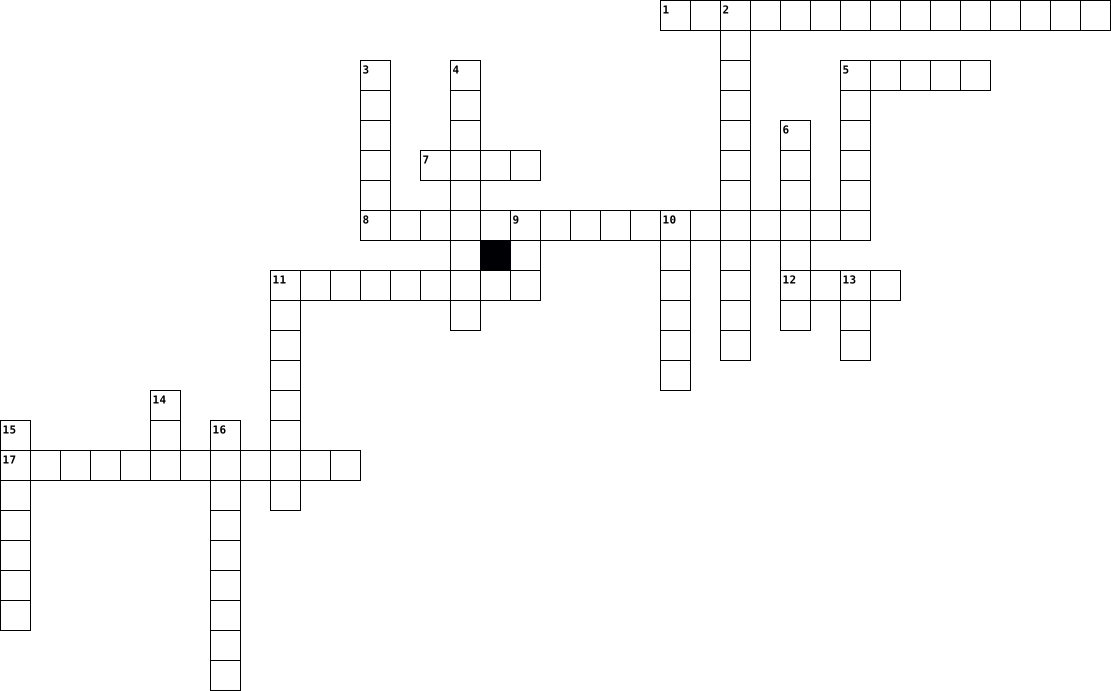
Across
- Effector Th1 CD4 cell subset produce IFN gamma, activate macrophages and stimulate IgG production.
- CD8+ cells recognize intracellular antigens presented on ________ surface molecule.
- Helper T cells that prime and coordinated CD8 and B cells.
- Effector Th2 CD4 cell subset that produce IL-4 and IL-13 and activates alternative macrophages that dampen inflammatory responses.
- Changing of the immunoglobulin (Ig) class produced by the B cell.
- Antibody coated infected cells are recognized by NK cells and kill.
- Antibodies that interact with virus at the host receptor site and blocks viral entry.
Down
- Antibody mediated phagocytosis of microbes.
- _______ cells produce antibodies that mediate protective immunity.
- Cells that present antigens & prime adaptive response.
- Hallmark of adaptive immunity.
- Immunity type mediated by B cells.
- Is a major antiviral immunoglobulin
- CD4+ cells recognize extracellular antigens presented on ___________ surface molecule.
- Antibodies that perform effector functions at sites distant from the production site.
- Activated CD8+ cells that produce Perforin/Granzyme to kill infected cells.
- Secretory antibody that have access to mucosal surfaces.
- Presentation of ______ occurs in lymph nodes and mucosa.
- T and B cells receptor ________ emerge from random gene rearrangement and selection.
19 Clues: Hallmark of adaptive immunity. • Immunity type mediated by B cells. • Is a major antiviral immunoglobulin • Antibody mediated phagocytosis of microbes. • Cells that present antigens & prime adaptive response. • Secretory antibody that have access to mucosal surfaces. • Presentation of ______ occurs in lymph nodes and mucosa. • ...
Chapter 17 and 19 Microbiology 2020-04-20

Across
- / linking together antigens to make larger, increasing phagocytosis
- facilitate destruction by eosinophils and or NK cells
- / glycoproteins made by B cells that recognize antigens
- / the study of reactions between antibodies and antigens.
- Serum fraction containing Ab. Can be given to a person as a treatment against a specific antigen
- /the generic term for serum because it contains antibodies ( Ab).
- / The process of destroying B and T cells that react to self antigens
- / Occur when T and/or B cells are activated to produce immune reactions against self-proteins
- /Involved in allergic reactions and the lysis of parasitic worms
Down
- antibodies act as opsonins to increase phagocytosis
- / Crosses placenta; protects fetus and newborn.
- antibodies activate MAC lysis by complement
- / Involves TH cells (TH2 ), B cells (plasma cells), antibodies.Produces antibodies to destroy invaders.
- not making self-reactive antibodies or self-reactive TCRs
- / Involves TH cells (TH1), TC cells, phagocytes. Destroys infected host cells.
- / first Ab produced in response to infection (primary response)
- / Likely to be the first type of antibody an invading microbe would encounter because it is present in mucous membranes (secreted).
- / On B cells, initiate immune response with their B cells
- / binding to toxins or viruses or bacterial cells to prevent their binding their host cell targets
- / a molecule that is recognized as non-self by the immune system.
20 Clues: antibodies activate MAC lysis by complement • / Crosses placenta; protects fetus and newborn. • antibodies act as opsonins to increase phagocytosis • facilitate destruction by eosinophils and or NK cells • / glycoproteins made by B cells that recognize antigens • not making self-reactive antibodies or self-reactive TCRs • ...
Immune and Lymphatic Systems 2018-11-14

Across
- Helps to maintain the proper amount of water in the blood
- Immunity Is the type of immunity with which you were born
- Cells Slow or stop the activity of B or T cells once a foreign invader has been con- trolled or destroyed
- cells Attach themselves to antigens and kill them
- Red blood cells
- Proteins that act as antibodies
- Secrete chemicals to attack disease-causing parasites
- A protein that allows red blood cells to transport oxygen and carbon dioxide through the blood as the cells travel through the circulatory system
Down
- Substance that is harmful
- active immunity Developed when the body’s immune system is exposed to and learns to defend against one type of pathogen
- cells Aid B lymphocytes in recognizing antigens and stimulating antibody production
- When monocytes move from the bloodstream into the body tissues
- Disease-causing microor-ganism
- White blood cells
- Bone marrow cells with very large nuclei
- Cells involved in immune surveillance, the process of detecting and destroying foreign cells in the body
- Large, single- nucleus phagocytes that ingest and dis- pose of dead or dying cells and tissues
- Plays an important role in blood clotting
- Blood platelets
- Cells that destroy harmful pathogens
- A protein manufactured by the immune system when the immune system detects an antigen
- Key protein involved in blood clotting
- Makes up a large portion of the proteins in plasma
23 Clues: Red blood cells • Blood platelets • White blood cells • Substance that is harmful • Disease-causing microor-ganism • Proteins that act as antibodies • Cells that destroy harmful pathogens • Key protein involved in blood clotting • Bone marrow cells with very large nuclei • Plays an important role in blood clotting • cells Attach themselves to antigens and kill them • ...
Immune and Lymphatic Systems 2018-11-14

Across
- cells Attach themselves to antigens and kill them
- Disease-causing microor-ganism
- Substance that is harmful
- Red blood cells
- Secrete chemicals to attack disease-causing parasites
- active immunity Developed when the body’s immune system is exposed to and learns to defend against one type of pathogen
- Immunity Is the type of immunity with which you were born
- Proteins that act as antibodies
- cells Aid B lymphocytes in recognizing antigens and stimulating antibody production
- Cells involved in immune surveillance, the process of detecting and destroying foreign cells in the body
- Large, single- nucleus phagocytes that ingest and dis- pose of dead or dying cells and tissues
- Makes up a large portion of the proteins in plasma
- A protein manufactured by the immune system when the immune system detects an antigen
- Blood platelets
Down
- Key protein involved in blood clotting
- Cells that destroy harmful pathogens
- Bone marrow cells with very large nuclei
- A protein that allows red blood cells to transport oxygen and carbon dioxide through the blood as the cells travel through the circulatory system
- Plays an important role in blood clotting
- White blood cells
- Cells Slow or stop the activity of B or T cells once a foreign invader has been con- trolled or destroyed
- When monocytes move from the bloodstream into the body tissues
- Helps to maintain the proper amount of water in the blood
23 Clues: Red blood cells • Blood platelets • White blood cells • Substance that is harmful • Disease-causing microor-ganism • Proteins that act as antibodies • Cells that destroy harmful pathogens • Key protein involved in blood clotting • Bone marrow cells with very large nuclei • Plays an important role in blood clotting • cells Attach themselves to antigens and kill them • ...
Acronym List SA 2022-10-01

Across
- Immunoglobulin, protein family to which antibodies and B-cell receptors belong
- recognition receptors: receptors on immune cells and epithelial cells that recognize and bind to PAMPs on microbes
- Interferon: family name for cytokines that help cells to resist viral infections; type 1 interferons include IFN-alpha and IFN-beta, as distinguished from IFN-gamma.
- Antigen presenting cell: a cell that is able to present antigen via MHC molecules to T cell receptors on T cells
- Fragment with antigen binding: the part of an antibody (that can be isolated by protease digestion) responsible for antigen binding, consisting of the light chain and amino-terminal half of the heavy chain disulfide-bonded together
- cell, B lymphocyte that upon activation can differentiate into plasma cells secreting antibody molecules or B memory cells
- lipopolysaccharide: a cell wall component of gram-negative bacteria that can be bound by TLR-4 on macrophages and dendritic cells
- Complementarity determining regions: the regions of the antigen binding loops of Ig molecules, antibodies, and T cell receptors that come into contact with antigen
- Immunoreceptor tyrosine-based activation motifs: amino acid sequence in cytoplasmic domains of membrane receptors involved in signal transduction
- Cytotoxic T lymphocytes: CD8+ T cells with the effector function of targeting and killing virally infected cells and tumor cells by apoptosis
- Human immunodeficiency virus
- Antigen: a molecule that is recognized in native (original) structure by antibodies or B cell receptor, or a peptide that is presented by MHC molecules to T cell receptor
- thymus-derived lymphocyte that are comprised of two different subsets, CD4 T cells and CD8 T cells
- T-cell receptor: the Ag receptor on T cells
- C-reactive protein: acute phase protein that binds to phosphocholine, a constituent of certain bacteria, that can trigger Complement activation and acts as an opsonin
- Human leukocyte antigen: name of MHC gene complex and proteins in humans
Down
- Dendritic cell: a type of APC that presents antigen in the context of MHC to T cells
- immune response
- Antibody-dependent cellular cytotoxicity: a mechanism NK cells use to induce apoptosis in virally infected cells or tumor cells
- Interleukin: general designation of many of the different cytokines, chemical messengers secreted by immune cells that help in their communication with other cells
- cell, Natural killer cell: large granular lymphocyte that serves as an innate effector cell by inducing apoptosis of target cells (virally infected cells or tumor cells)
- Cell adhesion molecule
- Mannose-binding lectin: soluble acute phase response protein that can bind mannose on pathogens; can activate the lectin pathway of Complement and acts as an opsonin
- Antibody: immunoglobulin secreted by plasma cells
- Acquired immune deficiency syndrome: the end stage of disease in HIV infection
- Cell-mediated immunity: adaptive immune responses in which there is a major role for effector T cells
- Toll-like receptor: a family of Pattern Recognition Receptors present on many leukocytes and epithelial cells that recognize PAMPs on pathogens and help initiate immune responses
- Major histocompatibility complex: designation for a family of cell surface molecules involved in the presentation of peptide antigens to T cells
- Membrane attack complex: the end product of the Complement cascade that can kill pathogens directly by forming a pore in the pathogen membrane leading to lysis
- Highly active anti-retroviral therapy: multiple drug treatment for HIV infection
- B cell receptor: sIg on B cells that binds Ag and transmits signal 1 to activate B cells.
- Autoimmune regulator: a transcription factor that causes several hundred tissue-specific genes to be transcribed by a subpopulation of epithelial cells in the thymus
32 Clues: immune response • Cell adhesion molecule • Human immunodeficiency virus • T-cell receptor: the Ag receptor on T cells • Antibody: immunoglobulin secreted by plasma cells • Human leukocyte antigen: name of MHC gene complex and proteins in humans • Immunoglobulin, protein family to which antibodies and B-cell receptors belong • ...
Chapter 43 Vocabulary 2015-03-27

Across
- An immunological disorder in which the immune system turns against self.
- The adaptive immune response elicited on second or subsequent exposures to a particular antigen. It is more rapid, of greater magnitude, and of longer duration than the primary immune response
- A form of defense common to all animals that is active immediately upon exposure to a pathogen and that is the same whether or not the pathogen has been encountered previously
- A type of white blood cell that mediates immune responses; 2 main types: B and T cells
- A type of lymphocyte that, when activated, kills infected cells as well as certain cancer cells and transplanted cells.
- The branch of adaptive immunity that involves the activation of B cells and that leads to the production of antibodies, which defend against bacteria and viruses in body fluids
- A substance that elicits an immune response by binding to receptors of B or T cells
- The most abundant type of white blood cell. They are phagocytic and tend to self- destruct as they destroy foreign invaders, limiting their life span to a few days
- A type of T-Cells that when activated, secretes cytokines that promote the response of B cells and cytotoxic T cells to antigens.
- Long-lasting immunity conferred by the action of B cells and T cells and the resulting B and T memory cells specific for a pathogen. Active immunity can develop as a result of natural infection or immunization.
Down
- Short-term immunity conferred by the transfer of antibodies, as occurs in the transfer of maternal antibodies to a fetus or nursing infant.
- A lymphocyte that has undergone clonal selection and is capable of mediating an adaptive immune response
- The initial adaptive immune response to an antigen, which appears after a lag of about 10-17 days
- A cell that upon ingesting pathogens or internalizing pathogen proteins generates peptide fragments that are bound by class II MHC molecules and subsequently displayed on the cell surface to T cells. Macrophages, dendritic cells, and B cells are the cells.
- The class of lymphocytes that mature in the thymus; they include both effector cell for the cell-mediated response and helper cells required for both branches of adaptive immunity
- One of a clone of long-lived lymphocytes, formed during the primary immune response, that remains in a lymphoid organ until activated by exposure to the same antigen that triggered its formation. These activated cells mount the secondary immune response.
- A protein that has antiviral or immune regulatory functions; secreted by T cells, helps activate macrophages
- The branch of adaptive immunity that involves the activation of cytotoxic T cells, which defend against infected cells
- A protein secreted by plasma cell (differentiated B cells) that binds to a particular antigen; also called immunoglobulin. All of them have the same y-shaped structure and in their monomer form consist of two identical heavy chains and two identical light chains.
- A phagocyte cell present in many tissues that functions in innate immunity by destroying microbes and in acquired immunity
- The lymphocytes that complete their development in the bone marrow and become effector cells for the humoral immune response
- A vertebrate specific defense that is mediated by B cells and T cells and that exhibits specificity, memory, and self-nonself recognition; also called acquired immunity
- A substance released by most cells that causes blood vessels to dilate and become more permeable in inflammatory and allergic responses
23 Clues: An immunological disorder in which the immune system turns against self. • A substance that elicits an immune response by binding to receptors of B or T cells • A type of white blood cell that mediates immune responses; 2 main types: B and T cells • The initial adaptive immune response to an antigen, which appears after a lag of about 10-17 days • ...
Cells 2 2025-09-01

Across
- specialized cell that gives rise to differentiated cells
- group of cells of the same kind that perform a function
- pocketlike folds in the cell membrane allowing the entrance and storage of large molecules
- structure such as heart or kidney made of groups of tissues
- formation of tumors
- control center of the cell
- pouchlike structures throughout the cytoplasm for storage
Down
- tissue the covers the body and lines the inner cavities
- tissue that joins body parts: bone, cartilage, fat, blood
- number of cells increase due to increased cell division
- cells enlarge because of inclreased proteins in cell membrane
- tissue responsible for movement: smooth, skeletal, cardiac
- size, shape, and strcture of mature cells becomes abnormal
- the basic substance that fors the cell
- specialized cell part analogous to an organ
- group of organs that perform a function
- growth, replication, and division of cells
- tissue that sends electrical messages throughout the body
18 Clues: formation of tumors • control center of the cell • the basic substance that fors the cell • group of organs that perform a function • growth, replication, and division of cells • specialized cell part analogous to an organ • tissue the covers the body and lines the inner cavities • number of cells increase due to increased cell division • ...
Cells & Life 2025-10-03

Across
- a membrane-bound organelle that uses light energy and makes food—a sugar called glucose—from water and carbon dioxide in a process known as photosynthesis.
- a series of chemical reactions that convert the energy in food molecules into a usable form of energy called ATP.
- the smallest unit of life.
- a flexible covering that protects the inside of a cell from the environment outside the cell.
- a cell that does not have a nucleus or other membrane-bound.
- a microscope that uses a magnetic field to focus a beam of electrons through an object or onto an object’s surface.
- the theory that states that all living things are made of one or more cells, the cell is the smallest unit of life, and all new cells come from preexisting cells.
Down
- the process by which new organisms are produced.
- membrane-surrounded component of a eukaryotic cell with a specialized function.
- a long chain of amino acid molecules; contains carbon, hydrogen, oxygen, nitrogen, and sometimes sulfur.
- an organism’s ability to maintain steady internal conditions when outside conditions change.
- a cell that has a nucleus and other membrane-bound organelles.
- part of a eukaryotic cell that directs cell activity and contains genetic information stored in DNA.
- a microscope that uses light and lenses to enlarge an image of an object.
- a living thing that is made up of two or more cells.
- the liquid part of a cell inside the cell membrane; contains salts and other molecules.
- a living thing that is made up of only one cell.
- a stiff structure outside the cell membrane that protects a cell from attack by viruses and other harmful organisms.
18 Clues: the smallest unit of life. • the process by which new organisms are produced. • a living thing that is made up of only one cell. • a living thing that is made up of two or more cells. • a cell that does not have a nucleus or other membrane-bound. • a cell that has a nucleus and other membrane-bound organelles. • ...
Basic Structure of a Cell 2023-03-22

Across
- he used a microscope to examine a thin slice of cork
- “Powerhouse” of the cell
- German botanist named Matthias ______ concluded that all plants were made of cells
- forest, prairie
- Contain digestive enzymes
- hereditary material of the cell
- Found only in producers (organisms containing chlorophyll)
- Jelly-like substance enclosed by cell membrane
- one species in an area
- Perform various functions for a cell
- Cells come from the reproduction of _____ cells
- Cells are the basic unit of structure and function in an ____
Down
- Network of hollow membrane tubules
- Controls the normal activities of the cell
- Lies immediately against the cell wall in plant cells
- Cells that HAVE a nucleus and membrane-bound organelles
- Cells, the basic units of organisms, can only be observed under a ___
- Cells that lack a nucleus or membrane-bound organelles
- several populations in an area
- Supports and protects cell
- cells working together
- All living things are made of ___
- In plants, they store Cell Sap
- makes up ALL organisms
- heart, brain, stomach
- Tundra, Tropical Rain forest
26 Clues: forest, prairie • heart, brain, stomach • cells working together • makes up ALL organisms • one species in an area • “Powerhouse” of the cell • Contain digestive enzymes • Supports and protects cell • Tundra, Tropical Rain forest • several populations in an area • In plants, they store Cell Sap • hereditary material of the cell • All living things are made of ___ • ...
Immunology 2013-11-05

Across
- Fear of water
- Opposite of hydrophobic
- Allows bacteria to attach to different surfaces
- Power plants of the cell
- Controls what goes in and out of cell
- Line of defence that includes B and T cells
- Coverts sun rays into energy
- groups lipids and proteins together within the cell
- Helps bacteria cells move around
- Water moves in and out of cell, already equilibrium
- Breaks down waste in cells
- Holds DNA in cell
- Stores water and nutrience that cells need
- Transportation of solute from a high concentration to a low
Down
- Water goes out of cell, cell shrinks
- Makes protein in cells
- Water goes in cell, cell expands
- Cells that mature in thymus
- Cells that mature in bone marrow
- Fluid the fills cell
- Maintains the cells shape
- Where B and T cells are produced
- Found on the surface of the endoplasmic reticulum
- Line of defence that includes the lymphatic system and phagocytes
- Protects bacteria cells from harm
- Transportation of solvent from low concentration to a high
- Line of defence that includes skin, tears and mucus
27 Clues: Fear of water • Holds DNA in cell • Fluid the fills cell • Makes protein in cells • Opposite of hydrophobic • Power plants of the cell • Maintains the cells shape • Breaks down waste in cells • Cells that mature in thymus • Coverts sun rays into energy • Water goes in cell, cell expands • Cells that mature in bone marrow • Where B and T cells are produced • ...
Bio Crossword 2025-03-12

Across
- What an antibody clings to
- Secreted proteins that allow for communication between WBC
- Helps T cells determine self from nonself
- Protein that causes pores in targeted membranes
- Group of cells that include NK, T, and B cells
- System involving proteins that help other immunity cells
- Increase in the size of capillaries during inflammation
- TNF causes this symptom when it acts on the hypothalamus
- Phagocytes that develop from monocytes
- Process of certain cells "eating" others
Down
- Large lymphocytes that target viruses and cancer
- A collection of cells and molecules that protect the body from pathogens
- Region that changes with each antibody
- T cell type that divides via clonal expansion
- Group of peptides and proteins that allow cells to communicate
- T cells that fight viruses
- An attack on the immune system by itself
- The first line of defense we have against pathogens
- The immunity type that T cells are responsible for
- Where B cells are produced
- Another name for an antibody
- The subgroups of interferons are called
- A microorganism that causes disease
23 Clues: What an antibody clings to • T cells that fight viruses • Where B cells are produced • Another name for an antibody • A microorganism that causes disease • Region that changes with each antibody • Phagocytes that develop from monocytes • The subgroups of interferons are called • An attack on the immune system by itself • Process of certain cells "eating" others • ...
Epithelial and Connective tissue 2026-03-09

Across
- The way squamous cells look
- Pleural form of nucleus
- Two or more layers of cells
- Tract that is lined with pseudo stratified columnar
- Area of the body that contains elastic cartilage
- Air sacs of these contain simple squamous
- Blood cells that aid in clotting
- A bone cell
- A form of loose connective tissue that stores fat
- Cells that appear layered but are not
- Type of blood cells that fight infection
- Cells that engulf foreign substances
- Mature cartilage cells
Down
- Intracellular material is composed mostly of a ground substance and these
- Organ that contains transitional epithelium tissue
- Found between vertebrae and the knee joint
- Tubules of these organs are composed of simple cuboidal epithelium
- Cells that are taller than they are wide; look rectangular
- Most rigid connective tissue
- Must have at least this many layers to be stratified
- Tract that is composed of simple columnar epithelium
- membrane Thin, nonliving layer between epithelium & connective tissues
- Cells that can change shape
- White fibers
- Cells that appear flat
25 Clues: A bone cell • White fibers • Cells that appear flat • Mature cartilage cells • Pleural form of nucleus • The way squamous cells look • Two or more layers of cells • Cells that can change shape • Most rigid connective tissue • Blood cells that aid in clotting • Cells that engulf foreign substances • Cells that appear layered but are not • Type of blood cells that fight infection • ...
cardiovascular system crossword puzzle 2023-03-23

Across
- mature red blood cell
- cell eating
- complete blood count
- oxygen carrying molecule on erythrocytes
- clear portion of blood
- white blood cells causing allergies
- immature red blood cells
- chemical released by platelets
- in between cells
- cloy breaks free
Down
- largest white blood cell
- clot develops
- white blood cells squeezing through wall
- plasma protein
- wbc active during allergic response
- determines blood type
- cells develop from stem to thromboctyes
- transport o2 transporting to the blood
- deficiency of red blood cells
- iron based component
20 Clues: cell eating • clot develops • plasma protein • in between cells • cloy breaks free • complete blood count • iron based component • mature red blood cell • determines blood type • clear portion of blood • immature red blood cells • largest white blood cell • deficiency of red blood cells • chemical released by platelets • wbc active during allergic response • ...
Adaptive Immunity 2022-09-27
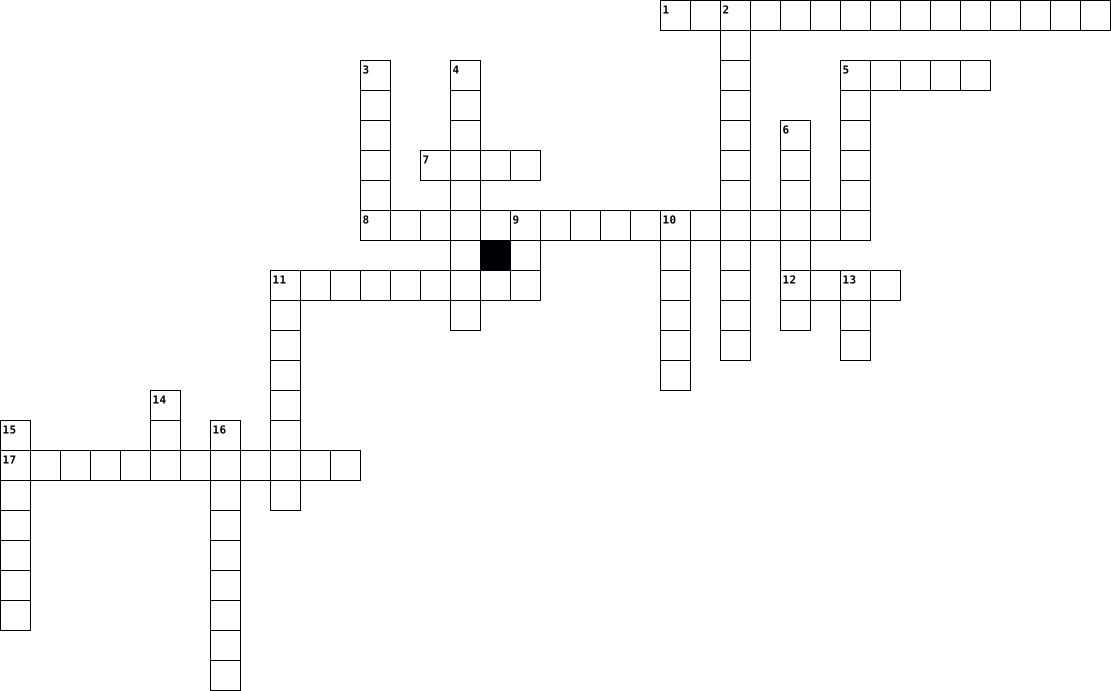
Across
- Effector Th1 CD4 cell subset produce IFN gamma, activate macrophages and stimulate IgG production.
- CD8+ cells recognize intracellular antigens presented on ________ surface molecule.
- Helper T cells that prime and coordinated CD8 and B cells.
- Effector Th2 CD4 cell subset that produce IL-4 and IL-13 and activates alternative macrophages that dampen inflammatory responses.
- Changing of the immunoglobulin (Ig) class produced by the B cell.
- Antibody coated infected cells are recognized by NK cells and kill.
- Antibodies that interact with virus at the host receptor site and blocks viral entry.
Down
- Antibody mediated phagocytosis of microbes.
- _______ cells produce antibodies that mediate protective immunity.
- Cells that present antigens & prime adaptive response.
- Hallmark of adaptive immunity.
- Immunity type mediated by B cells.
- Is a major antiviral immunoglobulin
- CD4+ cells recognize extracellular antigens presented on ___________ surface molecule.
- Antibodies that perform effector functions at sites distant from the production site.
- Activated CD8+ cells that produce Perforin/Granzyme to kill infected cells.
- Secretory antibody that have access to mucosal surfaces.
- Presentation of ______ occurs in lymph nodes and mucosa.
- T and B cells receptor ________ emerge from random gene rearrangement and selection.
19 Clues: Hallmark of adaptive immunity. • Immunity type mediated by B cells. • Is a major antiviral immunoglobulin • Antibody mediated phagocytosis of microbes. • Cells that present antigens & prime adaptive response. • Secretory antibody that have access to mucosal surfaces. • Presentation of ______ occurs in lymph nodes and mucosa. • ...
U8Q1 2018-03-20

Across
- overreaction to an allergen antigen
- clear fluid; in lymphatic vessels
- "killer" T Cell attaches to some antigen bearing cells and destroys directly
- vessel caries lymph into node
- body invader; bacteria, virus, fungi
- antigen-binding; produced by plasma B cells; fights many pathogen
- vessel caries lymph away from node
- where blood vessels enter node
- gland; lower neck region; T cell maturation
- vessel vessel; transports lymph
- T Cell/B Cell saves antigen shape; multiplies readily when antigen is present again; lasts a lifetime
Down
- defense cells; mature in bone marrow
- defense precise; lymphocytes; antigen/antibody
- defense broad, nonspecific defense; mechanical barriers, chemical barriers, fever, inflammation, phagocytosis
- antigen (but not whole pathogen) is introduced creating memory cells
- cell WBC; produces antibodies
- WBC; makes antibodies
- lymphocytes recognize self antigens as pathogen antigens
- protein in cell wall; marker/sign
- contamination by pathogen
- T Cell creates cytokines that activates T and B cells
- large; behind stomach; produces lymphocytes, filters the blood, stores blood cells, destroys old blood cells
- defense cells; mature in thymus
23 Clues: WBC; makes antibodies • contamination by pathogen • cell WBC; produces antibodies • vessel caries lymph into node • where blood vessels enter node • defense cells; mature in thymus • vessel vessel; transports lymph • clear fluid; in lymphatic vessels • protein in cell wall; marker/sign • vessel caries lymph away from node • overreaction to an allergen antigen • ...
Blood_Vik_Biologie2020 2020-04-16

Across
- Do white blood cells have nuclei?
- White blood cells produce ...
- Blood clotting
- The process by which blood cells are formed
- Platelets are also called…
- The cellular elements are ... replaced throughout a persons life.
- Platelets are used for the … ,when wounded.
- The blood type-O has no ...
- Red blood cells are also called...
- The plasma mainly contains water, proteins and ...
- B and T cells are also called...
- Loss from 15%-30% of blood results in ...
Down
- Blood contains ... such as insulin or adrenalin.
- White blood cells are also called...
- You have to be at least ... to donate blood.
- Blood has two main components cellular elements and ...
- Red blood cells contain...
- Red blood cells transport...
- When a clot forms and blocks a vessel, it is called a ...
- There are 2.5 ... erythrocytes made per second.
- Blood ... should,generally speaking,not be mixed.
- 90% of the plasma is...
- Low platelet count
- The largest white blood cells are called...
- Clotting involves ... stages.
- White blood cells ... the body.
26 Clues: Blood clotting • Low platelet count • 90% of the plasma is... • Platelets are also called… • Red blood cells contain... • The blood type-O has no ... • Red blood cells transport... • White blood cells produce ... • Clotting involves ... stages. • White blood cells ... the body. • B and T cells are also called... • Do white blood cells have nuclei? • Red blood cells are also called... • ...
Endocrine System 2022-03-21

Across
- permissive to glucagen
- turns glucose to glycogen
- comes from thymus gland
- from the pineal gland
- also known as adrenaline
- turns glycogen to glucose
- targets thyroid cells
- enlarges cells/causes cells to divide
- from the testes
- prepares for pregnancy
- controls secretion of adrenal gland
- comes from parathyroid gland
- promotes milk production
Down
- targets follicle cells
- growth of egg and follicle
- targets bone cells
- known as noradrenaline
- reduces urine production
- permissive to FSH
- increases protein synthesis
- permissive to prolactin
- targets kidney cells
22 Clues: from the testes • permissive to FSH • targets bone cells • targets kidney cells • from the pineal gland • targets thyroid cells • targets follicle cells • permissive to glucagen • known as noradrenaline • prepares for pregnancy • comes from thymus gland • permissive to prolactin • also known as adrenaline • reduces urine production • promotes milk production • turns glucose to glycogen • ...
Exam 2 Review (BHS316) 2022-02-15

Across
- cytokine that blocks co-stimulatory signal
- transfer of antibodies
- occurs during B or T cells cluster their receptors in response to a pathogen
- ___ T cells that do not express CD4, CD8, TCR
- occurs in cells when they are killed by pathogens
- helper T subset that recognizes parasites or pathogenic bacteria
- lymphocytes that may undergo class switching and somatic hypermutation
- amino acid region on antigen
- process of testing T cells for MHC restriction
- provides protection against T cells that may react against self-antigens
Down
- keep immune system from overreacting to foreign antigens
- immune cells which kill cells that do not contain class I MHC molecules
- two igg molecules combined form this antibody
- activates virgin T cells
- protein displayed that come from outside the cell
- antibodies that are also called gamma globulins
- caused by mast cells degranulatin
- released by CTL and binds to cell membrane and drills holes
- blood valves that are specialized for lymphocytes to exit
- display antigens to B cells
- antibodies that are good at activating the complement cascade
- cytokine that reduces T cell proliferation
22 Clues: transfer of antibodies • activates virgin T cells • display antigens to B cells • amino acid region on antigen • caused by mast cells degranulatin • cytokine that blocks co-stimulatory signal • cytokine that reduces T cell proliferation • two igg molecules combined form this antibody • ___ T cells that do not express CD4, CD8, TCR • ...
Blood System 2026-05-16

Across
- Protein within red blood cells that aids in the transportation of oxygen
- Phag/o
- Condition where red blood cells do not transport oxygen
- Plasma protein that prevents leaks
- A type of white blood cells that coordinate the body's defense system
- Plasma protein that converts to thrombin
- Condition where the mother and fetus blood types are incompatible
- Immature blood cells in the bone marrow
- A blood thinner
- liquid component of blood
- A type of white blood cells released during infections
- help the blood clotting process through coagulation
Down
- Cells that carry oxygen throughout the body
- Disease where there is an excessive increase in white blood cells
- Enzyme critical to the process of blood clotting
- Hormone that stimulates the production of red blood cells
- Plasma protein that regulates water movement
- Condition where there is a lack of clotting factor VIII
- Plasma protein that fights off infections
- Leuk/o
- Hemo,hemat/o
- Erythr/o
- Eosino
- Agglutin/o
- Malignant tumor of the bone marrow due to an overproduction of white blood cells
- Cells that fight infections
26 Clues: Phag/o • Leuk/o • Eosino • Erythr/o • Agglutin/o • Hemo,hemat/o • A blood thinner • liquid component of blood • Cells that fight infections • Plasma protein that prevents leaks • Immature blood cells in the bone marrow • Plasma protein that converts to thrombin • Plasma protein that fights off infections • Cells that carry oxygen throughout the body • ...
Blood 2020-04-17

Across
- A foreign protein
- Most numerous blood cells
- Reduced oxygen capacity
- Solvent for carrying substances in plasma
- Transports oxygen in red blood cells
- Lymphocytes cell with cytotoxic immune response
- Low platelet count
- Blood contains genetically determined....
- A+ is the .... bloodtype
- Plasma protein beginning with the letter A
- Largest white blood cells
- Contain histamine granules
- excess WBC
Down
- Another word for blood clotting
- Agranulocytes and
- Body's defense against diseases
- Transfusions to replace blood quickly must be:
- Stem cells of platelets
- Liquid Matrix
- B,T cells
20 Clues: B,T cells • excess WBC • Liquid Matrix • A foreign protein • Agranulocytes and • Low platelet count • Reduced oxygen capacity • Stem cells of platelets • A+ is the .... bloodtype • Most numerous blood cells • Largest white blood cells • Contain histamine granules • Another word for blood clotting • Body's defense against diseases • Transports oxygen in red blood cells • ...
A2.2 Cell structure, B2.1 Membranes and membrane transport, D2.3 Osmosis and water potential, D2.1 Cell cycle, mitosis and meiosis 2024-05-28

Across
- Term describing the organized internal structure of eukaryotic cells
- Process of nuclear division producing genetically identical cells
- Movement of water molecules across membranes
- Describes proteins embedded within the lipid bilayer of membranes
- Organelle involved in protein and lipid synthesis
- Solution where there is no net movement of water into or out of a cell
- Vesicles containing digestive enzymes in eukaryotic cells
- Long, whip-like structures for cell motility
- Organelle containing DNA in eukaryotic cells
- Splitting of cytoplasm during cell division
- Term describing DNA without histone proteins in prokaryotes
- The sum of all chemical reactions in a cell or organism
- Cells with structures like cell wall, naked DNA, and 70S ribosomes
- Pressure in plant cells due to water in a hypotonic environment
- Shrinkage of plant cells in a hypertonic environment
- Short, hair-like structures for movement or sensory functions
- ‘_____ S’ – a type of ribosome found in eukaryotic cells (spell the number)
- Error in meiosis leading to conditions like Down syndrome
- Lipid bilayer enclosing the cell
- Movement of molecules from high to low concentration
- Rigid structure surrounding plant, fungal, and some bacterial cells
- Solution with lower solute concentration causing water to enter cells
- ‘_____ S’ – a type of ribosome found in prokaryotic cells (spell the number)
- Cells with a nucleus and membrane-bound organelles
- Allow specific ions to pass through membranes by facilitated diffusion
Down
- Process of expelling material from the cell by vesicle fusion with the plasma membrane
- Region in prokaryotic cells where DNA is located
- Lipid bilayer forming the cell boundary
- Proteins with carbohydrate chains involved in cell recognition
- Network of microtubules and microfilaments providing cell structure
- Solution with higher solute concentration causing water to leave cells
- Reduction division producing haploid cells from a diploid cell
- Maintenance of stable internal conditions in unicellular organisms
- Fluid component of cells composed mainly of water
- Advanced type of microscopy with high resolution
- transport Movement of particles against a concentration gradient using energy
- Organelles for photosynthesis found in plant cells
- Organelle involved in modifying, sorting, and packaging proteins
- Large, central organelle in plant cells for storage and maintaining turgor pressure
- Model describing the structure of cell membranes
- Finger-like projections increasing surface area in some cells
- The basic structural unit of all living organisms
- Organelles responsible for energy production in eukaryotic cells
- Channel proteins facilitating water movement across membranes
- Technique using antibodies and fluorescence to detect proteins
- Lipids with carbohydrate chains involved in cell adhesion
- Genetic material common to all living cells
- Small membrane-bound sacs involved in transport within cells
- Structures involved in cell division in animal cells
- Proteins that DNA wraps around in eukaryotic chromosomes
50 Clues: Lipid bilayer enclosing the cell • Lipid bilayer forming the cell boundary • Splitting of cytoplasm during cell division • Genetic material common to all living cells • Movement of water molecules across membranes • Long, whip-like structures for cell motility • Organelle containing DNA in eukaryotic cells • Region in prokaryotic cells where DNA is located • ...