
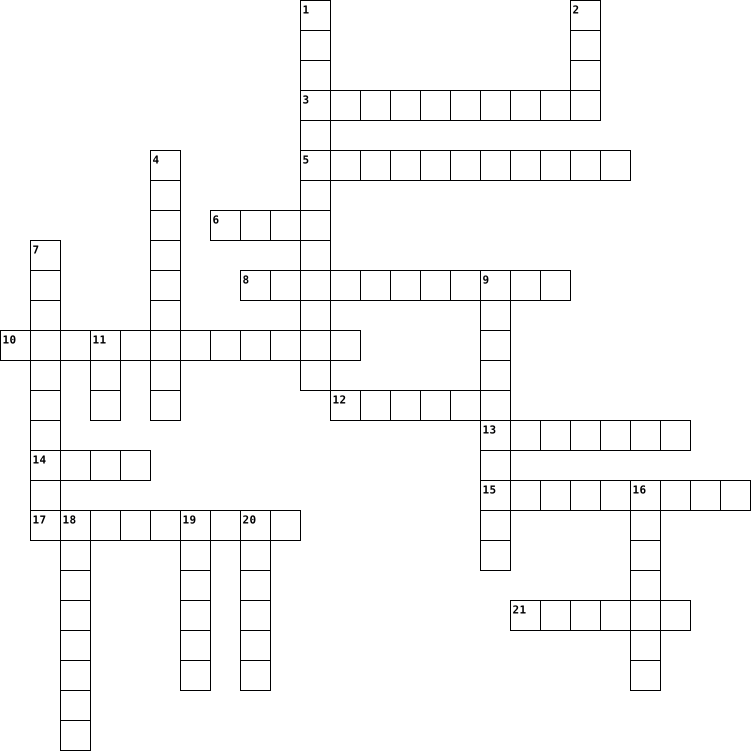
lab safety Crossword Puzzles
场所 2021-02-28

Across
- 超市
- 图书馆
- 医院
- 银行
- 学校
- 电影院
- 车站
Down
- 农场
- 公园
- 博物馆
- 酒店
- 餐厅
- 动物园
- 书店
- 场所
- 实验室
- office 邮局
- 音乐会
18 Clues: 农场 • 公园 • 酒店 • 超市 • 餐厅 • 书店 • 医院 • 场所 • 银行 • 学校 • 车站 • 博物馆 • 动物园 • 图书馆 • 实验室 • 电影院 • 音乐会 • office 邮局
Spelling week 4 2025-10-26

Across
- triumph
- tale
- list of names or contacts
- place for observing stars
- student residence
- stock list
- science lab
- extra item
- required
- land area
- acceptable
Down
- serving as an introduction
- group or class
- record of past events
- serving as preparation
- manufacturing plant
- helping to cause
- explanation
18 Clues: tale • triumph • required • land area • stock list • extra item • acceptable • science lab • explanation • group or class • helping to cause • student residence • manufacturing plant • record of past events • serving as preparation • list of names or contacts • place for observing stars • serving as an introduction
Safety crossword 2019-06-05

Across
- Online safety system
- Number of V/Line safety advisors
- Hazardous goods requirement
- I need Hammertech help!
- Railway competency card
Down
- Plant requirement
- V/Line property access requirement
- A leading safety approach
- Night works consideration
- Pre-Requisite for high risk construction work
- Fill in the blank: Pre-
11 Clues: Plant requirement • Online safety system • I need Hammertech help! • Fill in the blank: Pre- • Railway competency card • A leading safety approach • Night works consideration • Hazardous goods requirement • Number of V/Line safety advisors • V/Line property access requirement • Pre-Requisite for high risk construction work
Offshore Execution Safety Month 2026-03-24

Across
- Safe Working Load for lifting and rigging
- Wind Turbine Installation Vessel for offshore construction
- Man Overboard emergency recovery procedure
- Point of Work Risk Assessment before starting
- As Low As Reasonably Practicable risk management
- Lost Time Injury incident classification
- Engineering Procurement Construction and Installation phase
- Hazard Identification and Risk Assessment process
Down
- Service Operation Vessel for technician offshore stay
- Lock Out Tag Out energy isolation procedure
- Total Recordable Incident Rate performance metric
- Global Wind Organisation safety training standard
- Job Safety Analysis for identifying task hazards
- Personal Protective Equipment required for site access
- All Injury Frequency Rate safety reporting index
- Crane Vessel used for heavy lift operations
16 Clues: Lost Time Injury incident classification • Safe Working Load for lifting and rigging • Man Overboard emergency recovery procedure • Lock Out Tag Out energy isolation procedure • Crane Vessel used for heavy lift operations • Point of Work Risk Assessment before starting • Job Safety Analysis for identifying task hazards • As Low As Reasonably Practicable risk management • ...
DoK Crossword 2023-07-27

Across
- Previous DoKs can be found with a QR code on the safety posters located in every ______.
- Every DoK has a section for General ____.
- February DoK: _____ Material Handling.
- DoK stands for _____ of Knowledge.
- April DoK: _____ Aid.
- Our payroll app which is also use to assign DoKs to employees every month.
Down
- The goal of Target Zero is No Incidents, No ________.
- The goal of the DoK program is "Target ____".
- March DoK: Don't _____.
- December DoK: ______ Warriors.
- July DoK: The ____ to Safety.
- A new DoK comes out once every _____.
- The A2 Safety Crew motto is "Be Alert, Be Aware, Be ____".
- June DoK: Beat the _____.
- May DoK: Think Safe, ____ Safe, Be Safe.
- January DoK: Be Safe, Not _____.
16 Clues: April DoK: _____ Aid. • March DoK: Don't _____. • June DoK: Beat the _____. • July DoK: The ____ to Safety. • December DoK: ______ Warriors. • January DoK: Be Safe, Not _____. • DoK stands for _____ of Knowledge. • A new DoK comes out once every _____. • February DoK: _____ Material Handling. • May DoK: Think Safe, ____ Safe, Be Safe. • Every DoK has a section for General ____. • ...
HSE Values 2024-11-17

Across
- To observe and assess the surroundings for risks.
- To hold someone accountable for a safety violation.
- The broader situation or circumstances affecting safety.
- To take action in response to a safety issue.
Down
- To stop or prevent an unsafe act from continuing.
- Acquiring knowledge of safety protocols or procedures.
- To use reasoning to assess and mitigate safety risks.
- A term for a mistake or problem in operations that may compromise safety.
- The framework for improving human performance.
9 Clues: To take action in response to a safety issue. • The framework for improving human performance. • To stop or prevent an unsafe act from continuing. • To observe and assess the surroundings for risks. • To hold someone accountable for a safety violation. • To use reasoning to assess and mitigate safety risks. • Acquiring knowledge of safety protocols or procedures. • ...
Food Safety & Quality Culture 2023-09-20

Across
- Makes something better
- Part played by a person
- To teach a skill
- Ideas or customs
- Safety
- Duty to deal with something
- To gather information
- Protected from danger
Down
- To head up a group
- Send or receive information
- Dedication
- To be responsible
- Where items are posted
- Test of knowledge
- The standard of something
- Facts or information gained
16 Clues: Safety • Dedication • To teach a skill • Ideas or customs • To be responsible • Test of knowledge • To head up a group • To gather information • Protected from danger • Makes something better • Where items are posted • Part played by a person • The standard of something • Send or receive information • Facts or information gained • Duty to deal with something
Electrical Safety Essentials 2023-12-13

Across
- Accidental path bypassing electrical resistance.
- Sudden spike in electrical voltage.
- Injury from current or heat.
- Safety device melting under excessive current.
- Electrical discharge phenomenon.
Down
- Material that resists electrical flow.
- Material for preventing electrical conduction.
- Faulty electrical connection.
- Safety procedure to prevent accidental machine start.
- Automatic electrical switch for safety.
- Sudden electrical discharge to a person.
- Ground Fault Circuit Interrupter, for preventing electrocution.
12 Clues: Injury from current or heat. • Faulty electrical connection. • Electrical discharge phenomenon. • Sudden spike in electrical voltage. • Material that resists electrical flow. • Automatic electrical switch for safety. • Sudden electrical discharge to a person. • Material for preventing electrical conduction. • Safety device melting under excessive current. • ...
Lab Report Terminology 2025-05-05

Across
- Type of graph used to show changes over time (4)
- The first section of your lab report, briefly describing the experiment (5)
- The section where you record your measurements (7)
- What you want to find out (3)
- The response variable that you measure (9)
- What you test or manipulate in an experiment (10)
- Numbers used in an experiment should be _______ (10)
- _______ science is based on evidence, not opinions (4)
- The section where you analyze your results (10)
Down
- Your educated prediction about what will happen (10)
- Factors kept the same to ensure fair testing (10)
- The last section of your lab report (10)
- Visual representation of data, either line or bar (5)
- Units, titles, and labels should be _______ (5)
- Information collected during the experiment (4)
- Step-by-step instructions for your experiment (6)
- The equipment and substances needed (9)
17 Clues: What you want to find out (3) • The equipment and substances needed (9) • The last section of your lab report (10) • The response variable that you measure (9) • Units, titles, and labels should be _______ (5) • Information collected during the experiment (4) • The section where you analyze your results (10) • Type of graph used to show changes over time (4) • ...
World Day for Safety & Health at Work Scavenger Hunt Crossword Puzzle 2024-04-26

Across
- Fire are legal requirements
- quality testing
- Personal equipment
- Campus Health and Safety
- Safety and Health begins with
- Slip, and falls
Down
- Working at
- and Health at Work Act
- Tool talks
- International Organization
10 Clues: Working at • Tool talks • quality testing • Slip, and falls • Personal equipment • and Health at Work Act • Campus Health and Safety • International Organization • Fire are legal requirements • Safety and Health begins with
Explore the new ascendlearning.com 2023-08-24

Across
- Ascend value
- Ascend safety and security brand
- Ascend Learning tagline
- Ascend solution
- Ascend CFO
- Ascend healthcare brand
- Ascend CEO
- Company that recognized Ascend as a Great Workplace for Diversity
- Ascend inclusion learning program
- Ascend General Counsel
Down
- Ascend president of healthcare
- Ascend fitness and wellness brand
- Ascend value
- Ascend executive VP of corporate development
- Ascend Burlington community outreach group
- Ascend president of safety and security
- Healthcare vertical
- Ascend CHRO
- Ascend CTO
- Ascend Burlington address
20 Clues: Ascend CTO • Ascend CFO • Ascend CEO • Ascend CHRO • Ascend value • Ascend value • Ascend solution • Healthcare vertical • Ascend General Counsel • Ascend Learning tagline • Ascend healthcare brand • Ascend Burlington address • Ascend president of healthcare • Ascend safety and security brand • Ascend fitness and wellness brand • Ascend inclusion learning program • ...
Types of experiment GCSE Psychology 2025-06-10

Across
- Using data that can be counted, usually given as numbers.
- This may not reflect how people behave in real life and therefore will lack validity.
- A strength of lab experiments because they use a standardised procedure.
- These can be controlled in a lab experiment.
- Is it accurate?
- An experiment that takes place in a cotrolled environment.
Down
- These are used in a lab experiment and meant that each participant has the same experience.
- Using data that can be expressed in words and is non-numerical.
- An experiment that takes place in a natural setting and the researcher deliberately manipulates the IV to see the effect on the DV.
- An experiment where the IV is not manipulated by the experimenter but changes whether the experimenter is interested in it or not.
10 Clues: Is it accurate? • These can be controlled in a lab experiment. • Using data that can be counted, usually given as numbers. • An experiment that takes place in a cotrolled environment. • Using data that can be expressed in words and is non-numerical. • A strength of lab experiments because they use a standardised procedure. • ...
sa 2021-06-27

Across
- mic
- ast
- air
- rep
Down
- libr
- com
- ear
- lab
- pri
- tele
10 Clues: com • mic • ear • lab • pri • ast • air • rep • libr • tele
the perfume of emotion 2024-07-29

Across
- Olympic
- mystery
- love
- juicy
- spicy
Down
- east
- purple
- dessert
- place
- lab
10 Clues: lab • east • love • place • juicy • spicy • purple • Olympic • dessert • mystery
Being B00's puzzle 2023-08-26

Across
- Human
- Heaven
- Sleep
- Unity
- Forest
Down
- 123
- Operations
- Blockchain
- NFT
- Brain
10 Clues: 123 • NFT • Human • Brain • Sleep • Unity • Heaven • Forest • Operations • Blockchain
CARLY :l 2023-12-08

Across
- experiment
- defeat
- infer
- data
- snoop
- hunter
- show
Down
- right
- interfear
- keep
10 Clues: keep • data • show • right • infer • snoop • defeat • hunter • interfear • experiment
School 2023-10-12

Across
- Reading
- Singing
- Globe
Down
- Lab
- Hola
- Transportation
- Playtime
- Food
- :(
- 2+2=
10 Clues: :( • Lab • Hola • Food • 2+2= • Globe • Reading • Singing • Playtime • Transportation
The shadowed affair 2024-03-07

Across
- 2
- 8
- 9
- 5
- 6
Down
- 4
- 1
- 10
- 7
- 3
10 Clues: 4 • 1 • 2 • 8 • 9 • 7 • 5 • 3 • 6 • 10
u11 2026-04-02

Across
- t
- e
- r
- b
- g
- u
Down
- j
- h
- f
- t
- l
- t
- g
13 Clues: j • h • f • t • t • e • r • l • t • b • g • g • u
Cardiac Review 2022-03-18

Across
- What lab value needs to be monitored when Furosemide is given?
- what is the medication given for digoxin toxicity?
- What is the treatment for a heparin overdose?
- What needs to be monitored prior administering most cardiac medications?
- What medication does vitamin K reverse?
- what cardiac medication can not be given to COPD or asthma patients?
- What medication, if side effect of ACE inhibitor is reported, will the patient be switched to?
- What does Atorvastatin inhibit?
- what medication breaks up a formed clot?
- what needs to be reported when taking Captopril?
Down
- What is heart rate multiplied by stroke volume?
- what medication can not be given with
- what is the toxic level of digoxin?
- What class of medication has rhabdomyolysis as a side effect?
- What diuretic needs to avoid diets high in potassium?
- what should diuretics be given to patients?
- What is a sign of digoxin toxicity?
- What lab test determines if Warfarin is therapeutic?
- What medication needs to be avoided if taking NSAIDs?
19 Clues: What does Atorvastatin inhibit? • what is the toxic level of digoxin? • What is a sign of digoxin toxicity? • what medication can not be given with • What medication does vitamin K reverse? • what medication breaks up a formed clot? • what should diuretics be given to patients? • What is the treatment for a heparin overdose? • ...
Fire Safety 2024-06-03

Across
- The source of ignition for a fire
- you should wet or cover this part of your body if it is long
- This type of material melts when burning and is therefor a poor choice for fire spinning clothing
- The most important tool for fire safety at PSG which involves talking to one another
- What everyone should be when participating in Fire Spinning
- triangle, The three things needed to sustain a fire (two words)
- The place where fire spinning is allowed
- The most important part of fire spinning at PSG
Down
- A trick we don’t do at PSG anymore where fire makes contact with the ground leaving lines of fire
- The commonly used fuel for Fire spinning at PSG (two words)
- The designated fire safety coordinator for this year
- Who is responsible for fire safety?
- Most fire spinning safe clothing is made of this
- A tool that must be wet to put out props
- A gas needed for fire to burn
- Material consumed by fire to burn
- Everyone participating in fire spinning spotter or spinner must have this object (two words)
- This word when shouted means all fire spinners should stop spinning
18 Clues: A gas needed for fire to burn • The source of ignition for a fire • Material consumed by fire to burn • Who is responsible for fire safety? • A tool that must be wet to put out props • The place where fire spinning is allowed • The most important part of fire spinning at PSG • Most fire spinning safe clothing is made of this • ...
TTS kakak Asuh 2015-10-08

Across
- TA tentang aspal dicampur dengan plastik, anak kuktek batch 12
- kema, pakai kawat gigi, waketang 13
- pakai kerudung, TA dari Bu Ana
- kakak asuh Syarah, IMMT bidang minors
- Jenius 12
- sering memenangkan lomba PKM
- a.k.a Ibas
- bekas luka terkena "dice" di tangan kanan, TA tentang Aluminium Ballistic, KMB batch 12
- ketua umum IMMT, as lab batch 13
- kurus, pakai kacamata, anggota BEM FTUI, kuktek batch 14
- anak dosen Mesin, pernah tinggal di Jerman saat kecil
- di IMMT bidang kema, tinggi, pakai kacamata, salah satu mentor MADK, menjaga stan Metal saat Torsion Mei 2015
- anak prof Ijon, ketua NANO
- kacamata, angkatan 14 di IMMT sebagai bendahara
- asal sekolah: SMA ketapang, pakai kacamata, as lab batch 14
- pakai kacamata, pakai kawat gigi, anggota NACE
- PO freshmen 15
- anak kuktek batch 13, di IMMT bidang minors, SMA di Gonzaga
- asal dari Padang
- asdos gamtek
- anak kuktek batch 13, kema
Down
- anggota NACE, suka memakai sepatu tak bertali, sering main gaple
- Waketang 14
- aslab batch 13, kema
- Jangan dulu cinta-cinta
- adik dari Rafael 14
- asal dari Korea
- kacamata, TA tentang Aluminium Ballistic
- anak kuktek batch 13, di IMMT bidang iptek
- KMB batch 12, pakai kacamata
- as lab batch 12, TA tentang Aluminium Ballistic
- gendut, kacamata, di IMMT bidang iptek
- pakai kerudung, anggota e-corps
- mirip Rinan
- kema, badan besar, pakai kawat gigi
- perhatian, TA terkait korosi, penuh wawasan
- SMAN 78 Jakarta, PO MADK, pengajar yang baik
- mirip Bilal
- anak dosen Metalurgi, di IMMT bidang pendidikan
- kabid minors, jago basket
- di IMMT sebagai ketua bidang iptek
- Ketang 14
- a.k.a gepeng
- Kakak asuh Madun
- pakai kacamata, brewok
45 Clues: Jenius 12 • Ketang 14 • a.k.a Ibas • Waketang 14 • mirip Rinan • mirip Bilal • a.k.a gepeng • asdos gamtek • PO freshmen 15 • asal dari Korea • asal dari Padang • Kakak asuh Madun • adik dari Rafael 14 • aslab batch 13, kema • pakai kacamata, brewok • Jangan dulu cinta-cinta • kabid minors, jago basket • anak prof Ijon, ketua NANO • anak kuktek batch 13, kema • sering memenangkan lomba PKM • ...
ES Midterm Review 2023-12-10

Across
- the buildup of this can cause eutrophication
- populations are close together
- helps an ecosystem remain stable
- eruption which can result in primary succession
- lab equipment used for precise measuring
- type of graph which shows comparisons
- organism which exhibits random distribution
- the group of flowers which received plain water
- lab equipment used for mixing and heating
- the greatest consumer of water
- ability of an ecosystem to resist change/ remain unchanged over time
- the total number of individuals of a species within a set habitat or area
- lab equipment used to hold samples
- situation which can result in secondary succession
- the current world population is 8.1 _________
- type of graph which shows change over time
- type of graph which compares parts to the whole
- a succession sequence that takes place after a land clearance event
- the group of flowers which received fertilizer
Down
- biogeochemical cycle which involves the breakdown of rock
- the first species to colonize an area
- bacteria play a key role in this biogeochemical cycle
- positive answer to a population growth problem
- water which is safe to drink
- organism which exhibits uniform distribution
- type of plant rotated by farmers to restore nitrogen to the soil
- example of a keystone species
- a succession sequence that occurs on land that has not had plants or soil in the past or has been cleared of its plant and vegetation by volcanic eruption
- biogeochemical cycle which is influenced by the use of fossil fuels
- organism which exhibits clumped distribution
- the ability of an ecosystem to recover from external disturbances
- populations are spread apart
- country who enforced strict population laws
- a series of steps used by scientists to solve a problem
34 Clues: water which is safe to drink • populations are spread apart • example of a keystone species • populations are close together • the greatest consumer of water • helps an ecosystem remain stable • lab equipment used to hold samples • the first species to colonize an area • type of graph which shows comparisons • lab equipment used for precise measuring • ...
Chemistry Crossword 2026-02-10

Across
- China is __ hours ahead of the US.
- Where Eric and the narrator go at the end of the section.
- Narrator's mom's home city.
- Things that the narrator break at the lab.
- The narrator's father's field of study.
- One of Eric's former band names.
Down
- A purer form of color than the world's greenest leaf.
- An animal that the narrator lists a series of proverbs about.
- The narrator's new job after her breakdown at the lab.
- The narrator's favorite band.
- US city that the narrator's family first move to.
- What Eric said that the narrator would be as an emotion.
12 Clues: Narrator's mom's home city. • The narrator's favorite band. • One of Eric's former band names. • China is __ hours ahead of the US. • The narrator's father's field of study. • Things that the narrator break at the lab. • US city that the narrator's family first move to. • A purer form of color than the world's greenest leaf. • ...
BOCES week 1 2023-08-29

Across
- number of scheduled clinical hours
- class that focuses on nursing school success
- this at clinical will result in removal from the program
- this is not allowed in the bathroom, lab/classroom or clinical
- given out weekly by Mrs. Kelly
- number of clinical lab teachers
- notify a teacher by 8:20 a.m. if this will happen
- the highest daily work ethic score you can get
Down
- as a student at clinical you follow the same guidelines as an
- necessary for this class
- number of clinical hours that must be attended
- how often does Mrs. Kelly put the agenda on the board
- if work is this many days late, 25% of the grade is lost
- class that leads to a CNA certificate
- amount of tolerance for unprofessional behaviors
- tattoos must be _________
- color of the scrub top worn to clinical
17 Clues: necessary for this class • tattoos must be _________ • given out weekly by Mrs. Kelly • number of clinical lab teachers • number of scheduled clinical hours • class that leads to a CNA certificate • color of the scrub top worn to clinical • class that focuses on nursing school success • number of clinical hours that must be attended • ...
World Sepsis Day! 2025-09-11

Across
- 60% of patients can develop this with sepsis
- an important lab to identify hypoperfusion from sepsis
- The number of people that die world wide annually form sepsis
- This lab is collected before administering antibiotics
- the condition when patients remain hypotensive after an appropriate fluid bolus
- A way you can identify sepsis early
- These potent medications should be started if the patient does not respond to the fluid bolus
- a common source of infection in sepsis
Down
- one way to prevent sepsis
- respiratory rates greater than this are considered a symptom
- iv fluids that are given for patients that are hypotensive
- A common antibiotic that treats MRSA
- common symptom of sepsis
- medications that help improve mortality from sepsis if given early
- The time you have to get the sepsis bundle completed
- triggered by an infection
- Up to 60% of sepsis survivors experience worsened cognitive (mental) and/or physical function also known as
17 Clues: common symptom of sepsis • one way to prevent sepsis • triggered by an infection • A way you can identify sepsis early • A common antibiotic that treats MRSA • a common source of infection in sepsis • 60% of patients can develop this with sepsis • The time you have to get the sepsis bundle completed • an important lab to identify hypoperfusion from sepsis • ...
AIRLINE SAFETY 2024-04-27

Across
- When driving on the ramp, do this before entering the Safety Zone
- Keeps you very visible on the RAMP and other dangerous areas
- Government agency that regulates the aviation industry
- Keeps flames away
- Keeps vehicles in place
- Government agency responsible for all safety in transportation
- Protects the big joint on your leg while working in bins
- Alerts people to issues
- Reduces sound levels
Down
- Ensuring passengers are who they say they are
- Making sure bags and people are going to the right place
- Government agency that protects the nations transportation
- Keeps you buckled in
- Report all safety issues to them
- Inspecting the plane for unsafe issues
- Identifies airport employees
16 Clues: Keeps flames away • Keeps you buckled in • Reduces sound levels • Keeps vehicles in place • Alerts people to issues • Identifies airport employees • Report all safety issues to them • Inspecting the plane for unsafe issues • Ensuring passengers are who they say they are • Government agency that regulates the aviation industry • ...
Safety Crossword Puzzle 2016-04-27

Across
- This will cause a dangerous shock when mixed with electricity?
- Ailment developing from motions performed over and over
- NVFEL Safety Officer
- Government agency that enforces workplace safety
- An electrical connection with the Earth
Down
- Hard hats, safety glasses, gloves etc.
- is everyone's responsibility
- An "almost accident is a _____ miss
- dial 4911 in case of ______
- Form that explains hazardous chemicals
10 Clues: NVFEL Safety Officer • dial 4911 in case of ______ • is everyone's responsibility • An "almost accident is a _____ miss • Hard hats, safety glasses, gloves etc. • Form that explains hazardous chemicals • An electrical connection with the Earth • Government agency that enforces workplace safety • Ailment developing from motions performed over and over • ...
Campfire Safety 2021-03-18

Across
- A ___ ____ is the most commonly used type of fire to cook with while camping; examples: propane burner stove, butane burner backpack stove, kerosene stove
- When finished with a campfire, be sure to clean up after yourself. This is the principle of ___ ___ ____.
- Only _____ can prevent forest fires!
- Always have a ____ source or other means of putting a fire out nearby when building a campfire.
- small pieces of burning or glowing coal or wood in a dying fire
- The ______ ______ is a visual demonstration of the 3 items necessary for a fire to burn: oxygen, heat and fuel
- A type of cooking using a metal cooking device on the end of long handles which allows you to hold the iron in or near an open fire to cook food such as pies or grilled sandwiches is called ___ ____ ____.
- ___ ___ is the simplest method of cooking using a long skewer that is held above the fire.
- The ______ has a big influence on successfully lighting a campfire.
- Never use charcoal indoors or in a closed area such as a garage because burning coals emits ___ ___.
Down
- A ____ ____ is a type of fire used to cook with while camping that provides consistent heat distribution
- __________ is a home remedy that can be used as a burn ointment because it contains turmeric.
- The most common, simplest and easiest type of campfire to build is a _________. It burns very fast.
- Collect all of your fire starting materials ______ starting your fire.
- When finished with a campfire, make sure it is thoroughly _______ so there is no possibility of re-igniting.
- Never leave a campfire _______. Even the remains of a flameless smoldering campfire can reignite in the right conditions. A small gust of wind can reignite the fire or carry smoldering ash to nearby brush and cause a fire.
- A ____ ____ is a type of fire used to cook with while camping that reflects a true camping atmosphere and provides practical and versatile cooking opportunities
- Follow campfire safety rules to prevent a forest fire. ____ campfire has the potential to start a forest fire.
- The slowest burning campfire and best one to build if you don’t have much wood is a _____.
- the spark; the side of the Fire Triangle that is the source of ignition
- In windy situations, a ______ campfire is best to build because it will block the wind.
- Never light an outdoor grill with the lid shut. Gas buildup could cause an __________.
- Campfire residue that looks like powder.
- Build a ______ ______ to contain a campfire, helping to prevent the fire from spreading to other areas. You can build your own by making a circle with rocks.
- tiny and super flammable; lit first when starting a fire
- Never throw ash into a trash can because it could _________ what’s in the trash can. Instead, put ash into a metal bucket.
- Lighting charcoal inside will emit carbon monoxide and _____ you.
- to burn food by placing it in direct flames
28 Clues: Only _____ can prevent forest fires! • Campfire residue that looks like powder. • to burn food by placing it in direct flames • tiny and super flammable; lit first when starting a fire • small pieces of burning or glowing coal or wood in a dying fire • Lighting charcoal inside will emit carbon monoxide and _____ you. • ...
Food Safety 2021-02-08

Across
- Sometimes referred to as loose bowels.
- This is a word to describe an illness that can be obtained through the consumption of unsafe food.
- ____ while only on break.
- This is a food-borne illness starting with the letter "s".
- Clothes must be ____ and neat.
- Cleaners or toxic substances that must be kept away from the food.
- These should be worn when making food and should be changed often.
- This is red, inflamed, and/or oozing puss.
- When something has too many germs making the food unsafe.
- This describes the temperature between 41 degrees and 140 degrees.
- Feeling sick with an inclination to vomit.
- ___ teaspoon per gallon of water.
Down
- This is a common and repeated practice to keep your hands clean in the kitchen.
- Practicing healthy habits; staying clean.
- The temperature that poultry should be cooked to.
- Often called germs.
- Keeping food items in a refrigerated display, ice, or other approved method.
- This is also known as throwing up.
- Sickness obtained through unsafe food that is contaminated with germs.
- To clean with chemicals or high heat.
20 Clues: Often called germs. • ____ while only on break. • Clothes must be ____ and neat. • ___ teaspoon per gallon of water. • This is also known as throwing up. • To clean with chemicals or high heat. • Sometimes referred to as loose bowels. • Practicing healthy habits; staying clean. • This is red, inflamed, and/or oozing puss. • Feeling sick with an inclination to vomit. • ...
Laser Safety 2021-01-08

Across
- The harmful UV radiation regions are sometimes referred to as:
- One of the Three Primary Components of a laser are: ____ cavity
- A common laser producing a primary beam at 1064nm has a shorthand name of:
- Laser is an Acronym for: Light Amplification by Stimulated Emission of ____
- M^2 refers to the beam quality factor otherwise known as the beam ____ factor
- A highly desired form of risk mitigation is the use of ____ controls
- The laser was preceded by the:
- Laser safety eyewear must have the proper protection factor (OD) for the specific ____ of the leaser beam
- A laser pointer must be less than ____milliwatts
Down
- Wavelengths of 400nm to 1400nm are known to be in the ____hazard zone
- UV lasers can produce both thermal and ____ effects
- The safety "Speed Limit" in laser safety is the:
- In addition the eye and skin hazards Class 4 lasers are considered ____ hazards
- At the University of Chicago Laser User Training is required on an ____ basis
- One of the Three Primary Components of a laser are: ____ medium
- One of the Three Primary Components of a laser are: ____ pump
- Class 3b laser beams are not usually diffuse reflection hazards but are ____ reflection hazards
- At the University of Chicago all Class 3b and 4 lasers must be ____ with the LSO
- For a continuous wave laser the power per unit area incident on a surface is known as the ____
- The laser safety consensus standards are set forth by
- The beam ____ is the point of the minimum beam diameter
21 Clues: The laser was preceded by the: • The safety "Speed Limit" in laser safety is the: • A laser pointer must be less than ____milliwatts • UV lasers can produce both thermal and ____ effects • The laser safety consensus standards are set forth by • The beam ____ is the point of the minimum beam diameter • One of the Three Primary Components of a laser are: ____ pump • ...
safety scramble 2021-01-19

Across
- portable tank containing chemicals that shoot out in a stream to put out small fires
- this should be stored in a safer place
- to reach items on higher shelf
- aid emergency treatment given to an injured person before professional care arrives
- a wall outlet that is overloaded with electrical plugs
- electrical cords that have been damaged by use
- anything that ignites easily or is capable of burning very rapidly
- most harmful and fatal disease from conned meats and low acids foods
- to drop suddenly from a standing position
- to damage or injure by fire or heat
Down
- unexpected and undesirable event
- to penetrate skin with a sharp instrument
- a potentially dangerous situation
- to fall down unexpectedly
- Careful work habits to avoid accidents
- something that can spoil or decay quickly
- a disease causing bacteria that contaminates food and cause food poisoning
- harming or kill by means of chemicals
- to burn with hot liquid or steam
- keep yourself,the kitchen,the food, and cooking free of germs
20 Clues: to fall down unexpectedly • to reach items on higher shelf • unexpected and undesirable event • to burn with hot liquid or steam • a potentially dangerous situation • to damage or injure by fire or heat • harming or kill by means of chemicals • this should be stored in a safer place • Careful work habits to avoid accidents • to penetrate skin with a sharp instrument • ...
Kitchen safety 2020-03-09

Across
- Don't leave the kitchen with something _ on the stove
- Always wear _
- Do not leave stove top dishes unattended while the _ is on
- Always read your owners _
- Use _ for grease fires
- Wipe up _ immediately
- Never put _ on a cooking fire
- Separate raw meat and poultry from other food items to avoid _
- Never cook while wearing _ jewelry
- Make sure all _ are unplugged before touching sharp edges
- Water and _ do not mix
- Use _ very carefully so that you don't injure yourself
- Wash _ and eating utensils after use in hot and soapy water
Down
- _ should always be tied back when in the kitchen
- _ your working place
- Always use _ to handle food on the stove, in the oven, microwave and under the broiler
- Its important to keep a _ in the kitchen encase of grease fires
- Always use a _ to reach high places
- Washing your _ constantly is very important when in the kitchen
- Keep _ away from the stove top
- Keep the kitchen floor _
- Always _ and lift away from you
- Take your time and follow the _
- Don't _ in the kitchen
- Be careful not too _ yourself
25 Clues: Always wear _ • _ your working place • Wipe up _ immediately • Use _ for grease fires • Don't _ in the kitchen • Water and _ do not mix • Keep the kitchen floor _ • Always read your owners _ • Never put _ on a cooking fire • Be careful not too _ yourself • Keep _ away from the stove top • Always _ and lift away from you • Take your time and follow the _ • ...
Kitchen Safety 2020-03-10

Across
- Never pull a plugged in appliance by the __
- Always wash __ before chopping them so that they’re clean
- Make sure to __ your hands before cooking/baking
- When an inspector comes to your business to make sure everything is sanitary
- Organisms that are too small to be seen without a microscope
- Avoid touching hot surfaces to prevent __
- Keep pot __ turned in to prevent them filing on the ground
- A safety tool used to put out a fire
- An instrument used for measuring temperature
- A piece of clothing to avoid getting food on your clothes when cooking/baking
- Something you use to cut or chop an item such as vegetables
Down
- Something to protect your hands from the heat of an oven
- A temperature where bacteria grows at a rapid rate
- An appliance to help keep foods cool
- An alarm on the ceiling to detect a fire
- A hazardous substance has been introduced into something else
- Make sure to __ your counter tops to avoid contamination
- __ your workspace to prevent a messy outcome
- Steps to maintain health including sanitation and personal cleanliness
- Tie your __ back to prevent it getting in the food
20 Clues: An appliance to help keep foods cool • A safety tool used to put out a fire • An alarm on the ceiling to detect a fire • Avoid touching hot surfaces to prevent __ • Never pull a plugged in appliance by the __ • __ your workspace to prevent a messy outcome • An instrument used for measuring temperature • Make sure to __ your hands before cooking/baking • ...
Kitchen safety 2020-03-10

Across
- you should always keep ___ water in your sink
- don't leave food out for more than two _____
- use a _____ thermometer when cooking
- what should you not put on a cooking fire?
- never run with a ______
- always use a _____ or be prepared correctly
- bacteria grows rapidly in the danger ______
- when should spills be cleaned up
- what should you always wash before cooking?
- never walk on a ______ floor
Down
- tie your _____ back when your in the kitchen
- inadequate _____ is the leading cause of cross contamination
- do not plug to many appliances into one ______
- don't let _________ sensitive foods sit out in the kitchen
- If your using a sauce pan where should the handle be facing?
- where does yogurt, milk, and eggs belong when stored
- your kitchen should always be ______ before cooking
- where do people usually miss when washing their hands?
- always cut foods ____ from you
- make sure not to wear _____ clothing when cooking
20 Clues: never run with a ______ • never walk on a ______ floor • always cut foods ____ from you • when should spills be cleaned up • use a _____ thermometer when cooking • what should you not put on a cooking fire? • always use a _____ or be prepared correctly • bacteria grows rapidly in the danger ______ • what should you always wash before cooking? • ...
Kitchen Safety 2020-03-09

Across
- Where you cook and bake
- spoon Used to measure the amount of either liquid or dry ingredients in small servings
- Must be worn if you have a open cut, open sore or skin disease and are cooking
- refrigerate promptly
- Don't cut on the counter, cut on a ______
- An electric kitchen utensil
- Temperature range in which food-borne bacteria can grow
- A substance that causes an allergic reaction
- the first thing you do with your hands before cooking
- Where you wash your hands and dishes
- ____ to the right temperature
Down
- Burn out ____ with fire-extinguisher
- Soak your dirty dishes in only ____
- Process where bacteria transfers from one substance to another
- You can get the bacteria from uncooked meat, seafood or eggs
- The best way to ____ dishes is to let them air ____
- Buying stuff in bigger quantities for less money and packaging
- Make clean and hygienic
- Gives second life to materials
- A danger or risk
20 Clues: A danger or risk • refrigerate promptly • Where you cook and bake • Make clean and hygienic • An electric kitchen utensil • ____ to the right temperature • Gives second life to materials • Soak your dirty dishes in only ____ • Burn out ____ with fire-extinguisher • Where you wash your hands and dishes • Don't cut on the counter, cut on a ______ • ...
Food safety 2020-09-03

Across
- How long should you wash your hands
- How to use fire extinguisher
- moisture loss caused when food is improperly packaged or stored in the freezer to long
- keep yourself clean to avoid transferring harmful bacteria
- Immediate removal of a product from store shelves
- Living creatures that are visible only through a microscope
- temperature temperature registered at the center of the thickest part of the food, must be high enough to kill harmful bacteria
- poisons that cause illness
- The process of exposing food to high-intensity energy waves to increase its shelf life and kill harmful microorganisms
- the prevention of illness through cleanliness
- are not only unappealing but can also harbor disease-causing bacteria
- safety Keeping food safe to eat by following proper food handling and cooking practices
Down
- Sickness caused by eating food that contains a harmful substance
- What does GRAS stand for
- substances that make food unfit for use
- Transfer of bacteria from one product to another
- Protected cells that develop into bacteria under the right conditions
- spoilage due to the breakdowns of fat
- The intentional use of biological agents
- Wrinkled, bruised, or brown fruit and slimy meat
20 Clues: What does GRAS stand for • poisons that cause illness • How to use fire extinguisher • How long should you wash your hands • spoilage due to the breakdowns of fat • substances that make food unfit for use • The intentional use of biological agents • the prevention of illness through cleanliness • Transfer of bacteria from one product to another • ...
Food Safety 2020-09-02

Across
- the use of weaponizing contamiants
- substances unfit for use
- a illness borne by food
- A device used to store food for later
- cells that turn into bacteria
- food and drug administration
- what you use to measure how hot or cold
- a system used to keep food products safe
- A word starting withSthat happenstofood
- exposing food to high energy to clean
Down
- organisms seen only through a microscope
- what food is cut on
- Something you do to wash your hands
- colder part of the fridge
- foods in the fridge are
- replace fat with substances
- the environmental protection agency
- what you do to unfreeze food
- a removal from stores
- what you eat
20 Clues: what you eat • what food is cut on • a removal from stores • a illness borne by food • foods in the fridge are • substances unfit for use • colder part of the fridge • replace fat with substances • food and drug administration • what you do to unfreeze food • cells that turn into bacteria • the use of weaponizing contamiants • Something you do to wash your hands • ...
Food Safety 2020-10-17

Across
- ………………… contamination is the transfer of harmful microorganisms from one food or surface to another
- Food items should be stored away from walls and at least ……. Inches off the floor.
- ………… thermometers are using to check the surface temperature of a griddle
- Viruses that causes food related illnesses mainly come from ……………
- Never use …………… equipment to reheat the food, unless it is built to do so.
- Service krew must hold the dishes by the bottom or …....
- Microorganisms that causes food…………….. does not change the appearance, smell or taste of any food
- One of the common food allergen
- One of the common symptoms of food related illness
- Food which need time and temperature control to limit pathogen growth called ……… food
- Single celled microorganisms that live in soil,water and the bodies of plant and animals
- Chopped potatoes for soup can be handled with …….. hands
- Ice point method and ………… point method, are two ways to calibrate a thermometer.
- Bacteria and ……………… are the most common causes of food related illness
- Nontyphoidal Salmonella is commonly available in ……… and eggs
Down
- Organisms which cannot see from naked eye called ………………
- Ice scoop should dip in ………….. bucket after each use.
- How many times you can reheat the cooked food?
- Maintaining a clean condition in-order to promote hygiene and prevent disease
- Illness is any illness that is caused by
- Acronym for “conditions for bacteria to grow"
- Minimum cooking temperature of ground fish/meat is ………… degrees of Celsius
- Washing your ………… is one of the best ways to reduce the risk of food related illness.
- it is important for everyone to maintain good ...........hygiene
- When two or more people get the same illness after eating the same food, it is called an ……………
- Disposable gloves should change after ………. hours of continuous use
- Microwave is one of the ……………… method
- One of the major virus that causes Food related illness.
- …………… Is an allergy symptom
29 Clues: …………… Is an allergy symptom • One of the common food allergen • Microwave is one of the ……………… method • Illness is any illness that is caused by • Acronym for “conditions for bacteria to grow" • How many times you can reheat the cooked food? • One of the common symptoms of food related illness • Ice scoop should dip in ………….. bucket after each use. • ...
Food Safety 2020-10-17

Across
- Nontyphoidal Salmonella is commonly available in ……… and eggs
- Food items should be stored away from walls and at least ……. Inches off the floor.
- ………………… contamination is the transfer of harmful microorganisms from one food or surface to another
- Viruses that causes food related illnesses mainly come from ……………
- When two or more people get the same illness after eating the same food, it is called an ……………
- Washing your ………… is one of the best ways to reduce the risk of food related illness.
- Disposable gloves should change after ………. hours of continuous use
- One of the common symptoms of food related illness
- Single celled microorganisms that live in soil,water and the bodies of plant and animals
- Maintaining a clean condition in-order to promote hygiene and prevent disease
- Food which need time and temperature control to limit pathogen growth called ……… food
- ………… thermometers are using to check the surface temperature of a griddle
- HACCP is part of the Food Safety ........ System
Down
- Microorganisms that causes food…………….. does not change the appearance, smell or taste of any food
- it is important for everyone to maintain good ...........hygiene
- Illness is any illness that is caused by
- Bacteria and ……………… are the most common causes of food related illness
- One of the common food allergen
- Acronym for “conditions for bacteria to grow"
- …………… Is an allergy symptom
- Microwave is one of the ……………… method
- One of the major virus that causes Food related illness.
- Never use …………… equipment to reheat the food, unless it is built to do so.
- Organisms which cannot see from naked eye called ………………
- Ice point method and ………… point method, are two ways to calibrate a thermometer.
- Red color chopping board should use to process the raw .......
- Ice scoop should dip in ………….. bucket after each use.
- Chopping board color for Ready To Eat food is .............
- Service krew must hold the dishes by the bottom or …....
- Minimum cooking temperature of ground fish/meat is ………… degrees of Celsius
- Chopped potatoes for soup can be handled with …….. hands
- How many times you can reheat the cooked food?
32 Clues: …………… Is an allergy symptom • One of the common food allergen • Microwave is one of the ……………… method • Illness is any illness that is caused by • Acronym for “conditions for bacteria to grow" • How many times you can reheat the cooked food? • HACCP is part of the Food Safety ........ System • One of the common symptoms of food related illness • ...
Safety Crossword:) 2021-10-04

Across
- what you use to handle
- can cause harm to your lungs and respiratory system
- to keep food warm
- how bacteria is spread
- can cause bodily harm to you
- used to cook your ingredients
- used to keep your hands clean while you cook
- must be used in order to keep you from injury can lead to hurt
- to insure that the food stays bacteria free
- can happen if your not being careful
- can latch onto animals or even in your food
- can lead to death
- can lead to germs
Down
- to keep everything safe and clean
- used to level dry ingredients
- must be above or below this temp
- another type of bacteria
- this can lead to another sickness
- used to measure liquid ingredients
- is a bacteria in eggs
- the amount of danger it could possibly be
- can spread very quickly
- not healthy and can lead to sickness
- can put you in the hospital
- this is important to keep away bacteria
- used to bake your batter
26 Clues: to keep food warm • can lead to death • can lead to germs • is a bacteria in eggs • what you use to handle • how bacteria is spread • can spread very quickly • another type of bacteria • used to bake your batter • can cause bodily harm to you • can put you in the hospital • used to level dry ingredients • used to cook your ingredients • must be above or below this temp • ...
Safety Crossword:) 2021-10-04

Across
- used to measure liquid ingredients
- the amount of danger it could possibly be
- must be above or below this temp
- can put you in the hospital
- is a bacteria in eggs
- not healthy and can lead to sickness
- must be used in order to keep you from injury can lead to hurt
- can spread very quickly
- to insure that the food stays bacteria free
- this is important to keep away bacteria
- can cause bodily harm to you
Down
- used to bake your batter
- to keep food warm
- what you use to handle
- to keep everything safe and clean
- used to level dry ingredients
- how bacteria is spread
- this can lead to another sickness
- can latch onto animals or even in your food
- can happen if your not being careful
- used to cook your ingredients
- can lead to germs
- used to keep your hands clean while you cook
- another type of bacteria
- can cause harm to your lungs and respiratory system
- can lead to death
26 Clues: to keep food warm • can lead to germs • can lead to death • is a bacteria in eggs • what you use to handle • how bacteria is spread • can spread very quickly • used to bake your batter • another type of bacteria • can put you in the hospital • can cause bodily harm to you • used to level dry ingredients • used to cook your ingredients • must be above or below this temp • ...
Safety Module 2021-08-04

Across
- unit staff reports concerns to the
- notifies nursing staff of critical lab values
- Should not be used if patient has C.diff
- never leave the allergy history blank, use this abbreviation if no allergies
- used in place of Q.D.
- scale used to assess patient's skin integrity
- catheter associated urinary tract infection
- Who is responsible for fall prevention?
- 2 patient identifiers
- most preventable cause of hospital deaths
- what color arm band does a fall risk patient wear?
- if an infection occurs within 30 days post op, it is still considered this
- patient's armband and medication should always be scanned where?
- last resort for medical healing/ behavior control
Down
- hearing the alarm, without "hearing" the alarm
- lead the list of healthcare associated conditions for patients, guests, and staff
- perform foley care at least ___ per shift
- technique used with central line dressing and tubing changes
- What does B stand for in SBAR?
- components of a medication order includes: name, DOB, medication, dose, route, reason and ___
- Greatly decreases the spread of germs
- requires 2 nurses to check dosage (I in PINCH)
- when can alarms be turned off?
- phone orders must be _______ to the prescriber for clarification
- how long does the nurse have to notify provider of critical values
- head of bed should be kept at what degree
26 Clues: used in place of Q.D. • 2 patient identifiers • What does B stand for in SBAR? • when can alarms be turned off? • unit staff reports concerns to the • Greatly decreases the spread of germs • Who is responsible for fall prevention? • Should not be used if patient has C.diff • perform foley care at least ___ per shift • most preventable cause of hospital deaths • ...
Safety Crossword 2021-08-20

Across
- turn down bell volume on _________
- do not initiate or participate in _____ behaviors
- a form of _______ used to work with or fix machines
- occupational _______ & health association
- Most fire extinguishers are ____
- take _____ when trying to prevent CTS
- must be marked with ______
- most _____ office-related injury
- stress is a build-up of _______
- ____ your screen on a regular basis
- when using a chain as a stepping stool, make sure the back is _______
- occurs before a person starts a new ____
Down
- don't _____ over cords
- Must be easy to locate in case of an emergency
- pull from handle, not the drawer
- oversees infectious _____, STDs, vaccines, traveler's health and poison control
- get fresh _____
- check cords ______
- take _____ in natural settings as much as possible
- no _____ should interfere with walkways
- Use ____ and supplies that are ergonomically correct
- The 3 P's are _____, practice, post
- ________ with disabilities act
- You cannot collect worker's __________ if there is an accident report on file.
- should be designated to well-______ areas
- Can result in more _____ because you're not as aware and focused
- keep ____ level with elbows
27 Clues: get fresh _____ • check cords ______ • don't _____ over cords • must be marked with ______ • keep ____ level with elbows • ________ with disabilities act • stress is a build-up of _______ • pull from handle, not the drawer • Most fire extinguishers are ____ • most _____ office-related injury • turn down bell volume on _________ • The 3 P's are _____, practice, post • ...
Safety Assignment 2021-08-22

Across
- Lead the list of healthcare associated conditions for patients, guests, and staff!
- Errors in _________ have been identified as the number one cause of medical errors that harm patients!
- SCRMC uses a "Falling Leaves" sign, a ________ arm band, a _________ door magnet, and _________ non-skid socks to indicate a patient at risk for falls.
- Is responsible for fall prevention!
- Nearly all hospital equipment has built-in alarms to alert users about malfunctions, misconnections, patient status and more.
- Center for Medicare/Medicaid Services.
- Healthcare Associated Infections.
- Columbia Suicide Severity Rating Scale.
- Surgical Site Infection.
- Makes available to the public hospital ranking in comparison to national, state, or local score through medicare.gov under "Hospital Compare."
- Are the last resort for medical healing or behavior control.
- Record care provider notified, the specifics of information exchanged and the outcome of that communication.
- Place ________ "Defective" label on malfunctioning equipment and return to BioMed for evaluation.
Down
- Name and date of birth.
- Is a tool to aid the caregiver in gathering in necessary information that needs to be relayed to another provider.
- Is given by the physician; nursing witnesses the patient signature!
- Assess the patient's skin on admission, every shift, upon change in patient condition, upon transfer to another unit or transfer to another facility for skin impairments using the ______.
- Staff hears multiple _________ or alarms daily- call lights, bathroom pull cords, IV pumps, and more.
- Not a HIPPA violation.
- Central Line Associated Blood Stream Infection.
- The means by which the patient's medications and how taken at home are verified and made available for the care provider to continue, modify, or discontinue while the patient is in the hospital.
- _______ be alert to every alarm.
- Catheter Associated Urinary Tract Infection.
- Venous Thromboembolism/ Pulmonary Emboli.
- _______ hygiene decreases the spread of germs!
- ALARMS ARE _________ TO BE TURNED OFF.
26 Clues: Not a HIPPA violation. • Name and date of birth. • Surgical Site Infection. • _______ be alert to every alarm. • Healthcare Associated Infections. • Is responsible for fall prevention! • Center for Medicare/Medicaid Services. • ALARMS ARE _________ TO BE TURNED OFF. • Columbia Suicide Severity Rating Scale. • Venous Thromboembolism/ Pulmonary Emboli. • ...
Safety Stuff 2021-09-16

Across
- A type of shoe that has a metal guard around the toe
- Messing around in the work place
- Used to protect your eyes
- The condition of being protected
- Color for Radiation hazard
- A type of hazard that could happen if combined with other events
- Angle __________
- Keeping tools,Machines and the work enviroment in the best condition
- To clean
- The wrong attitude in the workplace
- A dangerous situation that could lead to an accident
- Color for stop
- Type of saw that is in a table
- The place where all of your tools are placed
Down
- Amount of seconds fire extengushers work
- an immediate danger
- The right _________ is needed in the workplace to prevent accidents
- Identifying and correcting hazardous situations
- Color forSafety Information
- Color for Caution-Physical Hazards
- Color for Warning-Dangerous parts/Energized equipment
- Type of hazard that is visable and
- Type of saw used to cut angles and different cuts
- amount of volts needed to kill
- Type of hazard that cannot be seen
- Quick to notice any unsafe situation
- Color for go
- A device used to cut wood
28 Clues: To clean • Color for go • Color for stop • Angle __________ • an immediate danger • Used to protect your eyes • A device used to cut wood • Color for Radiation hazard • Color forSafety Information • amount of volts needed to kill • Type of saw that is in a table • Messing around in the work place • The condition of being protected • Color for Caution-Physical Hazards • ...
Safety Puzzle 2021-09-15

Across
- being to confident
- all safety rules and staying alert
- injury from the inside
- how much current can kill
- the color for warning of dangerous parts
- a situation that is visible and creates immediate danger.
- being ready
- the color for safety information
- a dangerous situation that can cause an accident
- an existing dangerous situation that is hidden from obvious view
- the color for stop/danger/fire/emergency
- the color for caution
Down
- keeping tools and machines in the best possible condition
- use for electrical equipment
- the time fire extinguishers work for
- a portable device that discharges a jet of water, foam, gas, or other material to extinguish a fire.
- the color for start
- use for ordinary combustibles
- identifying and correcting hazardous
- kills more people than fire itself
- the color for radiation hazard
- a situation that is visible but could become dangerous
- the condition of being protected from or unlikely to cause danger, risk, or injury.
- injury from the outside
- glasses safety feature in the technology lab that is required by law.
25 Clues: being ready • being to confident • the color for start • the color for caution • injury from the inside • injury from the outside • how much current can kill • use for electrical equipment • use for ordinary combustibles • the color for radiation hazard • the color for safety information • all safety rules and staying alert • kills more people than fire itself • ...
Safety Ed 2022-03-29

Across
- bring your own _ in good working condition.
- to take a license away for year or more.
- driving is a…
- this is a type of distraction that happens while driving.
- if you _ a traffic law you will fail your road test.
- what age can you take your permit test?
- what age can you take your drivers test?
- the three tests are known as the knowledge, vision, road test.
- the first out of three steps of driving is getting your _ permit.
- this test contains multiple choice and true/false questions to evaluate your knowledge and understanding of Minnesota traffic laws and road signs.
Down
- how many parts are in the highway transportation?
- you can only take the _ test once per day.
- if you fail your _ test you will be asked to see an eye doctor before coming back.
- GDL stands for _ drivers licensing.
- system a _ is assigned for driving violations.
- this behavior threatens safety of others and is a moving violation.
- consent laws every state has on of these
- to take a license away less than 365 days.
- this is a safety feature of a vehicle.
- willful and _ are key legal terms in a reckless driving charge.
- this is a factor affecting traffic crashes.
21 Clues: driving is a… • GDL stands for _ drivers licensing. • this is a safety feature of a vehicle. • what age can you take your permit test? • consent laws every state has on of these • to take a license away for year or more. • what age can you take your drivers test? • you can only take the _ test once per day. • to take a license away less than 365 days. • ...
Shop Safety 2021-12-02

Across
- used to identify physical hazards
- poses an extreme hazard because of its power
- used to designate radiation hazards
- protect you from breathing in dust
- protect feet from falling objects
- protect the body, legs, and arms
- occurs in or near electrical equipment
- protect face and eyes from harmful rays and heat
- protect your eyes
- used to identify fire protective equipment
Down
- can result in fire, shock, or electrocution
- used to designate dangerous parts of machinery
- protect hearing from loud continuous noise
- protect from splinters, hot/sharp metal, and chemicals
- occurs in ordinary combustible materials
- used to identify equipment being repaired
- used to designate first-aid equipment
- used to designate movement
- protect you from breathing in chemical gasses
- protect from mild chemicals and shocks
- occurs in flammable liquids
- the cause of most injuries in the shop
- occurs in flammable metals
23 Clues: protect your eyes • used to designate movement • occurs in flammable metals • occurs in flammable liquids • protect the body, legs, and arms • used to identify physical hazards • protect feet from falling objects • protect you from breathing in dust • used to designate radiation hazards • used to designate first-aid equipment • protect from mild chemicals and shocks • ...
Safety Module 2022-01-29

Across
- These are NEVER to be turned off
- Student nurse can't take these types of orders
- need to be worn all the time while in bed or sitting to help prevent VTE/PE in at risk patients
- Used to assess suicide risk in patients
- scanning the patient's armband & the medicines should be done at this time
- Last resort for behavior control
- Infections associated with surgical sites
- errors in this have been identified as the number one cause of medical errors that harm patients
- Acronym to remember high alert medications
- Who is responsible for fall prevention?
- To be used when patient has "C Diff" infection
Down
- To be used before and after gloving
- Leads the list of healthcare associated conditions
- Infections associated with a central line
- type of hygiene with a reminder phrase if "Have you seen Hannah?"
- occurs because of poor hand hygiene
- Infections associated with a Foley catheter
- Elderly or immoble patients are a greatest risk of getting
- the technique used with dressing changes, staple/suture removal
- the color used at SCRMC uses to indicate a fall risk
- Alarm ___, Hearing multiple alarms "without hearing"
- One type of patient identifier
- Type of breakdown in which the Braden scale is used to assess
- Tool to aid the caregiver in gathering necessary information that needs to be relayed
- If you didn't __ you didn't do it
- The MOST preventable cause of hospital deaths
26 Clues: One type of patient identifier • These are NEVER to be turned off • Last resort for behavior control • If you didn't __ you didn't do it • To be used before and after gloving • occurs because of poor hand hygiene • Used to assess suicide risk in patients • Who is responsible for fall prevention? • Infections associated with a central line • ...
Safety Module 2022-01-29

Across
- Infections associated with a central line
- Infections associated with a Foley catheter
- need to be worn all the time while in bed or sitting to help prevent VTE/PE in at risk patients
- occurs because of poor hand hygiene
- To be used when patient has "C Diff" infection
- Elderly or immoble patients are a greatest risk of getting
- If you didn't __ you didn't do it
- errors in this have been identified as the number one cause of medical errors that harm patients
- scanning the patient's armband & the medicines should be done at this time
- the color used at SCRMC uses to indicate a fall risk
- Last resort for behavior control
- The MOST preventable cause of hospital deaths
- Student nurse can't take these types of orders
Down
- Alarm ___, Hearing multiple alarms "without hearing"
- Infections associated with surgical sites
- Used to assess suicide risk in patients
- the technique used with dressing changes, staple/suture removal
- Type of breakdown in which the Braden scale is used to assess
- To be used before and after gloving
- type of hygiene with a reminder phrase if "Have you seen Hannah?"
- Acronym to remember high alert medications
- These are NEVER to be turned off
- One type of patient identifier
- Who is responsible for fall prevention?
- Leads the list of healthcare associated conditions
- Tool to aid the caregiver in gathering necessary information that needs to be relayed
26 Clues: One type of patient identifier • These are NEVER to be turned off • Last resort for behavior control • If you didn't __ you didn't do it • occurs because of poor hand hygiene • To be used before and after gloving • Used to assess suicide risk in patients • Who is responsible for fall prevention? • Infections associated with a central line • ...
Safety Assignment 2021-08-15

Across
- This part of a patient's medical history should NEVER be left blank
- Makes comparisons of national, state, and local hospitals
- A document signed by the patient noting their willingness to continue
- Frequently caused by poor hand hygiene
- Acronym used to prevent unnecessary communication errors
- Communicated to nurses over the phone
- Occurs due to the sheer amount of alarms heard on a daily basis
- Top of the chain
- An acronym used by nurses to help remember high alert medications
- Stops the spread of germs
- #1 healthcare associated accidents
- Indicated by a red-orange label
- A mnemonic about good hand hygiene
- Used to assess patient's skin
- The last resort for behavioral control
Down
- Another name for bedside treatment
- Most preventable cause of hospital deaths
- Used to inform healthcare providers whether they should continue, modify, or change medicines while the patient is in the hospital
- Head of the bed elevated 30 degrees and the patient turned 30 degrees on their side
- Never turned off, only silenced
- Includes the patient's name, DOB, medication, dosage, frequency, as well as the reason
- includes patient's name and date of birth
- Used after leaving the restroom
- Another name for catheter
- Scale used for patients admitted for suicidal thoughts or actions
- Used after touching contaminated objects
26 Clues: Top of the chain • Stops the spread of germs • Another name for catheter • Used to assess patient's skin • Never turned off, only silenced • Used after leaving the restroom • Indicated by a red-orange label • Another name for bedside treatment • #1 healthcare associated accidents • A mnemonic about good hand hygiene • Communicated to nurses over the phone • ...
Safety Education 2022-04-10

Across
- Willful/wonton-driving charge
- What action you will take
- Main cause of crashes for 16-18yr olds
- Five step process for driving
- Measurement of intoxication, 0.08 in MN
- Take away license less than 365 days
- Distance between your car and others
- Proves you own the vehicle
- Gives knowledge about driving
- Actions/changes others will make
Down
- Law says keep speed reasonable/proper
- Leading case of death ages 1-37
- Driving isn't a right but a ...
- Chance of injury to self/others/prop
- 20-30 secs ahead on and off road
- Kind of insurance law for MN
- Driving that theatens others safety
- Features of vehicle-bumper, air bags
- What you can see and how well
- Take away license for more than 1 year
20 Clues: What action you will take • Proves you own the vehicle • Kind of insurance law for MN • Willful/wonton-driving charge • Five step process for driving • What you can see and how well • Gives knowledge about driving • Leading case of death ages 1-37 • Driving isn't a right but a ... • 20-30 secs ahead on and off road • Actions/changes others will make • ...
food safety 2021-09-16

Across
- 0 degrees faerenheit
- eating an animal contaminated with it
- hands out of mouth, cook foods completely, maintain sanitation
- close lids tightly, containers, plastic bags
- wipe down, lysol, clean dishes
- eating unsafe food. illness caused by food.
- to be prepared or to plan
- 40-140 degrees faerenheit
- chemicals- cleaner, food additives, etc. that contaminate food
- can grow on different foods like cereal ex: cereal on top of fridge0o
- food, acidity, temp., time, oxygen, moisture
- refrigerate, cold water, or microwave
- maintaining your cleanliness
Down
- cake mix, cereal, canned corn
- fish, cheese, chicken, bread, eggs
- injesting it directly
- parasite in fish
- no cure- cause uncooked meat, contaminated food or water
- physical items you can see in your food
- to make something dirty
20 Clues: parasite in fish • 0 degrees faerenheit • injesting it directly • to make something dirty • to be prepared or to plan • 40-140 degrees faerenheit • maintaining your cleanliness • cake mix, cereal, canned corn • wipe down, lysol, clean dishes • fish, cheese, chicken, bread, eggs • eating an animal contaminated with it • refrigerate, cold water, or microwave • ...
Hunters Safety 2021-09-17

Across
- your finger off the -- until ready to shoot
- Man's best friend
- Flying mammal
- Likes to chase mice
- Large marsupial
- a GPS or -- to prevent getting lost
- sure the barrel is clear of -- before shooting
- use the proper -- for your gun
- take the -- off till you are ready to shoot the gun
- carry a first -- kit
- keep the -- of firearm pointed in a safe direction
- be familiar with the -- you hunt
Down
- all firearms as if they are --
- not alter or -- your gun
- someone where you are going and when you plan to --
- hunt from a tree stand without using a secure --
- wear eye and ear -- when shooting
- Has a trunk
- not shoot unless you are absolutely sure of your -- and what's beyond it
- unload firearms before riding in a --
- should be -- when not in use
- make sure the gun is unloaded before attempting to -- it
- -- orange so you can be seen
- not use -- or drugs while handling a firearm
24 Clues: Has a trunk • Flying mammal • Large marsupial • Man's best friend • Likes to chase mice • carry a first -- kit • not alter or -- your gun • should be -- when not in use • -- orange so you can be seen • all firearms as if they are -- • use the proper -- for your gun • be familiar with the -- you hunt • wear eye and ear -- when shooting • a GPS or -- to prevent getting lost • ...
Electrical Safety 2017-01-26
Across
- Is used to protect people from electric shock by covering the conductor.
- This happens when too much current is running through the conductor?
- This will provide protection against faults on a circuit.
- This type of current is produced by rotating a generator.
- What type of bonding is required in bathrooms and kitchens?
- What type of insulation employs two independent layers of insulation?
- To enable a current to flow, there must be a?
- The voltage is directly proportional to the current x the resistance V=IxR, what is this law known as?
- A means of cutting off the electrical supply.
- What type of hazards present themselves as a result of electrical hazard?
- What type of electricity is produced by the build up of electrons on weak conductors or insulators
Down
- What type of bonding is used when potential metallic conductors exist near to electrical conductors in buildings?
- What is a common injury from electricity?
- A person possessing the sufficient knowledge, experience and training is known as?
- Are very poor conductors
- A maintenance action involving careful scrutiny of an item of electrical equipment to detect a fault is known as?
- This is one type of formal inspection and testing of electrical appliances.
- This is a measurement carried out to monitor the conditions of an item of electrical equipment.
- Enables the current to return directly to earth by providing a circuit of least resistance.
- This type of current is produced by a battery.
- What can you do to the voltage to reduce the risks of electric shock?
21 Clues: Are very poor conductors • What is a common injury from electricity? • To enable a current to flow, there must be a? • A means of cutting off the electrical supply. • This type of current is produced by a battery. • This will provide protection against faults on a circuit. • This type of current is produced by rotating a generator. • ...
Food Safety 2017-02-07

Across
- Use food by "use by" dates to avoid __________.
- Wash can ____ before opening to avoid bacteria getting into the food.
- Do not leave food at room temperature for more than ___ hours.
- Raw ground meat will only keep safely for ___ days refrigerated.
- Be sure to wash (rinse) fruits and vegetables from store before eating to remove ____.
- Organic foods are grown without _______.
- To avoid cross____________ use different cutting boards for meat and vegetables.
- Avoid eating ________ eggs.
- The temperature to wash and rinse dishes in.
- appliance slows down the growth of bacteria but does not destroy them - above refrigerator.
- Bagged salads are often _______ so you don't have to wash them again.
- Another name for food poisoning is food ______ illness.
- Do not eat or use eggs w ______ shells.
- A solution of _________ and water can be used to sanitize surface where raw meat has been.
- Damp _________ can be a growing environment for bacteria.
- Steaks, roasts, and chops will keep for _______ days refrigerated.
Down
- Temperature between 40 and 140 degrees are in the ____ Zone.
- A bacteria that causes food borne illness.
- Thaw food in the __________ not on the counter.
- It takes 30_____ to make an ounce of bacteria.
- All milk products in the U.S. must be _____ to destroy harmful bacteria.
- Keep food at home the way you find it in the __________.
- "When in doubt throw it _____".
- Do this to cutting boards that contacted raw meat.
- Sponges can be effectively cleaned in the ___________.
- Never ________ questionable food to tell if it has spoiled!
- Be careful __________ raw chicken in the sink.
- 5000 _______ are attributed to food borne illness each year.
- Do not leave food at ________ temperature for more than 2 hours.
29 Clues: Avoid eating ________ eggs. • "When in doubt throw it _____". • Do not eat or use eggs w ______ shells. • Organic foods are grown without _______. • A bacteria that causes food borne illness. • The temperature to wash and rinse dishes in. • It takes 30_____ to make an ounce of bacteria. • Be careful __________ raw chicken in the sink. • ...
Safety Puzzle 2018-03-01

Across
- anything dangerous which has potential to harm you, is called______
- _________is must to work at height
- How to blow emergency siren.
- Fastened it when you seated.
- Turn on your vehicle________, even in day time
- Which extinguisher type is best to extinguish the electric fire
- Damage ladder must be________
- Important for catch the fire
- Electrical PPE is made of this
- Company has________ certification
Down
- Before starting non-routine job, you need to take_______
- Maintain ______point contact when climbing a ladder
- In emergency situation, rush towards_______
- abbreviation for operating the fire extinguisher
- Class A fire is also called as______ fire
- Total types of fire as per IS 2190
- safety is respectability of________.
- what you wear in high noise area to protect your ear
- An almost accident________
- Do not use when driving
- A careless behavior is an unsafe_____
21 Clues: Do not use when driving • An almost accident________ • How to blow emergency siren. • Fastened it when you seated. • Important for catch the fire • Damage ladder must be________ • Electrical PPE is made of this • Company has________ certification • _________is must to work at height • Total types of fire as per IS 2190 • safety is respectability of________. • ...
Safety Puzzle 2018-03-01

Across
- Do not use when driving
- abbreviation for operating the fire extinguisher
- Which extinguisher type is best to extinguish the electric fire
- Damage ladder must be________
- safety is respectability of________.
- Total types of fire as per IS 2190
- _________is must to work at height
- A careless behavior is an unsafe_____
- Maintain ______point contact when climbing a ladder
- Turn on your vehicle________, even in day time
Down
- An almost accident________
- anything dangerous which has potential to harm you, is called______
- Class A fire is also called as______ fire
- Company has________ certification
- Electrical PPE is made of this
- In emergency situation, rush towards_______
- Before starting non-routine job, you need to take_______
- How to blow emergency siren.
- what you wear in high noise area to protect your ear
- Fastened it when you seated.
- Important for catch the fire
21 Clues: Do not use when driving • An almost accident________ • How to blow emergency siren. • Fastened it when you seated. • Important for catch the fire • Damage ladder must be________ • Electrical PPE is made of this • Company has________ certification • Total types of fire as per IS 2190 • _________is must to work at height • safety is respectability of________. • ...
Kitchen safety 2018-02-01

Across
- wearing this protects your clothes
- don’t wear ____ when cooking
- keep foods in ____ places
- do not ___ in too many appliances at once
- don’t wear loose ___ when cooking
- mitts use ___ to prevent burns
- cook foods ____
- keep cleaners ____ from foods
- never clean up ___ with your hands
- always tie your ____ back
- store ____ frozen food at 0
- make sure all equipment is ____
- if you are ____ do not cook
Down
- pre ____ dishes
- Carry knives at your ____
- use a food ____ to make sure things are cooked
- avoid ____ contamination
- using the incorrect _____ can result in a cut
- pay ____ to the job you are doing
- these go on your hands to protect from germs
- run ____ under warm water
- in use dry hands when ____ appliances
- don’t ____ dishes too high
- wash hands ____
- keep cupboards and drawers ____
25 Clues: pre ____ dishes • cook foods ____ • wash hands ____ • avoid ____ contamination • Carry knives at your ____ • keep foods in ____ places • run ____ under warm water • always tie your ____ back • don’t ____ dishes too high • store ____ frozen food at 0 • if you are ____ do not cook • don’t wear ____ when cooking • keep cleaners ____ from foods • mitts use ___ to prevent burns • ...
Kitchen Safety 2018-03-08

Across
- Never use __________ to put out a grease fire
- There can be many hazards in __________for slips, trips and fall
- Never __________ the butter knife
- If possible, keep a __________in the kitchen
- Used to cut meat such as steak
- A grease fire happens when the oil becomes too __________ and starts to boil
- Always cut on a __________ , nowhere else
- Most common type of fire
- Use to put out a small grease fire
- A utensil with a sharp blade and a handle, used to cut through foods
- Always use a __________ knife
- Use a __________ based fire extinguisher when putting out a grease fire
- catch one’s foot on something leading to a stumble and/or fall
Down
- Change the battery of your __________at least once a year
- Always __________ after yourself
- Apply __________ to a cut to stop bleeding
- Never let __________ close to the stove or knives
- Never leave the stove __________ when it is on
- Where food is prepared
- Keep your __________ away from the knife blade
- Call 911 and get out of the __________if a fire gets out of control
- Move downwards freely, without control, from a higher to a lower level
- To slide unintentionally, typically losing balance
- Used for sitting, not standing
24 Clues: Where food is prepared • Most common type of fire • Always use a __________ knife • Used to cut meat such as steak • Used for sitting, not standing • Always __________ after yourself • Never __________ the butter knife • Use to put out a small grease fire • Always cut on a __________ , nowhere else • Apply __________ to a cut to stop bleeding • ...
Kitchen Safety 2018-03-08

Across
- You should never put this out with water, use baking soda instead
- Caused by electrical appliances used in an unsafe way
- Can be caused by unwashed cutting boards and countertops
- Caused by drinking or eating contaminated food
- If you believe you have a foodborne illness, you should see a...
- Another type of foodborne illness
- Procedures to follow that prevent kitchen accidents.
- To be informed of a kitchen accident
- A way to prevent the spread of bacteria
- Caused by dull blades
- To avoid accidents in the kitchen
Down
- Most common cause of foodborne illness
- Is infectious and can cause disease.
- Campaign to help prevent foodborne illness
- A tool used to put out fires
- Something that happens in the kitchen that could turn into a disaster
- When set too high, it can cause a kitchen fire
- To be ready before stepping into the kitchen
- Appliance used to help fully cook food in the kitchen
- A knife is...
- Should be used with caution in the kitchen
21 Clues: A knife is... • Caused by dull blades • A tool used to put out fires • Another type of foodborne illness • To avoid accidents in the kitchen • Is infectious and can cause disease. • To be informed of a kitchen accident • Most common cause of foodborne illness • A way to prevent the spread of bacteria • Campaign to help prevent foodborne illness • ...
Kitchen Safety 2018-03-19

Across
- Rapidly grows on food if in the danger zone
- has medical supplies in it in case you get injured
- do this to fruits or vegetables before eating
- Use it to measure a quantity of liquids
- Should be stored on the bottom of the fridge
- used to put out grease fires
- Keep pot or pan … not over the edge of the stove
- Should be the first dish to wash
- Best place to defrost foods
- you follow it to know the quantity of ingredients
- Carry knives with the point .... from you
Down
- If other foods touch an unwashed surface and get that foods bacteria
- Should be worn if you have a cut
- Used to mince, chop and slice your food
- can happen if you leave the stove turned on and you leave it unsupervised
- A sickness you can get from consuming raw chicken
- you should always wash your.... before touching food
- When the immune system has a damaging response to a certain food
- Never unplug a cord with ... hands
- Caused by splattering oil from a pan coming in contact with skin
20 Clues: Best place to defrost foods • used to put out grease fires • Should be worn if you have a cut • Should be the first dish to wash • Never unplug a cord with ... hands • Used to mince, chop and slice your food • Use it to measure a quantity of liquids • Carry knives with the point .... from you • Rapidly grows on food if in the danger zone • ...
Kitchen safety 2018-03-19

Across
- What kind of clothing can be dangerous in the kitchen?
- Keep ____________ items away from the stove/oven!
- You should always keep your knife at this state
- You should also use cation when using ___________
- Do not leave appliances ______________
- What can knives cause?
- Make sure you are ____________ when working with the stove
- Do this to your hair before cooking
- Wipe up _________ immediately
- You should do this to your stoves regularly
- You use baking soda to put this kind of fire out
Down
- Never use the ________ of your hand as a cutting board
- The first step to, if you cut yourself
- Name something that is dangerous around electricity
- You should also keep one of these in your kitchen
- You should _______ away from your hand
- What should you use when taking stuff out of the oven?
- You should be careful using this knife, it can cut meat!
- What could help you to know when your food is done cooking?
- When done using the knife you should never ____ it
20 Clues: What can knives cause? • Wipe up _________ immediately • Do this to your hair before cooking • The first step to, if you cut yourself • You should _______ away from your hand • Do not leave appliances ______________ • You should do this to your stoves regularly • You should always keep your knife at this state • You use baking soda to put this kind of fire out • ...
Knife Safety 2017-09-28

Across
- the method used to protect fingertips while cutting
- another name for a chef knife
- a bread knife is sometimes called a _____________ knife because of the shape of the cutting edge
- used for slicing, dicing, chopping fruits, vegetables and meat on a cutting board
- a synonym for paring
- to cut into a small box shape of equal length, width, and depth
- use this method when cutting round foods in half
- a lighter version of a chef's knife, and only 5-7 inches long
- it is incorrect to cut with your _________ ________ across the spine (back) of your knife
- always cut ____________from yourself
- when using the on the top chop your hand should form this over the food
- small 1/8" cubes
- always clean the knife thoroughly and in between cutting meat and vegetables to prevent ___________ _________
- to cut into thin, large pieces
- to keep the cutting board safe a ___________ paper towel or cloth should be placed underneath
- this knife is used for cleaning and peeling fruits & vegetables
- is a cut used for fresh herbs, cabbage, and lettuces
- this knife is used to separate raw meat from the bone
Down
- the smallest cut possible, often used to cut garlic, onion, and spices
- the sharpened edge of the blade
- the space between the cutting board and your knife, should never be more than 6 inches
- this piece of equipment should always be used when cutting to protect counter tops
- this cut could be used to cut french fries
- when using the pinch grip your fingers should be curled around the ______________ firmly
- when a trash bin is not close this can be used to keep the kitchen free of trash
- the very sharp point of the cutting edge
- the knife never leaves the cutting board but rocks back and forth to shred or mince
- the knuckles serve as a ___________ while cutting
- the long,match-stick cut
- wash knives by _____________in hot soapy water
- a protective covering for a knife and a safe way for storage
- the first cut of a round fruit of vegetable
- the method used to hold the knife firmly in your cutting hand
- never attempt to catch a ______________ knife
- to cut in irregular pieces some large and some small
35 Clues: small 1/8" cubes • a synonym for paring • the long,match-stick cut • another name for a chef knife • to cut into thin, large pieces • the sharpened edge of the blade • always cut ____________from yourself • the very sharp point of the cutting edge • this cut could be used to cut french fries • the first cut of a round fruit of vegetable • ...
Surmont Safety 2018-08-06

Across
- SEE 4 DOWN
- BOTTLED AIR
- DANGER ZONE?
- AKA THE SAFETY TRAILER
- CANADIAN CLASSIC ROCK
- GOING TO
- SHE CAME FROM CALGARY
- ACTIVITY AROUND YOU
- OF SALT?
- SHIPPING RULES
- ADJUST THE LENSE
- IRON DIGIT
- FIT IT SNUG
- COVERS THE DIGITS
- IF YOUR NOT SURE
- 3 POINT IS BEST
- HE CAME BACK!
- FRIGHTEN
- BODY DAMAGE?
- NEED ONE FOR CONFINED SPACES
- YOU COULD BE AN AMBASSADOR
Down
- WINNING TICKET?
- DAILY TEST
- SHE'S WITH SD 2019
- ALL ALONE?
- AUDITORY BUNGS
- CARE TO FILL ONE OUT?
- MAY BE PRESCRIPTION
- WE HAVE A PROTOCAL
- RECORD OF INCIDENT
- MANWAY PERSONNEL
- THERE'S 8 OF THEM
- CLEANLINESS
- A SEASON
- BREATH OF FRESH AIR SUPPLY
- THE DUKES OF ________
- DON'T CRY OVER ONE
- BOARD GAME
- YOU WANT 0.0
- WHAT'S THAT SMELL?
40 Clues: GOING TO • OF SALT? • A SEASON • FRIGHTEN • DAILY TEST • SEE 4 DOWN • ALL ALONE? • IRON DIGIT • BOARD GAME • BOTTLED AIR • CLEANLINESS • FIT IT SNUG • DANGER ZONE? • BODY DAMAGE? • YOU WANT 0.0 • HE CAME BACK! • AUDITORY BUNGS • SHIPPING RULES • WINNING TICKET? • 3 POINT IS BEST • MANWAY PERSONNEL • ADJUST THE LENSE • IF YOUR NOT SURE • THERE'S 8 OF THEM • COVERS THE DIGITS • SHE'S WITH SD 2019 • WE HAVE A PROTOCAL • ...
SAFETY FIRST 2018-09-09

Across
- A DRIVER HAS TO USE IT WHILE SIGNALING TO MAKE TURNS
- SPEED, FOG, RAIN, SNOW, AND FATIGUENESS CAUSE HIGHER RISKS FOR THIS TO OCCUR
- TO STOP A VEHICLE MOVING YOU MUST USE THIS
- CELL PHONES, LOUD MUSIC, AND PASSENGERS
- COLOR OF A STOP SIGN
- ENTERING A ROTARY A DRIVER MUST DO THIS TO OTHER VEHICLES
- SHAPE OF A HAZARD SIGN
- DRIVING UNDER THE INFLUENCE OF DRUGS AND ALCOHOL
- SHAPE OF A SCHOOL HOUSE SIGN
- WHAT COLOR INDICATES YOU CAN PROCEED/GO
Down
- AN ACT OF MAKING A DECISION WHILE DRIVING
- A PERSON NEEDS THIS IN ORDER TO DRIVE LEGALLY
- DRIVING OVER A POSTED LIMIT
- A YELLOW DOTTED LINE ON A ROADWAY INDICATES A DRIVER CAN DO THIS
- SERVICE SIGN COLOR
- CROSSBUCK SIGN
- FOLLOWING TO CLOSE
- 9-3 AND 8-4 HAND POSITIONING ARE USEFUL FOR DOING THIS WHILE DRIVING
- TIRE FAILURES
- EVERY DRIVER NEEDS TO THINK OF WHAT FIRST
20 Clues: TIRE FAILURES • CROSSBUCK SIGN • SERVICE SIGN COLOR • FOLLOWING TO CLOSE • COLOR OF A STOP SIGN • SHAPE OF A HAZARD SIGN • DRIVING OVER A POSTED LIMIT • SHAPE OF A SCHOOL HOUSE SIGN • CELL PHONES, LOUD MUSIC, AND PASSENGERS • WHAT COLOR INDICATES YOU CAN PROCEED/GO • AN ACT OF MAKING A DECISION WHILE DRIVING • EVERY DRIVER NEEDS TO THINK OF WHAT FIRST • ...
SAFETY FIRST 2018-09-09

Across
- TO STOP A VEHICLE MOVING YOU MUST USE THIS
- SERVICE SIGN COLOR
- SHAPE OF A HAZARD SIGN
- A YELLOW DOTTED LINE ON A ROADWAY INDICATES A DRIVER CAN DO THIS
- 9-3 AND 8-4 HAND POSITIONING ARE USEFUL FOR DOING THIS WHILE DRIVING
- A PERSON NEEDS THIS IN ORDER TO DRIVE LEGALLY
- FOLLOWING TO CLOSE
- TIRE FAILURES
- CROSSBUCK SIGN
- EVERY DRIVER NEEDS TO THINK OF WHAT FIRST
- SPEED, FOG, RAIN, SNOW, AND FATIGUENESS CAUSE HIGHER RISKS FOR THIS TO OCCUR
- WHAT COLOR INDICATES YOU CAN PROCEED/GO
Down
- ENTERING A ROTARY A DRIVER MUST DO THIS TO OTHER VEHICLES
- COLOR OF A STOP SIGN
- A DRIVER HAS TO USE IT WHILE SIGNALING TO MAKE TURNS
- SHAPE OF A SCHOOL HOUSE SIGN
- DRIVING OVER A POSTED LIMIT
- CELL PHONES, LOUD MUSIC, AND PASSENGERS
- DRIVING UNDER THE INFLUENCE OF DRUGS AND ALCOHOL
- AN ACT OF MAKING A DECISION WHILE DRIVING
20 Clues: TIRE FAILURES • CROSSBUCK SIGN • SERVICE SIGN COLOR • FOLLOWING TO CLOSE • COLOR OF A STOP SIGN • SHAPE OF A HAZARD SIGN • DRIVING OVER A POSTED LIMIT • SHAPE OF A SCHOOL HOUSE SIGN • CELL PHONES, LOUD MUSIC, AND PASSENGERS • WHAT COLOR INDICATES YOU CAN PROCEED/GO • EVERY DRIVER NEEDS TO THINK OF WHAT FIRST • AN ACT OF MAKING A DECISION WHILE DRIVING • ...
Health & Safety 2018-08-14

Across
- Right to participate, Right to know, Right to _______
- PPE for your hands
- Found in field rodents
- SDS
- Who you are
- Prevent cuts
- Evacuation location
- Infectious microorganisms
- Monthly posted information
- What you do with defective equipment
Down
- MSI
- In case of an emergency
- Regulation of policies & proceedures
- Helps when you are injured
- Helps you get back to work after injury
- CSA approved PPE
- Walking in spilled liquid
- Prepare in case of a fire
- Injury that could have caused injury, illness or death
- Safe work proceedure
20 Clues: MSI • SDS • Who you are • Prevent cuts • CSA approved PPE • PPE for your hands • Evacuation location • Safe work proceedure • Found in field rodents • In case of an emergency • Walking in spilled liquid • Prepare in case of a fire • Infectious microorganisms • Helps when you are injured • Monthly posted information • Regulation of policies & proceedures • What you do with defective equipment • ...
Health & Safety 2018-08-14

Across
- Safe work proceedure
- Who you are
- PPE for your hands
- Prepare in case of a fire
- SDS
- Helps you get back to work after injury
- MSI
- Monthly posted information
- Injury that could have caused injury, illness or death
- In case of an emergency
Down
- Infectious microorganisms
- Evacuation location
- Prevent cuts
- Walking in spilled liquid
- CSA approved PPE
- Right to participate, Right to know, Right to _______
- Regulation of policies & proceedures
- Found in field rodents
- Helps when you are injured
- What you do with defective equipment
20 Clues: SDS • MSI • Who you are • Prevent cuts • CSA approved PPE • PPE for your hands • Evacuation location • Safe work proceedure • Found in field rodents • In case of an emergency • Infectious microorganisms • Walking in spilled liquid • Prepare in case of a fire • Helps when you are injured • Monthly posted information • Regulation of policies & proceedures • What you do with defective equipment • ...
Safety Rules 2018-10-17

Across
- to beat quickly and vigorously to incorporate air into a mixture, making it light and fluffy.
- to crush food into smooth mixture with a masher or beater.
- To cut off a very thin layer of peel with a paring knife.
- to pulverize food into crumbs, power, or paste with a rolling pin, blender, or food processor.
- to beat ingredients, such as shortening a sugar, combining until soft and creamy.
- to use a pastry brush to coat a food with a liquid, such as melted butter or a sauce.
- Depending on their type, solid fats can be measured in several ways
- often applied to food that is cooking.
- To make straight, shallow cuts with a slicing knife in the surface of a food.
- subtracting the weight of the container to find the weight of the food alone.
- This is a common method for measuring shortening.
- dividing a food into smaller parts, using tool with a sharp blade.
- to mix thoroughly and add air to foods.
- To cut a food into large, thin pieces with a slicing knife.
- To cut food, such as almonds, into very thin strips.
- to divide a fod into four equal pieces.
- to put a small piece of food, such as butter, on the surface of another food.
- to use a grinder to break up a food into coarse, medium, or fine particles.
Down
- Chopping means to cut food into small, irregular pieces.
- Some cooks prefer this technique, which takes a liquid measuring cup.
- to mis ingredients, such as salad greens and dressing, by trembling them with tongs or a large spoon or fork.
- to grind or mash cooked fruits or vegetables until they are smooth.
- to cut food into small pieces with kitchen shears.
- to break or tear off small layers of food, often fish, with a fork.
- to pour liquid over a food as it cooks, using a baster or spoon.
- food with a thin layer of another food.
- to coat a food with three different layers.
- Both of these terms refer to cutting food into small, square pieces.
- to cut, food, such as cheese or carrots, into smaller pieces or shreds or pressing and rubbing the food against the rough surface of a grater.
- used to gently mix a light, fluffy moisture into a heavier one.
30 Clues: often applied to food that is cooking. • food with a thin layer of another food. • to mix thoroughly and add air to foods. • to divide a fod into four equal pieces. • to coat a food with three different layers. • This is a common method for measuring shortening. • to cut food into small pieces with kitchen shears. • To cut food, such as almonds, into very thin strips. • ...
Safety Rules 2018-10-17

Across
- to grind or mash cooked fruits or vegetables until they are smooth.
- food with a thin layer of another food.
- to divide a fod into four equal pieces.
- subtracting the weight of the container to find the weight of the food alone.
- to cut, food, such as cheese or carrots, into smaller pieces or shreds or pressing and rubbing the food against the rough surface of a grater.
- To cut a food into large, thin pieces with a slicing knife.
- used to gently mix a light, fluffy moisture into a heavier one.
- To cut off a very thin layer of peel with a paring knife.
- Depending on their type, solid fats can be measured in several ways
- To cut food, such as almonds, into very thin strips.
- This is a common method for measuring shortening.
- to mis ingredients, such as salad greens and dressing, by trembling them with tongs or a large spoon or fork.
- to coat a food with three different layers.
- Chopping means to cut food into small, irregular pieces.
- often applied to food that is cooking.
Down
- Both of these terms refer to cutting food into small, square pieces.
- To make straight, shallow cuts with a slicing knife in the surface of a food.
- Some cooks prefer this technique, which takes a liquid measuring cup.
- to use a pastry brush to coat a food with a liquid, such as melted butter or a sauce.
- to pour liquid over a food as it cooks, using a baster or spoon.
- to crush food into smooth mixture with a masher or beater.
- to use a grinder to break up a food into coarse, medium, or fine particles.
- to cut food into small pieces with kitchen shears.
- dividing a food into smaller parts, using tool with a sharp blade.
- to break or tear off small layers of food, often fish, with a fork.
- to pulverize food into crumbs, power, or paste with a rolling pin, blender, or food processor.
- to beat quickly and vigorously to incorporate air into a mixture, making it light and fluffy.
- to beat ingredients, such as shortening a sugar, combining until soft and creamy.
- to mix thoroughly and add air to foods.
- to put a small piece of food, such as butter, on the surface of another food.
30 Clues: often applied to food that is cooking. • food with a thin layer of another food. • to divide a fod into four equal pieces. • to mix thoroughly and add air to foods. • to coat a food with three different layers. • This is a common method for measuring shortening. • to cut food into small pieces with kitchen shears. • To cut food, such as almonds, into very thin strips. • ...
Science safety 2016-09-20

Across
- to clean eyes if substances go into the eye.
- a hand motion that helps you smell your experiment.
- an educated guess.
- use if acid gets spilled onto you.
- able to change or adapt.
- what you use to heat liquids.
- Workplace Hazardous Material Information System.
- eye protection.
- the variable that is affected during the experiment.
- will notice immediate toxic effects.
- the last step of your lab write up.
- what you use to light the bunzen burner.
- use if you are dealing with dangerous chemicals.
Down
- helps measure/carry liquids.
- combustible liquids or liquids that can burn easily.
- a material that burns skin and metal.
- Use to extinguish incipient fires.
- help put out fires.
- a variable that does not change throughout the experiment.
- what you notice using all of your senses.
- substances that are studied in chemistry.
- a grasping device.
- helps you measure liquids.
- use so you can handle hot materials.
- a glass container with round body and skinny neck.
25 Clues: eye protection. • an educated guess. • a grasping device. • help put out fires. • able to change or adapt. • helps you measure liquids. • helps measure/carry liquids. • what you use to heat liquids. • Use to extinguish incipient fires. • use if acid gets spilled onto you. • the last step of your lab write up. • will notice immediate toxic effects. • ...
SAFETY CROSSWORDS 2016-05-23

Across
- ______ can be checked by inflating to see if it holds pressure or emits bubbles under water.
- Mechanical lifting devices include ______, hoists, slings, jacks and forklifts.
- Organizational ________ for swift mission accomplishment often triggers individuals to cut corners.
- ___ atonia is a state in which the motor neurons are not stimulated and thus the body’s muscles do not move.
- Safety was created to _______ mishaps.
- Aircraft shall not be taxied closer than 100 feet to an active ________ where aircraft are operated unless taxiing on an established taxiway.
- A Job Safety Analysis (JSA) is required for any ________ or process not driven by existing guidance that adequately covers all safety requirements.
- Unattended-____-ing fires are the most common fires on the installation.
- An inadequate presence of _____ often lead to the concealment of hazards and an unsafe workplace.
- The leading cause of mishaps in the squadron is ________ or complacency.
- Adjusting the position of office equipment for good body posture will minimize ______ on muscles.
- ______ are considered jewelry and will not be worn on the flightline.
- _____ result from operating in the winter environment without the use of PPE.
- A good way to gauge your organizational safety program’s culture is to find someone in violation of a safety requirement and see how many people ____ out the corrective action.
- The ____ establishes guidance and is the authority on fire, electrical, and building safety.
- Work surfaces can be adversely affected by high ____ conditions.
Down
- Falls are primarily associated with portable _______.
- A Safety ________ is a worker trained in CPR and qualified to operate the equipment in use. Responsible for placing equipment in a safe/neutral mode and administer immediate assistance to a technician in the event of an emergency.
- The AF Form 980 (Caution Tag) shall be used to warn other against potential hazards, caution against unsafe practices and to prescribe precautions to protect personnel and ________.
- __________ are key to the safety program because they are responsible for maintaining a safe and healthful workplace.
- PPE is only an effective hazard control if it is _____.
- Use spotters when backing and visibility is limited or impaired, especially in ______ or confined spaces.
- The ___ is an agency which was created for the purpose of protecting human health and environment by writing and enforcing regulations based on laws passed by congress.
- _______ may cause worker inattention and inability to concentrate on job tasks that could result in trips, falls, inability to carry heavy articles properly and exposure to vehicles and other moving objects the worker may fail to observe.
- Engineering ________ are the preferred method of reducing exposure hazards, but are not always feasible.
- One of the 3 components you're tested on during your PT Test? ___.
- ______ is the acronym for Hazardous material.
- It is not uncommon for personnel to look both ways before _____ a highway.
- Color coded ______ is often used to highlight hazards.
- Flying particles like caustic liquids, sawdust, debris, silt and sand pose serious dangers to the _____.
30 Clues: Safety was created to _______ mishaps. • ______ is the acronym for Hazardous material. • Falls are primarily associated with portable _______. • Color coded ______ is often used to highlight hazards. • PPE is only an effective hazard control if it is _____. • Work surfaces can be adversely affected by high ____ conditions. • ...
safety challenge 2016-09-01

Across
- never use this on a grease fire
- one celled organisms that can only be seen with A microscope
- what percent of all foodborne illnesses are avoidable
- spoiled food containing harmful bacteria
- this place is where most accidents happen in the house
- how long do you rub your hands toegther when your washing your hands
- dont let these dangle on the countertop
- sore food here
- how soon should you run the disposal after you put something in it
- whos is hazardous in the kitchen and should be supervised at all times
- use this on a grease fire
Down
- what temperture your fridge should be at
- tilt the lid this way when you open the lid to a pot
- clean to get rid or bacteria
- what do you do with your long hair during a lab
- why should you use a new spoon when your testing foods
- when harmful bacteria is transfered from food to food
- keep food seperated from this
- pull on here when you unplug an object
- when washing your hands what type of water do you use
20 Clues: sore food here • use this on a grease fire • clean to get rid or bacteria • keep food seperated from this • never use this on a grease fire • pull on here when you unplug an object • dont let these dangle on the countertop • what temperture your fridge should be at • spoiled food containing harmful bacteria • what do you do with your long hair during a lab • ...
safety crossword 2016-09-01

Across
- when washing your hands what type of water do you use
- sore food here
- how long do you rub your hands toegther when your washing your hands
- keep food seperated from this
- pull on here when you unplug an object
- what temperture your fridge should be at
- when harmful bacteria is transfered from food to food
- whos is hazardous in the kitchen and should be supervised at all times
- what percent of all foodborne illnesses are avoidable
Down
- use this on a grease fire
- why should you use a new spoon when your testing foods
- spoiled food containing harmful bacteria
- this place is where most accidents happen in the house
- what do you do with your long hair during a lab
- never use this on a grease fire
- one celled organisms that can only be seen with A microscope
- how soon should you run the disposal after you put something in it
- tilt the lid this way when you open the lid to a pot
- clean to get rid or bacteria
- dont let these dangle on the countertop
20 Clues: sore food here • use this on a grease fire • clean to get rid or bacteria • keep food seperated from this • never use this on a grease fire • pull on here when you unplug an object • dont let these dangle on the countertop • spoiled food containing harmful bacteria • what temperture your fridge should be at • what do you do with your long hair during a lab • ...
Kitchen Safety 2016-09-01

Across
- what temperature your fridge should be at.
- what temperature your freezer should be at.
- tilt the this way when opening the pot.
- Where you store your foods.
- Always use this when cleaning your hands.
- how soon should you run the disposal after you put something in it.
- how long it takes to wash your hands.
- Cleaning or to get rid of bacteria.
- Who is hazardous in a kitchen and should have a constant supervision.
- never use this on a grease fire.
Down
- This is were most accidents happen in the house.
- Harmful bacteria after transferred from one food or surface to a another.
- Seal containers tightly to keep them from what?
- A illness caused by eating spoiled food containing harmful bacteria.
- Dont put this in the microwave.
- One living celled organism so small only can be seen by a microscope.
- why do you use different spoons when your testing foods.
- use on a grease fire.
- Keep food separated from this.
- Dont let cords do this over the edge of the counter tops.
20 Clues: use on a grease fire. • Where you store your foods. • Keep food separated from this. • Dont put this in the microwave. • never use this on a grease fire. • Cleaning or to get rid of bacteria. • how long it takes to wash your hands. • tilt the this way when opening the pot. • Always use this when cleaning your hands. • what temperature your fridge should be at. • ...
Kitchen Safety 2019-03-06

Across
- Wash Your hands with soapy,[what] water
- Wash the tops of [what] foods
- This method of cutting is named after the sound the knife makes when it hits the cutting board
- when putting away left overs what should you write on them
- What should be used to put out grease fires
- Remove all [what] that could possibly catch fire
- Try to always have clear....
- All small accessories should be removed
- Locate the [what] if you are injured
- What should be placed on the counter before removing pans
- Your thumb should be [what] your index finger
- This knife is used for small vegetables - i.e taking the skin off
Down
- This should not be put on a fire
- Never leave dirty knives in the…
- The knife never leaves the cutting board, just rotating the knife
- Long hair should be...
- When removing pot lids you should life [what] from yourself
- [what] are not allowed during food labs
- Only use [what] knives, never dull ones
- Should you leave food unattended
20 Clues: Long hair should be... • Try to always have clear.... • Wash the tops of [what] foods • This should not be put on a fire • Never leave dirty knives in the… • Should you leave food unattended • Locate the [what] if you are injured • Wash Your hands with soapy,[what] water • [what] are not allowed during food labs • All small accessories should be removed • ...
Occupational Safety 2019-02-26

Across
- an infections of the skin and hair with fungi
- a medical preparation made from living organisms and their products; these include serums,vaccines,etc
- center for disease control and prevention
- poisonous
- a chemical mixture used to absorb carbon dioxide from exhaled air in an anesthesia system (2 words)
- mechanical device that is used to retain cattle
- device that controls the direction and dimensions of the x-ray beam
- percent (3 words)
- parts per million
- cidal
- PPE(3 words)
- %
- occupational safety and health administration
- flammable
- an instrument used to detect and measure exposure to radiation
- process of supplying a building or part of it continuously with fresh air
- abnormalities of structure or functions which are present at birth (2 words)
- cyto
- apparatus for sterilizing by steam under pressure
- evaporating rapidly
- disease that can be transmitted from animals to human
- application of burning substance, a hot instrument, an electric current or another agent to detroy tissue
- a natural rubber made from the sap of rubber trees
Down
- terat/o (2 words)
- zoonotic rhabdovirus infection of mammals that causes neurologic sign
- sarcoptic manage; infestation with mites of genus sacoptes
- GI
- does not burn easily
- any container in which a material is kept other than that in which a material was originally supplied (2 words)
- germ (microorganism)
- inflammation; easily ignited and capable of burning rapidly
- bleach; a compound having germicidal, disinfecting and bleaching properties
- an organism that lives on or in another living organism
- chemical agent that kills or prevents the growth of microorganisms on inanimate objects
- lachrymator; an agent, such as a gas, that induces the flow of tears
- needles, scalpel blades, glass, and other objects that may cut or puncture
- material safety data sheet
- burning or corrosive; destructive tissue
- changes in the structure of genetics material (DNA)
- invasion and multiplication of microorganisms in body tissue
- carin/o
- producing
- a microorganism that produces disease
- ground-fault circuit interruption
- hazardous materials
45 Clues: % • GI • cyto • cidal • carin/o • poisonous • flammable • producing • PPE(3 words) • terat/o (2 words) • percent (3 words) • parts per million • evaporating rapidly • hazardous materials • does not burn easily • germ (microorganism) • material safety data sheet • ground-fault circuit interruption • a microorganism that produces disease • burning or corrosive; destructive tissue • ...
Scaffold safety 2019-07-16

Across
- ___ is the most common type of scaffold system we use.
- A ___ person should inspect the system prior to every shift.
- ___ is part of the guardrail system.
- ___ is another focus four fatality hazard around scaffolding'
- A leveling component of the scaffold system.
- A safe ___ must be provided on to all scaffolding.
- A fabricated wood board component used as a platform.
- Toeboards must be ___ and a half inches high.
- A footing used to distribute weight to the ground.
- Scaffolding is a ___ elevated work platform.
Down
- ___ scaffolds are a type of scaffolding set on wheels.
- Scaffolding must be able to support ___ times the rated work load capacities.
- Scaffolding must be ___ prior to every shift.
- ___ are two diagonal bars that connect and secure the frames and should never be climbed.
- ___ is the agency that enforces safety.
- ___ objects like blocks must never be used to support scaffolding.
- The number one fatality in construction.
- Scaffolding must be ___ feet from power lines.
- ___ must be used if materials are stacked above toeboards.
- Scaffolding must be ___ level and square to be safe.
20 Clues: ___ is part of the guardrail system. • ___ is the agency that enforces safety. • The number one fatality in construction. • A leveling component of the scaffold system. • Scaffolding is a ___ elevated work platform. • Scaffolding must be ___ prior to every shift. • Toeboards must be ___ and a half inches high. • Scaffolding must be ___ feet from power lines. • ...
Kitchen Safety 2019-10-06

Across
- cooking to proper temperatures, different foods must cook for different times
- When bacteria or microorganisms are by accidently moved from one food to another, usually a negative effect
- Something you have to be careful with when making meals for others, another word for this word is “can not eat”
- When removing these from oven, pull the rack out. Do not reach hand into hot oven.
- Items that are used to effectively eat food, sharp use carefully.
- keep these away from hot water and hot objects to prevent electric shock
- A bacteria you can receive by eating contaminated food. Foods that are usually contaminated with this bacteria are raw meat, poultry, and seafood.
- An electronic device used to cool foods and keep perishable food at the temperature they need to be
- Improper handling of dangerous foods can cause food-borne illnesses!
- A temperature zone that is from five degrees Celsius to sixty degrees celsius. This is a reminder to make sure you dont keep your food out, if it is left out it will result in fast acting bacteria.
- Instructions needed to make food the way it needs to be, must be followed properly! This could result in unhealthy eating, sickness, uncooked food, etc.
Down
- an electronic device used to reheat cooked foods, running this device without food in it could cause serious problems.
- An illness from food, usually comes from raw meat, poultry, and seafood
- soda An important thing to have in the kitchen in order to put out kitchen fires.
- Cool foods should be kept at four degrees celcius to avoid bacteria.
- Use these types of trash cans when throwing out hot items to avoid fires.
- The measurement of coldness or warmth, if this isn't checked properly in certain foods it can result in illness!
- An important item to have in your kitchen incase of allergic reaction.
- Something that could cause serious injury or even death put can be put out with baking soda
- Washing your hands and equipment before working in the kitchen is super important to avoid sickness!
20 Clues: Items that are used to effectively eat food, sharp use carefully. • Cool foods should be kept at four degrees celcius to avoid bacteria. • Improper handling of dangerous foods can cause food-borne illnesses! • An important item to have in your kitchen incase of allergic reaction. • An illness from food, usually comes from raw meat, poultry, and seafood • ...
Kitchen Safety 2019-10-06

Across
- cooking to proper temperatures, different foods must cook for different times
- When bacteria or microorganisms are by accidently moved from one food to another, usually a negative effect
- Something you have to be careful with when making meals for others, another word for this word is “can not eat”
- When removing these from oven, pull the rack out. Do not reach hand into hot oven.
- Items that are used to effectively eat food, sharp use carefully.
- keep these away from hot water and hot objects to prevent electric shock
- A bacteria you can receive by eating contaminated food. Foods that are usually contaminated with this bacteria are raw meat, poultry, and seafood.
- An electronic device used to cool foods and keep perishable food at the temperature they need to be
- Improper handling of dangerous foods can cause food-borne illnesses!
- A temperature zone that is from five degrees Celsius to sixty degrees celsius. This is a reminder to make sure you dont keep your food out, if it is left out it will result in fast acting bacteria.
- Instructions needed to make food the way it needs to be, must be followed properly! This could result in unhealthy eating, sickness, uncooked food, etc.
Down
- an electronic device used to reheat cooked foods, running this device without food in it could cause serious problems.
- An illness from food, usually comes from raw meat, poultry, and seafood
- soda An important thing to have in the kitchen in order to put out kitchen fires.
- Cool foods should be kept at four degrees celcius to avoid bacteria.
- Use these types of trash cans when throwing out hot items to avoid fires.
- The measurement of coldness or warmth, if this isn't checked properly in certain foods it can result in illness!
- An important item to have in your kitchen incase of allergic reaction.
- Something that could cause serious injury or even death put can be put out with baking soda
- Washing your hands and equipment before working in the kitchen is super important to avoid sickness!
20 Clues: Items that are used to effectively eat food, sharp use carefully. • Cool foods should be kept at four degrees celcius to avoid bacteria. • Improper handling of dangerous foods can cause food-borne illnesses! • An important item to have in your kitchen incase of allergic reaction. • An illness from food, usually comes from raw meat, poultry, and seafood • ...
Safety Quiz 2019-08-23

Across
- Layer that protect the earth from UV rays
- An International Standard that specifies requirements for an Occupational Health and Safety (OH&S) Management System
- Name of Fire Marshal for Engineering Department
- Pictogram for eye damage
- Only ___ coordinator can issue Permit to Work (PTW)
- Oxygen + ignition sources + fuel
- Fire extinguisher that can be used on Classes A, B and C fires
- You need to park your car in ______ position at Safran
- Use ____ when you are crossing the road
- Standardize
- ____ is anything that have potential to bring harm to human, environment, properties and reputation
Down
- Waste Code for contaminated rags, plastics, papers or filters
- Hazard that have potential to cause injury or death to an employee
- ____ map is available at the nearest exit door
- A PPE that designated to protect worker when Working at Height (WAH)
- An unfortunate incident that happens unexpectedly and unintentionally, typically resulting in damage or injury
- There are ____ section in Safety Data Sheet
- A powered industrial truck used to lift and move materials over short distances
- A pictorial symbol for a word or phrase that indicates the hazard properties of material
- 22 April
20 Clues: 22 April • Standardize • Pictogram for eye damage • Oxygen + ignition sources + fuel • Use ____ when you are crossing the road • Layer that protect the earth from UV rays • There are ____ section in Safety Data Sheet • ____ map is available at the nearest exit door • Name of Fire Marshal for Engineering Department • Only ___ coordinator can issue Permit to Work (PTW) • ...
Food Safety 2019-09-30

Across
- The campaign that promotes ways to keep food safe from bacteria.
- The action of polluting or poisoning something.
- The kitchen appliance used to keep food cool.
- Your hair should be pulled back into one of these if you are cooking.
- The substance that causes an allergic reaction.
- An allergic reaction to which the body must become hypersensitive.
- The needle used to reverse anaphylaxis.
- The degree of hot or cold present
- To wash your hands before and after handling food.
- The type of illness acquired from eating or drinking contaminated food or water.
- when something is undercooked and cannot be eaten.
- to keep perishable foods at the proper temperature, to keep foods refrigerated.
Down
- To keep raw meats and poultry away from cooked meats or fruits and vegetables.
- Salmonella, Botulism, E-coli, Listeria, Etc.
- To make something clean or disinfect it.
- The temperature range which bacteria increases rapidly.
- A list of steps used to create a dish.
- Something followed to maintain your health. (sanitation and personal cleanliness)
- What grows on food to cause foodborne illnesses.
- Foods items that rot or grow mold over time.
- To prepare foods by adding heat.
21 Clues: To prepare foods by adding heat. • The degree of hot or cold present • A list of steps used to create a dish. • The needle used to reverse anaphylaxis. • To make something clean or disinfect it. • Salmonella, Botulism, E-coli, Listeria, Etc. • Foods items that rot or grow mold over time. • The kitchen appliance used to keep food cool. • ...
Safety Crossword 2019-06-19

Across
- During an _____________ you should stay calm and find shelter under a desk or other sturdy furniture.
- Fitting a job to a person; Used to mitigate the risk of developing Musculoskeletal disorders.
- Physical hurt or occupational illness
- Temporary blockage to obstruct movement
- _________ objects may pose a risk to employees under them.
- Knowledge or perception of a situation or fact.
- Protects the head from injury
- (Acronym) a portable electronic device that automatically diagnoses the life-threatening cardiac arrhythmias of ventricular fibrillation and pulseless ventricular tachycardia.
- A state of complete physical, mental and social well-being.
- The acronym for using a fire extinguisher.
Down
- - Reducing the severity, seriousness, or painfulness of something.
- Identify and correct hazards in the facility before a near miss occurs, someone is injured, or property is damaged.
- Avoid turning or twisting your body while ________ or holding a heavy object.
- A situation that poses an immediate risk to health, life, property, or environment.
- ___________ Safety Data Sheet.
- Meeting all the requirements of the law and policies.
- Our top priority and everyone's responsibility.
- The first and immediate assistance given to any person suffering from either a minor or serious illness or injury
- (Acronym) You should always wear the appropriate ____ for the task being performed.
- When an incident was averted completely or resulted in negligible consequences, but under slightly different circumstances could have caused injury or damage.
- A danger or risk.
- Substances, solids, liquids, or gases that can harm people, other living organisms, property, or the environment.
- (Acronym) An emergency procedure that combines chest compressions often with artificial ventilation
23 Clues: A danger or risk. • Protects the head from injury • ___________ Safety Data Sheet. • Physical hurt or occupational illness • Temporary blockage to obstruct movement • The acronym for using a fire extinguisher. • Our top priority and everyone's responsibility. • Knowledge or perception of a situation or fact. • Meeting all the requirements of the law and policies. • ...
Kitchen Safety 2019-03-27

Across
- to cut
- prepare food
- a lot of people are allergic to
- cleanse
- heat up a liquid
- used to put out a fire
- kitchen appliance
- acceptance
- used for cooking or heating
Down
- get ready
- where food is prepared and cooked
- evaluate
- sharp
- not risky
- damaging immune response by the body to a substance
- component
- a set of instructions for preparing a particular dish
- checklist
- take away from
- hand grip
20 Clues: sharp • to cut • cleanse • evaluate • get ready • not risky • component • checklist • hand grip • acceptance • prepare food • take away from • heat up a liquid • kitchen appliance • used to put out a fire • used for cooking or heating • a lot of people are allergic to • where food is prepared and cooked • damaging immune response by the body to a substance • ...
Internet Safety 2013-01-30

Across
- a way of communicating with each other
- a common social networking site
- where an offender may be presented infront of a judge
- a gaming device where we can chat
- the messaging service on BlackBerry mobiles
- we should take this for ourselves and what we do on and offline
- the body of people who act on crimes committed
- we should do this before we post online
- something we can gain from search the internet
- an online chatting service
- we can get into trouble with this if we don't think before act
Down
- something we all have as humans and usually comes with responsibilities
- the internet can be this if used correctly and safely
- the name given to online bullying
- a social media usually made up of videos
- somewhere people may write their opinions and views online
- a way of contacting each other in writing online
- one way in which the internet can be positive (hint: with homework)
- the type of messages sent from iPhone-iPhone
- a common social media
20 Clues: a common social media • an online chatting service • a common social networking site • the name given to online bullying • a gaming device where we can chat • a way of communicating with each other • we should do this before we post online • a social media usually made up of videos • the messaging service on BlackBerry mobiles • the type of messages sent from iPhone-iPhone • ...
Food Safety 2012-09-19

Across
- To slow or stop the growth of bacteria, put food in the fridge or ______.
- There are _____ simple steps to help fight bacteria.
- Bacteria grow _________ at room temperature.
- You should do this to counters and utensils to reduce bacteria build up on their surfaces.
- Wash your hands for _______ seconds before eating and preparing food.
- A safe place for thawing food.
- Don't use _____ eggs.
- Use a _____ _____ to determine if meats are properly cooked.
- ii)The tempertaure range for i) is 4-60 degrees ____.
- Don't overcrowd your _____, air needs to circulate.
- Use separate _____ boards for produce and raw meats.
- Don't buy canned food if the can is _____.
- A symptom of salmonella poisoning.
Down
- zone i)The ______ ______ is the temperature range where food-borne bacteria can grow.
- ________ young children and the elderly are most likely to become sick from food-related illnesses.
- Keep raw meats _____ from other foods in your shopping cart.
- Can be transferred from food to people, people to food, or from food to another.
- Salmonella bacteria can be found in ________ milk.
- Wash produce under _____ running water.
- This disease can come from eating uncooked hamburgers(short form).
- Always keep food _____ when in the fridge.
- date/ Never consume dairy products past their _______ _______.
- Food-borne illnesses can occur thirty minutes to two _____ after eating contaminated food.
- A tip to prevent food-borne illnesses is to thoroughly _____ your meat and poultry.
- Don't buy produce with broken _____.
25 Clues: Don't use _____ eggs. • A safe place for thawing food. • A symptom of salmonella poisoning. • Don't buy produce with broken _____. • Wash produce under _____ running water. • Always keep food _____ when in the fridge. • Don't buy canned food if the can is _____. • Bacteria grow _________ at room temperature. • Salmonella bacteria can be found in ________ milk. • ...
Safety Smarts 2013-08-27
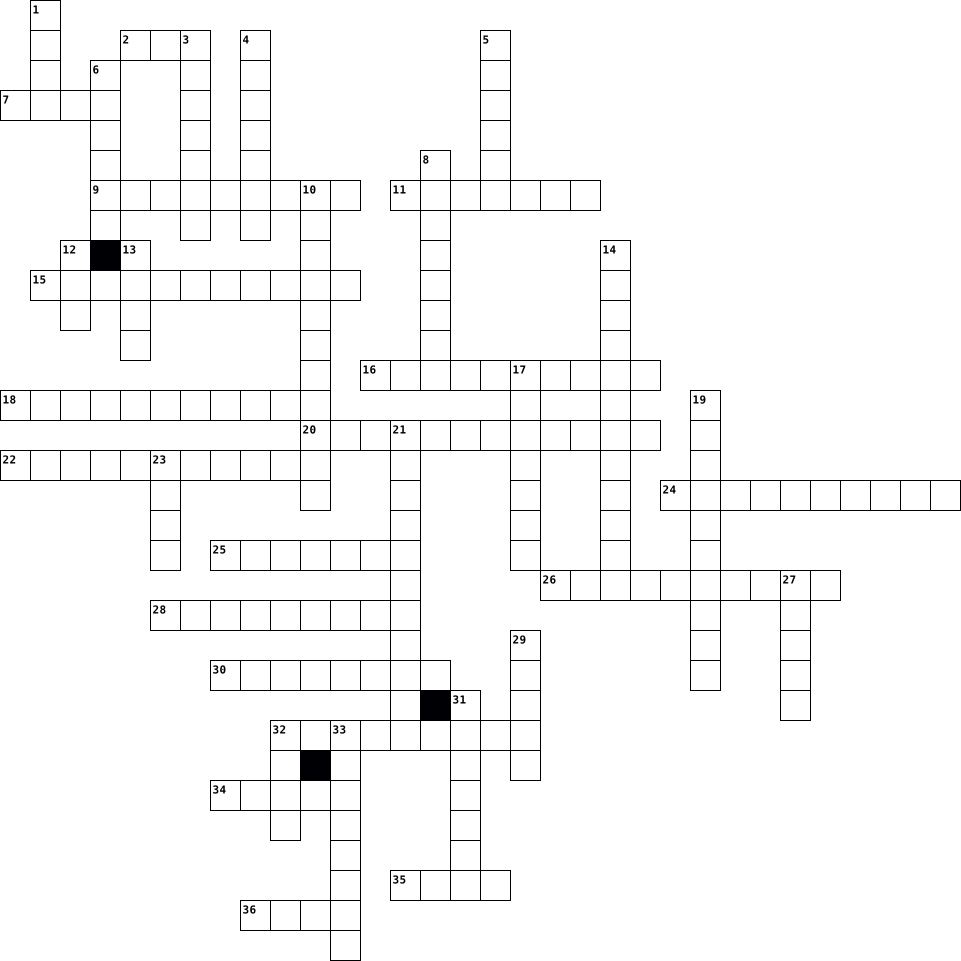
Across
- Point at which a vapor will explode
- Agency responsible for workplace safety
- An unexpected occurrence demanding immediate attention
- Common name for sodium hydroxide
- Indifference to one's surroundings or tasks
- Liquids that can burn you
- The use of colored tape to warn of potential hazards
- Used most often to put out a fire
- Required to provide clean, fresh air to workers
- The study of how chemical adversely affect the human body
- Industrial_______
- Studies to prevent muscular/skeletal disorders
- Used to prevent insect bites
- Cancer causing fiber found in many applications
- A program to help identify state to critical error patterns
- Tendency to do tasks a certain way
- With oxygen and heat, the third element of the fire triangle
- Line of _____, being in or moving into the path of hazardous energy
Down
- Best source for chemical hazard information
- A device fastened to a harness to prevent fall injuries
- A measure of sound
- Hand protection
- A device used to reach overhead work areas
- The standard covering hazardous waste operations
- Cancer causing chemicals
- Government agency in charge of transportation
- Plan to keep oil out of the waterways
- A safety issue related to cleaning
- Type of suit worn to prevent acid burns
- Chemicals that ignite with air contact
- Performed to ensure safety equipment is ready for use
- A systematic approach to isolate equipment for repair
- A powered device used for lifting or lowering materials
- A type of reaction when exposed to a chemical
- Stay on one's feet
- Highest level of respiratory protection
- Too tired to perform safely
37 Clues: Hand protection • Industrial_______ • A measure of sound • Stay on one's feet • Cancer causing chemicals • Liquids that can burn you • Too tired to perform safely • Used to prevent insect bites • Common name for sodium hydroxide • Used most often to put out a fire • A safety issue related to cleaning • Tendency to do tasks a certain way • Point at which a vapor will explode • ...
Food Safety 2013-09-10

Across
- Organisms that feed on living things
- The spreading of harmful bacteria
- Foods that spoil easily
- The only way to kill bacteria without chemicals
- Microorganisms that are infected cells
- Organisms that spread through invisible spores
Down
- Microscopic living organisms
- Comes from the individual who made the meal
- Wash everything that touches ___ food before re-using
- Maintaining cleanliness
- To make impure
- Produced by or derived from microorganisms and causing disease
- Comes from raw and under-cooked protein
- Attract mice
- Cover your nose and ______ with a tissues when you sneeze or cough
- Denoting substances that prevent the growth of disease-causing microorganisms.
- Leave harmful bacteria
- Systematic approach to food safety
- Never dip more than ____ in a common dish
- Free from live bacteria or other microorganisms
20 Clues: Attract mice • To make impure • Leave harmful bacteria • Maintaining cleanliness • Foods that spoil easily • Microscopic living organisms • The spreading of harmful bacteria • Systematic approach to food safety • Organisms that feed on living things • Microorganisms that are infected cells • Comes from raw and under-cooked protein • Never dip more than ____ in a common dish • ...
Electrical Safety 2013-11-08
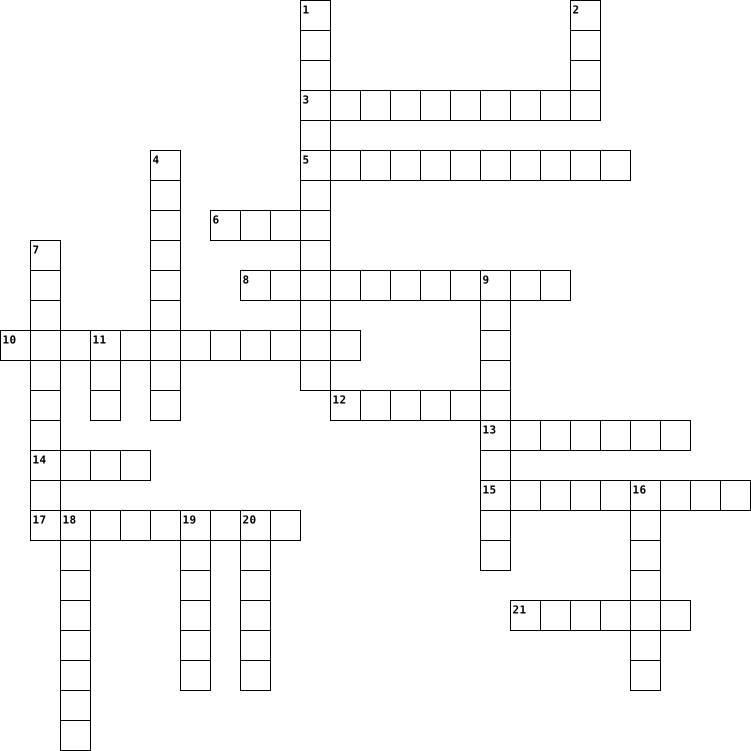
Across
- Is used to protect people from electric shock by covering the conductor.
- This happens when too much current is running through the conductor?
- This will provide protection against faults on a circuit.
- This type of current is produced by rotating a generator.
- What type of bonding is required in bathrooms and kitchens?
- What type of insulation employs two independent layers of insulation?
- To enable a current to flow, there must be a?
- The voltage is directly proportional to the current x the resistance V=IxR, what is this law known as?
- A means of cutting off the electrical supply.
- What type of hazards present themselves as a result of electrical hazard?
- What type of electricity is produced by the build up of electrons on weak conductors or insulators
Down
- What type of bonding is used when potential metallic conductors exist near to electrical conductors in buildings?
- What is a common injury from electricity?
- A person possessing the sufficient knowledge, experience and training is known as?
- Are very poor conductors
- A maintenance action involving careful scrutiny of an item of electrical equipment to detect a fault is known as?
- This is one type of formal inspection and testing of electrical appliances.
- This is a measurement carried out to monitor the conditions of an item of electrical equipment.
- Enables the current to return directly to earth by providing a circuit of least resistance.
- This type of current is produced by a battery.
- What can you do to the voltage to reduce the risks of electric shock?
21 Clues: Are very poor conductors • What is a common injury from electricity? • To enable a current to flow, there must be a? • A means of cutting off the electrical supply. • This type of current is produced by a battery. • This will provide protection against faults on a circuit. • This type of current is produced by rotating a generator. • ...
food safety 2014-02-04

Across
- control center: medical facility that gives free advice about handliing poison emergencies
- Maneuver: a life saving technique to help someone who is choking
- intellectual or spiritual enlightenment
- to expect and prepare for risks and follow strict sanitation rules
- spreading of harmful bacteria from one food to another
- Zone: temperature range in which bacteria grows fastest
- foods that spoil easily
- Aid: immediate care that prevents more injury and relieves pain
- microscopic living organisms
- any disease producing agent virus/ bacterium
- a life saving technique to restart someones breathing and heartbeat
Down
- sudden active manifestation
- substance that works against poison
- poison that kills insects or other pests
- to make impure
- maintaining cleanliness
- any poison produced by an organism
- Illness: caused by unsafe food
- easy to cath fire
- burn: causes unappealing dried up white areas on food
- to show signs of something
21 Clues: to make impure • easy to cath fire • maintaining cleanliness • foods that spoil easily • to show signs of something • sudden active manifestation • microscopic living organisms • Illness: caused by unsafe food • any poison produced by an organism • substance that works against poison • intellectual or spiritual enlightenment • poison that kills insects or other pests • ...
Food Safety 2014-09-24

Across
- Keep foods cold to slow down the spread of bacteria.
- You should do this for at least 20 sec.
- How you handle and maintain the condition of food to prevent illness.
- Heating up food to eliminate bacteria.
- 4 degrees C to 60 degrees C
- Cold, hot, warm, cool, etc…
- The transfer of bacteria.
- Suffering from decay.
- An operation to teach everybody how to prevent food poisoning.
- To sterilize. Often with bleach and water.
- A reaction to a substance ingested in food.
Down
- A type of micro-organism that is the least obvious and spreads the quickest.
- Put in food to preserve its quality.
- A physiological response associated with a particular food.
- Most common intolerance.
- To isolate ingredients to prevent cross-contamination.
- Most likely allergen to be life-threatening.
- Illness caused by bacteria in what you eat.
- A type of micro-organism that is visible.
- To wash something with soap and water.
20 Clues: Suffering from decay. • Most common intolerance. • The transfer of bacteria. • 4 degrees C to 60 degrees C • Cold, hot, warm, cool, etc… • Put in food to preserve its quality. • Heating up food to eliminate bacteria. • To wash something with soap and water. • You should do this for at least 20 sec. • A type of micro-organism that is visible. • ...
Patient Safety 2015-03-09

Across
- The color of a blood band
- Prevents central line infections
- Prevents IV infections
- Assessment of need for Foley Catheter
- Report A way to identify system failures
- The best way to know if a patient understands
- A way to communicate
- Done before every procedure/surgery
- Band Placed on every patient's wrist
Down
- Failure Discharge instructions include, diet, weight management, medications and signs and symptoms
- Ulcer Prevention by turning every two hours
- Ensures the right med for the right patient
- The single most important thing that prevents hospital acquired infections
- Discontinued 24 hours after most surgeries
- Prevention of VTE
- -Rounding One of the most important things to prevent a patient fall
- Should always be turned on for a patient at high risk of fall
- An emergency decision to incision in 30 minutes
- The color of socks worn by a patient who is a fall risk
- Catheter Remove 1-2 post-op day
20 Clues: Prevention of VTE • A way to communicate • Prevents IV infections • The color of a blood band • Prevents central line infections • Catheter Remove 1-2 post-op day • Done before every procedure/surgery • Assessment of need for Foley Catheter • Report A way to identify system failures • Discontinued 24 hours after most surgeries • Ensures the right med for the right patient • ...
Water Safety 2015-05-13

Across
- ____________ is the acronym for Heat Escape Lessing Position
- Please wear ____________ shoes when on deck not your outside shoes
- When boating you always be sitting, not ____________
- If you are under ____________ years old you must stay within arms reach of a responsible adult (14+ years)
- If you want to learn to swim you should try swimming ____________
- On the pool decks we do not run, but for safety we ____________
- Only 50% of parents say they ____________their kids around water
- Call 911 in the case of an ____________
- On average 57 kids ____________ every year in Canada (43 males & 14 females)
- Kids who drown are often ____________, not loud
Down
- Always swim within your own ____________ zone
- A ____________ suit is required to be worn if you are entering the water
- You must be both 7+ years and 48inches tall to ride the big ____________
- No ____________ in shallow water
- Always jump in ____________ first if you are unsure of the depth
- If you ever need help or assistance at the pool ask a ____________ for help
- More than 57% of drowning incidents occur during the ____________ months
- ____________ is the acronym for Emergency Medical Services
- Before you enter the pool you must ____________
- When boating you must bring a ____________ with you
- The ____________ of ice may be an indication of its strength
- Always let an ____________ know where you are and what your plans are
22 Clues: No ____________ in shallow water • Call 911 in the case of an ____________ • Always swim within your own ____________ zone • Before you enter the pool you must ____________ • Kids who drown are often ____________, not loud • When boating you must bring a ____________ with you • When boating you always be sitting, not ____________ • ...
Food Safety 2015-10-05

Across
- What assists you when you eat?
- What is on your hands if you don't wash them?
- How do you prevent bacteria from spreading?
- What do you check the temperature with?
- What do cleaning supplies contain?
- What helps you prepare a meal?
- What do you clean dishes with?
- What bacteria is on raw meat?
Down
- What happens when a knife touches your finger?
- What type of illness can you get from raw food?
- How do you not cross - contaminate?
- How do you make raw food safe?
- What do vegetables have?
- What is a way to see if food is cooking properly?
- Where do you put leftovers?
- What is water near an outlet?
- What happens when your food over - cooks?
- How do you keep food cold?
- What do you have to focus on while cooking?
- What do you cut foods on?
20 Clues: What do vegetables have? • What do you cut foods on? • How do you keep food cold? • Where do you put leftovers? • What is water near an outlet? • What bacteria is on raw meat? • What assists you when you eat? • How do you make raw food safe? • What helps you prepare a meal? • What do you clean dishes with? • What do cleaning supplies contain? • How do you not cross - contaminate? • ...
Kitchen Safety 2015-10-02

Across
- Make sure you use the correct burner.
- Practice you fire escape _______ in case of a large fire.
- Keep __________ cords away from stove tops and water.
- Do not leave ________ unattended.
- Do not wear _______ jewelry.
- Keep your kitchen _________ using labels, etc.
- Never fan a fire with a ______ or apron.
- Store _______ in drawers or wooden blocks.
- Never use ____ water on a burn.
Down
- Keep your floor clear of ________.
- Use ______ and ladders to reach high shelves.
- Always use _____ pads.
- __________ wipe up spills.
- Never leave a knife in ______ water where i can't be seen.
- Do not wear loose _______.
- Be careful around ______ objects.
- Thaw ______ foods in the fridge
- Get a _____-extinguisher for your kitchen.
- Do not leave the kitchen while cooking.
- Heat cooking ____ slowly.
20 Clues: Always use _____ pads. • Heat cooking ____ slowly. • __________ wipe up spills. • Do not wear loose _______. • Do not wear _______ jewelry. • Thaw ______ foods in the fridge • Never use ____ water on a burn. • Do not leave ________ unattended. • Be careful around ______ objects. • Keep your floor clear of ________. • Make sure you use the correct burner. • ...
Water Safety 2015-10-08

Across
- Play _____ ______ is important. Avoid horseplay.
- aid kit Be sure to have this kit available near a pool or body of water
- This type of dive is best when depth is questionable
- individuals trained to save people from drowning
- Children under _____ years old should wear a lifejacket
- Swimming/diving while under the _______of drugs or alcohol is high risk
- When swimming in the ocean, be aware of __________ and currents and watch for shifting weather patterns
- Be sure to stay ______________ and drinks water or non-caffeinated beverages
Down
- Whenever possible, minimize your _________ to stay safe!
- an abbreviated term for a lifejacket or a Personal Floating Device
- Learn the correct _____________ for diving
- A condition that occurs when you are in water for an extended period of time and you lose core body heat
- Cord A _______ __________ injury will change your life. Loss of fine motor skills is debilitating
- Encourage the use of ____________ when outside to protect your skin
- Dive into water that is _____________your own height in depth
- Enroll children in swimming and water safety ____________
- All backyard pools must have a __________ with a self-closing gate
- Pool ______________ should be stored out of reach of children as they are poisonous
- You should always swim with a __________
- Check the water ____________ before diving in
20 Clues: You should always swim with a __________ • Learn the correct _____________ for diving • Check the water ____________ before diving in • Play _____ ______ is important. Avoid horseplay. • individuals trained to save people from drowning • This type of dive is best when depth is questionable • Children under _____ years old should wear a lifejacket • ...
Food Safety 2015-09-30

Across
- to cook food at a low temperature on the stove quiet boiling it
- to keep food cool in the refrigerator
- you need to ______________ your hands before preparing any food
- a bacteria found in foods such as eggs
- instructions that tell how to cook the dish properly
- the improper place to defrost your meat
- a measurement to ensure proper cooking
- to pour off water or juice from a food
- an appliance used to keep foods cool
- remove the ______________ before eating your food item
- a tool to measure the temperature of foods
Down
- you need to ______________ water when it is not filtered
- to soak food in a liquid before cooking it
- Found in most foods and are killed in high temperatures
- When raw meat comes in contact with cooked foods
- You____________ your hands and the counter space being used
- to take the skin off of a fruit or vegetable before eating it
- to safely thaw meat
- to cook at the proper temperature in the oven
- to sanitarily whip ingredients
20 Clues: to safely thaw meat • to sanitarily whip ingredients • an appliance used to keep foods cool • to keep food cool in the refrigerator • a bacteria found in foods such as eggs • a measurement to ensure proper cooking • to pour off water or juice from a food • the improper place to defrost your meat • to soak food in a liquid before cooking it • ...
Food Safety 2015-09-28

Across
- Keep your food ___
- Always ___ produce
- Bacteria that causes food poisoning
- Uncooked food
- "Temperature ___ Zone"
- Thaw meat in the ___
- Make sure your meat is cooked
- Don't use it on a grease fire
- Don't forget to ___ your hands
- To sterilize water
- Change dishcloths ___
Down
- Bacteria growth stops
- Use a ___ on dirty surfaces
- He has an ___ to peanuts
- Keep young children away from the ___
- Keep raw food away from cooked food
- After washing, let your dishes ___
- At the store, pick up frozen foods ___
- Don't ___ the fridge
- Crack the shell
20 Clues: Uncooked food • Crack the shell • Keep your food ___ • Always ___ produce • To sterilize water • Thaw meat in the ___ • Don't ___ the fridge • Bacteria growth stops • Change dishcloths ___ • "Temperature ___ Zone" • He has an ___ to peanuts • Use a ___ on dirty surfaces • Make sure your meat is cooked • Don't use it on a grease fire • Don't forget to ___ your hands • ...