
nutrition in plants Crossword Puzzles
nutrition in plants 2017-05-13

Across
- plant feeds on decomposing materials
- plant that is autothrophic and hetrotrophic
- that absorbs light
Down
- of symbotic plants
- source of energy
5 Clues: source of energy • of symbotic plants • that absorbs light • plant feeds on decomposing materials • plant that is autothrophic and hetrotrophic
Nutrition in plants 2017-05-03

Across
- Plants preparetheir own food
- can take atmospheric nitrogen and convert it into a soluble form
Down
- Plants cannot prepare their own food
- Take food from the host plant
4 Clues: Plants preparetheir own food • Take food from the host plant • Plants cannot prepare their own food • can take atmospheric nitrogen and convert it into a soluble form
NUTRITION IN PLANTS 2017-05-16

Across
- PRESENCE OF A GREEN PIGMENT
- THE PROCESS BY WHICH CARBON DIOXIDE REACTS WITH WATER IN PRESENCE OF SUNLIGHT AND CHLOROPHYLL TO FORM STARCH AND OXYGEN
Down
- THE PROCESS BY TAKING IN FOOD BY AN ORGANISM AND ITS UTILIZATION BY THE BODY
- THE CELLS OF GREEN LEAVES AND YOUNG STEMS OF PLANTS CONTAIN NUMEROUS GREEN STRUCTURES
4 Clues: PRESENCE OF A GREEN PIGMENT • THE PROCESS BY TAKING IN FOOD BY AN ORGANISM AND ITS UTILIZATION BY THE BODY • THE CELLS OF GREEN LEAVES AND YOUNG STEMS OF PLANTS CONTAIN NUMEROUS GREEN STRUCTURES • THE PROCESS BY WHICH CARBON DIOXIDE REACTS WITH WATER IN PRESENCE OF SUNLIGHT AND CHLOROPHYLL TO FORM STARCH AND OXYGEN
NUTRITION IN PLANTS 2016-05-23

Across
- fungi
- algae
Down
- cuscuta
- venusfiltrap
4 Clues: fungi • algae • cuscuta • venusfiltrap
Nutrition in plants 2020-11-10

Across
- Photosynthesis occur in
- Plants take in Carbon-dioxide and give out
- Algae can perform photosynthesis because it has
Down
- Plants prepare their own food hence they are called
4 Clues: Photosynthesis occur in • Plants take in Carbon-dioxide and give out • Algae can perform photosynthesis because it has • Plants prepare their own food hence they are called
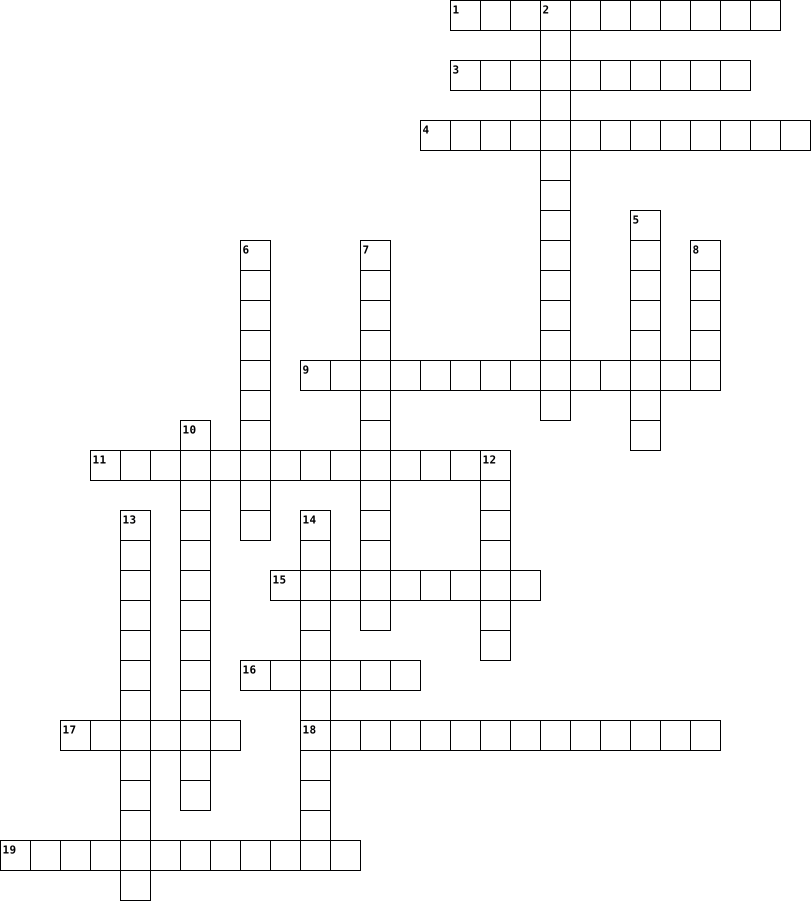
Revision by group 1 2023-01-24

Across
- The Dutch physicist who discovered the process of photosynthesis
- Photosynthesis is the only process by which ______ energy is converted into chemical energy
- Green plants make their own food by photosynthesis.This mode of nutrition is _______
- Chlorophyll is a green coloured pigment which acts as ______
- Green coloured plastids in which the chlorophyll is present
- The glucose is translocated in the form of ______
Down
- The meaning of photon in the word photosynthesis
- to take place (eg 30 to 50)
- The suitable temperature for
- The inner membrane of a chloroplast is folded in disc shaped sacs called _______
10 Clues: to take place (eg 30 to 50) • The suitable temperature for • The meaning of photon in the word photosynthesis • The glucose is translocated in the form of ______ • Green coloured plastids in which the chlorophyll is present • Chlorophyll is a green coloured pigment which acts as ______ • The Dutch physicist who discovered the process of photosynthesis • ...
Living Things 2014-09-07

Across
- Do not have cell walls
- is getting rid of waste products from chemical reactions in the body e.g. carbon dioxide.
- All living things can _____ or increase in size. This happens through cell division where cells have the ability to make copies of themselves.
- is the release of energy from food. Aerobic respiration uses oxygen to obtain energy from food.
- Animals that have a backbone. (Mammal, fish, bird, reptile, amphibian).
- is the ability to detect and respond to stimuli or changes in the environment.
Down
- Animals can walk, fly etc, plants move their parts.
- Make their own food
- is the way organisms obtain and use food. Food is needed as a source of materials and energy.
- Animals that do not have a backbone. (Spiders, worms, jellyfish, anemones, etc).
- is the study of living things (called organisms)
11 Clues: Make their own food • Do not have cell walls • is the study of living things (called organisms) • Animals can walk, fly etc, plants move their parts. • Animals that have a backbone. (Mammal, fish, bird, reptile, amphibian). • is the ability to detect and respond to stimuli or changes in the environment. • ...
nutrition in plants 2016-05-06

Across
- fungi
- greenplants
Down
- non-greenplants
- all non-green plants and animals
4 Clues: fungi • greenplants • non-greenplants • all non-green plants and animals
Nutrition in plants 2016-04-27

Across
- green pigment found in plants which helps to make food
- organisms that live on or in other living organisms and derive their food from them
Down
- can take atmospheric nitrogen and convert in soluble
- cell helps in closing an opening of stoma
4 Clues: cell helps in closing an opening of stoma • can take atmospheric nitrogen and convert in soluble • green pigment found in plants which helps to make food • organisms that live on or in other living organisms and derive their food from them
Nutrition in plants 2017-05-08

Across
- a green pigment that supports sunlight ?
- plant plants that depend on green plants for food?
Down
- plants that make their own food ?
- synthesis of food occurs in the presence of sunlight?
4 Clues: plants that make their own food ? • a green pigment that supports sunlight ? • plant plants that depend on green plants for food? • synthesis of food occurs in the presence of sunlight?
Nutrition in plants 2017-05-02

Across
- plant from which parasite get food
- cells of green leave so and young stems of plants contain numerous green
Down
- green plants are
- organisms that live on dead plants and animals and derive their food from them
4 Clues: green plants are • plant from which parasite get food • cells of green leave so and young stems of plants contain numerous green • organisms that live on dead plants and animals and derive their food from them
NUTRITION IN PLANTS 2017-05-23

Across
- helps plants make their food
- bacteria that converts atmospheric nitrogen into water-soluble compounds.
Down
- organisms that depend on others
- organisms that do not depend on others
4 Clues: helps plants make their food • organisms that depend on others • organisms that do not depend on others • bacteria that converts atmospheric nitrogen into water-soluble compounds.
Nutrition in plants 2017-05-14

Across
- living organisms that cannot make their own food
- organisms that live in or on other living organisms and derive their food from them
Down
- the structures in cells that contain chlorophyll
- the process of taking in food by an organism and its utilization by the body
4 Clues: the structures in cells that contain chlorophyll • living organisms that cannot make their own food • the process of taking in food by an organism and its utilization by the body • organisms that live in or on other living organisms and derive their food from them
Nutrition in Plants 2021-06-24

Across
- Animals are
- Pigment which is needed for photosynthesis
Down
- Organisms which make food by themselves
- 'Photo' means
4 Clues: Animals are • 'Photo' means • Organisms which make food by themselves • Pigment which is needed for photosynthesis
Nutrition In Plants 2016-05-14

Across
- Mutual beneficial relationship between plants
- Plants that prepare their food on their own
Down
- Plants that use their root-like structures to take food from other plants
- Light needed during photosynthesis
4 Clues: Light needed during photosynthesis • Plants that prepare their food on their own • Mutual beneficial relationship between plants • Plants that use their root-like structures to take food from other plants
nutrition in plants 2026-04-19

Across
- raw material for photosynthesis
- kitchen cells
Down
- light reaction
- leaf openings found in epidermis
4 Clues: kitchen cells • light reaction • raw material for photosynthesis • leaf openings found in epidermis
Career crossword 2012-03-01

Across
- - A keeper or custodian of a museum or other collection.
- - A scientist who studies living organisms.
- - An expert in the use of cosmetics.
- - A person qualified to treat diseased or injured animals.
- - The branch of medicine that deals with diseases and abnormalities of the heart.
- - An expert or specialist in psychology.
- - The branch of medicine dealing with the correction of deformities of bones or muscles.
- - A biologist specializing in the study of plants.
Down
- - A specialist in geology.
- - A specialist who studies processes in the earth's atmosphere that cause weather conditions.
- - An expert on diet and nutrition.
- - Chiropodist: a specialist in care for the feet.
- - A person who is professionally qualified to prepare and dispense medicinal drugs.
- - A person who designs buildings and often supervises their construction.
- - A person who practices optometry.
15 Clues: - A specialist in geology. • - An expert on diet and nutrition. • - A person who practices optometry. • - An expert in the use of cosmetics. • - An expert or specialist in psychology. • - A scientist who studies living organisms. • - Chiropodist: a specialist in care for the feet. • - A biologist specializing in the study of plants. • ...
Nutrition 2015-12-01

Across
- A sweet carb that is found in naturally grown foods.
- Essentially salt in foods.
- wheat or any other cereal crop used as food.
- The seeds, roots, stems, leaves, etc in plants.
- Fats that are usually solid at room temperature.
- Fats that are usually liquid at room temperature.
- Food from a plant with a seed in it.
- The nutrition group that is used to build and repair cells
- a special course of food which restricts oneself.
Down
- A unit of heat that measures the energy in food.
- The waxy, fat like substance used to build cells and make other substances.
- Containing or made from milk.
- The flesh of an animal prepared as food.
- The starches and sugars found in food.
- A complex carb that the body cannot break down or use for energy.
15 Clues: Essentially salt in foods. • Containing or made from milk. • Food from a plant with a seed in it. • The starches and sugars found in food. • The flesh of an animal prepared as food. • wheat or any other cereal crop used as food. • The seeds, roots, stems, leaves, etc in plants. • A unit of heat that measures the energy in food. • ...
nutrition in plants 2016-04-27

Across
- can take atmospheric nitrogen and convert into soluble form that the plants can absobe
- are small pores by which plants breathe
Down
- takes in food by an organism and its utilization by the body
- helps plants make their own food by the help of sun , water and carbon-dioxide.
4 Clues: are small pores by which plants breathe • takes in food by an organism and its utilization by the body • helps plants make their own food by the help of sun , water and carbon-dioxide. • can take atmospheric nitrogen and convert into soluble form that the plants can absobe
nutrition in plants 2016-04-27

Across
- takes atmospheric nitrogen and convert it into a soluble form that the plants can absorb
- is the process by which plant make their own food
Down
- is the taking in food by an organism and its utilization by the body
- are small pores by which the plants breath
4 Clues: are small pores by which the plants breath • is the process by which plant make their own food • is the taking in food by an organism and its utilization by the body • takes atmospheric nitrogen and convert it into a soluble form that the plants can absorb
nutrition in plants 2017-05-07

Across
- jndjcnn jhcbdyw
- nfdhdb chbfhb
Down
- ncjncjndk dnc
- ffgdyd hgyef eygfbf ffhhf fe
4 Clues: ncjncjndk dnc • nfdhdb chbfhb • jndjcnn jhcbdyw • ffgdyd hgyef eygfbf ffhhf fe
parenteral nutrition crossword 2020-06-18

Across
- a parenteral nutrition bag that the state only uses on infants and children
- a condition in PPN that results from giving concentrated CHO solutions
- a mineral supplemented to a patient with fistulas on parenteral nutrition
- part of the Nutrition therapy team
Down
- a type of parenteral nutrition that is administered for a longer period of time
- a component of a catheter that is used to give drugs or nutrients
- a complication that may result from weaning off central parenteral nutrition too quickly
- parenteral nutrition that is administered intermittently
- parenteral nutrition bags are distinguished according to its amount
9 Clues: part of the Nutrition therapy team • parenteral nutrition that is administered intermittently • a component of a catheter that is used to give drugs or nutrients • parenteral nutrition bags are distinguished according to its amount • a condition in PPN that results from giving concentrated CHO solutions • ...
Starlan Arends - Ecology crossword 2024-11-19

Across
- The study of the feeding relationships within an ecosystem.
- An organism that breaks down dead organic matter (like plants and animals) into simpler substances, releasing nutrients back into the environment, essentially acting as nature's "clean-up crew".
- A group of organisms that can interbreed with each other and produce fertile offspring.
- A large geographical region characterized by distinct climate, vegetation, and animal life.
- An organism that cannot produce its own food and must rely on other organisms (like plants or animals) for sustenance.
- A group of different species living in the same area and interacting with each other.
- The study of the relationships between living organisms and their physical environment, examining how organisms interact with each other and with the non-living components of their surrounding.
- The part of the Earth where life exists, encompassing all living organisms across the planet, including the air, land, and water.
- An animal that primarily eats plants.
- An organism that eats both plant and animal matter.
- The study of a group of individuals of the same species living in a specific geographical area at a given time.
- An organism that cannot produce its own food and must rely on other organisms, like plants or animals, for nutrition.
- A complex network of interconnected food chains within an ecosystem, illustrating how energy is transferred between different organisms through their feeding relationships.
Down
- The biological process where plants, algae, and some bacteria use sunlight energy to convert carbon dioxide and water into glucose (sugar) and oxygen.
- The study of the relationships between living organisms (biotic factors) and their physical environment (abiotic factors), including how they interact with each other and how they are influenced by their surroundings.
- An organism that feeds on dead and decaying organic matter (detritus), breaking it down into smaller particles and playing a crucial role in nutrient recycling within an ecosystem.
- An organism that can produce its own food using simple inorganic materials like carbon dioxide and water.
- The process where organisms, typically bacteria, produce food (organic matter) by using chemical energy from inorganic compounds, like hydrogen sulfide or methane, instead of sunlight as in photosynthesis.
- A graphical representation of the relationship between different organisms in an ecosystem, typically showing the flow of energy at different trophic levels.
- An answer key would provide the correct definitions for each term included in the question.
- The study of living organisms and their interactions within the food chain.
- An organism that primarily obtains its nutrition by eating the flesh of other animals.
- The total mass of living organisms within a given area or ecosystem at a specific time.
- A linear sequence of organisms where energy is transferred from one organism to another, starting with a producer (like a plant) and moving through different levels of consumers (herbivores, carnivores) until reaching the top predator.
- An organism that can create its own food, typically through photosynthesis using sunlight, and is considered the base of a food chain.
- A community of living organisms (biotic factors) within a specific area, interacting with each other and their non-living environment (abiotic factors) as a single functional unit.
26 Clues: An animal that primarily eats plants. • An organism that eats both plant and animal matter. • The study of the feeding relationships within an ecosystem. • The study of living organisms and their interactions within the food chain. • A group of different species living in the same area and interacting with each other. • ...
Topic 1 and 2 2024-05-21

Across
- Acronym used to remember the 8 life processes
- In animals this involves the action of muscles and freers to slow growth
- Producing an offspring.
- A reproductive cell and contains enzymes to break through eggs membrane
- Maintain their internal conditions within a constant range
- A unit of communication in the nervous system
- Carry’s oxygen from lungs and delivers in through the body
- A layer of closely packed cells found under the epidermis on the upper layer of a leaf
Down
- All organisms are ————————- to changes in their surroundings.
- An extension of plants epideral cell in growing plant roots
- Source if food to be substance into energy
- Increasing in size and mass by increasing their number of cells
- Chemical reaction involving transfer of energy
- Removal of waste substance.
14 Clues: Producing an offspring. • Removal of waste substance. • Source if food to be substance into energy • Acronym used to remember the 8 life processes • A unit of communication in the nervous system • Chemical reaction involving transfer of energy • Maintain their internal conditions within a constant range • Carry’s oxygen from lungs and delivers in through the body • ...
Nutrition in plants 2016-04-27

Across
- the opening and closing of stoma
- the process of taking in food by an organism and it's utilization by the body
Down
- organisms that live in or on other living organisms and derive their food from them
- a green pigment in leaves helps to prepare food
4 Clues: the opening and closing of stoma • a green pigment in leaves helps to prepare food • the process of taking in food by an organism and it's utilization by the body • organisms that live in or on other living organisms and derive their food from them
nutrition in plants 2016-04-26

Across
- non green plants
Down
- green pigment
- alga & fungus live together
- located on the underside of leaves
4 Clues: green pigment • non green plants • alga & fungus live together • located on the underside of leaves
Nutrition in Plants 2016-04-20

Across
- what mode of nutrition does a mushroom use?
- plants are green because of the presence of a green pigment called...
Down
- a stoma is surrounded by
- living organisms that can't make their own food
4 Clues: a stoma is surrounded by • what mode of nutrition does a mushroom use? • living organisms that can't make their own food • plants are green because of the presence of a green pigment called...
nutrition in plants 2016-05-06

Across
- non-greenplants
- all non-green plants and animals
Down
- fungi
- greenplants
4 Clues: fungi • greenplants • non-greenplants • all non-green plants and animals
Nutrition in plants 2017-05-08

Across
- a green pigment that supports sunlight ?
- plant plants that depend on green plants for food?
Down
- plants that make their own food ?
- synthesis of food occurs in the presence of sunlight?
4 Clues: plants that make their own food ? • a green pigment that supports sunlight ? • plant plants that depend on green plants for food? • synthesis of food occurs in the presence of sunlight?
NUTRITION IN PLANTS 2017-05-08

Across
- - All non-green plants and animals.
- - Organisms that can make their food from simple non-living substances.
Down
- - The green pigment in plants that trap sunlight to make food.
- - The process of taking in food by an organism and its utilization by the body.
4 Clues: - All non-green plants and animals. • - The green pigment in plants that trap sunlight to make food. • - Organisms that can make their food from simple non-living substances. • - The process of taking in food by an organism and its utilization by the body.
NUTRITION IN PLANTS 2017-05-07

Across
- DIOXIDE WATER a chemical reaction takes place in the green parts of the plant, in which ___________ are converted into food in form of glucose
- NUTRITION Green plants which cannot prepare their own food is called
Down
- The cells of green leaves and young stems of plants contain numerous green structures called
- NUTRITION green plants which can prepare their own food are called
4 Clues: NUTRITION green plants which can prepare their own food are called • NUTRITION Green plants which cannot prepare their own food is called • The cells of green leaves and young stems of plants contain numerous green structures called • ...
Nutrition in plants 2017-05-02

Across
- plant from which parasite get food
- cells of green leave so and young stems of plants contain numerous green
Down
- green plants are
- organisms that live on dead plants and animals and derive their food from them
4 Clues: green plants are • plant from which parasite get food • cells of green leave so and young stems of plants contain numerous green • organisms that live on dead plants and animals and derive their food from them
Ecology Terms 2020-04-27

Across
- animal that feeds on flesh
- symbiosis that benefits both
- not from living organisms
- relationship between different organisms one harms other
- only eats plants
- state of the atmosphere regarding wind/heat etc.
- interaction between two organisms that benefit both
- Fixation atmospheric nitrogen is put in organic compounds
- Web natural interconnection of food chains of what eats what
- relationship between individuals one benefits from other
- regions of the surface/air/water occupied by living things
- angular distance north or south of the equator
- relating, resulting from living things
- animal that feeds on dead organic material
Down
- able to form organic substances from inorganic substances
- role a species has in its environment
- branch of biology that deals with relations of organisms
- factor limits reaction rate governed by variables
- preying of one animal on another
- weather conditions in a area over a period of time
- biological community of organisms and physical environment
- large community of flora and fauna occupying a major habitat
- home environment of organisms
- animal that eats both plants and animals
- Chain series of organisms dependent on next for source of food
- number of organisms of same species that live in an area
- organism taking nutrition from complex organic substances
- place together with its inhabitants
- Succession process started by an event
- Succession no soil or soil is incapable of sustaining life
30 Clues: only eats plants • not from living organisms • animal that feeds on flesh • symbiosis that benefits both • home environment of organisms • preying of one animal on another • place together with its inhabitants • role a species has in its environment • relating, resulting from living things • Succession process started by an event • animal that eats both plants and animals • ...
science 2016-04-26

Across
- the process of taking in food by an organism and utilizing it
- organisms that depend on green plants directly or indirectly for nutrition
Down
- organisms that can make their food from simple non-living substances
- organism that live in or on other living organisms
- a bacteria that can convert atmospheric nitrogen into water soluble compounds
5 Clues: organism that live in or on other living organisms • the process of taking in food by an organism and utilizing it • organisms that can make their food from simple non-living substances • organisms that depend on green plants directly or indirectly for nutrition • a bacteria that can convert atmospheric nitrogen into water soluble compounds
Nurtrition word puzzle 2018-03-20

Across
- many kinds of substance that are good for our health, usually discover in stones.
- the capacity of acting or being active
- neutral compounds of carbon, hydrogen, and oxygen, such as sugar.
- a kind of food that suitable for a person
- B are water-soluble. The time of retention in the body is only a few hours. It must be supplemented every day. It can be obtained from the liver, kidney, and heart of animal.
- (fat) a kind of fat usually discovered in fish and seafood, this kind of fat is good for our health.
- chemical reactions helps to maintain our life.
- A unit that is equal to the amount of heat produced when the food is oxidized.
- a silver-white soft waxy ductile element of the alkali metal group
- having particles that easily move and change their relative position without a separation of the mass
Down
- ( fat ) a kind of fat usually discovered in pork and cream, this kind of fat is bad for our health.
- Something from food that is benefit for you, it could help you grow up.
- a metal element helps muscle function and bone growth.
- (fat) a kind of fat that can make food taste soft and can also cause heart disease.
- complex substances that contain the elements carbon, hydrogen, nitrogen, oxygen, usually sulfur, and occasionally other elements
- provide a choice
- Substances (such as fat) that can melt in nonpolar organic solvents can dissolve
- All kinds of organic substances are essential to the nutrition of most animals and some plants.
- a silver-white divalent metallic element of the alkaline-earth group
- A thread or structure or object similar to a thread.
20 Clues: provide a choice • the capacity of acting or being active • a kind of food that suitable for a person • chemical reactions helps to maintain our life. • A thread or structure or object similar to a thread. • a metal element helps muscle function and bone growth. • neutral compounds of carbon, hydrogen, and oxygen, such as sugar. • ...
Nutrition and diets 2026-02-03

Across
- oils
- helps body regulate
- high blood pressure that can be caused by an excess amount of fat or salt
- condition where bones have tiny openings
- mellitus disease caused by an insufficient secretion
- Fats
Down
- mellitus, disease caused by an insufficient section
- poor state of nutrition
- major source of readily usable human energy
- status, state or condition of ones nutrition
- a state of good health
- nutrients chemical elements found in food
- fibrous/indigestible forms of plant carbohydrates
13 Clues: oils • Fats • helps body regulate • a state of good health • poor state of nutrition • condition where bones have tiny openings • nutrients chemical elements found in food • major source of readily usable human energy • status, state or condition of ones nutrition • fibrous/indigestible forms of plant carbohydrates • mellitus, disease caused by an insufficient section • ...
Nutrition 2.0 2021-11-16

Across
- substances found in food that aren't classified as nutrients
- beneficial live bacteria in the human gut
Down
- amount of energy measured in foods
- health benefits created by plants
- body takes in and utilizes foods
- highest energy dense nutrients consumed by humans
6 Clues: body takes in and utilizes foods • health benefits created by plants • amount of energy measured in foods • beneficial live bacteria in the human gut • highest energy dense nutrients consumed by humans • substances found in food that aren't classified as nutrients
Flower crossword 2022-05-04

Across
- a small opening on a plant stem that controls air and water leaving the plant.
- a thick, modified underground plant stem with scaly leaves and buds from which new plants grow.
- a part of photosynthesis in which the energy molecules produced by light reactions are converted into sugar molecules for energy storage.
- the very bottom of a plant’s root tip.
- a modified plant stem that grows underground horizontally and sends plant shoots upward.
- openings in the lower epidermis of a leaf that allow or prevent gases and water from leaving the leaf.
- the process of using tissue culture to create new plants. An asexual plant reproduction method in which a single plant cell is placed in a special nutrient growing medium, and grown into an entire plant.
Down
- flower a flower made up of many small flowers in one large structure
- a tissue produced inside a flowering plant around the time of fertilization. It surrounds the embryo and provides nutrition in the form of starch.
- a type of cell division that results in four daughter cells, each with half the number of chromosomes of the parent cell.
- the outside covering of a plant designed to protect the plants internal parts and retain water.
- a section of a plant stem between nodes. This distance is often essential in determining plant height and shape.
- a layer of cells that make up the xylem and phloem of plants. The thin layer of actively growing tissue in a tree trunk produces the growth rings seen when the tree is cut down.
- a part of a plant whose primary purpose is to collect sunlight for the plant to perform photosynthesis.
- the part of the stamen that contains the pollen
15 Clues: the very bottom of a plant’s root tip. • the part of the stamen that contains the pollen • flower a flower made up of many small flowers in one large structure • a small opening on a plant stem that controls air and water leaving the plant. • a modified plant stem that grows underground horizontally and sends plant shoots upward. • ...
Label Reading the Healthy Way 2022-04-29

Across
- Type of fat you want little or none of per serving
- all added sugars are in brackets after this word
- Listed at top of Nutrition Facts table
- Doesn't need a label and is fresh
- Sugars are found naturally in this
Down
- Provides fibre
- Choose this type of fat
- You want a high daily value of this
- Found in salt
- List where nutrition information is found
- Always check Nutrition Facts table where this is a ___ on the package
11 Clues: Found in salt • Provides fibre • Choose this type of fat • Doesn't need a label and is fresh • Sugars are found naturally in this • You want a high daily value of this • Listed at top of Nutrition Facts table • List where nutrition information is found • all added sugars are in brackets after this word • Type of fat you want little or none of per serving • ...
Flower crossword 2022-05-04

Across
- a small opening on a plant stem that controls air and water leaving the plant.
- a thick, modified underground plant stem with scaly leaves and buds from which new plants grow.
- a part of photosynthesis in which the energy molecules produced by light reactions are converted into sugar molecules for energy storage.
- the very bottom of a plant’s root tip.
- a modified plant stem that grows underground horizontally and sends plant shoots upward.
- openings in the lower epidermis of a leaf that allow or prevent gases and water from leaving the leaf.
- the process of using tissue culture to create new plants. An asexual plant reproduction method in which a single plant cell is placed in a special nutrient growing medium, and grown into an entire plant.
Down
- flower a flower made up of many small flowers in one large structure
- a tissue produced inside a flowering plant around the time of fertilization. It surrounds the embryo and provides nutrition in the form of starch.
- a type of cell division that results in four daughter cells, each with half the number of chromosomes of the parent cell.
- the outside covering of a plant designed to protect the plants internal parts and retain water.
- a section of a plant stem between nodes. This distance is often essential in determining plant height and shape.
- a layer of cells that make up the xylem and phloem of plants. The thin layer of actively growing tissue in a tree trunk produces the growth rings seen when the tree is cut down.
- a part of a plant whose primary purpose is to collect sunlight for the plant to perform photosynthesis.
- the part of the stamen that contains the pollen
15 Clues: the very bottom of a plant’s root tip. • the part of the stamen that contains the pollen • flower a flower made up of many small flowers in one large structure • a small opening on a plant stem that controls air and water leaving the plant. • a modified plant stem that grows underground horizontally and sends plant shoots upward. • ...
Life process puzzle by amit yadav 4 2021-08-06

Across
- mode of nutrition found in fungi is
- site of photosynthesis in the cells of a leaf is
- respiratory pigment in human beings is
- vacuole,In amoeba, food is digested in the
- plant tissue transports water and min-erals from the roots to the leaf
Down
- region of the alimentary canal absorbs the digested food
- food by this to tissue
- process occurs in which part of the cell
- of the plants absorb water from the soil through the process of
9 Clues: food by this to tissue • mode of nutrition found in fungi is • respiratory pigment in human beings is • process occurs in which part of the cell • vacuole,In amoeba, food is digested in the • site of photosynthesis in the cells of a leaf is • region of the alimentary canal absorbs the digested food • of the plants absorb water from the soil through the process of • ...
NUTRITION IN PLANTS 2021-07-23

Across
- An organism deriving food from another organism
- A plant parasite
- green pigment present in the leaves of a plant
Down
- organism feeding on dead matter
4 Clues: A plant parasite • organism feeding on dead matter • green pigment present in the leaves of a plant • An organism deriving food from another organism
Nutrition In Plants 2017-05-02

Across
- Venus Flytrap
- A Parasitic Tree
Down
- Filled with water and is around a stoma
- A saprophytic plant
4 Clues: Venus Flytrap • A Parasitic Tree • A saprophytic plant • Filled with water and is around a stoma
nutrition in plants 2016-05-28

Across
- plants plants that derive some or most of their nutrients (but not energy) from trapping and consuming animals.
- leaves take in carbon dioxide through tiny pores.
Down
- process in which plants makes own food.
- process of taking food by an organisim and utilization by the body.
4 Clues: process in which plants makes own food. • leaves take in carbon dioxide through tiny pores. • process of taking food by an organisim and utilization by the body. • plants plants that derive some or most of their nutrients (but not energy) from trapping and consuming animals.
nutrition in plants 2016-05-28

Across
- plants plants that derive some or most of their nutrients (but not energy) from trapping and consuming animals.
- leaves take in carbon dioxide through tiny pores.
Down
- process in which plants makes own food.
- process of taking food by an organisim and utilization by the body.
4 Clues: process in which plants makes own food. • leaves take in carbon dioxide through tiny pores. • process of taking food by an organisim and utilization by the body. • plants plants that derive some or most of their nutrients (but not energy) from trapping and consuming animals.
Nutrition in plants 2019-09-02

Across
- plant nutrients
- symbiotic relationship
Down
- leguminous plants
- modified leaf
4 Clues: modified leaf • plant nutrients • leguminous plants • symbiotic relationship
nutrition in plants 2016-05-06

Across
- non-greenplants
- all non-green plants and animals
Down
- fungi
- greenplants
4 Clues: fungi • greenplants • non-greenplants • all non-green plants and animals
Nutrition in plants 2016-04-25

Across
- organisms that directly or indirectly depend on green plants for their food
- leguminous plants and rhizobium
Down
- carbohydrates,proteins,fats,vitamins and minerals
- dodder
4 Clues: dodder • leguminous plants and rhizobium • carbohydrates,proteins,fats,vitamins and minerals • organisms that directly or indirectly depend on green plants for their food
Nutrition In Plants 2016-05-14

Across
- Light needed during photosynthesis
- Plants that can make their own food
Down
- Plants that cannot make their own food
- Plants that use their root like structures to take food from other plants
4 Clues: Light needed during photosynthesis • Plants that can make their own food • Plants that cannot make their own food • Plants that use their root like structures to take food from other plants
Weather 2022-11-14

Across
- A funnel shaped vortex of wind
- White flakes which fall in the winter time
- A huge storm with an eye in the middle
- A device which measures air pressure
- The process of water turning into water vapor
- The process of water vapor becoming liquid water
- Ice balls that fall from the sky, sometimes indicating a tornado
- The amount of water vapor in the air
Down
- A wave of wind moving to a certain area
- Water which falls from the sky and gives nutrition to plants
- A wave of cold wind pushing up hot air
- Ice pellets that sometimes fall with rain or snow
- A wave of warm air
- A device to detect wind speed and direction
- The weather _______ said there would be rain
- An object which can detect weather for forecasts
16 Clues: A wave of warm air • A funnel shaped vortex of wind • A device which measures air pressure • The amount of water vapor in the air • A wave of cold wind pushing up hot air • A huge storm with an eye in the middle • A wave of wind moving to a certain area • White flakes which fall in the winter time • A device to detect wind speed and direction • ...
English IPA IPS 2026-04-25

Across
- = Process plants make food using sunlight
- = Smallest continent
- = Part of plant for photosynthesis
- = Old customs
- = Way of life
- = Helps body move
- = System of money
- = Reproductive part of plant
- = Group of similar cells
- = Drawing of a place
- = Force pulling objects down
- = Gas we breathe out
- = Line around the Earth
- = Taking in food for energy
- = Model of the Earth
- = Wheel with rope to lift objects
- = Weather over long time
- = Part that can grow into a plant
- = Ability to do work
- = Earth where plants grow
- = Process of seed growing
- = Direction of sunset
- = Study of past events
- = Number of people
- = Framework of bones
- = Largest continent
- = The smallest unit of life
- = Person who grows crops
- = Buying and selling
- = Part of plant that absorbs water
Down
- = Way to go
- = Tool that makes work easier
- = Process of breaking down food
- = Light from the sun
- = Condition of the air
- = Village area
- = Lines from east to west
- = Tool to measure temperature
- = Continent with many countries
- = Force that slows motion
- = Very large land area
- = Measure of hot or cold
- = Person who helps others
- = Lines from north to south
- = Continent with many deserts
- = One main direction
- = Energy of movement
- = Person who catches fish
- = A bar used to lift things
- = Gas needed for breathing
- = Green pigment in plants
- = Belief in God
- = Stored energy
- = Opposite of north
- = Freedom from control
- = Direction of sunrise
- = Liquid that flows in the body
- = Part of body with a function
- = City area
- = Supports the plant
60 Clues: = Way to go • = City area • = Old customs • = Way of life • = Village area • = Belief in God • = Stored energy • = Helps body move • = System of money • = Number of people • = Opposite of north • = Largest continent • = Light from the sun • = Smallest continent • = Drawing of a place • = Gas we breathe out • = One main direction • = Energy of movement • = Model of the Earth • = Ability to do work • ...
Nutrition 2015-12-01

Across
- The flesh of an animal prepared as food.
- wheat or any other cereal crop used as food.
- Nutrients that promote normal growth, energy, and healthy skin.
- A unit of heat that measures the energy in food.
- Fats that are usually solid at room temperature.
- Essentially salt in foods.
- The starches and sugars found in food.
Down
- The seeds, roots, stems, leaves, etc in plants.
- Containing or made from milk.
- A complex carb that the body cannot break down or use for energy.
- A sweet carb that is found in naturally grown foods.
- Fats that are usually liquid at room temperature.
- The waxy, fat like substance used to build cells and make other substances.
- A special course of food which restricts oneself.
- The nutrition group that is used to build and repair cells
- Food from a plant with a seed in it.
16 Clues: Essentially salt in foods. • Containing or made from milk. • Food from a plant with a seed in it. • The starches and sugars found in food. • The flesh of an animal prepared as food. • wheat or any other cereal crop used as food. • The seeds, roots, stems, leaves, etc in plants. • A unit of heat that measures the energy in food. • ...
Test 2024-11-03

Across
- Part of the cell where photosynthesis occurs
- Component that provides structure to plant cell walls
- Essential nutrient for body growth and repair
- Energy source for the body, stored in muscles and liver as glycogen
Down
- Process in plants to make food using sunlight
- Small units that make up proteins
- Tiny, finger-like structures in the small intestine for nutrient absorption
- Mode of nutrition where food is taken as a whole
- A digestive juice produced by the liver
9 Clues: Small units that make up proteins • A digestive juice produced by the liver • Part of the cell where photosynthesis occurs • Process in plants to make food using sunlight • Essential nutrient for body growth and repair • Mode of nutrition where food is taken as a whole • Component that provides structure to plant cell walls • ...
scizzle 2023-07-16

Across
- the process by which green plants make their own food
- the centre of the reflecting surface of the spherical mirror
- converts fats into fatty acids
- aqueous solution of NaCl
- when metal is attacked by substances such as moisture, acids, etc
- waste material of transpiration
- largest artery in our body
- substance which takes part in a chemical reaction
Down
- it produces urine.
- upper jaw is called
- nutrition in which organism takes in food and breaks it down inside their body
- it is a substance which is added to increase the rate of a reaction but never participates in the reaction
- reaction in which heat is absorbed by the reactants to form the product
- h2 burns with what sound.
- when oils and fats become rancid their smell and taste changes it is called
15 Clues: it produces urine. • upper jaw is called • aqueous solution of NaCl • h2 burns with what sound. • largest artery in our body • converts fats into fatty acids • waste material of transpiration • substance which takes part in a chemical reaction • the process by which green plants make their own food • the centre of the reflecting surface of the spherical mirror • ...
ecosystems 2025-04-11

Across
- the process by which cells convert glucose and oxygen into energy
- living
- an expert in or student of ecology.
- a small arthropod animal that has six legs and generally one or two pairs of wings.
- a colorles, odorless reactive gas the chemical element of atomic number 8 and the life-supporting component of the air
- a scenic or historically important area of countryside protected by the federal government for the enjoyment of the general public or the preservation of wildlife.
- living things, like trees, flowers, and grass, that grow from seeds and use sunlight to make their own food, any nutritious substance that people or animals eat or drink or that plants absorb in order to maintain life and growth.
- a living organism that feeds on organic matter
- the earth considered as the source of all its living beings and inanimate things.
- non living
- important substances you get from food that help your body survive and grow.
- an animal that feeds on carrion dead plant material
- an animal that feeds on other animals
- interactions and relationships between living and non living things
Down
- a colorless, odorless gas produced by burning carbon and organic compounds and by respiration. It is naturally present in air (about 0.03 percent) and is absorbed by plants in photosynthesis.
- a hierarchical series of organisms each dependent on the next as a source of food.
- a group of living organisms consisting of similar individuals capable of exchanging genes or interbreeding
- a colorless transparent odorless liquid that forms the seas lakes rivers and rain and is the basis of the fluids of living organisms.
- warm-blooded egg-laying vertebrate distinguished by the possession of feathers wings and a beak and by being able to fly.
- a human being, especially a person as distinguished from an animal or (in science fiction) an alien. soil, the loose upper layer of the Earth's surface where plants grow
- the natural home or environment of an animal, plant, or other organism
- any nutritious substance that people or animals eat or drink or that plants absorb in order to maintain life and growth
- a green pigment present in all green plants and in cyanobacteria responsible for the absorption of light to provide energy for photosynthesis.
- the capacity to do work or the ability to cause change
- objects or entities that lack the characteristics of life meaning they don't grow reproduce or require energy to survive.
- an animal that feeds on plants.
- the process by which green plants and some other organisms use sunlight to synthesize foods from carbon dioxide and water.
- anything that has all the characteristics of life, such as reproduction, growth, and nutrition
- an organism especially a soil bacterium fungus or invertebrate that decomposes organic material.
- an animal or person that eats food of both plant and animal origin.
30 Clues: living • non living • an animal that feeds on plants. • an expert in or student of ecology. • an animal that feeds on other animals • a living organism that feeds on organic matter • an animal that feeds on carrion dead plant material • the capacity to do work or the ability to cause change • the process by which cells convert glucose and oxygen into energy • ...
Food Chains and Food Web Vocab 2022-05-10

Across
- Eat primary consumers. They are carnivores meat eaters and omnivores animals that eat both plants and animals.
- That eats both plants and animals.
- A network of food chains.
- That are meat eaters.
- Broken down by this type of organisms mostly like bacteria and fungi and the exchange of energy continues.
- Level of an organism is the position it holds in a food chain.
- Animals that eat primary producers they are also called herbivores that are plant eaters.
- Eat secondary consumers
- Eat tertiary consumers. Food chains end with the top predators that animals that have little or no natural enemies.
Down
- Organisms that make their own food from sunlight and or chemical energy from deep sea vents. Are the base of every food chain. These are also autotroph.
- -The sequence of whom eats whom in a biological community (an ecosystem) to obtain nutrition.
- When organisms dies it is eventually eaten by this type of organism like vultures worms and crabs.
- Organisms that make their own food from sunlight and or chemical energy from deep sea vents are the base of every food chain. There are also primary producers
- An organism requiring organic compounds for its principal sources of food. That eat other consumers.
- That eats plants.
15 Clues: That eats plants. • That are meat eaters. • Eat secondary consumers • A network of food chains. • That eats both plants and animals. • Level of an organism is the position it holds in a food chain. • Animals that eat primary producers they are also called herbivores that are plant eaters. • ...
Arweewee’s fav characters/interests 2024-12-14

Across
- “Mr.Doctor?”
- VODKA!
- “But I’m not different, am I?”
- Save my queen from the horse toucher
- Best vox machina character
- Best character from the movie(s) with me in it!!
- Cookies can play piano now
- the best vox Machina member part 2
- Cunty hotel owner
- I AM A STAR
- “Your grandmas black right?!?”
- played by Johnny depp in live action, SMASH
- Certified tweaking!!
Down
- Disabled child labor
- Dragon deez nuts
- cookies are made of sparkles and ocean plants now Ig
- Furry married to a drop dead gorgeous milf
- Rock nutrition
- why does his name sound like a video game resolution
- barley played this game but I love this desert magic man
- HAWK TUAHKS___ (name sounds like this)
- I own a cardboard cutout of them
- Silly deer boy
- One of few roles Benedict Cumberbatch is really fine in
- Two faced queen (I’m litterally her this part isn’t a clue btw)
- Snake snake snake snake
- pinetree
- Blonde twink
28 Clues: VODKA! • pinetree • I AM A STAR • “Mr.Doctor?” • Blonde twink • Rock nutrition • Silly deer boy • Dragon deez nuts • Cunty hotel owner • Disabled child labor • Certified tweaking!! • Snake snake snake snake • Best vox machina character • Cookies can play piano now • “But I’m not different, am I?” • “Your grandmas black right?!?” • I own a cardboard cutout of them • ...
Plants 2014-01-14

Across
- Sticky substance that pollen will adhere too
- lack veins or tubes that carry water and nutrients throughout the plants roots, stem, and leaves
- Used to attract insects to the flower
- Reproduction that requires 2 parents
- a plant that develop seeds on or in cones
- The male Reproduction part of the flower
- Protects the flower during bud development
- Protects the ovule
- The egg of the flower
Down
- produces cones instead of lowers
- Plants with veins or tubes that carry water and nutrients throughout the plants roots, stem, and leaves
- produces flowers that develop seeds inside the ovary
- The stalk of the anther
- Reproduction that requires 1 parent
- Trees that lose their leaves during winter
- Trees that do not lose their leaves during winter
- The female reproduction part of the flower
- Contains pollen sacs
- Raises the stigma away from the ovary
19 Clues: Protects the ovule • Contains pollen sacs • The egg of the flower • The stalk of the anther • produces cones instead of lowers • Reproduction that requires 1 parent • Reproduction that requires 2 parents • Used to attract insects to the flower • Raises the stigma away from the ovary • The male Reproduction part of the flower • a plant that develop seeds on or in cones • ...
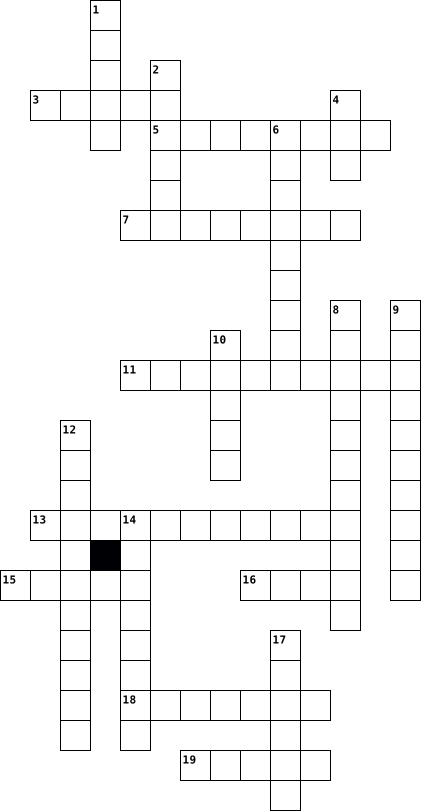
Plants 2023-08-23
Across
- The metabolic process in which cells break down glucose and other organic molecules to produce energy, usually in the form of ATP (adenosine triphosphate). Respiration can be aerobic (requiring oxygen) or anaerobic (occurring in the absence of oxygen).
- The process of taking in or assimilating substances, such as water, nutrients, or gases, through a surface, often the roots of plants.
- Very localized climate conditions that can vary within a small area, such as the climate near a building, under a tree, or alongside a wall.
- The response of plants to the duration of light and darkness, which influences various developmental processes such as flowering and dormancy.
- Nutrients that plants require in relatively large amounts for proper growth, such as nitrogen, phosphorus, and potassium.
- Nutrients Nutrients required by organisms for their growth, development, and overall health. Essential nutrients for plants include macronutrients and micronutrients.
- Another type of plant vascular tissue responsible for transporting organic nutrients (such as sugars) produced in the leaves through photosynthesis to other parts of the plant for growth and storage.
- A term used to describe plant cells that are swollen and rigid due to the absorption of water. Turgid cells help maintain the overall structure of the plant.
- Nutrients that plants need in smaller quantities, including elements like iron, zinc, and copper.
- The growth or movement of plants in response to light. Positive phototropism involves growing toward a light source, while negative phototropism (also known as skototropism) involves growing away from light.
Down
- The process by which green plants and some other organisms convert light energy into chemical energy to synthesize glucose (sugar) from carbon dioxide and water, using chlorophyll and sunlight. Oxygen is released as a byproduct.
- An excessive level of a substance that can be harmful to plants or other organisms. Nutrient toxicity can occur when plants are exposed to an overdose of certain elements.
- A state in which a plant lacks an essential nutrient, leading to impaired growth and other health issues.
- Large-scale climate patterns that characterize a region, such as the climate of an entire continent or a major geographical area.
- A type of plant vascular tissue responsible for transporting water and minerals from the roots to the rest of the plant. It consists of specialized cells that form hollow tubes.
- The movement of water, nutrients, and other organic molecules within a plant, particularly in the vascular tissues (xylem and phloem). It allows the distribution of resources to various parts of the plant.
- Small openings, typically found on the surfaces of leaves and stems, through which gases (such as carbon dioxide and oxygen) are exchanged between a plant and its environment. Stomata also play a role in regulating water loss through transpiration.
- The loss of water vapor from the aerial parts of plants, primarily through small openings called stomata on leaves. It helps in the movement of water and nutrients from the soil to the leaves and aids in cooling the plant.
- Smaller-scale climate patterns that can occur within macroclimates, often influenced by local terrain, vegetation, and other factors.
19 Clues: Nutrients that plants need in smaller quantities, including elements like iron, zinc, and copper. • A state in which a plant lacks an essential nutrient, leading to impaired growth and other health issues. • Nutrients that plants require in relatively large amounts for proper growth, such as nitrogen, phosphorus, and potassium. • ...
plants 2020-02-19
Across
- swim to the egg
- two year life cycle
- parelle veins
- flowering plants
- dont have a vascular system
- absorb nutrients
- a seedless plant
- one growing season
- seeds absorb this
Down
- carries water
- were fertilized eggs are kept
- sticky fluid
- mosses liverworts
- angosperms gymnosperms
- produce naked seeds
- netted veins
- gives plant its color
- seedless
- carries minerals
19 Clues: seedless • sticky fluid • netted veins • carries water • parelle veins • swim to the egg • flowering plants • absorb nutrients • a seedless plant • carries minerals • mosses liverworts • seeds absorb this • one growing season • two year life cycle • produce naked seeds • gives plant its color • angosperms gymnosperms • dont have a vascular system • were fertilized eggs are kept
Plants 2020-09-20

Across
- cuticle Waxy layering that covers the whole leaf
- the tree prepares to go ____ when it starts to get cold
- where photosynthesis takes place in the
- Layer that is full of the chloroplasts, takes in the light for the plant
- molecules that absorb color are called
- Orange Pigments
- cells the little cells that appear in place of the leaf stem
- what makes leaves green
Down
- Microscopic holes in leaves
- Around each of the stoma, Regulates the transpiration
- where are the xylem and phloem located
- To spread water throughout, hollow tube
- The gaps between the guarding cells
- the trees lose their leaves in this season
- It allows for the gases to be interchanged in the plant, spongy
- Transports and moves the sucrose
- Covers the root and the stem and the flower
- loosing leaves keeps plants from dying of ___
- holds what gives the plant color
19 Clues: Orange Pigments • what makes leaves green • Microscopic holes in leaves • Transports and moves the sucrose • holds what gives the plant color • The gaps between the guarding cells • where are the xylem and phloem located • molecules that absorb color are called • To spread water throughout, hollow tube • where photosynthesis takes place in the • ...
Plants 2025-05-25

Across
- Process where plants release water through leaves.
- Roots Shallow, branching root system.
- Plant "pipes" that transport water and minerals upward.
- – Tiny pores on leaves for gas exchange.
- – Waxy coating preventing water loss on leaves.
- Non-flowering plants with seeds in cones.
- Transfer of pollen to a flower’s stigma.
- Hairlike fibers anchoring mosses (like roots).
- Tissue layer beneath the surface of roots and stems.
- A layer of cells separating xylem and phloem.
- A deep-growing single root.
- Union of sperm and egg in plants.
Down
- Structures in cells where photosynthesis occurs.
- Flowering plants that produce seeds in fruits.
- Cap Protective layer at the tip of a root.
- Hairs Tiny structures that increase water absorption.
- Process where plants make food using sunlight.
- Plant "pipes" that transport food downward.
- of Generations Life cycle switching between asexual and sexual phases.
- A cell that can grow into a new plant (no seed).
20 Clues: A deep-growing single root. • Union of sperm and egg in plants. • Roots Shallow, branching root system. • – Tiny pores on leaves for gas exchange. • Transfer of pollen to a flower’s stigma. • Non-flowering plants with seeds in cones. • Cap Protective layer at the tip of a root. • Plant "pipes" that transport food downward. • A layer of cells separating xylem and phloem. • ...
Plants 2016-04-19

Across
- The gas produced during photosynthesis.
- This part of a plant anchors the plant in the ground.
- Nutrition which depends directly or indirectly on green plants.
- The part of a plant in which photosynthesis takes place.
Down
- The gas used up in photosynthesis.
- Photosynthesis couldn’t take place without this energy from the Sun.
- The liquid used up in photosynthesis.
- A pigment that absorbs sunlight.
- Tiny holes on the underside of the leaf which takes in Carbon Dioxide and gives out Oxygen.
9 Clues: A pigment that absorbs sunlight. • The gas used up in photosynthesis. • The liquid used up in photosynthesis. • The gas produced during photosynthesis. • This part of a plant anchors the plant in the ground. • The part of a plant in which photosynthesis takes place. • Nutrition which depends directly or indirectly on green plants. • ...
Flower crossword 2022-05-04

Across
- a tissue produced inside a flowering plant around the time of fertilization. It surrounds the embryo and provides nutrition in the form of starch.
- a section of a plant stem between nodes. This distance is often essential in determining plant height and shape.
- a layer of cells that make up the xylem and phloem of plants. The thin layer of actively growing tissue in a tree trunk produces the growth rings seen when the tree is cut down.
- a modified plant stem that grows underground horizontally and sends plant shoots upward.
- a type of cell division that results in four daughter cells, each with half the number of chromosomes of the parent cell.
- openings in the lower epidermis of a leaf that allow or prevent gases and water from leaving the leaf.
- a part of a plant whose primary purpose is to collect sunlight for the plant to perform photosynthesis.
- a part of photosynthesis in which the energy molecules produced by light reactions are converted into sugar molecules for energy storage.
Down
- the outside covering of a plant designed to protect the plants internal parts and retain water.
- the part of the stamen that contains the pollen
- flower a flower made up of many small flowers in one large structure
- the very bottom of a plant’s root tip.
- a thick, modified underground plant stem with scaly leaves and buds from which new plants grow.
- the process of using tissue culture to create new plants. An asexual plant reproduction method in which a single plant cell is placed in a special nutrient growing medium, and grown into an entire plant.
- a small opening on a plant stem that controls air and water leaving the plant.
15 Clues: the very bottom of a plant’s root tip. • the part of the stamen that contains the pollen • flower a flower made up of many small flowers in one large structure • a small opening on a plant stem that controls air and water leaving the plant. • a modified plant stem that grows underground horizontally and sends plant shoots upward. • ...
NUTRITION 2019-04-30

Across
- Starch and fibre belong to this group of carbohydrates
- Trans fats are found in these foods
- These substances provide energy, form body tissue and are necessary for growth
- This nutrient should be around 20% of a diet
- These fats can reduce bad cholesterol
- An example of a simple carbohydrate
- Fats that are mostly solid at room temperature
- An example of a plant based essential protein
- A function of fat
- Saturated and trans fats can cause this
Down
- Abbreviation for carbohydrates
- These fats contain omega 3 fatty acids and omega 6 fatty acids
- Another name for fats
- a type of fat
- The study of food
- Made up of simple and complex
- Chemical process that your body breaks down food to release energy
- The amount of essential acids
- Building blocks of proteins
19 Clues: a type of fat • The study of food • A function of fat • Another name for fats • Building blocks of proteins • Made up of simple and complex • The amount of essential acids • Abbreviation for carbohydrates • Trans fats are found in these foods • An example of a simple carbohydrate • These fats can reduce bad cholesterol • Saturated and trans fats can cause this • ...
nutrition 2023-09-18

Across
- provide the most calories per gram of all the nutrients
- take longer for the body to break down, keeping blood sugar levels constant: bread, rice, pasta, beans and other veggies
- The process of taking in food and using it for energy and growth.
- Proteins that are missing one or more of the essential amino acids; found in plant sources such as nuts and legumes
- a learned desire for food that is based on emotional and other factors rather than nutritional need.
- are made when hydrogen is added to vegetable oils
Down
- Proteins containing all the essential amino acids; found only in soy and animal foods (meats and dairy products)
- are sugars and starches in foods
- compounds that help regulate many vital body processes, including the digestion, absorption, and metabolism of other nutrients
- are sugars and should be carefully restricted by diabetics due to the spike it can cause in blood sugar:found in milk, fruits and table sugar.
- helps make red blood cells and carries oxygen in the blood
- this vitamin helps prevent birth defects
- your body's way of telling you it needs nutrients.
- Substances in food that your body needs to grow, to repair itself, and to supply you with energy
- nutrient needed to build cells and tissues
- a form of complex carbohydrates from plants that humans cannot digest. It's the tough stringy parts of raw fruits, raw veggies, whole wheat and grains.
- are needed for healthy bones and teeth
- vitamins that are fat soluble
- should be carefully restricted by people with hypertension
19 Clues: vitamins that are fat soluble • are sugars and starches in foods • are needed for healthy bones and teeth • this vitamin helps prevent birth defects • nutrient needed to build cells and tissues • are made when hydrogen is added to vegetable oils • your body's way of telling you it needs nutrients. • provide the most calories per gram of all the nutrients • ...
Nutrition 2023-09-18

Across
- Carries oxygen to the blood
- Needed in large amounts
- Proteins missing one or more essential amino acids
- Needed for bone health
- Proteins with all essential amino acids
- Needed in small amounts
- In starchy foods, provides energy for the body
- Can cause a spike in blood sugar
- Vitamins that are fat soluble
Down
- Can be dangerous for people with hypertsension, Salt
- Your body telling you it needs nutrients
- Takes longer for the body to break down
- The desire for food
- Form body cells, protects nerves,keeps body warm
- Builds muscles and repairs tissues
- Compounds that help regulate vital body processes
- Tough, stringy parts of food,type of carbs humans cant digest
- Helps prevent birth defects
- Made with added hydrogen
19 Clues: The desire for food • Needed for bone health • Needed in large amounts • Needed in small amounts • Made with added hydrogen • Carries oxygen to the blood • Helps prevent birth defects • Vitamins that are fat soluble • Can cause a spike in blood sugar • Builds muscles and repairs tissues • Takes longer for the body to break down • Proteins with all essential amino acids • ...
Nutrition 2023-09-18

Across
- Needed for healthy bones/teeth.
- Learned desire for food that's based on emotional and other factors.
- The process of taking in food and using it for energy/growth.
- Compounds that help regulate vital body processes, includes digestion
- Nutrient needed to build cells/tissues
- Substances your body needs to grow and repair.
- Vitamins that are fat soluble
- Provides the most calories per gram of all nutrients.
- Form of complex carbs from plants, humans can't digest.
- carbs Take longer for body to break down, bread rice, pasta keep blood sugar constant
- Helps make red blood cells , carries oxygen in blood
Down
- Proteins that are missing one or more essential amino acids
- Fats Made when hydrogen is added to veggie oils.
- Proteins containing all the essential amino acids
- You body's way of telling it needs nutrients
- Sugars that should be carefully restricted by diabetics due to the spike of it.
- Vitamin that helps prevent birth defects
- Should be carefully restricted by people with hypertension
- Sugars/starches in foods
19 Clues: Sugars/starches in foods • Vitamins that are fat soluble • Needed for healthy bones/teeth. • Nutrient needed to build cells/tissues • Vitamin that helps prevent birth defects • You body's way of telling it needs nutrients • Substances your body needs to grow and repair. • Proteins containing all the essential amino acids • ...
Nutrition 2023-09-18

Across
- should be carefully restricted by people with hypertension
- Vitamins that are fat soluble
- Vitamins that help prevent birth defects
- The process of taking in food and using it for growth
- protiens containing all essental amino acids
- sugars that should be carefully restricted by diabetics
- Proteins that are missing one or more of the essential amino acids, found in plant sources
- are needed for health bones and teeth
Down
- a learned desire for food that is based on emotional and other factors rather than nutritional need.
- Take longer for the body to break down and keeps blood sugar levels constant
- sugars and starches in foods
- made when hydrogen is added to vegetable oils
- Compounds that help many vital body processes
- The bodys way of telling you it needs nutrients
- provide the most calories per gram of all the nutrients
- a form of complex carbs from plants that humans cant digest
- nutrients needed to help build cells and tissues
- helps make red blood cells and carry oxygen in the blood
- Substances in food that the body needs to grow, repair itself,and supply with energy
19 Clues: sugars and starches in foods • Vitamins that are fat soluble • are needed for health bones and teeth • Vitamins that help prevent birth defects • protiens containing all essental amino acids • made when hydrogen is added to vegetable oils • Compounds that help many vital body processes • The bodys way of telling you it needs nutrients • ...
Nutrition 2023-09-18

Across
- are sugars and should be carefully restricted by diabetes
- sugar and starches in foods
- vitamins that are fat soluble
- A substance that your body needs to grow
- should be carefully restricted by people with hypertension
- your bodies way of telling you, you need nutrients
- nutrient needed to build cells and tissue
- a form of complex carbohydrates
- provide the most calories of all the nutrients
- helps make red blood cells and carries oxygen in the blood
- vitamins that prevent birth defects
Down
- proteins containing all the essential amino acids
- compounds that help regulate many vital body processes
- the process of taking down food and using it for energy and growth
- are needed for healthy bones and teeth
- something that is made when hydrogen is added to vegetables
- a learned desire for food that is based on emotional and other factors rather than nutritional need
- proteins that are missing one or more of the amino acids
- take longer for the body to break down
19 Clues: sugar and starches in foods • vitamins that are fat soluble • a form of complex carbohydrates • vitamins that prevent birth defects • are needed for healthy bones and teeth • take longer for the body to break down • A substance that your body needs to grow • nutrient needed to build cells and tissue • provide the most calories of all the nutrients • ...
Nutrition 2023-09-18

Across
- a learned desire for food that is based on emotional and other factors rather than nutritional need.
- Acid this vitamin helps prevent birth defects
- your body's way of telling you it needs nutrients.
- provide the most calories per gram of all the nutrients
- fats are made when hydrogen is added to vegetable oils
- Substances in food that your body needs to grow, to repair itself, and to supply you with energy
- helps make red blood cells and carries oxygen in the blood
- compounds that help regulate many vital body processes, including the digestion, absorption, and metabolism of other nutrients
- are needed for healthy bones and teeth
- Carbs take longer for the body to break down, keeping blood sugar levels constant: bread, rice, pasta, beans and other veggies
- nutrient needed to build cells and tissues
- a form of complex carbohydrates from plants that humans cannot digest. It's the tough stringy parts of raw fruits, raw veggies, whole wheat and grains.
- proteins Proteins containing all the essential amino acids; found only in soy and animal foods (meats and dairy products)
Down
- are sugars and starches in foods
- The process of taking in food and using it for energy and growth.
- Carbs are sugars and should be carefully restricted by diabetics due to the spike it can cause in blood sugar:found in milk, fruits and table sugar.
- proteins Proteins that are missing one or more of the essential amino acids; found in plant sources such as nuts and legumes
- D, E, K vitamins that are fat soluble
- should be carefully restricted by people with hypertension
19 Clues: are sugars and starches in foods • D, E, K vitamins that are fat soluble • are needed for healthy bones and teeth • nutrient needed to build cells and tissues • Acid this vitamin helps prevent birth defects • your body's way of telling you it needs nutrients. • fats are made when hydrogen is added to vegetable oils • ...
Nutrition 2026-02-18

Across
- - to act of absorbing or taking up water or elements of water
- - an inorganic substance especially: one (such as calcium, magnesium, potassium, and zinc) that cannot be synthesized in the body and is essential in minute quantities to the function and structure of living organisms
- Foods - food that has been processed or refined as little as possible and is free from additives or other artificial ingredients
- - Any of various naturally occurring extremely complex substances that consist of amino-acid residues joined by peptide bonds, contain the elements carbon, hydrogen, nitrogen, oxygen, usually sulfur, and occasionally other elements (such as phosphorus or iron), and include many essential biological compounds (such as enzymes, hormones, or antibodies)
- - The act or process of nourishing or being nourished
- - mostly indigestible material in food (such as legumes, whole grains, and vegetables) that stimulates the intestine to peristalsis and promotes elimination of waste from the large intestine
- Guidelines - science-based, evidence-supported recommendations for food and beverage consumption designed to promote overall health, prevent chronic diseases, and ensure nutrient adequacy for the general public
- - a unit equivalent to the large calories expressing heat producing or energy producing value in food when oxidized in the body
Down
- Size - the total amount of food you choose to serve yourself and consume at one time
- -any of various organic organic substances that are essential in minute quantities to the nutrition of most animals and some plants, act especially as coenzymes and precursors of coenzymes in the regulation of metabolic processes but do not provide energy or serve as building units, and are present in natural foodstuffs or sometimes produced within the body
- - any of various neutral compounds of carbon hydrogen, and oxygen (such as sugars, starches, and celluloses)
- - the lack of proper nutrition caused by not having enough to eat, not eating enough of the right things, or being unable to use the food that one does eat (the opposite of nutrition)
- -a chemical element or substance (such as potassium or protein) that is essential in relatively large amounts to the growth and health of a living organism
- Foods - a nutrient-rich food considered to be especially beneficial for health and well-being
- Diet - provides the body with essential nutrients - vitamins, minerals, proteins, hea;thy fats, and carbohydrates - in the right proportions to function properly, maintain health, and provide energy
- Density - the amount of essential nutrients - such as vitamins, minerals,fiber, and protein - relative to the calories (energy) content of a food.
- Pyramid - a visual, nutritional tool designed to guide healthy eating by illustration recommended daily servings of different food groups
- - Essential macronutrients provide 9 calories per gram - more than double that of carbs or protein - and are crucial for energy, nutrient absorption (vitamins A,D,E,K), hormone production, and cell structure.
- Foods - any food altered from its original state, ranging from simple freezing or cooking to the addition of preservatives, salt, sugar, or fat for improved safety, flavor, and shelf life
19 Clues: - The act or process of nourishing or being nourished • - to act of absorbing or taking up water or elements of water • Size - the total amount of food you choose to serve yourself and consume at one time • Foods - a nutrient-rich food considered to be especially beneficial for health and well-being • ...
Nutrition 2026-03-24

Across
- A unit of energy in food
- This is a body strengthening mineral, important for strong bones and teeth
- Food group that contains bread, rice, and pasta
- Required to be on food packaging
- Come from animal sources, too much can lead to heart disease
- Can be simple or complex, provide energy
- The process of breaking down food in the body
- Food group that contains milk, cheese, and yogurt
- Help to regulate body functions, found in fruits and vegetables
- Come from plant sources, liquid at room temperature
Down
- The process of breaking down Food for energy
- The type of carbohydrate the body cannot digest
- Strengthens bones and teeth
- Supply energy, keep skin healthy, and promote normal growth
- Occurs when the body lacks enough water
- Repairs body cells and tissues
- Broccoli and Carrots fit in this food group
- Helps with digestion, removes waste, allows the body to function properly
- Apples, Oranges, and Bananas fit in this food group
19 Clues: A unit of energy in food • Strengthens bones and teeth • Repairs body cells and tissues • Required to be on food packaging • Occurs when the body lacks enough water • Can be simple or complex, provide energy • Broccoli and Carrots fit in this food group • The process of breaking down Food for energy • The process of breaking down food in the body • ...
Nutrition 2026-04-16

Across
- process of converting food into energy
- vitamins and minerals needed in smaller amounts
- helps absorb vitamins A, D, E, and K
- recommended dietary allowance
- basal metabolic rate
- protein
- carbohydrates
- primary energy sources for the body
- adequate fluid intake
- upper limit for nutrient intake
- inorganic nutrients
- total daily energy expenditure
- supports muscle repair
Down
- organic compounds required for body processes
- body mass index
- minerals that help fluid balance and nerve signaling
- supports digestion and gut health
- unit of energy from food
- nutrients required in larger amounts
19 Clues: protein • carbohydrates • body mass index • inorganic nutrients • basal metabolic rate • adequate fluid intake • supports muscle repair • unit of energy from food • recommended dietary allowance • total daily energy expenditure • upper limit for nutrient intake • supports digestion and gut health • primary energy sources for the body • helps absorb vitamins A, D, E, and K • ...
Nutrition 2021-02-08

Across
- Substances found in food that the body needs for growth, energy, and maintenance.
- Nutrients that provide the body with energy
- the measurement of the food a person eats. Cups measure dairy, fruit and vegetables. Ounces measure grains and proteins.
- Regular course of eating and drinking adopted by a person
- Eating your correct daily amount of food
- nutrient used as the body's most concentrated source of energy
- Choosing foods that limit the intake of salt, fat, sugar and cholesterol.
- Inorganic essential substances contained in food needed for good health.
Down
- Nutritional information on food labels
- Eating foods from all the food groups.
- The nutrient that builds and repairs body tissue. Protein is also used as an energy source when carbohydrate stores are low.
- The nutrient that is the body's most preferred source of energy
- Inorganic elements found in the foods that the body needs to function properly
- calories from solid fat or sugars with little to no nutritional value
- A USDA tool in the form of a placemat that separates food into groups and provides guidance for healthy eating.
- The amount of food an person eats for a meal or a snack.
- Assists the body with nerve conduction,vitamin absorption,insulation and organ protection.
- A unit of energy contained in a food
- A small metric unit of weight.
19 Clues: A small metric unit of weight. • A unit of energy contained in a food • Nutritional information on food labels • Eating foods from all the food groups. • Eating your correct daily amount of food • Nutrients that provide the body with energy • The amount of food an person eats for a meal or a snack. • Regular course of eating and drinking adopted by a person • ...
Nutrition 2020-11-01

Across
- food producers use methods to do this to make you buy their product
- very important to keep us hydrated
- this micronutrient helps keep your bones healthy
- the name of our school
- the last name of our deputy principal
- I store energy
- this happens when you don't have enough fiber and water in your body
- when a person gets older, the bones get less dense
- your body needs this in abundance
Down
- this serves as a broom and helps to keep the bowels flushed
- this is often in food and is disguised
- when someone has anemia, they feel this
- this provides us with an energy source
- this shows us the nutritional value of the food item
- this is what sailors ate to prevent scurvy
- anemia is caused when this is low
- this come from fats
- this is used for growth and repair
- sailors tended to get this a lot
19 Clues: I store energy • this come from fats • the name of our school • sailors tended to get this a lot • anemia is caused when this is low • your body needs this in abundance • very important to keep us hydrated • this is used for growth and repair • the last name of our deputy principal • this is often in food and is disguised • this provides us with an energy source • ...
nutrition 2023-09-18

Across
- your body's way of telling you it needs nutrients.
- provide the most calories per gram of all the nutrients.
- this vitamin helps birth defect.
- Proteins containing all the essential amino acids; found only in soy and animal foods.
- stuff in your food that help you grow.
- compounds that help regulate many vital body processes, including the digestion, absorption.
- Proteins that are missing one or more of the essential amino acids; found in plant sources such as nuts and legumes.
- a form of complex carbohydrates from plants that humans cannot digest.
- nutrient needed to build cells and tissues.
- should be carefully restricted by people with hypertension.
Down
- a learned desire for food that is based on emotional and other factors rather than nutritional need.
- taking food and using it as energy.
- are sugars and starches in foods.
- helps make red blood cells and carries oxygen in the blood.
- are sugars and should be carefully restricted by diabetics due to the spike it can cause in blood sugar.
- vitamins that are fat soluble.
- are made when hydrogen is added to vegetable oils.
- are needed for healthy bones and teeth.
- take longer for the body to break down, keeping blood sugar levels constant: bread, rice, pasta, beans and other veggies.
19 Clues: vitamins that are fat soluble. • this vitamin helps birth defect. • are sugars and starches in foods. • taking food and using it as energy. • stuff in your food that help you grow. • are needed for healthy bones and teeth. • nutrient needed to build cells and tissues. • your body's way of telling you it needs nutrients. • are made when hydrogen is added to vegetable oils. • ...
Nutrition 2023-05-09

Across
- Guidelines for Americans A set of recommendations about smart eating and physical activity for all Americans
- A high ratio of nutrients to calories
- An interactive guide to healthful eating and active living
- Are elements found in food that used by the body
- The natural physical drive to eat, prompted by the body's need for food
- Contamination The spreading of pathogens from one food to another
- Are nutrients the body uses to build and maintain its cells and tissues
- A unit of heat used to measure the energy your body uses and the energy it receives from food
- The process by which your body takes in and uses food
- allergy A condition in which the body's immune system reacts to substances in some foods
- Are starches and sugars found in foods, which provide your body's main source of energy
- A waxy, fat like substance in your blood
Down
- intolerance A negative reaction to food that doesn't involve the immune system
- Are compounds found in food that help regulate many body processes
- A condition in which the bones become fragile and break easily
- the psychological desire for food
- A substance in food that your body needs to grow, to repair itself, and to supply you with energy
- illness Food poisoning
- Treating a substance with heat to kill or slow the growth of pathogens
- Additives Substance added to a food to produce a desire effect
- A tough complex carbohydrate that the body cannot digest
21 Clues: illness Food poisoning • the psychological desire for food • A high ratio of nutrients to calories • A waxy, fat like substance in your blood • Are elements found in food that used by the body • The process by which your body takes in and uses food • A tough complex carbohydrate that the body cannot digest • An interactive guide to healthful eating and active living • ...
Nutrition 2021-12-09

Across
- Injuries to the ligaments around a joint that produce pain, swelling, and stiffness.
- Having an excess of body fat.
- A person who eats mostly or only plant-based foods.
- A waxy,fatlike substance.
- The part of an exercise session when you are exercising at your highest peak.
- Overstretching and tearing a muscle.
- Involves little physical activity.
- Overworking the body.
- Treating a substance with heat to kill or slow the growth of pathogens.
Down
- The ability to move your body parts through their full range of motion.
- A tough complex carbohydrate that the body cannot digest.
- Elements found in food that are used by the body
- purposeful physical activity that is planned, structured, and repetitive, and that improves or maintains physical fitness.
- Nutrients the body uses to build and maintain its cells and tissues.
- The process by which your body takes in and uses food.
- Heavier than the standard weight range for your height.
- The process by which the body breaks down substance and gets energy from food.
- The natural physical drive to eat, prompted by the body's need for food.
- Is an eating disorder that involves cycles of overeating and purging.
19 Clues: Overworking the body. • A waxy,fatlike substance. • Having an excess of body fat. • Involves little physical activity. • Overstretching and tearing a muscle. • Elements found in food that are used by the body • A person who eats mostly or only plant-based foods. • The process by which your body takes in and uses food. • ...
Nutrition 2021-04-28

Across
- biological catalysts made of protein and vitamins
- diets promises quick weight loss
- fat play an important role in skins health by aiding and healing
- protects many tissues of the body
- helps brighten and repair
- three basic food groups
- moving your body walking running
- third group of macronutrients used as energy
Down
- thinning of bones leaving them fragile
- material in the sebaceous glands that lubricate the skin
- required for energy and maintaining nerve and muscle movement
- antioxidant that aids in the functioning repair
- water soluble vitamin
- required in small quantity but they are necessary for life
- vitamins and minerals needed for proper body function
- essential nutrient no person can live without
- chains of amino acid molecules
- organic acids that form the building blocks of protein
- break down basic chemical sugars
- essential for enzymes and for the immune system
20 Clues: water soluble vitamin • three basic food groups • helps brighten and repair • chains of amino acid molecules • diets promises quick weight loss • break down basic chemical sugars • moving your body walking running • protects many tissues of the body • thinning of bones leaving them fragile • third group of macronutrients used as energy • ...
Nutrition 2023-12-17

Across
- hard deposits of bile
- relaxation of muscles
- nutrients for pregnant women
- a diseases caused by raw meat and eggs
- chemical energy in foods
- fluid made and released
- measurement
- break down protein
- absorbs water
- two this is the lowest temp food should be stored at.
- caused by manufacturer
Down
- used to put out a fire
- where baby grows
- milk when breastfeeding
- can cause illness
- vitamins and minerals
- thick fluid for digested foods
- controls food and how much you ear
- a young child
- measurement
20 Clues: measurement • measurement • a young child • absorbs water • where baby grows • can cause illness • break down protein • hard deposits of bile • relaxation of muscles • vitamins and minerals • used to put out a fire • caused by manufacturer • milk when breastfeeding • fluid made and released • chemical energy in foods • nutrients for pregnant women • thick fluid for digested foods • ...
Nutrition 2023-11-02

Across
- building blocks of protein
- this fruit is botanically a berry
- this organ filters blood and removes waste
- where salivary amylase is produced in the mouth
- a person has an average of 22 feet of this
- the distinctive taste of a food or drink
- the colored part of the eye
- digestion using physical movement
- found in dark leafy greens
Down
- body's energy source
- what organ can the human body easily live without
- how many mg of caffeine in 1, 8oz cup of coffee
- provides warmth and protection for the body
- this is all over your body made from dead skin cells
- the only visible muscle
- a well known hormone produced from the pancreas
- a person has an average of 5 feet of this
- this organ holds food and mixes it with acid
- the most recently discovered taste bud
19 Clues: body's energy source • the only visible muscle • building blocks of protein • found in dark leafy greens • the colored part of the eye • this fruit is botanically a berry • digestion using physical movement • the most recently discovered taste bud • the distinctive taste of a food or drink • a person has an average of 5 feet of this • this organ filters blood and removes waste • ...
Nutrition 2024-03-15

Across
- Elements beneficial to the human body, found in water and the earth's crust
- healthy fats
- Temporary restrictions to lose weight
- Liquid essential to human survival
- 9 calories per gram
- type of carb that provides short term energy
- type of carb that provides long term energy
- Essential nutrients found in food, water and supplements
- Method to burning calories or gaining muscleDiet
- Unit of energy measurement
Down
- Make up 60% of a healthy diet
- Products that help fill what is lacking in an insufficient diet
- Most unhealthy fats, fried and processed foods
- Elements beneficial to the human body, found in other living organisms
- 3 essential components in the human diet, Carbs, proteins, fats
- Lack of food for a prolonged period of time
- Composed of amino acids
- Bodys’ defense against foreign invading microorganisms, influenced by nutrition
- unhealthy fats
19 Clues: healthy fats • unhealthy fats • 9 calories per gram • Composed of amino acids • Unit of energy measurement • Make up 60% of a healthy diet • Liquid essential to human survival • Temporary restrictions to lose weight • Lack of food for a prolonged period of time • type of carb that provides long term energy • type of carb that provides short term energy • ...
Nutrition 2026-02-03

Across
- excessive body weight
- found in all body tissues
- is a metabolic disease leading to high blood pressure
- digestion, absorption, etc...
- produces steroid hormones and is a component of cell membranes
- organic compounds, one main compound essential for life
- non-living elements found in all tissues
- poor diet or illness
Down
- helps with bowel movements
- high blood pressure
- are commonly called fats
- food with less fat and are used for obese patients
- helps protect the body from harmful chemicals
- breaking food into smaller pieces
- restricts food that has cholesterol
- high fiber is 30 grams and low fiber is 10 to 15 grams
- builds tissue and provides energy
- chemicals in food and are used to make different body parts function
- maintains body temp, and are acids
- when the body doesn't produce enough hormone and need insulin
20 Clues: high blood pressure • poor diet or illness • excessive body weight • are commonly called fats • found in all body tissues • helps with bowel movements • digestion, absorption, etc... • breaking food into smaller pieces • builds tissue and provides energy • maintains body temp, and are acids • restricts food that has cholesterol • non-living elements found in all tissues • ...
Nutrition 2026-02-09

Across
- Amount given or choose to eat
- Food that has been altered/changed
- Food not altered or changed
- A mineral found in dairy products
- Found in oranges, keeps immune system healthy
- Going a long time without eating
- Macronutrient that builds strong muscles
- Gives info about a particular food item
- Nutrient needed in small amounts
Down
- A unit of energy found in food & drinks
- Suggested amount of food to eat
- Body breaking down food into nutrients
- A dairy product, contains calcium
- Salt
- Nutrient needed in large amounts
- Macronutrient found in grains
- Chemical reaction, converts food to energy
- A trendy way of eating, not backed by science
- A type of carbohydrate, difficult to break down
19 Clues: Salt • Food not altered or changed • Amount given or choose to eat • Macronutrient found in grains • Suggested amount of food to eat • Nutrient needed in large amounts • Going a long time without eating • Nutrient needed in small amounts • A dairy product, contains calcium • A mineral found in dairy products • Food that has been altered/changed • ...
Nutrition 2026-03-24

Across
- A unit of energy in food
- This is a body strengthening mineralimportant for strong bones and teeth
- Food group that contains bread, rice, and pasta
- Required to be on food packaging
- Come from animal sources, too much can lead to heart disease
- Can be simple or complex, provide energy
- The process of breaking down food in the body
- Food group that contains milk, cheese, and yogurt
- Help to regulate body functions, found in fruits and vegetables
- Come from plant sources, liquid at room temperature
Down
- The process of breaking down Food for energy
- The type of carbohydrate the body cannot digest
- Strengthens bones and teeth
- Supply energy, keep skin healthy, and promote normal growth
- Occurs when the body lacks enough water
- Repairs body cells and tissues
- Broccoli and Carrots fit in this food group
- Helps with digestion, removes waste, allows the body to function properly
- Apples, Oranges, and Bananas fit in this food group
19 Clues: A unit of energy in food • Strengthens bones and teeth • Repairs body cells and tissues • Required to be on food packaging • Occurs when the body lacks enough water • Can be simple or complex, provide energy • Broccoli and Carrots fit in this food group • The process of breaking down Food for energy • The process of breaking down food in the body • ...
Nutrition 2026-07-08

Across
- Protective secretion that prevents the stomach lining from being digested by acid.
- Enzyme that breaks down fats into fatty acids and glycerol.
- Gland that secretes digestive enzymes and sodium hydrogen carbonate into the small intestine.
- Finger-like projections that increase the surface area for absorption of digested food.
- Largest gland in the human body that produces bile.
- Protein-digesting enzyme secreted in the stomach.
- Immediate carbohydrate produced during photosynthesis before being converted into starch for storage
- Process of breaking large fat globules into tiny droplets by bile salts.
- Organ that stores and concentrates bile before its release into the small intestine.
- Light-driven splitting of water molecules during photosynthesis that releases oxygen.
Down
- Process by which absorbed nutrients are utilized by body cells for growth and energy.
- Acid present in the stomach that provides the acidic medium for pepsin to function.
- Experimental process used to remove stored starch from a leaf before testing photosynthesis.
- Enzyme in saliva that begins the digestion of starch into simpler sugars.
- Ring-like muscle that regulates the passage of food between different parts of the alimentary canal.
- Wave-like muscular movement that pushes food through the alimentary canal.
- Digestive juice produced by the liver that emulsifies fats.
- Specialized cells that regulate the opening and closing of stomata.
- Pancreatic enzyme that digests proteins in the small intestine.
19 Clues: Protein-digesting enzyme secreted in the stomach. • Largest gland in the human body that produces bile. • Enzyme that breaks down fats into fatty acids and glycerol. • Digestive juice produced by the liver that emulsifies fats. • Pancreatic enzyme that digests proteins in the small intestine. • Specialized cells that regulate the opening and closing of stomata. • ...
Thomas 2023-09-28

Across
- Types of food
- Combination of amino acids
- You get no nutrients from this
- Fats found in processed food like butter
- Found in all types of nutrients
- 7 major nutrients
- Helps control blood pressure
- lubricates joints
- Carb that takes longer to be absorbed by your body
- Minerals,vitamins and other things found in food
- your body can't digest this
- Healthy fat found in oil
- Term for when nutrients are added to food
Down
- Chemical process where your body gains energy from food
- What your body needs to function
- Practice of increasing micro contents
- Substance found in your blood
- contains ingredients found in food
- Helps regulates body chemical processes
- contains nutrition facts
- Website for nutrition facts
- Bad type of sugar
22 Clues: Types of food • 7 major nutrients • lubricates joints • Bad type of sugar • contains nutrition facts • Healthy fat found in oil • Combination of amino acids • Website for nutrition facts • your body can't digest this • Helps control blood pressure • Substance found in your blood • You get no nutrients from this • Found in all types of nutrients • What your body needs to function • ...
Chapter 6 2022-11-28

Across
- carbs and lignins found in plants, which cannot be digested by human enzymes
- a chemical that helps the body lower blood glucose back to normal level
- the sum of dietary and functional fibers in a food
- measure of speed which various carbs are digested into glucose, absorbed, and enter the bloodstream
- a low blood glucose level
- a concentrated source of a nutrient, usually a pill, liquid, or powder form
- Tooth Decay
- Long chains of sugar
- the collective name for all of the monosaccharides and disaccharides
- Isolated, nondigestible carbohydrates that have been proven to have been proven to have beneficial effects on human health
- the body's stored form of glucose
Down
- a carbohydrate composed of single sugar units
- A disease characterized by lack or inability to use hormone insulin
- Carbohydrates made up of many sugar units
- Carbohydrate made up of two sugar units
- naturally occurring sugars in fruits, vegatables, and milk, as well as added sugars such as table sugar or honey.
- chemicals produced in the body and released into the bloodstream to regulate specific body processes
- One of six essential nutrients
- monosaccharide that circulates in the bloodstreams, supplies energy to the body's cells, and is the only fuel used by the brain
- foods that have ingredients,such as fiber, added in order to provide health benefits beyond basic nutrition
- an inability to digest lactose, the main carbohydrates in milk
- a polysaccharide that is the stored form of energy in plants.
22 Clues: Tooth Decay • Long chains of sugar • a low blood glucose level • One of six essential nutrients • the body's stored form of glucose • Carbohydrate made up of two sugar units • Carbohydrates made up of many sugar units • a carbohydrate composed of single sugar units • the sum of dietary and functional fibers in a food • ...
Nutrition 2023-03-30

Across
- Nutrients the body uses to build and maintain cells/tissues. Also is a source of energy.
- When we don't get enough nutrients in general
- Acids Building blocks of protein
- Starches and sugars found in foods which provide your body’s main source of energy
- Type of Nutrition thinking. "Fuel Right and Recover Right"
- The process by which your body takes in and uses food.
- When our caloric intake is higher than our suggested BMR
- Elements found in food that are used by the body
Down
- Compounds found in food that help regulate many body processes
- Oily or greasy substances that do not dissolve in water
- Provides rebuilding and recovery after workouts
- When our caloric intake is lower than our suggested BMR
- Substances in food that your body needs to grow, to repair itself, and to supply you with energy.
- Type of Nutrition thinking. "Quality over Quantity"
- Essential for most body functions. Hydration!
- Type of Nutrition thinking. "Quality over Quantity"
- A unit of heat used to measure the energy your body uses and the energy it receives from food.
- Makes you feel full
- Provides energy before workouts
19 Clues: Makes you feel full • Provides energy before workouts • Acids Building blocks of protein • When we don't get enough nutrients in general • Essential for most body functions. Hydration! • Provides rebuilding and recovery after workouts • Elements found in food that are used by the body • Type of Nutrition thinking. "Quality over Quantity" • ...
Ch. 8.1 - What is Nutrition? 2025-09-04

Across
- type of fat found primarily in animal-based foods; are typically solid at room temperature
- type of fat historically found in many processed foods; can also occur naturally in animal-based foods
- process of choosing and consuming food necessary for health and growth
- organic nutrients that promote growth and development, help regulate the body processes, maintain health skin, and help the body release energy
- nutrient the body uses to build and maintain cells and tissues and provide energy; may also act as hormones or enzymes
- a vitamin that dissolves in water; are used immediately by the body or removed during urination
- nutrients that are the major source of energy for the body; can be found in fruits, vegetables, grains, and dairy products
- simple carbohydrate and the preferred source of energy for the brain and central nervous system
Down
- type of fat found in plant-based foods; are liquid at room temperature
- complex carbohydrate found only in plant-based foods; cannot be completely digested, but has many health benefits
- chemical substances that provide the nutrition essential for growth, energy, and function
- type of vitamin that dissolves in the body's fats and can be stored for later use
- inorganic nutrients absorbed from plants, water, and animal food sources
- nutrients, largely made up of fatty acids, that provide a valuable source of energy for muscles and help in the absorption and transport of vitamins and nutrients
14 Clues: type of fat found in plant-based foods; are liquid at room temperature • process of choosing and consuming food necessary for health and growth • inorganic nutrients absorbed from plants, water, and animal food sources • type of vitamin that dissolves in the body's fats and can be stored for later use • ...
Classification 2025-08-05

Across
- Dichotomous key
- Grow
- Respiration
- Order
- Non-living
- Animalia
- Species
- Scientific name
- Endoskeleton
- Fungi
- Chordata
- Exoskeleton
- Phylum
- Binomial nomenclature
- Dead
- Reproduction
Down
- Family
- Nutrition
- Genus
- Plantae
- Kingdom
- Protists
- Class
- Movement
- Classification
- Vertebrate
- Sensitive to change
- Organism
- Invertebrate
- Excrete
- Monera
- Taxonomy
- Living
33 Clues: Grow • Dead • Genus • Order • Class • Fungi • Family • Phylum • Monera • Living • Plantae • Kingdom • Species • Excrete • Protists • Animalia • Movement • Organism • Chordata • Taxonomy • Nutrition • Non-living • Vertebrate • Respiration • Exoskeleton • Endoskeleton • Invertebrate • Reproduction • Classification • Dichotomous key • Scientific name • Sensitive to change • Binomial nomenclature
Nutrition 2015-12-01

Across
- The flesh of an animal prepared as food.
- wheat or any other cereal crop used as food.
- Nutrients that promote normal growth, energy, and healthy skin.
- A unit of heat that measures the energy in food.
- Fats that are usually solid at room temperature.
- Essentially salt in foods.
- The starches and sugars found in food.
Down
- The seeds, roots, stems, leaves, etc in plants.
- Containing or made from milk.
- A complex carb that the body cannot break down or use for energy.
- A sweet carb that is found in naturally grown foods.
- Fats that are usually liquid at room temperature.
- The waxy, fat like substance used to build cells and make other substances.
- A special course of food which restricts oneself.
- The nutrition group that is used to build and repair cells
- Food from a plant with a seed in it.
16 Clues: Essentially salt in foods. • Containing or made from milk. • Food from a plant with a seed in it. • The starches and sugars found in food. • The flesh of an animal prepared as food. • wheat or any other cereal crop used as food. • The seeds, roots, stems, leaves, etc in plants. • A unit of heat that measures the energy in food. • ...
Science 2025-05-15

Across
- molecules, The building blocks of food that our body uses for energy and other important-function
- anythings that takes up space and has mass
- A type of nutrients that help builds and repair tissues in the body often found in foods like meat, beans, and eggs
- Organelles in cells that produces energy through cellular respiration
- a type of nutrition that Energy to the body and help with important like insulation and and cushioning of origins
- specialized organelles in plates cells that contain cholesterol and are responsible for photosynthesis
Down
- A method of growing plants without soil, using water and nutrients solutions instead
- a type of sugar that is important source of energy for the body and is produced during photosynthesis
- a type that provides energy for the body often found in foods like bread pasta
- the process by which plants use sunlight carbon dioxide, and water to produce glucose and oxygen
- respiration, the process by which cell convert glucose and oxygen into energy, carbon dioxide, and water
- small opening on the surface of leaves and stems through which plants take in carbon dioxide and releasing oxygen and water vaper
12 Clues: anythings that takes up space and has mass • Organelles in cells that produces energy through cellular respiration • a type that provides energy for the body often found in foods like bread pasta • A method of growing plants without soil, using water and nutrients solutions instead • ...
Plants 2021-03-09
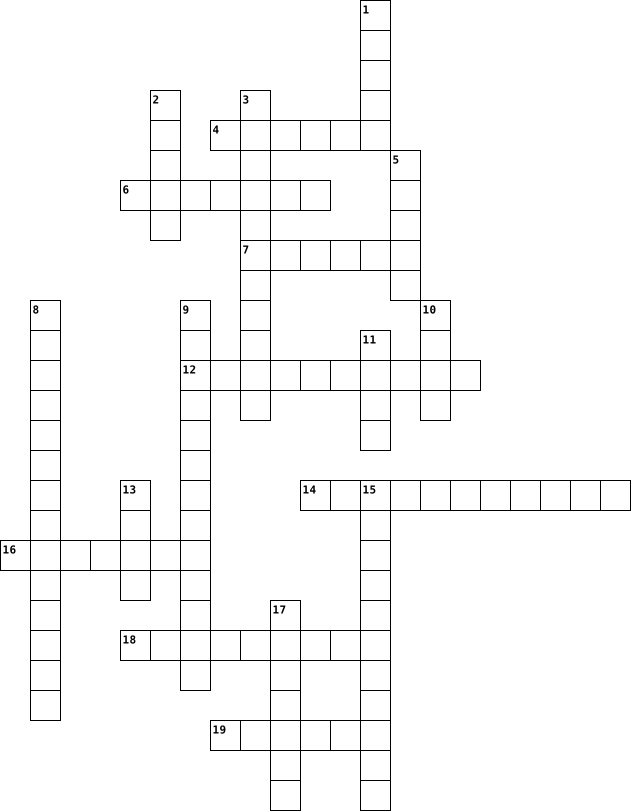
Across
- transports glucose down
- Shallow consist of many thin roots
- Type of gas plants give off
- water travels from roots to the top of trees
- produce seeds with fruits
- help with gas exchange
- increase root's surface area
- Reproduction
Down
- transports water and nutrients up
- Protects the seeds
- where photosynthesis occurs
- Multicellular eukaryotic autotroph that have cells walls made of cellulose
- how plants use sunlight to make their food
- loss of water vapor through leaves
- Anchors plant
- Provides support
- Photosynthesis occurs here
- seeds found in cones
- Central thick root
19 Clues: Reproduction • Anchors plant • Provides support • Protects the seeds • Central thick root • seeds found in cones • help with gas exchange • transports glucose down • produce seeds with fruits • Photosynthesis occurs here • where photosynthesis occurs • Type of gas plants give off • increase root's surface area • transports water and nutrients up • Shallow consist of many thin roots • ...
plants 2021-04-29

Across
- the thing that flower's need to reproduce
- a leaf that attracts pollinators
- a insect that pollenates
- a pollenator
- a type of flower
- the anther and the filament
- the place where pollen is catched
- a plants tube
- the thing that holds up the anther
Down
- the stigma the ovary and the style
- where pollen goes down in order to pollenate
- plant eggs
- the thing that holds the plant in place
- the leaf that protects the flowers organs
- the most popular flower
- bee a pollenator
- a pollenator
- what plants need to survive
- where eggs of plants are made
- the thing that holds the flower up
20 Clues: plant eggs • a pollenator • a pollenator • a plants tube • bee a pollenator • a type of flower • the most popular flower • a insect that pollenates • what plants need to survive • the anther and the filament • where eggs of plants are made • a leaf that attracts pollinators • the place where pollen is catched • the stigma the ovary and the style • the thing that holds the flower up • ...
Plants 2026-03-20

Across
- is a food storage structure at the end of a stem that grows underground
- an enlarged part of a stem that grows underground
- source: the plant or plant products are used by humans
- is an underground stem that grows horizontally
- an embryonic leaf which become the seed leaf; the fleshy structure within a seed that contains food for a developing embryo
- underground food-storage organ consisting of flattened, fleshy stem-like leaves with roots on the lower side
- above ground stem that grows horizontally and propagates new plants
- part of the plant that grows in the soil
- is the movement of water from great concentration in the soil to low concentration in the root.
- a tiny structure that forms the basic building blocks of plants
- is the spot on the stem where the leaf is attached)
Down
- group of organs that works together to perform a function
- is tissue, from as tubes, that conduct water up the stem and to the leaves.
- (Dicot) – are plant species producing seeds with two cotyledons
- are the fleshy structure within a seed that contains food for a developing embryo
- are the ovaries which develop to protect and nourish the developing seed
- a thick solution
- central axis that supports the leaves, connects them with the roots, and transports water and other materials between the leaves and roots.
- plants that complete their life cycle in one year (or one season)
- formed by groups of cells that are alike in activity and structure
- is the tissue that conducts sugars, proteins, hormones, dissolved materials, and salts from the leaves to other parts of the plant.
21 Clues: a thick solution • part of the plant that grows in the soil • is an underground stem that grows horizontally • an enlarged part of a stem that grows underground • is the spot on the stem where the leaf is attached) • source: the plant or plant products are used by humans • group of organs that works together to perform a function • ...
Plants 2013-11-15
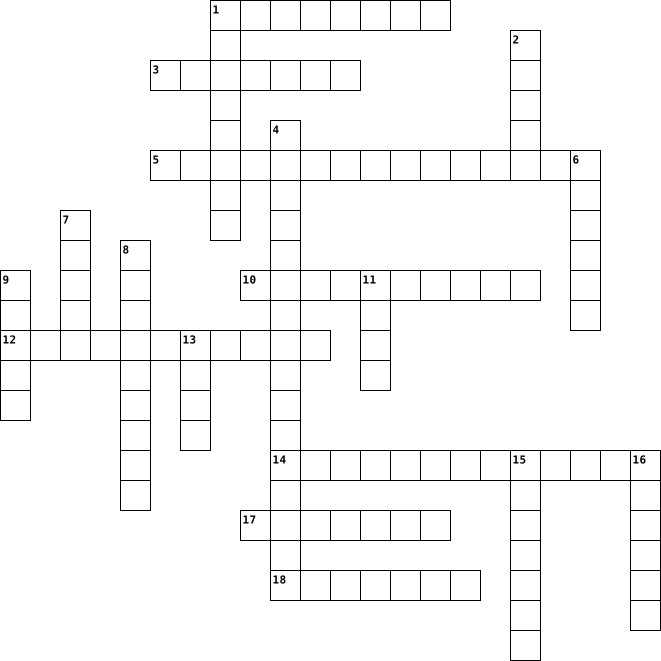
Across
- Transports water
- Non-seed leaves
- Height
- Loosely packed
- Irregularly shaped
- Dead at maturity
- attaches to the leaf
- The part of the plant that regulates gas and moisture
Down
- referring to the veins on the leaves
- Flat part of the leaf where photosynthesis occurs
- Width
- the male reproductive part
- the petal
- the distance between the nodes
- seed leaves
- where the leaf attaches to the stem
- woody part of the leaf
- waxy layer
- Attaches to the filament
19 Clues: Width • Height • the petal • waxy layer • seed leaves • Loosely packed • Non-seed leaves • Transports water • Dead at maturity • Irregularly shaped • attaches to the leaf • woody part of the leaf • Attaches to the filament • the male reproductive part • the distance between the nodes • where the leaf attaches to the stem • referring to the veins on the leaves • ...
Plants 2014-01-14
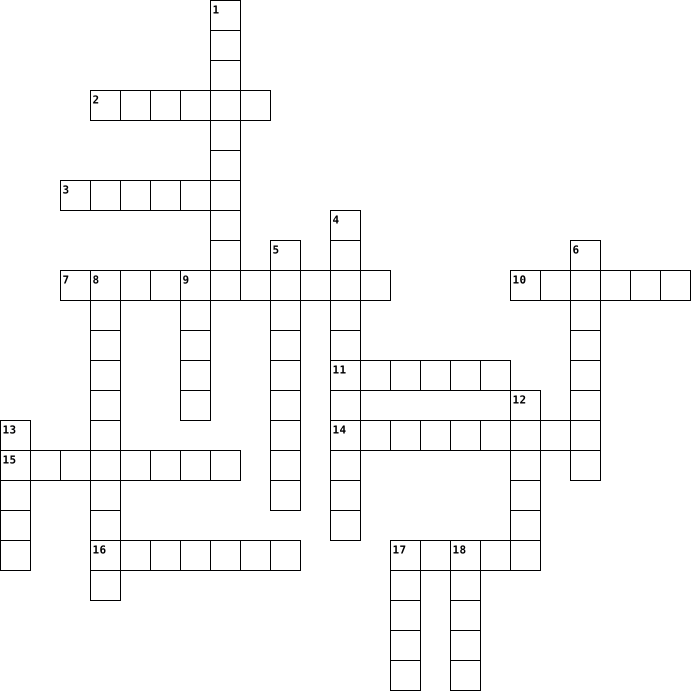
Across
- The female reproduction part of the flower
- Contains pollen sacs
- produces flowers that develop seeds inside the ovary
- Sticky substance that pollen will adhere too
- The male Reproduction part of the flower
- Trees that do not lose their leaves during winter
- Plants with veins or tubes that carry water and nutrients throughout the plants roots, stem, and leaves
- Reproduction that requires 1 parent
- Protects the flower during bud development
Down
- a plant that develop seeds on or in cones
- produces cones instead of lowers
- Trees that lose their leaves during winter
- The stalk of the anther
- lack veins or tubes that carry water and nutrients throughout the plants roots, stem, and leaves
- Protects the ovule
- Reproduction that requires 2 parents
- The egg of the flower
- Raises the stigma away from the ovary
- Used to attract insects to the flower
19 Clues: Protects the ovule • Contains pollen sacs • The egg of the flower • The stalk of the anther • produces cones instead of lowers • Reproduction that requires 1 parent • Reproduction that requires 2 parents • Raises the stigma away from the ovary • Used to attract insects to the flower • The male Reproduction part of the flower • a plant that develop seeds on or in cones • ...
Plants 2014-01-14
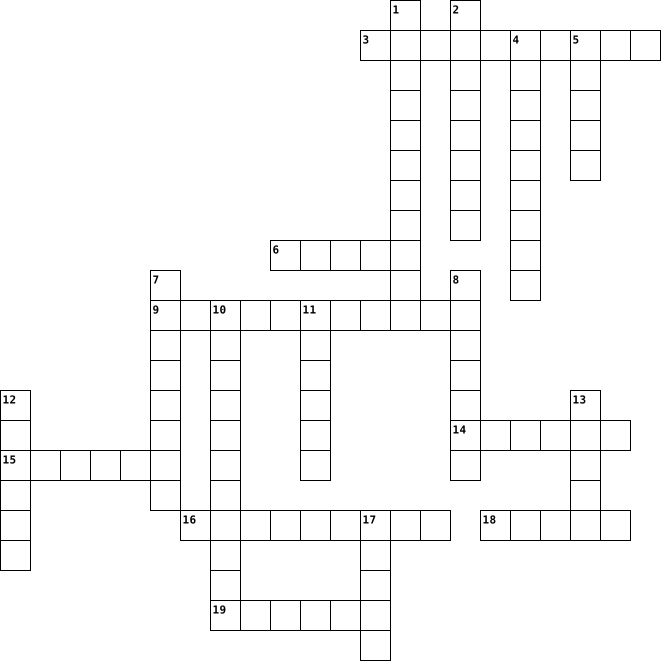
Across
- a plant that develop seeds on or in cones
- Used to attract insects to the flower
- produces flowers that develop seeds inside the ovary
- Contains pollen sacs
- Sticky substance that pollen will adhere too
- Trees that lose their leaves during winter
- Raises the stigma away from the ovary
- Reproduction that requires 2 parents
Down
- lack veins or tubes that carry water and nutrients throughout the plants roots, stem, and leaves
- The stalk of the anther
- Trees that do not lose their leaves during winter
- Protects the ovule
- Plants with veins or tubes that carry water and nutrients throughout the plants roots, stem, and leaves
- Reproduction that requires 1 parent
- produces cones instead of lowers
- The male Reproduction part of the flower
- The female reproduction part of the flower
- Protects the flower during bud development
- The egg of the flower
19 Clues: Protects the ovule • Contains pollen sacs • The egg of the flower • The stalk of the anther • produces cones instead of lowers • Reproduction that requires 1 parent • Reproduction that requires 2 parents • Used to attract insects to the flower • Raises the stigma away from the ovary • The male Reproduction part of the flower • a plant that develop seeds on or in cones • ...