
nutrition in plants Crossword Puzzles
Plants 2026-03-20

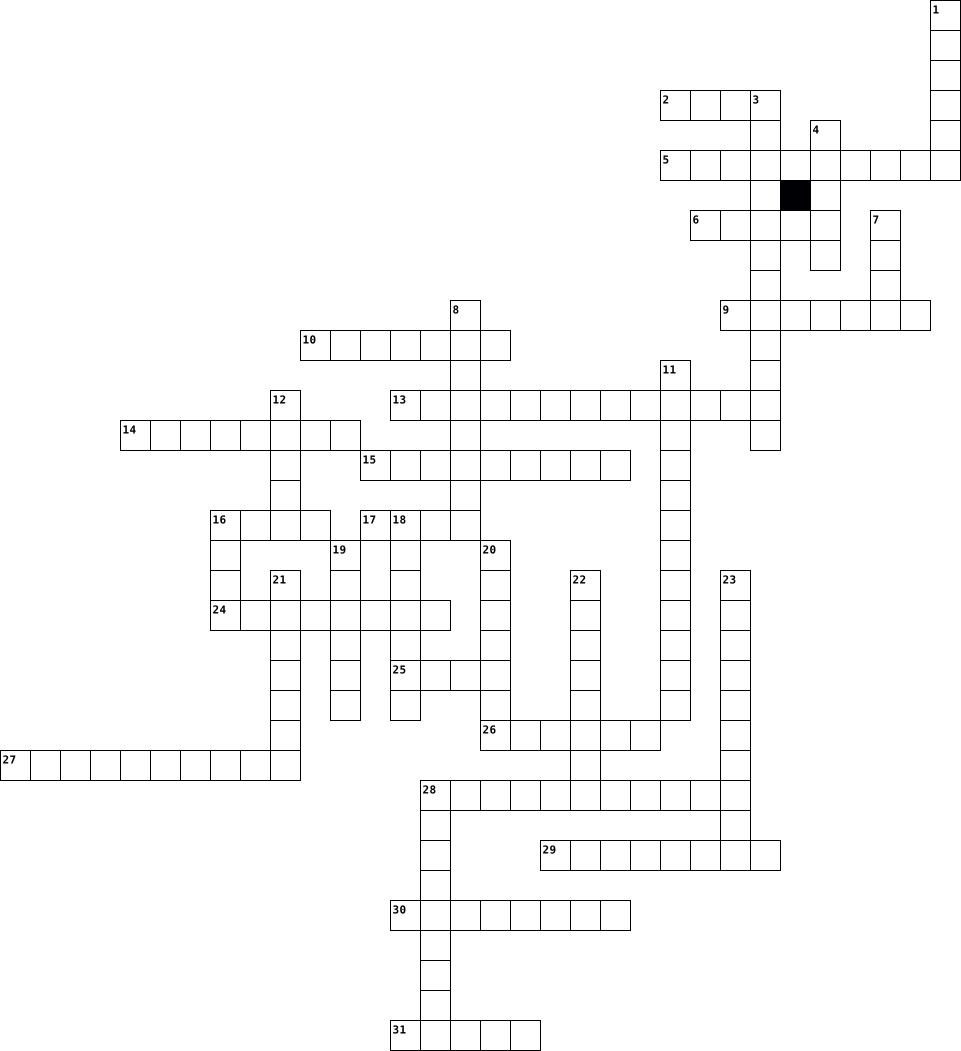
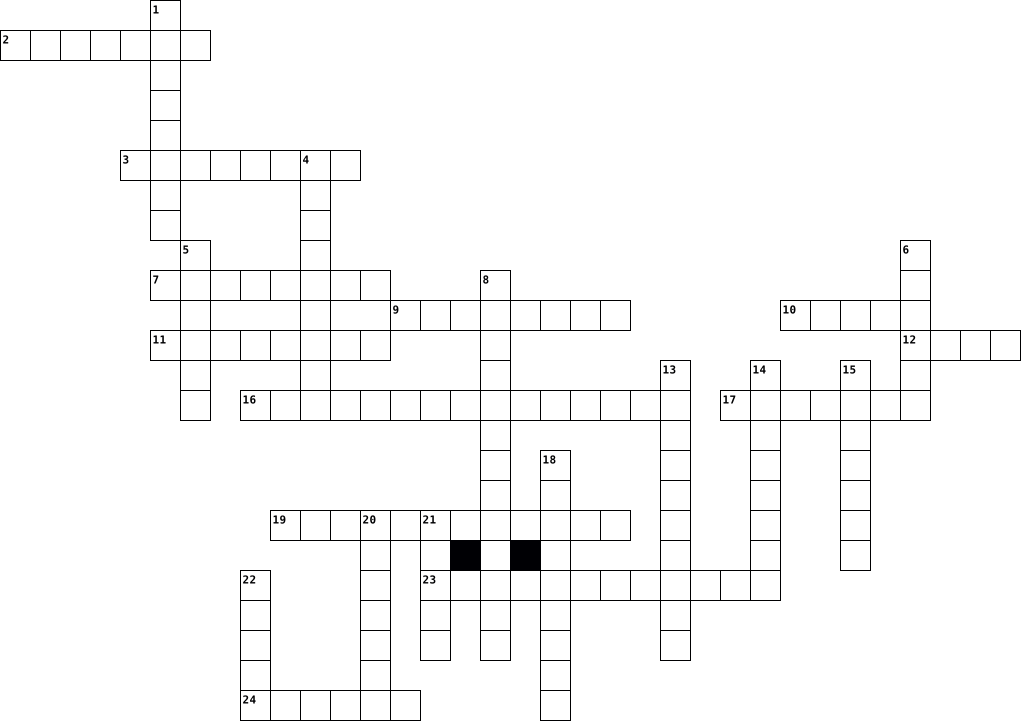
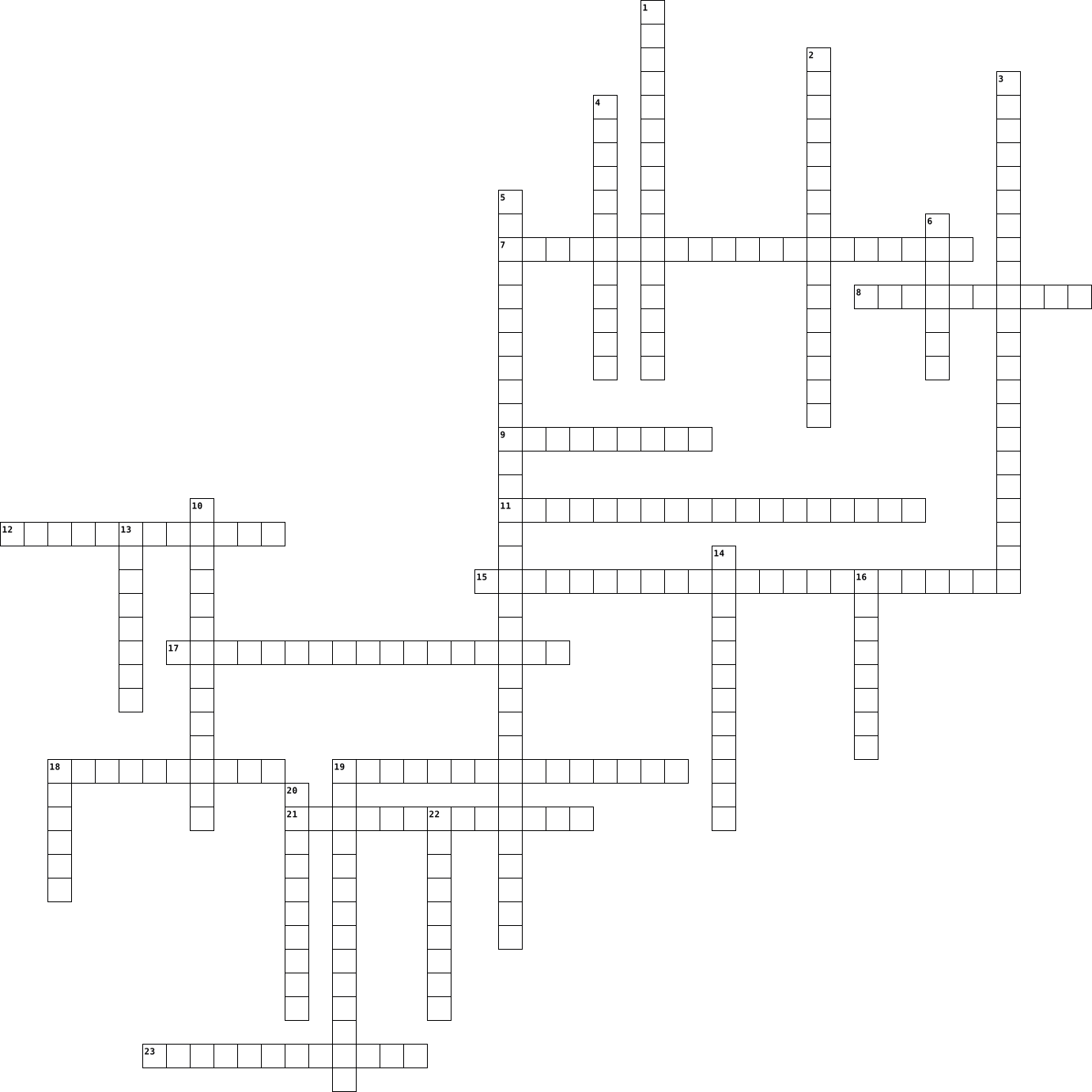
Across
- is the tissue that conducts sugars, proteins, hormones, dissolved materials, and salts from the leaves to other parts of the plant.
- a thick solution
- is the spot on the stem where the leaf is attached)
- is an underground stem that grows horizontally
- plants that complete their life cycle in two growing seasons
- an enlarged part of a stem that grows underground
- are the fleshy structure within a seed that contains food for a developing embryo
- are the ovaries which develop to protect and nourish the developing seed
- underground food-storage organ consisting of flattened, fleshy stem-like leaves with roots on the lower side
- (Dicot) – are plant species producing seeds with two cotyledons
- above ground stem that grows horizontally and propagates new plants
Down
- part of the plant that grows in the soil
- an embryonic leaf which become the seed leaf; the fleshy structure within a seed that contains food for a developing embryo
- is tissue, from as tubes, that conduct water up the stem and to the leaves.
- is the movement of water from great concentration in the soil to low concentration in the root.
- is a food storage structure at the end of a stem that grows underground
- formed by groups of cells that are alike in activity and structure
- a tiny structure that forms the basic building blocks of plants
- central axis that supports the leaves, connects them with the roots, and transports water and other materials between the leaves and roots.
- source: the plant or plant products are used by humans
- group of organs that works together to perform a function
- plants that complete their life cycle in one year (or one season)
22 Clues: a thick solution • part of the plant that grows in the soil • is an underground stem that grows horizontally • an enlarged part of a stem that grows underground • is the spot on the stem where the leaf is attached) • source: the plant or plant products are used by humans • group of organs that works together to perform a function • ...
Plants 2025-03-12

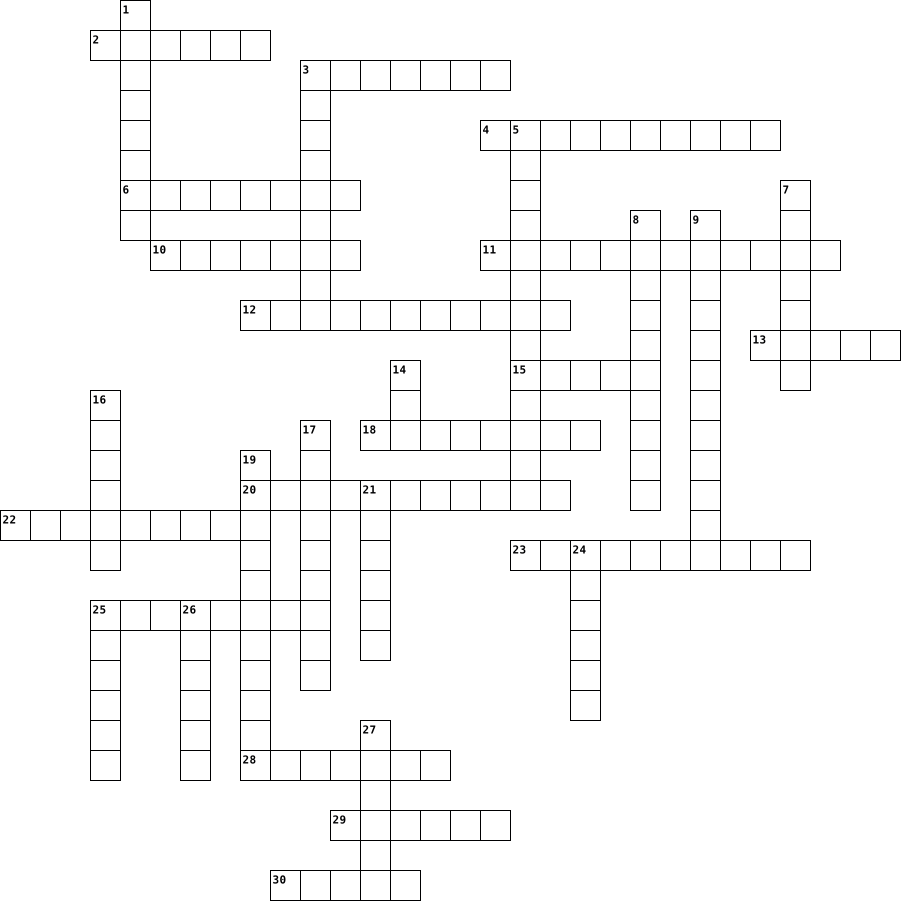
Across
- The male reproductive part of a flower
- The seed absorbs water and the root breaks out of the seed coat
- The process of making sugar with oxygen, water, and sunlight
- A kingdom of organisms that are autotrophs, eukaryotic, and have cell walls
- Plants that live in moist areas. ex. Hornwort
- A type of plant that transports material from cell to cell without vessels
- A structure of a plant that helps the plant remain upwards un land
- The process of bringing water and sugar upwards in a plant against the direction of gravity.
- Anchors the plant and absorbs water
- A type of plant with no protective fruit or pedal. Ex. Pinecone
- Water things to other things
- The female reproductive part of a flower
- Contains a young plant inside a seed coat
Down
- Not Brick Bentley but...
- A type of plant that transports materials through vessels
- A part of a flower that protects the stamen and pistil
- A characteristic of a plant. Has a nucleus
- A tiny cell that can grow into a new organisms
- An organism that makes its own food
- A cell organelle in plants that helps it remain sturdy
- Contains structures that will later turn into sperm cells
- A plants growth response toward or away from a stimulus
- speeds up growth on one side of the plant, making the stem curve
- Water sticks to water
- A type of plant with a protective fruit or pedal
25 Clues: Water sticks to water • Not Brick Bentley but... • Water things to other things • An organism that makes its own food • Anchors the plant and absorbs water • The male reproductive part of a flower • The female reproductive part of a flower • Contains a young plant inside a seed coat • A characteristic of a plant. Has a nucleus • Plants that live in moist areas. ex. Hornwort • ...
Plants 2025-04-26

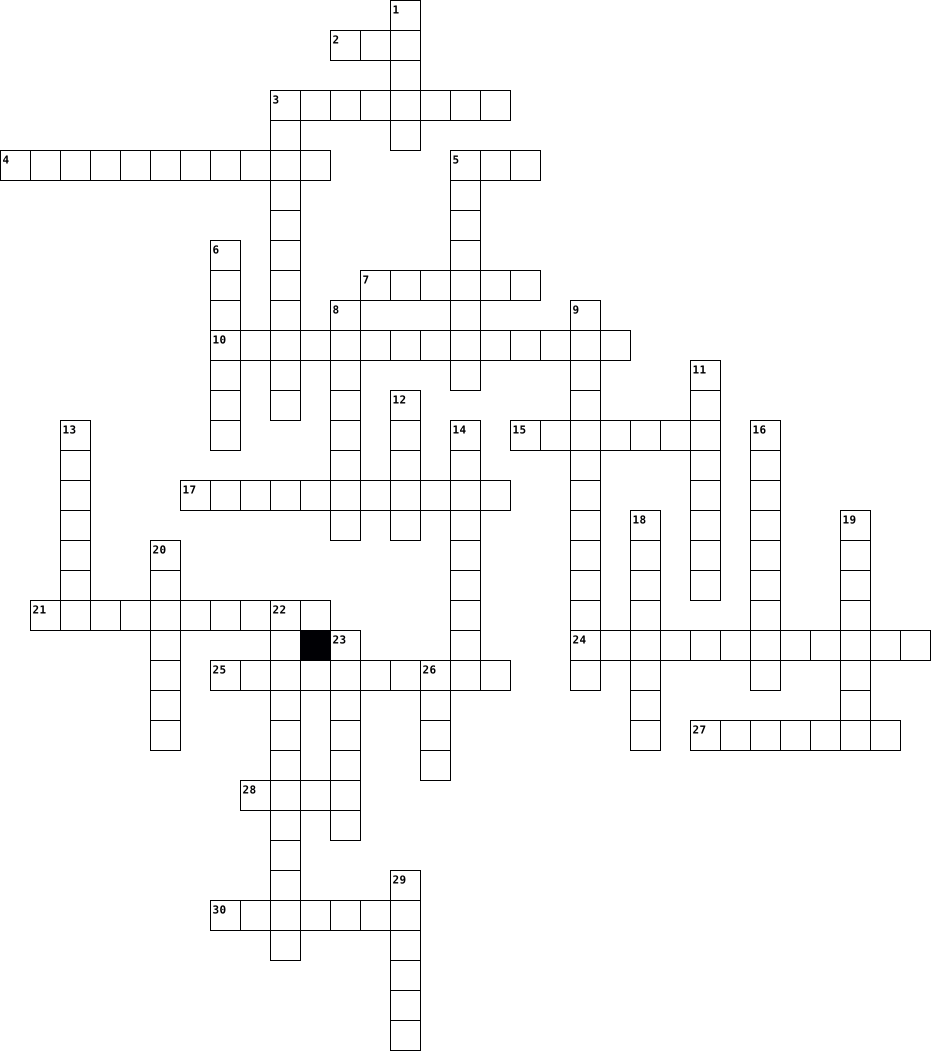
Across
- sacred Japanese plant
- used in woodwind instruments
- symbol of love
- there's a partridge in a what tree
- Jamaican fruit
- largest tree
- insectivourus (5,7)
- aforementioned decor plant but it can kill other live beings (6,3)
- _furniture land
- salad leaves
- grew after war
Down
- colour with fruit named after it
- seaside tree
- largest carnivorous plant (8,7,5)
- the field plant
- tree with a name of a street in a horror movie named after it
- Commonly used to decorate walls
- kiss under the _
- Scotland
- thorny Christmasy
20 Clues: Scotland • seaside tree • largest tree • salad leaves • symbol of love • Jamaican fruit • grew after war • the field plant • _furniture land • kiss under the _ • thorny Christmasy • insectivourus (5,7) • sacred Japanese plant • used in woodwind instruments • Commonly used to decorate walls • colour with fruit named after it • largest carnivorous plant (8,7,5) • there's a partridge in a what tree • ...
plants 2025-05-06

Across
- – Powdery substance used for plant reproduction
- – Flower part that contains the ovules
- – Part of the pistil that receives pollen
- – First leaf or first pair of leaves in a seedling
- – Part of a stamen that contains pollen
- – Tissue that transports water in plants
- – Plant species with male and female flowers on separate individuals
- – A plant with one seed leaf
- – Male reproductive part of a flower
- – Connects the stigma to the ovary
- – Colorful part of a flower used to attract pollinators
Down
- – To begin to grow from a seed
- – Process plants use to convert sunlight into energy
- – Supports the anther in a flower
- – A plant with two seed leaves
- – Plant embryo with a food supply and protective coat
- – Supports plant and transports nutrients
- – Structure that develops into a seed after fertilization
- – Anchors the plant and absorbs water and nutrients
- – Study of plants
- – Tissue that transports food in plants
- – Protects a flower bud before it opens
22 Clues: – Study of plants • – A plant with one seed leaf • – To begin to grow from a seed • – A plant with two seed leaves • – Supports the anther in a flower • – Connects the stigma to the ovary • – Male reproductive part of a flower • – Flower part that contains the ovules • – Part of a stamen that contains pollen • – Tissue that transports food in plants • ...
Plants 2025-05-21

Across
- I am mostly attracted to the color red.
- I am what pollinators are after in flowers. I am like sugar water.
- I am water that falls from the sky in any form.
- I am the #2 crop grown in Iowa.
- I am the #2 producer of corn in the United States.
- I am a general term for something that contains nutrients for plants.
- I am an aspect of sunlight that measures, 'How good?'
- I am the #1 crop grown in Iowa.
Down
- I am the process where plants make their own food.
- I am probably the most well-known pollinator.
- I am an aspect of sunlight that measures, 'How long?'
- Most plants grow well during warm days & slightly cool nights.
- I am the female reproductive organ on a flower.
- I am the #1 producer of corn in the United States.
- I am an important nutrient in fertilizer. I primarily help leaves grow.
- I am produced by the male part of a plant and contain sperm cells. Some people are allergic to me.
- I am the male reproductive organ on a flower.
- Plants typically grow better during seasons when I am direct, not indirect.
- I am ground. I usually hold nutrients and water for plants until they can take them.
- I am an aspect of sunlight that measures, 'How much?'
20 Clues: I am the #2 crop grown in Iowa. • I am the #1 crop grown in Iowa. • I am mostly attracted to the color red. • I am probably the most well-known pollinator. • I am the male reproductive organ on a flower. • I am the female reproductive organ on a flower. • I am water that falls from the sky in any form. • I am the process where plants make their own food. • ...
Plants 2025-05-15

Across
- colour changing flower, depending on pH (9)
- common furniture material (3)
- sleeper agent (8)
- summer's yellow field (8)
- red petals seen often at Christmas (10)
- panda's breakfast, lunch and dinner (6)
- made into a chain (5)
- holly's toxic partner
- got a bit of a sting (6)
- many petaled solar (9)
- spring's yellow field (8)
- Scotland's flower (7)
Down
- used to soothe sunburn (4,4)
- where conkers come from (5,8)
- tree with 'helicopter' seeds (8)
- weed that's on the clock (9)
- given to a loved one (4)
- ____wood studios (4)
- a frog's pad (4)
- one with syrupy sap (5)
20 Clues: a frog's pad (4) • sleeper agent (8) • ____wood studios (4) • made into a chain (5) • holly's toxic partner • Scotland's flower (7) • many petaled solar (9) • one with syrupy sap (5) • given to a loved one (4) • got a bit of a sting (6) • summer's yellow field (8) • spring's yellow field (8) • used to soothe sunburn (4,4) • weed that's on the clock (9) • where conkers come from (5,8) • ...
Plants 2025-09-03

Across
- Tiny purple bloom, shy and sweet
- Climbing vine with clinging ambition
- Spring bulb with vibrant petals
- Evergreen needle-bearer, forest sentinel
- Tree of syrup and autumn flame
- Simple bloom with cheerful petals
- Mighty tree of acorns and endurance
- Shade-loving frond, prehistoric in form
- Tall golden bloom that follows the light
- Dark evergreen, ancient and symbolic
Down
- Purple bloom with calming scent
- Bright garden flower, hardy and bold
- Tropical tree with fronds like fans
- Soft green carpet, thriving in damp shade
- Fast-growing stalk, flexible and strong
- Succulent healer with soothing gel
- Desert dweller with spiny armor
- Thorned bloom of love and fragrance
- Elegant flower, often white and fragrant
- Graceful tree with drooping branches
20 Clues: Tree of syrup and autumn flame • Purple bloom with calming scent • Spring bulb with vibrant petals • Desert dweller with spiny armor • Tiny purple bloom, shy and sweet • Simple bloom with cheerful petals • Succulent healer with soothing gel • Tropical tree with fronds like fans • Mighty tree of acorns and endurance • Thorned bloom of love and fragrance • ...
plants 2026-07-16

Across
- 브로콜리
- 꽃
- 씨앗
- 딱정벌레
- 옥수수
- 호박
- 딸기
- 나비
- 수박
- 양파
Down
- 메뚜기
- 잎
- 벌
- 개미
- 무당벌레
- 과일
- 고추
- 당근
- 키위
- 지렁이
- 거미
- 귤
22 Clues: 잎 • 벌 • 꽃 • 귤 • 개미 • 씨앗 • 과일 • 고추 • 당근 • 키위 • 호박 • 딸기 • 거미 • 나비 • 수박 • 양파 • 메뚜기 • 옥수수 • 지렁이 • 브로콜리 • 딱정벌레 • 무당벌레
Nutrition 2021-02-19
Across
- to cook by steam heat only
- to moisten meat of other foods with liquid while cooking to add flavor and to prevent drying of the surface
- to cook with the dry heat of the oven
- to turn food's surface brown through applied heat through boiling, frying, or baking
- to cook over an open flame or charcoal
- to cook in a Wok, foods are cut into small pieces and cooked quickly
- to combine two or more ingredients
- in to incorporate a solid fat into dry ingredients
- to cover food with another ingredient such as flour or bread crumbs
- to cut into matchstick sized pieces
- to force a dry ingredient through a fine sieve
- to coat food with a dry ingredient such as flour
- to make very straight cuts in the surface of food usually parallel lines
- to bring to refrigerator temp.
- to mix two or more ingredients until thoroughly combined
- to cook under and open flame
- to dip into boiling water for a short time
- to simmer and evaporate moisture
- to let stand in a specific mixture for a specified amount of time for flavor and/or tenderizing
- to heat a liquid just to the simmering point
- to cut food into very small pieces
- to cook in a small amount of fat on high heat
- cooking with water, but never allowed to boil, covered
- to pull off the rind or outer covering of an orange, banana, pomegranate, etc.
- to force a food through a fine strainer to make a pulp
Down
- to cook on a low heat where liquid just bubbles below the surface
- to cook in high temperature water
- to beat rapidly to incorporate air to increase
- to decorate the edge of a food such as a pastry
- to shape a food
- to place small pieces of an ingredient over surface
- to manipulate dough with the hands
- to combine two ingredients or mixtures by gently cutting down through a mixture around the bottom back up to surface and across the top in a down motion that does not leave the mixture until it is well blended
- to cook with the dry heat of the oven, not a term used for meats
- to rub a surface with fat or oil
- to brown a meat surface quickly using high heat
- to cut food into small squares-usually about 1/2 in. cubes
- to let heated food stand at room temps. until it reaches room temperature
- to cook meat or poultry slowly in a covered utensil with some liquid
- to make a mixture smooth or to incorporate air into a mixture using a circular motion
- to add another touch of food for decorating with color, texture, or contrast
- to remove the central portion of seed from fruits or vegetables
- to work one or more foods until soft and smooth with a spoon rubbing against the side of the bowl
- to convert a solid to a liquid with heat
- to cut into small cubes-smaller than those for instructions "to cube"
- to separate a liquid from a food
- to coat with a thin syrup
- to cut food into small uniform pieces
- to cut off the thinnest possible layer of peel
49 Clues: to shape a food • to coat with a thin syrup • to cook by steam heat only • to cook under and open flame • to bring to refrigerator temp. • to rub a surface with fat or oil • to simmer and evaporate moisture • to separate a liquid from a food • to cook in high temperature water • to combine two or more ingredients • to manipulate dough with the hands • ...
Nutrition 2020-05-04
Across
- important to wound healing and your sense of taste and smell.
- Thirst, headache, dry lips and mouth, dizziness and fainting
- Builds bones and keeps them strong and healthy.
- 45-65% of daily energy
- consuming vitamin C will increase the absorption by 300%
- helps our body absorb calcium
- They are broken down into glucose, which is the body's main fuel, especially for our brain and muscles.
- needed in large amounts to provide energy and maintain health
- increases blood pressure because it holds excess fluid in the body, and that creates an added burden on the heart.
- swollen belly filled with liquid collected below the skin, discoloured hair, slow growth, muscle wasting, diarrhea.
Down
- They are materials found in foods that are essential for growth and health and do not contain the element carbon.
- important for our digestive health and regular bowel movements.
- essential elements required by organisms
- Boost the immune system, and reduce blood acid.
- Helps regulate muscle and nerve function
- essential for survival
- 10-30% of daily energy
- controls your heartbeat and breathing
- group of compounds
- 25-35% of daily average
20 Clues: group of compounds • essential for survival • 10-30% of daily energy • 45-65% of daily energy • 25-35% of daily average • helps our body absorb calcium • controls your heartbeat and breathing • essential elements required by organisms • Helps regulate muscle and nerve function • Boost the immune system, and reduce blood acid. • Builds bones and keeps them strong and healthy. • ...
Nutrition 2021-05-05
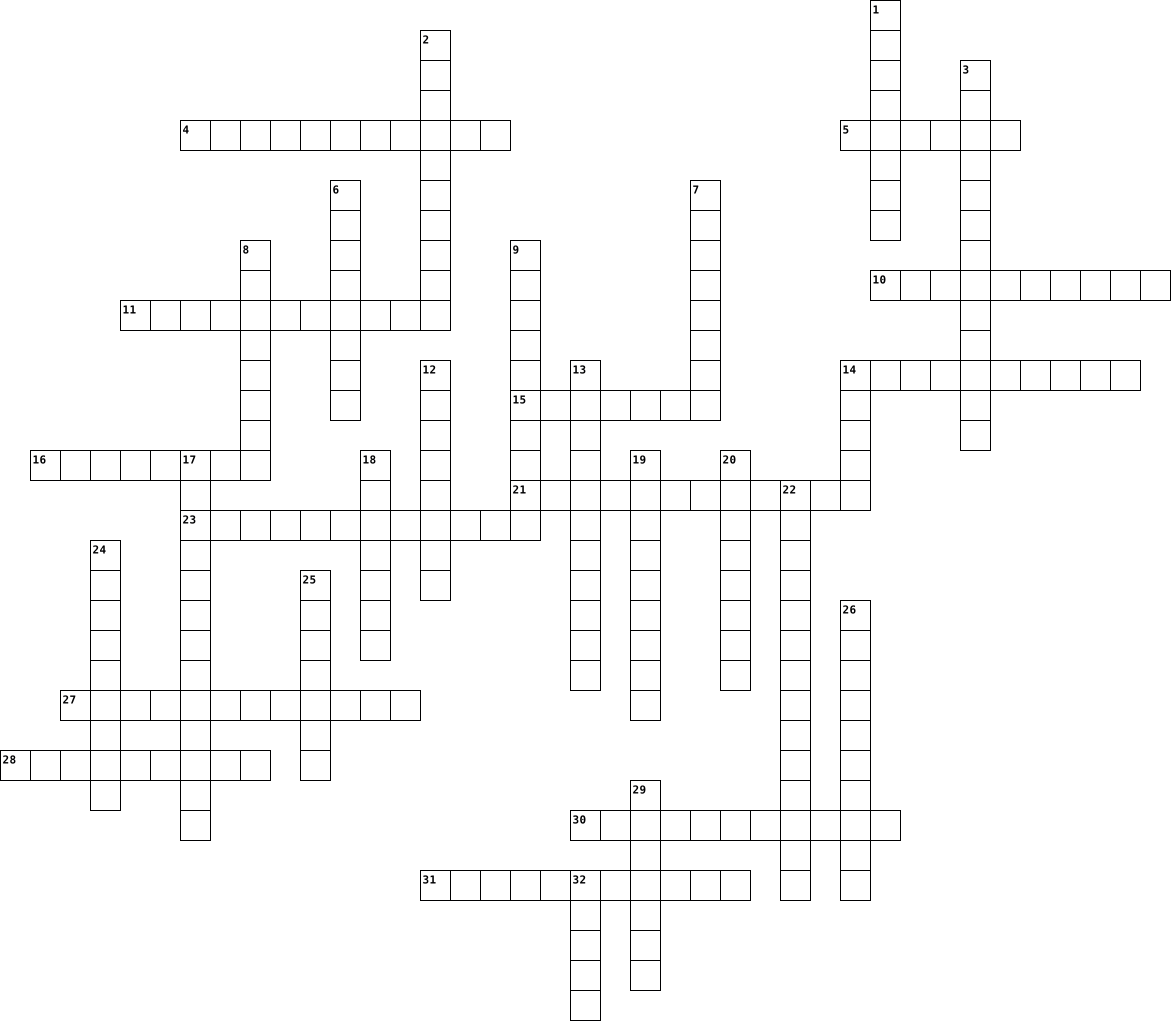
Across
- what we call food with only one ingredient
- a white additive we sprinkle on food for taste
- the topic of this crossword puzzle
- a nutrient that helps build muscle
- the feeling when you need to drink something
- the type of grain that is not as healthy
- this food is high in vitamin C
Down
- a type of fat often found in processed meats
- an important type of food to eat every day
- contains a lot of vitamin A
- a common protein source that is not meat
- a fun food that comes in a bag
- the feeling when you need to eat something
- the colour of vegetables with lots of vitamins
- we drink this throughout the day to stay hydrated
- a food group
- the number of sections on the food guide plate
- we can get vitamin D from this source
- a carbohydrate that we do not digest
- an important ingredient used to make smoothies
20 Clues: a food group • contains a lot of vitamin A • a fun food that comes in a bag • this food is high in vitamin C • the topic of this crossword puzzle • a nutrient that helps build muscle • a carbohydrate that we do not digest • we can get vitamin D from this source • a common protein source that is not meat • the type of grain that is not as healthy • ...
Nutrition 2020-06-25
Across
- when blood sugar drops too low without enough carbs
- Vitamin A, an antioxidant
- example of a disaccharide
- example of a poly saccharide
- Measure of heat units
- provides energy to cells
- Chains of Amino acids, building blocks
- Biological catalysts made of protein and vitamins
- 3 or more sugar unit molecules
- aka lipids, used as energy
- Most basic unit of a carb, 1 unit sugar molecule
- example of a disaccharide, milk sugar
- Essential trace vitamins and minerals
- Amino Acids that can be synthesized internally
Down
- The 3 basic food groups
- Waxy substance found in your body
- a water binding substance between dermis fibers
- Example of a monosaccharide
- Break down sugars that supply energy
- Carbohydrate lipid complexes, water binders
- -3 fatty acid, found in cold water fish
- Vitamin E
- 2 unit sugar molecules
- Omega 6 acid
- Foods that are combos of 2 incomplete proteins
- Means a vitamin has been added to a food product
26 Clues: Vitamin E • Omega 6 acid • Measure of heat units • 2 unit sugar molecules • The 3 basic food groups • provides energy to cells • Vitamin A, an antioxidant • example of a disaccharide • aka lipids, used as energy • Example of a monosaccharide • example of a poly saccharide • 3 or more sugar unit molecules • Waxy substance found in your body • Break down sugars that supply energy • ...
Nutrition 2020-11-10
Across
- Density A measure of the strength of a bone by determining the amount of minerals (e.g. calcium) in relation to the amount of bone.
- A person who does not eat meat or fish, and sometimes other animal products, especially for moral, religious or health reasons.
- A colorless, transparent, odorless liquid that forms the seas, lakes, rivers, and rain and is the basis of the fluids of living organisms.
- A simple sugar which is an important energy source in living organisms and is a component of many carbohydrates.
- Required for the structure, function, and regulation of the body's cells, tissues, and organs.
- Another word for "calories." Your ... is the balance of calories consumed through eating and drinking compared to calories burned through physical activity..
- A measurement of energy. One ... is equivalent to 4.18 kJ.
- The main extracellular ion for all types of cells.
- Source of energy that comes from food to power the human body.
- A natural oily substance occurring in animal bodies especially when deposited as a layer under the skin or around certain organs.
- A disease in which the body’s ability to produce or respond to the hormone insulin is impaired, resulting in abnormal metabolism of carbohydrates and elevated levels of glucose in the blood.
- A microorganism, especially one which causes disease.
- The major positive ion (cation) in the fluid surrounding cells in the body.
- The chemical processes that occur within a living organism in order to maintain life.
- A sterol which is made by the body and is found naturally in animal products such as meat, eggs, poultry and dairy foods.
- A sugar of the hexose class found especially in honey and fruit.
- The process of providing or obtaining the food necessary for health and growth.
- A person who does not eat any food derived from animals and who typically does not use other animal products.
Down
- A mixture of two proteins present in cereal grains especially wheat, which is responsible for the elastic texture of dough.
- A substance that produces an electrically conducting solution when dissolved in a polar solvent, such as water.
- A building or room for the processing, storage, and distribution of milk and milk products.
- Dry hard fruits that does not split open at maturity to release its single seed.
- A chemical element required as an essential nutrient by organisms to perform functions necessary for life.
- One of the three main classes of foods and a source of energy, mainly sugar and starch.
- A plant-based nutrient that is sometimes called roughage or bulk. It is a type of carbohydrate but, unlike other carbs, it cannot be broken down into digestible sugar molecules.
- Any nutritious substance that people or animals eat or drink or that plants absorb in order to maintain life and growth.
- A damaging immune response by the body to a substance, especially a particular food, pollen, fur, or dust to which it has become hypersensitive.
- a property of objects which can be transferred to other objects or converted into different forms, but cannot be created or destroyed.
- a substance produced by a living organism which acts as a catalyst to bring about a specific biochemical reaction.
- responsible for strong bones and teeth. Can be found in dairy products, fortified soy drinks, green leafy vegetables, nuts and seeds.
- Molecules that are needed in small amounts by the body for health and growth, and they must be obtained by the diet daily.
- A plant or part of a plant used as food, such as a cabbage potato, turnip, or bean.
- A insoluble fiber that makes up the framework of plant cell walls.
33 Clues: The main extracellular ion for all types of cells. • A microorganism, especially one which causes disease. • A measurement of energy. One ... is equivalent to 4.18 kJ. • Source of energy that comes from food to power the human body. • A sugar of the hexose class found especially in honey and fruit. • ...
Nutrition 2020-11-10
Across
- a measure of a person's body size by calculating their weight in relation to their height
- measurement of energy
- the lose or removal of water from your body
- highly concentrated source of energy from your body
- a product found in wheat, rye and barley
- relating to heart and blood muscles
- Important for cell growth. Can be found in eggs, baked beans, meat and fish.
- added to the body to increase an amount of something
- A group of individuals that do not eat specific products
- Electrolytes are minerals which are needed to keep the body's balance of fluids at a healthy level
- The chemical process in our body that turns what we eat into energy
- Sugar found in milk
- the type of foods that a person eats
- organic compounds that act as regulators in the body's processes
Down
- prevents constipation, cancer and heart disease. Found in pasta, cereals, legumes and rice.
- a sterol made by the body. Can be found in meat, eggs, poultry and dairy foods
- sugar found in fruit and honey
- needed from strong bones and teeth
- disease which prevents the body from controlling the amount of sugar in the blood
- contain hydrogen and oxygen and are typically broken down to release energy in the animal body.
- Important for formation of bones, teeth, blood and connective tissue
- Needed to survive. Makes up 50-70% of our body
- broken down form our body uses for energy
- substances obtained from food that help us grow
- a person's capacity to break down food
- stimulant found in coffee, tea, some chocolate and energy drinks
- characteristics inhibited from our parents
- process of working out to remain healthy
- assist in protecting your body against the damage caused by free radicals
- Being overweight. Could be from genetics
- Creates healthy blood and carries oxygen around the body
- fuel we need from food to function and be active
32 Clues: Sugar found in milk • measurement of energy • sugar found in fruit and honey • needed from strong bones and teeth • relating to heart and blood muscles • the type of foods that a person eats • a person's capacity to break down food • a product found in wheat, rye and barley • process of working out to remain healthy • Being overweight. Could be from genetics • ...
Nutrition 2020-11-20
Across
- measurement of energy
- indigestible parts of plant foods, such as vegetables, fruits, grains, beans and legumes
- an insoluble substance which is the main material of plant cell walls.
- person who does not eat meat, and sometimes other animal products
- a branch of knowledge concerned with the diet and its effects on health.
- the fuel needed from food in order to function and participate in the activity.
- a nutrient needed by the human body for growth and maintenance.
- action or fact of maintaining or supporting oneself, especially at a minimal level.
- excessive loss of fluid from the body.
- food or other substances necessary for growth, health, and good condition.
- elements on the earth and in foods that our bodies need to develop and function normally.
- is a sterol that is made by the body and is found in animal products such as meat, eggs and dairy products.
- severe deficiency in energy in taking caused by lack of food.
Down
- complex disease in which the body has an excessive amount of fat.
- the process of breaking down food into substances that can be used by the body.
- minerals in body fluids - includes sodium, potassium, magnesium, and chloride
- found in dairy products – needed for strong bones and teeth.
- simple sugar derived from the breakdown of carbohydrates.
- condition of being fit and healthy
- substances obtained from food that are required for metabolism or physiological processes.
- hormone produced in the pancreas in response to high blood sugar.
- the organic process in a cell or organism that transforms food into energy.
- a special course of food to which a person restricts themselves - either to lose weight or for medical reasons.
- food that is difficult or impossible to digest
- a person’s mental or physical condition
- substances that our bodies need to develop and function normally.
- in a good physical or mental condition
- a group of organic compounds occurring in foods and living tissues and including sugars, starch, and cellulose.
- sugar found naturally in fruits or honey
- a protein found in wheat.
- the study of nutrients in food, how the body uses them, and the relationship between diet, health, and disease.
- an electrolyte that regulates blood pressure, water balance in cells and aids in muscle contraction.
- acids, acids that are the basic building block of protein.
33 Clues: measurement of energy • a protein found in wheat. • condition of being fit and healthy • in a good physical or mental condition • excessive loss of fluid from the body. • a person’s mental or physical condition • sugar found naturally in fruits or honey • food that is difficult or impossible to digest • simple sugar derived from the breakdown of carbohydrates. • ...
Nutrition 2020-11-06
Across
- substances added to a food to produce a desired effect
- a unit of heat used to measure the energy your body uses and the energy it receives from food
- starches and sugars found in food
- nutrient the body uses to build and maintain its cells and tissues
- assist in the regulation of many body processes and are classified as major or trace
- small chemicals (usually proteins) that act on other chemicals to speed up body processes, but are not apparently changed during those processes
- provides enough of the energy, nutrients, and fiber to maintain a person's health
- a tough complex carbohydrate that the body cannot digest
- a waxy, fat-like substance found in your blood
- the process by which foods are broken down into their component molecules, either mechanically or chemically
Down
- the process by which your body takes in and uses food; the science that studies food and how food nourishes our body and influences our health
- a high ratio of nutrients to calories
- a condition in which the body's immune system reacts to substances in some foods
- the extra amount of energy you can consume after you've met all of your essential needs by eating nutrient-dense foods
- compounds found in food that help regulate many body processes
- the psychological desire for food
- a negative reaction to food that doesn't involve the immune system
- substances in food that your body needs to grow, to repair itself, and to supply you with energy
- contains the combinations of foods that provide the proper proportions of nutrients
- provides the proper combination of energy and nutrients
- the natural physical drive to eat, prompted by the body's need for food
- an important energy source for our body at rest and during low-intensity exercise
22 Clues: the psychological desire for food • starches and sugars found in food • a high ratio of nutrients to calories • a waxy, fat-like substance found in your blood • substances added to a food to produce a desired effect • provides the proper combination of energy and nutrients • a tough complex carbohydrate that the body cannot digest • ...
Nutrition 2020-11-06
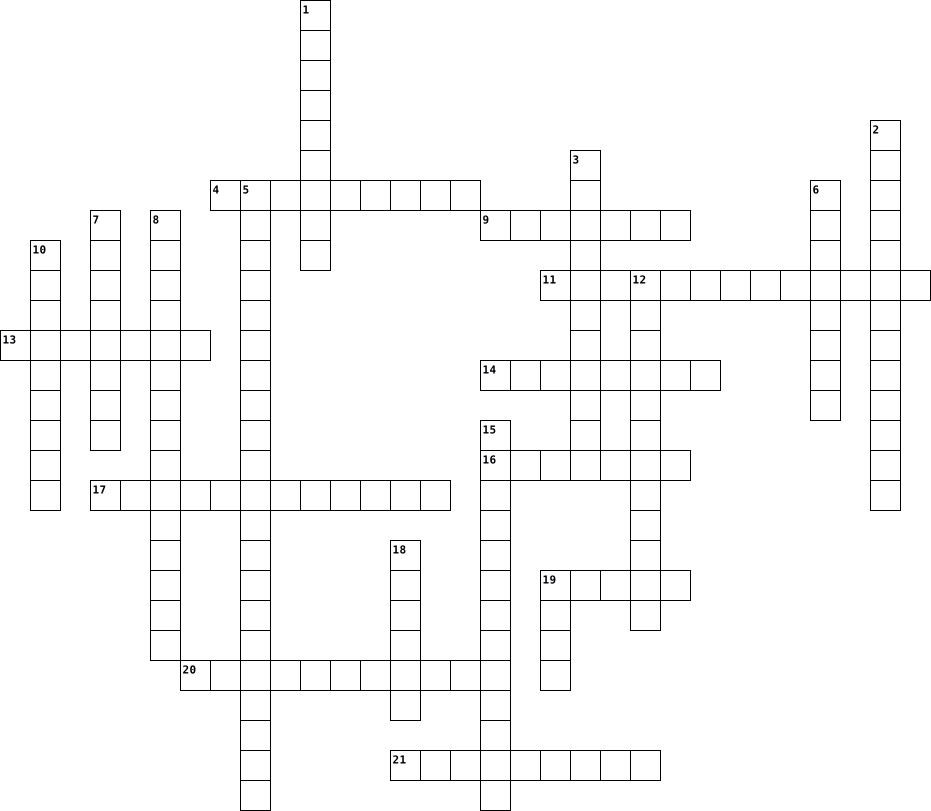
Across
- a unit of heat used to measure the energy your body uses and the energy it receives from food
- an important energy source for our body at rest and during low-intensity exercise
- the process by which foods are broken down into their component molecules, either mechanically or chemically
- the process by which your body takes in and uses food; the science that studies food and how food nourishes our body and influences our health
- starches and sugars found in foods
- provides enough of the energy, nutrients, and fiber to maintain a person's health
- contains the combinations of foods that provide the proper proportions of nutrients
- a condition in which the body's immune system reacts to substances in some foods
- the psychological desire for food
- the natural physical drive to eat, prompted by the body's need for food
- assist in the regulation of many body processes and are classified as major or trace
Down
- compounds found in food that help regulate many body processes
- substances in food that your body needs to grow, to repair itself, and to supply you with energy
- nutrient the body uses to build and maintain its cells and tissues
- provides enough of the energy, nutrients, and fiber to maintain a person's health
- a high ratio of nutrients to calories
- a waxy, fat-like substance found in your blood
- the extra amount of energy you can consume after you've met all of your essential needs by eating nutrient-dense foods
- small chemicals (usually proteins) that act on other chemicals to speed up body processes, but are not apparently changed during these processes
- a negative reaction to food that doesn't involve the immune system
- a tough complex carbohydrate that the body cannot digest
- substances added to a food to produce a desired effect
22 Clues: the psychological desire for food • starches and sugars found in foods • a high ratio of nutrients to calories • a waxy, fat-like substance found in your blood • substances added to a food to produce a desired effect • a tough complex carbohydrate that the body cannot digest • compounds found in food that help regulate many body processes • ...
Nutrition 2021-10-21
Across
- the source from which food and other items necessary to exist are obtained
- something that nourishes; food, nutriment, or sustenance.
- edible; eatable.
- a unit equal to the kilocalorie, used to express the heat output of an organism and the fuel or energy value of food.
- food and drink considered in terms of its qualities, composition, and its effects on health
- food or provisions
- any nourishing substance that is eaten, drunk, or otherwise taken into the body to sustain life, provide energy, promote growth, etc.
- lack of nutrition
- the scientific study and regulation of food intake and preparation
- any substance or matter that, taken into a living organism, serves to sustain it in its existence, promoting growth, replacing loss, and providing energy.
Down
- containing or conveying nutriment, as solutions or vessels of the body.
- the providing or supplying of something, especially of food or other necessities.
- a list of the dishes served at a meal; bill of fare:
- any of a class of organic compounds that are polyhydroxy aldehydes or polyhydroxy ketones, or change to such substances on simple chemical transformation
- promoting or sustaining life, growth, or strength:
- the general condition of the body or mind with reference to soundness and vigor:
- that which nourishes; nutriment; food.
- The addition of water to a chemical molecule without hydrolysis.
- providing nourishment, especially to a high degree; nourishing; healthful:
- means of sustaining or supporting life or health; nourishment, especially food and drink:
20 Clues: edible; eatable. • lack of nutrition • food or provisions • that which nourishes; nutriment; food. • promoting or sustaining life, growth, or strength: • a list of the dishes served at a meal; bill of fare: • something that nourishes; food, nutriment, or sustenance. • The addition of water to a chemical molecule without hydrolysis. • ...
nutrition 2021-11-05

Across
- cancer causing substance
- 1 this type of diabetes has no insulin which means that sugar cannot enter the cell
- fatlike substance that is a constituent of body cells, is synthesized in the liver, also availible in animal foods
- animal foods contain more ----- fatty acids
- deadliest of food poisoning, caused by the bacteria clostridium
- doctor specializing in the study of cancer
- pertaining to the heart and entire circulatory system
- development of tough, stringy tissue
- this fat food source contains dairy products, egg yolk, and red meats
- capable of neutralizing acids
- loss of water
- this is a fatty deposit on interior of artary walls
- inflammation of the pancreas
- these fatty acids CAN be synthesized by body omega-9
- a disease that occurs when a person doesn´t get enogh niacin
- abnormal growth of new tissue
- higher than normal blood pressure
- sore, dry mouth caused by a reduction of salivary secretion, may be caused by radiation for treatment of cancer
- each gram of this contains 9 calories
- low level
- a disease in which the body doesn´t have enough vitamin B-1
- mucous membrane of the uterus
- fatty acid produced when hydrogen atom added to momounsaturated or polyunsaturated fats to produce semi-solid product
- protein compound in muscle that provides oxygen to cells
- a loss of appetite, specially as a result of a disease
- this fat food source contains nuts, avocados, cooking oils, and coconut
Down
- these provide energy, spare protein, maintain normal fat metabolism, and provide fiber
- the largest lipoprotein; transport the lipids after digestion
- lack of protein
- absorbs cholesterol and carries it back to the liver
- this is a natural emulsifier that helps transport fats in the blood stream
- fats not immediately noticeable
- difficulty in swallowing
- state of being poisonous
- those who are capable of transmitting an infectious organism
- these carbohydrates are found in grains and vegetables
- acids can synthesized by body
- blindness blurry vision when driving in the dark, excessive squinting at night
- life threatening
- 2 this type of diabetes, insulin is resistant
- fats each of its carbon atoms carries as many hydrogen atom as possible
- this disease happens when you have a calcium defiency
- these fatty acids cannot be sythesized by body, the 2 families are omega-3 and omega-6
- movement of a substance through a semipermeable membrane
- spread of cancer cells from one organ to another
- carriers of fat in the blood
- severe malnutrition and body wasting caused by chronic disease
- transports cholesterol from its site of synthesis in the liver to the various tissue and body cells
- bruising, bleeding gums, weakness, fatigue, rash
- lower risk of heart rate
- fats in foods that are purchased and used as fats
51 Clues: low level • loss of water • lack of protein • life threatening • cancer causing substance • difficulty in swallowing • state of being poisonous • lower risk of heart rate • inflammation of the pancreas • carriers of fat in the blood • acids can synthesized by body • capable of neutralizing acids • abnormal growth of new tissue • mucous membrane of the uterus • ...
Nutrition 2022-01-18
Across
- the process of breaking down food by mechanical and enzymatic action in the alimentary canal into substances that can be used by the body.
- It makes pancreatic juices, which contain enzymes that aid in digestion
- a simple sugar which is an important energy source in living organisms and is a component of many carbohydrates.
- The longest part of the large intestine
- the internal organ in which the major part of the digestion of food occurs,
- it is the organ the creates bile
- :the process of providing or obtaining the food necessary for health and growth.
- :any of a class of nitrogenous organic compounds
- :a special course of food to which one restricts oneself.
- :nutrients that give you energy
Down
- :is a type of carbohydrate that the body can't digest.
- :is a nutrient that is needed in small amounts to keep the body healthy.
- : any of a large group of organic compounds
- a compound of the sterol type found in most body tissues.
- it is the process of eliminating or expelling waste matter
- :the energy needed to raise the temperature of 1 gram of water through 1 °C.
- :a substance that provides nourishment essential for growth and the maintenance of life.
- The kidneys remove waste and extra water from the blood
- :any of a group of organic compounds which are essential for normal growth and nutrition
- watery liquid secreted into the mouth by glands
20 Clues: :nutrients that give you energy • it is the organ the creates bile • The longest part of the large intestine • : any of a large group of organic compounds • watery liquid secreted into the mouth by glands • :any of a class of nitrogenous organic compounds • :is a type of carbohydrate that the body can't digest. • The kidneys remove waste and extra water from the blood • ...
Nutrition 2022-01-12
Across
- The process of turning the food you eat into nutrients
- This produces insulin
- The main type of sugar in the blood
- The longest part of the largest intestine
- A muscular organ that digests food
- A large organ in the abdomen
- Food or nourishment
- They provide structure and support for cells
- Foods or drinks that are regularly consumed
- A type of nutrient that you get from your diet
Down
- A type of carbohydrate that our body can't digest
- There are 13 of these that are essential in our body
- A naturally occurring compound
- This is made by the liver
- The process of eliminating waste
- The amount of energy in an item
- Chemical compounds in food that are used by the body to function properly
- One pair of organs in the abdomen
- Substances our body's need to develop and function normally
- This keeps your mouth moist and comfortable
20 Clues: Food or nourishment • This produces insulin • This is made by the liver • A large organ in the abdomen • A naturally occurring compound • The amount of energy in an item • The process of eliminating waste • One pair of organs in the abdomen • A muscular organ that digests food • The main type of sugar in the blood • The longest part of the largest intestine • ...
nutrition 2018-03-19
Across
- It is an essential nutrient for human body. You can find this substance in meat, eggs, fish and some vegetables. Humans and animals need to eat it because it can help them grow and stay healthy.
- They are essential nutrients for human body. People’s organisms need a certain amount of those substance. You can find different kinds of them in variety of food and pills as well.
- it can anti rickets; we can get this from proper sunbathing
- It is an efficient antioxidant; we usually can find it in oranges
- something has no fixed form and can flow
- a kind of nutrient which can dissolves in water; is good for cell metabolism
- It is an essential trace element in human body. It is an important part of the hemoglobin. We can get this from eating pig livers.
- A guide made by Health Canada which recommends a healthy eating habit. If you follow the guide, you will get enough nutrition and reduce the risk of diseases.
- something usually uses to strengthen a person's skeleton
- exist in most vegetable oil; mostly has no effect on the level of cholesterol in the blood; sometimes can be the alternative of saturated fat
- They are a type of food that can replace other food because they contain similar nutrients.
- something that makes object work.
Down
- a group of un-saturated nutrient; is especially good for immune system and vision
- a process that explain the interaction of the nutrients and other substances in food
- They are substances which can store energy. You can find those substances in animal livers
- a kind of chemical element which is needed by the human body and is the most common dissolved elements in the oceans
- They are substances which can provide energy for people. They are consisted of carbon, hydrogen, oxygen atoms. You can find those substances in sugar and bread.
- A chemical change that change food into energy in a living organism
- they are units which are used to measure food’s energy value.
- a naturally occurring chemical compound which is needed by human body
- a kind of fat that cannot dissolve more of the same substance
- an individual part of a meal
- one kind of un-saturated fat; is bad for health; has small quantity in natural fat; widely produced in baked food, frying food and snacks
- It is a part of food which can promote digestion. It is mainly contained in vegetables and cereals.
24 Clues: an individual part of a meal • something that makes object work. • something has no fixed form and can flow • something usually uses to strengthen a person's skeleton • it can anti rickets; we can get this from proper sunbathing • they are units which are used to measure food’s energy value. • a kind of fat that cannot dissolve more of the same substance • ...
Nutrition 2018-03-20
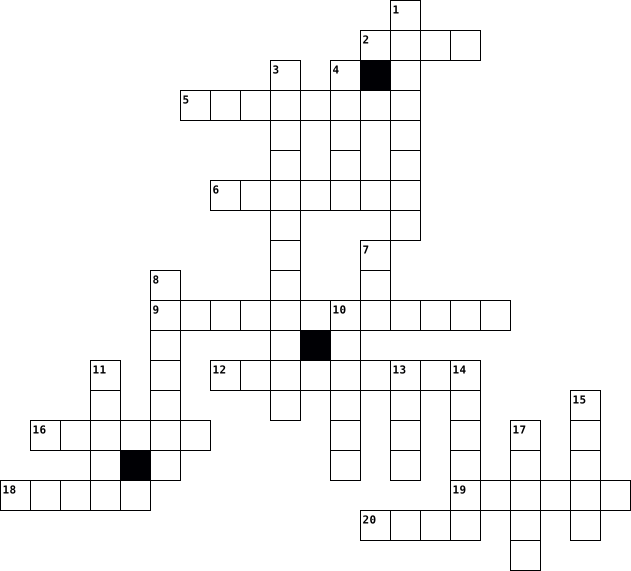
Across
- The recommended number of portions of fruit and vegetables per day
- This vitamin helps to maintain healthy eyesight
- This is needed for growth and repair
- This word completed the title of the food group, lean meat and .....
- Your body needs these to grow and be healthy
- This group of fruits provide a good source of vitamin c
- Too much fat can make this unhealthy
- Fish is an excellent source of this
- This is needed to carry blood around the body
Down
- The main source of this in sunlight
- This nutrient gives us energy
- This helps your body to digest food
- This nutrient keeps us warm
- The mineral which helps to build strong bones and teeth
- One of the sources of protein and fat
- Almost every bodily function needs this to work
- A source on non-dairy protein
- A type of oily fish
- Lollies and cakes are high in this
- A type of starchy food
20 Clues: A type of oily fish • A type of starchy food • This nutrient keeps us warm • This nutrient gives us energy • A source on non-dairy protein • Lollies and cakes are high in this • The main source of this in sunlight • This helps your body to digest food • Fish is an excellent source of this • This is needed for growth and repair • Too much fat can make this unhealthy • ...
Nutrition 2018-02-15
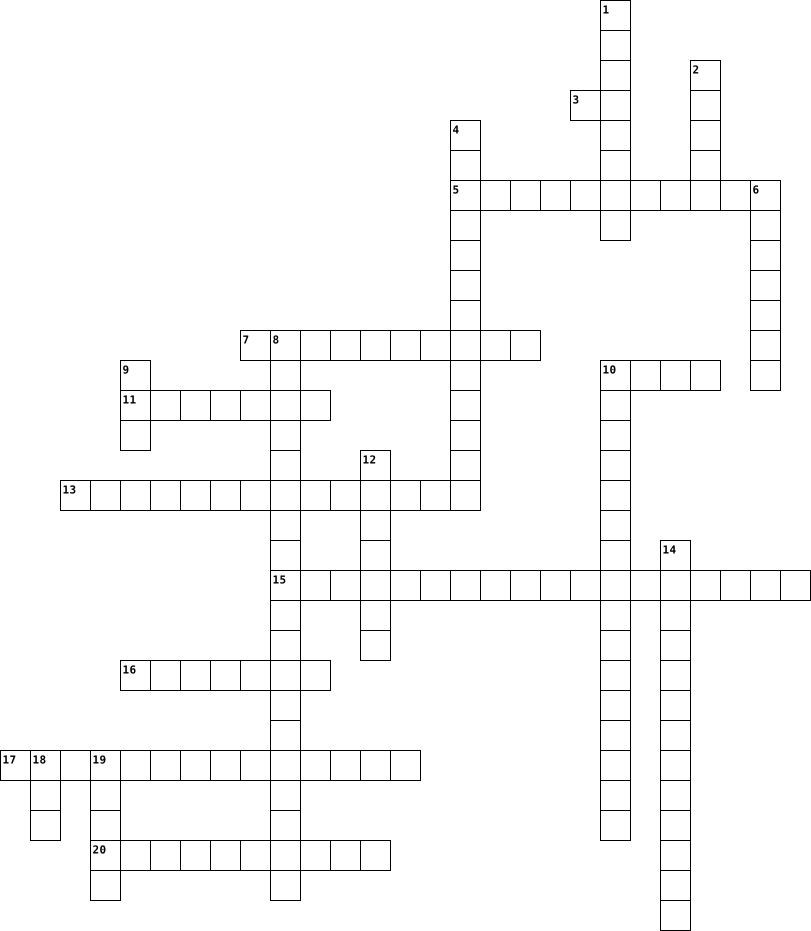
Across
- how quickly or slowly the body digests a food
- Rapid rises and drops in blood glucose levels
- More energy IN than OUT over time
- empty calories
- the simplest sugar bodies are designed to run on
- your body needs in smaller quantities
- exclude meats and include dairy and egg
- a blood-sugar regulating hormone
- increases the volume of a food product
- proteins that weaken or destroy foreign
Down
- adding vitamins and minerals to refined grains
- is found in the cell walls of plants
- molecules of 2 simple sugars linked together
- simple carbs
- body cant make these amino acids
- Calorie needs each day depend on
- Contains all the essential amino acids
- I like being......
- premium gasoline for your body
- an emulsifying agent
- avoids eating or using all animal products
21 Clues: simple carbs • empty calories • I like being...... • an emulsifying agent • premium gasoline for your body • body cant make these amino acids • Calorie needs each day depend on • a blood-sugar regulating hormone • More energy IN than OUT over time • is found in the cell walls of plants • your body needs in smaller quantities • Contains all the essential amino acids • ...
nutrition 2017-05-21
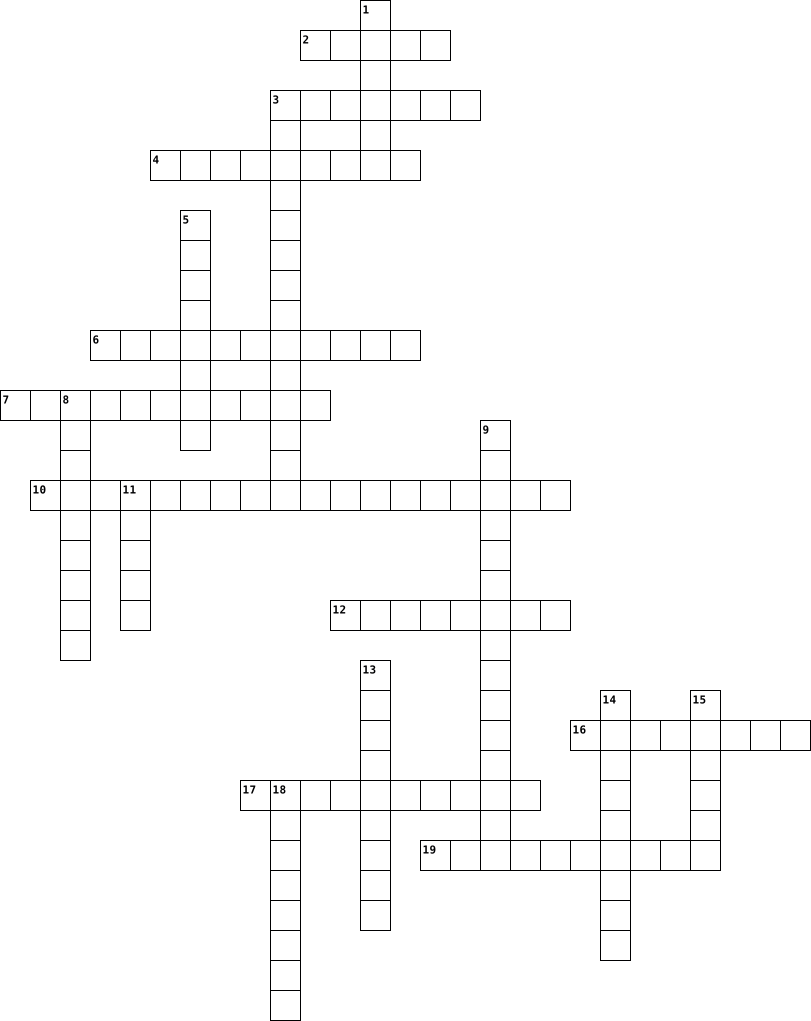
Across
- acids: "building blocks" of proteins
- carbs: as close to natural state as possible and unrefined
- and trans fats: they are bad fats
- a person who eats no meat
- more than 10% over the weight that best suits your height and body frame
- required by the body in small amounts
- a sugar the major carbohydrate in blood which is used by cells for energy
- refraining from eating all or certain foods
- protein: missing at least 1 amino acid
- a process of replacing water in the body
Down
- carbs: simple sugars and refined complex carbs stripped of nutrients
- provide energy (fuel) for the body
- nervosa: a life threatening eating disorder in which a person refuses to eat normally or to retain food in the body
- having nutrients usually vitamins and minerals added to a food to replace those lost during processing
- and polyunsaturated: they are good fats
- calories: solid fats or sugars
- nutrients that assist many of the chemical reactions in the body
- measure of energy in food
- keeps weight off(feel fuller longer)
- density: the proportion of nutrients in a food compared to the number of calories
20 Clues: a person who eats no meat • measure of energy in food • calories: solid fats or sugars • and trans fats: they are bad fats • provide energy (fuel) for the body • acids: "building blocks" of proteins • keeps weight off(feel fuller longer) • required by the body in small amounts • protein: missing at least 1 amino acid • and polyunsaturated: they are good fats • ...
Nutrition 2017-11-01
Across
- the building block of proteins
- an animal starch stored in the liver and muscles
- an essential nutrient; sugar,starches,and dietary fiber
- a fat with no carbon-carbon double bonds
- a substance that can lessen the breakdown of food or body constituents by free radicals
- blood fat that helps transports cholesterol
- a fat with one carbon-carbon double bond
- these are needed proteins,fats,carbohydrates,vitamins,mineral,and water
- a measure of energy content in food
Down
- polyunsaturated fatty acids in fish oil
- a type of unsaturated fatty acid
- a fat containing 2 or more carbon-carbon double bond
- blood fat that transports cholesterol
- vegetables like pes and beans with high fiber
- a waxy substance in blood and cells
- the science of food and how the body uses it in health and disease
- an essential nutrients; compound made with amino acids
- a process by which hydrogen’s are add to unsaturated fats
- a simple sugar that is the body’s basic fuel
- the process of breaking down food
20 Clues: the building block of proteins • a type of unsaturated fatty acid • the process of breaking down food • a waxy substance in blood and cells • a measure of energy content in food • blood fat that transports cholesterol • polyunsaturated fatty acids in fish oil • a fat with no carbon-carbon double bonds • a fat with one carbon-carbon double bond • ...
nutrition 2018-09-12
Across
- self-starvation & over exercise
- lack of calcium
- includes vitamins A,D,E,K
- lack of iron cause this
- substances in food that your body needs to grow, repair itself, and suppply you with energy
- substances from the environment that body can't make
- muscle,organs,skin,hair
- helps with many vital body processes
- poisonous substance
Down
- a person who eats vegetables, eggs, and dairy products but who does not eat meat.
- Metabolic Rate females need 2000 calories a day
- binge on food and purge food out
- do not eat meat, fish, and poultry
- the ratio of height and weight
- boost energy immediate
- type of dietary supplement that contains herbs plant
- proteins are made of long chains of substances called
- indigestible complex carbohydrate, found in tough part of fruits
- helps body growth and gives energy
- bad fats, solid at room temperature
20 Clues: lack of calcium • poisonous substance • boost energy immediate • lack of iron cause this • muscle,organs,skin,hair • includes vitamins A,D,E,K • the ratio of height and weight • self-starvation & over exercise • binge on food and purge food out • do not eat meat, fish, and poultry • helps body growth and gives energy • bad fats, solid at room temperature • ...
Nutrition 2018-07-16
Across
- Sometimes known as “blood sugar”
- Providing all of the essential nutrients, fiber, and energy in amounts sufficient to maintain health
- Physically inactive
- Sudden tissue death caused by blockages of vessels that feed the heart
- the physiological drive for food
- Food is broken down into absorbable units
- Found in meat, poultry, fish, eggs, milk, nuts, and seeds
- A form of carbohydrate found in plant foods that is not digested by the human digestive enzymes
- Chemical substances obtained from food and used in the body
- Providing foods of a number of types in proportion to each other
- The body’s ability to recognize and eliminate foreign invaders, such as bacteria
Down
- units by which energy is measured
- Condition caused by excess or deficient food energy or nutrient intake, or by an imbalance of nutrients
- Higher than normal blood pressure
- Providing enough—but not too much—of a substance
- The addition to a food of nutrients that were lost during processing
- Eating a wide selection of foods within and among the major food groups
- Organic, essential nutrients required in small amounts by the body for health
- The characteristics that enable to body to perform physical activity
- Altered glucose regulation and utilization
20 Clues: Physically inactive • Sometimes known as “blood sugar” • the physiological drive for food • units by which energy is measured • Higher than normal blood pressure • Food is broken down into absorbable units • Altered glucose regulation and utilization • Providing enough—but not too much—of a substance • Found in meat, poultry, fish, eggs, milk, nuts, and seeds • ...
Nutrition 2018-10-23
Across
- _________, starch, and fiber are the three types of carbohydrates.
- A condition in which the body takes in too much of some nutrients or too many calories.
- Substances added to food products to extend shelf life, improve flavor, and provide other desired changes.
- Food ______________ is a condition in which a person cannot properly digest a certain type of food.
- The recommended amounts of nutrients that a person should consume each day.
- The C in DECIDE stands for ______________ the consequences.
- _________________ foods are relatively low calorie food that provides vitamins, minerals, and other healthful substances.
- Chemical substances that give your body what it needs to grow and function properly.
- A nutrient and major source of energy for the body.
- Food ____________ is an immune response in which the body reacts to a certain type of food as though the food were a harmful substance.
- A condition in which bones are fragile and may break easily.
- Water is important in maintaining normal body ______________.
- A type of carbohydrate that is the preferred source of energy for the brain and central nervous system.
- Inorganic elements found in soil and water; ingested by the body after being absorbed into plants.
- A complex carbohydrate that the body is unable to digest.
- A type of fat found primarily in animal-based foods that is solid at room temperature.
Down
- Acronym for food additives that have been studied and are considered harmless by the government.
- ______________ illnesses are illnesses that are transmitted by foods. Also called food poisoning.
- A stored version of glucose located in the muscles and liver.
- One of the factors that can influence a person’s calorie needs.
- A type of food that is produced without pesticides, bioengineering, or high energy radiation.
- A government agency that regulates medications, biological products, medical devices, food supply, cosmetics, and radiation emitting products.
- The rate at which the body uses energy.
- ________________ foods provide calories, but supply few (if any) nutrients to a person's diet.
- A type of fat that is liquid at room temperature and is found in plant based foods.
- Illustrates the recommended proportions of the different food groups that people should eat each day.
- A type of nutrient composed of fatty acids, that is a valuable source of energy, especially for muscles.
- Foodborne ________________ are illnesses caused by a bacterium, virus, or parasite that has contaminated a food.
- A unit of measurement for energy provided by food.
- A nutrient the body uses to build and maintain all types of cells and tissues.
- Ingredients in food on the nutrition label are listed by ______________.
- A protein found in wheat, rye, oats, and barley.
- Organic substances derived from plants or animals, which are necessary for normal growth and development.
- A condition causing weakness, tiredness, and headaches which occurs when people do not take in enough iron.
34 Clues: The rate at which the body uses energy. • A protein found in wheat, rye, oats, and barley. • A unit of measurement for energy provided by food. • A nutrient and major source of energy for the body. • A complex carbohydrate that the body is unable to digest. • The C in DECIDE stands for ______________ the consequences. • ...
Nutrition 2012-11-15
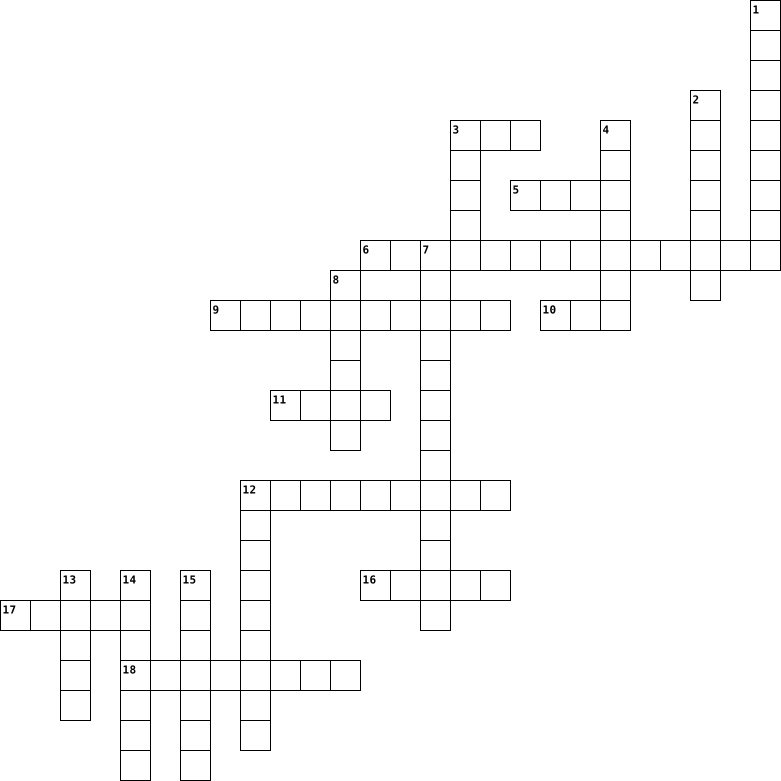
Across
- investment of bone, consisting of a dense, fibrous outer layer, to which muscles attach, and a more delicate, inner layer capable of forming bone.
- sarcoma-a malignant tumor of the bone.
- canal-a microscopic channel in bone, through which a blood vessel runs.
- most common form of arthritis.
- cell of osseous tissue within the bone matrix; a bone cell.
- development of fibrous connective tissue.
- abnormally large amount of calcium in the blood.
- fracture-an incomplete fracture of a long bone, in which one side is broken and the other side is still intact.
- of the large multinuclear cells in growing bone concerned with the absorption of osseous tissue, as in the formation of canals.
- bone-forming cell.
- breaking of a bone, cartilage, or the like, or the resulting condition.
Down
- inflammation of the bone and bone marrow, usually caused by bacterial infection.
- of childhood, characterized by softening of the bones as a result of inadequate intake of vitamin D.
- part resembling a small beam or crossbar.
- sudden removal of soil by change in a river's course or by a flood, from the land of one owner to that of another.
- of the parathyroid gland.
- disease-A chronic disease of the elderly characterized by alteration of bone tissue.
- zone of growth between the epiphysis and diaphysis during development of a bone.
- Anatomy-of, pertaining to, resembling, or consisting of cortex.
- small canal or tubular passage, as in bone.
- of the structures composing the skeleton of a vertebrate.
- plate-The area between the epiphysis and the diaphysis within which bone growth occurs.
- disorder in which the bones become increasingly brittle.
- canal-Any of the various canals in bone that transmit blood vessels from the periosteum into the bone.
- thin plate, scale, membrane, or layer, as of bone, tissue, or cell walls.
25 Clues: bone-forming cell. • of the parathyroid gland. • most common form of arthritis. • sarcoma-a malignant tumor of the bone. • part resembling a small beam or crossbar. • development of fibrous connective tissue. • small canal or tubular passage, as in bone. • abnormally large amount of calcium in the blood. • disorder in which the bones become increasingly brittle. • ...
Nutrition 2013-04-15
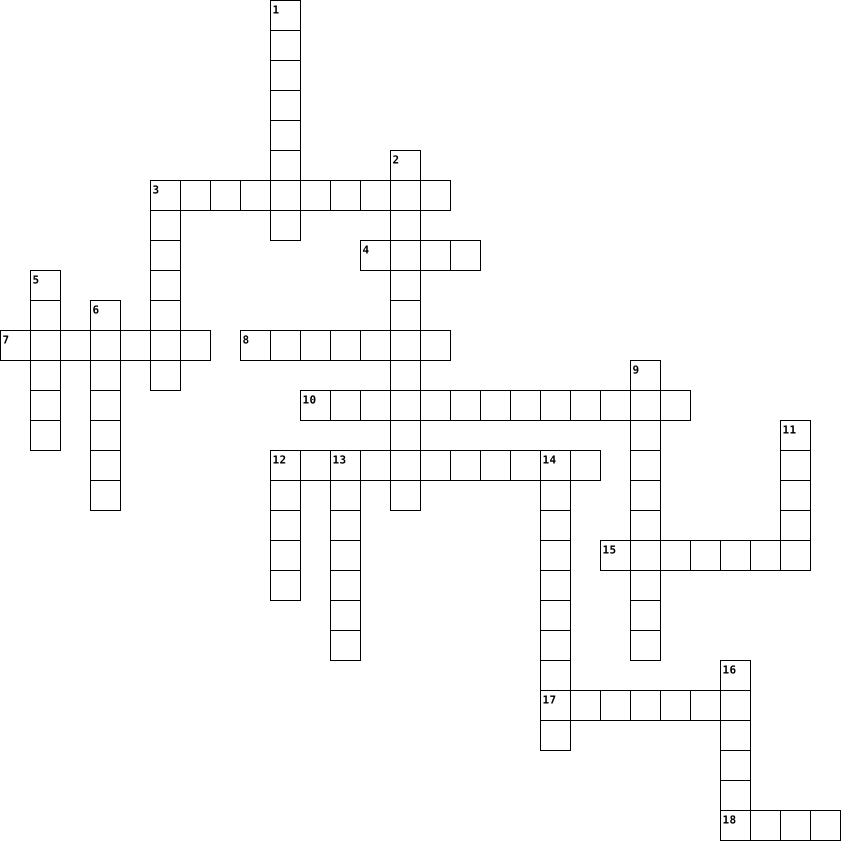
Across
- Nutrient fortified in salt
- A word that describes vitamin’s ability to dissolve (either in fat or water)
- Nutrient that works with calcium to harden bones
- Vitamin A’s main function is to maintain this
- The main sugar found in the body
- A lack of fibre can result in this uncomfortable illness
- These fats are liquid at room temperature
- A type of carbohydrate that passes through the body largely undigested
- This acid is the building blocks from which protein is made
- Nutrient deliberately introduced to our tap water
- A compound that protects other compounds from oxygen
- Iodine assists in the formation of this hormone
- A lack of a nutrient is known as this
- A main source for Vitamin D
- One of Vitamin B12's main functions is to maintain this system
- Vitamin A is found in red, orange and yellow vegetables, such as this
- All reactions in the body take place in this substance
Down
- Vitamin C assists in the production of this
- Vitamins such as folate and B12 are essential for DNA replication, known as this
- Oil which goes through this process become trans fats
- Beans are a vegetarian source for this nutrient
- Units of energy in food
- The main nutrient that provides energy to the body
- The 'good' type of cholesterol
- Without enough iodine, an individual may develop this ugly deformity
- The type of fat that comes mainly from meat
- Iron forms this, which carries oxygen in the blood
- A good fat usually found in salmon and other fatty fish
- Sodium plays a key role in regulating the body’s balance of this
- Another name for salt
- Another name for fats
- Nutrient that helps to prevent the development of spina bifida in a foetus
32 Clues: Another name for salt • Another name for fats • Units of energy in food • Nutrient fortified in salt • A main source for Vitamin D • The 'good' type of cholesterol • The main sugar found in the body • A lack of a nutrient is known as this • These fats are liquid at room temperature • Vitamin C assists in the production of this • The type of fat that comes mainly from meat • ...
Nutrition 2013-11-22
Across
- Soluble Vitamins A,D,E,K
- Do not feed kittens __ milk
- Protein,Fat,Carbohydrates are__nutrients
- Cats are what?
- Feline Idiopathic Cystitis
- The __is made up of 60% water
- First milk produced by mothers
- Animal needs to be 15-20% body weight to be __
- Most important Nutrient
- Provides nourishment for growth &maintance of life
Down
- Dogs are what
- Cats need__ in there diet
- Diet which decreases digestibility
- __ Dilation-Volvulus (GDV)
- Mainly to supply Energy
- Can be found in oils
- Body __ Score
- BCS:4
- Feline Lower __ Tract Disease
- Cats need increased __ compared to dogs
20 Clues: BCS:4 • Dogs are what • Body __ Score • Cats are what? • Can be found in oils • Mainly to supply Energy • Most important Nutrient • Soluble Vitamins A,D,E,K • Cats need__ in there diet • __ Dilation-Volvulus (GDV) • Feline Idiopathic Cystitis • Do not feed kittens __ milk • The __is made up of 60% water • Feline Lower __ Tract Disease • First milk produced by mothers • ...
NUTRITION 2014-02-11
Across
- Any plant whose fruit, seeds, roots, tubers, bulbs, stems, leaves, or flower parts are used as food, as the tomato, bean, beet, potato, onion, asparagus, spinach, or cauliflower.
- A particular selection of food, especially as designed or prescribed to improve a person's physical condition or to prevent or treat a disease.
- A quantity of food capable of producing such an amount of energy.
- An essential or distinctive characteristic, property, or attribute: the chemical qualities of juice.
- Something that preserves or tends to preserve.
- Of or being natural or unprocessed grain containing the germ and bran.
- Any of numerous, highly varied organic molecules constituting a large portion of the mass of every life form and necessary in the diet of all animals.
- To feed and protect.
- Such a plant when valued for its medicinal properties, flavor, scent, or the like.
Down
- An exact or specified amount or measure.
- A store selling foods already prepared or requiring little preparation for serving, as cooked meats, cheese, salads, and the like.
- Any of a group of organic substances essential in small quantities to normal metabolism, found in minute amounts in natural foodstuffs or sometimes produced synthetically.
- A small, hard seed, especially the seed of a food plant such as wheat, corn, rye, oats, rice, or millet.
- An amount of food served for one person; serving; helping.
- A person who does not eat or does not believe in eating meat, fish, fowl, or, in some cases, any food derived from animals, as eggs or cheese, but subsists on vegetables, fruits, nuts, grain, etc.
- A vegetarian who omits all animal products from the diet.
- A transparent, odorless, tasteless liquid, a compound of hydrogen and oxygen.
- Noting or pertaining to a class of chemical compounds that formerly comprised only those existing in or derived from plants or animals, but that now includes all other compounds of carbon.
- Something that enters as an element into a mixture.
- The general condition of the body or mind with reference to soundness and vigor.
20 Clues: To feed and protect. • An exact or specified amount or measure. • Something that preserves or tends to preserve. • Something that enters as an element into a mixture. • A vegetarian who omits all animal products from the diet. • An amount of food served for one person; serving; helping. • A quantity of food capable of producing such an amount of energy. • ...
Nutrition 2015-02-23

Across
- helps prevent spina bifids
- strong bones and teeth
- help decrease cholesterol
- keeps bowel regular
- essential for eye sight
- most harmful fats
- helps form haemoglobin
- meat/poultry
- a fibre, one of 6 basic nutrients
- assists in blood clotting
- essential for growth
- helps from bones and teeth
Down
- maintains cell membranes
- helps lower cholesterol
- best to consume in small amounts
- grains, legumes and nuts
- our bodies have 70% of it
- slowly digested and absorbed
- absorbed quickly into the bloodstream
- healthy gums, teeth, bones
- growth, maintenance and repair of our body cells
- provide a concentrated energy of energy
- GI
- minerals needed in large amounts
- not digested
- controls nerve impulses
- healthy skin and eyes
- needed in very small amounts
- correct heart and nervous functions
29 Clues: GI • meat/poultry • not digested • most harmful fats • keeps bowel regular • essential for growth • healthy skin and eyes • strong bones and teeth • helps form haemoglobin • helps lower cholesterol • essential for eye sight • controls nerve impulses • maintains cell membranes • grains, legumes and nuts • our bodies have 70% of it • help decrease cholesterol • assists in blood clotting • ...
Nutrition 2014-10-09

Across
- ____________ is the ability to bend the joints through the full range of motion
- F=Frequency, I=Intensity, T=Time, T=type is the _______ formula.
- Plentiful food, junk food widely available, and people not as physical active as they should be are all reasons for what?
- ___________ ___________ the ability of the circulatory and respiratory systems to supply oxygen during sustained physical activity
- Include ________ exercise to improve cardio-respiratory endurance and body composition
- ________ ___________ is any bodily movement produced by skeletal muscles that results in energy expenditure.
- ______________ include sugars, starches, and fiber.
- ________ is an eating disorder, which a person binges and purges.
- ___________ ___________ the ability to perform physical activity and to meet the demands of daily living while being energetic and alert
- __________ is the metabolic disorder regarding little or no insulin production.
- Include ________ ____________ exercises to develop flexibility
- ___________ ___________ the maximum amount of force a muscle can produce in one effort
- ___________ __________ is an abnormal response of the immune system to food and could result in a medical emergency.
- A _________ is a unit of energy produced by food and used by the body.
Down
- An ___________ ___________ is a mental disorder in which a person has a compelling need to starve, binge, or binge and purge.
- ___________ are substances that help with body processes, growth, repair of cells, and provides energy.
- A ___ is a nutrient that provides energy and helps the body store and use vitamins.
- ___________ ___________ is the ability of the muscles to perform without fatigue
- A ___________ is a nutrient needed for growth and repair.
- ___________ ___________ an eating disorder in which a person cannot control eating and eats excessive amounts.
- A _________ is a nutrient that helps the body use carbohydrates, proteins, and fats.
- _________ __________ are guidelines to follow to obtain maximum fitness benefits and reduce the risks of injuries or illnesses
- ___________ ___________ is an eating disorder involving self-starvation and being 15% or more below desirable weight.
- Include __________ exercises to develop muscular strength and endurance
- _________ is planned, structured, and repetitive bodily movements done to improve the components of physical fitness
- A _________ is a nutrient that regulates many chemical reactions.
26 Clues: ______________ include sugars, starches, and fiber. • A ___________ is a nutrient needed for growth and repair. • Include ________ ____________ exercises to develop flexibility • F=Frequency, I=Intensity, T=Time, T=type is the _______ formula. • ________ is an eating disorder, which a person binges and purges. • ...
Nutrition 2014-03-06
Across
- Toxicity: can cause constipation, increased risk of kidney stone formation, interference with absorption of other minerals
- Response: refers to how fast and how high blood sugar levels rise after a meal
- Complex carb foods boost the brains level of mood enhancing chemical called _________.
- the absorption of nutrients from food
- Disorder: a psychiatric condition that is characterized by severe disturbances in body weight and eating behaviours.
- chemicals that bind with free radicals making them inactive
- important molecule for the nervous system and the production of lactose
- compounds that are partly dissociate in water to form ions such as the potassium ion and chloride ion
- seen in adults, have soft and weak bones that have a lower mineral content
- helps maintain a healthy lifestyle when performed 30-60 mins/day
- foods that offer the most nutrients per calorie are ________ (non starchy)
- found in animal foods such as poultry, meat and fish
- Helpful to prevent and correct hypertension ( ex: bananas, oranges, milk, radish etc)
- the condition of excess acid in the blood, indicated by a below normal pH
Down
- Energy Malnutrition: Over 500 billion children face imminent starvation and experience this condition.
- Dieting:_______ ________ is the consistent and successful restriction of energy intake to maintain average or below average body weight.
- body weight more than 20% above the ideal weight for a given individual.
- important in energy storage in muscle tissue
- oxygenated holding protein of the muscles
- results in pallor, cyanosis, tachypnea, irregular pulse, confusion, etc
- Each gram of fat provides _______ kcal of energy
- a dietary factor -caused by foods high in saturated and trans fat
- prevent rapid rise in blood glucose levels and consequent rapid rise in insulin levels
- a small molecule that works with an enzyme
- DRI for adults 19-50 1500 mg/day
- Carotene: a precursor of vitamin A
- Disease: a genetic disorder characterized by a total intolerance for gluten
27 Clues: DRI for adults 19-50 1500 mg/day • Carotene: a precursor of vitamin A • the absorption of nutrients from food • oxygenated holding protein of the muscles • a small molecule that works with an enzyme • important in energy storage in muscle tissue • Each gram of fat provides _______ kcal of energy • found in animal foods such as poultry, meat and fish • ...
Nutrition 2016-05-04
Across
- Is the colorless fluid part of blood that fat globules are suspended in
- Wholesome and is benefical to the human
- Responsible for transerfing oxygen in blood of vertebrates
- A white substance that exist in large amounts in food such like potatoes
- A natural oily substance that usually builds up around organs
- Filter out waste from the blood and regulate fluid balances
- A chemical element with required amounts for the normal growth and development of living organisms
- Organic compounds that are helpful in many different functions of the body
- Parts of food that organisms use to live and survive
Down
- Simple carbohydrate
- The measure of heat needed to raise a gram of water
- Long chains of amino acids and especially impostant in the building of muscle and tissues
- Can indicate that the product has a third less calories
- Are the sugars and starches found in food
- Important electrolyt that helps in the nevous system
- Most plentiful nutrient found in the body ( found in teeth and bones)
- Coming from living matter that is natural and wihout harsh chemicals
- Basis of fluids for all living organisms
- Is new and not used
- A natural way to recieve vitamins such as vitamin D through the sun
20 Clues: Simple carbohydrate • Is new and not used • Wholesome and is benefical to the human • Basis of fluids for all living organisms • Are the sugars and starches found in food • The measure of heat needed to raise a gram of water • Important electrolyt that helps in the nevous system • Parts of food that organisms use to live and survive • ...
Nutrition 2016-02-09
Across
- A disease in which abnormal cells grow out of control.
- Units by which energy is measured
- The physiological drive and want for food
- A substance that reacts with free radicals to protect other substances from harmful effects of the free radicals.
- The USDA’s new food guidance system based on the Dietary Guidelines for Americans.(MyPlate replaced MyPyramid.)
- The practice of eating a diet consisting entirely or largely of plant foods
- An eating disorder characterized by the person refusing to maintain a minimal normal body weight and an intense fear of weight gain that leads to self-starvation.
- Essential nutrient for transporting vitamins, cushioning and secondary energy source
- An eating disorder that involves uncontrollable eating of huge amounts of food followed by an inappropriate behavior to prevent weight gain.
- The proportion of lean body tissue to fat tissue in the body
- A food produced without the use of synthetic fertilizers, pesticides, antibiotics, herbicides, or growth hormones.
- apple, oranges, and bananas fit into this group
- An inorganic element needed in small amounts as a nutrient to perform various functions in the body.
Down
- Food is broken down into absorbable units
- A state in which the body contains a lower than normal amount of body fluids
- The death of heart tissue caused by blockage of an artery carrying nutrients and oxygen to that tissue.
- Hardened and narrowed arteries caused by plaque deposits.
- Found in meat, poultry, fish, eggs, milk, nuts, and seeds
- Most important meal of the day
- One of the building blocks of protein molecules.
- One of the six classes of nutrients that includes sugars, starches, and fibers. The body’s main source of energy.
- An eating disorder that involves repeatedly eating very large amounts of food without a follow-up behavior to prevent weight gain
- An organic compound needed in tiny amounts as a nutrient to regulate body processes.
- A condition in which bones become porous and fragile due to a loss of minerals such as calcium
- Describes an adult with a body mass index of 30 or more.
25 Clues: Most important meal of the day • Units by which energy is measured • Food is broken down into absorbable units • The physiological drive and want for food • apple, oranges, and bananas fit into this group • One of the building blocks of protein molecules. • A disease in which abnormal cells grow out of control. • Describes an adult with a body mass index of 30 or more. • ...
Nutrition 2023-10-19
Across
- To beat quickly and vigorously to incorporate air into a mixture.
- To cut something such as almonds, into very thin strips.
- To dip a food briefly in boiling water and then in cold water to finish the cooking process.
- to beat ingredients, such as shortening and sugar.
- To coat a food with a liquid that forms a glossy finish.
- Often applies to food that is cooking by using a spoon or wire whisk to mix.
- To smash food into crumbs, powder, or paste.
- To mix ingredients such as salad greens and dressing.
- To put small pieces of food, such as butter, on the surface of another food.
- Combining two or more ingredients
- To lightly sprinkle a food with flour or sugar.
- To pour liquid over a food as it cooks usually using a baster or spoon.
- To divide food into four equal pieces.
- To make straight shallow cuts with a slicing knife on the surface of usually meat.
- The weight of the container that is holding the product being weighed
- Used to gently mix a light, fluffy mixture into a heavier one.
Down
- To grind or mash fruits or vegetables until they are smooth.
- To cut off a very thin layer with a paring knife or a peeler.
- To mix thoroughly and add air in foods.
- To crush food into a smooth mixture with a masher or beater.
- To use a grinder to break up food into coarse, medium, or fine particles.
- To coat food heavily with flour, breadcrumbs, or cornmeal.
- Cutting off how much butter or margarine you need based off a ¼- pound stick.
- To cut food into large, thin pieces using a slicing knife with a sawing motion.
- Using something sharp to reduce the size
- To break or tear off small layers of food, often cooked fish, with a fork.
- To use a pastry brush to coat a food with liquid.
- To cut food into small pieces with kitchen shears.
- To coat a food with 3 or more layers. Flour, milk or beaten eggs, then seasoned crumbs or cornmeal.
- applying a liquid or powder to the surface of food
30 Clues: Combining two or more ingredients • To divide food into four equal pieces. • To mix thoroughly and add air in foods. • Using something sharp to reduce the size • To smash food into crumbs, powder, or paste. • To lightly sprinkle a food with flour or sugar. • To use a pastry brush to coat a food with liquid. • to beat ingredients, such as shortening and sugar. • ...
nutrition 2023-11-15
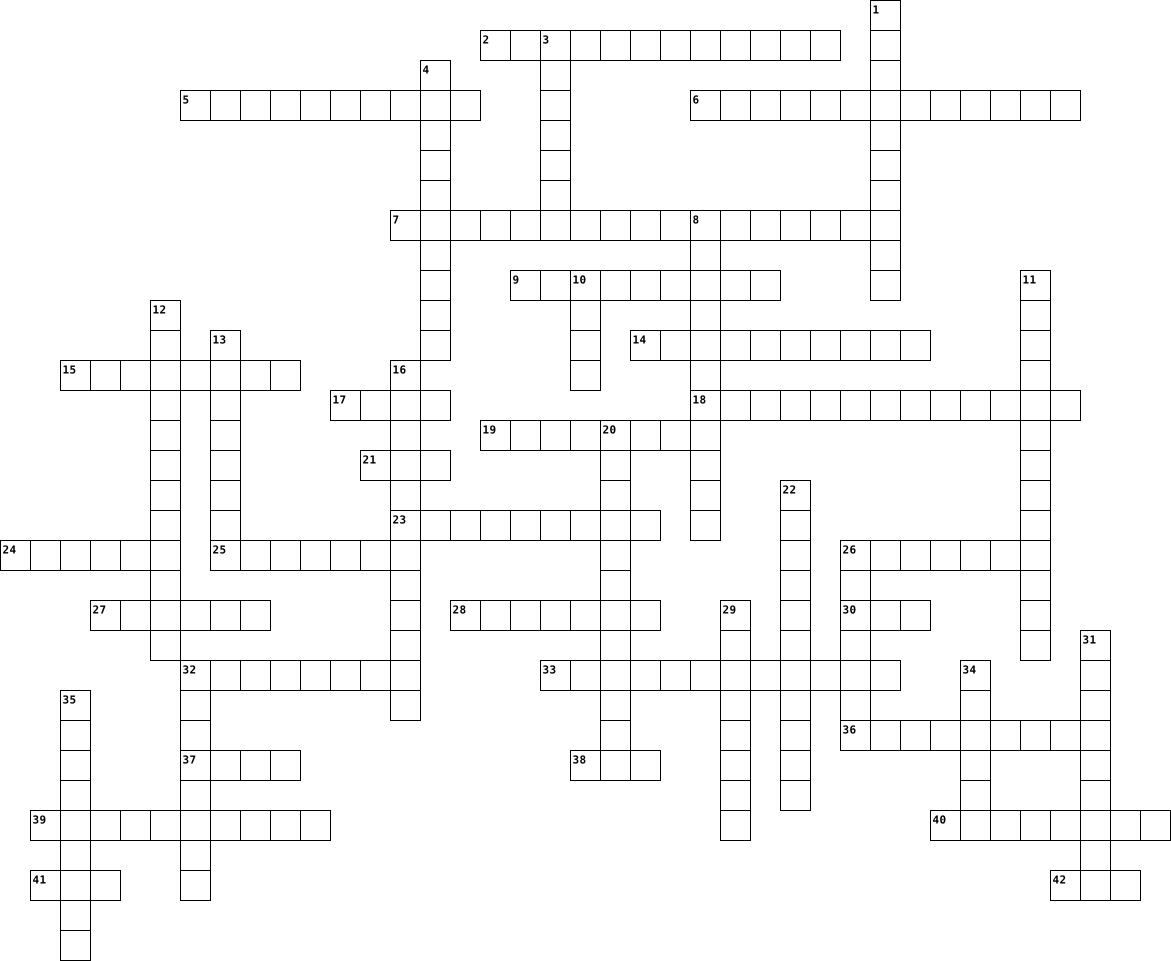
Across
- vitamins that disolve
- not stored in the body
- level of protien
- final step in cellular respiration
- food choices can be infulenced by lifestyle
- citric acid cycle series of chemical reaction
- green leafy veggies
- spinich and red meat
- main source of energy
- phycological need for food
- basic energy expenditive
- vitamins a,d,c and minerals like calcium and iron and cruicial for growth and development
- leafy greens and beans
- disaccride known as table sugar
- dietary guidelines
- sense aided by vitamins
- choices are mainly based on nutritional needs
- build up in wal of arteries
- eat more carrots
- process that allows cells to get energy from glucose in the absense of oxygen
- our body cant make this on its own
- fat soulable vitamins
- total energy expenditure
- meat and dairy products
- sugar found in milk
- food nutrition service
- bloodstream
Down
- level of iron
- food choices are influenced by growth
- first step in breaking down glucose to extract energy
- calcium, iron, vitamin d
- guidelines
- damage or impairment of the kidneys
- range of condition
- how body regulates
- those that your body can produce on its own
- remove excess cholesterol
- fat like substance found in bodu
- disaccaride found in fermented grain products
- get more sunlight
- food choices are influenced by growth
- oranges and strawberrys
- physical needs for food
- subtances our body needs to grow and develop
44 Clues: guidelines • bloodstream • level of iron • level of protien • eat more carrots • get more sunlight • range of condition • how body regulates • dietary guidelines • green leafy veggies • sugar found in milk • spinich and red meat • vitamins that disolve • main source of energy • fat soulable vitamins • not stored in the body • leafy greens and beans • food nutrition service • sense aided by vitamins • ...
Nutrition 2024-02-10
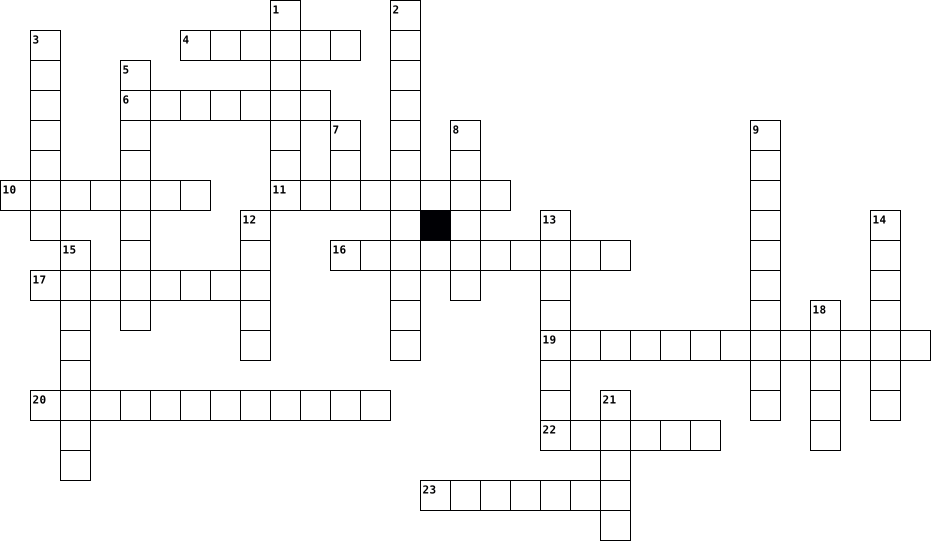
Across
- The ability of foods to maintain life & do work in the body.
- Extreme excess of body fat.
- Essential (necessary) nutrient for bone production.
- A chemical substance found in food. Body uses for growth/health.
- Eating more food on a daily basis than the body requires.
- Eating large quantities of food over a short period.
- A condition caused by too much or not enough energy/nutrient intake.
- Main source of energy for brain and muscles (4 calories per gram).
- A complex carbohydrate.
- The measure of energy supplied by food (unit of measurement).
Down
- A nutrient used by the body to build and maintain tissue.
- Disease affecting heart & blood vessels.
- Fat stored in the body.
- How we think we look and how we think others see us.
- A nutrient found in food that gives us energy (9 calories per gram).
- The body's way of saying food is needed.
- An organism's chemical process producing energy/growth.
- A "sweet" carbohydrate.
- Nutrients needed by the body to promote growth & health.
- Cutting back on food eaten due to unhappiness with your body.
- Nutrients needed by your body in small amounts to maintain systems.
- Part of plant foods that helps food move through the digestive track.
- A "watery" fluid essential for life.
23 Clues: Fat stored in the body. • A "sweet" carbohydrate. • A complex carbohydrate. • Extreme excess of body fat. • A "watery" fluid essential for life. • Disease affecting heart & blood vessels. • The body's way of saying food is needed. • Essential (necessary) nutrient for bone production. • How we think we look and how we think others see us. • ...
Nutrition 2022-06-16
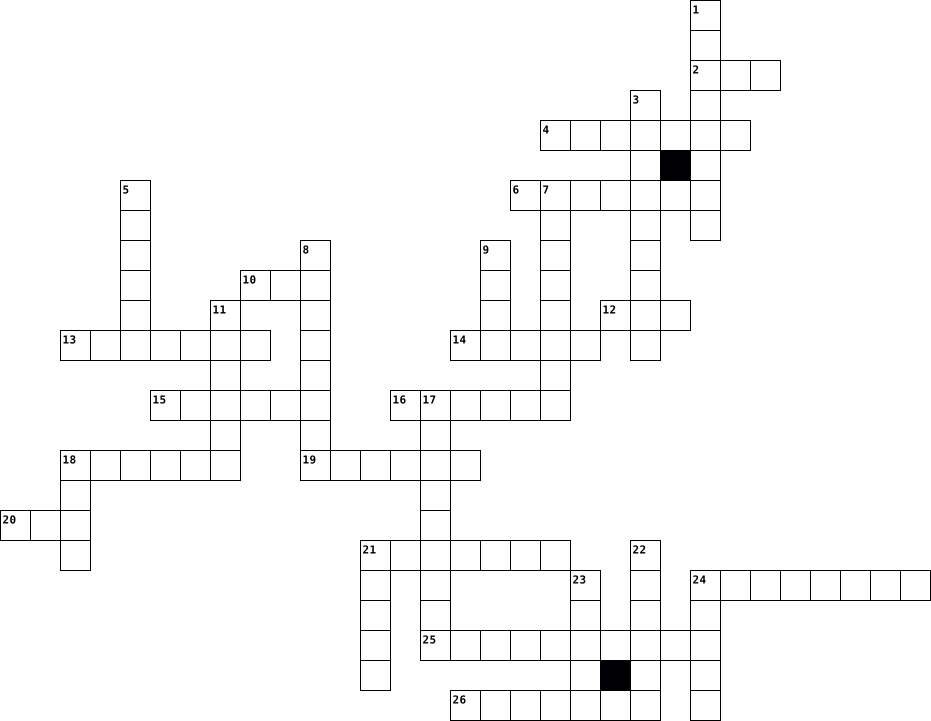
Across
- Petit grain blanc de la famille de féculent
- Important lorsque l'on mange
- A base de lait, consommé avant le dessert
- Peut-être à la menthe et se boit très chaud
- Sert à assaisonner, présent dans la mer
- utile lors de la journée
- Etat que l'on veut tous garder
- On peut en faire du thé
- Tomate, courgette sont de cette famille
- C'est un fruit et une couleur
- Se joue avec une balle et une raquette
- Permet de nous hydrater
- Ingrédient principal du couscous
- Plat originaire du Maghreb
- Quand on a chaud ou que l'on fait du sport
- Le thon et le saumon en sont
Down
- S'occuper des plantes dans le jardin
- Les fruits et légumes en sont remplis
- On la mange avant le plat
- Très utile au tennis et au badminton
- Riz, des pâtes et des pommes de terre
- Activité de détente qui permet de s'étirer
- Blanche ou rouge, provient des animaux
- Réaliser avant et après une activité physique
- On le mange grâce aux poules
- Le football et la natation en sont
- Il est jaune et acide
- 4 dans la journée, il ne faut pas le sauter
- En mouvement lorsque l'on se déplace
29 Clues: Il est jaune et acide • On peut en faire du thé • Permet de nous hydrater • utile lors de la journée • On la mange avant le plat • Plat originaire du Maghreb • Important lorsque l'on mange • On le mange grâce aux poules • Le thon et le saumon en sont • C'est un fruit et une couleur • Etat que l'on veut tous garder • Ingrédient principal du couscous • ...
Nutrition 2022-07-06
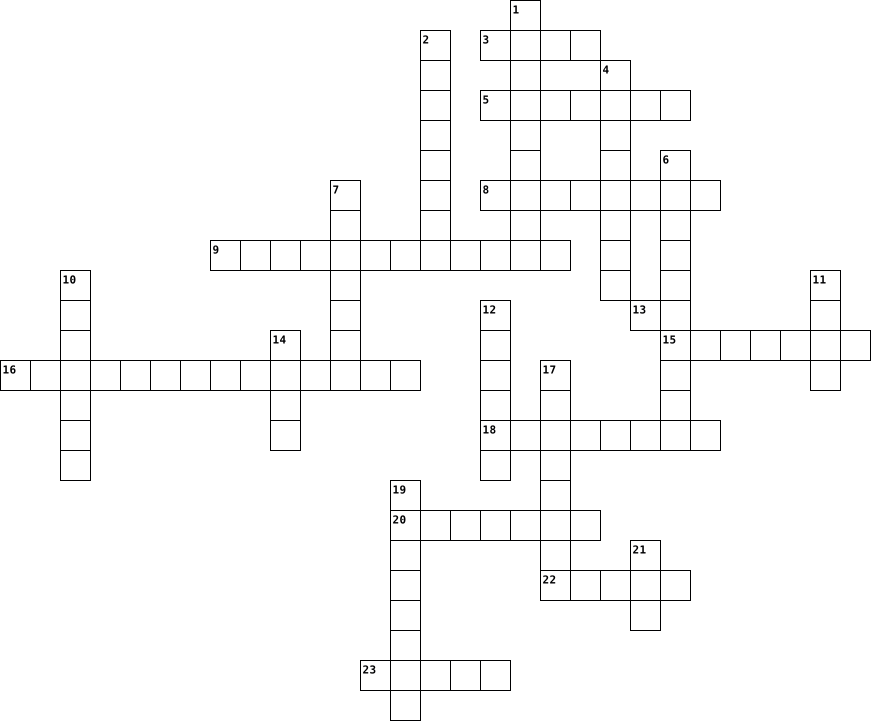
Across
- a micronutrient that we can get from red meat and leafy greens
- a micronutrient that we get from dairy foods
- is a measure of energy
- the main source of energy for our body
- the chemical symbol for sodium (salt)
- a disease due to a lack of vitamin D
- the category of nutrients that contain minerals and vitamins
- a nutrient that we get from eating citrus fruit
- a hormone produced by the pancreas that reduces blood sugar levels
- a food that can lead to high blood sugar levels
- a diet that contains no animal products
Down
- the most important meal of the day
- a nutrient that we get from the sun
- vitamins and ________ make up our micronutrients
- a diet that does not include any meat
- a macronutrient that the body uses to develop muscles
- sugar is converted to this in the body
- a diet that make our body use fat as its energy source
- a disease due to lack of vitamin C
- the kinds of food that a person eats
- A nutrient that the body needs in small amounts to function and stay healthy
- type 1 and type 2 can occur when there is too much sugar in the blood
- a macronutrient that is contains lots of energy
23 Clues: is a measure of energy • the most important meal of the day • a disease due to lack of vitamin C • a nutrient that we get from the sun • the kinds of food that a person eats • a disease due to a lack of vitamin D • a diet that does not include any meat • the chemical symbol for sodium (salt) • the main source of energy for our body • sugar is converted to this in the body • ...
Nutrition 2022-10-25
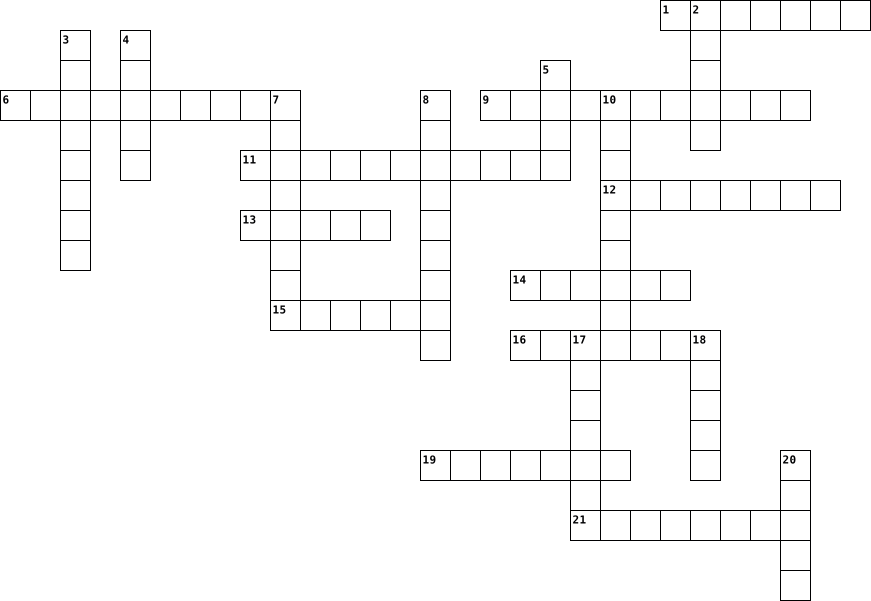
Across
- How we measure energy in food
- The chemical process by which the body breaks down substances and gets energy
- A high level of this can result in a heart attack
- Types of fat that are liquid at room temperature
- A food that has nutrients added back that were lost during processing
- Type of fat that is formed from a process called hydrogenation
- AKA salt
- Type of carbohydrate that is sugar and gets absorbed quickly
- A guide developed by the USDA for healthy eating
- Type of carbohydrate that is starch and absorbed slowly
- A substance found in food that keeps your body functioning
Down
- Type of sugar that follows the 5/20 rule
- These do not provide energy, but are still essential to good health
- A type of starch that cannot be digested. Used in digestive tract
- Groups that are used to separate dairy, protein, vegetables, etc.
- The body requires 17 of these daily
- A food that had nutrients added to it that might not have been in them in the first place
- The 6 main nutrients that include, fat, protein, etc.
- Made of amino acids
- Type of calorie that lacks most nutrients
- Dissolves vitamins, minerals, and other nutrients in your body
21 Clues: AKA salt • Made of amino acids • How we measure energy in food • The body requires 17 of these daily • Type of sugar that follows the 5/20 rule • Type of calorie that lacks most nutrients • Types of fat that are liquid at room temperature • A guide developed by the USDA for healthy eating • A high level of this can result in a heart attack • ...
nutrition 2023-03-29
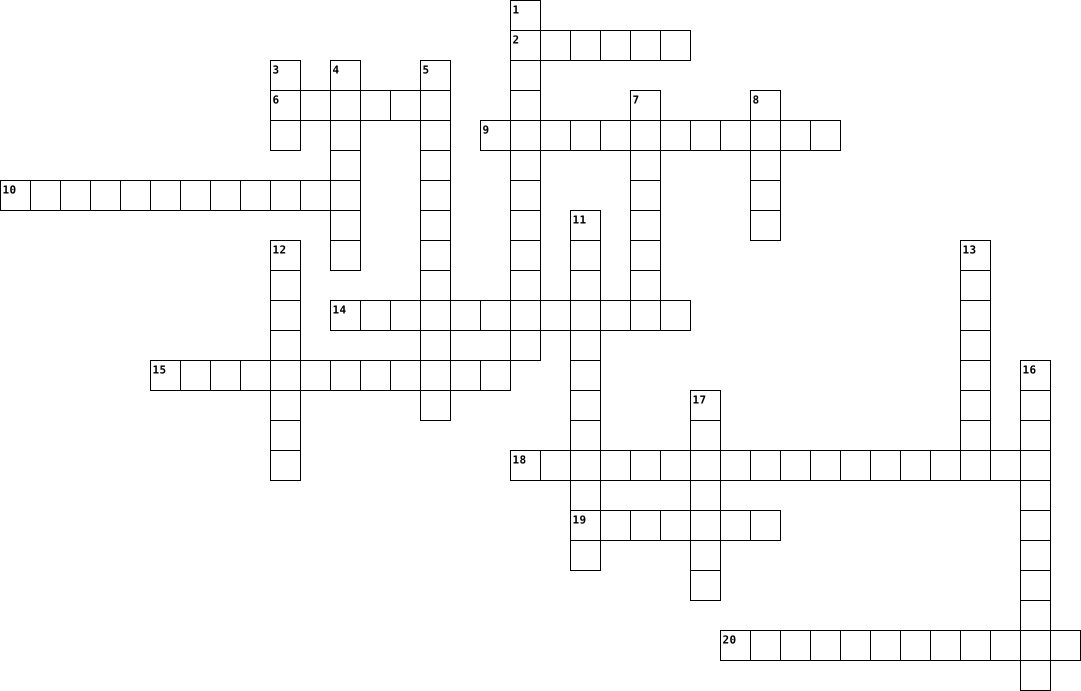
Across
- deficiency of vitamin c
- caused by a lack of red blood cells in the body
- digestive disorders that occur due to hardening of the stool so that it is difficult to expel
- term to describe 2 types of malnutrition
- specialist staff in charge of providing education about the maintenance and management of nutrition and health nutrition
- neutralizes excess hydrogen ions, is temporary and does not eliminate
- occurs when the body lacks acid or excess base
- if someone is overweight
- disease caused by consuming excess sodium
Down
- bones become weak and brittle and can even break
- found in meat, one form of cholesterol
- Indonesian Nutritionist Association
- nutrients contained in rice
- a group of small molecular weight organic compounds that have a vital function in the metabolism of organisms and cannot be produced by the body
- good for digestion, many contained in vegetables
- nutrient deficiency
- nutritional content contained in eggs
- lack of energy or caloric intake of all forms of macronutrients
- condition of acute malnutrition that occurs due to lack of protein
- The nutritional content of milk is good for bones
20 Clues: nutrient deficiency • deficiency of vitamin c • if someone is overweight • nutrients contained in rice • Indonesian Nutritionist Association • nutritional content contained in eggs • found in meat, one form of cholesterol • term to describe 2 types of malnutrition • disease caused by consuming excess sodium • occurs when the body lacks acid or excess base • ...
Nutrition 2023-03-07
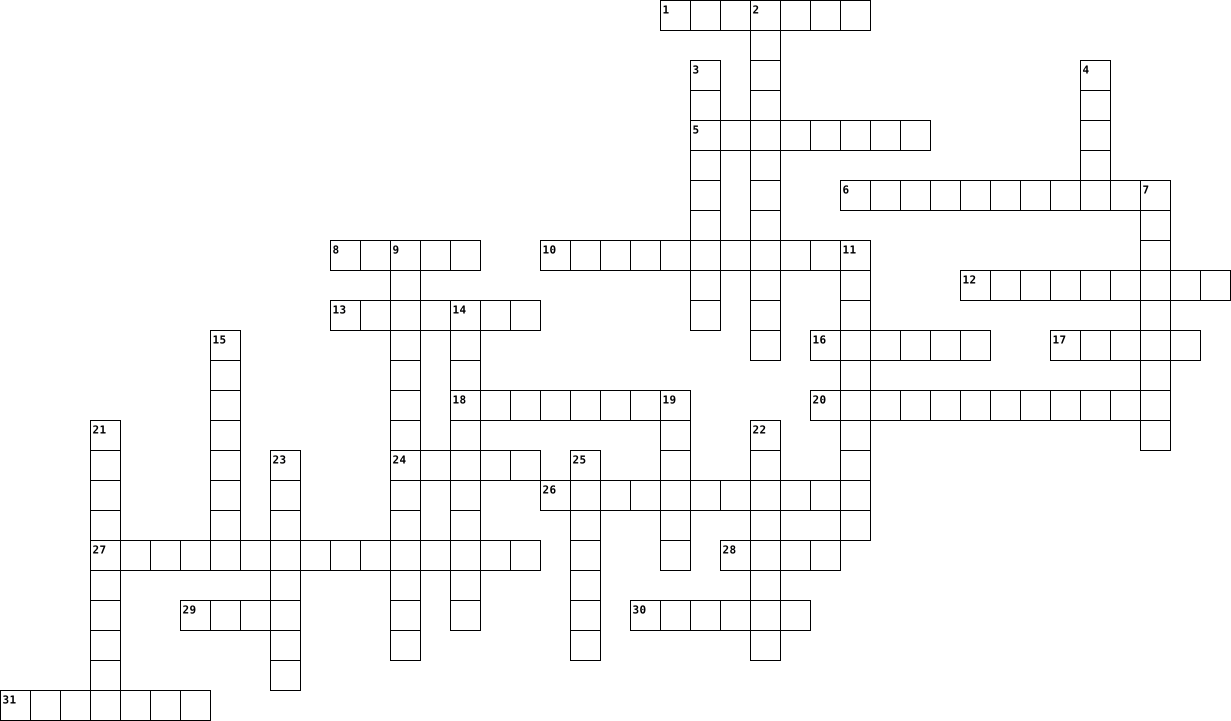
Across
- gas produced in the rumen
- site of protein digestion in sheep
- one chambered stomach
- site of fermentation in ruminants
- fatty acid essential for cats
- honeycombed textured area
- area of fermentation in non-ruminants
- site of fermentation in rabbits
- projections in the small intestine
- absorb fats in the small intestines
- three or more amino acids
- site of water reabsorption in monogastric animals
- protein rich rabbit faeces
- starch, glycogen and cellulose
- a source of protein
- emulsifies fats
- acts as a filter in cattle digestion
- caused by consuming and excess of Calories
Down
- acid found in the stomach
- building large molecules from small ones
- needed for blood, digestion and excretion
- substance broken down by bacteria
- simple sugars
- breaking down biomolecules
- bile is stored here
- teeth in the front of the mouth
- slippery surface or digestive organs
- tube between the mouth and stomach
- pancreatic enzymes enter here
- produces enzymes and insulin
- an essential amino acid for cats
31 Clues: simple sugars • emulsifies fats • bile is stored here • a source of protein • one chambered stomach • gas produced in the rumen • acid found in the stomach • honeycombed textured area • three or more amino acids • breaking down biomolecules • protein rich rabbit faeces • produces enzymes and insulin • fatty acid essential for cats • pancreatic enzymes enter here • ...
Nutrition 2024-03-19
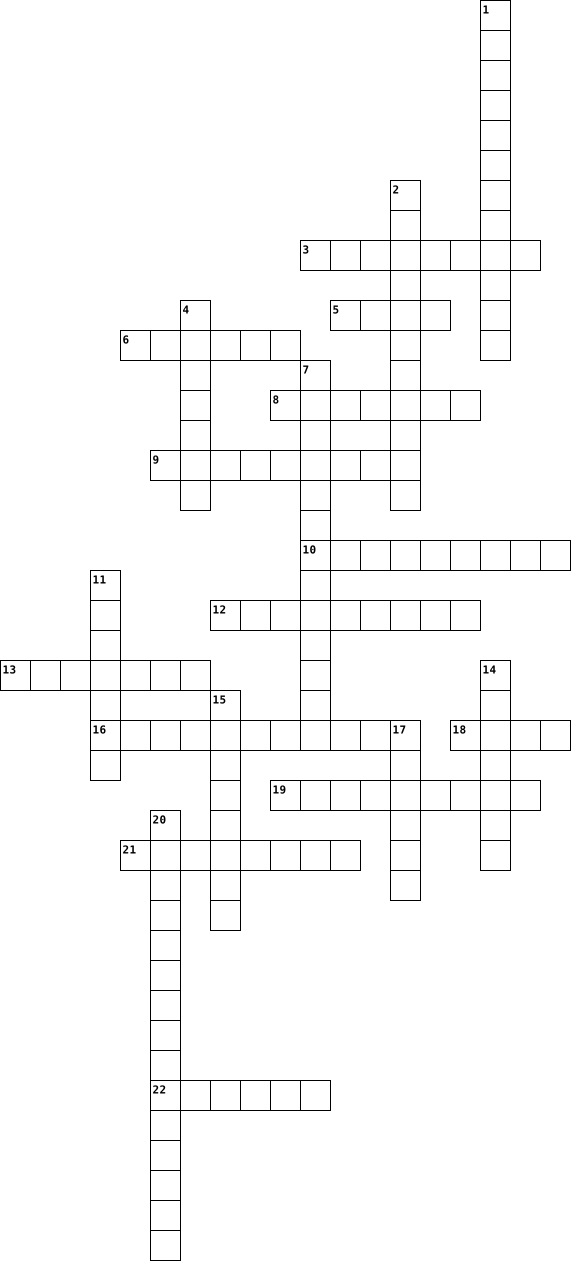
Across
- This is a mineral naturally found in various foods.
- Fruits, Vegetables, Grains, Protein Foods, and Dairy are included in the five ____ groups.
- Nutrition is a significant part of ____.
- Having a lack of ____ leads to muscle contractions.
- Essentially, this provides the benefit from taking in food, the study of food, and how it functions in your body, - a substance that is found in food.
- An essential mineral that is needed by all tissues in the body, sometimes referred to as an electrolyte.
- Known as the chemical compounds that are found in food.
- These are made up of chemical 'building blocks' called amino acids.
- A recommended single portion of food.
- This is a mineral found in plants and animals and all living things - mainly meat, poultry, pork and other protein products.
- This is a mineral that is essential for healthy muscles, nerves, bones and blood sugar levels.
- A fat-soluble vitamin that comes in two forms - phylloquinone, menaquinones
- A chemical element of the alkali metal group
Down
- A diet consisting of a variety of different types of food and providing adequate amounts of the nutrients necessary for good health.
- This is how much of a food you are served or how much you eat.
- This is a mineral in your body that strengthens muscles and bones, and allows your body to properly function.
- A condition in which the muscles around the stomach don't work properly.
- This is a sugar found in milk and milk products.
- A chemical element, also known as quicksilver.
- These are elements on the earth and in foods that our bodies need to develop and function normally.
- The strength and vitality required for sustained physical or mental activity.
- The organs that take in food and liquids and break them down into substances that the body can use for energy, growth, and tissue repair.
22 Clues: A recommended single portion of food. • Nutrition is a significant part of ____. • A chemical element of the alkali metal group • A chemical element, also known as quicksilver. • This is a sugar found in milk and milk products. • This is a mineral naturally found in various foods. • Having a lack of ____ leads to muscle contractions. • ...
Nutrition 2024-03-19
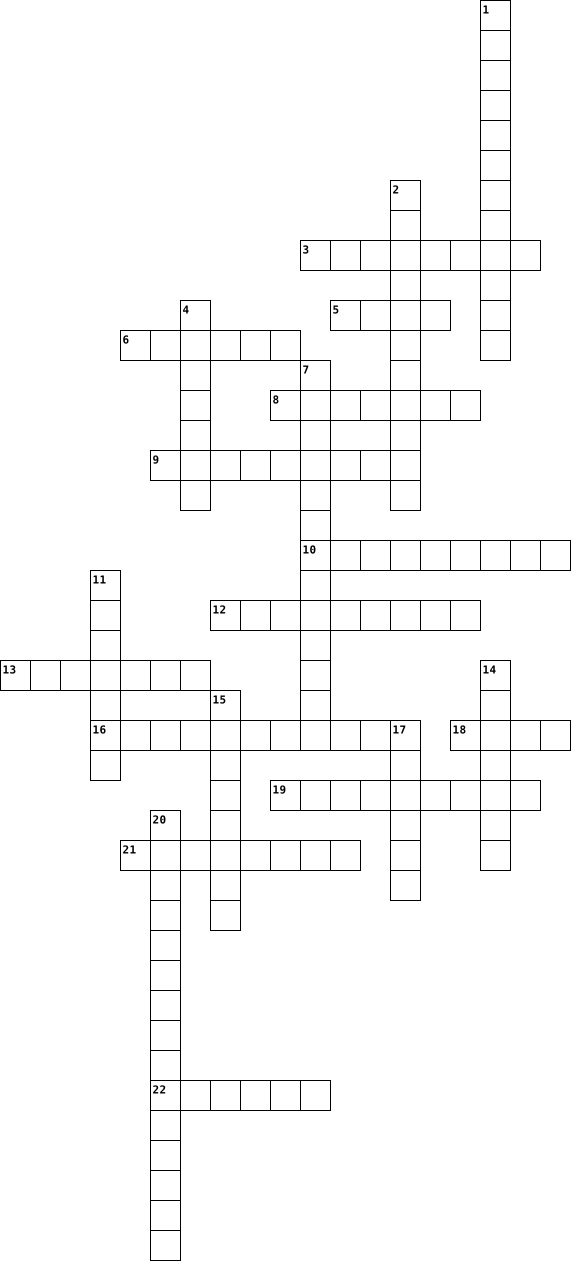
Across
- This is a mineral naturally found in various foods.
- Fruits, Vegetables, Grains, Protein Foods, and Dairy are included in the five ____ groups.
- Nutrition is a significant part of ____.
- Having a lack of ____ leads to muscle contractions.
- Essentially, this provides the benefit from taking in food, the study of food, and how it functions in your body, - a substance that is found in food.
- An essential mineral that is needed by all tissues in the body, sometimes referred to as an electrolyte.
- Known as the chemical compounds that are found in food.
- These are made up of chemical 'building blocks' called amino acids.
- A recommended single portion of food.
- This is a mineral found in plants and animals and all living things - mainly meat, poultry, pork and other protein products.
- This is a mineral that is essential for healthy muscles, nerves, bones and blood sugar levels.
- A fat-soluble vitamin that comes in two forms - phylloquinone, menaquinones
- A chemical element of the alkali metal group
Down
- A diet consisting of a variety of different types of food and providing adequate amounts of the nutrients necessary for good health.
- This is how much of a food you are served or how much you eat.
- This is a mineral in your body that strengthens muscles and bones, and allows your body to properly function.
- A condition in which the muscles around the stomach don't work properly.
- This is a sugar found in milk and milk products.
- A chemical element, also known as quicksilver.
- These are elements on the earth and in foods that our bodies need to develop and function normally.
- The strength and vitality required for sustained physical or mental activity.
- The organs that take in food and liquids and break them down into substances that the body can use for energy, growth, and tissue repair.
22 Clues: A recommended single portion of food. • Nutrition is a significant part of ____. • A chemical element of the alkali metal group • A chemical element, also known as quicksilver. • This is a sugar found in milk and milk products. • This is a mineral naturally found in various foods. • Having a lack of ____ leads to muscle contractions. • ...
Nutrition 2024-05-02
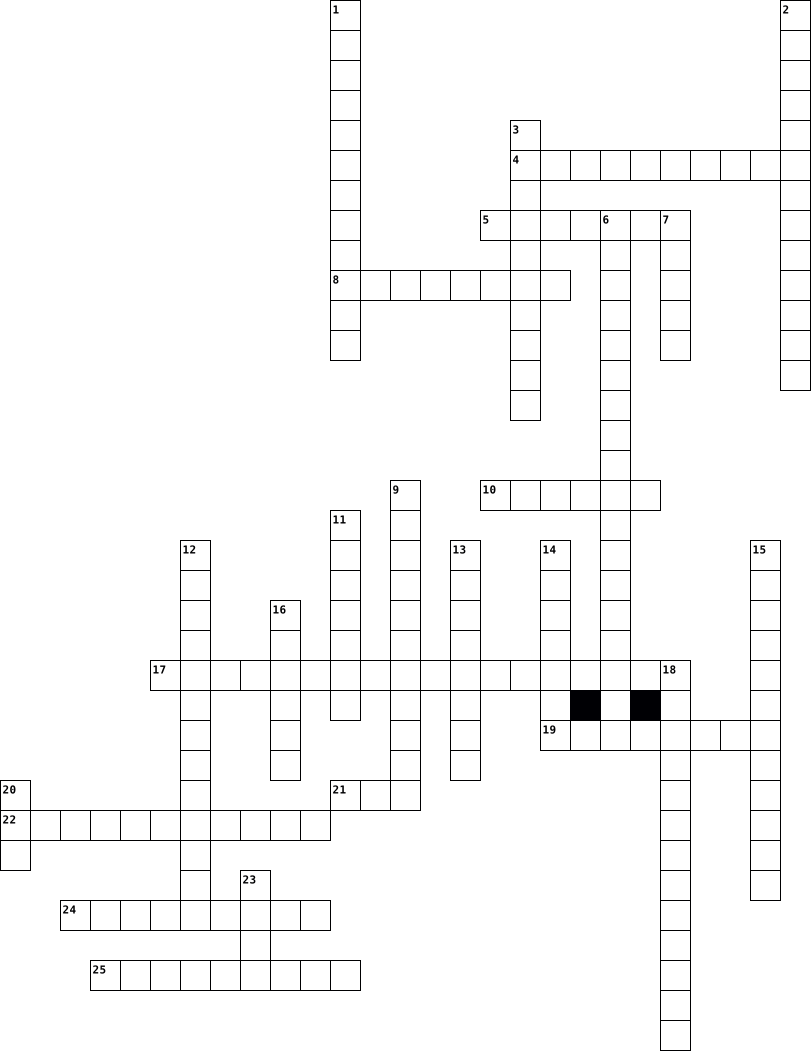
Across
- the process your body uses to get or make energy from the food you eat.
- substances that speed up chemical reactions in the body.
- a type of fat that is created when liquid oils are changed into solid fats, like shortening and some margarines. It makes them last longer without going bad. It may also be found in crackers, cookies, and snack foods. Foods with this type of fat can raise your LDL (bad) cholesterol and lowers your HDL (good) cholesterol.
- It helps with the function of nerves and muscles. It also helps to keep the right balance of fluids in your body.
- a type of fat that is liquid at room temperature.
- chemical compounds in food that are used by the body to function properly and maintain health. Examples include proteins, fats, carbohydrates, vitamins, and minerals.
- also known as “good” cholesterol.
- a condition that happens when you do not take in enough liquids to replace those that you lose.
- the process the body uses to break down food into nutrients.
- field of study focuses on foods and substances in foods that help animals (and plants) to grow and stay healthy. It also includes behaviors and social factors related to food choices.
Down
- minerals in body fluids. They include sodium, potassium, magnesium, and chloride.
- measures how a carbohydrate-containing food raises blood sugar.
- the building blocks of proteins.
- a type of fat is found in avocados, canola oil, nuts, olives and olive oil, and seeds.
- They can be found naturally in fruits, vegetables, milk, and milk products. They are also added to many foods and drinks during preparation or processing. Types include glucose, fructose, and sucrose. Your digestive system breaks them down into glucose. Your cells use the glucose for energy.
- a waxy, fat-like substance that’s found in all cells of the body.
- the main sugar found in the blood and the main source of energy for your body.
- Your body uses this sugar for energy for your cells, tissues and organs. It stores any extra sugar in your liver and muscles for when it is needed.
- A unit of energy in food.
- You get proteins in your diet from meat, dairy products, nuts, and certain grains and beans.
- a type of fat that is solid at room temperature. It is found in full-fat dairy products (like butter, cheese, cream, regular ice cream, and whole milk), coconut oil, lard, palm oil, ready-to-eat meats, and the skin and fat of chicken and turkey, among other foods. It also raises blood cholesterol and risk of heart disease.
- a protein found in wheat, rye, and barley. It can also be in products such as vitamin and nutrient supplements, lip balms, and certain medicines.
- a type of fat found in your blood.
- also known as “bad” cholesterol.
- This is made up of what you eat and drink.
25 Clues: A unit of energy in food. • the building blocks of proteins. • also known as “bad” cholesterol. • also known as “good” cholesterol. • a type of fat found in your blood. • This is made up of what you eat and drink. • a type of fat that is liquid at room temperature. • substances that speed up chemical reactions in the body. • ...
Nutrition 2024-03-29
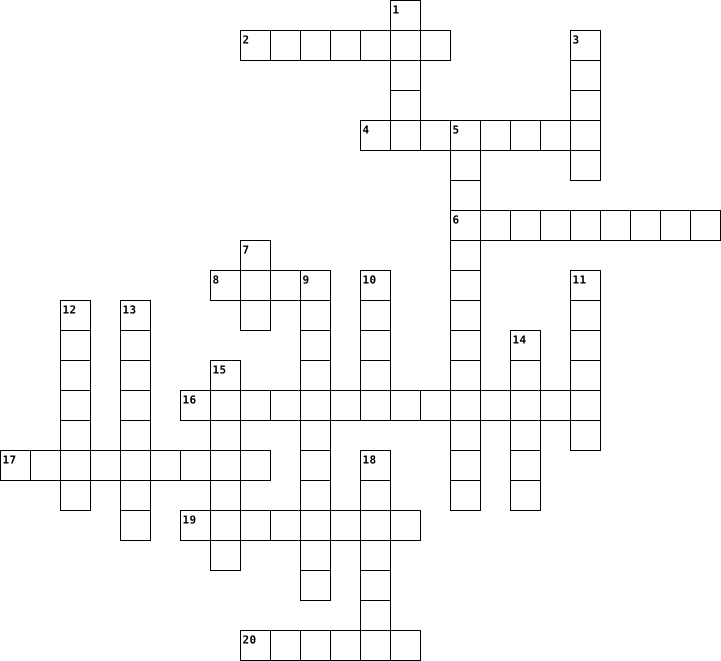
Across
- Nutrients your body uses to build and maintain cells and tissues.
- Sugar found naturally in fruit and fruit juices.
- The most important meal of the day.
- Essential mineral that the body can't store.
- Treating a substance with heat to kill or slow the growth of pathogens.
- The process by which your body takes in and uses food.
- Elements found in food that are used by the body
- Recommended amount of salt for a day(mg)
Down
- A tough complex carbohydrate that the body can't digest.
- The most essential nutrient for the body?
- What nutrient is the body's primary source of energy?
- Where does artificial Trans fat usually come? from?
- Consuming saturated fats can increase the level of what in your blood?
- What your body breaks down carbohydrates into.
- Method of preparation that makes food high in fat.
- One of the most common food allergies.
- What vitamin comes from sunlight?
- Recommended amount of minutes to exercise a day.
- Unit of heat used to measure the energy you body uses and receives from food.
- Mineral found in dairy products.
20 Clues: Mineral found in dairy products. • What vitamin comes from sunlight? • The most important meal of the day. • One of the most common food allergies. • Recommended amount of salt for a day(mg) • The most essential nutrient for the body? • Essential mineral that the body can't store. • What your body breaks down carbohydrates into. • ...
Nutrition 2022-12-18

Across
- Tool used to flip foods
- Small knife used for delicate cuts
- Traps air and makes foods stringy
- Nutrients your body needs/uses most
- Substances that carry out bodily functions
- Big knife used for cutting big/hard foods
- Ingredient that puts out small oil fires
Down
- Technique used to measure flour
- Macronutrient that provides energy
- Technique to have an accurate measurement
- Breaking an egg
- Part of an egg- Protein rich
- Less abundant nutrients
- Tool used to cook foods in it
- Macronutrient used for insulation
- Fat & cholesterol-rich food used to bake
- Macronutrient & builds bodily structure
- Protein-rich food & comes from chickens
- Technique to protect fingers for cutting
- Part of an egg- Fat rich
20 Clues: Breaking an egg • Tool used to flip foods • Less abundant nutrients • Part of an egg- Fat rich • Part of an egg- Protein rich • Tool used to cook foods in it • Technique used to measure flour • Macronutrient used for insulation • Traps air and makes foods stringy • Macronutrient that provides energy • Small knife used for delicate cuts • Nutrients your body needs/uses most • ...
Nutrition 2022-09-22
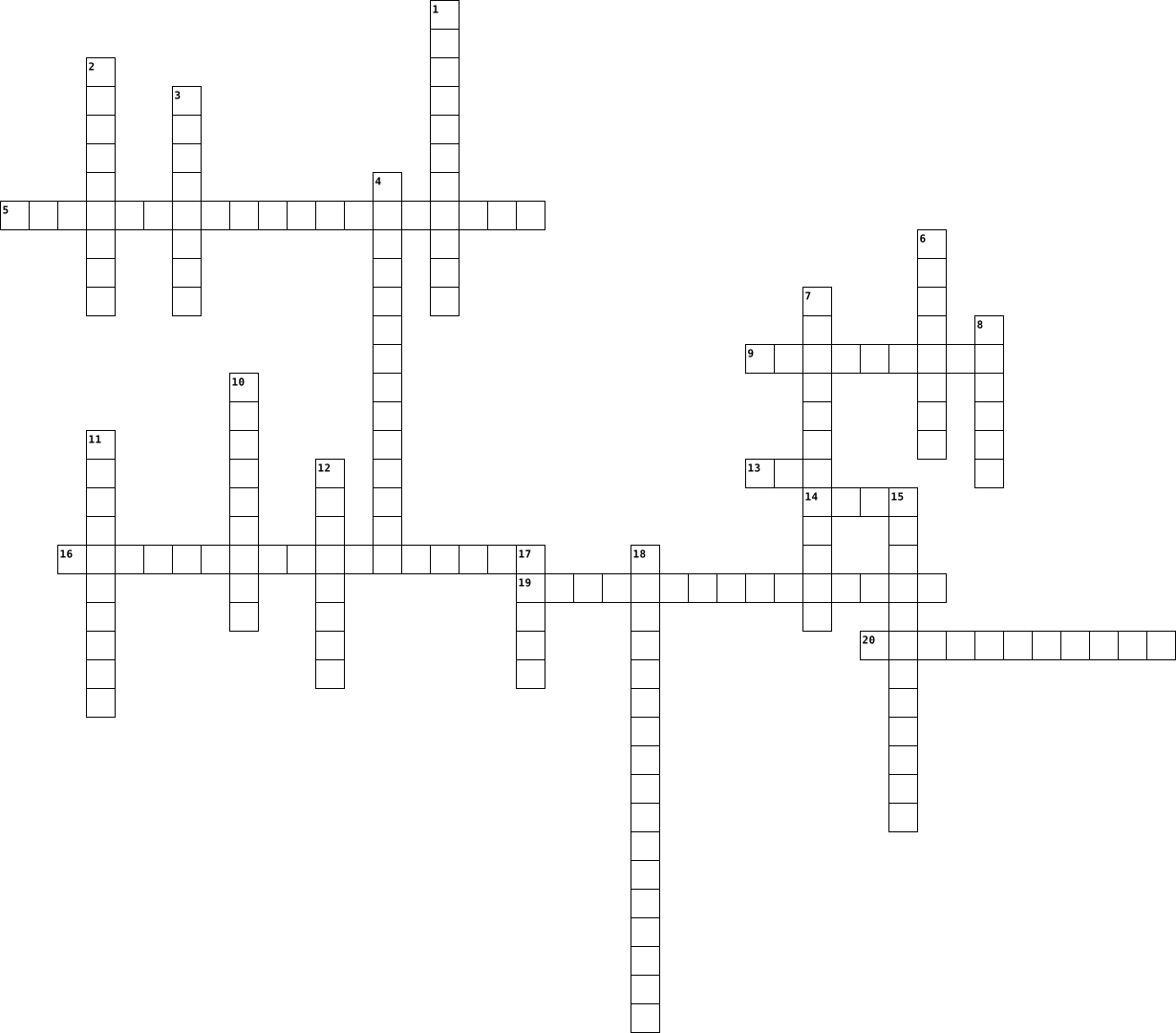
Across
- the general idea that its normal to not be content with one's own body
- the field of study that focuses on food that helps us grow health
- body mass index
- what you eat and drink on a daily basis
- the feeling of insecurity and self about ones own body
- key nutrients including protein, fat, carbs
- a belief system that focuses on the values, weight, shape, and size over the wellbeing
Down
- how much water you drink per day
- the subjective picture or mental image of one's own body
- fashionable diets that generally don't result In long term weight loss goals
- lack of consistent access to food
- chemical compounds in food that are used by the body to function properly and maintain health
- assist in protecting your body against the damage caused by free radicals
- we need food to function and be active
- substances added to food to improve flavor, color, texture or preserve food
- unprossessed foods that contain high levels of nutrients
- a use of energy in food
- societally constructed concept of the ideally slim female body
- calories calories found in foods with little or no vitamins, minerals, or fiber
- feeling confident and secure about your body and self
20 Clues: body mass index • a use of energy in food • how much water you drink per day • lack of consistent access to food • we need food to function and be active • what you eat and drink on a daily basis • key nutrients including protein, fat, carbs • feeling confident and secure about your body and self • the feeling of insecurity and self about ones own body • ...
Nutrition 2022-11-28
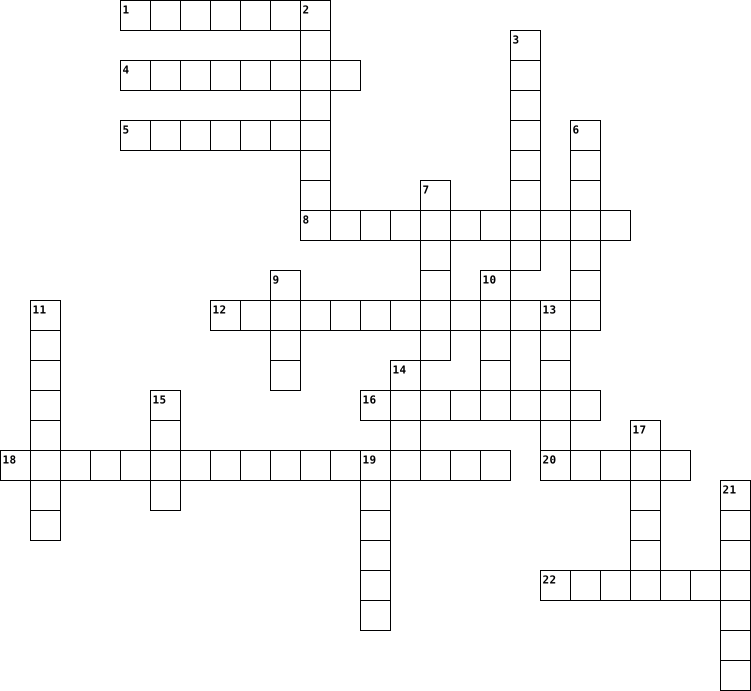
Across
- we need this mineral for healthy teeth and bones.
- these give our body nutrients for growth and repair.
- the muscular cavity that stores urine.
- vitamin_ are pills that you take in order to improve your health when you are lacking a certain vitamin.
- this food group gives us energy, an example is a banana.
- A measurement of the energy content in food.
- when the blood pushes very hard on the heart and blood vessels.
- liquid that comes from your skin when you are hot.
- toxic substances.
Down
- vitamins and _ we need these for healing and preventing illness.
- a_diet means eating from the main food groups in correct quantities.
- two tubes that link the kidneys to the bladder.
- sweat_ produces sweat.
- a lack of this mineral can cause anaemia.
- it is essential to stop us getting dehydrated, and it also helps our excretory system to eliminate waste.
- it is important to _ regularly because it maintains heart and lung health.
- more than necessary, too much.
- these give us energy we can store and maintain our body temperature.
- too much of this can cause kidney problems.
- dental_ permanently damaged areas in the hard surface of your teeth, caused by excess sugar.
- it is secreted from the mouth when eating and helps to break down food.
- excessive fat consumption that presents a risk to health.
22 Clues: toxic substances. • sweat_ produces sweat. • more than necessary, too much. • the muscular cavity that stores urine. • a lack of this mineral can cause anaemia. • too much of this can cause kidney problems. • A measurement of the energy content in food. • two tubes that link the kidneys to the bladder. • we need this mineral for healthy teeth and bones. • ...
Nutrition 2023-05-11
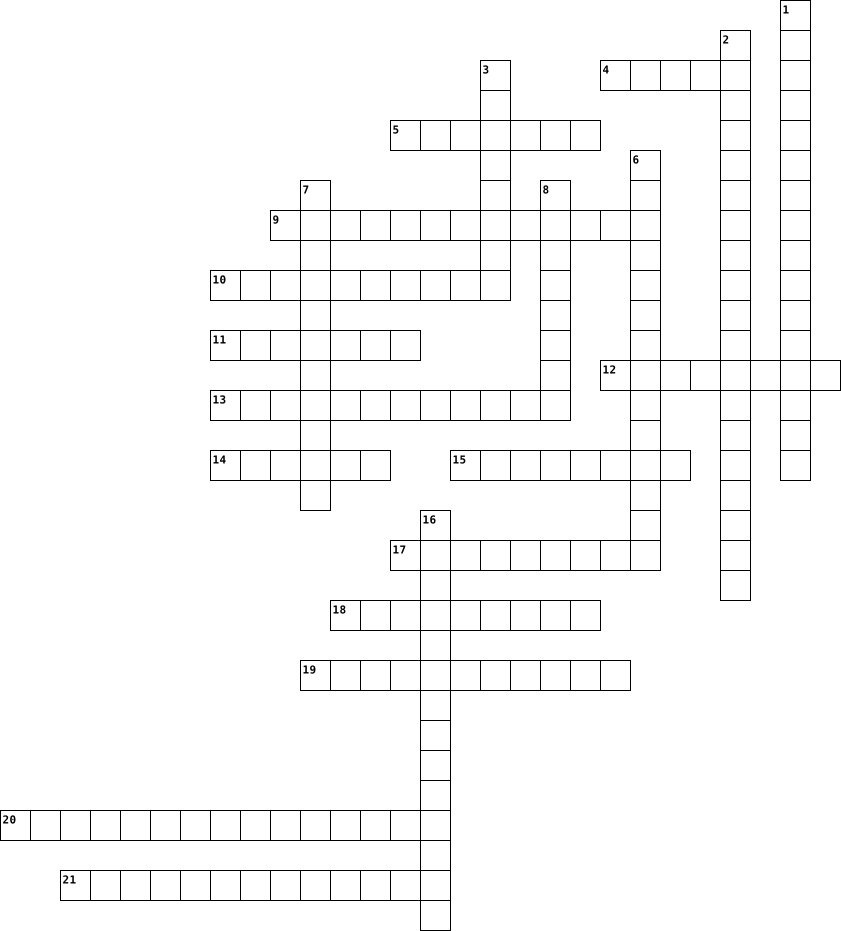
Across
- carbohydrates which the body can't digest
- Heat used to measure how much energy your body uses, while receiving it from food
- substances added to food to produce a desired affect
- recommended eating, and physical activity
- guide to healthy eating
- compounds that help regulate many body processes
- bones become fragile and break easy
- drive to eat, prompted by the body
- Desire for food
- Body takes in and uses food
- What your body needs to grow and repair itself
- waxy, fat like substance
- negative reaction to food without immune system
- starches and sugars
Down
- food illness
- pathogens from one food to another
- nutrients the body uses to build and maintain its cells and tissues
- heating food to kill and or slow growth of pathogens
- immune systems reaction to food
- elements in food used by the body
- high ratio of nutrients to calories
21 Clues: food illness • Desire for food • starches and sugars • guide to healthy eating • waxy, fat like substance • Body takes in and uses food • immune systems reaction to food • elements in food used by the body • pathogens from one food to another • drive to eat, prompted by the body • bones become fragile and break easy • high ratio of nutrients to calories • ...
Nutrition 2025-04-02

Across
- ability to attract electrons in a bond
- region where electrons are found
- element that gains or shares electrons
- vertical column on the periodic table
- atom with same protons but different neutrons
- bond bond between metal and nonmetal
- a negatively charged ion
- an atom with a charge
- horizontal row on the periodic table
- the smallest unit of matter
- connection between atoms
Down
- element that loses electrons easily
- outermost electrons
- negatively charged particle around the nucleus
- a positively charged ion
- neutral particle in the nucleus
- how easily an element reacts
- positively charged particle in the nucleus
- center of an atom
- bond bond where atoms share electrons
20 Clues: center of an atom • outermost electrons • an atom with a charge • a positively charged ion • a negatively charged ion • connection between atoms • the smallest unit of matter • how easily an element reacts • neutral particle in the nucleus • region where electrons are found • element that loses electrons easily • bond bond between metal and nonmetal • ...
Nutrition 2025-04-10

Across
- Disaccharide composed of two glucoses
- Formal name for burping
- Protein is the only nutrient that contains this
- Type of bonds in cellulose
- Made of three fatty acids and glycerol
- Type of digestive system for dogs, cats, and pigs
- most important nutrient
- Limiting fatty acid
- Formal name for cud chewing
- Monosaccharide found in milk
- First part of small intestine
- The “true stomach” in a ruminant
- Milk flows straight to the abomasum through the esophageal _____ in newborn calves
- Monosaccharide found in fruit
- Nutrient that is required but can be toxic
Down
- Main site of nutrient absorption (one word)
- Ruminant stomach chamber that absorbs water and looks like leaves in a book
- First limiting amino acid
- Organic nutrient needed in small amounts
- ___minerals are needed in larger quantities
- Type of fat with one or more double bonds
- Process of breaking food down into molecules
- end section of small intestine
- Storage form of glucose in the liver and muscle
- Type of bond linking amino acids to form protein
- Disaccharide composed of galactose and glucose
- Bonds in starch
- Site of microbial fermentation of fiber in horses and rabbits
- Largest compartment in ruminant stomach, major site of fermentation
- Major site of water absorption
- Stored in gall bladder and important for fat digestion
- Process of taking molecules across the GI tract walls and into circulation
- Disaccharide composed of glucose and fructose
- Chamber in ruminant stomach that sorts out particles
- Fat soluble vitamins in alphabetical order
35 Clues: Bonds in starch • Limiting fatty acid • Formal name for burping • most important nutrient • First limiting amino acid • Type of bonds in cellulose • Formal name for cud chewing • Monosaccharide found in milk • First part of small intestine • Monosaccharide found in fruit • end section of small intestine • Major site of water absorption • The “true stomach” in a ruminant • ...
Nutrition 2024-11-12

Across
- The most concentrated form of food energy (calories)
- Help regulate the many chemical processes in the body
- found in plant sources
- Helps form red blood cells, muscles, and other tissues.
- Deficiency of iron leads to
- The type of fat most strongly linked to high cholesterol and increased risk of heart disease.
- nonfood source is the sun
- Contain all 9 essential amino acids
- are the body’s main source of energy and provide the body’s need for dietary fiber.
- the substances found in food that keep your body functioning
Down
- Help to build, maintain, and repair body tissues.
- Fats that are liquid at room temperature.
- provide vitamins, minerals, and fiber that are important to the health
- Aids in night vision, Plays a role in developing, strong bones and teeth
- the plant material that doesn’t break down when you digest food.
- The best way to avoid a _ is to eat a well balanced diet
- Are broken down quickly by the body to be used as energy
- The body requires 16 _ daily.
- A fat-like substance that is part of every cell of the body.
- 1/2 to 3/4 of the human body consists
- lack of calcium & phosphorus leads to
21 Clues: found in plant sources • nonfood source is the sun • Deficiency of iron leads to • The body requires 16 _ daily. • Contain all 9 essential amino acids • 1/2 to 3/4 of the human body consists • lack of calcium & phosphorus leads to • Fats that are liquid at room temperature. • Help to build, maintain, and repair body tissues. • ...
Nutrition 2025-05-08

Across
- Related to what a person eats for health or nutrition.
- The essential muscle building nutrient, these can be found in egg and meat.
- Clear liquid your body needs everyday to stay hydrated.
- The process of breaking down food into smaller molecules.
- This term can be defined as a state of either physical, emotional, mental, social well being of one, and not merely just illness or disease.
- These are also energy nutrients, often found in oil or butter.
- The term used for when you eat food beyond what your body needs.
- Natural sugar found in fruits and vegetables.
- Foods like bread, pasta, and rice are rich in these.
- This is important for bone and teeth, this is also one of the minerals, also often added to milk.
Down
- Substances found in food that makes you healthy and strong, there are a lot of types of them.
- This nutrient has 13 of them, using letters and numbers to represent each.
- The term for foods that are necessarily for good growth and health.
- The term opposite of hydration.
- Nutrient that support bone and nerve health, zinc and magnesium are examples of these.
- The term used as a marketing term that is labelled for food that are rich in nutrients and especially good for health.
- A type of mineral, mostly found in red meat that helps carry the oxygen in the blood
- The term for the chemical reaction in the body cell when food is changed into energy
- The indigestible part of a plant, it’s also a type of carbohydrate that the body cannot digest.
- The amount of energy that measures the energy content of food.
20 Clues: The term opposite of hydration. • Natural sugar found in fruits and vegetables. • Foods like bread, pasta, and rice are rich in these. • Related to what a person eats for health or nutrition. • Clear liquid your body needs everyday to stay hydrated. • The process of breaking down food into smaller molecules. • ...
Nutrition 2025-05-01

Across
- a unit of food energy
- helps to digest protein, sugar & calcium
- Chemicals that do important jobs in your body
- Primary source of energy
- to be free from any illnesses, pain or injury and in a state of physical wellness
- the sum of the food consumed by an organism
- used in the body to promote chemical reaction & form body structures
- helps maintain balance of fluid in the body
- absorb/transports nutrients
- helps your immune system fight off invading bacteria & virus
- substance found in the food we eat that are essential to supply energy, promote growth and regulate the body
Down
- helps with fluid and blood pressure in the body
- making energy, connective tissues
- the body needs for growth & development
- number of calories your body burns at rest
- helps remove lactic acids, which is created when you exert yourself
- builds strong bones & teeth
- Fat soluble vitamins
- Help build & repair tissue
- The supplying of the materials necessary for life to cells and the body
- Water soluble vitamins
21 Clues: Fat soluble vitamins • a unit of food energy • Water soluble vitamins • Primary source of energy • Help build & repair tissue • builds strong bones & teeth • absorb/transports nutrients • making energy, connective tissues • the body needs for growth & development • helps to digest protein, sugar & calcium • number of calories your body burns at rest • ...
Nutrition 2025-05-06

Across
- tract Main path for food through the body.
- Sports drink with similar concentration to body fluids.
- State of low body fluid.
- disease Cardiovascular condition linked to nutrition and cholesterol.
- Organ producing bile.
- Drinks containing minerals lost in sweat.
- Type of carbohydrate including monosaccharides and disaccharides.
- Efforts to prevent drug use in sport.
- Type of dietary fat including monounsaturated and polyunsaturated.
- Symptom of low body fluid state.
- Removal of waste from the body.
- Energy used at rest.
- Organ producing digestive enzymes.
- intestine Site of major nutrient absorption.
- Method to estimate body fat percentage.
- composition Measured by methods like skinfold analysis.
- State of excessive body fluid.
- Method to estimate body fat.
- Measured in calories or joules.
- acids Components of fats including omega 3 and omega 6.
- Unit of energy measurement.
- Metric unit of energy measurement.
- Inorganic micronutrients.
- acids Building blocks of protein.
- Macronutrients including saturated and unsaturated types.
Down
- Organic micronutrients.
- Nutrients including vitamins and minerals.
- Simple sugar molecule.
- Type of carbohydrate including polysaccharides.
- Macronutrients including sugars and starches.
- Abbreviation for Recommended Daily Allowance.
- Beverages containing stimulants have this..
- Health issue linked to nutrition.
- Tube receiving food from the buccal cavity.
- intestine Absorbs water and electrolytes.
- Process of breaking down food in the gastrointestinal tract.
- Non-digestible part of food.
- Macronutrients made up of amino acids.
- State related to body fluid balance.
- Fatty substance linked to heart disease.
- Uptake of nutrients into the bloodstream.
- Essential nutrients needed in large amounts.
- Complex carbohydrate molecule.
- Primary fluid for drinking.
- intake Consuming liquids for hydration.
- Organ receiving food from the oesophagus.
- drinks Beverages for athletes.
47 Clues: Energy used at rest. • Organ producing bile. • Simple sugar molecule. • Organic micronutrients. • State of low body fluid. • Inorganic micronutrients. • Primary fluid for drinking. • Unit of energy measurement. • Non-digestible part of food. • Method to estimate body fat. • Complex carbohydrate molecule. • State of excessive body fluid. • Removal of waste from the body. • ...
Nutrition 2025-05-20

Across
- The process of absorbing nutrients
- Found in dairy, good for strong bones
- A condition caused by iron deficiency
- A component of whole grains that aids digestion
- Disease caused by a lack of vitamin C
- Essential for hydration, makes up most of the body
- The body's main fuel, found in bread and pasta
- The process of breaking down food in the body
- Another term for body fat percentage
- Helps regulate metabolism, found in seafood
- Nutrient that protects cells from damage
- C Found in citrus fruits, strengthens immunity
- Type of sugar naturally found in fruits
- Helps move food through the digestive system
- A diet excluding animal products
- Helps red blood cells carry oxygen
Down
- Found in dairy, important for muscle function
- D A vitamin produced in sunlight
- A condition caused by eating too little
- Type of fat that's healthiest
- The main source of energy in food
- The body's way of storing extra energy
- Nutrient needed in small amounts, found in fruits and vegetables
- Too much can lead to hypertension
- Eating too much of this leads to obesity
- Found in high amounts in junk food, increases energy quickly
- Nutrient that builds and repairs body tissues
- Green leafy vegetables are a good source of this
- K Mineral that helps blood clot
29 Clues: Type of fat that's healthiest • K Mineral that helps blood clot • D A vitamin produced in sunlight • A diet excluding animal products • The main source of energy in food • Too much can lead to hypertension • The process of absorbing nutrients • Helps red blood cells carry oxygen • Another term for body fat percentage • Found in dairy, good for strong bones • ...
Nutrition 2025-01-10

Across
- Digestive tract contractions.
- Supplements with many vitamins.
- Pain around the stomach.
- Proteins, fats, and carbohydrates.
- High blood sugar.
- Low blood sugar.
- Low potassium levels.
- Obsession with healthy eating.
- Partially solid foods.
- Fat behind the abdominal cavity.
- Deficiency in essential nutrients.
- Adrenal glands above the kidneys.
Down
- Lack of appetite.
- Unhealthy fats in processed foods.
- After a meal.
- Slow eating.
- Nutritional enrichment.
- Few-molecule carbohydrates.
- Body symmetry in anatomy.
- Diet-based treatment.
- Complex carbohydrates.
- Indigestion.
- Chemical processes in the body.
- Hormone-secreting glands.
- Essential vitamins and minerals.
- Fast eating.
- High calcium levels.
- Food promoting gut bacteria.
- Enzymes from external sources.
- Duct-secreting glands.
30 Clues: Slow eating. • Indigestion. • Fast eating. • After a meal. • Low blood sugar. • Lack of appetite. • High blood sugar. • High calcium levels. • Diet-based treatment. • Low potassium levels. • Complex carbohydrates. • Partially solid foods. • Duct-secreting glands. • Nutritional enrichment. • Pain around the stomach. • Body symmetry in anatomy. • Hormone-secreting glands. • ...
Nutrition 2024-12-03

Across
- Helps maintain balance of fluid in the body
- Chemicals that do important jobs in your body
- Helps to digest protein, sugar, & calcium
- 60% of our calories should come from this
- "Bad Fat" increases cholesterol and heart disease
- Helps remove lactic acid, which is created when you exert yourself (exercise)
- Not stored in body, dissolves in water
- "Very bad" raises cholesterol
- Builds strong bones and teeth
- making energy, connective tissues, and blood vessels
- Stored in fat tissues in the body and liver
- Supply amino acids and energy to the body
- Foods stripped of bran, fiber, and nutrients
- Metabolism, skin, immune system
- Bone growth , prevents toxicity in the blood
- Used in the body to promote chemical reactions
- Immune system, waste disposal
Down
- "Good Fat" Good for heart
- The best supply of food energy
- the body needs for growth and development
- Foods that take longer to break down are
- Simple Sugars
- Not absorbed by the body, helps with digestion
- a part of every cell and tissue in the body
- "Good Fat" Lowers cholesterol
- Complex Sugars
- Antioxidant, good for skin
- Eyes and Cells
- Helps with fluid and blood pressure in the body
29 Clues: Simple Sugars • Complex Sugars • Eyes and Cells • "Good Fat" Good for heart • Antioxidant, good for skin • "Good Fat" Lowers cholesterol • "Very bad" raises cholesterol • Builds strong bones and teeth • Immune system, waste disposal • The best supply of food energy • Metabolism, skin, immune system • Not stored in body, dissolves in water • Foods that take longer to break down are • ...
Nutrition 2026-03-08

Across
- This helps with bone growth and is sometimes called an electrolyte.
- The chemical process by which your body breaks down food to create energy.
- A condition caused by losing more fluids than you take in, often leading to fatigue.
- The state where the number of calories consumed is equal to the number of calories burned.
- The amount of food a person chooses to eat, which may be different from the label's serving size.
- Calories derived from food with many calories but little to no nutritional value (like soda).
- A macronutrient that can be good or bad. An avocado is an example.
- These are listed on a food label in descending order by weight.
- A specific unit of measure used to determine the amount of energy available in food.
- The simple sugar that results from carbohydrate digestion; it is the body's main fuel source.
Down
- The USDA visual guide that replaced the Food Pyramid to show balanced portions.
- Foods that provide a high amount of vitamins and minerals compared to their calorie count.
- The body's main source for energy.
- An artificial fat created through hydrogenation; experts suggest avoiding these entirely.
- A waxy, fat-like substance found only in animal products that can clog arteries.
- The most essential nutrient, making up roughly 60%–70% of the human body.
- This helps the body convert other nutrients into energy. Examples are A,B,C and D.
- Known as "healthy fats," these are usually liquid at room temperature (like olive oil).
- This builds muscles and help repair cells in the body.
- A mineral found in salt; 8th graders are taught to limit this to prevent high blood pressure.
20 Clues: The body's main source for energy. • This builds muscles and help repair cells in the body. • These are listed on a food label in descending order by weight. • A macronutrient that can be good or bad. An avocado is an example. • This helps with bone growth and is sometimes called an electrolyte. • ...
Nutrition 2025-10-31

Across
- Plant foods that can be combined to make all essential amino acids such as rice and beans
- A body type that is long and lean with little muscle or fat
- A body type that is rounder or softer with a higher percentage of body fat
- Sugars that provide quick energy; found in fruits, milk, and sweets
- The total number of calories consumed from food and drink
- When calories eaten equal calories burned maintaining weight
- Organic compounds that help the body use energy from food and maintain healthy cells
- The most essential nutrient; it helps regulate body temperature, transport nutrients, and remove waste
- Proteins that help speed up chemical reactions in the body such as digestion
- Nutrients that build and repair body tissues, make enzymes, and support growth
- A fatty substance in the blood; necessary in small amounts but harmful in excess
- A concentrated source of energy that supports body functions and helps absorb vitamins
- A fat-soluble vitamin that helps the body absorb calcium and build strong bones
- The science of how your body uses food to grow, maintain, and repair itself
- A simple sugar that is the body’s main energy source
- A weight range that supports good health for your height and body type
- Vitamins stored in the body’s fat tissues and liver such as Vitamin D
- A mineral that helps build strong bones and teeth
- Nutrients needed in small amounts such as vitamins and minerals
- When fewer calories are eaten than burned leading to weight loss
Down
- The substances in food that your body needs to function properly; there are over 50 nutrients in six categories
- Nutrients the body needs in large amounts such as carbohydrates, fats, and proteins
- Foods that contain all nine essential amino acids such as meat, eggs, soy, or quinoa
- A body type that is muscular with broad shoulders and narrow hips
- A type of fat usually solid at room temperature; too much can raise cholesterol and heart disease risk
- A type of carbohydrate the body cannot digest; it helps with digestion and lowers cholesterol
- The number of calories the body burns for basic functions and activity
- Starches that provide long-lasting energy; found in foods like bread, pasta, and rice
- How you see and feel about your body and how you think others see it
- When more calories are eaten than burned leading to weight gain
- Vitamins that are not stored in the body and must be eaten daily such as Vitamin C
- The body’s main source of energy; found in foods like grains, fruits, and vegetables
- The way you interpret or understand something; in this case how you view your own body
- A healthier type of fat found in oils, nuts, and fish
- Elements that help the body build bones, make blood, and maintain normal body functions
- Minerals that carry an electrical charge in body fluids and help maintain balance in and around cells
- The building blocks that make up proteins
- A mineral that helps carry oxygen in the blood
- A water-soluble vitamin that helps with healing and immune function
39 Clues: The building blocks that make up proteins • A mineral that helps carry oxygen in the blood • A mineral that helps build strong bones and teeth • A simple sugar that is the body’s main energy source • A healthier type of fat found in oils, nuts, and fish • The total number of calories consumed from food and drink • ...
Nutrition 2025-10-21

Across
- Chemical compounds made of one sugar unit (glucose, fructose, etc.).
- Chart once used to show recommended food groups and servings per day.
- Nutrient that provides 9 calories per gram; used for energy and cell structure.
- Compound made of two sugars (like sucrose).
- The hormone that helps control blood sugar levels.
- A fatty acid containing only single bonds — solid at room temperature.
- Disorder in men similar to anorexia, involving obsession with muscle size.
- Nutrients that dissolve in water (like B and C vitamins).
- A three-part condition often affecting female athletes (low energy, bone loss, no period).
- Essential element like calcium, iron, or potassium.
- Nutrient that helps the body grow and repair tissue.
- Nutrient that helps regulate digestion and lowers cholesterol.
- Nutrient made of amino acids — builds muscle and tissue.
- Nutrient-related chart listing recommended daily intake.
- Vitamins that dissolve in fat (A, D, E, and K).
Down
- A serious eating disorder marked by extreme weight loss and self-starvation.
- Type of eating disorder involving bingeing and purging.
- Long-chain carbohydrate (like starch).
- Nutrient that provides energy and is found in sugars and starches.
- Fat type that contains more than one double bond.
- A measure of body fat based on height and weight.
- Fat type that contains one double bond — considered heart healthy
- Nutrient needed in small amounts for growth and repair.
- The total amount of energy in food.
- The energy your body uses to function.
25 Clues: The total amount of energy in food. • Long-chain carbohydrate (like starch). • The energy your body uses to function. • Compound made of two sugars (like sucrose). • Vitamins that dissolve in fat (A, D, E, and K). • Fat type that contains more than one double bond. • A measure of body fat based on height and weight. • The hormone that helps control blood sugar levels. • ...
Nutrition 2025-10-20

Across
- compounds that help to regulate your body processes
- a waxy fat-like substance that the body uses to build cells
- nutrients that promote growth and give you energy
- fruit is an example of a __________ carbohydrate
- process of taking in food and using it for energy and growth
- used to develop and repair cells
- your body needs carbohydrates to use as __________
- substances the body uses to form healthy bone and teeth
- a type of fat that increases your risk of heart disease
- a unit of heat that measures the energy in foods
- smaller chemical building blocks that make up a protein
- a nutrient you drink that helps with digestion and carries nutrients to your cells
- substances in food that your body needs to grow, have energy, and stay healthy
Down
- a carbohydrate that can't be digested and helps carry waste out of your body
- a type of fat that lowers your risk of heart disease
- a shortage of a nutrient
- starches or sugars found in food
- a type of fat that is the most unhealthy and is in many processed foods
- a mineral that helps build strong bones
- foods that have a high amount of nutrients compared to their number of calories
20 Clues: a shortage of a nutrient • starches or sugars found in food • used to develop and repair cells • a mineral that helps build strong bones • fruit is an example of a __________ carbohydrate • a unit of heat that measures the energy in foods • nutrients that promote growth and give you energy • your body needs carbohydrates to use as __________ • ...
Nutrition 2025-10-15

Across
- lack of Iron
- makes up 60% of our body weight
- found in chips, cookies and fried food
- the good fats found in animal sources
- type of eating where you eat to throw up
- Liver processes carboyhydrates to this
- full of electrolytes
- lack of calcium in bones
- regulates what is put on food labels
- found in fruits, juice, honey and chocolate milk
- distorted body image that believes your fat
- non fat, lean tissue in our body
- amino acids are the building blocks for this
- source of protein
- the type of carbohydrates that last longer
Down
- help muscles contract correctly
- stomach is sensitive to milk
- play a vital role in how the body operates
- Fastest source of energy to muscles
- full of glucose for fast energy
- maintains calcium in bones
21 Clues: lack of Iron • source of protein • full of electrolytes • lack of calcium in bones • maintains calcium in bones • stomach is sensitive to milk • help muscles contract correctly • makes up 60% of our body weight • full of glucose for fast energy • non fat, lean tissue in our body • Fastest source of energy to muscles • regulates what is put on food labels • ...
Nutrition 2026-01-13

Across
- – The amount of food eaten at one time
- – A mineral that helps build strong bones and teeth
- – Nutrients like calcium and iron that help bones and blood
- – A mineral that helps carry oxygen in the blood
- – The process of breaking down food so the body can use it
- – The body’s main source of energy, found in foods like bread and fruit
- – Information on food packaging that shows nutrients and ingredients
- – A type of carbohydrate that can provide quick energy
- – A fat-like substance in the blood that can affect heart health
Down
- – The process by which the body turns food into energy
- – Nutrients that help the body fight illness and stay healthy
- – A nutrient needed for digestion, temperature control, and hydration
- – Units that measure how much energy food provides
- diet – Eating the right amounts of different healthy foods
- – A nutrient that helps build muscles and repair the body
- – Foods like milk, cheese, and yogurt that provide calcium
- – Substances in food that help your body grow and stay healthy
- – A nutrient that helps with digestion and keeps you full
- – A nutrient that stores energy and helps keep the body warm
- grains – Grains that contain all parts of the grain kernel
- – A condition of having too much body fat that can affect health
- size – The recommended amount of food listed on a nutrition label
- – A mineral found in salt that should be limited in a healthy diet
23 Clues: – The amount of food eaten at one time • – A mineral that helps carry oxygen in the blood • – Units that measure how much energy food provides • – A mineral that helps build strong bones and teeth • – The process by which the body turns food into energy • – A type of carbohydrate that can provide quick energy • ...
Nutrition 2025-12-04

Across
- Not my ... of tea - Not being a big fan of something
- The meat from adult sheep
- To fill something
- Milk, cheese and things like that
- Be in a ... - Being in trouble
- The base of the soup
- To take a specific amount of something
- You make hummus from it
- Used in the soup that we eat on Christmas
- You use it to whip cream
- In other words: consumption
- A vegetable from the Familiada
Down
- An amount you take with your hand
- An equipment that separates e.g. water from pasta
- Spoon, fork and knife
- A process of taking something out of a freezer to unfreeze it
- You do it to get inside of an oven hot
- You can drink through it
- A piece of ... - Something easy
- A herb from the meme with Makłowicz
- You give it to a waiter for a good service
21 Clues: To fill something • The base of the soup • Spoon, fork and knife • You make hummus from it • You can drink through it • You use it to whip cream • The meat from adult sheep • In other words: consumption • Be in a ... - Being in trouble • A vegetable from the Familiada • A piece of ... - Something easy • An amount you take with your hand • Milk, cheese and things like that • ...
Nutrition 2026-05-22

Across
- Grains — Grains that contain all parts of the kernel
- — The process of healing after illness or injury
- The Word — To share information with others
- — The process of developing and becoming larger or stronger
- — The body’s main source of energy
- Health — Emotional, psychological, and social well-being
- — Nutrients such as calcium and iron that support body functions
- — Nutrients that help the body stay healthy and function properly
- Recipes — Meals made with healthy and beneficial ingredients
- — Help or assistance provided to others
- Insecurity — Limited or uncertain access to enough nutritious food
- — Plant foods rich in vitamins and minerals
- — Substances in food that help the body function and grow
Down
- Produce — Fruits and vegetables that are recently harvested
- Oils — Fats that can support heart and body health
- — Essential liquid needed for hydration and survival
- — Nutrients important for muscle growth and repair
- — Nutrients needed in small amounts for proper health
- — Nutrients the body needs in large amounts for energy and growth
- — The overall condition of the body and mind
- — Nutrients that help store energy and support body functions
- — Naturally sweet plant foods containing important nutrients
- Health — The condition and wellness of the body
- Groups — Categories used to organize types of foods
- Illnesses — To reduce the risk of becoming sick
25 Clues: — The body’s main source of energy • — Help or assistance provided to others • The Word — To share information with others • — Plant foods rich in vitamins and minerals • — The overall condition of the body and mind • Health — The condition and wellness of the body • Illnesses — To reduce the risk of becoming sick • — The process of healing after illness or injury • ...
food is fuel 2025-02-26

Across
- a type of carbohydrate that acts as a digestive cleaner
- made in plants and animals (organically)
- a macronutrient required in the body to create energy
- A type of food required in large amounts in the diet
- elements found in food and the earth
- builds, maintains and repairs body cells
- the largest food group in the australian guide to healthy eating
Down
- a type of nutrient required in small amounts
- a food selection model that has 5 different food groups
- an individual's position in a society which is determined by wealth, occupation, education, and social class
- a food selection model created by Nutrition Australia
- the largest food group in the healthy eating pyramid
12 Clues: elements found in food and the earth • made in plants and animals (organically) • builds, maintains and repairs body cells • a type of nutrient required in small amounts • the largest food group in the healthy eating pyramid • A type of food required in large amounts in the diet • a food selection model created by Nutrition Australia • ...
MULTIPLE ASSESSMENT SCIENCE 2023-06-19

Across
- Trensportation of water in plants is done by _____.
- Image formed by plane mirror is _______ and Erect.
- Process of oxidation of metals which reduce their strength is known as _________.
- Reaction in which two reactants react to form a single product is called ___________ reaction.
- The substances which change their colour or odour to tell us whether a substance is an acid or base is known as?
- The reaction which is the opposite of combination reaction.
- Inner covering of stomata which protects the stomach from digestive juices present in stomach is called_____.
- Reaction in which a acid nallifies the effect of base and a base nullifies the effect of an acid is known as _____________ reaction.
Down
- Bouncing back of light ray's by a reflecting surface is called?
- Gall bladder is present in _____.
- Life process in which nutrients are taken from food to carry out diffrent life process.
- Rare-view mirrors in vehicles are __________ mirrors.
- Real and inverted images can be formed on a ______.
- Light ray parallel to the principle axis,after reflection passes through _____.
- Microscopic pores in plants which help them in transpitation and exchange of gasses are known as _______.
15 Clues: Gall bladder is present in _____. • Image formed by plane mirror is _______ and Erect. • Trensportation of water in plants is done by _____. • Real and inverted images can be formed on a ______. • Rare-view mirrors in vehicles are __________ mirrors. • The reaction which is the opposite of combination reaction. • ...
MULTIPLE ASSESSMENT SCIENCE 2023-06-19

Across
- Trensportation of water in plants is done by _____.
- Image formed by plane mirror is _______ and Erect.
- Process of oxidation of metals which reduce their strength is known as _________.
- Reaction in which two reactants react to form a single product is called ___________ reaction.
- The substances which change their colour or odour to tell us whether a substance is an acid or base is known as?
- The reaction which is the opposite of combination reaction.
- Inner covering of stomata which protects the stomach from digestive juices present in stomach is called_____.
- Reaction in which a acid nallifies the effect of base and a base nullifies the effect of an acid is known as _____________ reaction.
Down
- Bouncing back of light ray's by a reflecting surface is called?
- Gall bladder is present in _____.
- Life process in which nutrients are taken from food to carry out diffrent life process.
- Rare-view mirrors in vehicles are __________ mirrors.
- Real and inverted images can be formed on a ______.
- Light ray parallel to the principle axis,after reflection passes through _____.
- Microscopic pores in plants which help them in transpitation and exchange of gasses are known as _______.
15 Clues: Gall bladder is present in _____. • Image formed by plane mirror is _______ and Erect. • Trensportation of water in plants is done by _____. • Real and inverted images can be formed on a ______. • Rare-view mirrors in vehicles are __________ mirrors. • The reaction which is the opposite of combination reaction. • ...
Nutrition CrossWord 2024-12-02

Across
- A sugar found in milk and dairy products
- Type of fat found in plants and fish, liquid at room temp
- A harmful type of fat found in some processed foods
- Unit of energy used to measure the energy in food
- A type of carbohydrate that aids in digestion but is not digested
- Primary source of energy in the human diet
- Organic compounds needed for overall health
Down
- Inorganic elements like calcium and iron needed by the body
- Type of fat found in animal products, solid at room temp
- Nutrition essential for building and preparing tissues
- Fats, used for long-term energy storage
- The process by which your body converts food into energy
- The process of breaking down food into nutrients that body can absorb
- Maintaining the body's water balance
14 Clues: Maintaining the body's water balance • Fats, used for long-term energy storage • A sugar found in milk and dairy products • Primary source of energy in the human diet • Organic compounds needed for overall health • Unit of energy used to measure the energy in food • A harmful type of fat found in some processed foods • ...
JJK FAN Ujamaa Collard Green Research 2024-04-05

Across
- A diet that reduces the risk of many diseases
- An antioxidant that helps fight radicals
- Vegetables of Brassicaceae with many species
- When a crop has grown and is ready to eat
- Parts of plants that are consumed by humans
Down
- The taking in and use of food and other nourishing material by the body
- A group of loose-leafed greens
- A healthy leafy vegetable
- Another word for farming. Growing and Harvesting crops
- Possessing or enjoying good health
10 Clues: A healthy leafy vegetable • A group of loose-leafed greens • Possessing or enjoying good health • An antioxidant that helps fight radicals • When a crop has grown and is ready to eat • Parts of plants that are consumed by humans • Vegetables of Brassicaceae with many species • A diet that reduces the risk of many diseases • ...
Living Things 2026-01-28

Across
- To exhibit ALL of the characteristics of life
- To get rid of wastes. (Ex: Going to the bathroom)
- Creating offspring
- The nonliving parts of the environment.
- The exchange of gasses. (Ex: breathing in and out)
- To NOT exhibit the characteristics of life
Down
- What makes living things able to grow, move, eat, and breathe (being alive)
- The living parts of the environment.
- Consuming / eating food, or when plants make their own food
- The study of LIFE
10 Clues: The study of LIFE • Creating offspring • The living parts of the environment. • The nonliving parts of the environment. • To NOT exhibit the characteristics of life • To exhibit ALL of the characteristics of life • To get rid of wastes. (Ex: Going to the bathroom) • The exchange of gasses. (Ex: breathing in and out) • ...
nutrients 2023-09-18

Across
- take longer for your body to break down
- should be carefully restricted by people with hypertension
- this vitamin helps prevent birth defects
- nutrient needed to build cells and tissues
- vitamins that are fat soluble
- proteins containing all the essential amino acids
- made when hydrogen is added to vegetable oils
- are needed for healthy bones and teeth
- substances in food that your body needs to grow, repair itself, and to supply you with energy
Down
- are sugars and starches in food
- the process of taking in food and using it for energy and growth
- proteins that are missing one or more of the essential amino acids
- sugars that should be carefully restricted by diabetics
- form of complex carbs from plants that people can't digest
- helps make red blood cells and carries oxygen in the blood
- compounds that help regulate many vital body processes
- provide most calories per gram of all the nutrients
17 Clues: vitamins that are fat soluble • are sugars and starches in food • are needed for healthy bones and teeth • take longer for your body to break down • this vitamin helps prevent birth defects • nutrient needed to build cells and tissues • made when hydrogen is added to vegetable oils • proteins containing all the essential amino acids • ...
FANTA Resources Crossword Puzzle 2019-02-13

Across
- A go-to resource for treatment of acute malnutrition
- Consortium formed by Sackler Institute for Nutrition Science
- Nutrition advocacy tool
- One of FANTA’s most popular guides
- Linear programming tool to develop food-based recommendations
- Type of population- and participant-based guides developed for Feed the Future in 2018
- Competitive fellowship program
Down
- Project in Malawi that collaborated with FANTA on family planning formative research
- Indicator guides developed for FFP, BFS, and others
- Name of FANTA III IR1
- FANTA country programs aimed to increase this in relation to nutrition
- One type of research conducted under FANTA IR1
- Multi-sectoral collaboration body
13 Clues: Name of FANTA III IR1 • Nutrition advocacy tool • Competitive fellowship program • Multi-sectoral collaboration body • One of FANTA’s most popular guides • One type of research conducted under FANTA IR1 • Indicator guides developed for FFP, BFS, and others • A go-to resource for treatment of acute malnutrition • Consortium formed by Sackler Institute for Nutrition Science • ...
Protists Crossword 2019-03-23

Across
- Type of algae used by food industries for gelling and thickening
- Absorb organic molecules or ingest larger food particles
- includes two clades called amoebozoans
- Informal name of mostly unicellular eukaryotes
- Combine photosynthesis and heterotrophic nutrition
- Most chlorophytes live in what type of water
- Supergroup that includes plants
- Cause blooms called "red tides"
- Genetic variation of ciliates is from what process
- Stemlike structure
- Process of how Radiolarians use pseudopodia to engulf microorganisms
- Have large macronuclei and small micronuclei
- Characterized by a spiral or crystalline rod of unknown function
- informal term for photosynthetic organisms
Down
- Excavata, SAR, Archaeplastida and Unikonta are the four:
- Extensions of the cell surface in amoebas that help them move and feed
- unicellular algae consists of a two unique part, glass-like wall of SiO2
- Pigment that masks the green of chlorophyll
- Having two flagella
- Polysaccharides extracted from the cell walls of red algae
- Clade of amoebas
- Structure that anchors algae
- Nutritionally contain chloroplasts
- Type of algae that has the most complex multicellular anatomy
- most closely related to land plants
- Ciliates use what structure to move and feed
- Kingdom of Protista
- Extracted from cell walls of red algae
28 Clues: Clade of amoebas • Stemlike structure • Having two flagella • Kingdom of Protista • Structure that anchors algae • Supergroup that includes plants • Cause blooms called "red tides" • Nutritionally contain chloroplasts • most closely related to land plants • includes two clades called amoebozoans • Extracted from cell walls of red algae • informal term for photosynthetic organisms • ...
Animal Nutrition Crossoword 2022-08-14

Across
- Site of complete digestion
- Acid present in the stomach
- used in emulsification of fats
- protects the lining of the stomach from Acid
- present in the oesophagus
- Saprotrophic nutrition
- Parasitic Nutrition
- A protein digesting enzyme
Down
- juice secreted by the liver
- enzyme that is present in Saliva
- Simplest form of carbohydrates
- Finger Like projections present in the Small Intestine
- Simplest form of protein
13 Clues: Parasitic Nutrition • Saprotrophic nutrition • Simplest form of protein • present in the oesophagus • Site of complete digestion • A protein digesting enzyme • juice secreted by the liver • Acid present in the stomach • used in emulsification of fats • Simplest form of carbohydrates • enzyme that is present in Saliva • protects the lining of the stomach from Acid • ...
Life Processes 2022-09-12

Across
- Transport of soluble products of photosynthesis.
- Loss of water in the form of vapour from the aerial parts of the plant.
- The process of taking in food that is healthy and balanced diet.
- The respiratory pigment found in human beings.
- Finger like projections found on the inner lining of the small intestine.
Down
- The rhythmic contraction occurring along the human gut to push food.
- Organisms that can produce their own food.
- Protein digesting enzyme.
- Respiration taking place in the absence of air (oxygen).
- Pigment responsible for the green color of plants.
10 Clues: Protein digesting enzyme. • Organisms that can produce their own food. • The respiratory pigment found in human beings. • Transport of soluble products of photosynthesis. • Pigment responsible for the green color of plants. • Respiration taking place in the absence of air (oxygen). • The process of taking in food that is healthy and balanced diet. • ...
Las Asignaturas/Clases/Materias 2023-09-07

Across
- Learn about the past and society.
- Represent a character on stage.
- Learn about the movements and how to be active and stay in good health.
- Learn how to keep your body in good health, following good nutrition.
Down
- Learn about ratios, fractions, verbal problems,division an multiplication.
- Learn how to play different instruments.
- Learn foreign language spoken in 21 countries.
- Do experiments and learn about the nature, physics and chemistry.
- Performance a song and learn how to position your voice.
- Learn about farm animals and how to grow plants.
- Read and write using the United States official language.
- Draw pictures and use colors, also create sculptures.
12 Clues: Represent a character on stage. • Learn about the past and society. • Learn how to play different instruments. • Learn foreign language spoken in 21 countries. • Learn about farm animals and how to grow plants. • Draw pictures and use colors, also create sculptures. • Performance a song and learn how to position your voice. • ...
Living things BLANCA BRUNO ANDRÉS PATRICIA 2014-10-15

Across
- is a living thing and is an Autotroph.
- an organismo that has more that one cell
- is a living thing , the decomposer of the animals and Plants.
- is a vital function tath allaws a living thing to make more living things
- it is a living thing, multicellular and a heterotroph.
Down
- an organism that has only one cell
- are the functions that e rey living thing does.
- they do not do the vital functions.
- they do the vital funcctions an they cells
- is a vital funtion that gives us nutriénts , we need to live.
10 Clues: an organism that has only one cell • they do not do the vital functions. • is a living thing and is an Autotroph. • an organismo that has more that one cell • they do the vital funcctions an they cells • are the functions that e rey living thing does. • it is a living thing, multicellular and a heterotroph. • ...
test 6 2023-10-06

Across
- nutrients we need in larger quantities that provide us with energy
- The transformation of energy. Nutrition, the assimilation by living organisms of food materials that enable them to grow, maintain themselves, and reproduce
- The main component of sweet plant sweetness. C6H12O6
Down
- Non living components essential for living things to survive.
- the basic membrane-bound unit that contains the fundamental molecules of life and of which all living things are composed.
- Sugar is a sweet, colorless, water-soluble compound present in the sap of seed plants and the milk of mammals and making up the simplest group of carbohydrates.
- Sugar in Fruit. Fructose, along with glucose, occurs in fruits, honey, and syrups
- A gas that we use to survive on the planet. “O2”
8 Clues: A gas that we use to survive on the planet. “O2” • The main component of sweet plant sweetness. C6H12O6 • Non living components essential for living things to survive. • nutrients we need in larger quantities that provide us with energy • Sugar in Fruit. Fructose, along with glucose, occurs in fruits, honey, and syrups • ...
New Words 2022-10-07

Across
- A group of people, animals, plants……etc
- The process which the body takes food.
- All the people living in a place.
- To take pollen from one plant to another.
Down
- The process of making goods to be sold.
- A powder produced by a flower..
- To produce flowers.
7 Clues: To produce flowers. • A powder produced by a flower.. • All the people living in a place. • The process which the body takes food. • The process of making goods to be sold. • A group of people, animals, plants……etc • To take pollen from one plant to another.
Health 2023-05-04

Across
- a pair of an organ in the chest responsible for breathing
- type of exercice to burn fats
- type of nutrition mostly found in vegetables and fruits
- A chronic disease in which the bronchial airways in the lungs become narrowed and swollen
- essential nutrition used by the body to provide energy mainly found in wheat(ingredient in pasta, bread...)
- the longest organe
- having drunk enough water
Down
- injected to stimulate immunity
- 10 of them found at the bottom of the finger
- type of nutrition mostly found in oil
- the fluid that circulates in the heart, arteries, capillaries, and veins
- One of a pair of organs in the abdomen remove waste and extra water from the blood (as urine)
- most commun skin condition for teenagers
13 Clues: the longest organe • having drunk enough water • type of exercice to burn fats • injected to stimulate immunity • type of nutrition mostly found in oil • most commun skin condition for teenagers • 10 of them found at the bottom of the finger • type of nutrition mostly found in vegetables and fruits • a pair of an organ in the chest responsible for breathing • ...
Life & Living: The Biosphere 2024-12-11

Across
- USING ALL SENSES TO NOTICE SOMETHING.
- VARIABLE A THING THAT CAN BE MEASURED
- FUNGI AND BACTERIA THAT ASSIST IN BREAKING DOWN DEAD MATTER.
- A THING THAT CAN BE CHANGED.
- A PART OF THE EARTH THAT IS MADE UP OF WATER.
- THINGS THAT CAN AFFECT AND INVESTIGATION.
- THE PARTS OF THE EARTH THAT CONTAINS ALL LIVING AND NON-LIVING ORGANISMS
- TO JUDGE OR GAUGE
- A IDEA THAT SUGGESTS A POSSIBLE EXPLANATION OF SOMETHING THAT HAS BEEN OBSERVED.
- MINUTE LIVING ORGANISMS THAT PLAY AN INTEGRAL ROLE IN THE BIOSPHERE.
- A PART OF THE BIOSPHERE THAT IS MAINLY MADE UP OF AIR.
- A GROUP OF ORGANISMS THAT LOOK ALIKE AND CAN REPRODUCE TOGETHER.
Down
- THE ABILITY TO RESPOND TO CHANGES IN AN ENVIRONMENT.
- A PROCESS WHERE PLANTS USE LIGHT ENERGY TO MAKE GLUCOSE.
- A STATE OF FACTS BASED ON THE RESULTS OF AN EXPERIMENT.
- A PARTICULAR PLACE WHERE ALL LIVING AND NON-LIVING THINGS CAN INTERACT
- ENERGY PRODUCTION, BREATHING.
- WHERE ALL VARIABLES ARE KEPT THE SAME IN AN EXPERIMENT.
- A PROCESS OF GETTING FOOD.
- ASKING QUESTIONS AND USING POSSIBLE ANSWERS USING THE SCIENTIFIC METHOD.
- REMOVAL OF WASTE SUBSTANCES FROM THE BODY.
- A PART OF THE EARTH THAT MAINLY CONSISTS OF THE LAND.
- WHEN PLANTS GROW TOWARD LIGHT.
- TO SUGGEST A POSSIBLE OUTCOME
24 Clues: TO JUDGE OR GAUGE • A PROCESS OF GETTING FOOD. • A THING THAT CAN BE CHANGED. • ENERGY PRODUCTION, BREATHING. • TO SUGGEST A POSSIBLE OUTCOME • WHEN PLANTS GROW TOWARD LIGHT. • USING ALL SENSES TO NOTICE SOMETHING. • VARIABLE A THING THAT CAN BE MEASURED • THINGS THAT CAN AFFECT AND INVESTIGATION. • REMOVAL OF WASTE SUBSTANCES FROM THE BODY. • ...
Sam - Ecology crossword 2024-11-19

Across
- The study of the feeding relationships within an ecosystem.
- An organism that breaks down dead organic matter (like plants and animals) into simpler substances, releasing nutrients back into the environment, essentially acting as nature's "clean-up crew".
- A group of organisms that can interbreed with each other and produce fertile offspring.
- A large geographical region characterized by distinct climate, vegetation, and animal life.
- An organism that cannot produce its own food and must rely on other organisms (like plants or animals) for sustenance.
- A group of different species living in the same area and interacting with each other.
- The study of the relationships between living organisms and their physical environment, examining how organisms interact with each other and with the non-living components of their surrounding.
- The part of the Earth where life exists, encompassing all living organisms across the planet, including the air, land, and water.
- An animal that primarily eats plants.
- An organism that eats both plant and animal matter.
- The study of a group of individuals of the same species living in a specific geographical area at a given time.
- An organism that cannot produce its own food and must rely on other organisms, like plants or animals, for nutrition.
- A complex network of interconnected food chains within an ecosystem, illustrating how energy is transferred between different organisms through their feeding relationships.
Down
- The biological process where plants, algae, and some bacteria use sunlight energy to convert carbon dioxide and water into glucose (sugar) and oxygen.
- The study of the relationships between living organisms (biotic factors) and their physical environment (abiotic factors), including how they interact with each other and how they are influenced by their surroundings.
- An organism that feeds on dead and decaying organic matter (detritus), breaking it down into smaller particles and playing a crucial role in nutrient recycling within an ecosystem.
- An organism that can produce its own food using simple inorganic materials like carbon dioxide and water.
- The process where organisms, typically bacteria, produce food (organic matter) by using chemical energy from inorganic compounds, like hydrogen sulfide or methane, instead of sunlight as in photosynthesis.
- A graphical representation of the relationship between different organisms in an ecosystem, typically showing the flow of energy at different trophic levels.
- An answer key would provide the correct definitions for each term included in the question.
- The study of living organisms and their interactions within the food chain.
- An organism that primarily obtains its nutrition by eating the flesh of other animals.
- The total mass of living organisms within a given area or ecosystem at a specific time.
- A linear sequence of organisms where energy is transferred from one organism to another, starting with a producer (like a plant) and moving through different levels of consumers (herbivores, carnivores) until reaching the top predator.
- An organism that can create its own food, typically through photosynthesis using sunlight, and is considered the base of a food chain.
- A community of living organisms (biotic factors) within a specific area, interacting with each other and their non-living environment (abiotic factors) as a single functional unit.
26 Clues: An animal that primarily eats plants. • An organism that eats both plant and animal matter. • The study of the feeding relationships within an ecosystem. • The study of living organisms and their interactions within the food chain. • A group of different species living in the same area and interacting with each other. • ...
Biology 2023-11-24

Across
- Site of photosynthesis
- Name for a white blood cell
- Virus that infects plants
- What liquid tests for CO2
- Enzyme that digests lipids
- Gradient for osmosis
- Name for disease where you have a lower blood count
Down
- When the active site loses its shape, causing the enzyme substrate complex to be unable to form
- Site of protein synthesis
- Enzyme that digest proteins
- The type of nutrition that fungi use
- Appendages that come off of bacterium
- Name of the thing that holds the cut gene
13 Clues: Gradient for osmosis • Site of photosynthesis • Site of protein synthesis • Virus that infects plants • What liquid tests for CO2 • Enzyme that digests lipids • Enzyme that digest proteins • Name for a white blood cell • The type of nutrition that fungi use • Appendages that come off of bacterium • Name of the thing that holds the cut gene • ...
Term 1 Revision (B) 2024-12-17

Across
- Taking in food
- Makes proteins
- Increase surface area for the absorption of food
- Type of artery that supplies the heart wall with blood
- An organism that eats plants only
- Protein that helps to clot blood
- Ability of organisms to respond to a stimulus
- Carry blood to the heart
- Type of muscle that makes up the heart
- Type of acid found in the stomach
- Organ that produces bile
- Artery that pumps blood all around the body
- A chain consist of up to 20 amino acids
- Measurements, observations or information gathered from an experiment
- Prevent the backflow of blood
- Produces digestive enzymes
- A cell that does not contain a nucleus or any membrane bound organelle
Down
- Taking in and utilising food
- The breaking down of food
- Thickest chamber of the heart
- Made up of a group of tissues
- Relaxtion of the cardiac muscle
- Type of food that prevents constipation
- one fatty acid of a lipid molecule is replaced by a phosphate group. Component of cell membrane
- Name of the food stored in the stomach
- A factor that may change in an experiment
- Type of tooth that is used for gripping and tearing
- The possession of all the following characteristics: organisation, requiring nutrition and excretion, capable of responding and reproducing.
- Part of the cell contained within the entire cell membrane
- Refers to whether something is right or wrong
- Blood cell that carries oxygen
- Organelle where photosynthesis is carried out
- Build up of small molecules into larger molecules e.g., photosynthesis
- Allow all substances to pass through
- Consists of two sugar units
35 Clues: Taking in food • Makes proteins • Carry blood to the heart • Organ that produces bile • The breaking down of food • Produces digestive enzymes • Consists of two sugar units • Taking in and utilising food • Thickest chamber of the heart • Made up of a group of tissues • Prevent the backflow of blood • Blood cell that carries oxygen • Relaxtion of the cardiac muscle • ...
Nutrition Vocab 2024-01-25

Across
- a food provided for cattle and other livestock
- a substance that provides nourishment
- food or nourishment
- any nutritious substance that people or animals eat or drink or plants absorb in order to maintain life and growth
- animals with a single compartment stomach
Down
- food given to domestic animals
- a substance suitable for consumption as food
- animals with a four chambered stomach
- a food allowance for one day
- A kind of food that a person habitually eats
10 Clues: food or nourishment • a food allowance for one day • food given to domestic animals • animals with a four chambered stomach • a substance that provides nourishment • animals with a single compartment stomach • a substance suitable for consumption as food • A kind of food that a person habitually eats • a food provided for cattle and other livestock • ...
Nutrients Terms 2023-09-18

Across
- the process of taking in food and using it for energy and growth
- are made when hydrogen is added to vegetable oils
- vitamins that are fat soluble
- proteins containing all the essential amino acids
- this vitamins helps prevent birth defects
- proteins that are missing one or more of the essential amino acids
- nutrient needed to build cells and tissues
Down
- compounds that help regulate many vital body processes
- provides the most calories per gram of all the nutrients
- a form of complex carbonhydrates from plants that humans cannot digest
- substances in foods that your body needs to grow
- helps make red blood cells and carries oxygen in the blood
- sugars and starches in foods
- are needed for healthy bones and teeth
- sugars and should be carefully restricted by diabetics
- take longer for the body to break down
- should be carefully restricted by people with hypertension
17 Clues: sugars and starches in foods • vitamins that are fat soluble • are needed for healthy bones and teeth • take longer for the body to break down • this vitamins helps prevent birth defects • nutrient needed to build cells and tissues • substances in foods that your body needs to grow • are made when hydrogen is added to vegetable oils • ...
Label Reading the Healthy Way 2022-04-29

Across
- Type of fat you want little or none of per serving
- all added sugars are in brackets after this word
- Listed at top of Nutrition Facts table
- Doesn't need a label and is fresh
- Sugars are found naturally in this
Down
- Provides fibre
- Choose this type of fat
- You want a high daily value of this
- Found in salt
- List where nutrition information is found
- Always check Nutrition Facts table where this is a ___
11 Clues: Found in salt • Provides fibre • Choose this type of fat • Doesn't need a label and is fresh • Sugars are found naturally in this • You want a high daily value of this • Listed at top of Nutrition Facts table • List where nutrition information is found • all added sugars are in brackets after this word • Type of fat you want little or none of per serving • ...
Vocabulary Assessment 5 and Final 2024-09-29

Across
- Something important or meaningful. (11 letters)
- A type of garden where plants are suspended in the air. (7 letters)
- Relating to trade, industry, and money. (8 letters)
- Able to continue without harm to the environment or depletion of resources. (11 letters)
- The part of a plant that absorbs water and nutrients from the soil. (5 letters)
- system The network of institutions that manage money, such as banks and investments. (16 letters)
- Flat steps built into hillsides for farming. (8 letters)
- A substance that plants or animals need to grow and stay healthy. (8 letters)
- A structure used to protect or enclose an area. (5 letters)
Down
- The process of providing or obtaining the food necessary for growth. (9 letters)
- Not enough or not suitable for a purpose. (10 letters)
- To make something smaller or reduce in size or amount. (8 letters)
- Money put into something with the hope of making a profit. (10 letters)
- Something very old, from a long time ago. (7 letters)
- The state of having little to no money or resources. (7 letters)
- The system of how money and resources are used in a country. (7 letters)
- are the crossword clues for the given words:
- Related to money or banking. (9 letters)
- Different levels stacked on top of each other, often seen in soil. (6 letters)
19 Clues: Related to money or banking. (9 letters) • are the crossword clues for the given words: • Something important or meaningful. (11 letters) • Relating to trade, industry, and money. (8 letters) • Something very old, from a long time ago. (7 letters) • Not enough or not suitable for a purpose. (10 letters) • Flat steps built into hillsides for farming. (8 letters) • ...
Eco Crossword 2022-03-03

Across
- A greenhouse gas caused by cows
- The act of cutting down or burning trees in a specific area
- The green bin
- A place where an animal lives
- The opposite of carbon dioxide
- The colour associated with the protection of the environment
- The blue bin
- A species that is close to extinct
Down
- Something that can be used over and over
- An animal breed with zero population
- The name for energies that can be used constantly
- The type of food that costs more at grocery stores
- A smelly material that provides plants with extra nutrition
- The black bin
- An area of land where waste is buried under the ground
- Can only be used once
16 Clues: The blue bin • The green bin • The black bin • Can only be used once • A place where an animal lives • The opposite of carbon dioxide • A greenhouse gas caused by cows • A species that is close to extinct • An animal breed with zero population • Something that can be used over and over • The name for energies that can be used constantly • ...
living things 2025-05-05

Across
- The process of producing offspring
- Taking in nutrients for growth and development
- All living things are made up of these basic units
- A chemical reaction that releases energy from food
Down
- The ability to detect and respond to changes in the environment
- The process by which plants make their own food
- The ability to move from one place to another
- The process of increasing in size and number of cells
- The removal of waste products from the body
9 Clues: The process of producing offspring • The removal of waste products from the body • The ability to move from one place to another • Taking in nutrients for growth and development • The process by which plants make their own food • All living things are made up of these basic units • A chemical reaction that releases energy from food • ...
Nutrition in plants 2017-05-08

Across
- in which an organisam makes food by itself is autotrophic nutrition .cells of green leAves and young stem of plant contain numerous green structures chloroplasts.
- from which a parasite gets its food is called a host .
Down
- are green because they have a green pigment called chorophyll.
- and closing of stomata is controlled by the gard cells .
4 Clues: from which a parasite gets its food is called a host . • and closing of stomata is controlled by the gard cells . • are green because they have a green pigment called chorophyll. • in which an organisam makes food by itself is autotrophic nutrition .cells of green leAves and young stem of plant contain numerous green structures chloroplasts.
Nutrition in plants 2017-05-08

Across
- plants plants are plants that depend on green plants for food
- a green pigment which supports life?
Down
- trophic plants plant's are plants that can make their own food?
- the synthesis of food occurs in the presence of sunlight?
4 Clues: a green pigment which supports life? • the synthesis of food occurs in the presence of sunlight? • plants plants are plants that depend on green plants for food • trophic plants plant's are plants that can make their own food?
nutrition in plants 2017-05-07

Across
- Meaning of feeding
- Saprophytic Plants
Down
- Process by which plants make their own food
- Parasitic Plant
4 Clues: Parasitic Plant • Meaning of feeding • Saprophytic Plants • Process by which plants make their own food