
nutrition in plants Crossword Puzzles
Nutrition 2011-12-06

Across
- solid waste that result from digestion
- a basic component of food that nourishes the body
- a characteristic or behavior that influences a persons chance of being injured or getting a disease
- mixture of gastric juices and food formed int he stomach during digestion
- the sum of the process by which a person takes in and uses food
- custom foods
- disorder in which many abnormal pouches form in the intestinal wall
- reaction of the immune system to certain proteins found in food
- beliefs and social customs of a group of people
- a principle that tries to explain something that happens in nature
- all the foods and beverages a person consumes
- beliefs and attitudes that are important to people
- packaging technology that preserves quality and extends shelf life.
- a mainstay food in the diet
- passage of nutrient from the digestive tract into the circulatory system
- foods that have a social impact on others
Down
- typical standards and patterns related to food and eating behaviors
- complex protein produced by cells to speed a specific chemical reaction in the body
- foods that are typical of a given racial national or religious culture
- the application of a certain body of knowledge
- the fitness of the body
- the average length of life of people living in the same environment
- the state of the physical world, including the condition of water, air and food
- traditional food of the african american ethnic group
- digestive juice produced by the liver to aid fat digestion
- frequent expulsion of watery feces
- the way a person feels about himself/herself,life,and the world
- the identification of a disease
- foods prepared according to laws
29 Clues: custom foods • the fitness of the body • a mainstay food in the diet • the identification of a disease • foods prepared according to laws • frequent expulsion of watery feces • solid waste that result from digestion • foods that have a social impact on others • all the foods and beverages a person consumes • the application of a certain body of knowledge • ...
Nutrition 2013-04-13

Across
- The 'good' type of cholesterol
- A compound that protects other compounds from oxygen
- The main nutrient that provides energy to the body
- Beans are a vegetarian source for this nutrient
- A lack of fibre can result in this uncomfortable illness
- Vitamins such as folate and B12 are essential for DNA replication, known as this
- The main sugar found in the body
- All reactions in the body take place in this substance
- Without enough iodine, an individual may develop this ugly deformity
- Sodium plays a key role in regulating the body’s balance of this
- A lack of a nutrient is known as this
- Nutrient deliberately introduced to our tap water
- Vitamin A’s main function is to maintain this
- A good fat usually found in salmon and other fatty fish
Down
- Vitamin A is found in red, orange and yellow vegetables, such as this
- Units of energy in food
- Iodine assists in the formation of this hormone
- Nutrient that helps to prevent the development of spina bifida in a foetus
- Oil which goes through this process become trans fats
- Iron forms this, which carries oxygen in the blood
- The type of fat that comes mainly from meat
- Nutrient that works with calcium to harden bones
- These fats are solid at room temperature
- Nutrient fortified in salt
- A main source for Vitamin D
- A word that describes vitamin’s ability to dissolve (either in fat or water)
- Another name for fats
- Another name for complex carbohydrates
- Another name for salt
- Vitamin C assists in the production of this
- One of Vitamin B12's main functions is to maintain this system
- This acid is the building blocks from which protein is made
32 Clues: Another name for fats • Another name for salt • Units of energy in food • Nutrient fortified in salt • A main source for Vitamin D • The 'good' type of cholesterol • The main sugar found in the body • A lack of a nutrient is known as this • Another name for complex carbohydrates • These fats are solid at room temperature • The type of fat that comes mainly from meat • ...
Nutrition 2013-04-29

Across
- / synthesis of proteins involved in blood coagulation and bone metabolism
- / make sure you eat beans, nuts and soy products to get your amount of required mineral
- / H2o
- / dark colored orange or green vegetables are a good source of this vitamin
- / co factor in carbohydrate, fatty acid and amino acid metabolism
- / component of conezymes in DNA synthesis
- / oranges are known to be packed full of this vitamin
- / ________ diets fall into the vegan category
- / this disease would cause weak bones, bowed legs and other bone deformities
- / a natural oily or greasy substance
- / eats eggs but not dairy products
- / protection of polyunsaturated fatty acids, call membranes
- / some people tend to get ___ re-flux when they drink orange juice
- / people often add a power to their water to help get more of this
- / causes diarrhea, skin inflammation and dementia
- / people need to get at this 30 minutes of this a day
- / component of conezymes used broadly in cellular metabolism
Down
- / lack of vitamin C would cause this disease
- / this helps the body absorb bone-building calcium
- / this type of person does not eat ANY animal product
- / component of conezymes required for energy production
- / the first thing on your nutritional facts on any food
- / eats dairy products but not eggs
- / people need to get 8 hours of this a day
- / people drink these type of shakes or bars before working out or for a meal supplement
- / vitamin found only in animal products including eggs and dairy
- / does NOT eat meat but can eat animal products
- / swelling of the thyroid glad, poor growth in infancy and childhood
- / supports normal nerve function
- / milk is the first thing that comes to mind when you say this word
- / chickpeas, lentils and baked beans are good options for getting this
- / not only eggs and dairy products exuded from this diet, so are animal products like honey and gelatin
- / people eat this when in a rush and on the go
33 Clues: / H2o • / supports normal nerve function • / eats dairy products but not eggs • / eats eggs but not dairy products • / a natural oily or greasy substance • / component of conezymes in DNA synthesis • / people need to get 8 hours of this a day • / lack of vitamin C would cause this disease • / ________ diets fall into the vegan category • ...
Nutrition 2013-02-03

Across
- A snack food that comes in bags and we should not eat too much of
- The abbreviation for carbohydrates, a macro nutrient
- A food group
- A type of fat often found in processed meats
- A macro nutrient that helps build muscle tissue
- Meat alternatives that come from trees
- Products that provide us with calcium
- We drink this throughout the day to stay hydrated.
- The amount of energy we get from our food
- A type of wheat that is not bleached
- A white, refined substance that in excess, can lead to diabetes and obesity
- The title of this crossword
- The feeling when you need to drink something
- A white additive we sprinkle on food to make it taste better
Down
- A micronutrient that helps keep us 'regular'
- Most of us need 6-8 servings of these a day
- A man and a micronutrient
- A type of vegetable that is orange and rich in Vitamin A
- Sometimes we are too __________ to think about our meals
- A disease that can result from consuming too much sugar
- The feeling when you need to eat something
- The unit of measurement for protein and fat
- There are about __ teaspoons of sugar in a can of soda
23 Clues: A food group • A man and a micronutrient • The title of this crossword • A type of wheat that is not bleached • Products that provide us with calcium • Meat alternatives that come from trees • The amount of energy we get from our food • The feeling when you need to eat something • Most of us need 6-8 servings of these a day • The unit of measurement for protein and fat • ...
Nutrition 2013-03-04

Across
- Are starches and sugars found in foods, which provide your body’s main source of energy.
- below the standard weight range for your height.
- The process by which the body breaks down substances and gets energy from food.
- Having an excess of body fat.
- the ratio of fat to lean tissue in your body.
- High ratio of nutrients to calories.
- Formed by hydrogenation. Increases your blood cholesterol.
- The psychological desire for food.
- Compounds found in food that help regulate many different body processes.
- product is produced without the use of certain chemicals.
Down
- Found in animal based foods. Consuming too many may increase your risk of heart disease.
- This means the food contains none, or an insignificant amount, of a given component.
- Are nutrients the body uses to build and maintain its cells and tissues.
- substances added to food to produce a desired effect.
- Substances in food that your body needs to grow, to repair itself, and to supply you with energy.
- Is a waxy, fat-like substance in your blood.
- Vegetable oils, nuts and seeds. Moderate amounts lower risk of heart disease.
- The natural physical drive to eat, prompted by the body’s need for food.
- Most common nutrient.
- heavier than the standard weight range for your height.
- The process by which your body takes in and uses foods.
- This may reduce the risk of osteoporosis.
- provides a concentrated source of energy.
- a measure of body weight relative to height.
24 Clues: Most common nutrient. • Having an excess of body fat. • The psychological desire for food. • High ratio of nutrients to calories. • This may reduce the risk of osteoporosis. • provides a concentrated source of energy. • Is a waxy, fat-like substance in your blood. • a measure of body weight relative to height. • the ratio of fat to lean tissue in your body. • ...
Nutrition 2013-03-04

Across
- Substances in food that your body needs to grow, to repair itself, and to supply you with energy.
- This means the food contains none, or an insignificant amount, of a given component.
- a measure of body weight relative to height.
- heavier than the standard weight range for your height.
- Are starches and sugars found in foods, which provide your body’s main source of energy.
- The process by which your body takes in and uses foods.
- Vegetable oils, nuts and seeds. Moderate amounts lower risk of heart disease.
- substances added to food to produce a desired effect.
- High ratio of nutrients to calories.
- Is a waxy, fat-like substance in your blood.
- provides a concentrated source of energy.
- Having an excess of body fat.
- This may reduce the risk of osteoporosis.
Down
- below the standard weight range for your height.
- The psychological desire for food.
- Compounds found in food that help regulate many different body processes.
- the ratio of fat to lean tissue in your body.
- Formed by hydrogenation. Increases your blood cholesterol.
- Found in animal based foods. Consuming too many may increase your risk of heart disease.
- Most common nutrient.
- Are nutrients the body uses to build and maintain its cells and tissues.
- The process by which the body breaks down substances and gets energy from food.
- product is produced without the use of certain chemicals.
- The natural physical drive to eat, prompted by the body’s need for food.
24 Clues: Most common nutrient. • Having an excess of body fat. • The psychological desire for food. • High ratio of nutrients to calories. • provides a concentrated source of energy. • This may reduce the risk of osteoporosis. • a measure of body weight relative to height. • Is a waxy, fat-like substance in your blood. • the ratio of fat to lean tissue in your body. • ...
nutrition 2013-06-03

Across
- 30% of daily calorie intake
- essential for healthy skin
- what our bodies need to preform everyday
- a major mineral especially for teens to get enough of
- acts similar to trans fat (raise blood cholesterol levels
- how we measure energy
- bread and pasta should be made from because it is a healthier type of grain
- the vitamin we manufacture from the sun
- 55% of daily calorie intake
- a mineral which works to maintain the bodies fluid balance
- also known as bad cholesterol
- one of the four major fruit groups, includes breads and wheat products
Down
- amount of known amino acids
- fat like substance that helps us digest fat
- source in which most protein comes from
- where we get the other nine amino acids from
- protein foods such as: pizza and mac and cheese
- 12-15% of daily calorie intake
- proteins are made of
- how many amino acids can your body make
20 Clues: proteins are made of • how we measure energy • essential for healthy skin • 30% of daily calorie intake • amount of known amino acids • 55% of daily calorie intake • also known as bad cholesterol • 12-15% of daily calorie intake • source in which most protein comes from • the vitamin we manufacture from the sun • how many amino acids can your body make • ...
Nutrition 2014-03-06

Across
- Disorder: a psychiatric condition that is characterized by severe disturbances in body weight and eating behaviours.
- Carotene: a precursor of vitamin A
- Energy Malnutrition: Over 500 billion children face imminent starvation and experience this condition.
- foods that offer the most nutrients per calorie are ________ (non starchy)
- found in animal foods such as poultry, meat and fish
- a dietary factor -caused by foods high in saturated and trans fat
- helps maintain a healthy lifestyle when performed 30-60 mins/day
- Response: refers to how fast and how high blood sugar levels rise after a meal
- the absorption of nutrients from food
- results in palor, cyanosis, tachypnea, irregular pulse, confusion, etc
- prevent rapid rise in blood glucose levels and consequent rapid rise in insulin levels
- body weight more than 20% above the ideal weight for a given individual.
- Helpful to prevent and correct hypertension ( ex: bananas, oranges, milk, radish etc)
Down
- important in energy storage in muscle tissue
- compounds that are partly dissociate in water to form ions such as the potassium ion and chloride ion
- the condition of excess acid in the blood, indicated by a below normal pH
- Complex carb foods boost the brains level of mood enhancing chemical called _________.
- seen in adults, have soft and weak bones that have a lower mineral content
- chemicals that bind with free radicals making them inactive
- DRI for adults 19-50 1500 mg/day
- Dieting:_______ ________ is the consistent and successful restriction of energy intake to maintain average or below average body weight.
- Disease: a genetic disorder characterized by a total intolerance for gluten
- Toxicity: can cause constipation, increased risk of kidney stone formation, interference with absorption of other minerals
- a small molecule that works with an enzyme
- oxygenated holding protein of the muscles
- Each gram of fat provides _______ kcal of energy
- important molecule for the nervous system and the production of lactose
27 Clues: DRI for adults 19-50 1500 mg/day • Carotene: a precursor of vitamin A • the absorption of nutrients from food • oxygenated holding protein of the muscles • a small molecule that works with an enzyme • important in energy storage in muscle tissue • Each gram of fat provides _______ kcal of energy • found in animal foods such as poultry, meat and fish • ...
Nutrition 2013-11-27

Across
- which organ is cholesterol produced?
- acid/What is another name for vitamin C?
- kind of chemicals help to digest the food?
- the enzymes get in touch with too hot temperature or wrong pH value, they are "undone". What is this process called?
- acids and _____ are used as building blocks.
- disease could you get when you don't get enough sunlight?
- are made up of _____.
- is _____ in blood.
- nutrient contains a lot of essential amino acids?
- and _____ make up lactose.
- is the optimum temperature for human enzymes?
- improves the movement of the gut contents and helps prevent constipation?
- disease do you have if you lack vitamin C?
- contains a lot of essential amino acids and more proteins than in plant products but very often combined with fat?
- is a blood aft and found in the cell membrane?
- are mainly made up of _____ found in the cell wall of plants.
- makes fruits taste sweet?
Down
- is a scientific word for fat?
- healthy diet is made up of proteins,carbohydrates, fats, ______, vitamins minerals and water.
- fat is also called _____.
- food additive allows water and fat to mix?
- kind of saccharide is insoluble in water?
- blindness is caused by the lack of _____.
- your vitamin B level up and don't drink too much, because if you do, you might get _____.
- what gropu of nutrients do saccharides belong to?
- you have an iodine deficiency, what gland enlarges?
26 Clues: is _____ in blood. • are made up of _____. • fat is also called _____. • makes fruits taste sweet? • and _____ make up lactose. • is a scientific word for fat? • which organ is cholesterol produced? • acid/What is another name for vitamin C? • kind of saccharide is insoluble in water? • blindness is caused by the lack of _____. • kind of chemicals help to digest the food? • ...
Nutrition 2014-03-12

Across
- one element that is present in proteins but absent in carbohydrates
- name of test done to determine the presence of proteins in foods
- study of food and diet
- everything that a person eats in 24 hours
- food preservative which promotes the absorption of water into meat by osmosis
- example of a soluble protein
- compounds which contain carbon
- a disaccharide made from two units of sugars
- form in which carbohydrate is transported in a plant
- test done to determine the presence of fats in food
- building blocks of protein
- method of food preservation which requires -20 degrees celsius
Down
- method of food preservation which is done using x-rays or gamma rays
- term that describe all chemical reactions taking place in an organism
- ___ and glycerol are the building blocks of lipids
- food preservative which promotes the flow of saliva
- scientist who developed the 'flash process' of preserving milk
- reaction that produces glucose
- form of polysaccharide found only in animals
- a widely used flavouring agent
- structural polysaccharide made from glucose
- storage form of carbohydrates found only in plants
22 Clues: study of food and diet • building blocks of protein • example of a soluble protein • reaction that produces glucose • compounds which contain carbon • a widely used flavouring agent • everything that a person eats in 24 hours • structural polysaccharide made from glucose • form of polysaccharide found only in animals • a disaccharide made from two units of sugars • ...
Nutrition 2014-03-12

Across
- to chop, blend, or grind food into a thick paste of baby food consistency
- lack of interest
- fluid that elminated wach day through urine, feces, and vomitus, as well as perspiration; also includes seuction material and wound drainage
- the process of breaking down and transforming all nutrients that tenter the body to provide energy, growth. and maintenance
- taking in and eliminating equal amount of fluid
- substance in food that enables the body to use energy for metabolism
- medications taht reducefluid volume in the body
- a condition in which the body cannot eliminate the fluid consumed
- a diet for people who have certain illnesses or conditions; also called theraputic or modified diet
- a medical order that limits the amount of fluids a person takes in
- the fluid a person consumes, also called input
- the fluid a person consumes, also called intake
Down
- a measuring container for fluid volume
- inability of the body to digest lactose, a type of sugar found in milk and other dairy products
- the taking in and using of food by the body to maintain health
- vegetarians who do not eat any animal procuts including, milk, cheese, other dairy items or eggs; vegans may also not use or wear any animal products, including wool, silk and leather
- a medical order for a person to drink more fluids
- cards that list residents' names and information about special diets, allergies, likes and dislikes, and any other dietary instructions
- natural sugar
- a period of time during which food is given up voluntarily
20 Clues: natural sugar • lack of interest • a measuring container for fluid volume • the fluid a person consumes, also called input • taking in and eliminating equal amount of fluid • medications taht reducefluid volume in the body • the fluid a person consumes, also called intake • a medical order for a person to drink more fluids • ...
Nutrition 2014-11-18

Across
- liquid at room temperature; vegetable oil
- substances marketed to improve health that are earthy
- solid at room temperature
- found in beans, nuts, whole grain, & rice
- the rate at which the body uses energy while at rest to keep vital functions going
- bread, cereal, rice, tortillas; starches in food
- sugars in foods; fructose , sucrose, lactose
- sugar and starches
- foods that have a lot of nutrients but relatively few calories
- help maintain body cells & tissue
- muscles, organs, skin, hair, fluids, etc.
- process by which body takes in & uses food
Down
- dissolve in water easily
- Acids found in fish
- liquid or gel that contains ions and can be decomposed
- what you have to consider to achieve healthy a lifestyle
- overdose
- healthy triangle
- contains all 9 amino acids
- product intended for ingestion
20 Clues: overdose • healthy triangle • sugar and starches • Acids found in fish • dissolve in water easily • solid at room temperature • contains all 9 amino acids • product intended for ingestion • help maintain body cells & tissue • liquid at room temperature; vegetable oil • found in beans, nuts, whole grain, & rice • muscles, organs, skin, hair, fluids, etc. • ...
Nutrition 2014-12-09

Across
- a colorless, transparent, odorless, tasteless liquid that forms the seas, lakes, rivers, and rain and is the basis of the fluids of living organism
- a substance that provides nourishment essential for growth and the maintenance of life
- a type of single-bond animal or vegetable fat, as that found in butter, meat, egg yolks, and coconut or palm oil, that in humans tends to increase cholesterol levels in the blood
- any plant whose fruit, seeds, roots, tubers, bulbs, stems, leaves, or flower parts are used as food, as the tomato, bean, beet, potato, onion, asparagus, spinach, or cauliflower
- Group group for wheat or any other cultivated cereal crop used as food.
- the energy needed to raise the temperature of 1 gram of water through 1 °C (now usually defined as 4.1868 joules)
- of a group of organic compounds that are essential for normal growth and nutrition and are required in small quantities in the diet because they cannot be synthesized by the body
- a feeling of discomfort or weakness caused by lack of food, coupled with the desire to eat
- a natural desire to satisfy a bodily need, especially for food
- any of a large group of organic compounds occurring in foods and living tissues and including sugars, starch, and cellulose. They contain hydrogen and oxygen in the same ratio as water and typically can be broken down to release energy in the animal body
- Foods made from milk that have little to no calcium, such as cream cheese, cream, and butter, are not. Calcium-fortified soymilk (soy beverage) is also part of the Dairy Group
- A fat that is liquid at room temperature and comes from a plant, such as olive, peanut, corn, cottonseed, sunflower, safflower, or soybean oil
- Pyramid-guide to eating healthy
- any of a class of nitrogenous organic compounds that consist of large molecules composed of one or more long chains of amino acids and are an essential part of all living organisms, especially as structural components of body tissues such as muscle, hair, collagen, etc., and as enzymes and antibodies
Down
- a thread or filament from which a vegetable tissue, mineral substance, or textile is formed
- An unhealthy substance, also known as trans fatty acid, made through the chemical process of hydrogenation of oils
- any of a class of naturally occurring solid inorganic substances with a characteristic crystalline form and a homogeneous chemical composition
- used to cook food in
- a simple way to connect nutrients with calories
- Cardiology A series of dietary recommendations from the Nutrition Committee of the Am Heart Assn, that promotes cardiovascular health.
- a person who does not eat meat, and sometimes other animal products, especially for moral, religious, or health reasons
- the process of providing or obtaining the food necessary for health and growth
- label showing which group of food goes where
- a compound of the sterol type found in most body tissues, including the blood and the nerves
- any of the categories into which different foods may be placed according to the type of nourishment they supply, such as carbohydrates or proteins
- Group containing fruit (Ex. strawberries, apples, grapes)
26 Clues: used to cook food in • Pyramid-guide to eating healthy • label showing which group of food goes where • a simple way to connect nutrients with calories • Group containing fruit (Ex. strawberries, apples, grapes) • a natural desire to satisfy a bodily need, especially for food • Group group for wheat or any other cultivated cereal crop used as food. • ...
Nutrition 2015-04-27

Across
- Substances from the environment the body cannot make
- Includes muscles, bones, skin, hair, fluids, etc.
- A desire, rather than a need, to eat
- Units of heat that measure the energy used by the body and the energy that foods supply to the body
- Dissolve in water and pass easily in the blood during digestion
- Indigestible complex carbohydrate
- Helps build and maintain body cells and tissues
- A natural physical drive that protects you from starvation
- The process by which the body takes in and uses food
- Eating excessive amount of food and purging afterward
- Building blocks of protein
- A fatty substance that does not dissolve in water
- Substances in foods that your body needs to grow, repair itself, and to supply you with energy
Down
- Do not provide energy but helps with vital body processes such as digestion and absorption
- Overeating disorder
- Type of unsaturated fat
- The starches and sugars in foods
- Absorbed, stored, and transported in fat
- The number of calories you need every day just to maintain basic body functions
- Caused by the lack of iron
20 Clues: Overeating disorder • Type of unsaturated fat • Caused by the lack of iron • Building blocks of protein • The starches and sugars in foods • Indigestible complex carbohydrate • A desire, rather than a need, to eat • Absorbed, stored, and transported in fat • Helps build and maintain body cells and tissues • Includes muscles, bones, skin, hair, fluids, etc. • ...
Nutrition 2021-02-22

Across
- the process or action by which one thing absorbs or is absorbed by another.
- a solid inorganic substance of natural occurrence.
- a nutrient-rich food considered to be especially beneficial for health and well-being.
- the feel, appearance, or consistency of a surface or substance.
- the kinds of food that a person, animal, or community habitually eats.
- any of the clusters of bulbous nerve endings on the tongue and in the lining of the mouth which provide the sense of taste.
- having added nutrients.
- category of taste in food (besides sweet, sour, salt, and bitter), corresponding to the flavor of glutamates, especially monosodium glutamate.
- existing in or caused by nature; not made or caused by humankind.
- a natural oily or greasy substance occurring in animal bodies, especially when deposited as a layer under the skin or around certain organs.
- food that has been processed or refined as little as possible and is free from additives or other artificial substances.
- the process of providing or obtaining the food necessary for health and growth.
Down
- the physical sensations in the mouth produced by a particular food.
- food produced by methods complying with the standards of organic farming.
- the rate at which the body uses energy while at rest to keep vital functions going, such as breathing and keeping warm.
- having had vitamins or other supplements added so as to increase the nutritional value.
- a unit of energy of 1,000 calories
- a substance produced by a living organism which acts as a catalyst to bring about a specific biochemical reaction.
- any of various biologically active compounds found in plants.
- the recommended average daily intake level based on observed or experimentally determined approximations or estimates
- the chemical processes that occur within a living organism in order to maintain life.
- the process of breaking down food by mechanical and enzymatic action in the alimentary canal into substances that can be used by the body.
- the energy needed to raise the temperature of 1 gram of water through 1 °C
- the distinctive taste of a food or drink.
24 Clues: having added nutrients. • a unit of energy of 1,000 calories • the distinctive taste of a food or drink. • a solid inorganic substance of natural occurrence. • any of various biologically active compounds found in plants. • the feel, appearance, or consistency of a surface or substance. • existing in or caused by nature; not made or caused by humankind. • ...
Nutrition 2021-03-01

Across
- vitamins, minerals, water
- both a healthy fat and a plant protein
- food group made up of simple carbohydrates
- simple carbohydrates
- food group made up of complex carbohydrates
- whole-grains should be _____ % of your total grains
- greens plant based calcium
- complex carbohydrates
- fats, carbohydrates, proteins
Down
- mineral that builds bone density
- sweet, smooth, flavors, rich in calcium
- whole grain
- high protein, healthy fat, scrambled, fried or poached
- building blocks of proteins
- choosing the right amount of food
- eating many colors and types of foods
- energy for the body
- food with no nutritional value
- store energy
- protein group
- plant-based protein, high in carbs and low in fat
21 Clues: whole grain • store energy • protein group • energy for the body • simple carbohydrates • complex carbohydrates • vitamins, minerals, water • greens plant based calcium • building blocks of proteins • fats, carbohydrates, proteins • food with no nutritional value • mineral that builds bone density • choosing the right amount of food • eating many colors and types of foods • ...
Nutrition 2021-01-06

Across
- The main ingredient in guacamole is
- Process of breaking down food; typically takes about 4-6 hours
- This food historically was used as currency in Latin America
- Macronutrient that helps build muscle
- A combination of breakfast and lunch
- An example of a food containing a high amount of vitamin A
- Vitamin A helps with strengthening this
- The key organ in the circulatory system
- Month that is declared as "National Ice cream Month"
- Live bacteria found in the microbiome- promotes gut health
- Fiber that feeds the bacteria in the gut (plural)
- Term for low blood sugar
- This type of fiber moves through the digestive track
- Drinking water is important for
- Basic human ability to be fully present, aware of where we are and what we’re doing, and not overly reactive or overwhelmed by what’s going on around us
- Ranks as one of the leading and most popular pizza toppings in the USA
- The only fruit with seeds on the outside
- Four modules of this type of therapy include: mindfulness, distress tolerance, emotion regulation, and interpersonal effectiveness
Down
- Unit of energy
- An example of a vegetable containing probiotics; other examples outside of this include leeks
- A leafy green source containing calcium
- The amount of chambers in the human heart (number)
- The state that produces the most ice cream in America
- Usable energy from carbohydrate sources
- Lemons and Limes are examples of fruits that come from this type of tree
- Helpful to create before going food shopping
- A mineral that is necessary for bones, muscles, teeth and nerves
- Term for high blood sugar
- In the absence of carbohydrates, this macronutrient is broken down for a quick source of energy
- A food that typically never expires
- A potassium containing food
- All sources of this macronutrient break down into the form of glucose
- This type of fiber is known for helping with blood sugar regulation
- A type of sauce that is green in color and typically comprised of basil, pine nuts and other ingredients
- Your body’s control center and functions as part of the nervous system
- A fruit that comes in shades of red, yellow and green (typically)
- An easy to make breakfast meal using a grain, milk and toppings
- Non-essential, non-nutritive plant chemicals with protective or disease preventive qualities (produced by plants; plural)
- Type of macronutrient; essential for brain repair and maintenance, and aiding in hunger and satiety regulation
39 Clues: Unit of energy • Term for low blood sugar • Term for high blood sugar • A potassium containing food • Drinking water is important for • The main ingredient in guacamole is • A food that typically never expires • A combination of breakfast and lunch • Macronutrient that helps build muscle • A leafy green source containing calcium • Usable energy from carbohydrate sources • ...
Nutrition 2021-01-22

Across
- directions for cooking
- a diet that excludes meat
- a natural oily or greasy substance occurring in animals.
- a person who studies or is an expert in nutrition
- what makes up a recipe
- nutrient that cannot be synthesized by the body
- plant based diet
- added to recipes for flavor
- sweet and fleshy product of a tree or other plant that contains seed and can be eaten as food
- sugar, starch, cellulose
- sugar
Down
- a person who uses insulin to regulate blood glucose
- made up of amino acids
- an expert on diet and nutrition
- increase in blood pressure
- products made from milk
- beans, peas, lentils
- a plant or part of a plant used as food
- the incredible edible ___
- food products with long shelf life
20 Clues: sugar • plant based diet • beans, peas, lentils • made up of amino acids • what makes up a recipe • directions for cooking • products made from milk • sugar, starch, cellulose • a diet that excludes meat • the incredible edible ___ • increase in blood pressure • added to recipes for flavor • an expert on diet and nutrition • food products with long shelf life • ...
Nutrition 2021-05-17

Across
- types of foods produced from cows
- about 99% of this in your body is in your bones and teeth
- Hint "TITLE"
- A lack of drinking water
- Berries
- The Symbol is K in the periodic table
- This Class we are in
- Made up of Fatty Acids
- Shows the person what's in the product
- Made up of Sugars, Starch, and cellulose
Down
- eat and drink daily
- Also known as roughage
- Edible
- The amount of total food you eat in a day
- H2O
- Grown in the ground and edible
- Purple Column on "My Plate"
- added to food and drinks to make them taste better
- A sugar found in honey
- Helps you body stay healthier and has many different types
20 Clues: H2O • Edible • Berries • Hint "TITLE" • eat and drink daily • This Class we are in • Also known as roughage • A sugar found in honey • Made up of Fatty Acids • A lack of drinking water • Purple Column on "My Plate" • Grown in the ground and edible • types of foods produced from cows • The Symbol is K in the periodic table • Shows the person what's in the product • ...
nutrition 2021-10-20

Across
- -substance that provides nourishment essential for growth
- the need for food
- -group of organic compounds essential for human growth
- wheat or any other crop used for food
- state of being free from illness or injury
- a colorless liquid
- - foods and substances that are combined
- a bodies mass or quantity of matter
Down
- - process of breaking down food
- take into body
- of a whole
- that contain all natural nutrients of the grain seed
- the kinds of food that a person or animal eats.
- required to sustain physical and mental health.
- the way in which a person lives
- having or showing good health
- available to be served too you
- regular tendency that is hard to give up
- sugar that is an important energy source
- energy measured
20 Clues: of a whole • take into body • energy measured • the need for food • a colorless liquid • having or showing good health • available to be served too you • - process of breaking down food • the way in which a person lives • a bodies mass or quantity of matter • wheat or any other crop used for food • regular tendency that is hard to give up • sugar that is an important energy source • ...
Nutrition 2021-10-20

Across
- Food that usually gives low nutritional value with high calorie count that you can receive very quickly.
- What your body digests to give you energy.
- What you eat.
- organic process of when your body processes food
- Nutritional,white liquid that all mammals drink.
- A licensed professional that is an expert in dieting.
- A professional that specializes in nutrition.
- Your hereditary composition.
- The result of not getting enough nutrients
- To not eat for a period of time.
Down
- as a source of energy.
- A combination of certain foods to create an amount of food.
- How fast your body processes food into energy.
- The selection of foods and drinks at a restaurant or place of consumption.
- The chemicals that you intake to acquire normal
- and nutrition.
- A type of body tissue that contains stored fat that
- The act of restricting your food intake.
- A disease that is the result of surplus glucose.
- The amount of food you consume at one time.
- What any substance that gives you energy contains.
21 Clues: What you eat. • and nutrition. • as a source of energy. • Your hereditary composition. • To not eat for a period of time. • The act of restricting your food intake. • What your body digests to give you energy. • The result of not getting enough nutrients • The amount of food you consume at one time. • A professional that specializes in nutrition. • ...
Nutrition 2021-10-22

Across
- Too much of this can lead to hypertension
- A fat found in animal products
- A protein with amino acids in the right amounts in the right order.
- Vitamins A,D,E & K.
- A hydrogenated fat
- Mineral needed for a normal heartbeat
- In order to absorb this vitamin D must be present
- Helps with the formation of red blood cells
- You need to drink ___ cups of water a day
- Associated with yellow orange vegetables
- Vitamin that prevents birth defects
- Vegetable high in iron
Down
- A carbohydrate containing fiber or starch
- Fat soluble vitamins are stored here
- Minerals needed in large amounts
- Fats, Vitamins, Minerals, Water, Carbohydrates & ______
- Known as the "sunshine" vitamin
- These amino acids cannot be made by our body
- Transports fat soluble vitamins in the body
- This B vitamin is one of the "Big Three"
- Vitamin associated with night vision
- Fat that is solid at room temperature
- A good source of calcium
- There are 22 of these
- The first nutrient to be digested
25 Clues: A hydrogenated fat • Vitamins A,D,E & K. • There are 22 of these • Vegetable high in iron • A good source of calcium • A fat found in animal products • Known as the "sunshine" vitamin • Minerals needed in large amounts • The first nutrient to be digested • Vitamin that prevents birth defects • Fat soluble vitamins are stored here • Vitamin associated with night vision • ...
Nutrition 2021-10-22

Across
- main source of fuel for the brain
- the stuff in breads and grains
- flesh and bones make up the____
- the food you eat gives you what.
- convert food into energy
- help your body develop and function
- eat your fruits and ____
- what makes your muscles stronger?
- physical state
Down
- the main thing you should drink
- eat a variety of different foods.
- your body's main source of energy
- another name for salt
- helps maintain good weight
- you need a good ____ to be healthy
- you feel____after a meal
- what helps the body absorb vitamins
- a thing you can do to lose weight
- mass
- the stuff that you eat
20 Clues: mass • physical state • another name for salt • the stuff that you eat • you feel____after a meal • convert food into energy • eat your fruits and ____ • helps maintain good weight • the stuff in breads and grains • the main thing you should drink • flesh and bones make up the____ • the food you eat gives you what. • eat a variety of different foods. • main source of fuel for the brain • ...
Nutrition 2021-11-30

Across
- provides 10-19% of DV vitamins
- immune system reacts to food
- added to food
- 25 less calories than original
- negative reaction to food
- low in fat/saturated fat
- last day of guaranteed food
- spreading of pathogens
Down
- last day to be sold
- date food was packaged
- won't exceed daily fat limits
- food poisoning
- other source of energy
- main source of energy
- low amounts of fat
- treating with heat
- 20% of DV vitamins
- pathogens are killed
- has 1/3 calories than original
- builds muscle
20 Clues: added to food • builds muscle • food poisoning • low amounts of fat • treating with heat • 20% of DV vitamins • last day to be sold • pathogens are killed • main source of energy • date food was packaged • other source of energy • spreading of pathogens • low in fat/saturated fat • negative reaction to food • last day of guaranteed food • immune system reacts to food • ...
Nutrition 2022-03-17

Across
- Choices, is the choice you make about your food and what you actually put into your body.
- A chronic disease that affects the way cells convert sugar into energy.
- Signals that tell your mind and body how to react.
- Uncontrollable growth of abnormal cells.
- are elements found in food that are used by the body.
- is a unit of heat used to measure the energy your body uses and the energy it receives from food.
- are nutrients the body uses to build and maintain its cells and tissues. They are made up of chemicals called amino acids.
- A written or spoken media message designed to interest consumers in purchasing a product or service.
- Disease, A disease that affects the heart or blood vessels.
- is the natural physical drive to eat, prompted by the body’s need for food.
- a tough complex carbohydrate that the body cannot digest.
- is the psychological desire for food.
- substances in food that your body needs to grow, to repair itself and to supply you with energy.
Down
- are starches and sugars found in foods which provide your body’s main source of energy.
- a waxy, fatlike substance—in your blood.
- The sum of your surroundings.
- is essential from most body functions. All of the body cells contain water.
- and Culture, What your family eats at home influences what you eat. You may prefer a certain type or certain foods because of your culture.
- is a condition in which the bones become fragile and break easily.
- directed towards the mind.
- fats, Saturated fats found mostly in animal—based foods such as meat and many dairy products. A few plant oils (palm, coconut, and palm kernel) also contain a lot of saturated fats.
- and Money, People who have busy schedules tend to choose foods that are quick and easy, like fast food, or microwavable meals. Cost is factor in choosing foods.
- are compounds found in food that help regulate many body processes.
- fats, Vegetable oils, nuts, and seeds tend to contain larger amounts of unsaturated fats.
- an acute injury in which blood flow to the brain is interrupted.
- fats, These fats are formed by a process called hydrogenation, which causes vegetable oil to harden. As it hardens, fats become more saturated.
- the process by which your body takes in and uses food.
27 Clues: directed towards the mind. • The sum of your surroundings. • is the psychological desire for food. • a waxy, fatlike substance—in your blood. • Uncontrollable growth of abnormal cells. • Signals that tell your mind and body how to react. • are elements found in food that are used by the body. • the process by which your body takes in and uses food. • ...
Nutrition 2022-01-20

Across
- liquid at room temp, things like oils
- protects against starvation
- solid at room temp, comes from animals
- nutritional compound bodies need in large quantity to function
- unit of heat that used to measure energy in food
- bad cholestorol
- substance in food that the body needs to grow and repair
- good cholestorol
- needed for healthy bones and teeth
- is a desire, rather than a need to eat
- 30% of diet that protect organs and insulate the body
Down
- unnatural fat man-made
- carb in the liver and muscles
- substance in blood stream that can restrict blood flow in arteries
- not having enogh water
- process by which the body takes in food
- indigestible carb that helps in digestion
- main sugar the body uses for energy
- provide energy and are the majority of your diet
- helps build and maintain cells
- maintains fluid, balances electrolytes
21 Clues: bad cholestorol • good cholestorol • unnatural fat man-made • not having enogh water • protects against starvation • carb in the liver and muscles • helps build and maintain cells • needed for healthy bones and teeth • main sugar the body uses for energy • liquid at room temp, things like oils • solid at room temp, comes from animals • maintains fluid, balances electrolytes • ...
nutrition 2022-01-21

Across
- helps build and maintain cells, composed of amino acids
- tightly packed and moves through blood stream (high density lipoprotein)
- maintaines fluid/electrolytes balance
- units of heat that measure the energy value of food
- protects from starvation
- Waxy lipid-like substance found in blood stream and can restrict blood flow in arteries
- is a desire, rather than a need to eat
- conditions include heat cramps,heat exhaustion, and heat stroke
- needs for healthy bones and teeth
- good; solid at room temperature and comes from animals
- process by which the body takes in foods
Down
- provide energy for our body, 2 types: simple and complex
- complex carbohydrate found in vegetables, fruits, and whole grains; helps move waste through the digestive system
- glucose is stored as this in the liver and muscles
- substances in foods that your body needs to grow and repair
- a simple sugar that is the body's main source of energy
- compound our body needs in large quantities for daily functioning
- protects organs, insulates, transport of organs
- Loosely packed and builds up in arteries (Low density liporotein)
- natural or created,bad
20 Clues: natural or created,bad • protects from starvation • needs for healthy bones and teeth • maintaines fluid/electrolytes balance • is a desire, rather than a need to eat • process by which the body takes in foods • protects organs, insulates, transport of organs • glucose is stored as this in the liver and muscles • units of heat that measure the energy value of food • ...
Nutrition 2022-02-11

Across
- makes up bones and teeth
- professional nutritionist
- important in fluid balance
- necessary for a healthy body
- lack of vitamin C
- indigestible part of food/ exercises and intestine muscles
- measures the food energy
- energy content of food
- body gets food and changes it to a usable form
- dissolves and transports materials
Down
- influences muscle contraction and nerve action
- makes up thyroid hormones
- important in protein digestion/wound healing
- build and repair body tissues
- stored energy
- provide energy for the body
- carbohydrates are stored in the liver/muscle tissue (fat)
- building body parts
- materials that dissolve other materials
- usable parts of food
- necessary for cellular respiration
21 Clues: stored energy • lack of vitamin C • building body parts • usable parts of food • energy content of food • makes up bones and teeth • measures the food energy • makes up thyroid hormones • professional nutritionist • important in fluid balance • provide energy for the body • necessary for a healthy body • build and repair body tissues • necessary for cellular respiration • ...
Nutrition 2022-10-07

Across
- combines with molecules to circulate in the blood and needed to make vitamin D, cell membranes, and certain hormones
- The last symptom is being thirsty
- They help build and repair tissues. are needed for enzyme activity.
- can build up in the arteries and cause a blockage
- An electrolyte; builds muscle
- ARE NOT stored in the body, are found in many fruits and veggies.
- third to be burned
- cooking oil
- rate at which your body burns calories
- is an abnormal response to a food that is triggered by the body’s immune system
- controls your metabolism
- substance in food that your body processes to enable it to function
- keys in making our immune system stronger
- second to be burned
Down
- can be caused by eating foods or ingredients that irritate the intestine.
- how we measure how much energy a food has
- carbs are considered whole grains, food in its natural form
- They dissolve in fat.
- is the GOOD cholesterol. Our body produces it.
- butter
- is the BAD cholesterol. It comes from fatty foods
- keeps intestines healthy
- first to be burned
- It helps the body build new cells and repair existing ones.
- can lead to osteoporosis
- used for every body function!
- Helps transport oxygen throughout the body; in hemoglobin; deficiency leads to anemia
- Maintains strong bones and
- carbs refined grains
29 Clues: butter • cooking oil • third to be burned • first to be burned • second to be burned • carbs refined grains • They dissolve in fat. • keeps intestines healthy • can lead to osteoporosis • controls your metabolism • Maintains strong bones and • An electrolyte; builds muscle • used for every body function! • The last symptom is being thirsty • rate at which your body burns calories • ...
Nutrition 2020-11-10

Across
- sugar found naturally in fruits or honey
- substances obtained from food that are required for metabolism or physiological processes.
- insoluble substance which is the main material of plant cell walls.
- is a sterol that is made by the body and is found in animal products such as meat, eggs and dairy products.
- process of breaking down food into substances that can be used by the body.
- the study of nutrients in food, how the body uses them, and the relationship between diet, health, and disease.
- in a good physical or mental condition
- person’s mental or physical condition
- food that is difficult or impossible to digest
- electrolyte that regulates blood pressure, water balance in cells and aids in muscle contraction.
- measurement of energy
- condition of being fit and healthy
- found in dairy products – needed for strong bones and teeth.
- hormone produced in the pancreas in response to high blood sugar.
Down
- food or other substances necessary for growth, health, and good condition.
- person who does not eat meat, and sometimes other animal products
- branch of knowledge concerned with the diet and its effects on health.
- acids, acids that are the basic building block of protein.
- elements on the earth and in foods that our bodies need to develop and function normally.
- simple sugar derived from breakdown of carbohydrates.
- protein found in wheat.
- complex disease in which the body has an excessive amount of fat.
- nutrient needed by the human body for growth and maintenance.
- minerals in body fluids - includes sodium, potassium, magnesium, and chloride
- fuel needed from food in order to function and participate in activity.
- group of organic compounds occurring in foods and living tissues and including sugars, starch, and cellulose.
- action or fact of maintaining or supporting oneself, especially at a minimal level.
- special course of food to which a person restricts themselves - either to lose weight or for medical reasons.
- excessive loss of fluid from the body.
- the organic process in a cell or organism that transforms food into energy.
- indigestible parts of plant foods, such as vegetables, fruits, grains, beans and legumes
- severe deficiency in energy in take caused by lack of food.
- substances that our bodies need to develop and function normally.
33 Clues: measurement of energy • protein found in wheat. • condition of being fit and healthy • person’s mental or physical condition • excessive loss of fluid from the body. • in a good physical or mental condition • sugar found naturally in fruits or honey • food that is difficult or impossible to digest • simple sugar derived from breakdown of carbohydrates. • ...
Nutrition 2021-02-19

Across
- cooking with water, but never allowed to boil, covered
- to cook in a Wok, foods are cut into small pieces and cooked quickly
- in to incorporate a solid fat into dry ingredients
- to cook over an open flame or charcoal
- to moisten meat of other foods with liquid while cooking to add flavor and to prevent drying of the surface
- to coat with a thin syrup
- to work one or more foods until soft and smooth with a spoon rubbing
- to make a mixture smooth or to incorporate air into a mixture using a circular motion
- to decorate the edge of a food such as a pastry
- to cut food into small uniform pieces
- to cook in high temperature water
- to turn food's surface brown through applied heat through boiling, frying, or baking
- to cover food with another ingredient such as flour or bread crumbs
- to cut into small cubes-smaller than those for instructions "to cube"
- to dip into boiling water for a short time
Down
- to coat food with a dry ingredient such as flour
- to cook under and open flame
- to separate a liquid from a food
- to add another touch of food for decorating with color, texture, or contrast
- to make very straight cuts in the surface of food usually parallel lines
- to cook with the dry heat of the oven
- to cook by steam heat only
- to cook meat or poultry slowly in a covered utensil with some liquid
- to combine two ingredients or mixtures by gently cutting down through a mixture around the bottom back up to surface and across the top in a down motion that does not leave the mixture until it is well blended
- to simmer and evaporate moisture
- to remove the central portion of seed from fruits or vegetables
- to cut food into very small pieces
- to cook on a low heat where liquid just bubbles below the surface
- to force a food through a fine strainer to make a pulp
- to mix two or more ingredients until thoroughly combined
- to place small pieces of an ingredient over surface
- to cut food into small squares-usually about 1/2 in. cubes
- to cook in a small amount of fat on high heat
33 Clues: to coat with a thin syrup • to cook by steam heat only • to cook under and open flame • to separate a liquid from a food • to simmer and evaporate moisture • to cook in high temperature water • to cut food into very small pieces • to cook with the dry heat of the oven • to cut food into small uniform pieces • to cook over an open flame or charcoal • ...
Nutrition 2021-02-19

Across
- to cook by steam heat only
- to moisten meat of other foods with liquid while cooking to add flavor and to prevent drying of the surface
- to cook with the dry heat of the oven
- to turn food's surface brown through applied heat through boiling, frying, or baking
- to cook over an open flame or charcoal
- to cook in a Wok, foods are cut into small pieces and cooked quickly
- to combine two or more ingredients
- in to incorporate a solid fat into dry ingredients
- to cover food with another ingredient such as flour or bread crumbs
- to cut into matchstick sized pieces
- to force a dry ingredient through a fine sieve
- to coat food with a dry ingredient such as flour
- to make very straight cuts in the surface of food usually parallel lines
- to bring to refrigerator temp.
- to mix two or more ingredients until thoroughly combined
- to cook under and open flame
- to dip into boiling water for a short time
- to simmer and evaporate moisture
- to let stand in a specific mixture for a specified amount of time for flavor and/or tenderizing
- to heat a liquid just to the simmering point
- to cut food into very small pieces
- to cook in a small amount of fat on high heat
- cooking with water, but never allowed to boil, covered
- to pull off the rind or outer covering of an orange, banana, pomegranate, etc.
- to force a food through a fine strainer to make a pulp
Down
- to cook on a low heat where liquid just bubbles below the surface
- to cook in high temperature water
- to beat rapidly to incorporate air to increase
- to decorate the edge of a food such as a pastry
- to shape a food
- to place small pieces of an ingredient over surface
- to manipulate dough with the hands
- to combine two ingredients or mixtures by gently cutting down through a mixture around the bottom back up to surface and across the top in a down motion that does not leave the mixture until it is well blended
- to cook with the dry heat of the oven, not a term used for meats
- to rub a surface with fat or oil
- to brown a meat surface quickly using high heat
- to cut food into small squares-usually about 1/2 in. cubes
- to let heated food stand at room temps. until it reaches room temperature
- to cook meat or poultry slowly in a covered utensil with some liquid
- to make a mixture smooth or to incorporate air into a mixture using a circular motion
- to add another touch of food for decorating with color, texture, or contrast
- to remove the central portion of seed from fruits or vegetables
- to work one or more foods until soft and smooth with a spoon rubbing against the side of the bowl
- to convert a solid to a liquid with heat
- to cut into small cubes-smaller than those for instructions "to cube"
- to separate a liquid from a food
- to coat with a thin syrup
- to cut food into small uniform pieces
- to cut off the thinnest possible layer of peel
49 Clues: to shape a food • to coat with a thin syrup • to cook by steam heat only • to cook under and open flame • to bring to refrigerator temp. • to rub a surface with fat or oil • to simmer and evaporate moisture • to separate a liquid from a food • to cook in high temperature water • to combine two or more ingredients • to manipulate dough with the hands • ...
Nutrition 2023-09-08

Across
- a disease of the heart or blood vessels.
- bnormal or excessive fat accumulation that presents a risk to health
- beans, peas, lentils, soybeans (or soy nuts), and peanuts
- a substance added to another in relatively small amounts to effect a desired change in properties.
- grows out of the ground
- You get this from meat
- When you get sick from something like flowers
- You absorb this if your excersising
- You only eat specific things to get healthy
- breaks down the amount of calories, carbs, fat, fiber, protein, and vitamins per serving of the food,
- eating a wide variety of foods in the right proportions, and consuming the right amount of food and drink to achieve and maintain a healthy body weight.
Down
- sugar molecules
- Things you need to make a meeal with
- A liquid no living thing can survive without
- a naturally occurring inorganic solid with a definite chemical composition and a crystalline structure.
- the amount of energy released when your body breaks down (digests and absorbs) food
- Specific things you can eat because your jewish
- You can get them from a pill
- Jeudaism or christin is your what?
- You cant eat any junk if you have this
20 Clues: sugar molecules • You get this from meat • grows out of the ground • You can get them from a pill • Jeudaism or christin is your what? • You absorb this if your excersising • Things you need to make a meeal with • You cant eat any junk if you have this • a disease of the heart or blood vessels. • You only eat specific things to get healthy • ...
NUTRITION 2023-11-30

Across
- -> le poids
- -> santé
- -> haute teneur en sucres
- -> édulcorant
- jus de fruits frais
- -> mâcher la nourriture
- -> tous les jours
- -> la graisse
- -> les nutriments
- -> sauter un repas
- -> respirer, souffler
- -> se reposer
- -> énergie
- -> eau
- -> être humain
- -> la circulation sanguine
- -> le miel
- -> la force
- -> toute la journée
- -> facilement
- -> correctement
- -> digérer, assimiler
Down
- -> cholestérol
- -> quotidien
- -> pané
- -> les efforts
- -> alimentation
- -> se sentir plus léger
- -> habitudes
- -> aliments frits
- -> boissons sans alcool
- -> à faible teneur en graisses
- -> coeur
- -> corps
- -> boire
- -> éviter
- -> absorber, assimiler
- -> étiquette
38 Clues: -> eau • -> pané • -> coeur • -> corps • -> boire • -> santé • -> éviter • -> énergie • -> le miel • -> le poids • -> la force • -> quotidien • -> habitudes • -> étiquette • -> édulcorant • -> la graisse • -> se reposer • -> facilement • -> cholestérol • -> les efforts • -> être humain • -> alimentation • -> correctement • -> aliments frits • -> tous les jours • -> les nutriments • -> sauter un repas • jus de fruits frais • ...
nutrition 2023-11-17

Across
- a macronutrient
- how many seconds should you wash your hands
- waxy substance that can build up in the arteries
- converts sugar to energy without oxygen
- promotes the growth of bacteria
- United States department of agriculture
- another name for fats
- weight that is good for someones height/activity level
- celiac is a ____ sensitivity
- _____ can increase the risk of cancer
- what vitamin deficiency causes anemia
- eating disorder common in adolescent females
- source of b12
- a high level of macros and micros is a density of what?
- people with a dairy sensitivity should drink ____ free stuff
- stating everything one has ate in the past day is called: 24...
- source of iron
- degree needed for advancement in the nutrition field
- how many calories are in 1g of fat
- as you get older you need to account for ____ changes
- egg is a _____
- source of vitamin a and k
- what acids are proteins composed of
Down
- carbs is short for...
- need 13g of protien
- how many calories are in 2g of carbs
- foods high in energy are known as _____ dense
- used to relate weight and height
- what acids are fats composed of
- what's after the mouth in the GI tract
- source of calcium
- rickets is caused by this deficiency
- scurvy is caused by this deficiency
- what kind of fatty acid must be obtained from the diet
- source of folate
- what does fitness promote
- stored form of glucose
- which fat is broken down by the body quicker
- source of vitamin c
- fat found in blood stored for energy
- what chemical element is exclusive to protein
- professionals should dress _____
- total energy expenditure
- bad cholesterol
- an avocado is a _____ fat
- main source of energy
- food and drug administration
- good cholesterol
- what molecules are carbs made up of
- source of vitamin d
50 Clues: source of b12 • source of iron • egg is a _____ • a macronutrient • bad cholesterol • source of folate • good cholesterol • source of calcium • need 13g of protien • source of vitamin c • source of vitamin d • carbs is short for... • another name for fats • main source of energy • stored form of glucose • total energy expenditure • what does fitness promote • an avocado is a _____ fat • ...
Nutrition 2024-03-01

Across
- lacks two hydrogens
- lipid material mixed with calcium and smooth muscle cells
- lacks four or more hydrogen atoms
- temperature at which fat produces smoke
- largest class of lipids
- pockets of fat storing cells
- fats coat the flour particles in baked goods
- unpleasant flavors that develop as fat oxidize in foods
- carry lipids in the blood
- contain all hydrogen atoms in molecular structure
- fat
- promote heart health; found in fish
Down
- distinctive quality that comes from food's taste and odor
- a mixture of two liquids containing droplets
- dissolve in both fat and water
- carbon bonded to oxygen; contained in fatty acids
- missing hydrogen atoms
- buildup of plaque along inner walls of arteries
- man made fat; liquid oil turned into solid fat
- bile acids and certain hormones
- needed for growth and development; come from nuts and seeds
- made from glucose or saturated fatty acids
- chemical reaction when elements combine with oxygen
- adds air or gas to batters and doughs
- hydrogen is added to unsaturated fat molecules
25 Clues: fat • lacks two hydrogens • missing hydrogen atoms • largest class of lipids • carry lipids in the blood • pockets of fat storing cells • dissolve in both fat and water • bile acids and certain hormones • lacks four or more hydrogen atoms • promote heart health; found in fish • adds air or gas to batters and doughs • temperature at which fat produces smoke • ...
Nutrition 2020-09-09

Across
- The only fruit with seeds on the outside
- Process of breaking down food; typically takes about 4-6 hours
- A type of sauce that is green in color and typically comprised of basil, pine nuts and other ingredients
- Macronutrient that helps build muscle
- A food that typically never expires
- Term for low blood sugar
- Your body’s control center and functions as part of the nervous system
- Four modules of this type of therapy include: mindfulness, distress tolerance, emotion regulation, and interpersonal effectiveness
- Vitamin A helps with strengthening this
- The main ingredient in guacamole is
- Live bacteria found in the microbiome- promotes gut health
- Basic human ability to be fully present, aware of where we are and what we’re doing, and not overly reactive or overwhelmed by what’s going on around us
- Fiber that feeds the bacteria in the gut (starts with a 'p')
- Helpful to create before going food shopping
- Unit of energy
- Non-essential, non-nutritive plant chemicals with protective or disease preventive qualities (produced by plants)
- An example of a food containing a high amount of vitamin A
Down
- All sources of this macronutrient break down into the form of glucose
- Drinking water is important for
- Term for high blood sugar
- This type of fiber moves through the digestive track
- amount of chambers in the human heart
- Ranks as one of the leading and most popular pizza toppings in the USA
- Usable energy from carbohydrate sources
- A mineral that is necessary for bones, muscles, teeth and nerves
- A potassium containing food
- This type of fiber is known for helping with blood sugar regulation
- A combination of breakfast and lunch
- An example of a vegetable containing probiotics; other examples outside of this include leeks
- A leafy green source containing calcium
- A fruit that comes in shades of red, yellow and green (typically)
- An easy to make breakfast meal using a grain, milk and toppings
- The key organ in the circulatory system
- Lemons and Limes are examples of fruits that come from this type of tree
34 Clues: Unit of energy • Term for low blood sugar • Term for high blood sugar • A potassium containing food • Drinking water is important for • A food that typically never expires • The main ingredient in guacamole is • A combination of breakfast and lunch • amount of chambers in the human heart • Macronutrient that helps build muscle • Usable energy from carbohydrate sources • ...
Nutrition 2020-09-09

Across
- This type of fiber is known for helping with blood sugar regulation
- Four modules of this type of therapy include: mindfulness, distress tolerance, emotion regulation, and interpersonal effectiveness
- The main ingredient in guacamole is
- The key organ in the circulatory system
- An example of a food containing a high amount of vitamin A
- Term for high blood sugar
- A type of sauce that is green in color and typically comprised of basil, pine nuts and other ingredients
- Vitamin A helps with strengthening this
- Process of breaking down food; typically takes about 4-6 hours
- Macronutrient that helps build muscle
- Helpful to create before going food shopping
- An example of a vegetable containing probiotics; other examples outside of this include leeks
- A food that typically never expires
- Unit of energy
- Usable energy from carbohydrate sources
- A fruit that comes in shades of red, yellow and green (typically)
- A combination of breakfast and lunch
- A mineral that is necessary for bones, muscles, teeth and nerves
Down
- Non-essential, non-nutritive plant chemicals with protective or disease preventive qualities (produced by plants)
- The only fruit with seeds on the outside
- A potassium containing food
- Basic human ability to be fully present, aware of where we are and what we’re doing, and not overly reactive or overwhelmed by what’s going on around us
- amount of chambers in the human heart
- An easy to make breakfast meal using a grain, milk and toppings
- Live bacteria found in the microbiome- promotes gut health
- Drinking water is important for
- Fiber that feeds the bacteria in the gut (starts with a 'p')
- Your body’s control center and functions as part of the nervous system
- Ranks as one of the leading and most popular pizza toppings in the USA
- A leafy green source containing calcium
- Term for low blood sugar
- Lemons and Limes are examples of fruits that come from this type of tree
- This type of fiber moves through the digestive track
- All sources of this macronutrient break down into the form of glucose
34 Clues: Unit of energy • Term for low blood sugar • Term for high blood sugar • A potassium containing food • Drinking water is important for • The main ingredient in guacamole is • A food that typically never expires • A combination of breakfast and lunch • amount of chambers in the human heart • Macronutrient that helps build muscle • The key organ in the circulatory system • ...
Nutrition 2020-04-11

Across
- the science of food and how the body uses it.
- this type of carbohydrate is indigestible and assists in digestion.
- this type of vegetarian does not eat any animal products or use them.
- this type of fat is generally liquid in the refrigerator.
- these are the building blocks of protein.
- this type of fat is generally solid in the refrigerator.
- these type of carbohydrates are more difficult for the body to break down; examples include bread and potatoes.
- this is an energy unit by which food is measured.
- this organic nutrient is required by the body in small amounts; B 12 is an example.
- this liquid nutrient is the most essential nutrient that the body needs.
Down
- these type of carbohydrates are when fiber and vitamins are removed; examples are white rice and white bread.
- another word for blood sugar.
- this type of vegetarian refrains from all animal products except dairy.
- these nutrients help protect the body from free radicals.
- this macronutrient is responsible for the building of muscles and bones.
- substances the body needs to function properly.
- these plant-based nutrients help protect the body from chronic diseases.
- this disease is a condition in which the body has difficulty controlling blood sugar levels.
- this disorder is when the body doesn't get enough iron in the blood.
- this inorganic nutrient is required by the body in small amounts; phosphorous is an example.
- this macronutrient is an energy source that consists of sugars.
21 Clues: another word for blood sugar. • these are the building blocks of protein. • the science of food and how the body uses it. • substances the body needs to function properly. • this is an energy unit by which food is measured. • this type of fat is generally solid in the refrigerator. • these nutrients help protect the body from free radicals. • ...
Nutrition 2020-04-11

Across
- the science of food and how the body uses it.
- this type of carbohydrate is indigestible and assists in digestion.
- this type of vegetarian does not eat any animal products or use them.
- this type of fat is generally liquid in the refrigerator.
- these are the building blocks of protein.
- this type of fat is generally solid in the refrigerator.
- these type of carbohydrates are more difficult for the body to break down; examples include bread and potatoes.
- this is an energy unit by which food is measured.
- this organic nutrient is required by the body in small amounts; B 12 is an example.
- this liquid nutrient is the most essential nutrient that the body needs.
Down
- these type of carbohydrates are when fiber and vitamins are removed; examples are white rice and white bread.
- another word for blood sugar.
- this type of vegetarian refrains from all animal products except dairy.
- these nutrients help protect the body from free radicals.
- this macronutrient is responsible for the building of muscles and bones.
- substances the body needs to function properly.
- these plant-based nutrients help protect the body from chronic diseases.
- this disease is a condition in which the body has difficulty controlling blood sugar levels.
- this disorder is when the body doesn't get enough iron in the blood.
- this inorganic nutrient is required by the body in small amounts; phosphorous is an example.
- this macronutrient is an energy source that consists of sugars.
21 Clues: another word for blood sugar. • these are the building blocks of protein. • the science of food and how the body uses it. • substances the body needs to function properly. • this is an energy unit by which food is measured. • this type of fat is generally solid in the refrigerator. • these nutrients help protect the body from free radicals. • ...
Nutrition 2024-04-05

Across
- Recommended amount of salt per day(mg)
- Mineral found in bananas
- A type of fat that is more healthier
- The most important meal of the day
- High amounts of this can cause blood clots and heart attacks
- Your body does not produce them
- Compound in food that helps regulate many body processes
- Fruits, grains, vegetables, and nuts are examples of what
- A type of unhealthy fat
- How many essential amino acids are there
- You need this every day
- One of the most common food allergies
Down
- These proteins come from animal sources
- Mineral found in products
- The worst type of fat
- Recommended amount of minutes to exercise per day
- Provide the body's main source of energy
- What your body needs to live your life
- Oils and meats are rich in this nutrient
- What vitamin do you get from the sun
20 Clues: The worst type of fat • A type of unhealthy fat • You need this every day • Mineral found in bananas • Mineral found in products • Your body does not produce them • The most important meal of the day • A type of fat that is more healthier • What vitamin do you get from the sun • One of the most common food allergies • Recommended amount of salt per day(mg) • ...
Nutrition 2024-04-23

Across
- Example of a healthy fat.
- There are this many key nutrients.
- A mineral that helps build strong bones & teeth.
- The main building blocks of the body.
- Food that has the nutrients stripped from it.
- Empty calorie foods.
- The human body is made up of more than 60% of this.
- Protein that a vegetarian might eat.
- A substance that provides nourishment essential for growth and the maintenance of life.
- Found in the earth; helps with growth.
- A fruit.
Down
- A unit of energy found in food and drinks.
- Gives consumers important information about food.
- A nutrient essential for growth and disease prevention.
- Amount of food you choose to eat.
- A fancy word for 'salt'.
- Foods with a lot of energy but few nutrients.
- Has a lot of nutrients.
- The body's main source of energy.
- The process of providing or obtaining the food necessary for health and growth.
- Helps cushion organs and absorb minerals.
- Suggested amount to eat.
22 Clues: A fruit. • Empty calorie foods. • Has a lot of nutrients. • A fancy word for 'salt'. • Suggested amount to eat. • Example of a healthy fat. • Amount of food you choose to eat. • The body's main source of energy. • There are this many key nutrients. • Protein that a vegetarian might eat. • The main building blocks of the body. • Found in the earth; helps with growth. • ...
Nutrition 2024-03-18

Across
- inorganic micronutrients that have a variety of functions in the body; examples include calcium, sodium, potassium, and iron
- low blood sugar levels
- density refers to foods that are high in nutrient and low in calories
- - body mass index Body Mass Index; a measure of body fat based on height and weight (weight in kg divided by height in square meters)
- dietary lipid or triglyceride that provides 9 calories per gram
- acids building blocks of proteins that are reassembled into new proteins during protein synthesis
- soluble vitamins Usually bound to lipids and absorbed during digestion, are stored in the body so can be over-consumed (A, D, E & K)
- low density lipoproteins carry cholesterol to cells where they may be deposited in arteries along the way
- proteins Fibrous proteins that make up the bulk of cellular structures; actin, myosin, collagen, keratin, etc.
- tissue that is composed of fat cells; insulates the body
- the types and amounts of food we eat; a balanced diet provides all the necessary nutrients for the body to function properly
- provide structural components and energy; make up the bulk of our food
- a complex carbohydrate found in plant cell wall; does not provide energy, but keeps the colon healthy
- nutrient that provides 4 calories per gram; composed of long chains of amino acids
- high density lipoproteins carry cholesterol away from cells
- metabolic rate the amount of energy the body needs just to stay alive per unit of time; the biggest component of overall metabolism
- form of energy that cells can use
- organic micronutrients that function as coenzymes in essential reactions, must be consumed, no calories
- type of fats from animal products that are solid at room temperature; all single bonds between carbons in fatty acid chains
- nutrient that provides 4 calories per gram; body's preferred energy source
- facts labels provide information on nutrients, calories, serving sizes, and ingredients of foods
- high levels of blood glucose or blood sugar
Down
- all the biochemical reactions that occur in the body; involves how the body uses energy from food
- simple sugar that is the body's preferred energy source, also called blood sugar
- unhealthy processed fats; also called partially hydrogenated oils
- proteins Globular proteins that have a function in the body; antibodies, enzymes, hormones, etc.
- type of fats from plants that are liquid at room temperature; one or more double bonds between carbons in fatty acid chains
- soluble vitamins Not stored in the body, so excess is excreted in urine (C and eight B vitamins)
- type of lipid that is not used for energy by as a structural component of some hormones, vitamin D, and cell membranes
- unit of measurement of the energy in food
- critical for good health, but needed only in very small quantities
- 9 amino acids that cannot be made by cells and must be obtained through the diet
- US Department of Agriculture, provides leadership and guidelines on food and nutrition
- organic and inorganic substances needed by the body
- organ that receives most of the nutrients from digestion; has many body functions
- temperature 37°C, maintained by heat from production of ATP
- having a BMI over 30%; increases risk of heart disease, diabetes, and some types of cancer
37 Clues: low blood sugar levels • form of energy that cells can use • unit of measurement of the energy in food • high levels of blood glucose or blood sugar • organic and inorganic substances needed by the body • tissue that is composed of fat cells; insulates the body • temperature 37°C, maintained by heat from production of ATP • ...
Nutrition 2024-03-12

Across
- The non-digestible part of complex carbs that aids in moving food through the digestive tract and prevents cardiovascular disease and cancer
- T/F Enriched flour is made out of whole grains
- The worst kind of “empty calories” drink
- An example of a dehydration
- How many pounds a person gain after overconsuming 3,500 calories?
- Information about nutrients and serving sizes
- Illness where the pancreas does not make enough insulin
- Food that are excellent sources of vitamins, minerals, protein, healthy fats, and complex carbs; but are calorie-dense
- Organic compounds that are essential for normal growth and are required in small quantities
- Processed meats such as cold cuts, bacon, and hot dogs can cause this disease
- Unit of energy
- Bad cholesterol
- Mineral over-consumed in the United States and that causes high blood pressure
- Nutritionists recommend that 45 to 65 percent of a person’s daily calorie intake come from this nutrient
- Mineral used for muscle contraction, blood clotting, and bone strength
Down
- Disease that develops when a person does not consume enough iron
- Inorganic micronutrients
- Building blocks of protein
- The most abundant substance in the human body
- Kernel's outer layer is full of fiber, B vitamins, and minerals
- Type of exercise that increases metabolism
- Nutrient that has a high thermic effect of food
- Good cholesterol
- Eating foods with high fructose corn syrup stimulates …
- The half of a healthy balanced plate should be made of this food
- One of the best complex and nutrient-dense carbohydrate foods
- Food that uses the entire kernel and contains most of the original nutrients
- 1 gram provides 7 calories
- The body loses these minerals due to heavy perspiring
- Fats that help fight heart disease
- One of the substances in the formation of plaque and atherosclerosis
- Refined carbohydrates lead to rapid spikes in blood sugar and insulin __________
32 Clues: Unit of energy • Bad cholesterol • Good cholesterol • Inorganic micronutrients • Building blocks of protein • 1 gram provides 7 calories • An example of a dehydration • Fats that help fight heart disease • The worst kind of “empty calories” drink • Type of exercise that increases metabolism • The most abundant substance in the human body • ...
Nutrition 2024-03-15

Across
- Liquid diet where light can't pass through
- Diet with low cholesterol, low sodium
- Biochemical processes in the body
- Vitamin A, D, E, K are ____ soluble
- Has to be less than 200 before you proceed with feeding
- Diet with low potassium, low sodium, low phosphate
- Protein deficiency with swelling
- Good fats
- Difficulty swallowing
- Nothing by mouth
- Weight in kg divided by meter squared
- Vitamin B and C are ____ soluble
- Food deprived and wasting
- Food, drink, or foreign objects are breathed into the lungs
- For muscle development and healing
- Vitamin C deficiency
- Feeding over 20-60 minutes every 4-6 hours
Down
- Feeding <24 hours a day
- Vitamin B9
- Blended diet,pulp-like mixture
- Tube inserted through the belly that brings nutrition directly to the stomach
- Vitamin B12
- Liquid diet where light passes through
- Unit of energy
- Smaller bore tubes that are weighted on the tip for ease of passage
- Measuring NG Tube goes from tip of the nose, to tip of the earlobe, and then _____________
- Feeding over short periods at specified intervals
- Stored as adipose tissue
- Color change to note when patient aspirated
- Confirmatory test of NG Tube placement
- Type of anemia caused by either folate or B12 deficiency
- Type of anemia caused by B12 deficiency
- Major energy source of the body
- Tube used for enteral feeding or gastric decompression
- Feeding 24 hours a day
- Bad fats
36 Clues: Bad fats • Good fats • Vitamin B9 • Vitamin B12 • Unit of energy • Nothing by mouth • Vitamin C deficiency • Difficulty swallowing • Feeding 24 hours a day • Feeding <24 hours a day • Stored as adipose tissue • Food deprived and wasting • Blended diet,pulp-like mixture • Major energy source of the body • Protein deficiency with swelling • Vitamin B and C are ____ soluble • ...
Nutrition 2024-03-08

Across
- the worst type of fat to eat(raises cholesterol and increase risk of heart disease
- particles made of protein and fats (lipids).
- fatty acids that humans and other animals must ingest because the body requires them for good health
- Fats type of fat in which the fatty acid chains have all single bonds.
- Family of chemical compounds that are a main component in every living cell
- The process in which water gets dispersed into fats
- functional groups with a carbon atom double-bonded to an oxygen atom and single bonded to a hydroxyl group.
- the process of adding hydrogen to unsaturated fatty-acid chains
- the temperature at which it will stop glistening and start to burn and smoke instead
- having an unpleasant smell or taste usually from chemical change or decomposition
Down
- a fat or fatty acid in which there is at least one double bond within the fatty acid chain.
- a fat that contains a polyunsaturated fatty acid
- Has structure that enables them to dissolve in both fat and water
- is responsible for the deterioration of food products
- thickening or hardening of the arteries caused by a buildup of plaque in the inner lining of an artery.
- Fat can absorb this to change how the food tastes
- Fuel the body and keep it warm
- the process in which air is absorbed into the food item
- signaling, development, and may act together to regulate membrane trafficking and other cellular processes.
- your body needs this to build healthy cells(waxy substance found in blood)
- make (meat) more tender by beating or slow cooking.
- a fat that contains a monounsaturated fatty acid
- tissue a connective tissue that is mainly composed of fat cells called adipocytes.
- when bacteria in your mouth mixes with sugary or starchy foods
24 Clues: Fuel the body and keep it warm • particles made of protein and fats (lipids). • a fat that contains a polyunsaturated fatty acid • a fat that contains a monounsaturated fatty acid • Fat can absorb this to change how the food tastes • make (meat) more tender by beating or slow cooking. • The process in which water gets dispersed into fats • ...
Nutrition 2024-03-08

Across
- The type of fat produced when manufacturers add hydrogen to the fat molecules in vegetable oils.
- An abnormally low amount of water in the body.
- process of maintaining steady state inside the body
- A tough complex carbohydrate that the body cannot digest
- A nutrient made of carbon, hydrogen, and oxygen and that supplies energy.
- an interactive guide to healthful eating and active living
- a dissolved substance that regulates many processes in cells
- A fat that is liquid at room temperature and found in vegetable oils, nuts, and seeds
- nutrient that is made by living things, is required in small amounts, and assists in chemical reactions in the body.
- Nutrients the body uses to build and maintain its cells and tissues
- a set of recommendations for healthful eating and active living
Down
- Units of heat that measure the energy used by the body and the energy that foods supply to the body
- contain lots of vitamins and minerals relative to the number of calories
- A nutrient made of carbon, hydrogen, and oxygen; supplies energy, forms cells, maintains body temperature, and protects nerves.
- Nutrients that occur naturally in rocks and soil
- The chemical process by which the body breaks down food to release energy
- Substances in food that your body needs to grow, to repair itself, and to supply you with energy
- A waxy, fatlike substance that is found only in animal products.
- A condition in which the blood is deficient in red blood cells, in hemoglobin, or in total volume
- A fat that is solid at room temperature and found in animal fats, lards, and dairy products
- small units that are linked together chemically to form large protein molecules
21 Clues: An abnormally low amount of water in the body. • Nutrients that occur naturally in rocks and soil • process of maintaining steady state inside the body • A tough complex carbohydrate that the body cannot digest • an interactive guide to healthful eating and active living • a dissolved substance that regulates many processes in cells • ...
Nutrition 2024-03-05

Across
- - Essential for digestion, makes up blood plasma, and helps move waste around the body
- - Rhythmic, wavelike motion of muscles
- - Important for metabolism, tissue building, and regulation of body processes
- - Helps form hemoglobin in red blood cells
- - Regulate body fluids, contribute to growth, assist in various body functions, and aid in building tissues
- - Bones become porous and break easily
- - Component of enzymes and insulin
- - Helps with cellular metabolism
- - Arteries are narrowed by plaque buildup in inner surfaces
Down
- - State of poor nutrition
- - Capillaries pick up digested nutrients
- - Organic molecules that help protect from harmful chemicals
- - Starches or sugars
- - Essential for repairing tissues
- - Process by which the body breaks down food into smaller parts
- - Insufficient secretion or use of insulin leading to increased sugar in blood
- - High blood pressure
- - Nutrients are used for building tissue and providing energy
- - Salt
- - Fibrous, indigestible form of plant carbohydrate
- - Fatty acids needed for growth and development
21 Clues: - Salt • - Starches or sugars • - High blood pressure • - State of poor nutrition • - Helps with cellular metabolism • - Essential for repairing tissues • - Component of enzymes and insulin • - Rhythmic, wavelike motion of muscles • - Bones become porous and break easily • - Capillaries pick up digested nutrients • - Helps form hemoglobin in red blood cells • ...
Nutrition 2024-04-04

Across
- A diet consisting of a variety of different types of food and providing adequate amounts of the nutrients necessary for good health.
- This is a mineral in your body that strengthens muscles and bones, and allows your body to properly function.
- A fat-soluble vitamin that comes in two forms - phylloquinone, menaquinones
- These are made up of chemical 'building blocks' called amino acids.
- A chemical element of the alkali metal group
- A condition in which the muscles around the stomach don't work properly.
- This is a mineral naturally found in various foods.
- These are elements on the earth and in foods that our bodies need to develop and function normally.
- Essentially, this provides the benefit from taking in food, the study of food, and how it functions in your body, - a substance that is found in food.
- This is a mineral that is essential for healthy muscles, nerves, bones and blood sugar levels.
- This is how much of a food you are served or how much you eat.
Down
- Nutrition is a significant part of ____.
- A recommended single portion of food.
- Known as the chemical compounds that are found in food.
- The organs that take in food and liquids and break them down into substances that the body can use for energy, growth, and tissue repair.
- An essential mineral that is needed by all tissues in the body, sometimes referred to as an electrolyte.
- Having a lack of ____ leads to muscle contractions.
- Fruits, Vegetables, Grains, Protein Foods, and Dairy are included in the five ____ groups.
- This is a mineral found in plants and animals and all living things - mainly meat, poultry, pork and other protein products.
- A chemical element, also known as quicksilver.
- This is a sugar found in milk and milk products.
- The strength and vitality required for sustained physical or mental activity.
22 Clues: A recommended single portion of food. • Nutrition is a significant part of ____. • A chemical element of the alkali metal group • A chemical element, also known as quicksilver. • This is a sugar found in milk and milk products. • This is a mineral naturally found in various foods. • Having a lack of ____ leads to muscle contractions. • ...
nutrition 2024-09-19

Across
- any of a group of organic compounds which are essential for normal growth and nutrition and are required in small quantities in the diet because they cannot be synthesized by the body.
- the chemical element of atomic number 6, a nonmetal which has two main forms (diamond and graphite) and which also occurs in impure form in charcoal, soot, and coal.
- a chemical bond in which two pairs of electrons are shared between two atoms.
- any nonpolar chemical substance that is composed primarily of hydrocarbons and is hydrophobic and lipophilic
- A chemical bond formed when electrons are shared between two atoms
- abnormal or excessive fat accumulation that presents a risk to health
- an ester formed from glycerol and three fatty acid groups.
- fats that are solid at room temperature
- a unit of energy equivalent to the heat energy needed to raise the temperature of 1 gram of water by 1 °C
- the study of living organisms
- Fats fat molecules that have one unsaturated carbon bond in the molecule
- term for trans-fatty acid.
Down
- a molecule containing a very large number of atoms, such as a protein, nucleic acid, or synthetic polymer.
- a colorless, odorless, highly flammable gas, the chemical element of atomic number 1.
- round particles made of fat (lipids) and proteins
- a colorless volatile flammable liquid that is produced by the natural fermentation of sugars and is the intoxicating constituent of wine, beer, spirits, and other drinks, and is also used as an industrial solvent and as fuel.
- a type of fat containing a high proportion of fatty acid molecules without double bonds, considered to be less healthy in the diet than unsaturated fat.
- a silver white soft waxy ductile element of the alkali metal group that occurs abundantly in nature in combined form and is very active chemically
- lipid-loving' molecules are attracted to lipids
- the branch of science that deals with the identification of the substances of which matter is composed; the investigation of their properties and the ways in which they interact, combine, and change; and the use of these processes to form new substances.
- a compound of the sterol type found in most body tissues.
- a range of conditions that affect the heart.
- causing or capable of causing death or illness if taken into the body.
- a colorless, odorless reactive gas, the chemical element of atomic number 8 and the life-supporting component of the air.
- Fats fat molecules that have more than one unsaturated carbon bond in the molecule
25 Clues: term for trans-fatty acid. • the study of living organisms • fats that are solid at room temperature • a range of conditions that affect the heart. • lipid-loving' molecules are attracted to lipids • round particles made of fat (lipids) and proteins • a compound of the sterol type found in most body tissues. • an ester formed from glycerol and three fatty acid groups. • ...
Nutrition 2024-06-22

Across
- May result due to calcium deficiency
- Supports the immune system
- we need approx 2L per day
- Sugar found in milk and dairy products
- Does not get digested
- The type of fat found in animal products
- Caused by a lack of water
- A mineral needed to prevent teeth decay
Down
- Main function is to provide energy
- Sugar made during photosynthesis
- A B-group vitamin that prevents neural tube defects
- Good source of natural sugars
- Provide 17Kj/gram
- Building blocks of proteins
- A type of lipid made from olives
- Contains all 8 essential amino acids
- Provides the most concentrated source of energy
- Can be made by the sun
- Dried beans and peas
- A deficiency can lead to anaemia
- Necessary for bone and teeth formation
- Needed for night vision
22 Clues: Provide 17Kj/gram • Dried beans and peas • Does not get digested • Can be made by the sun • Needed for night vision • we need approx 2L per day • Caused by a lack of water • Supports the immune system • Building blocks of proteins • Good source of natural sugars • Sugar made during photosynthesis • A type of lipid made from olives • A deficiency can lead to anaemia • ...
Nutrition 2024-05-29

Across
- A well-balanced diet improves a person’s overall ___.
- ___ provide numerous essential nutrients that are frequently underconsumed.
- A state of extreme physical or mental fatigue.
- When an athlete loses their interest or passion for their sport due to long-term physical and emotional exhaustion.
- When an athlete doesn’t consume enough ___ they are putting their mental and physical health at risk.
- ___ rehydrate athletes quicker and can help them stay hydrated for longer.
- A molecule made up of amino acids, all of which the human body cannot make on its own.
- Your body needs to be well ___ in order to function at its best.
- The process of fulfilling the body’s nutritional needs.
- A meal that should never be skipped.
- The body’s primary type of sugar and is a major source of energy for our cells.
- The nutrients that protect bodily cells from damage.
- Poor nutrition causes the body to lack ___.
Down
- Sugar molecules—one of the three main nutrients that our bodies need.
- An athlete is more prone to ___ if they are underfueling their body.
- ___ are a good source of dietary fiber.
- Consuming a wide variety of foods in appropriate amounts is what makes a ___ diet.
- The process of breaking down food into their simplest forms so that the body can use them for energy, growth, and repair.
- Fruits and vegetables are examples of ___ foods.
- ___ foods contain substances that are important for a person’s growth and development and overall health.
- ___ are so important because they boost our immune systems.Natural Fats Found in avocados, vegetable oils, nut butters, fish, seeds, etc.
- Not eating enough food or not eating the right types of food.
- The act of sustaining life through healthy foods and drinks.
- A healthy diet enhances your ___.
24 Clues: A healthy diet enhances your ___. • A meal that should never be skipped. • ___ are a good source of dietary fiber. • Poor nutrition causes the body to lack ___. • A state of extreme physical or mental fatigue. • Fruits and vegetables are examples of ___ foods. • The nutrients that protect bodily cells from damage. • A well-balanced diet improves a person’s overall ___. • ...
Nutrition 2023-02-27

Across
- this helps you go to the bathroom
- you should always try to eat a __________ diet
- this is the main source of energy for the body
- these are listed on a food label
- a big bowl of spaghetti belongs in what food group
- coffee and soda have __________ in them
- An example of a mineral found in bananas
- how many calories our body uses at rest
- someone with this eating disorder never belongs they are skinny enough
- A condition in which a person has a compulsion to starve, to binge, or to binge and purge is called
Down
- meal you have to start your day
- the only nutrient our body cannot store
- cheese belongs in what food group
- when the body's water content falls to low levels
- this eating disorder can cause tooth decay
- mcdonalds food is really high in this, another name for salt
- this helps build and repair muscles and body tissue
- a great source of vitamins
- this is a an example of an orange vegetable
- how many food groups are there
- helps build strong bones
- this has been rising in children the last 10 years
22 Clues: helps build strong bones • a great source of vitamins • how many food groups are there • meal you have to start your day • these are listed on a food label • this helps you go to the bathroom • cheese belongs in what food group • the only nutrient our body cannot store • coffee and soda have __________ in them • how many calories our body uses at rest • ...
Nutrition 2022-12-21

Across
- diets popular for a short amount of time
- a ratio of height to weight
- helps with bowel function
- helps maintain blood pressure
- people who don't eat meat
- fructose and lactose
- the bodies main energy source
- transport vitamins through the blood
- amount of cups to drink a day
- one of the six nutrients
Down
- helps build strong bones
- dependent on age, gender, and lifestyle
- the body does not make this substance
- abstaining from eating for a certain amount of time
- makes up the greatest percentage of the body
- carries oxygen to the brain
- a natural physical drive that protects from starvation
- a desire rather than a need to eat
- unhealthy fats
- complex carbs
- eggs, nuts, meat, fish
21 Clues: complex carbs • unhealthy fats • fructose and lactose • eggs, nuts, meat, fish • helps build strong bones • one of the six nutrients • helps with bowel function • people who don't eat meat • a ratio of height to weight • carries oxygen to the brain • helps maintain blood pressure • the bodies main energy source • amount of cups to drink a day • a desire rather than a need to eat • ...
Nutrition 2023-08-30

Across
- a mineral that is needed to make hemoglobin. Helps the blood do its job better. Blood takes oxygen and other nutrients around to all parts of the body. If you do not have enough ______, your blood gets weak and cannot work well.
- The state of not having enough of a nutrient to maintain good health
- The most important nutrient. 8 cups per day are needed to replace water loss by excretion, evaporation, and sweating.
- helps food move through the body, also helps the body get rid of waste. Can prevent some kinds of cancer. Found mostly in whole wheat bran, fruits, and vegetables
- A class of nutrients that are chemical elements, which are needed for enzyme activity, bone formation and other processes of the body.
- Fat soluble vitamin that aids in blood clotting.
- Fat soluble vitamin that contributes to healthy nails, hair and skin
- Simple sugar that circulates in the blood. The most important sugar in the body because it provides energy to the body's cells. Your body changes carbohydrates into (vocab word).
- Fat soluble vitamin needed for strong bones and teeth. The lack of this vitamin leads to blindness.
- A condition that occurs when the body loses more water than has been taken in.
- A mineral that controls the fluid levels in the body. Needed in small amounts. Another word for salt.
Down
- Class of energy giving nutrients that include starches, fibers and sugars. Main source of energy. 4 Calories per gram.
- the science of food and the ways in which the body uses the foods you eat
- An illness in which a person has regular episodes of overeating (bingeing) and feels a loss of control. The person then uses different ways, such as vomiting or laxatives (purging), to prevent weight gain
- substances in the food that provide energy and help form body tissues. Necessary for growth and life
- an eating disorder that makes people lose more weight than is considered healthy for their age and height. Symptoms include an intense fear of gaining weight or becoming fat, while having a body image that is very distorted, be very focused on body weight or shape, and refuse to admit the danger of weight loss
- Class of energy giving nutrients that are also the main form of energy storage in the body. 9 calories per gram
- Molecules/nutrients that are the building blocks of proteins; essential amino acids are those that cannot be made by the body and must be obtained from food; nonessential amino acids can be made by the body.
- A mineral that aids in cell reproductions and bone formation.
- Fat soluble vitamin that is produced in the body when exposed to UV rays
- Complex carbohydrate made in the body, stored in the liver and muscle of humans. Extra Glucose is stored as (vocab word). When body needs glucose, it will change (vocab word) back into glucose.
- A class of nutrients that contain carbon and are needed in small amounts to maintain health and allow growth. Either dissolve in fat or water.
- Class of nutrients made up of amino acids. They are needed to build and repair body structures, and to regulate processes in the body while growing. 4 calories per gram
- Water soluble, energy giving vitamin that is also known as "Ascorbic Acid"
- A condition in which there are not enough red blood cells or hemoglobin to carry oxygen around the body.
25 Clues: Fat soluble vitamin that aids in blood clotting. • A mineral that aids in cell reproductions and bone formation. • The state of not having enough of a nutrient to maintain good health • Fat soluble vitamin that contributes to healthy nails, hair and skin • Fat soluble vitamin that is produced in the body when exposed to UV rays • ...
Nutrition 2023-07-21

Across
- imbalanced from purging
- fat soluble vitamins
- insulation/protection
- sweetest monosaccharide
- restriction can impact you?
- supports hemoglobin production
- vitamins and minerals
- plant based complete protein
- slow heart rate
- low blood sugar
- iron's friend for absorption
Down
- Main source of energy
- "Little Donkey"
- this type of fiber supports healthy bowel movements
- important mineral for bone health
- building blocks of protein
- over-hydration
- macronutrient that support tissue repair
- 60% of the body
- only plant source of vitamin D
- energy
21 Clues: energy • over-hydration • "Little Donkey" • 60% of the body • slow heart rate • low blood sugar • fat soluble vitamins • Main source of energy • insulation/protection • vitamins and minerals • imbalanced from purging • sweetest monosaccharide • building blocks of protein • restriction can impact you? • plant based complete protein • iron's friend for absorption • supports hemoglobin production • ...
Nutrition 2024-12-18

Across
- The natural substances found in fruits and vegetables that protect against disease.
- The mineral that helps build strong bones and teeth
- A diet that avoids all animal products
- The part of the digestive system where most absorption occurs
- The recommended daily intake of nutrients
- The nutrient that keeps the body hydrated
- Nutrients that provide the body with long-lasting energy
- A vitamin found in citrus fruits that boosts immunity
- The mineral needed for carrying oxygen in the blood
- A unit of energy in food
- Nutrients that promote growth, repair, and maintenance of tissues
- The group of nutrients that includes fats and oils
Down
- A condition caused by overeating and lack of exercise
- The sugar found naturally in milk
- The vitamin that helps the body absorb calcium
- A carbohydrate that provides quick energy
- A fat-soluble vitamin important for vision and immune health
- The process of consuming food and drink
- The percentage of your diet that should come from carbohydrates
- The process of breaking down food for energy and nutrients
- A condition caused by lack of iron in the diet
- A substance that helps food move through the digestive system
- Nutrients needed in small amounts for various bodily functions
- A waxy substance found in animal products and the body
- A condition caused by long-term deficiency of vitamin C
25 Clues: A unit of energy in food • The sugar found naturally in milk • A diet that avoids all animal products • The process of consuming food and drink • A carbohydrate that provides quick energy • The recommended daily intake of nutrients • The nutrient that keeps the body hydrated • The vitamin that helps the body absorb calcium • A condition caused by lack of iron in the diet • ...
NUTRITION 2025-02-05

Across
- – Micronutrients that are important for maintaining health. Examples include calcium, iron, and potassium.
- – Micronutrients that help regulate body processes and support overall health. Examples include Vitamin A, C, and D.
- – Nutrients required by the body in smaller amounts, including vitamins and minerals.
- – A unit of measurement for energy. Foods and drinks provide calories that fuel the body.
- – A type of fat found in the blood. Too much can increase the risk of heart disease.
- – A substance that provides nourishment essential for growth and the maintenance of health.
- – The process of maintaining adequate fluid levels in the body, which is crucial for various bodily functions.
- Size – The amount of food consumed in one sitting, which can impact overall calorie intake.
- – A macronutrient essential for building and repairing tissues. Sources include meat, dairy, beans, and nuts.
- Label – A label on packaged foods that provides information on the nutritional content, serving size, and ingredients.
Down
- – A macronutrient that provides the body with energy. Sources include bread, rice, pasta, and fruits.
- – The process by which the body converts food into energy.
- – Nutrients required by the body in large amounts, including carbohydrates, proteins, and fats.
- Calories – Calories from foods and drinks that provide little or no nutritional value, such as sugary snacks or sodas.
- – A macronutrient that provides energy and supports cell function. Sources include oils, butter, avocados, and fatty fish.
- – The process of breaking down food into nutrients that the body can absorb and use.
- – Compounds found in foods like fruits and vegetables that help protect cells from damage.
- Diet – A diet that includes a variety of foods in the right proportions to provide all the nutrients the body needs.
- Mass Index) – A measure of body fat based on height and weight.
- – A type of carbohydrate that the body cannot digest. It helps with digestion and is found in plant-based foods like vegetables, fruits, and whole grains.
20 Clues: – The process by which the body converts food into energy. • Mass Index) – A measure of body fat based on height and weight. • – The process of breaking down food into nutrients that the body can absorb and use. • – A type of fat found in the blood. Too much can increase the risk of heart disease. • ...
Nutrition 2025-03-07

Across
- To eat or drink something in moderation
- The main source of energy in food, found in bread and pasta
- A level of health that is considered beneficial for the body
- The practice of growing crops and raising animals for food
- A freshwater fish often eaten as a source of protein
- A mineral important for blood health, found in spinach and red meat
- The system in the body responsible for processing food
- Another word for diet or the science of food and health
- diet A meal plan that includes all essential nutrients
- Edible seeds like wheat, rye, and spelt
- A condition where excessive body fat affects health
- A pink-colored fish high in Omega-3
- A word describing food that is heavy and filling
Down
- Maintaining a stable body mass through diet and exercise
- A structured approach to what you eat daily
- Food that provides health benefits and sustains the body
- A word describing food that contains many vitamins and minerals
- A type of bread made from unprocessed grains
- Milk-based products like cheese and yogurt
- A type of dietary material that aids digestion
- Food that has been processed to remove natural elements
- A trendy eating approach that may be unhealthy
- Essential substances found in food that the body needs
- A common food item found in most kitchens
- Something that is reasonably priced and accessible
25 Clues: A pink-colored fish high in Omega-3 • To eat or drink something in moderation • Edible seeds like wheat, rye, and spelt • A common food item found in most kitchens • Milk-based products like cheese and yogurt • A structured approach to what you eat daily • A type of bread made from unprocessed grains • A type of dietary material that aids digestion • ...
Nutrition 2025-03-19

Across
- How tough something is
- How something smells
- Two or more atoms
- How thick a liquid is
- How something looks
- An atom with a positive electric charge
- A negative subatomic particle
- How easily something cracks
- Something that gets disolved
- The smallest form of matter
Down
- A positive subatomic particle
- Taste and smell working together
- How rough something is
- The study of matter
- How chewy something is
- Able to disolve substances
- Physical substance
- A liquid mixture
- How something feels
- An instrument to measure the intensity of color
20 Clues: A liquid mixture • Two or more atoms • Physical substance • The study of matter • How something looks • How something feels • How something smells • How thick a liquid is • How tough something is • How rough something is • How chewy something is • Able to disolve substances • How easily something cracks • The smallest form of matter • Something that gets disolved • ...
Nutrition 2025-05-06

Across
- : : Unit of energy measurement.
- : : Inorganic micronutrients.
- Essential nutrients needed in large amounts.
- intestine : : Absorbs water and electrolytes.
- : : Fatty substance linked to heart disease.
- tract : : Main path for food through the body.
- intake : : Consuming liquids for hydration.
- : : State of excessive body fluid.
- : : Abbreviation for Recommended Daily Allowance.
- drinks : : Drinks containing electrolytes.
- fats : : Type of dietary fat including monounsaturated and polyunsaturated. Fatty acids : : Components of fats including omega 3 and omega 6.
- : : Nutrients including vitamins and minerals.
- intestine : : Site of major nutrient absorption.
- analyses : : Method to estimate body fat percentage.
- : : Macronutrients including sugars and starches.
- : : State related to body fluid balance.
- : : Primary fluid for drinking.
- : : Symptom of low body fluid state.
- Efforts to prevent drug use in sport.
- : : Removal of waste from the body.
- : : Health issue linked to nutrition.
- drinks : : Beverages for athletes.
Down
- Energy used at rest.
- sports drink : : Sports drink with similar concentration to body fluids. Caffeinated drinks : : Beverages containing caffeine.
- : : Tube receiving food from the buccal cavity.
- : : State of low body fluid.
- nutrients : : Nutrients the body can produce.
- impedance analysis Method to estimate body fat.
- : : Macronutrients made up of amino acids.
- carbohydrates : : Type of carbohydrate including monosaccharides and disaccharides.
- acids : : Building blocks of protein.
- : : Organ producing bile.
- : : Complex carbohydrate molecule.
- : : Non-digestible part of food.
- : : Organ producing digestive enzymes.
- disease : : Cardiovascular condition linked to nutrition and cholesterol.
- : : Organ receiving food from the oesophagus.
- : : Organic micronutrients.
- : : Metric unit of energy measurement.
- : : Measured in calories or joules.
- nutrients : : Nutrients listed as a requirement type.
- carbohydrates : : Type of carbohydrate including polysaccharides. Monosaccharides : : Simple sugar molecule.
- : : Process of breaking down food in the gastrointestinal tract.
- : : Macronutrients including saturated and unsaturated types.
- composition : : Measured by methods like skinfold analysis.
- : : Uptake of nutrients into the bloodstream.
46 Clues: Energy used at rest. • : : Organ producing bile. • : : Organic micronutrients. • : : State of low body fluid. • : : Inorganic micronutrients. • : : Unit of energy measurement. • : : Primary fluid for drinking. • : : Non-digestible part of food. • : : Complex carbohydrate molecule. • : : State of excessive body fluid. • drinks : : Beverages for athletes. • ...
Nutrition 2025-01-15

Across
- The term for a food that contains no animal products.
- A professional cook trained to prepare food.
- A dish made of layered pasta, cheese, and sauce.
- A thickened liquid used to coat food.
- To cook food by surrounding it with hot air in an oven.
- A cooking technique that involves cooking food in a small amount of oil.
- This holiday dessert is made with ginger and icing.
- A sweet course usually served at the end of a meal.
- A kitchen tool with a sharp blade used to cut food.
- A grain used to make sushi.
- The process of cooking food in boiling water
Down
- A utensil used to peel the skin off fruits and vegetables.
- Fat The type of fat often found in olive oil.
- A type of sugar commonly found in milk
- A term for ingredients used to add flavor to food. (SEASONING)
- The term for cooking food quickly at a high temperature while stirring constantly
- The process of removing bacteria from cutting boards
- A nut often used in baking and trail mix
- A nutrient essential for building and repairing tissues
- Cup A kitchen tool used to measure ingredients like flour or sugar.
20 Clues: A grain used to make sushi. • A thickened liquid used to coat food. • A type of sugar commonly found in milk • A nut often used in baking and trail mix • A professional cook trained to prepare food. • The process of cooking food in boiling water • Fat The type of fat often found in olive oil. • A dish made of layered pasta, cheese, and sauce. • ...
Nutrition 2025-02-11

Across
- Sweet liquid made by bees.
- green herb often used in Italian cooking.
- sweet baked good, often served for breakfast.
- A vegetable often used in salads or as a garnish.
- Keeps food hot or warm, often used for slow cooking.
- The action of cooking food over an open flame.
- Type of flour-based food, often boiled and served with sauce.
- Keeps your food cold to preserve it.
- A type of meat, often roasted for dinner.
- Sharp kitchen tool for slicing.
- The essential utensil for frying eggs.
- Used to bake cookies or pizza.
Down
- A utensil used to turn or lift food.
- A handheld device for whipping or mixing ingredients.
- Used to cook food quickly
- A kitchen appliance for blending ingredients.
- citrus fruit used in drinks and as a garnish.
- A red or green vegetable, often used in salads.
- A soft, spreadable dairy product.
- The method of cooking food by heating it in water.
- A utensil used to grate cheese or vegetables.
- A type of protein often grilled or barbecued.
- thick soup made with meat, vegetables, and sometimes noodles.
- cooking appliance used for toasting bread.
24 Clues: Used to cook food quickly • Sweet liquid made by bees. • Used to bake cookies or pizza. • Sharp kitchen tool for slicing. • A soft, spreadable dairy product. • A utensil used to turn or lift food. • Keeps your food cold to preserve it. • The essential utensil for frying eggs. • green herb often used in Italian cooking. • A type of meat, often roasted for dinner. • ...
NUTRITION 2025-02-18

Across
- a nutrient that is needed in small amounts to keep the body healthy
- fibra, filament
- unhealthy levels of added sugar, sodium and fat
- essential food nutrients
- the nutrients we need in larger quantities that provide us with energy:
- Lipids
- undernutrition
- a nutrient your body needs to grow and repair cells, and to work properly
- they retain all their original goodness, including vitamins, minerals, fibre and phytochemicals
- the process of nourishing or being nourished
- dietary guidelines
- organic compounds
Down
- the amount of nutrients you get for the calories consumed
- A measurement of the energy content of food
- the amount of food you choose to eat at one time
- a representation of the optimal number of servings to be eaten each day from each of the basic food groups
- contains an adequate amount of all the nutrients required by the body to grow, remain healthy and be disease-free
- vitamins and minerals
- plant-based foods, such as whole grains, fruits, vegetables, legumes, nuts, and seeds,
- the process of giving fluids needed by the body
20 Clues: Lipids • undernutrition • fibra, filament • organic compounds • dietary guidelines • vitamins and minerals • essential food nutrients • A measurement of the energy content of food • the process of nourishing or being nourished • unhealthy levels of added sugar, sodium and fat • the process of giving fluids needed by the body • the amount of food you choose to eat at one time • ...
NUTRITION 2026-02-11

Across
- Building block of triglycerides
- Fats the body cannot make on its own
- Good cholesterol
- Enzyme that breaks down fats
- Process of breaking large fat droplets into smaller ones
- Substance produced by the liver that aids fat digestion
- Disease caused by plaque buildup in arteries
- Process that produces trans fats
- Particle that transports lipids in the blood
- Essential fatty acid found in fish oils
- Lipid that serves as a precursor to hormones
- Fat containing at least one double bond
- Three-carbon molecule in triglycerides
- Artificial fat created during hydrogenation
- Element added to oils during hydrogenation
Down
- Fat that is solid at room temperature
- Main form of fat stored in the body
- Fat with one double bond
- Body tissue that stores fat
- Main component of cell membranes
- Plant sterol that may reduce cholesterol
- Waxy lipid found in animal products
- Fat-soluble vitamin stored in body tissues
- Fat with more than one double bond
- Bad cholesterol
25 Clues: Bad cholesterol • Good cholesterol • Fat with one double bond • Body tissue that stores fat • Enzyme that breaks down fats • Building block of triglycerides • Main component of cell membranes • Process that produces trans fats • Fat with more than one double bond • Main form of fat stored in the body • Waxy lipid found in animal products • Fats the body cannot make on its own • ...
Nutrition 2026-02-13

Across
- vitamins include A, D, E, and...
- Main function of triglycerides
- A lipid made of glycerol and three fatty acids
- A steroid found in animal cells
- A phospholipid has a hydrophilic ___
- Fatty acids that the body cannot make
- Omega-3 and omega-6 are types of ___
- The hydrophobic part of a phospholipid
- The "bad" cholesterol
- Solid an room temperature (type of fat)
- Another name for fats and oils
- Fat that contains one bond
- The chemical element added during hydrogenation
- Lipids are ___ in water
- Storage form of fat in the body
Down
- Process that creates trans fats
- Fat that contains multiple double bonds
- Molecule that makes up the part of a triglyceride backbone
- Lipids provide this many calories per gram
- Lipids that form cell membranes
- Building blocks of triglycerides
- Type of fat with no double bonds
- The "good" cholesterol
- Type of bond found in unsaturated fats
- Found in plant sterols
25 Clues: The "bad" cholesterol • The "good" cholesterol • Found in plant sterols • Lipids are ___ in water • Fat that contains one bond • Main function of triglycerides • Another name for fats and oils • Process that creates trans fats • Lipids that form cell membranes • A steroid found in animal cells • Storage form of fat in the body • vitamins include A, D, E, and... • ...
Nutrition 2026-01-30

Across
- Over 300 enzyme reactions
- Contains all essential aminos
- Constructing new cellular structures
- Strong bones and teeth
- Fat-soluble vitamin group
- Concentrated long-term energy
- Harmful nutrient overdose level
- Fast-acting sugar molecules
- Fixing damaged body tissues
- Primary body fuel source
- Indigestible plant material
- Vital power for life
Down
- Inorganic body-regulating substances
- Fluid balance and nerves
- acids Building blocks of protein
- Lacking a specific nutrient
- Heart rhythm and muscles
- Major electrolyte for digestion
- Heart-healthy liquid oils
- Muscle building and repair
- Collagen and keratin producer
- Essential for hydration/function
- Energy and bone mineralizer
- Water-soluble vitamin group
24 Clues: Vital power for life • Strong bones and teeth • Fluid balance and nerves • Heart rhythm and muscles • Primary body fuel source • Over 300 enzyme reactions • Heart-healthy liquid oils • Fat-soluble vitamin group • Muscle building and repair • Lacking a specific nutrient • Fast-acting sugar molecules • Fixing damaged body tissues • Energy and bone mineralizer • Water-soluble vitamin group • ...
Nutrition 2025-10-16

Across
- The process by which your body takes in food
- Nutrient that provides energy and helps absorb vitamins
- Main source of energy for the body
- The percentage on a food label that shows how much a nutrient in one serving contributes to your daily diet
- Elements from the earth that are essential for health
- Unhealthy eating plans that promise quick results but are not sustainable
- Food group that includes bread, pasta, and rice; half should be whole
- Simple carbohydrate that should be limited for a balanced diet
- Food group that helps build and repair body tissues
- The amount of food listed on a product’s Nutrition Facts label
- Found on packaged foods; gives information about ingredients and nutrition
- On a food label, this amount or more means the nutrient is high
Down
- Micronutrients that help regulate body processes
- Food group that provides calcium for strong bones and teeth
- A type of carbohydrate that helps digestion and prevents constipation
- On a food label, this amount or less means the nutrient is low
- Substances in food that your body needs to function properly
- Energy provided by food that your body uses for fuel
- The most essential nutrient; vital for every body function
- Food group provides vitamins, minerals, and natural sugars
- Broccoli is an example of the ______ food group
21 Clues: Main source of energy for the body • The process by which your body takes in food • Broccoli is an example of the ______ food group • Micronutrients that help regulate body processes • Food group that helps build and repair body tissues • Energy provided by food that your body uses for fuel • Elements from the earth that are essential for health • ...
Nutrition 2026-04-21

Across
- The way your body signals that it needs fuel.
- Maintains normal muscle and nerve function.
- A condition in which the bones become fragile and break easily.
- Forms bones and teeth, aids in blood clotting.
- Substances in food that your body needs to grow, to repair itself, and to supply you with energy.
- A serious reduction in the body's water content.
- A unit of heat used to measure the energy your body uses and the energy it receives.
- A nutrient that regulates many chemical reactions in the body.
Down
- A nutrient that helps the body use carbohydrates, proteins, and fats.
- Treating a substance with heat to kill or slow the growth of pathogens.
- This can increase your desire for food through your senses.
- A person who eats mostly or only plant-based foods.
- Produces energy and maintains healthy bones.
- A nutrient that is the main source of energy for the body.
- A nutrient that is needed for growth, and to build and repair body tissues.
- A nutrient that provides energy and helps the body store and use vitamins.
- The process by which your body breaks down substances and gets energy from food.
- moves waste through your digestive system.
- The process by which your body takes in and uses foods.
- Part of a compound in the red blood cells.
- A nutrient that is involved with all body processes.
21 Clues: moves waste through your digestive system. • Part of a compound in the red blood cells. • Maintains normal muscle and nerve function. • Produces energy and maintains healthy bones. • The way your body signals that it needs fuel. • Forms bones and teeth, aids in blood clotting. • A serious reduction in the body's water content. • ...
Carbon and Nitrogen Cycle 2024-02-05

Across
- A process where water bodies become enriched with nutrients, leading to excessive growth of algae and depletion of oxygen, often resulting from high levels of nitrogen and phosphorous.
- Plants that have a symbiotic relationship with nitrogen-fixing bacteria, enabling them to convert atmospheric nitrogen into a form that plants can use.
- Organic material, both living and once-living, such as plants, microorganisms
- The extent to which nutrients, including forms of nitrogen, are available for uptake by organisms, influencing productivity and growth in ecosystems.
- The biological oxidation of ammonia to nitrate, performed by certain bacteria and archaea, a crucial step in the nitrogen cycle.
- The reduction of nitrates back into the largely inert nitrogen gas (N2), completing the nitrogen cycle.
- The process by which green plants and some other organisms use sunlight to synthesize nutrients from carbon dioxide and water.
Down
- Organisms that produce their own food from inorganic substances using light or chemical energy, playing a key role in the carbon cycle through photosynthesis.
- Gases in Earth's atmosphere, such as carbon dioxide and methane, that trap heat and contribute to global warming.
- The breakdown of dead organic material into simpler substances by decomposers like bacteria and fungi, releasing nutrients back into the environment.
- A powerful greenhouse gas produced by soil cultivation practices, especially the use of commercial and organic fertilizers.
- Organisms that cannot synthesize their own food and rely on other organisms — both plants and animals — for nutrition, contributing to the carbon cycle through respiration and decomposition.
- The conversion of organic nitrogen (from dead bodies and waste products) into ammonia by decomposing bacteria and fungi.
- The removal of a forest or stand of trees where the land is thereafter converted to a non-forest use, impacting carbon and nitrogen cycles.
- The metabolic process by which living cells break down sugars, fats, and proteins to produce energy, involving the intake of oxygen and
- A potent greenhouse gas produced through anaerobic decomposition, ruminant digestion, and fossil fuel extraction.
- Dioxide A colorless, odorless gas produced by burning carbon and organic compounds and by respiration, absorbed by plants in photosynthesis.
17 Clues: Organic material, both living and once-living, such as plants, microorganisms • The reduction of nitrates back into the largely inert nitrogen gas (N2), completing the nitrogen cycle. • Gases in Earth's atmosphere, such as carbon dioxide and methane, that trap heat and contribute to global warming. • ...
HBCT 2024-04-04

Across
- attacks germs and is white
- tastes
- weigh 2.5 pounds
- 2nd largest organ
- Blood... carry's blood around the body
- pumps blood through your body
- protects your brain
- protects your lungs
- provides nutrition for the body
- big bowl of acid
- largest organ in your body
- Whatever is not used for nutrition passes through
- about the size of your hand
Down
- holds urine
- has arm like things so it can carry the germ away
- made up of nerves
- makes you sneeze so you get rid of germs
- Over 17 trillion in kids
- shaped like beans
- Over 17 trillion in kids
- in throat made of muscles that squeeze food to the stomach
- small green organ
- made up of nerves
23 Clues: tastes • holds urine • weigh 2.5 pounds • big bowl of acid • made up of nerves • 2nd largest organ • shaped like beans • small green organ • made up of nerves • protects your brain • protects your lungs • Over 17 trillion in kids • Over 17 trillion in kids • attacks germs and is white • largest organ in your body • about the size of your hand • pumps blood through your body • ...
Food Web 2023-02-28

Across
- Consumers that eat only animals.
- Make their own food and do not depend on any other organism for nutrition.
- Consumers that eat only plants.
- a living creature that eats organisms from a different population.
Down
- They keep an ecosystem free of the bodies of dead animals, or carrion.
- Consumers that eat plants and animals
- A biogeographical unit consisting of a biological community that has formed in response to the physical environment in which they are found and a shared regional climate.
- organisms that break down dead or decaying organisms.
8 Clues: Consumers that eat only plants. • Consumers that eat only animals. • Consumers that eat plants and animals • organisms that break down dead or decaying organisms. • a living creature that eats organisms from a different population. • They keep an ecosystem free of the bodies of dead animals, or carrion. • ...
Spring has sprung 2025-04-15

Across
- Phrase for when your meal skips the grocery store and comes straight from the source
- An action that doubles as a farmer's makeshift shop
- What the bees engage in
- Something nice to the earth and able to be maintained
- Organic matter used to nurture soil
- Nifty structure for growing year-round; can be made of glass
- The process of consuming food for health and energy
- Popeye's green favorite
- Striped agricultural worker that makes a sweet treat
Down
- Plant food that supplements the soil
- They come in pods
- Tiny natural packages that grow into food/plants
- It is not just white broccoli
- Massachusetts program that accompanies SNAP benefits for farm-fresh goods
- One who eats locally grown food when possible
- Grown without chemical agents
- A red delight with many varieties
- A group of people
- The fancy word for fresh farm-grown goodies
19 Clues: They come in pods • A group of people • What the bees engage in • Popeye's green favorite • It is not just white broccoli • Grown without chemical agents • A red delight with many varieties • Organic matter used to nurture soil • Plant food that supplements the soil • The fancy word for fresh farm-grown goodies • One who eats locally grown food when possible • ...
Characteristics of Living Things 2022-09-28

Across
- a dog wagging its tail
- bacterial cells dividing
- sweating
Down
- breathing out
- a chemical reaction producing energy
- absorption of mineral ions into the roots of plants
- plant cells dividing
7 Clues: sweating • breathing out • plant cells dividing • a dog wagging its tail • bacterial cells dividing • a chemical reaction producing energy • absorption of mineral ions into the roots of plants
Monish_Grade7_Science 2023-10-06

Across
- Animals and most other organisms take in food prepared by plants.
- carry oxygen-rich blood from the heart to all parts of the body
- Carbon dioxide from air is taken in through the tiny pores
- breaks down the starch into sugars
- breakdown of complex food into simpler substance
- is a microscopic single-celled organism found in pond water
- taking in of air rich in oxygen into the body is called
- Poor conductors are
Down
- reliable measure of the hotness of an object
- is the fluid which flows in blood vessels
- clot is formed because this type of cells in the blood
- giving out of air rich in carbon dioxide
- slimy, green patches in ponds are formed by
- The mode of nutrition in which organisms make food themselves from simple substances
- Components of food that are necessary for our body
- substances taste sour because they contain
16 Clues: Poor conductors are • breaks down the starch into sugars • giving out of air rich in carbon dioxide • is the fluid which flows in blood vessels • substances taste sour because they contain • slimy, green patches in ponds are formed by • reliable measure of the hotness of an object • breakdown of complex food into simpler substance • ...
NWGN's World Food Day Crossword 2025-10-08

Across
- The NWGN shares this with its members to connect research and practice globally.
- Coexistence of undernutrition and obesity in the same population or household.
- Overweight and obesity affect 2 _______ people globally.
- Sector strongly linked to nutrition outcomes.
- Chronic undernutrition causing impaired growth in children.
- 11% of the gross domestic product in Africa and Asia is estimated to be lost to __________ each year.
- Every dollar spent on nutrition generates about sixteen dollars in returns.
Down
- 1 in ___ people worldwide suffer from some type of malnutrition.
- Process of adding micronutrients to staple foods to improve dietary quality.
- Ensures stable nutrition through shocks.
- Brings actors together from research, policy, and practice.
- Diet _________ is a key indicator of healthy, resilient food systems.
- A holistic view connecting production, consumption, and sustainability.
- Essential vitamins and minerals required in small amounts for healthy growth.
- One of the four sectors in the Dutch “Diamond” model (government, private, civil society, ________ institutions).
15 Clues: Ensures stable nutrition through shocks. • Sector strongly linked to nutrition outcomes. • Overweight and obesity affect 2 _______ people globally. • Brings actors together from research, policy, and practice. • Chronic undernutrition causing impaired growth in children. • 1 in ___ people worldwide suffer from some type of malnutrition. • ...
S-19 NOUNS 2019-11-26

Across
- WELL
- COVERAGE
- FRACKING
- FUNDS
- CONNOISSEUR
- OUTCOME
- FUNDRAISING
- REFUSAL
- COUNCILLOR
- INHUMANITY
- OBJECTION
- NUTRITION
- PATRON
- ANCESTOR
- STAPLE
Down
- LOOK-ALIKE
- VASTNESS
- IMBROGLIO
- REGULATION
- TERN
- DEED
- COMRADERY
- INDIGNATION
- CITIZENSHIP
- DEFIANCE
- DELAY
- CONVICTION
- PETITION
- BLOCKADE
- PROPERTY
- CAPTION
- RECORD
- MERGE
33 Clues: WELL • TERN • DEED • FUNDS • DELAY • MERGE • PATRON • RECORD • STAPLE • OUTCOME • REFUSAL • CAPTION • VASTNESS • COVERAGE • FRACKING • DEFIANCE • PETITION • BLOCKADE • PROPERTY • ANCESTOR • IMBROGLIO • COMRADERY • OBJECTION • NUTRITION • LOOK-ALIKE • REGULATION • CONVICTION • COUNCILLOR • INHUMANITY • INDIGNATION • CITIZENSHIP • CONNOISSEUR • FUNDRAISING
Importance of Agriculture Quiz Review 2023-09-05

Across
- one of the advantages to American agriculture that makes it ideal to grow crops and raise livestock
- commodity that is purchased from another country and brought into the US
- one of the everyday uses for animals that provides nutrition
- one of the everyday uses for animals that provides what we wear
- raw material or primary agricultural product that can be bought and sold
- the science and management of natural occurrences that produce food, fiber and natural resources
- many plants are used to manufacture or make this
- the study of natural occurrences
Down
- one of the many uses of plants that is used to make paper, clothes, etlc.
- proteins from this animal product make bandaids stick
- one of the advantages to American agriculture that continues to advance and innovate
- one of the everyday uses for animals that is one of the fastest growing industries in the U.S.
- commodity that is grown in the US and sent to another country
- protein found in gel capsules and jello
- _____.1 percent of American's annual income is spent on food
15 Clues: the study of natural occurrences • protein found in gel capsules and jello • many plants are used to manufacture or make this • proteins from this animal product make bandaids stick • one of the everyday uses for animals that provides nutrition • _____.1 percent of American's annual income is spent on food • ...
Nutrition Vocab 2025-02-26

Across
- Part of grains and plant food that cannot be digested
- A mineral found in table salt and prepared food
- An emotional disorder in which a person chooses harmful eating patterns
- A nutrient that makes up blood, helps digest food, helps with waste removal, regulates body temperature, and cushions bones and joints.
- High in calories but low in nutrients
- A unit of energy produced by food and used by the body
- The rate at which food is converted to energy
- Nutrients that help various bodily functions
- Type of fat from meat, poultry and dairy products
- Collection of foods that share similar nutritional properties
- The study of food and how it affects the health and growth of the body
- Type of fat from plants and fish
Down
- A substance in food that builds, repairs, and maintains body tissues, helps with body processes and provides energy
- A quick weight-loss diet that can be dangerous
- Nutrients that help the body use carbohydrates, proteins, and fats
- Nutrients that are needed for growth and repair of body cells
- Food that has been specially treated or changed
- Hardened deposits that form on the inner walls of blood vessels
- Substances that protect cells from being damaged by oxidation
- Nutrients that provide energy and help the body store vitamins
- A fatty substance that is made by the body and can lead to heart disease
- Nutrients that are the main source of energy for the body
- A listing of the amount of food that should be consumed in one sitting
- A panel of nutrition information found on foods
24 Clues: Type of fat from plants and fish • High in calories but low in nutrients • Nutrients that help various bodily functions • The rate at which food is converted to energy • A quick weight-loss diet that can be dangerous • A mineral found in table salt and prepared food • Food that has been specially treated or changed • A panel of nutrition information found on foods • ...
Plants 2018-04-07

Across
- Brightly coloured and attracts pollinators
- Most gymnosperms are cone bearing plants called
- Female gametangia that produce eggs and are the site of fertilization
- Nourishes the growing seedling
- Only one type and size of spores
- Seed plants with reproductive structures called flowers and fruit
- Leaves with a single vein
- Produces megaspores that give rise to female gametophytes
- Produces spores by meiosis
- Where plants sustain continual growth
- Angiosperm megaspores usually have two
- Conducts most of the water and minerals and includes tracheids
- A polymer that prevents exposed zygote from drying out
- Produces microspores that give rise to male gametophytes
- Consists of an embryo and nutrients surrounded by a protective coat
- Plants evolved from
Down
- Consists of a megasporangium, megaspore, and one or more integuments
- Floral organs, usually in multiples of four or five
- One cotyledon
- Produce ovules in the ovary of flowers
- Site of spore production in sporophytes
- Formed when ovary wall thickens and matures
- Developed from microspores and contain the male gametophyte
- Triploid, and nourishes the developing embryo
- The transfer of pollen to the part of the plant containing ovules
- 80% of flowering plants are pollinated by
- Closets relatives of land plants
- Spores of two different sizes and sexes
- Process by which plants use light energy to produce food
- Two or more organisms in a relationship
- facilitate fertilization when male and female gametophytes are separated
- Occurs when pollen tube discharges two sperm into the female gametophyte within an ovule
- Have flagellated sperm unlike most seed plants
- Male gametangia that produces and releases sperm
- Plants with embryos
- Plant derived medication from the poppy
- Consists of living cells arranged into tubes
- Dominant stage of Bryophytes
- Organs that increase surface area of vascular plants
- The most seedless, vascular plant
- Organs that anchor vascular plants
41 Clues: One cotyledon • Plants with embryos • Plants evolved from • Leaves with a single vein • Produces spores by meiosis • Dominant stage of Bryophytes • Nourishes the growing seedling • Closets relatives of land plants • Only one type and size of spores • The most seedless, vascular plant • Organs that anchor vascular plants • Where plants sustain continual growth • ...
Plants 2022-02-09

Across
- all the plants in an area, region or country
- small green leaves that protect the flower
- Hard and rigid part stem
- Soft and flexible stem
- part of a plant that grows underground
- an area of land mostly covered by bushes
- these are areas with extreme climates
- an area mostly covered by grasses
- blade the widest part of a leaf
- the male parts of the flower
- flowers that do not produce fruits
Down
- the female part of the flower
- this connects the leaf to the stem
- many trees grow close together here
- coloured leaves on a flower
- flowers which produce fruits with seeds
- these grow in damp places, like woods
- flowers transform into these
- the green parts of a plant
- small, simple plants which grow on rocks
- This supports the plant
21 Clues: Soft and flexible stem • This supports the plant • Hard and rigid part stem • the green parts of a plant • coloured leaves on a flower • flowers transform into these • the male parts of the flower • the female part of the flower • blade the widest part of a leaf • an area mostly covered by grasses • this connects the leaf to the stem • flowers that do not produce fruits • ...
Plants 2021-11-29

Across
- A plant that proceeds seeds inside a protective fruit or pedal
- A female reproductive part of the flower. Consists of a stigma, style, and ovary
- Male reproductive parts of a flower. Made up of the anther and the filament
- A type of plant that transports materials through vessels/tubes
- Water molecules sticking to other water molecules
- A small leaflike part of the flower that protects the developing flower
- Captures the Sun's energy for photosynthesis
- Something that makes its own food. One of the 3 main characteristics of a plant.
- Contains structures that will later turn into sperm cells
- Anchors the plant and absorbs water and nutrients
- a tiny cell that can grow into a new organism
- a type of seedless plant that often grows on the forest floor
- Colorful, leaflike structures that attract pollinators
- A chemical that affects growth and development
Down
- A stalklike structure that holds up the anther
- A seed absorbs water and the root breaks through the seed
- An organelle that protects and supports the cell. One of the 3 main characteristics of a plant.
- The main plant hormone that speeds up growth
- Water molecules sticking to other objects
- A tree trunk grows and expands at different rates, causing _____________ to form
- An organism that has cells with nuclei. One of the 3 main characteristics of a plant
- Water moving against gravity by the forces of cohesion and adhesion
- Protects the root from injury
- A plant's growth response toward or away from a stimuli
- A plant that produces seeds that have no protective fruit or pedal
- A protective coating around a seed
- Provides the plant with support and a way to transport materials
- Contains a young plant inside a protective coating
- Produces pollen and is held up by the filament
29 Clues: Protects the root from injury • A protective coating around a seed • Water molecules sticking to other objects • The main plant hormone that speeds up growth • Captures the Sun's energy for photosynthesis • a tiny cell that can grow into a new organism • A stalklike structure that holds up the anther • Produces pollen and is held up by the filament • ...
plants 2013-11-17

Across
- The outer covering of a tree
- The seeds of a fern
- A piece of land that a human owns and grows plants in it
- Bell shaped flowers
- The part that grows upright
- The process in which a plant makes food
- The beginning of a stem
- dioxide The air that helps a plant make food
- Anchors the plant into the ground
- Leafy all year round
- Collects water and sunlight
- A short piece of tree trunk
- The name of a plant growing up from a seed
- This holds up the stigma
- Holds up the anther
- Grows plants but it is not a seed
Down
- Bees and butterflies help the flower with this
- Carry the leaves of a tree
- A lot of trees in one place
- This helps them get minerals and make food
- The seed coating
- The chemical that makes the plant green
- A seed is made in this if the tree has no flowers
- This helps them to make food and keep warm
- These set off a lovely scent are colourful and attract insects
- Sweet sticky liquid that bees love
- This protects the bud
- The most beautiful part of a plant
- The food inside the seed
- A plant that looses it's leaves in winter
- The seeds grow inside it
- Will develop into a flower or a shoot
32 Clues: The seed coating • The seeds of a fern • Bell shaped flowers • Holds up the anther • Leafy all year round • This protects the bud • The beginning of a stem • The food inside the seed • This holds up the stigma • The seeds grow inside it • Carry the leaves of a tree • A lot of trees in one place • The part that grows upright • Collects water and sunlight • A short piece of tree trunk • ...
Plants 2016-03-07

Across
- type of vein in a leaf
- energy that is given out by the sun
- fourth in a leaf cell
- process which occurs in the carbon cycle (burning)
- an insoluble substance which is present in the cell wall of a leaf cell
- another part of the photosynthesis reaction
- used to transport water in a leaf
- the state or process of rotting
- present inside the mesophyll ( in a leaf cell) below the upper epidermis
- the vascular tissue in plants which conducts water and dissolved nutrients upwards from the root
- a section in green plant cells which contains chlorophyll/ were photosynthesis takes place
- pasta, rice, bread
- the process of fossilizing a plant or animal that existed in some earlier age
- this occurs when a plant is deprived of starch for a long time
- a substance which is used to test for starch
- iodine is used to test for this
- Colour of leaf with iodine which did not have chlorophyll
- source of energy
- outer layer of a leaf which has a waxy surface
- this is given off during respiration
Down
- the smallest part in an organism
- chemical that we need to breath, plants give it out
- oil, coal and gas are examples of this
- a gas that contributes to the greenhouse effect
- The green part in a plant
- anchor and keep the plant in place
- protects the stoma
- How plants make their food
- where gases enter and leave the leaf
- type of alcohol
- provide large surface area for the absorption of light and carbon dioxide
- a method of obtaining energy from food and is common to all living things
- a part of an organ which is usually vital to its function
- the outer layer of a cell
- the outer layer of cells covering an organism
- appearance of leaf with iodine which received light
- plural of stoma
- part of the photosynthesis reaction
- space spaces found in the spongy mesophyll
39 Clues: type of alcohol • plural of stoma • source of energy • protects the stoma • pasta, rice, bread • fourth in a leaf cell • type of vein in a leaf • The green part in a plant • the outer layer of a cell • How plants make their food • the state or process of rotting • iodine is used to test for this • the smallest part in an organism • used to transport water in a leaf • ...
Plants 2023-02-06

Across
- Female plant reproductive cell. Contains a young plant inside a seed coat
- A plant vessel that transports water
- A tropism in response to touch
- A type of plant that lives in moist areas (ex. moss, fern, horsetail)
- The male part of a flower that contains the pollen
- The anchor of the plant that absorbs water
- A type of plant that has tubes and pipes to transport materials
- A plants growth response toward or away from a stimulus
- An organism that cannot make its own food
- Contains structures that will later turn into sperm cells
- A type of plant that does not have tubes or pipes
- A tropism in response to gravity
Down
- The process of a seed absorbing water and the root breaking out of the seed coat
- The female part of the flower that contains the eggs
- A plant adaptation for land that allows them to collect water
- Tube like structures
- An organism with cells that have nuclei. A characteristic of a plant
- A plant adaptation for land that allows plants to have stability
- A tropism in response to light
- A plant vessel that transports food
- The force that allows water to rise up a vessel against the force of gravity
- A tiny cell that can grow into a new organism
22 Clues: Tube like structures • A tropism in response to touch • A tropism in response to light • A tropism in response to gravity • A plant vessel that transports food • A plant vessel that transports water • An organism that cannot make its own food • The anchor of the plant that absorbs water • A tiny cell that can grow into a new organism • ...
plants 2023-01-03

Across
- Another name for sugars.
- It is carried by insects from flower to flower.
- A climbing plant,that often grows up trees or buildings.
- A wild plant with leaves that sting when you touch them.
- A gaseous substance that plants get from air to photosynthesise.
- It holds the plant up straight.
- A garden plant with thorns on its stems and pleasant-smelling flowers.
- A plant that produces small, white, bell-shaped flowers in the early spring.
- Of a seed - begin to grow and put out shoots.
- The process by which plants can 'make' their own food.
Down
- A green dye found in green parts of a plant.
- One of the five things that plants need to grow.
- Plants get those from the ground in form of minerals.
- A wild plant which has yellow flowers with lots of thin petals. When the petals of each flower drop off, a fluffy white ball of seeds grows.
- The evaporation of water from a plant's leaves.
- Coloured part of the flower.
- It is produced by plants and we use it to breathe.
- Sugar - main product of the photosynthesis.
- New plants grow from these.
- The part of a plant that grows underground.
20 Clues: Another name for sugars. • New plants grow from these. • Coloured part of the flower. • It holds the plant up straight. • Sugar - main product of the photosynthesis. • The part of a plant that grows underground. • A green dye found in green parts of a plant. • Of a seed - begin to grow and put out shoots. • It is carried by insects from flower to flower. • ...
Plants 2017-09-26
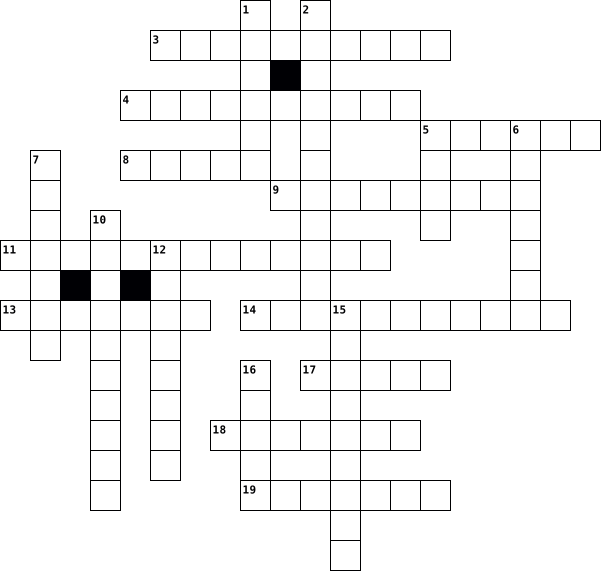
Across
- sperm producing organ
- multicellular diploid that produces spores by meiosis
- contains anther and filament
- transports water from the roots to the leaves
- seed leaf
- loss of water through leaves
- prevents water loss
- produces gametes by mitosis
- two cotyledon
- tubes of elongated or cylindrical cells
- used for gas exchange
Down
- conducts carbohydrates from areas of photosynthesis to support nonphotosynthetic areas Monocot, one cotyledon
- egg producing organ
- protects embryo
- one cotyledon
- mat of thin roots that spread below the root's surface
- ovule covered in sporophyte tissue
- this mesophyll absorbs light
- outer layer of root
- produce leaves, branches, and flowers
20 Clues: seed leaf • one cotyledon • two cotyledon • protects embryo • egg producing organ • prevents water loss • outer layer of root • sperm producing organ • used for gas exchange • produces gametes by mitosis • contains anther and filament • loss of water through leaves • this mesophyll absorbs light • ovule covered in sporophyte tissue • produce leaves, branches, and flowers • ...
Plants 2020-04-10

Across
- green and common
- the protection
- spice
- a prickly situation
- plants need it to grow in
- falls in fall
- an old common plant
- sturdy 24 7
- a plant is thirsty
- deep and strong
Down
- bright and necessary
- leafy short
- makes oxygen
- where colorful things hatch
- lucky 4
- the green hat
- the big middle
- the green carpet
- colorful and smells good
- the big toothpicks
20 Clues: spice • lucky 4 • leafy short • sturdy 24 7 • makes oxygen • falls in fall • the green hat • the protection • the big middle • deep and strong • green and common • the green carpet • the big toothpicks • a plant is thirsty • a prickly situation • an old common plant • bright and necessary • colorful and smells good • plants need it to grow in • where colorful things hatch
PLANTS 2020-10-20

Across
- the vascular tissue in plants that conducts sugars and other metabolic products downward from the leaves.
- The jellylike material that makes up much of a cell inside the cell membrane
- a substance needed so the plant can make proteins
- the vascular tissue in plants that conducts water and dissolved nutrients upward from the root and also helps to form the woody element in the stem.
- this is where pollen grains are made
- is a fluid-filled pocket in the cell's cytoplasm
- a group of green pigments used by organisms that convert sunlight into energy via photosynthesis.
- the female gametes are inside the ______
- the ovules are inside the _____
- also known as O2
- something sweet and sugary that insects eat
- he action or process of distributing seeds over a wide area.
- highly specialized organelle that serves as the information and administrative center of the cell.
Down
- the transfer of pollen from anther to a stigma
- part of the flower where it's the most colorful
- the ovary changes into a fruit
- it contains mineral salts
- the ovule changes and becomes a _____
- substance needed for making chlorophyll
- plant changes some of the glucose into different kind of carbohydrate
- the process by which green plants and some other organisms use sunlight to synthesize foods from carbon dioxide and water.
- the zygote divides the form ____
- pores in the epidermis of the leaf or stem of a plant
- the nucleus of a male and female gamete joined together
24 Clues: also known as O2 • it contains mineral salts • the ovary changes into a fruit • the ovules are inside the _____ • the zygote divides the form ____ • this is where pollen grains are made • the ovule changes and becomes a _____ • substance needed for making chlorophyll • the female gametes are inside the ______ • something sweet and sugary that insects eat • ...
Plants 2020-10-20

Across
- a sweet and sugary thing that insects/birds feed on
- needed so the plants can make proteins, also needed to make Chlorophyll
- also known as sugar
- the receptive tip of a carpel, the part of the pistil where the pollen germinates
- the movement of energy from one place to another
- a different kind of carbohydrate, is made of thousands of glucose molecules linked together
- most colorful part of the flower
- needed by plants for support, cooling, transport, and photosynthesis
- the way that plants make food
- helps to avoid competitions with the parent plant
- the tough outer coat of the seed
- are brightly colored to attract insects and birds, they are the reproductive organs of plants
Down
- a group of chemicals which sugar belong to
- the nucleus of a male gamete and the nucleus of a female gamete join together
- while the ovule changes into a seed, the ovary is also changing into a........
- produced by anthers, contains the male gametes of the flower
- contains female gametes and are inside the ovaries
- a tiny hole where pollen tube grow into the ovule
- contain mineral salts
- a new cell formed after fertilisation
- produce pollens
- substances plants normally get from soil
- transfer of pollen from another to a stigma
- when the ovule begins to change it gradually grows into a........
- produced when the zygote starts to divide
- is also needed for making chlorophyll, a shortage of this makes plant leaves grow yellow
26 Clues: produce pollens • also known as sugar • contain mineral salts • the way that plants make food • most colorful part of the flower • the tough outer coat of the seed • a new cell formed after fertilisation • substances plants normally get from soil • produced when the zygote starts to divide • a group of chemicals which sugar belong to • ...
Plants 2020-10-21

Across
- a green pigment that captures energy from light
- ovules are inside it
- the ovule will grow into a ___
- sugars belong to a group of chemicals called ___
- long tubes that carry water and minerals from the roots to the leaves
- this is needed to make proteins
- this is needed to make chlorophyll
- a method of getting a plant's male gametes to their female gametes
- these are made in the anthers of a flower
- a sugar
- a process where the male gamete and the nucleus of a female gamete join together
- this contains more than or just enough mineral salts needed for the plant
Down
- the way plants make food from light
- the female gametes are in here
- these are the organs that carry out photosynthesis in most plants
- new plants need to be ___ away from the parent plant
- chloroplasts are in a ___
- water combines with this inside chloroplasts to make glucose and oxygen
- a cell that is made when the nuclei of the 2 gametes joins together
- photosynthesis happens inside the ___
- a group of cells that is produces when the zygote starts to divide
- tiny holes in the lower epidermis that let carbon dioxide get into the leaf
- energy needed for photosynthesis comes from what?
- pollen sticks to the ___
- the ovary changes into a ___
25 Clues: a sugar • ovules are inside it • pollen sticks to the ___ • chloroplasts are in a ___ • the ovary changes into a ___ • the female gametes are in here • the ovule will grow into a ___ • this is needed to make proteins • this is needed to make chlorophyll • the way plants make food from light • photosynthesis happens inside the ___ • these are made in the anthers of a flower • ...
Plants 2021-02-22

Across
- What are the plants that produce cones
- What produces the female egg cells?
- What is the most common pollinator?
- What is the Male reproductive structure of flower in plants?
- What does the ovary change into after fertilization?
- What is another term for flowering plants?
- What is the part of flower that has varied colour.
- What is a long-stalk like part of a plant that supports the stigma.
- What is an animal that helps bring fertilization?
- What contains the female egg cells?
- How many parents are needed for asexual reproduction in plants?
- What is the male part of the plant that is located on top of the filament?
Down
- What is the reproductive part of a plant?
- How many parents are needed for sexual reproduction in plants?
- What is the sprouting of a plant from a seed?
- What is the part in flower that catches pollen?
- How does flowering plants reproduce?
- What is the process of joining an egg cell and sperm cell in plant?
- What is the part of plants that is located under the petal?
- What does Anther contain?
20 Clues: What does Anther contain? • What produces the female egg cells? • What is the most common pollinator? • What contains the female egg cells? • How does flowering plants reproduce? • What are the plants that produce cones • What is the reproductive part of a plant? • What is another term for flowering plants? • What is the sprouting of a plant from a seed? • ...
Plants 2021-03-04

Across
- Air filtering plant that filters CO2 and every organic pollutant.
- Slow growing air filtering plant that needs good sunlight.
- Plant that can pull fecal matter and mold spores from the air.
- Plants that absorb nutrients from soil.
- Plant that releases moisture into the air.
- Air filtering plant that is non toxic for animals.
- Plant that helps cleaning up lead.
- Include water ferns and water hyacinth.
- Process in which plants absorb nutrients from soil.
- Plant that has a nighttime oxygen production.
Down
- Type of plant that absorbs heavy metals on its roots.
- Plant that helps with heavy metals and petroleum contaminants.
- Include benzene, formaldehyde, trichloroethylene, ammonia, xylene and toluene.
- Plant that absorbs hydrocarbons from petrochemical pollution.
- Plants used in playgrounds to keep kids safe.
- Type of plant used in Chernobyl to absorb radiation.
- Air filtering plants filter air through...
- Plant that absorbs copper and mercury from the soil.
- Plants that absorb CO2 and release 02.
- An institution that made research of air filtering plants.
20 Clues: Plant that helps cleaning up lead. • Plants that absorb CO2 and release 02. • Plants that absorb nutrients from soil. • Include water ferns and water hyacinth. • Plant that releases moisture into the air. • Air filtering plants filter air through... • Plants used in playgrounds to keep kids safe. • Plant that has a nighttime oxygen production. • ...
Plants 2021-04-21

Across
- conditions needed for germination
- stems that bend or break easily
- growth response to gravity
- structures in the cells where food is made
- seed plants that produce cones
- process of breaking down glucose
- protects embryo until conditions are right
- growth toward/away from environmental conditions
- A taproot that stores food
- process that makes glucose & oxygen
- process of losing water through the leaf
Down
- grow towards water
- leaf's waxy covering that slows water loss
- cells that move water & minerals from roots up
- growth response to touch
- grow towards light
- where most angiosperm seeds develop
- control plant cell behaviors
- seed plants that produce flowers
- where conifer seeds develop
- open & close stomata
- powerhouse cell that releases energy
- Provide support & transport water,minerals,& food
- a single cell that grows into a plant
24 Clues: grow towards water • grow towards light • open & close stomata • growth response to touch • growth response to gravity • A taproot that stores food • where conifer seeds develop • control plant cell behaviors • seed plants that produce cones • stems that bend or break easily • seed plants that produce flowers • process of breaking down glucose • conditions needed for germination • ...
plants 2021-09-20

Across
- a purple plant used for scents
- a plant used in chocolate and coffee
- a sour fruit
- a carnivorous plant
- a big commonly used tree in minecraft
- another sour fruit
- a tree seen in northern arizona
- a very common plant found on the ground
- a plant that floats on water
- a tree found in african plains
- a plant hung around houses in christmas
- a small red berry
- used by people who cant take care of plants
Down
- the name of a restaurant
- a purple flower
- a flower
- a desert plant
- a small red flower used to make Opium
- a brown thin plant used in candy
- a blue berry
- a plant used for lotion
- a yellow/green lopsided fruit
- a spiky fruit
- a yellow fruit
- a plant found hanging from trees
- a invasive plant found in the southeast
26 Clues: a flower • a sour fruit • a blue berry • a spiky fruit • a desert plant • a yellow fruit • a purple flower • a small red berry • another sour fruit • a carnivorous plant • a plant used for lotion • the name of a restaurant • a plant that floats on water • a yellow/green lopsided fruit • a purple plant used for scents • a tree found in african plains • a tree seen in northern arizona • ...
Plants 2023-06-17

Across
- Flytrap - A carnivorous plant with hinged leaves that trap and digest insects.
- - A fast-growing grass plant with tall, hollow stems that are widely used in construction and crafts.
- - A popular garden plant with fragrant, ruffled flowers in various colors.
- - An aromatic plant with purple flowers known for its soothing fragrance.
- - A bulbous plant with vibrant, cup-shaped flowers that bloom in spring.
- - A flowering plant with large, showy flowers and a pleasant fragrance.
- - A tropical tree with a distinctive crown of fan-shaped leaves.
- - A popular flowering plant known for its beautiful and fragrant blooms.
- - A common weed with yellow flowers and fluffy seed heads that disperse in the wind.
Down
- - A tall plant with large, bright yellow flowers that follow the movement of the sun.
- - A large, showy flower with fragrant petals in various colors.
- - A common flower with a yellow center and white petals.
- - A desert plant known for its ability to store water and its spiky exterior.
- - A deciduous tree known for its distinctive leaves that turn vibrant colors in the fall.
- - A diverse family of flowering plants known for their vibrant and exotic-looking blooms.
- Vera - A succulent plant with fleshy leaves that contain a soothing gel.
- - A non-flowering plant with feathery leaves that reproduces via spores.
- - A climbing plant with dark green, glossy leaves that attaches itself to surfaces.
- - An evergreen tree with needle-like leaves and woody cones.
- - A large and long-lived tree with strong wood and distinctive lobed leaves.
20 Clues: - A common flower with a yellow center and white petals. • - An evergreen tree with needle-like leaves and woody cones. • - A large, showy flower with fragrant petals in various colors. • - A tropical tree with a distinctive crown of fan-shaped leaves. • - A flowering plant with large, showy flowers and a pleasant fragrance. • ...
Plants 2023-06-12
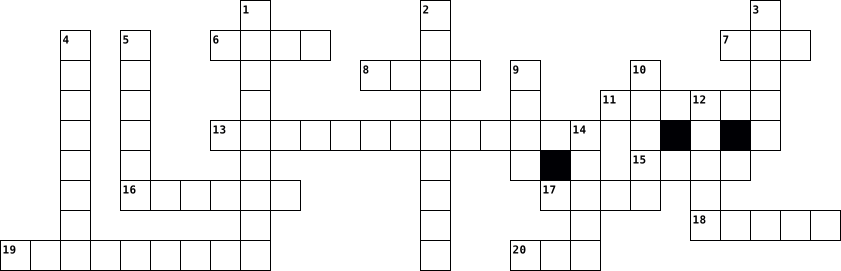
Across
- - Tropical tree with a long, slender trunk and large, fan-shaped leaves.
- - Large tree with broad leaves and acorns.
- - Evergreen tree with needle-like leaves and cones.
- - Succulent plant adapted to dry environments, often with spines.
- - Carnivorous plant that catches and digests insects.
- - Elegant flower with large, showy blooms and a sweet scent.
- - Colorful flower with intricate patterns, often found in tropical regions.
- - Fragrant flower with thorny stems and petals in various colors.
- - Small flower with "face-like" markings and vibrant colors.
- - Flower with fringed petals, available in a variety of colors.
- - Climbing plant with dark green leaves, often used for decoration.
Down
- - Common weed with yellow flowers and fluffy seed heads.
- - Tall plant with large yellow flowers that turn towards the sun.
- - Simple flower with a yellow center and white petals.
- - Fragrant herb with purple flowers often used in aromatherapy.
- - Tall, fast-growing grass with hollow stems.
- - Leafy plant that reproduces via spores instead of seeds.
- - Tree known for its distinctive lobed leaves and winged seeds.
- - Spring flower with vibrant petals in various colors.
- - Large, fragrant flower with ruffled petals, often seen in gardens.
20 Clues: - Large tree with broad leaves and acorns. • - Tall, fast-growing grass with hollow stems. • - Evergreen tree with needle-like leaves and cones. • - Carnivorous plant that catches and digests insects. • - Simple flower with a yellow center and white petals. • - Spring flower with vibrant petals in various colors. • ...
Plants 2024-02-12

Across
- what shape are monocots root system
- ptherophyta is called by this name because They are seedless
- how many cotyledons do monocot have
- how many leaves are inside eudicot seeds
- eudicot leave veins shape
- What are the leaves of the ptherophyta called
- what are naked seeds called
- eudicot vascular tissue shape
- multiple of eudicot flowers
- eudicot root shape
- How many true leaves inside the seed(in german)
Down
- what shape are monocots vein
- mosses other name
- what number of openings does monocots have(hint:it’s in spanish)
- The first word of the origin of gymnospermae
- how many cotyladon in eudicot(in spanish)
- do gymnospermae have flowers
- how mosses reproduce
- How do gymnospermae reproduce
- how many groups of mosses there are
- from whomst monocot evolved
- How many eudicot pollen grain opening (in german)
- are monocots vascular tissue ringlike or scattered
- another name for ptherophyta
- What are monocots multiple of petals (it’s in spanish)
25 Clues: mosses other name • eudicot root shape • how mosses reproduce • eudicot leave veins shape • from whomst monocot evolved • what are naked seeds called • multiple of eudicot flowers • what shape are monocots vein • do gymnospermae have flowers • another name for ptherophyta • How do gymnospermae reproduce • eudicot vascular tissue shape • what shape are monocots root system • ...
plants 2023-10-17

Across
- are actually leaves but the but are generally known as the most striking part
- is the process by which carbon dioxide and water in the presence of light are converted to sugar and oygen
- are usually underground and therefore are not easily visible
- form its structural framework
- the simple cell division
- allows the plant to reproduce
- have vascular bundles that contain both phloem and xylem
- located in the center of the flower is the female part of the flower
- make up the male reproductive part if the flower
Down
- which give green leaves their color
- are plants that have two seed leaves
- cools the plant and by moving maintains the flow of nutrients
- the plat structure is made up of tiny units called
- process they consume oxygen and give off carbon dioxide the same as animals
- during mitosis this divides into two identical parts
- open and close a small space or pore on the underside
- made attractive for animals and insects
- used for food storage
- are the green leaf like parts of the flower that cover and protects the flower bud before it opens
- is the liquid that gives the plant cell inside the plant cell wall
20 Clues: used for food storage • the simple cell division • form its structural framework • allows the plant to reproduce • which give green leaves their color • are plants that have two seed leaves • made attractive for animals and insects • make up the male reproductive part if the flower • the plat structure is made up of tiny units called • ...
Plants 2026-03-19

Across
- absorbed by roots for photosynthesis
- spreading seeds away from parent plant
- gas taken in for photosynthesis
- holds the anther up
- layer where most photosynthesis occurs
- process plants use to make food
- contains ovules in a flower
- energy source for photosynthesis
- reproduction with one parent producing identical offspring
- sticky top of the female part that catches pollen
- tissue that transports sugars
- green pigment that absorbs light
- animal that carries pollen between flowers
- contains male gametes
Down
- reproduction involving two parents and variation
- outer protective layer of a leaf
- fusion of male and female gametes
- structure that grows into a new plant
- tube that connects stigma to ovary
- tissue that transports water
- supports the plant and transports substances
- sugar made in photosynthesis
- organ that absorbs water and minerals
- method of pollination using air currents
- contains the female gamete
- gas released during photosynthesis
- produces pollen grains
- transfer of pollen from anther to stigma
- organ where photosynthesis happens
- colourful part of flower that attracts insects
- sweet liquid that attracts pollinators
31 Clues: holds the anther up • contains male gametes • produces pollen grains • contains the female gamete • contains ovules in a flower • tissue that transports water • sugar made in photosynthesis • tissue that transports sugars • gas taken in for photosynthesis • process plants use to make food • outer protective layer of a leaf • energy source for photosynthesis • ...