
exercise Crossword Puzzles
Unit 2 Vocab Quiz Review 2022-09-26

Across
- the ratio of fat to lean muscle tissue in the body
- a fairly easy exercise, done after a more intense activity, to allow the body to gradually transition to a resting or near-resting state
- the amount of force the muscles can exert
- a period or act of preparation for a game
- exercise for long periods of time that require large amounts of oxygen in order to sustain
- the ability of the heart, lungs, and blood vessels to transport oxygen and nutrients to the body during moderate to high intensity workouts
- how hard a person is working out
- frequency, intensity, time, and type workouts
- the most number of times the heart should beat in a minute
- making active choices rather than inactive choices throughout the day
- the ability of the body to move through its' full range of motion
Down
- training with a few different types of exercise, movement, or modalities
- zone that will deliver the most benefit to the heart while working out
- the ability of the muscles to carry out daily tasks without tiring
- how often a person is working out
- the number of times the heart beats per minute while at rest
- a body activity that enhances or maintains physical fitness and overall health and wellness
- short, quick, intense bursts of exercise that require no oxygen in order to complete
- any activity that requires the body to use energy
- an even distribution of weight enabling someone to remain upright and steady.
20 Clues: how hard a person is working out • how often a person is working out • the amount of force the muscles can exert • a period or act of preparation for a game • frequency, intensity, time, and type workouts • any activity that requires the body to use energy • the ratio of fat to lean muscle tissue in the body • the most number of times the heart should beat in a minute • ...
Training methods 2022-10-03

Across
- It includes using another various activities or sport to improve your fitness
- __________ The word aerobic relates to a good oxygen supply.
- Moderate to vigorous intensity exercise is recommended for adults.
- type of training involves altering of hard exercise and rest.
- your body movements will decline over time.
- used to provide resistance to the muscles of your body.
- This principle states that you should opt for a training method which includes a variety of workouts in it.
- Daily moderate exercise is ideal but try to exercise a minimum of 3-5 days per week.
- The word ________ relates to lack of oxygen.
- This type of training involves working for a set period without any rest in between.
- 30-60 minutes per day.
Down
- Working only on one specific area of the body
- The principle of progression states that you should start your training slowly and then later, increase the amount of exercise and keep overloading.
- perform a variety of exercises included cardio, strength, and flexibility training.
- This training is a type of aerobic training which is performed above sea level, where the oxygen level is low.
- time to recover the energy which has been put up into the workout.
- The load should be increased but slowly-slowly
- It is also known as ‘speed play training.’
- It involves doing a series of exercises in a specific order
19 Clues: 30-60 minutes per day. • It is also known as ‘speed play training.’ • your body movements will decline over time. • The word ________ relates to lack of oxygen. • Working only on one specific area of the body • The load should be increased but slowly-slowly • used to provide resistance to the muscles of your body. • ...
sports and exercise 2019-09-25

Across
- a sport with two goals
- an exercise involving jumping
- a sport where you hit the ball in a hole
- an exercise you do with your arms on the ground
- has a rope and pole
- a ball that is used to serve over a net
- a piece of equipment that is round and you throw
Down
- an oval ball that is used in a famous sport
- has a racket and ball
- a complicated exercise think of mountain
- an exercise involving your stomach or abs
- played on the street or an ice rink
- a sport with a bat and glove
- involves the body hanging and getting longer and more relaxed
- a sport that involves making a three pointer
15 Clues: has a rope and pole • has a racket and ball • a sport with two goals • a sport with a bat and glove • an exercise involving jumping • played on the street or an ice rink • a ball that is used to serve over a net • a complicated exercise think of mountain • a sport where you hit the ball in a hole • an exercise involving your stomach or abs • ...
Sustainability Vocabulary 2024-10-20

Across
- Exercise 8
- Exercise 1
- Exercise 6
- Exercise 7
Down
- Exercise 2
- Exercise 4
- Exercise 3
- Exercise 5
8 Clues: Exercise 2 • Exercise 4 • Exercise 8 • Exercise 3 • Exercise 5 • Exercise 1 • Exercise 6 • Exercise 7
Healthy Living 2016-04-29

Across
- edible plant containing seeds
- energy value of food
- sweetner
- good for you
- trying to get away from
- exercise machine found here
- swallow liquid
- a welcome gift
- train body or mind
Down
- not preserved
- baked in oven
- with gills
- on foot
- in spare time
- yellow crescent fruit
- everyone needs one
- vegetable/little green trees
- prohibited
- chew and swallow
19 Clues: on foot • sweetner • with gills • prohibited • good for you • not preserved • baked in oven • in spare time • swallow liquid • a welcome gift • chew and swallow • everyone needs one • train body or mind • energy value of food • yellow crescent fruit • trying to get away from • exercise machine found here • vegetable/little green trees • edible plant containing seeds
Physical Activity and Active Living 2024-07-22

Across
- You should do this before you exercise.
- Running at a steady pace.
- Exercise method combining dance and aerobics.
- Physical activity improves mood and reduces....
- Physical activity done on two wheels.
Down
- Exercise helps us to build _______ muscles.
- Physical activity involving lifting weights.
- Stretching exercise.
- Regular exercise improves _______ health.
- Physical activity done in water.
10 Clues: Stretching exercise. • Running at a steady pace. • Physical activity done in water. • Physical activity done on two wheels. • You should do this before you exercise. • Regular exercise improves _______ health. • Exercise helps us to build _______ muscles. • Physical activity involving lifting weights. • Exercise method combining dance and aerobics. • ...
health and medicine 2022-11-12

Across
- 4. nutrition
- 5. Surgery
- 9. exercise
- 11. supplement
- 12. Faint
- 13. sore throat
- 14. obesity
- 15.cough
Down
- 1. diagnosis
- 2. pulse
- 3. Disabled
- 6. prescription
- 7. hospital
- 8. addiction
- 10. symptom
15 Clues: 2. pulse • 15.cough • 12. Faint • 5. Surgery • 3. Disabled • 7. hospital • 9. exercise • 10. symptom • 14. obesity • 1. diagnosis • 4. nutrition • 8. addiction • 11. supplement • 6. prescription • 13. sore throat
Chapter 4-4 Crossword Puzzle 2024-02-23

Across
- How often should you work out?
- Are things you work to achieve?
- How can you stay motivated?
- Benefits of exercise?
- How can you stay motivated?
- Will help you to monitor your workout intensity during exercise?
- How long should you work out in a session?
- How can you keep track of your progress?
Down
- What is a good thing to do while you workout?
- Goals that fit you personally are called?
- How long should you keep up your program?
- Benefits to exercise?
- What is a fun social walk called?
- Fun way to get exercise outside?
- What is it called when you don't use a muscle for a long time?
15 Clues: Benefits to exercise? • Benefits of exercise? • How can you stay motivated? • How can you stay motivated? • How often should you work out? • Are things you work to achieve? • Fun way to get exercise outside? • What is a fun social walk called? • How can you keep track of your progress? • Goals that fit you personally are called? • How long should you keep up your program? • ...
Nutrition 2016-02-05

Across
- To determine one's healthy weight range.
- Being over weight.
- The way you see yourself and imagine your body.
- A pattern in the way you eat.
- Exercise that lasts a long time.
- What is good for you.
- Any physical activity.
- A substance in food your body needs.
Down
- The proportion of fat compared to muscles, bones, organs.
- Food energy = body energy.
- A way to recover from exercise by reducing the amount of activity you do.
- A point at where your heart rate reaches a certain point.
- Exercise without oxygen that lasts a short time.
- A way to measure the amount of energy.
14 Clues: Being over weight. • What is good for you. • Any physical activity. • Food energy = body energy. • A pattern in the way you eat. • Exercise that lasts a long time. • A substance in food your body needs. • A way to measure the amount of energy. • To determine one's healthy weight range. • The way you see yourself and imagine your body. • ...
Personal training Final 2024-05-30

Across
- Equipment used to perform a chest fly exercise.
- the movement of a limb or other part away from the midline of the body, or from another part.
- Muscle located at the shoulders/ The behind the back lateral raises helps stretch and grow the
- lift exercise uses the mid traps, lower traps, upper lats, and lower lats.
- Muscle used during the exercise walking lunges.
- lifts are exercises that support and increase your performance in your main, primary lifts.
- _______ training naturally increases both strength and H_______y
- is the study of movement
- is a skill related fitness component.
- Movement of the sole of the foot inward or medially, elevating the medial edge of the foot and turning the sole inward.
- exercise uses larger or multiple muscle groups. An accessory exercise targets smaller muscles or muscle groups.
Down
- primary muscle group is targeted during a bench press.
- allows us to control our Hamstring.
- The full scientific name for the Lat's.
- the movement of a limb or other part toward the midline of the body or toward another part.
- _______ at the elbow is increasing the angle between the ulna and the humerus.
- the action of bending or the condition of being bent, especially the bending of a limb or joint.
- is a Health related fitness component.
- is a skill related fitness component.
- means you are looking to increase the physical size of your muscles. It can take several months for you to notice any results.
- Frequency ________ TIME TYPE (FITT)
21 Clues: is the study of movement • allows us to control our Hamstring. • Frequency ________ TIME TYPE (FITT) • is a skill related fitness component. • is a skill related fitness component. • is a Health related fitness component. • The full scientific name for the Lat's. • Equipment used to perform a chest fly exercise. • Muscle used during the exercise walking lunges. • ...
Chapter 4.1-4.4 Crossword Puzzle 2026-02-01

Across
- Anyone over the age of 30 should get this before starting an exercise program.
- Result of friction creating heat, tissue damage, and fluid build-up between layers of skin.
- A period of mild exercise that follows a workout to lower heart rate.
- A condition caused by an excessive decline in body temperature.
- An injury to the ligaments surrounding the ankle joint; treated with RICE method.
- An overuse injury that commonly occurs at the beginning of an exercise program.
- Should provide support and protection for your feet during exercise.
- When muscles involuntarily contract, causing pain and discomfort.
- What the body loses when dehydrated, increasing the risk of heat illness.
- An assessment of a person’s current physical fitness level.
- A sharp pain in the side, just under the ribs, that may occur when starting a running program.
Down
- A dangerous heat-related condition where body temperature rises above 104°F.
- The type of goal that can be achieved in days or weeks.
- The type of goal that takes months or years to achieve.
- The most serious heat-related illness that requires immediate medical attention.
- Type of material that should be worn when snowing or raining.
- What you should do if you are not feeling well during exercise.
- A condition involving heavy sweating, dizziness, and extreme fatigue. Moderately serious.
- The crystallization and destruction of skin due to cold exposure.
- The recommended first treatment method for many injuries (rest, ice, compression, elevation).
20 Clues: The type of goal that can be achieved in days or weeks. • The type of goal that takes months or years to achieve. • An assessment of a person’s current physical fitness level. • Type of material that should be worn when snowing or raining. • A condition caused by an excessive decline in body temperature. • ...
Muscular Fitness Kimberly deoliveira 2026-04-01

Across
- – The heaviest weight you can lift for one repetition with proper form.
- – A group of repetitions performed together before resting.
- – Weights not attached to machines, like dumbbells or barbells.
- – Performing two exercises back-to-back without resting in between.
- – When a muscle lengthens while under tension (like lowering a weight).
- – One complete movement of an exercise (one lift, push, or pull).
- – The strength of muscles in your abdomen and lower back that support your body.
- – The break time between sets or exercises.
- – The maximum force your muscles can produce in a single effort (like lifting a very heavy weight once).
- – When a muscle shortens as it contracts (like lifting a weight).
Down
- – The increase in muscle size from consistent strength training.
- – The ability of your muscles to keep working over a long period without getting tired.
- – An exercise where muscles change length while lifting or lowering weight (like bicep curls).
- – Exercises that use your own body as resistance (like push-ups or squats).
- – Gradually increasing weight, reps, or intensity to build stronger muscles.
- – Exercise that works muscles against a force to build strength (like lifting weights).
- – An exercise where muscles contract but do not change length (like holding a plank).
- – Exercise equipment that guides movement and provides resistance through machines.
- – A workout moving quickly between different exercises with little rest.
- – The shrinking or weakening of muscles due to lack of use.
20 Clues: – The break time between sets or exercises. • – A group of repetitions performed together before resting. • – The shrinking or weakening of muscles due to lack of use. • – Weights not attached to machines, like dumbbells or barbells. • – The increase in muscle size from consistent strength training. • ...
Benefits of Physical Activity 2026-05-25

Across
- These chemicals released during exercise help improve mood and reduce stress
- Exercising with others can improve this and help people stay consistent
- This physical activity resource includes walking and biking trails, sports courts, and open recreational spaces
- Taking these instead of elevators can increase daily movement
- This long term benefit helps people remain active and mobile as they age
- Physical activity helps improve this by allowing people to complete tasks with less fatigue
- Regular physical activity can help reduce this stress hormone
- Walking and hiking can improve this organ’s function and overall health
Down
- This condition is less likely to occur with regular exercise and healthy lifestyle habits
- This type of exercise improves cardiovascular endurance
- Physical activity can strengthen these body structures
- This neurotransmitter released during exercise is linked to motivation and pleasure
- These public places provide free opportunities for physical activity
- Community exercise programs combine physical activity with this to improve emotional wellness
- This social skill is improved through team sports and group activities
15 Clues: Physical activity can strengthen these body structures • This type of exercise improves cardiovascular endurance • Taking these instead of elevators can increase daily movement • Regular physical activity can help reduce this stress hormone • These public places provide free opportunities for physical activity • ...
EXAMS Crossword 2014-07-11

Across
- SEMINAR
- ENERGY DRINK
- QUIZ
- EXAMINATION
- ALL-NIGHTER
- NERD
Down
- INVIGILATE
- MULTIPLE CHOICE
- SEMESTER
- EXERCISE
- CRIB
- CHEATING
- STUDY HALL
13 Clues: CRIB • QUIZ • NERD • SEMINAR • SEMESTER • EXERCISE • CHEATING • INVIGILATE • STUDY HALL • EXAMINATION • ALL-NIGHTER • ENERGY DRINK • MULTIPLE CHOICE
health and medicine 2022-11-12

Across
- 4. nutrition
- 5. Surgery
- 9. exercise
- 11. supplement
- 12. Faint
- 13. sore throat
- 14. obesity
- 15.cough
Down
- 1. diagnosis
- 2. pulse
- 3. Disabled
- 6. prescription
- 7. hospital
- 8. addiction
- 10. symptom
15 Clues: 2. pulse • 15.cough • 12. Faint • 5. Surgery • 3. Disabled • 7. hospital • 9. exercise • 10. symptom • 14. obesity • 1. diagnosis • 4. nutrition • 8. addiction • 11. supplement • 6. prescription • 13. sore throat
Communication Exercise - Christmas 2021-12-07

Across
- Merry
- Bethlehem
- Wishlist
- Bells
- Snowball
- Lights
- Family
- Raindeer
- Sleigh (Kane)
Down
- Chimney
- Presents
- Holiday
- Scarf (halstørklæde)
- Santa
- Spirit
- Winter
- Almond(mandel)
- Wrapping
- Dinner
19 Clues: Merry • Bells • Santa • Spirit • Winter • Lights • Family • Dinner • Chimney • Holiday • Presents • Wishlist • Snowball • Wrapping • Raindeer • Bethlehem • Sleigh (Kane) • Almond(mandel) • Scarf (halstørklæde)
Exercise Chapter 0 2023-09-11

Across
- selamat tidur
- Maret
- kamu
- empat belas
- guru
- ruang kelas
- Juli
- bagaimana
- tempat tidur
- sembilan puluh
Down
- ilmu pengetahuan
- sampai jumpa
- dua puluh
- Agustus
- belajar
- bahasa inggris
- pekerjaan rumah
- murid
- nama
19 Clues: kamu • guru • Juli • nama • Maret • murid • Agustus • belajar • dua puluh • bagaimana • empat belas • ruang kelas • sampai jumpa • tempat tidur • selamat tidur • bahasa inggris • sembilan puluh • pekerjaan rumah • ilmu pengetahuan
Health & Exercise 2 2019-05-17

Across
- person you go to when you're sick.
- of the body used to see.
- can ____ your liver
- of alive.
- regimen on the food you consume.
- Slice and open your skin
- urgent.
- being high up, we are all afraid to...
- of the body used to listen.
Down
- your mouth when you...
- in your ear.
- workout: Running, dancing, climbing, etc.
- action of loosing your life.
- without protection is...
- doctor who checks teeth.
- a tornado people are in...
- ears, nose, lips, mouth, eyebrows, etc.
- used in your hair
- better/To improve.
19 Clues: urgent. • of alive. • in your ear. • used in your hair • better/To improve. • can ____ your liver • your mouth when you... • of the body used to see. • without protection is... • doctor who checks teeth. • Slice and open your skin • a tornado people are in... • of the body used to listen. • action of loosing your life. • regimen on the food you consume. • person you go to when you're sick. • ...
B2L1 Vocabulary Exercise 2023-03-02

Across
- We’ve got only thirty minutes left. We need to leave _______ if we don’t want to miss the train.
- You should seek _______ advice from a doctor right away if you don’t feel better by tomorrow.
- The fans all became highly _______ when they saw their idol arrive at the airport.
- This company has a huge _______ of 70,000 people around the world.
- Julia didn’t have the _______ to tell her parents about her boyfriend because she was afraid they might not like him.
- I suddenly felt a sharp _______ in my right foot because I had just stepped on a nail.
- Drinking too much alcohol could result in _______ to the liver.
- Louis has won many swimming competitions, and his goal is to become a national _______ one day.
- Linda _______ with heavy bags along the muddy track. It was much harder and more tiring than she expected.
- Kelly _______ with a heart attack while she was working and was sent to a hospital without delay.
Down
- If you don’t take professional _______ in your work, you’re probably in the wrong job.
- Several soldiers were awarded _______ by the president for their bravery on the battlefield.
- What we should learn from these successful people is how important our _______ to our jobs is.
- The students were full of _______ for their teacher when they saw her solve the Rubik’s Cube within ten seconds.
- Jenny showed great _______ when she took on tough challenges.
- There has been widespread _______ for a ban on smoking in public places.
- Despite her youth, the talented artist has enjoyed considerable _______ with her artwork.
- It is difficult, but we will get the work done _______.
- You need to earn the _______ of your classmates. Otherwise, they will not take you seriously.
19 Clues: It is difficult, but we will get the work done _______. • Jenny showed great _______ when she took on tough challenges. • Drinking too much alcohol could result in _______ to the liver. • This company has a huge _______ of 70,000 people around the world. • There has been widespread _______ for a ban on smoking in public places. • ...
Exercise/ Workout Terms 2025-03-06

Across
- Pull up
- Locker room
- Gym
- To squat
- Treadmill
- to lift
- To cool down
- Stairmaster
- to stretch
- to rest
- Yoga Mat
Down
- Elliptical
- To warm up
- Plank
- Dumbbells
- Sit up
- Push ups
- equipment
- To run
19 Clues: Gym • Plank • Sit up • To run • Pull up • to lift • to rest • To squat • Push ups • Yoga Mat • Dumbbells • Treadmill • equipment • Elliptical • To warm up • to stretch • Locker room • Stairmaster • To cool down
Fibromyalgia and obstructive sleep apnea 2020-11-15

Across
- timing exercise should be introduced in relation to effective cpap treatment
- partially obstructed airway
- commonly used medication to aid symptoms of
- a strongly recommended aid to combat FM
- therapeutic exercise shown to aid symptoms of FM
- frequency of exercise shown to have a substantial effect of OSA symptom reduction
- the types of movement patterns patients with FM should work towards for activity
Down
- completely obstructed airway
- the gold standard test for OSA
- a symptom associated with being physically or emotionally drained
- most common treatment for OSA
- the most common symptom associated with FM
- experiencing pain but not to the level it should be
- one of the most common signs of OSA
- experiencing pain from things not normally painful
15 Clues: partially obstructed airway • completely obstructed airway • most common treatment for OSA • the gold standard test for OSA • one of the most common signs of OSA • a strongly recommended aid to combat FM • the most common symptom associated with FM • commonly used medication to aid symptoms of • therapeutic exercise shown to aid symptoms of FM • ...
PPL 4O Mental Health 2019-05-01

Across
- Exercise also seems to strengthen our biochemical resilience to ______________.
- Medication may be prescribed for a mental health disorder, but it may also be suggested that the person _____________.
- When a person receives regular counselling and this helps them to function, this is considered a ________________.
- Exercise is known to increase your ______________ level.
- A person experiencing periods of extreme excitement as well as periods of feeling low.
- When a person acts upon those repetitive, irrational thoughts.
- A mentally healthy person experiences all _________________.
- In any experiment, the subjects that don't receive any treatment but believe they do are the _______________.
- In order to change a person's outlook, it is helpful to encourage positive self- _________.
Down
- In cases of severe depression, exercise may be ____________ on its own.
- Exercise helps to combat depression because it boosts self- _____________.
- A disorder in which the person experiences long periods of feeling worthless.
- One of the hormones that increases in the brain following physical activity.
- A negative generalization about a person or group of people.
- When a person has repetitive, irrational thoughts.
- One possible cause of Depression is experiencing one or a series of _________________ events.
- Mentally unhealthy people are not more ______________ than mentally healthy people.
- It is difficult to diagnose the correct mental health disorder as they have ________________ symptoms.
- Depression is a ____________ disorder.
- It is important to detect and treat disorders ___________ as this will help with the success of the treatment.
20 Clues: Depression is a ____________ disorder. • When a person has repetitive, irrational thoughts. • Exercise is known to increase your ______________ level. • A negative generalization about a person or group of people. • A mentally healthy person experiences all _________________. • When a person acts upon those repetitive, irrational thoughts. • ...
Body Exercise 2021-07-04

Across
- Similar to plank body position, but you need to move both of your legs like cycling a bicycle
- you need a rope to perform this exercise
- Lifting up both legs alternately until it reach your waist level.
- Jump and spread your arms and feet away
- Bring one side of the leg forward/backward and bend down
Down
- First and the easiest movements we always do before exercise
- Combination between jumping, plank and push up
- Exercise that does not feel like doing an exercise
- Hold in the same position for a period of time(no movement)
- The most relaxing body position
- Both palms touching the ground, and need to bend your elbow
- Bending both of your knees
12 Clues: Bending both of your knees • The most relaxing body position • Jump and spread your arms and feet away • you need a rope to perform this exercise • Combination between jumping, plank and push up • Exercise that does not feel like doing an exercise • Bring one side of the leg forward/backward and bend down • Hold in the same position for a period of time(no movement) • ...
Exercise 7 2022-07-31

Across
- คำแก้ตัว
- การเชิญชวน
- เรื่องระทึกขวัญ
- ฉลอง
- เลือดเย็น,อำมหิต
- ทำให้ซับซ้อน
Down
- มั่นคง
- คูณ,ทบ
- ซึ่งคาดไม่ได้
- ไม่สม่ำเสมอ,เอาแน่ไม่ได้
- โง่
- กระเป๋า
12 Clues: โง่ • ฉลอง • มั่นคง • คูณ,ทบ • กระเป๋า • คำแก้ตัว • การเชิญชวน • ทำให้ซับซ้อน • ซึ่งคาดไม่ได้ • เรื่องระทึกขวัญ • เลือดเย็น,อำมหิต • ไม่สม่ำเสมอ,เอาแน่ไม่ได้
Daily exercise 2022-06-08

Across
- 1
- 4
- 9
- 2
- 12
Down
- 7
- 8
- 11
- 6
- 10
- 3
- 5
12 Clues: 1 • 7 • 8 • 4 • 6 • 9 • 3 • 2 • 5 • 11 • 10 • 12
Vocabulary exercise 2022-05-29

Across
- to make something twist out of its normal shape and looks strange or unattractive
- small devices or machines with particular purposes
- frightening in a way that makes you feel less confident
- gradually develop or be revealed
- very important
- people who are the same age as you or who have the same status as you
Down
- to say officially that you want to stop fighting, because you realize that you cannot win
- started feeling more cheerful
- spoiled
- to discuss something in order to reach an agreement, especially in business or politics
- the way you hold something tightly, or your ability to do this
- a sudden short period when someone, especially a child, behaves very angrily and unreasonably
12 Clues: spoiled • very important • started feeling more cheerful • gradually develop or be revealed • small devices or machines with particular purposes • frightening in a way that makes you feel less confident • the way you hold something tightly, or your ability to do this • people who are the same age as you or who have the same status as you • ...
Vocabulary exercise 2014-02-03

Across
- a toy that flies in the air
- keep objects in the air
- the print your foot leaves behind
- a synonym for truck
- to become conscious of something
Down
- a sum of money you pay for breaking the law
- an official attempt by the court to find the cause of someone's death
- a vacation 2 people take after getting married
- when someone is sparkling or brilliant he is
- a piece of equipment that lets you reach higher places by climbing on it
- a round handle on a door or drawer
- the hard part that grows over the end of your finger
12 Clues: a synonym for truck • keep objects in the air • a toy that flies in the air • to become conscious of something • the print your foot leaves behind • a round handle on a door or drawer • a sum of money you pay for breaking the law • when someone is sparkling or brilliant he is • a vacation 2 people take after getting married • ...
Listening Exercise 2014-02-12

Across
- where you put clothes
- where you sleep
- where you eat
- where you put dishes
- toiletbedroom
- house without stairs
Down
- where you take a shower
- where you cook
- foolish
- where you sit and watch tv
- outside, usually with grass or trees
- space under your house
12 Clues: foolish • where you eat • toiletbedroom • where you cook • where you sleep • where you put dishes • house without stairs • where you put clothes • space under your house • where you take a shower • where you sit and watch tv • outside, usually with grass or trees
exercise 3 2025-07-22

Across
- A store selling food and household items; food items themselves
- A natural substance such as iron that is present in some food
- The distance from the top or surface to the bottom of something
- Existing or happening over a large area or among many people
- Relating to living things; grown without synthetic chemicals
- To deal with or solve a problem
- The ability to imagine how something could develop in the future
Down
- To imagine or picture something in the future
- A typical or noticeable quality of someone or something
- The process of providing or obtaining food necessary for health
- To be made up of; consist of
- An example or case of something
12 Clues: To be made up of; consist of • An example or case of something • To deal with or solve a problem • To imagine or picture something in the future • A typical or noticeable quality of someone or something • Existing or happening over a large area or among many people • Relating to living things; grown without synthetic chemicals • ...
Exercise Recovery 2025-11-02

Across
- Essential mineral lost through sweat
- Gentle stretches done after a workout
- Cold water therapy used to reduce soreness
- Practice that helps reduce muscle tension and stress
- Applying pressure to muscles with a cylinder-shaped tool
Down
- Nutrient that helps repair muscles
- Process of bringing the body back to balance
- The gradual adaptation that makes muscles stronger over time
- Day of rest between intense workouts
- Type of recovery involving gentle movement
- Hormone released during recovery that aids in tissue repair
- Stretching done before a workout
12 Clues: Stretching done before a workout • Nutrient that helps repair muscles • Essential mineral lost through sweat • Day of rest between intense workouts • Gentle stretches done after a workout • Type of recovery involving gentle movement • Cold water therapy used to reduce soreness • Process of bringing the body back to balance • ...
Vocabulary Exercise 2026-04-10

Across
- snow ___________
- destroy the forest
- very slow and is very famous (zootopia)
- things to catch wild animals
- ________ reclaims
- an animal with a horn on its nose
Down
- a hat on a sweatshirt
- .......
- places where animals live
- hunters do to elephants
- shops that you can see in the airport
- wear with a suit
12 Clues: ....... • snow ___________ • wear with a suit • ________ reclaims • destroy the forest • a hat on a sweatshirt • hunters do to elephants • places where animals live • things to catch wild animals • an animal with a horn on its nose • shops that you can see in the airport • very slow and is very famous (zootopia)
ATP (Holly) 2021-05-14

Across
- uncharged version of ATP?
- ATP-PC supports what kind of exercise?..
- a sport requiring sudden powerful
- exercise without oxygen
- replenishes muscles after energy release
- the base of ATP is?..
- where is glycogen stored?..
- cramp recovery is 8 minutes
- system another anaerobic energy system
Down
- substance in body tissues - stores carbs
- ATP provides energy for?..
- lactic acid production is a by product of?
- duration of ATP-PC in muscles?..
- ATP stands for?..
- exercise with oxygen
15 Clues: ATP stands for?.. • exercise with oxygen • the base of ATP is?.. • exercise without oxygen • uncharged version of ATP? • ATP provides energy for?.. • where is glycogen stored?.. • cramp recovery is 8 minutes • duration of ATP-PC in muscles?.. • a sport requiring sudden powerful • system another anaerobic energy system • substance in body tissues - stores carbs • ...
Test 2024-05-27

Across
- The condition of having high blood pressure
- An activity that involves running, jumping, and other movements
- The organ responsible for pumping blood
- A type of low-impact cardiovascular exercise performed in water
- A common form of aerobic exercise
- A machine used for walking or running indoor
- The term for blood vessels that carry blood away from the heart
- The system that includes the heart and blood vessels
Down
- A piece of equipment often used for cardiovascular exercise
- The number of times your heart beats per minute
- The type of exercise that improves cardiovascular endurance
- The gas exchanged during breathing
- A unit of measurement for heart rate
- Rate The rate at which your heart beats
- The ability to sustain prolonged physical activity
- The liquid pumped by the heart
16 Clues: The liquid pumped by the heart • A common form of aerobic exercise • The gas exchanged during breathing • A unit of measurement for heart rate • The organ responsible for pumping blood • Rate The rate at which your heart beats • The condition of having high blood pressure • A machine used for walking or running indoor • The number of times your heart beats per minute • ...
physical health and fitness 2025-10-08

Across
- Exercise that increases heart and lung endurance
- The body’s warm-up phase before exercise
- The muscle’s ability to exert force
- The ability to change direction quickly and accurately
- The ability of the body to perform daily tasks efficiently
- The ability of muscles to perform repeated contractions
- The ability to maintain body position while standing or moving
- Chemical messenger that creates a happy feeling after exercise
Down
- Combination of strength and speed
- The rest period that allows muscles to recover
- The proportion of fat and lean mass in the body
- The time taken to respond to a stimulus
- The ability to move joints through a full range of motion
- The organ system that supplies oxygen during exercise
- The ability to move quickly
15 Clues: The ability to move quickly • Combination of strength and speed • The muscle’s ability to exert force • The time taken to respond to a stimulus • The body’s warm-up phase before exercise • The rest period that allows muscles to recover • The proportion of fat and lean mass in the body • Exercise that increases heart and lung endurance • ...
Healthy Living 2016-04-29

Across
- chew and swallow
- with gills
- vegetable/little green trees
- swallow liquid
- in spare time
- prohibited
- sweetner
- everyone needs one
- not preserved
- on foot
Down
- baked in oven
- train body or mind
- a welcome gift
- good for you
- trying to get away from
- yellow crescent fruit
- energy value of food
- exercise machine found here
- edible plant containing seeds
19 Clues: on foot • sweetner • with gills • prohibited • good for you • baked in oven • in spare time • not preserved • a welcome gift • swallow liquid • chew and swallow • train body or mind • everyone needs one • energy value of food • yellow crescent fruit • trying to get away from • exercise machine found here • vegetable/little green trees • edible plant containing seeds
7th Grade Fitness Assessment 2021-10-07

Across
- Which exercise helps to improve muscular strength and endurance?
- A method for safely creating a workout/fitness plan.
- Nonstop, moderate to vigorous exercise that requires large amounts of oxygen.
- is a measure of how efficiently your heart and lungs work when you exercise and how quickly they return to normal when you stop.
- Which fitness test demonstrates muscular strength and endurance?
- Which fitness test demonstrates cardiorespiratory endurance?
- refers to the particular kind of exercise performed.
Down
- The ability to handle the physical demands of everyday life without becoming overly tired.
- The number of times your heart beats per minute when you are not active.
- Which exercise helps to improve cardiorespiratory endurance?
- Why is flexibility important when performing athletic activities?
- The ability of your body’s joints to move easily through a full range of motion is known as:
- refers to how hard you work in a given time period.
- Intense physical activity that requires little oxygen, but uses short bursts of energy.
- Which fitness test demonstrates flexibility?
- refers to the number of times per week a person engages in physical activity.
- refers to the duration of a single workout.
- is best described as: Ratio of fat to muscle, bones, and other tissues in a person’s body.
- What is the best time to measure your resting heart rate during PE?
- The range of numbers between which your heart and lungs receive the most benefit from a workout.
20 Clues: refers to the duration of a single workout. • Which fitness test demonstrates flexibility? • refers to how hard you work in a given time period. • A method for safely creating a workout/fitness plan. • refers to the particular kind of exercise performed. • Which exercise helps to improve cardiorespiratory endurance? • ...
Wellness Week Crossword! 2024-04-08

Across
- Planned form of physical activity.
- Teaching a variety of classes, she never fails to bring the energy and a few jokes with her.
- Refers to intensity in exercise, also described as a person in circuits class.
- New to her current role, she has mastered playing this mini wooden stringed instrument.
- Simple form of exercise that involves putting one foot in front of the other.
- Key to stability in fitness, often practiced on one foot.
- Low-impact exercise performed in water.
- Adventurous job past; She soared above guiding thrill-seekers on ziplines.
- Crucial for mobility, allows your joints to move in a wide range of motion.
- Often performed on a mat, includes stretching, balance, and inner peace.
- This person loves chocolate and runs to make up for his excess consumption.
Down
- How long one can sustain physical activity without fatigue.
- Pre-exercise Routine of elongating the muscles.
- Seated firmly, a net and a ball, you'll give your all.
- Previously involved in theatre musicals, she has portrayed the infamous Wicked Witch of the West.
- High energy fitness class aimed at improving stamina and requires rhythmic .movement
- This racket-sport has taken over the gymnasium as the most popular game.
- Seated elliptical used often for warm-ups.
- Measure of muscle power and resilience.
- Skeletal structure important for support and protection.
- Overall state of physical and mental health.
- Round and round the path repeats, after 16 times a mile you'll complete.
22 Clues: Planned form of physical activity. • Measure of muscle power and resilience. • Low-impact exercise performed in water. • Seated elliptical used often for warm-ups. • Overall state of physical and mental health. • Pre-exercise Routine of elongating the muscles. • Seated firmly, a net and a ball, you'll give your all. • ...
health 2022-02-04

Across
- how to get ready for a workout
- how to slowly stop your workout
- what kind of workout
- a type of workout to increase strength
- how often you are doing your workouts
- how long you are doing the workout
- a way to reach your feet better
- not water exercise
- a way to get your heart rate up
- how to know your flexibility
Down
- water exercise
- how fast your heart rate will be
- a workout to add cardio vascular endurance
- how hard your intensity is
- after warmup before cooldown
- what your body is like
- how to increase lung strength
- a workout to get muscular strength
- how long the second part of workouts should be
- how long your time should be
20 Clues: water exercise • not water exercise • what kind of workout • what your body is like • how hard your intensity is • after warmup before cooldown • how long your time should be • how to know your flexibility • how to increase lung strength • how to get ready for a workout • how to slowly stop your workout • a way to reach your feet better • a way to get your heart rate up • ...
PE 2023-03-13

Across
- endurance: Your muscular endurance is the ability of your muscles to continue working to carry, push, or pull weight.
- When you exercise, you exert your body. Exercise might involve cardiovascular activity, strength training, or flexibility training.
- fitness: When your lungs, heart, and blood vessels can function efficiently while you exercise, you have cardiovascular fitness.
- Balance is the ability to maintain or regain a stable body position.
- A sport is a type of physical recreation performed as an individual or as a team.
- When you perform exercises to improve your flexibility, you are stretching. Stretching regularly and holding your stretch positions can help you increase your flexibility.
- Your body needs a minimum balance of fluids to stay hydrated and to function correctly.
- Someone who can put together movements using different body parts and control their movements has coordination.
- Resistance is the opposite of a movement or force.
- training: When someone lifts weights to get stronger, they are weight training.
Down
- training: Circuit training is a type of exercise routine that involves moving from one type of exercise to the next to work different muscles.
- As your heart pumps blood through your arteries, this creates a rhythmic beat, known as your pulse. You can feel your pulse in various places, including at the wrist and on the side of your neck.
- training: Interval training is a type of exercise where you go back and forth between periods of work and periods of rest.
- When you can change your body position and move quickly and accurately, you have agility.
- weight: Weights that aren't attached to some type of equipment are free weights.
- Muscles make it possible for you to move your bones, lengthening and shortening to cause body movement.
- If you repeat an exercise or movement over and over, you are doing repetitions. An example of a repetition might be the number of times you perform a sit-up.
- If you are very tired after a long day or after exercising, you are fatigued.
- of motion: Your range of motion is the amount of movement your joints can make.
- down: After exercising, cool down to bring your heart rate down gradually and help your muscles recover.
- activity: If you exercise to the point where your body can't supply enough oxygen to the muscles to keep it going, you're engaging in an anaerobic activity. Sprinting is an example of an anaerobic activity, because you can't keep sprinting for a long time.
- If a muscle or group of muscles contracts suddenly and painfully, you have a cramp. Cramps can be very short, or they might last for a long time.
- Endurance is the ability to keep exercising and moving for a long period of time.
- A set is a group of repetitions performed for an exercise. For example, if you are doing sit-ups, you might perform three sets of ten sit-ups for 30 sit-ups total.
- activity: An activity would be aerobic if it involves steady activity that increases your heart and breathing rates.
- Intensity is measured by how hard you perform a physical activity.
- When you spend time consciously trying to reduce your intensity, tension, or anxiety, you are relaxing.
- A workout is a type of physical activity that you might do to improve your fitness level. Workouts can involve weight training or cardiovascular activities.
28 Clues: Resistance is the opposite of a movement or force. • Intensity is measured by how hard you perform a physical activity. • Balance is the ability to maintain or regain a stable body position. • If you are very tired after a long day or after exercising, you are fatigued. • of motion: Your range of motion is the amount of movement your joints can make. • ...
Know Your Fitness - Dwight School 10th Grade Edition 2020-04-29

Across
- The highest number of times your heart can beat in one minute during intense exercise.
- Exercise at an intensity in which oxygen can't be replenished quickly enough to sustain the activity for long periods of time.
- performing an exercise for a consecutive number of repetitions.
- Sustained activity that requires the presence of oxygen and promotes the health of the heart, lungs, and circulatory system.
- exercise designed to improve muscular endurance and muscular strength.
- Flexibility training involving holding muscles and joints in a fixed position.
- Alternating bursts of intense exercise and brief periods of rest/recovery.
Down
- Exercise technique focusing on explosive use of strength and speed.
- Method of flexibility training performed at the beginning of a workout involving moving muscles and joints through their full range of motion.
- A guideline for setting up a personal fitness program.
- the number of times your heart beats in one minute when you are at complete rest.
- performing an exercise one time
12 Clues: performing an exercise one time • A guideline for setting up a personal fitness program. • performing an exercise for a consecutive number of repetitions. • Exercise technique focusing on explosive use of strength and speed. • exercise designed to improve muscular endurance and muscular strength. • ...
Vocabulary Exercise 2021-08-10

Across
- In the __________ age, it is difficult for the elderly to keep up with the constant changes.
- He has been associated with some __________ characters.
- We were _________ away in a secluded corner of the room.
- I am _________ about his chances of winning.
- 'Stop that noise,' he cried out in ________.
- Mobile phones have become an __________ part of our lives.
Down
- New books are displayed in a ________ position on tables at the front of the shop.
- The restaurant does not advertise, but relies on ________ of mouth.
- He's very rich, but he doesn't like to _______ his wealth or waste his money.
- They were severely criticized by their Boss, who was not a man to ___________ his words.
- They walked all day in the ________ heat.
- Let's ___________ with the formalities , shall we?
12 Clues: They walked all day in the ________ heat. • I am _________ about his chances of winning. • 'Stop that noise,' he cried out in ________. • Let's ___________ with the formalities , shall we? • He has been associated with some __________ characters. • We were _________ away in a secluded corner of the room. • Mobile phones have become an __________ part of our lives. • ...
Exercise 1 2017-10-09

Across
- Justine will __________ to crying noisily to get her way.
- Carrying heavy goods under the hot sun is __________ work.
- Jay is __________ from standing at the booth all day.
- If you have an __________ disease, you need to minimise your contact with others.
- I cannot __________ defeat to someone who does not take the competition seriously.
- Could you __________ on your reasons for not wanting to watch the film?
- The police had to be deployed to restrain the __________ festival crowd.
Down
- This donation programme gives donors the __________ of adjusting the amount of money they wish to give each month.
- It is an __________ to be punished in front of the class.
- Whenever Patel is __________, he chews on his fingernails.
- Do not stand in the corner skulking! We came to this party to __________.
- Never lean in too closely, otherwise the animal might feel __________ and attack you.
12 Clues: Jay is __________ from standing at the booth all day. • Justine will __________ to crying noisily to get her way. • It is an __________ to be punished in front of the class. • Carrying heavy goods under the hot sun is __________ work. • Whenever Patel is __________, he chews on his fingernails. • ...
literacy exercise 2019-08-20

Across
- multiple episodes combined to make this
- Materials that allow electric current to pass through them easily, called conductors, can be used to link the positive and negative ends of a battery, creating a circuit.
- the mini version of the world
- when something is joined to something else
- something to power things
- There are two main types of current used in most electronic circuits today. They are alternating current (AC) and direct current (DC). Direct Current (DC) - Direct current is the constant flow of electric charge in one direction.
Down
- a device that measures electrical currents
- cords running threw electric cords
- The wire that carries electricity to your computer or television is covered with a rubber-like insulator that protects you from getting electrocuted. Good insulators include glass, the air, and paper.
- item to turn things on and off
- a thing that measures the volt distance between point a and point b
- The resistor is the part of an electrical circuit that resists, or limits, the power of an electrical current in a circuit.
12 Clues: something to power things • the mini version of the world • item to turn things on and off • cords running threw electric cords • multiple episodes combined to make this • a device that measures electrical currents • when something is joined to something else • a thing that measures the volt distance between point a and point b • ...
Exercise 5 2024-01-22

Across
- The scientific name of exclusively marine molluscs characterized by a bilateral symmetry, a prominent head and a set tentacles or arms.
- The dorsal body wall of a mollusc that hides the visceral body part.
- Worm blooded vertebrates characterized by the possession of feathers.
- The scientific name of a super-class which includs all limbed vertebrates.
- The scientific name of jawed fishes that possess a skeleton made entirely of cartilage.
- They are distinguished by their limbless and greatly elongated body. The left lung is small or absent at all.
Down
- A rear orifice, in some vertebrates, that serves as the only opening for the digestive, reproductive and urinary tracts.
- The genus of the honey bee.
- The scientific name of a phylum of aquatic animals with pentaradial symmetry.
- The scientific name of the infra-phylum of cylindrical jawless fishes.
- Vertebrates characterized by a unique shell.
- Hard diamond shaped scales.
12 Clues: The genus of the honey bee. • Hard diamond shaped scales. • Vertebrates characterized by a unique shell. • The dorsal body wall of a mollusc that hides the visceral body part. • Worm blooded vertebrates characterized by the possession of feathers. • The scientific name of the infra-phylum of cylindrical jawless fishes. • ...
Vocabulary Exercise 2024-06-02

Across
- проте
- стверджувати
- свідчення
- недолік
- окреслювати
- розвиватися
Down
- користь
- довжина
- десятиліття
- тисячоліття
- покоління
- виправдати
12 Clues: проте • користь • довжина • недолік • покоління • свідчення • виправдати • десятиліття • тисячоліття • окреслювати • розвиватися • стверджувати
Exercise 1 2023-04-10

Across
- in Presentation layer
- layer is responsible for the delivery of individual packets from source to destination
- of transmission in digital signal
- of switching that use dedicated communications for the duration of the conversation
- of elements in Protocol
- impairment courses as signal travels through the medium, its strength decreases distance increases
- Area Network (LAN)contains 3 basic hardware components
- of the phases in circuit switching
- communication model it converts data into transmitted signals
Down
- networks set up using the same technology as the Internet but only open to users inside the organization
- device responsible for moving information between networks, are also a common network component
- sine wave can be represented by three parameter namely, peak amplitude, _______, and phase
- of data representation
- of addresses are used in an internet employing the TCP/IP protocols that relation to Network Layer
- of the components in data communication
15 Clues: in Presentation layer • of data representation • of elements in Protocol • of transmission in digital signal • of the phases in circuit switching • of the components in data communication • Area Network (LAN)contains 3 basic hardware components • communication model it converts data into transmitted signals • ...
Vocabulary Exercise 2024-11-06

Across
- lack or scarcity
- moving higher
- deteriorate
- not deep
- simple aquatic plants
Down
- lessen or sink down
- eject forcefully
- underwater ridge of rocks or coral
- greenish-blue color
- marine skeleton-building organism
- moving away
- ring-shaped coral island
12 Clues: not deep • moving away • deteriorate • moving higher • eject forcefully • lack or scarcity • lessen or sink down • greenish-blue color • simple aquatic plants • ring-shaped coral island • marine skeleton-building organism • underwater ridge of rocks or coral
Exercise Science 2025-07-22

Across
- heat and pain
- transmits information to the body
- commands from the brain to muscles
- receives information from other cells.
- carries sensory information from the body (like skin, muscles, organs) to the brain
Down
- stores and protects DNA
- increases the speed electrical impulses travel along the axon
- Transmits signals to other neurons, muscles, or glands
- detects and responds to
- automatic, involuntary response to a specific stimulus that happens quickly without conscious thought.
- allows neuron to transmit a signal to another
- Any change in environment triggering a response
12 Clues: heat and pain • stores and protects DNA • detects and responds to • transmits information to the body • commands from the brain to muscles • receives information from other cells. • allows neuron to transmit a signal to another • Any change in environment triggering a response • Transmits signals to other neurons, muscles, or glands • ...
Vocabulary exercise 2013-10-10

Across
- Something very important. "The ... of his compass is here."
- To be auctioned. "The painting is due under the ..."
- Clever and quick to see how to take advantage of a situation "He's a very ... young man."
- The time when people have a romantic relationship with the intention of getting married
- "I realise that the ... trails were laid long ago."
- Mentioning shortly "He was granted negative ... mention."
- Showing disapproval. "He was really ... about the painting."
- To be dressed up very fashionable. "She's dressed up to the..."
Down
- Someone who knows a lot about a particular subject "Art ... are not fond of his work."
- Very eager for something "There is ... appetite for his works."
- Treating someone as if you are more important or more intelligent than them
- Award that is granted to someone who ...
12 Clues: Award that is granted to someone who ... • "I realise that the ... trails were laid long ago." • To be auctioned. "The painting is due under the ..." • Mentioning shortly "He was granted negative ... mention." • Something very important. "The ... of his compass is here." • Showing disapproval. "He was really ... about the painting." • ...
exercise 3 2016-07-07

Across
- to become thicker and thicker
- mix A and B by using a spoon
- light; with air
- an arrangement of events in time
- completely
- leave…. alone
Down
- to become weaker
- the level of thickness
- smell or the taste
- extremely important
- be beaten into pieces
- a large piece of something without definite shape
12 Clues: completely • leave…. alone • light; with air • to become weaker • smell or the taste • extremely important • be beaten into pieces • the level of thickness • mix A and B by using a spoon • to become thicker and thicker • an arrangement of events in time • a large piece of something without definite shape
Vocabulary Exercise 2023-04-26

Across
- to make something or someone wet by throwing water/liquid
- greatly damaged by
- first in a series of planned events
- a large, open area of land, water or sky
- providing conditions that are good enough to live in
- to say something again, once or several times
- a long list of unpleasant things, especially things that are repeated
Down
- to fall quickly and in large amounts
- to remove something or set something free without difficulty
- without injuries or damage being caused
- to make something bad such as pain or problems less severe
- to mention something as a reason why something has happened
12 Clues: greatly damaged by • first in a series of planned events • to fall quickly and in large amounts • without injuries or damage being caused • a large, open area of land, water or sky • to say something again, once or several times • providing conditions that are good enough to live in • to make something or someone wet by throwing water/liquid • ...
Exercise 7 2022-07-31

Across
- ซึ่งคาดไม่ได้
- ไม่สม่ำเสมอ,เอาแน่ไม่ได้
- โง่
- มั่นคง
- เลือดเย็น,อำมหิต
- เรื่องระทึกขวัญ
Down
- กระเป๋า
- การเชิญชวน
- คำแก้ตัว
- ทำให้ซับซ้อน
- ฉลอง
- คูณ,ทบ
12 Clues: โง่ • ฉลอง • คูณ,ทบ • มั่นคง • กระเป๋า • คำแก้ตัว • การเชิญชวน • ทำให้ซับซ้อน • ซึ่งคาดไม่ได้ • เรื่องระทึกขวัญ • เลือดเย็น,อำมหิต • ไม่สม่ำเสมอ,เอาแน่ไม่ได้
exercise 3 2018-02-26

Across
- to fall in love with
- to approach
- stamps
- to survive
- to exchange
- to hop
Down
- to notice
- to be busy, masculine
- the building
- to be married, male
- the wind
- to appear
12 Clues: stamps • to hop • the wind • to notice • to appear • to survive • to approach • to exchange • the building • to be married, male • to fall in love with • to be busy, masculine
Exercise Metabolism 2023-07-25

Across
- This commonly occurs to oxygen consumption when a person reaches VO2 Max.
- Frank ________had the lowest VO2 Max but could reportedly run >85% of his VO2 Max without significant buildup of lactic acid.
- Muscle PCr levels typically do this at the beginning of exercise.
- Lactate __________ facilitates the conversion of pyruvic acid to lactic acid.
- This concept describes the shift from fat to carbohydrate metabolism as exercise intensity increases.
- an R value <0.85 would be using mostly this macronutrient.
Down
- Low muscle oxygen.
- When oxygen consumption meets oxygen is considered steady _______.
- Provides a noninvasive way to estimate fuel utilization (abbreviation).
- Anaerobic threshold is also referred to as _________ threshold.
- Describes the elevated oxygen consumption following exercise that is above resting levels (abbreviation).
- The lag in oxygen uptake at the beginning of exercise is oxygen _______.
12 Clues: Low muscle oxygen. • an R value <0.85 would be using mostly this macronutrient. • Anaerobic threshold is also referred to as _________ threshold. • Muscle PCr levels typically do this at the beginning of exercise. • When oxygen consumption meets oxygen is considered steady _______. • Provides a noninvasive way to estimate fuel utilization (abbreviation). • ...
Crossword Exercise 2024-01-19

Across
- That ___ is always stealing my dogs food and it sleeps in my couch
- Amanda ____ kids are always screaming, is searching for candies that don’t give them that much energy
- When the weather is really cold
- They say ___ is where the magic comes from
- That is the girl ___ I met yesterday
- Ronaldo whose ___ are always on the living room is sleeping right now
Down
- OMG!That is the ___ where Lana Del Rey is gonna perform
- Look at ____ dress!
- ___ are you gonna mature?
- ___ exercise do we need to do?
- He doesn’t know where he ___ his phone
- I don’t know ____ Sara left her phone
12 Clues: Look at ____ dress! • ___ are you gonna mature? • ___ exercise do we need to do? • When the weather is really cold • That is the girl ___ I met yesterday • I don’t know ____ Sara left her phone • He doesn’t know where he ___ his phone • They say ___ is where the magic comes from • OMG!That is the ___ where Lana Del Rey is gonna perform • ...
Exercise 5 2024-01-22

Across
- A rear orifice, in some vertebrates, that serves as the only opening for the digestive, reproductive and urinary tracts.
- The scientific name of a phylum of aquatic animals with pentaradial symmetry.
- Hard diamond shaped scales.
- The genus of the honey bee.
- Worm blooded vertebrates characterized by the possession of feathers.
Down
- The scientific name of jawed fishes that possess a skeleton made entirely of cartilage.
- The scientific name of exclusively marine molluscs characterized by a bilateral symmetry, a prominent head and a set tentacles or arms.
- The scientific name of the infra-phylum of cylindrical jawless fishes.
- Vertebrates characterized by a unique shell.
- The scientific name of a super-class which includs all limbed vertebrates.
- The dorsal body wall of a mollusc that hides the visceral body part.
- They are distinguished by their limbless and greatly elongated body. The left lung is small or absent at all.
12 Clues: Hard diamond shaped scales. • The genus of the honey bee. • Vertebrates characterized by a unique shell. • The dorsal body wall of a mollusc that hides the visceral body part. • Worm blooded vertebrates characterized by the possession of feathers. • The scientific name of the infra-phylum of cylindrical jawless fishes. • ...
exercise 2 2026-02-11

Across
- You do this to talk to God.
- You eat this meal at night.
- You do this for fun with your friends.
- You feel this when something smells very bad.
- You do this to clean your body.
- You eat this meal in the afternoon.
Down
- You eat this meal in the morning.
- You do this when you stop sleeping
- You do this to learn for a test.
- You use your ears to do this.
- You feel this when you are quiet and afraid to talk.
- You go here to learn.
12 Clues: You go here to learn. • You do this to talk to God. • You eat this meal at night. • You use your ears to do this. • You do this to clean your body. • You do this to learn for a test. • You eat this meal in the morning. • You do this when you stop sleeping • You eat this meal in the afternoon. • You do this for fun with your friends. • ...
Exercise time 2026-04-15

Across
- Having a giant sleepover outside! Usually, people sleep in a tent or a sleeping bag to enjoy the fresh air and look at the stars at night.
- The "fuel" your body needs to run, jump, and grow! It gives you energy so you can play all day.
- A long line of cars connected together that travels on metal tracks. It’s like a giant "land-snake" that carries people or heavy things across the country.
- The "driver" of the sky! This is the person who sits in the cockpit and knows exactly how to fly airplanes or helicopters safely through the clouds.
- A tiny hint or a piece of information that helps you solve a puzzle. If you’re looking for a hidden toy, a footprint might be a clue!
- Taking a long, adventurous walk in nature, like through a forest or up a big hill. It’s a great way to see birds, trees, and cool rocks.
- A special building filled with "treasures" from the past. You can go there to see things like dinosaur bones, old space suits, or beautiful paintings.
Down
- A special flying machine with big spinning blades on top. Unlike an airplane, it can take off straight up and even hover in one spot like a dragonfly!
- A bag with two straps that you wear on your shoulders. It’s like a wearable trunk for carrying your books, snacks, and toys!
- A big building where you pay to stay for a night or two when you are on a trip. It’s like a "home away from home" where someone else makes the bed for you!
- A giant hill that reaches way up into the clouds! They are much taller than regular hills and often have snow on their "peaks" (the very top).
- A "mystery solver" who uses their brain to figure out what happened. They look for things that are hidden or missing to find the truth.
12 Clues: The "fuel" your body needs to run, jump, and grow! It gives you energy so you can play all day. • A bag with two straps that you wear on your shoulders. It’s like a wearable trunk for carrying your books, snacks, and toys! • ...
ATP (Holly) 2021-05-14

Across
- exercise without oxygen
- ATP provides energy for?..
- ATP stands for?..
- lactic acid production is a by product of?
- uncharged version of ATP?
- cramp recovery is 8 minutes
- ATP-PC supports what kind of exercise?..
Down
- exercise with oxygen
- replenishes muscles after energy release
- system another anaerobic energy system
- where is glycogen stored?..
- duration of ATP-PC in muscles?..
- substance in body tissues - stores carbs
- a sport requiring sudden powerful
- the base of ATP is?..
15 Clues: ATP stands for?.. • exercise with oxygen • the base of ATP is?.. • exercise without oxygen • uncharged version of ATP? • ATP provides energy for?.. • where is glycogen stored?.. • cramp recovery is 8 minutes • duration of ATP-PC in muscles?.. • a sport requiring sudden powerful • system another anaerobic energy system • replenishes muscles after energy release • ...
4-3 Health 2024-10-15

Across
- ________ exercise is short bursts of energy.
- Exercise can also improve your _________ health.
- ________ is doing more than normal to improve your performance.
- You will make ________ a priority in your daily schedule.
- You ____ have to be good at a sport to be involved in exercise.
- What kind of activity do your muscles demand for more oxygen than normal?
Down
- A varied method of training designed to work different muscles.
- A diet will not make you healthier unless you pair it with ________.
- Method of training to work certain muscles/parts of the body.
- A hormone that increases physical performance is called.
- Starting with a little and adding to it regularly as you improve.
- If you go on a diet and you don't exercise the results will be _________.
- An unsafe motto; "No pain, no _____."
- What is the best kind of fat for your body to have?
- Hunger can be a ____ hunger depressant.
15 Clues: An unsafe motto; "No pain, no _____." • Hunger can be a ____ hunger depressant. • ________ exercise is short bursts of energy. • Exercise can also improve your _________ health. • What is the best kind of fat for your body to have? • A hormone that increases physical performance is called. • You will make ________ a priority in your daily schedule. • ...
CH6 Crossword 2016-05-07

Across
- Active Rest
- CardioRespiratory Endurance
- PhysicalFitness
- Chronic Injury
- Exercise
Down
- TargetHeartRateZone
- MaximumHeartRate
- MuscularStrength
- Flexibility
- Body Composition
- Rehabilitation
- MuscularEndurance
- Acute Injury
13 Clues: Exercise • Active Rest • Flexibility • Acute Injury • Rehabilitation • Chronic Injury • PhysicalFitness • MaximumHeartRate • MuscularStrength • Body Composition • MuscularEndurance • TargetHeartRateZone • CardioRespiratory Endurance
Fitness Equipment 2023-06-12

Across
- machine Machine that simulates stair climbing for cardiovascular exercise
- Machine for walking or running indoors
- bands Elastic bands used for resistance exercises
- bench Bench used for various weightlifting exercises
- bag Heavy bag used for boxing or martial arts training
- machine Equipment for simulating rowing movements
- mat Soft mat for practicing yoga or stretching exercises
- bar Bar used for upper body strength exercises like pull-ups and chin-ups
Down
- Weight with a handle used for strength and endurance training
- bike Stationary bike used for cardiovascular exercise
- ball Heavy ball used for strength and coordination exercises
- roller Device for strengthening abdominal muscles
- ball Large, inflatable ball used for balance and core exercises
- trainer Stationary exercise machine for low-impact cardio workouts
- Handheld weights for strength training
- rope Rope used for jumping exercises and cardiovascular fitness
16 Clues: Machine for walking or running indoors • Handheld weights for strength training • roller Device for strengthening abdominal muscles • bands Elastic bands used for resistance exercises • machine Equipment for simulating rowing movements • bench Bench used for various weightlifting exercises • bike Stationary bike used for cardiovascular exercise • ...
Physical Wellness 2024-07-11

Across
- A practice that combines poses and breathing (4 letters)
- Moving through water using strokes (8 letters)
- A game played with a hoop and a ball (10 letters)
- lengthening muscles to increase flexibility (10 letters)
- A sport played with a ball and feet (6 letters)
- Jumping over a rope repeatedly (8 letters)
- Physical activity to stay healthy (8 letters)
Down
- A fun dance workout with Latin rhythms (5 letters)
- Walking in nature, often on trails (6 letters)
- Sport involving physical exercises requiring strength, flexibility, and balance (11 letters)
- Moving on foot at a relaxed pace (7 letters)
- Exercise method focusing on core strength (7 letters)
- Moving rhythmically to music (5 letters)
- Running at a slow, steady pace (7 letters)
- Exercise that gets your heart pumping (6 letters)
- Riding a bicycle for exercise or fun (6 letters)
16 Clues: Moving rhythmically to music (5 letters) • Running at a slow, steady pace (7 letters) • Jumping over a rope repeatedly (8 letters) • Moving on foot at a relaxed pace (7 letters) • Physical activity to stay healthy (8 letters) • Walking in nature, often on trails (6 letters) • Moving through water using strokes (8 letters) • ...
Vocabulary Gap Exercise 2014-11-15

Across
- -chat show
- -horro
- -online
- -docu
- -business
- -beklijvend
- -comedy
- -soap
- - middel
- - hoogte
- -reality
- -sport
Down
- - lamzak
- - enquete
- - abo
- - dagelijkse
- -zelfst
- -roddel
- -riool
19 Clues: -docu • - abo • -soap • -horro • -riool • -sport • -online • -comedy • -zelfst • -roddel • - lamzak • - middel • - hoogte • -reality • -business • - enquete • -chat show • -beklijvend • - dagelijkse
Exercise Science Terms 2023-12-12

Across
- System of hormones, which are chemicals released into the blood by glands called endocrine glands.
- Study of the function of the body. Is concerned on how the body works.
- Control of movement by way of the skeletal muscles which are voluntary control
- A very accessible and easy to perform method of estimating body composition is through measuring body circumference.
- We get this from breakdown of food from our diet
- Study of the function of the body.
- Primarily responsible for creating movement
- is physical exercise of low to high intensity that depends primarily on the aerobic energy-generating process.
- measure of body fat based on height and weight
Down
- An acute or short-term change (adjustment)in the body associated with exercise.
- Transports Blood, Oxygen, & Nutrients to the tissues of the body
- the customary beliefs, social forms, and material traits of a racial, religious, or social group
- Fights off pathogens and infections
- Exchanges Oxygen and Carbon Dioxide between the air and blood
- Serves as a structural framework and prove levers for movements with contraction of muscles from the muscular system.
- Involves a long-term change in the body due to exercise training.
- Scientific study of old age, the process of aging, and the particular problems of oldpeople.
- has long been the method of limiting minority athletes participation in American sports
- also known as underwater weighing, is one of the more accurate forms of body composition assessment
- occurs as a result of a disruption to blood flow to an area of the brain.
20 Clues: Study of the function of the body. • Fights off pathogens and infections • Primarily responsible for creating movement • measure of body fat based on height and weight • We get this from breakdown of food from our diet • Exchanges Oxygen and Carbon Dioxide between the air and blood • Transports Blood, Oxygen, & Nutrients to the tissues of the body • ...
Ensuring Growth and Fitness 2021-03-29

Across
- This allows you to move quickly
- You can lower this if you do aerobic exercise
- You feel this if you go to bed after eating
- A type of exercise that uses large muscle group and continuous movement for 20 minutes.
- This tells you how hard you exercise
Down
- This allows you to bend, twist or turn
- You need this to maintain stability when stationary or moving
- Regular exercise helps you to be this
- This tells you how often do you exercise
- This makes it difficult for you to fall asleep
- This is important for building strong bones
- Helps you to lift or carry certain amount of load
12 Clues: This allows you to move quickly • This tells you how hard you exercise • Regular exercise helps you to be this • This allows you to bend, twist or turn • This tells you how often do you exercise • You feel this if you go to bed after eating • This is important for building strong bones • You can lower this if you do aerobic exercise • ...
Getting Active 2020-04-23

Across
- Name given to a person who performs yoga often called
- During physical activity, remember to ___
- This fruit is said to keep the doctor away
- Form of exercise based on martial arts movements
- FM2A reigning fitness guru
- Regular exercise has been shown to decrease ____ levels
- An exercise in which you step forward with one leg and bend your knees
Down
- How many glasses of water should you have a day
- What reduces exercise performance
- What organ is the hardest working muscle in your body
- What is the largest and most complex joint in your body
- Best exercise for your joints as it's less strenuous
12 Clues: FM2A reigning fitness guru • What reduces exercise performance • During physical activity, remember to ___ • This fruit is said to keep the doctor away • How many glasses of water should you have a day • Form of exercise based on martial arts movements • Best exercise for your joints as it's less strenuous • Name given to a person who performs yoga often called • ...
Diabetes Education 2012-11-11

Across
- Medical emergency when severely hypoglycemic (hint DKA)
- Sugar that is pushed into the cell by insulin for energy
- When blood glucose leave falls below 4
- Number of minutes to exercise every week
- Performing this weekly will help manage blood glucose levels
- 2 Condition in which there is not enough insulin produced or the body is "insulin resistant"
- Number of meals and snacks a day necessary
- Type of exercise recommended (running & walking)
Down
- Type 2 Diabetes can be _______ through exercise and healthy eating habits
- If hypoglycemia event occurs act ____________
- Hormone that helps body store and use sugar and fats
- This is broken down into glucose by the digestive system
- Type of meal one should consume
- Instrument essential to blood glucose testing
- Parental contribution of diabetes to baby
- Organ that releases insulin
16 Clues: Organ that releases insulin • Type of meal one should consume • When blood glucose leave falls below 4 • Number of minutes to exercise every week • Parental contribution of diabetes to baby • Number of meals and snacks a day necessary • If hypoglycemia event occurs act ____________ • Instrument essential to blood glucose testing • ...
Fitness Fun! 2022-09-21

Across
- Short, intense cardio
- Exercise equipment
- Olympic sport
- How low can you go?
- 26.2 miles
- Get at least 150 minutes each week
- Opposite of fall down
Down
- Curls get the girls
- Cardio exercise
- Thigh muscles
- climbers Runnin' up that hill!
- Suspension trainer
12 Clues: 26.2 miles • Thigh muscles • Olympic sport • Cardio exercise • Exercise equipment • Suspension trainer • Curls get the girls • How low can you go? • Short, intense cardio • Opposite of fall down • climbers Runnin' up that hill! • Get at least 150 minutes each week
Advanced PE - Fuels for exercise 2020-07-19

Across
- How much ATP can be made
- Chemical fuel stored in limited amounts
- How quickly ATP is resynthesised
- Adenosine Triphosphate
- Remake or rebuild
- With the presence of oxygen
- Running out of glycogen during exercise
- Second storage site for glycogen
- Dominant fuel source at rest
- Energy system with fastest rate
- Stored form of fat in muscle
Down
- Name of stored form of fuel
- Stored form of CHO in muscle
- Transportable form of CHO in blood
- How long exercise goes for
- Without the presence of oxygen
- Using more fats to conserve glycogen
- Inorganic phosphate
- Food fuel used at maximal intensity
- How hard exercise is
- Converting ATP to ADP and back to ATP
- Fuel with slowest rate
22 Clues: Remake or rebuild • Inorganic phosphate • How hard exercise is • Adenosine Triphosphate • Fuel with slowest rate • How much ATP can be made • How long exercise goes for • Name of stored form of fuel • With the presence of oxygen • Stored form of CHO in muscle • Dominant fuel source at rest • Stored form of fat in muscle • Without the presence of oxygen • Energy system with fastest rate • ...
Health and Fitness 2013-09-09

Across
- Opposite of strong
- Another word for exercise
- Compound that contains carbon, hydrogen and oxygen, used by the body as a fuel source
- Grossly overweight
- Stops you from being a blob
- The act breathing
- The middle part of your body
- Gentle form of calming exercise
- Inhale and exhale the smoke of tobacco or a drug
- When your focusing on something you are "in the _____"
- Another word for big muscles
Down
- Top of your physical range
- Fibrous tissue found all over the body that allows you to move
- What is done when coming back from an injury
- Another word for extremely thirsty
- Another word for workout
- Really hungry
- Largest organ of your body
- Caused form over working the body
- The ability to do something well
20 Clues: Really hungry • The act breathing • Opposite of strong • Grossly overweight • Another word for workout • Another word for exercise • Top of your physical range • Largest organ of your body • Stops you from being a blob • The middle part of your body • Another word for big muscles • Gentle form of calming exercise • The ability to do something well • Caused form over working the body • ...
Sports Unit 5A 2026-05-24

Across
- when two teams or players finish with the same score (N/V)
- to lose and leave a competition (V phrase)
- to get points or goals in a game (V)
- to not win a game or competition (V)
- to do physical exercise (V phrase)
- to hurt your body while doing sport or exercise (V phrase)
Down
- to do easy exercise before sport or exercise (V phrase)
- to be the best in a game or competition (V)
- to hit a ball with your foot (V)
- to send something through the air with your hand (V)
- to become healthy and strong from exercise (V phrase)
- to do better than another person or team in a game (V)
- to practice a sport or skill to get better (V)
- to be told to leave a game because of bad behavior or breaking rules (V phrase)
14 Clues: to hit a ball with your foot (V) • to do physical exercise (V phrase) • to get points or goals in a game (V) • to not win a game or competition (V) • to lose and leave a competition (V phrase) • to be the best in a game or competition (V) • to practice a sport or skill to get better (V) • to send something through the air with your hand (V) • ...
Learning Disability Physio 2020-08-01

Across
- equipment that can be large or small, heavy or light and is a sphere
- is the opposite of Stand - Up
- Regular activity helps this organ/ muscle pump
- this can help with motivation when exercising
- up Take a break every 20 minutes
- Exercise equipment that has 2 wheels, one at the front and one at the back
- this can be referred to as the Green Gym
- Exercising regularly for 30 mins a day
- Always need 4 wheels Not 3
Down
- A group with medals
- As we age, we loose it but by standing on one leg for a minute or two we regain it.
- is as important as exercise
- makes you look Taller and Younger
- is an unplanned change of level someone experiences from one position to another
- smiling faces are - faces
- Is free and requires no Gym membership
- Are two types of exercise used within Learning Disabilities.
- should be fun and can be done to music
- Is the Type of Cushion to make standing to sitting funny
19 Clues: A group with medals • smiling faces are - faces • Always need 4 wheels Not 3 • is as important as exercise • is the opposite of Stand - Up • up Take a break every 20 minutes • makes you look Taller and Younger • Is free and requires no Gym membership • should be fun and can be done to music • Exercising regularly for 30 mins a day • this can be referred to as the Green Gym • ...
A and P revision 2026-02-10

Across
- rise in heart rate prior to exercise
- muscle fibres that have high myoglobin and high capillary denisty
- the breakdown of glucose
- is needed for energy
- the maximum volume of oxygen that can be utilised per minute
- increase in the amount of capillaries due to long term effects of exercise
- which lung volume is lower during exercise than at rest?
- detects a rise in CO2 in the blood and decrease in PH levels
- the proportion of blood leaving the heart
- where the impulse is fired again before it relaxes meaning a greater force of contraction
- ........... nervous system that speeds up heart rate
Down
- oxyhaemoglobin dissociation curve moves to the right
- the pacemaker of the heart
- the last stage of the aerobic energy system
- occurs in the blood vessels going towards the muscles during exercise
- process of gases moving from high concentration to low concentration
- a method of measuring energy expenditure by taking blood samples
- spindle, proprioceptor that detects tension in the muscle
- the amount of blood coming back to the heart
19 Clues: is needed for energy • the breakdown of glucose • the pacemaker of the heart • rise in heart rate prior to exercise • the proportion of blood leaving the heart • the last stage of the aerobic energy system • the amount of blood coming back to the heart • oxyhaemoglobin dissociation curve moves to the right • ........... nervous system that speeds up heart rate • ...
fitness 2023-01-17

Across
- you should get sixty minutes of exercise _____.
- you want your resting heart rate to be ______ than your exercise heart rate.
- there are ______ different kinds of exercise.
- make sure you are drinking _____ through your workout.
- this type of exercise makes you run better and keeps your heart rate up.
- you should always _________ before your workout to prepare your muscles.
Down
- this type of exercise makes your muscles stronger.
- you should get this many minutes of physical activity a day.
- this type of exercise will help your balance improve.
- lifting ___________ is a great way to work on your strength.
- one way to help your endurance fitness is __________.
11 Clues: there are ______ different kinds of exercise. • you should get sixty minutes of exercise _____. • this type of exercise makes your muscles stronger. • this type of exercise will help your balance improve. • one way to help your endurance fitness is __________. • make sure you are drinking _____ through your workout. • ...
Reducing Fractures 2022-11-04

Across
- Assisted squat exercise
- High in vitamin B12
- Dairy product with lots of calcium
- Remove these in the home
- Make exercises harder with___
- Free vitamin D source
- Great exercise for stability
- Condition that affects memory and mental status
- Excess amounts of this inhibit vitamin D
- Fruit high in calcium
- Turn these on when walking into a room
Down
- Salmon is a great source of this
- Foods that have extra added vitamins and minerals
- Can be used to increase vitamin intake
- Break in a bone
- Mental illness that causes intense feelings of sadness/despair
- Turn fruit into this for easier swallowing
- Trouble swallowing
- Always consult one before starting supplementation
- Weight bearing exercise
- Use one of these in the shower
- CDC initiative to prevent injury
22 Clues: Break in a bone • Trouble swallowing • High in vitamin B12 • Free vitamin D source • Fruit high in calcium • Assisted squat exercise • Weight bearing exercise • Remove these in the home • Great exercise for stability • Make exercises harder with___ • Use one of these in the shower • Salmon is a great source of this • CDC initiative to prevent injury • Dairy product with lots of calcium • ...
SPORT and EXERCISE 2016-09-26

Across
- Bogotá is the capital city of which country
- The capital city of Spain
- To move up or down so that your feet are in the air
- La Esperanza is in this department
- This comes out of a volcano when it errupts
- A contest to discover who is the fastest.
- A person who competes at the Olympics
- Where people play tennis
- The process in which a plant takes in carbon dioxide, energy and water, and produces glucise and oxygen
- A footballer whose job is to stop goals
Down
- A shape with six sides of equal size
- The currency of Honduras
- A type of sentence made of two or more independent clauses
- The president of Honduras
- You use this to hit the ball when you play tennis
- To run very fast
- A form of transport with two wheels, a saddle and handlebars
- Moving in the water using your arms and legs
- Something you can do on ice
19 Clues: To run very fast • The currency of Honduras • Where people play tennis • The president of Honduras • The capital city of Spain • Something you can do on ice • La Esperanza is in this department • A shape with six sides of equal size • A person who competes at the Olympics • A footballer whose job is to stop goals • A contest to discover who is the fastest. • ...
English Exercise 12 2022-09-21

Across
- Something to play music using a frequency.
- A device used to play music.
- A DVD player with a lot of storage space.
- Something made to clean up dust around the house.
- Something used to dry your clothes.
- A device used to play movies and/or games.
- Used to clean your clothes with water.
- A device used to call and send messages.
Down
- A device used to play vinyl plates.
- An electric device that warms you up in the winter.
- Something used to calculate your weight.
- It rings in the morning to wake you up.
- A device made for gaming typically with a controller.
- A devices used to flatten your clothes using steam.
- It warms up the house (usually wall-mounted).
- Used to create light.
- Telecommunication system used for receiving moving images and sound.
- It warms you up in the winter using gas.
- A device which can play music using multiple speakers and music lines.
19 Clues: Used to create light. • A device used to play music. • A device used to play vinyl plates. • Something used to dry your clothes. • Used to clean your clothes with water. • It rings in the morning to wake you up. • Something used to calculate your weight. • It warms you up in the winter using gas. • A device used to call and send messages. • ...
Altitude and Exercise 2017-05-14

Across
- Can function independent of the environment.
- About 25% of heat is lost this way in a comfortable environment.
- What is the loss or gain of heat in the form of electromagnetic waves?
- What is produced naturally during normal metabolic reactions?
- this can increase heat productions 50-100%.
- What is the transfer of heat from a body to an object?
- At what temperatures does the hypothalamus lose the ability to cool the body?
- At higher temperatures the rate of temerature increase becomes?
- Do men or women have a lower sweating capacity?
- What is only effective for heat loss if it evaporates?
Down
- What is the conduction of heat to air or water?
- What increases the rate of all cells?
- At mercy of the elements.
- What is the main mechanism for increasing heat during negative heat balance?
- During this, body temperature can increase to 40 degrees celsius with no ill effects.
- Increased metablolic rate can be?
- Always equilibrates from hot to cold
- Human skin, regardless of color, absorbs about 97% of what type of energy that strikes it.
- Temperature regulator of the body.
19 Clues: At mercy of the elements. • Increased metablolic rate can be? • Temperature regulator of the body. • Always equilibrates from hot to cold • What increases the rate of all cells? • this can increase heat productions 50-100%. • Can function independent of the environment. • What is the conduction of heat to air or water? • Do men or women have a lower sweating capacity? • ...
Altitude and Exercise 2024-12-12

Across
- After a few days to weeks of acclimatization you would expect a decreased sub-max heart rate. (TRUE/FALSE)
- As we gain altitude partial pressure of _______ drops resulting in inadequate hemoglobin saturation.
- High Altitude _______ Edema results from vasodilation, increased capillary hydrostatic pressure.
- Acclimatization entails reestablishment of __________ balance.
- _____ Mountain Sickness is the most common altitude disorder.
- About how many weeks do major adjustments during acclimatization take?
- During acclimatization what is an immediate effect of altitude on the respiratory system?
- Increased heart rate at rest and at submax work = increased _______ output.
- Decreased partial pressure of oxygen results in what condition (hint: also known as the stress of altitude)
- Is max strength affected or unaffected at higher altitudes?
Down
- In a catecholamine response nor-epinephrine increases for how many days before stabilizing?
- What does adaptation to a new natural environment mean?
- Starling's Law accounts for why _____ volume decreases during longer term acclimatization.
- Altitude does not affect the ability to perform high intensity short duration physical activity. (TRUE/FALSE)
- What happens to mitochondrial density as acclimatization is taking place?
- Would you expect to see an increase or decrease in aerobic capabilities at high altitudes.
- The 4 H's are: Hypoxia, hypoglycemia, hypohydration, and?
- A slow ascent symptom characterized by irregular nighttime breathing.
- High Altitude _______ Edema can be seen 12 to 96 hours of ascent and can be treated on site.
- During acclimatization there is an increase in number of RBCs in the body. (TRUE/FALSE)
20 Clues: What does adaptation to a new natural environment mean? • The 4 H's are: Hypoxia, hypoglycemia, hypohydration, and? • Is max strength affected or unaffected at higher altitudes? • _____ Mountain Sickness is the most common altitude disorder. • Acclimatization entails reestablishment of __________ balance. • ...
Chronic Kidney Disease (CKD) 2017-03-27

Across
- Fluid build up in the extremities or lungs as a result of decreased kidney function
- Number of days after transplant a patient can begin exercising if medically cleared
- Section of the kidney that contains the glomeruli, which filter the blood and produce urine
- Chronic condition that is caused by uncontrolled sugars; most common cause of CKD
- Generalized feeling of fatigue that CKD patients feel, often limiting their exercise capacity
- Repeated episodes of this infection could result in CKD
- Initial exercise intensity recommended for those with CKD
- Last resort treatment for those individuals with CKD where dialysis is no longer effective
- Blood metabolite from muscle breakdown
- Gradual loss of kidney function
- Obstruction in the kidney or ureter that, if untreated, can result in acute or chronic kidney disease
- Sudden, potentially fatal rise in blood potassium
- Stage of CKD characterized by kidney damage and a mild decrease in GFR (GFR = 60-89)
- Chronic elevation of blood pressure; often result of over-activation of the renin-angiotensin system
Down
- This type of exercise, along with resistance training, is recommended 3-5x per week in patient who have CKD
- Time of initial exercise recommended for patients with CKD characterized by brief periods of exercise
- Treatment required in end stage kidney disease that passes the patients blood over a semi-permeable membrane to remove waste
- This measurement of exercise intensity should be used instead of HR in hemodialysis patients
- Autoimmune disease that will often affect kidney function
- Percent of age-predicted maximum HR in hemodialysis patients representitive of their peak HR
- Measure of kidney function; rate at which the kidney can filter blood
- Dysfunction of all organ systems because of untreated acute or chronic renal disease
- Medication class used to aid in the removal of excess fluid through urination while some kidney function still remains
- Patients must have a GFR <60 for at least this many months to be diagnosed with CKD
24 Clues: Gradual loss of kidney function • Blood metabolite from muscle breakdown • Sudden, potentially fatal rise in blood potassium • Repeated episodes of this infection could result in CKD • Autoimmune disease that will often affect kidney function • Initial exercise intensity recommended for those with CKD • ...
Chronic Kidney Disease (CKD) 2017-03-27

Across
- Time of initial exercise recommended for patients with CKD characterized by brief periods of exercise
- This type of exercise, along with resistance training, is recommended 3-5x per week in patient who have CKD
- Generalized feeling of fatigue that CKD patients feel, often limiting their exercise capacity
- Treatment required in end stage kidney disease that passes the patients blood over a semi-permeable membrane to remove waste
- Percent of age-predicted maximum HR in hemodialysis patients representitive of their peak HR
- Chronic condition that is caused by uncontrolled sugars; most common cause of CKD
- Last resort treatment for those individuals with CKD where dialysis is no longer effective
- Stage of CKD characterized by kidney damage and a mild decrease in GFR (GFR = 60-89)
- Blood metabolite from muscle breakdown
- Obstruction in the kidney or ureter that, if untreated, can result in acute or chronic kidney disease
- Dysfunction of all organ systems because of untreated acute or chronic renal disease
- Sudden, potentially fatal rise in blood potassium
Down
- Initial exercise intensity recommended for those with CKD
- This measurement of exercise intensity should be used instead of HR in hemodialysis patients
- Section of the kidney that contains the glomeruli, which filter the blood and produce urine
- Measure of kidney function; rate at which the kidney can filter blood
- Gradual loss of kidney function
- Fluid build up in the extremities or lungs as a result of decreased kidney function
- Number of days after transplant a patient can begin exercising if medically cleared
- Chronic elevation of blood pressure; often result of over-activation of the renin-angiotensin system
- Repeated episodes of this infection could result in CKD
- Patients must have a GFR <60 for at least this many months to be diagnosed with CKD
- Medication class used to aid in the removal of excess fluid through urination while some kidney function still remains
- Autoimmune disease that will often affect kidney function
24 Clues: Gradual loss of kidney function • Blood metabolite from muscle breakdown • Sudden, potentially fatal rise in blood potassium • Repeated episodes of this infection could result in CKD • Initial exercise intensity recommended for those with CKD • Autoimmune disease that will often affect kidney function • ...
Hypertension & Chronic Kidney Disease 2018-11-07

Across
- One of the kidney's important functions is to maintain __________ levels.
- What exercise intensity is generally recommended to optimize the benefit-to-risk ratio?
- ________ should be used to measure intensity for patients on hemodialysis.
- A diagnosis of Chronic Kidney Disease is made if there is reduced kidney function evidence by a _____________________ of less than or equal to 60 mL/min /1.73m^2 for at least 3 months. (Three words, No spaces)
- ________ work by decreasing sodium, potassium and fluid volume.
- What is the most common cause and/or risk factor for Chronic Kidney Disease?
- Using the valsalva maneuver while resistance training can result in extremely high blood pressure, dizziness and __________.
- What percent of kidney function is lost before symptoms for Chronic Kidney disease start to appear.
- During exercise, it is important to maintain you ________ blood pressure less than or equal to 105 mmHG.
- What causes sodium reabsorption by the kidneys?
Down
- What enzyme in the lungs converts Angiotensin I to Angiotensin II?
- The kidney's receive approximately 21% of the _____________. (Two words, No spaces)
- Hypertension is considered a ________ disease.
- Hypertension is frequently associated with normal cardiac output and elevated __________. (Three words, No spaces)
- __________ is defined as new vessel growth.
- __________ generally has no identifiable cause tends to develop over several years. (Two words, No spaces)
- It is contradicted for patients with Chronic Kidney Disease to perform a 1-RM due to issues related to _____________. (Two words, No spaces)
- Three commonly employed drugs in the treatment of hypertension are: Diuretics, Vasodilators, and ___________. (Two words, No spaces)
- ___________ may be impaired during exercise in hot environments due to the use of beta-blockers and diuretics.
- Exercise testing in patient's with Chronic Kidney Disease may cause a ST-change, which is an indicator of ________?
- ________ blood pressure is the force measured during cardiac contraction.
- Increased exercise capacity that is promoted by chronic aerobic exercise leads to regression of cardiac cell wall thickness and _______ ventricle mass.
22 Clues: __________ is defined as new vessel growth. • Hypertension is considered a ________ disease. • What causes sodium reabsorption by the kidneys? • ________ work by decreasing sodium, potassium and fluid volume. • What enzyme in the lungs converts Angiotensin I to Angiotensin II? • One of the kidney's important functions is to maintain __________ levels. • ...
Hypertension & Chronic Kidney Disease 2018-11-07

Across
- __________ is defined as new vessel growth.
- During exercise, it is important to maintain you ________ blood pressure less than or equal to 105 mmHG.
- A diagnosis of Chronic Kidney Disease is made if there is reduced kidney function evidence by a _____________________ of less than or equal to 60 mL/min /1.73m^2 for at least 3 months. (Three words, No spaces)
- ________ should be used to measure intensity for patients on hemodialysis.
- One of the kidney's important functions is to maintain __________ levels.
- Increased exercise capacity that is promoted by chronic aerobic exercise leads to regression of cardiac cell wall thickness and _______ ventricle mass.
- __________ generally has no identifiable cause tends to develop over several years. (Two words, No spaces)
- What is the most common cause and/or risk factor for Chronic Kidney Disease?
- What percent of kidney function is lost before symptoms for Chronic Kidney disease start to appear.
- Exercise testing in patient's with Chronic Kidney Disease may cause a ST-change, which is an indicator of ________?
Down
- What exercise intensity is generally recommended to optimize the benefit-to-risk ratio?
- Using the valsalva maneuver while resistance training can result in extremely high blood pressure, dizziness and __________.
- It is contradicted for patients with Chronic Kidney Disease to perform a 1-RM due to issues related to _____________. (Two words, No spaces)
- The kidney's receive approximately 21% of the _____________. (Two words, No spaces)
- Three commonly employed drugs in the treatment of hypertension are: Diuretics, Vasodilators, and ___________. (Two words, No spaces)
- Hypertension is frequently associated with normal cardiac output and elevated __________. (Three words, No spaces)
- ________ blood pressure is the force measured during cardiac contraction.
- ________ work by decreasing sodium, potassium and fluid volume.
- ___________ may be impaired during exercise in hot environments due to the use of beta-blockers and diuretics.
- What enzyme in the lungs converts Angiotensin I to Angiotensin II?
- What causes sodium reabsorption by the kidneys?
- Hypertension is considered a ________ disease.
22 Clues: __________ is defined as new vessel growth. • Hypertension is considered a ________ disease. • What causes sodium reabsorption by the kidneys? • ________ work by decreasing sodium, potassium and fluid volume. • What enzyme in the lungs converts Angiotensin I to Angiotensin II? • ________ blood pressure is the force measured during cardiac contraction. • ...
7th Grade Physical Fitness 2021-08-30

Across
- Switching between different activities and exercises on different days.
- Passing of traits from parents to their children.
- The measure of how well your heart and lungs work during moderate-vigorous activity.
- Exercise uses little oxygen for short burst activity.
- Exercise that uses a lot of oxygen for nonstop activity.
- Freezing of skin tissue.
- Rest, Ice, Compress, Elevate
- The proportion of fat, bone, muscle, and fluid that makes up your weight.
- Regular activity and exercise that prepares a person for a sport.
- Health where you take care of the world around you.
- The ability to handle the physical demands of everyday life without becoming overly tired.
- Sports where physical contact between players is normal.
- The ability to move joints fully and easily through a full range of motion.
- When heat exhaustion goes untreated and body temperature gets too hot.
- A period of low to moderate exercise to prepare your body to end a workout session.
- The connection of your emotions affecting your physical and overall health and how your overall health affects your emotions.
Down
- The condition caused by excessive water loss.
- Smooth and effective working together of your muscles and bones.
- The ability of a muscle to repeatedly use force over a period of time.
- Any form of bodily movement that uses up energy.
- Planned physical activity done regularly to build or maintain one’s fitness.
- Sweating and headache caused by overworking
- Your body telling you to slow down/stop, so you don't do too much leading to injury/death.
- A period of low to moderate exercise to prepare your body for more vigorous activity.
- Health where you treasure your beliefs/values/religion.
- The ability of your muscles to use force.
- Feeling of stability and control over your body.
- When body temperature gets too cold.
28 Clues: Freezing of skin tissue. • Rest, Ice, Compress, Elevate • When body temperature gets too cold. • The ability of your muscles to use force. • Sweating and headache caused by overworking • The condition caused by excessive water loss. • Any form of bodily movement that uses up energy. • Feeling of stability and control over your body. • ...
CHS 370 Pulmonary CW - Jennifer Morgan 2019-03-26

Across
- Helps skeletal muscle to continue to work when the partial pressure of oxygen becomes very low.
- The larges blood supply of any organ goes to the lungs, specifically the ________.
- Carbon dioxide provides the chemical basis for ventilatory _______ by stimulating the brainstem.
- Movement of blood through the lungs is called _________.
- Maximal _________ pressure normally occurs when lung volumes are low, at the end of a normal tidal exhalation or FRC.
- During heavy exercise, there can be as much as a ________ -fold increase in the quantity of oxygen being transferred. (Hint: write out the number).
- During strenuous exercise, there is an increase in ________ ventilation relative to perfusion causing the V/Q ratio to approach one.
- During sleep, we move to prevent __________ or airlessness in the lungs.
- A technique which measures lung volumes which applies Boyle's law.
- During exercise, we _______ oxygen and release carbon dioxide at the tissue.
Down
- The portion of alveolar volume with inadequate V/Q matching is called _______ dead space.
- During exercise, there is a greater need of efficient movement of the _______, rib cage and abdominals.
- Gas exchange in the lungs can be continuous because they lungs have a great deal of interdependent and __________ features.
- The volume in the lungs at the end of a normal tidal exhalation is called ______ residual capacity.
- During exercise, blood flow can triple in ________ beds as compared to blood flow at rest to accommodate a need for greater gas exchange and maintain pressure gradients.
- The cilia just above the fluid surface in the lungs beat debris and mucus along the _________ escalator.
- Maximal exercise ________ blood transit time through the pulmonary capilaries but there is still adequate aeration.
- The type of muscle that has a greater amount of myoglobin.
- The flow in peripheral airways is characterized as being ________ to allow for diffusion.
- The presence of hydrogen ions in contracting muscle produces a Bohr effect, causing hemoglobin to ________ oxygen.
20 Clues: Movement of blood through the lungs is called _________. • The type of muscle that has a greater amount of myoglobin. • A technique which measures lung volumes which applies Boyle's law. • During sleep, we move to prevent __________ or airlessness in the lungs. • During exercise, we _______ oxygen and release carbon dioxide at the tissue. • ...
physical 2023-10-24

Across
- Stability and even distribution of weight
- Movement or change in position
- Healing and getting back to a healthy state
- The ability to bend without breaking
- A state of overall health
- The state of being physically healthy
- The power to do work or be active
- Physical activities that increase oxygen intake
- The ability to lift or move things
- A break to recover physical energy
Down
- What you eat for physical health
- The physical structure of a person
- Tissue that helps move the body
- Something you do that requires movement
- A simple form of physical exercise
- To make your muscles more flexible
- Physical activity for fitness
- Physical activity done for fun or competition
- Exercise for heart health
19 Clues: A state of overall health • Exercise for heart health • Physical activity for fitness • Movement or change in position • Tissue that helps move the body • What you eat for physical health • The power to do work or be active • The physical structure of a person • A simple form of physical exercise • To make your muscles more flexible • The ability to lift or move things • ...
Ensuring Growth and Fitness 2021-03-29

Across
- This makes it difficult for you to fall asleep
- You need this to maintain stability when stationary or moving
- A type of exercise that uses large muscle group and continuous movement for 20 minutes.
- You can lower this if you do aerobic exercise
- This tells you how hard you exercise
- You feel this if you go to bed after eating
- regular exercise helps you to be this
Down
- This tells you how often do you exercise
- This allows you to bend, twist or turn
- This allows you to move quickly
- This is important for building strong bones
- Helps you to lift or carry certain amount of load
12 Clues: This allows you to move quickly • This tells you how hard you exercise • regular exercise helps you to be this • This allows you to bend, twist or turn • This tells you how often do you exercise • This is important for building strong bones • You feel this if you go to bed after eating • You can lower this if you do aerobic exercise • ...
Health II Physical Activity Vocab 2024-04-11

Across
- activity that prepares the body for exercise
- ability of the heart and lungs to pump blood to the body for extended periods of time
- movement of the body for travel, recreation, or work
- the ability to move your body/joints through a full range of motion
Down
- how long your muscles can exert energy
- exercise that requires oxygen
- purposeful physical activity, generally more intense
- little to no physical activity
- exercise that doesn't require oxygen
- amount of force you are able to exert on an object
- how fast your heart beats, measured in beats per minute
- activity done after exercise to bring the body back to a resting state
12 Clues: exercise that requires oxygen • little to no physical activity • exercise that doesn't require oxygen • how long your muscles can exert energy • activity that prepares the body for exercise • amount of force you are able to exert on an object • purposeful physical activity, generally more intense • movement of the body for travel, recreation, or work • ...
Physical Education 2021-04-21
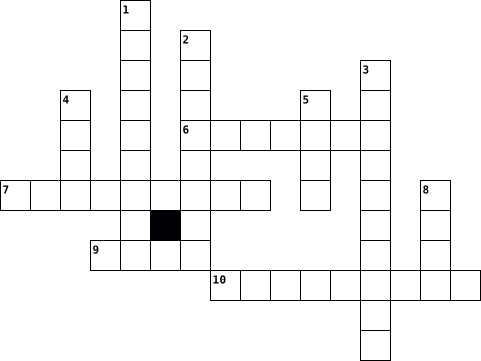
Across
- on a treadmill
- how hard you exercise
- what kind of exercise you do
- one piece of dark a day is good
Down
- how often you exercise
- need 60 min/day of this
- 1/2 of your plate filled with these
- high-intensity interval training
- how long you exercise
- too much of this leads to high blood pressure
10 Clues: on a treadmill • how long you exercise • how hard you exercise • how often you exercise • need 60 min/day of this • what kind of exercise you do • one piece of dark a day is good • high-intensity interval training • 1/2 of your plate filled with these • too much of this leads to high blood pressure
PE Crossword 2026-02-28

Across
- - Increase in speed during movement
- - State of physical balance
- - Ease of body movement
- - Sugar used by the body for energy
- - Long-distance running race
- - Ability to perform activity for a long period
- - Moving smoothly on wheels or blades
- - Mineral that helps regulate body fluids
- - Ability to use body parts together smoothly
- - Moving the body rhythmically to music
- - Jumping into water headfirst
- - Getting ready physically for activity
- - Racket sport played across a net
- - Running while jumping over barriers
- - Exercise practice combining movement and breathing
- - Ability to change direction quickly and smoothly
- - Ability to remain steady and upright
- - One complete movement of an exercise
- - Sport of shooting arrows at a target
- - Person who trains and guides athletes
- - Indoor stationary cycling exercise
- - Overall condition of physical health
- - Quick team meeting during a game
- - Flow of blood throughout the body
- - Leader of a sports team
- - Activity that lengthens muscles
- - Release of sweat from the body
- - Exercise that strengthens abdominal muscles
- - Ability of muscles to produce force
- - Team sport played with a hoop and ball
- - Race in which teammates take turns
- - Quick automatic body response
- - Nutrient that helps repair muscles
- - Sport involving sword fighting
- - Combat sport using punches
- - Organized series of sports matches
- - Device that counts number of steps
- - Intake of food for growth and energy
- - Basic form of movement using the legs
- - Process of evaluating fitness level
- - Short-distance running race
- - Striking a ball with the head
- - Bat and ball team sport
- - Action of receiving an object
- - Skillful movement of the feet
- - Sport requiring strength, balance, and flexibility
- - Strength of the hand muscles
- - Number of heartbeats per minute
- - Sport of moving through water using arms and legs
Down
- - Very short running race
- - Gymnastic movement over equipment
- - Machine used for indoor walking or running
- - Gradual improvement in training level
- - Supplying the body with enough water
- - Ability of joints to move through full range
- - Period of rest after exercise
- - Martial art using strikes and blocks
- - Protective equipment worn on the head
- - Racket sport played with a shuttlecock
- - Moving upward using hands and feet
- - Practice of calming the mind and body
- - Exercise that strengthens thighs and hips
- - Process of breathing in and out
- - Combat sport involving grappling
- - Moving a boat using oars
- - Exercise that strengthens chest and arms
- - Korean martial art using kicks
- - Amount of power produced
- - Sports including running, jumping, and throwing
- - Mental focus during activity
- - Exercise system focused on core control
- - Exercise lifting the body with arms
- - Method of measuring body fat thickness
- - Building used for indoor sports
- - Body’s structure made of bones
- - Force that muscles work against
- - Static core strengthening position
- - Riding a bicycle for exercise
- - Column of bones supporting the body
- - Wearable device that tracks activity
- - Continuous exercise that increases heart rate
- - Team sport played using hands to score
- - Bouncing a ball while moving
- - Ability to use strength quickly
- - Running at maximum speed
- - Continuous small jumps from foot to foot
- - Slow and steady running
- - Act of lengthening muscles
- - Breathing air into the lungs
- - Team sport played over a net
- - Muscle contraction without visible movement
- - Race that includes water and barriers
- - Correct way of holding the body
- - Track and field throwing event
- - Team sport played by kicking a ball to score
- - Fitness program combining dance and aerobic movements
- - Official who enforces rules in a sport
- - Control of body position during movement
- - Action of sending an object through the air
- - Riding ocean waves on a board
100 Clues: - Ease of body movement • - Very short running race • - Leader of a sports team • - Slow and steady running • - Bat and ball team sport • - Moving a boat using oars • - Amount of power produced • - Running at maximum speed • - State of physical balance • - Long-distance running race • - Act of lengthening muscles • - Combat sport using punches • - Short-distance running race • ...
What are you juggling? 2022-10-21
Across
- health
- finances
- relaxation
- exercise
- work
Down
- children
- hobbies
- career
- friends
- money
- sleep
- family
12 Clues: work • money • sleep • health • career • family • hobbies • friends • children • finances • exercise • relaxation
Weekly Rec 2024-11-07

Across
- A back-strengthening exercise, typically done with a barbell or machine.
- A high-intensity full-body exercise that involves a squat, a jump, and a push-up.
- A lower-body exercise where you step forward and lower your back knee toward the ground.
- An aerobic exercise that involves pedaling a stationary or regular bicycle.
- A weightlifting exercise where you lift a barbell from the ground to hip height.
Down
- A short, high-intensity running exercise that involves speed.
- A core exercise that targets the abdominal muscles, often performed on the floor.
- A cast-iron weight used in strength training exercises, often swung or lifted for full-body movement.
- A core-strengthening exercise where you hold a straight line from head to heels.
- A lower-body exercise where you bend your knees and lower your body, often with weights.
10 Clues: A short, high-intensity running exercise that involves speed. • A back-strengthening exercise, typically done with a barbell or machine. • An aerobic exercise that involves pedaling a stationary or regular bicycle. • A core-strengthening exercise where you hold a straight line from head to heels. • ...
Hypertension & Chronic Kidney Disease 2018-11-07

Across
- During exercise, it is important to maintain you ________ blood pressure less than or equal to 105 mmHG.
- One of the kidney's important functions is to maintain __________ levels.
- A diagnosis of Chronic Kidney Disease is made if there is reduced kidney function evidence by a _____________________ of less than or equal to 60 mL/min /1.73m^2 for at least 3 months. (Three words, No spaces)
- ________ should be used to measure intensity for patients on hemodialysis.
- What enzyme in the lungs converts Angiotensin I to Angiotensin II?
- Three commonly employed drugs in the treatment of hypertension are: Diuretics, Vasodilators, and ___________. (Two words, No spaces)
- ________ work by decreasing sodium, potassium and fluid volume.
- What is the most common cause and/or risk factor for Chronic Kidney Disease?
Down
- Exercise testing in patient's with Chronic Kidney Disease may cause a ST-change, which is an indicator of ________?
- It is contradicted for patients with Chronic Kidney Disease to perform a 1-RM due to issues related to _____________. (Two words, No spaces)
- What percent of kidney function is lost before symptoms for Chronic Kidney disease start to appear.
- Hypertension is frequently associated with normal cardiac output and elevated __________. (Three words, No spaces)
- __________ is defined as new vessel growth.
- ________ blood pressure is the force measured during cardiac contraction.
- What causes sodium reabsorption by the kidneys?
- Increased exercise capacity that is promoted by chronic aerobic exercise leads to regression of cardiac cell wall thickness and _______ ventricle mass.
- Using the valsalva maneuver while resistance training can result in extremely high blood pressure, dizziness and __________.
- __________ generally has no identifiable cause tends to develop over several years. (Two words, No spaces)
- The kidney's receive approximately 21% of the _____________. (Two words, No spaces)
- ___________ may be impaired during exercise in hot environments due to the use of beta-blockers and diuretics.
- Hypertension is considered a ________ disease.
- What exercise intensity is generally recommended to optimize the benefit-to-risk ratio?
22 Clues: __________ is defined as new vessel growth. • Hypertension is considered a ________ disease. • What causes sodium reabsorption by the kidneys? • ________ work by decreasing sodium, potassium and fluid volume. • What enzyme in the lungs converts Angiotensin I to Angiotensin II? • One of the kidney's important functions is to maintain __________ levels. • ...
Hypertension & Chronic Kidney Disease 2018-11-07

Across
- One of the kidney's important functions is to maintain __________ levels.
- Exercise testing in patient's with Chronic Kidney Disease may cause a ST-change, which is an indicator of ________?
- Increased exercise capacity that is promoted by chronic aerobic exercise leads to regression of cardiac cell wall thickness and _______ ventricle mass.
- What enzyme in the lungs converts Angiotensin I to Angiotensin II?
- Three commonly employed drugs in the treatment of hypertension are: Diuretics, Vasodilators, and ___________. (Two words, No spaces)
- A diagnosis of Chronic Kidney Disease is made if there is reduced kidney function evidence by a _____________________ of less than or equal to 60 mL/min /1.73m^2 for at least 3 months. (Three words, No spaces)
- What percent of kidney function is lost before symptoms for Chronic Kidney disease start to appear.
- What causes sodium reabsorption by the kidneys?
- Hypertension is considered a ________ disease.
- What exercise intensity is generally recommended to optimize the benefit-to-risk ratio?
- Using the valsalva maneuver while resistance training can result in extremely high blood pressure, dizziness and __________.
Down
- ________ should be used to measure intensity for patients on hemodialysis.
- ___________ may be impaired during exercise in hot environments due to the use of beta-blockers and diuretics.
- ________ work by decreasing sodium, potassium and fluid volume.
- Hypertension is frequently associated with normal cardiac output and elevated __________. (Three words, No spaces)
- __________ is defined as new vessel growth.
- The kidney's receive approximately 21% of the _____________. (Two words, No spaces)
- __________ generally has no identifiable cause tends to develop over several years. (Two words, No spaces)
- It is contradicted for patients with Chronic Kidney Disease to perform a 1-RM due to issues related to _____________. (Two words, No spaces)
- During exercise, it is important to maintain you ________ blood pressure less than or equal to 105 mmHG.
- ________ blood pressure is the force measured during cardiac contraction.
- What is the most common cause and/or risk factor for Chronic Kidney Disease?
22 Clues: __________ is defined as new vessel growth. • Hypertension is considered a ________ disease. • What causes sodium reabsorption by the kidneys? • ________ work by decreasing sodium, potassium and fluid volume. • What enzyme in the lungs converts Angiotensin I to Angiotensin II? • One of the kidney's important functions is to maintain __________ levels. • ...
Hypertension & Chronic Kidney Disease 2018-11-07

Across
- What percent of kidney function is lost before symptoms for Chronic Kidney disease start to appear.
- It is contradicted for patients with Chronic Kidney Disease to perform a 1-RM due to issues related to _____________. (Two words, No spaces)
- One of the kidney's important functions is to maintain __________ levels.
- What enzyme in the lungs converts Angiotensin I to Angiotensin II?
- ________ blood pressure is the force measured during cardiac contraction.
- During exercise, it is important to maintain you ________ blood pressure less than or equal to 105 mmHG.
- Using the valsalva maneuver while resistance training can result in extremely high blood pressure, dizziness and __________.
- ________ should be used to measure intensity for patients on hemodialysis.
- Exercise testing in patient's with Chronic Kidney Disease may cause a ST-change, which is an indicator of ________?
- The kidney's receive approximately 21% of the _____________. (Two words, No spaces)
- Three commonly employed drugs in the treatment of hypertension are: Diuretics, Vasodilators, and ___________. (Two words, No spaces)
- What is the most common cause and/or risk factor for Chronic Kidney Disease?
- Hypertension is frequently associated with normal cardiac output and elevated __________. (Three words, No spaces)
- __________ is defined as new vessel growth.
- What exercise intensity is generally recommended to optimize the benefit-to-risk ratio?
Down
- ________ work by decreasing sodium, potassium and fluid volume.
- A diagnosis of Chronic Kidney Disease is made if there is reduced kidney function evidence by a _____________________ of less than or equal to 60 mL/min /1.73m^2 for at least 3 months. (Three words, No spaces)
- ___________ may be impaired during exercise in hot environments due to the use of beta-blockers and diuretics.
- Hypertension is considered a ________ disease.
- __________ generally has no identifiable cause tends to develop over several years. (Two words, No spaces)
- What causes sodium reabsorption by the kidneys?
- Increased exercise capacity that is promoted by chronic aerobic exercise leads to regression of cardiac cell wall thickness and _______ ventricle mass.
22 Clues: __________ is defined as new vessel growth. • Hypertension is considered a ________ disease. • What causes sodium reabsorption by the kidneys? • ________ work by decreasing sodium, potassium and fluid volume. • What enzyme in the lungs converts Angiotensin I to Angiotensin II? • One of the kidney's important functions is to maintain __________ levels. • ...
Physical Education Crossword 2026-02-28

Across
- – Sport involving bows and arrows.
- – Rate at which the body burns energy.
- – Part of a baseball field beyond the bases.
- – Physical activity to improve health.
- – Point where two bones meet.
- – Ability to stay upright.
- – The muscles of the torso.
- – Taking in enough water.
- – Sport involving scales, bars, and vaults.
- – Award for winning a competition.
- – To bounce a ball repeatedly.
- – Process of providing food for growth.
- – Player who guards the net.
- – Ability to sustain prolonged effort.
- – Running at a steady, slow pace.
- – Martial art developed in Japan.
- – Type of steroid used for muscle growth.
- – Exercise where one leg is positioned forward.
- – Tissue connecting bone to bone.
- – Person who trains a team.
- – Action of protecting against an attack.
- – International sports festival held every four years.
- – Unit of energy in food.
- – Tissue that contracts to produce movement.
- – Spear thrown for distance.
- – Main type of sugar in the blood.
Down
- – Sport played with a bat and wicket.
- – Range of motion in joints.
- – Obstacle jumped over in a race.
- – Measurement of physical characteristics.
- – Offensive position in soccer or basketball.
- – Combat sport with foils or sabers.
- – State of being physically healthy.
- – Using different body parts together smoothly.
- – Race spanning 26.2 miles.
- – Muscle at the back of the thigh.
- – Game where players try to hit rivals with balls.
- – Acid that builds up during intense exercise.
- – A person proficient in sports.
- – How hard an exercise is.
- – Muscle on the front of the upper arm.
- – Gas required for cellular respiration.
- – State of complete physical and mental well-being.
- – The side attacking in a game.
- – Ability to change direction quickly.
- – Exercise requiring oxygen.
- – Period of time between exercises.
- – Series of exercises performed in rotation.
- – Short for cardiovascular exercise.
- – Group of sports teams that compete.
50 Clues: – Taking in enough water. • – Unit of energy in food. • – Ability to stay upright. • – How hard an exercise is. • – Race spanning 26.2 miles. • – The muscles of the torso. • – Person who trains a team. • – Range of motion in joints. • – Player who guards the net. • – Exercise requiring oxygen. • – Spear thrown for distance. • – Point where two bones meet. • ...
5 Components of Fitness 2022-09-09

Across
- Height and Weight
- Flexibility Exercise
- Maxing out on Bench press
- Running long distance
Down
- Mucular Endurance Exercise
- Cardiorespiratory Endurance Exercise
- How far someone can stretch
- Doing 100 push ups
- Body Mass Index
- Muscular Strength Exercise
10 Clues: Body Mass Index • Height and Weight • Doing 100 push ups • Flexibility Exercise • Running long distance • Maxing out on Bench press • Mucular Endurance Exercise • Muscular Strength Exercise • How far someone can stretch • Cardiorespiratory Endurance Exercise
PE Puzzle 2026-02-21

Across
- Short handheld weight?
- The places where two bones meet?
- A single distinct part or measurement?
- Moving rapidly on foot?
- Joint in the middle of the leg?
- Any exercise that raises your heart rate?
- Fluid loss during exercise?
- Joint between upper and lower arm?
- Force of foot striking the ground?
- The gas we breathe that muscles need to work?
- A system of exercises for core strength?
- Feel-good hormone released during exercise?
- High Intensity Interval Training acronym?
- To lower heart rate after a workout: ___ Down?
- To provide food necessary for growth?
- The capacity to do work?
- What you eat daily?
- System that fights infection?
- To breathe in?
- Joints connecting legs to torso?
- Food grown without synthetic pesticides?
- Low body fat percentage?
- Resistance to change; steadiness?
- Stretching while moving?
- To consume food?
- Plant-based food group?
- A mind-body practice focusing on flexibility and breath?
- Exercise "with oxygen"?
- Short burst of full speed running?
- Feeling; mental reaction?
- Fiber that transmits signals to muscles?
- 24 hour period?
- Macronutrient for muscle repair?
- Rhythmic movement to music?
- Slang for abdominal muscles?
- A healthy dairy snack rich in probiotics?
- Firmness of a muscle?
- Joint connecting foot to leg?
- Duration; how long you perform an activity?
- Tissue that contracts to move bones?
- The science of food and how it affects the body?
- The time of life when habits often form?
- To provide necessary tools or gear?
- The muscle on the back of the upper arm?
- Your specific goal heart rate zone?
- A type of training with bursts of effort and rest?
- A core stability exercise held in a push-up position?
- A single-leg strengthening exercise?
- The study of body structure?
- Physical activity done for wellness?
- To lengthen a muscle to improve flexibility?
- To get bigger or stronger?
- Running up a slope?
- The vital organ that pumps blood?
- The muscles of the torso and abdomen?
- The correct way to perform an exercise?
- A functional leg exercise where you lower your hips?
- To raise a weight?
- Something you do repeatedly?
Down
- To straighten a limb?
- The large muscles of the buttocks?
- How fast you move?
- Engaging in movement; not sedentary?
- A state of complete physical and mental well-being?
- A person who guides your training?
- A unit of energy found in food?
- Ability to move quickly and change direction?
- Small unit of fluid measurement?
- Body part supporting the head?
- To breathe out?
- The range of motion around a joint?
- The action of teaching the body a skill?
- A substance in food that provides nourishment?
- Drinking enough water?
- To cease work or movement for relaxation?
- The ability to sustain exercise for a long time?
- Process of healing after training?
- A ball-shaped weight with a handle?
- A planned occasion or race?
- Opposite of lower body?
- Ability to stay upright and steady?
- Groups of repetitions?
- Exercise using a boat or machine?
- Healthy fatty acids found in fish?
- Essential clear liquid for hydration?
- How hard you work during exercise?
- The person responsible for your fitness?
- Mass of a body?
- Short for repetitions?
- A group of people training together?
- Micronutrient essential for health?
- Principle of increasing stress to improve fitness?
- A popular dance-based fitness class?
- Muscle on the front of the upper arm?
- The amount of force a muscle can produce?
- Not inside; fresh air training?
- Physical activity governed by rules?
- Essential rest for mental health?
- 365 days of consistency?
- Physical harm or damage?
- Hard work applied to a task?
- Surface for running?
- Light activity before a workout?
- Static muscle contraction without movement?
- Staying power; physical resistance to fatigue?
- To join together as a group?
106 Clues: To breathe in? • To breathe out? • 24 hour period? • Mass of a body? • To consume food? • How fast you move? • To raise a weight? • What you eat daily? • Running up a slope? • Surface for running? • To straighten a limb? • Firmness of a muscle? • Short handheld weight? • Drinking enough water? • Groups of repetitions? • Short for repetitions? • Moving rapidly on foot? • Plant-based food group? • ...
5 Components of Fitness 2022-09-09

Across
- Height and Weight
- Flexibility Exercise
- Maxing out on Bench press
- Running long distance
Down
- Mucular Endurance Exercise
- Cardiorespiratory Endurance Exercise
- How far someone can stretch
- Doing 100 push ups
- Body Mass Index
- Muscular Strength Exercise
10 Clues: Body Mass Index • Height and Weight • Doing 100 push ups • Flexibility Exercise • Running long distance • Maxing out on Bench press • Mucular Endurance Exercise • Muscular Strength Exercise • How far someone can stretch • Cardiorespiratory Endurance Exercise