
nutrition Crossword Puzzles
Nutrition and Wellness 2022-10-18

Across
- To crush food into a smooth mixture
- To coat foods in 3 layers: flour, liquid,& crumbs
- To boil a mixture to evaporate and intensify flavors
- To grind fruits and veggies until they are smooth
- To heat liquid to just below boiling point
- To leave opening in container so steam can escape
- To cook a food in sugar syrup
- To lightly sprinkle food with sugar or flour
- To heat sugar until in liquifies and darkens in color
- To use pastry brush to coat food with liquid
- To cut food into large thin pieces
- To remove a stone or seed from fruit by knife
- To remove tough outer coating of a food
- To mix ingredients by tossing with tongs
- To soak dry elements in hot liquid to extract flavor
- To remove the center of a fruit
- To put small pieces of food on the surface of others
Down
- To shape a food by hand or by mold
- To cut off a very thin layer of peel
- To add flavor and spice to foods
- To add flavor to foods by soaking it in cold water to stop cooking process
- To mix thoroughly and adds air to foods
- To separate water from solid food by putting it in a strainer
- To loosen the flavorful food particles in a pan after food has been removed
- Coating foods with flour
- To pulverize food in crumbs or powder
- Coat foods with a liquid that finishes glossy
- To make straight
- Mixing with a spoon or whisk in a circular motion
- To separate solid from liquid by strainer
- Dividing food into smaller pieces with a blade
31 Clues: To make straight • Coating foods with flour • To cook a food in sugar syrup • To remove the center of a fruit • To add flavor and spice to foods • To shape a food by hand or by mold • To cut food into large thin pieces • To crush food into a smooth mixture • To cut off a very thin layer of peel • To pulverize food in crumbs or powder • To mix thoroughly and adds air to foods • ...
Nutrition Exam Review 2022-10-25

Across
- the process of your body converting what you eat and drink into energy
- starch the body can't digest
- commonly found in baked goods desserts and sweets
- an unsaturated fat in some animal foods
- need 2,400-2,800 daily
- has two types: fat-soluble and water-soluble
- starches that are absorbed slowly
- regulates body temperature and lubricates joints
- produced by the body(liver)and consumed from food
- found in vegetables and fish oils
- proteins, fruits, veggies, grains, and dairy
Down
- sugars absorbed quickly
- food that has nutrients added back after being lost in processing
- must be obtained from the diet
- mineral found in table salt
- found in food that helps to maintain the body
- adding needed nutrients to foods that didn't have them before
- guide that identifies daily eating proportions
- high in calories but lacks in the other nutrients
- body depends on for every process necessary for life
- provides energy and bulid/maintain body tissue
21 Clues: need 2,400-2,800 daily • sugars absorbed quickly • mineral found in table salt • starch the body can't digest • must be obtained from the diet • starches that are absorbed slowly • found in vegetables and fish oils • an unsaturated fat in some animal foods • has two types: fat-soluble and water-soluble • proteins, fruits, veggies, grains, and dairy • ...
Nutrition Exam Review 2022-10-24

Across
- formed from a process called hydrogenation which causes unsaturated fats to harden
- include sugars that are added during the processing of foods
- foods with added nutrients to them
- a type of starch that the body cannot digest. The body uses it to move waste through the digestive tract
- one that is high in calories, yet lacks all other nutrients
- having added nutrients
- a substance that provides nourishment essential for growth and the maintenance of life
- and essential nutrient because it is required in amounts that exceed the body's ability to produce it
Down
- has sections for vegetables, fruits, grains, and protein foods, as well as a "cup" on the side for dairy
- a waxy, fat-like substance that's found in all the cells in your body
- a type of fat containing a high proportion of fatty acid molecules with at least one double bond
- the chemical process by which the body breaks down substances and gets energy
- found throughout the body—in muscle, bone, skin, hair, and virtually every other body part or tissue
- are starches that are absorbed more slowly
- an essential nutrient and is needed by the body in relatively small amounts(provided that substantial sweating does not occur) to maintain a balance of body fluids and keep muscles and nerves running smoothly
- how we measure energy in food
- a collection of foods that share similar nutritional properties or biological
- any of a group of organic compounds which are essential for normal growth and nutrition and are required in small quantities in the diet because they cannot be synthesized by the body
- a nutrient required for normal body function that either cannot be made by the body or cannot be made in amounts adequate for good health and therefore must be provided by the diet
- are sugars that are absorbed quickly
- a nutrient that is needed in small amounts to keep the body healthy
21 Clues: having added nutrients • how we measure energy in food • foods with added nutrients to them • are sugars that are absorbed quickly • are starches that are absorbed more slowly • one that is high in calories, yet lacks all other nutrients • include sugars that are added during the processing of foods • a nutrient that is needed in small amounts to keep the body healthy • ...
Nutrition Crossword Puzle 2022-10-28

Across
- this group includes milk and many other products, such as cheese and yogurt
- the starches and sugars found in foods, especially in plant foods
- ______fats which remain liquid at room temperature, can actually lower the risk of heart disease
- ______ fats which start off as liquid oils and are made solid through processing
- a visual reminder to help consumers make healthful food choices
- teens should eat 1 1/2-2 cups of ____ per day.
- a unit of heat that measures the energy available in food
- tough stringy part of raw fruits, raw vegetables, whole wheat, and other grains
- the body's physical need for food
- elements in foods that help your body work properly
- elements in foods that help your body work properly
- the study of nutrients and how the body uses them
- compounds that help to regulate body functions
Down
- _____is essential to every body function you have
- this group includes all grains, such as rice, corn, wheat, oats, and barley
- teen boys and girls need 2-3 cups of _____ daily
- the emotional desire for food
- substances in food that your body needs to function
- nutrients that promote normal growth, give you energy, and keep your skin healthy
- _____ carbohydrates are sugars
- _____fats, which are usually solid at room temperature
- this group includes foods high in protein, such as meat, fish , beans, and peas, eggs, and nuts
- ______ carbohydrates are starches, or long chains of sugar linked together
- compounds that help to regulate body functions
- the nutrients used to build and repair cells
25 Clues: the emotional desire for food • _____ carbohydrates are sugars • the body's physical need for food • the nutrients used to build and repair cells • teens should eat 1 1/2-2 cups of ____ per day. • compounds that help to regulate body functions • compounds that help to regulate body functions • teen boys and girls need 2-3 cups of _____ daily • ...
Yenifer's nutrition puzzle. 2022-11-21

Across
- for building muscle.
- one of the tree nutrients.
- fats- The "bad fats"
- When your body tells you it needs food.
- digestive system.
- How fast your body breaks down food.
- what your bones need to be healthy and strong.
- Things your body needs.
- fats- Healthy fats.
- what food gives us.
- much "fat" you have in your blood.
Down
- When your bones get weak from not eating right.
- An essential mineral for your body that has 0 calories.
- The sensation you feel when you want to eat something.
- what you get from eating beans.
- fats- The fats that get stored in your body.
- gives you the most energy.
- The amount of energy that food gives us.
- What you can get from food.
- every food has.
- Food that is very dense in nutrients.
21 Clues: every food has. • digestive system. • fats- Healthy fats. • what food gives us. • for building muscle. • fats- The "bad fats" • Things your body needs. • one of the tree nutrients. • gives you the most energy. • What you can get from food. • what you get from eating beans. • much "fat" you have in your blood. • How fast your body breaks down food. • Food that is very dense in nutrients. • ...
Nutrition Crossword Puzzle 2022-11-15

Across
- The necessary substances obtained from ingested food that supply the body with energy, build and maintain bones, muscles, and skin, and aid in the normal growth and function of each body system
- Chemicals needed for energy, muscle building, nerve conduction, blood clotting, and immunity to diseases
- Elevation of plasma cholesterol, triglycerides, or both
- Physical wasting
- The study of measurements of the human body
- Inhalation of fluid or foreign matter into matter into the lungs and bronchi
- A complex carbohydrate; classified as soluble or insoluble
- Proteins responsible for catalyzing most chemical reactions in the body, such as digesting food and synthesizing new compounds
- Loss of appetite in patients experiencing illness or side effects from allergies, medications, or treatments, such as chemotherapy, that suppress the desire to eat
- The breaking down of substances from simple to complex, resulting in a release of energy
- The result of the person’s energy intake consistently exceeding energy use
- Needed for energy and to support cellular growth
- Produced from incomplete oxidation when carbohydrates are not available
- Problematic or inadequate absorption of nutrients in the intestinal tract
- Dissolve in the body and are excreted in the urine
Down
- Chemical substances composed of carbon, hydrogen, and oxygen molecules. Supply the body with 4 kilocalories per gram
- The minimum amount of energy required to maintain body functions in the resting, awake state
- The body’s intake and use of adequate amounts of necessary nutrients for tissue growth and energy production
- Organic compounds responsible for regulation of body processes, reproduction, and growth
- Movement of the smaller elements through the walls of the digestive tract and into the blood
- Any fat found within the body
- The use of energy to change simple materials into complex body substances and tissue
- The building blocks of protein
- Nutrients that are needed in large amounts
- A semi-liquid mass that travels through the intestines
- Nutrients needed by the body in limited amounts
- The most abundant lipids in food
- The vitamins A, D, E, K
- An imbalance in the amount of nutrient intake and the body’s needs
- No teeth
- Difficulty in swallowing
- A waxy, fatlike substance that is found in all cells of the body
- The breaking down of food into smaller particles of nutrients
33 Clues: No teeth • Physical wasting • The vitamins A, D, E, K • Difficulty in swallowing • Any fat found within the body • The building blocks of protein • The most abundant lipids in food • Nutrients that are needed in large amounts • The study of measurements of the human body • Nutrients needed by the body in limited amounts • Needed for energy and to support cellular growth • ...
Large Animal Nutrition 2016-11-29

Across
- Essential amino acid considered a limiting ingredient in swine diets.
- One of the most common nutritional diseases of reptiles is metabolic ________ disease, which is usually caused by calcium or Vitamin D deficiency.
- Common medical condition in adult horses typically caused by gas accumulation and distension of the intestines, cecum, and/or colon.
- This laboratory animal cannot synthesize vitamin C (two words)
- The primary compartment of the ruminant forestomach that is responsible for fermentation.
- Common sources of high energy ____________ include cereal grains, molasses, and animal & vegetable fats.
- Horses and rabbits are considered ______-gut fermenters.
- One of the most important nutrient requirement for rabbits is the availability of fresh ________ for fiber.
- The daily feed amount required for balanced nutrition in large animals.
- Fiber levels gradually ________ during dairy cattle production phases to prevent over-conditioning.
- _____-based diets should be used sparingly in avian species.
- The highest production requirements for dairy cattle are during this phase of lactation.
Down
- The Veterinary Feed ___________ requires that licensed veterinarians issue prescriptions for medications intended for use in animal feed.
- Two main waste gases produced by fermentation are carbon dioxide and ________.
- Animals that are __________ ingest feces to obtain specific nutrients produced by bacteria.
- Like cats, ferrets are obligate __________.
- Rodents and horses have _____-rooted teeth that continuously grow and must be worn down or trimmed to prevent malocclusion.
- Sow's milk is devoid of this nutrient, which is why piglets must receive an injection of this nutrient within 72 hours of birth.
- Common medical condition in horses that results in inflammation of the hoof wall. Commonly associated with overconsumption of concentrates or lush pastures.
- Concentrates form the majority of the diet in these type of cattle operations.
- The shape of a bird's ______ determines its diet and foraging habits.
21 Clues: Like cats, ferrets are obligate __________. • Horses and rabbits are considered ______-gut fermenters. • _____-based diets should be used sparingly in avian species. • This laboratory animal cannot synthesize vitamin C (two words) • Essential amino acid considered a limiting ingredient in swine diets. • ...
Chapter 21: Nutrition 2018-02-16

Across
- expenditure the total calories used for all activities over a given period of time
- helps people pick the correct foods and portions
- Whats the acronym for the U.S Department of Agricultutre
- substances that provide nutrition
- What is the acronym for reference daily intakes?
- any of a group of organic compounds that are essential the normal growth and nutrition
- effect a false sense of benefit felt by a patient caused by the psychological belief that a treatment is effective
- severe loss of appetite
- any of a class of complex, nitrogenous, organic compounds that function as the primary building blocks of the body
- where are proteins stored
- proteins 9 essential amino acids
- lack/loss of water
- sum of all physical and chemical processes that take place in the body
- loss is related to emotional reasons
- How many classes of nutrients are there?
Down
- required liquid for humans
- work producing
- can inhibit blood flow and is a major risk factor in heart disease
- a complex sugar that is the basic source of energy for the body
- How many amino acids have been discovered in the body?
- fiber portion of plant foods that cannot be digested
- long chain of glucose molecules
- unit of heat
- How many calories is one gram of fat?
- a natural oily or greasy substance occuring in animal bodies, especially when deposited as a layer under the skin or around certain organs
- What is the acronym for daily reference value?
- Whats the acronym for Health and Human Services
- a solid inorganic substance of natural occurrence
- acids proteins basic unit
29 Clues: unit of heat • work producing • lack/loss of water • severe loss of appetite • where are proteins stored • required liquid for humans • acids proteins basic unit • long chain of glucose molecules • substances that provide nutrition • proteins 9 essential amino acids • loss is related to emotional reasons • How many calories is one gram of fat? • ...
Nutrition and Metabolism 2017-10-10

Across
- / bad cholesterol
- bond / H and a negative molecule
- / energy is released
- / found in plant cell walls
- / good cholesterol
- / good fat
- / made up two atoms
- / speed chemical reactions
- / smallest particle of matter
- / lead to heart attacks
- bonds / atoms joined toguether
- / concentrated packs of energy
Down
- / same formula, different structure
- / pure substances (118)
- / found in animal bodies
- / big nutrients
- / energy is absorbed
- / found in plants
- / contain carbon
- bond / transfer of e-
20 Clues: / good fat • / big nutrients • / contain carbon • / bad cholesterol • / found in plants • / good cholesterol • / made up two atoms • / energy is released • / energy is absorbed • bond / transfer of e- • / pure substances (118) • / lead to heart attacks • / found in animal bodies • / speed chemical reactions • / found in plant cell walls • / smallest particle of matter • ...
Food and Nutrition 2019-03-18

Across
- Occurs when food that’s safe to eat comes in contact with bacteria making it not safe to eat
- remove batter from a mixing bowl
- to pour off water or juice from the food
- to mix two or more ingredients together
- part of a recipe. shows how a dish is made
- lift corn from the grill or from boiling water
- to beat butter or shortening until soft
- roll out pastry, cookie dough
- used to cut things
- to cut off the skin of a fruit or vegetable
Down
- fry meat/eggs in
- 40-140F degrees
- slice bread or bagels
- A bacterium that occurs mainly in the intestine and causes illnesses
- drain liquid from canned vegetables
- serve soup
- to mix food round and round with a spoon
- to pour liquid over food while it cooks
- to cut into small pieces
- uncooked
20 Clues: uncooked • serve soup • 40-140F degrees • fry meat/eggs in • used to cut things • slice bread or bagels • to cut into small pieces • roll out pastry, cookie dough • remove batter from a mixing bowl • drain liquid from canned vegetables • to mix two or more ingredients together • to pour liquid over food while it cooks • to beat butter or shortening until soft • ...
Food and Nutrition 2019-10-04

Across
- cheese, ice cream, and other milk-based foods.
- Meat, fish, poultry, and eggs, with dried legumes and nuts as alternatives.
- of or at a low or relatively low temperature, especially when compared with the human body.
- the action or state of making or being made impure by polluting or poisoning.
- a damaging immune response by the body to a substance, especially pollen, fur, a particular food, or dust, to which it has become hypersensitive.
- serious illness caused by the botulinum
- are single-cell organisms that are neither plants nor animals.
- the quality of being hot; high temperature.
- make clean and hygienic; disinfect.
- prepare (food, a dish, or a meal) by combining and heating the ingredients in various ways.
Down
- any nutritious substance that people or animals eat or drink or that plants absorb in order to maintain life and growth.
- combustion or burning, in which substances combine chemically with oxygen from the air and typically give out bright light, heat, and smoke.
- is a common bacterial disease that affects the intestinal tract.
- the food or other substances necessary for growth, health, and good condition.
- is an intestinal infection caused by the bacterium Listeria monocytogenes.
- Zone Bacteria grow most rapidly in the range of temperatures between 40 °F and 140 °F, doubling in number in as little as 20 minutes.
- any of the foods or substances that are combined to make a particular dish.
- free from dirt, marks, or stains.
- conditions or practices conducive to maintaining health and preventing diseases, especially through cleanliness.
- bacteria normally live in the intestines of healthy people and animals.
20 Clues: free from dirt, marks, or stains. • make clean and hygienic; disinfect. • serious illness caused by the botulinum • the quality of being hot; high temperature. • cheese, ice cream, and other milk-based foods. • are single-cell organisms that are neither plants nor animals. • is a common bacterial disease that affects the intestinal tract. • ...
Importance of Nutrition 2023-05-10

Across
- treating a substance with heat to kill or slow the growth of pathogens
- A condition in which the body’s immune system reacts to substances in some foods
- A unit of heat used to measure the energy your body uses and the energy it receives from food
- A waxy, fat like substance in your blood compounds found in food that helps regulate many body processes
- A high ratio of nutrients to calories
- substances added to a food to produce a desired effect
- Are starches and sugars found in foods, which provide your body’s main source of energy
- A tough complex carbohydrate that the body cannot digest
- The process by which your body takes in and uses food
- The psychological desire for food
- An interactive guide to healthful eating and active living
Down
- are compounds found in food that helps regulate many body processes
- The spreading of pathogens from one food to another
- Elements found in food that are used by the body
- Is the natural physical drive to eat, prompted by the body’s need for food
- Are nutrients that the body uses to build and maintain its cells and tissues
- A set of recommendations about smart eating and physical activity for all Anericans
- Food poisoning
- A condition in which the bones become fragile and break easily
- Negative reaction to food that doesn’t involve the immune system
- substances in food that your body needs to grow, to repair itself, and to supply you with energy
21 Clues: Food poisoning • The psychological desire for food • A high ratio of nutrients to calories • Elements found in food that are used by the body • The spreading of pathogens from one food to another • The process by which your body takes in and uses food • substances added to a food to produce a desired effect • A tough complex carbohydrate that the body cannot digest • ...
Nutrition and Exercise 2023-07-13

Across
- some are water-soluble and some are fat-soluble
- ability to perform daily activities
- short, powerful exercise without use of oxygen
- body movement of any kind
- above ideal weight
- an example of one is calcium
- the process of breaking down food
- structured and repetitive movements
- below ideal weight
- lifestyle of little activity
- ability of heart and lungs to perform activity for a long period of time
Down
- ability to move weight
- cartilage in bone breaks down
- ratio of height to weight
- break down into glucose
- being able to move in a full range of motion
- help with digestion of food
- made of amino acids
- ability of muscles to work for long periods
- the BMI category above "overweight"
20 Clues: above ideal weight • below ideal weight • made of amino acids • ability to move weight • break down into glucose • ratio of height to weight • body movement of any kind • help with digestion of food • an example of one is calcium • lifestyle of little activity • cartilage in bone breaks down • the process of breaking down food • ability to perform daily activities • ...
Adyn Nutrition puzzle 2023-10-04

Across
- required for muscle and nerve function
- inorganic elements in food and water
- liquid needed to live
- something added by manufacturing
- A building block that is found in meat
- sugar that is added
- shows food ingridents
- a waxy substance in the body that controls hormones
- calorie that has no value
- most ununhealthyat
- unit of mesuring energy
- worst fat for you
- Helps you use the restroom
Down
- How fast you digest food
- the different types of food
- shows ingrediants of product
- strung in complex chains usually in whole foods
- The required nutrient food that should be on a plate
- chemical compounds found in food
- micronutrients to carry out body function
- adding vitamins and minerals
- nutrients essential for life
- strung in simple chains are usually found in non nutritious food
- oil that usually comes from veggies
24 Clues: worst fat for you • most ununhealthyat • sugar that is added • liquid needed to live • shows food ingridents • unit of mesuring energy • How fast you digest food • calorie that has no value • Helps you use the restroom • the different types of food • shows ingrediants of product • adding vitamins and minerals • nutrients essential for life • chemical compounds found in food • ...
Nutrition and Diets 2023-10-26

Across
- Having too much body mass.
- is an eating disorder characterized by low weight, food restriction, body image disturbance, fear of gaining weight, and an overpowering desire to be thin.
- Energy is released when your body breaks down (digests and absorbs) food.
- easily digestible foods that are soft-consistency, low-fiber, cooked, gentle to the gastrointestinal tract, and usually non-spicy.
- are a type of macronutrient found in certain foods and drinks.
- Type of fiber that makes up the cell walls of plants.
- deficiencies or excesses in nutrient intake, imbalance of essential nutrients, or impaired nutrient utilization.
- inorganic elements are present in soil and water, which are absorbed by plants or consumed by animals.
- food that is soft, low in fiber, and easy to digest.
- is when the pressure in your blood vessels is too high (140/90 mmHg or higher.
- eating the healthiest foods in moderate amounts and sticking to regular mealtimes.
- are substances that are needed for normal cell function, growth, and development.
Down
- the process of mechanically and enzymatically breaking down food into substances for absorption into the bloodstream.
- thickening or hardening of the arteries caused by a buildup of plaque in the inner lining of an artery.
- chronic disease characterized by a decrease in bone mineral density
- fatty compounds that perform a variety of functions in your body.
- Weighing less than the normal amount for one's age, height, and build.
- explores the physical and emotional relationship humans have with food.
- are made up of chemical 'building blocks' called amino acids.
- substances that may protect your cells against free radicals
20 Clues: Having too much body mass. • food that is soft, low in fiber, and easy to digest. • Type of fiber that makes up the cell walls of plants. • substances that may protect your cells against free radicals • are made up of chemical 'building blocks' called amino acids. • are a type of macronutrient found in certain foods and drinks. • ...
Fitness and Nutrition 2023-09-19

Across
- A PERSON WHO DOES NOT EAT OR USE ANIMAL PRODUCTS
- BRINGING YOUR HEART RATE BACK DOWN AFTER EXEERCISE
- KEEPING YOUR BODY FULL OF LIQUIDS
- YOUR BODY'S INNER STRUCTURE
- SUGARS AND STARCHES THAT PROVIDE ENERGY
- SODIUM
- SUBSTANCES NEEDED FOR THE BODY TO GROW
- REGULATE BODILY FUNCTIONS AND TRANSMIT NERVE IMPULSES
- CONCENTRATED SOURCES OF ENERGY THAT TRANSPORT VITAMINS
- FOODS THAT ARE BETTER FOR YOU
- GETTING YOUR MUSCLES READY AND YOUR BLOOD FLOWING
Down
- FOODS PACKED WITH VITAMINS AND MINERALS
- INDIGESTIBLE MATERIAL IN FOOD THAT STIMULATES THE INTESTINES
- MOVEMENT BY MOVING FEET
- A WAY OF EXPRESSING HOW MUCH ENERGY FOOD GIVES
- PROMOTE GROWTH AND MAINTAIN HEALTH
- SEAFOOD BEANS NUTS LEAN MEATS OR POULTRY
- SUBSTANCE IN BLOOD PLASMA THAT IS A RISK FACTOR IN HEART DISEASE.
- FREQUENCY INTENSITY TIME TYPE
- DAILY PHYSICAL ACTIVITY
20 Clues: SODIUM • MOVEMENT BY MOVING FEET • DAILY PHYSICAL ACTIVITY • YOUR BODY'S INNER STRUCTURE • FREQUENCY INTENSITY TIME TYPE • FOODS THAT ARE BETTER FOR YOU • KEEPING YOUR BODY FULL OF LIQUIDS • PROMOTE GROWTH AND MAINTAIN HEALTH • SUBSTANCES NEEDED FOR THE BODY TO GROW • FOODS PACKED WITH VITAMINS AND MINERALS • SUGARS AND STARCHES THAT PROVIDE ENERGY • ...
Nutrition & Wellness Vocab. 2024-04-04

Across
- to remove the center of a fruit
- to cut off a very thin layer of peel with a paring knife
- to cut a food into large thin pieces with a slicing knife
- and Shred to cut food into smaller pieces or shreds by pressing and rubbing food against the rough surface of the grater
- To mix ingredients by tumbling them with tongs or a large spoon and fork
- to coat a food with a liquid that forms a glazy finish
- to put small pieces of food on the surface of another food
- combining two or more ingredients thoroughly so they blend
- Chopping means to cut foods into small irregular pieces. Mincing is to chop finely.
- to dip a food briefly in boiling water and then in cold water to stop the cooking process
- and Dice refers to cutting foods into square pieces
- Dividing a food into smaller parts by using a tool with a sharp blade
- to grind or mash cooked fruits or vegetables
- to divide a food into equal fourths
- adjusting food scale by subtracting container's weight so food can be weighed
- to make straight shallow cuts with a slicing knife in the surface of a food
- to lightly sprinkle a food with flour or confectioners’ sugar Flour: to coat a food with flour
Down
- to cut a food into thin strips
- to break off or tear off small layers of food
- to pulverize food into crumbs, powder, or paste
- applying thin layer of one food onto another food for flavor and texture
- taking a liquid measuring cup, subtract the amount of fat you want, pour that resulting water into measuring cup,
- to crush food into a smooth mixture with a masher or beater
- to coat food with flour, breadcrumbs, or cornmeal
- to make a liquid clear by removing solid particles
- to beat quickly and vigorously to incorporate air into a mixture making it light and fluffy
- Method cutting a certain amount of butter through the paper with a serrated knife
- to heat sugar until it liquifies and darkens
- putting fat into a dry measuring cup and packing it to eliminate air bubbles
- to cut food into small pieces with kitchen shears
- to coat a food with three different layers Brush: to use a pastry brush to coat a food with a liquid
- to use a grinder to break up a food into course, medium, or fine particles
- to cook a food in sugar syrup
- to pour Liquid over a food as it cooks using a baster or spoon
34 Clues: to cook a food in sugar syrup • to cut a food into thin strips • to remove the center of a fruit • to divide a food into equal fourths • to heat sugar until it liquifies and darkens • to grind or mash cooked fruits or vegetables • to break off or tear off small layers of food • to pulverize food into crumbs, powder, or paste • ...
Nutrition and Health 2024-03-04

Across
- Foods you can digest or absorb.
- Beef, Chicken, Fish, Egg
- Diagram that shows what food you should eat everyday.
- Different techniques to control someone's stress levels.
- Drinking plenty of water make you have great _____.
- The label on the back of a food box.
- Healthy Pyramid
- Act of doing certain healthy habits.
- Micronutrients required by the body (M).
- Skinny people have high ______.
- Obese people have lots of ____.
- Carbs, Proteins, lipids.
- When food goes through the mouth and down to the stomach.
Down
- The process by which one thing absorbs or is absorbed by another.
- RDA
- When food doesn't contain nutrients.
- A treadmill can burn ____.
- compounds in foods that scavenge and neutralize free radicals
- Allergic to certain foods.
- Every living thing needs ____.
- BMI
- Bread, Rice, and Grains are examples.
- Vitamins and minerals the body needs.
- Micronutrients required by the body (V).
24 Clues: RDA • BMI • Healthy Pyramid • Beef, Chicken, Fish, Egg • Carbs, Proteins, lipids. • A treadmill can burn ____. • Allergic to certain foods. • Every living thing needs ____. • Foods you can digest or absorb. • Skinny people have high ______. • Obese people have lots of ____. • When food doesn't contain nutrients. • The label on the back of a food box. • ...
Nutrition and Health 2024-03-06

Across
- A person's weight in kg divided by the square of height in m
- Official symbol of the five food groups
- Micronutrients required by the body to carry out a range of functions
- Substance that provides nourishment
- Process of taking nutrients from the digestive system
- Act of practicing healthy habits
- Also known as roughage or bulk
- The chemical reactions in the body's cells that change food into energy
- Replacement of body fluids lost through sweating, etc.
- Broccoli, spinach, carrots, and potatoes are high in this
- Breaks down the amount of calories, carbs, vitamins per serving, etc.
- Forms: sugar, fibers, and starches
- The process of breaking down food into substances
- Nutrients in food that body uses to build/use as fuel
Down
- Nutrients we need in larger quantities
- Average daily level of intake
- Meat, fish, eggs, dairy products, etc.
- To reduce negative impacts
- Calories derived from food containing no nutrients
- Nutritional diagram
- Vitamins/minerals needed in very small amounts
- An immune reaction that happens after eating certain food
- A unit of energy expresses the nutritional value of food
- Found in foods like cereals, bread, nuts, fruit, etc.
24 Clues: Nutritional diagram • To reduce negative impacts • Average daily level of intake • Also known as roughage or bulk • Act of practicing healthy habits • Forms: sugar, fibers, and starches • Substance that provides nourishment • Nutrients we need in larger quantities • Meat, fish, eggs, dairy products, etc. • Official symbol of the five food groups • ...
Human nutrition crossword 2023-10-24

Across
- liquid secreted by the walls of the stomach containing pepsin and HCL
- Made smooth and slippery, to reduce friction
- The uptake and use of nutrients
- The space in the centre of a tube
- an alkaline fluid that helps in fat digestion
- the canal from the mouth to the stomach
- the blood vessel that carries blood from the small intestine to the liver
- The process of breaking down of food
- The tiny projections which cover the inner wall of the small intestine
- The rhythmic muscular contractions that help move food through the alimentary canal
Down
- small vessels that absorb fatty acids and glycerol in the small intestine
- the last part of the small intestine nearest to the colon
- Disease which is caused by deficiency of vitamin C
- a part of blood that is mainly made of water with absorbed nutrients
- where we keep excess fat and oil under the skin
- The enzyme that breaks down starch
- cells found in the lining of the respiratory passages and secrete mucus
- a protease enzyme secreted by the pancreas; it works in the duodenum
- the food element that makes up the cell membrane
- Less digestible food
20 Clues: Less digestible food • The uptake and use of nutrients • The space in the centre of a tube • The enzyme that breaks down starch • The process of breaking down of food • the canal from the mouth to the stomach • Made smooth and slippery, to reduce friction • an alkaline fluid that helps in fat digestion • where we keep excess fat and oil under the skin • ...
Nutrition and Dietetics 2023-10-23

Across
- face and handle / manage / deal with
- having the ability to adapt or be used in many different ways
- having a rough, raspy, or strained voice or sound; harsh or rough in tone or texture
- fake / incorrect / illogical points
- relationship or connection between 2 or more things (as different from causation)
- feeling dizzy or light-headed; weak, feeble, or lacking strength
- cooking process that involves briefly boiling a food item and then plunging it into cold water to stop the cooking process
- something that can be changed (e.g. risk factors)
- responses to a stimulus
- lessen or empty the amount of something (vitamin supply)
- strengthen / support (reinforce information)
Down
- release / elimination of / push out / removal (...causes excretion of zinc)
- effectiveness (of a drug or treatment)
- damage / make worse or less able to function (impair production/function/immunity)
- get rid of or end completely (specifically a disease)
- make dirty / impure / pollute / poison
- the second one of two things or people that have been mentioned
- rate of occurrence
- from birth (abnormalities)
- germs / form of single-celled microbes
- not clear / undecided
- major (e.g. radical action like a mastectomy)
- the sudden start of a disease
- unsupported / with no evidence of truth
- large / substantial / wholesome / satisfying (hearty breakfast)
- an action to achieve something (specifically health measures)
26 Clues: rate of occurrence • not clear / undecided • responses to a stimulus • from birth (abnormalities) • the sudden start of a disease • fake / incorrect / illogical points • face and handle / manage / deal with • effectiveness (of a drug or treatment) • make dirty / impure / pollute / poison • germs / form of single-celled microbes • unsupported / with no evidence of truth • ...
Dog Nutrition Crossword 2024-04-10

Across
- This nutrient enables the chemical reactions necessary for life to occur more efficiently and with less energy.
- Fats contribute to ______________________ or the tastiness and texture of dog food?
- Dogs are carnivores, herbivores, or omnivores?
- Carbohydrates are an excellent source of what?
- This type of fat comes from animal sources.
- The benefits of fiber are that it can treat diarrhea and prevent other ____________________ disorders.
- What are some sources of carbohydrates?
- This type of fat comes from flax seed and is used for skin and coat.
- These proteins are higher quality than plant-based proteins.
- This nutrient is mostly high-energy and plant based
- This type of mineral is needed in large amounts.
Down
- Dogs need protein for ___________________ ________________, the building blocks.
- This type of fat is found in flax seeds and also in safflower.
- Vitamins A, D, E, and K are in this category
- This nutrient assists in the formation of blood and bones, carries oxygen in the blood, and promotes a healthy nervous system.
- This nutrient is a key nutrient for every living thing, plant, or animal.
- The most prevalent problem related to fat is over consumption and what?
- Vitamins B's and C are in this category
- How many classes of nutrients are there?
- This type of mineral is needed in small amounts.
20 Clues: What are some sources of carbohydrates? • Vitamins B's and C are in this category • How many classes of nutrients are there? • This type of fat comes from animal sources. • Vitamins A, D, E, and K are in this category • Dogs are carnivores, herbivores, or omnivores? • Carbohydrates are an excellent source of what? • This type of mineral is needed in small amounts. • ...
Health and Nutrition 2025-11-27

Across
- – Protein from animals like cows, pigs, or chickens.
- – Long or short shapes made from flour; you eat it with sauce.
- – A big green fruit that is red inside and very juicy.
- – Small white grains you cook in water and eat with many meals.
- – Breakfast, lunch, or dinner.
- – A round fruit with orange skin and lots of vitamin C.
- – A round red vegetable (sometimes a fruit!) used in salads and sauces.
- oil – A healthy oil made from olives, often used in salads.
- – Part of plant foods that helps your stomach work well.
- – A dairy food made from milk; it can be soft or hard.
- – What children do when they get taller and bigger.
- – A green leafy vegetable used in salads.
- – A protein you get from the sea; you can grill or bake it.
Down
- – You eat it in sandwiches; it can be white or wholegrain.
- – A round fruit that can be red or green and is sweet and crunchy.
- – A green vegetable that looks like a little tree.
- – A long yellow fruit with soft, sweet inside.
- – A vegetable that can be red, green, or yellow.
- – Brown vegetables you can cook as fries or mash.
- – Something in food that helps your body stay healthy.
- – You drink it every day. It has no color or taste.
- – Small round beans that are brown, green, or orange.
- – Oval food from chickens; you can boil, fry, or scramble them.
- – What your body needs to move, play, and work.
24 Clues: – Breakfast, lunch, or dinner. • – A green leafy vegetable used in salads. • – A long yellow fruit with soft, sweet inside. • – What your body needs to move, play, and work. • – A vegetable that can be red, green, or yellow. • – Brown vegetables you can cook as fries or mash. • – A green vegetable that looks like a little tree. • ...
Animal Nutrition Crossword 2026-03-03

Across
- Large pouch attached to the large intestine that helps break down forages.
- Type of digestive system found in birds.
- Fourth chamber of a ruminant stomach known as the true stomach.
- Plant material eaten by grazing animals.
- Animal with a four-chambered stomach.
- Amount of feed given to an animal in one day.
- Ingredient used in making animal feed.
- Extra nutrient added to animal feed.
- The body’s physical and chemical processes of breaking down food.
- Cavity from which waste exits a bird.
- Element essential for normal body functions and strong bones.
- Plant material high in fiber, also called forage.
- Animal with a single-compartment stomach.
- Main stomach of a bird.
- Any substance required for life.
- Nutrient made of amino acids essential for maintenance, growth, and reproduction.
Down
- Third muscular chamber of the ruminant stomach.
- Feed high in energy and low in fiber.
- Small holding pouch in birds where food is softened and stored.
- Starch and sugar that provide energy in the diet.
- Essential nutrient that regulates body temperature and transports substances.
- Partially digested food returned to the mouth for further chewing.
- Breakdown of food by microorganisms in the rumen.
- Nutrient that contains 2.25 times more energy than carbohydrates.
- Daily supply of feed containing all needed nutrients in proper amounts.
- Second chamber of a ruminant stomach, also called the hardware stomach.
- Muscular organ in birds that grinds food using grit.
- Group of organs that break down food into usable parts.
- The process in which all body parts receive materials needed for function, growth, and renewal.
- First and largest chamber of a ruminant stomach.
- Complex chemical essential for normal body functions.
31 Clues: Main stomach of a bird. • Any substance required for life. • Extra nutrient added to animal feed. • Feed high in energy and low in fiber. • Animal with a four-chambered stomach. • Cavity from which waste exits a bird. • Ingredient used in making animal feed. • Type of digestive system found in birds. • Plant material eaten by grazing animals. • ...
Food and Nutrition 2026-02-12

Across
- Nondigestible plant carbs that aid digestion (also called non-starch polysaccharides).
- Essential for building and repairing cells, made of amino acids.
- Loss of body fluids and electrolytes.
- How easily a nutrient can be absorbed and used by the body.
- Vitamins and minerals (regulatory functions).
- Carbohydrates, proteins, fats (energy-providing).
- Energy-rich, helping absorb vitamins and develop tissues; includes saturated, unsaturated, and trans fats.
- Energy needed for basic life functions at rest.
- The body's main energy source, including sugars, starches, and fiber.
- Substances added to food for preservation, flavor, or texture.
Down
- Recommendations for healthy eating (e.g., MyPlate).
- Illness from consuming contaminated food.
- How the body breaks down food into usable nutrients.
- Building blocks of protein the body can't make.
- Illnesses from lack of essential nutrients (e.g., anemia from iron).
- Fiber found naturally in plants.
- The chemical processes within the body that convert food into energy and other substances.
- Inorganic nutrients for body functions, like iron, calcium, potassium, sodium, magnesium.
- Micronutrients needed for regulating body processes, like A, D, E, K (fat-soluble) and C (water-soluble).
- Compounds (like those in fruits/veggies) that protect cells from damage.
- Units of energy from food, primarily from carbs, fats, and proteins, vital for bodily functions.
21 Clues: Fiber found naturally in plants. • Loss of body fluids and electrolytes. • Illness from consuming contaminated food. • Vitamins and minerals (regulatory functions). • Building blocks of protein the body can't make. • Energy needed for basic life functions at rest. • Carbohydrates, proteins, fats (energy-providing). • Recommendations for healthy eating (e.g., MyPlate). • ...
Spanish Vocab Nutrition 2026-01-16

Across
- el medio
- que gusta
- maleducado/a
- de buenos y malos modales
- fácil de digerir
- seleccionar
- el pan integral, el arroz integral, la avena
- obligar
- la gordura
- si Dios lo permite
- pesar más de lo saludable
- no continuar
- la carne curada como las salchichas
- uno u otro
- salir el sol por la mañana
- la parte servida
- el arroz blanco; el pan blanco
- incrementar
- impedir que pase
- obtener
- sin cocinar
- ácido/a
- los alimentos que se toman entre comidas
- chatarra la comida de muy poca calidad
- querer
- la abundancia; la felicidad
- tener una vida balanceada
- añadir algo para hacerlo dulce
Down
- la cocina
- agrada me gusta
- la selección de elementos diferentes
- con agua adicional
- la publicidad en televisión
- perder peso
- un grupo de personas organizado para realizar una tarea
- hacer ejercicio
- abandonar
- el acto de dar gracias
- tardes la merienda; el bocadillo
- alimentos la comida
- el dinero que se recibe por el trabajo
- demostrar una tendencia
- los miembros de la familia del pasado
- una persona experta en comer saludablemente
- estimar
- comer
- la posibilidad de que pase algo malo
- productos demasiado artificiales para el ser humano
- los productos que se recogen de la tierra
- meter los dedos en la boca para limpiar restos de comida
- descanso el no hacer nada
- la reglamentación
- descremada la leche sin grasa
- los anuncios
- estar situado
- algo como una cinta que sujeta; una conexión
- un cesto para el pan o la fruta
- el comportamiento de una persona
- etiqueta el conjunto de normas sociales
- estar en buena condición física
- recomendar
- la piel de la fruta o los frutos secos
- natural algo que quita estrés naturalmente
- la nutrición
- un objeto para colocar la comida
- usar los dientes para cortar la comida en trozos muy pequeños
- levantar la copa de vino en honor de algo o alguien
67 Clues: comer • querer • obligar • estimar • obtener • ácido/a • el medio • la cocina • que gusta • abandonar • la gordura • uno u otro • recomendar • perder peso • seleccionar • incrementar • sin cocinar • maleducado/a • no continuar • los anuncios • la nutrición • estar situado • hacer ejercicio • agrada me gusta • fácil de digerir • la parte servida • impedir que pase • la reglamentación • con agua adicional • si Dios lo permite • ...
Nutrition word puzzle 2024-10-08

Across
- help push feos through digestive system
- syndrome- increases the risk of heart disease
- body type
- process digestion
- density lipoprotein- caries cholesterol to various tissue
- acid- break down food
- amino acid-build muscle
- fat- help lower bad ldl
- fat- causes heart attacks
Down
- make cell membranes
- structure for the
- help body repair cells
- blood shugar levels
- to move glucose from blood stream
- provides energy
- sugar molecules
- index- measure how quickly food causes blood level rise
- fat- improve blood cholesterol levels
- diet- fast wight loss
- help preventing bones getting weaker
20 Clues: body type • provides energy • sugar molecules • structure for the • process digestion • make cell membranes • blood shugar levels • acid- break down food • diet- fast wight loss • help body repair cells • amino acid-build muscle • fat- help lower bad ldl • fat- causes heart attacks • to move glucose from blood stream • help preventing bones getting weaker • ...
Food & Nutrition 2 2024-12-02

Across
- shopping: large stores where groceries and other items may be purchased, typically in bulk.
- planning: time taken to decide on number of meals necessary for a period of time, usually a week at a time, and how and when the foods needed will be purchased. Amount of time needed for food preparation is also considered.
- using several foods in the food guidance system to create a meal to add appeal and meet nutritional goals.
- food store: a specialty store where foods considered beneficial for a particular area of health. Prices tend to be higher.
- an organized set of guidelines.
- money received in payment for work, as a gift, or won.
- market: a place to shop for groceries that is usually local and has fresh fruits and vegetables available for sale. Fresh cheeses and meats may also be available.
- code: a bar code on the packaging that gives price information as well manufacturer information.
- store: open for customer convenience, usually 24 hours a day. Prices are typically higher than regular grocery stores.
- cooperative: a group of people that combine time, money and effort to buy foods together to save money and increase the freshness of products at the same time. Local produce is typically the main food component.
- expense: a component of a budget that can change based on want or usage.
- cooking/speed scratch dishes: dishes that may use some pre-prepared foods or convenience foods as part of the ingredients to speed up the meal preparation process.
- cooking dishes: dishes that use no pre-prepared or prepackaged convenience foods. Considered “home-cooked.”
- preference: foods that an individual may particularly like.
- a characteristic of foods considered when planning meals. A variety of textures in a meal make it more appealing and interesting.
Down
- a characteristic of foods considered when planning meals. A variety of temperatures in a meal is more appetizing.
- a characteristic of foods considered when planning meals. A variety of shapes in a meal is more appetizing.
- spending plan: a method that helps a person to keep track of the money available and spent on foods.
- larger store where groceries, cleaning supplies, and personal needs items may be purchased.
- mixtures of herbs and spices used to season foods.
- system: a set of rules by which people determine what is the most important to them.
- ordering: a process that allows ordering groceries over the internet, someone shops for you, and you go and pick them up.
- a group of items that share similar characteristics.
- a rule to follow that meets or exceeds the needs for a specific topic.
- foods eaten between meals as a way to minimize hunger or keep up energy levels.
- budget: the monetary plan that helps a family or individual meets its goals.
- hours: hours available in a store that tends to be less busy; ideal for saving time when shopping.
- manager: someone who uses resources to reach goals related to preparing and serving food. Resources include time, income, and availability.
- vs. nontraditional mealtimes: traditional times-breakfast in the a.m., lunch around noon, dinner (supper) in the early evening. Non-traditional mealtimes may revolve around work schedules, social schedules or school schedules. For example-a person working second shift (4 p.m. to midnight) may have a meal considered dinner at 10 p.m. or lunch at 3 p.m.
- strategy: method used for food preparation that makes preparation time shorter.
- expense: a component of a budget that stays the same each time payment is due.
31 Clues: an organized set of guidelines. • mixtures of herbs and spices used to season foods. • a group of items that share similar characteristics. • money received in payment for work, as a gift, or won. • preference: foods that an individual may particularly like. • a rule to follow that meets or exceeds the needs for a specific topic. • ...
Healthy Nutrition Search 2024-11-06

Across
- the kinds of food that a person, animal, or community habitually eats
- salts that helps the function of nerves and muscles
- A fatty Marco-molecule
- the process in which your body makes energy from food
- helps with bone and teeth health
- fruit with the most protein
- A unit of energy in food
- to give food
- food with most iron
Down
- Blood sugar
- in good health.
- relating to diets or dieting
- fruit that gives the most sugar
- existing in or caused by nature; not made or caused by humankind.
- a substance present in cereal grains, especially wheat,
- the building blocks of protein
- Catalysts that speed up chemical reactions in the body
- nutrients that provide energy and help the body absorb vitamins like A, D, andE
- a macronutrient that acts as the building block for cells in the body
- any nutritious substance that people or animals eat or drink or that plants absorb in order to maintain life and growth
20 Clues: Blood sugar • to give food • in good health. • food with most iron • A fatty Marco-molecule • A unit of energy in food • fruit with the most protein • relating to diets or dieting • the building blocks of protein • fruit that gives the most sugar • helps with bone and teeth health • salts that helps the function of nerves and muscles • ...
Medical Nutrition Therapy 2024-12-18

Across
- protein produced by the liver
- swelling caused by buildup of fluid in tissues
- relating to the stomach
- macronutrient used for building muscle
- waxy substance in blood that can contribute to heart disease
- abnormal lipid levels in the blood
- disease characterized by the inability to digest gluten
- accumulation of fluid in the peritoneal cavity
- part of the small intestine
- having a BMI of over 30
- death of a tissue due to infection or lack of blood flow
- procedure involving small camera that can be used to diagnose Crohn's disease
- high blood pressure
- blood clot inside a blood vessel that can lead to stroke
Down
- molecule found in fruits and vegetables that defends against oxidative stress
- related to the heart muscle
- hardening of the arteries due to buildup of plaque
- hormone responsible for regulating blood sugar levels
- metabolic disorder characterized by the body's inability to produce insulin
- organic compounds found in food that are necessary for human health
- related to the liver
- blood cells that help fight infection
22 Clues: high blood pressure • related to the liver • relating to the stomach • having a BMI of over 30 • related to the heart muscle • part of the small intestine • protein produced by the liver • abnormal lipid levels in the blood • blood cells that help fight infection • macronutrient used for building muscle • swelling caused by buildup of fluid in tissues • ...
Food and nutrition 2025-01-21

Across
- compound: greenhouse ....
- A cylindrical glass or plastic container with a lid, used for storing food like jam
- A sealed metal container for food or drink
- To cultivate plants for food or other purposes
- compound: eco-....
- A hollow cylinder, often used for storing pastes like toothpaste.
- Materials used to wrap or protect goods. You have to remove it before you can use what is inside
- Keep food cold to preserve it
- container for liquids made of glass
- Move goods or people from one place to another
Down
- compound: global ....
- Reuse materials to create new products
- The process of making or manufacturing goods
- compound: rubbish ....
- compound: energy- ....
- A small, lightweight package usually used for chips or biscuits
- compound: recycling ....
- A flexible container used for carrying or storing items like potatoes, onions, etc
- container made out of carton for milk or eggs
- A carton container, usually rectangular or square shaped used for storing or shipping items.
20 Clues: compound: eco-.... • compound: global .... • compound: rubbish .... • compound: energy- .... • compound: recycling .... • compound: greenhouse .... • Keep food cold to preserve it • container for liquids made of glass • Reuse materials to create new products • A sealed metal container for food or drink • The process of making or manufacturing goods • ...
Food and nutrition 2025-01-21

Across
- A cylindrical glass or plastic container with a lid, used for storing food like jam
- container for liquids made of glass
- compound: recycling ....
- Materials used to wrap or protect goods. You have to remove it before you can use what is inside
- Reuse materials to create new products
- compound: greenhouse ....
- compound: rubbish ....
- The process of making or manufacturing goods
- To cultivate plants for food or other purposes
Down
- compound: energy- ....
- container made out of carton for milk or eggs
- A sealed metal container for food or drink
- A small, lightweight package usually used for chips or biscuits
- Keep food cold to preserve it
- compound: eco-....
- Move goods or people from one place to another
- A flexible container used for carrying or storing items like potatoes, onions, etc
- A hollow cylinder, often used for storing pastes like toothpaste.
- A carton container, usually rectangular or square shaped used for storing or shipping items.
- compound: global ....
20 Clues: compound: eco-.... • compound: global .... • compound: energy- .... • compound: rubbish .... • compound: recycling .... • compound: greenhouse .... • Keep food cold to preserve it • container for liquids made of glass • Reuse materials to create new products • A sealed metal container for food or drink • The process of making or manufacturing goods • ...
Polifenols in nutrition 2025-03-25

Across
- - Compounds found in plants that help protect against oxidative stress.
- - A large group of phenolic compounds that includes catechins and anthocyanins.
- - A digestive phase where enzymes like pepsin act on food.
- - A method of studying digestion outside of a living organism using simulated conditions.
- - The part of the digestive system where enzymatic breakdown begins.
- - The measure of a food's ability to neutralize free radicals.
- - A digestive fluid produced by the liver that helps break down fats.
- - A class of plant compounds with antioxidant properties, including flavonoids and tannins.
- - The process of breaking down food into smaller molecules for absorption.
- - The body's system responsible for breaking down food and absorbing nutrients.
- - A type of antioxidant found in fruits, vegetables, and whole grains that contributes to health benefits.
- - The term for the proportion of a nutrient that is absorbed and utilized by the body.
Down
- - The ability of a compound to reach the bloodstream and exert biological effects.
- - A key enzyme in gastric digestion that breaks down proteins.
- - The final section of the digestive system where microbial fermentation occurs.
- - A phase where pancreatic enzymes and bile act on digested food.
- - The organ where most nutrient absorption takes place.
- - A radical-scavenging antioxidant test used to measure antioxidant capacity.
- - The process by which nutrients are made available for absorption in the body.
- - A group of phenolic acids commonly found in whole grains and coffee.
20 Clues: - The organ where most nutrient absorption takes place. • - A digestive phase where enzymes like pepsin act on food. • - A key enzyme in gastric digestion that breaks down proteins. • - The measure of a food's ability to neutralize free radicals. • - A phase where pancreatic enzymes and bile act on digested food. • ...
Nutrition Crossword Puzzle 2025-08-21

Across
- diet Eating a variety of foods in the right proportions
- Unit of energy provided by food
- Simple carbohydrate that provides quick energy
- Inorganic nutrient like calcium or iron that helps body functions
- Mineral that helps control blood pressure and fluid balance
- Nutrient that provides energy and supports cell function
- Plant-based nutrient that aids digestion and prevents constipation
- Main energy source found in foods like bread and pasta
- Organic compound needed in small amounts for health
- Mineral that helps carry oxygen in the blood
- Substance in food that helps the body grow and stay healthy
- The process of converting food into energy
Down
- Mineral important for strong bones and teeth
- Protein that speeds up chemical reactions in the body
- Substance that protects cells from damage
- Condition caused by lack of proper nutrients
- Process of breaking down food into nutrients
- Nutrient that builds and repairs body tissues
- Fat-like substance found in blood; too much can harm the heart
- Essential for hydration, digestion, and temperature regulation
20 Clues: Unit of energy provided by food • Substance that protects cells from damage • The process of converting food into energy • Mineral important for strong bones and teeth • Condition caused by lack of proper nutrients • Process of breaking down food into nutrients • Mineral that helps carry oxygen in the blood • Nutrient that builds and repairs body tissues • ...
Food and Nutrition 2025-08-24

Across
- Nutrient that helps growth and repair of body tissues
- Main meal eaten during the school day
- Simple carbohydrate that gives quick energy
- What food provides for growth, activity, and body functions
- Substitute for breast milk when breastfeeding is not possible
- Nutrients like iron and calcium needed for strong bodies
- Study of food and how it affects growth and development
- Poor health caused by lack of nutrients
- Provides ideal nutrition for infants
- Gradual introduction of solid foods to an infant
- Correct amount of food for age and size
- Overall state of physical, mental, and social wellbeing
- Total food and drinks consumed regularly
- Essential nutrients needed in small amounts for health
Down
- Small meals between main meals for extra energy
- Reaction to certain foods that can cause illness
- Part of food that aids digestion and prevents constipation
- Important meal that boosts concentration and learning
- Meals high in fat, salt, and sugar, often eaten quickly
- Main source of energy in children’s diets
- Mineral important for preventing anaemia
- Difficulty digesting certain foods like lactose
- Provide energy and help absorb vitamins
- Preparing food to make it safe and tasty
- Container used to carry healthy food to school
- Mineral that strengthens bones and teeth
- Condition of excess body fat from poor diet and lifestyle
- Vital for hydration and all body functions
- Practices that keep food safe and prevent illness
- Planned combination of foods eaten at one time
30 Clues: Provides ideal nutrition for infants • Main meal eaten during the school day • Provide energy and help absorb vitamins • Poor health caused by lack of nutrients • Correct amount of food for age and size • Mineral important for preventing anaemia • Preparing food to make it safe and tasty • Mineral that strengthens bones and teeth • Total food and drinks consumed regularly • ...
Health and Nutrition 2025-10-21

Across
- Thin and weak due to poor nutrition
- Not clean; dirty
- Of the highest or most intense kind
- To hold back or control
- To become smaller, fewer or less; to decrease
- Happens often
- To refuse to accept
- A disagreement or ongoing conflict
- Firm and unbending
- Following rules or discipline closely
- Having been given a shot to protect against disease
- Serious and formal in manner
Down
- Free from dirt; perfectly clean
- To say “yes” or give permission
- Something of greater importance
- Overflow or flood
- full of life
- Clean and promoting good health
- Keeping things within limits; not excessive
- Unwilling or hesitant to do something
- Providing the body with the substances it needs to stay healthy
- Weak and delicate
- Daily food intake
23 Clues: full of life • Happens often • Not clean; dirty • Weak and delicate • Daily food intake • Overflow or flood • Firm and unbending • To refuse to accept • To hold back or control • Serious and formal in manner • Free from dirt; perfectly clean • To say “yes” or give permission • Something of greater importance • Clean and promoting good health • A disagreement or ongoing conflict • ...
Food and Nutrition 2025-09-08

Across
- Beans, chickpeas and lentils group
- Standard portion size from a food group
- Nutrient that builds muscles
- Tiny germs that can spoil food
- First meal of the day
- Breads, rice, pasta and cereals group
- Small foods eaten between meals
- Eating lots of different healthy foods
- Mineral in salt to limit
- Unit that measures energy in food in Australia
- Trouble digesting certain foods like lactose
- Immune reaction to certain foods
- Produce grown and harvested at the right time of year
- Food choices that are better for the planet
- Clean habits that keep food safe
- Protein in wheat, barley and rye
Down
- Helps your tummy and bowels work well
- Best drink for thirst
- Extra cooked food saved for later
- Not too much, not too little
- Foods that must be kept cold
- Type of bread higher in fibre
- Colourful plants you should eat most days
- Sweet plant foods like apples and bananas
- Mineral that carries oxygen in blood
- Milk, cheese and yoghurt group
- Sugar in milk some people can’t digest
- Sweet ingredient to enjoy sometimes
- Mineral for strong bones and teeth
- Keeping your body topped up with fluids
30 Clues: Best drink for thirst • First meal of the day • Mineral in salt to limit • Not too much, not too little • Nutrient that builds muscles • Foods that must be kept cold • Type of bread higher in fibre • Tiny germs that can spoil food • Milk, cheese and yoghurt group • Small foods eaten between meals • Immune reaction to certain foods • Clean habits that keep food safe • ...
Nutrition and Wellness 2025-09-05

Across
- Elements found in food that are used by the body.
- Sugars and starches that provide the body's primary source of energy.
- Sugars and starches that provide energy.
- Pertaining to feelings, thoughts, and mental health.
- A unit of heat that measures the energy the body uses and receives from food.
- The chemical processes that occur within a living organism to maintain life.
- A state of poor nutrition, including undernutrition or overnutrition.
- The quality of your surroundings.
- A type of nutrient, including substances like cholesterol, that the body uses.
- Nutrients that build and maintain cells and tissues.
- Concerns mental stimulation and learning.
- Related to the body and its health.
- The state of being in good health, often encompassing physical and mental well-being.
- A condition caused by a lack of adequate fluids.Nutrient-Dense: Foods with a high ratio of nutrients to calories.
- About purpose, meaning, and values.
Down
- Compounds in food that regulate many body processes.
- Relates to your work and satisfaction.
- The ability to perform a physical activity with vigor and ease.
- Recommendations for smart eating and physical activity.
- Building blocks of the body, made up of amino acids.
- Involves relationships and community.
- Essential for energy storage, hormone production, and cell protection.
- Substances in food that the body needs for growth, repair, and energy.
- Your relationship with money and financial security.
- The food and drink that a person consumes; can also refer to a specific plan for eating.Health: The overall condition of being free from illness or injury.
25 Clues: The quality of your surroundings. • Related to the body and its health. • About purpose, meaning, and values. • Involves relationships and community. • Relates to your work and satisfaction. • Sugars and starches that provide energy. • Concerns mental stimulation and learning. • Elements found in food that are used by the body. • ...
Nutrition Wellness MyPlate 2025-09-05

Across
- Compounds that help regulate many body processes.
- Consuming foods in appropriate portions.
- A negative reaction to food that does not involve the immune system.
- fat-like substance found in all cells of the body
- The most energy-rich nutrients and crucial for bodily functions.
- A major component of fats used for energy and tissue development
- An unhealthy fat created during food processing that raises "bad" cholesterol and lowers "good" cholesterol.
- Carbohydrates, proteins, and fats that provide energy.
- Nutrients that protect cells from damage.
- Grains that contain the entire grain kernel, including the bran, germ, and endosperm.
Down
- Lack of proper nutrition.
- A low amount of water in the body.
- Minerals like sodium, potassium, and magnesium that help balance fluids and support nerve and muscle function.
- Describes foods that are produced using methods that minimize the use of artificial materials and practices.
- A complex carbohydrate the body cannot digest, aiding digestion.
- Inorganic elements essential for the body.
- specific foods consumed
- A state of good physical and mental health.
- Vitamins and minerals essential for bodily functions.
- Used to build and maintain cells and tissues, with amino acids as their building blocks.
- Provide body with energy needed for vital functions
- What provides energy to the body
- What are non energy producing
- What provides hydration
- An immune system reaction to certain food substances.
25 Clues: specific foods consumed • What provides hydration • Lack of proper nutrition. • What are non energy producing • What provides energy to the body • A low amount of water in the body. • Consuming foods in appropriate portions. • Nutrients that protect cells from damage. • Inorganic elements essential for the body. • A state of good physical and mental health. • ...
Unit 3 - Nutrition 2026-01-29

Across
- the starches and sugars found in foods
- a shortage of a nutrient
- weighing less than the appropriate weight for gender, height, age, body frame, and growth pattern
- foods that offer few, if any, nutrients but do supply calories
- an eating disorder in which a person eats too much food at one time
- Mass Index: (BMI) a way to assess your body size, taking into account your height and weight
- extreme eating behaviors that can lead to serious illness or even death
- compounds that help to regulate body processes
- the balance between the calories you take in from food and the calories your body uses through
- fats that are solid at room temperature
- a waxy, fat-like substance that the body uses to build cells and make other substances
- a type of complex carbohydrate that the body cannot break down and use for energy
- substances in foods that your body needs in order to grow, have energy, and stay healthy
- nutrients that promote normal growth, give you energy, and keep your skin healthy
- fats that remain liquid at room temperature
- a nutrient that helps control the amount of fluid in the body
- a mood disorder involving feelings of hopelessness, helplessness, worthlessness, guilt, and extreme sadness that continue for periods of weeks
Down
- an eating disorder in which a person repeatedly eats large amounts of food and then purges
- a disease that occurs when abnormal cells grow out of control
- weighing more than the appropriate weight for your gender, age, body frame, and growth pattern
- heart conditions that include diseased vessels, structural problems, and blood clots
- the way you view your body
- when a person’s weight is more than 20% higher than what is appropriate for their height, age, and body frame
- foods that have a high amount of nutrients relative to the number of calories
- a unit of heat that measures the energy available in foods
- nutrients used to repair body cells
- a psychological desire for food
- the physical need for food
- the process of taking in food and using it for energy, growth, and good health
- a sickness that results from eating food that is not safe to eat
- small units that make up a protein
- substances the body uses to form healthy bone and teeth, keep blood healthy, and keep the heart and other organs working properly
- a visual reminder to help consumers make healthier food choices
33 Clues: a shortage of a nutrient • the way you view your body • the physical need for food • a psychological desire for food • small units that make up a protein • nutrients used to repair body cells • the starches and sugars found in foods • fats that are solid at room temperature • fats that remain liquid at room temperature • compounds that help to regulate body processes • ...
Sporrts Nutrition Vocab 2026-04-16

Across
- Known as "Good" Cholesterol
- Known as "Bad" Cholesterol
- Organic compounds that serve as the fundamental building block of proteins
- Building blocks of lipids in our body's
- Products taken by mouth in forms of a pill or tablet
- Sum of all chemical reactions that occur within a living organism
- specialized biological catalysts, usually proteins
- Process of breaking down food
- Family of proteins found naturally in grains like wheat, barley, and rye
- Type of carbohydrates found in plant foods
- Nomerical scare (0-100) ranking carbohydrates
- Organic macromolecules, specifically sugars, starches, and fibers
- Body loses more fluids than it can gain
- Essential chemical substance obtained from food and drinks that the body require to function
- Total daily consumption of water from fluids
Down
- Most common type of fat(Lipid) formed from dietary fats
- Type of dietary fat, typically set at room temp
- Substance that produce electrical charged particles
- Concentration of glucose, simple sugar derived from food
- Total amount of food and beverages normally consumed by a person or group
- Complex macromolecule essential for all living cells
- Healthy type of unsaturated fat
- Primarily consumed as salt
- Unit of energy that measures how much fuel food provides to the body
- Healthy type of dietary fat
- The science of how food (Nutrients)
- Simple Carbohydrate contained in fruits
- Harmful fats, Unsaturated fats created by adding hydrogen to vegetable oils
28 Clues: Known as "Bad" Cholesterol • Primarily consumed as salt • Known as "Good" Cholesterol • Healthy type of dietary fat • Process of breaking down food • Healthy type of unsaturated fat • The science of how food (Nutrients) • Building blocks of lipids in our body's • Simple Carbohydrate contained in fruits • Body loses more fluids than it can gain • ...
Topic 6 Nutrition 2026-05-21

Across
- regulates fluids in the body, including water and blood
- converts the fuel in the food we eat into energy
- the body's preferred source of hydration
- a key nutrient for the building of bones
- found in all foods of plant origin, and is not absorbed by the body, instead it acts as a cleaner as it moves
- a unit for measuring energy intake or expenditure
- foods not necessary to provide the nutirnets the body needs and high in kilojoules
- membrane the outer layer of a cell that provides the structural support for the cell and allows nutrients into and out of
- nutrient that is required by the body in large amounts
Down
- is to build, maintain and repair body cells
- plays an important role in DNA synthsis, required for cells to duplicate during growth
- a richer source of energy compared to carbs and proteins
- to absorb calcium from the intestine into the blookdstream
- nutrient that is required by the body in small amounts
- an essential part of blood, lack of this results in anaemia
- helps form blood vessels, cartilage, muscle and collagen in bones
- a reduced ability of the body to deliver enough oxygen to the cells due to lack of healthy red blood cells
- a component of blood, largely consisting of iron and protein
- a type of fat that in excess can lead to a range of health concerns
- are broken down and the glucose molecules are absorbed into the bloodstream
20 Clues: the body's preferred source of hydration • a key nutrient for the building of bones • is to build, maintain and repair body cells • converts the fuel in the food we eat into energy • a unit for measuring energy intake or expenditure • nutrient that is required by the body in small amounts • nutrient that is required by the body in large amounts • ...
Metabolism and Nutrition 2026-07-25

Across
- transfer of heat through physical contact
- phosphorylated glucose produced in the first step of glycolysis
- sum of all catabolic and anabolic reactions that take place in the body
- reactions that create new molecules, also called anabolic reactions
- coenzyme used to produce FADH2
- oxygen, the recipient of the free hydrogen at the end of the electron transport chain
- organic compounds required by the body to perform biochemical reactions like metabolism and bone, cell, and tissue growth
- relative amount of body weight compared to the overall height; a BMI ranging from 18–24.9 is considered normal weight, 25–29.9 is considered overweight, and greater than 30 is considered obese
- process that converts high-energy NADH and FADH2 into ATP
- (β)-hydroxybutyrate primary ketone body produced in the body
- enzyme located in the wall of the small intestine that activates trypsin
- proenzyme form of trypsin
- hormone released in the small intestine to aid in digestion
- transfer of heat via infrared waves
- (β)-oxidation fatty acid oxidation
- also called the Krebs cycle or the tricarboxylic acid cycle; converts pyruvate into CO2 and high-energy FADH2, NADH, and ATP molecules
- pancreatic enzyme that activates chymotrypsin and digests protein
- form that glucose assumes when it is stored
- enzyme that begins to break down proteins in the stomach
- alternative source of energy when glucose is limited, created when too much acetyl CoA is created during fatty acid oxidation
- smallest, monomeric sugar molecule
- amount of heat it takes to raise 1 kg (1000 g) of water by 1 °C
- process of breaking proteins into smaller peptides
- high-energy molecule needed for glycolysis
- vesicles containing cholesterol and triglycerides that transport lipids out of the intestinal cells and into the lymphatic and circulatory systems
- created in the first step of the creation of ketone bodies from acetyl CoA
- hormone that stimulates the release of pancreatic lipase and the contraction of the gallbladder to release bile salts
- digestive enzyme that is found in the saliva and begins the digestion of carbohydrates in the mouth
- also called the fasting state; the metabolic state occurring after digestion when food is no longer the body’s source of energy and it must rely on stored glycogen
- series of metabolic reactions that breaks down glucose into pyruvate and produces ATP
- process of regulating the temperature of the body
- synthesis of lipids that occurs in the liver or adipose tissues
- amount of energy consumed minus the amount of energy expended by the body
- cellular enzyme, found in the liver, which converts glucose into glucose-6-phosphate upon uptake into the cell
- complex carbohydrates made up of many monosaccharides
- hormones that stimulate the breakdown of larger molecules
- process that converts potentially toxic nitrogen waste into urea that can be eliminated through the kidneys
- production of ATP from glucose oxidation via glycolysis, the Krebs cycle, and oxidative phosphorylation
- forms in which proteases are stored and released to prevent the inappropriate digestion of the native proteins of the stomach, pancreas, and small intestine
- enzymes released from the pancreas that digest lipids in the diet
Down
- lipids, or fats, consisting of three fatty acid chains attached to a glycerol backbone
- also called the Krebs cycle or the citric acid cycle; converts pyruvate into CO2 and high-energy FADH2, NADH, and ATP molecules
- salts that are released from the liver in response to lipid ingestion and surround the insoluble triglycerides to aid in their conversion to monoglycerides and free fatty acids
- loss of an electron
- cellular enzyme, found in most tissues, that converts glucose into glucose-6-phosphate upon uptake into the cell
- also called the fed state; the metabolic state occurring during the first few hours after ingesting food in which the body is digesting food and absorbing the nutrients
- breakdown of triglycerides into glycerol and fatty acids
- pancreatic enzyme that digests protein
- proenzyme that is activated by trypsin into chymotrypsin
- reactions that break down larger molecules into their constituent parts
- transfer of heat between the skin and air or water
- hormones that stimulate the synthesis of new, larger molecules
- second phase of glycolysis, during which energy is produced
- process of glucose synthesis from pyruvate or other molecules
- transfer of heat that occurs when water changes from a liquid to a gas
- protein pore complex that creates ATP
- three-carbon end product of glycolysis and starting material that is converted into acetyl CoA that enters the Krebs cycle
- gaining of an electron
- reactions that build smaller molecules into larger molecules
- first phase of glycolysis, in which two molecules of ATP are necessary to start the reaction
- ATP production pathway in which electrons are passed through a series of oxidation-reduction reactions that forms water and produces a proton gradient
- external temperature at which the body does not expend any energy for thermoregulation, about 84 °F
- CoA (HMG CoA)
- transfer of an amine group from one molecule to another as a way to turn nitrogen waste into ammonia so that it can enter the urea cycle
- pancreatic enzyme that digests protein
- anion released into the small intestine to neutralize the pH of the food from the stomach
- high-energy molecule needed for glycolysis
- starting molecule of the Krebs cycle
- also called the citric acid cycle or the tricarboxylic acid cycle, converts pyruvate into CO2 and high-energy FADH2, NADH, and ATP molecules
- acid oxidation breakdown of fatty acids into smaller chain fatty acids and acetyl CoA
- hormone secreted by the pancreas that stimulates the uptake of glucose into the cells
- inorganic compounds required by the body to ensure proper function of the body
72 Clues: CoA (HMG CoA) • loss of an electron • gaining of an electron • proenzyme form of trypsin • coenzyme used to produce FADH2 • (β)-oxidation fatty acid oxidation • smallest, monomeric sugar molecule • transfer of heat via infrared waves • starting molecule of the Krebs cycle • protein pore complex that creates ATP • pancreatic enzyme that digests protein • ...
NFL Food 2018-11-20

Across
- He talks with players about nutrition advice and diets they see on Twitter, Instagram or Netflix _________.
- He doubles as the team's director of sports _______, an increasingly common position in the NFL.
- To the right was a toppings-filled salad bar, next to rows of six different lunch ________ and trays of pizza with thin Greek yogurt crusts.
- Some call for no ________ at dinner and more at lunch.
- Food and Drug Administration uses 2,000 calories a day as its ________ for general nutrition advice for adults.
- Water bottles with black tape contain a high amount of tasteless, invisible ________.
- They also eat a cup or more of cooked vegetables and grains or a __________.
- To their left was one of their favorites, a smoothie bar stocked with single-serving bags of frozen fruits, milk and _______.
- The average food intake for an NFL player varies based on the size and position of each, but the average player for Washington this season consumes about 4,000 ______ per day.
Down
- At lunch, players will eat 6 to 8 ounces of meat or fish, plus grains and veggies and a healthy fat, like half of an ______.
- Sankal also delivers various drinks, like smoothies, to players' lockers before practice, all ________ based on player needs.
- Washington head nutritionist Jake Sankal makes sure cornerback Fabian Moreau is _________ during a recent practice.
- Sankal works with chef Connor McGuire to pick out ________ options for the week.
- A group of hungry, exhausted football players walked into the ________ on a Tuesday in late August.
- Water bottles with black tape contain a high amount of _________, invisible electrolytes.
15 Clues: Some call for no ________ at dinner and more at lunch. • They also eat a cup or more of cooked vegetables and grains or a __________. • Sankal works with chef Connor McGuire to pick out ________ options for the week. • Water bottles with black tape contain a high amount of tasteless, invisible ________. • ...
Sixth Vocab Unit 5 2021-03-31

Across
- looks like
- amazed
- refused thrown away
- a living example of something
- things you need to grow and live
- things made by humans used as evidence
- mean teasing
- move smoothly
Down
- people who take over another country
- walk awkwardly because of an injury
- move beyond
- extreme pain
- participate or give
- take away
- move things illegally
- jealous
16 Clues: amazed • jealous • take away • looks like • move beyond • extreme pain • mean teasing • move smoothly • participate or give • refused thrown away • move things illegally • a living example of something • things you need to grow and live • walk awkwardly because of an injury • people who take over another country • things made by humans used as evidence
nutrition in plants 2017-05-01

Across
- A gas released during the process of photosynthesis
- dioxide A gas needed for photosynthesis
- Organisms that can make their food from simple non-living substances
- Organisms that directly or indirectly depend on green plants for nutrition
- A parasitic plant that grows on the mango tree or mahua tree
Down
- A plant feeds on decomposing material
- A plant pigment that absorbs light
- plants A plant that is autotrophic as well as heterotrophic
- The process of taking in food by an organism and its utilization by the body
9 Clues: A plant pigment that absorbs light • A plant feeds on decomposing material • dioxide A gas needed for photosynthesis • A gas released during the process of photosynthesis • plants A plant that is autotrophic as well as heterotrophic • A parasitic plant that grows on the mango tree or mahua tree • Organisms that can make their food from simple non-living substances • ...
Pregnancy Crossword Sheet 2013-04-14

Across
- Prenatal nutrition is important for both the mother and the _____.
- A woman's nutritional requirements ___________ during pregnancy.
- This sheet talks about the life cycle stage of ______.
- During pregnancy certain foods should be avoided such as ____ meat and unpasteurized cheeses.
Down
- Drink plenty of ______ to prevent being dehydrated.
- Vitamin that prevents neural tube defects.
- Staying ______ and eating _______ is important during pregnancy.(both blanks are the same)
- ________ supplements are taken during pregnancy.
- Good ________ is important for preparing the body for the demands of pregnancy.
9 Clues: Vitamin that prevents neural tube defects. • ________ supplements are taken during pregnancy. • Drink plenty of ______ to prevent being dehydrated. • This sheet talks about the life cycle stage of ______. • A woman's nutritional requirements ___________ during pregnancy. • Prenatal nutrition is important for both the mother and the _____. • ...
Ekilib.re 2023-12-17

Across
- Labelisation
- Nous y sommes
- Tourne tourne
- Pluripro en plus grand
- Tous ensemble, tous ensemble
- Je te veux si tu veux de moi
- Equilibre de l'esprit
- Je suis parce que nous sommes
- Terre de
Down
- Nous anime
- C'est un art
- Exercice pluripro
- Une équipe en bateau
- Axe à manger
- Presque du sport
- Plus qu'une idée
16 Clues: Terre de • Nous anime • C'est un art • Labelisation • Axe à manger • Nous y sommes • Tourne tourne • Presque du sport • Plus qu'une idée • Exercice pluripro • Une équipe en bateau • Equilibre de l'esprit • Pluripro en plus grand • Tous ensemble, tous ensemble • Je te veux si tu veux de moi • Je suis parce que nous sommes
Wellness 2023-09-20

Across
- conflict resolution
- daily exercise
- controls odor
- a dimension of wellness
- another dimension
- taking steps to keep something from happening
Down
- important for qualification
- nourishment
- the number of wellness dimensions
- your outer covering
- practice of cleanliness
- keeps teeth clean
- overall state of total health
- very important process before action
- prevents dehydration
- can permanently damage your skin
16 Clues: nourishment • controls odor • daily exercise • keeps teeth clean • another dimension • conflict resolution • your outer covering • prevents dehydration • practice of cleanliness • a dimension of wellness • important for qualification • overall state of total health • can permanently damage your skin • the number of wellness dimensions • very important process before action • ...
das Frühstück 2025-11-18

Across
- oats
- the nutrition
- the apple
- A chocolate bar
- the cereal
- monkeys favourite treat
- Circular shapes baked in an oven
Down
- The product of eggs
- Cows creamy drink
- what you put on your bread
- The juice of oranges
- chocolate drink
- a drink with caffeine
- a roll of bread
- The cup
- a particular bread with cheese
16 Clues: oats • The cup • the apple • the cereal • the nutrition • chocolate drink • a roll of bread • A chocolate bar • Cows creamy drink • The product of eggs • The juice of oranges • a drink with caffeine • monkeys favourite treat • what you put on your bread • a particular bread with cheese • Circular shapes baked in an oven
Diet and Health 2024-09-17

Across
- -a set of guidelines (rules) or a series of dietary recommendations from a nutrition comittee for making food choices that helps persons to live a healthy life
- -refers to the way the body functions and is maintained through good nutrition and regular exercise.
- -is a state of complete physical, social, and mental well-being and not merely an absence of diseases
- -is the food and drinks a person /animal consumes daily
Down
- -the ability to recognized reality and cope with the demands and problems of daily living.
- - is any nourishing substance that people eat or drink to sustain life, provide energy , promote growth and maintain life.
- -are substances that are chemical in nature and which nourish the body.
- -the science of how the body uses the nutrients from food
- -this type of diet is achieved when a combination of foods are eaten regularly, provides the body with adequate energy and nutrients.
9 Clues: -is the food and drinks a person /animal consumes daily • -the science of how the body uses the nutrients from food • -are substances that are chemical in nature and which nourish the body. • -the ability to recognized reality and cope with the demands and problems of daily living. • ...
biochemistry 2022-04-19

Across
- Secretion of salivary glands
- Salivary Gland
- Secreted by intestine
- Macronutrients
- Inflammation of appendix
- Kind of metabolism
Down
- Substance that regulate intestinal peristalsis
- Micronutrient
- Food storage reservoir
- 2nd phase of digestion
- Fat splitting enzymes
- Use of food by organism
- Frequent elimination of loose, watery feces
- Salivary amylase
- Secretion of the liver
15 Clues: Micronutrient • Salivary Gland • Macronutrients • Salivary amylase • Kind of metabolism • Fat splitting enzymes • Secreted by intestine • Food storage reservoir • 2nd phase of digestion • Secretion of the liver • Use of food by organism • Inflammation of appendix • Secretion of salivary glands • Frequent elimination of loose, watery feces • Substance that regulate intestinal peristalsis
Newspaper 2019-12-12

Across
- own bathroom
- I had a talk with my manager ... a promotion.
- like force
- what you eat all day
- give a baby a bottle.
- make a fight
- Newborn
- I ... this book.
Down
- you need a doctor for this.
- Humans can ...
- do not have enough
- not save
- The NSDAP are this.
- not modern
- Pirates are ...
15 Clues: Newborn • not save • not modern • like force • own bathroom • make a fight • Humans can ... • Pirates are ... • I ... this book. • do not have enough • The NSDAP are this. • what you eat all day • give a baby a bottle. • you need a doctor for this. • I had a talk with my manager ... a promotion.
Newspaper 2019-12-12

Across
- own bathroom
- I had a talk with my manager ... a promotion.
- like force
- what you eat all day
- give a baby a bottle.
- make a fight
- Newborn
- I ... this book.
Down
- you need a doctor for this.
- Humans can ...
- do not have enough
- not save
- The NSDAP are this.
- not modern
- Pirates are ...
15 Clues: Newborn • not save • not modern • like force • own bathroom • make a fight • Humans can ... • Pirates are ... • I ... this book. • do not have enough • The NSDAP are this. • what you eat all day • give a baby a bottle. • you need a doctor for this. • I had a talk with my manager ... a promotion.
Newspaper 2019-12-14

Across
- not save
- make a fight
- I had a talk with my manager ... a promotion.
- Humans can ...
- The NSDAP are this.
- like force
Down
- not modern
- You need a doctor for this.
- give a baby a bottle.
- Newborn
- Pirates are ...
- do not have enough
- I ... this book.
- What you eat all day
- own bathroom
15 Clues: Newborn • not save • not modern • like force • make a fight • own bathroom • Humans can ... • Pirates are ... • I ... this book. • do not have enough • The NSDAP are this. • What you eat all day • give a baby a bottle. • You need a doctor for this. • I had a talk with my manager ... a promotion.
nutrition in plants 2017-05-14

Across
- organisms that live in or on the dead and decaying matter
- living organisms that cannot make their own food
- organisms that can make their food fro simple non living substances
- energy for photosynthesis obtained
Down
- the cells of green leaves of plants contain numerous green structure
- meaning of auto in autotrophs
- the mode of nutrition where two different organisms work together for their mutual benefit
- the process of taking in food by an organisms and its utilization by the body
- always floating around in the air
9 Clues: meaning of auto in autotrophs • always floating around in the air • energy for photosynthesis obtained • living organisms that cannot make their own food • organisms that live in or on the dead and decaying matter • organisms that can make their food fro simple non living substances • the cells of green leaves of plants contain numerous green structure • ...
Vitamin E 2025-10-02

Across
- what does Free Radical do to muscle cells
- Vitamin E
- Healthy diet
- small Organisms
- Many
- Nutrient
Down
- Sport
- Protects against free radicals
- Protein
- replenish after exercise
10 Clues: Many • Sport • Protein • Nutrient • Vitamin E • Healthy diet • small Organisms • replenish after exercise • Protects against free radicals • what does Free Radical do to muscle cells
Crossword Title 2020-05-28

Across
- diet kiegyensúlyozott étrend
- szénhidrátok
- eating egészséges táplálkozás
- fehérje
- elkerül
Down
- szakértő
- eater egézségesen táplálkozó személy
- táplálkozás
- potato héjában sült krumpli
- diagnózis
10 Clues: fehérje • elkerül • szakértő • diagnózis • táplálkozás • szénhidrátok • potato héjában sült krumpli • diet kiegyensúlyozott étrend • eating egészséges táplálkozás • eater egézségesen táplálkozó személy
Anthony's Puzzle 2013-01-11

Across
- wrongdoing by public official
- bad air
- bad health
Down
- mischief
- harmful
- an evildoer
- bad smell
- poor nutrition
- depressing
9 Clues: harmful • bad air • mischief • bad smell • depressing • bad health • an evildoer • poor nutrition • wrongdoing by public official
2.1 Finding Your Passion- ristikko 2023-02-28

Across
- pääaine
- tietty, erityinen
- ohjelmisto, tietokoneohjelma
- ilmeisesti, nähtävästi
Down
- ammattipätevyys, loppututkinto
- vaihteleva, erilainen
- ravinto, ravitsemus
- tosiasioista kertova
- toistuva, yksitoikkoinen
9 Clues: pääaine • tietty, erityinen • ravinto, ravitsemus • tosiasioista kertova • vaihteleva, erilainen • ilmeisesti, nähtävästi • toistuva, yksitoikkoinen • ohjelmisto, tietokoneohjelma • ammattipätevyys, loppututkinto
Terminologie 2024-10-04

Across
- suffixe pour façonner
- suffixe pour nutrition
- mot pour tachy
- suffixe pour incision
- suffixe pour piquer
- prefixe pour petite quantité
- suffixe pour écoulement
Down
- suffixe pour insuffisance
- suffixe pour déviation chirurgicale
- le plus long des os
- suffixe pour cellule
- suffixe pour inflammation
- suffixe pour douleur
- suffixe pour ablation
14 Clues: mot pour tachy • le plus long des os • suffixe pour piquer • suffixe pour cellule • suffixe pour douleur • suffixe pour façonner • suffixe pour ablation • suffixe pour incision • suffixe pour nutrition • suffixe pour écoulement • suffixe pour insuffisance • suffixe pour inflammation • prefixe pour petite quantité • suffixe pour déviation chirurgicale
cross puzz 2024-01-25

Across
- go to these professionals to keep you on track
- an animal that can help with mental health
- a way to help your eyes
- to have bad nutrition
Down
- to weightlift or exercise
- a healthy green food that grows on vines
- to have good nutrition and good habits
7 Clues: to have bad nutrition • a way to help your eyes • to weightlift or exercise • to have good nutrition and good habits • a healthy green food that grows on vines • an animal that can help with mental health • go to these professionals to keep you on track
cross puzz 2024-01-25

Across
- go to these professionals to keep you on track
- an animal that can help with mental health
- a way to help your eyes
- to have bad nutrition
Down
- to weightlift or exercise
- a healthy green food that grows on vines
- to have good nutrition and good habits
7 Clues: to have bad nutrition • a way to help your eyes • to weightlift or exercise • to have good nutrition and good habits • a healthy green food that grows on vines • an animal that can help with mental health • go to these professionals to keep you on track
nutrition in plants by vaishnavi 2016-04-19

Across
- a good bacteria found in the roots of pea plants
- type of plants that get nutrition by trapping and consuming insects
- a green pigment that traps sunlight
- method of growing plants without soil
- helps to keep a plant rigid and upright
Down
- cells that help the stomata open and close
- mode of nutrition by which green plants make their own food
- example for a saprophytic plant
8 Clues: example for a saprophytic plant • a green pigment that traps sunlight • method of growing plants without soil • helps to keep a plant rigid and upright • cells that help the stomata open and close • a good bacteria found in the roots of pea plants • mode of nutrition by which green plants make their own food • ...
NUTRITION IN PLANTS 2017-05-10

Across
- to fill up again.
- organisms that directly or indirectly depend on green plants for nutrition.
- organisms that can make their food from simple non-living substance.
- disc-like structures present in the chloroplast.
- the fluid in a chloroplast.
Down
- the plant from which a parasitic gets its food
- stacks of thylakoids.
- the process of taking in food by an organism and its utilization by the body.
- the cell of green leaves and young stems of plants contain numerous green structure.
- a naturally occuring substance that gives a particular colour to a plant or an animal part.
10 Clues: to fill up again. • stacks of thylakoids. • the fluid in a chloroplast. • the plant from which a parasitic gets its food • disc-like structures present in the chloroplast. • organisms that can make their food from simple non-living substance. • organisms that directly or indirectly depend on green plants for nutrition. • ...
Sophia Health 7B 2021-06-24

Across
- - This is a country that has one of the highest fat consumptions.
- - It is related to food and some of it is fat, protein, and vitamins.
- - This is the person who gets photos taken of them and put on magazines and or ads.
- - What do you call the person that continuously hurts someone.
Down
- - It is the state of wellbeing in an individual's mind.
- - The people around you that are not considered biological family.
- - This is a nutrition.
- - The different things between different objects and people.
- - Feeling of uneasiness and fear all over someone's body.
- - You work towards this thing.
10 Clues: - This is a nutrition. • - You work towards this thing. • - It is the state of wellbeing in an individual's mind. • - Feeling of uneasiness and fear all over someone's body. • - The different things between different objects and people. • - What do you call the person that continuously hurts someone. • ...
NUTRITION IN PLANTS 2017-05-10

Across
- the process of taking in food by an organism and its utilization by the body.
- the fluid in a chloroplast.
- disc-like structures present in the chloroplast.
- organisms that directly or indirectly depend on green plants for nutrition.
- stacks of thylakoids.
Down
- a naturally occuring substance that gives a particular colour to a plant or an animal part.
- organisms that can make their food from simple non-living substance.
- the cell of green leaves and young stems of plants contain numerous green structure.
- to fill up again.
- the plant from which a parasitic gets its food
10 Clues: to fill up again. • stacks of thylakoids. • the fluid in a chloroplast. • the plant from which a parasitic gets its food • disc-like structures present in the chloroplast. • organisms that can make their food from simple non-living substance. • organisms that directly or indirectly depend on green plants for nutrition. • ...
The Food, the Fat, and the Ugly 2013-10-13

Across
- "I am essential for growth! I also come in gummies"
- "I don't eat meat, but I like milk"
- "I am an important constituents of cell membranes. Tastes great, lowers me!"
- "I build up in your arteries and form plaque!"
- "I'm derived from living matter"
- "Glucose and sucrose are part of me!"
Down
- "Bad-nutrition, I am what you get when you lack proper nutrition"
- "Green eggs and ham? I don't eat either of those things!"
- "I remove fats from your arteries, unlike my pesky rival"
- "You don't need to eat the cardboard to get me from ___-one cereal
10 Clues: "I'm derived from living matter" • "I don't eat meat, but I like milk" • "Glucose and sucrose are part of me!" • "I build up in your arteries and form plaque!" • "I am essential for growth! I also come in gummies" • "Green eggs and ham? I don't eat either of those things!" • "I remove fats from your arteries, unlike my pesky rival" • ...
Test run 2022-08-10

Across
- One active ingredient in Oral 7 products.
- HMB helps one regain ____.
- The SunMed Retail Pharmacy store is located on the ____ floor of Tower A.
- Sunway Home Healthcare provides doctor visits, ____ care, rehabilitation, dietician consultation and multidisciplinary services.
- Palliative and supportive care improves the ____ of life of individuals with cancer and other life-threatening illnesses.
- Oral Impact is the only immunonutrition that consists of arginine, omega-3 and ____.
- Supportan Drink comes in this flavor.
Down
- Breast Cancer Awareness month.
- Good health begins with a healthy lifestyle and balanced ____.
- Nutren Optimum consists of 50% ____ protein.
- The colour of the ribbon worn to represent breast cancer awareness.
- Morphine is useful to treat symptoms like cancer ____ and shortness of breath.
- The QV range of products protects and moisturizes the ____.
- The person who advises on food and nutrition with regards to health and disease.
- Ensure Gold contains HMB & protein to support build & repair ____ tissue.
- Sunway Home Healthcare provides high quality care to patients at ____.
- Supportan contains high omega-3 fatty acids (EPA+DHA) from ____ oil.
17 Clues: HMB helps one regain ____. • Breast Cancer Awareness month. • Supportan Drink comes in this flavor. • One active ingredient in Oral 7 products. • Nutren Optimum consists of 50% ____ protein. • The QV range of products protects and moisturizes the ____. • Good health begins with a healthy lifestyle and balanced ____. • ...
Nutritional science + Medical technology 2020-05-26

Across
- The process of removing an organ or living tissue and placing in a different part of the body or another body completely
- Energy that is gained by consuming food
- The study of optical processes in biological systems
- Treatment that is needed when an individual’s kidneys can no longer take care of their body’s needs
- It insulates the body to maintain a normal body temperature
- Its abbreviation is DNA
- Substances added to food to maintain or freshness, taste, texture
- Red blood cells
Down
- The only biochemical macromolecule that cannot be found on food nutrition labels
- A micronutrient that is organic and can be broken down by heat, air or acid
- The lack of nutrition in the body
- The tendency of the body to maintain a relatively constant internal system
- A very large molecule also called a super-molecule
- A cycle of events where a variable is continually monitored, assessed and adjusted
- A transplant from one species to another
- oldest form of imaging
- It measures radiation emitted from inside the body and gives information about the function of the organ, not just the structure.
17 Clues: Red blood cells • oldest form of imaging • Its abbreviation is DNA • The lack of nutrition in the body • Energy that is gained by consuming food • A transplant from one species to another • A very large molecule also called a super-molecule • The study of optical processes in biological systems • It insulates the body to maintain a normal body temperature • ...
Fitness & Nutrition Crossword 2022-11-07

Across
- All beneficial effects of exercise are reversible if exercise decreases/ceases.
- A substance often referred to as good cholesterol because it carries excess cholesterol out of the blood stream and into the liver for elimination from the body.
- Optimal adaptation requires rest periods to be interspersed with training sessions sufficient that the adaptations caused by the exercise dose can take place.
- For optimal adaptation and to avoid stagnation, overuse, and injury the exercise stimulus must be varied (this does not simply mean changing exercises all the time).
- The ability to control or stabilize the body when a person is standing still or moving.
- The ability to move the body parts swiftly while applying the maximum force of the muscles.
- Fats that are solid at room temperature; found mostly in animal products.
- For continual adaptation overload must be progressive, that is the dose of exercise must increase.
- The ability to use the senses together with body parts during movement.
- Proteins that contain some, but not all, of the essential amino acids.
- A nutrient in starches and sugars that provides energy for the body.
Down
- The ability to reach or respond quickly to what you hear, see, or feel.
- Proteins containing all nine essential amino acids.
- A nutrient that builds, repairs, and maintains body cells.
- A nutrient found in sugars that can be used by the body for energy with little or no change during digestion.
- Optimal benefits occur when programs meet the individual's needs & capacities of participants.
- A substance often referred to as bad cholesterol because it carries cholesterol that is most likely to deposit in the arteries.
- A nutrient found in starches such as breads, vegetables, and grains, that provides the body with energy; made of long chains of simple sugar.
- The ability to move your body or parts of your body swiftly.
- The ability to change and control the direction and position of the body while maintaining a constant, rapid motion.
- The study of nutrients in food and how the body uses them.
- For adaptation to occur the volume of exercise must overload the body in some way in line with the capacity of the individual to cope with that overload.
- Fats, such as vegetable oil, that are in liquid form at room temperature.
- A fat like substance found in animal cells and some foods, such as meats, dairy products, and egg yolks.
- A nutrient needed for growth and repair of body cells.
- Carries the other nutrients to your cells, carries away waste, and help regulate body temperature.
- A nutrient that performs many functions in regulating the activities of cells.
- Nutrients that provide energy, help growth and repair of cells, and dissolve and carry certain vitamins and carry them to body cells.
- The training stimulus must be specific to the client's desired outcomes.
- Continuing to work out on a regular basis.
30 Clues: Continuing to work out on a regular basis. • Proteins containing all nine essential amino acids. • A nutrient needed for growth and repair of body cells. • A nutrient that builds, repairs, and maintains body cells. • The study of nutrients in food and how the body uses them. • The ability to move your body or parts of your body swiftly. • ...
Nutrition and health 2022-05-22

Across
- Another name for high blood pressure.
- Someone who is overweight might have this.
- A natural aging process leading to porous bones.
- Do this to prevent type 2 diabetes.
- This enters the blood stream after eating food.
- This is needed to prevent obesity
- These multiple in the mouth to cause acid and tooth decay.
- The pancreas produces this.
- A BMI over 30
- When the bones are at their strongest.
- Brittle bones mainly in older ladies
- Too many free sugars can cause this.
- Affecting the heart.
Down
- Affects the heart and blood vessels.
- Too much salt can cause this.
- A low PAL can lead to this
- This is found in saturated fat and can block arteries.
- frequent urination is a symptom of this
- Needed with iron to prevent anaemia
- A symptom of anaemia.
- This is a risk factor for CHD
- A lack of iron can cause this
- dense A name for foods containing lots of calories.
- The layer of fat under the skin.
- Too little calcium and vitamin D can cause this in children
- Drink this to prevent tooth decay
26 Clues: A BMI over 30 • Affecting the heart. • A symptom of anaemia. • A low PAL can lead to this • The pancreas produces this. • Too much salt can cause this. • This is a risk factor for CHD • A lack of iron can cause this • The layer of fat under the skin. • This is needed to prevent obesity • Drink this to prevent tooth decay • Needed with iron to prevent anaemia • ...
Food Nutrition Crossword 2022-12-13

Across
- : Used to eat your food with.
- : A machine that washes dishes.
- : What do you wash the dishes in?
- : a substance needed by the body for growth, repair and maintenance
- : living single-celled organisms
- : Used to turn bread brown.
- : It is important to __________ your food to avoid contamination
- : FOOD __________ - is any illness resulting from the spoilage of contaminated food
- : You use this to make sure your food is the right temperature
- : it is important to do this to surfaces before and after preparing food
- : Used to take the skin off potatoes.
- : Where do you keep your dry foods?
Down
- : you wear these on your hands
- : Where you make ice cubes.
- : you put your food in here to keep it cool
- : What do you boil water in?
- : Add this to water to clean the dishes.
- : you use this to wash your hands
- : it's function is to help with digestion
- : Used to cut foods.
- : Where you put the rubbish.
- : You bake in the _______
- : part of the cooker
- : Your food can turn ________ if it is out of date
- : You fry food in a _______.
25 Clues: : Used to cut foods. • : part of the cooker • : You bake in the _______ • : Where you make ice cubes. • : Used to turn bread brown. • : What do you boil water in? • : Where you put the rubbish. • : You fry food in a _______. • : Used to eat your food with. • : you wear these on your hands • : A machine that washes dishes. • : living single-celled organisms • ...
Nutrition-Unit 6 2022-11-18

Across
- A feeling or want for food
- A nutrient the body needs to stay healthy
- A strong desire for a food
- Greasy substances found in animals
- A fat that's unhealthy and can cause diseases
- A waxy fat-like substance in the liver
- Another word for H2O
- The chemical changes in a cell or organism
- Sugar molecules
- A decrease in amount of bone tissue
Down
- foods the body cannot digest or absorb
- A chemical compound found in food
- Molecule made of amino acids
- A mineral needed for healthy tissue and bones
- a fatty acid with double bonds
- A measurement of food energy
- A mineral that helps blood cells carry oxygen
- fats with no double bonds
- Calcium, iron, iodine, and zinc
- Rich in vitamins and other nutrients
- Stuff needed and capacity to do work
21 Clues: Sugar molecules • Another word for H2O • fats with no double bonds • A feeling or want for food • A strong desire for a food • Molecule made of amino acids • A measurement of food energy • a fatty acid with double bonds • Calcium, iron, iodine, and zinc • A chemical compound found in food • Greasy substances found in animals • A decrease in amount of bone tissue • ...
Nutrition Vocab Words 2022-11-17

Across
- Dental
- Double-Sugar
- Enhances when added to something
- influence behavior or mood
- multibranched polysaccharide
- sweet crystalline
- Complex
- The sum of Dietary and Added Fiber
- Can't turn into a simple sugar
- Consist of a number of sugars
- Artifical_Sugar
Down
- GI
- Dietary
- Diabetes
- tasteless powder
- Purifed-Carbohydrates
- Broken down quickly by the body using energy
- biomolecule
- A hormone produced in the pancreas
- low blood sugar
- Can't digest Milk Products
- nutraceutical
22 Clues: GI • Dental • Dietary • Complex • Diabetes • biomolecule • Double-Sugar • nutraceutical • low blood sugar • Artifical_Sugar • tasteless powder • sweet crystalline • Purifed-Carbohydrates • influence behavior or mood • Can't digest Milk Products • multibranched polysaccharide • Consist of a number of sugars • Can't turn into a simple sugar • Enhances when added to something • ...
Joey Nutrition Puzzle 2022-11-16

Across
- food that is full of nutrients
- used to break down nutrients into a simple form.
- a kind of nutrient that gets digested
- how fast and well you can digest food
- fat that acid
- effects bodies stablity
- when your bones get soft
- make iron
- certain energy groups that help you preform
Down
- what you are wanting to eat a certain time
- promote bone health
- moves waste through the digestive system
- allows you to preform
- fat that is fat in protein
- used to create cell walls
- a type of nutrient made from oils
- fat that can b delivered through your body
- energy that helps you run
- a nutrient made from amino acids
- when your body tells you it needs energy
- no calories, does not give energy
21 Clues: make iron • fat that acid • promote bone health • allows you to preform • effects bodies stablity • when your bones get soft • used to create cell walls • energy that helps you run • fat that is fat in protein • food that is full of nutrients • a nutrient made from amino acids • a type of nutrient made from oils • no calories, does not give energy • a kind of nutrient that gets digested • ...
Health and Nutrition 2022-11-18

Across
- Needed mineral to help bone health, teeth, and body tissue
- feeling the lack of food
- one type of fiber and is a sugar molecule EX: Bread
- EX: Chicken, Steak, tofu
- a natural oil or greasy substance is known as fatty acids
- fat-like substance made up in the liver and found all through your body.
- Meat and milk fat
- a natural desire to satisfy the body with food
- mineral essential to growth and life maintena
- energy in food
- Chemical changes that take place in cell or organism
- Type of fat that contains high levels of fatty acid molecules
Down
- food that is high in minerals and vitamins
- a solid inorganic substance of natural occurrence.
- organic compounds that are essential for normal body growth
- strength and vitality required for physical and mental health
- Less healthy fat than unsaturated fat and contains fatty acid molecules with a double bond
- condition in where bones become fragile
- EX: lentils, nuts, and beans
- mineral that's present in every food or even added to foods
- one element your body needs to survive and your body is also made up of it.
21 Clues: energy in food • Meat and milk fat • feeling the lack of food • EX: Chicken, Steak, tofu • EX: lentils, nuts, and beans • condition in where bones become fragile • food that is high in minerals and vitamins • mineral essential to growth and life maintena • a natural desire to satisfy the body with food • a solid inorganic substance of natural occurrence. • ...
Nutrition and Wellness 2022-10-18

Across
- To put small pieces of food on the surface of another food
- To use a pastry brush to cat a food with a liquid
- To mix thoroughly and add air to foods
- To coat a food with flour
- dividing food into smaller parts, using a tool with a sharp tool
- To crush food into a smooth mixture with a masher or grater
- To make straight shallow cuts with a slicing knife in the surface of a food
- Method that is used for fat that comes in 1/4 pound sticks
- To pour liquid over a food as it cooks
- To cut a food into large thin pieces with a slicing knife
- To heat sugar until it liquefies and darkens in color
- To remove the center of a fruit
- Used to gently mix a light fluffy mixture into a heavier one
- To make liquid clear by removing solid particles
- To cut a food, such as almonds onto very thin strips
- To coat a food with a liquid that forms a glossy finish
- To cook a food in sugar candy
Down
- To lightly sprinkle a food with flour
- To dip a food briefly in boiling water
- to cut a food with three different layers
- To beat quickly and vigorously to incorporate air into a mixture
- To cut food into pieces with kitchen shears
- To cut food into smaller pieces or shreds using a grater
- Method for measuring shortening
- To grind or mash cooked fruits or vegetables until they are smooth
- To break or tear off small layers of food
- Adds flavor and texture; common preparation technique
- To cut off a very thin layer of peel with a paring knife
28 Clues: To coat a food with flour • To cook a food in sugar candy • Method for measuring shortening • To remove the center of a fruit • To lightly sprinkle a food with flour • To dip a food briefly in boiling water • To mix thoroughly and add air to foods • To pour liquid over a food as it cooks • to cut a food with three different layers • To break or tear off small layers of food • ...
Nutrition and wellness 2022-10-18

Across
- to beat quickly and vigorously
- to cut off a very thin layer
- to make a liquid clear of a fruit such as an apple or pineapple
- to coat a food with liquid that forms a glossy finish
- to dip food briefly in boiling water then in cold water to stop the cooking process
- to heat sugar until is liquefies and darkens in color
- to break or tear off small layers of food
- to cut food into large thin pieces
- to put small pieces of food such as butter on the surface of another food
- to crush food into a smooth mixture
- to make straight shallow cuts
- to cut food such as almonds
- to lightly sprinkle a food with flour
- to coat hood heavily
- used to gently mix a light fluffy mixture into a heavier one
- to coat a food with three different layers
Down
- to use a pastry brush to coat a food with a liquid
- grind or mash cooked fruits or vegetables
- divide a food into four equal pieces
- to cut food such as cheese and carrots
- to cut food int small pieces
- to mix thoroughly
- to pulverize food int crumbs
- often applies to food that is cooking
- to beat ingredients
- to coat a food such as chicken or fish with flour
- to mix ingredients such as salad greens and dressing
- to cook a food in a sugar syrup
- to pour liquid over a food as it cooks
- to break up food into a coarse
30 Clues: to mix thoroughly • to beat ingredients • to coat hood heavily • to cut food such as almonds • to cut off a very thin layer • to cut food int small pieces • to pulverize food int crumbs • to make straight shallow cuts • to beat quickly and vigorously • to break up food into a coarse • to cook a food in a sugar syrup • to cut food into large thin pieces • ...
Nutrition and Wellness 2022-10-18

Across
- To crush food into a smooth mixture
- Dividing food into smaller pieces with a blade
- To heat sugar until in liquifies and darkens in color
- To separate water from solid food by putting it in a strainer
- To mix ingredients by tossing with tongs
- To remove a stone or seed from fruit by knife
- To put small pieces of food on the surface of others
- To soak dry elements in hot liquid to extract flavor
- To remove the center of a fruit
- To loosen the flavorful food particles in a pan after food has been removed
- Coating foods with flour
- To remove tough outer coating of a food
- To cook a food in sugar syrup
- Mixing with a spoon or whisk in a circular motion
- Coat foods with a liquid that finishes glossy
- To cut food into small pieces; kitchen shears
- To mix thoroughly and adds air to foods
- To leave opening in container so steam can escape
- To coat foods in 3 layers: flour, liquid,& crumbs
- To lightly sprinkle food with sugar or flour
Down
- To add flavor to foods by soaking it in cold water to stop cooking process
- To separate solid from liquid by strainer
- To use a grinder to break up foods
- To shape a food by hand or by mold
- To make straight
- To boil a mixture to evaporate and intensify flavors
- To grind fruits and veggies until they are smooth
- To add flavor and spice to foods
- To cut food into large thin pieces
- To use pastry brush to coat food with liquid
- To break or tear off small layers of food
- To heat liquid to just below boiling point
- To cut off a very thin layer of peel
- To pulverize food in crumbs or powder
34 Clues: To make straight • Coating foods with flour • To cook a food in sugar syrup • To remove the center of a fruit • To add flavor and spice to foods • To use a grinder to break up foods • To shape a food by hand or by mold • To cut food into large thin pieces • To crush food into a smooth mixture • To cut off a very thin layer of peel • To pulverize food in crumbs or powder • ...
Microbial Nutrition & Growth 2023-01-10

Across
- “cell eating”
- one partner benefits; other is harmed
- organic subs are energy source; CO2 is carbon
- organism that uses CO2 as it’s carbon source
- two organisms live together in close partnership
- organism that obtains carbon in organic form
- aka trace elements like Mn, Zn, Ni
- ___ do not require oxygen but use it when present
- required in ,arge amounts ( C,H,O)
- one partner benefits; other is neither harmed orbenefitted
- major component of microbial cells
- any substance that must be provided to an organism
- organisms grow best in acidic environments
- disease-causing microbe
- first phase of bacterial growth curve
- a sign of increasing microbial growth
- feed on organic debris from dead organisms
- ___ time required fo a complete fission cycle
Down
- microbes that grow in the absence of oxygen
- Bacterial division is by binary ___
- organisms that thrive in alkaline conditions
- microbes that engage in photosynthesis
- a mutually beneficial relationship
- grow best at higher CO2 levels
- obtains energy from chemical compounds
- second phase of bacterial growth curve
- third phase of bacterial growth curve
- majority of medically significant microbes
- fourth phase of bacterial growth curve
- organisms that cannot grow without oxygen are ___aerobes
- organisms that grow best in high salt conditions
31 Clues: “cell eating” • disease-causing microbe • grow best at higher CO2 levels • a mutually beneficial relationship • aka trace elements like Mn, Zn, Ni • required in ,arge amounts ( C,H,O) • major component of microbial cells • Bacterial division is by binary ___ • one partner benefits; other is harmed • third phase of bacterial growth curve • first phase of bacterial growth curve • ...
Food and Nutrition 2019-03-20

Across
- to beat butter or shortening until soft
- uncooked
- drain liquid from canned vegetables
- part of a recipe. shows how a dish is made
- fry meat/eggs in
- contamination Occurs when food that’s safe to eat comes in contact with bacteria making it not safe to eat
- to mix two or more ingredients together
- serve soup
- to cook food in liquid over an low heat for a long time
- to cut off the skin of a fruit or vegetable
- to pour off water or juice from the food
Down
- to pour liquid over food while it cooks
- to cut into small pieces
- 40-140F degrees
- A bacteria that occurs mainly in the intestine and causes illnesses
- to soak food in a liquid before cooking it
- lift corn from the grill or from boiling water
- remove batter from a mixing bowl
- used to cut things
- to mix food round and round with a spoon
- roll out pastry, cookie dough
- knife slice bread or bagels
22 Clues: uncooked • serve soup • 40-140F degrees • fry meat/eggs in • used to cut things • to cut into small pieces • roll out pastry, cookie dough • remove batter from a mixing bowl • drain liquid from canned vegetables • knife slice bread or bagels • to pour liquid over food while it cooks • to beat butter or shortening until soft • to mix two or more ingredients together • ...
Nutrition & ATOD Review 2020-03-04

Across
- alcohol is _________, people develop a dependency on it.
- Tar causes the disease __________ to develop in the lungs.
- The lungs are a part of the _________ system.
- One cigarette has _________ milligrams of nicotine in them.
- Big Tobacco invested $_______________ in JUUL labs.
- Damage to the liver cause by alcohol is called ________.
- You can find this vitamin in whole grains, green leafy vegetables, dry beans, and peas.
- A street name if LSD is ___________.
- The type of cancer that develops from smoking tobacco.
- Alcohol _________ involves using alcohol to deal with problems.
- Vitamin A helps fight off _________.
- Aunt Nora is a street name for ___________.
Down
- Vapors of toxin substances which are inhaled to reach a quick high.
- Heroin is made from the resin of __________ plants.
- Vitamin C helps with growth, __________, and repair all body tissues.
- We would have __________ and psychological issues if we didn't have the Vitamin B-Complex.
- Our hair would fall out if we didn't have this vitamin.
- Vitamin K is essential in the blood ________ process.
- Alcohol is a __________, meaning that it slows down vital functions.
- The addictive substance in tobacco is _________.
- _________ is the most abused drug in the world.
21 Clues: A street name if LSD is ___________. • Vitamin A helps fight off _________. • Aunt Nora is a street name for ___________. • The lungs are a part of the _________ system. • _________ is the most abused drug in the world. • The addictive substance in tobacco is _________. • Heroin is made from the resin of __________ plants. • ...
Nutrition Crossword Puzzle 2020-11-10

Across
- A disease in which the body’s ability to produce or respond to the hormone insulin is impaired, resulting in abnormal metabolism of carbohydrates and elevated levels of glucose in the blood.
- The major positive ion (cation) in the fluid surrounding cells in the body.
- A mixture of two proteins present in cereal grains, especially wheat, which is responsible for the elastic texture of dough.
- Required for the structure, function, and regulation of the body's cells, tissues, and organs.
- The main extracellular ion for all types of cells.
- A colorless, transparent, odorless liquid that forms the seas, lakes, rivers, and rain and is the basis of the fluids of living organisms.
- A substance that produces an electrically conducting solution when dissolved in a polar solvent, such as water.
- a substance produced by a living organism which acts as a catalyst to bring about a specific biochemical reaction.
- One of the three main classes of foods and a source of energy, mainly sugar and starch.
- A building or room for the processing, storage, and distribution of milk and milk products.
- A measurement of energy. One ... is equivalent to 4.18 kJ.
- A chemical element required as an essential nutrient by organisms to perform functions necessary for life.
- A sterol which is made by the body and is found naturally in animal products such as meat, eggs, poultry and dairy foods.
- Dry hard fruits that does not split open at maturity to release its single seed.
- a property of objects which can be transferred to other objects or converted into different forms, but cannot be created or destroyed.
- The chemical processes that occur within a living organism in order to maintain life.
Down
- Any nutritious substance that people or animals eat or drink or that plants absorb in order to maintain life and growth.
- The process of providing or obtaining the food necessary for health and growth.
- A natural oily substance occurring in animal bodies, especially when deposited as a layer under the skin or around certain organs.
- Source of energy that comes from food to power the human body.
- A plant or part of a plant used as food, such as a cabbage, potato, turnip, or bean.
- A sugar of the hexose class found especially in honey and fruit.
- A microorganism, especially one which causes disease.
- A insoluble fiber that makes up the framework of plant cell walls.
- A person who does not eat any food derived from animals and who typically does not use other animal products.
- A plant-based nutrient that is sometimes called roughage or bulk. It is a type of carbohydrate but, unlike other carbs, it cannot be broken down into digestible sugar molecules.
- A person who does not eat meat or fish, and sometimes other animal products, especially for moral, religious, or health reasons.
- Molecules that are needed in small amounts by the body for health and growth, and they must be obtained by the diet daily.
- responsible for strong bones and teeth. Can be found in dairy products, fortified soy drinks, green leafy vegetables, nuts and seeds.
- A simple sugar which is an important energy source in living organisms and is a component of many carbohydrates.
- A damaging immune response by the body to a substance, especially a particular food, pollen fur, or dust, to which it has become hypersensitive.
- A measure of the strength of a bone by determining the amount of minerals (e.g. calcium) in relation to the amount of bone.
- balance Another word for "calories." Your ... is the balance of calories consumed through eating and drinking compared to calories burned through physical activity..
33 Clues: The main extracellular ion for all types of cells. • A microorganism, especially one which causes disease. • A measurement of energy. One ... is equivalent to 4.18 kJ. • Source of energy that comes from food to power the human body. • A sugar of the hexose class found especially in honey and fruit. • ...
Nutrition in plants 2020-05-04
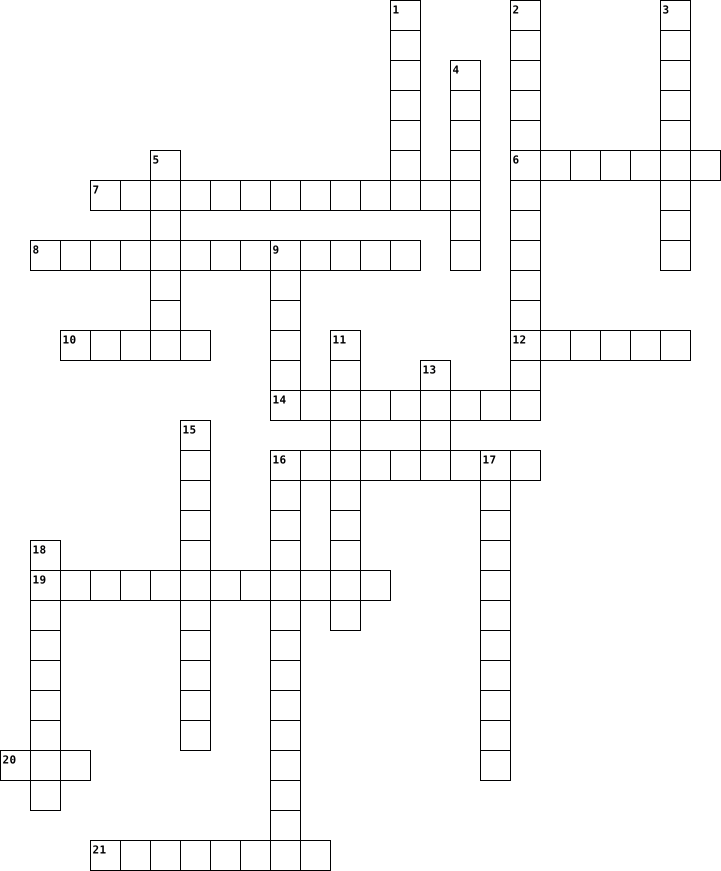
Across
- Small pores present on the leaf that participate in gas exchange and transpiration.
- The outer thin membrane of a cell.
- Pitcher plant is an ________ plant.
- An essential component of photosynthesis taken by the xylem vessels of the plant.
- A storage carbohydrate present in plants.
- Components of food required for carrying out different metabolic processes in an organism.
- The jelly like substance present between the nucleus and the outer membrane of a cell.
- Organisms that depend on other organisms for food.
- The ultimate and primary source of energy for all living organisms.
- An essential nutrient replenished in soil with the application of fertilizers.
Down
- A parasitic plant with yellow, slender and tubular stem.
- The process by which green plants synthesize their own food.
- Process of uptake of food and it's utilization by the body.
- A symbiotic relationship between an algae and fungi.
- The carbohydrate synthesized in plants as a result of photosynthesis.
- The essential byproduct of photosynthesis used by the living organisms for respiration.
- Organisms that can prepare their own food are known as________
- Basic structural and functional unit of a living organism.
- The green pigment present in leaves that captures sunlight.
- The gas required for the production of food in plants.
- Organisms growing on dead and decaying matter.
- A symbiotic bacteria present in the root nodules of leguminous plants.
22 Clues: The outer thin membrane of a cell. • Pitcher plant is an ________ plant. • A storage carbohydrate present in plants. • Organisms growing on dead and decaying matter. • Organisms that depend on other organisms for food. • A symbiotic relationship between an algae and fungi. • The gas required for the production of food in plants. • ...
Emma's Nutrition Crossword 2021-09-13

Across
- a nutrition expert
- nutrients used to supply calories to the body
- materials found in foods needed to build and repair body tissues and provide energy
- Good friendships, good self image, positive outlook
- desire to eat certain foods and reject others
- nutrients that provide energy, found in every food of plant origin. Sugar starch, and fiber are types of carbohydrates
- the study of nutrients and how the body uses them
- a diet that included energy and all the nutrients in the amounts needed
- type of nutrient needed for growth and repair of the body. Made of amino acids
- measure of weight
- the study of how foods change chemically through natural processes or when they are prepared or stored
- Not being sick, healthy diet, physically fit
- Good attitude about work and school, achievements
Down
- healthy relationships
- Active mind, knowledge and skills
- a set of guidelines for the amount of nutrients needed each day
- any type of action by a company to get you to buy their food
- inorganic substances needed by the body for function, growth, and repair of the body
- What’s important to you, purpose in life
- organic substances needed by the body for function, growth, and repair of the body
- all the foods a person eats
- the physical need for food
- compounds that work together with vitamins, minerals, and fiber to promote good health
- substances that protect the cells from damage the can be caused by oxygen
- measures of energy value in food
- being at the highest level of health
26 Clues: measure of weight • a nutrition expert • healthy relationships • the physical need for food • all the foods a person eats • measures of energy value in food • Active mind, knowledge and skills • being at the highest level of health • What’s important to you, purpose in life • Not being sick, healthy diet, physically fit • nutrients used to supply calories to the body • ...
Food and nutrition 2021-03-02

Across
- To put dry ingredients through a sieve
- To cut food into very small pieces.
- to give food more flavour
- To grind or mash food until it becomes smooth and liquid.
- To combine ingredients by stirring them
- To beat rapidly with a wire whisk
- to roast slowly over hot coals or in an oven
- made from the complete grain of the wheat plant e.g. flour
- To bake meat, fish, or poultry in an oven
- To cut food into flat pieces.
- To heat an oven to the cooking temperature before putting food in it
- To cook food gently in simmering liquid
- To brown foods using e.g a toaster
- To cook in hot liquid that has bubbles
- To make food cold
- To cut food into long, very thin strips
Down
- To lower the temperature of a food to its freezing point or below
- to remove cream, scum from a liquid
- A list of ingredients for preparing a food
- food containing fewer carbohydrates than usual
- To rub lightly with fat or oil
- To cook in liquid that is not yet boiling
- To cook in hot air in an oven
- food or nourishment
- a substance in food: meat, fish, eggs, necessary for the body to grow
- A unit of mass
- to strip off an outer layer of e.g. a fruit
- a mixture that consists of flour and a liquid
- To slowly cook small pieces of food in moderate amounts of liquid.
- To mix ingredients until they are very smooth
30 Clues: A unit of mass • To make food cold • food or nourishment • to give food more flavour • To cook in hot air in an oven • To cut food into flat pieces. • To rub lightly with fat or oil • To beat rapidly with a wire whisk • To brown foods using e.g a toaster • to remove cream, scum from a liquid • To cut food into very small pieces. • To put dry ingredients through a sieve • ...
Nutrition Function Crossword 2021-02-08

Across
- The human body is made up of these.
- Man's best friend
- The group of processes that allows humans to obtain matter and energy.
- Likes to chase mice
- This system is responsible for gas exchange.
- This system removes waste products from the blood.
- The respiratory system is responsible for what exchange?
- A red fluid that transports oxygen throughout the body.
- A clear liquid humans need to survive.
- We need this to breathe.
Down
- Has a trunk
- Cellular respiration takes place in which part of the cell?
- Blood brings oxygen and what to all parts of the body?
- This system transforms foods into simpler substances.
- This system works with the circulatory system to transport substances.
- Large marsupial
- The digestive system transforms this into simpler substances?
- Flying mammal
- This system transports nutrients and oxygen through the blood to the cells.
- These parts of the body perform specific functions.
20 Clues: Has a trunk • Flying mammal • Large marsupial • Man's best friend • Likes to chase mice • We need this to breathe. • The human body is made up of these. • A clear liquid humans need to survive. • This system is responsible for gas exchange. • This system removes waste products from the blood. • These parts of the body perform specific functions. • ...
Nutrition and wellness 2021-10-14

Across
- cut food into thin strips
- to cut food into smaller pieces then shred them
- To mix using tongs
- mix thoroughly and add air to foods
- break up food using a grinder
- dip food in boiling water then cold water
- tear off layer of food
- coat food heavily with flour
- to grind vegetables
- to pour liquid over a food as it cooks
- divide food into four equal parts
- crush food
- heat sugar till it liquifies
- use a pastry brush to coat a food with liquid
- Cut small pieces with kitchen shears
Down
- coat food with liquid
- cut food into large, thin pieces
- to beat quickly
- turn foods into crumbs
- to put a small surface of food on another food
- sliding food again a grate
- to beat ingredients
- gently mix a light fluffy mixture
- put food in syrup
- cover meet with flour
- lightly sprinkle a food with flower
- to coat a food with three different layers
- mix with a spoon
28 Clues: crush food • to beat quickly • mix with a spoon • put food in syrup • To mix using tongs • to beat ingredients • to grind vegetables • coat food with liquid • cover meet with flour • turn foods into crumbs • tear off layer of food • cut food into thin strips • sliding food again a grate • coat food heavily with flour • heat sugar till it liquifies • break up food using a grinder • ...
Nutrition and wellness 2021-10-14

Across
- to grind vegetables
- turn foods into crumbs
- cut food into large, thin pieces
- use a pastry brush to coat a food with liquid
- coat food heavily with flour
- mix with a spoon
- coat food with liquid
- to pour liquid over a food as it cooks
- cover meet with flour
- crush food
- to put a small surface of food on another food
- gently mix a light fluffy mixture
- break up food using a grinder
- remove center of fruit
Down
- mix thoroughly and add air to foods
- put food in syrup
- Cut small pieces with kitchen shears
- heat sugar till it liquifiesClarify: to make a liquid clear
- to cut food into smaller pieces then shred them
- cut food into thin strips
- tear off layer of food
- sliding food again a grate
- divide food into four equal parts
- to beat ingredients
- to coat a food with three different layers
- lightly sprinkle a food with flower
- To mix using tongs
- dip food in boiling water then cold water
- to beat quickly
29 Clues: crush food • to beat quickly • mix with a spoon • put food in syrup • To mix using tongs • to grind vegetables • to beat ingredients • coat food with liquid • cover meet with flour • turn foods into crumbs • tear off layer of food • remove center of fruit • cut food into thin strips • sliding food again a grate • coat food heavily with flour • break up food using a grinder • ...
Nutrition and wellness 2021-10-14

Across
- to cut food into square pieces.
- to weigh the item minus the weight of the container.
- to dip food briefly in boiling water.
- to cook food in a sugar syrup
- To shape by hand or in a decorative mold.
- to divide food into four equal pieces.
- to make shallow cuts
- to coat with an item that leaves a glossy residue.
- to crush food into a smooth mixture.
- To lightly sprinkle flour or confectioners' sugar
- dividing food into smaller parts.
- to coat food with flour.
- to cut foods into very thing strips
- mix incorporate everything.
- To pour liquid over a food as it cooks
- to coat food heavily with flour.
- to cut food into large thin slices
- To add flavor by soaking it in seasoned liquid
Down
- combining two or more food thoroughly
- To coat food with different layers
- putting a thin layer of food on another food.
- to gently fold over food into a heaver mixture.
- the cut into extremely fine pieces.
- to mix a substance into the food to make it creamy.
- to pulverize food into crumbs.
- to cut food in to pieces using kitchen scissors.
- To remove the center of a fruit.
- to break food into coarse particles.
- to cut off a very thin layer of outer peeling.
- to break or tear off small layers of food.
- To tumble ingredients, usually for salads with dressing.
- to smash cooked food into a smooth mixture.
- To beat quickly and vigorously to incorporate air
- to mix and add air into the food.
- to place a small amount of food on another food.
35 Clues: to make shallow cuts • to coat food with flour. • mix incorporate everything. • to cook food in a sugar syrup • to pulverize food into crumbs. • to cut food into square pieces. • To remove the center of a fruit. • to coat food heavily with flour. • dividing food into smaller parts. • to mix and add air into the food. • To coat food with different layers • ...
nutrition crossword puzzle 2023-03-02

Across
- to toast the food
- the abbreviation for it is LBS.
- to cook below boiling point
- metal blade that removes the peel
- to beat sugar and fat together
- used to measure the foods temperature
- shallow round pans for pies and ect.
Down
- 60 minutes is an _____.
- 12 eggs are considered a _______.
- to be flattened by a rolling pin
- to beat rapidly to introduce air bubbles
- oven a very heavy duty pot
- you can steam veggies in it
- to cut fat into flour
- long tube to suck up juices
- you reheat your food in it
- extracts juice from lemons
- spoon like device
- to apply heat
- to cook in small amounts of fat
20 Clues: to apply heat • to toast the food • spoon like device • to cut fat into flour • 60 minutes is an _____. • oven a very heavy duty pot • you reheat your food in it • extracts juice from lemons • to cook below boiling point • you can steam veggies in it • long tube to suck up juices • to beat sugar and fat together • the abbreviation for it is LBS. • to cook in small amounts of fat • ...
Nutrition and Wellness 2023-03-23

Across
- make straight shallow cuts
- use grinder to break up food into coarse fine particles
- mix thoroughly and add air to foods
- use to mixture light fluffy mixture
- cut a very thin layer of peel with a pairing knife
- mix with spoon or wire whisk in circular motion
- remove the center of fruit
- use pastry brush to coat food
- coat food with flour
- coat food heavily with flour, bread crumbs, or sugar
- heat sugar until it liquefies
- chop finely
- lightly sprinkle a food with flour or confections sugar
Down
- crush food into smooth mixture
- to loosen food particles in pan after they've browned
- cook food in sugar syrup
- dip food briefly in boiling water
- make liquid clear by removing solid particles
- divide food into 4 equal pieces
- coat food with 3 different layers
- to break or tear off small layers
- cut into small pieces with kitchen shears
- cut into irregular pieces
- coat food with liquid that forms a glossy finish
- beat ingredients to make them soft and creamy
- cut food into large thin pieces
- put small pieces of food on another food
- pour liquid over food as it cooks
- pulverize food into crumbs
29 Clues: chop finely • coat food with flour • cook food in sugar syrup • cut into irregular pieces • make straight shallow cuts • remove the center of fruit • pulverize food into crumbs • use pastry brush to coat food • heat sugar until it liquefies • crush food into smooth mixture • divide food into 4 equal pieces • cut food into large thin pieces • dip food briefly in boiling water • ...
Nutrition Crossword Puzzle 2023-04-03

Across
- Can increase the amount of fluid needed. Also known as physical activity.
- examples of this food group are, bread, cereal, rice, and pasta.
- examples of this food group are, milk, yogurt, and cheese.
- examples of this food group are grapes, strawberries, and apples.
- how many oz are in a cup of water?
- men should consume this many cups of water per day
- Provide energy to the body. Composed of carbs, proteins, and fats.
- sugary drinks are linked to type 2 ______, heart disease, and obesity.
- people who live in ____ climates may need to increase their water intake.
- women should consume this many cups of water per day.
Down
- do not provide the body with energy, but still play critical roles. Comprised of vitamins and minerals.
- an increase in body temperature that can increase the amount of water needed per day.
- made up of sugar or starches, broken down into glucose, used to fuel the body.
- it is important to consume more polyunsaturated and monounsaturated fats than _______ fats.
- broken down into amino acids. Used for growth. Mainly found in meats.
- examples of this food group are, leafy greens, zucchini, carrots, and broccoli.
- main role is to provide structure and cushion to cells. Crucial to absorb fat-soluble vitamins.
- the intake of food and minerals which nourish the body.
- people can save calories and _____ if they order water at restaurants instead of another type of drink.
- helps keep the body at a normal temp, protects the spinal cord, rids the body of waste.
20 Clues: how many oz are in a cup of water? • men should consume this many cups of water per day • women should consume this many cups of water per day. • the intake of food and minerals which nourish the body. • examples of this food group are, milk, yogurt, and cheese. • examples of this food group are, bread, cereal, rice, and pasta. • ...
Advanced Food & Nutrition 2023-05-09

Across
- Comprised of 2 pints or 32 fluid ounces.
- A bacteria, virus, or other microorganism that can cause disease.
- Habits that include keeping hands, hair, and body clean, and wearing clean and appropriate uniforms.
- The path food takes from purchasing and receiving, through storing, preparing, cooking, and serving.
- The temperature range in which bacteria can rapidly grow.
- The amount of food you choose to eat at any one time.
- A small, savory dish, served at the beginning of a meal or parties. Three bites or less.
- A small dish served at the beginning of the meal. Eaten in 15-20 bites.
- The cooking of meat or vegetables by heating them slowly with oil and moisture in a tightly sealed vessel.
Down
- One third (1/3) of a Tablespoon.
- An incident in which two or more persons experience a similar illness after ingestion of a common food or
- An hors d'oeuvre served on an edible base.
- Device used to keep food handlers' hair away from food.
- There are 8 of these in one cup.
- An acronym used to describe the conditions necessary for bacterial growth.
- To make something clean and hygienic.
- The process of unintentionally transferring microorganisms from one substance to another, with harmful effects.
- De-boned leg and thigh of a chicken, stuffed with sausage or other ingredients.
- An organism that can be seen only through a microscope.
- Protective covering used to properly bandage cut or wound on the finger.
- Scalding vegetables in boiling water or steam for a short time
21 Clues: One third (1/3) of a Tablespoon. • There are 8 of these in one cup. • To make something clean and hygienic. • Comprised of 2 pints or 32 fluid ounces. • An hors d'oeuvre served on an edible base. • The amount of food you choose to eat at any one time. • Device used to keep food handlers' hair away from food. • An organism that can be seen only through a microscope. • ...
Ch. 10 Nutrition 2012-12-03

Across
- The study of nutrients and how your body uses them
- A unit of heat that measuresthe energy available in food
- A nutrient that helps control the amount of fluid in your body
- Foods that offer few if any nutrients but do supply calories
- These are the building blocks that proteins are made of
- The fatty substance found in blood
- A measure of nutrient content relative to total calories a food provides
- This group created the MyPyramid Food Guidance System to help Americans make healthier food choices
- The psychological desire for food
- The number of 8oz glasses of fluid you should have a day
- The number of minutes that teens should be physically active each day
- Substances in food that your body needs
Down
- A sickness resulting from eating food that is not safe to eat
- This is what forms when molecules of sugar join to form long chains
- Are fats that stay solid at room temperature
- Nutrients your body uses to build, repair and maintain cells and tissues
- It's what all carbohydrates are made of
- Are sugars and starches that occur naturally in foods
- The body's physical need for food
- Are fats that stay liquid at room temperature
- These can be either water-soluble or fat-soluble
- Scientists that study the best ways to get nutrients from the foods we eat
22 Clues: The body's physical need for food • The psychological desire for food • The fatty substance found in blood • It's what all carbohydrates are made of • Substances in food that your body needs • Are fats that stay solid at room temperature • Are fats that stay liquid at room temperature • These can be either water-soluble or fat-soluble • ...
Nutrition and Performance 2014-04-01

Across
- a type of diuretic
- using water to relax muscles
- involves cooling to treat an injury
- a liquid that dehydrates the body
- action of doing a task
- inorganic substances that help the body function
- the body uses this to do activity
- keeping ____ is to drink lots of water
- source of energy that turns into glycogen
- drug that increases the amount of fluid that passes through the body
- process of obtaining nutrients necessary for growth
- specialised form of relaxation that works on the muscles using your hands
- organic compounds that must be ingested as the body can't make them
- aids growth, repair and maintenance of body tissue
Down
- technique of loading the muscles with glycogen
- aids focus and readies the body for action
- to gradually reduce heart rate to pre exercise rate
- to get the body used to
- returning body to original state before performance
- fuel source after glucose is used up
20 Clues: a type of diuretic • action of doing a task • to get the body used to • using water to relax muscles • a liquid that dehydrates the body • the body uses this to do activity • involves cooling to treat an injury • fuel source after glucose is used up • keeping ____ is to drink lots of water • source of energy that turns into glycogen • aids focus and readies the body for action • ...
introductory nutrition crossword 2014-08-04

Across
- are at the risk for hemorrhage due to poor placental transfer of vitamin k
- flattened circular disc that transfers nutrients and oxygen from mother to foetus.
- transport triglycerides form the intestine to rest of the body
- a reflux stimulated by infant suckling that causes the release of milk from milk ducts
- inositol+ 6 phospate group gives
- RDA requirement for fat for adult men and women
- limit growth of potential toxins in gut
- indigestible carbohydrate which forms gel
- function as protein sparring action
- emulsified fat droplets
- stimulates synthesis of milk
Down
- common discomfort faced by mothers like red swollen area around the breast
- example for contractile protein
- causes decreased motility of intestinal tract
- toxity causes enlargement of spleen and liver
- is the first fluid secreated by breast during late pregnancy
- otherwise called vitamin e
- secreated by the liver which aids in fat digestion
- intermediate product of starch hydrolysis
- essential for visual development
- deficiency of carbohydrates
- act as an antioxidant for mother and increases absorption of iron
- an alcohol which is made commercially from gluscose by hydrogenation
- essential for synthesis of haemoglobin
- an indigestible trisaccharide
- prevents urinary tract infections
- essential components of nucleic acids, ATP, NAD, FAD
- consumption of non food items
28 Clues: emulsified fat droplets • otherwise called vitamin e • deficiency of carbohydrates • stimulates synthesis of milk • an indigestible trisaccharide • consumption of non food items • example for contractile protein • essential for visual development • inositol+ 6 phospate group gives • prevents urinary tract infections • function as protein sparring action • ...
Introductory Nutrition - Crossword 2014-08-04

Across
- placenta is a flattened circular organ in the ____
- mother avoiding alcohol and limiting caffeine consumption protects the infant from ____
- these are the indigestible portion of plant foods that move food through the digestive system, absorbing water and easing defecation
- helps to harden the bones of the baby
- promotes visual and neural development of fetus
- an infection of the breast tissue that results in breast pain, swelling, warmth and redness of the breast
- the placenta is connected to the baby by the ______
- consumption of aspartame is harmful to the _____ of the fetus
- deficiency of this causes spontaneous abortion
- increases blood volume
- helps to regulate the body temperature
- consumption of non-food items during pregnancy
- ___ is common in pregnancy due to decreased motility of the gastro intestinal tract
Down
- caused by deficiency of iron
- sac like structures that store milk in the mother's breast
- excessive intake of calcipherol results in this
- helps fight stretch marks
- the first fluid secreted by the breast during late pregnancy and first 2-3 days after delivery
- a source of omega 3 fatty acids
- promotes the absorption of glucose
- reduces the incidence of heart diseases and heart related death of infant
- an enzyme that stimulates production of milk
- when BMI is 26
- an anabolic state resulting in an increased need for energy and nutrients
- excessive consumption of ___ decreases the blood flow through the placenta
- a feeling of sickness with an inclination of vomiting
26 Clues: when BMI is 26 • increases blood volume • helps fight stretch marks • caused by deficiency of iron • a source of omega 3 fatty acids • promotes the absorption of glucose • helps to harden the bones of the baby • helps to regulate the body temperature • an enzyme that stimulates production of milk • deficiency of this causes spontaneous abortion • ...
Nutrition, Hydration & Digestion 2016-01-14

Across
- The amount of a nutrient that is enough to ensure that the needs of nearly all the group (97.5%) are being met.
- The amount judged to be a level or range of intake at which there is no risk of deficiency and is below the level where there is a risk of undesirable effects.
- This occurs when water intake is insufficient to meet the demands of the body.
- The kinds of food that a person, or community habitually eats.
- Starchy foods that are broken down into glucose to provide energy for the body.
- A type of sports drink with a higher concentration of carbohydrate and electrolytes (>8%) than found in the body.
- The supply of water to restore or maintain fluid balance.
- An excess of water in the body.
- The daily intake level of a nutrient that is considered to be sufficient to meet the requirements of 97–98% of healthy individuals.
- A rating system for foods containing carbohydrates. It shows how quickly each food affects your blood sugar (glucose) level when that food is eaten on its own.
- The intake of food, considered in relation to the body’s dietary needs.
- Fundamental structural and functional elements within every cell of the body involved in a wide range of metabolic interactions, especially growth and repair.
Down
- the consumption of glycerol, creatine, or extra sodium in order to increase the amount of fluid in the body.
- Substances in plant foods which cannot be completely broken down by human digestive enzymes.
- An estimate of the average requirement for energy or a nutrient - approximately 50% of a group of people will require less, and 50% will require more.
- Organic compounds (containing carbon) required by the body in small amounts, for a variety of essential processes.
- A type of sports drink with a lower concentration of carbohydrate and electrolytes than found in the body (<6%).
- Naturally occurring, but inorganic substances needed by the body in small amounts, for a variety of essential processes.
- A substance that provides nourishment essential for the maintenance of life and for growth.
- A type of sports drink with the same concentration of carbohydrate and electrolytes (6-8%) than found in the body.
20 Clues: An excess of water in the body. • The supply of water to restore or maintain fluid balance. • The kinds of food that a person, or community habitually eats. • The intake of food, considered in relation to the body’s dietary needs. • This occurs when water intake is insufficient to meet the demands of the body. • ...